EP4470767A1 - Wärmeabschirmende folie für eine batterie - Google Patents
Wärmeabschirmende folie für eine batterie Download PDFInfo
- Publication number
- EP4470767A1 EP4470767A1 EP23220651.6A EP23220651A EP4470767A1 EP 4470767 A1 EP4470767 A1 EP 4470767A1 EP 23220651 A EP23220651 A EP 23220651A EP 4470767 A1 EP4470767 A1 EP 4470767A1
- Authority
- EP
- European Patent Office
- Prior art keywords
- layer
- sheet
- graphite
- heat
- flame
- Prior art date
- Legal status (The legal status is an assumption and is not a legal conclusion. Google has not performed a legal analysis and makes no representation as to the accuracy of the status listed.)
- Pending
Links
Images




Classifications
-
- B—PERFORMING OPERATIONS; TRANSPORTING
- B32—LAYERED PRODUCTS
- B32B—LAYERED PRODUCTS, i.e. PRODUCTS BUILT-UP OF STRATA OF FLAT OR NON-FLAT, e.g. CELLULAR OR HONEYCOMB, FORM
- B32B27/00—Layered products comprising a layer of synthetic resin
- B32B27/28—Layered products comprising a layer of synthetic resin comprising synthetic resins not wholly covered by any one of the sub-groups B32B27/30 - B32B27/42
- B32B27/283—Layered products comprising a layer of synthetic resin comprising synthetic resins not wholly covered by any one of the sub-groups B32B27/30 - B32B27/42 comprising polysiloxanes
-
- B—PERFORMING OPERATIONS; TRANSPORTING
- B32—LAYERED PRODUCTS
- B32B—LAYERED PRODUCTS, i.e. PRODUCTS BUILT-UP OF STRATA OF FLAT OR NON-FLAT, e.g. CELLULAR OR HONEYCOMB, FORM
- B32B27/00—Layered products comprising a layer of synthetic resin
- B32B27/06—Layered products comprising a layer of synthetic resin as the main or only constituent of a layer, which is next to another layer of the same or of a different material
- B32B27/065—Layered products comprising a layer of synthetic resin as the main or only constituent of a layer, which is next to another layer of the same or of a different material of foam
-
- B—PERFORMING OPERATIONS; TRANSPORTING
- B32—LAYERED PRODUCTS
- B32B—LAYERED PRODUCTS, i.e. PRODUCTS BUILT-UP OF STRATA OF FLAT OR NON-FLAT, e.g. CELLULAR OR HONEYCOMB, FORM
- B32B27/00—Layered products comprising a layer of synthetic resin
- B32B27/18—Layered products comprising a layer of synthetic resin characterised by the use of special additives
-
- B—PERFORMING OPERATIONS; TRANSPORTING
- B32—LAYERED PRODUCTS
- B32B—LAYERED PRODUCTS, i.e. PRODUCTS BUILT-UP OF STRATA OF FLAT OR NON-FLAT, e.g. CELLULAR OR HONEYCOMB, FORM
- B32B27/00—Layered products comprising a layer of synthetic resin
- B32B27/18—Layered products comprising a layer of synthetic resin characterised by the use of special additives
- B32B27/20—Layered products comprising a layer of synthetic resin characterised by the use of special additives using fillers, pigments, thixotroping agents
-
- B—PERFORMING OPERATIONS; TRANSPORTING
- B32—LAYERED PRODUCTS
- B32B—LAYERED PRODUCTS, i.e. PRODUCTS BUILT-UP OF STRATA OF FLAT OR NON-FLAT, e.g. CELLULAR OR HONEYCOMB, FORM
- B32B27/00—Layered products comprising a layer of synthetic resin
- B32B27/36—Layered products comprising a layer of synthetic resin comprising polyesters
-
- B—PERFORMING OPERATIONS; TRANSPORTING
- B32—LAYERED PRODUCTS
- B32B—LAYERED PRODUCTS, i.e. PRODUCTS BUILT-UP OF STRATA OF FLAT OR NON-FLAT, e.g. CELLULAR OR HONEYCOMB, FORM
- B32B33/00—Layered products characterised by particular properties or particular surface features, e.g. particular surface coatings; Layered products designed for particular purposes not covered by another single class
-
- B—PERFORMING OPERATIONS; TRANSPORTING
- B32—LAYERED PRODUCTS
- B32B—LAYERED PRODUCTS, i.e. PRODUCTS BUILT-UP OF STRATA OF FLAT OR NON-FLAT, e.g. CELLULAR OR HONEYCOMB, FORM
- B32B5/00—Layered products characterised by the non- homogeneity or physical structure, i.e. comprising a fibrous, filamentary, particulate or foam layer; Layered products characterised by having a layer differing constitutionally or physically in different parts
- B32B5/02—Layered products characterised by the non- homogeneity or physical structure, i.e. comprising a fibrous, filamentary, particulate or foam layer; Layered products characterised by having a layer differing constitutionally or physically in different parts characterised by structural features of a fibrous or filamentary layer
-
- B—PERFORMING OPERATIONS; TRANSPORTING
- B32—LAYERED PRODUCTS
- B32B—LAYERED PRODUCTS, i.e. PRODUCTS BUILT-UP OF STRATA OF FLAT OR NON-FLAT, e.g. CELLULAR OR HONEYCOMB, FORM
- B32B5/00—Layered products characterised by the non- homogeneity or physical structure, i.e. comprising a fibrous, filamentary, particulate or foam layer; Layered products characterised by having a layer differing constitutionally or physically in different parts
- B32B5/16—Layered products characterised by the non- homogeneity or physical structure, i.e. comprising a fibrous, filamentary, particulate or foam layer; Layered products characterised by having a layer differing constitutionally or physically in different parts characterised by features of a layer formed of particles, e.g. chips, powder or granules
-
- B—PERFORMING OPERATIONS; TRANSPORTING
- B32—LAYERED PRODUCTS
- B32B—LAYERED PRODUCTS, i.e. PRODUCTS BUILT-UP OF STRATA OF FLAT OR NON-FLAT, e.g. CELLULAR OR HONEYCOMB, FORM
- B32B5/00—Layered products characterised by the non- homogeneity or physical structure, i.e. comprising a fibrous, filamentary, particulate or foam layer; Layered products characterised by having a layer differing constitutionally or physically in different parts
- B32B5/18—Layered products characterised by the non- homogeneity or physical structure, i.e. comprising a fibrous, filamentary, particulate or foam layer; Layered products characterised by having a layer differing constitutionally or physically in different parts characterised by features of a layer of foamed material
-
- B—PERFORMING OPERATIONS; TRANSPORTING
- B32—LAYERED PRODUCTS
- B32B—LAYERED PRODUCTS, i.e. PRODUCTS BUILT-UP OF STRATA OF FLAT OR NON-FLAT, e.g. CELLULAR OR HONEYCOMB, FORM
- B32B5/00—Layered products characterised by the non- homogeneity or physical structure, i.e. comprising a fibrous, filamentary, particulate or foam layer; Layered products characterised by having a layer differing constitutionally or physically in different parts
- B32B5/22—Layered products characterised by the non- homogeneity or physical structure, i.e. comprising a fibrous, filamentary, particulate or foam layer; Layered products characterised by having a layer differing constitutionally or physically in different parts characterised by the presence of two or more layers which are next to each other and are fibrous, filamentary, formed of particles or foamed
- B32B5/30—Layered products characterised by the non- homogeneity or physical structure, i.e. comprising a fibrous, filamentary, particulate or foam layer; Layered products characterised by having a layer differing constitutionally or physically in different parts characterised by the presence of two or more layers which are next to each other and are fibrous, filamentary, formed of particles or foamed one layer being formed of particles, e.g. chips, granules, powder
-
- B—PERFORMING OPERATIONS; TRANSPORTING
- B32—LAYERED PRODUCTS
- B32B—LAYERED PRODUCTS, i.e. PRODUCTS BUILT-UP OF STRATA OF FLAT OR NON-FLAT, e.g. CELLULAR OR HONEYCOMB, FORM
- B32B7/00—Layered products characterised by the relation between layers; Layered products characterised by the relative orientation of features between layers, or by the relative values of a measurable parameter between layers, i.e. products comprising layers having different physical, chemical or physicochemical properties; Layered products characterised by the interconnection of layers
- B32B7/04—Interconnection of layers
- B32B7/12—Interconnection of layers using interposed adhesives or interposed materials with bonding properties
-
- B—PERFORMING OPERATIONS; TRANSPORTING
- B32—LAYERED PRODUCTS
- B32B—LAYERED PRODUCTS, i.e. PRODUCTS BUILT-UP OF STRATA OF FLAT OR NON-FLAT, e.g. CELLULAR OR HONEYCOMB, FORM
- B32B9/00—Layered products comprising a layer of a particular substance not covered by groups B32B11/00 - B32B29/00
- B32B9/005—Layered products comprising a layer of a particular substance not covered by groups B32B11/00 - B32B29/00 comprising one layer of ceramic material, e.g. porcelain, ceramic tile
- B32B9/007—Layered products comprising a layer of a particular substance not covered by groups B32B11/00 - B32B29/00 comprising one layer of ceramic material, e.g. porcelain, ceramic tile comprising carbon, e.g. graphite, composite carbon
-
- B—PERFORMING OPERATIONS; TRANSPORTING
- B32—LAYERED PRODUCTS
- B32B—LAYERED PRODUCTS, i.e. PRODUCTS BUILT-UP OF STRATA OF FLAT OR NON-FLAT, e.g. CELLULAR OR HONEYCOMB, FORM
- B32B9/00—Layered products comprising a layer of a particular substance not covered by groups B32B11/00 - B32B29/00
- B32B9/04—Layered products comprising a layer of a particular substance not covered by groups B32B11/00 - B32B29/00 comprising such particular substance as the main or only constituent of a layer, which is next to another layer of the same or of a different material
- B32B9/045—Layered products comprising a layer of a particular substance not covered by groups B32B11/00 - B32B29/00 comprising such particular substance as the main or only constituent of a layer, which is next to another layer of the same or of a different material of synthetic resin
-
- B—PERFORMING OPERATIONS; TRANSPORTING
- B32—LAYERED PRODUCTS
- B32B—LAYERED PRODUCTS, i.e. PRODUCTS BUILT-UP OF STRATA OF FLAT OR NON-FLAT, e.g. CELLULAR OR HONEYCOMB, FORM
- B32B9/00—Layered products comprising a layer of a particular substance not covered by groups B32B11/00 - B32B29/00
- B32B9/04—Layered products comprising a layer of a particular substance not covered by groups B32B11/00 - B32B29/00 comprising such particular substance as the main or only constituent of a layer, which is next to another layer of the same or of a different material
- B32B9/046—Layered products comprising a layer of a particular substance not covered by groups B32B11/00 - B32B29/00 comprising such particular substance as the main or only constituent of a layer, which is next to another layer of the same or of a different material of foam
-
- B—PERFORMING OPERATIONS; TRANSPORTING
- B32—LAYERED PRODUCTS
- B32B—LAYERED PRODUCTS, i.e. PRODUCTS BUILT-UP OF STRATA OF FLAT OR NON-FLAT, e.g. CELLULAR OR HONEYCOMB, FORM
- B32B9/00—Layered products comprising a layer of a particular substance not covered by groups B32B11/00 - B32B29/00
- B32B9/04—Layered products comprising a layer of a particular substance not covered by groups B32B11/00 - B32B29/00 comprising such particular substance as the main or only constituent of a layer, which is next to another layer of the same or of a different material
- B32B9/048—Layered products comprising a layer of a particular substance not covered by groups B32B11/00 - B32B29/00 comprising such particular substance as the main or only constituent of a layer, which is next to another layer of the same or of a different material made of particles
-
- H—ELECTRICITY
- H01—ELECTRIC ELEMENTS
- H01M—PROCESSES OR MEANS, e.g. BATTERIES, FOR THE DIRECT CONVERSION OF CHEMICAL ENERGY INTO ELECTRICAL ENERGY
- H01M10/00—Secondary cells; Manufacture thereof
- H01M10/60—Heating or cooling; Temperature control
- H01M10/65—Means for temperature control structurally associated with the cells
- H01M10/658—Means for temperature control structurally associated with the cells by thermal insulation or shielding
-
- H—ELECTRICITY
- H01—ELECTRIC ELEMENTS
- H01M—PROCESSES OR MEANS, e.g. BATTERIES, FOR THE DIRECT CONVERSION OF CHEMICAL ENERGY INTO ELECTRICAL ENERGY
- H01M50/00—Constructional details or processes of manufacture of the non-active parts of electrochemical cells other than fuel cells, e.g. hybrid cells
- H01M50/30—Arrangements for facilitating escape of gases
- H01M50/383—Flame arresting or ignition-preventing means
-
- B—PERFORMING OPERATIONS; TRANSPORTING
- B32—LAYERED PRODUCTS
- B32B—LAYERED PRODUCTS, i.e. PRODUCTS BUILT-UP OF STRATA OF FLAT OR NON-FLAT, e.g. CELLULAR OR HONEYCOMB, FORM
- B32B2250/00—Layers arrangement
- B32B2250/05—5 or more layers
-
- B—PERFORMING OPERATIONS; TRANSPORTING
- B32—LAYERED PRODUCTS
- B32B—LAYERED PRODUCTS, i.e. PRODUCTS BUILT-UP OF STRATA OF FLAT OR NON-FLAT, e.g. CELLULAR OR HONEYCOMB, FORM
- B32B2255/00—Coating on the layer surface
- B32B2255/26—Polymeric coating
-
- B—PERFORMING OPERATIONS; TRANSPORTING
- B32—LAYERED PRODUCTS
- B32B—LAYERED PRODUCTS, i.e. PRODUCTS BUILT-UP OF STRATA OF FLAT OR NON-FLAT, e.g. CELLULAR OR HONEYCOMB, FORM
- B32B2260/00—Layered product comprising an impregnated, embedded, or bonded layer wherein the layer comprises an impregnation, embedding, or binder material
- B32B2260/02—Composition of the impregnated, bonded or embedded layer
- B32B2260/021—Fibrous or filamentary layer
- B32B2260/023—Two or more layers
-
- B—PERFORMING OPERATIONS; TRANSPORTING
- B32—LAYERED PRODUCTS
- B32B—LAYERED PRODUCTS, i.e. PRODUCTS BUILT-UP OF STRATA OF FLAT OR NON-FLAT, e.g. CELLULAR OR HONEYCOMB, FORM
- B32B2260/00—Layered product comprising an impregnated, embedded, or bonded layer wherein the layer comprises an impregnation, embedding, or binder material
- B32B2260/02—Composition of the impregnated, bonded or embedded layer
- B32B2260/025—Particulate layer
-
- B—PERFORMING OPERATIONS; TRANSPORTING
- B32—LAYERED PRODUCTS
- B32B—LAYERED PRODUCTS, i.e. PRODUCTS BUILT-UP OF STRATA OF FLAT OR NON-FLAT, e.g. CELLULAR OR HONEYCOMB, FORM
- B32B2260/00—Layered product comprising an impregnated, embedded, or bonded layer wherein the layer comprises an impregnation, embedding, or binder material
- B32B2260/04—Impregnation, embedding, or binder material
- B32B2260/046—Synthetic resin
-
- B—PERFORMING OPERATIONS; TRANSPORTING
- B32—LAYERED PRODUCTS
- B32B—LAYERED PRODUCTS, i.e. PRODUCTS BUILT-UP OF STRATA OF FLAT OR NON-FLAT, e.g. CELLULAR OR HONEYCOMB, FORM
- B32B2262/00—Composition or structural features of fibres which form a fibrous or filamentary layer or are present as additives
- B32B2262/02—Synthetic macromolecular fibres
- B32B2262/0261—Polyamide fibres
- B32B2262/0269—Aromatic polyamide fibres
-
- B—PERFORMING OPERATIONS; TRANSPORTING
- B32—LAYERED PRODUCTS
- B32B—LAYERED PRODUCTS, i.e. PRODUCTS BUILT-UP OF STRATA OF FLAT OR NON-FLAT, e.g. CELLULAR OR HONEYCOMB, FORM
- B32B2262/00—Composition or structural features of fibres which form a fibrous or filamentary layer or are present as additives
- B32B2262/10—Inorganic fibres
-
- B—PERFORMING OPERATIONS; TRANSPORTING
- B32—LAYERED PRODUCTS
- B32B—LAYERED PRODUCTS, i.e. PRODUCTS BUILT-UP OF STRATA OF FLAT OR NON-FLAT, e.g. CELLULAR OR HONEYCOMB, FORM
- B32B2262/00—Composition or structural features of fibres which form a fibrous or filamentary layer or are present as additives
- B32B2262/10—Inorganic fibres
- B32B2262/101—Glass fibres
-
- B—PERFORMING OPERATIONS; TRANSPORTING
- B32—LAYERED PRODUCTS
- B32B—LAYERED PRODUCTS, i.e. PRODUCTS BUILT-UP OF STRATA OF FLAT OR NON-FLAT, e.g. CELLULAR OR HONEYCOMB, FORM
- B32B2262/00—Composition or structural features of fibres which form a fibrous or filamentary layer or are present as additives
- B32B2262/10—Inorganic fibres
- B32B2262/105—Ceramic fibres
-
- B—PERFORMING OPERATIONS; TRANSPORTING
- B32—LAYERED PRODUCTS
- B32B—LAYERED PRODUCTS, i.e. PRODUCTS BUILT-UP OF STRATA OF FLAT OR NON-FLAT, e.g. CELLULAR OR HONEYCOMB, FORM
- B32B2262/00—Composition or structural features of fibres which form a fibrous or filamentary layer or are present as additives
- B32B2262/10—Inorganic fibres
- B32B2262/106—Carbon fibres, e.g. graphite fibres
-
- B—PERFORMING OPERATIONS; TRANSPORTING
- B32—LAYERED PRODUCTS
- B32B—LAYERED PRODUCTS, i.e. PRODUCTS BUILT-UP OF STRATA OF FLAT OR NON-FLAT, e.g. CELLULAR OR HONEYCOMB, FORM
- B32B2264/00—Composition or properties of particles which form a particulate layer or are present as additives
- B32B2264/10—Inorganic particles
- B32B2264/102—Oxide or hydroxide
-
- B—PERFORMING OPERATIONS; TRANSPORTING
- B32—LAYERED PRODUCTS
- B32B—LAYERED PRODUCTS, i.e. PRODUCTS BUILT-UP OF STRATA OF FLAT OR NON-FLAT, e.g. CELLULAR OR HONEYCOMB, FORM
- B32B2264/00—Composition or properties of particles which form a particulate layer or are present as additives
- B32B2264/10—Inorganic particles
- B32B2264/102—Oxide or hydroxide
- B32B2264/1023—Alumina
-
- B—PERFORMING OPERATIONS; TRANSPORTING
- B32—LAYERED PRODUCTS
- B32B—LAYERED PRODUCTS, i.e. PRODUCTS BUILT-UP OF STRATA OF FLAT OR NON-FLAT, e.g. CELLULAR OR HONEYCOMB, FORM
- B32B2264/00—Composition or properties of particles which form a particulate layer or are present as additives
- B32B2264/10—Inorganic particles
- B32B2264/102—Oxide or hydroxide
- B32B2264/1026—Mica
-
- B—PERFORMING OPERATIONS; TRANSPORTING
- B32—LAYERED PRODUCTS
- B32B—LAYERED PRODUCTS, i.e. PRODUCTS BUILT-UP OF STRATA OF FLAT OR NON-FLAT, e.g. CELLULAR OR HONEYCOMB, FORM
- B32B2264/00—Composition or properties of particles which form a particulate layer or are present as additives
- B32B2264/10—Inorganic particles
- B32B2264/107—Ceramic
- B32B2264/108—Carbon, e.g. graphite particles
-
- B—PERFORMING OPERATIONS; TRANSPORTING
- B32—LAYERED PRODUCTS
- B32B—LAYERED PRODUCTS, i.e. PRODUCTS BUILT-UP OF STRATA OF FLAT OR NON-FLAT, e.g. CELLULAR OR HONEYCOMB, FORM
- B32B2266/00—Composition of foam
- B32B2266/02—Organic
- B32B2266/0207—Materials belonging to B32B25/00
-
- B—PERFORMING OPERATIONS; TRANSPORTING
- B32—LAYERED PRODUCTS
- B32B—LAYERED PRODUCTS, i.e. PRODUCTS BUILT-UP OF STRATA OF FLAT OR NON-FLAT, e.g. CELLULAR OR HONEYCOMB, FORM
- B32B2266/00—Composition of foam
- B32B2266/02—Organic
- B32B2266/0214—Materials belonging to B32B27/00
-
- B—PERFORMING OPERATIONS; TRANSPORTING
- B32—LAYERED PRODUCTS
- B32B—LAYERED PRODUCTS, i.e. PRODUCTS BUILT-UP OF STRATA OF FLAT OR NON-FLAT, e.g. CELLULAR OR HONEYCOMB, FORM
- B32B2307/00—Properties of the layers or laminate
- B32B2307/30—Properties of the layers or laminate having particular thermal properties
- B32B2307/304—Insulating
-
- B—PERFORMING OPERATIONS; TRANSPORTING
- B32—LAYERED PRODUCTS
- B32B—LAYERED PRODUCTS, i.e. PRODUCTS BUILT-UP OF STRATA OF FLAT OR NON-FLAT, e.g. CELLULAR OR HONEYCOMB, FORM
- B32B2307/00—Properties of the layers or laminate
- B32B2307/30—Properties of the layers or laminate having particular thermal properties
- B32B2307/306—Resistant to heat
-
- B—PERFORMING OPERATIONS; TRANSPORTING
- B32—LAYERED PRODUCTS
- B32B—LAYERED PRODUCTS, i.e. PRODUCTS BUILT-UP OF STRATA OF FLAT OR NON-FLAT, e.g. CELLULAR OR HONEYCOMB, FORM
- B32B2307/00—Properties of the layers or laminate
- B32B2307/30—Properties of the layers or laminate having particular thermal properties
- B32B2307/306—Resistant to heat
- B32B2307/3065—Flame resistant or retardant, fire resistant or retardant
-
- B—PERFORMING OPERATIONS; TRANSPORTING
- B32—LAYERED PRODUCTS
- B32B—LAYERED PRODUCTS, i.e. PRODUCTS BUILT-UP OF STRATA OF FLAT OR NON-FLAT, e.g. CELLULAR OR HONEYCOMB, FORM
- B32B2307/00—Properties of the layers or laminate
- B32B2307/50—Properties of the layers or laminate having particular mechanical properties
- B32B2307/558—Impact strength, toughness
-
- B—PERFORMING OPERATIONS; TRANSPORTING
- B32—LAYERED PRODUCTS
- B32B—LAYERED PRODUCTS, i.e. PRODUCTS BUILT-UP OF STRATA OF FLAT OR NON-FLAT, e.g. CELLULAR OR HONEYCOMB, FORM
- B32B2307/00—Properties of the layers or laminate
- B32B2307/70—Other properties
- B32B2307/732—Dimensional properties
- B32B2307/737—Dimensions, e.g. volume or area
- B32B2307/7375—Linear, e.g. length, distance or width
- B32B2307/7376—Thickness
-
- B—PERFORMING OPERATIONS; TRANSPORTING
- B32—LAYERED PRODUCTS
- B32B—LAYERED PRODUCTS, i.e. PRODUCTS BUILT-UP OF STRATA OF FLAT OR NON-FLAT, e.g. CELLULAR OR HONEYCOMB, FORM
- B32B2383/00—Polysiloxanes
-
- B—PERFORMING OPERATIONS; TRANSPORTING
- B32—LAYERED PRODUCTS
- B32B—LAYERED PRODUCTS, i.e. PRODUCTS BUILT-UP OF STRATA OF FLAT OR NON-FLAT, e.g. CELLULAR OR HONEYCOMB, FORM
- B32B2457/00—Electrical equipment
- B32B2457/10—Batteries
-
- B—PERFORMING OPERATIONS; TRANSPORTING
- B32—LAYERED PRODUCTS
- B32B—LAYERED PRODUCTS, i.e. PRODUCTS BUILT-UP OF STRATA OF FLAT OR NON-FLAT, e.g. CELLULAR OR HONEYCOMB, FORM
- B32B2605/00—Vehicles
- B32B2605/08—Cars
-
- Y—GENERAL TAGGING OF NEW TECHNOLOGICAL DEVELOPMENTS; GENERAL TAGGING OF CROSS-SECTIONAL TECHNOLOGIES SPANNING OVER SEVERAL SECTIONS OF THE IPC; TECHNICAL SUBJECTS COVERED BY FORMER USPC CROSS-REFERENCE ART COLLECTIONS [XRACs] AND DIGESTS
- Y02—TECHNOLOGIES OR APPLICATIONS FOR MITIGATION OR ADAPTATION AGAINST CLIMATE CHANGE
- Y02E—REDUCTION OF GREENHOUSE GAS [GHG] EMISSIONS, RELATED TO ENERGY GENERATION, TRANSMISSION OR DISTRIBUTION
- Y02E60/00—Enabling technologies; Technologies with a potential or indirect contribution to GHG emissions mitigation
- Y02E60/10—Energy storage using batteries
Definitions
- the present disclosure relates to a heat-shielding sheet for a battery.
- the present disclosure relates to a heat-shielding sheet for a battery, the sheet being characterized by including a functional layer sheet, composed of a flame-retardant layer, a graphite layer, a barrier layer, and the like, in silicone foam used in existing heat-shielding sheets for batteries to solve the disadvantage of polyurethane foam that in the event of a fire, the fire spreads and thermal runaway is accelerated.
- parts for heat dissipation are installed in electric vehicle batteries.
- Polyurethane and aluminum are being used widely as materials of heat dissipation parts in the related art.
- polyurethane has poor heat resistance and is thus easily deteriorated when temperature rises rapidly, which is disadvantageous in that a fire spreads.
- aluminum is not used by itself but used as a thermally conductive filler mixed in a polymer resin, making the thermally conductive filler difficult to be uniformly dispersed in the polymer resin.
- a heat transfer path fails to be formed in a composite material, making thermal conductivity difficult to be improved dramatically.
- lithium-ion batteries having a cell operating voltage of 3.6 V or higher, are used as a power supply for portable electronic devices or attract attention as a power source for eco-friendly vehicles, such as high-output hybrid electric vehicles (HEVs) or pure electric vehicles (EVs), by connecting several cells in series.
- eco-friendly vehicles such as high-output hybrid electric vehicles (HEVs) or pure electric vehicles (EVs)
- HEVs high-output hybrid electric vehicles
- EVs pure electric vehicles
- an objective of the present disclosure is to provide a heat-shielding sheet for a battery, the sheet including a functional layer sheet, composed of a flame-retardant layer, a graphite layer, a barrier layer, and the like, in silicone foam used in existing heat-shielding sheets for batteries to solve the disadvantage of polyurethane foam that in the event of a fire, the fire spreads and thermal runaway is accelerated, being lighter than metallic materials, and being capable of rapidly preventing flames and heat from spreading.
- the present disclosure relates to a heat-shielding sheet for a battery.
- the sheet is characterized by including a silicone foam layer and a functional layer laminated on either or both surfaces of the silicone foam layer, the functional layer including one or more layers selected from a flame-retardant layer, a graphite layer, and a barrier layer.
- the present disclosure is characterized in that the flame-retardant layer may contain flame-retardant silicone and a ceramic filler, and the barrier layer may contain heat-resistant silicone, a fiber filler, and a ceramic filler.
- the fiber filler may include one or more types selected from glass fibers, mineral wool, carbon fibers, aramid fibers, boron fibers, and ceramic fibers.
- the ceramic filler may include one or more types selected from aluminum oxide, aluminum hydroxide, aluminum silicate, fumed silica, wet silica, crushed quartz, titanium oxide, magnesium carbonate, magnesium hydroxide, zinc oxide, iron oxide, diatomite, and carbon black.
- the graphite layer may contain a graphite sheet and a polymer resin.
- the functional layer may be formed by laminating the flame-retardant layer, the graphite layer, the flame-retardant layer, and the barrier layer in such an order on either or both the surfaces of the silicone foam layer.
- One or more layers selected from the silicone foam layer, the flame-retardant layer, the graphite layer, and the barrier layer may further contain a heat-resistant additive.
- the heat-shielding sheet may have a thickness of 1 to 10 mm.
- a heat-shielding sheet for a battery includes a functional layer sheet, composed of a flame-retardant layer, a graphite layer, a barrier layer, and the like, in silicone foam.
- a fire caused by battery overheating is a problem in currently available electric vehicles. Particularly in the event of a fire caused by internal issues in the mainly used lithium-ion batteries, there is a disadvantage in that water-based fire extinction is difficult due to the high reactivity of lithium ions. For this reason, the inventors of the present disclosure conducted extensive research to solve the problem of having to wait for an electrode itself to bum out. During this research, the use of silicone foam, rather than a commonly used polyurethane foam, was found to inhibit the transfer of flames when ignited.
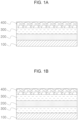
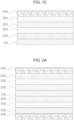
- a heat-shield sheet for a battery is characterized by including a silicone foam layer 100 and a function layer laminated on either or both surfaces of the silicone foam layer 100, the functional layer including one or more layers selected from a flame-retardant layer 200, a graphite layer 300, and a barrier layer 400, as illustrated in FIGS. 1A to 2C .
- the silicone foam layer is based on a highly heat-resistant silicon component and has a foam-like structure to minimize heat resistance through low density. Additionally, the silicone foam layer may keep thermal energy from being transferred to the surroundings to prevent secondary ignition resulting from thermal runaway.
- the silicone foam layer may be based on an organopolysiloxane and formed through curing and foaming by further containing a catalyst and a foaming agent. Additionally, a silane coupling agent may be further contained, as needed, to increase the molecular weight of a siloxane and to further strengthen the mechanical properties. In particular, depending on a functional group, the mechanical properties and heat resistance of the organopolysiloxane may be further improved with the occurrence of both hydrosilylation (alkenyl) and a reaction producing hydrogen gas (reaction between a hydroxyl group and siloxane).
- the organopolysiloxane may have a structure represented by Formula 1 below.
- Formula 1 R a SiO (4-a)/2
- R is an independently selected substituted or unsubstituted hydrocarbyl group, hydroxy group, or alkenyl group, where two or more of R in each molecule are saturated or unsaturated aliphatic groups, and 0 ⁇ a ⁇ 3.5.
- each R may independently be straight-chain or branched-chain alicyclic, aromatic, or in a combined form thereof.
- a cyclic hydrocarbyl group may contain a saturated or non-conjugated alicyclic group and an aromatic group.
- the aromatic group may be monocyclic or polycyclic.
- the straight-chain and branched-chain hydrocarbyl groups may be each independently saturated or unsaturated.
- One example of the combined form of the straight-chain and cyclic hydrocarbyl groups includes an aralkyl group.
- R is the alkenyl group
- an alkenyl group having 2 to 12 carbon atoms is contained, which may be straight-chain or branched-chain.
- examples of the alkenyl group include vinyl, 2-propenyl, 3-butenyl, 5-hexenyl, 7-octenyl, and 10-undecenyl.
- the viscosity of the organopolysiloxane is not limited. However, the organopolysiloxane may have a viscosity of 10 to 500,000 Pa ⁇ s, which is more preferably in the range of 20 to 200,000 Pa ⁇ s, at a temperature of 25°C. Nevertheless, polymers having a higher or lower viscosity that does not fall within the above numerical range may also be used.
- the coupling agent added to further improve mechanical properties by being bound and polymerizing the functional group of the organopolysiloxane, may include a silane compound having a vinyl group.
- silane compounds may be used as the silane coupling agent, and examples thereof include vinyltrimethoxysilane, vinyltriethoxysilane, trialkoxysilanes, tetraethyl orthosilicate, and the like. More preferably, vinyltriethoxysilane and vinyltrimethoxysilane having a vinyl group may be used.
- the silane coupling agent may be added in an amount of 0.1 to 10 parts by weight with respect to 100 parts by weight of the organopolysiloxane.
- amount of the coupling agent is less than the above numerical range, polymerization may not occur properly, leading to poor mechanical properties.
- the amount of the coupling agent exceeds the above numerical range, the molecular weight may be excessively large, leading to poor formability and foamability.
- the catalyst added to polymerize and cure the siloxane and silane, is not limited in type as long as such a catalyst is commonly used in the art.
- the catalyst may be a catalyst containing a platinum group metal and more preferably is a hydrosilylation catalyst containing a platinum group metal.
- platinum group metal means ruthenium, rhodium, palladium, osmium, iridium, platinum, and any complexes thereof.
- Non-limiting examples of the catalyst useful herein include those described in U.S. Patent Nos.
- the catalyst may be a platinum metal, a platinum metal deposited on a carrier such as silica gel or charcoal powder, or a compound or complex of a platinum group metal.
- a platinum-containing catalyst obtained by a method involving a reaction between chloroplatinic acid with an aliphatic unsaturated organosilicon compound, such as divinyltetramethyldisiloxane or alkene-platinum-silyl complex, and/or chloroplatinic acid in an anhydrous or hexahydrate form.
- examples of such a catalyst may include a 1,5-cyclooctadiene-platinum-silyl complex or platinum divinyltetramethyldisiloxane complex.
- the catalyst may induce curing of the silicone foam layer while stabilizing the foam structure of the cell, thus being preferable.
- the amount of the catalyst added to the composition is not limited. However, the catalyst may be added in an amount of 0.01 to 1,000 ppm. When the amount of the catalyst added is less than the above numerical range, polymerization of siloxane may not occur properly. On the contrary, when the amount of the catalyst added exceeds the above numerical range, the formability and foamability of the composition may be poor.
- the foaming agent added to induce foaming of the silicone foam layer to reduce density and increase volume, may include both physical and chemical foaming agents depending on the mode of action.
- the chemical foaming agent may be water and alcohol containing one or more hydroxy groups, where the hydroxy groups may react with the Si-H group of the siloxane described above to generate hydrogen gas, which is useful in reducing the density of the foaming agent.
- Examples of such a chemical foaming agent may include water and organic alcohols having 1 to 12 carbon atoms, especially low-molecular-weight alcohols, such as methanol, ethanol, propanol, isopropanol, and benzyl alcohol, and diols, such as methylene glycol, ethylene glycol, diethylene glycol, and propylene glycol.
- low-molecular-weight alcohols such as methanol, ethanol, propanol, isopropanol, and benzyl alcohol
- diols such as methylene glycol, ethylene glycol, diethylene glycol, and propylene glycol.
- the physical foaming agent the main source of gas leading to the formation of foam, is subjected to a phase change from liquid to gas state while being exposed to a predetermined temperature. Therefore, the density or volume of the final foam may be controlled depending on the amount added.
- Examples of such a physical foaming agent may include air, nitrogen, or carbon dioxide in a gaseous form, or hydrocarbons in a liquid form, for example, pentane and hexane, halogenated, more particularly chlorinated and/or fluorinated, hydrocarbons, for example, methylene chloride, chloroform, trichloroethane, hydrofluorocarbons (HFCs), chlorofluorocarbons, and hydrochlorofluorocarbons (HCFCs), ethers, and esters, for example, methyl formate, ethyl formate, methyl acetate, or ethyl acetate, and 1,1,1,3,3-pentafluoropropane.
- HFCs hydrofluorocarbons
- HCFCs hydrochlorofluorocarbons
- ethers for example, methyl formate, ethyl formate, methyl acetate, or ethyl acetate, and 1,1,1,3,3
- the physical foaming agent includes hydrofluorocarbons.
- Hydrofluorocarbon and “HFC” are interchangeable terms that refer to organic compounds containing hydrogen, carbon, and fluorine. The compound is substantially free of halogens other than fluorine.
- Suitable examples of the HFC may not only include aliphatic compounds, such as 1,1,1,3,3-pentafluoropropane (HFC-245fa), 1,1,1,3,3-pentafluorobutane (HFC-365mfc), 1-perfluorobutane, nonafluorocyclopentane, perfluoro-2-methylbutane, 1-fluorohexane, perfluoro-2,3-dimethylbutane, perfluoro-1,2-dimethylcyclobutane, perfluorohexane, perfluoroisohexane, perfluorocyclohexane, perfluoroheptane, perfluoroethylcyclohexane, perfluoro-1,3-dimethylcyclohexane, and perfluorooctane, but also include aromatic compounds, such as, fluorobenzene, 1,2-difluorobenzene, 1,4-difluor
- the amount of the foaming agent added is not limited. However, the foaming agent may be contained in an amount of 0.001 to 30 parts by weight with respect to 100 parts by weight of the organopolysiloxane. When the amount of the foaming agent added is less than the above numerical range, the silicone foam layer may not foam properly. On the contrary, when the amount of the foaming agent added exceeds the above numerical range, the mechanical properties of the silicone foam layer may be significantly poor.
- the thickness of the silicone foam layer is not limited. However, the silicone foam layer may have a thickness of 0.5 to 9 mm. When the thickness of the foam layer does not fall within the above numerical range, the heat-shielding effect may be reduced, or the mechanical properties of the sheet may be poor. Therefore, the silicone foam layer preferably has a thickness that satisfies the above numerical range.
- the graphite layer provided to solve the disadvantages of the silicone foam layer as described above, has excellent heat dissipation effect and flexibility. Additionally, the graphite layer is lighter than a metallic material-containing interface plate for heat dissipation and thus is characterized by having excellent thermal conductivity and processability.
- the graphite layer may fundamentally include a graphite sheet in a flake form and a polymer resin for fixing the graphite sheet and making the same less brittle.
- the polymer resin is preferably contained as a heat-resistant resin to prevent heat-induced denaturation.
- graphite has carbon connected in a hexagonal form like a benzene ring, which forms a plate-like structure in a continuous layer. Therefore, each layer is not physically connected but is spaced apart at predetermined intervals, and an insulation layer filled with air is formed in such kinds of voids. For this reason, thermal conductivity is high in a direction parallel to the carbon layer but is extremely low in a direction perpendicular to the carbon layer.
- Such characteristics of graphite allow heat received from a heat source to be conducted extremely fast throughout the graphite layer, thereby preventing the temperature from rising rapidly in local areas. Additionally, the heat transferred from one side to the other may be shielded, thereby preventing the temperature of other layers from rising.
- the graphite sheet is light and flexible while having a high thermal conductivity. Such characteristics enable a lightweight heat-shielding sheet having excellent heat dissipation characteristics to be obtained.
- the graphite sheet is not particularly limited as long as it is a sheet made of natural or artificial graphite.
- the graphite sheet may be manufactured by a method described in Japanese Patent Publication No. 61-275117 and Japanese Patent Publication No. 11-21117 .
- a currently available product may be used.
- Examples of the currently available product may include an artificial graphite sheet manufactured from a synthetic resin sheet, such as eGRAF SPREADERSHIELD SS-1500 (manufactured by GrafTECH International), Graphinithi (manufactured by Kaneka Co., Ltd.), and PGS graphite sheet (manufactured by Panasonic Co., Ltd.), and a natural graphite sheet manufactured from natural graphite such as eGRAF SPREADERSHIELD SS-500 (manufactured by GrafTECH International).
- eGRAF SPREADERSHIELD SS-1500 manufactured by GrafTECH International
- Graphinithi manufactured by Kaneka Co., Ltd.
- PGS graphite sheet manufactured by Panasonic Co., Ltd.
- a natural graphite sheet manufactured from natural graphite such as eGRAF SPREADERSHIELD SS-500 (manufactured by GrafTECH International).
- the graphite sheet preferably has a thermal conductivity of 250 to 2,000 W/m ⁇ K, which is more preferably in the range of 500 to 2,000 W/m ⁇ K, in a direction approximately perpendicular to a lamination direction of the laminated product.
- a thermal conductivity of the graphite sheet falls within the above numerical range, a heat-shielding sheet with excellent heat dissipation and heat-evenness may be obtained.
- the base resin is added to maintain the graphite in a sheet form while making it less brittle to enhance mechanical properties.
- a heat-resistant resin is preferably used to prevent the destruction of the molecular structure, which may occur due to high heat.
- graphite may be coated with a resin having excellent heat resistance and adhesive strength, or graphite may be dispersed in the resin, thereby solving the problem described above.
- heat-resistant resin examples include a polytetrafluoroethylene, a polyimide, a polyamide-imide, a polysulfone, a polyphenylene sulfide, a polyetheretherketone, a polyetherketone, a polyarylate, and the like. Of all these examples, a polyamide is preferably used.
- Such a polyimide a polymeric material having an imide ring, is polymerized mainly using aromatic anhydrides and aromatic diamines as monomers.
- the polyimide has high chemical stability, is highly heat-resistant under various conditions, and is enabled to maintain excellent mechanical properties even in a wide range of temperatures.
- a method of preparing the polyimide is not limited.
- the polyimide is preferably prepared by polymerizing an aromatic anhydride, especially an aromatic diamine monomer, such as polyamic acid, phenylenediamine, and methylenedianiline, in a solvent.
- the polymerization conditions and amount of the anhydride added are preferably controlled according to the molecular weight and viscosity of the polyimide to be prepared.
- the present disclosure is not limited thereto.
- the composition ratio of the graphite layer is not limited.
- the heat-resistant resin is preferably contained in an amount of 0.001 to 100 parts by weight with respect to 100 parts by weight of the graphite. Within the above numerical range, the sheet form may be completely obtained while keeping the brittleness of graphite from developing.
- the graphite layer may further contain a foaming agent, as needed.
- the foaming agent may be the same as or different from that in the silicone foam layer.
- an appropriate amount of a sublimable inorganic filler, such as barium sulfate or calcium carbonate being sublimable by heat applied when manufacturing the graphite sheet, is preferably added.
- the thickness of the graphite layer is not limited. However, like the inner layer, the graphite layer may have a thickness of 1 to 500 ⁇ m, which is more preferably in the range of 75 to 200 ⁇ m. Within the above numerical range, thermal deformation of the silicone foam layer described above may be prevented while improving the dimensional stability of the sheet.
- the flame-retardant layer used to prevent ignition and loss caused by thermal runaway when the heat-shielding sheet is heated and to prevent dimensional deformation, may contain flame-retardant silicone, a fiber filler, and graphite.
- the flame-retardant layer may be formed by additionally containing a ceramic filler to further improve heat resistance and mechanical properties, as needed.
- the flame-retardant silicone a silicon-containing polymer that typically exhibits flame retardancy at the V-0 level of UL-94, fundamentally has a structure represented by Formula 2 and may have a form of a composition, including a compound containing an azo group, a metallic compound, and the like.
- Formula 2 R 1 m SiO (4-m)/2 (In Formula 2, R 1 is a hydroxyl group or a substituted or unsubstituted monovalent hydrocarbon group, and m is a positive number in a range of 1.98 to 2.02.)
- examples of the substituted or unsubstituted monovalent hydrocarbon group may include: an alkyl group, such as a methyl group, an ethyl group, a propyl group, and a butyl group; an alkenyl group, such as a vinyl group, an aryl group, and a butene group; an aryl group, such as a phenyl group and a tolyl group; or a chloromethyl group, a chloropropyl group, a 3,3,3-trifluoropropyl group, a 2-cyanoethyl group, and the like where a part or all of the hydrogen atoms bonded to the carbon atoms of such groups are replaced with halogen atoms, cyano groups, and the like. These may be the same or different from each other.
- the azo-based compound, added to further improve the flame retardancy of silicone may include 2,2'-azobis(2-methylbutyronitrile).
- Such 2,2'-azobis(2-methylbutyronitrile) is a compound that greatly improves flame retardancy, especially when used in combination with a metallic compound.
- 2,2'-azobisisobutyronitrile the only practically available azo-based compound, is decomposed during vulcanization forming to mainly become tetramethylsuccinic acid dinitrile, the LD50 toxicity thereof (tested by oral administration to mice) is 38.9 while the LD50 of diethyldimethylsuccinic acid dinitrile, a decomposition product of 2,2'-azobis(2-methylbutyronitrile), is 1,316.
- the difference in LD50 is in two digits, showing that the toxicity is significantly low.
- the amount of the azo compound added is not limited. However, a molar ratio between the azo group and the metal is preferably in a range of 1 to 200.
- a molar ratio between the azo group and the metal is preferably in a range of 1 to 200.
- the metallic compound may significantly improve the flame retardancy when mixed with the azo-based compound described above.
- a platinum or cerium-based compound is preferably included, and other metallic compounds may be further included.
- platinum compound may include platinum, a platinum compound, a platinum complex, chloroplatinic acid, an alcoholic compound of chloroplatinic acid, an aldehyde compound, an ether compound, and a complex compound with all types of olefins.
- examples of the cerium-based compound may include cerium, an inorganic compound such as cerium oxide and cerium carbonate, and an organic compound such as cerium acetate, cerium octylate, and cerium atom-containing heterosiloxane.
- a mixture of titanium, aluminum, and a rare-earth element is preferably provided as one example of other metallic compounds.
- Such a metallic compound is preferably contained in an amount of 10 to 100,000 ppm based on the silicone compound.
- the fiber filler a component serving as a sheet to fundamentally form the flame-retardant layer, contains a number of inorganic components, enabling the flame retardancy and incombustibility of the flame-retardant layer to be further improved.
- Such a fiber filler may include one or two or more selected from the group consisting of glass fibers, mineral wool, carbon fibers, aramid fibers, boron fibers, and ceramic fibers. Preferably, glass fibers are included.
- the glass fibers are characterized by being suitable for the heat-shielding sheet that is required to be lightweight while increasing strength compared to other fiber fillers.
- composition ratio of the glass fibers is not limited.
- composition ratio of silicon dioxide and the like is preferably limited to broaden a range of operating temperatures by lowering the melting temperature while maintaining elasticity.
- the glass fiber preferably contains SiO 2 in an amount of 57.0 to 63.0 mass%, Al 2 O 3 in an amount of 19.0 to 23.0 mass%, MgO in an amount of 10.0 to 15.0 mass%, and CaO in an amount of 5.5 to 11.0 mass%, with respect to the total amount, where a content ratio of MgO to CaO (MgO/CaO) is in a range of 0.8 to 2.0.
- the amount of SiO 2 contained when the amount of SiO 2 contained is less than the above numerical range, sufficient strength on the fibers may fail to be obtained. On the contrary, when the amount of SiO 2 contained exceeds the above numerical range, the 1,0000 poise temperature and liquidus temperature of the molten glass may rise. Additionally, when the amount of Al 2 O 3 contained is less than the above numerical range, sufficient elastic modulus may fail to be obtained. On the contrary, when the amount of Al 2 O 3 added exceeds the above numerical range, the melting point of the composition may rise. Furthermore, when the amount of Al 2 O 3 contained satisfies the above numerical range, the initial crystalline phase of the molten glass during devitrification may be a single crystal of cordierite or a mixed crystal of cordierite and anorthite.
- the fiber filler is preferably in a sheet form such as non-woven fabric.
- the basis weight of the fiber filler is not limited. However, the fiber filler may have a basis weight in a range of 450 to 800 g/m 2 . When the basis weight is less than the above numerical range, the fire-resistant performance of the flame-retardant layer at high temperatures may fail to be obtained. On the contrary, when the basis weight exceeds the above numerical range, the improvement in the fire-resistant performance is insignificant compared to the increase in weight, which may be inefficient.
- the ceramic filler is added to increase the thermal conductivity and mechanical properties of the flame-retardant layer, such as tensile strength and tear strength.
- the flame-retardant layer may be deformed due to heat generated from the battery due to the thermal stability of the flame-retardant silicone resin. Therefore, to solve this problem, a heat-resistant additive having low thermal conductivity is preferably contained.
- Types of ceramic filler are fundamentally not limited as long as the filler is commonly used as an inorganic filler in the art to which the present disclosure belongs.
- one or more inorganic fillers such as fumed silica, wet silica, crushed quartz, titanium oxide, magnesium carbonate, zinc oxide, iron oxide, diatomite, and carbon black, may be included.
- examples thereof may include salts of metals such as iron, titanium, aluminum, nickel, and copper, oxides thereof, and hydroxides thereof, salts of rare-earth metals such as cerium and lanthanum, oxides thereof, and hydroxides thereof, layered silicates such as organic phosphorus compounds, platinum derivatives, carbon black, calcium silicate, aluminum silicate, potassium silicate, and mica, and the like.
- metals such as iron, titanium, aluminum, nickel, and copper
- oxides thereof, and hydroxides thereof salts of rare-earth metals such as cerium and lanthanum, oxides thereof, and hydroxides thereof
- layered silicates such as organic phosphorus compounds, platinum derivatives, carbon black, calcium silicate, aluminum silicate, potassium silicate, and mica, and the like.
- iron oxide, aluminum hydroxide, titanium oxide, aluminum oxide, and the like are preferably included.
- the ceramic filler is preferably subjected to surface treatment with an organic silicon compound, for example, a component such as a silazane compound, thereby improving hydrophobicity.
- an organic silicon compound for example, a component such as a silazane compound
- Such surface treatment is preferably performed by immersing the ceramic filler in a composition where the silazane compound and the silane coupling agent are mixed and then leaving the resulting product to stand for a predetermined time to form a film on the surface of the ceramic filler.
- the graphite may include natural graphite, including flake graphite, highly crystalline graphite, and microcrystalline graphite, synthetic graphite, including primary graphite, secondary graphite, and graphite fibers, and a graphite intercalation compound such as expandable graphite.
- natural graphite including flake graphite, highly crystalline graphite, and microcrystalline graphite
- synthetic graphite including primary graphite, secondary graphite, and graphite fibers
- a graphite intercalation compound such as expandable graphite.
- the graphite is expandable.
- Expandable graphite is manufactured by intercalating particles, such as sulfuric acid, nitric acid, and boric acid, between carbon plates and then performing heat treatment at a high temperature of 800 to 1,000°C in a reducing atmosphere. When reaching a predetermined or higher temperature, expandable graphite expands by generating water from the particles intercalated between the plates and widens the gap between the carbon plates, thereby further effectively shielding heat and oxygen compared to existing graphite.
- the amount and particle size of carbon contained in the graphite are not limited. However, the carbon is preferably contained in an amount of 75% or more, which is more preferably in the range of 80% to 100%. Additionally, the particle size, based on the width of the largest side, is preferably 100 ⁇ m or more, which is more preferably in the range of 300 to 600 ⁇ m. When the amount of carbon contained does not fall within the above numerical range, cracks may occur due to impurities, making the carbon plate more brittle. Additionally, when the size of the carbon particle does not fall within the above numerical range, fire resistance may be poor, making the carbon plate more brittle when heated.
- the graphite may include carbon fibers.
- Such carbon fibers are manufactured through processes, such as carbonization and stabilization of a precursor, the raw material, so that the fibers contain only pure carbon elements.
- the carbon fibers may be included in various forms, such as single fibers, filaments (long fibers), single strands, or fiber bundles. Additionally, the cross-sectional shape or the thickness (fineness) of the fibers is not limited in the present disclosure.
- the carbon fibers preferably have a fiber bundle-like form in which a plurality of carbon fiber strands agglomerate.
- the fiber bundle is present in a form in which the carbon fibers physically agglomerate.
- voids may be not only included in the weft or warp but also formed in the fabric itself, thereby further improving the heat-shielding effect while easily maintaining the sheet form, which is more desirable.
- the manufacturing method of the carbon fibers is not limited. While carbon fibers are typically manufactured by carbonizing and stabilizing precursor materials, natural or artificial fibers may be used as such precursor materials.
- the natural fibers may be one or more types selected from the group consisting of cellulose fibers, protein fibers, and mineral fibers.
- the cellulose fibers may include seed fibers, such as cotton or kapok; stem fibers, such as flax, ramie, hemp, or jute, fruit fibers, such as palm fibers, leaf fibers, such as manila, abaca, or sisal, and the like.
- the protein fibers may include wool fibers, silk fibers, hair fibers, and the like.
- the mineral fibers may include artificial mineral fibers, such as glass wool and mineral wool, asbestos fiberized by liquefying glass, rock, and other minerals at high temperatures, and the like.
- the natural fibers may include one or more types selected from the group consisting of cellulose such as cotton and rayon-based semi-synthetic fibers manufactured by dissolving the same.
- the artificial fibers may be one or more types selected from the group consisting of organic and inorganic fibers.
- the organic fibers may include synthetic fibers, such as polyamide-based fibers, polyester-based fibers, polyurethane-based fibers, polyethylene-based fibers, polyvinyl chloride-based fibers, polyfluoroethylene-based fibers, polyvinyl alcohol-based fibers, acrylic fibers, or polypropylene-based fibers.
- the artificial fibers may include one or more types of synthetic fibers selected from the group consisting of nylon, polyester, polyurethane, polyethylene, polyvinyl chloride, polyfluoroethylene, polyvinyl alcohol, acryl, polypropylene, polyacrylonitrile, pitch, and the like. Of all these synthetic fibers, the fibers are preferably based on polyacrylonitrile or pitch as the precursor.
- the amount of the graphite added in the present disclosure is not limited. However, the graphite is preferably contained in an amount of 10 to 200 parts by weight with respect to 100 parts by weight of the flame-retardant silicone, a base resin.
- the thickness of the flame-retardant layer is not limited. However, the flame-retardant layer preferably has a thickness of 10 to 100 ⁇ m. When the flame-retardant layer formed has a thickness smaller than the above numerical range, flame retardancy and flame resistance described above may be difficult to be developed. On the contrary, when the flame-retardant layer formed has a thickness exceeding the above numerical range, the flexibility of the entire sheet may be poor.
- the barrier layer fundamentally formed on the outermost layer of the functional layer, serves to protect the flame-retardant layer, the graphite layer, and the silicone foam layer positioned inside from external impacts and the like and to improve mechanical properties, such as impact resistance and flame retardancy, and chemical properties.
- the barrier layer may be formed by containing heat-resistant silicone, a fiber filler, a ceramic filler, and the like, and may further contain a component to form a coating layer for protecting the surface, as needed.
- the heat-resistant silicone fundamentally contains an organopolysiloxane represented by Formula 3 and having an average degree of polymerization of 100 or more, and may further contain one or more catalysts and additional siloxane compounds.
- R 2 a SiO (4-a)/2 In Formula 3, R 2 is a homogeneous or heterologous unsubstituted or substituted monovalent hydrocarbon group where each molecule contains at least two aliphatic unsaturated groups, and a is a positive number in a range of 1.95 and 2.05.
- the organopolysiloxane preferably contains two or more vinyl groups having an average degree of polymerization of 100 or more, where R 2 represents the homogeneous or heterologous unsubstituted or substituted monovalent hydrocarbon group.
- R 2 represents the homogeneous or heterologous unsubstituted or substituted monovalent hydrocarbon group.
- R 2 represents the homogeneous or heterologous unsubstituted or substituted monovalent hydrocarbon group.
- R 2 represents the homogeneous or heterologous unsubstituted or substituted monovalent hydrocarbon group.
- R 2 represents the homogeneous or heterologous unsubstituted or substituted monovalent hydrocarbon group.
- R 2 represents the homogeneous or heterologous unsubstituted or substituted monovalent hydrocarbon group.
- R 2 represents the homogeneous or heterologous unsubstituted or substituted monovalent hydrocarbon group.
- R 2 represents the homogeneous or heterologous unsubstituted or
- the organopolysiloxane is preferably a component whose main chain is composed of a dimethylpolysiloxane unit or a component in which a vinyl group, phenyl group, trifluoropropyl group, and the like are introduced into the main chain of the organopolysiloxane.
- a terminal of the molecular chain may be encapsulated by a triorganosilyl group or a hydroxyl group.
- the triorganosilyl group include a trimethylsilyl group, a dimethylvinylsilyl group, a trivinylsilyl group, and the like.
- the organopolysiloxane has an average degree of polymerization of 100 or more, which is preferably in the range of 200 to 6,000 and more preferably in the range of 1,000 to 6,000. When the average degree of polymerization is less than 100, the mechanical strength is reduced after curing, thereby being softened.
- the catalyst may include a platinum-based catalyst that is typically used as a curing agent for an addition reaction through hydrosilylation.
- the amount of the catalyst added is not limited. However, the catalyst is preferably contained in an amount of 1 to 2,000 ppm with respect to 100 parts by weight of the organopolysiloxane.
- the type of additional siloxane compounds added with the platinum-based catalyst to cure the main component is not limited.
- the siloxane compound is preferably an organopolysiloxane containing hydrogen atoms bonded to at least two silicon atoms in the molecule.
- the amount of such an organopolysiloxane added is not limited in the present disclosure and may be controlled to fall within a range that does not impair the purpose of the present disclosure without limitation.
- the fiber filler and the ceramic filler may be the same or different components from the fiber filler and the ceramic filler contained in the flame-retardant layer described above.
- the fiber filler is preferably glass fibers
- the ceramic filler is preferably titanium dioxide.
- the thickness of the barrier layer is not limited. However, the barrier layer preferably has a thickness of 100 to 500 ⁇ m. When the barrier layer formed has a thickness smaller than the above numerical range, the desired effect of protecting the flame-retardant layer and the like is insignificant. On the other hand, when the barrier layer formed has a thickness larger than the above numerical range, the overall weight of the sheet increases, and flexibility becomes poor, which is not desirable.
- composition to form one or more layers selected from the silicone foam layer, the flame-retardant layer, the graphite layer, and the barrier layer may selectively further contain one or more additives.
- additives may include a surfactant, a solvent, a stabilizer, an adhesion promoter, a colorant including dyes and pigments, an antioxidant, a carrier vehicle, a heat stabilizer, a flame retardant, a thixotropic agent, a flow control additive, an inhibitor, a filler including expanding and reinforcing fillers, a crosslinker, and the like.
- the methods of each independently manufacturing or laminating the silicone foam layer, flame-retardant layer, graphite layer, and barrier layer are not limited.
- the compositions to form the respective layers may be prepared by a roll forming method, a blade forming method, and a forming method using a doctor blade and the like. Then, the respective layers may be bonded using an adhesive, including the heat-resistant additive described above.
- the adhesive is fundamentally a heat-resistant polymer resin, and low heat conductivity may be improved using the heat resistance additive, as described above.
- the adhesive may include adhesives based on acryl, epoxy, silicone, urethane, polyamideimides, and the like. These adhesives may be used alone, or a mixture of two or more adhesives may be used.
- one or more functional group-rich polymers may be further contained to prevent interlayer delamination that may occur due to heat-induced changes in composition.
- examples of such polymers may include perhydropolysilazanes, epoxyalkylalkoxysilanes, aminoalkylalkoxysilanes, isocyanatoalkylalkoxysilanes, mercaptoallcylalkoxysilanes, vinylalkylalkoxysilane, polyhydroxyaminoethers, and the like.
- perhydropolysilazanes, epoxyalkylalkoxysilanes, or the like are preferably added to increase resistance to delamination through strong bonding with the silicone foam layer, the flame-retardant layer, and the like.
- Such a functional group-containing polymer is preferably added in an amount of 1 to 10 parts by weight with respect to 100 parts by weight of the polymer resin constituting the adhesive.
- the functional group-containing polymer is added in an amount less than the above numerical range, the effect of preventing delamination is insignificant.
- the functional group-containing polymer is added in an amount exceeding the above numerical range, formability and adhesiveness may be poor due to the excessive polymerization or reaction with the adhesive resin.
- the heat-shielding sheet for the battery is not limited in size or shape but preferably has a thickness of 1 to 5 mm. Within the above numerical range, the overall size of the battery may be kept from becoming excessively large while developing sufficient heat-shielding performance.
- the lamination order or lamination form of the functional layer is not limited.
- the flame-retardant layer, the graphite layer, and the barrier layer may be sequentially laminated on either surface of the silicone foam layer, as shown in FIG. 1A , or the graphite layer, the flame-retardant layer, the graphite layer, and the barrier layer may be laminated on either surface of the silicone foam layer, as shown in FIG. 1B , to further strengthen heat resistance.
- the graphite layer, the flame-retardant layer, the graphite layer, the flame-retardant layer, and the barrier layer may be sequentially laminated on either surface of the silicone foam layer, as shown in FIG. 1C , to obtain both heat resistance and mechanical properties.
- FIGS. 2A to 2C illustrate cases of forming a functional layer on both surfaces of the silicone foam layer.
- the flame-retardant layer, the graphite layer, the flame-retardant layer, and the barrier layer may be sequentially laminated on both surfaces of the silicone foam layer to obtain mechanical properties and flame retardancy.
- the graphite layer, the flame-retardant layer, the graphite layer, and the barrier layer may be sequentially laminated on both surfaces of the silicone foam layer, as shown in FIG. 2B , or the silicone foam layer, the flame-retardant layer, and the barrier layer may be sequentially laminated on both surfaces of the graphite layer, as shown in FIG. 2C .
- the heat-shielding sheet for the battery is placed between an external housing and the battery in which a number of battery cells and spacers are stacked, and is provided to cover all the upper, lower, and side surfaces.
- the heat-shielding sheet is preferably provided such that the barrier layers are each independently formed on both the exposed surfaces to face the external housing.
- the heat-shielding sheet for the battery includes the silicone foam layer made of the polymer resin and the functional layer, including the flame-retardant layer, the graphite layer, the barrier layer, and the like, in the silicone foam layer.
- the sheet was manufactured by laminating an inner layer, a silicone foam layer, a graphite layer, and a glass bubble layer.
- the respective layers, formed through examples and comparative examples were made of the same components.
- the compositions thereof are listed in Table 1 below.
- the lamination order of each sheet varied for examples and comparative examples as shown in Table 2.
- All the manufactured specimens had a thickness of 2.66 mm. In this case, regarding the changes in thickness with varying degrees to which each layer was laminated, the total thickness was set to 2.66 mm by controlling the total thickness of the silicone foam layer.
- the heat-shielding sheet manufactured according to the present disclosure, has an excellent heat-shielding effect despite being continuously exposed to high-temperature heat while keeping the sheet form intact.
- flame retardancy is better in Example 1, including two graphite layers, than in Example 2, including one graphite layer, it is seen that expandable graphite constituting the graphite layer expands by heating and thus forms a number of pores, thereby effectively blocking the heat transfer from the front to the back.
Landscapes
- Engineering & Computer Science (AREA)
- Chemical & Material Sciences (AREA)
- Ceramic Engineering (AREA)
- Chemical Kinetics & Catalysis (AREA)
- Electrochemistry (AREA)
- General Chemical & Material Sciences (AREA)
- Manufacturing & Machinery (AREA)
- Life Sciences & Earth Sciences (AREA)
- Wood Science & Technology (AREA)
- Laminated Bodies (AREA)
- Physics & Mathematics (AREA)
- Thermal Sciences (AREA)
Applications Claiming Priority (1)
| Application Number | Priority Date | Filing Date | Title |
|---|---|---|---|
| KR1020230070795A KR102673481B1 (ko) | 2023-06-01 | 2023-06-01 | 배터리용 차열 시트 |
Publications (1)
| Publication Number | Publication Date |
|---|---|
| EP4470767A1 true EP4470767A1 (de) | 2024-12-04 |
Family
ID=89474379
Family Applications (1)
| Application Number | Title | Priority Date | Filing Date |
|---|---|---|---|
| EP23220651.6A Pending EP4470767A1 (de) | 2023-06-01 | 2023-12-28 | Wärmeabschirmende folie für eine batterie |
Country Status (5)
| Country | Link |
|---|---|
| US (1) | US20240405326A1 (de) |
| EP (1) | EP4470767A1 (de) |
| KR (1) | KR102673481B1 (de) |
| CN (1) | CN119058195A (de) |
| WO (1) | WO2024248262A1 (de) |
Families Citing this family (2)
| Publication number | Priority date | Publication date | Assignee | Title |
|---|---|---|---|---|
| KR102849672B1 (ko) * | 2024-08-13 | 2025-08-25 | 주식회사 에스제이폼웍스 | 이차 전지용 방염패드 및 이의 제조방법 |
| KR102877056B1 (ko) * | 2024-11-11 | 2025-10-28 | 주식회사 에스플러스컴텍 | 배터리 열폭주 지연 소재 및 그 배터리 열폭주 지연 소재 제조방법 |
Citations (20)
| Publication number | Priority date | Publication date | Assignee | Title |
|---|---|---|---|---|
| US3159601A (en) | 1962-07-02 | 1964-12-01 | Gen Electric | Platinum-olefin complex catalyzed addition of hydrogen- and alkenyl-substituted siloxanes |
| US3220972A (en) | 1962-07-02 | 1965-11-30 | Gen Electric | Organosilicon process using a chloroplatinic acid reaction product as the catalyst |
| US3296291A (en) | 1962-07-02 | 1967-01-03 | Gen Electric | Reaction of silanes with unsaturated olefinic compounds |
| US3419593A (en) | 1965-05-17 | 1968-12-31 | Dow Corning | Catalysts for the reaction of = sih with organic compounds containing aliphatic unsaturation |
| US3516946A (en) | 1967-09-29 | 1970-06-23 | Gen Electric | Platinum catalyst composition for hydrosilation reactions |
| US3715334A (en) | 1970-11-27 | 1973-02-06 | Gen Electric | Platinum-vinylsiloxanes |
| US3814730A (en) | 1970-08-06 | 1974-06-04 | Gen Electric | Platinum complexes of unsaturated siloxanes and platinum containing organopolysiloxanes |
| US3923705A (en) | 1974-10-30 | 1975-12-02 | Dow Corning | Method of preparing fire retardant siloxane foams and foams prepared therefrom |
| US3928629A (en) | 1973-06-23 | 1975-12-23 | Dow Corning | Coating process |
| US3989668A (en) | 1975-07-14 | 1976-11-02 | Dow Corning Corporation | Method of making a silicone elastomer and the elastomer prepared thereby |
| JPS61275117A (ja) | 1985-05-30 | 1986-12-05 | Res Dev Corp Of Japan | グラフアイトフイルムの製造方法 |
| US5036117A (en) | 1989-11-03 | 1991-07-30 | Dow Corning Corporation | Heat-curable silicone compositions having improved bath life |
| US5175325A (en) | 1991-02-14 | 1992-12-29 | Dow Corning Limited | Platinum complexes and use thereof |
| JPH1121117A (ja) | 1997-07-01 | 1999-01-26 | Matsushita Electric Ind Co Ltd | グラファイトフィルムの製造方法及びグラファイトフィルム並びにそれを用いた熱伝導体 |
| US6605734B2 (en) | 2001-12-07 | 2003-08-12 | Dow Corning Corporation | Alkene-platinum-silyl complexes |
| KR20180031968A (ko) | 2016-09-21 | 2018-03-29 | 한국과학기술연구원 | 고방열, 고유연, 고강도 복합 재료 및 이의 제조 방법 |
| WO2021262634A1 (en) * | 2020-06-24 | 2021-12-30 | Neograf Solutions, Llc | A shielding article |
| US20220181715A1 (en) * | 2020-12-04 | 2022-06-09 | Rogers Corporation | Multilayer sheet for preventing thermal runaway |
| WO2022155056A1 (en) * | 2021-01-15 | 2022-07-21 | Rogers Corporation | Thermally insulating multilayer sheet, method of manufacture, and articles using the same |
| US20220388291A1 (en) * | 2021-06-02 | 2022-12-08 | Saint-Gobain Performance Plastics Corporation | Multilayer composite with thermal barrier properties |
Family Cites Families (4)
| Publication number | Priority date | Publication date | Assignee | Title |
|---|---|---|---|---|
| KR102669731B1 (ko) * | 2019-10-18 | 2024-05-30 | 한국전력공사 | 차화 클리트 |
| KR20220053251A (ko) * | 2020-10-22 | 2022-04-29 | 주식회사 엘지에너지솔루션 | 전지 모듈 및 이를 포함하는 전지 팩 |
| JP2022106327A (ja) * | 2021-01-07 | 2022-07-20 | 信越ポリマー株式会社 | 放熱構造体およびそれを備えるバッテリー |
| KR102425374B1 (ko) * | 2021-11-08 | 2022-07-27 | 주식회사 엘투와이 | 열확산 쉬트를 구비한 배터리 열 폭주 지연용 실리콘 패드와 이를 포함하는 배터리 팩 |
-
2023
- 2023-06-01 KR KR1020230070795A patent/KR102673481B1/ko active Active
- 2023-12-26 US US18/395,768 patent/US20240405326A1/en active Pending
- 2023-12-28 WO PCT/KR2023/021917 patent/WO2024248262A1/ko not_active Ceased
- 2023-12-28 EP EP23220651.6A patent/EP4470767A1/de active Pending
-
2024
- 2024-01-15 CN CN202410058461.8A patent/CN119058195A/zh active Pending
Patent Citations (20)
| Publication number | Priority date | Publication date | Assignee | Title |
|---|---|---|---|---|
| US3159601A (en) | 1962-07-02 | 1964-12-01 | Gen Electric | Platinum-olefin complex catalyzed addition of hydrogen- and alkenyl-substituted siloxanes |
| US3220972A (en) | 1962-07-02 | 1965-11-30 | Gen Electric | Organosilicon process using a chloroplatinic acid reaction product as the catalyst |
| US3296291A (en) | 1962-07-02 | 1967-01-03 | Gen Electric | Reaction of silanes with unsaturated olefinic compounds |
| US3419593A (en) | 1965-05-17 | 1968-12-31 | Dow Corning | Catalysts for the reaction of = sih with organic compounds containing aliphatic unsaturation |
| US3516946A (en) | 1967-09-29 | 1970-06-23 | Gen Electric | Platinum catalyst composition for hydrosilation reactions |
| US3814730A (en) | 1970-08-06 | 1974-06-04 | Gen Electric | Platinum complexes of unsaturated siloxanes and platinum containing organopolysiloxanes |
| US3715334A (en) | 1970-11-27 | 1973-02-06 | Gen Electric | Platinum-vinylsiloxanes |
| US3928629A (en) | 1973-06-23 | 1975-12-23 | Dow Corning | Coating process |
| US3923705A (en) | 1974-10-30 | 1975-12-02 | Dow Corning | Method of preparing fire retardant siloxane foams and foams prepared therefrom |
| US3989668A (en) | 1975-07-14 | 1976-11-02 | Dow Corning Corporation | Method of making a silicone elastomer and the elastomer prepared thereby |
| JPS61275117A (ja) | 1985-05-30 | 1986-12-05 | Res Dev Corp Of Japan | グラフアイトフイルムの製造方法 |
| US5036117A (en) | 1989-11-03 | 1991-07-30 | Dow Corning Corporation | Heat-curable silicone compositions having improved bath life |
| US5175325A (en) | 1991-02-14 | 1992-12-29 | Dow Corning Limited | Platinum complexes and use thereof |
| JPH1121117A (ja) | 1997-07-01 | 1999-01-26 | Matsushita Electric Ind Co Ltd | グラファイトフィルムの製造方法及びグラファイトフィルム並びにそれを用いた熱伝導体 |
| US6605734B2 (en) | 2001-12-07 | 2003-08-12 | Dow Corning Corporation | Alkene-platinum-silyl complexes |
| KR20180031968A (ko) | 2016-09-21 | 2018-03-29 | 한국과학기술연구원 | 고방열, 고유연, 고강도 복합 재료 및 이의 제조 방법 |
| WO2021262634A1 (en) * | 2020-06-24 | 2021-12-30 | Neograf Solutions, Llc | A shielding article |
| US20220181715A1 (en) * | 2020-12-04 | 2022-06-09 | Rogers Corporation | Multilayer sheet for preventing thermal runaway |
| WO2022155056A1 (en) * | 2021-01-15 | 2022-07-21 | Rogers Corporation | Thermally insulating multilayer sheet, method of manufacture, and articles using the same |
| US20220388291A1 (en) * | 2021-06-02 | 2022-12-08 | Saint-Gobain Performance Plastics Corporation | Multilayer composite with thermal barrier properties |
Also Published As
| Publication number | Publication date |
|---|---|
| US20240405326A1 (en) | 2024-12-05 |
| KR102673481B1 (ko) | 2024-06-12 |
| WO2024248262A1 (ko) | 2024-12-05 |
| CN119058195A (zh) | 2024-12-03 |
Similar Documents
| Publication | Publication Date | Title |
|---|---|---|
| EP4470767A1 (de) | Wärmeabschirmende folie für eine batterie | |
| KR102425374B1 (ko) | 열확산 쉬트를 구비한 배터리 열 폭주 지연용 실리콘 패드와 이를 포함하는 배터리 팩 | |
| US20250079559A1 (en) | Systems and methods for mitigating thermal propagation in battery-based energy storage systems | |
| JP7783902B2 (ja) | 電気エネルギー貯蔵の熱イベントを軽減するための材料、システム、及び方法 | |
| CN219778976U (zh) | 用于电力系统的阻隔件元件、电池模块、电力系统、设备或车辆 | |
| CN111354879A (zh) | 用于电化学装置热管理的系统、结构与材料 | |
| JP2024535754A (ja) | 硬靭なシリコーンゴム発泡体断熱材 | |
| CN120603900A (zh) | 用于电池防火的有机硅泡沫材料 | |
| US20250375950A1 (en) | Article with pressure management and thermal insulation properties | |
| JP7796799B2 (ja) | バッテリー用断熱シート、その製造方法、及びそれを含むバッテリーモジュール | |
| CN118234621A (zh) | 具有限定含有吸热材料的空隙的有机硅泡沫层的层合阻隔物 | |
| KR20240142053A (ko) | 배터리 열 폭주 지연용 실리콘 폼 패드와 이를 포함하는 배터리 팩 | |
| US20240425660A1 (en) | Compressible silicone foam and method for the manufacture thereof | |
| KR102875290B1 (ko) | 배터리 모듈, 이의 제조방법 및 이를 포함하는 배터리 팩 | |
| WO2025096219A1 (en) | Curable silicone composition and uses thereof | |
| WO2025083575A1 (en) | Article with thermal insulation properties | |
| KR20260041806A (ko) | 인접한 배터리 셀을 분리하기 위한 분리기 | |
| KR20250144186A (ko) | 배터리 열폭주 방지용 시트 및 이를 포함하는 배터리 셀 조립체 | |
| WO2025163590A1 (en) | Structured cushioning articles with thermal insulation properties | |
| KR20250168034A (ko) | 화염 차단과 내화 성능이 우수한 박형 전기차 배터리용 내화 시트 및 이의 제조 방법 | |
| WO2024261693A1 (en) | Article with thermal insulation properties | |
| KR20250082035A (ko) | 에어로젤 복합시트 및 이의 제조방법 | |
| KR20260001384A (ko) | 배터리 열폭주 방지용 시트 및 이를 포함하는 배터리 셀 조립체 | |
| CN118234620A (zh) | 具有限定含有吸热材料的空隙的陶瓷或气凝胶层的层合阻隔物 |
Legal Events
| Date | Code | Title | Description |
|---|---|---|---|
| PUAI | Public reference made under article 153(3) epc to a published international application that has entered the european phase |
Free format text: ORIGINAL CODE: 0009012 |
|
| STAA | Information on the status of an ep patent application or granted ep patent |
Free format text: STATUS: THE APPLICATION HAS BEEN PUBLISHED |
|
| AK | Designated contracting states |
Kind code of ref document: A1 Designated state(s): AL AT BE BG CH CY CZ DE DK EE ES FI FR GB GR HR HU IE IS IT LI LT LU LV MC ME MK MT NL NO PL PT RO RS SE SI SK SM TR |
|
| STAA | Information on the status of an ep patent application or granted ep patent |
Free format text: STATUS: REQUEST FOR EXAMINATION WAS MADE |
|
| 17P | Request for examination filed |
Effective date: 20250604 |