EP4470739A2 - Panel and method for manufacturing a panel - Google Patents
Panel and method for manufacturing a panel Download PDFInfo
- Publication number
- EP4470739A2 EP4470739A2 EP24162365.1A EP24162365A EP4470739A2 EP 4470739 A2 EP4470739 A2 EP 4470739A2 EP 24162365 A EP24162365 A EP 24162365A EP 4470739 A2 EP4470739 A2 EP 4470739A2
- Authority
- EP
- European Patent Office
- Prior art keywords
- layer
- metal
- panel
- substrate
- electrically conductive
- Prior art date
- Legal status (The legal status is an assumption and is not a legal conclusion. Google has not performed a legal analysis and makes no representation as to the accuracy of the status listed.)
- Pending
Links
Images
Classifications
-
- B—PERFORMING OPERATIONS; TRANSPORTING
- B32—LAYERED PRODUCTS
- B32B—LAYERED PRODUCTS, i.e. PRODUCTS BUILT-UP OF STRATA OF FLAT OR NON-FLAT, e.g. CELLULAR OR HONEYCOMB, FORM
- B32B21/00—Layered products comprising a layer of wood, e.g. wood board, veneer, wood particle board
- B32B21/02—Layered products comprising a layer of wood, e.g. wood board, veneer, wood particle board the layer being formed of fibres, chips, or particles, e.g. MDF, HDF, OSB, chipboard, particle board, hardboard
-
- B—PERFORMING OPERATIONS; TRANSPORTING
- B05—SPRAYING OR ATOMISING IN GENERAL; APPLYING FLUENT MATERIALS TO SURFACES, IN GENERAL
- B05D—PROCESSES FOR APPLYING FLUENT MATERIALS TO SURFACES, IN GENERAL
- B05D7/00—Processes, other than flocking, specially adapted for applying liquids or other fluent materials to particular surfaces or for applying particular liquids or other fluent materials
- B05D7/06—Processes, other than flocking, specially adapted for applying liquids or other fluent materials to particular surfaces or for applying particular liquids or other fluent materials to wood
-
- B—PERFORMING OPERATIONS; TRANSPORTING
- B27—WORKING OR PRESERVING WOOD OR SIMILAR MATERIAL; NAILING OR STAPLING MACHINES IN GENERAL
- B27N—MANUFACTURE BY DRY PROCESSES OF ARTICLES, WITH OR WITHOUT ORGANIC BINDING AGENTS, MADE FROM PARTICLES OR FIBRES CONSISTING OF WOOD OR OTHER LIGNOCELLULOSIC OR LIKE ORGANIC MATERIAL
- B27N7/00—After-treatment, e.g. reducing swelling or shrinkage, surfacing; Protecting the edges of boards against access of humidity
- B27N7/005—Coating boards, e.g. with a finishing or decorating layer
-
- B—PERFORMING OPERATIONS; TRANSPORTING
- B27—WORKING OR PRESERVING WOOD OR SIMILAR MATERIAL; NAILING OR STAPLING MACHINES IN GENERAL
- B27N—MANUFACTURE BY DRY PROCESSES OF ARTICLES, WITH OR WITHOUT ORGANIC BINDING AGENTS, MADE FROM PARTICLES OR FIBRES CONSISTING OF WOOD OR OTHER LIGNOCELLULOSIC OR LIKE ORGANIC MATERIAL
- B27N9/00—Arrangements for fireproofing
-
- B—PERFORMING OPERATIONS; TRANSPORTING
- B32—LAYERED PRODUCTS
- B32B—LAYERED PRODUCTS, i.e. PRODUCTS BUILT-UP OF STRATA OF FLAT OR NON-FLAT, e.g. CELLULAR OR HONEYCOMB, FORM
- B32B21/00—Layered products comprising a layer of wood, e.g. wood board, veneer, wood particle board
- B32B21/04—Layered products comprising a layer of wood, e.g. wood board, veneer, wood particle board comprising wood as the main or only constituent of a layer, which is next to another layer of the same or of a different material
- B32B21/06—Layered products comprising a layer of wood, e.g. wood board, veneer, wood particle board comprising wood as the main or only constituent of a layer, which is next to another layer of the same or of a different material of paper or cardboard
-
- B—PERFORMING OPERATIONS; TRANSPORTING
- B32—LAYERED PRODUCTS
- B32B—LAYERED PRODUCTS, i.e. PRODUCTS BUILT-UP OF STRATA OF FLAT OR NON-FLAT, e.g. CELLULAR OR HONEYCOMB, FORM
- B32B23/00—Layered products comprising a layer of cellulosic plastic substances, i.e. substances obtained by chemical modification of cellulose, e.g. cellulose ethers, cellulose esters, viscose
- B32B23/04—Layered products comprising a layer of cellulosic plastic substances, i.e. substances obtained by chemical modification of cellulose, e.g. cellulose ethers, cellulose esters, viscose comprising such cellulosic plastic substance as the main or only constituent of a layer, which is next to another layer of the same or of a different material
- B32B23/08—Layered products comprising a layer of cellulosic plastic substances, i.e. substances obtained by chemical modification of cellulose, e.g. cellulose ethers, cellulose esters, viscose comprising such cellulosic plastic substance as the main or only constituent of a layer, which is next to another layer of the same or of a different material of synthetic resin
-
- B—PERFORMING OPERATIONS; TRANSPORTING
- B32—LAYERED PRODUCTS
- B32B—LAYERED PRODUCTS, i.e. PRODUCTS BUILT-UP OF STRATA OF FLAT OR NON-FLAT, e.g. CELLULAR OR HONEYCOMB, FORM
- B32B27/00—Layered products comprising a layer of synthetic resin
- B32B27/18—Layered products comprising a layer of synthetic resin characterised by the use of special additives
-
- B—PERFORMING OPERATIONS; TRANSPORTING
- B32—LAYERED PRODUCTS
- B32B—LAYERED PRODUCTS, i.e. PRODUCTS BUILT-UP OF STRATA OF FLAT OR NON-FLAT, e.g. CELLULAR OR HONEYCOMB, FORM
- B32B27/00—Layered products comprising a layer of synthetic resin
- B32B27/30—Layered products comprising a layer of synthetic resin comprising vinyl (co)polymers; comprising acrylic (co)polymers
- B32B27/304—Layered products comprising a layer of synthetic resin comprising vinyl (co)polymers; comprising acrylic (co)polymers comprising vinyl halide (co)polymers, e.g. PVC, PVDC, PVF, PVDF
-
- B—PERFORMING OPERATIONS; TRANSPORTING
- B32—LAYERED PRODUCTS
- B32B—LAYERED PRODUCTS, i.e. PRODUCTS BUILT-UP OF STRATA OF FLAT OR NON-FLAT, e.g. CELLULAR OR HONEYCOMB, FORM
- B32B27/00—Layered products comprising a layer of synthetic resin
- B32B27/32—Layered products comprising a layer of synthetic resin comprising polyolefins
-
- B—PERFORMING OPERATIONS; TRANSPORTING
- B32—LAYERED PRODUCTS
- B32B—LAYERED PRODUCTS, i.e. PRODUCTS BUILT-UP OF STRATA OF FLAT OR NON-FLAT, e.g. CELLULAR OR HONEYCOMB, FORM
- B32B27/00—Layered products comprising a layer of synthetic resin
- B32B27/36—Layered products comprising a layer of synthetic resin comprising polyesters
-
- B—PERFORMING OPERATIONS; TRANSPORTING
- B32—LAYERED PRODUCTS
- B32B—LAYERED PRODUCTS, i.e. PRODUCTS BUILT-UP OF STRATA OF FLAT OR NON-FLAT, e.g. CELLULAR OR HONEYCOMB, FORM
- B32B29/00—Layered products comprising a layer of paper or cardboard
- B32B29/002—Layered products comprising a layer of paper or cardboard as the main or only constituent of a layer, which is next to another layer of the same or of a different material
- B32B29/005—Layered products comprising a layer of paper or cardboard as the main or only constituent of a layer, which is next to another layer of the same or of a different material next to another layer of paper or cardboard layer
-
- B—PERFORMING OPERATIONS; TRANSPORTING
- B32—LAYERED PRODUCTS
- B32B—LAYERED PRODUCTS, i.e. PRODUCTS BUILT-UP OF STRATA OF FLAT OR NON-FLAT, e.g. CELLULAR OR HONEYCOMB, FORM
- B32B29/00—Layered products comprising a layer of paper or cardboard
- B32B29/06—Layered products comprising a layer of paper or cardboard specially treated, e.g. surfaced, parchmentised
-
- B—PERFORMING OPERATIONS; TRANSPORTING
- B32—LAYERED PRODUCTS
- B32B—LAYERED PRODUCTS, i.e. PRODUCTS BUILT-UP OF STRATA OF FLAT OR NON-FLAT, e.g. CELLULAR OR HONEYCOMB, FORM
- B32B7/00—Layered products characterised by the relation between layers; Layered products characterised by the relative orientation of features between layers, or by the relative values of a measurable parameter between layers, i.e. products comprising layers having different physical, chemical or physicochemical properties; Layered products characterised by the interconnection of layers
- B32B7/04—Interconnection of layers
- B32B7/12—Interconnection of layers using interposed adhesives or interposed materials with bonding properties
-
- C—CHEMISTRY; METALLURGY
- C23—COATING METALLIC MATERIAL; COATING MATERIAL WITH METALLIC MATERIAL; CHEMICAL SURFACE TREATMENT; DIFFUSION TREATMENT OF METALLIC MATERIAL; COATING BY VACUUM EVAPORATION, BY SPUTTERING, BY ION IMPLANTATION OR BY CHEMICAL VAPOUR DEPOSITION, IN GENERAL; INHIBITING CORROSION OF METALLIC MATERIAL OR INCRUSTATION IN GENERAL
- C23C—COATING METALLIC MATERIAL; COATING MATERIAL WITH METALLIC MATERIAL; SURFACE TREATMENT OF METALLIC MATERIAL BY DIFFUSION INTO THE SURFACE, BY CHEMICAL CONVERSION OR SUBSTITUTION; COATING BY VACUUM EVAPORATION, BY SPUTTERING, BY ION IMPLANTATION OR BY CHEMICAL VAPOUR DEPOSITION, IN GENERAL
- C23C4/00—Coating by spraying the coating material in the molten state, e.g. by flame, plasma or electric discharge
- C23C4/04—Coating by spraying the coating material in the molten state, e.g. by flame, plasma or electric discharge characterised by the coating material
- C23C4/06—Metallic material
- C23C4/073—Metallic material containing MCrAl or MCrAlY alloys, where M is nickel, cobalt or iron, with or without non-metal elements
-
- C—CHEMISTRY; METALLURGY
- C23—COATING METALLIC MATERIAL; COATING MATERIAL WITH METALLIC MATERIAL; CHEMICAL SURFACE TREATMENT; DIFFUSION TREATMENT OF METALLIC MATERIAL; COATING BY VACUUM EVAPORATION, BY SPUTTERING, BY ION IMPLANTATION OR BY CHEMICAL VAPOUR DEPOSITION, IN GENERAL; INHIBITING CORROSION OF METALLIC MATERIAL OR INCRUSTATION IN GENERAL
- C23C—COATING METALLIC MATERIAL; COATING MATERIAL WITH METALLIC MATERIAL; SURFACE TREATMENT OF METALLIC MATERIAL BY DIFFUSION INTO THE SURFACE, BY CHEMICAL CONVERSION OR SUBSTITUTION; COATING BY VACUUM EVAPORATION, BY SPUTTERING, BY ION IMPLANTATION OR BY CHEMICAL VAPOUR DEPOSITION, IN GENERAL
- C23C4/00—Coating by spraying the coating material in the molten state, e.g. by flame, plasma or electric discharge
- C23C4/04—Coating by spraying the coating material in the molten state, e.g. by flame, plasma or electric discharge characterised by the coating material
- C23C4/06—Metallic material
- C23C4/08—Metallic material containing only metal elements
-
- C—CHEMISTRY; METALLURGY
- C23—COATING METALLIC MATERIAL; COATING MATERIAL WITH METALLIC MATERIAL; CHEMICAL SURFACE TREATMENT; DIFFUSION TREATMENT OF METALLIC MATERIAL; COATING BY VACUUM EVAPORATION, BY SPUTTERING, BY ION IMPLANTATION OR BY CHEMICAL VAPOUR DEPOSITION, IN GENERAL; INHIBITING CORROSION OF METALLIC MATERIAL OR INCRUSTATION IN GENERAL
- C23C—COATING METALLIC MATERIAL; COATING MATERIAL WITH METALLIC MATERIAL; SURFACE TREATMENT OF METALLIC MATERIAL BY DIFFUSION INTO THE SURFACE, BY CHEMICAL CONVERSION OR SUBSTITUTION; COATING BY VACUUM EVAPORATION, BY SPUTTERING, BY ION IMPLANTATION OR BY CHEMICAL VAPOUR DEPOSITION, IN GENERAL
- C23C4/00—Coating by spraying the coating material in the molten state, e.g. by flame, plasma or electric discharge
- C23C4/12—Coating by spraying the coating material in the molten state, e.g. by flame, plasma or electric discharge characterised by the method of spraying
- C23C4/131—Wire arc spraying
-
- E—FIXED CONSTRUCTIONS
- E04—BUILDING
- E04B—GENERAL BUILDING CONSTRUCTIONS; WALLS, e.g. PARTITIONS; ROOFS; FLOORS; CEILINGS; INSULATION OR OTHER PROTECTION OF BUILDINGS
- E04B5/00—Floors; Floor construction with regard to insulation; Connections specially adapted therefor
- E04B5/02—Load-carrying floor structures formed substantially of prefabricated units
-
- E—FIXED CONSTRUCTIONS
- E04—BUILDING
- E04C—STRUCTURAL ELEMENTS; BUILDING MATERIALS
- E04C2/00—Building elements of relatively thin form for the construction of parts of buildings, e.g. sheet materials, slabs, or panels
- E04C2/02—Building elements of relatively thin form for the construction of parts of buildings, e.g. sheet materials, slabs, or panels characterised by specified materials
- E04C2/26—Building elements of relatively thin form for the construction of parts of buildings, e.g. sheet materials, slabs, or panels characterised by specified materials composed of materials covered by two or more of groups E04C2/04, E04C2/08, E04C2/10 or of materials covered by one of these groups with a material not specified in one of the groups
-
- E—FIXED CONSTRUCTIONS
- E04—BUILDING
- E04C—STRUCTURAL ELEMENTS; BUILDING MATERIALS
- E04C2/00—Building elements of relatively thin form for the construction of parts of buildings, e.g. sheet materials, slabs, or panels
- E04C2/02—Building elements of relatively thin form for the construction of parts of buildings, e.g. sheet materials, slabs, or panels characterised by specified materials
- E04C2/26—Building elements of relatively thin form for the construction of parts of buildings, e.g. sheet materials, slabs, or panels characterised by specified materials composed of materials covered by two or more of groups E04C2/04, E04C2/08, E04C2/10 or of materials covered by one of these groups with a material not specified in one of the groups
- E04C2/284—Building elements of relatively thin form for the construction of parts of buildings, e.g. sheet materials, slabs, or panels characterised by specified materials composed of materials covered by two or more of groups E04C2/04, E04C2/08, E04C2/10 or of materials covered by one of these groups with a material not specified in one of the groups at least one of the materials being insulating
- E04C2/292—Building elements of relatively thin form for the construction of parts of buildings, e.g. sheet materials, slabs, or panels characterised by specified materials composed of materials covered by two or more of groups E04C2/04, E04C2/08, E04C2/10 or of materials covered by one of these groups with a material not specified in one of the groups at least one of the materials being insulating composed of insulating material and sheet metal
-
- E—FIXED CONSTRUCTIONS
- E04—BUILDING
- E04C—STRUCTURAL ELEMENTS; BUILDING MATERIALS
- E04C2/00—Building elements of relatively thin form for the construction of parts of buildings, e.g. sheet materials, slabs, or panels
- E04C2/44—Building elements of relatively thin form for the construction of parts of buildings, e.g. sheet materials, slabs, or panels characterised by the purpose
- E04C2/50—Self-supporting slabs specially adapted for making floors ceilings, or roofs, e.g. able to be loaded
-
- E—FIXED CONSTRUCTIONS
- E04—BUILDING
- E04F—FINISHING WORK ON BUILDINGS, e.g. STAIRS, FLOORS
- E04F15/00—Flooring
- E04F15/02—Flooring or floor layers composed of a number of similar elements
-
- E—FIXED CONSTRUCTIONS
- E04—BUILDING
- E04F—FINISHING WORK ON BUILDINGS, e.g. STAIRS, FLOORS
- E04F15/00—Flooring
- E04F15/02—Flooring or floor layers composed of a number of similar elements
- E04F15/02133—Flooring or floor layers composed of a number of similar elements fixed directly to an underlayer by means of magnets, hook and loop-type or similar fasteners, not necessarily involving the side faces of the flooring elements
- E04F15/02144—Flooring or floor layers composed of a number of similar elements fixed directly to an underlayer by means of magnets, hook and loop-type or similar fasteners, not necessarily involving the side faces of the flooring elements by magnets
-
- E—FIXED CONSTRUCTIONS
- E04—BUILDING
- E04F—FINISHING WORK ON BUILDINGS, e.g. STAIRS, FLOORS
- E04F15/00—Flooring
- E04F15/02—Flooring or floor layers composed of a number of similar elements
- E04F15/06—Flooring or floor layers composed of a number of similar elements of metal, whether or not in combination with other material
-
- B—PERFORMING OPERATIONS; TRANSPORTING
- B27—WORKING OR PRESERVING WOOD OR SIMILAR MATERIAL; NAILING OR STAPLING MACHINES IN GENERAL
- B27N—MANUFACTURE BY DRY PROCESSES OF ARTICLES, WITH OR WITHOUT ORGANIC BINDING AGENTS, MADE FROM PARTICLES OR FIBRES CONSISTING OF WOOD OR OTHER LIGNOCELLULOSIC OR LIKE ORGANIC MATERIAL
- B27N3/00—Manufacture of substantially flat articles, e.g. boards, from particles or fibres
- B27N3/02—Manufacture of substantially flat articles, e.g. boards, from particles or fibres from particles
-
- B—PERFORMING OPERATIONS; TRANSPORTING
- B27—WORKING OR PRESERVING WOOD OR SIMILAR MATERIAL; NAILING OR STAPLING MACHINES IN GENERAL
- B27N—MANUFACTURE BY DRY PROCESSES OF ARTICLES, WITH OR WITHOUT ORGANIC BINDING AGENTS, MADE FROM PARTICLES OR FIBRES CONSISTING OF WOOD OR OTHER LIGNOCELLULOSIC OR LIKE ORGANIC MATERIAL
- B27N3/00—Manufacture of substantially flat articles, e.g. boards, from particles or fibres
- B27N3/04—Manufacture of substantially flat articles, e.g. boards, from particles or fibres from fibres
-
- B—PERFORMING OPERATIONS; TRANSPORTING
- B32—LAYERED PRODUCTS
- B32B—LAYERED PRODUCTS, i.e. PRODUCTS BUILT-UP OF STRATA OF FLAT OR NON-FLAT, e.g. CELLULAR OR HONEYCOMB, FORM
- B32B2255/00—Coating on the layer surface
- B32B2255/08—Coating on the layer surface on wood layer
-
- B—PERFORMING OPERATIONS; TRANSPORTING
- B32—LAYERED PRODUCTS
- B32B—LAYERED PRODUCTS, i.e. PRODUCTS BUILT-UP OF STRATA OF FLAT OR NON-FLAT, e.g. CELLULAR OR HONEYCOMB, FORM
- B32B2255/00—Coating on the layer surface
- B32B2255/20—Inorganic coating
- B32B2255/205—Metallic coating
-
- B—PERFORMING OPERATIONS; TRANSPORTING
- B32—LAYERED PRODUCTS
- B32B—LAYERED PRODUCTS, i.e. PRODUCTS BUILT-UP OF STRATA OF FLAT OR NON-FLAT, e.g. CELLULAR OR HONEYCOMB, FORM
- B32B2260/00—Layered product comprising an impregnated, embedded, or bonded layer wherein the layer comprises an impregnation, embedding, or binder material
- B32B2260/02—Composition of the impregnated, bonded or embedded layer
- B32B2260/028—Paper layer
-
- B—PERFORMING OPERATIONS; TRANSPORTING
- B32—LAYERED PRODUCTS
- B32B—LAYERED PRODUCTS, i.e. PRODUCTS BUILT-UP OF STRATA OF FLAT OR NON-FLAT, e.g. CELLULAR OR HONEYCOMB, FORM
- B32B2260/00—Layered product comprising an impregnated, embedded, or bonded layer wherein the layer comprises an impregnation, embedding, or binder material
- B32B2260/04—Impregnation, embedding, or binder material
- B32B2260/046—Synthetic resin
-
- B—PERFORMING OPERATIONS; TRANSPORTING
- B32—LAYERED PRODUCTS
- B32B—LAYERED PRODUCTS, i.e. PRODUCTS BUILT-UP OF STRATA OF FLAT OR NON-FLAT, e.g. CELLULAR OR HONEYCOMB, FORM
- B32B2264/00—Composition or properties of particles which form a particulate layer or are present as additives
- B32B2264/10—Inorganic particles
-
- B—PERFORMING OPERATIONS; TRANSPORTING
- B32—LAYERED PRODUCTS
- B32B—LAYERED PRODUCTS, i.e. PRODUCTS BUILT-UP OF STRATA OF FLAT OR NON-FLAT, e.g. CELLULAR OR HONEYCOMB, FORM
- B32B2264/00—Composition or properties of particles which form a particulate layer or are present as additives
- B32B2264/12—Mixture of at least two particles made of different materials
-
- B—PERFORMING OPERATIONS; TRANSPORTING
- B32—LAYERED PRODUCTS
- B32B—LAYERED PRODUCTS, i.e. PRODUCTS BUILT-UP OF STRATA OF FLAT OR NON-FLAT, e.g. CELLULAR OR HONEYCOMB, FORM
- B32B2307/00—Properties of the layers or laminate
- B32B2307/20—Properties of the layers or laminate having particular electrical or magnetic properties, e.g. piezoelectric
- B32B2307/202—Conductive
-
- B—PERFORMING OPERATIONS; TRANSPORTING
- B32—LAYERED PRODUCTS
- B32B—LAYERED PRODUCTS, i.e. PRODUCTS BUILT-UP OF STRATA OF FLAT OR NON-FLAT, e.g. CELLULAR OR HONEYCOMB, FORM
- B32B2307/00—Properties of the layers or laminate
- B32B2307/20—Properties of the layers or laminate having particular electrical or magnetic properties, e.g. piezoelectric
- B32B2307/21—Anti-static
-
- B—PERFORMING OPERATIONS; TRANSPORTING
- B32—LAYERED PRODUCTS
- B32B—LAYERED PRODUCTS, i.e. PRODUCTS BUILT-UP OF STRATA OF FLAT OR NON-FLAT, e.g. CELLULAR OR HONEYCOMB, FORM
- B32B2307/00—Properties of the layers or laminate
- B32B2307/30—Properties of the layers or laminate having particular thermal properties
- B32B2307/302—Conductive
-
- B—PERFORMING OPERATIONS; TRANSPORTING
- B32—LAYERED PRODUCTS
- B32B—LAYERED PRODUCTS, i.e. PRODUCTS BUILT-UP OF STRATA OF FLAT OR NON-FLAT, e.g. CELLULAR OR HONEYCOMB, FORM
- B32B2307/00—Properties of the layers or laminate
- B32B2307/30—Properties of the layers or laminate having particular thermal properties
- B32B2307/306—Resistant to heat
- B32B2307/3065—Flame resistant or retardant, fire resistant or retardant
-
- B—PERFORMING OPERATIONS; TRANSPORTING
- B32—LAYERED PRODUCTS
- B32B—LAYERED PRODUCTS, i.e. PRODUCTS BUILT-UP OF STRATA OF FLAT OR NON-FLAT, e.g. CELLULAR OR HONEYCOMB, FORM
- B32B2307/00—Properties of the layers or laminate
- B32B2307/40—Properties of the layers or laminate having particular optical properties
- B32B2307/402—Coloured
- B32B2307/4023—Coloured on the layer surface, e.g. ink
-
- B—PERFORMING OPERATIONS; TRANSPORTING
- B32—LAYERED PRODUCTS
- B32B—LAYERED PRODUCTS, i.e. PRODUCTS BUILT-UP OF STRATA OF FLAT OR NON-FLAT, e.g. CELLULAR OR HONEYCOMB, FORM
- B32B2307/00—Properties of the layers or laminate
- B32B2307/40—Properties of the layers or laminate having particular optical properties
- B32B2307/402—Coloured
- B32B2307/4026—Coloured within the layer by addition of a colorant, e.g. pigments, dyes
-
- B—PERFORMING OPERATIONS; TRANSPORTING
- B32—LAYERED PRODUCTS
- B32B—LAYERED PRODUCTS, i.e. PRODUCTS BUILT-UP OF STRATA OF FLAT OR NON-FLAT, e.g. CELLULAR OR HONEYCOMB, FORM
- B32B2307/00—Properties of the layers or laminate
- B32B2307/70—Other properties
- B32B2307/712—Weather resistant
-
- B—PERFORMING OPERATIONS; TRANSPORTING
- B32—LAYERED PRODUCTS
- B32B—LAYERED PRODUCTS, i.e. PRODUCTS BUILT-UP OF STRATA OF FLAT OR NON-FLAT, e.g. CELLULAR OR HONEYCOMB, FORM
- B32B2307/00—Properties of the layers or laminate
- B32B2307/70—Other properties
- B32B2307/732—Dimensional properties
- B32B2307/734—Dimensional stability
-
- B—PERFORMING OPERATIONS; TRANSPORTING
- B32—LAYERED PRODUCTS
- B32B—LAYERED PRODUCTS, i.e. PRODUCTS BUILT-UP OF STRATA OF FLAT OR NON-FLAT, e.g. CELLULAR OR HONEYCOMB, FORM
- B32B2307/00—Properties of the layers or laminate
- B32B2307/70—Other properties
- B32B2307/732—Dimensional properties
- B32B2307/737—Dimensions, e.g. volume or area
- B32B2307/7375—Linear, e.g. length, distance or width
- B32B2307/7376—Thickness
-
- B—PERFORMING OPERATIONS; TRANSPORTING
- B32—LAYERED PRODUCTS
- B32B—LAYERED PRODUCTS, i.e. PRODUCTS BUILT-UP OF STRATA OF FLAT OR NON-FLAT, e.g. CELLULAR OR HONEYCOMB, FORM
- B32B2419/00—Buildings or parts thereof
- B32B2419/04—Tiles for floors or walls
-
- B—PERFORMING OPERATIONS; TRANSPORTING
- B32—LAYERED PRODUCTS
- B32B—LAYERED PRODUCTS, i.e. PRODUCTS BUILT-UP OF STRATA OF FLAT OR NON-FLAT, e.g. CELLULAR OR HONEYCOMB, FORM
- B32B2451/00—Decorative or ornamental articles
Definitions
- This invention relates to panels comprising a substrate, such as a wood fiber board or a particle board, and at least one covering layer attached to the upper surface or the lower surface of the substrate.
- This invention also relates to methods for producing such panels.
- This at least one covering layer preferably provides the panel with fire retardant properties and/or antistatic proprieties. With antistatic properties is indicated that the accumulation/buildup of static energy is prevented and/or minimized. Static charge could badly influence electronics present upon said panels due to a discharge of static electricity.
- this invention relates to load-bearing panels, more specifically mezzanine floor panels.
- load-bearing panels more specifically mezzanine floor panels.
- other type of panels which require fire retardant properties, more specifically flame retardant properties, and/or the prevention of accumulation/buildup of static energy, such as furniture panels, wall panels or floor panels are envisaged in this invention.
- mezzanine panels are panels intended to be applied to a frame in order to form floors and/or stocking surfaces at desired heights. As is known, these are commonly used for the furnishing of warehouses and storage facilities in order thus to form stocking spaces at various levels.
- the frames usually consist of steel constructions that comprise horizontal beams placed at short distances from one another at the desired levels that support the mezzanine panels placed on them.
- Said mezzanine panels often have a particle board substrate, or a MDF/HDF substrate (medium density fiber board/high density fiber board).
- a fire retardant substrate for example a fire retardant wood fiber board or a fire retardant particle board.
- a fire retardant substrate comprises fire retardant additives, for example flame retardant additives, that have been introduced during production of said substrate.
- Said fire retardant additives are for example phosphor comprising additives, such as ammonium phosphates - for example ammonium polyphosphate (APP) or mono-ammonium phosphates (MAP)-, phophinate based materials, melamine (poly)phosphate, aluminum trihydroxide or calcium silicate.
- APP ammonium polyphosphate
- MAP mono-ammonium phosphates
- phophinate based materials such as melamine (poly)phosphate
- aluminum trihydroxide or calcium silicate A disadvantage of such fire retardant substrates, is that additional additives need to be used and this throughout the entire substrate. Since the substrate normally takes up a relatively large volume of the panel, such panels are costly. Also the additional fire retardant properties obtained with such
- a fire retardant layer for example an aluminum foil
- a fire retardant layer will normally cause the panel to show resistance to burning through and/or collapsing during a fire for a longer period than it would, if no such fire retardant layer were present and/or will reduce smoke production at least at the beginning of a fire.
- this fire retardant layer could be attached to the upper surface of the substrate or this fire retardant layer could be attached to the lower surface of the substrate or two fire retardant layers could be respectively attached to the upper surface or the lower surface of the substrate.
- Such a panel is for example disclosed in WO 2020141384 .
- This panel comprises an aluminum foil which is attached by a glue layer to the substrate.
- This panel has good fire retardant properties.
- producing such a panel requires many steps, for example to attach said aluminum foil to the substrate a specific glue is needed.
- said aluminum foil is sensitive to scratches and the application of a scratch resistant layer upon said aluminum foil is difficult.
- Said scratch resistant layer can have various purposes, such as providing a well-maintained appearance, more specifically in a specified color, for example grey, providing greater resistance to abrasion, for example to abrasion resulting from motor vehicles moving over the panel, such as e.g.
- a panel with a similar fire retardant layer is also disclosed in BE 1022653 .
- the panel is provided with a layer which is sufficiently electrically conductive, e.g. an antistatic/electrically conductive layer.
- a layer which is sufficiently electrically conductive e.g. an antistatic/electrically conductive layer.
- electrically conductive/antistatic additives and/or the material of the layer itself can be electrically conductive/antistatic.
- said panel can comprise a layer with melamine resin, wherein antistatic additives are dispersed in said melamine resin.
- Said additives can for example comprise salt, such as alkali salt.
- a panel comprising said antistatic additives is described in WO 2004/050359 .
- a disadvantage is that the antistatic properties are the result of a salt, such that the antistatic properties will according to the humidity. In dry and cold environments, said additives are not able to provide the panel with sufficient antistatic properties.
- the mezzanine has the be installed in the correct manner.
- a possible installation of a mezzanine is shown in WO2021001712 .
- these panels and methods overcome one or more of the abovementioned problems.
- the invention relates to a panel, wherein said panel comprises at least a lignocellulose based substrate, such as a wood fiber board or a particle board, said substrate comprising an upper surface and a lower surface, and at least one covering layer attached to the upper surface or the lower surface, wherein said covering layer comprises a metal layer comprising metal and/or metal alloy, wherein said metal layer directly adheres to the respective surface of the substrate and forms a film or coating that covers said surface of the substrate, wherein preferably said covering layer further comprises a finishing layer which forms an outer side of the panel, wherein said metal layer adheres to said finishing layer, and wherein said metal layer preferably comprises at least 90 weight percentage by weight of metal or metal alloy.
- a lignocellulose based substrate such as a wood fiber board or a particle board
- said substrate comprising an upper surface and a lower surface
- said covering layer comprises a metal layer comprising metal and/or metal alloy, wherein said metal layer directly adheres
- Said panel can be a load-bearing panel, for example a mezzanine floor panel.
- Said floor panel can also be a furniture panel or wall panel or floor panel.
- the substrate is a lignocellulose based substrate, preferably a wood based substrate.
- wood fiber boards such as MDF (medium density fiberboard) or HDF (high density fiberboards) or LDF (low density fiberboard) or hardboard or softboard.
- a said substrate can also be a wood particle board.
- Other examples are flax boards, hemp boards, OSB (oriented strand board), multiplex, a timber, etc.
- a said particle board can be one-layered, but can also be multi-layered, for example have three layers with a central layer with more coarse wood chips and two outer layers with finer wood chips.
- a said metal layer can better adhere to a layer comprising finer wood chips.
- This panel comprises a lignocellulose based substrate.
- said substrate only comprises a wood fiber board or a wood particle board or another lignocellulose based board.
- said substrate can, in addition to a said wood fiber board or wood particle board or another lignocellulose based board, comprise one or more additional layers.
- Said one or more additional layers can be chosen of the list: lacquer layer, resin impregnated paper, plastic layer, a resin layer, or a coating layer.
- this panel is a mezzanine panel and is desired to be used for its antistatic properties
- the panel can also have two covering layers, wherein one covering layer provides antistatic properties and the other fire retardant properties.
- the latter can be desired for mezzanine floor panels, wherein the upper surface is preferably antistatic and the lower surface fire retardant.
- panels comprising one or two covering layers, wherein a said covering layer is desired for both antistatic properties and fire retardant properties are also desired.
- the antistatic properties also reduce the tendency of said panels to attract dust on its surface, as a result of which it must be cleaned less often. If only one said covering layer is present at one of said surfaces, then another layer which does not comprise a metal layer, could or could not be present at the opposite surface. This another layer can for example be a balancing layer, a decorative layer or a wear resistant layer.
- the substrate itself is preferably free of fire retardant additives.
- the metal layer can indeed provide a sufficient fire retardant effect to meet most of the demands made in practice. Of course, this does not exclude the possible use of fire retardant additives in the substrate in order to provide increased performance.
- the metal layer directly adheres to said surface. This means that no additional/intermediate glue layer is needed to attach the metal layer to the substrate.
- the metal and/or metal alloy is in direct contact with the substrate, such that said metal and/or metal alloy is well capable of providing said panel with fire retardant and/or antistatic properties. Because of said metal layer, said panel will have greater resistance to burning through and/or said panel will only collapse during a fire after a longer period of time and/or at the beginning of a fire there will be less smoke production.
- Metal and/or metal alloy are electrically conductive, such that said panel obtains improved antistatic properties with said metal layer.
- no intermediate glue layer needs to be applied upon the said surface of the substrate.
- said surface of the substrate can or cannot have undergone any mechanically and/or chemically treatment, before the application of said metal layer and this for example to improve the adherence of said metal layer and/or to ensure that the metal layer can be applied uniformly and/or sufficiently thin.
- the said surface can be sanded and/or planed and/or scraped and/or sandblasted.
- an impregnation agent or a lacquer or a coating can be applied upon said surface and this before applying said metal layer.
- the substrate can for example have an outer polymer coating, wherein said coating forms the upper surface or the lower surface of the substrate.
- Such a directly adhered metal layer is quite suitable to attach to another layer, such that the said finishing layer can be well applied.
- said finishing layer is applied to the metal layer without an additional glue layer, however the latter is not excluded.
- said metal layer provides sufficient antistatic properties, even when a finishing layer is applied to it.
- a said metal layer is suitable to directly press resin impregnated papers upon it.
- finishing layer protects the metal layer, such that the fire retardant and/or antistatic properties do not diminish over time.
- Said finishing layer can be a transparent layer, such that the metal layer is visible and the panel has a metallic look. However said finishing layer could also have a certain color and/or décor and provide the panel with the desired look.
- Said finishing layer could comprise wear resistant particles such as corundum or aluminum oxide.
- Said finishing layer could comprise antistatic additives, such as salts or metal fibers, to enhance the antistatic properties of the panel.
- Said finishing layer could comprise fire retardant additives, to enhance the fire retardant properties of the panel.
- the finishing layer could be absent. This is for example the case when wear resistance is not needed. If the covering layer forms the bottom of a mezzanine panel, one could choose not to have a finishing layer.
- the metal layer adheres to the surface in such a way that metal or metal alloy of the metal layer directly adheres to the lignocellulose based material, thus for example directly adheres to the wood fibers or wood chips.
- metal or metal alloy of said metal layer preferably directly adheres to wood fibers or the wood chips respectively. This provides excellent fire retardant properties and will ensure that the substrate will not burn quickly in case of fire.
- the substrate itself can be a fire retardant substrate, such as fire retardant MDF/HDF or fire retardant particle board.
- a fire retardant substrate such as fire retardant MDF/HDF or fire retardant particle board.
- this metal layer one does not require fire retardant substrates to have a panel with sufficient fire retardant properties.
- the metal layer can be single layered, but can also have two metal sublayers or three or more metal sublayers. If the metal layer comprises at least two metal sublayers, these metal sublayers can have the same composition, can for example comprise the same metal or metal alloy, or can have a different composition and thus comprise another metal or metal alloy. The latter can be useful if one metal sublayer is for example more suitable to adhere to wood based components, while the other metal sublayer is more suitable to adhere to the finishing layer. The choice for the type of metal layer will depend on the desired properties and will also depend upon the substrate and the finishing layer.
- a said single layered metal layer or a said metal sublayer is preferably a uniform metal layer, meaning that the composition of said metal layer is the same throughout the entire plane of said metal layer.
- a said single layered metal layer or a said metal sublayer may also be not uniform.
- a said metal layer can have at least two different parts which extend next to each other according to the plane of said metal layer, for example a part of first metal/metal alloy -e.g. copper- and a part of a second metal/metal alloy -e.g. aluminum/zinc alloy-.
- first metal/metal alloy e.g. copper-
- this metal layer consists of metal and/or metal alloy.
- this metal layer is free from sheets and/or free from reinforcement layers and/or free from wear resistant particles, such as corundum.
- the metal layer directly adheres to the respective surface of the substrate and forms a film or coating that covers said surface of the substrate.
- This film or coating could substantially completely cover said surface of the substrate and as such form a layer that almost completely separates the substrate from the finishing layer, if a said finishing layer is present.
- said finishing layer can be applied in a uniform matter and also each part of the panel will have the same reaction to fire/heat and/or static electricity.
- said film or coating can also have openings/perforations. This can have advantages. For example the finishing layer could better adhere, fire retardant properties could be improved and less metal is needed.
- Said covering layer can be an antistatic layer and can have for example a resistance of between 10 ⁇ 5 ohm/m 2 and 10 ⁇ 9 ohm/m 2 or said covering layer can be a very conductive layer and have a resistance below 10 ⁇ 5 ohm/m 2 . Said covering layer can also have a resistance of more than >10 ⁇ 9 ohm/m 2 . Resistance can be measured with an ohm meter.
- the antistatic properties of the panel can be determined with the aid of ANSI/ESD S6.1.
- a panel according to the first aspect of the invention could for example have a fire class B fl -s1 or B-s2 d0 according to the European Standard 13501-1.
- said metal layer comprises aluminum and/or zinc and/or copper and/or nickel and/or silver and/or gold.
- the choice for a specific metal and/or metal alloy and/or to have one metal layer or two or more metal sublayers and/or to have uniform metal (sub)layers, will depend on certain factors. The factors can be chosen from one or more of the following list:
- a metal alloy comprising zinc can be used, for example a metal alloy comprising zinc and aluminum, with for example between 80 and 90 weight percentage zinc and between 10 and 20 weight percentage aluminum.
- the metal or metal alloy has been directly coated upon said surface of the substrate to form said metal layer.
- This ensures a good and direct contact between the lignocellulose based substrate and the metal layer, such that good antistatic properties and/or fire retardant properties can be obtained.
- This coating can be done inline.
- This coating could have been done by spray coating said metal and/or metal alloy, preferably thermal spray coating, such as thermal spray coating by electrical arc wire. With spray coating, thin and uniform metal layers are obtained, which adheres and interact very well with for example the wood fibers or wood chips of a said lignocellulose based substrate. Also with the aid of spray coating different metal sublayers can be applied.
- the said surface of the substrate upon which the covering layer is attached is a sanded surface. This ensures a good adherence between the metal layer and the said surface and also the fire retardant and/or antistatic properties can be improved in comparison with a non-sanded surface. This because a sanded surface will provide said surface with a certain relief which ensures good adherence.
- the metal layer has a thickness of at most 100 ⁇ m, preferably at most 50 ⁇ m and more preferably at most 10 ⁇ m.
- Said metal layer can be applied very thin, and still provide the required antistatic and/or fire retardant properties, and this because of its direct adherence to the substrate.
- the thickness will also depend on the used metal or metal alloy, the presence of one or two or more metal sublayers and the desired properties. It has been found that for antistatic properties the thickness could be less than 10 ⁇ m, for example 1, 2, 3, 4, 5, 6, 7, 8 or 9 ⁇ m. For example one can have a copper metal layer of at most 5 ⁇ m.
- fire retardant properties the thickness will depend on the desired fire retardant properties.
- the advantage of this panel when the metal layer is a coated metal layer is that one can easily apply the desired thickness and alter between panels with different thicknesses of metal layers according to the desired end product. Production can be very flexible.
- the metal layer can be a one layered metal layer or a two layered metal layer comprising two metal sublayers. If said metal layer is a two layered metal layer, preferably one sublayer is coated on top of the other sublayer.
- the finishing layer comprises at least one wear layer to increase the wear resistance and/or scratch resistance, such as a resin impregnated paper layer or a plastic layer or a lacquer layer or a net/scrim (e.g. a glass fiber matting).
- Said at least one wear layer could also protect against oxidation.
- Said finishing layer can consist of one layer.
- said finishing layer comprises two or more layers, for example two or more wear layers.
- a said metal layer is sensitive to scratches. By applying a wear layer, said metal layer is well protected and thus suitable to perform its function throughout the entire life-time of the panel.
- a said wear layer for example a resin impregnated paper, can or cannot have wear resistant particles such as corundum and/or aluminum oxide.
- Said wear resistant particles preferably do not directly contact said metal layer, such that said metal layer cannot be damaged by said wear resistant particles.
- This can be done by providing a finishing layer with at least two resin impregnated papers, wherein the resin impregnated paper closest to the metal layer does not comprise said wear resistant particles.
- This can also be done by having one or two resin impregnated papers with only wear resistant particles at the height of one side of the paper. For example if one said resin impregnated paper is directly attached to said metal layer, the side of the paper which does not comprise wear resistant particles, is situated at the height of the metal layer.
- the sides of the papers which comprise said wear resistant particles can be directed to each other such that said wear resistant particles are situated between the two paper layers of said resin impregnated papers.
- Another option is to attach the finishing layer with an additional glue layer to the metal layer.
- Said additional glue layer can consist of glue free from wear resistant particles or said additional glue layer can be a resin impregnated paper or a sheet that is free from wear resistant particles.
- the wear layer can be a plastic sheet with a sufficient thickness to provide the required wear resistance. This plastic sheet can be a thermoplastic sheet comprising PVC (polyvinylchloride), PP (polypropylene), PET (polyethyleneterephthalate), etc.
- the lacquer layer can be an UV curable lacquer layer and/or a PU (polyurethane) lacquer layer.
- the finishing layer at least comprises one décor layer, such as a resin impregnated printed paper or a printed plastic foil or a resin impregnated colored paper.
- said panel can have the desired look.
- other décor layers are possible, for example a timber layer or a veneer layer.
- This one décor layer could also be a print layer directly printed upon the metal layer or directly printed upon another layer of the finishing layer, for example digitally printed.
- the direct printing of said print layer upon the metal layer can be done in one step or multiple steps, for example first a primer can be printed upon the metal layer and later inks can be printed.
- a said finishing layer can comprise one or more of the following layers, as long as not contradictory:
- the finishing layer can directly adhere to the metal layer.
- the finishing layer is attached to the metal layer by an additional glue layer, for example a glue layer comprising a thermoset glue or a thermoplastic glue.
- This additional glue layer can be a glue impregnated sheet or not.
- the finishing layer can be a HPL (high pressure laminate) comprising different resin impregnated papers, such as a wear layer, a décor layer and additional kraft paper layers, wherein this HPL is made, namely pressed, separately and wherein this HPL is glued upon the metal layer. The gluing can be done with the aid of a continue or discontinue press.
- said resin impregnated papers can be all pressed together with the substrate with the metal layer, for example a wear layer, a décor layer, the substrate with the coated metal layer, are all pressed at once, and this in a continue press or a discontinue press.
- a discontinue press a daylight press could be used, also referred to as a KT press (an abbreviation of the German for "short cycle press").
- the finishing layer comprises a scrim or a net, such as a glass fiber scrim.
- This scrim or net can provide reinforcement to the panel and/or said scrim or net can provide additional fire retardant properties.
- This scrim or net can or cannot be embedded in resin, for example embedded in melamine resin or phenol resin.
- the metal layer is a magnetic layer.
- the panel surface can have magnetic properties.
- walls or furniture get painted with magnetic paint.
- said metal layer is a coated metal layer, for example a spray coated metal layer, one can easily switch between different types of metal layers that need to be coated, such that one applies the desired metal layer.
- a coated metal layer for example a spray coated metal layer
- the metal coating machine could be present in the production line, but could only apply a said metal layer to the desired panels or parts of said desired panels.
- fire retardant and/or antistatic properties are not required, such that for this metal layer one should then not take into account these properties and it could be possible that this metal layer does not significantly add to the fire retardant and/or antistatic properties of the panel.
- the at least one covering layer could be attached to the upper surface and form an upper covering layer.
- the at least one covering layer could be attached to the lower surface panel and form a lower covering layer.
- the panel could comprise two said covering layers, wherein one of said covering layers is attached to the upper surface and forms an upper covering layer and the other of said covering layers is attached to the lower surface and forms a lower covering layer. Further the said upper covering layer and the said lower covering layer could or could not be identical, or could at least have similar metal layers and/or similar finishing layers. If the covering layers perform the same or identical functions, for example if both said covering layers are provided for their antistatic and/or fire retardant and/or aesthetic properties, then said covering layers are preferably identical and mirrored with regard to the plane of the panel. However, it is also possible that the upper surface of the panel should have antistatic properties, while the bottom surface of the panel has fire retardant properties. Of course the covering layers could be taylor made for their required properties. If the metal layer is provided by coating, for example spray coating, one can easily choose for the required thickness and/or the number of sublayers and/or the applied metal or metal alloy.
- the finishing layer comprises electrically conductive additives.
- electrically conductive additives are salts, such as alkali salts, or metal (alloy) particles and/or conductive fibers and/or esters, such as carbonic acid esters.
- said finishing layer could contribute to the antistatic properties of the panel.
- the panel is provided on the edges thereof with a tongue and groove profiling.
- unprofiled sides such as straight sides, are not excluded.
- the substrate could be any other type of a rigid substrate.
- the substrate could comprises PUR (polyurethane)/PIR (polyisocyanurate) waste and a binder.
- PUR waste or this PIR waste is rigid PUR waste or rigid PIR waste.
- Rigid PUR and rigid PIR are used as insulation, for example for insulation panels or insulation roof elements. This waste can be from production, installation, transport, etc. but also from end-of-life insulation panels or insulation roof elements.
- the binder can be an isocyanate glue, such as methylene diphenyl diisocyanate (MDI) glue or polymeric methyl diphenyl diisocyanate (pMDI) glue.
- MDI methylene diphenyl diisocyanate
- pMDI polymeric methyl diphenyl diisocyanate
- Such boards have excellent waterproof properties and have a certain strength.
- a metal layer can for example be coated, preferably spray coated, upon said board. This metal layer ensures that other layers, such as resin impregnated paper layers can well adhere to the board.
- the substrate can also be a mineral based substrate, such as a MgO substrate, a cement fiber board or a gypsum fiber board.
- the substrate could also be a rigid thermoplastic based substrate, such as a substrate comprising inorganic fillers, such as chalk or limestone, and a thermoplastic material as a binder, such as PVC, wherein the weight ratio inorganic fillers to thermoplastic material is preferably higher than 1. All the embodiments described for the first aspect of the invention, also apply to this first variant.
- the metal layer forms an electrical circuit. Electricity can here be conducted according to a desired path and this for example to an electric equipment that has been attached to the panel. With the aid of such a panel, lighting elements can be fitted to said panel, or charging points can be available upon said panel.
- This second variant can also be according to the first variant and can thus have, instead of a lignocellulose based substrate, a said other rigid substrate. A said covering layer of this second variant could or could not comprise a said finishing layer.
- the invention relates to a method for the production of panels comprising a lignocellulose based substrate, such as a wood fiber board or a particle board, said substrate comprising an upper surface and a lower surface, and comprising at least one covering layer attached to the upper surface or the lower surface, wherein said covering layer comprises metal, wherein said method comprising the following steps:
- a metal layer which has been coated upon a lignocellulose based substrate provides said substrate, and therefore the panel itself, with improved fire resistant and/or antistatic properties. This because the metal or metal alloy is in direct contact with the said substrate.
- the preferred finishing layer, and more particularly the preferred wear resistant layer protects the metal layer from scratches and/or damages, such that throughout the lifetime of the panel, the metal layer can perform its function.
- a panel according to the first aspect of the invention can be obtained. All the features and embodiments described for the first aspect, also apply to this second aspect. All features relating to the second aspect, could thus also apply to the first aspect.
- the other layers of the said panel are attached to said coated substrate in one and the same pressing operation.
- an additional layer upon respectively the lower surface or the upper surface can also be present.
- the finishing layer and said additional layer are then attached to the coated substrate in the same pressing operation.
- the coating of metal and/or metal alloy is done by spray coating said metal and/or metal alloy, preferably thermal spray coating, such as thermal spray coating by electrical arc wire.
- thermal spray coating one could apply said metal and/or metal alloy in a very precise manner and also with the desired thickness.
- spray coating one could apply uniform metal (sub)layers and also non uniform metal (sub)layers.
- thermal spray coating by electrical arc wire one has to provide wires of the desired metal or metal alloy.
- wires consisting of one metal this indicates that said wire is substantially pure and preferably has at least 99 weight percentage of said metal.
- a copper wire can comprise 99,9 weight percentage copper, with the other 0,1 weight percentage being impurities.
- Thermal spray coating by arc wire is thus a very flexible method step, such that the desired metal layer can always be applied in the correct manner. Further with thermal spray coating by arc wire, one can easily apply two or more sublayers of metal or metal alloy to form said metal layer.
- the finishing layer at least comprises a layer comprising a sheet, such as a resin impregnated paper sheet and/or a plastic sheet, wherein said finishing layer or at least said sheet of the finishing layer is preferably laminated upon said metal layer.
- Said finishing layer or at least said sheet of the finishing layer can be directly laminated upon said metal layer, indicating that no additional glue or glue layer is used.
- indirect lamination meaning that an additional glue or glue layer is used, is also possible.
- it has been found that such a coated metal layer is very suitable to attach other layers to it by lamination. The coating of a metal layer can therefore be very easily implemented in existing production lines.
- a coating device capable of coating said metal layer can be very easily placed between the production devices of a particle board substrate or MDF/HDF board and the devices which ensure lamination of a said finishing layer comprising one or more resin impregnated papers.
- a said resin impregnated paper sheet and/or a plastic sheet can be a wear layer and/or a décor layer.
- it can be a printed paper sheet or a printed plastic sheet or a colored sheet, and as such provide the panel with the desired appearance.
- It can comprise wear resistant particles such as aluminum oxide or corundum. If this is the case, it is preferred that the wear resistant particles do not directly contact the metal layer.
- finishing layer is attached to the metal layer by an additional glue layer. This can be the case if the finishing layer is a HPL or comprises a veneer/timber.
- the wear resistant layer comprises a scratch resistance lacquer layer, wherein said lacquer layer is preferably coated, for example spray coated. Spray coating of said lacquer layer can be done directly upon said metal layer.
- the invention relates to a panel, more specifically a load-bearing panel, and even more specifically a mezzanine floor panel, wherein this panel comprises a lignocellulose based substrate, such as a wood fiber board or a particle board, said substrate comprising an upper surface and a lower surface, and at least a first electrically conductive covering layer attached to the upper surface, said first electrically conductive layer comprising electrically conductive material, wherein the panel comprises a second electrically conductive covering layer attached to the lower surface, said second electrically conductive covering layer comprising electrically conductive material.
- a lignocellulose based substrate such as a wood fiber board or a particle board
- the panel comprises a second electrically conductive covering layer attached to the lower surface, said second electrically conductive covering layer comprising electrically conductive material.
- a said electrically conductive covering layer is capable of conducting electricity and can therefore also be indicated as an antistatic layer.
- Said panels are suitable to be used as load-bearing panels, such as mezzanine floor panels.
- said panels comprise an upper surface which is preferably electrically conductive and these panels are typically connected to a metal frame with specific metallic connecting elements, such that static electricity, which can for example be generated by AGV's (Automated Guided Vehicles) that move upon said panels, can be conducted to the ground surface.
- a disadvantage is that one needs specific metallic connecting elements and that connecting said panels with such connecting elements to the metal frame is time consuming.
- Said electrically conductive layers can be identical layers and are then preferably mirrored with regard to a plane of the panel, but this is not a requirement.
- the conductivity of said layers is similar. In another embodiment the conductivity of said layers is not similar.
- connecting member could comprise a copper nut and a specific screw.
- said panels can be connected with standard connecting elements, such as screws comprising metal and this without the risk that static electricity will accumulate.
- first and/or the second covering layer comprise melamine or another thermoset resin.
- Such covering layers can be easily applied to the lignocellulose based substrate, for example laminated to it with the aid of a continue or discontinue press.
- the covering layer can for example comprise a melamine resin impregnated paper sheet.
- the first and/or the second covering layer comprises electrically conductive additives.
- These conductive additives could comprise salts, such as alkali salts, or metal (alloy) particles and/or conductive fibers and/or esters, such as carbonic acid esters.
- the first and/or the second covering layer comprise a resin impregnated paper, wherein said conductive additives are at least partially embedded in the resin.
- the resin is preferably a thermoset resin and can be for example be a melamine resin.
- Said conductive additives could also be named antistatic additives.
- the conductive additives could be antistatic particles.
- first and/or the second covering layer can comprise conductive polymers.
- first and/or second covering layer can comprise an intrinsically conductive polymer sublayer, for example a polyaniline layer.
- a said resin impregnated paper sheet could comprise wear resistant particles, such as aluminum oxide or corundum.
- the covering layer could comprise one resin impregnated paper with wear resistant particles. If said one resin impregnated paper with wear resistant particles forms the outer layer of the panels, said wear resistant particles are preferably located at the side of the paper located closed to the substrate.
- Said covering layer could also comprise two resin impregnated papers with wear resistant particles that are connected on top of each other. In this case preferably, the wear resistant layers of both resin impregnated papers are located between said two papers.
- the first and/or the second covering layer comprises a metal layer which forms at least partially said electrically conductive material, wherein said metal layer is for example a metal foil or a metal coating.
- Said metal layer could be a metal coating comprising metal and/or metal alloy.
- Preferably said metal layer is directly attached to the substrate, such that the panel is also a panel according to the first aspect of the invention.
- the panel is then preferably made with a method according to the second aspect of the invention.
- the metal layer could also be a metal foil, such as an aluminum foil, which is attached to the substrate with a separate glue layer. This aluminum foil could have a thickness of between 10 ⁇ m and 100 ⁇ m.
- the first and/or the second covering layer comprises a scrim or a net, such as a glass fiber scrim.
- This scrim or net can provide reinforcement to the panel and/or said scrim or net can provide fire retardant properties.
- This scrim or net can or cannot be embedded in resin, for example embedded in melamine resin or a phenol resin.
- the substrate can be another rigid substrate.
- the substrate can comprise PUR/PIR waste and a binder.
- this PUR waste or this PIR waste is rigid PUR waste or rigid PIR waste.
- Rigid PUR and rigid PIR are used as insulation, for example for insulation panels or insulation roof elements. This waste can be from production, installation, transport, etc. but also from end-of-life insulation panels or insulation roof elements. It has been found that such rigid PIR/PUR can be shredded, and that this shredded PIR/PUR can be adhered with the aid of a binder and pressed into a board.
- the binder can be an isocyanate glue, such as methylene diphenyl diisocyanate (MDI) glue or polymeric methyl diphenyl diisocyanate (pMDI) glue.
- MDI methylene diphenyl diisocyanate
- pMDI polymeric methyl diphenyl diisocyanate
- Such boards have excellent waterproof properties and have a certain strength. Surprisingly it has been found that such boards can be used as an alternative substrate to the lignocellulose based substrate of the third aspect of the invention.
- the substrate can also be a mineral based substrate, such as a MgO substrate, a cement fiber board or a gypsum fiber board.
- the substrate could also be a rigid thermoplastic based substrate, such as a substrate comprising inorganic fillers, such as chalk or limestone, and a thermoplastic material as a binder, such as PVC, wherein the weight ratio inorganic fillers to thermoplastic material is preferably higher than 1. All the embodiments described for the third aspect of the invention, also apply to this variant.
- the panel is provided on the edges thereof with a tongue and groove profiling.
- unprofiled sides such as straight sides, are not excluded.
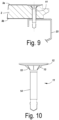
- the invention relates to a connection system, comprising a panel, a support for supporting the panel and an electrically conductive connecting member for fastening the panel and the support to each other, wherein the connecting member comprises a head and a shank with a tubular shaped part, having a first diameter and having preferably outer tread, and wherein the panel comprises at least a lignocellulose based substrate comprising an upper surface and a lower surface, and at least a first electrically conductive covering layer attached to the upper surface which, in a fastened position of the connection system, faces away from the support, wherein this first electrically conductive covering layer comprises electrically conductive material and said first covering layer has a lower electrical conductivity than the connecting member, wherein, in the fastened position of the connection system, the head contacts the first covering layer and the shank passes through the panel and is fastened to the support in such a way that the panel is retained between the head and the support, wherein preferably the head is provided with a flange which, in the fast
- Such a specific shaped connecting member is very suitable to conduct static electricity from the upper surface of the panel to the support.
- the panels can have matching coupling parts to connect said panels to each other.
- Said connecting member is preferably designed as a screw.
- Said connecting member can be made out of brass, (stainless) steel, iron, etc.
- the panel is a panel according to the first aspect and/or the third aspect and more preferably the panel is made according to a method according to the second aspect.
- the flange is circular shaped with a second diameter and the head further comprises a connecting part, which connects said flange to said shank, wherein said connecting part diverges from the shank towards the flange in such a way that at the height of the shank, the connecting part has a diameter similar or equal to the first diameter and with the same center, and that at the height of the flange, the connecting part has a third diameter which is at least twice the first diameter and at most 70 percent of the second diameter, and with the same center.
- said flange is in direct contact with the first covering layer.
- the shank may be provided with screw thread for screwing the shank into the support. This may be a self-tapping screw thread.
- the connecting part on its outward facing side, comprising protruding parts, for example protruding ribs, directed from the shank to the flange.
- protruding parts for example protruding ribs
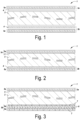
- FIGS 1 and 2 describe a first embodiment of a panel 1 according to the first aspect of the invention.
- This panel 1 comprises, seen from the top to the bottom, a top layer 3a, a wood based substrate 2, preferably particle board or MDF/HDF, and a bottom layer 3b.
- the top layer 3a and the bottom layer 3b are electrically conductive covering layers 3a, 3b as disclosed in the third aspect of the invention and also covering layers 3a, 3b as disclosed in the first aspect of the invention.
- the substrate 2 comprises an upper surface and a lower surface, with the top layer 3a directly adhered to the upper surface and the bottom layer 3b directly adhered to the lower surface.
- the upper surface and the bottom surface are preferably sanded surfaces.
- the top layer 3a seen from the top to the bottom, comprises a resin impregnated paper 5a and a metal layer 4, the resin impregnated paper 5a forming a finishing layer 5a which protects the metal layer 4.
- the bottom layer 3b comprises, seen from the top to the bottom, a metal layer 4 and a resin impregnated paper 5a, the resin impregnated paper 5a forming a finishing layer 5a which protects the metal layer 4.
- the thickness of the metal layer 4 of the top layer 3a is thinner than the thickness of the metal layer 4 of the bottom layer 3b.
- Both metal layers 4 preferably have been directly coated to respectively the upper surface and the lower surface of the substrate 2 and this by means of thermal spray coating by electrical arc wire.
- the metal layers 4 can be one layered, two layered or multilayered.
- the metal layer 4 of the top layer 3a is a thin metal layer 4 having a thickness of less than 10 ⁇ m, preferably less than 5 ⁇ m, more preferably less than 3 ⁇ m and is preferably one-layered.
- the function of this thin metal layer 4 is to provide antistatic properties to the top surface of the panel 1.
- This thin metal layer 4 preferably consists of copper, but it can also consist of a metal alloy comprising copper, such as a zinc/copper alloy. Of course this thin metal layer 4 could also consist of aluminum or another metal or metal alloy.
- the metal layer 4 of the bottom layer 3b is a thick metal layer 4 having a thickness of at least 30 ⁇ m, preferably at least 50 ⁇ m and more preferably at least 80 ⁇ m.
- the main function of this metal layer 4 is to provide fire retardant properties to the panel 1, but it can also contribute to the antistatic properties of the panel 1.
- This thick metal layer 4 can have one layer and can for example consist of aluminum or consist of a metal alloy comprising for example aluminum and zinc.
- This thick metal layer 4 can also comprise at least two sublayers, with the uppermost sublayer being more suitable to adhere to the substrate 2 and the lowermost sublayer being more suitable to adhere to the resin impregnated paper 5a.
- the resin impregnated papers 5a preferably comprise colored and/or printed papers, such that said resin impregnated papers 5a give the desired look to the panel 1. Further said resin impregnated papers 5a protect the respective metal layers 4.
- FIG. 3 shows a second embodiment of a panel 1 according to the first aspect of the invention.
- This panel 1 comprises from the top to the bottom, a top layer 3a, a substrate 2, which can have the same features of the substrate 2 of the first embodiment, and a bottom layer 3b.
- the top layer 3a and the bottom layer 3b are electrically conductive covering layers 3a, 3b as disclosed in the third aspect of the invention and the top layer 3a is also an upper covering layer 3a as disclosed in the first aspect of the invention.
- the substrate 2 comprises an upper surface and a lower surface, with the top layer 3a directly adhered to the upper surface and the bottom layer 3b directly adhered to the lower surface.
- the upper surface and the bottom surface are preferably sanded surfaces.
- the top layer 3a looks like the top layer 3a shown in figure 2 . All the features of the top layer 3a of the panel 1 of the first embodiment, also apply to the top layer 3a of the panel 1 of the second embodiment.
- the bottom layer 3b comprises two resin impregnated papers 6a comprising wear resistant particles 8 and antistatic/electrically conductive particles 7.
- the wear resistant particles 8 can be corundum and the antistatic/electrically conductive particles 7 can be alkali salts.
- the bottom layer 3b only comprises one such resin impregnated paper 6a are also possible.
- Embodiments were the said resin impregnated papers 6a do not comprise wear resistant particles 8 or do not comprise antistatic/electrically conductive particles 7 are also possible.
- both the top layer 3a and the bottom layer 3b comprise electrically conductive material, namely respectively the metal and/or metal alloy and the antistatic particles 7, said layers 3a, 3b are also electrically conductive layers and this panel 1 is also according to the third aspect of the invention.
- At least one of said resin impregnated papers 6a preferably comprises a colored and/or printed paper, such that said resin impregnated paper 6a gives the desired look to the panel 1.
- at least the lowermost resin impregnated paper 6a comprises said wear resistant particles 8 such as the protect the panel 1. More preferably both said resin impregnated papers 6a comprises said wear resistant particles 8, and further preferably said wear resistant particles 8 are located between both papers of said resin impregnated papers 6a. This is also the embodiment shown in figure 3 .
- Said wear resistant particles 8 cannot harm the press, should this panel 1 be made in a continue or discontinue press. Had there been a metal layer 4 present between said substrate 2 and the two resin impregnated papers 6a, said wear resistant particles 8 would also not harm said metal layer 4.
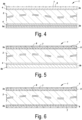
- FIG 4 describes a third embodiment of a panel 1 according to the first aspect of the invention.
- This panel 1 comprises, seen from the top to the bottom, a top layer 3a, a wood based substrate 2, which can be the same substrate 2 as in the first embodiment, and a bottom layer 3b.
- the top layer 3a and the bottom layer 3b are electrically conductive covering layers 3a, 3b as disclosed in the third aspect of the invention and also covering layers 3a, 3b as disclosed in the first aspect of the invention.
- the substrate 2 comprises an upper surface and a lower surface, with the top layer 3a directly adhered to the upper surface and the bottom layer 3b directly adhered to the lower surface.
- the upper surface and the bottom surface are preferably sanded surfaces.
- the top layer 3a seen from the top to the bottom, comprises a thermoplastic based layer 6b and a metal layer 4.
- This thermoplastic based layer 6b comprises thermoplastic material such as PVC, PP, PE or PET and wear resistant particles 8 and antistatic/electrically conductive particles 7.
- the wear resistant particles 8 can be corundum and the antistatic/electrically conductive particles 7 can be alkali salts.
- the thermoplastic based layer 6b forms a finishing layer 6b that protects said metal layer 4. Embodiments were the said thermoplastic based layer 6b does not comprise wear resistant particles 8 or does not comprise antistatic/electrically conductive particles 7 are also possible.
- the thermoplastic based layer 6b can directly adhere to said metal layer 4 or a separate glue (not shown) can be used.
- the bottom layer 3b comprises, seen from the top to the bottom, a metal layer 4 and a resin impregnated paper 5a.
- the thickness of the metal layer 4 of the top layer 3a is approximately the same as the thickness of the metal layer 4 of the bottom layer 3b.
- the said resin impregnated paper 5a can be the same resin impregnated paper 5a as shown in figure 2 at the bottom of said panel 1 and forms a finishing layer 5a that protects said metal layer 4.
- Both metal layers 4 preferably have been directly coated to respectively the upper surface and the lower surface of the substrate 2 and this by means of thermal spray coating by electrical arc wire.
- the metal layers 4 can have the same features as disclosed for the first embodiment. Since both the top layer 3a and the bottom layer 3b comprise metal, said layers 3a, 3b are also electrically conductive layers and this panel 1 is also according to the third aspect of the invention.
- FIG. 5 describes a fourth embodiment of a panel 1 according to the first aspect of the invention.
- This panel 1 comprises, seen from the top to the bottom, a top layer 3a, a wood based substrate 2, which can be the same substrate 2 as in the first embodiment, and a bottom layer 3b.
- the top layer 3a and the bottom layer 3b are electrically conductive covering layers 3a, 3b as disclosed in the third aspect of the invention and the bottom layer 3b forms a lower covering layer 3b as disclosed in the first aspect of the invention.
- the substrate 2 comprises an upper surface and a lower surface, with the top layer 3a directly adhered to the upper surface and the bottom layer 3b directly adhered to the lower surface.
- the upper surface and the bottom surface are preferably sanded surfaces.
- the top layer 3a comprises a resin impregnated paper 6a comprising wear resistant particles 8 and antistatic particles 7 as disclosed in figure 3 .
- the bottom layer 3b comprises, seen from the top to the bottom, a metal layer 4 and a thermoplastic based layer 5b.
- This thermoplastic based layer 5b can be plastic foil with a certain color and/or print.
- This thermoplastic based layer 5b forms a finishing layer 5b which protect the metal layer 4.
- the metal layer 4 can have the same characteristics as the metal layer 4 of the bottom layer 3b of the first embodiment. Since both the top layer 3a and the bottom layer 3b are electrically conductive layers, this panel 1 is also according to the third aspect of the invention.
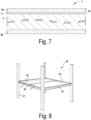
- FIG. 7 describes a fifth embodiment of a panel 1 according to the first aspect of the invention.
- This panel 1 comprises, seen from the top to the bottom, a top layer 3a, a wood based substrate 2, which can be the same substrate 2 as in the first embodiment, and a bottom layer 3b.
- the top layer 3a forms an upper covering layer 3a as disclosed in the first aspect of the invention.
- the substrate 2 comprises an upper surface and a lower surface, with the top layer 3a directly adhered to the upper surface and the bottom layer 3b directly adhered to the lower surface.
- the upper surface and the bottom surface are preferably sanded surfaces.
- the top layer 3a comprises a thermoplastic based layer 5b as disclosed in figure 5 and a metal layer 4.
- thermoplastic based layer 5b forms a finishing layer 5b which protects the metal layer 4.
- the bottom layer 3b comprises a thermoplastic based layer 5b which can have the same characteristics as the thermoplastic based layer 5b of the top layer 3a.
- This thermoplastic based layer 5b can be plastic foil with a certain color and/or print.
- the metal layer 4 can have the same characteristics as the metal layer 4 of the bottom layer 3b of the first embodiment.
- FIG. 6 shows an embodiment of a panel 1 according to the third aspect of the invention.
- This panel 1 comprises, seen from the top to the bottom, a top layer 3a, a wood based substrate 2, which can be the same substrate 2 as in the first embodiment, and a bottom layer 3b.
- the substrate 2 comprises an upper surface and a lower surface, with the top layer 3a directly adhered to the upper surface and the bottom layer 3b directly adhered to the lower surface.
- the upper surface and the bottom surface are preferably sanded surfaces.
- the top layer 3a and the bottom layer 3b both consist of a resin impregnated paper 6a comprising wear resistant particles 8 and antistatic particles 7 as disclosed in figure 3 , such that the top layer 3a and the bottom layer 3b are electrically conductive covering layers 3a, 3b.
- the wear resistant particles 8 are located on the side of the paper located towards the substrate 2, such that they are located between the respective paper and the substrate 2.
- the antistatic particles 7 are located on the side of the respective paper located away from the
- FIG 8 shows how the panels 1 shown in figures 1 to 7 can be used as mezzanine panels 1.
- the panels 1 are part of a connecting system 20 as disclosed in the fourth aspect of the invention.
- This connecting system 20 further comprises a support 21, 22, 23 comprising vertical beams 21 and horizontal beams 22, 23, for supporting the panels 1.
- Said panels 1 are further connected to said horizontal beams 22, 23 with electrically conductive screws 11 for fastening the panel 1 and the support 21, 22, 23 to each other.
- Said screw 11 comprises a head and a shank 14 with a tubular shaped part, having a first diameter and having preferably outer tread.
- the head contacts the top layer 3a of a said panel 1 and the shank 14 passes through the panel 1 and is fastened to the support 21, 22, 23 in such a way that the panel 1 is retained between the head and the support 21, 22, 23.
- the head is provided with a flange 12 which, in the fastened position of the connection system 20, bears against top layer 3a. This is visible in figure 9 .
- the flange 12 is circular shaped with a second diameter and the head further comprises a connecting part 13, which connects said flange 12 to said shank 14, wherein said connecting part 13 diverges from the shank 14 towards the flange 12 in such a way that at the height of the shank 14, the connecting part 13 has a diameter similar or equal to the first diameter and with the same centre, and that at the height of the flange 12, the connecting part 13 has a third diameter which is at least twice the first diameter and at most 70 percent of the second diameter, and with the same centre.
Landscapes
- Engineering & Computer Science (AREA)
- Architecture (AREA)
- Chemical & Material Sciences (AREA)
- Life Sciences & Earth Sciences (AREA)
- Civil Engineering (AREA)
- Structural Engineering (AREA)
- Wood Science & Technology (AREA)
- Physics & Mathematics (AREA)
- Plasma & Fusion (AREA)
- Chemical Kinetics & Catalysis (AREA)
- Materials Engineering (AREA)
- Mechanical Engineering (AREA)
- Metallurgy (AREA)
- Organic Chemistry (AREA)
- Forests & Forestry (AREA)
- Manufacturing & Machinery (AREA)
- Electromagnetism (AREA)
- Laminated Bodies (AREA)
Abstract
Description
- This invention relates to panels comprising a substrate, such as a wood fiber board or a particle board, and at least one covering layer attached to the upper surface or the lower surface of the substrate. This invention also relates to methods for producing such panels. This at least one covering layer preferably provides the panel with fire retardant properties and/or antistatic proprieties. With antistatic properties is indicated that the accumulation/buildup of static energy is prevented and/or minimized. Static charge could badly influence electronics present upon said panels due to a discharge of static electricity.
- In particular, this invention relates to load-bearing panels, more specifically mezzanine floor panels. However also other type of panels which require fire retardant properties, more specifically flame retardant properties, and/or the prevention of accumulation/buildup of static energy, such as furniture panels, wall panels or floor panels are envisaged in this invention.
- The above-mentioned so-called mezzanine panels are panels intended to be applied to a frame in order to form floors and/or stocking surfaces at desired heights. As is known, these are commonly used for the furnishing of warehouses and storage facilities in order thus to form stocking spaces at various levels. The frames usually consist of steel constructions that comprise horizontal beams placed at short distances from one another at the desired levels that support the mezzanine panels placed on them. Said mezzanine panels often have a particle board substrate, or a MDF/HDF substrate (medium density fiber board/high density fiber board).
- Different solutions for providing panels with the abovementioned desired characteristics are known.
- For providing panels with fire retardant properties, one could for example make use of panels comprising a fire retardant substrate, for example a fire retardant wood fiber board or a fire retardant particle board. Such a fire retardant substrate comprises fire retardant additives, for example flame retardant additives, that have been introduced during production of said substrate. Said fire retardant additives are for example phosphor comprising additives, such as ammonium phosphates - for example ammonium polyphosphate (APP) or mono-ammonium phosphates (MAP)-, phophinate based materials, melamine (poly)phosphate, aluminum trihydroxide or calcium silicate. A disadvantage of such fire retardant substrates, is that additional additives need to be used and this throughout the entire substrate. Since the substrate normally takes up a relatively large volume of the panel, such panels are costly. Also the additional fire retardant properties obtained with such a fire retardant substrate is limited and is often not enough for panels, such as mezzanine panels, which require high fire retardant properties.
- Additionally or another way to provide the panels with additional fire retardant properties and preferably sufficient flame retardant properties, is to provide the panel with at least one fire retardant layer, for example a flame retardant layer. Such a fire retardant layer, for example an aluminum foil, will normally cause the panel to show resistance to burning through and/or collapsing during a fire for a longer period than it would, if no such fire retardant layer were present and/or will reduce smoke production at least at the beginning of a fire. Depending on the use of the panel, this fire retardant layer could be attached to the upper surface of the substrate or this fire retardant layer could be attached to the lower surface of the substrate or two fire retardant layers could be respectively attached to the upper surface or the lower surface of the substrate. Such a panel is for example disclosed in
WO 2020141384 . This panel comprises an aluminum foil which is attached by a glue layer to the substrate. This panel has good fire retardant properties. However producing such a panel requires many steps, for example to attach said aluminum foil to the substrate a specific glue is needed. Also said aluminum foil is sensitive to scratches and the application of a scratch resistant layer upon said aluminum foil is difficult. Also if one wants to provide different classes of fire retardant panels, one needs to have different types of aluminum foil. Said scratch resistant layer can have various purposes, such as providing a well-maintained appearance, more specifically in a specified color, for example grey, providing greater resistance to abrasion, for example to abrasion resulting from motor vehicles moving over the panel, such as e.g. forklift trucks and AGVs (automated guided vehicles), increasing slip resistance, reduction of the adhesion of dirt and/or material deposition resulting from the wheels of transport vehicles, obtaining an easily cleanable surface; and so forth. A panel with a similar fire retardant layer is also disclosed inBE 1022653 - To prevent the accumulation/buildup of static energy, the panel is provided with a layer which is sufficiently electrically conductive, e.g. an antistatic/electrically conductive layer. This can for example be done with electrically conductive/antistatic additives and/or the material of the layer itself can be electrically conductive/antistatic. For example said panel can comprise a layer with melamine resin, wherein antistatic additives are dispersed in said melamine resin. Said additives can for example comprise salt, such as alkali salt. A panel comprising said antistatic additives is described in
WO 2004/050359 . A disadvantage is that the antistatic properties are the result of a salt, such that the antistatic properties will according to the humidity. In dry and cold environments, said additives are not able to provide the panel with sufficient antistatic properties. - Further if said panels are used to build a mezzanine, to conduct the electricity away from the panels, the mezzanine has the be installed in the correct manner. A possible installation of a mezzanine is shown in
WO2021001712 . - It is an object of the present invention to provide alternative panels, methods for manufacturing such panels and connecting systems comprising mezzanine panels, with said panels having fire retardant and/or antistatic properties. Preferably these panels and methods overcome one or more of the abovementioned problems.
- According to a first aspect, the invention relates to a panel, wherein said panel comprises at least a lignocellulose based substrate, such as a wood fiber board or a particle board, said substrate comprising an upper surface and a lower surface, and at least one covering layer attached to the upper surface or the lower surface, wherein said covering layer comprises a metal layer comprising metal and/or metal alloy, wherein said metal layer directly adheres to the respective surface of the substrate and forms a film or coating that covers said surface of the substrate, wherein preferably said covering layer further comprises a finishing layer which forms an outer side of the panel, wherein said metal layer adheres to said finishing layer, and wherein said metal layer preferably comprises at least 90 weight percentage by weight of metal or metal alloy.
- Said panel can be a load-bearing panel, for example a mezzanine floor panel. Said floor panel can also be a furniture panel or wall panel or floor panel.
- The substrate is a lignocellulose based substrate, preferably a wood based substrate. Well known examples of such substrates are wood fiber boards, such as MDF (medium density fiberboard) or HDF (high density fiberboards) or LDF (low density fiberboard) or hardboard or softboard. A said substrate can also be a wood particle board. Other examples are flax boards, hemp boards, OSB (oriented strand board), multiplex, a timber, etc. A said particle board can be one-layered, but can also be multi-layered, for example have three layers with a central layer with more coarse wood chips and two outer layers with finer wood chips. A said metal layer can better adhere to a layer comprising finer wood chips. This panel comprises a lignocellulose based substrate. Preferably said substrate only comprises a wood fiber board or a wood particle board or another lignocellulose based board. However said substrate can, in addition to a said wood fiber board or wood particle board or another lignocellulose based board, comprise one or more additional layers. Said one or more additional layers can be chosen of the list: lacquer layer, resin impregnated paper, plastic layer, a resin layer, or a coating layer.
- Depending on the type of panel and its desired use, one can have such a panel with only a said covering layer attached to the upper surface or only a said covering layer attached to the lower surface or two covering layers attached to respectively the upper surface and the lower surface. If two said covering layers are present, these can be or cannot be identical. If said covering layers are identical, they are preferably mirrored along the plane of the panel. For example if this panel needs fire retardant properties, one can decide only to have a covering layer for the surface of the panel that needs fire retardant properties, for example the surface of the wall panel that is intended to face the room in which it is installed or the bottom surface of the mezzanine panel. For example if this panel is a mezzanine panel and is desired to be used for its antistatic properties, one can choose only to have a covering layer attached to the upper surface. Of course it can be desired that both surfaces have fire retardant properties and/or antistatic properties. The panel can also have two covering layers, wherein one covering layer provides antistatic properties and the other fire retardant properties. The latter can be desired for mezzanine floor panels, wherein the upper surface is preferably antistatic and the lower surface fire retardant. Of course panels comprising one or two covering layers, wherein a said covering layer is desired for both antistatic properties and fire retardant properties are also desired. The antistatic properties also reduce the tendency of said panels to attract dust on its surface, as a result of which it must be cleaned less often. If only one said covering layer is present at one of said surfaces, then another layer which does not comprise a metal layer, could or could not be present at the opposite surface. This another layer can for example be a balancing layer, a decorative layer or a wear resistant layer.
- The substrate itself is preferably free of fire retardant additives. The metal layer can indeed provide a sufficient fire retardant effect to meet most of the demands made in practice. Of course, this does not exclude the possible use of fire retardant additives in the substrate in order to provide increased performance.
- The metal layer directly adheres to said surface. This means that no additional/intermediate glue layer is needed to attach the metal layer to the substrate. This indicates that the metal and/or metal alloy is in direct contact with the substrate, such that said metal and/or metal alloy is well capable of providing said panel with fire retardant and/or antistatic properties. Because of said metal layer, said panel will have greater resistance to burning through and/or said panel will only collapse during a fire after a longer period of time and/or at the beginning of a fire there will be less smoke production. Metal and/or metal alloy are electrically conductive, such that said panel obtains improved antistatic properties with said metal layer. Here no intermediate glue layer needs to be applied upon the said surface of the substrate. With the metal layer directly adhering to said surface is not excluded that the said surface has been subjected to any treatments before applying said metal layer. For example, said surface of the substrate can or cannot have undergone any mechanically and/or chemically treatment, before the application of said metal layer and this for example to improve the adherence of said metal layer and/or to ensure that the metal layer can be applied uniformly and/or sufficiently thin. For example the said surface can be sanded and/or planed and/or scraped and/or sandblasted. Additionally or alternatively, an impregnation agent or a lacquer or a coating can be applied upon said surface and this before applying said metal layer. The substrate can for example have an outer polymer coating, wherein said coating forms the upper surface or the lower surface of the substrate.
- Surprisingly it has been found that such a directly adhered metal layer is quite suitable to attach to another layer, such that the said finishing layer can be well applied. Preferably said finishing layer is applied to the metal layer without an additional glue layer, however the latter is not excluded. Surprisingly it has been found that said metal layer provides sufficient antistatic properties, even when a finishing layer is applied to it. A said metal layer is suitable to directly press resin impregnated papers upon it.
- Further the finishing layer, if present, protects the metal layer, such that the fire retardant and/or antistatic properties do not diminish over time. Said finishing layer can be a transparent layer, such that the metal layer is visible and the panel has a metallic look. However said finishing layer could also have a certain color and/or décor and provide the panel with the desired look. Said finishing layer could comprise wear resistant particles such as corundum or aluminum oxide. Said finishing layer could comprise antistatic additives, such as salts or metal fibers, to enhance the antistatic properties of the panel. Said finishing layer could comprise fire retardant additives, to enhance the fire retardant properties of the panel.
- In specific embodiments, the finishing layer could be absent. This is for example the case when wear resistance is not needed. If the covering layer forms the bottom of a mezzanine panel, one could choose not to have a finishing layer.
- Preferably the metal layer adheres to the surface in such a way that metal or metal alloy of the metal layer directly adheres to the lignocellulose based material, thus for example directly adheres to the wood fibers or wood chips. If the substrate consists of a wood fiber board or a wood particle board, then metal or metal alloy of said metal layer preferably directly adheres to wood fibers or the wood chips respectively. This provides excellent fire retardant properties and will ensure that the substrate will not burn quickly in case of fire.
- The substrate itself can be a fire retardant substrate, such as fire retardant MDF/HDF or fire retardant particle board. However with this metal layer, one does not require fire retardant substrates to have a panel with sufficient fire retardant properties.
- The metal layer can be single layered, but can also have two metal sublayers or three or more metal sublayers. If the metal layer comprises at least two metal sublayers, these metal sublayers can have the same composition, can for example comprise the same metal or metal alloy, or can have a different composition and thus comprise another metal or metal alloy. The latter can be useful if one metal sublayer is for example more suitable to adhere to wood based components, while the other metal sublayer is more suitable to adhere to the finishing layer. The choice for the type of metal layer will depend on the desired properties and will also depend upon the substrate and the finishing layer. A said single layered metal layer or a said metal sublayer is preferably a uniform metal layer, meaning that the composition of said metal layer is the same throughout the entire plane of said metal layer. However a said single layered metal layer or a said metal sublayer may also be not uniform. This means a said metal layer, can have at least two different parts which extend next to each other according to the plane of said metal layer, for example a part of first metal/metal alloy -e.g. copper- and a part of a second metal/metal alloy -e.g. aluminum/zinc alloy-. This can be advantageous if a said metal layer also forms an electrical circuit and/or needs magnetic properties at certain locations and/or requires different properties at different locations.
- Preferably this metal layer consists of metal and/or metal alloy.
- Also preferably this metal layer is free from sheets and/or free from reinforcement layers and/or free from wear resistant particles, such as corundum.
- The metal layer directly adheres to the respective surface of the substrate and forms a film or coating that covers said surface of the substrate. This film or coating could substantially completely cover said surface of the substrate and as such form a layer that almost completely separates the substrate from the finishing layer, if a said finishing layer is present. This will ensure that said finishing layer can be applied in a uniform matter and also each part of the panel will have the same reaction to fire/heat and/or static electricity. However said film or coating can also have openings/perforations. This can have advantages. For example the finishing layer could better adhere, fire retardant properties could be improved and less metal is needed.
- Said covering layer can be an antistatic layer and can have for example a resistance of between 10^5 ohm/m2 and 10^9 ohm/m2 or said covering layer can be a very conductive layer and have a resistance below 10^5 ohm/m2. Said covering layer can also have a resistance of more than >10^9 ohm/m2. Resistance can be measured with an ohm meter. The antistatic properties of the panel can be determined with the aid of ANSI/ESD S6.1.
- A panel according to the first aspect of the invention could for example have a fire class Bfl-s1 or B-s2 d0 according to the European Standard 13501-1.
- In a preferred embodiment said metal layer comprises aluminum and/or zinc and/or copper and/or nickel and/or silver and/or gold. The choice for a specific metal and/or metal alloy and/or to have one metal layer or two or more metal sublayers and/or to have uniform metal (sub)layers, will depend on certain factors. The factors can be chosen from one or more of the following list:
- price. For example copper is more expensive than zinc.
- conductivity. If the metal layer is applied for anti-static reasons, one could choose to apply a more conductive metal or metal alloy, with copper being for example a good conductor. If one wants to apply a very thin metal layer, one could choose for a more conductive metal or metal alloy.
- lamination properties. Some finishing layers can more easily be laminated to a specific metal or metal alloy. For example resin impregnated paper sheets, for example melamine impregnated paper sheets, will better adhere/laminate to a metal layer comprising zinc.
- For example a metal alloy comprising zinc can be used, for example a metal alloy comprising zinc and aluminum, with for example between 80 and 90 weight percentage zinc and between 10 and 20 weight percentage aluminum.
- fire retardant and/or antistatic properties. Aluminum provides good fire retardant properties and good antistatic properties.
- coating properties. Some metal or metal alloys can be more easily coated to a lignocellulose based substrate, to form said metal layer.
- thickness. If thin panels are desired, one could choose for better performing metals and/or metal alloys.
- One can choose for a metal layer with at least two metal sublayers and this because one metal sublayer can for example well attach to the substrate while the other metal sublayer is more suitable for laminating the finishing layer upon is. Another possibility or additionally, one metal sublayer has better antistatic properties and one metal sublayer can have better fire retardant properties.
- In a very preferred embodiment the metal or metal alloy has been directly coated upon said surface of the substrate to form said metal layer. This ensures a good and direct contact between the lignocellulose based substrate and the metal layer, such that good antistatic properties and/or fire retardant properties can be obtained. This coating can be done inline. This coating could have been done by spray coating said metal and/or metal alloy, preferably thermal spray coating, such as thermal spray coating by electrical arc wire. With spray coating, thin and uniform metal layers are obtained, which adheres and interact very well with for example the wood fibers or wood chips of a said lignocellulose based substrate. Also with the aid of spray coating different metal sublayers can be applied. Surprisingly, it was found that a said finishing layer adheres very well to a spray coated metal layer. Arc wire is standard available and with one type of arc wires different thicknesses can be applied. The coating could also have been applied using a roller, by means of curtain coating, by means of spreading, etc. By coating also non uniform metal layers can be easily applied.
- In a very preferred embodiment the said surface of the substrate upon which the covering layer is attached, is a sanded surface. This ensures a good adherence between the metal layer and the said surface and also the fire retardant and/or antistatic properties can be improved in comparison with a non-sanded surface. This because a sanded surface will provide said surface with a certain relief which ensures good adherence.
- In a preferred embodiment the metal layer has a thickness of at most 100 µm, preferably at most 50 µm and more preferably at most 10 µm. Said metal layer can be applied very thin, and still provide the required antistatic and/or fire retardant properties, and this because of its direct adherence to the substrate. The thickness will also depend on the used metal or metal alloy, the presence of one or two or more metal sublayers and the desired properties. It has been found that for antistatic properties the thickness could be less than 10 µm, for example 1, 2, 3, 4, 5, 6, 7, 8 or 9 µm. For example one can have a copper metal layer of at most 5 µm. For fire retardant properties the thickness will depend on the desired fire retardant properties. For example, for increased fire retardant properties, one could have a metal layer of at least 10 µm, preferably at least 20 µm, more preferably at least 50 µm and most preferably at least 80 µm. The advantage of this panel when the metal layer is a coated metal layer, is that one can easily apply the desired thickness and alter between panels with different thicknesses of metal layers according to the desired end product. Production can be very flexible.
- As already indicated the metal layer can be a one layered metal layer or a two layered metal layer comprising two metal sublayers. If said metal layer is a two layered metal layer, preferably one sublayer is coated on top of the other sublayer.
- In a preferred embodiment, the finishing layer comprises at least one wear layer to increase the wear resistance and/or scratch resistance, such as a resin impregnated paper layer or a plastic layer or a lacquer layer or a net/scrim (e.g. a glass fiber matting). Said at least one wear layer could also protect against oxidation. Said finishing layer can consist of one layer. Of course it is possible that said finishing layer comprises two or more layers, for example two or more wear layers. A said metal layer is sensitive to scratches. By applying a wear layer, said metal layer is well protected and thus suitable to perform its function throughout the entire life-time of the panel. A said wear layer, for example a resin impregnated paper, can or cannot have wear resistant particles such as corundum and/or aluminum oxide. Said wear resistant particles preferably do not directly contact said metal layer, such that said metal layer cannot be damaged by said wear resistant particles. This can be done by providing a finishing layer with at least two resin impregnated papers, wherein the resin impregnated paper closest to the metal layer does not comprise said wear resistant particles. This can also be done by having one or two resin impregnated papers with only wear resistant particles at the height of one side of the paper. For example if one said resin impregnated paper is directly attached to said metal layer, the side of the paper which does not comprise wear resistant particles, is situated at the height of the metal layer. For example if two said resin impregnated paper are directly attached to said metal layer, the sides of the papers which comprise said wear resistant particles can be directed to each other such that said wear resistant particles are situated between the two paper layers of said resin impregnated papers. Another option is to attach the finishing layer with an additional glue layer to the metal layer. Said additional glue layer can consist of glue free from wear resistant particles or said additional glue layer can be a resin impregnated paper or a sheet that is free from wear resistant particles. The wear layer can be a plastic sheet with a sufficient thickness to provide the required wear resistance. This plastic sheet can be a thermoplastic sheet comprising PVC (polyvinylchloride), PP (polypropylene), PET (polyethyleneterephthalate), etc. The lacquer layer can be an UV curable lacquer layer and/or a PU (polyurethane) lacquer layer.
- In a specific embodiment the finishing layer at least comprises one décor layer, such as a resin impregnated printed paper or a printed plastic foil or a resin impregnated colored paper. With the aid of this décor layer, said panel can have the desired look. Also other décor layers are possible, for example a timber layer or a veneer layer. This one décor layer could also be a print layer directly printed upon the metal layer or directly printed upon another layer of the finishing layer, for example digitally printed. The direct printing of said print layer upon the metal layer can be done in one step or multiple steps, for example first a primer can be printed upon the metal layer and later inks can be printed.
- A said finishing layer can comprise one or more of the following layers, as long as not contradictory:
- a resin impregnated paper layer
- a thermoplastic based layer, being a layer comprising thermoplastic material as a binder material and optionally inorganic/organic fillers and optionally plasticizers material wherein the thermoplastic material can or cannot make up at least half of the weight of said layer, with the thermoplastic material being for example PVC, PP, PE, PET;
- a lacquer layer, which has been for example UV and/or heat cured;
- a veneer layer;
- an oil layer;
- a timber layer;
- a print layer, for example a print layer obtained by direct printing or a printed sheet or a printed paper. The printing can be done digitally or analogously;
- a kraft paper layer;
- a wear layer comprising for example wear resistant particles such as aluminum oxide particles or corundum;
- a foamed layer;
- a transparent layer;
- a scrim or a net, such as a glass fiber scrim.
- The finishing layer can directly adhere to the metal layer.
- In a specific embodiment the finishing layer is attached to the metal layer by an additional glue layer, for example a glue layer comprising a thermoset glue or a thermoplastic glue. This additional glue layer can be a glue impregnated sheet or not. For example the finishing layer can be a HPL (high pressure laminate) comprising different resin impregnated papers, such as a wear layer, a décor layer and additional kraft paper layers, wherein this HPL is made, namely pressed, separately and wherein this HPL is glued upon the metal layer. The gluing can be done with the aid of a continue or discontinue press. Of course instead of using an additional glue layer, said resin impregnated papers can be all pressed together with the substrate with the metal layer, for example a wear layer, a décor layer, the substrate with the coated metal layer, are all pressed at once, and this in a continue press or a discontinue press. If use is made of a discontinue press, a daylight press could be used, also referred to as a KT press (an abbreviation of the German for "short cycle press").
- In a specific embodiment the finishing layer comprises a scrim or a net, such as a glass fiber scrim. This scrim or net can provide reinforcement to the panel and/or said scrim or net can provide additional fire retardant properties. This scrim or net can or cannot be embedded in resin, for example embedded in melamine resin or phenol resin.
- In a specific embodiment the metal layer is a magnetic layer. With such a metal layer, the panel surface can have magnetic properties. Nowadays walls or furniture get painted with magnetic paint. However this is an additional treatment and magnetic paint is expensive. With the aid of this specific embodiment one can easily provide the panel, such as the wall panel or the furniture panel, with the required properties. Also if said metal layer is a coated metal layer, for example a spray coated metal layer, one can easily switch between different types of metal layers that need to be coated, such that one applies the desired metal layer. For example, for panels that will be used to form a wall or a furniture, one could only provide some panels (in part) with a magnetic layer and other panels with other metal layers and/or no metal layers. For example the metal coating machine could be present in the production line, but could only apply a said metal layer to the desired panels or parts of said desired panels. In this embodiment, it is possible that fire retardant and/or antistatic properties are not required, such that for this metal layer one should then not take into account these properties and it could be possible that this metal layer does not significantly add to the fire retardant and/or antistatic properties of the panel. For example, one could choose to apply a very thin magnetic layer and could have for example other measures to provide for flame-retardant properties and/or antistatic properties.
- The at least one covering layer could be attached to the upper surface and form an upper covering layer.
- The at least one covering layer could be attached to the lower surface panel and form a lower covering layer.
- The panel could comprise two said covering layers, wherein one of said covering layers is attached to the upper surface and forms an upper covering layer and the other of said covering layers is attached to the lower surface and forms a lower covering layer. Further the said upper covering layer and the said lower covering layer could or could not be identical, or could at least have similar metal layers and/or similar finishing layers. If the covering layers perform the same or identical functions, for example if both said covering layers are provided for their antistatic and/or fire retardant and/or aesthetic properties, then said covering layers are preferably identical and mirrored with regard to the plane of the panel. However, it is also possible that the upper surface of the panel should have antistatic properties, while the bottom surface of the panel has fire retardant properties. Of course the covering layers could be taylor made for their required properties. If the metal layer is provided by coating, for example spray coating, one can easily choose for the required thickness and/or the number of sublayers and/or the applied metal or metal alloy.
- In an embodiment the finishing layer comprises electrically conductive additives. Examples of such electrically conductive additives are salts, such as alkali salts, or metal (alloy) particles and/or conductive fibers and/or esters, such as carbonic acid esters. With the aid of said electrically conductive additives, said finishing layer could contribute to the antistatic properties of the panel. For example with the aid of such a finishing layer, one could apply a thinner metal layer, or apply a metal layer comprising a metal or metal alloy which is less conductive but for example less expensive.
- According to a preferred embodiment the panel is provided on the edges thereof with a tongue and groove profiling. However, unprofiled sides, such as straight sides, are not excluded.
- According to a first variant of the first aspect of the invention, instead of a lignocellulose based substrate, the substrate could be any other type of a rigid substrate. For example the substrate could comprises PUR (polyurethane)/PIR (polyisocyanurate) waste and a binder. Preferably this PUR waste or this PIR waste, is rigid PUR waste or rigid PIR waste. Rigid PUR and rigid PIR are used as insulation, for example for insulation panels or insulation roof elements. This waste can be from production, installation, transport, etc. but also from end-of-life insulation panels or insulation roof elements. It has been found that such rigid PIR/PUR can be shredded, and that this shredded PIR/PUR can be adhered with the aid of a binder and pressed into board. The binder can be an isocyanate glue, such as methylene diphenyl diisocyanate (MDI) glue or polymeric methyl diphenyl diisocyanate (pMDI) glue. Such boards have excellent waterproof properties and have a certain strength. Surprisingly it has been found that such boards can be used as an alternative substrate to the lignocellulose based substrate of the first aspect of the invention. A metal layer can for example be coated, preferably spray coated, upon said board. This metal layer ensures that other layers, such as resin impregnated paper layers can well adhere to the board. The substrate can also be a mineral based substrate, such as a MgO substrate, a cement fiber board or a gypsum fiber board. The substrate could also be a rigid thermoplastic based substrate, such as a substrate comprising inorganic fillers, such as chalk or limestone, and a thermoplastic material as a binder, such as PVC, wherein the weight ratio inorganic fillers to thermoplastic material is preferably higher than 1. All the embodiments described for the first aspect of the invention, also apply to this first variant.
- According to a second variant of the first aspect of the invention, instead of a film or coating, the metal layer forms an electrical circuit. Electricity can here be conducted according to a desired path and this for example to an electric equipment that has been attached to the panel. With the aid of such a panel, lighting elements can be fitted to said panel, or charging points can be available upon said panel. This second variant can also be according to the first variant and can thus have, instead of a lignocellulose based substrate, a said other rigid substrate. A said covering layer of this second variant could or could not comprise a said finishing layer.
- According to a second aspect, the invention relates to a method for the production of panels comprising a lignocellulose based substrate, such as a wood fiber board or a particle board, said substrate comprising an upper surface and a lower surface, and comprising at least one covering layer attached to the upper surface or the lower surface, wherein said covering layer comprises metal, wherein said method comprising the following steps:
- providing a lignocellulose substrate material comprising an upper surface and a lower surface;
- coating metal and/or metal alloy upon the upper surface and/or the lower surface to form a metal layer;
- preferably applying a finishing layer upon said metal layer, said finishing layer preferably comprising a wear resistant layer to provide wear resistance and/or scratch resistance.
- It has been found that a metal layer which has been coated upon a lignocellulose based substrate, provides said substrate, and therefore the panel itself, with improved fire resistant and/or antistatic properties. This because the metal or metal alloy is in direct contact with the said substrate. The preferred finishing layer, and more particularly the preferred wear resistant layer, protects the metal layer from scratches and/or damages, such that throughout the lifetime of the panel, the metal layer can perform its function. With the aid of this method, a panel according to the first aspect of the invention can be obtained. All the features and embodiments described for the first aspect, also apply to this second aspect. All features relating to the second aspect, could thus also apply to the first aspect.
- Preferably, after the coating of the metal and/or metal alloy upon the upper surface and/or the lower surface to form said metal layer, the other layers of the said panel, for example a said finishing layer, are attached to said coated substrate in one and the same pressing operation. If only one said metal layer is present upon the upper surface or the lower surface, then an additional layer upon respectively the lower surface or the upper surface can also be present. Preferably the finishing layer and said additional layer are then attached to the coated substrate in the same pressing operation.
- Preferably, the coating of metal and/or metal alloy is done by spray coating said metal and/or metal alloy, preferably thermal spray coating, such as thermal spray coating by electrical arc wire. With spray coating, one could apply said metal and/or metal alloy in a very precise manner and also with the desired thickness. With spray coating, one could apply uniform metal (sub)layers and also non uniform metal (sub)layers. For thermal spray coating by electrical arc wire, one has to provide wires of the desired metal or metal alloy. One can very easily provide the desired type of wire, for example wires consisting of aluminum, wires consisting of copper, wires consisting of zinc, wires consisting of zinc/copper alloy, wires consisting of nickel, wires comprising gold, wires consisting of silver, etc. For wires consisting of one metal, this indicates that said wire is substantially pure and preferably has at least 99 weight percentage of said metal. For example a copper wire can comprise 99,9 weight percentage copper, with the other 0,1 weight percentage being impurities. Thermal spray coating by arc wire is thus a very flexible method step, such that the desired metal layer can always be applied in the correct manner. Further with thermal spray coating by arc wire, one can easily apply two or more sublayers of metal or metal alloy to form said metal layer.
- In a specific embodiment the finishing layer at least comprises a layer comprising a sheet, such as a resin impregnated paper sheet and/or a plastic sheet, wherein said finishing layer or at least said sheet of the finishing layer is preferably laminated upon said metal layer. Said finishing layer or at least said sheet of the finishing layer can be directly laminated upon said metal layer, indicating that no additional glue or glue layer is used. Of course indirect lamination, meaning that an additional glue or glue layer is used, is also possible. Surprisingly, it has been found that such a coated metal layer is very suitable to attach other layers to it by lamination. The coating of a metal layer can therefore be very easily implemented in existing production lines. For example if the panel is a mezzanine panel, a wall panel or furniture panel, then a coating device capable of coating said metal layer can be very easily placed between the production devices of a particle board substrate or MDF/HDF board and the devices which ensure lamination of a said finishing layer comprising one or more resin impregnated papers. A said resin impregnated paper sheet and/or a plastic sheet can be a wear layer and/or a décor layer. For example it can be a printed paper sheet or a printed plastic sheet or a colored sheet, and as such provide the panel with the desired appearance. It can comprise wear resistant particles such as aluminum oxide or corundum. If this is the case, it is preferred that the wear resistant particles do not directly contact the metal layer. This can be done by providing an additional layer between said metal layer and said layer comprising wear resistant particles. This can also be done by providing the wear resistance particles on one side of the paper or sheet (if present), and this at the height of the side of said paper or sheet which faces away from the metal layer. Use can be made of a sufficiently thick plastic sheet to provide the required wear resistance. A décor can also be directly print upon the metal layer, wherein said direct print than forms a print layer.
- In a specific embodiment the finishing layer is attached to the metal layer by an additional glue layer. This can be the case if the finishing layer is a HPL or comprises a veneer/timber.
- In a specific embodiment the wear resistant layer comprises a scratch resistance lacquer layer, wherein said lacquer layer is preferably coated, for example spray coated. Spray coating of said lacquer layer can be done directly upon said metal layer.
- According to a third aspect, the invention relates to a panel, more specifically a load-bearing panel, and even more specifically a mezzanine floor panel, wherein this panel comprises a lignocellulose based substrate, such as a wood fiber board or a particle board, said substrate comprising an upper surface and a lower surface, and at least a first electrically conductive covering layer attached to the upper surface, said first electrically conductive layer comprising electrically conductive material, wherein the panel comprises a second electrically conductive covering layer attached to the lower surface, said second electrically conductive covering layer comprising electrically conductive material.
- A said electrically conductive covering layer is capable of conducting electricity and can therefore also be indicated as an antistatic layer. Said panels are suitable to be used as load-bearing panels, such as mezzanine floor panels. In the state of the art said panels comprise an upper surface which is preferably electrically conductive and these panels are typically connected to a metal frame with specific metallic connecting elements, such that static electricity, which can for example be generated by AGV's (Automated Guided Vehicles) that move upon said panels, can be conducted to the ground surface. A disadvantage is that one needs specific metallic connecting elements and that connecting said panels with such connecting elements to the metal frame is time consuming. Surprisingly we found that by also providing the lower surface with an electrically conductive layer, one does no longer require specific metallic connecting element to connect said panels with metal frames, if one wishes good antistatic properties. Here such panels can be connected with metallic frame elements by bolts or screws that are generally available. The only requirement is that these bolts or screws are electrically conductive, for example made from metal or metal coated.
- Said electrically conductive layers can be identical layers and are then preferably mirrored with regard to a plane of the panel, but this is not a requirement. In an embodiment the conductivity of said layers is similar. In another embodiment the conductivity of said layers is not similar.
- In the prior art, to have sufficient antistatic properties, specific connecting members were used to conduct the electricity away from mezzanine panels. For example said connecting member could comprise a copper nut and a specific screw. Surprisingly, we found that by not only providing one electrically conductive layer, but two electrically conductive layers, said panels can be connected with standard connecting elements, such as screws comprising metal and this without the risk that static electricity will accumulate.
- In a very specific embodiment the first and/or the second covering layer comprise melamine or another thermoset resin. Such covering layers can be easily applied to the lignocellulose based substrate, for example laminated to it with the aid of a continue or discontinue press. The covering layer can for example comprise a melamine resin impregnated paper sheet.
- Preferably the first and/or the second covering layer comprises electrically conductive additives. These conductive additives could comprise salts, such as alkali salts, or metal (alloy) particles and/or conductive fibers and/or esters, such as carbonic acid esters. Further preferably the first and/or the second covering layer comprise a resin impregnated paper, wherein said conductive additives are at least partially embedded in the resin. The resin is preferably a thermoset resin and can be for example be a melamine resin. Said conductive additives could also be named antistatic additives. For example the conductive additives could be antistatic particles.
- In a specific embodiment the first and/or the second covering layer can comprise conductive polymers. For example the first and/or second covering layer can comprise an intrinsically conductive polymer sublayer, for example a polyaniline layer.
- Further a said resin impregnated paper sheet could comprise wear resistant particles, such as aluminum oxide or corundum. For example the covering layer could comprise one resin impregnated paper with wear resistant particles. If said one resin impregnated paper with wear resistant particles forms the outer layer of the panels, said wear resistant particles are preferably located at the side of the paper located closed to the substrate. Said covering layer could also comprise two resin impregnated papers with wear resistant particles that are connected on top of each other. In this case preferably, the wear resistant layers of both resin impregnated papers are located between said two papers.
- In a specific embodiment the first and/or the second covering layer comprises a metal layer which forms at least partially said electrically conductive material, wherein said metal layer is for example a metal foil or a metal coating. Said metal layer could be a metal coating comprising metal and/or metal alloy. Preferably said metal layer is directly attached to the substrate, such that the panel is also a panel according to the first aspect of the invention. The panel is then preferably made with a method according to the second aspect of the invention. The metal layer could also be a metal foil, such as an aluminum foil, which is attached to the substrate with a separate glue layer. This aluminum foil could have a thickness of between 10 µm and 100 µm.
- In a specific embodiment the first and/or the second covering layer comprises a scrim or a net, such as a glass fiber scrim. This scrim or net can provide reinforcement to the panel and/or said scrim or net can provide fire retardant properties. This scrim or net can or cannot be embedded in resin, for example embedded in melamine resin or a phenol resin.
- According to a variant of the third aspect, instead of a lignocellulose based substrate, the substrate can be another rigid substrate. For example the substrate can comprise PUR/PIR waste and a binder. Preferably this PUR waste or this PIR waste, is rigid PUR waste or rigid PIR waste. Rigid PUR and rigid PIR are used as insulation, for example for insulation panels or insulation roof elements. This waste can be from production, installation, transport, etc. but also from end-of-life insulation panels or insulation roof elements. It has been found that such rigid PIR/PUR can be shredded, and that this shredded PIR/PUR can be adhered with the aid of a binder and pressed into a board. The binder can be an isocyanate glue, such as methylene diphenyl diisocyanate (MDI) glue or polymeric methyl diphenyl diisocyanate (pMDI) glue. Such boards have excellent waterproof properties and have a certain strength. Surprisingly it has been found that such boards can be used as an alternative substrate to the lignocellulose based substrate of the third aspect of the invention. The substrate can also be a mineral based substrate, such as a MgO substrate, a cement fiber board or a gypsum fiber board. The substrate could also be a rigid thermoplastic based substrate, such as a substrate comprising inorganic fillers, such as chalk or limestone, and a thermoplastic material as a binder, such as PVC, wherein the weight ratio inorganic fillers to thermoplastic material is preferably higher than 1. All the embodiments described for the third aspect of the invention, also apply to this variant.
- According to a preferred embodiment, the panel is provided on the edges thereof with a tongue and groove profiling. However, unprofiled sides, such as straight sides, are not excluded.
- According to a fourth aspect, the invention relates to a connection system, comprising a panel, a support for supporting the panel and an electrically conductive connecting member for fastening the panel and the support to each other, wherein the connecting member comprises a head and a shank with a tubular shaped part, having a first diameter and having preferably outer tread, and wherein the panel comprises at least a lignocellulose based substrate comprising an upper surface and a lower surface, and at least a first electrically conductive covering layer attached to the upper surface which, in a fastened position of the connection system, faces away from the support, wherein this first electrically conductive covering layer comprises electrically conductive material and said first covering layer has a lower electrical conductivity than the connecting member, wherein, in the fastened position of the connection system, the head contacts the first covering layer and the shank passes through the panel and is fastened to the support in such a way that the panel is retained between the head and the support, wherein preferably the head is provided with a flange which, in the fastened position of the connection system, bears against first covering layer. Such a specific shaped connecting member is very suitable to conduct static electricity from the upper surface of the panel to the support. The panels can have matching coupling parts to connect said panels to each other. Said connecting member is preferably designed as a screw. Said connecting member can be made out of brass, (stainless) steel, iron, etc.
- In a very preferred embodiment, the panel is a panel according to the first aspect and/or the third aspect and more preferably the panel is made according to a method according to the second aspect.
- In a preferred embodiment the flange is circular shaped with a second diameter and the head further comprises a connecting part, which connects said flange to said shank, wherein said connecting part diverges from the shank towards the flange in such a way that at the height of the shank, the connecting part has a diameter similar or equal to the first diameter and with the same center, and that at the height of the flange, the connecting part has a third diameter which is at least twice the first diameter and at most 70 percent of the second diameter, and with the same center. Preferably said flange is in direct contact with the first covering layer. The shank may be provided with screw thread for screwing the shank into the support. This may be a self-tapping screw thread.
- Further preferably, the connecting part, on its outward facing side, comprising protruding parts, for example protruding ribs, directed from the shank to the flange. Such a screw can be well applied at the desired height into the panel and will adhere very good in the panel.
- With the intention of better showing the characteristics of the invention, herein below, as an example without any limitative character, some embodiments are described, with reference to the following figures:
-
figure 1 is an exploded view of a cross section of a panel according to a first embodiment of the first aspect of the invention, which is also according to the third aspect; -
figure 2 is a cross section of the panel shown infigure 1 ; -
figure 3 is a cross section of a panel according to a second embodiment of the first aspect of the invention, wherein this panel is also according to the third aspect; -
figure 4 is a cross section of a panel according to a third embodiment of the first aspect of the invention, wherein this panel is also according to the third aspect; -
figure 5 is a cross section of a panel according to a fourth embodiment of the first aspect of the invention, wherein this panel is also according to the third aspect; -
figure 6 is a cross section of a panel according to the third aspect of the invention; -
figure 7 is a cross section of a panel according to a fifth embodiment of the first aspect of the invention; -
figure 8 is a schematic view of a connection system according to the fourth aspect of the invention, comprising panels according to the first and/or third aspect of the invention; -
figure 9 is a detailed view offigure 8 , showing the connection between a panel and a support with a specific screw; -
figure 10 is a front view of the screw shown infigure 9 . -
Figures 1 and 2 describe a first embodiment of apanel 1 according to the first aspect of the invention. Thispanel 1 comprises, seen from the top to the bottom, atop layer 3a, a wood basedsubstrate 2, preferably particle board or MDF/HDF, and abottom layer 3b. Thetop layer 3a and thebottom layer 3b are electricallyconductive covering layers layers substrate 2 comprises an upper surface and a lower surface, with thetop layer 3a directly adhered to the upper surface and thebottom layer 3b directly adhered to the lower surface. The upper surface and the bottom surface are preferably sanded surfaces. Thetop layer 3a, seen from the top to the bottom, comprises a resin impregnatedpaper 5a and ametal layer 4, the resin impregnatedpaper 5a forming afinishing layer 5a which protects themetal layer 4. Thebottom layer 3b comprises, seen from the top to the bottom, ametal layer 4 and a resin impregnatedpaper 5a, the resin impregnatedpaper 5a forming afinishing layer 5a which protects themetal layer 4. As can be seen formfigures 1 and 2 the thickness of themetal layer 4 of thetop layer 3a, is thinner than the thickness of themetal layer 4 of thebottom layer 3b. - Both
metal layers 4 preferably have been directly coated to respectively the upper surface and the lower surface of thesubstrate 2 and this by means of thermal spray coating by electrical arc wire. The metal layers 4 can be one layered, two layered or multilayered. Themetal layer 4 of thetop layer 3a is athin metal layer 4 having a thickness of less than 10 µm, preferably less than 5 µm, more preferably less than 3 µm and is preferably one-layered. The function of thisthin metal layer 4 is to provide antistatic properties to the top surface of thepanel 1. Thisthin metal layer 4 preferably consists of copper, but it can also consist of a metal alloy comprising copper, such as a zinc/copper alloy. Of course thisthin metal layer 4 could also consist of aluminum or another metal or metal alloy. Themetal layer 4 of thebottom layer 3b is athick metal layer 4 having a thickness of at least 30µm, preferably at least 50 µm and more preferably at least 80 µm. The main function of thismetal layer 4 is to provide fire retardant properties to thepanel 1, but it can also contribute to the antistatic properties of thepanel 1. Thisthick metal layer 4 can have one layer and can for example consist of aluminum or consist of a metal alloy comprising for example aluminum and zinc. Thisthick metal layer 4 can also comprise at least two sublayers, with the uppermost sublayer being more suitable to adhere to thesubstrate 2 and the lowermost sublayer being more suitable to adhere to the resin impregnatedpaper 5a. Since both thetop layer 3a and thebottom layer 3b comprise metal, saidlayers panel 1 is also according to the third aspect of the invention. The resin impregnatedpapers 5a preferably comprise colored and/or printed papers, such that said resin impregnatedpapers 5a give the desired look to thepanel 1. Further said resin impregnatedpapers 5a protect the respective metal layers 4. -
Figure 3 shows a second embodiment of apanel 1 according to the first aspect of the invention. Thispanel 1 comprises from the top to the bottom, atop layer 3a, asubstrate 2, which can have the same features of thesubstrate 2 of the first embodiment, and abottom layer 3b. Thetop layer 3a and thebottom layer 3b are electricallyconductive covering layers top layer 3a is also anupper covering layer 3a as disclosed in the first aspect of the invention. Thesubstrate 2 comprises an upper surface and a lower surface, with thetop layer 3a directly adhered to the upper surface and thebottom layer 3b directly adhered to the lower surface. The upper surface and the bottom surface are preferably sanded surfaces. As can be seen infigure 3 thetop layer 3a looks like thetop layer 3a shown infigure 2 . All the features of thetop layer 3a of thepanel 1 of the first embodiment, also apply to thetop layer 3a of thepanel 1 of the second embodiment. Thebottom layer 3b comprises two resin impregnatedpapers 6a comprising wearresistant particles 8 and antistatic/electricallyconductive particles 7. The wearresistant particles 8 can be corundum and the antistatic/electricallyconductive particles 7 can be alkali salts. Of course embodiments wherein thebottom layer 3b only comprises one such resin impregnatedpaper 6a are also possible. Embodiments were the said resin impregnatedpapers 6a do not comprise wearresistant particles 8 or do not comprise antistatic/electricallyconductive particles 7 are also possible. Since both thetop layer 3a and thebottom layer 3b comprise electrically conductive material, namely respectively the metal and/or metal alloy and theantistatic particles 7, saidlayers panel 1 is also according to the third aspect of the invention. At least one of said resin impregnatedpapers 6a preferably comprises a colored and/or printed paper, such that said resin impregnatedpaper 6a gives the desired look to thepanel 1. Further at least the lowermost resin impregnatedpaper 6a comprises said wearresistant particles 8 such as the protect thepanel 1. More preferably both said resin impregnatedpapers 6a comprises said wearresistant particles 8, and further preferably said wearresistant particles 8 are located between both papers of said resin impregnatedpapers 6a. This is also the embodiment shown infigure 3 . Said wearresistant particles 8 cannot harm the press, should thispanel 1 be made in a continue or discontinue press. Had there been ametal layer 4 present between saidsubstrate 2 and the two resin impregnatedpapers 6a, said wearresistant particles 8 would also not harm saidmetal layer 4. -
Figure 4 describes a third embodiment of apanel 1 according to the first aspect of the invention. Thispanel 1 comprises, seen from the top to the bottom, atop layer 3a, a wood basedsubstrate 2, which can be thesame substrate 2 as in the first embodiment, and abottom layer 3b. Thetop layer 3a and thebottom layer 3b are electricallyconductive covering layers layers substrate 2 comprises an upper surface and a lower surface, with thetop layer 3a directly adhered to the upper surface and thebottom layer 3b directly adhered to the lower surface. The upper surface and the bottom surface are preferably sanded surfaces. Thetop layer 3a, seen from the top to the bottom, comprises a thermoplastic basedlayer 6b and ametal layer 4. This thermoplastic basedlayer 6b comprises thermoplastic material such as PVC, PP, PE or PET and wearresistant particles 8 and antistatic/electricallyconductive particles 7. The wearresistant particles 8 can be corundum and the antistatic/electricallyconductive particles 7 can be alkali salts. The thermoplastic basedlayer 6b forms afinishing layer 6b that protects saidmetal layer 4. Embodiments were the said thermoplastic basedlayer 6b does not comprise wearresistant particles 8 or does not comprise antistatic/electricallyconductive particles 7 are also possible. The thermoplastic basedlayer 6b can directly adhere to saidmetal layer 4 or a separate glue (not shown) can be used. Thebottom layer 3b comprises, seen from the top to the bottom, ametal layer 4 and a resin impregnatedpaper 5a. As can be seen, the thickness of themetal layer 4 of thetop layer 3a is approximately the same as the thickness of themetal layer 4 of thebottom layer 3b. Of course embodiments were said thicknesses are not the same are also possible. The said resin impregnatedpaper 5a can be the same resin impregnatedpaper 5a as shown infigure 2 at the bottom of saidpanel 1 and forms afinishing layer 5a that protects saidmetal layer 4. - Both
metal layers 4 preferably have been directly coated to respectively the upper surface and the lower surface of thesubstrate 2 and this by means of thermal spray coating by electrical arc wire. The metal layers 4 can have the same features as disclosed for the first embodiment. Since both thetop layer 3a and thebottom layer 3b comprise metal, saidlayers panel 1 is also according to the third aspect of the invention. -
Figure 5 describes a fourth embodiment of apanel 1 according to the first aspect of the invention. Thispanel 1 comprises, seen from the top to the bottom, atop layer 3a, a wood basedsubstrate 2, which can be thesame substrate 2 as in the first embodiment, and abottom layer 3b. Thetop layer 3a and thebottom layer 3b are electricallyconductive covering layers bottom layer 3b forms alower covering layer 3b as disclosed in the first aspect of the invention. - The
substrate 2 comprises an upper surface and a lower surface, with thetop layer 3a directly adhered to the upper surface and thebottom layer 3b directly adhered to the lower surface. The upper surface and the bottom surface are preferably sanded surfaces. - The
top layer 3a comprises a resin impregnatedpaper 6a comprising wearresistant particles 8 andantistatic particles 7 as disclosed infigure 3 . Thebottom layer 3b comprises, seen from the top to the bottom, ametal layer 4 and a thermoplastic basedlayer 5b. This thermoplastic basedlayer 5b can be plastic foil with a certain color and/or print. This thermoplastic basedlayer 5b forms afinishing layer 5b which protect themetal layer 4. Themetal layer 4 can have the same characteristics as themetal layer 4 of thebottom layer 3b of the first embodiment. Since both thetop layer 3a and thebottom layer 3b are electrically conductive layers, thispanel 1 is also according to the third aspect of the invention. -
Figure 7 describes a fifth embodiment of apanel 1 according to the first aspect of the invention. Thispanel 1 comprises, seen from the top to the bottom, atop layer 3a, a wood basedsubstrate 2, which can be thesame substrate 2 as in the first embodiment, and abottom layer 3b. Thetop layer 3a forms anupper covering layer 3a as disclosed in the first aspect of the invention. Thesubstrate 2 comprises an upper surface and a lower surface, with thetop layer 3a directly adhered to the upper surface and thebottom layer 3b directly adhered to the lower surface. The upper surface and the bottom surface are preferably sanded surfaces. Thetop layer 3a comprises a thermoplastic basedlayer 5b as disclosed infigure 5 and ametal layer 4. This thermoplastic basedlayer 5b forms afinishing layer 5b which protects themetal layer 4. Thebottom layer 3b comprises a thermoplastic basedlayer 5b which can have the same characteristics as the thermoplastic basedlayer 5b of thetop layer 3a. This thermoplastic basedlayer 5b can be plastic foil with a certain color and/or print. Themetal layer 4 can have the same characteristics as themetal layer 4 of thebottom layer 3b of the first embodiment. -
Figure 6 shows an embodiment of apanel 1 according to the third aspect of the invention. Thispanel 1 comprises, seen from the top to the bottom, atop layer 3a, a wood basedsubstrate 2, which can be thesame substrate 2 as in the first embodiment, and abottom layer 3b. Thesubstrate 2 comprises an upper surface and a lower surface, with thetop layer 3a directly adhered to the upper surface and thebottom layer 3b directly adhered to the lower surface. The upper surface and the bottom surface are preferably sanded surfaces. Thetop layer 3a and thebottom layer 3b both consist of a resin impregnatedpaper 6a comprising wearresistant particles 8 andantistatic particles 7 as disclosed infigure 3 , such that thetop layer 3a and thebottom layer 3b are electricallyconductive covering layers resistant particles 8 are located on the side of the paper located towards thesubstrate 2, such that they are located between the respective paper and thesubstrate 2. Theantistatic particles 7 are located on the side of the respective paper located away from thesubstrate 2. -
Figure 8 shows how thepanels 1 shown infigures 1 to 7 can be used asmezzanine panels 1. Here thepanels 1 are part of a connectingsystem 20 as disclosed in the fourth aspect of the invention. This connectingsystem 20 further comprises asupport horizontal beams panels 1. Saidpanels 1 are further connected to saidhorizontal beams conductive screws 11 for fastening thepanel 1 and thesupport screw 11 comprises a head and ashank 14 with a tubular shaped part, having a first diameter and having preferably outer tread. The head contacts thetop layer 3a of a saidpanel 1 and theshank 14 passes through thepanel 1 and is fastened to thesupport panel 1 is retained between the head and thesupport flange 12 which, in the fastened position of theconnection system 20, bears againsttop layer 3a. This is visible infigure 9 . Further theflange 12 is circular shaped with a second diameter and the head further comprises a connectingpart 13, which connects saidflange 12 to saidshank 14, wherein said connectingpart 13 diverges from theshank 14 towards theflange 12 in such a way that at the height of theshank 14, the connectingpart 13 has a diameter similar or equal to the first diameter and with the same centre, and that at the height of theflange 12, the connectingpart 13 has a third diameter which is at least twice the first diameter and at most 70 percent of the second diameter, and with the same centre. The connectingpart 13, on its outward facing side, comprising protrudingparts 15, forexample protruding ribs 15, directed from theshank 14 to theflange 12. - The present invention is by no means limited to the above-described embodiments, but can be realized according to various variants without departing from the scope of the invention.
- The present invention further relates to several preferred embodiments as defined in the below numbered paragraphs:
- 1. A panel, wherein said panel (1) comprises at least a lignocellulose based substrate (2), such as a wood fiber board or a particle board, said substrate (2) comprising an upper surface and a lower surface, and at least one covering layer (3a, 3b) attached to the upper surface or the lower surface, characterized in that said covering layer (3a, 3b) comprises a metal layer (4) comprising metal and/or metal alloy, wherein said metal layer (4) directly adheres to the respective surface of the substrate (2) and forms a film or coating that covers said surface of the substrate (2), wherein preferably said covering layer (3a, 3b) further comprises a finishing layer (5a, 5b, 6a, 6b) which forms an outer side of the panel (1), wherein said metal layer (4) adheres to said finishing layer (5a, 5b, 6a, 6b) and wherein said metal layer (4) preferably comprises at least 90 weight percentage by weight of metal or metal alloy.
- 2. The panel according to
paragraph 1, wherein said metal layer (4) comprises aluminum and/or zinc and/or copper and/or nickel and/or silver and/or gold. - 3. The panel according to
paragraph - 4. The panel according to any of the preceding paragraphs, wherein the said surface of the substrate (2) upon which the covering layer (3a, 3b) is attached, is a sanded surface.
- 5. The panel according to any of the preceding paragraphs, wherein the metal layer (4) has a thickness of at most 100 µm, preferably at most 50 µm and more preferably at most 10 µm.
- 6. The panel according to the any of the preceding paragraphs, wherein the metal layer (4) is a one layered metal layer or a two layered metal layer comprising two metal sublayers.
- 7. The panel according any of the preceding paragraphs, wherein the covering layer (3a, 3b) comprises a said finishing layer (5a, 5b, 6a, 6b), wherein the finishing layer (5a, 5b, 6a, 6b) comprises at least one wear layer to increase the wear resistance and/or scratch resistance, said wear layer being for example a resin impregnated paper layer or a plastic layer or a lacquer layer.
- 8. The panel according to any of the preceding paragraphs, wherein the covering layer (3a, 3b) comprises a said finishing layer (5a, 5b, 6a, 6b), wherein the finishing layer (5a, 5b, 6a, 6b) at least comprises one décor layer, such as a resin impregnated printed paper or a printed plastic foil.
- 9. The panel according to any of the preceding paragraphs, wherein the covering layer (3a, 3b) comprises a said finishing layer (5a, 5b, 6a, 6b), wherein the finishing layer (5a, 5b, 6a, 6b) directly adheres to the metal layer (4) or is attached to the metal layer (4) by an additional glue layer, for example a glue layer comprising a thermoset glue or a thermoplastic glue.
- 10. The panel according to any of the preceding paragraphs, wherein the covering layer (3a, 3b) comprises a said finishing layer (5a, 5b, 6a, 6b), wherein the finishing layer (5a, 5b, 6a, 6b) comprises a scrim or a net, such as a fiberglass scrim.
- 11. The panel according to any of the preceding paragraphs, wherein the metal layer (4) is a magnetic layer.
- 12. The panel according to any of the preceding paragraphs, wherein the at least one covering layer (3a) is attached to the upper surface and forms an upper covering layer (3a).
- 13. The panel according to any of the preceding
paragraphs 1 to 11, wherein the at least one covering layer (3b) is attached to the lower surface and forms a lower covering layer (3b). - 14. The panel according to any of the preceding
paragraphs 1 to 11, wherein the panel (1) comprises two said covering layers (3a, 3b), wherein one of said covering layers is attached to the upper surface and forms an upper covering layer (3a) and the other of said covering layers is attached to the lower surface and forms a lower covering layer (3b). - 15. The panel according to
paragraph 14, wherein the said upper covering layer (3a) and the said lower covering layer (3b) are identical or at least have similar metal layers (4) and/or similar finishing layers (5a, 5b, 6a, 6b). - 16. The panel according to any of the preceding paragraphs, wherein the covering layer (3a, 3b) comprises a said finishing layer (5a, 5b, 6a, 6b), wherein the finishing layer (5a, 5b, 6a, 6b) comprises electrically conductive additives (7).
- 17. The panel according to any of the preceding paragraphs, wherein, instead of a lignocellulose based substrate, the substrate comprises PUR/PIR waste and a binder.
- 18. The panel according to any of the preceding paragraphs, wherein, the metal layer is an electrically conductive layer and forms, instead of a film or coating, an electrical circuit.
- 19. A method for the production of panels comprising a lignocellulose based substrate (2), such as a wood fiber board or a particle board, said substrate (2) comprising an upper surface and a lower surface, and comprising at least one covering layer (3a, 3b) attached to the upper surface or the lower surface, wherein said covering layer (3a, 3b) comprises metal, wherein said method comprising the following steps:
- providing a lignocellulose substrate material comprising an upper surface and a lower surface;
- coating metal and/or metal alloy upon the upper surface and/or the lower surface to form a metal layer;
- preferably applying a finishing layer upon said metal layer, said finishing layer preferably comprising a wear resistant layer to provide wear resistance and/or scratch resistance.
- 20. The method for the production of panels according to paragraph 19, wherein the coating of metal and/or metal alloy is done by spray coating said metal and/or metal alloy, preferably thermal spray coating, such as thermal spray coating by electrical arc wire.
- 21. The method for the production of panels according to
paragraph 19 or 20, wherein said finishing layer is applied, and the finishing layer at least comprises a layer comprising a sheet, such as a resin impregnated paper sheet and/or a plastic sheet, wherein preferably said finishing layer or at least said sheet of the finishing layer is laminated upon said metal layer. - 22. The method for the production of panels according to any of the preceding paragraphs 19 to 21, wherein said finishing layer is applied, and the finishing layer is attached to the metal layer by an additional glue layer.
- 23. The method for the production of panels according to any of the preceding paragraphs 19 to 22, wherein said finishing layer is applied and comprises said wear resistant layer, wherein the wear resistant layer comprises a scratch resistance lacquer layer, wherein said lacquer layer is preferably coated, for example spray coated.
- 24. A panel, more specifically a load-bearing panel, and even more specifically a mezzanine floor panel, wherein this panel (1) comprises a lignocellulose based substrate (2), such as a wood fiber board or a particle board, said substrate (2) comprising an upper surface and a lower surface, and at least a first electrically conductive covering layer (3a) attached to the upper surface, said first electrically conductive layer (3a) comprising electrically conductive material, characterized in that the panel (1) comprises a second electrically conductive covering layer (3b) attached to the lower surface, said second electrically conductive covering layer (3b) comprising electrically conductive material.
- 25. The panel according to paragraph 24, wherein the first and/or the second covering layer (3a, 3b) comprise melamine.
- 26. The panel according to paragraph 24 or 25, wherein the first and/or the second covering layer (3a, 3b) comprises electrically conductive additives (7).
- 27. The panel according to paragraph 26, wherein the first and/or the second covering layer (3a, 3b) comprises a resin impregnated sheet (6a), for example a melamine resin impregnated sheet, said resin impregnated sheet (6a) comprising said conductive additives (7).
- 28. The panel according to paragraph 27, wherein said resin impregnated sheet (6a) comprises wear resistant particles (8), such as aluminum oxide or corundum.
- 29. The panel according to any of the paragraphs 24 to 28, wherein the first and/or the second covering layer (3a, 3b) comprises a metal layer (4) which forms at least partially said electrically conductive material, wherein said metal layer (4) is for example a metal foil or a metal coating.
- 30. The panel according to any of the paragraphs 24 to 29, wherein instead of a lignocellulose based substrate, the substrate comprises PUR/PIR waste and a binder.
- 31. A connection system, comprising a panel (1), a support (21, 22, 23) for supporting the panel (1) and an electrically conductive connecting member (11) for fastening the panel (1) and the support (21, 22, 23) to each other, wherein the connecting member (11) comprises a head and a shank (14) with a tubular shaped part, having a first diameter and having preferably outer tread, and wherein the panel (1) comprises at least a lignocellulose based substrate (2) comprising an upper surface and a lower surface, and at least a first electrically conductive covering layer (3a) attached to the upper surface which, in a fastened position of the connection system (20), faces away from the support (21, 22, 23), wherein this first electrically conductive covering layer (3a) comprises electrically conductive material and said first covering layer (3a) has a lower electrical conductivity than the connecting member (11), wherein, in the fastened position of the connection system (20), the head contacts the first covering layer (3a) and the shank (14) passes through the panel (1) and is fastened to the support (21, 22, 23) in such a way that the panel (1) is retained between the head and the support (21, 22, 23), wherein preferably the head is provided with a flange (12) which, in the fastened position of the connection system (20), bears against first covering layer (3a).
- 32. The connection system according to paragraph 31, wherein the panel (1) is a panel according to any of the
paragraphs 1 to 18 and/or is a panel according to any of the paragraphs 24 to 30. - 33. The connection system according to paragraph 31 or 32, wherein the flange (12) is circular shaped with a second diameter and the head further comprises a connecting part (13), which connects said flange (12) to said shank (14), wherein said connecting part (13) diverges from the shank (14) towards the flange (12) in such a way that at the height of the shank (14), the connecting part (13) has a diameter similar or equal to the first diameter and with the same centre, and that at the height of the flange (12), the connecting part (13) has a third diameter which is at least twice the first diameter and at most 70 percent of the second diameter, and with the same centre.
- 34. The connection system according to paragraph 33, wherein the connecting part (13), on its outward facing side, comprising protruding parts (15), for example protruding ribs (15), directed from the shank (14) to the flange (12).
- 35. An electrically conductive connecting member, for connecting a panel (1) to a support (21, 22, 23) for supporting the panel (1), comprising a shank (14) with a tubular shaped part, said tubular shaped part having a first diameter and preferably outer tread, characterized in that the head comprises a flange (12) which is circular shaped and has a second diameter and the head further comprises a connecting part (13), which connects said flange (12) to said shank (14), wherein said connecting part (13) diverges from the shank (14) towards the flange (12) in such a way that at the height of the shank (14), the connecting part (13) has a diameter similar or equal to the first diameter and with the same centre, and that at the height of the flange (12), the connecting part (13) has a third diameter which is at least twice the first diameter and at most 70 percent of the second diameter, and with the same centre.
Claims (15)
- A panel, wherein said panel (1) comprises at least a lignocellulose based substrate (2), such as a wood fiber board or a particle board, said substrate (2) comprising an upper surface and a lower surface, and at least one covering layer (3a, 3b) attached to the upper surface or the lower surface, characterized in that said covering layer (3a, 3b) comprises a metal layer (4) comprising metal and/or metal alloy, wherein said metal layer (4) directly adheres to the respective surface of the substrate (2) and forms a film or coating that covers said surface of the substrate (2), wherein preferably said covering layer (3a, 3b) further comprises a finishing layer (5a, 5b, 6a, 6b) which forms an outer side of the panel (1), wherein said metal layer (4) adheres to said finishing layer (5a, 5b, 6a, 6b) and wherein said metal layer (4) preferably comprises at least 90 weight percentage by weight of metal or metal alloy.
- The panel according to claim 1, wherein said metal layer (4) comprises aluminum and/or zinc and/or copper and/or nickel and/or silver and/or gold.
- The panel according to claim 1 or 2, wherein metal or metal alloy has been directly coated upon said surface of the substrate (2) to form said metal layer (4).
- The panel according to any of the preceding claims, wherein the metal layer (4) has a thickness of at most 100 µm, preferably at most 50 µm and more preferably at most 10 µm.
- The panel according any of the preceding claims, wherein the covering layer (3a, 3b) comprises a said finishing layer (5a, 5b, 6a, 6b), wherein- the finishing layer (5a, 5b, 6a, 6b) comprises at least one wear layer to increase the wear resistance and/or scratch resistance, said wear layer being for example a resin impregnated paper layer or a plastic layer or a lacquer layer; and/or- the finishing layer (5a, 5b, 6a, 6b) comprises at least one décor layer, such as a resin impregnated printed paper or a printed plastic foil; and/or- the finishing layer (5a, 5b, 6a, 6b) directly adheres to the metal layer (4) or is attached to the metal layer (4) by an additional glue layer, for example a glue layer comprising a thermoset glue or a thermoplastic glue.
- The panel according to any of the preceding claims, wherein the metal layer (4) is a magnetic layer.
- The panel according to any of the preceding claims, wherein the covering layer (3a, 3b) comprises a said finishing layer (5a, 5b, 6a, 6b), wherein the finishing layer (5a, 5b, 6a, 6b) comprises electrically conductive additives (7).
- A method for the production of panels comprising a lignocellulose based substrate (2), such as a wood fiber board or a particle board, said substrate (2) comprising an upper surface and a lower surface, and comprising at least one covering layer (3a, 3b) attached to the upper surface or the lower surface, wherein said covering layer (3a, 3b) comprises metal, wherein said method comprising the following steps:- providing a lignocellulose substrate material comprising an upper surface and a lower surface;- coating metal and/or metal alloy upon the upper surface and/or the lower surface to form a metal layer;- preferably applying a finishing layer upon said metal layer, said finishing layer preferably comprising a wear resistant layer to provide wear resistance and/or scratch resistance.
- The method for the production of panels according to claim 8, wherein the coating of metal and/or metal alloy is done by spray coating said metal and/or metal alloy, preferably thermal spray coating, such as thermal spray coating by electrical arc wire.
- The method for the production of panels according to claim 8 or 9, wherein said finishing layer is applied, and the finishing layer at least comprises a layer comprising a sheet, such as a resin impregnated paper sheet and/or a plastic sheet, wherein preferably said finishing layer or at least said sheet of the finishing layer is laminated upon said metal layer.
- The method for the production of panels according to any of the preceding claims 8 to 10, wherein said finishing layer is applied and comprises said wear resistant layer, wherein the wear resistant layer comprises a scratch resistance lacquer layer, wherein said lacquer layer is preferably coated, for example spray coated.
- A panel, more specifically a load-bearing panel, and even more specifically a mezzanine floor panel, wherein this panel (1) comprises a lignocellulose based substrate (2), such as a wood fiber board or a particle board, said substrate (2) comprising an upper surface and a lower surface, and at least a first electrically conductive covering layer (3a) attached to the upper surface, said first electrically conductive layer (3a) comprising electrically conductive material, characterized in that the panel (1) comprises a second electrically conductive covering layer (3b) attached to the lower surface, said second electrically conductive covering layer (3b) comprising electrically conductive material.
- The panel according to claim 12, wherein the first and/or the second covering layer (3a, 3b) comprises a metal layer (4) which forms at least partially said electrically conductive material, wherein said metal layer (4) is for example a metal foil or a metal coating.
- A connection system, comprising a panel (1), a support (21, 22, 23) for supporting the panel (1) and an electrically conductive connecting member (11) for fastening the panel (1) and the support (21, 22, 23) to each other, wherein the connecting member (11) comprises a head and a shank (14) with a tubular shaped part, having a first diameter and having preferably outer tread, and wherein the panel (1) comprises at least a lignocellulose based substrate (2) comprising an upper surface and a lower surface, and at least a first electrically conductive covering layer (3a) attached to the upper surface which, in a fastened position of the connection system (20), faces away from the support (21, 22, 23), wherein this first electrically conductive covering layer (3a) comprises electrically conductive material and said first covering layer (3a) has a lower electrical conductivity than the connecting member (11), wherein, in the fastened position of the connection system (20), the head contacts the first covering layer (3a) and the shank (14) passes through the panel (1) and is fastened to the support (21, 22, 23) in such a way that the panel (1) is retained between the head and the support (21, 22, 23), wherein preferably the head is provided with a flange (12) which, in the fastened position of the connection system (20), bears against first covering layer (3a).
- The connection system according to claim 14, wherein the panel (1) is a panel according to any of the claims 1 to 7 and/or is a panel according to any of the claims 12 to 13.
Applications Claiming Priority (1)
| Application Number | Priority Date | Filing Date | Title |
|---|---|---|---|
| US202363489780P | 2023-03-13 | 2023-03-13 |
Publications (2)
| Publication Number | Publication Date |
|---|---|
| EP4470739A2 true EP4470739A2 (en) | 2024-12-04 |
| EP4470739A3 EP4470739A3 (en) | 2025-02-12 |
Family
ID=90363286
Family Applications (1)
| Application Number | Title | Priority Date | Filing Date |
|---|---|---|---|
| EP24162365.1A Pending EP4470739A3 (en) | 2023-03-13 | 2024-03-08 | Panel and method for manufacturing a panel |
Country Status (1)
| Country | Link |
|---|---|
| EP (1) | EP4470739A3 (en) |
Citations (3)
| Publication number | Priority date | Publication date | Assignee | Title |
|---|---|---|---|---|
| WO2004050359A1 (en) | 2002-12-04 | 2004-06-17 | Flooring Industries Ltd. | Antistatic layered panel and methods of its manufacture |
| BE1022653B1 (en) | 2013-07-04 | 2016-06-27 | Otto Schneider GmbH und Co. KG | FLOOR PLATE ELEMENT AND FLOOR PLATE SYSTEM AND STORAGE SYSTEM |
| WO2020141384A2 (en) | 2019-01-03 | 2020-07-09 | Unilin, Bvba | Panel and method for manufacturing a panel |
Family Cites Families (2)
| Publication number | Priority date | Publication date | Assignee | Title |
|---|---|---|---|---|
| AU427793B2 (en) * | 1970-11-12 | 1972-09-01 | Improvements in the coating of surfaces | |
| JPS62136272A (en) * | 1985-12-09 | 1987-06-19 | Masuzo Hamamura | Wooden material coated with ant-proof metal film as skin and method for skin processing thereof |
-
2024
- 2024-03-08 EP EP24162365.1A patent/EP4470739A3/en active Pending
Patent Citations (3)
| Publication number | Priority date | Publication date | Assignee | Title |
|---|---|---|---|---|
| WO2004050359A1 (en) | 2002-12-04 | 2004-06-17 | Flooring Industries Ltd. | Antistatic layered panel and methods of its manufacture |
| BE1022653B1 (en) | 2013-07-04 | 2016-06-27 | Otto Schneider GmbH und Co. KG | FLOOR PLATE ELEMENT AND FLOOR PLATE SYSTEM AND STORAGE SYSTEM |
| WO2020141384A2 (en) | 2019-01-03 | 2020-07-09 | Unilin, Bvba | Panel and method for manufacturing a panel |
Also Published As
| Publication number | Publication date |
|---|---|
| EP4470739A3 (en) | 2025-02-12 |
Similar Documents
| Publication | Publication Date | Title |
|---|---|---|
| US6922965B2 (en) | Bonded interlocking flooring | |
| US11746535B2 (en) | Impervious wall panel | |
| US6139945A (en) | Polymeric foam substrate and its use as in combination with decorative surfaces | |
| EP1448391B1 (en) | Panel with sound insulation layer and production method | |
| EP3268557B1 (en) | Impervious wall panel | |
| US20110146168A1 (en) | Paper Laminated Stair Tread and Methods of Making and Using Same | |
| EP2486104B1 (en) | Textile structure | |
| SE512210C2 (en) | Process for making decorative laminate, decorative laminate and use thereof | |
| US8468769B2 (en) | Reversible decorative moldings between floor and wall or wall and ceiling | |
| US6318033B1 (en) | Staircase, staircase repair device and methods of fabricating same | |
| US12246516B2 (en) | Building panel and a method to produce such a building panel | |
| US6665987B2 (en) | Staircase, staircase repair device and methods of fabricating same | |
| CA2751353A1 (en) | Metal top computer room access floor panel | |
| EP4470739A2 (en) | Panel and method for manufacturing a panel | |
| US8465821B2 (en) | Floor panel with a fire-resistant coating | |
| US12241261B2 (en) | Panel suitable for assembling a floor covering | |
| WO2011051546A1 (en) | Method for manufacturing a composite product, the composite product and use of same, and end product | |
| CN120152831A (en) | Method for producing a particle board and particle board | |
| EP0988965A2 (en) | Polymeric foam compositions and method of making substrates made from such compositions and method of making products made from such substrates and method of making | |
| GB2458743A (en) | Composite insulation panel for buildings, having at least four layers | |
| WO2024074931A1 (en) | Decorative panel | |
| RU2772253C1 (en) | Panel with stone veneer | |
| CN120225356A (en) | Wear plate for building panels and method for producing such a wear plate | |
| DE102020004540A1 (en) | step for stairs | |
| DE102020004539A1 (en) | step for stairs |
Legal Events
| Date | Code | Title | Description |
|---|---|---|---|
| PUAI | Public reference made under article 153(3) epc to a published international application that has entered the european phase |
Free format text: ORIGINAL CODE: 0009012 |
|
| STAA | Information on the status of an ep patent application or granted ep patent |
Free format text: STATUS: THE APPLICATION HAS BEEN PUBLISHED |
|
| AK | Designated contracting states |
Kind code of ref document: A2 Designated state(s): AL AT BE BG CH CY CZ DE DK EE ES FI FR GB GR HR HU IE IS IT LI LT LU LV MC ME MK MT NL NO PL PT RO RS SE SI SK SM TR |
|
| PUAL | Search report despatched |
Free format text: ORIGINAL CODE: 0009013 |
|
| AK | Designated contracting states |
Kind code of ref document: A3 Designated state(s): AL AT BE BG CH CY CZ DE DK EE ES FI FR GB GR HR HU IE IS IT LI LT LU LV MC ME MK MT NL NO PL PT RO RS SE SI SK SM TR |
|
| RIC1 | Information provided on ipc code assigned before grant |
Ipc: B27N 9/00 20060101AFI20250109BHEP |
|
| STAA | Information on the status of an ep patent application or granted ep patent |
Free format text: STATUS: REQUEST FOR EXAMINATION WAS MADE |
|
| 17P | Request for examination filed |
Effective date: 20250714 |
|
| GRAP | Despatch of communication of intention to grant a patent |
Free format text: ORIGINAL CODE: EPIDOSNIGR1 |
|
| STAA | Information on the status of an ep patent application or granted ep patent |
Free format text: STATUS: GRANT OF PATENT IS INTENDED |
|
| INTG | Intention to grant announced |
Effective date: 20251110 |
|
| P01 | Opt-out of the competence of the unified patent court (upc) registered |
Free format text: CASE NUMBER: UPC_APP_0012435_4470739/2025 Effective date: 20251106 |