EP4468618A1 - Kanalinformationsfeedbackverfahren, sendeseitige vorrichtung und empfangsseitige vorrichtung - Google Patents
Kanalinformationsfeedbackverfahren, sendeseitige vorrichtung und empfangsseitige vorrichtung Download PDFInfo
- Publication number
- EP4468618A1 EP4468618A1 EP22919532.6A EP22919532A EP4468618A1 EP 4468618 A1 EP4468618 A1 EP 4468618A1 EP 22919532 A EP22919532 A EP 22919532A EP 4468618 A1 EP4468618 A1 EP 4468618A1
- Authority
- EP
- European Patent Office
- Prior art keywords
- dimension
- sub
- encoding
- units
- decoding
- Prior art date
- Legal status (The legal status is an assumption and is not a legal conclusion. Google has not performed a legal analysis and makes no representation as to the accuracy of the status listed.)
- Pending
Links
Images




Classifications
-
- H—ELECTRICITY
- H04—ELECTRIC COMMUNICATION TECHNIQUE
- H04B—TRANSMISSION
- H04B7/00—Radio transmission systems, i.e. using radiation field
- H04B7/02—Diversity systems; Multi-antenna system, i.e. transmission or reception using multiple antennas
- H04B7/04—Diversity systems; Multi-antenna system, i.e. transmission or reception using multiple antennas using two or more spaced independent antennas
- H04B7/06—Diversity systems; Multi-antenna system, i.e. transmission or reception using multiple antennas using two or more spaced independent antennas at the transmitting station
- H04B7/0613—Diversity systems; Multi-antenna system, i.e. transmission or reception using multiple antennas using two or more spaced independent antennas at the transmitting station using simultaneous transmission
- H04B7/0615—Diversity systems; Multi-antenna system, i.e. transmission or reception using multiple antennas using two or more spaced independent antennas at the transmitting station using simultaneous transmission of weighted versions of same signal
- H04B7/0619—Diversity systems; Multi-antenna system, i.e. transmission or reception using multiple antennas using two or more spaced independent antennas at the transmitting station using simultaneous transmission of weighted versions of same signal using feedback from receiving side
- H04B7/0621—Feedback content
- H04B7/0626—Channel coefficients, e.g. channel state information [CSI]
-
- H—ELECTRICITY
- H04—ELECTRIC COMMUNICATION TECHNIQUE
- H04B—TRANSMISSION
- H04B7/00—Radio transmission systems, i.e. using radiation field
- H04B7/02—Diversity systems; Multi-antenna system, i.e. transmission or reception using multiple antennas
- H04B7/04—Diversity systems; Multi-antenna system, i.e. transmission or reception using multiple antennas using two or more spaced independent antennas
- H04B7/0413—MIMO systems
- H04B7/0456—Selection of precoding matrices or codebooks, e.g. using matrices antenna weighting
- H04B7/0478—Special codebook structures directed to feedback optimisation
-
- H—ELECTRICITY
- H04—ELECTRIC COMMUNICATION TECHNIQUE
- H04B—TRANSMISSION
- H04B7/00—Radio transmission systems, i.e. using radiation field
- H04B7/02—Diversity systems; Multi-antenna system, i.e. transmission or reception using multiple antennas
- H04B7/04—Diversity systems; Multi-antenna system, i.e. transmission or reception using multiple antennas using two or more spaced independent antennas
- H04B7/06—Diversity systems; Multi-antenna system, i.e. transmission or reception using multiple antennas using two or more spaced independent antennas at the transmitting station
- H04B7/0613—Diversity systems; Multi-antenna system, i.e. transmission or reception using multiple antennas using two or more spaced independent antennas at the transmitting station using simultaneous transmission
- H04B7/0615—Diversity systems; Multi-antenna system, i.e. transmission or reception using multiple antennas using two or more spaced independent antennas at the transmitting station using simultaneous transmission of weighted versions of same signal
- H04B7/0619—Diversity systems; Multi-antenna system, i.e. transmission or reception using multiple antennas using two or more spaced independent antennas at the transmitting station using simultaneous transmission of weighted versions of same signal using feedback from receiving side
- H04B7/0621—Feedback content
- H04B7/0634—Antenna weights or vector/matrix coefficients
-
- H—ELECTRICITY
- H04—ELECTRIC COMMUNICATION TECHNIQUE
- H04B—TRANSMISSION
- H04B7/00—Radio transmission systems, i.e. using radiation field
- H04B7/02—Diversity systems; Multi-antenna system, i.e. transmission or reception using multiple antennas
- H04B7/04—Diversity systems; Multi-antenna system, i.e. transmission or reception using multiple antennas using two or more spaced independent antennas
- H04B7/06—Diversity systems; Multi-antenna system, i.e. transmission or reception using multiple antennas using two or more spaced independent antennas at the transmitting station
- H04B7/0613—Diversity systems; Multi-antenna system, i.e. transmission or reception using multiple antennas using two or more spaced independent antennas at the transmitting station using simultaneous transmission
- H04B7/0615—Diversity systems; Multi-antenna system, i.e. transmission or reception using multiple antennas using two or more spaced independent antennas at the transmitting station using simultaneous transmission of weighted versions of same signal
- H04B7/0619—Diversity systems; Multi-antenna system, i.e. transmission or reception using multiple antennas using two or more spaced independent antennas at the transmitting station using simultaneous transmission of weighted versions of same signal using feedback from receiving side
- H04B7/0658—Feedback reduction
-
- H—ELECTRICITY
- H04—ELECTRIC COMMUNICATION TECHNIQUE
- H04B—TRANSMISSION
- H04B7/00—Radio transmission systems, i.e. using radiation field
- H04B7/02—Diversity systems; Multi-antenna system, i.e. transmission or reception using multiple antennas
- H04B7/04—Diversity systems; Multi-antenna system, i.e. transmission or reception using multiple antennas using two or more spaced independent antennas
- H04B7/06—Diversity systems; Multi-antenna system, i.e. transmission or reception using multiple antennas using two or more spaced independent antennas at the transmitting station
- H04B7/0613—Diversity systems; Multi-antenna system, i.e. transmission or reception using multiple antennas using two or more spaced independent antennas at the transmitting station using simultaneous transmission
- H04B7/0615—Diversity systems; Multi-antenna system, i.e. transmission or reception using multiple antennas using two or more spaced independent antennas at the transmitting station using simultaneous transmission of weighted versions of same signal
- H04B7/0619—Diversity systems; Multi-antenna system, i.e. transmission or reception using multiple antennas using two or more spaced independent antennas at the transmitting station using simultaneous transmission of weighted versions of same signal using feedback from receiving side
- H04B7/0658—Feedback reduction
- H04B7/0663—Feedback reduction using vector or matrix manipulations
Definitions
- Embodiments of the present application relate to the field of communication, and in particular, to a method for channel information feedback, a transmitting device, and a receiving device.
- channel state information may be fed back based on a codebook, and specifically, an optimal feedback matrix and a corresponding feedback coefficient are selected from the codebook by using an estimated channel, periodically, aperiodically, or semi-persistently, according to a higher signaling configuration.
- the codebook itself is a pre-set finite set, that is, a mapping procedure from the estimated channel to the channel in the codebook is quantitatively lossy.
- the fixed codebook design cannot be dynamically adjusted according to the change of the channel, which reduces the accuracy of the fed-back channel information and further reduces the performance of precoding.
- the embodiments of the present application provide a method for channel information feedback, a transmitting device, and a receiving device, CSI feedback can support a flexible configuration of antenna ports and sub-bands, and there is no need to construct large data sets and train a corresponding model for each configuration of antenna ports and sub-bands. Only encoding units and decoding units with a few configurations of antenna ports and sub-bands need to be constructed, and a variety of configurations of antenna ports and sub-bands may be combined, by forming an encoding network by aggregating the encoding units and forming a decoding network by aggregating the decoding units.
- a method for channel information feedback includes:
- a method for channel information feedback includes:
- a transmitting device for performing the method in the above first aspect.
- the transmitting device includes functional modules for performing the method in the above first aspect.
- a receiving device is provided for performing the method in the above second aspect.
- the receiving device includes functional modules for performing the method in the above second aspect.
- a transmitting device including a processor and a memory; the memory is configured to store a computer program, and the processor is configured to invoke and execute the computer program stored in the memory, to cause the transmitting device to perform the method in the above first aspect.
- a receiving device including a processor and a memory; the memory is configured to store a computer program, and the processor is configured to invoke and execute the computer program stored in the memory, to cause the receiving device to perform the method in the above second aspect.
- an apparatus for implementing the method of any one of the above first aspect to the second aspect.
- the apparatus includes: a processor, configured to invoke and execute a computer program from a memory, to cause a device equipped with the apparatus to perform the method of any one of the above first aspect to the second aspect.
- the mobile communication system will not only support the traditional communication, but also support, for example, Device to Device (D2D) communication, Machine to Machine (M2M) communication, Machine Type Communication (MTC), Vehicle to Vehicle (V2V) communication, or Vehicle to everything (V2X) communication, etc, and the embodiments of the present application may also be applied to these communication systems.
- D2D Device to Device
- M2M Machine to Machine
- MTC Machine Type Communication
- V2V Vehicle to Vehicle
- V2X Vehicle to everything
- the communication system in the embodiments of the present application may be applied to a carrier aggregation (CA) scenario, may also be applied to a dual connectivity (DC) scenario, and may also be applied to a standalone (SA) network deployment scenario, or applied to non-standalone (NSA) network deployment scenario.
- CA carrier aggregation
- DC dual connectivity
- SA standalone
- NSA non-standalone
- the communication system in the embodiments of the present application may be applied to an unlicensed spectrum, where the unlicensed spectrum may also be considered as a shared spectrum; or the communication system in the embodiments of the present application may also be applied to a licensed spectrum, where the licensed spectrum may also be considered as an unshared spectrum.
- the embodiments of the present application describe various embodiments in conjunction with a network device and a terminal device, where the terminal device may also be referred to as a user equipment (UE), an access terminal, a user unit, a user station, a mobile station, a mobile platform, a remote station, a remote terminal, a mobile device, a user terminal, a terminal, a wireless communication device, a user agent or a user apparatus, etc.
- UE user equipment
- the terminal device may be a station (STATION, STA) in the WLAN, may be a cellular phone, a cordless phone, a Session Initiation Protocol (SIP) phone, a Wireless Local Loop (WLL) station, or a personal digital assistant (PDA) device, a handheld device with a wireless communication function, a computing device or other processing devices connected to a wireless modem, a vehicle-mounted device, a wearable device, a terminal device in a next generation communication system such as in an NR network, or a terminal device in a Public Land Mobile Network (PLMN) network evolved in the future, etc.
- STATION station
- STA Session Initiation Protocol
- WLL Wireless Local Loop
- PDA personal digital assistant
- the terminal device may be deployed on land, which includes indoor or outdoor, in handheld, worn or vehicle-mounted; may also be deployed on water (e.g., on a ship, etc.); may also be deployed in the air (e.g., on an airplane, a balloon, a satellite, etc.).
- the terminal device may be a mobile phone, a pad, a computer with a wireless transceiving function, a Virtual Reality (VR) terminal device, an Augmented Reality (AR) terminal device, a wireless terminal device in industrial control, a wireless terminal device in self-driving, a wireless terminal device in remote medical, a wireless terminal device in smart grid, a wireless terminal device in transportation safety, a wireless terminal device in smart city, a wireless terminal device in smart home, a vehicle-mounted communication device, a wireless communication chip/application specific integrated circuit (ASIC)/system on chip (SoC), etc.
- VR Virtual Reality
- AR Augmented Reality
- wireless terminal device in industrial control a wireless terminal device in self-driving
- a wireless terminal device in remote medical a wireless terminal device in smart grid, a wireless terminal device in transportation safety, a wireless terminal device in smart city, a wireless terminal device in smart home, a vehicle-mounted communication device, a wireless communication chip/application specific integrated circuit (ASIC)/system on chip (SoC), etc.
- the terminal device may also be a wearable device.
- the wearable device which is also referred to as a wearable smart device, is a generic term for a device that can be worn, into which the daily wear is intelligently designed and developed by applying wearable technologies, such as glasses, gloves, watches, clothing, and shoes, etc.
- the wearable device is a portable device that is worn directly on the body, or integrated into the user's clothing or accessories.
- the wearable device is not just a hardware device, but also achieves powerful functions through software supporting, data interaction, and cloud interaction.
- a generalized wearable smart device includes for example, a smartwatch or smart glasses, etc., with full functions, large size, and entire or partial functions without relying on a smartphone, as well as, for example, a smart bracelet and smart jewelry for physical sign monitoring, which only focuses on a certain type of application function and needs to be used in conjunction with other devices such as a smartphone.
- the network device may be a device used for communicating with a mobile device.
- the network device may be an Access Point (AP) in the WLAN, a base station (Base Transceiver Station, BTS) in the GSM or CDMA, may also be a base station (NodeB, NB) in the WCDMA, or may also be an evolutionary base station (Evolutionary Node B, eNB or eNodeB) in the LTE, or a relay station or an access point, or a vehicle-mounted device, a wearable device, and a network device or a base station (gNB) in an NR network, or a network device in the PLMN network evolved in the future or a network device in the NTN network, etc.
- AP Access Point
- BTS Base Transceiver Station
- NodeB NodeB
- NB evolved base station
- gNB network device or a base station
- the network device may have a mobile characteristic, for example, the network device may be a mobile device.
- the network device may be a satellite or a balloon station.
- the satellite may be a low earth orbit (LEO) satellite, a medium earth orbit (MEO) satellite, a geostationary earth orbit (GEO) satellite, a high elliptical orbit (HEO) satellite, etc.
- the network device may also be a base station provided on land, water, and other places.
- the network device may provide a service for a cell, and the terminal device communicates with the network device through a transmission resource (such as a frequency domain resource, or a frequency spectrum resource) used by the cell.
- the cell may be a cell corresponding to the network device (such as the base station), the cell may belong to a macro base station or may also belong to a base station corresponding to a small cell, and the small cell here may include: a metro cell, a micro cell, a pico cell, a femto cell, etc, these small cells have characteristics of small coverage range and low transmission power, which are applicable for providing a data transmission service with high speed.
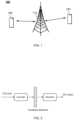
- the communication system 100 may include a network device 110, and the network device 110 may be a device that communicates with a terminal device 120 (also referred to as a communication terminal or a terminal).
- the network device 110 may provide communication coverage for a specific geographical area and may communicate with a terminal device located within the coverage area.
- FIG. 1 exemplarily shows one network device and two terminal devices, and in some embodiments, the communication system 100 may include a plurality of network devices and may include another number of terminal devices within a coverage range of each network device, the embodiments of the present application are not limited thereto.
- the communication system 100 may also include other network entities such as a network controller and a mobility management entity, etc., which are not limited to the embodiments of the present application.
- a device with a communication function in the network/system may be referred to as a communication device.
- the communication device may include the network device 110 and the terminal device 120 with the communication function, and the network device 110 and the terminal device 120 may be the specific devices described above, which will not be repeated herein; the communication device may also include other devices in the communication system 100, such as a network controller, a mobility management entity, and other network entities, which are not limited in the embodiments of the present application.
- the present document relates to a first communication device and a second communication device
- the first communication device may be a terminal device, such as a mobile phone, a machine facility, a customer premise equipment (CPE), an industrial device, a vehicle, etc
- the second communication device may be a counterpart communication device of the first communication device, such as a network device, a mobile phone, an industrial device, a vehicle, etc.
- the first communication device as a terminal device and the second communication device as a network device are taken as a specific instance herein.
- the "indication" mentioned in the embodiments of the present application may be a direct indication, may also be an indirect indication, or may also represent having an association relationship.
- a indicates B which may mean that A directly indicates B, for example, B may be acquired by A; may also mean that A indirectly indicates B, for example, A indicates C, and B may be acquired by C; or may also mean that there is an association relationship between A and B.
- the term "correspondence” may mean that there is a direct correspondence or indirect correspondence between the two, it may also mean that there is an associated relationship between the two, or it may also mean a relationship of indicating and being indicated or a relationship of configuring and being configured, etc.
- predefined or “preconfigured” may be implemented by pre-saving corresponding codes, tables or other manners that may be used for indicating related information, in the device (for example, including the terminal device and the network device), and the present application does not limit its specific implementation.
- the predefined may refer to what is defined in a protocol.
- the "protocol” may refer to a standard protocol in the field of communication, which may include, for example, an LTE protocol, an NR protocol, and related protocols applied in the future communication system, and the present application is not limited thereto.
- codebook-based eigenvector feedback is usually used to enable a base station to acquire downlink CSI.
- the base station transmits a downlink channel state information reference signal (CSI-RS) to a terminal device.
- CSI-RS downlink channel state information reference signal
- the terminal device estimates and obtains CSI of a downlink channel by using the CSI-RS, and performs eigenvalue decomposition on the estimated and obtained downlink channel, to obtain an eigenvector corresponding to the downlink channel.
- the NR provides two codebook design solutions: Type 1 and Type 2, where the Type 1 codebook is used for CSI feedback with conventional accuracy and mainly used for a transmission in a single user multiple input multiple output (SU-MIMO) scenario, and the Type 2 codebook is mainly used to improve transmission performance of multi-user multiple input multiple output (MU-MIMO).
- DFT discrete Fourier transform
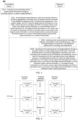
- FIG. 2 A typical channel information feedback system is shown in FIG. 2 .
- the entire feedback system is divided into an encoder part and a decoder part, which are deployed at a transmitting end and a receiving end respectively.
- the transmitting end obtains the channel information through channel estimation
- the transmitting end compresses and encodes a channel information matrix through a neural network of the encoder, and feeds back the compressed bitstream to the receiving end by an air interface feedback link.
- the receiving end restores the channel information according to the fed-back bitstream through the decoder, to obtain the complete feedback channel information.
- DNN deep neural network
- CNN convolutional neural network
- RNN recurrent neural network
- LSTM long short-term memory
- GRU gated recurrent unit
- the above CSI input and CSI output may both be full channel information, or eigenvector information obtained based on the full channel information. Therefore, currently, methods for channel information feedback based on deep learning are mainly divided into full channel information feedback and eigenvector feedback, where although the former can achieve the compression and feedback of the full channel information, the feedback bitstream overhead is higher, and at the same time, this feedback method is not supported in the NR system; and for a feedback method based on the eigenvector, it is a feedback architecture supported in the NR system currently, and the eigenvector feedback method based on deep learning can achieve higher CSI feedback accuracy with the same feedback bit overhead, or significantly reduce the feedback overhead in a case of achieving the same CSI feedback accuracy.
- the CSI feedback in 5G NR uses a form based on codebook feedback based on Type 1 and Type 2.
- This codebook-based CSI feedback method has a good generalization ability for different users and various channel scenarios, and at the same time, may adapt to different number of transmitting antenna ports, and perform a flexible configuration for the number of sub-bands of feedback.
- the codebook is pre-set, a correlation between different antenna ports and sub-bands is not effectively used, so the feedback overhead is large and the feedback performance is poor.
- the encoding network is formed by aggregating K encoding units
- the decoding network is formed by aggregating K decoding units
- the K encoding units correspond to the K decoding units one by one.
- the input of the encoding unit of the K encoding units is a sub-matrix or sub-vector of the target channel information in the first dimension and/or the second dimension
- the input of the decoding unit of the K decoding units is the sub-bitstream output by the corresponding encoding unit
- the output of the decoding unit of the K decoding units is a sub-matrix or sub-vector of the target channel information in the first dimension and/or the second dimension
- the target channel information may be obtained by sub-matrices or sub-vectors output by the K decoding units.
- the CSI feedback can support a flexible configuration of antenna ports and sub-bands, and may achieve flexible adaptation to configurations of different transmitting antenna ports and different sub-bands, and there is no need to construct large data sets and train a corresponding model for each configuration of antenna ports and sub-bands.
- only encoding units and decoding units with a few configurations of antenna ports and sub-bands need to be constructed, and a variety of configurations of antenna ports and sub-bands may be combined, by forming the encoding network by aggregating the encoding units and forming the decoding network by aggregating the decoding units.
- the target channel information input into the encoding network is consistent with the target channel information output from the decoding network in dimension and length, and by designing the encoding network (i.e., K encoding units) and the decoding network (i.e., K decoding units), the CSI output is enabled to be as close as possible to the CSI input.
- the target channel information input into the encoding network and the target channel information output from the decoding network may be regarded as the same information.
- the embodiments of the present application may use an evaluation metric such as minimum mean square error (MSE) and cosine similarity (CS), etc., to measure the restoration quality of the CSI, which will not be repeated here in this embodiment.
- MSE minimum mean square error
- CS cosine similarity
- the antenna port described in the embodiments of the present application may be a CSI-RS antenna port or other antenna port, which is not limited thereto in the present application.
- the CSI-RS antenna port is taken as an example for description in the following in the present application.
- the receiving device is a terminal device, and the transmitting device is a network device; or, the receiving device is a network device, and the transmitting device is a terminal device.
- the receiving device is a terminal device
- the transmitting device is another terminal device.
- the embodiments of the present application are applied to sidelink (SL) communication.
- the transmitting device is a network device
- the receiving device is another network device.
- the embodiments of the present application are applied to backhaul link communication.
- the encoding unit may also be referred to as an encoder, and the decoding unit may also be referred to as a decoder.
- the K encoding units may also be referred to as an encoder group, and the K decoding units may also be referred to as a decoder group.
- a CSI autoencoding network may contain the encoding network and the decoding network.
- the encoding network is deployed on a terminal device, and the decoding network is deployed on a network device.
- the encoding network is deployed on a terminal device, and the decoding network is deployed on a network device.
- a wide variety of dimension formats of CSI inputs may be combined flexibly, and in the actual deployment process, different CSI encoder models and decoder models are adapted for each input format, which will bring a very large overhead.
- the terminal side needs to store encoder models that adapt to different scenarios when the number of the antenna ports and the number of the configured sub-bands change, and at the same time, when the model switching occurs, the network side and the terminal side need to indicate the model switching by a signaling, which also brings a certain signaling overhead. Therefore, the present application designs an encoding network formed by aggregating K encoding units and a decoding network formed by aggregating K decoding units, the K encoding units correspond to the K decoding units one by one, and one encoding unit and its corresponding decoding unit may be referred to as a pair of basic model units.
- each encoding unit in the encoding network its input interface is a sub-vector or sub-matrix of a CSI input (i.e., the target channel information), and the output feedback sub-bitstream is also a sub-vector of a feedback bitstream (i.e., the target bitstream), and for the corresponding decoding unit in the decoding network, its output interface is a sub-vector or sub-matrix of a CSI output (i.e., the target channel information).
- each pair of basic model units as a basic module for model aggregating, it cannot be split further internally, that is, for the encoding unit of each pair of basic model units, it uses a neural network structure such as a fully connected layer, a convolutional layer or a residual, and jointly encodes the input CSI sub-vector or sub-matrix, and converts the input CSI sub-vector or sub-matrix as a whole into a feedback sub-bitstream by extracting the spatial domain correlation between antenna ports and/or the frequency domain correlation between sub-bands inside the input CSI sub-vector or sub-matrix, so that the feedback sub-bitstream cannot be split into a plurality of smaller sub-bitstreams anymore.
- a neural network structure such as a fully connected layer, a convolutional layer or a residual
- the K decoding units correspond to the K encoding units respectively, that is, the K decoding units correspond to the K encoding units one by one.
- an input of an i-th encoding unit is a sub-matrix i
- an output of the i-th encoding unit is a sub-bitstream i
- an input of an i-th decoding unit is the sub-bitstream i
- an output of the i-th decoding unit is the sub-matrix i
- i is a positive integer, and 1 ⁇ i ⁇ K.
- the input of the i-th encoding unit is a sub-vector i
- the output of the i-th encoding unit is the sub-bitstream i
- the input of the i-th decoding unit is the sub-bitstream i
- the output of the i-th decoding unit is the sub-vector i
- i is a positive integer, and 1 ⁇ i ⁇ K.
- the target bitstream is: as the output of the encoding network for air interface feedback, and through the air interface feedback, as the input of the decoding network.
- a format of the target bitstream is a vector composed of 0/1 bits with a certain length.
- the length of each sub-bitstream may be the same or different.
- the target channel information may contain channel information of the first dimension and channel information of the second dimension, and may be input into the encoding network separately as a CSI matrix, that is, the target channel information is a CSI matrix.
- the length of the first dimension is 16 (i.e., 16 antenna ports)
- the length of the second dimension is 12 (i.e., 12 sub-bands).
- Each element is an eigenvector coefficient (the coefficient is a complex number) on an antenna port and a sub-band, the total length is 192, as the CSI matrix.
- the target channel information may contain channel information of the first dimension and channel information of the second dimension, which may be in a joint form as a CSI vector, input into the encoding network, that is, the target channel information is a CSI vector.
- the CSI vector may be arranged in two ways, where FIG. 6 arranges the number of antenna ports of the first dimension first and then the number of sub-bands of the second dimension; FIG. 7 arranges the number of sub-bands of the second dimension first and then the number of antenna ports of the first dimension.
- the CSI input formats of different dimensions shown in FIG. 5 to FIG. 7 described above may be adapted to different encoding network models and decoding network models.
- the sub-matrix corresponding to the encoding unit of the K encoding units is determined based on a continuous aggregation method, or the sub-matrix corresponding to the encoding unit of the K encoding units is determined based on a non-continuous aggregation method.
- the sub-matrix corresponding to the encoding unit of the K encoding units occupies a continuous part of the target channel information in the first dimension and/or the second dimension. And/or, the sub-matrix corresponding to the decoding unit of the K decoding units occupies a continuous part of the target channel information in the first dimension and/or the second dimension.
- the sub-matrix corresponding to the encoding unit of the K encoding units occupies a non-continuous part of the target channel information in the first dimension and/or the second dimension. And/or, the sub-matrix corresponding to the decoding unit of the K decoding units occupies a non-continuous part of the target channel information in the first dimension and/or the second dimension.
- sub-matrices corresponding to different encoding units of the K encoding units have a same size in the first dimension and the second dimension. That is, the sub-matrices corresponding to different encoding units of the K encoding units are symmetrically distributed or symmetrically aggregated in the first dimension and the second dimension. And/or, sub-vectors corresponding to different decoding units of the K decoding units have a same size in the first dimension and the second dimension.
- sub-matrices corresponding to different encoding units of the K encoding units have a same size in the first dimension and the second dimension.
- sub-matrices corresponding to different encoding units of the K encoding units have a same size in the first dimension and the second dimension.
- the target channel information is the CSI matrix with the first dimension of M and the second dimension of N, M and N are both positive integers; where a size of a sub-matrix corresponding to each encoding unit of the K encoding units in the first dimension is M / K, and a size of a sub-matrix corresponding to each encoding unit of the K encoding units in the second dimension is N / K . And/or, a size of a sub-matrix corresponding to each decoding unit of the K decoding units in the first dimension is M / K, and a size of a sub-matrix corresponding to each decoding unit of the K decoding units in the second dimension is N / K.
- a structure and a parameter of each encoding unit of the K encoding units are the same.
- a structure and a parameter of each decoding unit of the K decoding units are the same.
- the sub-vector corresponding to the encoding unit of the K encoding units is determined based on a continuous aggregation method, or the sub-vector corresponding to the encoding unit of the K encoding units is determined based on a non-continuous aggregation method.
- the sub-vector corresponding to the encoding unit of the K encoding units occupies a continuous part of the target channel information in the first dimension and/or the second dimension. And/or, the sub-vector corresponding to the decoding unit of the K decoding units occupies a continuous part of the target channel information in the first dimension and/or the second dimension.
- the sub-vector corresponding to the encoding unit of the K encoding units occupies a non-continuous part of the target channel information in the first dimension and/or the second dimension. And/or, the sub-vector corresponding to the decoding unit of the K decoding units occupies a non-continuous part of the target channel information in the first dimension and/or the second dimension.
- sub-vectors corresponding to different encoding units of the K encoding units have a same size in the first dimension and the second dimension. That is, the sub-vectors corresponding to different encoding units of the K encoding units are symmetrically distributed or symmetrically aggregated in the first dimension and the second dimension. And/or, sub-vectors corresponding to different decoding units of the K decoding units have a same size in the first dimension and the second dimension.
- the target channel information is the CSI vector with the first dimension of M and the second dimension of N, M and N are both positive integers; where a size of a sub-vector corresponding to each encoding unit of the K encoding units in the first dimension is M / K, and a size of a sub-vector corresponding to each encoding unit of the K encoding units in the second dimension is N / K . And/or, a size of a sub-vector corresponding to each decoding unit of the K decoding units in the first dimension is M / K, and a size of a sub-vector corresponding to each decoding unit of the K decoding units in the second dimension is N / K.
- a structure and a parameter of each encoding unit of the K encoding units are the same.
- a structure and a parameter of each decoding unit of the K decoding units are the same.
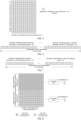
- the encoding network may be aggregated by 2 encoding units, and the decoding network may be aggregated by 2 decoding units.
- sub-matrices are determined by the two encoding units based on the continuous aggregation method in the first dimension, where the input of the encoding unit 1 (corresponding to the output of the decoding unit 1) is a sub-matrix with 8 continuous antenna ports of port indices 0-7 in the first dimension and 12 sub-bands in the second dimension; the input of the encoding unit 2 (corresponding to the output of the decoding unit 2) is a sub-matrix with 8 continuous antenna ports of antenna port indices 8-15 in the first dimension and 12 sub-bands in the second dimension, as shown in FIG. 8 .
- this embodiment is described by taking the CSI matrix with 16 antenna ports and 12 sub-bands as an example, and for other number of antenna ports and other number of sub-bands, reference may be made to this embodiment, which will not be repeated here.
- sub-vectors are determined based on the continuous aggregation method in the first dimension by two encoding units, and for the specific aggregation, reference may be made to this embodiment, which will not be repeated here.
- the encoding network may be aggregated by 2 encoding units, and the decoding network may be aggregated by 2 decoding units.
- sub-matrices are determined based on the continuous aggregation method in the second dimension by the two encoding units, where the input of the encoding unit 1 (corresponding to the output of the decoding unit 1) is a sub-matrix with 6 continuous sub-bands of sub-band indices 0-5 in the second dimension and 16 antenna ports in the first dimension; the input of the encoding unit 2 (corresponding to the output of the decoding unit 2) is a CSI sub-matrix with 6 continuous sub-bands of sub-band indices 6-11 in the second dimension and 16 antenna ports in the first dimension, as shown in FIG. 9 .
- the embodiment is described by taking the CSI matrix with 16 antenna ports and 12 sub-bands as an example, and for other number of antenna ports and other number of sub-bands, reference may be made to this embodiment, which will not be repeated here.
- sub-vectors are determined by two encoding units based on the continuous aggregation method in the second dimension, and for the specific aggregation method, reference may be made to this embodiment, which will not be repeated here.
- the encoding network may be aggregated by 4 encoding units, and the decoding network may be aggregated by 4 decoding units.
- sub-matrices are determined based on the continuous aggregation method in the first dimension and the second dimension by the 4 encoding units, where the input of encoding unit 1 (corresponding to the output of decoding unit 1) is a sub-matrix formed by 8 continuous antenna ports of port indices 0-7 in the first dimension and 6 continuous sub-bands of sub-band indices 0-5 in the second dimension; the input of encoding unit 2 (corresponding to the output of decoding unit 2) is a sub-matrix formed by 8 continuous antenna ports of antenna port indices 0-7 in the first dimension and 6 continuous sub-bands of sub-band indices 6-11 in the second dimension; the input of encoding unit 3 (corresponding to the output of decoding unit 3) is a sub-matrix formed by 8 continuous antenna ports of antenna port indices 8-15 in the first dimension and 6 continuous sub-bands of sub-band indices 0-5 in the second dimension; the input of encoding unit 4 (corresponding to the output of decoding unit 4)
- the embodiment is described by taking the CSI matrix with 16 antenna ports and 12 sub-bands as an example, and for other numbers of antenna ports and other numbers of sub-bands, reference may be made to this embodiment, which will not be repeated here.
- sub-vectors are determined based on the continuous aggregation method in the first dimension and the second dimension by the four encoding units, and for the specific aggregation method, reference may be made to this embodiment, which will not be repeated here.
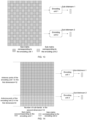
- the encoding network may be aggregated by 2 encoding units, and the decoding network may be aggregated by 2 decoding units.
- sub-matrices are determined based on the non-continuous aggregation method in the first dimension and based on the continuous aggregation method in the second dimension by the two encoding units, where the input of the encoding unit 1 (corresponding to the output of the decoding unit 1) is a sub-matrix composed of 8 ports indicated by even indices of antenna ports in the first dimension and 12 sub-bands in the second dimension; the input of the encoding unit 2 (corresponding to the output of the decoding unit 2) is a sub-matrix composed of 8 ports indicated by odd indices of antenna ports in the first dimension and 12 sub-bands in the second dimension, as shown in FIG. 11 .
- this embodiment is described by taking the CSI matrix with 16 antenna ports and 12 sub-bands as an example, and for other number of antenna ports and other number of sub-bands, reference may be made to this embodiment, which will not be repeated here.
- sub-vectors are determined based on the non-continuous aggregation method in the first dimension and based on the continuous aggregation method in the second dimension by two encoding units, and for the specific aggregation method, reference may be made to this embodiment, which will not be repeated here.
- the encoding network may be aggregated by 2 encoding units, and the decoding network may be aggregated by 2 decoding units.
- sub-matrices are determined based on the continuous aggregation method in the first dimension and based on the non-continuous aggregation method in the second dimension by the two encoding units, where the input of the encoding unit 1 (corresponding to the output of the decoding unit 1) is a sub-matrix composed of 16 antenna ports in the first dimension and sub-bands indicated by even indices in the second dimension; the input of the encoding unit 2 (corresponding to the output of the decoding unit 2) is a sub-matrix composed of 16 antenna ports in the first dimension and sub-bands indicated by odd indices in the second dimension, as shown in FIG. 12 .
- this embodiment is described by taking the CSI matrix with 16 antenna ports and 12 sub-bands as an example, and for other number of antenna ports and other number of sub-bands, reference may be made to this embodiment, which will not be repeated here.
- sub-vectors are determined based on the continuous aggregation method in the first dimension and based on the non-continuous aggregation method in the second dimension by two encoding units, and for the specific aggregation method, reference may be made to this embodiment, which will not be repeated here.
- the encoding network may be aggregated by 2 encoding units, and the decoding network may be aggregated by 2 decoding units.
- sub-matrices are determined based on the non-continuous aggregation method both in the first dimension and the second dimension by the two encoding units, where the input of the encoding unit 1 (corresponding to the output of the decoding unit 1) is a sub-matrix composed of sub-bands indicated by odd indices on antenna ports indicated by even indices and sub-bands indicated by even indices on antenna ports indicated by odd indices; the input of the encoding unit 2 (corresponding to the output of the decoding unit 2) is a sub-matrix composed of sub-bands indicated by even indices on antenna ports indicated by even indices and sub-bands indicated by odd indices on antenna ports indicated by odd indices, as shown in FIG. 13 .
- the embodiment is described by taking the CSI matrix with 16 antenna ports and 12 sub-bands as an example, and for other number of antenna ports and other number of sub-bands, reference may be made to this embodiment, which will not be repeated here.
- sub-vectors are determined based on the non-continuous aggregation method both in the first dimension and the second dimension by two encoding units, and for the specific aggregation method, reference may be made to this embodiment, which will not be repeated here.
- the first pair of basic model units and the second pair of basic model units both use the same model, that is, the sub-matrix dimensions and lengths of the interface CSI inputs of the encoding unit 1 and the encoding unit 2 are the same, and the internal neural network structures and parameters of the encoding unit 1 and the encoding unit 2 are also the same; the input lengths of input interface feedback sub-bitstreams of the decoding unit 1 and the decoding unit 2 are the same, the sub-matrix dimensions and lengths output by the output interface CSI of the decoding unit 1 and the decoding unit 2 are the same, and the internal neural network structures and parameters of the decoding unit 1 and the decoding unit 2 are also the same.
- This aggregation method is referred to as symmetric aggregation.
- sub-matrices corresponding to some or all of the K encoding units have different sizes in the first dimension and/or the second dimension. That is, sub-matrices corresponding to different encoding units of the K encoding units are asymmetrically distributed or asymmetrically aggregated in the first dimension and the second dimension. Or, sub-matrices corresponding to some or all of the K decoding units have different sizes in the first dimension and/or the second dimension.
- the sub-matrices corresponding to some or all of the K encoding units have different sizes in the first dimension and/or the second dimension.
- sub-vectors corresponding to some or all of the K encoding units have different sizes in the first dimension and/or the second dimension. That is, sub-vectors corresponding to different encoding units of the K encoding units are asymmetrically distributed or asymmetrically aggregated in the first dimension and the second dimension.
- the sub-vector corresponding to the encoding unit of the K encoding units is determined based on the continuous aggregation method
- the sub-vectors corresponding to some or all of the K encoding units have different sizes in the first dimension and/or the second dimension.
- the encoding network may be aggregated by 2 encoding units, and the decoding network may be aggregated by 2 decoding units. Specifically, as shown in FIG.
- sub-matrices are determined based on the continuous asymmetric aggregation method in the first dimension by the two encoding units
- the input of encoding unit 1 is a sub-matrix composed of 12 antenna ports of indices of 0 to 11 in the first dimension and 12 sub-bands in the second dimension
- the input of encoding unit 2 is a sub-matrix composed of 4 antenna ports of indices of 12 to 15 in the first dimension and 12 sub-bands in the second dimension.
- the encoding unit 1 and the encoding unit 2 are different models
- the decoding unit 1 and the decoding unit 2 are different models.
- the different models refer to dimensions and lengths of model input and output interfaces of the models, as well as network structures and parameters within the models being all different.
- the implementation of the asymmetric aggregation of models may be performed only in the first dimension for the asymmetric aggregation, or only in the second dimension for the asymmetric aggregation, or in both the first dimension and the second dimension for the asymmetric aggregation.
- the methods of the asymmetric aggregation provide greater flexibility for the aggregation of encoding units with different input interfaces into a larger encoding network, and the aggregation of decoding units with different input interfaces into a larger decoding network.
- the asymmetric aggregation requires the flexible division of resources in the spatial domain and frequency domain, the support for the continuous aggregation is friendly, while for the non-continuous aggregation (i.e., interval aggregation) scenarios, the division of resources is relatively troublesome, and since there are a plurality of division methods, the network side and the terminal side need to further coordinate a pattern of the asymmetric interval aggregation, and therefore, the embodiments of the present application only support the continuous asymmetric aggregation, and do not support the non-continuous asymmetric aggregation.
- each encoding unit can only extract the correlation of CSI of the inter-spatial domain and inter-frequency domain within a limited coverage range, and cannot further perform compression by utilizing the gain brought by the correlation of the spatial domain and the frequency domain within a larger range, therefore, its CSI compression performance may be inferior to that of the non-continuous aggregation.
- the non-continuous aggregation may implement resource division with an interval in the first dimension and/or the second dimension, and thus its advantage is that the input of each encoding unit covers a larger spatial domain range and frequency domain range, so it makes more use of the CSI correlation of the inter-spacial domain and the inter-frequency domain, and further compresses the feedback overhead, or improves the CSI feedback performance under limited feedback bits.
- the same basic model units may correspond to a same physical computing unit or different physical computing units, that is, for the downlink CSI feedback
- the encoding unit of the same basic model units may be deployed one or more times at the terminal side
- the decoding unit of the same basic model units may be deployed one or more times at the network side.
- different basic model units i.e., an encoding unit and its corresponding decoding unit
- they correspond to different physical computing units, and the corresponding encoding unit and decoding unit need to be deployed at both the terminal side and the network side.
- Table 1 Aggregation Method Symmetric aggregation Asymmetric aggregation Continuous aggregation support support Non-continuous aggregation support not support
- the first signaling may be a radio resource control (RRC) signaling, or downlink control information (DCI), or a media access control control element (MAC CE), or a dedicated model selecting downlink signaling.
- RRC radio resource control
- DCI downlink control information
- MAC CE media access control control element
- the encoding unit of the K encoding units is first aggregated in descending order according to an antenna port index corresponding to the at least one antenna port basic model, and then aggregated in descending order according to a sub-band index corresponding to the at least one sub-band basic model.
- the decoding unit of the K decoding units first splits the target bitstream in descending order according to an antenna port index corresponding to the at least one antenna port basic model, and then splits the target bitstream in descending order according to a sub-band index corresponding to the at least one sub-band basic model.
- the basic model unit may be used to implement the design of the CSI autoencoder group, and thus the CSI autoencoder group with multiple ports and multiple sub-bands may be constructed by using the limited number of basic model units, and using the model aggregation method, thereby reducing the overhead of the model switching and the model indication.
- the number of transmitting antenna ports (here referred to as the number of downlink CSI-RS ports) configured by the network side may include a plurality of configurations as shown in Table 2 below.
- Table 2 Number of CSI-RS antenna ports (N 1 , N 2 ) 4 (2, 1) 8 (2, 2) / (4, 1) 12 (3, 2) / (6, 1) 16 (4, 2) / (8, 1) 24 (6, 2) / (4, 3) / (12, 1) 32 (8, 2) / (4, 4) / (16, 1)
- the number of CSI-RS antenna ports supports up to 32 ports
- N 1 and N 2 represent the number of dual-polarization antenna ports in a horizontal dimension and a vertical dimension, respectively.
- the number of sub-bands in the second dimension it may be any number of sub-bands, according to the configured bandwidth and the number of physical resource blocks (PRBs), and the number of PRBs that can be configured within each sub-band may be the configuration of a single PRB, 4 PRBs, 8 PRBs, 16 PRBs, etc.
- the CSI autocoding network is insensitive to the configuration of the number of PRBs within the sub-band and does not need to be adjusted according to the number of PRBs within the sub-band.
- BasicModel-Port-Index 4 (2, 1) BasicModel-Port00 8 (2, 2) BasicModel-Port00+ BasicModel-Port00 (4, 1) BasicModel-Port00+ BasicModel-Port00 12 (3, 2) BasicModel-Port01 (6, 1) BasicModel-Port00+ BasicModel-Port00+BasicModel-Port00 16 (4, 2) BasicModel-Port10 (8, 1) BasicModel-Port11 24 (6, 2) BasicModel-Port01+, BasicModel-Port01 (4, 3) BasicModel-Port00+ BasicModel-Port00+ BasicModel-Port10+ BasicModel-Port10 (12, 1) BasicModel-Port00+ BasicModel-Port00+ BasicModel-Port11 32 (8, 2) BasicModel-Port10+ BasicModel-Port10 (4, 4) BasicModel-Port10+ BasicModel-Port10 (16, 1) BasicModel-Port11 + BasicModel-Port11
- the present application is not limited to supporting the configuration of up to 32 antenna ports in the first dimension, and for the further evolution and enhancement of the MIMO in the future, a possible configuration of more than 32 antenna ports (such as 64 antenna ports) may be contained, and the solution described in the present application may also be used for extension. Furthermore, in order to better utilize the spatial domain correlation between antenna ports in the first dimension, more antenna ports, such as configurations of (16, 1) or (8, 2), etc., may be used as the basic model units for aggregation. The present application isn't limited thereto, and the extensions of more antenna ports based on the solution are all contained within the scope of the present application.
- one implementation is that a configuration of a single sub-band and a configuration of 4 sub-bands may be selected as sub-band basic models, denoted as BasicModel-Subband0 and BasicModel-Subband1, and then for all configurations of sub-bands less than 4, BasicModel-Subband0 is used to implement the symmetric aggregation; for all configurations of sub-bands greater than 4, BasicModel-Subband1 is used to implement the symmetric aggregation, for example, for a configuration of 2 sub-bands, 2 model units with 1 sub-band are used to implement the aggregation, and for a configuration of 8 sub-bands, 2 model units with 4 sub-bands are used to implement the aggregation.
- BasicModel-Subband1 and BasicModel-Subband0 are used to implement the asymmetric aggregation, for example, for a configuration of 6 sub-bands, 2 model units with 1 sub-band and 1 model unit with 4 sub-bands are used to implement the aggregation.
- BasicModel-Agg0 indicates to perform the continuous aggregation
- BasicModel-Agg1 indicates to perform the non-continuous aggregation.
- the network device when the network device configures a certain number of antenna ports and sub-band resources for the terminal device, the network device will indicate the CSI encoder model basic unit that the terminal needs to select, that is, BasicModel-Portxx and BasicModel-Subbandy, via a downlink signaling, such as the DCI or the dedicated model selecting downlink signaling.
- the above procedure is shown in FIG. 15 .
- the model aggregation order at the network side and the terminal side needs to be matched according to a certain rule: under the asymmetric aggregation, the network side defaults that the CSI encoders at the terminal side are aggregated in descending order according to selecting the xx index corresponding to BasicModel-Portxx, and then aggregated in descending order according to the y index corresponding to BasicModel-Subbandy.
- a first part sub-bitstream of the bitstream fed back by the terminal is a sub-bitstream fed back by an encoder of a basic model unit corresponding to BasicModel-Port11 and BaiscModel-Subband4
- a second part sub-bitstream is a sub-bitstream fed back by an encoder of a basic model unit of BasicModel-Port11 and BaiscModel-Subband1
- a third part is sub-bitstreams fed back by encoders of 2 basic model units of 2 segments of BasicModel-Port00, and BaiscModel-Subband4
- a fourth part is 4 segments of sub-bitstreams fed back by encoders of 2 basic model units of 2 segments of BasicModel-Port00, BasicModel-Port11 and BaiscModel-Subband1.
- the encoding network is formed by aggregating K encoding units
- the decoding network is formed by aggregating K decoding units
- the K encoding units correspond to the K decoding units one by one.
- the input of the encoding unit of the K encoding units is a sub-matrix or sub-vector of the target channel information in the first dimension and/or the second dimension
- the input of the decoding unit of the K decoding units is a sub-bitstream output by the corresponding encoding unit
- the output of the decoding unit of the K decoding units is a sub-matrix or sub-vector of the target channel information in the first dimension and/or the second dimension
- the target channel information may be obtained by the sub-matrices or sub-vectors output by the K decoding units.
- the CSI feedback can support a flexible configuration of antenna ports and sub-bands, and may achieve flexible adaptation to configurations of different transmitting antenna ports and different sub-bands, and there is no need to construct large data sets and train a corresponding model for each configuration of antenna ports and sub-bands.
- only encoding units and decoding units with a few configurations of antenna ports and sub-bands need to be constructed, and a variety of configurations of antenna ports and sub-bands may be combined, by forming the encoding network by aggregating the encoding units and forming the decoding network by aggregating the decoding units.
- the present application designs the basic model unit in the CSI autoencoder and proposes the model aggregation method, to construct the encoding network and the decoding network for the CSI feedback.
- the Al-based CSI feedback can support a flexible configuration of antenna ports and sub-bands.
- the embodiments of the present application support the flexible aggregation method and effectively utilize the correlation of the spatial domain and the frequency domain.
- the present application proposes a variety of aggregation methods including the continuous aggregation, the non-continuous aggregation, the symmetric aggregation, the asymmetric aggregation, etc.
- the solutions of the present application support the use of the symmetric aggregation method and the asymmetric aggregation method by the continuous aggregation, this flexible aggregation design enables the use of basic model units to construct more CSI encoder groups and decoder groups with different configurations of antenna ports and sub-bands.
- the non-continuous aggregation can divide the antenna port and sub-band resource dimensions at intervals, thereby effectively utilizing the correlation of a wider range of the spatial domain and the frequency domain, compressing the CSI feedback overhead and improving the CSI feedback performance.
- the present application enables the network side and the terminal side to construct different basic model units based on the configurations of antenna ports and sub-bands, and match an appropriate aggregation method, to better exploit the potential of AI for CSI feedback tasks.
- a signaling procedure of the model selecting and the model switching that supports different configurations of antenna ports and sub-bands is designed in the solutions of the present application, and the CSI encoder basic model unit and the corresponding aggregation method required by the terminal are indicated by ⁇ BasicModel-Port, BasicModel-Subband, BasicModel-Agg ⁇ .
- fast model switching can be achieved according to the configuration of antenna ports and sub-bands.
- FIG. 16 shows a schematic block diagram of a transmitting device 300, according to the embodiments of the present application.
- the transmitting device 300 includes:
- the encoding unit of the K encoding units obtains a sub-bitstream by extracting spatial domain correlation between antenna ports and/or frequency domain correlation between sub-bands within an input sub-matrix; or in a case where the target channel information is the CSI vector, the encoding unit of the K encoding units obtains a sub-bitstream by extracting spatial domain correlation between antenna ports and/or frequency domain correlation between sub-bands within an input sub-vector.
- the sub-matrix corresponding to the encoding unit of the K encoding units is determined based on a continuous aggregation method, or the sub-matrix corresponding to the encoding unit of the K encoding units is determined based on a non-continuous aggregation method.
- the sub-matrix corresponding to the encoding unit of the K encoding units occupies a continuous part of the target channel information in the first dimension and/or the second dimension.
- the sub-matrix corresponding to the encoding unit of the K encoding units occupies a non-continuous part of the target channel information in the first dimension and/or the second dimension.
- sub-matrices corresponding to different encoding units of the K encoding units have a same size in the first dimension and the second dimension.
- the target channel information is the CSI matrix with the first dimension of M and the second dimension of N, M and N are both positive integers; where a size of a sub-matrix corresponding to each encoding unit of the K encoding units in the first dimension is M / K, and a size of a sub-matrix corresponding to each encoding unit of the K encoding units in the second dimension is N / K.
- sub-matrices corresponding to some or all of the K encoding units have different sizes in the first dimension and/or the second dimension.
- the sub-vector corresponding to the encoding unit of the K encoding units is determined based on a continuous aggregation method, or the sub-vector corresponding to the encoding unit of the K encoding units is determined based on a non-continuous aggregation method.
- the sub-vector corresponding to the encoding unit of the K encoding units occupies a continuous part of the target channel information in the first dimension and/or the second dimension.
- the sub-vector corresponding to the encoding unit of the K encoding units occupies a non-continuous part of the target channel information in the first dimension and/or the second dimension.
- sub-vectors corresponding to different encoding units of the K encoding units have a same size in the first dimension and the second dimension.
- the target channel information is the CSI vector with the first dimension of M and the second dimension of N, M and N are both positive integers; where a size of a sub-vector corresponding to each encoding unit of the K encoding units in the first dimension is M / K, and a size of a sub-vector corresponding to each encoding unit of the K encoding units in the second dimension is N / K.
- sub-vectors corresponding to some or all of the K encoding units have different sizes in the first dimension and/or the second dimension.
- a structure and a parameter of each of the K encoding units are the same.
- the communication unit 320 is further configured to receive a first signaling transmitted by the receiving device; where the first signaling includes first indication information, second indication information and third indication information, the first indication information is used to indicate at least one antenna port basic model in the first dimension, the at least one antenna port basic model is used by the transmitting device to determine an aggregation method in the first dimension, the second indication information is used to indicate at least one sub-band basic model in the second dimension, the at least one sub-band basic model is used by the transmitting device to determine an aggregation method in the second dimension, the third indication information is used to indicate an aggregation basic model, and the aggregation basic model is used by the transmitting device to determine to perform continuous aggregation or non-continuous aggregation; the processing unit 310 is further configured to determine to form the encoding network by aggregating the K encoding units, according to the first indication information, the second indication information and the third indication information.
- the encoding unit of the K encoding units is first aggregated in descending order according to an antenna port index corresponding to the at least one antenna port basic model, and then aggregated in descending order according to a sub-band index corresponding to the at least one sub-band basic model.
- the above communication unit may be a communication interface or a transceiver, or an input and output interface of a communication chip or a system-on-chip.
- the above processing unit may be one or more processors.
- the transmitting device 300 may correspond to the transmitting device in the method embodiments of the present application, and the above and other operations and/or functions of various units in the transmitting device 300 are respectively to implement the corresponding procedures of the transmitting device in the method 200 for channel information feedback shown in FIG. 3 to FIG. 15 , which will not be repeated here for the sake of brevity.
- FIG. 17 shows a schematic block diagram of a receiving device 400, according to the embodiments of the present application.
- the receiving device 400 includes:
- the decoding unit of the K decoding units obtains the sub-matrix by extracting spatial domain correlation between antenna ports and/or frequency domain correlation between sub-bands within an input sub-bitstream; or in a case where the target channel information is the CSI vector, the decoding unit of the K decoding units obtains the sub-vector by extracting spatial domain correlation between antenna ports and/or frequency domain correlation between sub-bands within an input sub-bitstream.
- the sub-matrix corresponding to the decoding unit of the K decoding units occupies a continuous part of the target channel information in the first dimension and/or the second dimension.
- the sub-matrix corresponding to the decoding unit of the K decoding units occupies a non-continuous part of the target channel information in the first dimension and/or the second dimension.
- sub-vectors corresponding to different decoding units of the K decoding units have a same size in the first dimension and the second dimension.
- the target channel information is the CSI matrix with the first dimension of M and the second dimension of N, M and N are both positive integers; where a size of a sub-matrix corresponding to each decoding unit of the K decoding units in the first dimension is M / K, and a size of a sub-matrix corresponding to each decoding unit of the K decoding units in the second dimension is N / K.
- sub-matrices corresponding to some or all of the K decoding units have different sizes in the first dimension and/or the second dimension.
- the sub-vector corresponding to the decoding unit of the K decoding units occupies a continuous part of the target channel information in the first dimension and/or the second dimension.
- the sub-vector corresponding to the decoding unit of the K decoding units occupies a non-continuous part of the target channel information in the first dimension and/or the second dimension.
- sub-vectors corresponding to different decoding units of the K decoding units have a same size in the first dimension and the second dimension.
- the target channel information is the CSI vector with the first dimension of M and the second dimension of N, M and N are both positive integers; where a size of a sub-vector corresponding to each decoding unit of the K decoding units in the first dimension is M / K, and a size of a sub-vector corresponding to each decoding unit of the K decoding units in the second dimension is N / K.
- sub-vectors corresponding to some or all of the K decoding units have different sizes in the first dimension and/or the second dimension.
- a structure and a parameter of each of the K decoding units are the same.
- the communication unit 410 is further configured to transmit a first signaling to the transmitting device; where the first signaling includes first indication information, second indication information and third indication information, the first indication information is used to indicate at least one antenna port basic model in the first dimension, the at least one antenna port basic model is used by the transmitting device to determine an aggregation method in the first dimension, the second indication information is used to indicate at least one sub-band basic model in the second dimension, the at least one sub-band basic model is used by the transmitting device to determine an aggregation method in the second dimension, the third indication information is used to indicate an aggregation basic model, and the aggregation basic model is used by the transmitting device to determine to perform continuous aggregation or non-continuous aggregation.
- the first signaling includes first indication information, second indication information and third indication information
- the first indication information is used to indicate at least one antenna port basic model in the first dimension
- the at least one antenna port basic model is used by the transmitting device to determine an aggregation method in the first
- the decoding unit of the K decoding units first splits the target bitstream in descending order according to an antenna port index corresponding to the at least one antenna port basic model, and then splits the target bitstream in descending order according to a sub-band index corresponding to the at least one sub-band basic model.
- the above communication unit may be a communication interface or a transceiver, or an input and output interface of a communication chip or a system-on-chip.
- the above processing unit may be one or more processors.
- the receiving device 400 may correspond to the receiving device in the method embodiments of the present application, and the above and other operations and/or functions of various units in the receiving device 400 are respectively to implement the corresponding procedures of the receiving device in the method 200 for channel information feedback shown in FIG. 3 to FIG. 15 , which will not be repeated here for the sake of brevity.
- FIG. 18 is a schematic structural diagram of a communication device 500, provided by the embodiments of the present application.
- the communication device 500 shown in FIG. 18 includes a processor 510, and the processor 510 may invoke and execute a computer program from a memory to implement the method in the embodiments of the present application.
- the communication device 500 further includes a memory 520.
- the processor 510 may invoke and execute a computer program from the memory 520 to implement the method in the embodiments of the present application.
- the memory 520 may be a separate device independent from the processor 510, or may also be integrated into the processor 510.
- the communication device 500 may also include a transceiver 530, and the processor 510 may control the transceiver 530 to communicate with other devices, and specifically, to transmit information or data to other devices, or receive information or data transmitted by other devices.
- the transceiver 530 may include a transmitter and a receiver.
- the transceiver 530 may further include antennas, and the number of antennas may be one or more.
- the communication device 500 may specifically be the transmitting device of the embodiments of the present application, and the communication device 500 may implement the corresponding procedures implemented by the transmitting device in the various methods of the embodiments of the present application, which will not be repeated here for the sake of brevity.
- the communication device 500 may specifically be the receiving device of the embodiments of the present application, and the communication device 500 may implement the corresponding procedures implemented by the receiving device in the various methods of the embodiments of the present application, which will not be repeated here for the sake of brevity.
- FIG. 19 is a schematic structural diagram of an apparatus of the embodiments of the present application.
- the apparatus 600 shown in FIG. 19 includes a processor 610, the processor 610 may invoke and execute a computer program from a memory to implement the method in the embodiments of the present application.
- the apparatus 600 may further include a memory 620.
- the processor 610 may invoke and execute a computer program from the memory 620 to implement the method in the embodiments of the present application.
- the memory 620 may be a separate device independent from the processor 610, or may also be integrated into the processor 610.
- the apparatus 600 may further include an input interface 630.
- the processor 610 may control the input interface 630 to communicate with other devices or chips, and specifically, to acquire information or data transmitted by other devices or chips.
- the apparatus 600 may further include an output interface 640.
- the processor 610 may control the output interface 640 to communicate with other devices or chips, and specifically, to output information or data to other devices or chips.
- the apparatus may be applied to the transmitting device in the embodiments of the present application, and the apparatus may implement the corresponding procedure implemented by the transmitting device in the various methods of the embodiments of the present application, which will not be repeated here for the sake of brevity.
- the apparatus may be applied to the receiving device in the embodiments of the present application, and the apparatus may implement the corresponding procedure implemented by the receiving device in the various methods of the embodiments of the present application, which will not be repeated here for the sake of brevity.
- the apparatus mentioned in the embodiments of the present application may also be a chip.
- it may be a system on chip, a system chip, a chip system or a system-on-chip chip, etc.
- FIG. 20 is a schematic block diagram of a communication system 700, provided by the embodiments of the present application. As shown in FIG. 20 , the communication system 700 includes a receiving device 710 and a transmitting device 720.
- the receiving device 710 may be configured to implement the corresponding functions implemented by the receiving device in the above method
- the transmitting device 720 may be configured to implement the corresponding functions implemented by the transmitting device in the above method, which will not be repeated here for the sake of brevity.
- the processor in the embodiments of the present application may be an integrated circuit chip and have a processing capability of signals.
- various steps of the above method embodiments may be completed by an integrated logic circuit of hardware in the processor or an instruction in a software form.
- the above processor may be a general-purpose processor, a Digital Signal Processor (DSP), an Application Specific Integrated Circuit (ASIC), a Field Programmable Gate Array (FPGA) or other programmable logic devices, a discrete gate or transistor logic device, a discrete hardware component.
- DSP Digital Signal Processor
- ASIC Application Specific Integrated Circuit
- FPGA Field Programmable Gate Array
- a general-purpose processor may be a microprocessor, or the processor may also be any conventional processor, etc.
- the steps of the method disclosed in combination with the embodiments of the present application may be directly embodied as being performed and completed by a hardware decoding processor, or by using a combination of hardware and software modules in the decoding processor.
- the software module may be located in the mature storage medium in the art such as the random memory, the flash memory, the read-only memory, the programmable read-only memory or electrically erasable programmable memory, the register.
- the storage medium is located in the memory, and the processor reads the information in the memory and completes the steps of the above methods in combination with its hardware.
- the memory in the embodiments of the present application may be a volatile memory or a non-volatile memory, or may include both volatile and non-volatile memories.
- the non-volatile memory may be a Read-Only Memory (ROM), a programmable read-only memory (Programmable ROM, PROM), an erasable programmable read-only memory (Erasable PROM, EPROM), an electrically erasable programmable read-only memory (Electrically EPROM, EEPROM) or a flash memory.
- the volatile memory may be a Random Access Memory (RAM), which is used as an external cache.
- RAMs are available, for example, a static random access memory (Static RAM, SRAM), a dynamic random access memory (Dynamic RAM, DRAM), a synchronous dynamic random access memory (Synchronous DRAM, SDRAM), a double data rate synchronous dynamic random access memory (Double Data Rate SDRAM, DDR SDRAM), an enhanced synchronous dynamic random access memory (Enhanced SDRAM, ESDRAM), a synchronous link dynamic random access memory (Synchlink DRAM, SLDRAM) and a direct rambus random access memory (Direct Rambus RAM, DR RAM).
- Static RAM Static RAM
- DRAM dynamic random access memory
- DRAM synchronous dynamic random access memory
- SDRAM double data rate synchronous dynamic random access memory
- Enhanced SDRAM, ESDRAM enhanced synchronous dynamic random access memory
- Synchlink DRAM, SLDRAM synchronous link dynamic random access memory
- Direct Rambus RAM Direct Rambus RAM
- the memory in embodiments of the present application may also be a static Random Access Memory (static RAM, SRAM), a Dynamic Random Access Memory (dynamic RAM, DRAM), a synchronous DRAM (SDRAM), a double data rate SDRAM (DDR SDRAM), an enhanced SDRAM (ESDRAM), a synch link DRAM (SLDRAM), and a Direct Rambus RAM (DR RAM), etc. That is, the memory in the embodiments of the present application is intended to include, but not limited to, these and any other suitable types of memories.
- static RAM static Random Access Memory
- DRAM Dynamic Random Access Memory
- SDRAM synchronous DRAM
- DDR SDRAM double data rate SDRAM
- ESDRAM enhanced SDRAM
- SLDRAM synch link DRAM
- DR RAM Direct Rambus RAM
- the embodiments of the present application further provide a computer readable storage medium for storing a computer program.
- the computer readable storage medium may be applied to the transmitting device in the embodiments of the present application, and the computer program causes a computer to perform the corresponding procedure implemented by the transmitting device in the various methods of the embodiments of the present application, which will not be repeated here for the sake of brevity.
- the computer readable storage medium may be applied to the receiving device in the embodiments of the present application, and the computer program causes a computer to perform the corresponding procedure implemented by the receiving device in various methods of the embodiments of the present application, which will not be repeated here for the sake of brevity.
- the embodiments of the present application further provide a computer program product including a computer program instruction.
- the computer program product may be applied to the transmitting device in the embodiments of the present application, and the computer program instruction causes a computer to perform the corresponding procedure implemented by the transmitting device in the various methods of the embodiments of the present application, which will not be repeated here for the sake of brevity.
- the computer program product may be applied to the receiving device in the embodiments of the present application, and the computer program instruction causes a computer to perform the corresponding procedure implemented by the receiving device in various methods of the embodiments of the present application, which will not be repeated here for the sake of brevity.
- the embodiments of the present application further provide a computer program.
- the computer program may be applied to the transmitting device in the embodiments of the present application, the computer program when being executed on a computer, causes the computer to perform the corresponding procedure implemented by the transmitting device in various methods of the embodiments of the present application, which will not be repeated here for the sake of brevity.
- the computer program may be applied to the receiving device in the embodiments of the present application, the computer program when being executed on a computer, causes the computer to perform the corresponding procedure implemented by the receiving device in various methods of the embodiments of the present application, which will not be repeated here for the sake of brevity.
- the disclosed systems, apparatus, and method may be implemented in other ways.
- the apparatus embodiments described above are only schematic, for example, division of the units is only division of logical functions, and there may be other division methods in an actual implementation, for example, a plurality of units or components may be combined or integrated into another system, or some features may be ignored or not performed.
- the coupling or direct coupling or communicative connection between each other as shown or discussed may be indirect coupling or communicative connection of apparatus or units via some interfaces, which may be electrical, mechanical, or in other forms.
- the units illustrated as separate components may be or may not be physically separated, and the components shown as units may be or may not be physical units, that is, they may be located in one place, or may be distributed onto a plurality of network units. A part or all of the units may be selected according to actual needs, to implement the purpose of the schemes of the embodiments.
- the various functional units in the various embodiments of the present application may be integrated into one processing unit, or the various units may exist physically separately, or two or more units may be integrated into one unit.
- the described functions are implemented in a form of a software functional unit and sold or used as an independent product, they may be stored in a computer readable storage medium.
- the technical solution of the present application essentially, or a part of the technical solution that contributes to the prior art, or a part of the technical solution, may be embodied in a form of a software product, and the computer software product is stored in a storage medium, and includes a plurality of instructions for enabling a computer device (which may be a personal computer, a server, or a network device, etc.) to perform all or some of steps of the methods described in the various embodiments of the present application.
- the storage medium mentioned above includes a USB flash drive (U disk), a mobile hard disk, a Read-Only Memory (ROM), a Random Access Memory (RAM), a diskette, or an optical disk, and various mediums that may store program codes.
Landscapes
- Engineering & Computer Science (AREA)
- Computer Networks & Wireless Communication (AREA)
- Signal Processing (AREA)
- Physics & Mathematics (AREA)
- Mathematical Physics (AREA)
- Mobile Radio Communication Systems (AREA)
- Compression, Expansion, Code Conversion, And Decoders (AREA)
Applications Claiming Priority (1)
| Application Number | Priority Date | Filing Date | Title |
|---|---|---|---|
| PCT/CN2022/072338 WO2023133886A1 (zh) | 2022-01-17 | 2022-01-17 | 信道信息反馈的方法、发端设备和收端设备 |
Publications (2)
| Publication Number | Publication Date |
|---|---|
| EP4468618A1 true EP4468618A1 (de) | 2024-11-27 |
| EP4468618A4 EP4468618A4 (de) | 2025-10-29 |
Family
ID=87279890
Family Applications (1)
| Application Number | Title | Priority Date | Filing Date |
|---|---|---|---|
| EP22919532.6A Pending EP4468618A4 (de) | 2022-01-17 | 2022-01-17 | Kanalinformationsfeedbackverfahren, sendeseitige vorrichtung und empfangsseitige vorrichtung |
Country Status (4)
| Country | Link |
|---|---|
| US (1) | US20240372591A1 (de) |
| EP (1) | EP4468618A4 (de) |
| CN (1) | CN118511451A (de) |
| WO (1) | WO2023133886A1 (de) |
Families Citing this family (2)
| Publication number | Priority date | Publication date | Assignee | Title |
|---|---|---|---|---|
| WO2025231804A1 (en) * | 2024-05-10 | 2025-11-13 | Qualcomm Incorporated | Techniques for channel state feedback |
| CN121193298B (zh) * | 2025-11-21 | 2026-03-24 | 荣耀终端股份有限公司 | 一种通信方法及通信装置 |
Family Cites Families (5)
| Publication number | Priority date | Publication date | Assignee | Title |
|---|---|---|---|---|
| US8213368B2 (en) * | 2007-07-13 | 2012-07-03 | Telefonaktiebolaget Lm Ericsson (Publ) | Adaptive compression of channel feedback based on second order channel statistics |
| US10567060B2 (en) * | 2014-10-24 | 2020-02-18 | Samsung Electronics Co., Ltd. | Efficient vector quantizer for FD-MIMO systems |
| US11476998B2 (en) * | 2019-08-14 | 2022-10-18 | Qualcomm Incorporated | Lossless compression of channel state feedback |
| CN111428819B (zh) * | 2020-04-27 | 2024-07-05 | 北京工业大学 | 一种基于堆叠自编码网络和svm的csi室内定位方法 |
| CN113872652B (zh) * | 2021-06-25 | 2023-12-12 | 南京邮电大学 | 一种基于3d mimo时变系统的csi反馈方法 |
-
2022
- 2022-01-17 EP EP22919532.6A patent/EP4468618A4/de active Pending
- 2022-01-17 CN CN202280088518.8A patent/CN118511451A/zh active Pending
- 2022-01-17 WO PCT/CN2022/072338 patent/WO2023133886A1/zh not_active Ceased
-
2024
- 2024-07-15 US US18/772,661 patent/US20240372591A1/en active Pending
Also Published As
| Publication number | Publication date |
|---|---|
| US20240372591A1 (en) | 2024-11-07 |
| WO2023133886A1 (zh) | 2023-07-20 |
| CN118511451A (zh) | 2024-08-16 |
| EP4468618A4 (de) | 2025-10-29 |
Similar Documents
| Publication | Publication Date | Title |
|---|---|---|
| CN109873665B (zh) | 数据传输的方法和设备 | |
| WO2021108940A1 (en) | Channel state information feedback | |
| US20240372591A1 (en) | Method for channel information feedback, transmitting device and receiving device | |
| CN114614955B (zh) | 一种传输数据的方法和装置 | |
| US20230136416A1 (en) | Neural network obtaining method and apparatus | |
| CN116158017B (zh) | 码本处理方法、终端设备和网络设备 | |
| CN116569527B (zh) | 信道信息反馈的方法、发送端设备和接收端设备 | |
| WO2023115254A1 (zh) | 处理数据的方法及装置 | |
| CN118160231A (zh) | 无线通信的方法、终端设备和网络设备 | |
| CN114389661B (zh) | 信道测量的方法及通信装置 | |
| CN117616699A (zh) | 无线通信的方法、终端设备和网络设备 | |
| WO2024046288A1 (zh) | 通信方法和装置 | |
| US20250125854A1 (en) | Channel state information (csi) feedback method, terminal device and network device | |
| CN118056429A (zh) | 虚拟信道样本的质量评估方法和设备 | |
| CN117296366A (zh) | 码本上报的方法、终端设备和网络设备 | |
| CN117678257A (zh) | 信息处理方法、模型生成方法及设备 | |
| US20260082251A1 (en) | Wireless communication method, terminal device and network device | |
| US20250279815A1 (en) | Method for channel state information (csi) feedback, transmitting device, and receiving device | |
| CN113938907A (zh) | 通信的方法及通信装置 | |
| US20250240075A1 (en) | Channel information feedback method, transmitting end device, and receiving end device | |
| US20250274944A1 (en) | Wireless communication method, terminal device, and network device | |
| CN119487906A (zh) | 数据处理方法、通信方法及装置、终端设备和网络设备 | |
| CN119923834A (zh) | 无线通信的方法、终端设备和网络设备 | |
| WO2023240566A1 (zh) | 生成序列的方法和设备 | |
| CN121773575A (en) | Channel information processing method, first terminal equipment and first network equipment |
Legal Events
| Date | Code | Title | Description |
|---|---|---|---|
| STAA | Information on the status of an ep patent application or granted ep patent |
Free format text: STATUS: THE INTERNATIONAL PUBLICATION HAS BEEN MADE |
|
| PUAI | Public reference made under article 153(3) epc to a published international application that has entered the european phase |
Free format text: ORIGINAL CODE: 0009012 |
|
| STAA | Information on the status of an ep patent application or granted ep patent |
Free format text: STATUS: REQUEST FOR EXAMINATION WAS MADE |
|
| 17P | Request for examination filed |
Effective date: 20240816 |
|
| AK | Designated contracting states |
Kind code of ref document: A1 Designated state(s): AL AT BE BG CH CY CZ DE DK EE ES FI FR GB GR HR HU IE IS IT LI LT LU LV MC MK MT NL NO PL PT RO RS SE SI SK SM TR |
|
| DAV | Request for validation of the european patent (deleted) | ||
| DAX | Request for extension of the european patent (deleted) | ||
| A4 | Supplementary search report drawn up and despatched |
Effective date: 20250929 |
|
| RIC1 | Information provided on ipc code assigned before grant |
Ipc: H04B 7/06 20060101AFI20250923BHEP Ipc: H04B 7/0456 20170101ALI20250923BHEP |