EP4468431A1 - Elektrodenanordnung und sekundärbatterie, batteriepack und transportmittel damit - Google Patents
Elektrodenanordnung und sekundärbatterie, batteriepack und transportmittel damit Download PDFInfo
- Publication number
- EP4468431A1 EP4468431A1 EP23912870.5A EP23912870A EP4468431A1 EP 4468431 A1 EP4468431 A1 EP 4468431A1 EP 23912870 A EP23912870 A EP 23912870A EP 4468431 A1 EP4468431 A1 EP 4468431A1
- Authority
- EP
- European Patent Office
- Prior art keywords
- positive electrode
- negative electrode
- electrode
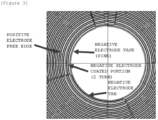
- current collector
- assembly
- Prior art date
- Legal status (The legal status is an assumption and is not a legal conclusion. Google has not performed a legal analysis and makes no representation as to the accuracy of the status listed.)
- Pending
Links
Images



Classifications
-
- H—ELECTRICITY
- H01—ELECTRIC ELEMENTS
- H01M—PROCESSES OR MEANS, e.g. BATTERIES, FOR THE DIRECT CONVERSION OF CHEMICAL ENERGY INTO ELECTRICAL ENERGY
- H01M50/00—Constructional details or processes of manufacture of the non-active parts of electrochemical cells other than fuel cells, e.g. hybrid cells
- H01M50/10—Primary casings; Jackets or wrappings
- H01M50/102—Primary casings; Jackets or wrappings characterised by their shape or physical structure
- H01M50/107—Primary casings; Jackets or wrappings characterised by their shape or physical structure having curved cross-section, e.g. round or elliptic
-
- H—ELECTRICITY
- H01—ELECTRIC ELEMENTS
- H01M—PROCESSES OR MEANS, e.g. BATTERIES, FOR THE DIRECT CONVERSION OF CHEMICAL ENERGY INTO ELECTRICAL ENERGY
- H01M10/00—Secondary cells; Manufacture thereof
- H01M10/04—Construction or manufacture in general
- H01M10/0422—Cells or battery with cylindrical casing
-
- H—ELECTRICITY
- H01—ELECTRIC ELEMENTS
- H01M—PROCESSES OR MEANS, e.g. BATTERIES, FOR THE DIRECT CONVERSION OF CHEMICAL ENERGY INTO ELECTRICAL ENERGY
- H01M10/00—Secondary cells; Manufacture thereof
- H01M10/04—Construction or manufacture in general
- H01M10/0431—Cells with wound or folded electrodes
-
- H—ELECTRICITY
- H01—ELECTRIC ELEMENTS
- H01M—PROCESSES OR MEANS, e.g. BATTERIES, FOR THE DIRECT CONVERSION OF CHEMICAL ENERGY INTO ELECTRICAL ENERGY
- H01M10/00—Secondary cells; Manufacture thereof
- H01M10/05—Accumulators with non-aqueous electrolyte
- H01M10/058—Construction or manufacture
- H01M10/0587—Construction or manufacture of accumulators having only wound construction elements, i.e. wound positive electrodes, wound negative electrodes and wound separators
-
- H—ELECTRICITY
- H01—ELECTRIC ELEMENTS
- H01M—PROCESSES OR MEANS, e.g. BATTERIES, FOR THE DIRECT CONVERSION OF CHEMICAL ENERGY INTO ELECTRICAL ENERGY
- H01M50/00—Constructional details or processes of manufacture of the non-active parts of electrochemical cells other than fuel cells, e.g. hybrid cells
- H01M50/20—Mountings; Secondary casings or frames; Racks, modules or packs; Suspension devices; Shock absorbers; Transport or carrying devices; Holders
- H01M50/204—Racks, modules or packs for multiple batteries or multiple cells
- H01M50/207—Racks, modules or packs for multiple batteries or multiple cells characterised by their shape
- H01M50/213—Racks, modules or packs for multiple batteries or multiple cells characterised by their shape adapted for cells having curved cross-section, e.g. round or elliptic
-
- H—ELECTRICITY
- H01—ELECTRIC ELEMENTS
- H01M—PROCESSES OR MEANS, e.g. BATTERIES, FOR THE DIRECT CONVERSION OF CHEMICAL ENERGY INTO ELECTRICAL ENERGY
- H01M50/00—Constructional details or processes of manufacture of the non-active parts of electrochemical cells other than fuel cells, e.g. hybrid cells
- H01M50/20—Mountings; Secondary casings or frames; Racks, modules or packs; Suspension devices; Shock absorbers; Transport or carrying devices; Holders
- H01M50/249—Mountings; Secondary casings or frames; Racks, modules or packs; Suspension devices; Shock absorbers; Transport or carrying devices; Holders specially adapted for aircraft or vehicles, e.g. cars or trains
-
- H—ELECTRICITY
- H01—ELECTRIC ELEMENTS
- H01M—PROCESSES OR MEANS, e.g. BATTERIES, FOR THE DIRECT CONVERSION OF CHEMICAL ENERGY INTO ELECTRICAL ENERGY
- H01M50/00—Constructional details or processes of manufacture of the non-active parts of electrochemical cells other than fuel cells, e.g. hybrid cells
- H01M50/40—Separators; Membranes; Diaphragms; Spacing elements inside cells
- H01M50/409—Separators, membranes or diaphragms characterised by the material
- H01M50/449—Separators, membranes or diaphragms characterised by the material having a layered structure
-
- H—ELECTRICITY
- H01—ELECTRIC ELEMENTS
- H01M—PROCESSES OR MEANS, e.g. BATTERIES, FOR THE DIRECT CONVERSION OF CHEMICAL ENERGY INTO ELECTRICAL ENERGY
- H01M50/00—Constructional details or processes of manufacture of the non-active parts of electrochemical cells other than fuel cells, e.g. hybrid cells
- H01M50/50—Current conducting connections for cells or batteries
- H01M50/531—Electrode connections inside a battery casing
-
- H—ELECTRICITY
- H01—ELECTRIC ELEMENTS
- H01M—PROCESSES OR MEANS, e.g. BATTERIES, FOR THE DIRECT CONVERSION OF CHEMICAL ENERGY INTO ELECTRICAL ENERGY
- H01M50/00—Constructional details or processes of manufacture of the non-active parts of electrochemical cells other than fuel cells, e.g. hybrid cells
- H01M50/50—Current conducting connections for cells or batteries
- H01M50/531—Electrode connections inside a battery casing
- H01M50/533—Electrode connections inside a battery casing characterised by the shape of the leads or tabs
-
- H—ELECTRICITY
- H01—ELECTRIC ELEMENTS
- H01M—PROCESSES OR MEANS, e.g. BATTERIES, FOR THE DIRECT CONVERSION OF CHEMICAL ENERGY INTO ELECTRICAL ENERGY
- H01M50/00—Constructional details or processes of manufacture of the non-active parts of electrochemical cells other than fuel cells, e.g. hybrid cells
- H01M50/50—Current conducting connections for cells or batteries
- H01M50/572—Means for preventing undesired use or discharge
- H01M50/584—Means for preventing undesired use or discharge for preventing incorrect connections inside or outside the batteries
- H01M50/586—Means for preventing undesired use or discharge for preventing incorrect connections inside or outside the batteries inside the batteries, e.g. incorrect connections of electrodes
-
- H—ELECTRICITY
- H01—ELECTRIC ELEMENTS
- H01M—PROCESSES OR MEANS, e.g. BATTERIES, FOR THE DIRECT CONVERSION OF CHEMICAL ENERGY INTO ELECTRICAL ENERGY
- H01M50/00—Constructional details or processes of manufacture of the non-active parts of electrochemical cells other than fuel cells, e.g. hybrid cells
- H01M50/50—Current conducting connections for cells or batteries
- H01M50/572—Means for preventing undesired use or discharge
- H01M50/584—Means for preventing undesired use or discharge for preventing incorrect connections inside or outside the batteries
- H01M50/59—Means for preventing undesired use or discharge for preventing incorrect connections inside or outside the batteries characterised by the protection means
- H01M50/595—Tapes
-
- H—ELECTRICITY
- H01—ELECTRIC ELEMENTS
- H01M—PROCESSES OR MEANS, e.g. BATTERIES, FOR THE DIRECT CONVERSION OF CHEMICAL ENERGY INTO ELECTRICAL ENERGY
- H01M2220/00—Batteries for particular applications
- H01M2220/20—Batteries in motive systems, e.g. vehicle, ship, plane
-
- Y—GENERAL TAGGING OF NEW TECHNOLOGICAL DEVELOPMENTS; GENERAL TAGGING OF CROSS-SECTIONAL TECHNOLOGIES SPANNING OVER SEVERAL SECTIONS OF THE IPC; TECHNICAL SUBJECTS COVERED BY FORMER USPC CROSS-REFERENCE ART COLLECTIONS [XRACs] AND DIGESTS
- Y02—TECHNOLOGIES OR APPLICATIONS FOR MITIGATION OR ADAPTATION AGAINST CLIMATE CHANGE
- Y02E—REDUCTION OF GREENHOUSE GAS [GHG] EMISSIONS, RELATED TO ENERGY GENERATION, TRANSMISSION OR DISTRIBUTION
- Y02E60/00—Enabling technologies; Technologies with a potential or indirect contribution to GHG emissions mitigation
- Y02E60/10—Energy storage using batteries
-
- Y—GENERAL TAGGING OF NEW TECHNOLOGICAL DEVELOPMENTS; GENERAL TAGGING OF CROSS-SECTIONAL TECHNOLOGIES SPANNING OVER SEVERAL SECTIONS OF THE IPC; TECHNICAL SUBJECTS COVERED BY FORMER USPC CROSS-REFERENCE ART COLLECTIONS [XRACs] AND DIGESTS
- Y02—TECHNOLOGIES OR APPLICATIONS FOR MITIGATION OR ADAPTATION AGAINST CLIMATE CHANGE
- Y02P—CLIMATE CHANGE MITIGATION TECHNOLOGIES IN THE PRODUCTION OR PROCESSING OF GOODS
- Y02P70/00—Climate change mitigation technologies in the production process for final industrial or consumer products
- Y02P70/50—Manufacturing or production processes characterised by the final manufactured product
Definitions
- the present specification relates to an electrode assembly, in which a positive electrode, a negative electrode, and a separator provided between the positive electrode and the negative electrode are stacked and wound, a secondary battery including the same, a battery pack, and a transportation means.
- a jelly-roll type electrode assembly is manufactured by winding a long electrode, which is a predetermined width, in the form of a roll.
- the electrodes of the cylindrical battery which is manufactured by inserting the jelly-roll type electrode assembly into a battery casing, are repeatedly contracted and expanded during a charging or discharging process.
- a pressure applied to a mandrel of the electrode assembly is greatly increased.
- the jelly-roll type electrode assembly includes the plurality of tabs or the silicon-based active material is added. Therefore, there is an increasing likelihood that the electrode assembly positioned at the mandrel side is deformed by the contraction or expansion of the electrode assembly.
- the negative electrode and the positive electrode come into direct contact with each other, which causes an internal short circuit that leads to a problem of heat generation and ignition.
- the present specification has been made in an effort to provide an electrode assembly, in which a positive electrode, a negative electrode, and a separator provided between the positive electrode and the negative electrode are stacked and wound, a secondary battery including the same, a battery pack, and a transportation means.
- An embodiment of the present specification provides an electrode assembly in which a positive electrode, a negative electrode, and separators provided between the positive electrode and the negative electrode are stacked and wound, in which the negative electrode includes a negative electrode current collector and a negative electrode active material layer provided on at least one surface of the negative electrode current collector, in which the negative electrode includes a negative electrode coated portion provided on the negative electrode current collector and having a negative electrode active material layer, and a negative electrode non-coated portion provided at one end of a mandrel part side of the negative electrode current collector and having no negative electrode active material layer, in which the separator and the negative electrode extend toward a mandrel part side of the electrode assembly so as to be further elongated than a longitudinal end of the positive electrode and are additionally wound, and in which a distance between a winding start portion of the negative electrode coated portion and the winding start portion of the positive electrode in a winding direction of the electrode assembly around a mandrel is 2-times winding length or more.
- Another embodiment of the present specification provides an electrode assembly in which a positive electrode, a negative electrode, and separators provided between the positive electrode and the negative electrode are stacked and wound, in which the negative electrode includes a negative electrode current collector and a negative electrode active material layer provided on at least one surface of the negative electrode current collector, in which the negative electrode includes a negative electrode coated portion provided on the negative electrode current collector and having a negative electrode active material layer, and a negative electrode non-coated portion provided at one end of a mandrel part side of the negative electrode current collector and having no negative electrode active material layer, in which the separator and the negative electrode extend toward a mandrel part side of the electrode assembly so as to be further elongated than a winding start portion of the positive electrode and are additionally wound, and in which on at least one cross-section of the electrode assembly in a direction perpendicular to a mandrel axis, a straight line, which extends from a mandrel to a winding start portion of the positive electrode may pass through two or more
- the electrode assembly may further include a negative electrode tab provided on the negative electrode non-coated portion.
- the electrode assembly may further include an adhesive tape provided on the negative electrode tab and the negative electrode current collector positioned at the periphery of the negative electrode tab.
- the adhesive tape may extend to the winding start portion of the negative electrode coated portion.
- the electrode assembly may further include an additional adhesive tape provided on a surface opposite to the surface of the negative electrode current collector on which the negative electrode tab is provided so that the additional adhesive tape faces the adhesive tape.
- the additional adhesive tape may extend to the winding start portion of the negative electrode coated portion.
- the mandrel of the electrode assembly may be a center of a circle, and on an arbitrary circle having a radius that is a distance from the center of the circle to the winding start portion of the positive electrode, a central angle of a minor arc, which is formed to the winding start portion of the positive electrode from a contact point at which a line extending from the winding start portion of the negative electrode tab to an arbitrary point on a circumference of the arbitrary circle is orthogonal to a tangent line to the arbitrary circle, may be 90 degrees or less.
- the central angle of the minor arc formed from the contact point to the winding start portion of the positive electrode may be 90° or less, 85° or less, 80° or less, 75° or less, 70° or less, 65° or less, 60° or less, 55° or less, 50° or less, 45° or less, 40° or less, 35° or less, 30° or less, 25° or less, 20° or less, 15° or less, 10° or less, or 5° or less and 0° or more, more than 0°, 1° or more, 2° or more, 3° or more, or 4° or more.
- the positive electrode may include a positive electrode current collector and a positive electrode active material layer provided on at least one surface of the positive electrode current collector, the positive electrode may include a positive electrode non-coated portion having no positive electrode active material layer, a positive electrode tab may be provided on the positive electrode non-coated portion, and on the arbitrary circle, a central angle of a minor arc, which is formed to the winding start portion of the positive electrode from a contact point at which a line extending from the winding start portion of the positive electrode tab to an arbitrary point on a circumference of the arbitrary circle is orthogonal to a tangent line to the arbitrary circle, may be more than 90 degrees and 180 degrees or less.
- the positive electrode may include a positive electrode current collector and a positive electrode active material layer provided on at least one surface of the positive electrode current collector, the positive electrode may include two positive electrode coated portions having positive electrode active material layers and spaced apart from each other, and a positive electrode non-coated portion provided between the two positive electrode coated portion, and a positive electrode tab may be provided on the positive electrode non-coated portion.
- the negative electrode may further include an additional negative electrode non-coated portion provided at one end of the outer peripheral side of the negative electrode current collector and having no negative electrode active material layer, and an additional negative electrode tab may be provided on the additional negative electrode non-coated portion.
- the positive electrode may include a positive electrode current collector and positive electrode active material layers provided on two opposite surfaces of the positive electrode current collector, and winding start portions of the positive electrode active material layers provided on the two opposite surfaces of the positive electrode current collector are identical to or different from each other, particularly identical to each other.
- the positive electrode may include positive electrode active material layers provided on two opposite surfaces of the positive electrode current collector, and winding end points of the positive electrode active material layers provided on the two opposite surfaces of the positive electrode current collector may be identical to or different from each other, and particularly identical to each other.
- a length of the negative electrode tab may be 2 mm or more and 5 mm or less in the winding direction.
- the separators may include a first separator and a second separator, and the electrode assembly may be made by sequentially stacking and winding the negative electrode, the first separator, the positive electrode, and the second separator.
- the electrode assembly may be wound so that the negative electrode is disposed on an outermost periphery.
- Yet another embodiment of the present specification provides a secondary battery including the electrode assembly and a battery case configured to accommodate the electrode assembly.
- a cross-section of the electrode assembly perpendicular to the mandrel axis may be a circle, and the battery case may have a cylindrical shape.
- Another embodiment of the present specification provides a battery pack including two or more secondary batteries.
- Still another embodiment of the present specification provides a transportation means including the battery pack.
- the transportation means may mean any means that works while moving or moving goods, people, and the like.
- the transportation means may be a bicycle, heavy equipment, agricultural equipment, vehicle, bus, airplane, or the like.
- the negative electrode coated portion is provided by two turns or more at the core side in comparison with the winding start portion of the positive electrode, which may suppress a slip of the end of the positive electrode during the process of charging or discharging the battery.
- the negative electrode tab is disposed rearward of the winding start portion of the positive electrode in the winding direction of the positive electrode, which may suppress a slip of the end of the positive electrode during the process of charging or discharging the battery.
- the electrode assembly according to another embodiment of the present specification may be provided to prevent damage to the separator caused by the deformation of the electrode assembly caused by the contraction/expansion of the electrode during the process of charging or discharging the battery and prevent an internal short circuit between the electrodes, which may improve the stability and lifespan properties of the battery.
- the negative electrode tab is disposed rearward of the winding start portion of the positive electrode in the winding direction of the positive electrode, which may properly maintain the shape of the mandrel part during the process of charging or discharging the battery.
- FIG. 1 is a perspective view of a wound electrode stack.
- a positive electrode 120, a negative electrode 110, and separators 131 and 132 provided between the positive electrode 120 and the negative electrode 110 may be stacked.
- the separators may be provided as two separators.
- a first separator 131 may be provided between the negative electrode 110 and the positive electrode 120
- a second separator 132 may be additionally provided on a surface opposite to the surface of the positive electrode 120 that adjoins the first separator 131.
- the second separator 132, the positive electrode 120, the first separator 131, and the negative electrode 110 may be sequentially stacked.
- the second separator 132, the positive electrode 120, the first separator 131, and the negative electrode 110 may be sequentially stacked and wound toward the negative electrode 110 in the winding direction.
- the separator of the wound electrode assembly may be exposed to an outermost periphery 1b.
- the winding process is performed toward the positive electrode 120 in the direction opposite to the winding direction.
- the negative electrode 110 or the negative electrode 110 and the separators 131 and 132 of the wound electrode assembly may be exposed to the outermost periphery 1b.
- the negative electrode in case that the negative electrode is exposed to the outermost periphery 1b, only a negative electrode non-coated portion at an outer peripheral side, on which no negative electrode active material layer is provided, may be exposed, or a negative electrode coated portion at the outer peripheral side, together with the negative electrode non-coated portion at the outer peripheral side, may also be exposed to the outermost periphery 1b.
- An interior 1c of an wound electrode assembly 1 as illustrated in FIG. 1 refers to a portion of the wound electrode assembly that excludes the outermost periphery 1b.
- the outermost periphery 1b means a lateral surface exposed to the outside, and the interior 1c includes an entire inner region of the column that excludes the lateral surface.
- a winding length for winding the electrode assembly once gradually increases from the mandrel 10 to the outer periphery 1b, and a periphery of the wound electrode assembly 1 increases.
- a first winding length (the first turn) primarily wound from a winding start point of the mandrel 10, a second winding length (the second turn) secondarily wound, a third winding length (the third turn) tertiarily wound, and the like may be sequentially connected to the outer periphery 1b.
- a winding roll having the top plan view illustrated in FIG. 4 may be manufactured by winding the electrode assembly 1 stacked as illustrated in FIG. 2 .
- the positive electrode 120 and the negative electrode 110 may each include a current collector, and an active material layer provided on at least one surface of the current collector.
- the positive electrode 120 may include a positive electrode current collector 121 and positive electrode active material layers 122 and 123 provided on at least one surface of the positive electrode current collector 121.
- the positive electrode active material layers 122 and 123 may be provided on two opposite surfaces of the positive electrode current collector 121 and include a first positive electrode active material layer 122 provided on one surface of the positive electrode current collector 121, and a second positive electrode active material layer 123 provided on a surface opposite to one surface on which the first positive electrode active material layer 122 is provided.
- the positive electrode 120 includes one or more positive electrode tabs, and the positive electrode tab is positioned on a positive electrode non-coated portion on which the positive electrode active material layers 122 and 123 are not provided.
- the positive electrode 120 may include a positive electrode coated portion on which a positive electrode active material layer is provided on the positive electrode current collector 121, and a positive electrode non-coated portion provided at a distal end of one side or two opposite sides of the positive electrode current collector 121 and having no positive electrode active material layer.
- the positive electrode tab may be positioned on the positive electrode non-coated portion positioned at the distal end of one side or two opposite sides of the positive electrode current collector 121, particularly positioned on the positive electrode non-coated portion at the distal end of one side.
- the positive electrode 120 may include a positive electrode non-coated portion provided at an outer peripheral side end of the positive electrode current collector 121 and having no positive electrode active material layer, and the positive electrode tab may be formed on the positive electrode non-coated portion.
- the positive electrode 120 may include two or more positive electrode coated portions provided on the positive electrode current collector 121, having positive electrode active material layers, and spaced apart from one another in a longitudinal direction, and a positive electrode non-coated portion provided between the two or more positive electrode coated portions and having no positive electrode active material layer.
- the positive electrode tab may be positioned on the positive electrode non-coated portion between the two or more positive electrode coated portions, particularly positioned on the positive electrode non-coated portion positioned between the two positive electrode coated portions.
- the distal ends of the two opposite sides of the positive electrode 120 may be formed as free edges having no positive electrode non-coated portion.
- the positive electrode 120 may include the positive electrode current collector 121 and the positive electrode active material layers 122 and 123 provided on two opposite surfaces of the positive electrode current collector 121.
- the first positive electrode active material layer 122 provided on one surface of the positive electrode current collector 121 may be identical or different in length to or from the second positive electrode active material layer 123 provided on the other surface.
- the positive electrode 120 may include the positive electrode current collector 121 and the positive electrode active material layers 122 and 123 provided on the two opposite surfaces of the positive electrode current collector 121, and winding start portions of the positive electrode active material layers 122 and 123 provided on the two opposite surfaces of the positive electrode current collector 121 may be identical to each other.
- the positive electrode 120 may include the positive electrode active material layers 122 and 123 provided on the two opposite surfaces of the positive electrode current collector 121, and winding end portions of the positive electrode active material layers 122 and 123 provided on the two opposite surfaces of the positive electrode current collector 121 may be identical to each other.
- the negative electrode 110 may include a negative electrode current collector 111 and negative electrode active material layers 112 and 113 provided on at least one surface of the negative electrode current collector 111.
- the negative electrode active material layers 112 and 113 may be provided on two opposite surfaces of the negative electrode current collector 111 and include a first negative electrode active material layer 112 provided on one surface of the negative electrode current collector 111, and a second negative electrode active material layer 113 provided on a surface opposite to one surface on which the first negative electrode active material layer 112 is provided.
- the negative electrode 110 includes one or more negative electrode tabs 116, and the negative electrode tabs 116 are positioned on the negative electrode non-coated portions on which the negative electrode active material layers 112 and 113 are not provided.
- the negative electrode 110 may include a negative electrode coated portion on which a negative electrode active material layer is provided on the negative electrode current collector 111, and a negative electrode non-coated portion provided at a distal end of one side or two opposite sides of the negative electrode current collector 111 and having no negative electrode active material layer.
- the negative electrode tab 116 may be positioned on the negative electrode non-coated portion positioned at the distal end of one side or two opposite sides of the negative electrode current collector 111, particularly positioned on the negative electrode non-coated portion at the distal end of the two opposite sides.
- the negative electrode 110 may include a negative electrode non-coated portion positioned at an end of the mandrel part side of the negative electrode current collector 111 and having no active material layer, and the negative electrode tab 116 may be formed on the negative electrode non-coated portion.
- the negative electrode 110 may include the negative electrode current collector 111 and the negative electrode active material layers 112 and 113 provided on two opposite surfaces of the negative electrode current collector 111.
- the first negative electrode active material layer 112 provided on one surface of the negative electrode current collector 111 may be identical or different in length to or from the second negative electrode active material layer 113 provided on the other surface.
- the positive electrode 120 may include: two positive electrode coated portions spaced apart from each other in the winding direction of the electrode assembly 1 and having the positive electrode active material layers 122 and 123 on the positive electrode current collector 121; and a positive electrode non-coated portion provided between the two coated portion and having no positive electrode active material layer on the positive electrode current collector 121.
- One positive electrode tab may be formed on the positive electrode non-coated portion
- the negative electrode 110 may include two negative electrode non-coated portions provided at two opposite ends of the negative electrode current collector 111 and having no negative electrode active material layer.
- the negative electrode tabs 116 may be formed on the two negative electrode non-coated portions, one negative electrode tab for each negative electrode non-coated portion.
- the embodiment of the present specification provides an electrode assembly in which a positive electrode, a negative electrode, and separators provided between the positive electrode and the negative electrode are stacked and wound, in which the negative electrode includes a negative electrode current collector and a negative electrode active material layer provided on at least one surface of the negative electrode current collector, in which the negative electrode includes a negative electrode coated portion provided on the negative electrode current collector and having a negative electrode active material layer, and a negative electrode non-coated portion provided at one end of a mandrel part side of the negative electrode current collector and having no negative electrode active material layer, in which the separator and the negative electrode extend toward a mandrel part side of the electrode assembly so as to be further elongated than a longitudinal end of the mandrel part side of the positive electrode and are additionally wound, and in which on at least one cross-section of the electrode assembly in a direction perpendicular to a mandrel axis, a straight line, which extends from a mandrel to a winding start portion of the positive electrode
- the straight line which extends from the mandrel to the winding start portion of the positive electrode, may pass through two or more layers, three or more layers, four or more layers, or five or more layers of the negative electrode coated portion.
- the number of layers of the negative electrode coated portion, through which the straight line, which extends from the mandrel to the winding start portion of the positive electrode, passes increases, the internal rigidity of the mandrel part side, which suppresses the movement and slip of the winding start portion of the positive electrode, is increased.
- the negative electrode non-coated portion having no negative electrode active material layer has a thickness that is a thickness of the negative electrode current collector.
- a thickness of the negative electrode coated portion is a sum of a thickness of the negative electrode current collector and a thickness of the negative electrode active material layer provided on at least one surface of the negative electrode current collector, i.e., 5 to 15 times the thickness of the negative electrode non-coated portion.
- the thickness of the negative electrode coated portion is 9 to 15 times the thickness of the negative electrode non-coated portion. Therefore, the internal rigidity of the mandrel part side may be more quickly increased when the negative electrode coated portion has a relatively large thickness and is additionally wound than when the negative electrode non-coated portion is additionally wound before the positive electrode is wound.
- the winding start portion may be expressed as a winding start point that is a single point.
- a mandrel 10 illustrated in FIG. 2 is a winding device, and the mandrel 10 is removed after the winding process is completed as illustrated in FIG. 3 .
- the mandrel 10 may be a space, which is maintained after the winding device is removed, or the mandrel 10 may be a winding reference line.
- the mandrel 10 may be a center point of the circle.
- the term "mandrel part side" means a region close to the mandrel or a direction toward the mandrel.
- the distance between the winding start portion of the negative electrode coated portion and the winding start portion of the positive electrode may be a length for winding 2 turns or longer, a length for winding 3 turns or longer, a length for winding 4 turns or longer, or a length for winding 5 turns or longer.
- the internal rigidity of the mandrel part side gradually increases, which may prevent the inside of the electrode from being collapsed by the repeated contraction and expansion of the electrode.
- a loss which is not involved in a reaction, increases. Therefore, it is important to ensure appropriate rigidity, which prevents the collapse of the inside, with a minimum length, as necessary.
- the electrode assembly may further include a negative electrode tab provided on the negative electrode non-coated portion.
- the electrode assembly may further include an adhesive tape provided on the negative electrode tab and the negative electrode current collector positioned at the periphery of the negative electrode tab.
- the adhesive tape may extend to the winding start portion of the negative electrode coated portion.
- the electrode assembly may further include an additional adhesive tape provided on a surface opposite to the surface of the negative electrode current collector on which the negative electrode tab is provided so that the additional adhesive tape faces the adhesive tape.
- the additional adhesive tape may extend to the winding start portion of the negative electrode coated portion.
- Still another embodiment of the present specification provides an electrode assembly in which the mandrel of the electrode assembly 1 is a center of a circle, and on an arbitrary circle having a radius that is a distance from the center of the circle to the longitudinal end of the mandrel part side of the positive electrode 120, i.e., the winding start portion of the positive electrode 120, a central angle a of a minor arc, which is formed to the longitudinal end of the positive electrode 120 from a contact point at which a line extending from the winding start portion of the negative electrode tab 116 to an arbitrary point on a circumference of the arbitrary circle is orthogonal to a tangent line to the arbitrary circle, is 90° or less.
- the central angle of the minor arc formed from the contact point to the longitudinal end of the positive electrode may be 90° or less, 85° or less, 80° or less, 75° or less, 70° or less, 65° or less, 60° or less, 55° or less, 50° or less, 45° or less, 40° or less, 35° or less, 30° or less, 25° or less, 20° or less, 15° or less, 10° or less, or 5° or less and 0° or more, more than 0°, 1° or more, 2° or more, 3° or more, or 4° or more.
- the winding start portion of the positive electrode 120 may be a winding start portion of the positive electrode coated portion having the positive electrode active material layers 122 and 123.
- Still another embodiment of the present specification provides the electrode assembly 1 in which the positive electrode 120, the negative electrode 110, and the separators 131 and 132 provided between the positive electrode 120 and the negative electrode 110 are stacked and wound, the negative electrode 110 includes the negative electrode current collector 111 and the negative electrode active material layers 112 and 113 provided on at least one surface of the negative electrode current collector 111, and the negative electrode 110 includes the negative electrode tab 116 provided at one end of the mandrel part side of the negative electrode current collector 111.
- the separators 131 and 132 and the negative electrode 110 extend from the mandrel part side of the electrode assembly 1 so as to be further elongated than the longitudinal end of the positive electrode 120 and are additionally wound.
- an angle ⁇ 1 defined between a straight line L ce extending from the mandrel to the longitudinal end of the mandrel part side of the positive electrode 120 and a straight line L at extending from the mandrel to the winding start portion of the negative electrode tab 116 may be 90° or less.
- the angle ⁇ 1 is an angle from the straight line L ce to the straight line L at in a counterclockwise direction, an angle from the straight line L at to the straight line L ce in a clockwise direction, or an angle from the straight line L ce to the straight line L at in the winding direction.
- the angle ⁇ 1 is the central angle a of the minor arc formed to the longitudinal end of the mandrel part side of the positive electrode from the contact point at which the line extending from the winding start portion of the negative electrode tab 116 to the arbitrary point on the circumference of the arbitrary circle is orthogonal to the tangent line to the arbitrary circle.
- the contact point of the winding start portion of the negative electrode tab 116 is present within a range of 90° or less in the winding direction.
- the negative electrode 110 further extends than the positive electrode 120 and is wound around the mandrel, the negative electrode tab 116 at the mandrel side is wound first before the winding start portion of the positive electrode is wound, and then the positive electrode 120 is wound.
- the contact point of the winding start portion of the negative electrode tab 116 is present within the range of 90° or less in the winding direction, such that the negative electrode tab 116 is disposed rearward of the winding start portion of the positive electrode 120 in the winding direction of the positive electrode 120.
- the negative electrode tab 116 which is relatively rigid and wound before the positive electrode 120 is wound, presses an end of the mandrel part side of the positive electrode 120 by using a centrifugal force, which may prevent a movement, i.e., a slip of the end of the mandrel part side of the positive electrode 120.
- a length of the negative electrode tab 116 may be 2 mm or more and 5 mm or less in the winding direction.
- the rigidity is imparted to suppress the motion of the mandrel part side of the positive electrode 120 by pressing the end of the mandrel part side of the positive electrode 120.
- the negative electrode 110 may further include an additional negative electrode non-coated portion provided at one end of the outer peripheral side of the negative electrode current collector 111 and having no negative electrode active material layer, and an additional negative electrode tab may be provided on the additional negative electrode non-coated portion.
- an angle ⁇ 2 defined between a straight line L ce extending from the mandrel to the longitudinal end of the mandrel part side of the positive electrode 120 and a straight line L ae extending from the mandrel to the winding start portion of the positive electrode tab may be more than 90° and 180° or less.
- the angle ⁇ 2 is an angle from the straight line L ce to the straight line L ae in the counterclockwise direction, an angle from the straight line L ae to the straight line L ce in the clockwise direction, or an angle from the straight line L ce to the straight line L ae in the winding direction.
- angle ⁇ 2 may be the central angle b of the arc formed to the longitudinal end of the mandrel part side of the positive electrode 120 from the contact point at which the line extending from the winding start portion of the positive electrode tab (not illustrated) to the arbitrary point on the circumference of the arbitrary circle is orthogonal to the tangent line to the arbitrary circle.
- the longitudinal end of the mandrel part side of the positive electrode 120 may be expressed as a 6 o'clock position
- the winding start portion of the negative electrode tab 116 may be expressed as a 4 o'clock position
- the winding start portion of the positive electrode tab (not illustrated) may be expressed as a 12 o'clock position.
- Another embodiment of the present specification provides the secondary battery including the electrode assembly 1 and the battery case configured to accommodate the electrode assembly 1.
- FIG. 5 illustrates a secondary battery 20 in which the wound electrode assembly 1 is accommodated in the battery case.
- a cross-section of the electrode assembly 1 perpendicular to the mandrel axis may be a circle, and the battery case may have a cylindrical shape.
- the battery case may include a can 21 and a cap assembly 22.
- the secondary battery may be a battery having a ratio of a form factor that is about 0.4 or less (the ratio of the form factor is defined as a value made by dividing a diameter of the cylindrical battery by a height of the cylindrical battery, i.e., a ratio of a diameter ⁇ to a height H).
- the form factor means a value indicating the diameter and the height of the cylindrical secondary battery.
- 18650 cell, 21700 cell, and the like may be used.
- a diameter thereof is approximately 18 mm
- a height thereof is approximately 65 mm
- a ratio of the form factor thereof is approximately 0.277.
- a diameter thereof is approximately 21 mm
- a height thereof is approximately 70 mm
- a ratio of the form factor thereof is approximately 0.300.
- the secondary battery may be a cylindrical secondary battery having a ratio of the form factor that is larger than 0.4.
- the cylindrical secondary battery according to the embodiment of the present specification may be 46110 cell, 48750 cell, 48110 cell, 48800 cell, or 46800 cell.
- the first two numbers indicate a diameter of the cell
- the next two numbers indicate a height of the cell
- the final number 0 indicates that a cross-section of the cell is circular.
- the secondary battery according to the embodiment of the present specification may be a cylindrical secondary battery that is a cylindrical cell and has a diameter of 46 mm, a height of 110 mm, and a ratio of the form factor of 0.418.
- the secondary battery according to the embodiment of the present specification may be a cylindrical secondary battery that is a cylindrical cell and has a diameter of 48 mm, a height of 75 mm, and a ratio of the form factor of 0.640.
- the secondary battery according to the embodiment of the present specification may be a cylindrical secondary battery that is a cylindrical cell and has a diameter of 48 mm, a height of 110 mm, and a ratio of the form factor of 0.436.
- the secondary battery according to the embodiment of the present specification may be a cylindrical secondary battery that is a cylindrical cell and has a diameter of 48 mm, a height of 80 mm, and a ratio of the form factor of 0.600.
- the secondary battery according to the embodiment of the present specification may be a cylindrical secondary battery that is a cylindrical cell and has a diameter of 46 mm, a height of 80 mm, and a ratio of the form factor of 0.575.
- the can 21 may have a column structure having a space therein.
- the internal space of the can 21 may accommodate an electrolyte (not illustrated) and the battery assembly 1 including the electrode and the separator.
- the can 21 may have one side having an opened structure, and the other side having a sealed structure. In this case, one side and the other side of the can 21 may mean ends positioned on the upper and lower portions in the gravitational direction or along the central axis of the can 21.
- the can 21 may be made of a lightweight conductive metallic material such as aluminum or aluminum alloy.
- the cap assembly 22 may be coupled to an upper portion of the can 21 and include a top cap, a safety vent, and a current blocking element.
- the top cap may protrude from an uppermost portion of the cap assembly 22 and serve as an electrode terminal electrically connected to an external component.
- the safety vent may discharge a high-pressure gas when the gas is generated at a predetermined level or higher because of an increase in internal pressure.
- the current blocking element may block an electric current when the internal pressure of the battery increases.
- the top cap may be coupled to the upper portion of the can 21. That is, the top cap may be coupled to a crimping portion positioned on an uppermost portion of the can 21.
- the secondary battery 20 according to the present invention may include a gasket between the crimping portion and the top cap.
- the gasket may increase sealability of the case.
- the top cap may include a protruding portion protruding upward in the gravitational direction, a rim portion coupled to the gasket, and a connection portion configured to connect the protruding portion and the rim portion.
- the safety vent may be positioned below the top cap and coupled to an end of the top cap.
- the safety vent is in contact with an end of the top cap by a predetermined length, and a portion, except for a contact length, may be positioned to be spaced apart from the top cap at a predetermined distance.
- the safety vent may be bent one or more times. For example, two notches may be provided on a portion of the safety vent that is not in contact with the top cap. That is, the safety vent 12 may be bent by a notch, and a center of the safety vent may be recessed to define a recessed central portion. Further, the safety vent may have a venting portion that connects the recessed central portion and the end being in contact with the top cap.
- the current blocking element may be positioned below the safety vent and be at least partially in contact with the safety vent.
- the current blocking element may include a central portion protruding in a direction toward the safety vent, and a CID filter portion positioned outside the central portion. Therefore, a central portion of the current blocking element of the cap assembly 22 may be in contact with the recessed central portion of the safety vent.
- the cap assembly 22 may have a CID gasket provided at an end of the CID filter portion.
- the CID gasket may prevent the safety vent from being in contact with a portion except for the central portion of the current blocking element.
- FIG. 6 is a view schematically illustrating a configuration of the battery pack according to the embodiment of the present invention.
- a battery pack 200 includes an assembly to which a secondary battery cell 201 is electrically connected, and a pack housing 202 configured to accommodate the assembly.
- the cylindrical secondary battery cell 201 is the battery cell according to the above-mentioned embodiment.
- components such as busbars for electrical connection between the cylindrical battery cells 201, a cooling unit, and an external terminal are omitted from the drawings.
- Still another embodiment of the present specification provides a transportation means including the battery pack 200.
- the transportation means may mean any means that works while moving or moving goods, people, and the like.
- the transportation means may be a bicycle, heavy equipment, agricultural equipment, vehicle, bus, airplane, or the like.
- the battery pack 200 may be mounted in a vehicle V.
- the vehicle may be an electric vehicle, a hybrid vehicle, or a plug-in hybrid vehicle.
- the vehicle V may be a four-wheel vehicle or a two-wheel vehicle.
- FIG. 7 is a view for explaining the vehicle V including the battery pack 200 illustrated in FIG. 6 .
- the vehicle V includes the battery pack 200 according to the embodiment of the present specification.
- the vehicle V operates by receiving electric power from the battery pack 200 according to the embodiment of the present invention.
- a jelly-roll (J/R) with a cross-sectional diameter of 20.5 mm was manufactured by stacking a negative electrode, a positive electrode, and two separators and winding an electrode assembly.
- a thickness of the positive electrode current collector is about 0.015 mm
- an overall thickness of the positive electrode coated portions provided on the two opposite surfaces of the positive electrode current collector and having the positive electrode active material layer is about 0.150 mm.
- a thickness of the negative electrode current collector is about 0.008 mm
- an overall thickness of the negative electrode coated portions provided on the two opposite surfaces of the negative electrode current collector and having the negative electrode active material layer is about 0.180 mm.
- the jelly-roll type assembly was inserted into the can (cross-sectional diameter: 21 mm) having the cylindrical shape.
- the batteries of the example and the comparative example were completely manufactured by injecting a carbonate-based electrolyte into the cans and sealing the cans.
- the XSCAN-8225 was used to take CT images at 225 kV and a frame rate of 3 fps, and the results are illustrated in FIGS. 8 to 10 and 12 .
- FIGS. 8 to 10 , 12 , and 14 are CT images, the separator is not shown, a relatively thick line is the positive electrode, and the thin line is a negative electrode.
- the negative electrode coated portion and the positive electrode coated portion have the equal or similar thicknesses. Because the carbon-based active material of the negative electrode coated portion transmits light, the negative electrode active material layer is not visible in the CT image, and only the negative electrode current collector is visible in the CT image and shown to be relatively thin.
- FIGS. 8, 9 , and 10 are identical CT images.
- FIG. 8a), FIG. 9a ), and FIG. 10a are CT images of Comparative Example 1
- FIG. 8b), FIG. 9b ), and FIG. 10b ) are CT images of Example 1.
- Comparative Example 1 and Example 1 which are being compared with each other, were manufactured identically to each other except for the differences in arrangement shown.
- deformation degrees after the operation of the battery may be identified from the difference in arrangement identified from FIGS. 8 and 9 .
- the deformation degree of the mandrel side negative electrode in the vicinity of the winding start portion of the positive electrode may be identified from a deformed angle with respect to the reference line, and the measured deformation degrees are shown in Table 1 below. [Table 1] Example 1 Comparative Example 1 Deformation Degree (°) 2.7 52.9
- the battery in Comparative Example 1 is deformed toward the mandrel side by the expansion of the electrode during the process of charging or discharging the battery.
- the negative electrode coated portion which is additionally wound 2 turns or longer and rigid toward the mandrel side of the winding start portion of the positive electrode, is disposed in two layers
- the movement of the winding start portion of the positive electrode is suppressed, such that the deformation, which may cause an internal short circuit, is reduced by 94.9% ((52.9-2.7) ⁇ 100/52.9).
- FIGS. 12a) and 12b illustrate additional examples and confirm the effect of the arrangement of the tape as illustrated in FIG. 11 .
- FIG. 12a illustrates that the tape is attached to the negative electrode tab (Example 2) as illustrated in FIG. 11a )
- FIG. 12b illustrates that the tape is attached to the negative electrode tab (Example 3) as illustrated in FIG. 11b ).
- Example 3 in which the tape extends to the negative electrode coated portion and is attached in comparison with Example 2.
- the position of the winding start portion of the positive electrode was adjusted based on the stack of Comparative Example 1 in FIG. 10a ) to implement the same arrangement as before the operation in FIGS. 10b ), 12a), and 12b ), i.e., the winding start portion of the positive electrode was changed to be closer to the negative electrode tab.
- the changed position of the winding start portion of the positive electrode was determined in consideration of the size of the mandrel 10, a target diameter of the wound jelly-roll, and a diameter of the battery case.
- the winding start portion of the positive electrode having a nth turn winding length, in which the winding start portion of the positive electrode is included was disposed at a position corresponding to the nth turn winding length of 3/4 or more and less than 4/4.
- the negative electrode tab is disposed rearward of the winding start portion of the positive electrode in the winding direction of the positive electrode, such that the movement of the end of the positive electrode at the mandrel side is suppressed.
Landscapes
- Chemical & Material Sciences (AREA)
- Chemical Kinetics & Catalysis (AREA)
- Electrochemistry (AREA)
- General Chemical & Material Sciences (AREA)
- Engineering & Computer Science (AREA)
- Manufacturing & Machinery (AREA)
- Aviation & Aerospace Engineering (AREA)
- Secondary Cells (AREA)
- Connection Of Batteries Or Terminals (AREA)
- Battery Electrode And Active Subsutance (AREA)
Applications Claiming Priority (2)
| Application Number | Priority Date | Filing Date | Title |
|---|---|---|---|
| KR20220184825 | 2022-12-26 | ||
| PCT/KR2023/021567 WO2024144195A1 (ko) | 2022-12-26 | 2023-12-26 | 전극조립체, 및 이를 포함하는 이차 전지, 배터리 팩 및 운송 수단 |
Publications (2)
| Publication Number | Publication Date |
|---|---|
| EP4468431A1 true EP4468431A1 (de) | 2024-11-27 |
| EP4468431A4 EP4468431A4 (de) | 2025-10-08 |
Family
ID=91718365
Family Applications (1)
| Application Number | Title | Priority Date | Filing Date |
|---|---|---|---|
| EP23912870.5A Pending EP4468431A4 (de) | 2022-12-26 | 2023-12-26 | Elektrodenanordnung und sekundärbatterie, batteriepack und transportmittel damit |
Country Status (6)
| Country | Link |
|---|---|
| US (1) | US20250201899A1 (de) |
| EP (1) | EP4468431A4 (de) |
| JP (1) | JP7718630B2 (de) |
| KR (1) | KR102937580B1 (de) |
| CN (1) | CN118805281A (de) |
| WO (1) | WO2024144195A1 (de) |
Families Citing this family (1)
| Publication number | Priority date | Publication date | Assignee | Title |
|---|---|---|---|---|
| KR20250057276A (ko) * | 2023-10-20 | 2025-04-29 | 주식회사 엘지에너지솔루션 | 전극 조립체 및 이를 포함하는 이차전지 |
Family Cites Families (7)
| Publication number | Priority date | Publication date | Assignee | Title |
|---|---|---|---|---|
| JP5283544B2 (ja) * | 2009-03-10 | 2013-09-04 | 三洋電機株式会社 | 非水電解質二次電池 |
| CN105340118B (zh) * | 2013-11-12 | 2020-05-12 | 株式会社Lg 化学 | 卷型电极组件及包含其的二次电池 |
| KR20160085063A (ko) * | 2015-01-07 | 2016-07-15 | 삼성에스디아이 주식회사 | 이차 전지 |
| WO2018061381A1 (ja) * | 2016-09-30 | 2018-04-05 | パナソニックIpマネジメント株式会社 | 非水電解質二次電池 |
| US20210119263A1 (en) * | 2017-03-24 | 2021-04-22 | Sanyo Electric Co., Ltd. | Nonaqueous electrolyte secondary battery |
| KR20200086932A (ko) * | 2019-01-10 | 2020-07-20 | 주식회사 엘지화학 | 전극조립체와 그 전극조립체의 제조 방법과 그 전극조립체를 내장한 이차전지 |
| KR102831589B1 (ko) * | 2020-12-24 | 2025-07-09 | 주식회사 엘지에너지솔루션 | 전극 조립체 및 이를 포함하는 이차전지 |
-
2023
- 2023-12-26 KR KR1020230191138A patent/KR102937580B1/ko active Active
- 2023-12-26 EP EP23912870.5A patent/EP4468431A4/de active Pending
- 2023-12-26 JP JP2024550344A patent/JP7718630B2/ja active Active
- 2023-12-26 US US18/849,802 patent/US20250201899A1/en active Pending
- 2023-12-26 WO PCT/KR2023/021567 patent/WO2024144195A1/ko not_active Ceased
- 2023-12-26 CN CN202380024589.6A patent/CN118805281A/zh active Pending
Also Published As
| Publication number | Publication date |
|---|---|
| JP2025507700A (ja) | 2025-03-21 |
| KR20240102906A (ko) | 2024-07-03 |
| KR102937580B1 (ko) | 2026-03-11 |
| WO2024144195A1 (ko) | 2024-07-04 |
| EP4468431A4 (de) | 2025-10-08 |
| CN118805281A (zh) | 2024-10-18 |
| JP7718630B2 (ja) | 2025-08-05 |
| US20250201899A1 (en) | 2025-06-19 |
Similar Documents
| Publication | Publication Date | Title |
|---|---|---|
| US10923758B2 (en) | Electrode assembly having step, secondary battery, battery pack and device including electrode assembly, and method of manufacturing electrode assembly | |
| CN104303332A (zh) | 具有阶梯状结构的电池单体 | |
| EP2273601A1 (de) | Sekundärbatterie und Herstellungsverfahren dafür | |
| EP3799198B1 (de) | Sekundärbatterie | |
| KR20230074007A (ko) | 이차 전지, 이를 포함하는 배터리 팩 및 자동차 | |
| EP1717894B1 (de) | Wiederaufladbare zylindrische Lithiumbatterie und Verfahren zu ihrer Herstellung | |
| EP3975306A1 (de) | Sekundärbatterie | |
| EP4468431A1 (de) | Elektrodenanordnung und sekundärbatterie, batteriepack und transportmittel damit | |
| US20230268620A1 (en) | Secondary battery | |
| EP4468430A1 (de) | Elektrodenanordnung und sekundärbatterie, batteriepack und transportmittel mit der elektrodenanordnung | |
| EP4550494A1 (de) | Elektrodenanordnung und wiederaufladbare batterie damit | |
| EP4293770A1 (de) | Verfahren zur montage einer batterieanordnung, batterieanordnung und sekundärbatterie damit | |
| EP4583237A1 (de) | Elektrodenanordnung und sekundärbatterie damit | |
| JP2025537722A (ja) | 電極組立体および該電極組立体を含むバッテリー、並びに該バッテリーを含むバッテリーパックおよび自動車 | |
| KR20240102622A (ko) | 전극 조립체, 및 이를 포함하는 이차 전지, 배터리 팩 및 운송 수단 | |
| KR102475969B1 (ko) | 상단 개방이 가능한 구조를 포함하는 원통형 이차전지 | |
| US20240030556A1 (en) | Electrode Assembly | |
| KR20250090826A (ko) | 양극 및 이를 포함하는 전극조립체 이차 전지, 배터리 팩 및 운송 수단 | |
| KR20250057462A (ko) | 전극조립체 및 이를 포함하는 이차 전지, 배터리 팩 및 운송 수단 | |
| US20260011894A1 (en) | Electrode, electrode assembly and method of manufacturing electrode assembly | |
| US20250385294A1 (en) | Electrode assembly structure, and cylindrical battery, battery pack and vehicle comprising the same | |
| EP4672443A1 (de) | Sekundärbatterie und verfahren zur herstellung davon | |
| KR20250057472A (ko) | 전극조립체 및 이를 포함하는 이차 전지, 배터리 팩 및 운송 수단 | |
| EP4131589A1 (de) | Verfahren zur herstellung einer sekundärbatterie und sekundärbatterie | |
| KR101236579B1 (ko) | 파우치형 리튬이차전지 |
Legal Events
| Date | Code | Title | Description |
|---|---|---|---|
| STAA | Information on the status of an ep patent application or granted ep patent |
Free format text: STATUS: THE INTERNATIONAL PUBLICATION HAS BEEN MADE |
|
| PUAI | Public reference made under article 153(3) epc to a published international application that has entered the european phase |
Free format text: ORIGINAL CODE: 0009012 |
|
| STAA | Information on the status of an ep patent application or granted ep patent |
Free format text: STATUS: REQUEST FOR EXAMINATION WAS MADE |
|
| 17P | Request for examination filed |
Effective date: 20240822 |
|
| AK | Designated contracting states |
Kind code of ref document: A1 Designated state(s): AL AT BE BG CH CY CZ DE DK EE ES FI FR GB GR HR HU IE IS IT LI LT LU LV MC ME MK MT NL NO PL PT RO RS SE SI SK SM TR |
|
| A4 | Supplementary search report drawn up and despatched |
Effective date: 20250910 |
|
| RIC1 | Information provided on ipc code assigned before grant |
Ipc: H01M 10/04 20060101AFI20250904BHEP Ipc: H01M 50/533 20210101ALI20250904BHEP Ipc: H01M 50/595 20210101ALI20250904BHEP Ipc: H01M 50/586 20210101ALI20250904BHEP Ipc: H01M 50/449 20210101ALI20250904BHEP Ipc: H01M 50/107 20210101ALI20250904BHEP Ipc: H01M 50/213 20210101ALI20250904BHEP Ipc: H01M 50/249 20210101ALI20250904BHEP Ipc: H01M 10/0587 20100101ALI20250904BHEP Ipc: H01M 50/531 20210101ALI20250904BHEP |
|
| STAA | Information on the status of an ep patent application or granted ep patent |
Free format text: STATUS: EXAMINATION IS IN PROGRESS |
|
| DAV | Request for validation of the european patent (deleted) | ||
| DAX | Request for extension of the european patent (deleted) | ||
| 17Q | First examination report despatched |
Effective date: 20260313 |