EP4467652A1 - Mikroorganismus zur herstellung von 1,4-butandiol und verfahren zur herstellung von 1,4-butandiol unter verwendung davon - Google Patents
Mikroorganismus zur herstellung von 1,4-butandiol und verfahren zur herstellung von 1,4-butandiol unter verwendung davon Download PDFInfo
- Publication number
- EP4467652A1 EP4467652A1 EP23743530.0A EP23743530A EP4467652A1 EP 4467652 A1 EP4467652 A1 EP 4467652A1 EP 23743530 A EP23743530 A EP 23743530A EP 4467652 A1 EP4467652 A1 EP 4467652A1
- Authority
- EP
- European Patent Office
- Prior art keywords
- microorganism
- butanediol
- converts
- enzymatic reaction
- mog
- Prior art date
- Legal status (The legal status is an assumption and is not a legal conclusion. Google has not performed a legal analysis and makes no representation as to the accuracy of the status listed.)
- Pending
Links
Images

Classifications
-
- C—CHEMISTRY; METALLURGY
- C12—BIOCHEMISTRY; BEER; SPIRITS; WINE; VINEGAR; MICROBIOLOGY; ENZYMOLOGY; MUTATION OR GENETIC ENGINEERING
- C12N—MICROORGANISMS OR ENZYMES; COMPOSITIONS THEREOF; PROPAGATING, PRESERVING, OR MAINTAINING MICROORGANISMS; MUTATION OR GENETIC ENGINEERING; CULTURE MEDIA
- C12N9/00—Enzymes; Proenzymes; Compositions thereof; Processes for preparing, activating, inhibiting, separating or purifying enzymes
- C12N9/0004—Oxidoreductases (1.)
- C12N9/0006—Oxidoreductases (1.) acting on CH-OH groups as donors (1.1)
-
- C—CHEMISTRY; METALLURGY
- C12—BIOCHEMISTRY; BEER; SPIRITS; WINE; VINEGAR; MICROBIOLOGY; ENZYMOLOGY; MUTATION OR GENETIC ENGINEERING
- C12N—MICROORGANISMS OR ENZYMES; COMPOSITIONS THEREOF; PROPAGATING, PRESERVING, OR MAINTAINING MICROORGANISMS; MUTATION OR GENETIC ENGINEERING; CULTURE MEDIA
- C12N15/00—Mutation or genetic engineering; DNA or RNA concerning genetic engineering, vectors, e.g. plasmids, or their isolation, preparation or purification; Use of hosts therefor
- C12N15/09—Recombinant DNA-technology
- C12N15/11—DNA or RNA fragments; Modified forms thereof; Non-coding nucleic acids having a biological activity
- C12N15/52—Genes encoding for enzymes or proenzymes
-
- C—CHEMISTRY; METALLURGY
- C12—BIOCHEMISTRY; BEER; SPIRITS; WINE; VINEGAR; MICROBIOLOGY; ENZYMOLOGY; MUTATION OR GENETIC ENGINEERING
- C12N—MICROORGANISMS OR ENZYMES; COMPOSITIONS THEREOF; PROPAGATING, PRESERVING, OR MAINTAINING MICROORGANISMS; MUTATION OR GENETIC ENGINEERING; CULTURE MEDIA
- C12N15/00—Mutation or genetic engineering; DNA or RNA concerning genetic engineering, vectors, e.g. plasmids, or their isolation, preparation or purification; Use of hosts therefor
- C12N15/09—Recombinant DNA-technology
- C12N15/63—Introduction of foreign genetic material using vectors; Vectors; Use of hosts therefor; Regulation of expression
- C12N15/70—Vectors or expression systems specially adapted for E. coli
-
- C—CHEMISTRY; METALLURGY
- C12—BIOCHEMISTRY; BEER; SPIRITS; WINE; VINEGAR; MICROBIOLOGY; ENZYMOLOGY; MUTATION OR GENETIC ENGINEERING
- C12N—MICROORGANISMS OR ENZYMES; COMPOSITIONS THEREOF; PROPAGATING, PRESERVING, OR MAINTAINING MICROORGANISMS; MUTATION OR GENETIC ENGINEERING; CULTURE MEDIA
- C12N15/00—Mutation or genetic engineering; DNA or RNA concerning genetic engineering, vectors, e.g. plasmids, or their isolation, preparation or purification; Use of hosts therefor
- C12N15/09—Recombinant DNA-technology
- C12N15/63—Introduction of foreign genetic material using vectors; Vectors; Use of hosts therefor; Regulation of expression
- C12N15/74—Vectors or expression systems specially adapted for prokaryotic hosts other than E. coli, e.g. Lactobacillus, Micromonospora
- C12N15/77—Vectors or expression systems specially adapted for prokaryotic hosts other than E. coli, e.g. Lactobacillus, Micromonospora for Corynebacterium; for Brevibacterium
-
- C—CHEMISTRY; METALLURGY
- C12—BIOCHEMISTRY; BEER; SPIRITS; WINE; VINEGAR; MICROBIOLOGY; ENZYMOLOGY; MUTATION OR GENETIC ENGINEERING
- C12N—MICROORGANISMS OR ENZYMES; COMPOSITIONS THEREOF; PROPAGATING, PRESERVING, OR MAINTAINING MICROORGANISMS; MUTATION OR GENETIC ENGINEERING; CULTURE MEDIA
- C12N9/00—Enzymes; Proenzymes; Compositions thereof; Processes for preparing, activating, inhibiting, separating or purifying enzymes
- C12N9/0004—Oxidoreductases (1.)
- C12N9/0008—Oxidoreductases (1.) acting on the aldehyde or oxo group of donors (1.2)
-
- C—CHEMISTRY; METALLURGY
- C12—BIOCHEMISTRY; BEER; SPIRITS; WINE; VINEGAR; MICROBIOLOGY; ENZYMOLOGY; MUTATION OR GENETIC ENGINEERING
- C12N—MICROORGANISMS OR ENZYMES; COMPOSITIONS THEREOF; PROPAGATING, PRESERVING, OR MAINTAINING MICROORGANISMS; MUTATION OR GENETIC ENGINEERING; CULTURE MEDIA
- C12N9/00—Enzymes; Proenzymes; Compositions thereof; Processes for preparing, activating, inhibiting, separating or purifying enzymes
- C12N9/0004—Oxidoreductases (1.)
- C12N9/0069—Oxidoreductases (1.) acting on single donors with incorporation of molecular oxygen, i.e. oxygenases (1.13)
-
- C—CHEMISTRY; METALLURGY
- C12—BIOCHEMISTRY; BEER; SPIRITS; WINE; VINEGAR; MICROBIOLOGY; ENZYMOLOGY; MUTATION OR GENETIC ENGINEERING
- C12N—MICROORGANISMS OR ENZYMES; COMPOSITIONS THEREOF; PROPAGATING, PRESERVING, OR MAINTAINING MICROORGANISMS; MUTATION OR GENETIC ENGINEERING; CULTURE MEDIA
- C12N9/00—Enzymes; Proenzymes; Compositions thereof; Processes for preparing, activating, inhibiting, separating or purifying enzymes
- C12N9/10—Transferases (2.)
- C12N9/1096—Transferases (2.) transferring nitrogenous groups (2.6)
-
- C—CHEMISTRY; METALLURGY
- C12—BIOCHEMISTRY; BEER; SPIRITS; WINE; VINEGAR; MICROBIOLOGY; ENZYMOLOGY; MUTATION OR GENETIC ENGINEERING
- C12N—MICROORGANISMS OR ENZYMES; COMPOSITIONS THEREOF; PROPAGATING, PRESERVING, OR MAINTAINING MICROORGANISMS; MUTATION OR GENETIC ENGINEERING; CULTURE MEDIA
- C12N9/00—Enzymes; Proenzymes; Compositions thereof; Processes for preparing, activating, inhibiting, separating or purifying enzymes
- C12N9/14—Hydrolases (3)
- C12N9/78—Hydrolases (3) acting on carbon to nitrogen bonds other than peptide bonds (3.5)
- C12N9/80—Hydrolases (3) acting on carbon to nitrogen bonds other than peptide bonds (3.5) acting on amide bonds in linear amides (3.5.1)
-
- C—CHEMISTRY; METALLURGY
- C12—BIOCHEMISTRY; BEER; SPIRITS; WINE; VINEGAR; MICROBIOLOGY; ENZYMOLOGY; MUTATION OR GENETIC ENGINEERING
- C12P—FERMENTATION OR ENZYME-USING PROCESSES TO SYNTHESISE A DESIRED CHEMICAL COMPOUND OR COMPOSITION OR TO SEPARATE OPTICAL ISOMERS FROM A RACEMIC MIXTURE
- C12P13/00—Preparation of nitrogen-containing organic compounds
- C12P13/001—Amines; Imines
-
- C—CHEMISTRY; METALLURGY
- C12—BIOCHEMISTRY; BEER; SPIRITS; WINE; VINEGAR; MICROBIOLOGY; ENZYMOLOGY; MUTATION OR GENETIC ENGINEERING
- C12P—FERMENTATION OR ENZYME-USING PROCESSES TO SYNTHESISE A DESIRED CHEMICAL COMPOUND OR COMPOSITION OR TO SEPARATE OPTICAL ISOMERS FROM A RACEMIC MIXTURE
- C12P13/00—Preparation of nitrogen-containing organic compounds
- C12P13/005—Amino acids other than alpha- or beta amino acids, e.g. gamma amino acids
-
- C—CHEMISTRY; METALLURGY
- C12—BIOCHEMISTRY; BEER; SPIRITS; WINE; VINEGAR; MICROBIOLOGY; ENZYMOLOGY; MUTATION OR GENETIC ENGINEERING
- C12P—FERMENTATION OR ENZYME-USING PROCESSES TO SYNTHESISE A DESIRED CHEMICAL COMPOUND OR COMPOSITION OR TO SEPARATE OPTICAL ISOMERS FROM A RACEMIC MIXTURE
- C12P7/00—Preparation of oxygen-containing organic compounds
- C12P7/02—Preparation of oxygen-containing organic compounds containing a hydroxy group
- C12P7/04—Preparation of oxygen-containing organic compounds containing a hydroxy group acyclic
- C12P7/18—Preparation of oxygen-containing organic compounds containing a hydroxy group acyclic polyhydric
-
- C—CHEMISTRY; METALLURGY
- C12—BIOCHEMISTRY; BEER; SPIRITS; WINE; VINEGAR; MICROBIOLOGY; ENZYMOLOGY; MUTATION OR GENETIC ENGINEERING
- C12Y—ENZYMES
- C12Y101/00—Oxidoreductases acting on the CH-OH group of donors (1.1)
- C12Y101/01—Oxidoreductases acting on the CH-OH group of donors (1.1) with NAD+ or NADP+ as acceptor (1.1.1)
- C12Y101/01001—Alcohol dehydrogenase (1.1.1.1)
-
- C—CHEMISTRY; METALLURGY
- C12—BIOCHEMISTRY; BEER; SPIRITS; WINE; VINEGAR; MICROBIOLOGY; ENZYMOLOGY; MUTATION OR GENETIC ENGINEERING
- C12Y—ENZYMES
- C12Y102/00—Oxidoreductases acting on the aldehyde or oxo group of donors (1.2)
- C12Y102/01—Oxidoreductases acting on the aldehyde or oxo group of donors (1.2) with NAD+ or NADP+ as acceptor (1.2.1)
- C12Y102/0103—Aryl-aldehyde dehydrogenase (NADP+) (1.2.1.30)
-
- C—CHEMISTRY; METALLURGY
- C12—BIOCHEMISTRY; BEER; SPIRITS; WINE; VINEGAR; MICROBIOLOGY; ENZYMOLOGY; MUTATION OR GENETIC ENGINEERING
- C12Y—ENZYMES
- C12Y113/00—Oxidoreductases acting on single donors with incorporation of molecular oxygen (oxygenases) (1.13)
- C12Y113/12—Oxidoreductases acting on single donors with incorporation of molecular oxygen (oxygenases) (1.13) with incorporation of one atom of oxygen (internal monooxygenases or internal mixed function oxidases)(1.13.12)
- C12Y113/12002—Lysine 2-monooxygenase (1.13.12.2)
-
- C—CHEMISTRY; METALLURGY
- C12—BIOCHEMISTRY; BEER; SPIRITS; WINE; VINEGAR; MICROBIOLOGY; ENZYMOLOGY; MUTATION OR GENETIC ENGINEERING
- C12Y—ENZYMES
- C12Y206/00—Transferases transferring nitrogenous groups (2.6)
- C12Y206/01—Transaminases (2.6.1)
- C12Y206/01019—4-Aminobutyrate—2-oxoglutarate transaminase (2.6.1.19)
-
- C—CHEMISTRY; METALLURGY
- C12—BIOCHEMISTRY; BEER; SPIRITS; WINE; VINEGAR; MICROBIOLOGY; ENZYMOLOGY; MUTATION OR GENETIC ENGINEERING
- C12Y—ENZYMES
- C12Y305/00—Hydrolases acting on carbon-nitrogen bonds, other than peptide bonds (3.5)
- C12Y305/01—Hydrolases acting on carbon-nitrogen bonds, other than peptide bonds (3.5) in linear amides (3.5.1)
- C12Y305/0103—5-Aminopentanamidase (3.5.1.30)
-
- Y—GENERAL TAGGING OF NEW TECHNOLOGICAL DEVELOPMENTS; GENERAL TAGGING OF CROSS-SECTIONAL TECHNOLOGIES SPANNING OVER SEVERAL SECTIONS OF THE IPC; TECHNICAL SUBJECTS COVERED BY FORMER USPC CROSS-REFERENCE ART COLLECTIONS [XRACs] AND DIGESTS
- Y02—TECHNOLOGIES OR APPLICATIONS FOR MITIGATION OR ADAPTATION AGAINST CLIMATE CHANGE
- Y02E—REDUCTION OF GREENHOUSE GAS [GHG] EMISSIONS, RELATED TO ENERGY GENERATION, TRANSMISSION OR DISTRIBUTION
- Y02E50/00—Technologies for the production of fuel of non-fossil origin
- Y02E50/10—Biofuels, e.g. bio-diesel
Definitions
- the present invention relates to a microorganism that produces 1,4-butanediol and a method of producing 1,4-butanediol using the microorganism.
- 1,4-Butanediol is used as a solvent, polymer intermediate, and fine chemical intermediate throughout the chemical industry.
- 1,4-Butanediol is mainly produced through a process of reacting acetylene with formaldehyde, followed by hydrogenation.
- 1,4-butanediol can also be produced from maleic anhydride and propylene oxide.
- problems such as the generation of global warming gases and waste due to the use of fossil fuels, as well as disruptions in the supply of raw materials and increased production costs due to unstable international oil prices.
- 1,4-butanediol is produced via ⁇ -ketoglutarate or succinyl-CoA in microbial metabolic process.
- 1,4-butanediol is produced via ⁇ -ketoglutarate or succinyl-CoA in microbial metabolic process.
- unnecessary byproducts are produced in addition to 1,4-butanediol in the microbial metabolic process and the production yield is relatively low. Therefore, to overcome these limitations, efforts have been continuously made to develop microorganisms, which are capable of producing 1,4-butanediol in high yields, using genetic engineering techniques.
- An object of the present invention is to provide a microorganism that produces 1,4-butanediol.
- Another object of the present invention is to provide a method of producing 1,4-butanediol using the microorganism.
- 1,4-butanediol synthesis pathway in microorganisms, pyruvate produced from glucose by glycolysis is oxidized to acetyl-CoA which is then synthesized into ⁇ -ketoglutarate and succinyl-CoA in the TCA cycle.
- 4-hydroxybutyric acid is produced through decarboxylation of ⁇ -ketoglutarate or reduction of succinyl-CoA, and 1,4-butanediol is finally produced therefrom.
- the present inventors have established a novel 1,4-butanediol production pathway that uses ornithine instead of ⁇ -ketoglutarate or succinyl-CoA as a starting material, and have found that a microorganism with this production pathway is able to efficiently produce 1,4-butanediol by high enzyme activity, thereby completing the present invention.
- One aspect of the present invention provides a microorganism that produces 1,4-butanediol from ornithine.
- microorganism refers to prokaryotic cells or eukaryotes, and includes bacteria, yeast, fungi, etc.
- microorganism that produces 1,4-butanediol refers to a microorganism containing enzymes involved in the 1,4-butanediol production pathway or genes encoding the enzymes.
- the pathway of producing 1,4-butanediol from ornithine in the present invention is a production pathway that has not been identified in microorganisms known to date.
- modified microorganism may be used interchangeably with the term “mutant microorganism”, “mutant strain”, “recombinant microorganism”, “recombinant strain”, “genetically modified microorganism”, or “genetically modified strain”.
- microorganism before modification refers to a microorganism before the trait thereof is changed by genetic mutation due to natural or artificial factors, for example, a microorganism that does not/cannot produce 1,4-butanediol due to the lack of enzymes that acts in the ornithine-1,4-butanediol production pathway.
- the 1,4-butanediol-producing microorganism may have an enzymatic reaction that converts ornithine to 4-aminobutanamide, an enzymatic reaction that converts 4-aminobutanamide to 4-aminobutyric acid, an enzymatic reaction that converts 4-aminobutyric acid to succinate semialdehyde, an enzymatic reaction that converts succinate semialdehyde to 4-hydroxybutyric acid, and an enzymatic reaction that converts 4-hydroxybutyric acid to 1,4-butanediol.
- the enzyme that catalyzes the enzymatic reaction that converts ornithine to 4-aminobutanamide may be lysine 2-monooxygenase encoded by the davB gene.
- the enzyme that catalyzes the enzymatic reaction that converts the 4-aminobutyric acid to succinate semialdehyde may be gamma-aminobutyrate aminotransferase encoded by the gabT gene.
- the enzyme that catalyzes the enzymatic reaction that converts succinate semialdehyde to 4-hydroxybutyric acid may be alcohol dehydrogenase encoded by the yahK gene.
- the enzyme that catalyzes the enzymatic reaction that converts 4-hydroxybutyric acid to 1,4-butanediol may be an alcohol dehydrogenase encoded by the yahK gene or carboxylic acid reductase encoded by the car gene.
- the carboxylic acid reductase may be activated by 4'-phosphopantetheinyl transferase encoded by the sfp gene.
- the lysine 2-monooxygenase, 5-aminovaleramidase, gamma-aminobutyrate aminotransferase, alcohol dehydrogenase and carboxylic acid reductase contained in the 1,4-butanediol-producing microorganism are enzymes that are not present in the microorganism before modification.
- the 4'-phosphopantetheinyl transferase may or may not be present in the microorganism before modification.
- the enzymes may be obtained by introduction of foreign genes.
- the enzymes can catalyze the expression and enzymatic reaction of enzymes for producing 1,4-butanediol from ornithine, by artificially introducing genes selected from the group consisting of davB, davA, gabT, yahK, car and sfp present in common microorganisms or sequences having substantial identity thereto into a 1,4-butanediol-producing microorganism.
- substantially identical means that, when each gene sequence, i.e., a base sequence or nucleotide sequence, and any other nucleotide sequence are aligned to correspond to each other as much as possible and analyzed, the other nucleotide sequence has a sequence homology of at least 70%, at least 80%, at least 90%, or at least 98% with each nucleotide sequence.
- the genes davB, davA, gabT, yahK, car and sfp encoding the enzymes may be derived from microorganisms known in the art, and the type of microorganism is not particularly limited.
- the genes encoding the enzymes may be derived from one or more microorganisms selected from the group consisting of Escherichia coli, Pseudomonas putida, Corynebacterium glutamicum, Mycobacterium abscessus, Bacillus subtilis, Acinetobacter baumannii, Azotobacter vinelandii, Chromohalobacter salexigens, Citrobacter koseri, Citrobacter youngae, Enterobacter cloacae, Marinobacter aquaeolei, Marinomonas mediterranea, Pantoea ananatis, Pseudoalteromonas haloplanktis, Ralstonia eutropha, Shewanella putrefaciens, and Thiobacillus denitrificans.
- the davB gene may be represented by the nucleotide sequence of SEQ ID NO: 1, or may encode the amino acid sequence of SEQ ID NO: 2, without being limited thereto.
- the davA gene may be represented by the nucleotide sequence of SEQ ID NO: 3, or may encode the amino acid sequence of SEQ ID NO: 4, without being limited thereto.
- the gabT gene may be represented by the nucleotide sequence of SEQ ID NO: 5, or may encode the amino acid sequence of SEQ ID NO: 6, without being limited thereto.
- the yahK gene may be represented by the nucleotide sequence of SEQ ID NO: 7, or may encode the amino acid sequence of SEQ ID NO: 8, without being limited thereto.
- the car gene may be represented by the nucleotide sequence of SEQ ID NO: 9, or may encode the amino acid sequence of SEQ ID NO: 10, without being limited thereto.
- the sfp gene may be represented by the nucleotide sequence of SEQ ID NO: 11, or may encode the amino acid sequence of SEQ ID NO: 12, without being limited thereto.
- the 1,4-butanediol producing microorganism according to the present invention may be produced by introducing or transforming the davB, davA, gabT, yahK, car and sfp genes into a host cell through one or more vectors containing the genes all or individually.
- vector refers to any type of nucleic acid sequence carrier construct that is used as a means for delivering and expressing a gene of interest in a host cell.
- the term “vector” may refer to a construct allowing the carried nucleic acid sequence to be inserted into the genome of a host cell and expressed in the host cell, and/or expressed independently.
- the vector contains essential regulatory elements operably linked so that the inserted gene is expressed.
- operably linked means that the gene of interest and regulatory sequences therefor are functionally linked to one another in a manner enabling gene expression.
- Regulatory elements includes a promoter for initiating transcription, any operator sequence for controlling transcription, a sequence encoding suitable mRNA ribosome binding sites, and a sequence for controlling termination of transcription and translation.
- the vector that is used in the present invention is not particularly limited as long as it is replicable in a host cell, and any vector known in the art may be used.
- Examples of the vector may include natural or recombinant plasmids, cosmids, viruses, and bacteriophages.
- phage vectors or cosmid vectors include, but are not limited to, pWE15, M13, AMBL3, AMBL4, ⁇ IXII, AASHII, ⁇ APII, ⁇ t10, ⁇ t11, Charon4A, Charon21A, etc.
- plasmid vectors include, but are not limited to, pBR-based, pUC-based, pBluescriptII-based, pGEM-based, pTZ-based, pCL-based and pET-based vectors.
- the vector may typically be constructed as a vector for cloning or a vector for expression.
- the vector for expression may be a conventional vector that is used in the art to express foreign genes or proteins in plants, animals, or microorganisms, and may be constructed by various methods known in the art.
- the recombinant vector may be constructed using a prokaryotic or eukaryotic cell as a host.
- a prokaryotic or eukaryotic cell as a host.
- the vector to be used is an expression vector and employs a eukaryotic cell as a host, it generally contains a strong promoter capable of initiating transcription (e.g., pL ⁇ , promoter, CMV promoter, trp promoter, lac promoter, tac promoter, or T7 promoter), a ribosome binding site for initiating translation, and a transcription/translation termination sequence.
- eukaryotic origins of replication that may be contained in the vector include, but are not limited to, an f1 replication origin, an SV40 replication origin, a pMB1 replication origin, an adeno replication origin, an AAV replication origin, and a BBV replication origin.
- a promoter derived from the genome of a mammalian cell e.g., a metallothionein promoter
- a promoter derived from a mammalian virus e.g., an adenovirus late promoter, a vaccinia virus 7.5K promoter, an SV40 promoter, a cytomegalovirus promoter, or a tk promoter of HSV
- the vector generally has a polyadenylation sequence as a transcription termination sequence.
- the recombinant vector may contain a selection marker.
- the selection marker may be used to select a transformant (host cell) obtained by transformation with the vector. Since only cells expressing the selection marker may survive in the medium treated with the selection marker, the selection marker may select the transformed cells.
- Representative examples of the selection marker include, but are not limited to, kanamycin, streptomycin, and chloramphenicol.
- a transformant may be produced by inserting the recombinant vector into a host cell, and the transformant may be obtained by introducing the recombinant vector into an appropriate host cell.
- the host cell any host cell known in the art may be used which is capable of stably and continuously cloning or expressing the expression vector.
- examples of the host cell that may be used include E. coli strains such as E. coli JM109, E. coli BL21, E. coli RR1, E. coli LE392, E. coli B, E. coli X 1776, E. coli W3110, and E. coli XL1-Blue; Bacillus sp. strains such as Bacillus subtilis and Bacillus thuringiensis; Corynebacterium sp. strains; and a variety of enteric bacteria and strains, such as Salmonella typhimurium, Serratia marcescens and Pseudomonas species.
- E. coli strains such as E. coli JM109, E. coli BL21, E. coli RR1, E. coli LE392, E. coli B, E. coli X 1776, E. coli W3110, and E. coli XL1-Blue
- Bacillus sp. strains such as Bacillus subtilis
- yeast e.g., Saccharomyces cerevisiae
- insect cells plant cells
- animal cells for example, Sp2/0, CHO K1, CHO DG44, PER.C6, W138, BHK, COS7, 293, HepG2, Huh7, 3T3, RIN, and MDCK cell lines.
- transformation refers to a phenomenon of artificially causing a genetic change by introducing exogenous DNA into a host cell
- transformant refers to a host cell into which exogenous DNA has been introduced and in which the expression of a gene of interest is stably maintained.
- the transformation may be performed using a suitable vector introduction technique selected depending on the host cell so that the gene of the interest or a recombinant vector containing the same may be expressed in the host cell.
- introduction of the vector may be performed by electroporation, heat-shock, calcium phosphate (CaPO 4 ) precipitation, calcium chloride (CaCl 2 ) precipitation, microinjection, polyethylene glycol (PEG) method, DEAE-dextran method, cationic liposome method, lithium acetate-DMSO method, or any combination thereof, without being limited thereto.
- the transformed gene may be expressed within the host cell, it may be included without limitation, regardless of whether or not the gene is inserted into the chromosome of the host cell or located outside the chromosome.
- transformant includes cells transfected, transformed, or infected with the recombinant vector of the present invention in vivo or in vitro, and may be used interchangeably with the term "recombinant host cell”, “recombinant cell”, or “recombinant microorganism”.
- the transformant is a 1,4-butanediol-producing microorganism, and is not particularly limited as long as it is a microorganism known in the art.
- the 1,4-butanediol-producing microorganism may be an Escherichia sp. or Corynebacterium sp. strain.
- Escherichia sp. strain examples include, but are not limited to, Escherichia coli, Escherichia albertii, Escherichia blattae, Escherichia fergusonii, Escherichia hermannii, Escherichia vulneris, and the like.
- Corynebacterium sp. strain examples include, but are not limited to, Corynebacterium glutamicum, Corynebacterium crudilactis, Corynebacterium deserti, Corynebacterium callunae, Corynebacterium suranareeae, Corynebacterium lubricantis, Corynebacterium doosanense, Corynebacterium efficiens, Corynebacterium uterequi, Corynebacterium stationis, Corynebacterium pacaense, Corynebacterium singulare, Corynebacterium humireducens, Corynebacterium marinum, Corynebacterium halotolerans, Corynebacterium spheniscorum, Corynebacterium grisburgense, Corynebacterium striatum, Corynebacterium canis, Corynebacterium ammoniagenes, Corynebacterium renale, Corynebacterium
- Another aspect of the present invention provides a method for producing 1,4-butanediol, comprising steps of: culturing the above-described microorganism in a medium; and recovering 1,4-butanediol from the microorganism or the medium in which the microorganism has been cultured.
- the culturing may be performed using a suitable medium and culture conditions known in the art, and any person skilled in the art may easily adjust and use the medium and the culture conditions.
- the medium may be a liquid medium, without being limited thereto.
- the culturing method include may include, for example, batch culture, continuous culture, fed-batch culture, or any combination thereof, without being limited thereto.
- the medium should meet the requirements of a specific strain in a proper manner, and may be appropriately modified by a person skilled in the art.
- culture media for an Escherichia sp. strain and a Corynebacterium sp. strain reference may be made to a known document ( Manual of Methods for General Bacteriology, American Society for Bacteriology, Washington D.C., USA, 1981 ), without being limited thereto.
- the medium may contain various carbon sources, nitrogen sources, and trace element components.
- the carbon sources include: sugars and carbohydrates such as glucose, sucrose, lactose, fructose, maltose, starch, and cellulose; oils and fats such as soybean oil, sunflower oil, castor oil, and coconut oil; fatty acids such as palmitic acid, stearic acid, and linoleic acid; alcohols such as glycerol and ethanol; and organic acids such as acetic acid.
- sugars and carbohydrates such as glucose, sucrose, lactose, fructose, maltose, starch, and cellulose
- oils and fats such as soybean oil, sunflower oil, castor oil, and coconut oil
- fatty acids such as palmitic acid, stearic acid, and linoleic acid
- alcohols such as glycerol and ethanol
- organic acids such as acetic acid.
- nitrogen sources examples include peptone, yeast extract, meat extract, malt extract, corn steep liquor, soybean meal, and urea, or inorganic compounds such as ammonium sulfate, ammonium chloride, ammonium phosphate, ammonium carbonate, and ammonium nitrate.
- the nitrogen sources may also be used individually or as a mixture, without being limited thereto.
- Examples of phosphorus sources that may be used include, but are not limited to, potassium dihydrogen phosphate or dipotassium hydrogen phosphate or the corresponding sodium-containing salts.
- the culture medium may contain, but is not limited to, metal salts such as magnesium sulfate or iron sulfate, which are required for growth.
- the culture medium may contain essential growth substances such as amino acids and vitamins.
- suitable precursors may be added to the culture medium.
- the medium or individual components may be added to the culture medium batchwise or in a continuous manner by a suitable method during culturing, without being limited thereto.
- the pH of the culture medium may be adjusted by adding compounds such as ammonium hydroxide, potassium hydroxide, ammonia, phosphoric acid and sulfuric acid to the microorganism culture medium in an appropriate manner during the culturing.
- foaming may be suppressed using an anti-foaming agent such as a fatty acid polyglycol ester.
- oxygen or an oxygen-containing gas for example, air
- the temperature of the culture medium may be generally 20°C to 45°C, for example, 25°C to 40°C.
- the culturing may be continued until a desired amount of a useful substance is produced. For example, the culturing time may be 10 hours to 160 hours.
- the produced 1,4-butanediol may be collected or recovered from the medium using a suitable method known in the art depending on the culture method.
- suitable method include, but are not limited to, centrifugation, filtration, extraction, spraying, drying, evaporation, precipitation, crystallization, electrophoresis, fractional dissolution (e.g., ammonium sulfate precipitation), and chromatography (e.g., ion exchange, affinity, hydrophobicity and size exclusion).
- the step of recovering 1,4-butanediol may be performed by centrifuging the culture medium at a low speed to remove biomass and separating the obtained supernatant through ionexchange chromatography.
- the step of recovering 1,4-butanediol may include a process of purifying 1,4-butanediol.
- the microorganism according to the present invention is able to efficiently produce 1,4-butanediol using ornithine as a carbon source, unlike naturally occurring microorganisms.
- davB and davA were amplified by PCR using the chromosomal DNA of a Pseudomonas putida strain as a template and primers, and then cloned into the plasmid pKM212-MCS.
- a 6x His-tag was inserted into the N-terminus of the davB gene.
- the resulting vector was named pKM212-DavBHisA.
- the Wizard Genomic DNA Purification Kit (Promega, USA) was used to extract DNA from each strain.
- the nucleotide sequences of the amplified genes davB and davA are shown in Table 1 below, and information on the primers and plasmids used is shown in Tables 2 and 3 below, respectively.
- thermocycler TP600, TAKARA BIO Inc., Japan
- reaction solution containing 100 pM of each deoxynucleotide triphosphate (dATP, dCTP, dGTP, dTTP), 1 pM of oligonucleotide, and 10 ng of template DNA
- PCR was performed in the presence of one unit of a PrimeSTAR Max DNA polymerase (Takara, Japan) for 25 to 30 cycles, each consisting of 30 sec at 94°C, 30 sec at 55°C, and 1 min at 72°C.
- the pKM212-DavBHisA vector was transformed into E . coli DH5a (HIT competent cells TM , Cat No. RH618), which was then streaked on an LB-agar plate containing 50 ug/ml of kanamycin, and cultured at 37°C for 24 hours. After the finally formed colonies were isolated and it was checked whether the inserts would be exactly present in the vector, the vector was isolated and used to produce E . coli expressing davB and davA.
- Table 1 SEQ ID NO. Gene Nucleotide sequence (5' ⁇ 3') 1 davB 3 davA
- Table 2 SEQ ID NO.
- the pKM212-DavBHisA vector was introduced into competent cells of each of E. coli XL1-Blue (HIT Competent cells TM , Cat No. RH118), E. coli WL3110 ( Park et al., Proc Natl Acad Sci USA. 2007 104(19):7797-802 ), and E. coli DH5a (HIT Competent cells TM , Cat No. RH618), by heat shock at 42°C for 1 minute and 30 seconds. Then, each E. coli strain was streaked on an LB agar plate containing 50 ug/ml of kanamycin, and cultured at 37°C for 24 hours.
- E. coli XL1-Blue HIT Competent cells TM , Cat No. RH118
- E. coli WL3110 Park et al., Proc Natl Acad Sci USA. 2007 104(19):7797-802
- E. coli DH5a HIT Competent
- the selected colonies were finally analyzed by PCR and sequencing to determine whether the davB and davA genes were introduced as intended.
- the present inventors evaluated the conversion of ornithine to 4-aminobutyric acid (GABA) in each of E. coli XL1-Blue harboring pKM212DavBHisA, E. coli WL3110 harboring pKM212DavBHisA, and E. coli DH5a harboring pKM212DavBHisA, into which the davB and davA gene have been introduced.
- GABA 4-aminobutyric acid
- Each strain was inoculated into a 50 mL flask containing 5 mL of MR medium (containing 200 g/L ornithine) and then cultured at 37°C for 96 hours. After completion of the culturing, the culture was centrifuged to separate the supernatant and the cell pellet, and the supernatant was treated with DEEMM ( Kim et al., J. Mol. Catal. B: Enzym. 2015 115:151-154 ), and filtered through a 0.22 um filter.
- DEEMM Kim et al., J. Mol. Catal. B: Enzym. 2015 115:151-154
- LAAO/MOG L-amino acid oxidase/monooxygenase
- GABA 4-aminobutyric acid
- E. coli expressing LAAO/MOG was constructed to produce GABA from ornithine, and the activity of the substrate for ornithine therein was evaluated.
- LAAO/MOG from the Pseudomonas sp.
- AIU 813 strain was synthesized (Bioneer) through codon optimization based on E . coli and cloned into plasmid pKM212-MCS using primers.
- the synthesized product was named pKM212-LAAO/MOG.
- LAAO/MOG(C254I) and LAAO/MOG(C254L) genes were synthesized by substituting the amino acid cysteine at position 254 with each of isoleucine and leucine, and then each cloned into the plasmid pKM212-MCS using primers.
- the resulting vectors were named pKM212-LAAO/MOG(C254I) and pKM212-LAAO/MOG(C254L), respectively.
- the Wizard Genomic DNA Purification Kit (Promega, USA) was used to extract DNA from each strain.
- the nucleotide sequence of the amplified gene LAAO/MOG is shown in Table 4 below, and information on the primers and plasmids used is shown in Tables 5 and 6 below, respectively.
- thermocycler TP600, TAKARA BIO Inc., Japan
- reaction solution containing 100 pM of each deoxynucleotide triphosphate (dATP, dCTP, dGTP, dTTP), 1 pM of oligonucleotide, and 10 ng of template DNA
- PCR was performed in the presence of one unit of a PrimeSTAR Max DNA polymerase (Takara, Japan) for 25 to 30 cycles, each consisting of 30 sec at 94°C, 30 sec at 55°C, and 1 min at 72°C.
- AIU 813 1-amino acid oxidase/monooxygenase E. coli codon-optimized
- AIU 813 1-amino acid oxidase/monooxygenase variant C254I; E.
- Km R pKM212-LAAO/MOG(C254L) pKM212-MCS derivative; Pseudomonas sp.
- Each of the pKM212-LAAO/MOG, pKM212-LAAO/MOG(C254I) and pKM212-LAAO/MOG(C254L) vectors was introduced into competent cells of E. coli WL3110 by heat shock at 42°C for 1 minute and 30 seconds. Then, each E. coli strain was streaked on an LB agar plate containing 50 ug/ml of kanamycin, and cultured at 37°C for 24 hours. The selected colonies were finally analyzed by PCR and sequencing to determine whether the LAAO/MOG, LAAO/MOG(C254I) or LAAO/MOG(C254L) gene was introduced as intended.
- E. coli WL3110 harboring pKM212LAAO/MOG E. coli WL3110 harboring pKM212LAAO/MOG(C254I)
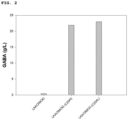
- the present inventors evaluated the conversion of ornithine to 4-aminobutyric acid (GABA) in each of E. coli WL3110 harboring pKM212LAAO/MOG, E. coli WL3110 harboring pKM212LAAO/MOG(C254I), and E. coli WL3110 harboring pKM212LAAO/MOG(C254L), into which the LAAO/MOG gene has been introduced.
- GABA 4-aminobutyric acid
- Each strain was inoculated into a 1.5 mL e-tube containing 1 mL of medium (containing Tris-HCl (pH 7.6) and 500 mM ornithine) and cultured at 37°C for 96 hours. After completion of the culturing, the culture was centrifuged to separate the supernatant and the cell pellet, and the supernatant was treated with DEEMM ( Kim et al., J. Mol. Catal. B: Enzym. 2015 115:151-154 ), and filtered through a 0.22 um filter.
- medium containing Tris-HCl (pH 7.6) and 500 mM ornithine
- PCR amplification was performed using primers 1 and 2, primers 3 and 4, primers 7 and 8, and primers 11 and 12.
- the resulting PCR products were amplified by crossover PCR and then inserted into the restriction enzymes HindIII (NEB, R3104S) and XbaI (NEB, R0145L) sites of the pK19mobSacB vector ( Jaeger et al., Journal of Bacteriology. 1992 174: 5462-65 ).
- the resulting vector was named pK19ms/davBA.
- PCR amplification was performed using primers 13 and 14, primers 15 and 16, primers 19 and 20, primers 21 and 22, and primers 23 and 24.
- PCR amplification was performed using primers 17 and 18.
- the resulting PCR products were amplified by crossover PCR and then inserted into the restriction enzyme HindIII and XbaI sites of the pK19mobSacB vector.
- the resulting vector was named pK19ms/yahK-gabT.
- PCR amplification was performed using primers 25 and 26, primers 27 and 28, and primers 31 and 32.
- E. coli expression vector pKE112CAR3pptase Polymers (Basel). 2019 11(7):1184 ) containing sfp (derived from Bacillus subtilis ) as a template, PCR amplification was performed using primers 29 and 30.
- the resulting PCR products were amplified by crossover PCR and then inserted into the restriction enzymes HindIII and XbaI sites of the pK19mobSacB vector.
- the resulting vector was named pK19ms/sfp.
- PCR amplification was performed using primers 33 and 34, primers 35 and 36, and primers 39 and 40.
- E. coli expression vector pKE112CAR3pptase Polymers (Basel). 2019 11(7):1184 ) containing car (derived from Mycobacterium abscessus ) as a template
- PCR amplification was performed using primers 37 and 38.
- the resulting PCR products were amplified by crossover PCR and then inserted into the restriction enzymes HindIII and XbaI sites of the pK19mobSacB vector.
- the resulting vector was named pK19ms/car.
- the Wizard Genomic DNA Purification Kit (Promega, USA) was used to extract DNA from each strain.
- the nucleotide sequences of the amplified genes gabT, yahK, and car are shown in Table 7 below, and the primers in Table 8 below were used for PCR.
- thermocycler TP600, TAKARA BIO Inc., Japan
- reaction solution containing 100 pM of each deoxynucleotide triphosphate (dATP, dCTP, dGTP, dTTP), 1 pM of oligonucleotide, and 10 ng of template DNA
- PCR was performed in the presence of one unit of a PrimeSTAR Max DNA polymerase (Takara, Japan) for 25 to 30 cycles, each consisting of 30 sec at 94°C, 30 sec at 58°C, and 1 min at 72°C.
- the pK19ms/davBA vector constructed in Example 3-1 above was introduced into competent cells of the Corynebacterium glutamicum ATCC13032 strain by electroporation using an electrophorator (BIO-RAD, USA), and then the cells were plated on 2YT KM AGAR medium (containing 2YT AGAR and 15 mg/L kanamycin) and cultured in an incubator at 30°C for 2 days to obtain colonies.
- 2YT KM AGAR medium containing 2YT AGAR and 15 mg/L kanamycin
- the colonies confirmed by PCR were cultured in 2YT liquid medium (containing 16 g/L tryptophan, 10 g/L yeast extract, and 5 g/L NaCl) for 12 hours, and then plated on 2YT sucrose AGAR medium (containing 2YT AGAR and 100 g/L sucrose), and the antibiotic marker was removed by the second homologous recombination.
- the selected colonies were finally analyzed by PCR and sequencing to determine whether the davB and davA genes were introduced as intended.
- PCR amplification was performed using primers 1 and 2, primers 3 and 41, primers 7 and 8, and primers 44 and 12.
- primers 1 and 2 primers 3 and 41, primers 7 and 8, and primers 44 and 12.
- PCR amplification was performed using primers 42 and 43.
- the resulting PCR products were amplified by crossover PCR and then inserted into the restriction enzymes HindIII and XbaI sites of the pK19mobSacB vector.
- the resulting vectors were named pK19ms/LAAO/MOG, pK19ms/LAAO/MOG(C254I), and pK19ms/LAAO/MOG(C254L), respectively.
- the Wizard Genomic DNA Purification Kit (Promega, USA) was used to extract DNA from each strain, and the primers in Table 8 above and Table 9 below were used for PCR.
- thermocycler TP600, TAKARA BIO Inc., Japan
- reaction solution containing 100 ⁇ M of each deoxynucleotide triphosphate (dATP, dCTP, dGTP, dTTP), 1 pM of oligonucleotide, and 10 ng of template DNA
- PCR was performed in the presence of one unit of a PrimeSTAR Max DNA polymerase (Takara, Japan) for 25 to 30 cycles, each consisting of 30 sec at 94°C, 30 sec at 58°C, and 1 min at 72°C.
- the pK19ms/LAAO/MOG, pK19ms/LAAO/MOG(C254I) or pK19ms/LAAO/MOG(C254L) vector constructed in Example 3-3 above was introduced into competent cells of the Corynebacterium glutamicum ATCC13032 strain by electroporation using an electrophorator (BIO-RAD, USA), and then the cells were plated on 2YT KM AGAR medium (containing 2YT AGAR and 15 mg/L kanamycin) and cultured in an incubator at 30°C for 2 days to obtain colonies.
- 2YT KM AGAR medium containing 2YT AGAR and 15 mg/L kanamycin
- the colonies confirmed by PCR were cultured in 2YT liquid medium (containing 16 g/L tryptophan, 10 g/L yeast extract, and 5 g/L NaCl) for 12 hours, and then plated on 2YT sucrose AGAR medium (containing 2YT AGAR and 100 g/L sucrose), and the antibiotic marker was removed by the second homologous recombination.
- the selected colonies were finally analyzed by PCR and sequencing to determine whether the LAAO/MOG, LAAO/MOG(C254I) or LAAO/MOG(C254L) gene was introduced as intended.
- Corynebacterium glutamicum strains into which LAAO/MOG(C254I) and LAAO/MOG(C254L) mutations have been introduced using pK19ms/LAAO/MOG(C254I) and pK19ms/LAAO/MOG(C254L) were named WBP-0003 and WBP-0004, respectively.
- the present inventors evaluated the 1,4-butanediol productivity of each of the Corynebacterium glutamicum WB01-P001, WBP-0002, WBP-0003 and WBP-0004 with the ornithine-1,4-butanediol pathway introduced, constructed in Examples 3-2 and 3-4 above.
- Each strain was inoculated into a flask medium (containing 5% glucose, 0.1% MgSO 4 , 0.5% yeast extract, 0.2% KH 2 PO 4 , 1% (NH 4 ) 2 SO 4 , 20 ppm FeSO 4 , 20 ppm MnSO 4 , 100 ⁇ g/L biotin, 20 ppm thiamine, 20 ppm nicotinamide, and 20 ppm CPN) and cultured at 30°C for 24 hours.
- the glucose concentration was 0 g/L.
- Corynebacterium glutamicum ATCC13032 was used as a control group.
Landscapes
- Chemical & Material Sciences (AREA)
- Health & Medical Sciences (AREA)
- Life Sciences & Earth Sciences (AREA)
- Organic Chemistry (AREA)
- Genetics & Genomics (AREA)
- Engineering & Computer Science (AREA)
- Zoology (AREA)
- Wood Science & Technology (AREA)
- Bioinformatics & Cheminformatics (AREA)
- General Engineering & Computer Science (AREA)
- Biochemistry (AREA)
- General Health & Medical Sciences (AREA)
- Biotechnology (AREA)
- Biomedical Technology (AREA)
- Microbiology (AREA)
- Molecular Biology (AREA)
- Medicinal Chemistry (AREA)
- Plant Pathology (AREA)
- Biophysics (AREA)
- Physics & Mathematics (AREA)
- Chemical Kinetics & Catalysis (AREA)
- General Chemical & Material Sciences (AREA)
- Proteomics, Peptides & Aminoacids (AREA)
- Preparation Of Compounds By Using Micro-Organisms (AREA)
Applications Claiming Priority (2)
| Application Number | Priority Date | Filing Date | Title |
|---|---|---|---|
| KR20220009016 | 2022-01-21 | ||
| PCT/KR2023/001023 WO2023140687A1 (ko) | 2022-01-21 | 2023-01-20 | 1,4-부탄디올을 생산하는 미생물 및 이를 이용한 1,4-부탄디올의 생산 방법 |
Publications (2)
| Publication Number | Publication Date |
|---|---|
| EP4467652A1 true EP4467652A1 (de) | 2024-11-27 |
| EP4467652A4 EP4467652A4 (de) | 2026-03-04 |
Family
ID=87561944
Family Applications (1)
| Application Number | Title | Priority Date | Filing Date |
|---|---|---|---|
| EP23743530.0A Pending EP4467652A4 (de) | 2022-01-21 | 2023-01-20 | Mikroorganismus zur herstellung von 1,4-butandiol und verfahren zur herstellung von 1,4-butandiol unter verwendung davon |
Country Status (3)
| Country | Link |
|---|---|
| EP (1) | EP4467652A4 (de) |
| KR (1) | KR102761743B1 (de) |
| CN (1) | CN118804980A (de) |
Cited By (1)
| Publication number | Priority date | Publication date | Assignee | Title |
|---|---|---|---|---|
| CN119823931A (zh) * | 2025-03-18 | 2025-04-15 | 东晓生物科技股份有限公司 | 重组载体、合成1,5-戊二醇的工程菌及其应用 |
Families Citing this family (4)
| Publication number | Priority date | Publication date | Assignee | Title |
|---|---|---|---|---|
| KR20250094832A (ko) * | 2023-12-18 | 2025-06-26 | 대상 주식회사 | 1,4-부탄디올 생산능이 향상된 변이 미생물 및 이를 이용한 1,4-부탄디올의 생산 방법 |
| KR20250098103A (ko) * | 2023-12-21 | 2025-07-01 | 대상 주식회사 | 1,4-부탄디올 생산능이 향상된 변이 미생물 및 이를 이용한 1,4-부탄디올의 생산 방법 |
| WO2025136007A1 (ko) * | 2023-12-21 | 2025-06-26 | 대상 주식회사 | 1,4-부탄디올 생산능이 향상된 변이 미생물 및 이를 이용한 1,4-부탄디올의 생산 방법 |
| KR20250098105A (ko) * | 2023-12-21 | 2025-07-01 | 대상 주식회사 | 1,4-부탄디올 생산능이 향상된 변이 미생물 및 이를 이용한 1,4-부탄디올의 생산 방법 |
Family Cites Families (4)
| Publication number | Priority date | Publication date | Assignee | Title |
|---|---|---|---|---|
| AU2010242789B2 (en) | 2009-04-30 | 2016-03-10 | Genomatica, Inc. | Organisms for the production of 1,3-butanediol |
| MY187676A (en) * | 2009-06-04 | 2021-10-08 | Genomatica Inc | Microorganisms for the production of 1,4-butanediol and related methods |
| EP2782893B1 (de) | 2011-11-25 | 2017-08-23 | Conser SPA | Verfahren zur herstellung von 1,4-butandiol, gamma-butyrolacton und tetrahydrofuran durch hydrierung von dialkylmaleat in einer gemischten flüssigkeits-/dampfphase |
| EP3050970B1 (de) | 2015-01-28 | 2019-09-18 | Metabolic Explorer | Modifizierter Mikroorganismus zur optimierten Herstellung von 1,4-Butandiol |
-
2023
- 2023-01-20 CN CN202380023025.0A patent/CN118804980A/zh active Pending
- 2023-01-20 KR KR1020230008481A patent/KR102761743B1/ko active Active
- 2023-01-20 EP EP23743530.0A patent/EP4467652A4/de active Pending
Cited By (1)
| Publication number | Priority date | Publication date | Assignee | Title |
|---|---|---|---|---|
| CN119823931A (zh) * | 2025-03-18 | 2025-04-15 | 东晓生物科技股份有限公司 | 重组载体、合成1,5-戊二醇的工程菌及其应用 |
Also Published As
| Publication number | Publication date |
|---|---|
| KR102761743B1 (ko) | 2025-02-04 |
| CN118804980A (zh) | 2024-10-18 |
| EP4467652A4 (de) | 2026-03-04 |
| KR20230113696A (ko) | 2023-08-01 |
Similar Documents
| Publication | Publication Date | Title |
|---|---|---|
| EP4467652A1 (de) | Mikroorganismus zur herstellung von 1,4-butandiol und verfahren zur herstellung von 1,4-butandiol unter verwendung davon | |
| JP2025168674A (ja) | L-リジン生産能が向上したコリネバクテリウム・グルタミカム変異株およびこれを用いたl-リジンの生産方法 | |
| JP2023521189A (ja) | 新規なポリペプチドおよびこれを利用したl-ロイシンの生産方法 | |
| JP2024511393A (ja) | L-シトルリン生産能が向上したコリネバクテリウム・グルタミカム変異株およびこれを用いたl-シトルリンの生産方法 | |
| US20250154536A1 (en) | 1,4-butanediol producing microorganism and method for preparing butanediol using the same | |
| US20250027125A1 (en) | Corynebacterium glutamicum variant having improved l-lysine production ability and method for producing l-lysine by using same | |
| EP4130255B1 (de) | Rekombinanter vektor zur transformation zur verbesserung der glutaminproduktivität und stamm damit | |
| US20230313244A1 (en) | Corynebacterium glutamicum mutant strain having enhanced l-lysine productivity and method of producing l-lysine using the same | |
| US20250283126A1 (en) | Corynebacterium glutamicum variant having improved l-lysine production ability, and method for producing l-lysine by using same | |
| US20150064758A1 (en) | Microorganism comprising pyruvate dehydrogenase variant and method of producing c4-chemicals using the same | |
| EP4692358A1 (de) | Mutierter mikroorganismus zur herstellung von 1,4-butandiol und verfahren zur herstellung von 1,4-butandiol damit | |
| KR102685485B1 (ko) | L-라이신 생산능이 향상된 변이 미생물 및 이를 이용한 l-라이신의 생산 방법 | |
| AU2021442655B2 (en) | Corynebacterium glutamicum variant having improved l-lysine production ability, and method for producing l-lysine by using same | |
| AU2021442398B2 (en) | Corynebacterium glutamicum variant having improved l-lysine production ability, and method for producing l-lysine using same | |
| EP4417696A1 (de) | Corynebacterium glutamicum-variante mit verbesserter l-lysin-produktionsfähigkeit und verfahren zur herstellung von l-lysin damit | |
| US20250305014A1 (en) | Corynebacterium glutamicum variant with improved l-lysine production ability, and method for producing l-lysine using same | |
| KR20250166386A (ko) | L-시트룰린 또는 l-아르기닌 생산능이 향상된 코리네박테리움 속 미생물 및 이를 이용한 l-시트룰린 또는 l-아르기닌의 생산 방법 | |
| KR20250098103A (ko) | 1,4-부탄디올 생산능이 향상된 변이 미생물 및 이를 이용한 1,4-부탄디올의 생산 방법 | |
| KR20250098921A (ko) | 1,4-부탄디올 생산능이 향상된 변이 미생물 및 이를 이용한 1,4-부탄디올의 생산 방법 | |
| KR20250098104A (ko) | 1,4-부탄디올 생산능이 향상된 변이 미생물 및 이를 이용한 1,4-부탄디올의 생산 방법 | |
| KR20250164010A (ko) | L-이소류신 생산능이 향상된 에스케리키아 속 미생물 및 이를 이용한 l-이소류신의 생산 방법 | |
| KR20250098105A (ko) | 1,4-부탄디올 생산능이 향상된 변이 미생물 및 이를 이용한 1,4-부탄디올의 생산 방법 | |
| KR20250177476A (ko) | L-이소류신 생산능이 향상된 에스케리키아 속 미생물 및 이를 이용한 l-이소류신의 생산 방법 |
Legal Events
| Date | Code | Title | Description |
|---|---|---|---|
| STAA | Information on the status of an ep patent application or granted ep patent |
Free format text: STATUS: THE INTERNATIONAL PUBLICATION HAS BEEN MADE |
|
| PUAI | Public reference made under article 153(3) epc to a published international application that has entered the european phase |
Free format text: ORIGINAL CODE: 0009012 |
|
| STAA | Information on the status of an ep patent application or granted ep patent |
Free format text: STATUS: REQUEST FOR EXAMINATION WAS MADE |
|
| 17P | Request for examination filed |
Effective date: 20240820 |
|
| AK | Designated contracting states |
Kind code of ref document: A1 Designated state(s): AL AT BE BG CH CY CZ DE DK EE ES FI FR GB GR HR HU IE IS IT LI LT LU LV MC ME MK MT NL NO PL PT RO RS SE SI SK SM TR |
|
| RIN1 | Information on inventor provided before grant (corrected) |
Inventor name: KIM, MOON JEONG Inventor name: LEE, JAE HUN Inventor name: SOHN, YU JUNG Inventor name: JEONG, SEONA Inventor name: SON, JINA Inventor name: PARK, SI JAE Inventor name: YANG, YOUNG LYEOL |
|
| DAV | Request for validation of the european patent (deleted) | ||
| DAX | Request for extension of the european patent (deleted) | ||
| REG | Reference to a national code |
Ref country code: DE Ref legal event code: R079 Free format text: PREVIOUS MAIN CLASS: C12N0015770000 Ipc: C12N0009020000 |
|
| A4 | Supplementary search report drawn up and despatched |
Effective date: 20260202 |
|
| RIC1 | Information provided on ipc code assigned before grant |
Ipc: C12N 9/02 20060101AFI20260127BHEP Ipc: C12N 9/04 20060101ALI20260127BHEP Ipc: C12N 9/10 20060101ALI20260127BHEP Ipc: C12N 9/80 20060101ALI20260127BHEP Ipc: C12N 15/52 20060101ALI20260127BHEP Ipc: C12N 15/70 20060101ALI20260127BHEP Ipc: C12N 15/77 20060101ALI20260127BHEP Ipc: C12P 7/18 20060101ALI20260127BHEP Ipc: C12P 13/00 20060101ALI20260127BHEP |