EP4467262A1 - Metallic ink, method for producing metallic ink, method for producing metallic layer, and metallic layer - Google Patents
Metallic ink, method for producing metallic ink, method for producing metallic layer, and metallic layer Download PDFInfo
- Publication number
- EP4467262A1 EP4467262A1 EP23743293.5A EP23743293A EP4467262A1 EP 4467262 A1 EP4467262 A1 EP 4467262A1 EP 23743293 A EP23743293 A EP 23743293A EP 4467262 A1 EP4467262 A1 EP 4467262A1
- Authority
- EP
- European Patent Office
- Prior art keywords
- metal
- metal ink
- solvent
- water
- polyhydric alcohol
- Prior art date
- Legal status (The legal status is an assumption and is not a legal conclusion. Google has not performed a legal analysis and makes no representation as to the accuracy of the status listed.)
- Pending
Links
Images




Classifications
-
- C—CHEMISTRY; METALLURGY
- C09—DYES; PAINTS; POLISHES; NATURAL RESINS; ADHESIVES; COMPOSITIONS NOT OTHERWISE PROVIDED FOR; APPLICATIONS OF MATERIALS NOT OTHERWISE PROVIDED FOR
- C09D—COATING COMPOSITIONS, e.g. PAINTS, VARNISHES OR LACQUERS; FILLING PASTES; CHEMICAL PAINT OR INK REMOVERS; INKS; CORRECTING FLUIDS; WOODSTAINS; PASTES OR SOLIDS FOR COLOURING OR PRINTING; USE OF MATERIALS THEREFOR
- C09D11/00—Inks
- C09D11/52—Electrically conductive inks
-
- B—PERFORMING OPERATIONS; TRANSPORTING
- B22—CASTING; POWDER METALLURGY
- B22F—WORKING METALLIC POWDER; MANUFACTURE OF ARTICLES FROM METALLIC POWDER; MAKING METALLIC POWDER; APPARATUS OR DEVICES SPECIALLY ADAPTED FOR METALLIC POWDER
- B22F1/00—Metallic powder; Treatment of metallic powder, e.g. to facilitate working or to improve properties
- B22F1/05—Metallic powder characterised by the size or surface area of the particles
- B22F1/054—Nanosized particles
- B22F1/0545—Dispersions or suspensions of nanosized particles
-
- B—PERFORMING OPERATIONS; TRANSPORTING
- B22—CASTING; POWDER METALLURGY
- B22F—WORKING METALLIC POWDER; MANUFACTURE OF ARTICLES FROM METALLIC POWDER; MAKING METALLIC POWDER; APPARATUS OR DEVICES SPECIALLY ADAPTED FOR METALLIC POWDER
- B22F1/00—Metallic powder; Treatment of metallic powder, e.g. to facilitate working or to improve properties
- B22F1/05—Metallic powder characterised by the size or surface area of the particles
- B22F1/054—Nanosized particles
- B22F1/056—Submicron particles having a size above 100 nm up to 300 nm
-
- B—PERFORMING OPERATIONS; TRANSPORTING
- B22—CASTING; POWDER METALLURGY
- B22F—WORKING METALLIC POWDER; MANUFACTURE OF ARTICLES FROM METALLIC POWDER; MAKING METALLIC POWDER; APPARATUS OR DEVICES SPECIALLY ADAPTED FOR METALLIC POWDER
- B22F1/00—Metallic powder; Treatment of metallic powder, e.g. to facilitate working or to improve properties
- B22F1/10—Metallic powder containing lubricating or binding agents; Metallic powder containing organic material
- B22F1/102—Metallic powder coated with organic material
-
- B—PERFORMING OPERATIONS; TRANSPORTING
- B22—CASTING; POWDER METALLURGY
- B22F—WORKING METALLIC POWDER; MANUFACTURE OF ARTICLES FROM METALLIC POWDER; MAKING METALLIC POWDER; APPARATUS OR DEVICES SPECIALLY ADAPTED FOR METALLIC POWDER
- B22F1/00—Metallic powder; Treatment of metallic powder, e.g. to facilitate working or to improve properties
- B22F1/10—Metallic powder containing lubricating or binding agents; Metallic powder containing organic material
- B22F1/107—Metallic powder containing lubricating or binding agents; Metallic powder containing organic material containing organic material comprising solvents, e.g. for slip casting
-
- B—PERFORMING OPERATIONS; TRANSPORTING
- B22—CASTING; POWDER METALLURGY
- B22F—WORKING METALLIC POWDER; MANUFACTURE OF ARTICLES FROM METALLIC POWDER; MAKING METALLIC POWDER; APPARATUS OR DEVICES SPECIALLY ADAPTED FOR METALLIC POWDER
- B22F7/00—Manufacture of composite layers, workpieces, or articles, comprising metallic powder, by sintering the powder, with or without compacting wherein at least one part is obtained by sintering or compression
- B22F7/06—Manufacture of composite layers, workpieces, or articles, comprising metallic powder, by sintering the powder, with or without compacting wherein at least one part is obtained by sintering or compression of composite workpieces or articles from parts, e.g. to form tipped tools
- B22F7/062—Manufacture of composite layers, workpieces, or articles, comprising metallic powder, by sintering the powder, with or without compacting wherein at least one part is obtained by sintering or compression of composite workpieces or articles from parts, e.g. to form tipped tools involving the connection or repairing of preformed parts
- B22F7/064—Manufacture of composite layers, workpieces, or articles, comprising metallic powder, by sintering the powder, with or without compacting wherein at least one part is obtained by sintering or compression of composite workpieces or articles from parts, e.g. to form tipped tools involving the connection or repairing of preformed parts using an intermediate powder layer
-
- C—CHEMISTRY; METALLURGY
- C09—DYES; PAINTS; POLISHES; NATURAL RESINS; ADHESIVES; COMPOSITIONS NOT OTHERWISE PROVIDED FOR; APPLICATIONS OF MATERIALS NOT OTHERWISE PROVIDED FOR
- C09D—COATING COMPOSITIONS, e.g. PAINTS, VARNISHES OR LACQUERS; FILLING PASTES; CHEMICAL PAINT OR INK REMOVERS; INKS; CORRECTING FLUIDS; WOODSTAINS; PASTES OR SOLIDS FOR COLOURING OR PRINTING; USE OF MATERIALS THEREFOR
- C09D11/00—Inks
- C09D11/02—Printing inks
- C09D11/03—Printing inks characterised by features other than the chemical nature of the binder
- C09D11/033—Printing inks characterised by features other than the chemical nature of the binder characterised by the solvent
-
- C—CHEMISTRY; METALLURGY
- C09—DYES; PAINTS; POLISHES; NATURAL RESINS; ADHESIVES; COMPOSITIONS NOT OTHERWISE PROVIDED FOR; APPLICATIONS OF MATERIALS NOT OTHERWISE PROVIDED FOR
- C09D—COATING COMPOSITIONS, e.g. PAINTS, VARNISHES OR LACQUERS; FILLING PASTES; CHEMICAL PAINT OR INK REMOVERS; INKS; CORRECTING FLUIDS; WOODSTAINS; PASTES OR SOLIDS FOR COLOURING OR PRINTING; USE OF MATERIALS THEREFOR
- C09D11/00—Inks
- C09D11/02—Printing inks
- C09D11/03—Printing inks characterised by features other than the chemical nature of the binder
- C09D11/037—Printing inks characterised by features other than the chemical nature of the binder characterised by the pigment
-
- C—CHEMISTRY; METALLURGY
- C09—DYES; PAINTS; POLISHES; NATURAL RESINS; ADHESIVES; COMPOSITIONS NOT OTHERWISE PROVIDED FOR; APPLICATIONS OF MATERIALS NOT OTHERWISE PROVIDED FOR
- C09D—COATING COMPOSITIONS, e.g. PAINTS, VARNISHES OR LACQUERS; FILLING PASTES; CHEMICAL PAINT OR INK REMOVERS; INKS; CORRECTING FLUIDS; WOODSTAINS; PASTES OR SOLIDS FOR COLOURING OR PRINTING; USE OF MATERIALS THEREFOR
- C09D11/00—Inks
- C09D11/30—Inkjet printing inks
- C09D11/32—Inkjet printing inks characterised by colouring agents
- C09D11/322—Pigment inks
-
- C—CHEMISTRY; METALLURGY
- C09—DYES; PAINTS; POLISHES; NATURAL RESINS; ADHESIVES; COMPOSITIONS NOT OTHERWISE PROVIDED FOR; APPLICATIONS OF MATERIALS NOT OTHERWISE PROVIDED FOR
- C09D—COATING COMPOSITIONS, e.g. PAINTS, VARNISHES OR LACQUERS; FILLING PASTES; CHEMICAL PAINT OR INK REMOVERS; INKS; CORRECTING FLUIDS; WOODSTAINS; PASTES OR SOLIDS FOR COLOURING OR PRINTING; USE OF MATERIALS THEREFOR
- C09D11/00—Inks
- C09D11/30—Inkjet printing inks
- C09D11/38—Inkjet printing inks characterised by non-macromolecular additives other than solvents, pigments or dyes
-
- C—CHEMISTRY; METALLURGY
- C22—METALLURGY; FERROUS OR NON-FERROUS ALLOYS; TREATMENT OF ALLOYS OR NON-FERROUS METALS
- C22C—ALLOYS
- C22C1/00—Making non-ferrous alloys
- C22C1/04—Making non-ferrous alloys by powder metallurgy
- C22C1/0425—Copper-based alloys
-
- C—CHEMISTRY; METALLURGY
- C22—METALLURGY; FERROUS OR NON-FERROUS ALLOYS; TREATMENT OF ALLOYS OR NON-FERROUS METALS
- C22C—ALLOYS
- C22C1/00—Making non-ferrous alloys
- C22C1/04—Making non-ferrous alloys by powder metallurgy
- C22C1/0466—Alloys based on noble metals
-
- B—PERFORMING OPERATIONS; TRANSPORTING
- B22—CASTING; POWDER METALLURGY
- B22F—WORKING METALLIC POWDER; MANUFACTURE OF ARTICLES FROM METALLIC POWDER; MAKING METALLIC POWDER; APPARATUS OR DEVICES SPECIALLY ADAPTED FOR METALLIC POWDER
- B22F9/00—Making metallic powder or suspensions thereof
- B22F9/16—Making metallic powder or suspensions thereof using chemical processes
- B22F9/18—Making metallic powder or suspensions thereof using chemical processes with reduction of metal compounds
- B22F9/24—Making metallic powder or suspensions thereof using chemical processes with reduction of metal compounds starting from liquid metal compounds, e.g. solutions
Definitions
- the present invention relates to a metal ink, a method for producing a metal ink, a method for producing a metal layer, and a metal layer.
- Patent Literature 1 describes forming a solder layer on a member.
- Patent Literature 2 describes forming a metal layer using silver paste.
- Silver paste can be sintered under relatively low temperature conditions, and the melting point of a bonding layer formed after sintering is equivalent to that of silver.
- the metal layer formed of the sintered silver paste therefore has excellent heat resistance and can be used stably even in high-temperature environments and large-current applications.
- copper paste is sometimes used from the viewpoint of material cost, for example, as disclosed in Patent Literature 3.
- a metal ink in which metal particles are dispersed in a liquid may be used instead of a metal paste such as copper paste.
- the metal ink may be advantageous from a manufacturing standpoint because the metal ink can be ejected, for example, from nozzles.
- Such a metal ink may cause deterioration in the characteristics of the product, such as reduction in the denseness of the metal layer, due to aggregation of the metal particles. Furthermore, it is also required to appropriately store the metal ink for a long period of time. Therefore, it is required to enable appropriate storage for a long period of time while suppressing aggregation of metal particles.
- the present invention has been made in view of the above, and an object thereof is to provide a metal ink that can be appropriately stored for a long period of time while suppressing aggregation of metal particles, a method for producing the metal ink, and a method for producing the metal layer.
- a metal ink of the present disclosure comprises: a metal particle; a solvent; an organic solvent having a boiling point of 150°C or higher at atmospheric pressure and being miscible with water; and a polyhydric alcohol having two or more OH groups and being soluble in water and ethanol.
- the metal particle is contained in a mass ratio of 1.0% or more and 50.0% or less with respect to a total amount of the metal ink.
- the organic solvent includes at least one of a glycol ether and an aprotic polar solvent.
- the polyhydric alcohol has a melting point of 30°C or higher.
- the solvent includes water.
- the solvent includes ethanol.
- the solvent includes a high boiling point solvent that has one or more OH groups, has a boiling point of 150°C or higher, and is a liquid hardly soluble or insoluble in water.
- the metal particle is at least one of copper and silver.
- the metal particle is copper or silver
- the solvent includes water
- the organic solvent includes at least one of a glycol ether and an aprotic polar solvent
- the polyhydric alcohol includes at least one polyhydric alcohol that has two or more OH groups, is soluble in water and ethanol, and has a melting point of 30°C or higher.
- a method for producing a metal ink of the present disclosure comprises mixing a metal particle, a solvent, an organic solvent having a boiling point of 150°C or higher at atmospheric pressure and being miscible with water, and a polyhydric alcohol having two or more OH groups and being soluble in water and ethanol to produce a metal ink containing the metal particle, the solvent, and the polyhydric alcohol.
- the method comprises mixing the metal particle, water as the solvent, the polyhydric alcohol, and the organic solvent to produce a first metal ink which is a metal ink containing the metal particle, water, the organic solvent, and the polyhydric alcohol.
- the method comprises mixing the second metal ink, and a high boiling point solvent, the high boiling point solvent as the solvent has one or more OH groups, has a boiling point of 150°C or higher, and is a liquid hardly soluble or insoluble in water to produce a third metal ink which is a metal ink containing the metal particle, water, the ethanol, the high boiling point solvent, the polyhydric alcohol, and the organic solvent.
- a method for producing a metal layer of the present disclosure comprises heating the metal ink to form a metal layer.
- a metal layer of the present disclosure is formed by using the metal ink.
- the present invention enables appropriate storage for a long period of time while suppressing aggregation of metal particles.
- FIG. 1 is a schematic diagram of a metal ink according to the present embodiment.
- a metal ink 10 contains metal particles 12, a polyhydric alcohol 14, a solvent 16, and an organic solvent 18.
- the metal ink 10 refers to an ink-like substance in which the metal particles 12 are not dissolved in the solvent 16, which is a liquid, but the metal particles 12 are present in the solid form in the solvent 16. In the metal ink 10, the metal particles 12 may settle in the solvent 16, or the metal particles 12 may be dispersed.
- the metal ink 10 is used to form a metal layer on a member (for example, to form wiring).
- the metal ink 10 is ejected from a nozzle onto a base material (a film of resin, metal or the like, or a substrate made of resin, metal, ceramic or a composite thereof) and dried, and thereafter further heated to sinter or melt the metal particles 12 while removing other components, and then cooled, whereby a metal layer formed of the metal component of the metal particles 12 is formed on the base material.
- a base material a film of resin, metal or the like, or a substrate made of resin, metal, ceramic or a composite thereof
- the metal ink 10 is not limited to this application and may be used in any applications.
- the metal layer may be produced from the metal ink 10 in any condition. It is preferable to heat the metal ink 10 under an oxidizing gas atmosphere, an inert gas atmosphere, or a reducing gas atmosphere.
- the metal particles 12 are particles of metal.
- the metal particles 12 are preferably copper or silver particles and may include both copper and silver.
- the metal particles 12 are preferably particles of at least one of copper and silver.
- the particle size of the metal particles 12 is preferably in the range of 30 nm to 500 nm, and particularly preferably in the range of 30 nm to 300 nm.
- the BET specific surface area of the metal particles 12 can be determined by measuring the amount of nitrogen gas adsorbed by the metal particles 12 using nitrogen or krypton gas as the measurement gas with a specific surface area measuring device (QUANTACHROME AUTOSORB-iQ2 available from Quantachrome Instruments).
- the BET specific surface area of the metal particles 12 is preferably in the range of 2.0 m 2 /g to 8.0 m 2 /g, more preferably in the range of 3.5 m 2 /g to 8.0 m 2 /g, and particularly preferably in the range of 4.0 m 2 /g to 8.0 m 2 /g.
- the shape of the metal particles 12 is not limited to a spherical shape and may be a needle-like or flat plate-like shape.
- the surface of the metal particles 12 is partially or entirely coated with an organic substance.
- the coating of an organic substance suppresses oxidation of the metal particles 12 and further reduces the possibility of deterioration of sinterability due to oxidation of the metal particles 12. It can be said that the organic substance coating the metal particles 12 is not formed by the polyhydric alcohol 14 or the solvent 16 and is not derived from the polyhydric alcohol 14 or the solvent 16. It can also be said that the organic substance coating the metal particles 12 is not a metal oxide (copper oxide or silver oxide) formed by oxidation of the metal.
- the coating of the metal particles 12 with an organic substance can be observed by analyzing the surface of the metal particles 12 using time-of-flight secondary ion mass spectrometry (TOF-SIMS).
- TOF-SIMS time-of-flight secondary ion mass spectrometry
- the metal particles 12 are copper
- the ratio of the detected amount of C 3 H 3 O 3 - ions to the detected amount of Cu + ions detected by analyzing the surface of the metal particles 12 using time-of-flight secondary ion mass spectrometry is preferably 0.001 or more.
- the C 3 H 3 O 3 - /Cu + ratio is even more preferably in the range of 0.05 to 0.2.
- the surface of the metal particles 12 in this analysis refers to the surface of the metal particles 12 including the coating of the organic substance (that is, the surface of the organic substance), rather than the surface of the metal particles 12 when the organic substance is removed from the metal particles 12.
- the metal particles 12 are silver
- the ratio of the detected amount of C 3 H 3 O 3 - ions to the detected amount of Ag + ions detected by analyzing the surface of the metal particles 12 using time-of-flight secondary ion mass spectrometry is preferably 0.001 or more and even more preferably in the range of 0.05 to 0.2.
- C 3 H 4 O 2 - ions or ions of C 5 or more may be detected by analyzing the surface using time-of-flight secondary ion mass spectrometry.
- the ratio of the detected amount of C 3 H 4 O 2 - ions to the detected amount of Cu + ions is preferably 0.001 or more.
- the ratio of the detected amount of ions of C 5 or more to the detected amount of Cu + ions (ions of C 5 or more/Cu ratio) is preferably less than 0.005.
- the ratio of the detected amount of C 3 H 4 O 2 - ions to the detected amount of Ag + ions is preferably 0.001 or more. It can be said that the ratio of the detected amount of ions of C 5 or more to the detected amount of Ag + ions (ions of C 5 or more/Ag + ratio) is preferably less than 0.005.
- the C 3 H 3 O 3 - ions, C 3 H 4 O 2 - ions, and ions of C 5 or more detected in time-of-flight secondary ion mass spectrometry originate from the organic substance coating the surface of the metal particles 12. Therefore, when the C 3 H 3 O 3 - /Cu + ratio and the C 3 H 4 O 2 - /Cu + ratio are each 0.001 or more, the surface of the metal particles 12 is less likely to oxidize and the metal particles 12 are less likely to agglomerate.
- the C 3 H 3 O 3 - /Cu + ratio and the C 3 H 4 O 2 - /Cu + ratio are 0.2 or less, oxidation and agglomeration of the metal particles 12 can be suppressed without excessively reducing the sinterability of the metal particles 12, and the generation of decomposition gas of the organic substance during heating can also be suppressed. As a result, a bonding layer with fewer voids can be formed.
- the C 3 H 3 O 3 - /Cu + ratio and the C 3 H 4 O 2 - /Cu + ratio are preferably in the range of 0.08 to 0.16.
- the ions of C 5 or more/Cu + ratio is 0.005 or more, a large amount of organic substance with a relatively high desorption temperature is present on the particle surface, and as a result, sinterability is not sufficiently developed and a strong bonding layer is less likely to be produced.
- the ions of C 5 or more/Cu + ratio is preferably less than 0.003.
- the metal particles 12 are silver, the C 3 H 3 O 3 - /Ag + ratio and the C 3 H 4 O 2 - /Ag + ratio are preferably in the range of 0.08 to 0.16.
- the ions of C 5 or more/Ag + ratio is 0.005 or more, a large amount of organic substance with a relatively high desorption temperature is present on the particle surface, and as a result, sinterability is not sufficiently developed and a strong bonding layer is less likely to be produced. It can be said that the ions of C 5 or more/Ag + ratio is preferably less than 0.003.
- the organic substance coating the metal particles 12 is preferably a carboxylic acid derived from a carboxylic acid metal used in the production of the metal particles 12.
- the method for producing the metal particles 12 coated with a carboxylic acid-derived organic substance will be described later.
- the amount of coating of the organic substance on the metal particles 12 is preferably in the range of 0.5% by mass to 2.0% by mass with respect to 100% by mass of the metal particles, more preferably in the range of 0.8% by mass to 1.8% by mass, and even more preferably in the range of 0.8% by mass to 1.5% by mass. With the amount of coating of the organic substance of 0.5% by mass or more, the metal particles 12 can be uniformly coated with the organic substance, and oxidation of the metal particles 12 can be suppressed more reliably.
- the amount of coating of the organic substance of 2.0% by mass or less, it is possible to suppress the formation of voids in the sintered metal particles (bonding layer) due to gases generated by the decomposition of the organic substance by heating.
- the amount of coating of the organic substance can be measured using commercially available equipment.
- the amount of coating can be measured using a thermogravimetry differential thermal analyzer TG8120-SL (Rigaku Corporation). In this case, for example, metal particles from which water has been removed by freeze-drying are used as a sample.
- the measurement may be performed three times each with metal particles in the same lot, and the arithmetic mean may be considered as the amount of coating.
- the metal particles 12 When the metal particles 12 are heated for 30 minutes at a temperature of 300°C in an inert gas atmosphere such as argon gas, it is preferable that 50% by mass or more of the organic substance is decomposed.
- the carboxylic acid-derived organic substance generates carbon dioxide gas, nitrogen gas, acetone evaporation gas, and water vapor during decomposition.
- the polyhydric alcohol 14 is a alcohol that contains two or more OH groups and is soluble in water and ethanol. Furthermore, it is preferable that the polyhydric alcohol 14 has a melting point of 30°C or more.
- the polyhydric alcohol 14 may be, for example, at least one of 2,2-dimethyl-1,3-propanediol, 2,5-dimethyl-2,5-hexanediol, 2-hydroxymethyl-2-methyl-1,3-propanediol, 1-phenyl-1,2-ethanediol, 1,1,1-tris(hydroxymethyl)propane, erythritol, pentaerythritol, ribitol, resorcinol, (pyro)catechol, 5-methylresorcinol, pyrogallol, 1,2,3-cyclohexanetriol, and 1,3,5-cyclohexanetriol.
- the polyhydric alcohol 14 Since the polyhydric alcohol 14 is included in the metal ink 10, the polyhydric alcohol 14 coordinates around the metal particles 12 to properly suppress agglomeration of the metal particles 12. In other words, in the present embodiment, it can be said that it is preferable that the polyhydric alcohol 14 coordinates around the metal particles 12.
- the solvent 16 is a liquid (medium) for dispersing the metal particles 12. The details of the solvent 16 will be described later.
- the organic solvent 18 is an organic solvent that is a component different from the polyhydric alcohol 14 and the solvent 16.
- the organic solvent 18 is an organic solvent having a boiling point of 150°C or higher at atmospheric pressure and being miscible with water.
- the organic solvent 18 more preferably has a boiling point of 200°C or higher.
- miscible means that the organic solvent 18 can be mixed with water in any ratio (That is, they can be completely dissolved with each other at any concentration.).
- the organic solvent 18 is preferably miscible with the solvent 16.
- the organic solvent 18 is preferably a glycol ether or an aprotic polar solvent. Furthermore, the organic solvent 18 may include both a glycol ether and an aprotic polar solvent, in other words, preferably contains at least one of a glycol ether and an aprotic polar solvent.
- glycol ether included in the organic solvent 18 examples include diethylene glycol monomethyl ether, triethylene glycol monomethyl ether, polyethylene glycol monomethyl ether, diethylene glycol monoisopropyl ether, ethylene glycol monobutyl ether, diethylene glycol monobutyl ether, triethylene glycol monobutyl ether, ethylene glycol isobutyl ether, diethylene glycol monoisobutyl ether, ethylene glycol monoallyl ether, diethylene glycol monobenzyl ether, dipropylene glycol monomethyl ether, tripropylene glycol monomethyl ether, propylene glycol monopropyl ether, diethylene glycol dimethyl ether, triethylene glycol dimethyl ether, diethylene glycol methyl ethyl ether, and diethylene glycol diethyl ether.
- the organic solvent 18 includes a glycol ether, at least one selected from the listed glycol ethers may be included.
- Examples of the aprotic polar solvent included in the organic solvent 18 include N-methylpyrrolidone, dimethylformamide, 2-pyrrolidone, and propylene carbonate.
- the organic solvent 18 includes an aprotic polar solvent, at least one selected from the listed aprotic polar solvents may be included.
- the metal ink 10 may contain inevitable impurities in addition to the components described above.
- the inevitable impurities include a substance produced when the above-described component reacts by itself or with other components or oxygen or the like, by light, heat, or the like, through decomposition, polymerization, addition, oxidation, reduction, or the like.
- the amount of polyhydric alcohol 14 in the metal ink 10 is preferably 0.01% or more and 20.0% or less, in mass ratio to the entire metal ink 10.
- the amount of polyhydric alcohol 14 in this range allows the metal particles 12 to be properly dispersed while preventing the concentration of the metal particles 12 from becoming too low.
- the amount of metal particles 12 in the metal ink 10 is preferably 1.0% or more and 50.0% or less, more preferably 5.0% or more and 50.0% or less, and even more preferably 5.0% or more and 30.0% or less, in mass ratio to the entire metal ink 10.
- the amount of metal particles 12 in this range is advantageous from a manufacturing standpoint, for example, in that ejectability by nozzles is improved, because reduction in flowability of the metal ink 10 can be suppressed while keeping a sufficient concentration of metal particles 12.
- the amount of solvent 16 in the metal ink 10 is preferably 50.0% or more and 99.0% or less, more preferably 50.0% or more and 95.0% or less, and even more preferably 60.0% or more and 95.0% or less, in mass ratio to the entire metal ink 10.
- the amount of solvent 16 in this range is advantageous from a manufacturing standpoint, for example, in that ejectability by nozzles is improved, because reduction in flowability of the metal ink 10 can be suppressed while keeping a sufficient concentration of metal particles 12.
- the content of the organic solvent 18 is preferably 0.01% or more and 30.0% or less, and more preferably 0.1% or more and 30.0% or less in mass ratio with respect to the entire metal ink 10.
- the metal ink 10 has a sufficient antifungal property even when left for a long period of time, achieving appropriate storage for a long period of time.
- the metal ink 10 may contain an ionized metal particle 12 (metal ions constituting the metal particle 12). That is, the ionized metal particle 12 may be contained in the liquid component of the metal ink 10.
- the ionized metal particle 12 may be at least one of a silver ion and a copper ion.
- the metal ink 10 described above can have variations in composition of the solvent 16.
- the metal inks 10 with the solvents 16 of different compositions will be described below.
- first metal ink 10A One of the metal inks 10 with the solvents 16 of different compositions is denoted as a first metal ink 10A.
- the solvent 16 is water.
- the first metal ink 10A is a mixture of metal particles 12 while the polyhydric alcohol 14 and the organic solvent 18 is dissolved in water as the solvent 16.
- the first metal ink 10A contains the metal particles 12 in an aqueous solution of polyhydric alcohol 14 and the organic solvent 18.
- the amount of polyhydric alcohol 14 in the first metal ink 10A is preferably 0.01% or more and 20.0% or less, more preferably 0.5% or more and 20.0% or less, and even more preferably 1.0% or more and 20.0% or less, in mass ratio to the entire first metal ink 10A.
- the amount of polyhydric alcohol 14 in this range allows the metal particles 12 to be properly dispersed while preventing the concentration of the metal particles 12 from becoming too low.
- the amount of metal particles 12 in the first metal ink 10A is preferably 1.0% or more and 50.0% or less, more preferably 5.0% or more and 50.0% or less, and even more preferably 5.0% or more and 30.0% or less, in mass ratio to the entire first metal ink 10A.
- the amount of metal particles 12 in this range is advantageous from a manufacturing standpoint, for example, in that ejectability by nozzles is improved, because reduction in flowability of the first metal ink 10A can be suppressed while keeping a sufficient concentration of metal particles 12.
- the content of the organic solvent 18 is preferably 0.01% or more and 30.0% or less, more preferably 1.0% or more and 30.0% or less, and still more preferably 2.0% or more and 30.0% or less in mass ratio with respect to the entire first metal ink 10A.
- the content of the organic solvent 18 falls within this range, it is possible to achieve appropriate storage for a long period of time.
- the first metal ink 10A contains no substances other than the metal particles 12, the polyhydric alcohol 14, the solvent 16 which is water, and the organic solvent 18, except for inevitable impurities.
- the present embodiment is not limited thereto and the first metal ink 10A may contain additives (dispersant, adhesion-applying agent, rheology adjuster, anti-rust agent, precipitation prevention agent,and the like) other than the metal particles 12, the polyhydric alcohol 14, the solvent 16 which is water, and the organic solvent 18.
- the second metal ink 10B contains ethanol as the solvent 16.
- the main solvent which is the main component of the solvent 16 is ethanol.
- the main solvent refers to a content more than 50% in mass ratio in the entire solvent 16.
- the second metal ink 10B may contain, as the solvent 16, a solvent other than ethanol which is the main solvent, and in the present embodiment, may contain water.
- the second metal ink 10B is a mixture of metal particles 12 while the polyhydric alcohol 14 and the organic solvent 18 are dissolved in the solvent 16. In other words, for example, the second metal ink 10B contains the metal particles 12 in an aqueous solution of polyhydric alcohol 14, the organic solvent 18 and ethanol.
- the amount of polyhydric alcohol 14 in the second metal ink 10B is preferably 0.01% or more and 10.0% or less, more preferably 0.1% or more and 10.0% or less, and even more preferably 0.1% or more and 5.0% or less, in mass ratio to the entire second metal ink 10B.
- the amount of polyhydric alcohol 14 in this range allows the metal particles 12 to be properly dispersed while preventing the concentration of the metal particles 12 from becoming too low.
- the amount of metal particles 12 in the second metal ink 10B is preferably 1.0% or more and 50.0% or less, more preferably 5.0% or more and 50.0% or less, and even more preferably 5.0% or more and 30.0% or less, in mass ratio to the entire second metal ink 10B.
- the amount of metal particles 12 in this range is advantageous from a manufacturing standpoint, for example, in that ejectability by nozzles is improved, because reduction in flowability of the second metal ink 10B can be suppressed while keeping a sufficient concentration of metal particles 12.
- the amount of ethanol in the second metal ink 10B is preferably more than 50.0% and 99.0% or less, more preferably more than 50.0% and 95.0% or less, and even more preferably 60.0% or more and 95.0% or less, in mass ratio to the entire second metal ink 10B.
- the amount of ethanol in this range is advantageous from a manufacturing standpoint, for example, in that ejectability by nozzles is improved, because reduction in flowability of the second metal ink 10B can be suppressed while keeping a sufficient concentration of metal particles 12.
- the content of the organic solvent 18 is preferably 0.01% or more and 30.0% or less, more preferably 0.1% or more and 20.0% or less, and still more preferably 0.5% or more and 20.0% or less in mass ratio with respect to the entire second metal ink 10B.
- the content of the organic solvent 18 falls within this range, it is possible to achieve appropriate storage for a long period of time.
- the second metal ink 10B contains no substances other than the metal particles 12, the polyhydric alcohol 14, the solvent 16 (herein water and ethanol), and the organic solvent 18, except for inevitable impurities.
- the present embodiment is not limited thereto and the second metal ink 10B may contain additives (dispersant, adhesion-applying agent, rheology adjuster, anti-rust agent, precipitation prevention agent and the like) other than the metal particles 12, the polyhydric alcohol 14, the solvent 16, and the organic solvent 18.
- ethanol may cause agglomeration of metal particles.
- the polyhydric alcohol 14 since the polyhydric alcohol 14 is mixed, for example, the polyhydric alcohol 14 coordinates around the metal particles 12 to suppress agglomeration of the metal particles 12.
- the third metal ink 10C contains a high-boiling solvent as the solvent 16.
- the main solvent which is the main component of the solvent 16 is a high-boiling solvent.
- the third metal ink 10C contains the metal particles 12 while the polyhydric alcohol 14 and the organic solvent 18 is dissolved in the solvent 16.
- the third metal ink 10C may contain, as the solvent 16, a solvent other than a high-boiling solvent which is the main solvent.
- the third metal ink 10C may contain at least one of water and ethanol, and in the present embodiment contains both water and ethanol.
- the solvent contains one or more OH groups, has a boiling point of 150°C or more, and is a liquid hardly soluble or insoluble in water.
- the high-boiling solvent hardly soluble or insoluble in water is preferably a solvent classified as a non-water-soluble liquid in the Cabinet Order on Regulation of Hazardous Materials in the Fire Service Act, Appendix 3.
- the high-boiling solvent is preferably an organic solvent, for example, at least one of ⁇ -terpineol and 2-ethyl-1,3-hexanediol. Both solvents may include isomers.
- the amount of polyhydric alcohol 14 in the third metal ink 10C is preferably 0.01% or more and 5.0% or less, more preferably 0.01% or more and 5.0% or less, and even more preferably 0.01% or more and 3.0% or less, in mass ratio to the entire third metal ink 10C.
- the amount of polyhydric alcohol 14 in this range allows the metal particles 12 to be properly dispersed while preventing the concentration of the metal particles 12 from becoming too low.
- the amount of metal particles 12 in the third metal ink 10C is preferably 1.0% or more and 50.0% or less, more preferably 5.0% or more and 50.0% or less, and even more preferably 5.0% or more and 30.0% or less, in mass ratio to the entire third metal ink 10C.
- the amount of metal particles 12 in this range is advantageous from a manufacturing standpoint, for example, in that ejectability by nozzles is improved, because reduction in flowability of the third metal ink 10C can be suppressed while keeping a sufficient concentration of metal particles 12.
- the amount of high-boiling solvent in the third metal ink 10C is preferably more than 50.0% and 99.0% or less, more preferably more than 50.0% and 95.0% or less, and even more preferably 60.0% or more and 95.0% or less, in mass ratio to the entire third metal ink 10C.
- the amount of high-boiling solvent in this range is advantageous from a manufacturing standpoint, for example, in that ejectability by nozzles is improved, because reduction in flowability of the third metal ink 10C can be suppressed while keeping a sufficient concentration of metal particles 12.
- the content of the organic solvent 18 is preferably 0.01% or more and 30.0% or less, more preferably 0.01% or more and 10.0% or less, and still more preferably 0.1% or more and 10.0% or less in mass ratio with respect to the entire third metal ink 10C.
- the content of the organic solvent 18 falls within this range, it is possible to achieve appropriate storage for a long period of time.
- the third metal ink 10C contains a dispersant, which is a component other than the metal particles 12, the polyhydric alcohol 14, the solvent 16, and the organic solvent 18.
- the dispersant include cationic dispersants, anionic dispersants, nonionic dispersants, and amphoteric dispersants.
- examples of the anionic dispersants include carboxylic acid dispersants, sulfonic acid dispersants, phosphoric acid dispersants, and in particular, phosphate ester compounds are suitable as the phosphoric acid dispersants.
- the molecular weight of the phosphate ester compound used as a dispersant is preferably 200 or more and 2000 or less, more preferably 200 or more and 1500 or less, and even more preferably 200 or more and 1000 or less.
- the molecular weight of 200 or more provides sufficient hydrophobicity to achieve satisfactory dispersibility of metal particles in the high-boiling solvent.
- the molecular weight of 2000 or less enables decomposition and reaction at the targeted heating temperature (approximately 200 to 350°C) to eliminate the possibility of hindering sintering of the metal particles.
- the amount of dispersant in the third metal ink 10C is preferably 0.01% or more and 5.0% or less, more preferably 0.1% or more and 5.0% or less, and even more preferably 0.1% or more and 3.0% or less, in mass ratio to the entire third metal ink 10C.
- the amount of dispersant in this range can properly suppress agglomeration of the metal particles 12.
- the third metal ink 10C contains no substances other than the metal particles 12, the polyhydric alcohol 14, the solvent 16 (herein, water, ethanol, and high-boiling solvent), the organic solvent 18 and the dispersant, except for inevitable impurities.
- the present embodiment is not limited thereto.
- the third metal ink 10C does not necessarily contain a dispersant or may contain additives (adhesion-applying agent, rheology adjuster, anti-rust agent, precipitation prevention agent, and the like) other than the metal particles 12, the polyhydric alcohol 14, the solvent 16, the organic solvent 18 and the dispersant.
- the high-boiling solvent may cause agglomeration of the metal particles 12.
- the polyhydric alcohol 14 since the polyhydric alcohol 14 is mixed, for example, the polyhydric alcohol 14 coordinates around the metal particles 12 to suppress agglomeration of the metal particles 12.
- FIG. 2 is a flowchart illustrating a method for producing a metal ink according to the present embodiment.
- the metal particles 12 are formed by mixing an aqueous carboxylic acid metal dispersion with a reducing agent (step S10). Specifically, first, an aqueous dispersion of a carboxylic acid metal (for example, copper carboxylate) is prepared, and then a pH adjuster is added to this aqueous carboxylic acid metal dispersion to adjust the pH to 2.0 or more and 7.5 or less. Subsequently, to this pH-adjusted aqueous carboxylic acid metal dispersion, a hydrazine compound in an amount 1.0 to 1.2 times the equivalent amount that can reduce metal ions is added as a reducing agent and mixed under an inert gas atmosphere.
- a carboxylic acid metal for example, copper carboxylate
- the resulting mixture is heated to a temperature of 60°C or more and 80°C or less and held for 1.5 hours or longer and 2.5 hours or shorter under an inert gas atmosphere.
- This process reduces the metal ions leached from the carboxylic acid metal to form metal particles 12 and forms a metal acid-derived organic substance on the surface of the metal particles 12.
- carboxylic acid glycolic acid, citric acid, malic acid, maleic acid, malonic acid, fumaric acid, succinic acid, tartaric acid, oxalic acid, phthalic acid, benzoic acid, and salts thereof are used.
- a hydrazine compound is used, but hydrazine, ascorbic acid, oxalic acid, formic acid, and salts thereof may be used.
- An aqueous dispersion of copper carboxylate can be prepared by adding a powdered carboxylic acid metal to pure water such as distilled water or ion-exchanged water at a concentration of 25% by mass or more and 40% by mass or less, stirring with a stirring blade, and dispersing uniformly.
- the pH adjuster include triammonium citrate, ammonium hydrogen citrate, and citric acid. Among these, triammonium citrate is preferred because it can mildly adjust the pH.
- the pH of the aqueous copper carboxylate dispersion is set to 2.0 or more in order to accelerate the leaching rate of copper ions leached from copper carboxylate and to allow the formation of copper particles to proceed quickly to obtain the target fine copper particles.
- the pH is set to 7.5 or less in order to prevent the leached metal ions from becoming copper(II) hydroxide and to increase the yield of copper particles. Setting the pH to 7.5 or less can prevent the reducing power of the hydrazine compound from becoming excessively high and facilitates formation of the target copper particles.
- the pH of the aqueous copper carboxylate dispersion is preferably adjusted to within a range of 4 to 6.
- the reduction of copper carboxylate by the hydrazine compound is performed under an inert gas atmosphere. This is to prevent oxidation of copper ions leached into the liquid.
- the inert gas include nitrogen gas and argon gas.
- the hydrazine compound has the advantages of producing no residue after the reduction reaction when reducing copper carboxylate under acidic conditions, being relatively safe, and being easy to handle.
- the hydrazine compound include hydrazine monohydrate, anhydrous hydrazine, hydrazine hydrochloride, and hydrazine sulfate. Among these hydrazine compounds, hydrazine monohydrate and anhydrous hydrazine, which do not contain components such as sulfur and chlorine that can be impurities, are preferred.
- the carboxylic acid-derived component generated from copper carboxylate quickly coats the surface of the copper particles to suppress dissolution of the copper particles. It is preferable that the aqueous dispersion of copper carboxylate after the pH adjustment is set to 50°C or more and 70°C or less to facilitate the progress of the reduction reaction.
- the mixture of the hydrazine compound is heated to a temperature of 60°C or more and 80°C or less and held for 1.5 hours or longer and 2.5 hours or shorter under an inert gas atmosphere in order to form copper particles and to form a coating of an organic substance on the surface of the formed copper particles. Heating and holding in an inert gas atmosphere is to prevent oxidation of the formed copper particles.
- the starting material that is, copper carboxylate, usually contains approximately 35% by mass of copper.
- the heating temperature exceeds 80°C and the holding time exceeds 2.5 hours, the rate of copper particle formation may be too fast, and the amount of organic substance coating the copper particles may be too small.
- the preferred heating temperature is 65°C or more and 75°C or less, and the preferred holding time is 2 hours or longer and 2.5 hours or shorter.
- the copper particles produced in the mixture may be washed, desalted, etc. using pure water or the like from the mixed liquid in an inert gas atmosphere. Furthermore, it is possible to obtain an water slurry containing the metal particles 12 with a certain solid-liquid ratio (for example, solid-liquid ratio: 50/50 [% by mass]) by dehydration using, for example, a centrifugal separator.
- the copper particles having the surface coated with an organic substance can be obtained by solid-liquid separation and drying by freeze-drying or drying under reduced pressure. These copper particles have the surface coated with an organic substance and therefore is less likely to be oxidized even when stored in air.
- a silver carboxylate slurry is prepared by simultaneously adding an aqueous silver salt solution and an aqueous carboxylate solution dropwise into water.
- each of the aqueous silver salt solution, the aqueous carboxylate solution, water, and the silver carboxylate slurry is held at a predetermined temperature in the range of 20 to 90°C. Holding the temperature of each liquid at a predetermined temperature of 20°C or more facilitates formation of silver carboxylate and can increase the particle size of silver particles. Furthermore, holding the temperature of each liquid at a predetermined temperature of 90°C or less can prevent the silver particles from becoming coarse particles. Furthermore, it is preferable that water is stirred while the aqueous silver salt solution and the aqueous carboxylate solution are simultaneously added dropwise into the water.
- silver salt in the aqueous silver salt solution specifically, for example, one or two or more compounds selected from the group consisting of silver nitrate, silver chlorate, silver phosphate, and salts thereof are preferred.
- carboxylic acid in the aqueous carboxylate solution one or two or more compounds selected from the group consisting of glycolic acid, citric acid, malic acid, maleic acid, malonic acid, fumaric acid, succinic acid, tartaric acid, and salts thereof are preferred.
- water examples include ion-exchanged water and distilled water. It is particularly preferred to use ion-exchanged water because it does not contain ions that may adversely affect synthesis and its production cost is lower than that of distilled water.
- a silver particle slurry is prepared by adding an aqueous reducing agent solution dropwise into the silver carboxylate slurry and then performing predetermined heat treatment.
- the predetermined heat treatment may be, for example, heat treatment of increasing the temperature to a predetermined temperature (maximum temperature) in the range of 20 to 90°C at a temperature increase rate of 15°C/hour or less in water, holding this maximum temperature for 1 to 5 hours, and then decreasing the temperature to 30°C or less over 30 minutes or shorter.
- setting the temperature increase rate to 15°C/hour or less can prevent the silver particles from becoming coarse particles.
- setting the maximum temperature to 20°C or more facilitates reduction of silver carboxylate and can increase the particle size of silver particles.
- setting the maximum temperature to 90°C or less can prevent silver particles from becoming coarse particles.
- setting the holding time at the maximum temperature to 1 hour or longer facilitates reduction of silver carboxylate and can increase the particle size of silver particles.
- setting the holding time to 5 hours or shorter can prevent silver particles from becoming coarse particles.
- setting the period of time for decreasing the temperature to 30°C to 30 minutes or shorter can prevent the silver particles from becoming coarse particles.
- each of the silver carboxylate slurry and the aqueous reducing agent solution it is preferable to hold the temperature of each of the silver carboxylate slurry and the aqueous reducing agent solution at a predetermined temperature in the range of 20 to 90°C. Holding the temperature of each liquid at a predetermined temperature of 20°C or more facilitates reduction of silver carboxylate and can increase the particle size of silver powder. On the other hand, holding the temperature of each liquid at a predetermined temperature of 90°C or less can prevent the silver powder from becoming coarse particles.
- a reducing agent in the aqueous reducing agent solution one or two or more compounds selected from the group consisting of hydrazine, ascorbic acid, oxalic acid, formic acid, and salts thereof are preferred.
- a water slurry containing silver particles with a certain solid-liquid ratio (for example, solid-liquid ratio: 50/50 [% by mass]) can be obtained by subjecting the silver particle slurry to a centrifuge to remove the liquid layer in the silver powder slurry, and dehydrate and desalinate the silver particle slurry.
- the silver particle slurry can be dried to obtain silver particles.
- the silver particle slurry can be dried by any method, and specific examples of the drying method include freeze-drying, drying under reduced pressure, and heat drying.
- the freeze-drying is a method in which the silver particle slurry is frozen in a sealed container, the inside of the sealed container is depressurized by a vacuum pump to lower the boiling point of the material to be dried, and the material to be dried is sublimated and dried at a low temperature.
- the drying under reduced pressure is a method in which the material to be dried is dried under reduced pressure.
- the heat drying is a method in which the material to be dried is dried by heating.
- the metal particle 12, the polyhydric alcohol 14, the organic solvent 18, and water as the solvent 16 are mixed to generate a first metal ink 10A (step S12).
- the first metal ink 10A is preferably produced by mixing the metal particle 12, the polyhydric alcohol 14, the organic solvent 18, and water so that the content of the metal particle 12, the polyhydric alcohol 14, and the organic solvent 18 falls within the numerical ranges described above.
- the metal particle 12, the polyhydric alcohol 14, the organic solvent 18, and water may be mixed by an arbitrary method.
- an aqueous solution containing the polyhydric alcohol 14 and the organic solvent 18 may be mixed, or an aqueous solution of the polyhydric alcohol 14 and an aqueous solution of the organic solvent 18 may be mixed, with a water slurry containing the metal particle 12 or an aqueous solution containing the polyhydric alcohol 14 and the organic solvent 18 may be mixed, or an aqueous solution of the polyhydric alcohol 14 and an aqueous solution of the organic solvent 18 may be mixed, with the metal particle 12 not containing water.
- filtration may be performed with a filter having a predetermined opening, or the like. Such filtration may be performed at any stage in the subsequent metal ink-producing process.
- the first metal ink 10A is mixed with ethanol as the solvent 16 to generate the second metal ink 10B (step S14).
- the second metal ink 10B is produced by mixing the first metal ink 10A with ethanol and water such that the amounts of metal particles 12, polyhydric alcohol 14, ethanol, and organic solvent 18 are in the numerical ranges described above.
- the first metal ink 10A, ethanol and water may be mixed by any method.
- the first metal ink 10A obtained at step S12 may be allowed to stand still for a predetermined period of time (for example, about 1 day) or centrifuged under predetermined conditions, then some of the supernatant may be removed, and ethanol may be added to the first metal ink 10A from which the supernatant has been removed.
- a predetermined period of time for example, about 1 day
- ethanol may be added to the first metal ink 10A from which the supernatant has been removed.
- the second metal ink 10B is mixed with a high-boiling solvent as the solvent 16 and a dispersant to generate the third metal ink 10C (step S16).
- the third metal ink 10C is produced by mixing the second metal ink 10B, a high-boiling solvent, a dispersant, and an organic solvent 18 such that the amounts of metal particles 12, polyhydric alcohol 14, high-boiling solvent, and dispersant are in the numerical ranges described above.
- the second metal ink 10B, the high-boiling solvent, and the dispersant may be mixed by any method.
- the second metal ink 10B obtained at step S14 may be allowed to stand still for a predetermined period of time (for example, about 1 day) or centrifuged under predetermined conditions, then some of the supernatant may be removed, and the high-boiling solvent may be added to the second metal ink 10B from which the supernatant solution has been removed.
- a dispersant is not essential.
- the solvent water, ethanol, high-boiling solvent, etc.
- the organic solvent 18 may be further removed from or added to the third metal ink 10C to achieve the numerical ranges described above.
- the third metal ink 10C thus generated is used as the metal ink 10.
- the second metal ink 10B is generated using the first metal ink 10A
- the third metal ink 10C is generated using the second metal ink 10C.
- the first metal ink 10A and the second metal ink 10B are intermediate substances for producing the third metal ink 10C.
- the first metal ink 10A and the second metal ink 10B are not necessarily intermediate substances, and the first metal ink 10A and the second metal ink 10B themselves may be used as the metal ink 10.
- the method for producing the metal particles 12 and the metal ink 10 described above are by way of example, and the metal particles 12 and the metal ink 10 may be produced by any method.
- the metal ink 10 according to the embodiment contains the metal particle 12, the solvent 16, the organic solvent 18 having a boiling point of 150°C or higher at atmospheric pressure and being miscible with water, and the polyhydric alcohol 14 having two or more OH groups and being soluble in water and ethanol.
- the metal particles may aggregate.
- the property of the product may be deteriorated.
- the metal layer has a decreased denseness.
- the polyhydric alcohol 14 can suppress the aggregation of the metal particles 12.
- the metal ink 10 of the embodiment can suppress the aggregation of the metal particles 12, thereby suppressing the deterioration of the characteristics of the product. Furthermore, for example, when the metal ink 10 is ejected with a nozzle, the aggregation of the metal particles 12 is suppressed, and defects in production such as clogging in the nozzle can also be suppressed. Furthermore, the metal ink 10 according to the embodiment, containing the organic solvent 18, has a sufficient antifungal property even when left for a long period of time, achieving appropriate storage for a long period of time.
- the metal particle 12 is copper or silver
- the solvent 16 includes water
- the organic solvent 18 includes at least one of a glycol ether and an aprotic polar solvent
- the polyhydric alcohol 14 includes at least one polyhydric alcohol that has two or more OH groups, is soluble in water and ethanol, and has a melting point of 30°C or higher.
- the metal ink 10, having such components, can suppress the aggregation of the metal particles 12, achieving appropriate storage for a long period of time.
- the metal particle 12, the solvent 16, the organic solvent 18 having a boiling point of 150°C or higher at atmospheric pressure and being miscible with water, and the polyhydric alcohol 14 having two or more OH groups and being soluble in water and ethanol are mixed to produce the metal ink 10 containing the metal particle 12, the solvent 16, the polyhydric alcohol 14, and the organic solvent 18.
- the added polyhydric alcohol 14 can suppress the aggregation of the metal particles 12, and the added organic solvent 18 achieves appropriate storage for a long period of time.
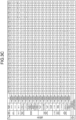
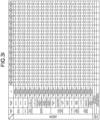
- FIG. 3A to FIG. 3I list the amounts of components of the metal inks and the evaluation results in examples.
- Example 1 copper phthalate was prepared as copper carboxylate as a starting material. Copper phthalate was put into ion-exchanged water at room temperature and stirred using a stirring blade to prepare an aqueous dispersion of copper phthalate with a concentration of 30% by mass. Then, an aqueous solution of ammonium phthalate was added as a pH adjuster to this aqueous solution of copper phthalate to adjust the pH of the above aqueous dispersion to 3.
- the pH-adjusted solution was set to 50°C, and under a nitrogen gas atmosphere, an aqueous solution of hydrazine monohydrate (2-fold dilution) with an oxidation-reduction potential of -0.5 V was added as a reducing agent in an amount 1.2 times the equivalent amount that can reduce copper ions to the pH-adjusted solution at once and mixed homogeneously using a stirring blade.
- the mixture of the aqueous dispersion and the reducing agent is heated to a holding temperature of 70°C under a nitrogen gas atmosphere and held at 70°C for 2 hours.
- a water slurry of copper particles (copper powder concentration: 50% by mass) was obtained by dehydration and desalination using a centrifuge.
- Example 1 18 g of the obtained water slurry of the copper particle (metal particle) (copper powder concentration: 50 mass%), 36 g of an aqueous solution of 2.2-dimethyl-1,3-propanediol as a polyhydric alcohol (concentration: 5 mass%), and 18 g of water were mixed, and 18 g of 2-pyrrolidone was further added as an organic solvent to obtain 90 g of a copper ink (metal ink) having water as the main solvent.
- the content ratio of each component in the copper ink of Example 1 was as shown in FIG. 3A .
- the copper ink in Example 1 is an example of the first metal ink 10A of the embodiment.
- Examples 2 to 136 the added components were changed as shown in FIGS. 3A to 3G from Example 1 to produce metal inks.
- a substance having a content ratio value of "0.0" indicates that the substance is not contained.
- the metal ink in each of Examples 1 to 136 contains a metal particle (at least one of copper and silver), a solvent (at least one of water, ethanol, and a high boiling point solvent), an organic solvent having a boiling point of 150°C or higher at atmospheric pressure and being miscible with water, and a polyhydric alcohol having two or more OH groups and being soluble in water and ethanol.
- the metal ink in each of Examples 21 to 56 and 77 to 136 contains ethanol as a solvent.
- the metal ink in each of Examples 33 to 56 and 89 to 136 contains, as a solvent, a high boiling point solvent that has one or more OH groups, has a boiling point of 150°C or higher, and is a liquid hardly soluble or insoluble in water.
- Dipropylene glycol monomethyl ether which is a high boiling point solvent contained in the metal inks in Examples 57 to 64, has one or more OH groups and has a boiling point of 150°C or higher, but does not satisfy the condition of being hardly soluble or insoluble in water.
- the phrase "does not satisfy the condition of being hardly soluble or insoluble in water" means that a solvent is not classified as the water-insoluble liquid in Appended Table 3 in the Cabinet Order Concerning the Control of Hazardous Materials in the Fire Service Act.
- Comparative Examples 1 to 38 the added components were changed as shown in FIGS. 3G to 3I from Comparative Example 1 to produce metal inks. Comparative Examples 1 to 38 do not contain at least one of an organic solvent and a polyhydric alcohol. In the components in FIGS. 3G to 3I , a substance having a content ratio value of "0.0" indicates that the substance is not contained.
- the dispersibility of the metal inks obtained in Examples and Comparative Examples was evaluated.
- the obtained metal ink was sufficiently dispersed in an ultrasonic cleaner or the like.
- 10 g of the metal ink was collected in a 20 ml glass sample container, and left in a refrigerator overnight. After standing overnight, the interface of sedimentation and separation of the metal particles in the metal ink was evaluated such that, when the height from the bottom of the sample container to the liquid surface of the metal ink was 100, 50 or higher was rated as excellent "A", and less than 50 was rated as poor "C" in the height from the bottom of the container.
- the long-term storage of the metal inks obtained in Examples and Comparative Examples was evaluated.
- the metal ink having a dispersibility of "A” was evaluated for antifungal property (mold resistance test) in accordance with the method of "6. Testing methods for paints" described in Japanese Industrial Standards (JIS Z 2911).
- JIS Z 2911 Japanese Industrial Standards
- the metal ink as a sample was placed in a hollow with a diameter of 30 mm at the center of the medium, and subjected to the test. A sample in which mycelial growth was not observed was rated as excellent "A", and a sample in which mycelial growth was observed was rated as poor "C".
- the metal ink having a dispersibility of "A" in Example was applied and dried to have a size of 10 mm ⁇ 10 mm with an inkjet device on the central portion of a polyimide film having a thickness of 100 ⁇ m and a size of 50 mm ⁇ 50 mm. Thereafter, the metal ink was heated at 200°C for 30 seconds in a nitrogen atmosphere to obtain a fired film of the metal ink having a thickness of about 1 to 3 ⁇ m. The sinterability was evaluated by SEM observation of the cross section of the obtained fired film.
- the sinterability was rated as excellent "A” when the ratio of voids in the film was 20% or less, was rated as good “B” when the ratio was more than 20% and 30% or less, and was rated as poor "C” when the ratio was more than 30%.
- Examples 113 to 136 each of which uses a high boiling point solvent that is not a solvent having one or more OH groups, having a boiling point of 150°C or higher, and being a liquid hardly soluble or insoluble in water, were rated as "A” in dispersibility and long-term storage and slightly deteriorated and rated as “B” in sinterability, but did not include a rating of "C”. Therefore, it is understood that the metal inks achieve suppressing aggregation of the metal particles, sintering, and appropriate storage for a long period of time.
- Comparative Examples 1 to 38 each of which does not contain at least one of a polyhydric alcohol and an organic solvent, were rated as "C” in at least one of dispersibility, sinterability, and long-term storage. Therefore, it is understood that the metal inks fail to satisfy all of suppressing aggregation of the metal particles, sintering, and storage for a long period of time.
- Comparative Example 2 and Comparative Example 21, containing a polyhydric alcohol and not containing an organic solvent were rated as "A” in dispersibility and sinterability, but rated as "C” in long-term storage. Comparative examples rated as "C” in dispersibility were difficult to use as an ink, and the sinterability and long-term storage were not evaluated, and therefore indicated as "-".
Landscapes
- Chemical & Material Sciences (AREA)
- Engineering & Computer Science (AREA)
- Materials Engineering (AREA)
- Organic Chemistry (AREA)
- Life Sciences & Earth Sciences (AREA)
- Wood Science & Technology (AREA)
- Nanotechnology (AREA)
- Chemical Kinetics & Catalysis (AREA)
- General Chemical & Material Sciences (AREA)
- Mechanical Engineering (AREA)
- Inorganic Chemistry (AREA)
- Metallurgy (AREA)
- Manufacturing & Machinery (AREA)
- Composite Materials (AREA)
- Dispersion Chemistry (AREA)
- Powder Metallurgy (AREA)
- Inks, Pencil-Leads, Or Crayons (AREA)
- Manufacture Of Metal Powder And Suspensions Thereof (AREA)
Abstract
Description
- The present invention relates to a metal ink, a method for producing a metal ink, a method for producing a metal layer, and a metal layer.
- As an example of forming a metal layer on a member,
Patent Literature 1 describes forming a solder layer on a member. For example,Patent Literature 2 describes forming a metal layer using silver paste. Silver paste can be sintered under relatively low temperature conditions, and the melting point of a bonding layer formed after sintering is equivalent to that of silver. The metal layer formed of the sintered silver paste therefore has excellent heat resistance and can be used stably even in high-temperature environments and large-current applications. On the other hand, copper paste is sometimes used from the viewpoint of material cost, for example, as disclosed inPatent Literature 3. - In forming a metal layer in this way, a metal ink in which metal particles are dispersed in a liquid may be used instead of a metal paste such as copper paste. The metal ink may be advantageous from a manufacturing standpoint because the metal ink can be ejected, for example, from nozzles.
-
- Patent Literature 1:
Japanese Patent Application Laid-open No. 2004-172378 - Patent Literature 2:
Japanese Patent No. 6531547 - Patent Literature 3:
Japanese Patent Application Laid-open No. 2019-67515 - Such a metal ink may cause deterioration in the characteristics of the product, such as reduction in the denseness of the metal layer, due to aggregation of the metal particles. Furthermore, it is also required to appropriately store the metal ink for a long period of time. Therefore, it is required to enable appropriate storage for a long period of time while suppressing aggregation of metal particles.
- The present invention has been made in view of the above, and an object thereof is to provide a metal ink that can be appropriately stored for a long period of time while suppressing aggregation of metal particles, a method for producing the metal ink, and a method for producing the metal layer.
- To solve the problem above, a metal ink of the present disclosure comprises: a metal particle; a solvent; an organic solvent having a boiling point of 150°C or higher at atmospheric pressure and being miscible with water; and a polyhydric alcohol having two or more OH groups and being soluble in water and ethanol.
- It is preferable that the polyhydric alcohol is contained in a mass ratio of 0.01% or more and 20.0% or less with respect to a total amount of the metal ink.
- It is preferable that the metal particle is contained in a mass ratio of 1.0% or more and 50.0% or less with respect to a total amount of the metal ink.
- It is preferable that the organic solvent is contained in a mass ratio of 0.01% or more and 30.0% or less with respect to a total amount of the metal ink.
- It is preferable that the organic solvent includes at least one of a glycol ether and an aprotic polar solvent.
- It is preferable that the polyhydric alcohol has a melting point of 30°C or higher.
- It is preferable that the solvent includes water.
- It is preferable that the solvent includes ethanol.
- It is preferable that the solvent includes a high boiling point solvent that has one or more OH groups, has a boiling point of 150°C or higher, and is a liquid hardly soluble or insoluble in water.
- It is preferable that the metal particle is at least one of copper and silver.
- It is preferable that the metal particle is copper or silver, the solvent includes water, the organic solvent includes at least one of a glycol ether and an aprotic polar solvent, and the polyhydric alcohol includes at least one polyhydric alcohol that has two or more OH groups, is soluble in water and ethanol, and has a melting point of 30°C or higher.
- To solve the problem above a method for producing a metal ink of the present disclosure comprises mixing a metal particle, a solvent, an organic solvent having a boiling point of 150°C or higher at atmospheric pressure and being miscible with water, and a polyhydric alcohol having two or more OH groups and being soluble in water and ethanol to produce a metal ink containing the metal particle, the solvent, and the polyhydric alcohol.
- It is preferable that the method comprises mixing the metal particle, water as the solvent, the polyhydric alcohol, and the organic solvent to produce a first metal ink which is a metal ink containing the metal particle, water, the organic solvent, and the polyhydric alcohol.
- It is preferable that the method comprises mixing the first metal ink, and ethanol as the solvent to produce a second metal ink which is a metal ink containing the metal particle, water, the ethanol, the polyhydric alcohol, and the organic solvent.
- It is preferable that the method comprises mixing the second metal ink, and a high boiling point solvent, the high boiling point solvent as the solvent has one or more OH groups, has a boiling point of 150°C or higher, and is a liquid hardly soluble or insoluble in water to produce a third metal ink which is a metal ink containing the metal particle, water, the ethanol, the high boiling point solvent, the polyhydric alcohol, and the organic solvent.
- A method for producing a metal layer of the present disclosure comprises heating the metal ink to form a metal layer.
- A metal layer of the present disclosure is formed by using the metal ink.
- The present invention enables appropriate storage for a long period of time while suppressing aggregation of metal particles.
-
-
FIG. 1 is a schematic diagram of a metal ink according to the embodiment. -
FIG. 2 is a flowchart for outlining a method for producing a metal ink according to the embodiment. -
FIG. 3A is a table showing the content of the components of a metal ink in each example and evaluation results thereof. -
FIG. 3B is a table showing the content of the components of a metal ink in each example and evaluation results thereof. -
FIG. 3C is a table showing the content of the components of a metal ink in each example and evaluation results thereof. -
FIG. 3D is a table showing the content of the components of a metal ink in each example and evaluation results thereof. -
FIG. 3E is a table showing the content of the components of a metal ink in each example and evaluation results thereof. -
FIG. 3F is a table showing the content of the components of a metal ink in each example and evaluation results thereof. -
FIG. 3G is a table showing the content of the components of a metal ink in each example and evaluation results thereof. -
FIG. 3H is a table showing the content of the components of a metal ink in each example and evaluation results thereof. -
FIG. 3I is a table showing the content of the components of a metal ink in each example and evaluation results thereof. - The present invention will be described in detail below with reference to the drawings. It should be noted that the present invention is not limited by the following modes for carrying out the invention (hereinafter referred to as "embodiments"). In addition, the components in the following embodiments include those that can be readily conceived by those skilled in the art, those that are substantially identical, and those that come within the range of equivalence. Furthermore, the components disclosed in the following embodiments can be combined as appropriate. Numerical values include the rounding range.
-
FIG. 1 is a schematic diagram of a metal ink according to the present embodiment. As illustrated inFIG. 1 , ametal ink 10 containsmetal particles 12, apolyhydric alcohol 14, a solvent 16, and anorganic solvent 18. Themetal ink 10 refers to an ink-like substance in which themetal particles 12 are not dissolved in the solvent 16, which is a liquid, but themetal particles 12 are present in the solid form in the solvent 16. In themetal ink 10, themetal particles 12 may settle in the solvent 16, or themetal particles 12 may be dispersed. - The
metal ink 10 is used to form a metal layer on a member (for example, to form wiring). For example, themetal ink 10 is ejected from a nozzle onto a base material (a film of resin, metal or the like, or a substrate made of resin, metal, ceramic or a composite thereof) and dried, and thereafter further heated to sinter or melt themetal particles 12 while removing other components, and then cooled, whereby a metal layer formed of the metal component of themetal particles 12 is formed on the base material. However, themetal ink 10 is not limited to this application and may be used in any applications. - The metal layer may be produced from the
metal ink 10 in any condition. It is preferable to heat themetal ink 10 under an oxidizing gas atmosphere, an inert gas atmosphere, or a reducing gas atmosphere. - The
metal particles 12 are particles of metal. In the present embodiment, themetal particles 12 are preferably copper or silver particles and may include both copper and silver. In other words, themetal particles 12 are preferably particles of at least one of copper and silver. - The
metal particle 12 preferably has a particle size (peak value of particle size distribution (number)) of 10 nm or more and 1000 nm or less. The particle size of themetal particle 12 in themetal ink 10 can be determined as the peak value of the particle size distribution (number) of themetal particle 12 using a particle size analyzer (Zetasizer Nano Series ZSP, manufactured by Malvern Panalytical Ltd.). In the measurement of the particle size distribution, when sufficient measurement quality cannot be obtained due to the high concentration of themetal particle 12 in themetal ink 10, the measurement may be performed after the particle is diluted and dispersed about 10 to 1000 times with a main solvent (water, ethanol, or high boiling point solvent) in themetal ink 10. - If the particle size is 10 nm or less, the specific surface area increases in inverse proportion to the particle size. As a result, the effect of surface oxidation may increase, and the sinterability of a coating film obtained using the
metal particles 12 may deteriorate. On the other hand, if the particle size of themetal particles 12 is 1000 nm or more, the particle size becomes too large. As a result, themetal particles 12 may easily settle and separate in the ink when dispersed in the solvent. The particle size of themetal particles 12 is preferably in the range of 30 nm to 500 nm, and particularly preferably in the range of 30 nm to 300 nm. - The BET specific surface area of the
metal particles 12 can be determined by measuring the amount of nitrogen gas adsorbed by themetal particles 12 using nitrogen or krypton gas as the measurement gas with a specific surface area measuring device (QUANTACHROME AUTOSORB-iQ2 available from Quantachrome Instruments). The BET specific surface area of themetal particles 12 is preferably in the range of 2.0 m2/g to 8.0 m2/g, more preferably in the range of 3.5 m2/g to 8.0 m2/g, and particularly preferably in the range of 4.0 m2/g to 8.0 m2/g. The shape of themetal particles 12 is not limited to a spherical shape and may be a needle-like or flat plate-like shape. - It is preferable that the surface of the
metal particles 12 is partially or entirely coated with an organic substance. The coating of an organic substance suppresses oxidation of themetal particles 12 and further reduces the possibility of deterioration of sinterability due to oxidation of themetal particles 12. It can be said that the organic substance coating themetal particles 12 is not formed by thepolyhydric alcohol 14 or the solvent 16 and is not derived from thepolyhydric alcohol 14 or the solvent 16. It can also be said that the organic substance coating themetal particles 12 is not a metal oxide (copper oxide or silver oxide) formed by oxidation of the metal. - The coating of the
metal particles 12 with an organic substance can be observed by analyzing the surface of themetal particles 12 using time-of-flight secondary ion mass spectrometry (TOF-SIMS). For example, when themetal particles 12 are copper, the ratio of the detected amount of C3H3O3 - ions to the detected amount of Cu+ ions detected by analyzing the surface of themetal particles 12 using time-of-flight secondary ion mass spectrometry (C3H3O3 -/Cu+ ratio) is preferably 0.001 or more. The C3H3O3 -/Cu+ ratio is even more preferably in the range of 0.05 to 0.2. The surface of themetal particles 12 in this analysis refers to the surface of themetal particles 12 including the coating of the organic substance (that is, the surface of the organic substance), rather than the surface of themetal particles 12 when the organic substance is removed from themetal particles 12. When themetal particles 12 are silver, the ratio of the detected amount of C3H3O3 - ions to the detected amount of Ag+ ions detected by analyzing the surface of themetal particles 12 using time-of-flight secondary ion mass spectrometry (C3H3O3 -/Ag+ ratio) is preferably 0.001 or more and even more preferably in the range of 0.05 to 0.2. - When the
metal particles 12 are copper, C3H4O2 -ions or ions of C5 or more may be detected by analyzing the surface using time-of-flight secondary ion mass spectrometry. The ratio of the detected amount of C3H4O2 -ions to the detected amount of Cu+ ions (C3H4O2 -/Cu+ ratio) is preferably 0.001 or more. The ratio of the detected amount of ions of C5 or more to the detected amount of Cu+ ions (ions of C5 or more/Cu ratio) is preferably less than 0.005. When themetal particles 12 are silver, the ratio of the detected amount of C3H4O2 - ions to the detected amount of Ag+ ions (C3H4O2 -/Ag+ ratio) is preferably 0.001 or more. It can be said that the ratio of the detected amount of ions of C5 or more to the detected amount of Ag+ ions (ions of C5 or more/Ag+ ratio) is preferably less than 0.005. - The C3H3O3 - ions, C3H4O2 - ions, and ions of C5 or more detected in time-of-flight secondary ion mass spectrometry originate from the organic substance coating the surface of the
metal particles 12. Therefore, when the C3H3O3 -/Cu+ ratio and the C3H4O2 -/Cu+ ratio are each 0.001 or more, the surface of themetal particles 12 is less likely to oxidize and themetal particles 12 are less likely to agglomerate. Furthermore, when the C3H3O3 -/Cu+ ratio and the C3H4O2 -/Cu+ ratio are 0.2 or less, oxidation and agglomeration of themetal particles 12 can be suppressed without excessively reducing the sinterability of themetal particles 12, and the generation of decomposition gas of the organic substance during heating can also be suppressed. As a result, a bonding layer with fewer voids can be formed. In order to further improve the oxidation resistance of themetal particles 12 during storage and to further improve the sinterability at low temperatures, the C3H3O3 -/Cu+ ratio and the C3H4O2 -/Cu+ ratio are preferably in the range of 0.08 to 0.16. Furthermore, when the ions of C5 or more/Cu+ ratio is 0.005 or more, a large amount of organic substance with a relatively high desorption temperature is present on the particle surface, and as a result, sinterability is not sufficiently developed and a strong bonding layer is less likely to be produced. The ions of C5 or more/Cu+ ratio is preferably less than 0.003. When themetal particles 12 are silver, the C3H3O3 -/Ag+ ratio and the C3H4O2 -/Ag+ ratio are preferably in the range of 0.08 to 0.16. Furthermore, when the ions of C5 or more/Ag+ ratio is 0.005 or more, a large amount of organic substance with a relatively high desorption temperature is present on the particle surface, and as a result, sinterability is not sufficiently developed and a strong bonding layer is less likely to be produced. It can be said that the ions of C5 or more/Ag+ ratio is preferably less than 0.003. - The organic substance coating the
metal particles 12 is preferably a carboxylic acid derived from a carboxylic acid metal used in the production of themetal particles 12. The method for producing themetal particles 12 coated with a carboxylic acid-derived organic substance will be described later. The amount of coating of the organic substance on themetal particles 12 is preferably in the range of 0.5% by mass to 2.0% by mass with respect to 100% by mass of the metal particles, more preferably in the range of 0.8% by mass to 1.8% by mass, and even more preferably in the range of 0.8% by mass to 1.5% by mass. With the amount of coating of the organic substance of 0.5% by mass or more, themetal particles 12 can be uniformly coated with the organic substance, and oxidation of themetal particles 12 can be suppressed more reliably. On the other hand, with the amount of coating of the organic substance of 2.0% by mass or less, it is possible to suppress the formation of voids in the sintered metal particles (bonding layer) due to gases generated by the decomposition of the organic substance by heating. The amount of coating of the organic substance can be measured using commercially available equipment. For example, the amount of coating can be measured using a thermogravimetry differential thermal analyzer TG8120-SL (Rigaku Corporation). In this case, for example, metal particles from which water has been removed by freeze-drying are used as a sample. Measurement is performed in nitrogen (Grade 2) gas to suppress oxidation of the metal particles, and the ratio of weight reduction by heating from 250°C to 300°C at a temperature increase rate of 10°C/min can be defined as the amount of coating of the organic substance. That is, the amount of coating = (sample weight after measurement)/(sample weight before measurement) × 100 (wt%). The measurement may be performed three times each with metal particles in the same lot, and the arithmetic mean may be considered as the amount of coating. - When the
metal particles 12 are heated for 30 minutes at a temperature of 300°C in an inert gas atmosphere such as argon gas, it is preferable that 50% by mass or more of the organic substance is decomposed. The carboxylic acid-derived organic substance generates carbon dioxide gas, nitrogen gas, acetone evaporation gas, and water vapor during decomposition. - The
polyhydric alcohol 14 is a alcohol that contains two or more OH groups and is soluble in water and ethanol. Furthermore, it is preferable that thepolyhydric alcohol 14 has a melting point of 30°C or more. - The
polyhydric alcohol 14 may be, for example, at least one of 2,2-dimethyl-1,3-propanediol, 2,5-dimethyl-2,5-hexanediol, 2-hydroxymethyl-2-methyl-1,3-propanediol, 1-phenyl-1,2-ethanediol, 1,1,1-tris(hydroxymethyl)propane, erythritol, pentaerythritol, ribitol, resorcinol, (pyro)catechol, 5-methylresorcinol, pyrogallol, 1,2,3-cyclohexanetriol, and 1,3,5-cyclohexanetriol. - The
polyhydric alcohol 14 is a non-electrolyte and is present in themetal ink 10 in a state of being dissolved in the solvent 16 (in a state in which molecules of thepolyhydric alcohol 14 are dispersed in the solvent 16). However, thepolyhydric alcohol 14 may be present in any form in themetal ink 10 and may be present in a state of not being dissolved in the solvent 16. - Since the
polyhydric alcohol 14 is included in themetal ink 10, thepolyhydric alcohol 14 coordinates around themetal particles 12 to properly suppress agglomeration of themetal particles 12. In other words, in the present embodiment, it can be said that it is preferable that thepolyhydric alcohol 14 coordinates around themetal particles 12. - The solvent 16 is a liquid (medium) for dispersing the
metal particles 12. The details of the solvent 16 will be described later. - The organic solvent 18 is an organic solvent that is a component different from the
polyhydric alcohol 14 and the solvent 16. The organic solvent 18 is an organic solvent having a boiling point of 150°C or higher at atmospheric pressure and being miscible with water. The organic solvent 18 more preferably has a boiling point of 200°C or higher. The term "miscible" means that the organic solvent 18 can be mixed with water in any ratio (That is, they can be completely dissolved with each other at any concentration.). In the embodiment, the organic solvent 18 is preferably miscible with the solvent 16. - The organic solvent 18 is preferably a glycol ether or an aprotic polar solvent. Furthermore, the organic solvent 18 may include both a glycol ether and an aprotic polar solvent, in other words, preferably contains at least one of a glycol ether and an aprotic polar solvent.
- Examples of the glycol ether included in the organic solvent 18 include diethylene glycol monomethyl ether, triethylene glycol monomethyl ether, polyethylene glycol monomethyl ether, diethylene glycol monoisopropyl ether, ethylene glycol monobutyl ether, diethylene glycol monobutyl ether, triethylene glycol monobutyl ether, ethylene glycol isobutyl ether, diethylene glycol monoisobutyl ether, ethylene glycol monoallyl ether, diethylene glycol monobenzyl ether, dipropylene glycol monomethyl ether, tripropylene glycol monomethyl ether, propylene glycol monopropyl ether, diethylene glycol dimethyl ether, triethylene glycol dimethyl ether, diethylene glycol methyl ethyl ether, and diethylene glycol diethyl ether. When the organic solvent 18 includes a glycol ether, at least one selected from the listed glycol ethers may be included.
- Examples of the aprotic polar solvent included in the organic solvent 18 include N-methylpyrrolidone, dimethylformamide, 2-pyrrolidone, and propylene carbonate. When the organic solvent 18 includes an aprotic polar solvent, at least one selected from the listed aprotic polar solvents may be included.
- The
metal ink 10 may contain inevitable impurities in addition to the components described above. Examples of the inevitable impurities include a substance produced when the above-described component reacts by itself or with other components or oxygen or the like, by light, heat, or the like, through decomposition, polymerization, addition, oxidation, reduction, or the like. - The amount of
polyhydric alcohol 14 in themetal ink 10 is preferably 0.01% or more and 20.0% or less, in mass ratio to theentire metal ink 10. The amount ofpolyhydric alcohol 14 in this range allows themetal particles 12 to be properly dispersed while preventing the concentration of themetal particles 12 from becoming too low. - The amount of
metal particles 12 in themetal ink 10 is preferably 1.0% or more and 50.0% or less, more preferably 5.0% or more and 50.0% or less, and even more preferably 5.0% or more and 30.0% or less, in mass ratio to theentire metal ink 10. The amount ofmetal particles 12 in this range is advantageous from a manufacturing standpoint, for example, in that ejectability by nozzles is improved, because reduction in flowability of themetal ink 10 can be suppressed while keeping a sufficient concentration ofmetal particles 12. - The amount of solvent 16 in the
metal ink 10 is preferably 50.0% or more and 99.0% or less, more preferably 50.0% or more and 95.0% or less, and even more preferably 60.0% or more and 95.0% or less, in mass ratio to theentire metal ink 10. The amount of solvent 16 in this range is advantageous from a manufacturing standpoint, for example, in that ejectability by nozzles is improved, because reduction in flowability of themetal ink 10 can be suppressed while keeping a sufficient concentration ofmetal particles 12. - In the
metal ink 10, the content of the organic solvent 18 is preferably 0.01% or more and 30.0% or less, and more preferably 0.1% or more and 30.0% or less in mass ratio with respect to theentire metal ink 10. When the content of the organic solvent 18 falls within this range, themetal ink 10 has a sufficient antifungal property even when left for a long period of time, achieving appropriate storage for a long period of time. - The
metal ink 10 may contain an ionized metal particle 12 (metal ions constituting the metal particle 12). That is, the ionizedmetal particle 12 may be contained in the liquid component of themetal ink 10. The ionizedmetal particle 12 may be at least one of a silver ion and a copper ion. - The
metal ink 10 described above can have variations in composition of the solvent 16. Themetal inks 10 with thesolvents 16 of different compositions will be described below. - One of the
metal inks 10 with thesolvents 16 of different compositions is denoted as afirst metal ink 10A. In thefirst metal ink 10A, the solvent 16 is water. Thefirst metal ink 10A is a mixture ofmetal particles 12 while thepolyhydric alcohol 14 and the organic solvent 18 is dissolved in water as the solvent 16. In other words, thefirst metal ink 10A contains themetal particles 12 in an aqueous solution ofpolyhydric alcohol 14 and the organic solvent 18. - The amount of
polyhydric alcohol 14 in thefirst metal ink 10A is preferably 0.01% or more and 20.0% or less, more preferably 0.5% or more and 20.0% or less, and even more preferably 1.0% or more and 20.0% or less, in mass ratio to the entirefirst metal ink 10A. The amount ofpolyhydric alcohol 14 in this range allows themetal particles 12 to be properly dispersed while preventing the concentration of themetal particles 12 from becoming too low. - The amount of
metal particles 12 in thefirst metal ink 10A is preferably 1.0% or more and 50.0% or less, more preferably 5.0% or more and 50.0% or less, and even more preferably 5.0% or more and 30.0% or less, in mass ratio to the entirefirst metal ink 10A. The amount ofmetal particles 12 in this range is advantageous from a manufacturing standpoint, for example, in that ejectability by nozzles is improved, because reduction in flowability of thefirst metal ink 10A can be suppressed while keeping a sufficient concentration ofmetal particles 12. - In the
first metal ink 10A, the content of the organic solvent 18 is preferably 0.01% or more and 30.0% or less, more preferably 1.0% or more and 30.0% or less, and still more preferably 2.0% or more and 30.0% or less in mass ratio with respect to the entirefirst metal ink 10A. When the content of the organic solvent 18 falls within this range, it is possible to achieve appropriate storage for a long period of time. - In the present embodiment, it is preferable that the
first metal ink 10A contains no substances other than themetal particles 12, thepolyhydric alcohol 14, the solvent 16 which is water, and the organic solvent 18, except for inevitable impurities. However, the present embodiment is not limited thereto and thefirst metal ink 10A may contain additives (dispersant, adhesion-applying agent, rheology adjuster, anti-rust agent, precipitation prevention agent,and the like) other than themetal particles 12, thepolyhydric alcohol 14, the solvent 16 which is water, and the organic solvent 18. - One of the
metal inks 10 with thesolvents 16 of different compositions is denoted as asecond metal ink 10B. Thesecond metal ink 10B contains ethanol as the solvent 16. To be more specific, the main solvent which is the main component of the solvent 16 is ethanol. As used herein the main solvent refers to a content more than 50% in mass ratio in the entire solvent 16. Thesecond metal ink 10B may contain, as the solvent 16, a solvent other than ethanol which is the main solvent, and in the present embodiment, may contain water. Thesecond metal ink 10B is a mixture ofmetal particles 12 while thepolyhydric alcohol 14 and the organic solvent 18 are dissolved in the solvent 16. In other words, for example, thesecond metal ink 10B contains themetal particles 12 in an aqueous solution ofpolyhydric alcohol 14, the organic solvent 18 and ethanol. - The amount of
polyhydric alcohol 14 in thesecond metal ink 10B is preferably 0.01% or more and 10.0% or less, more preferably 0.1% or more and 10.0% or less, and even more preferably 0.1% or more and 5.0% or less, in mass ratio to the entiresecond metal ink 10B. The amount ofpolyhydric alcohol 14 in this range allows themetal particles 12 to be properly dispersed while preventing the concentration of themetal particles 12 from becoming too low. - The amount of
metal particles 12 in thesecond metal ink 10B is preferably 1.0% or more and 50.0% or less, more preferably 5.0% or more and 50.0% or less, and even more preferably 5.0% or more and 30.0% or less, in mass ratio to the entiresecond metal ink 10B. The amount ofmetal particles 12 in this range is advantageous from a manufacturing standpoint, for example, in that ejectability by nozzles is improved, because reduction in flowability of thesecond metal ink 10B can be suppressed while keeping a sufficient concentration ofmetal particles 12. - The amount of ethanol in the
second metal ink 10B is preferably more than 50.0% and 99.0% or less, more preferably more than 50.0% and 95.0% or less, and even more preferably 60.0% or more and 95.0% or less, in mass ratio to the entiresecond metal ink 10B. The amount of ethanol in this range is advantageous from a manufacturing standpoint, for example, in that ejectability by nozzles is improved, because reduction in flowability of thesecond metal ink 10B can be suppressed while keeping a sufficient concentration ofmetal particles 12. - In the
second metal ink 10B, the content of the organic solvent 18 is preferably 0.01% or more and 30.0% or less, more preferably 0.1% or more and 20.0% or less, and still more preferably 0.5% or more and 20.0% or less in mass ratio with respect to the entiresecond metal ink 10B. When the content of the organic solvent 18 falls within this range, it is possible to achieve appropriate storage for a long period of time. - In the present embodiment, it is preferable that the
second metal ink 10B contains no substances other than themetal particles 12, thepolyhydric alcohol 14, the solvent 16 (herein water and ethanol), and the organic solvent 18, except for inevitable impurities. However, the present embodiment is not limited thereto and thesecond metal ink 10B may contain additives (dispersant, adhesion-applying agent, rheology adjuster, anti-rust agent, precipitation prevention agent and the like) other than themetal particles 12, thepolyhydric alcohol 14, the solvent 16, and the organic solvent 18. - In a metal ink containing ethanol as the main solvent, ethanol may cause agglomeration of metal particles. In contrast, in the
second metal ink 10B, since thepolyhydric alcohol 14 is mixed, for example, thepolyhydric alcohol 14 coordinates around themetal particles 12 to suppress agglomeration of themetal particles 12. - One of the
metal inks 10 with thesolvents 16 of different compositions is denoted as athird metal ink 10C. Thethird metal ink 10C contains a high-boiling solvent as the solvent 16. To be more specific, the main solvent which is the main component of the solvent 16 is a high-boiling solvent. For example, thethird metal ink 10C contains themetal particles 12 while thepolyhydric alcohol 14 and the organic solvent 18 is dissolved in the solvent 16. Thethird metal ink 10C may contain, as the solvent 16, a solvent other than a high-boiling solvent which is the main solvent. Thethird metal ink 10C may contain at least one of water and ethanol, and in the present embodiment contains both water and ethanol. - The solvent contains one or more OH groups, has a boiling point of 150°C or more, and is a liquid hardly soluble or insoluble in water. The high-boiling solvent hardly soluble or insoluble in water is preferably a solvent classified as a non-water-soluble liquid in the Cabinet Order on Regulation of Hazardous Materials in the Fire Service Act,
Appendix 3. The high-boiling solvent is preferably an organic solvent, for example, at least one of α-terpineol and 2-ethyl-1,3-hexanediol. Both solvents may include isomers. - The amount of
polyhydric alcohol 14 in thethird metal ink 10C is preferably 0.01% or more and 5.0% or less, more preferably 0.01% or more and 5.0% or less, and even more preferably 0.01% or more and 3.0% or less, in mass ratio to the entirethird metal ink 10C. The amount ofpolyhydric alcohol 14 in this range allows themetal particles 12 to be properly dispersed while preventing the concentration of themetal particles 12 from becoming too low. - The amount of
metal particles 12 in thethird metal ink 10C is preferably 1.0% or more and 50.0% or less, more preferably 5.0% or more and 50.0% or less, and even more preferably 5.0% or more and 30.0% or less, in mass ratio to the entirethird metal ink 10C. The amount ofmetal particles 12 in this range is advantageous from a manufacturing standpoint, for example, in that ejectability by nozzles is improved, because reduction in flowability of thethird metal ink 10C can be suppressed while keeping a sufficient concentration ofmetal particles 12. - The amount of high-boiling solvent in the
third metal ink 10C is preferably more than 50.0% and 99.0% or less, more preferably more than 50.0% and 95.0% or less, and even more preferably 60.0% or more and 95.0% or less, in mass ratio to the entirethird metal ink 10C. The amount of high-boiling solvent in this range is advantageous from a manufacturing standpoint, for example, in that ejectability by nozzles is improved, because reduction in flowability of thethird metal ink 10C can be suppressed while keeping a sufficient concentration ofmetal particles 12. - In the
third metal ink 10C, the content of the organic solvent 18 is preferably 0.01% or more and 30.0% or less, more preferably 0.01% or more and 10.0% or less, and still more preferably 0.1% or more and 10.0% or less in mass ratio with respect to the entirethird metal ink 10C. When the content of the organic solvent 18 falls within this range, it is possible to achieve appropriate storage for a long period of time. - It is preferable that the
third metal ink 10C contains a dispersant, which is a component other than themetal particles 12, thepolyhydric alcohol 14, the solvent 16, and the organic solvent 18. Examples of the dispersant include cationic dispersants, anionic dispersants, nonionic dispersants, and amphoteric dispersants. Among those, examples of the anionic dispersants include carboxylic acid dispersants, sulfonic acid dispersants, phosphoric acid dispersants, and in particular, phosphate ester compounds are suitable as the phosphoric acid dispersants. The molecular weight of the phosphate ester compound used as a dispersant is preferably 200 or more and 2000 or less, more preferably 200 or more and 1500 or less, and even more preferably 200 or more and 1000 or less. The molecular weight of 200 or more provides sufficient hydrophobicity to achieve satisfactory dispersibility of metal particles in the high-boiling solvent. The molecular weight of 2000 or less enables decomposition and reaction at the targeted heating temperature (approximately 200 to 350°C) to eliminate the possibility of hindering sintering of the metal particles. Any phosphate ester compound can be used as a dispersant, and examples include polyoxyethylene alkyl ether phosphate esters such as laureth-n-phosphate, oleth-n-phosphate, steareth-n-phosphate (n = 2 to 10), and alkyl phosphate esters. One of these may be used or two or more may be used as a dispersant. - The amount of dispersant in the
third metal ink 10C is preferably 0.01% or more and 5.0% or less, more preferably 0.1% or more and 5.0% or less, and even more preferably 0.1% or more and 3.0% or less, in mass ratio to the entirethird metal ink 10C. The amount of dispersant in this range can properly suppress agglomeration of themetal particles 12. - In the present embodiment, it is preferable that the
third metal ink 10C contains no substances other than themetal particles 12, thepolyhydric alcohol 14, the solvent 16 (herein, water, ethanol, and high-boiling solvent), the organic solvent 18 and the dispersant, except for inevitable impurities. However, the present embodiment is not limited thereto. Thethird metal ink 10C does not necessarily contain a dispersant or may contain additives (adhesion-applying agent, rheology adjuster, anti-rust agent, precipitation prevention agent, and the like) other than themetal particles 12, thepolyhydric alcohol 14, the solvent 16, the organic solvent 18 and the dispersant. - In a metal ink containing a high-boiling solvent as the main solvent, the high-boiling solvent may cause agglomeration of the
metal particles 12. In contrast, in thethird metal ink 10C, since thepolyhydric alcohol 14 is mixed, for example, thepolyhydric alcohol 14 coordinates around themetal particles 12 to suppress agglomeration of themetal particles 12. - A method for producing the
metal ink 10 described above will now be described.FIG. 2 is a flowchart illustrating a method for producing a metal ink according to the present embodiment. - As illustrated in
FIG. 2 , in this production method, themetal particles 12 are formed by mixing an aqueous carboxylic acid metal dispersion with a reducing agent (step S10). Specifically, first, an aqueous dispersion of a carboxylic acid metal (for example, copper carboxylate) is prepared, and then a pH adjuster is added to this aqueous carboxylic acid metal dispersion to adjust the pH to 2.0 or more and 7.5 or less. Subsequently, to this pH-adjusted aqueous carboxylic acid metal dispersion, a hydrazine compound in an amount 1.0 to 1.2 times the equivalent amount that can reduce metal ions is added as a reducing agent and mixed under an inert gas atmosphere. The resulting mixture is heated to a temperature of 60°C or more and 80°C or less and held for 1.5 hours or longer and 2.5 hours or shorter under an inert gas atmosphere. This process reduces the metal ions leached from the carboxylic acid metal to formmetal particles 12 and forms a metal acid-derived organic substance on the surface of themetal particles 12. As the carboxylic acid, glycolic acid, citric acid, malic acid, maleic acid, malonic acid, fumaric acid, succinic acid, tartaric acid, oxalic acid, phthalic acid, benzoic acid, and salts thereof are used. As the reducing agent, a hydrazine compound is used, but hydrazine, ascorbic acid, oxalic acid, formic acid, and salts thereof may be used. - In the following, the method for producing
metal particles 12 when themetal particles 12 are copper particles will be described. An aqueous dispersion of copper carboxylate can be prepared by adding a powdered carboxylic acid metal to pure water such as distilled water or ion-exchanged water at a concentration of 25% by mass or more and 40% by mass or less, stirring with a stirring blade, and dispersing uniformly. Examples of the pH adjuster include triammonium citrate, ammonium hydrogen citrate, and citric acid. Among these, triammonium citrate is preferred because it can mildly adjust the pH. The pH of the aqueous copper carboxylate dispersion is set to 2.0 or more in order to accelerate the leaching rate of copper ions leached from copper carboxylate and to allow the formation of copper particles to proceed quickly to obtain the target fine copper particles. The pH is set to 7.5 or less in order to prevent the leached metal ions from becoming copper(II) hydroxide and to increase the yield of copper particles. Setting the pH to 7.5 or less can prevent the reducing power of the hydrazine compound from becoming excessively high and facilitates formation of the target copper particles. The pH of the aqueous copper carboxylate dispersion is preferably adjusted to within a range of 4 to 6. - The reduction of copper carboxylate by the hydrazine compound is performed under an inert gas atmosphere. This is to prevent oxidation of copper ions leached into the liquid. Examples of the inert gas include nitrogen gas and argon gas. The hydrazine compound has the advantages of producing no residue after the reduction reaction when reducing copper carboxylate under acidic conditions, being relatively safe, and being easy to handle. Examples of the hydrazine compound include hydrazine monohydrate, anhydrous hydrazine, hydrazine hydrochloride, and hydrazine sulfate. Among these hydrazine compounds, hydrazine monohydrate and anhydrous hydrazine, which do not contain components such as sulfur and chlorine that can be impurities, are preferred.
- Generally, copper formed in an acidic solution of less than
pH 7 will dissolve. In the present embodiment, however, the hydrazine compound as a reducing agent is added and mixed with an acidic solution of less thanpH 7 to form copper particles in the resulting mixture. Thus, the carboxylic acid-derived component generated from copper carboxylate quickly coats the surface of the copper particles to suppress dissolution of the copper particles. It is preferable that the aqueous dispersion of copper carboxylate after the pH adjustment is set to 50°C or more and 70°C or less to facilitate the progress of the reduction reaction. - The mixture of the hydrazine compound is heated to a temperature of 60°C or more and 80°C or less and held for 1.5 hours or longer and 2.5 hours or shorter under an inert gas atmosphere in order to form copper particles and to form a coating of an organic substance on the surface of the formed copper particles. Heating and holding in an inert gas atmosphere is to prevent oxidation of the formed copper particles. The starting material, that is, copper carboxylate, usually contains approximately 35% by mass of copper. By adding a hydrazine compound as a reducing agent to an aqueous carboxylic acid dispersion containing a copper component in such a degree, heating the mixture to the above temperatures, and holding the mixture for the above period of time, the formation of copper particles and the formation of an organic substance on the surface of the copper particles proceed in a balanced manner, resulting in copper particles with the amount of coating of the organic substance in the range of 0.5% by mass to 2.0% by mass with respect to 100% by mass of the copper particles. If the heating temperature is less than 60°C and the holding time is shorter than 1.5 hours, the carboxylic acid metal may not be completely reduced, and the rate of copper particle formation may be too slow. As a result, the amount of organic substance coating the copper particles may be excessive. On the other hand, if the heating temperature exceeds 80°C and the holding time exceeds 2.5 hours, the rate of copper particle formation may be too fast, and the amount of organic substance coating the copper particles may be too small. The preferred heating temperature is 65°C or more and 75°C or less, and the preferred holding time is 2 hours or longer and 2.5 hours or shorter.
- The copper particles produced in the mixture may be washed, desalted, etc. using pure water or the like from the mixed liquid in an inert gas atmosphere. Furthermore, it is possible to obtain an water slurry containing the
metal particles 12 with a certain solid-liquid ratio (for example, solid-liquid ratio: 50/50 [% by mass]) by dehydration using, for example, a centrifugal separator. In some cases, the copper particles having the surface coated with an organic substance can be obtained by solid-liquid separation and drying by freeze-drying or drying under reduced pressure. These copper particles have the surface coated with an organic substance and therefore is less likely to be oxidized even when stored in air. - The method for producing
metal particles 12 when themetal particles 12 are silver particles will now be described. - First, a silver carboxylate slurry is prepared by simultaneously adding an aqueous silver salt solution and an aqueous carboxylate solution dropwise into water.
- When a silver carboxylate slurry is prepared, it is preferable that each of the aqueous silver salt solution, the aqueous carboxylate solution, water, and the silver carboxylate slurry is held at a predetermined temperature in the range of 20 to 90°C. Holding the temperature of each liquid at a predetermined temperature of 20°C or more facilitates formation of silver carboxylate and can increase the particle size of silver particles. Furthermore, holding the temperature of each liquid at a predetermined temperature of 90°C or less can prevent the silver particles from becoming coarse particles. Furthermore, it is preferable that water is stirred while the aqueous silver salt solution and the aqueous carboxylate solution are simultaneously added dropwise into the water.
- As a silver salt in the aqueous silver salt solution, specifically, for example, one or two or more compounds selected from the group consisting of silver nitrate, silver chlorate, silver phosphate, and salts thereof are preferred.
- As a carboxylic acid in the aqueous carboxylate solution, one or two or more compounds selected from the group consisting of glycolic acid, citric acid, malic acid, maleic acid, malonic acid, fumaric acid, succinic acid, tartaric acid, and salts thereof are preferred.
- Examples of the water include ion-exchanged water and distilled water. It is particularly preferred to use ion-exchanged water because it does not contain ions that may adversely affect synthesis and its production cost is lower than that of distilled water.
- Subsequently, a silver particle slurry is prepared by adding an aqueous reducing agent solution dropwise into the silver carboxylate slurry and then performing predetermined heat treatment. Herein, specifically, the predetermined heat treatment may be, for example, heat treatment of increasing the temperature to a predetermined temperature (maximum temperature) in the range of 20 to 90°C at a temperature increase rate of 15°C/hour or less in water, holding this maximum temperature for 1 to 5 hours, and then decreasing the temperature to 30°C or less over 30 minutes or shorter.
- In the above predetermined heat treatment, setting the temperature increase rate to 15°C/hour or less can prevent the silver particles from becoming coarse particles.
- Furthermore, in the above predetermined heat treatment, setting the maximum temperature to 20°C or more facilitates reduction of silver carboxylate and can increase the particle size of silver particles. On the other hand, setting the maximum temperature to 90°C or less can prevent silver particles from becoming coarse particles.
- Furthermore, in the above predetermined heat treatment, setting the holding time at the maximum temperature to 1 hour or longer facilitates reduction of silver carboxylate and can increase the particle size of silver particles. On the other hand, setting the holding time to 5 hours or shorter can prevent silver particles from becoming coarse particles.
- Furthermore, in the above predetermined heat treatment, setting the period of time for decreasing the temperature to 30°C to 30 minutes or shorter can prevent the silver particles from becoming coarse particles.
- When a silver particle slurry is prepared, it is preferable to hold the temperature of each of the silver carboxylate slurry and the aqueous reducing agent solution at a predetermined temperature in the range of 20 to 90°C. Holding the temperature of each liquid at a predetermined temperature of 20°C or more facilitates reduction of silver carboxylate and can increase the particle size of silver powder. On the other hand, holding the temperature of each liquid at a predetermined temperature of 90°C or less can prevent the silver powder from becoming coarse particles.
- As a reducing agent in the aqueous reducing agent solution, one or two or more compounds selected from the group consisting of hydrazine, ascorbic acid, oxalic acid, formic acid, and salts thereof are preferred.
- Herein, a water slurry containing silver particles with a certain solid-liquid ratio (for example, solid-liquid ratio: 50/50 [% by mass]) can be obtained by subjecting the silver particle slurry to a centrifuge to remove the liquid layer in the silver powder slurry, and dehydrate and desalinate the silver particle slurry.
- In some cases, the silver particle slurry can be dried to obtain silver particles. The silver particle slurry can be dried by any method, and specific examples of the drying method include freeze-drying, drying under reduced pressure, and heat drying. The freeze-drying is a method in which the silver particle slurry is frozen in a sealed container, the inside of the sealed container is depressurized by a vacuum pump to lower the boiling point of the material to be dried, and the material to be dried is sublimated and dried at a low temperature. The drying under reduced pressure is a method in which the material to be dried is dried under reduced pressure. The heat drying is a method in which the material to be dried is dried by heating.
- Next, the
metal particle 12, thepolyhydric alcohol 14, the organic solvent 18, and water as the solvent 16 are mixed to generate afirst metal ink 10A (step S12). Here, thefirst metal ink 10A is preferably produced by mixing themetal particle 12, thepolyhydric alcohol 14, the organic solvent 18, and water so that the content of themetal particle 12, thepolyhydric alcohol 14, and the organic solvent 18 falls within the numerical ranges described above. Themetal particle 12, thepolyhydric alcohol 14, the organic solvent 18, and water may be mixed by an arbitrary method. For example, an aqueous solution containing thepolyhydric alcohol 14 and the organic solvent 18 may be mixed, or an aqueous solution of thepolyhydric alcohol 14 and an aqueous solution of the organic solvent 18 may be mixed, with a water slurry containing themetal particle 12 or an aqueous solution containing thepolyhydric alcohol 14 and the organic solvent 18 may be mixed, or an aqueous solution of thepolyhydric alcohol 14 and an aqueous solution of the organic solvent 18 may be mixed, with themetal particle 12 not containing water. In addition, if necessary, in order to remove foreign matters and aggregated particles of themetal particle 12, filtration may be performed with a filter having a predetermined opening, or the like. Such filtration may be performed at any stage in the subsequent metal ink-producing process. - Subsequently, the
first metal ink 10A is mixed with ethanol as the solvent 16 to generate thesecond metal ink 10B (step S14). Herein, it is preferable that thesecond metal ink 10B is produced by mixing thefirst metal ink 10A with ethanol and water such that the amounts ofmetal particles 12,polyhydric alcohol 14, ethanol, and organic solvent 18 are in the numerical ranges described above. Thefirst metal ink 10A, ethanol and water may be mixed by any method. For example, thefirst metal ink 10A obtained at step S12 may be allowed to stand still for a predetermined period of time (for example, about 1 day) or centrifuged under predetermined conditions, then some of the supernatant may be removed, and ethanol may be added to thefirst metal ink 10A from which the supernatant has been removed. - Subsequently, the
second metal ink 10B is mixed with a high-boiling solvent as the solvent 16 and a dispersant to generate thethird metal ink 10C (step S16). Herein, it is preferable that thethird metal ink 10C is produced by mixing thesecond metal ink 10B, a high-boiling solvent, a dispersant, and an organic solvent 18 such that the amounts ofmetal particles 12,polyhydric alcohol 14, high-boiling solvent, and dispersant are in the numerical ranges described above. Thesecond metal ink 10B, the high-boiling solvent, and the dispersant may be mixed by any method. For example, thesecond metal ink 10B obtained at step S14 may be allowed to stand still for a predetermined period of time (for example, about 1 day) or centrifuged under predetermined conditions, then some of the supernatant may be removed, and the high-boiling solvent may be added to thesecond metal ink 10B from which the supernatant solution has been removed. The addition of a dispersant is not essential. - The solvent (water, ethanol, high-boiling solvent, etc.) and the organic solvent 18 may be further removed from or added to the
third metal ink 10C to achieve the numerical ranges described above. - The
third metal ink 10C thus generated is used as themetal ink 10. In the description above, thesecond metal ink 10B is generated using thefirst metal ink 10A, and thethird metal ink 10C is generated using thesecond metal ink 10C. In other words, thefirst metal ink 10A and thesecond metal ink 10B are intermediate substances for producing thethird metal ink 10C. However, thefirst metal ink 10A and thesecond metal ink 10B are not necessarily intermediate substances, and thefirst metal ink 10A and thesecond metal ink 10B themselves may be used as themetal ink 10. - The method for producing the
metal particles 12 and themetal ink 10 described above are by way of example, and themetal particles 12 and themetal ink 10 may be produced by any method. - As described above, the
metal ink 10 according to the embodiment contains themetal particle 12, the solvent 16, the organic solvent 18 having a boiling point of 150°C or higher at atmospheric pressure and being miscible with water, and thepolyhydric alcohol 14 having two or more OH groups and being soluble in water and ethanol. Here, in a metal ink in which a metal particle is dispersed in a solvent, the metal particles may aggregate. When the metal particles are aggregated, the property of the product may be deteriorated. For example, the metal layer has a decreased denseness. On the other hand, since themetal ink 10 according to the embodiment contains thepolyhydric alcohol 14, thepolyhydric alcohol 14 can suppress the aggregation of themetal particles 12. Themetal ink 10 of the embodiment can suppress the aggregation of themetal particles 12, thereby suppressing the deterioration of the characteristics of the product. Furthermore, for example, when themetal ink 10 is ejected with a nozzle, the aggregation of themetal particles 12 is suppressed, and defects in production such as clogging in the nozzle can also be suppressed. Furthermore, themetal ink 10 according to the embodiment, containing the organic solvent 18, has a sufficient antifungal property even when left for a long period of time, achieving appropriate storage for a long period of time. - It is preferable that the
metal particle 12 is copper or silver, the solvent 16 includes water, the organic solvent 18 includes at least one of a glycol ether and an aprotic polar solvent, and thepolyhydric alcohol 14 includes at least one polyhydric alcohol that has two or more OH groups, is soluble in water and ethanol, and has a melting point of 30°C or higher. Themetal ink 10, having such components, can suppress the aggregation of themetal particles 12, achieving appropriate storage for a long period of time. - As for the method for producing the
metal ink 10 according to the embodiment, themetal particle 12, the solvent 16, the organic solvent 18 having a boiling point of 150°C or higher at atmospheric pressure and being miscible with water, and thepolyhydric alcohol 14 having two or more OH groups and being soluble in water and ethanol are mixed to produce themetal ink 10 containing themetal particle 12, the solvent 16, thepolyhydric alcohol 14, and the organic solvent 18. According to the production method, the addedpolyhydric alcohol 14 can suppress the aggregation of themetal particles 12, and the added organic solvent 18 achieves appropriate storage for a long period of time. - Examples will now be described.
FIG. 3A to FIG. 3I list the amounts of components of the metal inks and the evaluation results in examples. - In Example 1, copper phthalate was prepared as copper carboxylate as a starting material. Copper phthalate was put into ion-exchanged water at room temperature and stirred using a stirring blade to prepare an aqueous dispersion of copper phthalate with a concentration of 30% by mass. Then, an aqueous solution of ammonium phthalate was added as a pH adjuster to this aqueous solution of copper phthalate to adjust the pH of the above aqueous dispersion to 3. Subsequently, the pH-adjusted solution was set to 50°C, and under a nitrogen gas atmosphere, an aqueous solution of hydrazine monohydrate (2-fold dilution) with an oxidation-reduction potential of -0.5 V was added as a reducing agent in an amount 1.2 times the equivalent amount that can reduce copper ions to the pH-adjusted solution at once and mixed homogeneously using a stirring blade. Then, in order to synthesize the target copper particles (metal particles), the mixture of the aqueous dispersion and the reducing agent is heated to a holding temperature of 70°C under a nitrogen gas atmosphere and held at 70°C for 2 hours. Then, a water slurry of copper particles (copper powder concentration: 50% by mass) was obtained by dehydration and desalination using a centrifuge.
- 18 g of the obtained water slurry of the copper particle (metal particle) (copper powder concentration: 50 mass%), 36 g of an aqueous solution of 2.2-dimethyl-1,3-propanediol as a polyhydric alcohol (concentration: 5 mass%), and 18 g of water were mixed, and 18 g of 2-pyrrolidone was further added as an organic solvent to obtain 90 g of a copper ink (metal ink) having water as the main solvent. The content ratio of each component in the copper ink of Example 1 was as shown in
FIG. 3A . The copper ink in Example 1 is an example of thefirst metal ink 10A of the embodiment. - In Examples 2 to 136, the added components were changed as shown in
FIGS. 3A to 3G from Example 1 to produce metal inks. In the components inFIGS. 3A to 3G , a substance having a content ratio value of "0.0" indicates that the substance is not contained. - The metal ink in each of Examples 1 to 136 contains a metal particle (at least one of copper and silver), a solvent (at least one of water, ethanol, and a high boiling point solvent), an organic solvent having a boiling point of 150°C or higher at atmospheric pressure and being miscible with water, and a polyhydric alcohol having two or more OH groups and being soluble in water and ethanol.
- The metal ink in each of Examples 21 to 56 and 77 to 136 contains ethanol as a solvent.
- The metal ink in each of Examples 33 to 56 and 89 to 136 contains, as a solvent, a high boiling point solvent that has one or more OH groups, has a boiling point of 150°C or higher, and is a liquid hardly soluble or insoluble in water. Dipropylene glycol monomethyl ether, which is a high boiling point solvent contained in the metal inks in Examples 57 to 64, has one or more OH groups and has a boiling point of 150°C or higher, but does not satisfy the condition of being hardly soluble or insoluble in water. The phrase "does not satisfy the condition of being hardly soluble or insoluble in water" means that a solvent is not classified as the water-insoluble liquid in Appended Table 3 in the Cabinet Order Concerning the Control of Hazardous Materials in the Fire Service Act.
- In Comparative Examples 1 to 38, the added components were changed as shown in
FIGS. 3G to 3I from Comparative Example 1 to produce metal inks. Comparative Examples 1 to 38 do not contain at least one of an organic solvent and a polyhydric alcohol. In the components inFIGS. 3G to 3I , a substance having a content ratio value of "0.0" indicates that the substance is not contained. - The dispersibility of the metal inks obtained in Examples and Comparative Examples was evaluated. The obtained metal ink was sufficiently dispersed in an ultrasonic cleaner or the like. Then, 10 g of the metal ink was collected in a 20 ml glass sample container, and left in a refrigerator overnight. After standing overnight, the interface of sedimentation and separation of the metal particles in the metal ink was evaluated such that, when the height from the bottom of the sample container to the liquid surface of the metal ink was 100, 50 or higher was rated as excellent "A", and less than 50 was rated as poor "C" in the height from the bottom of the container.
- The long-term storage of the metal inks obtained in Examples and Comparative Examples was evaluated. The metal ink having a dispersibility of "A" was evaluated for antifungal property (mold resistance test) in accordance with the method of "6. Testing methods for paints" described in Japanese Industrial Standards (JIS Z 2911). At this time, instead of the test piece, the metal ink as a sample was placed in a hollow with a diameter of 30 mm at the center of the medium, and subjected to the test. A sample in which mycelial growth was not observed was rated as excellent "A", and a sample in which mycelial growth was observed was rated as poor "C".
- Further, the metal ink having a dispersibility of "A" in Example was applied and dried to have a size of 10 mm × 10 mm with an inkjet device on the central portion of a polyimide film having a thickness of 100 µm and a size of 50 mm × 50 mm. Thereafter, the metal ink was heated at 200°C for 30 seconds in a nitrogen atmosphere to obtain a fired film of the metal ink having a thickness of about 1 to 3 µm. The sinterability was evaluated by SEM observation of the cross section of the obtained fired film. In the cross-sectional SEM image, the sinterability was rated as excellent "A" when the ratio of voids in the film was 20% or less, was rated as good "B" when the ratio was more than 20% and 30% or less, and was rated as poor "C" when the ratio was more than 30%.
- As the evaluation, dispersibility, sinterability, and long-term storage were evaluated. All of Examples 1 to 112, each of which contains, in addition to a metal particle and a solvent, a polyhydric alcohol having two or more OH groups and being soluble in water and ethanol and an organic solvent having a boiling point of 150°C or higher at atmospheric pressure and being miscible with water, were rated as "A" in all of dispersibility, sinterability, and long-term storage. Therefore, it is understood that the metal inks achieve suppressing aggregation of the metal particles, sintering, and appropriate storage for a long period of time. Examples 113 to 136, each of which uses a high boiling point solvent that is not a solvent having one or more OH groups, having a boiling point of 150°C or higher, and being a liquid hardly soluble or insoluble in water, were rated as "A" in dispersibility and long-term storage and slightly deteriorated and rated as "B" in sinterability, but did not include a rating of "C". Therefore, it is understood that the metal inks achieve suppressing aggregation of the metal particles, sintering, and appropriate storage for a long period of time. On the other hand, Comparative Examples 1 to 38, each of which does not contain at least one of a polyhydric alcohol and an organic solvent, were rated as "C" in at least one of dispersibility, sinterability, and long-term storage. Therefore, it is understood that the metal inks fail to satisfy all of suppressing aggregation of the metal particles, sintering, and storage for a long period of time. Comparative Example 2 and Comparative Example 21, containing a polyhydric alcohol and not containing an organic solvent, were rated as "A" in dispersibility and sinterability, but rated as "C" in long-term storage. Comparative examples rated as "C" in dispersibility were difficult to use as an ink, and the sinterability and long-term storage were not evaluated, and therefore indicated as "-".
- Although the embodiments of the present invention have been described above, embodiments are not limited by the contents of these embodiments. The aforementioned components include those that can be readily conceived by those skilled in the art, those that are substantially identical, and those that come within the range of equivalence. Furthermore, the aforementioned components can be combined as appropriate. Furthermore, various omissions, substitutions, or modifications of the components can be made without departing from the spirit of the foregoing embodiments.
-
- 10
- Metal ink
- 12
- Metal particle
- 14
- Polyhydric alcohol
- 16
- Solvent
- 18
- Organic solvent
Claims (17)
- A metal ink comprising:a metal particle;a solvent;an organic solvent having a boiling point of 150°C or higher at atmospheric pressure and being miscible with water; anda polyhydric alcohol having two or more OH groups and being soluble in water and ethanol.
- The metal ink according to claim 1, wherein the polyhydric alcohol is contained in a mass ratio of 0.01% or more and 20.0% or less with respect to a total amount of the metal ink.
- The metal ink according to claim 1 or 2, wherein the metal particle is contained in a mass ratio of 1.0% or more and 50.0% or less with respect to a total amount of the metal ink.
- The metal ink according to any one of claims 1 to 3, wherein the organic solvent is contained in a mass ratio of 0.01% or more and 30.0% or less with respect to a total amount of the metal ink.
- The metal ink according to any one of claims 1 to 4, wherein the organic solvent includes at least one of a glycol ether and an aprotic polar solvent.
- The metal ink according to any one of claims 1 to 5, wherein the polyhydric alcohol has a melting point of 30°C or higher.
- The metal ink according to any one of claims 1 to 6, wherein the solvent includes water.
- The metal ink according to any one of claims 1 to 7, wherein the solvent includes ethanol.
- The metal ink according to any one of claims 1 to 8, wherein the solvent includes a high boiling point solvent that has one or more OH groups, has a boiling point of 150°C or higher, and is a liquid hardly soluble or insoluble in water.
- The metal ink according to any one of claims 1 to 9, wherein the metal particle is at least one of copper and silver.
- The metal ink according to any one of claims 1 to 10, wherein the metal particle is copper or silver, the solvent includes water, the organic solvent includes at least one of a glycol ether and an aprotic polar solvent, and the polyhydric alcohol includes at least one polyhydric alcohol that has two or more OH groups, is soluble in water and ethanol, and has a melting point of 30°C or higher.
- A method for producing a metal ink, the method comprising
mixing a metal particle, a solvent, an organic solvent having a boiling point of 150°C or higher at atmospheric pressure and being miscible with water, and a polyhydric alcohol having two or more OH groups and being soluble in water and ethanol to produce a metal ink containing the metal particle, the solvent, and the polyhydric alcohol. - The method for producing a metal ink according to claim 12, comprising mixing the metal particle, water as the solvent, the polyhydric alcohol, and the organic solvent to produce a first metal ink which is a metal ink containing the metal particle, water, the organic solvent, and the polyhydric alcohol.
- The method for producing a metal ink according to claim 13, comprising mixing the first metal ink, and ethanol as the solvent to produce a second metal ink which is a metal ink containing the metal particle, water, the ethanol, the polyhydric alcohol, and the organic solvent.
- The method for producing a metal ink according to claim 14, comprising mixing the second metal ink, and a high boiling point solvent, the high boiling point solvent as the solvent has one or more OH groups, has a boiling point of 150°C or higher, and is a liquid hardly soluble or insoluble in water to produce a third metal ink which is a metal ink containing the metal particle, water, the ethanol, the high boiling point solvent, the polyhydric alcohol, and the organic solvent.
- A method for producing a metal layer, the method comprising
heating the metal ink according to any one of claims 1 to 11 to form a metal layer. - A metal layer formed by using the metal ink according to any one of claims 1 to 11.
Applications Claiming Priority (2)
| Application Number | Priority Date | Filing Date | Title |
|---|---|---|---|
| JP2022006776 | 2022-01-19 | ||
| PCT/JP2023/001406 WO2023140300A1 (en) | 2022-01-19 | 2023-01-18 | Metallic ink, method for producing metallic ink, method for producing metallic layer, and metallic layer |
Publications (2)
| Publication Number | Publication Date |
|---|---|
| EP4467262A1 true EP4467262A1 (en) | 2024-11-27 |
| EP4467262A4 EP4467262A4 (en) | 2026-01-07 |
Family
ID=87348275
Family Applications (1)
| Application Number | Title | Priority Date | Filing Date |
|---|---|---|---|
| EP23743293.5A Pending EP4467262A4 (en) | 2022-01-19 | 2023-01-18 | Metallic ink, method for producing a metallic ink, method for producing a metallic layer and metallic layer |
Country Status (6)
| Country | Link |
|---|---|
| EP (1) | EP4467262A4 (en) |
| JP (1) | JP7464202B2 (en) |
| KR (1) | KR20240136948A (en) |
| CN (1) | CN118742615A (en) |
| TW (1) | TW202342652A (en) |
| WO (1) | WO2023140300A1 (en) |
Families Citing this family (1)
| Publication number | Priority date | Publication date | Assignee | Title |
|---|---|---|---|---|
| JP7622781B2 (en) * | 2023-01-23 | 2025-01-28 | 三菱マテリアル株式会社 | Metallic ink, method for producing metallic ink, and method for producing sintered body |
Family Cites Families (12)
| Publication number | Priority date | Publication date | Assignee | Title |
|---|---|---|---|---|
| JP3922166B2 (en) | 2002-11-20 | 2007-05-30 | 三菱マテリアル株式会社 | Manufacturing method of power module substrate, power module substrate and power module |
| KR100777662B1 (en) | 2006-06-14 | 2007-11-29 | 삼성전기주식회사 | Conductive Ink Composition for Inkjet |
| US20080041269A1 (en) | 2006-08-16 | 2008-02-21 | Rahel Bekru Bogale | Silver ink containing humectant mixture for inkjet printing |
| JP6153076B2 (en) * | 2013-05-22 | 2017-06-28 | 株式会社豊田中央研究所 | Metal nanoparticle paste, bonding material containing the same, and semiconductor device using the same |
| JP6071913B2 (en) | 2014-01-30 | 2017-02-01 | 富士フイルム株式会社 | Conductive ink composition for inkjet |
| WO2016125581A1 (en) * | 2015-02-06 | 2016-08-11 | 国立大学法人北海道大学 | Composite fine particles, dispersion liquid, production method and use of said composite fine particles, and production method and use of said dispersion liquid |
| JP6531547B2 (en) | 2015-07-31 | 2019-06-19 | 三菱マテリアル株式会社 | Bonding material and method of manufacturing joined body |
| JP6907540B2 (en) * | 2017-01-11 | 2021-07-21 | 昭和電工マテリアルズ株式会社 | Copper paste for bonding, sintered body, bonded body, semiconductor device and their manufacturing method |
| JP7120242B2 (en) | 2017-09-06 | 2022-08-17 | 日産化学株式会社 | ink composition |
| JP2019067515A (en) | 2017-09-28 | 2019-04-25 | 日立化成株式会社 | Conductor forming composition, and bonding body and method for producing the same |
| JP2019189717A (en) * | 2018-04-23 | 2019-10-31 | バンドー化学株式会社 | Silver nanoparticle ink |
| EP4197673A4 (en) * | 2020-08-13 | 2025-07-16 | Kao Corp | Dispersion of fine metal particles |
-
2023
- 2023-01-18 CN CN202380017542.7A patent/CN118742615A/en active Pending
- 2023-01-18 WO PCT/JP2023/001406 patent/WO2023140300A1/en not_active Ceased
- 2023-01-18 EP EP23743293.5A patent/EP4467262A4/en active Pending
- 2023-01-18 JP JP2023557430A patent/JP7464202B2/en active Active
- 2023-01-18 KR KR1020247021864A patent/KR20240136948A/en active Pending
- 2023-01-19 TW TW112102752A patent/TW202342652A/en unknown
Also Published As
| Publication number | Publication date |
|---|---|
| JPWO2023140300A1 (en) | 2023-07-27 |
| TW202342652A (en) | 2023-11-01 |
| JP7464202B2 (en) | 2024-04-09 |
| CN118742615A (en) | 2024-10-01 |
| EP4467262A4 (en) | 2026-01-07 |
| WO2023140300A1 (en) | 2023-07-27 |
| KR20240136948A (en) | 2024-09-19 |
Similar Documents
| Publication | Publication Date | Title |
|---|---|---|
| EP2446986B1 (en) | Process for preparing tantalum powder for capacitors | |
| JP6154194B2 (en) | Bonding metal paste | |
| JP7805702B2 (en) | Silicon oxide coated iron-based soft magnetic powder and its manufacturing method | |
| CN107001039A (en) | Prepare the method and specific cathode material of cathode material | |
| KR101510528B1 (en) | Method for producing electrode active material agglomerates for lithium secondary battery by spray drying process and the electrode active material particles prepared therefrom | |
| JP7464202B2 (en) | Metallic ink, method for producing metallic ink, method for producing metallic layer, and metallic layer | |
| US20240336791A1 (en) | Metal ink, method for manufacturing metal ink, and method for manufacturing metal layer | |
| EP4667137A1 (en) | Metallic ink, method for producing metallic ink, method for producing sintered object, sintered object, and liquid detergent | |
| JP6242814B2 (en) | Niobium capacitor anode chemical and method for producing the same | |
| JP2022519746A (en) | Niobium-tin compound powder for manufacturing superconducting parts | |
| TW202437278A (en) | Gallium-containing silver powder, method for producing the same and conductive paste | |
| EP4600217A1 (en) | Method for producing metal carbide, metal carbide powder and metal carbide intermediate dispersed liquid | |
| JP2019533634A (en) | Method for modifying silicon particles | |
| JP2021188132A (en) | How to make copper powder | |
| US20250109032A1 (en) | Negative thermal expansion material, method for producing the same, and composite material | |
| JP7546188B1 (en) | Lithium niobate dispersion | |
| WO2024090555A1 (en) | Method for producing cuprous oxide, and cuprous oxide film |
Legal Events
| Date | Code | Title | Description |
|---|---|---|---|
| STAA | Information on the status of an ep patent application or granted ep patent |
Free format text: STATUS: THE INTERNATIONAL PUBLICATION HAS BEEN MADE |
|
| PUAI | Public reference made under article 153(3) epc to a published international application that has entered the european phase |
Free format text: ORIGINAL CODE: 0009012 |
|
| STAA | Information on the status of an ep patent application or granted ep patent |
Free format text: STATUS: REQUEST FOR EXAMINATION WAS MADE |
|
| 17P | Request for examination filed |
Effective date: 20240712 |
|
| AK | Designated contracting states |
Kind code of ref document: A1 Designated state(s): AL AT BE BG CH CY CZ DE DK EE ES FI FR GB GR HR HU IE IS IT LI LT LU LV MC ME MK MT NL NO PL PT RO RS SE SI SK SM TR |
|
| DAV | Request for validation of the european patent (deleted) | ||
| DAX | Request for extension of the european patent (deleted) | ||
| REG | Reference to a national code |
Ref country code: DE Ref legal event code: R079 Free format text: PREVIOUS MAIN CLASS: B22F0009000000 Ipc: C09D0011322000 |
|
| A4 | Supplementary search report drawn up and despatched |
Effective date: 20251210 |
|
| RIC1 | Information provided on ipc code assigned before grant |
Ipc: C09D 11/322 20140101AFI20251204BHEP Ipc: C09D 11/52 20140101ALI20251204BHEP Ipc: B22F 1/0545 20220101ALI20251204BHEP Ipc: B22F 1/054 20220101ALI20251204BHEP Ipc: B22F 1/107 20220101ALI20251204BHEP Ipc: B22F 7/06 20060101ALI20251204BHEP Ipc: B22F 9/24 20060101ALI20251204BHEP Ipc: C22C 1/04 20230101ALI20251204BHEP |