EP4467213A1 - Game toy - Google Patents
Game toy Download PDFInfo
- Publication number
- EP4467213A1 EP4467213A1 EP24164442.6A EP24164442A EP4467213A1 EP 4467213 A1 EP4467213 A1 EP 4467213A1 EP 24164442 A EP24164442 A EP 24164442A EP 4467213 A1 EP4467213 A1 EP 4467213A1
- Authority
- EP
- European Patent Office
- Prior art keywords
- card
- type
- character
- game
- type items
- Prior art date
- Legal status (The legal status is an assumption and is not a legal conclusion. Google has not performed a legal analysis and makes no representation as to the accuracy of the status listed.)
- Pending
Links
Images





Classifications
-
- A—HUMAN NECESSITIES
- A63—SPORTS; GAMES; AMUSEMENTS
- A63F—CARD, BOARD, OR ROULETTE GAMES; INDOOR GAMES USING SMALL MOVING PLAYING BODIES; VIDEO GAMES; GAMES NOT OTHERWISE PROVIDED FOR
- A63F13/00—Video games, i.e. games using an electronically generated display having two or more dimensions
- A63F13/50—Controlling the output signals based on the game progress
- A63F13/53—Controlling the output signals based on the game progress involving additional visual information provided to the game scene, e.g. by overlay to simulate a head-up display [HUD] or displaying a laser sight in a shooting game
- A63F13/533—Controlling the output signals based on the game progress involving additional visual information provided to the game scene, e.g. by overlay to simulate a head-up display [HUD] or displaying a laser sight in a shooting game for prompting the player, e.g. by displaying a game menu
-
- A—HUMAN NECESSITIES
- A63—SPORTS; GAMES; AMUSEMENTS
- A63F—CARD, BOARD, OR ROULETTE GAMES; INDOOR GAMES USING SMALL MOVING PLAYING BODIES; VIDEO GAMES; GAMES NOT OTHERWISE PROVIDED FOR
- A63F1/00—Card games
- A63F1/06—Card game appurtenances
- A63F1/067—Tables or similar supporting structures
-
- A—HUMAN NECESSITIES
- A63—SPORTS; GAMES; AMUSEMENTS
- A63F—CARD, BOARD, OR ROULETTE GAMES; INDOOR GAMES USING SMALL MOVING PLAYING BODIES; VIDEO GAMES; GAMES NOT OTHERWISE PROVIDED FOR
- A63F1/00—Card games
- A63F1/02—Cards; Special shapes of cards
-
- A—HUMAN NECESSITIES
- A63—SPORTS; GAMES; AMUSEMENTS
- A63F—CARD, BOARD, OR ROULETTE GAMES; INDOOR GAMES USING SMALL MOVING PLAYING BODIES; VIDEO GAMES; GAMES NOT OTHERWISE PROVIDED FOR
- A63F1/00—Card games
- A63F1/04—Card games combined with other games
-
- A—HUMAN NECESSITIES
- A63—SPORTS; GAMES; AMUSEMENTS
- A63F—CARD, BOARD, OR ROULETTE GAMES; INDOOR GAMES USING SMALL MOVING PLAYING BODIES; VIDEO GAMES; GAMES NOT OTHERWISE PROVIDED FOR
- A63F13/00—Video games, i.e. games using an electronically generated display having two or more dimensions
- A63F13/50—Controlling the output signals based on the game progress
- A63F13/52—Controlling the output signals based on the game progress involving aspects of the displayed game scene
-
- A—HUMAN NECESSITIES
- A63—SPORTS; GAMES; AMUSEMENTS
- A63F—CARD, BOARD, OR ROULETTE GAMES; INDOOR GAMES USING SMALL MOVING PLAYING BODIES; VIDEO GAMES; GAMES NOT OTHERWISE PROVIDED FOR
- A63F13/00—Video games, i.e. games using an electronically generated display having two or more dimensions
- A63F13/60—Generating or modifying game content before or while executing the game program, e.g. authoring tools specially adapted for game development or game-integrated level editor
- A63F13/63—Generating or modifying game content before or while executing the game program, e.g. authoring tools specially adapted for game development or game-integrated level editor by the player, e.g. authoring using a level editor
-
- A—HUMAN NECESSITIES
- A63—SPORTS; GAMES; AMUSEMENTS
- A63F—CARD, BOARD, OR ROULETTE GAMES; INDOOR GAMES USING SMALL MOVING PLAYING BODIES; VIDEO GAMES; GAMES NOT OTHERWISE PROVIDED FOR
- A63F13/00—Video games, i.e. games using an electronically generated display having two or more dimensions
- A63F13/80—Special adaptations for executing a specific game genre or game mode
-
- A—HUMAN NECESSITIES
- A63—SPORTS; GAMES; AMUSEMENTS
- A63F—CARD, BOARD, OR ROULETTE GAMES; INDOOR GAMES USING SMALL MOVING PLAYING BODIES; VIDEO GAMES; GAMES NOT OTHERWISE PROVIDED FOR
- A63F1/00—Card games
- A63F1/04—Card games combined with other games
- A63F2001/0441—Card games combined with other games with a written message or sentence, e.g. chance or instruction cards
-
- A—HUMAN NECESSITIES
- A63—SPORTS; GAMES; AMUSEMENTS
- A63F—CARD, BOARD, OR ROULETTE GAMES; INDOOR GAMES USING SMALL MOVING PLAYING BODIES; VIDEO GAMES; GAMES NOT OTHERWISE PROVIDED FOR
- A63F1/00—Card games
- A63F1/04—Card games combined with other games
- A63F2001/0475—Card games combined with other games with pictures or figures
- A63F2001/0483—Card games combined with other games with pictures or figures having symbols or direction indicators for playing the game
-
- A—HUMAN NECESSITIES
- A63—SPORTS; GAMES; AMUSEMENTS
- A63F—CARD, BOARD, OR ROULETTE GAMES; INDOOR GAMES USING SMALL MOVING PLAYING BODIES; VIDEO GAMES; GAMES NOT OTHERWISE PROVIDED FOR
- A63F11/00—Game accessories of general use
- A63F11/0051—Indicators of values, e.g. score counters
- A63F2011/0072—Indicating values other than scores, e.g. handicap, initial settings, coefficients
-
- A—HUMAN NECESSITIES
- A63—SPORTS; GAMES; AMUSEMENTS
- A63F—CARD, BOARD, OR ROULETTE GAMES; INDOOR GAMES USING SMALL MOVING PLAYING BODIES; VIDEO GAMES; GAMES NOT OTHERWISE PROVIDED FOR
- A63F2300/00—Features of games using an electronically generated display having two or more dimensions, e.g. on a television screen, showing representations related to the game
- A63F2300/80—Features of games using an electronically generated display having two or more dimensions, e.g. on a television screen, showing representations related to the game specially adapted for executing a specific type of game
Definitions
- Patent Document 1 a game for activating special effects by combining two or more types of cards placed on a playmat.
- Patent Document 1 Japanese Patent Application Publication No. 2006-247178
- the game toy includes first type items, and second type items which serve as an element forming a deck, wherein the first type items are respectively associated with a first type character, and the second type items are respectively associated with a second character. Further, each of the first type items includes a plurality of pieces of identification information which are visually identifiable, wherein the identification information includes information for identifying a group to which each of the first typed character and the second type character belong.
- the deck may be constructed from the second type items which include any one(s) of the plurality of pieces of identification information of the first type items.
- the game items include first type items, second type items, third type items, and fourth type items.
- the first type items, the second type items, and the third type items are respectively associated with specific characters.
- the fourth type items are not associated with such a specific character.
- characters include people, animals, events, etc.
- the first type items, the second type items, and the third type items respectively contain visually identifiable identification information.
- This identification information is group identification information for identifying a group to which a character associated with each item belongs to.
- a group means, for example, a team to which characters belong, or an episode etc. in which the characters appears, etc.
- the group identification information can be of any type thereof which can identify the group, such as textual information of a group name, color information for identifying a group, etc.
- the first type items and the third type items are respectively associated with first type characters. Each of the first type characters is a leader of a group, and the central figure in the group. The first type items and third type items are different in the number of pieces of group identification information contained therein. The first type items respectively contain group identification information of all the groups existing in the game. On the other hand, the third type items contain one or two pieces of the group identification information wherein the groups exist in the game.
- the second type items are associated with second type characters.
- the second type characters are characters each of which belongs to a group, and are characters who are companions of a group leader and characters who trigger events.
- Each of the second type items contains group identification information of one of the groups existing in the game.
- the fourth type items are not associated with any specific character, but serve as consideration of cost for bringing a second type item into play in the game. Additionally, the fourth type items do not contain group identification information.
- the first type items, the second type items, the third type items, and the fourth type items which are game cards, will be used as an example, but these items are not limited to such cards. For example, they may be three-dimensional figures.
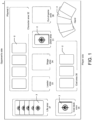
- FIG. 1 is a schematic diagram explaining the game toy 1 according to the present embodiment. As shown in FIG. 1 , the game toy 1 includes game cards 2 and a playmat 3.
- the game cards 2 correspond to the game items described above, and are owned by players.
- the players can acquire such game cards 2 through purchase, exchange of the cards between players, distribution to the players who have met certain conditions, and the like.
- a plurality of types of front side face are prepared as game cards 2.
- Each of the game cards 2 has a different front side face depending on a type in the information written thereon.
- the group identification information that is, the cost card 10 (corresponding to the fourth type game items).
- the cost card 10 corresponding to the fourth type game items.
- the game cards 2 with color information character cards 20 (corresponding to the second type game items), normal leader cards 30 (corresponding to the third type game items), multi-leader cards 40 (corresponding to the first game items), stage cards 50 (corresponding to the second type game items) and event cards 60 (corresponding to the second type game items) are used.
- any number of types of the game cards 2 can be set.
- the color information is information about color for identifying a group(s) to which the character associated with the character card 20, the leader card 30, the multi-leader card 40, the stage card 50, or the event card 60 belongs.
- the color information is shown at the same position of the character cards 20, the leader card 30, the multi-leader card 40, the stage cards 50, or the event cards 60.
- the characters are divided into a total of six groups, and one of red (R), green (G), blue (Bl), purple (P), black (Bk), and yellow (Y) as color information is assigned to each group.
- one piece of color information is assigned to one of triangular regions obtained by dividing a hexagon, which serves as the arrangement part of the color information. The number of groups or the color representing each group can be changed as needed.
- FIG. 3 is a diagram illustrating an example of the front side face of a cost card.
- the cost card 10 serves as first and second functions.
- the first function serves as an element of the cost for placing a character card 20, a stage card 50, and an event card 60 from the user's hand onto the playmat 3.
- the number of game cards 2 which can be placed from the hand onto the play sheet 3 is restricted. That is, in order to place game cards 2 from the hand onto the playmat 3, the number of cost cards 10 matching the condition of the game card 2 must be present. Therefore, the cost cards 10 serve as an element of the condition for placing such game cards 2 from the user's hand onto the playmat 3, and this is the first function of these cost cards 10.
- the second function increases an attack value of a character card 20, leader card 30, or multi-leader card 40 when combined with a cost card 10.
- the cost cards 10 placed on the playmat 3 can be used in combination with the character card 20, leader card 30, or multi-leader card 40.
- the attack value of the combined character card 20, leader card 30, or multi-leader card 40 increases.
- the cost card 10 includes card type information 11, which indicates that the card is a cost card, and second function information 12, which relates to the second function of the cost card 10.
- card type information 11 which indicates that the card is a cost card
- second function information 12 which relates to the second function of the cost card 10.
- "+1000 points in one's turn" is written as the second function information 12.
- the attack value of the character card 20, leader card 30 or multi-leader card 40 increases by "1000" points.
- the character cards 20 corresponds to the second type items.
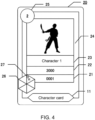
- FIG. 4 is a diagram illustrating an example of the front side face of a character card 20.
- the character card 20 includes card type information 11, card identification information 21, power information 22, a character name 23, a character image 24, cost information 25, color information arrangement part 26, and color information 27.
- the card type information 11 indicates the type of the card. In case of a character card 20, the card type information 11 indicates the card is a character card.
- the card identification information 21 is information, such as a card number, from which the game card 2 can be uniquely identified.
- the power information 22 is numerical information indicating an attack value against game cards 2 of the opponent player.
- the character name 23 is a name of the character associated with the character card 20.
- the character image 24 is an image of the character associated with the game card.
- the cost information 25 is numerical information indicating a cost required for a player to place a character card 20 from the hand onto the playmat 3.
- the cost information 25 is "2", indicating that two cost cards 10 are required to place the character card 20 onto the playmat 3.
- the color information arrangement part 26 is a section which shows the color information 27 corresponding to a group to which the character associated with character card 20 belongs.
- the color information arrangement part 26 is hexagonal in shape, and one piece of the color information 27 is assigned to each triangular shape obtained by dividing the hexagonal shape into six equal parts.
- the color indicated by color information 27 represents the group to which the character belongs and there is only one piece of the color information 27 for the character card 20.
- FIG. 4 shows an example of color information 27 which is "R", indicating that the character 1 of the character card 20 belongs to the "red" group. Note that in the example of FIG. 4 , the color information 27 is shown in text, but the color information 27 may be shown by coloring the assigned triangular shape in the color of the group.
- the triangular shape of color information 27 may be colored in "red” in FIG. 4 .
- the leader card 30 corresponds to the third type item.
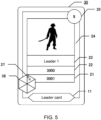
- FIG. 5 is a diagram illustrating an example of the front side face of a leader card 30.
- the leader card 30 includes card type information 11, card identification information 21, power information 22, a character name 23, a character image 24, a color information arrangement part 26, color information 27, and life information 28.
- the card type information 11 indicates the type of the card. In the case of a leader card 30, the card type information 11 indicates that the card is a leader card.
- the card identification information 21 is information such as a card number, from which the game card 2 is uniquely identified.
- the power information 22 is numerical information indicating an attack value against a game card 2 owned by the opponent player.
- the character name 23 is a name of the character associated with the leader card 30.
- the character image 24 is an image of the character associated with the leader card 30. It should be noted that the character associated with such the leader card 30 is a leader of the group identified by the color information 27.
- the color information arrangement part 26 is a section which shows the color information 27 corresponding to the group to which the character associated with the leader card 30 belongs.
- the color information arrangement part 26 is hexagonal in shape, and one piece of color information 27 is assigned to each triangular shape obtained by dividing the hexagonal shape into six equal parts.
- the color indicated by the color information 27 represents the group to which the character belongs.
- the color information 27 of the leader card 30 includes only one or two pieces thereof.
- the leader card 30 shows an example of color information 27 which is "R", indicating that the leader 1 of the leader card 30 belongs to the "red” group. Note that in the example of FIG.
- the color information 27 is shown in text, but it is also acceptable to indicate the color information 27 by coloring the assigned triangular shape in the color of the group.
- the triangular shape of the color information 27 shown in FG. 5 may be colored in "red”.
- the number thereof may be smaller than the total number of groups.
- the color information 27 of the leader card 30 serves as a guideline when constructing a deck.
- the deck used in the game can be constructed from a character card(s) 20, a stage card(s) 50, and an event card(s) 60, each of which have the same color information 27 as that of the leader card 30.
- the deck used in the game can be constructed from a character card(s) 20, a stage card(s) 50, and an event card(s) 60, each of which have the color information 27 of "red”.
- the life information 28 includes the number of character cards 20 which can be placed in the life area of the playmat 3 at the start of the game.
- the multi-leader card 40 corresponds to the first type item.
- FIG. 6 is a diagram illustrating an example of the front side face of a multi-leader card 40.
- the multi-leader card 40 includes card type information 11, card identification information 21, power information 22, a character name 23, a character image 24, a color information arrangement part 26, color information 27, and life information 28.
- the card type information 11 indicates the type of the card.
- the card can be recognized as a leader card from the card type information 11.
- the card identification information 21 is information such as a card number, from which the game card 2 is uniquely identified.
- the power information 22 is a numerical value indicating an attack value against a game card 2 of the opponent player.
- the character name 23 is a name of the character associated with the multi-leader card 40.
- the character image 24 is an image of the character associated with the multi-leader card 40. It should be noted that the character associated with the multi-leader card 40 may become a leader of the group identified by the color information 27.
- the color information arrangement section 26 is a section for arranging the color information 27 corresponding to the group to which the character associated with the multi-leader card 40 belongs.
- the multi-leader card 40 is different from the leader card 30 in that while in the leader card 30, color information 27 of only some (one or two) among all the groups is allocated in the color information arrangement section 26, in the multi-leader card 40, the color information 27 of all groups (red (R), green (G), blue (Bl), purple (P), black (Bk), yellow(Y)) is allocated in the color information arrangement section 26. Consequently, when using the multi-leader card 40, it is possible to construct a deck using a character card(s) 20, a stage card(s) 50, and an event card(s) 60 with any of the color information 27 (red (R), green (G), blue (Bl), purple (P), black (Bk), yellow (Y)) of all the groups. That is, it is possible to construct a single deck (multi-color deck) using such a character card(s) 20, stage card(s) 50, and event card(s) 60 whose color information 27 is different from one another.
- the multi-leader card 40 is provided for the players who own a small number of game cards 2. In this game, as mentioned above, it is possible to construct a deck from only a character card(s) 20, a stage card(s) 50, and an event card(s) 60 which have the same color information 27 as the color information 27 of the leader card 30. However, if the number of game cards 2 owned by the players is small, it will be difficult for the players to obtain the required number of such a character card(s) 20, stage card(s) 50, and event card(s) 60 which have the same color information 27 as that of the leader card 30 (e.g., 50 cards) in order to construct a deck. Neglection of such cases would be unfair to the players. Therefore, it is possible to resolve this issue by providing the multi-leader card 40 with all the color information 27.
- a game is played by using a deck, which is constructed from solely game cards 2, included in a package sold for a limited time.
- a package sold for a limited time contains game cards 2 with different color information 27, so that the game cards with different color information 27 are mixed in the package.
- players can construct a deck from solely the game cards 2 included in that package, even if all the game cards 2 do not have the same color information 27.
- a method for distributing such a multi-leader card 40 to players who participate in the event there are a method for enclosing such a multi-leader card 40 in all the packages, and a method for explicitly displaying a statement to the effect that such a multi-leader card 40 is enclosed, on a package in which the multi-leader card 40 is enclosed.
- Such game cards 2 included in packages sold for a limited time have common color information 27, so that the game cards 2 can be used under normal rules even after the event ends, thereby ensuring that the players will not waste the game cards 2 included in the package.
- the life information 28 indicates the number of character cards 20 which can be placed on the life area of the playmat 3 at the start of the game.
- the stage card 50 corresponds to the second type item.
- FIG. 7 is a diagram explaining an example of the front side face of a stage card 50.
- the stage card 50 includes card type information 11, card identification information 21, cost information 25, color information arrangement part 26, color information 27, a stage image 51, a stage name 52, and stage effect information 53.
- the card type information 11 indicates the type of the card.
- the card type information 11 thereof is information etc. from which the card can be recognized as a stage card.
- the card identification information 21 is information such as a card number, from which the game card 2 is uniquely identified.
- the cost information 25 indicates a cost such as a numerical value, which is required for the player to place the stage card 50 from his or her hand onto the playmat 3.
- the cost information 25 is "2", indicating that two cost cards 10 are needed to place the stage card 50 onto the playmat 3.
- the stage name 52 is a name of a stage (character) associated with the stage card 50.
- the stage image 51 is an image of the stage (character). It is preferable that at least some of the effects exerted by the stage card 50 be recognized in an intuitive manner from the stage image 51.
- the stage effect information 53 is information regarding the effect exerted when the stage card 50 is placed on the playmat 3.
- FIG. 8 is a diagram illustrating an example of the front side face of an event card 60.
- the event card 60 includes card type information 11, card identification information 21, cost information 25, color information arrangement part 26, color information 27, an event image 61, an event name 62, and event effect information 63.
- the card type information 11 indicates the type of the card.
- the card type information 11 is information etc., from which the 'card can be recognized as an event card.
- the card identification information 21 is a card number etc., from which the game card is uniquely identified.
- the color information arrangement part 26 is a section for showing the color information 27 corresponding to a group to which the event (character) associated with the event card 60 belongs. As described above, in this embodiment, characters are grouped into a total of six groups. Therefore, the color information arrangement part 26 is hexagonal in shape, so that one piece of the color information 27 is assigned to each triangle formed by dividing the hexagonal shape into six equal parts. The color indicated by the color information 27 represents the group to which the character of the event card 60 belongs.
- the event card 60 includes only one piece of color information 27. In the example of the event card 60 in FIG. 8 , the color information 27 is "R,” indicating that the character of the event card 60 belongs to the "red" group.
- the event name 62 is a name of an event (character) associated with the event card 60.
- the event image 61 is an image of the event (character). Note that the event image 61 is preferably an image from which at least some of the effects exerted by the event card 60 can be intuitively understood. By this configuration, even if the players do not remember the effects of the event cards 60 one by one, some parts of the effects can be intuitively understood, thereby preventing the game progression from being hindered due to energy spent for grasping the effects of the cards and thereby ensuring that the interest of the game is not lost.
- the event effect information 63 is information regarding the effect set when the event card 60 is placed on the play sheet 3.
- the card type information 11 indicates the type of the game card 2 on each game card 2 in the above explanation, it may also identify the type of each game card 2 based on the basic color of the card.
- leader cards 30 and multi-leader cards 40 which correspond to the first type game items may have different colors from character cards 20, stage cards 50, and event cards 60, which correspond to the second type game items.
- the leader cards 30 and the multi-leader cards 40 do not serve as elements for constructing a deck, while the character cards 20, the stage cards 50, and the event cards 60 become elements for constructing the deck.
- the colors of leader cards 30 and the multi-leader cards 40 may be different from that of the character cards 20, the stage cards 50, and the event cards 60. Furthermore, the colors of leader cards 30 and multi-leader cards 40 may be different from each other.
- the playmat 3 will be explained referring FIG. 1 .
- an upper part of the playmat 3 is set so as to be located on an opponent's side.
- the playmat 3 is formed in a quadrangular shape, for example, a rectangular shape. It is preferable that the playmat 3 be foldable so that it can be carried. Furthermore, it is preferable that the size thereof after folding be equal to the size of the game cards 2 so that it can be carried together with the game card 2.
- multiple areas are formed on the playmat 3. These multiple areas indicate places where the player may place game cards 2.
- a deck area 31 a character area 32, a leader area 33, a stage area 34, a cost deck area 35, a cost area 36, a life area 37, and an out-of-gam area 38 will be used for the explanation.
- These eight areas may be any areas as long as they may have different roles.
- the names of these areas may be any ones as long as the players can understand the names of the areas when playing.
- the character area 32 is formed along an edge of the playmat 3 on the opponent's side (corresponding to a first edge). Since the character area 32 is the area where the character cards 20, which are central part of a battle of the game, are placed, the cards are placed near the opponent's side so that the opponent visually recognize them easily.
- the cost area 36 is formed along the edge on the player's side, which is opposite to the opponent's side (corresponding to a second edge). As described later, the cost area 36 is an area where a cost card(s) 10, which requires an operation of player, is placed, so that the cost area 36 is arranged near the player's side.
- the deck area 31, the leader area 33, the stage area 34, and the out-of-game area 38 are formed between the character area 32 and the cost area 36.
- the life area 37 and the cost deck area 35 are formed along an edge (corresponding to a third edge), which is sandwiched between the edge on the opponent's side and the edge on the player's side. In the example shown in FIG. 1 , the life area 37 and the cost deck area 35 are formed along the left edge of the playmat 3.
- the deck area 31 is an area where a deck constructed by a player is stacked wherein the deck is made up of stacked game cards 2 in a state where they may not be identifiable. That is, on the deck area 31, the game cards 2 are stacked and placed so that front side faces of the game cards are faced down.
- the character area 32 is an area where cost cards 10 and character cards 20 can be placed.
- a character card 20 is placed from the player's hand if the value of the cost information 25 thereof is equal to or less than the total number of cost cards 10 placed in the cost area 36.
- the cost cards 10 to be placed in the character area 32 are moved from the cost area 36 if the cost cards 10 placed in the cost area 36 are in the active state.
- the cost cards 10 placed in the character area 32 are stacked under the character cards 20 so that part of the cost cards 10 is hidden.
- a placement of the cost cards 10 under the character cards 20 is referred to as "giving a power to the character card 20."
- the attack value of the character card 20 is increased.
- the attack value of the character cards 20 increases by "1000" points each time one cost card 10 is stacked.
- the character cards 20 placed in the character area 32 can attack either a character card 20 placed in the character area 32 of the opponent player, or a leader card 30 or a multi-leader card 40 placed in the leader area 33 of the opponent player.
- the leader area 33 is an area where a leader card 30 or a multi-leader card 40 and a cost card(s) 10 are placed.
- the leader card 30 or the multi-leader card 40 in the leader area 33 is placed at the start of the game.
- the cost card 10 placed in leader area 33 is moved from the cost area 36, but the cost cards 10 in an active state become movable.
- the cost cards placed in the leader area 33 are stacked under the leader card 30 or the multi-leader card 40 so that part thereof is hidden.
- the attack value of the leader card 30 or the multi-leader card 40 increases by "1000" points each time one cost card 10 is stacked. Also, similar to the case of giving a power to the character cards 20, as an example, the attack value of the leader card 30 or the multi-leader card 40 increases by "1000" points each time one card 10 is stacked in case where a power is given to the leader card 30 or the multi-leader card 40. However, the value to be given to the character cards 20 and that given to the leader card 30 or the multi-leader card 40 may differ from each other.
- the stage area 34 is an area where a stage card(s) 50 can be placed.
- the stage card mn50 is placed from the player's hand if the value written in the cost information 25 is less than or equal to the total number of cost cards 10 placed in cost area 36.
- the cost area 36 is an area where a predetermined number of cost cards 10 are placed from the cost deck area 35. In the description of the example, three cost cards 10 are drawn and placed from the cost deck area 35.
- the out-of-game area 38 is an area where used game cards 2 are placed.
- Each of the players prepares his or her own playmat 3 so as to face the playmat 3 of the opponent player.
- FIG. 9 is a diagram illustrating a deck.
- a deck can be constructed from character card(s) 20, stage card(s) 50, and event card(s) 60 which respectively have the same color information 27 as that of the leader card to be used.
- the deck can be constructed from a character card(s) 20, a stage card(s) 50, and an event card(s) 60 whose color information 27 indicate "red".
- a deck can be constructed from any of the character card(s) 20, stage card(s) 50, and event card(s) 60. That is, such a deck (mixed color deck) can be constructed from the character card(s) 20, the stage card(s) 50, and the event card(s) 60 with the color information 27 whose color is any of the colors of all the groups, that is, "red,” "green,” “blue,” “purple,” “black,” or "yellow.”
- the leader card to be used by the player is a leader card 30 with a single piece of the color information 27.
- the player selects a character card(s) 20, a stage card(s) 50, and an event card(s) 60 with the same color information 27, and constructs a deck to be placed in the deck area 31.
- the number of cards in the constructed deck is predetermined. In the explanation set forth below, 50 cards are used as an example.
- the constructed deck is placed in the deck area 31 in a state where the front faces of the cards are faced down.
- the player selects one leader card 30 with the same color information as that of the constructed deck and places the leader card 30 so as to be faced up in the leader area 33.
- a predetermined number of cost cards 10 are placed in the cost deck Area 35.
- ten cards are used as an example.
- the player draws a predetermined number of cards from the game cards placed in the deck area 31 for his or her hand. Here, five game cards 2 are drawn.
- the player draws game cards 2, whose number is equal to the number indicated in the life information 28 of the leader card 30 placed in the leader area 33, from game cards placed in the deck area 31, and places them so as to be faced down in the life area 37.
- Each turn consists of multiple phases such as a refresh phase, a draw phase, a cost phase, a main phase, and an end phase.
- a refresh phase such as a refresh phase, a draw phase, a cost phase, a main phase, and an end phase.
- the game cards 2 placed on the playmat 3 are activated. Additionally, the cost cards 10 placed in the character area 32 are turned into in an active state and returned to the cost area 36.
- the player draws one game card 2 from the deck area 31 and adds it to his or her hand.
- the player In the main phase, the player must perform at least one of the following actions:
- character cards 20, stage cards 40, and event cards 50 whose value in the cost information 25 is equal to or less than the number of the cost cards 10 in an active state which are placed in the cost area 36, are placed on the playmat 3, from his or her hand in an active state.
- stage cards 50 and the event cards 60 can be activated.
- the stage cards 50 whose effect has been activated is turned into a rest state from the active state.
- the activated event cards 60 are moved to the out-of-game area 38.
- the player executes an attack against the opponent player.
- the player determines a game card 2 (attack card), which is used for the attack, from either the character cards 20 in his or her character area 32 or the leader card 30 in his or her leader area 33.
- the player determines a character card 20 placed in the character area 22 of the opponent player or a leader card 30 (target card) to be attacked, which is placed in the character area 32 of the opponent player.
- the attack card is then used to attack the target card.
- the outcome of the battle is determined depending on whether the value of the power information 22 of the attack card exceeds the value of the power information of the target card.
- the battle is won when the power of the attack card exceeds that of the target card.
- the target card is a character card 20
- the value of the power information 22 of the attack card exceeds the value of the power information of the target card, the player wins the battle for that turn.
- the attacked opponent player places the attacked character card 20 in the out-of-game area 38.
- the opponent player who receives the attack, adds one of game cards to his or her hand from his or her life area 37. If the opponent player has no game card in the life area 37 to be added to his or her hand, the attacking player wins, and the game ends.
- game cards 2 in a rest state on the playmat 3 are turned into an active state, and then the turn ends.
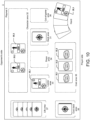
- Example 1 of the present embodiment cards are placed from his or her hand onto the playmat 3 in the main phase, and a cost is given to a character card.
- the player's hand includes a character card 20_1, and the following cards are placed on the playmat 3:
- the player attempts to place the character card 20_1 having cost information 25 which is "2", and attack value information 25, which is "3000” points, from his or her hand into the character area 32.
- cost information 25 of the character card 20_1 is "2”
- two out of the three cost cards 10 in the active state placed in the cost area 36 are turned into a rested state, and the character card 20_1 is placed in the character area 32.
- the following cards are placed in the arrangement of the game cards 2 on the playmat at this time:
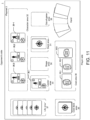
- the player assigns a cost to the character card 20_3.
- the cost card 10_3, which was in an active state is placed beneath the character card 20_3.
- the attack value information 25 of the character card 20_3, which is placed on the cost card 10_3 increases from 2500 'to 3500 points since the attack value increases by 1000 points at each power giving.
- the player gives two costs to the leader card 30_1.
- the arrangement of the game cards 2 on the playmat 3 is shown in FIG. 13 , wherein the active cost cards 10_1 and 10_2, which were in the active state are placed beneath the leader card 30_1.
- the attack value information 25 of the leader card 30_1, placed on the cost cards 10_1 and 10_2, increases from 5000 to 7000 points since the attack value increases by 1000 points at each power assignment.
- the cost card 10 is configured to fulfill the role of a second function which increases the attack value of a game card combined with the cost card 10. This configuration results in a diverse game progression depending on combined game cards, thereby enhancing the overall interest in the game.
- Example 3 a multi-leader card 40 is used.
- a deck used in the game can only be constructed from a character card(s) 20, a stage card(s) 50, and an event card(s) 60 which have the same color information 27. This emphasizes the story aspect of the game by introducing the concept of groups (companions, episodes), to which the character belong.
- one method is to set two or more pieces of color information 27 for the character cards 20, the stage cards 50, and the event cards 60.
- the concept of groups may become ambiguous.
- a multi-leader cards 40 In order to allow the construction of a deck from a character card(s) 20, a stage card(s) 50, and event card(s) 60 associated with characters belonging to different groups, such a multi-leader cards 40 is used.
- the multi-leader cards 40 includes all the pieces of the color information 27, so that a deck (mixed color decks) may be built from a character card(s) 20, a stage card(s) 50 and an event card(s) 60 with different color in the color information 27, which are provided by the pack. Except for using such a deck (mixed color deck) constructed in this way, the usage of the character card(s) 20, the stage card(s) 50, and the event card(s) 60 which serve as component elements is the same as that described in the above embodiments and examples. Additionally, the usage of the multi-leader cards 40 is the same as described in the above embodiments and examples.
- a game toy comprises first type items, and second type items which serve as an element for constructing a deck, wherein the first type items are associated with a first type character, the second type items are associated with a second type character, the first type items include two or more pieces of identification information, which is visually identifiable, the second type items include one of the two or more pieces of the identification information which is visually identifiable, groups to which the first type character and the second type character respectively belong are identified from the identification information, and the deck can be constructed from the second type items, which include any one of the two or more pieces of identification information of the first type character.
- the first type items include identification information of all groups to which the second type character belongs.
- the game toy according to Note 2 or 3 further includes third type items, wherein the third type items are associated with the first type character, and the third type items include one or two of the two or more pieces of identification information which is visually identifiable, and the deck can be constructed from the second type items which include the same identification information as that of the third game items.
- the identification information of the first type items, the second type items and the third type items is arranged at the same position thereof.
- the identification information is color information.
- the first type items include two or more pieces of color information in a state where the two or more pieces of color information are adjacent to each other.
- the first type items and the third type items are visually distinguished from the second type items.
- the game toy according to any one of Notes 1 - 8 further includes fourth type items which are not associated with any character and do not include the identification information, wherein the first type items, the second type items and the third type items include character information, which is visually identifiable, the character information includes cost information required for placing the second type items in a field, and the fourth type items serve as consideration of the cost information.
- the character information and the identification information is respectively arranged on the first type items, the second type items and the third type items, so as not be overlapped each other.
- the character information includes attack value information, which indicates an attach value against a game item of an opponent player, and the fourth type items serve as consideration for increasing the attack value information.
- the game toy according to any one of Notes 1 - 11 further includes a playmat on which the first type items, the second type items, the third type items and the fourth type items are placed.
- a first placement area which is visually identifiable, a second placement area which is visually identifiable, and a third placement area which is visually identifiable, are arranged on the playmat, the first placement area is an area where the first type items and the third type items are placed, the second placement area is an area where the second type items are placed, and the third placement area is an area where the fourth type items are placed.
- a fourth placement area which is visually identifiable, is arranged on the playmat, and the fourth placement area is an area where the deck is arranged.
Landscapes
- Engineering & Computer Science (AREA)
- Multimedia (AREA)
- Physics & Mathematics (AREA)
- Optics & Photonics (AREA)
- Toys (AREA)
- Credit Cards Or The Like (AREA)
Abstract
A game toy comprises first type items, and second type items which serve as an element for constructing a deck, wherein the first type items are associated with a first type character, the second type items are associated with a second type character, the first type items include two or more pieces of identification information, which is visually identifiable, the second type item includes one of the two or more pieces of the identification information which is visually identifiable, groups to which the first type character and the second type character respectively belong are identified from the identification information, and the deck can be constructed from the second type items, which include any one of the two or more pieces of identification information of the first type character.
Description
- The disclosure of Japanese Patent Application No.
JP2023-086387 filed on May 25, 2023 - The present invention relates to a game toy.
- Among competitive card games, there is a game for activating special effects by combining two or more types of cards placed on a playmat (For example, Patent Document 1).
- [Patent Document 1]
Japanese Patent Application Publication No. 2006-247178 - In such a game, a story characteristic thereof is important. If the game has broad utility while maintaining the story characteristic, enjoyability of the game can be improved.
- Here, it is an object of the present invention to provide a game toy capable of improving enjoyability of the game.
- One of an aspect of the present invention is a game toy. The game toy includes first type items, and second type items which serve as an element forming a deck, wherein the first type items are respectively associated with a first type character, and the second type items are respectively associated with a second character. Further, each of the first type items includes a plurality of pieces of identification information which are visually identifiable, wherein the identification information includes information for identifying a group to which each of the first typed character and the second type character belong. The deck may be constructed from the second type items which include any one(s) of the plurality of pieces of identification information of the first type items.
- According to the present invention, it is possible to provide a game toy for enhancing the enjoyability of the game toy.
-
-
FIG. 1 is an overview diagram of a game toy according to an embodiment; -
FIG. 2 is a diagram illustrating an example of a back side face of agame card 2; -
FIG. 3 is a diagram illustrating an example of a front side face of acost card 10; -
FIG. 4 is a diagram illustrating an example of a front side face of acharacter card 20; -
FIG. 5 is a diagram illustrating an example of a front side face of aleader card 30; -
FIG. 6 is a diagram illustrating an example of a front side face of amulti-leader card 40; -
FIG. 7 is a diagram illustrating an example of a front side face of astage card 50; -
FIG. 8 is a diagram illustrating an example of a front side face of anevent card 60; -
FIG. 9 is an example illustrating a deck, which is used in the game; -
FIG. 10 is an example illustrating an Example; -
FIG. 11 is an example illustrating the Example; -
FIG. 12 is an example illustrating the Example; and -
FIG. 13 is an example illustrating the Example. - The present embodiment will be explained below.
- The present invention relates to a game toy, and the game relates to a competitive game where players battle against each other by placing game items on a playmat. A character is associated with each of the game items. Ttwo or more regions (areas) for placing game items are allocated on the playmat. Players place game items in any of the regions (areas) on the playmat and play the game using the abilities of the characters respectively associated with the game items.
- The game items include first type items, second type items, third type items, and fourth type items. The first type items, the second type items, and the third type items are respectively associated with specific characters. On the other hand, the fourth type items are not associated with such a specific character. Here, characters include people, animals, events, etc.
- The first type items, the second type items, and the third type items respectively contain visually identifiable identification information. This identification information is group identification information for identifying a group to which a character associated with each item belongs to. Here, a group means, for example, a team to which characters belong, or an episode etc. in which the characters appears, etc. The group identification information can be of any type thereof which can identify the group, such as textual information of a group name, color information for identifying a group, etc.
- The first type items and the third type items are respectively associated with first type characters. Each of the first type characters is a leader of a group, and the central figure in the group. The first type items and third type items are different in the number of pieces of group identification information contained therein. The first type items respectively contain group identification information of all the groups existing in the game. On the other hand, the third type items contain one or two pieces of the group identification information wherein the groups exist in the game.
- The second type items are associated with second type characters. The second type characters are characters each of which belongs to a group, and are characters who are companions of a group leader and characters who trigger events. Each of the second type items contains group identification information of one of the groups existing in the game.
- Additionally, the second type items serve as component elements which form a collection of two or more second type items used in a competitive game, as a so-called deck. However, the second type items which can serve as such component elements of a deck are limited to those containing group identification information, which is the same as the group identification information contained in the first type items or the third type items used in the game. In other words, the second type items containing the group identification information which is the same as that contained in first type items or the third type items used in the game can be used as the component elements for the deck used in the game. This ensures that only companions of a first type character who becomes a leader or only second type characters appearing in the same episode can appear in the game, thereby providing the story characteristic to the game.
- The fourth type items are not associated with any specific character, but serve as consideration of cost for bringing a second type item into play in the game. Additionally, the fourth type items do not contain group identification information.
- In a description set forth below, the first type items, the second type items, the third type items, and the fourth type items, which are game cards, will be used as an example, but these items are not limited to such cards. For example, they may be three-dimensional figures.
-
FIG. 1 is a schematic diagram explaining thegame toy 1 according to the present embodiment. As shown inFIG. 1 , thegame toy 1 includesgame cards 2 and aplaymat 3. - The
game cards 2 correspond to the game items described above, and are owned by players. The players can acquiresuch game cards 2 through purchase, exchange of the cards between players, distribution to the players who have met certain conditions, and the like. - Each of the
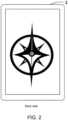
game cards 2 has a front side face and a back side face. A common design, and text is drawn on the back side face of each game card regardless of the card types. In other words, the front side face of the game card 2 (a face from which the type of thegame card 2 can be recognized) cannot be identified from the back side face thereof.FIG. 2 shows an example of the back side face of agame card 2. - The
game card 2 has a normal orientation where a player can read the content written on the front side face of thegame card 2 without changing the orientation. In the description set forth below, a state where thegame card 2 is placed in the normal orientation is referred to as an active state. A state of a lateral orientation thereof where thegame card 2 is rotated by 90 degrees from the normal orientation, is referred to as a rest state. A predetermined orientation may be designated as the active state in advance, and thegame card 2 may be considered to be in the rest state when the orientation of the game card is changed from the predetermined orientation. - In the present embodiment, a plurality of types of front side face are prepared as
game cards 2. Each of thegame cards 2 has a different front side face depending on a type in the information written thereon. In the description set forth below, an example will be explained, usinggame cards 2 without color information (the group identification information), that is, the cost card 10 (corresponding to the fourth type game items). In the description below, as an example of thegame cards 2 with color information, character cards 20 (corresponding to the second type game items), normal leader cards 30 (corresponding to the third type game items), multi-leader cards 40 (corresponding to the first game items), stage cards 50 (corresponding to the second type game items) and event cards 60 (corresponding to the second type game items) are used. As long as there are cards without color information and such cards with color information, any number of types of thegame cards 2 can be set. - The color information is information about color for identifying a group(s) to which the character associated with the
character card 20, theleader card 30, themulti-leader card 40, thestage card 50, or theevent card 60 belongs. The color information is shown at the same position of thecharacter cards 20, theleader card 30, themulti-leader card 40, thestage cards 50, or theevent cards 60. In the present embodiment, the characters are divided into a total of six groups, and one of red (R), green (G), blue (Bl), purple (P), black (Bk), and yellow (Y) as color information is assigned to each group. As an example, one piece of color information is assigned to one of triangular regions obtained by dividing a hexagon, which serves as the arrangement part of the color information. The number of groups or the color representing each group can be changed as needed. - A character associated with a character card(s) 20, a leader card(s) 30, a multi-leader card(s) 40, a
stage cards 50, and anevent card 60, which have the same color information, belong to the same group. A group can be a team (allies), an episode, etc. As described later, a deck can be constructed fromcharacter cards 20,stage cards 50, andevent cards 60 having color information which is the same as that of theleader card 30 and themulti-leader card 40. This allows the game to have a story characteristic element. - The
cost cards 10 correspond to the fourth type items. -
FIG. 3 is a diagram illustrating an example of the front side face of a cost card. Thecost card 10 serves as first and second functions. The first function serves as an element of the cost for placing acharacter card 20, astage card 50, and anevent card 60 from the user's hand onto theplaymat 3. In this card game, depending on the number ofcost cards 10 placed on theplaymat 3, the number ofgame cards 2 which can be placed from the hand onto theplay sheet 3 is restricted. That is, in order to placegame cards 2 from the hand onto theplaymat 3, the number ofcost cards 10 matching the condition of thegame card 2 must be present. Therefore, thecost cards 10 serve as an element of the condition for placingsuch game cards 2 from the user's hand onto theplaymat 3, and this is the first function of thesecost cards 10. - The second function increases an attack value of a
character card 20,leader card 30, ormulti-leader card 40 when combined with acost card 10. In this card game, thecost cards 10 placed on theplaymat 3 can be used in combination with thecharacter card 20,leader card 30, ormulti-leader card 40. By combining thecost card 10 with thecharacter card 20,leader card 30, ormulti-leader card 40 during the user's turn, the attack value of the combinedcharacter card 20,leader card 30, ormulti-leader card 40 increases. - As shown in
FIG. 3 , thecost card 10 includescard type information 11, which indicates that the card is a cost card, andsecond function information 12, which relates to the second function of thecost card 10. In the example shown inFIG. 3 , "+1000 points in one's turn" is written as thesecond function information 12. In this example, when thecharacter card 20,leader card 30 ormulti-leader card 40 is combined with thecost card 10, the attack value of thecharacter card 20,leader card 30 ormulti-leader card 40 increases by "1000" points. - The
character cards 20 corresponds to the second type items. -
FIG. 4 is a diagram illustrating an example of the front side face of acharacter card 20. Thecharacter card 20 includescard type information 11,card identification information 21,power information 22, acharacter name 23, acharacter image 24,cost information 25, colorinformation arrangement part 26, andcolor information 27. - The
card type information 11 indicates the type of the card. In case of acharacter card 20, thecard type information 11 indicates the card is a character card. Thecard identification information 21 is information, such as a card number, from which thegame card 2 can be uniquely identified. Thepower information 22 is numerical information indicating an attack value againstgame cards 2 of the opponent player. Thecharacter name 23 is a name of the character associated with thecharacter card 20. Thecharacter image 24 is an image of the character associated with the game card. - The
cost information 25 is numerical information indicating a cost required for a player to place acharacter card 20 from the hand onto theplaymat 3. In the example ofFIG. 4 , thecost information 25 is "2", indicating that twocost cards 10 are required to place thecharacter card 20 onto theplaymat 3. - The color
information arrangement part 26 is a section which shows thecolor information 27 corresponding to a group to which the character associated withcharacter card 20 belongs. In the present embodiment, since the characters are divided into a total of six groups, the colorinformation arrangement part 26 is hexagonal in shape, and one piece of thecolor information 27 is assigned to each triangular shape obtained by dividing the hexagonal shape into six equal parts. The color indicated bycolor information 27 represents the group to which the character belongs and there is only one piece of thecolor information 27 for thecharacter card 20.FIG. 4 shows an example ofcolor information 27 which is "R", indicating that thecharacter 1 of thecharacter card 20 belongs to the "red" group. Note that in the example ofFIG. 4 , thecolor information 27 is shown in text, but thecolor information 27 may be shown by coloring the assigned triangular shape in the color of the group. The triangular shape ofcolor information 27 may be colored in "red" inFIG. 4 . - The
leader card 30 corresponds to the third type item. -
FIG. 5 is a diagram illustrating an example of the front side face of aleader card 30. Theleader card 30 includescard type information 11,card identification information 21,power information 22, acharacter name 23, acharacter image 24, a colorinformation arrangement part 26,color information 27, andlife information 28. - The
card type information 11 indicates the type of the card. In the case of aleader card 30, thecard type information 11 indicates that the card is a leader card. Thecard identification information 21 is information such as a card number, from which thegame card 2 is uniquely identified. Thepower information 22 is numerical information indicating an attack value against agame card 2 owned by the opponent player. Thecharacter name 23 is a name of the character associated with theleader card 30. Thecharacter image 24 is an image of the character associated with theleader card 30. It should be noted that the character associated with such theleader card 30 is a leader of the group identified by thecolor information 27. - The color
information arrangement part 26 is a section which shows thecolor information 27 corresponding to the group to which the character associated with theleader card 30 belongs. In the present embodiment, since the characters are divided into a total of six groups, the colorinformation arrangement part 26 is hexagonal in shape, and one piece ofcolor information 27 is assigned to each triangular shape obtained by dividing the hexagonal shape into six equal parts. The color indicated by thecolor information 27 represents the group to which the character belongs. Thecolor information 27 of theleader card 30 includes only one or two pieces thereof. InFIG. 5 , theleader card 30 shows an example ofcolor information 27 which is "R", indicating that theleader 1 of theleader card 30 belongs to the "red" group. Note that in the example ofFIG. 5 , thecolor information 27 is shown in text, but it is also acceptable to indicate thecolor information 27 by coloring the assigned triangular shape in the color of the group. For example, the triangular shape of thecolor information 27 shown in FG. 5 may be colored in "red". Also, while the one or two pieces of thecolor information 27 of theleader card 30 is described above as an example, the number thereof may be smaller than the total number of groups. - Furthermore, the
color information 27 of theleader card 30 serves as a guideline when constructing a deck. When using theleader card 30 in the game, the deck used in the game can be constructed from a character card(s) 20, a stage card(s) 50, and an event card(s) 60, each of which have thesame color information 27 as that of theleader card 30. For example, when using theleader card 30 with thecolor information 27 which is "red" in the game, the deck used in the game can be constructed from a character card(s) 20, a stage card(s) 50, and an event card(s) 60, each of which have thecolor information 27 of "red". - The
life information 28 includes the number ofcharacter cards 20 which can be placed in the life area of theplaymat 3 at the start of the game. - The
multi-leader card 40 corresponds to the first type item. -
FIG. 6 is a diagram illustrating an example of the front side face of amulti-leader card 40. Themulti-leader card 40 includescard type information 11,card identification information 21,power information 22, acharacter name 23, acharacter image 24, a colorinformation arrangement part 26,color information 27, andlife information 28. - The
card type information 11 indicates the type of the card. In the case of amulti-leader card 40, the card can be recognized as a leader card from thecard type information 11. Thecard identification information 21 is information such as a card number, from which thegame card 2 is uniquely identified. Thepower information 22 is a numerical value indicating an attack value against agame card 2 of the opponent player. Thecharacter name 23 is a name of the character associated with themulti-leader card 40. Thecharacter image 24 is an image of the character associated with themulti-leader card 40. It should be noted that the character associated with themulti-leader card 40 may become a leader of the group identified by thecolor information 27. - Similar to the
character card 20, the colorinformation arrangement section 26 is a section for arranging thecolor information 27 corresponding to the group to which the character associated with themulti-leader card 40 belongs. - The
multi-leader card 40 is different from theleader card 30 in that while in theleader card 30,color information 27 of only some (one or two) among all the groups is allocated in the colorinformation arrangement section 26, in themulti-leader card 40, thecolor information 27 of all groups (red (R), green (G), blue (Bl), purple (P), black (Bk), yellow(Y)) is allocated in the colorinformation arrangement section 26. Consequently, when using themulti-leader card 40, it is possible to construct a deck using a character card(s) 20, a stage card(s) 50, and an event card(s) 60 with any of the color information 27 (red (R), green (G), blue (Bl), purple (P), black (Bk), yellow (Y)) of all the groups. That is, it is possible to construct a single deck (multi-color deck) using such a character card(s) 20, stage card(s) 50, and event card(s) 60 whosecolor information 27 is different from one another. - The
multi-leader card 40 is provided for the players who own a small number ofgame cards 2. In this game, as mentioned above, it is possible to construct a deck from only a character card(s) 20, a stage card(s) 50, and an event card(s) 60 which have thesame color information 27 as thecolor information 27 of theleader card 30. However, if the number ofgame cards 2 owned by the players is small, it will be difficult for the players to obtain the required number of such a character card(s) 20, stage card(s) 50, and event card(s) 60 which have thesame color information 27 as that of the leader card 30 (e.g., 50 cards) in order to construct a deck. Neglection of such cases would be unfair to the players. Therefore, it is possible to resolve this issue by providing themulti-leader card 40 with all thecolor information 27. - Another reason therefor is that since this game emphasizes story characteristics, characters such as
character cards 20 are supposed to belong to any one of the groups, but specific characters such ascharacter cards 20 are not necessarily belong to only one group. In such cases, acharacter card 20, etc. may have two or more pieces of thecolor information 27. However, there may be case where two or more types ofcharacter cards 20, etc., have the same character butdifferent color information 27. In such case, the story characteristic is diluted, thereby becoming complicated. Therefore, this issue is resolved by providing the multi-leader card(s) 40 having all thecolor information 27, so that a deck can be formed from such a character card(s) 20, a stage card(s) 50, and an event card(s) 60, which are associated with a character belonging to two or more groups. - As an example of the above-described case, there is an event etc. where a game is played by using a deck, which is constructed from solely
game cards 2, included in a package sold for a limited time. As mentioned above, such a package sold for a limited time containsgame cards 2 withdifferent color information 27, so that the game cards withdifferent color information 27 are mixed in the package. By using themulti-leader card 40, players can construct a deck from solely thegame cards 2 included in that package, even if all thegame cards 2 do not have thesame color information 27. Additionally, in order to ensure that the players can obtain amulti-leader card 40, there are a method for distributing such amulti-leader card 40 to players who participate in the event, a method for enclosing such amulti-leader card 40 in all the packages, and a method for explicitly displaying a statement to the effect that such amulti-leader card 40 is enclosed, on a package in which themulti-leader card 40 is enclosed. - Furthermore,
such game cards 2 included in packages sold for a limited time, havecommon color information 27, so that thegame cards 2 can be used under normal rules even after the event ends, thereby ensuring that the players will not waste thegame cards 2 included in the package. - The
life information 28 indicates the number ofcharacter cards 20 which can be placed on the life area of theplaymat 3 at the start of the game. - The
stage card 50 corresponds to the second type item. -
FIG. 7 is a diagram explaining an example of the front side face of astage card 50. By placing thestage card 50 on the play sheet 3 (bringing it into play), the effect stated on thestage card 50 is exerted during the game progression. - The
stage card 50 includescard type information 11,card identification information 21,cost information 25, colorinformation arrangement part 26,color information 27, astage image 51, astage name 52, andstage effect information 53. - The
card type information 11 indicates the type of the card. In the case of astage card 50, thecard type information 11 thereof is information etc. from which the card can be recognized as a stage card. Thecard identification information 21 is information such as a card number, from which thegame card 2 is uniquely identified. - The
cost information 25 indicates a cost such as a numerical value, which is required for the player to place thestage card 50 from his or her hand onto theplaymat 3. In the example ofFIG. 7 , thecost information 25 is "2", indicating that twocost cards 10 are needed to place thestage card 50 onto theplaymat 3. - The color
information arrangement part 26 is a section which shows thecolor information 27 corresponding to the group to which the character associated with thestage card 50 belongs. As mentioned above, in this embodiment, the total number of character groups is six. Therefore, the colorinformation arrangement part 26 has a hexagonal shape, in which one piece of thecolor information 27 is assigned to each triangular section formed by dividing the hexagon into six equal area parts. The color indicated by thecolor information 27 represents the group to which the character belongs. There is only one piece of thecolor information 27 for thestage card 50. The example of thestage card 50 shown inFIG. 7 illustrates an example in which thecolor information 27 is "R", indicating that the character of thestage card 50 belongs to the "red" group. - The
stage name 52 is a name of a stage (character) associated with thestage card 50. Thestage image 51 is an image of the stage (character). It is preferable that at least some of the effects exerted by thestage card 50 be recognized in an intuitive manner from thestage image 51. By this configuration, even if players do not remember the effects of thestage cards 50 one by one, they can intuitively understand some of the effects, thereby eliminating the possibility that the game play is hindered because the players spend energy for trying to grasp the effects of cards, and thereby ensuring that the interest of the game is not lost. - The
stage effect information 53 is information regarding the effect exerted when thestage card 50 is placed on theplaymat 3. - The
event card 60 corresponds to the second type item. -
FIG. 8 is a diagram illustrating an example of the front side face of anevent card 60. By placing theevent card 60 on the playmat 3 (bringing it into play), the effect of the event stated on theevent card 60 is exerted in the progression of the game. - The
event card 60 includescard type information 11,card identification information 21,cost information 25, colorinformation arrangement part 26,color information 27, anevent image 61, anevent name 62, andevent effect information 63. - The
card type information 11 indicates the type of the card. In the case of theevent card 60, thecard type information 11 is information etc., from which the 'card can be recognized as an event card. Thecard identification information 21 is a card number etc., from which the game card is uniquely identified. - The
cost information 25 is, for example, a numerical value indicating a cost, which is required for the plater to place theevent card 60 from his or her hand onto theplaymat 3. In the example shown inFIG. 8 , thecost information 25 is "2", indicating that twocost cards 10 are required to place theevent card 60 onto theplaymat 3. - The color
information arrangement part 26 is a section for showing thecolor information 27 corresponding to a group to which the event (character) associated with theevent card 60 belongs. As described above, in this embodiment, characters are grouped into a total of six groups. Therefore, the colorinformation arrangement part 26 is hexagonal in shape, so that one piece of thecolor information 27 is assigned to each triangle formed by dividing the hexagonal shape into six equal parts. The color indicated by thecolor information 27 represents the group to which the character of theevent card 60 belongs. Theevent card 60 includes only one piece ofcolor information 27. In the example of theevent card 60 inFIG. 8 , thecolor information 27 is "R," indicating that the character of theevent card 60 belongs to the "red" group. - The
event name 62 is a name of an event (character) associated with theevent card 60. Theevent image 61 is an image of the event (character). Note that theevent image 61 is preferably an image from which at least some of the effects exerted by theevent card 60 can be intuitively understood. By this configuration, even if the players do not remember the effects of theevent cards 60 one by one, some parts of the effects can be intuitively understood, thereby preventing the game progression from being hindered due to energy spent for grasping the effects of the cards and thereby ensuring that the interest of the game is not lost. - The
event effect information 63 is information regarding the effect set when theevent card 60 is placed on theplay sheet 3. - Although the
card type information 11 indicates the type of thegame card 2 on eachgame card 2 in the above explanation, it may also identify the type of eachgame card 2 based on the basic color of the card. In particular, it is preferable thatleader cards 30 andmulti-leader cards 40, which correspond to the first type game items may have different colors fromcharacter cards 20,stage cards 50, andevent cards 60, which correspond to the second type game items. Theleader cards 30 and themulti-leader cards 40 do not serve as elements for constructing a deck, while thecharacter cards 20, thestage cards 50, and theevent cards 60 become elements for constructing the deck. Therefore, as long as thecharacter cards 20, thestage cards 50, and theevent cards 60 have the same color, the colors ofleader cards 30 and themulti-leader cards 40 may be different from that of thecharacter cards 20, thestage cards 50, and theevent cards 60. Furthermore, the colors ofleader cards 30 andmulti-leader cards 40 may be different from each other. - Next, the
playmat 3 will be explained referringFIG. 1 . In the example shown inFIG. 1 , an upper part of theplaymat 3 is set so as to be located on an opponent's side. As shown inFIG. 1 , theplaymat 3 is formed in a quadrangular shape, for example, a rectangular shape. It is preferable that theplaymat 3 be foldable so that it can be carried. Furthermore, it is preferable that the size thereof after folding be equal to the size of thegame cards 2 so that it can be carried together with thegame card 2. - On the
playmat 3, multiple areas (regions) are formed. These multiple areas indicate places where the player may placegame cards 2. In the explanation set forth below, an example with eight areas, that is, adeck area 31, acharacter area 32, aleader area 33, astage area 34, acost deck area 35, acost area 36, alife area 37, and an out-of-gam area 38 will be used for the explanation. These eight areas may be any areas as long as they may have different roles. The names of these areas may be any ones as long as the players can understand the names of the areas when playing. - As shown in
FIG. 1 , thecharacter area 32 is formed along an edge of theplaymat 3 on the opponent's side (corresponding to a first edge). Since thecharacter area 32 is the area where thecharacter cards 20, which are central part of a battle of the game, are placed, the cards are placed near the opponent's side so that the opponent visually recognize them easily. Thecost area 36 is formed along the edge on the player's side, which is opposite to the opponent's side (corresponding to a second edge). As described later, thecost area 36 is an area where a cost card(s) 10, which requires an operation of player, is placed, so that thecost area 36 is arranged near the player's side. Thedeck area 31, theleader area 33, thestage area 34, and the out-of-game area 38 are formed between thecharacter area 32 and thecost area 36. Thelife area 37 and thecost deck area 35 are formed along an edge (corresponding to a third edge), which is sandwiched between the edge on the opponent's side and the edge on the player's side. In the example shown inFIG. 1 , thelife area 37 and thecost deck area 35 are formed along the left edge of theplaymat 3. - The
deck area 31 is an area where a deck constructed by a player is stacked wherein the deck is made up of stackedgame cards 2 in a state where they may not be identifiable. That is, on thedeck area 31, thegame cards 2 are stacked and placed so that front side faces of the game cards are faced down. - The
character area 32 is an area wherecost cards 10 andcharacter cards 20 can be placed. Acharacter card 20 is placed from the player's hand if the value of thecost information 25 thereof is equal to or less than the total number ofcost cards 10 placed in thecost area 36. Thecost cards 10 to be placed in thecharacter area 32 are moved from thecost area 36 if thecost cards 10 placed in thecost area 36 are in the active state. Thecost cards 10 placed in thecharacter area 32 are stacked under thecharacter cards 20 so that part of thecost cards 10 is hidden. In an explanation set forth below, a placement of thecost cards 10 under thecharacter cards 20 is referred to as "giving a power to thecharacter card 20." By giving the power to it, the attack value of thecharacter card 20 is increased. For simplification in the explanation set forth below as an example, the attack value of thecharacter cards 20 increases by "1000" points each time onecost card 10 is stacked. - The
character cards 20 placed in thecharacter area 32 can attack either acharacter card 20 placed in thecharacter area 32 of the opponent player, or aleader card 30 or amulti-leader card 40 placed in theleader area 33 of the opponent player. - The
leader area 33 is an area where aleader card 30 or amulti-leader card 40 and a cost card(s) 10 are placed. Theleader card 30 or themulti-leader card 40 in theleader area 33 is placed at the start of the game. Thecost card 10 placed inleader area 33 is moved from thecost area 36, but thecost cards 10 in an active state become movable. The cost cards placed in theleader area 33 are stacked under theleader card 30 or themulti-leader card 40 so that part thereof is hidden. In the explanation set forth below, to stack acost card 10 under theleader card 30 or themulti-leader card 40 is referred to as "giving a power to theleader card 30 or themulti-leader card 40." By giving the power thereto, the attack value of theleader card 30 or themulti-leader card 40 increases. - For simplification, explained below is an example in which the attack value of the
leader card 30 or themulti-leader card 40 increases by "1000" points each time onecost card 10 is stacked. Also, similar to the case of giving a power to thecharacter cards 20, as an example, the attack value of theleader card 30 or themulti-leader card 40 increases by "1000" points each time onecard 10 is stacked in case where a power is given to theleader card 30 or themulti-leader card 40. However, the value to be given to thecharacter cards 20 and that given to theleader card 30 or themulti-leader card 40 may differ from each other. - The
stage area 34 is an area where a stage card(s) 50 can be placed. The stage card mn50 is placed from the player's hand if the value written in thecost information 25 is less than or equal to the total number ofcost cards 10 placed incost area 36. - The
cost deck area 35 is an area wherecost cards 10 can be placed. At the start of the game, a predetermined number ofcost cards 10 are stacked and placed in thecost deck area 35. In the description set forth below, for simplification thereof, tencost cards 10 are stacked and placed in thecost deck area 35 at the start of the game. - The
cost area 36 is an area where a predetermined number ofcost cards 10 are placed from thecost deck area 35. In the description of the example, threecost cards 10 are drawn and placed from thecost deck area 35. - The
life area 37 is an area where at least any ones of thecharacter cards 20, thestage cards 50, and theevent cards 60, are placed as many as a numerical value written on thelife information 27 of theleader card 30 or themulti-leader card 40, which are placed in theleader area 33. - The out-of-
game area 38 is an area where usedgame cards 2 are placed. - Each of the players prepares his or her
own playmat 3 so as to face theplaymat 3 of the opponent player. - Here, a deck used by each of the players will be described below.
FIG. 9 is a diagram illustrating a deck. As mentioned above, such a deck can be constructed from character card(s) 20, stage card(s) 50, and event card(s) 60 which respectively have thesame color information 27 as that of the leader card to be used. As shown inFIG. 9 , for example, if the leader card to be used has a single piece ofcolor information 27 which is "red," the deck can be constructed from a character card(s) 20, a stage card(s) 50, and an event card(s) 60 whosecolor information 27 indicate "red". On the other hand, if amulti-leader card 40 is used, a deck can be constructed from any of the character card(s) 20, stage card(s) 50, and event card(s) 60. That is, such a deck (mixed color deck) can be constructed from the character card(s) 20, the stage card(s) 50, and the event card(s) 60 with thecolor information 27 whose color is any of the colors of all the groups, that is, "red," "green," "blue," "purple," "black," or "yellow." - To facilitate understanding of this embodiment, first, described is an example where the leader card to be used by the player is a
leader card 30 with a single piece of thecolor information 27. - The player selects a character card(s) 20, a stage card(s) 50, and an event card(s) 60 with the
same color information 27, and constructs a deck to be placed in thedeck area 31. The number of cards in the constructed deck is predetermined. In the explanation set forth below, 50 cards are used as an example. The constructed deck is placed in thedeck area 31 in a state where the front faces of the cards are faced down. - The player selects one
leader card 30 with the same color information as that of the constructed deck and places theleader card 30 so as to be faced up in theleader area 33. - A predetermined number of
cost cards 10 are placed in thecost deck Area 35. In the explanation set forth below, ten cards are used as an example. - The player draws a predetermined number of cards from the game cards placed in the
deck area 31 for his or her hand. Here, fivegame cards 2 are drawn. - The player draws
game cards 2, whose number is equal to the number indicated in thelife information 28 of theleader card 30 placed in theleader area 33, from game cards placed in thedeck area 31, and places them so as to be faced down in thelife area 37. - When the game starts, a player who goes first and a player who goes second are determined between the players, and turns are taken alternately starting from the player who goes first.
- Each turn consists of multiple phases such as a refresh phase, a draw phase, a cost phase, a main phase, and an end phase. In the explanation set forth below, five phases are used as an example, but the types of phases in each turn may vary.
- During the refresh phase, the
game cards 2 placed on the playmat 3 (field) are activated. Additionally, thecost cards 10 placed in thecharacter area 32 are turned into in an active state and returned to thecost area 36. - In the draw phase, the player draws one
game card 2 from thedeck area 31 and adds it to his or her hand. - In the cost phase, two
cost cards 10 are drawn from thecost deck area 35 and placed in thecost area 36 in active status. - In the main phase, the player must perform at least one of the following actions:
- Place a
character card 20 from his or her hand into thecharacter area 32. - Place a
stage card 50 from his or her hand into thestage area 34. - Put an
event card 60 on theplaymat 3. - During this phase,
character cards 20,stage cards 40, andevent cards 50 whose value in thecost information 25 is equal to or less than the number of thecost cards 10 in an active state which are placed in thecost area 36, are placed on theplaymat 3, from his or her hand in an active state. - Next, in the main phase, the effects of
stage cards 50 and theevent cards 60 can be activated. Thestage cards 50 whose effect has been activated is turned into a rest state from the active state. The activatedevent cards 60 are moved to the out-of-game area 38. - Additionally, in the main phase, it is possible to give a power to the
character cards 20 and theleader cards 30. - Next, the player executes an attack against the opponent player. The player determines a game card 2 (attack card), which is used for the attack, from either the
character cards 20 in his or hercharacter area 32 or theleader card 30 in his or herleader area 33. Subsequently, the player determines acharacter card 20 placed in thecharacter area 22 of the opponent player or a leader card 30 (target card) to be attacked, which is placed in thecharacter area 32 of the opponent player. The attack card is then used to attack the target card. The outcome of the battle is determined depending on whether the value of thepower information 22 of the attack card exceeds the value of the power information of the target card. The battle is won when the power of the attack card exceeds that of the target card. - If the target card is a
character card 20, and the value of thepower information 22 of the attack card exceeds the value of the power information of the target card, the player wins the battle for that turn. The attacked opponent player places the attackedcharacter card 20 in the out-of-game area 38. - If the target card is a
leader card 30, and the value of thepower information 22 of the attack card exceeds the value of the power information of the target card, the attacking player wins the battle at that turn. At this time, the opponent player, who receives the attack, adds one of game cards to his or her hand from his or herlife area 37. If the opponent player has no game card in thelife area 37 to be added to his or her hand, the attacking player wins, and the game ends. - In the end phase,
game cards 2 in a rest state on theplaymat 3 are turned into an active state, and then the turn ends. - In Example 1 of the present embodiment, as an example, cards are placed from his or her hand onto the
playmat 3 in the main phase, and a cost is given to a character card. In this example, as shown inFIG. 10 , the player's hand includes a character card 20_1, and the following cards are placed on the playmat 3: - Two character cards 20_2 and 20_3 in the
character area 32; - One leader card 30_10 in the
leader area 33 thereof; and - Three active cost cards 10_1 through 10_3 in the
cost area 36 thereof. - In the main phase, the player attempts to place the character card 20_1 having
cost information 25 which is "2", andattack value information 25, which is "3000" points, from his or her hand into thecharacter area 32. Here, since thecost information 25 of the character card 20_1 is "2", two out of the threecost cards 10 in the active state placed in thecost area 36, are turned into a rested state, and the character card 20_1 is placed in thecharacter area 32. As shown inFIG. 11 , the following cards are placed in the arrangement of thegame cards 2 on the playmat at this time: - Three character cards 20_1 to 20_3 in the
character area 32; - One
leader card 30 in theleader area 33; and - Two cost cards 10_1 and 10_2 in the rested state and one cost card 10_3 in the active state in the
cost area 36. - Furthermore, the player assigns a cost to the character card 20_3. At this time, as shown in
FIG. 12 , in the arrangement of thegame cards 2 on theplaymat 3, the cost card 10_3, which was in an active state, is placed beneath the character card 20_3. Theattack value information 25 of the character card 20_3, which is placed on the cost card 10_3 increases from 2500 'to 3500 points since the attack value increases by 1000 points at each power giving. - In example 2 of the present embodiment, multiple powers are assigned to a
leader card 30. In this example, as shown inFIG. 10 , the hand of the player includes a character card 20_1, and the following cards are placed on the playmat 3: - Two character cards, that is, the character cards 20_2 and 20_3, in the
character area 32, One leader card, 30 in theleader area 33, and - Three active cost cards, that is, the cost cards 10_1 to 10_3 in an active state, in the
cost area 36 therein. - In the main phase, the player gives two costs to the leader card 30_1. At this time, the arrangement of the
game cards 2 on theplaymat 3 is shown inFIG. 13 , wherein the active cost cards 10_1 and 10_2, which were in the active state are placed beneath the leader card 30_1. Theattack value information 25 of the leader card 30_1, placed on the cost cards 10_1 and 10_2, increases from 5000 to 7000 points since the attack value increases by 1000 points at each power assignment. - Furthermore, in the above explanation, although the
power information 22 is described as an attack value against the opponent player, it may represent either an attack value against the opponent player or a defense value against an attack from the opponent player. By this way, a variation in the battle content may increase, thereby improving the overall interest in the game. - According to the present embodiment, the
cost card 10 is configured to fulfill the role of a second function which increases the attack value of a game card combined with thecost card 10. This configuration results in a diverse game progression depending on combined game cards, thereby enhancing the overall interest in the game. - In the Example 3, a
multi-leader card 40 is used. - As mentioned above, a deck used in the game can only be constructed from a character card(s) 20, a stage card(s) 50, and an event card(s) 60 which have the
same color information 27. This emphasizes the story aspect of the game by introducing the concept of groups (companions, episodes), to which the character belong. - However, there are situations in the game where characters other than the leader of a group may fight together with a different group(s), and there may be a desire to realize such situations in the game. To address this challenge, one method is to set two or more pieces of
color information 27 for thecharacter cards 20, thestage cards 50, and theevent cards 60. However, in this case, the concept of groups (companions, episodes) may become ambiguous. - Therefore, in Example 3, each of
game cards 2 has a single piece ofcolor information 27, and a predetermined pack including a plurality of thegame cards 2 is provided. However, each pack does not necessarily include the game cards with thesame color information 27 and each pack may includegame cards 2 withdifferent color information 27. These two or more types of packs are provided. These two or more types of such packs are prepared and each of the packs containgame cards 2 withdifferent color information 27. While the characters associated with thegame cards 2 do not originally belong to the same group, they are specific characters related in some way. On the other hand, packs which in advance includes onemulti-leader card 40 are prepared, and in the pack, it may be specified that amulti-leader card 40 is included. - In order to allow the construction of a deck from a character card(s) 20, a stage card(s) 50, and event card(s) 60 associated with characters belonging to different groups, such a
multi-leader cards 40 is used. Themulti-leader cards 40 includes all the pieces of thecolor information 27, so that a deck (mixed color decks) may be built from a character card(s) 20, a stage card(s) 50 and an event card(s) 60 with different color in thecolor information 27, which are provided by the pack. Except for using such a deck (mixed color deck) constructed in this way, the usage of the character card(s) 20, the stage card(s) 50, and the event card(s) 60 which serve as component elements is the same as that described in the above embodiments and examples. Additionally, the usage of themulti-leader cards 40 is the same as described in the above embodiments and examples. - While preferred embodiments have been described to illustrate the present invention, the present invention is not necessarily limited to the above embodiments and can be variously modified and implemented within the scope of the technical idea thereof.
- A game toy comprises first type items, and second type items which serve as an element for constructing a deck, wherein the first type items are associated with a first type character, the second type items are associated with a second type character, the first type items include two or more pieces of identification information, which is visually identifiable, the second type items include one of the two or more pieces of the identification information which is visually identifiable, groups to which the first type character and the second type character respectively belong are identified from the identification information, and the deck can be constructed from the second type items, which include any one of the two or more pieces of identification information of the first type character.
- In the game toy according to
Note 1, the first type items include identification information of all groups to which the second type character belongs. - The game toy according to
Note - In the game toy according to any one of Notes 1 - 3, the identification information of the first type items, the second type items and the third type items is arranged at the same position thereof.
- In the game toy according to any one of Notes 1-4, the identification information is color information.
- In the game toy according to any one of Notes 1 - 5, the first type items include two or more pieces of color information in a state where the two or more pieces of color information are adjacent to each other.
- In the game toy according to any one of Notes 1 - 6, the first type items and the third type items are visually distinguished from the second type items.
- In the game toy according to any one of Notes 1-7, only ones associated with a specific character among the second type items can be the element for constructing the deck at time of usage of the first type items.
- The game toy according to any one of Notes 1 - 8 further includes fourth type items which are not associated with any character and do not include the identification information, wherein the first type items, the second type items and the third type items include character information, which is visually identifiable, the character information includes cost information required for placing the second type items in a field, and the fourth type items serve as consideration of the cost information.
- In the game toy according to any one of Notes 1 - 9, the character information and the identification information is respectively arranged on the first type items, the second type items and the third type items, so as not be overlapped each other.
- In the game toy according to any one of Notes 1 - 10, the character information includes attack value information, which indicates an attach value against a game item of an opponent player, and the fourth type items serve as consideration for increasing the attack value information.
- The game toy according to any one of Notes 1 - 11 further includes a playmat on which the first type items, the second type items, the third type items and the fourth type items are placed.
- In the game toy according to any one of Notes 1 - 12, a first placement area which is visually identifiable, a second placement area which is visually identifiable, and a third placement area which is visually identifiable, are arranged on the playmat, the first placement area is an area where the first type items and the third type items are placed, the second placement area is an area where the second type items are placed, and the third placement area is an area where the fourth type items are placed.
- In the game toy according to any one of Notes 1 - 13, a fourth placement area, which is visually identifiable, is arranged on the playmat, and the fourth placement area is an area where the deck is arranged.
- In the game toy according to any one of Notes 1 - 14, the first type items, the second type items, the third type items and the fourth type items are game cards.
Claims (15)
- A game toy comprising:first type items; andsecond type items which serve as an element for constructing a deck,wherein the first type items are associated with a first type character,the second type items are associated with a second type character,the first type items include two or more pieces of identification information, which is visually identifiable,the second type items include one of the two or more pieces of the identification information which is visually identifiable,groups to which the first type character and the second type character respectively belong are identified from the identification information, andthe deck can be constructed from the second type items, which include any one of the two or more pieces of identification information of the first type character.
- The game toy according to claim 1, wherein the first type items include identification information of all groups to which the second type character belongs.
- The game toy according to claim 2, further including third type items,wherein the third type items are associated with the first type character,the third type items include one or two of the two or more pieces of identification information which is visually identifiable, andthe deck can be constructed from the second type items which include the same identification information as that of the third game items.
- The game toy according to claim 3, wherein the identification information of the first type items, the second type items and the third type items is arranged at the same position thereof.
- The game toy according to claim 4, wherein the identification information is color information.
- The game toy according to claim 5, wherein the first type items include two or more pieces of color information in a state where the two or more pieces of color information are adjacent to each other.
- The game toy according to claim 6, wherein the first type items and the third type items are visually distinguished from the second type items.
- The game toy according to claim 3, wherein only ones associated with a specific character among the second type items can be the element for constructing the deck at time of usage of the first type items.
- The game toy according to either claim 3 or claim 8, further including fourth type items which are not associated with any character and do not include the identification information,wherein the first type items, the second type items and the third type items include character information, which is visually identifiable,the character information includes cost information required for placing the second type items in a field,the fourth type items serve as consideration of the cost information.
- The game toy according to claim 9, wherein the character information and the identification information is respectively arranged on the first type items, the second type items and the third type items, so as not be overlapped each other.
- The game toy according to claim 9, wherein the character information includes attach value information, which indicates an attach value against a game item of an opponent player, and
the fourth type items serve as consideration for increasing the attack value information. - The game toy according to claim 9, further including a playmat on which the first type items, the second type items, the third type items and the fourth type items are placed.
- The game toy according to claim 12, wherein a first placement area which is visually identifiable, a second placement area which is visually identifiable, and a third placement area which is visually identifiable, are arranged on the playmat,the first placement area is an area where the first type items and the third type items are placed,the second placement area is an area where the second type items are placed, andthe third placement area is an area where the fourth type items are placed.
- The game toy according to claim 13, wherein a fourth placement area, which is visually identifiable, is arranged on the playmat, and the fourth placement area is an area where the deck is arranged.
- The game toy according to claim 1, wherein the first type items, the second type items, the third type items and the fourth type items are game cards.
Applications Claiming Priority (1)
| Application Number | Priority Date | Filing Date | Title |
|---|---|---|---|
| JP2023086387A JP7733057B2 (en) | 2023-05-25 | 2023-05-25 | Game toys |
Publications (1)
| Publication Number | Publication Date |
|---|---|
| EP4467213A1 true EP4467213A1 (en) | 2024-11-27 |
Family
ID=90366545
Family Applications (1)
| Application Number | Title | Priority Date | Filing Date |
|---|---|---|---|
| EP24164442.6A Pending EP4467213A1 (en) | 2023-05-25 | 2024-03-19 | Game toy |
Country Status (5)
| Country | Link |
|---|---|
| US (1) | US20240390775A1 (en) |
| EP (1) | EP4467213A1 (en) |
| JP (2) | JP7733057B2 (en) |
| CN (1) | CN118267706A (en) |
| WO (1) | WO2024241672A1 (en) |
Citations (6)
| Publication number | Priority date | Publication date | Assignee | Title |
|---|---|---|---|---|
| US6623010B1 (en) * | 2000-03-16 | 2003-09-23 | Decipher, Inc. | Method of building a deck of collectible cards |
| JP2006247178A (en) | 2005-03-11 | 2006-09-21 | Konami Digital Entertainment:Kk | Competitive card game |
| US20070202952A1 (en) * | 2004-09-27 | 2007-08-30 | Stonelore Expeditions, Llc | Trading Card Games And Methods Of Play |
| WO2008108211A1 (en) * | 2007-03-01 | 2008-09-12 | Konami Digital Entertainment Co., Ltd. | Game toy with figures and cards |
| JP2023025097A (en) * | 2019-12-27 | 2023-02-21 | 株式会社ポケモン | Information processor, method, and program |
| JP2023086387A (en) | 2021-12-10 | 2023-06-22 | 株式会社カレンスタイル | Information processor, transport service provision system, method for calculating ride-sharing fee, and program |
Family Cites Families (7)
| Publication number | Priority date | Publication date | Assignee | Title |
|---|---|---|---|---|
| JP2001204874A (en) * | 1999-11-18 | 2001-07-31 | Nintendo Co Ltd | Card game toys |
| JP2003175145A (en) * | 2001-12-10 | 2003-06-24 | Konami Co Ltd | Card game and method of playing the same |
| US9345949B2 (en) * | 2013-03-15 | 2016-05-24 | Ted Gerard | Trading card game and method of play |
| JP6739607B1 (en) * | 2019-09-05 | 2020-08-12 | 株式会社Cygames | Program, server and game system |
| JP7114643B2 (en) * | 2020-03-19 | 2022-08-08 | 株式会社バンダイ | Programs, Terminals, and Game Systems |
| JP7444956B1 (en) * | 2022-12-05 | 2024-03-06 | 株式会社バンダイ | Game toys and programs |
| JP7828918B2 (en) * | 2023-03-27 | 2026-03-13 | 株式会社バンダイ | Game Toys |
-
2023
- 2023-05-25 JP JP2023086387A patent/JP7733057B2/en active Active
-
2024
- 2024-03-08 US US18/600,295 patent/US20240390775A1/en active Pending
- 2024-03-14 CN CN202410291182.6A patent/CN118267706A/en active Pending
- 2024-03-14 WO PCT/JP2024/010063 patent/WO2024241672A1/en not_active Ceased
- 2024-03-19 EP EP24164442.6A patent/EP4467213A1/en active Pending
-
2025
- 2025-08-19 JP JP2025136131A patent/JP2025163291A/en active Pending
Patent Citations (6)
| Publication number | Priority date | Publication date | Assignee | Title |
|---|---|---|---|---|
| US6623010B1 (en) * | 2000-03-16 | 2003-09-23 | Decipher, Inc. | Method of building a deck of collectible cards |
| US20070202952A1 (en) * | 2004-09-27 | 2007-08-30 | Stonelore Expeditions, Llc | Trading Card Games And Methods Of Play |
| JP2006247178A (en) | 2005-03-11 | 2006-09-21 | Konami Digital Entertainment:Kk | Competitive card game |
| WO2008108211A1 (en) * | 2007-03-01 | 2008-09-12 | Konami Digital Entertainment Co., Ltd. | Game toy with figures and cards |
| JP2023025097A (en) * | 2019-12-27 | 2023-02-21 | 株式会社ポケモン | Information processor, method, and program |
| JP2023086387A (en) | 2021-12-10 | 2023-06-22 | 株式会社カレンスタイル | Information processor, transport service provision system, method for calculating ride-sharing fee, and program |
Also Published As
| Publication number | Publication date |
|---|---|
| JP2024169158A (en) | 2024-12-05 |
| WO2024241672A1 (en) | 2024-11-28 |
| JP2025163291A (en) | 2025-10-28 |
| JP7733057B2 (en) | 2025-09-02 |
| US20240390775A1 (en) | 2024-11-28 |
| CN118267706A (en) | 2024-07-02 |
Similar Documents
| Publication | Publication Date | Title |
|---|---|---|
| US5029871A (en) | Sequence board game | |
| US6322077B1 (en) | Method of deploying a character in a card game | |
| US6623010B1 (en) | Method of building a deck of collectible cards | |
| US5014995A (en) | Board game apparatus | |
| CN117679738A (en) | Games, Toys and Programs | |
| US4436309A (en) | Strategy card game | |
| US5106100A (en) | Card game method where tricks are won by highest poker meld | |
| EP4467213A1 (en) | Game toy | |
| US20040090007A1 (en) | Rock, paper, scissors card game and methods of play | |
| KR102470745B1 (en) | Board game set to recognize climate change issues and improve lifestyle | |
| Kokhas et al. | Cliques and constructors in “hats” game. I | |
| JP5604466B2 (en) | Piece game | |
| CN101087635A (en) | Melding card games and apparatus for playing same | |
| US11351448B2 (en) | Choose your own path game | |
| US20080272547A1 (en) | "Gotcha" card game system & method | |
| US20100283207A1 (en) | AlphaNumeriDeck | |
| JP3247133U (en) | Card Game Package | |
| US4005867A (en) | Card game | |
| US20060273508A1 (en) | Collection board games | |
| US6474642B1 (en) | Board game and method of playing the same | |
| US20080054569A1 (en) | Trading chip game method of play and playing surface designed for game | |
| US7389988B2 (en) | Dice board game | |
| US5954334A (en) | Method of playing a card game | |
| Tavares et al. | A Taxonomy of Collectible Card Games from a Game-Playing AI Perspective | |
| AU8178287A (en) | Apparatus for playing a game |
Legal Events
| Date | Code | Title | Description |
|---|---|---|---|
| PUAI | Public reference made under article 153(3) epc to a published international application that has entered the european phase |
Free format text: ORIGINAL CODE: 0009012 |
|
| STAA | Information on the status of an ep patent application or granted ep patent |
Free format text: STATUS: REQUEST FOR EXAMINATION WAS MADE |
|
| 17P | Request for examination filed |
Effective date: 20240319 |
|
| AK | Designated contracting states |
Kind code of ref document: A1 Designated state(s): AL AT BE BG CH CY CZ DE DK EE ES FI FR GB GR HR HU IE IS IT LI LT LU LV MC ME MK MT NL NO PL PT RO RS SE SI SK SM TR |
|
| STAA | Information on the status of an ep patent application or granted ep patent |
Free format text: STATUS: EXAMINATION IS IN PROGRESS |
|
| 17Q | First examination report despatched |
Effective date: 20250410 |