EP4465724A1 - Uci-übertragungsverfahren und -vorrichtung, endgerät, netzwerkvorrichtung und speichermedium - Google Patents
Uci-übertragungsverfahren und -vorrichtung, endgerät, netzwerkvorrichtung und speichermedium Download PDFInfo
- Publication number
- EP4465724A1 EP4465724A1 EP23740003.1A EP23740003A EP4465724A1 EP 4465724 A1 EP4465724 A1 EP 4465724A1 EP 23740003 A EP23740003 A EP 23740003A EP 4465724 A1 EP4465724 A1 EP 4465724A1
- Authority
- EP
- European Patent Office
- Prior art keywords
- uci
- pusch
- pucch
- priority
- carrying
- Prior art date
- Legal status (The legal status is an assumption and is not a legal conclusion. Google has not performed a legal analysis and makes no representation as to the accuracy of the status listed.)
- Pending
Links
- 230000005540 biological transmission Effects 0.000 title claims abstract description 301
- 238000000034 method Methods 0.000 title claims abstract description 110
- 238000003860 storage Methods 0.000 title claims abstract description 18
- 230000015654 memory Effects 0.000 claims description 31
- 238000004590 computer program Methods 0.000 claims description 18
- 238000010586 diagram Methods 0.000 description 39
- 238000012545 processing Methods 0.000 description 20
- 238000012546 transfer Methods 0.000 description 11
- 230000006870 function Effects 0.000 description 10
- 239000000969 carrier Substances 0.000 description 9
- 230000011664 signaling Effects 0.000 description 8
- 238000002360 preparation method Methods 0.000 description 7
- 230000006399 behavior Effects 0.000 description 6
- 238000004891 communication Methods 0.000 description 6
- 238000013507 mapping Methods 0.000 description 4
- 230000009286 beneficial effect Effects 0.000 description 3
- 230000000694 effects Effects 0.000 description 3
- 230000007774 longterm Effects 0.000 description 3
- 238000007726 management method Methods 0.000 description 3
- 238000012986 modification Methods 0.000 description 3
- 230000004048 modification Effects 0.000 description 3
- 230000000737 periodic effect Effects 0.000 description 3
- 230000005059 dormancy Effects 0.000 description 2
- 239000000835 fiber Substances 0.000 description 2
- 238000010295 mobile communication Methods 0.000 description 2
- 230000003287 optical effect Effects 0.000 description 2
- 230000002093 peripheral effect Effects 0.000 description 2
- 230000009471 action Effects 0.000 description 1
- 230000003213 activating effect Effects 0.000 description 1
- 230000002776 aggregation Effects 0.000 description 1
- 238000004220 aggregation Methods 0.000 description 1
- 230000001413 cellular effect Effects 0.000 description 1
- 239000003795 chemical substances by application Substances 0.000 description 1
- 125000004122 cyclic group Chemical group 0.000 description 1
- 238000013500 data storage Methods 0.000 description 1
- 238000004519 manufacturing process Methods 0.000 description 1
- 230000008569 process Effects 0.000 description 1
- 230000004044 response Effects 0.000 description 1
- 239000004065 semiconductor Substances 0.000 description 1
Images



Classifications
-
- H—ELECTRICITY
- H04—ELECTRIC COMMUNICATION TECHNIQUE
- H04L—TRANSMISSION OF DIGITAL INFORMATION, e.g. TELEGRAPHIC COMMUNICATION
- H04L5/00—Arrangements affording multiple use of the transmission path
-
- H—ELECTRICITY
- H04—ELECTRIC COMMUNICATION TECHNIQUE
- H04W—WIRELESS COMMUNICATION NETWORKS
- H04W72/00—Local resource management
- H04W72/20—Control channels or signalling for resource management
- H04W72/21—Control channels or signalling for resource management in the uplink direction of a wireless link, i.e. towards the network
-
- H—ELECTRICITY
- H04—ELECTRIC COMMUNICATION TECHNIQUE
- H04L—TRANSMISSION OF DIGITAL INFORMATION, e.g. TELEGRAPHIC COMMUNICATION
- H04L1/00—Arrangements for detecting or preventing errors in the information received
- H04L1/12—Arrangements for detecting or preventing errors in the information received by using return channel
- H04L1/16—Arrangements for detecting or preventing errors in the information received by using return channel in which the return channel carries supervisory signals, e.g. repetition request signals
- H04L1/1607—Details of the supervisory signal
- H04L1/1671—Details of the supervisory signal the supervisory signal being transmitted together with control information
-
- H—ELECTRICITY
- H04—ELECTRIC COMMUNICATION TECHNIQUE
- H04L—TRANSMISSION OF DIGITAL INFORMATION, e.g. TELEGRAPHIC COMMUNICATION
- H04L1/00—Arrangements for detecting or preventing errors in the information received
- H04L1/12—Arrangements for detecting or preventing errors in the information received by using return channel
- H04L1/16—Arrangements for detecting or preventing errors in the information received by using return channel in which the return channel carries supervisory signals, e.g. repetition request signals
- H04L1/18—Automatic repetition systems, e.g. Van Duuren systems
- H04L1/1829—Arrangements specially adapted for the receiver end
- H04L1/1854—Scheduling and prioritising arrangements
-
- H—ELECTRICITY
- H04—ELECTRIC COMMUNICATION TECHNIQUE
- H04L—TRANSMISSION OF DIGITAL INFORMATION, e.g. TELEGRAPHIC COMMUNICATION
- H04L5/00—Arrangements affording multiple use of the transmission path
- H04L5/003—Arrangements for allocating sub-channels of the transmission path
- H04L5/0053—Allocation of signalling, i.e. of overhead other than pilot signals
-
- H—ELECTRICITY
- H04—ELECTRIC COMMUNICATION TECHNIQUE
- H04L—TRANSMISSION OF DIGITAL INFORMATION, e.g. TELEGRAPHIC COMMUNICATION
- H04L5/00—Arrangements affording multiple use of the transmission path
- H04L5/003—Arrangements for allocating sub-channels of the transmission path
- H04L5/0053—Allocation of signalling, i.e. of overhead other than pilot signals
- H04L5/0055—Physical resource allocation for ACK/NACK
-
- H—ELECTRICITY
- H04—ELECTRIC COMMUNICATION TECHNIQUE
- H04L—TRANSMISSION OF DIGITAL INFORMATION, e.g. TELEGRAPHIC COMMUNICATION
- H04L5/00—Arrangements affording multiple use of the transmission path
- H04L5/003—Arrangements for allocating sub-channels of the transmission path
- H04L5/0053—Allocation of signalling, i.e. of overhead other than pilot signals
- H04L5/0057—Physical resource allocation for CQI
-
- H—ELECTRICITY
- H04—ELECTRIC COMMUNICATION TECHNIQUE
- H04W—WIRELESS COMMUNICATION NETWORKS
- H04W72/00—Local resource management
- H04W72/04—Wireless resource allocation
- H04W72/044—Wireless resource allocation based on the type of the allocated resource
- H04W72/0446—Resources in time domain, e.g. slots or frames
-
- H—ELECTRICITY
- H04—ELECTRIC COMMUNICATION TECHNIQUE
- H04W—WIRELESS COMMUNICATION NETWORKS
- H04W72/00—Local resource management
- H04W72/50—Allocation or scheduling criteria for wireless resources
- H04W72/56—Allocation or scheduling criteria for wireless resources based on priority criteria
- H04W72/566—Allocation or scheduling criteria for wireless resources based on priority criteria of the information or information source or recipient
- H04W72/569—Allocation or scheduling criteria for wireless resources based on priority criteria of the information or information source or recipient of the traffic information
Definitions
- the present application relates to the field of radio communication, and in particular, to methods and apparatuses for uplink control information (UCI) transmission, a terminal, a network device and a storage medium.
- UCI uplink control information
- Uplink control information includes hybrid automatic repeat request-ACKnowledgment (HARQ-ACK), channel state information (CSI), scheduling request (SR) and other information.
- HARQ-ACK hybrid automatic repeat request-ACKnowledgment
- CSI channel state information
- SR scheduling request
- UCI may be transmitted on a physical uplink control channel (PUCCH) or a physical uplink shared channel (PUSCH).
- PUCCH physical uplink control channel
- PUSCH physical uplink shared channel
- embodiments of the present application provide methods and apparatuses for uplink control information (UCI) transmission, a terminal, a network device and a storage medium.
- UCI uplink control information
- An embodiment of the present application provides a method for uplink control information (UCI) transmission, performed by a terminal, including:
- the method includes:
- selecting the PUSCH without carrying the second UCI preferentially includes any of the following:
- determining the corresponding UCI transmission mode based on UCI carried on the target PUSCH includes:
- determining the corresponding UCI transmission mode based on UCI carried on the target PUSCH includes:
- the method further includes:
- the first UCI and the second UCI satisfy any or any combination of the following conditions:
- a priority of the PUCCH is high priority or a third priority; or,
- the multiple PUSCHs are PUSCHs unable to be transmitted simultaneously with the PUCCH.
- An embodiment of the present application further provides a method for uplink control information (UCI) transmission, performed by a network device, including:
- selecting the PUSCH without carrying the second UCI preferentially includes any of the following:
- determining the corresponding UCI reception mode based on UCI carried on the target PUSCH includes:
- the method further includes:
- the first UCI and the second UCI satisfy any or any combination of the following conditions:
- a priority of the PUCCH is high priority or a third priority; or,
- the multiple PUSCHs are PUSCHs unable to be transmitted simultaneously with the PUCCH.
- An embodiment of the present application further provides a terminal, including a memory, a transceiver and a processor, where the memory is used for storing a computer program, the transceiver is used for transmitting and receiving data under control of the processor, and the processor is used for reading the computer program in the memory and performing the following operations of:
- the operations include:
- selecting the PUSCH without carrying the second UCI preferentially includes any of the following:
- determining the corresponding UCI transmission mode based on UCI carried on the target PUSCH includes:
- determining the corresponding UCI transmission mode based on UCI carried on the target PUSCH includes:
- the operations further include:
- the first UCI and the second UCI satisfy any or any combination of the following conditions:
- a priority of the PUCCH is high priority or a third priority; or,
- the multiple PUSCHs are PUSCHs unable to be transmitted simultaneously with the PUCCH.
- An embodiment of the present application further provides a network device, including a memory, a transceiver and a processor, where the memory is used for storing a computer program, the transceiver is used for transmitting and receiving data under control of the processor, and the processor is used for reading the computer program in the memory and performing the following operations of:
- selecting the PUSCH without carrying the second UCI preferentially includes any of the following:
- determining the corresponding UCI reception mode based on UCI carried on the target PUSCH includes:
- the operations further include:
- the first UCI and the second UCI satisfy any or any combination of the following conditions:
- a priority of the PUCCH is high priority or a third priority; or,
- the multiple PUSCHs are PUSCHs unable to be transmitted simultaneously with the PUCCH.
- An embodiment of the present application further provides an apparatus for uplink control information (UCI) transmission, applied to a terminal, including:
- the apparatus includes:
- An embodiment of the present application further provides an apparatus for uplink control information (UCI) transmission, applied to a network device, including:
- An embodiment of the present application further provides a computer readable storage medium storing a computer program that causes a computer to perform steps of the method for UCI transmission applied to the terminal or the network device.
- the terminal in case that time domain resources of the PUCCH carrying first UCI overlap with time domain resources of multiple PUSCHs and the multiple PUSCHs include the PUSCH carrying second UCI, the terminal selects the PUSCH without carrying the second UCI from the multiple PUSCHs preferentially and transmits the first UCI on the selected PUSCH without carrying the second UCI, to avoid possible problem of transmission failure caused by transmitting UCI with different priorities on the same PUSCH; or, the terminal determines a corresponding UCI transmission mode based on UCI carried on the target PUSCH selected from the multiple PUSCHs, to provide a specific method for UCI transmission for the problem that there is no clear transmission scheme in relevant scenarios, ensuring the normal operation of the system.
- the term "and/or” describes a related relationship of associated objects, and indicates that there may be three kinds of relationships.
- a and/or B may represent that A exists alone, A and B exist simultaneously, and B exists alone.
- Character "/” generally indicates that the associated objects have an "or” relationship.
- the term “multiple” refers to two or more than two, and other quantifiers are similar.
- UCI includes hybrid automatic repeat request-ACKnowledgment (HARQ-ACK), channel state information (CSI), scheduling request (SR), and other information.
- HARQ-ACK hybrid automatic repeat request-ACKnowledgment
- CSI channel state information
- SR scheduling request
- UCI may be transmitted on a physical uplink control channel (PUCCH) and a physical uplink shared channel (PUSCH).
- PUCCH physical uplink control channel
- PUSCH physical uplink shared channel
- HARQ-ACK is a collective term for ACKnowledgment (ACK) and Non-ACKnowledgment (NACK), which is used for providing feedback for a physical downlink shared channel (PDSCH) or a physical downlink control channel (PDCCH) that requires HARQ-ACK feedback, such as a PDCCH indicating to release semi-persistent scheduling (SPS) resource (also known as SPS PDSCH release) or a PDCCH indicating secondary cell dormancy (SCell dormancy), to notify a base station whether the PDSCH or the PDCCH that requires HARQ-ACK feedback is correctly received.
- SPS semi-persistent scheduling
- SCell dormancy secondary cell dormancy
- CSI is used for feeding back a channel quality of downlink transmission, to assist the base station in performing better downlink scheduling, for example, based on the CSI, modulation and coding scheme (MCS) is selected, an appropriate resource block (RB) resource is configured, etc.
- MCS modulation and coding scheme
- RB resource block
- SR is used for requesting the base station to allocate PUSCH transmission resources for uplink service transmission when the terminal has an uplink service that needs to be transmitted.
- HARQ-ACK may provide feedback based on different time units, where the time unit may be a slot or a sub-slot.
- a sub-slot is obtained by dividing a slot into multiple sub-units based on a predetermined sub-slot length. For example, a slot including 14 symbols may be divided into 2 sub-slots if a sub-slot length is 7 symbols. For another example, a slot including 14 symbols may be divided into 7 sub-slots if a sub-slot length is 2 symbols.
- the slot in which the PUCCH transmission carrying HARQ-ACK is located is determined based on a feedback sequence n+k1 when feedback is performed based on slot, where n is a reference uplink slot corresponding to a slot in which a downlink transmission that requires HARQ-ACK feedback (including PDSCH and PDCCH that requires HARQ-ACK feedback) is located, and k1 is a slot offset value between the reference uplink slot and a target slot for HARQ-ACK transmission (that is, the unit of k1 is slot).
- the sub-slot in which the PUCCH transmission carrying HARQ-ACK is located is determined based on a feedback sequence n+k1 when feedback is performed based on sub-slot, where n is a reference uplink sub-slot corresponding to a slot in which a downlink transmission that requires HARQ-ACK feedback (including PDSCH and PDCCH that requires HARQ-ACK feedback) is located, and k1 is a sub-slot offset value between the reference uplink sub-slot and a target sub-slot for HARQ-ACK transmission (that is, the unit of k1 is sub-slot).
- the resources of PUCCH carrying HARQ-ACK do not span the time unit used for HARQ-ACK feedback, that is, when the transmission is performed based on sub-slot, the PUCCH carrying HARQ-ACK does not exceed the boundary of the sub-slot, that is, no transmission across multiple sub slots is performed.
- NR Rel-16 does not support parallel transmission of PUCCH and PUSCH at the same timing, whether on the same carrier or different carriers.
- the UCI (generally referring to HARQ-ACK and CSI) may be transferred from the PUCCH to the PUSCH for transmission under a condition of meeting a predetermined timeline. If there is an SR, the SR is dropped rather than transmitted on the PUSCH.
- one PUSCH is selected according to the following rules: a PUSCH carrying aperiodic CSI (A-CSI) is preferentially selected; if there are both PUSCH with PDCCH scheduling (dynamic granted PUSCH, DG PUSCH) and PUSCH without PDCCH scheduling (configured granted PUSCH (CG PUSCH), semi-persistent CSI, (SP-CSI) PUSCH, etc.), DG PUSCH is preferentially selected.
- A-CSI a PUSCH carrying aperiodic CSI
- the PUSCH on the carrier with a lower carrier number is preferentially selected; and if there are multiple PUSCHs that do not overlap in time domain on the selected carrier overlap with PUCCH, the earliest PUSCH is selected.
- the definition of timeline is that if the PUCCH or PUSCH has a corresponding PDCCH, for example, the HARQ-ACK carried on the PUCCH is the HARQ-ACK of a PDSCH with PDCCH scheduling or the HARQ-ACK of the PDCCH indicating the release of downlink SPS resources, the PDCCH that schedules the PDSCH or the PDCCH that indicates the release of downlink SPS resources is the PDCCH corresponding to the PUCCH, or it may also be called the PDCCH that schedules the PUCCH, and the PDCCH that schedules the PUSCH is the PDCCH corresponding to the PUSCH.
- the first symbol of the channel with the earliest starting time between the overlapped PUCCH and PUSCH is taken as the target symbol, and if there are multiple channels with the same starting time, a channel is selected randomly among them, and the first symbol of the selected channel is taken as the target symbol.
- the target symbol should satisfy the following timeline to be used in multiplex transmission, otherwise it is considered to be a scheduling error.
- Timeline1 the target symbol is not earlier than the first symbol (including the cyclic prefix (CP)) after the T1mux time after the last symbol of any one of PDSCH that needs to perform HARQ-ACK feedback on PUCCH or SPS PDSCH release, that is, the time interval between the target symbol and the last symbol of any one of the above PDSCH or SPS PDSCH release is not less than T1mux time.
- T1mux is related to the processing delay of PDSCH and may be calculated according to the predetermined formula and related parameters. The purpose of this timeline is to ensure that the acquisition and preparation of HARQ-ACK may be completed before the transmission of the finally determined channel for transmitting HARQ-ACK starts.
- Timeline2 the target symbol is not earlier than the first symbol (including the CP) after the T2mux time after the last symbol of any PDCCH for scheduling PDSCH (if there is) and PUSCH (if there is) (including the PDCCH that requires HARQ-ACK feedback), that is, the time interval between the target symbol and the last symbol of any of the above PDCCH is not less than the T2mux time.
- T2mux is related to the processing delay of PUSCH and may be calculated according to the predetermined formula and related parameters. The purpose of this timeline is to ensure that when UCI needs to be transferred to PUSCH for transmission, the PDCCH scheduling PUSCH may be obtained before PUCCH starts preparation.
- UCI transmission does not need to be prepared on PUCCH
- the transmission preparation including UCI may be completed before PUSCH transmission, that is, the acquisition and multiplexing processing of UCI may be completed, and the preparation (such as coding, modulation, scrambling and other operations) of the transport block (TB) may be completed.
- T2mux is used to simulate the preparation time for CSI and SR multiplexing with HARQ-ACK.
- the HARQ-ACK carried on the PUCCH does not have a corresponding PDCCH (that is, the HARQ-ACK is the HARQ-ACK of the SPS PDSCH), there is no PDCCH for scheduling the PDSCH at this time. If there is no PUSCH or the PUSCH does not have a corresponding PDCCH, only T1mux needs to be checked and T2mux does not need to be checked. If the PUCCH carries CSI and/or SR, T1mux does not need to be checked since there is no corresponding PDSCH; and further, T2mux also does not need to be checked if there is no PUSCH or the PUSCH does not have a corresponding PDCCH.
- PUCCH and PUCCH overlap, at least one PUCCH is repeatedly transmitted (that is, UCI is transmitted repeatedly over each slot of occupied multiple slots, which is also known as multi-slot transmission), then only for the overlapping repetition, high priority is transmitted and low priority is dropped, without affecting the non-overlapping repetition.
- PUCCH overlaps with repetition PUSCH when PUSCH adopts repetition transmission based on slot (R15 repetition transmission, or R16 repetition type A), the UCI carried on the PUCCH is transferred to the slot where one or more PUSCHs that overlap with the PUCCH are located for transmission.
- the UCI carried on the PUCCH is transferred to the earliest actual repetition PUSCH that overlaps with the PUCCH and includes more than 1 symbol for transmission, where actual repetition PUSCH is the repetition PUSCH obtained after segmenting based on unavailable symbol, downlink (DL) symbol, slot boundary, etc.
- actual repetition PUSCH is the repetition PUSCH obtained after segmenting based on unavailable symbol, downlink (DL) symbol, slot boundary, etc.
- the above one or more repetition PUSCHs overlapping with the PUCCH need to satisfy the multiplexing timeline. If repetition PUCCH overlaps with repetition PUSCH or non-repetition PUSCH, the PUSCH overlapping with the PUCCH is dropped, to ensure that the transmission of repetition PUCCH is not interrupted.
- R17 based on the capability of the terminal (also called user equipment (UE)), it may support parallel transmission of PUCCH and PUSCH on different carriers in case of inter-band carrier aggregation (CA), but for case of on the same carrier or intra-band CA, parallel transmission is not supported yet.
- UE user equipment
- a UE may support different service types, such as enhanced mobile broadband (eMBB) service and ultra-reliable and low latency communication (URLLC) service, etc.
- eMBB enhanced mobile broadband
- URLLC ultra-reliable and low latency communication
- Different service types have different requirements for reliability and transmission delay. Since URLLC service flows may occur sporadically and irregularly, if different system resources are independently reserved for different services, the overhead in system resources is large, and the resources reserved for URLLC may not be used in many cases.
- different services may be supported to be multiplexed and transmitted on the same resources.
- different priorities may be defined for different services to distinguish the important channel and information when resource conflicts occur.
- the physical layer priorities of PUCCH and PUSCH may be obtained by default, dynamic indication of downlink control information (DCI), or semi-static configuration of radio resource control (RRC). For example, when PUCCH carries SR, its priority is determined based on the priority corresponding to the SR it carries, and the priority corresponding to each SR configuration is configured by higher layer signaling; when PUCCH carries HARQ-ACK of SPS PDSCH or carries HARQ-ACK of SPS PDSCH release, its priority is determined based on the HARQ-ACK codebook number configured for SPS PDSCH through higher layer signaling, where the HARQ-ACK codebook with number being 0 has a low priority and the HARQ-ACK codebook with number being 1 has a high priority; when the PUCCH carries CSI (including periodic CSI and SP-CSI), its priority defaults to low priority.
- DCI downlink control information
- RRC radio resource control
- the priority may be obtained based on the priority indication field in the DCI (or PDCCH, the PDCCH and DCI may be considered equivalent in the present application, where DCI is the specific format used for PDCCH transmission, and having the corresponding DCI is equivalent to having the corresponding PDCCH) corresponding to PUCCH and PUSCH, that is, a dynamic priority indication mode.
- the priority of the PUCCH carrying the HARQ-ACK of this PDSCH may be indicated through a priority indication field; when the PDCCH schedules the PUSCH, the priority of the scheduled PUSCH may be indicated through a priority indication field, where the PUSCH includes a PUSCH that only carries TB or a PUSCH that only carries A-CSI or a PUSCH that carries both TB and A-CSI.
- the PUSCH carrying SP-CSI its priority may be obtained based on the priority indication field in the DCI for activating the PUSCH carrying SP-CSI. If the DCI does not include a priority indication field, or the higher layer signaling does not configure a priority, the default is low priority.
- Rel-16 does not support multiplexing between uplink channels with different physical layer priorities.
- uplink channels with different physical layer priorities collide that is, multiple PUCCHs overlap in the time domain on the same carrier, or PUCCH and PUSCH overlap in the time domain on the same carrier or different carriers, or multiple PUSCHs overlap in the time domain on the same carrier, the low priority uplink channel is dropped and only the high priority uplink channel is transmitted.
- the timeline for stopping low priority uplink channel is further defined: the time interval between the PDCCH corresponding to the high priority uplink channel and the starting symbol of the high priority uplink channel is not less than a predetermined T time, where the original processing delay (such as T1proce, T2proce) and the additional time required for stopping (d1) are taken into account in T time.
- T1proce actually refers to T1 defined in the protocol
- T1 is the processing time of PDSCH defined in the protocol (including processing such as PDSCH reception and decoding, as well as preparation time of related HARQ-ACK feedback, etc.).
- T2proce actually refers to T2 defined in the protocol, and T2 is the processing time of PUSCH defined in the protocol (including PUSCH preparation time, etc.).
- Step 1 conflicts between uplink channels of the same priority are first solved, which include conflicts between PUCCHs and between PUCCH and PUSCH.
- a PUCCH resource may be found according to multiplexing transmission scheme between PUCCHs specified in the related art to carry the UCI on the multiple conflicting PUCCHs simultaneously, or some kind of UCI may be dropped to resolve conflict when multiplexing transmission is not supported, to obtain one or more non-overlapping low priority PUCCHs.
- PUCCH conflicts with PUSCH and parallel transmission of PUCCH and PUSCH is not supported, it is needed to determine a PUSCH to carry the UCI on the PUCCH that conflicts with the PUSCH, and then the PUCCH is not transmitted, and eventually one or more low priority PUCCH/PUSCHs that do not overlap with each other are obtained.
- a PUCCH resource may be found according to multiplexing transmission scheme between PUCCHs specified in the related art to carry the UCI on the multiple conflicting PUCCHs simultaneously, or some kind of UCI may be dropped to resolve conflict when multiplexing transmission is not supported, to obtain one or more non-overlapping high priority PUCCHs.
- PUCCH conflicts with PUSCH and parallel transmission of PUCCH and PUSCH is not supported, it is needed to determine a PUSCH to carry the UCI on the PUCCH that conflicts with the PUSCH, and then the PUCCH is not transmitted, and eventually one or more high priority PUCCH/PUSCHs that do not overlap with each other are obtained.
- Step 2 since there may be overlap between high priority and low priority uplink channels, it is necessary to resolve the conflict between uplink channels with different priorities. Step 2 may be divided into step 2-1 and step 2 -2.
- Step 2-1 the conflict between PUCCHs with different priorities is first solved.
- One or more non-overlapping PUCCHs with each other (maybe some are low priority and some are high priority, or they may all be of the same priority) may be obtained according to pre-determined multiplexing transmission scheme between different priorities (including a rule of transmitting on the same channel or dropping some kind of UCI when not supporting multiplexing).
- Step 2-2 if there is still overlap between PUSCH and these obtained PUCCHs and parallel transmission of PUCCH and PUSCH is not supported, the conflict between PUCCH and PUSCH needs to be further resolved.
- the PUCCH and PUSCH may have the same priority or different priorities. This is because that, although the conflict between PUCCH and PUSCH of the same priority has been resolved in step 1, after the multiplexing procedure between PUCCHs with different priorities in step 2-1, there may be a new PUCCH resource corresponding to high priority UCI according to the total number of bits of high and low priority UCI multiplexed on the same channel.
- the new PUCCH resource may conflict with PUSCH, so multiplexing transmission between PUCCH and PUSCH should be performed to solve the conflict between PUCCH and PUSCH.
- the function of whether to support multiplexing transmission between channels with different priorities may be enabled or disabled based on semi-static configuration of higher layer signaling, or may be enabled or disabled based on dynamic indication in PDCCH.
- the PDCCH may be a PDCCH scheduling downlink transmission, a PDCCH that requires HARQ-ACK feedback, or a PDCCH scheduling PUSCH, etc.
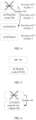
- FIG. 1 is a first schematic flowchart of a method for uplink control information (UCI) transmission according to an embodiment of the present application.
- the method is performed by a terminal, such as a user equipment (UE).
- UE user equipment
- the method includes the following steps.
- Step 100 in case that time domain resources of a physical uplink control channel (PUCCH) carrying first UCI overlap with time domain resources of multiple physical uplink shared channels (PUSCHs) and the multiple PUSCHs include a PUSCH carrying second UCI, selecting a PUSCH without carrying the second UCI from the multiple PUSCHs preferentially, and transferring the first UCI to the selected PUSCH without carrying the second UCI for transmission; or, selecting a target PUSCH for carrying the first UCI from the multiple PUSCHs, and determining a corresponding UCI transmission mode based on UCI carried on the target PUSCH, where the PUCCH and the PUSCH carrying the second UCI have different priorities, or the first UCI includes first priority UCI and the second UCI includes second priority UCI.
- PUCCH physical uplink control channel
- PUSCHs physical uplink shared channels
- the determination of the corresponding UCI transmission mode based on the UCI carried on the target PUSCH described in the embodiments is not limited to determine the corresponding UCI transmission mode based on the UCI carried on the target PUSCH, and may also include to determine the corresponding UCI transmission mode based on other information or a combination of the UCI carried on the target PUSCH and other information.
- the method includes:
- the first UCI refers to UCI carried on the PUCCH.
- the first UCI may be one or more pieces of UCI. When there are multiple pieces of the first UCI, the first UCI may be understood as a set of UCI carried on the PUCCH. Alternatively, the first UCI may refer to specific UCI carried on the PUCCH, such as HARQ-ACK. If other UCI, such as SR, is also carried on the PUCCH, the first UCI may not include the other UCI.
- the first UCI being HARQ-ACK is taken as an example, the PUCCH that carries only HARQ-ACK and the PUCCH that carries both HARQ-ACK and SR are both called the PUCCH carrying the first UCI.
- the multiple PUSCHs overlapping with the PUCCH in time domain resources include the PUSCH carrying the second UCI.
- the second UCI may be one or more pieces of UCI. When there are multiple pieces of the second UCI, the second UCI may be understood as a set of UCI carried on the PUSCH carrying the second UCI. Alternatively, the second UCI may refer to specific UCI carried on the PUSCH, such as CSI. If other UCI, such as HARQ-ACK, is also carried on the PUSCH, the second UCI may do not include the other UCI.
- the second UCI being CSI is taken as an example, the PUSCH that carries only CSI and the PUSCH that carries both HARQ-ACK and CSI are both called the PUSCH carrying the second UCI.
- the first UCI includes the first priority UCI and the second UCI includes the second priority UCI, which may be understood as a kind of UCI included in the first UCI and a kind of UCI included in the second UCI have different priorities.
- the first priority and the second priority represent different priorities. For example, the first priority is high priority and the second priority is low priority; or, the first priority is low priority and the second priority is high priority.
- the specific types of the first priority and the second priority are not limited here, as long as the first priority and the second priority are different.
- the first UCI is a high priority HARQ-ACK
- the second UCI is one or a combination of low priority HARQ-ACK or low priority CSI
- the first UCI is one or a combination of low priority HARQ-ACK or low priority CSI
- the second UCI is one or a combination of high priority HARQ-ACK or high priority CSI
- the second UCI is either one or a combination of high priority CSI or low priority CSI.
- the first UCI may include at least high priority UCI, and the second UCI may include at least low priority UCI; or it may be that the first UCI includes at least low priority UCI, and the second UCI may include at least high priority UCI.
- a case where the first UCI at least includes low priority UCI, and the second UCI at least includes high priority UCI is as follows:
- the first UCI and the second UCI satisfy any or any combination of the following conditions:
- embodiments of the present application provide a solution for UCI transmission, including mode 1 and mode 2.
- Mode 1 a PUSCH without carrying the second UCI is selected preferentially from the multiple PUSCHs, and after one PUSCH without carrying the second UCI is selected, the first UCI carried on the PUCCH is transferred to the selected PUSCH without carrying the second UCI for transmission, that is, the first UCI is transmitted on the PUSCH without carrying the second UCI, rather than on the PUSCH carrying the second UCI, and the original PUCCH carrying the first UCI is not transmitted, to avoid the parallel transmission of PUCCH and PUSCH.
- "Transfer” refers to an action of placing the UCI originally transmitted on PUCCH on PUSCH for transmission instead of transmitting the PUCCH.
- the first UCI includes multiple kinds of UCI
- some kinds of UCI may be dropped since the some kinds of UCI is not supported to be transmitted on the PUSCH or the some kinds of UCI included in the first UCI is not supported to be transmitted simultaneously with some kinds of UCI carried on the PUSCH, and only some kinds of UCI that may be transmitted on the PUSCH is transferred to the PUSCH for transmission.
- a target PUSCH is selected from the multiple PUSCHs, and the target PUSCH may be used for carrying the first UCI.
- the corresponding UCI transmission mode is determined based on UCI carried on the target PUSCH. That is, after the target PUSCH is selected, the corresponding UCI transmission mode may be determined based on the UCI carried on the target PUSCH itself.
- the target PUSCH in mode 2, may be selected according to a rule in the related art, or may according to a combination of the rule in the related art and whether to support multiplexing transmission of different priorities or a rule for selecting PUSCH based on priorities, etc. (the specific combination order may be in any predefined form, for example, the rule for selecting PUSCH based on priorities may be added before or after any of the above selection steps), which is not limited here. That is, when selecting the target PUSCH in mode 2, whether the UCI carried on the PUSCH supports simultaneous transmission with the first UCI is not taken into account.
- the rule in the related art may be to select based on a combination rule of whether A-CSI is carried, the carrier number of the carrier where the PUSCH is located, whether the PUSCH has a corresponding PDCCH, and the starting position of the PUSCH. For example, the PUSCH carrying A-CSI is selected preferentially; when there is no PUSCH carrying A-CSI, if there are both PUSCH with PDCCH scheduling (DG PUSCH) and PUSCH without PDCCH scheduling (CG PUSCH, SP-CSI PUSCH, etc.), DG PUSCH is selected preferentially.
- the PUSCH on a carrier with a lower carrier number is selected preferentially; and if there are multiple PUSCHs that do not overlap in time domain on the selected carrier overlap with PUCCH, the earliest PUSCH is selected.
- the terminal selects the PUSCH without carrying the second UCI from the multiple PUSCHs preferentially and transmits the first UCI on the selected PUSCH without carrying the second UCI, avoiding a possible problem of transmission failure caused by transmitting UCI with different priorities on the same PUSCH; or, the terminal determines a corresponding UCI transmission mode based on UCI carried on the target PUSCH selected from the multiple PUSCHs, to provide specific method for UCI transmission for the problem that there is no clear transmission scheme in relevant scenarios, ensuring the normal operation of the system.
- selecting the PUSCH without carrying the second UCI preferentially further includes any of the following:
- the PUSCH without carrying the second UCI may be selected preferentially from the all PUSCHs overlapping with the PUCCH in time domain resources first according to the following rule 1, or a combination of rule 1 and one or more of rule 2 or rule 3, and then according to the rule in the related art, such as whether A-CSI is carried, the carrier number of the carrier where the PUSCH is located, whether the PUSCH has a corresponding PDCCH, and the starting position of the PUSCH, etc.
- the rule 1, rule 2, and rule 3 may be adopted in combinations with different orders, such as, rule 1 + related art; rule 1 + rule 2 + related art; rule 1 + rule 3 + related art; rule 1 + rule 2 + rule 3 + related art; rule 2 + rule 1 + related art; rule 3 + rule 1 + related art; rule 1 + rule 3 + rule 2 + related art; rule 2 + rule 1 + rule 3 + related art; rule 3 + rule 1 + rule 2 + related art; rule 2 + rule 3 + rule 1 + related art; rule 3 + rule 1 + rule 2 + related art; rule 2 + rule 3 + rule 1 + related art; rule 3 + rule 2 + rule 1 + related art, etc.
- the writing order of the above combinations represents the order in which the rules are used.
- the first UCI carried on the PUCCH may be transferred to the selected PUSCH without carrying the second UCI for transmission, to avoid a possible problem of transmission failure caused by transmitting UCI with different priorities on the same PUSCH, ensuring the normal operation of the system.
- the network device such as a base station
- the terminal may make an agreement that not all PUSCHs overlapping with the PUCCH in time domain resources carry the second UCI, that is, a PUSCH without carrying the second UCI may always be selected.
- the mode 2 or any of transmission modes 1 to 3 for the case of the target PUSCH being a PUSCH carrying the second UCI in mode 2 may be reused to resolve the resource conflict between the PUCCH and PUSCH.
- determining the corresponding UCI transmission mode based on UCI carried on the target PUSCH includes:
- determining the corresponding UCI transmission mode based on UCI carried on the target PUSCH includes:
- the corresponding UCI transmission mode may be determined based on the UCI carried on the target PUSCH.
- the first UCI may be transferred to the target PUSCH for transmission, to avoid a possible problem of transmission failure caused by transmitting UCI with different priorities on the same PUSCH, ensuring the normal operation of the system.
- any of the following manners may be used for transmission.
- Manner 1 dropping the second UCI and transferring the first UCI to the target PUSCH for transmission; or, dropping a part of UCI in the second UCI (such as dropping the UCI that cannot be multiplexed with the first UCI for transmission), transferring the first UCI to the target PUSCH, and transmitting the first UCI together with remaining UCI in the second UCI; or, dropping a part of UCI in the first UCI (such as dropping the UCI that cannot be multiplexed with the second UCI for transmission), transferring remaining content of the first UCI to the target PUSCH, and transmitting the second UCI together with the remaining content of the first UCI.
- Manner 2 directly transferring the first UCI to the target PUSCH and transmitting the second UCI together with the first UCI.
- Manner 3 dropping the target PUSCH, that is, the PUSCH is not transmitted, and the information (including data and UCI) is also dropped accordingly; or dropping the PUCCH, that is, the PUCCH carrying the first UCI is not transmitted, and the first UCI is also dropped along with the PUCCH.
- Dropping refers to that the terminal does not transmit the uplink channel or UCI any more, and accordingly, the network device no longer receives this uplink channel or UCI.
- the method further includes:
- any of the following processing manners may be adopted.
- the priority of the PUCCH is high priority or a third priority; or,
- the priority of the PUCCH or PUSCH may be the priority of high priority UCI among the UCI of different priorities, that is, high priority; alternatively, the priority of PUCCH or PUSCH may be another priority type other than the high priority and the low priority, that is, the third priority.
- the third priority may be a mixed priority or may be a priority having a higher priority than the high priority.
- the priority of the PUCCH may be high priority; or it may be the third priority, such as a mixed priority or a priority having a higher priority than the high priority.
- the multiple PUSCHs are PUSCHs that cannot be transmitted simultaneously with the PUCCH.
- all PUSCHs overlapping with the PUCCH in time domain resources are PUSCHs that cannot be transmitted simultaneously with the PUCCH.
- the specific situations may include any of the following.
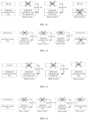
- FIG. 2 is a second schematic flowchart of a method for uplink control information (UCI) transmission according to an embodiment of the present application.
- the method may be performed by a network device (such as a base station). As shown in FIG. 2 , the method includes the following steps.
- Step 200 in case that time domain resources of a physical uplink control channel (PUCCH) carrying first UCI overlap with time domain resources of multiple physical uplink shared channels (PUSCHs) and the multiple PUSCHs include a PUSCH carrying second UCI, selecting a PUSCH without carrying the second UCI from the multiple PUSCHs preferentially, and receiving the first UCI on the selected PUSCH without carrying the second UCI; or, selecting a target PUSCH for carrying the first UCI from the multiple PUSCHs, and determining a corresponding UCI reception mode based on UCI carried on the target PUSCH, where the PUCCH and the PUSCH carrying the second UCI have different priorities, or the first UCI includes first priority UCI and the second UCI includes second priority UCI.
- PUCCH physical uplink control channel
- PUSCHs physical uplink shared channels
- the first UCI refers to UCI carried on the PUCCH.
- the first UCI may be one or more pieces of UCI. When there are multiple pieces of the first UCI, the first UCI may be understood as a set of UCI carried on the PUCCH. Alternatively, the first UCI may refer to specific UCI carried on the PUCCH, such as HARQ-ACK. If other UCI, such as SR, is also carried on the PUCCH, the first UCI may do not include the other UCI.
- the first UCI being HARQ-ACK is taken as an example, the PUCCH that carries only HARQ-ACK and the PUCCH that carries both HARQ-ACK and SR are both called the PUCCH carrying the first UCI.
- the multiple PUSCHs overlapping with the PUCCH in time domain resources include the PUSCH carrying the second UCI.
- the second UCI may be one or more pieces of UCI. When there are multiple pieces of the second UCI, the second UCI may be understood as a set of UCI carried on the PUSCH carrying the second UCI. Alternatively, the second UCI may refer to specific UCI carried on the PUSCH, such as CSI. If other UCI, such as HARQ-ACK, is also carried on the PUSCH, the second UCI may do not include the other UCI.
- the second UCI being CSI is taken as an example, the PUSCH that carries only CSI and the PUSCH that carries both HARQ-ACK and CSI are both called the PUSCH carrying the second UCI.
- the first UCI includes the first priority UCI and the second UCI includes the second priority UCI, which may be understood as a kind of UCI included in the first UCI and a kind of UCI included in the second UCI have different priorities.
- the first priority and the second priority represent different priorities. For example, the first priority is high priority and the second priority is low priority; or, the first priority is low priority and the second priority is high priority.
- the specific types of the first priority and the second priority are not limited here, as long as the first priority and the second priority are different.
- the first UCI is a high priority HARQ-ACK
- the second UCI is one or a combination of low priority HARQ-ACK or low priority CSI
- the first UCI is one or a combination of low priority HARQ-ACK or low priority CSI
- the second UCI is one or a combination of high priority HARQ-ACK or high priority CSI
- the second UCI is either one or a combination of high priority CSI or low priority CSI.
- the first UCI may include at least high priority UCI, and the second UCI may include at least low priority UCI; or it may be that the first UCI includes at least low priority UCI, and the second UCI may include at least high priority UCI.
- a case where the first UCI at least includes low priority UCI, and the second UCI at least includes high priority UCI is as follows:
- the first UCI and the second UCI satisfy any or any combination of the following conditions:
- embodiments of the present application provide a solution for UCI transmission, where for the network device (such as a base station) side, the solution may include the following mode 1 and mode 2.
- Mode 1 a PUSCH without carrying the second UCI is selected preferentially from the multiple PUSCHs, and after one PUSCH without carrying the second UCI is selected, the first UCI is received on the selected PUSCH without carrying the second UCI. That is, when receiving UCI, the selected PUSCH without carrying the second UCI may be received and the first UCI may be obtained from it, and there is no need to receive the original PUCCH carrying the first UCI.
- a target PUSCH is selected from the multiple PUSCHs, and the target PUSCH may be a PUSCH used for carrying the first UCI.
- the corresponding UCI reception mode is determined based on UCI carried on the target PUSCH. That is, after the target PUSCH is selected, the corresponding UCI reception mode may be determined based on the UCI carried on the target PUSCH itself.
- the target PUSCH in mode 2, may be selected according to a rule in the related art, or may according to a combination of the rule in the related art and whether to support multiplexing transmission of different priorities or a rule for selecting PUSCH based on priorities, etc. (the specific combination order may be in any predefined form, for example, the rule for selecting PUSCH based on priorities may be added before or after any of the above selection steps), which is not limited here. That is, when selecting the target PUSCH in mode 2, whether the UCI carried on the PUSCH supports simultaneous transmission with the first UCI is not taken into account.
- the rule in the related art may be to select based on a combination rule of whether A-CSI is carried, the carrier number of the carrier where the PUSCH is located, whether the PUSCH has a corresponding PDCCH, and the starting position of the PUSCH. For example, the PUSCH carrying A-CSI is selected preferentially; when there is no PUSCH carrying A-CSI, if there are both PUSCH with PDCCH scheduling (DG PUSCH) and PUSCH without PDCCH scheduling (CG PUSCH, SP-CSI PUSCH, etc.), DG PUSCH is selected preferentially.
- the PUSCH on a carrier with a lower carrier number is selected preferentially; and if there are multiple PUSCHs that do not overlap in time domain on the selected carrier overlap with PUCCH, the earliest PUSCH is selected.
- the network device selects the PUSCH without carrying the second UCI from the multiple PUSCHs preferentially and receives the first UCI on the selected PUSCH without carrying the second UCI, avoiding possible problem of transmission failure caused by transmitting UCI with different priorities on the same PUSCH; or, the network device determines a corresponding UCI reception mode based on UCI carried on the target PUSCH selected from the multiple PUSCHs, to provide specific method for UCI transmission for the problem that there is no clear transmission scheme in relevant scenarios, ensuring the normal operation of the system.
- selecting the PUSCH without carrying the second UCI preferentially further includes any of the following:
- the PUSCH without carrying the second UCI may be selected preferentially from the all PUSCHs overlapping with the PUCCH in time domain resources first according to the following rule 1, or a combination of rule 1 and one or more of rule 2 or rule 3, and then according to the rule in the related art, such as whether A-CSI is carried, the carrier number of the carrier where the PUSCH is located, whether the PUSCH has a corresponding PDCCH, and the starting position of the PUSCH, etc.
- the rule 1, rule 2, and rule 3 may be adopted in combinations with different orders, such as, rule 1 + related art; rule 1 + rule 2 + related art; rule 1 + rule 3 + related art; rule 1 + rule 2 + rule 3 + related art; rule 2 + rule 1 + related art; rule 3 + rule 1 + related art; rule 1 + rule 3 + rule 2 + related art; rule 2 + rule 1 + rule 3 + related art; rule 3 + rule 1 + rule 2 + related art; rule 2 + rule 3 + rule 1 + related art; rule 3 + rule 1 + rule 2 + related art; rule 2 + rule 3 + rule 1 + related art; rule 3 + rule 2 + rule 1 + related art, etc.
- the writing order of the above combinations represents the order in which the rules are used.
- the first UCI may be received on the selected PUSCH without carrying the second UCI, to avoid a possible problem of transmission failure caused by transmitting UCI with different priorities on the same PUSCH, ensuring the normal operation of the system.
- determining the corresponding UCI reception mode based on UCI carried on the target PUSCH includes:
- the corresponding UCI reception mode may be determined based on the UCI carried on the target PUSCH.
- the first UCI may be received on the target PUSCH.
- any one of the following manners may be used for reception.
- Manner 1 if it is determined that the second UCI is dropped (for example, it is determined that the terminal side has dropped the second UCI based on a predetermined rule with the terminal), the first UCI is received on the target PUSCH; or, if it is determined that a part of UCI in the second UCI (such as UCI that cannot be multiplexed with the first UCI for transmission) is dropped, the first UCI together with remaining UCI in the second UCI is received on the target PUSCH; or, if it is determined that a part of UCI in the first UCI (such as UCI that cannot be multiplexed with the second UCI for transmission) is dropped, the second UCI together with remaining UCI in the first UCI is received on the target PUSCH.
- Manner 2 the first UCI and the second UCI is directly received on the target PUSCH.
- Manner 3 if it is determined that the target PUSCH is dropped, the target PUSCH will not be received, including not receiving data and UCI on the target PUSCH; or, if it is determined that PUCCH is dropped, the PUCCH carrying the first UCI will not be received, and the first UCI will also be dropped along with the PUCCH, only PUSCH is received.
- the method further includes:
- any of the following processing manners may be adopted.
- the priority of the PUCCH is high priority or a third priority; or,
- the priority of the PUCCH or PUSCH may be the priority of high priority UCI among the UCI of different priorities, that is, high priority; alternatively, the priority of PUCCH or PUSCH may be another priority type other than the high priority and low priority, that is, the third priority.
- the third priority may be a mixed priority or may be a priority having a higher priority than the high priority.
- the priority of the PUCCH may be high priority; or it may be the third priority, such as a mixed priority or a priority having a higher priority than the high priority.
- the multiple PUSCHs are PUSCHs that cannot be transmitted simultaneously with the PUCCH.
- all PUSCHs overlapping with the PUCCH in time domain resources are PUSCHs that cannot be transmitted simultaneously with the PUCCH.
- the specific situations may include any of the following.
- the terminal does not have the capability to transmit PUCCH and PUSCH simultaneously; or the terminal has the capability to transmit PUCCH and PUSCH simultaneously, but this function is not configured to be enabled, and then no PUSCH may be transmitted simultaneously with PUCCH.
- the terminal may have the capability to transmit PUCCH and PUSCH simultaneously, and this function is configured to be enabled, but the combination of PUCCH and PUSCH does not satisfy the condition for parallel transmission.
- the PUCCH and PUSCH have the same priority and then cannot be transmitted simultaneously; or the PUCCH and PUSCH cannot be transmitted simultaneously if the PUCCH and PUSCH have different priorities and are on the same component carrier (CC) or intra-band CC.
- the PUCCH and PUSCH may be transmitted simultaneously when they have different priorities and are on inter-band CC respectively.
- FIG. 3 is a schematic diagram showing an overlapping of resources of a PUCCH and a PUSCH in time domain according to an embodiment of the present application.
- LP represents low priority
- HP represents high priority
- AN is the abbreviation for HARQ-ACK
- the channel marked with HP AN is high priority (HP) PUCCH carrying high priority HARQ-ACK (HP AN)
- the first UCI is HP AN
- the second UCI is LP CSI (i.e. the CSI carried on LP PUSCH1).
- this PUSCH (PUSCH2 and LP PUSCH3) is the PUSCH without carrying the CSI.
- FIG. 4 is a first schematic implementation diagram of a method for UCI transmission according to an embodiment of the present application.
- the explanation of the annotation in FIG. 4 is the same as that in FIG. 3 .
- LP PUSCH2 is selected to carry the HP AN on PUCCH according to a principle of minimum carrier number, that is, the UE side transfers the HP AN on PUCCH to LP PUSCH2, transmits LP PUSCH2 carrying HP AN, and drops PUCCH, where other PUSCHs may be transmitted normally because PUCCH is not transmitted, there is no conflict between PUCCH and PUSCH, and PUSCH on multiple carriers may be transmitted simultaneously.
- a PUSCH carrying LP CSI is selected according to PUSCH selection rule to carry HP AN on PUCCH.
- the transmission may be performed according to the method in embodiment 2.
- the base station and terminal may make an agreement in advance that not expecting that all PUSCHs overlapping with PUCCH carry LP CSI, that is, a PUSCH without carrying LP CSI may always be selected to carry HP AN on PUCCH according to the selection rule for PUSCH that do not carry LP CSI.
- Base station side LP PUSCH2 is determined, by using the same method as the terminal side, to be the PUSCH for transmitting HP AN on PUCCH, then the base station receives LP PUSCH2 carrying HP AN, obtains HP AN from LP PUSCH2, and receives other PUSCHs on other carriers without the need to receive PUCCH.
- FIG. 5 is a schematic diagram of PUCCH and a selected PUSCH according to an embodiment of the present application.
- the explanation of the annotation in FIG. 5 is the same as that in embodiment 1 (in this embodiment, the explanation of the annotation in FIG. 5 to FIG. 15 may all refer to embodiment 1).
- PUSCH selection rule for example, according to the scheme in the related art, or according to a combination of the scheme in the related art and whether to support multiplexing transmission of different priorities or a scheme for selecting PUSCH based on priorities, etc.
- multiple transmission modes may be adopted.
- FIG. 6 is a second schematic implementation diagram of a method for UCI transmission according to an embodiment of the present application. As shown in FIG. 6 , it is determined to drop LP CSI and transfer HP AN on PUCCH to LP PUSCH for transmission, and PUCCH is not transmitted, where HP AN is transmitted on LP PUSCH according to the transmission scheme defined in related art for AN on PUSCH, such as determining whether to use puncture mode or rate matching mode for transmission based on the number of AN bits, determining the resources for carrying AN on PUSCH based on the corresponding AN resource offset parameter (beta-offset), determining the location of resource of AN based on the resource mapping scheme corresponding to AN and performing mapping.
- a-offset resource offset parameter
- the resource offset parameters corresponding to HP AN are used to calculate AN resources. If only one resource offset parameter is configured, the priority of AN is not needed to be distinguished, which may be used directly; if there are other PUSCHs, the other PUSCHs may be transmitted normally.
- Base station side the transmission behavior is determined in the same way as the terminal side, and reception is performed according to the corresponding behavior.
- FIG. 7 is a third schematic implementation diagram of a method for UCI transmission according to an embodiment of the present application.
- HP AN is directly transferred to LP PUSCH and transmitted together with LP CSI on PUSCH.
- HP AN and LP CSI may be transmitted on LP PUSCH according to the transmission mode defined in related art for transmitting AN and CSI on LP PUSCH, such as AN and CSI are independently encoded, resource sizes of AN and CSI on PUSCH are determined based on the resource offset parameters corresponding to AN and CSI, and resource location is found based on the mapping rules of AN and CSI respectively and mapping is performed.
- the resource offset parameters corresponding to HP AN are used to calculate AN resources and the resource offset parameters corresponding to LP CSI are used to calculate CSI resources. If only one kind of resource offset parameter is configured for one kind of UCI, the priority is not needed to be distinguished, the resource offset parameters corresponding to the UCI may be used directly to calculate resources; if there are other PUSCHs, the other PUSCHs may be transmitted normally.
- Base station side the transmission behavior is determined in the same way as the terminal side, and reception is performed according to the corresponding behavior.
- FIG. 8 is a fourth schematic implementation diagram of a method for UCI transmission according to an embodiment of the present application. As shown in FIG. 8 , it is determined to drop LP PUSCH with LP CSI and only PUCCH carrying HP AN is transmitted. If there are still PUSCHs overlapping with PUCCH on other carriers, these PUSCHs are dropped or another target PUSCH is selected from the remaining PUSCHs and whether the another target PUSCH carries the second UCI is determined. If the another target PUSCH does not carry the second UCI, the UCI on PUCCH is transferred to the target PUSCH for transmission. If the another target PUSCH carries the second UCI, the target PUSCH is dropped and the next target PUSCH is selected, and so on. Alternatively, another mode may also be adopted, which is to drop PUCCH. For cases where PUCCH is LP, it is recommended to drop PUCCH.
- Base station side the transmission behavior is determined in the same way as the terminal side, and reception is performed according to the corresponding behavior.
- the above PUCCH and PUSCH may be all or part of the channels with corresponding PDCCH, and the PDCCH includes indication field for indicating whether multiplexing of different priorities is supported; or, may be all or part of the channels without corresponding PDCCH, or may be the channels with corresponding PDCCH but the PDCCH does not include indication field for indicating whether multiplexing of different priorities is supported.
- whether the corresponding PUCCH and PUSCH support multiplexing of different priorities may be determined based on the configuration of higher layer signaling. For example, a higher layer parameter is used to configure whether multiplexing transmission of different priorities is supported.
- the higher layer parameter When the higher layer parameter is configured as True, it is determined that any uplink channel supports multiplexing transmission of different priorities, but when it is configured as False or there is no configuration, it is determined that any uplink channel does not support multiplexing transmission of different priorities.
- the rule for selecting the target PUSCH may consider whether to support multiplexing of different priorities as a factor in the selection rule, and the combination relationship with other factors may be a predetermined order.
- HARQ-ACK is applicable to both unicast and multicast HARQ-ACK.
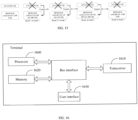
- FIG. 16 is a schematic structural diagram of a terminal according to an embodiment of the present application. As shown in FIG. 16 , the terminal includes a memory 1620, a transceiver 1610 and a processor 1600, where the processor 1600 and memory 1620 may be physically arranged separately.
- the memory 1620 is used for storing a computer program, and the transceiver 1610 is used for transmitting and receiving data under control of the processor 1600.
- the transceiver 1610 is used for transmitting and receiving data under control of the processor 1600.
- a bus architecture may include any number of interconnected buses and bridges, which are linked together through various circuits of one or more processors represented by the processor 1600 and one or more memories represented by the memory 1620.
- the bus architecture may also link together various other circuits, such as peripherals, voltage regulators, and power management circuits, etc., which are well known in the art, and therefore are not further described in the present application.
- the bus interface provides an interface.
- the transceiver 1610 may include multiple elements, i.e., including a transmitter and a receiver, units for providing communication with various other devices over transmission media including wireless channels, wired channels, fiber optic cables, and the like.
- a user interface 1630 may be an interface capable of externally or internally connecting the required equipment, and the connected equipment includes, but not limited to, a keypad, a display, a speaker, a microphone, a joystick, and the like.
- the processor 1600 is responsible for managing the bus architecture and general processing, and the memory 1620 may store data used by the processor 1600 when performing operations.
- the processor 1600 may be a central processing unit (CPU), an application specific integrated circuit (ASIC), a field-programmable gate array (FPGA), or a complex programmable logic device (CPLD), the processor may also use a multi-core architecture.
- CPU central processing unit
- ASIC application specific integrated circuit
- FPGA field-programmable gate array
- CPLD complex programmable logic device
- the processor 1600 calls the computer program stored in the memory 1620 to execute any of the methods applied to the terminal provided by the embodiments of the present application in accordance with the obtained executable instructions.
- the method includes: in case that time domain resources of a physical uplink control channel (PUCCH) carrying first UCI overlap with time domain resources of multiple physical uplink shared channels (PUSCHs) and the multiple PUSCHs include a PUSCH carrying second UCI, selecting a PUSCH without carrying the second UCI from the multiple PUSCHs preferentially, and transferring the first UCI to the selected PUSCH without carrying the second UCI for transmission; or, selecting a target PUSCH for carrying the first UCI from the multiple PUSCHs, and determining a corresponding UCI transmission mode based on UCI carried on the target PUSCH, where the PUCCH and the PUSCH carrying the second UCI have different priorities, or the first UCI includes first priority UCI and the second UCI includes second priority UCI.
- PUCCH physical uplink control channel
- PUSCHs
- the method includes:
- the selecting the PUSCH without carrying the second UCI preferentially includes any of the following:
- the determining the corresponding UCI transmission mode based on UCI carried on the target PUSCH includes:
- the determining the corresponding UCI transmission mode based on UCI carried on the target PUSCH includes:
- the method further includes:
- the first UCI and the second UCI satisfy any or any combination of the following conditions:
- a priority of the PUCCH is high priority or a third priority; or,
- the multiple PUSCHs are PUSCHs unable to be transmitted simultaneously with the PUCCH.
- FIG. 17 is a schematic structural diagram of a network device according to an embodiment of the present application.
- the network device includes a memory 1720, a transceiver 1710 and a processor 1700, where the processor 1700 and memory 1720 may be physically arranged separately.
- the memory 1720 is used for storing a computer program, and the transceiver 1710 is used for transmitting and receiving data under control of the processor 1700.
- the transceiver 1710 is used for transmitting and receiving data under control of the processor 1700.
- a bus architecture may include any number of interconnected buses and bridges, which are linked together through various circuits of one or more processors represented by the processor 1700 and one or more memories represented by the memory 1720.
- the bus architecture may also link together various other circuits, such as peripherals, voltage regulators, and power management circuits, etc., which are well known in the art, and therefore are not further described in the present application.
- the bus interface provides an interface.
- the transceiver 1710 may include multiple elements, i.e., including a transmitter and a receiver, units for providing communication with various other devices over transmission media including wireless channels, wired channels, fiber optic cables, and the like.
- the processor 1700 is responsible for managing the bus architecture and general processing, and the memory 1720 may store data used by the processor 1700 when performing operations.
- the processor 1700 may be a central processing unit (CPU), an application specific integrated circuit (ASIC), a field-programmable gate array (FPGA), or a complex programmable logic device (CPLD), the processor may also use a multi-core architecture.
- CPU central processing unit
- ASIC application specific integrated circuit
- FPGA field-programmable gate array
- CPLD complex programmable logic device
- the processor 1700 calls the computer program stored in the memory 1720 to execute any of the methods applied to the terminal provided by the embodiments of the present application in accordance with the obtained executable instructions.
- the method includes: in case that time domain resources of a physical uplink control channel (PUCCH) carrying first UCI overlap with time domain resources of multiple physical uplink shared channels (PUSCHs) and the multiple PUSCHs include a PUSCH carrying second UCI, selecting a PUSCH without carrying the second UCI from the multiple PUSCHs preferentially, and receiving the first UCI on the selected PUSCH without carrying the second UCI; or, selecting a target PUSCH for carrying the first UCI from the multiple PUSCHs, and determining a corresponding UCI reception mode based on UCI carried on the target PUSCH, where the PUCCH and the PUSCH carrying the second UCI have different priorities, or the first UCI includes first priority UCI and the second UCI includes second priority UCI.
- PUCCH physical uplink control channel
- PUSCHs physical up
- the selecting the PUSCH without carrying the second UCI preferentially includes any of the following:
- the determining the corresponding UCI reception mode based on UCI carried on the target PUSCH includes:
- the method further includes:
- the first UCI and the second UCI satisfy any or any combination of the following conditions:
- a priority of the PUCCH is high priority or a third priority; or,
- the multiple PUSCHs are PUSCHs unable to be transmitted simultaneously with the PUCCH.
- the above terminal and network device provided by the embodiments of the present application may implement all the method steps implemented by the above method embodiments, and may achieve the same effect.
- the same parts and beneficial effects as the same method embodiments are not repeated in the present application.
- FIG. 18 is a first schematic structural diagram of an apparatus for UCI transmission according to an embodiment of the present application, and the apparatus may be applied to a terminal. As shown in FIG. 18 , the apparatus includes:
- the apparatus includes:
- the selecting the PUSCH without carrying the second UCI preferentially includes any of the following:
- the determining the corresponding UCI transmission mode based on UCI carried on the target PUSCH includes:
- the determining the corresponding UCI transmission mode based on UCI carried on the target PUSCH includes:
- the transmission unit 1800 is further used for:
- the first UCI and the second UCI satisfy any or any combination of the following conditions:
- a priority of the PUCCH is high priority or a third priority; or,
- the multiple PUSCHs are PUSCHs unable to be transmitted simultaneously with the PUCCH.
- FIG. 19 is a second schematic structural diagram of an apparatus for UCI transmission according to an embodiment of the present application, and the apparatus may be applied to a network device. As shown in FIG. 19 , the apparatus includes:
- the selecting the PUSCH without carrying the second UCI preferentially includes any of the following:
- the determining the corresponding UCI reception mode based on UCI carried on the target PUSCH includes:
- the reception unit 1900 is further used for:
- the first UCI and the second UCI satisfy any or any combination of the following conditions:
- a priority of the PUCCH is high priority or a third priority; or,
- the multiple PUSCHs are PUSCHs unable to be transmitted simultaneously with the PUCCH.
- the division of units in the embodiments of the present application is schematic, and is only a logical function division, and there may be other division manners in actual implementation.
- the functional units in the various embodiments of the present application may be integrated into one processing unit, or each unit may exist alone physically, or two or more units may be integrated into one unit.
- the above-mentioned integrated unit may be implemented in the form of hardware or software functional unit.
- the integrated unit may be stored in a processor readable storage medium.
- the solutions of the present application in essence or a part of the solutions that contributes to the prior art, or all or part of the solutions, may be embodied in the form of a software product, which is stored in a storage medium, including several instructions to cause a computer device (which may be a personal computer, server, or network device, etc.) or a processor to perform all or part of the steps of the methods described in the respective embodiments of the present application.
- the storage medium described above includes various media that may store program codes such as a U disk, a mobile hard disk, a read-only memory (ROM), a random access memory (RAM), a magnetic disk, or a compact disk.
- An embodiment of the present application further provides a computer readable storage medium storing a computer program that cause a computer to perform the steps of the method for UCI transmission described above.
- the computer readable storage medium may implement all the method steps implemented by the above method embodiments, and may achieve the same effect.
- the same parts and beneficial effects as the same method embodiments are not repeated here.
- the computer readable storage medium may be any available medium or data storage device that may be accessed by the computer, including but not limited to, a magnetic storage (e.g., a floppy disk, a hard disk, a magnetic tape, a magneto-optical disk (MO), etc.), an optical memory (such as CD, DVD, BD, HVD, etc.), and a semiconductor memory (such as ROM, EPROM, EEPROM, a non-volatile memory (NAND FLASH), a solid-state drive (SSD)), etc.
- a magnetic storage e.g., a floppy disk, a hard disk, a magnetic tape, a magneto-optical disk (MO), etc.
- an optical memory such as CD, DVD, BD, HVD, etc.
- semiconductor memory such as ROM, EPROM, EEPROM, a non-volatile memory (NAND FLASH), a solid-state drive (SSD)
- the applicable systems may be a global system of mobile communication (GSM) system, a code division multiple access (CDMA) system, a wideband code division multiple access (WCDMA) general packet radio service (GPRS) system, a long term evolution (LTE) system, an LTE frequency division duplex (FDD) system, an LTE time division duplex (TDD) system, a long term evolution advanced (LTE-A) system, a universal mobile telecommunication system (UMTS), a worldwide interoperability for microwave access (WiMAX) system, a 5G new radio (NR) system, etc.
- GSM global system of mobile communication
- CDMA code division multiple access
- WCDMA wideband code division multiple access
- GPRS general packet radio service
- LTE long term evolution
- FDD LTE frequency division duplex
- TDD LTE time division duplex
- LTE-A long term evolution advanced
- UMTS universal mobile telecommunication system
- WiMAX worldwide interoperability for microwave access
- NR 5G new radio
- the terminal in the embodiments of the present application may be a device that provides voice and/or data connectivity to a user, a handheld device with a wireless connection function, or other processing devices connected to a wireless modem.
- the names of the terminal may be different.
- the terminal may be called as a user equipment (UE).
- UE user equipment
- a wireless terminal device may communicate with one or more core networks (CNs) via a radio access network (RAN), and the wireless terminal device may be a mobile terminal device, such as a mobile phone (or cellular phone), a computer with mobile terminal device, e.g., a portable mobile device, a pocket-sized mobile device, a handheld mobile device, a computer-built mobile device or a vehicle-mounted mobile device, which exchange language and/or data with the radio access network.
- a personal communication service (PCS) phone a radio phone, a session initiated protocol (SIP) phone, a wireless local loop (WLL) station, a personal digital assistant (PDA) and other devices.
- PCS personal communication service
- SIP session initiated protocol
- WLL wireless local loop
- PDA personal digital assistant
- a wireless terminal device may also be called a system, a subscriber unit, a subscriber station, a mobile station, a mobile, a remote station, an access point, a remote terminal, an access terminal, a user terminal, a user agent, or a user device, which is not limited in the embodiments of the present application.
- the network device in the embodiments of the present application may be a base station, and the base station may include multiple cells providing services for the terminal device.
- the base station may be called an access point, or a device communicating with a wireless terminal device through one or more sectors on the air interface in the access network, or other names.
- the network device may be used for exchanging received air frames with internet protocol (IP) packets, and acting as a router between the wireless terminal device and the rest of the access network, where the rest of the access network may include an IP communication network.
- IP internet protocol
- the network device may also coordinate attribute management for the air interface.
- the network device in the embodiments of the present application may be a base transceiver station (BTS) in a global system for mobile communications (GSM) or a code division multiple access (CDMA), a node B in a wide-band code division multiple access (WCDMA), an evolutional node B (eNB or e-Node B) in a long term evolution (LTE) system, a 5G base station (gNB) in 5G network architecture (next generation system), a home evolved node B (HeNB), a relay node, a femto, or a pico base station (pico), etc., which is not limited in the embodiments of the present application.
- the network device may include a centralized unit (CU) node and a distributed unit (DU) node, and the centralized unit and the distributed unit may be geographically separated.
- a multi-input multi-output (MIMO) transmission may be performed between the network device and the terminal device by using one or more antennas.
- the MIMO transmission may be single-user MIMO (SU-MIMO) or multi-user MIMO (MU-MIMO).
- MIMO transmission may be 2D-MIMO, 3D-MIMO, FD-MIMO or massive-MIMO, and may also be diversity transmission, precoding transmission, beamforming transmission, etc.
- embodiments of the present application may be provided as a method, system, or computer program product. Accordingly, the present application may take the form of an entirely hardware embodiment, an entirely software embodiment, or an embodiment combining software and hardware aspects. Furthermore, the present application may take the form of a computer program product embodied on one or more computer-usable storage media having computer-usable program code embodied therein, including but not limited to disk storage, optical storage, and the like.
- processor-executable instructions may also be stored in a processor-readable memory capable of directing a computer or other programmable data processing apparatus to operate in a particular manner, and the instructions stored in the processor-readable memory may result in a manufacture including instruction means, the instruction means may perform the functions specified in one or more flows of the flowchart and/or one or more blocks of the block diagram.
- processor-executable instructions may also be loaded onto a computer or other programmable data processing device to cause a series of operational steps to be performed on the computer or other programmable device to produce a computer-implemented process and instructions performed on the computer or other programmable devices provide steps for performing the functions specified in one or more flows of the flowchart and/or one or more blocks of the block diagram.
Landscapes
- Engineering & Computer Science (AREA)
- Signal Processing (AREA)
- Computer Networks & Wireless Communication (AREA)
- Mobile Radio Communication Systems (AREA)
- Detection And Prevention Of Errors In Transmission (AREA)
Applications Claiming Priority (2)
| Application Number | Priority Date | Filing Date | Title |
|---|---|---|---|
| CN202210028088.2A CN116489790A (zh) | 2022-01-11 | 2022-01-11 | Uci传输方法、终端、网络设备、装置及存储介质 |
| PCT/CN2023/071528 WO2023134661A1 (zh) | 2022-01-11 | 2023-01-10 | Uci传输方法、终端、网络设备、装置及存储介质 |
Publications (2)
| Publication Number | Publication Date |
|---|---|
| EP4465724A1 true EP4465724A1 (de) | 2024-11-20 |
| EP4465724A4 EP4465724A4 (de) | 2025-04-16 |
Family
ID=87214186
Family Applications (1)
| Application Number | Title | Priority Date | Filing Date |
|---|---|---|---|
| EP23740003.1A Pending EP4465724A4 (de) | 2022-01-11 | 2023-01-10 | Uci-übertragungsverfahren und -vorrichtung, endgerät, netzwerkvorrichtung und speichermedium |
Country Status (5)
| Country | Link |
|---|---|
| US (1) | US20250142574A1 (de) |
| EP (1) | EP4465724A4 (de) |
| CN (1) | CN116489790A (de) |
| TW (1) | TWI870758B (de) |
| WO (1) | WO2023134661A1 (de) |
Families Citing this family (2)
| Publication number | Priority date | Publication date | Assignee | Title |
|---|---|---|---|---|
| US12532315B2 (en) * | 2022-02-11 | 2026-01-20 | Qualcomm Incorporated | Managing overlap between uplink control channel repetitions and uplink data transmissions |
| WO2025091506A1 (zh) * | 2023-11-03 | 2025-05-08 | Oppo广东移动通信有限公司 | 通信方法和设备 |
Family Cites Families (7)
| Publication number | Priority date | Publication date | Assignee | Title |
|---|---|---|---|---|
| CN109392101B (zh) * | 2017-08-04 | 2020-08-25 | 维沃移动通信有限公司 | 一种数据传输方法、终端及基站 |
| ES2964135T3 (es) * | 2018-05-10 | 2024-04-04 | Beijing Xiaomi Mobile Software Co Ltd | Método y aparato para multiplexar la transmisión de información, y método y aparato de recepción de información |
| CN113452482B (zh) * | 2020-03-27 | 2023-05-02 | 大唐移动通信设备有限公司 | 一种信息传输方法、装置、设备及计算机可读存储介质 |
| CN113518450B (zh) * | 2020-04-10 | 2024-11-19 | 大唐移动通信设备有限公司 | 一种上行信道的传输方法及设备 |
| CN113541900B (zh) * | 2020-04-21 | 2024-04-26 | 维沃移动通信有限公司 | 上行控制信息传输的方法、终端设备和网络设备 |
| CN113543330B (zh) * | 2020-04-22 | 2022-12-09 | 北京紫光展锐通信技术有限公司 | 信道资源的传输方法及设备 |
| CN113709875A (zh) * | 2020-05-22 | 2021-11-26 | 北京三星通信技术研究有限公司 | 发送数据和控制信息的方法和设备 |
-
2022
- 2022-01-11 CN CN202210028088.2A patent/CN116489790A/zh active Pending
-
2023
- 2023-01-10 WO PCT/CN2023/071528 patent/WO2023134661A1/zh not_active Ceased
- 2023-01-10 EP EP23740003.1A patent/EP4465724A4/de active Pending
- 2023-01-10 US US18/728,448 patent/US20250142574A1/en active Pending
- 2023-01-11 TW TW112101192A patent/TWI870758B/zh active
Also Published As
| Publication number | Publication date |
|---|---|
| WO2023134661A1 (zh) | 2023-07-20 |
| TWI870758B (zh) | 2025-01-21 |
| EP4465724A4 (de) | 2025-04-16 |
| TW202329737A (zh) | 2023-07-16 |
| US20250142574A1 (en) | 2025-05-01 |
| CN116489790A (zh) | 2023-07-25 |
Similar Documents
| Publication | Publication Date | Title |
|---|---|---|
| US20240179715A1 (en) | Multiplexing transmission method and apparatus, and storage medium | |
| CN113678558B (zh) | 信息传输方法及相关装置 | |
| EP4319396A1 (de) | Verfahren zur uci-übertragung auf pusch, endgerät und vorrichtung | |
| CN113924743A (zh) | 信息传输方法及相关装置 | |
| EP4465724A1 (de) | Uci-übertragungsverfahren und -vorrichtung, endgerät, netzwerkvorrichtung und speichermedium | |
| CN114599093B (zh) | 上行控制信息传输方法、接收方法、终端和网络设备 | |
| CN115334659B (zh) | 一种信息确认方法、装置及通信设备 | |
| CN114599092B (zh) | 上行控制信息传输方法、接收方法、终端和网络设备 | |
| JP7590599B2 (ja) | キャリア切り替えの伝送方法、装置、端末及びネットワーク側機器 | |
| US12574159B2 (en) | Information communication method and apparatus for HARQ-ACK feedback | |
| CN115190599B (zh) | 一种上行信道的传输方法及装置 | |
| CN114390682B (zh) | 一种上行传输方法及装置 | |
| WO2022218223A1 (zh) | 载波切换的传输处理方法及装置 | |
| CN115175324B (zh) | 一种信道复用方法、装置及通信设备 | |
| CN115333699B (zh) | 信道处理方法、装置及存储介质 | |
| CN115174008B (zh) | 数据传输方法、装置及存储介质 | |
| WO2023134572A1 (zh) | 上行传输方法、终端设备和网络设备 | |
| CN116471698A (zh) | 一种信道复用传输方法及装置 | |
| CN117015044A (zh) | C-dai顺序的确定方法、装置及存储介质 |
Legal Events
| Date | Code | Title | Description |
|---|---|---|---|
| STAA | Information on the status of an ep patent application or granted ep patent |
Free format text: STATUS: THE INTERNATIONAL PUBLICATION HAS BEEN MADE |
|
| PUAI | Public reference made under article 153(3) epc to a published international application that has entered the european phase |
Free format text: ORIGINAL CODE: 0009012 |
|
| STAA | Information on the status of an ep patent application or granted ep patent |
Free format text: STATUS: REQUEST FOR EXAMINATION WAS MADE |
|
| 17P | Request for examination filed |
Effective date: 20240807 |
|
| AK | Designated contracting states |
Kind code of ref document: A1 Designated state(s): AL AT BE BG CH CY CZ DE DK EE ES FI FR GB GR HR HU IE IS IT LI LT LU LV MC ME MK MT NL NO PL PT RO RS SE SI SK SM TR |
|
| A4 | Supplementary search report drawn up and despatched |
Effective date: 20250319 |
|
| DAV | Request for validation of the european patent (deleted) | ||
| DAX | Request for extension of the european patent (deleted) | ||
| RIC1 | Information provided on ipc code assigned before grant |
Ipc: H04W 72/21 20230101ALI20250313BHEP Ipc: H04L 1/1829 20230101ALI20250313BHEP Ipc: H04L 1/1607 20230101ALI20250313BHEP Ipc: H04L 5/00 20060101ALI20250313BHEP Ipc: H04W 72/04 20230101AFI20250313BHEP |