EP4465698A1 - Verfahren und vorrichtung zur zellenneuauswahl, vorrichtung, system und speichermedium - Google Patents
Verfahren und vorrichtung zur zellenneuauswahl, vorrichtung, system und speichermedium Download PDFInfo
- Publication number
- EP4465698A1 EP4465698A1 EP23740026.2A EP23740026A EP4465698A1 EP 4465698 A1 EP4465698 A1 EP 4465698A1 EP 23740026 A EP23740026 A EP 23740026A EP 4465698 A1 EP4465698 A1 EP 4465698A1
- Authority
- EP
- European Patent Office
- Prior art keywords
- cell
- reselection
- vehicle
- vehicle state
- priority
- Prior art date
- Legal status (The legal status is an assumption and is not a legal conclusion. Google has not performed a legal analysis and makes no representation as to the accuracy of the status listed.)
- Pending
Links
Images

Classifications
-
- H—ELECTRICITY
- H04—ELECTRIC COMMUNICATION TECHNIQUE
- H04W—WIRELESS COMMUNICATION NETWORKS
- H04W36/00—Hand-off or reselection arrangements
- H04W36/24—Reselection being triggered by specific parameters
- H04W36/30—Reselection being triggered by specific parameters by measured or perceived connection quality data
-
- H—ELECTRICITY
- H04—ELECTRIC COMMUNICATION TECHNIQUE
- H04W—WIRELESS COMMUNICATION NETWORKS
- H04W36/00—Hand-off or reselection arrangements
-
- H—ELECTRICITY
- H04—ELECTRIC COMMUNICATION TECHNIQUE
- H04W—WIRELESS COMMUNICATION NETWORKS
- H04W36/00—Hand-off or reselection arrangements
- H04W36/0005—Control or signalling for completing the hand-off
- H04W36/0055—Transmission or use of information for re-establishing the radio link
-
- H—ELECTRICITY
- H04—ELECTRIC COMMUNICATION TECHNIQUE
- H04W—WIRELESS COMMUNICATION NETWORKS
- H04W36/00—Hand-off or reselection arrangements
- H04W36/0005—Control or signalling for completing the hand-off
- H04W36/0083—Determination of parameters used for hand-off, e.g. generation or modification of neighbour cell lists
- H04W36/00835—Determination of neighbour cell lists
-
- H—ELECTRICITY
- H04—ELECTRIC COMMUNICATION TECHNIQUE
- H04W—WIRELESS COMMUNICATION NETWORKS
- H04W36/00—Hand-off or reselection arrangements
- H04W36/08—Reselecting an access point
-
- H—ELECTRICITY
- H04—ELECTRIC COMMUNICATION TECHNIQUE
- H04W—WIRELESS COMMUNICATION NETWORKS
- H04W36/00—Hand-off or reselection arrangements
- H04W36/24—Reselection being triggered by specific parameters
- H04W36/32—Reselection being triggered by specific parameters by location or mobility data, e.g. speed data
-
- H—ELECTRICITY
- H04—ELECTRIC COMMUNICATION TECHNIQUE
- H04W—WIRELESS COMMUNICATION NETWORKS
- H04W4/00—Services specially adapted for wireless communication networks; Facilities therefor
- H04W4/30—Services specially adapted for particular environments, situations or purposes
- H04W4/40—Services specially adapted for particular environments, situations or purposes for vehicles, e.g. vehicle-to-pedestrians [V2P]
-
- H—ELECTRICITY
- H04—ELECTRIC COMMUNICATION TECHNIQUE
- H04W—WIRELESS COMMUNICATION NETWORKS
- H04W4/00—Services specially adapted for wireless communication networks; Facilities therefor
- H04W4/30—Services specially adapted for particular environments, situations or purposes
- H04W4/40—Services specially adapted for particular environments, situations or purposes for vehicles, e.g. vehicle-to-pedestrians [V2P]
- H04W4/48—Services specially adapted for particular environments, situations or purposes for vehicles, e.g. vehicle-to-pedestrians [V2P] for in-vehicle communication
-
- Y—GENERAL TAGGING OF NEW TECHNOLOGICAL DEVELOPMENTS; GENERAL TAGGING OF CROSS-SECTIONAL TECHNOLOGIES SPANNING OVER SEVERAL SECTIONS OF THE IPC; TECHNICAL SUBJECTS COVERED BY FORMER USPC CROSS-REFERENCE ART COLLECTIONS [XRACs] AND DIGESTS
- Y02—TECHNOLOGIES OR APPLICATIONS FOR MITIGATION OR ADAPTATION AGAINST CLIMATE CHANGE
- Y02D—CLIMATE CHANGE MITIGATION TECHNOLOGIES IN INFORMATION AND COMMUNICATION TECHNOLOGIES [ICT], I.E. INFORMATION AND COMMUNICATION TECHNOLOGIES AIMING AT THE REDUCTION OF THEIR OWN ENERGY USE
- Y02D30/00—Reducing energy consumption in communication networks
- Y02D30/70—Reducing energy consumption in communication networks in wireless communication networks
Definitions
- This application relates to the field of communication technologies, and specifically, to a cell reselection method and apparatus, a device, a system, and a storage medium.
- a user equipment When a user equipment (User Equipment, UE) camps on a vehicle mobile cell (a cell provided by a vehicle mobile integrated access backhaul (Integrated Access Backhaul, IAB) node) in a vehicle cabin, a neighboring cell (a cell provided by a fixed base station) of the UE changes as the vehicle moves, and the vehicle UE performs cell reselection to reselect a neighboring fixed cell (provided by a neighboring base station) with a higher priority or better pilot signal quality. When the vehicle moves away from the fixed cell, the vehicle UE reselects back the mobile cell.
- a neighboring cell a cell provided by a vehicle mobile integrated access backhaul (Integrated Access Backhaul, IAB) node
- IAB Integrated Access Backhaul
- the vehicle UE When the vehicle moves fast or a cell coverage area is small, the vehicle UE frequently performs cell reselection as the vehicle moves, which results in unnecessary cell reselection by the UE. Therefore, the vehicle UE reselects a fixed cell accompanied with the mobile cell, and when the vehicle moves away, quality of the fixed cell deteriorates. If the UE has not established a connection at this time, the UE needs to reselect back the mobile cell. Frequent reselection consumes power of the UE due to frequent measurement. If the UE has established a wireless connection with the fixed cell, the UE needs to hand over back to a fixed cell through a handover procedure. This process has a risk of a handover failure, and in a case of a successful handover, an output transmission interruption may be caused by the handover. Therefore, frequent cell reselection results in poor quality of service of vehicle UEs.
- Embodiments of this application provide a cell reselection method and apparatus, a device, a system, and a storage medium, which can resolve the problem of poor quality of service of the vehicle UE resulted from unnecessary cell reselection by the UE because the vehicle UE frequently performs cell reselection as the vehicle moves.
- a cell reselection method includes: performing, by a UE, a target action in a case that the UE is in a vehicle state, and a cell in which the UE is located is vehicle mobile cell.
- the target action is any one of the following: determining a priority of a carrier frequency corresponding to the vehicle mobile cell as a target priority, and performing inter-frequency cell reselection according to the target priority; performing cell reselection based on a vehicle state dedicated reselection offset; or performing cell reselection based on a vehicle state dedicated reselection hysteresis time.
- a cell reselection apparatus includes: an obtaining module and an execution module.
- the obtaining module is configured to obtain a target action.
- the execution module is configured to perform the target action in a case that a UE is in a vehicle state, and a cell in which the UE is located is a vehicle mobile cell.
- the target action is any one of the following: determining a priority of a carrier frequency corresponding to the vehicle mobile cell as a target priority, and performing inter-frequency cell reselection according to the target priority; performing cell reselection based on a vehicle state dedicated reselection offset; or performing cell reselection based on a vehicle state dedicated reselection hysteresis time.
- a cell reselection method includes: sending, by a network side device, configuration information to a UE, where the configuration information is used for instructing the UE in a vehicle state to perform a target action.
- the UE performs the target action in a case that the UE is in the vehicle state, and a cell in which the UE is located is a vehicle mobile cell, and the target action is any one of the following: determining a priority of a carrier frequency corresponding to the vehicle mobile cell as a target priority, and performing inter-frequency cell reselection according to the target priority; performing cell reselection based on a vehicle state dedicated reselection offset; or performing cell reselection based on a vehicle state dedicated reselection hysteresis time.
- a cell reselection apparatus includes: a sending module.
- the sending module is configured to send configuration information to a UE, where the configuration information is used for instructing the UE in a vehicle state to perform a target action.
- the UE performs the target action in a case that the UE is in the vehicle state, and a cell in which the UE is located is a vehicle mobile cell, and the target action is any one of the following: determining a priority of a carrier frequency corresponding to the vehicle mobile cell as a target priority, and performing inter-frequency cell reselection according to the target priority; performing cell reselection based on a vehicle state dedicated reselection offset; or performing cell reselection based on a vehicle state dedicated reselection hysteresis time.
- a UE includes a processor and a memory.
- the memory has a program or an instruction stored therein and executable on the processor. When the program or the instruction is executed by the processor, the steps of the method according to the first aspect are implemented.
- a UE includes a processor and a communication interface.
- the processor is configured to perform a target action in a case that the UE is in a vehicle state, and a cell in which the UE is located is a vehicle mobile cell.
- the target action is any one of the following: determining a priority of a carrier frequency corresponding to the vehicle mobile cell as a target priority, and performing inter-frequency cell reselection according to the target priority; performing cell reselection based on a vehicle state dedicated reselection offset; or performing cell reselection based on a vehicle state dedicated reselection hysteresis time.
- a network side device includes a processor and a memory.
- the memory has a program or an instruction stored therein and executable on the processor. When the program or the instruction is executed by the processor, the steps of the method according to the third aspect are implemented.
- a network side device includes a processor and a communication interface.
- the communication interface is configured to send configuration information to a UE, where the configuration information is used for instructing the UE in a vehicle state to perform a target action.
- the UE performs the target action in a case that the UE is in the vehicle state, and a cell in which the UE is located is a vehicle mobile cell, and the target action is any one of the following: determining a priority of a carrier frequency corresponding to the vehicle mobile cell as a target priority, and performing inter-frequency cell reselection according to the target priority; performing cell reselection based on a vehicle state dedicated reselection offset; or performing cell reselection based on a vehicle state dedicated reselection hysteresis time.
- a communication system includes: a UE and a network side device.
- the UE may be configured to perform the steps of the cell reselection method according to the first aspect
- the network side device may be configured to perform the steps of the cell reselection method according to the third aspect.
- a readable storage medium has a program or an instruction stored therein.
- the program or the instruction is executed by a processor, the steps of the method according to the first aspect are implemented, or the steps of the method according to the third aspect are implemented.
- a chip includes a processor and a communication interface.
- the communication interface is coupled to the processor.
- the processor is configured to execute a program or an instruction, to implement the method according to the first aspect, or implement the method according to the third aspect.
- a computer program/program product is provided.
- the computer program/program product is stored in a storage medium.
- the computer program/program product is executed by at least one processor, to implement the steps of the cell reselection method according to the first aspect, or implement the steps of the cell reselection method according to the third aspect.
- the UE in a case that the UE is in the vehicle state, and the cell in which the UE is located is the vehicle mobile cell, the UE may perform any one of the following: determining a priority of a carrier frequency corresponding to the vehicle mobile cell as a target priority, and performing inter-frequency cell reselection according to the target priority; performing cell reselection based on a vehicle state dedicated reselection offset; or performing cell reselection based on a vehicle state dedicated reselection hysteresis time.
- the vehicle UE may adjust the priority of the frequency of the vehicle mobile cell to the target priority, or perform cell reselection based on the vehicle state dedicated reselection offset, or perform cell reselection based on the vehicle state dedicated reselection hysteresis time, instead of directly performing cell reselection frequently as the vehicle moves. This reduces a probability that the vehicle UE camping on the vehicle mobile cell reselects a fixed cell, avoids unnecessary cell reselection of the vehicle UE, and improves quality of service of the UE.
- first and second in the specification of this application and the claims are used to distinguish between similar objects, but are unnecessarily used to describe a specific sequence or order. It may be understood that the terms used in such a way are interchangeable in proper circumstances, so that the embodiments of this application described herein can be implemented in other sequences than the sequence illustrated or described herein.
- the objects distinguished by “first” and “second” are usually of the same type, and the number of objects is not limited. For example, the number of first objects may be one or more than one.
- “and/or” in the specification and the claims represents at least one of the connected objects, and character “/" generally represents an "or” relationship between the connected objects.
- LTE Long Term Evolution
- LTE-A Long Term Evolution-Advanced
- CDMA Code Division Multiple Access
- TDMA Time Division Multiple Access
- FDMA Frequency Division Multiple Access
- OFDMA Orthogonal Frequency Division Multiple Access
- SC-FDMA Single-carrier Frequency Division Multiple Access
- FIG. 1 is a block diagram of a wireless communication system to which the embodiments of this application are applicable.
- the wireless communication system includes a terminal 11 and a network side device 12.
- the terminal 11 may be a terminal side device such as a mobile phone, a Tablet Personal Computer (Tablet Personal Computer), a Laptop Computer (Laptop Computer) or a notebook computer, a Personal Digital Assistant (Personal Digital Assistant, PDA), a palmtop computer, a netbook computer, an Ultra-Mobile Personal Computer (ultra-mobile personal computer, UMPC), a Mobile Internet Device (Mobile Internet Device, MID), an augmented reality (augmented reality, AR)/virtual reality (virtual reality, VR) device, a robot, a Wearable Device (Wearable Device), a vehicle user equipment (VUE), a pedestrian user equipment (PUE), a smart household device (a household device with a wireless communication function, such as a refrigerator, a television, a washing machine, or furniture), a game console, a personal computer (personal computer, PC),
- the wearable device includes: a smart watch, a smart bracelet, smart earphones, smart glasses, smart jewelry (a smart bangle, a smart wrist chain, a smart ring, a smart necklace, a smart anklet, a smart ankle chain, and the like), a smart wristband, smart clothes, and the like. It should be noted that a specific type of the terminal 11 is not limited in this embodiment of this application.
- the network side device 12 may include an access network device or a core network device.
- the access network device 12 may also be referred to as a radio access network device, a Radio Access Network (Radio Access Network, RAN), a radio access network function, or a radio access network unit.
- Radio Access Network Radio Access Network
- the access network device 12 may include a base station, a WLAN access point, a Wi-Fi node, or the like.
- the base station may be referred to as a NodeB, an evolved NodeB (eNB), an access point, a Base Transceiver Station (Base Transceiver Station, BTS), a radio base station, a radio transceiver, a Basic Service Set (Basic Service Set, BSS), an Extended Service Set (Extended Service Set, ESS), a home NodeB, a home evolved NodeB, a Transmitting Receiving Point (Transmitting Receiving Point, TRP), or another suitable term in the art.
- the base station is not limited to a specific technical term.
- the core network device may include, but is not limited to, at least one of the following: a core network node, a core network function, a Mobility Management Entity (Mobility Management Entity, MME), an Access and Mobility Management Function (Access and Mobility Management Function, AMF), a Session Management Function (Session Management Function, SMF), a User Plane Function (User Plane Function, UPF), a Policy Control Function (Policy Control Function, PCF), a Policy and Charging Rules Function (Policy and Charging Rules Function, PCRF), an Edge Application Server Discovery Function (Edge Application Server Discovery Function, EASDF), Unified Data Management (Unified Data Management, UDM), Unified Data Repository (Unified Data Repository, UDR), a Home Subscriber Server (Home Subscriber Server, HSS), Centralized Network Configuration (Centralized network configuration, CNC),
- MME Mobility Management Entity
- AMF Access and Mobility Management Function
- SMF Session Management Function
- UPF User Plane Function
- PCF Policy Control Function
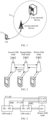
- FIG. 2 is a schematic diagram of an IAB system.
- One IAB node includes a Distributed Unit (Distributed Unit, DU) function part and a Mobile Terminal (Mobile Termination, MT) function part.
- DU Distributed Unit
- MT Mobile Terminal
- one access point namely, IAB node
- the wireless connection is referred to as a wireless backhaul link (backhaul link).
- backhaul link wireless backhaul link
- the IAB node After a complete backhaul link is established by the IAB node, the IAB node enables a DU function of the IAB node.
- the DU provides a cell service, namely, the DU can provide an access service for a UE.
- One self-backhaul loop includes a donor (donor) IAB node (or referred to as an IAB donor).
- FIG. 3 is a diagram of a CU-DU structure in an IAB system.
- DUs of all IAB nodes are connected to one Centralized Unit (Centralized Unit, CU) node, which configures the DUs through F1-Application Protocol (F1-Application Protocol, F1-AP) signaling.
- the CU configures the MT through Radio Resource Control (Radio Resource Control, RRC) signaling.
- RRC Radio Resource Control
- the IAB system is introduced to resolve a problem of inadequate deployment of a wired transmission network during dense deployment of access points. That is, when there is no wired transmission network, the access points may depend on wireless backhaul.
- Mobile IAB system Mobile IAB system
- the mobile IAB node is a movable self-backhaul relay base station.
- the mobile IAB node is mounted on vehicles (such as trains, buses, or ships), to meet instant messaging demands for passengers.
- the mobile IAB node may be used to provide a wireless communication service for passengers.
- FIG. 4 shows an example in which a mobile IAB node provides a wireless relay service for train passengers.
- the IAB node can provide the passengers with large relay bandwidth.
- a cell provided by the mobile IAB node moves together with the passengers, and UEs of the passengers enjoy adequate air interface channels, and do not need to undergo frequent cell handovers, so that rates of the UEs of the passengers are greatly improved, and service interruption caused by the frequent cell handovers is avoided.
- the cell selection principles are Srxlev>0 and Squal>0
- the UE may reselect the better cell through a cell reselection procedure.
- cell reselection There are many cases of cell reselection, including intra-frequency cell reselection and inter-frequency cell reselection.
- the UE hands over from the current serving cell and reselects the neighboring cell.
- the UE For inter-frequency cell reselection with the same frequency priority, when the pilot signal quality of the current serving cell is less than a preset threshold, and pilot signal quality of an inter-frequency neighboring cell is better than the signal quality of the current serving cell by a preset offset, and when the time from the previous cell reselection exceeds 1 second, the UE reselects the inter-frequency neighboring cell.
- the UE may prioritize these candidate target cells according to values of the above measurements. Higher signal strength/quality corresponds to a higher priority of a corresponding candidate target cell. The UE needs to select the candidate target cell with the highest priority as the target cell.
- a neighboring cell a cell provided by a fixed base station
- the vehicle UE performs cell reselection to reselect a neighboring fixed cell (provided by a neighboring base station) with a higher priority or better pilot signal quality.
- the vehicle UE moves away from the fixed cell, the vehicle UE reselects back the mobile cell.
- the vehicle UE frequently performs cell reselection as the vehicle moves.
- the vehicle mobile IAB node can actually provide a best experience for the vehicle UE, and the frequent cell reselection does not provide a better experience for the vehicle UE, but degrades the experience.
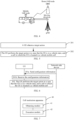
- FIG. 5 is a flowchart of cell reselection according to an embodiment of this application.
- the cell reselection method provided in this embodiment of this application may include the following step 201 and step 202.
- Step 201 A UE obtains a target action.
- Step 202 The UE performs the target action in a case that the UE is in a vehicle state, and a cell in which the UE is located is a vehicle mobile cell.
- the target action is any one of the following: determining a priority of a carrier frequency corresponding to the vehicle mobile cell as a target priority, and performing inter-frequency cell reselection according to the target priority; performing cell reselection based on a vehicle state dedicated reselection offset; or performing cell reselection based on a vehicle state dedicated reselection hysteresis time.
- the UE in the vehicle state is referred to as a vehicle UE in the following.
- the cell in which the UE is located can be understood as: a cell providing a camping service for the UE (namely, a serving cell) or a cell selected by the UE at the last cell selection (namely, a cell on which the UE camps).
- the vehicle state dedicated reselection offset can be understood as: a dedicated reselection offset shared to the UE in the vehicle state.
- the vehicle state dedicated reselection hysteresis time can be understood as: a dedicated reselection hysteresis time shared to the UE in the vehicle state.
- the target action is determined by any one of the following: preconfiguration, protocol agreement, predefinition, network side device configuration.
- Step 201a A network side device sends configuration information to the UE.
- the configuration information is used for instructing the UE in the vehicle state to perform the target action.
- the UE performs the target action in a case that the UE is in the vehicle state, and the cell in which the UE is located is a vehicle mobile cell.
- the network side device may be an access network device or a core network device, or the network side device may be a vehicle mobile IAB node.
- Step 201b The UE receives the configuration information sent by the network side device.
- the network side device is an access network device or a core network device.
- Step 201a may be specifically implemented through step 201a1 described below, and step 201b may be specifically implemented through step 201b1 described below.
- Step 201a The access network device/core network device sends a Non-Access Stratum (Non-Access Stratum, NAS) message to the UE.
- Non-Access Stratum Non-Access Stratum, NAS
- Step 201b1 The UE receives the NAS message sent by the access network device/core network device.
- the NAS message includes configuration information.
- the configuration information is used for instructing the UE to perform the target action.
- the network side device is a vehicle mobile IAB node.
- Step 201a may be specifically implemented through step 201a2 described below, and step 201b may be specifically implemented through step 201b2 described below.
- Step 201a2 The vehicle mobile IAB node sends a broadcast message to the UE.
- Step 201b2. The UE receives the broadcast message sent by the vehicle mobile IAB node.
- the broadcast message (for example, a system message) includes configuration information.
- the configuration information is used for instructing the UE to perform the target action.
- At least one of the target priority, the vehicle state dedicated reselection offset, and the vehicle state dedicated reselection hysteresis time is: preconfigured, agreed on in a protocol, predefined, or configured by a network side device.
- the network side device is a vehicle mobile IAB node.
- Step 201a may be specifically implemented through step 201a3 described below, and step 201b may be specifically implemented through step 201b3 described below.
- Step 201a3 The vehicle mobile IAB node sends a specific message to the UE.
- the UE receives the specific message sent by the vehicle mobile IAB node.
- the specific message (for example, specific RRC signaling) includes configuration information.
- the configuration information is used for instructing the UE to perform the target action.
- the target action is determining the priority of the carrier frequency corresponding to the vehicle mobile cell as the target priority.
- the target priority may be a highest priority or a temporary priority.
- Step 202 may be specifically implemented through the following step 202a or step 202b.
- Step 202a The UE adjusts the priority of the carrier frequency corresponding to the vehicle mobile cell to the highest priority in a case that the UE is in the vehicle state, and the cell in which the UE is located is the vehicle mobile cell.
- the target priority is determined by any one of the following: preconfiguration, protocol agreement, predefinition, network side device configuration.
- the target priority may alternatively be a specific priority, or a priority greater than a preset priority, any priority, or the like, and is not limited in this embodiment of this application.
- the vehicle UE may temporarily adjust the priority of the frequency of the current cell (namely, the vehicle mobile cell in which the UE is located).
- the vehicle UE can adjust the priority of the carrier frequency of the current cell.
- Step 202b The UE adjusts the priority of the frequency of the vehicle mobile cell to the temporary priority in a case that the UE is in the vehicle state, and the cell in which the UE is located is the vehicle mobile cell.
- the temporary priority is configured by specific signaling of the vehicle mobile cell, and the temporary priority is used for the inter-frequency cell reselection process when the UE camps on the vehicle mobile cell.
- the vehicle mobile cell may configure a temporary priority value of the carrier frequency of the current cell for the vehicle UE through the specific signaling. For example, in a process that the UE determines to camp on a mobile cell, and initiates a tracking area update procedure (for example, Tracking Area Update (Track Area Update, TAU) or RAN Area Update (RAN Area Update, RAU)) by the mobile cell, the mobile cell sends the temporary priority value of the carrier frequency of the current cell to the UE.
- a tracking area update procedure for example, Tracking Area Update (Track Area Update, TAU) or RAN Area Update (RAN Area Update, RAU)
- the cell reselection method provided in this embodiment of this application may further include the following step 203.
- the first condition includes at least one of the following: the UE camping to a fixed cell through cell reselection, signal quality of the vehicle mobile cell being less than or equal to a preset threshold, or radio link failure, radio link reestablishment, or cell reselection occurring between the UE and the vehicle mobile cell.
- the temporary frequency priority of the mobile cell that is determined in the mobile cell fails, and the UE determines the frequency priority of the cell in which the UE is located according to a prestored frequency priority parameter or a frequency priority configuration received from the searched cell:
- the vehicle UE may adjust the priority of the frequency of the current cell, instead of performing cell reselection frequently as the vehicle moves. This reduces a probability that the vehicle UE camping on the vehicle mobile cell reselects the fixed cell, avoids unnecessary cell reselection of the vehicle UE, and improves quality of service of the UE.
- the target action is performing cell reselection based on the vehicle state dedicated reselection offset.
- Step 202 may be specifically implemented through the following step 202c.
- Step 202c The UE performs, in a case that the UE is in the vehicle state, and the cell in which the UE is located is the vehicle mobile cell, a reselection process of the neighboring cell if pilot signal strength or pilot signal quality of a neighboring cell of the vehicle mobile cell is greater than or equal to a target threshold.
- the target threshold is a sum of the vehicle state dedicated reselection offset and the preset threshold.
- the target threshold is a sum of a first reselection offset, a vehicle state dedicated additional offset, and the preset threshold.
- the first reselection offset is an offset shared by UEs in the vehicle mobile cell.
- the vehicle state dedicated additional offset is determined by any one of the following: preconfiguration, protocol agreement, predefinition, network side device configuration.
- the vehicle UE may reselect the neighboring cell based on the pilot signal strength or the pilot signal quality of the neighboring cell of the vehicle mobile cell, and the vehicle state dedicated reselection offset, and the vehicle state dedicated reselection offset.
- the vehicle UE reselects the neighboring cell when the neighboring cell meets a specific condition, instead of directly performing cell reselection frequently as the vehicle moves. This reduces the probability that the vehicle UE camping on the vehicle mobile cell reselects the fixed cell, avoids unnecessary cell reselection of the vehicle UE, and improves the quality of service of the UE.
- the target action is performing cell reselection based on the vehicle state dedicated reselection hysteresis time.
- Step 202 may be specifically implemented through the following step 202d.
- Step 202d The UE performs, in a case that the UE is in the vehicle state, and the cell in which the UE is located is the vehicle mobile cell, a reselection process of the candidate cell if an interval between a time when the UE detects a candidate cell and the time of the previous cell reselection is greater than or equal to the vehicle state dedicated reselection hysteresis time.
- the vehicle state dedicated reselection hysteresis time when configured by the network side device, may be configured through the NAS signaling, the system message, or the dedicated RRC signaling.
- a mobile cell reselection hysteresis time (namely, the vehicle state dedicated reselection hysteresis time) is predefined in a protocol, or a mobile cell reselection hysteresis time is configured, for intra-frequency/inter-frequency cell reselection camping on the vehicle mobile cell.
- a mobile cell reselection hysteresis time for example, X seconds.
- X may be greater than 1 second.
- the vehicle UE may reselect the neighboring cell based on the interval between two adjacent cell reselections and the vehicle state dedicated reselection hysteresis time.
- the vehicle UE reselects the candidate cell, instead of directly performing cell reselection frequently as the vehicle moves. This reduces the probability that the vehicle UE camping on the vehicle mobile cell reselects the fixed cell, avoids unnecessary cell reselection of the vehicle UE, and improves the quality of service of the UE.
- An embodiment of this application provides a cell reselection method.
- the UE may perform any one of the following: determining a priority of a carrier frequency corresponding to the vehicle mobile cell as a target priority, and performing inter-frequency cell reselection according to the target priority; performing cell reselection based on a vehicle state dedicated reselection offset; or performing cell reselection based on a vehicle state dedicated reselection hysteresis time.
- the vehicle UE may adjust the priority of the frequency of the vehicle mobile cell to the target priority, or perform cell reselection based on the vehicle state dedicated reselection offset, or perform cell reselection based on the vehicle state dedicated reselection hysteresis time, instead of directly performing cell reselection frequently as the vehicle moves. This reduces a probability that the vehicle UE camping on the vehicle mobile cell reselects a fixed cell, avoids unnecessary cell reselection of the vehicle UE, and improves quality of service of the UE.
- FIG. 7 is a possible schematic structural diagram of a cell reselection apparatus according to an embodiment of this application.
- the apparatus is applied to a UE.
- the cell reselection apparatus 40 may include: an obtaining module 41 and an execution module 42.
- the obtaining module 41 is configured to obtain a target action.
- the execution module 42 is configured to perform the target action in a case that a UE is in a vehicle state, and a cell in which the UE is located is a vehicle mobile cell.
- the target action is any one of the following: determining a priority of a carrier frequency corresponding to the vehicle mobile cell as a target priority, and performing inter-frequency cell reselection according to the target priority; performing cell reselection based on a vehicle state dedicated reselection offset; or performing cell reselection based on a vehicle state dedicated reselection hysteresis time.
- the configuration information is used for instructing the UE to perform the target action.
- the configuration information includes at least one of the following: a target priority, a vehicle state dedicated reselection offset, and a vehicle state dedicated reselection hysteresis time.
- the cell reselection apparatus 40 provided in this embodiment of this application further includes: a determining module.
- the determining module is configured to determine, after the execution module 42 performs the target action, in a case that the UE meets a first condition, a priority of a carrier frequency corresponding to the vehicle mobile cell according to a prestored frequency priority or a frequency priority received from a searched cell.
- the first condition includes at least one of the following: the UE camping to a fixed cell through cell reselection, signal quality of the vehicle mobile cell being less than or equal to a preset threshold, or radio link failure, radio link reestablishment, or cell reselection occurring between the UE and the vehicle mobile cell.
- the target action is performing cell reselection based on the vehicle state dedicated reselection offset.
- the execution module 42 is specifically configured to perform a reselection process of a neighboring cell of the vehicle mobile cell in a case that pilot signal quality of the neighboring cell is greater than or equal to a target threshold, where the target threshold is determined according to the vehicle state dedicated reselection offset.
- the target threshold is a sum of the vehicle state dedicated reselection offset and a preset threshold; or the target threshold is a sum of a first reselection offset, a vehicle state dedicated additional offset, and the preset threshold, where the first reselection offset is an offset shared by UEs in the vehicle mobile cell.
- the target action is performing cell reselection based on the vehicle state dedicated reselection hysteresis time.
- the execution module 42 is specifically configured to perform a reselection process of a candidate cell in a case that an interval between a time when the UE detects the candidate cell and a time of a previous cell reselection is greater than or equal to the vehicle state dedicated reselection hysteresis time.
- the cell reselection apparatus in this embodiment of this application may be a UE, such as a UE having an operating system, or may be a component, such as an integrated circuit or a chip, in the UE.
- the UE may be a terminal or another device other than the terminal.
- the UE may include, but is not limited to, the types of the UE 11 listed above, and the another device may be a server, a Network Attached Storage (Network Attached Storage, NAS), or the like. This is not specifically limited in the embodiments of this application.
- the cell reselection apparatus provided in this embodiment of this application can implement various processes implemented by the UE in the method embodiment, and the same technical effect can be achieved. To avoid repetition, details are not described herein again.
- the sending module 51 is configured to send configuration information to a UE, where the configuration information is used for instructing the UE in a vehicle state to perform a target action.
- the UE performs the target action in a case that the UE is in the vehicle state, and a cell in which the UE is located is a vehicle mobile cell, and the target action is any one of the following: determining a priority of a carrier frequency corresponding to the vehicle mobile cell as a target priority, and performing inter-frequency cell reselection according to the target priority; performing cell reselection based on a vehicle state dedicated reselection offset; or performing cell reselection based on a vehicle state dedicated reselection hysteresis time.
- the cell reselection apparatus may send the configuration information to the UE, so that when the UE camps on the vehicle mobile cell, the vehicle UE may adjust the priority of the frequency of the vehicle mobile cell to the target priority, or perform cell reselection based on the vehicle state dedicated reselection offset, or perform cell reselection based on the vehicle state dedicated reselection hysteresis time, instead of directly performing cell reselection frequently as the vehicle moves. This reduces a probability that the vehicle UE camping on the vehicle mobile cell reselects a fixed cell, avoids unnecessary cell reselection of the vehicle UE, and improves quality of service of the UE.
- the sending module is specifically configured to perform at least one of the following:
- the cell reselection apparatus provided in this embodiment of this application can implement various processes implemented by the network side device in the method embodiment, and the same technical effect can be achieved. To avoid repetition, details are not described herein again.
- an embodiment of this application further provides a communication device 5000, including a processor 5001 and a memory 5002.
- the memory 5002 has a program or an instruction stored therein and executable on the processor 5001.
- the communication device 5000 is a UE
- the program or the instruction is executed by the processor 5001
- the steps of the UE-side method embodiment are implemented, and the same technical effect can be achieved.
- the communication device 5000 is a network side device
- the program or the instruction is executed by the processor 5001
- the steps of the method embodiment of the network side device are implemented, and the same technical effect can be achieved. To avoid repetition, details are not described herein again.
- An embodiment of this application further provides a UE, including a processor and a communication interface.
- the processor is configured to perform a target action in a case that the UE is in a vehicle state, and a cell in which the UE is located is a vehicle mobile cell.
- the target action is any one of the following: determining a priority of a carrier frequency corresponding to the vehicle mobile cell as a target priority, and performing inter-frequency cell reselection according to the target priority; performing cell reselection based on a vehicle state dedicated reselection offset; or performing cell reselection based on a vehicle state dedicated reselection hysteresis time.
- FIG. 10 is a schematic structural diagram of hardware of a UE according to an embodiment of this application.
- the UE 700 includes, but is not limited to: at least a part of components such as a radio frequency unit 701, a network module 702, an audio output unit 703, an input unit 704, a sensor 705, a display unit 706, a user input unit 707, an interface unit 708, a memory 709, and a processor 710.
- a radio frequency unit 701 such as a radio frequency unit 701, a network module 702, an audio output unit 703, an input unit 704, a sensor 705, a display unit 706, a user input unit 707, an interface unit 708, a memory 709, and a processor 710.
- the UE 700 may further include a power supply (such as a battery) for supplying power to the components.
- the power supply may be logically connected to the processor 710 by a power management system, thereby implementing functions such as charging, discharging, and power consumption management by using the power management system.
- the structure of the UE shown in FIG. 10 does not constitute any limitation on the UE.
- the UE may include more or fewer components than those shown in the figure, or some components may be combined, or a different component deployment may be used. This is not described herein in detail.
- the input unit 704 may include a graphics processing unit (Graphics Processing unit, GPU) 7041 and a microphone 7042.
- the graphics processing unit 7041 performs processing on image data of a static picture or a video that is obtained by an image acquisition apparatus (for example, a camera) in a video acquisition mode or an image acquisition mode.
- the display unit 706 may include a display panel 7061, and the display panel 7061 may be configured in a form such as a liquid crystal display or an organic light-emitting diode.
- the user input unit 707 includes at least one of a touch panel 7071 and another input device 7072.
- the touch panel 7071 is also referred to as a touch screen.
- the touch panel 7071 may include two parts: a touch detection apparatus and a touch controller.
- the another input device 7072 may include, but is not limited to, a physical keyboard, a functional key (such as a volume control key or a switch key), a track ball, a mouse, and a joystick, which are not described herein in detail.
- the radio frequency unit 701 receives downlink data from a network side device and transmits the downlink data to the processor 710 for processing. In addition, the radio frequency unit 701 may transmit uplink data to the network side device.
- the radio frequency unit 701 includes, but is not limited to, an antenna, an amplifier, a transceiver, a coupler, a low noise amplifier, a duplexer, and the like.
- the memory 709 may be configured to store a software program or an instruction and various data.
- the memory 709 may mainly include a first storage area for storing the program or the instruction and a second storage area for storing data.
- the first storage area may store an operating system, an application program or an instruction required by at least one function (for example, a sound playback function and an image display function), and the like.
- the memory 709 may include a volatile memory or a non-volatile memory, or the memory 709 may include both a volatile memory and a non-volatile memory.
- the non-volatile memory may be a read-only memory (Read-Only Memory, ROM), a programmable read-only memory (Programmable ROM, PROM), an erasable programmable read-only memory (Erasable PROM, EPROM), an electrically erasable programmable read-only memory (Electrically EPROM, EEPROM), or a flash memory.
- ROM Read-Only Memory
- PROM programmable read-only memory
- Erasable PROM Erasable PROM
- EPROM electrically erasable programmable read-only memory
- EEPROM electrically erasable programmable read-only memory
- the volatile memory may be a random access memory (Random Access Memory, RAM), a static random access memory (Static RAM, SRAM), a dynamic random access memory (Dynamic RAM, DRAM), a synchronous dynamic random access memory (Synchronous DRAM, SDRAM), a double data rate synchronous dynamic random access memory (Double Data Rate SDRAM, DDR SDRAM), an enhanced synchronous dynamic random access memory (Enhanced SDRAM, ESDRAM), a synchronous link dynamic random access memory (Synch link DRAM, SLDRAM), and a direct rambus dynamic random access memory (Direct Rambus RAM, DR RAM).
- RAM Random Access Memory
- SRAM static random access memory
- DRAM dynamic random access memory
- DRAM synchronous dynamic random access memory
- SDRAM double data rate synchronous dynamic random access memory
- Enhanced SDRAM, ESDRAM enhanced synchronous dynamic random access memory
- Synch link DRAM, SLDRAM synchronous link dynamic random access memory
- Direct Rambus RAM Direct Rambus RAM, DR RAM
- the processor 710 is configured to perform a target action in a case that the UE is in a vehicle state and a cell in which the UE is located is a vehicle mobile cell.
- the target action is any one of the following: determining a priority of a carrier frequency corresponding to the vehicle mobile cell as a target priority, and performing inter-frequency cell reselection according to the target priority; performing cell reselection based on a vehicle state dedicated reselection offset; or performing cell reselection based on a vehicle state dedicated reselection hysteresis time.
- This embodiment of this application provides a UE.
- the vehicle UE may adjust the priority of the frequency of the vehicle mobile cell to the target priority, or perform cell reselection based on the vehicle state dedicated reselection offset, or perform cell reselection based on the vehicle state dedicated reselection hysteresis time, instead of directly performing cell reselection frequently as the vehicle moves. This reduces a probability that the vehicle UE camping on the vehicle mobile cell reselects a fixed cell, avoids unnecessary cell reselection of the vehicle UE, and improves quality of service of the UE.
- the UE provided in this embodiment of this application can implement various processes implemented by the UE in the method embodiment, and the same technical effect can be achieved. To avoid repetition, details are not described herein again.
- An embodiment of this application further provides a network side device, including a processor and a communication interface.
- the communication interface is configured to send configuration information to a UE, where the configuration information is used for instructing the UE in a vehicle state to perform a target action.
- the UE performs the target action in a case that the UE is in the vehicle state, and a cell in which the UE is located is a vehicle mobile cell, and the target action is any one of the following: determining a priority of a carrier frequency corresponding to the vehicle mobile cell as a target priority, and performing inter-frequency cell reselection according to the target priority; performing cell reselection based on a vehicle state dedicated reselection offset; or performing cell reselection based on a vehicle state dedicated reselection hysteresis time.
- the network side device embodiment corresponds to the network side device method embodiment, and various implementation processes and implementations of the method embodiment are applicable to the network side device embodiment, and the same technical effect can be achieved
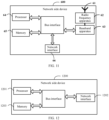
- the network side device 600 includes: an antenna 61, a radio frequency apparatus 62, a baseband apparatus 63, a processor 64, and a memory 65.
- the antenna 61 is connected to the radio frequency apparatus 62.
- the radio frequency apparatus 62 receives information by the antenna 61, and sends the received information to the baseband apparatus 63 for processing.
- the baseband apparatus 63 processes information to be sent, and sends the information to the radio frequency apparatus 62.
- the radio frequency apparatus 62 processes the received information, and sends the information by the antenna 61.
- the method performed by the network side device in the above embodiment may be implemented in the baseband apparatus 63.
- the baseband apparatus 63 includes a baseband processor.
- the radio frequency apparatus 62 is configured to send configuration information to a UE, where the configuration information is used for instructing the UE in a vehicle state to perform a target action.
- the UE performs the target action in a case that the UE is in the vehicle state, and a cell in which the UE is located is a vehicle mobile cell, and the target action is any one of the following: determining a priority of a carrier frequency corresponding to the vehicle mobile cell as a target priority, and performing inter-frequency cell reselection according to the target priority; performing cell reselection based on a vehicle state dedicated reselection offset; or performing cell reselection based on a vehicle state dedicated reselection hysteresis time.
- This embodiment of this application provides a network side device.
- the network side device may send the configuration information to the UE, so that when the UE camps on the vehicle mobile cell, the vehicle UE may adjust the priority of the frequency of the vehicle mobile cell to the target priority, or perform cell reselection based on the vehicle state dedicated reselection offset, or perform cell reselection based on the vehicle state dedicated reselection hysteresis time, instead of directly performing cell reselection frequently as the vehicle moves. This reduces a probability that the vehicle UE camping on the vehicle mobile cell reselects a fixed cell, avoids unnecessary cell reselection of the vehicle UE, and improves quality of service of the UE.
- the network side device provided in this embodiment of this application can implement various processes implemented by the network side device in the method embodiment, and the same technical effect can be achieved. To avoid repetition, details are not described herein again.
- the baseband apparatus 63 may include, for example, at least one baseband plate.
- a plurality of chips are disposed on the baseband plate. As shown in FIG. 11 , one of the plurality of chips is, for example, the baseband processor, and is connected to the memory 65 by a bus interface, to invoke a program in the memory 65 to perform operations of the network side device in the method embodiment.
- the network side device may further include a network interface 66.
- the interface is, for example, a common public radio interface (common public radio interface, CPRI).
- the network side device 600 in this embodiment of this application further includes: an instruction or a program stored in the memory 65 and executable on the processor 64.
- the processor 64 invokes the instruction or the program in the memory 65 to perform the method performed by the modules shown in FIG. 8 , and the same technical effect can be achieved. To avoid repetition, details are not described herein again.
- an embodiment of this application further provides a network side device.
- the network side device 1200 includes: a processor 1201, a network interface 1202, and a memory 1203.
- the network interface 1202 is, for example, a common public wireless interface.
- the network side device 1200 in this embodiment of this application further includes: an instruction or a program stored in the memory 1203 and executable on the processor 1201.
- the processor 1201 invokes the instruction or the program in the memory 1203 to perform the method performed by the modules shown in FIG. 8 , and the same technical effect can be achieved. To avoid repetition, details are not described herein again.
- An embodiment of this application further provides a readable storage medium.
- the readable storage medium has a program or an instruction stored therein.
- the program or the instruction is executed by a processor, the processes of the method embodiment are implemented, and the same technical effect can be achieved. To avoid repetition, details are not described herein again.
- the processor is the processor in the communication device in the above embodiment.
- the readable storage medium includes a computer-readable storage medium, such as a read-only memory ROM, a random access memory RAM, a magnetic disk, or an optical disc.
- An embodiment of this application further provides a chip.
- the chip includes a processor and a communication interface.
- the communication interface is coupled to the processor.
- the processor is configured to execute a program or an instruction, to implement the processes of the method embodiment, and the same technical effect can be achieved. To avoid repetition, details are not described herein again.
- the chip mentioned in this embodiment of this application may also be referred to as a system-level chip, a system chip, a chip system, a system on chip, or the like.
- An embodiment of this application further provides a computer program/program product.
- the computer program/program product is stored in a storage medium.
- the computer program/program product is executed by at least one processor to implement the processes of the method embodiment, and the same technical effect can be achieved. To avoid repetition, details are not described herein again.
- An embodiment of this application further provides a communication system, including: a UE and a network side device.
- the UE may be configured to perform the steps of the cell reselection method described above
- the network side device may be configured to perform the steps of the cell reselection method described above.
- the method according to the foregoing embodiments may be implemented by using software and a necessary general hardware platform, and certainly, may alternatively be implemented by using hardware, but in many cases, the former manner is a better implementation.
- the technical solution of this application essentially or the part contributing to the related art may be implemented in a form of a computer software product.
- the computer software product is stored in a storage medium (such as a ROM/RAM, a magnetic disk, or an optical disc) and includes several instructions for instructing a terminal (which may be a mobile phone, a computer, a server, an air conditioner, a network device, or the like) to perform the methods described in the embodiments of this application.
Landscapes
- Engineering & Computer Science (AREA)
- Computer Networks & Wireless Communication (AREA)
- Signal Processing (AREA)
- Mobile Radio Communication Systems (AREA)
Applications Claiming Priority (2)
| Application Number | Priority Date | Filing Date | Title |
|---|---|---|---|
| CN202210045034.7A CN116489722A (zh) | 2022-01-14 | 2022-01-14 | 小区重选方法、装置、设备、系统及存储介质 |
| PCT/CN2023/071653 WO2023134684A1 (zh) | 2022-01-14 | 2023-01-10 | 小区重选方法、装置、设备、系统及存储介质 |
Publications (2)
| Publication Number | Publication Date |
|---|---|
| EP4465698A1 true EP4465698A1 (de) | 2024-11-20 |
| EP4465698A4 EP4465698A4 (de) | 2025-05-07 |
Family
ID=87216050
Family Applications (1)
| Application Number | Title | Priority Date | Filing Date |
|---|---|---|---|
| EP23740026.2A Pending EP4465698A4 (de) | 2022-01-14 | 2023-01-10 | Verfahren und vorrichtung zur zellenneuauswahl, vorrichtung, system und speichermedium |
Country Status (4)
| Country | Link |
|---|---|
| US (1) | US20240365180A1 (de) |
| EP (1) | EP4465698A4 (de) |
| CN (1) | CN116489722A (de) |
| WO (1) | WO2023134684A1 (de) |
Family Cites Families (10)
| Publication number | Priority date | Publication date | Assignee | Title |
|---|---|---|---|---|
| JP4299082B2 (ja) * | 2002-10-18 | 2009-07-22 | 株式会社エヌ・ティ・ティ・ドコモ | 移動局、移動通信システム、及びセル選択方法 |
| KR101761811B1 (ko) * | 2010-11-22 | 2017-07-26 | 삼성전자주식회사 | 무선 통신 시스템에서 매크로 기지국과 차량 기지국간의 핸드오버 지원 방법 및 시스템 |
| WO2012134131A2 (ko) * | 2011-03-28 | 2012-10-04 | 엘지전자 주식회사 | 이동 셀 핸드오버 방법 및 장치 |
| CN103096402B (zh) * | 2011-11-01 | 2015-09-09 | 普天信息技术研究院有限公司 | 一种小区重选方法及一种小区切换方法 |
| CN103391590B (zh) * | 2012-05-11 | 2016-06-22 | 普天信息技术研究院有限公司 | 异构网的小区重选参数调整方法 |
| EP3091786B1 (de) * | 2014-01-29 | 2021-07-28 | Huawei Technologies Co., Ltd. | Vorrichtung, verfahren und system zur zellenauswahl |
| US20190281525A1 (en) * | 2016-11-04 | 2019-09-12 | Lg Electronics Inc. | Method for terminal to perform cell re-selection procedure, and device supporting same |
| CN109451837B (zh) * | 2017-12-11 | 2021-08-31 | 北京小米移动软件有限公司 | 小区重选方法、装置及存储介质 |
| CN110831100B (zh) * | 2018-08-09 | 2022-04-05 | 维沃移动通信有限公司 | 一种小区重选方法、终端及网络设备 |
| CN110831085B (zh) * | 2018-08-10 | 2021-07-09 | 华为技术有限公司 | 一种通信方法和设备 |
-
2022
- 2022-01-14 CN CN202210045034.7A patent/CN116489722A/zh active Pending
-
2023
- 2023-01-10 EP EP23740026.2A patent/EP4465698A4/de active Pending
- 2023-01-10 WO PCT/CN2023/071653 patent/WO2023134684A1/zh not_active Ceased
-
2024
- 2024-07-12 US US18/770,862 patent/US20240365180A1/en active Pending
Also Published As
| Publication number | Publication date |
|---|---|
| WO2023134684A1 (zh) | 2023-07-20 |
| EP4465698A4 (de) | 2025-05-07 |
| US20240365180A1 (en) | 2024-10-31 |
| CN116489722A (zh) | 2023-07-25 |
Similar Documents
| Publication | Publication Date | Title |
|---|---|---|
| US20230239767A1 (en) | Network access method, network access apparatus, terminal, and network-side device | |
| EP4468791A1 (de) | Signalsendeverfahren, signalempfangsverfahren, konfigurationssendeverfahren und zugehörige vorrichtung | |
| US20250220531A1 (en) | Cell selection and/or reselection method and apparatus | |
| EP4460069A1 (de) | Verfahren und vorrichtung zum bwp-umschalten und endgerät | |
| US20230224788A1 (en) | Cell selection and reselection method, apparatus, terminal, and readable storage medium | |
| US12550182B2 (en) | Random access method and apparatus, terminal, and readable storage medium | |
| US20240340737A1 (en) | Cell selection or reselection method and apparatus, terminal, and readable storage medium | |
| JP2025519959A (ja) | 条件設定情報の処理方法、装置及び通信機器 | |
| US20230239933A1 (en) | Random access method and apparatus, and related device | |
| CN114339964A (zh) | 连接建立方法、装置、设备及存储介质 | |
| US20250168720A1 (en) | Information sending method, information receiving method, apparatus, and related device | |
| US20240349213A1 (en) | Measurement method and apparatus, and terminal | |
| EP4465698A1 (de) | Verfahren und vorrichtung zur zellenneuauswahl, vorrichtung, system und speichermedium | |
| CN120128943A (zh) | 无线通信方法、装置及设备 | |
| US20250380310A1 (en) | Small data transmission method and apparatus, terminal, and network side device | |
| US20250324300A1 (en) | Signal processing method and apparatus, and device | |
| CN119584329A (zh) | 网络连接的处理方法、终端及网络侧设备 | |
| WO2023109679A1 (zh) | 语音回落方法、装置、终端及可读存储介质 | |
| CN121334778A (zh) | 信息确定方法、装置、终端及网络侧设备 | |
| CN121463144A (zh) | 小区选择或重选方法、装置及相关设备 | |
| CN121771844A (zh) | 小区测量方法、装置、用户设备、网络侧设备及存储介质 | |
| WO2025055807A1 (zh) | 终端的驻留方法、装置、终端及网络侧设备 | |
| CN120186691A (zh) | 有效性验证方法、装置、终端、网络侧设备及介质 | |
| CN121463132A (zh) | 无线通信方法、装置及相关设备 | |
| CN119907063A (zh) | 小区重选方法、装置、终端及网络侧设备 |
Legal Events
| Date | Code | Title | Description |
|---|---|---|---|
| STAA | Information on the status of an ep patent application or granted ep patent |
Free format text: STATUS: THE INTERNATIONAL PUBLICATION HAS BEEN MADE |
|
| PUAI | Public reference made under article 153(3) epc to a published international application that has entered the european phase |
Free format text: ORIGINAL CODE: 0009012 |
|
| STAA | Information on the status of an ep patent application or granted ep patent |
Free format text: STATUS: REQUEST FOR EXAMINATION WAS MADE |
|
| 17P | Request for examination filed |
Effective date: 20240812 |
|
| AK | Designated contracting states |
Kind code of ref document: A1 Designated state(s): AL AT BE BG CH CY CZ DE DK EE ES FI FR GB GR HR HU IE IS IT LI LT LU LV MC ME MK MT NL NO PL PT RO RS SE SI SK SM TR |
|
| DAV | Request for validation of the european patent (deleted) | ||
| DAX | Request for extension of the european patent (deleted) | ||
| A4 | Supplementary search report drawn up and despatched |
Effective date: 20250409 |
|
| RIC1 | Information provided on ipc code assigned before grant |
Ipc: H04W 36/30 20090101ALI20250403BHEP Ipc: H04W 36/08 20090101ALI20250403BHEP Ipc: H04W 36/00 20090101ALI20250403BHEP Ipc: H04W 36/32 20090101AFI20250403BHEP |