EP4465303A2 - Health management system - Google Patents
Health management system Download PDFInfo
- Publication number
- EP4465303A2 EP4465303A2 EP24204727.2A EP24204727A EP4465303A2 EP 4465303 A2 EP4465303 A2 EP 4465303A2 EP 24204727 A EP24204727 A EP 24204727A EP 4465303 A2 EP4465303 A2 EP 4465303A2
- Authority
- EP
- European Patent Office
- Prior art keywords
- food component
- vital data
- intake amount
- dietary
- user
- Prior art date
- Legal status (The legal status is an assumption and is not a legal conclusion. Google has not performed a legal analysis and makes no representation as to the accuracy of the status listed.)
- Pending
Links
Images











Classifications
-
- G—PHYSICS
- G16—INFORMATION AND COMMUNICATION TECHNOLOGY [ICT] SPECIALLY ADAPTED FOR SPECIFIC APPLICATION FIELDS
- G16H—HEALTHCARE INFORMATICS, i.e. INFORMATION AND COMMUNICATION TECHNOLOGY [ICT] SPECIALLY ADAPTED FOR THE HANDLING OR PROCESSING OF MEDICAL OR HEALTHCARE DATA
- G16H20/00—ICT specially adapted for therapies or health-improving plans, e.g. for handling prescriptions, for steering therapy or for monitoring patient compliance
- G16H20/60—ICT specially adapted for therapies or health-improving plans, e.g. for handling prescriptions, for steering therapy or for monitoring patient compliance relating to nutrition control, e.g. diets
-
- A—HUMAN NECESSITIES
- A61—MEDICAL OR VETERINARY SCIENCE; HYGIENE
- A61B—DIAGNOSIS; SURGERY; IDENTIFICATION
- A61B5/00—Measuring for diagnostic purposes; Identification of persons
- A61B5/02—Detecting, measuring or recording for evaluating the cardiovascular system, e.g. pulse, heart rate, blood pressure or blood flow
- A61B5/021—Measuring pressure in heart or blood vessels
-
- G—PHYSICS
- G16—INFORMATION AND COMMUNICATION TECHNOLOGY [ICT] SPECIALLY ADAPTED FOR SPECIFIC APPLICATION FIELDS
- G16H—HEALTHCARE INFORMATICS, i.e. INFORMATION AND COMMUNICATION TECHNOLOGY [ICT] SPECIALLY ADAPTED FOR THE HANDLING OR PROCESSING OF MEDICAL OR HEALTHCARE DATA
- G16H10/00—ICT specially adapted for the handling or processing of patient-related medical or healthcare data
- G16H10/60—ICT specially adapted for the handling or processing of patient-related medical or healthcare data for patient-specific data, e.g. for electronic patient records
-
- G—PHYSICS
- G16—INFORMATION AND COMMUNICATION TECHNOLOGY [ICT] SPECIALLY ADAPTED FOR SPECIFIC APPLICATION FIELDS
- G16H—HEALTHCARE INFORMATICS, i.e. INFORMATION AND COMMUNICATION TECHNOLOGY [ICT] SPECIALLY ADAPTED FOR THE HANDLING OR PROCESSING OF MEDICAL OR HEALTHCARE DATA
- G16H40/00—ICT specially adapted for the management or administration of healthcare resources or facilities; ICT specially adapted for the management or operation of medical equipment or devices
- G16H40/20—ICT specially adapted for the management or administration of healthcare resources or facilities; ICT specially adapted for the management or operation of medical equipment or devices for the management or administration of healthcare resources or facilities, e.g. managing hospital staff or surgery rooms
-
- G—PHYSICS
- G16—INFORMATION AND COMMUNICATION TECHNOLOGY [ICT] SPECIALLY ADAPTED FOR SPECIFIC APPLICATION FIELDS
- G16H—HEALTHCARE INFORMATICS, i.e. INFORMATION AND COMMUNICATION TECHNOLOGY [ICT] SPECIALLY ADAPTED FOR THE HANDLING OR PROCESSING OF MEDICAL OR HEALTHCARE DATA
- G16H50/00—ICT specially adapted for medical diagnosis, medical simulation or medical data mining; ICT specially adapted for detecting, monitoring or modelling epidemics or pandemics
- G16H50/70—ICT specially adapted for medical diagnosis, medical simulation or medical data mining; ICT specially adapted for detecting, monitoring or modelling epidemics or pandemics for mining of medical data, e.g. analysing previous cases of other patients
-
- G—PHYSICS
- G16—INFORMATION AND COMMUNICATION TECHNOLOGY [ICT] SPECIALLY ADAPTED FOR SPECIFIC APPLICATION FIELDS
- G16H—HEALTHCARE INFORMATICS, i.e. INFORMATION AND COMMUNICATION TECHNOLOGY [ICT] SPECIALLY ADAPTED FOR THE HANDLING OR PROCESSING OF MEDICAL OR HEALTHCARE DATA
- G16H20/00—ICT specially adapted for therapies or health-improving plans, e.g. for handling prescriptions, for steering therapy or for monitoring patient compliance
- G16H20/70—ICT specially adapted for therapies or health-improving plans, e.g. for handling prescriptions, for steering therapy or for monitoring patient compliance relating to mental therapies, e.g. psychological therapy or autogenous training
-
- G—PHYSICS
- G16—INFORMATION AND COMMUNICATION TECHNOLOGY [ICT] SPECIALLY ADAPTED FOR SPECIFIC APPLICATION FIELDS
- G16H—HEALTHCARE INFORMATICS, i.e. INFORMATION AND COMMUNICATION TECHNOLOGY [ICT] SPECIALLY ADAPTED FOR THE HANDLING OR PROCESSING OF MEDICAL OR HEALTHCARE DATA
- G16H40/00—ICT specially adapted for the management or administration of healthcare resources or facilities; ICT specially adapted for the management or operation of medical equipment or devices
- G16H40/60—ICT specially adapted for the management or administration of healthcare resources or facilities; ICT specially adapted for the management or operation of medical equipment or devices for the operation of medical equipment or devices
- G16H40/67—ICT specially adapted for the management or administration of healthcare resources or facilities; ICT specially adapted for the management or operation of medical equipment or devices for the operation of medical equipment or devices for remote operation
-
- G—PHYSICS
- G16—INFORMATION AND COMMUNICATION TECHNOLOGY [ICT] SPECIALLY ADAPTED FOR SPECIFIC APPLICATION FIELDS
- G16H—HEALTHCARE INFORMATICS, i.e. INFORMATION AND COMMUNICATION TECHNOLOGY [ICT] SPECIALLY ADAPTED FOR THE HANDLING OR PROCESSING OF MEDICAL OR HEALTHCARE DATA
- G16H50/00—ICT specially adapted for medical diagnosis, medical simulation or medical data mining; ICT specially adapted for detecting, monitoring or modelling epidemics or pandemics
- G16H50/20—ICT specially adapted for medical diagnosis, medical simulation or medical data mining; ICT specially adapted for detecting, monitoring or modelling epidemics or pandemics for computer-aided diagnosis, e.g. based on medical expert systems
Definitions
- the present invention relates to a health management system.
- Patent Literature 1 discloses a system that analyzes dietary information or vital data to offer advice.
- Patent Literature 1 JP 2004-302498 A
- Patent Literature 1 necessitates the preparation of advice in the form of a database in advance, so making it difficult to consider the individual difference.
- the present invention is made in view of such a situation and is intended to provide a technology capable of managing health considering the individual difference.
- a primary invention of the present invention to solve the above problem is a health management system including a vital data acquisition unit configured to acquire vital data of a user, a dietary ingredient acquisition unit configured to acquire a dietary ingredient that the user ingests, an analysis processing unit configured to analyze a relationship between an intake of the dietary ingredient and improvement or deterioration of the vital data, and a dietary ingredient output unit configured to output the dietary ingredient of improving the vital data and the dietary ingredient of deteriorating the vital data.
- a health management system according to an embodiment of the present invention has a configuration as below.
- a health management system including:
- the health management system in which the analysis processing unit estimates, in a statistical model using a measured value of the vital data as a response variable and the intake of the dietary ingredient as an explanatory variable, a coefficient of the explanatory variable by multivariate analysis.
- the health management system further including:
- the health management system according to Item 3, further including:
- the health management system according to any one of Items 1 to 4, in which the intake determination unit determines the intake of the dietary ingredient for a plurality of the users in such a way that the vital data is closest to the target value.
- the health management system according to any one of Items 1 to 5, further including:
- the health management system according to any one of Items 1 to 5, further including: a supplementary food recommendation unit configured to recommend a supplementary food including the dietary ingredient that improves the vital data in a case where the dietary ingredient is not ingested by the user.
- the health management system according to any one of Items 1 to 6, further including:
- the health management system in which the menu information includes at least foodstuff information and quantity information.
- the health management system according to any one of Items 1 to 8, in which the vital data is a result measured by a blood pressure monitor.
- the health management system according to any one of Items 1 to 9, further including:
- Fig. 1 is a diagram illustrating an overall configuration example of a health management system according to the first embodiment of the present invention.
- the health management system according to the first embodiment includes user equipment 1 and a recommendation apparatus 2.
- the user equipment 1 and the recommendation apparatus 2 are connected to enable communication between them via a communication network 3.
- the communication network 3 is, for example, the Internet and is constructed as Ethernet (registered trademark), a public switched telephone network, a leased line telephone network, a cellular network, a wireless communication channel, or the like.
- the user equipment 1 is a computer operated by a user who is a subject of health management.
- the user equipment 1 is, for example, a smartphone, a tablet computer, a personal computer, or the like.
- the user equipment 1 is connected to a vital sensor 4 in such a way that they can communicate with each other.
- the user equipment 1 and the vital sensor 4 communicate each other using, for example, Bluetooth low energy (BLE) (Bluetooth is a registered trademark) or serial communication.
- BLE Bluetooth low energy
- the vital sensor 4 is assumed to be a blood pressure monitor.
- the recommendation apparatus 2 is a computer that provides the user with information regarding diet.
- the recommendation apparatus 2 is, for example, a personal computer or a workstation.
- the recommendation apparatus 2 can also be configured as a cloud computing-based virtual computer.
- the health management system offers a recommendation regarding diet depending on both the dietary ingredient such as nutrients ingested by the user and the user's vital data.
- the vital data particularly dietary ingredients that affect the stabilization or elevation of systolic blood pressure, can be specified and output, allowing it to be referenced upon considering a menu of meal.
- the vital data according to the present embodiment can include, but is not limited to, height, weight, BMI, body fat percentage, muscle mass, bone density, blood pressure, pulse, pulse wave, body temperature, electrocardiogram, blood oxygen level, respiratory rate, or the like.
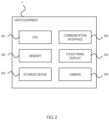
- Fig. 2 is a diagram illustrating a hardware configuration example of user equipment 1.
- the user equipment 1 includes a CPU 101, a memory 102, a storage device 103, a communication interface 104, a touch panel display 105, and a camera 106.
- the storage device 103 is, for example, a hard disk drive, a solid-state drive, a flash memory, or the like, which stores various data or programs.
- the communication interface 104 is an interface used for the connection to the communication network 3.
- the communication interface 104 is, for example, an adapter used for connecting to Ethernet (registered trademark), a modem used for connecting to a public switched telephone network, a transceiver used for wireless communication, a universal serial bus (USB) connector or RS232C connector used for serial communication, or the like.
- the touch panel display 105 is a device that inputs and outputs data.
- the camera 106 generates image data of a target to be captured.
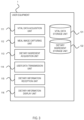
- Fig. 3 is a diagram illustrating a software configuration example of user equipment 1.
- the user equipment 1 includes a vital data acquisition unit 111, a meal image capturing unit 112, a dietary ingredient acquisition unit 113, a user data transmission unit 114, a dietary information reception unit 115, a dietary information display unit 116, a vital data storage unit 131, and a dietary ingredient storage unit 132.
- the vital data acquisition unit 111 acquires vital data from the vital sensor 4.
- the vital sensor 4 is assumed to be a blood pressure monitor, and the vital data acquisition unit 111 acquires systolic blood pressure and diastolic blood pressure.
- a plurality of vital sensors 4 can acquire a plurality of vital data types.
- the vital data acquisition unit 111 registers the vital data in the vital data storage unit 131.
- the vital data storage unit 131 is capable of storing the vital data in association with the date and time when the vital data is measured by the vital sensor 4 (or the date and time of receiving by the vital data acquisition unit 111 the vital data from the vital sensor 4), information used to specify the user (hereinafter referred to as a user ID) and information used to identify the type of vital data (hereinafter referred to as vital data ID) .
- the meal image capturing unit 112 captures an image of the meal ingested by the user (hereinafter referred to as a meal image).
- the meal image capturing unit 112 can activate the camera 106 by the user's operation to acquire the meal image.
- the dietary ingredient acquisition unit 113 acquires the amount of dietary ingredients such as nutrient and energy ingested by the user on the basis of the meal image.
- the dietary ingredient acquisition unit 113 is capable of transmitting the meal image to an external expert such as a dietitian for causing the external expert to input a dietary ingredient and its content, and capable of receiving them from the external expert.
- the dietary ingredient acquisition unit 113 can learn the dietary ingredient amount included in the image by machine learning or the like and can estimate the content of the dietary ingredient by performing image analysis on the meal image.
- the dietary ingredient acquisition unit 113 can receive the input of ingested nutrients or the like by the user without using the image analysis.
- the dietary ingredient acquisition unit 113 registers the intake of the acquired dietary ingredient in the dietary ingredient storage unit 132.
- the user ID the information used to specify identifies the dietary ingredient (hereinafter referred to as a dietary ingredient ID), and the intake of the dietary ingredient can be recorded in association with the date and time of ingesting foods by the user.
- the user data transmission unit 114 transmits information including the user's vital data and the intake of dietary ingredients ingested by the user (hereinafter referred to as user data) to the recommendation apparatus 2.
- the user data transmission unit 114 can read out the vital data and the intake of the dietary ingredient for the previous day from the vital data storage unit 131 and the dietary ingredient storage unit 132, for example, once a day, and can transmit the read ones as user data to the recommendation apparatus 2.
- the user data transmission unit 114 can transmit the user data including only the vital data at every acquisition of the vital data to the recommendation apparatus 2 or can transmit the user data including only the intake of dietary ingredient at every acquisition of the dietary ingredients to the recommendation apparatus 2.
- the dietary information reception unit 115 receives the information relating to the user's diet (hereinafter referred to as dietary information) transmitted from the recommendation apparatus 2.
- the dietary information display unit 116 displays the dietary information.
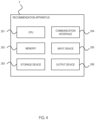
- Fig. 4 is a diagram illustrating a hardware configuration example of a recommendation apparatus 2.
- the recommendation apparatus 2 includes a CPU 201, a memory 202, a storage device 203, a communication interface 204, an input device 205, and an output device 206.
- the storage device 203 is, for example, a hard disk drive, a solid-state drive, a flash memory, or the like, which stores various data or programs.
- the communication interface 204 is an interface used for the connection to the communication network 3.
- the communication interface 204 is, for example, an adapter used for connecting to Ethernet (registered trademark), a modem used for connecting to a public switched telephone network, a transceiver used for wireless communication, a USB connector or RS232C connector used for serial communication, or the like.
- the input device 205 is, for example, a keyboard, a mouse, a touch panel, a button, a microphone, or the like that is used for inputting data.
- the output device 206 is, for example, a display, a printer, a speaker, or the like that is used for outputting data.
- Fig. 5 is a diagram illustrating a software configuration example of the recommendation apparatus 2 according to the first embodiment.
- the recommendation apparatus 2 includes a vital data acquisition unit 211, a dietary ingredient acquisition unit 212, an analysis processing unit 213, a dietary information output unit 214, a vital data storage unit 231, and a dietary ingredient storage unit 232.
- the vital data acquisition unit 211 acquires the user's vital data.
- the vital data acquisition unit 211 acquires the vital data from the user data transmitted by the user equipment 1.
- the vital data acquisition unit 211 registers the acquired vital data in the vital data storage unit 231.
- Fig. 6 is a diagram illustrating a configuration example of a vital data storage unit 231.
- the vital data storage unit 231 stores the date and time of measuring the vital data, the vital data ID indicating the type of the vital data, and a measured value of the vital data, in association with the user ID used for identifying the user.
- the dietary ingredient acquisition unit 212 acquires the dietary ingredient ingested by the user.
- the dietary ingredient acquisition unit 212 acquires the dietary ingredient from the user data transmitted from the user equipment 1.
- the dietary ingredient acquisition unit 212 registers the acquired dietary ingredient in the dietary ingredient storage unit 232.
- Fig. 7 is a diagram illustrating a configuration example of a dietary ingredient storage unit 232.
- the dietary ingredient storage unit 232 stores a user ID, date and time when the user ingests foods, a dietary ingredient ID used for identifying dietary ingredients, and the intake of dietary ingredients in association with among them.
- the analysis processing unit 213 analyzes a relationship between the dietary ingredient and the vital data.
- the analysis processing unit 213 is capable of performing the single regression analysis on the vital data (such as systolic and diastolic blood pressure) for each of various dietary ingredients such as intake energy, protein, fat, carbohydrate, and vitamin A.
- the dietary information output unit 214 outputs the information relating to the user's diet (hereinafter referred to as dietary information).
- the dietary information output unit 214 is capable of transmitting a single correlation coefficient of each dietary ingredient to the user equipment 1 as the dietary information.
- the dietary information output unit 214 sets a dietary ingredient having one of positive or negative correlation as a dietary ingredient that improves the vital data depending on the type of vital data.
- the dietary information output unit 214 sets a dietary ingredient having the other one of the positive or negative correlation as a dietary ingredient that deteriorates the vital data depending on the type of vital data.
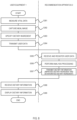
- Fig. 8 is a diagram illustrating processing executed in a health management system according to the first embodiment.
- the vital data acquisition unit 111 acquires the vital data from the vital sensor 4 (S301).
- the meal image capturing unit 112 controls the camera 106 to capture a meal image (S302), and the dietary ingredient acquisition unit 113 analyzes the captured meal image to specify the content of dietary ingredients contained in the diet (S303).
- the user data transmission unit 114 transmits user data including the vital data and the content of dietary ingredients (S304).
- the vital data acquisition unit 211 acquires the vital data from the user data
- the dietary ingredient acquisition unit 212 acquires the intake of the dietary ingredient from the user data.
- the analysis processing unit 213 analyzes the correlation between each dietary ingredient and the vital data (S306).
- the dietary information output unit 214 transmits the dietary information for each dietary ingredient to the user equipment 1 (S307).
- the dietary information includes the dietary ingredient that has a positive or zero correlation coefficient and improves the vital data (improving dietary ingredient) and the dietary ingredient that has a negative correlation coefficient and deteriorates the vital data (deteriorating dietary ingredient).
- the explanatory variable with a positive correlation coefficient is set as a deterioration factor
- the explanatory variable with a negative correlation coefficient is set as an improvement factor.
- the dietary information reception unit 115 receives the dietary information transmitted from the recommendation apparatus (S308), and the dietary information display unit 116 displays the received dietary information on the touch panel display 105 (S309).
- the dietary ingredient that improves or deteriorates the user's vital data is output to the user equipment 1, so it can be used as a reference upon preparing a meal for the user.
- Fig. 9 is a diagram illustrating an example of dietary information displayed on the user equipment 1.
- a test subject 13 gains weight upon ingesting carbohydrates and energy with the correlation coefficient shown in the figure but loses weight upon ingesting proteins.
- a test subject 21 gains weight upon ingesting sodium, iron, vitamin B1, vitamin C, or the like but loses weight upon ingesting vitamin B2, vitamin A, or the like.
- the diet that decreases the dietary ingredients with a larger positive correlation coefficient and increases the dietary ingredients with a smaller negative correlation coefficient makes it possible to reduce efficiently the weight.
- the dietary ingredients exert different effects depending on the users, so the health management system of the present embodiment is capable of displaying which dietary ingredient affects the user's vital data on the user equipment 1.
- the dietary ingredient based on the simple regression coefficient for the vital data used as the dietary information is displayed, but in the second embodiment, multivariate analysis (multiple regression analysis) is performed by setting the vital data as the dietary information and setting the dietary ingredient as an explanatory variable.
- a coefficient of each dietary ingredient is output, a target value of the vital data is received, and the intake of dietary ingredient such that the vital data can be the target value is displayed.
- Fig. 10 is a diagram illustrating a software configuration example of a recommendation apparatus 2 according to the second embodiment.
- the recommendation apparatus 2 of the second embodiment includes a target value input unit 215, an intake determination unit 216, a model storage unit 233, and a dietary reference intake storage unit 234, in addition to each functional unit and storage unit included in the recommendation apparatus 2 of the first embodiment.
- the multivariate analysis according to the present embodiment includes simple regression analysis, multiple regression analysis, principal component analysis, independent component analysis, factor analysis, quantification theory (types I, II, III, and IV), cluster analysis, conjoint analysis, and multidimensional scaling (MDS) .
- the model storage unit 233 stores a statistical model in which the vital data is used as the response variable and the dietary ingredient is used as the explanatory variable. In addition, parameters such as a regression coefficient and a constant applied to the statistical model are also stored in the model storage unit 233.
- the analysis processing unit 213 applies the vital data relating to the user and the intake of the dietary ingredient to the statistical model for each user to perform the multiple regression analysis and to estimate the regression coefficient and constant of each dietary ingredient.
- the analysis processing unit 213 registers the estimated regression coefficient and constant in the model storage unit 233 in association with the user ID.
- Applying the dietary ingredient to the statistical model to which an estimated regression coefficient and constant are applied (hereinafter referred to as an estimation model) makes it possible to estimate the user's vital data in the case where the user ingests a meal including such dietary ingredients.
- the target value input unit 215 receives the input of a target value of the vital data.
- the target value input unit 215 can receive the target value that is input by the user on the user equipment 1 or can receive the input of the target value from the input device 205 such as a keyboard.
- the dietary reference intake storage unit 234 stores the energy and nutrients reference intakes (Dietary Reference Intakes for Japanese ), which are released by the Ministry of Health, Labour and Welfare and are referenced to maintain and promote their health and to prevent the progression of lifestyle-related diseases for Japanese. Moreover, the dietary reference intake storage unit 234 can store an optional reference value instead of the one released by the Ministry of Health, Labour and Welfare.
- Fig. 11 is a diagram illustrating a configuration example of a dietary reference intake storage unit 234. As illustrated in this figure, the dietary reference intake storage unit 234 stores a reference intake value of the dietary ingredient in association with the dietary ingredient ID indicating the dietary ingredient, gender, and age. Moreover, the dietary reference intake storage unit 234 can store the reference value in association with the user's attribute such as body weight and BMI in place of or in addition to at least one of gender or age.
- the intake determination unit 216 determines an amount of each dietary ingredient (hereinafter referred to as a target intake) so that the vital data of a result calculated by the estimation model matches or is closest to the target value received by the target value input unit 215. For example, for each dietary ingredient, the intake determination unit 216 reads out the reference value corresponding to the user's attribute from the dietary reference intake storage unit 234 and applies it to the estimation model. If the applied result is larger than the target value, the intake determination unit 216 decreases the amount of the dietary ingredient with the positive regression coefficient and increases the amount of the dietary ingredient with a negative regression coefficient, and repeats the calculation so that the vital data can approach the target value. Thus, it is possible to determine the target intake for each dietary ingredient.
- a target intake an amount of each dietary ingredient
- the amount to increase or decrease the dietary ingredient can be, for example, a predetermined ratio of the dietary ingredient (e.g., an optional value such as 1%) .
- the intake determination unit 216 is capable of using any algorithm as long as the target intake of each dietary ingredient can be determined so that the vital data is closest to the target value.
- Fig. 12 is a diagram illustrating processing executed in a health management system according to the second embodiment.
- the analysis processing unit 213 applies the vital data and the dietary ingredient intake regarding the user who transmitted the user data to the statistical model and performs multiple regression analysis as described above to estimate the regression coefficient and constant of each dietary ingredient (S306').
- the target value input unit 215 receives the input of the target value of the vital data (S321).
- the intake determination unit 216 determines the target intake of each dietary ingredient so that the vital data can be closest to the target value (S322).
- the dietary information output unit 214 transmits the target intake as the dietary information to the user equipment 1 (S307').
- Fig. 13 is a diagram illustrating an example of dietary information displayed on the user equipment 1 in the second embodiment.
- a multiple regression equation relating to the systolic blood pressure as vital data is illustrated.
- Fig. 14 is a diagram illustrated to describe a target intake.
- the systolic blood pressure measured on July 12, 2018 was 133 mmHg, and the ingested dietary ingredients were listed in the upper table.
- the target value of the systolic blood pressure was 118 mmHg and the dietary ingredients were determined
- the predicted value of the vital data was 117 mmHg
- the target intakes of the dietary ingredients were as listed in the lower table.
- a recommendation is offered that combines the dietary information with a supplementary food.
- the supplementary food in the present embodiment is offered as a recommendation in combination with one or both of a functional food containing a nutritional component and a functional food containing a non-nutrient component.
- a functional food containing a nutritional component or a non-nutrient component are collectively referred to as "functional food”.
- the nutritional components are nutritional component labeling items based on the Food Labeling Law (calorie, proteins, fats, carbohydrates, sodium, saturated fatty acids, n-3 fatty acids, n-6 fatty acids, cholesterols, carbohydrates, sugars (monosaccharides or disaccharides, limited to non-sugar alcohols), dietary fiber, zinc, potassium, calcium, chromium, selenium, iron, copper, magnesium, manganese, molybdenum, iodine, phosphorus, niacin, pantothenic acid, biotin, vitamins A, B1, B2, B6, B12, C, D, E, and K, and folic acid).
- Food Labeling Law calorie, proteins, fats, carbohydrates, sodium, saturated fatty acids, n-3 fatty acids, n-6 fatty acids, cholesterols, carbohydrates, sugars (monosaccharides or disaccharides, limited to non-sugar alcohols), dietary fiber, zinc, potassium, calcium, chromium, selenium, iron,
- the non-nutrient component is, for example, a component other than nutritional components such as polyphenols and GABA, and a component specified among the nutrients as a group composed of a plurality of components (e.g., cyclodextrin as dietary fiber).
- Fig. 15 is a diagram illustrating a software configuration example of a recommendation apparatus 2 according to the third embodiment.
- the recommendation apparatus 2 according to the third embodiment includes a dietary constituent input unit 217, a functional food selection unit 218, and a functional food information storage unit 235, in addition to each functional unit and storage unit illustrated in Fig. 10 .
- the dietary constituent input unit 217 receives as an input the constituent of the diet to be ingested.
- the dietary constituent includes the dietary ingredients contained in the diet.
- the dietary constituent can include a specification or an image for the dietary.
- the functional food information storage unit 235 stores information regarding functional foods.
- Fig. 16 is a diagram illustrating a configuration example of a functional food information storage unit 235.
- the functional food information storage unit 235 stores the dietary ingredient ID indicating the dietary ingredient contained in the functional food and the content of the dietary ingredient or a specification for the functional foods, in association with the information used for identifying the functional food (a functional food ID)
- the functional food selection unit 218 selects a functional food that complements the dietary ingredients that the user lacks.
- the functional food selection unit 218 is capable of comparing the amount of the dietary ingredient contained in the input dietary constituent with the target intake determined by the intake determination unit 216 described above to select a functional food containing a dietary ingredient that is not reached the target intake from the functional food information storage unit 235.
- the functional food selection unit 218 is capable of selecting, for example, a functional food that is less than or equal to the shortage and contains the maximum amount.
- Fig. 17 is a diagram illustrating processing executed in a health management system according to the third embodiment.
- the intake determination unit 216 outputs the determined target intake (S331).
- the intake determination unit 216 can output it to the output device 206 of the recommendation apparatus 2 or can transmit the target intake to the user equipment 1 for causing the target intake to be output to the user equipment 1.
- the dietary constituent input unit 217 receives the dietary constituent and the amount of the dietary ingredient contained in the diet as an input (S332).
- the dietary constituent is assumed to be determined with reference to the output target intake.
- the dietary constituent input unit 217 can receive the input from the input device 205 of the recommendation apparatus 2 or can receive, from the user equipment 1, the dietary constituent and the amount of dietary ingredients input through the user equipment 1.
- the functional food selection unit 218 specifies a deficient dietary ingredient in which the amount of the input dietary ingredient is less than the target intake of the dietary ingredient relating to the optimal diet.
- the functional food selection unit 218 selects a functional food containing a deficient dietary ingredient from the functional food information storage unit 235 (S333).
- the dietary information output unit 214 transmits the dietary information including the input dietary constituent, the target intake, and the specification of the functional food to the user equipment 1 (S307"), instead of step S307'.
- Fig. 18 is a diagram illustrating an example of dietary information displayed on the user equipment 1 in the third embodiment.
- a functional food is recommended together with the dietary constituent. This makes it possible to supplement nutrients and non-nutritive functional ingredients insufficient with diet alone with functional foods (supplements), bringing the vital data closer to the target value.
- the target intake for a single user is determined, but the target intake can be determined for a group of a plurality of users.
- the target value input unit 215 receives as an input the target value of vital data for each user, and the analysis processing unit 213 also performs the multiple regression analysis for each user to estimate the parameters of the statistical model.
- the intake determination unit 216 applies the same amount of dietary ingredients to all users with respect to the estimation model for each user and determines the target intake so that the sum of differences between the estimated value and the target value of the vital data of each user is minimized. This makes it possible to provide a meal so that the values of vital data approach the target values as a whole in the case of providing a meal of the same menu to each user in the group, for example, in a dining room or the like.
- the analysis unit 213 determines a target intake for each user separately from the above-mentioned target intake to be determined for the group.
- the dietary constituent input unit 217 outputs the target intake for the group.
- the functional food selection unit 218 can compare the difference between the target intake for each user and the amount of the dietary ingredient contained in the diet to specify the deficient dietary ingredient and can allow each user to select a functional food that supplements the lack of dietary ingredients. In this case, it is possible to adjust the optimal amount of dietary ingredients for each user depending on the functional food, so the vital data of each user is expected to approach the target value.
- the recommendation apparatus 2 is provided with a lifestyle information input unit that receives the input of information indicating lifestyle such as exercise, drinking, smoking, stress, and sleep.
- the analysis processing unit 213 can perform the multiple regression analysis by adding information indicating such lifestyle as the explanatory variable. This makes it possible to provide optimal dietary information in consideration of the influence of the combination of the user's lifestyle and dietary ingredients on the user's vital data.
- the vital sensor 4 is a device for measuring blood pressure, but a weight scale, a body composition monitor, or the like can be used as the vital sensor.
- a device for measuring biochemical blood parameters such as blood glucose, cholesterol, neutrality, ⁇ -GTP, or HbA1c
- the dietary constituent is input from the recommendation apparatus 2 or the user equipment 1, but the intake determination unit 216 can transmit the target intake to a computer, which is operated by a dietitian, a cook, or the like who thinks about menus, to receive the input from the dietitian or the cook.
- the correlation between the dietary ingredient and the vital data is analyzed by regression analysis, but it is possible to use machine learning to perform the analysis. For example, it is possible to perform the learning using a neural network by using dietary ingredients as an input signal and vital data as a supervisor signal.
- the present embodiment has the so-called server-client configuration in which the analysis processing is performed by the recommendation apparatus 2, the user equipment 1 is provided with all the functions of the recommendation apparatus 2, and only the user equipment 1 can recommend the optimal diet.
- the optimal nutrients calculated by the method according to the present invention described above are compared with the nutrients ingested by the user (average nutrients).
- the optimal nutrients calculated by the method according to the present invention described above are compared with the nutrients ingested by the user (average nutrients).
- the amount of the elevated blood pressure factor as illustrated, energy, sodium, and vitamin B1 of Mr. C is reduced.
- the amount of the stabilized blood pressure factor (as illustrated, protein and vitamin C) is increased.
- the optimal nutrients are calculated.
- the multivariate analysis results obtained from the blood pressure and intake nutrient data collected during the observation period, the Dietary Reference Intakes for Japanese, and the average nutrient intakes for individuals can be referred.
- the approximate value of the daily nutrient amount of the optimal diet within a reasonable range for the test subject is determined.
- the multiple regression analysis of blood pressure and intake nutrient data acquired for each user is performed.
- the nutrients that affect blood pressure are specified from energy, protein, fat, carbohydrate, calcium, iron, vitamin A, vitamin E, vitamin B1, vitamin B2, vitamin C, dietary fiber, saturated fatty acids, sodium, and potassium.
- the relational expression between blood pressure and nutrient intake is obtained. From this relational expression, the amount of nutrients that affect the blood pressure is obtained so that the blood pressure is 10 mmHg lower than the average blood pressure of the user.
- Condition 1) is that the amount of the three major nutrients (carbohydrates, fat, and proteins) defined in the Dietary Reference Intakes for Japanese (2015 edition) is the amount that is more than or equal to the minimum value and less than 120% of the maximum value in the user's age and gender;
- Condition 2) is one that does not exceed it for nutrients with a tolerable upper limit;
- Condition 3) is that the specified amount of blood pressure-related component is 80% or more of the estimated average required amount or the standard amount in the Dietary Reference Intakes for Japanese.
- a lunch box manufacturer, a registered dietitian, or the like prepares menus of breakfast, lunch, and dinner as fundamentals.
- the total amount of nutrients is specified by calculating and adding up the amounts of nutrients contained in breakfast, lunch, and dinner on the basis of the Standard Tables of Food Composition in Japan from the content of foodstuff and seasonings used. Excess or deficiency of nutrients is specified by comparing the amount of this nutrient with the optimal dietary nutrient approximate value obtained earlier for each nutrient.
- the menu is changed so that there is no excess or deficiency from the approximate value of optimal dietary nutrients, and the optimal diet for each user is determined.
- the modified ones are underlined.
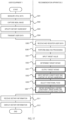
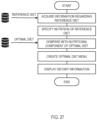
- Example 1 described above the health management system performs (1) acquisition of information regarding the reference diet (breakfast, lunch, and dinner as fundamentals described above), (2) specifying the nutritional components of the reference diet, (3) comparing with the nutritional components of the optimal diet, and (4) creation of an optimal diet menu based on the comparison result (see Fig. 27 ).
- the health management system further includes a menu information acquisition unit that stores menu information (nutrients of each menu are associated with each menu).
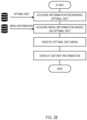
- the health management system can create a menu in only two steps: (1) acquiring nutritional components of the optimal diet and (2) determining a menu by referring to the menu information by the menu information acquisition unit ( Fig. 28 ).
- the menu information can be created directly from the information of the optimal diet without acquiring the reference diet (or input from the lunch box manufacturer, the registered dietitian, or the like).
- the adjustment can be performed by factors other than snacks or foodstuffs (such as supplements or nutritional supplements).
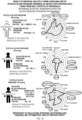
- the present invention makes it possible to verify the difference in dietary ingredients that affect blood pressure among individuals found from the daily lifestyle of each individual, enabling providing the personal dietary optimization and healthy method effect only for the individual ( Fig. 19 ).
- the concept of the optimal personal diet (based on nutritional values) relating to the test subject 5 in Fig. 19 is as illustrated in Fig. 20 .
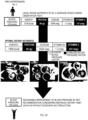
- the present invention is intended to achieve the extension of healthy life expectancy by optimal dietary healthcare based on daily body/dietary data analysis ( Fig. 21 ) and the extension of healthy life expectancy by optimal dietary healthcare based on daily body/lifestyle data analysis ( Fig. 22 ).
Landscapes
- Health & Medical Sciences (AREA)
- Engineering & Computer Science (AREA)
- Public Health (AREA)
- Medical Informatics (AREA)
- General Health & Medical Sciences (AREA)
- Epidemiology (AREA)
- Primary Health Care (AREA)
- Life Sciences & Earth Sciences (AREA)
- Biomedical Technology (AREA)
- Nutrition Science (AREA)
- General Business, Economics & Management (AREA)
- Business, Economics & Management (AREA)
- Data Mining & Analysis (AREA)
- Cardiology (AREA)
- Pathology (AREA)
- Heart & Thoracic Surgery (AREA)
- Biophysics (AREA)
- Molecular Biology (AREA)
- Surgery (AREA)
- Animal Behavior & Ethology (AREA)
- Veterinary Medicine (AREA)
- Physics & Mathematics (AREA)
- Databases & Information Systems (AREA)
- Physiology (AREA)
- Vascular Medicine (AREA)
- Medical Treatment And Welfare Office Work (AREA)
- Measuring And Recording Apparatus For Diagnosis (AREA)
Abstract
Description
- The present invention relates to a health management system.
- Advice is offered to improve dietary lifestyle. For example,
Patent Literature 1 discloses a system that analyzes dietary information or vital data to offer advice. - Patent Literature 1:
JP 2004-302498 A - However, the system disclosed in
Patent Literature 1 necessitates the preparation of advice in the form of a database in advance, so making it difficult to consider the individual difference. - The present invention is made in view of such a situation and is intended to provide a technology capable of managing health considering the individual difference.
- A primary invention of the present invention to solve the above problem is a health management system including a vital data acquisition unit configured to acquire vital data of a user, a dietary ingredient acquisition unit configured to acquire a dietary ingredient that the user ingests, an analysis processing unit configured to analyze a relationship between an intake of the dietary ingredient and improvement or deterioration of the vital data, and a dietary ingredient output unit configured to output the dietary ingredient of improving the vital data and the dietary ingredient of deteriorating the vital data.
- The above and other problems and solutions thereto disclosed herein will become apparent from preferred embodiments and drawings of the invention.
- According to the present invention, it is possible to manage health in consideration of the individual difference.
-
-
Fig. 1 is a diagram illustrating an overall configuration example of a health management system according to an embodiment of the present invention. -
Fig. 2 is a diagram illustrating a hardware configuration example ofuser equipment 1. -
Fig. 3 is a diagram illustrating a software configuration example ofuser equipment 1. -
Fig. 4 is a diagram illustrating a hardware configuration example of arecommendation apparatus 2. -
Fig. 5 is a diagram illustrating a software configuration example of therecommendation apparatus 2 according to the first embodiment. -
Fig. 6 is a diagram illustrating a configuration example of a vitaldata storage unit 231. -
Fig. 7 is a diagram illustrating a configuration example of a dietaryingredient storage unit 232. -
Fig. 8 is a diagram illustrating processing executed in a health management system according to the first embodiment. -
Fig. 9 is a diagram illustrating an example of dietary information displayed on theuser equipment 1. -
Fig. 10 is a diagram illustrating a software configuration example of arecommendation apparatus 2 according to the second embodiment. -
Fig. 11 is a diagram illustrating a configuration example of a dietary referenceintake storage unit 234. -
Fig. 12 is a diagram illustrating processing executed in a health management system according to the second embodiment. -
Fig. 13 is a diagram illustrating an example of dietary information displayed on theuser equipment 1 in the second embodiment. -
Fig. 14 is a diagram illustrated to describe a target intake. -
Fig. 15 is a diagram illustrating a software configuration example of arecommendation apparatus 2 according to the third embodiment. -
Fig. 16 is a diagram illustrating a configuration example of a functional foodinformation storage unit 235. -
Fig. 17 is a diagram illustrating processing executed in a health management system according to the third embodiment. -
Fig. 18 is a diagram illustrating an example of dietary information displayed on theuser equipment 1 in the third embodiment. -
Fig. 19 is an image diagram of personal dietary optimization according to the present invention. -
Fig. 20 is an image illustrating the calculation of an optimal personal diet using atest subject 5 inFig. 19 as an example. -
Fig. 21 is an image diagram of steps for achieving an extension of healthy life expectancy according to the present invention. -
Fig. 22 is another image diagram of steps for achieving the extension of healthy life expectancy according to the present invention. -
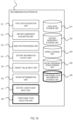
Fig. 23 is a general view illustrating a procedure for determining an optimal diet according to the present invention. -
Fig. 24 is a diagram illustrating details of the procedure ofFig. 23 . -
Fig. 25 is another diagram illustrating details of the procedure ofFig. 23 . -
Fig. 26 is yet another diagram illustrating details of the procedure ofFig. 23 . -
Fig. 27 is a general view illustrating a procedure of creating a menu from a difference between reference dietary information and optimal dietary information according to the present invention. -
Fig. 28 is a general view illustrating a procedure of creating a menu from only the optimal dietary information according to the present invention. - Illustrative embodiments of the present invention are in detail described. A health management system according to an embodiment of the present invention has a configuration as below.
- A health management system including:
- a vital data acquisition unit configured to acquire vital data of a user;
- a dietary ingredient acquisition unit configured to acquire a dietary ingredient that the user ingests;
- an analysis processing unit configured to analyze a relationship between an intake of the dietary ingredient and improvement or deterioration of the vital data; and
- a dietary ingredient output unit configured to output the dietary ingredient of improving the vital data and the dietary ingredient of deteriorating the vital data.
- The health management system according to
Item 1,
in which
the analysis processing unit estimates, in a statistical model using a measured value of the vital data as a response variable and the intake of the dietary ingredient as an explanatory variable, a coefficient of the explanatory variable by multivariate analysis. - The health management system according to
Item 2, further including: - a target value input unit configured to receive an input of a target value of the vital data; and
- an intake determination unit configured to determine the intake of the dietary ingredient in such a way that the vital data matches the target value.
- The health management system according to
Item 3, further including: - a reference value storage unit configured to store a reference value of the intake,
- in which the intake determination unit determines the intake in such a way that a deviation value from the reference value falls in a predetermined range.
- The health management system according to any one of
Items 1 to 4,
in which
the intake determination unit determines the intake of the dietary ingredient for a plurality of the users in such a way that the vital data is closest to the target value. - The health management system according to any one of
Items 1 to 5,
further including: - a menu information storage unit configured to store menu information; and
- a menu creation unit configured to determine a menu including the dietary ingredient of the determined intake by referring to the menu information.
- The health management system according to any one of
Items 1 to 5,
further including:
a supplementary food recommendation unit configured to recommend a supplementary food including the dietary ingredient that improves the vital data in a case where the dietary ingredient is not ingested by the user. - The health management system according to any one of
Items 1 to 6,
further including: - a menu information acquisition unit configured to acquire the menu information input from the user,
- in which the dietary ingredient acquisition unit specifies and acquires the dietary ingredient from the menu information.
- The health management system according to
Item 7,
in which
the menu information includes at least foodstuff information and quantity information. - The health management system according to any one of
Items 1 to 8,
in which
the vital data is a result measured by a blood pressure monitor. - The health management system according to any one of
Items 1 to 9,
further including: - a lifestyle information input unit configured to receive an input of lifestyle information indicating a lifestyle of the user,
- in which the analysis processing unit analyzes a relationship between the lifestyle and the intake of the dietary ingredient and improvement or deterioration of the vital data.
-
Fig. 1 is a diagram illustrating an overall configuration example of a health management system according to the first embodiment of the present invention. As illustrated in this figure, the health management system according to the first embodiment includesuser equipment 1 and arecommendation apparatus 2. Theuser equipment 1 and therecommendation apparatus 2 are connected to enable communication between them via acommunication network 3. Thecommunication network 3 is, for example, the Internet and is constructed as Ethernet (registered trademark), a public switched telephone network, a leased line telephone network, a cellular network, a wireless communication channel, or the like. - The
user equipment 1 is a computer operated by a user who is a subject of health management. Theuser equipment 1 is, for example, a smartphone, a tablet computer, a personal computer, or the like. Theuser equipment 1 is connected to a vital sensor 4 in such a way that they can communicate with each other. Theuser equipment 1 and the vital sensor 4 communicate each other using, for example, Bluetooth low energy (BLE) (Bluetooth is a registered trademark) or serial communication. In the present embodiment, the vital sensor 4 is assumed to be a blood pressure monitor. - The
recommendation apparatus 2 is a computer that provides the user with information regarding diet. Therecommendation apparatus 2 is, for example, a personal computer or a workstation. Therecommendation apparatus 2 can also be configured as a cloud computing-based virtual computer. - The health management system according to the present embodiment offers a recommendation regarding diet depending on both the dietary ingredient such as nutrients ingested by the user and the user's vital data. In the first embodiment, the vital data, particularly dietary ingredients that affect the stabilization or elevation of systolic blood pressure, can be specified and output, allowing it to be referenced upon considering a menu of meal. The vital data according to the present embodiment can include, but is not limited to, height, weight, BMI, body fat percentage, muscle mass, bone density, blood pressure, pulse, pulse wave, body temperature, electrocardiogram, blood oxygen level, respiratory rate, or the like.
-
Fig. 2 is a diagram illustrating a hardware configuration example ofuser equipment 1. Theuser equipment 1 includes aCPU 101, amemory 102, a storage device 103, acommunication interface 104, atouch panel display 105, and acamera 106. The storage device 103 is, for example, a hard disk drive, a solid-state drive, a flash memory, or the like, which stores various data or programs. Thecommunication interface 104 is an interface used for the connection to thecommunication network 3. Thecommunication interface 104 is, for example, an adapter used for connecting to Ethernet (registered trademark), a modem used for connecting to a public switched telephone network, a transceiver used for wireless communication, a universal serial bus (USB) connector or RS232C connector used for serial communication, or the like. Thetouch panel display 105 is a device that inputs and outputs data. Thecamera 106 generates image data of a target to be captured. -
Fig. 3 is a diagram illustrating a software configuration example ofuser equipment 1. Theuser equipment 1 includes a vitaldata acquisition unit 111, a mealimage capturing unit 112, a dietaryingredient acquisition unit 113, a userdata transmission unit 114, a dietaryinformation reception unit 115, a dietaryinformation display unit 116, a vitaldata storage unit 131, and a dietaryingredient storage unit 132. - The vital
data acquisition unit 111 acquires vital data from the vital sensor 4. In the present embodiment, the vital sensor 4 is assumed to be a blood pressure monitor, and the vitaldata acquisition unit 111 acquires systolic blood pressure and diastolic blood pressure. Moreover, a plurality of vital sensors 4 can acquire a plurality of vital data types. The vitaldata acquisition unit 111 registers the vital data in the vitaldata storage unit 131. The vitaldata storage unit 131 is capable of storing the vital data in association with the date and time when the vital data is measured by the vital sensor 4 (or the date and time of receiving by the vitaldata acquisition unit 111 the vital data from the vital sensor 4), information used to specify the user (hereinafter referred to as a user ID) and information used to identify the type of vital data (hereinafter referred to as vital data ID) . - The meal
image capturing unit 112 captures an image of the meal ingested by the user (hereinafter referred to as a meal image). The mealimage capturing unit 112 can activate thecamera 106 by the user's operation to acquire the meal image. - The dietary
ingredient acquisition unit 113 acquires the amount of dietary ingredients such as nutrient and energy ingested by the user on the basis of the meal image. For example, the dietaryingredient acquisition unit 113 is capable of transmitting the meal image to an external expert such as a dietitian for causing the external expert to input a dietary ingredient and its content, and capable of receiving them from the external expert. In addition, the dietaryingredient acquisition unit 113 can learn the dietary ingredient amount included in the image by machine learning or the like and can estimate the content of the dietary ingredient by performing image analysis on the meal image. Moreover, the dietaryingredient acquisition unit 113 can receive the input of ingested nutrients or the like by the user without using the image analysis. The dietaryingredient acquisition unit 113 registers the intake of the acquired dietary ingredient in the dietaryingredient storage unit 132. In the dietaryingredient storage unit 132, the user ID, the information used to specify identifies the dietary ingredient (hereinafter referred to as a dietary ingredient ID), and the intake of the dietary ingredient can be recorded in association with the date and time of ingesting foods by the user. - The user
data transmission unit 114 transmits information including the user's vital data and the intake of dietary ingredients ingested by the user (hereinafter referred to as user data) to therecommendation apparatus 2. The userdata transmission unit 114 can read out the vital data and the intake of the dietary ingredient for the previous day from the vitaldata storage unit 131 and the dietaryingredient storage unit 132, for example, once a day, and can transmit the read ones as user data to therecommendation apparatus 2. In addition, the userdata transmission unit 114 can transmit the user data including only the vital data at every acquisition of the vital data to therecommendation apparatus 2 or can transmit the user data including only the intake of dietary ingredient at every acquisition of the dietary ingredients to therecommendation apparatus 2. - The dietary
information reception unit 115 receives the information relating to the user's diet (hereinafter referred to as dietary information) transmitted from therecommendation apparatus 2. The dietaryinformation display unit 116 displays the dietary information. -
Fig. 4 is a diagram illustrating a hardware configuration example of arecommendation apparatus 2. As illustrated in this figure, therecommendation apparatus 2 includes aCPU 201, amemory 202, astorage device 203, acommunication interface 204, aninput device 205, and anoutput device 206. Thestorage device 203 is, for example, a hard disk drive, a solid-state drive, a flash memory, or the like, which stores various data or programs. Thecommunication interface 204 is an interface used for the connection to thecommunication network 3. Thecommunication interface 204 is, for example, an adapter used for connecting to Ethernet (registered trademark), a modem used for connecting to a public switched telephone network, a transceiver used for wireless communication, a USB connector or RS232C connector used for serial communication, or the like. Theinput device 205 is, for example, a keyboard, a mouse, a touch panel, a button, a microphone, or the like that is used for inputting data. Theoutput device 206 is, for example, a display, a printer, a speaker, or the like that is used for outputting data. -
Fig. 5 is a diagram illustrating a software configuration example of therecommendation apparatus 2 according to the first embodiment. As illustrated in this figure, therecommendation apparatus 2 includes a vitaldata acquisition unit 211, a dietaryingredient acquisition unit 212, ananalysis processing unit 213, a dietaryinformation output unit 214, a vitaldata storage unit 231, and a dietaryingredient storage unit 232. - The vital
data acquisition unit 211 acquires the user's vital data. In the present embodiment, the vitaldata acquisition unit 211 acquires the vital data from the user data transmitted by theuser equipment 1. The vitaldata acquisition unit 211 registers the acquired vital data in the vitaldata storage unit 231.Fig. 6 is a diagram illustrating a configuration example of a vitaldata storage unit 231. The vitaldata storage unit 231 stores the date and time of measuring the vital data, the vital data ID indicating the type of the vital data, and a measured value of the vital data, in association with the user ID used for identifying the user. - The dietary
ingredient acquisition unit 212 acquires the dietary ingredient ingested by the user. In the present embodiment, the dietaryingredient acquisition unit 212 acquires the dietary ingredient from the user data transmitted from theuser equipment 1. The dietaryingredient acquisition unit 212 registers the acquired dietary ingredient in the dietaryingredient storage unit 232.Fig. 7 is a diagram illustrating a configuration example of a dietaryingredient storage unit 232. The dietaryingredient storage unit 232 stores a user ID, date and time when the user ingests foods, a dietary ingredient ID used for identifying dietary ingredients, and the intake of dietary ingredients in association with among them. - The
analysis processing unit 213 analyzes a relationship between the dietary ingredient and the vital data. In the first embodiment, theanalysis processing unit 213 is capable of performing the single regression analysis on the vital data (such as systolic and diastolic blood pressure) for each of various dietary ingredients such as intake energy, protein, fat, carbohydrate, and vitamin A. - The dietary
information output unit 214 outputs the information relating to the user's diet (hereinafter referred to as dietary information). In the first embodiment, the dietaryinformation output unit 214 is capable of transmitting a single correlation coefficient of each dietary ingredient to theuser equipment 1 as the dietary information. The dietaryinformation output unit 214 sets a dietary ingredient having one of positive or negative correlation as a dietary ingredient that improves the vital data depending on the type of vital data. The dietaryinformation output unit 214 sets a dietary ingredient having the other one of the positive or negative correlation as a dietary ingredient that deteriorates the vital data depending on the type of vital data. Thus, it is possible to distinguish and output the dietary ingredients that improve or deteriorate the vital data. -
Fig. 8 is a diagram illustrating processing executed in a health management system according to the first embodiment. In theuser equipment 1, the vitaldata acquisition unit 111 acquires the vital data from the vital sensor 4 (S301). The mealimage capturing unit 112 controls thecamera 106 to capture a meal image (S302), and the dietaryingredient acquisition unit 113 analyzes the captured meal image to specify the content of dietary ingredients contained in the diet (S303). The userdata transmission unit 114 transmits user data including the vital data and the content of dietary ingredients (S304). - When the
recommendation apparatus 2 receives the user data, the vitaldata acquisition unit 211 acquires the vital data from the user data, and the dietaryingredient acquisition unit 212 acquires the intake of the dietary ingredient from the user data. Theanalysis processing unit 213 analyzes the correlation between each dietary ingredient and the vital data (S306). The dietaryinformation output unit 214 transmits the dietary information for each dietary ingredient to the user equipment 1 (S307). The dietary information includes the dietary ingredient that has a positive or zero correlation coefficient and improves the vital data (improving dietary ingredient) and the dietary ingredient that has a negative correlation coefficient and deteriorates the vital data (deteriorating dietary ingredient). Moreover, for example, depending on the vital data, in a case where the body weight or blood pressure exceeds an appropriate value, the explanatory variable with a positive correlation coefficient is set as a deterioration factor, and the explanatory variable with a negative correlation coefficient is set as an improvement factor. Thus, in defining improvement and deterioration, it is necessary to be considered whether each vital data of the user exceeds or falls down the appropriate value. - In the
user equipment 1, the dietaryinformation reception unit 115 receives the dietary information transmitted from the recommendation apparatus (S308), and the dietaryinformation display unit 116 displays the received dietary information on the touch panel display 105 (S309). - As described above, the dietary ingredient that improves or deteriorates the user's vital data is output to the
user equipment 1, so it can be used as a reference upon preparing a meal for the user. -
Fig. 9 is a diagram illustrating an example of dietary information displayed on theuser equipment 1. As illustrated inFig. 9(a) , it can be seen that a test subject 13 gains weight upon ingesting carbohydrates and energy with the correlation coefficient shown in the figure but loses weight upon ingesting proteins. On the other hand, as illustrated inFig. 9(b) , it can be seen that a test subject 21 gains weight upon ingesting sodium, iron, vitamin B1, vitamin C, or the like but loses weight upon ingesting vitamin B2, vitamin A, or the like. In this way, each individual has different dietary ingredients involved in weight. The diet that decreases the dietary ingredients with a larger positive correlation coefficient and increases the dietary ingredients with a smaller negative correlation coefficient makes it possible to reduce efficiently the weight. The dietary ingredients exert different effects depending on the users, so the health management system of the present embodiment is capable of displaying which dietary ingredient affects the user's vital data on theuser equipment 1. - In the first embodiment, the dietary ingredient based on the simple regression coefficient for the vital data used as the dietary information is displayed, but in the second embodiment, multivariate analysis (multiple regression analysis) is performed by setting the vital data as the dietary information and setting the dietary ingredient as an explanatory variable. Besides, in the second embodiment, a coefficient of each dietary ingredient is output, a target value of the vital data is received, and the intake of dietary ingredient such that the vital data can be the target value is displayed.
Fig. 10 is a diagram illustrating a software configuration example of arecommendation apparatus 2 according to the second embodiment. Therecommendation apparatus 2 of the second embodiment includes a targetvalue input unit 215, anintake determination unit 216, amodel storage unit 233, and a dietary referenceintake storage unit 234, in addition to each functional unit and storage unit included in therecommendation apparatus 2 of the first embodiment. The multivariate analysis according to the present embodiment includes simple regression analysis, multiple regression analysis, principal component analysis, independent component analysis, factor analysis, quantification theory (types I, II, III, and IV), cluster analysis, conjoint analysis, and multidimensional scaling (MDS) . - The
model storage unit 233 stores a statistical model in which the vital data is used as the response variable and the dietary ingredient is used as the explanatory variable. In addition, parameters such as a regression coefficient and a constant applied to the statistical model are also stored in themodel storage unit 233. - In the second embodiment, the
analysis processing unit 213 applies the vital data relating to the user and the intake of the dietary ingredient to the statistical model for each user to perform the multiple regression analysis and to estimate the regression coefficient and constant of each dietary ingredient. Theanalysis processing unit 213 registers the estimated regression coefficient and constant in themodel storage unit 233 in association with the user ID. Applying the dietary ingredient to the statistical model to which an estimated regression coefficient and constant are applied (hereinafter referred to as an estimation model) makes it possible to estimate the user's vital data in the case where the user ingests a meal including such dietary ingredients. - The target
value input unit 215 receives the input of a target value of the vital data. For example, the targetvalue input unit 215 can receive the target value that is input by the user on theuser equipment 1 or can receive the input of the target value from theinput device 205 such as a keyboard. - The dietary reference
intake storage unit 234 stores the energy and nutrients reference intakes (Dietary Reference Intakes for Japanese), which are released by the Ministry of Health, Labour and Welfare and are referenced to maintain and promote their health and to prevent the progression of lifestyle-related diseases for Japanese. Moreover, the dietary referenceintake storage unit 234 can store an optional reference value instead of the one released by the Ministry of Health, Labour and Welfare.Fig. 11 is a diagram illustrating a configuration example of a dietary referenceintake storage unit 234. As illustrated in this figure, the dietary referenceintake storage unit 234 stores a reference intake value of the dietary ingredient in association with the dietary ingredient ID indicating the dietary ingredient, gender, and age. Moreover, the dietary referenceintake storage unit 234 can store the reference value in association with the user's attribute such as body weight and BMI in place of or in addition to at least one of gender or age. - The
intake determination unit 216 determines an amount of each dietary ingredient (hereinafter referred to as a target intake) so that the vital data of a result calculated by the estimation model matches or is closest to the target value received by the targetvalue input unit 215. For example, for each dietary ingredient, theintake determination unit 216 reads out the reference value corresponding to the user's attribute from the dietary referenceintake storage unit 234 and applies it to the estimation model. If the applied result is larger than the target value, theintake determination unit 216 decreases the amount of the dietary ingredient with the positive regression coefficient and increases the amount of the dietary ingredient with a negative regression coefficient, and repeats the calculation so that the vital data can approach the target value. Thus, it is possible to determine the target intake for each dietary ingredient. The amount to increase or decrease the dietary ingredient can be, for example, a predetermined ratio of the dietary ingredient (e.g., an optional value such as 1%) . Moreover, theintake determination unit 216 is capable of using any algorithm as long as the target intake of each dietary ingredient can be determined so that the vital data is closest to the target value. -
Fig. 12 is a diagram illustrating processing executed in a health management system according to the second embodiment. In the processing ofFig. 12 , comparing to the processing illustrated inFig. 8 , instead of step S306, theanalysis processing unit 213 applies the vital data and the dietary ingredient intake regarding the user who transmitted the user data to the statistical model and performs multiple regression analysis as described above to estimate the regression coefficient and constant of each dietary ingredient (S306'). In addition, following step S306', the targetvalue input unit 215 receives the input of the target value of the vital data (S321). Theintake determination unit 216 determines the target intake of each dietary ingredient so that the vital data can be closest to the target value (S322). Furthermore, instead of step S307, the dietaryinformation output unit 214 transmits the target intake as the dietary information to the user equipment 1 (S307'). -
Fig. 13 is a diagram illustrating an example of dietary information displayed on theuser equipment 1 in the second embodiment. In the example ofFig. 13 , a multiple regression equation relating to the systolic blood pressure as vital data is illustrated. By referring to this, it is possible to easily know what kind of dietary ingredient affects the systolic blood pressure of the user as atest subject 5. -
Fig. 14 is a diagram illustrated to describe a target intake. In the example ofFig. 14 , the systolic blood pressure measured on July 12, 2018 was 133 mmHg, and the ingested dietary ingredients were listed in the upper table. When the target value of the systolic blood pressure was 118 mmHg and the dietary ingredients were determined, the predicted value of the vital data was 117 mmHg, and the target intakes of the dietary ingredients were as listed in the lower table. In this way, it is possible to indicate the dietary ingredients necessary to be included in the diet (optimal diet) that can achieve the target value of the vital data, so it is possible to easily plan a menu of the optimal diet with reference to the dietary ingredients. - In the third embodiment, a recommendation is offered that combines the dietary information with a supplementary food. The supplementary food in the present embodiment is offered as a recommendation in combination with one or both of a functional food containing a nutritional component and a functional food containing a non-nutrient component. In the following description, foods containing a nutritional component or a non-nutrient component are collectively referred to as "functional food". Moreover, the nutritional components are nutritional component labeling items based on the Food Labeling Law (calorie, proteins, fats, carbohydrates, sodium, saturated fatty acids, n-3 fatty acids, n-6 fatty acids, cholesterols, carbohydrates, sugars (monosaccharides or disaccharides, limited to non-sugar alcohols), dietary fiber, zinc, potassium, calcium, chromium, selenium, iron, copper, magnesium, manganese, molybdenum, iodine, phosphorus, niacin, pantothenic acid, biotin, vitamins A, B1, B2, B6, B12, C, D, E, and K, and folic acid). The non-nutrient component is, for example, a component other than nutritional components such as polyphenols and GABA, and a component specified among the nutrients as a group composed of a plurality of components (e.g., cyclodextrin as dietary fiber).
Fig. 15 is a diagram illustrating a software configuration example of arecommendation apparatus 2 according to the third embodiment. Therecommendation apparatus 2 according to the third embodiment includes a dietaryconstituent input unit 217, a functionalfood selection unit 218, and a functional foodinformation storage unit 235, in addition to each functional unit and storage unit illustrated inFig. 10 . - The dietary
constituent input unit 217 receives as an input the constituent of the diet to be ingested. The dietary constituent includes the dietary ingredients contained in the diet. In addition, the dietary constituent can include a specification or an image for the dietary. - The functional food
information storage unit 235 stores information regarding functional foods.Fig. 16 is a diagram illustrating a configuration example of a functional foodinformation storage unit 235. The functional foodinformation storage unit 235 stores the dietary ingredient ID indicating the dietary ingredient contained in the functional food and the content of the dietary ingredient or a specification for the functional foods, in association with the information used for identifying the functional food (a functional food ID) - The functional
food selection unit 218 selects a functional food that complements the dietary ingredients that the user lacks. The functionalfood selection unit 218 is capable of comparing the amount of the dietary ingredient contained in the input dietary constituent with the target intake determined by theintake determination unit 216 described above to select a functional food containing a dietary ingredient that is not reached the target intake from the functional foodinformation storage unit 235. In the case where a plurality of functional foods contains the deficient dietary ingredient as described above, the functionalfood selection unit 218 is capable of selecting, for example, a functional food that is less than or equal to the shortage and contains the maximum amount. In addition, in the case where a plurality of functional foods is combined, it is possible to select a combination of functional foods that minimize the types of functional foods. -
Fig. 17 is a diagram illustrating processing executed in a health management system according to the third embodiment. In the processing illustrated inFig. 17 , compared with the processing shown inFig. 12 , following step S322, theintake determination unit 216 outputs the determined target intake (S331). Theintake determination unit 216 can output it to theoutput device 206 of therecommendation apparatus 2 or can transmit the target intake to theuser equipment 1 for causing the target intake to be output to theuser equipment 1. Then, the dietaryconstituent input unit 217 receives the dietary constituent and the amount of the dietary ingredient contained in the diet as an input (S332). The dietary constituent is assumed to be determined with reference to the output target intake. The dietaryconstituent input unit 217 can receive the input from theinput device 205 of therecommendation apparatus 2 or can receive, from theuser equipment 1, the dietary constituent and the amount of dietary ingredients input through theuser equipment 1. The functionalfood selection unit 218 specifies a deficient dietary ingredient in which the amount of the input dietary ingredient is less than the target intake of the dietary ingredient relating to the optimal diet. The functionalfood selection unit 218 selects a functional food containing a deficient dietary ingredient from the functional food information storage unit 235 (S333). The dietaryinformation output unit 214 transmits the dietary information including the input dietary constituent, the target intake, and the specification of the functional food to the user equipment 1 (S307"), instead of step S307'. -
Fig. 18 is a diagram illustrating an example of dietary information displayed on theuser equipment 1 in the third embodiment. In the example ofFig. 18 , a functional food is recommended together with the dietary constituent. This makes it possible to supplement nutrients and non-nutritive functional ingredients insufficient with diet alone with functional foods (supplements), bringing the vital data closer to the target value. - In the second and third embodiments described above, the target intake for a single user is determined, but the target intake can be determined for a group of a plurality of users. In the fourth embodiment as well, the target
value input unit 215 receives as an input the target value of vital data for each user, and theanalysis processing unit 213 also performs the multiple regression analysis for each user to estimate the parameters of the statistical model. However, theintake determination unit 216 applies the same amount of dietary ingredients to all users with respect to the estimation model for each user and determines the target intake so that the sum of differences between the estimated value and the target value of the vital data of each user is minimized. This makes it possible to provide a meal so that the values of vital data approach the target values as a whole in the case of providing a meal of the same menu to each user in the group, for example, in a dining room or the like. - In the fourth embodiment, the
analysis unit 213 determines a target intake for each user separately from the above-mentioned target intake to be determined for the group. The dietaryconstituent input unit 217 outputs the target intake for the group. The functionalfood selection unit 218 can compare the difference between the target intake for each user and the amount of the dietary ingredient contained in the diet to specify the deficient dietary ingredient and can allow each user to select a functional food that supplements the lack of dietary ingredients. In this case, it is possible to adjust the optimal amount of dietary ingredients for each user depending on the functional food, so the vital data of each user is expected to approach the target value. - In the first to fourth embodiments described above, only the dietary ingredient is set as the explanatory variable of the estimation model, but the behavior related to the lifestyle can be added to the explanatory variable. In this case, the
recommendation apparatus 2 is provided with a lifestyle information input unit that receives the input of information indicating lifestyle such as exercise, drinking, smoking, stress, and sleep. Theanalysis processing unit 213 can perform the multiple regression analysis by adding information indicating such lifestyle as the explanatory variable. This makes it possible to provide optimal dietary information in consideration of the influence of the combination of the user's lifestyle and dietary ingredients on the user's vital data. - Although the embodiments are described above, the embodiments described above are intended to facilitate the understanding of the present invention, and should not be construed as limitations on the scope of the present invention. The present invention covers all modifications, alterations, and equivalents thereof without departing from the spirit and scope of the invention.
- In one example, in the present embodiment, the vital sensor 4 is a device for measuring blood pressure, but a weight scale, a body composition monitor, or the like can be used as the vital sensor. In addition, a device for measuring biochemical blood parameters (such as blood glucose, cholesterol, neutrality, γ-GTP, or HbA1c) can be used. Also in this case, it is preferable to use a non-invasive measuring device.
- Further, in the present embodiment, the dietary constituent is input from the
recommendation apparatus 2 or theuser equipment 1, but theintake determination unit 216 can transmit the target intake to a computer, which is operated by a dietitian, a cook, or the like who thinks about menus, to receive the input from the dietitian or the cook. - Further, in the present embodiment, the correlation between the dietary ingredient and the vital data is analyzed by regression analysis, but it is possible to use machine learning to perform the analysis. For example, it is possible to perform the learning using a neural network by using dietary ingredients as an input signal and vital data as a supervisor signal.
- Although the present embodiment has the so-called server-client configuration in which the analysis processing is performed by the
recommendation apparatus 2, theuser equipment 1 is provided with all the functions of therecommendation apparatus 2, and only theuser equipment 1 can recommend the optimal diet. - A specific example of the optimal diet using the recommendation apparatus according to the present invention including the first to fourth embodiments described above is now described. In this example, the optimal nutrients calculated by the method according to the present invention described above are compared with the nutrients ingested by the user (average nutrients). In one example, as illustrated in
Fig. 23 , from the "usual intake nutrients (average intake during observation test)" of the pre-hypertension "Mr. C (blood pressure: 129 mmHg)", the amount of the elevated blood pressure factor (as illustrated, energy, sodium, and vitamin B1) of Mr. C is reduced. In addition, the amount of the stabilized blood pressure factor (as illustrated, protein and vitamin C) is increased. Thus, the optimal nutrients (per day) are calculated. - Moreover, as illustrated in
Fig. 24 , in practice, the multivariate analysis results obtained from the blood pressure and intake nutrient data collected during the observation period, the Dietary Reference Intakes for Japanese, and the average nutrient intakes for individuals can be referred. Thus, while referring to them, the approximate value of the daily nutrient amount of the optimal diet within a reasonable range for the test subject is determined. - It is possible to obtain this approximate value of optimal dietary nutrients as below. The multiple regression analysis of blood pressure and intake nutrient data acquired for each user is performed. The nutrients that affect blood pressure are specified from energy, protein, fat, carbohydrate, calcium, iron, vitamin A, vitamin E, vitamin B1, vitamin B2, vitamin C, dietary fiber, saturated fatty acids, sodium, and potassium. Then, the relational expression between blood pressure and nutrient intake is obtained. From this relational expression, the amount of nutrients that affect the blood pressure is obtained so that the blood pressure is 10 mmHg lower than the average blood pressure of the user. Then, all the nutrient amounts are specified to satisfy Conditions 1) to 3) below: Condition 1) is that the amount of the three major nutrients (carbohydrates, fat, and proteins) defined in the Dietary Reference Intakes for Japanese (2015 edition) is the amount that is more than or equal to the minimum value and less than 120% of the maximum value in the user's age and gender; Condition 2) is one that does not exceed it for nutrients with a tolerable upper limit; Condition 3) is that the specified amount of blood pressure-related component is 80% or more of the estimated average required amount or the standard amount in the Dietary Reference Intakes for Japanese.
- Subsequently, as illustrated in
Fig. 25 , for example, a lunch box manufacturer, a registered dietitian, or the like prepares menus of breakfast, lunch, and dinner as fundamentals. The total amount of nutrients is specified by calculating and adding up the amounts of nutrients contained in breakfast, lunch, and dinner on the basis of the Standard Tables of Food Composition in Japan from the content of foodstuff and seasonings used. Excess or deficiency of nutrients is specified by comparing the amount of this nutrient with the optimal dietary nutrient approximate value obtained earlier for each nutrient. - Finally, as illustrated in
Fig. 26 , the menu is changed so that there is no excess or deficiency from the approximate value of optimal dietary nutrients, and the optimal diet for each user is determined. In the illustrated example, the modified ones are underlined. - In Example 1 described above, the health management system performs (1) acquisition of information regarding the reference diet (breakfast, lunch, and dinner as fundamentals described above), (2) specifying the nutritional components of the reference diet, (3) comparing with the nutritional components of the optimal diet, and (4) creation of an optimal diet menu based on the comparison result (see
Fig. 27 ). - However, the present invention is not limited to the examples described above. For example, the health management system further includes a menu information acquisition unit that stores menu information (nutrients of each menu are associated with each menu). Thus, the health management system can create a menu in only two steps: (1) acquiring nutritional components of the optimal diet and (2) determining a menu by referring to the menu information by the menu information acquisition unit (
Fig. 28 ). In other words, the menu information can be created directly from the information of the optimal diet without acquiring the reference diet (or input from the lunch box manufacturer, the registered dietitian, or the like). - The description of the above-mentioned examples is merely illustrative. For example, the adjustment can be performed by factors other than snacks or foodstuffs (such as supplements or nutritional supplements).
- The present invention makes it possible to verify the difference in dietary ingredients that affect blood pressure among individuals found from the daily lifestyle of each individual, enabling providing the personal dietary optimization and healthy method effect only for the individual (
Fig. 19 ). In one example, the concept of the optimal personal diet (based on nutritional values) relating to thetest subject 5 inFig. 19 is as illustrated inFig. 20 . In addition, the present invention is intended to achieve the extension of healthy life expectancy by optimal dietary healthcare based on daily body/dietary data analysis (Fig. 21 ) and the extension of healthy life expectancy by optimal dietary healthcare based on daily body/lifestyle data analysis (Fig. 22 ). -
- Aspect 1: A health management system comprising:
- a vital data acquisition unit configured to acquire vital data of a user;
- a dietary ingredient acquisition unit configured to acquire a dietary ingredient;
- an analysis processing unit configured to analyze a relationship between an intake of the dietary ingredient and improvement or deterioration of the vital data; and
- a dietary ingredient output unit configured to output the dietary ingredient of improving the vital data and the dietary ingredient of deteriorating the vital data.
- Aspect 2: The health management system according to
Aspect 1,
wherein
the analysis processing unit estimates, in a statistical model using a measured value of the vital data as a response variable and the intake of the dietary ingredient as an explanatory variable, a coefficient of the explanatory variable by multivariate analysis. - Aspect 3: The health management system according to
Aspect 2,
further comprising:- a target value input unit configured to receive an input of a target value of the vital data; and
- an intake determination unit configured to determine the intake of the dietary ingredient in such a way that the vital data matches the target value.
- Aspect 4: The health management system according to
Aspect 3,
further comprising:- a reference value storage unit configured to store a reference value of the intake,
- wherein the intake determination unit determines the intake in such a way that a deviation value from the reference value falls in a predetermined range.
- Aspect 5: The health management system according to any one of
Aspects 1 to 4,
wherein
the intake determination unit determines the intake of the dietary ingredient for a plurality of the users in such a way that the vital data is closest to the target value. - Aspect 6: The health management system according to any one of
Aspects 1 to 5,
further comprising:- a menu information storage unit configured to store menu information; and
- a menu creation unit configured to determine a menu including the dietary ingredient of the determined intake by referring to the menu information.
- Aspect 7: The health management system according to any one of
Aspects 1 to 6,
further comprising:
a supplementary food recommendation unit configured to recommend a supplementary food including the dietary ingredient that improves the vital data in a case where the dietary ingredient is not ingested by the user. - Aspect 8: The health management system according to any one of
Aspects 1 to 7,
further comprising:- a menu information acquisition unit configured to acquire the menu information input from the user,
- wherein the dietary ingredient acquisition unit specifies and acquires the dietary ingredient from the menu information.
- Aspect 9: The health management system according to Aspect 8,
wherein
the menu information includes at least foodstuff information and quantity information. - Aspect 10: The health management system according to any one of
Aspects 1 to 9,
wherein
the vital data is a result measured by a blood pressure monitor. - Aspect 11: The health management system according to any one of
Aspects 1 to 10,
further comprising:- a lifestyle information input unit configured to receive an input of lifestyle information indicating a lifestyle of the user,
- wherein the analysis processing unit analyzes a relationship between the lifestyle and the intake of the dietary ingredient and improvement or deterioration of the vital data.
-
- 1
- User equipment
- 2
- Recommendation apparatus
- 3
- Communication network
- 4
- Vital sensor
- 111
- Vital data acquisition unit
- 112
- Meal image capturing unit
- 113
- Dietary ingredient acquisition unit
- 114
- User data transmission unit
- 115
- Dietary information reception unit
- 116
- Dietary information display unit
- 131
- Vital data storage unit
- 132
- Dietary ingredient storage unit
- 211
- Vital data acquisition unit
- 212
- Dietary ingredient acquisition unit
- 213
- Analysis processing unit
- 214
- Dietary information output unit
- 215
- Target value input unit
- 216
- Intake determination unit
- 217
- Dietary constituent input unit
- 218
- Functional food selection unit
- 231
- Vital data storage unit
- 232
- Dietary ingredient storage unit
- 233
- Model storage unit
- 234
- Dietary reference intake storage unit
- 235
- Functional food information storage unit
Claims (10)
- A health management system comprising:a storage unit configured to store an estimation model for predicting vital data based on an intake amount of a food component, the estimation model being created by multivariate analysis of the intake amount of the food component ingested by a user and the vital data of the user;a reference value storage unit configured to store a reference value of the intake amount of the food component ingested by the user;a target value input unit configured to receive an input of a target value of the vital data; andan intake amount determination unit configured to:set the reference value as a target intake amount of the food component,identify, based on a difference between the vital data predicted by applying the set target intake amount to the estimation model and the target value, an improving food component that is the food component which improves the vital data in the estimation model and a deteriorating food component that is the food component which deteriorates the vital data in the estimation model, andperform at least one of increasing the target intake amount of the identified improving food component and decreasing the target intake amount of the identified deteriorating food component.
- The health management system according to claim 1, wherein:
the intake amount determination unit performs at least one of:increasing the intake amount of the improving food component above the reference value, anddecreasing the intake amount of the deteriorating food component below the reference value, according to at least one of the target value, a coefficient of the improving food component, and a coefficient of the deteriorating food component. - The health management system according to claim 1, wherein:
the intake amount determination unit determines the intake amount that yields the vital data closest to the target value when the intake amount is input into the estimation model. - The health management system according to claim 3, further comprising:
an analysis processing unit configured to estimate a regression coefficient of the food component by the multivariate analysis. - The health management system according to claim 1, further comprising:a menu information storage unit configured to store menu information; anda menu creation unit configured to determine a menu including the food component of the determined target intake amount by referring to the stored menu information.
- The health management system according to claim 1, further comprising:a menu information storage unit configured to store base menu information; anda menu creation unit configured to identify an amount of the food component included in the menu information and modify the menu information so that the amount of the food component becomes the target intake amount.
- The health management system according to claim 6, wherein:
the menu creation unit modifies the menu information within a pre-specified modification range. - The health management system according to claim 4, further comprising:a lifestyle information input unit configured to receive an input of lifestyle information indicating a lifestyle of the user,wherein the analysis processing unit performs the analysis by adding the lifestyle as an explanatory variable.
- A health management method comprising steps executed by a computer of:storing an estimation model for predicting vital data based on an intake amount of a food component, the estimation model being created by multivariate analysis of the intake amount of the food component ingested by a user and the vital data of the user;storing a reference value of the intake amount of the food component ingested by the user;receiving an input of a target value of the vital data; andsetting the reference value as a target intake amount of the food component,identifying, based on a difference between the vital data predicted by applying the set target intake amount to the estimation model and the target value, an improving food component that is the food component which improves the vital data in the estimation model and a deteriorating food component that is the food component which deteriorates the vital data in the estimation model, andperforming at least one of increasing the target intake amount of the identified improving food component and decreasing the target intake amount of the identified deteriorating food component.
- A program for causing a computer to execute steps of:storing an estimation model for predicting vital data based on an intake amount of a food component, the estimation model being created by multivariate analysis of the intake amount of the food component ingested by a user and the vital data of the user;storing a reference value of the intake amount of the food component ingested by the user;receiving an input of a target value of the vital data; andsetting the reference value as a target intake amount of the food component,identifying, based on a difference between the vital data predicted by applying the set target intake amount to the estimation model and the target value, an improving food component that is the food component which improves the vital data in the estimation model and a deteriorating food component that is the food component which deteriorates the vital data in the estimation model, andperforming at least one of increasing the target intake amount of the identified improving food component and decreasing the target intake amount of the identified deteriorating food component.
Applications Claiming Priority (3)
| Application Number | Priority Date | Filing Date | Title |
|---|---|---|---|
| JP2018194703 | 2018-10-15 | ||
| EP19874239.7A EP3869518A4 (en) | 2018-10-15 | 2019-10-14 | HEALTH MANAGEMENT SYSTEM |
| PCT/JP2019/040353 WO2020080320A1 (en) | 2018-10-15 | 2019-10-14 | Health management system |
Related Parent Applications (1)
| Application Number | Title | Priority Date | Filing Date |
|---|---|---|---|
| EP19874239.7A Division EP3869518A4 (en) | 2018-10-15 | 2019-10-14 | HEALTH MANAGEMENT SYSTEM |
Publications (2)
| Publication Number | Publication Date |
|---|---|
| EP4465303A2 true EP4465303A2 (en) | 2024-11-20 |
| EP4465303A3 EP4465303A3 (en) | 2025-01-22 |
Family
ID=70284608
Family Applications (2)
| Application Number | Title | Priority Date | Filing Date |
|---|---|---|---|
| EP24204727.2A Pending EP4465303A3 (en) | 2018-10-15 | 2019-10-14 | Health management system |
| EP19874239.7A Pending EP3869518A4 (en) | 2018-10-15 | 2019-10-14 | HEALTH MANAGEMENT SYSTEM |
Family Applications After (1)
| Application Number | Title | Priority Date | Filing Date |
|---|---|---|---|
| EP19874239.7A Pending EP3869518A4 (en) | 2018-10-15 | 2019-10-14 | HEALTH MANAGEMENT SYSTEM |
Country Status (5)
| Country | Link |
|---|---|
| US (1) | US20210343393A1 (en) |
| EP (2) | EP4465303A3 (en) |
| JP (5) | JPWO2020080320A1 (en) |
| CN (2) | CN112889115B (en) |
| WO (1) | WO2020080320A1 (en) |
Families Citing this family (9)
| Publication number | Priority date | Publication date | Assignee | Title |
|---|---|---|---|---|
| JP7394460B2 (en) * | 2020-08-31 | 2023-12-08 | 国立大学法人茨城大学 | Health risk assessment system and health risk assessment method |
| US20230268052A1 (en) * | 2022-02-22 | 2023-08-24 | Medifoodplatform Co., Ltd. | Server, method and program to analyze ingredient index and food material using medical data based on artificial intelligence |
| JP7700738B2 (en) * | 2022-06-21 | 2025-07-01 | トヨタ自動車株式会社 | Recommendation device, recommendation method, and program |
| CN115312156A (en) * | 2022-07-07 | 2022-11-08 | 中粮营养健康研究院有限公司 | Metabolic syndrome health management system based on healthy dining room |
| KR20240016647A (en) * | 2022-07-29 | 2024-02-06 | 주식회사 메디컬에이아이 | Method for recommendation of menu based on electrocardiogram, and computer program recorded on record-medium for executing method thereof |
| JP2024095893A (en) * | 2022-12-30 | 2024-07-11 | 国立大学法人信州大学 | Information processing system, information processing method, and program |
| CN116450708B (en) * | 2023-06-13 | 2023-09-01 | 南京市城市数字治理中心 | Enterprise data mining method and system |
| CN116646030B (en) * | 2023-07-26 | 2023-10-03 | 东莞市鸿馥生物科技有限公司 | Tobacco tar component identification method and system based on electronic smoke detection |
| WO2025094967A1 (en) * | 2023-10-31 | 2025-05-08 | 味の素株式会社 | Meal evaluation device, meal evaluation method, and meal evaluation program |
Citations (1)
| Publication number | Priority date | Publication date | Assignee | Title |
|---|---|---|---|---|
| JP2004302498A (en) | 2003-03-28 | 2004-10-28 | Matsushita Electric Ind Co Ltd | Eating habit improvement support device |
Family Cites Families (17)
| Publication number | Priority date | Publication date | Assignee | Title |
|---|---|---|---|---|
| US20030115248A1 (en) * | 2001-12-17 | 2003-06-19 | Ajinomoto Co., Inc. | Method and system for supporting eating habits |
| JP4329123B2 (en) * | 2004-07-12 | 2009-09-09 | Toto株式会社 | Urine analysis method |
| WO2008070013A2 (en) * | 2006-12-01 | 2008-06-12 | James Kaput | Method for determining personalized nutrition and diet using nutrigenomics and physiological data |
| JP2008257293A (en) * | 2007-03-30 | 2008-10-23 | Koichiro Yuji | Health condition prediction system |
| EP2270530B1 (en) * | 2009-07-01 | 2013-05-01 | Københavns Universitet | Method for prediction of lipoprotein content from NMR data |
| CN103345591A (en) * | 2013-07-23 | 2013-10-09 | 南京久康网络科技有限公司 | Personalized nutrition recipe device and method |
| KR20160022638A (en) * | 2014-08-20 | 2016-03-02 | 삼성전자주식회사 | Method and apparatus for processing food information |
| WO2016050958A1 (en) * | 2014-10-03 | 2016-04-07 | Nestec S.A. | System and method for calculating, displaying, modifying, and using personalized nutritional health score |
| CN104268430A (en) * | 2014-10-16 | 2015-01-07 | 王虓 | Health management system and method |
| JP2016143333A (en) * | 2015-02-04 | 2016-08-08 | コニカミノルタ株式会社 | Information processing system, information processing method, and program |
| US20190139440A1 (en) * | 2016-02-11 | 2019-05-09 | Ryozo Saito | Cancer Prevention/Improvement Advice Device |
| CN105809598A (en) * | 2016-03-10 | 2016-07-27 | 青岛海尔智能家电科技有限公司 | Dietary intake management method, device and cloud platform |
| US10685576B2 (en) * | 2016-12-30 | 2020-06-16 | Suggestic, Inc. | Augmented reality systems based on a dynamic feedback-based ecosystem and multivariate causation system |
| JP6847721B2 (en) * | 2017-03-14 | 2021-03-24 | オムロン株式会社 | Information processing device, information processing method and its program |
| CN106971064A (en) * | 2017-03-16 | 2017-07-21 | 四川大学 | A kind of chronic kidney disease follow-up assistant |
| CN107871532A (en) * | 2017-10-17 | 2018-04-03 | 珠海格力电器股份有限公司 | Diet health management system |
| US20190295440A1 (en) * | 2018-03-23 | 2019-09-26 | Nutrino Health Ltd. | Systems and methods for food analysis, personalized recommendations and health management |
-
2019
- 2019-10-14 US US17/285,451 patent/US20210343393A1/en active Pending
- 2019-10-14 WO PCT/JP2019/040353 patent/WO2020080320A1/en not_active Ceased
- 2019-10-14 CN CN201980067517.3A patent/CN112889115B/en active Active
- 2019-10-14 CN CN202411376419.7A patent/CN119170200A/en active Pending
- 2019-10-14 JP JP2020553165A patent/JPWO2020080320A1/en active Pending
- 2019-10-14 EP EP24204727.2A patent/EP4465303A3/en active Pending
- 2019-10-14 EP EP19874239.7A patent/EP3869518A4/en active Pending
-
2022
- 2022-04-05 JP JP2022063083A patent/JP7090232B1/en active Active
- 2022-04-05 JP JP2022063084A patent/JP7337344B2/en active Active
-
2023
- 2023-03-08 JP JP2023035809A patent/JP2023060289A/en active Pending
-
2024
- 2024-12-25 JP JP2024229225A patent/JP2025031931A/en active Pending
Patent Citations (1)
| Publication number | Priority date | Publication date | Assignee | Title |
|---|---|---|---|---|
| JP2004302498A (en) | 2003-03-28 | 2004-10-28 | Matsushita Electric Ind Co Ltd | Eating habit improvement support device |
Also Published As
| Publication number | Publication date |
|---|---|
| CN112889115A (en) | 2021-06-01 |
| JP2023060289A (en) | 2023-04-27 |
| JP2022091963A (en) | 2022-06-21 |
| CN112889115B (en) | 2024-10-22 |
| EP4465303A3 (en) | 2025-01-22 |
| CN119170200A (en) | 2024-12-20 |
| JP7337344B2 (en) | 2023-09-04 |
| JP2022091962A (en) | 2022-06-21 |
| EP3869518A4 (en) | 2022-07-06 |
| JP2025031931A (en) | 2025-03-07 |
| JPWO2020080320A1 (en) | 2021-09-09 |
| US20210343393A1 (en) | 2021-11-04 |
| JP7090232B1 (en) | 2022-06-24 |
| EP3869518A1 (en) | 2021-08-25 |
| WO2020080320A1 (en) | 2020-04-23 |
Similar Documents
| Publication | Publication Date | Title |
|---|---|---|
| JP7090232B1 (en) | Health management system | |
| US20220230730A1 (en) | Recipe recommendation method and device, computing device and storage medium | |
| EP3642845B1 (en) | System and methods for calculating, displaying, modifying, and using single dietary intake score reflective of optimal quantity and quality of consumables | |
| US20230058760A1 (en) | Program, information processing method, and information processing device | |
| CN106250673A (en) | A kind of dietary recommendations continued and evaluation methodology, intelligent terminal, Cloud Server and system | |
| CN108899073A (en) | A kind of intelligent health diet recommender system of combination mobile terminal | |
| JP2008242963A (en) | Health analysis display method and health analysis display device | |
| KR20180078844A (en) | Smart system for operating personal health management for a pregnant | |
| CN113569140A (en) | Information recommendation method and device, electronic equipment and computer-readable storage medium | |
| CN119580949A (en) | AI-based healthy diet nutrition management method and system | |
| CN112071396A (en) | Diet mode intervention method, terminal device and computer readable storage medium | |
| WO2020189251A1 (en) | Meal information management device, meal information management method, and program | |
| Lasschuijt et al. | Concept development and use of an automated food intake and eating behavior assessment method | |
| CN111584037A (en) | A guidance method for nutritional data analysis for chronic diseases | |
| US20220157432A1 (en) | Lactation-period recipe recommendation method, device, system, apparatus and medium | |
| CN111584039A (en) | Chinese and western medicine combined diet scheme generation method, system and terminal | |
| JP2020166323A (en) | Information provision system and information provision program | |
| JP2024088494A (en) | Health Management System | |
| KR20240133557A (en) | Diet management system for managing food intake | |
| WO2021044695A1 (en) | Health management assistance device, health management assistance method, program, and health management assistance system | |
| KR102869629B1 (en) | Method for outputting list of recommended nutritional substances and sever performing the method | |
| JP2024060533A (en) | Nutritional state determination device, method, and program | |
| JP2024063597A (en) | HEALTH FOOD INTAKE PROMOTION DEVICE, HEALTH FOOD INTAKE PROMOTION SYSTEM, CONTROL METHOD FOR HEALTH FOOD INTAKE PROMOTION DEVICE, AND COMPUTER PROGRAM | |
| CN120089294A (en) | Intelligent nutrition management method, system, smart bracelet and mobile terminal | |
| CN121999985A (en) | Chronic patient diet management system, electronic equipment and storage medium |
Legal Events
| Date | Code | Title | Description |
|---|---|---|---|
| PUAI | Public reference made under article 153(3) epc to a published international application that has entered the european phase |
Free format text: ORIGINAL CODE: 0009012 |
|
| STAA | Information on the status of an ep patent application or granted ep patent |
Free format text: STATUS: REQUEST FOR EXAMINATION WAS MADE |
|
| 17P | Request for examination filed |
Effective date: 20241004 |
|
| AC | Divisional application: reference to earlier application |
Ref document number: 3869518 Country of ref document: EP Kind code of ref document: P |
|
| AK | Designated contracting states |
Kind code of ref document: A2 Designated state(s): AL AT BE BG CH CY CZ DE DK EE ES FI FR GB GR HR HU IE IS IT LI LT LU LV MC MK MT NL NO PL PT RO RS SE SI SK SM TR |
|
| REG | Reference to a national code |
Ref country code: DE Ref legal event code: R079 Free format text: PREVIOUS MAIN CLASS: G16H0020700000 Ipc: G16H0020600000 |
|
| PUAL | Search report despatched |
Free format text: ORIGINAL CODE: 0009013 |
|
| AK | Designated contracting states |
Kind code of ref document: A3 Designated state(s): AL AT BE BG CH CY CZ DE DK EE ES FI FR GB GR HR HU IE IS IT LI LT LU LV MC MK MT NL NO PL PT RO RS SE SI SK SM TR |
|
| RIC1 | Information provided on ipc code assigned before grant |
Ipc: G16H 20/60 20180101AFI20241219BHEP |
|
| STAA | Information on the status of an ep patent application or granted ep patent |
Free format text: STATUS: EXAMINATION IS IN PROGRESS |
|
| 17Q | First examination report despatched |
Effective date: 20260318 |