EP4464389A1 - Game control method and apparatus based on human-vehicle interaction, vehicle-mounted end, and vehicle - Google Patents
Game control method and apparatus based on human-vehicle interaction, vehicle-mounted end, and vehicle Download PDFInfo
- Publication number
- EP4464389A1 EP4464389A1 EP23739945.6A EP23739945A EP4464389A1 EP 4464389 A1 EP4464389 A1 EP 4464389A1 EP 23739945 A EP23739945 A EP 23739945A EP 4464389 A1 EP4464389 A1 EP 4464389A1
- Authority
- EP
- European Patent Office
- Prior art keywords
- game
- vehicle
- instruction
- preset
- user
- Prior art date
- Legal status (The legal status is an assumption and is not a legal conclusion. Google has not performed a legal analysis and makes no representation as to the accuracy of the status listed.)
- Granted
Links
Images



Classifications
-
- A—HUMAN NECESSITIES
- A63—SPORTS; GAMES; AMUSEMENTS
- A63F—CARD, BOARD, OR ROULETTE GAMES; INDOOR GAMES USING SMALL MOVING PLAYING BODIES; VIDEO GAMES; GAMES NOT OTHERWISE PROVIDED FOR
- A63F13/00—Video games, i.e. games using an electronically generated display having two or more dimensions
- A63F13/20—Input arrangements for video game devices
- A63F13/21—Input arrangements for video game devices characterised by their sensors, purposes or types
- A63F13/213—Input arrangements for video game devices characterised by their sensors, purposes or types comprising photodetecting means, e.g. cameras, photodiodes or infrared cells
-
- A—HUMAN NECESSITIES
- A63—SPORTS; GAMES; AMUSEMENTS
- A63F—CARD, BOARD, OR ROULETTE GAMES; INDOOR GAMES USING SMALL MOVING PLAYING BODIES; VIDEO GAMES; GAMES NOT OTHERWISE PROVIDED FOR
- A63F13/00—Video games, i.e. games using an electronically generated display having two or more dimensions
- A63F13/20—Input arrangements for video game devices
- A63F13/21—Input arrangements for video game devices characterised by their sensors, purposes or types
- A63F13/211—Input arrangements for video game devices characterised by their sensors, purposes or types using inertial sensors, e.g. accelerometers or gyroscopes
-
- A—HUMAN NECESSITIES
- A63—SPORTS; GAMES; AMUSEMENTS
- A63F—CARD, BOARD, OR ROULETTE GAMES; INDOOR GAMES USING SMALL MOVING PLAYING BODIES; VIDEO GAMES; GAMES NOT OTHERWISE PROVIDED FOR
- A63F13/00—Video games, i.e. games using an electronically generated display having two or more dimensions
- A63F13/20—Input arrangements for video game devices
- A63F13/21—Input arrangements for video game devices characterised by their sensors, purposes or types
- A63F13/216—Input arrangements for video game devices characterised by their sensors, purposes or types using geographical information, e.g. location of the game device or player using GPS
-
- A—HUMAN NECESSITIES
- A63—SPORTS; GAMES; AMUSEMENTS
- A63F—CARD, BOARD, OR ROULETTE GAMES; INDOOR GAMES USING SMALL MOVING PLAYING BODIES; VIDEO GAMES; GAMES NOT OTHERWISE PROVIDED FOR
- A63F13/00—Video games, i.e. games using an electronically generated display having two or more dimensions
- A63F13/20—Input arrangements for video game devices
- A63F13/23—Input arrangements for video game devices for interfacing with the game device, e.g. specific interfaces between game controller and console
- A63F13/235—Input arrangements for video game devices for interfacing with the game device, e.g. specific interfaces between game controller and console using a wireless connection, e.g. infrared or piconet
-
- A—HUMAN NECESSITIES
- A63—SPORTS; GAMES; AMUSEMENTS
- A63F—CARD, BOARD, OR ROULETTE GAMES; INDOOR GAMES USING SMALL MOVING PLAYING BODIES; VIDEO GAMES; GAMES NOT OTHERWISE PROVIDED FOR
- A63F13/00—Video games, i.e. games using an electronically generated display having two or more dimensions
- A63F13/25—Output arrangements for video game devices
-
- A—HUMAN NECESSITIES
- A63—SPORTS; GAMES; AMUSEMENTS
- A63F—CARD, BOARD, OR ROULETTE GAMES; INDOOR GAMES USING SMALL MOVING PLAYING BODIES; VIDEO GAMES; GAMES NOT OTHERWISE PROVIDED FOR
- A63F13/00—Video games, i.e. games using an electronically generated display having two or more dimensions
- A63F13/25—Output arrangements for video game devices
- A63F13/27—Output arrangements for video game devices characterised by a large display in a public venue, e.g. in a movie theatre, stadium or game arena
-
- A—HUMAN NECESSITIES
- A63—SPORTS; GAMES; AMUSEMENTS
- A63F—CARD, BOARD, OR ROULETTE GAMES; INDOOR GAMES USING SMALL MOVING PLAYING BODIES; VIDEO GAMES; GAMES NOT OTHERWISE PROVIDED FOR
- A63F13/00—Video games, i.e. games using an electronically generated display having two or more dimensions
- A63F13/40—Processing input control signals of video game devices, e.g. signals generated by the player or derived from the environment
- A63F13/42—Processing input control signals of video game devices, e.g. signals generated by the player or derived from the environment by mapping the input signals into game commands, e.g. mapping the displacement of a stylus on a touch screen to the steering angle of a virtual vehicle
- A63F13/428—Processing input control signals of video game devices, e.g. signals generated by the player or derived from the environment by mapping the input signals into game commands, e.g. mapping the displacement of a stylus on a touch screen to the steering angle of a virtual vehicle involving motion or position input signals, e.g. signals representing the rotation of an input controller or a player's arm motions sensed by accelerometers or gyroscopes
-
- A—HUMAN NECESSITIES
- A63—SPORTS; GAMES; AMUSEMENTS
- A63F—CARD, BOARD, OR ROULETTE GAMES; INDOOR GAMES USING SMALL MOVING PLAYING BODIES; VIDEO GAMES; GAMES NOT OTHERWISE PROVIDED FOR
- A63F13/00—Video games, i.e. games using an electronically generated display having two or more dimensions
- A63F13/50—Controlling the output signals based on the game progress
- A63F13/53—Controlling the output signals based on the game progress involving additional visual information provided to the game scene, e.g. by overlay to simulate a head-up display [HUD] or displaying a laser sight in a shooting game
-
- A—HUMAN NECESSITIES
- A63—SPORTS; GAMES; AMUSEMENTS
- A63F—CARD, BOARD, OR ROULETTE GAMES; INDOOR GAMES USING SMALL MOVING PLAYING BODIES; VIDEO GAMES; GAMES NOT OTHERWISE PROVIDED FOR
- A63F13/00—Video games, i.e. games using an electronically generated display having two or more dimensions
- A63F13/80—Special adaptations for executing a specific game genre or game mode
- A63F13/803—Driving vehicles or craft, e.g. cars, airplanes, ships, robots or tanks
-
- B—PERFORMING OPERATIONS; TRANSPORTING
- B60—VEHICLES IN GENERAL
- B60Q—ARRANGEMENT OF SIGNALLING OR LIGHTING DEVICES, THE MOUNTING OR SUPPORTING THEREOF OR CIRCUITS THEREFOR, FOR VEHICLES IN GENERAL
- B60Q2400/00—Special features or arrangements of exterior signal lamps for vehicles
- B60Q2400/50—Projected symbol or information, e.g. onto the road or car body
Definitions
- the present application relates to the field of intelligent automobile technology, and in particular to a game control method based on human-vehicle interaction, a device, a vehicle terminal and a vehicle.
- the present application provides a game control method based on human-vehicle interaction, a device, a vehicle terminal and a vehicle, aiming to meet the users' expectations for a higher interactive experience of intelligent automobiles and enrich the game entertainment experience of intelligent automobiles.
- a game control method based on human-vehicle interaction is provided, which is applied to a vehicle terminal and includes the following steps:
- the step of determining the game instruction for operating the game application according to the obtained gesture action of the user includes:
- the method before the step of acquiring the time when at least three positioning anchor points preset on the vehicle receive positioning signals, the method also includes a step of: performing an authentication on the mobile terminal in advance and establishing a communication connection between the positioning anchor points and the mobile terminal.
- the step of determining the gesture action of the user based on the position coordinate includes:
- the step of determining the game instruction for operating the game application according to the obtained gesture action of the user includes:
- the method also includes: determining the game instruction for operating the game application according to an obtained position of the user.
- the imaging content also includes a plurality of preset key patterns.
- the step of determining the game instruction for operating the game application according to an obtained position of the user includes:
- a game control device based on human-vehicle interaction includes: a game running unit, a screen projection unit, an instruction determination unit and a screen change unit.
- the game running unit is configured to run a game application after receiving a game start instruction from a user to obtain a game screen of the game application, and generate an imaging signal containing the game screen, wherein the game application is pre-saved.
- the screen projection unit is configured to send the imaging signal to a lamp module of a vehicle, to enable the lamp module to project imaging content in a preset area according to the imaging signal, and the imaging content comprises the game screen.
- the instruction determination unit is configured to determine a game instruction for operating the game application according to an obtained gesture action of the user.
- the screen change unit is configured to control the game application to execute the game instruction, obtain a changed game screen corresponding to the game instruction, so as to enable the game screen in the imaging content to be changed to the changed game screen.
- a vehicle terminal includes a stored program, wherein the program is configured to execute the game control method based on human-vehicle interaction.
- a vehicle includes a stored program, wherein the program, when running on the vehicle, causes the game control method based on human-vehicle interaction to be implemented.
- a game application is run after receiving a game start instruction from a user to obtain a game screen of the game application, and an imaging signal containing the game screen is generated.
- the imaging signal is sent to a lamp module of a vehicle to enable the lamp module to project imaging content in a preset area according to the imaging signal.
- a game instruction for operating the game application is determined according to an obtained gesture action of the user.
- the game application is controlled to execute the game instruction to obtain a changed game screen corresponding to the game instruction, so as to enable the game screen in the imaging content to be changed to a changed game screen.
- the above scheme shown in the present application enables the users to achieve fun control of the game application running on the vehicle by performing any gesture action (such as hand movements and body movements), and the changed game screen corresponding to the game instruction can be projected through the lamp module, thereby the users' expectations for a higher interactive experience of intelligent automobiles can be satisfied and the game entertainment experience of intelligent automobiles can be enriched.
- any gesture action such as hand movements and body movements
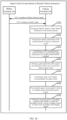
- FIG. 1a is a schematic diagram of an architecture of a game control system based on human-vehicle interaction provided in the embodiment of the present application
- the game control system includes: a mobile terminal 100 and a vehicle terminal 200.
- the mobile terminal 100 and a vehicle where the vehicle terminal 200 is located are both provided with an ultra-wide band (Ultra-Wide Band, UWB) module in advance, to ensure that UWB communication can be carried out between the mobile terminal 100 and the vehicle.
- UWB Ultra-Wide Band
- the UWB module preset on the vehicle is considered to be a positioning anchor point.
- the mobile terminal 100 is held by a user by default.
- an information interaction process between the mobile terminal 100 and the vehicle terminal 200 includes the following steps S101 to S118.
- step S101 an identity detection signal is sent by the vehicle terminal 200 to the mobile terminal 100.
- a signal transmission mode of the vehicle terminal 200 sending the identity detection signal to the mobile terminal 100 includes but is not limited to: Bluetooth transmission, WIFI transmission, etc.
- step S102 an identity signal is sent by the mobile terminal 100 to the vehicle terminal 200 after the identity detection signal is received.
- the mobile terminal 100 upon receiving the identity detection signal, will display a prompt to enter a password through a preset interface; and generate, after receiving the password entered by a holder of the mobile terminal 100, an identity signal containing the password and send the same to the vehicle.
- step S103 the identity signal is parsed by the vehicle terminal 200 to obtain identity information of the mobile terminal 100.
- step S104 the identity information of the mobile terminal 100 is verified by the vehicle terminal 200 to obtain a verification result.
- step S105 a UWB communication connection between the positioning anchor point preset on a vehicle and the mobile terminal 100 is established by the vehicle terminal 200 if the verification result indicates that the mobile terminal 100 has a communication authority.
- steps S101-S105 the process shown in steps S101-S105 is essentially that: the vehicle terminal 200 performs an authentication on the mobile terminal 100, and establishes, if it is determined that the mobile terminal 100 has passed the authentication, a communication connection between the positioning anchor point and the mobile terminal 100.
- the number of positioning anchor points preset on the vehicle is at least three, and the locations where each positioning anchor point is installed are different.
- the so-called UWB communication means that the positioning anchor point and the mobile terminal 100 can send and receive UWB signals sent by each other.
- step S106 a game application is run by the vehicle terminal 200 after a game start instruction from a user is received to obtain a game screen of the game application.
- game applications are prestored in the vehicle terminal 200, and the user can select a game application to run by sending a game start instruction.
- step S107 a game screen signal corresponding to the game screen is generated by the vehicle terminal 200.
- step S108 the game screen signal is processed by the vehicle terminal 200 to obtain an imaging signal containing the game screen.
- the imaging signal is transmitted through a bus
- a bus type includes but is not limited to a CAN bus or a LIN bus.
- step S109 the imaging signal is sent by the vehicle terminal 200 to a lamp module of the vehicle, to enable the lamp module to project imaging content in a preset area according to the imaging signal.
- the lamp module includes a digital light processing device and a projection lens. Particularly, after the imaging signal is received by the lamp module, the imaging signal is processed by the digital light processing device to obtain a projection light containing imaging content, and then the projection light is reflected into the projection lens, and the projection light is projected onto the ground through the projection lens, so that the imaging content is presented in the preset area (including but not limited to an area illuminated by the light of the lamp module).
- the so-called lamp module may particularly be a pixel lamp including a digital light processing device and a projection lens.
- the so-called imaging content includes: a game screen and a plurality of preset key patterns.
- the number and area of the key pattern may be set by the technical personnel according to the actual situation.
- the specific scene of the light module projecting the game screen and the key pattern on the ground in front of the vehicle here the ground in front of the vehicle is regarded as the preset area
- FIG. 1d the specific scene of the light module projecting the game screen and the key pattern on the ground in front of the vehicle
- step S110 a positioning signal is sent by the mobile terminal 100 to the positioning anchor point at a preset time interval.
- an execution sequence of step S110 includes but is not limited to the sequence shown in the embodiment(s) of the present application.
- the mobile terminal 100 after being initiated, may also maintain a state of sending the positioning signal to the positioning anchor point.
- step S111 a time when the positioning signal is received by the at least three positioning anchor points preset on the vehicle is obtained by the vehicle terminal 200.
- step S112 a position coordinate of the mobile terminal 100 in a preset spatial coordinate system is calculated by the vehicle terminal 200 based on the time when the positioning signal is received by the at least three positioning anchor points.
- an algorithm used in the calculation of the position coordinate of the mobile terminal 100 in the preset spatial coordinate system based on the time when the positioning signal is received by the at least three positioning anchor points includes, but not limited to, TOA algorithm, TDOA algorithm, AOA algorithm, TOA&AOA algorithm, TDOA&AOA algorithm and other wireless positioning algorithms.
- the wireless positioning algorithms such as TOA algorithm, TDOA algorithm, AOA algorithm, TOA&AOA algorithm, TDOA&AOA algorithm, etc., are all common knowledge familiar to persons skilled in the art, and will not be repeated here.
- the so-called preset spatial coordinate system includes but is not limited to: a spatial rectangular coordinate system established based on any positioning anchor point as the coordinate origin, an existing geodetic coordinate system, etc.
- step S 113 it is determined, by the vehicle terminal, whether the position coordinate is within a preset coordinate range.
- step S114 is executed, if the position coordinate is not within the preset coordinate range, then step S117 is executed.
- the preset coordinate range includes: position coordinates of the preset area in the preset spatial coordinate system. Particularly, if it is assumed that the preset area is a ground area illuminated by the lamp, then the preset coordinate range includes: position coordinates of the ground area illuminated by the lamps in the preset spatial coordinate system (taking the earth coordinate system as an example), and various position coordinates above the ground area illuminated by the lamps, all of which belong to the preset coordinate range.
- step S114 the position coordinate is identified by the vehicle terminal 200 as a valid coordinate.
- step S114 The vehicle terminal 200, after executing step S114, continues to execute step S115.
- step S115 a motion trajectory of the mobile terminal 100 is generated by the vehicle terminal 200 based on multiple valid coordinates obtained within a preset time period.
- the motion trajectory of the mobile terminal 100 includes but is not limited to: the user holding the mobile terminal 100 moves from one position to another (i.e., the trajectory of human-body movement), the user's hand holding the mobile terminal 100 moves from one position to another (i.e., the trajectory of hand movement), etc.
- the generating of the motion trajectory of the mobile terminal 100 based on the multiple valid coordinates obtained within the preset time period includes, but not limited to, a step of: linking the multiple valid coordinates generated within the preset time period in order from early to late, to obtain the motion trajectory of the mobile terminal 100 within the preset time period.
- the multiple valid coordinates within the preset time period include, but not limited to, the position coordinates generated when the user holding the mobile terminal 100 moves a certain distance within the preset area within the preset time period, or the position coordinates generated when the user's hand holding the mobile terminal 100 moves a certain distance.
- step S116 a gesture action corresponding to the motion trajectory is obtained by the vehicle terminal 200 from a preset gesture action library as the user's gesture action.
- the vehicle terminal after executing step S 116, continues to execute S 118.
- the preset gesture action library includes various motion trajectories and the gesture action corresponding to each of the motion trajectory.
- the so-called gesture action includes, but not limited to, a hand (i.e., the hand holding the mobile terminal 100) movement (e.g., left swipe, right swipe, up swipe, down swipe), a human-body (i.e., the human-body holding the mobile terminal 100) movement (e.g., left move, right move, forward move, backward move), etc.
- the vehicle terminal 200 may also be configured to obtain a human-body image taken by a camera preset on the vehicle, and perform human-body gesture recognition on the human-body image to obtain the user's gesture action.
- step S117 the position coordinate is identified by the vehicle terminal 200 as an invalid coordinate and deleted.
- step S118 a game instruction corresponding to the gesture action is obtained by the vehicle terminal 200 from a preset instruction library as the game instruction for operating the game application.
- the preset instruction library includes various gesture actions and the game instruction corresponding to each gesture action.
- the process shown in S112-S118 above is essentially that: the vehicle terminal 200 determines the game instruction for operating the game application based on the obtained gesture action of the user. In addition, in addition to using the user's gesture action to determine the game instruction for operating the game application, the vehicle terminal 200 may also use the user's position to determine the game instruction for operating the game application.
- the key pattern is a plane image
- the area where the key pattern is located shown in this embodiment particularly refers to a three-dimensional space area where the key pattern is on the ground, which may be simply understood as the space area located above the key pattern.
- the game application is controlled by the vehicle terminal 200 to execute the game instruction to obtain a changed game screen corresponding to the game instruction, so as to enable the game screen in the imaging content to be changed to the changed game screen.
- the scheme shown in this embodiment enables the users to achieve fun control of the game application running on the vehicle terminal 200 by performing any gesture action (such as hand movement and human-body movement), and the changed game screen corresponding to the game instruction can be projected through the lamp module, thereby the user's expectation for a higher interactive experience of intelligent automobiles is satisfied and the game entertainment experience of intelligent automobiles is enriched.
- any gesture action such as hand movement and human-body movement
- a corresponding game control method based on human-vehicle interaction is also provided in an embodiment of the present application.
- FIG. 2 is a flowchart of a game control method based on human-vehicle interaction provided in the embodiment of the present application
- the game control system is applied to the vehicle terminal 200 and includes the following steps S201 to S210.
- step S201 a mobile terminal 100 held by a user is authenticated in advance, and a communication connection is established between a positioning anchor point preset on a vehicle and the mobile terminal 100.
- At least three positioning anchor points is provided.
- step S202 a game application is run after a game start instruction from the user is received to obtain a game screen of the game application, and an imaging signal containing the game screen is generated.
- step S203 the imaging signal is sent to a lamp module of the vehicle to enable the lamp module to project imaging content in a preset area according to the imaging signal.
- the imaging content includes the game screen and a plurality of preset key patterns.
- step S204 a time when a positioning signal is received by at least three positioning anchor points preset on the vehicle is obtained.
- the positioning signal is sent by the mobile terminal 100 held by the user.
- step S205 a position coordinate of the mobile terminal 100 in a preset spatial coordinate system is determined based on the time when the positioning signal is received by the at least three positioning anchor points.
- step S206 the position coordinate is identified as a valid coordinate in case that the position coordinate is within a preset coordinate range.
- the preset coordinate range includes position coordinates of the preset area in the preset spatial coordinate system.
- step S207 a motion trajectory of the mobile terminal 100 is generated based on multiple valid coordinates obtained within the preset time period.
- step S208 a gesture action corresponding to the motion trajectory is obtained from a preset gesture action library as the user's gesture action.
- step S209 a game instruction corresponding to the user's gesture action is obtained from a preset instruction library as the game instruction for operating the game application.
- step S210 the game application is controlled to execute the game instruction to obtain a changed game screen corresponding to the game instruction, so as to enable the game screen in the imaging content to be changed to the changed game screen.
- the scheme shown in this embodiment enables the users to achieve fun control of the game application running on the vehicle terminal 200 by performing any gesture action (such as hand movement and human-body movement), and the changed game screen corresponding to the game instruction can be projected through the lamp module, thereby the user's expectation for a higher interactive experience of intelligent automobiles is satisfied and the game entertainment experience of intelligent automobiles is enriched.
- any gesture action such as hand movement and human-body movement
- step S201 mentioned in the above embodiment is an optional implementation manner of the game control method based on human-vehicle interaction described in this application.
- step S208 mentioned in the above embodiment is also an optional implementation manner of the game control method based on human-vehicle interaction described in this application. For this reason, the process described in the above embodiment may be summarized as a method shown in FIG. 3 .
- the game control method includes the following steps S301 to S304.
- step S301 a game application is run after a game start instruction from a user is received to obtain a game screen of the game application, and an imaging signal containing the game screen is generated.
- the game application is pre-saved.
- step S302 the imaging signal is sent to a lamp module of a vehicle to enable the lamp module to project imaging content in a preset area according to the imaging signal.
- the imaging content includes a game screen.
- step S303 a game instruction for operating the game application is determined based on an obtained gesture action of the user.
- step S304 the game application is controlled to execute the game instruction to obtain a changed game screen corresponding to the game instruction, so as to enable the game screen in the imaging content to be changed to the changed game screen.
- the scheme shown in this embodiment enables the users to achieve fun control of the game application running on the vehicle terminal by performing any gesture action (such as hand movement and human-body movement), and the changed game screen corresponding to the game instruction can be projected through the lamp module, thereby the user's expectation for a higher interactive experience of intelligent automobiles is satisfied and the game entertainment experience of intelligent automobiles is enriched.
- any gesture action such as hand movement and human-body movement
- a game control device based on human-vehicle interaction is also provided in an embodiment of the present application, and the game control device may be implemented by one or more processors.
- the game control device includes: a game running unit 401, a screen projection unit 402, an instruction determination unit 403 and a screen change unit 404.
- the game running unit 401 is configured to run a game application after receiving a game start instruction from a user to obtain a game screen of the game application, and generate an imaging signal containing the game screen.
- the game application is pre-saved.
- the screen projection unit 402 is configured to send the imaging signal to a lamp module of a vehicle, to enable the lamp module to project imaging content in a preset area according to the imaging signal.
- the imaging content includes a game screen.
- the instruction determination unit 403 is configured to determine a game instruction for operating the game application according to an obtained gesture action of the user.
- the instruction determination unit 403 is particularly configured to: obtain a time when a positioning signal is received by at least three positioning anchor points preset on the vehicle, where the positioning signal is sent by a mobile terminal held by the user; determine a position coordinate of the mobile terminal in a preset spatial coordinate system based on the time when the positioning signal is received by the at least three positioning anchor points; determine the gesture action of the user based on the position coordinate; and obtain a game instruction corresponding to the gesture action from a preset instruction library as the game instruction for operating the game application.
- the instruction determination unit 403 is also configured to: perform an authentication on the mobile terminal in advance and establish a communication connection between the positioning anchor points and the mobile terminal.
- the instruction determination unit 403 is particularly configured to: identify the position coordinate as a valid coordinate in case that the position coordinate is within a preset coordinate range, where the preset coordinate range includes position coordinates of the preset area in the preset spatial coordinate system; and generate a motion trajectory of the mobile terminal based on multiple valid coordinates obtained within a preset time period; obtain a gesture action corresponding to the motion trajectory from a preset gesture action library as the gesture action of the user.
- the instruction determination unit 403 is particularly configured to: obtain a human-body image taken by a camera preset on the vehicle; perform human-body posture recognition on the human-body image to obtain the posture action of the user; obtain a game instruction corresponding to the posture action from a preset instruction library as the game instruction for operating the game application.
- the instruction determination unit 403 is also configured to determine the game instruction for operating the game application according to an obtained position of the user.
- the instruction determination unit 403 is particularly configured to: obtain the time when the positioning signal is received by the at least three positioning anchor points preset on the vehicle, where the positioning signal is sent by the mobile terminal held by the user; obtain a position of the user based on the time when the positioning signal is received by the at least three positioning anchor points; obtain a game instruction corresponding to the key pattern where the position is located from the preset instruction library in case that the position is located in the area where any key pattern is located and maintained for a preset duration, as the game instruction for operating the game application.
- the screen change unit 404 is configured to control the game application to execute the game instruction, to obtain a changed game screen corresponding to the game instruction, so as to enable the game screen in the imaging content to be changed to the changed game screen.
- Each of the above units may be implemented by one or more processors.
- the processor in the embodiment(s) of the present application may be a central processing unit (Central Processing Unit, CPU), or other general-purpose processors, a digital signal processor (Digital Signal Processor, DSP), an application-specific integrated circuit (Application Specific Integrated Circuit, ASIC), a field programmable gate array (Field Programmable Gate Array, FPGA) or other programmable logic devices, transistor logic devices, hardware components or any combination thereof.
- the general-purpose processor may be a microprocessor or any conventional processor.
- the scheme shown in this embodiment enables the users to achieve fun control of the game application running on the vehicle terminal by performing any gesture action (such as hand movement and human-body movement), and the changed game screen corresponding to the game instruction can be projected through the lamp module, thereby the user's expectation for a higher interactive experience of intelligent automobiles is satisfied and the game entertainment experience of intelligent automobiles is enriched.
- any gesture action such as hand movement and human-body movement
- the present application also provides a vehicle terminal, which includes a computer program stored therein, where the computer program is configured to execute the game control method based on human-vehicle interaction provided by the present application.
- the present application also provides a vehicle, which includes a computer program stored therein, where the computer program, when running on the vehicle, causes the game control method based on human-vehicle interaction provided by the present application to be performed.
- the functions described in the method embodiment(s) of the present application may be stored in a storage medium readable by a computing device.
- the software product is stored in a storage medium and includes several instructions that are configured to cause a computing device (which may be a personal computer, a server, a mobile computing device or a network device, etc.) to perform all or part of the steps of the method described in each embodiment of the present application.
- the aforementioned storage medium includes various media that can store program codes, such as U disk, a mobile hard disk, a read-only memory, a random-access memory, a disk or an optical disk, etc.
- each embodiment is described in a progressive manner, and each embodiment focuses on the differences from other embodiments.
- the same or similar parts between the embodiments can be referred to each other.
Landscapes
- Engineering & Computer Science (AREA)
- Multimedia (AREA)
- Human Computer Interaction (AREA)
- Physics & Mathematics (AREA)
- Optics & Photonics (AREA)
- Computer Networks & Wireless Communication (AREA)
- Environmental & Geological Engineering (AREA)
- Radar, Positioning & Navigation (AREA)
- User Interface Of Digital Computer (AREA)
Abstract
Description
- This application claims the priority of the
Chinese patent application No. 202210042402.2, entitled "Game Control Method Based on Human-Vehicle Interaction, Device, Vehicle Terminal and Vehicle" and filed with the Chinese Patent Office on January 14, 2022 - The present application relates to the field of intelligent automobile technology, and in particular to a game control method based on human-vehicle interaction, a device, a vehicle terminal and a vehicle.
- With the development of science and technology, automobiles are no longer just a means of transportation in the traditional sense, but also take into account functions such as gaming and entertainment. In existing technologies, users play games in automobiles mainly through game interaction between intelligent terminals and vehicle terminals, for example, play games with a smart phone as a game pad and a vehicle terminal as a game console, or control automobile lights to flash at a preset rhythm through an intelligent terminal.
- Obviously, in the game interaction manner of the existing technologies, the human-vehicle interaction process needs to completely rely on intelligent terminals for game control, which cannot reflect the intelligent effect of the vehicle and cannot meet users' expectations for a higher interactive experience of intelligent automobiles.
- The present application provides a game control method based on human-vehicle interaction, a device, a vehicle terminal and a vehicle, aiming to meet the users' expectations for a higher interactive experience of intelligent automobiles and enrich the game entertainment experience of intelligent automobiles.
- To achieve the above objectives, the present application provides the following technical schemes:
A game control method based on human-vehicle interaction is provided, which is applied to a vehicle terminal and includes the following steps: - running, after receiving a game start instruction from a user, a game application to obtain a game screen of the game application, and generating an imaging signal containing the game screen; the game application is pre-saved;
- sending the imaging signal to a lamp module of a vehicle, to enable the lamp module to project imaging content in a preset area according to the imaging signal; the imaging content includes the game screen;
- determining a game instruction for operating the game application according to an obtained gesture action of the user; and
- controlling the game application to execute the game instruction to obtain a changed game screen corresponding to the game instruction, so as to enable the game screen in the imaging content to be changed to the changed game screen.
- Optionally, the step of determining the game instruction for operating the game application according to the obtained gesture action of the user includes:
- obtaining a time when a positioning signal is received by at least three positioning anchor points preset on the vehicle, where the positioning signal is sent by a mobile terminal held by the user;
- determining a position coordinate of the mobile terminal in a preset spatial coordinate system based on the time when the positioning signal is received by the at least three positioning anchor points;
- determining a gesture action of the user based on the position coordinate; and
- obtaining a game instruction corresponding to the gesture action from a preset instruction library as the game instruction for operating the game application.
- Optionally, before the step of acquiring the time when at least three positioning anchor points preset on the vehicle receive positioning signals, the method also includes a step of:
performing an authentication on the mobile terminal in advance and establishing a communication connection between the positioning anchor points and the mobile terminal. - Optionally, the step of determining the gesture action of the user based on the position coordinate includes:
- identifying the position coordinate as a valid coordinate in case that the position coordinate is within a preset coordinate range, and the preset coordinate range includes position coordinates of the preset area in the preset spatial coordinate system;
- generating a motion trajectory of the mobile terminal based on multiple valid coordinates obtained within a preset time period; and
- obtaining a gesture action corresponding to the motion trajectory from a preset gesture action library as the gesture action of the user.
- Optionally, the step of determining the game instruction for operating the game application according to the obtained gesture action of the user includes:
- obtaining a human-body image taken by a camera preset on the vehicle;
- performing human-body gesture recognition on the human-body image to obtain a gesture action of the user; and
- obtaining a game instruction corresponding to the gesture action from a preset instruction library as the game instruction for operating the game application.
- Optionally, after the step of sending imaging signal to the lamp module of the vehicle to enable the lamp module to project the imaging content in the preset area according to the imaging signal, the method also includes:
determining the game instruction for operating the game application according to an obtained position of the user. - Optionally, the imaging content also includes a plurality of preset key patterns.
- The step of determining the game instruction for operating the game application according to an obtained position of the user includes:
- obtaining a time when a positioning signal is received by at least three positioning anchor points preset on the vehicle, the positioning signal is sent by a mobile terminal held by the user;
- obtaining a position of the user according to the time when the positioning signal is received by the at least three positioning anchor points; and
- obtaining a game instruction corresponding to a key pattern where the position is located from the preset instruction library in case that the position is located in an area where any of the key patterns is located and maintained for a preset duration, as the game instruction for operating the game application.
- A game control device based on human-vehicle interaction is provided, which includes: a game running unit, a screen projection unit, an instruction determination unit and a screen change unit.
- The game running unit is configured to run a game application after receiving a game start instruction from a user to obtain a game screen of the game application, and generate an imaging signal containing the game screen, wherein the game application is pre-saved.
- The screen projection unit is configured to send the imaging signal to a lamp module of a vehicle, to enable the lamp module to project imaging content in a preset area according to the imaging signal, and the imaging content comprises the game screen.
- The instruction determination unit is configured to determine a game instruction for operating the game application according to an obtained gesture action of the user.
- The screen change unit is configured to control the game application to execute the game instruction, obtain a changed game screen corresponding to the game instruction, so as to enable the game screen in the imaging content to be changed to the changed game screen.
- A vehicle terminal is provided, the vehicle terminal includes a stored program, wherein the program is configured to execute the game control method based on human-vehicle interaction.
- A vehicle is provided, the vehicle includes a stored program, wherein the program, when running on the vehicle, causes the game control method based on human-vehicle interaction to be implemented.
- In the technical scheme provided by the present application, a game application is run after receiving a game start instruction from a user to obtain a game screen of the game application, and an imaging signal containing the game screen is generated. The imaging signal is sent to a lamp module of a vehicle to enable the lamp module to project imaging content in a preset area according to the imaging signal. A game instruction for operating the game application is determined according to an obtained gesture action of the user. The game application is controlled to execute the game instruction to obtain a changed game screen corresponding to the game instruction, so as to enable the game screen in the imaging content to be changed to a changed game screen. Compared with the existing technologies in which users can only operate intelligent terminals to control game application, the above scheme shown in the present application enables the users to achieve fun control of the game application running on the vehicle by performing any gesture action (such as hand movements and body movements), and the changed game screen corresponding to the game instruction can be projected through the lamp module, thereby the users' expectations for a higher interactive experience of intelligent automobiles can be satisfied and the game entertainment experience of intelligent automobiles can be enriched.
- In order to illustrate the technical solutions in the embodiments of the present application more clearly, the drawings that need to be used in the description of the embodiments or exemplary technologies will be briefly introduced below. Obviously, the drawings in the following description are merely some embodiments of the present application, for a person of ordinary skill in the art, other drawings may also be obtained based on these drawings without exerting creative efforts.
-
FIG. 1a is a schematic diagram of an architecture of a game control system based on human-vehicle interaction provided in an embodiment of the present application; -
FIG. 1b is a schematic diagram of an interaction process provided in an embodiment of the present application; -
FIG. 1c is a schematic diagram of an interaction process provided in an embodiment of the present application; -
FIG. 1d is a schematic diagram of an application scenario provided in an embodiment of the present application; -
FIG. 2 is a flowchart of a game control method based on human-vehicle interaction provided in an embodiment of the present application; -
FIG. 3 is a flowchart of another game control method based on human-vehicle interaction provided in an embodiment of the present application; and -
FIG. 4 is a schematic diagram of an architecture of a game control device based on human-vehicle interaction provided in an embodiment of the present application. - The following will combine the drawings in the embodiments of the present application to clearly and completely describe the technical solutions in the embodiments of the present application. Obviously, the described embodiments are merely some embodiments of the present application, not all of the embodiments of the present application. Based on the embodiments in the present application, all other embodiments obtained by persons skilled in the art without exerting creative efforts should all be included within the protection scope of the present application.
- As shown in
FIG. 1a which is a schematic diagram of an architecture of a game control system based on human-vehicle interaction provided in the embodiment of the present application, the game control system includes: amobile terminal 100 and avehicle terminal 200. - Herein, the
mobile terminal 100 and a vehicle where thevehicle terminal 200 is located are both provided with an ultra-wide band (Ultra-Wide Band, UWB) module in advance, to ensure that UWB communication can be carried out between themobile terminal 100 and the vehicle. In the embodiment(s) of the present application, the UWB module preset on the vehicle is considered to be a positioning anchor point. In addition, themobile terminal 100 is held by a user by default. - It should be noted that an information interaction process between the
mobile terminal 100 and thevehicle terminal 200, as shown inFIGS. 1b and1c , includes the following steps S101 to S118. - In step S101: an identity detection signal is sent by the
vehicle terminal 200 to themobile terminal 100. - Herein, a signal transmission mode of the
vehicle terminal 200 sending the identity detection signal to themobile terminal 100 includes but is not limited to: Bluetooth transmission, WIFI transmission, etc. - In step S102: an identity signal is sent by the
mobile terminal 100 to thevehicle terminal 200 after the identity detection signal is received. - Herein, the
mobile terminal 100, upon receiving the identity detection signal, will display a prompt to enter a password through a preset interface; and generate, after receiving the password entered by a holder of themobile terminal 100, an identity signal containing the password and send the same to the vehicle. - In step S103: the identity signal is parsed by the
vehicle terminal 200 to obtain identity information of themobile terminal 100. - In step S104: the identity information of the
mobile terminal 100 is verified by thevehicle terminal 200 to obtain a verification result. - In step S105: a UWB communication connection between the positioning anchor point preset on a vehicle and the
mobile terminal 100 is established by thevehicle terminal 200 if the verification result indicates that themobile terminal 100 has a communication authority. - Among them, the process shown in steps S101-S105 is essentially that: the
vehicle terminal 200 performs an authentication on themobile terminal 100, and establishes, if it is determined that themobile terminal 100 has passed the authentication, a communication connection between the positioning anchor point and themobile terminal 100. - It should be noted that the number of positioning anchor points preset on the vehicle is at least three, and the locations where each positioning anchor point is installed are different. The so-called UWB communication means that the positioning anchor point and the
mobile terminal 100 can send and receive UWB signals sent by each other. - In step S106: a game application is run by the
vehicle terminal 200 after a game start instruction from a user is received to obtain a game screen of the game application. - Herein, game applications are prestored in the
vehicle terminal 200, and the user can select a game application to run by sending a game start instruction. - In step S107: a game screen signal corresponding to the game screen is generated by the
vehicle terminal 200. - In step S108: the game screen signal is processed by the
vehicle terminal 200 to obtain an imaging signal containing the game screen. - Herein, the imaging signal is transmitted through a bus, and a bus type includes but is not limited to a CAN bus or a LIN bus.
- In step S109: the imaging signal is sent by the
vehicle terminal 200 to a lamp module of the vehicle, to enable the lamp module to project imaging content in a preset area according to the imaging signal. - Herein, the lamp module includes a digital light processing device and a projection lens. Particularly, after the imaging signal is received by the lamp module, the imaging signal is processed by the digital light processing device to obtain a projection light containing imaging content, and then the projection light is reflected into the projection lens, and the projection light is projected onto the ground through the projection lens, so that the imaging content is presented in the preset area (including but not limited to an area illuminated by the light of the lamp module). In the embodiment(s) of the present application, the so-called lamp module may particularly be a pixel lamp including a digital light processing device and a projection lens.
- It should be noted that the so-called imaging content includes: a game screen and a plurality of preset key patterns. In the embodiment(s) of the present application, the number and area of the key pattern may be set by the technical personnel according to the actual situation. Particularly, the specific scene of the light module projecting the game screen and the key pattern on the ground in front of the vehicle (here the ground in front of the vehicle is regarded as the preset area) may be seen in
FIG. 1d . - In step S110: a positioning signal is sent by the
mobile terminal 100 to the positioning anchor point at a preset time interval. - Herein, an execution sequence of step S110 includes but is not limited to the sequence shown in the embodiment(s) of the present application. Particularly, the
mobile terminal 100, after being initiated, may also maintain a state of sending the positioning signal to the positioning anchor point. - In step S111: a time when the positioning signal is received by the at least three positioning anchor points preset on the vehicle is obtained by the
vehicle terminal 200. - Herein, if it is wanted to locate the three-dimensional spatial coordinates of the
mobile terminal 100, a vertical distance between each positioning anchor point is required. - In step S112: a position coordinate of the
mobile terminal 100 in a preset spatial coordinate system is calculated by thevehicle terminal 200 based on the time when the positioning signal is received by the at least three positioning anchor points. - Herein, an algorithm used in the calculation of the position coordinate of the
mobile terminal 100 in the preset spatial coordinate system based on the time when the positioning signal is received by the at least three positioning anchor points includes, but not limited to, TOA algorithm, TDOA algorithm, AOA algorithm, TOA&AOA algorithm, TDOA&AOA algorithm and other wireless positioning algorithms. In general, the wireless positioning algorithms such as TOA algorithm, TDOA algorithm, AOA algorithm, TOA&AOA algorithm, TDOA&AOA algorithm, etc., are all common knowledge familiar to persons skilled in the art, and will not be repeated here. - It should be noted that the so-called preset spatial coordinate system includes but is not limited to: a spatial rectangular coordinate system established based on any positioning anchor point as the coordinate origin, an existing geodetic coordinate system, etc.
- In step S 113: it is determined, by the vehicle terminal, whether the position coordinate is within a preset coordinate range.
- If the position coordinate is within the preset coordinate range, then step S114 is executed, if the position coordinate is not within the preset coordinate range, then step S117 is executed.
- It should be noted that the preset coordinate range includes: position coordinates of the preset area in the preset spatial coordinate system. Particularly, if it is assumed that the preset area is a ground area illuminated by the lamp, then the preset coordinate range includes: position coordinates of the ground area illuminated by the lamps in the preset spatial coordinate system (taking the earth coordinate system as an example), and various position coordinates above the ground area illuminated by the lamps, all of which belong to the preset coordinate range.
- In step S114: the position coordinate is identified by the
vehicle terminal 200 as a valid coordinate. - The
vehicle terminal 200, after executing step S114, continues to execute step S115. - In step S115: a motion trajectory of the
mobile terminal 100 is generated by thevehicle terminal 200 based on multiple valid coordinates obtained within a preset time period. - Herein, the motion trajectory of the
mobile terminal 100 includes but is not limited to: the user holding themobile terminal 100 moves from one position to another (i.e., the trajectory of human-body movement), the user's hand holding themobile terminal 100 moves from one position to another (i.e., the trajectory of hand movement), etc. - Particularly, the generating of the motion trajectory of the
mobile terminal 100 based on the multiple valid coordinates obtained within the preset time period includes, but not limited to, a step of: linking the multiple valid coordinates generated within the preset time period in order from early to late, to obtain the motion trajectory of themobile terminal 100 within the preset time period. - It should be noted that the multiple valid coordinates within the preset time period include, but not limited to, the position coordinates generated when the user holding the
mobile terminal 100 moves a certain distance within the preset area within the preset time period, or the position coordinates generated when the user's hand holding themobile terminal 100 moves a certain distance. - In step S116: a gesture action corresponding to the motion trajectory is obtained by the
vehicle terminal 200 from a preset gesture action library as the user's gesture action. - The vehicle terminal, after executing
step S 116, continues to execute S 118. - Herein, the preset gesture action library includes various motion trajectories and the gesture action corresponding to each of the motion trajectory. The so-called gesture action includes, but not limited to, a hand (i.e., the hand holding the mobile terminal 100) movement (e.g., left swipe, right swipe, up swipe, down swipe), a human-body (i.e., the human-body holding the mobile terminal 100) movement (e.g., left move, right move, forward move, backward move), etc.
- Optionally, in addition to obtaining the gesture action corresponding to the motion trajectory from the gesture action library as the user's gesture action, the
vehicle terminal 200 may also be configured to obtain a human-body image taken by a camera preset on the vehicle, and perform human-body gesture recognition on the human-body image to obtain the user's gesture action. - It should be noted that the specific implementation process of human-body gesture recognition is a technical means familiar to persons skilled in the art, and will not be repeated here.
- In step S117, the position coordinate is identified by the
vehicle terminal 200 as an invalid coordinate and deleted. - In step S118: a game instruction corresponding to the gesture action is obtained by the
vehicle terminal 200 from a preset instruction library as the game instruction for operating the game application. - Herein, the preset instruction library includes various gesture actions and the game instruction corresponding to each gesture action.
- It should be noted that the process shown in S112-S118 above is essentially that: the
vehicle terminal 200 determines the game instruction for operating the game application based on the obtained gesture action of the user. In addition, in addition to using the user's gesture action to determine the game instruction for operating the game application, thevehicle terminal 200 may also use the user's position to determine the game instruction for operating the game application. - Particularly, the process of utilizing the user's position to determine the game instruction for operating the game application is as follows:
- 1. Obtaining the time when the positioning signal is received by the at least three positioning anchor points preset on the vehicle.
- 2. Obtaining the user's position based on the time when the positioning signal is received by the at least three positioning anchor points.
Generally speaking, the user's position is essentially the position of themobile terminal 100, and the corresponding calculation process may refer to the above step S112 and the explanation of this step. - 3. Obtaining, in case that the user's position is located in the area where any key pattern is located and maintained for a preset duration, the game instruction corresponding to the key pattern where the position is located from the preset instruction library as the game instruction for operating the game application.
- It should be noted that since the key pattern is a plane image, the area where the key pattern is located shown in this embodiment particularly refers to a three-dimensional space area where the key pattern is on the ground, which may be simply understood as the space area located above the key pattern.
- S119: the game application is controlled by the
vehicle terminal 200 to execute the game instruction to obtain a changed game screen corresponding to the game instruction, so as to enable the game screen in the imaging content to be changed to the changed game screen. - In summary, compared with the existing technologies in which users can only operate intelligent terminals to control game applications, the scheme shown in this embodiment enables the users to achieve fun control of the game application running on the
vehicle terminal 200 by performing any gesture action (such as hand movement and human-body movement), and the changed game screen corresponding to the game instruction can be projected through the lamp module, thereby the user's expectation for a higher interactive experience of intelligent automobiles is satisfied and the game entertainment experience of intelligent automobiles is enriched. - Based on the information interaction process shown in the above embodiment, a corresponding game control method based on human-vehicle interaction is also provided in an embodiment of the present application.
- As shown in
FIG. 2 which is a flowchart of a game control method based on human-vehicle interaction provided in the embodiment of the present application, the game control system is applied to thevehicle terminal 200 and includes the following steps S201 to S210. - In step S201: a
mobile terminal 100 held by a user is authenticated in advance, and a communication connection is established between a positioning anchor point preset on a vehicle and themobile terminal 100. - Herein, at least three positioning anchor points is provided.
- In step S202: a game application is run after a game start instruction from the user is received to obtain a game screen of the game application, and an imaging signal containing the game screen is generated.
- In step S203: the imaging signal is sent to a lamp module of the vehicle to enable the lamp module to project imaging content in a preset area according to the imaging signal.
- The imaging content includes the game screen and a plurality of preset key patterns.
- In step S204: a time when a positioning signal is received by at least three positioning anchor points preset on the vehicle is obtained.
- The positioning signal is sent by the
mobile terminal 100 held by the user. - In step S205: a position coordinate of the
mobile terminal 100 in a preset spatial coordinate system is determined based on the time when the positioning signal is received by the at least three positioning anchor points. - In step S206: the position coordinate is identified as a valid coordinate in case that the position coordinate is within a preset coordinate range.
- The preset coordinate range includes position coordinates of the preset area in the preset spatial coordinate system.
- In step S207: a motion trajectory of the
mobile terminal 100 is generated based on multiple valid coordinates obtained within the preset time period. - In step S208: a gesture action corresponding to the motion trajectory is obtained from a preset gesture action library as the user's gesture action.
- In step S209: a game instruction corresponding to the user's gesture action is obtained from a preset instruction library as the game instruction for operating the game application.
- In step S210: the game application is controlled to execute the game instruction to obtain a changed game screen corresponding to the game instruction, so as to enable the game screen in the imaging content to be changed to the changed game screen.
- In summary, compared with the existing technologies in which users can only operate intelligent terminals to control game applications, the scheme shown in this embodiment enables the users to achieve fun control of the game application running on the
vehicle terminal 200 by performing any gesture action (such as hand movement and human-body movement), and the changed game screen corresponding to the game instruction can be projected through the lamp module, thereby the user's expectation for a higher interactive experience of intelligent automobiles is satisfied and the game entertainment experience of intelligent automobiles is enriched. - It should be noted that step S201 mentioned in the above embodiment is an optional implementation manner of the game control method based on human-vehicle interaction described in this application. In addition, step S208 mentioned in the above embodiment is also an optional implementation manner of the game control method based on human-vehicle interaction described in this application. For this reason, the process described in the above embodiment may be summarized as a method shown in
FIG. 3 . - As shown in
FIG. 3 which is another flowchart of a game control method based on human-vehicle interaction provided in an embodiment of the present application, the game control method includes the following steps S301 to S304. - In step S301: a game application is run after a game start instruction from a user is received to obtain a game screen of the game application, and an imaging signal containing the game screen is generated.
- Herein, the game application is pre-saved.
- In step S302, the imaging signal is sent to a lamp module of a vehicle to enable the lamp module to project imaging content in a preset area according to the imaging signal.
- Herein, the imaging content includes a game screen.
- In step S303: a game instruction for operating the game application is determined based on an obtained gesture action of the user.
- In step S304: the game application is controlled to execute the game instruction to obtain a changed game screen corresponding to the game instruction, so as to enable the game screen in the imaging content to be changed to the changed game screen.
- In summary, compared with the existing technologies in which users can only operate intelligent terminals to control game applications, the scheme shown in this embodiment enables the users to achieve fun control of the game application running on the vehicle terminal by performing any gesture action (such as hand movement and human-body movement), and the changed game screen corresponding to the game instruction can be projected through the lamp module, thereby the user's expectation for a higher interactive experience of intelligent automobiles is satisfied and the game entertainment experience of intelligent automobiles is enriched.
- Corresponding to the game control method based on human-vehicle interaction provided in the above-mentioned embodiment of the present application, a game control device based on human-vehicle interaction is also provided in an embodiment of the present application, and the game control device may be implemented by one or more processors.
- As shown in
FIG. 4 which is a schematic diagram of an architecture of a game control device based on human-vehicle interaction provided in the embodiment of the present application, the game control device includes: agame running unit 401, ascreen projection unit 402, aninstruction determination unit 403 and ascreen change unit 404. - The
game running unit 401 is configured to run a game application after receiving a game start instruction from a user to obtain a game screen of the game application, and generate an imaging signal containing the game screen. The game application is pre-saved. - The
screen projection unit 402 is configured to send the imaging signal to a lamp module of a vehicle, to enable the lamp module to project imaging content in a preset area according to the imaging signal. The imaging content includes a game screen. - The
instruction determination unit 403 is configured to determine a game instruction for operating the game application according to an obtained gesture action of the user. - Herein, the
instruction determination unit 403 is particularly configured to: obtain a time when a positioning signal is received by at least three positioning anchor points preset on the vehicle, where the positioning signal is sent by a mobile terminal held by the user; determine a position coordinate of the mobile terminal in a preset spatial coordinate system based on the time when the positioning signal is received by the at least three positioning anchor points; determine the gesture action of the user based on the position coordinate; and obtain a game instruction corresponding to the gesture action from a preset instruction library as the game instruction for operating the game application. - The
instruction determination unit 403 is also configured to: perform an authentication on the mobile terminal in advance and establish a communication connection between the positioning anchor points and the mobile terminal. - The
instruction determination unit 403 is particularly configured to: identify the position coordinate as a valid coordinate in case that the position coordinate is within a preset coordinate range, where the preset coordinate range includes position coordinates of the preset area in the preset spatial coordinate system; and generate a motion trajectory of the mobile terminal based on multiple valid coordinates obtained within a preset time period; obtain a gesture action corresponding to the motion trajectory from a preset gesture action library as the gesture action of the user. - The
instruction determination unit 403 is particularly configured to: obtain a human-body image taken by a camera preset on the vehicle; perform human-body posture recognition on the human-body image to obtain the posture action of the user; obtain a game instruction corresponding to the posture action from a preset instruction library as the game instruction for operating the game application. - The
instruction determination unit 403 is also configured to determine the game instruction for operating the game application according to an obtained position of the user. - The
instruction determination unit 403 is particularly configured to: obtain the time when the positioning signal is received by the at least three positioning anchor points preset on the vehicle, where the positioning signal is sent by the mobile terminal held by the user; obtain a position of the user based on the time when the positioning signal is received by the at least three positioning anchor points; obtain a game instruction corresponding to the key pattern where the position is located from the preset instruction library in case that the position is located in the area where any key pattern is located and maintained for a preset duration, as the game instruction for operating the game application. - The
screen change unit 404 is configured to control the game application to execute the game instruction, to obtain a changed game screen corresponding to the game instruction, so as to enable the game screen in the imaging content to be changed to the changed game screen. - Each of the above units may be implemented by one or more processors.
- It can be understood that the processor in the embodiment(s) of the present application may be a central processing unit (Central Processing Unit, CPU), or other general-purpose processors, a digital signal processor (Digital Signal Processor, DSP), an application-specific integrated circuit (Application Specific Integrated Circuit, ASIC), a field programmable gate array (Field Programmable Gate Array, FPGA) or other programmable logic devices, transistor logic devices, hardware components or any combination thereof. The general-purpose processor may be a microprocessor or any conventional processor.
- In summary, compared with the existing technologies in which users can only operate intelligent terminals to control game applications, the scheme shown in this embodiment enables the users to achieve fun control of the game application running on the vehicle terminal by performing any gesture action (such as hand movement and human-body movement), and the changed game screen corresponding to the game instruction can be projected through the lamp module, thereby the user's expectation for a higher interactive experience of intelligent automobiles is satisfied and the game entertainment experience of intelligent automobiles is enriched.
- The present application also provides a vehicle terminal, which includes a computer program stored therein, where the computer program is configured to execute the game control method based on human-vehicle interaction provided by the present application.
- The present application also provides a vehicle, which includes a computer program stored therein, where the computer program, when running on the vehicle, causes the game control method based on human-vehicle interaction provided by the present application to be performed.
- The functions described in the method embodiment(s) of the present application, if implemented in the form of a software functional unit and sold or used as an independent product, may be stored in a storage medium readable by a computing device. Based on this understanding, the part of the embodiment of the present application or the part of the technical solution that contributes to the prior art may be presented in the form of a software product. The software product is stored in a storage medium and includes several instructions that are configured to cause a computing device (which may be a personal computer, a server, a mobile computing device or a network device, etc.) to perform all or part of the steps of the method described in each embodiment of the present application. The aforementioned storage medium includes various media that can store program codes, such as U disk, a mobile hard disk, a read-only memory, a random-access memory, a disk or an optical disk, etc.
- In this disclosure, each embodiment is described in a progressive manner, and each embodiment focuses on the differences from other embodiments. The same or similar parts between the embodiments can be referred to each other.
- The above description of the disclosed embodiments enables professional and technical personnel in this field to implement or use the present application. Various modifications to these embodiments will be apparent to persons skilled in the art, and the general principles defined herein may be implemented in other embodiments without departing from the spirit or scope of the present application. Therefore, the present application will not be limited to the embodiments shown herein, but will conform to the broadest scope consistent with the principles and novel features disclosed herein.
Claims (10)
- A game control method based on human-vehicle interaction, characterized by being applied to a vehicle terminal and comprising:running, upon receiving a game start instruction from a user, a game application to obtain a game screen of the game application, and generating an imaging signal containing the game screen, wherein the game application is pre-saved;sending the imaging signal to a lamp module of a vehicle, to enable the lamp module to project imaging content in a preset area according to the imaging signal, wherein the imaging content comprises the game screen;determining a game instruction for operating the game application according to an obtained gesture action of the user; andcontrolling the game application to execute the game instruction to obtain a changed game screen corresponding to the game instruction, so as to enable the game screen in the imaging content to be changed to the changed game screen.
- The method according to claim 1, characterized in that the step of determining the game instruction for operating the game application according to the obtained gesture actions of the user comprises:obtaining a time when a positioning signal is received by at least three positioning anchor points preset on the vehicle, wherein the positioning signal is sent by a mobile terminal held by the user;determining a position coordinate of the mobile terminal in a preset spatial coordinate system based on the time when the positioning signal is received by the at least three positioning anchor points;determining a gesture action of the user based on the position coordinate; andobtaining a game instruction corresponding to the gesture action from a preset instruction library as the game instruction for operating the game application.
- The method according to claim 2, characterized in that, before the step of obtaining the time when the positioning signal is received by the at least three positioning anchor points preset on the vehicle, the game control method further comprises:
performing an authentication on the mobile terminal in advance and establishing a communication connection between the positioning anchor points and the mobile terminal. - The method according to claim 2 is characterized in that the step of determining the gesture action of the user based on the position coordinate comprises:identifying the position coordinate as a valid coordinate in case that the position coordinate is within a preset coordinate range, and the preset coordinate range comprises position coordinates of the preset area in the preset spatial coordinate system;generating a motion trajectory of the mobile terminal based on multiple valid coordinates obtained within a preset time period; andobtaining a gesture action corresponding to the motion trajectory from a preset gesture action library as the gesture action of the user.
- The method according to claim 1, characterized in that the step of determining the game instruction for operating the game application according to the obtained gesture action of the user comprises:obtaining a human-body image taken by a camera preset on the vehicle;performing human-body gesture recognition on the human-body image to obtain a gesture action of the user; andobtaining a game instruction corresponding to the gesture action from a preset instruction library as the game instruction for operating the game application.
- The method according to claim 1, characterized in that, after the step of sending the imaging signal to the lamp module of the vehicle, to enable the lamp module to project and imaging content in the preset area according to the imaging signal, the game control method further comprises:
determining the game instruction for operating the game application according to an obtained position of the user. - The method according to claim 6, characterized in that the imaging content further comprises a plurality of preset key patterns; and
the step of determining the game instruction for operating the game application according to the obtained position of the user comprises:obtaining a time when a positioning signal is received by at least three positioning anchor points preset on the vehicle, the positioning signal is sent by a mobile terminal held by the user;obtaining a position of the user according to the time when the positioning signal is received by the at least three positioning anchor points; andobtaining a game instruction corresponding to a key pattern where the position is located from the preset instruction library in case that the position is located in an area where any of the key patterns is located and maintained for a preset duration, as the game instruction for operating the game application. - A game control device based on human-vehicle interaction, characterized by comprising:a game running unit, configured to run a game application after receiving a game start instruction from a user to obtain a game screen of the game application, and generate an imaging signal containing the game screen, wherein the game application is pre-saved;a screen projection unit, configured to send the imaging signal to a lamp module of a vehicle, to enable the lamp module to project imaging content in a preset area according to the imaging signal, and the imaging content comprises the game screen;an instruction determination unit, configured to determine a game instruction for operating the game application according to an obtained gesture action of the user; anda screen change unit, configured to control the game application to execute the game instruction, obtain a changed game screen corresponding to the game instruction, so as to enable the game screen in the imaging content to be changed to the changed game screen.
- A vehicle terminal, characterized by comprising a computer program stored in the vehicle terminal, wherein the computer program is configured to execute the game control method based on human-vehicle interaction according to any one of claims 1-7.
- A vehicle, characterized by comprising a computer program stored in the vehicle, wherein the computer program, when running on the vehicle, causes the game control method based on human-vehicle interaction according to any one of claims 1-7 to be implemented.
Applications Claiming Priority (2)
| Application Number | Priority Date | Filing Date | Title |
|---|---|---|---|
| CN202210042402.2A CN115120961B (en) | 2022-01-14 | 2022-01-14 | Game control method, device, vehicle-mounted terminal and vehicle based on human-vehicle interaction |
| PCT/CN2023/071176 WO2023134603A1 (en) | 2022-01-14 | 2023-01-09 | Game control method and apparatus based on human-vehicle interaction, vehicle-mounted end, and vehicle |
Publications (3)
| Publication Number | Publication Date |
|---|---|
| EP4464389A1 true EP4464389A1 (en) | 2024-11-20 |
| EP4464389A4 EP4464389A4 (en) | 2025-04-16 |
| EP4464389B1 EP4464389B1 (en) | 2026-04-29 |
Family
ID=83375390
Family Applications (1)
| Application Number | Title | Priority Date | Filing Date |
|---|---|---|---|
| EP23739945.6A Active EP4464389B1 (en) | 2022-01-14 | 2023-01-09 | Game control method and apparatus based on human-vehicle interaction, vehicle-mounted end, and vehicle |
Country Status (3)
| Country | Link |
|---|---|
| EP (1) | EP4464389B1 (en) |
| CN (1) | CN115120961B (en) |
| WO (1) | WO2023134603A1 (en) |
Families Citing this family (3)
| Publication number | Priority date | Publication date | Assignee | Title |
|---|---|---|---|---|
| CN115120961B (en) * | 2022-01-14 | 2025-09-26 | 长城汽车股份有限公司 | Game control method, device, vehicle-mounted terminal and vehicle based on human-vehicle interaction |
| CN118343044A (en) * | 2023-01-06 | 2024-07-16 | 华为技术有限公司 | Vehicle light control method and vehicle |
| DE102024200026B4 (en) * | 2024-01-03 | 2025-07-10 | Volkswagen Aktiengesellschaft | Method, computer program and device for controlling a light projection of a means of transport |
Family Cites Families (9)
| Publication number | Priority date | Publication date | Assignee | Title |
|---|---|---|---|---|
| US8246467B2 (en) * | 2009-04-29 | 2012-08-21 | Apple Inc. | Interactive gaming with co-located, networked direction and location aware devices |
| US9101824B2 (en) * | 2013-03-15 | 2015-08-11 | Honda Motor Co., Ltd. | Method and system of virtual gaming in a vehicle |
| US11117535B2 (en) * | 2016-08-18 | 2021-09-14 | Apple Inc. | System and method for interactive scene projection |
| CN110947181A (en) * | 2018-09-26 | 2020-04-03 | Oppo广东移动通信有限公司 | Game picture display method, game picture display device, storage medium and electronic equipment |
| CN111045587B (en) * | 2019-10-29 | 2024-02-09 | 咪咕互动娱乐有限公司 | Game control method, electronic device and computer-readable storage medium |
| CN112843699A (en) * | 2021-03-05 | 2021-05-28 | 华人运通(上海)云计算科技有限公司 | Vehicle-end game method, device, system, equipment and storage medium |
| CN112891937A (en) * | 2021-03-05 | 2021-06-04 | 华人运通(上海)云计算科技有限公司 | Vehicle-end game method, device, system, equipment and storage medium |
| CN112891938A (en) * | 2021-03-05 | 2021-06-04 | 华人运通(上海)云计算科技有限公司 | Vehicle-end game method, device, system, equipment and storage medium |
| CN115120961B (en) * | 2022-01-14 | 2025-09-26 | 长城汽车股份有限公司 | Game control method, device, vehicle-mounted terminal and vehicle based on human-vehicle interaction |
-
2022
- 2022-01-14 CN CN202210042402.2A patent/CN115120961B/en active Active
-
2023
- 2023-01-09 WO PCT/CN2023/071176 patent/WO2023134603A1/en not_active Ceased
- 2023-01-09 EP EP23739945.6A patent/EP4464389B1/en active Active
Also Published As
| Publication number | Publication date |
|---|---|
| CN115120961B (en) | 2025-09-26 |
| CN115120961A (en) | 2022-09-30 |
| EP4464389A4 (en) | 2025-04-16 |
| EP4464389B1 (en) | 2026-04-29 |
| WO2023134603A1 (en) | 2023-07-20 |
Similar Documents
| Publication | Publication Date | Title |
|---|---|---|
| EP4464389B1 (en) | Game control method and apparatus based on human-vehicle interaction, vehicle-mounted end, and vehicle | |
| US20200293754A1 (en) | Task execution method, terminal device, and computer readable storage medium | |
| US10902241B2 (en) | Electronic device and method for recognizing real face and storage medium | |
| EP3913457B1 (en) | Lockscreen display control method and device, and storage medium | |
| CN107888965B (en) | Image gift display method and device, terminal, system and storage medium | |
| CN110139116B (en) | Live broadcast room switching method and device and storage medium | |
| CN107622246B (en) | Face recognition method and related products | |
| KR102647637B1 (en) | Method for authenticating a user and electronic device thereof | |
| JP2022548804A (en) | Image processing method, electronic device, storage medium and computer program | |
| CN115278107B (en) | Video processing method, device, electronic equipment and storage medium | |
| CN113536073B (en) | Robot-based question-answering service method, device, intelligent device, and storage medium | |
| US20160195992A1 (en) | Mobile terminal and method for processing signals generated from touching virtual keys | |
| CN112950535A (en) | Video processing method and device, electronic equipment and storage medium | |
| CN106774849B (en) | Virtual reality equipment control method and device | |
| WO2018059328A1 (en) | Terminal control method, terminal, and data storage medium | |
| EP4155874B1 (en) | Data processing method and apparatus, and readable medium and electronic device | |
| CN110213205B (en) | Verification method, device and equipment | |
| CN107657219B (en) | Face detection method and related products | |
| CN109284591B (en) | Face unlocking method and device | |
| CN111986700B (en) | Method, device, equipment and storage medium for triggering contactless operation | |
| CN121041670A (en) | Methods, apparatus, devices, storage media, and program products for controlling virtual objects | |
| CN114826799B (en) | Information acquisition method, device, terminal and storage medium | |
| EP4030294A1 (en) | Function control method, function control apparatus, and storage medium | |
| KR101537651B1 (en) | System for supplying virtual menu conneted and method thereof | |
| JP6544343B2 (en) | INFORMATION PROCESSING APPARATUS, INFORMATION PROCESSING METHOD, AND PROGRAM |
Legal Events
| Date | Code | Title | Description |
|---|---|---|---|
| STAA | Information on the status of an ep patent application or granted ep patent |
Free format text: STATUS: THE INTERNATIONAL PUBLICATION HAS BEEN MADE |
|
| PUAI | Public reference made under article 153(3) epc to a published international application that has entered the european phase |
Free format text: ORIGINAL CODE: 0009012 |
|
| STAA | Information on the status of an ep patent application or granted ep patent |
Free format text: STATUS: REQUEST FOR EXAMINATION WAS MADE |
|
| 17P | Request for examination filed |
Effective date: 20240814 |
|
| AK | Designated contracting states |
Kind code of ref document: A1 Designated state(s): AL AT BE BG CH CY CZ DE DK EE ES FI FR GB GR HR HU IE IS IT LI LT LU LV MC ME MK MT NL NO PL PT RO RS SE SI SK SM TR |
|
| A4 | Supplementary search report drawn up and despatched |
Effective date: 20250319 |
|
| RIC1 | Information provided on ipc code assigned before grant |
Ipc: A63F 13/803 20140101ALI20250313BHEP Ipc: A63F 13/216 20140101ALI20250313BHEP Ipc: A63F 13/53 20140101ALI20250313BHEP Ipc: A63F 13/27 20140101ALI20250313BHEP Ipc: A63F 13/428 20140101ALI20250313BHEP Ipc: A63F 13/235 20140101ALI20250313BHEP Ipc: A63F 13/211 20140101ALI20250313BHEP Ipc: G06V 40/20 20220101ALI20250313BHEP Ipc: A63F 13/25 20140101ALI20250313BHEP Ipc: A63F 13/213 20140101AFI20250313BHEP |
|
| DAV | Request for validation of the european patent (deleted) | ||
| DAX | Request for extension of the european patent (deleted) | ||
| GRAP | Despatch of communication of intention to grant a patent |
Free format text: ORIGINAL CODE: EPIDOSNIGR1 |
|
| STAA | Information on the status of an ep patent application or granted ep patent |
Free format text: STATUS: GRANT OF PATENT IS INTENDED |
|
| RIC1 | Information provided on ipc code assigned before grant |
Ipc: A63F 13/213 20140101AFI20251124BHEP Ipc: A63F 13/25 20140101ALI20251124BHEP Ipc: G06V 40/20 20220101ALI20251124BHEP Ipc: A63F 13/211 20140101ALI20251124BHEP Ipc: A63F 13/235 20140101ALI20251124BHEP Ipc: A63F 13/428 20140101ALI20251124BHEP Ipc: A63F 13/27 20140101ALI20251124BHEP Ipc: A63F 13/53 20140101ALI20251124BHEP Ipc: A63F 13/216 20140101ALI20251124BHEP Ipc: A63F 13/803 20140101ALI20251124BHEP |
|
| INTG | Intention to grant announced |
Effective date: 20251215 |
|
| GRAS | Grant fee paid |
Free format text: ORIGINAL CODE: EPIDOSNIGR3 |
|
| GRAA | (expected) grant |
Free format text: ORIGINAL CODE: 0009210 |
|
| STAA | Information on the status of an ep patent application or granted ep patent |
Free format text: STATUS: THE PATENT HAS BEEN GRANTED |
|
| AK | Designated contracting states |
Kind code of ref document: B1 Designated state(s): AL AT BE BG CH CY CZ DE DK EE ES FI FR GB GR HR HU IE IS IT LI LT LU LV MC ME MK MT NL NO PL PT RO RS SE SI SK SM TR |
|
| REG | Reference to a national code |
Ref country code: CH Ref legal event code: F10 Free format text: ST27 STATUS EVENT CODE: U-0-0-F10-F00 (AS PROVIDED BY THE NATIONAL OFFICE) Effective date: 20260429 Ref country code: GB Ref legal event code: FG4D |