EP4462913A1 - Verfahren und vorrichtung zur verarbeitung von lückenkonflikten, endgerät und netzwerkseitige vorrichtung - Google Patents
Verfahren und vorrichtung zur verarbeitung von lückenkonflikten, endgerät und netzwerkseitige vorrichtung Download PDFInfo
- Publication number
- EP4462913A1 EP4462913A1 EP23737102.6A EP23737102A EP4462913A1 EP 4462913 A1 EP4462913 A1 EP 4462913A1 EP 23737102 A EP23737102 A EP 23737102A EP 4462913 A1 EP4462913 A1 EP 4462913A1
- Authority
- EP
- European Patent Office
- Prior art keywords
- gap
- gaps
- priority
- conflict
- terminal
- Prior art date
- Legal status (The legal status is an assumption and is not a legal conclusion. Google has not performed a legal analysis and makes no representation as to the accuracy of the status listed.)
- Pending
Links
Images



Classifications
-
- H—ELECTRICITY
- H04—ELECTRIC COMMUNICATION TECHNIQUE
- H04W—WIRELESS COMMUNICATION NETWORKS
- H04W72/00—Local resource management
- H04W72/04—Wireless resource allocation
- H04W72/044—Wireless resource allocation based on the type of the allocated resource
- H04W72/0446—Resources in time domain, e.g. slots or frames
-
- H—ELECTRICITY
- H04—ELECTRIC COMMUNICATION TECHNIQUE
- H04W—WIRELESS COMMUNICATION NETWORKS
- H04W36/00—Hand-off or reselection arrangements
- H04W36/0005—Control or signalling for completing the hand-off
- H04W36/0083—Determination of parameters used for hand-off, e.g. generation or modification of neighbour cell lists
- H04W36/0085—Hand-off measurements
- H04W36/0088—Scheduling hand-off measurements
-
- H—ELECTRICITY
- H04—ELECTRIC COMMUNICATION TECHNIQUE
- H04W—WIRELESS COMMUNICATION NETWORKS
- H04W72/00—Local resource management
- H04W72/04—Wireless resource allocation
-
- H—ELECTRICITY
- H04—ELECTRIC COMMUNICATION TECHNIQUE
- H04W—WIRELESS COMMUNICATION NETWORKS
- H04W72/00—Local resource management
- H04W72/50—Allocation or scheduling criteria for wireless resources
- H04W72/56—Allocation or scheduling criteria for wireless resources based on priority criteria
- H04W72/566—Allocation or scheduling criteria for wireless resources based on priority criteria of the information or information source or recipient
Definitions
- This application belongs to the field of communication technologies, and in particular, to Gap conflict processing methods and apparatuses, a terminal, and a network side device.
- a network may configure a terminal with a plurality of concurrent independent Gaps (Gap). These Gaps can be associated to one or more particular targets. However, these Gaps may overlap or affect each other. As a result, some or all of the Gaps cannot be used. This situation is referred to as a Gap conflict. How a terminal and a network process conflicting Gaps in a Gap conflict situation is a problem to be solved.
- Embodiments of this application provide a Gap conflict processing method and apparatus, a terminal, and a network side device, which can solve the problem that a terminal and a network do not reach an agreement on use of a Gap in a case of a Gap conflict.
- a Gap conflict processing method including the following steps.
- a terminal determines a first Gap according to priorities or sharing factors of at least two Gaps which conflict with each other, wherein the first Gap is any one of the following: a Gap, having the highest priority, of the two Gaps which conflict with each other; a Gap, having the lowest sharing factor, of the two Gaps which conflict with each other;
- a Gap conflict processing method including the following steps.
- a terminal determines discard time periods of the various Gaps according to discard probabilities of various Gaps which conflict with each other; and the terminal ignores the discard time periods of the various Gaps.
- At least two Gaps partially overlap, or at least two Gaps fully overlap, or a time distance between at least two Gaps is less than a preset threshold, it is determined that the at least two Gaps conflict with each other.
- a Gap conflict processing method including the following steps.
- a network side device determines a first Gap according to priorities or sharing factors of at least two Gaps which conflict with each other, wherein the first Gap is any one of the following: a Gap, having the highest priority, of the two Gaps which conflict with each other; a Gap, having the lowest sharing factor, of the two Gaps which conflict with each other;
- a Gap conflict processing method including the following steps.
- a network side device determines discard time periods of the various Gaps according to discard probabilities of various Gaps which conflict with each other; and the network side device ignores the discard time periods of the various Gaps.
- At least two Gaps partially overlap, or at least two Gaps fully overlap, or a time distance between at least two Gaps is less than a preset threshold, it is determined that the at least two Gaps conflict with each other.
- a Gap conflict processing apparatus including:
- a Gap conflict processing apparatus including:
- a Gap conflict processing apparatus including:
- a Gap conflict processing apparatus including:
- a terminal includes a processor and a memory.
- the memory stores a program or instructions runnable on the processor; and the program or the instructions, when executed by the processor, implements/implement the steps of the method as described in the first aspect or the steps of the method as described in the second aspect.
- a terminal including a processor and a communication interface.
- the processor is configured to: determine a first Gap according to priorities or sharing factors of at least two Gaps which conflict with each other, wherein the first Gap is any one of the following: a Gap, having the highest priority, of the two Gaps which conflict with each other; a Gap, having the lowest sharing factor, of the two Gaps which conflict with each other; use the first Gap; and ignore a first time period, which conflicts with the first Gap, in a second Gap, wherein the second Gap is a Gap which conflicts with the first Gap; and in a case that at least two Gaps partially overlap, or at least two Gaps fully overlap, or a time distance between at least two Gaps is less than a preset threshold, it is determined that the at least two Gaps conflict with each other.
- the processor is configured to: determine discard time periods of the various Gaps according to discard probabilities of various Gaps which conflict with each other; and ignore the discard time periods of the various Gaps, wherein in a case that at least two Gaps partially overlap, or at least two Gaps fully overlap, or a time distance between at least two Gaps is less than a preset threshold, it is determined that the at least two Gaps conflict with each other.
- a network side device in an eleventh aspect, includes a processor and a memory.
- the memory stores a program or instructions runnable on the processor; and the program or the instructions, when executed by the processor, implements/implement the steps of the method as described in the third aspect or the steps of the method as described in the fourth aspect.
- a network side device including a processor and a communication interface.
- the processor is configured to: determine a first Gap according to priorities or sharing factors of at least two Gaps which conflict with each other, wherein the first Gap is any one of the following: a Gap, having the highest priority, of the two Gaps conflicting with each other; and a Gap, having the lowest sharing factor, of the two Gaps conflicting with each other; use the first Gap; and ignore a first time period, which conflicts with the first Gap, in a second Gap, wherein the second Gap is a Gap which conflicts with the first Gap.
- the processor is configured to: determine discard time periods of the various Gaps according to discard probabilities of various Gaps which conflict with each other; and ignore the discard time periods of the various Gaps. In a case that at least two Gaps partially overlap, or at least two Gaps fully overlap, or a time distance between at least two Gaps is less than a preset threshold, it is determined that the at least two Gaps conflict with each other.
- a communication system including: a terminal and a network side device, wherein the terminal can be configured to execute the steps of the method as described in the first aspect or the second aspect, and the network side device can be configured to execute the steps of the method as described in the third aspect or the fourth aspect.
- a readable storage medium stores a program or instructions.
- the program or the instructions when executed by a processor, execute the steps of the method as described in the first aspect, the steps of the method as described in the second aspect, the steps of the method as described in the third aspect, or the steps of the method as described in the fourth aspect.
- a chip in a fifteenth aspect, includes a processor and a communication interface; the communication interface is coupled to the processor; and the processor is configured to run a program or instructions to implement the method as described in the first aspect, the method as described in the second aspect, the method as described in the third aspect, or the method as described in the fourth aspect.
- a computer program/program product is provided.
- the computer program/program product is stored in a storage medium; and the computer program/program product is executed by at least one processor to implement the steps of the method as described in the first aspect, the steps of the method as described in the second aspect, the steps of the method as described in the third aspect, or the steps of the method as described in the fourth aspect.
- the terminal and the network side device determine a first Gap according to priorities or sharing factors of at least two Gaps which conflict with each other; and the terminal and the network side device use the first Gap and ignore a first time period, which conflicts with the first Gap, in a second Gap, wherein the second Gap is a Gap which conflicts with the first Gap.
- the terminal and the network side device reach an agreement on the use of the Gaps which conflict with each other, thereby improving the Gap use efficiency, improving the data transmission efficiency, and avoiding data loss.
- first and second are used to distinguish similar objects, but are unnecessarily used to describe a specific sequence or order. It should be understood that terms used like this is interchangeable where appropriate, so that the embodiments of this application can be implemented in an order other than those illustrated or described here.
- objects distinguished by “first”, “second”, and the like are usually of the same class and do not limit the number of objects.
- the first object can be one or multiple.
- “and/or” used in this specification and the claims represents at least one of the connected objects. Symbol “/” usually represents an "or” relationship between front and back associated objects.
- LTE Long Term Evolution
- LTE-Advanced Long Term Evolution
- LTE-A Long Term Evolution
- CDMA code division multiple access
- time division multiple access Time Division Multiple Access
- FDMA frequency division multiple access
- OFDMA Orthogonal Frequency Division Multiple Access
- SC-FDMA single-carrier Frequency-Division Multiple Access
- system and “network” in the embodiments of this application are often used interchangeably, and the described technology can be applied to both the aforementioned systems and radio technologies, as well as other systems and radio technologies.
- the following describes a New Radio (New Radio, NR) system for the example purpose and uses the term NR in most of the following descriptions.
- NR New Radio
- these technologies can also be applied to applications other than the NR system application, such as a 6th generation (6th Generation, 6G) communication system.
- 6G 6th generation
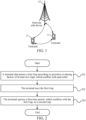
- FIG. 1 shows a block diagram of a wireless communication system applicable to an embodiment of this application.
- the wireless communication system includes a terminal 11 and a network side device 12.
- the terminal 11 can be a mobile phone, a tablet personal computer (Tablet Personal Computer), a laptop computer (Laptop Computer) or also referred to as a laptop, a personal digital assistant (Personal Digital Assistant, PDA), a handheld computer, a netbook, ultra-mobile personal computer (Ultra-Mobile Personal Computer, UMPC), a mobile internet device (Mobile Internet Device, MID), an augmented reality (augmented reality, AR)/virtual reality (Augmented Reality, VR) device, a robot, a wearable device (Wearable Device), vehicle user equipment (Vehicle User Equipment, VUE), pedestrian user equipment (Pedestrian User Equipment, PUE), a smart home (home devices with wireless communication functions, such as a refrigerator, a television, a washing machine, or furniture), a game console, a personal computer (personal computer, PC),
- the wearable device includes: a smart watch, a smart hand ring, a smart headphone, smart glasses, a smart jewelry (a smart bracelet, a smart ring, a smart necklace, a smart bangle, a smart anklet, and the like), a smart wristband, smart clothing, and the like. It should be noted, in the embodiments of this application, a specific type of the terminal 11 is not limited.
- the network side device 12 may include an access network device or a core network device.
- the access network device 12 may also be referred to as a radio access network device, a radio access network (Radio Access Network, RAN), a radio access network function, or a radio access network unit.
- the radio access network device 12 can include a base station, a wireless local area network (Wireless Local Area Networks, WLAN) access point, a WiFi node, and the like.
- the base station can be referred to as a node B, an evolution node B (eNB), an access point, a base transceiver station (Base Transceiver Station, BTS), a radio base station, a radio transceiver, a basic service set (Basic Service Set, BSS), an extended service set (Extended Service Set, ESS), a home B node, a home evolution type B node, a transmitting receiving point (Transmitting Receiving Point, TRP), or any other suitable term in the art, as long as the same technical effects are achieved.
- the base station is not limited to a particular technical vocabulary. It should be noted that, in the embodiments of this application, only the base station in the NR system is taken as an example, but a specific type of the base station is not limited.
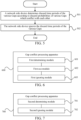
- the embodiments of this application provide a Gap conflict processing method, including the following steps:
- Step 201 a terminal determines a first Gap according to priorities or sharing factors of at least two Gaps which conflict with each other.
- the first Gap is any one of the following: a Gap, having the highest priority, of the two Gaps which conflict with each other; and a Gap, having the lowest sharing factor, of the two Gaps which conflict with each other.
- Step 202 the terminal uses the first Gap.
- the terminal uses the first Gap, which may be understood as: The terminal performs an operation or a task corresponding to the first Gap within the first Gap. Or, the terminal performs measurement of a measurement object associated with the first Gap within the first Gap.
- Step 203 the terminal ignores a first time period, which conflicts with the first Gap, in a second Gap.
- the second Gap is a Gap which conflicts with the first Gap.
- the terminal ignores a first time period of a second Gap, which may be understood as: The terminal stops performing the corresponding operation or task in the first time period of the second Gap, or the terminal stops performing measurement of a measurement object associated with the second Gap in the first time period of the second Gap.
- At least two Gaps partially overlap, or at least two Gaps fully overlap, or a time distance between at least two Gaps is less than a preset threshold, it is determined that the at least two Gaps conflict with each other.
- the Gap referred to in the embodiments of this application may also be referred to as a Gap occasion.
- the network configures a Gap Pattern (Gap pattern or Gap template) or a Gap Configuration.
- One Gap Pattern or Gap Configuration includes at least one Gap occasion.
- a periodic Gap may have Gap occasions that occur periodically, and an aperiodic Gap may have only one Gap occasion.
- the method further includes the following steps:
- the terminal uses a second time period of the second Gap, which may be understood as: The terminal performs an operation or a task corresponding to the second Gap in the second time period of the second Gap. Or, the terminal performs measurement of a measurement object associated with the second Gap in the second time period of the second Gap.
- the terminal ignores the second time period of the second Gap, which may be understood as: The terminal stops performing the corresponding operation or task in the second time period of the second Gap, or the terminal stops performing measurement of the measurement object associated with the second Gap in the second time period of the second Gap.
- the method further includes the following step:
- the terminal performs data transmission in the second time period.
- the terminal and a network side device should reach an agreement on the processing of the first Gap and the second Gap, that is, the terminal and the network side device process the first Gap in the same way and also process the first time period and the second time period of the second Gap in the same way, thereby avoiding data loss. Furthermore, since the terminal and the network side device can perform the data transmission in the second time period, which does not conflict with the first Gap, in the second Gap, the data transmission efficiency can be improved, and the Gap use efficiency can be further improved.
- priorities of the at least two Gaps which conflict with each other may be determined by means of an implicit indication or may be determined by means of an explicit indication.
- the method further includes the following steps:
- the terminal determines a priority of the Gap according to related information of a Gap, wherein the related information of the Gap includes at least one of:
- the terminal determines a priority of the Gap according to a Gap purpose, which includes:
- MUSIM multi subscriber identity modules
- Multi-SIM multi subscriber identity modules
- Multi Universal Subscriber Identity Module Multi-USIM
- a MUSIM Gap may be used for an SIM card task of a MUSIM terminal.
- the MUSIM terminal may contain a plurality of UEs. These UEs may be referred to as Multi-SIM UEs or Multi-USIM UEs. UE may be regarded as a subscriber.
- one terminal device may be configured with a plurality of subscribers, and the subscribers may be embodied by SIM cards or USIM cards. Generally, one SIM card corresponds to a subscriber of one network.
- the SIM card or USIM card saves an identifier of its corresponding subscriber, namely, the identifier of the UE, such as Subscription Permanent Identifier (Subscription Permanent Identifier, SUPI), International Mobile Subscription Identity (International Mobile Subscription Identity, IMSI), or the like.
- Subscription Permanent Identifier Subscribescription Permanent Identifier
- IMSI International Mobile Subscription Identity
- the terminal may constitute different UEs with different subscribers.
- one UE in the MUSIM terminal can use a Gap to perform tasks of other UEs, it can be considered that the purpose of the Gap is a MUSIM purpose.
- the terminal determines a priority of the Gap according to a Gap purpose, which includes:
- the terminal determines that the priority of the MUSIM Gap is higher than the priority of the Gap for another purpose.
- the MUSIM Gap includes at least one of:
- the priorities of the various Gaps meet at least one condition as follows:
- the network may further configure at least one priority indication for the MUSIM Gap.
- the terminal does not ignore a non-overlapping time period, that is, the terminal continues to perform an associated operation in the non-overlapping time period.
- the terminal ignores the non-overlapping time period, namely, the terminal stops performing the associated operation in the non-overlapping time period. Further, the terminal may perform data transmission in the non-overlapping time period.
- the terminal determines a priority of the Gap according to a Gap purpose, which includes:
- the terminal determines that the priority of the Gap for positioning measurement is higher than the priority of the Gap for another purpose.
- the method further includes the following step:
- the terminal determines that a first Gap pattern for positioning measurement has a high priority.
- the first Gap pattern is: Gap pattern 24#, and/or, Gap pattern 25#.
- the Gap for positioning measurement has a higher priority. That is, in a case that another Gap conflicts with the Gap for positioning measurement, the Gap for positioning measurement has a higher priority. That is, the Gap for positioning measurement is the first Gap mentioned above.
- the terminal does not ignore a non-overlapping time period, that is, the terminal continues to perform an associated operation in the non-overlapping time period.
- the terminal ignores the non-overlapping time period, namely, the terminal stops performing the associated operation in the non-overlapping time period. Further, the terminal may perform data transmission in the non-overlapping time period.
- the terminal determines a priority of the Gap according to an association degree between a Gap and a measurement object or a radio access type, which includes:
- the terminal determines that the priority of the Gap used only for a first measurement object or a first radio access type is higher than the priorities of other Gaps.
- the Gap has a higher priority.
- a Gap that is exclusively associated with only one measurement object has a higher priority.
- a Gap that is exclusively associated with measured objects or RATs has a higher priority than a non-exclusively associated Gap.
- the non-exclusive association means that a measurement object associated by the Gap is associated to a plurality of Gaps.
- association degree between a Gap and a measurement object or a radio access type may be indicated by a Gap-based configuration of the network.
- the Gap parameter includes: at least one of a repetition cycle of the Gap, a Gap length, and Gap start time.
- the terminal determines a priority of the Gap according to a Gap parameter, which includes:
- the terminal determines that the priority of the Gap with early start time is higher than the priority of the Gap with late start time.
- the Gap type includes at least one of:
- the terminal determines a priority of the Gap according to a Gap type, which includes at least one of:
- the terminal may transmit data in an ignored non-overlapping part (namely, the second time period which does not conflict with the first Gap) of the Gap.
- a non-overlapping part of the autonomous Gap is not ignored.
- the terminal performs an associated operation of the autonomous Gap in a non-overlapping time period of the autonomous Gap.
- the method further includes at least one of the following:
- VIL visible interruption length
- the terminal skips transmitting data in the conflicted ML part. That is, the ML has a lower priority, and the terminal cannot transmit data during per-UE or same per-FR gap overlapping.
- the method further includes the following steps: The terminal receives first configuration information sent by a network side device, wherein the first configuration information includes: priority indication information of the Gap.
- the terminal determines the priority of the Gap according to the first configuration information, wherein the priority indication information is used for indicating a priority level of the Gap, or a priority value of the Gap.
- the priority level of each Gap includes high, medium, low, and the like.
- the priority value of each Gap is ⁇ 0-10 ⁇ .
- the network configures the priorities in Gap configurations, such as, high, medium, and low priorities.
- a default priority is the low priority.
- a default priority is the low priority.
- the network configures the priority value such as ⁇ 0-10 ⁇ in the Gap configuration.
- a default priority is 0, which is either a low priority or a high priority, and the network configures the priority value of ⁇ 1-10 ⁇ .
- the network side device configures the priority of the Gap according to the Gap type, and further indicates the priority to the terminal through the first configuration information.
- the first configuration information may be transmitted through measurement configuration information or a system message. This is not specifically limited here.
- the method further includes the following steps: the terminal receives second configuration information sent by a network side device, wherein the second configuration information includes: the sharing factors (Sharing Factor) corresponding to the various Gaps, or the sharing factors (Sharing Factor) corresponding to various Gap types; and or a MeasGapSharingScheme (MeasGapSharingScheme).
- the sharing factors Sharing Factor
- the sharing factors Sharing Factor
- the value of the sharing factor is any percentage and integer between 0 and 100%, including 0, 1, and 100%.
- the terminal determines, according to the second configuration information, the sharing factors of the various Gaps which conflict each other.
- the terminal discards Gaps with relatively large sharing factors.
- the network side device configures the sharing factor of the Gap according to the Gap type, and further indicates the sharing factor to the terminal through the second configuration information.
- the second configuration information may be transmitted through measurement configuration information or a system message. This is not specifically limited here.
- the method further includes the following step:
- the terminal determines a target time length suitable for the sharing factors of the various Gaps, wherein the target time length is configured by a network or pre-appointed.
- the target time length may also be referred to as a time window.
- the terminal and the network side device in the embodiments of this application determine a first Gap according to priorities or sharing factors of at least two Gaps which conflict with each other; and the terminal and the network side device use the first Gap and ignore a first time period, which conflicts with the first Gap, in a second Gap.
- the second Gap is a Gap which conflicts with the first Gap.
- the embodiments of this application further provides a Gap conflict processing method, including the following steps:
- Step 301 a terminal determines discard time periods of the various Gaps according to discard probabilities of various Gaps which conflict with each other.
- Step 302 the terminal ignores the discard time periods of the various Gaps.
- the terminal ignores the discard time periods of the various Gaps, which may be understood as: The terminal stops performing corresponding operations or tasks in the discard time periods of the various Gaps, or the terminal stops performing measurement of measurement objects associated with the Gaps in the discard time periods of the various Gaps.
- the terminal uses non-discard time periods of the various Gaps.
- the non-discard time period of a Gap may be understood as a non-discard time period in a Gap occasion.
- the terminal uses non-discard time periods of the various Gaps, which may be understood as:
- the terminal performs operations or tasks corresponding to the Gaps in the non-discard time periods of the various Gaps.
- the terminal performs measurement of measurement objects associated with the Gaps in the non-discard time periods of the various Gaps.
- At least two Gaps partially overlap, or at least two Gaps fully overlap, or a time distance between at least two Gaps is less than a preset threshold, it is determined that the at least two Gaps conflict with each other.
- At least two Gaps which conflict with each other are Gap 1 and Gap2. If a discard rate of Gap1 is 30%, and a discard rate of Gap is 70%, the discard time period of Gap1 is 30% of a total time length of Gap1 and the discard time period of Gap2 is 70% of a total time length of Gap2. Start positions or end positions of the discard time periods of the various Gaps are pre-appointed by the terminal and a network.
- each Gap calculates its own Gap discard rate.
- the terminal maintains the discard rate of the Gap not greater than a sharing factor of the Gap.
- the network needs to configure an appropriate sharing factor according to an actual situation.
- the method further includes the following steps:
- the terminal determines the discard probabilities of the various Gaps according to sharing factors of the various Gaps.
- the discard probability of a Gap is a ratio of the sharing factor of the Gap to a sum of the sharing factors of all the Gaps which conflict with each other.
- the sharing factor of Gap1 is X1
- the sharing factor of Gap2 is X2.
- the discard probability of Gap1 is: X1/(X1+X2) * 100%; and the discard probability of Gap2 is: X2/(X1+X2) * 100%.
- the method further includes the following steps:
- the network side device configures the sharing factor of the Gap according to the Gap type, and further indicates the sharing factor to the terminal through the third configuration information.
- the third configuration information may be transmitted through measurement configuration information or a system message. This is not specifically limited here.
- the terminal and the network side device in the embodiments of this application determine the discard time periods of the various Gaps according to the discard probabilities of the various Gaps which conflict with each other; and ignore the discard time periods of the various Gaps.
- the terminal and the network side device reach an agreement on the use of the Gaps which conflict with each other, thereby improving the Gap use efficiency, improving the data transmission efficiency, and avoiding data loss.
- the embodiments of this application further provide a Gap conflict processing method, including the following steps: Step 401, a network side device determines a first Gap according to priorities or sharing factors of at least two Gaps which conflict with each other.
- the first Gap is any one of the following: a Gap, having the highest priority, of the two Gaps which conflict with each other; and a Gap, having the lowest sharing factor, of the two Gaps which conflict with each other.
- Step 402 the network side device uses the first Gap.
- the network side device uses the first Gap, which may be understood as: The network side device performs an operation or a task corresponding to the first Gap within the first Gap. Or, the network side device performs measurement of a measurement object associated with the first Gap within the first Gap.
- Step 403 the network side device ignores a first time period, which conflicts with the first Gap, in a second Gap, wherein the second Gap is a Gap which conflicts with the first Gap.
- the network side device ignores a first time period of a second Gap, which may be understood as: The network side device stops performing the corresponding operation or task in the first time period of the second Gap, or the network side device stops performing measurement of a measurement object associated with the second Gap in the first time period of the second Gap.
- At least two Gaps partially overlap, or at least two Gaps fully overlap, or a time distance between at least two Gaps is less than a preset threshold, it is determined that the at least two Gaps conflict with each other.
- the Gap referred to in the embodiments of this application may also be referred to as a Gap occasion.
- the network configures a Gap Pattern (Gap pattern or Gap template) or a Gap Configuration.
- One Gap Pattern or Gap Configuration includes at least one Gap occasion.
- a periodic Gap may have Gap occasions that occur periodically, and an aperiodic Gap may have only one Gap occasion.
- the method further includes the following steps:
- the network side device uses a second time period of the second Gap, which may be understood as: The network side device performs an operation or a task corresponding to the second Gap in the second time period of the second Gap. Or, the network side device performs measurement of a measurement object associated with the second Gap in the second time period of the second Gap.
- the network side device ignores the second time period of the second Gap, which may be understood as: The network side device stops performing the corresponding operation or task in the second time period of the second Gap, or the network side device stops performing measurement of the measurement object associated with the second Gap in the second time period of the second Gap.
- the method further includes the following step:
- the network side device performs data transmission in the second time period.
- the terminal and a network side device should reach an agreement on the processing of the first Gap and the second Gap, that is, the terminal and the network side device process the first Gap in the same way and also process the first time period and the second time period of the second Gap in the same way, thereby avoiding data loss. Furthermore, since the terminal and the network side device can perform the data transmission in the second time period, which does not conflict with the first Gap, in the second Gap, the data transmission efficiency can be improved, and the Gap use efficiency can be further improved.
- priorities of the at least two Gaps which conflict with each other may be determined by means of an implicit indication or may be determined by means of an explicit indication.
- the method further includes the following steps:
- the network side device determines a priority of the Gap according to a Gap purpose, which includes: The network side device determines that the priority of a task-related Gap is higher than the priority of a Gap for another purpose.
- the task-related Gap includes at least one of:
- the network side device determines a priority of the Gap according to a Gap purpose, which includes: The network side device determines that the priority of the MUSIM Gap is higher than the priority of the Gap for another purpose.
- the MUSIM Gap includes at least one of:
- the priorities of the various Gaps meet at least one condition as follows:
- the network may further configure at least one priority indication for the MUSIM Gap.
- the network side device does not ignore a non-overlapping time period, that is, the network side device continues to perform an associated operation in the non-overlapping time period.
- the network side device ignores the non-overlapping time period, namely, the network side device stops performing the associated operation in the non-overlapping time period.
- the network side device may perform data transmission in the non-overlapping time period.
- the network side device determines a priority of the Gap according to a Gap purpose, which includes: The network side device determines that the priority of the Gap for positioning measurement is higher than the priority of the Gap for another purpose.
- the method further includes the following step: The network side device determines that a first Gap pattern for positioning measurement has a high priority.
- the first Gap pattern is: Gap pattern 24#, and/or, Gap pattern 25#.
- the Gap for positioning measurement has a higher priority. That is, in a case that another Gap conflicts with the Gap for positioning measurement, the Gap for positioning measurement has a higher priority. That is, the Gap for positioning measurement is the first Gap mentioned above.
- the network side device does not ignore a non-overlapping time period, that is, the network side device continues to perform an associated operation in the non-overlapping time period.
- the network side device ignores the non-overlapping time period, namely, the network side device stops performing the associated operation in the non-overlapping time period. Further, the network side device may perform data transmission in the non-overlapping time period.
- the network side device determines a priority of the Gap according to an association degree between a Gap and a measurement object or a radio access type, which includes: The network side device determines that the priority of the Gap used only for a first measurement object or a first radio access type is higher than the priorities of other Gaps.
- the Gap has a higher priority.
- a Gap that is exclusively associated with only one measurement object has a higher priority.
- a Gap that is exclusively associated with measured objects or RATs has a higher priority than a non-exclusively associated Gap.
- the non-exclusive association means that a measurement object associated by the Gap is associated to a plurality of Gaps.
- association degree between a Gap and a measurement object or a radio access type may be indicated by a Gap-based configuration of the network.
- the Gap parameter includes: at least one of a repetition cycle of the Gap, a Gap length, and Gap start time.
- the network side device determines a priority of the Gap according to a Gap parameter, which includes:
- the network side device determines that the priority of the Gap with early start time is higher than the priority of the Gap with late start time.
- the Gap type includes at least one of:
- the network side device determines a priority of the Gap according to a Gap type, which includes at least one of:
- the network side device may transmit data in an ignored non-overlapping part (namely, the second time period which does not conflict with the first Gap) of the Gap.
- the network side device performs an associated operation of the autonomous Gap in a non-overlapping time period of the autonomous Gap.
- the method further includes at least one of the following: In a case that a visible interruption length (Visible interruption length, VIL) included in the network controlled small Gap does not conflict with the first Gap, the network side device skips ignoring the VIL. That is, a non-overlapping VIL cannot be ignored.
- VIL visible interruption length
- the network side device skips transmitting data in the conflicted ML part. That is, the ML has a lower priority, and the network side device cannot transmit data during per-UE or same per-FR gap overlapping.
- the method further includes the following steps:
- the network side device sends first configuration information to a terminal, wherein the first configuration information includes: priority indication information of the Gap.
- the priority indication information is used for indicating a priority level of the Gap, or a priority value of the Gap.
- the priority level of each Gap includes high, medium, low, and the like.
- the priority value of each Gap is ⁇ 0-10 ⁇ .
- the network configures the priorities in Gap configurations, such as, high, medium, and low priorities.
- a default priority is the low priority.
- a default priority is the low priority.
- the network configures the priority value such as ⁇ 0-10 ⁇ in the Gap configuration.
- a default priority is 0, which is either a low priority or a high priority, and the network configures the priority value of ⁇ 1-10 ⁇ .
- the network side device configures the priority of the Gap according to the Gap type, and further indicates the priority to the terminal through the first configuration information.
- the first configuration information may be transmitted through measurement configuration information or a system message. This is not specifically limited here.
- the method further includes the following steps: The network side device determines the sharing factors of the various Gaps, and sends second configuration information to the terminal, wherein the second configuration information includes: the sharing factors corresponding to the various Gaps, or the sharing factors corresponding to various Gap types.
- the network side device configures the sharing factor of the Gap according to the Gap type, and further indicates the sharing factor to the terminal through the second configuration information.
- the second configuration information may be transmitted through measurement configuration information or a system message. This is not specifically limited here.
- the method further includes the following step:
- the network side device determines a target time length suitable for the sharing factors of the various Gaps, wherein the target time length is determined by a network or pre-appointed.
- the target time length may also be referred to as a time window.
- the terminal and the network side device in the embodiments of this application determine a first Gap according to priorities or sharing factors of at least two Gaps which conflict with each other; and the terminal and the network side device use the first Gap and ignore a first time period, which conflicts with the first Gap, in a second Gap, wherein the second Gap is a Gap which conflicts with the first Gap.
- the terminal and the network side device reach an agreement on the use of the Gaps which conflict with each other, thereby improving the Gap use efficiency, improving the data transmission efficiency, and avoiding data loss.
- the embodiments of this application further provides a Gap conflict processing method, including the following steps: Step 501, a network side device determines discard time periods of the various Gaps according to discard probabilities of various Gaps which conflict with each other.
- Step 502 the network side device ignores the discard time periods of the various Gaps.
- the network side device uses non-discard time periods of the various Gaps.
- the non-discard time period of a Gap may be a non-discard time period in the Gap.
- a time distance between at least two Gaps is less than a preset threshold, it is determined that the at least two Gaps conflict with each other.
- At least two Gaps which conflict with each other are Gap 1 and Gap2. If a discard rate of Gap1 is 30%, and a discard rate of Gap is 70%, the discard time period of Gap1 is 30% of a total time length of Gap1 and the discard time period of Gap2 is 70% of a total time length of Gap2. Start positions or end positions of the discard time periods of the various Gaps are pre-appointed by the terminal and a network.
- each Gap calculates its own Gap discard rate.
- the network side device maintains the discard rate of the Gap not greater than a sharing factor of the Gap.
- the network needs to configure an appropriate sharing factor according to an actual situation.
- the method further includes the following steps:
- the network side device determines the discard probabilities of the various Gaps according to sharing factors of the various Gaps.
- the discard probability of a Gap is a ratio of the sharing factor of the Gap to a sum of the sharing factors of all the Gaps which conflict with each other.
- the sharing factor of Gap1 is X1
- the sharing factor of Gap2 is X2.
- the discard probability of Gap1 is: X1/(X1+X2) * 100%; and the discard probability of Gap2 is: X2/(X1+X2) * 100%.
- the method further includes the following steps: The network side device determines the sharing factors of the various Gaps, and sends third configuration information to the terminal, wherein the third configuration information includes: the sharing factors corresponding to the various Gaps, or the sharing factors corresponding to various Gap types.
- the network side device configures the sharing factor of the Gap according to the Gap type, and further indicates the sharing factor to the terminal through the third configuration information.
- the third configuration information may be transmitted through measurement configuration information or a system message. This is not specifically limited here.
- the terminal and the network side device in the embodiments of this application determine the discard time periods of the various Gaps according to the discard probabilities of the various Gaps which conflict with each other; and the terminal and the network side device ignore the discard time periods of the various Gaps.
- the terminal and the network side device reach an agreement on the use of the Gaps which conflict with each other, thereby improving the Gap use efficiency, improving the data transmission efficiency, and avoiding data loss.
- An executive body of the Gap conflict processing method provided by the embodiments of this application may be a Gap conflict processing apparatus.
- the Gap conflict processing apparatus provided by the embodiments of this application is explained by taking the following as an example:
- the Gap conflict processing apparatus implements the Gap conflict processing method.
- the embodiments of this application further provide a Gap conflict processing apparatus 600, including:
- the apparatus further includes:
- the apparatus further includes: a first transmission module, configured to perform data transmission in the second time period.
- the apparatus further includes:
- the first priority determining module includes: a first sub-module, configured to determine that the priority of a task-related Gap is higher than the priority of a Gap for another purpose.
- the task-related Gap includes at least one of:
- the first priority determining module includes: a second sub-module, configured to determine that the priority of the MUSIM Gap is higher than the priority of the Gap for another purpose.
- the MUSIM Gap includes at least one of:
- the priorities of the various Gaps meet at least one condition as follows:
- the first priority determining module includes: a third sub-module, configured to determine that the priority of the Gap for positioning measurement is higher than the priority of the Gap for another purpose.
- the apparatus further includes: a fourth sub-module, configured to determine that a first Gap pattern for positioning measurement has a high priority.
- the first priority determining module includes: a fifth sub-module, configured to determine that the priority of the Gap used only for a first measurement object or a first radio access type is higher than the priorities of other Gaps.
- the Gap parameter includes: at least one of a repetition cycle of the Gap, a Gap length, and Gap start time.
- the first priority determining module includes:
- the Gap type includes at least one of:
- the first priority determining module includes:
- the apparatus further includes at least one of the following:
- the apparatus further includes:
- the apparatus further includes:
- the apparatus further includes: a first time length determining module, configured to determine a target time length suitable for the sharing factors of the various Gaps, wherein the target time length is configured by a network or pre-appointed.
- the terminal and the network side device determine a first Gap according to priorities or sharing factors of at least two Gaps which conflict with each other; and the terminal and the network side device use the first Gap and ignore a first time period, which conflicts with the first Gap, in a second Gap, wherein the second Gap is a Gap which conflicts with the first Gap.
- the terminal and the network side device reach an agreement on the use of the Gaps which conflict with each other, thereby improving the Gap use efficiency, improving the data transmission efficiency, and avoiding data loss.
- the terminal provided by the embodiments of this application is a terminal capable of performing the Gap conflict processing method described above, all the embodiments of the Gap conflict processing method are applicable to the terminal, and the same or similar advantageous effects can be achieved.
- the embodiments of this application further provides a Gap conflict processing apparatus 700, including:
- the apparatus further includes: a discard probability determining module, configured to determine the discard probabilities of the various Gaps according to sharing factors of the various Gaps.
- the discard probability of a Gap is a ratio of the sharing factor of the Gap to a sum of the sharing factors of all the Gaps which conflict with each other.
- the apparatus further includes:
- the terminal and the network side device in the embodiments of this application determine the discard time periods of the various Gaps according to the discard probabilities of the various Gaps which conflict with each other.
- the terminal and the network side device ignore the discard time periods of the various Gaps.
- the terminal and the network side device reach an agreement on the use of the Gaps which conflict with each other, thereby improving the Gap use efficiency, improving the data transmission efficiency, and avoiding data loss.
- the terminal provided by the embodiments of this application is a terminal capable of performing the Gap conflict processing method described above, all the embodiments of the Gap conflict processing method are applicable to the terminal, and the same or similar advantageous effects can be achieved.
- the embodiments of this application further provides a Gap conflict processing apparatus 800, including:
- the apparatus further includes:
- the apparatus further includes: a second transmission module, configured to perform data transmission in the second time period.
- the apparatus further includes: a third priority determining module, configured to determine a priority of the Gap according to related information of a Gap, wherein the related information of the Gap includes at least one of:
- the third priority determining module includes: a ninth sub-module, configured to determine that the priority of a task-related Gap is higher than the priority of a Gap for another purpose.
- the task-related Gap includes at least one of:
- the third priority determining module includes: a tenth sub-module, configured to determine that the priority of the MUSIM Gap is higher than the priority of the Gap for another purpose.
- the MUSIM Gap includes at least one of:
- the priorities of the various Gaps meet at least one condition as follows:
- the third priority determining module includes: an eleventh sub-module, configured to determine that the priority of the Gap for positioning measurement is higher than the priority of the Gap for another purpose.
- the apparatus further includes: a twelfth sub-module, configured to determine that a first Gap pattern for positioning measurement has a high priority.
- the third priority determining module includes: a thirteenth sub-module, configured to determine that the priority of the Gap used only for a first measurement object or a first radio access type is higher than the priorities of other Gaps.
- the Gap parameter includes: at least one of a repetition cycle of the Gap, a Gap length, and Gap start time.
- the third priority determining module includes:
- the Gap type includes at least one of:
- the third priority determining module includes:
- the apparatus further includes at least one of the following:
- the apparatus further includes: a first sending module, configured to send first configuration information to a terminal, wherein the first configuration information includes: priority indication information of the Gap; and the priority indication information is used for indicating a priority level of the Gap, or a priority value of the Gap.
- a first sending module configured to send first configuration information to a terminal, wherein the first configuration information includes: priority indication information of the Gap; and the priority indication information is used for indicating a priority level of the Gap, or a priority value of the Gap.
- the apparatus further includes: a second sending module, configured to determine the sharing factors of the various Gaps, and send second configuration information to the terminal, wherein the second configuration information includes: the sharing factors corresponding to the various Gaps, or the sharing factors corresponding to various Gap types.
- the apparatus further includes: a second time length determining module, configured to determine a target time length suitable for the sharing factors of the various Gaps, wherein the target time length is determined by a network or pre-appointed.
- the terminal and the network side device determine a first Gap according to priorities or sharing factors of at least two Gaps which conflict with each other; and the terminal and the network side device use the first Gap and ignore a first time period, which conflicts with the first Gap, in a second Gap, wherein the second Gap is a Gap which conflicts with the first Gap.
- the terminal and the network side device reach an agreement on the use of the Gaps which conflict with each other, thereby improving the Gap use efficiency, improving the data transmission efficiency, and avoiding data loss.
- the terminal provided by the embodiments of this application is a terminal capable of performing the Gap conflict processing method described above, all the embodiments of the Gap conflict processing method are applicable to the terminal, and the same or similar advantageous effects can be achieved.
- the embodiments of this application further provide a Gap conflict processing apparatus 900, including:
- the apparatus further includes: a second discard probability determining module, configured to determine, by the network side device, the discard probabilities of the various Gaps according to sharing factors of the various Gaps.
- the discard probability of a Gap is a ratio of the sharing factor of the Gap to a sum of the sharing factors of all the Gaps which conflict with each other.
- the apparatus further includes: a third sending module, configured to determine the sharing factors of the various Gaps, and send third configuration information to the terminal, wherein the third configuration information includes: the sharing factors corresponding to the various Gaps, or the sharing factors corresponding to various Gap types.
- the terminal and the network side device in the embodiments of this application determine the discard time periods of the various Gaps according to the discard probabilities of the various Gaps which conflict with each other.
- the terminal and the network side device ignore the discard time periods of the various Gaps.
- the terminal and the network side device reach an agreement on the use of the Gaps which conflict with each other, thereby improving the Gap use efficiency, improving the data transmission efficiency, and avoiding data loss.
- the terminal provided by the embodiments of this application is a terminal capable of performing the Gap conflict processing method described above, all the embodiments of the Gap conflict processing method are applicable to the terminal, and the same or similar advantageous effects can be achieved.
- the Gap conflict processing apparatus in the embodiments of this application may be an electronic device, for example, an electronic device having an operating system, or a component in an electronic device, such as an integrated circuit or a chip.
- the electronic device may be a terminal or a device other than a terminal.
- the terminal may include, but is not limited to, the types of the terminal 11 listed above, and the other device may be a server, a network attached storage (Network Attached Storage, NAS), or the like.
- NAS Network Attached Storage
- the Gap conflict processing apparatus provided by the embodiments of this application can implement the various processes implemented by the method embodiments shown in FIG. 1 to FIG. 5 and achieve the same technical effects. To avoid repetition, details are not described here again.
- the embodiments of this application further provide a communication device 1000, including a processor 1001 and a memory 1002.
- the memory 1002 stores a program or instructions runnable on the processor 1001.
- the communication device 1000 is a terminal
- the communication device 1000 is a network side device
- the program or instructions, when executed by the processor 1001 implements/implement all the steps of the Gap conflict processing method embodiments described above, and the same technical effects can be achieved. To avoid repetition, details are not described here again.
- the embodiments of this application further provide a terminal, including a processor and a communication interface.
- the processor is configured to: determine a first Gap according to priorities or sharing factors of at least two Gaps which conflict with each other, wherein the first Gap is any one of the following: a Gap, having the highest priority, of the two Gaps which conflict with each other; and a Gap, having the lowest sharing factor, of the two Gaps which conflict with each other; and use the first Gap, and ignore a first time period, which conflicts with the first Gap, in a second Gap, wherein the second Gap is a Gap which conflicts with the first Gap.
- the processor is configured to: determine discard time periods of the various Gaps according to discard probabilities of various Gaps which conflict with each other; and ignore the discard time periods of the various Gaps. In a case that at least two Gaps partially overlap, or at least two Gaps fully overlap, or a time distance between at least two Gaps is less than a preset threshold, it is determined that the at least two Gaps conflict with each other.
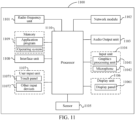
- FIG. 10 is a schematic structural diagram of hardware of a terminal for implementing the embodiments of this application.
- the terminal 1100 includes, but is not limited to: at least some of a radio frequency unit 1101, a network module 1102, an audio output unit 1103, an input unit 1104, a sensor 1105, a display unit 1106, a user input unit 1107, an interface unit 1108, a memory 1109, a processor 1110, and the like.
- the terminal 1100 further includes a power supply (such as a battery) for supplying power to the various components.
- the power supply may be logically connected to the processor 1110 by using a power management system, thereby implementing functions such as charging, discharging, and power consumption management by using the power management system.
- the structures of the terminal shown in FIG. 10 constitute no limitation on the terminal, and the terminal may include more or fewer components than those shown in the figure, or some components may be combined, or a different component deployment may be used, details of which are omitted here.
- the input unit 1104 may include a graphics processing unit (Graphics Processing Unit, GPU) 11041 and a microphone 11042, and the GPU 11041 processes image data of static pictures or videos obtained by an image capturing apparatus (such as a camera) in a video capturing mode or an image capturing mode.
- the display unit 1106 may include a display panel 11061, and the display panel 11061 may be configured by using a liquid crystal display, an organic light-emitting diode, or the like.
- the user input unit 1107 includes at least one of a touch panel 11071 and another input device 11072.
- the touch panel 11071 is also referred to as a touch screen.
- the touch panel 11071 may include two parts: a touch detection apparatus and a touch controller.
- the another input device 11072 may include, but not limited to, a physical keyboard, a function key (such as a volume control key or a switch key), a track ball, a mouse, and a joystick, which is not described herein again.
- the radio frequency unit 1101 receives downlink data from a network side device and can transmit the data to the processor 1110 for processing. In addition, the radio frequency unit 1101 may transmit uplink data to the network side device.
- the radio frequency unit 1101 includes, but is not limited to, an antenna, an amplifier, a transceiver, a coupler, a low noise amplifier, a duplexer, and the like.
- the memory 1109 is configured to store a software program or instructions and various data.
- the memory 1109 may mainly include a first storage area for storing a program or instructions, and a second storage area for storing data.
- the first storage area may store an operating system, an application program or instructions required by at least one function (for example, a sound playing function and an image display function), and the like.
- the memory 1109 may be a volatile memory or a non-volatile memory, or the memory 1109 may include both a volatile memory and a non-volatile memory.
- the non-volatile memory may be a read-only memory (Read-Only Memory, ROM), a programmable ROM (Programmable ROM, PROM), an erasable PROM (Erasable PROM, EPROM), an electrically EPROM (Electrically EPROM, EEPROM), or a flash memory.
- ROM Read-Only Memory
- PROM programmable ROM
- PROM erasable PROM
- EPROM Erasable PROM
- EEPROM Electrically EPROM
- the volatile memory may be a random access memory (Random Access Memory, RAM), a static RAM (Static RAM, SRAM), a dynamic RAM (Dynamic RAM, DRAM), a synchronous DRAM (Synchronous DRAM, SDRAM), a double data rate SDRAM (Double Data Rate SDRAM, DDRSDRAM), an enhanced SDRAM (Enhanced SDRAM, ESDRAM), a synch link DRAM (Synch link DRAM, SLDRAM), and a direct rambus RAM (Direct Rambus RAM, DRRAM).
- RAM Random Access Memory
- SRAM static RAM
- DRAM dynamic RAM
- DRAM synchronous DRAM
- SDRAM Double data rate SDRAM
- ESDRAM enhanced SDRAM
- synch link DRAM Synch link DRAM
- SLDRAM direct rambus RAM
- DRRAM Direct Rambus RAM
- the processor 1110 may include one or more processing units.
- the processor 1110 may integrate an application processor and a modem processor, wherein the application processor mainly processes operations involving an operating system, a user interface, an application program, and the like, and the modem processor mainly processes a wireless communication signal, such as a baseband processor. It can be understood that, the modem processor may not be integrated into the processor 1110.
- the processor 1110 is configured to: determine a first Gap according to priorities or sharing factors of at least two Gaps which conflict with each other, wherein the first Gap is any one of the following: a Gap, having the highest priority, of the two Gaps which conflict with each other; and a Gap, having the lowest sharing factor, of the two Gaps which conflict with each other; and use the first Gap, and ignore a first time period, which conflicts with the first Gap, in a second Gap, wherein the second Gap is a Gap which conflicts with the first Gap.
- the first Gap is any one of the following: a Gap, having the highest priority, of the two Gaps which conflict with each other; and a Gap, having the lowest sharing factor, of the two Gaps which conflict with each other
- use the first Gap and ignore a first time period, which conflicts with the first Gap, in a second Gap, wherein the second Gap is a Gap which conflicts with the first Gap.
- the processor 1110 is configured to: determine discard time periods of the various Gaps according to discard probabilities of various Gaps which conflict with each other; and ignore the discard time periods of the various Gaps. In a case that at least two Gaps partially overlap, or at least two Gaps fully overlap, or a time distance between at least two Gaps is less than a preset threshold, it is determined that the at least two Gaps conflict with each other.
- the terminal and the network side device determine a first Gap according to priorities or sharing factors of at least two Gaps which conflict with each other; and the terminal and the network side device use the first Gap and ignore a first time period, which conflicts with the first Gap, in a second Gap, wherein the second Gap is a Gap which conflicts with the first Gap.
- the terminal and the network side device reach an agreement on the use of the Gaps which conflict with each other, thereby improving the Gap use efficiency, improving the data transmission efficiency, and avoiding data loss.
- the terminal and the network side device in the embodiments of this application determine the discard time periods of the various Gaps according to the discard probabilities of the various Gaps which conflict with each other.
- the terminal and the network side device ignore the discard time periods of the various Gaps.
- the terminal and the network side device reach an agreement on the use of the Gaps which conflict with each other, thereby improving the Gap use efficiency, improving the data transmission efficiency, and avoiding data loss.
- the terminal provided by the embodiments of this application is a terminal capable of performing the Gap conflict processing method described above, all the embodiments of the Gap conflict processing method are applicable to the terminal, and the same or similar advantageous effects can be achieved.
- the embodiments of this application further provide a network side device, including a processor and a communication interface.
- the processor is configured to: determine a first Gap according to priorities or sharing factors of at least two Gaps which conflict with each other, wherein the first Gap is any one of the following: a Gap, having the highest priority, of the two Gaps which conflict with each other; and a Gap, having the lowest sharing factor, of the two Gaps which conflict with each other; and use the first Gap, and ignore a first time period, which conflicts with the first Gap, in a second Gap, wherein the second Gap is a Gap which conflicts with the first Gap.
- the processor is configured to: determine discard time periods of the various Gaps according to discard probabilities of various Gaps which conflict with each other; and ignore the discard time periods of the various Gaps. In a case that at least two Gaps partially overlap, or at least two Gaps fully overlap, or a time distance between at least two Gaps is less than a preset threshold, it is determined that the at least two Gaps conflict with each other.
- the network side device embodiment corresponds to the network side device method embodiment described above, and all the implementation processes and implementations of the method embodiment described above can be applied to the network side device embodiment, and the same technical effect can be achieved.
- the embodiments of this application further provide a network side device.
- the network side device 1200 includes: an antenna 121, a radio frequency apparatus 122, a baseband apparatus 123, a processor 124, and a memory 125.
- the antenna 121 is connected to the radio frequency apparatus 122.
- the radio frequency apparatus 122 receives information through the antenna 121 and sends the received information to the baseband apparatus 123 for processing.
- the baseband apparatus 123 processes information to be sent and sends the information to the radio frequency apparatus 122, and the radio frequency apparatus 122 processes the received information and sends the information via the antenna 121.
- the method performed by the network side device in the above embodiment may be implemented in the baseband apparatus 123, and the baseband apparatus 123 includes a baseband processor.
- the baseband apparatus 123 may include, for example, at least one baseband board. A plurality of chips are arranged on the baseband board. As shown in FIG. 12 , one of the chips is, for example, a baseband processor, connected to the memory 125 through a bus interface to call a program in the memory 125 to perform the operations of the network device shown in the above method embodiment.
- the network side device may further include a network interface 126.
- the interface is, for example, a common public radio interface (common public radio interface, CPRI).
- the network side device 1200 of the embodiments of this application further includes: instructions or a program stored on the memory 125 and runnable on the processor 124.
- the processor 124 calls the instructions or program in the memory 125 to perform the methods performed by the modules shown in FIG. 8 and FIG. 9 and achieve the same technical effects. To avoid repetition, details are not described here again.
- the embodiments of this application further provide a readable storage medium.
- the readable storage medium stores a program or instructions.
- the program or instructions when executed by a processor, implements/implement all the processes of the foregoing Gap conflict processing method embodiments and can achieve the same technical effects, details of which are omitted here for brevity.
- the processor is the processor in the terminal in the embodiments described above.
- the readable storage medium includes a computer-readable storage medium, for example, a computer read-only memory (ROM), a random access memory (RAM), a magnetic disc, a compact disc, or the like.
- the embodiments of this application further provide a chip.
- the chip includes a processor and a communication interface.
- the communication interface is coupled to the processor.
- the processor is configured to run a program or instructions to implement all the processes of the foregoing Gap conflict processing method embodiments and can achieve the same technical effects, details of which are omitted here for brevity.
- chip mentioned in the embodiments of this application can also be referred to as a system chip, a chip system, or a system-on-chip.
- the embodiments of this application further provide a computer program/program product.
- the computer program/program product is stored in a storage medium.
- the computer program/program product when executed by at least one processor, implements all the processes of the foregoing Gap conflict processing method embodiments and can achieve the same technical effects, details of which are omitted here for brevity.
- the embodiments of this application further provide a communication system, including: a terminal and a network side device.
- the terminal can be configured to execute the steps of the Gap conflict processing methods described above
- the network side device can be configured to execute the steps of the Gap conflict processing methods described above.
- the terms “include”, “comprise”, or any other variations thereof here is intended to cover a non-exclusive inclusion, so that a processor, method, object, or apparatus including a series of elements not only includes those elements, but also includes other elements not specifically listed, or includes inherent elements of this process, method, object, or apparatus. Without more limitations, elements defined by the sentence "including one” does not exclude that there are still other same elements in the process, method, object, or apparatus including these elements.
- the scope of the methods and devices in the embodiments of this application is not limited to performing functions in the order shown or discussed, but may also include performing functions in a substantially simultaneous manner or in an opposite order according to the functions involved. For example, the methods described may be executed in a different order than that described, and various steps may also be added, omitted, or combined.
- features described with reference to some examples may also be combined in other examples.
- a person skilled in the art may clearly learn that the method according to the foregoing embodiment may be implemented by relying on software and an essential commodity hardware platform or by using hardware, but the former is a better implementation in most cases.
- the technical solutions of this application essentially, or the part contributing to the prior art, may be presented in the form of a computer software product.
- the computer software product is stored in a storage medium (for example, a ROM/RAM, a magnetic disc, or a compact disc) including several instructions to enable a terminal (which may be a mobile phone, a computer, a server, an air conditioner, a network device, or the like) to perform the methods described in all the embodiments of this application.
Landscapes
- Engineering & Computer Science (AREA)
- Computer Networks & Wireless Communication (AREA)
- Signal Processing (AREA)
- Mobile Radio Communication Systems (AREA)
Applications Claiming Priority (2)
| Application Number | Priority Date | Filing Date | Title |
|---|---|---|---|
| CN202210015964.8A CN116471670A (zh) | 2022-01-07 | 2022-01-07 | Gap冲突的处理方法、装置、终端及网络侧设备 |
| PCT/CN2023/070698 WO2023131240A1 (zh) | 2022-01-07 | 2023-01-05 | Gap冲突的处理方法、装置、终端及网络侧设备 |
Publications (2)
| Publication Number | Publication Date |
|---|---|
| EP4462913A1 true EP4462913A1 (de) | 2024-11-13 |
| EP4462913A4 EP4462913A4 (de) | 2025-07-16 |
Family
ID=87073231
Family Applications (1)
| Application Number | Title | Priority Date | Filing Date |
|---|---|---|---|
| EP23737102.6A Pending EP4462913A4 (de) | 2022-01-07 | 2023-01-05 | Verfahren und vorrichtung zur verarbeitung von lückenkonflikten, endgerät und netzwerkseitige vorrichtung |
Country Status (4)
| Country | Link |
|---|---|
| US (1) | US20240365370A1 (de) |
| EP (1) | EP4462913A4 (de) |
| CN (1) | CN116471670A (de) |
| WO (1) | WO2023131240A1 (de) |
Cited By (1)
| Publication number | Priority date | Publication date | Assignee | Title |
|---|---|---|---|---|
| US20240276546A1 (en) * | 2023-02-15 | 2024-08-15 | Mediatek Singapore Pte. Ltd. | Collision Handling Between MUSIM Gaps And Type-1 Measurement Gap In Mobile Communications |
Families Citing this family (3)
| Publication number | Priority date | Publication date | Assignee | Title |
|---|---|---|---|---|
| CN119485437A (zh) * | 2023-08-11 | 2025-02-18 | 维沃移动通信有限公司 | 测量间隔的确定方法、终端、网络侧设备及可读存储介质 |
| WO2025166693A1 (zh) * | 2024-02-07 | 2025-08-14 | 北京小米移动软件有限公司 | 测量冲突处理方法、用户设备、网络设备及通信系统 |
| CN120598210B (zh) * | 2025-08-06 | 2025-10-14 | 瀚高基础软件股份有限公司 | 一种基于数据库的空间冲突治理方法、设备及介质 |
Family Cites Families (15)
| Publication number | Priority date | Publication date | Assignee | Title |
|---|---|---|---|---|
| US20080076427A1 (en) * | 2006-08-21 | 2008-03-27 | Nokia Corporation | Apparatus, method, system, network element, and software product for discontinuous reception priority map to enhance measurement gap control |
| CN102300233B (zh) * | 2010-06-22 | 2015-08-12 | 中兴通讯股份有限公司 | 传输间隙样式序列的处理方法、装置及系统 |
| CN102938903B (zh) * | 2012-10-29 | 2016-06-22 | 中兴通讯股份有限公司 | 一种避免测量时机与数据传输时机冲突的方法及装置 |
| CN104822163A (zh) * | 2014-02-03 | 2015-08-05 | 马维尔国际有限公司 | 一种用于单天线多模多卡终端的通用调度系统和方法 |
| WO2017028046A1 (zh) * | 2015-08-14 | 2017-02-23 | 华为技术有限公司 | 间隙Gap选择方法及装置 |
| CN108353302A (zh) * | 2015-11-05 | 2018-07-31 | 株式会社Ntt都科摩 | 用户终端、无线基站及无线通信方法 |
| CN111630918B (zh) * | 2018-01-19 | 2023-08-25 | 上海诺基亚贝尔股份有限公司 | 用于新无线电管理测量的方法、设备和计算机可读介质 |
| US11503562B2 (en) * | 2018-02-26 | 2022-11-15 | Telefonaktiebolaget Lm Ericsson (Publ) | Managing parallel measurement gap patterns for radio resource management and positioning measurements |
| US10880857B2 (en) * | 2018-04-02 | 2020-12-29 | Intel Corporation | Inter-radio access technology positioning measurements in new radio systems |
| CN112586022B (zh) * | 2018-08-17 | 2024-07-30 | 上海诺基亚贝尔股份有限公司 | 针对基于ssb和csi-rs的rrm测量的测量间隙管理 |
| KR20210064351A (ko) * | 2018-09-28 | 2021-06-02 | 텔레호낙티에볼라게트 엘엠 에릭슨(피유비엘) | 측정 갭들과 부분적으로 중첩하는 유연한 할당 슬롯들에서의 동작들의 적응 |
| WO2020076229A1 (en) * | 2018-10-08 | 2020-04-16 | Telefonaktiebolaget Lm Ericsson (Publ) | Method and user equipment for handling autonomous gaps |
| CN111385836B (zh) * | 2018-12-29 | 2022-05-27 | 大唐移动通信设备有限公司 | 一种信息配置和数据传输的方法及设备 |
| EP3771132B1 (de) * | 2019-07-22 | 2025-12-31 | Ofinno, LLC | Kommunikation und datenverarbeitung in drahtlosen kommunikationen |
| CN113556757B (zh) * | 2020-04-24 | 2023-07-14 | 维沃移动通信有限公司 | Gap配置方法、UE及网络设备 |
-
2022
- 2022-01-07 CN CN202210015964.8A patent/CN116471670A/zh active Pending
-
2023
- 2023-01-05 WO PCT/CN2023/070698 patent/WO2023131240A1/zh not_active Ceased
- 2023-01-05 EP EP23737102.6A patent/EP4462913A4/de active Pending
-
2024
- 2024-07-05 US US18/764,495 patent/US20240365370A1/en active Pending
Cited By (1)
| Publication number | Priority date | Publication date | Assignee | Title |
|---|---|---|---|---|
| US20240276546A1 (en) * | 2023-02-15 | 2024-08-15 | Mediatek Singapore Pte. Ltd. | Collision Handling Between MUSIM Gaps And Type-1 Measurement Gap In Mobile Communications |
Also Published As
| Publication number | Publication date |
|---|---|
| EP4462913A4 (de) | 2025-07-16 |
| WO2023131240A1 (zh) | 2023-07-13 |
| CN116471670A (zh) | 2023-07-21 |
| US20240365370A1 (en) | 2024-10-31 |
Similar Documents
| Publication | Publication Date | Title |
|---|---|---|
| EP4462913A1 (de) | Verfahren und vorrichtung zur verarbeitung von lückenkonflikten, endgerät und netzwerkseitige vorrichtung | |
| EP4033828B1 (de) | Kommunikationsverfahren und -vorrichtung sowie speichermedium | |
| EP4407899A1 (de) | Verfahren zur implementierung eines erfassungsdienstes und vorrichtung | |
| US20240430807A1 (en) | Discontinuous reception drx parameter configuration method and apparatus, terminal, and network-side device | |
| EP4561168A1 (de) | Verfahren und vorrichtung zur verarbeitung von informationen über bedingte konfiguration und kommunikationsvorrichtung | |
| US20240405955A1 (en) | Information activation method, terminal, and network side device | |
| US20240389076A1 (en) | Resource selection method and apparatus, and terminal | |
| US12425164B2 (en) | Method for transmitting reference signal and device | |
| US20240276401A1 (en) | Information reporting method, information receiving method, terminal, network side device, and storage medium | |
| US20250023686A1 (en) | Demodulation Reference Signal Transmission Method and Apparatus, Terminal, and Network-Side Device | |
| US20240284406A1 (en) | PEI Detection Method, Device and Medium | |
| EP4525503A1 (de) | Verfahren und vorrichtung zur sidelink-positionierung, endgerät, server und drahtloszugangsnetzwerkvorrichtung | |
| EP4521668A1 (de) | Verfahren und vorrichtung zur bestimmung eines codebuchs für hybride automatische wiederholungsanfragen (harq-ack) und endgerät | |
| EP4462869A1 (de) | Zustandsumschaltverfahren, endgerät und netzwerkseitige vorrichtung | |
| CN116980992A (zh) | 条件切换的配置方法、终端及网络侧设备 | |
| EP4572486A1 (de) | Prs-empfangsverfahren und -vorrichtung sowie endgerät | |
| CN116155460B (zh) | Gap配置方法、装置、设备及介质 | |
| EP4661459A1 (de) | Verfahren zur aktualisierung eines sekundärschlüssels, endgerät und netzwerkseitige vorrichtung | |
| EP4383630A1 (de) | Verfahren und vorrichtung zur steuerung von mehrträgerkommunikation und kommunikationsvorrichtung | |
| JP7698784B2 (ja) | ビーム応用時間の決定方法、端末、ネットワーク側機器及び可読記憶媒体 | |
| CN116264741B (zh) | Idc信息的发送和接收方法、终端及网络侧设备 | |
| EP4301068A1 (de) | Verfahren und vorrichtung zur anzeige von scs eines anfänglichen downlink-bwp | |
| EP4503837A1 (de) | Verfahren zur initiierung der herstellung einer bsc-verbindung sowie endgerät und netzwerkseitige vorrichtung | |
| US20250267498A1 (en) | Method and apparatus for processing measurement gap conflict, terminal, and network-side device | |
| US20240284464A1 (en) | Information determining method and apparatus, terminal, and readable storage medium |
Legal Events
| Date | Code | Title | Description |
|---|---|---|---|
| STAA | Information on the status of an ep patent application or granted ep patent |
Free format text: STATUS: THE INTERNATIONAL PUBLICATION HAS BEEN MADE |
|
| PUAI | Public reference made under article 153(3) epc to a published international application that has entered the european phase |
Free format text: ORIGINAL CODE: 0009012 |
|
| STAA | Information on the status of an ep patent application or granted ep patent |
Free format text: STATUS: REQUEST FOR EXAMINATION WAS MADE |
|
| 17P | Request for examination filed |
Effective date: 20240709 |
|
| AK | Designated contracting states |
Kind code of ref document: A1 Designated state(s): AL AT BE BG CH CY CZ DE DK EE ES FI FR GB GR HR HU IE IS IT LI LT LU LV MC ME MK MT NL NO PL PT RO RS SE SI SK SM TR |
|
| REG | Reference to a national code |
Ref country code: DE Ref legal event code: R079 Free format text: PREVIOUS MAIN CLASS: H04W0072040000 Ipc: H04W0036000000 |
|
| DAV | Request for validation of the european patent (deleted) | ||
| DAX | Request for extension of the european patent (deleted) | ||
| RIC1 | Information provided on ipc code assigned before grant |
Ipc: H04W 72/0446 20230101ALI20250324BHEP Ipc: H04W 72/566 20230101ALI20250324BHEP Ipc: H04W 36/00 20090101AFI20250324BHEP |
|
| A4 | Supplementary search report drawn up and despatched |
Effective date: 20250618 |
|
| RIC1 | Information provided on ipc code assigned before grant |
Ipc: H04W 36/00 20090101AFI20250612BHEP Ipc: H04W 72/566 20230101ALI20250612BHEP Ipc: H04W 72/0446 20230101ALI20250612BHEP |