EP4407899A1 - Verfahren zur implementierung eines erfassungsdienstes und vorrichtung - Google Patents
Verfahren zur implementierung eines erfassungsdienstes und vorrichtung Download PDFInfo
- Publication number
- EP4407899A1 EP4407899A1 EP22889233.7A EP22889233A EP4407899A1 EP 4407899 A1 EP4407899 A1 EP 4407899A1 EP 22889233 A EP22889233 A EP 22889233A EP 4407899 A1 EP4407899 A1 EP 4407899A1
- Authority
- EP
- European Patent Office
- Prior art keywords
- sensing
- terminal
- network device
- access network
- indication information
- Prior art date
- Legal status (The legal status is an assumption and is not a legal conclusion. Google has not performed a legal analysis and makes no representation as to the accuracy of the status listed.)
- Pending
Links
Images



Classifications
-
- H—ELECTRICITY
- H04—ELECTRIC COMMUNICATION TECHNIQUE
- H04B—TRANSMISSION
- H04B17/00—Monitoring; Testing
- H04B17/30—Monitoring; Testing of propagation channels
- H04B17/382—Monitoring; Testing of propagation channels for resource allocation, admission control or handover
-
- H—ELECTRICITY
- H04—ELECTRIC COMMUNICATION TECHNIQUE
- H04W—WIRELESS COMMUNICATION NETWORKS
- H04W74/00—Wireless channel access
- H04W74/08—Non-scheduled access, e.g. ALOHA
- H04W74/0808—Non-scheduled access, e.g. ALOHA using carrier sensing, e.g. carrier sense multiple access [CSMA]
-
- H—ELECTRICITY
- H04—ELECTRIC COMMUNICATION TECHNIQUE
- H04L—TRANSMISSION OF DIGITAL INFORMATION, e.g. TELEGRAPHIC COMMUNICATION
- H04L5/00—Arrangements affording multiple use of the transmission path
- H04L5/003—Arrangements for allocating sub-channels of the transmission path
- H04L5/0053—Allocation of signalling, i.e. of overhead other than pilot signals
-
- H—ELECTRICITY
- H04—ELECTRIC COMMUNICATION TECHNIQUE
- H04W—WIRELESS COMMUNICATION NETWORKS
- H04W24/00—Supervisory, monitoring or testing arrangements
- H04W24/02—Arrangements for optimising operational condition
-
- H—ELECTRICITY
- H04—ELECTRIC COMMUNICATION TECHNIQUE
- H04W—WIRELESS COMMUNICATION NETWORKS
- H04W24/00—Supervisory, monitoring or testing arrangements
- H04W24/10—Scheduling measurement reports ; Arrangements for measurement reports
-
- H—ELECTRICITY
- H04—ELECTRIC COMMUNICATION TECHNIQUE
- H04W—WIRELESS COMMUNICATION NETWORKS
- H04W36/00—Hand-off or reselection arrangements
- H04W36/0005—Control or signalling for completing the hand-off
- H04W36/0011—Control or signalling for completing the hand-off for data sessions of end-to-end connection
- H04W36/0033—Control or signalling for completing the hand-off for data sessions of end-to-end connection with transfer of context information
-
- H—ELECTRICITY
- H04—ELECTRIC COMMUNICATION TECHNIQUE
- H04W—WIRELESS COMMUNICATION NETWORKS
- H04W36/00—Hand-off or reselection arrangements
- H04W36/0005—Control or signalling for completing the hand-off
- H04W36/0055—Transmission or use of information for re-establishing the radio link
-
- H—ELECTRICITY
- H04—ELECTRIC COMMUNICATION TECHNIQUE
- H04W—WIRELESS COMMUNICATION NETWORKS
- H04W64/00—Locating users or terminals or network equipment for network management purposes, e.g. mobility management
-
- H—ELECTRICITY
- H04—ELECTRIC COMMUNICATION TECHNIQUE
- H04W—WIRELESS COMMUNICATION NETWORKS
- H04W68/00—User notification, e.g. alerting and paging, for incoming communication, change of service or the like
- H04W68/005—Transmission of information for alerting of incoming communication
-
- H—ELECTRICITY
- H04—ELECTRIC COMMUNICATION TECHNIQUE
- H04W—WIRELESS COMMUNICATION NETWORKS
- H04W76/00—Connection management
- H04W76/10—Connection setup
- H04W76/19—Connection re-establishment
-
- H—ELECTRICITY
- H04—ELECTRIC COMMUNICATION TECHNIQUE
- H04W—WIRELESS COMMUNICATION NETWORKS
- H04W76/00—Connection management
- H04W76/20—Manipulation of established connections
-
- H—ELECTRICITY
- H04—ELECTRIC COMMUNICATION TECHNIQUE
- H04W—WIRELESS COMMUNICATION NETWORKS
- H04W8/00—Network data management
- H04W8/22—Processing or transfer of terminal data, e.g. status or physical capabilities
Definitions
- the device may include an apparatus for implementing a sensing service, a terminal, a network side device, or the like.
- a communication device for example, a terminal
- the sensing capability can detect, track, recognize, or image target objects, events, environments, or the like by sending and receiving wireless signals.
- sensing tasks such as weather sensing in an area, air pollution monitoring, and human/vehicle traffic monitoring
- proper terminals are usually needed to be selected to perform the above sensing tasks.
- an unsuitable terminal may be selected, which is not conducive to meeting sensing service requirements.
- Embodiments of this application provide a method for implementing a sensing service and a device, which can resolve a problem that a core network device cannot select a proper terminal used for executing a sensing task.
- a method for implementing a sensing service including: obtaining, by a first access network device, sensing indication information related to a terminal, where the first access network device is an access network device serving the terminal; receiving, by the first access network device, a sensing measurement request message, where the sensing measurement request message is a non-terminal associated message; and determining, by the first access network device according to the sensing indication information, a terminal used for executing a sensing task.
- a method for implementing a sensing service including: sending, by a core network device, sensing indication information of a terminal to a first access network device, where the first access network device is an access network device serving the terminal; and the sensing indication information is used for the first access network device to determine, in a case of receiving a sensing measurement request message, a terminal used for executing a sensing task, where the sensing measurement request message is a non-terminal associated message.
- a method for implementing a sensing service including: sending, by a terminal, sensing indication information to a first access network device, where the first access network device is an access network device serving the terminal; and the sensing indication information is used for the first access network device to determine, in a case of receiving a sensing measurement request message, a terminal used for executing a sensing task, where the sensing measurement request message is a non-terminal associated message.
- an apparatus for implementing a sensing service including: an obtaining module, configured to obtain sensing indication information related to a terminal, where the apparatus is an access network device serving the terminal; and the obtaining module is further configured to receive a sensing measurement request message, where the sensing measurement request message is a non-terminal associated message; and a determining module, configured to determine, according to the sensing indication information, a terminal used for executing a sensing task.
- an apparatus for implementing a sensing service including: a sending module, configured to send sensing indication information of a terminal to a first access network device, where the first access network device is an access network device serving the terminal; and the sensing indication information is used for the first access network device to determine, in a case of receiving a sensing measurement request message, a terminal used for executing a sensing task, where the sensing measurement request message is a non-terminal associated message.
- an apparatus for implementing a sensing service including: a sending module, configured to send sensing indication information to a first access network device, where the first access network device is an access network device serving the apparatus; and the sensing indication information is used for the first access network device to determine, in a case of receiving a sensing measurement request message, a terminal used for executing a sensing task, where the sensing measurement request message is a non-terminal associated message.
- a terminal includes a processor, a memory, and a program or instructions stored in the memory and executable on the processor, where when the program or the instructions are executed by the processor, the method according to the third aspect is implemented.
- a terminal including a processor and a communication interface.
- the communication interface is configured to send sensing indication information to a first access network device, where the first access network device is an access network device serving the terminal; and the sensing indication information is used for the first access network device to determine, in a case of receiving a sensing measurement request message, a terminal used for executing a sensing task, where the sensing measurement request message is a non-terminal associated message.
- a network side device includes a processor, a memory, and a program or instructions stored in the memory and executable on the processor, where when the program or the instructions are executed by the processor, the method according to the first aspect is implemented, or the method according to the second aspect is implemented.
- a network side device including a processor and a communication interface.
- the communication interface is configured to obtain sensing indication information related to a terminal, where the network side device is an access network device serving the terminal; and receive a sensing measurement request message, where the sensing measurement request message is a non-terminal associated message.
- the processor is configured to determine, according to the sensing indication information, a terminal used for executing a sensing task.
- the communication interface is configured to send sensing indication information of a terminal to a first access network device, where the first access network device is an access network device serving the terminal; and the sensing indication information is used for the first access network device to determine, in a case of receiving a sensing measurement request message, a terminal used for executing a sensing task, where the sensing measurement request message is a non-terminal associated message.
- a readable storage medium stores a program or instructions, where when the program or the instructions are executed by a processor, the method according to the first aspect is implemented, or the method according to the second aspect is implemented, or the method according to the third aspect is implemented.
- a chip is provided.
- the chip includes a processor and a communication interface.
- the communication interface is coupled to the processor.
- the processor is configured to execute a program or instructions, to implement the method according to the first aspect, or implement the method according to the second aspect, or implement the method according to the third aspect.
- a computer program/program product is provided.
- the computer program/program product is stored in a non-transitory storage medium, the computer program/program product is executed by at least one processor to implement the method according to the first aspect, or implement the method according to the second aspect, or implement the method according to the third aspect.
- the first access network device obtains sensing indication information related to the terminal.
- the first access network device can determine, according to the sensing indication information, a terminal used for executing a sensing task.
- the first access network device can better select a terminal that is more proper to execute a sensing task, to better meet sensing service requirements.
- RRC Radio Resource Control
- first, second, and the like are used to distinguish similar objects, but are unnecessarily used to describe a specific sequence or order. It should be understood that, the terms used in such a way are exchangeable in a proper case, so that the embodiments of this application can be implemented in another order other than those shown or described herein, and the objects distinguished by "first” and “second” are usually of a same type, and a number of objects is not limited.
- a first object may be one or more.
- “and/or” in the specification and the claims indicates at least one of connected objects, and a character “/" generally indicates that connected objects are in an "or” relationship.
- LTE Long Term Evolution
- LTE-A Long Term Evolution-Advanced
- CDMA Code Division Multiple Access
- TDMA Time Division Multiple Access
- FDMA Frequency Division Multiple Access
- OFDMA Orthogonal Frequency Division Multiple Access
- SC-FDMA Single Carrier-Frequency Division Multiple Access
- system and “network” in the embodiments of this application may usually be used interchangeably.
- the technology described can be applied to the systems and radio technologies mentioned above, and can also be applied to other systems and radio technologies.
- the following description describes a New Radio (New Radio, NR) system for example purposes, and NR terminology is used in most of the following description.
- NR New Radio
- 6G 6th Generation
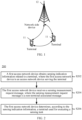
- FIG. 1 is a schematic diagram of a wireless communication system to which an embodiment of this application is applicable.
- the wireless communication system includes a terminal 11 and a network side device 12.
- the terminal 11 may also be referred to as a terminal device or a user equipment (user equipment, UE).
- UE user equipment
- the terminal 11 may be terminal side devices such as a mobile phone, a tablet personal computer (tablet personal computer), a laptop computer (laptop computer) or a notebook computer, a personal digital assistant (personal digital assistant, PDA), a palmtop computer, a netbook, an ultra-mobile personal computer (ultra-mobile personal computer, UMPC), a mobile Internet device (mobile Internet device, MID), an augmented reality (augmented reality, AR) or a virtual reality (virtual reality, VR) device, a robot, a wearable device (wearable device), a vehicle user equipment (VUE), a pedestrian user equipment (PUE), a smart household (household devices with a wireless communication function, such as a refrigerator, a television, a washing machine, or furniture).
- the wearable devices include: a smart watch, a smart bracelet, a smart earphone, smart glasses, smart jewelry (a smart bangle, a smart wrist chain, a smart ring, a smart necklace, a smart anklet, a smart ankle chain, and the like), a smart wristband, smart clothes, a game console, and the like. It should be noted that a specific type of the terminal 11 is not limited in the embodiments of this application.
- the network side device 12 may be a base station or a core network.
- the base station may be referred to as a NodeB, an evolved NodeB, an access point, a Base Transceiver Station (Base Transceiver Station, BTS), a radio base station, a radio transceiver, a Basic Service Set (Basic Service Set, BSS), an Extended Service Set (Extended Service Set, ESS), a next generation NodeB, a home NodeB, a home evolved NodeB, a WLAN access point, a Wi-Fi node, a Transmitting Receiving Point (Transmitting Receiving Point, TRP), or another proper term in the field.
- the base station is not limited to a specific technical term. It should be noted that a base station in the NR system is only used as an example in the embodiments of this application, but a specific type of the base station is not limited.
- the embodiments of this application provide a method 200 for implementing a sensing service.
- the method may be performed by a first access network device.
- the method may be performed by software or hardware installed in the first access network device, and the method includes the following steps.
- the first access network device obtains sensing indication information related to a terminal, where the first access network device is an access network device serving the terminal.
- the first access network device may be a base station, for example, a gNB.
- the first access network device may obtain the sensing indication information related to a terminal served by the first access network device.
- the sensing indication information related to different terminals may be different.
- sensing indication information related to a terminal 1 is sensing indication information 1
- sensing indication information related to a terminal 2 is sensing indication information 2, and the like.
- the sensing indication information related to the terminal is used for indicating at least one of the following: (1) whether the terminal is allowed to execute a sensing task; (2) a sensing capability of the terminal, for example, a supported sensing method, a supported sensing signal (for sending or measurement), a sensing frequency band supporting sending or measurement, and a sensing measurement capability; (3) whether a position of the terminal is fixed; and (4) whether the terminal is a sensing measurement unit.
- the first access network device receives a sensing measurement request message, where the sensing measurement request message is a non-terminal associated message.
- the measurement request message may be sent by a sensing server to the first access network device.
- the sensing server receives a sensing request message from a third party or a core network, and the sensing request message is not associated with a terminal, that is, the core network or the third party does not select a specific terminal to execute a sensing task.
- the sensing request message may be used for requesting to sense a weather condition in an area, and monitor air pollution, human traffic, traffic congestion, and the like.
- the sensing server may determine, according to the received sensing request message, for example, sensing region information, one or more first access network devices with a coverage region overlapping a sensing region, and send a sensing measurement request message to the first access network device, for requesting the first access network device to perform sensing measurement.
- the sensing measurement request message may carry a type of a sensing request (for example, sensing weather or sensing air), the sensing region information, and sensing quality of service (Quality of Service, QoS).
- a sensing request for example, sensing weather or sensing air
- the sensing region information for example, the sensing region information
- sensing quality of service Quality of Service, QoS
- the first access network device determines, according to the sensing indication information, a terminal used for executing a sensing task.
- the first access network device Since the first access network device stores context information of a terminal in a radio resource control (Radio Resource Control, RRC) connected state and an RRC inactive state, including the sensing indication information, the first access network device determines (or selects) the terminal used for executing a sensing task based on (or at least partially based on) stored sensing indication information of each terminal.
- RRC Radio Resource Control
- the terminal determined by the first access network device and used for executing a sensing task meets at least one of the following: (1) being allowed to execute the sensing task; (2) a possessed sensing capability supporting the sensing task; (3) being in an RRC connected state; (4) being in an RRC inactive state, where (3) and (4) do not usually exist at the same time; (5) having a fixed position; (6) being a sensing measurement unit; and (7) matching a sensing region corresponding to the sensing task.
- the method further includes: sending, by the first access network device, a paging message only in all or a part of cells under the first access network device, where the paging message is used for paging the terminal in the RRC inactive state.
- the paging message is not delivered in a range of a radio access network (Radio Access Network, RAN) notification area (RAN Notification Area, RNA), that is, a RAN paging message is not sent to other access network devices in the RNA, which is conducive to saving network resources.
- RAN Radio Access Network
- RNA Radio Notification Area
- the first access network device obtains the sensing indication information related to the terminal.
- the first access network device can determine, according to the sensing indication information, the terminal used for executing a sensing task.
- the first access network device can better select a terminal that is more proper to execute a sensing task, to better meet sensing service requirements.
- that the first access network device obtains sensing indication information related to a terminal may include at least one of the following:
- the method further includes: sending, by the first access network device, the sensing indication information to a third access network device, where the first access network device is an access network device serving the terminal before the switching, the RRC reestablishment, or the RRC restoration, and the third access network device is an access network device serving the terminal after the switching, the RRC reestablishment, or the RRC restoration.
- the first access network device is an access network device serving the terminal before the switching
- the third access network device is an access network device serving the terminal after the switching
- the first access network device is a service access network device of the terminal before the RRC reestablishment
- the third access network device is an access network device serving the terminal after the RRC reestablishment
- the first access network device is an access network device serving the terminal before the RRC restoration
- the third access network device is an access network device serving the terminal after the RRC restoration.
- the method further includes at least one of the following (1) and (2).
- the method further includes: sending, by the first access network device, measurement configuration information, where the measurement configuration information includes at least one of the following: a resource configuration of the sensing signal, a reception trigger condition of the sensing signal, and a reporting manner of the measurement result.
- the first access network device receives a sensing signal, where the sensing signal is sent by the terminal used for executing a sensing task; and the first access network device generates a measurement result according to the sensing signal.
- the method further includes: sending, by the first access network device, sensing signal configuration information, where the sensing signal configuration information includes a resource configuration of the sensing signal.
- the base station (corresponding to the first access network device in the foregoing embodiments) obtains the sensing indication information from the core network.
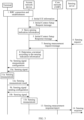
- a flowchart of this embodiment is shown in FIG. 3 , including the following steps:
- the sensing capability of the terminal may be a part of a wireless access capability of the terminal, that is, sensing capability information is carried in the wireless access capability of the terminal.
- the core network may obtain the wireless access capability of the terminal.
- Step 4 The base station stores the sensing indication information corresponding to the terminal obtained from the core network.
- Step 5 The base station sends an Initial Context Setup Response (Initial Context Setup Response) message to the core network, and the base station enters a connected state.
- Initial Context Setup Response Initial Context Setup Response
- the sensing server receives the sensing request from, for example, the third party or the core network.
- the sensing request is not associated with a specific UE, that is, the core network or the third party does not select a specific UE to perform sensing measurement.
- the sensing request may be used for requesting, for example, to sense a weather condition in an area, and to monitor air pollution, human traffic, and traffic congestion.
- the sensing request may carry a type of the sensing request (for example, sensing weather or sensing air), the sensing region information, and sensing QoS.
- Step 7 The sensing server determines (one or more) target base stations according to the sensing request, for example, the sensing region request, and sends a first message (for example, a sensing measurement request message) to the target base station, to request the target base station to perform sensing measurement.
- a first message for example, a sensing measurement request message
- the first message may carry one or any combination of a sensing method, a sensing measurement amount, a sensing region (a target sensing region or a region in which a sensing measurement terminal is located), a quantity of sensing measurement UEs, a quantity of a measurement amount reported by each UE, a report type (a report measurement amount or a sensing result), and other information.
- the first message is a non-UE associated (non-UE associated) message or a global (global) message.
- the first message may be a message of a protocol stack (for example, SP2) between the base station and the sensing server.
- the first message may be sent to the target base station through the core network, but an NG Application Protocol (NG Application Protocol, NGAP) message (that is, the protocol stack message between the core network and the base station) carrying the message is a non-UE associated (non-UE associated) message, that is, not carrying a UE NGAP ID allocated by the base (that is, a RAN UE NGAP ID).
- NGAP NG Application Protocol
- Step 8 The base station stores the context information of the terminal in the RRC connected state and the inactive state, including the sensing indication information.
- the base station selects) determines a terminal performing sensing based on (or at least partially based on) the stored sensing indication information of each terminal.
- the terminal may be selected from any one or a combination of a plurality of terminals that meet the following conditions:
- the base station may also additionally take other factors into account together for selection. For example, the base station may evaluate a direction of each terminal through a receive beam corresponding to each terminal, and evaluate a (rough) distance between the terminal and the base station through a measurement result reported by the terminal. Therefore, the base station may select a terminal matching the sensing region in the first message.
- the "matching" may be that a position of the terminal is evaluated to be located in the sensing region. Because the base station has the additional information, compared with the core network selecting a terminal, the base station can select a terminal that is more proper to perform sensing measurement (that is, better matches the sensing region), to better meet sensing requirements.
- the base station may perform multi-level selection. For example, a part of terminals (for example, terminals that are allowed to perform sensing and that are in the connected state) are selected to be delivered for measurement, and a more proper terminal is further selected based on a measurement result.
- a part of terminals for example, terminals that are allowed to perform sensing and that are in the connected state
- a more proper terminal is further selected based on a measurement result.
- the base station may alternatively select a terminal in the RRC inactive state according to context of the terminal. For example, when there is not a proper terminal in the RRC connected state, or the terminal in the RRC inactive state is a sensing measurement unit more proper to perform sensing, the base station may select a terminal in the RRC inactive state.
- the base station delivers the paging message to page the terminal only in all cells or a part of cells under the base station (different from a general situation of delivering a paging message in the RNA range, that is, not sending a RAN paging message to other base stations in the RAN, to save network resources). If the terminal is in the cell under the base station, the terminal enters the RRC connected state after receiving the paging message, and other operations are consistent with the terminal in the RRC connected state.
- Step 9 The sensing measurement may be that the base station transmits a sensing signal, and the terminal performs sensing measurement, or may be that the terminal transmits a sensing signal, and the base station performs sensing measurement. If the base station transmits the sensing signal, 9a to 12a are performed; or if the terminal transmits the sensing signal, 9b to 11b are performed.
- Step 9a The base station sends a sensing signal measurement configuration to the terminal, including a parameter configuration of a time domain and a frequency domain, a trigger condition, a reporting manner (for example, cyclic or not), and the like of the sensing signal.
- Step 10a The base station sends the sensing signal, where an order between 9a and 10a is not limited.
- Step 11a The terminal performs sensing measurement.
- Step 12a After the trigger condition is met, the terminal sends a sensing measurement result to the base station.
- the terminal may send one measurement result, or may send a plurality of measurement results, for example, cyclically send the measurement results.
- Step 9b The base station sends a sensing signal sending configuration to the terminal, including a parameter configuration of a time domain and a frequency domain of the sensing signal.
- Step 10b The terminal sends the sensing signal according to the sensing signal sending configuration.
- Step 11b The base station performs sensing measurement, obtains a sensing measurement result, and optionally generates a sensing result based on the sensing measurement result.
- Step 13 The base station sends a sensing measurement response or reports sensing measurement to the sensing server, carrying the sensing measurement result or the sensing result.
- Step 14 After receiving the sensing measurement result, the sensing server may calculate the sensing result based on the sensing measurement result, or receives the sensing result from the terminal. The sensing server may determine whether to trigger sending a sensing response to the third party or the core network. For example, when the sensing result is not ideal, more sensing measurement results may be continuously received; and when the sensing results meet requirements, the sensing server triggers sending the sensing response to the third party or the core network, where the sensing response carries the sensing result.
- a source base station may send the sensing indication information to the target base station, for example, by carrying the sensing indication information in a switch request message, and the base station stores the sensing indication information of the terminal.
- a specific procedure is shown in FIG. 4 .
- Embodiment 1 optionally, when RRC reestablishment occurs in the terminal, or the terminal enters the connected state (RRC restoration) from the inactive (inactive) state.
- An old base station sends the sensing indication information to a new base station (that is, a target base station reestablished or restored), for example, by carrying the sensing indication information in a Retrieve UE Context Response (RETRIEVE UE CONTEXT RESPONSE) message, and the new base station stores the sensing indication information of the terminal.
- RETRIEVE UE CONTEXT RESPONSE retrieve UE Context Response
- a current service base station of the terminal may always store the sensing indication information of the terminal.
- the base station obtains the sensing indication information from the terminal.
- the base station obtains the sensing indication information from the core network.
- a difference lies in that the base station obtains the sensing indication information from the terminal, and other part is basically the same as Embodiment 1, which is not repeated herein again.
- this embodiment includes the following steps.
- Step 1 The terminal enters the RRC connected state, and the terminal sends an RRC message to the base station, where the RRC message carries the sensing indication information.
- the RRC message may be an RRC establishment completion message; or may be a UE Assistance Information (UE Assistance Information) message; or may be a message sent after the base station requests.
- the base station sends a UE Information Request (UE Information Request) message to the terminal, to request the terminal to send the sensing indication information, and the terminal sends a UE Information Response (UE Information Response) message, where the message carries the sensing indication information.
- UE Information Request UE Information Request
- UE Information Response UE Information Response
- Step 2 The base station stores the sensing indication information.
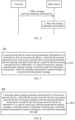
- FIG. 7 is a schematic flowchart of implementing a method for implementing a sensing service according to an embodiment of this application, which may be applied to a core network device. As shown in FIG. 7 , the method 700 includes the following steps.
- a core network device sends sensing indication information of a terminal to a first access network device, where the first access network device is an access network device serving the terminal; and the sensing indication information is used for the first access network device to determine, in a case of receiving a sensing measurement request message, a terminal used for executing a sensing task, where the sensing measurement request message is a non-terminal associated message.
- the core network device sends the sensing indication information of the terminal to the first access network device.
- the first access network device can determine, according to the sensing indication information, the terminal used for executing a sensing task.
- the first access network device can better select a terminal that is more proper to execute a sensing task, to better meet sensing service requirements.
- the sensing indication information is used for indicating at least one of the following: whether the terminal is allowed to execute a sensing task; a sensing capability of the terminal; whether a position of the terminal is fixed; and whether the terminal is a sensing measurement unit.
- FIG. 8 is a schematic flowchart of implementing a method for implementing a sensing service according to an embodiment of this application, which may be applied to a terminal. As shown in FIG. 8 , the method 800 includes the following steps.
- a terminal sends sensing indication information to a first access network device, where the first access network device is an access network device serving the terminal; and the sensing indication information is used for the first access network device to determine, in a case of receiving a sensing measurement request message, a terminal used for executing a sensing task, where the sensing measurement request message is a non-terminal associated message.
- the terminal sends the sensing indication information to the first access network device.
- the first access network device can determine, according to the sensing indication information, the terminal used for executing a sensing task.
- the first access network device can better select a terminal that is more proper to execute a sensing task, to better meet sensing service requirements.
- the sensing indication information is used for indicating at least one of the following: whether the terminal is allowed to execute a sensing task; a sensing capability of the terminal; whether a position of the terminal is fixed; and whether the terminal is a sensing measurement unit.
- the method for implementing a sensing service provided in the embodiments of this application may be performed by an apparatus for implementing a sensing service, or a control module configured to perform the method for implementing a sensing service in the apparatus for implementing a sensing service.
- An example in which the apparatus for implementing a sensing service performs the method for implementing a sensing service is used in this embodiment of this application to describe the apparatus for implementing a sensing service provided in the embodiments of this application.
- FIG. 9 is a schematic structural diagram of an apparatus for implementing a sensing service according to an embodiment of this application.
- the apparatus may correspond to the first access network device in other embodiments.
- the apparatus 900 includes the following modules.
- An obtaining module 902 may be configured to obtain sensing indication information related to a terminal, where the apparatus is an access network device serving the terminal.
- the obtaining module 902 may further be configured to receive a sensing measurement request message, where the sensing measurement request message is a non-terminal associated message.
- a determining module 904 may be configured to determine, according to the sensing indication information, a terminal used for executing a sensing task.
- the obtaining module obtains the sensing indication information related to the terminal, and in a case that the obtaining module receives the non-terminal associated sensing measurement request message, the determining module can determine the terminal configured to perform a sensing task according to the sensing indication information.
- the apparatus can better select a terminal that is more proper to execute a sensing task, to better meet sensing service requirements.
- the obtaining module 902 is configured to perform at least one of the following: receiving the sensing indication information from a core network device; receiving the sensing indication information from the terminal; and receiving the sensing indication information from a second access network device, where the apparatus is an access network device serving the terminal after switching, RRC reestablishment, or RRC restoration, and the second access network device is an access network device serving the terminal before the switching, the RRC reestablishment, or the RRC restoration.
- the apparatus further includes a sending module, configured to send the sensing indication information to a third access network device.
- the apparatus is an access network device serving the terminal before the switching, the RRC reestablishment, or the RRC restoration
- the third access network device is an access network device serving the terminal after the switching, the RRC reestablishment, or the RRC restoration.
- the sensing indication information is used for indicating at least one of the following: whether the terminal is allowed to execute a sensing task; a sensing capability of the terminal; whether a position of the terminal is fixed; and whether the terminal is a sensing measurement unit.
- the terminal determined by the determining module 904 and used for executing a sensing task meets at least one of the following: being allowed to execute the sensing task; a possessed sensing capability supporting the sensing task; being in an RRC connected state; being in an RRC inactive state; having a fixed position; being a sensing measurement unit; and matching a sensing region corresponding to the sensing task.
- the apparatus further includes a sending module, configured to send a paging message only in all or a part of cells under the apparatus in a case that the terminal used for executing a sensing task is in the RRC inactive state, where the paging message is used for paging the terminal in the RRC inactive state.
- a sending module configured to send a paging message only in all or a part of cells under the apparatus in a case that the terminal used for executing a sensing task is in the RRC inactive state, where the paging message is used for paging the terminal in the RRC inactive state.
- the apparatus further includes a sending module, configured to send a sensing signal, where the terminal used for executing a sensing task is configured to generate a measurement result according to the sensing signal; and the obtaining module 902 is further configured to receive the measurement result; or the obtaining module 902 is further configured to receive the sensing signal, where the sensing signal is sent by the terminal used for executing a sensing task; and the determining module 904 is further configured to generate a measurement result according to the sensing signal.
- a sending module configured to send a sensing signal, where the terminal used for executing a sensing task is configured to generate a measurement result according to the sensing signal
- the obtaining module 902 is further configured to receive the measurement result
- the sensing signal is sent by the terminal used for executing a sensing task
- the determining module 904 is further configured to generate a measurement result according to the sensing signal.
- the sending module in a case that the sending module sends the sensing signal, is further configured to send a measurement configuration information, where the measurement configuration information includes at least one of the following: a resource configuration of the sensing signal, a reception trigger condition of the sensing signal, and a reporting manner of the measurement result; or in a case that the obtaining module 902 receives the sensing signal, the apparatus further includes a sending module, configured to send sensing signal configuration information, where the sensing signal configuration information includes a resource configuration of the sensing signal.
- the apparatus 900 may refer to a procedure corresponding to the method 200 in the embodiments of this application.
- all units/modules in the apparatus 900 and other operations and/or functions above are respectively intended to implement corresponding procedures in the method 200, and can achieve the same or equivalent technical effect. For brevity, details are not described herein again.
- the apparatus for implementing a sensing service in this embodiment of this application may be an apparatus, an apparatus with an operating system, or an electronic device, or may be a component, an integrated circuit, or a chip in a terminal.
- the apparatus or the electronic device may be a mobile terminal, or may be a non-mobile terminal.
- the mobile terminal may include, but is not limited to, the types of the terminal 11 listed above.
- the non-mobile terminal may be a server, a network attached storage (Network Attached Storage, NAS), a personal computer (personal computer, PC), a television (television, TV), a teller machine, an automated machine, or the like, which are not specifically limited in this embodiment of this application.
- the apparatus for implementing a sensing service provided in this embodiment of this application can implement processes implemented in the method embodiments of FIG. 2 to FIG. 8 , and achieve the same technical effect. To avoid repetition, details are not described herein again.
- FIG. 10 is a schematic structural diagram of an apparatus for implementing a sensing service according to an embodiment of this application.
- the apparatus may correspond to a core network device in other embodiments.
- the apparatus 1000 includes the following modules.
- a sending module 1000 may be configured to send sensing indication information of a terminal to a first access network device, where the first access network device is an access network device serving the terminal; and the sensing indication information is used for the first access network device to determine, in a case of receiving a sensing measurement request message, a terminal used for executing a sensing task, where the sensing measurement request message is a non-terminal associated message.
- the apparatus 1000 further includes a processing module, and the like.
- the sending module sends the sensing indication information of the terminal to the first access network device, and in a case that the first access network device receives the non-terminal associated sensing measurement request message, the first access network device can determine, according to the sensing indication information, the terminal used for executing a sensing task.
- the first access network device can better select a terminal that is more proper to execute a sensing task, to better meet sensing service requirements.
- the sensing indication information is used for indicating at least one of the following: whether the terminal is allowed to execute a sensing task; a sensing capability of the terminal; whether a position of the terminal is fixed; and whether the terminal is a sensing measurement unit.
- the apparatus 1000 may refer to a procedure corresponding to the method 700 in the embodiments of this application.
- all units/modules in the apparatus 1000 and other operations and/or functions above are respectively intended to implement corresponding procedures in the method 700, and can achieve the same or equivalent technical effect. For brevity, details are not described herein again.
- FIG. 11 is a schematic structural diagram of an apparatus for implementing a sensing service according to an embodiment of this application.
- the apparatus may correspond to a terminal in other embodiments.
- the apparatus 1100 includes the following modules.
- a sending module 1100 may be configured to send sensing indication information to a first access network device, where the first access network device is an access network device serving the apparatus; and the sensing indication information is used for the first access network device to determine, in a case of receiving a sensing measurement request message, a terminal used for executing a sensing task, where the sensing measurement request message is a non-terminal associated message.
- the apparatus 1100 further includes a processing module, and the like.
- the sending module sends the sensing indication information to the first access network device, and in a case that the first access network device receives the non-terminal associated sensing measurement request message, the first access network device can determine, according to the sensing indication information, the terminal used for executing a sensing task.
- the first access network device can better select a terminal that is more proper to execute a sensing task, to better meet sensing service requirements.
- the sensing indication information is used for indicating at least one of the following: whether the terminal is allowed to execute a sensing task; a sensing capability of the terminal; whether a position of the terminal is fixed; and whether the terminal is a sensing measurement unit.
- the apparatus 1100 may refer to a procedure corresponding to the method 800 in the embodiments of this application.
- all units/modules in the apparatus 1100 and other operations and/or functions above are respectively intended to implement corresponding procedures in the method 800, and can achieve the same or equivalent technical effect. For brevity, details are not described herein again.
- the embodiments of this application further provide a communication device 1200, including a processor 1201, a memory 1202, and a program or instructions stored in the memory 1202 and executable on the processor 1201.
- a communication device 1200 including a processor 1201, a memory 1202, and a program or instructions stored in the memory 1202 and executable on the processor 1201.
- the communication device 1200 is a terminal
- the program or the instructions are executed by the processor 1201
- processes of the embodiments of the method for implementing a sensing service are implemented, and the same technical effect can be achieved.
- the communication device 1200 is a network side device
- the program or the instructions are executed by the processor 1201
- processes of the embodiments of the method for implementing a sensing service are implemented, and the same technical effect can be achieved. To avoid repetition, details are not described herein again.
- the embodiments of this application further provide a terminal, including a processor and a communication interface.
- the communication interface is configured to send sensing indication information to a first access network device, where the first access network device is an access network device serving the terminal; and the sensing indication information is used for the first access network device to determine, in a case of receiving a sensing measurement request message, a terminal used for executing a sensing task, where the sensing measurement request message is a non-terminal associated message.
- FIG. 13 is a schematic diagram of a hardware structure of a terminal according to an embodiment of this application.
- the terminal 1300 includes, but is not limited to, at least a part of components such as a radio frequency unit 1301, a network module 1302, an audio output unit 1303, an input unit 1304, a sensor 1305, a display unit 1306, a user input unit 1307, an interface unit 1308, a memory 1309, a processor 1310, and the like.
- the terminal 1300 may further include a power supply (such as a battery) for supplying power to the components.
- the power supply may be logically connected to the processor 1310 by using a power management system, thereby implementing functions, such as charging, discharging, and power consumption management, by using the power management system.
- the terminal structure shown in FIG. 13 does not constitute a limitation on the terminal, the terminal may include more or fewer components than shown, or combine some components, or have different component arrangements, and details are not described herein again.
- the input unit 1304 may include a graphics processing unit (Graphics Processing Unit, GPU) 13041 and a microphone 13042.
- the graphics processing unit 13041 performs processing on image data of a static picture or a video that is obtained by an image acquisition device (for example, a camera) in a video acquisition mode or an image acquisition mode.
- the display unit 1306 may include a display panel 13061, and the display panel 13061 may be configured by using a liquid crystal display, an organic light-emitting diode, or the like.
- the user input unit 1307 includes a touch panel 13071 and another input device 13072.
- the touch panel 13071 is also referred to as a touch screen.
- the touch panel 13071 may include two parts: a touch detection apparatus and a touch controller.
- the another input device 13072 may include, but is not limited to, a physical keyboard, a functional key (such as a volume control key or a switch key), a track ball, a mouse, and a joystick, which are not described herein again.
- the radio frequency unit 1301 includes, but is not limited to, an antenna, at least one amplifier, a transceiver, a coupler, a low noise amplifier, a duplexer, and the like.
- the memory 1309 is configured to store a software program or instructions and various data.
- the memory 1309 may mainly include a program or instruction storage area and a data storage area.
- the program or instruction storage area may store an operating system, an application program or instructions required by at least one function (for example, a sound playback function and an image display function), and the like.
- the memory 1309 may include a high speed random access memory, or may further include a non-volatile memory.
- the non-volatile memory may be a read-only memory (Read-Only Memory, ROM), a programmable read-only memory (Programmable ROM, PROM), an erasable programmable read-only memory (Erasable PROM, EPROM), an electrically erasable programmable read-only memory (Electrically EPROM, EEPROM), or a flash memory, for example, at least one magnetic disk storage device, a flash memory device, or another non-volatile solid-state storage device.
- ROM Read-Only Memory
- PROM programmable read-only memory
- Erasable PROM Erasable PROM
- EPROM electrically erasable programmable read-only memory
- EEPROM electrically erasable programmable read-only memory
- flash memory for example, at least one magnetic disk storage device, a flash memory device, or another non-volatile solid-state storage device.
- the processor 1310 may include one or more processing units.
- the processor 1310 may integrate an application processor and a modem, where the application processor mainly processes an operating system, a user interface, an application program or instructions, and the like, and the modem mainly processes wireless communication, for example, a baseband processor. It may be understood that, the modem may alternatively not be integrated in the processor 1310.
- the radio frequency unit 1301 may be configured to send sensing indication information to a first access network device, where the first access network device is an access network device serving the terminal; and the sensing indication information is used for the first access network device to determine, in a case of receiving a sensing measurement request message, a terminal used for executing a sensing task, where the sensing measurement request message is a non-terminal associated message.
- the terminal provided in this embodiment of this application may send the sensing indication information to the first access network device, and in a case that the first access network device receives the non-terminal associated sensing measurement request message, the first access network device can determine, according to the sensing indication information, the terminal used for executing a sensing task.
- the first access network device compared with the core network device selecting the terminal used for executing a sensing task, because the first access network device is more aware of related information of the terminal, such as approximate position information of the terminal and a RRC status of the terminal, the first access network device can better select a terminal that is more proper to execute a sensing task, to better meet sensing service requirements.
- the terminal 1300 provided in this embodiment of this application may further implement processes of the embodiments of the method for implementing a sensing service, and can achieve the same technical effect. To avoid repetition, details are not described herein again.
- the embodiments of this application further provide a network side device.
- the network side device may be a first access network device, or may be a core network device.
- the network side device includes a processor and a communication interface.
- the communication interface is configured to obtain sensing indication information related to a terminal, where the network side device is an access network device serving the terminal; and receive a sensing measurement request message, where the sensing measurement request message is a non-terminal associated message.
- the processor is configured to determine, according to the sensing indication information, a terminal used for executing a sensing task.
- the communication interface is configured to send sensing indication information of a terminal to a first access network device, where the first access network device is an access network device serving the terminal; and the sensing indication information is used for the first access network device to determine, in a case of receiving a sensing measurement request message, a terminal used for executing a sensing task, where the sensing measurement request message is a non-terminal associated message.
- the network side device embodiment corresponds to the method embodiments of the first access network device or the core network device, and all implementation processes and implementations of the method embodiments are applicable to the network side device embodiment, and can achieve the same technical effect.
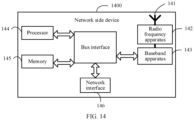
- the embodiments of this application further provide a network side device.
- the network side device 1400 includes: an antenna 141, a radio frequency apparatus 142, and a baseband apparatus 143.
- the antenna 141 is connected to the radio frequency apparatus 142.
- the radio frequency 142 receives information through the antenna 141, and sends the received information to the baseband apparatus 143 for processing.
- the baseband apparatus 143 processes to-be-sent information, and sends the information to the radio frequency apparatus 142
- the radio frequency apparatus 142 processes the received information, and sends the information through the antenna 141.
- the apparatus for implementing a sensing service may be located in the baseband apparatus 143, and the method performed by the network side device in the above embodiments may be implemented in the baseband apparatus 143.
- the baseband apparatus 143 includes a processor 144 and a memory 145.
- the baseband apparatus 143 may include at least one baseband board.
- a plurality of chips are arranged on the baseband board, as shown in FIG. 14 .
- One of the chips is, for example, the processor 144, connected to the memory 145, to invoke a program in the memory 145, to perform the operations of the network side device shown in the above method embodiments.
- the baseband apparatus 143 may further include a network interface 146, configured to exchange information with the radio frequency apparatus 142.
- the interface is, for example, a common public radio interface (Common Public Radio Interface, CPRI).
- the network side device in this embodiment of this application further includes: instructions or a program stored in the memory 145 and executable on the processor 144.
- the processor 144 invokes the instructions or the program in the memory 145 to perform the method performed by modules shown in FIG. 9 or FIG. 10 , and achieves the same technical effect. To avoid repetition, details are not described herein again.
- the embodiments of this application further provide a readable storage medium.
- the readable storage medium may be volatile, or may be non-volatile.
- the readable storage medium may be transitory, or may be non-transitory.
- the readable storage medium stores a program or instructions. When the program or the instructions are executed by a processor, processes of the embodiments of the method for implementing a sensing service are implemented, and the same technical effect can be achieved. To avoid repetition, details are not described herein again.
- the processor may be the processor in the terminal in the above embodiments.
- the readable storage medium includes a computer-readable storage medium, such as a computer read-only memory (Read-Only Memory, ROM), a random access memory (Random Access Memory, RAM), a magnetic disk, an optical disc, or the like.
- the embodiments of this application further provide a chip.
- the chip includes a processor and a communication interface.
- the communication interface is coupled to the processor.
- the processor is configured to execute a program or instructions, to implement processes of the embodiments of the method for implementing a sensing service, and can achieve the same technical effect. To avoid repetition, details are not described herein again.
- the chip provided in this embodiment of this application may also be referred to as a system-level chip, a system chip, a chip system, a system on chip, or the like.
- the embodiments of this application further provide a computer program product.
- the computer program product is stored in a non-transitory storage medium.
- the computer program product is executed by at least one processor to implement processes of the embodiments of the method for implementing a sensing service, and can achieve the same technical effect. To avoid repetition, details are not described herein again.
- the embodiments of this application further provide a communication device, which is configured to perform processes of the embodiments of the method for implementing a sensing service, and can achieve the same technical effect. To avoid repetition, details are not described herein again.
- the method in the foregoing embodiments may be implemented by using software and a necessary general hardware platform, and certainly, may alternatively be implemented by hardware, but in many cases, the former manner is a better implementation.
- the technical solutions of this application essentially or the part contributing to the related art may be implemented in a form of a computer software product.
- the computer software product is stored in a storage medium (such as a ROM/RAM, a magnetic disk, or an optical disc) and includes several instructions for instructing a terminal (which may be a mobile phone, a computer, a server, an air conditioner, a network device, or the like) to perform the methods described in the embodiments of this application.
Landscapes
- Engineering & Computer Science (AREA)
- Signal Processing (AREA)
- Computer Networks & Wireless Communication (AREA)
- Databases & Information Systems (AREA)
- Physics & Mathematics (AREA)
- Electromagnetism (AREA)
- Mobile Radio Communication Systems (AREA)
Applications Claiming Priority (2)
| Application Number | Priority Date | Filing Date | Title |
|---|---|---|---|
| CN202111308582.6A CN116094632A (zh) | 2021-11-05 | 2021-11-05 | 感知业务的实现方法和设备 |
| PCT/CN2022/128635 WO2023078208A1 (zh) | 2021-11-05 | 2022-10-31 | 感知业务的实现方法和设备 |
Publications (2)
| Publication Number | Publication Date |
|---|---|
| EP4407899A1 true EP4407899A1 (de) | 2024-07-31 |
| EP4407899A4 EP4407899A4 (de) | 2025-01-22 |
Family
ID=86210707
Family Applications (1)
| Application Number | Title | Priority Date | Filing Date |
|---|---|---|---|
| EP22889233.7A Pending EP4407899A4 (de) | 2021-11-05 | 2022-10-31 | Verfahren zur implementierung eines erfassungsdienstes und vorrichtung |
Country Status (5)
| Country | Link |
|---|---|
| US (1) | US20240284506A1 (de) |
| EP (1) | EP4407899A4 (de) |
| JP (1) | JP2024537444A (de) |
| CN (1) | CN116094632A (de) |
| WO (1) | WO2023078208A1 (de) |
Families Citing this family (10)
| Publication number | Priority date | Publication date | Assignee | Title |
|---|---|---|---|---|
| CN116546436B (zh) * | 2023-05-23 | 2025-11-07 | 中国电信股份有限公司广东研究院 | 目标感知方法、装置、设备、介质和程序产品 |
| CN119923873A (zh) * | 2023-07-24 | 2025-05-02 | 北京小米移动软件有限公司 | 感测方法、第一请求方、网络功能、通信系统和存储介质 |
| CN116707742B (zh) * | 2023-07-26 | 2025-11-14 | 中国联合网络通信集团有限公司 | 感知方法、装置及存储介质 |
| WO2025020126A1 (zh) * | 2023-07-26 | 2025-01-30 | Oppo广东移动通信有限公司 | 无线通信的方法以及通信设备 |
| CN119767318A (zh) * | 2023-09-28 | 2025-04-04 | 展讯半导体(南京)有限公司 | 感知方法、装置和系统 |
| CN119729891A (zh) * | 2023-09-28 | 2025-03-28 | 华为技术有限公司 | 用于感知的通信方法和装置 |
| US20250119871A1 (en) * | 2023-10-06 | 2025-04-10 | Lenovo (Singapore) Pte. Ltd. | Apparatus and method for a sensing service in a wireless network |
| CN120321721A (zh) * | 2024-01-15 | 2025-07-15 | 华为技术有限公司 | 通信方法和通信装置 |
| WO2024239712A1 (en) * | 2024-02-01 | 2024-11-28 | Lenovo (Beijing) Limited | Service continuity for sensing targrt |
| WO2025156352A1 (en) * | 2024-02-28 | 2025-07-31 | Zte Corporation | Privacy issues in wireless sensing systems |
Family Cites Families (8)
| Publication number | Priority date | Publication date | Assignee | Title |
|---|---|---|---|---|
| JP4347025B2 (ja) * | 2003-11-18 | 2009-10-21 | 特定非営利活動法人 アサザ基金 | 環境データ計測システム,方法,プログラム、環境データ計測システムに用いる集計サーバ,センサ端末 |
| CN102244855B (zh) * | 2010-05-10 | 2015-04-15 | 华为技术有限公司 | 一种基于位置的机器对机器通信方法、系统和装置 |
| US9058565B2 (en) * | 2011-08-17 | 2015-06-16 | At&T Intellectual Property I, L.P. | Opportunistic crowd-based service platform |
| US11627186B2 (en) * | 2012-05-17 | 2023-04-11 | Digi International, Inc. | Wireless network of environmental sensor units |
| US9485683B2 (en) * | 2012-05-31 | 2016-11-01 | Interdigital Patent Holdings, Inc. | Sensing measurement configuration and reporting in a long term evolution system operating over license exempt bands |
| WO2019242021A1 (zh) * | 2018-06-22 | 2019-12-26 | Oppo广东移动通信有限公司 | 信息测量方法、终端设备和网络设备 |
| BR112022017798A2 (pt) * | 2020-03-06 | 2022-11-29 | Idac Holdings Inc | Método implementado em uma unidade de transmissão/recepção sem fio, e, unidade de transmissão/recepção sem fio |
| JP7705848B2 (ja) * | 2020-04-24 | 2025-07-10 | パナソニック インテレクチュアル プロパティ コーポレーション オブ アメリカ | 通信装置及びセンシング方法 |
-
2021
- 2021-11-05 CN CN202111308582.6A patent/CN116094632A/zh active Pending
-
2022
- 2022-10-31 JP JP2024523784A patent/JP2024537444A/ja active Pending
- 2022-10-31 EP EP22889233.7A patent/EP4407899A4/de active Pending
- 2022-10-31 WO PCT/CN2022/128635 patent/WO2023078208A1/zh not_active Ceased
-
2024
- 2024-05-02 US US18/652,886 patent/US20240284506A1/en active Pending
Also Published As
| Publication number | Publication date |
|---|---|
| CN116094632A (zh) | 2023-05-09 |
| EP4407899A4 (de) | 2025-01-22 |
| JP2024537444A (ja) | 2024-10-10 |
| US20240284506A1 (en) | 2024-08-22 |
| WO2023078208A1 (zh) | 2023-05-11 |
Similar Documents
| Publication | Publication Date | Title |
|---|---|---|
| EP4407899A1 (de) | Verfahren zur implementierung eines erfassungsdienstes und vorrichtung | |
| US20240267800A1 (en) | Communication method and apparatus, terminal, and network device | |
| US20240314603A1 (en) | Method for Implementing Sensing Service, and Network Side Device | |
| US20240188166A1 (en) | Data Transmission Method for Small Data Transmission (SDT) and Terminal | |
| US20240179769A1 (en) | Node selection method, terminal, and network side device | |
| US20250071636A1 (en) | Cell reselection method, cell reselection processing method, and related device | |
| US20240314859A1 (en) | Session Establishment Method and Apparatus for Internet of Things Device | |
| US20250096992A1 (en) | Carrier aggregation control method and apparatus, terminal, and network-side equipment | |
| US20240405955A1 (en) | Information activation method, terminal, and network side device | |
| CN116033476B (zh) | 定位参考信号的测量报告发送或接收方法和设备 | |
| WO2023040895A1 (zh) | 成功切换报告shr的生成方法、装置、ue及介质 | |
| CN117479238A (zh) | 条件配置信息的处理方法、装置及通信设备 | |
| CN115379515A (zh) | 小区重选的方法、装置和终端设备 | |
| US20230232295A1 (en) | Method for changing working area, terminal, and network-side device | |
| CN117768971A (zh) | 数据传输方法、装置、中继设备、网络设备及介质 | |
| EP4221351A1 (de) | Drahtloskommunikationsverfahren, endgerätevorrichtung und netzwerkvorrichtung | |
| CN116980992A (zh) | 条件切换的配置方法、终端及网络侧设备 | |
| US12495352B2 (en) | Wireless communication method, terminal device, and network device | |
| CN116264741B (zh) | Idc信息的发送和接收方法、终端及网络侧设备 | |
| US20240040410A1 (en) | Information Acquisition and Configuration Methods and Apparatuses, and Communication Device | |
| US20230232403A1 (en) | Transmission processing method, terminal, and network side device | |
| US20250024418A1 (en) | Positioning processing method and apparatus, terminal, and network side device | |
| US20240430720A1 (en) | Data Collection Indication Method, Data Collection Method, Terminal, and Network-Side Device | |
| EP4391651A1 (de) | Notfalldienstverarbeitungsverfahren und -vorrichtung sowie lesbares speichermedium | |
| EP4564878A1 (de) | Verfahren zur erfassung von netzwerkauswahlinformationen eines gehosteten netzwerks, endgerät und netzwerkseitige vorrichtung |
Legal Events
| Date | Code | Title | Description |
|---|---|---|---|
| STAA | Information on the status of an ep patent application or granted ep patent |
Free format text: STATUS: THE INTERNATIONAL PUBLICATION HAS BEEN MADE |
|
| PUAI | Public reference made under article 153(3) epc to a published international application that has entered the european phase |
Free format text: ORIGINAL CODE: 0009012 |
|
| STAA | Information on the status of an ep patent application or granted ep patent |
Free format text: STATUS: REQUEST FOR EXAMINATION WAS MADE |
|
| 17P | Request for examination filed |
Effective date: 20240424 |
|
| AK | Designated contracting states |
Kind code of ref document: A1 Designated state(s): AL AT BE BG CH CY CZ DE DK EE ES FI FR GB GR HR HU IE IS IT LI LT LU LV MC ME MK MT NL NO PL PT RO RS SE SI SK SM TR |
|
| REG | Reference to a national code |
Ref country code: DE Ref legal event code: R079 Free format text: PREVIOUS MAIN CLASS: H04B0017382000 Ipc: H04W0024100000 |
|
| A4 | Supplementary search report drawn up and despatched |
Effective date: 20241219 |
|
| RIC1 | Information provided on ipc code assigned before grant |
Ipc: H04B 17/382 20150101ALN20241213BHEP Ipc: H04L 5/00 20060101ALN20241213BHEP Ipc: H04W 24/02 20090101ALN20241213BHEP Ipc: H04W 8/22 20090101ALN20241213BHEP Ipc: H04W 24/10 20090101AFI20241213BHEP |
|
| DAV | Request for validation of the european patent (deleted) | ||
| DAX | Request for extension of the european patent (deleted) |