EP4460033A1 - Datenübertragungsverfahren, vorrichtung, speichermedium und elektronische vorrichtung - Google Patents
Datenübertragungsverfahren, vorrichtung, speichermedium und elektronische vorrichtung Download PDFInfo
- Publication number
- EP4460033A1 EP4460033A1 EP22912960.6A EP22912960A EP4460033A1 EP 4460033 A1 EP4460033 A1 EP 4460033A1 EP 22912960 A EP22912960 A EP 22912960A EP 4460033 A1 EP4460033 A1 EP 4460033A1
- Authority
- EP
- European Patent Office
- Prior art keywords
- frame
- olt
- onu
- target
- pon
- Prior art date
- Legal status (The legal status is an assumption and is not a legal conclusion. Google has not performed a legal analysis and makes no representation as to the accuracy of the status listed.)
- Pending
Links
Images


Classifications
-
- H—ELECTRICITY
- H04—ELECTRIC COMMUNICATION TECHNIQUE
- H04Q—SELECTING
- H04Q11/00—Selecting arrangements for multiplex systems
- H04Q11/0001—Selecting arrangements for multiplex systems using optical switching
- H04Q11/0005—Switch and router aspects
-
- H—ELECTRICITY
- H04—ELECTRIC COMMUNICATION TECHNIQUE
- H04J—MULTIPLEX COMMUNICATION
- H04J3/00—Time-division multiplex systems
- H04J3/02—Details
- H04J3/06—Synchronising arrangements
- H04J3/0635—Clock or time synchronisation in a network
- H04J3/0638—Clock or time synchronisation among nodes; Internode synchronisation
- H04J3/0658—Clock or time synchronisation among packet nodes
-
- H—ELECTRICITY
- H04—ELECTRIC COMMUNICATION TECHNIQUE
- H04Q—SELECTING
- H04Q11/00—Selecting arrangements for multiplex systems
-
- H—ELECTRICITY
- H04—ELECTRIC COMMUNICATION TECHNIQUE
- H04Q—SELECTING
- H04Q11/00—Selecting arrangements for multiplex systems
- H04Q11/0001—Selecting arrangements for multiplex systems using optical switching
- H04Q11/0062—Network aspects
- H04Q11/0067—Provisions for optical access or distribution networks, e.g. Gigabit Ethernet Passive Optical Network (GE-PON), ATM-based Passive Optical Network (A-PON), PON-Ring
-
- H—ELECTRICITY
- H04—ELECTRIC COMMUNICATION TECHNIQUE
- H04Q—SELECTING
- H04Q11/00—Selecting arrangements for multiplex systems
- H04Q11/0001—Selecting arrangements for multiplex systems using optical switching
- H04Q11/0005—Switch and router aspects
- H04Q2011/0037—Operation
- H04Q2011/0045—Synchronisation
-
- H—ELECTRICITY
- H04—ELECTRIC COMMUNICATION TECHNIQUE
- H04Q—SELECTING
- H04Q11/00—Selecting arrangements for multiplex systems
- H04Q11/0001—Selecting arrangements for multiplex systems using optical switching
- H04Q11/0062—Network aspects
- H04Q2011/0064—Arbitration, scheduling or medium access control aspects
-
- H—ELECTRICITY
- H04—ELECTRIC COMMUNICATION TECHNIQUE
- H04Q—SELECTING
- H04Q11/00—Selecting arrangements for multiplex systems
- H04Q11/0001—Selecting arrangements for multiplex systems using optical switching
- H04Q11/0062—Network aspects
- H04Q2011/0086—Network resource allocation, dimensioning or optimisation
-
- H—ELECTRICITY
- H04—ELECTRIC COMMUNICATION TECHNIQUE
- H04Q—SELECTING
- H04Q2213/00—Indexing scheme relating to selecting arrangements in general and for multiplex systems
- H04Q2213/1301—Optical transmission, optical switches
Definitions
- Embodiments of the present invention relate to the field of communications, and specifically to a data transmission method and apparatus, and a storage medium and an electronic apparatus.
- Existing passive optical networks include an Institute for Electrical and Electronic Engineers Ethernet Passive Optical Network (IEEE EPON) series and an International Telecommunications Union-Telecommunications standardization sector Gigabit Passive Optical Network (ITU-T GPON) series. In terms of technical characteristics as well as technological evolution, the two series are essentially identical.
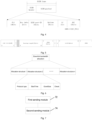
- a PON architecture is shown in Fig. 1 , and is a point-to-multipoint network topology.
- One Optical Line Terminal is connected to a plurality of Optical Network Units (ONU) through a point-to-multipoint Optical Distribution Network (ODN), a downlink direction (from the OLT to the ONU) operates in a manner of Time Division Multiplexing (TDM), and an uplink direction (from the ONU to the OLT) operates in a manner of Time Division Multiplexing Access (TDMA).
- OLT Optical Line Terminal
- ODN point-to-multipoint Optical Distribution Network
- TDM Time Division Multiplexing
- TDMA Time Division Multiplexing Access
- Embodiments of the present invention provide a data transmission method and apparatus, and a storage medium and an electronic apparatus, to at least solve the problems in the related art of high development costs and complex operations caused by the need of development of independent products and components for different standards of PONs.
- An embodiment of the present invention provides a data transmission method, including: synchronization information is sent to an ONU by an OLT, so as to allow the ONU to set a function synchronous with the OLT based on the synchronization information; and target management information is encapsulated into a target frame, and the target frame is sent to the ONU on a time slot in which the target frame is allowed to be sent by the OLT.
- the synchronization information is sent to the ONU by an OLT includes: a predetermined frame is sent to the ONU by the OLT.
- the predetermined frame is encapsulated with the synchronization information.
- the predetermined frame is sent to the ONU by the OLT includes at least one of the following: an Ethernet MAC frame is sent to the ONU by the OLT, where the Ethernet MAC frame is encapsulated with a synchronization header, and the synchronization header includes the synchronization information; a first encapsulation frame is sent to the ONU by the OLT, where the first encapsulation frame is encapsulated with the synchronization header, and the synchronization header includes the synchronization information; or a second encapsulation frame is sent to the ONU by the OLT, where the second encapsulation frame is encapsulated with the Ethernet MAC frame, the Ethernet MAC frame is encapsulated with the synchronization header, and the synchronization header includes the synchronization information.
- the synchronization header carries first standard indication information
- the first standard indication information is used for indicating the standard of data that is currently transmitted
- the standard includes at least one of the following: an IEEE PON standard or an ITU-T PON standard.
- second standard indication information is recorded in a first specific domain of the first encapsulation frame, and the second standard indication information is used for indicating the standard of data that is currently transmitted.
- third standard indication information is recorded in a second specific domain of the second encapsulation frame, and the third standard indication information is used for indicating the standard of the data that is currently transmitted; the position of the first specific domain in the first encapsulation frame is the same as the position of the second specific domain in the second encapsulation frame, or the first encapsulation frame and the second encapsulation frame are encapsulated in a uniform encapsulation manner.
- the synchronization header is determined based on at least one of the following synchronization headers: a first synchronization header in an ITU-T Gigabit PON (GPON); a second synchronization header in an ITU-T Ten-Gigabit PON (XG-PON); a third synchronization header in an ITU-T Time and Wavelength Division Multiplexing PON (TWDM-PON); or a fourth synchronization header in an ITU-T Higher Speed PON (HSP).
- GPON ITU-T Gigabit PON
- XG-PON ITU-T Ten-Gigabit PON
- TWDM-PON Time and Wavelength Division Multiplexing PON
- HSP Higher Speed PON
- the synchronization information is sent to the ONU by the OLT includes: the synchronization information is sent to the ONU by the OLT according to a fixed sending cycle.
- the target management information is encapsulated into the target frame by the OLT includes: the target management information is encapsulated into an XGEM frame by the OLT.
- the XGEM frame carries a specific Port ID, and first identifier information for identifying the target management information is recorded in the Port ID.
- the target management information is encapsulated into the XGEM frame by the OLT includes at least one of the following: one or more bandwidth entries included in the target management information is encapsulated into a first XGEM frame by the OLT; or one or more Physical Layer Operations Administration and Maintenance (PLOAM) messages included in the target management information is encapsulated into a second XGEM frame by the OLT.
- PLOAM Physical Layer Operations Administration and Maintenance
- the target management information is encapsulated into the target frame by the OLT includes: the target management information is encapsulated into an XGEM frame by the OLT.
- the XGEM frame is used for encapsulating at least one of the following pieces of target information in a downlink synchronization block PSBd: physical synchronization PSync, a superframe number superframe counter, or a PON port number PON-ID.
- the XGEM frame carries a specific Port ID, and second identifier information for identifying the PSBd is recorded in the Port ID.
- the target frame is sent to the ONU on the time slot in which the target frame is allowed to be sent by the OLT includes: when it is detected that there is a target time slot, the target frame is sent to the ONU on a time slot after the target time slot by the OLT.
- the target time slot includes a sliced time slot.
- the target frame is sent to the ONU on the time slot in which the target frame is allowed to be sent by the OLT includes: when there are a plurality of target frames, the plurality of target frames are sent in a tight sending manner on the time slot in which the target frame is allowed to be sent.
- the tight sending manner is used for indicating the manner that the plurality of target frames are sent sequentially end-to-end.
- the method further includes: a superframe is sent to the ONU by the OLT.
- the superframe carries one or more downlink bandwidth allocations DS BWmap for distinguishing time slots of different standards, each DS BWmap is encapsulated in a GEM frame or an envelope frame included in the superframe, each bandwidth entry in each DS BWmap indicates a protocol type, start time and bandwidth length in the current superframe.
- Another embodiment of the present invention provides a data transmission apparatus, applied to an OLT and including: a first sending module, configured to send synchronization information to an ONU, so as to allow the ONU to set a function synchronous with the OLT based on the synchronization information; and a second sending module, configured to encapsulate target management information into a target frame, and send the target frame to the ONU on a time slot in which the target frame is allowed to be sent.
- Still another embodiment of the present invention further provides a computer readable storage medium, wherein the computer readable storage medium stores a computer program, and the computer program is configured to cause, when executed by a processor, the processor to perform steps in any one of the above method embodiments.
- Still another embodiment of the present invention further provides an electronic apparatus.
- the electronic apparatus includes a memory and a processor, and a computer program that is stored in the memory and executable on the processor, wherein the processor is configured to execute the computer program to perform steps in any one of the above method embodiments.
- PON fusion is to use the same standard for the IEEE PON series and ITU-T PON series, for example, at a time when the IEEE NGEPON standardization is basically taking shape and 50G-PON related standardization of ITU-T is just starting to take shape, the adoption of Next Generation Ethernet Passive Optical Network (NGEPON) physical layers and protocol layers are discussed.
- NGEPON Next Generation Ethernet Passive Optical Network
- the IEEE PON series is sent in a downlink direction in a burst-like manner, and frames are independent with each other in the downlink direction; while the ITU-T PON series is sent in the downlink direction in a continuous manner, and the frames are sent by being bound in a superframe.
- the ITU-T PON series has a 125 microsecond allocation cycle and timing, and is better in terms of timing, delay, and efficiency, etc., but the IEEE PON series does not have similar characteristics. Therefore, the fusion of the IEEE PON series and the ITU-T PON series is more likely to be a fusion of respective advantages of the series to form a unified standard.
- the IEEE PON series and the ITU-T PON series may use the same physical layer, including a wave length, emission light power, receiving sensitivity, etc.
- the protocol layer is basically the same, but there may be differences in line rate, coding, Forward Error Correction (FEC), encapsulation, and so on. That is to say, the protocol layer involves more concepts and cannot be simply fused.
- FEC Forward Error Correction
- the downlink of an ITU-T PON sends one superframe every 125 microseconds in a manner of continuously sending the superframes; each superframe header is a Physical Synchronization Block downstream (PSBd), and the forefront of the PSBd includes a 8-byte PSync physical synchronization header.
- the physical synchronization header sent at regular intervals facilitates common time reference information of an OLT and an ONU.
- XG-PON encapsulation method, XGEM 10-Gigabit passive optical network encapsulation method for data transmission are sent in a end-to-end continuous manner with no interval between them, which is more efficient.
- a downlink superframe and an uplink superframe carry management information at a fixed position; when a slice function is introduced, a slice cannot be transmitted at the fixed position, leading to larger slicing delay or larger delay jitter.
- a frame structure follows an Ethernet MAC frame structure, there is frame spacing between frames, and no constraints between the frames, making it more flexible.
- frame spacing leads to bandwidth efficiency reduction.
- an envelope encapsulation mode starts to be introduced, such that different Ethernet frames can be continuously sent, thereby improving bandwidth efficiency.
- data is sent via sending manner of Ethernet packets or envelopes, and there is a lack of a common reference moment between the OLT and the ONU.
- the embodiments of the present invention provide a PON fusion architecture, such that the fusion of different standards of PONs can be realized while the respective advantages of the PONs can be maintained.
- a slide implementation method is provided, so as to realize lower slice delay and jitter. The present invention is described below with reference to embodiments.
- Fig. 2 is a block diagram of a hardware structure of a mobile terminal of a data transmission method according to an embodiment of the present invention.
- the mobile terminal may include one or more (only one is shown in Fig. 2 ) processors 202 (the processor 202 may include, but is not limited to, a processing apparatus such as a microprocessor MCU or a programmable logic device FPGA) and a memory 204 configured to store data.
- the above mobile terminal may further include a transmission device 206 configured to achieve a communication function, and an input/output device 208.
- Fig. 2 is only a schematic diagram, which does not limit the structure of the above mobile terminal.
- the mobile terminal may also include more or less components than those shown in Fig. 2 , or have a different configuration from that shown in Fig. 2 .
- the memory 204 may be configured to store a computer program, for example, a software program and a module of application software, such as a computer program corresponding to a data transmission method in the embodiments of the present invention.
- the processor 202 runs the computer program stored in the memory 204, so as to execute various functional applications and data processing, that is, to realize the above method.
- the memory 204 may include a high-speed random access memory, and may further include a non-volatile memory, such as one or more magnetic disk memory apparatuses, a flash memory device, or other non-volatile solid-state memory devices.
- the memory 204 may further include memories remotely disposed relative to the processor 202.
- the remote memories may be connected to the mobile terminal by using a network. Examples of the above network include, but are not limited to, the Internet, an intranet, a local area network, a mobile communication network, and a combination thereof.
- the transmission device 206 is configured to receive or send data via the network.
- the specific example of the above network may include a wireless network provided by a communication provider of the mobile terminal.
- the transmission device 206 includes a Network Interface Controller (NIC), and may be connected to other network devices by using a base station, so as to communicate with the Internet.
- the transmission device 206 is a Radio Frequency (RF) module, which is configured to communicate with the Internet in a wireless manner.
- RF Radio Frequency
- Fig. 3 is a flowchart of a data transmission method according to an embodiment of the present invention. As shown in Fig. 3 , the flow includes the following steps.
- synchronization information is sent to an ONU by an OLT, so as to allow the ONU to set a function synchronous with the OLT based on the synchronization information.
- target management information is encapsulated into a target frame, and the target frame is sent to the ONU on a time slot in which the target frame is allowed to be sent by the OLT.
- An execution subject of the above steps is the OLT, or other devices that can execute functions similar to the OLT.
- the time slot in which the target frame is allowed to be sent may be a current idle time slot, or a time slot that is allocated for the sending of the target frame in advance, or may also be a time slot after avoiding a specific time slot.
- the synchronization information may be sent according to a specific cycle, for example, sent every 125 microseconds, of course, may also be sent according to other sending cycles, for example, sent every 250 microseconds, every 500 microseconds, and so on.
- an execution sequence of S302 and S304 is interchangeable, i.e., S304 may be first executed, and then S302 is executed. In addition, S302 and S304 may be executed at the same time.
- the synchronization of the ONU and the OLT, as well as a flexible sending function of management information are simultaneously realized in one system, such that the purpose of fusing the IEEE PON and the ITU-T PON is achieved.
- the fusion mode can realize the fusion of different standards of PONs, and also can maintain the respectively advantages of the PONs, such that the problems in the related art of high development costs and complex operations caused by the need of development of independent products and components for different standards of PONs are effectively solved, thereby achieving the effect of reducing the development costs and operation complexity.
- the synchronization information is sent to the ONU by the OLT includes: a predetermined frame is sent to the ONU by the OLT.
- the predetermined frame is encapsulated with the synchronization information.
- the predetermined frame is sent to the ONU by the OLT includes at least one of the following: an Ethernet MAC frame (or referred to as sending a timed Ethernet frame) is sent to the ONU by the OLT, where the Ethernet MAC frame is encapsulated with a synchronization header, and the synchronization header includes the synchronization information; a first encapsulation frame is sent to the ONU by the OLT, where the first encapsulation frame is encapsulated with the synchronization header, and the synchronization header includes the synchronization information; or a second encapsulation frame is sent to the ONU by the OLT, where the second encapsulation frame is encapsulated with the Ethernet MAC frame, the Ethernet MAC frame is encapsulated with the synchronization header, and the synchronization header includes the synchronization information.
- an Ethernet MAC frame (or referred to as sending a timed Ethernet frame) is sent to the ONU by the OLT, where the Ethernet MAC frame is encapsulated with a synchron
- the first encapsulation frame may include an XGEM frame
- the second encapsulation frame may include an envelope frame.
- the exact type of the encapsulation frame actually needs to be determined based on standard information. For example, a specific domain may be set at a specific position of the encapsulation frame, and different values are taken in the domain to distinguish whether it is the XGEM frame or the envelope frame.
- redesign is performed at the highest bit of a Logical Link Identifier (LLID) domain in an IEEE envelope frame header; redesign is performed at the 9th bit of an Options domain in an ITU-T XGEM frame header; the positions of the two bits in the respective 8-byte frame header are the same; if the bit is 1, it is XGEM encapsulation; and if the bit is 0, it is envelope encapsulation.
- a downlink timing function in the ITU-T PON may be introduced into the IEEE PON, such that the IEEE PON supports the downlink timing function.
- the timed Ethernet frames (which, of course, may be other types of frames, and the timed Ethernet frame is used as an example for description) may be increased; the synchronization information is carried in the timed Ethernet frames.
- the IEEE PON sends the timed Ethernet frame once every certain period.
- the timed Ethernet frame is sent every 125 microseconds.
- the cycle may be modified to other time other than 125 microseconds.
- the synchronization information may be a synchronization header similar to the one defined in ITU-T, or may also be other synchronization information other than the synchronization header defined in the ITU-T PON.
- the synchronization header carries first standard indication information
- the first standard indication information is used for indicating the standard of data that is currently transmitted
- the standard includes at least one of the following: an IEEE Passive Optical Network (PON) standard or an ITU-T PON standard.
- PON Passive Optical Network
- ITU-T PON ITU-T PON standard.
- current transmission under which standard may be specifically distinguished through information carried in the synchronization header, such that, during mixed transmission of the ITU-T PON and the IEEE PON, it can be distinguished which type of data is transmitted specifically.
- a uniform data encapsulation format may also be distinguished.
- second standard indication information is recorded in a first specific domain of the first encapsulation frame, and the second standard indication information is used for indicating the standard of data that is currently transmitted.
- third standard indication information is recorded in a second specific domain of the second encapsulation frame, and the third standard indication information is used for indicating the standard of the data that is currently transmitted; the position of the first specific domain in the first encapsulation frame is the same as the position of the second specific domain in the second encapsulation frame, or the first encapsulation frame and the second encapsulation frame are encapsulated in a uniform encapsulation manner.
- the synchronization header is sent every 125 microseconds.
- the synchronization header is encapsulated in an IEEE MAC frame and may further be encapsulated into the uniform data encapsulation format if needed.
- the mixed transmission of the ITU-T PON and the IEEE PON may be distinguished, and whether the uniform data encapsulation format is used may also be distinguished.
- the same data encapsulation format is used, such as ITU-T XGEM encapsulation or IEEE envelope encapsulation, or ITU-T XGEM encapsulation and IEEE envelope encapsulation are respectively preserved, as an XGEM frame header and an envelope frame header have the same size.
- a link identifier domain is included. A Port-ID of the ITU-T PON or an LLID of the IEEE PON is carried in the domain.
- the ITU-T PON Port-ID and the IEEE PON LLID have different value ranges; a Port-ID value is filled in the domain when an ITU-T PON frame is sent; and an LLID value is filled in the domain when an IEEE PON frame is sent.
- the receiving end ONU determines whether the value of the domain is allocated to the receiving end ONU, and if so, parses is performed according to a standard supported by the receiving end ONU, otherwise parse is not performed.
- the synchronization header is determined based on at least one of the following synchronization headers: a first synchronization header in an ITU-T GPON; a second synchronization header in an ITU-T XG-PON; a third synchronization header in an ITU-T time division and wavelength division multiplexing passive optical network (TWDM-PON); or a fourth synchronization header in an ITU-T HSP.
- the OLT regularly sends the synchronization header or a timed frame, such that the OLT and the ONU may own a common time reference point.
- the synchronization header may further be encapsulated by using the Ethernet MAC frame, and 0xfffe is taken in a type/length domain.
- the synchronization header may set a length according to specific requirements, or the synchronization header in the ITU-T PON may also be used, such as a synchronization header in the GPON, a synchronization header in the XG-PON, a synchronization header in the TWDM-PON, a synchronization header in the HSP, etc.
- the synchronization information is sent to the ONU by the OLT includes: the synchronization information is sent to the ONU by the OLT according to a fixed sending cycle.
- the synchronization information may be sent according to a specific cycle, for example, sent every 125 microseconds, of course, may also be sent according to other sending cycles, for example, sent every 250 microseconds, every 500 microseconds, and so on.
- the above sending cycle may be flexibly adjusted according to actual application.
- the target management information is encapsulated into the target frame by the OLT includes: the target management information is encapsulated into an XGEM frame by the OLT.
- the XGEM frame carries a specific Port ID, and first identifier information for identifying the target management information is recorded in the Port ID.
- BWmap bandwidth mapping
- PLOAM Physical Layer Operations Administration and Maintenance
- One or more BWmap entries may be sent in one XGEM frame, and a Payload Length Indicator (PLI) in the XGEM frame header is the length of the single entry multiplied by the number of entries.
- PLI Payload Length Indicator
- One or more PLOAM messages may be sent in one XGEM frame, and the PLI in the XGEM frame header is the length of the single PLOAM message multiplied by the number of messages.
- the BWmap entries and the PLOAM messages encapsulated in the XGEM are sent at an allowed position, changing the original manner that the above are sent together at the fixed position.
- encapsulation Port-IDs thereof may be respectively 0xfa, 0xfb, and 0xfc. In this way, XGEM encapsulation becomes a uniform and flexible encapsulation mode of the ITU-T PON.
- the target management information is encapsulated into the XGEM frame by the OLT includes at least one of the following: one or more bandwidth entries included in the target management information is encapsulated into a first XGEM frame by the OLT; or one or more PLOAM messages included in the target management information is encapsulated into a second XGEM frame by the OLT.
- the first XGEM frame and the second XGEM frame may be different frames.
- the target management information may include the bandwidth entries and/or PLOAM messages, and different types of management information may be encapsulated in different frames.
- the target management information is encapsulated into the target frame by the OLT includes: the target management information is encapsulated into an XGEM frame by the OLT.
- the XGEM frame is used for encapsulating at least one of the following pieces of target information in a downlink synchronization block PSBd: physical synchronization (PSync), a superframe counter, or a PON port number PON-ID.
- PSync physical synchronization
- the XGEM frame carries a specific Port ID (the Port ID and the Port ID mentioned in the above embodiments may be the same Port ID, or may also be a different Port ID), and second identifier information for identifying the PSBd is recorded in the Port ID.
- the target frame is sent to the ONU on the time slot in which the target frame is allowed to be sent by the OLT includes: when it is detected that there is a target time slot, the target frame is sent to the ONU on a time slot after the target time slot by the OLT.
- a specific type of time slot needs to be preferably met, and the specific type of time slot may be predetermined.
- the management information (corresponding to the target management information) sent at the fixed position may be encapsulated, and flexibly sent at different places.
- the management information may be encapsulated and sent when it is ready.
- the management information is ready, but cannot be sent at the current time slot, and may be then sent until there is a time slot available for sending.
- the target time slot includes a sliced time slot.
- a slice is generally a time slot that is specified for a specific user or a specific service, which are generally characterized by low delay and low delay jitter requirements, such that an interval between the sliced time slots is not greater than a delay threshold, which is to meet the low delay requirement.
- a change in the interval between the sliced time slots is not greater than a jitter threshold, such that the sliced time slots are generally uniformly or relatively-uniformly distributed. Therefore, when the target frame is sent, the placement of the sliced time slot needs to be preferably met.
- sending may be adjusted later.
- the time slot for transmitting the target management information may be adjusted, and the content of the target management information may also be segmented and transmitted. In this way, the sliced time slot may be placed at a corresponding position according to the delay and jitter requirements.
- the target frame is sent to the ONU on the time slot in which the target frame is allowed to be sent by the OLT includes: when there are a plurality of target frames, the plurality of target frames is sent in a tight sending manner on the time slot in which the target frame is allowed to be sent by the OLT.
- the tight sending manner is used for indicating the manner that the plurality of target frames are sent sequentially end-to-end.
- the management information and data (corresponding to the target management information) may be sent in a uniform or commonly-characterized encapsulation, and the encapsulation frame (corresponding to the target frame) may be connected end-to-end in a tight sending manner, such that high transmission efficiency is achieved, and the transmission efficiency can be improved.
- the method further includes: a superframe is sent to the ONU by the OLT.
- the superframe carries one or more downlink bandwidth allocations DS BWmap for distinguishing time slots of different standards, each DS BWmap is encapsulated in an XGEM frame or an envelope frame included in the superframe, each bandwidth entry in each DS BWmap indicates a protocol type, start time and bandwidth length in the current superframe.
- the synchronization header or a timed frame is sent regularly by the OLT, such that the OLT and the ONU may own a common time reference point.
- the synchronization header may further be encapsulated by using the Ethernet MAC frame, and 0xfffe is taken in a type/length domain.
- the synchronization header may set a length according to specific requirements, or the synchronization header in the ITU-T PON may also be used, such as a synchronization header in the GPON, a synchronization header in the XG-PON, a synchronization header in the TWDM-PON, a synchronization header in the HSP (or HSP-PON), etc.
- Ethernet MAC frame carrying the synchronization header may further be encapsulated into envelope.
- the synchronization header or timed frame is sent according to a certain cycle; 125 microseconds in the ITU-T PON may be used as a cycle; and other time may also be used as a cycle.
- the synchronization header or timed frame is received by the ONU, and a function synchronous with the OLT is set, for example, a time reference point, a frame parse starting point, etc.
- One or more BWmap entries may be sent in one XGEM frame, and a PLI in the XGEM frame header is the length of the single entry multiplied by the number of entries.
- One or more PLOAM messages may be sent in one XGEM frame, and the PLI in the XGEM frame header is the length of the single PLOAM message multiplied by the number of messages.
- the BWmap entries and the PLOAM messages encapsulated in the XGEM are sent at a required position, changing the original manner that the above are sent together at the fixed position.
- encapsulation Port-IDs thereof may be respectively 0xfa, 0xfb, and 0xfc. In this way, XGEM encapsulation becomes a uniform and flexible encapsulation mode of the ITU-T PON.
- a slice is generally a time slot that is specified for a specific user or a specific service, which are generally characterized by low delay and low delay jitter requirements, such that an interval between the sliced time slots is not greater than a delay threshold, which is to meet the low delay requirement.
- a change in the interval between the sliced time slots is not greater than a jitter threshold, such that the sliced time slots are generally uniformly or relatively-uniformly distributed.
- the placement of the sliced time slot is be preferably met.
- sending may be adjusted later.
- Data of the ITU-T PON and the IEEE PON is mixed for transmission, and sent within different time slots.
- data sending and receiving durations of two standards are distinguished and separated by means of bandwidth allocation.
- two standard PONs use uniform uplink and downlink wave lengths, and may have uniform or non-uniform line rates, line coding, and FEC.
- the synchronization header is sent every 125 microseconds.
- the synchronization header is encapsulated in an IEEE MAC frame and may further be encapsulated into the uniform data encapsulation format if needed. From the synchronization header, the mixed transmission of the ITU-T PON and the IEEE PON may be distinguished, and whether the uniform data encapsulation format is used may also be distinguished.
- the same data encapsulation format is used, such as ITU-T XGEM encapsulation or IEEE envelope encapsulation, or ITU-T XGEM encapsulation and IEEE envelope encapsulation are respectively preserved, as an XGEM frame header and an envelope frame header (an envelope frame header structure may be referred to Fig. 5 ) have the same size.
- a specific domain may be set at the same position, and different values are taken in the domain to distinguish whether it is the XGEM frame or the envelope frame.
- redesign is performed at the highest bit of an LLID domain in an IEEE envelope frame header; redesign is performed at the 9th bit of an Options domain in an ITU-T XGEM frame header; the positions of the two bits in the respective 8-byte frame header are the same; if the bit is 1, it is XGEM encapsulation; and if the bit is 0, it is envelope encapsulation.
- a link identifier domain is included, and configured to bear a Port-ID of the ITU-T PON or an LLID of the IEEE PON.
- the ITU-T PON Port-ID and the IEEE PON LLID have different value ranges; a Port-ID value is filled in the domain when an ITU-T PON frame is sent; and an LLID value is filled in the domain when an IEEE PON frame is sent.
- the receiving end ONU determines whether the value of the domain is allocated to the receiving end ONU, and if so, parses is performed according to a standard supported by the receiving end ONU, otherwise parses is not performed.
- downlink bandwidth allocation is implemented.
- the downlink bandwidth allocation is provided by the OLT, and the downlink bandwidth allocation can be identified by the ONU.
- the downlink bandwidth allocation indicates which parts of the downlink are ITU-T PON protocols and which parts are IEEE PON protocols.
- a downlink bandwidth allocation In a downlink superframe, one or more downlink bandwidth allocations downstream bandwidth map (DS BWmap) are carried, each DS BWmap is encapsulated in an XGEM frame or an envelope frame, each bandwidth entry in the DS BWmap indicates a protocol type, start time and bandwidth length in the current superframe.
- a schematic diagram of the downlink bandwidth allocation may be referred to Fig. 6 .
- the DS BWmap entry includes the following domains.
- the method according to the foregoing embodiments may be implemented in a manner of combining software and a necessary universal hardware platform, and of course, may also be implemented through hardware, but the former is a preferred implementation mode under many circumstances.
- the technical solutions of the present invention substantially or parts making contributions to the conventional art may be embodied in form of software product, and the computer software product is stored in a storage medium (for example, a ROM/RAM), a magnetic disk and an optical disk), including a plurality of instructions configured to enable a terminal device (which may be a mobile phone, a computer, a server, a network device, or the like) to execute the method in each embodiment of the present invention.
- This embodiment further provides a data transmission apparatus.
- the apparatus is configured to implement the foregoing embodiments and the preferred implementation, and what has been described will not be described again.
- the term "module” may be a combination of software and/or hardware that implements a predetermined function.
- the apparatus described in the following embodiments is preferably implemented in software, but implementations in hardware, or a combination of software and hardware, are also possible and conceived.
- Fig. 7 is a block structural diagram of a data transmission apparatus according to an embodiment of the present invention.
- the apparatus may be applied to an OLT.
- the apparatus includes a first sending module and a second sending module.
- the first sending module 72 is configured to send synchronization information to an ONU, so as to allow the ONU to set a function synchronous with the OLT based on the synchronization information.
- the second sending module 74 is configured to encapsulate target management information into a target frame, and send the target frame to the ONU on a time slot in which the target frame is allowed to be sent.
- the first sending module 72 is configured to send the synchronization information through the following manner: sending a predetermined frame to the ONU, where the predetermined frame is encapsulated with the synchronization information.
- the first sending module 72 is configured to achieve the operation of sending the predetermined frame through at least one of the following manners: sending an Ethernet MAC frame to the ONU, where the Ethernet MAC frame is encapsulated with a synchronization header, and the synchronization header includes the synchronization information; sending a first encapsulation frame to the ONU, where the first encapsulation frame is encapsulated with the synchronization header, and the synchronization header includes the synchronization information; or sending a second encapsulation frame to the ONU, where the second encapsulation frame is encapsulated with the Ethernet MAC frame, the Ethernet MAC frame is encapsulated with the synchronization header, and the synchronization header includes the synchronization information.
- the synchronization header carries first standard indication information
- the first standard indication information is used for indicating the standard of data that is currently transmitted
- the standard includes at least one of the following: an IEEE PON standard or an ITU-T PON standard.
- second standard indication information is recorded in a first specific domain of the first encapsulation frame, and the second standard indication information is used for indicating the standard of data that is currently transmitted.
- third standard indication information is recorded in a second specific domain of the second encapsulation frame, and the third standard indication information is used for indicating the standard of the data that is currently transmitted; the position of the first specific domain in the first encapsulation frame is the same as the position of the second specific domain in the second encapsulation frame, or the first encapsulation frame and the second encapsulation frame are encapsulated in a uniform encapsulation manner.
- the synchronization header is determined based on at least one of the following synchronization headers: a first synchronization header in an ITU-T GPON; a second synchronization header in an ITU-T XG-PON; a third synchronization header in an ITU-T TWDM-PON; or a fourth synchronization header in an ITU-T HSP.
- the first sending module 72 is configured to send the synchronization information through the following manner: sending the synchronization information to the ONU according to a fixed sending cycle.
- the second sending module 74 is configured to encapsulate the target management information into the target frame through the following manner: when the OLT and the ONU are located in an ITU-T PON, encapsulating the target management information into an XGEM frame.
- the XGEM frame carries a specific Port ID, and first identifier information for identifying the target management information is recorded in the Port ID.
- the second sending module 74 is configured to encapsulate the target management information into the XGEM frame through at least one of the following manners: encapsulating one or more bandwidth entries included in the target management information into a first XGEM frame; or encapsulating one or more PLOAM messages included in the target management information into a second XGEM frame.
- the second sending module 74 is configured to encapsulate the target management information into the target frame through the following manner: when the OLT and the ONU are located in an ITU-T PON, encapsulating the target management information into an XGEM frame.
- the XGEM frame is used for encapsulating at least one of the following pieces of target information in a downlink synchronization block PSBd: physical synchronization (PSync), a superframe counter, or a PON port number PON-ID.
- PSync physical synchronization
- PON-ID PON port number
- the second sending module 74 is configured to send the target frame to the ONU on the time slot in which the target frame is allowed to be sent through the following manner: when it is detected that there is a target time slot, sending the target frame to the ONU on a time slot after the target time slot.
- the target time slot includes a sliced time slot.
- the second sending module 74 is configured to send the target frame to the ONU on the time slot in which the target frame is allowed to be sent through the following manner: when there are a plurality of target frames, sending the plurality of target frames in a tight sending manner on the time slot in which the target frame is allowed to be sent.
- the tight sending manner is used for indicating the manner that the plurality of target frames are sent sequentially end-to-end.
- the apparatus is further configured to send a superframe to the ONU.
- the superframe carries one or more downlink bandwidth allocations DS BWmap for distinguishing time slots of different standards, each DS BWmap is encapsulated in a GEM frame or an envelope frame included in the superframe, each bandwidth entry in each DS BWmap indicates a protocol type, start time and bandwidth length in the current superframe.
- each of the above modules may be implemented by software or hardware. For the latter, it may be implemented in the following manners, but is not limited to the follow: the above modules are all located in a same processor; or the above modules are located in different processors in any combination.
- Embodiments of the present invention further provide an OLT.
- the OLT includes the data transmission apparatus described in any one of the above.
- An embodiment of the present invention further provides a computer readable storage medium, wherein the computer readable storage medium stores a computer program, and the computer program is configured to cause, when executed by a processor, the processor to perform steps in any one of the above method embodiments are executed when the computer program is configured to operate.
- the computer-readable storage medium may include, but is not limited to, a USB flash disk, a Read-Only Memory (ROM), a Random Access Memory (RAM), and various media that can store computer programs, such as a mobile hard disk, a magnetic disk, or an optical disk.
- a USB flash disk a Read-Only Memory (ROM), a Random Access Memory (RAM), and various media that can store computer programs, such as a mobile hard disk, a magnetic disk, or an optical disk.
- ROM Read-Only Memory
- RAM Random Access Memory
- This embodiment of the present invention further provides an electronic apparatus.
- the electronic apparatus includes a memory and a processor, and a computer program that is stored in the memory and executable on the processor, wherein the processor is configured to execute the computer program to perform steps in any one of method embodiments described above.
- the electronic apparatus may further include a transmission device and an input/output device.
- the transmission device is connected to the processor.
- the input/output device is connected to the processor.
- modules or steps of the present invention may be implemented by a general computing device, and may also be gathered together on a single computing device or distributed in network composed of multiple computing devices.
- the above mentioned modules or steps of the present application may be implemented with program codes executable by the computing device, so that may be stored in a storage device for execution by the computing device, and in some cases, the steps shown or described may be performed in a different sequence than herein, or can be fabricated into individual integrated circuit modules respectively, or multiple modules or steps thereof are fabricated into a single integrated circuit module for implementation. In this way, the present invention are not limited to any specific combination of hardware and software.
Landscapes
- Engineering & Computer Science (AREA)
- Computer Networks & Wireless Communication (AREA)
- Signal Processing (AREA)
- Small-Scale Networks (AREA)
- Optical Communication System (AREA)
Applications Claiming Priority (2)
| Application Number | Priority Date | Filing Date | Title |
|---|---|---|---|
| CN202111633642.1A CN116367020A (zh) | 2021-12-28 | 2021-12-28 | 数据传输方法、装置、存储介质及电子装置 |
| PCT/CN2022/078853 WO2023123654A1 (zh) | 2021-12-28 | 2022-03-02 | 数据传输方法、装置、存储介质及电子装置 |
Publications (2)
| Publication Number | Publication Date |
|---|---|
| EP4460033A1 true EP4460033A1 (de) | 2024-11-06 |
| EP4460033A4 EP4460033A4 (de) | 2025-04-23 |
Family
ID=86909644
Family Applications (1)
| Application Number | Title | Priority Date | Filing Date |
|---|---|---|---|
| EP22912960.6A Pending EP4460033A4 (de) | 2021-12-28 | 2022-03-02 | Datenübertragungsverfahren, vorrichtung, speichermedium und elektronische vorrichtung |
Country Status (4)
| Country | Link |
|---|---|
| US (1) | US20250063276A1 (de) |
| EP (1) | EP4460033A4 (de) |
| CN (1) | CN116367020A (de) |
| WO (1) | WO2023123654A1 (de) |
Families Citing this family (2)
| Publication number | Priority date | Publication date | Assignee | Title |
|---|---|---|---|---|
| CN118714482B (zh) * | 2024-07-23 | 2025-03-07 | 宇洪通信技术(武汉)有限公司 | 基于tdma传输机制的共享式点到多点以太网传输系统 |
| CN119233131A (zh) * | 2024-08-23 | 2024-12-31 | 中国电信股份有限公司技术创新中心 | 带宽分配方法、装置、光线路终端设备及存储介质 |
Family Cites Families (8)
| Publication number | Priority date | Publication date | Assignee | Title |
|---|---|---|---|---|
| CN101227752B (zh) * | 2008-02-05 | 2012-05-23 | 中兴通讯股份有限公司 | 一种吉比特无源光网络的对等通信方法 |
| JP5097641B2 (ja) * | 2008-08-07 | 2012-12-12 | 株式会社日立製作所 | 受動光網システム、光多重終端装置及び光網終端装置 |
| CN101707505B (zh) * | 2008-08-13 | 2013-08-28 | 华为技术有限公司 | 一种在无源光网络中时间同步的方法、装置及无源光网络 |
| CN101795423A (zh) * | 2009-02-04 | 2010-08-04 | 中兴通讯股份有限公司 | 无源光网络系统的时间同步方法及其同步系统 |
| US8483563B2 (en) * | 2009-12-16 | 2013-07-09 | Futurewei Technologies, Inc. | Header error control protected ten gigabit passive optical network downstream frame synchronization pattern |
| JP2012244233A (ja) * | 2011-05-16 | 2012-12-10 | Mitsubishi Electric Corp | Onu、時刻同期方法および時刻同期プログラム |
| CN104581446B (zh) * | 2013-10-14 | 2018-09-28 | 上海诺基亚贝尔股份有限公司 | Pon系统中支持基站间直接通信的方法和装置 |
| CN111988127B (zh) * | 2019-05-24 | 2021-09-07 | 华为技术有限公司 | 一种信息同步的方法和装置 |
-
2021
- 2021-12-28 CN CN202111633642.1A patent/CN116367020A/zh active Pending
-
2022
- 2022-03-02 WO PCT/CN2022/078853 patent/WO2023123654A1/zh not_active Ceased
- 2022-03-02 US US18/724,873 patent/US20250063276A1/en active Pending
- 2022-03-02 EP EP22912960.6A patent/EP4460033A4/de active Pending
Also Published As
| Publication number | Publication date |
|---|---|
| WO2023123654A1 (zh) | 2023-07-06 |
| EP4460033A4 (de) | 2025-04-23 |
| CN116367020A (zh) | 2023-06-30 |
| US20250063276A1 (en) | 2025-02-20 |
Similar Documents
| Publication | Publication Date | Title |
|---|---|---|
| EP2784963B1 (de) | Verfahren zum Einrahmen von Daten und Vorrichtung dafür | |
| JP5512807B2 (ja) | スケジューリングされたペイロード受信に基づいて光ネットワーク装置をエネルギー効率良く動作させるためのシステムおよび方法 | |
| KR102171132B1 (ko) | 수동형 광네트워크에서의 프레이밍 방법 및 장치, 그리고 시스템 | |
| US20030137975A1 (en) | Ethernet passive optical network with framing structure for native Ethernet traffic and time division multiplexed traffic having original timing | |
| EP4529324A1 (de) | Datenübertragungsverfahren und -vorrichtung | |
| US20160286290A1 (en) | Dynamic bandwidth assignment method and apparatus on passive optical network | |
| EP4460033A1 (de) | Datenübertragungsverfahren, vorrichtung, speichermedium und elektronische vorrichtung | |
| EP3979662B1 (de) | Nachrichtenverarbeitungsverfahren und -vorrichtung | |
| EP3716641A1 (de) | Verfahren, vorrichtung und system zum datentransport | |
| CN107302397B (zh) | 无源光网络架构及其实现数据传输的方法和光网络设备 | |
| EP4322546B1 (de) | Datenrahmenfragmentierungsverfahren, datenrahmenparsingverfahren und zugehörige vorrichtung | |
| US11902718B2 (en) | Service data transmission method, related device, and digital processing chip | |
| WO2024037038A1 (zh) | 下行帧长的处理方法及装置、存储介质、电子装置 | |
| CN107517118A (zh) | 一种业务开通方法和系统、光线路终端及光网络单元 | |
| CN101577843A (zh) | 复帧处理的方法、装置和系统 | |
| WO2026026402A1 (zh) | 通信方法及装置 | |
| CN119449920A (zh) | 一种报文处理方法、装置、光线路终端及存储介质 | |
| CN114727173A (zh) | 一种光网络单元的配置方法、光线路终端及光网络单元 |
Legal Events
| Date | Code | Title | Description |
|---|---|---|---|
| STAA | Information on the status of an ep patent application or granted ep patent |
Free format text: STATUS: THE INTERNATIONAL PUBLICATION HAS BEEN MADE |
|
| PUAI | Public reference made under article 153(3) epc to a published international application that has entered the european phase |
Free format text: ORIGINAL CODE: 0009012 |
|
| STAA | Information on the status of an ep patent application or granted ep patent |
Free format text: STATUS: REQUEST FOR EXAMINATION WAS MADE |
|
| 17P | Request for examination filed |
Effective date: 20240726 |
|
| AK | Designated contracting states |
Kind code of ref document: A1 Designated state(s): AL AT BE BG CH CY CZ DE DK EE ES FI FR GB GR HR HU IE IS IT LI LT LU LV MC MK MT NL NO PL PT RO RS SE SI SK SM TR |
|
| DAV | Request for validation of the european patent (deleted) | ||
| DAX | Request for extension of the european patent (deleted) | ||
| A4 | Supplementary search report drawn up and despatched |
Effective date: 20250324 |
|
| RIC1 | Information provided on ipc code assigned before grant |
Ipc: H04Q 11/00 20060101AFI20250318BHEP |