EP4459565A1 - Vorrichtung und verfahren zur identifizierung von regionen von interesse während der diadigitalisierung - Google Patents
Vorrichtung und verfahren zur identifizierung von regionen von interesse während der diadigitalisierung Download PDFInfo
- Publication number
- EP4459565A1 EP4459565A1 EP24173943.2A EP24173943A EP4459565A1 EP 4459565 A1 EP4459565 A1 EP 4459565A1 EP 24173943 A EP24173943 A EP 24173943A EP 4459565 A1 EP4459565 A1 EP 4459565A1
- Authority
- EP
- European Patent Office
- Prior art keywords
- data
- slide
- processor
- image
- machine
- Prior art date
- Legal status (The legal status is an assumption and is not a legal conclusion. Google has not performed a legal analysis and makes no representation as to the accuracy of the status listed.)
- Pending
Links
Images




Classifications
-
- G—PHYSICS
- G06—COMPUTING OR CALCULATING; COUNTING
- G06V—IMAGE OR VIDEO RECOGNITION OR UNDERSTANDING
- G06V20/00—Scenes; Scene-specific elements
- G06V20/60—Type of objects
- G06V20/69—Microscopic objects, e.g. biological cells or cellular parts
- G06V20/693—Acquisition
-
- G—PHYSICS
- G16—INFORMATION AND COMMUNICATION TECHNOLOGY [ICT] SPECIALLY ADAPTED FOR SPECIFIC APPLICATION FIELDS
- G16H—HEALTHCARE INFORMATICS, i.e. INFORMATION AND COMMUNICATION TECHNOLOGY [ICT] SPECIALLY ADAPTED FOR THE HANDLING OR PROCESSING OF MEDICAL OR HEALTHCARE DATA
- G16H30/00—ICT specially adapted for the handling or processing of medical images
- G16H30/40—ICT specially adapted for the handling or processing of medical images for processing medical images, e.g. editing
-
- G—PHYSICS
- G06—COMPUTING OR CALCULATING; COUNTING
- G06V—IMAGE OR VIDEO RECOGNITION OR UNDERSTANDING
- G06V10/00—Arrangements for image or video recognition or understanding
- G06V10/10—Image acquisition
-
- G—PHYSICS
- G06—COMPUTING OR CALCULATING; COUNTING
- G06V—IMAGE OR VIDEO RECOGNITION OR UNDERSTANDING
- G06V10/00—Arrangements for image or video recognition or understanding
- G06V10/20—Image preprocessing
- G06V10/25—Determination of region of interest [ROI] or a volume of interest [VOI]
-
- G—PHYSICS
- G16—INFORMATION AND COMMUNICATION TECHNOLOGY [ICT] SPECIALLY ADAPTED FOR SPECIFIC APPLICATION FIELDS
- G16H—HEALTHCARE INFORMATICS, i.e. INFORMATION AND COMMUNICATION TECHNOLOGY [ICT] SPECIALLY ADAPTED FOR THE HANDLING OR PROCESSING OF MEDICAL OR HEALTHCARE DATA
- G16H50/00—ICT specially adapted for medical diagnosis, medical simulation or medical data mining; ICT specially adapted for detecting, monitoring or modelling epidemics or pandemics
- G16H50/20—ICT specially adapted for medical diagnosis, medical simulation or medical data mining; ICT specially adapted for detecting, monitoring or modelling epidemics or pandemics for computer-aided diagnosis, e.g. based on medical expert systems
-
- G—PHYSICS
- G16—INFORMATION AND COMMUNICATION TECHNOLOGY [ICT] SPECIALLY ADAPTED FOR SPECIFIC APPLICATION FIELDS
- G16H—HEALTHCARE INFORMATICS, i.e. INFORMATION AND COMMUNICATION TECHNOLOGY [ICT] SPECIALLY ADAPTED FOR THE HANDLING OR PROCESSING OF MEDICAL OR HEALTHCARE DATA
- G16H70/00—ICT specially adapted for the handling or processing of medical references
- G16H70/60—ICT specially adapted for the handling or processing of medical references relating to pathologies
Definitions
- the present invention generally relates to the field of automated slide digitization.
- the present invention is directed to an apparatus and a method for identifying regions of interest during slide digitization.
- an apparatus for identifying regions of interest during slide digitization includes at least processor and a memory communicatively connected to the processor.
- the memory contains instructions configuring the processor to receive a user dataset associated with at least a pathology slide.
- the memory contains instructions configuring the processor to identify one or more regions of interest within at least a pathology slide as a function of the user dataset.
- the memory contains instructions configuring the processor to identify at least one scan parameter as a function of the one or more regions of interest.
- the memory contains instructions configuring the processor to generate a digitized slide by scanning the at least a pathology slide as a function the at least one scan parameter.
- the memory contains instructions configuring the processor to display the digitized slide using a user interface at a display device.
- a method for the identifying regions of interest during slide digitization includes receiving, using at least a processor, a user dataset associated with at least a pathology slide.
- the method includes identifying, using the at least a processor, one or more regions of interest within at least a pathology slide as a function of the user dataset.
- the method includes identifying, using the at least a processor, at least one scan parameter as a function of the one or more regions of interest.
- the method includes generating, using the at least a processor, a digitized slide by scanning the at least a pathology slide as a function the at least one scan parameter.
- the method includes displaying, using a user interface at a display device, the digitized slide.
- a computer-readable medium having instructions stored thereon, which, when executed by a processor, cause the processor to perform the method according to the second aspect above.
- a computer program which, when executed by a processor, is configured to cause the processor to perform the method according to the second aspect above.
- An additional related method includes receiving, by a processor, first data of a medical slide, constructing, by the processor, a patient timeline dataset based on the first data, extracting, by the processor, at least one cue from the patient timeline dataset, the patient timeline dataset being relevant to scanning the medical slide, configuring, by the processor, at least one scan parameter in response to the extracted at least one cue, and scanning the medical slide in a single iteration, the single iteration defined by and executed in accordance with the at least one scan parameter.
- the additional method may further include collecting, by the processor, second data from at least one data source, the data source not being the medical slide; and constructing, by the processor, the patient timeline dataset based on the first data and the second data.
- the second data may include structured data.
- the second data may include physician notes data.
- the second data may include metadata of a second medical slide.
- the additional method may further include at least one scan parameter including at least one resolution setting.
- the additional method may further include at least one scan parameter including at least one magnification level.
- the additional method may further include at least one scan parameter including at least one segmentation setting.
- the additional method may further include at least one scan parameter including at least one Z stacks setting.
- the additional method may further include executing, by the processor, a machine learning algorithm, wherein scanning the medical slide includes: identifying, by the processor, a region of interest in the medical slide, applying a special resolution setting to scanning the region of interest, and detecting, with the special resolution setting, structures in the region of interest of the medical slide.
- the additional method may further include visualizing the scanned medical slide, wherein at least one region of interest within the scanned medical slide is visualized with a resolution setting or a magnification level, and a context area around the region of interest is visualized.
- a related additional system includes a computing device, the computing device having a processor and a memory device in communication with the processor, a data repository configured to store data, and a scanner configured to scan a slide and send a digitized image of the slide to the computing device, wherein the processor, when executing instructions stored in the memory device, is configured to perform the additional method as set out above.
- aspects of the present disclosure are directed to an apparatus and a method for identifying regions of interest during slide digitization.
- the apparatus includes at least processor and a memory communicatively connected to the processor.
- the memory contains instructions configuring the processor to receive a user dataset associated with at least a pathology slide.
- the memory contains instructions configuring the processor to identify one or more regions of interest within at least a pathology slide as a function of the user dataset.
- the memory contains instructions configuring the processor to identify at least one scan parameter as a function of the one or more regions of interest.
- the memory contains instructions configuring the processor to generate a digitized slide by scanning the at least a pathology slide as a function the at least one scan parameter and display the generated digitized slide using a user interface at a display device. Exemplary embodiments illustrating aspects of the present disclosure are described below in the context of several specific examples.
- the apparatus 100 includes the processor 104.
- the processor 104 may include any computing device as described in this disclosure, including without limitation a microcontroller, microprocessor, digital signal processor (DSP) and/or system on a chip (SoC) as described in this disclosure.
- Computing device may include, be included in, and/or communicate with a mobile device such as a mobile telephone or smartphone.
- the processor 104 may include a single computing device operating independently, or may include two or more computing device operating in concert, in parallel, sequentially or the like; two or more computing devices may be included together in a single computing device or in two or more computing devices.
- the processor 104 may interface or communicate with one or more additional devices as described below in further detail via a network interface device.
- the network interface device may be utilized for connecting the processor 104 to one or more of a variety of networks, and one or more devices. Examples of a network interface device include, but are not limited to, a network interface card (e.g., a mobile network interface card, a LAN card), a modem, and any combination thereof.
- Examples of a network include, but are not limited to, a wide area network (e.g., the Internet, an enterprise network), a local area network (e.g., a network associated with an office, a building, a campus or other relatively small geographic space), a telephone network, a data network associated with a telephone/voice provider (e.g., a mobile communications provider data and/or voice network), a direct connection between two computing devices, and any combinations thereof.
- a network may employ a wired and/or a wireless mode of communication. In general, any network topology may be used.
- Information e.g., data, software etc.
- Information may be communicated to and/or from a computer and/or a computing device.
- the processor 104 may include but is not limited to, for example, a computing device or cluster of computing devices in a first location and a second computing device or cluster of computing devices in a second location.
- the processor 104 may include one or more computing devices dedicated to data storage, security, distribution of traffic for load balancing, and the like.
- the processor 104 may distribute one or more computing tasks as described below across a plurality of computing devices of computing device, which may operate in parallel, in series, redundantly, or in any other manner used for distribution of tasks or memory between computing devices.
- the processor 104 may be implemented using a "shared nothing" architecture in which data is cached at the worker, in an embodiment, this may enable scalability of the apparatus 100 and/or computing device.
- the processor 104 may be designed and/or configured to perform any method, method step, or sequence of method steps in any embodiment described in this disclosure, in any order and with any degree of repetition.
- the processor 104 may be configured to perform a single step or sequence repeatedly until a desired or commanded outcome is achieved; repetition of a step or a sequence of steps may be performed iteratively and/or recursively using outputs of previous repetitions as inputs to subsequent repetitions, aggregating inputs and/or outputs of repetitions to produce an aggregate result, reduction or decrement of one or more variables such as global variables, and/or division of a larger processing task into a set of iteratively addressed smaller processing tasks.
- the processor 104 may perform any step or sequence of steps as described in this disclosure in parallel, such as simultaneously and/or substantially simultaneously performing a step two or more times using two or more parallel threads, processor cores, or the like; division of tasks between parallel threads and/or processes may be performed according to any protocol suitable for division of tasks between iterations.
- steps, sequences of steps, processing tasks, and/or data may be subdivided, shared, or otherwise dealt with using iteration, recursion, and/or parallel processing.
- the apparatus 100 includes a memory.
- Memory is communicatively connected to the processor 104.
- Memory may contain instructions configuring the processor 104 to perform tasks disclosed in this disclosure.
- "communicatively connected” means connected by way of a connection, attachment, or linkage between two or more relata which allows for reception and/or transmittance of information therebetween.
- this connection may be wired or wireless, direct, or indirect, and between two or more components, circuits, devices, systems, apparatus, and the like, which allows for reception and/or transmittance of data and/or signal(s) therebetween.
- Data and/or signals therebetween may include, without limitation, electrical, electromagnetic, magnetic, video, audio, radio, and microwave data and/or signals, combinations thereof, and the like, among others.
- a communicative connection may be achieved, for example, and without limitation, through wired or wireless electronic, digital, or analog, communication, either directly or by way of one or more intervening devices or components.
- communicative connection may include electrically coupling or connecting at least an output of one device, component, or circuit to at least an input of another device, component, or circuit. For example, without limitation, via a bus or other facility for intercommunication between elements of a computing device.
- Communicative connecting may also include indirect connections via, for example, and without limitation, wireless connection, radio communication, low power wide area network, optical communication, magnetic, capacitive, or optical coupling, and the like.
- wireless connection radio communication
- low power wide area network optical communication
- magnetic, capacitive, or optical coupling and the like.
- communicatively coupled may be used in place of communicatively connected in this disclosure.
- the processor 104 may be configured to receive a user dataset 108.
- a "user dataset” is a representation of information and/or data describing information an individual or a group of patients.
- the user dataset 108 may be referred to as a patient dataset.
- the user dataset 108 may be a structured collection of data that is organized and presented in a specific format for analysis and interpretation. It may consist of individual data points or observations, each representing a specific piece of information.
- a user dataset 108 can be generated through various means, including manual data entry, data collection from sensors or instruments, scraping data from websites, or extracting data from existing databases.
- a dataset may include a plurality of individual data points, often referred to as records, instances, or observations. Each data point represents a distinct unit of information, such as a customer, a transaction, a measurement, or any other relevant entity.
- a user dataset 108 may include a plurality textual data.
- textual data is a collection of data that consists of text-based information. Examples of textual data may include documents, captions, sentences, paragraphs, free-text fields, transcriptions, prognostic labels, and the like.
- textual data within a first data set may be related to a pathology slide 112.
- a "pathology slide” is a glass slide containing a portion of biopsied biological material from a patient.
- the pathology slide 112 may be referred to as a medical slide.
- a pathology slide 112 may include biopsied tissue from a patient, wherein the biopsied tissue is sliced into very thin layers and placed on a glass slide.
- a user dataset 108 may include a written description of various aspects of the pathology slide 112.
- a user dataset 108 may include documents surrounding the pathology slide 112. These documents may include information regarding testing, analysis, storage, staining, and disposal of pathology slides by medical professionals.
- the user dataset 108 may include information that describes and provides context for the pathology slide 112, enabling researchers, clinicians, or data analysts to understand and analyze the slide effectively.
- the user dataset 108 may include a slide identifier, slide description, clinical information, pathology reports, annotations, notes, research findings, and the like.
- a user dataset 108 may include a brief description or summary of the pathology slide 112, providing an overview of its content, specimen type, and relevant characteristics. This description can include details such as tissue type, staining techniques used, and any specific features or abnormalities present in the slide.
- the user dataset 108 may include a pathology report generated by a medical professional or data scientist after analyzing the slide. This report may provide detailed findings, observations, interpretations, and diagnoses based on the examination of the slide. It may include descriptions of tissue structures, cell morphology, tumor grading, staging, and other relevant pathological features.
- a user dataset 108 may include a plurality of image data.
- image data is a collection of data that consists of data associated with one or more images.
- Image data may include an initial scan of the pathology slide 112 using an image capture device.
- the image data may include a low magnification or no magnification version of the pathology slide that provides overview of the tissue sample and its general condition.
- the image data may capture the general architecture of the tissue, including the layout of different tissue types, such as epithelial, connective, or muscular tissues.
- Image data may also include an image of the pathology slide that includes a photographic overview of the entire slide, including the label, slide identifier (i.e., Barcode, QR code, Identification Number, and the like), and the tissue section's placement on the slide.
- the user dataset 108 may also include a plurality of medical images. Medical images may include X-rays, CT scans, MRI, Ultrasound, PET scans, Electrocardiogram scans, and the like. In some cases, image data may include either 2D and/or 3D medical images.
- a user dataset 108 may be collection of multiple images organized and presented in a specific format for analysis, training machine learning models, or any other image-related tasks.
- image data may be stored in a digital format, such as JPEG, PNG, or TIFF.
- Image data may include both color images and/or grayscale images.
- image data can be used interchangeably with "image,” where "image” serves as a noun.
- An image may take various forms: it can be optical, for instance, created through the use of optics; material, like images captured on film; digital, such as those represented in bitmap format; or encompass any medium capable of depicting a physical scene, space, and/or object.
- image when "image” is utilized as a verb in this document, it pertains to the process of creating and/or forming an image.
- Metadata refers to descriptive information or attributes that provide context, structure, and meaning to data. Metadata is essentially data about data. Metadata helps in understanding and managing various aspects of data, such as its origin, content, format, quality, and usage. It plays a crucial role in organizing, searching, and interpreting data effectively. Metadata may include descriptive metadata, structural metadata, administrative metadata, technical metadata, provenance metadata, usage metadata, and the like. Metadata may be organized and managed through metadata schemas, standards, or frameworks. These provide guidelines and specifications for capturing, storing, and exchanging metadata in a consistent and structured manner. In some cases, metadata may be associated with textual data or image data.
- Metadata may also be associated with a pathology slide 112. Metadata may provide additional descriptive information or attributes that are linked to the image data or textual data associated with the pathology slide 112. Metadata associated with the plurality of datasets 108 may include patient information. Patient information may include data such as the patient's name, unique patient identifier (ID), age, gender, and any other relevant demographic information. Patient information helps in identifying and associating the slide with the correct individual's medical records. Metadata may also include case specific details, wherein case specific details may include information about the specific case or clinical scenario related to the slide. Case specific details may include information about the case number, referring physician, clinical history, relevant symptoms, or any other pertinent details that aid in understanding the context of the slide.
- case specific details may include information about the case number, referring physician, clinical history, relevant symptoms, or any other pertinent details that aid in understanding the context of the slide.
- Metadata may include information related to the specific specimen type of the slide. This may include the type of tissue or sample that the slide represents. Metadata may contain notes, comments, or observations made by the pathologist or other medical professional. These annotations might highlight specific features, anomalies, or noteworthy aspects of the slide that are important for interpretation or follow-up analysis. The date and time when the slide was prepared, analyzed, or labeled can be associated as metadata. This information helps in tracking and maintaining a chronological record of slide-related activities. It could be breast tissue, lung biopsy, skin lesion, or any other anatomical or pathological specimen. In some embodiments, metadata may contain information regarding staining or preparation technique, pathological diagnosis, and the like.
- the processor 104 may be configured to receive a user dataset 108 from one or more electronic health records (EHR) 116.
- EHR electronic health record
- electronic health record is a data structure which includes a collection of a health data associated with the user.
- health data refers to the collection of information related to a patient's health and treatment history. Health data may include elements of data regarding treatment records, medical history, laboratory results, radiology reports, medical records, clinical notes, and the like.
- An electronic health record (EHR) 116 may be a digital version of a patient's medical information that is stored and managed in a computerized system.
- An EHR 116 may be a collection of a patient's health-related data that includes medical history, diagnoses, medications, treatment plans, test results, and other relevant health information.
- EHRs 116 may contain a wide range of patient information, including personal demographics, medical history, allergies, immunizations, medications, laboratory results, imaging reports, surgical procedures, and progress notes. This comprehensive data provides a complete overview of a patient's health and facilitates informed decision-making.
- EHRs 116 may include a patient's past and current medical conditions, surgeries, allergies, immunization records, medications, and any significant health events.
- EHRs 116 may additionally include a large amount of information regarding the patient's health background. This may include previous diagnosis, medical tests, medical imaging, and the like.
- EHRs 116 may include documentation, observations, assessments, and treatment plans from medical professionals. This may include progress notes, discharge summaries, and other relevant clinical documentation. EHRs may include information related to prescribed medications, including dosage, frequency, symptoms, effect, and duration. EHRs may include test results, which may include laboratory test results, radiology reports, medical imaging reports, and other diagnostic imaging findings. EHRs 116 may include a plurality of metadata 116, as mentioned herein above.
- EHRs 116 may be received by the processor 104 via user input.
- the user or a third party may manually input EHRs 116 using a graphical user interface of the processor 104 or a remote device, such as for example, a smartphone or laptop.
- EHRs 116 may additionally be generated via the answer to a series of questions.
- a user may be prompted to input specific information or may fill out a questionnaire.
- a graphical user interface may display a series of questions to prompt a user for information pertaining to the EHRs 116.
- the EHRs 116 may be transmitted to the processor 104, such as via a wired or wireless communication, as previously discussed in this disclosure.
- the EHR 116 may include a plurality of multi-modal data associated with a user.
- multi-modal data is data which includes a plurality of modalities data. Modalities of data may include images, text, audio, documents, electronic health records, sensor data, and the like. Multi-modal data may include textual data. Textual data may include any written information, such as documents, emails, notes, handwriting, chat conversations, and the like. Examples of textual data may include documents, captions, sentences, paragraphs, free-text fields, transcriptions, prognostic labels, and the like. Textual data may include data from a plurality of digital or handwritten notes. Notes may be written by a medical professional.
- Textual data may be associated with electronic health records (EHRs).
- Textual data may refer to the written or typed information that is recorded and stored as part of a patient's health record in a digital format. It includes a wide range of textual information that provides details about the patient's medical history, diagnoses, treatments, procedures, medications, observations, clinical notes, and other relevant healthcare information.
- Multi-modal data may include image data.
- Image data may encompass visual representations captured through cameras or generated through medical imaging, graphs, microscopes, or other image capturing systems.
- Image data associated with electronic health records (EHRs) refers to the visual information that is linked or integrated with the patient's health record. It includes medical images such as X-rays, CT scans, MRI scans, ultrasound images, endoscopy images, pathology slides 112, and other types of diagnostic or clinical images.
- the processor 104 may use optical character recognition to generate a user dataset 108.
- Optical character recognition may include automatic conversion of images of written (e.g., typed, handwritten or printed text) into machine-encoded text. Images of written or printed text may be included in image data, textual data, or any other data mentioned throughout this disclosure.
- recognition of at least a keyword from an image component may include one or more processes, including without limitation optical character recognition (OCR), optical word recognition, intelligent character recognition, intelligent word recognition, and the like.
- OCR may recognize written text, one glyph or character at a time.
- optical word recognition may recognize written text, one word at a time, for example, for languages that use a space as a word divider.
- intelligent character recognition ICR
- intelligent word recognition IWR
- ICR intelligent character recognition
- IWR intelligent word recognition
- OCR may be an "offline" process, which analyses a static document or image frame.
- handwriting movement analysis can be used as input to be handwriting recognition.
- this technique may capture motions, such as the order in which segments are drawn, the direction, and the pattern of putting the pen down and lifting it. This additional information can make handwriting recognition more accurate.
- this technology may be referred to as "online" character recognition, dynamic character recognition, real-time character recognition, and intelligent character recognition.
- OCR processes may employ pre-processing of image component.
- Pre-processing process may include without limitation de-skew, de-speckle, binarization, line removal, layout analysis or "zoning,” line and word detection, script recognition, character isolation or "segmentation,” and normalization.
- a de-skew process may include applying a transform (e.g., homography or affine transform) to image component to align text.
- a de-speckle process may include removing positive and negative spots and/or smoothing edges.
- a binarization process may include converting an image from color or greyscale to black-and-white (i.e., a binary image).
- Binarization may be performed as a simple way of separating text (or any other desired image component) from a background of image component. In some cases, binarization may be required for example if an employed OCR algorithm only works on binary images.
- a line removal process may include removal of non-glyph or non-character imagery (e.g., boxes and lines).
- a layout analysis or "zoning" process may identify columns, paragraphs, captions, and the like as distinct blocks.
- a line and word detection process may establish a baseline for word and character shapes and separate words, if necessary.
- a script recognition process may, for example in multilingual documents, identify script allowing an appropriate OCR algorithm to be selected.
- a character isolation or "segmentation” process may separate signal characters, for example character-based OCR algorithms.
- a normalization process may normalize aspect ratio and/or scale of image component.
- an OCR process will include an OCR algorithm.
- OCR algorithms include matrix matching process and/or feature extraction processes.
- Matrix matching may involve comparing an image to a stored glyph on a pixel-by-pixel basis.
- matrix matching may also be known as "pattern matching,” "pattern recognition,” and/or "image correlation.”
- Matrix matching may rely on an input glyph being correctly isolated from the rest of the image component.
- Matrix matching may also rely on a stored glyph being in a similar font and at the same scale as input glyph. Matrix matching may work best with typewritten text.
- an OCR process may include a feature extraction process.
- feature extraction may decompose a glyph into features.
- Exemplary non-limiting features may include corners, edges, lines, closed loops, line direction, line intersections, and the like.
- feature extraction may reduce dimensionality of representation and may make the recognition process computationally more efficient.
- extracted features may be compared with an abstract vector-like representation of a character, which might reduce to one or more glyph prototypes. General techniques of feature detection in computer vision are applicable to this type of OCR.
- machine-learning processes like nearest neighbor classifiers (e.g., k-nearest neighbors algorithm) can be used to compare image features with stored glyph features and choose a nearest match.
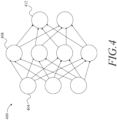
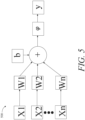
- OCR may employ any machine-learning process described in this disclosure, for example machine-learning processes described with reference to FIGS. 2 and 4-5 .
- OCR may employ a two-pass approach to character recognition.
- Second pass may include adaptive recognition and use letter shapes recognized with high confidence on a first pass to recognize better remaining letters on the second pass.
- two-pass approach may be advantageous for unusual fonts or low-quality image components where visual verbal content may be distorted.
- OCR software may employ neural networks, for example neural networks as taught in reference to FIGS. 2 and 4-5 .
- OCR may include post-processing. For example, OCR accuracy can be increased, in some cases, if output is constrained by a lexicon.
- a lexicon may include a list or set of words that are allowed to occur in a document.
- a lexicon may include, for instance, all the words in the English language, or a more technical lexicon for a specific field.
- an output stream may be a plain text stream or file of characters.
- an OCR process may preserve an original layout of visual verbal content.
- near-neighbor analysis can make use of co-occurrence frequencies to correct errors, by noting that certain words are often seen together.
- an OCR process may make us of a priori knowledge of grammar for a language being recognized.
- grammar rules may be used to help determine if a word is likely to be a verb or a noun.
- Distance conceptualization may be employed for recognition and classification.
- Levenshtein distance algorithm may be used in OCR post-processing to further optimize results.
- the processor 104 is configured to identify diagnostic data 120 from the user dataset 108.
- diagnostic data refers to information pertinent to the diagnosis and/or prognosis of a user's medical condition or health issue. This identification may be based on an analysis of data collected from the user dataset 108 and electronic health records (EHRs) 116. Diagnostic data 120 can pinpoint the specific condition or disease afflicting the user by leveraging known symptoms and conditions detailed within the user's health records or user dataset 108. Diagnostic data 120 may be used to identify a wide range of conditions that can be diagnosed, studied, and understood through the examination of pathology slides.
- This may include conditions such as cancer, infectious diseases, inflammatory diseases, degenerative diseases, cardiovascular diseases, kidney diseases, liver diseases, endocrine diseases, hematologic conditions, skin diseases, reproductive system diseases, gastrointestinal diseases, respiratory diseases, and the like.
- a user exhibiting symptoms such as chest pain, coughing up blood, a history of chronic smoking, dysphagia, and shortness of breath could be diagnosed with lung cancer after the processor 104 analyzes associated medical images.
- diagnostic data 120 could already be present within user dataset 108.
- the processor 104 may identify and extract crucial features or attributes from the dataset to formulate diagnostic data. These features encompass specific symptoms, test results, demographic details, and other relevant data points.
- the process of feature extraction involves transforming symptom-related information from unstructured data into structured, quantifiable features conducive for analysis by the processor 104. It also includes selecting and transforming pertinent information (features) from raw data into formats that are informative for predictive modeling, pattern recognition, or any other data-driven tasks.
- the processor 104 may employ specialized medical ontologies and dictionaries, such as SNOMED CT (Systematized Nomenclature of Medicine - Clinical Terms) or UMLS (Unified Medical Language System), to map symptom-related terms to standardized medical concepts, ensuring consistency and interoperability of extracted features from the user dataset 108.
- SNOMED CT Systematized Nomenclature of Medicine - Clinical Terms
- UMLS Unified Medical Language System
- the processor 104 may extract a semantic meaning, including understanding negations, co-occurrences, and modifiers which are essential for accurate feature extraction. Quantifying the frequency and severity of symptoms through descriptors like "frequent,” “occasional,” or “severe” and assigning numerical values or ordinal scales to these aspects permits a quantitative analysis.
- the processor 104 may extract temporal information concerning symptoms, including duration, onset dates, and symptom occurrence patterns, to further refine the diagnostic process.
- the processor 104 may also groups related symptoms into clusters or categories based on their characteristics and related medical concepts through clustering, which simplifies the feature space and organizes symptoms for more effective analysis. For example, if the user dataset 108 indicates symptoms like cough, fever, and chest pain, the processor 104 may classify these under lower respiratory symptoms. Following this clustering, the processor 104 then generates diagnostic data based on the known diagnoses associated with this symptom cluster, such as Asthma or Pneumonia, and may suggest further diagnostic tests or evaluations to refine the diagnosis.
- diagnostic data based on the known diagnoses associated with this symptom cluster, such as Asthma or Pneumonia, and may suggest further diagnostic tests or evaluations to refine the diagnosis.
- the processor 104 may generate diagnostic data 120 using a diagnostic machine-learning model.
- a diagnostic machine-learning model is a machine-learning model that is configured to generate diagnostic data 120.
- diagnostic machine-learning model may be consistent with the machine-learning model described below in FIG 2 .
- a diagnostic machine learning model may include a classifier, as a described in greater detail below.
- a diagnostic machine learning model may be designed to analyze complex datasets and identify patterns or features that correlate with specific outcomes or categories.
- the diagnostic machine-learning model may be trained using historical data, which may allow them to predict or classify future or unseen data points into predefined categories based on their characteristics.
- a diagnostic machine learning model might analyze a user dataset 108 to classify individuals as having a certain disease or not, based on inputs such as lab test results, symptoms, and demographic information.
- Inputs to the diagnostic machine-learning model may include user dataset 108, EHR 116, examples of diagnostic data 120, and the like.
- Outputs to the diagnostic machine-learning model may include diagnostic data 120 tailored to the user dataset 108.
- Diagnostic training data may include a plurality of data entries containing a plurality of inputs that are correlated to a plurality of outputs for training a processor by a machine-learning process.
- diagnostic training data may include a plurality of user dataset 108 correlated to examples of diagnostic data 120.
- diagnostic training data may be received from database 300.
- Diagnostic training data may contain information about user dataset 108, EHR 116, examples of diagnostic data 120, and the like.
- diagnostic training data may be iteratively updated as a function of the input and output results of past diagnostic machine-learning model or any other machine-learning model mentioned throughout this disclosure.
- the machine-learning model may be performed using, without limitation, linear machine-learning models such as without limitation logistic regression and/or naive Bayes machine-learning models, nearest neighbor machine-learning models such as k-nearest neighbors machine-learning models, support vector machines, least squares support vector machines, fisher's linear discriminant, quadratic machine-learning models, decision trees, boosted trees, random forest machine-learning model, and the like.
- ROI regions of interest
- a "region of interest” is a specific area within a pathology slide.
- the ROI 124 may be an area where it is desirable to conduct further analysis or examination.
- This ROI 124 may be identified within the broader context of a pathology slide, which may contain tissue samples subjected to microscopic examination to detect and study diseases, including cancer, infections, and other pathological conditions.
- the process of identifying ROIs 124 may consider the user dataset 108, which may include a variety of data inputs such as patient history, previous diagnoses, genetic information, and other relevant medical data.
- a ROI 124 may pinpoint areas on the pathology slide 112 that are most likely to yield valuable insights for the case at hand. This targeted approach may enable the processor 104 to focus its efforts on the most promising sections of the slide, thereby enhancing the efficiency and accuracy of diagnostic and research workflows.
- examples of ROIs 124 may include large lesions, tumors, areas of necrosis, or significant inflammatory responses. These features may stand out due to their size and can often be visually distinguished from the surrounding healthy tissue.
- the ROI 124 may be selected because of its likelihood to contain important information relevant to the diagnosis, research, or study being conducted. This could be an area of the slide showing tumor cells, inflammatory responses, or unusual tissue architecture, and the like.
- the processor 104 may predict potential ROIs 124 on the pathology slide 112. This prediction may be grounded in the correlation between the identified features (e.g., specific symptoms or test results) and their manifestations in tissue morphology on the slide. For instance, if the diagnostic data 120 suggests a likelihood of cancer, the processor may target areas that typically exhibit tumor cells, abnormal tissue architecture, or other cancer-related characteristics.
- an "image processing module” is a component designed to process digital images.
- an image processing module may be configured to compile plurality of images of a multilayer scan to create an integrated image.
- image processing module may include a plurality of software algorithms that can analyze, manipulate, or otherwise enhance an image, such as, without limitation, a plurality of image processing techniques as described below.
- image processing module may slow include hardware components such as, without limitation, one or more graphics processing units (GPUs) that can accelerate the processing of large number of images.
- GPUs graphics processing units
- image processing module may be implemented with one or more image processing libraries such as, without limitation, OpenCV, PII,/Pillow, ImageMagick, and the like.
- Image processing module may include, be included in, or be communicatively connected to the processor 104.
- image processing module may be configured to receive a user dataset 108 that includes image data.
- image processing module may be configured to receive images by generating a first image capture parameter, transmitting a command to optical system to take first image of a plurality of images with the first image capture parameter, generate a second image capture parameter, transmit a command to optical system to take second image of a plurality of images with the second image capture parameter, and receive, from optical system, first image and second image.
- plurality of images may be taken by image capture devices using the same image capture parameter.
- Image capture parameter may be generated as a function of user input or the processor 104.
- a user dataset 108 that includes image data may be transmitted to the image processing module via any suitable electronic communication protocol, including without limitation packet-based protocols such as transfer control protocol-internet protocol (TCP-IP), file transfer protocol (FTP) or the like.
- TCP-IP transfer control protocol-internet protocol
- FTP file transfer protocol
- Receiving images may include retrieval of images from a data store containing images as described below; for instance, and without limitation, images may be retrieved using a query that specifies a timestamp that images may be required to match.
- image processing module may be configured to process images.
- image processing module may be configured to compress and/or encode images to reduce the file size and storage requirements while maintaining the essential visual information needed for further processing steps as described below.
- compression and/or encoding of plurality of images may facilitate faster transmission of images.
- image processing module may be configured to perform a lossless compression on images, wherein the lossless compression may maintain the original image quality of images.
- image processing module may utilize one or more lossless compression algorithms, such as, without limitation, Huffman coding, Lempel-Ziv-Welch (LZW), Run-Length Encoding (RLE), and/or the like to identify and remove redundancy in each image in a plurality of images without losing any information.
- lossless compression algorithms such as, without limitation, Huffman coding, Lempel-Ziv-Welch (LZW), Run-Length Encoding (RLE), and/or the like to identify and remove redundancy in each image in a plurality of images without losing any information.
- compressing and/or encoding each image of a plurality of images may include converting the file format of each image into PNG, GIF, lossless JPEG2000 or the like.
- images compressed via lossless compression may be perfectly reconstructed to the original form (e.g., original image resolution, dimension, color representation, format, and the like) of images.
- image processing module may be configured to perform a lossy compression on plurality of images, wherein the lossy compression may sacrifice some image quality of images to achieve higher compression ratios.
- image processing module may utilize one or more lossy compression algorithms, such as, without limitation, Discrete Cosine Transform (DCT) in JPEG or Wavelet Transform in JPEG2000, discard some less significant information within images, resulting in a smaller file size but a slight loss of image quality of images.
- DCT Discrete Cosine Transform
- JPEG2000 Wavelet Transform
- compressing and/or encoding each image of a plurality of images may include converting the file format of each image into JPEG, WebP, lossy JPEG2000, or the like.
- processing images may include determining a degree of quality of depiction of a of an image or a plurality of images.
- image processing module may determine a degree of blurriness of images.
- image processing module may perform a blur detection by taking a Fourier transform, or an approximation such as a Fast Fourier Transform (FFT) of images and analyzing a distribution of low and high frequencies in the resulting frequency-domain depiction of images; for instance, and without limitation, numbers of high-frequency values below a threshold level may indicate blurriness.
- FFT Fast Fourier Transform
- detection of blurriness may be performed by convolving images, a channel of images, or the like with a Laplacian kernel; for instance, and without limitation, this may generate a numerical score reflecting a number of rapid changes in intensity shown in each image, such that a high score indicates clarity, and a low score indicates blurriness.
- blurriness detection may be performed using a Gradient-based operator, which measures operators based on the gradient or first derivative of images, based on the hypothesis that rapid changes indicate sharp edges in the image, and thus are indicative of a lower degree of blurriness.
- blur detection may be performed using Wavelet-based operator, which takes advantage of the capability of coefficients of the discrete wavelet transform to describe the frequency and spatial content of images.
- blur detection may be performed using statistics-based operators take advantage of several image statistics as texture descriptors in order to compute a focus level.
- blur detection may be performed by using discrete cosine transform (DCT) coefficients in order to compute a focus level of images from its frequency content.
- image processing module may be configured to rank images according to degree of quality of depiction of the region of interest 124 and select a highest-ranking image from a plurality of images.
- processing images may include enhancing at least the region of interest 124 via a plurality of image processing techniques to improve the quality (or degree of quality of depiction) of an image for better processing and analysis as described further in this disclosure.
- image processing module may be configured to perform a noise reduction operation on an image, wherein the noise reduction operation may remove or minimize noise (arises from various sources, such as sensor limitations, poor lighting conditions, image compression, and/or the like), resulting in a cleaner and more visually coherent image.
- noise reduction operation may be performed using one or more image filters; for instance, and without limitation, noise reduction operation may include Gaussian filtering, median filtering, bilateral filtering, and/or the like.
- Noise reduction operation may be done by image processing module, by averaging or filtering out pixel values in neighborhood of each pixel of an image to reduce random variations.
- image processing module may be configured to perform a contrast enhancement operation on an image.
- an image may exhibit low contrast, which may, for example, make a feature difficult to distinguish from the background.
- Contrast enhancement operation may improve the contrast of an image by stretching the intensity range of the image and/or redistributing the intensity values (i.e., degree of brightness or darkness of a pixel in the image).
- intensity value may represent the gray level or color of each pixel, scale from 0 to 255 in intensity range for an 8-bit image, and scale from 0 to 16,777,215 in a 24-bit color image.
- contrast enhancement operation may include, without limitation, histogram equalization, adaptive histogram equalization (CLAHE), contrast stretching, and/or the like.
- Image processing module may be configured to adjust the brightness and darkness levels within an image to make a feature more distinguishable (i.e., increase degree of quality of depiction). Additionally, or alternatively, image processing module may be configured to perform a brightness normalization operation to correct variations in lighting conditions (i.e., uneven brightness levels).
- an image may include a consistent brightness level across a region after brightness normalization operation performed by image processing module.
- image processing module may perform a global or local mean normalization, where the average intensity value of an entire image or region of an image may be calculated and used to adjust the brightness levels.
- image processing module may be configured to perform a color space conversion operation to increase degree of quality of depiction.
- image processing module may be configured to convert RGB image to grayscale or HSV color space. Such conversion may emphasize the differences in intensity values between a region of interest 124 and the background.
- Image processing module may further be configured to perform an image sharpening operation such as, without limitation, unsharp masking, Laplacian sharpening, high-pass filtering, and/or the like.
- Image processing module may use image sharpening operation to enhance the edges and fine details related to the region of interest 124 within an image by emphasizing high-frequency components within an image.
- processing images may include isolating the region of interest 124 from the rest of an image as a function of plurality of image processing techniques.
- Images may include highest-ranking image selected by image processing module as described above.
- plurality of image processing techniques may include one or more morphological operations, wherein the morphological operations are techniques developed based on set theory, lattice theory, topology, and random functions used for processing geometrical structures using a structuring element.
- a "structuring element,” for the purpose of this disclosure, is a small matrix or kernel that defines a shape and size of a morphological operation. In some cases, structing element may be centered at each pixel of an image and used to determine an output pixel value for that location.
- isolating the region of interest 124 from an image may include applying a dilation operation, wherein the dilation operation is a basic morphological operation configured to expand or grow the boundaries of objects (e.g., a cell, a lesion, and the like) in an image.
- isolating the region of interest 124 from an image may include applying an erosion operation, wherein the erosion operation is a basic morphological operation configured to shrink or erode the boundaries of objects in an image.
- isolating the region of interest 124 from an image may include applying an opening operation, wherein the opening operation is a basic morphological operation configured to remove small objects or thin structures from an image while preserving larger structures.
- isolating the region of interest 124 from an image may include applying a closing operation, wherein the closing operation is a basic morphological operation configured to fill in small gaps or holes in objects in an image while preserving the overall shape and size of the objects.
- These morphological operations may be performed by image processing module to enhance the edges of objects, remove noise, or fill gaps in the region of interest 124 before further processing.
- isolating the region of interest 124 from an image may include utilizing an edge detection technique, which may detect one or more shapes defined by edges.
- An "edge detection technique,” as used in this disclosure, includes a mathematical method that identifies points in a digital image, at which the image brightness changes sharply and/or has a discontinuity. In an embodiment, such points may be organized into straight and/or curved line segments, which may be referred to as "edges.”
- Edge detection technique may be performed by image processing module, using any suitable edge detection algorithm, including without limitation Canny edge detection, Sobel operator edge detection, Prewitt operator edge detection, Laplacian operator edge detection, and/or Differential edge detection.
- Edge detection technique may include phase congruency-based edge detection, which finds all locations of an image where all sinusoids in the frequency domain, for instance as generated using a Fourier decomposition, may have matching phases which may indicate a location of an edge.
- Edge detection technique may be used to detect a shape of the region of interest 124 such as a cell, indicating a cell membrane or wall; in an embodiment, edge detection technique may be used to find closed figures formed by edges.
- isolating the region of interest 124 from an image may include determining the region of interest 124 via edge detection technique.
- the region of interest 124 may include a specific area within a digital image that contains information relevant to further processing as described below.
- an image data located outside the region of interest 124 may include irrelevant or extraneous information. Such portion of an image containing irrelevant or extraneous information may be disregarded by image processing module, thereby allowing resources to be concentrated at the region of interest 124.
- the region of interest 124 may vary in size, shape, and/or location within an image.
- the region of interest 124 may be presented as a circle around the nucleus of a cell.
- the region of interest 124 may specify one or more coordinates, distances, and the like, such as center and radius of a circle around the nucleus of a cell in an image.
- Image processing module may then be configured to isolate the region of interest 124 from the image based on the region of interest 124.
- image processing module may crop an image according to a bounding box around the region of interest 124.
- image processing module may be configured to perform a connected component analysis (CCA) on an image for the region of interest 124 isolation.
- CCA connected component analysis
- a "connected component analysis (CCA) also known as connected component labeling, is an image processing technique used to identify and label connected regions within a binary image (i.e., an image which each pixel having only two possible values: 0 or 1, black or white, or foreground and background).
- Connected regions is a group of adjacent pixels that share the same value and are connected based on a predefined neighborhood system such as, without limitation, 4-connected or 8-connected neighborhoods.
- image processing module may convert an image into a binary image via a thresholding process, wherein the thresholding process may involve setting a threshold value that separates the pixels of an image corresponding to the region of interest 124 (foreground) from those corresponding to the background. Pixels with intensity values above the threshold may be set to 1 (white) and those below the threshold may be set to 0 (black).
- CCA may be employed to detect and extract the region of interest 124 by identifying a plurality of connected regions that exhibit specific properties or characteristics of the region of interest 124. Image processing module may then filter plurality of connected regions by analyzing plurality of connected regions properties such as, without limitation, area, aspect ratio, height, width, perimeter, and/or the like.
- connected components that closely resemble the dimensions and aspect ratio of the region of interest 124 may be retained, by image processing module as the region of interest 124, while other components may be discarded.
- Image processing module may be further configured to extract the region of interest 124 from an image for further processing as described below.
- isolating the region of interest 124 from an image may include segmenting a region depicting the region of interest 124 into a plurality sub-regions. Segmenting a region into sub-regions may include segmenting a region as a function of the region of interest 124 and/or CCA via an image segmentation process.
- an "image segmentation process” is a process for partition a digital image into one or more segments, where each segment represents a distinct part of the image. Image segmentation process may change the representation of images. Image segmentation process may be performed by image processing module.
- image processing module may perform a region-based segmentation, wherein the region-based segmentation involves growing regions from one or more seed points or pixels on an image based on a similarity criterion. Similarity criterion may include, without limitation, color, intensity, texture, and/or the like. In a non-limiting example, region-based segmentation may include region growing, region merging, watershed algorithms, and the like.
- the processor 104 may identify an ROI 124 using an identification machine-learning model 128.
- a "identification machine-learning model” is a machine-learning model that is configured to generate ROI 124.
- Identification machine-learning model 128 may be consistent with the machine-learning model described below in FIG 2 .
- Inputs to the identification machine-learning model 128 may include user datasets 108, EHRs 116, diagnostic data 120, examples of ROIs 124, and the like.
- Outputs to the identification machine-learning model 128 may include ROIs 124 identified from the user dataset 108 and/or the diagnostic data 120.
- identification machine-learning model 128 may be configured to identify ROIs 124 that are associated with the diagnosis/prognosis provided by diagnostic data 120. Identification machine-learning model 128 may narrow the type of ROIs 124 that it is looking for based on this information. Identification machine learning model 128 may identify subset of identification training data that reflects examples of ROIs 124 that have been associated with diagnosis/prognosis provided by diagnostic data 120. This filtering process may allow for the identification machine-learning model 128 to be more efficient.
- outputs to the identification machine-learning model 128 may define the ROI 124 in various manners.
- pixels within the (150, 200) to (450, 500) bounding box-representing the suspected cancerous tissue area- would be marked with a value of 1, indicating they're part of the ROI.
- all other pixels outside this box would be marked with a value of 0, denoting they're not of immediate interest.
- identification training data may include a plurality of data entries containing a plurality of inputs that are correlated to a plurality of outputs for training a processor by a machine-learning process.
- identification training data may include a plurality of pathology slides 112 and a plurality of user datasets 108 correlated to examples of ROIs 124.
- Identification training data may be received from database 300.
- Identification training data may contain information about user datasets 108, EHRs 116, diagnostic data 120, examples of ROI 124, and the like.
- identification training data may be iteratively updated as a function of the input and output results of past identification machine-learning model 128 or any other machine-learning model mentioned throughout this disclosure.
- the machine-learning model may be performed using, without limitation, linear machine-learning models such as without limitation logistic regression and/or naive Bayes machine-learning models, nearest neighbor machine-learning models such as k-nearest neighbors machine-learning models, support vector machines, least squares support vector machines, fisher's linear discriminant, quadratic machine-learning models, decision trees, boosted trees, random forest machine-learning model, and the like.
- linear machine-learning models such as without limitation logistic regression and/or naive Bayes machine-learning models, nearest neighbor machine-learning models such as k-nearest neighbors machine-learning models, support vector machines, least squares support vector machines, fisher's linear discriminant, quadratic machine-learning models, decision trees, boosted trees, random forest machine-learning model, and the like.
- identification training data may include a collection of annotated pathology slide images. These images may be labeled to indicate areas that are of particular interest or relevance for diagnosing diseases. The quality, diversity, and accuracy of this training data may be valuable for developing a model that can reliably and accurately identify ROIs in new, unseen pathology slide images.
- the identification training data may include high-resolution images of pathology slides at various magnifications, capturing a wide range of tissue types and disease states. These images may be clear and free of artifacts to ensure the model can learn from accurate representations of the tissue.
- Identification training data may cover a broad spectrum of pathological conditions, including different types of cancers, inflammatory diseases, degenerative conditions, and infections, across various tissue types (e.g., breast, lung, liver, skin). Each image in the identification training data may be annotated to mark the ROIs, which could include tumor regions, areas of inflammation, necrosis, or other pathological features. Annotations might take the form of bounding boxes, segmentation masks, or point markers, depending on the model's design and the nature of the task (e.g., classification, detection, segmentation). Identification training data may include the accompanying clinical data to the slide, such as patient demographics, diagnosis, prognosis, and treatment outcomes, can enrich the training dataset, enabling the model to learn correlations between pathological features and clinical outcomes.
- images may be artificially augmented through techniques such as rotation, scaling, flipping, and color variation. This helps the model become invariant to such transformations, enhancing its performance on unseen images.
- separate sets of annotated images may be reserved for validating and testing the model. These datasets are crucial for tuning model parameters and evaluating the model's performance in identifying ROIs on pathology slides.
- identification training data may include a set of associations textual data and the image data within the user dataset 108.
- association refers to the relationship or connection established between two or more data types. This may include a relationship or connection established between image data and textual data. It involves linking or integrating the image data with descriptive or explanatory textual data of the user dataset 108 to provide additional context, enhance understanding, and convey relevant information.
- a set of associations may include an identification of a ROI 124 within the image data and its accompanying textual data that provides context for ROI.
- identification training data may include an identification of a group of ROIs 124 within a plurality of image data.
- image processing techniques may be used to improve upon machine learning model training processes.
- the overall quality of the dataset improves.
- This improvement may directly impact the performance of machine learning algorithms, as clearer, more defined images allow for more accurate feature extraction and classification.
- morphological operations can help isolate and emphasize relevant features within the training data, reducing noise and irrelevant information. Consequently, models trained on this high-quality data are better equipped to generalize from the training dataset to real-world applications, leading to increased accuracy and reliability in tasks like object recognition, segmentation, and classification.
- Incorporating the user feedback may include updating the training data by removing or adding correlations of user data to a path or resources as indicated by the feedback.
- Any machine-learning model as described herein may have the training data updated based on such feedback or data gathered using a web crawler as described above. For example, correlations in training data may be based on outdated information wherein, a web crawler may update such correlations based on more recent resources and information.
- the processor 104 may use user feedback to train the machine-learning models and/or classifiers described above.
- machine-learning models and/or classifiers may be trained using past inputs and outputs of identification machine-learning model 128.
- training data of classifier may include user feedback.
- an accuracy score may be calculated for the machine-learning model and/or classifier using user feedback.
- "accuracy score” is a numerical value concerning the accuracy of a machine-learning model.
- the accuracy/quality of the output of the identification machine-learning model 128 may be averaged to determine an accuracy score.
- an accuracy score may be determined for identification of ROIs 124 within pathology slide 112.
- Accuracy score or another score as described above may indicate a degree of retraining needed for a machine-learning model and/or classifier.
- the processor 104 may perform a larger number of retraining cycles for a higher number (or lower number, depending on a numerical interpretation used), and/or may collect more training data for such retraining.
- the discussion within this paragraph and the paragraphs preceding this paragraph may apply to both the identification machine-learning model 128 and/or any other machine-learning model/classifier mentioned herein.
- identification machine-learning model 128 may comprise a deep neural network (DNN).
- DNN deep neural network
- a "deep neural network” is defined as a neural network with two or more hidden layers. Neural network is described in further detail below with reference to FIGS. 4-5 .
- identification machine-learning model 128 may include a convolutional neural network (CNN.) Identifying one or more ROIs 124 using an identification machine-learning model 128 may include training CNN using unique identifier training data and identifying one or more ROIs 124 from the user dataset 108 using trained CNN.
- CNN convolutional neural network
- CNN is a neural network in which at least one hidden layer is a convolutional layer that convolves inputs to that layer with a subset of inputs known as a "kernel,” along with one or more additional layers such as pooling layers, fully connected layers, and the like.
- CNN may include, without limitation, a deep neural network (DNN) extension.
- Mathematical (or convolution) operations performed in the convolutional layer may include convolution of two or more functions, where the kernel may be applied to input data e.g., user dataset 108 through a sliding window approach.
- CNN may also include one or more pooling layers, wherein each pooling layer is configured to reduce the dimensionality of input data while preserving essential features within the input data.
- CNN may include one or more pooling layers configured to reduce the dimensions of feature maps by applying downsampling, such as max-pooling or average pooling, to small, non-overlapping regions of one or more features.
- CNN may further include one or more fully connected layers configured to combine features extracted by the convolutional and pooling layers as described above.
- one or more fully connected layers may allow for higher-level pattern recognition.
- one or more fully connected layers may connect every neuron (i.e., node) in its input to every neuron in its output, functioning as a traditional feedforward neural network layer.
- one or more fully connected layers may be used at the end of CNN to perform high-level reasoning and produce the final output such as, without limitation, one or more ROIs 124.
- each fully connected layer may be followed by one or more dropout layers configured to prevent overfitting, and one or more normalization layers to stabilize the learning process described herein.
- training the identification machine-learning model 128 may include selecting a suitable loss function to guide the training process.
- a loss function that measures the difference between the identified one or more ROIs 124 and the ground truth 3D structure e.g., Unique identifier training data may be used, such as, without limitation, mean squared error (MSE) or a custom loss function may be designed for one or more embodiments described herein.
- MSE mean squared error
- SGD stochastic gradient descent
- identification machine-learning model 128 may be trained as a regression model to identify information associated with the one or more ROIs 124.
- CNN may be extended with additional deep learning techniques, such as recurrent neural networks (RNNs) or attention mechanism, to capture additional features and/or data relationships within input data. These extensions may further enhance the accuracy and robustness of the identification of the one or more ROIs 124.
- RNNs recurrent neural networks
- scan parameter 132 refers to the specific settings or conditions under which an imaging sensor such as a camera captures images of microscope slides.
- a scan parameter 132 may be described as a set of instructions or settings tailored to optimally capture the details of the specified ROI 124 during the scanning process. These parameters may ensure that the digital image produced is of the highest quality and resolution necessary for accurate analysis and diagnosis. Examples of scan parameters may include resolution, focus, magnification, illumination, the field of view, and the like. Adjusting these parameters may be valuable for optimizing image quality, especially when scanning slides for pathological analysis, as it allows for clearer visualization of critical features necessary for accurate diagnosis.
- a scan parameter 132 may specify the level of detail captured in the scan. For ROIs 124 requiring detailed examination (e.g., cellular structures, tumor margins), a higher resolution may be selected to ensure that fine details are visible and distinguishable in the scanned image.
- a scan parameter 132 may include information about the color balance and contrast of the camera. This may be adjusted to enhance the visibility of specific stains or tissue characteristics within the ROI. This parameter ensures that the digital scan accurately represents the slide's coloration, aiding in the identification and analysis of pathological features. Color balance adjustments ensure that the colors in the scanned image accurately reflect the colors of the stained tissue, which is critical for correct interpretation. The optimal settings for color balance depend on the staining methods used and the lighting conditions.
- a scan parameter 132 may include information about the scan area.
- the system may incorporate a fail-safe mechanism. If the system fails to identify the ROI 124 automatically, it may prompt a manual intervention or defaults to a pre-set scan parameter 132. This fail-safe approach ensures continuity in the scanning process, preventing delays and maintaining efficiency.
- the default scan parameter 132 may be a generalized setting designed to capture a broad range of features across various types of specimens. This setting may aim to produce a sufficiently detailed image that can either be manually analyzed later or re-assessed by the system for ROI 124 identification.
- the default scan parameter may include a moderate resolution and contrast level, along with a standardized field of view and illumination setting, to ensure that, despite the lack of specific ROI 124 targeting, the resulting scan is of high enough quality for subsequent review or analysis.
- a scan parameter 132 may include modifying the resolution of the camera.
- resolution pertains to the ability of an imaging system to distinguish between fine details within the sample being observed. The resolution may influence the quality of the images produced, impacting the level of detail visible for analysis and diagnosis. High-resolution imaging may be valuable for identifying and analyzing microscopic structures such as individual cells, cellular organelles, and tissue architecture. This level of detail may be needed for accurate diagnosis and understanding of various diseases, including cancer and infectious diseases. Slides may be scanned to create digital images that can be viewed, shared, and analyzed electronically. The resolution of these digital images directly affects the ability of pathologists to examine and interpret the slides remotely, making high resolution vital for reliable diagnosis.
- High-resolution images are also crucial for automated image analysis algorithms, including machine learning models used to identify patterns, classify tissues, and detect abnormalities. These models require detailed images to accurately learn and predict pathological features.
- the processor may adjust the spatial resolution. Spatial resolution refers to the smallest distinguishable detail that can be seen in an image. In digital pathology images, it's often measured in micrometers per pixel ( ⁇ m/pixel), indicating the size of the smallest feature that one pixel represents. High spatial resolution means smaller features can be resolved, leading to clearer and more detailed images. The optimal resolution for scanning may be determined based on the smallest detail that needs to be resolved in the image.
- the processor 104 may determine the smallest detail that needs to be seen in an image based on matching the diagnostic data 120 to one or more features that may be present within the pathology slide 112.
- the processor 104 analyzes diagnostic data 120, correlating it with known pathological features that may be present within the pathology slide 112. By matching these diagnostic criteria to specific features-such as cellular structures, tissue patterns, or pathological abnormalities-the processor calculates the minimum resolution needed to clearly resolve these details. This tailored approach ensures that the scanned image is of sufficient quality for accurate diagnosis, optimizing the balance between image clarity and efficient data management.
- a scan parameter 132 may include focus depth.
- focus depth refers to the range within which all elements in the field of view are in sharp focus. This concept may be relevant when dealing with three-dimensional or thick specimens, where different layers or structures of the tissue may be located at varying distances from the lens. Properly adjusting the focus depth ensures that the details across these layers are captured clearly in the image. In microscopy, managing focus depth effectively may be valuable for accurate diagnosis and analysis. In a non-limiting example, in tissue samples with varying thickness or topography, the focus depth ensures that the ROI 124 is captured in sharp focus across its entirety.
- Z-stacking may involve taking multiple images at different focal planes throughout the specimen. These images may then be digitally combined into a single composite image where elements at various depths are all in focus. This method is particularly useful for examining samples with significant three-dimensional structures.
- focus depth may be modified using auto-focus systems. Auto-focus systems may automatically adjust the lens to optimize focus depth for a given field of view. These systems can rapidly assess the focal plane and adjust the lens position to capture the clearest possible image of the ROI. Determining the optimal focus depth ensures that all parts of the ROI are in sharp focus. Techniques like z-stacking, where multiple images at different focal depths are combined, may be employed to achieve a uniformly focused image across the entire depth of the sample.
- a scan parameter 132 may include magnification level.
- a "magnification level” refers to the degree to which an image is enlarged or amplified in size compared to its original.
- the magnification level is typically expressed as a multiplier (e.g., 10x, 40x, 100x), indicating how many times larger the observed image appears compared to its actual size.
- a 10x magnification level means that the image is magnified to appear ten times larger than its real size, allowing the observer to see details that are not visible to the naked eye.
- a scan parameter 132 can be characterized and prioritized based on the magnification level.
- the magnification level may influence the detail and type of information that can be observed and analyzed within a pathology slide 112. Understanding ROIs 124 at different magnification levels may be valuable for thorough pathological assessment.
- Magnification level may be described as a low magnification, medium magnification, high magnification, ultrahigh magnification, and the like. This can range from low magnification, which provides an overview of tissue architecture and organization, to high magnification, which allows for detailed cellular and subcellular analyses.
- the magnification level of the pathology slide may dictate the scale and type of ROIs that are emphasized during microscopic examination. Lower magnifications may be used for broad assessments of tissue architecture and the identification of large pathological features, while higher magnifications may focus on detailed cellular and subcellular features.
- the choice of magnification may be guided by the diagnostic data 120.
- Selection of the magnification level may be related to the selection of the resolution. Selection of the magnification level may be determined based on the level of detail required. The determination of the magnification level for scanning may be guided by the requirement to visualize specific diagnostic features identified within the pathology slide 112, as informed by diagnostic data 120.
- the processor 104 assesses the diagnostic data, which encompasses patient history, pathological findings, and any known microscopic features associated with the condition under investigation. By aligning this data with the scale of features present on the slide-ranging from broad tissue architecture to minute cellular details-the processor may select a magnification level that optimizes visibility of these critical features.
- This calculated selection ensures that the magnification is neither too low, potentially missing fine details, nor excessively high, which could limit the field of view unnecessarily.
- the goal is to achieve a precise balance that facilitates comprehensive diagnostic analysis while maximizing the efficiency of the scanning process.
- low magnification may be between 1x and 10x magnification.
- ROIs 124 may be defined by the overall layout of the tissue, including the distribution of various tissue types, the presence of large pathological features such as tumors, cysts, or areas of necrosis, and the general pattern of tissue organization.
- Large-scale abnormalities such as tumors, cysts, or significant inflammatory infiltrates may be easily identified.
- medium magnification may be between 10x and 40x magnification.
- Medium magnification may allow for closer examination of tissue organization, including the arrangement of glands, blood vessels, and connective tissue. ROIs 124 at this level may pinpoint areas with abnormal tissue patterns or structures indicative of pathological processes. While not providing the highest resolution, medium magnification may begin to reveal cellular details such as the shape and size of cells, basic cell types, and some intracellular components, aiding in the identification of areas warranting closer inspection.
- high magnification may be between 40x and 100x magnification.
- High magnification may be essential for examining the fine details of cells within ROIs 124, including the morphology of nuclei, cytoplasmic details, and the presence of specific cellular inclusions or extracellular matrix alterations. At this level, specific pathological features such as mitotic figures, signs of cellular dysplasia, viral inclusion bodies, and fine vascular changes can be observed.
- High magnification may be used for diagnosing many conditions, including cancer, by allowing the identification of malignant cell characteristics.
- ultra-high magnification may be in excess of 100x magnification.
- Ultra-high magnification may often be achieved with oil immersion lenses, allows for the visualization of intracellular organelles, detailed nuclear features such as nucleoli, chromatin pattern, and subtle cytoplasmic details. This level is particularly useful for identifying small microorganisms (e.g., bacteria, fungi, parasites) and for assessing fine cellular alterations that are critical for specific diagnoses.
- the processor 104 may include scan parameter 132 using a parameter machine-learning model 136.
- a "parameter machine-learning model” is a machine-learning model that is configured to generate scan parameter 132.
- parameter machine-learning model 136 may be consistent with the machine-learning model described below in FIG 2 .
- Inputs to the parameter machine-learning model 136 may include user datasets 108, EHRs 116, diagnostic data 120, ROIs 124, examples of scan parameter 132, and the like.
- Outputs to the parameter machine-learning model 136 may include scan parameter 132 tailored to the ROI 124.
- parameter training data may include a plurality of data entries containing a plurality of inputs that are correlated to a plurality of outputs for training a processor by a machine-learning process.
- parameter training data may include a plurality of ROI 124 correlated to examples of scan parameter 132.
- parameter training data may be received from database 300.
- parameter training data may contain information about user datasets 108, EHRs 116, diagnostic data 120, ROIs 124, examples of scan parameter 132, and the like.
- parameter training data may be iteratively updated as a function of the input and output results of past parameter machine-learning model 136 or any other machine-learning model mentioned throughout this disclosure.
- the machine-learning model may be performed using, without limitation, linear machine-learning models such as without limitation logistic regression and/or naive Bayes machine-learning models, nearest neighbor machine-learning models such as k-nearest neighbors machine-learning models, support vector machines, least squares support vector machines, fisher's linear discriminant, quadratic machine-learning models, decision trees, boosted trees, random forest machine-learning model, and the like.
- linear machine-learning models such as without limitation logistic regression and/or naive Bayes machine-learning models, nearest neighbor machine-learning models such as k-nearest neighbors machine-learning models, support vector machines, least squares support vector machines, fisher's linear discriminant, quadratic machine-learning models, decision trees, boosted trees, random forest machine-learning model, and the like.
- the apparatus 100 may be equipped to scan pathology slides 112 using an image capture device 140.
- an “image capture device” is a tool engineered to detect electromagnetic radiation, including but not limited to visible light, and to create a visual representation of this radiation.
- Such a device may incorporate various optical components. Examples of these optics, which are not limited to, encompass spherical lenses, aspherical lenses, reflectors, polarizers, filters, windows, aperture stops, among others.
- an image capture device 140 might feature an image sensor, with examples including, but not restricted to, digital image sensors like charge-coupled device (CCD) sensors and complementary metal-oxide-semiconductor (CMOS) sensors, as well as chemical and analog image sensors, including film. It's also possible for an image capture device 140 to be responsive to electromagnetic radiation beyond the visible spectrum, such as infrared radiation. In a non-limiting example, an image capture device 140 may include an automated microscope.
- the apparatus 100 is configured to control the operation of the image capture device 140, such as a scanner, to automate the slide digitization process.
- the apparatus 100 may send instructions to the image capture device 140 to scan or rescan selected portions of a slide (e.g., areas identified by x-, y-, and/or z-coordinates or bounding boxes).
- the apparatus 100 may further select or adjust parameters associated with the image capture device 140, such as magnification level, resolution, focus settings, scanning pattern, Z stacks (multiple images captured across z plane for a given field of view (FOV) or the like.
- the apparatus 100 may include a machine vision system that includes at least an image capture device 140.
- a machine vision system may use images from at least an image capture device 140, to make a determination about a scene, space, and/or object.
- a machine vision system may be used for world modeling or registration of objects within a space.
- registration may include image processing, such as without limitation object recognition, feature detection, edge/corner detection, and the like.
- feature detection may include scale invariant feature transform (SIFT), Canny edge detection, Shi Tomasi corner detection, and the like.
- registration may include one or more transformations to orient an image capture device 140 frame (or an image or video stream) relative a three-dimensional coordinate system; exemplary transformations include without limitation homography transforms and affine transforms.
- registration of first frame to a coordinate system may be verified and/or corrected using object identification and/or computer vision, as described above. For instance, and without limitation, an initial registration to two dimensions, represented for instance as registration to the x and y coordinates, may be performed using a two-dimensional projection of points in three dimensions onto a first frame, however.
- a third dimension of registration, representing depth and/or a z axis, may be detected by comparison of two frames; for instance, where first frame includes a pair of frames captured using a pair of image capture device 140s (e.g., stereoscopic image capture device also referred to in this disclosure as stereo-image capture device), image recognition and/or edge detection software may be used to detect a pair of stereoscopic views of images of an object; two stereoscopic views may be compared to derive z-axis values of points on object permitting, for instance, derivation of further z-axis points within and/or around the object using interpolation. This may be repeated with multiple objects in field of view, including without limitation environmental features of interest identified by object classifier and/or indicated by an operator.
- image capture device 140s e.g., stereoscopic image capture device also referred to in this disclosure as stereo-image capture device
- image recognition and/or edge detection software may be used to detect a pair of stereoscopic views of images of an object; two
- x and y axes may be chosen to span a plane common to two image capture device 140s used for stereoscopic image capturing and/or an xy plane of a first frame; a result, x and y translational components and ⁇ may be pre-populated in translational and rotational matrices, for affine transformation of coordinates of object, also as described above.
- Initial x and y coordinates and/or guesses at transformational matrices may alternatively or additionally be performed between first frame and second frame, as described above.
- x and y coordinates of a first stereoscopic frame may be populated, with an initial estimate of z coordinates based, for instance, on assumptions about object, such as an assumption that ground is substantially parallel to an xy plane as selected above.
- Z coordinates, and/or x, y, and z coordinates, registered using image capturing and/or object identification processes as described above may then be compared to coordinates predicted using initial guess at transformation matrices; an error function may be computed using by comparing the two sets of points, and new x, y, and/or z coordinates, may be iteratively estimated and compared until the error function drops below a threshold level.
- a machine vision system may use a classifier, such as any classifier described throughout this disclosure.
- the processor 104 generates a digitized slide 144 by scanning the at least a pathology slide 112 as a function the at least one scan parameter 132.
- a "digitized slide” is a digital representation of the at least a pathology slide 112.
- the digitized slide 144 may be composed of a collection of images derived from the original pathology slide 112. These images may be carefully curated to showcase the most significant features of the pathology slide 112. Such features may be valuable for diagnostic purposes, research, and educational uses.
- These features may include the ROI 124.
- the ROI 124 could be an area on the pathology slide that contains key information about the disease or condition being studied.
- the digitized slide 144 enables easier access and manipulation of the slide's data. For example, it can be zoomed in for closer inspection of the ROI 124, shared with other professionals for consultation, stored in digital archives for future reference, used as training data for a machine learning model, and the like.
- at least a pathology slide may be scanned in the same or a substantially similar manner as slide referenced in U.S. Non-provisional Patent Application Serial No. 18/226,058 (having attorney docket number 1519-102USU1), filed on July 25, 2023 , and titled "IMAGING DEVICE AND METHOD FOR IMAGE GENRATION OF A SPECIMEN".
- the processor 104 may prepare the image capture device 140 to scan the at least a pathology slide 112 as a function the at least one scan parameter 132. This preparation may involve adjusting the device's parameters according to predefined scan parameters 132.
- the processor 104 may adjust a wide range of settings, including resolution, color depth, focus, brightness, contrast levels, and the like of the image capture device 140. This may be done with the goal of tailoring the scanning process to the specific requirements of the pathology slide 112 being scanned. This may include adjusting the settings of an image capture device 140 to capture ROIs 124 within the pathology slide 124.
- the image capture device 140 may proceed to scan the pathology slide 112. This scanning can be comprehensive, covering the entire slide to ensure no detail is missed, or it can be targeted, focusing specifically on identified ROIs 124. These ROIs are areas on the slide deemed most relevant for diagnosis or study, possibly containing specific cell types or structures indicative of disease or health. As images of the slide are captured, they may undergo a process of quality control overseen by the processor 104. This may involve checking the images for clarity, focus, and overall quality to ensure they meet the required standards for diagnostic purposes.
- the processor 104 may be configured to scan the pathology slide 112 in a single pass. Scanning a pathology slide 112 in a single pass may be a streamlined and efficient process, designed to capture a high-quality digital representation of the slide in one continuous operation. This method contrasts with multi-pass scanning techniques that might scan a slide in sections or require multiple scans to capture different focal planes or regions of interest 124. Once the system is image capture device 140 according to the slide parameters 132, the scanning process may commence. The single-pass approach aims to capture the entire slide, including all relevant features and ROIs, in one uninterrupted scan.
- the image capture device 140 may collect a continuous stream of data, capturing a comprehensive digital image of the slide.
- Advanced optics and high-resolution sensors may enable the image capture device 140 to record fine details such as cellular structures, tissue organization, and pathological abnormalities.
- the collected data may be processed, stitching together the continuous image data into a cohesive, high-resolution digital slide.
- at least a pathology slide may be scanned in the same or a substantially similar manner as the slide referenced in U.S. Non-provisional Patent Application Serial No. 18/382,769 (having an attorney docket number 1519-110USU1), filed on October 23, 2023 , and titled "SYSTEM AND METHOD OF DIGITIZING A SLIDE".
- the processor 104 a digitized slide 144 may include a plurality of slide data 148.
- slide data is a set of textual data that describes or provides context to what is depicted within the slide.
- Slide data 148 may include descriptive text that highlights specific features or areas of interest within the slide, such as particular cell types, tissue abnormalities, or regions of interest (ROIs) that are crucial for diagnosis or research.
- Slide data 148 may be attached to the digitized slide 144 in the form of metadata. This may include information about the slide's origin, preparation, staining, and scanning process.
- diagnostic information may also be included within the slide data 148. This may include preliminary findings, diagnosis, or comments from the pathologist or researcher who reviewed the slide. This might also include predictions or classifications from automated image analysis algorithms.
- the processor 104 may analyze, interpret, and contextualize the visual content of digitized slide 144.
- the processor 104 may employ information that is represented in the user dataset 108.
- the processor 104 may apply image analysis techniques, as discussed in greater detail herein above, to identify and catalog key features that are depicted within the digitized slide 144, such as specific cell types, tissue abnormalities, or notable structures. This identification can be based on pattern recognition, machine learning algorithms, or predefined criteria set by pathologists or researchers. For annotating specific features or regions of interest (ROIs) within the slide, the processor 104 may use coordinates or markers to link textual descriptions directly to the corresponding locations on the digitized slide 144. These annotations can describe the morphology of cells, the distribution of tissues, or highlight areas warranting further examination. The software ensures these annotations are scalable and visible across different magnification levels, maintaining their relevance as users zoom in or out of the image.
- ROIs regions of interest
- the processor 104 may attach the slide data 148 to the digitized slide 144. Attaching slide data 148 to the digitized slide 144 may involve embedding this information within the file structure of the digital slide 144 or linking it to a database entry corresponding to the slide. This embedded or linked slide data 148 may then be accessible through digital pathology software, allowing users to view the slide alongside its descriptive text and annotations. This may allow for the display of slide data 148 in a panel or overlay that can be toggled on or off, ensuring that the textual data enhances, rather than obstructs, the visual examination of the slide. As additional analyses are performed or new information becomes available, the processor 104 can append this to the existing slide data 148, ensuring that the digitized slide remains a living document enriched with the most current insights and findings.
- the processor 104 may be configured to display the digitized slide 144 using a display device 152.
- a "display device” is a device that is used to display content.
- a display device 152 may include a user interface.
- a "user interface,” as used herein, is a means by which a user and a computer system interact; for example, through the use of input devices and software.
- a user interface may include a graphical user interface (GUI), command line interface (CLI), menu-driven user interface, touch user interface, voice user interface (VUI), form-based user interface, any combination thereof, and the like.
- GUI graphical user interface
- CLI command line interface
- VUI voice user interface
- a user interface may include a smartphone, smart tablet, desktop, or laptop operated by the user.
- GUI graphical user interface
- GUI graphical user interface
- GUI is a graphical form of user interface that allows users to interact with electronic devices.
- GUI may include icons, menus, other visual indicators, or representations (graphics), audio indicators such as primary notation, and display information and related user controls.
- a menu may contain a list of choices and may allow users to select one from them.
- a menu bar may be displayed horizontally across the screen such as pull-down menu. When any option is clicked in this menu, then the pull-down menu may appear.
- a menu may include a context menu that appears only when the user performs a specific action. An example of this is pressing the right mouse button. When this is done, a menu may appear under the cursor.
- Files, programs, web pages and the like may be represented using a small picture in a graphical user interface.
- links to decentralized platforms as described in this disclosure may be incorporated using icons.
- Using an icon may be a fast way to open documents, run programs etc. because clicking on them yields instant access.
- Information contained in user interface may be directly influenced using graphical control elements such as widgets.
- a "widget,” as used herein, is a user control element that allows a user to control and change the appearance of elements in the user interface.
- a widget may refer to a generic GUI element such as a check box, button, or scroll bar to an instance of that element, or to a customized collection of such elements used for a specific function or application (such as a dialog box for users to customize their computer screen appearances).
- User interface controls may include software components that a user interacts with through direct manipulation to read or edit information displayed through user interface. Widgets may be used to display lists of related items, navigate the system using links, tabs, and manipulate data using check boxes, radio boxes, and the like.
- Machine-learning module may perform determinations, classification, and/or analysis steps, methods, processes, or the like as described in this disclosure using machine learning processes.
- a "machine learning process,” as used in this disclosure, is a process that automatedly uses training data 204 to generate an algorithm instantiated in hardware or software logic, data structures, and/or functions that will be performed by a computing device/module to produce outputs 208 given data provided as inputs 212; this is in contrast to a non-machine learning software program where the commands to be executed are determined in advance by a user and written in a programming language.
- training data is data containing correlations that a machine-learning process may use to model relationships between two or more categories of data elements.
- training data 204 may include a plurality of data entries, also known as “training examples,” each entry representing a set of data elements that were recorded, received, and/or generated together; data elements may be correlated by shared existence in a given data entry, by proximity in a given data entry, or the like.
- Multiple data entries in training data 204 may evince one or more trends in correlations between categories of data elements; for instance, and without limitation, a higher value of a first data element belonging to a first category of data element may tend to correlate to a higher value of a second data element belonging to a second category of data element, indicating a possible proportional or other mathematical relationship linking values belonging to the two categories.
- Multiple categories of data elements may be related in training data 204 according to various correlations; correlations may indicate causative and/or predictive links between categories of data elements, which may be modeled as relationships such as mathematical relationships by machine-learning processes as described in further detail below.
- Training data 204 may be formatted and/or organized by categories of data elements, for instance by associating data elements with one or more descriptors corresponding to categories of data elements.
- training data 204 may include data entered in standardized forms by persons or processes, such that entry of a given data element in a given field in a form may be mapped to one or more descriptors of categories.
- Training data 204 may be linked to descriptors of categories by tags, tokens, or other data elements; for instance, and without limitation, training data 204 may be provided in fixed-length formats, formats linking positions of data to categories such as comma-separated value (CSV) formats and/or self-describing formats such as extensible markup language (XML), JavaScript Object Notation (JSON), or the like, enabling processes or devices to detect categories of data.
- CSV comma-separated value
- XML extensible markup language
- JSON JavaScript Object Notation
- training data 204 may include one or more elements that are not categorized; that is, training data 204 may not be formatted or contain descriptors for some elements of data.
- Machine-learning algorithms and/or other processes may sort training data 204 according to one or more categorizations using, for instance, natural language processing algorithms, tokenization, detection of correlated values in raw data and the like; categories may be generated using correlation and/or other processing algorithms.
- phrases making up a number "n" of compound words such as nouns modified by other nouns, may be identified according to a statistically significant prevalence of n-grams containing such words in a particular order; such an n-gram may be categorized as an element of language such as a "word” to be tracked similarly to single words, generating a new category as a result of statistical analysis.
- a person's name may be identified by reference to a list, dictionary, or other compendium of terms, permitting ad-hoc categorization by machine-learning algorithms, and/or automated association of data in the data entry with descriptors or into a given format.
- Training data 204 used by machine-learning module 200 may correlate any input data as described in this disclosure to any output data as described in this disclosure.
- a plurality of user datasets as inputs correlated to examples of regions of interest as outputs.
- training data may be filtered, sorted, and/or selected using one or more supervised and/or unsupervised machine-learning processes and/or models as described in further detail below; such models may include without limitation a training data classifier 216.
- Training data classifier 216 may include a "classifier,” which as used in this disclosure is a machine-learning model as defined below, such as a data structure representing and/or using a mathematical model, neural net, or program generated by a machine learning algorithm known as a "classification algorithm,” as described in further detail below, that sorts inputs into categories or bins of data, outputting the categories or bins of data and/or labels associated therewith.
- a classifier may be configured to output at least a datum that labels or otherwise identifies a set of data that are clustered together, found to be close under a distance metric as described below, or the like.
- a distance metric may include any norm, such as, without limitation, a Pythagorean norm.
- Machine-learning module 200 may generate a classifier using a classification algorithm, defined as a processes whereby a computing device and/or any module and/or component operating thereon derives a classifier from training data 204.
- Classification may be performed using, without limitation, linear classifiers such as without limitation logistic regression and/or naive Bayes classifiers, nearest neighbor classifiers such as k-nearest neighbors classifiers, support vector machines, least squares support vector machines, fisher's linear discriminant, quadratic classifiers, decision trees, boosted trees, random forest classifiers, learning vector quantization, and/or neural network-based classifiers.
- linear classifiers such as without limitation logistic regression and/or naive Bayes classifiers
- nearest neighbor classifiers such as k-nearest neighbors classifiers
- support vector machines least squares support vector machines
- fisher's linear discriminant quadratic classifiers
- decision trees boosted trees
- random forest classifiers random forest classifiers
- learning vector quantization and/or neural network-based classifiers.
- neural network-based classifiers may be performed using, without limitation, linear classifiers such as without limitation logistic regression and/or naive Bayes classifiers,
- training examples for use as training data may be selected from a population of potential examples according to cohorts relevant to an analytical problem to be solved, a classification task, or the like.
- training data may be selected to span a set of likely circumstances or inputs for a machine-learning model and/or process to encounter when deployed. For instance, and without limitation, for each category of input data to a machine-learning process or model that may exist in a range of values in a population of phenomena such as images, user data, process data, physical data, or the like, a computing device, processor, and/or machine-learning model may select training examples representing each possible value on such a range and/or a representative sample of values on such a range.
- Selection of a representative sample may include selection of training examples in proportions matching a statistically determined and/or predicted distribution of such values according to relative frequency, such that, for instance, values encountered more frequently in a population of data so analyzed are represented by more training examples than values that are encountered less frequently.
- a set of training examples may be compared to a collection of representative values in a database and/or presented to a user, so that a process can detect, automatically or via user input, one or more values that are not included in the set of training examples.
- Computing device, processor, and/or module may automatically generate a missing training example; this may be done by receiving and/or retrieving a missing input and/or output value and correlating the missing input and/or output value with a corresponding output and/or input value collocated in a data record with the retrieved value, provided by a user and/or other device, or the like.
- a training example may include an input and/or output value that is an outlier from typically encountered values, such that a machine-learning algorithm using the training example will be adapted to an unlikely amount as an input and/or output; a value that is more than a threshold number of standard deviations away from an average, mean, or expected value, for instance, may be eliminated.
- one or more training examples may be identified as having poor quality data, where "poor quality" is defined as having a signal to noise ratio below a threshold value.
- images used to train an image classifier or other machine-learning model and/or process that takes images as inputs or generates images as outputs may be rejected if image quality is below a threshold value.
- computing device, processor, and/or module may perform blur detection, and eliminate one or more Blur detection may be performed, as a non-limiting example, by taking Fourier transform, or an approximation such as a Fast Fourier Transform (FFT) of the image and analyzing a distribution of low and high frequencies in the resulting frequency-domain depiction of the image; numbers of high-frequency values below a threshold level may indicate blurriness.
- FFT Fast Fourier Transform
- detection of blurriness may be performed by convolving an image, a channel of an image, or the like with a Laplacian kernel; this may generate a numerical score reflecting a number of rapid changes in intensity shown in the image, such that a high score indicates clarity, and a low score indicates blurriness.
- Blurriness detection may be performed using a gradient-based operator, which measures operators based on the gradient or first derivative of an image, based on the hypothesis that rapid changes indicate sharp edges in the image, and thus are indicative of a lower degree of blurriness.
- Blur detection may be performed using Wavelet -based operator, which takes advantage of the capability of coefficients of the discrete wavelet transform to describe the frequency and spatial content of images.
- Blur detection may be performed using statistics-based operators take advantage of several image statistics as texture descriptors in order to compute a focus level. Blur detection may be performed by using discrete cosine transform (DCT) coefficients in order to compute a focus level of an image from its frequency content.
- DCT discrete cosine transform
- computing device, processor, and/or module may be configured to precondition one or more training examples. For instance, and without limitation, where a machine learning model and/or process has one or more inputs and/or outputs requiring, transmitting, or receiving a certain number of bits, samples, or other units of data, one or more training examples' elements to be used as or compared to inputs and/or outputs may be modified to have such a number of units of data. For instance, a computing device, processor, and/or module may convert a smaller number of units, such as in a low pixel count image, into a desired number of units, for instance by upsampling and interpolating.
- a low pixel count image may have 100 pixels, however a desired number of pixels may be 128.
- the processor 104 may interpolate the low pixel count image to convert the 100 pixels into 128 pixels.
- a set of interpolation rules may be trained by sets of highly detailed inputs and/or outputs and corresponding inputs and/or outputs downsampled to smaller numbers of units, and a neural network or other machine learning model that is trained to predict interpolated pixel values using the training data.
- a sample input and/or output such as a sample picture, with sample-expanded data units (e.g., pixels added between the original pixels) may be input to a neural network or machine-learning model and output a pseudo replica sample-picture with dummy values assigned to pixels between the original pixels based on a set of interpolation rules.
- a machine-learning model may have a set of interpolation rules trained by sets of highly detailed images and images that have been downsampled to smaller numbers of pixels, and a neural network or other machine learning model that is trained using those examples to predict interpolated pixel values in a facial picture context.
- an input with sample-expanded data units may be run through a trained neural network and/or model, which may fill in values to replace the dummy values.
- the processor, computing device, and/or module may utilize sample expander methods, a low-pass filter, or both.
- a "low-pass filter” is a filter that passes signals with a frequency lower than a selected cutoff frequency and attenuates signals with frequencies higher than the cutoff frequency. The exact frequency response of the filter depends on the filter design.
- the computing device, processor, and/or module may use averaging, such as luma or chroma averaging in images, to fill in data units in between original data units.
- computing device, processor, and/or module may down-sample elements of a training example to a desired lower number of data elements.
- a high pixel count image may have 256 pixels, however a desired number of pixels may be 128.
- Processor may down-sample the high pixel count image to convert the 256 pixels into 128 pixels.
- processor may be configured to perform downsampling on data. Downsampling, also known as decimation, may include removing every Nth entry in a sequence of samples, all but every Nth entry, or the like, which is a process known as "compression," and may be performed, for instance by an N-sample compressor implemented using hardware or software.
- Anti-aliasing and/or anti-imaging filters, and/or low-pass filters may be used to clean upside-effects of compression.
- machine-learning module 200 may be configured to perform a lazy-learning process 220 and/or protocol, which may alternatively be referred to as a "lazy loading" or "call-when-needed” process and/or protocol, may be a process whereby machine learning is conducted upon receipt of an input to be converted to an output, by combining the input and training set to derive the algorithm to be used to produce the output on demand.
- a lazy-learning process 220 and/or protocol may alternatively be referred to as a "lazy loading" or "call-when-needed” process and/or protocol, may be a process whereby machine learning is conducted upon receipt of an input to be converted to an output, by combining the input and training set to derive the algorithm to be used to produce the output on demand.
- an initial set of simulations may be performed to cover an initial heuristic and/or "first guess" at an output and/or relationship.
- an initial heuristic may include a ranking of associations between inputs and elements of training data 204.
- Heuristic may include selecting some number of highest-ranking associations and/or training data 204 elements.
- Lazy learning may implement any suitable lazy learning algorithm, including without limitation a K-nearest neighbors algorithm, a lazy naive Bayes algorithm, or the like; persons skilled in the art, upon reviewing the entirety of this disclosure, will be aware of various lazy-learning algorithms that may be applied to generate outputs as described in this disclosure, including without limitation lazy learning applications of machine-learning algorithms as described in further detail below.
- machine-learning processes as described in this disclosure may be used to generate machine-learning models 224.
- a "machine-learning model,” as used in this disclosure, is a data structure representing and/or instantiating a mathematical and/or algorithmic representation of a relationship between inputs and outputs, as generated using any machine-learning process including without limitation any process as described above, and stored in memory; an input is submitted to a machine-learning model 224 once created, which generates an output based on the relationship that was derived.
- a linear regression model generated using a linear regression algorithm, may compute a linear combination of input data using coefficients derived during machine-learning processes to calculate an output datum.
- a machine-learning model 224 may be generated by creating an artificial neural network, such as a convolutional neural network comprising an input layer of nodes, one or more intermediate layers, and an output layer of nodes. Connections between nodes may be created via the process of "training" the network, in which elements from a training data 204 set are applied to the input nodes, a suitable training algorithm (such as Levenberg-Marquardt, conjugate gradient, simulated annealing, or other algorithms) is then used to adjust the connections and weights between nodes in adjacent layers of the neural network to produce the desired values at the output nodes. This process is sometimes referred to as deep learning.
- a suitable training algorithm such as Levenberg-Marquardt, conjugate gradient, simulated annealing, or other algorithms
- machine-learning algorithms may include at least a supervised machine-learning process 228.
- At least a supervised machine-learning process 228, as defined herein, include algorithms that receive a training set relating a number of inputs to a number of outputs, and seek to generate one or more data structures representing and/or instantiating one or more mathematical relations relating inputs to outputs, where each of the one or more mathematical relations is optimal according to some criterion specified to the algorithm using some scoring function.
- a supervised learning algorithm may include user dataset 108 as described above as inputs one or more regions of interest as outputs, and a scoring function representing a desired form of relationship to be detected between inputs and outputs; scoring function may, for instance, seek to maximize the probability that a given input and/or combination of elements inputs is associated with a given output to minimize the probability that a given input is not associated with a given output. Scoring function may be expressed as a risk function representing an "expected loss" of an algorithm relating inputs to outputs, where loss is computed as an error function representing a degree to which a prediction generated by the relation is incorrect when compared to a given input-output pair provided in training data 204.
- Supervised machine-learning processes may include classification algorithms as defined above.
- training a supervised machine-learning process may include, without limitation, iteratively updating coefficients, biases, weights based on an error function, expected loss, and/or risk function. For instance, an output generated by a supervised machine-learning model using an input example in a training example may be compared to an output example from the training example; an error function may be generated based on the comparison, which may include any error function suitable for use with any machine-learning algorithm described in this disclosure, including a square of a difference between one or more sets of compared values or the like.
- Such an error function may be used in turn to update one or more weights, biases, coefficients, or other parameters of a machine-learning model through any suitable process including without limitation gradient descent processes, least-squares processes, and/or other processes described in this disclosure. This may be done iteratively and/or recursively to gradually tune such weights, biases, coefficients, or other parameters. Updating may be performed, in neural networks, using one or more back-propagation algorithms.
- Iterative and/or recursive updates to weights, biases, coefficients, or other parameters as described above may be performed until currently available training data is exhausted and/or until a convergence test is passed, where a "convergence test" is a test for a condition selected as indicating that a model and/or weights, biases, coefficients, or other parameters thereof has reached a degree of accuracy.
- a convergence test may, for instance, compare a difference between two or more successive errors or error function values, where differences below a threshold amount may be taken to indicate convergence.
- one or more errors and/or error function values evaluated in training iterations may be compared to a threshold.
- a computing device, processor, and/or module may be configured to perform method, method step, sequence of method steps and/or algorithm described in reference to this figure, in any order and with any degree of repetition.
- a computing device, processor, and/or module may be configured to perform a single step, sequence and/or algorithm repeatedly until a desired or commanded outcome is achieved; repetition of a step or a sequence of steps may be performed iteratively and/or recursively using outputs of previous repetitions as inputs to subsequent repetitions, aggregating inputs and/or outputs of repetitions to produce an aggregate result, reduction or decrement of one or more variables such as global variables, and/or division of a larger processing task into a set of iteratively addressed smaller processing tasks.
- a computing device, processor, and/or module may perform any step, sequence of steps, or algorithm in parallel, such as simultaneously and/or substantially simultaneously performing a step two or more times using two or more parallel threads, processor cores, or the like; division of tasks between parallel threads and/or processes may be performed according to any protocol suitable for division of tasks between iterations.
- Persons skilled in the art upon reviewing the entirety of this disclosure, will be aware of various ways in which steps, sequences of steps, processing tasks, and/or data may be subdivided, shared, or otherwise dealt with using iteration, recursion, and/or parallel processing.
- machine learning processes may include at least an unsupervised machine-learning processes 232.
- An unsupervised machine-learning process as used herein, is a process that derives inferences in datasets without regard to labels; as a result, an unsupervised machine-learning process may be free to discover any structure, relationship, and/or correlation provided in the data.
- Unsupervised processes 232 may not require a response variable; unsupervised processes 232may be used to find interesting patterns and/or inferences between variables, to determine a degree of correlation between two or more variables, or the like.
- machine-learning module 200 may be designed and configured to create a machine-learning model 224 using techniques for development of linear regression models.
- Linear regression models may include ordinary least squares regression, which aims to minimize the square of the difference between predicted outcomes and actual outcomes according to an appropriate norm for measuring such a difference (e.g. a vector-space distance norm); coefficients of the resulting linear equation may be modified to improve minimization.
- Linear regression models may include ridge regression methods, where the function to be minimized includes the least-squares function plus term multiplying the square of each coefficient by a scalar amount to penalize large coefficients.
- Linear regression models may include least absolute shrinkage and selection operator (LASSO) models, in which ridge regression is combined with multiplying the least-squares term by a factor of 1 divided by double the number of samples.
- Linear regression models may include a multi-task lasso model wherein the norm applied in the least-squares term of the lasso model is the Frobenius norm amounting to the square root of the sum of squares of all terms.
- Linear regression models may include the elastic net model, a multi-task elastic net model, a least angle regression model, a LARS lasso model, an orthogonal matching pursuit model, a Bayesian regression model, a logistic regression model, a stochastic gradient descent model, a perceptron model, a passive aggressive algorithm, a robustness regression model, a Huber regression model, or any other suitable model that may occur to persons skilled in the art upon reviewing the entirety of this disclosure.
- Linear regression models may be generalized in an embodiment to polynomial regression models, whereby a polynomial equation (e.g. a quadratic, cubic or higher-order equation) providing a best predicted output/actual output fit is sought; similar methods to those described above may be applied to minimize error functions, as will be apparent to persons skilled in the art upon reviewing the entirety of this disclosure.
- a polynomial equation e.g. a quadratic, cubic or higher-order equation
- machine-learning algorithms may include, without limitation, linear discriminant analysis.
- Machine-learning algorithm may include quadratic discriminant analysis.
- Machine-learning algorithms may include kernel ridge regression.
- Machine-learning algorithms may include support vector machines, including without limitation support vector classification-based regression processes.
- Machine-learning algorithms may include stochastic gradient descent algorithms, including classification and regression algorithms based on stochastic gradient descent.
- Machine-learning algorithms may include nearest neighbors algorithms.
- Machine-learning algorithms may include various forms of latent space regularization such as variational regularization.
- Machine-learning algorithms may include Gaussian processes such as Gaussian Process Regression.
- Machine-learning algorithms may include cross-decomposition algorithms, including partial least squares and/or canonical correlation analysis.
- Machine-learning algorithms may include naive Bayes methods.
- Machine-learning algorithms may include algorithms based on decision trees, such as decision tree classification or regression algorithms.
- Machine-learning algorithms may include ensemble methods such as bagging meta-estimator, forest of randomized trees, AdaBoost, gradient tree boosting, and/or voting classifier methods.
- Machine-learning algorithms may include neural net algorithms, including convolutional neural net processes.
- a machine-learning model and/or process may be deployed or instantiated by incorporation into a program, apparatus, system and/or module.
- a machine-learning model, neural network, and/or some or all parameters thereof may be stored and/or deployed in any memory or circuitry.
- Parameters such as coefficients, weights, and/or biases may be stored as circuit-based constants, such as arrays of wires and/or binary inputs and/or outputs set at logic "1" and "0" voltage levels in a logic circuit to represent a number according to any suitable encoding system including twos complement or the like or may be stored in any volatile and/or non-volatile memory.
- mathematical operations and input and/or output of data to or from models, neural network layers, or the like may be instantiated in hardware circuitry and/or in the form of instructions in firmware, machine-code such as binary operation code instructions, assembly language, or any higher-order programming language.
- Any technology for hardware and/or software instantiation of memory, instructions, data structures, and/or algorithms may be used to instantiate a machine-learning process and/or model, including without limitation any combination of production and/or configuration of non-reconfigurable hardware elements, circuits, and/or modules such as without limitation ASICs, production and/or configuration of reconfigurable hardware elements, circuits, and/or modules such as without limitation FPGAs, production and/or of non-reconfigurable and/or configuration non-rewritable memory elements, circuits, and/or modules such as without limitation non-rewritable ROM, production and/or configuration of reconfigurable and/or rewritable memory elements, circuits, and/or modules such as without limitation rewritable ROM or other memory technology described in this disclosure, and/or production and/or configuration of any computing device and/or component thereof as described in this disclosure.
- Such deployed and/or instantiated machine-learning model and/or algorithm may receive inputs from any other process, module, and/or
- any process of training, retraining, deployment, and/or instantiation of any machine-learning model and/or algorithm may be performed and/or repeated after an initial deployment and/or instantiation to correct, refine, and/or improve the machine-learning model and/or algorithm.
- Such retraining, deployment, and/or instantiation may be performed as a periodic or regular process, such as retraining, deployment, and/or instantiation at regular elapsed time periods, after some measure of volume such as a number of bytes or other measures of data processed, a number of uses or performances of processes described in this disclosure, or the like, and/or according to a software, firmware, or other update schedule.
- retraining, deployment, and/or instantiation may be event-based, and may be triggered, without limitation, by user inputs indicating sub-optimal or otherwise problematic performance and/or by automated field testing and/or auditing processes, which may compare outputs of machine-learning models and/or algorithms, and/or errors and/or error functions thereof, to any thresholds, convergence tests, or the like, and/or may compare outputs of processes described herein to similar thresholds, convergence tests or the like.
- Event-based retraining, deployment, and/or instantiation may alternatively or additionally be triggered by receipt and/or generation of one or more new training examples; a number of new training examples may be compared to a preconfigured threshold, where exceeding the preconfigured threshold may trigger retraining, deployment, and/or instantiation.
- retraining and/or additional training may be performed using any process for training described above, using any currently or previously deployed version of a machine-learning model and/or algorithm as a starting point.
- Training data for retraining may be collected, preconditioned, sorted, classified, sanitized or otherwise processed according to any process described in this disclosure.
- Training data may include, without limitation, training examples including inputs and correlated outputs used, received, and/or generated from any version of any system, module, machine-learning model or algorithm, apparatus, and/or method described in this disclosure; such examples may be modified and/or labeled according to user feedback or other processes to indicate desired results, and/or may have actual or measured results from a process being modeled and/or predicted by system, module, machine-learning model or algorithm, apparatus, and/or method as "desired" results to be compared to outputs for training processes as described above.
- Redeployment may be performed using any reconfiguring and/or rewriting of reconfigurable and/or rewritable circuit and/or memory elements; alternatively, redeployment may be performed by production of new hardware and/or software components, circuits, instructions, or the like, which may be added to and/or may replace existing hardware and/or software components, circuits, instructions, or the like.
- one or more processes or algorithms described above may be performed by at least a dedicated hardware unit 236.
- a "dedicated hardware unit,” for the purposes of this figure, is a hardware component, circuit, or the like, aside from a principal control circuit and/or processor performing method steps as described in this disclosure, that is specifically designated or selected to perform one or more specific tasks and/or processes described in reference to this figure, such as without limitation preconditioning and/or sanitization of training data and/or training a machine-learning algorithm and/or model.
- a dedicated hardware unit 236 may include, without limitation, a hardware unit that can perform iterative or massed calculations, such as matrix-based calculations to update or tune parameters, weights, coefficients, and/or biases of machine-learning models and/or neural networks, efficiently using pipelining, parallel processing, or the like; such a hardware unit may be optimized for such processes by, for instance, including dedicated circuitry for matrix and/or signal processing operations that includes, e.g., multiple arithmetic and/or logical circuit units such as multipliers and/or adders that can act simultaneously and/or in parallel or the like.
- Such dedicated hardware units 236 may include, without limitation, graphical processing units (GPUs), dedicated signal processing modules, FPGA or other reconfigurable hardware that has been configured to instantiate parallel processing units for one or more specific tasks, or the like,
- a computing device, processor, apparatus, or module may be configured to instruct one or more dedicated hardware units 236 to perform one or more operations described herein, such as evaluation of model and/or algorithm outputs, one-time or iterative updates to parameters, coefficients, weights, and/or biases, and/or any other operations such as vector and/or matrix operations as described in this disclosure.
- any past or present versions of any data disclosed herein may be stored within the slide database 300 including but not limited to: user datasets 108, EHRs 116, diagnostic data 120, ROIs 124, scan parameters 132, digitized slides 144, slide data 148, and the like.
- the processor 104 may be communicatively connected with slide database 300.
- database 300 may be local to the processor 104.
- database 300 may be remote to the processor 104 and communicative with the processor 104 by way of one or more networks.
- Network may include, but not limited to, a cloud network, a mesh network, or the like.
- a “cloud-based” system can refer to a system which includes software and/or data which is stored, managed, and/or processed on a network of remote servers hosted in the "cloud," e.g., via the Internet, rather than on local severs or personal computers.
- a “mesh network” as used in this disclosure is a local network topology in which the infrastructure the processor 104 connects directly, dynamically, and non-hierarchically to as many other computing devices as possible.
- a “network topology” as used in this disclosure is an arrangement of elements of a communication network.
- slide database 300 may be implemented, without limitation, as a relational database, a key-value retrieval database such as a NOSQL database, or any other format or structure for use as a database that a person skilled in the art would recognize as suitable upon review of the entirety of this disclosure, slide database 300 may alternatively or additionally be implemented using a distributed data storage protocol and/or data structure, such as a distributed hash table or the like.
- slide database 300 may include a plurality of data entries and/or records as described above. Data entries in a database may be flagged with or linked to one or more additional elements of information, which may be reflected in data entry cells and/or in linked tables such as tables related by one or more indices in a relational database.
- a neural network 400 also known as an artificial neural network, is a network of "nodes," or data structures having one or more inputs, one or more outputs, and a function determining outputs based on inputs.
- nodes may be organized in a network, such as without limitation a convolutional neural network, including an input layer of nodes 404, one or more intermediate layers 408, and an output layer of nodes 412.
- Connections between nodes may be created via the process of "training" the network, in which elements from a training dataset are applied to the input nodes, a suitable training algorithm (such as Levenberg-Marquardt, conjugate gradient, simulated annealing, or other algorithms) is then used to adjust the connections and weights between nodes in adjacent layers of the neural network to produce the desired values at the output nodes.
- a suitable training algorithm such as Levenberg-Marquardt, conjugate gradient, simulated annealing, or other algorithms
- This process is sometimes referred to as deep learning.
- a neural network may include a convolutional neural network comprising an input layer of nodes, one or more intermediate layers, and an output layer of nodes.
- a "convolutional neural network,” as used in this disclosure, is a neural network in which at least one hidden layer is a convolutional layer that convolves inputs to that layer with a subset of inputs known as a "kernel,” along with one or more additional layers such as pooling layers, fully connected layers, and the like.
- a node may include, without limitation, a plurality of inputs x i that may receive numerical values from inputs to a neural network containing the node and/or from other nodes.
- Node may perform a weighted sum of inputs using weights w i that are multiplied by respective inputs x i .
- a bias b may be added to the weighted sum of the inputs such that an offset is added to each unit in the neural network layer that is independent of the input to the layer.
- the weighted sum may then be input into a function ⁇ , which may generate one or more outputs y.
- Weight w i applied to an input x i may indicate whether the input is "excitatory,” indicating that it has strong influence on the one or more outputs y, for instance by the corresponding weight having a large numerical value, and/or a "inhibitory,” indicating it has a weak effect influence on the one more inputs y, for instance by the corresponding weight having a small numerical value.
- the values of weights w i may be determined by training a neural network using training data, which may be performed using any suitable process as described above.
- fuzzy set comparison 600 may be consistent with fuzzy set comparison in FIG. 1 .
- the fuzzy set comparison 600 may be consistent with the name/version matching as described herein.
- the parameters, weights, and/or coefficients of the membership functions may be tuned using any machine-learning methods for the name/version matching as described herein.
- the fuzzy set may represent a user datasets 108 and an example of ROIs from FIG. 1 .
- fuzzy set comparison 600 may be generated as a function of determining the data compatibility threshold.
- the compatibility threshold may be determined by a computing device.
- a computing device may use a logic comparison program, such as, but not limited to, a fuzzy logic model to determine the compatibility threshold and/or version authenticator.
- Each such compatibility threshold may be represented as a value for a posting variable representing the compatibility threshold, or in other words a fuzzy set as described above that corresponds to a degree of compatibility and/or allowability as calculated using any statistical, machine-learning, or other method that may occur to a person skilled in the art upon reviewing the entirety of this disclosure.
- determining the compatibility threshold and/or version authenticator may include using a linear regression model.
- a linear regression model may include a machine learning model.
- a linear regression model may map statistics such as, but not limited to, frequency of the same range of version numbers, and the like, to the compatibility threshold and/or version authenticator.
- determining the compatibility threshold of any posting may include using a classification model.
- a classification model may be configured to input collected data and cluster data to a centroid based on, but not limited to, frequency of appearance of the range of versioning numbers, linguistic indicators of compatibility and/or allowability, and the like. Centroids may include scores assigned to them such that the compatibility threshold may each be assigned a score.
- a classification model may include a K-means clustering model. In some embodiments, a classification model may include a particle swarm optimization model. In some embodiments, determining a compatibility threshold may include using a fuzzy inference engine. A fuzzy inference engine may be configured to map one or more compatibility threshold using fuzzy logic. In some embodiments, a plurality of computing devices may be arranged by a logic comparison program into compatibility arrangements. A "compatibility arrangement" as used in this disclosure is any grouping of objects and/or data based on skill level and/or output score. Membership function coefficients and/or constants as described above may be tuned according to classification and/or clustering algorithms.
- a clustering algorithm may determine a Gaussian or other distribution of questions about a centroid corresponding to a given compatibility threshold and/or version authenticator, and an iterative or other method may be used to find a membership function, for any membership function type as described above, that minimizes an average error from the statistically determined distribution, such that, for instance, a triangular or Gaussian membership function about a centroid representing a center of the distribution that most closely matches the distribution.
- Error functions to be minimized, and/or methods of minimization may be performed without limitation according to any error function and/or error function minimization process and/or method as described in this disclosure.
- inference engine may be implemented according to input user datasets 108 and examples of ROIs.
- an acceptance variable may represent a first measurable value pertaining to the classification of user datasets 108 to examples of ROIs.
- an output variable may represent ROI 124 associated with the user.
- user datasets 108 and/or examples of ROIs may be represented by their own fuzzy set.
- the classification of the data into ROI 124 may be represented as a function of the intersection two fuzzy sets as shown in FIG. 6 .
- An inference engine may combine rules, such as any semantic versioning, semantic language, version ranges, and the like thereof.
- T-norm triangular norm or "T-norm” of the rule or output function with the input function, such as min (a, b), product of a and b, drastic product of a and b, Hamacher product of
- T-conorm may be approximated by sum, as in a "product-sum” inference engine in which T-norm is product and T-conorm is sum.
- a final output score or other fuzzy inference output may be determined from an output membership function as described above using any suitable defuzzification process, including without limitation Mean of Max defuzzification, Centroid of Area/Center of Gravity defuzzification, Center Average defuzzification, Bisector of Area defuzzification, or the like.
- output rules may be replaced with functions according to the Takagi-Sugeno-King (TSK) fuzzy model.
- a first fuzzy set 604 may be represented, without limitation, according to a first membership function 608 representing a probability that an input falling on a first range of values 612 is a member of the first fuzzy set 604, where the first membership function 608 has values on a range of probabilities such as without limitation the interval [0,1], and an area beneath the first membership function 608 may represent a set of values within first fuzzy set 604.
- first range of values 612 is illustrated for clarity in this exemplary depiction as a range on a single number line or axis, first range of values 612 may be defined on two or more dimensions, representing, for instance, a Cartesian product between a plurality of ranges, curves, axes, spaces, dimensions, or the like.
- First membership function 608 may include any suitable function mapping first range 612 to a probability interval, including without limitation a triangular function defined by two linear elements such as line segments or planes that intersect at or below the top of the probability interval.
- First fuzzy set 604 may represent any value or combination of values as described above, including any user datasets 108 and examples of ROIs.
- a second fuzzy set 616 which may represent any value which may be represented by first fuzzy set 604, may be defined by a second membership function 620 on a second range 624; second range 624 may be identical and/or overlap with first range 612 and/or may be combined with first range via Cartesian product or the like to generate a mapping permitting evaluation overlap of first fuzzy set 604 and second fuzzy set 616.
- first fuzzy set 604 and second fuzzy set 616 have a region 636 that overlaps
- first membership function 608 and second membership function 620 may intersect at a point 632 representing a probability, as defined on probability interval, of a match between first fuzzy set 604 and second fuzzy set 616.
- a single value of first and/or second fuzzy set may be located at a locus 636 on first range 612 and/or second range 624, where a probability of membership may be taken by evaluation of first membership function 608 and/or second membership function 620 at that range point.
- a probability at 628 and/or 632 may be compared to a threshold 640 to determine whether a positive match is indicated.
- Threshold 640 may, in a non-limiting example, represent a degree of match between first fuzzy set 604 and second fuzzy set 616, and/or single values therein with each other or with either set, which is sufficient for purposes of the matching process; for instance, the classification into one or more query categories may indicate a sufficient degree of overlap with fuzzy set representing user datasets 108 and examples of ROIs for combination to occur as described above.
- Each threshold may be established by one or more user inputs. Alternatively, or additionally, each threshold may be tuned by a machine-learning and/or statistical process, for instance and without limitation as described in further detail below.
- a degree of match between fuzzy sets may be used to rank one resource against another. For instance, if both user datasets 108 and examples of ROIs have fuzzy sets, ROI 124 may be generated by having a degree of overlap exceeding a predictive threshold, the processor 104 may further rank the two resources by ranking a resource having a higher degree of match more highly than a resource having a lower degree of match. Where multiple fuzzy matches are performed, degrees of match for each respective fuzzy set may be computed and aggregated through, for instance, addition, averaging, or the like, to determine an overall degree of match, which may be used to rank resources; selection between two or more matching resources may be performed by selection of a highest-ranking resource, and/or multiple notifications may be presented to a user in order of ranking.
- User interface 700 is designed to display the digitized slide 148 in a panel that supports various magnification levels, enabling users to explore the slide from a broad overview to the intricate cellular level.
- This functionality may allow for examining the detailed imagery produced by the advanced single pass scan process.
- the scanning process itself may be informed by a combination of lab results, such as white blood cells (WBC) count indicating conditions like leucopenia, neutropenia, or lymphopenia, and Electronic Health Records (EHR) data 116, including disease status, drug status, or radiology reports.
- WBC white blood cells
- EHR Electronic Health Records
- This data guides the scanner to intelligently focus on suspected pathologies (e.g., TB or breast cancer) and specific regions of interest (ROIs) 124 for microorganisms or tumor detection at high magnification and resolution, without the need for pre-scan ROI 124 identification by clinicians.
- the user interface 700 may further enhance the user experience by organizing slide data 148 into tabs or sections for Annotations, Metadata, Diagnostic Information, and Reference Links. Users can interact with the digitized slide 144 by clicking on specific ROIs, triggering the sidebar to display relevant annotations and descriptions. This interactive capability is complemented by tools and controls for navigation, including pan, zoom, and rotate, and a search function to quickly locate specific data points within the slide data 148.
- FIG. 8 depicts an example digital scan results under different example magnification levels for viewing biological organization, pathological condition, and/or microbe. Magnification and resolution are important features to capture finer details of smaller objects within a digital slide.
- a first digitized image 804 may depict the pathology slide 112 under a first magnification level.
- a second digitized image 808 may depict the pathology slide 112 result under a second magnification level.
- a third digitized image 812 may depict the pathology slide 112 under a third magnification level of the digital scan.
- Each of the first, second, and third magnification levels may be effective for viewing certain levels of biological organization normal or pathological, as well as microbial organisms.
- each of the first digitized image 804, the second digitized image 808, and the third digitized image 812 may be a view of an ROI 124 within a digitized slide 144 that is optimized for viewing certain levels of biological organization normal or pathological, as well as microbial organisms.
- the first digitized image 804 may be effective for viewing macro structures at a tissue level, including a tissue.
- the second digitized image 808, with the second magnification level being more fine-grained than the first magnification level is optimized to view structures at a single-cell level, including a cell.
- the third digitized image 812, with the third magnification level being more fine-grained than the second magnification level may be optimized to view organelles within cells. In an example, microbes are best observed at a magnification level of 100 times, which may correspond with a resolution of 1.35 NA.
- method 900 includes receiving, using at least a processor, a user dataset associated with at least a pathology slide. This may be implemented as described and with reference to FIGS. 1-9 .
- receiving the user dataset may include receiving the user dataset for an electronic health record.
- the user dataset may include a plurality of textual data and a plurality of image data associated with the at least a pathology slide.
- method 900 includes identifying, using the at least a processor, one or more regions of interest within at least a pathology slide as a function of the user dataset. This may be implemented as described and with reference to FIGS. 1-9 .
- the method may include generating diagnostic data as a function of the user dataset.
- the method may also include identifying the one or more regions of interest as a function of the diagnostic data.
- identifying the one or more regions of interest may include iteratively training an identification machine learning model using identification training data, wherein the identification training data comprises a plurality of user datasets as inputs correlated to examples of regions of interest as outputs.
- the method may also include identifying one or more regions of interest using a trained identification machine learning model.
- identification training data may include a plurality of associations between image data and textual data.
- method 900 includes identifying, using the at least a processor, at least one scan parameter as a function of the one or more regions of interest. This may be implemented as described and with reference to FIGS. 1-9 .
- the at least one scan parameter may include a magnification level and/or focus depth.
- method 900 includes generating, using the at least a processor, a digitized slide by scanning the at least a pathology slide as a function the at least one scan parameter. This may be implemented as described and with reference to FIGS. 1-9 .
- the method may include generating, using the at least a processor, a plurality of slide data as a function of the digitized slide and the user dataset.
- the method may also include attaching, using the at least a processor, the plurality of slide data to the digitized slide as metadata.
- scanning the at least a pathology slide comprises scanning the at least a pathology slide in a single pass.
- method 900 includes displaying the digitized slide using a user interface at a display device. This may be implemented as described and with reference to FIGS. 1-9 .
- any one or more of the aspects and embodiments described herein may be conveniently implemented using one or more machines (e.g ., one or more computing devices that are utilized as a user computing device for an electronic document, one or more server devices, such as a document server, etc.) programmed according to the teachings of the present specification, as will be apparent to those of ordinary skill in the computer art.
- Appropriate software coding can readily be prepared by skilled programmers based on the teachings of the present disclosure, as will be apparent to those of ordinary skill in the software art.
- Aspects and implementations discussed above employing software and/or software modules may also include appropriate hardware for assisting in the implementation of the machine executable instructions of the software and/or software module.
- Such software may be a computer program product that employs a machine-readable storage medium.
- a machine-readable storage medium may be any medium that is capable of storing and/or encoding a sequence of instructions for execution by a machine (e.g ., a computing device) and that causes the machine to perform any one of the methodologies and/or embodiments described herein.
- Examples of a machine-readable storage medium include, but are not limited to, a magnetic disk, an optical disc (e.g ., CD, CD-R, DVD, DVD-R, etc.), a magneto-optical disk, a read-only memory "ROM” device, a random access memory “RAM” device, a magnetic card, an optical card, a solid-state memory device, an EPROM, an EEPROM, and any combinations thereof.
- a machine-readable medium, as used herein, is intended to include a single medium as well as a collection of physically separate media, such as, for example, a collection of compact discs or one or more hard disk drives in combination with a computer memory.
- a machine-readable storage medium does not include transitory forms of signal transmission.
- Such software may also include information (e.g ., data) carried as a data signal on a data carrier, such as a carrier wave.
- a data carrier such as a carrier wave.
- machine-executable information may be included as a data-carrying signal embodied in a data carrier in which the signal encodes a sequence of instruction, or portion thereof, for execution by a machine (e.g ., a computing device) and any related information (e.g., data structures and data) that causes the machine to perform any one of the methodologies and/or embodiments described herein.
- Examples of a computing device include, but are not limited to, an electronic book reading device, a computer workstation, a terminal computer, a server computer, a handheld device (e.g ., a tablet computer, a smartphone, etc.), a web appliance, a network router, a network switch, a network bridge, any machine capable of executing a sequence of instructions that specify an action to be taken by that machine, and any combinations thereof.
- a computing device may include and/or be included in a kiosk.
- FIG. 10 shows a diagrammatic representation of one embodiment of a computing device in the exemplary form of a computer system 1000 within which a set of instructions for causing a control system to perform any one or more of the aspects and/or methodologies of the present disclosure may be executed. It is also contemplated that multiple computing devices may be utilized to implement a specially configured set of instructions for causing one or more of the devices to perform any one or more of the aspects and/or methodologies of the present disclosure.
- Computer system 1000 includes a processor 1004 and a memory 1008 that communicate with each other, and with other components, via a bus 1012.
- Bus 1012 may include any of several types of bus structures including, but not limited to, a memory bus, a memory controller, a peripheral bus, a local bus, and any combinations thereof, using any of a variety of bus architectures.
- Processor 1004 may include any suitable processor, such as without limitation a processor incorporating logical circuitry for performing arithmetic and logical operations, such as an arithmetic and logic unit (ALU), which may be regulated with a state machine and directed by operational inputs from memory and/or sensors; processor 1004 may be organized according to Von Neumann and/or Harvard architecture as a non-limiting example.
- processor such as without limitation a processor incorporating logical circuitry for performing arithmetic and logical operations, such as an arithmetic and logic unit (ALU), which may be regulated with a state machine and directed by operational inputs from memory and/or sensors; processor 1004 may be organized according to Von Neumann and/or Harvard architecture as a non-limiting example.
- ALU arithmetic and logic unit
- Processor 1004 may include, incorporate, and/or be incorporated in, without limitation, a microcontroller, microprocessor, digital signal processor (DSP), Field Programmable Gate Array (FPGA), Complex Programmable Logic Device (CPLD), Graphical Processing Unit (GPU), general purpose GPU, Tensor Processing Unit (TPU), analog or mixed signal processor, Trusted Platform Module (TPM), a floating point unit (FPU), and/or system on a chip (SoC).
- DSP digital signal processor
- FPGA Field Programmable Gate Array
- CPLD Complex Programmable Logic Device
- GPU Graphical Processing Unit
- TPU Tensor Processing Unit
- TPM Trusted Platform Module
- FPU floating point unit
- SoC system on a chip
- Memory 1008 may include various components (e.g ., machine-readable media) including, but not limited to, a random-access memory component, a read only component, and any combinations thereof.
- a basic input/output system 1016 (BIOS), including basic routines that help to transfer information between elements within computer system 900, such as during start-up, may be stored in memory 908.
- BIOS basic input/output system
- Memory 908 may also include ( e.g ., stored on one or more machine-readable media) instructions (e.g ., software) 1020 embodying any one or more of the aspects and/or methodologies of the present disclosure.
- memory 1008 may further include any number of program modules including, but not limited to, an operating system, one or more application programs, other program modules, program data, and any combinations thereof.
- Computer system 1000 may also include a storage device 1024.
- a storage device e.g ., storage device 1024
- Examples of a storage device include, but are not limited to, a hard disk drive, a magnetic disk drive, an optical disc drive in combination with an optical medium, a solid-state memory device, and any combinations thereof.
- Storage device 1024 may be connected to bus 1012 by an appropriate interface (not shown).
- Example interfaces include, but are not limited to, SCSI, advanced technology attachment (ATA), serial ATA, universal serial bus (USB), IEEE 1394 (FIREWIRE), and any combinations thereof.
- storage device 1024 (or one or more components thereof) may be removably interfaced with computer system 1000 ( e.g ., via an external port connector (not shown)).
- storage device 1024 and an associated machine-readable medium 1028 may provide nonvolatile and/or volatile storage of machine-readable instructions, data structures, program modules, and/or other data for computer system 1000.
- software 1020 may reside, completely or partially, within machine-readable medium 1028.
- software 1020 may reside, completely or partially, within processor 1004.
- Computer system 1000 may also include an input device 1032.
- a user of computer system 1000 may enter commands and/or other information into computer system 1000 via input device 1032.
- Examples of an input device 1032 include, but are not limited to, an alphanumeric input device (e.g ., a keyboard), a pointing device, a joystick, a gamepad, an audio input device (e.g., a microphone, a voice response system, etc.), a cursor control device (e.g., a mouse), a touchpad, an optical scanner, a video capture device ( e.g ., a still camera, a video camera), a touchscreen, and any combinations thereof.
- an alphanumeric input device e.g ., a keyboard
- a pointing device e.g., a joystick, a gamepad
- an audio input device e.g., a microphone, a voice response system, etc.
- a cursor control device e.g., a mouse
- Input device 1032 may be interfaced to bus 1012 via any of a variety of interfaces (not shown) including, but not limited to, a serial interface, a parallel interface, a game port, a USB interface, a FIREWIRE interface, a direct interface to bus 1012, and any combinations thereof.
- Input device 1032 may include a touch screen interface that may be a part of or separate from display 1036, discussed further below.
- Input device 1032 may be utilized as a user selection device for selecting one or more graphical representations in a graphical interface as described above.
- a user may also input commands and/or other information to computer system 1000 via storage device 1024 (e.g., a removable disk drive, a flash drive, etc.) and/or network interface device 1040.
- a network interface device such as network interface device 1040, may be utilized for connecting computer system 1000 to one or more of a variety of networks, such as network 1044, and one or more remote devices 1048 connected thereto. Examples of a network interface device include, but are not limited to, a network interface card (e.g., a mobile network interface card, a LAN card), a modem, and any combination thereof.
- Examples of a network include, but are not limited to, a wide area network (e.g., the Internet, an enterprise network), a local area network (e.g., a network associated with an office, a building, a campus or other relatively small geographic space), a telephone network, a data network associated with a telephone/voice provider (e.g., a mobile communications provider data and/or voice network), a direct connection between two computing devices, and any combinations thereof.
- a network such as network 1044, may employ a wired and/or a wireless mode of communication. In general, any network topology may be used.
- Information e.g ., data, software 1020, etc.
- Computer system 1000 may further include a video display adapter 1052 for communicating a displayable image to a display device, such as display device 1036.
- a display device include, but are not limited to, a liquid crystal display (LCD), a cathode ray tube (CRT), a plasma display, a light emitting diode (LED) display, and any combinations thereof.
- Display adapter 1052 and display device 1036 may be utilized in combination with processor 1004 to provide graphical representations of aspects of the present disclosure.
- computer system 1000 may include one or more other peripheral output devices including, but not limited to, an audio speaker, a printer, and any combinations thereof.
- peripheral output devices may be connected to bus 1012 via a peripheral interface 1056. Examples of a peripheral interface include, but are not limited to, a serial port, a USB connection, a FIREWIRE connection, a parallel connection, and any combinations thereof.
Landscapes
- Engineering & Computer Science (AREA)
- Health & Medical Sciences (AREA)
- Medical Informatics (AREA)
- Public Health (AREA)
- General Health & Medical Sciences (AREA)
- Primary Health Care (AREA)
- Epidemiology (AREA)
- Biomedical Technology (AREA)
- General Physics & Mathematics (AREA)
- Theoretical Computer Science (AREA)
- Multimedia (AREA)
- Physics & Mathematics (AREA)
- Data Mining & Analysis (AREA)
- Pathology (AREA)
- Databases & Information Systems (AREA)
- Nuclear Medicine, Radiotherapy & Molecular Imaging (AREA)
- Radiology & Medical Imaging (AREA)
- Life Sciences & Earth Sciences (AREA)
- Molecular Biology (AREA)
- Measuring And Recording Apparatus For Diagnosis (AREA)
- Image Analysis (AREA)
Applications Claiming Priority (2)
| Application Number | Priority Date | Filing Date | Title |
|---|---|---|---|
| US202363463668P | 2023-05-03 | 2023-05-03 | |
| US18/602,776 US12217856B2 (en) | 2023-05-03 | 2024-03-12 | Apparatus and method for identifying regions of interest during slide digitization |
Publications (1)
| Publication Number | Publication Date |
|---|---|
| EP4459565A1 true EP4459565A1 (de) | 2024-11-06 |
Family
ID=90971570
Family Applications (1)
| Application Number | Title | Priority Date | Filing Date |
|---|---|---|---|
| EP24173943.2A Pending EP4459565A1 (de) | 2023-05-03 | 2024-05-02 | Vorrichtung und verfahren zur identifizierung von regionen von interesse während der diadigitalisierung |
Country Status (2)
| Country | Link |
|---|---|
| US (2) | US12217856B2 (de) |
| EP (1) | EP4459565A1 (de) |
Families Citing this family (1)
| Publication number | Priority date | Publication date | Assignee | Title |
|---|---|---|---|---|
| US20250279186A1 (en) * | 2024-02-29 | 2025-09-04 | Tempus Ai, Inc. | Systems and methods for generating a radiology report |
Family Cites Families (7)
| Publication number | Priority date | Publication date | Assignee | Title |
|---|---|---|---|---|
| US7343033B2 (en) | 2003-06-24 | 2008-03-11 | Dmetrix, Inc. | Diagnostic scanning microscope for information-enriched qualitative histopathology |
| US7949167B2 (en) | 2008-06-12 | 2011-05-24 | Siemens Medical Solutions Usa, Inc. | Automatic learning of image features to predict disease |
| JP6947841B2 (ja) * | 2017-06-13 | 2021-10-13 | グーグル エルエルシーGoogle LLC | 病理学用の拡張現実顕微鏡 |
| WO2019199392A1 (en) * | 2018-04-12 | 2019-10-17 | Google Llc | Augmented reality microscope for pathology with overlay of quantitative biomarker data |
| EP4111411A4 (de) * | 2020-02-26 | 2024-04-03 | Ibex Medical Analytics Ltd. | System und verfahren zur verwaltung des arbeitsflusses der untersuchung von pathologie-objektträgern |
| US20220261988A1 (en) | 2021-02-18 | 2022-08-18 | Lunit Inc. | Method and system for detecting region of interest in pathological slide image |
| TR2022006875A2 (tr) | 2022-04-26 | 2022-05-23 | Technomind Dijital Sistemler Sanayi Ticaret Ltd Sirketi | Patoloji̇ numuneleri̇ni̇ di̇ji̇talleşti̇rme si̇stemi̇ |
-
2024
- 2024-03-12 US US18/602,776 patent/US12217856B2/en active Active
- 2024-05-02 EP EP24173943.2A patent/EP4459565A1/de active Pending
- 2024-12-07 US US18/972,909 patent/US20250104847A1/en active Pending
Non-Patent Citations (6)
| Title |
|---|
| B�NDI P�TER ET AL: "Resolution-agnostic tissue segmentation in whole-slide histopathology images with convolutional neural networks", vol. 7, 17 December 2019 (2019-12-17), pages e8242, XP093140917, ISSN: 2167-8359, Retrieved from the Internet <URL:https://peerj.com/articles/8242.html> [retrieved on 20240903], DOI: 10.7717/peerj.8242 * |
| GHOSH PRAMIT ET AL: "Passive Auto Focusing of Pathological Microscope with Intelligent Field Image Collection Mechanism", vol. 45, no. 2, 16 January 2021 (2021-01-16), New York, XP093200766, ISSN: 0148-5598, Retrieved from the Internet <URL:http://link.springer.com/article/10.1007/s10916-020-01688-2/fulltext.html> [retrieved on 20240903], DOI: 10.1007/s10916-020-01688-2 * |
| JIANG SHAOWEI ET AL: "Transform- and multi-domain deep learning for single-frame rapid autofocusing in whole slide imaging", BIOMEDICAL OPTICS EXPRESS, vol. 9, no. 4, 1 April 2018 (2018-04-01), United States, pages 1601, XP055880882, ISSN: 2156-7085, DOI: 10.1364/BOE.9.001601 * |
| MOHSEN FARIDA ET AL: "Artificial intelligence-based methods for fusion of electronic health records and imaging data", SCIENTIFIC REPORTS, vol. 12, no. 1, 26 October 2022 (2022-10-26), US, XP093355515, ISSN: 2045-2322, Retrieved from the Internet <URL:https://www.nature.com/articles/s41598-022-22514-4.pdf> [retrieved on 20260120], DOI: 10.1038/s41598-022-22514-4 * |
| RAI DASTIDAR TATHAGATO ET AL: "Whole slide imaging system using deep learning-based automated focusing", BIOMEDICAL OPTICS EXPRESS, vol. 11, no. 1, 23 December 2019 (2019-12-23), United States, pages 480, XP055917112, ISSN: 2156-7085, DOI: 10.1364/BOE.379780 * |
| ZARELLA MARK D ET AL: "High-throughput whole-slide scanning to enable large-scale data repository building", vol. 257, no. 4, 8 June 2022 (2022-06-08), Hoboken, USA, pages 383 - 390, XP093200746, ISSN: 0022-3417, Retrieved from the Internet <URL:https://onlinelibrary.wiley.com/doi/full-xml/10.1002/path.5923> [retrieved on 20240903], DOI: 10.1002/path.5923 * |
Also Published As
| Publication number | Publication date |
|---|---|
| US20240371501A1 (en) | 2024-11-07 |
| US20250104847A1 (en) | 2025-03-27 |
| US12217856B2 (en) | 2025-02-04 |
Similar Documents
| Publication | Publication Date | Title |
|---|---|---|
| US12561527B2 (en) | Apparatus and a method for detecting associations among datasets of different types | |
| US10496884B1 (en) | Transformation of textbook information | |
| US12299531B2 (en) | Apparatus and a method for generating a confidence score associated with a scanned label | |
| EP4706017A2 (de) | Systeme und verfahren zur inline-qualitätskontrolle einer diadigitalisierung | |
| Ponraj et al. | A multi-patch-based deep learning model with VGG19 for breast cancer classifications in the pathology images | |
| US12277706B2 (en) | System and method for visualization of digitized slides | |
| US12310736B1 (en) | Apparatus and methods for identifying abnormal biomedical features within images of biomedical data | |
| WO2025024361A2 (en) | Apparatus and methods for real-time image generation | |
| US12554954B2 (en) | Apparatus and a method for generating a confidence score associated with a scanned label | |
| WO2025255524A1 (en) | Apparatus and method for detecting content of interest on a slide using machine learning | |
| US20250104847A1 (en) | Apparatus and method for identifying regions of interest during slide digitization | |
| WO2025227106A1 (en) | Apparatus for control of image processing algorithms in a graphical interface | |
| US20250046431A1 (en) | Apparatus and method for visualization of digitized glass slides belonging to a patient case | |
| WO2025029509A2 (en) | Apparatus for and method of de-identification of medical images | |
| US11997240B1 (en) | Method and an apparatus for inline image scan enrichment | |
| US12450895B1 (en) | Apparatus and method for feedback utilization in automated scanning systems | |
| US12394032B1 (en) | Apparatus and method for rescan workflow management in automated scanning systems | |
| US12362048B1 (en) | Systems and methods for signal digitization | |
| WO2025235897A9 (en) | Systems and methods for augmented visualization using activity windows | |
| WO2025024614A1 (en) | Method and an apparatus for inline image scan enrichment | |
| US20250342921A1 (en) | Systems and methods for signal digitization | |
| US12329468B1 (en) | Apparatus and methods for identification of medical features | |
| US12530773B1 (en) | Methods and apparatus for generating three-dimensional representations of serial sections | |
| US12567147B1 (en) | Apparatus and method for control of rescanning a slide in a graphical user interface | |
| EP4682613A1 (de) | Verfahren und vorrichtung zur adaptiven objekträgerbildgebung unter verwendung eines ausgewählten scanprofils |
Legal Events
| Date | Code | Title | Description |
|---|---|---|---|
| PUAI | Public reference made under article 153(3) epc to a published international application that has entered the european phase |
Free format text: ORIGINAL CODE: 0009012 |
|
| STAA | Information on the status of an ep patent application or granted ep patent |
Free format text: STATUS: THE APPLICATION HAS BEEN PUBLISHED |
|
| AK | Designated contracting states |
Kind code of ref document: A1 Designated state(s): AL AT BE BG CH CY CZ DE DK EE ES FI FR GB GR HR HU IE IS IT LI LT LU LV MC ME MK MT NL NO PL PT RO RS SE SI SK SM TR |
|
| STAA | Information on the status of an ep patent application or granted ep patent |
Free format text: STATUS: REQUEST FOR EXAMINATION WAS MADE |
|
| 17P | Request for examination filed |
Effective date: 20250505 |
|
| STAA | Information on the status of an ep patent application or granted ep patent |
Free format text: STATUS: EXAMINATION IS IN PROGRESS |
|
| 17Q | First examination report despatched |
Effective date: 20260126 |