EP4459463A2 - Aufgabenverarbeitungsverfahren, verarbeitungsvorrichtung und computersystem - Google Patents
Aufgabenverarbeitungsverfahren, verarbeitungsvorrichtung und computersystem Download PDFInfo
- Publication number
- EP4459463A2 EP4459463A2 EP24176511.4A EP24176511A EP4459463A2 EP 4459463 A2 EP4459463 A2 EP 4459463A2 EP 24176511 A EP24176511 A EP 24176511A EP 4459463 A2 EP4459463 A2 EP 4459463A2
- Authority
- EP
- European Patent Office
- Prior art keywords
- task
- tasks
- processing apparatus
- streams
- event
- Prior art date
- Legal status (The legal status is an assumption and is not a legal conclusion. Google has not performed a legal analysis and makes no representation as to the accuracy of the status listed.)
- Pending
Links
Images


Classifications
-
- G—PHYSICS
- G06—COMPUTING OR CALCULATING; COUNTING
- G06F—ELECTRIC DIGITAL DATA PROCESSING
- G06F9/00—Arrangements for program control, e.g. control units
- G06F9/06—Arrangements for program control, e.g. control units using stored programs, i.e. using an internal store of processing equipment to receive or retain programs
- G06F9/46—Multiprogramming arrangements
- G06F9/48—Program initiating; Program switching, e.g. by interrupt
- G06F9/4806—Task transfer initiation or dispatching
- G06F9/4843—Task transfer initiation or dispatching by program, e.g. task dispatcher, supervisor, operating system
-
- G—PHYSICS
- G06—COMPUTING OR CALCULATING; COUNTING
- G06F—ELECTRIC DIGITAL DATA PROCESSING
- G06F9/00—Arrangements for program control, e.g. control units
- G06F9/06—Arrangements for program control, e.g. control units using stored programs, i.e. using an internal store of processing equipment to receive or retain programs
- G06F9/46—Multiprogramming arrangements
- G06F9/48—Program initiating; Program switching, e.g. by interrupt
- G06F9/4806—Task transfer initiation or dispatching
- G06F9/4843—Task transfer initiation or dispatching by program, e.g. task dispatcher, supervisor, operating system
- G06F9/485—Task life-cycle, e.g. stopping, restarting, resuming execution
- G06F9/4856—Task life-cycle, e.g. stopping, restarting, resuming execution resumption being on a different machine, e.g. task migration, virtual machine migration
-
- G—PHYSICS
- G06—COMPUTING OR CALCULATING; COUNTING
- G06F—ELECTRIC DIGITAL DATA PROCESSING
- G06F9/00—Arrangements for program control, e.g. control units
- G06F9/06—Arrangements for program control, e.g. control units using stored programs, i.e. using an internal store of processing equipment to receive or retain programs
- G06F9/30—Arrangements for executing machine instructions, e.g. instruction decode
- G06F9/38—Concurrent instruction execution, e.g. pipeline or look ahead
- G06F9/3836—Instruction issuing, e.g. dynamic instruction scheduling or out of order instruction execution
- G06F9/3838—Dependency mechanisms, e.g. register scoreboarding
-
- G—PHYSICS
- G06—COMPUTING OR CALCULATING; COUNTING
- G06F—ELECTRIC DIGITAL DATA PROCESSING
- G06F9/00—Arrangements for program control, e.g. control units
- G06F9/06—Arrangements for program control, e.g. control units using stored programs, i.e. using an internal store of processing equipment to receive or retain programs
- G06F9/46—Multiprogramming arrangements
- G06F9/48—Program initiating; Program switching, e.g. by interrupt
- G06F9/4806—Task transfer initiation or dispatching
- G06F9/4843—Task transfer initiation or dispatching by program, e.g. task dispatcher, supervisor, operating system
- G06F9/4881—Scheduling strategies for dispatcher, e.g. round robin, multi-level priority queues
-
- G—PHYSICS
- G06—COMPUTING OR CALCULATING; COUNTING
- G06F—ELECTRIC DIGITAL DATA PROCESSING
- G06F2209/00—Indexing scheme relating to G06F9/00
- G06F2209/50—Indexing scheme relating to G06F9/50
- G06F2209/509—Offload
Definitions
- This application relates to the field of computer technologies, and in particular, to a task processing method, a processing apparatus, and a computer system.
- a processor other than a central processing unit central processing unit, CPU
- CPU central processing unit
- Different computing tasks may be completed by using different processors, for example, a digital signal processor (digital signal processing, DSP), a graphics processing unit (graphics processing unit, GPU), a field programmable gate array (field programmable gate array, FPGA), and neural processing unit (neural network processing unit, NPU) that has emerged in recent years.
- DSP digital signal processing
- graphics processing unit graphics processing unit
- FPGA field programmable gate array
- NPU neural network processing unit
- the NPU serves artificial intelligence (artificial intelligence, AI) computing, specializes in massive matrix multiplication, and can efficiently complete convolution computing in a neural network. Because heterogeneous computing uses a multi-core parallel processing architecture, a computing time is required to be extremely short, and therefore a higher requirement is imposed on task scheduling efficiency.
- AI artificial intelligence
- a host asynchronously distributes computing tasks and related (input/output) data moving tasks to a device, and then the device completes computation and data migration.
- the host needs to ensure that all prerequisites on which the task depends are satisfied (for example, all tasks on which the task depends have been processed) before distributing the task.
- a task that does not have a dependency relationship may be randomly sent.
- the host generates a plurality of tasks based on invocation of an application program, places the plurality of tasks in different queues, and then obtains a task from the queues and sends the task to the device. The host sends a next task after receiving a processing result returned by the device.
- the device needs to re-notify, through a high-latency host-device line, the host to obtain a subsequent task. This increases a waiting delay of the task and stalls computing of the device, and consequently, a computing capability of an acceleration chip cannot be fully exploited.
- This application provides a task processing method, a processing apparatus, and a computer system, to resolve a problem that a waiting delay of a task is relatively large and a computing capability of an acceleration chip cannot be fully exploited.
- an embodiment of this application provides a task processing method, including:
- the first processing apparatus sends the plurality of tasks and the task description information of the plurality of tasks to the second processing apparatus together
- the second processing apparatus may directly obtain, based on the dependency relationship between the plurality of tasks, a next task for processing.
- the solution in this embodiment of this application can effectively reduce a waiting delay, fully exploit a computing capability of an acceleration chip, and improve task processing efficiency.
- processing load of the first processing apparatus can be reduced, thereby implementing load balancing between the first processing apparatus and the second processing apparatus in a future scenario in which a computing capability of the second processing apparatus is expanded, better balancing a computing capability and a data moving capacity, and improving overall performance in an AI scenario with an increased computing capability of a chip, a high data throughput, and a multi-layer data dependency feature.
- the task description information includes identifiers of task streams corresponding to the plurality of tasks.
- the first processing apparatus determines the task streams corresponding to the plurality of tasks in the following manner: if the first processing apparatus determines that a quantity of resources of idle task streams is greater than or equal to a first threshold, allocating corresponding task streams in the idle task streams to the plurality of tasks; if the first processing apparatus determines that a quantity of resources of idle task streams is less than or equal to a second threshold, allocating corresponding task streams in existing task streams on the second processing apparatus to the plurality of tasks; or if the first processing apparatus determines that a quantity of resources of idle task streams is greater than a second threshold and less than a first threshold, allocating corresponding task streams in the idle task streams to some of the plurality of tasks, and allocating corresponding task streams in existing task streams on the second processing apparatus to the other tasks of the plurality of tasks.
- the first processing apparatus determines whether identifiers of the idle task streams on the second processing apparatus are sufficient, and if the identifiers of the idle task streams on the second processing apparatus are insufficient, the existing task stream is shared and reused, to effectively improve resource utilization.
- the allocating, by the first processing apparatus, corresponding task streams in existing task streams on the second processing apparatus to the plurality of tasks includes: selecting, by the first processing apparatus based on a priority of a task stream in which a first task needs to be placed, a task stream whose priority is the same as the priority of the task stream in which the first task needs to be placed from the existing task streams on the second processing apparatus, and determining the selected task stream as a task stream corresponding to the first task, where the first task is any one of the plurality of tasks.
- the second processing apparatus when processing tasks in task streams, processes, based on priorities of the task streams and in a polling manner, tasks at the top of waiting lists of the task streams.
- priorities of task streams in which tasks need to be placed are fully considered, thereby effectively ensuring an execution sequence of tasks in different task streams.
- the task description information further includes an identifier of an event
- the event is used to indicate a dependency relationship between tasks corresponding to the event
- the tasks corresponding to the event are two or more tasks that are located in different task streams and have a dependency relationship in the plurality of tasks
- the two or more tasks include one dependent task and one or more depended tasks
- processing of the dependent task depends on a processing result of each depended task.
- the method further includes:
- an embodiment of this application provides a task processing method, where the method includes:
- the second processing apparatus may directly obtain, based on the dependency relationship between the plurality of tasks, a next task for processing. This can effectively reduce a waiting delay, fully exploit a computing capability of an acceleration chip, and improve task processing efficiency.
- the task description information further includes an identifier of an event
- the event is used to indicate a dependency relationship between tasks corresponding to the event
- the tasks corresponding to the event are two or more tasks that are located in different task streams and have a dependency relationship in the plurality of tasks
- the two or more tasks include one dependent task and one or more depended tasks
- processing of the dependent task depends on a processing result of each depended task.
- the processing, by the second processing apparatus, the plurality of tasks based on the dependency relationship between the plurality of tasks includes:
- the method further includes: returning, by the second processing apparatus, a notification message to the first processing apparatus after determining that the depended task or the dependent task has been processed, where the notification message is used to indicate that the depended task or the dependent task has been processed.
- an embodiment of this application provides a processing apparatus.
- the apparatus has a function of implementing behavior of the first processing apparatus in the method example in the first aspect.
- the function may be implemented by using hardware, or implemented by using hardware executing corresponding software.
- the hardware or the software includes one or more units (or modules) corresponding to the foregoing function.
- a structure of the apparatus includes a processing unit and a transceiver unit.
- the processing unit is configured to: generate a plurality of tasks, and determine task description information of the plurality of tasks, where the task description information of the plurality of tasks is used to indicate a dependency relationship between the plurality of tasks, and in any two tasks that have a dependency relationship, processing of one task needs to wait for a processing result of the other task.
- the transceiver unit is configured to send an instruction to a second processing apparatus, where the instruction includes the plurality of tasks and the task description information of the plurality of tasks.
- the task description information includes identifiers of task streams corresponding to the plurality of tasks.
- the processing unit determines the task streams corresponding to the plurality of tasks in the following manner: if the processing unit determines that a quantity of resources of idle task streams is greater than or equal to a first threshold, allocating corresponding task streams in the idle task streams to the plurality of tasks; if the processing unit determines that a quantity of resources of idle task streams is less than or equal to a second threshold, allocating corresponding task streams in existing task streams on the second processing apparatus to the plurality of tasks; or if the processing unit determines that a quantity of resources of idle task streams is greater than a second threshold and less than a first threshold, allocating corresponding task streams in the idle task streams to some of the plurality of tasks, and allocating corresponding task streams in existing task streams on the second processing apparatus to the other tasks of the plurality of tasks.
- the processing unit is specifically configured to: select, based on a priority of a task stream in which a first task needs to be placed, a task stream whose priority is the same as the priority of the task stream in which the first task needs to be placed from the existing task streams on the second processing apparatus, and determine the selected task stream as a task stream corresponding to the first task, where the first task is any one of the plurality of tasks.
- the task description information further includes an identifier of an event
- the event is used to indicate a dependency relationship between tasks corresponding to the event
- the tasks corresponding to the event are two or more tasks that are located in different task streams and have a dependency relationship in the plurality of tasks
- the two or more tasks include one dependent task and one or more depended tasks
- processing of the dependent task depends on a processing result of each depended task.
- the transceiver unit is further configured to receive a notification message sent by the second processing apparatus, where the notification message is used to indicate that the depended task or the dependent task has been processed.
- the processing unit is further configured to: update a status of the event based on the notification message; and if the processing unit determines that an updated status of the event satisfies a preset condition, release the identifier of the event.
- an embodiment of this application provides a processing apparatus.
- the apparatus has a function of implementing behavior of the second processing apparatus in the method example in the second aspect.
- the function may be implemented by using hardware, or implemented by using hardware executing corresponding software.
- the hardware or the software includes one or more units (or modules) corresponding to the foregoing function.
- a structure of the apparatus includes a processing unit and a transceiver unit.
- the transceiver unit is configured to receive an instruction sent by a first processing apparatus, where the instruction includes a plurality of tasks and task description information of the plurality of tasks, the task description information of the plurality of tasks is used to indicate a dependency relationship between the plurality of tasks, and in any two tasks that have a dependency relationship, processing of one task needs to wait for a processing result of the other task.
- the processing unit is configured to process the plurality of tasks based on the dependency relationship between the plurality of tasks.
- the task description information further includes an identifier of an event
- the event is used to indicate a dependency relationship between tasks corresponding to the event
- the tasks corresponding to the event are two or more tasks that are located in different task streams and have a dependency relationship in the plurality of tasks
- the two or more tasks include one dependent task and one or more depended tasks
- processing of the dependent task depends on a processing result of each depended task.
- the transceiver unit is further configured to: return a notification message to the first processing apparatus after it is determined that the depended task or the dependent task has been processed, where the notification message is used to indicate that the depended task or the dependent task has been processed.
- an embodiment of this application provides a processing apparatus, where the processing apparatus includes:
- An embodiment of this application further provides a computer system.
- the computer system includes a first processing apparatus and a second processing apparatus.
- the first processing apparatus has a function of implementing behavior of the first processing apparatus in the method example in the first aspect
- the second processing apparatus has a function of implementing behavior of the second processing apparatus in the method example in the second aspect. Details are not described herein again.
- An embodiment of this application further provides a computer storage medium.
- the storage medium stores a software program.
- the software program is read and executed by a first processing apparatus, the method provided in any possible design of the first aspect can be implemented.
- An embodiment of this application further provides a computer storage medium.
- the storage medium stores a software program.
- the software program is read and executed by a second processing apparatus, the method provided in any possible design of the second aspect can be implemented.
- An embodiment of this application further provides a computer program product including an instruction.
- the computer program product runs on a computer, the computer is enabled to perform the method provided in any possible design of the first aspect or the second aspect.
- Computer system is a system integrating at least two heterogeneous apparatuses.
- the computer system may be a chip integrating at least two heterogeneous apparatuses, or a heterogeneous integration platform integrating at least two heterogeneous apparatuses.
- Heterogeneous apparatuses refer to processing apparatuses of different types.
- processing apparatuses of different types such as a CPU, a GPU, an FPGA, and an ASIC may be mutually referred to as heterogeneous apparatuses.
- the processing devices when processing devices of a same type have different specifications, the processing devices may also be referred to as heterogeneous apparatuses.
- CPUs having different dominant frequencies may also be referred to as heterogeneous apparatuses.
- Task is an activity completed by software.
- a task may be a process or a thread.
- a task refers to a series of operations that work together to achieve a specific purpose.
- the task in the embodiments of this application may include a computing task, a memory copy (memcpy) task, a virtual task, or the like.
- the virtual task refers to an event record (EventRecord) (for example, completion of a task) or event wait (EventWait) (for example, execution of a task can be continued only after another task is completed).
- EventRecord for example, completion of a task
- EventWait event wait
- Stream refers to a task stream that includes a plurality of tasks.
- the tasks in the stream need to be executed in sequence.
- three tasks: a task 1, a task 2, and a task 3 are sequentially placed in the stream.
- the task 1, the task 2, and the task 3 need to be executed in sequence.
- the task 1 is executed first, then the task 2 is executed after the task 1 has been executed, and after the task 2 has been executed, the task 3 is executed.
- “Plurality" refers to two or more than two.
- FIG. 1 is an example diagram of performing task processing by using a host-device model in the prior art.
- a host generates a plurality of tasks (for example, a task 1, a task 2, ..., and a task 9 shown in FIG. 1 ), and places the nine tasks into corresponding queues based on a dependency relationship between the nine tasks.
- the task 1, the task 2, and the task 3 are placed in a queue 1
- the task 4, the task 5, and the task 6 are placed in a queue 2
- the task 7, the task 8, and the task 9 are placed in a queue 3.
- a line segment with an arrow between tasks is used to indicate a dependency relationship between the tasks, and a task to which an arrow points on the line segment depends on a task at the other end of the line segment.
- the task 2 depends on the task 3
- the task 5 depends on the task 3.
- the task 3 needs to be processed before the task 2 and the task 5.
- a task scheduler is deployed on the host.
- the task scheduler obtains a task in each queue and delivers the task to a device.
- the task scheduler schedules the task 3 in the queue 1 and delivers the task 3 in the queue 1 to the device.
- a thread block scheduler may split the task 3 into a plurality of thread blocks (Block), and distribute the plurality of thread blocks to a plurality of computing cores (Core) for parallel computing.
- the thread block scheduler sends a message to the host, to notify the host that the task 3 is completed. Then, the host can schedule a next task (the task 2) and deliver the next task to the device.
- the embodiments of this application provide a task processing method, to resolve a problem that a waiting delay of a computing task is relatively large and a computing capability of an acceleration chip cannot be fully exploited.
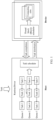
- the task processing method provided in the embodiments of this application is applicable to a computer system architecture shown in FIG. 2 .
- the computer system architecture includes a first processing apparatus 210 and a second processing apparatus 220.
- the first processing apparatus 210 may be a host, and a device runtime (Device Runtime) and a device driver (Device Driver) are deployed on the first processing apparatus 210.
- the device during running may be configured to deliver a task to the second processing apparatus.
- the second processing apparatus 220 may be a device.
- An acceleration library (Acc. Core) used for computing and a microcontroller unit (microcontroller unit, MCU), for example, an ARM core, are deployed on the second processing apparatus 220.
- a lightweight operating system (Lite OS) runs on the microcontroller unit.
- Local scheduling software, of the second processing apparatus 220 referred to as a "taskscheduler" herein, runs on the lightweight operating system.
- the taskscheduler is responsible for scheduling and distributing a task received from the first processing apparatus.
- Inter-processor (core) communication refers to a physical connection between the first processing apparatus and the second processing apparatus, and is not limited to a specific form, for example, a PCI-E.
- FIG. 3 is a schematic flowchart of a task processing method according to an embodiment of this application. As shown in FIG. 3 , the method includes the following steps.
- Step 301 A first processing apparatus generates a plurality of tasks, and determines task description information of the plurality of tasks.
- the task description information of the plurality of tasks is used to indicate a dependency relationship between the plurality of tasks, and in any two tasks that have a dependency relationship, execution of one task needs to wait for an execution result of the other task.
- Step 302 The first processing apparatus sends an instruction to a second processing apparatus, where the instruction includes the plurality of tasks and the task description information of the plurality of tasks.
- Step 303 The second processing apparatus receives the instruction, and processes the plurality of tasks based on the dependency relationship between the plurality of tasks.
- the first processing apparatus sends the plurality of tasks and the task description information of the plurality of tasks to the second processing apparatus together.
- the second processing apparatus may directly obtain, based on the dependency relationship between the plurality of tasks, a next task for processing.
- the solution in this embodiment of this application can effectively reduce a waiting delay, fully exploit a computing capability of an acceleration chip, and improve task processing efficiency.
- the first processing apparatus may be a CPU, and from a bottom layer to an upper layer, a software stack of the CPU includes an operating system, a driver or a runtime (runtime), a program framework, and service code.
- the service code is an application program, for example, a voice recognition program or an image processing program.
- the application program enables, by invoking an application programming interface (application programming interface, API) of the operating system, the operating system to execute a command (action) of the application program.
- an application programming interface application programming interface, API
- that the first processing apparatus generates the plurality of tasks may be specifically that the application program on the first processing apparatus enables, by invoking the API of the operating system, the operating system to generate the plurality of tasks.
- the application program on the first processing apparatus may enable, by invoking one API of the operating system, the operating system to generate the plurality of tasks, or may enable, by invoking a plurality of APIs of the operating system, the operating system to generate the plurality of tasks.
- the first processing apparatus may further determine the dependency relationship between the plurality of tasks based on a description of a developer.
- the plurality of tasks generated by the first processing apparatus are a task 1, a task 2, and a task 3.
- the task 1 is generated by the application program on the first processing apparatus by invoking a first API of the operating system
- the task 2 and the task 3 are generated by the application program on the first processing apparatus by invoking a second API of the operating system.
- the dependency relationship between the plurality of tasks is that the task 3 depends on the task 1 and the task 2.
- the task 1 and the task 2 need to be processed before the task 3. Because the task 1 and the task 2 are generated by invoking different APIs, the task 1 and the task 2 can be processed concurrently (assuming that there are no other constraints).
- the second processing apparatus may be a GPU.
- the task description information sent by the first processing apparatus to the second processing apparatus may include identifiers of task streams corresponding to the plurality of tasks.
- the task streams corresponding to the plurality of tasks may be determined in the following manner: if the first processing apparatus determines that a quantity of resources of idle task streams is greater than or equal to a first threshold, allocating corresponding task streams in the idle task streams to the plurality of tasks; if the first processing apparatus determines that a quantity of resources of idle task streams is less than or equal to a second threshold, allocating corresponding task streams in existing task streams on the second processing apparatus to the plurality of tasks; or if the first processing apparatus determines that a quantity of resources of idle task streams is greater than a second threshold and less than a first threshold, allocating corresponding task streams in the idle task streams to some of the plurality of tasks, and allocating corresponding task streams in existing task streams on the second processing apparatus to the other tasks of the plurality of tasks.
- a task stream list may be maintained on the first processing apparatus, as shown in Table 1.
- Table 1 Example of a task stream list Identifier of a task stream Status of the task stream (streamstate) stream 1 ... stream 2 ... ... ... stream m ...
- the first processing apparatus may update a status (streamstate) of each task stream on the second processing apparatus based on an accommodating status corresponding to each task stream.
- the status of the task stream may be specifically a quantity of resident tasks in the task stream.
- a quantity of task streams may be preset, and the first processing apparatus may determine, based on a quantity of task streams in Table 1 and a preset quantity of task streams, whether the quantity of resources of the idle task streams is sufficient.
- the quantity of resources of the idle task streams may be specifically a quantity of identifiers of the idle task streams.
- the identifier of the task stream may be information used to uniquely identify the task stream, for example, the identifier of the task stream may be a serial number of the task stream.
- the preset quantity of task streams is 100. If the quantity of task streams in Table 1 is 100, it indicates that there is no identifier of an idle task stream at this time. If the quantity of task streams in Table 1 is 99, it indicates that there is an identifier of one idle task stream at this time.
- the task 1, the task 2, and the task 3 in the foregoing example are generated by invoking different APIs, the task 1, the task 2, and the task 3 need to be placed in two task streams (the task 1 is placed in one task stream, and the task 2 and the task 3 are placed in the other task stream).
- the first processing apparatus determines that the quantity of the identifiers of the idle task streams is greater than or equal to the first threshold (the first threshold may be set based on an actual requirement, and in this example, the first threshold may be a value greater than or equal to 2, for example, 2), it indicates that identifiers of idle task streams on the second processing apparatus are completely sufficient.
- the first processing apparatus may allocate identifiers of any two idle task streams to the task 1, the task 2, and the task 3, for example, allocate an identifier (stream 1) of an idle task stream to the task 1, and allocate an identifier (stream 2) of an idle task stream to the task 2 and the task 3.
- the second processing apparatus may place, based on the identifier (stream 1) that is of the task stream corresponding to the task 1 and that is included in the instruction, the task 1 in the task stream whose identifier is the stream 1; and the second processing apparatus places, based on the identifier (stream 2) that is of the task stream corresponding to the task 2 and the task 3 and that is included in the instruction, the task 2 and the task 3 in the task stream whose identifier is the stream 2.
- the first processing apparatus determines that the quantity of the identifiers of the idle task streams is less than or equal to the second threshold (the second threshold may be set based on an actual requirement, and in this example, the second threshold may be 0), it indicates that there is no identifier of an idle task stream at this time.
- the first processing apparatus may allocate corresponding identifiers of task streams in identifiers of the existing task streams on the second processing apparatus to the plurality of tasks.
- an existing task stream is shared and reused. For example, an existing task stream 1 (stream 1) on the second processing apparatus is determined as the task stream corresponding to the task 1, and an existing task stream 2 (stream 2) is determined as the task stream corresponding to the task 2 and the task 3.
- the second processing apparatus may place the task 1 in the existing task stream 1 (stream 1) based on the identifier (stream 1) that is of the task stream corresponding to the task 1 and that is included in the instruction, and place the task 2 and the task 3 in the existing task stream 2 (stream 2).
- the first processing apparatus may determine, based on priorities of the existing task streams on the second processing apparatus, task streams corresponding to the plurality of tasks.
- the first processing apparatus may select a task stream (for example, a task stream 1) whose priority is 1 from the existing task streams based on a priority (for example, the priority is 1) of a task stream in which the task 1 needs to be placed.
- a task stream for example, a task stream 1
- the task stream 1 may be determined as a task stream corresponding to the task 1.
- the second processing apparatus may place the task 1 in the existing task stream 1. In this case, if the task stream 1 cannot continue to accommodate a task, the task stream 1 cannot be shared and reused, and the task 1 may be blocked until there is an identifier of an idle task stream or the task stream 1 can continue to accommodate a task.
- the first processing apparatus may select a task stream (for example, a task stream 2) whose priority is 2 from the existing task streams based on a priority (for example, the priority is 2) of a task stream in which the task 2 and the task 3 need to be placed.
- a task stream for example, a task stream 2
- the task stream 2 may be determined as a task stream corresponding to the task 2 and the task 3.
- the second processing apparatus may place the task 2 and the task 3 in the existing task stream 2. In this case, if the task stream 2 can continue to accommodate only one task, the task stream 2 is determined as a task stream corresponding to the task 2, and the task 3 is blocked until the task stream 2 can continue to accommodate a task.
- the second processing apparatus may place the task 2 in the existing task stream 2.
- the task 2 and the task 3 may be blocked until there is an identifier of an idle task stream or the task stream 2 can continue to accommodate a task.
- the second processing apparatus when processing tasks in task streams, processes, based on priorities of the task streams and in a polling manner, tasks at the top of waiting lists of the task streams.
- priorities of task streams in which tasks need to be placed are fully considered, thereby effectively ensuring an execution sequence of tasks in different task streams.
- the first processing apparatus generates the task 1, the task 2, and the task 3 (the priority of the task stream in which the task 1 needs to be placed is 1, and the priority of the task stream in which the task 2 and the task 3 need to be placed is 2).
- the first processing apparatus determines that a quantity of the identifiers of the task streams on the second processing apparatus is less than or equal to the second threshold, a task stream whose priority is 1 in the existing task streams on the second processing apparatus cannot continue to accommodate a task (that is, the task 1 cannot share and reuse the existing task stream), and a task stream whose priority is 2 cannot continue to accommodate a task (that is, the task 2 and the task 3 cannot share and reuse the existing task stream).
- the plurality of tasks (the task 1, the task 2, and the task 3) may not be distributed, that is, the plurality of tasks are retained on the first processing apparatus for processing. In this way, less memory resources of the second processing apparatus are occupied, thereby better adapting to a scenario in which memory resources of the second processing apparatus are limited. Further, it is convenient for the first processing apparatus to perform global heterogeneous resource balanced scheduling.
- the first processing apparatus may allocate the identifier (stream 1) of the idle task stream to the task 1, and determine an existing task stream (for example, a task stream 2 whose identifier is stream 2) on the second processing apparatus as a task stream corresponding to the task 2 and the task 3.
- the second processing apparatus may place, based on the identifier (stream 1) that is of the task stream corresponding to the task 1 and that is included in the instruction, the task 1 in the task stream 1; and the second processing apparatus places, based on the identifier (stream 2) that is of the task stream corresponding to the task 2 and the task 3 and that is included in the instruction, the task 2 and the task 3 in the existing task stream 2.
- a plurality of existing task streams may exist on the second processing apparatus.
- the first processing apparatus may select, from the plurality of existing task streams and based on priorities of task streams in which the task 2 and the task 3 need to be placed, a task stream that is to be shared and reused by the task 2 and the task 3. For details, reference may be made to the foregoing descriptions.
- the first processing apparatus may alternatively allocate identifiers of the idle task streams to the task 2 and the task 3, and select a task stream corresponding to the task 1 from the existing task streams.
- proper and flexible adjustment may be performed based on an actual situation, and this is not specifically limited.
- the first processing apparatus determines whether identifiers of the idle task streams on the second processing apparatus are sufficient, and if the identifiers of the idle task streams on the second processing apparatus are insufficient, the existing task stream is shared and reused, to effectively improve resource utilization.
- the first processing apparatus determines that the identifiers of the idle task streams on the second processing apparatus are insufficient, sharing and reusing may not be performed, and the first processing apparatus may directly block a task until there is an identifier of an idle task stream. Alternatively, the first processing apparatus may directly return an error. This is not specifically limited.
- the task 3 depends on the task 2, and also depends on the task 1. Because the task 2 and the task 3 are located in a same task stream, the task 2 and the task 3 may be placed in the task stream in sequence, so that it can be ensured that the task 2 is processed before the task 3.
- the dependency relationship may be indicated by using an event (event) in this embodiment of this application. The following describes a specific implementation process.
- the developer may create an event based on a dependency relationship between generated tasks.
- the developer writes service code, so that the application program on the first processing apparatus invokes the API of the operating system to generate the event.
- the event is used to indicate a dependency relationship between tasks corresponding to the event, the tasks corresponding to the event are two or more tasks that are located in different task streams and have a dependency relationship in the plurality of tasks, the two or more tasks include one dependent task and one or more depended tasks, and processing of the dependent task depends on a processing result of each depended task.
- the developer may create an event based on the dependency relationship between the task 1 and the task 3.
- tasks corresponding to the event are the task 1 and the task 3, the task 3 is a dependent task, and the task 1 is a depended task.
- one event list may be synchronously maintained on the first processing apparatus and the second processing apparatus.
- Table 2 shows an example of the event list.
- Table 2 Example of an event list Identifier of an event Status of the event (eventstate) event 1 ... event 2 ... ... ... event n ...
- the identifier of the event may be information that can uniquely identify the event, for example, a serial number of the event. This is not specifically limited.
- the first processing apparatus may generate an identifier (for example, event n+1) of an event corresponding to the task 1 and the task 3, add the identifier of the event to the event list maintained on the first processing apparatus, and send the identifier of the event to the second processing apparatus by using an instruction.
- an identifier for example, event n+1
- the second processing apparatus may add the identifier (event n+1) that is of the event and that is included in the instruction to the event list maintained on the second processing apparatus.
- a status corresponding to the event may be a default state. This is not specifically limited.
- the second processing apparatus updates the status corresponding to the event to a ready state. Subsequently, after the second processing apparatus determines that the dependent task (the task 3) in the tasks corresponding to the event is a to-be-processed task, if the second processing apparatus detects that the status of the event is the ready state, the second processing apparatus processes the dependent task.
- the second processing apparatus waits until the second processing apparatus detects that the status of the event is the ready state.
- the second processing apparatus may further return a notification message to the first processing apparatus, where the notification message is used to indicate that the task has been processed.
- the first processing apparatus updates the status of the event based on the notification message returned by the second processing apparatus, to manage the identifier of the event. For example, the second processing apparatus returns a notification message to the first processing apparatus, where the notification message is used to indicate that the depended task has been processed. Then, the first processing apparatus may update the status of the event based on the notification message.
- the second processing apparatus returns a notification message to the first processing apparatus, where the notification message is used to indicate that the dependent task has been processed. Then, the first processing apparatus may re-update the status of the event based on the notification message. Further, after the first processing apparatus updates the status of the event, if the first processing apparatus determines that an updated status of the event satisfies a preset condition, the first processing apparatus releases the identifier of the event for subsequent allocation.
- the preset condition may be set based on an actual requirement.
- the first processing apparatus may further send a synchronization message to the second processing apparatus, where the synchronization message is used to indicate the second processing apparatus to release the identifier of the event. This ensures consistency between the event list maintained on the first processing apparatus and the event list maintained on the second processing apparatus.
- the first processing apparatus may manage the identifier of the event in a lazy allocation manner, to improve turnover of the identifier of the event.
- an event record (EventRecord) and event wait (EventWait) may be abstracted as virtual tasks, which are similar to a computing task and a memory copy task.
- a unique task identifier in a process is allocated to each virtual task, so that a delivered task corresponds to a reported task.
- the first processing apparatus may manage the identifier of the event by using a counter, and release the identifier of the event when the counter is 0.
- a possible counting manner is as follows:
- the instruction sent by the first processing apparatus to the second processing apparatus may further include a virtual task (event record, that is, the task 1 is completed; and event wait, that is, the task 3 needs to wait for processing).
- the instruction includes the event record and the event wait
- the counter of the event changes to 2 (the counter is increased by 1 for the event wait, and the counter is increased by 1 for the event record).
- the counter is decreased by 1.
- the execution result of the event wait is received, the counter is decreased by 1 again, and changes to 0. In this case, it may be considered that the status of the event satisfies the preset condition, and the first processing apparatus can release the identifier of the event.
- the first processing apparatus may block a to-be-processed task and wait until there is an identifier of an idle event. Alternatively, the first processing apparatus may return an error.
- the first processing apparatus may determine, in a plurality of manners, whether there is an identifier of an idle event. For example, the first processing apparatus may perform determining based on a preset quantity of events and a quantity of events included in the event list. If the preset quantity of events is 1024, and the quantity of events in the event list is also 1024, it indicates that there is no identifier of an idle event. If the preset quantity of events is 1024, and the quantity of events in the event list is 1000, it indicates that there is an identifier of an idle event.
- a host operating system or a kernel-mode driver may clear a task stream and an event resource.
- FIG. 4A and FIG. 4B are a schematic diagram of scheduling cooperation between a host and a device according to an embodiment of this application. The following describes an overall implementation process of this embodiment of this application with reference to FIG. 4A and FIG. 4B .
- a runtime provides an API for a developer to describe concurrent tasks.
- a stream or an event is a context environment in which a task runs.
- the runtime stores statuses of each created stream and event.
- the runtime When receiving API invocation for computing tasks, the runtime immediately sends the tasks to the device, and attaches a dependency relationship between the tasks (or attach execution conditions, for example, event records, of the tasks).
- the host sends the tasks to the device, it does not mean that the tasks can be executed immediately. Processing on the host may be understood as orchestration of tasks in a plurality of concurrent task streams, namely, front-end scheduling on the tasks.
- a taskscheduler checks a queue header of each task stream to obtain to-be-processed tasks, that is, performs back-end scheduling on the tasks. Specifically, the taskscheduler may process, based on priorities (the priorities may be preset, and are not specifically limited herein) of the task streams and in a polling manner, tasks at the top of waiting lists of the task streams. If the task is a computing task, and a scheduling slot (Slot) of a kernel is idle, a thread block scheduler sends the task to a computing core for scheduling and execution. For a specific execution manner, refer to the foregoing description in FIG. 1 . Details are not described herein again.
- the task is sent to the DMA for execution.
- the task is an event wait task, whether a status of a corresponding event is a ready state is checked. If the task is an event record task, a status of a corresponding event is set to a ready state. Further, to maintain an event resource, an event destroy (EventDestroy) task (corresponding to an event creation task) may be further added in this embodiment of this application. If the task is an event destroy task, a status of a corresponding event is set to a non-ready state. In addition, the taskscheduler records a status for an event record. In this way, when a prerequisite is satisfied (for example, a task is completed), the taskscheduler can quickly schedule a next task locally without notifying the host over IPC.
- DMA direct memory access
- a function performed by the taskscheduler may be implemented by using software, and a function performed by the thread block scheduler may be implemented by using an application-specific integrated circuit (application specific integrated circuit, ASIC).
- ASIC application specific integrated circuit
- task scheduling is divided into two parts: front-end scheduling on the host and back-end scheduling on the device.
- the front-end scheduling is responsible for description and delivery of a dependency relationship between tasks
- the back-end scheduling is responsible for scheduling and execution of the tasks. This can reduce processing load of the host, and implement load balancing between the host and the device in a future scenario in which a computing capability of the device is expanded.
- a CPU processing core and DMA hardware are disposed on the device. The CPU processing core performs a back-end scheduling function, and the DMA hardware performs a data moving task. This improves task processing efficiency.
- an embodiment of this application further provides a computer system.
- the computer system includes a first processing apparatus and a second processing apparatus.
- the first processing apparatus and the second processing apparatus may implement corresponding functions in the method procedure shown in FIG. 3 .
- FIG. 3 For details, refer to detailed descriptions in the method example. Details are not described herein again.
- first processing apparatus and the second processing apparatus in this application may be two independent chips.
- the first processing apparatus is a CPU
- the second processing apparatus is a GPU.
- the first processing apparatus and the second processing apparatus may be two different circuit modules, and are integrated together to form a chip.
- the second processing apparatus that is an NPU and the first processor that is a CPU are integrated together to form a chip.
- FIG. 5 is a schematic diagram of a hardware structure of a computer to which an embodiment of this application is applied.
- a computer 500 includes a display device 510, a processor 520, and a memory 530.
- the memory 530 may be configured to store a software program and data.
- the processor 520 executes various functional applications of the computer 500 and processes data by running the software program and the data that are stored in the memory 530.
- the memory 530 may mainly include a program storage area and a data storage area.
- the program storage area may store information about an operating system, an application program required by at least one function (such as a value calculation function), and the like.
- the data storage area may store data (such as audio data and image data) created based on use of the computer 500, and the like.
- the memory 530 may include a high-speed random access memory, or may include a nonvolatile memory, for example, at least one magnetic disk storage device, a flash memory device, or another volatile solid-state storage device.
- the processor 520 is a control center of the computer 500, and is connected to all parts of the entire computer by using various interfaces and cables.
- the processor 520 executes various functions of the computer 500 and processes data by running or executing a software program and/or data that are/is stored in the memory 130, to perform overall monitoring on the computer.
- the processor 520 may include one or more general-purpose processors, and may further include one or more GPUs, configured to perform a related operation, to implement the technical solutions provided in the embodiments of this application.
- the computer 500 further includes a camera 560 for shooting an image or recording a video.
- the camera 560 may be an ordinary camera, or may be a focusing camera.
- the computer 500 may further include an input device 540, configured to: receive input number information, character information, or a contact touch operation/non-contact gesture, and generate signal input that is related to user settings and function control of the computer 500, and the like.
- an input device 540 configured to: receive input number information, character information, or a contact touch operation/non-contact gesture, and generate signal input that is related to user settings and function control of the computer 500, and the like.
- the display device 510 includes a display panel 511, configured to display information input by a user or information provided for a user, various menu interfaces of the computer 500, and the like.
- the display panel 511 may be in a form of a liquid crystal display (liquid crystal display, LCD), an OLED (organic light-emitting diode, organic light-emitting diode), or the like.
- the computer 500 may further include a power supply 550, configured to supply power to other modules.
- the computer 500 may further include one or more sensors 570, for example, an image sensor, an infrared sensor, and a laser sensor.
- the computer 500 may further include a radio frequency (radio frequency, RF) circuit 580, configured to perform network communication with a wireless network device.
- the computer 500 may further include a Wi-Fi module 590, configured to perform Wi-Fi communication with another device to obtain an image, data, or the like transmitted by the another device.
- RF radio frequency
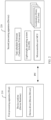
- FIG. 6 is a schematic structural diagram of a processing apparatus according to an embodiment of this application.
- the apparatus has a function of implementing behavior of the first processing apparatus in the method procedure shown in FIG. 3 .
- the processing apparatus 600 includes a processing unit 601 and a transceiver unit 602.
- the processing unit 601 is configured to: generate a plurality of tasks, and determine task description information of the plurality of tasks, where the task description information of the plurality of tasks is used to indicate a dependency relationship between the plurality of tasks, and in any two tasks that have a dependency relationship, processing of one task needs to wait for a processing result of the other task.
- the transceiver unit 602 is configured to send an instruction to a second processing apparatus, where the instruction includes the plurality of tasks and the task description information of the plurality of tasks.
- the task description information includes identifiers of task streams corresponding to the plurality of tasks.
- the processing unit 601 determines the task streams corresponding to the plurality of tasks in the following manner:
- the processing unit 601 is specifically configured to: select, based on a priority of a task stream in which a first task needs to be placed, a task stream whose priority is the same as the priority of the task stream in which the first task needs to be placed from the existing task streams on the second processing apparatus, and determine the selected task stream as a task stream corresponding to the first task, where the first task is any one of the plurality of tasks.
- the task description information further includes an identifier of an event
- the event is used to indicate a dependency relationship between tasks corresponding to the event
- the tasks corresponding to the event are two or more tasks that are located in different task streams and have a dependency relationship in the plurality of tasks
- the two or more tasks include one dependent task and one or more depended tasks
- processing of the dependent task depends on a processing result of each depended task.
- the transceiver unit 602 is further configured to receive a notification message sent by the second processing apparatus, where the notification message is used to indicate that the depended task or the dependent task has been processed.
- the processing unit 601 is further configured to: update a status of the event based on the notification message; and if the processing unit determines that an updated status of the event satisfies a preset condition, release the identifier of the event.
- FIG. 7 is a schematic structural diagram of another processing apparatus according to an embodiment of this application.
- the apparatus has a function of implementing behavior of the second processing apparatus in the method procedure shown in FIG. 3 .
- the processing apparatus 700 includes a transceiver unit 701 and a processing unit 702.
- the transceiver unit 701 is configured to receive an instruction sent by a first processing apparatus, where the instruction includes a plurality of tasks and task description information of the plurality of tasks, the task description information of the plurality of tasks is used to indicate a dependency relationship between the plurality of tasks, and in any two tasks that have a dependency relationship, processing of one task needs to wait for a processing result of the other task.
- the processing unit 702 is configured to process the plurality of tasks based on the dependency relationship between the plurality of tasks.
- the task description information further includes an identifier of an event
- the event is used to indicate a dependency relationship between tasks corresponding to the event
- the tasks corresponding to the event are two or more tasks that are located in different task streams and have a dependency relationship in the plurality of tasks
- the two or more tasks include one dependent task and one or more depended tasks
- processing of the dependent task depends on a processing result of each depended task.
- the processing unit 702 is specifically configured to:
- the transceiver module 701 is further configured to: return a notification message to the first processing apparatus after it is determined that the depended task or the dependent task has been processed, where the notification message is used to indicate that the depended task or the dependent task has been processed.
- unit division is an example, and is merely a logical function division. In actual implementation, another division manner may be used.
- Functional units in the embodiments of this application may be integrated into one processing unit, or each of the units may exist alone physically, or two or more units are integrated into one unit.
- the integrated unit may be implemented in a form of hardware, or may be implemented in a form of a software functional unit.
- Embodiment 1 A task processing method, wherein the method comprises:
- Embodiment 3 The method according to embodiment 2, wherein the allocating, by the first processing apparatus, corresponding task streams in existing task streams on the second processing apparatus to the plurality of tasks comprises: selecting, by the first processing apparatus based on a priority of a task stream in which a first task needs to be placed, a task stream whose priority is the same as the priority of the task stream in which the first task needs to be placed from the existing task streams on the second processing apparatus, and determining the selected task stream as a task stream corresponding to the first task, wherein the first task is any one of the plurality of tasks.
- the task description information further comprises an identifier of an event
- the event is used to indicate a dependency relationship between tasks corresponding to the event
- the tasks corresponding to the event are two or more tasks that are located in different task streams and have a dependency relationship in the plurality of tasks
- the two or more tasks comprise one dependent task and one or more depended tasks
- processing of the dependent task depends on a processing result of each depended task.
- Embodiment 5 The method according to embodiment 4, wherein the method further comprises:
- Embodiment 6 A task processing method, wherein the method comprises:
- Embodiment 7 The method according to embodiment 6, wherein the task description information further comprises an identifier of an event, the event is used to indicate a dependency relationship between tasks corresponding to the event, the tasks corresponding to the event are two or more tasks that are located in different task streams and have a dependency relationship in the plurality of tasks, the two or more tasks comprise one dependent task and one or more depended tasks, and processing of the dependent task depends on a processing result of each depended task; and the processing, by the second processing apparatus, the plurality of tasks based on the dependency relationship between the plurality of tasks comprises:
- Embodiment 8 The method according to embodiment 7, wherein the method further comprises: returning, by the second processing apparatus, a notification message to the first processing apparatus after determining that the depended task or the dependent task has been processed, wherein the notification message is used to indicate that the depended task or the dependent task has been processed.
- Embodiment 9 A processing apparatus, wherein the processing apparatus comprises:
- Embodiment 10 The apparatus according to embodiment 9, wherein the task description information comprises identifiers of task streams corresponding to the plurality of tasks; and the processing unit determines the task streams corresponding to the plurality of tasks in the following manner:
- Embodiment 11 The apparatus according to embodiment 10, wherein the processing unit is specifically configured to: select, based on a priority of a task stream in which a first task needs to be placed, a task stream whose priority is the same as the priority of the task stream in which the first task needs to be placed from the existing task streams on the second processing apparatus, and determine the selected task stream as a task stream corresponding to the first task, wherein the first task is any one of the plurality of tasks.
- Embodiment 12 The apparatus according to embodiment 11, wherein the task description information further comprises an identifier of an event, the event is used to indicate a dependency relationship between tasks corresponding to the event, the tasks corresponding to the event are two or more tasks that are located in different task streams and have a dependency relationship in the plurality of tasks, the two or more tasks comprise one dependent task and one or more depended tasks, and processing of the dependent task depends on a processing result of each depended task.
- Embodiment 13 The apparatus according to embodiment 12, wherein the transceiver unit is further configured to receive a notification message sent by the second processing apparatus, wherein the notification message is used to indicate that the depended task or the dependent task has been processed; and the processing unit is further configured to: update a status of the event based on the notification message; and if the processing unit determines that an updated status of the event satisfies a preset condition, release the identifier of the event.
- Embodiment 14 A processing apparatus, wherein the processing apparatus comprises:
- Embodiment 15 The apparatus according to embodiment 14, wherein the task description information further comprises an identifier of an event, the event is used to indicate a dependency relationship between tasks corresponding to the event, the tasks corresponding to the event are two or more tasks that are located in different task streams and have a dependency relationship in the plurality of tasks, the two or more tasks comprise one dependent task and one or more depended tasks, and processing of the dependent task depends on a processing result of each depended task; and the processing unit is specifically configured to:
- Embodiment 16 The apparatus according to embodiment 15, wherein the transceiver unit is further configured to: return a notification message to the first processing apparatus after it is determined that the depended task or the dependent task has been processed, wherein the notification message is used to indicate that the depended task or the dependent task has been processed.
- Embodiment 17 A computer system, wherein the computer system comprises a first processing apparatus and a second processing apparatus, wherein
- Embodiment 18 The computer system according to embodiment 17, wherein the instruction further comprises identifiers of task streams corresponding to the plurality of tasks; and the first processing apparatus is further configured to determine the task streams corresponding to the plurality of tasks in the following manner:
- Embodiment 19 The computer system according to embodiment 18, wherein the first processing apparatus is specifically configured to: select, based on a priority of a task stream in which a first task needs to be placed, a task stream whose priority is the same as the priority of the task stream in which the first task needs to be placed, from the existing task streams on the second processing apparatus, and determine the selected task stream as a task stream corresponding to the first task, wherein the first task is any one of the plurality of tasks.
- Embodiment 20 The computer system according to any one of embodiments 17 to 19, wherein the task description information further comprises an identifier of an event, the event is used to indicate a dependency relationship between tasks corresponding to the event, the tasks corresponding to the event are two or more tasks that are located in different task streams and have a dependency relationship in the plurality of tasks, the two or more tasks comprise one dependent task and one or more depended tasks, and processing of the dependent task depends on a processing result of each depended task; and the second processing apparatus is specifically configured to:
- Embodiment 21 The computer system according to embodiment 20, wherein the second processing apparatus is further configured to: return a notification message to the first processing apparatus after determining that the depended task or the dependent task has been processed, wherein the notification message is used to indicate that the depended task or the dependent task has been processed; and the first processing apparatus is further configured to: update a status of the event based on the notification message; and if the first processing apparatus determines that an updated status of the event satisfies a preset condition, release the identifier of the event.
- Embodiment 22 A computer storage medium, wherein the storage medium stores a software program, and when the software program is read and executed by a first processing apparatus, the method according to any one of embodiments 1 to 5 is implemented; or when the software program is read and executed by a second processing apparatus, the method according to any one of embodiments 6 to 8 is implemented.
- Embodiment 23 A computer program product, wherein the computer program product comprises an instruction, and when the instruction is run on a computer, the computer is enabled to perform the method according to any one of embodiments 1 to 8.
- All or some of the foregoing embodiments may be implemented by using software, hardware, firmware, or any combination thereof.
- the embodiments may be implemented completely or partially in a form of a computer program product.
- the computer program product includes one or more computer instructions.
- the computer program instructions When the computer program instructions are loaded and executed on a computer, the procedure or functions according to the embodiments of the present invention are all or partially generated.
- the computer may be a general-purpose computer, a special-purpose computer, a computer network, or another programmable apparatus.
- the computer instructions may be stored in a computer-readable storage medium or may be transmitted from a computer-readable storage medium to another computer-readable storage medium.
- the computer instructions may be transmitted from a website, computer, server, or data center to another website, computer, server, or data center in a wired (for example, a coaxial cable, an optical fiber, or a digital subscriber line (DSL)) or wireless (for example, infrared, radio, or microwave) manner.
- the computer-readable storage medium may be any usable medium accessible by a computer, or a data storage device, such as a server or a data center, integrating one or more usable media.
- the usable medium may be a magnetic medium (for example, a floppy disk, a hard disk, or a magnetic tape), an optical medium (for example, a DVD), a semiconductor medium (for example, a solid-state drive (Solid State Disk, SSD)), or the like.
- a magnetic medium for example, a floppy disk, a hard disk, or a magnetic tape
- an optical medium for example, a DVD
- a semiconductor medium for example, a solid-state drive (Solid State Disk, SSD)
- These computer program instructions may be provided for a general-purpose computer, a special-purpose computer, an embedded processor, or a processor of any other programmable data processing device to generate a machine, so that the instructions executed by a computer or a processor of any other programmable data processing device generate an apparatus for implementing a specific function in one or more procedures in the flowcharts and/or in one or more blocks in the block diagrams.
- These computer program instructions may also be stored in a computer readable memory that can instruct the computer or any other programmable data processing device to work in a specific manner, so that the instructions stored in the computer readable memory generate an artifact that includes an instruction apparatus.
- the instruction apparatus implements a specific function in one or more procedures in the flowcharts and/or in one or more blocks in the block diagrams.
- These computer program instructions may also be loaded onto a computer or another programmable data processing device, so that a series of operations and steps are performed on the computer or the another programmable device, thereby generating computer-implemented processing. Therefore, the instructions executed on the computer or the another programmable device provide steps for implementing a specific function in one or more procedures in the flowcharts and/or in one or more blocks in the block diagrams.
Landscapes
- Engineering & Computer Science (AREA)
- Software Systems (AREA)
- Theoretical Computer Science (AREA)
- Physics & Mathematics (AREA)
- General Engineering & Computer Science (AREA)
- General Physics & Mathematics (AREA)
- Debugging And Monitoring (AREA)
- Management, Administration, Business Operations System, And Electronic Commerce (AREA)
- Stored Programmes (AREA)
Applications Claiming Priority (3)
| Application Number | Priority Date | Filing Date | Title |
|---|---|---|---|
| CN201810463722.9A CN110489213B (zh) | 2018-05-15 | 2018-05-15 | 一种任务处理方法及处理装置、计算机系统 |
| PCT/CN2019/070720 WO2019218708A1 (zh) | 2018-05-15 | 2019-01-07 | 一种任务处理方法及处理装置、计算机系统 |
| EP19802616.3A EP3786793B1 (de) | 2018-05-15 | 2019-01-07 | Aufgabenverarbeitungsverfahren und -vorrichtung und computersystem |
Related Parent Applications (2)
| Application Number | Title | Priority Date | Filing Date |
|---|---|---|---|
| EP19802616.3A Division EP3786793B1 (de) | 2018-05-15 | 2019-01-07 | Aufgabenverarbeitungsverfahren und -vorrichtung und computersystem |
| EP19802616.3A Division-Into EP3786793B1 (de) | 2018-05-15 | 2019-01-07 | Aufgabenverarbeitungsverfahren und -vorrichtung und computersystem |
Publications (2)
| Publication Number | Publication Date |
|---|---|
| EP4459463A2 true EP4459463A2 (de) | 2024-11-06 |
| EP4459463A3 EP4459463A3 (de) | 2025-01-15 |
Family
ID=68539398
Family Applications (2)
| Application Number | Title | Priority Date | Filing Date |
|---|---|---|---|
| EP19802616.3A Active EP3786793B1 (de) | 2018-05-15 | 2019-01-07 | Aufgabenverarbeitungsverfahren und -vorrichtung und computersystem |
| EP24176511.4A Pending EP4459463A3 (de) | 2018-05-15 | 2019-01-07 | Aufgabenverarbeitungsverfahren, verarbeitungsvorrichtung und computersystem |
Family Applications Before (1)
| Application Number | Title | Priority Date | Filing Date |
|---|---|---|---|
| EP19802616.3A Active EP3786793B1 (de) | 2018-05-15 | 2019-01-07 | Aufgabenverarbeitungsverfahren und -vorrichtung und computersystem |
Country Status (4)
| Country | Link |
|---|---|
| US (1) | US11941434B2 (de) |
| EP (2) | EP3786793B1 (de) |
| CN (1) | CN110489213B (de) |
| WO (1) | WO2019218708A1 (de) |
Families Citing this family (19)
| Publication number | Priority date | Publication date | Assignee | Title |
|---|---|---|---|---|
| CN112463709B (zh) * | 2019-09-09 | 2025-01-10 | 苏州登临科技有限公司 | 可配置的异构人工智能处理器 |
| CN112465129B (zh) * | 2019-09-09 | 2024-01-09 | 上海登临科技有限公司 | 片内异构人工智能处理器 |
| WO2021048964A1 (ja) * | 2019-09-12 | 2021-03-18 | サンケン電気株式会社 | プロセッサ及びイベント処理方法 |
| CN111191777B (zh) * | 2019-12-27 | 2022-07-26 | 深圳云天励飞技术股份有限公司 | 一种神经网络处理器及其控制方法 |
| CN112132612A (zh) * | 2020-09-18 | 2020-12-25 | 贝壳技术有限公司 | 任务处理方法、装置、电子设备和存储介质 |
| CN114282739B (zh) * | 2020-09-27 | 2025-01-28 | 北京极智嘉科技股份有限公司 | 一种任务分配系统及任务分配方法 |
| CN112689827B (zh) * | 2020-10-27 | 2022-06-28 | 华为技术有限公司 | 模型推理异常处理方法及装置 |
| CN112667384A (zh) * | 2020-12-31 | 2021-04-16 | 青岛海尔科技有限公司 | 任务流的调度方法、装置、存储介质以及电子装置 |
| CN113760400B (zh) * | 2021-01-13 | 2025-01-07 | 北京沃东天骏信息技术有限公司 | 一种请求处理方法和装置 |
| KR20230157503A (ko) * | 2021-03-31 | 2023-11-16 | 후아웨이 테크놀러지 컴퍼니 리미티드 | 동기화 방법 및 장치 |
| CN113934551B (zh) * | 2021-09-08 | 2025-05-30 | 深圳云天励飞技术股份有限公司 | 任务同步等待方法、装置、系统、电子设备及存储介质 |
| CN114610455B (zh) * | 2022-03-04 | 2025-03-21 | 上海联影医疗科技股份有限公司 | 图像重建任务调度方法以及装置 |
| CN114756351B (zh) * | 2022-04-28 | 2025-04-04 | 中国农业银行股份有限公司 | 任务的调度方法、装置、电子设备及存储介质 |
| CN115098232A (zh) * | 2022-05-06 | 2022-09-23 | 北京快乐茄信息技术有限公司 | 任务调度的方法、装置和设备 |
| CN121058007A (zh) * | 2023-04-28 | 2025-12-02 | 华为技术有限公司 | 处理事务流的系统、方法及相关装置 |
| CN116450324A (zh) * | 2023-06-20 | 2023-07-18 | 北京超星未来科技有限公司 | 任务处理方法、装置、设备及存储介质 |
| CN117519799B (zh) * | 2023-11-06 | 2024-12-24 | 摩尔线程智能科技(北京)股份有限公司 | 指令调度方法及装置、和电子设备 |
| CN119166296B (zh) * | 2024-08-22 | 2025-09-30 | 上海哔哩哔哩科技有限公司 | 计算任务编排、视频生成方法、设备及计算机可读介质 |
| CN120011093B (zh) * | 2025-04-22 | 2025-08-08 | 中昊芯英(杭州)科技有限公司 | 面向加速器的多任务处理方法以及相关装置 |
Family Cites Families (9)
| Publication number | Priority date | Publication date | Assignee | Title |
|---|---|---|---|---|
| WO2001097076A2 (en) * | 2000-06-14 | 2001-12-20 | Parabon Computation, Inc. | Apparatus and method for providing sequence database comparison |
| CN101470626A (zh) * | 2007-12-27 | 2009-07-01 | 新奥特(北京)视频技术有限公司 | 一种任务排序方法 |
| US9158610B2 (en) * | 2011-08-04 | 2015-10-13 | Microsoft Technology Licensing, Llc. | Fault tolerance for tasks using stages to manage dependencies |
| CN102508704A (zh) * | 2011-11-10 | 2012-06-20 | 上海市共进通信技术有限公司 | 计算机软件系统中实现任务分解和并行处理控制的方法 |
| US9928109B2 (en) * | 2012-05-09 | 2018-03-27 | Nvidia Corporation | Method and system for processing nested stream events |
| CN104484167B (zh) * | 2014-12-05 | 2018-03-09 | 广州华多网络科技有限公司 | 任务处理方法及装置 |
| CN105162878B (zh) * | 2015-09-24 | 2018-08-31 | 网宿科技股份有限公司 | 基于分布式存储的文件分发系统及方法 |
| CN106874084B (zh) * | 2017-01-04 | 2020-04-07 | 北京百度网讯科技有限公司 | 一种分布式工作流调度的方法、装置及计算机设备 |
| CN107665233B (zh) * | 2017-07-24 | 2020-07-31 | 深圳壹账通智能科技有限公司 | 数据库数据处理方法、装置、计算机设备和存储介质 |
-
2018
- 2018-05-15 CN CN201810463722.9A patent/CN110489213B/zh active Active
-
2019
- 2019-01-07 EP EP19802616.3A patent/EP3786793B1/de active Active
- 2019-01-07 WO PCT/CN2019/070720 patent/WO2019218708A1/zh not_active Ceased
- 2019-01-07 EP EP24176511.4A patent/EP4459463A3/de active Pending
-
2020
- 2020-11-13 US US17/097,211 patent/US11941434B2/en active Active
Also Published As
| Publication number | Publication date |
|---|---|
| EP4459463A3 (de) | 2025-01-15 |
| WO2019218708A1 (zh) | 2019-11-21 |
| EP3786793A4 (de) | 2021-06-09 |
| EP3786793B1 (de) | 2024-06-26 |
| US11941434B2 (en) | 2024-03-26 |
| CN110489213B (zh) | 2022-04-05 |
| CN110489213A (zh) | 2019-11-22 |
| US20210064425A1 (en) | 2021-03-04 |
| EP3786793A1 (de) | 2021-03-03 |
Similar Documents
| Publication | Publication Date | Title |
|---|---|---|
| US11941434B2 (en) | Task processing method, processing apparatus, and computer system | |
| CN110888743B (zh) | 一种gpu资源使用方法、装置及存储介质 | |
| US9513962B2 (en) | Migrating a running, preempted workload in a grid computing system | |
| US9396028B2 (en) | Scheduling workloads and making provision decisions of computer resources in a computing environment | |
| US9852008B2 (en) | Computer-readable recording medium storing execution information notification program, information processing apparatus, and information processing system | |
| WO2017070900A1 (zh) | 多核数字信号处理系统中处理任务的方法和装置 | |
| CN114168301B (zh) | 线程调度方法、处理器以及电子装置 | |
| CN106062716B (zh) | 在单任务系统中实现多任务的方法、装置及单任务系统 | |
| US10459771B2 (en) | Lightweight thread synchronization using shared memory state | |
| WO2022042127A1 (zh) | 一种协程切换的方法、装置及设备 | |
| WO2019028682A1 (zh) | 一种多系统共享内存的管理方法及装置 | |
| WO2024260034A1 (zh) | 分布式训练任务调度方法、设备及非易失性可读存储介质 | |
| US9507637B1 (en) | Computer platform where tasks can optionally share per task resources | |
| CN112486638A (zh) | 用于执行处理任务的方法、装置、设备和存储介质 | |
| EP3783484B1 (de) | Datenverarbeitungsverfahren und rechenvorrichtung | |
| US7830387B2 (en) | Parallel engine support in display driver model | |
| CN118210632A (zh) | 内存分配方法、装置、电子设备及存储介质 | |
| CN116048756A (zh) | 一种队列调度方法、装置及相关设备 | |
| CN115509704A (zh) | 一种任务调度方法、装置、设备及存储介质 | |
| US20160147532A1 (en) | Method for handling interrupts | |
| US11301304B2 (en) | Method and apparatus for managing kernel services in multi-core system | |
| CN116089049B (zh) | 基于异步并行i/o请求的进程同步调度方法、装置以及设备 | |
| CN102736949A (zh) | 改善对非连贯设备要执行的任务的调度 | |
| CN113760524A (zh) | 任务执行方法和装置 | |
| CN113553155B (zh) | 一种任务调度方法、装置和电子设备 |
Legal Events
| Date | Code | Title | Description |
|---|---|---|---|
| PUAI | Public reference made under article 153(3) epc to a published international application that has entered the european phase |
Free format text: ORIGINAL CODE: 0009012 |
|
| STAA | Information on the status of an ep patent application or granted ep patent |
Free format text: STATUS: REQUEST FOR EXAMINATION WAS MADE |
|
| 17P | Request for examination filed |
Effective date: 20240521 |
|
| AC | Divisional application: reference to earlier application |
Ref document number: 3786793 Country of ref document: EP Kind code of ref document: P |
|
| AK | Designated contracting states |
Kind code of ref document: A2 Designated state(s): AL AT BE BG CH CY CZ DE DK EE ES FI FR GB GR HR HU IE IS IT LI LT LU LV MC MK MT NL NO PL PT RO RS SE SI SK SM TR |
|
| REG | Reference to a national code |
Ref country code: DE Ref legal event code: R079 Free format text: PREVIOUS MAIN CLASS: G06F0009480000 Ipc: G06F0009460000 |
|
| PUAL | Search report despatched |
Free format text: ORIGINAL CODE: 0009013 |
|
| AK | Designated contracting states |
Kind code of ref document: A3 Designated state(s): AL AT BE BG CH CY CZ DE DK EE ES FI FR GB GR HR HU IE IS IT LI LT LU LV MC MK MT NL NO PL PT RO RS SE SI SK SM TR |
|
| RIC1 | Information provided on ipc code assigned before grant |
Ipc: G06F 9/48 20060101ALI20241211BHEP Ipc: G06F 9/46 20060101AFI20241211BHEP |