EP4458988A2 - Assay zur präoperativen vorhersage der wiederherstellung der organfunktion - Google Patents
Assay zur präoperativen vorhersage der wiederherstellung der organfunktion Download PDFInfo
- Publication number
- EP4458988A2 EP4458988A2 EP24190574.4A EP24190574A EP4458988A2 EP 4458988 A2 EP4458988 A2 EP 4458988A2 EP 24190574 A EP24190574 A EP 24190574A EP 4458988 A2 EP4458988 A2 EP 4458988A2
- Authority
- EP
- European Patent Office
- Prior art keywords
- genes
- surgery
- frp
- score
- combination
- Prior art date
- Legal status (The legal status is an assumption and is not a legal conclusion. Google has not performed a legal analysis and makes no representation as to the accuracy of the status listed.)
- Pending
Links
Images






Classifications
-
- C—CHEMISTRY; METALLURGY
- C12—BIOCHEMISTRY; BEER; SPIRITS; WINE; VINEGAR; MICROBIOLOGY; ENZYMOLOGY; MUTATION OR GENETIC ENGINEERING
- C12Q—MEASURING OR TESTING PROCESSES INVOLVING ENZYMES, NUCLEIC ACIDS OR MICROORGANISMS; COMPOSITIONS OR TEST PAPERS THEREFOR; PROCESSES OF PREPARING SUCH COMPOSITIONS; CONDITION-RESPONSIVE CONTROL IN MICROBIOLOGICAL OR ENZYMOLOGICAL PROCESSES
- C12Q1/00—Measuring or testing processes involving enzymes, nucleic acids or microorganisms; Compositions therefor; Processes of preparing such compositions
- C12Q1/68—Measuring or testing processes involving enzymes, nucleic acids or microorganisms; Compositions therefor; Processes of preparing such compositions involving nucleic acids
- C12Q1/6876—Nucleic acid products used in the analysis of nucleic acids, e.g. primers or probes
-
- C—CHEMISTRY; METALLURGY
- C12—BIOCHEMISTRY; BEER; SPIRITS; WINE; VINEGAR; MICROBIOLOGY; ENZYMOLOGY; MUTATION OR GENETIC ENGINEERING
- C12Q—MEASURING OR TESTING PROCESSES INVOLVING ENZYMES, NUCLEIC ACIDS OR MICROORGANISMS; COMPOSITIONS OR TEST PAPERS THEREFOR; PROCESSES OF PREPARING SUCH COMPOSITIONS; CONDITION-RESPONSIVE CONTROL IN MICROBIOLOGICAL OR ENZYMOLOGICAL PROCESSES
- C12Q1/00—Measuring or testing processes involving enzymes, nucleic acids or microorganisms; Compositions therefor; Processes of preparing such compositions
- C12Q1/68—Measuring or testing processes involving enzymes, nucleic acids or microorganisms; Compositions therefor; Processes of preparing such compositions involving nucleic acids
- C12Q1/6876—Nucleic acid products used in the analysis of nucleic acids, e.g. primers or probes
- C12Q1/6883—Nucleic acid products used in the analysis of nucleic acids, e.g. primers or probes for diseases caused by alterations of genetic material
-
- C—CHEMISTRY; METALLURGY
- C12—BIOCHEMISTRY; BEER; SPIRITS; WINE; VINEGAR; MICROBIOLOGY; ENZYMOLOGY; MUTATION OR GENETIC ENGINEERING
- C12Q—MEASURING OR TESTING PROCESSES INVOLVING ENZYMES, NUCLEIC ACIDS OR MICROORGANISMS; COMPOSITIONS OR TEST PAPERS THEREFOR; PROCESSES OF PREPARING SUCH COMPOSITIONS; CONDITION-RESPONSIVE CONTROL IN MICROBIOLOGICAL OR ENZYMOLOGICAL PROCESSES
- C12Q2600/00—Oligonucleotides characterized by their use
- C12Q2600/106—Pharmacogenomics, i.e. genetic variability in individual responses to drugs and drug metabolism
-
- C—CHEMISTRY; METALLURGY
- C12—BIOCHEMISTRY; BEER; SPIRITS; WINE; VINEGAR; MICROBIOLOGY; ENZYMOLOGY; MUTATION OR GENETIC ENGINEERING
- C12Q—MEASURING OR TESTING PROCESSES INVOLVING ENZYMES, NUCLEIC ACIDS OR MICROORGANISMS; COMPOSITIONS OR TEST PAPERS THEREFOR; PROCESSES OF PREPARING SUCH COMPOSITIONS; CONDITION-RESPONSIVE CONTROL IN MICROBIOLOGICAL OR ENZYMOLOGICAL PROCESSES
- C12Q2600/00—Oligonucleotides characterized by their use
- C12Q2600/158—Expression markers
Definitions
- HF heart failure
- HFrEF reduced ejection fraction
- HFpEF HF with preserved ejection fraction
- the lifetime risk of developing HF is 1 in 5 for men and women older than 40 years of age.
- the death rate remains unacceptably high at approximately 50% within 5 years from the time of index diagnosis.
- AdHF advanced heart failure
- Described herein are methods and systems for treating a cardiovascular disease.
- described herein are methods and systems for predicting a prognosis of an individual with a cardiovascular disease following the provision of a treatment to that individual.
- a prognosis of an individual following the provision of a treatment to the individual is provided a score.
- a treatment modality for an individual is selected based on the score provided to the prognosis of the individual.
- Heart failure is a complex clinical syndrome that causes systemic hypo-perfusion and failure to meet the body's metabolic demands.
- chronic upregulation of the sympathetic nervous system and renin-angiotensin-aldosterone leads to further myocardial injury, HF progression and reduced O2-delivery.
- This triggers progressive organ dysfunction, immune system activation and profound metabolic derangements, creating a milieu similar to other chronic systemic diseases and presenting as advanced HF (AdHF) with severely limited prognosis.
- AdHF advanced HF
- patients with AdHF may benefit from various surgical/interventional therapies such as mechanical circulatory support (MCS) surgery, heart transplant (HTx) surgery, coronary artery bypass graft (CABG) surgery, percutaneous coronary interventions (PCI), aortic valve replacement (AVR) surgery, mitral valve replacement (MVR) surgery, trans-catheter aortic valve replacement (TAVR), transcatheter mitral clip, ventricular tachycardia ablation, or stellate gangliectomy in lieu of optimal medical management (OMM) or palliative/hospice care (PC).
- MCS mechanical circulatory support
- HTx heart transplant
- CABG coronary artery bypass graft
- PCI percutaneous coronary interventions
- AVR aortic valve replacement
- MVR mitral valve replacement
- TAVR trans-catheter aortic valve replacement
- TAVR transcatheter mitral clip
- ventricular tachycardia ablation ventricular tachycardia ablation
- PC pall
- FRP Functional Recovery Potential
- HF is a major public health concern due to its tremendous societal and economic burden, with estimated direct and indirect cost in the U.S. of $37.2 billion in 2009, which is expected to increase to $97 billion by 2030 (Roger 2012). While 25% of all spending occurs during the last year of life (Orszag 2008, Zhang 2009) in patients hospitalized with HF, more resource spending is associated with lower mortality rates (Ong 2009).
- a key consideration is: Which of these AdHF surgical/interventional therapies does a healthcare provider recommend to the individual AdHF-patient in order to tailor personal benefits in the most cost-effective way?
- Such models include Brain Natriuretic Peptide (BNP) measurements (Troughton 2000, Gardner 2003, Doust 2003), the Heart Failure Survival Score (HFSS) (Aaronson 1997), Seattle Heart Failure Model (Levy 2006 , Ketchum 2010), MAGGIC score (Sartipy 2014), Frailty Scores (Martinez-Selles 2009, Flint 2012), INTERMACS Score (Smits 2013, Kirklin 2014), UCLA score (Chyu 2014), Sequential Organ Failure Assessment (SOFA) Score (Vincent 1996), HeartMate II risk score (Cowger 2013), Model of End-stage Liver Disease (Matthews 2010), Model of End-stage Liver Disease Except INR (MELD-XI) Score (Abe 2014) and right ventricular failure score (Kormos 2010).
- BNP Brain Natriuretic Peptide
- the materials and methods described herein address these needs and more by using gene expression profiles to predict organ function recovery.
- a method of measuring gene expression in a sample of peripheral blood mononuclear cells (PBMCs) obtained from a subject PBMCs
- the method can also be implemented as a method of predicting treatment outcome for advanced organ failure, such as advanced heart failure, and as a method of treating and/or a method of optimizing treatment of such organ failure.
- PBMCs peripheral blood mononuclear cells
- the method comprises (a) measuring the expression level of a set of at least 8 genes in the sample, wherein the at least 8 genes are selected from those listed in Tables 2 and Table 3; (b) assigning a Function Recovery Potential (FRP) score to the sample that reflects the measured expression level of the genes in a direction associated with recovery from organ failure, wherein the FRP score corresponds to the measured expression level of the set of genes relative to a reference value.
- FRP Function Recovery Potential
- the subject is suffering from heart failure.
- the method further comprises (c) treating the subject with optimal medical management (OMM) and/or palliative care (PC) when the FRP score is lower than the reference value, and referring the subject for treatments including - but not limited to - mechanical circulatory support (MCS) surgery, heart transplant (HTx) surgery, coronary artery bypass graft (CABG) surgery, percutaneous coronary interventions (PCI), aortic valve replacement (AVR) surgery, mitral valve replacement (MVR) surgery, trans-catheter aortic valve replacement (TAVR), transcatheter mitral clip, ventricular tachycardia ablation, or stellate gangliectomy when the FRP score is greater than the reference value.
- MCS mechanical circulatory support
- HTx heart transplant
- CABG coronary artery bypass graft
- PCI percutaneous coronary interventions
- AVR aortic valve replacement
- MVR mitral valve replacement
- TAVR transcatheter mitral clip
- ventricular tachycardia ablation or
- the expression level of 10-75 genes is measured.
- the expression level of 10-30 genes is measured.
- the expression level of 10-15 genes is measured.
- the set of genes is at least 10 of the genes listed in Table 2, at least 10 of the genes listed in Table 3 or at least 10 of the genes listed in Table 4, or comprises one gene selected from each of Tables 1A-1I.
- the method further comprises measuring one or more control genes.
- the reference value corresponds to expression levels of the set of genes observed in subjects who recover from heart failure and/or major organ dysfunction.
- the doctor can make a more precisely informed recommendation to the patient about whether or not to undergo the scheduled HF-intervention.
- the subject is suffering from HF and the method comprises (c) treating the subject with optimal medical management (OMM) and/or palliative care (PC) when the FRP score is low and referring the subject for treatments including - but not limited to - mechanical circulatory support (MCS) surgery, heart transplant (HTx) surgery, coronary artery bypass graft (CABG) surgery, percutaneous coronary interventions (PCI), aortic valve replacement (AVR) surgery, mitral valve replacement (MVR) surgery, trans-catheter aortic valve replacement (TAVR), transcatheter mitral clip, ventricular tachycardia ablation, or stellate gangliectomy when the FRP is high.
- MCS mechanical circulatory support
- HTx heart transplant
- CABG coronary artery bypass graft
- PCI percutaneous coronary interventions
- AVR aortic valve replacement
- MVR mitral valve replacement
- the expression level of 10-30 genes is measured.
- the set of genes is at least 10 of the genes listed in Table 2, at least 10 of the genes listed in Table 3 or at least 10 of the genes listed in Table 4A and 4B, or comprises one gene selected from each of Tables 1A-1I.
- the reference value corresponds to expression levels of the set of genes observed in subjects who recover from heart failure and/or major organ dysfunction.
- the method further comprises measuring one or more control genes.
- the FRP score is between 1 (lowest) and 10 (highest), and the reference value is 5.5.
- the treating of step (c) comprises treating the subject with optimal medical management (OMM) and/or palliative care (PC) when the FRP score is 5 or less, and treating the subject with mechanical circulatory support (MCS) surgery, heart transplant (HTx) surgery, coronary artery bypass graft (CABG) surgery, percutaneous coronary interventions (PCI), aortic valve replacement (AVR) surgery, mitral valve replacement (MVR) surgery, trans-catheter aortic valve replacement (TAVR), transcatheter mitral clip, ventricular tachycardia ablation, or stellate gangliectomy when the FRP score is 6 to 10.
- MCS mechanical circulatory support
- HTx heart transplant
- CABG coronary artery bypass graft
- PCI percutaneous coronary interventions
- AVR aortic valve replacement
- MVR mitral valve replacement
- TAVR trans-catheter aor
- the lower scores are assigned to "Group II", while the higher scores are assigned to "Group I”.
- scores of 1-4 are assigned to Group II, while scores of 7-10 are assigned to Group I, and scores of 5-6 are considered an indeterminate zone, to be evaluated with additional circumstances taken into account, such as factors that weigh in favor of palliative care or factors that favor aggressive treatment, notwithstanding the less convincing FRP score.
- the measuring comprises polymerase chain reaction (PCR) or next generation sequencing (NGS).
- the PCR is performed using one or more primers selected from GAPDH-f: CCACTCCTCCACCTTTGAC (SEQ ID NO: 1); GAPDH-r: ACCCTGTTGCTGTAGCCA (SEQ ID NO: 2); KIR2DL4-f: ACCCACTGCCTGTTTCTGTC (SEQ ID NO: 3); KIR2DL4-r: ATCACAGCATGCAGGTGTCT (SEQ ID NO: 4); NAPSA-f: CAGGACACCTGGGTTCACAC (SEQ ID NO: 5); NAPSA-r: GGTTGGACTCGATGAAGAGG (SEQ ID NO: 6); BATF2-f: AAAGGCAGCTGAAGAAGCAG (SEQ ID NO: 7); BATF2-r: TCTTTTTCCAGAGACTCGTGC (SEQ ID NO: 8); ANKRD22-f: CTCAGCCAGGAAGGATTTTG (SEQ ID NO: 1);
- the measuring is performed one to three days, or 72 hours, prior to treatment with an AdHF intervention. In one embodiment, the measuring is performed one day prior to treatment. In some embodiments, the subject is suffering from heart failure with reduced ejection fraction or preserved ejection fraction.
- the method typically comprises performing the method of measuring gene expression in a sample as described herein, wherein a poor outcome is predicted when the FRP score is greater than the reference value.
- the method further comprises treating the subject with OMM, PC, MCS, HTx, or other AdHF intervention when the FRP score is less than the reference value.
- the method comprises performing the method of measuring gene expression in a sample as described herein.
- progression is detected when the FRP score is reduced relative to a prior measurement obtained from the subject.
- progression is detected when the FRP score is reduced by 2 (on a scale of 1-10) relative to a prior measurement.
- the FRP score is determined on the basis of a linear discriminant analysis (LDA) of at least 10 of the 28 genes listed in Table 3 using preoperative and postoperative expression levels of the at least 10 genes observed in a population of patients treated with AdHF intervention, wherein the FRP score is adjusted by weighting the contribution of each of the genes in accordance with the linear discriminant analysis.
- the FRP score is determined on the basis of a linear discriminant analysis (LDA) of at least 10 of the genes listed in Table 4A and 4B.
- the linear discriminant analysis can be based on expression levels of fewer than 10, or up to all 28 of the genes listed in Table 3.
- the linear discriminant analysis is based on expression levels of fewer than 10, or up to all of the genes listed in Table 4A and 4B. In some embodiments, the analysis takes into account additional genes, such as those listed in Table 2, or identified elsewhere. Those skilled in the art will recognize that the analysis can be performed using additional data from a larger patient population.
- the preoperative expression levels are obtained one to three days prior to treatment. In some embodiments, the postoperative expression levels are obtained 7-10 days, and typically 5-40 days, after treatment.
- Examples of treatment include, but are not limited to, mechanical circulatory support (MCS) surgery, heart transplant (HTx) surgery, coronary artery bypass graft (CABG) surgery, percutaneous coronary interventions (PCI), aortic valve replacement (AVR) surgery, mitral valve replacement (MVR) surgery, trans-catheter aortic valve replacement (TAVR), transcatheter mitral clip, ventricular tachycardia ablation, or stellate gangliectomy.
- MCS mechanical circulatory support
- HTx heart transplant
- CABG coronary artery bypass graft
- PCI percutaneous coronary interventions
- AVR aortic valve replacement
- MVR mitral valve replacement
- TAVR trans-catheter aortic valve replacement
- transcatheter mitral clip ventricular tachycardia ablation, or stellate gangliectomy.
- non-transitory computer-readable medium encoded with computer-executable instructions for performing the methods described herein ( Figure 2 ).
- the invention provides a non-transitory computer-readable medium embodying at least one program that, when executed by a computing device comprising at least one processor, causes the computing device to perform one or more of the methods described herein.
- the at least one program contains algorithms, instructions or codes for causing the at least one processor to perform the method(s).
- the invention provides a non-transitory computer-readable storage medium storing computer-readable algorithms, instructions or codes that, when executed by a computing device comprising at least one processor, cause or instruct the at least one processor to perform a method described herein.
- the invention also provides a method of treating a subject suffering from heart failure.
- the method comprises (a) measuring the expression level of a set of at least 8 genes in the sample, wherein the at least 8 genes are selected from those listed in Tables 2 and Table 3; (b) assigning a Function Recovery Potential (FRP) score between 1 (lowest) and 10 (highest) to the sample that reflects the measured expression level of the genes in a direction associated with recovery from organ failure; and (c) treating the subject with optimal medical management (OMM) and/or palliative care (PC) when the FRP score 5 or less, and referring the subject for treatment with mechanical circulatory support (MCS) surgery, heart transplant (HTx) surgery, coronary artery bypass graft (CABG) surgery, percutaneous coronary interventions (PCI), aortic valve replacement (AVR) surgery, mitral valve replacement (MVR) surgery, trans-catheter aortic valve replacement (TAVR), transcatheter mitral clip, ventricular tachycardia ablation,
- the method comprises (a) obtaining the expression levels of at least 10 of the 28 genes listed in Table 3 or at least 10 of the genes listed in Table 4A and 4B using pre-intervention and post-intervention expression levels of the at least 10 genes observed in PBMC samples obtained from a population of patients treated with medical intervention for organ failure; (b) performing linear discriminant analysis of the expression levels obtained in (a) to classify the PBMC samples into Group I (post-intervention improvement) or Group II (non-improvement); (c) estimating the effect size of each of the gene expression levels on the classification of a sample into Group I or Group II; and (d) adjusting the FRP scoring algorithm by weighting the contribution of each of the genes in accordance with the effect size.
- FRP function recovery potential
- the medical intervention is surgery.
- the surgery is an organ transplant, or provision of mechanical support for the organ, such as circulatory support or dialysis.
- the AdHF intervention includes treatments- but is not limited to - mechanical circulatory support (MCS) surgery, heart transplant (HTx) surgery, coronary artery bypass graft (CABG) surgery, percutaneous coronary interventions (PCI), aortic valve replacement (AVR) surgery, mitral valve replacement (MVR) surgery, trans-catheter aortic valve replacement (TAVR), transcatheter mitral clip, ventricular tachycardia ablation, or stellate gangliectomy.
- MCS mechanical circulatory support
- HTx heart transplant
- CABG coronary artery bypass graft
- PCI percutaneous coronary interventions
- AVR aortic valve replacement
- MVR mitral valve replacement
- TAVR trans-catheter aortic valve replacement
- transcatheter mitral clip ventricular tachycardia ablation, or stellate gan
- Also provided herein are methods for treating an individual comprising: (i) receiving a sample from the individual; (ii) determining a gene expression level in the sample for at least one gene comprising RSG1, TPRA1, SAP25, MFSD3, FITM1, SPTBN5, CEMP1, ASPSCR1, NAPSB, NAPSA, NLRP2, RHBDD3, FRMD6, TIMP3, ACVR1C, DNM1P46, KIR2DL4, USP9Y, ANKRD22, BCORP1, HMCN1, GPR63, BATF2, SLC22A1, AGRN, CKAP2L, IGSF10, HEXA-AS1, LOC728431, PDZK1IP1, NEGR1, KCNH8, CCR8, MME, ETV5, CXCL9, HBEGF, RANBP17, DDX43, C6orf164, C7orf50, NEFL, CDCA2, ALDH1A1, OLFM1, FADS3, SAC3D1, FZD4, R
- the sample comprises blood, urine, sputum, hair, or skin.
- the gene expression level is either an increase or a decrease in expression of the at least one gene relative to an expected expression level value.
- the gene expression level in the sample that is determined is for two genes comprising RSG1, TPRA1, SAP25, MFSD3, FITM1, SPTBN5, CEMP1, ASPSCR1, NAPSB, NAPSA, NLRP2, RHBDD3, FRMD6, TIMP3, ACVR1C, DNM1P46, KIR2DL4, USP9Y, ANKRD22, BCORP1, HMCN1, GPR63, BATF2, SLC22A1, AGRN, CKAP2L, IGSF10, HEXA-AS1, LOC728431, PDZK1IP1, NEGR1, KCNH8, CCR8, MME, ETV5, CXCL9, HBEGF, RANBP17, DDX43, C6orf164, C7orf50
- the gene expression level is assigned a score, and wherein the treatment is determined based on the score.
- the score comprises a Function Recovery Potential (FRP) score.
- FRP Function Recovery Potential
- the score is determined based on a linear discriminant analysis of data comprising known gene expression levels and known FRP scores of a plurality of individuals.
- the treatment is selected from - but not limited to - mechanical circulatory support (MCS) surgery, heart transplant (HTx) surgery, coronary artery bypass graft (CABG) surgery, percutaneous coronary interventions (PCI), aortic valve replacement (AVR) surgery, mitral valve replacement (MVR) surgery, trans-catheter aortic valve replacement (TAVR), transcatheter mitral clip, ventricular tachycardia ablation, or stellate gangliectomy.
- MCS heart transplant
- CABG coronary artery bypass graft
- PCI percutaneous coronary interventions
- AVR aortic valve replacement
- MVR mitral valve replacement
- TAVR trans-catheter aortic valve replacement
- transcatheter mitral clip ventricular tachycardia ablation, or stellate gangliectomy.
- the gene expression level is a level determined by polymerase chain reaction (PCR), next generation sequencing (NGS), or other gene expression profiling assay platform such as Nanostring's N
- the PCR is performed using at least one primer selected from GAPDH-f: CCACTCCTCCACCTTTGAC (SEQ ID NO: 1); GAPDH-r: ACCCTGTTGCTGTAGCCA (SEQ ID NO: 2); KIR2DL4-f: ACCCACTGCCTGTTTCTGTC (SEQ ID NO: 3); KIR2DL4-r: ATCACAGCATGCAGGTGTCT (SEQ ID NO: 4); NAPSA-f: CAGGACACCTGGGTTCACAC (SEQ ID NO: 5); NAPSA-r: GGTTGGACTCGATGAAGAGG (SEQ ID NO: 6); BATF2-f: AAAGGCAGCTGAAGAAGCAG (SEQ ID NO: 7); BATF2-r: TCTTTTTCCAGAGACTCGTGC (SEQ ID NO: 8); ANKRD22-f: CTCAGCCAGGAAGGATTTTG (SEQ ID NO: 9); ANKRD22-r: TGATAGGCTGCTTGGCAGAT
- a sample receiver for receiving a sample provided by an individual
- a digital processing device comprising an operating system configured to perform executable instructions and a memory
- a computer program including instructions executable by the digital processing device to provide a treatment to a healthcare provider based on the sample, the computer program comprising: (i) an gene analysis module configured to determine a gene expression level in the sample for at least one gene comprising RSG1, TPRA1, SAP25, MFSD3, FITM1, SPTBN5, CEMP1, ASPSCR1, NAPSB, NAPSA, NLRP2, RHBDD3, FRMD6, TIMP3, ACVR1C, DNM1P46, KIR2DL4, USP9Y, ANKRD22, BCORP1, HMCN1, GPR63, BATF2, SLC22A1, AGRN, CKAP2L, IGSF10, HEXA-AS1, LOC728431, PDZK1IP1, NEGR1, KCNH
- the sample comprises blood, urine, sputum, hair, or skin.
- the gene expression level is either an increase or a decrease in expression of the at least one gene relative to an expected expression level value.
- the gene expression level in the sample that is determined is for two genes comprising RSG1, TPRA1, SAP25, MFSD3, FITM1, SPTBN5, CEMP1, ASPSCR1, NAPSB, NAPSA, NLRP2, RHBDD3, FRMD6, TIMP3, ACVR1C, DNM1P46, KIR2DL4, USP9Y, ANKRD22, BCORP1, HMCN1, GPR63, BATF2, SLC22A1, AGRN, CKAP2L, IGSF10, HEXA-AS1, LOC728431, PDZK1IP1, NEGR1, KCNH8, CCR8, MME, ETV5, CXCL9, HBEGF, RANBP17, DDX43, C6orf164, C7orf50
- the gene expression level is assigned a score. and wherein the treatment is determined based on the score.
- the score comprises a Function Recovery Potential (FRP) score.
- FRP Function Recovery Potential
- the score is determined based on a linear discriminant analysis of data comprising known gene expression levels and known FRP scores of a plurality of individuals.
- the treatment is selected from mechanical circulatory support (MCS) surgery, heart transplant (HTx) surgery, coronary artery bypass graft (CABG) surgery, percutaneous coronary interventions (PCI), aortic valve replacement (AVR) surgery, mitral valve replacement (MVR) surgery, trans-catheter aortic valve replacement (TAVR), transcatheter mitral clip, ventricular tachycardia ablation, or stellate gangliectomy.
- MCS mechanical circulatory support
- HTx heart transplant
- CABG coronary artery bypass graft
- PCI percutaneous coronary interventions
- AVR aortic valve replacement
- MVR mitral valve replacement
- TAVR trans-catheter aortic valve replacement
- transcatheter mitral clip ventricular tachycardia ablation, or stellate gangliectomy.
- the gene expression level is a level determined by polymerase chain reaction (PCR), next generation sequencing (NGS), or other gene expression profiling assay platform such as Nanostring'
- the PCR is performed using at least one primer selected from GAPDH-f: CCACTCCTCCACCTTTGAC (SEQ ID NO: 1); GAPDH-r: ACCCTGTTGCTGTAGCCA (SEQ ID NO: 2); KIR2DL4-f: ACCCACTGCCTGTTTCTGTC (SEQ ID NO: 3); KIR2DL4-r: ATCACAGCATGCAGGTGTCT (SEQ ID NO: 4); NAPSA-f: CAGGACACCTGGGTTCACAC (SEQ ID NO: 5); NAPSA-r: GGTTGGACTCGATGAAGAGG (SEQ ID NO: 6); BATF2-f: AAAGGCAGCTGAAGAAGCAG (SEQ ID NO: 7); BATF2-r: TCTTTTTCCAGAGACTCGTGC (SEQ ID NO: 8); ANKRD22-f: CTCAGCCAGGAAGGATTTTG (SEQ ID NO: 9); ANKRD22-r: TGATAGGCTGCTTGGCAGAT
- Non-transitory computer-readable storage media encoded with a computer program including instructions executable by a processor to cause the processor to determine a gene expression level in a sample for at least one gene comprising RSG1, TPRA1, SAP25, MFSD3, FITM1, SPTBN5, CEMP1, ASPSCR1, NAPSB, NAPSA, NLRP2, RHBDD3, FRMD6, TIMP3, ACVR1C, DNM1P46, KIR2DL4, USP9Y, ANKRD22, BCORP1, HMCN1, GPR63, BATF2, SLC22A1, AGRN, CKAP2L, IGSF10, HEXA-AS1, LOC728431, PDZK1IP1, NEGR1, KCNH8, CCR8, MME, ETV5, CXCL9, HBEGF, RANBP17, DDX43, C6orf164, C7orf50, NEFL, CDCA2, ALDH1A1, OLFM1, FADS3, S
- the gene expression level is either an increase or a decrease in expression of the at least one gene relative to an expected expression level value.
- the gene expression level in the sample that is determined is for two genes comprising RSG1, TPRA1, SAP25, MFSD3, FITM1, SPTBN5, CEMP1, ASPSCR1, NAPSB, NAPSA, NLRP2, RHBDD3, FRMD6, TIMP3, ACVR1C, DNM1P46, KIR2DL4, USP9Y, ANKRD22, BCORP1, HMCN1, GPR63, BATF2, SLC22A1, AGRN, CKAP2L, IGSF10, HEXA-AS1, LOC728431, PDZK1IP1, NEGR1, KCNH8, CCR8, MME, ETV5, CXCL9, HBEGF, RANBP17, DDX43, C6orf164, C7orf50, NEFL, CDCA2, ALDH1A1, OLFM1, FADS3, SAC
- the gene expression level is assigned a score, and wherein the treatment is determined based on the score.
- the score comprises a Function Recovery Potential (FRP) score.
- FRP Function Recovery Potential
- the score is determined based on a linear discriminant analysis of data comprising known gene expression levels and known FRP scores of a plurality of individuals.
- the treatment is selected from mechanical circulatory support (MCS) surgery, heart transplant (HTx) surgery, coronary artery bypass graft (CABG) surgery, percutaneous coronary interventions (PCI), aortic valve replacement (AVR) surgery, mitral valve replacement (MVR) surgery, trans-catheter aortic valve replacement (TAVR), transcatheter mitral clip, ventricular tachycardia ablation, or stellate gangliectomy.
- MCS mechanical circulatory support
- HTx heart transplant
- CABG coronary artery bypass graft
- PCI percutaneous coronary interventions
- AVR aortic valve replacement
- MVR mitral valve replacement
- TAVR trans-catheter aortic valve replacement
- transcatheter mitral clip ventricular tachycardia ablation
- stellate gangliectomy stellate gangliectomy.
- the gene expression level is a level determined by polymerase chain reaction (PCR), next generation sequencing (NGS) or other platform such as Nanostring
- the PCR is performed using at least one primer selected from GAPDH-f: CCACTCCTCCACCTTTGAC (SEQ ID NO: 1); GAPDH-r: ACCCTGTTGCTGTAGCCA (SEQ ID NO: 2); KIR2DL4-f: ACCCACTGCCTGTTTCTGTC (SEQ ID NO: 3); KIR2DL4-r: ATCACAGCATGCAGGTGTCT (SEQ ID NO: 4); NAPSA-f: CAGGACACCTGGGTTCACAC (SEQ ID NO: 5); NAPSA-r: GGTTGGACTCGATGAAGAGG (SEQ ID NO: 6); BATF2-f: AAAGGCAGCTGAAGAAGCAG (SEQ ID NO: 7); BATF2-r: TCTTTTTCCAGAGACTCGTGC (SEQ ID NO: 8); ANKRD22-f: CTCAGCCAGGAAGGATTTTG (SEQ ID NO: 9); ANKRD22-r: TGATAGGCTGCTTGGCAGAT
- Described herein are methods and systems for providing a treatment to an individual based on a gene expression profile assay and classification system for predicting whether an individual has the potential to recover organ function after AdHF-surgical/interventional therapies, particularly for an individual suffering from heart failure and/or multiorgan dysfunction syndrome.
- AdHF intervention refers to treatments for advanced heart failure.
- Representative examples of AdHF surgical/interventional therapies include, but are not limited to: mechanical circulatory support (MCS), heart transplantation (HTx), coronary artery bypass graft (CABG) surgery, percutaneous coronary interventions (PCI), aortic valve replacement (AVR) surgery, mitral valve replacement (MVR) surgery, trans-catheter aortic valve replacement (TAVR), transcatheter Mitra-Clip, ventricular tachycardia ablation and stellate gangliectomy.
- MCS mechanical circulatory support
- HTx heart transplantation
- CABG coronary artery bypass graft
- PCI percutaneous coronary interventions
- AVR aortic valve replacement
- MVR mitral valve replacement
- TAVR trans-catheter aortic valve replacement
- Mitra-Clip ventricular tachycardia ablation and stellate gangliectomy.
- reference in the context of gene expression levels refers to that observed in healthy volunteers, or in a subject who recovers from heart failure and/or major organ dysfunction.
- the reference group is a set of normalization or control genes, as described herein.
- a "normalization gene” refers to a gene whose measured expression level does not discriminate between subjects who improve and those who do not improve with small standard deviations across samples.
- to "prevent” or “protect against” a condition or disease means to hinder, reduce or delay the onset or progression of the condition or disease.
- “About” a number refers to range including the number and ranging from 10% below that number to 10% above that number. “About” a range refers to 10% below the lower limit of the range, spanning to 10% above the upper limit of the range.
- treatment refers to administering an agent, or carrying out a procedure, for the purposes of obtaining an effect.
- the effect may be prophylactic in terms of completely or partially preventing a disease or symptom thereof and/or may be therapeutic in terms of effecting a partial or complete cure for a disease and/or symptoms of the disease.
- Treatment may include treatment of a heart condition, such as heart failure, in a mammal, particularly in a human, and includes: (a) preventing the disease or a symptom of a disease from occurring in a subject which may be predisposed to the disease but has not yet been diagnosed as having it (e.g., including diseases that may be associated with or caused by a primary disease; (b) inhibiting the disease, i.e., arresting its development; and (c) relieving the disease, i.e., causing regression of the disease.
- a heart condition such as heart failure
- Treating may refer to any indicia of success in the treatment or amelioration or prevention of an heart condition, including any objective or subjective parameter such as abatement; remission; diminishing of symptoms or making the disease condition more tolerable to the patient; slowing in the rate of degeneration or decline; or making the final point of degeneration less debilitating.
- the treatment or amelioration of symptoms is based on one or more objective or subjective parameters; including the results of an examination by a physician.
- the term "treating" includes the administration of the compounds or agents of the present invention to prevent or delay, to alleviate, or to arrest or inhibit development of the symptoms or conditions associated with heart disease or other diseases.
- a treatment in some embodiments, comprises taking a course of action with respect to an individual.
- a course of action taken with respect to an individual comprises no medical procedure being performed on the individual.
- a course of action taken with respect to an individual comprises conservative care or no additional care being provided.
- methods of treating an individual in need thereof such as methods of treating an individual suffering from a heart disease, such as heart failure.
- methods of predicting treatment outcomes in an individual in need of heart failure interventional/surgical therapies comprise obtaining a gene expression value from a biological sample from the individual.
- methods of treatment herein comprise (i) receiving a sample from an individual; and (ii) determining a gene expression level in the sample for at least one gene.
- methods of treatment herein comprise providing a treatment to the individual based on the gene expression level.
- methods herein comprise recommending a treatment to the individual based on the gene expression level.
- the gene comprises at least one of RSG1, TPRA1, SAP25, MFSD3, FITM1, SPTBN5, CEMP1, ASPSCR1, NAPSB, NAPSA, NLRP2, RHBDD3, FRMD6, TIMP3, ACVR1C, DNM1P46, KIR2DL4, USP9Y, ANKRD22, BCORP1, HMCN1, GPR63, BATF2, SLC22A1, AGRN, CKAP2L, IGSF10, HEXA-AS1, LOC728431, PDZK1IP1, NEGR1, KCNH8, CCR8, MME, ETV5, CXCL9, HBEGF, RANBP17, DDX43, C6orf164, C7orf50, NEFL, CDCA2, ALDH1A1, OLFM1, FADS3, SAC3D1, FZD4, RBPMS2, C15orf38, ST6GALNAC1, CHMP6, SKA1, CD209, SNAPC2, AXL,
- the gene expression level in the sample is determined for at least two genes of RSG1, TPRA1, SAP25, MFSD3, FITM1, SPTBN5, CEMP1, ASPSCR1, NAPSB, NAPSA, NLRP2, RHBDD3, FRMD6, TIMP3, ACVR1C, DNM1P46, KIR2DL4, USP9Y, ANKRD22, BCORP1, HMCN1, GPR63, BATF2, SLC22A1, AGRN, CKAP2L, IGSF10, HEXA-AS1, LOC728431, PDZK1IP1, NEGR1, KCNH8, CCR8, MME, ETV5, CXCL9, HBEGF, RANBP17, DDX43, C6orf164, C7orf50, NEFL, CDCA2, ALDH1A1, OLFM1, FADS3, SAC3D1, FZD4, RBPMS2, C15orf38, ST6GALNAC1, CHMP6, SKA1, CD209,
- methods of treatment provided herein further comprise determining a function recovery potential (FRP) score based on the gene expression level.
- FRP Function Recovery Potential
- the FRP correlates with 1-year survival.
- the method further comprises (c) selecting a treatment of optimal medical management (OMM) and/or palliative care (PC) for the individual when the FRP score is 5 or less, and selecting a treatment of an AdHF intervention for the individual when the FRP score is 6 to 10.
- OMM optimal medical management
- PC palliative care
- Examples of treatments comprising AdHF intervention include, but are not limited to, mechanical circulatory support (MCS) surgery, heart transplant (HTx) surgery, coronary artery bypass graft (CABG) surgery, percutaneous coronary interventions (PCI), aortic valve replacement (AVR) surgery, mitral valve replacement (MVR) surgery, trans-catheter aortic valve replacement (TAVR), transcatheter mitral clip, ventricular tachycardia ablation, and stellate gangliectomy.
- MCS mechanical circulatory support
- HTx heart transplant
- CABG coronary artery bypass graft
- PCI percutaneous coronary interventions
- AVR aortic valve replacement
- MVR mitral valve replacement
- TAVR trans-catheter aortic valve replacement
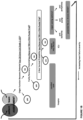
- Figure 1A illustrates an exemplary predictive model and theoretical framework. Worsening heart failure with reduced ejection fraction (HFrEF; left panel) is linked to progressive frailty/organ dysfunction (OD) via neuro-endocrine-immune activation mediated by complex interactions between diseased myocyte, peripheral blood mononuclear cells (PBMCs), endothelial cells (EC), and platelets (PLT) (middle panel). Outcome and comparative survival benefit prediction is improved by adding the molecular immunology biomarker or multidimensional molecular biomarker (MMB) to clinical predictors (upward arrow in bottom right ROC curve; right panel).
- Figure 1B shows an exemplary algorithm for determining an FRP score from gene expression values of selected genes as described herein.
- the invention provides a method of measuring gene expression in a biological sample obtained from a subject suffering from heart failure. In a related embodiment, the invention provides a method of reducing risk and optimizing treatment outcome for a subject suffering from organ failure. In one embodiment, the method comprises profiling gene expression in a sample of peripheral blood mononuclear cells (PBMCs).
- PBMCs peripheral blood mononuclear cells
- FRP Clinical - Function Recovery Potential
- the FRP correlates with 1-year survival.
- the method further comprises (c) referring the subject for treatment with optimal medical management (OMM) and/or palliative care (PC) if the FRP score is 5 or less, and referring the subject for treatment with an AdHF intervention if the FRP score is 6 to 10.
- OMM optimal medical management
- PC palliative care
- AdHF intervention examples include, but are not limited to, mechanical circulatory support (MCS) surgery, heart transplant (HTx) surgery, coronary artery bypass graft (CABG) surgery, percutaneous coronary interventions (PCI), aortic valve replacement (AVR) surgery, mitral valve replacement (MVR) surgery, trans-catheter aortic valve replacement (TAVR), transcatheter mitral clip, ventricular tachycardia ablation, and stellate gangliectomy.
- MCS mechanical circulatory support
- HTx heart transplant
- CABG coronary artery bypass graft
- PCI percutaneous coronary interventions
- AVR aortic valve replacement
- MVR mitral valve replacement
- TAVR trans-catheter aortic valve replacement
- the gene expression level varies from an expected expression level value. In some embodiments, the gene expression level is determined relative to another gene, such as a housekeeping gene or other appropriate gene exemplified herein. In some embodiments, the gene expression level is increased relative to an expected expression level value. In some embodiments, the gene expression level is decreased relative to an expected expression level value. In some cases, the gene expression level is assigned a score, such as an FRP score. In some embodiments, methods of treatment herein are determined based on the score. In some embodiments, the score is determined based on a linear discriminant analysis of data comprising known gene expression levels and known FRP scores of a plurality of individuals.
- the number of genes included in the set of genes whose expression level is measured can range, during iterations of test development, from 5 to 100. In a typical embodiment, the expression level of at least 8 genes is measured. In some embodiments, the expression level of 10-75 genes is measured. In other embodiments, the expression level of 10-20, or 10-30 genes is measured. In one embodiment, the expression level of 10-15 genes is measured. In some illustrative specific embodiments, the set of genes is at least 10 of the genes listed in Table 2, at least 10 of the genes listed in Table 3 or at least 10 of the genes listed in Table 4A or 4B, or comprises one gene selected from each of Tables 1A-1I. In some embodiments, all of the genes listed in Tables 1, 2, 3, and/or 4 are measured. In one embodiment, the expression level of at least one gene in each of Tables 1A-1I is measured.
- the measuring comprises, for example, any one or a combination of RNA quantification, such as by next generation sequencing (NGS), polymerase chain reaction (PCR), gene array technology, or a hybridization platform (such as, for example, the NanoString nCounter system).
- NGS next generation sequencing
- PCR polymerase chain reaction
- the measuring employs NanoString NCounter Hybridization.
- amplification methods require the use of primers
- those skilled in the art can obtain appropriate primers either by referring to the exemplary primers described herein, or through publicly accessible databases.
- the methods can be performed using, for example, techniques for detecting gene expression, such as PCR, including RT-PCR, RNA-Seq, DNA microarrays, etc.
- Other assays can be employed, as will be understood to those skilled in the art.
- representative examples of the sample include, but are not limited to, blood, plasma, serum, urine, or sputum, and other bodily fluids, particularly those containing PBMCs.
- PBMCs can be isolated, for example, from venous blood obtained via phlebotomy.
- RNA can be isolated from the PBMCs for use in the assays described herein.
- the sample comprises blood, urine, sputum, hair, or skin.
- the method further comprises measuring normalization genes that will be empirically selected using PCR data from the training samples. Genes that do not discriminate between subjects who improve and those who do not improve with small standard deviations across all samples are considered as normalization genes. Specifically, normalization genes are chosen from a set of over 200 gene assays that include at least 10 genes described in the literature as housekeeping genes. The final control genes are selected using the following criteria: First, the amplicon assays need to show very low variance. Second, they must not show discrimination between Group I and Group II samples. Third, we identify amplicons that cover a range of CT values in a typical CP tube sample so as to control for CT dependent efficiency changes. The use of a set of control genes to normalize the amount of RNA present is based on the premise that an average from several measurements would be more robust than any single measurement and would also take into account any RNA abundance dependent effects.
- the measuring is performed one day prior to MCS or HTx surgery or other AdHF intervention. In some embodiments, the measuring is performed within 72 hours prior to surgery or other intervention.
- This approach facilitates tailoring the treatment of the subject to the subject's condition and prospects for improvement and recovery at the relevant point in time. A subject whose FRP score leads to recommending treatment with OMM or PC at one point in time can be evaluated again at a later point in time and subsequently be recommended for treatment with MCS or HTx or other AdHF intervention.
- the subject is suffering from heart failure with reduced ejection fraction. In some embodiments, the subject is suffering from heart failure with preserved ejection fraction.
- the invention provides a method of predicting outcome of MCS or HTx or other AdHF intervention in a patient suffering from heart failure, comprising performing the method described above, wherein a poor outcome is predicted if the FRP score is 5 or less.
- the methods of the invention further comprise treating the subject with OMM, PC, MCS, or HTx or other AdHF intervention, in accordance with the FRP score.
- a poor outcome is predicted if the FRP score is 1-4, a score of 7-10 is predictive of recovery following advanced heart failure intervention, and a score of 5-6 is considered intermediate.
- other factors may be brought into the decision-making for treatment. In some embodiments, such other factors will include a subject's willingness to accept greater risk, or a preference for less aggressive treatment.
- methods of treatment comprise treatment for heart disease, such as heart failure or congestive heart failure.
- Methods of treatment provided herein comprise (i) receiving a sample from an individual; (ii) determining a gene expression level in the sample for at least one gene; and providing a treatment to the individual based on the gene expression level.
- the gene comprises at least one of RSG1, TPRA1, SAP25, MFSD3, FITM1, SPTBN5, CEMP1, ASPSCR1, NAPSB, NAPSA, NLRP2, RHBDD3, FRMD6, TIMP3, ACVR1C, DNM1P46, KIR2DL4, USP9Y, ANKRD22, BCORP1, HMCN1, GPR63, BATF2, SLC22A1, AGRN, CKAP2L, IGSF10, HEXA-AS1, LOC728431, PDZK1IP1, NEGR1, KCNH8, CCR8, MME, ETV5, CXCL9, HBEGF, RANBP17, DDX43, C6orf164, C7orf50, NEFL, CDCA2, ALDH1A1, OLFM1, FADS3, SAC3D1, FZD4, RBPMS2, C15orf38, ST6GALNAC1, CHMP6, SKA1, CD209, SNAPC2, AXL,
- the gene expression level in the sample is determined for at least two genes of RSG1, TPRA1, SAP25, MFSD3, FITM1, SPTBN5, CEMP1, ASPSCR1, NAPSB, NAPSA, NLRP2, RHBDD3, FRMD6, TIMP3, ACVR1C, DNM1P46, KIR2DL4, USP9Y, ANKRD22, BCORP1, HMCN1, GPR63, BATF2, SLC22A1, AGRN, CKAP2L, IGSF10, HEXA-AS1, LOC728431, PDZK1IP1, NEGR1, KCNH8, CCR8, MME, ETV5, CXCL9, HBEGF, RANBP17, DDX43, C6orf164, C7orf50, NEFL, CDCA2, ALDH1A1, OLFM1, FADS3, SAC3D1, FZD4, RBPMS2, C15orf38, ST6GALNAC1, CHMP6, SKA1, CD209,
- the method comprises performing the method described above, wherein progression is detected if the FRP score is reduced by 2 relative to a prior measurement and wherein improvement is detected if the FRP score is increased by 2 relative to a prior measurement.
- the FRP corresponds to the measured expression level of the set of genes relative to a reference group of expression levels.
- the reference group may correspond to expression levels of the set of genes observed in healthy volunteers, or in a subject who recovers from heart failure and/or major organ dysfunction.
- the reference group is a set of normalization or control genes, as described above.
- Tables 1A-1I (or referred to collectively as "Table 1") list the 28 genes identified using a Mann-Whitney test based evaluation of data predicting day 8 organ function recovery. The full list of 28 genes appears as one group in Table 3 (known gene function summary in Table 5).
- Table 2 lists the 71 genes whose expression is predictive of day 8 organ function recovery based on t-test evaluation of data.
- Table 4A lists 12 genes that overlap between the genes listed in Table 3, predictive of day 8 organ function recovery, and genes whose expression is predictive of one-year survival.
- Table 4B lists genes whose expression is predictive of one-year survival.
- the gene is at least one gene selected from Table 1-4. In one embodiment, at least two or more genes of Table 1, 2 and/or 3 is used in combination. In one embodiment, at least three or more genes of Table 1, 2 and/or 3 is used in combination. In one embodiment, at least four or more genes of Table 1, 2 and/or 3 is used in combination. In one embodiment, at least five or more genes of Table 1, 2 and/or 3 is used in combination. In one embodiment, at least six or more genes of Table 1, 2 and/or 3 is used in combination. In one embodiment, at least seven or more genes of Table 1, 2 and/or 3 is used in combination. In one embodiment, at least eight or more genes of Table 1, 2 and/or 3 is used in combination.
- At least nine or more genes of Table 1, 2 and/or 3 is used in combination. In one embodiment, at least ten or more genes of Table 1, 2 and/or 3 is used in combination. In one embodiment, at least 11 or more genes of Table 1, 2 and/or 3 is used in combination. In one embodiment, at least 12 or more genes of Table 1, 2 and/or 3 is used in combination. In one embodiment, at least 13 or more genes of Table 1, 2 and/or 3 is used in combination. In one embodiment, at least 14 or more genes of Table 1, 2 and/or 3 is used in combination. In one embodiment, at least 15 or more genes of Table 1, 2 and/or 3 is used in combination. In one embodiment, at least 16 or more genes of Table 1, 2 and/or 3 is used in combination.
- At least 17 or more genes of Table 1, 2 and/or 3 is used in combination. In one embodiment, at least 18 or more genes of Table 1, 2 and/or 3 is used in combination. In one embodiment, at least 19 or more genes of Table 1, 2 and/or 3 is used in combination. In one embodiment, at least 20 or more genes of Table 1, 2 and/or 3 is used in combination. In one embodiment, at least 21 or more genes of Table 1, 2 and/or 3 is used in combination. In one embodiment, at least 22 or more genes of Table 1, 2 and/or 3 is used in combination. In one embodiment, at least 23 or more genes of Table 1, 2 and/or 3 is used in combination. In one embodiment, at least 24 or more genes of Table 1, 2 and/or 3 is used in combination.
- At least 25 or more genes of Table 1, 2 and/or 3 is used in combination. In one embodiment, at least 26 or more genes of Table 1, 2 and/or 3 is used in combination. In one embodiment, at least 27 or more genes of Table 1, 2 and/or 3 is used in combination. In one embodiment, at least 28 or more genes of Table 1, 2 and/or 3 is used in combination.
- combinations of genes include: BATF2 and an additional gene selected from Table 1, 2, or 3; AGRN and an additional gene selected from Table 1, 2, or 3; ANKRD22 and an additional gene selected from Table 1, 2, or 3; DNM1P46 and an additional gene selected from Table 1, 2, or 3; FRMD6 and an additional gene selected from Table 1, 2, or 3; IL-17A and an additional gene selected from Table 1, 2, or 3; KIR2DL4 and an additional gene selected from Table 1, 2, or 3; BCORP1 and an additional gene selected from Table 1, 2, or 3; SAP25 and an additional gene selected from Table 1, 2, or 3; NAPSA and an additional gene selected from Table 1, 2, or 3; HEXA-AS1 and an additional gene selected from Table 1, 2, or 3; TIMP3 and an additional gene selected from Table 1, 2, or 3; RHBDD3 and an additional gene selected from Table 1, 2, or 3; any combination of 3 or more genes selected from Tables 1, 2 and 3; any combination of 4, 5, 6, 7, 8, 9, 10, 11, or 12 genes of Tables 1, 2 and 3.
- the combination of genes is 2, 3, 4, or 5 genes selected from Table 1.
- the combination of genes is at least one gene from Table 1, and at least one gene from Table 2.
- the combination of genes is at least one gene from Table 1, and at least one gene from Table 3.
- the combination of genes is at least one gene from Table 2, and at least one gene from Table 3.
- the combination of genes is at least one gene from each of Tables 1, 2, and 3.
- the combination of genes is all or a subset of the genes listed in one or more of Tables 1-4.
- the combination of genes comprises at least one gene selected from Table 1A. In some embodiments, the combination of genes comprises at least one gene selected from Table 1B. In some embodiments, the combination of genes comprises at least one gene selected from Table 1C. In some embodiments, the combination of genes comprises at least one gene selected from Table 1D. In some embodiments, the combination of genes comprises at least one gene selected from Table 1E. In some embodiments, the combination of genes comprises at least one gene selected from Table 1F. In some embodiments, the combination of genes comprises at least one gene selected from Table 1G. In some embodiments, the combination of genes comprises at least one gene selected from Table 1H. In some embodiments, the combination of genes comprises at least one gene selected from Table 11.
- the combination of genes comprises at least two genes selected from Table 1A. In some embodiments, the combination of genes comprises at least two genes selected from Table 1B. In some embodiments, the combination of genes comprises at least two genes selected from Table 1C. In some embodiments, the combination of genes comprises at least two genes selected from Table 1D. In some embodiments, the combination of genes comprises at least two genes selected from Table 1E. In some embodiments, the combination of genes comprises at least two genes selected from Table 1F. In some embodiments, the combination of genes comprises at least two genes selected from Table 1G. In some embodiments, the combination of genes comprises at least two genes selected from Table 1H.
- the combination of genes comprises at least one gene selected from Table 1A, at least one gene selected from Table 1B, at least one gene selected from Table 1C, at least one gene selected from Table 1D, at least one gene selected from Table 1E, at least one gene selected from Table 1F, at least one gene selected from Table 1G, at least one gene selected from Table 1H, and at least one gene selected from Table 11.
- the combination of genes comprises at least one gene selected from Table 1A, at least one gene selected from Table 1B, at least one gene selected from Table 1C, at least one gene selected from Table 1D, at least one gene selected from Table 1E, at least one gene selected from Table 1F, at least one gene selected from Table 1G, at least one gene selected from Table 1H, and/or at least one gene selected from Table 1I.
- the combination of genes comprises at least one gene selected from Table 2. In some embodiments, the combination of genes comprises at least two genes selected from Table 2. In some embodiments, the combination of genes comprises at least three genes selected from Table 2. In some embodiments, the combination of genes comprises at least four genes selected from Table 2. In some embodiments, the combination of genes comprises at least five genes selected from Table 2. In some embodiments, the combination of genes comprises at least six genes selected from Table 2. In some embodiments, the combination of genes comprises at least seven genes selected from Table 2. In some embodiments, the combination of genes comprises at least eight genes selected from Table 2. In some embodiments, the combination of genes comprises at least nine genes selected from Table 2. In some embodiments, the combination of genes comprises at least ten genes selected from Table 2.
- the combination of genes comprises at least 11 genes selected from Table 2. In some embodiments, the combination of genes comprises at least 12 genes selected from Table 2. In some embodiments, the combination of genes comprises at least 13 genes selected from Table 2. In some embodiments, the combination of genes comprises at least 14 genes selected from Table 2. In some embodiments, the combination of genes comprises at least 15 genes selected from Table 2. In some embodiments, the combination of genes comprises at least 16 genes selected from Table 2. In some embodiments, the combination of genes comprises at least 17 genes selected from Table 2. In some embodiments, the combination of genes comprises at least 18 genes selected from Table 2. In some embodiments, the combination of genes comprises at least 19 genes selected from Table 2. In some embodiments, the combination of genes comprises at least 20 genes selected from Table 2.
- the combination of genes comprises at least 21 genes selected from Table 2. In some embodiments, the combination of genes comprises at least 22 genes selected from Table 2. In some embodiments, the combination of genes comprises at least 23 genes selected from Table 2. In some embodiments, the combination of genes comprises at least 24 genes selected from Table 2. In some embodiments, the combination of genes comprises at least 25 genes selected from Table 2. In some embodiments, the combination of genes comprises at least 26 genes selected from Table 2. In some embodiments, the combination of genes comprises at least 27 genes selected from Table 2. In some embodiments, the combination of genes comprises at least 28 genes selected from Table 2. In some embodiments, the combination of genes comprises AGRN and at least one additional gene from Table 2. In some embodiments, the combination of genes comprises RSG1 and at least one additional gene from Table 2.
- the combination of genes comprises LOC728431 and at least one additional gene from Table 2. In some embodiments, the combination of genes comprises PDZK1IP1 and at least one additional gene from Table 2. In some embodiments, the combination of genes comprises NEGR1and at least one additional gene from Table 2. In some embodiments, the combination of genes comprises HMCN1 and at least one additional gene from Table 2. In some embodiments, the combination of genes comprises CKAP2L and at least one additional gene from Table 2. In some embodiments, the combination of genes comprises ACVR1C and at least one additional gene from Table 2. In some embodiments, the combination of genes comprises KCNH8 and at least one additional gene from Table 2. In some embodiments, the combination of genes comprises CCR8 and at least one additional gene from Table 2.
- the combination of genes comprises TPRA1 and at least one additional gene from Table 2. In some embodiments, the combination of genes comprises IGSF10 and at least one additional gene from Table 2. In some embodiments, the combination of genes comprises MME and at least one additional gene from Table 2. In some embodiments, the combination of genes comprises ETV5 and at least one additional gene from Table 2. In some embodiments, the combination of genes comprises CXCL9 and at least one additional gene from Table 2. In some embodiments, the combination of genes comprises HBEGF and at least one additional gene from Table 2. In some embodiments, the combination of genes comprises RANBP17 and at least one additional gene from Table 2. In some embodiments, the combination of genes comprises DDX43 and at least one additional gene from Table 2.
- the combination of genes comprises C6orf164 and at least one additional gene from Table 2. In some embodiments, the combination of genes comprises GPR63 and at least one additional gene from Table 2. In some embodiments, the combination of genes comprises SLC22A1 and at least one additional gene from Table 2. In some embodiments, the combination of genes comprises C7orf50 and at least one additional gene from Table 2. In some embodiments, the combination of genes comprises SAP25 and at least one additional gene from Table 2. In some embodiments, the combination of genes comprises NEFL and at least one additional gene from Table 2. In some embodiments, the combination of genes comprises CDCA2 and at least one additional gene from Table 2. In some embodiments, the combination of genes comprises MFSD3 and at least one additional gene from Table 2.
- the combination of genes comprises ALDH1A1 and at least one additional gene from Table 2. In some embodiments, the combination of genes comprises OLFM1 and at least one additional gene from Table 2. In some embodiments, the combination of genes comprises ANKRD22 and at least one additional gene from Table 2. In some embodiments, the combination of genes comprises FADS3 and at least one additional gene from Table 2. In some embodiments, the combination of genes comprises BATF2 and at least one additional gene from Table 2. In some embodiments, the combination of genes comprises SAC3D1 and at least one additional gene from Table 2. In some embodiments, the combination of genes comprises FZD4 and at least one additional gene from Table 2. In some embodiments, the combination of genes comprises FITM1 and at least one additional gene from Table 2.
- the combination of genes comprises FRMD6 and at least one additional gene from Table 2.
- the combination of genes comprises SPTBN5 and at least one additional gene from Table 2.
- the combination of genes comprises RBPMS2 and at least one additional gene from Table 2.
- the combination of genes comprises HEXA-AS1 and at least one additional gene from Table 2.
- the combination of genes comprises C15orf38 and at least one additional gene from Table 2.
- the combination of genes comprises DNM1P46 and at least one additional gene from Table 2.
- the combination of genes comprises CEMP1 and at least one additional gene from Table 2.
- the combination of genes comprises ST6GALNAC1 and at least one additional gene from Table 2.
- the combination of genes comprises CHMP6 and at least one additional gene from Table 2. In some embodiments, the combination of genes comprises ASPSCR1 and at least one additional gene from Table 2. In some embodiments, the combination of genes comprises SKA1 and at least one additional gene from Table 2. In some embodiments, the combination of genes comprises CD209 and at least one additional gene from Table 2. In some embodiments, the combination of genes comprises SNAPC2 and at least one additional gene from Table 2. In some embodiments, the combination of genes comprises AXL and at least one additional gene from Table 2. In some embodiments, the combination of genes comprises NAPSB and at least one additional gene from Table 2. In some embodiments, the combination of genes comprises NAPSA and at least one additional gene from Table 2.
- the combination of genes comprises KIR2DL1 and at least one additional gene from Table 2. In some embodiments, the combination of genes comprises KIR2DL4 and at least one additional gene from Table 2. In some embodiments, the combination of genes comprises NLRP2 and at least one additional gene from Table 2. In some embodiments, the combination of genes comprises NTSR1 and at least one additional gene from Table 2. In some embodiments, the combination of genes comprises SEPT5 and at least one additional gene from Table 2. In some embodiments, the combination of genes comprises RHBDD3 and at least one additional gene from Table 2. In some embodiments, the combination of genes comprises TIMP3 and at least one additional gene from Table 2. In some embodiments, the combination of genes comprises KAL1 and at least one additional gene from Table 2.
- the combination of genes comprises PRRG1 and at least one additional gene from Table 2. In some embodiments, the combination of genes comprises XIST and at least one additional gene from Table 2. In some embodiments, the combination of genes comprises RPS4Y1 and at least one additional gene from Table 2. In some embodiments, the combination of genes comprises ZFY and at least one additional gene from Table 2. In some embodiments, the combination of genes comprises PRKY and at least one additional gene from Table 2. In some embodiments, the combination of genes comprises TTTY15 and at least one additional gene from Table 2. In some embodiments, the combination of genes comprises USP9Y and at least one additional gene from Table 2. In some embodiments, the combination of genes comprises DDX3Y and at least one additional gene from Table 2.
- the combination of genes comprises UTY and at least one additional gene from Table 2. In some embodiments, the combination of genes comprises BCORP1 and at least one additional gene from Table 2. In some embodiments, the combination of genes comprises TXLNG2P and at least one additional gene from Table 2. In some embodiments, the combination of genes comprises KDM5D and at least one additional gene from Table 2. In some embodiments, the combination of genes comprises EIF1AY and at least one additional gene from Table 2.
- the combination of genes comprises at least one gene selected from Table 3. In some embodiments, the combination of genes comprises at least two genes selected from Table 3. In some embodiments, the combination of genes comprises at least three genes selected from Table 3. In some embodiments, the combination of genes comprises at least four genes selected from Table 3. In some embodiments, the combination of genes comprises at least five genes selected from Table 3. In some embodiments, the combination of genes comprises at least six genes selected from Table 3. In some embodiments, the combination of genes comprises at least seven genes selected from Table 3. In some embodiments, the combination of genes comprises at least eight genes selected from Table 3. In some embodiments, the combination of genes comprises at least nine genes selected from Table 3. In some embodiments, the combination of genes comprises at least ten genes selected from Table 3.
- the combination of genes comprises at least 11 genes selected from Table 3. In some embodiments, the combination of genes comprises at least 12 genes selected from Table 3. In some embodiments, the combination of genes comprises at least 13 genes selected from Table 3. In some embodiments, the combination of genes comprises at least 14 genes selected from Table 3. In some embodiments, the combination of genes comprises at least 15 genes selected from Table 3. In some embodiments, the combination of genes comprises at least 16 genes selected from Table 3. In some embodiments, the combination of genes comprises at least 17 genes selected from Table 3. In some embodiments, the combination of genes comprises at least 18 genes selected from Table 3. In some embodiments, the combination of genes comprises at least 19 genes selected from Table 3. In some embodiments, the combination of genes comprises at least 20 genes selected from Table 3.
- the combination of genes comprises at least 21 genes selected from Table 3. In some embodiments, the combination of genes comprises at least 22 genes selected from Table 3. In some embodiments, the combination of genes comprises at least 23 genes selected from Table 3. In some embodiments, the combination of genes comprises at least 24 genes selected from Table 3. In some embodiments, the combination of genes comprises at least 25 genes selected from Table 3. In some embodiments, the combination of genes comprises at least 26 genes selected from Table 3. In some embodiments, the combination of genes comprises at least 27 genes selected from Table 3. In some embodiments, the combination of genes comprises USP9Y and at least one additional gene from Table 3. In some embodiments, the combination of genes comprises BATF2 and at least one additional gene from Table 3. In some embodiments, the combination of genes comprises AGRN and at least one additional gene from Table 3.
- the combination of genes comprises ANKRD22 and at least one additional gene from Table 3.
- the combination of genes comprises HMCN1 and at least one additional gene from Table 3.
- the combination of genes comprises ACVR1C and at least one additional gene from Table 3.
- the combination of genes comprises GPR63 and at least one additional gene from Table 3.
- the combination of genes comprises DNM1P46 and at least one additional gene from Table 3.
- the combination of genes comprises CKAP2L and at least one additional gene from Table 3.
- the combination of genes comprises FRMD6 and at least one additional gene from Table 3.
- the combination of genes comprises KIR2DL4 and at least one additional gene from Table 3.
- the combination of genes comprises IGSF10 and at least one additional gene from Table 3.
- the combination of genes comprises BCORP1 and at least one additional gene from Table 3.
- the combination of genes comprises SAP25 and at least one additional gene from Table 3.
- the combination of genes comprises NAPSA and at least one additional gene from Table 3.
- the combination of genes comprises FITM1 and at least one additional gene from Table 3.
- the combination of genes comprises SPTBN5 and at least one additional gene from Table 3.
- the combination of genes comprises HEXA-AS1 and at least one additional gene from Table 3.
- the combination of genes comprises SLC22A1 and at least one additional gene from Table 3.
- the combination of genes comprises RSG1 and at least one additional gene from Table 3. In some embodiments, the combination of genes comprises TIMP3 and at least one additional gene from Table 3. In some embodiments, the combination of genes comprises TPRA1 and at least one additional gene from Table 3. In some embodiments, the combination of genes comprises CEMP1 and at least one additional gene from Table 3. In some embodiments, the combination of genes comprises ASPSCR1 and at least one additional gene from Table 3. In some embodiments, the combination of genes comprises MFSD3 and at least one additional gene from Table 3. In some embodiments, the combination of genes comprises NAPSB and at least one additional gene from Table 3. In some embodiments, the combination of genes comprises NLRP2 and at least one additional gene from Table 3. In some embodiments, the combination of genes comprises RHBDD3 and at least one additional gene from Table 3.
- the combination of genes comprises at least one gene selected from Table 4A. In some embodiments, the combination of genes comprises at least two genes selected from Table 4A. In some embodiments, the combination of genes comprises at least three genes selected from Table 4A. In some embodiments, the combination of genes comprises at least four genes selected from Table 4A. In some embodiments, the combination of genes comprises at least five genes selected from Table 4A. In some embodiments, the combination of genes comprises at least six genes selected from Table 4A. In some embodiments, the combination of genes comprises at least seven genes selected from Table 4A. In some embodiments, the combination of genes comprises at least eight genes selected from Table 4A. In some embodiments, the combination of genes comprises at least nine genes selected from Table 4A.
- the combination of genes comprises at least ten genes selected from Table 4A. In some embodiments, the combination of genes comprises at least 11 genes selected from Table 4A. In some embodiments, the combination of genes comprises BATF2 and at least one additional gene from Table 2. In some embodiments, the combination of genes comprises AGRN and at least one additional gene from Table 2. In some embodiments, the combination of genes comprises ANKRD22 and at least one additional gene from Table 2. In some embodiments, the combination of genes comprises DNM1P46 and at least one additional gene from Table 2. In some embodiments, the combination of genes comprises FRMD6 and at least one additional gene from Table 2. In some embodiments, the combination of genes comprises KIR2DL4 and at least one additional gene from Table 2.
- the combination of genes comprises BCORP1 and at least one additional gene from Table 2. In some embodiments, the combination of genes comprises SAP25 and at least one additional gene from Table 2. In some embodiments, the combination of genes comprises NAPSA and at least one additional gene from Table 2. In some embodiments, the combination of genes comprises HEXA-AS1 and at least one additional gene from Table 2. In some embodiments, the combination of genes comprises TIMP3 and at least one additional gene from Table 2. In some embodiments, the combination of genes comprises RHBDD3 and at least one additional gene from Table 2.
- the combination of genes comprises at least one gene selected from Table 4B. In some embodiments, the combination of genes comprises at least two genes selected from Table 4B. In some embodiments, the combination of genes comprises at least three genes selected from Table 4B. In some embodiments, the combination of genes comprises at least four genes selected from Table 4B. In some embodiments, the combination of genes comprises at least five genes selected from Table 4B. In some embodiments, the combination of genes comprises at least six genes selected from Table 4B. In some embodiments, the combination of genes comprises at least seven genes selected from Table 4B. In some embodiments, the combination of genes comprises at least eight genes selected from Table 4B. In some embodiments, the combination of genes comprises at least nine genes selected from Table 4B.
- the combination of genes comprises at least ten genes selected from Table 4B. In some embodiments, the combination of genes comprises at least 11 genes selected from Table 4B. In some embodiments, the combination of genes comprises at least 12 genes selected from Table 4B. In some embodiments, the combination of genes comprises at least 13 genes selected from Table 4B. In some embodiments, the combination of genes comprises at least 14 genes selected from Table 4B. In some embodiments, the combination of genes comprises at least 15 genes selected from Table 4B. In some embodiments, the combination of genes comprises at least 16 genes selected from Table 4B. In some embodiments, the combination of genes comprises at least 17 genes selected from Table 4B. In some embodiments, the combination of genes comprises at least 18 genes selected from Table 4B.
- the combination of genes comprises at least 19 genes selected from Table 4B. In some embodiments, the combination of genes comprises at least 20 genes selected from Table 4B. In some embodiments, the combination of genes comprises at least 21 genes selected from Table 4B. In some embodiments, the combination of genes comprises at least 22 genes selected from Table 4B. In some embodiments, the combination of genes comprises at least 23 genes selected from Table 4B. In some embodiments, the combination of genes comprises at least 24 genes selected from Table 4B. In some embodiments, the combination of genes comprises at least 25 genes selected from Table 4B. In some embodiments, the combination of genes comprises at least 26 genes selected from Table 4B. In some embodiments, the combination of genes comprises at least 27 genes selected from Table 4B.
- the combination of genes comprises at least 28 genes selected from Table 4B.
- Table 1A (12 members of module blue (Metabolism); right two columns indicate direction of regulation): Gene ID Gene Symbol Recovery Group OMM/PC Group 79363 RSG1 Up Down 131601 TPRA1 Up Down 100316904 SAP25 Up Down 113655 MFSD3 Up Down 161247 FITM1 Up Down 51332 SPTBN5 Up Down 752014 CEMP1 Up Down 79058 ASPSCR1 Up Down 256236 NAPSB Up Down 9476 NAPSA Up Down 55655 NLRP2 Up Down 25807 RHBDD3 Up Down Table 1B (2 members of module black (Catabolic Metabolism); right two columns indicate direction of regulation): Gene ID Gene Symbol Recovery Group OMM/PC Group 122786 FRMD6 Down Up 7078 TIMP3 Up Down Table 1C (2 members of module green (T Cell Regulation); right two columns indicate direction of regulation): Gene ID Gene Symbol Recovery Group OMM/PC Group 130399 ACVR1C Down Up 196968 D
- a functional recovery potential (FRP) score is based on a linear discriminant analysis of the gene expression profiles on day -1 (or up to 72 hours) before the AdHF intervention that are predictive of improvement in organ function recovery, or "functional recovery", after the AdHF intervention, such as can be obtained from the information described in Tables 1-4 herein.
- the linear discriminant analysis is adapted from the development of the Allomap test ( Deng et al.
- AJT 2006:6:150 the first in history FDA-cleared cardiovascular in-vitro-diagnostic multivariate index assay (IVDMIA) test to assist the clinician in ruling out heart transplantation rejection, to select genes and/or metagenes that, in combination, optimally predict functional recovery.
- IVDMIA cardiovascular in-vitro-diagnostic multivariate index assay
- the invention provides a method for developing a function recovery potential (FRP) scoring algorithm that predicts a subject's ability to recover from medical intervention for organ failure.
- the method comprises (a) obtaining the expression levels of at least 10 of the 28 genes listed in Table 3 using pre-intervention and post-intervention expression levels of the at least 10 genes observed in PBMC samples obtained from a population of patients treated with medical intervention for organ failure; (b) performing linear discriminant analysis of the expression levels obtained in (a) to classify the PBMC samples into Group I (post-intervention improvement) or Group II (non-improvement); (c) estimating the effect size of each of the gene expression levels on the classification of a sample into Group I or Group II; and (d) adjusting the FRP scoring algorithm by weighting the contribution of each of the genes in accordance with the effect size.
- Estimating the effect size can comprise, for example, determining the eigenvalue for each gene, or it can be based on the canonical correlation.
- the 28 PBMC-genes that are differentially expressed between Group I and Group II were identified by non-parametric statistics (Mann-Whitney test with Benjamini-Hochberg correction). Since the original False Discovery Rate (FDR) methodology is too conservative for genomics applications and results in a substantial loss of power, we used a more relaxed criteria (FDR ⁇ 0.1). Only those genes with fold change of at least 2.0 were included in the analysis. Biological significance was assessed using gene ontology, pathway analysis and via GeneCards database. The list of 28 genes was then used to build the model to classify postoperative Group I vs. Group II. We constructed this prediction model on preoperative day -1 gene expression data using the support vector machine (SVM) algorithm.
- SVM support vector machine
- a subject's blood sample is assayed for expression levels of the 12 genes listed in Table 4.
- the amount of gene expression is determined relative to a reference value.
- the reference value is the level of a normalization gene (one known NOT to be related to FRP) and/or it can be a level known to be representative of healthy individuals and/or individuals known to recover from heart failure.
- a neutral score on the 10-point FRP scale would be 5.5.
- the average fold-change in gene expression would contribute to an increase or decrease from 5.5, depending on whether it was in the direction of change associated with recovery, to arrive at the FRP score for that subject.
- down-regulation of the first seven genes is associated with recovery from heart failure, while up-regulation of the last five genes is associated with recovery.
- the contribution of each gene's expression level is weighted based on the linear discriminant analysis to adjust for differences amongst genes in their predictive value.
- the FRP scale can be expressed on the basis of other numerical ranges and still operate in the same manner as the 10-point scale described herein.
- the FRP scale can be a 0-5 point range, a 0-50 point range, or a 0-100 point range. Deviation relative to a neutral midpoint can still be calculated in a manner that is based on the relative expression levels of the genes listed in Tables 1-4, and adjusted to take into account appropriate weighting and other parameters considered predictive of functional recovery.
- kits for measuring gene expression for one or more of the genes provided in Tables 1-4 Some such kits comprise a set of reagents as described herein that specifically bind one or more genes of the invention, and optionally, one or more suitable containers containing reagents of the invention.
- reagents herein specifically bind to at least one gene comprising RSG1, TPRA1, SAP25, MFSD3, FITM1, SPTBN5, CEMP1, ASPSCR1, NAPSB, NAPSA, NLRP2, RHBDD3, FRMD6, TIMP3, ACVR1C, DNM1P46, KIR2DL4, USP9Y, ANKRD22, BCORP1, HMCN1, GPR63, BATF2, SLC22A1, AGRN, CKAP2L, IGSF10, HEXA-AS1, LOC728431, PDZK1IP1, NEGR1, KCNH8, CCR8, MME, ETV5, CXCL9, HBEGF, RANBP17, DDX43, C6orf164, C7orf50, NEFL, CDCA2, ALDH1A1, OLFM1, FADS3, SAC3D1, FZD4, RBPMS2, C15orf38, ST6GALNAC1, CHMP6, SKA1, CD209
- Reagents include molecules that specifically bind one or more genes or gene products of the invention, including primers and probes. Reagents can optionally include a detectable label. Labels can be fluorescent, luminescent, enzymatic, chromogenic, or radioactive.
- Kits of the invention optionally comprise an assay standard or a set of assay standards, either separately or together with other reagents.
- An assay standard can serve as a normal control by providing a reference level of normal expression for a given marker that is representative of a healthy individual.
- Kits can include probes for detection of alternative gene expression products
- the kit can optionally include a buffer. While some embodiments use the NGS-platform, other embodiments use qPCR/Nanostring/Nanopore technology.
- the invention provides for the establishment of one or more central laboratories to which patient blood samples can be shipped for assay using polymerase chain reaction (PCR), next generation sequencing (NGS), or other gene expression profiling assay for one or more of the genes provided in Tables 1-4.
- PCR polymerase chain reaction
- NGS next generation sequencing
- other gene expression profiling assay for one or more of the genes provided in Tables 1-4.
- computer implemented systems for use in methods herein, such as methods of treatment, methods of gene expression profiling, and methods of recommending a treatment ( Figure 2 ).
- computer implemented systems herein comprise: (a) a sample receiver for receiving a sample provided by an individual; (b) a digital processing device comprising an operating system configured to perform executable instructions and a memory; and (c) a computer program including instructions executable by the digital processing device to provide a treatment to a healthcare provider based on the sample.
- the computer program comprises: (i) an gene analysis module configured to determine a gene expression level in the sample for at least one gene comprising RSG1, TPRA1, SAP25, MFSD3, FITM1, SPTBN5, CEMP1, ASPSCR1, NAPSB, NAPSA, NLRP2, RHBDD3, FRMD6, TIMP3, ACVR1C, DNM1P46, KIR2DL4, USP9Y, ANKRD22, BCORP1, HMCN1, GPR63, BATF2, SLC22A1, AGRN, CKAP2L, IGSF10, HEXA-AS1, LOC728431, PDZK1IP1, NEGR1, KCNH8, CCR8, MME, ETV5, CXCL9, HBEGF, RANBP17, DDX43, C6orf164, C7orf50, NEFL, CDCA2, ALDH1A1, OLFM1, FADS3, SAC3D1, FZD4, RBPMS2, C15orf38, ST6
- the invention provides a non-transitory computer-readable medium encoded with computer-executable instructions for performing the methods described herein.
- the invention provides a non-transitory computer-readable medium embodying at least one program that, when executed by a computing device comprising at least one processor, causes the computing device to perform one or more of the methods described herein.
- the at least one program contains algorithms, instructions or codes for causing the at least one processor to perform the method(s).
- the invention provides a non-transitory computer-readable storage medium storing computer-readable algorithms, instructions or codes that, when executed by a computing device comprising at least one processor, cause or instruct the at least one processor to perform a method described herein.
- the computer programs/algorithms for performing the present method can be implemented with, e.g., a general-purpose processor, a digital signal processor (DSP), an application-specific integrated circuit (ASIC), a field-programmable gate array (FPGA), or other programmable logic device, discrete gate or transistor logic, discrete hardware components, or any combination thereof designed to perform the functions and steps described herein.
- DSP digital signal processor
- ASIC application-specific integrated circuit
- FPGA field-programmable gate array
- a general-purpose processor can be a microprocessor, but alternatively the processor can be any conventional processor, controller, microcontroller or state machine.
- a processor can also be implemented as a combination of computing devices, e.g., a combination of a DSP and a microprocessor, a plurality of microprocessors, one or more microprocessors in conjunction with a DSP core, or any other such configuration.
- a software module can reside in, e.g., RAM memory, flash memory, ROM memory, EPROM memory, EEPROM memory, registers, a hard drive, a solid-state drive, a removable disk or disc, a CD-ROM, or any other form of storage medium known in the art.
- An exemplary storage medium is coupled to the processor such that the processor can read information from, and write information to, the storage medium.
- the storage medium can be integral to the processor.
- the processor and the storage medium can reside in, e.g., an ASIC, which in turn can reside in, e.g., a user terminal. In the alternative, the processor and the storage medium can reside as discrete components in, e.g., a user terminal.
- the functions for carrying out the method described herein can be implemented in hardware, software, firmware or any combination thereof. If implemented in software, the functions can be stored on or transmitted over a computer-readable medium as instructions or codes.
- Computer-readable media include without limitation computer storage media and communication media, including any medium that facilitates transfer of a computer program/algorithm from one place to another.
- a storage medium can be any available medium that can be accessed by a general-purpose or special-purpose computer or processor.
- computer-readable media can comprise RAM, ROM, EEPROM, CD-ROM or other optical disc storage, magnetic disk storage or other magnetic storage devices, or any other medium that can be used to carry or store a computer program/algorithm in the form of instructions/codes and/or data structures and that can be accessed by a general-purpose or special-purpose computer or processor.
- any connection is deemed a computer-readable medium.
- the software is transmitted from a website, a server or other remote source using a coaxial cable, fiber optic cable, twisted pair, digital subscriber line (DSL), or a wireless technology such as infrared, radio wave or microwave
- the coaxial cable, fiber optic cable, twisted pair, DSL, or wireless technology such as infrared, radio wave or microwave are computer-readable media.
- Discs and disks include without limitation compact disc (CD), laser disc, optical disc, digital versatile disc (DVD), blu-ray disc, hard disk and floppy disk, where discs normally reproduce data optically using a laser, while disks normally reproduce data magnetically. Combinations of the above are also included within the scope of computer-readable media.
- the methods described herein can be automated. Accordingly, in some embodiments the method is implemented with a computer system (e.g., a server, a desktop computer, a laptop, a tablet or a smartphone) comprising at least one processor.
- the computer system can be configured or provided with algorithms, instructions or codes for performing the method which are executable by the at least one processor.
- the computer system can generate a report containing information on any or all aspects relating to the method, including results of the analysis of the biological sample from the subject.
- the disclosure further provides a non-transitory computer-readable medium encoded with computer-executable instructions for performing the present method.
- FIG. 2 is a block diagram of an embodiment of a computer system 200 that can be used to implement a method as described herein.
- System 200 includes a bus 208 that interconnects major subsystems such as one or more processors 210, a memory subsystem 212, a data storage subsystem 214, an input device interface 216, an output device interface 218, and a network interface 220.
- Processor(s) 210 perform many of the processing functions for system 200 and communicate with a number of peripheral devices via bus 208.
- Memory subsystem 212 can include, e.g., a RAM 232 and a ROM 234 used to store codes/instructions/algorithms and data that implement various aspects of the present method.
- Data storage subsystem 214 provides non-volatile storage for program codes/instructions/ algorithms and data that implement various aspects of the present method, and can include, e.g., a hard disk drive 242, a solid-state drive 244, and other storage devices 246 (e.g., a CD-ROM drive, an optical drive, a removable-media drive, and so on).
- Memory subsystem 212 and/or data storage subsystem 214 can be used to store, e.g., the gene expression profile and the FRP score of subjects, and the therapeutic outcome of treatment of those subjects with a particular AdHF or other intervention.
- the codes/instructions/algorithms for implementing certain aspects of the present method can be operatively disposed in memory subsystem 212 or stored in data storage subsystem 214.
- Input device interface 216 provides interface with various input devices, such as a keyboard 252, a pointing device 254 (e.g., a mouse, a trackball, a scanner, a pen, a tablet, a touch pad or a touch screen), and other input device(s) 256.
- Output device interface 218 provides an interface with various output devices, such as a display 262 (e.g., a CRT or an LCD) and other output device(s) 264.
- Network interface 220 provides an interface for computer system 200 to communicate with other computer systems coupled to a network to which system 200 is coupled.
- Example 1 Association Between Preoperative PBMC Gene Expression Profiles, Early Postoperative Organ Function Recovery Potential, and Long-Term Survival in Advanced Hearth Failure Patients Undergoing Mechanical Circulatory Support
- Heart failure is a complex clinical syndrome that results from any structural or functional cardiovascular disorder causing a mismatch between demand and supply of oxygenated blood and consecutive failure of the body's organs.
- HF affects about 6 million persons [1].
- HF with reduced ejection fraction (HFrEF) affects 3 million people [2].
- the lifetime risk of developing HF for men and women older than 40 years of age is 1 in 5.
- the death rate remains unacceptably high at approximately 50% within 5 years from time of initial diagnosis.
- Stage D or advanced heart failure (AdHF), designates patients with truly refractory HF (estimated at 300,000 persons in the US annually) [2].
- MCS devices originally used for patients with AdHF as a bridge-to-transplant or bridge-to-recovery, are now increasingly used as destination (lifelong) therapy and have the potential to outnumber HTx by a factor of 1:10, currently showing an improved survival rate of approximately 80% at 1 year [4].
- Preoperative HF-related immunologic impairment is a component of poor outcomes after MCS and HTx, owing to the known associations between increased age, T cell and innate immune cell dysfunction, frailty, increased numbers of terminally differentiated T cells, immune senescence (deficient replicative ability), and immune exhaustion (impaired antigen response) [19-23].
- Multi-organ dysfunction syndrome (MOD) is one of the leading causes of morbidity and mortality. It is associated with grossly aberrant immune activation [4-18, 24-26].
- PBMC peripheral blood mononuclear cell
- FRP Functional Recovery Potential
- Heartmate II HeartMate II ® pumps are valveless, rotary, continuous flow pumps
- HVAD HeartWare ® HVAD pumps are valveless, centrifugal, continuous flow pumps
- BVAD Centrimag-BVAD
- BVAD PVAD biventricular assist device
- PVAD Paracorporeal Ventricular Assist Device
- cardiovascular inotropic and vasoactive drugs were used to support patient's hemodynamics postoperatively, tailored to the individual requirements.
- other temporary organ system support was administered as required (e.g. mechanical ventilation, hemodialysis, blood transfusions, and antibiotic therapy).
- Demographic variables were obtained for all patients. Twelve distinct parameters were collected on a daily basis for time-dependent clinical phenotyping of the patient cohort, which included serum bilirubin, serum creatinine, leukocyte count, platelet count, alveolar oxygen pressure, fraction of inspired oxygen (FiO2), mean systemic arterial pressure (MAP), INR (International Normalized Ratio, for prothrombin time), blood glucose, heart rate, respiratory rate, temperature, and the Glasgow Coma Scale (GCS).
- the SOFA score is a validated and widely accepted measure that rates degree of organ failure across six major organ systems (cardiovascular, respiratory, neurological, renal, hepatic, and coagulation).
- the MELD-XI score is a variation of the MELD score that uses only the bilirubin and creatinine levels, and eliminates the INR, which is typically not interpretable in these patients given the need of anticoagulation.
- INTERMACS Interagency Registry for Mechanically Assisted Circulatory Support
- Group II not improving (SOFA and/or MELD-XI score(s) do not improve from day -1 to day 8).
- the MCS-surgery improves the hemodynamic situation without complications, then the patient's organ function is expected to recover by postoperative day 5 and clearly by postoperative day 8, which should be reflected in a concordant improvement of SOFA and MELD-XI score, from day -1 to day 8.
- SOFA or MELD-XI, or both, scores do not improve from day -1 to day 8, we hypothesize that this problem may potentially impact long-term survival.
- PBMC samples were collected one day before surgery (day -1). Clinical data was collected on day -1 and day 8 postoperatively. We chose, based on our successful Allomap TM biomarker test development experience [40-43], to focus on the mixed PBMC population.
- PBMC Peripheral Blood Mononuclear cells
- RNA Protect Cell Reagent Qiagen, Valencia, CA
- RNA sequencing transcriptome analysis was processed using next-generation RNA sequencing transcriptome analysis at the UCLA Technology Center for Genomics & Bioinformatics. Briefly, the RNA was isolated from the PBMC using RNeasy Mini Kit (Qiagen, Valencia, CA). The quality of the total RNA was assessed using NanoDrop ® ND-1000 spectrophotometer (NanoDrop Technologies, Wilmington, DE) and Agilent 2100 Bioanalyzer (Agilent Technologies, Palo Alto, CA) concentration above 50 ng/ ⁇ l., purity-260/280 ⁇ 2.0., integrity-RIN > 9.0 and average > 9.5. Then, mRNA library was prepared with Illumina TruSeq RNA kit according to the manufacturer's instructions (Illumina, San Diego, CA).
- Library construction consists of random fragmentation of the polyA mRNA, followed by cDNA production using random polymers.
- the cDNA libraries were quantitated using Qubit and size distribution was checked on Bioanalyzer 2100 (Agilent Technologies, Palo Alto, CA).
- the library was sequenced on HiSeq 2500. Clusters were generated to yield approximately 725K-825K clusters/mm2. Cluster density and quality was determined during the run after the first base addition parameters were assessed. We performed single end sequencing runs to align the cDNA sequences to the reference genome.
- Generated FASTQ files were transferred to the AdHF Research Data Center where Avadis NGS 1.5 (Agilent, Palo Alto, CA and Strand Scientific, CA) was used to align the raw RNA-Seq FASTQ reads to the reference genome. After RNA extraction, quantification and quality assessment, total mRNA was amplified and sequenced on the whole-genome Illumina HiSeq 2500. Data was then subjected to DeSeq normalization using NGS Strand/Avadis (v2.1 Oct 10, 2014). Batch effects were removed using the ComBat algorithm in R [44].
- Avadis NGS 1.5 Align, Palo Alto, CA and Strand Scientific, CA
- RT-qPCR Quantitative Real-time polymerase chain reaction
- Total RNA from PBMC were purified using RNeasy Mini Kit (Qiagen, Valencia, CA).
- CDNA was synthesized with iScript supermix for RT-qPCR (BioRad, Hercules, CA).
- RT-qPCR analysis was carried out with iTaq SYBR green supermix (BioRad, Hercules, CA) on the 7500 Fast Real-time PCR system (Applied Biosystems, Foster City, CA).
- GAPDH levels were used as an internal control for RT-qPCR.
- GAPDH-f CCACTCCTCCACCTTTGAC (SEQ ID NO: 1); GAPDH-r: ACCCTGTTGCTGTAGCCA (SEQ ID NO: 2); KIR2DL4-f: ACCCACTGCCTGTTTCTGTC (SEQ ID NO: 3); KIR2DL4-r: ATCACAGCATGCAGGTGTCT (SEQ ID NO: 4); NAPSA-f: CAGGACACCTGGGTTCACAC (SEQ ID NO: 5); NAPSA-r: GGTTGGACTCGATGAAGAGG (SEQ ID NO: 6); BATF2-f: AAAGGCAGCTGAAGAAGCAG (SEQ ID NO: 7); BATF2-r: TCTTTTTCCAGAGACTCGTGC (SEQ ID NO: 8); ANKRD22-f: CTCAGCCAGGAAGGATTTTG (SEQ ID NO: 9); ANKRD22-r: TGATAGGCTGCTTGGCAGAT (SEQ ID NO: 1); GAPDH-r: ACCCTG
- preoperative clinical variables i.e. INTERMACS class, SOFA median score, MELD-XI median score, and Seattle Heart Failure Model, excluding respiratory rate
- intra/postoperative clinical variables predict Group I versus Group II membership or year 1 survival status.
- preoperative clinical variables i.e. INTERMACS class, SOFA median score, MELD-XI median score, and Seattle Heart Failure Model, excluding respiratory rate
- intra/postoperative clinical variables predict Group I versus Group II membership or year 1 survival status.
- MCS e.g. VA ECMO
- p 0.61
- Additional preoperative clinical information data i.e. bilirubin, creatinine, international normalized ratio, white blood cells, heart rate, and glucose level, all non-significant chi-square p-value
- the intraoperative median cardiopulmonary bypass (CPB) time was 107min (25%/75%: 75min/145min).
- CPB time was 107min (25%/75%: 75min/145min).
- preoperative clinical variables including INTERMACS [4] class, SOFA median score, MELD-XI median score, and Seattle Heart Failure Model (SHFM) nor intra/postoperative clinical variables (except for respiratory rate) predict Group I versus Group II membership nor year 1 survival status.
- 17 patients had organ function improvement (Group I) and 12 patients had no organ function improvement (Group II), with one died on postoperative day 3.
- INTERMACS class 1-2 preoperatively improved at day 8, while 8 patients did not improve (Fisher's Exact Test p ⁇ 0.005).
- the inefficiency of clinical scores in correlating with OD in critically ill AdHF patients [10] supports our rationale in developing a preoperative biomarker prediction test.
- Figures. 3A-3B illustrate organ function and outcomes.
- Figure 3A shows organ function and outcomes of 29 patients across five time points. Out of 29 AdHF-patients undergoing MCS-surgery, 17 patients had organ function improvement from preoperative day -1 (TP1) to day 8 (TP5) (Group I) and 12 patients had no organ function improvement (Group II). Each black line represents one 1-year survivor while each red line represents one 1-year non-survivor. In each group, non-survivors are shown in red.
- Figure 3B shows that, out of 29 AdHF-patients undergoing MCS-surgery, 17 patients improved (Group I, upper right quadrant) and 12 patients did not improve (Group II, remaining 3 quadrants) from day - 1 (TP1) to day 8 (TP5). Each large dark bullet represents one patient who died within one year. Absence of improvement of either score was associated with reduced 1-year survival.
- Figure 4 show the Kaplan-Meier 1-year survival in Group I vs. Group II.
- Figures 5A-5C show overlap of significant genes associated with organ function improvement and survival benefit.
- Figure 5A shows hierarchical clustering of significant genes day -1 (TP1).
- Left The Volcano plot of 28 genes , which are differentially expressed between Group I and Group II.
- Right Hierarchical clustering of the 28 candidate genes for the prediction test demonstrates the differential gene expression between Group I and Group II.
- Figure 5B shows hierarchical clustering of genes associated with survival benefit.
- Figure 5C shows overlap genes from both improvement group and 1-year survival outcome.
- Venn-Diagram shows the 28 DEGs identified in the comparison by Improvement Score (red) and the Right shows the 105 DEGs identified by comparing 1-Year Survival (blue). 12 DEGs were shared across the two comparisons. Right: The 12 overlap genes.
- Figure 6 shows an exemplary prediction biomarker development rationale.
- Preoperative clinical heart failure/organ function severity scores INTERMACS class, SOFA median score, MELD-XI median score
- demographics age, gender
- ROC postoperative organ function improvement
- long term survival Cox Proportional Hazard Model, 95% confidence interval
- preoperative differential PBMC-GEP are associated with and are predictive of early postoperative SOFA and MELD-XI score changes.
- these clinical parameters we defined these clinical parameters as the difference in score between one day before surgery and 8 days after surgery as a surrogate marker for long-term mortality risk.
- Our studies show the set of 28 genes derived from preoperative PBMC GEP is predictive of early postoperative improvement or non-improvement of SOFA and MELD-XI scores.
- the following 12 genes are of specific biological interest due to their overlap in differentiating early postoperative organ function improvement and year 1 survivor status.
- BATF2 belongs to a class of transcription factors that regulate various immunological functions and control the development and differentiation of immune cells. Functional studies demonstrated a predominant role for BATF2 in controlling Th2 cell functions and lineage development of T lymphocytes. Following infection, BATF2 participates in the development of and differentiation of CD8 (+) thymic conventional dendritic cells in the immune system [47]. BATF2 plays a key component involved in IFN signaling and positive regulation of immune responses by altering expression of cytokines and chemokines. Therefore, it possibly maintains the balance in inflammatory processes. BATF2 is an essential transcription factor for gene regulation and effector functions in classical macrophage activation [48].
- AGRIN is a gene with a ubiquitous role and is evolutionarily conserved in the extracellular matrix (ECM) [49]. Its intracellular processes include proliferation, apoptosis, migration, motility, autophagy, angiogenesis, tumorigenesis, and immunological responses [50, 51]. AGRIN interacts with the ⁇ / ⁇ -dystroglycan receptor in the formation of immunological synapses with lymphocytes and aids in activation [52] as well as maintaining monocyte cell survival downstream in an ⁇ -dystroglycan dependent manner [53]. The AGRIN LG3 domain has been used as a biomarker for detection of prematurely ruptured fetal membranes [54].
- ANKR22 involved in the lipid modification of proteins [55] has been patented as a possible biomarker for several types of cancers [56, 57] to identify patient responses to cancer immunotherapy.
- FRMD6 has been linked to various complex diseases, such as asthma, Alzheimer's disease, and lung cancer. It plays a critical role in regulating both cell proliferation and apoptosis, where it is thought to have tumor suppressor properties. FRMD6 may help mediate the process by which Vitamin D inhibits the proliferation of immune cells [58, 59]. Upregulation of FRMD6 has been suggested as a prognostic marker in colorectal cancer [59].
- KIR2DL4 codes for transmembrane glycoproteins expressed by natural killer (NK) cells and subsets of T cells.
- KIR2DL4 inhibits the activity of NK cells and may reduce activation induced cell death in these T cells in Sézary syndrome [60], [61, 62].
- KIR2DL4 is an unusual member of the KIR family that recognizes human leukocyte antigen G and mediates NK-cell activation [63] and has been suggested as a useful diagnostic biomarker of neoplastic NK-cell proliferations [64].
- SAP25 is a member of the nucleocytoplasmic shuttling proteins that are located in promyelocytic leukemia (PML) nuclear bodies. PML nuclear bodies are implicated in diverse cellular functions, such as gene regulation, apoptosis, senescence, DNA repair, and antiviral response [65], [66, 67].
- NAPSA is a pronapsin gene, which may have a considerable diagnostic value as a marker for primary lung cancer. NAPSA was detected in a subset of poorly differentiated papillary thyroid carcinomas and anaplastic carcinomas [68].
- TIMP3 is an extracellular matrix-bound protein, which regulates matrix composition and affects tumor growth. TIMP3 suppresses tumor inactivation in cancer by mechanisms of invasion and angiogenesis [69].
- TIMP-3 downregulation is associated with aggressive non-small cell lung cancer and hepatocarcinoma cells, as compared with less invasive and/or normal lung and liver cells [70]. It mediates vascular endothelial growth factor (VEGF) by blocking the binding of VEGF to VEGF receptor-2, inhibiting downstream signaling, and prevents angiogenesis.
- VEGF vascular endothelial growth factor
- MMP matrix metalloproteinases
- RHBDD3 is a member of the rhomboid family of proteases that suppresses the activation of dendritic cells (DCs) and production of interleukin 6 (IL-6) triggered by Toll-like receptors.
- RHBDD3 negatively controls the activation of DCs and maintains the balance of regulatory T cells and TH17 cells by inhibiting the production of IL-6 by DCs, thus contributing to the prevention of autoimmune diseases [72].
- BATF2 activation is due to its attempts to repair the cell necrosis-mediated damage caused by OD. This hyper-activation leads to exhaustion of adaptive immunity cells, which may explain the protracted time-course-to-death in Group II patients. ( Fig 4 ).
- Fig 4 To garner support for this hypothesis, we have initiated a study that incorporated multiplex flow cytometry markers, cell free methylated DNA, and mitochondrial DNA into the study protocol.
- RHBDD3 its downregulation in patients with rheumatoid arthritis, ulcerative colitis and Crohn's disease [72] may be beneficial in preventing auto-immune aggression.
- FRP Functional Recovery Potential
- HF Heart failure
- cardiovascular disorder that causes systemic hypoperfusion and failure to meet the body's metabolic demands.
- HF is initiated by various myocardial injury mechanisms. Despite chronic neurohormonal upregulation in order to maintain a compensated state, further myocardial injury leads to HF progression, resulting in overall catabolic/anabolic imbalance, secondary organ dysfunction, cardiac cachexia, iron deficiency anemia, and frailty[3]. This triggers immune system activation which coincides with progressive dysfunction of the kidneys, liver, bone marrow, brain and metabolism, creating a milieu similar to systemic diseases[4-6], clinically presenting as advanced HF (AdHF) with severely limited prognosis.
- AdHF advanced HF
- AdHF patients with low FRP may be at increased risk for death after AdHF-therapies such as mechanical circulatory support (MCS) or heart transplantation (HTx).
- MCS mechanical circulatory support
- HTx heart transplantation
- preoperative differential gene expression profiles (GEP) of peripheral blood mononuclear cell (PBMC) are predictive of early postoperative outcomes in AdHF patients undergoing MCS.
- FRP outcomes as changes of Sequential Organ Failure Assessment (SOFA) and Model of Endstage Liver Disease except INR (MELD-XI) score from preoperatively to 8 days postoperatively, which correlates with long term mortality[9].
- SOFA Sequential Organ Failure Assessment
- MELD-XI Model of Endstage Liver Disease except INR
- FRP is a generalizable and clinically useful concept and can be: 1) defined as a person's potential to return to a functional life, after stressor exposure; 2) modulated by long-term bio-psycho-social interventions; 3) characterized within a general clinical framework integrating CA and PBA data; 4) quantitatively described; 5) used as a surrogate for long-term outcome prediction; and 6) diagnosed from pre-stressor molecular data. Incorporating these molecular data in the clinical encounter can improve the quality of the decision-making in a shared decision-making process and help achieve the value-based healthcare goals of optimizing patient experience, minimizing morbidity and mortality outcomes and maximizing health system cost-effectiveness.
- HF outcomes have improved with medical management[1,2,10].
- patients with stage D, or AdHF often cannot tolerate optimal medical management (OMM) by guideline directed medical therapy (GDMT) and do not derive the same benefit as patients with less advanced disease[11]. Older patients may not derive the same benefit as younger patients[12].
- OMM optimal medical management
- GDMT guideline directed medical therapy
- biomarker-guided therapy could improve outcomes over solely GDMT[13].
- PCI percutaneous coronary intervention
- LVEF left ventricular ejection fraction
- transcatheter mitral valve repair may be considered for severely symptomatic patients (New York Heart Association (NYHA) class III to IV) with chronic severe primary MR (stage D) who have favorable anatomy for the repair procedure and a reasonable life expectancy but who have a prohibitive surgical risk because of severe comorbidities and remain severely symptomatic despite optimal GDMT for HF[24].
- AdHF patients undergoing internal cardioverter defibrillator (ICD) device therapy are at increased risk of sudden cardiac death (SCD) from ventricular tachyarrhythmia, thus anti-arrhythmia device therapy is an integral part of their management.
- SCD sudden cardiac death
- ICD intracranial pressure
- Introduction of ICD for primary prevention of sudden cardiac death was proven to be of great benefit with reduction in mortality of 31 % in 20 months in patients with history of myocardial infarction (MI) and EF ⁇ 30%[36].
- MI myocardial infarction
- ICD implantation decreases mortality by 23% over 5 years [40] [Bardy 2005].
- ACC/AHA heart failure guidelines recommend ICD implantation in all patients with ejection fraction of ⁇ 30% and NYHA class I symptoms and in those with EF ⁇ 35% with NYHA Class II and III symptoms[2]. However, this therapy is reserved for patients with projected survival of more than one year, which precludes some of the patients with very advanced disease from receiving an ICD. In octogenarians who are due for an ICD, careful thought should be given to the current clinical status, comorbidities, and general frailty prior to considering them for the procedure[38]. Goldenberg et al. highlighted a U-shaped relationship between the severity of heart failure and mortality benefit from ICD therapy[39].
- VT-ablation therapy AdHF patients undergoing VT-ablation therapy .
- Ventricular tachycardia (VT)-ablation therapy has increased in the US, specifically in patients worsening clinical risk profile including age and comorbidity burden[41].
- catheter ablation of VT in patients with structural heart disease results in 70% freedom from VT recurrence, with an overall transplant and/or mortality rate of 15% at 1 year.
- Patients who died or underwent transplant were older and had higher rates of hyperlipidemia, diabetes mellitus, atrial fibrillation, chronic kidney disease, advanced heart failure, ICD, CRT, lower EF, electrical storm (ES), shocks, amiodarone, and ⁇ 2 antiarrhythmic drugs.
- transplant or death was associated with older age, NYHA class III and IV, chronic kidney disease, electrical storm, and use of hemodynamic support devices[42] ( Table 7 ).
- VT ablation is hemodynamic intolerance of the induced arrhythmia, with as few as 10% of induced arrhythmias being stable[45].
- Extracorporeal membrane oxygenation (ECMO) will be increasingly used in this scenario[46]. The challenge is to predict a prohibitively high risk of not being able to wean the patient from VA-ECMO post-interventionally.
- AdHF patients undergoing MCS have the potential to outnumber HTx by a factor of 1:10[47]. Because of this success, destination MCS is increasingly being offered to patients with challenging clinical profiles. There is significant patient-to-patient variability for risk of adverse events. Overall survival continues to remain >80% at 1 year and 70% at 2 years[48] (Table 7).
- Stage D HF is defined as refractory HF and often accompanied by the following parameters: repeated (>2) hospitalizations or emergency department visits for HF in the past year, worsening renal function, unintentional weight loss >10% (cardiac cachexia), intolerance to medical therapy due to hypotension and/or worsening renal function, persistent dyspnea/fatigue, hyponatremia and escalating use of diuretics (>160 mg/d and/or use of supplemental metolazone therapy) and frequent ICD shocks.
- ACC/AHA guidelines designates a class I indication for heart transplantation only in carefully selected patients with stage D HF despite GDMT, device, and surgical management.
- the leading cumulative causes of death are graft failure, infection, cancer, and multiple organ failure.
- Table 7 Summary of AdHF-intervention studies with inclusion criteria, sample size and major outcomes: Across the different interventions, the 1-year mortality rate is in the range of 10-30%.
- CABG coronary artery bypass surgery
- GDMT Guideline directed medical therapy
- LVEF left ventricular ejection fraction
- HTx Heart transplantation
- MCS Mechanical circulatory support
- STS Society of Thoracic Surgeons
- TAVR Transcatheter Aortic Valve Replacement
- VT Ventricular tachycardia
- Y year Author (Year) Inclusion Patients Intervention
- MCS-surgery improves the hemodynamic situation without complications, then the patient's organ function is expected to recover by postoperative day 5 and clearly by postoperative day 8, which should be reflected in a concordant improvement of SOFA and MELD-XI score, from day -1 to day 8.
- SOFA or MELD-XI, or both, scores do not improve from day -1 to day 8 we hypothesize that this problem may potentially impact long-term survival.
- Case Study #1 ( Figure 8 ): MH, a 69-year-old woman, born in 1942, married, who was in the 1970's diagnosed with Dilated Cardiomyopathy, had a "heart attack" in the 1990's, underwent Implantable Cardioverter-Defibrillator (ICD) implantation and Biventricular Pacemaker Implantation (BVPM) 1999, had a history of Monoclonal Gammopathy of Unknown Significance (MGUS), Diabetes Mellitus (DM) and hypothyroidism.
- ICD Implantable Cardioverter-Defibrillator
- BVPM Biventricular Pacemaker Implantation
- Her preoperative PBMC-GEP (left arrow in Figure) would have indicated - with an accuracy of 93% - a high FRP and therefore high long-term (1-year) survival probability and would have supported a proactive strategy recommending an earlier LVAD-surgery timepoint to the patient.
- this patient's test results were not available at the time of shared decision-making.
- Case Study #2 ( Figure 8 ): DB, an 80-year-old man, born in 1933, married, 3 kids, biomedical company Ex-CEO, in 1993 suffered a large myocardial infarction (MI), underwent LAD-PTCA 1993/1997, CABG 2001, ICD 2002, and BVPM 2003. In 2013, his cardiopulmonary exercise capacity was reduced to 10ml/kg/min, and he was evaluated for AdHF-therapy options. Since he was not a HTx candidate (frailty/age 80), he was offered destination-MCS at UCLA. The patient declined LVAD-surgery for fear of a 10% stroke risk.
- MI myocardial infarction
- His preoperative PBMC-GEP (right arrow in Figure) would have indicated - with an accuracy of 93% - a low FRP and therefore low long-term (1-year) survival probability, and would have supported a palliative strategy, recommending discharge home to allow a dignified dying process in the context of the patient's family.
- this patient's FRP test results were not available at the time of shared decision-making.
- An individual presents with clinical symptoms of heart failure including shortness of breath, excessive tiredness, and leg swelling. It is determined that the individual has heart failure via diagnostic tests including echocardiography, blood tests, electrocardiography, and chest radiography.
- a blood sample is obtained from the individual and PBMCs are isolated from the blood sample.
- RNA is isolated from the isolated PBMCs and subjected to Nanostring analysis to measure gene expression of RSG1, TPRA1, SAP25, MFSD3, FITM1, SPTBN5, CEMP1, ASPSCR1, NAPSB, NAPSA, NLRP2, RHBDD3, FRMD6, TIMP3, ACVR1C, DNM1P46, KIR2DL4, USP9Y, ANKRD22, BCORP1, HMCN1, GPR63, BATF2, SLC22A1, AGRN, CKAP2L, IGSF10, HEXA-AS1, LOC728431, PDZK1IP1, NEGR1, KCNH8, CCR8, MME, ETV5, CXCL9, HBEGF, RANBP17, DDX43, C6orf164, C7orf50, NEFL, CDCA2, ALDH1A1, OLFM1, FADS3, SAC3D1, FZD4, RBPMS2, C15orf38, ST6GALNAC1, CHMP6, SKA
- the gene expression levels are determined to be elevated or reduced for each of these genes and a FRP score is calculated based on these gene expression levels. It is determined that the individual as an FRP score of less than 5 and is therefore referred for optimal medical management (OMM) and/or palliative care (PC).
- OMM optimal medical management
- PC palliative care
- a second individual presents with clinical symptoms of heart failure and diagnostic tests confirm that the individual has heart failure.
- a blood sample is obtained from the individual and PBMCs are isolated from the blood sample.
- RNA is isolated from the PBMCs and subjected to Nanostring analysis to measure gene expression of RSG1, TPRA1, SAP25, MFSD3, FITM1, SPTBN5, CEMP1, ASPSCR1, NAPSB, NAPSA, NLRP2, RHBDD3, FRMD6, TIMP3, ACVR1C, DNM1P46, KIR2DL4, USP9Y, ANKRD22, BCORP1, HMCN1, GPR63, BATF2, SLC22A1, AGRN, CKAP2L, IGSF10, HEXA-AS1, LOC728431, PDZK1IP1, NEGR1, KCNH8, CCR8, MME, ETV5, CXCL9, HBEGF, RANBP17, DDX43, C6orf164, C7orf50, NEFL, CDCA
- the gene expression levels are determined to be elevated or reduced for each of these genes and a FRP score is calculated based on these gene expression levels. It is determined that the individual as an FRP score of 7 and is therefore referred for treatment with mechanical circulatory support (MCS) surgery. The individual survives the surgery and the symptoms of heart failure are reduced.
- MCS mechanical circulatory support
- Example 5 Systems Biological Identification of an Age-Related Predictor of Functional Recovery Potential in Advanced Heart Failure
- This Example demonstrates that FRP can be improved by additional clinical and age-related transcriptome data.
- the Example shows that, in AdHF patients, a model obtained from preoperative data that incorporates clinical and genomic parameters including genes related to chronological age has the ability to predict Group I/II outcomes after MCS surgery. This correlates with long-term outcomes lending itself to outcome prediction beyond recovery from surgery.
- PBMC peripheral blood mononuclear cell
- PBMC peripheral blood mononuclear cell
- Clinical data was collected on day -1 and day 8 postoperatively.
- Purified mRNA was subjected to whole-genome Next-Generation Sequencing (NGS) analysis. Correlation analyses were performed using NGS Strand.
- Step 1 Clinical model using multivariate logistic regression
- Step 2 Transcriptomics model using support vector machine (28 genes transcriptome differentially expressed between Group I/Group II (Step 2A) and 12 genes based on biological age (Step 2B)
- Step 3 Combined Model. This model prediction was proposed to optimize the clinical and transcriptome model.
- the Clinical model using all clinical parameters as input, identified respiratory rate, chronological age and white blood cell count as the best clinical combination (cross validation accuracy 82%) to predict Group I vs Group II.
- the Transcriptomics model consisting of the 28 previously identified genes (Step 2A) (accuracy 93%) and adding 12 age-related genes (Step 2B) (derived from a sub-cohort analysis of older male patients) increased the accuracy of prediction model to 94%. To optimize the accuracy of prediction, the clinical and transcriptomic models were combined to create the Combinatorial Model (accuracy 96%).
- NICM nonischemic dilated cardiomyopathy
- PPCM peripartum cardiomyopathy
- ICM ischemic cardiomyopathy
- ChemoCM chemotherapy-induced cardiomyopathy
- HM II Heartmate II
- CMAG Centrimag
- LVAD Left ventricular assist device
- RVAD right ventricular assist device
- BVAD biventricular assist device
- HVAD Heartware LVAD
- TAH Total Artificial Heart
- ECMO extracorporeal membrane oxygenator
- Figure 3A summarizes the individual patients' organ function improvement and 1-year survival trajectory (discussed further in Example 1 above).
- Figure 4 shows Kaplan-Meier 1-year survival in Age B vs. Age A.
- Table 8 summarizes role of clinical parameters in prediction of FRP. RR-Respiratory Rate; HR-Heart Rate; WBC-White Blood Cell; CB-Serum Creatinine (mg/dl); and AIC-Akaike information criterion. The total number of samples were 29. The multivariate Regression analysis model was built on 24 samples and tested on the remaining 5 samples. Table 8: Clinical model building for Group I vs.
- Variable Removed P-value for Variable Removed AIC RR, Age, Sofa Score, HR, WBC, CB, Glucose Full model - 21.42 RR, Age, Sofa Score, HR,WBC,CB Glucose 0.8402 19.44 RR, Age, Sofa Score, WBC, CB Heart Rate 0.33447 18.87 RR, Age, Sofa Score, WBC Sofa Score 0.34133 18.29 RR, Age, WBC CB 0.9336 17.47
- the prediction model was enhanced using the combinatorial model. To optimize the clinical and transcriptomics model, we combined respiratory rate, chronological age, and White Blood Cell, the 28 genes associated with Group I/II (Bondar 2017) and the 12 genes associated with biological age. This model increased accuracy of Group I/II prediction to 96%.
- RNA is isolated from the blood and subjected to Nanostring analysis to measure gene expression of RSG1, TPRA1, SAP25, MFSD3, FITM1, SPTBN5, CEMP1, ASPSCR1, NAPSB, NAPSA, NLRP2, RHBDD3, FRMD6, TIMP3, ACVR1C, DNM1P46, KIR2DL4, USP9Y, ANKRD22, BCORP1, HMCN1, GPR63, BATF2, SLC22A1, AGRN, CKAP2L, IGSF10, HEXA-AS1, LOC728431, PDZK1IP1, NEGR1, KCNH8, CCR8, MME, ETV5, CXCL9, HBEGF, RANBP17, DDX43, C6orf164, C7orf50, NEFL, CDCA2, ALDH1A1, OLFM1, FADS3, SAC3D1, FZD4, RBPMS2, C15
- the gene expression levels are determined to be elevated or reduced for each of these genes and a FRP score is calculated based on these gene expression levels.
- the FRP score of less than 5 is reported to the clinician with a recommendation for optimal medical management (OMM) and/or palliative care (PC).
- RNA is isolated from the blood and subjected to NanoString analysis to measure gene expression of RSG1, TPRA1, SAP25, MFSD3, FITM1, SPTBN5, CEMP1, ASPSCR1, NAPSB, NAPSA, NLRP2, RHBDD3, FRMD6, TIMP3, ACVR1C, DNM1P46, KIR2DL4, USP9Y, ANKRD22, BCORP1, HMCN1, GPR63, BATF2, SLC22A1, AGRN, CKAP2L, IGSF10, HEXA-AS1, LOC728431, PDZK1IP1, NEGR1, KCNH8, CCR8, MME, ETV5, CXCL9, HBEGF, RANBP17, DDX43, C6orf164, C7orf50, NEFL, CDCA2, ALDH1A1, OLFM1, FADS3, SAC3D1, FZD4, RBPMS2, C
- Example 7 Kit for Determining Treatment Regimen for Heart Failure
- An individual presents with clinical symptoms of heart failure including shortness of breath, excessive tiredness, and leg swelling. It is determined that the individual has heart failure via diagnostic tests including echocardiography, blood tests, electrocardiography, and chest radiography.
- a blood sample is obtained from the individual and PBMCs are isolated from the blood sample.
- a kit is obtained for isolating RNA is the isolated PBMCs.
- the kit also contains reagents for Nanostring analysis to measure gene expression of RSG1, TPRA1, SAP25, MFSD3, FITM1, SPTBN5, CEMP1, ASPSCR1, NAPSB, NAPSA, NLRP2, RHBDD3, FRMD6, TIMP3, ACVR1C, DNM1P46, KIR2DL4, USP9Y, ANKRD22, BCORP1, HMCN1, GPR63, BATF2, SLC22A1, AGRN, CKAP2L, IGSF10, HEXA-AS1, LOC728431, PDZK1IP1, NEGR1, KCNH8, CCR8, MME, ETV5, CXCL9, HBEGF, RANBP17, DDX43, C6orf164, C7orf50, NEFL, CDCA2, ALDH1A1, OLFM1, FADS3, SAC3D1, FZD4, RBPMS2, C15orf38, ST6GALNAC1, CHMP6, SKA1, CD209, SNA
- the kit includes software to determine that the gene expression levels are elevated or reduced for each of these genes and a FRP score is calculated by the software based on these gene expression levels.
- the software assigns to the individual an FRP score of less than 5 and recommends optimal medical management (OMM) and/or palliative care (PC).
- OMM optimal medical management
- PC palliative care
- a second individual presents with clinical symptoms of heart failure and diagnostic tests confirm that the individual has heart failure.
- a blood sample is obtained from the individual and PBMCs are isolated from the blood sample.
- a kit is obtained for isolating RNA is the isolated PBMCs.
- the kit also contains reagents for Nanostring analysis to measure gene expression of RSG1, TPRA1, SAP25, MFSD3, FITM1, SPTBN5, CEMP1, ASPSCR1, NAPSB, NAPSA, NLRP2, RHBDD3, FRMD6, TIMP3, ACVR1C, DNM1P46, KIR2DL4, USP9Y, ANKRD22, BCORP1, HMCN1, GPR63, BATF2, SLC22A1, AGRN, CKAP2L, IGSF10, HEXA-AS1, LOC728431, PDZK1IP1, NEGR1, KCNH8, CCR8, MME, ETV5, CXCL9, HBEGF, RANBP17, DDX43, C6or
- the kit includes software to determine that the gene expression levels are elevated or reduced for each of these genes and a FRP score is calculated by the software based on these gene expression levels.
- the software assigns to the individual an FRP score of 7 and recommends treatment with mechanical circulatory support (MCS) surgery. The individual survives the surgery and the symptoms of heart failure are reduced.
- MCS mechanical circulatory support
Landscapes
- Chemical & Material Sciences (AREA)
- Life Sciences & Earth Sciences (AREA)
- Proteomics, Peptides & Aminoacids (AREA)
- Organic Chemistry (AREA)
- Health & Medical Sciences (AREA)
- Analytical Chemistry (AREA)
- Zoology (AREA)
- Engineering & Computer Science (AREA)
- Wood Science & Technology (AREA)
- Genetics & Genomics (AREA)
- Microbiology (AREA)
- Molecular Biology (AREA)
- Immunology (AREA)
- Biotechnology (AREA)
- Biophysics (AREA)
- Biochemistry (AREA)
- Bioinformatics & Cheminformatics (AREA)
- General Engineering & Computer Science (AREA)
- General Health & Medical Sciences (AREA)
- Physics & Mathematics (AREA)
- Pathology (AREA)
- Measuring Or Testing Involving Enzymes Or Micro-Organisms (AREA)
Applications Claiming Priority (4)
| Application Number | Priority Date | Filing Date | Title |
|---|---|---|---|
| US201762528748P | 2017-07-05 | 2017-07-05 | |
| US201762595383P | 2017-12-06 | 2017-12-06 | |
| PCT/US2018/040961 WO2019010339A1 (en) | 2017-07-05 | 2018-07-05 | DOSAGE FOR PREOPERATIVE PREDICTION OF RECOVERY OF AN ORGAN FUNCTION |
| EP18828712.2A EP3649250A4 (de) | 2017-07-05 | 2018-07-05 | Assay zur präoperativen vorhersage der wiederherstellung der organfunktion |
Related Parent Applications (1)
| Application Number | Title | Priority Date | Filing Date |
|---|---|---|---|
| EP18828712.2A Division EP3649250A4 (de) | 2017-07-05 | 2018-07-05 | Assay zur präoperativen vorhersage der wiederherstellung der organfunktion |
Publications (2)
| Publication Number | Publication Date |
|---|---|
| EP4458988A2 true EP4458988A2 (de) | 2024-11-06 |
| EP4458988A3 EP4458988A3 (de) | 2025-02-19 |
Family
ID=64904075
Family Applications (2)
| Application Number | Title | Priority Date | Filing Date |
|---|---|---|---|
| EP24190574.4A Pending EP4458988A3 (de) | 2017-07-05 | 2018-07-05 | Assay zur präoperativen vorhersage der wiederherstellung der organfunktion |
| EP18828712.2A Withdrawn EP3649250A4 (de) | 2017-07-05 | 2018-07-05 | Assay zur präoperativen vorhersage der wiederherstellung der organfunktion |
Family Applications After (1)
| Application Number | Title | Priority Date | Filing Date |
|---|---|---|---|
| EP18828712.2A Withdrawn EP3649250A4 (de) | 2017-07-05 | 2018-07-05 | Assay zur präoperativen vorhersage der wiederherstellung der organfunktion |
Country Status (7)
| Country | Link |
|---|---|
| US (3) | US10704093B2 (de) |
| EP (2) | EP4458988A3 (de) |
| JP (2) | JP2020526193A (de) |
| KR (1) | KR20200026286A (de) |
| CN (1) | CN110997941A (de) |
| AU (1) | AU2018298137A1 (de) |
| WO (1) | WO2019010339A1 (de) |
Families Citing this family (23)
| Publication number | Priority date | Publication date | Assignee | Title |
|---|---|---|---|---|
| US10704093B2 (en) * | 2017-07-05 | 2020-07-07 | The Regents Of The Universtiy Of California | Assay for pre-operative prediction of organ function recovery |
| US11559298B2 (en) | 2018-07-16 | 2023-01-24 | Cilag Gmbh International | Surgical visualization of multiple targets |
| WO2020096984A1 (en) * | 2018-11-05 | 2020-05-14 | Institute For Systems Biology | Sepsis biomarker panels and methods of use |
| US12257013B2 (en) | 2019-03-15 | 2025-03-25 | Cilag Gmbh International | Robotic surgical systems with mechanisms for scaling camera magnification according to proximity of surgical tool to tissue |
| US11219501B2 (en) | 2019-12-30 | 2022-01-11 | Cilag Gmbh International | Visualization systems using structured light |
| US11896442B2 (en) | 2019-12-30 | 2024-02-13 | Cilag Gmbh International | Surgical systems for proposing and corroborating organ portion removals |
| US11648060B2 (en) | 2019-12-30 | 2023-05-16 | Cilag Gmbh International | Surgical system for overlaying surgical instrument data onto a virtual three dimensional construct of an organ |
| US11776144B2 (en) | 2019-12-30 | 2023-10-03 | Cilag Gmbh International | System and method for determining, adjusting, and managing resection margin about a subject tissue |
| US11744667B2 (en) | 2019-12-30 | 2023-09-05 | Cilag Gmbh International | Adaptive visualization by a surgical system |
| US12453592B2 (en) | 2019-12-30 | 2025-10-28 | Cilag Gmbh International | Adaptive surgical system control according to surgical smoke cloud characteristics |
| US12053223B2 (en) | 2019-12-30 | 2024-08-06 | Cilag Gmbh International | Adaptive surgical system control according to surgical smoke particulate characteristics |
| US11759283B2 (en) | 2019-12-30 | 2023-09-19 | Cilag Gmbh International | Surgical systems for generating three dimensional constructs of anatomical organs and coupling identified anatomical structures thereto |
| US12207881B2 (en) | 2019-12-30 | 2025-01-28 | Cilag Gmbh International | Surgical systems correlating visualization data and powered surgical instrument data |
| US11284963B2 (en) | 2019-12-30 | 2022-03-29 | Cilag Gmbh International | Method of using imaging devices in surgery |
| US11832996B2 (en) | 2019-12-30 | 2023-12-05 | Cilag Gmbh International | Analyzing surgical trends by a surgical system |
| US12002571B2 (en) | 2019-12-30 | 2024-06-04 | Cilag Gmbh International | Dynamic surgical visualization systems |
| TWI781647B (zh) * | 2020-06-09 | 2022-10-21 | 財團法人國家衛生研究院 | 抗人神經降壓素受體抗體及其用途 |
| CN113889182B (zh) * | 2020-07-01 | 2026-02-17 | 上海泌码生命科学有限公司 | 一种基于pba数据的微小生物结构蛋白组的分析方法 |
| EP4217378A4 (de) * | 2020-10-08 | 2025-02-26 | The Trustees Of Dartmouth College | Verfahren und mittel zur behandlung, prävention, diagnose und beurteilung einer therapie für fibrotische, autoimmune und entzündliche erkrankungen |
| CN114832105B (zh) * | 2021-02-01 | 2023-08-04 | 复旦大学附属中山医院 | 一种C7orf50基因或蛋白的抑制剂的用途 |
| CA3217546A1 (en) * | 2021-06-07 | 2022-12-15 | Lakshmi Prasad Dasi | Systems and methods for optimizing medical interventions using predictive models |
| CN113314218B (zh) * | 2021-06-22 | 2022-12-23 | 浙江大学 | 基于对比的包含竞争风险的动态生存分析设备 |
| CN120959693B (zh) * | 2025-10-20 | 2026-01-23 | 成都擎安医疗科技有限公司 | 一种基于多模态融合的术后脑功能状态评估方法及系统 |
Family Cites Families (9)
| Publication number | Priority date | Publication date | Assignee | Title |
|---|---|---|---|---|
| CA2755341A1 (en) * | 2009-03-13 | 2010-09-16 | Bergen Teknologioverforing As | Methods using axl as biomarker of epithelial-to-mesnchymal transition |
| WO2011044927A1 (en) * | 2009-10-12 | 2011-04-21 | INSERM (Institut National de la Santé et de la Recherche Médicale) | A method for the diagnosis or prognosis of an advanced heart failure |
| AU2010321555B2 (en) * | 2009-11-23 | 2015-10-15 | The Ohio State University | Materials and methods useful for affecting tumor cell growth, migration and invasion |
| PL2619576T3 (pl) * | 2010-09-24 | 2021-07-05 | Niels Grabe | Środki i sposoby do prognozowania odpowiedzi na leczenie u pacjenta chorego na nowotwór złośliwy |
| US20140018255A1 (en) * | 2011-01-11 | 2014-01-16 | Institut National De La Sante Et De La Recherche Medicale (Inserm) | Methods for predicting the outcome of a cancer in a patient by analysing gene expression |
| US20140155397A1 (en) * | 2011-04-01 | 2014-06-05 | Board Of Regents | Emt signatures and predictive markers and method of using the same |
| WO2015015000A1 (en) * | 2013-08-02 | 2015-02-05 | Université Catholique de Louvain | Signature of cycling hypoxia and use thereof for the prognosis of cancer |
| US10041120B2 (en) * | 2014-05-28 | 2018-08-07 | Scripps Health | Predictive analysis for myocardial infarction |
| US10704093B2 (en) * | 2017-07-05 | 2020-07-07 | The Regents Of The Universtiy Of California | Assay for pre-operative prediction of organ function recovery |
-
2018
- 2018-07-05 US US16/028,369 patent/US10704093B2/en active Active
- 2018-07-05 JP JP2019572576A patent/JP2020526193A/ja not_active Ceased
- 2018-07-05 AU AU2018298137A patent/AU2018298137A1/en not_active Abandoned
- 2018-07-05 WO PCT/US2018/040961 patent/WO2019010339A1/en not_active Ceased
- 2018-07-05 EP EP24190574.4A patent/EP4458988A3/de active Pending
- 2018-07-05 KR KR1020207003371A patent/KR20200026286A/ko not_active Ceased
- 2018-07-05 CN CN201880050933.8A patent/CN110997941A/zh active Pending
- 2018-07-05 EP EP18828712.2A patent/EP3649250A4/de not_active Withdrawn
-
2020
- 2020-05-29 US US16/888,447 patent/US11512351B2/en active Active
-
2022
- 2022-10-24 US US18/049,257 patent/US20230272471A1/en active Pending
-
2023
- 2023-07-20 JP JP2023118114A patent/JP2023139117A/ja not_active Ceased
Non-Patent Citations (77)
| Title |
|---|
| AARONSON KD ET AL., CIRCULATION., vol. 95, no. 12, 1997, pages 2660 - 7 |
| ABDUL AZIZ NA ET AL., BMC MEDICAL GENOMICS, vol. 9, no. 1, 2016, pages 58 |
| ABE S ET AL., PLOS ONE., vol. 9, no. 6, 2014, pages e100618 |
| ADIGOPULA S ET AL., CARDIOLOGY CLINICS., vol. 32, no. 1, 2014, pages 73 - 93 |
| BAINE MJ ET AL., PLOS ONE., vol. 6, no. 2, 2011, pages e17014 |
| BENJAMINI Y ET AL., JOURNAL OF THE ROYAL STATISTICAL SOCIETY SERIES B (METHODOLOGICAL)., vol. 57, no. 1, 1995, pages 289 - 300 |
| BONDAR ET AL., PLOS ONE DEC, vol. 13, no. 12, 2017, pages 12 |
| BONDAR G ET AL., PLOS ONE, vol. 9, no. 12, 2014, pages e115097 |
| BONDAR, G ET AL., PLOS ONE, vol. 12, no. 12, 2017, pages e0189420 |
| BONDAR, G. ET AL., PLOS ONE, vol. 12, 13 December 2017 (2017-12-13), pages 12 |
| BURTON DG ET AL., AGE., vol. 37, no. 2, 2015, pages 27 |
| CABA O ET AL., DIGESTIVE DISEASES AND SCIENCES., vol. 59, no. 11, 2014, pages 2714 - 20 |
| CHAKRABORTY S ET AL., NAT COMMUN., vol. 6, 2015, pages 6184 |
| CHYU J ET AL., CIRCULATION HEART FAILURE., vol. 7, no. 1, 2014, pages 88 - 95 |
| COWGER J ET AL., JOURNAL OF THE AMERICAN COLLEGE OF CARDIOLOGY., vol. 61, no. 3, 2013, pages 313 - 21 |
| DELLAIRE G ET AL., BIOESSAYS., vol. 26, no. 9, 2004, pages 963 - 77 |
| DENG ET AL., AJT, vol. 6, 2006, pages 150 |
| DENG MC ET AL., AMERICAN JOURNAL OF TRANSPLANTATION: OFFICIAL JOURNAL OF THE AMERICAN SOCIETY OF TRANSPLANTATION AND THE AMERICAN SOCIETY OF TRANSPLANT SURGEONS., vol. 6, no. 1, 2006, pages 150 - 60 |
| DENG MC ET AL., CIRCULATION., vol. 103, no. 2, 2001, pages 231 - 7 |
| DENG MC ET AL., THE JOURNAL OF HEART AND LUNG TRANSPLANTATION: THE OFFICIAL PUBLICATION OF THE INTERNATIONAL SOCIETY FOR HEART TRANSPLANTATION., vol. 24, no. 9, 2005, pages 1182 - 7 |
| DENG MC ET AL., TRANSPLANTATION., vol. 97, no. 6, 2014, pages 708 - 14 |
| DENG MC ET AL.: "Comparative Outcome and Clinical Profiles in Transplantation (COCPIT) Study Group.", BMJ., vol. 321, no. 7260, 2000, pages 540 - 5 |
| DENG MC, CLINICAL TRANSPLANTATION, 2017, pages e12900 |
| DENG MC., JOURNAL OF THE AMERICAN COLLEGE OF CARDIOLOGY., vol. 43, no. 5, 2004, pages 803 - 5, Retrieved from the Internet <URL:https://doi.org/10.1016/j.jacc.2003.12.012> |
| DENG MCNAKA Y, MECHANICAL CIRCULATORY SUPPORT THERAPY IN ADVANCED HEART FAILURE, 2007 |
| DENG, M.C., BIOMARKERS IN MEDICINE, vol. 6, 2018, pages 12 |
| DORSHKIND K ET AL., NATURE REVIEWS IMMUNOLOGY., vol. 9, no. 1, 2009, pages 57 - 62 |
| DOUST JA ET AL., BMJ, vol. 330, no. 7492, 2005, pages 625 |
| DUNLAY SM ET AL., THE JOURNAL OF HEART AND LUNG TRANSPLANTATION., vol. 33, no. 4, pages 359 - 65 |
| FELDMAN D ET AL., THE JOURNAL OF HEART AND LUNG TRANSPLANTATION: THE OFFICIAL PUBLICATION OF THE INTERNATIONAL SOCIETY FOR HEART TRANSPLANTATION., vol. 32, no. 2, 2013, pages 157 - 87 |
| FLINT KM ET AL., CIRCULATION HEART FAILURE., vol. 5, no. 2, 2012, pages 286 - 93 |
| FUJIWARA Y ET AL., SCIENTIFIC REPORTS., vol. 6, 2016, pages 23981 |
| GARDNER RS ET AL., EUROPEAN HEART JOURNAL., vol. 24, no. 19, 2003, pages 1735 - 43 |
| GAROFALO M ET AL., CANCER CELL., vol. 16, no. 6, 2009, pages 498 - 509 |
| GULER R ET AL., ONCOTARGET., vol. 6, no. 29, 2015, pages 26575 - 82 |
| HUNT SA ET AL., 2009 JOURNAL OF THE AMERICAN COLLEGE OF CARDIOLOGY., vol. 53, no. 15, 2009, pages e1 - e90 |
| KAMATH PS ET AL., HEPATOLOGY (BALTIMORE, MD)., vol. 33, no. 2, 2001, pages 464 - 70 |
| KARIUKI SN ET AL., PLOS ONE., vol. 11, no. 7, 2016, pages e0159779 |
| KETCHUM ES ET AL., THE JOURNAL OF HEART AND LUNG TRANSPLANTATION: THE OFFICIAL PUBLICATION OF THE INTERNATIONAL SOCIETY FOR HEART TRANSPLANTATION., vol. 29, no. 9, 2010, pages 1021 - 5 |
| KIRKLIN JK ET AL., THE JOURNAL OF HEART AND LUNG TRANSPLANTATION: THE OFFICIAL PUBLICATION OF THE INTERNATIONAL SOCIETY FOR HEART TRANSPLANTATION., vol. 33, no. 6, 2014, pages 555 - 64 |
| KNAUS WA ET AL., CRITICAL CARE MEDICINE., vol. 13, no. 10, 1985, pages 818 - 29 |
| KORMOS RL ET AL., THE JOURNAL OF THORACIC AND CARDIOVASCULAR SURGERY., vol. 139, no. 5, 2010, pages 1316 - 24 |
| KUCUK C ET AL., AM J PATHOL., vol. 186, no. 6, 2016, pages 1435 - 41 |
| LAITAOJA M ET AL., PROTEIN SCI., vol. 25, no. 3, 2016, pages 572 - 86 |
| LARBI A ET AL., CYTOMETRY PART A., vol. 85, no. 1, 2014, pages 25 - 35 |
| LEEK JT ET AL., NAT REV GENET., vol. 11, no. 10, 2010, pages 733 - 9 |
| LEVY WC ET AL., CIRCULATION., vol. 113, no. 11, 2006, pages 1424 - 33 |
| LIU J ET AL., NATURE IMMUNOLOGY., vol. 15, no. 7, 2014, pages 612 - 22 |
| LOZZO RV, NAT REV MOL CELL BIOL., vol. 6, no. 8, 2005, pages 646 - 56 |
| LOZZO RVSCHAEFER L., MATRIX BIOL., vol. 42, 2015, pages 11 - 55 |
| LUI EL ET AL., BIOMED PHARMACOTHER., vol. 2, 2005, pages 363 - 5 |
| MANN DL., CIRCULATION RESEARCH., vol. 91, no. 11, 2002, pages 988 - 98 |
| MARTINEZ-SELLES M ET AL., REVISTA ESPANOLA DE CARDIOLOGIA., vol. 62, no. 4, 2009, pages 409 - 21 |
| MATTHEWS JC ET AL., CIRCULATION., vol. 121, no. 2, 2010, pages 214 - 20 |
| MAZZON C ET AL., BLOOD., vol. 119, no. 23, 2012, pages 5502 - 11 |
| NEILL T ET AL., BIOCHEMISTRY, vol. 54, no. 30, 2015, pages 4583 - 98 |
| NG S-B ET AL., THE JOURNAL OF PATHOLOGY., vol. 223, no. 4, 2011, pages 496 - 510 |
| OSLER T ET AL., JOURNAL OF TRAUMA AND ACUTE CARE SURGERY., vol. 43, no. 6, 1997, pages 922 - 6 |
| PHAM MX ET AL., THE NEW ENGLAND JOURNAL OF MEDICINE., vol. 362, no. 20, 2010, pages 1890 - 900 |
| RAJAGOPALAN S ET AL., FRONTIERS IN IMMUNOLOGY, vol. 3, 2012, pages 258 |
| RAJAGOPALAN S ET AL., SCIENCE SIGNALING., vol. 3, no. 110, 2010, pages 14 |
| ROY S ET AL., JOURNAL OF IMMUNOLOGY, vol. 194, no. 12, 2015, pages 6035 - 44 |
| SARTIPY U ET AL., EUROPEAN JOURNAL OF HEART FAILURE., vol. 16, no. 2, 2014, pages 173 - 9 |
| SARTIPY U ET AL., JOURNAL OF THE AMERICAN HEART ASSOCIATION, vol. 3, no. 3, 2014, pages e000998 |
| SCHULTEN H-J ET AL., AMERICAN JOURNAL OF CANCER RESEARCH., vol. 6, no. 10, 2016, pages 2140 - 61 |
| SHIIO Y ET AL., MOL CELL BIOL., vol. 26, no. 4, 2006, pages 1386 - 97 |
| SINHA A ET AL., HUMAN IMMUNOLOGY., vol. 71, no. 2, 2010, pages 164 - 9 |
| STOREY JD ET AL., PROCEEDINGS OF THE NATIONAL ACADEMY OF SCIENCES., vol. 100, no. 16, 2003, pages 9440 - 5 |
| THONNART N ET AL., BLOOD., vol. 124, no. 22, 2014, pages 3330 - 2 |
| TROUGHTON RW ET AL., LANCET (LONDON, ENGLAND)., vol. 355, no. 9210, 2000, pages 1126 - 30 |
| URBAN S ET AL., GENOME BIOLOGY, vol. 12, no. 10, 2011, pages 231 |
| VINCENT JL ET AL., INTENSIVE CARE MEDICINE., vol. 22, no. 7, 1996, pages 707 - 10 |
| WEISS JN ET AL., CIRCULATION RESEARCH., vol. 111, no. 4, 2012, pages 493 - 504 |
| WHERRY EJ, T CELL EXHAUSTION. NATURE IMMUNOLOGY., vol. 12, no. 6, 2011, pages 492 - 9 |
| WISNIEWSKI N ET AL., BMC MEDICAL GENOMICS, vol. 10, no. 1, 2017, pages 52 |
| YANCY CW ET AL.: "2013 ACCF/AHA Guideline for the Management of Heart Failure.", A REPORT OF THE AMERICAN COLLEGE OF CARDIOLOGY FOUNDATION/AMERICAN HEART ASSOCIATION TASK FORCE ON PRACTICE GUIDELINES, vol. 62, no. 16, 2013, pages e147 - e239, XP093180312, DOI: 10.1161/CIR.0b013e31829e8776 |
| ZHANG J ET AL., THE FASEB JOURNAL., vol. 20, no. 1, 2006, pages 50 - 8 |
Also Published As
| Publication number | Publication date |
|---|---|
| US20190010545A1 (en) | 2019-01-10 |
| US11512351B2 (en) | 2022-11-29 |
| KR20200026286A (ko) | 2020-03-10 |
| CN110997941A (zh) | 2020-04-10 |
| US20230272471A1 (en) | 2023-08-31 |
| EP3649250A1 (de) | 2020-05-13 |
| EP4458988A3 (de) | 2025-02-19 |
| JP2023139117A (ja) | 2023-10-03 |
| WO2019010339A1 (en) | 2019-01-10 |
| US20200291476A1 (en) | 2020-09-17 |
| AU2018298137A1 (en) | 2020-01-23 |
| JP2020526193A (ja) | 2020-08-31 |
| EP3649250A4 (de) | 2021-03-24 |
| US10704093B2 (en) | 2020-07-07 |
Similar Documents
| Publication | Publication Date | Title |
|---|---|---|
| US20230272471A1 (en) | Assay for pre-operative prediction of organ function recovery | |
| US12492434B2 (en) | Methods and systems for analyzing nucleic acid molecules | |
| Kung et al. | Plasma nuclear and mitochondrial DNA levels as predictors of outcome in severe sepsis patients in the emergency room | |
| US11299785B2 (en) | Septic shock endotyping strategy and mortality risk for clinical application | |
| US11783912B2 (en) | Methods and systems for analyzing nucleic acid molecules | |
| JP2024520049A (ja) | 敗血症のエンドタイプおよび/または重症度の診断 | |
| Bondar et al. | Association between preoperative peripheral blood mononuclear cell gene expression profiles, early postoperative organ function recovery potential and long-term survival in advanced heart failure patients undergoing mechanical circulatory support | |
| EP4718460A2 (de) | Verfahren und systeme zur analyse von nukleinsäuremolekülen | |
| Kay et al. | Associations of circulating cell-free microRNA with vasculopathy and vascular events in systemic lupus erythematosus patients | |
| Huang et al. | Activated TLR signaling in atherosclerosis among women with lower Framingham risk score: the multi-ethnic study of atherosclerosis | |
| El-Mahdy et al. | Functional variants in the promoter region of macrophage migration inhibitory factor rs755622 gene (MIF G173C) among patients with heart failure: association with echocardiographic indices and disease severity | |
| Erhart et al. | The plasma miRNome and venous thromboembolism in high‐grade glioma: miRNA Sequencing of a nested case–control cohort | |
| CA3068981A1 (en) | Assay for pre-operative prediction of organ function recovery | |
| US20160070852A1 (en) | Prognosis prediction for acute myeloid leukemia by a 3-microrna scoring method | |
| Tokuda et al. | Long-term clinical outcomes following percutaneous coronary intervention in patients aged 90 years and older | |
| Vargas-Alarcón et al. | ABO gene polymorphisms are associated with acute coronary syndrome and with plasma concentration of HDL-cholesterol and triglycerides | |
| US8445208B2 (en) | Multivariate analysis involving genetic polymorphisms related to mediators of inflammatory response for prediction of outcome of critcally ill patients | |
| Copy | Soft Booklet-Vol-1-Issue-1-2024 January to June-2024: Soft Booklet | |
| HK40121346A (en) | Methods and systems for analyzing nucleic acid molecules |
Legal Events
| Date | Code | Title | Description |
|---|---|---|---|
| PUAI | Public reference made under article 153(3) epc to a published international application that has entered the european phase |
Free format text: ORIGINAL CODE: 0009012 |
|
| STAA | Information on the status of an ep patent application or granted ep patent |
Free format text: STATUS: THE APPLICATION HAS BEEN PUBLISHED |
|
| AC | Divisional application: reference to earlier application |
Ref document number: 3649250 Country of ref document: EP Kind code of ref document: P |
|
| AK | Designated contracting states |
Kind code of ref document: A2 Designated state(s): AL AT BE BG CH CY CZ DE DK EE ES FI FR GB GR HR HU IE IS IT LI LT LU LV MC MK MT NL NO PL PT RO RS SE SI SK SM TR |
|
| P01 | Opt-out of the competence of the unified patent court (upc) registered |
Free format text: CASE NUMBER: APP_64059/2024 Effective date: 20241203 |
|
| REG | Reference to a national code |
Ref country code: DE Ref legal event code: R079 Free format text: PREVIOUS MAIN CLASS: C12Q0001688300 Ipc: C12Q0001020000 |
|
| PUAL | Search report despatched |
Free format text: ORIGINAL CODE: 0009013 |
|
| AK | Designated contracting states |
Kind code of ref document: A3 Designated state(s): AL AT BE BG CH CY CZ DE DK EE ES FI FR GB GR HR HU IE IS IT LI LT LU LV MC MK MT NL NO PL PT RO RS SE SI SK SM TR |
|
| RIC1 | Information provided on ipc code assigned before grant |
Ipc: C12Q 1/6883 20180101ALI20250114BHEP Ipc: C12Q 1/68 20180101ALI20250114BHEP Ipc: C12Q 1/02 20060101AFI20250114BHEP |
|
| STAA | Information on the status of an ep patent application or granted ep patent |
Free format text: STATUS: REQUEST FOR EXAMINATION WAS MADE |
|
| 17P | Request for examination filed |
Effective date: 20250806 |
|
| STAA | Information on the status of an ep patent application or granted ep patent |
Free format text: STATUS: EXAMINATION IS IN PROGRESS |
|
| 17Q | First examination report despatched |
Effective date: 20260310 |