EP4458971A1 - Struktur zur verbindungspülung - Google Patents
Struktur zur verbindungspülung Download PDFInfo
- Publication number
- EP4458971A1 EP4458971A1 EP22916072.6A EP22916072A EP4458971A1 EP 4458971 A1 EP4458971 A1 EP 4458971A1 EP 22916072 A EP22916072 A EP 22916072A EP 4458971 A1 EP4458971 A1 EP 4458971A1
- Authority
- EP
- European Patent Office
- Prior art keywords
- compound
- structural body
- protein
- gene
- product
- Prior art date
- Legal status (The legal status is an assumption and is not a legal conclusion. Google has not performed a legal analysis and makes no representation as to the accuracy of the status listed.)
- Pending
Links
Images


Classifications
-
- C—CHEMISTRY; METALLURGY
- C07—ORGANIC CHEMISTRY
- C07K—PEPTIDES
- C07K14/00—Peptides having more than 20 amino acids; Gastrins; Somatostatins; Melanotropins; Derivatives thereof
- C07K14/435—Peptides having more than 20 amino acids; Gastrins; Somatostatins; Melanotropins; Derivatives thereof from animals; from humans
-
- G—PHYSICS
- G01—MEASURING; TESTING
- G01N—INVESTIGATING OR ANALYSING MATERIALS BY DETERMINING THEIR CHEMICAL OR PHYSICAL PROPERTIES
- G01N33/00—Investigating or analysing materials by specific methods not covered by groups G01N1/00 - G01N31/00
- G01N33/48—Biological material, e.g. blood, urine; Haemocytometers
- G01N33/50—Chemical analysis of biological material, e.g. blood, urine; Testing involving biospecific ligand binding methods; Immunological testing
- G01N33/68—Chemical analysis of biological material, e.g. blood, urine; Testing involving biospecific ligand binding methods; Immunological testing involving proteins, peptides or amino acids
- G01N33/6803—General methods of protein analysis not limited to specific proteins or families of proteins
- G01N33/6818—Sequencing of polypeptides
-
- C—CHEMISTRY; METALLURGY
- C07—ORGANIC CHEMISTRY
- C07K—PEPTIDES
- C07K14/00—Peptides having more than 20 amino acids; Gastrins; Somatostatins; Melanotropins; Derivatives thereof
- C07K14/195—Peptides having more than 20 amino acids; Gastrins; Somatostatins; Melanotropins; Derivatives thereof from bacteria
-
- C—CHEMISTRY; METALLURGY
- C07—ORGANIC CHEMISTRY
- C07K—PEPTIDES
- C07K14/00—Peptides having more than 20 amino acids; Gastrins; Somatostatins; Melanotropins; Derivatives thereof
- C07K14/195—Peptides having more than 20 amino acids; Gastrins; Somatostatins; Melanotropins; Derivatives thereof from bacteria
- C07K14/24—Peptides having more than 20 amino acids; Gastrins; Somatostatins; Melanotropins; Derivatives thereof from bacteria from Enterobacteriaceae (F), e.g. Citrobacter, Serratia, Proteus, Providencia, Morganella, Yersinia
- C07K14/245—Escherichia (G)
-
- C—CHEMISTRY; METALLURGY
- C07—ORGANIC CHEMISTRY
- C07K—PEPTIDES
- C07K14/00—Peptides having more than 20 amino acids; Gastrins; Somatostatins; Melanotropins; Derivatives thereof
- C07K14/195—Peptides having more than 20 amino acids; Gastrins; Somatostatins; Melanotropins; Derivatives thereof from bacteria
- C07K14/24—Peptides having more than 20 amino acids; Gastrins; Somatostatins; Melanotropins; Derivatives thereof from bacteria from Enterobacteriaceae (F), e.g. Citrobacter, Serratia, Proteus, Providencia, Morganella, Yersinia
- C07K14/255—Salmonella (G)
-
- C—CHEMISTRY; METALLURGY
- C07—ORGANIC CHEMISTRY
- C07K—PEPTIDES
- C07K14/00—Peptides having more than 20 amino acids; Gastrins; Somatostatins; Melanotropins; Derivatives thereof
- C07K14/415—Peptides having more than 20 amino acids; Gastrins; Somatostatins; Melanotropins; Derivatives thereof from plants
-
- C—CHEMISTRY; METALLURGY
- C12—BIOCHEMISTRY; BEER; SPIRITS; WINE; VINEGAR; MICROBIOLOGY; ENZYMOLOGY; MUTATION OR GENETIC ENGINEERING
- C12P—FERMENTATION OR ENZYME-USING PROCESSES TO SYNTHESISE A DESIRED CHEMICAL COMPOUND OR COMPOSITION OR TO SEPARATE OPTICAL ISOMERS FROM A RACEMIC MIXTURE
- C12P21/00—Preparation of peptides or proteins
- C12P21/02—Preparation of peptides or proteins having a known sequence of two or more amino acids, e.g. glutathione
-
- G—PHYSICS
- G16—INFORMATION AND COMMUNICATION TECHNOLOGY [ICT] SPECIALLY ADAPTED FOR SPECIFIC APPLICATION FIELDS
- G16B—BIOINFORMATICS, i.e. INFORMATION AND COMMUNICATION TECHNOLOGY [ICT] SPECIALLY ADAPTED FOR GENETIC OR PROTEIN-RELATED DATA PROCESSING IN COMPUTATIONAL MOLECULAR BIOLOGY
- G16B15/00—ICT specially adapted for analysing two-dimensional [2D] or three-dimensional [3D] molecular structures, e.g. structural or functional relations or structure alignment
- G16B15/20—Protein or domain folding
-
- C—CHEMISTRY; METALLURGY
- C12—BIOCHEMISTRY; BEER; SPIRITS; WINE; VINEGAR; MICROBIOLOGY; ENZYMOLOGY; MUTATION OR GENETIC ENGINEERING
- C12R—INDEXING SCHEME ASSOCIATED WITH SUBCLASSES C12C - C12Q, RELATING TO MICROORGANISMS
- C12R2001/00—Microorganisms ; Processes using microorganisms
- C12R2001/01—Bacteria or Actinomycetales ; using bacteria or Actinomycetales
- C12R2001/07—Bacillus
- C12R2001/125—Bacillus subtilis ; Hay bacillus; Grass bacillus
-
- C—CHEMISTRY; METALLURGY
- C12—BIOCHEMISTRY; BEER; SPIRITS; WINE; VINEGAR; MICROBIOLOGY; ENZYMOLOGY; MUTATION OR GENETIC ENGINEERING
- C12R—INDEXING SCHEME ASSOCIATED WITH SUBCLASSES C12C - C12Q, RELATING TO MICROORGANISMS
- C12R2001/00—Microorganisms ; Processes using microorganisms
- C12R2001/01—Bacteria or Actinomycetales ; using bacteria or Actinomycetales
- C12R2001/185—Escherichia
- C12R2001/19—Escherichia coli
-
- C—CHEMISTRY; METALLURGY
- C12—BIOCHEMISTRY; BEER; SPIRITS; WINE; VINEGAR; MICROBIOLOGY; ENZYMOLOGY; MUTATION OR GENETIC ENGINEERING
- C12R—INDEXING SCHEME ASSOCIATED WITH SUBCLASSES C12C - C12Q, RELATING TO MICROORGANISMS
- C12R2001/00—Microorganisms ; Processes using microorganisms
- C12R2001/645—Fungi ; Processes using fungi
- C12R2001/85—Saccharomyces
- C12R2001/865—Saccharomyces cerevisiae
-
- G—PHYSICS
- G01—MEASURING; TESTING
- G01N—INVESTIGATING OR ANALYSING MATERIALS BY DETERMINING THEIR CHEMICAL OR PHYSICAL PROPERTIES
- G01N2333/00—Assays involving biological materials from specific organisms or of a specific nature
- G01N2333/195—Assays involving biological materials from specific organisms or of a specific nature from bacteria
Definitions
- the present invention relates to a structural body for capturing a compound, which comprises a specific gene selected from a group of genes involved in the intracellular/extracellular transport function of the compound, or a product thereof.
- Structural analysis of molecular structures is important in various fields, such as synthetic chemistry, natural product chemistry, and metabolic analysis. Compounds handled in these fields vary widely, and researchers use different analytical tools, such as mass spectrometry and nuclear magnetic resonance, for their structural analysis.
- Single-crystal X-ray diffraction method is known as a method for determining the molecular structures of organic compounds, but it is difficult to use single-crystal X-ray diffraction method because a sufficient amount of single crystals cannot be obtained when the organic compounds are small in amount. Therefore, recently, a new technique for single-crystal X-ray diffraction, called "crystalline sponge method", which does not require any crystallization process at all, has been developed (Patent literature 1-3). According to this technique, a single crystal sample for measurement can be prepared simply by soaking a porous crystal called a crystalline sponge in a solution of a compound of interest.
- RamR a multidrug-resistance regulator protein
- RamR can be used for the structural analysis of organic compounds (Non-patent literature 1). Since RamR crystals are hydrophilic, a structure determination method using RamR may be useful for the structural analysis of compounds that cannot be handled by the crystalline sponge method.
- Non-patent literature 1 Takashi Matsumoto et al., Biochemical and Biophysical Research Communications 518 (2019), 402-408
- the present invention is as follows.
- structural bodies that have affinity for a wide range of compounds can be obtained, and these structural bodies can be used as cages as a substitute for the crystalline sponge method, i.e., as structural bodies for capturing compounds.
- the present invention relates to a structural body for capturing a compound, which comprises a specific gene selected from a group of genes involved in the intracellular/extracellular transport function of the compound, or a product thereof.
- the conventional crystalline sponge method utilizes so-called Metal-Organic-Framework (MOF) porous crystals, in which metal ions and organic bridging ligands are assembled via self-assembling processes, as a "cage" for a target analyte.
- MOF Metal-Organic-Framework
- a cage can be made that is capable of binding to multiple compounds, it does not necessarily have to be a MOF.
- the difference in the affinity between the crystalline sponges and the target compounds leads to the variety (diversity) of the accommodating conditions, and thus an experiment requires a significant number of repeated condition studies.
- proteins have affinity for various organic compounds such as anionic, cationic, amphoteric and neutral compounds. Therefore, the present inventors set out to establish a method for determining the molecular structure of an organic compound using a protein crystal, thereby completing the present invention.
- the present invention provides a structural body for capturing a compound, which comprises at least one gene of a group of genes involved in the intracellular/extracellular transport function of the compound, a product thereof, or a combination thereof.
- a specific gene of a group of genes involved in the intracellular/extracellular transport function of the compound, or a product thereof is used as a structural body for capturing a compound.
- the transport is related to the intracellular influx or extracellular efflux.
- the origin of genes involved in the intracellular/extracellular transport functions of compounds is not particularly limited, and includes animals, insects, plants, yeast, bacteria, archaea, etc.
- substances encoded by the genes involved in the intracellular/extracellular transport functions of compounds include, but are not limited to, membrane transporters that govern the transport (efflux or influx) of substances across biological membranes, pollutant transport factors that bind to persistent organic pollutants and transport them from root to fruit, transcription factors that regulate the expressions of the membrane transporters, transcription factors that regulate the expressions of the transcription factors, and modification enzymes that regulate the expressions of the membrane transporters and the transcription factors.
- the group of genes involved in the intracellular/extracellular transport function of a compound includes both genes involved in efflux and genes involved in influx.
- the genes used in the present invention are not limited as long as they encode a membrane transporter, a protein that regulates the expression of the membrane transporter, and a transport factor that binds to a compound and transfers in vivo.
- the above group of genes is a group of genes involved in the regulation of the function or expression of an intracellular/extracellular transport function effector protein.
- a group of genes include acrR and acrS in Gram-negative bacteria, qacR in Gram-positive bacteria, mlp of the major latex protein family in plants, rahR in the Diapheromeridae family, ABCB1 (MDR1) in humans (animals), and the like.
- the affinity of a compound for a protein is specific in a one-to-one manner.
- a certain group of transcription factors, effector proteins, and the like have the unique property of having binding affinity for multiple compounds. According to the present invention, the properties of such proteins are used to capture compounds.
- factors that regulate the expressions of multidrug efflux proteins from pathogenic bacteria include the following factors (Table 2).
- Table 2 • AcrR : TetR family transcriptional repressor • AcrS/EnvR . TetR family transcriptional repressor • EmrR : MarR family transcriptional repressor • MarR : MarR family • MarA : AraC family global transcriptional regulator • SoxS : AraC family global transcriptional regulator • Rob : AraC family global transcriptional regulator • MexR : MarR family transcriptional repressor • MexT : LysR family transcriptional repressor • MexZ : TetR family transcriptional repressor • QacR : TetR family transcriptional repressor • RamR/A : TetR family • SoxR : MerR family
- Products of genes refer to RNAs, proteins, and complexes thereof resulting from the expressions of the genes, and include transcription products and expression products. Transcription generally refers to the synthesis of RNA based on the nucleotide sequence of DNA of a chromosome or organelle, and a transcription product refers to the synthesized RNA.
- an expression product refers to a protein translated from RNA.
- proteins include both peptides and polypeptides.
- proteins may be insoluble (membrane proteins) or soluble proteins.
- the present invention further comprises a combination of a transcription product and an expression product.
- Examples of the combination of a gene and a product thereof include a helicase and DNA, histones and DNA, and a transcription factor and a target gene.
- Gene expression products include post-translationally modified forms resulting from biological processes or chemical reactions in the broadest sense.
- post-translationally modified forms include: those that affect a peptide chain, such as a peptide strand break and disulfide bond formation; modified structures resulting from deamination, deamidation, and simultaneously occurring ⁇ -amino acid modification, and oxidative/reductive reactions; and phosphorylated, alkylated, acylated, glycosylated, and lipid modified structures that undergo biological processes.
- expression form herein include, for example, a different product that resembles the protein of interest but presents a different form (multiple expression forms) due to post-translational modification (chemical or non-biological modification). Therefore, according to the present invention, it is possible to select a product without such a modification (one having the specific expression form) or a product with such a modification.
- a genetic engineering method can be employed to obtain a product from a gene.
- the gene is isolated using a commercially available gene extraction kit.
- the gene extraction kit include DNA or RNA extraction kits of the ISOGEN series and ISOSPIN series (Nippon Gene Co., Ltd.).
- Direct polymerase chain reaction (PCR) which amplifies the target DNA directly from the sample, can also be used.
- nucleotide sequence of the gene is known, it can be easily obtained by chemical synthesis or by reaction using PCR.
- the DNA is linked to (inserted into) an appropriate vector to obtain a recombinant vector.
- a method for obtaining a recombinant vector is known ( Sambrook J. et al., Molecular Cloning, A Laboratory Manual (4th edition), Cold Spring Harbor Laboratory Press (2012 )).
- a vector for inserting the DNA of the present invention is not particularly limited as long as it can replicate in the host, and examples include plasmid DNAs, phage DNAs, and viruses.
- Examples of the plasmid DNAs include plasmids from E. coli, plasmids from Bacillus subtilis, and plasmids from yeast, and examples of phage DNAs include lambda phages.
- examples of viruses include adenoviruses and retroviruses.
- a cis-element such as an enhancer, a splicing signal, a poly-A addition signal, a ribosome-binding sequence (SD sequence), a selection marker gene, a reporter gene, and the like, in addition to the promoter and the DNA, can also be linked to the recombinant vector.
- the selection marker gene include dihydrofolate reductase gene, ampicillin-resistance gene, neomycin-resistance gene, etc.
- the reporter gene include green fluorescent protein (GFP) and mutants thereof (fluorescent proteins such as EGFP, BFP, and YFP), luciferase, alkaline phosphatase, and genes such as LacZ.
- the above recombinant vector of the present invention is introduced into a host such that the gene of interest can be expressed to obtain a transformant.
- the host used for the transformation is not particularly limited as long as it is capable of expressing the gene of interest.
- the host include bacteria (E. coli, Bacillus subtilis, etc.), yeast, animal cells (COS cells, CHO cells, etc.), insect cells, and insects.
- a mammal such as a goat or a plant such as lettuce or tobacco can also be used as the host.
- a method for introducing a recombinant vector into a host is known (Sambrook J. et al., Molecular Cloning, A Laboratory Manual (4th edition), Cold Spring Harbor Laboratory Press (2012)).
- the recombinant vector of the present invention should be capable of autonomous replication in said bacterium and capable of containing a promoter, a ribosome-binding sequence, the DNA of interest, and a transcription termination sequence.
- the bacterium include E. coli ( Escherichia coli ).
- the promoter may be, for example, lac promoter.
- yeast When yeast is used as the host, for example, Saccharomyces cerevisiae or the like can be used.
- the promoter is not particularly limited as long as it can be expressed in yeast, and, for example, it may be gal1 promoter or the like.
- Examples of the method for introducing a vector into yeast include electroporation method and spheroplast method.
- culture product may refer to (a) a culture supernatant, or (b) any of cultured cells, cultured bacteria, or a crude product thereof.
- the protein of interest is produced inside the bacteria or cells after the culture, the protein is extracted by disrupting the bacteria or cells. If the protein of interest is produced outside of the bacteria or cells, the culture solution is used as it is or the bacteria or cells are removed by centrifugation. Then, a general biochemical method used for protein isolation and purification, such as ammonium sulfate precipitation, gel filtration, ion exchange chromatography, affinity chromatography, hydrophobic interaction chromatography, reversed-phase chromatography, or the like, can be used alone or in combination as appropriate to isolate and purify the protein of interest.
- a general biochemical method used for protein isolation and purification such as ammonium sulfate precipitation, gel filtration, ion exchange chromatography, affinity chromatography, hydrophobic interaction chromatography, reversed-phase chromatography, or the like, can be used alone or in combination as appropriate to isolate and purify the protein of interest.
- the purified protein component is analyzed for its amino acid sequence structure using a protein sequencer or a mass spectrometer, or a combination of these two instruments, depending on the amount existing.
- the protein used in the present invention has a predetermined amino acid sequence, but other than this amino acid sequence, any amino acid sequence which has one or more amino acids deleted, substituted or added in said amino acid sequence can be used as the structural body of the present invention as long as it has the functions of the original protein.
- DNA that hybridizes with DNA comprising a nucleotide sequence complementary to said nucleotide sequence under stringent conditions and that encode an amino acid sequence of a protein having the activity of the protein of interest can also be used.
- stringent conditions may be any of lowly, moderately or highly stringent conditions
- lowly stringent conditions refer to conditions of, for example, 5x SSC, 5x Denhardt's solution, 0.5% SDS, and 50% formamide at 32°C.
- moderately stringent conditions refer to conditions of, for example, 5x SSC, 5x Denhardt's solution, 0.5% SDS, and 50% formamide at 42°C.
- highly stringent conditions refer to conditions of, for example, 5x SSC, 5x Denhardt's solution, 0.5% SDS, and 50% formamide at 50°C. Under these conditions, highly homologous DNA is expected to be obtained more efficiently at higher temperatures. Note that multiple factors including the temperature, the probe concentration, the probe length, the ionic strength, the time, the salt concentration, and the like are considered to affect the stringency of hybridization, but those skilled in the art can appropriately select these factors to achieve similar stringency.
- hybridizable DNAs include DNAs that have approximately 70% or more homology (identity) and further DNAs that have approximately 80% or more, 85% or more, 90% or more, 95% or more, 96% or more, 97% or more, 98% or more, 99% or more homology (identity) with the DNA encoding the protein of interest, when calculated by a homology search software such as FASTA and BLAST using default parameters.
- a homology search software such as FASTA and BLAST using default parameters.
- affinity of a protein for a compound is too high, it is likely to bind to the compound of interest and also to substances other than the compound of interest. Therefore, if the full-length sequence of the protein is used for the gene expression and purification, substances other than the compound of interest are bound during the expression and purification stages. For this reason, it is preferable to inactivate it so that the affinity does not increase during the above expression and purification stages.
- the gene is divided into several fragments and componented (modularized) so that each component is expressed separately.
- the method for the expression of each component is the same as that described above. Then, after purification, the components are mixed to make a complete structural body, which is allowed to bind to a compound.
- the components may be divided equally, or the ratio of division (ratio of the lengths of the gene fragments) may be changed.
- the structural body of the present invention takes on a form in which the compound of interest would be sandwiched between fragments 1 and 2.
- the structural body may take on a form in which it is divided into a pocket region, into which the compound of interest enters, and a lid region, which covers the pocket.
- the lid region may be one, or the fragment may be divided into a plurality of lids.
- the compound of interest does not necessarily bind to all of the divided fragments, and it is also possible for other component to induce the binding of the compound of interest to the binding component.
- whether or not the multi-componented product has successfully captured the compound of interest can be visualized by labeling at least one component.
- a donor is added to one component and an acceptor is added to the other, so that the donor and the acceptor produce fluorescence or luminescence because they are in close proximity to each other when a componented product is formed as a whole.
- a product that has captured the compound of interest can be obtained by visible or spectroscopic observation.
- the structural body can be divided into two components and each component can be fused with the N-terminal and C-terminal portions of the divided luminescent protein.
- a similar technique can also be used for a fluorescently-labeled compound, but the portion to be introduced is not limited to the N-terminal and C-terminal portions and it can be introduced into a portion having an appropriate functional group.
- a linker can be designed to exist between the product and the labeled compound.
- a His-tag can also be used.
- a component with a long His-tag and a component with a short His-tag are designed so that only the structural body that captured the compound of interest can be separated and collected by utilizing the affinity for an immobilized metal.
- a “compound” includes a substance formed by the binding of two or more types of elements through a chemical reaction, i.e., a molecule consisting of two or more types of elements linked by chemical bonds, as well as a molecule consisting of a single element but having a specific structure consisting of a plurality of atoms.
- the “compound” may be an organic or inorganic molecule, in one aspect, it is an organic molecule.
- a compound to be captured is a target of measurement, and includes any of aromatic hydrocarbon compounds, aliphatic hydrocarbon compounds, alicyclic hydrocarbon compounds, etc., as well as biopolymers such as amino acid derivatives including amino acids, peptides, polypeptides, and oligonucleic acids, and compounds having a specific structure that does not contain a carbon atom, such as S6.
- the compound may be a saturated compound or an unsaturated compound.
- the type of the compound is not limited as long as the compound has such a structure or property, and any such compounds can be used as the target of capture.
- the aromatic hydrocarbon compounds are a group of unsaturated cyclic organic compounds with 3-28 carbon atoms, which includes aromatic hydrocarbons and heteroaromatic compounds.
- Aliphatic hydrocarbons are not particularly limited as long as they can be captured by the capture structural body of the present invention, and examples thereof include saturated aliphatic hydrocarbons with 2-30 carbon atoms in a chain, branched or cyclic form, or unsaturated aliphatic hydrocarbons with 2-24 carbon atoms in a chain or branched form, having one or two or more double or triple bonds in the molecule.
- alicyclic hydrocarbons examples include saturated alicyclic hydrocarbons with 3-37 carbon atoms, or unsaturated alicyclic hydrocarbons with 3-37 carbon atoms, having one or two or more double or triple bonds in the molecule thereof.
- the compounds to be captured include natural products, fat and oil compounds (fats), sugar compounds (carbohydrates), peptides, nucleic acid compounds (DNAs or RNAs), alkaloid compounds, steroid compounds (terpene compounds), biological substances, high-molecular-weight compounds, and dendrimers.
- the technique of the present invention can be applied to structural analysis of a group of various compounds derived from various drug metabolites having complex structures, which are generated in vivo after administration, and environmentally hazardous substances such as POPs, PFOS, and PFOA, which have been difficult to be analyzed by conventional structural analysis methods.
- the present invention provides a kit for analyzing a compound, the kit comprising the aforementioned structural body.
- the kit of the present invention may include, in addition to the structural body of the present invention, but not limited to, various buffers, a crystallization solution, a crystallization container, sterile water, an operation manual (instructions).
- each protein can be housed separately in its own container.
- the crystallization container is based on the sitting drop technique, but can also have a form adapted to a microplate reader for rapid screening.
- the crystallization plate may be opaque (black) so that fluorescence, phosphorescence, or luminescence observation can be performed simultaneously.
- the container for placing the structural body may be in the form of a multiwell plate in which crystallization is performed.
- each kit may contain only one structural body or may contain multiple structural bodies.
- the structural bodies are placed in the respective wells of the multiwell plate.
- Figure 3A shows a multiwell plate 10 with a predetermined number of wells 101.
- Figure 3B is a view showing an aspect in which structural bodies are contained in three wells.
- Figure 3B shows an aspect in which the three wells contain different structural bodies 102a, 102b, and 102c that bind to compounds of interest 103a, 103b, and 103c, respectively.
- Each single well of the above multiwell plate may have not only a simple reservoir structure but also a structure such as a microfluidic channel system ( Figure 4).
- Figure 4 shows a structure 20 of a microfluidic channel system.
- solution reservoirs 202a, 202b, 202c, and 202d arranged in a clover shape are placed in each well with a mixing reservoir 201 provided in the center, such that each solution reservoir 202 is connected to the mixing reservoir 201 via a microfluidic channel 203.
- the reservoirs 202a, 202b, 202c, and 202d contain solution A, solution B, solution C, and solution D, respectively, and by passing each solution from each solution reservoir 202 to the mixing reservoir 201, mixing of the solutions and crystallization can be performed simultaneously and efficiently.
- the microfluidic channel system can be filled with a gel-like substance to further improve the success rate of crystallization.
- the above microfluidic channel system may exist not only as a single well in a multiwell plate but also in an independent form. Furthermore, the number of reservoirs and the shape of their arrangement are optional and not particularly limited.
- the present invention provides a method for binding a compound to the above structural body, the method comprising a step of mixing the structural body with the compound.
- the compound binds to the structural body according to the affinity of the structural body.
- the mode of binding depends on the type of the structural body and the type of the compound of interest.
- the binding to the compound can be easily confirmed by spectroscopic analysis using, for example, fluorescence, phosphorescence, or luminescence as described above, and the solution is preferably used for the subsequent crystallization. Note it is also possible to mix the structural body and the compound of interest under crystallization conditions to allow them to crystallize as they are. In doing so, crystals of structural bodies that did not incorporate the compound of interest may precipitate, but these crystals can be easily distinguished because they do not present fluorescence, phosphorescence, or luminescence.
- the present invention provides a method for crystallizing the above structural body.
- Examples of the method for crystallizing a structural body include, but are not limited to, hanging drop vapor diffusion method, sitting drop vapor diffusion method, bulk batch method, micro batch method, free surface diffusion method, and microdialysis method.
- crystallization can be performed, for example, by vapor diffusion method.
- the present invention provides a method for analyzing the structure of the aforementioned crystallized structural body.
- Steps for analyzing the structure of a crystallized protein are not particularly limited.
- BL40XU high flux beamline
- SPring-8 large synchrotron radiation facility
- the temperature was 4°C for ethidium and cholic acid, and 25°C for synthetic gefitinib intermediates.
- Figure 1 is a picture of a crystal of a RamR-ethidium complex
- Figure 2 is a picture of a crystal of a RamR-cholic acid complex.
- the values below each view indicate the size of the crystal.
- the lattice constants, Rint, and R-factor of each crystal are shown below.
- Figure 6 is a picture of an AcrR crystal. The values below the view indicate the size of the crystal. The lattice constants of the crystal are shown below.
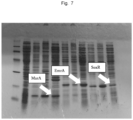
- E. coli-derived multidrug-resistance regulator proteins MarA, EmrA, and SoxR
Landscapes
- Chemical & Material Sciences (AREA)
- Life Sciences & Earth Sciences (AREA)
- Health & Medical Sciences (AREA)
- Organic Chemistry (AREA)
- Molecular Biology (AREA)
- General Health & Medical Sciences (AREA)
- Engineering & Computer Science (AREA)
- Biophysics (AREA)
- Biochemistry (AREA)
- Proteomics, Peptides & Aminoacids (AREA)
- Medicinal Chemistry (AREA)
- Genetics & Genomics (AREA)
- Gastroenterology & Hepatology (AREA)
- Physics & Mathematics (AREA)
- Biotechnology (AREA)
- Bioinformatics & Cheminformatics (AREA)
- Zoology (AREA)
- Bioinformatics & Computational Biology (AREA)
- Biomedical Technology (AREA)
- Hematology (AREA)
- Immunology (AREA)
- Urology & Nephrology (AREA)
- Spectroscopy & Molecular Physics (AREA)
- Microbiology (AREA)
- Wood Science & Technology (AREA)
- General Physics & Mathematics (AREA)
- Cell Biology (AREA)
- Theoretical Computer Science (AREA)
- Pathology (AREA)
- Evolutionary Biology (AREA)
- Food Science & Technology (AREA)
- Crystallography & Structural Chemistry (AREA)
- Medical Informatics (AREA)
- Analytical Chemistry (AREA)
- General Chemical & Material Sciences (AREA)
- Chemical Kinetics & Catalysis (AREA)
- Botany (AREA)
- General Engineering & Computer Science (AREA)
- Toxicology (AREA)
- Peptides Or Proteins (AREA)
Applications Claiming Priority (2)
| Application Number | Priority Date | Filing Date | Title |
|---|---|---|---|
| JP2021212746 | 2021-12-27 | ||
| PCT/JP2022/048101 WO2023127849A1 (ja) | 2021-12-27 | 2022-12-27 | 化合物捕捉用の構造体 |
Publications (2)
| Publication Number | Publication Date |
|---|---|
| EP4458971A1 true EP4458971A1 (de) | 2024-11-06 |
| EP4458971A4 EP4458971A4 (de) | 2026-04-08 |
Family
ID=86999059
Family Applications (1)
| Application Number | Title | Priority Date | Filing Date |
|---|---|---|---|
| EP22916072.6A Pending EP4458971A4 (de) | 2021-12-27 | 2022-12-27 | Struktur zur verbindungspülung |
Country Status (5)
| Country | Link |
|---|---|
| US (1) | US20250076304A1 (de) |
| EP (1) | EP4458971A4 (de) |
| JP (1) | JPWO2023127849A1 (de) |
| CN (1) | CN118434866A (de) |
| WO (1) | WO2023127849A1 (de) |
Family Cites Families (2)
| Publication number | Priority date | Publication date | Assignee | Title |
|---|---|---|---|---|
| JP5648963B2 (ja) | 2009-11-20 | 2015-01-07 | 国立大学法人 東京大学 | 細孔性ネットワーク錯体、ゲスト分子内包ネットワーク錯体、及びゲスト分子の分離方法 |
| WO2014038221A1 (ja) | 2012-09-07 | 2014-03-13 | 独立行政法人 科学技術振興機構 | 結晶構造解析用試料の作製方法、有機化合物の分子構造決定方法、及び結晶構造解析用試料の作製装置 |
-
2022
- 2022-12-27 US US18/724,312 patent/US20250076304A1/en active Pending
- 2022-12-27 JP JP2023571041A patent/JPWO2023127849A1/ja active Pending
- 2022-12-27 EP EP22916072.6A patent/EP4458971A4/de active Pending
- 2022-12-27 WO PCT/JP2022/048101 patent/WO2023127849A1/ja not_active Ceased
- 2022-12-27 CN CN202280084842.2A patent/CN118434866A/zh active Pending
Also Published As
| Publication number | Publication date |
|---|---|
| JPWO2023127849A1 (de) | 2023-07-06 |
| US20250076304A1 (en) | 2025-03-06 |
| EP4458971A4 (de) | 2026-04-08 |
| WO2023127849A1 (ja) | 2023-07-06 |
| CN118434866A (zh) | 2024-08-02 |
Similar Documents
| Publication | Publication Date | Title |
|---|---|---|
| Ethayathulla et al. | Structure-based mechanism for Na+/melibiose symport by MelB | |
| Tatulian | Structural characterization of membrane proteins and peptides by FTIR and ATR-FTIR spectroscopy | |
| Jing et al. | The structure of the antimicrobial peptide Ac‐RRWWRF‐NH2 bound to micelles and its interactions with phospholipid bilayers | |
| Kedrov et al. | Elucidating the native architecture of the YidC: ribosome complex | |
| Li et al. | Tryptophan as a probe to study the anticancer mechanism of action and specificity of α-helical anticancer peptides | |
| Wojcik et al. | Novel N7-arylmethyl substituted dinucleotide mRNA 5′ cap analogs: synthesis and evaluation as modulators of translation | |
| Ash et al. | Conserved β-hairpin recognition by the GYF domains of Smy2 and GIGYF2 in mRNA surveillance and vesicular transport complexes | |
| Azam et al. | The Arabidopsis mitochondrial glutaredoxin GRXS15 provides [2Fe-2S] clusters for ISCA-mediated [4Fe-4S] cluster maturation | |
| Adélaïde et al. | The mechanism of action of SAAP-148 antimicrobial peptide as studied with NMR and molecular dynamics simulations | |
| Knoops et al. | Cryo‐electron microscopy of ribosomal complexes in cotranslational folding, targeting, and translocation | |
| Manole et al. | Conformational control of the binding of diatomic gases to cytochrome c′ | |
| EP4458971A1 (de) | Struktur zur verbindungspülung | |
| EP4458970A1 (de) | Mehrkomponentenstruktur zur erfassung einer verbindung | |
| Mork-Jansson et al. | Lil3 dimerization and chlorophyll binding in Arabidopsis thaliana | |
| Romano et al. | Efficient isolation of Pseudomonas aeruginosa type III secretion translocators and assembly of heteromeric transmembrane pores in model membranes | |
| Ottmann et al. | Applicability of superfolder YFP bimolecular fluorescence complementation in vitro. | |
| Gopaldass et al. | Hybrid endosomal coats contain different classes of sorting nexins | |
| Vlasov | New structural insights in chloroplast F1FO-ATP synthases | |
| US20040121445A1 (en) | Cell cultures | |
| Dwivedy et al. | Serendipitous crystallization and structure determination of bacterioferritin from Achromobacter | |
| Benz | Solute transport through mitochondrial porins in vitro and in vivo | |
| Mittal | Structural and Biochemical Studies of ABC Transporters Using DARPin Binders | |
| Sun et al. | Degradation of intrinsically disordered proteins using proteolysis targeting nanobody conjugate | |
| Mittal | Structural and Biochemical Studies of ABC Transporters using DARPin Binders | |
| Yang | Biochemical Study of a New Family of Isomerocyclases in the Biogenesis of Hapalindole Type Alkaloids and Chemical Genetic Approach to Studying Bacterial Chromosome Segregation |
Legal Events
| Date | Code | Title | Description |
|---|---|---|---|
| STAA | Information on the status of an ep patent application or granted ep patent |
Free format text: STATUS: THE INTERNATIONAL PUBLICATION HAS BEEN MADE |
|
| PUAI | Public reference made under article 153(3) epc to a published international application that has entered the european phase |
Free format text: ORIGINAL CODE: 0009012 |
|
| STAA | Information on the status of an ep patent application or granted ep patent |
Free format text: STATUS: REQUEST FOR EXAMINATION WAS MADE |
|
| 17P | Request for examination filed |
Effective date: 20240724 |
|
| AK | Designated contracting states |
Kind code of ref document: A1 Designated state(s): AL AT BE BG CH CY CZ DE DK EE ES FI FR GB GR HR HU IE IS IT LI LT LU LV MC ME MK MT NL NO PL PT RO RS SE SI SK SM TR |
|
| DAV | Request for validation of the european patent (deleted) | ||
| DAX | Request for extension of the european patent (deleted) | ||
| RIC1 | Information provided on ipc code assigned before grant |
Ipc: C12N 15/31 20060101AFI20251210BHEP Ipc: C07K 14/195 20060101ALI20251210BHEP Ipc: C07K 14/37 20060101ALI20251210BHEP Ipc: C07K 14/415 20060101ALI20251210BHEP Ipc: C07K 14/435 20060101ALI20251210BHEP Ipc: C07K 14/245 20060101ALI20251210BHEP Ipc: C07K 14/255 20060101ALI20251210BHEP Ipc: C12N 15/12 20060101ALI20251210BHEP Ipc: C12N 15/29 20060101ALI20251210BHEP Ipc: C12P 21/02 20060101ALI20251210BHEP Ipc: C12R 1/125 20060101ALN20251210BHEP Ipc: C12R 1/19 20060101ALN20251210BHEP Ipc: C12R 1/865 20060101ALN20251210BHEP |
|
| A4 | Supplementary search report drawn up and despatched |
Effective date: 20260309 |
|
| RIC1 | Information provided on ipc code assigned before grant |
Ipc: C12N 15/31 20060101AFI20260303BHEP Ipc: C07K 14/195 20060101ALI20260303BHEP Ipc: C07K 14/37 20060101ALI20260303BHEP Ipc: C07K 14/415 20060101ALI20260303BHEP Ipc: C07K 14/435 20060101ALI20260303BHEP Ipc: C07K 14/245 20060101ALI20260303BHEP Ipc: C07K 14/255 20060101ALI20260303BHEP Ipc: C12N 15/12 20060101ALI20260303BHEP Ipc: C12N 15/29 20060101ALI20260303BHEP Ipc: C12P 21/02 20060101ALI20260303BHEP Ipc: C12R 1/125 20060101ALN20260303BHEP Ipc: C12R 1/19 20060101ALN20260303BHEP Ipc: C12R 1/865 20060101ALN20260303BHEP |