EP4458962A1 - Helikase bch2x und verwendung davon - Google Patents
Helikase bch2x und verwendung davon Download PDFInfo
- Publication number
- EP4458962A1 EP4458962A1 EP21969710.9A EP21969710A EP4458962A1 EP 4458962 A1 EP4458962 A1 EP 4458962A1 EP 21969710 A EP21969710 A EP 21969710A EP 4458962 A1 EP4458962 A1 EP 4458962A1
- Authority
- EP
- European Patent Office
- Prior art keywords
- helicase
- pore
- amino acid
- cell
- complex structure
- Prior art date
- Legal status (The legal status is an assumption and is not a legal conclusion. Google has not performed a legal analysis and makes no representation as to the accuracy of the status listed.)
- Pending
Links
Images


Classifications
-
- C—CHEMISTRY; METALLURGY
- C12—BIOCHEMISTRY; BEER; SPIRITS; WINE; VINEGAR; MICROBIOLOGY; ENZYMOLOGY; MUTATION OR GENETIC ENGINEERING
- C12N—MICROORGANISMS OR ENZYMES; COMPOSITIONS THEREOF; PROPAGATING, PRESERVING, OR MAINTAINING MICROORGANISMS; MUTATION OR GENETIC ENGINEERING; CULTURE MEDIA
- C12N9/00—Enzymes; Proenzymes; Compositions thereof; Processes for preparing, activating, inhibiting, separating or purifying enzymes
- C12N9/14—Hydrolases (3)
-
- C—CHEMISTRY; METALLURGY
- C12—BIOCHEMISTRY; BEER; SPIRITS; WINE; VINEGAR; MICROBIOLOGY; ENZYMOLOGY; MUTATION OR GENETIC ENGINEERING
- C12N—MICROORGANISMS OR ENZYMES; COMPOSITIONS THEREOF; PROPAGATING, PRESERVING, OR MAINTAINING MICROORGANISMS; MUTATION OR GENETIC ENGINEERING; CULTURE MEDIA
- C12N15/00—Mutation or genetic engineering; DNA or RNA concerning genetic engineering, vectors, e.g. plasmids, or their isolation, preparation or purification; Use of hosts therefor
- C12N15/09—Recombinant DNA-technology
- C12N15/63—Introduction of foreign genetic material using vectors; Vectors; Use of hosts therefor; Regulation of expression
- C12N15/70—Vectors or expression systems specially adapted for E. coli
-
- C—CHEMISTRY; METALLURGY
- C12—BIOCHEMISTRY; BEER; SPIRITS; WINE; VINEGAR; MICROBIOLOGY; ENZYMOLOGY; MUTATION OR GENETIC ENGINEERING
- C12N—MICROORGANISMS OR ENZYMES; COMPOSITIONS THEREOF; PROPAGATING, PRESERVING, OR MAINTAINING MICROORGANISMS; MUTATION OR GENETIC ENGINEERING; CULTURE MEDIA
- C12N9/00—Enzymes; Proenzymes; Compositions thereof; Processes for preparing, activating, inhibiting, separating or purifying enzymes
- C12N9/90—Isomerases (5.)
-
- C—CHEMISTRY; METALLURGY
- C12—BIOCHEMISTRY; BEER; SPIRITS; WINE; VINEGAR; MICROBIOLOGY; ENZYMOLOGY; MUTATION OR GENETIC ENGINEERING
- C12Q—MEASURING OR TESTING PROCESSES INVOLVING ENZYMES, NUCLEIC ACIDS OR MICROORGANISMS; COMPOSITIONS OR TEST PAPERS THEREFOR; PROCESSES OF PREPARING SUCH COMPOSITIONS; CONDITION-RESPONSIVE CONTROL IN MICROBIOLOGICAL OR ENZYMOLOGICAL PROCESSES
- C12Q1/00—Measuring or testing processes involving enzymes, nucleic acids or microorganisms; Compositions therefor; Processes of preparing such compositions
- C12Q1/34—Measuring or testing processes involving enzymes, nucleic acids or microorganisms; Compositions therefor; Processes of preparing such compositions involving hydrolase
-
- C—CHEMISTRY; METALLURGY
- C12—BIOCHEMISTRY; BEER; SPIRITS; WINE; VINEGAR; MICROBIOLOGY; ENZYMOLOGY; MUTATION OR GENETIC ENGINEERING
- C12Q—MEASURING OR TESTING PROCESSES INVOLVING ENZYMES, NUCLEIC ACIDS OR MICROORGANISMS; COMPOSITIONS OR TEST PAPERS THEREFOR; PROCESSES OF PREPARING SUCH COMPOSITIONS; CONDITION-RESPONSIVE CONTROL IN MICROBIOLOGICAL OR ENZYMOLOGICAL PROCESSES
- C12Q1/00—Measuring or testing processes involving enzymes, nucleic acids or microorganisms; Compositions therefor; Processes of preparing such compositions
- C12Q1/68—Measuring or testing processes involving enzymes, nucleic acids or microorganisms; Compositions therefor; Processes of preparing such compositions involving nucleic acids
- C12Q1/6869—Methods for sequencing
-
- C—CHEMISTRY; METALLURGY
- C12—BIOCHEMISTRY; BEER; SPIRITS; WINE; VINEGAR; MICROBIOLOGY; ENZYMOLOGY; MUTATION OR GENETIC ENGINEERING
- C12Y—ENZYMES
- C12Y306/00—Hydrolases acting on acid anhydrides (3.6)
-
- C—CHEMISTRY; METALLURGY
- C12—BIOCHEMISTRY; BEER; SPIRITS; WINE; VINEGAR; MICROBIOLOGY; ENZYMOLOGY; MUTATION OR GENETIC ENGINEERING
- C12Y—ENZYMES
- C12Y306/00—Hydrolases acting on acid anhydrides (3.6)
- C12Y306/04—Hydrolases acting on acid anhydrides (3.6) acting on acid anhydrides; involved in cellular and subcellular movement (3.6.4)
- C12Y306/04012—DNA helicase (3.6.4.12)
-
- G—PHYSICS
- G01—MEASURING; TESTING
- G01N—INVESTIGATING OR ANALYSING MATERIALS BY DETERMINING THEIR CHEMICAL OR PHYSICAL PROPERTIES
- G01N2333/00—Assays involving biological materials from specific organisms or of a specific nature
- G01N2333/90—Enzymes; Proenzymes
- G01N2333/914—Hydrolases (3)
Definitions
- the present application relates to the biological field, and specifically to a helicase and its use. More specifically, the present application relates to the helicase BCH2X and its use in the control and characterization of nucleic acids and in the nanopore sequencing.
- Nanopore sequencing is a third-generation sequencing technology that has emerged in recent years. Due to its advantages such as long read length, high throughput, low cost, and portability, nanopore sequencing has brought disruptive changes to the gene sequencing industry. Nanopore sequencing technology is widely used in basic theoretical research in life sciences and biomedical clinical practice.
- Nanopore sequencing is a sequencing technology based on electrical signals. It uses single-stranded nucleic acid molecules as sequencing units, and a nanopore (protein or solid-state) inserted in a membrane separates two electrolysis chambers filled with electrolyte. When voltage is applied to the two electrolytic chambers, a stable perforation current is generated. Different molecules entering the nanopore may block the flow of ions, which is called nanopore signal. When nucleic acids pass through the nanopore, the magnitude of the blocked current will vary due to different bases. By detecting the current fluctuation signal of the nanopore and analyzing the current signal through machine learning, the sequence of the nucleic acid that passes the nanopore can be determined.
- Nanopore sequencing technology has the following advantages: it can easily build a library without amplification; it has fast reading speed, and the reading speed for single-stranded molecules can reach tens of thousands of bases per hour; it has longer reading length and can usually reach several thousand bases; and it allows direct sequencing of methylated DNA or RNA.
- nanopore sequencing Due to the extremely fast speed of nucleic acid molecules passing through nanopore channels, polynucleotide sequence information cannot be accurately obtained. Therefore, effectively reducing and controlling the movement of nucleic acid molecules through nanopores is a key technical issue in nanopore sequencing.
- the movement of nucleic acid molecules through nanopores can be controlled through polymerase amplification or helicase unwinding, and detection accuracy can be improved by increasing the residence time of nucleic acid molecules in the nanopores.
- helicases need to have good salt tolerance and stability to maintain good sequencing speed and sequencing uniformity.
- the helicases used in the currently commercialized nanopore sequencers are generally DDA helicases derived from bacteriophage T4, which have poor yield, stability, and salt tolerance. There is still a need in the art for novel helicases.
- One object of the present disclosure is to provide a new helicase which can be used for characterization of nucleic acids, thereby solving the problems of poor salt tolerance and stability of conventional helicases, improving the yield of recombinantly expressed helicases, and significantly improving the accuracy of polynucleotide characterization.
- the present application provides a new helicase BCH2X, which is screened from a deep-sea metagenomic library (derived from the Shenzhen National Gene Bank).
- a deep-sea metagenomic library derived from the Shenzhen National Gene Bank.
- the helicase BCH2X has extremely high stability and salt tolerance.
- the helicase BCH2X has a very high expression level in the recombinant protein expression system using Escherichia coli, and the yield is extremely high.
- the helicase BCH2X has good single-stranded DNA binding and double-stranded DNA unwinding activities.
- the helicase can be used for control and characterization of nucleic acids and used for single-molecule nanopore sequencing.
- the helicase BCH2X comprises:
- the amino acid difference comprises an amino acid substitution, deletion and/or insertion or N-terminal and/or C-terminal extension, provided that the amino acid sequence having the amino acid difference retains the helicase activity of the helicase as set forth in any one of SEQ ID NOs: 1 to 3.
- the amino acid substitution is a conservative amino acid substitution.
- the helicase BCH2X consists of the amino acid sequence as set forth in any one of SEQ ID NOs: 1 to 3.
- the helicase BCH2X as set forth in SEQ ID NO: 1 is named BCH248, the helicase BCH2X as set forth in SEQ ID NO: 2 is named BCH256, and the helicase BCH2X as set forth in SEQ ID NO: 3 is named BCH272.
- the helicase or complex structure thereof of the present disclosure can move a target polynucleotide through a nanopore in a controllable and stepwise manner through the magnetic field generated by an external voltage, thereby controlling the speed at which the polynucleotide passes through the nanopore, and obtaining a recognizable current level.
- the helicase BCH2X or complex structure thereof is able to function effectively under a high salt concentration and have an extremely high stability.
- the helicase or complex structure thereof of the present disclosure has a very high expression level when recombinantly expressed (for example, expressed in Escherichia coli ) , and can be easily obtained at a high yield.
- the present application provides a nucleotide sequence encoding the helicase BCH2X of the first aspect.
- the nucleotide sequence encoding the helicase BCH2X comprises a nucleotide sequence encoding the following amino acid sequence:
- the nucleotide sequence can be codon-optimized for a cell used for expression to obtain a desired expression level in the cell.
- the present application provides a recombinant vector comprising the nucleotide sequence of the second aspect of the present application.
- the recombinant vector is a recombinant expression vector, for example, a recombinant expression vector suitable for expression in a prokaryotic or eukaryotic cell.
- the prokaryotic cell includes, but is not limited to: Escherichia coli cell, Bacillus subtilis cell, etc.
- the eukaryotic cell includes, but is not limited to: yeast cell, insect cell, mammalian cell (e.g., CHO cell, HEK293 cell), etc.
- the recombinant expression vector is suitable for expressing the helicase BCH2X in an Escherichia coli cell.
- a purification tag can be added to the helicase.
- the tag can be removed by a chemical method or enzymatic reaction.
- the present application provides a cell comprising the nucleotide sequence of the second aspect or the recombinant vector of the third aspect.
- the cell may be a prokaryotic cell or eukaryotic cell, such as Escherichia coli cell, Bacillus subtilis cell, yeast cell, insect cell, mammalian cell (e.g., CHO cell, HEK293 cell), etc.
- the present application provides a complex structure, the complex structure comprises the helicase BCH2X of the first aspect and a binding moiety for binding a polynucleotide, wherein the helicase BCH2X is attached to the binding moiety, and the complex structure is capable of controlling the sequence of the polynucleotide.
- the complex structure has a natural structure or a non-natural structure.
- the complex structure has an artificially manufactured non-natural structure.
- the binding moiety may be a binding moiety capable of binding to a base of a polynucleotide, and/or a binding moiety capable of binding to a sugar of a polynucleotide, and/or a binding moiety capable of binding to a phosphate of a polynucleotide.
- a binding moiety capable of binding to a base of a polynucleotide and/or a binding moiety capable of binding to a sugar of a polynucleotide, and/or a binding moiety capable of binding to a phosphate of a polynucleotide.
- Those skilled in the art can select an appropriate binding moiety according to a specific need.
- the complex structure of the present application is an effective tool for controlling movement of a polynucleotide during sequencing.
- the helicase-containing complex structure of the present application is capable of stably binding to a polynucleotide and will not be separated from the polynucleotide during the sequencing process.
- the complex structure can provide a greater read length of the polynucleotide when controlling translocation of the polynucleotide through the nanopore.
- the binding of the binding moiety to the polynucleotide is compatible with the strand sequencing and the characterization process of the polynucleotide.
- the binding moiety Compared with a standard physiological level, the binding moiety has a better activity at a high salt concentration (e.g., 0.3 to 1 M KCl) because of its good salt tolerance, and improvement of the binding moiety of the complex structure can improve the synthesis ability, stability and half-life.
- a high salt concentration e.g., 0.3 to 1 M KCl
- the helicase and the binding moiety are bound or attached via their terminal amino acids.
- the amino end of the binding moiety is bound or attached to the carboxy end of the helicase, or the carboxy end of the binding moiety is bound or attached to the amino end of the helicase.
- the binding moiety is inserted into the sequence of the helicase. Such a structure can well combine the helicase and the binding moiety through two points.
- a tag may be added to the complex structure.
- the tag can be removed by a chemical method or enzymatic reaction.
- the present application provides a use of helicase BCH2X in controlling and characterizing a nucleic acid, or in a single-molecule nanopore sequencing.
- the helicase BCH2X or complex structure thereof of the present application can control the movement speed of a target polynucleotide through a nanopore.
- the present application provides a method for controlling and characterizing a target polynucleotide, the method comprising the following steps:
- the method for controlling and characterizing a target polynucleotide is a method for a single-molecule nanopore sequencing.
- the present application provides a kit for controlling and characterizing a target polynucleotide, and the kit comprises the helicase BCH2X or a complex structure thereof and a pore.
- the pore is a nanopore.
- the kit comprises multiple helicases or multiple complex structures, and multiple pores.
- the pore is a transmembrane pore
- the transmembrane pore is a biological pore, a solid-state pore, or a biological-solid-state hybrid pore.
- the biological pore is selected from the group consisting of ⁇ -hemolysin protein ( ⁇ -HL), Mycobacterium smegmatis porin A (MspA), curli-specific transport channel protein (CsgG), type III secretion system protein (InvG), etc.
- the kit further comprises a chip comprising a lipid bilayer.
- the pore spans the lipid bilayer.
- the kit of the present application comprises one or more lipid bilayers, and each lipid bilayer comprises one or more of the pores.
- the kit of the present application also comprises a reagent or device for characterizing the target polynucleotide.
- the reagent comprises a buffering agent, or an enzyme or buffer required for PCR amplification.
- the kit is a kit for a single-molecule nanopore sequencing.
- the present application also provides a sensor for characterizing a target polynucleotide, comprising a complex formed by a pore and the helicase BCH2X or complex structure thereof, wherein the pore is able to interact with a target polynucleotide, thereby forming a sensor for characterizing the target polynucleotide.
- the pore and the helicase BCH2X or complex structure thereof are contacted in the presence of the target polynucleotide, and an electric potential is applied across the pore.
- the electric potential may be selected from voltage potential or electrochemical potential.
- the pore is covalently linked to the helicase or the complex structure.
- the present application provides a device for characterizing a target polynucleotide, the device comprising the helicase BCH2X or complex structure thereof, and a pore.
- the device comprises a sensor device that supports the pore and can transmit a signal of the interaction between the pore and a polynucleotide, and at least one memory for storing the target polynucleotide, and a solution required for performing the characterization.
- the device comprises multiple helicases or multiple complex structures, and multiple pores.
- the pore is a transmembrane pore
- the transmembrane pore is a biological pore, a solid-state pore, or a biological-solid-state hybrid pore.
- the biological pore is selected from the group consisting of ⁇ -hemolysin protein ( ⁇ -HL), Mycobacterium smegmatis porin A (MspA), curli-specific transport channel protein (CsgG), type III secretion system protein (InvG), etc.
- the present application provides a method for preparing the helicase BCH2X described in the first aspect or a complex structure thereof, the method comprising: constructing a recombinant expression vector for expressing the helicase BCH2X or complex structure thereof, transforming the recombinant expression vector into an appropriate host cell for recombinant expression.
- the host cell may be a prokaryotic or eukaryotic cell, such as Escherichia coli cell, Bacillus subtilis cell, yeast cell, insect cell, mammalian cell (e.g., CHO cell, HEK293 cell), etc.
- a prokaryotic or eukaryotic cell such as Escherichia coli cell, Bacillus subtilis cell, yeast cell, insect cell, mammalian cell (e.g., CHO cell, HEK293 cell), etc.
- Nucleotide in the present application includes, but is not limited to: adenosine monophosphate (AMP), guanosine monophosphate (GMP), thymidine monophosphate (TMP), uridine monophosphate (UMP), cytosine monophosphate (CMP), cyclic adenosine monophosphate (cAMP), cyclic guanosine monophosphate (cGMP), deoxyadenosine monophosphate (dAMP), deoxyguanosine monophosphate (dGMP), deoxythymidine monophosphate (dTMP), deoxyuridine monophosphate (dUMP) and deoxycytidine monophosphate (dCMP).
- the nucleotide is selected from the group consisting of AMP, TMP, GMP, CMP, UMP, dAMP, dTMP, dGMP, or dCMP.
- the "conservative amino acid substitution” used in the present application refers to a substitution of an amino acid by another amino acid within the same category, for example, a substitution of an acidic amino acid by another acidic amino acid, a substitution of a basic amino acid by another basic amino acid, or a substitution of a neutral amino acid by another neutral amino acid.
- amino acids can be categorized according to the properties of the side chains thereof:
- Conservative amino acid substitution may refer to that one amino acid in the above group is replaced by another amino acid in the same group.
- the conservative amino acid substitution will basically not change the activity of the amino acid sequence of the present application.
- Exemplary conservative amino acid substitutions are shown in Table A below: Table A: Exemplary substitutions and conservative substitutions Original residue Exemplary substitution Conservative substitution Ala (A) Val; Leu; Ile Val Arg (R) Lys; Gln; Asn Lys Asn (N) Gln; His; Asp, Lys; Arg Gln Asp (D) Glu; Asn Glu Cys (C) Ser; Ala Ser Gln (Q) Asn; Glu Asn Glu (E) Asp; Gln Asp Gly (G) Ala Ala His (H) Asn; Gln; Lys; Arg Arg Ile (I) Leu; Val; Met; Ala; Phe; norleucine Leu Leu (L) norleucine; Ile; Val; Met; Ala; Phe Ile Lys (K) Arg; Gln; Asn Arg Met (M) Leu; Phe; Ile Leu Phe (F) Trp; Leu; Val; Ile; Ala
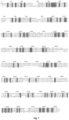
- the inventors screened out three helicase BCH2X sequences from the deep-sea metagenomic library (derived from the Shenzhen National Gene Bank): SEQ ID NO: 1, named BCH248; SEQ ID NO: 2, named BCH256; SEQ ID NO: 3, named BCH272.
- the full-length DNA sequence of BCH248 was ligated into PET.28a(+) plasmid, and the double enzyme cleavage sites as used were Nde1 and Xho1. As such, the N-terminal of the BCH248 protein as expressed had a 6*His tag and a thrombin enzyme cleavage site.
- reaction system 50 ⁇ L of reaction system: The ssDNA substrate and BCH248 protein were thoroughly mixed in a reaction buffer A.
- the final concentration of the DNA substrate (ssDNA) was 20 nM, and the final concentrations of the BCH248 protein used were 0 nM, 20 nM, 50 nM, 100 nM, and 500 nM, in which the reaction buffer A was: 50 mM HEPES, 100 mM KCl, pH 8.0.
- the ssDNA substrate used was a 3' cy3-labeled single-stranded DNA, and its sequence was TTTTTTTTTTTTCTGAATCACGTACTATATGACACAGTAAAT-cy3.
- the reaction was performed at room temperature for 1 h, and the sample was taken to perform 10% non-denaturing PAGE. The results were shown in Fig. 2 .
- reaction buffer B The double-stranded DNA substrate with a 5'-overhang, BCH248 protein, and unlabeled single-stranded capture DNA were thoroughly mixed in reaction buffer B.
- the final concentration of the DNA substrate was 20 nM
- the final concentration of the protein was 100 nM
- the final concentration of the captured DNA was 400 nM.
- the reaction buffer B was: 470 mM KCl, 25 mM HEPES, 2 mM ATP, 10 mM MgCl 2 , pH 8.0.
- the double-stranded DNA with a 5'-overhang was formed by annealing a single-stranded DNA labeled by BHQ-1 quenching group at the 3' end to a single-stranded DNA labeled by FAM fluorophore at the 5' end, which sequences were respectively:
- the sequence of the unlabeled single-stranded capture DNA was: 5'-AATGCCTAAGTACTGCTTTTCGACGCTGCTAGTTCGGTGC-3'.
- the single-stranded DNA labeled by FAM fluorophore at the 5' end was used instead of the double-stranded DNA with a 5'-overhang, and the rest were the same as in the experimental group.
- nuclease-free water was used instead of the protein, and the rest were the same as in the experimental group.
- reaction solution 40 ⁇ L of the reaction solution was added to the microplate, and the FAM fluorescence (excitation wavelength: 492 nm, emission wavelength: 518 nm) was measured in real time using a microplate reader.
- the temperature was 30°C, and the total time was 30 min. Each group of samples was repeated in 3 replicate wells.
- the experimental results were shown in Fig. 3 : the fluorescence value of the positive control group (positive) remained unchanged during the measurement process, approximately 9500; the fluorescence value of the negative control group (negative) remained unchanged during the measurement process, approximately 2600; the fluorescence value of the BCH248 experimental group gradually increased with the reaction time, that was, the fluorescence value of the BCH248 experimental group increased from 3200 (0 min) to 5600 (30 min).
- the experimental results in Fig. 3 showed that BCH248 had the activity of unwinding double-stranded DNA, and the unwinding direction was 5' to 3'.
- the sequencing library was then incubated with BCH248 for 1 hour at 25°C (at a molar concentration ratio of 1:8) to form a sequencing library containing BCH248 helicase, which was then incubated with a single-stranded DNA containing cholesterol at the 5' end (chol-ssDNA) for 10 minutes at room temperature.
- the sequence of the chol-ssDNA was complementary to a partial region of the antisense strand of the linker (bottom strand). When cholesterol bound to the phospholipid membrane, it could reduce the loading amount of the library and improve the capture rate.
- a Teflon membrane with micron-sized pores (50 to 200 ⁇ m in diameter) therein was used to divide the electrolytic cell into two chambers, i.e., cis chamber and trans chamber.
- a pair of Ag/AgCl electrodes was placed in each of the cis chamber and the trans chamber.
- a nanometer porin Mycobacterium smegmatis porin A (MspA, SEQ ID NO: 6), prepared according to Example 5
- MspA Mycobacterium smegmatis porin A
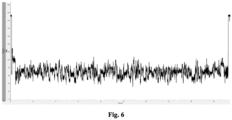
- electric measurement was performed. After applying 180 mV, the open pore current of a single channel was obtained.
- the open pore current was about 220 pA.
- the DNA in the sequencing library entered into the nanopores, under the unwinding effect of BCH248, the DNA passed through the nanopores, partial current was blocked, and the current became smaller. Since different nucleotides had different sizes, the magnitudes of the blocked currents were also different, so that fluctuating current signals could be seen.
- the gene sequence encoding MspA protein was inserted into the cloning region of the vector pET24a.
- the N-terminal of the expressed MspA protein had 6*His, which could be used as a purification tag, kanamycin was used for screening, and the constructed expression vector was named pET24a-MspA.
- LB liquid medium tryptone 10g/L, yeast extract 5g/L, NaCl 10g/L.
- the recombinant expression vector pET24a-MspA was transformed into the expression strain E. coli BL21 (DE3).
- the bacterial solution was spread evenly on an LB solid culture plate with 50 ⁇ g/mL kanamycin, and cultured at 37°C overnight. Single colony was picked and cultured in 5 ml of LB medium (containing 50 ⁇ g/mL kanamycin) at 37°C and 200 rpm overnight.
- the bacterial solution obtained was inoculated into 50 ml of LB (containing 50 ⁇ g/mL kanamycin) at a ratio of 1:100 and cultured at 37°C and 200 rpm for 4 hours.
- the expanded cultured bacterial solution was inoculated into 2L of LB (containing 50 ⁇ g/mL kanamycin) at a ratio of 1:100 and cultured at 37°C and 200 rpm.
- LB containing 50 ⁇ g/mL kanamycin
- IPTG was added at a final concentration of 0.5mM, and the bacteria were cultured at 18°C and 200rpm overnight (about 16 to 18 hours).
- the grown bacterial cells were collected by centrifugation at 8000 rpm, and the bacterial cells were frozen at -20°C for later use.
- Buffer E1 (diluent): 20mM Tris-HCl + 0.5% Tween-20 + 5% glycerol, pH 6.5.
- the recombinant Escherichia coli cells were resuspended at a ratio of 1 g of recombinant Escherichia coli cells to 10 ml of Buffer A1, and the cells were disrupted by ultrasonic until the cell solution became clear.
- the disrupted cells were centrifuged at 12,000 rpm and 4°C for 30 min. The supernatant was taken, filtered with a 0.22 ⁇ m filter membrane, and stored at 4°C.
- the column of Ni column affinity chromatography was washed with water of 5 column volumes (5CV), washed with buffer B1 of 5CV, and equilibrated with buffer A1 of 10CV before sample loading. After the sample loading was completed, equilibration was performed with buffer A1 of 15CV, then buffer B1 was used for linear elution (0 to 8% buffer B1, 30CV) to remove impurities, and buffer B1 was used for linear elution (8 to 100% buffer B1, 5CV) to collect the target protein.
- the protein collected by the Ni column was diluted 2 times with buffer E1.
- the anion exchange Q column was washed with water for 5CV, and equilibrated with buffer C1 for 5CV, and then the protein sample was loaded.
- linear elution was performed with elution buffer D1 (0% to 9% buffer D1, 30CV), and then linear elution was performed with elution buffer D1 (9% to 100% buffer D1, 10CV), so as to collect the protein.
- the collected protein was dialyzed overnight at 4°C with buffer A1 as dialysis solution, and then stored at -80°C.
- Amino acid sequence of MspA protein SEQ ID NO: 6
Landscapes
- Chemical & Material Sciences (AREA)
- Life Sciences & Earth Sciences (AREA)
- Health & Medical Sciences (AREA)
- Organic Chemistry (AREA)
- Engineering & Computer Science (AREA)
- Wood Science & Technology (AREA)
- Zoology (AREA)
- Genetics & Genomics (AREA)
- Bioinformatics & Cheminformatics (AREA)
- General Engineering & Computer Science (AREA)
- Biochemistry (AREA)
- General Health & Medical Sciences (AREA)
- Proteomics, Peptides & Aminoacids (AREA)
- Biotechnology (AREA)
- Molecular Biology (AREA)
- Microbiology (AREA)
- Biomedical Technology (AREA)
- Biophysics (AREA)
- Physics & Mathematics (AREA)
- Analytical Chemistry (AREA)
- Immunology (AREA)
- Medicinal Chemistry (AREA)
- Plant Pathology (AREA)
- Enzymes And Modification Thereof (AREA)
- Measuring Or Testing Involving Enzymes Or Micro-Organisms (AREA)
- Peptides Or Proteins (AREA)
Applications Claiming Priority (1)
| Application Number | Priority Date | Filing Date | Title |
|---|---|---|---|
| PCT/CN2021/143689 WO2023123359A1 (zh) | 2021-12-31 | 2021-12-31 | 解旋酶bch2x及其用途 |
Publications (2)
| Publication Number | Publication Date |
|---|---|
| EP4458962A1 true EP4458962A1 (de) | 2024-11-06 |
| EP4458962A4 EP4458962A4 (de) | 2026-01-21 |
Family
ID=86997191
Family Applications (1)
| Application Number | Title | Priority Date | Filing Date |
|---|---|---|---|
| EP21969710.9A Pending EP4458962A4 (de) | 2021-12-31 | 2021-12-31 | Helikase bch2x und verwendung davon |
Country Status (4)
| Country | Link |
|---|---|
| US (1) | US20250066748A1 (de) |
| EP (1) | EP4458962A4 (de) |
| CN (1) | CN118355114A (de) |
| WO (1) | WO2023123359A1 (de) |
Family Cites Families (7)
| Publication number | Priority date | Publication date | Assignee | Title |
|---|---|---|---|---|
| DK2238261T3 (da) * | 2008-01-03 | 2014-02-10 | Verenium Corp | Isomeraser, nukleinsyrer der koder for dem og fremgangsmåder til fremstilling og anvendelse deraf |
| BR112014016112B8 (pt) * | 2011-12-29 | 2022-12-27 | Oxford Nanopore Tech Ltd | Método e aparelho para caracterizar um polinucleotídeo alvo, kit, e, uso de uma helicase |
| US9617591B2 (en) * | 2011-12-29 | 2017-04-11 | Oxford Nanopore Technologies Ltd. | Method for characterising a polynucleotide by using a XPD helicase |
| CN118256603A (zh) * | 2013-10-18 | 2024-06-28 | 牛津纳米孔科技公开有限公司 | 经修饰的酶 |
| GB201417712D0 (en) * | 2014-10-07 | 2014-11-19 | Oxford Nanopore Tech Ltd | Method |
| CN112805393A (zh) * | 2018-09-28 | 2021-05-14 | 北京齐碳科技有限公司 | 一种解旋酶及其应用 |
| CN114599666B (zh) * | 2020-06-19 | 2024-08-06 | 北京齐碳科技有限公司 | 一种Pif1-like解旋酶及其应用 |
-
2021
- 2021-12-31 WO PCT/CN2021/143689 patent/WO2023123359A1/zh not_active Ceased
- 2021-12-31 US US18/723,633 patent/US20250066748A1/en active Pending
- 2021-12-31 CN CN202180104689.0A patent/CN118355114A/zh active Pending
- 2021-12-31 EP EP21969710.9A patent/EP4458962A4/de active Pending
Also Published As
| Publication number | Publication date |
|---|---|
| CN118355114A (zh) | 2024-07-16 |
| EP4458962A4 (de) | 2026-01-21 |
| WO2023123359A1 (zh) | 2023-07-06 |
| US20250066748A1 (en) | 2025-02-27 |
Similar Documents
| Publication | Publication Date | Title |
|---|---|---|
| KR102086182B1 (ko) | 효소 방법 | |
| EP2798083B1 (de) | Verfahren zur charakterisierung einer polynukelotids mittels verwendung einer xpd-helikase | |
| KR102280161B1 (ko) | 방법 | |
| JP7499761B2 (ja) | 細孔 | |
| US12037366B2 (en) | OMPG variants | |
| US10976300B2 (en) | Modified nanopores, compositions comprising the same, and uses thereof | |
| KR102168813B1 (ko) | 효소 정지 방법 | |
| EP2350122B1 (de) | Verfahren zur verbesserung der translokation geladener analyte durch transmembrane proteinporen | |
| EP2987870B1 (de) | Verfahren zur kennzeichnung eines zielpolynukleotids mit einer transmembranpore und eines molekularen motors | |
| KR20170042794A (ko) | 돌연변이체 csgg 포어 | |
| EP3423576B1 (de) | Polymerasevarianten | |
| Frank et al. | Acidocalcisomes and polyphosphate granules are different subcellular structures in Agrobacterium tumefaciens | |
| EP4458987A1 (de) | Helikase bch1x und verwendung davon | |
| EP4458962A1 (de) | Helikase bch2x und verwendung davon | |
| EP4362028A1 (de) | Mutiertes aerolysin und verwendungen davon |
Legal Events
| Date | Code | Title | Description |
|---|---|---|---|
| STAA | Information on the status of an ep patent application or granted ep patent |
Free format text: STATUS: THE INTERNATIONAL PUBLICATION HAS BEEN MADE |
|
| PUAI | Public reference made under article 153(3) epc to a published international application that has entered the european phase |
Free format text: ORIGINAL CODE: 0009012 |
|
| STAA | Information on the status of an ep patent application or granted ep patent |
Free format text: STATUS: REQUEST FOR EXAMINATION WAS MADE |
|
| 17P | Request for examination filed |
Effective date: 20240723 |
|
| AK | Designated contracting states |
Kind code of ref document: A1 Designated state(s): AL AT BE BG CH CY CZ DE DK EE ES FI FR GB GR HR HU IE IS IT LI LT LU LV MC MK MT NL NO PL PT RO RS SE SI SK SM TR |
|
| DAV | Request for validation of the european patent (deleted) | ||
| DAX | Request for extension of the european patent (deleted) | ||
| RAP1 | Party data changed (applicant data changed or rights of an application transferred) |
Owner name: BGI SHENZHEN CO., LTD Owner name: BGI SHENZHEN |
|
| RIC1 | Information provided on ipc code assigned before grant |
Ipc: C12N 9/14 20060101AFI20250926BHEP Ipc: C12N 15/55 20060101ALI20250926BHEP Ipc: C12M 1/34 20060101ALI20250926BHEP Ipc: C12Q 1/6869 20180101ALI20250926BHEP Ipc: G01N 33/48 20060101ALI20250926BHEP Ipc: C12N 9/90 20060101ALI20250926BHEP |
|
| A4 | Supplementary search report drawn up and despatched |
Effective date: 20251223 |
|
| RIC1 | Information provided on ipc code assigned before grant |
Ipc: C12N 9/14 20060101AFI20251217BHEP Ipc: C12N 15/55 20060101ALI20251217BHEP Ipc: C12M 1/34 20060101ALI20251217BHEP Ipc: C12Q 1/6869 20180101ALI20251217BHEP Ipc: G01N 33/48 20060101ALI20251217BHEP Ipc: C12N 9/90 20060101ALI20251217BHEP |