EP4458288A1 - Integriertes chirurgisches system - Google Patents
Integriertes chirurgisches system Download PDFInfo
- Publication number
- EP4458288A1 EP4458288A1 EP22914010.8A EP22914010A EP4458288A1 EP 4458288 A1 EP4458288 A1 EP 4458288A1 EP 22914010 A EP22914010 A EP 22914010A EP 4458288 A1 EP4458288 A1 EP 4458288A1
- Authority
- EP
- European Patent Office
- Prior art keywords
- unit
- conversion unit
- voltage
- signal
- group
- Prior art date
- Legal status (The legal status is an assumption and is not a legal conclusion. Google has not performed a legal analysis and makes no representation as to the accuracy of the status listed.)
- Pending
Links
- 238000006243 chemical reaction Methods 0.000 claims abstract description 391
- 238000002955 isolation Methods 0.000 claims abstract description 202
- 230000003321 amplification Effects 0.000 claims description 91
- 238000003199 nucleic acid amplification method Methods 0.000 claims description 91
- 238000003780 insertion Methods 0.000 claims description 52
- 230000037431 insertion Effects 0.000 claims description 52
- 230000001960 triggered effect Effects 0.000 claims description 48
- 230000005404 monopole Effects 0.000 claims description 43
- 238000005070 sampling Methods 0.000 claims description 20
- 230000015572 biosynthetic process Effects 0.000 claims description 18
- 238000003786 synthesis reaction Methods 0.000 claims description 18
- 238000007599 discharging Methods 0.000 claims description 14
- 239000003990 capacitor Substances 0.000 claims description 12
- 230000001939 inductive effect Effects 0.000 claims description 9
- 238000010521 absorption reaction Methods 0.000 claims description 7
- 230000010355 oscillation Effects 0.000 claims description 3
- 238000010586 diagram Methods 0.000 description 24
- 238000000034 method Methods 0.000 description 9
- 230000006870 function Effects 0.000 description 7
- 238000010248 power generation Methods 0.000 description 6
- 230000008901 benefit Effects 0.000 description 5
- 230000005669 field effect Effects 0.000 description 5
- 238000012986 modification Methods 0.000 description 5
- 230000004048 modification Effects 0.000 description 5
- 230000008569 process Effects 0.000 description 4
- 230000000737 periodic effect Effects 0.000 description 3
- 238000012937 correction Methods 0.000 description 2
- 239000000463 material Substances 0.000 description 2
- 238000007711 solidification Methods 0.000 description 2
- 230000008023 solidification Effects 0.000 description 2
- 210000004204 blood vessel Anatomy 0.000 description 1
- 238000004891 communication Methods 0.000 description 1
- 230000008878 coupling Effects 0.000 description 1
- 238000010168 coupling process Methods 0.000 description 1
- 238000005859 coupling reaction Methods 0.000 description 1
- 230000006378 damage Effects 0.000 description 1
- 230000007547 defect Effects 0.000 description 1
- 238000001514 detection method Methods 0.000 description 1
- 230000000694 effects Effects 0.000 description 1
- 230000007613 environmental effect Effects 0.000 description 1
- 238000007726 management method Methods 0.000 description 1
- 230000003287 optical effect Effects 0.000 description 1
- 230000002093 peripheral effect Effects 0.000 description 1
- 238000001356 surgical procedure Methods 0.000 description 1
- 230000003685 thermal hair damage Effects 0.000 description 1
Images


Classifications
-
- A—HUMAN NECESSITIES
- A61—MEDICAL OR VETERINARY SCIENCE; HYGIENE
- A61B—DIAGNOSIS; SURGERY; IDENTIFICATION
- A61B18/00—Surgical instruments, devices or methods for transferring non-mechanical forms of energy to or from the body
- A61B18/04—Surgical instruments, devices or methods for transferring non-mechanical forms of energy to or from the body by heating
- A61B18/12—Surgical instruments, devices or methods for transferring non-mechanical forms of energy to or from the body by heating by passing a current through the tissue to be heated, e.g. high-frequency current
- A61B18/1206—Generators therefor
-
- A—HUMAN NECESSITIES
- A61—MEDICAL OR VETERINARY SCIENCE; HYGIENE
- A61B—DIAGNOSIS; SURGERY; IDENTIFICATION
- A61B17/00—Surgical instruments, devices or methods
- A61B17/32—Surgical cutting instruments
- A61B17/320068—Surgical cutting instruments using mechanical vibrations, e.g. ultrasonic
-
- A—HUMAN NECESSITIES
- A61—MEDICAL OR VETERINARY SCIENCE; HYGIENE
- A61B—DIAGNOSIS; SURGERY; IDENTIFICATION
- A61B18/00—Surgical instruments, devices or methods for transferring non-mechanical forms of energy to or from the body
- A61B18/04—Surgical instruments, devices or methods for transferring non-mechanical forms of energy to or from the body by heating
- A61B18/12—Surgical instruments, devices or methods for transferring non-mechanical forms of energy to or from the body by heating by passing a current through the tissue to be heated, e.g. high-frequency current
- A61B18/14—Probes or electrodes therefor
-
- A—HUMAN NECESSITIES
- A61—MEDICAL OR VETERINARY SCIENCE; HYGIENE
- A61B—DIAGNOSIS; SURGERY; IDENTIFICATION
- A61B18/00—Surgical instruments, devices or methods for transferring non-mechanical forms of energy to or from the body
- A61B18/04—Surgical instruments, devices or methods for transferring non-mechanical forms of energy to or from the body by heating
- A61B18/12—Surgical instruments, devices or methods for transferring non-mechanical forms of energy to or from the body by heating by passing a current through the tissue to be heated, e.g. high-frequency current
- A61B18/14—Probes or electrodes therefor
- A61B18/1442—Probes having pivoting end effectors, e.g. forceps
- A61B18/1445—Probes having pivoting end effectors, e.g. forceps at the distal end of a shaft, e.g. forceps or scissors at the end of a rigid rod
-
- A—HUMAN NECESSITIES
- A61—MEDICAL OR VETERINARY SCIENCE; HYGIENE
- A61B—DIAGNOSIS; SURGERY; IDENTIFICATION
- A61B90/00—Instruments, implements or accessories specially adapted for surgery or diagnosis and not covered by any of the groups A61B1/00 - A61B50/00, e.g. for luxation treatment or for protecting wound edges
- A61B90/90—Identification means for patients or instruments, e.g. tags
-
- A—HUMAN NECESSITIES
- A61—MEDICAL OR VETERINARY SCIENCE; HYGIENE
- A61B—DIAGNOSIS; SURGERY; IDENTIFICATION
- A61B18/00—Surgical instruments, devices or methods for transferring non-mechanical forms of energy to or from the body
- A61B2018/00053—Mechanical features of the instrument of device
- A61B2018/00172—Connectors and adapters therefor
-
- A—HUMAN NECESSITIES
- A61—MEDICAL OR VETERINARY SCIENCE; HYGIENE
- A61B—DIAGNOSIS; SURGERY; IDENTIFICATION
- A61B18/00—Surgical instruments, devices or methods for transferring non-mechanical forms of energy to or from the body
- A61B2018/00053—Mechanical features of the instrument of device
- A61B2018/00172—Connectors and adapters therefor
- A61B2018/00178—Electrical connectors
-
- A—HUMAN NECESSITIES
- A61—MEDICAL OR VETERINARY SCIENCE; HYGIENE
- A61B—DIAGNOSIS; SURGERY; IDENTIFICATION
- A61B18/00—Surgical instruments, devices or methods for transferring non-mechanical forms of energy to or from the body
- A61B2018/00571—Surgical instruments, devices or methods for transferring non-mechanical forms of energy to or from the body for achieving a particular surgical effect
- A61B2018/00601—Cutting
-
- A—HUMAN NECESSITIES
- A61—MEDICAL OR VETERINARY SCIENCE; HYGIENE
- A61B—DIAGNOSIS; SURGERY; IDENTIFICATION
- A61B18/00—Surgical instruments, devices or methods for transferring non-mechanical forms of energy to or from the body
- A61B2018/00571—Surgical instruments, devices or methods for transferring non-mechanical forms of energy to or from the body for achieving a particular surgical effect
- A61B2018/00607—Coagulation and cutting with the same instrument
-
- A—HUMAN NECESSITIES
- A61—MEDICAL OR VETERINARY SCIENCE; HYGIENE
- A61B—DIAGNOSIS; SURGERY; IDENTIFICATION
- A61B18/00—Surgical instruments, devices or methods for transferring non-mechanical forms of energy to or from the body
- A61B2018/00636—Sensing and controlling the application of energy
- A61B2018/00696—Controlled or regulated parameters
- A61B2018/00702—Power or energy
-
- A—HUMAN NECESSITIES
- A61—MEDICAL OR VETERINARY SCIENCE; HYGIENE
- A61B—DIAGNOSIS; SURGERY; IDENTIFICATION
- A61B18/00—Surgical instruments, devices or methods for transferring non-mechanical forms of energy to or from the body
- A61B2018/00636—Sensing and controlling the application of energy
- A61B2018/00773—Sensed parameters
- A61B2018/00892—Voltage
-
- A—HUMAN NECESSITIES
- A61—MEDICAL OR VETERINARY SCIENCE; HYGIENE
- A61B—DIAGNOSIS; SURGERY; IDENTIFICATION
- A61B18/00—Surgical instruments, devices or methods for transferring non-mechanical forms of energy to or from the body
- A61B2018/0091—Handpieces of the surgical instrument or device
- A61B2018/00916—Handpieces of the surgical instrument or device with means for switching or controlling the main function of the instrument or device
- A61B2018/00922—Handpieces of the surgical instrument or device with means for switching or controlling the main function of the instrument or device by switching or controlling the treatment energy directly within the hand-piece
-
- A—HUMAN NECESSITIES
- A61—MEDICAL OR VETERINARY SCIENCE; HYGIENE
- A61B—DIAGNOSIS; SURGERY; IDENTIFICATION
- A61B18/00—Surgical instruments, devices or methods for transferring non-mechanical forms of energy to or from the body
- A61B2018/0091—Handpieces of the surgical instrument or device
- A61B2018/00916—Handpieces of the surgical instrument or device with means for switching or controlling the main function of the instrument or device
- A61B2018/0094—Types of switches or controllers
-
- A—HUMAN NECESSITIES
- A61—MEDICAL OR VETERINARY SCIENCE; HYGIENE
- A61B—DIAGNOSIS; SURGERY; IDENTIFICATION
- A61B18/00—Surgical instruments, devices or methods for transferring non-mechanical forms of energy to or from the body
- A61B2018/0091—Handpieces of the surgical instrument or device
- A61B2018/00916—Handpieces of the surgical instrument or device with means for switching or controlling the main function of the instrument or device
- A61B2018/00958—Handpieces of the surgical instrument or device with means for switching or controlling the main function of the instrument or device for switching between different working modes of the main function
-
- A—HUMAN NECESSITIES
- A61—MEDICAL OR VETERINARY SCIENCE; HYGIENE
- A61B—DIAGNOSIS; SURGERY; IDENTIFICATION
- A61B18/00—Surgical instruments, devices or methods for transferring non-mechanical forms of energy to or from the body
- A61B2018/00994—Surgical instruments, devices or methods for transferring non-mechanical forms of energy to or from the body combining two or more different kinds of non-mechanical energy or combining one or more non-mechanical energies with ultrasound
-
- A—HUMAN NECESSITIES
- A61—MEDICAL OR VETERINARY SCIENCE; HYGIENE
- A61B—DIAGNOSIS; SURGERY; IDENTIFICATION
- A61B18/00—Surgical instruments, devices or methods for transferring non-mechanical forms of energy to or from the body
- A61B18/04—Surgical instruments, devices or methods for transferring non-mechanical forms of energy to or from the body by heating
- A61B18/12—Surgical instruments, devices or methods for transferring non-mechanical forms of energy to or from the body by heating by passing a current through the tissue to be heated, e.g. high-frequency current
- A61B18/1206—Generators therefor
- A61B2018/124—Generators therefor switching the output to different electrodes, e.g. sequentially
-
- A—HUMAN NECESSITIES
- A61—MEDICAL OR VETERINARY SCIENCE; HYGIENE
- A61B—DIAGNOSIS; SURGERY; IDENTIFICATION
- A61B18/00—Surgical instruments, devices or methods for transferring non-mechanical forms of energy to or from the body
- A61B18/04—Surgical instruments, devices or methods for transferring non-mechanical forms of energy to or from the body by heating
- A61B18/12—Surgical instruments, devices or methods for transferring non-mechanical forms of energy to or from the body by heating by passing a current through the tissue to be heated, e.g. high-frequency current
- A61B18/1206—Generators therefor
- A61B2018/1246—Generators therefor characterised by the output polarity
-
- A—HUMAN NECESSITIES
- A61—MEDICAL OR VETERINARY SCIENCE; HYGIENE
- A61B—DIAGNOSIS; SURGERY; IDENTIFICATION
- A61B18/00—Surgical instruments, devices or methods for transferring non-mechanical forms of energy to or from the body
- A61B18/04—Surgical instruments, devices or methods for transferring non-mechanical forms of energy to or from the body by heating
- A61B18/12—Surgical instruments, devices or methods for transferring non-mechanical forms of energy to or from the body by heating by passing a current through the tissue to be heated, e.g. high-frequency current
- A61B18/1206—Generators therefor
- A61B2018/1246—Generators therefor characterised by the output polarity
- A61B2018/1253—Generators therefor characterised by the output polarity monopolar
-
- A—HUMAN NECESSITIES
- A61—MEDICAL OR VETERINARY SCIENCE; HYGIENE
- A61B—DIAGNOSIS; SURGERY; IDENTIFICATION
- A61B18/00—Surgical instruments, devices or methods for transferring non-mechanical forms of energy to or from the body
- A61B18/04—Surgical instruments, devices or methods for transferring non-mechanical forms of energy to or from the body by heating
- A61B18/12—Surgical instruments, devices or methods for transferring non-mechanical forms of energy to or from the body by heating by passing a current through the tissue to be heated, e.g. high-frequency current
- A61B18/1206—Generators therefor
- A61B2018/1246—Generators therefor characterised by the output polarity
- A61B2018/126—Generators therefor characterised by the output polarity bipolar
Definitions
- the disclosure relates to a technical field of medical devices, and more particularly to an integrated surgical system.
- a high-frequency electrosurgical knife utilizes heat effect generated by a high-frequency current passing through human tissue to realize cutting, staunching and solidification of the tissue.
- the ultrasonic knife utilizes an ultrasonic mechanical vibration of a mechanical knife head to realize cutting, staunching and solidification of tissue.
- an output power range of the high-frequency electrosurgical knife is large, and the high-frequency electrosurgical knife is high in efficiency during skin and tissue cutting, but has a large range of thermal damage generated around cut tissue and is not suitable for fine surgical operation.
- the output energy of the ultrasonic knife is relatively small, and the damage to surrounding tissue of a surgical site is much smaller than that of the electrosurgical knife, which can be safely used for separating and cutting beside important large blood vessels.
- These two energy systems have respective disadvantages, and are generally used at the same time in a same procedure, so as to cooperate with each other to achieve efficient and smooth operation.
- the energy system for high-frequency electrosurgical knife and the energy system for ultrasonic knife are usually two independent devices in a surgical room, and if the energy system for high-frequency electrosurgical knife and the energy system for ultrasonic knife need to be used simultaneously in a surgical operation, it is necessary to arrange the two devices at a periphery of a surgical table at the same time.
- different devices are also frequency switched to switch energy output, which brings inconvenience to the surgical operation, and may cause use confusion in a severe case and result in a surgical risk.
- a space of the surgical room is usually not large, except that many other devices need to be arranged at the same time besides the energy system, the arrangement of the two energy systems occupies more surgical room space, which brings inconvenient for the management of the surgical room.
- this disclosure discloses an integrated surgical system, which is described in detail below.
- an embodiment provides an integrated surgical system, including a voltage conversion unit, a full-bridge power amplifier circuit, a linear power amplifier circuit, a first isolation conversion unit, a second isolation conversion unit, an operation and driving unit, a user input unit, a sampling unit, an output port for an electrosurgical knife, and an output port for an ultrasonic knife;
- an embodiment provides an integrated surgical system, including a voltage conversion unit, a first power amplifier unit, a second power amplifier unit, an isolation conversion unit, an operation and driving unit, an output port for an electrosurgical knife, and an output port for an ultrasonic knife;
- the isolation conversion unit includes a first isolation conversion unit and a second isolation conversion unit; the first isolation conversion unit is configured to perform insolation and conversion on an output of the first power amplification unit, and then deliver said output to the output port for the electrosurgical knife;
- the first sampled electrical signal includes at least one of a voltage, a current, and power
- the second sampled electrical signal includes at least one of a voltage, a current, and power
- the isolation conversion unit includes a first isolation conversion unit, which is configured to perform insolation and conversion on an output of the first power amplification unit, and then deliver said output to the output port for the electrosurgical knife; wherein the first isolation conversion unit includes at least one of a series-parallel resonant circuit, a common-mode filter circuit, and a turning-off absorption circuit;
- the first power amplifier unit is a full-bridge power amplifier circuit.
- an LC series circuit is connected between two output terminals of the full-bridge power amplifier circuit.
- the integrated surgical system further includes an impedance matching circuit, which is connected between the second power amplifier unit and the isolation conversion unit, and configured to perform impedance matching.
- the second power amplifier unit is a linear power amplifier circuit.
- the operation and driving unit includes a processor, a waveform generator, a digital-to-analog conversion unit and a wave-splitting unit;
- the integrated surgical system further includes a user input unit, which is configured to receive a control parameter, which is inputted by a user; the operation and driving unit is further configured to generate at least one of the first control signal, the second control signal, and the third signal, at least according to the control parameter.
- the output port for the electrosurgical knife includes a mono-pole terminal, a neutral-pole terminal, and a bi-pole terminal.
- the integrated surgical system further includes a switch component, wherein the switch component includes a first group of switches and a second group of switches; wherein the first group of switches are configured to connect and disconnect an energy delivery from the isolation conversion unit to the output port for the electrosurgical knife; and the second group of switches are configured to connect and disconnect an energy delivery from the isolation conversion unit to the output port for the ultrasonic knife.
- the switch component includes a first group of switches and a second group of switches; wherein the first group of switches are configured to connect and disconnect an energy delivery from the isolation conversion unit to the output port for the electrosurgical knife; and the second group of switches are configured to connect and disconnect an energy delivery from the isolation conversion unit to the output port for the ultrasonic knife.
- the output port for the electrosurgical knife and the output port for the ultrasonic knife share a same mechanical insertion port; wherein when a surgical instrument is inserted into the mechanical insertion port, the operation and driving unit is further configured to identify a type of the inserted surgical instrument through the mechanical insertion port; wherein the surgical instrument at least includes two types, one type is ultrasonic knife, and the other type is electrosurgical knife; wherein the surgical instrument is provided with a trigger key;
- the type of the electrosurgical knife includes at least three types, the first type is mono-pole electrosurgical knife, the second type is neutral-pole electrosurgical knife, and the third type is bi-pole electrosurgical knife;
- the first group of switches include a first group of sub-switches, a second group of sub-switches, and a third group of sub-switches;
- the first group of sub-switches are configured to connect and disconnect an energy delivery from the isolation conversion unit to the mono-pole terminal;
- the second group of sub-switches are configured to connect and disconnect an energy delivery from the isolation conversion unit to the neutral-pole terminal;
- the third group of sub-switches are configured to connect and disconnect an energy delivery from the isolation conversion unit to the bi-pole terminal; in order to control the first group of switches to be switched on, so as to deliver energy to the electrosurgical knife through the voltage conversion unit, the first power amplification unit and the isolation conversion unit, when the trigger key is triggered; if the type of the surgical instrument is currently identified as electrosurgical knife; the operation
- the output port for the electrosurgical knife and the output port for the ultrasonic knife share a same mechanical insertion port; wherein the mechanical insertion port is capable of being inserted by an integrated surgical instrument, wherein the integrated surgical instrument is provided with a trigger key;
- the mode relating to electrosurgical knife includes at least three modes, the first mode relating to mono-pole electrosurgical knife, the second mode relating to neutral-pole electrosurgical knife, and the third mode relating to bi-pole electrosurgical knife;
- the integrated surgical system further includes a switch component, which is configured to switch between the modes of the integrated surgical instrument.
- the switch component includes a foot switch.
- the output port for the electrosurgical knife is provided with a first group of mechanical insertion ports, and the output port for the ultrasonic knife is provided with a second group of mechanical insertion ports;
- the first group of mechanical insertion ports includes a mono-pole mechanical insertion port, a neutral-pole mechanical insertion port, and a bi-pole mechanical insertion port;
- the operation and driving unit includes a wave-splitting unit, wherein the operation and driving unit is further configured to generate a third analog signal waveform, which is wave-split into at least two paths of a wave-split signal when passing through the wave-splitting unit, wherein the wave-split signal is used as the third signal;
- the hardware feedback unit when the number of the hardware feedback unit is the same as the number of the signal conversion unit, the hardware feedback unit is configured to enable a target waveform signal, which is outputted by the waveform synthesis unit, to be the desired sine-wave signal.
- the hardware feedback unit includes one or more of a power amplifier circuit, a resistor, a capacitor, an inductor, a diode, and a transistor.
- the voltage conversion unit includes a step-up circuit, which is configured to receive a negative DC voltage, and convert the negative DC voltage into a positive DC voltage according to the first control signal.
- the step-up circuit includes one or more step-up branches; each step-up branch includes an energy conversion inductor, a charging switch, and a discharging switch; wherein the charging switch and the discharging switch are configured to be switched on and off according to the first control signal, so as to charge and discharge the energy conversion inductor for voltage step-up.
- one terminal of the energy conversion inductor is grounded, the other terminal of the energy conversion inductor is connected with a voltage input terminal of the step-up circuit through the charging switch, wherein the voltage input terminal of the step-up circuit is configured to receive the negative DC voltage; the other terminal of the energy conversion inductor, which terminal is not grounded, is further connected with a voltage output terminal of the step-up circuit through the discharging switch, wherein the voltage output terminal of the step-up circuit is configured to output the positive DC voltage.
- the voltage conversion unit is configured to receive a negative voltage and output an adjustable positive voltage; wherein the voltage conversion unit includes one inductive element and two switch elements; one terminal of the inductive element and one terminal of each of the two switch elements are connected together, the other terminal of the inductive element is grounded, the other terminals of the two switch elements are respectively used as an input terminal and an output terminal, wherein respective switching-on times of the two switch elements are staggered, so as to realize a voltage conversion function.
- the voltage conversion unit includes a positive input terminal, a negative input terminal, a positive output terminal, and a negative output terminal; wherein the voltage conversion unit is configured to receive the input voltage through the positive input terminal and the negative input terminal, and output, through the positive output terminal and the negative output terminal, the DC voltage which drives the first power amplifier unit or the full-bridge power amplifier circuit and the DC voltage which is delivered to the second power amplifier unit or the linear power amplifier circuit.
- a range of a positive DC voltage, which voltage is outputted by the voltage conversion unit is from 0 to a preset value of 350V.
- an electrosurgical knife function and an ultrasonic knife function are integrated in one device system.
- connection and “linkage” mentioned in this disclosure include direct and indirect connection (linkage), unless otherwise specified.
- supplying power to the electrosurgical knife refers to supplying electric power (such as high-frequency energy) to the electrosurgical knife;
- supplying power to the ultrasonic knife refers to supplying electric power (such as low-frequency energy) to the ultrasonic knife.
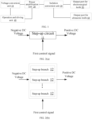
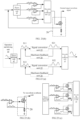
- an integrated surgical system in some embodiments includes a voltage conversion unit 10, a power amplification unit 20, an isolation conversion unit 30, an operation and driving unit 40, an output port for an electrosurgical knife 50 and an output port for an ultrasonic knife 60, which are described in detail below.
- the voltage conversion unit 10 is configured to convert an input voltage into a DC current voltage.
- the voltage conversion unit 10 is a voltage conversion circuit, that is, the voltage conversion unit 10 includes a positive input terminal, a negative input terminal, a positive output terminal and a negative output terminal, and the voltage conversion unit 10 receives an input voltage through the positive input terminal and the negative input terminal, and outputs a DC voltage through the positive output terminal and the negative output terminal.
- the voltage conversion unit 10 can output an adjustable DC voltage.
- the voltage conversion unit 10 outputs a DC voltage of an expected magnitude under a control of the operation and driving unit 40, for example, the voltage conversion unit 10 is configured to convert the input voltage into a DC voltage of a corresponding magnitude according to a first control signal, which is outputted by the operation and driving unit 40.
- the first control signal is a digital signal.
- the voltage conversion unit 10 receives a negative voltage and outputs an adjustable positive voltage.
- the voltage conversion unit 10 receives an input voltage of -48 V, and can output a DC voltage of 0-350 V.
- the voltage conversion unit 10 converts an AC voltage into a DC voltage.
- the voltage conversion unit 10 is HVDC, that is, a high voltage DC unit.
- the voltage conversion unit 10 includes a step-up circuit 11.
- the step-up circuit 11 is configured to receive a negative DC voltage, and convert the negative DC voltage into a positive DC voltage of a corresponding magnitude according to the first control signal.
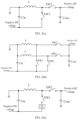
- the step-up circuit 11 of some embodiments includes one or more step-up branches 12; each step-up branch includes an energy conversion inductor L, a charging switch SW1, and a discharging switch SW2, wherein the charging switch SW1 and the discharging switch SW2 are configured to be switched on and off according to the first control signal, so as to charge and discharge the energy conversion inductor L, for voltage step-up.
- FIG. 2 (c) is an example including one step-up branch 12
- FIG. 2 (d) is an example including two step-up branches 12. By the multiple step-up branches 12, output power may be increased, and ripples may be reduced.
- one terminal of the energy conversion inductor L is grounded, the other terminal of the energy conversion inductor L is connected with a voltage input terminal of the step-up circuit 11 through the charging switch SW1, the voltage input terminal of the step-up circuit 11 is configured to receive the negative DC voltage, the other terminal of the energy conversion inductor, which is not grounded, is further connected with a voltage output terminal of the step-up circuit 11 through the discharging switch SW2, and the voltage output terminal of the step-up circuit 11 is configured to output the positive DC voltage.
- the charging switch SW1 and the discharging switch SW2 are alternately turned on, and cannot be turned on at the same time, so as to adjust the output voltage by adjusting a duty ratio of the charging switch SW1 and the discharging switch SW2. Specifically, when the charging switch SW1 is turned on and the discharging switch SW2 is turned off, the energy conversion inductor L is charged through the input negative DC voltage; and when the charging switch SW1 is turned off and the discharging switch SW2 is turned on, the energy conversion inductor L is discharged through the input negative DC voltage.
- the charging switch SW1 includes a three-terminal transistor or a diode.
- the discharging switch SW2 includes a three-terminal transistor or a diode.
- the step-up circuit 11 further includes an input capacitor Cin and/or an output capacitor Cout.
- One terminal of the input capacitor Cin is grounded, and the other terminal of the input capacitor Cin is connected with the voltage input terminal of the step-up circuit 11.
- One terminal of the output capacitor Cout is grounded, and the other terminal of the output capacitor Cout is connected with the voltage output terminal of the step-up circuit 11.
- the step-up branch 12 further includes a current detection circuit I1, which is connected in series with the charging switch SW1 for outputting a detected current; and the operation and driving unit 40 is configured to generate or adjust the first control signal according to the detected current.
- the step-up circuit 11 is a Boost circuit.
- the positive DC voltage, which is outputted by the step-up circuit 11 ranges from 0 to a preset value. In some embodiments, the preset value is 350 V
- the positive DC voltage herein includes 0.
- the input negative DC voltage is -48V.
- a wide-range adjustable positive voltage with a minimum voltage of 0 is achieved by means of negative voltage input, so as to achieve a power adjustment of a wide dynamic range.
- a front end In an adjustable power supply system that delivers energy to a surgical device, a front end generally has an AC-to-DC function, and a wide range of adjustable positive voltages are outputted based on the DC voltage.
- Some solutions are that conversion is implemented on the basis of PFC (Power Factor Correction, Power Factor Correction) by using flyback. Due to the fact that the output voltage of the AC-to-DC front-end is generally not very low nor very high, the former makes the influence of a leakage inductance of the flyback scheme become large and results in low efficiency, the latter makes an adjustment range of the output voltage of the traditional Boost circuit too narrow (can only boost).
- an adjustable output of a wide-range positive voltage with a minimum voltage of 0 is achieved, the efficiency is high, the defects of the above two situation are overcome, and the advantages of the above two situation are both considered.
- an isolation transformer is omitted, and the efficiency is higher.
- the output voltage can be higher, the number of switch tubes is smaller, and the cost is reduced.
- an adjustable range of the output voltage is wider, and a voltage output of positive zero can be supported.
- the voltage conversion unit 10 includes an inductive element and two switch elements, one terminal of the inductive element and one terminal of each of the two switch elements are connected together, the other terminal of the inductive element is grounded, the other terminals of the two switch elements are respectively used as an input terminal and an output terminal, and respective switching-on times of the two switch elements are staggered, so as to realize a voltage conversion function.
- FIG. 2 (f) is an example of a voltage conversion unit 10, including an inductor L1, a transistor Q1, a diode D1, and a capacitor C1.
- One terminal of the inductor L1 is grounded, the other terminal of the inductor L1 is connected with an anode of the diode D1, a cathode of the diode D1 is connected with one terminal of the capacitor C1, and the other terminal of the capacitor C1 is grounded.
- the anode of the diode D1 is also connected with a first electrode of the transistor Q1.
- a control electrode of the transistor Q1 is controlled by the operation and driving unit 40, such as for receiving an output signal of the operation and driving unit 40, such as the first control signal mentioned above.
- a second electrode of the transistor Q1 is used as an input terminal of the voltage conversion unit 10 and is configured to receive an input voltage.
- a cathode of the diode D1 is used as an output terminal of the voltage conversion unit 10 and is configured to output an adjustable DC voltage.
- the diode D, and the transistor Q1 are used as two switch elements, and under the control of the operation and driving unit 40, switching-on time of the diode D and switching-on time of the transistor Q1 are staggered, so as to realize a voltage conversion function.
- the transistor mentioned herein is a three-terminal device, which may be a transistor of any structure, such as a bi-pole transistor (BJT) or a field effect transistor (FET).
- BJT bi-pole transistor
- FET field effect transistor
- the control electrode of the transistor refers to a gate of the bi-pole transistor
- the first electrode may be a collector or an emitter of the bi-pole transistor
- the corresponding second electrode may be an emitter or a collector of the bi-pole transistor.
- the "emitter” and “collector” may be interchanged according to the flow direction of the signal.
- the control electrode of the transistor refers to a gate electrode of the field effect transistor
- the first electrode may be a drain electrode or a source electrode of the field effect transistor
- a corresponding second electrode may be a source electrode or a drain electrode of the field effect transistor; wherein the "source” and “drain” may be interchanged depending on the flow direction of the signal.
- the power amplification unit 20 receives an output of the voltage conversion unit 10 and an output of the operation and driving unit 40, for outputting.
- the output of the power amplification unit 20 is provided to the output port for the electrosurgical knife 50 and the output port for the ultrasonic knife 60 after passing through the isolation conversion unit 30, so as to supply power to the electrosurgical knife and supply power to the ultrasonic knife.
- the power amplifier unit 20 can separately supply power to the electrosurgical knife, or separately supply power to the ultrasonic knife, and can also supply power to both the electrosurgical knife and the ultrasonic knife at the same time.
- the power amplifier unit 20 is configured to convert the DC voltage which is outputted by the voltage conversion unit 10 into an AC voltage and amplify the AC voltage, and then provide the amplified AC voltage to the output port for the electrosurgical knife 50 after passing through the isolation conversion unit 30, so as to supply power to the electrosurgical knife.
- the power amplifier unit 20 converts the DC voltage which is outputted by the voltage conversion unit 10 into an AC voltage and amplifies the AC voltage.
- the power amplifier unit 20 is configured to convert the DC voltage which is outputted by the voltage conversion unit 10 into an AC voltage and amplify the AC voltage according to a second control signal, which is outputted by the operation and driving unit 40.
- the second control signal is a digital signal.
- the power amplifier unit 20 converts the DC voltage which is outputted by the voltage conversion unit 10 into a square-wave voltage or a square-wave signal.
- the power amplification unit 20 amplifies a third signal and then outputs the amplified third signal, wherein the power amplification unit 20 receives the power supply of the voltage conversion unit 10.
- the power amplification unit 20 amplifies the third signal and outputs the amplified third signal, under the power supply of the DC voltage which is outputted by the voltage conversion unit 10; and then the outputted third signal is provided to the output port for the ultrasonic knife 60 after passing through the isolation conversion unit 30, so as to supply power to the ultrasonic knife.
- the third signal may be generated and outputted by the operation and driving unit 40.
- the power amplifier unit 20 outputs a periodic signal having a complete sine-wave without crossover distortion.
- the third signal includes two paths of drive current signals, such as a current signal I A and a current signal I B , and the power amplifier unit 20 amplifies the third signal and then outputs the amplified third signal to obtain, for example, a current signal K * (I A -I B ), wherein K is an amplification factor.
- the third signal is an analog signal, for example, the third signal includes two paths of drive current signals, both of which are analog signals, for example, both the current signal I A and the current signal I B mentioned above are analog signals.
- the power amplifier unit 20 has a plurality of implementations.
- the power amplifier unit 20 can be implemented through one power amplifier circuit, or two power amplifier circuits.
- the power amplifier unit 20 includes a first power amplifier unit 21 and a second power amplifier unit 23, which are described in detail below.
- the first power amplification unit 21 is configured to convert the DC voltage which is outputted by the voltage conversion unit 10 into an AC voltage, and amplify the AC voltage, and then provide the amplified AC voltage to the output port for the electrosurgical knife 50 after passing through the isolation conversion unit 30, so as to supply power to the electrosurgical knife.
- the first power amplification unit 21 converts the DC voltage which is outputted by the voltage conversion unit 10 into an AC voltage and amplifies the AC voltage.
- the first power amplifier unit 21 is configured to convert the DC voltage which is outputted by the voltage conversion unit 10 into an AC voltage and amplify the AC voltage according to a second control signal, which is outputted by the operation and driving unit 40.
- the second control signal is a digital signal.
- the first power amplification unit 21 converts the DC voltage which is outputted by the voltage conversion unit 10 into a square-wave voltage or a square-wave signal.
- the first power amplifier unit 21 is a full-bridge power amplifier circuit.
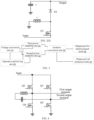
- FIG. 4 is an example of a first power amplifier unit 21, which includes a transistor Q2, a transistor Q3, a transistor Q4, and a transistor Q5.
- a first electrode of the transistor Q2 is connected with a first electrode of the transistor Q3, and configured to receive a DC voltage which is outputted by the voltage conversion unit 10.
- a second electrode of the transistor Q2 is connected with a first electrode of the transistor Q4 and used as a first output terminal of the first power amplifier unit 21.
- a second electrode of the transistor Q3 is connected with a first electrode of the transistor Q5 and used as a second output terminal of the first power amplifier unit 21. Second electrodes of the transistor Q4 and of the transistor Q5 are both grounded.
- Control electrodes of the transistor Q2, transistor Q2, of the transistor Q4 and of the transistor Q5 are all controlled by the operation and driving unit 40, for example, for receiving a signal, which is outputted by the operation and driving unit 40, for example, the second control signal, wherein the second control signal may be a pulse-width modulation signal.
- the first power amplifier unit 21 outputs through the first output terminal and the second output terminal of the first power amplifier unit 21, for example, an AC voltage or signal, which is outputted after converting and amplifying the DC voltage which is outputted by the voltage conversion unit 10.
- an LC series circuit is further connected between two output terminals of the full-bridge power amplifier circuit, for example, an LC series circuit is connected between the second electrode of the transistor Q2 and the second electrode of the transistor Q3, which helps the full-bridge power amplifier circuit to implement soft switching.
- the second power amplification unit 23 amplifies the third signal and then outputs the amplified third signal, wherein the second power amplification unit 23 receives the power supply of the voltage conversion unit 10.
- the second power amplification unit 23 amplifies the third signal and outputs the amplified third signal, under the power supply of the DC voltage which is outputted by the voltage conversion unit 10; and then the outputted third signal is provided to the output port for the ultrasonic knife 60 after passing through the isolation conversion unit 30, so as to supply power to the ultrasonic knife 60.
- the third signal may be generated and outputted by the operation and driving unit 40.
- the second power amplifier unit 23 outputs a periodic signal having a complete sine-wave without crossover distortion.
- the third signal includes two paths of drive current signals, such as a current signal I A and a current signal I B , and the second power amplifier unit 23 amplifies the third signal and then outputs the amplified third signal to obtain, for example, a current signal K * (I A -I B ), wherein K is an amplification factor.
- the third signal is an analog signal, for example, the third signal includes two paths of drive current signals, both of which are analog signals, for example, both the current signal I A and the current signal I B mentioned above are analog signals.
- the second power amplifier unit 23 is a linear power amplifier circuit.
- the second power amplifier unit 23 is driven by two paths of drive signals, such as a current signal I A and a current signal I B , so as to output K * (I A -I B ) to ensure that I A -I B is a complete sine-wave without crossover distortion and waveform distortion, such that a relatively ideal result can be achieved by means of a hardware circuit in a low cost, which is further described below.
- the voltage conversion unit 10 is configured to convert the input voltage, according to the first control signal, into a DC voltage which drives the first power amplifier unit 21, or into a DC voltage which is delivered to the second power amplifier unit 23, that is, converting the input voltage into a working voltage of the second power amplifier unit 23, wherein the working voltage is a DC voltage.
- the isolation conversion unit 30 includes a first isolation conversion unit 31 and a second isolation conversion unit 33, which are described in detail below.
- the first isolation conversion unit 31 is configured to perform isolation and conversion on the AC voltage which is outputted by the power amplification unit 20, and then provide the amplified AC voltage to the output port for the electrosurgical knife 50. In some embodiments, the first isolation conversion unit 31 is configured to perform resonance, isolation and conversion on the AC voltage which is outputted by the power amplification unit 20, and then provide the amplified AC voltage to the output port for the electrosurgical knife 50.
- the first isolation conversion unit 31 is configured to perform isolation and conversion on the AC voltage which is outputted by the first power amplification unit 21 and then provide the amplified AC voltage to the output port for the electrosurgical knife 50.
- the first isolation conversion unit 31 is configured to perform resonance, isolation and conversion on the AC voltage which is outputted by the first power amplification unit 21 and then provide the amplified AC voltage to the output port for the electrosurgical knife 50.
- the full-bridge power amplifier circuit is configured to convert the DC voltage which is outputted by the voltage conversion unit 10 into a square-wave voltage; and the first isolation conversion unit 31 is configured to filter the square-wave voltage into a sine-wave voltage, perform resonance, isolation and conversion on the sine-wave voltage, and then provide the sine-wave voltage to an output port for the electrosurgical knife, so as to supply power to the electrosurgical knife.
- the first isolation conversion unit 31 is implemented by a transformer.
- the second isolation conversion unit 33 is configured to perform isolation and conversion on the amplified third signal, which is outputted by the power amplifier unit 20 after amplifying the third signal, and then provide the amplified signal to the output port for the ultrasonic knife 60.
- the second isolation conversion unit 33 is configured to perform isolation and conversion on the amplified third signal, which is outputted by the power amplifier unit 20 after amplifying the third signal, and then provide the amplified signal to the output port for the ultrasonic knife 60.
- the second isolation conversion unit 33 is implemented by a transformer.
- the integrated surgical system of some embodiments further includes a sampling unit 49, which is described in detail below.
- the sampling unit 49 is configured to sample an input or an output of the isolation conversion unit 30, so as to obtain a sampled electrical signal.
- the sampled electrical signal includes at least one of a voltage, a current, and power.
- the operation and driving unit 40 adjusts at least one of the first control signal, the second control signal, and the third signal, according to the sampled electrical signal.
- the sampled electrical signal includes a first sampled electrical signal and/or a second sampled electrical signal.
- the sampling unit 49 is configured to sample an input or an output of the first isolation conversion unit 31, so as to obtain a first sampled electrical signal; and the sampling unit 49 is further configured to sample an input or an output of the second isolation conversion 33, so as to obtain a second sampled electrical signal.
- the first sampled electrical signal includes at least one of a voltage, a current, and power.
- the second sampled electrical signal includes at least one of a voltage, a current, and power.
- the operation and driving unit 40 adjusts the first control signal and/or the second control signal according to the first sampled electrical signal.
- the operation and driving unit 40 adjusts the third signal according to the second sampled electrical signal.
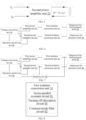
- the first isolation conversion unit 31 of some embodiments further includes at least one of a series-parallel resonant circuit 91, a common-mode filter circuit 92, and a turning-off absorption circuit 93, which is described in detail below.
- the series-parallel resonant circuit 91 is configured to filter the AC voltage which is outputted by the first power amplifier unit 21, for example, filter the square-wave into a sine-wave and then output the sine-wave.
- the common-mode filter circuit 92 is configured to filter a common-mode signal out of an AC voltage, which voltage is outputted by the first power amplifier unit 21.
- the turning-off absorption circuit 93 is configured to absorb oscillation after the first power amplification unit 93 is turned off.
- FIG. 9 it is an example showing a circuit diagram of a voltage conversion unit 10, a first power amplification unit 21 and a first isolation conversion unit 31, wherein the circuit diagram of the first isolation conversion unit 31 includes circuit implementation structures of a series-parallel resonant circuit 91, a common-mode filter circuit 92, a turning-off absorption circuit 93, and a first isolation unit 33.
- the integrated surgical system of some embodiments further includes an impedance matching circuit 94, which is described in detail below.
- the impedance matching circuit 94 is connected between the power amplifier unit 20 and the isolation conversion unit 30 for impedance matching.
- the impedance matching circuit 94 is connected between the second power amplification unit 23 and the isolation conversion unit 30 for impedance matching.
- the impedance matching circuit 94 is connected between the power amplification unit 20 and the second isolation conversion unit 33 for impedance matching.
- the impedance matching circuit 94 is connected between the second power amplification unit 23 and the second isolation conversion unit 33 for impedance matching.
- the operation and driving unit 40 is configured to generate and/or adjust anyone, any two, or all three of the first control signal, the second control signal, and the third signal, which are described in detail below.
- the operation and driving unit 40 receives a control parameter input by the user through the user input unit.
- the operation and driving unit 40 is configured to generate a first control signal, a second control signal and a third signal, according to the control parameter.
- the operation and driving unit 40 is configured to adjust anyone, any two, or all three of the first control signal, the second control signal, and the third signal according to a sampled electrical signal.
- the operation and driving unit 40 is configured to adjust the first control signal and/or the second control signal according to the first sampled electrical signal, and adjust the third signal according to the second sampled electrical signal.
- the operation and driving unit 40 includes a processor 41, a waveform generator 43, a digital-to-analog conversion unit 45, and a wave-splitting unit 47, which are described in detail below.
- the processor 45 is configured to generate a first control signal.
- the operation and driving unit 40 further includes a digital-to-analog conversion unit 46, which is configured to convert the first control signal from a digital signal into an analog signal, and then output the analog signal to the voltage conversion unit 10.
- the processor 45 controls the waveform generator 43 to generate a second digital signal waveform as a second control signal.
- the processor controls the waveform generator 43 to generate a third digital signal waveform, and the digital-to-analog conversion unit 45 converts the third digital signal waveform into a third analog signal waveform as a third initial signal; and the wave-splitting unit 47 is configured to wave-split the third analog signal waveform or the third initial signal to obtain a third signal. In some embodiments, the wave-splitting unit 47 wave-splits the third analog signal waveform into at least two path of wave-split signals as the third signal.
- the processor 41 receives an input parameter, such as a control parameter of the user input unit, calculates parameter(s), such as amplitude, frequency, and duty cycle of a drive waveform, and sends waveform data or waveform parameters to the waveform generator 43, so as to generate the required drive waveform.
- an input parameter such as a control parameter of the user input unit
- parameter(s) such as amplitude, frequency, and duty cycle of a drive waveform
- the analog signal waveform is used by the second power amplifier unit 23, for example the linear power amplifier, and the digital signal waveform is used to drive the first power amplifier unit 21, for example, a full-bridge power amplifier; and the processor 41 calculates relevant electrical parameters, such as impedance, power and a phase difference according to the sampled electrical signal fed back by the sampling unit 49, and adjusts the output voltage of an output waveform and the output voltage of the voltage conversion unit 10 in real time, thereby achieving the required energy output.
- relevant electrical parameters such as impedance, power and a phase difference according to the sampled electrical signal fed back by the sampling unit 49, and adjusts the output voltage of an output waveform and the output voltage of the voltage conversion unit 10 in real time, thereby achieving the required energy output.
- the output port for the electrosurgical knife 50 includes a mono-pole terminal 51, a neutral-pole terminal 53, and a bi-pole terminal 54.
- the integrated surgical system of some embodiments further includes a switch component 70 for connecting and disconnecting a power supply to the output port for the electrosurgical knife 50 and the output port for the ultrasonic knife 60.
- the switch component 70 is a manual switch component for the user to manually connect and disconnect the power supply of the output port for the electrosurgical knife 50 and the output port for the ultrasonic knife 60.
- the manual switch component 70 the user can switch on the output port for the electrosurgical knife 50, so as to supply power to the electrosurgical knife; by means of the manual switch component 70, the user can switch off the output port for the electrosurgical knife 50, so that the electrosurgical knife cannot obtain power from the output port for the electrosurgical knife 50.
- the user can switch on the output port for the ultrasonic knife 60, so as to supply power to the ultrasonic knife; by means of the manual switch component 70, the user can switch off the output port for the ultrasonic knife 60, so that the ultrasonic knife cannot obtain power from the output port for the ultrasonic knife 60.
- the electrosurgical knife may be fixedly connected with the output port for the electrosurgical knife 50 through a cable.
- the electrosurgical knife is connected with the output port for the electrosurgical knife 50 in a pluggable manner.
- the ultrasonic knife may be fixedly connected with the output port for the ultrasonic knife 60 through a cable.
- the ultrasonic knife is connected with the output port for the ultrasonic knife 60 in a pluggable manner.
- the output port for the electrosurgical knife 50 and the output port for the ultrasonic knife 60 may be the same port, and both the electrosurgical knife and the ultrasonic knife are in pluggable connection with the port.
- the output port for the electrosurgical knife 50 and the output port for the ultrasonic knife 60 can be the same port, the integrated surgical system can provide both electrosurgical knife energy and ultrasonic knife energy, but only one energy can be outputted at the same moment, and the energy output is determined in a pre-emptive manner.
- the energy conversion can be completed by the operation and driving unit 40 through controlling the switch component 70.
- FIG. 14 is an example of an integrated surgical system.
- the integrated surgical system shown in FIG. 14 supports one path of an energy output for the ultrasonic knife, two paths of energy outputs for a mono-pole electrosurgical knife, and one path of an energy output for a bi-pole electrosurgical knife.
- a power output portion of the integrated surgical system consists of two portions, including a high-frequency power generation circuit for the electrosurgical knife, which is mainly composed of a first power amplifier unit 21, such as a full-bridge power amplifier circuit (full-bridge power amplifier), and a first isolation conversion unit 31, such as a transformer T1 and associated peripheral devices; and a power driving circuit for ultrasonic knife, which is mainly composed of a second power amplifier unit 23, such as a linear power amplifier circuit (a linear power amplifier), and a first isolation conversion unit 33, such as a transformer T2.
- a high-frequency power generation circuit for the electrosurgical knife which is mainly composed of a first power amplifier unit 21, such as a full-bridge power amplifier circuit (full-bridge power amplifier), and a first isolation conversion unit 31, such as a transformer T1 and associated peripheral devices
- a power driving circuit for ultrasonic knife which is mainly composed of a second power amplifier unit 23, such as a linear power amplifier circuit (a linear power amplifier), and a first isolation conversion unit 33, such as a
- the voltage conversion unit 10 such as a high voltage DC (HVDC) power supply unit, serves as an energy source to supply power to the full-bridge power amplifier and the linear power amplifier at the same time, and the sampling unit 49, for example, the sensor S 1 and the sensor S2, are respectively configured to obtain signals, such as voltage, current and power of the power generation circuit for the electrosurgical knife and the power driving circuit for the ultrasonic knife.
- the sensor signals are analysed by the operation and driving unit 40, and used to implement driving control over the foregoing two power amplifiers and HVDC.
- the user input unit provides an operation interface, through which the user can control the outputted control parameter, such as a working mode and a power magnitude.
- the integrated surgical system samples and outputs an energy signal through the sampling unit 49, and the operation and driving unit 40 performs a feedback adjustment on the two power amplifier circuits, so as to realize a stable output at preset energy of the user input unit.
- the output port for the electrosurgical knife 50 includes a mono-pole terminal 1, a mono-pole terminal 2, a neutral-pole terminal and a bi-pole terminal in the figure, which can support both the two paths of energy outputs for the mono-pole electrosurgical knife and one path of an energy output for bi-pole electrosurgical knife.
- K1 to K7 are selection switches for energy output of instrument channels, which are selectively connect to the corresponding instrument the output energy for the ultrasonic knife and the output energy for the electrosurgical knife, according to an instrument interface and a triggered control input signal which are selected by the user.
- the energy output for the electrosurgical knife and the energy output for the ultrasonic knife are in a time-division mode.
- the power generation circuit for the electrosurgical knife and a certain switch of the instrument channel for the electrosurgical knife (K1, K2, K3 or K4 and K5) are switched on (closed) to output energy
- the power generation circuit for the ultrasonic knife does not work and switch(es) of the instrument channel for the ultrasonic knife are switched off, and there is no output energy for the ultrasonic knife.
- the energy output of the ultrasonic knife is realized, the energy output for the electrosurgical knife is switched off.
- the power generation circuit for the electrosurgical knife and the power generation circuit for the ultrasonic knife are two independent circuits in this disclosure, it is also possible to support simultaneous outputs of at least two different energy instruments, that is, to output energy for the electrosurgical knife and to output energy for the ultrasonic knife at the same time.
- the switch component 70 includes a first group of switches 71 and a second group of switches 75, wherein the first group of switches 71 are configured to connect and disconnect an energy delivery from the isolation conversion unit 30, for example, the first isolation conversion unit 31, to the output port for the electrosurgical knife 50, and the second group of switches 75 are configured to connect and disconnect an energy delivery from the isolation conversion unit 30, such as the second isolation conversion unit 33, to the output port for the ultrasonic knife 60.
- the output port for the electrosurgical knife 50 and the output port for the ultrasonic knife 60 share a same mechanical insertion port 100, and if a surgical instrument is inserted into the mechanical insertion port 100, energy is delivered through the voltage conversion unit 10, the first power amplification unit 21 and the isolation conversion unit 30, for example, the first isolation conversion unit 31, or energy is delivered through the voltage conversion unit 10, the second power amplification unit 23 and the isolation conversion unit 30, for example, the second isolation conversion unit 33.
- the operation and driving unit 40 identifies a type of the inserted surgical instrument through the mechanical insertion port 100; wherein the surgical instrument at least includes two types, one type is ultrasonic knife, and the other type is electrosurgical knife; wherein the surgical instrument is provided with a trigger key.
- situations are as follows.
- the operation and driving unit 40 is configured to control the first group of switches 71 to be switched on, so as to deliver energy to the electrosurgical knife through the voltage conversion unit 10, the first power amplification unit 21 and the isolation conversion unit 30, such as a first isolation conversion unit 31,when the trigger key is triggered; if the type of the surgical instrument is currently identified as electrosurgical knife.
- the operation and driving unit 40 is further configured to control the second group of switches 72 to be switched on, so as to deliver energy to the ultrasonic knife through the voltage conversion unit 10, the second power amplification unit 23 and the isolation conversion unit 30, such as a second isolation conversion unit 33, when the trigger key is triggered; if the type of the surgical instrument is currently identified as ultrasonic knife.
- the type of the electrosurgical knife further includes at least three types, the first type is mono-pole electrosurgical knife, the second type is neutral-pole electrosurgical knife, and the third type is bi-pole electrosurgical knife; and the output port for the electrosurgical knife 50 includes a mono-pole terminal 51, a neutral-pole terminal 53 and a bi-pole terminal 54; the first group of switches 71 includes a first group of sub-switches 72, a second group of sub-switches 73 and a third group of sub-switches 74.
- the first group of sub-switches 72 are configured to connect and disconnect an energy delivery from the isolation conversion unit 30 to the mono-pole terminal 51
- the second group of sub-switches 73 are configured to connect and disconnect an energy delivery of the isolation conversion unit 30 to the neutral-pole terminal 53
- the third group of sub-switches 74 are configured to connect and disconnect an energy delivery of the isolation conversion unit 30 to the bi-pole terminal 54.
- the operation and driving unit 40 controls the first group of sub-switches 72 to be switched on, so as to deliver energy to the mono-pole electrosurgical knife through the voltage conversion unit 10, the first power amplification unit 21 and the isolation conversion unit 30, for example, the first isolation conversion unit 31.
- the operation and driving unit 40 controls the second group of sub-switches 73 to be switched on, so as to deliver energy to the neutral-pole electrosurgical knife through the voltage conversion unit 10, the first power amplification unit 21 and the isolation conversion unit 30, for example, the first isolation conversion unit 31.
- the operation and driving unit controls the third group of sub-switches 74 to be switched on, so as to deliver energy to the bi-pole electrosurgical knife through the voltage conversion unit 10, the first power amplification unit 21 and the isolation conversion unit 30, such as the first isolation conversion unit 31.
- the identification of the type of the surgical instrument may be determined by an identification code stored in a memory inside the surgical instrument, and when the surgical instrument is inserted into the mechanical insertion port 100, the operation and driving unit 40 is connected with the surgical instrument through a communication line, so that the operation and driving unit 40 may identify the type of the surgical instrument.
- the mechanical insertion port 100 may also be configured to be inserted by an integrated surgical instrument, and the working mode of the integrated surgical instrument includes at least two modes, one mode relating to electrosurgical knife and the other mode relating to ultrasonic knife.
- the mechanical insertion port 100 is capable of being inserted by an integrated surgical instrument, that is, the surgical instrument may be an integrated surgical instrument, and the integrated surgical instrument is provided with a trigger key.
- the operation and driving unit 40 obtains a working mode of the inserted integrated surgical instrument, and the working mode of the integrated surgical instrument at least includes two modes, one mode relating to electrosurgical knife and the other mode relating to ultrasonic knife.
- the operation and driving unit 40 controls the first group of switches 71 to be switched on, so as to deliver energy to the integrated surgical instrument through the voltage conversion unit 10, the first power amplification unit 21 and the isolation conversion unit 30, for example, the first isolation conversion unit 31.
- the operation and driving unit 40 controls the second group of switches 75 to be switched on, so as to deliver energy to the integrated surgical instrument through the voltage conversion unit 10, the second power amplification unit 23 and the isolation conversion unit 30, such as the second isolation conversion unit 33.
- the mode relating to electrosurgical knife of the integrated surgical instrument further includes at least three modes, the first mode relating to mono-pole electrosurgical knife, the second mode relating to neutral-pole electrosurgical knife, and the third mode relating to bi-pole electrosurgical knife;
- the output port for the electrosurgical knife 50 includes a mono-pole terminal 51, a neutral-pole terminal 53, and a bi-pole terminal 54;
- the first group of switches 71 includes a first group of sub-switches 72, a second group of sub-switches 73 and a third group of sub-switches 74;
- the first group of sub-switches 72 are configured to connect and disconnect an energy delivery from the isolation conversion unit 30 to the mono-pole terminal 51;
- the second group of sub-switches 73 are configured to connect and disconnect an energy delivery from the isolation conversion unit 30 to the neutral-pole terminal 53;
- the third group of sub-switches 74 are configured to connect and disconnect an energy delivery from the isolation conversion unit 30 to the bi-pole terminal 54.
- the operation and driving unit 40 controls the first group of sub-switches 72 to be switched on, so as to deliver energy to the integrated surgical instrument through the voltage conversion unit 10, the first power amplification unit 21 and the isolation conversion unit 30, for example, the first isolation conversion unit 31.
- the operation and driving unit 40 controls the second group of sub-switches 73 to be switched on, so as to deliver energy to the integrated surgical instrument through the voltage conversion unit 10, the first power amplification unit 21 and the isolation conversion unit 30, for example, the first isolation conversion unit 31.
- the operation and driving unit 40 controls the third group of sub-switches 74 to be switched on, so as to deliver energy to the integrated surgical instrument through the voltage conversion unit 10, the first power amplification unit 21 and the isolation conversion unit 30, such as the first isolation conversion unit 31.
- the integrated surgical system includes a switch component 05, and the switch component 05 is configured to switch the modes of the integrated surgical instrument.
- the switch component 05 switches the integrated surgical instrument from the mode relating to electrosurgical knife to the mode relating to ultrasonic knife, or switches the integrated surgical instrument from the mode relating to ultrasonic knife to the mode relating to electrosurgical knife.
- the switch component 05 includes a foot switch.
- the switch component 05 may include two foot switches, one foot switch is configured to switch the integrated surgical instrument from the mode relating to electrosurgical knife to the mode relating to ultrasonic knife, or switch the integrated surgical instrument from the mode relating to ultrasonic knife to the mode relating to electrosurgical knife, and the other foot switch is configured to switch the integrated surgical instrument between the mode relating to mono-pole electrosurgical knife, the mode relating to neutral-pole electrosurgical knife, and the mode relating to bi-pole electrosurgical knife.
- the output port for the electrosurgical knife 50 is provided with a first group of mechanical insertion ports 101
- the output port for the ultrasonic knife 60 is provided with a second group of mechanical insertion ports 105.
- the operation and driving unit 40 controls the first group of switches 71 to be switched on, so as to deliver energy to the electrosurgical knife through the voltage conversion unit 10, the first power amplification unit 21 and the isolation conversion unit 30, such as the first isolation conversion unit 31.
- the operation and driving unit 40 controls the second group of switches 75 to be switched on, so as to deliver energy to the ultrasonic knife through the voltage conversion unit 10, the second power amplification unit 23 and the isolation conversion unit 30, for example, the second isolation conversion unit 33.
- the first group of mechanical insertion ports 101 includes a mono-pole mechanical insertion port 102, a neutral-pole mechanical insertion port 103, and a bi-pole mechanical insertion port 104;
- the first group of switches 71 includes a first group of sub-switches 72, a second group of sub-switches 73 and a third group of sub-switches 74;
- the first group of sub-switches 72 are configured to connect and disconnect an energy delivery from the isolation conversion unit 30 to the mono-pole terminal 51
- the second group of sub-switches 73 are configured to connect and disconnect an energy delivery from the isolation conversion unit 30 to the neutral-pole terminal 53
- the third group of sub-switches 74 are configured to connect and disconnect an energy delivery from the isolation conversion unit 30 to the bi-pole terminal 54.
- the operation and driving unit 40 controls the first group of sub-switches 72 to be switched on, so as to deliver energy to the mono-pole electrosurgical knife through the voltage conversion unit 10, the first power amplification unit 21 and the isolation conversion unit 30, for example, the first isolation conversion unit 31.
- the operation and driving unit 40 controls the second group of sub-switches 73 to be switched on, so as to deliver energy to the neutral-pole electrosurgical knife through the voltage conversion unit 10, the first power amplification unit 21 and the isolation conversion unit 30, for example, the first isolation conversion unit 31.
- the operation and driving unit 40 controls the third group of sub-switches 74 to be switched on, so as to deliver energy to the bi-pole electrosurgical knife through the voltage conversion unit 10, the first power amplification unit 21 and the isolation conversion unit 30, such as the first isolation conversion unit 31.
- At least two paths of wave-split signals are wave-split by the operation and driving unit 40 through the wave-splitting unit 47, for example, sinusoidal-shaped chopping signals S11 and S12 (or a half-wave or other form of waveform, which is only used as an example description herein), and then signals S11 and S 12 are converted (such as amplified) by the second power amplification unit 23, so as to obtain signals S21 and S22, which are synthesised to obtain a target waveform signal (for example, a sine-wave signal).
- a target waveform signal for example, a sine-wave signal
- the obtained target waveform signal (for example, a sine-wave signal) has a certain degree of distortion in its waveform during the wave-splitting, synthesis, and conversion, which results in that the obtained target waveform has a certain crossover distortion.
- the waveform of the original third analog signal that is, to modify, through feedback, the third analog signal waveform generated by the waveform generator 43 and the digital-analog conversion unit 45, which is unfavourable for the use of surgical devices (or surgical instruments, such as ultrasonic knife and electrosurgical knife mentioned in this disclosure).
- the second power amplifier unit 23 finally outputs a desired target waveform signal, for example, a desired sine-wave signal, which may typically be a complete sine-wave signal.
- a desired target waveform signal for example, a desired sine-wave signal, which may typically be a complete sine-wave signal.
- the waveform distortion does not need to be corrected to achieve a relatively ideal result, and this can be implemented by means of a hardware circuit, and has a lower cost, which is described in detail below.
- the second power amplifier unit 23 includes a signal conversion unit 25, a hardware feedback unit 26, and a waveform synthesis unit 27, which are described in detail below.
- a number of the signal conversion unit 25 is the same as a number of paths of the wave-split signals, and each signal conversion unit 25 is configured to receive one path of the wave-split signal for converting the wave-split signal and then output the converted wave-split wave.
- the waveform synthesis unit 27 is configured to receive and synthesize an output of each signal conversion unit 25 into one path of a sine-wave signal, and then output the synthesised sine-wave signal; and the synthesised output is used as the output of the second power amplification unit 23, so that the output of the waveform synthesis unit 27 is the target waveform signal.
- the signal conversion unit 25 is configured to convert the wave-split signal, including but not limited to signal amplification.
- the introduction of the hardware feedback unit 26 is to enable the target waveform signal, which is outputted by the waveform synthesis unit 27, to be a desired target waveform signal, for example, a desired sine-wave signal. That is, the hardware feedback unit 26 is configured to feedback a signal received by an input terminal of the hardware feedback unit 26 to an output terminal of the hardware feedback unit 26, so that the target waveform signal, which is outputted by the waveform synthesis unit 27, is a desired target waveform signal, and the desired sine-wave signal is used to be provided to the energy output port 100.
- one hardware feedback unit 26 exists, an input terminal of the hardware feedback unit 26 is connected with an output terminal of the waveform synthesis unit 27, and an output terminal of the hardware feedback unit 26 is connected with an input terminal of the wave-splitting unit 47.
- the signal conversion unit 25 may include an operational amplifier, for example, operational amplifiers D1 to Dn in the figure, wherein n is a serial number; and the hardware feedback unit 26 includes a transistor and a resistor.
- a number of the hardware feedback units 26 is the same as the number of the signal conversion units 25, each hardware feedback unit 26 corresponds to one signal conversion unit 25, an input terminal of each hardware feedback unit 26 is connected with an output terminal of a corresponding signal conversion unit 25, and an output terminal of each hardware feedback unit 26 is connected with an input terminal of the corresponding signal conversion unit 25.
- the hardware feedback unit 26 is configured to enable an output of the corresponding signal conversion unit 25 to accord with expectation, so as to further enable a target waveform signal, which is outputted by the waveform synthesis unit 27, to be a desired waveform signal.
- the signal conversion unit 25 may include an operational amplifier, for example, operational amplifiers D1 to Dn in the figure, wherein n is a serial number; and the hardware feedback unit 26 includes a transistor and a resistor.
- the hardware feedback unit 26 is introduced to perform sampling and recognition process on the output signal of the signal conversion unit 25, and then feedback this output signal to the signal conversion unit 25, so that the signal conversion unit 25 compares the output signal with the corresponding inputted wave-split signal, and adjusts from its own output signal through continuous feedback adjustments.
- the hardware feedback unit 26 includes one or more of a power amplifier circuit, a resistor, a capacitor, an inductor, a diode, and a transistor.
- the wave-split signal and the target waveform signal are exemplarily drawn in FIG. 21 (a) , FIG. 21 (b), FIG. 22 (a), FIG. 22 (b), and FIG. 22 (c) , but this is merely an example and does not indicate that the wave-split signal and the target waveform signal can only be such.
- the target waveform signal is a sine-wave signal
- the desired target waveform signal is a desired sine-wave signal, for example, a complete sine-wave signal, so that a plurality of complete sine-wave signals constitute a periodic signal of the sine-wave signal.
Landscapes
- Health & Medical Sciences (AREA)
- Surgery (AREA)
- Life Sciences & Earth Sciences (AREA)
- Engineering & Computer Science (AREA)
- Veterinary Medicine (AREA)
- General Health & Medical Sciences (AREA)
- Nuclear Medicine, Radiotherapy & Molecular Imaging (AREA)
- Public Health (AREA)
- Biomedical Technology (AREA)
- Heart & Thoracic Surgery (AREA)
- Medical Informatics (AREA)
- Molecular Biology (AREA)
- Animal Behavior & Ethology (AREA)
- Otolaryngology (AREA)
- Plasma & Fusion (AREA)
- Physics & Mathematics (AREA)
- Oral & Maxillofacial Surgery (AREA)
- Pathology (AREA)
- Dentistry (AREA)
- Mechanical Engineering (AREA)
- Surgical Instruments (AREA)
Applications Claiming Priority (2)
| Application Number | Priority Date | Filing Date | Title |
|---|---|---|---|
| CN202111659666 | 2021-12-31 | ||
| PCT/CN2022/136005 WO2023124755A1 (zh) | 2021-12-31 | 2022-12-01 | 一种集成手术系统 |
Publications (2)
| Publication Number | Publication Date |
|---|---|
| EP4458288A1 true EP4458288A1 (de) | 2024-11-06 |
| EP4458288A4 EP4458288A4 (de) | 2025-04-23 |
Family
ID=83823744
Family Applications (1)
| Application Number | Title | Priority Date | Filing Date |
|---|---|---|---|
| EP22914010.8A Pending EP4458288A4 (de) | 2021-12-31 | 2022-12-01 | Integriertes chirurgisches system |
Country Status (4)
| Country | Link |
|---|---|
| US (1) | US20240350189A1 (de) |
| EP (1) | EP4458288A4 (de) |
| CN (3) | CN115281787A (de) |
| WO (1) | WO2023124755A1 (de) |
Families Citing this family (3)
| Publication number | Priority date | Publication date | Assignee | Title |
|---|---|---|---|---|
| CN115281787A (zh) * | 2021-12-31 | 2022-11-04 | 武汉迈瑞医疗技术研究院有限公司 | 一种用于向外科设备递送能量的手术系统和可调电源系统 |
| CN116191826A (zh) * | 2023-03-06 | 2023-05-30 | 上海硕慧科技有限公司 | 一种超声刀驱动系统 |
| CN119074198A (zh) * | 2024-10-11 | 2024-12-06 | 哈尔滨思哲睿智能医疗设备股份有限公司 | 兼容电刀与超声刀的手术装置和手术系统 |
Family Cites Families (13)
| Publication number | Priority date | Publication date | Assignee | Title |
|---|---|---|---|---|
| US6072477A (en) * | 1996-07-10 | 2000-06-06 | Matsushita Electric Industrial Co., Ltd. | El display and driving circuit for the same |
| CN101849839B (zh) * | 2009-03-30 | 2014-01-01 | 深圳迈瑞生物医疗电子股份有限公司 | 超声探头驱动装置和驱动方法 |
| CN203243245U (zh) * | 2013-01-10 | 2013-10-16 | 中国石油大学(华东) | 一种基于buck-boost电路的新型dc/ac逆变器 |
| MX387486B (es) * | 2015-09-30 | 2025-03-18 | Ethicon Llc | Generador de frecuencia ágil para un instrumento quirúrgico. |
| US11006997B2 (en) * | 2016-08-09 | 2021-05-18 | Covidien Lp | Ultrasonic and radiofrequency energy production and control from a single power converter |
| CN107134922B (zh) * | 2017-07-05 | 2023-10-31 | 郑州工业应用技术学院 | 一种仪用电源的转换电路 |
| US11464535B2 (en) * | 2017-12-28 | 2022-10-11 | Cilag Gmbh International | Detection of end effector emersion in liquid |
| CN111265293A (zh) * | 2018-12-05 | 2020-06-12 | 上海逸思医疗科技有限公司 | 一种可变频率输出的电外科发生器和电外科系统 |
| CN210170159U (zh) * | 2018-12-05 | 2020-03-24 | 上海逸思医疗科技有限公司 | 一种可变频率输出的电外科发生器和电外科系统 |
| CN109873559A (zh) * | 2019-01-15 | 2019-06-11 | 中国石油大学(华东) | 模块化双buck-boost升降压输出反并联组合型逆变器 |
| CN213552294U (zh) * | 2020-10-29 | 2021-06-29 | 南京亿高微波系统工程有限公司 | 一种隔离式大功率直流信号转正弦波信号电路 |
| CN113397656A (zh) * | 2021-07-21 | 2021-09-17 | 北京速迈医疗科技有限公司 | 双极高频超声双输出手术系统 |
| CN115281787A (zh) * | 2021-12-31 | 2022-11-04 | 武汉迈瑞医疗技术研究院有限公司 | 一种用于向外科设备递送能量的手术系统和可调电源系统 |
-
2022
- 2022-07-21 CN CN202210865690.1A patent/CN115281787A/zh active Pending
- 2022-12-01 CN CN202211539205.8A patent/CN116077169A/zh active Pending
- 2022-12-01 WO PCT/CN2022/136005 patent/WO2023124755A1/zh not_active Ceased
- 2022-12-01 EP EP22914010.8A patent/EP4458288A4/de active Pending
- 2022-12-01 CN CN202280086653.9A patent/CN118541100A/zh active Pending
-
2024
- 2024-06-28 US US18/759,472 patent/US20240350189A1/en active Pending
Also Published As
| Publication number | Publication date |
|---|---|
| CN115281787A (zh) | 2022-11-04 |
| CN116077169A (zh) | 2023-05-09 |
| EP4458288A4 (de) | 2025-04-23 |
| US20240350189A1 (en) | 2024-10-24 |
| CN118541100A (zh) | 2024-08-23 |
| WO2023124755A1 (zh) | 2023-07-06 |
Similar Documents
| Publication | Publication Date | Title |
|---|---|---|
| EP4458288A1 (de) | Integriertes chirurgisches system | |
| US10973565B2 (en) | Interdigitation of waveforms for dual-output electrosurgical generators | |
| EP2962654B1 (de) | Elektrochirurgische generatoren der h-resonanzklasse | |
| US8187262B2 (en) | Dual synchro-resonant electrosurgical apparatus with bi-directional magnetic coupling | |
| US5836943A (en) | Electrosurgical generator | |
| EP2826433B1 (de) | Elektrochirurgischer Generator mit kontinuierlichem und beliebig variablem Scheitelfaktor | |
| AU2014201216B2 (en) | System and method for power control of electrosurgical resonant inverters | |
| JP6438695B2 (ja) | 電気外科用発電機 | |
| WO2020114341A1 (zh) | 一种可变频率输出的电外科发生器和电外科系统 | |
| CN210170159U (zh) | 一种可变频率输出的电外科发生器和电外科系统 | |
| JP2014171871A (ja) | 波高率制御による一定電力インバータ | |
| CN111494003A (zh) | 一种数字微创高频能量工作系统 | |
| CN116725653A (zh) | 一种高频手术系统及其喷凝方法 | |
| JPH03126447A (ja) | 超音波処置装置 | |
| CN112603526A (zh) | 射频等离子手术系统及其使用方法 | |
| CN116058926A (zh) | 一种用于向外科设备输送能量的集成手术系统和驱动系统 | |
| CN117281607A (zh) | 一种低温等离子射频手术系统 | |
| US9192423B2 (en) | High frequency surgery generator | |
| US10537378B2 (en) | Variable active clipper circuit to control crest factor in an AC power converter | |
| CN220512905U (zh) | 一种高频手术系统 | |
| CN223350316U (zh) | 一种凝止血电凝设备 | |
| CN220876898U (zh) | 一种精密电刀设备 | |
| CN215584298U (zh) | 恒流型功率自适应的驱动控制电路及超声切割止血刀系统 | |
| CN119184832A (zh) | 一种凝止血电凝设备 | |
| CN118021430A (zh) | 一种高频电刀及其驱动装置 |
Legal Events
| Date | Code | Title | Description |
|---|---|---|---|
| STAA | Information on the status of an ep patent application or granted ep patent |
Free format text: STATUS: THE INTERNATIONAL PUBLICATION HAS BEEN MADE |
|
| PUAI | Public reference made under article 153(3) epc to a published international application that has entered the european phase |
Free format text: ORIGINAL CODE: 0009012 |
|
| STAA | Information on the status of an ep patent application or granted ep patent |
Free format text: STATUS: REQUEST FOR EXAMINATION WAS MADE |
|
| 17P | Request for examination filed |
Effective date: 20240726 |
|
| AK | Designated contracting states |
Kind code of ref document: A1 Designated state(s): AL AT BE BG CH CY CZ DE DK EE ES FI FR GB GR HR HU IE IS IT LI LT LU LV MC ME MK MT NL NO PL PT RO RS SE SI SK SM TR |
|
| DAV | Request for validation of the european patent (deleted) | ||
| DAX | Request for extension of the european patent (deleted) | ||
| A4 | Supplementary search report drawn up and despatched |
Effective date: 20250325 |
|
| RIC1 | Information provided on ipc code assigned before grant |
Ipc: A61B 18/12 20060101ALI20250319BHEP Ipc: A61B 17/32 20060101AFI20250319BHEP |