EP4454805A2 - Flussmittel, lötpaste und verfahren zur herstellung eines verbundenen körpers - Google Patents
Flussmittel, lötpaste und verfahren zur herstellung eines verbundenen körpers Download PDFInfo
- Publication number
- EP4454805A2 EP4454805A2 EP24171087.0A EP24171087A EP4454805A2 EP 4454805 A2 EP4454805 A2 EP 4454805A2 EP 24171087 A EP24171087 A EP 24171087A EP 4454805 A2 EP4454805 A2 EP 4454805A2
- Authority
- EP
- European Patent Office
- Prior art keywords
- solvent
- triol
- flux
- acid
- mass
- Prior art date
- Legal status (The legal status is an assumption and is not a legal conclusion. Google has not performed a legal analysis and makes no representation as to the accuracy of the status listed.)
- Pending
Links
Images

Classifications
-
- B—PERFORMING OPERATIONS; TRANSPORTING
- B23—MACHINE TOOLS; METAL-WORKING NOT OTHERWISE PROVIDED FOR
- B23K—SOLDERING OR UNSOLDERING; WELDING; CLADDING OR PLATING BY SOLDERING OR WELDING; CUTTING BY APPLYING HEAT LOCALLY, e.g. FLAME CUTTING; WORKING BY LASER BEAM
- B23K35/00—Rods, electrodes, materials, or media, for use in soldering, welding, or cutting
- B23K35/22—Rods, electrodes, materials, or media, for use in soldering, welding, or cutting characterised by the composition or nature of the material
- B23K35/36—Selection of non-metallic compositions, e.g. coatings or fluxes; Selection of soldering or welding materials, conjoint with selection of non-metallic compositions, both selections being of interest
- B23K35/362—Selection of compositions of fluxes
-
- B—PERFORMING OPERATIONS; TRANSPORTING
- B23—MACHINE TOOLS; METAL-WORKING NOT OTHERWISE PROVIDED FOR
- B23K—SOLDERING OR UNSOLDERING; WELDING; CLADDING OR PLATING BY SOLDERING OR WELDING; CUTTING BY APPLYING HEAT LOCALLY, e.g. FLAME CUTTING; WORKING BY LASER BEAM
- B23K1/00—Soldering, e.g. brazing, or unsoldering
- B23K1/0008—Soldering, e.g. brazing, or unsoldering specially adapted for particular articles or work
- B23K1/0016—Soldering of electronic components
-
- B—PERFORMING OPERATIONS; TRANSPORTING
- B23—MACHINE TOOLS; METAL-WORKING NOT OTHERWISE PROVIDED FOR
- B23K—SOLDERING OR UNSOLDERING; WELDING; CLADDING OR PLATING BY SOLDERING OR WELDING; CUTTING BY APPLYING HEAT LOCALLY, e.g. FLAME CUTTING; WORKING BY LASER BEAM
- B23K1/00—Soldering, e.g. brazing, or unsoldering
- B23K1/20—Preliminary treatment of work or areas to be soldered, e.g. in respect of a galvanic coating
- B23K1/203—Fluxing, i.e. applying flux onto surfaces
-
- B—PERFORMING OPERATIONS; TRANSPORTING
- B23—MACHINE TOOLS; METAL-WORKING NOT OTHERWISE PROVIDED FOR
- B23K—SOLDERING OR UNSOLDERING; WELDING; CLADDING OR PLATING BY SOLDERING OR WELDING; CUTTING BY APPLYING HEAT LOCALLY, e.g. FLAME CUTTING; WORKING BY LASER BEAM
- B23K35/00—Rods, electrodes, materials, or media, for use in soldering, welding, or cutting
- B23K35/02—Rods, electrodes, materials, or media, for use in soldering, welding, or cutting characterised by mechanical features, e.g. shape
- B23K35/0222—Rods, electrodes, materials, or media, for use in soldering, welding, or cutting characterised by mechanical features, e.g. shape for use in soldering or brazing
- B23K35/0244—Powders, particles or spheres; Preforms made therefrom
- B23K35/025—Pastes, creams or slurries
-
- B—PERFORMING OPERATIONS; TRANSPORTING
- B23—MACHINE TOOLS; METAL-WORKING NOT OTHERWISE PROVIDED FOR
- B23K—SOLDERING OR UNSOLDERING; WELDING; CLADDING OR PLATING BY SOLDERING OR WELDING; CUTTING BY APPLYING HEAT LOCALLY, e.g. FLAME CUTTING; WORKING BY LASER BEAM
- B23K35/00—Rods, electrodes, materials, or media, for use in soldering, welding, or cutting
- B23K35/22—Rods, electrodes, materials, or media, for use in soldering, welding, or cutting characterised by the composition or nature of the material
- B23K35/36—Selection of non-metallic compositions, e.g. coatings or fluxes; Selection of soldering or welding materials, conjoint with selection of non-metallic compositions, both selections being of interest
- B23K35/3612—Selection of non-metallic compositions, e.g. coatings or fluxes; Selection of soldering or welding materials, conjoint with selection of non-metallic compositions, both selections being of interest with organic compounds as principal constituents
-
- B—PERFORMING OPERATIONS; TRANSPORTING
- B23—MACHINE TOOLS; METAL-WORKING NOT OTHERWISE PROVIDED FOR
- B23K—SOLDERING OR UNSOLDERING; WELDING; CLADDING OR PLATING BY SOLDERING OR WELDING; CUTTING BY APPLYING HEAT LOCALLY, e.g. FLAME CUTTING; WORKING BY LASER BEAM
- B23K35/00—Rods, electrodes, materials, or media, for use in soldering, welding, or cutting
- B23K35/22—Rods, electrodes, materials, or media, for use in soldering, welding, or cutting characterised by the composition or nature of the material
- B23K35/36—Selection of non-metallic compositions, e.g. coatings or fluxes; Selection of soldering or welding materials, conjoint with selection of non-metallic compositions, both selections being of interest
- B23K35/3612—Selection of non-metallic compositions, e.g. coatings or fluxes; Selection of soldering or welding materials, conjoint with selection of non-metallic compositions, both selections being of interest with organic compounds as principal constituents
- B23K35/3613—Polymers, e.g. resins
-
- B—PERFORMING OPERATIONS; TRANSPORTING
- B23—MACHINE TOOLS; METAL-WORKING NOT OTHERWISE PROVIDED FOR
- B23K—SOLDERING OR UNSOLDERING; WELDING; CLADDING OR PLATING BY SOLDERING OR WELDING; CUTTING BY APPLYING HEAT LOCALLY, e.g. FLAME CUTTING; WORKING BY LASER BEAM
- B23K35/00—Rods, electrodes, materials, or media, for use in soldering, welding, or cutting
- B23K35/22—Rods, electrodes, materials, or media, for use in soldering, welding, or cutting characterised by the composition or nature of the material
- B23K35/24—Selection of soldering or welding materials proper
- B23K35/26—Selection of soldering or welding materials proper with the principal constituent melting at less than 400°C
- B23K35/262—Sn as the principal constituent
Definitions
- the present invention relates to a flux, a solder paste, and a method of producing a joined body.
- soldering When manufacturing an electronic component, fixing of components to a substrate and electrical connection of components to the substrate are carried out by soldering.
- soldering a flux, a solder powder, or a solder paste obtained by mixing the flux and the solder powder is used.
- the flux has the effect of chemically removing metal oxides present on the metal surface of an object to be joined and on the solder, thereby enabling the movement of metal elements at the boundary between the metal surface of the object to be joined and the solder. Therefore, by carrying out soldering using the flux, an intermetallic compound is formed between the metal surface of the object to be joined and the solder, and strong joining can be obtained.
- solder paste In soldering using a solder paste, the solder paste is first printed on a substrate, components are mounted thereon, and the substrate on which the components are mounted is heated in a reflow furnace. As a result, the solder powder contained in the solder paste is melted, and the components are soldered on the substrate.
- the flux used for reflow soldering generally contains a resin component, a solvent, an activator, a thixotropic agent, and the like.
- solder material In a packaging of a semiconductor which controls a large current, a solder material has been used in a die bonding portion or a heat sink bonding portion.
- a method for satisfying such a demand there is a method of carrying out reflow in a reducing gas atmosphere such as formic acid.
- a fluxless method can be realized by using the reducing gas itself as the flux, and thus the cause of voids can be removed.
- a cleaning-free bonding step can be realized.
- Patent Document 1 proposes a method of producing a soldered product, in which reflow soldering is carried out in a reducing atmosphere including a reducing gas, and a solder paste used therefor.
- Patent Document 1 Japanese Patent No. 6706000
- the present invention has been made in consideration of the above-described circumstances, and provides a flux which further suppresses the generation of voids during soldering, a solder paste, and a method of producing a joined body.
- the present invention employs the following configurations.
- the present invention it is possible to provide a flux which further suppresses the generation of voids during soldering, a solder paste using the flux, and a method of producing a joined body, using the solder paste.
- An embodiment of the flux according to a first aspect contains a triol solvent (S 1), a monoamide-based thixotropic agent, and at least one solvent (S2) selected from the group consisting of a monohydric solvent and a dihydric solvent.
- S 1 a triol solvent
- S2 at least one solvent selected from the group consisting of a monohydric solvent and a dihydric solvent.
- the content of the monoamide-based thixotropic agent is 0.5% by mass or more and less than 15% by mass with respect to the total mass of the flux
- the content of the solvent (S2) is 50% by mass or more with respect to the total mass of the flux.
- the flux according to the present embodiment can be used to conduct reflow soldering, and is capable of further suppressing the generation of voids compared with fluxes in the related art.
- the generation of voids during soldering can be further suppressed by including a triol solvent.
- riol solvent refers to a solvent having three hydroxy groups.
- triol solvent examples include a triol compound having three hydroxy groups and a boiling point of 170°C to 330°C. Additional examples of a triol solvent include a triol compound in which three hydroxy groups are bonded to a chained hydrocarbon group, and preferable examples thereof include a triol compound in which three hydroxy groups are bonded to a chained hydrocarbon group having three to six carbon atoms.
- the chained hydrocarbon group may be linear or branched, but is preferably branched.
- triol solvent examples include 3-methylbutane-1,2,3-triol, 2-methylbutane-1,2,4-triol, 1,2,6-hexanetriol, glycerin, 1,2,4-butanetriol, and 1,2,3-butanetriol.
- One of the triol solvents may be used alone, or two or more thereof may be mixed and used.
- the triol solvent is preferably a triol compound in which three hydroxy groups are bonded to a chained hydrocarbon group having three to six carbon atoms; more preferably at least one selected from the group consisting of 3-methylbutane-1,2,3-triol, 2-methylbutane-1,2,4-triol, 1,2,6-hexanetriol, glycerin, and 1,2,4-butanetriol; and still more preferably at least one selected from the group consisting of 3-methylbutane-1,2,3-triol and 2-methylbutane-1,2,4-triol, from the viewpoint of improving void suppression ability.
- the triol solvent is even more preferably at least one selected from the group consisting of 1,2,6-hexanetriol, glycerin, and 1,2,4-butanetriol, from the viewpoint of enhancing thixotropy of a solder paste and improving hot slump suppression capability when made into a solder paste.
- the triol solvent is preferably a combination of a first triol solvent selected from the group consisting of 3-methylbutane-1,2,3-triol and 2-methylbutane-1,2,4-triol and a second triol solvent selected from the group consisting of 1,2,6-hexanetriol, glycerin, and 1,2,4-butanetriol; more preferably a combination of 3-methylbutane-1,2,3-triol and a second triol solvent selected from the group consisting of 1,2,6-hexanetriol, glycerin, and 1,2,4-butanetriol; still more preferably a combination of 3-methylbutane-1,2,3-triol and a second triol solvent selected from the group consisting of glycerin and 1,2,4-butanetriol; and particularly preferably a combination of 3-methylbutane
- the content of the triol solvent in the flux according to the present embodiment is preferably 1% by mass or more and 15% by mass or less, more preferably 1.5% by mass or more and 12% by mass or less, and still more preferably 2% by mass or more and 11% by mass or less with respect to the total amount (100% by mass) of the flux.
- the content of the triol solvent is equal to or more than the lower limit value of the above-described preferred range
- the generation of voids during soldering can be suppressed.
- the content of the triol solvent is equal to or less than the upper limit value of the above-described preferred range
- the thixotropy of a solder paste can be enhanced, and the hot slump suppression capability when made into a solder paste can be improved.
- the mixing ratio of both is preferably 1 to 10, more preferably 2 to 10, and still more preferably 3 to 10, as a mass ratio represented by first triol solvent/second triol solvent.
- the mixing ratio of both is equal to or more than the lower limit value of the above-described preferred range, the generation of voids during soldering can be suppressed.
- the mixing ratio of both is equal to or less than the upper limit value of the above-described preferred range, the void suppression ability, the thixotropy of a solder paste, and the hot slump suppression capability when made into a solder paste can be improved.
- the solder paste is imparted with thixotropy, and printability of the solder paste is improved.
- saturated fatty acid amides and unsaturated fatty acid amides (these are collectively referred to as "fatty acid amides" simply); and aromatic amides are exemplary examples, and for example, acetamide, propionamide, butyramide, isobutyramide, hexanamide, octanamide, 2-ethylhexanoamide, lauramide, palmitamide, stearamide, oleamide, behenamide, erucamide, hydroxystearamide, hexamethylene hydroxystearamide, methylol stearamide, methylolamide, fatty acid ester amide, benzamide, 2-phenylacetamide, and p-toluamide are exemplary examples.
- One of the monoamide-based thixotropic agents may be used alone, or two or more thereof may be mixed and used.
- the monoamide-based thixotropic agent is preferably at least one selected from the group consisting of a fatty acid amide and an aromatic amide, and more preferably at least one selected from the group consisting of a saturated fatty acid amide and an aromatic amide.
- a combination of a fatty acid amide and an aromatic amide may be used, or a combination of a saturated fatty acid amide and an aromatic amide may be used, and a combination of stearamide and p-toluamide is an exemplary example.
- the content of the monoamide-based thixotropic agent in the flux according to the present embodiment is preferably 0.5% by mass or more and less than 15% by mass, more preferably 1% by mass or more and 10% by mass or less, and still more preferably 2% by mass or more and 8% by mass or less with respect to the total amount (100% by mass) of the flux.
- the content of the monoamide-based thixotropic agent is less than the upper limit value of the above-described range, the generation of voids during soldering can be suppressed.
- the content of the monoamide-based thixotropic agent is equal to or more than the lower limit value of the above-described range, the thixotropy of a solder paste can be enhanced, and the hot slump suppression capability when made into a solder paste a solder paste can also be improved.
- the mixing ratio of both is preferably 5/5 or more and 9/1 or less, more preferably more than 5/5 and 8/2 or less, and still more preferably more than 5/5 and 7/3 or less, as a mass ratio represented by aromatic amide/fatty acid amide.
- the flux according to the present embodiment contains 50% by mass or more of at least one solvent (S2) selected from the group consisting of a monohydric solvent and a dihydric solvent with respect to the total mass of the flux.
- S2 at least one solvent selected from the group consisting of a monohydric solvent and a dihydric solvent with respect to the total mass of the flux.
- the flux according to the present embodiment preferably contains a solvent (S2) including a monohydric solvent, and more preferably contains a monohydric solvent as a base solvent of the flux.
- the monohydric solvent has a high interaction with the triol solvent (S 1), and in the case where the monohydric solvent is contained, the combined effect of the first triol solvent and the second triol solvent is particularly enhanced. Therefore, the void suppression ability is improved, and the thixotropy of a solder paste and the hot slump suppression capability are improved.
- dihydric solvent refers to a solvent having one hydroxy group.
- dihydric solvent refers to a solvent having two hydroxy groups.
- the monohydric solvent for example, alcohol-based solvents, glycol ether-based solvents, and terpineols are exemplary examples.
- a branched aliphatic monohydric alcohol is preferable, a branched aliphatic monohydric alcohol having 16 to 20 carbon atoms is an exemplary example, and isohexadecanol, isoheptadecanol, isooctadecanol, isononadecanol, and isoeicosanol are exemplary examples.
- isohexadecanol 2-hexyl-1-decanol, 2-pentyl-1-undecanol, and the like are exemplary examples.
- isoheptadecanol 2-hexyl-1-undecanol, 2-heptyl-1-decanol, and the like are exemplary examples.
- isooctadecanol 5,7,7-trimethyl-2-(1,3,3-trimethylbutyl)-1-octanol, 2-nonyl-1-nonanol, 8-methyl-2-(4-methylhexyl)-1-decanol, 2-octyl-1-decanol, 2-heptyl-1-undecanol, 2-hexyl-1-dodecanol, and the like are exemplary examples.
- isononadecanol 2-hexyl-1-tridecanol and the like are exemplary examples.
- isoeicosanol 5,9-dimethyl-2-(1,5-dimethylhexyl)-1-decanol and the like are exemplary examples.
- glycol ether-based solvent ethylene glycol monophenyl ether, diethylene glycol monobutyl ether, diethylene glycol monohexyl ether (hexyl diglycol), diethylene glycol mono-2-ethylhexyl ether, propylene glycol monophenyl ether, triethylene glycol monobutyl ether, tripropylene glycol monomethyl ether, and tri(propylene glycol)n-butyl ether are exemplary examples.
- the monohydric solvent is preferably an alcohol-based solvent and more preferably a branched aliphatic monohydric alcohol.
- a branched aliphatic monohydric alcohol having 16 to 20 carbon atoms is still more preferable, from the viewpoint of the void suppression ability and the thixotropy of a solder paste.
- ethylene glycol diethylene glycol, triethylene glycol, tetraethylene glycol, propylene glycol, dipropylene glycol, tripropylene glycol, tetrapropylene glycol, 1,3-propanediol, 1,2-butanediol, 1,3-butanediol, 1,4-butanediol, 2-methyl-1,3-propanediol, 1,2-pentanediol, 1,3-pentanediol, 1,4-pentanediol, 1,5-pentanediol, and neopentyl glycol; and 2-ethyl-2-hydroxymethyl-1,3-propanediol, 2-ethyl-2-methyl-1,3-propanediol, 2-butyl-2-ethyl-1,3-propanediol, 2-ethyl-2-propyl-1,3-propanediol, 2-e
- One of the solvent (S2) may be used alone, or two or more thereof may be mixed and used.
- the solvent (S2) is at least one selected from the group consisting of a monohydric solvent and a dihydric solvent, and among these, a solvent including a monohydric solvent is preferable.
- an alcohol-based solvent is more preferable, and a branched aliphatic monohydric alcohol having 16 to 20 carbon atoms is still more preferable.
- the content of the solvent (2) in the flux according to the present embodiment is 50% by mass or more, may be 70% by mass or more, may be 80% by mass or more, may be 98.5% by mass or less, or may be 95% by mass or less, with respect to the total amount (100% by mass) of the flux.
- the content of the solvent (2) may be a remainder that adjusts the total of all components (including the solvent (2)) blended in the flux to 100% by mass.
- the mixing ratio of the solvent (S2) and the triol solvent (S 1) is preferably 7 to 31, more preferably 7 to 25, and still more preferably 7.5 to 20, as a mass ratio represented by solvent (S2)/triol solvent (S 1).
- the solvent (S2)/triol solvent (S 1) is within the above-described preferred range, the void suppression ability, the thixotropy of a solder paste, and the hot slump suppression capability when made into a solder paste can be improved.
- the mixing ratio is equal to or less than the upper limit value of the above-described preferred range, the generation of voids during soldering can be suppressed.
- the flux according to the present embodiment may contain other components as necessary, in addition to the triol solvent, the monoamide-based thixotropic agent, the monohydric solvent, and the dihydric solvent.
- an activator such as an organic acid, an amine, and a halogen compound
- a resin component such as rosin
- a thixotropic agent other than the monoamide-based thixotropic agent such as rosin
- a solvent other than the triol solvent, the monohydric solvent, and the dihydric solvent a surfactant, a metal deactivator, an antioxidant, a silane coupling agent, and a colorant
- the flux according to the present embodiment may contain an activator such as an organic acid, an amine, or a halogen compound.
- organic acid a carboxylic acid, an organic sulfonic acid, and the like are exemplary examples.
- carboxylic acid for example, an aliphatic carboxylic acid and an aromatic carboxylic acid are exemplary examples.
- an aliphatic monocarboxylic acid and an aliphatic dicarboxylic acid are exemplary examples.
- the aliphatic monocarboxylic acid for example, caproic acid, enanthic acid, caprylic acid, pelargonic acid, isopelargonic acid, capric acid, caproleic acid, lauric acid (dodecanoic acid), undecanoic acid, linderic acid, tridecanoic acid, myristoleic acid, pentadecanoic acid, isopalmitic acid, palmitoleic acid, hiragonic acid, hydnocarpic acid, margaric acid, isostearic acid, elaidic acid, petroselinic acid, moroctic acid, eleostearic acid, tariric acid, vaccenic acid, ricinoleic acid, vernolic acid, sterculynic acid, nonadecanoic acid, eicosanoic
- aliphatic dicarboxylic acid for example, oxalic acid, malonic acid, succinic acid, glutaric acid, adipic acid, pimelic acid, suberic acid, azelaic acid, sebacic acid, dodecanedioic acid, eicosanedioic acid, tartaric acid, 2,4-diethylglutaric acid, diglycolic acid, 2-methylnonanedioic acid, 4-(methoxycarbonyl)-2,4-dimethylundecanedioic acid, 4,6-bis(methoxycarbonyl)-2,4,6-trimethyltridecanedioic acid, and 8,9-bis(methoxycarbonyl)-8,9-dimethylhexadecanedioic acid are exemplary examples.
- aromatic carboxylic acid for example, salicylic acid, dibutylaniline diglycolic acid, terephthalic acid, parahydroxyphenylacetic acid, phenylsuccinic acid, phthalic acid, benzoic acid, 2,3-dihydroxybenzoic acid, 2-quinolinecarboxylic acid, 3-hydroxybenzoic acid, and p-anisic acid are exemplary examples.
- carboxylic acid tris(2-carboxyethyl) isocyanurate and 1,3-cyclohexanedicarboxylic acid
- hydroxycarboxylic acids such as 2,2-bis(hydroxymethyl)propionic acid, 2,2-bis(hydroxymethyl)butanoic acid, citric acid, isocitric acid, malic acid, and tartaric acid
- picolinic acid, dipicolinic acid, and 3-hydroxypicolinic acid are also exemplary examples.
- organic sulfonic acid an aliphatic sulfonic acid, an aromatic sulfonic acid, and the like are exemplary examples.
- an alkanesulfonic acid and an alkanolsulfonic acid are exemplary examples.
- alkanesulfonic acid for example, methanesulfonic acid, ethanesulfonic acid, 1-propanesulfonic acid, 2-propanesulfonic acid, 1-butanesulfonic acid, 2-butanesulfonic acid, pentanesulfonic acid, hexanesulfonic acid, decanesulfonic acid, and dodecanesulfonic acid are exemplary examples.
- alkanolsulfonic acid for example, 2-hydroxyethane-1-sulfonic acid, 2-hydroxypropane-1-sulfonic acid, 2-hydroxybutane-1-sulfonic acid, 2-hydroxypentane-1-sulfonic acid, 1-hydroxypropane-2-sulfonic acid, 3-hydroxypropane-1-sulfonic acid, 4-hydroxybutane-1-sulfonic acid, 2-hydroxyhexane-1-sulfonic acid, 2-hydroxydecane-1-sulfonic acid, and 2-hydroxydodecane-1-sulfonic acid are exemplary examples.
- aromatic sulfonic acid for example, 1-naphthalenesulfonic acid, 2-naphthalenesulfonic acid, p-toluenesulfonic acid, xylenesulfonic acid, p-phenolsulfonic acid, cresol sulfonic acid, sulfosalicylic acid, nitrobenzenesulfonic acid, sulfobenzoic acid, and diphenylamine-4-sulfonic acid are exemplary examples.
- amine for example, azoles, guanidines, amino alcohols, alkylamine compounds, and amine polyoxyalkylene adducts are exemplary examples.
- halogen compound for example, amine hydrohalide, halogenated aliphatic alcohol, and a halogenated heterocyclic compound are exemplary examples.
- the amine hydrohalide is a compound obtained by reacting an amine with a hydrogen halide.
- One of the activators may be used alone, or two or more thereof may be mixed and used.
- the content of the activator in the flux is preferably more than 0% by mass and 5% by mass or less with respect to the total amount (100% by mass) of the flux, from the viewpoint of suppressing the generation of voids during soldering.
- the flux may not contain the activator.
- the flux according to the present embodiment which does not contain the activator, is favorably used to conduct soldering by a reflow method in a reducing gas atmosphere of formic acid with a solder paste.
- the flux according to the present embodiment may contain a resin component such as a rosin-based resin.
- a resin component such as rosin may be used optionally, and from the viewpoint of reducing the amount of flux residues during soldering, it is preferable that the flux do not contain a rosin-based resin.
- rosin-based resin used herein encompasses natural resins containing a mixture of abietic acid and isomers thereof in which the abietic acid is the main component thereof, and resins obtained by chemically modifying natural resins (hereinafter, referred to as "rosin derivatives").
- rosin derivatives for example, a purified rosin and a modified rosin are exemplary examples.
- the flux according to the present embodiment may contain a thixotropic agent other than the monoamide-based thixotropic agent.
- a thixotropic agent other than the monoamide-based thixotropic agent bisamides, other polyamides, wax-based thixotropic agents, and sorbitol-based thixotropic agents are exemplary examples.
- methylene bisstearamide ethylene bislauramide, ethylene bishydroxy fatty acid (number of carbon atoms in the fatty acid: C6 to C24) amide, ethylene bisstearamide, ethylene bishydroxystearamide, saturated fatty acid bisamide, methylene bisoleamide, unsaturated fatty acid bisamide, m-xylylene bisstearamide, aromatic bisamide, and the like are exemplary examples.
- saturated fatty acid polyamide unsaturated fatty acid polyamide
- aromatic polyamide 1,2,3-propanetricarboxylic acid tris(2-methylcyclohexylamide)
- cyclic amide oligomer acyclic amide oligomer, and the like are exemplary examples.
- an ester compound is an exemplary example
- hardened castor oil is a specific exemplary example.
- sorbitol-based thixotropic agent for example, dibenzylidene-D-sorbitol, bis(4-methylbenzylidene)-D-sorbitol, (D-)sorbitol, monobenzylidene(-D-)sorbitol, and mono(4-methylbenzylidene)-(D-)sorbitol, and the like are exemplary examples.
- the flux according to the present embodiment contains the triol solvent (S1), 0.5% by mass or more and less than 15% by mass of the monoamide-based thixotropic agent, and 50% by mass or more of at least one solvent (S2) selected from the group consisting of the monohydric solvent and the dihydric solvent.
- Solder paste residue can be reduced by including predetermined amounts of the monoamide-based thixotropic agent and the solvent (S2).
- the generation of voids during soldering can be further suppressed by further containing the triol solvent (S 1).
- the void area ratio measured in Examples described later can be reduced.
- the void area ratio is high even in the case where the void area ratio is approximately 5%.
- the flux according to the present embodiment it is possible to further decrease the generation of voids, thereby bringing the void area ratio closer to zero.
- the thixotropy of a solder paste can be enhanced and the hot slump suppression capability when made into a solder paste can be improved.
- the amount of thixotropic agent can be reduced, and the generation of voids and solder paste residue can be further decreased.
- the above-described flux according to the present embodiment can be favorably used to conduct soldering by a reflow method in a reducing gas atmosphere with a solder paste.
- the solder paste according to a second aspect contains a solder alloy powder and the above-described flux according to the first aspect.
- the solder alloy powder may be constituted of a solder powder consisting of Sn, or a powder of an Sn-Ag-based solder alloy, an Sn-Cu-based solder alloy, an Sn-Ag-Cu-based solder alloy, an Sn-Bi-based solder alloy, an Sn-In-based solder alloy, or the like, or may be a solder alloy powder obtained by adding Sb, Bi, In, Cu, Zn, As, Ag, Cd, Fe, Ni, Co, Au, Ge, P, or the like to these alloys.
- the solder alloy powder may be constituted of a powder of an Sn-Pb-based solder alloy or an Sn-Pb-based solder alloy to which Sb, Bi, In, Cu, Zn, As, Ag, Cd, Fe, Ni, Co, Au, Ge, P, or the like is added.
- the solder alloy powder is preferably a solder which does not contain Pb.
- solder alloy powder for example, a solder alloy powder having a melting temperature of 150°C to 250°C can be used.
- the content of the flux in the solder paste is preferably 5% by mass to 30% by mass and more preferably 5% by mass to 15% by mass with respect to the total mass of the solder paste.
- solder paste according to the present embodiment described above contains the flux according to the first aspect, the generation of voids can be further suppressed during soldering.
- solder paste further decreases the generation of voids to bring the void area ratio closer to zero, enhances the thixotropy when made into a solder paste, and suppresses hot slump.
- the method of producing a joined body according to a third aspect includes a step of obtaining a joined body by soldering a component and a substrate.
- reflow is carried out in a reducing gas atmosphere using the above-described solder paste according to the second aspect.
- the method of producing a joined body according to the present embodiment is a method in which a solder paste application step, a component attachment step, and a reflow step are conducted in this order.
- the solder paste according to the second aspect is applied onto the surface of a substrate.
- the substrate for example, a printed wiring board, a wafer, and the like are exemplary examples.
- a method of applying the solder paste for example, a method of printing and applying the solder paste using a mask having an opening, a method of discharging the solder paste using a dispenser or the like, and a method of transferring the solder paste using a probe pin or the like are exemplary examples.
- a component is attached to the substrate to which the solder paste has been applied.
- a chip for example, a chip, an integrated circuit, a transistor, a diode, a resistor, and a capacitor are exemplary examples.
- the reflow step includes at least an operation of carrying out reflow in a reducing gas atmosphere, and may include carrying out reflow in a nitrogen gas atmosphere as long as the effects of the present invention are exhibited.
- the reducing gas atmosphere may be formed, for example, by volatilizing a reducing compound in a reflow furnace, or by supplying, to a reflow furnace, a reducing gas obtained by aerating a reducing compound in liquid form with nitrogen.
- a reducing compound formic acid is preferable.
- the solder paste may contain a reduced amount of the activator or may not contain any activators. As a result, it is possible to further reduce the flux residues.
- the substrate after the component attachment step is heated in the reflow furnace at a temperature higher than the melting point of the solder powder contained in the solder paste (namely, at a peak temperature) (this step being referred to as a main heating step).
- the heating temperature may be, for example, a temperature higher than the melting point of the solder powder by 5°C to 30°C.
- the heating time may be, for example, one minute to four minutes.
- the reflow step may include a pre-heating step before the main heating step.
- the substrate after the component attachment step is heated in the reflow furnace at a temperature lower than the melting point of the solder powder contained in the solder paste.
- the heating temperature may be, for example, 190°C to 220°C.
- the heating time may be, for example, one minute to five minutes.
- the inside of the reflow furnace may be the nitrogen gas atmosphere described above or a reducing gas atmosphere.
- soldering is conducted by a reflow method in a reducing gas atmosphere with the solder paste containing the above-described flux according to the present embodiment in the method of producing a joined body according to the present embodiment described above, flux residues can be reduced, and the generation of voids can be further suppressed. Accordingly, the fatigue life of the obtained joined body can be extended, and the deterioration of thermal conductivity can be suppressed. In addition, hot slump can also be suppressed, thereby making it possible to reduce the possibility of the substrate short-circuiting.
- the content of each raw material indicates the proportion (% by mass) with respect to the total mass (100% by mass) of the flux.
- 1,2,6-Hexanetriol, glycerin, and 1,2,4-butanetriol were used as second triol solvents.
- Isooctadecanol (5,7,7-trimethyl-2-(1,3,3-trimethylbutyl)-1-octanol), 2-hexyldecanol, and hexyl diglycol (diethylene glycol monohexyl ether) were used as monohydric solvents.
- 1,4-Butanediol was used as a dihydric solvent.
- solder paste Each flux and the following solder alloy powder were mixed to prepare a solder paste.
- the content of the flux was 9% by mass and the content of the solder alloy powder was 91% by mass.
- the solder alloy powder was a powder composed of a solder alloy consisting of 7.0% by mass of Sb, 0.6% by mass of Cu, and a remainder of Sn.
- the solidus temperature of the solder alloy was 235°C, and the liquidus temperature thereof was 242°C.
- the size of the above-described solder alloy powder (particle size distribution) satisfied symbol 4 in the classification of powder sizes (Table 2) in JIS Z 3284-1:2014.
- solder paste prepared as described above was printed on a Cu plate (50 mm ⁇ 50 mm) using a metal mask (thickness of 0.15 mm and opening of 10 mm ⁇ 10 mm).
- FIG. 1 A reflow profile carried out in the evaluation is shown in FIG. 1 .
- FIG. 1 reflow conditions at each of elapsed times (a), (b), (c), (d), and (e) are shown below.
- the void area was measured by irradiating the joined body of the Cu plate and the Cu chip with X-rays from a vertical direction of the Cu plate, and analyzing the transmitted X-rays.
- An XD 7600NT Diamond X-ray system (manufactured by Nordson DAGE) was used to measure the void area.
- Voids having a diameter of 0.1 ⁇ m or more were detected.
- the proportion of the total area of the voids to the total area of a lower surface of the Cu chip (set as an area ratio of 100%) was calculated and defined as the void area ratio (%).
- the average value of void area ratios in five joined bodies was obtained.
- the thixotropy of the solder paste prepared as described above was evaluated by a spiral method in accordance with JIS Z 3284-3:2014 (4.2 "Viscosity characteristic test” 1) using a spiral viscometer.
- the rotational speed of the viscometer was set at 3 rpm and 30 rpm, and the viscosity of the solder paste after rotation for a predetermined time was used to calculate a thixotropy ratio.
- Thixotropy ratio TI log ⁇ 1 / ⁇ 2 / log D 2 / D 1
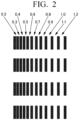
- the solder paste was printed using a metal mask in which pattern holes shown in I (hole size of 3.0 ⁇ 0.7) in FIG. 6 of 4.3 "Slump test during printing" in JIS Z 3284-3: 2014 were arranged, thereby obtaining a test plate.
- the obtained test plate was left to stand in a constant-temperature tank at 150°C for three minutes.
- FIG. 2 shows a schematic diagram of the pattern of I.
- numerical values from 0.2 to 1.2 indicate the distance between the pattern holes.
- test plate after heating was evaluated by confirming visually the minimum interval at which all the printed solder pastes were not integrated.
- solder pastes containing the fluxes of Examples 10 and13 decreased the void area ratio, and suppressed the generation of voids during soldering in comparison with the solder pastes containing the fluxes of Examples 12, 14, and 15.
- Example 16 and Example 17 Comparing Example 16 and Example 17, in which a dihydric solvent was contained, the thixotropy of the solder paste and the hot slump suppression capability were not improved even when using a first triol and a second triol in combination.
Landscapes
- Engineering & Computer Science (AREA)
- Mechanical Engineering (AREA)
- Electric Connection Of Electric Components To Printed Circuits (AREA)
Applications Claiming Priority (1)
| Application Number | Priority Date | Filing Date | Title |
|---|---|---|---|
| JP2023071059A JP2024156522A (ja) | 2023-04-24 | 2023-04-24 | フラックス、ソルダペースト及び接合体の製造方法 |
Publications (2)
| Publication Number | Publication Date |
|---|---|
| EP4454805A2 true EP4454805A2 (de) | 2024-10-30 |
| EP4454805A3 EP4454805A3 (de) | 2024-12-11 |
Family
ID=90789224
Family Applications (1)
| Application Number | Title | Priority Date | Filing Date |
|---|---|---|---|
| EP24171087.0A Pending EP4454805A3 (de) | 2023-04-24 | 2024-04-18 | Flussmittel, lötpaste und verfahren zur herstellung eines verbundenen körpers |
Country Status (5)
| Country | Link |
|---|---|
| US (1) | US20240351148A1 (de) |
| EP (1) | EP4454805A3 (de) |
| JP (1) | JP2024156522A (de) |
| KR (1) | KR20240156959A (de) |
| CN (1) | CN118832338A (de) |
Citations (1)
| Publication number | Priority date | Publication date | Assignee | Title |
|---|---|---|---|---|
| JP6706000B1 (ja) | 2019-12-12 | 2020-06-03 | 千住金属工業株式会社 | フラックス、はんだペーストおよびはんだ付け製品の製造方法 |
Family Cites Families (3)
| Publication number | Priority date | Publication date | Assignee | Title |
|---|---|---|---|---|
| JP5453385B2 (ja) * | 2011-12-26 | 2014-03-26 | 千住金属工業株式会社 | ソルダペースト |
| JP6691314B1 (ja) * | 2020-01-14 | 2020-04-28 | 千住金属工業株式会社 | フラックス及びソルダペースト |
| CN115519275B (zh) * | 2022-01-10 | 2024-08-09 | 上海华庆焊材技术股份有限公司 | 一种无助焊剂残留的无铅锡膏及其制备方法 |
-
2023
- 2023-04-24 JP JP2023071059A patent/JP2024156522A/ja active Pending
-
2024
- 2024-04-09 US US18/630,257 patent/US20240351148A1/en active Pending
- 2024-04-16 CN CN202410456807.XA patent/CN118832338A/zh active Pending
- 2024-04-18 EP EP24171087.0A patent/EP4454805A3/de active Pending
- 2024-04-19 KR KR1020240052544A patent/KR20240156959A/ko active Pending
Patent Citations (1)
| Publication number | Priority date | Publication date | Assignee | Title |
|---|---|---|---|---|
| JP6706000B1 (ja) | 2019-12-12 | 2020-06-03 | 千住金属工業株式会社 | フラックス、はんだペーストおよびはんだ付け製品の製造方法 |
Also Published As
| Publication number | Publication date |
|---|---|
| CN118832338A (zh) | 2024-10-25 |
| US20240351148A1 (en) | 2024-10-24 |
| EP4454805A3 (de) | 2024-12-11 |
| JP2024156522A (ja) | 2024-11-06 |
| KR20240156959A (ko) | 2024-10-31 |
Similar Documents
| Publication | Publication Date | Title |
|---|---|---|
| EP2641689B1 (de) | Elektrisch leitendes material, verfahren für eine verbindung damit und verbundene struktur | |
| EP3636382B1 (de) | Flussmittel, lötpaste und verfahren zur herstellung einer elektronischen leiterplatte | |
| JP7133579B2 (ja) | はんだ組成物および電子基板 | |
| GB2452229A (en) | Conductive filler | |
| JP2015123491A (ja) | はんだ組成物 | |
| US20190015937A1 (en) | Solder composition and electronic board | |
| EP4130312A1 (de) | Flussmittel und lötpaste | |
| JP7078872B1 (ja) | フラックス及びそれを用いたソルダペースト | |
| EP4025379A1 (de) | Lötlegierung und lötpaste mit dieser legierung | |
| US11780035B2 (en) | Solder composition and electronic substrate | |
| EP4454805A2 (de) | Flussmittel, lötpaste und verfahren zur herstellung eines verbundenen körpers | |
| JP7640923B1 (ja) | フラックス及びソルダペースト | |
| KR20200035208A (ko) | 플럭스 조성물 및 솔더 페이스트 | |
| JP7220694B2 (ja) | フラックス組成物、およびはんだ組成物、並びに、電子基板の製造方法 | |
| US6936115B2 (en) | Soldering flux vehicle additive and fine pitch printing method | |
| HK40114206A (zh) | 助焊剂、焊膏及接合体的制备方法 | |
| KR102893560B1 (ko) | 플럭스, 솔더 페이스트 및 접합체의 제조 방법 | |
| JP2024001726A (ja) | はんだ組成物および電子基板 | |
| JP2017177122A (ja) | 高温Pbフリーはんだペースト及びその製造方法 | |
| CN108687463B (zh) | 预涂层用焊料组合物、印刷布线基板的制造方法、焊料组合物及电子基板的制造方法 | |
| JP7817644B1 (ja) | フラックス及びソルダペースト | |
| JP6130421B2 (ja) | 電子部品の接合方法、並びに、その方法に用いるはんだ組成物および前処理剤 | |
| JP7169390B2 (ja) | はんだ組成物および電子基板 | |
| JP7554218B2 (ja) | はんだ組成物および電子基板 | |
| JP7743380B2 (ja) | はんだ組成物および電子基板 |
Legal Events
| Date | Code | Title | Description |
|---|---|---|---|
| PUAI | Public reference made under article 153(3) epc to a published international application that has entered the european phase |
Free format text: ORIGINAL CODE: 0009012 |
|
| STAA | Information on the status of an ep patent application or granted ep patent |
Free format text: STATUS: THE APPLICATION HAS BEEN PUBLISHED |
|
| AK | Designated contracting states |
Kind code of ref document: A2 Designated state(s): AL AT BE BG CH CY CZ DE DK EE ES FI FR GB GR HR HU IE IS IT LI LT LU LV MC ME MK MT NL NO PL PT RO RS SE SI SK SM TR |
|
| PUAL | Search report despatched |
Free format text: ORIGINAL CODE: 0009013 |
|
| AK | Designated contracting states |
Kind code of ref document: A3 Designated state(s): AL AT BE BG CH CY CZ DE DK EE ES FI FR GB GR HR HU IE IS IT LI LT LU LV MC ME MK MT NL NO PL PT RO RS SE SI SK SM TR |
|
| RIC1 | Information provided on ipc code assigned before grant |
Ipc: C22C 13/02 20060101ALN20241107BHEP Ipc: C22C 13/00 20060101ALI20241107BHEP Ipc: B23K 35/362 20060101ALI20241107BHEP Ipc: B23K 35/36 20060101ALI20241107BHEP Ipc: B23K 35/26 20060101ALI20241107BHEP Ipc: B23K 35/02 20060101AFI20241107BHEP |
|
| STAA | Information on the status of an ep patent application or granted ep patent |
Free format text: STATUS: REQUEST FOR EXAMINATION WAS MADE |
|
| 17P | Request for examination filed |
Effective date: 20250606 |