EP4454669A1 - Method for creating a mineral trioxide aggregate material with improved biological effects - Google Patents
Method for creating a mineral trioxide aggregate material with improved biological effects Download PDFInfo
- Publication number
- EP4454669A1 EP4454669A1 EP24174943.1A EP24174943A EP4454669A1 EP 4454669 A1 EP4454669 A1 EP 4454669A1 EP 24174943 A EP24174943 A EP 24174943A EP 4454669 A1 EP4454669 A1 EP 4454669A1
- Authority
- EP
- European Patent Office
- Prior art keywords
- tile
- micronized
- mta
- hours
- degrees celsius
- Prior art date
- Legal status (The legal status is an assumption and is not a legal conclusion. Google has not performed a legal analysis and makes no representation as to the accuracy of the status listed.)
- Withdrawn
Links
Images
















Classifications
-
- A—HUMAN NECESSITIES
- A61—MEDICAL OR VETERINARY SCIENCE; HYGIENE
- A61C—DENTISTRY; APPARATUS OR METHODS FOR ORAL OR DENTAL HYGIENE
- A61C13/00—Dental prostheses; Making same
- A61C13/0003—Making bridge-work, inlays, implants or the like
- A61C13/0006—Production methods
-
- A—HUMAN NECESSITIES
- A61—MEDICAL OR VETERINARY SCIENCE; HYGIENE
- A61C—DENTISTRY; APPARATUS OR METHODS FOR ORAL OR DENTAL HYGIENE
- A61C13/00—Dental prostheses; Making same
- A61C13/08—Artificial teeth; Making same
- A61C13/083—Porcelain or ceramic teeth
- A61C13/0835—Ceramic coating on metallic body
-
- A—HUMAN NECESSITIES
- A61—MEDICAL OR VETERINARY SCIENCE; HYGIENE
- A61C—DENTISTRY; APPARATUS OR METHODS FOR ORAL OR DENTAL HYGIENE
- A61C5/00—Filling or capping teeth
- A61C5/50—Implements for filling root canals; Methods or instruments for medication of tooth nerve channels
-
- A—HUMAN NECESSITIES
- A61—MEDICAL OR VETERINARY SCIENCE; HYGIENE
- A61C—DENTISTRY; APPARATUS OR METHODS FOR ORAL OR DENTAL HYGIENE
- A61C8/00—Means to be fixed to the jaw-bone for consolidating natural teeth or for fixing dental prostheses thereon; Dental implants; Implanting tools
- A61C8/0012—Means to be fixed to the jaw-bone for consolidating natural teeth or for fixing dental prostheses thereon; Dental implants; Implanting tools characterised by the material or composition, e.g. ceramics, surface layer, metal alloy
- A61C8/0013—Means to be fixed to the jaw-bone for consolidating natural teeth or for fixing dental prostheses thereon; Dental implants; Implanting tools characterised by the material or composition, e.g. ceramics, surface layer, metal alloy with a surface layer, coating
-
- A—HUMAN NECESSITIES
- A61—MEDICAL OR VETERINARY SCIENCE; HYGIENE
- A61K—PREPARATIONS FOR MEDICAL, DENTAL OR TOILETRY PURPOSES
- A61K6/00—Preparations for dentistry
- A61K6/15—Compositions characterised by their physical properties
- A61K6/17—Particle size
-
- A—HUMAN NECESSITIES
- A61—MEDICAL OR VETERINARY SCIENCE; HYGIENE
- A61K—PREPARATIONS FOR MEDICAL, DENTAL OR TOILETRY PURPOSES
- A61K6/00—Preparations for dentistry
- A61K6/70—Preparations for dentistry comprising inorganic additives
- A61K6/71—Fillers
- A61K6/76—Fillers comprising silicon-containing compounds
-
- A—HUMAN NECESSITIES
- A61—MEDICAL OR VETERINARY SCIENCE; HYGIENE
- A61K—PREPARATIONS FOR MEDICAL, DENTAL OR TOILETRY PURPOSES
- A61K6/00—Preparations for dentistry
- A61K6/80—Preparations for artificial teeth, for filling teeth or for capping teeth
- A61K6/849—Preparations for artificial teeth, for filling teeth or for capping teeth comprising inorganic cements
- A61K6/851—Portland cements
-
- A—HUMAN NECESSITIES
- A61—MEDICAL OR VETERINARY SCIENCE; HYGIENE
- A61K—PREPARATIONS FOR MEDICAL, DENTAL OR TOILETRY PURPOSES
- A61K6/00—Preparations for dentistry
- A61K6/80—Preparations for artificial teeth, for filling teeth or for capping teeth
- A61K6/884—Preparations for artificial teeth, for filling teeth or for capping teeth comprising natural or synthetic resins
- A61K6/887—Compounds obtained by reactions only involving carbon-to-carbon unsaturated bonds
-
- A—HUMAN NECESSITIES
- A61—MEDICAL OR VETERINARY SCIENCE; HYGIENE
- A61L—METHODS OR APPARATUS FOR STERILISING MATERIALS OR OBJECTS IN GENERAL; DISINFECTION, STERILISATION OR DEODORISATION OF AIR; CHEMICAL ASPECTS OF BANDAGES, DRESSINGS, ABSORBENT PADS OR SURGICAL ARTICLES; MATERIALS FOR BANDAGES, DRESSINGS, ABSORBENT PADS OR SURGICAL ARTICLES
- A61L27/00—Materials for grafts or prostheses or for coating grafts or prostheses
- A61L27/14—Macromolecular materials
- A61L27/16—Macromolecular materials obtained by reactions only involving carbon-to-carbon unsaturated bonds
- A61L27/165—Rubbers
-
- A—HUMAN NECESSITIES
- A61—MEDICAL OR VETERINARY SCIENCE; HYGIENE
- A61L—METHODS OR APPARATUS FOR STERILISING MATERIALS OR OBJECTS IN GENERAL; DISINFECTION, STERILISATION OR DEODORISATION OF AIR; CHEMICAL ASPECTS OF BANDAGES, DRESSINGS, ABSORBENT PADS OR SURGICAL ARTICLES; MATERIALS FOR BANDAGES, DRESSINGS, ABSORBENT PADS OR SURGICAL ARTICLES
- A61L27/00—Materials for grafts or prostheses or for coating grafts or prostheses
- A61L27/28—Materials for coating prostheses
- A61L27/30—Inorganic materials
-
- A—HUMAN NECESSITIES
- A61—MEDICAL OR VETERINARY SCIENCE; HYGIENE
- A61L—METHODS OR APPARATUS FOR STERILISING MATERIALS OR OBJECTS IN GENERAL; DISINFECTION, STERILISATION OR DEODORISATION OF AIR; CHEMICAL ASPECTS OF BANDAGES, DRESSINGS, ABSORBENT PADS OR SURGICAL ARTICLES; MATERIALS FOR BANDAGES, DRESSINGS, ABSORBENT PADS OR SURGICAL ARTICLES
- A61L27/00—Materials for grafts or prostheses or for coating grafts or prostheses
- A61L27/28—Materials for coating prostheses
- A61L27/30—Inorganic materials
- A61L27/306—Other specific inorganic materials not covered by A61L27/303 - A61L27/32
-
- A—HUMAN NECESSITIES
- A61—MEDICAL OR VETERINARY SCIENCE; HYGIENE
- A61L—METHODS OR APPARATUS FOR STERILISING MATERIALS OR OBJECTS IN GENERAL; DISINFECTION, STERILISATION OR DEODORISATION OF AIR; CHEMICAL ASPECTS OF BANDAGES, DRESSINGS, ABSORBENT PADS OR SURGICAL ARTICLES; MATERIALS FOR BANDAGES, DRESSINGS, ABSORBENT PADS OR SURGICAL ARTICLES
- A61L27/00—Materials for grafts or prostheses or for coating grafts or prostheses
- A61L27/28—Materials for coating prostheses
- A61L27/30—Inorganic materials
- A61L27/32—Phosphorus-containing materials, e.g. apatite
-
- B—PERFORMING OPERATIONS; TRANSPORTING
- B28—WORKING CEMENT, CLAY, OR STONE
- B28B—SHAPING CLAY OR OTHER CERAMIC COMPOSITIONS; SHAPING SLAG; SHAPING MIXTURES CONTAINING CEMENTITIOUS MATERIAL, e.g. PLASTER
- B28B1/00—Producing shaped prefabricated articles from the material
- B28B1/14—Producing shaped prefabricated articles from the material by simple casting, the material being neither forcibly fed nor positively compacted
-
- B—PERFORMING OPERATIONS; TRANSPORTING
- B28—WORKING CEMENT, CLAY, OR STONE
- B28B—SHAPING CLAY OR OTHER CERAMIC COMPOSITIONS; SHAPING SLAG; SHAPING MIXTURES CONTAINING CEMENTITIOUS MATERIAL, e.g. PLASTER
- B28B11/00—Apparatus or processes for treating or working the shaped or preshaped articles
- B28B11/24—Apparatus or processes for treating or working the shaped or preshaped articles for curing, setting or hardening
-
- C—CHEMISTRY; METALLURGY
- C04—CEMENTS; CONCRETE; ARTIFICIAL STONE; CERAMICS; REFRACTORIES
- C04B—LIME, MAGNESIA; SLAG; CEMENTS; COMPOSITIONS THEREOF, e.g. MORTARS, CONCRETE OR LIKE BUILDING MATERIALS; ARTIFICIAL STONE; CERAMICS; REFRACTORIES; TREATMENT OF NATURAL STONE
- C04B28/00—Compositions of mortars, concrete or artificial stone, containing inorganic binders or the reaction product of an inorganic and an organic binder, e.g. polycarboxylate cements
- C04B28/02—Compositions of mortars, concrete or artificial stone, containing inorganic binders or the reaction product of an inorganic and an organic binder, e.g. polycarboxylate cements containing hydraulic cements other than calcium sulfates
- C04B28/04—Portland cements
-
- C—CHEMISTRY; METALLURGY
- C23—COATING METALLIC MATERIAL; COATING MATERIAL WITH METALLIC MATERIAL; CHEMICAL SURFACE TREATMENT; DIFFUSION TREATMENT OF METALLIC MATERIAL; COATING BY VACUUM EVAPORATION, BY SPUTTERING, BY ION IMPLANTATION OR BY CHEMICAL VAPOUR DEPOSITION, IN GENERAL; INHIBITING CORROSION OF METALLIC MATERIAL OR INCRUSTATION IN GENERAL
- C23C—COATING METALLIC MATERIAL; COATING MATERIAL WITH METALLIC MATERIAL; SURFACE TREATMENT OF METALLIC MATERIAL BY DIFFUSION INTO THE SURFACE, BY CHEMICAL CONVERSION OR SUBSTITUTION; COATING BY VACUUM EVAPORATION, BY SPUTTERING, BY ION IMPLANTATION OR BY CHEMICAL VAPOUR DEPOSITION, IN GENERAL
- C23C14/00—Coating by vacuum evaporation, by sputtering or by ion implantation of the coating forming material
- C23C14/06—Coating by vacuum evaporation, by sputtering or by ion implantation of the coating forming material characterised by the coating material
- C23C14/08—Oxides
- C23C14/082—Oxides of alkaline earth metals
-
- C—CHEMISTRY; METALLURGY
- C23—COATING METALLIC MATERIAL; COATING MATERIAL WITH METALLIC MATERIAL; CHEMICAL SURFACE TREATMENT; DIFFUSION TREATMENT OF METALLIC MATERIAL; COATING BY VACUUM EVAPORATION, BY SPUTTERING, BY ION IMPLANTATION OR BY CHEMICAL VAPOUR DEPOSITION, IN GENERAL; INHIBITING CORROSION OF METALLIC MATERIAL OR INCRUSTATION IN GENERAL
- C23C—COATING METALLIC MATERIAL; COATING MATERIAL WITH METALLIC MATERIAL; SURFACE TREATMENT OF METALLIC MATERIAL BY DIFFUSION INTO THE SURFACE, BY CHEMICAL CONVERSION OR SUBSTITUTION; COATING BY VACUUM EVAPORATION, BY SPUTTERING, BY ION IMPLANTATION OR BY CHEMICAL VAPOUR DEPOSITION, IN GENERAL
- C23C14/00—Coating by vacuum evaporation, by sputtering or by ion implantation of the coating forming material
- C23C14/22—Coating by vacuum evaporation, by sputtering or by ion implantation of the coating forming material characterised by the process of coating
-
- C—CHEMISTRY; METALLURGY
- C23—COATING METALLIC MATERIAL; COATING MATERIAL WITH METALLIC MATERIAL; CHEMICAL SURFACE TREATMENT; DIFFUSION TREATMENT OF METALLIC MATERIAL; COATING BY VACUUM EVAPORATION, BY SPUTTERING, BY ION IMPLANTATION OR BY CHEMICAL VAPOUR DEPOSITION, IN GENERAL; INHIBITING CORROSION OF METALLIC MATERIAL OR INCRUSTATION IN GENERAL
- C23C—COATING METALLIC MATERIAL; COATING MATERIAL WITH METALLIC MATERIAL; SURFACE TREATMENT OF METALLIC MATERIAL BY DIFFUSION INTO THE SURFACE, BY CHEMICAL CONVERSION OR SUBSTITUTION; COATING BY VACUUM EVAPORATION, BY SPUTTERING, BY ION IMPLANTATION OR BY CHEMICAL VAPOUR DEPOSITION, IN GENERAL
- C23C14/00—Coating by vacuum evaporation, by sputtering or by ion implantation of the coating forming material
- C23C14/22—Coating by vacuum evaporation, by sputtering or by ion implantation of the coating forming material characterised by the process of coating
- C23C14/24—Vacuum evaporation
-
- C—CHEMISTRY; METALLURGY
- C23—COATING METALLIC MATERIAL; COATING MATERIAL WITH METALLIC MATERIAL; CHEMICAL SURFACE TREATMENT; DIFFUSION TREATMENT OF METALLIC MATERIAL; COATING BY VACUUM EVAPORATION, BY SPUTTERING, BY ION IMPLANTATION OR BY CHEMICAL VAPOUR DEPOSITION, IN GENERAL; INHIBITING CORROSION OF METALLIC MATERIAL OR INCRUSTATION IN GENERAL
- C23C—COATING METALLIC MATERIAL; COATING MATERIAL WITH METALLIC MATERIAL; SURFACE TREATMENT OF METALLIC MATERIAL BY DIFFUSION INTO THE SURFACE, BY CHEMICAL CONVERSION OR SUBSTITUTION; COATING BY VACUUM EVAPORATION, BY SPUTTERING, BY ION IMPLANTATION OR BY CHEMICAL VAPOUR DEPOSITION, IN GENERAL
- C23C14/00—Coating by vacuum evaporation, by sputtering or by ion implantation of the coating forming material
- C23C14/22—Coating by vacuum evaporation, by sputtering or by ion implantation of the coating forming material characterised by the process of coating
- C23C14/34—Sputtering
-
- A—HUMAN NECESSITIES
- A61—MEDICAL OR VETERINARY SCIENCE; HYGIENE
- A61L—METHODS OR APPARATUS FOR STERILISING MATERIALS OR OBJECTS IN GENERAL; DISINFECTION, STERILISATION OR DEODORISATION OF AIR; CHEMICAL ASPECTS OF BANDAGES, DRESSINGS, ABSORBENT PADS OR SURGICAL ARTICLES; MATERIALS FOR BANDAGES, DRESSINGS, ABSORBENT PADS OR SURGICAL ARTICLES
- A61L2420/00—Materials or methods for coatings medical devices
- A61L2420/02—Methods for coating medical devices
-
- A—HUMAN NECESSITIES
- A61—MEDICAL OR VETERINARY SCIENCE; HYGIENE
- A61L—METHODS OR APPARATUS FOR STERILISING MATERIALS OR OBJECTS IN GENERAL; DISINFECTION, STERILISATION OR DEODORISATION OF AIR; CHEMICAL ASPECTS OF BANDAGES, DRESSINGS, ABSORBENT PADS OR SURGICAL ARTICLES; MATERIALS FOR BANDAGES, DRESSINGS, ABSORBENT PADS OR SURGICAL ARTICLES
- A61L2420/00—Materials or methods for coatings medical devices
- A61L2420/08—Coatings comprising two or more layers
-
- A—HUMAN NECESSITIES
- A61—MEDICAL OR VETERINARY SCIENCE; HYGIENE
- A61L—METHODS OR APPARATUS FOR STERILISING MATERIALS OR OBJECTS IN GENERAL; DISINFECTION, STERILISATION OR DEODORISATION OF AIR; CHEMICAL ASPECTS OF BANDAGES, DRESSINGS, ABSORBENT PADS OR SURGICAL ARTICLES; MATERIALS FOR BANDAGES, DRESSINGS, ABSORBENT PADS OR SURGICAL ARTICLES
- A61L2430/00—Materials or treatment for tissue regeneration
- A61L2430/12—Materials or treatment for tissue regeneration for dental implants or prostheses
-
- C—CHEMISTRY; METALLURGY
- C04—CEMENTS; CONCRETE; ARTIFICIAL STONE; CERAMICS; REFRACTORIES
- C04B—LIME, MAGNESIA; SLAG; CEMENTS; COMPOSITIONS THEREOF, e.g. MORTARS, CONCRETE OR LIKE BUILDING MATERIALS; ARTIFICIAL STONE; CERAMICS; REFRACTORIES; TREATMENT OF NATURAL STONE
- C04B2103/00—Function or property of ingredients for mortars, concrete or artificial stone
- C04B2103/0067—Function or property of ingredients for mortars, concrete or artificial stone the ingredients being formed in situ by chemical reactions or conversion of one or more of the compounds of the composition
-
- C—CHEMISTRY; METALLURGY
- C04—CEMENTS; CONCRETE; ARTIFICIAL STONE; CERAMICS; REFRACTORIES
- C04B—LIME, MAGNESIA; SLAG; CEMENTS; COMPOSITIONS THEREOF, e.g. MORTARS, CONCRETE OR LIKE BUILDING MATERIALS; ARTIFICIAL STONE; CERAMICS; REFRACTORIES; TREATMENT OF NATURAL STONE
- C04B2111/00—Mortars, concrete or artificial stone or mixtures to prepare them, characterised by specific function, property or use
- C04B2111/00474—Uses not provided for elsewhere in C04B2111/00
- C04B2111/00836—Uses not provided for elsewhere in C04B2111/00 for medical or dental applications
Definitions
- the present invention relates to the process of creating an improved biological Mineral Trioxide Aggregate (MTA) in a dense tile, or Target.
- MTA biological Mineral Trioxide Aggregate
- the Target enables a process of coating the improved MTA on implantable medical devices or can be micronized into a MTA material for traditional use.
- MTA Mineral trioxide aggregate
- gray or white ProRoot MTA Disold under the trade names gray or white ProRoot MTA (Dentsply Sirona Inc., York, Pa., US) is a substance currently used in general dentistry and in endodontics to replace natural tooth material in apexification, pulp capping, pulpotomy, regenerative endodontics, root canal filling, root-end filling, root perforation repair, tooth restorations and the like.
- An example of MTA used in endodontic applications is disclosed in US Pat. No. 8,979,991 which is hereby incorporated by reference for such disclosure.
- HA hydroxyl apatite
- a dense MTA tile is produced through a series of process steps which creates a Target suitable for physical vapor deposition (PVD).
- the resulting MTA material has improved biological effects and produces HA at an accelerated rate when in the presence of simulated body fluid.
- the resulting Target can then be micronized or used to deposit a thin layer as desired, such as upon an obturation point.
- Conventional obturation points such as those made of gutta percha materials are useful in the application of the present invention.
- a deposited thin layer of a cured or uncured MTA is deposited on the surface of otherwise conventional gutta-percha points.
- the material produces hydroxyl apatite (HA) mineral in the presence of Phosphate Buffered Saline which is beneficial in the formation of cementum like material for natural sealing of dental root canals.
- cured MTA is deposited onto Gutta-percha points using a PVD method.
- Another embodiment comprises the use of uncured MTA molded onto the surface of a gutta-percha point using a compression molding technique.
- Still another inventive embodiment comprises the use of cured MTA compressed onto the surface of the gutta-percha using a compression molding technique.
- a further embodiment of the invention includes the use of cured MTA molded onto the surface of the gutta-percha using an injection molding technique.
- a still further embodiment comprises the use of uncured MTA molded onto the surface of the gutta-percha using an injection molding technique.
- a dense MTA with improved biological effects is produced through special processing techniques.
- the resulting dense MTA material has improved biological effects and in the presence of simulated body fluid and produces HA at an increased and accelerated rate.
- Dense MTA targets can be created for use in physical vapor deposition (PVD) to provide a thin layer of MTA on the surface of implantable devices such as dental implants, endodontic obturation materials and the like.
- PVD techniques include:
- a thin layer of cured MTA (Mineral Trioxide Aggregate) is deposited on the surface of an implantable device.
- the improved MTA is particularly suitable for obturating and sealing dental root canals.
- the improved MTA provides a stable barrier to bacterial and fluid leakage in the root canal.
- the accelerated generation of HA will also help promote the growth of new bone and tissue surrounding the root tip area.
- the improved MTA should also provide a stable barrier to bacteria and fluid leakage in the root canal system of the tooth.
- the dense MTA material, Targets may also be ground into small particles for use in Dental products or as a MTA powder with improved biological effects.
- a method for forming the dense MTA material may include one or more of the steps/processes described below and further shown in Figure 1
- the humidity chamber is set at 36°C with 90% Relative Humidity (RH) from about 5 hours to about 10 days, and preferably from about 12 hours to about 5 days (e.g., about 2 days).
- RH Relative Humidity
- the set cement is placed in a Post cure bake oven set at a temperature from about 50°C to about 500°C, and preferably from about 100°C to about 250°C (e.g., about 160°C) for a time ranging from about 15 mins to about 2 days, and preferably from about 1 hour to about 12 hours (e.g., about 6 hours).
- the target creation process may include a micronizing step. Once the cement is post baked, it is then pulverized, micronized and sieved to a particle size ranging from about 1 micron to about 200 microns, and preferably from about 10 microns to about 100 microns (e.g., about 53 microns ( ⁇ 53)).
- the target creation process may include a Sintering Step.
- the Powder Micronized MTA is pressed into a target then placed into a sintering chamber for a first heat treatment at a temperature ranging from about 25°C to about 400°C, preferably from about 50°C to about 250 degrees Celsius (e.g., about 125°C) for a time period of about 5 mins to about 5 hours, preferably from about 15 mins to about 2 hours (e.g., about 30 to about 40 mins) at little or substantially no pressure.
- the sintering process may include a second heat treatment, though not required.
- the temperature may be increased to a third heat treatment temperature that is higher than the first heat treatment temperature, the second heat treatment temperature ranging from about 275°C to about 650°C, and preferably from about 350°C to about 525°C (e.g., about 450°C) for a time period ranging from about 5 minutes to about 12 hours, and preferably from about 15 mins to about 5 hours (e.g., about 1 to 2 hours) at a pressure ranging from about 5000 pounds/in 2 (psi) to about 50,000 psi, and preferably from about 10,000 psi to about 25,000 psi (e.g., about 15,000 psi).
- the sintering process may include a third heat treatment, though not required.
- the heat treatment temperature of the sintering process may be increased to a third heat treatment temperature that is higher than the second heat treatment temperature, the third heat treatment temperature ranging from about 550°C to about 1100°C, and preferably from about 650°C to about 975°C (e.g., about 750°C to 850°C) for a period of time ranging from about 30 mins to about 2 days, and preferably from about 2 hours to about 1 day (e.g., about 4 hours to about 12 hours) at a pressure ranging from about 1,000 psi to about 50,000 psi, and preferably from about 7,500 psi to about 35,000 psi (e.g., about 15,000 psi to 20,000 psi).
- the target creation process may include a hot isostatic pressing (HIP) step/process.
- the set sintered targets may be placed into a HIP chamber at a temperature ranging from about 250°C to about 1500°C, and preferably from about 500°C to about 1000°C (e.g., about 750°C to about 850°C) for a period of time ranging from about 30 mins to about 2 days, and preferably from about 2 hours to about 1 day (e.g., about 4 hours to about 12 hours) at a pressure ranging from about 1,000 psi to about 50,000 psi, and preferably from about 7,500 psi to about 35,000 psi (e.g., about 15,000 psi to 20,000 psi).
- HIP hot isostatic pressing
- the HIPped targets may be micronized to a particle size ranging from about 1 micron to about 200 microns, and preferably from about 10 microns to about 100 microns (e.g., about 53 microns ( ⁇ 53)) wherein the resultant powder MTA has improved biological effects and produces HA at an accelerated rate.
- the experimented parameters for one or more of the above steps and/or processes may range from:
- the temperature(s) may range from about 25°C to about 1500°C, preferably from about 500°C to about 1200°C.
- the pressure(s) may range from about 0 psi to about 50,000 psi, preferably from about 15,000 psi to about 20,000 psi.
- the time periods may range from about 5 mins to about 10 days, preferably from about 2 hours to about 5 hours.
- PVD physical vapor deposition
- PLD Pulsed Laser Deposition
- PLD Magnetron Sputtering
- optimum parameters for a dense target producing increased HA generation include a heat treatment profile having a first heat treatment of about 120°C at about 0 psi for about 1 hour, a second heat treatment of about 450°C at about 15,000 psi for about 2 hours, and a third heat treatment of about 850°C at about 20,000 psi for about 4 hours ( Figures 2-7 ).
- PLD Pulsed Laser Deposition
- High Power Impulse Magnetron Sputtering is a method for physical vapor deposition of thin films which is based on magnetron sputter deposition.
- HIPIMS utilizes extremely high power densities of the order of kW ⁇ cm -2 in short pulses (impulses) of tens of microseconds at low duty cycle (on/off time ratio) of ⁇ 10%.
- Distinguishing features of HIPIMS are a high degree of ionisation of the sputtered material and a high rate of molecular gas dissociation which result in high density of deposited films.
- the ionization and dissociation degree increase according to the peak cathode power.
- the limit is determined by the transition of the discharge from glow to arc phase.
- the peak power and the duty cycle are selected so as to maintain an average cathode power similar to conventional sputtering (1-10 W ⁇ cm -2 ).
- MTA films were deposited on Silicone, Gutta Percha and Titanium samples using PVD. The thickness and concentration can be altered based on duration and power levels ( Figures11-13 ). Characterization of raw material sintering of targets for Pulsed Laser Deposition (PLD) and deposition of material in the form of thin films on testing substrates, gutta-percha and titanium implants ( Figures 13-16 ).
- PLD Pulsed Laser Deposition
- WPC White Portland Cement
- EDS electron dispersive spectroscopy
- XRD X-ray diffractometry
- SEM scanning electron microscopy
- PVD can also be used to deposit a thin layer of MTA on a variety of surfaces. Feasibility has been established for PVD of MTA on polyisoprene and ceramic surfaces. Other potential applications include deposition of a MTA film on variety of metal or ceramic surfaces such as NiTi, Titanium, stainless steel, and porcelain.
- HA hydroxyl apatite
- other phosphates were confirmed by SEM imaging ( figures 18 , 19 ) and analyzed by XRD and micro-Raman ( figures 20 , 21 ).
- the Ca/P ratio of produced HA was studied by EDS and newly acquired x-ray fluorescence (XRF) ( figures 22 , 23 ).
Landscapes
- Health & Medical Sciences (AREA)
- Chemical & Material Sciences (AREA)
- Oral & Maxillofacial Surgery (AREA)
- Epidemiology (AREA)
- Life Sciences & Earth Sciences (AREA)
- Animal Behavior & Ethology (AREA)
- General Health & Medical Sciences (AREA)
- Public Health (AREA)
- Veterinary Medicine (AREA)
- Engineering & Computer Science (AREA)
- Inorganic Chemistry (AREA)
- Ceramic Engineering (AREA)
- Chemical Kinetics & Catalysis (AREA)
- Medicinal Chemistry (AREA)
- Dermatology (AREA)
- Transplantation (AREA)
- Mechanical Engineering (AREA)
- Organic Chemistry (AREA)
- Materials Engineering (AREA)
- Metallurgy (AREA)
- Dentistry (AREA)
- Plastic & Reconstructive Surgery (AREA)
- Structural Engineering (AREA)
- Manufacturing & Machinery (AREA)
- Orthopedic Medicine & Surgery (AREA)
- Dental Preparations (AREA)
- Materials For Medical Uses (AREA)
- Dental Prosthetics (AREA)
- Polymers & Plastics (AREA)
- Prostheses (AREA)
Abstract
Description
- This application is a non-provisional claiming priority to pending provisional
US Pat. App. Ser. No. 62/154,282 filed on April 29, 2015 - The present invention relates to the process of creating an improved biological Mineral Trioxide Aggregate (MTA) in a dense tile, or Target. The Target enables a process of coating the improved MTA on implantable medical devices or can be micronized into a MTA material for traditional use.
- Mineral trioxide aggregate (MTA) (sold under the trade names gray or white ProRoot MTA (Dentsply Sirona Inc., York, Pa., US) is a substance currently used in general dentistry and in endodontics to replace natural tooth material in apexification, pulp capping, pulpotomy, regenerative endodontics, root canal filling, root-end filling, root perforation repair, tooth restorations and the like. An example of MTA used in endodontic applications is disclosed in
US Pat. No. 8,979,991 which is hereby incorporated by reference for such disclosure. - It would be desirable to provide an MTA material for dental applications including for endodontic, restorative or other uses, that has improved biological effect. More particularly, it would be beneficial to the dental arts to provide such a material that is demonstrated to improve the production of hydroxyl apatite (HA) in the presence of body fluids (or simulated body fluids such as phosphate buffered saline) to produce a material having cementum qualities.
- For example, in endodontic applications, the material or composition should provide a stable barrier to bacteria and fluid leakage in the root canal system of a tooth. In addition, the composition should help promote the growth of the new bone and tissue surrounding the root tip area.
- A dense MTA tile is produced through a series of process steps which creates a Target suitable for physical vapor deposition (PVD). The resulting MTA material has improved biological effects and produces HA at an accelerated rate when in the presence of simulated body fluid. The resulting Target can then be micronized or used to deposit a thin layer as desired, such as upon an obturation point. Conventional obturation points such as those made of gutta percha materials are useful in the application of the present invention.
- According to one embodiment of the invention, a deposited thin layer of a cured or uncured MTA (Mineral Trioxide Aggregate) is deposited on the surface of otherwise conventional gutta-percha points. The material produces hydroxyl apatite (HA) mineral in the presence of Phosphate Buffered Saline which is beneficial in the formation of cementum like material for natural sealing of dental root canals.
- In another embodiment cured MTA is deposited onto Gutta-percha points using a PVD method.
- Another embodiment comprises the use of uncured MTA molded onto the surface of a gutta-percha point using a compression molding technique.
- Still another inventive embodiment comprises the use of cured MTA compressed onto the surface of the gutta-percha using a compression molding technique.
- A further embodiment of the invention includes the use of cured MTA molded onto the surface of the gutta-percha using an injection molding technique.
- A still further embodiment comprises the use of uncured MTA molded onto the surface of the gutta-percha using an injection molding technique.
- Another preferred embodiment is placing cured MTA onto implantable and prosthetic devices using PVD method
- A dense MTA with improved biological effects is produced through special processing techniques. The resulting dense MTA material has improved biological effects and in the presence of simulated body fluid and produces HA at an increased and accelerated rate.
- Dense MTA targets can be created for use in physical vapor deposition (PVD) to provide a thin layer of MTA on the surface of implantable devices such as dental implants, endodontic obturation materials and the like. PVD techniques include:
- Cathodic Arc Deposition: In which a high-power electric arc discharged at the target (source) material blasts away some into highly ionized vapor to be deposited onto the work piece.
- Electron beam physical vapor deposition: In which the material to be deposited is heated to a high vapor pressure by electron bombardment in "high" vacuum and is transported by diffusion to be deposited by condensation on the (cooler) work piece.
- Evaporative deposition: In which the material to be deposited is heated to a high vapor pressure by electrically resistive heating in "low" vacuum.
- Pulsed laser deposition: In which a high-power laser ablates material from the target into a vapor.
- Sputter deposition: In which a glow plasma discharge (usually localized around the "target" by a magnet) bombards the material sputtering some away as a vapor for subsequent deposition.
- A thin layer of cured MTA (Mineral Trioxide Aggregate) is deposited on the surface of an implantable device.
- The improved MTA is particularly suitable for obturating and sealing dental root canals. The improved MTA provides a stable barrier to bacterial and fluid leakage in the root canal. The accelerated generation of HA will also help promote the growth of new bone and tissue surrounding the root tip area. The improved MTA should also provide a stable barrier to bacteria and fluid leakage in the root canal system of the tooth.
- The dense MTA material, Targets, may also be ground into small particles for use in Dental products or as a MTA powder with improved biological effects.
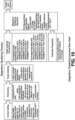
- A method for forming the dense MTA material (Target) may include one or more of the steps/processes described below and further shown in
Figure 1 - Mixing (white) Portland Cement (WPC or PC) to Deionized water having a ratio in the range of about 10:1 to about 1:10, preferably about 5:1 to about 1:5, and more preferably about 5:1 to about 1:1 (e.g., about 3:1 such as about 3 parts PC (WPC) to about 1 part deionized water). The mixture is thoroughly blended and vacuum is drawn out to create a harmonized cake mix and then placed in molds.
- Once the mixed cement is put in molds, the molds are placed in a humidity chamber to cure. The humidity chamber is set at 36°C with 90% Relative Humidity (RH) from about 5 hours to about 10 days, and preferably from about 12 hours to about 5 days (e.g., about 2 days).
- Once the cement is cured, the set cement is placed in a Post cure bake oven set at a temperature from about 50°C to about 500°C, and preferably from about 100°C to about 250°C (e.g., about 160°C) for a time ranging from about 15 mins to about 2 days, and preferably from about 1 hour to about 12 hours (e.g., about 6 hours).
- The target creation process may include a micronizing step. Once the cement is post baked, it is then pulverized, micronized and sieved to a particle size ranging from about 1 micron to about 200 microns, and preferably from about 10 microns to about 100 microns (e.g., about 53 microns (µ53)).
- The target creation process may include a Sintering Step. The Powder Micronized MTA is pressed into a target then placed into a sintering chamber for a first heat treatment at a temperature ranging from about 25°C to about 400°C, preferably from about 50°C to about 250 degrees Celsius (e.g., about 125°C) for a time period of about 5 mins to about 5 hours, preferably from about 15 mins to about 2 hours (e.g., about 30 to about 40 mins) at little or substantially no pressure. Optionally, the sintering process may include a second heat treatment, though not required. When included, the temperature may be increased to a third heat treatment temperature that is higher than the first heat treatment temperature, the second heat treatment temperature ranging from about 275°C to about 650°C, and preferably from about 350°C to about 525°C (e.g., about 450°C) for a time period ranging from about 5 minutes to about 12 hours, and preferably from about 15 mins to about 5 hours (e.g., about 1 to 2 hours) at a pressure ranging from about 5000 pounds/in2 (psi) to about 50,000 psi, and preferably from about 10,000 psi to about 25,000 psi (e.g., about 15,000 psi). Optionally, the sintering process may include a third heat treatment, though not required. When included, the heat treatment temperature of the sintering process may be increased to a third heat treatment temperature that is higher than the second heat treatment temperature, the third heat treatment temperature ranging from about 550°C to about 1100°C, and preferably from about 650°C to about 975°C (e.g., about 750°C to 850°C) for a period of time ranging from about 30 mins to about 2 days, and preferably from about 2 hours to about 1 day (e.g., about 4 hours to about 12 hours) at a pressure ranging from about 1,000 psi to about 50,000 psi, and preferably from about 7,500 psi to about 35,000 psi (e.g., about 15,000 psi to 20,000 psi).
- The target creation process may include a hot isostatic pressing (HIP) step/process. The set sintered targets may be placed into a HIP chamber at a temperature ranging from about 250°C to about 1500°C, and preferably from about 500°C to about 1000°C (e.g., about 750°C to about 850°C) for a period of time ranging from about 30 mins to about 2 days, and preferably from about 2 hours to about 1 day (e.g., about 4 hours to about 12 hours) at a pressure ranging from about 1,000 psi to about 50,000 psi, and preferably from about 7,500 psi to about 35,000 psi (e.g., about 15,000 psi to 20,000 psi).
- The HIPped targets may be micronized to a particle size ranging from about 1 micron to about 200 microns, and preferably from about 10 microns to about 100 microns (e.g., about 53 microns (µ53)) wherein the resultant powder MTA has improved biological effects and produces HA at an accelerated rate.
- The experimented parameters for one or more of the above steps and/or processes may range from:
The temperature(s) may range from about 25°C to about 1500°C, preferably from about 500°C to about 1200°C. - The pressure(s) may range from about 0 psi to about 50,000 psi, preferably from about 15,000 psi to about 20,000 psi.
- The time periods may range from about 5 mins to about 10 days, preferably from about 2 hours to about 5 hours.
- The preferred method of coating medical devices with MTA is physical vapor deposition (PVD), using magnetron sputtering. Alternative methods of Physical Vapor Deposition may also include Pulsed Laser Deposition (PLD), Magnetron Sputtering, and the like as above discussed
- Other useful techniques for coating medical devices with MTA include:
- Compression molding which entails sprinkling MTA on the substrate during compression molding process; and,
- Micronized powder and spraying, this entails blasting the substrate with high velocity spray of MTA.
- In one example of the invention, optimum parameters for a dense target producing increased HA generation (
Figure 8 ) include a heat treatment profile having a first heat treatment of about 120°C at about 0 psi for about 1 hour, a second heat treatment of about 450°C at about 15,000 psi for about 2 hours, and a third heat treatment of about 850°C at about 20,000 psi for about 4 hours (Figures 2-7 ). - This is a thin film deposition technique where a high-power pulsed laser beam is focused inside a vacuum chamber to strike a target of the material that is to be deposited. This material is vaporized from the target (in a plasma plume) which deposits it as a thin film on the substrate (in this case the GP points); this process occurs in ultra-high vacuum.
- While the basic-setup is simple relative to many other deposition techniques, the physical phenomena of laser-target interaction and film growth are quite complex. When the laser pulse is absorbed by the target, energy is first converted to electronic excitation and then into thermal, chemical and mechanical energy resulting in evaporation, ablation, plasma formation and even exfoliation. The ejected species expand into the surrounding vacuum in the form of a plume containing many energetic species including atoms, molecules, electrons, ions, clusters, particulates and molten globules, before depositing on the substrate.
- High Power Impulse Magnetron Sputtering (HIPIMS or HiPIMS, also known as high-power pulsed magnetron sputtering, HPPMS) is a method for physical vapor deposition of thin films which is based on magnetron sputter deposition. HIPIMS utilizes extremely high power densities of the order of kW·cm-2 in short pulses (impulses) of tens of microseconds at low duty cycle (on/off time ratio) of < 10%.
- Distinguishing features of HIPIMS are a high degree of ionisation of the sputtered material and a high rate of molecular gas dissociation which result in high density of deposited films. The ionization and dissociation degree increase according to the peak cathode power. The limit is determined by the transition of the discharge from glow to arc phase. The peak power and the duty cycle are selected so as to maintain an average cathode power similar to conventional sputtering (1-10 W·cm-2).
- By using magnets behind the cathode to trap the free electrons in a magnetic field directly above the target surface, these electrons are not free to bombard the substrate to the same extent as with diode sputtering. At the same time the extensive, circuitous path carved by these same electrons when trapped in the magnetic field, enhances their probability of ionizing a neutral gas molecule by several orders of magnitude. This increase in available ions significantly increases the rate at which target material is eroded and subsequently deposited onto the substrate.
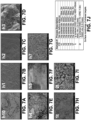
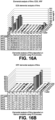
- MTA films were deposited on Silicone, Gutta Percha and Titanium samples using PVD. The thickness and concentration can be altered based on duration and power levels (
Figures11-13 ). Characterization of raw material sintering of targets for Pulsed Laser Deposition (PLD) and deposition of material in the form of thin films on testing substrates, gutta-percha and titanium implants (Figures 13-16 ). To ensure that physical vapor deposition (PVD) does not change chemical composition of raw materials, the full materials characterization of WPC (White Portland Cement) included elemental analysis by electron dispersive spectroscopy (EDS,figure 16 ), phase analysis by X-ray diffractometry (XRD,figure 14 ), composition analysis using (micro-Raman,figures 14 ,15 ), density measurements and morphological studies by scanning electron microscopy (SEM,figures 11-13 ). - PVD can also be used to deposit a thin layer of MTA on a variety of surfaces. Feasibility has been established for PVD of MTA on polyisoprene and ceramic surfaces. Other potential applications include deposition of a MTA film on variety of metal or ceramic surfaces such as NiTi, Titanium, stainless steel, and porcelain.
- From HIP-Sintered WPC targets supplied Pulsed Laser Deposition PLD was performed and uniformity of thickness and composition of deposited material was studied on Implantable and prosthetic devices.
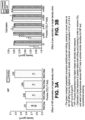
- In order to confirm bio-activity of MTA coating the HA-forming ability was tested on films deposited on silicon, gutta-percha and titanium. The deposited films were soaked in simulated body fluids (SBF) at 37°C for 1, 3, 7, 14 and 21 days. The HA formation was observed after 1 day, whereas typically HA formation is not first observed until 7 days. (
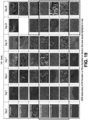
Figure 17 ). - The formation of hydroxyl apatite (HA) and other phosphates were confirmed by SEM imaging (
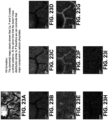
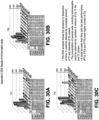
figures 18 ,19 ) and analyzed by XRD and micro-Raman (figures 20 ,21 ). The Ca/P ratio of produced HA was studied by EDS and newly acquired x-ray fluorescence (XRF) (figures 22 ,23 ). - Thus, it should be evident that the invention as disclosed herein carries out one or more of the objects of the present invention set forth above and otherwise constitutes an advantageous contribution to the art. As will be apparent to persons skilled in the art, modifications can be made to the preferred embodiments disclosed herein without departing from the spirit of the invention, the scope of the invention herein being limited solely by the scope of the attached claims.
Claims (15)
- An implantable dental device comprising a layer of dense mineral trioxide aggregate that produces hydroxyl apatite in the presence of phosphate buffered saline.
- An implantable dental device as in claim 1 wherein said device is an obturation point.
- An implantable device as in claim 2 wherein said obturation point comprises gutta-percha.
- A method for producing hydroxyl apatite on a dental device comprising the step of preparing a tile of dense mineral trioxide aggregate.
- A method as in claim 4 further comprising forming a mixture by mixing Portland cement and deionized water in an amount of from about 10:1 to about 1:10.
- A method as in claim 5 wherein said mixture is placed into a mold and cured in a humidity chamber.
- A method as in claim 6 wherein said humidity chamber is set at 36 degrees Celsius with about a 90 percent relative humidity for from about 5 hours to about 10 days.
- A method as in claim 7 wherein said cured mixture is subjected to a second heating by heating to from about 50 to about 500 degrees Celsius for from about 15 minutes to about 2 days.
- A method as in claim 8 wherein said method includes micronizing said cured tile.
- A method as in claim 9 wherein said micronizing includes ball-mill grinding said tile to a particle size of from about 1 to about 200 microns.
- A method as in claim 10 wherein said micronizing includes ball-mill grinding said tile to a particle size of from about 10 to about 100 microns, preferably wherein said micronizing includes ball-mill grinding said tile to a particle size of about 53 microns.
- A method as in claim 9 wherein said micronized tile is sintered at a temperature of from about 25 to about 400 degrees Celsius for a period of from about 5 minutes to about 5 hours.
- A method as in claim 11 wherein said sintered, micronized tile is subjected to a second sintering temperature of from about 275 to about 650 degrees Celsius for from about 5 minutes to about 12 hours, preferably wherein said second sintering step is conducted at a pressure of from about 5000psi to about 50,000psi.
- A method as in claim 13 wherein said sintered, micronized tile is subjected to a third sintering temperature of from about 550 to about 1100 degrees Celsius for from about 30 minutes to about 2 days, preferably wherein said third sintering step is conducted at a pressure of from about 1000psi to about 50,000psi.
- A method as in claim 9 wherein said step of depositing includes physical vapor deposition of said micronized tile; or wherein said step of depositing includes hot isostatic pressing of said micronized tile; or wherein said step of depositing includes hot isostatic pressing of said micronized tile; or wherein said step of depositing includes molding of said micronized tile.
Applications Claiming Priority (3)
| Application Number | Priority Date | Filing Date | Title |
|---|---|---|---|
| US201562154282P | 2015-04-29 | 2015-04-29 | |
| EP16720691.1A EP3288603A1 (en) | 2015-04-29 | 2016-04-28 | Method for creating a mineral trioxide aggregate material with improved biological effects |
| PCT/US2016/029779 WO2016176448A1 (en) | 2015-04-29 | 2016-04-28 | Method for creating a mineral trioxide aggregate material with improved biological effects |
Related Parent Applications (1)
| Application Number | Title | Priority Date | Filing Date |
|---|---|---|---|
| EP16720691.1A Division EP3288603A1 (en) | 2015-04-29 | 2016-04-28 | Method for creating a mineral trioxide aggregate material with improved biological effects |
Publications (1)
| Publication Number | Publication Date |
|---|---|
| EP4454669A1 true EP4454669A1 (en) | 2024-10-30 |
Family
ID=55911131
Family Applications (2)
| Application Number | Title | Priority Date | Filing Date |
|---|---|---|---|
| EP24174943.1A Withdrawn EP4454669A1 (en) | 2015-04-29 | 2016-04-28 | Method for creating a mineral trioxide aggregate material with improved biological effects |
| EP16720691.1A Withdrawn EP3288603A1 (en) | 2015-04-29 | 2016-04-28 | Method for creating a mineral trioxide aggregate material with improved biological effects |
Family Applications After (1)
| Application Number | Title | Priority Date | Filing Date |
|---|---|---|---|
| EP16720691.1A Withdrawn EP3288603A1 (en) | 2015-04-29 | 2016-04-28 | Method for creating a mineral trioxide aggregate material with improved biological effects |
Country Status (5)
| Country | Link |
|---|---|
| US (3) | US20170189276A1 (en) |
| EP (2) | EP4454669A1 (en) |
| JP (2) | JP6517949B2 (en) |
| CA (1) | CA2984504C (en) |
| WO (1) | WO2016176448A1 (en) |
Families Citing this family (1)
| Publication number | Priority date | Publication date | Assignee | Title |
|---|---|---|---|---|
| CN108114322A (en) * | 2017-12-01 | 2018-06-05 | 广州市健齿生物科技有限公司 | A kind of porous tooth implant of surface inserting biodegradable layer and preparation method thereof |
Citations (4)
| Publication number | Priority date | Publication date | Assignee | Title |
|---|---|---|---|---|
| US20100203478A1 (en) * | 2006-10-16 | 2010-08-12 | Natural Dental Implants, Ag | Customized Dental Prosthesis for Periodontal or Osseointegration and Related Systems and Methods |
| EP2638892A1 (en) * | 2012-03-13 | 2013-09-18 | S & C Polymer Silicon- und Composite-Spezialitäten GmbH | Bioactive hydraulic organic matrix materials |
| US20140161901A1 (en) * | 2012-12-11 | 2014-06-12 | Zimmer Dental, Inc. | Dental composition |
| US8979991B2 (en) | 2012-03-21 | 2015-03-17 | Loma Linda University | Substances and method for replacing natural tooth material |
Family Cites Families (4)
| Publication number | Priority date | Publication date | Assignee | Title |
|---|---|---|---|---|
| US7303817B2 (en) * | 2001-10-24 | 2007-12-04 | Weitao Jia | Dental filling material |
| US20070009858A1 (en) * | 2005-06-23 | 2007-01-11 | Hatton John F | Dental repair material |
| US8987354B2 (en) * | 2011-04-25 | 2015-03-24 | Jingxu Zhu | Biocompatible polymer nanoparticle coating composition and method of production thereof |
| US20130059954A1 (en) * | 2011-09-06 | 2013-03-07 | Elmer's Products, Inc. | Glue sticks formulated with acrylic dispersions |
-
2016
- 2016-04-28 JP JP2017556941A patent/JP6517949B2/en active Active
- 2016-04-28 US US15/140,586 patent/US20170189276A1/en not_active Abandoned
- 2016-04-28 WO PCT/US2016/029779 patent/WO2016176448A1/en not_active Ceased
- 2016-04-28 EP EP24174943.1A patent/EP4454669A1/en not_active Withdrawn
- 2016-04-28 EP EP16720691.1A patent/EP3288603A1/en not_active Withdrawn
- 2016-04-28 CA CA2984504A patent/CA2984504C/en active Active
-
2018
- 2018-05-07 US US15/972,360 patent/US20190021958A1/en not_active Abandoned
-
2019
- 2019-04-18 JP JP2019079040A patent/JP6968847B2/en active Active
-
2020
- 2020-12-07 US US17/113,380 patent/US11382840B2/en active Active
Patent Citations (4)
| Publication number | Priority date | Publication date | Assignee | Title |
|---|---|---|---|---|
| US20100203478A1 (en) * | 2006-10-16 | 2010-08-12 | Natural Dental Implants, Ag | Customized Dental Prosthesis for Periodontal or Osseointegration and Related Systems and Methods |
| EP2638892A1 (en) * | 2012-03-13 | 2013-09-18 | S & C Polymer Silicon- und Composite-Spezialitäten GmbH | Bioactive hydraulic organic matrix materials |
| US8979991B2 (en) | 2012-03-21 | 2015-03-17 | Loma Linda University | Substances and method for replacing natural tooth material |
| US20140161901A1 (en) * | 2012-12-11 | 2014-06-12 | Zimmer Dental, Inc. | Dental composition |
Non-Patent Citations (4)
| Title |
|---|
| CHAKRABORTY AMITABHA ET AL: "Will Portland cement be a cheaper alternative to mineral trioxide aggregate in clinical use?: A comprehensive review of literature", INTERNATIONAL JOURNAL OF CONTEMPORARY DENTAL AND MEDICAL REVIEWS, vol. 2015, 28 April 2015 (2015-04-28), pages 1 - 7, XP093206134, DOI: 10.15713/ins.ijcdmr.69 * |
| GRAZZIOTIN-SOARES R. ET AL: "Effect of bismuth oxide on white mineral trioxide aggregate: chemical characterization and physical properties", INTERNATIONAL ENDODONTIC JOURNAL, vol. 47, no. 6, 12 September 2013 (2013-09-12), BL, pages 520 - 533, XP093206102, ISSN: 0143-2885, DOI: 10.1111/iej.12181 * |
| PARIROKH M ET AL: "Mineral Trioxide Aggregate: A Comprehensive Literature ReviewPart I: Chemical, Physical, and Antibacterial Properties", JOURNAL OF ENDODONTICS, ELSEVIER, AMSTERDAM, NL, vol. 36, no. 1, 1 January 2010 (2010-01-01), pages 16 - 27, XP026793853, ISSN: 0099-2399, [retrieved on 20091207] * |
| REYES-CARMONA J F ET AL: "The Biomineralization Ability of Mineral Trioxide Aggregate and Portland Cement on Dentin Enhances the Push-out Strength", JOURNAL OF ENDODONTICS, LIPPINCOTT WILLIAMS & WILKINS, PHILADELPHIA, PA, US, vol. 36, no. 2, 1 February 2010 (2010-02-01), pages 286 - 291, XP026873886, ISSN: 0099-2399, [retrieved on 20091206] * |
Also Published As
| Publication number | Publication date |
|---|---|
| CA2984504C (en) | 2021-08-03 |
| JP6517949B2 (en) | 2019-05-22 |
| JP2018515203A (en) | 2018-06-14 |
| JP2019137690A (en) | 2019-08-22 |
| WO2016176448A1 (en) | 2016-11-03 |
| JP6968847B2 (en) | 2021-11-17 |
| US20210106502A1 (en) | 2021-04-15 |
| EP3288603A1 (en) | 2018-03-07 |
| US20190021958A1 (en) | 2019-01-24 |
| CA2984504A1 (en) | 2016-11-03 |
| US11382840B2 (en) | 2022-07-12 |
| US20170189276A1 (en) | 2017-07-06 |
Similar Documents
| Publication | Publication Date | Title |
|---|---|---|
| US4944754A (en) | Method of manufacturing synthetic bone coated surgical implants | |
| US5543019A (en) | Method of coating medical devices and device coated thereby | |
| Ozeki et al. | Phase composition of sputtered films from a hydroxyapatite target | |
| Ligot et al. | Tantalum-doped hydroxyapatite thin films: Synthesis and characterization | |
| Kobayashi et al. | Inhibition effect of zirconium coating on calcium phosphate precipitation of titanium to avoid assimilation with bone | |
| Ong et al. | Surface characterization of ion-beam sputter-deposited Ca-P coatings after in vitro immersion | |
| Lu et al. | Factors influencing phase compositions and structure of plasma sprayed hydroxyapatite coatings during heat treatment | |
| Yoshinari et al. | The biocompatibility (cell culture and histologic study) of hydroxy‐apatite‐coated implants created by ion beam dynamic mixing | |
| JP6968847B2 (en) | Methods for Producing Mineral Trioxide Aggregate Materials with Improved Biological Effects | |
| Li et al. | Characterization of hydroxyapatite film with mixed interface by Ar+ ion beam enhanced deposition | |
| Dijk et al. | Influence of discharge power level on the properties of hydroxyapatite films deposited on Ti6A14V with RF magnetron sputtering | |
| Ozeki et al. | Inhibition of Ni release from NiTi alloy by hydroxyapatite, alumina, and titanium sputtered coatings | |
| Coutinho et al. | Ultrastructural characterization of tooth–biomaterial interfaces prepared with broad and focused ion beams | |
| RU2372101C1 (en) | Method for making supported calcium-phosphate coating | |
| CN109950118B (en) | Method for implanting ions into the surface of an object to be treated and device for carrying out said method | |
| JP2562283B2 (en) | Biomedical implant component and manufacturing method thereof | |
| KR101101837B1 (en) | Sputtering target manufacturing method of dental implant using dental ash powder and surface modification method of dental implant using the same | |
| Lee et al. | Characteristics of calcium phosphate films prepared by pulsed laser deposition under various water vapor pressures | |
| Nishikawa et al. | Controlling the chemical composition of hydroxyapatite thin films using pulsed laser deposition | |
| Lukosevicius | Advances and challenges in sputter deposition of biomaterial coatings from a loosely packed hydroxyapatite powder target | |
| Stan et al. | Adherent glass-ceramic thin layers with bioactive potential deposited by magnetron sputtering techniques | |
| Lee et al. | Nanostructured hydroxyapatite/TiO2 composite coating applied to commercially pure titanium by a co-sputtering technique | |
| Jelinek et al. | Laser-deposited thin films of biocompatible ceramic | |
| Prosolov et al. | Thin bioactive Zn-substituted hydroxyapatite coating deposited on Ti substrate by radiofrequency sputtering | |
| RU2680149C2 (en) | Method of obtaining a bioactive coating based on silicon substituted hydroxyapatite |
Legal Events
| Date | Code | Title | Description |
|---|---|---|---|
| PUAI | Public reference made under article 153(3) epc to a published international application that has entered the european phase |
Free format text: ORIGINAL CODE: 0009012 |
|
| STAA | Information on the status of an ep patent application or granted ep patent |
Free format text: STATUS: THE APPLICATION HAS BEEN PUBLISHED |
|
| AC | Divisional application: reference to earlier application |
Ref document number: 3288603 Country of ref document: EP Kind code of ref document: P |
|
| AK | Designated contracting states |
Kind code of ref document: A1 Designated state(s): AL AT BE BG CH CY CZ DE DK EE ES FI FR GB GR HR HU IE IS IT LI LT LU LV MC MK MT NL NO PL PT RO RS SE SI SK SM TR |
|
| STAA | Information on the status of an ep patent application or granted ep patent |
Free format text: STATUS: REQUEST FOR EXAMINATION WAS MADE |
|
| 17P | Request for examination filed |
Effective date: 20250429 |
|
| STAA | Information on the status of an ep patent application or granted ep patent |
Free format text: STATUS: EXAMINATION IS IN PROGRESS |
|
| 17Q | First examination report despatched |
Effective date: 20251030 |
|
| STAA | Information on the status of an ep patent application or granted ep patent |
Free format text: STATUS: THE APPLICATION IS DEEMED TO BE WITHDRAWN |
|
| 18D | Application deemed to be withdrawn |
Effective date: 20260303 |