EP4451101A1 - Verfahren und vorrichtung zur erkennung von picke-operanden, computervorrichtung, lesbares speichermedium und computerprogrammprodukt - Google Patents
Verfahren und vorrichtung zur erkennung von picke-operanden, computervorrichtung, lesbares speichermedium und computerprogrammprodukt Download PDFInfo
- Publication number
- EP4451101A1 EP4451101A1 EP23858826.3A EP23858826A EP4451101A1 EP 4451101 A1 EP4451101 A1 EP 4451101A1 EP 23858826 A EP23858826 A EP 23858826A EP 4451101 A1 EP4451101 A1 EP 4451101A1
- Authority
- EP
- European Patent Office
- Prior art keywords
- location information
- pixel
- trigger
- dimensional model
- model
- Prior art date
- Legal status (The legal status is an assumption and is not a legal conclusion. Google has not performed a legal analysis and makes no representation as to the accuracy of the status listed.)
- Pending
Links
Images


Classifications
-
- G—PHYSICS
- G06—COMPUTING OR CALCULATING; COUNTING
- G06T—IMAGE DATA PROCESSING OR GENERATION, IN GENERAL
- G06T15/00—Three-dimensional [3D] image rendering
-
- G—PHYSICS
- G06—COMPUTING OR CALCULATING; COUNTING
- G06F—ELECTRIC DIGITAL DATA PROCESSING
- G06F3/00—Input arrangements for transferring data to be processed into a form capable of being handled by the computer; Output arrangements for transferring data from processing unit to output unit, e.g. interface arrangements
- G06F3/01—Input arrangements or combined input and output arrangements for interaction between user and computer
- G06F3/048—Interaction techniques based on graphical user interfaces [GUI]
- G06F3/0481—Interaction techniques based on graphical user interfaces [GUI] based on specific properties of the displayed interaction object or a metaphor-based environment, e.g. interaction with desktop elements like windows or icons, or assisted by a cursor's changing behaviour or appearance
-
- G—PHYSICS
- G06—COMPUTING OR CALCULATING; COUNTING
- G06F—ELECTRIC DIGITAL DATA PROCESSING
- G06F3/00—Input arrangements for transferring data to be processed into a form capable of being handled by the computer; Output arrangements for transferring data from processing unit to output unit, e.g. interface arrangements
- G06F3/01—Input arrangements or combined input and output arrangements for interaction between user and computer
- G06F3/048—Interaction techniques based on graphical user interfaces [GUI]
- G06F3/0484—Interaction techniques based on graphical user interfaces [GUI] for the control of specific functions or operations, e.g. selecting or manipulating an object, an image or a displayed text element, setting a parameter value or selecting a range
- G06F3/04842—Selection of displayed objects or displayed text elements
-
- G—PHYSICS
- G06—COMPUTING OR CALCULATING; COUNTING
- G06T—IMAGE DATA PROCESSING OR GENERATION, IN GENERAL
- G06T11/00—Two-dimensional [2D] image generation
-
- G—PHYSICS
- G06—COMPUTING OR CALCULATING; COUNTING
- G06T—IMAGE DATA PROCESSING OR GENERATION, IN GENERAL
- G06T11/00—Two-dimensional [2D] image generation
- G06T11/10—Texturing; Colouring; Generation of textures or colours
-
- G—PHYSICS
- G06—COMPUTING OR CALCULATING; COUNTING
- G06T—IMAGE DATA PROCESSING OR GENERATION, IN GENERAL
- G06T15/00—Three-dimensional [3D] image rendering
- G06T15/005—General purpose rendering architectures
-
- G—PHYSICS
- G06—COMPUTING OR CALCULATING; COUNTING
- G06T—IMAGE DATA PROCESSING OR GENERATION, IN GENERAL
- G06T17/00—Three-dimensional [3D] modelling for computer graphics
Definitions
- This application relates to the field of terminal technologies, and in particular, to a method and apparatus for detecting a picked object, a computer device, a readable storage medium, and a computer program product.
- a terminal With the development of terminal technologies, there are more and more types of applications on a terminal, such as a social application, a shopping application, a navigation application, and a video application.
- a user may open these applications and click/tap or long press an object presented on a display interface, then the terminal generates a corresponding response.
- This interaction of an instant response of the terminal can improve the user experience of the applications. Therefore, after the user performs some trigger operations, how the terminal determines which objects the trigger operations of the user are located on becomes an urgent problem to be resolved.
- a page provided by an application is constantly refreshed.
- a terminal After a user implements a trigger operation, when rendering a next frame of image, a terminal writes pixel information of each object in the next frame of image into a color buffer, and also sets a region covered by each object to a corresponding color in an additional frame buffer based on a pre-configured correspondence between a color and an object.
- the terminal may determine, based on the frame buffer, which color region the trigger operation is located on, to determine the object triggered by the user.
- a method and apparatus for detecting a picked object, a computer device, a computer-readable storage medium, and a computer program product are provided.
- this application provides a method for detecting a picked object.
- the method includes:
- this application further provides an apparatus for detecting a picked object.
- the apparatus includes:
- this application further provides a computer device, including a memory and one or more processors, the memory storing computer-readable instructions, and the computer-readable instructions, when executed by the one or more processors, causing the one or more processors to perform the following steps:
- this application further provides one or more non-volatile readable storage media, storing computer-readable instructions, the computer-readable instructions, when executed by one or more processors, causing the one or more processors to implement the following steps:
- this application further provides a computer program product, including computer-readable instructions, the computer-readable instructions being executed by a processor to implement the following steps:
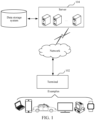
- a method for detecting a picked object provided in the embodiments of this application may be applied to an application environment shown in FIG. 1 .
- a terminal 102 communicates with a server 104 through a network.
- a data storage system may store data that the server 104 needs to process.
- the data storage system may be integrated into the server 104, or may be configured on cloud or another server.
- the method for detecting a picked object provided in the embodiments of this application may be performed by the terminal 102 or the server 104 alone, or may be performed by the terminal 102 and the server 104 together.
- An example in which the method is performed by the terminal 102 alone is used for description:
- a user may perform a trigger operation when a display interface displays a first image frame.
- the terminal 102 may detect trigger location information of the trigger operation, determine, in a process of rendering a second image frame by using a graphics processing unit, each three-dimensional model included in the second image frame, the second image frame being an N th image frame after the first image frame, obtain location information of a pixel associated with each three-dimensional model, and match the location information of the pixel associated with each three-dimensional model with the trigger location information, to determine a pixel with location information successfully matched.
- a model identifier of a three-dimensional model associated with the pixel with the location information successfully matched is stored by using the graphics processing unit to a storage location that corresponds to the successfully matched pixel and that is in a color buffer. Information in the color buffer is read by using a central processing unit, the model identifier is obtained based on the read information, and the picked object specified by the trigger operation is determined based on the obtained model identifier to implement an operation response.
- the terminal 102 may be, but is not limited to, any personal computer, notebook computer, smartphone, tablet computer, internet of things device, or portable wearable device.
- the internet of things device may be a smart speaker, a smart TV, a smart air conditioner, a smart on-board device, or the like.
- the portable wearable device may be a smartwatch, a smart band, a headset device, or the like.
- the server 104 may be an independent physical server, or may be a server cluster or distributed system including a plurality of physical servers, or may be a cloud server providing cloud computing services.
- a method for detecting a picked object is provided.
- An example in which the method is applied to the terminal in FIG. 1 is used for description. The method includes the following steps:
- Step 202 Detect trigger location information of a trigger operation, the trigger operation being performed by a trigger operator in a case that a display interface displays a first image frame, an image frame displayed by the display interface being updated at a preset frequency, and the first image frame being any image frame in an updating process.
- the display interface may be configured to display a page in an application (APP).
- the application may be any application that requires a graphics rendering function.
- the application may be a map application, a video application, or the like. This is not limited in the embodiments of this application.
- the page provided by the application may be configured to play multimedia data.
- the multimedia data may include a video, an animation, a real-time map, and the like.
- the multimedia data is formed by an image frame.
- Image frames displayed in the display interface are updated at a preset frequency.
- the image frames include a first image frame and a second image frame.
- the first image frame and the second image frame are also updated at the preset frequency.
- An image frame displayed at a time instant when the user performs the trigger operation serves as the first image frame.
- a first updated image frame subsequent to the first image frame indicates an image frame displayed at a time instant when a predetermined duration since the time instant when the user performs the trigger operation expires.
- the predetermined duration may be 2 seconds, 5 seconds and so on.
- the trigger operation may be an operation that can be performed by the trigger operator on the display interface.
- the trigger operation may be a click/tap operation, a double-click/tap operation, a long-press operation, a slide operation, or the like.
- the trigger operation may be an operation of picking a displayed object, and the picking operation is performed by a user or a player. This is not limited in the embodiments of this application.
- the user may perform the trigger operation by using any body part that can be recognized by the terminal.
- the user may perform the trigger operation by using a finger. This is not limited in the embodiments of this application.
- the terminal may include a user layer, a central processing unit (CPU), and a graphics processing unit (GPU).
- the user layer may exchange data with the central processing unit.
- the central processing unit may exchange data with the graphics processing unit.
- the user layer may be an application layer in an internal software system architecture of the terminal.
- the trigger location information of the trigger operation in the display interface may be determined by the user layer.
- the user layer may further transmit the trigger location information to the central processing unit.
- the trigger location information may be any information that can indicate a location of the trigger operation.
- the trigger location information may be coordinates.
- the finger when the user performs the trigger operation on the display interface by using a finger, the finger may cover a plurality of pixels on the display interface. In this case, one pixel may be selected from the plurality of pixels, and location information of the pixel may be used as the trigger location information. Alternatively, location information of the plurality of pixels may be used as the trigger location information.
- the user may open a map application on the terminal, so that the display interface displays a page provided by the map application.
- the page is also configured to display a real-time map.
- the user may perform a click/tap operation on the display interface. After detecting the click/tap operation, the user layer may obtain at least one pixel covered by the finger when the user performs the click/tap operation, select one pixel from the at least one pixel based on a preset rule, and use location information of the pixel as the trigger location information.
- Step 204 Determine, in a process of rendering a second image frame by using a graphics processing unit, each three-dimensional model included in the second image frame, obtain location information of a pixel associated with each three-dimensional model, and match the location information of the pixel associated with each three-dimensional model with the trigger location information, the second image frame being an N th image frame after the first image frame, and N being a positive integer.
- the trigger operation may be performed when the display interface displays an M* frame of image, that is, the M* frame of image is the first image frame.
- the second image frame may be the N th image frame after the M th frame of image.
- the second image frame may be the first frame of image or the second frame of image after the M th frame of image. This is not limited in the embodiments of this application.
- the three-dimensional model may be a three-dimensional image with a length, a width, and a height.
- the three-dimensional model may be a three-dimensional architectural image of an attraction in the map application. This is not limited in the embodiments of this application.
- the central processing unit may find, based on a geographical region range corresponding to the second image frame, a three-dimensional model within the geographical region range, and use the found three-dimensional model as each three-dimensional model included in the second image frame. After determining the three-dimensional model in the second image frame, the central processing unit may send a draw call to the graphics processing unit.
- the draw call may carry an identifier of the three-dimensional model and the trigger location information. Then, the graphics processing unit renders the corresponding three-dimensional model based on the received draw call.
- the location information of the pixel associated with each three-dimensional model may be determined, and the location information of the pixel associated with each three-dimensional model may be matched with the trigger location information.
- the trigger location information of the trigger operation in the display interface may be determined by the user layer.
- the user layer may further transmit the trigger location information to the central processing unit.
- the central processing unit may send the draw call to the graphics processing unit.
- the graphics processing unit renders the three-dimensional model based on the received draw call.
- the central processing unit may send the draw call to the graphics processing unit once for each three-dimensional model. That is, the plurality of three-dimensional models are rendered sequentially in the graphics processing unit.
- a rendering sequence of the plurality of three-dimensional models may be pre-configured or may be randomly determined. This is not limited in the embodiments of this application.
- Each three-dimensional model has a corresponding model identifier, and the model identifier is unique, that is, there is a one-to-one correspondence between the three-dimensional model and the model identifier.
- the model identifier may be a number, a letter, a Chinese character, a character string, or the like. This is not limited in the embodiments of this application.
- a pixel in a canvas and a pixel on the display interface are in a one-to-one correspondence.
- a coordinate system of the pixel on the display interface is different from a coordinate system of the pixel in the canvas.
- the coordinate system of the pixel on the display interface may be a screen coordinate system.
- the coordinate system of the pixel in the canvas may be a normalized device coordinate (NDC) system.
- the pixel associated with the three-dimensional model is a pixel covered by the three-dimensional model, and location information, a color value, a depth value, and the like of the pixel that is associated with each three-dimensional model and that is in the canvas may be read from a memory configured to store rendering data.
- the draw call may carry the identifier of the three-dimensional model and the trigger location information, so that the graphics processing unit may read, based on the received identifier of the three-dimensional model, various information of the pixel associated with the three-dimensional model from the memory configured to store the rendering data.
- the location information of the pixel that is associated with the three-dimensional model and that is in the canvas is obtained, when there are a plurality of pixels associated with the three-dimensional model, the location information of each pixel is converted to the screen coordinate system, and the converted location information is matched with the trigger location information. In the case of successful matching, the pixel is used as a pixel with location information successfully matched.
- Step 206 Store, by using the graphics processing unit, a model identifier of a three-dimensional model associated with a pixel with location information successfully matched, to a storage location that corresponds to the successfully matched pixel and that is in a color buffer.
- the color buffer is configured to store information.
- the information includes color information.
- the color information includes R, G, B, and A.
- R is a red component value
- G is a green component value
- B is a blue component value
- A is an alpha transparency value.
- the location information of the pixel associated with the three-dimensional model may be read from the memory configured to store the rendering data.
- the location information of each associated pixel is matched with the trigger location information.
- the pixel is used as a pixel with location information successfully matched, and the model identifier of the three-dimensional model that is currently being rendered is stored to the storage location that corresponds to the pixel and that is in the color buffer.
- pixel information of the pixel is read from the memory configured to store the rendering data, and the read pixel information is stored to the storage location that corresponds to the pixel and that is in the color buffer.
- the three-dimensional model in the second image frame includes a model A, a model B, and a model C. It is assumed that a pre-configured rendering sequence of the model A, the model B, and the model C is: model A ⁇ model B ⁇ model C.
- the model A is rendered. Location information of a pixel that is associated with the model A and that is in a canvas is read from the memory configured to store the rendering data, and the location information of each associated pixel is matched with the trigger location information.
- the associated pixel is used as a pixel with location information successfully matched, and a model identifier of the model A is stored to the storage location that corresponds to the associated pixel and that is in the color buffer.
- pixel information of the associated pixel is read from the memory configured to store the rendering data, and the read pixel information is stored to the storage location that corresponds to the associated pixel and that is in the color buffer.
- the model B is rendered.
- the model C is rendered.
- the processes of rendering the model B and the model C are similar to that of the model A. Details are not described in the embodiments of this application.
- Step 208 Read information in the color buffer by using a central processing unit, obtain the model identifier based on the read information, and determine, based on the obtained model identifier, the picked object specified by the trigger operation.
- the central processing unit may read information stored at each storage location in the color buffer. Specifically, the central processing unit may read, using the glReadPixels function, the information stored at each storage location in the color buffer.
- the central processing unit may determine whether the information includes a model identifier. If the information includes the model identifier, the picked object specified by the trigger operation is determined based on the model identifier.
- each three-dimensional model has a corresponding model identifier, and the model identifier is unique, that is, there is a one-to-one correspondence between the three-dimensional model and the model identifier.
- the central processing unit may find the three-dimensional model corresponding to the obtained model identifier based on the correspondence between the three-dimensional model and the model identifier, and use the three-dimensional model as the picked object specified by the trigger operation.
- the central processing unit may send the model identifier to the user layer.
- the user layer determines, based on the model identifier, the picked object specified by the trigger operation, obtains a response result corresponding to the picked object, and displays the response result on the display interface, to implement a response to the trigger operation.
- there may be a plurality of pieces of trigger location information one picked object may be determined based on each piece of trigger location information, and a picked object with the largest quantity may be used as the picked object specified by the trigger operation. For example, assuming that there are five pieces of trigger location information, a picked object determined based on three pieces of trigger location information is a three-dimensional model A, and a picked object determined based on the other two pieces of trigger location information is a three-dimensional model B, the three-dimensional model A is used as the picked object specified by the trigger operation.
- there may be a plurality of pieces of trigger location information one picked object may be determined based on each piece of trigger location information, and each determined picked object may be used as the picked object specified by the trigger operation.
- there may be a plurality of response results and the plurality of response results may be displayed on the display interface.
- trigger location information of a trigger operation is first detected, and the trigger operation is performed by a trigger operator when a display interface displays a first image frame.
- each three-dimensional model included in the second image frame is determined, location information of a pixel associated with each three-dimensional model is obtained, and the location information of the pixel associated with each three-dimensional model is matched with the trigger location information.
- the matching process of the location information can determine which three-dimensional model the trigger operation is located on.
- a model identifier of a three-dimensional model associated with the pixel with the location information successfully matched may be stored by using the graphics processing unit to a storage location that corresponds to the successfully matched pixel and that is in a color buffer.
- the model identifier of the three-dimensional model where the trigger operation is located is stored in the color buffer.
- information in the color buffer may be read by using a central processing unit, and the model identifier may be obtained based on the read information.
- a picked object specified by the trigger operation may be determined based on the obtained model identifier to implement an operation response.
- the method for detecting a picked object further includes: determining each two-dimensional model included in the second image frame; determining, by using the central processing unit, whether location information carried by each two-dimensional model is matched with the trigger location information; and obtaining a model identifier of a two-dimensional model with location information successfully matched, and determining, based on the obtained model identifier of the two-dimensional model, the picked object specified by the trigger operation.
- the two-dimensional model may be a two-dimensional image with a length and a width.
- the two-dimensional model may be a road, a river system, or the like in the map application. This is not limited in the embodiments of this application.
- each two-dimensional model has a corresponding model identifier, and the model identifier is unique, that is, there is a one-to-one correspondence between the two-dimensional model and the model identifier.
- the model identifier of the two-dimensional model may be a number, a letter, a Chinese character, a character string, or the like. This is not limited in the embodiments of this application.
- the central processing unit may find, based on a geographical region range corresponding to the second image frame, a two-dimensional model within the geographical region range, and use the found two-dimensional model as each two-dimensional model included in the second image frame.
- the trigger location information of the trigger operation in the display interface may be determined by the user layer.
- the user layer may further transmit the trigger location information to the central processing unit.
- the central processing unit may also obtain the location information carried by the two-dimensional model in the second image frame. For each two-dimensional model, the central processing unit may determine, based on the location information carried by the two-dimensional model, a region covered by the two-dimensional model, and the central processing unit may determine whether the trigger location information is in the region. If the trigger location information is in the region, it is determined that the two-dimensional model and the trigger location information are successfully matched. If the trigger location information is not in the region, it is determined that the matching of the two-dimensional model and the trigger location information fails. All two-dimensional models are processed in this way to determine the model identifier of the two-dimensional model successfully matched with the trigger location information.
- the location information carried by the two-dimensional model includes location information of a pixel associated with the two-dimensional model.
- the pixel associated with the two-dimensional model is a pixel covered by the two-dimensional model.
- each two-dimensional model has a corresponding model identifier, and the model identifier is unique, that is, there is a one-to-one correspondence between the two-dimensional model and the model identifier.
- the central processing unit may find the two-dimensional model corresponding to the obtained model identifier based on the correspondence between the two-dimensional model and the model identifier, and use the two-dimensional model as the picked object specified by the trigger operation.
- the central processing unit may send the model identifier to the user layer.
- the user layer determines, based on the model identifier, the picked object specified by the trigger operation, obtains a response result corresponding to the picked object, and displays the response result on the display interface, to implement a response to the trigger operation.
- the central processing unit may send a draw call of the two-dimensional model to the graphics processing unit.
- the draw call of the two-dimensional model may carry an identifier of the two-dimensional model, so that the graphics processing unit may read, based on the identifier of the two-dimensional model, various information of the pixel associated with the two-dimensional model from the memory configured to store the rendering data, and may render the two-dimensional model based on the read information.
- the central processing unit determines a two-dimensional model and a three-dimensional model in the second image frame. Then, in an aspect, the central processing unit determines whether location information carried by each two-dimensional model is matched with the trigger location information, and obtains a model identifier of a two-dimensional model with location information successfully matched. In another aspect, a draw call of the two-dimensional model and a draw call of the three-dimensional model are sequentially sent to the graphics processing unit.
- the graphics processing unit first renders the two-dimensional model based on the draw call of the two-dimensional model, renders each three-dimensional model sequentially in the manner of the foregoing embodiments based on the draw call of the three-dimensional model after completing the rendering of the two-dimensional model, and obtains a model identifier of the three-dimensional model. If the central processing unit can obtain the model identifier of the three-dimensional model, the model identifier of the three-dimensional model is transmitted to the user layer. If the central processing unit does not obtain the model identifier of the three-dimensional model, the model identifier of the two-dimensional model obtained above is transmitted to the user layer. The user layer determines, based on the received model identifier, the picked object specified by the trigger operation, obtains a response result corresponding to the picked object, and displays the response result on the display interface, to implement a response to the trigger operation.
- the central processing unit no longer performs the three-dimensional model picking detection after obtaining the model identifier of the two-dimensional model with the location information successfully matched, and only completes the rendering of the two-dimensional model and the three-dimensional model according to a normal rendering process. In this case, the obtained model identifier of the two-dimensional model is directly returned to the user layer. It is also possible that the two-dimensional model picking detection and the three-dimensional model picking detection are performed in parallel, but the central processing unit first determines whether the model identifier of the two-dimensional model is obtained after the rendering is completed.
- model identifier of the two-dimensional model is obtained, the model identifier of the two-dimensional model is returned to the user layer. If the model identifier of the two-dimensional model is not obtained, whether the model identifier of the three-dimensional model is obtained is further determined. If the model identifier of the three-dimensional model is obtained, the model identifier of the three-dimensional model is returned to the user layer.
- the second image frame includes not only the three-dimensional model but also the two-dimensional model.
- the central processing unit determines whether the location information carried by each two-dimensional model is matched with the trigger location information, obtains the model identifier of the two-dimensional model with the location information successfully matched, and determines, based on the obtained model identifier of the two-dimensional model, the picked object specified by the trigger operation to implement an operation response. Then, when the trigger operation of the user is performed on the two-dimensional model, the two-dimensional model on which the trigger operation is performed can also be detected, to implement a response to the trigger operation for the two-dimensional model.
- the method for detecting a picked object further includes: storing, by using the graphics processing unit, in a case that location information of a pixel associated with any three-dimensional model is not successfully matched with the trigger location information, pixel information corresponding to the pixel that is associated with the three-dimensional model and that is not successfully matched, to the color buffer.
- Information stored in the color buffer is for implementing the rendered display of the second image frame.
- the central processing unit After determining each three-dimensional model included in the second image frame, the central processing unit sends a draw call to the graphics processing unit.
- the draw call may carry the trigger location information and the model identifier of the three-dimensional model.
- the graphics processing unit may read, based on the received model identifier, the location information of the pixel associated with the three-dimensional model from the memory configured to store the rendering data, and match the trigger location information with the location information of each associated pixel.
- the model identifier of the three-dimensional model is stored to the storage location that corresponds to the successfully matched pixel and that is in the color buffer.
- the pixel information corresponding to the pixel that is not successfully matched is read from the memory configured to store the rendering data, and is stored to the storage location that corresponds to the unsuccessfully matched pixel and that is in the color buffer.
- each three-dimensional model is processed as above in the rendering process.
- the three-dimensional model in the second image frame includes a model A, a model B, and a model C. It is assumed that a rendering sequence of the model A, the model B, and the model C is: model A ⁇ model B ⁇ model C. As shown in FIG. 4 , it is assumed that, in a canvas, pixels associated with the model A include: t0 and t1; pixels associated with the model B include: t6, t7, t10, and t11; and pixels associated with the model C include: t12 and t13.
- the model A is rendered. When t0 is processed, location information of t0 is matched with the trigger location information.
- a model identifier of the model A is stored to a storage location that corresponds to t0 and that is in a color buffer.
- pixel information corresponding to t0 is obtained, and the pixel information corresponding to t0 is stored to the storage location that corresponds to t0 and that is in the color buffer.
- the similar operations are performed to process t1.
- the model B is rendered.
- the operations similar to those of t0 are performed to process t6, t7, t10, and 111.
- the model C is rendered.
- the operations similar to those of t0 are performed to process 112 and t13. For example, assuming that location information of t6 is successfully matched with the trigger location information, an obtained color buffer is shown in FIG. 5 .
- a sequence for processing the plurality of pixels may be pre-configured or may be randomly specified. This is not limited in the embodiments of this application.
- the central processing unit may read the model identifier stored at the storage location corresponding to the successfully matched pixel, and determine the picked object based on the read model identifier.
- the method for detecting a picked object further includes: obtaining, after the trigger operation ends, pixel information of a pixel associated with each model in a third image frame, the third image frame being a next image frame of the second image frame; and refreshing, based on the pixel information of the pixel associated with each model in the third image frame, the information stored in the color buffer, to render the third image frame to the display interface for display, the model including at least one of a three-dimensional model or a two-dimensional model.
- the information in the color buffer may be read by using the central processing unit, the model identifier may be obtained based on the read information, each model included in the next image frame of the second image frame may be determined after the model identifier is obtained, pixel information of a pixel associated with each model may be obtained, and the color buffer may be refreshed based on the obtained pixel information.
- the next image frame of the second image frame is referred to as the third image frame.
- the central processing unit may determine the two-dimensional model and the three-dimensional model in the third image frame, and send a draw call of the two-dimensional model and a draw call of the three-dimensional model sequentially to the graphics processing unit.
- the graphics processing unit first reads, based on the draw call of the two-dimensional model, location information and pixel information of the pixel associated with the two-dimensional model from the memory configured to store the rendering data, and renders the two-dimensional model based on the read information to refresh the pixel information that is related to the two-dimensional model and that is stored in the color buffer.
- location information and pixel information of the pixel associated with the three-dimensional model is read, based on the draw call of the three-dimensional model, from the memory configured to store the rendering data, and the three-dimensional model is rendered based on the read information to refresh the pixel information that is related to the three-dimensional model and that is stored in the color buffer.
- the refreshed color buffer is obtained to render the third image frame to the display interface for display.
- the foregoing embodiment describes a case in which the third image frame includes both the two-dimensional model and the three-dimensional model.
- the third image frame may include only the two-dimensional model.
- the graphics processing unit only needs to render the corresponding two-dimensional model.
- the third image frame may include only the three-dimensional model. In this case, the graphics processing unit only needs to render the corresponding three-dimensional model. Details are not described in the embodiments of this application.
- a display device may read the pixel information at each storage location in the refreshed color buffer, and display a corresponding color at a corresponding location of the display interface based on the read pixel information, to render the third image frame to the display interface for display.
- the storage location corresponding to t6 since the storage location corresponding to t6 does not store the pixel information corresponding to t6, but instead stores the model identifier, the corresponding pixel on the display interface is abnormal. In this case, the display of the second image frame is skipped, and the third image frame is instead rendered to the display interface for display, which reduces the possibility of abnormal display of the display interface.
- the model identifier is stored at the storage location that corresponds to the pixel with the location information successfully matched and that is in the color buffer when the second image frame is rendered, leading to an abnormality of the corresponding pixel on the display interface
- the information stored in the color buffer is refreshed based on the pixel information of the pixel, in the canvas, associated with each model in the third image frame, to render the third image frame to the display interface for display, which reduces the possibility of abnormal display of the display interface.
- the method for detecting a picked object further includes: transmitting the trigger location information to the graphics processing unit by using the central processing unit; and storing the trigger location information to a uniform variable of a shader corresponding to a draw call by using the graphics processing unit.
- the matching the location information of the pixel associated with each three-dimensional model with the trigger location information includes: obtaining the trigger location information from the uniform variable by using the graphics processing unit, and matching the location information of the pixel associated with each three-dimensional model with the trigger location information.
- the trigger location information of the trigger operation in the display interface may be determined by the user layer.
- the user layer may further transmit the trigger location information to the central processing unit.
- the central processing unit After determining the three-dimensional model in the second image frame, the central processing unit sends a draw call of the three-dimensional model to the graphics processing unit.
- the draw call of the three-dimensional model may carry the trigger location information and an identifier of the three-dimensional model.
- the graphics processing unit determines the shader corresponding to the draw call of the three-dimensional model, and stores the trigger location information to the uniform variable of the shader.
- the graphics processing unit may find a shader in an idle state from all shaders, use the found shader as the shader corresponding to the draw call of the three-dimensional model, and store the trigger location information to the uniform variable of the shader.
- the central processing unit may deliver corresponding draw calls for the plurality of three-dimensional models sequentially to the graphics processing unit, and the graphics processing unit may store the trigger location information to the uniform variable of the shader corresponding to each draw call.
- the trigger location information may be obtained from the uniform variable, and the location information of the pixel associated with each three-dimensional model may be matched with the read trigger location information.
- coordinates of the pixel in the canvas are on a normalized device coordinate system
- coordinates of the pixel on the display interface are on a screen coordinate system.
- the trigger location information may be converted to the normalized device coordinate system to obtain converted location information.
- the location information of the pixel associated with the three-dimensional model may be compared with the converted location information. If the location information of the pixel associated with the three-dimensional model and the converted location information are consistent, it is determined that the location information of the pixel associated with the three-dimensional model is successfully matched with the trigger location information. If the location information of the pixel associated with the three-dimensional model and the converted location information are not consistent, it is determined that the location information of the pixel associated with the three-dimensional model is not successfully matched with the trigger location information.
- the trigger location information is sent to the graphics processing unit by using the central processing unit; and the trigger location information is stored to the uniform variable of the shader corresponding to the draw call by using the graphics processing unit.
- the trigger location information is obtained from the uniform variable by using the graphics processing unit, and the location information of the pixel associated with each three-dimensional model is matched with the trigger location information.
- the method utilizes the uniform variable of the shader, without the assistance of an additional buffer, so the method can also be applied to a hardware device that does not support reading data from the additional buffer. Therefore, the detection method has high device compatibility.
- the storing, by using the graphics processing unit, a model identifier of a three-dimensional model associated with a pixel with location information successfully matched, to a storage location that corresponds to the successfully matched pixel and that is in a color buffer includes: obtaining the pixel with the location information successfully matched; querying, in a case that information has been stored at the storage location that corresponds to the successfully matched pixel and that is in the color buffer, a first depth value that is associated with the stored information and that is in a depth buffer; obtaining a second depth value corresponding to the successfully matched pixel; and storing, by using the graphics processing unit, in a case that the second depth value is less than the first depth value, the model identifier of the three-dimensional model associated with the pixel with the location information successfully matched, to the storage location that corresponds to the successfully matched pixel and that is in the color buffer.
- the depth buffer is configured to store a depth value of a pixel associated with each two-dimensional model and a depth value of a pixel associated with each three-dimensional model.
- the depth value is for indicating a distance between a corresponding pixel and a view angle.
- the central processing unit may send a draw call of the three-dimensional model to the graphics processing unit.
- the draw call of the three-dimensional model may carry the trigger location information and an identifier of the three-dimensional model.
- the graphics processing unit may read, based on the identifier of the three-dimensional model, the location information of the pixel associated with the three-dimensional model from the memory configured to store the rendering data, and match the trigger location information with the location information of each associated pixel. In the case of successful matching, the associated pixel is used as the pixel with the location information successfully matched.
- the storage location corresponding to the pixel is found in the color buffer, and whether information has been stored at the storage location is checked. If the information has been stored, it is determined that there is coverage between corresponding pixels on the display interface of a currently rendered model and a model that has been rendered. In this case, in the depth buffer, the first depth value associated with the stored information is queried, the second depth value corresponding to the successfully matched pixel is obtained, and the first depth value is compared with the second depth value. If the information has not been stored, the model identifier of the three-dimensional model associated with the pixel with the location information successfully matched is directly stored by using the graphics processing unit to the storage location that corresponds to the successfully matched pixel and that is in the color buffer.
- the model identifier of the three-dimensional model associated with the pixel with the location information successfully matched is stored by using the graphics processing unit to the storage location that corresponds to the successfully matched pixel and that is in the color buffer.
- the second depth value is greater than the first depth value, indicating that the model that has been rendered on the display interface covers the currently rendered model, the information stored at the storage location that corresponds to the successfully matched pixel and that is in the color buffer is kept unchanged.
- a first depth value that is associated with the stored information and that is in a depth buffer is queried; a second depth value corresponding to the successfully matched pixel is obtained; and in a case that the second depth value is less than the first depth value, the model identifier of the three-dimensional model associated with the pixel with the location information successfully matched is stored by using the graphics processing unit to the storage location that corresponds to the successfully matched pixel and that is in the color buffer.
- the central processing unit may read the model identifier stored at the storage location corresponding to the successfully matched pixel, and determine the picked object based on the read model identifier.
- the whole process does not involve the assistance of an additional buffer, so the method can also be applied to a hardware device that does not support reading data from the additional buffer. Therefore, the detection method has high device compatibility.
- the storing, by using the graphics processing unit, a model identifier of a three-dimensional model associated with a pixel with location information successfully matched, to a storage location that corresponds to the successfully matched pixel and that is in a color buffer further includes: keeping, in a case that the second depth value is greater than the first depth value, the information stored at the storage location that corresponds to the successfully matched pixel and that is in the color buffer unchanged.
- the second depth value is greater than the first depth value, indicating that the model that has been rendered on the display interface covers the currently rendered model, the information stored at the storage location that corresponds to the successfully matched pixel and that is in the color buffer is kept unchanged.
- the three-dimensional model in the second image frame includes a model A, a model B, and a model C. It is assumed that a rendering sequence of the model A, the model B, and the model C is: model A ⁇ model B ⁇ model C. As shown in FIG. 6 , it is assumed that, in a canvas, pixels associated with the model A include: t0, t1, t4, and t5; pixels associated with the model B include: t5, t6, t9, and t10; and pixels associated with the model C include: t14 and t15. It is assumed that location information of t5 is successfully matched with the trigger location information. First, the model A is rendered.
- location information of t0 is matched with the trigger location information. Since the location information of t0 is not successfully matched with the trigger location information, pixel information corresponding to t0 is stored to a storage location that corresponds to t0 and that is in a color buffer. The pixels t1, t4, and t5 are continuously processed by using the same method. Then, the model B is rendered.
- location information of t5 is matched with the trigger location information. Since the location information of t5 is successfully matched with the trigger location information, a storage location corresponding to t5 is found in the color buffer, and whether information has been stored at the storage location is checked.
- a depth buffer As pixel information has been stored at the storage location that corresponds to t5 and that is in the color buffer when the model A is rendered, in a depth buffer, a first depth value associated with the stored information is queried, a second depth value corresponding to the model B at t5 is obtained, and the first depth value is compared with the second depth value.
- a model identifier of the model B is stored to the storage location that corresponds to t5 and that is in the color buffer.
- the second depth value is greater than the first depth value, the information stored at the storage location that corresponds to t5 and that is in the color buffer is kept unchanged.
- the depth buffer may be shown in FIG. 7 .
- the pixels t6, t9, and t10 are processed by using the method similar to that when the model A is rendered. Finally, the model C is rendered. The pixels t14 and t15 are processed by using the method similar to that when the model A is rendered. Details are not described in the embodiments of this application.
- a first depth value that is associated with the stored information and that is in a depth buffer is queried; a second depth value corresponding to the successfully matched pixel is obtained; and in a case that the second depth value is greater than the first depth value, the information stored at the storage location that corresponds to the successfully matched pixel and that is in the color buffer is kept unchanged.
- the user when there is coverage between three-dimensional models, the user always sees the closest three-dimensional model, which increases the display accuracy.
- the storing, by using the graphics processing unit, a model identifier of a three-dimensional model associated with a pixel with location information successfully matched, to a storage location that corresponds to the successfully matched pixel and that is in a color buffer includes: obtaining, by using the graphics processing unit, the model identifier of the three-dimensional model associated with the pixel with the location information successfully matched, and performing a bitwise operation on the model identifier of the three-dimensional model to obtain an identifier bitwise operation result; splitting the identifier bitwise operation result into a first endian and a second endian; and storing the first endian to a red component at the storage location that corresponds to the successfully matched pixel and that is in the color buffer, storing the second endian to a green component at the storage location, and storing a preset check value to a blue component at the storage location.
- the central processing unit may send a draw call to the graphics processing unit.
- the draw call may carry the model identifier of the corresponding three-dimensional model and the trigger location information.
- the graphics processing unit receives the draw call and starts to render the corresponding three-dimensional model.
- the model identifier carried by the draw call may be used as a model identifier to be stored in the color buffer.
- the model identifier may be converted to obtain a binary conversion result, and the binary conversion result may function as an identifier bitwise operation result.
- the first endian of the binary conversion result may be a big endian, and the second endian of the binary conversion result may be a little endian.
- the big endian when the first endian is a big endian and the second endian is a little endian, the big endian may be stored to a red component in a storage location that corresponds to the pixel of which the location information is in line with the trigger location information and that is in the color buffer, the little endian may be stored to a green component, and the preset check value may be stored to a blue component.
- the big endian may be stored to the R component
- the little endian may be stored to the G component
- the preset check value may be stored to the B component.
- A is configured to store an alpha transparency value.
- the alpha transparency value may be set to 1.
- the alpha transparency value may be set to 0xFF.
- an R value, a G value, and a B value of a preset color value may be further stored in a corresponding color component.
- the preset color value may be white or may be black. This is not limited in the embodiments of this application.
- the model identifier of the three-dimensional model associated with the pixel with the location information successfully matched is obtained by using the graphics processing unit, and a bitwise operation is performed on the model identifier of the three-dimensional model to obtain an identifier bitwise operation result;
- the identifier bitwise operation result is split into a first endian and a second endian; and the first endian is stored to a red component at the storage location that corresponds to the successfully matched pixel and that is in the color buffer, the second endian is stored to a green component at the storage location, and a preset check value is stored to a blue component at the storage location.
- This storage manner increases a quantity of model identifiers that can be stored.
- the writing of the preset check value and a subsequent check provide higher accuracy of the finally determined picked object.
- the obtaining the model identifier based on the read information includes: obtaining the check value from the read blue component; performing a check on the check value, and obtaining, in a case that the check succeeds, the first endian from the read red component, and obtaining the second endian from the read green component; determining the identifier bitwise operation result based on the first endian and the second endian; and converting the identifier bitwise operation result to obtain the model identifier.
- the first endian may be a big endian, and the second endian may be a little endian.
- the central processing unit may read information stored at each storage location in the color buffer one by one.
- the central processing unit may first perform a check on the blue component to determine whether a value of the blue component is the preset check value. If the value of the blue component is the preset check value, it is determined that the model identifier of the three-dimensional model on which the trigger operation is performed is stored at the corresponding storage location. Then, the big endian is obtained from the red component, the little endian is obtained from the green component, and the big endian and the little endian are combined, to obtain the identifier bitwise operation result.
- the model identifier is converted to binary, and the binary conversion result is used as the identifier bitwise operation result, after the identifier bitwise operation result is obtained through the foregoing process, an inverse operation of the foregoing conversion process may be performed to obtain the model identifier of the three-dimensional model.
- the central processing unit may read pixel information at each storage location in the color buffer one by one. If the check on the value of the blue component at a storage location succeeds, it is determined that the model identifier of the three-dimensional model on which the trigger operation is performed is stored at the corresponding storage location. Then, the model identifier is further obtained from the red component and the green component.
- the entire process described above is an improvement of the existing graphics rendering logic, without the assistance of an additional buffer, so the method can also be applied to a hardware device that does not support reading data from the additional buffer. Therefore, device compatibility is high.
- the method for detecting a picked object further includes: obtaining a pre-configured correspondence between an object and a response result; finding a target response result corresponding to the picked object from the correspondence; and displaying the target response result on the display interface.
- a response result to be displayed on the display interface may be pre-configured when each three-dimensional model is triggered, and a response result to be displayed on the display interface may be pre-configured when each two-dimensional model is triggered.
- a correspondence between the three-dimensional model and the response result and a correspondence between the two-dimensional model and the response result may be established.
- the response result corresponding to the picked object is found from the correspondence, the found response result is used as the target response result, and the target response result is displayed on the display interface.
- the target response result may be superimposed on the third image frame for display, or the target response result is first displayed and the third image frame is then displayed, or the third image frame is first displayed and the target response result is then displayed. This is not limited in the embodiments of this application.
- the correspondence between the three-dimensional model and the response result and the correspondence between the two-dimensional model and the response result are pre-configured. After the picked object specified by the trigger operation is determined, the target response result corresponding to the picked object may be found based on the correspondence, and the target response result may be displayed on the display interface, to implement an interface response to the trigger operation.
- the trigger operation is a click/tap operation
- the detecting trigger location information of a trigger operation includes: obtaining a pixel covered by the click/tap operation on the display interface; determining a coverage region of the click/tap operation on the display interface based on the pixel covered by the click/tap operation on the display interface; and determining a target location point in the coverage region, and using location information of the target location point in the display interface as the trigger location information.
- the user may perform the click/tap operation by using any body part that can be recognized by the terminal.
- the user may perform the click/tap operation by using a finger.
- the finger When the user performs the trigger operation on the display interface by using the finger, the finger may cover a plurality of pixels on the display interface.
- the pixel covered by the click/tap operation on the display interface may be obtained, and the coverage region of the click/tap operation on the display interface may be determined based on the pixel covered by the click/tap operation on the display interface.
- the target location point is determined in the coverage region, and the location information of the target location point in the display interface is used as the trigger location information.
- edge pixels may be determined from these pixels, and a region enclosed by a line connecting the edge pixels is used as the coverage region of the click/tap operation on the display interface.
- a pixel closest to a center location of the coverage region is found from the pixels covered by the finger, the pixel is used as the target location point, and the location information of the target location point in the display interface is used as the trigger location information.
- the coverage region of the click/tap operation on a display region is determined based on these pixels, the target location point is determined from the coverage region, and the location information of the target location point in the display interface is used as the trigger location information.
- the trigger location information determined in this way is closer to a location that the user wants to trigger, which increases the efficiency of obtaining the trigger location information.
- a method for detecting a picked object includes the following steps:
- a trigger operation is a click/tap operation
- a pixel covered by the click/tap operation on a display interface is obtained; a coverage region of the click/tap operation on the display interface is determined based on the pixel covered by the click/tap operation on the display interface; and a target location point is determined in the coverage region, and location information of the target location point in the display interface is used as the trigger location information.
- three-dimensional model picking detection may be performed specifically as follows:
- the trigger location information is transmitted to the graphics processing unit by using the central processing unit; the trigger location information is stored to a uniform variable of a shader corresponding to a draw call by using the graphics processing unit; and in a process of rendering a second image frame by using the graphics processing unit, each three-dimensional model included in the second image frame is determined, location information of a pixel associated with each three-dimensional model is obtained, the trigger location information is obtained from the uniform variable by using the graphics processing unit, and the location information of the pixel associated with each three-dimensional model is matched with the trigger location information.
- the pixel with the location information successfully matched is obtained; in a case that information has been stored at the storage location that corresponds to the successfully matched pixel and that is in the color buffer, a first depth value that is associated with the stored information and that is in a depth buffer is queried; and a second depth value corresponding to the successfully matched pixel is obtained.
- a model identifier of a three-dimensional model associated with the pixel with the location information successfully matched is obtained by using the graphics processing unit, and a bitwise operation is performed on the model identifier of the three-dimensional model to obtain an identifier bitwise operation result;
- the identifier bitwise operation result is split into a first endian and a second endian; and the first endian is stored to a red component at the storage location that corresponds to the successfully matched pixel and that is in the color buffer, the second endian is stored to a green component at the storage location, and a preset check value is stored to a blue component at the storage location.
- the information stored at the storage location that corresponds to the successfully matched pixel and that is in the color buffer is kept unchanged.
- location information of a pixel associated with any three-dimensional model is not successfully matched with the trigger location information, pixel information corresponding to the unsuccessfully matched pixel is stored to the color buffer by using the graphics processing unit.
- Information in the color buffer is read by using the central processing unit, and the check value is obtained from the read blue component; a check is performed on the check value, and in a case that the check succeeds, the first endian is obtained from the read red component, and the second endian is obtained from the read green component; the identifier bitwise operation result is determined based on the first endian and the second endian; and the identifier bitwise operation result is converted to obtain the model identifier.
- a picked object specified by the trigger operation is determined based on the obtained model identifier, and a pre-configured correspondence between an object and a response result is obtained; a target response result corresponding to the picked object is found from the correspondence; and the target response result is displayed on the display interface.
- pixel information of a pixel associated with each model in a third image frame is obtained, the third image frame being a next image frame of the second image frame; and the information stored in the color buffer is refreshed based on the pixel information of the pixel associated with each model in the third image frame, to render the third image frame to the display interface for display, the model including at least one of a three-dimensional model or a two-dimensional model.
- two-dimensional model picking detection may be performed specifically as follows: Each two-dimensional model included in the second image frame is determined; whether location information carried by each two-dimensional model is matched with the trigger location information is determined by using the central processing unit; and a model identifier of a two-dimensional model with location information successfully matched is obtained, and a picked object specified by the trigger operation is determined based on the obtained model identifier of the two-dimensional model, to implement an operation response.
- trigger location information of a trigger operation is first detected, and the trigger operation is performed by a trigger operator when a display interface displays a first image frame.
- each three-dimensional model included in the second image frame is determined, location information of a pixel associated with each three-dimensional model is obtained, and the location information of the pixel associated with each three-dimensional model is matched with the trigger location information.
- the matching process of the location information can determine which three-dimensional model the trigger operation is located on.
- a model identifier of a three-dimensional model associated with the pixel with the location information successfully matched may be stored by using the graphics processing unit to a storage location that corresponds to the successfully matched pixel and that is in a color buffer.
- the model identifier of the three-dimensional model where the trigger operation is located is stored in the color buffer.
- information in the color buffer may be read by using a central processing unit, and the model identifier may be obtained based on the read information.
- a picked object specified by the trigger operation may be determined based on the obtained model identifier to implement an operation response.
- the application is a map application
- the trigger operation is a click/tap operation.
- FIG. 9 after opening a map application, a user performs a click/tap operation on a display interface, that is, a screen click/tap in FIG. 9 .
- a user layer determines trigger location information of the click/tap operation.
- the trigger location information indicates a click/tap to a rendering space range
- the user layer transmits the trigger location information to a model rendering engine side.
- the model rendering engine side performs click/tap distribution by using a central processing unit.
- the trigger location information is transmitted to a synchronous callback module of the central processing unit.
- the synchronous callback module first determines a two-dimensional model in a second image frame and then determines whether location information carried by each two-dimensional model is matched with the trigger location information. If the location information carried by each two-dimensional model is successfully matched with the trigger location information, a model identifier of a two-dimensional model with location information successfully matched is obtained, and the model identifier of the two-dimensional model is used as a synchronous callback result.
- a three-dimensional model in the second image frame is determined by using the central processing unit. As shown in FIG.
- a draw call is sent to a shader in a graphics processing unit by using the central processing unit.
- the draw call may carry the model identifier and the trigger location information.
- the shader determines location information of a pixel that is associated with the three-dimensional model and that is in a canvas, matches the location information of the pixel associated with the three-dimensional model with the trigger location information, and obtains a pixel with location information successfully matched.
- a first depth value that is associated with the stored information and that is in a depth buffer is queried; a second depth value corresponding to the successfully matched pixel is obtained; and in a case that the second depth value is less than the first depth value, the model identifier of the three-dimensional model associated with the pixel with the location information successfully matched is stored by using the graphics processing unit to the storage location that corresponds to the successfully matched pixel and that is in the color buffer.
- pixel information corresponding to the unsuccessfully matched pixel is stored to the color buffer by using the graphics processing unit.
- information in the color buffer is read by using the central processing unit, a check value is obtained from a read blue component, a check is performed on a magic value (preset check value), and when the check succeeds, the model identifier is obtained from a read red component and a read green component.
- a next frame is refreshed and compensated, that is, a third image frame after the second image frame is obtained.
- the information stored in the color buffer is refreshed based on pixel information of a pixel, in the canvas, associated with each model in the third image frame, to render the third image frame to the display interface for display, and the obtained model identifier is used as an asynchronous callback result.
- the asynchronous callback result may be obtained, the asynchronous callback result may be returned to a trigger object callback module of the user layer by using the central processing unit.
- the synchronous callback result may be returned to the trigger object callback module of the user layer by using the central processing unit.
- the trigger object callback module of the user layer may register a callback of a trigger object to the model rendering engine side in advance, so that after obtaining a callback result, the model rendering engine side returns the callback result to the registered trigger object callback module.
- a parsing callback module of the user layer may obtain the model identifier from the trigger object callback module, and determine a response result of the display interface based on the obtained model identifier.
- the application is a game application
- the trigger operation is a click/tap operation.
- a user may perform a click/tap operation on any image frame displayed in the game application.
- a user layer may determine trigger location information of the click/tap operation and determine each three-dimensional game model in a next image frame to be displayed.
- the three-dimensional game model includes a game character, a scene element in a game scene, and the like.
- the scene element includes an obstacle, a tree, a road, and the like.
- location information of a pixel, in a canvas, associated with each three-dimensional game model may be obtained, the location information of the pixel associated with each three-dimensional game model may be matched with the trigger location information to obtain a successfully matched pixel, a model identifier of a three-dimensional game model associated with the successfully matched pixel may be obtained, and the model identifier may be stored by using the graphics processing unit to a storage location that corresponds to the successfully matched pixel and that is in a color buffer.
- Information in the color buffer may be read by using a central processing unit, the model identifier may be obtained from the read information, a picked object specified by the trigger operation may be determined based on the obtained model identifier, and finally a response may be made to the trigger operation based on the determined picked object.
- steps are displayed sequentially according to the instructions of the arrows in the flowcharts of the embodiments, these steps are not necessarily performed sequentially according to the sequence instructed by the arrows. Unless otherwise explicitly specified in this application, implementation of these steps is not strictly limited, and these steps may be implemented in other sequences. Moreover, at least some of the steps in the flowchart involved in each embodiment may include a plurality of steps or a plurality of stages. These steps or stages are not necessarily performed at the same moment but may be performed at different moments. These steps or stages are not necessarily sequentially performed, but may be performed alternately with other steps or at least some of steps or stages of other steps.
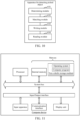
- an embodiment of this application further provides an apparatus for detecting a picked object for implementing the method for detecting a picked object.
- Implementation solutions for resolving the problem provided by the apparatus are similar to the implementation solutions recorded in the foregoing method. Therefore, for specific limitations in one or more embodiments of the apparatus for detecting a picked object provided below, refer to the limitations on the method for detecting a picked object above. Details are not described herein.
- an apparatus for detecting a picked object including:
- the apparatus for detecting a picked object further includes: a two-dimensional model picking detection module, configured to determine each two-dimensional model included in the second image frame; determine, by using the central processing unit, whether location information carried by each two-dimensional model is matched with the trigger location information; and obtain a model identifier of a two-dimensional model with location information successfully matched, and determine, based on the obtained model identifier of the two-dimensional model, the picked object specified by the trigger operation.
- a two-dimensional model picking detection module configured to determine each two-dimensional model included in the second image frame; determine, by using the central processing unit, whether location information carried by each two-dimensional model is matched with the trigger location information; and obtain a model identifier of a two-dimensional model with location information successfully matched, and determine, based on the obtained model identifier of the two-dimensional model, the picked object specified by the trigger operation.
- the writing module 103 is further configured to store, by using the graphics processing unit, in a case that location information of a pixel associated with any three-dimensional model is not successfully matched with the trigger location information, pixel information corresponding to the pixel that is associated with the three-dimensional model and that is not successfully matched, to the color buffer.
- the apparatus for detecting a picked object further includes: a refreshing module, configured to obtain, after the trigger operation ends, pixel information of a pixel associated with each model in a third image frame, the third image frame being a next image frame of the second image frame; and refresh, based on the pixel information of the pixel associated with each model in the third image frame, the information stored in the color buffer, to render the third image frame to the display interface for display, the model including at least one of a three-dimensional model or a two-dimensional model.
- a refreshing module configured to obtain, after the trigger operation ends, pixel information of a pixel associated with each model in a third image frame, the third image frame being a next image frame of the second image frame.
- the writing module 103 is further configured to transmit the trigger location information to the graphics processing unit by using the central processing unit; and store the trigger location information to a uniform variable of a shader corresponding to a draw call by using the graphics processing unit.
- the matching module is specifically configured to obtain the trigger location information from the uniform variable by using the graphics processing unit, and match the location information of the pixel associated with each three-dimensional model with the trigger location information.
- the writing module 103 is specifically configured to obtain the pixel with the location information successfully matched; query, in a case that information has been stored at the storage location that corresponds to the successfully matched pixel and that is in the color buffer, a first depth value that is associated with the stored information and that is in a depth buffer; obtain a second depth value corresponding to the successfully matched pixel; and store, by using the graphics processing unit, in a case that the second depth value is less than the first depth value, the model identifier of the three-dimensional model associated with the pixel with the location information successfully matched, to the storage location that corresponds to the successfully matched pixel and that is in the color buffer.
- the writing module 103 is further configured to keep, in a case that the second depth value is greater than the first depth value, the information stored at the storage location that corresponds to the successfully matched pixel and that is in the color buffer unchanged.
- the writing module 103 is specifically configured to obtain, by using the graphics processing unit, the model identifier of the three-dimensional model associated with the pixel with the location information successfully matched, and perform a bitwise operation on the model identifier of the three-dimensional model to obtain an identifier bitwise operation result; split the identifier bitwise operation result into a first endian and a second endian; and store the first endian to a red component at the storage location that corresponds to the successfully matched pixel and that is in the color buffer, store the second endian to a green component at the storage location, and store a preset check value to a blue component at the storage location.
- the reading module 104 is specifically configured to obtain the check value from the read blue component; perform a check on the check value, and obtain, in a case that the check succeeds, the first endian from the read red component, and obtain the second endian from the read green component; determine the identifier bitwise operation result based on the first endian and the second endian; and convert the identifier bitwise operation result to obtain the model identifier.
- the apparatus for detecting a picked object further includes: a response module, configured to obtain a pre-configured correspondence between an object and a response result; find a target response result corresponding to the picked object from the correspondence; and display the target response result on the display interface.
- a response module configured to obtain a pre-configured correspondence between an object and a response result; find a target response result corresponding to the picked object from the correspondence; and display the target response result on the display interface.
- the determining module 101 is specifically configured to obtain a pixel covered by the click/tap operation on the display interface; determine a coverage region of the click/tap operation on the display interface based on the pixel covered by the click/tap operation on the display interface; and determine a target location point in the coverage region, and use location information of the target location point in the display interface as the trigger location information.
- Each module in the apparatus for detecting a picked object may be implemented entirely or partially by software, hardware, or a combination thereof.
- Each module may be embedded in or independent of a processor in a computer device in a hardware form, or may be stored in a memory in a computer device in a software form, to facilitate the processor to call the module to perform an operation corresponding to the module.
- a computer device may be a terminal, with an internal structure shown in FIG. 11 .
- the computer device includes a processor, a memory, an input/output interface, a communication interface, a display unit, and an input apparatus.
- the processor, the memory, and the input/output interface are connected by a system bus.
- the communication interface, the display unit, and the input apparatus are connected to the system bus through the input/output interface.
- the processor of the computer device is configured to provide computation and control capabilities.
- the memory of the computer device includes a non-volatile storage medium and an internal memory.
- the non-volatile storage medium stores an operating system and a computer program.
- the internal memory provides an environment for running the operating system and the computer program in the non-volatile storage medium.
- the input/output interface of the computer device is configured to exchange information between the processor and an external device.
- the communication interface of the computer device is configured to communicate with an external terminal in a wired or wireless manner.
- the wireless manner may be implemented by Wi-Fi, a mobile cellular network, near field communication (NFC), or other technology.
- the computer program is executed by the processor to implement a method for detecting a picked object.
- the display unit of the computer device is configured to form a visible picture and may be a display screen, a projection apparatus, or a virtual reality imaging device.
- the display screen may be a liquid crystal display screen or an e-ink display screen.
- the input apparatus of the computer device may be a touch layer covering the display screen, or may be a button, a trackball, or a touchpad disposed on a housing of the computer device, or may be an external keyboard, a touchpad, a mouse, or the like.
- FIG. 11 is merely a block diagram of a partial structure related to a solution in this application, and does not constitute a limitation to the computer device to which the solution in this application is applied.
- the computer device may include more or fewer components than those shown in the figures, or have some components combined, or have a different component deployment.
- a computer device including a memory and one or more processors, the memory storing computer-readable instructions, and the computer-readable instructions, when executed by the one or more processors, causing the one or more processors to perform the steps in the foregoing method embodiments.
- one or more non-volatile readable storage media are further provided, storing computer-readable instructions, the computer-readable instructions, when executed by one or more processors, causing the one or more processors to implement the steps in the foregoing method embodiments.
- a computer program product including computer-readable instructions.
- the computer-readable instructions are executed by a processor to implement the steps in the foregoing method embodiments.
- a person of ordinary skill in the art may understand that all or some of procedures of the method in the foregoing embodiments may be implemented by a computer program instructing relevant hardware.
- the computer program may be stored in a non-volatile computer-readable storage medium.
- the procedures of the foregoing method embodiments may be included.
- References to the memory, the database, or another medium used in the embodiments provided in this application may all include at least one of a non-volatile memory and a volatile memory.
- the non-volatile memory may include a read-only memory (ROM), a magnetic tape, a floppy disk, a flash memory, an optical memory, a high-density embedded non-volatile memory, a resistive random access memory (ReRAM), a magnetoresistive random access memory (MRAM), a ferroelectric random access memory (FRAM), a phase change memory (PCM), a graphene memory, and the like.
- the volatile memory may include a random access memory (RAM) or an external cache.
- the RAM may be in various forms, such as a static random access memory (SRAM) or a dynamic random access memory (DRAM).
- the database involved in the embodiments provided in this application may include at least one of a relational database and a non-relational database.
- the non-relational database may include a blockchain-based distributed database and the like, which is not limited thereto.
- the processor involved in the embodiments provided in this application may be a general-purpose processor, a central processing unit, a graphics processing unit, a digital signal processor, a programmable logic device, a data processing logic device based on quantum computing, or the like, which is not limited thereto.
Landscapes
- Engineering & Computer Science (AREA)
- Theoretical Computer Science (AREA)
- Physics & Mathematics (AREA)
- General Physics & Mathematics (AREA)
- General Engineering & Computer Science (AREA)
- Computer Graphics (AREA)
- Human Computer Interaction (AREA)
- Geometry (AREA)
- Software Systems (AREA)
- Processing Or Creating Images (AREA)
Applications Claiming Priority (2)
| Application Number | Priority Date | Filing Date | Title |
|---|---|---|---|
| CN202211069638.1A CN117251081A (zh) | 2022-08-31 | 2022-08-31 | 拾取对象的检测方法、装置、计算机设备和存储介质 |
| PCT/CN2023/101333 WO2024045787A1 (zh) | 2022-08-31 | 2023-06-20 | 拾取对象的检测方法、装置、计算机设备、可读存储介质和计算机程序产品 |
Publications (2)
| Publication Number | Publication Date |
|---|---|
| EP4451101A1 true EP4451101A1 (de) | 2024-10-23 |
| EP4451101A4 EP4451101A4 (de) | 2025-04-30 |
Family
ID=89127027
Family Applications (1)
| Application Number | Title | Priority Date | Filing Date |
|---|---|---|---|
| EP23858826.3A Pending EP4451101A4 (de) | 2022-08-31 | 2023-06-20 | Verfahren und vorrichtung zur erkennung von picke-operanden, computervorrichtung, lesbares speichermedium und computerprogrammprodukt |
Country Status (4)
| Country | Link |
|---|---|
| US (1) | US12592033B2 (de) |
| EP (1) | EP4451101A4 (de) |
| CN (1) | CN117251081A (de) |
| WO (1) | WO2024045787A1 (de) |
Family Cites Families (15)
| Publication number | Priority date | Publication date | Assignee | Title |
|---|---|---|---|---|
| JPH06309425A (ja) * | 1990-10-12 | 1994-11-04 | Internatl Business Mach Corp <Ibm> | グラフィックディスプレイ装置及び方法 |
| EP0850462B1 (de) * | 1995-08-04 | 2006-10-04 | Microsoft Corporation | Verfahren und system zur wiedergabe von grafischen objekten durch teilung in bildstücke und zusammensetzen von bildlagen zu einem wiedergabebild |
| AU5688199A (en) * | 1998-08-20 | 2000-03-14 | Raycer, Inc. | System, apparatus and method for spatially sorting image data in a three-dimensional graphics pipeline |
| US6741259B2 (en) * | 2001-03-30 | 2004-05-25 | Webtv Networks, Inc. | Applying multiple texture maps to objects in three-dimensional imaging processes |
| US7430723B2 (en) * | 2001-11-29 | 2008-09-30 | Gse Advanced Industrial Technologies, Gmbh | System and method for implementing a three-dimensional graphic user interface |
| CN103473814B (zh) * | 2013-09-23 | 2016-01-20 | 电子科技大学中山学院 | 一种基于gpu的三维几何图元拾取方法 |
| US9654727B2 (en) * | 2015-06-01 | 2017-05-16 | Apple Inc. | Techniques to overcome communication lag between terminals performing video mirroring and annotation operations |
| US11442591B2 (en) * | 2018-04-09 | 2022-09-13 | Lockheed Martin Corporation | System, method, computer readable medium, and viewer-interface for prioritized selection of mutually occluding objects in a virtual environment |
| EP3806443A4 (de) * | 2018-05-29 | 2022-01-05 | SZ DJI Technology Co., Ltd. | Verfolgungsfotografierverfahren und -vorrichtung und speichermedium |
| CN111273971B (zh) * | 2018-12-04 | 2022-07-29 | 腾讯科技(深圳)有限公司 | 视图中的信息处理方法、装置及存储介质 |
| NO346115B1 (en) * | 2019-12-20 | 2022-02-28 | Novotech As | 3D rendering |
| CN112381918B (zh) * | 2020-12-03 | 2025-01-10 | 腾讯科技(深圳)有限公司 | 图像渲染方法、装置、计算机设备和存储介质 |
| CN112848312B (zh) * | 2021-02-01 | 2022-10-11 | 深圳市创想三维科技股份有限公司 | 三维模型对象的检测方法、装置、计算机设备及存储介质 |
| CN113238692B (zh) * | 2021-06-08 | 2023-04-18 | 北京字跳网络技术有限公司 | 区域选择方法、地图划分方法、装置、及计算机设备 |
| CN114047840B (zh) * | 2021-11-10 | 2025-03-11 | 深圳市洲明科技股份有限公司 | 屏幕刷新定位方法、装置、显示设备和存储介质 |
-
2022
- 2022-08-31 CN CN202211069638.1A patent/CN117251081A/zh active Pending
-
2023
- 2023-06-20 WO PCT/CN2023/101333 patent/WO2024045787A1/zh not_active Ceased
- 2023-06-20 EP EP23858826.3A patent/EP4451101A4/de active Pending
-
2024
- 2024-04-12 US US18/633,935 patent/US12592033B2/en active Active
Also Published As
| Publication number | Publication date |
|---|---|
| CN117251081A (zh) | 2023-12-19 |
| EP4451101A4 (de) | 2025-04-30 |
| WO2024045787A1 (zh) | 2024-03-07 |
| US20240257455A1 (en) | 2024-08-01 |
| US12592033B2 (en) | 2026-03-31 |
Similar Documents
| Publication | Publication Date | Title |
|---|---|---|
| US12039649B2 (en) | Conditional modification of augmented reality object | |
| US10146412B2 (en) | Method and electronic device for providing information | |
| US20240311069A1 (en) | Screen projecting method and apparatus, electronic device and storage medium | |
| CN111882634B (zh) | 一种图像渲染方法、装置、设备及存储介质 | |
| US20240257436A1 (en) | Image rendering method and apparatus, electronic device, and storage medium | |
| CN112181141B (zh) | Ar定位的方法、装置、电子设备及存储介质 | |
| CN108628985B (zh) | 一种相册的处理方法及移动终端 | |
| US12573048B2 (en) | Disarranged-image processing method, device and storage medium | |
| US10916222B2 (en) | Method, apparatus, and virtual reality device for displaying virtual reality scene | |
| WO2024037556A1 (zh) | 图像处理方法、装置、设备及存储介质 | |
| CN110807161A (zh) | 一种页面骨架渲染方法、装置、设备及介质 | |
| CN116883563B (zh) | 标注点渲染方法、装置、计算机设备、存储介质 | |
| WO2024051639A1 (zh) | 图像处理方法、装置、设备及存储介质和产品 | |
| US20250184582A1 (en) | Method, apparatus, device and storage medium for generating media content | |
| KR102201577B1 (ko) | 쇼핑몰 관련 정보를 제공하는 방법 및 그 장치 | |
| EP4451101A1 (de) | Verfahren und vorrichtung zur erkennung von picke-operanden, computervorrichtung, lesbares speichermedium und computerprogrammprodukt | |
| CN117152385A (zh) | 图像处理方法、装置、电子设备及存储介质 | |
| CN117576645B (zh) | 基于bev视角的车位检测方法、装置和计算机设备 | |
| CN114782579B (zh) | 一种图像渲染方法及装置、存储介质 | |
| US10719286B2 (en) | Mechanism to present in an atomic manner a single buffer that covers multiple displays | |
| US20150029351A1 (en) | Display method, image capturing method and electronic device | |
| CN113487704B (zh) | 一种燕尾箭头标的绘制方法、装置、存储介质及终端设备 | |
| CN109992733A (zh) | 信息分享的方法、装置、电子设备及存储介质 | |
| CN115578299A (zh) | 图像生成方法、装置、设备及存储介质 | |
| JP6514632B2 (ja) | 情報処理システム、情報処理方法、情報処理装置、サーバ及びプログラム |
Legal Events
| Date | Code | Title | Description |
|---|---|---|---|
| STAA | Information on the status of an ep patent application or granted ep patent |
Free format text: STATUS: THE INTERNATIONAL PUBLICATION HAS BEEN MADE |
|
| PUAI | Public reference made under article 153(3) epc to a published international application that has entered the european phase |
Free format text: ORIGINAL CODE: 0009012 |
|
| STAA | Information on the status of an ep patent application or granted ep patent |
Free format text: STATUS: REQUEST FOR EXAMINATION WAS MADE |
|
| 17P | Request for examination filed |
Effective date: 20240716 |
|
| AK | Designated contracting states |
Kind code of ref document: A1 Designated state(s): AL AT BE BG CH CY CZ DE DK EE ES FI FR GB GR HR HU IE IS IT LI LT LU LV MC ME MK MT NL NO PL PT RO RS SE SI SK SM TR |
|
| A4 | Supplementary search report drawn up and despatched |
Effective date: 20250327 |
|
| RIC1 | Information provided on ipc code assigned before grant |
Ipc: G06F 3/0481 20220101AFI20250321BHEP |
|
| DAV | Request for validation of the european patent (deleted) | ||
| DAX | Request for extension of the european patent (deleted) |