EP4449856A1 - Intelligent photovoltaic glass greenhouse, operation method therefor, and application thereof - Google Patents
Intelligent photovoltaic glass greenhouse, operation method therefor, and application thereof Download PDFInfo
- Publication number
- EP4449856A1 EP4449856A1 EP22909820.7A EP22909820A EP4449856A1 EP 4449856 A1 EP4449856 A1 EP 4449856A1 EP 22909820 A EP22909820 A EP 22909820A EP 4449856 A1 EP4449856 A1 EP 4449856A1
- Authority
- EP
- European Patent Office
- Prior art keywords
- light
- light homogenizing
- homogenizing plate
- transmitting surface
- glass greenhouse
- Prior art date
- Legal status (The legal status is an assumption and is not a legal conclusion. Google has not performed a legal analysis and makes no representation as to the accuracy of the status listed.)
- Pending
Links
Images




Classifications
-
- A—HUMAN NECESSITIES
- A01—AGRICULTURE; FORESTRY; ANIMAL HUSBANDRY; HUNTING; TRAPPING; FISHING
- A01G—HORTICULTURE; CULTIVATION OF VEGETABLES, FLOWERS, RICE, FRUIT, VINES, HOPS OR SEAWEED; FORESTRY; WATERING
- A01G9/00—Cultivation in receptacles, forcing-frames or greenhouses; Edging for beds, lawn or the like
- A01G9/24—Devices or systems for heating, ventilating, regulating temperature, illuminating, or watering, in greenhouses, forcing-frames, or the like
- A01G9/243—Collecting solar energy
-
- A—HUMAN NECESSITIES
- A01—AGRICULTURE; FORESTRY; ANIMAL HUSBANDRY; HUNTING; TRAPPING; FISHING
- A01G—HORTICULTURE; CULTIVATION OF VEGETABLES, FLOWERS, RICE, FRUIT, VINES, HOPS OR SEAWEED; FORESTRY; WATERING
- A01G9/00—Cultivation in receptacles, forcing-frames or greenhouses; Edging for beds, lawn or the like
- A01G9/14—Greenhouses
-
- A—HUMAN NECESSITIES
- A01—AGRICULTURE; FORESTRY; ANIMAL HUSBANDRY; HUNTING; TRAPPING; FISHING
- A01G—HORTICULTURE; CULTIVATION OF VEGETABLES, FLOWERS, RICE, FRUIT, VINES, HOPS OR SEAWEED; FORESTRY; WATERING
- A01G9/00—Cultivation in receptacles, forcing-frames or greenhouses; Edging for beds, lawn or the like
- A01G9/14—Greenhouses
- A01G9/1438—Covering materials therefor; Materials for protective coverings used for soil and plants, e.g. films, canopies, tunnels or cloches
-
- Y—GENERAL TAGGING OF NEW TECHNOLOGICAL DEVELOPMENTS; GENERAL TAGGING OF CROSS-SECTIONAL TECHNOLOGIES SPANNING OVER SEVERAL SECTIONS OF THE IPC; TECHNICAL SUBJECTS COVERED BY FORMER USPC CROSS-REFERENCE ART COLLECTIONS [XRACs] AND DIGESTS
- Y02—TECHNOLOGIES OR APPLICATIONS FOR MITIGATION OR ADAPTATION AGAINST CLIMATE CHANGE
- Y02A—TECHNOLOGIES FOR ADAPTATION TO CLIMATE CHANGE
- Y02A40/00—Adaptation technologies in agriculture, forestry, livestock or agroalimentary production
- Y02A40/10—Adaptation technologies in agriculture, forestry, livestock or agroalimentary production in agriculture
- Y02A40/25—Greenhouse technology, e.g. cooling systems therefor
-
- Y—GENERAL TAGGING OF NEW TECHNOLOGICAL DEVELOPMENTS; GENERAL TAGGING OF CROSS-SECTIONAL TECHNOLOGIES SPANNING OVER SEVERAL SECTIONS OF THE IPC; TECHNICAL SUBJECTS COVERED BY FORMER USPC CROSS-REFERENCE ART COLLECTIONS [XRACs] AND DIGESTS
- Y02—TECHNOLOGIES OR APPLICATIONS FOR MITIGATION OR ADAPTATION AGAINST CLIMATE CHANGE
- Y02P—CLIMATE CHANGE MITIGATION TECHNOLOGIES IN THE PRODUCTION OR PROCESSING OF GOODS
- Y02P60/00—Technologies relating to agriculture, livestock or agroalimentary industries
- Y02P60/12—Technologies relating to agriculture, livestock or agroalimentary industries using renewable energies, e.g. solar water pumping
Definitions
- the present disclosure belongs to the technical field of glass greenhouses, and in particular, to an intelligent photovoltaic glass greenhouse, an operation method therefor, and an application thereof.
- the core technology of "photovoltaic agriculture” is to solve the problem of land competition between “photovoltaic industry” and "agriculture".
- the main scheme of the photovoltaic agriculture at home and abroad only uses geometric beam splitting, that is, photovoltaic cells are arranged in a certain cover ratio, so that some plants under photovoltaic panels can receive some sunlight in different time periods, but this scheme will result in uneven illumination in agriculture and lead to uneven growth of crops in essence.
- the light intensity of glass greenhouses in central and eastern China exceeds the light saturation point of crops, and most greenhouse plants are forced to enter the state of a noon break.
- Installing photovoltaic panels on the farmland will essentially weaken the average light intensity on the farmland below the photovoltaic panels. Therefore, when the light intensity is appropriately weakened, the increase of crop yield and income can be promoted.
- Venlo greenhouse is widely used in the Netherlands because of its high light transmittance, strong moisturizing ability and high degree of automation, and the Netherlands is relying on its advanced Venlo glass greenhouse system to become a second largest exporter of agricultural products in the world.
- Venlo glass greenhouse is not suitable in China because most places in China have high temperatures and sufficient sunlight in summer, which makes the light intensity and temperature inside the Venlo glass greenhouse too high and inhibits the photosynthesis of crops. Therefore, proper cooling treatment of the Venlo glass greenhouse will be of great help to its popularization in China.
- the present disclosure provides an intelligent photovoltaic glass greenhouse, an operation method therefor, and an application thereof to solve the above problems.
- the purpose of the present disclosure is to provide an intelligent photovoltaic glass greenhouse with a simple structure and a reasonable design, as well as an operation method therefor, and an application thereof.
- the present disclosure achieves the above object through the following technical scheme.
- An intelligent photovoltaic glass greenhouse includes multiple groups of greenhouse units arranged in parallel in a north-south direction, where each of the greenhouse units includes a main frame, equilateral obtuse roof frames, photovoltaic panels, first light homogenizing plates, second light homogenizing plates and glass side walls, the equilateral obtuse roof frames are fixed on the main frame, the roof frames of the multiple groups of greenhouse units form a structure of a W shape, the glass side walls are provided around the main frame and not at joints of adjacent greenhouse units, multiple groups of the photovoltaic panels and the first light homogenizing plates are provided in turn in an east-west direction on south-facing roof frames of the roof frames, a group of first light homogenizing plates is arranged between every two groups of photovoltaic panels to form a group of the multiple groups of the photovoltaic panels and the first light homogenizing plates, and the second light homogenizing plates are laid throughout north-facing roof frames of the roof frames.
- waterproof sealing layers are provided between adjacent second light homogenizing plates and between the first light homogenizing plate and the photovoltaic panel.
- the first light homogenizing plates and the second light homogenizing plates are made of glass with high transmittance
- light-receiving surfaces of the first light homogenizing plates and light-receiving surfaces of the second light homogenizing plates are smooth planes
- light-transmitting surfaces of the first light homogenizing plates and light-transmitting surfaces of the second light homogenizing plates are fine Fresnel lens structures.
- the fine Fresnel lens structures of the light-transmitting surfaces of the first light homogenizing plates consist of trapezoidal convex structures arranged in turn, and are configured for homogenizing incident light toward east and west directions of the greenhouse.
- ⁇ 1 is the hypotenuse angle of the structural unit of the light-transmitting surface of the first light homogenizing plate
- a is the width of the upper bottom of the trapezoid of the structural unit of the light-transmitting surface of the I-shaped light homogenizing plate
- L 1 is the width of the first light homogenizing plate
- h 1 is the groove depth of the structural unit of the light-transmitting surface of the first light homogenizing plate.
- the fine Fresnel lens structures of the light-transmitting surfaces of the second light homogenizing plates consist of multiple groups of saw teeth with different sizes arranged in turn, and are configured for homogenizing incident light toward south and north directions of the greenhouse.
- the saw teeth in the light-transmitting surface of the second light homogenizing plate include a first saw tooth and a second saw tooth
- ⁇ 0 is an inclination angle of the second light homogenizing plate with respect to the ground
- ⁇ 1 is the hypotenuse angle of the first saw tooth of a structural unit of the light-transmitting surface of the second light homogenizing plate
- ⁇ 1 ' is the hypotenuse angle of the second saw tooth of the structural unit of the light-transmitting surface of the second light homogenizing plate
- ⁇ 2 is a first included angle between the sun rays emitted from the light-transmitting surface of the second light homogenizing plate and the ground
- ⁇ 2 ' is a second included angle between the sun rays emitted from the light-transmitting surface of the second light homogenizing plate and the ground
- ⁇ 0 is a height angle between the sun rays and the ground
- n 0 is a refractive index of air
- n 1 is a refractive index of the second light homogenizing plate
- N 2 L 2 1.2 ⁇ 4 sin 2 ⁇ 1 + 2 sin 2 ⁇ 1 ′ ⁇ h 2
- L 2 is the length of the second light homogenizing plate
- ⁇ 0 is the inclination angle of the second light homogenizing plate with respect to the ground
- ⁇ 1 is the hypotenuse angle of the first saw tooth of the structural unit of the light-transmitting surface of the second light homogenizing plate
- ⁇ 1 ' is the hypotenuse angle of the second saw tooth of the structural unit of the light-transmitting surface of the second light homogenizing plate
- h 2 is a groove depth of the structural unit of the light-transmitting surface of the second light homogenizing plate.
- a thickness of the first light homogenizing plate is the same as that of the second light homogenizing plate, and is in a range of 1 mm to 3 mm.
- an LED supplemental lighting lamp and a photosynthetic photon flux density sensor are provided inside the glass greenhouse, a controller is provided on an outer side of one of the glass side walls of the glass greenhouse, an output end of the photovoltaic panel is connected to a power grid through an inverter, an input end of the LED supplemental lighting lamp is connected to an output end of the power grid through a rectifier circuit, the output end of the photovoltaic panel is connected to an input end of the controller, and the input end of the LED supplemental lighting lamp is connected to an output end of the controller and the output end of the photovoltaic panel.
- the present disclosure further provides an operation method for the intelligent photovoltaic glass greenhouse, where the operation method includes the following steps:
- the set value is 200 ⁇ mol/m 2 s.
- the present disclosure further provides an application of the intelligent photovoltaic glass greenhouse in greenhouse for planting in arid, water-deficient and barren areas.
- Some embodiments have the following beneficial effects.
- the present disclosure provides an intelligent photovoltaic glass greenhouse.
- the purpose of photovoltaic power generation and greenhouse planting is achieved, and the ground illumination intensity in the glass greenhouse is ensured to be weakened compared with the outdoor illumination intensity, which is helpful to effectively reduce the evaporation of ground water, beneficial to the photosynthesis of crops at noon, and is suitable for arid, water-deficient and barren areas.
- the average direct light intensity of the glass greenhouse can be effectively controlled compared with traditional greenhouse, and the range of change is from 60% to 75%, so as to meet the growth of plants with different light requirements.
- the convenience of the connection of photovoltaic power generation device and power grid is made full use of.
- the LED supplemental lighting lamp and the light sensor are installed in the glass greenhouse. Under the condition of insufficient sunshine intensity, the photovoltaic power generation is used to supplemental lighting in the glass greenhouse first, and then all the generated electricity will be delivered to the power grid when the sunshine intensity is high. Under the condition of continuous rainy days, the power supply will be reversed from the power grid to supply power to the LED supplemental lighting lamp in the glass greenhouse, so as to realize the intelligent regulation of light in the glass greenhouse and ensure the continuous and efficient plant photosynthesis in the glass greenhouse.
- an intelligent photovoltaic glass greenhouse in the embodiment includes multiple groups of greenhouse units arranged in parallel in the north-south direction.
- the greenhouse unit includes a main frame 1, roof frames 2, photovoltaic panels 3, first light homogenizing plates 4, second light homogenizing plates 5 and glass side walls 6.
- the roof frames 2 are equilateral obtuse and fixed on the main frame 1.
- the roof frames 2 of the multiple groups of greenhouse units form a structure of W shape.
- the roof frame 2 is built on the main frame 1.
- the glass side walls 6 are installed around the main frame 1.
- the photovoltaic panels 3 are installed on the roof frame 2 towards the south.
- the light-receiving surface 41 of the first light homogenizing plate is installed on the roof frame 2 towards the south and is located between the photovoltaic panels 3.
- the light-receiving surface 51 of the second light homogenizing plate is installed on the roof frame 2 towards the north. Waterproof sealing layers are provided between the adjacent second light homogenizing plates 5 and between the first light homogenizing plate 4 and the photovoltaic panel 3.
- the first light homogenizing plates 4 and the second light homogenizing plates 5 are made of glass with high transmittance, light-receiving surfaces 41 of the first light homogenizing plates and light-receiving surfaces 51 of the second light homogenizing plates are smooth planes, and light-transmitting surfaces 42 of the first light homogenizing plates and light-transmitting surfaces 52 of the second light homogenizing plates are fine surface structures similar to Fresnel lenses.
- the hypotenuse angle and the width of the upper bottom and the width of the lower bottom of the structural unit of the light-transmitting surface 42 of the first light homogenizing plate are related to the area ratio of the photovoltaic panel 3 and the first light homogenizing plate 4, and the mounting height and the angle of the first light homogenizing plate 4.
- ⁇ 1 is a hypotenuse angle of the structural unit 421 of the light-transmitting surface of the first light homogenizing plate
- a a width of the upper bottom and lower bottom of the trapezoid of the structural unit 421 of the light-transmitting surface of the first light homogenizing plate
- n 1 is a refractive index of the first light homogenizing plate 4
- n 0 is a refractive index of air
- the number of periods of the structural unit of the light-transmitting surface of the first light homogenizing plate is N 1 , which depends on the size of a processing device for pressing the first light homogenizing plate and the thickness of the first light homogenizing plate.
- the refractive index of the high-transmittance glass is 1.51
- the refractive index of air is 1
- L 1 is 1 m
- k 1 is 2
- h 1 is 0.5 mm
- H is 3 m to 4 m
- the value of the hypotenuse angle ⁇ 1 of the structural unit 421 of the light-transmitting surface of the first light homogenizing plate is 29.4° to 24.2°.
- the width a of the upper bottom and lower bottom of the trapezoid of the structural unit 421 of the light-transmitting surface of the first light homogenizing plate is 0.44 mm to 0.56 mm.
- the number N 1 of the structural unit 421 of the light-transmitting surface of the first light homogenizing plate is 376 to 300.
- the hypotenuse angle of the saw tooth of the structural unit 521 of the light-transmitting surface of the second light homogenizing plate is related to the area ratio of the photovoltaic panels 3 and the second light homogenizing plate 5, and is related to the mounting height and angle of the second light homogenizing plate 5.
- N 2 L 2 1.2 ⁇ 4 sin 2 ⁇ 1 + 2 sin 2 ⁇ 1 ′ ⁇ h 2
- the hypotenuse angle ⁇ 1 of the first saw tooth of the structural unit 521 of the light-transmitting surface of the second light homogenizing plate is 34.1° to 30.8°
- the angle ⁇ 1 ' of the second saw tooth hypotenuse of the structural unit 521 of the light-transmitting surface of the second light homogenizing plate is 26.0° to 23.8°.
- the number N 2 of the structural units 521 of the light-transmitting surface of the second light homogenizing plate is 320 to 299.
- the light-transmitting surface 42 of the first light homogenizing plate and the light-transmitting surface 52 of the second light homogenizing plate are both of periodic saw tooth array structure, which not only can achieve the light homogenizing effect, but also reduce the thickness and the production difficulty of the light homogenizing plate.
- the function of the first light homogenizing plate 4 is to homogenize the incident light toward the east and west directions
- the function of the second light homogenizing plate 5 is to homogenize the incident light toward the south and north directions.
- the area ratio of the photovoltaic panel 3 to the first light homogenizing plate 4 is 2:1, thereby changing the average direct light intensity of the direct light illumination in the glass greenhouse.
- the average direct light intensity in the glass greenhouse is 60% of the average direct light intensity in the traditional greenhouse. Power generation can be realized, while a part of illumination in the glass greenhouse can be reduced and uniform illumination can be realized, which is more conducive to crop growth and is helpful to effectively reducing surface water evaporation, saving water resources, and improving agricultural arability in arid, water-deficient and barren areas.
- the first light homogenizing plate 4 is installed between two photovoltaic panels 3.
- the light incident on the photovoltaic panel 3 will be blocked.
- the light incident on the first light homogenizing plate 4 will be split into three parts, one part of which will be emitted in the same direction as the incident direction, and the other parts will be deflected to the left and right and irradiate under the photovoltaic panel 3 after passing through the light-transmitting surface 42 of the first light homogenizing plate, respectively, so as to realize uniform illumination.
- an LED supplemental lighting lamp 7 and a photosynthetic photon flux density sensor are provided inside the glass greenhouse.
- a controller 8 is provided on the outer side of the glass side wall of the glass greenhouse.
- An output end of the photovoltaic panel is connected to a power grid through an inverter.
- An input end of the LED supplemental lighting lamp 7 is connected to the output end of the power grid through a rectifier circuit.
- the output end of the photovoltaic panel 3 is connected to the input end of the controller, and the input end of the LED supplemental lighting lamp 7 is connected to the output end of the controller 8 and the output end of the photovoltaic panel.
- the photovoltaic panel 3 can be used to generate electricity and supply power, which can increase the light intensity suitable for crops to absorb in the glass greenhouse by more than 100%.
- the photovoltaic panel can also be connected to the power grid for power supply in rainy days, so as to ensure the growth needs of crops in the glass greenhouse.
- PPFD photosynthetic photon flux density
- the controller 8 inputs all the power generated by the photovoltaic panels 3 into the power grid. During the period when the light intensity decreases in a day, the PPFD value in the photovoltaic glass greenhouse is weak.
- the controller 8 directly powers the LED supplemental lighting lamp 7 by the direct current generated by the photovoltaic panel 3 to illuminate the plants in the facility, so as to improve the PPFD value in the photovoltaic glass greenhouse, thereby improving the photosynthesis efficiency of the plants, avoiding the energy waste generated in the process of storage or voltage conversion, and improving the utilization efficiency of the electric energy.
- the total lighting duration of the LED supplemental lighting lamp 7 will be adjusted according to the planted plants and their different growth stages.
- the power generation is realized, and the growth of plants in the photovoltaic glass greenhouse is promoted through the peak-cutting and valley-filling regulation method for all-day light environment.
- the controller 8 directly powers the LED supplemental lighting lamp 7 with the electric energy generated by the photovoltaic panel 3, thus doubling the photosynthesis in the glass greenhouse, and further greatly improving the yield and quality of vegetables in the glass greenhouse before and after the traditional Spring Festival in China.
- the peak-cutting and valley-filling regulation method is used to control the LED supplemental lighting lamp 7, which brings stable income to farmers.
- the structure of the glass greenhouse itself can basically support the photovoltaic panel 3, the first light homogenizing plate 4 and the second light homogenizing plate 5, after installing photovoltaic plates, the cost of photovoltaic power generation is actually lower than the cost of installing photovoltaic panels alone, and the crop yield in each greenhouse can be increased by more than 20% in winter.
- the photovoltaic power generation cost in the photovoltaic glass greenhouse of this embodiment can be significantly lower than the cost of the single photovoltaic system in the prior art.
- the present disclosure makes full use of the convenient conditions that the glass greenhouse is connected to the power grid, and realizes the intelligent regulation of crop illumination in the glass greenhouse by installing the LED supplemental lighting lamp 7. Therefore, along with the photovoltaic power generation, crops can also produce better economic benefits.
Landscapes
- Life Sciences & Earth Sciences (AREA)
- Environmental Sciences (AREA)
- Engineering & Computer Science (AREA)
- Chemical & Material Sciences (AREA)
- Materials Engineering (AREA)
- Soil Sciences (AREA)
- Sustainable Development (AREA)
- Sustainable Energy (AREA)
- Greenhouses (AREA)
Abstract
Description
- The present disclosure belongs to the technical field of glass greenhouses, and in particular, to an intelligent photovoltaic glass greenhouse, an operation method therefor, and an application thereof.
- Under the background of global fossil resource depletion and climate warming, solar energy has become an important renewable energy source. From 2011 to 2020, the cumulative photovoltaic installed capacity in China has increased from 3 GW to 252.5 GW. With the introduction of the concept of "carbon peak and carbon neutrality", the photovoltaic industry will surely undertake an important mission. The introduction of the concept of "photovoltaic industry + agriculture" has effectively solved the problem of land competition between "photovoltaic industry" and "agriculture", that is, both agricultural production and photovoltaic power generation are carried out on the same land, which is an important direction for the development and application of the photovoltaic industry.
- The core technology of "photovoltaic agriculture" is to solve the problem of land competition between "photovoltaic industry" and "agriculture". At present, the main scheme of the photovoltaic agriculture at home and abroad only uses geometric beam splitting, that is, photovoltaic cells are arranged in a certain cover ratio, so that some plants under photovoltaic panels can receive some sunlight in different time periods, but this scheme will result in uneven illumination in agriculture and lead to uneven growth of crops in essence. On the other hand, in sunny spring, summer and autumn, from 11: 00 am to 2: 00 pm, the light intensity of glass greenhouses in central and eastern China exceeds the light saturation point of crops, and most greenhouse plants are forced to enter the state of a noon break. Installing photovoltaic panels on the farmland will essentially weaken the average light intensity on the farmland below the photovoltaic panels. Therefore, when the light intensity is appropriately weakened, the increase of crop yield and income can be promoted.
- A Venlo greenhouse is widely used in the Netherlands because of its high light transmittance, strong moisturizing ability and high degree of automation, and the Netherlands is relying on its advanced Venlo glass greenhouse system to become a second largest exporter of agricultural products in the world. However, such Venlo glass greenhouse is not suitable in China because most places in China have high temperatures and sufficient sunlight in summer, which makes the light intensity and temperature inside the Venlo glass greenhouse too high and inhibits the photosynthesis of crops. Therefore, proper cooling treatment of the Venlo glass greenhouse will be of great help to its popularization in China. Installing solar photovoltaic panels in the Venlo glass greenhouse not only can play a shading role to improve the yield of crops, but also can generate a certain amount of electricity to directly supply energy for the operation of the Venlo glass greenhouse, thus achieving the effect of energy saving and emission reduction.
- Both Chinese utility model patents with the publication numbers of
CN209218747U andCN213306498U put forward the structural design of the photovoltaic glass greenhouse, but they only focus on improving the power generation efficiency of photovoltaic panels, which still cannot solve the problem of uneven distribution of sunlight in the photovoltaic glass greenhouse and ensure the growth of plants in the glass greenhouse. - Based on the above contents, the present disclosure provides an intelligent photovoltaic glass greenhouse, an operation method therefor, and an application thereof to solve the above problems.
- The purpose of the present disclosure is to provide an intelligent photovoltaic glass greenhouse with a simple structure and a reasonable design, as well as an operation method therefor, and an application thereof.
- The present disclosure achieves the above object through the following technical scheme.
- An intelligent photovoltaic glass greenhouse includes multiple groups of greenhouse units arranged in parallel in a north-south direction, where each of the greenhouse units includes a main frame, equilateral obtuse roof frames, photovoltaic panels, first light homogenizing plates, second light homogenizing plates and glass side walls, the equilateral obtuse roof frames are fixed on the main frame, the roof frames of the multiple groups of greenhouse units form a structure of a W shape, the glass side walls are provided around the main frame and not at joints of adjacent greenhouse units, multiple groups of the photovoltaic panels and the first light homogenizing plates are provided in turn in an east-west direction on south-facing roof frames of the roof frames, a group of first light homogenizing plates is arranged between every two groups of photovoltaic panels to form a group of the multiple groups of the photovoltaic panels and the first light homogenizing plates, and the second light homogenizing plates are laid throughout north-facing roof frames of the roof frames.
- As a further optimization scheme of the present disclosure, waterproof sealing layers are provided between adjacent second light homogenizing plates and between the first light homogenizing plate and the photovoltaic panel.
- As a further optimization scheme of the present disclosure, the first light homogenizing plates and the second light homogenizing plates are made of glass with high transmittance, light-receiving surfaces of the first light homogenizing plates and light-receiving surfaces of the second light homogenizing plates are smooth planes, and light-transmitting surfaces of the first light homogenizing plates and light-transmitting surfaces of the second light homogenizing plates are fine Fresnel lens structures.
- As a further optimization scheme of the present disclosure, the fine Fresnel lens structures of the light-transmitting surfaces of the first light homogenizing plates consist of trapezoidal convex structures arranged in turn, and are configured for homogenizing incident light toward east and west directions of the greenhouse.
- As a further optimization scheme of the present disclosure, the trapezoidal convex structure of the light-transmitting surface of the first light homogenizing plate includes a hypotenuse angle, an upper bottom and a lower bottom, where a width of the upper bottom is half of a width of the lower bottom, and specific expression formula of the hypotenuse angle and the width of the upper bottom of a structural unit of the first light homogenizing plate are:


- As a further optimization scheme of the present disclosure, a number of the trapezoidal convex structures of the first light homogenizing plate is N 1, and specific expression formula of N 1 is:

- As a further optimization scheme of the present disclosure, the fine Fresnel lens structures of the light-transmitting surfaces of the second light homogenizing plates consist of multiple groups of saw teeth with different sizes arranged in turn, and are configured for homogenizing incident light toward south and north directions of the greenhouse.
- As a further optimization scheme of the present disclosure, the saw teeth in the light-transmitting surface of the second light homogenizing plate include a first saw tooth and a second saw tooth, and specific expression formulas of a hypotenuse angle of the first saw tooth and a hypotenuse angle of the second saw tooth are:


- where θ 0 is an inclination angle of the second light homogenizing plate with respect to the ground, θ 1 is the hypotenuse angle of the first saw tooth of a structural unit of the light-transmitting surface of the second light homogenizing plate, θ 1' is the hypotenuse angle of the second saw tooth of the structural unit of the light-transmitting surface of the second light homogenizing plate, θ 2 is a first included angle between the sun rays emitted from the light-transmitting surface of the second light homogenizing plate and the ground, θ 2 ' is a second included angle between the sun rays emitted from the light-transmitting surface of the second light homogenizing plate and the ground, ϕ 0 is a height angle between the sun rays and the ground, n 0 is a refractive index of air, and n 1 is a refractive index of the second light homogenizing plate; according to the specific expression formulas of the hypotenuse angle of the first saw tooth and the hypotenuse angle of the second saw tooth, the hypotenuse angle θ 1 of the saw teeth in the light-transmitting surface of the second light homogenizing plate is obtained, where H is a mounting height of the second light homogenizing plate, L 2 is a length of the second light homogenizing plate, and a length of the photovoltaic panel is the same as that of the second light homogenizing plate.
- As a further optimization scheme of the present disclosure, a number of the multiple groups of the fine Fresnel lens structures of the second light homogenizing plate is N 2, and specific expression formula of N 2 is:

- where L 2 is the length of the second light homogenizing plate, θ 0 is the inclination angle of the second light homogenizing plate with respect to the ground, θ 1 is the hypotenuse angle of the first saw tooth of the structural unit of the light-transmitting surface of the second light homogenizing plate, θ 1 ' is the hypotenuse angle of the second saw tooth of the structural unit of the light-transmitting surface of the second light homogenizing plate, h 2 is a groove depth of the structural unit of the light-transmitting surface of the second light homogenizing plate.
- As a further optimization scheme of the present disclosure, a thickness of the first light homogenizing plate is the same as that of the second light homogenizing plate, and is in a range of 1 mm to 3 mm.
- As a further optimization scheme of the present disclosure, an LED supplemental lighting lamp and a photosynthetic photon flux density sensor are provided inside the glass greenhouse, a controller is provided on an outer side of one of the glass side walls of the glass greenhouse, an output end of the photovoltaic panel is connected to a power grid through an inverter, an input end of the LED supplemental lighting lamp is connected to an output end of the power grid through a rectifier circuit, the output end of the photovoltaic panel is connected to an input end of the controller, and the input end of the LED supplemental lighting lamp is connected to an output end of the controller and the output end of the photovoltaic panel.
- The present disclosure further provides an operation method for the intelligent photovoltaic glass greenhouse, where the operation method includes the following steps:
- (1) obtaining a PPFD value by using a photosynthetic photon flux density sensor in the glass greenhouse and transmitting the PPFD value to a controller;
- (2) when the PPFD value is higher than a set value, inputting all electricity generated by a photovoltaic panel into a power grid; when the PPFD value is lower than the set value and the electricity generated by the photovoltaic panels is sufficient to drive the LED supplemental lighting lamp, using the electricity generated by the photovoltaic panels directly to drive the LED supplemental lighting lamp; and when the electricity generated by the photovoltaic panels is insufficient to drive the LED supplemental lighting lamp, the controller controls the power grid to drive the LED supplemental lighting lamp.
- As a further optimization scheme of the present disclosure, the set value is 200 µmol/m2s.
- The present disclosure further provides an application of the intelligent photovoltaic glass greenhouse in greenhouse for planting in arid, water-deficient and barren areas.
- Some embodiments have the following beneficial effects.
- The present disclosure provides an intelligent photovoltaic glass greenhouse. By combining the main frame, the photovoltaic panels, the first light homogenizing plates and the second light homogenizing plates of the glass greenhouse, the purpose of photovoltaic power generation and greenhouse planting is achieved, and the ground illumination intensity in the glass greenhouse is ensured to be weakened compared with the outdoor illumination intensity, which is helpful to effectively reduce the evaporation of ground water, beneficial to the photosynthesis of crops at noon, and is suitable for arid, water-deficient and barren areas. By changing the area ratio of the first light homogenizing plate to the photovoltaic panel, the average direct light intensity of the glass greenhouse can be effectively controlled compared with traditional greenhouse, and the range of change is from 60% to 75%, so as to meet the growth of plants with different light requirements. The convenience of the connection of photovoltaic power generation device and power grid is made full use of. The LED supplemental lighting lamp and the light sensor are installed in the glass greenhouse. Under the condition of insufficient sunshine intensity, the photovoltaic power generation is used to supplemental lighting in the glass greenhouse first, and then all the generated electricity will be delivered to the power grid when the sunshine intensity is high. Under the condition of continuous rainy days, the power supply will be reversed from the power grid to supply power to the LED supplemental lighting lamp in the glass greenhouse, so as to realize the intelligent regulation of light in the glass greenhouse and ensure the continuous and efficient plant photosynthesis in the glass greenhouse.
-
-
FIG. 1 is a structural unit diagram of an intelligent photovoltaic glass greenhouse according to the present disclosure. -
FIG. 2 is a schematic diagram of the appearance of an intelligent photovoltaic glass greenhouse according to the present disclosure. -
FIG. 3 is a top view of an intelligent photovoltaic glass greenhouse according to the present disclosure. -
FIG. 4 is a schematic diagram of the cross section of an unfolded light homogenizing plate of an intelligent photovoltaic glass greenhouse according to the present disclosure. -
FIG. 5 is a schematic diagram of the design of a first light homogenizing plate of an intelligent photovoltaic glass greenhouse according to the present disclosure. -
FIG. 6 is a schematic diagram of the design of a second light homogenizing plate of an intelligent photovoltaic glass greenhouse according to the present disclosure. -
FIG. 7 is a light-receiving simulation diagram of a first light homogenizing plate of an intelligent photovoltaic glass greenhouse according to the present disclosure. -
FIG. 8 is a light-receiving simulation diagram of a second light homogenizing plate of an intelligent photovoltaic glass greenhouse according to the present disclosure. -
FIG. 9 is a schematic diagram of the mounting of a supplemental lighting lamp of an intelligent photovoltaic glass greenhouse according to the present disclosure. -
FIG. 10 is a graph showing the output power variation of a photovoltaic panel of an intelligent photovoltaic glass greenhouse according to the present disclosure throughout the day. -
FIG. 11 is a graph showing the PPFD value variation of an intelligent photovoltaic glass greenhouse according to the present disclosure throughout the day. -
FIG. 12 is a circuit diagram of an intelligent photovoltaic glass greenhouse according to the present disclosure. - In the
figures: 1 main frame; 2 roof frame; 3 photovoltaic panel; 4 first light homogenizing plate; 41 light-receiving surface of a first light homogenizing plate; 42 light-transmitting surface of a first light homogenizing plate; 421 structural unit of a light-transmitting surface of a first light homogenizing plate; 5 second light homogenizing plate; 51 light-receiving surface of a second light homogenizing plate; 52 light-transmitting surface of a second light homogenizing plate; 521 structural unit of the light-transmitting surface of a second light homogenizing plate; 6 glass side wall; 7 LED supplemental lighting lamp; 8 controller; 9 ground. - The present disclosure will be described in further detail with reference to the attached drawings. It is necessary to point out that the following detailed description is only used to further explain the present disclosure, and cannot be understood as limiting the scope of protection of the present disclosure. Those skilled in the art can make some non-essential improvements and adjustments to the present disclosure according to the above contents of the present disclosure.
- As shown in
FIG. 1 to FIG. 3 , an intelligent photovoltaic glass greenhouse in the embodiment includes multiple groups of greenhouse units arranged in parallel in the north-south direction. The greenhouse unit includes a main frame 1, roof frames 2,photovoltaic panels 3, firstlight homogenizing plates 4, secondlight homogenizing plates 5 and glass side walls 6. The roof frames 2 are equilateral obtuse and fixed on the main frame 1. The roof frames 2 of the multiple groups of greenhouse units form a structure of W shape. Theroof frame 2 is built on the main frame 1. The glass side walls 6 are installed around the main frame 1. Thephotovoltaic panels 3 are installed on theroof frame 2 towards the south. The light-receivingsurface 41 of the first light homogenizing plate is installed on theroof frame 2 towards the south and is located between thephotovoltaic panels 3. The light-receivingsurface 51 of the second light homogenizing plate is installed on theroof frame 2 towards the north. Waterproof sealing layers are provided between the adjacent secondlight homogenizing plates 5 and between the firstlight homogenizing plate 4 and thephotovoltaic panel 3. - As shown in
FIG. 4 , the firstlight homogenizing plates 4 and the secondlight homogenizing plates 5 are made of glass with high transmittance, light-receivingsurfaces 41 of the first light homogenizing plates and light-receivingsurfaces 51 of the second light homogenizing plates are smooth planes, and light-transmittingsurfaces 42 of the first light homogenizing plates and light-transmittingsurfaces 52 of the second light homogenizing plates are fine surface structures similar to Fresnel lenses. - As shown in
FIG. 5 , the hypotenuse angle and the width of the upper bottom and the width of the lower bottom of the structural unit of the light-transmittingsurface 42 of the first light homogenizing plate are related to the area ratio of thephotovoltaic panel 3 and the firstlight homogenizing plate 4, and the mounting height and the angle of the firstlight homogenizing plate 4. The specific expression formulas of the hypotenuse angle and the width of the upper bottom and the width of the lower bottom of thestructural unit 421 of the light-transmitting surface of the first light homogenizing plate are:


structural unit 421 of the light-transmitting surface of the first light homogenizing plate, a is a width of the upper bottom and lower bottom of the trapezoid of thestructural unit 421 of the light-transmitting surface of the first light homogenizing plate n 1 is a refractive index of the firstlight homogenizing plate 4, n 0 is a refractive index of air, L 1 is a width of the firstlight homogenizing plate 4, H is a mounting height of the firstlight homogenizing plate 4, h 1 is a groove depth of thestructural unit 421 of the light-transmitting surface of the first light homogenizing plate, and k 1 is an area ratio of thephotovoltaic panel 3 to the firstlight homogenizing plate 4. - The number of periods of the structural unit of the light-transmitting surface of the first light homogenizing plate is N 1, which depends on the size of a processing device for pressing the first light homogenizing plate and the thickness of the first light homogenizing plate. The specific expression formula of the number of periods of the
structural unit 421 of the light-transmitting surface of the first light homogenizing plate is:

structural unit 421 of the light-transmitting surface of the first light homogenizing plate, a is a width of the upper bottom and lower bottom of the trapezoid of thestructural unit 421 of the light-transmitting surface of the first light homogenizing plate, L 1 is a width of the firstlight homogenizing plate 4, h 1 is a groove depth of thestructural unit 421 of the light-transmitting surface of the first light homogenizing plate. - In this embodiment, when the first
light homogenizing plate 4 is made of high-transmittance glass, the refractive index of the high-transmittance glass is 1.51, the refractive index of air is 1, L 1 is 1 m, k 1 is 2, h 1 is 0.5 mm, and H is 3 m to 4 m, it can be found that the value of the hypotenuse angle α 1 of thestructural unit 421 of the light-transmitting surface of the first light homogenizing plate is 29.4° to 24.2°. The width a of the upper bottom and lower bottom of the trapezoid of thestructural unit 421 of the light-transmitting surface of the first light homogenizing plate is 0.44 mm to 0.56 mm. The number N 1 of thestructural unit 421 of the light-transmitting surface of the first light homogenizing plate is 376 to 300. - As shown in
FIG. 6 , the hypotenuse angle of the saw tooth of thestructural unit 521 of the light-transmitting surface of the second light homogenizing plate is related to the area ratio of thephotovoltaic panels 3 and the secondlight homogenizing plate 5, and is related to the mounting height and angle of the secondlight homogenizing plate 5. The specific expression formula of the hypotenuse angle of the saw tooth of thestructural unit 521 of the light-transmitting surface of the first light homogenizing plate is:


- The number of the
structural units 521 of the light-transmitting surface of the second light homogenizing plate is N 2 , and the specific expression formula of the number of thestructural units 521 of the light-transmitting surface of the second light homogenizing plate is:

- where L 2 is a length of the second
light homogenizing plate 5, H 2 is the thickness of the secondlight homogenizing plate 5, θ 1 and θ 1 ' are the hypotenuse angles of the saw teeth of thestructural unit 521 of the light-transmitting surface of the second light homogenizing plate, m2 is a length ratio of a horizontal side to a hypotenuse of thestructural unit 521 of the light-transmitting surface of the second light homogenizing plate, and t 2 is the ratio of the groove depth of thestructural unit 521 of the light-transmitting surface of the second light homogenizing plate to the thickness of the secondlight homogenizing plate 5. - where L 2 is a length of the second
light homogenizing plate 5, θ 0 is an inclination angle of the secondlight homogenizing plate 5 with respect to the ground 9, θ 1 is a hypotenuse angle of the first saw tooth of thestructural unit 521 of the light-transmitting surface of the second light homogenizing plate, θ 1 ' is a hypotenuse angle of the second saw tooth of thestructural unit 521 of the light-transmitting surface of the second light homogenizing plate, h 2 is a groove depth of thestructural unit 521 of the light-transmitting surface of the second light homogenizing plate. - Most of the land in China lies between 20° and 40° at north latitude, and the solar altitude angle varies greatly in different regions. When ϕ 0 is 70°, θ 0 is 20°, L 2 is 1.6 m, n 0 is 1, n 1 is 1.51, h 2 and H are 3 m to 4 m, it can be found that the hypotenuse angle θ 1 of the first saw tooth of the
structural unit 521 of the light-transmitting surface of the second light homogenizing plate is 34.1° to 30.8°, and the angle θ 1 ' of the second saw tooth hypotenuse of thestructural unit 521 of the light-transmitting surface of the second light homogenizing plate is 26.0° to 23.8°. The number N 2 of thestructural units 521 of the light-transmitting surface of the second light homogenizing plate is 320 to 299. - As shown in
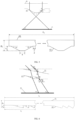
FIG. 7 to FIG. 8 , the light-transmittingsurface 42 of the first light homogenizing plate and the light-transmittingsurface 52 of the second light homogenizing plate are both of periodic saw tooth array structure, which not only can achieve the light homogenizing effect, but also reduce the thickness and the production difficulty of the light homogenizing plate. The function of the firstlight homogenizing plate 4 is to homogenize the incident light toward the east and west directions, and the function of the secondlight homogenizing plate 5 is to homogenize the incident light toward the south and north directions. The area ratio of thephotovoltaic panel 3 to the firstlight homogenizing plate 4 is 2:1, thereby changing the average direct light intensity of the direct light illumination in the glass greenhouse. The average direct light intensity in the glass greenhouse is 60% of the average direct light intensity in the traditional greenhouse. Power generation can be realized, while a part of illumination in the glass greenhouse can be reduced and uniform illumination can be realized, which is more conducive to crop growth and is helpful to effectively reducing surface water evaporation, saving water resources, and improving agricultural arability in arid, water-deficient and barren areas. - As shown in
FIG. 7 , the firstlight homogenizing plate 4 is installed between twophotovoltaic panels 3. When light is directly incident on thelight homogenizing plate 4 and thephotovoltaic panel 3, the light incident on thephotovoltaic panel 3 will be blocked. The light incident on the firstlight homogenizing plate 4 will be split into three parts, one part of which will be emitted in the same direction as the incident direction, and the other parts will be deflected to the left and right and irradiate under thephotovoltaic panel 3 after passing through the light-transmittingsurface 42 of the first light homogenizing plate, respectively, so as to realize uniform illumination. - As shown in
FIG. 8 , when the light is directly incident on the second light homogenizing plate, a part of the light is emitted in the same direction as the incident direction, and the other part of the light will be deflected and irradiate under thephotovoltaic panel 3 on the north side after passing through the light-transmittingsurface 52 of the second light homogenizing plate, so as to realize uniform illumination. - As shown in
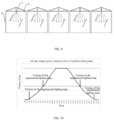
FIG. 9 to FIG. 12 , an LED supplemental lighting lamp 7 and a photosynthetic photon flux density sensor are provided inside the glass greenhouse. A controller 8 is provided on the outer side of the glass side wall of the glass greenhouse. An output end of the photovoltaic panel is connected to a power grid through an inverter. An input end of the LED supplemental lighting lamp 7 is connected to the output end of the power grid through a rectifier circuit. The output end of thephotovoltaic panel 3 is connected to the input end of the controller, and the input end of the LED supplemental lighting lamp 7 is connected to the output end of the controller 8 and the output end of the photovoltaic panel. The operation method of the glass greenhouse is as follows: - (1) obtaining a PPFD value by using a photosynthetic photon flux density sensor in the glass greenhouse and transmitting the PPFD value to a controller;
- (2) when the PPFD value is higher than 200 µmol/m2s, inputting all the electricity generated by a photovoltaic panel into a power grid; when the PPFD value is lower than 200 µmol/m2s, 200 µmol/m2s is the optimal value set by the system, which can be adjusted according to the variety of crops and the planting season. When the electricity generated by the photovoltaic panel is sufficient to drive the LED supplemental lighting lamp, the controller controls the power grid to power the LED supplemental lighting lamp.
- Specifically, the
photovoltaic panel 3 can be used to generate electricity and supply power, which can increase the light intensity suitable for crops to absorb in the glass greenhouse by more than 100%. The photovoltaic panel can also be connected to the power grid for power supply in rainy days, so as to ensure the growth needs of crops in the glass greenhouse. For plant growth, when the photosynthetic photon flux density (PPFD) is above 200 µmol/m2s, better growth can be achieved. In the course of a day, when it is at noon, the PPFD value on the agricultural land is the strongest, far exceeding the light saturation point of plant photosynthesis. If it is directly incident, the plant photosynthesis will be weakened. Therefore, after the light at noon undergoes the shading treatment of thephotovoltaic panel 3 and the light homogenizing treatment of the firstlight homogenizing plate 4 and the secondlight homogenizing plate 5, the PPFD in the photovoltaic glass greenhouse is weakened, and the photosynthetic rate of plants is improved. When the power generation of thephotovoltaic panels 3 on one mu of land is 35 KW, the controller 8 inputs all the power generated by thephotovoltaic panels 3 into the power grid. During the period when the light intensity decreases in a day, the PPFD value in the photovoltaic glass greenhouse is weak. When the power generation of thephotovoltaic panel 3 on a mu of land is less than 15 KW, the controller 8 directly powers the LED supplemental lighting lamp 7 by the direct current generated by thephotovoltaic panel 3 to illuminate the plants in the facility, so as to improve the PPFD value in the photovoltaic glass greenhouse, thereby improving the photosynthesis efficiency of the plants, avoiding the energy waste generated in the process of storage or voltage conversion, and improving the utilization efficiency of the electric energy. At the same time, because the planted plants have different light requirements in different growth stages and different types of plants have the difference between long day and short day, the total lighting duration of the LED supplemental lighting lamp 7 will be adjusted according to the planted plants and their different growth stages. Therefore, under the action of thephotovoltaic panel 3, the firstlight homogenizing plate 4, the secondlight homogenizing plate 5, the LED supplemental lighting lamp 7 and the controller 8, the power generation is realized, and the growth of plants in the photovoltaic glass greenhouse is promoted through the peak-cutting and valley-filling regulation method for all-day light environment. - In the whole year, due to the weak light intensity in winter, the controller 8 directly powers the LED supplemental lighting lamp 7 with the electric energy generated by the
photovoltaic panel 3, thus doubling the photosynthesis in the glass greenhouse, and further greatly improving the yield and quality of vegetables in the glass greenhouse before and after the traditional Spring Festival in China. In spring, autumn, summer and other periods with strong light intensity, the peak-cutting and valley-filling regulation method is used to control the LED supplemental lighting lamp 7, which brings stable income to farmers. - Because the structure of the glass greenhouse itself can basically support the
photovoltaic panel 3, the firstlight homogenizing plate 4 and the secondlight homogenizing plate 5, after installing photovoltaic plates, the cost of photovoltaic power generation is actually lower than the cost of installing photovoltaic panels alone, and the crop yield in each greenhouse can be increased by more than 20% in winter. - According to the production cost estimation of the existing
photovoltaic panels 3, the firstlight homogenizing plates 4 and the secondlight homogenizing plates 5, the photovoltaic power generation cost in the photovoltaic glass greenhouse of this embodiment can be significantly lower than the cost of the single photovoltaic system in the prior art. In addition, the present disclosure makes full use of the convenient conditions that the glass greenhouse is connected to the power grid, and realizes the intelligent regulation of crop illumination in the glass greenhouse by installing the LED supplemental lighting lamp 7. Therefore, along with the photovoltaic power generation, crops can also produce better economic benefits. - The above embodiments only express multiple embodiments of the present disclosure, which have been described specifically in detail, but cannot be understood as limiting the patent scope of the present disclosure. It should be pointed out that for those skilled in the art, a number of variations and improvements can be made without departing from the concept of the present disclosure, which fall within the scope of protection of the present disclosure.
Claims (14)
- An intelligent photovoltaic glass greenhouse, characterized in that the intelligent photovoltaic glass greenhouse comprises a plurality of groups of greenhouse units arranged in parallel in a north-south direction, wherein each of the greenhouse units comprises a main frame, equilateral obtuse roof frames, photovoltaic panels, first light homogenizing plates, second light homogenizing plates and glass side walls, the equilateral obtuse roof frames are fixed on the main frame, the roof frames of the plurality of groups of greenhouse units form a structure of a W shape, the glass side walls are provided around the main frame and not at joints of adjacent greenhouse units, a plurality of groups of the photovoltaic panels and the first light homogenizing plates are provided in turn in an east-west direction on south-facing roof frames of the roof frames, a group of first light homogenizing plates is arranged between every two groups of photovoltaic panels to form a group of the plurality of groups of the photovoltaic panels and the first light homogenizing plates, and the second light homogenizing plates are laid throughout north-facing roof frames of the roof frames.
- The intelligent photovoltaic glass greenhouse according to claim 1, characterized in that waterproof sealing layers are provided between adjacent second light homogenizing plates and between the first light homogenizing plate and the photovoltaic panel.
- The intelligent photovoltaic glass greenhouse according to claim 1, characterized in that the first light homogenizing plates and the second light homogenizing plates are made of glass with high transmittance, light-receiving surfaces of the first light homogenizing plates and light-receiving surfaces of the second light homogenizing plates are smooth planes, and light-transmitting surfaces of the first light homogenizing plates and light-transmitting surfaces of the second light homogenizing plates are fine Fresnel lens structures.
- The intelligent photovoltaic glass greenhouse according to claim 1, characterized in that the fine Fresnel lens structures of the light-transmitting surfaces of the first light homogenizing plates consist of trapezoidal convex structures arranged in turn, and are configured for homogenizing incident light toward east and west directions of the greenhouse.
- The intelligent photovoltaic glass greenhouse according to claim 4, characterized in that the trapezoidal convex structure of the light-transmitting surface of the first light homogenizing plate comprises a hypotenuse angle, an upper bottom and a lower bottom, wherein a width of the upper bottom is half of a width of the lower bottom, and specific expression formula of the hypotenuse angle α 1 and the width of the upper bottom a of a structural unit of the first light homogenizing plate are:


- The intelligent photovoltaic glass greenhouse according to claim 5, characterized in that a number of the trapezoidal convex structures of the first light homogenizing plate is N 1, and specific expression formula of N 1 is:

- The intelligent photovoltaic glass greenhouse according to claim 1, characterized in that the fine Fresnel lens structures of the light-transmitting surfaces of the second light homogenizing plates consist of a plurality of groups of saw teeth with different sizes arranged in turn, and are configured for homogenizing incident light toward south and north directions of the greenhouse.
- The intelligent photovoltaic glass greenhouse according to claim 7, characterized in that the saw teeth in the light-transmitting surface of the second light homogenizing plate comprise a first saw tooth and a second saw tooth, and specific expression formulas of a hypotenuse angle of the first saw tooth and a hypotenuse angle of the second saw tooth are:


- The intelligent photovoltaic glass greenhouse according to claim 8, characterized in that a number of the plurality of groups of the fine Fresnel lens structures of the second light homogenizing plate is N2, and specific expression formula of N 2 is:

- The intelligent photovoltaic glass greenhouse according to claim 1, characterized in that a thickness of the first light homogenizing plate is the same as that of the second light homogenizing plate, and is in a range of 1 mm to 3 mm.
- The intelligent photovoltaic glass greenhouse according to claim 1, characterized in that an LED supplemental lighting lamp and a photosynthetic photon flux density sensor are provided inside the glass greenhouse, a controller is provided on an outer side of one of the glass side walls of the glass greenhouse, an output end of the photovoltaic panel is connected to a power grid through an inverter, an input end of the LED supplemental lighting lamp is connected to an output end of the power grid through a rectifier circuit, the output end of the photovoltaic panel is connected to an input end of the controller, and the input end of the LED supplemental lighting lamp is connected to an output end of the controller and the output end of the photovoltaic panel.
- An operation method carried out by the intelligent photovoltaic glass greenhouse according to of claim 12, characterized in that the operation method comprises the following steps:(1) obtaining a PPFD value by using a photosynthetic photon flux density sensor in the glass greenhouse and transmitting the PPFD value to a controller;(2) when the PPFD value is higher than a set value, inputting all electricity generated by a photovoltaic panel into a power grid; when the PPFD value is lower than the set value and the electricity generated by the photovoltaic panels is sufficient to drive the LED supplemental lighting lamp, using the electricity generated by the photovoltaic panels directly to drive the LED supplemental lighting lamp; and when the electricity generated by the photovoltaic panels is insufficient to drive the LED supplemental lighting lamp, the controller controls the power grid to drive the LED supplemental lighting lamp.
- The operation method according to claim 12, characterized in that the set value is 200 µmol/m2s.
- An application of the intelligent photovoltaic glass greenhouse according to any one of claims 1 to 11 in greenhouse for planting in arid, water-deficient and barren areas.
Applications Claiming Priority (2)
| Application Number | Priority Date | Filing Date | Title |
|---|---|---|---|
| CN202111564718.XA CN114303722B (en) | 2021-12-20 | 2021-12-20 | Intelligent photovoltaic glass greenhouse and operation method and application thereof |
| PCT/CN2022/138622 WO2023116506A1 (en) | 2021-12-20 | 2022-12-13 | Intelligent photovoltaic glass greenhouse, operation method therefor, and application thereof |
Publications (2)
| Publication Number | Publication Date |
|---|---|
| EP4449856A1 true EP4449856A1 (en) | 2024-10-23 |
| EP4449856A4 EP4449856A4 (en) | 2025-06-18 |
Family
ID=81052902
Family Applications (1)
| Application Number | Title | Priority Date | Filing Date |
|---|---|---|---|
| EP22909820.7A Pending EP4449856A4 (en) | 2021-12-20 | 2022-12-13 | Intelligent photovoltaic glass greenhouse, operating method therefor and application thereof |
Country Status (3)
| Country | Link |
|---|---|
| EP (1) | EP4449856A4 (en) |
| CN (1) | CN114303722B (en) |
| WO (1) | WO2023116506A1 (en) |
Families Citing this family (5)
| Publication number | Priority date | Publication date | Assignee | Title |
|---|---|---|---|---|
| CN114303722B (en) * | 2021-12-20 | 2022-08-30 | 中国科学技术大学 | Intelligent photovoltaic glass greenhouse and operation method and application thereof |
| CN115409432B (en) * | 2022-11-01 | 2023-02-03 | 中国科学技术大学 | A light management system for the whole growth cycle of field crops |
| CN117016249A (en) * | 2023-09-15 | 2023-11-10 | 南京日昌太阳能发电有限公司 | A uniform light photovoltaic greenhouse |
| CN120036147A (en) * | 2025-02-08 | 2025-05-27 | 中国科学技术大学 | Suspended ceiling type large-area light field regulating and controlling device and method |
| CN120316843A (en) * | 2025-03-20 | 2025-07-15 | 上海尤汶新能源有限公司 | A ground irradiance uniformity design method and device for photovoltaic agricultural greenhouses |
Family Cites Families (17)
| Publication number | Priority date | Publication date | Assignee | Title |
|---|---|---|---|---|
| NL1026241C2 (en) * | 2004-05-19 | 2005-11-22 | Markus Cornelis Maria Van Veen | Greenhouse, as in a domestic garden, comprises support structure and roof with ridges, barn and panels extending between ridge and support structure |
| CN102013445B (en) * | 2010-06-10 | 2013-09-04 | 常州天合光能有限公司 | Solar cell module capable of adjusting transmission of light |
| NL2006020C2 (en) * | 2011-01-18 | 2012-07-19 | Bode Project En Ingenieursbureau B V | CONSTRUCTION WORK, IN PARTICULAR HORTICULTURAL GREENHOUSE WITH A SYSTEM FOR ABSORBING SUNLIGHT. |
| CN202049248U (en) * | 2011-03-10 | 2011-11-23 | 上海合瑞新能源科技有限公司 | Silica gel tooth form surface Fresnel lens |
| CN202307979U (en) * | 2011-08-29 | 2012-07-04 | 石匀宁 | Photoelectric conversion device |
| NL2010327C2 (en) * | 2013-02-19 | 2014-08-21 | Havecon Kassenbouw B V | Greenhouse comprising a panel with a pv-cell and a light dispersion area. |
| US20160081282A1 (en) * | 2013-06-19 | 2016-03-24 | Sunboost Ltd | Roofing |
| CN207995729U (en) * | 2017-11-29 | 2018-10-23 | 中节能(长兴)太阳能科技有限公司 | A photovoltaic agricultural greenhouse |
| CN108024413B (en) * | 2017-12-01 | 2020-10-16 | 上海亚明照明有限公司 | Illumination control method and system |
| CN108738818A (en) * | 2018-05-08 | 2018-11-06 | 阜阳昂科丰光电科技有限公司 | A kind of photovoltaic agricultural system meeting the cloudy crop growth of happiness |
| CN209218747U (en) | 2018-12-19 | 2019-08-09 | 北京蓉坤农业科技有限公司 | A kind of band is followed spot the intelligent glass greenhouse of formula photovoltaic system |
| CN213306498U (en) | 2020-07-24 | 2021-06-01 | 北京元鲜记食品科技有限公司 | Venlo glass greenhouse |
| CN213153144U (en) * | 2020-09-24 | 2021-05-11 | 合江县洪联农业有限责任公司 | Photovoltaic greenhouse |
| CN214593171U (en) * | 2020-12-28 | 2021-11-05 | 马培艳 | Green house based on linear fei nieer solar energy spotlight ware |
| CN112821852B (en) * | 2021-02-05 | 2025-06-13 | 中国科学技术大学 | A uniform light photovoltaic agricultural system |
| CN112511100A (en) * | 2021-02-07 | 2021-03-16 | 北京缔科新技术研究院(有限合伙) | Novel Fresnel lens concentrating photovoltaic element |
| CN114303722B (en) * | 2021-12-20 | 2022-08-30 | 中国科学技术大学 | Intelligent photovoltaic glass greenhouse and operation method and application thereof |
-
2021
- 2021-12-20 CN CN202111564718.XA patent/CN114303722B/en active Active
-
2022
- 2022-12-13 WO PCT/CN2022/138622 patent/WO2023116506A1/en not_active Ceased
- 2022-12-13 EP EP22909820.7A patent/EP4449856A4/en active Pending
Also Published As
| Publication number | Publication date |
|---|---|
| CN114303722B (en) | 2022-08-30 |
| CN114303722A (en) | 2022-04-12 |
| EP4449856A4 (en) | 2025-06-18 |
| WO2023116506A1 (en) | 2023-06-29 |
Similar Documents
| Publication | Publication Date | Title |
|---|---|---|
| CN114303722B (en) | Intelligent photovoltaic glass greenhouse and operation method and application thereof | |
| Wu et al. | Energy and optical analysis of photovoltaic thermal integrated with rotary linear curved Fresnel lens inside a Chinese solar greenhouse | |
| Gorjian et al. | Technological advancements and research prospects of innovative concentrating agrivoltaics | |
| Ma et al. | Photovoltaic/spectrum performance analysis of a multifunctional solid spectral splitting covering for passive solar greenhouse roof | |
| CN116058205B (en) | Intelligent greenhouse combined by flexible photovoltaic panel and light homogenizing panel and operation method thereof | |
| KR101808117B1 (en) | Solar Energy Generation Greenhouse Using Solar Cell | |
| CN104663266A (en) | Sunlight comprehensive utilization system of plant factory | |
| CN203327630U (en) | Tracking photovoltaic power generation agricultural greenhouse | |
| CN205319174U (en) | Can realize that complementary warmhouse booth of farming light does not have photovoltaic module of daylighting of sheltering from | |
| CN105532321A (en) | Agricultural-photovoltaic complementary photovoltaic module and application method thereof on agricultural greenhouse | |
| CN112821852B (en) | A uniform light photovoltaic agricultural system | |
| CN206078293U (en) | Agricultural photovoltaic cooperative system based on photovoltaic tracking support | |
| Chen et al. | Photon management heightens the energy use efficiency of greenhouses through the integration of photovoltaic systems and supplemental lighting | |
| Kushakov et al. | Agrivoltaic panel design for greenhouses | |
| Souliotis et al. | The use of Fresnel lenses to reduce the ventilation needs of greenhouses | |
| TWI708401B (en) | Power generation system of light-transmitting solar photovoltaic panel | |
| CN210272395U (en) | Solar photovoltaic cell panel of photovoltaic greenhouse | |
| CN204993230U (en) | Photovoltaic intelligent greenhouse | |
| CN108738818A (en) | A kind of photovoltaic agricultural system meeting the cloudy crop growth of happiness | |
| CN215186553U (en) | A uniform light photovoltaic agricultural system | |
| Hemming et al. | Development of electricity producing greenhouses-two case studies | |
| CN106538294B (en) | Greenhouse with photon well energy storage device | |
| WO2014180098A1 (en) | Application method of tubular photovoltaic power generation component | |
| Wakayama et al. | Photohydrogen production using photosynthetic bacterium Rhodobacter sphaeroides RV: simulation of the light cycle of natural sunlight using an artificial source | |
| CN102986477B (en) | Compound utilization method for agricultural greenhouse |
Legal Events
| Date | Code | Title | Description |
|---|---|---|---|
| STAA | Information on the status of an ep patent application or granted ep patent |
Free format text: STATUS: THE INTERNATIONAL PUBLICATION HAS BEEN MADE |
|
| PUAI | Public reference made under article 153(3) epc to a published international application that has entered the european phase |
Free format text: ORIGINAL CODE: 0009012 |
|
| STAA | Information on the status of an ep patent application or granted ep patent |
Free format text: STATUS: REQUEST FOR EXAMINATION WAS MADE |
|
| 17P | Request for examination filed |
Effective date: 20240718 |
|
| AK | Designated contracting states |
Kind code of ref document: A1 Designated state(s): AL AT BE BG CH CY CZ DE DK EE ES FI FR GB GR HR HU IE IS IT LI LT LU LV MC ME MK MT NL NO PL PT RO RS SE SI SK SM TR |
|
| A4 | Supplementary search report drawn up and despatched |
Effective date: 20250516 |
|
| RIC1 | Information provided on ipc code assigned before grant |
Ipc: A01G 7/04 20060101ALI20250512BHEP Ipc: A01G 9/26 20060101ALI20250512BHEP Ipc: A01G 9/24 20060101ALI20250512BHEP Ipc: A01G 9/14 20060101AFI20250512BHEP |