EP4447406A1 - Energy storage system and control method and apparatus therefor, electronic device, and storage medium - Google Patents
Energy storage system and control method and apparatus therefor, electronic device, and storage medium Download PDFInfo
- Publication number
- EP4447406A1 EP4447406A1 EP22950016.0A EP22950016A EP4447406A1 EP 4447406 A1 EP4447406 A1 EP 4447406A1 EP 22950016 A EP22950016 A EP 22950016A EP 4447406 A1 EP4447406 A1 EP 4447406A1
- Authority
- EP
- European Patent Office
- Prior art keywords
- controllers
- switch module
- status information
- controller
- target
- Prior art date
- Legal status (The legal status is an assumption and is not a legal conclusion. Google has not performed a legal analysis and makes no representation as to the accuracy of the status listed.)
- Pending
Links
Images

Classifications
-
- H—ELECTRICITY
- H04—ELECTRIC COMMUNICATION TECHNIQUE
- H04L—TRANSMISSION OF DIGITAL INFORMATION, e.g. TELEGRAPHIC COMMUNICATION
- H04L47/00—Traffic control in data switching networks
- H04L47/50—Queue scheduling
-
- H—ELECTRICITY
- H02—GENERATION; CONVERSION OR DISTRIBUTION OF ELECTRIC POWER
- H02J—ELECTRIC POWER NETWORKS; CIRCUIT ARRANGEMENTS OR SYSTEMS FOR SUPPLYING OR DISTRIBUTING ELECTRIC POWER; SYSTEMS FOR STORING ELECTRIC ENERGY
- H02J7/00—Circuit arrangements for charging or discharging batteries or for supplying loads from batteries
- H02J7/40—Circuit arrangements for charging or discharging batteries or for supplying loads from batteries characterised by the exchange of charge or discharge related data
-
- H—ELECTRICITY
- H02—GENERATION; CONVERSION OR DISTRIBUTION OF ELECTRIC POWER
- H02J—ELECTRIC POWER NETWORKS; CIRCUIT ARRANGEMENTS OR SYSTEMS FOR SUPPLYING OR DISTRIBUTING ELECTRIC POWER; SYSTEMS FOR STORING ELECTRIC ENERGY
- H02J7/00—Circuit arrangements for charging or discharging batteries or for supplying loads from batteries
- H02J7/60—Circuit arrangements for charging or discharging batteries or for supplying loads from batteries including safety or protection arrangements
- H02J7/663—Circuit arrangements for charging or discharging batteries or for supplying loads from batteries including safety or protection arrangements using battery or load disconnect circuits
-
- H—ELECTRICITY
- H01—ELECTRIC ELEMENTS
- H01M—PROCESSES OR MEANS, e.g. BATTERIES, FOR THE DIRECT CONVERSION OF CHEMICAL ENERGY INTO ELECTRICAL ENERGY
- H01M10/00—Secondary cells; Manufacture thereof
- H01M10/42—Methods or arrangements for servicing or maintenance of secondary cells or secondary half-cells
- H01M10/425—Structural combination with electronic components, e.g. electronic circuits integrated to the outside of the casing
-
- H—ELECTRICITY
- H02—GENERATION; CONVERSION OR DISTRIBUTION OF ELECTRIC POWER
- H02J—ELECTRIC POWER NETWORKS; CIRCUIT ARRANGEMENTS OR SYSTEMS FOR SUPPLYING OR DISTRIBUTING ELECTRIC POWER; SYSTEMS FOR STORING ELECTRIC ENERGY
- H02J7/00—Circuit arrangements for charging or discharging batteries or for supplying loads from batteries
-
- H—ELECTRICITY
- H02—GENERATION; CONVERSION OR DISTRIBUTION OF ELECTRIC POWER
- H02J—ELECTRIC POWER NETWORKS; CIRCUIT ARRANGEMENTS OR SYSTEMS FOR SUPPLYING OR DISTRIBUTING ELECTRIC POWER; SYSTEMS FOR STORING ELECTRIC ENERGY
- H02J7/00—Circuit arrangements for charging or discharging batteries or for supplying loads from batteries
- H02J7/50—Circuit arrangements for charging or discharging batteries or for supplying loads from batteries acting upon multiple batteries simultaneously or sequentially
-
- H—ELECTRICITY
- H02—GENERATION; CONVERSION OR DISTRIBUTION OF ELECTRIC POWER
- H02J—ELECTRIC POWER NETWORKS; CIRCUIT ARRANGEMENTS OR SYSTEMS FOR SUPPLYING OR DISTRIBUTING ELECTRIC POWER; SYSTEMS FOR STORING ELECTRIC ENERGY
- H02J7/00—Circuit arrangements for charging or discharging batteries or for supplying loads from batteries
- H02J7/50—Circuit arrangements for charging or discharging batteries or for supplying loads from batteries acting upon multiple batteries simultaneously or sequentially
- H02J7/52—Circuit arrangements for charging or discharging batteries or for supplying loads from batteries acting upon multiple batteries simultaneously or sequentially for charge balancing, e.g. equalisation of charge between batteries
- H02J7/54—Passive balancing, e.g. using resistors or parallel MOSFETs
-
- H—ELECTRICITY
- H02—GENERATION; CONVERSION OR DISTRIBUTION OF ELECTRIC POWER
- H02J—ELECTRIC POWER NETWORKS; CIRCUIT ARRANGEMENTS OR SYSTEMS FOR SUPPLYING OR DISTRIBUTING ELECTRIC POWER; SYSTEMS FOR STORING ELECTRIC ENERGY
- H02J7/00—Circuit arrangements for charging or discharging batteries or for supplying loads from batteries
- H02J7/80—Circuit arrangements for charging or discharging batteries or for supplying loads from batteries including monitoring or indicating arrangements
- H02J7/82—Control of state of charge [SOC]
-
- H—ELECTRICITY
- H04—ELECTRIC COMMUNICATION TECHNIQUE
- H04L—TRANSMISSION OF DIGITAL INFORMATION, e.g. TELEGRAPHIC COMMUNICATION
- H04L47/00—Traffic control in data switching networks
- H04L47/50—Queue scheduling
- H04L47/62—Queue scheduling characterised by scheduling criteria
- H04L47/622—Queue service order
-
- H—ELECTRICITY
- H04—ELECTRIC COMMUNICATION TECHNIQUE
- H04L—TRANSMISSION OF DIGITAL INFORMATION, e.g. TELEGRAPHIC COMMUNICATION
- H04L47/00—Traffic control in data switching networks
- H04L47/50—Queue scheduling
- H04L47/62—Queue scheduling characterised by scheduling criteria
- H04L47/622—Queue service order
- H04L47/623—Weighted service order
-
- H—ELECTRICITY
- H04—ELECTRIC COMMUNICATION TECHNIQUE
- H04L—TRANSMISSION OF DIGITAL INFORMATION, e.g. TELEGRAPHIC COMMUNICATION
- H04L49/00—Packet switching elements
- H04L49/90—Buffering arrangements
- H04L49/9084—Reactions to storage capacity overflow
- H04L49/9089—Reactions to storage capacity overflow replacing packets in a storage arrangement, e.g. pushout
- H04L49/9094—Arrangements for simultaneous transmit and receive, e.g. simultaneous reading/writing from/to the storage element
-
- H—ELECTRICITY
- H01—ELECTRIC ELEMENTS
- H01M—PROCESSES OR MEANS, e.g. BATTERIES, FOR THE DIRECT CONVERSION OF CHEMICAL ENERGY INTO ELECTRICAL ENERGY
- H01M10/00—Secondary cells; Manufacture thereof
- H01M10/42—Methods or arrangements for servicing or maintenance of secondary cells or secondary half-cells
- H01M10/425—Structural combination with electronic components, e.g. electronic circuits integrated to the outside of the casing
- H01M2010/4278—Systems for data transfer from batteries, e.g. transfer of battery parameters to a controller, data transferred between battery controller and main controller
Definitions
- the present application relates to the field of energy storage technology, and more particularly to an energy storage system, control method thereof, device, electronic device, and storage medium.
- energy storage systems usually consist of multiple battery devices connected with each other.
- additional battery devices are often included, thus providing some redundancy. If a single battery device fails due to overvoltage, undervoltage, or overheating, causing the battery device to cease functioning, the entire series circuit is affected and fails to function. The situation mentioned above necessitates bypassing the malfunctioning battery devices and integrating the remaining ones into the circuit. Additionally, during charging and discharging, some battery devices may need to be bypassed, and others connected into the series circuit. It is understood that if the bypass operation and connection operation are not synchronized during use, voltage fluctuations at the output terminal of the energy storage system can occur, potentially causing the system to crash and become inoperable.
- An objective of the present application is to provide an energy storage system, control method thereof, device, electronic device, and storage medium.
- an embodiment of the present application provides an energy storage system, which comprises: M battery devices interconnected and a communication network, where a battery device comprises a positive electrode and a negative electrode, and a battery device comprises a storage battery, a controller, a first switch module, and a second switch module; and M controllers are configured to communicate with each other via the communication network, where M is a natural number, M ⁇ 2; a positive pole of the storage battery is connected to a first terminal of the first switch module, the positive electrode and a first terminal of the second switch module are both connected to a second terminal of the first switch module, and a second terminal of the second switch module is connected to a negative pole of the storage battery; the controller is configured to control connection and disconnection between the first terminal of the first switch module and the second terminal of the first switch module and control connection and disconnection between the first terminal of the second switch module and the second terminal of the second switch module.
- the first switch module and the second switch module are switching transistors, in the first switch module and the second switch module, the first terminal is one of a collector and an emitter of a switching transistor, the second terminal is another of the collector and the emitter of the switching transistor; the controller is connected to a base of a switching transistor of the first switch module and also to a base of a switching transistor of the second switch module.
- An embodiment of the present application provides a control method for a controller, which comprises: synchronizing in time with another M-1 controllers based on a communication network; acquiring first status information of a storage battery corresponding to a current controller and sending the first status information to another M-1 controllers via the communication network, and receiving second status information sent by another M-1 controllers; selecting a first main controller among M controllers based on a first predetermined algorithm, the first status information, and M-1 sets of second status information, and arranging the M controllers into a sorted queue; selecting N target controllers from the sorted queue from an end of the sorted queue towards a front of the sorted queue, and generating operation commands for the N target controllers, which are same for all N target controllers, where the operation commands are configured to characterize a bypass operation or a connection operation to the storage battery, where N is a natural number, N ⁇ M; generating an operation time, and sending corresponding operation commands and the operation time to the N target controllers respectively when the current controller is the first main controller, where the
- a step of "sending corresponding operation commands and the operation time to the N target controllers respectively" specifically includes: sending corresponding operation commands and the operation time to all M controllers respectively; where operation commands for remaining M-N controllers is configured to indicate a connection operation when operation commands for the N target controllers is configured to indicate a bypass operation, and operation commands for remaining M-N controllers is configured to indicate a bypass operation when operation commands for the N target controllers is configured to indicate a connection operation.
- the first status information and the second status information include a State of Charge (SOC) value of the storage battery; a step of "selecting a first main controller among M controllers based on a first predetermined algorithm, the first status information, and M-1 sets of second status information, and arranging the M controllers into a sorted queue" specifically includes: selecting a first main controller among M controllers based on a first predetermined algorithm and SOC values of M controllers; arranging the M controllers into a sorted queue from a lowest SOC value to a highest SOC value when a corresponding storage battery is in a charging state; arranging the M controllers into a sorted queue from a highest SOC value to a lowest SOC value when a corresponding storage battery is in a discharging state; a step of "generating operation commands for the N target controllers, which are same for all N target controllers" specifically includes: generating operation commands indicating a bypass operation for the N target controllers.
- SOC State of Charge
- the first status information and the second status information include a health value of the storage battery, where a higher health value indicates a better condition of the storage battery; a step of "selecting a first main controller among M controllers based on a first predetermined algorithm, the first status information, and M-1 sets of second status information, and arranging the M controllers into a sorted queue" specifically includes: selecting a first main controller among M controllers based on a first predetermined algorithm and health values of M controllers; arranging the M controllers into a sorted queue from a highest health value to a lowest health value; a step of "generating operation commands for the N target controllers, which are same for all N target controllers" specifically includes: generating operation commands indicating a bypass operation for the N target controllers.
- a step of "synchronizing in time with another M-1 controllers based on a communication network” specifically includes: selecting a second main controller among another M-1 controllers through a second predetermined algorithm; sending a first message to the second main controller via a communication network by a current controller, with the first message including a first timestamp T1 of when the first message leaves the current controller; receiving a second message returned by the second main controller, with the second message including a second timestamp T2 of when the first message reaches the second main controller and a third timestamp T3 of when the second message leaves the second main controller, and obtaining a fourth timestamp T4 of when the current controller receives the second message; adjusting time of the current controller based on a time difference between the current controller and the second main controller which is calculated as ((T2-T1) + (T3-T4)) / 2.
- a configuration voltage of the energy storage system is V; when operation commands for the N target controllers is configured to indicate a bypass operation, a total voltage of storage batteries corresponding to remaining M-N controllers is Sum1, where ISum1-VI ⁇ error threshold; when operation commands for the N target controllers is configured to indicate a connection operation, a total voltage of storage batteries corresponding to the N target controllers is Sum2, where
- An embodiment of the present application provides a control device for a controller, which comprises following modules: a time synchronization module, configured to synchronize in time with another M-1 controllers based on a communication network; a selection module, configured to acquire first status information of a storage battery corresponding to a current controller and send the first status information to another M-1 controllers via the communication network, and receive second status information sent by another M-1 controllers; select a first main controller among M controllers based on a first predetermined algorithm, the first status information, and M-1 sets of second status information, and arrange the M controllers into a sorted queue; select N target controllers from the sorted queue from an end of the sorted queue towards a front of the sorted queue, and generate operation commands for the N target controllers, which are same for all N target controllers, where the operation commands are configured to characterize a bypass operation or a connection operation to the storage battery, where N is a natural number, N ⁇ M; a command sending module, configured to generate an operation time and send corresponding operation commands and
- An embodiment of the present application provides an electronic device, which comprises: a memory configured to store executable instructions; a processor configured to execute the executable instructions stored in the memory to implement an aforementioned control method.
- An embodiment of the present application provides a storage medium, storing executable instructions, which when executed by a processor, implement an aforementioned control method.
- the energy storage system comprises multiple interconnected battery devices and a communication network.
- a battery device includes a positive and negative electrode.
- a battery device includes a storage battery, a controller, a first switch module and a second switch module. The controllers configured to communicate with each other via the communication network.
- a positive pole of the storage battery is connected to a first terminal of the first switch module, the positive electrode and a first terminal of the second switch module are both connected to a second terminal of the first switch module, and a second terminal of the second switch module is connected to a negative pole of the storage battery.
- a controller is configured to control connection and disconnection between the first terminal of the first switch module and the second terminal of the first switch module and control connection and disconnection between the first terminal of the second switch module and the second terminal of the second switch module.
- the multiple battery devices are configured to facilitate simultaneous disconnection operation and connection operation.
- spatial relative positions are intended to include orientations of the device during use or operation beyond those shown in the diagrams. For instance, if the device in the diagram is flipped over, a unit described as being “below” or “under” another unit or feature would then be “above” it. Therefore, the exemplary term “below” can encompass both above and below directions.
- the device can be oriented differently (rotated 90 degrees or other orientations), and the spatial descriptions used herein are interpreted accordingly.
- Embodiment 1 of the present application provides an energy storage system, as shown in FIG.1 , comprising: M battery devices 1 interconnected and a communication network 2.
- a battery device 1 includes a positive electrode 1A and a negative electrode 1B.
- a battery device 1 includes a storage battery 11, a controller 12, a first switch module S1, and a second switch module S2.
- M controllers 12 are configured to communicate with each other via the communication network 2.
- M is a natural number. M ⁇ 2.
- the storage battery 11 may include multiple battery cells connected in series or parallel, forming the storage battery 11.
- the storage battery could be of types such as nickel-metal hydride, nickel-cadmium, or lithium batteries.
- the controller 12 could be a microcontroller, etc..
- the communication network 2 could be an Ethernet, fiber-optic network, or CAN (Controller Area Network), etc. It is understood that the number of battery devices 1 in the energy storage system can be increased or decreased based on actual needs.
- Each battery device 1 includes a controller 12. Each battery device 1 can independently control storage battery 11 therein.
- the energy storage system is a distributed control system. It is understood that, in the energy storage system, when a battery device 1 is damaged, simply bypass the damaged battery device 1 and the energy storage system can still function normally.
- each controller 12 can be assigned a unique identifier, which can also be considered as an identifier for the battery device 1. Additionally, each controller 12 is equipped with a communication module.
- a positive electrode of the storage battery 11 is connected (e.g., electrically connected) to a first terminal of the first switch module S1. Both the positive electrode 1A and a first terminal of the second switch module S2 are connected (e.g., electrically connected) to a second terminal of the first switch module S 1. A second terminal of the second switch module S2 is connected (e.g., electrically connected) to a negative electrode of the storage battery 11.
- the controller 12 is configured to control connection and disconnection between the first terminal of the first switch module S 1 and the second terminal of the first switch module S1.
- the controller 12 is configured to control connection and disconnection between the first terminal of the second module S2 and the second terminal of the second switch module S2.
- the battery device 1 when the first switch module S1 is in a connected state and the second switch module S2 is in a disconnected state, the battery device 1 is connected to the energy storage system.
- the battery device 1 When the first switch module S1 is in a disconnected state and the second switch module S2 is in a connected state, the battery device 1 is in a bypass state, meaning the battery device 1 is not connected to the energy storage system.
- the M interconnected battery devices 1 are connected in series.
- a positive electrode 1A of one battery device 1 is connected (e.g., electrically connected) to a negative electrode 1B of another battery device 1.
- a positive output terminal 3A and a negative output terminal 3B are also also a positive output terminal 3A and a negative output terminal 3B.
- the first switch module and the second switch module are switching transistors.
- the first terminal is one of a collector or an emitter of a switching transistor, while the second terminal is another of the collector and the emitter of the switching transistor.
- the controller 12 is connected (e.g., electrically connected) to a base of a switching transistor of the first switch module S1, as well as to a base of a switching transistor of the second switch module S2.
- the controller 12 can control a voltage at a base of a switching transistor of the first switch module and a voltage at a base of a switching transistor of the second switch module, thereby controlling the connection and disconnection between the collector and the emitter of switching transistors of the first switch module and the second switch module.
- Embodiment 2 of the present application provides a control method.
- the control method can be implemented in the controller 12 in the Embodiment 1.
- the controller 12 can execute the control method at a preset interval, such as every 60 seconds, etc.. Additionally, the controller 12 continuously monitors status values of corresponding storage battery 11, such as voltage, temperature, State of Charge (SOC), highest single cell voltage, lowest single cell voltage, and current, etc. When the status values are outside a predetermined range, the controller 12 can issue execution commands to any other controllers 12, thereby each controller 12 can perform the control method.
- SOC State of Charge
- the controller 12 can issue execution commands to any other controllers 12, thereby each controller 12 can perform the control method.
- the energy storage system there are M controllers 12, each configured to execute the control method. As shown in Figure 2 , the method includes the following steps:
- Step 201 synchronizing in time with another M-1 controllers 12 based on a communication network 2.
- each of M controllers 12 has its independent system clock. To eliminate time discrepancies among the controllers 12, time synchronization across all M controllers 12 is required.
- Step 202 Acquiring first status information of a storage battery 11 corresponding to a current controller and sending the first status information to another M-1 controllers 12 via the communication network 2, and receiving second status information sent by another M-1 controllers 12. Selecting a first main controller among M controllers 12 based on a first predetermined algorithm, the first status information, and M-1 sets of second status information, and arranging the M controllers 12 into a sorted queue. Selecting N target controllers from the sorted queue from an end of the sorted queue towards a front of the sorted queue, and generating operation commands for the N target controllers. Operation commands for all N target controllers are same. Operation commands are configured to characterize a bypass operation or a connection operation to the storage battery 11. N is a natural number. N ⁇ M.
- a controller which executes the control method can be referred to as "the current controller.”
- the first status information and the second status information may include a voltage of the storage battery 11, a current of the storage battery 11, and a temperature of the storage battery 11.
- a step of "arranging the M controllers 12 into a sorted queue based on a first predetermined algorithm, the first status information, and M-1 sets of second status information" can be understood as: processing status information of each controller 12 using a first predetermined algorithm, resulting in M scores corresponding to the M controllers 12 one-to-one; arranging the scores in an ascending order or a descending order to form a sorted queue. From the sorted queue, N controllers are selected as N target controllers for operation.
- scores for each storage battery 11 can be determined according to quality of each storage battery 11 (higher quality results in higher scores), and the M storage batteries 11 could be arranged from a highest score to a lowest score. Subsequently, N controllers are selected for bypass operations, and remaining M-N controllers for connection operations. Moreover, during charging, based on the first status information and the second status information, each storage battery 11 can be scored based on its remaining charge (more remaining charge results in higher scores), and the M storage batteries 11 arranged from a highest score to a lowest score. N controllers are selected for connection operations, and remaining M-N for bypass operations according to the arrangement.
- each storage battery 11 can be scored based on its remaining charge (more remaining charge results in higher scores), and the M storage batteries 11 arranged from a lowest score to a highest score.
- N controllers are selected for connection operations, and remaining M-N for bypass operations according to the arrangement.
- Step 203 Generating an operation time, and sending corresponding operation commands and the operation time to the N target controllers respectively when the current controller is the first main controller.
- the operation time is later than a current time.
- the operation time for each controller is same. It is understood that when the current controller is the first main controller, it also sends an operation command and the operation time to itself.
- a checksum such as a CRC (Cyclic Redundancy Check) code, can be added to the data packet.
- CRC Cyclic Redundancy Check
- Step 204 Executing operations as follows at the received operation time when the operation command and operation time are received: controlling the first switch module S1 to be in a disconnected state, and controlling the second switch module S2 to be in a connected state when the operation command indicates a bypass operation; controlling the first switch module S1 to be in a connected state, and controlling the second switch module S2 to be in a disconnected state when the operation command indicates a connection operation.
- a timer can be set, which times out at the operation time, allowing for the immediate execution of the "operations as follows" mentioned above.
- each controller can execute the operation command at a same time, allowing bypass operation and connection operation to occur synchronously.
- the time synchronization can effectively prevent sudden voltage changes at the output terminal of the energy storage system, reducing the possibility of system downtime.
- the first switch module S1 When the first switch module S1 is in a connected state and a step of "controlling the first switch module S1 to be in a disconnected state" needs to be implemented, the first switch module S1 needs to be switched to a disconnected state. Similarly, those skilled in the art can obtain technical solutions for the second switch module S2.
- time discrepancy during the execution of connection operation or bypass operation by different controllers is within 0.1ms to 10ms, which effectively prevents sudden voltage changes at the output terminal of the energy storage system, and reduces possibility of system downtime.
- a step of "sending corresponding operation commands and operation time to the N target controllers respectively" specifically includes: sending corresponding operation commands and the operation time to all M controllers respectively.
- Operation commands for remaining M-N controllers is configured to indicate a connection operation when operation commands for the N target controllers is configured to indicate a bypass operation.
- Operation commands for remaining M-N controllers is configured to indicate a bypass operation when operation commands for the N target controllers is configured to indicate a connection operation.
- the N target controllers and the remaining M-N controllers are configured to perform opposite operations.
- the first status information and the second status information include a State of Charge (SOC) value of the storage battery 11.
- SOC State of Charge
- a step of "selecting a first main controller among M controllers 12 based on a first predetermined algorithm, the first status information, and M-1 sets of second status information, and arranging the M controllers 12 into a sorted queue" specifically includes: selecting a first main controller among M controllers 12 based on a first predetermined algorithm and SOC values of M controllers; arranging the M controllers 12 in a sorted queue from a lowest SOC value to a highest SOC value when a corresponding storage battery is in a charging state; arranging the M controllers 12 in a sorted queue from a highest SOC value to a lowest SOC value when a corresponding storage battery is in a discharging state.
- the M controllers 12 are sorted in ascending order based on the SOC values to obtain a sorted queue, allowing storage batteries 11 with higher SOC values to be bypassed.
- storage batteries 11 with lower SOC values need to be bypassed.
- FIG.1 when a current flows from the positive electrode 1A to the negative electrode 1B, the energy storage system is in a charging state, and the storage battery 11 is in a "charging" state (even though the storage battery 11 may be in a bypass state, it does not preclude the storage battery 11 from being considered as being in a charging state based on the state of the energy storage system).
- each battery device 1 could be equipped with a detector to determine whether a current is flowing from the positive electrode 1A to the negative electrode 1B or from the negative electrode 1B to the positive electrode 1A, thereby determining whether the storage battery 11 is in a charging state or in a discharging state.
- a step of "generating operation commands for the N target controllers, which are same for all N target controllers" specifically includes: generating operation commands indicating a bypass operation for the N target controllers.
- the first status information and the second status information include a health value of the storage battery 11, where a higher health value indicates a better condition of the storage battery 11.
- a step of "selecting a first main controller among M controllers 12 based on a first predetermined algorithm, the first status information and M-1 sets of second status information, and arranging the M controllers 12 into a sorted queue" specifically includes: selecting a first main controller among M controllers 12 based on a first predetermined algorithm and health values of M controllers; arranging the M controllers 12 into a sorted queue from a highest health value to a lowest health value.
- a step of "generating operation commands for the N target controllers, which are same for all N target controllers" specifically includes: generating operation commands indicating a bypass operation for the N target controllers.
- a step of "synchronizing in time with another M-1 controllers 12 based on a communication network 2" includes: Step 1: Selecting a second main controller among another M-1 controllers 12 through a second predetermined algorithm.
- the second predetermined algorithm can be tailored to specific needs. For instance, all M controllers might send their status information over communication network 2, allowing each controller 12 to access status information of all M controllers 12 and apply a same second predetermined algorithm to determine the second main controller. Additionally, the second main controller can be directly programmed into each controller 12.
- Step 2 Sending a first message to the second main controller via a communication network 2 by a current controller, with the first message including a first timestamp T1 of when the first message leaves the current controller.
- Step 3 Receiving a second message returned by the second main controller, with the second message including a second timestamp T2 of when the first message reaches the second main controller and a third timestamp T3 of when the second message leaves the second main controller. Obtaining a fourth timestamp T4 of when the current controller receives the second message.
- Step 4 Adjusting time of the current controller based on a time difference between the current controller and the second main controller which is calculated as ((T2-T1) + (T3-T4)) / 2.
- sending the first message and the second message between the current controller and the second main controller also consumes time spent T, with T2-T1 including both the time spent T and the time difference, and T3-T4 including the time spent (e.g., -1*T) and the time difference, thus the time difference is ((T2-T1) + (T3-T4)) / 2.
- a checksum such as a CRC (Cyclic Redundancy Check) code, can be added to the first message and the second message.
- CRC Cyclic Redundancy Check
- a configuration voltage of the energy storage system is V.
- a total voltage of storage batteries 11 corresponding to remaining M-N controllers is Sum1, where ISum 1- VI ⁇ _ error threshold.
- a total voltage of storage batteries 11 corresponding to the N target controllers is Sum2, where
- a configuration voltage is set to the energy storage system, and after some storage batteries 11 are bypassed, a voltage of remaining storage batteries 11 should meet a requirement of the configuration voltage. For instance, a difference between the voltage of the remaining storage batteries 11 and the configuration voltage should be within a narrow range of [-1 *error threshold, error threshold].
- Embodiment 3 of the present application provides a control device.
- the control device can be implemented in the controller in the Embodiment 1.
- the control device comprises following modules:
- Embodiment 3 of the present application provides an electronic device, which comprises a memory configured to store executable instructions; and a processor configured to execute the executable instructions stored in the memory.
- the processor executes the stored executable instructions to implement a control method described in the Embodiment 1.
- Embodiment 3 of the present application provides a storage medium that stores executable instructions.
- the executable instruction executed by a processor a control method described in Embodiment 1 is implemented.
Landscapes
- Engineering & Computer Science (AREA)
- Power Engineering (AREA)
- Computer Networks & Wireless Communication (AREA)
- Signal Processing (AREA)
- Microelectronics & Electronic Packaging (AREA)
- Manufacturing & Machinery (AREA)
- Chemical & Material Sciences (AREA)
- Chemical Kinetics & Catalysis (AREA)
- Electrochemistry (AREA)
- General Chemical & Material Sciences (AREA)
- Charge And Discharge Circuits For Batteries Or The Like (AREA)
Abstract
Description
- The application claims priority from
Chinese Patent Application No. 202210806591.6, filed July 8, 2022 - The present application relates to the field of energy storage technology, and more particularly to an energy storage system, control method thereof, device, electronic device, and storage medium.
- With the proliferation of new energy vehicles and the implementation of goals such as "carbon neutrality" and "carbon peak", the overall energy structure of society is shifting towards electrical energy. Energy storage systems are required in new energy vehicles, and in solar power generation and wind power generation.
- In practice, energy storage systems usually consist of multiple battery devices connected with each other. To enhance the stability of energy storage systems, additional battery devices are often included, thus providing some redundancy. If a single battery device fails due to overvoltage, undervoltage, or overheating, causing the battery device to cease functioning, the entire series circuit is affected and fails to function. The situation mentioned above necessitates bypassing the malfunctioning battery devices and integrating the remaining ones into the circuit. Additionally, during charging and discharging, some battery devices may need to be bypassed, and others connected into the series circuit. It is understood that if the bypass operation and connection operation are not synchronized during use, voltage fluctuations at the output terminal of the energy storage system can occur, potentially causing the system to crash and become inoperable.
- An objective of the present application is to provide an energy storage system, control method thereof, device, electronic device, and storage medium.
- To achieve one of the above objectives, an embodiment of the present application provides an energy storage system, which comprises: M battery devices interconnected and a communication network, where a battery device comprises a positive electrode and a negative electrode, and a battery device comprises a storage battery, a controller, a first switch module, and a second switch module; and M controllers are configured to communicate with each other via the communication network, where M is a natural number, M ≥ 2; a positive pole of the storage battery is connected to a first terminal of the first switch module, the positive electrode and a first terminal of the second switch module are both connected to a second terminal of the first switch module, and a second terminal of the second switch module is connected to a negative pole of the storage battery; the controller is configured to control connection and disconnection between the first terminal of the first switch module and the second terminal of the first switch module and control connection and disconnection between the first terminal of the second switch module and the second terminal of the second switch module.
- As a further improvement of an embodiment of the present application, the first switch module and the second switch module are switching transistors, in the first switch module and the second switch module, the first terminal is one of a collector and an emitter of a switching transistor, the second terminal is another of the collector and the emitter of the switching transistor; the controller is connected to a base of a switching transistor of the first switch module and also to a base of a switching transistor of the second switch module.
- An embodiment of the present application provides a control method for a controller, which comprises: synchronizing in time with another M-1 controllers based on a communication network; acquiring first status information of a storage battery corresponding to a current controller and sending the first status information to another M-1 controllers via the communication network, and receiving second status information sent by another M-1 controllers; selecting a first main controller among M controllers based on a first predetermined algorithm, the first status information, and M-1 sets of second status information, and arranging the M controllers into a sorted queue; selecting N target controllers from the sorted queue from an end of the sorted queue towards a front of the sorted queue, and generating operation commands for the N target controllers, which are same for all N target controllers, where the operation commands are configured to characterize a bypass operation or a connection operation to the storage battery, where N is a natural number, N ≤ M; generating an operation time, and sending corresponding operation commands and the operation time to the N target controllers respectively when the current controller is the first main controller, where the operation time is later than a current time; executing operations as follows at the received operation time when the operation command and operation time are received: controlling the first switch module to be in a disconnected state and the second switch module to be in a connected state when the operation command indicates a bypass operation; controlling the first switch module to be in a connected state and the second switch module to be in a disconnected state when the operation command indicates a connection operation.
- As a further improvement of an embodiment of the present application, a step of "sending corresponding operation commands and the operation time to the N target controllers respectively" specifically includes: sending corresponding operation commands and the operation time to all M controllers respectively; where operation commands for remaining M-N controllers is configured to indicate a connection operation when operation commands for the N target controllers is configured to indicate a bypass operation, and operation commands for remaining M-N controllers is configured to indicate a bypass operation when operation commands for the N target controllers is configured to indicate a connection operation.
- As a further improvement of an embodiment of the present application, the first status information and the second status information include a State of Charge (SOC) value of the storage battery; a step of "selecting a first main controller among M controllers based on a first predetermined algorithm, the first status information, and M-1 sets of second status information, and arranging the M controllers into a sorted queue" specifically includes: selecting a first main controller among M controllers based on a first predetermined algorithm and SOC values of M controllers; arranging the M controllers into a sorted queue from a lowest SOC value to a highest SOC value when a corresponding storage battery is in a charging state; arranging the M controllers into a sorted queue from a highest SOC value to a lowest SOC value when a corresponding storage battery is in a discharging state; a step of "generating operation commands for the N target controllers, which are same for all N target controllers" specifically includes: generating operation commands indicating a bypass operation for the N target controllers.
- As a further improvement of an embodiment of the present application, the first status information and the second status information include a health value of the storage battery, where a higher health value indicates a better condition of the storage battery; a step of "selecting a first main controller among M controllers based on a first predetermined algorithm, the first status information, and M-1 sets of second status information, and arranging the M controllers into a sorted queue" specifically includes: selecting a first main controller among M controllers based on a first predetermined algorithm and health values of M controllers; arranging the M controllers into a sorted queue from a highest health value to a lowest health value; a step of "generating operation commands for the N target controllers, which are same for all N target controllers" specifically includes: generating operation commands indicating a bypass operation for the N target controllers.
- As a further improvement of an embodiment of the present application, a step of "synchronizing in time with another M-1 controllers based on a communication network" specifically includes: selecting a second main controller among another M-1 controllers through a second predetermined algorithm; sending a first message to the second main controller via a communication network by a current controller, with the first message including a first timestamp T1 of when the first message leaves the current controller; receiving a second message returned by the second main controller, with the second message including a second timestamp T2 of when the first message reaches the second main controller and a third timestamp T3 of when the second message leaves the second main controller, and obtaining a fourth timestamp T4 of when the current controller receives the second message; adjusting time of the current controller based on a time difference between the current controller and the second main controller which is calculated as ((T2-T1) + (T3-T4)) / 2.
- As a further improvement of an embodiment of the present application, a configuration voltage of the energy storage system is V; when operation commands for the N target controllers is configured to indicate a bypass operation, a total voltage of storage batteries corresponding to remaining M-N controllers is Sum1, where ISum1-VI ≤ error threshold; when operation commands for the N target controllers is configured to indicate a connection operation, a total voltage of storage batteries corresponding to the N target controllers is Sum2, where |Sum2-V| ≤ error threshold; where the error threshold > 0.
- An embodiment of the present application provides a control device for a controller, which comprises following modules: a time synchronization module, configured to synchronize in time with another M-1 controllers based on a communication network; a selection module, configured to acquire first status information of a storage battery corresponding to a current controller and send the first status information to another M-1 controllers via the communication network, and receive second status information sent by another M-1 controllers; select a first main controller among M controllers based on a first predetermined algorithm, the first status information, and M-1 sets of second status information, and arrange the M controllers into a sorted queue; select N target controllers from the sorted queue from an end of the sorted queue towards a front of the sorted queue, and generate operation commands for the N target controllers, which are same for all N target controllers, where the operation commands are configured to characterize a bypass operation or a connection operation to the storage battery, where N is a natural number, N ≤ M; a command sending module, configured to generate an operation time and send corresponding operation commands and the operation time to the N target controllers respectively when the current controller is the first main controller, where the operation time is later than a current time; a command execution module, configured to execute operations as follows at the received operation time when the operation command and operation time are received: control the first switch module to be in a disconnected state and the second switch module to be in a connected state when the operation command indicates a bypass operation; control the first switch module to be in a connected state and the second switch module to be in a disconnected state when the operation command indicates a connection operation.
- An embodiment of the present application provides an electronic device, which comprises: a memory configured to store executable instructions; a processor configured to execute the executable instructions stored in the memory to implement an aforementioned control method.
- An embodiment of the present application provides a storage medium, storing executable instructions, which when executed by a processor, implement an aforementioned control method.
- Compared with the prior art, the present application enhances technical effectiveness by providing an energy storage system, control method thereof, devices, electronic equipment, and storage media. The energy storage system comprises multiple interconnected battery devices and a communication network. A battery device includes a positive and negative electrode. A battery device includes a storage battery, a controller, a first switch module and a second switch module. The controllers configured to communicate with each other via the communication network. A positive pole of the storage battery is connected to a first terminal of the first switch module, the positive electrode and a first terminal of the second switch module are both connected to a second terminal of the first switch module, and a second terminal of the second switch module is connected to a negative pole of the storage battery. A controller is configured to control connection and disconnection between the first terminal of the first switch module and the second terminal of the first switch module and control connection and disconnection between the first terminal of the second switch module and the second terminal of the second switch module. The multiple battery devices are configured to facilitate simultaneous disconnection operation and connection operation.
-
-
FIG.1 shows a schematic diagram of a structure of an energy storage system in an embodiment of the present application; -
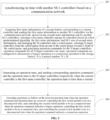
FIG.2 shows a flowchart of a control method in an embodiment of the present application. - The following description of various embodiments of the present application is provided in conjunction with accompanying drawings. Embodiments are illustrative and do not limit the present application. Those skilled in the art can make structural, methodological, or functional changes based on these embodiments, which are included within the protective scope of the present application.
- The terms such as "above," "upper," "below," "lower," etc., used in the present application describe the spatial relative positions of one unit or feature relative to another as shown in the drawings, for ease of explanation. The terms of spatial relative positions are intended to include orientations of the device during use or operation beyond those shown in the diagrams. For instance, if the device in the diagram is flipped over, a unit described as being "below" or "under" another unit or feature would then be "above" it. Therefore, the exemplary term "below" can encompass both above and below directions. The device can be oriented differently (rotated 90 degrees or other orientations), and the spatial descriptions used herein are interpreted accordingly.
-
Embodiment 1 of the present application provides an energy storage system, as shown inFIG.1 , comprising:
M battery devices 1 interconnected and acommunication network 2. Abattery device 1 includes a positive electrode 1A and anegative electrode 1B. Abattery device 1 includes astorage battery 11, acontroller 12, a first switch module S1, and a second switch module S2.M controllers 12 are configured to communicate with each other via thecommunication network 2. M is a natural number. M ≥ 2. Thestorage battery 11 may include multiple battery cells connected in series or parallel, forming thestorage battery 11. The storage battery could be of types such as nickel-metal hydride, nickel-cadmium, or lithium batteries. Thecontroller 12 could be a microcontroller, etc.. Thecommunication network 2 could be an Ethernet, fiber-optic network, or CAN (Controller Area Network), etc. It is understood that the number ofbattery devices 1 in the energy storage system can be increased or decreased based on actual needs. - Each
battery device 1 includes acontroller 12. Eachbattery device 1 can independently controlstorage battery 11 therein. The energy storage system is a distributed control system. It is understood that, in the energy storage system, when abattery device 1 is damaged, simply bypass the damagedbattery device 1 and the energy storage system can still function normally. - To facilitate the differentiation and management of
different controllers 12,different controllers 12 can be assigned different names. Eachcontroller 12 can be assigned a unique identifier, which can also be considered as an identifier for thebattery device 1. Additionally, eachcontroller 12 is equipped with a communication module. - A positive electrode of the
storage battery 11 is connected (e.g., electrically connected) to a first terminal of the first switch module S1. Both the positive electrode 1A and a first terminal of the second switch module S2 are connected (e.g., electrically connected) to a second terminal of the firstswitch module S 1. A second terminal of the second switch module S2 is connected (e.g., electrically connected) to a negative electrode of thestorage battery 11. - The
controller 12 is configured to control connection and disconnection between the first terminal of the firstswitch module S 1 and the second terminal of the first switch module S1. Thecontroller 12 is configured to control connection and disconnection between the first terminal of the second module S2 and the second terminal of the second switch module S2. - As shown in
FIG.1 , within abattery device 1, when the first switch module S1 is in a connected state and the second switch module S2 is in a disconnected state, thebattery device 1 is connected to the energy storage system. When the first switch module S1 is in a disconnected state and the second switch module S2 is in a connected state, thebattery device 1 is in a bypass state, meaning thebattery device 1 is not connected to the energy storage system. - As shown in
FIG.1 , the Minterconnected battery devices 1 are connected in series. For twoadjacent battery devices 1, a positive electrode 1A of onebattery device 1 is connected (e.g., electrically connected) to anegative electrode 1B of anotherbattery device 1. Moreover, in this battery system, there are also apositive output terminal 3A and anegative output terminal 3B. - In an embodiment, the first switch module and the second switch module are switching transistors. In the first switch module and the second switch module, the first terminal is one of a collector or an emitter of a switching transistor, while the second terminal is another of the collector and the emitter of the switching transistor. The
controller 12 is connected (e.g., electrically connected) to a base of a switching transistor of the first switch module S1, as well as to a base of a switching transistor of the second switch module S2. Thecontroller 12 can control a voltage at a base of a switching transistor of the first switch module and a voltage at a base of a switching transistor of the second switch module, thereby controlling the connection and disconnection between the collector and the emitter of switching transistors of the first switch module and the second switch module. -
Embodiment 2 of the present application provides a control method. The control method can be implemented in thecontroller 12 in theEmbodiment 1. Thecontroller 12 can execute the control method at a preset interval, such as every 60 seconds, etc.. Additionally, thecontroller 12 continuously monitors status values of correspondingstorage battery 11, such as voltage, temperature, State of Charge (SOC), highest single cell voltage, lowest single cell voltage, and current, etc. When the status values are outside a predetermined range, thecontroller 12 can issue execution commands to anyother controllers 12, thereby eachcontroller 12 can perform the control method. In the energy storage system, there areM controllers 12, each configured to execute the control method. As shown inFigure 2 , the method includes the following steps: - Step 201: synchronizing in time with another M-1
controllers 12 based on acommunication network 2. In an energy storage system, each ofM controllers 12 has its independent system clock. To eliminate time discrepancies among thecontrollers 12, time synchronization across allM controllers 12 is required. - Step 202: Acquiring first status information of a
storage battery 11 corresponding to a current controller and sending the first status information to another M-1controllers 12 via thecommunication network 2, and receiving second status information sent by another M-1controllers 12. Selecting a first main controller amongM controllers 12 based on a first predetermined algorithm, the first status information, and M-1 sets of second status information, and arranging theM controllers 12 into a sorted queue. Selecting N target controllers from the sorted queue from an end of the sorted queue towards a front of the sorted queue, and generating operation commands for the N target controllers. Operation commands for all N target controllers are same. Operation commands are configured to characterize a bypass operation or a connection operation to thestorage battery 11. N is a natural number. N ≤ M. - In practice, a controller which executes the control method can be referred to as "the current controller." The first status information and the second status information may include a voltage of the
storage battery 11, a current of thestorage battery 11, and a temperature of thestorage battery 11. A step of "arranging theM controllers 12 into a sorted queue based on a first predetermined algorithm, the first status information, and M-1 sets of second status information" can be understood as: processing status information of eachcontroller 12 using a first predetermined algorithm, resulting in M scores corresponding to theM controllers 12 one-to-one; arranging the scores in an ascending order or a descending order to form a sorted queue. From the sorted queue, N controllers are selected as N target controllers for operation. For instance, based on the first status information and the second status information, scores for eachstorage battery 11 can be determined according to quality of each storage battery 11 (higher quality results in higher scores), and theM storage batteries 11 could be arranged from a highest score to a lowest score. Subsequently, N controllers are selected for bypass operations, and remaining M-N controllers for connection operations. Moreover, during charging, based on the first status information and the second status information, eachstorage battery 11 can be scored based on its remaining charge (more remaining charge results in higher scores), and theM storage batteries 11 arranged from a highest score to a lowest score. N controllers are selected for connection operations, and remaining M-N for bypass operations according to the arrangement. During discharging, based on the first status information and the second status information, eachstorage battery 11 can be scored based on its remaining charge (more remaining charge results in higher scores), and theM storage batteries 11 arranged from a lowest score to a highest score. N controllers are selected for connection operations, and remaining M-N for bypass operations according to the arrangement. - Step 203: Generating an operation time, and sending corresponding operation commands and the operation time to the N target controllers respectively when the current controller is the first main controller. The operation time is later than a current time. The operation time for each controller is same. It is understood that when the current controller is the first main controller, it also sends an operation command and the operation time to itself. In practice, to prevent data errors while sending corresponding operation commands and the operation time to the N target controllers via
communication network 2, a checksum, such as a CRC (Cyclic Redundancy Check) code, can be added to the data packet. - Step 204: Executing operations as follows at the received operation time when the operation command and operation time are received: controlling the first switch module S1 to be in a disconnected state, and controlling the second switch module S2 to be in a connected state when the operation command indicates a bypass operation; controlling the first switch module S1 to be in a connected state, and controlling the second switch module S2 to be in a disconnected state when the operation command indicates a connection operation. In practice, a timer can be set, which times out at the operation time, allowing for the immediate execution of the "operations as follows" mentioned above.
- Since time synchronization has been previously implemented, each controller can execute the operation command at a same time, allowing bypass operation and connection operation to occur synchronously. The time synchronization can effectively prevent sudden voltage changes at the output terminal of the energy storage system, reducing the possibility of system downtime.
- When the first switch module S1 is in a disconnected state and a step of "controlling the first switch module S1 to be in a disconnected state" needs to be implemented, no action is required. When the first switch module S1 is in a disconnected state and a step of "controlling the first switch module S1 to be in a connected state" needs to be implemented, the first switch module S1 needs to be switched to a connected state. When the first switch module S1 is in a connected state and a step of "controlling the first switch module S1 to be in a connected state" needs to be implemented, no action is required. When the first switch module S1 is in a connected state and a step of "controlling the first switch module S1 to be in a disconnected state" needs to be implemented, the first switch module S1 needs to be switched to a disconnected state. Similarly, those skilled in the art can obtain technical solutions for the second switch module S2.
- In the long-term experiments conducted by the inventors, it was found that implementing any of the control methods mentioned above, time discrepancy during the execution of connection operation or bypass operation by different controllers is within 0.1ms to 10ms, which effectively prevents sudden voltage changes at the output terminal of the energy storage system, and reduces possibility of system downtime.
- In an embodiment, a step of "sending corresponding operation commands and operation time to the N target controllers respectively" specifically includes: sending corresponding operation commands and the operation time to all M controllers respectively. Operation commands for remaining M-N controllers is configured to indicate a connection operation when operation commands for the N target controllers is configured to indicate a bypass operation. Operation commands for remaining M-N controllers is configured to indicate a bypass operation when operation commands for the N target controllers is configured to indicate a connection operation. In practice, the N target controllers and the remaining M-N controllers are configured to perform opposite operations.
- In an embodiment, the first status information and the second status information include a State of Charge (SOC) value of the
storage battery 11. - A step of "selecting a first main controller among
M controllers 12 based on a first predetermined algorithm, the first status information, and M-1 sets of second status information, and arranging theM controllers 12 into a sorted queue" specifically includes: selecting a first main controller amongM controllers 12 based on a first predetermined algorithm and SOC values of M controllers; arranging theM controllers 12 in a sorted queue from a lowest SOC value to a highest SOC value when a corresponding storage battery is in a charging state; arranging theM controllers 12 in a sorted queue from a highest SOC value to a lowest SOC value when a corresponding storage battery is in a discharging state. - During charging, the
M controllers 12 are sorted in ascending order based on the SOC values to obtain a sorted queue, allowingstorage batteries 11 with higher SOC values to be bypassed. During discharging,storage batteries 11 with lower SOC values need to be bypassed. As shown inFIG.1 , when a current flows from the positive electrode 1A to thenegative electrode 1B, the energy storage system is in a charging state, and thestorage battery 11 is in a "charging" state (even though thestorage battery 11 may be in a bypass state, it does not preclude thestorage battery 11 from being considered as being in a charging state based on the state of the energy storage system). As shown inFIG.1 , when a current flows from thenegative electrode 1B to the positive electrode 1A, the energy storage system is in a discharging state, and thestorage battery 11 is in a "discharging" state (even though thestorage battery 11 may be in a bypass state, it does not preclude thestorage battery 11 from being considered as being in a charging state based on the state of the energy storage system). Therefore, eachbattery device 1 could be equipped with a detector to determine whether a current is flowing from the positive electrode 1A to thenegative electrode 1B or from thenegative electrode 1B to the positive electrode 1A, thereby determining whether thestorage battery 11 is in a charging state or in a discharging state. - A step of "generating operation commands for the N target controllers, which are same for all N target controllers" specifically includes: generating operation commands indicating a bypass operation for the N target controllers.
- In an embodiment, the first status information and the second status information include a health value of the
storage battery 11, where a higher health value indicates a better condition of thestorage battery 11. A step of "selecting a first main controller amongM controllers 12 based on a first predetermined algorithm, the first status information and M-1 sets of second status information, and arranging theM controllers 12 into a sorted queue" specifically includes: selecting a first main controller amongM controllers 12 based on a first predetermined algorithm and health values of M controllers; arranging theM controllers 12 into a sorted queue from a highest health value to a lowest health value. - A step of "generating operation commands for the N target controllers, which are same for all N target controllers" specifically includes: generating operation commands indicating a bypass operation for the N target controllers.
- In practice, it is necessary to bypass
storage batteries 11 with lower health values. Initially, multiple attributes of thestorage battery 11, such as voltage and temperature, etc., are obtained. Each attribute is then scored, with attributes indicating better health of thestorage battery 11 determined higher scores, and attributes indicating poorer health of thestorage battery 11 determined lower scores. The attribute scores are summed to determine the health value. Optionally, different attributes can be weighted differently. Maximum scores and minimum scores for different attributes are equal, meaning the attributes share a same scoring range. - In an embodiment, a step of "synchronizing in time with another M-1
controllers 12 based on acommunication network 2" includes:
Step 1: Selecting a second main controller among another M-1controllers 12 through a second predetermined algorithm. The second predetermined algorithm can be tailored to specific needs. For instance, all M controllers might send their status information overcommunication network 2, allowing eachcontroller 12 to access status information of allM controllers 12 and apply a same second predetermined algorithm to determine the second main controller. Additionally, the second main controller can be directly programmed into eachcontroller 12. - Step 2: Sending a first message to the second main controller via a
communication network 2 by a current controller, with the first message including a first timestamp T1 of when the first message leaves the current controller. - Step 3: Receiving a second message returned by the second main controller, with the second message including a second timestamp T2 of when the first message reaches the second main controller and a third timestamp T3 of when the second message leaves the second main controller. Obtaining a fourth timestamp T4 of when the current controller receives the second message.
- Step 4: Adjusting time of the current controller based on a time difference between the current controller and the second main controller which is calculated as ((T2-T1) + (T3-T4)) / 2.
- It is understood that sending the first message and the second message between the current controller and the second main controller also consumes time spent T, with T2-T1 including both the time spent T and the time difference, and T3-T4 including the time spent (e.g., -1*T) and the time difference, thus the time difference is ((T2-T1) + (T3-T4)) / 2.
- Optionally, to enhance the integrity of the first message and the second message, a checksum, such as a CRC (Cyclic Redundancy Check) code, can be added to the first message and the second message.
- In an embodiment, a configuration voltage of the energy storage system is V. When operation commands for the N target controllers is configured to indicate a bypass operation, a total voltage of
storage batteries 11 corresponding to remaining M-N controllers is Sum1, where ISum 1- VI <_ error threshold. When operation commands for the N target controllers is configured to indicate a connection operation, a total voltage ofstorage batteries 11 corresponding to the N target controllers is Sum2, where |Sum2-V| <_ error threshold. The error threshold being greater than 0. In practice, a configuration voltage is set to the energy storage system, and after somestorage batteries 11 are bypassed, a voltage of remainingstorage batteries 11 should meet a requirement of the configuration voltage. For instance, a difference between the voltage of the remainingstorage batteries 11 and the configuration voltage should be within a narrow range of [-1 *error threshold, error threshold]. - Embodiment 3 of the present application provides a control device. The control device can be implemented in the controller in the
Embodiment 1. The control device comprises following modules: - A time synchronization module, configured to synchronize in time with another M-1
controllers 12 based on acommunication network 2; - A selection module, configured to acquire first status information of a
storage battery 11 corresponding to a current controller and send the first status information to another M-1controllers 12 via thecommunication network 2, and receive second status information sent by another M-1controllers 12; select a first main controller amongM controllers 12 based on a first predetermined algorithm, the first status information, and M-1 sets of second status information, and arrange theM controllers 12 into a sorted queue; select N target controllers from the sorted queue from an end of the sorted queue towards a front of the sorted queue, and generate operation commands for the N target controllers, which are same for all N target controllers, where the operation commands are configured to characterize a bypass operation or a connection operation to thestorage battery 11, where N is a natural number, N ≤ M; - A command sending Module, configured to generate an operation time and send corresponding operation commands and the operation time to the N target controllers respectively when the current controller is the first main controller, where the operation time is later than a current time;
- A command execution module, configured to execute operations as follows at the received operation time when the operation command and operation time are received: control the first switch module S1 to be in a disconnected state and the second switch module S2 to be in a connected state when the operation command indicates a bypass operation; control the first switch module S1 to be in a connected state and the second switch module S2 to be in a disconnected state when the operation command indicates a connection operation,.
- Embodiment 3 of the present application provides an electronic device, which comprises a memory configured to store executable instructions; and a processor configured to execute the executable instructions stored in the memory. The processor executes the stored executable instructions to implement a control method described in the
Embodiment 1. - Embodiment 3 of the present application provides a storage medium that stores executable instructions. When the executable instruction executed by a processor, a control method described in
Embodiment 1 is implemented. - It should be understood that although the specification describes embodiments, not every embodiment contains only one independent technical solution. The style of description is purely for clarity. Those skilled in the art should consider the specification as a whole; the technical solutions in various embodiments can be appropriately combined to form other embodiments that those skilled in the art can understand.
- The detailed descriptions listed above are specific explanations of feasible embodiments of the present application and are not intended to limit the scope of the present application. Any equivalent implementations or changes made without departing from the spirit of the present application should also be included within the scope of the present application.
Claims (11)
- An energy storage system, characterized by comprising:M battery devices (1) interconnected and a communication network (2), where a battery device (1) comprises a positive electrode (1A) and a negative electrode (1B), and a battery device (1) comprises a storage battery (11), a controller (12), a first switch module (S1), and a second switch module (S2); and M controllers (12) are configured to communicate with each other via the communication network (2), where M is a natural number, M ≥ 2;a positive pole of the storage battery (11) is connected to a first terminal of the first switch module (S1), the positive electrode (1A) and a first terminal of the second switch module (S2) are both connected to a second terminal of the first switch module (S1), and a second terminal of the second switch module (S2) is connected to a negative pole of the storage battery (11);the controller (12) is configured to control connection and disconnection between the first terminal of the first switch module (S1) and the second terminal of the first switch module (S1) and control connection and disconnection between the first terminal of the second switch module (S2) and the second terminal of the second switch module (S2).
- The energy storage system according to claim 1, characterized in that:the first switch module (S1) and the second switch module (S2) are switching transistors, in the first switch module (S1) and the second switch module (S2), the first terminal is one of a collector and an emitter of a switching transistor, the second terminal is another of the collector and the emitter of the switching transistor;the controller (12) is connected to a base of a switching transistor of the first switch module (S1) and also to a base of a switching transistor of the second switch module (S2).
- A control method for a controller of an energy storage system according to claim 1 or claim 2, characterized by comprising:synchronizing in time with another M-1 controllers (12) based on a communication network (2);acquiring first status information of a storage battery (11) corresponding to a current controller and sending the first status information to another M-1 controllers (12) via the communication network (2), and receiving second status information sent by another M-1 controllers (12); selecting a first main controller among M controllers (12) based on a first predetermined algorithm, the first status information, and M-1 sets of second status information, and arranging the M controllers (12) into a sorted queue; selecting N target controllers from the sorted queue from an end of the sorted queue towards a front of the sorted queue, and generating operation commands for the N target controllers, which are same for all N target controllers, where the operation commands are configured to characterize a bypass operation or a connection operation to the storage battery (11), where N is a natural number, N ≤ M;generating an operation time, and sending corresponding operation commands and the operation time to the N target controllers respectively when the current controller is the first main controller, where the operation time is later than a current time;executing operations as follows at the received operation time when the operation command and operation time are received: controlling the first switch module (S1) to be in a disconnected state and the second switch module (S2) to be in a connected state when the operation command indicates a bypass operation; controlling the first switch module (S1) to be in a connected state and the second switch module (S2) to be in a disconnected state when the operation command indicates a connection operation.
- The control method according to claim 3, characterized in that a step of "sending corresponding operation commands and the operation time to the N target controllers respectively" specifically includes:
sending corresponding operation commands and the operation time to all M controllers respectively; where operation commands for remaining M-N controllers is configured to indicate a connection operation when the operation commands for the N target controllers is configured to indicate a bypass operation; and operation commands the remaining M-N controllers is configured to indicate a bypass operation when operation commands for the N target controllers is configured to indicate a connection operation. - The control method according to claim 3, characterized in that:the first status information and the second status information include an SOC value of the storage battery (11);a step of "selecting a first main controller among M controllers (12) based on a first predetermined algorithm, the first status information, and M-1 sets of second status information, and arranging the M controllers (12) into a sorted queue" specifically includes: selecting a first main controller among M controllers (12) based on a first predetermined algorithm and SOC values of M controllers; arranging the M controllers (12) into a sorted queue from a lowest SOC value to a highest SOC value when a corresponding storage battery (11) is in a charging state; arranging the M controllers (12) into a sorted queue from a highest SOC value to a lowest SOC value when a corresponding storage battery (11) is in a discharging state;a step of "generating operation commands for the N target controllers, which are same for all N target controllers" specifically includes: generating operation commands indicating a bypass operation for the N target controllers.
- The control method according to claim 3, characterized in that:the first status information and the second status information include a health value of the storage battery (11), where a higher health value indicates a better condition of the storage battery (11);a step of "selecting a first main controller among M controllers (12) based on a first predetermined algorithm, the first status information, and M-1 sets of second status information, and arranging the M controllers (12) into a sorted queue" specifically includes: selecting a first main controller among M controllers (12) based on a first predetermined algorithm and health values of M controllers; arranging the M controllers (12) into a sorted queue from a highest health value to a lowest health value;a step of "generating operation commands for the N target controllers, which are same for all N target controllers" specifically includes: generating operation commands indicating a bypass operation for the N target controllers.
- The control method according to claim 3, characterized in that a step of "synchronizing in time with another M-1 controllers (12) based on a communication network (2)" specifically includes:selecting a second main controller among another M-1 controllers (12) through a second predetermined algorithm;sending a first message to the second main controller via a communication network (2) by a current controller, with the first message including a first timestamp T1 of when the first message leaves the current controller;receiving a second message returned by the second main controller, with the second message including a second timestamp T2 of when the first message reaches the second main controller and a third timestamp T3 of when the second message leaves the second main controller, and obtaining a fourth timestamp T4 of when the current controller receives the second message;adjusting time of the current controller based on a time difference between the current controller and the second main controller which is calculated as ((T2-T1) + (T3-T4)) / 2.
- The control method according to claim 4, characterized in that:a configuration voltage of the energy storage system is V;when operation commands for the N target controllers is configured to indicate a bypass operation, a total voltage of storage batteries (11) corresponding to remaining M-N controllers is Sum1, where |Sum1-V| ≤ error threshold; when operation commands for the N target controllers is configured to indicate a connection operation, a total voltage of storage batteries (11) corresponding to the N target controllers is Sum2, where |Sum2-V| <_ error threshold; where the error threshold > 0.
- A control device for a controller of an energy storage system according to claim 1 or claim 2, characterized by comprising following modules:a time synchronization module, configured to synchronize in time with another M-1 controllers (12) based on a communication network (2);a selection module, configured to acquire first status information of a storage battery (11) corresponding to a current controller and send the first status information to another M-1 controllers (12) via the communication network (2), and receive second status information sent by another M-1 controllers (12); select a first main controller among M controllers (12) based on a first predetermined algorithm, the first status information, and M-1 sets of second status information, and arrange the M controllers (12) into a sorted queue; select N target controllers from the sorted queue from an end of the sorted queue towards a front of the sorted queue, and generate operation commands for the N target controllers, which are same for all N target controllers, where the operation commands are configured to characterize a bypass operation or a connection operation to the storage battery (11), where N is a natural number, N ≤ M;a command sending module, configured to generate an operation time and send corresponding operation commands and the operation time to the N target controllers, respectively when the current controller is the first main controller, where the operation time is later than a current time;a command execution module, configured to execute operations as follows at the received operation time when the operation command and operation time are received: control the first switch module (S1) to be in a disconnected state and the second switch module (S2) to be in a connected state when the operation command indicates a bypass operation; control the first switch module (S1) to be in a connected state and the second switch module (S2) to be in a disconnected state when the operation command indicates a connection operation.
- An electronic device, characterized by comprising:a memory configured to store executable instructions;a processor configured to execute the executable instructions stored in the memory to implement a control method according to any one of claims 3 to 8.
- A storage medium, characterized by storing executable instructions, which when executed by a processor, implement a control method according to any one of claims 3 to 8.
Applications Claiming Priority (2)
| Application Number | Priority Date | Filing Date | Title |
|---|---|---|---|
| CN202210806591.6A CN115297063B (en) | 2022-07-08 | 2022-07-08 | Control method, device, electronic device and storage medium for energy storage system |
| PCT/CN2022/120876 WO2024007455A1 (en) | 2022-07-08 | 2022-09-23 | Energy storage system and control method and apparatus therefor, electronic device, and storage medium |
Publications (2)
| Publication Number | Publication Date |
|---|---|
| EP4447406A1 true EP4447406A1 (en) | 2024-10-16 |
| EP4447406A4 EP4447406A4 (en) | 2025-01-22 |
Family
ID=83821685
Family Applications (1)
| Application Number | Title | Priority Date | Filing Date |
|---|---|---|---|
| EP22950016.0A Pending EP4447406A4 (en) | 2022-07-08 | 2022-09-23 | ENERGY STORAGE SYSTEM AND CONTROL METHOD AND DEVICE THEREFOR, ELECTRONIC DEVICE AND STORAGE MEDIUM |
Country Status (6)
| Country | Link |
|---|---|
| US (1) | US20250158429A1 (en) |
| EP (1) | EP4447406A4 (en) |
| CN (1) | CN115297063B (en) |
| AU (1) | AU2022468688B2 (en) |
| WO (1) | WO2024007455A1 (en) |
| ZA (1) | ZA202405069B (en) |
Families Citing this family (1)
| Publication number | Priority date | Publication date | Assignee | Title |
|---|---|---|---|---|
| CN115065125A (en) * | 2022-07-14 | 2022-09-16 | 沃太能源股份有限公司 | Energy storage system |
Family Cites Families (14)
| Publication number | Priority date | Publication date | Assignee | Title |
|---|---|---|---|---|
| TW200913433A (en) * | 2007-09-10 | 2009-03-16 | J Tek Inc | Scattered energy storage control system |
| US9024586B2 (en) * | 2010-10-14 | 2015-05-05 | GM Global Technology Operations LLC | Battery fault tolerant architecture for cell failure modes series bypass circuit |
| CN103647310B (en) * | 2013-11-20 | 2016-06-01 | 上海交通大学 | Swap modules realize MMC battery energy storage system mutually in the method for SOC balance |
| CN108092352B (en) * | 2017-11-27 | 2019-12-31 | 浙江大学 | A modulation method suitable for state-of-charge balance of multi-module battery modules |
| US11005276B2 (en) * | 2018-01-23 | 2021-05-11 | Solsona Enterprise, Llc | Stacked variable voltage battery module arrangement |
| KR102679256B1 (en) * | 2018-05-03 | 2024-06-26 | 주식회사 엘지에너지솔루션 | Apparatus for balancing battery module and battery pack including the same |
| KR102587974B1 (en) * | 2018-08-16 | 2023-10-10 | 주식회사 엘지에너지솔루션 | Apparatus and method for changing the serial connection order among a plurality of batteries and battery pack including the apparatus |
| US20210006076A1 (en) * | 2019-06-14 | 2021-01-07 | X-wave Innovations, Inc. | Reconfigurable Energy Storage Module and Optimum Power Transfer Algorithm for Distributed and Modular Energy Storage Systems |
| EP3916948A1 (en) * | 2020-05-28 | 2021-12-01 | STABL Energy GmbH | Modular energy storage system |
| WO2021243550A1 (en) * | 2020-06-02 | 2021-12-09 | Inventus Power, Inc. | Large-format battery management system |
| CN113949111B (en) * | 2020-07-15 | 2024-01-30 | 华为数字能源技术有限公司 | energy storage system |
| CN113629820B (en) * | 2021-09-02 | 2024-08-02 | 阳光储能技术有限公司 | Battery module, energy storage system and control method of energy storage system |
| CN114709896B (en) * | 2022-04-28 | 2024-05-03 | 西安交通大学 | Battery charging and discharging system based on reconstruction and charging and discharging control method |
| CN115065125A (en) * | 2022-07-14 | 2022-09-16 | 沃太能源股份有限公司 | Energy storage system |
-
2022
- 2022-07-08 CN CN202210806591.6A patent/CN115297063B/en active Active
- 2022-09-23 US US18/723,079 patent/US20250158429A1/en active Pending
- 2022-09-23 WO PCT/CN2022/120876 patent/WO2024007455A1/en not_active Ceased
- 2022-09-23 AU AU2022468688A patent/AU2022468688B2/en active Active
- 2022-09-23 EP EP22950016.0A patent/EP4447406A4/en active Pending
-
2024
- 2024-06-27 ZA ZA2024/05069A patent/ZA202405069B/en unknown
Also Published As
| Publication number | Publication date |
|---|---|
| AU2022468688A1 (en) | 2024-07-04 |
| CN115297063A (en) | 2022-11-04 |
| CN115297063B (en) | 2024-08-30 |
| US20250158429A1 (en) | 2025-05-15 |
| AU2022468688B2 (en) | 2025-01-02 |
| WO2024007455A1 (en) | 2024-01-11 |
| EP4447406A4 (en) | 2025-01-22 |
| ZA202405069B (en) | 2025-10-29 |
Similar Documents
| Publication | Publication Date | Title |
|---|---|---|
| JP7244635B2 (en) | Charge/discharge management method, electronic device, and electrical system for parallel-connected battery set | |
| EP4307512A1 (en) | Photovoltaic power generation system, power control device, and energy storage system | |
| CN110588434A (en) | Energy storage system and battery management method and system thereof | |
| KR20160143092A (en) | System and Method for Controlling Battery | |
| JPH11318037A (en) | Battery cell bypass arrangement | |
| JP2014060912A (en) | Battery system and energy storage system | |
| KR20150019902A (en) | Battery system, method for controlling battery system and energy storage system including the same | |
| CN112564246B (en) | Intelligent lithium battery management system, method and lithium battery for adjusting parameters through platform | |
| CN112290572A (en) | Safety control method of energy storage system | |
| EP4693796A1 (en) | Energy storage system and control method therefor | |
| EP4447406A1 (en) | Energy storage system and control method and apparatus therefor, electronic device, and storage medium | |
| CN118412977A (en) | A bus voltage modulation method for a series dynamic reconfigurable battery system | |
| CN108032745B (en) | Battery management system suitable for low temperature work | |
| CN114744673B (en) | Photovoltaic power supply method based on reconstruction control | |
| US20140274219A1 (en) | Telecommunication Power System | |
| CN110015173B (en) | Battery equalization system, vehicle, battery equalization method, and storage medium | |
| CN101599554B (en) | Battery backup unit and battery backup unit switch control method | |
| CN112865261A (en) | Energy storage battery, application device thereof and charge-discharge control method | |
| EP4417987A1 (en) | System and method for managing battery information | |
| WO2024083116A1 (en) | Multi-charger cooperative charging method and device, and computer-readable storage medium | |
| CN106160034B (en) | A kind of battery balance control device and method | |
| CN102882251B (en) | Charging feedback control system and method for lithium ion storage batteries | |
| CN222939975U (en) | Energy storage centralized battery management system and energy storage container | |
| WO2019042363A1 (en) | Battery equalization system, vehicle, battery equalization method, and storage medium | |
| CN116760198B (en) | Intelligent control methods and devices for distributed energy storage PCS, and computer storage media |
Legal Events
| Date | Code | Title | Description |
|---|---|---|---|
| STAA | Information on the status of an ep patent application or granted ep patent |
Free format text: STATUS: THE INTERNATIONAL PUBLICATION HAS BEEN MADE |
|
| PUAI | Public reference made under article 153(3) epc to a published international application that has entered the european phase |
Free format text: ORIGINAL CODE: 0009012 |
|
| STAA | Information on the status of an ep patent application or granted ep patent |
Free format text: STATUS: REQUEST FOR EXAMINATION WAS MADE |
|
| 17P | Request for examination filed |
Effective date: 20240708 |
|
| AK | Designated contracting states |
Kind code of ref document: A1 Designated state(s): AL AT BE BG CH CY CZ DE DK EE ES FI FR GB GR HR HU IE IS IT LI LT LU LV MC MK MT NL NO PL PT RO RS SE SI SK SM TR |
|
| A4 | Supplementary search report drawn up and despatched |
Effective date: 20250103 |
|
| RIC1 | Information provided on ipc code assigned before grant |
Ipc: H02J 7/00 20060101ALI20241219BHEP Ipc: H04L 47/50 20220101AFI20241219BHEP |
|
| STAA | Information on the status of an ep patent application or granted ep patent |
Free format text: STATUS: EXAMINATION IS IN PROGRESS |
|
| DAV | Request for validation of the european patent (deleted) | ||
| DAX | Request for extension of the european patent (deleted) | ||
| 17Q | First examination report despatched |
Effective date: 20250918 |
|
| REG | Reference to a national code |
Ref country code: DE Ref legal event code: R079 Free format text: PREVIOUS MAIN CLASS: H04L0047500000 Ipc: H02J0007400000 |
|
| GRAP | Despatch of communication of intention to grant a patent |
Free format text: ORIGINAL CODE: EPIDOSNIGR1 |
|
| STAA | Information on the status of an ep patent application or granted ep patent |
Free format text: STATUS: GRANT OF PATENT IS INTENDED |
|
| RIC1 | Information provided on ipc code assigned before grant |
Ipc: H02J 7/40 20260101AFI20260318BHEP Ipc: H02J 7/50 20260101ALI20260318BHEP Ipc: H02J 7/54 20260101ALI20260318BHEP Ipc: H02J 7/82 20260101ALI20260318BHEP |
|
| INTG | Intention to grant announced |
Effective date: 20260331 |