EP4445769A1 - Aerosol producing product, preparation method therefor, and aerosol producing system - Google Patents
Aerosol producing product, preparation method therefor, and aerosol producing system Download PDFInfo
- Publication number
- EP4445769A1 EP4445769A1 EP22914820.0A EP22914820A EP4445769A1 EP 4445769 A1 EP4445769 A1 EP 4445769A1 EP 22914820 A EP22914820 A EP 22914820A EP 4445769 A1 EP4445769 A1 EP 4445769A1
- Authority
- EP
- European Patent Office
- Prior art keywords
- aerosol
- forming substrate
- absorbing material
- infrared absorbing
- producing product
- Prior art date
- Legal status (The legal status is an assumption and is not a legal conclusion. Google has not performed a legal analysis and makes no representation as to the accuracy of the status listed.)
- Pending
Links
Images


Classifications
-
- A—HUMAN NECESSITIES
- A24—TOBACCO; CIGARS; CIGARETTES; SIMULATED SMOKING DEVICES; SMOKERS' REQUISITES
- A24F—SMOKERS' REQUISITES; MATCH BOXES; SIMULATED SMOKING DEVICES
- A24F40/00—Electrically operated smoking devices; Component parts thereof; Manufacture thereof; Maintenance or testing thereof; Charging means specially adapted therefor
- A24F40/40—Constructional details, e.g. connection of cartridges and battery parts
- A24F40/42—Cartridges or containers for inhalable precursors
-
- A—HUMAN NECESSITIES
- A24—TOBACCO; CIGARS; CIGARETTES; SIMULATED SMOKING DEVICES; SMOKERS' REQUISITES
- A24D—CIGARS; CIGARETTES; TOBACCO SMOKE FILTERS; MOUTHPIECES OF CIGARS OR CIGARETTES; MANUFACTURE OF TOBACCO SMOKE FILTERS OR MOUTHPIECES
- A24D1/00—Cigars; Cigarettes
- A24D1/20—Cigarettes specially adapted for simulated smoking devices
-
- A—HUMAN NECESSITIES
- A24—TOBACCO; CIGARS; CIGARETTES; SIMULATED SMOKING DEVICES; SMOKERS' REQUISITES
- A24D—CIGARS; CIGARETTES; TOBACCO SMOKE FILTERS; MOUTHPIECES OF CIGARS OR CIGARETTES; MANUFACTURE OF TOBACCO SMOKE FILTERS OR MOUTHPIECES
- A24D1/00—Cigars; Cigarettes
- A24D1/02—Cigars; Cigarettes with special covers
-
- A—HUMAN NECESSITIES
- A24—TOBACCO; CIGARS; CIGARETTES; SIMULATED SMOKING DEVICES; SMOKERS' REQUISITES
- A24F—SMOKERS' REQUISITES; MATCH BOXES; SIMULATED SMOKING DEVICES
- A24F40/00—Electrically operated smoking devices; Component parts thereof; Manufacture thereof; Maintenance or testing thereof; Charging means specially adapted therefor
- A24F40/40—Constructional details, e.g. connection of cartridges and battery parts
-
- A—HUMAN NECESSITIES
- A24—TOBACCO; CIGARS; CIGARETTES; SIMULATED SMOKING DEVICES; SMOKERS' REQUISITES
- A24F—SMOKERS' REQUISITES; MATCH BOXES; SIMULATED SMOKING DEVICES
- A24F40/00—Electrically operated smoking devices; Component parts thereof; Manufacture thereof; Maintenance or testing thereof; Charging means specially adapted therefor
- A24F40/40—Constructional details, e.g. connection of cartridges and battery parts
- A24F40/46—Shape or structure of electric heating means
-
- A—HUMAN NECESSITIES
- A24—TOBACCO; CIGARS; CIGARETTES; SIMULATED SMOKING DEVICES; SMOKERS' REQUISITES
- A24F—SMOKERS' REQUISITES; MATCH BOXES; SIMULATED SMOKING DEVICES
- A24F40/00—Electrically operated smoking devices; Component parts thereof; Manufacture thereof; Maintenance or testing thereof; Charging means specially adapted therefor
- A24F40/50—Control or monitoring
- A24F40/51—Arrangement of sensors
-
- A—HUMAN NECESSITIES
- A24—TOBACCO; CIGARS; CIGARETTES; SIMULATED SMOKING DEVICES; SMOKERS' REQUISITES
- A24F—SMOKERS' REQUISITES; MATCH BOXES; SIMULATED SMOKING DEVICES
- A24F40/00—Electrically operated smoking devices; Component parts thereof; Manufacture thereof; Maintenance or testing thereof; Charging means specially adapted therefor
- A24F40/50—Control or monitoring
- A24F40/53—Monitoring, e.g. fault detection
-
- A—HUMAN NECESSITIES
- A24—TOBACCO; CIGARS; CIGARETTES; SIMULATED SMOKING DEVICES; SMOKERS' REQUISITES
- A24F—SMOKERS' REQUISITES; MATCH BOXES; SIMULATED SMOKING DEVICES
- A24F40/00—Electrically operated smoking devices; Component parts thereof; Manufacture thereof; Maintenance or testing thereof; Charging means specially adapted therefor
- A24F40/50—Control or monitoring
- A24F40/57—Temperature control
-
- A—HUMAN NECESSITIES
- A24—TOBACCO; CIGARS; CIGARETTES; SIMULATED SMOKING DEVICES; SMOKERS' REQUISITES
- A24F—SMOKERS' REQUISITES; MATCH BOXES; SIMULATED SMOKING DEVICES
- A24F40/00—Electrically operated smoking devices; Component parts thereof; Manufacture thereof; Maintenance or testing thereof; Charging means specially adapted therefor
- A24F40/70—Manufacture
-
- A—HUMAN NECESSITIES
- A24—TOBACCO; CIGARS; CIGARETTES; SIMULATED SMOKING DEVICES; SMOKERS' REQUISITES
- A24F—SMOKERS' REQUISITES; MATCH BOXES; SIMULATED SMOKING DEVICES
- A24F40/00—Electrically operated smoking devices; Component parts thereof; Manufacture thereof; Maintenance or testing thereof; Charging means specially adapted therefor
- A24F40/20—Devices using solid inhalable precursors
Definitions
- Embodiments of this application relate to the field of product technologies, and in particular, to an aerosol producing product, a preparation method therefor, and an aerosol producing system.
- Tobacco smoke is produced by burning tobacco of smoking products (such as cigarettes and cigars) during use. People attempt to make products that release compounds without burning, to replace these smoking products whose tobacco are burnt.
- an example of such product is a heating apparatus that releases compounds by heating, but not burning, an inhalable material in the product.
- the inhalable material may be tobacco or other non-tobacco products, and these non-tobacco products may or may not contain nicotine.
- infrared rays Due to great penetration of infrared rays, the infrared rays can penetrate the outside of the product and enter the inside. Therefore, the outside and the inside of the product are heated uniformly. Disadvantageously, this uniform heating causes most of moisture in the product to evaporate upon heating, and water vapor with much heat easily causes a vaper to experience burning pain during inhalation, particularly when inhalation is performed for the first time.
- embodiments of this application provide an aerosol producing product, a preparation method therefor, and an aerosol producing system.
- the term "aerosol-forming substrate” is used to describe a substrate that can release volatile compounds upon heating, where these volatile compounds can form an aerosol.
- the aerosol produced by the aerosol-forming substrate of the aerosol producing product may be visible or invisible, and may include vapor (such as fine particles of a substance, where these particles are in a gaseous state, and these particles are usually liquid or solid at room temperature) as well as droplets of gas and condensed vapor.
- upstream and downstream are used to describe relative positions of elements or parts of elements of the aerosol producing product with respect to directions in which a user inhales the aerosol producing product during use therefor.
- mass fraction refers to mass of a specific substance as a percentage of total mass in a mixture.
- TPM Total Particulate Matter
- the aerosol producing product includes two ends: a proximal end and a distal end, where an aerosol exits the aerosol producing product through the proximal end and is delivered to the user.
- the user may vape the proximal end, to inhale the aerosol produced by the aerosol producing product.
- the proximal end may also be referred to as a downstream end, and is downstream of the distal end.
- the distal end may also be referred to as an upstream end, and is upstream of the proximal end.
- cooling element is used to describe an element having a large surface area and low vaping resistance.
- the aerosol formed by the volatile compounds released from the aerosol-forming substrate passes through the cooling element, and is cooled by the cooling element before being inhaled by the user.
- the cooling element In contrast to a filter tip with high vaping resistance and another filter tip, the cooling element has low vaping resistance.
- the aerosol producing product is a smoking product
- the smoking product produces an aerosol that can be directly inhaled into lungs of the user through the mouth of the user.
- the smoking product produces a nicotine-containing aerosol that can be directly inhaled into the lungs of the user through the mouth of the user.
- the aerosol-forming substrate is disposed at the upstream end of the aerosol producing product.
- an aerosol producing product for use with an aerosol producing apparatus includes an outer wrapper, and an aerosol-forming substrate and an infrared absorbing material that are confined within the outer wrapper, where
- the wavelength range of the absorption peak of the infrared absorbing material is within the wavelength range of the absorption peak of the moisture in the aerosol-forming substrate;
- the infrared absorbing material is in at least one of the following forms: a powder form, a particle form, a pellet form, a chip form, a strand form, a strip form, or a sheet form.
- the infrared absorbing material is disposed between the aerosol-forming substrate and the outer wrapper; or the infrared absorbing material is disposed in the aerosol-forming substrate.
- That the infrared absorbing material is disposed in the aerosol-forming substrate includes that the infrared absorbing material is mixed with the aerosol-forming substrate.
- the infrared absorbing material is bonded to a part of the aerosol-forming substrate, where the part of the aerosol-forming substrate is disposed close to a downstream end of the aerosol-forming substrate.
- That the infrared absorbing material is bonded to the part of the aerosol-forming substrate includes that the infrared absorbing material is disposed between the part of the aerosol-forming substrate and the outer wrapper, the infrared absorbing material is disposed in the part of the aerosol-forming substrate, and the like.
- That the part of the aerosol-forming substrate is disposed close to the downstream end of the aerosol-forming substrate includes that the part of the aerosol-forming substrate forms the downstream end of the aerosol-forming substrate.
- the infrared absorbing material includes at least one of a metal, an inorganic non-metal, an organic compound, and a super absorbent material.
- a mass fraction of the infrared absorbing material is 2% to 30%, preferably, 2% to 25%, more preferably, 2% to 20%, more preferably, 2% to 15%, and more preferably, 5% to 15%.
- a mouthpiece confined within the outer wrapper is further included, where the mouthpiece is disposed downstream of the aerosol-forming substrate.
- a cooling element confined within the outer wrapper is further included, where the cooling element is disposed between the aerosol-forming substrate and the mouthpiece.
- the mouthpiece, the cooling element and the aerosol-forming substrate may be confined by different outer wrappers.
- one outer wrapper confines the aerosol-forming substrate, and another outer wrapper confines the mouthpiece and the cooling element, where the two outer wrappers may be made of the same or different materials.
- An embodiment of this application further provides an aerosol producing product, including an outer wrapper, and an aerosol-forming substrate and an infrared absorbing material that are confined within the outer wrapper, where
- An embodiment of this application further provides a preparation method for an aerosol producing product, where the method includes:
- mixing includes mixing of the aerosol-forming substrate with the infrared absorbing material obtained through crushing, for example, mixing of the aerosol-forming substrate (in a powder form, a particle form, a pellet form, or a chip form) with the infrared absorbing material (in a powder form, a particle form, a pellet form, and a chip form); and also includes mixing of the aerosol-forming substrate and the infrared absorbing material in a stacking manner, for example, stacking of the aerosol-forming substrate (in a strand form, a strip form, or a sheet form) and the infrared absorbing material (in a strand form, a strip form, or a sheet form).
- Another embodiment of this application further provides an aerosol producing system, including an aerosol producing apparatus and the foregoing aerosol producing product, where the aerosol producing apparatus is configured to radiate an infrared ray to heat the aerosol producing product to produce an aerosol for inhalation.
- the infrared ray for radiatively heating the aerosol-forming substrate is absorbed by the infrared absorbing material.
- a temperature of an aerosol is lowered in comparison with a conventional heat-not-burn product, particularly, a temperature of an aerosol inhaled for the first time is lowered, and the rate of change in the TPM value is increased, thus improving vaping experience of the user.
- the infrared absorbing material can also heat and atomize the aerosol-forming substrate, so that heating efficiency of the product is improved to some extent.
- This application provides an aerosol producing product for use with an aerosol producing apparatus, where the aerosol producing product includes an aerosol-forming substrate, and the aerosol-forming substrate is configured to produce an aerosol for inhalation when being heated by a heating element in the internal of the aerosol producing apparatus.
- the aerosol producing product includes three elements disposed in a coaxial arrangement: an aerosol-forming substrate 10, a cooling element 20, and a mouthpiece 30.
- the three elements are disposed in sequence and are confined by an outer wrapper 40, to form the aerosol producing product.
- the aerosol producing product has a proximal end 41 and a distal end 42 opposite to each other. During use, the user inserts the proximal end 41 into the mouth for vaping. The distal end 42 is disposed at an end of the aerosol producing product opposite to the proximal end 41.
- air passes through the aerosol producing product from the distal end 42 to the proximal end 41.
- the distal end 42 of the aerosol producing product may also be described as an upstream end of the aerosol producing product, and the proximal end 41 of the aerosol producing product may also be described as a downstream end of the aerosol producing product.
- Elements of the aerosol producing product disposed between the proximal end 41 and the distal end 42 may be described as being upstream of the proximal end 41, or being downstream of the distal end 42.
- the appearance of the aerosol producing product may be similar to an appearance of a conventional cigarette that can be burnt for smoking.
- the aerosol producing product may have an outer diameter of approximately 5 millimeters to 12 millimeters (for example, approximately 6 millimeters to 8 millimeters).
- a total length of the aerosol producing product is preferably at least approximately 35 millimeters. More preferably, the total length of the aerosol producing product is at least approximately 40 millimeters. Even more preferably, the total length of the aerosol producing product is at least approximately 45 millimeters. Additionally or alternatively, the total length of the aerosol producing product is preferably less than approximately 80 millimeters. More preferably, the total length of the aerosol producing product is less than approximately 75 millimeters. Even more preferably, the total length of the aerosol producing product is less than approximately 70 millimeters.
- the total length of the aerosol producing product is approximately 35 millimeters to approximately 80 millimeters, more preferably approximately 40 millimeters to approximately 75 millimeters, and even more preferably approximately 45 millimeters to approximately 70 millimeters.
- the aerosol-forming substrate 10 is disposed at the distal end 42 of the aerosol producing product.
- the aerosol-forming substrate 10 may contain nicotine.
- the aerosol-forming substrate 10 that contains nicotine may include a nicotine salt matrix.
- the aerosol-forming substrate 10 may include a plant-based material.
- the aerosol-forming substrate 10 preferably includes a tobacco-containing material.
- the aerosol-forming substrate 10 may include a homogenized tobacco material, where the homogeneous tobacco material may be formed by agglomerating particulate tobacco. Alternatively or additionally, the aerosol-forming substrate 10 may include a tobacco-free material.
- the aerosol-forming substrate 10 may include a homogenized plant-based material.
- the aerosol-forming substrate 10 may include, for example, one or more of the following forms: powder, particles, pellets, chips, a strand, a strip, or a sheet.
- the aerosol-forming substrate 10 may include one or more of the following materials: a tobacco leave, a tobacco vein segment, reconstituted tobacco, homogenized tobacco, extruded tobacco, tobacco slurry, cast-leaf tobacco and expanded tobacco.
- the aerosol-forming substrate 10 may include at least one aerosol-forming agent.
- the aerosol-forming agent is used to describe any suitable known compound or mixture of compounds.
- the any suitable known compound or mixture of compounds promotes formation of an aerosol during use, and is substantially resistant to thermal degradation at an operating temperature of the aerosol producing product.
- Suitable aerosol-forming agents are known in the art, including, but not limited to: polyhydric alcohols, such as propylene glycol, triethylene glycol, 1,3-butylene glycol, and glycerol; polyol esters, such as monoacetin, diacetin, or triacetate; and aliphatic esters of monocarboxylic acid, dicarboxylic acid, or polycarboxylic acid, such as dimethyl dodecanedioate and dimethyl tetradecanedioate.
- polyhydric alcohols such as propylene glycol, triethylene glycol, 1,3-butylene glycol, and glycerol
- polyol esters such as monoacetin, diacetin, or triacetate
- aliphatic esters of monocarboxylic acid, dicarboxylic acid, or polycarboxylic acid such as dimethyl dodecanedioate and dimethyl tetradecanedioate.
- the aerosol-forming substrate may include any suitable amount of the aerosol-forming agent.
- the content of the aerosol-forming agent may be equal to or greater than 5%, preferably greater than 30%, by weight of the aerosol-forming substrate on a dry weight basis.
- the content of the aerosol-forming agent may be less than approximately 95% by weight on a dry weight basis.
- the content of the aerosol-forming agent is up to approximately 55% by weight.
- the aerosol-forming substrate 10 may further include tobacco-containing volatile flavor compounds or tobacco-free volatile flavor compounds. These tobacco-containing volatile flavor compounds or tobacco-free volatile flavor compounds are released when the aerosol-forming substrate 10 is heated.
- the aerosol-forming substrate 10 may further include one or more capsules.
- the one or more capsules include additional tobacco-containing volatile flavor compounds or tobacco-free volatile flavor compounds. Such capsules may melt during heating of the aerosol-forming substrate 10.
- the aerosol-forming substrate 10 may be provided on or embedded in a thermally stable carrier.
- thermally stable carrier used herein refers to a material that substantially does not degrade at a temperature to which the aerosol-forming substrate 10 is usually heated (for example, from approximately 150°C to approximately 300°C).
- the carrier may be in a form of powder, particles, pellets, chips, a strand, a strip, or a sheet.
- the aerosol-forming substrate 10 may be deposited on a surface of the carrier in a form of, for example, foil, foam, gum, or slurry.
- the aerosol-forming substrate 10 may be deposited on the entire surface of the carrier, or may be deposited in the form of a pattern, to provide inhomogeneous taste delivery during use.
- the cooling element 20 is disposed immediately downstream of the aerosol-forming substrate 10, and is adjacent to the aerosol-forming substrate 10. During use, a volatile substance released by heating the aerosol-forming substrate 10 flows along the cooling element 20 toward the proximal end 41 of the aerosol producing product, and the volatile substance may be cooled down in the cooling element 20, to form an aerosol for inhalation by the user.
- the cooling element 20 includes a cavity, where the cavity extends along a length direction of the cooling element 20. Through the axially extending cavity, air flows through the cooling element 20 in a longitudinal direction, without significant radial deviation.
- the cooling element 20 may provide cooling effect on a temperature of an aerosol stream inhaled through the cooling element 20 by heat transfer. Components of the aerosol interact with space in the cooling element 20, and lose thermal energy.
- the temperature of the aerosol stream may be lowered by more than 10°C when the aerosol stream is inhaled through the cooling element 20. In some embodiments, the temperature of the aerosol stream may be lowered by more than 25°C or more than 30°C when the aerosol stream is inhaled through the cooling element 20.
- the mouthpiece 30 is disposed immediately downstream of the cooling element 20, and is adjacent to the cooling element 20.
- the mouthpiece 30 may be a conventional cellulose acetate tow filter mouth or a polypropylene tow filter mouth.
- the outer wrapper 40 may be conventional cigarette paper.
- the aerosol producing product shown in FIG. 1 is designed to fit with the aerosol producing apparatus including the heating element, for vaping by the user.
- the heating element of the aerosol producing apparatus heats the aerosol-forming substrate 10 of the aerosol producing product to a sufficient temperature to produce an aerosol.
- the aerosol is inhaled toward downstream of the aerosol producing product, to be inhaled by the user.
- An embodiment of this application further provides an infrared absorbing material.
- the infrared absorbing material is configured to absorb an infrared ray for radiatively heating the aerosol-forming substrate 10.
- an absorption peak of the infrared absorbing material is associated with an absorption peak of moisture in the aerosol-forming substrate.
- the infrared absorbing material absorbs the infrared ray for radiatively heating the aerosol-forming substrate 10, so that evaporated and atomized moisture is reduced in proportion, to avoid the formation of water vapor with much heat which causes a vaper to experience burning pain during inhalation, particularly lower the temperature of the aerosol inhaled for the first time, thus improving vaping experience of the user.
- the infrared absorbing material can also heat and atomize the aerosol-forming substrate 10, so that heating efficiency of the product is improved to some extent.
- the wavelength range of the absorption peak of the infrared absorbing material at least partially overlaps the wavelength range of the absorption peak of the moisture in the aerosol-forming substrate 10.
- the wavelength range of the absorption peak of the infrared absorbing material is within the wavelength range of the absorption peak of the moisture in the aerosol-forming substrate 10; the wavelength range of the absorption peak of the moisture in the aerosol-forming substrate 10 is within the wavelength range of the absorption peak of the infrared absorbing material; the wavelength range of the absorption peak of the infrared absorbing material partially overlaps the wavelength range of the absorption peak of the moisture in the aerosol-forming substrate 10; or the wavelength range of the absorption peak of the infrared absorbing material is exactly the same as the wavelength range of the absorption peak of the moisture in the aerosol-forming substrate 10.
- the wavelength range of the absorption peak of the infrared absorbing material is 3 ⁇ m to 5 ⁇ m.
- an infrared absorbing material in a form of particles is used as an example.
- a reference numeral 11 represents an aerosol-forming substrate in a form of particles
- a reference numeral 12 represents moisture in the aerosol-forming substrate in the form of particles
- a reference numeral 13 represents the infrared absorbing material in the form of particles.
- the infrared absorbing material in the form of particles is mixed with the aerosol-forming substrate in the form of particles and the moisture in the aerosol-forming substrate in the form of particles.
- the infrared absorbing material in the form of particles and the moisture absorb an infrared ray of 3 ⁇ m to 5 ⁇ m.
- the evaporated and atomized moisture is reduced in proportion, to avoid the formation of water vapor with much heat which causes the vaper to experience burning pain during inhalation, particularly lower the temperature of the aerosol inhaled for the first time.
- the infrared absorbing material in the form of particles heats and atomizes the adjacent aerosol-forming substrate in the form of particles, so that the heating efficiency of the product is improved to some extent.
- the infrared absorbing material includes at least one of a metal, an inorganic non-metal, an organic compound, and a super absorbent material.
- the metal includes but is not limited to copper and nickel;
- the inorganic non-metal includes but is not limited to silicon carbide and graphene;
- the organic compound includes but is not limited to sucrose and fibers; and microstructures on a surface of the super absorbent material are adjusted so that the super absorbent material absorbs only the infrared ray of 3 ⁇ m to 5 ⁇ m.
- a mass fraction of the infrared absorbing material is 2% to 30%, preferably 2% to 25%, more preferably 2% to 20%, more preferably, 2% to 15%, and more preferably 5% to 15%.
- the hydroxyapatite fibers, silicon carbide fibers, and barium titanate fibers are excellent infrared-permeable materials.
- the outer wrapper 40 substantially does not absorb infrared rays when the aerosol producing product is heated by infrared radiation, so that the heating efficiency of the aerosol-forming substrate 10 in the outer wrapper is effectively improved.
- the following embodiments illustrate examples of the prepared aerosol producing product and test results.
- a silicon carbide material may be used, where a mass fraction of the silicon carbide material is 10%, and a granularity is 24 mesh.
- a graphene material may alternatively be used, where a mass fraction of the graphene material is 10%.
- Step S11 and step S12 may not be performed in sequence.
- an aerosol producing product may be prepared by using a conventional preparation process.
- An aerosol producing product in a form of particles may be prepared by using a particle preparation process.
- An aerosol producing product in a form of reconstituted tobacco may be prepared by using a conventional reconstituted tobacco preparation process (such as a paper manufacturing process, a dry process, a slurry process, or a rolling process).
- a conventional reconstituted tobacco preparation process such as a paper manufacturing process, a dry process, a slurry process, or a rolling process.
- Test objective To test the temperature of the aerosol of the product during inhalation.
- Test environment ambient temperature: 25°C, relative humidity: 65 RH%.
- Test instruments temperature sensor: K type thermocouple; temperature recorder: GRAPHTEG GL240; vaping machine: self-owned.
- Test conditions Condition settings of the vaping machine: inhalation amount: 55 mL/3s, inhalation interval: 27s; setting of an aerosol temperature collection point: The K type thermocouple is disposed at a center of an end face of a mouthpiece of the product; data recording frequency: 10 Hz, indicating that data is recorded every 100 ms.
- a to-be-tested product is inserted into an aerosol producing apparatus, where the to-be-tested product includes the aerosol producing products prepared in Embodiment 1 and Embodiment 2 and the conventional heat-not-burn product; a same aerosol producing apparatus is used for tests for different times, to ensure a same heating condition of the product; and a plurality of products may be tested for a same type of product, to ensure test results.
- thermocouple is disposed at a center of an end face of a mouthpiece of the to-be-tested product.
- S34 The aerosol producing apparatus is started to preheat the product, and a vaping machine is simultaneously turned on to record temperature data.
- the to-be-tested product is the conventional heat-not-burn product
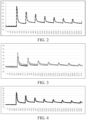
- a test result for the to-be-tested product may be shown in FIG. 2 .
- the to-be-tested product uses the silicon carbide material as the infrared absorbing material, where the mass fraction of the silicon carbide material is 10% and the granularity is 24 mesh, and the to-be-tested product is the aerosol producing product in the form of particles prepared by using the particle preparation process, a test result for the to-be-tested product may be shown in FIG. 3 .
- the to-be-tested product uses the graphene material as the infrared absorbing material, where the mass fraction of the graphene material is 10%, and the to-be-tested product is the reconstituted tobacco aerosol producing product prepared by using the conventional reconstituted tobacco preparation process, a test result for the to-be-tested product may be shown in FIG. 4 .
- Horizontal ordinates in FIG. 2 to FIG. 4 indicate time of collection, and vertical ordinates indicate corresponding temperatures.
- a temperature of an aerosol that is of the conventional heat-not-burn product shown in FIG. 2 and that is inhaled for the first time is approximately 55°C.
- a temperature of an aerosol that is of the aerosol producing product shown in FIG. 3 and that is inhaled for the first time is approximately 50°C, and is lowered by approximately 5°C; and a temperature that is of the aerosol producing product shown in FIG. 4 and that is inhaled for the first time is approximately 51°C, and is lowered by approximately 4°C.
- Test objective To test the rate of change in the TPM value for an aerosol producing product 1 and an aerosol producing product 2 in comparison with the conventional heat-not-burn product.
- the aerosol producing product 1 uses the silicon carbide material as the infrared absorbing material, where the mass fraction of the silicon carbide material is 10% and the granularity is 24 mesh, and the aerosol producing product 1 is the aerosol producing product in the form of particles prepared by using the particle preparation process.
- the aerosol producing product 2 uses the graphene material as the infrared absorbing material, where the mass fraction of the graphene material is 10%, and the aerosol producing product 2 is the reconstituted tobacco aerosol producing product prepared by using the conventional reconstituted tobacco preparation process.
- the rate of change in the TPM value for the aerosol producing product 2 is obtained, and is approximately 6.9%.
- This application further provides an aerosol producing system including the foregoing aerosol producing product and a heating apparatus, and a structure of the aerosol producing system in an embodiment is shown in FIG. 5 .
- the heating device 200 includes a heating element 210.
- the heating element 210 is tubular in shape, at least a part of a tubular hollow is constructed to be a chamber for receiving the aerosol producing product 100, and the heating element 210 heats the aerosol producing product 100 by radiating an infrared ray to the aerosol producing product 100.
- the aerosol producing product 100 refer to the foregoing descriptions. Details are not described herein again.
- an infrared absorbing material in the aerosol producing product 100 absorbs an infrared ray for radiatively heating an aerosol-forming substrate, so that evaporated and atomized moisture is reduced in proportion, to avoid the formation of water vapor with much heat which easily causes a vaper to experience burning pain during inhalation, particularly lower a temperature of an aerosol inhaled for the first time, thus improving vaping experience of the user.
- the infrared absorbing material can also heat and atomize the aerosol-forming substrate, so that heating efficiency of the product is improved to some extent.
Landscapes
- Medicinal Preparation (AREA)
- Cigarettes, Filters, And Manufacturing Of Filters (AREA)
- Colloid Chemistry (AREA)
- Cosmetics (AREA)
Abstract
Description
- This application claims priority to
Chinese Patent Application No. 202111621279.1, filed with the China National Intellectual Property Administration on December 28, 2021 - Embodiments of this application relate to the field of product technologies, and in particular, to an aerosol producing product, a preparation method therefor, and an aerosol producing system.
- Tobacco smoke is produced by burning tobacco of smoking products (such as cigarettes and cigars) during use. People attempt to make products that release compounds without burning, to replace these smoking products whose tobacco are burnt.
- An example of such product is a heating apparatus that releases compounds by heating, but not burning, an inhalable material in the product. For example, the inhalable material may be tobacco or other non-tobacco products, and these non-tobacco products may or may not contain nicotine. For another example, there is a heating apparatus that heats a product in an infrared radiation manner, so that the product releases compounds to produce an aerosol.
- Due to great penetration of infrared rays, the infrared rays can penetrate the outside of the product and enter the inside. Therefore, the outside and the inside of the product are heated uniformly. Disadvantageously, this uniform heating causes most of moisture in the product to evaporate upon heating, and water vapor with much heat easily causes a vaper to experience burning pain during inhalation, particularly when inhalation is performed for the first time.
- To solve a problem that a vaper easily experiences burning pain during inhalation when an existing product is heated by infrared radiation, embodiments of this application provide an aerosol producing product, a preparation method therefor, and an aerosol producing system.
- As used herein, the term "aerosol-forming substrate" is used to describe a substrate that can release volatile compounds upon heating, where these volatile compounds can form an aerosol. As described herein, the aerosol produced by the aerosol-forming substrate of the aerosol producing product may be visible or invisible, and may include vapor (such as fine particles of a substance, where these particles are in a gaseous state, and these particles are usually liquid or solid at room temperature) as well as droplets of gas and condensed vapor.
- As used herein, the terms "upstream" and "downstream" are used to describe relative positions of elements or parts of elements of the aerosol producing product with respect to directions in which a user inhales the aerosol producing product during use therefor.
- As used herein, the term "mass fraction" refers to mass of a specific substance as a percentage of total mass in a mixture.
- As used herein, the term "TPM (Total Particulate Matter)" refers to a total particulate matter.
- The aerosol producing product includes two ends: a proximal end and a distal end, where an aerosol exits the aerosol producing product through the proximal end and is delivered to the user. During use, the user may vape the proximal end, to inhale the aerosol produced by the aerosol producing product. During use, the proximal end may also be referred to as a downstream end, and is downstream of the distal end. The distal end may also be referred to as an upstream end, and is upstream of the proximal end.
- As used herein, the term "cooling element" is used to describe an element having a large surface area and low vaping resistance. During use, the aerosol formed by the volatile compounds released from the aerosol-forming substrate passes through the cooling element, and is cooled by the cooling element before being inhaled by the user. In contrast to a filter tip with high vaping resistance and another filter tip, the cooling element has low vaping resistance.
- Preferably, the aerosol producing product is a smoking product, and the smoking product produces an aerosol that can be directly inhaled into lungs of the user through the mouth of the user. More preferably, the smoking product produces a nicotine-containing aerosol that can be directly inhaled into the lungs of the user through the mouth of the user.
- In a preferred embodiment, the aerosol-forming substrate is disposed at the upstream end of the aerosol producing product.
- In an embodiment, an aerosol producing product for use with an aerosol producing apparatus includes an outer wrapper, and an aerosol-forming substrate and an infrared absorbing material that are confined within the outer wrapper, where
- the aerosol-forming substrate is configured to produce an aerosol for inhalation when being heated; and
- the infrared absorbing material is configured to absorb an infrared ray for radiatively heating the aerosol-forming substrate, where
- a wavelength range of an absorption peak of the infrared absorbing material at least partially overlaps a wavelength range of an absorption peak of moisture in the aerosol-forming substrate.
- In a preferred embodiment, the wavelength range of the absorption peak of the infrared absorbing material is within the wavelength range of the absorption peak of the moisture in the aerosol-forming substrate;
- the wavelength range of the absorption peak of the moisture in the aerosol-forming substrate is within the wavelength range of the absorption peak of the infrared absorbing material;
- the wavelength range of the absorption peak of the infrared absorbing material partially overlaps the wavelength range of the absorption peak of the moisture in the aerosol-forming substrate; or
- the wavelength range of the absorption peak of the infrared absorbing material is exactly the same as the wavelength range of the absorption peak of the moisture in the aerosol-forming substrate.
- In a preferred embodiment, the infrared absorbing material is in at least one of the following forms: a powder form, a particle form, a pellet form, a chip form, a strand form, a strip form, or a sheet form.
- In a preferred embodiment, the infrared absorbing material is disposed between the aerosol-forming substrate and the outer wrapper; or the infrared absorbing material is disposed in the aerosol-forming substrate.
- That the infrared absorbing material is disposed in the aerosol-forming substrate includes that the infrared absorbing material is mixed with the aerosol-forming substrate.
- In a preferred embodiment, the infrared absorbing material is bonded to a part of the aerosol-forming substrate, where the part of the aerosol-forming substrate is disposed close to a downstream end of the aerosol-forming substrate.
- That the infrared absorbing material is bonded to the part of the aerosol-forming substrate includes that the infrared absorbing material is disposed between the part of the aerosol-forming substrate and the outer wrapper, the infrared absorbing material is disposed in the part of the aerosol-forming substrate, and the like.
- That the part of the aerosol-forming substrate is disposed close to the downstream end of the aerosol-forming substrate includes that the part of the aerosol-forming substrate forms the downstream end of the aerosol-forming substrate.
- In a preferred embodiment, the infrared absorbing material includes at least one of a metal, an inorganic non-metal, an organic compound, and a super absorbent material.
- In a preferred embodiment, based on total mass of the aerosol-forming substrate and the infrared absorbing material, a mass fraction of the infrared absorbing material is 2% to 30%, preferably, 2% to 25%, more preferably, 2% to 20%, more preferably, 2% to 15%, and more preferably, 5% to 15%.
- In a preferred embodiment, a mouthpiece confined within the outer wrapper is further included, where the mouthpiece is disposed downstream of the aerosol-forming substrate.
- In a preferred embodiment, a cooling element confined within the outer wrapper is further included, where the cooling element is disposed between the aerosol-forming substrate and the mouthpiece.
- It should be noted that, in another example, the mouthpiece, the cooling element and the aerosol-forming substrate may be confined by different outer wrappers. For example, one outer wrapper confines the aerosol-forming substrate, and another outer wrapper confines the mouthpiece and the cooling element, where the two outer wrappers may be made of the same or different materials.
- An embodiment of this application further provides an aerosol producing product, including an outer wrapper, and an aerosol-forming substrate and an infrared absorbing material that are confined within the outer wrapper, where
- the aerosol-forming substrate is configured to produce an aerosol for inhalation when being heated; and
- the infrared absorbing material is configured to absorb an infrared ray for radiatively heating the aerosol-forming substrate, where
- a wavelength range of an absorption peak of the infrared absorbing material is 3 µm to 5 µm.
- An embodiment of this application further provides a preparation method for an aerosol producing product, where the method includes:
- preparing an aerosol-forming substrate;
- preparing an infrared absorbing material; and
- after mixing the aerosol-forming substrate with the infrared absorbing material, performing preparation by using a conventional preparation process, to obtain the aerosol producing product.
- It should be noted that "mixing" includes mixing of the aerosol-forming substrate with the infrared absorbing material obtained through crushing, for example, mixing of the aerosol-forming substrate (in a powder form, a particle form, a pellet form, or a chip form) with the infrared absorbing material (in a powder form, a particle form, a pellet form, and a chip form); and also includes mixing of the aerosol-forming substrate and the infrared absorbing material in a stacking manner, for example, stacking of the aerosol-forming substrate (in a strand form, a strip form, or a sheet form) and the infrared absorbing material (in a strand form, a strip form, or a sheet form).
- Another embodiment of this application further provides an aerosol producing system, including an aerosol producing apparatus and the foregoing aerosol producing product, where the aerosol producing apparatus is configured to radiate an infrared ray to heat the aerosol producing product to produce an aerosol for inhalation.
- When the aerosol producing product is heated, the infrared ray for radiatively heating the aerosol-forming substrate is absorbed by the infrared absorbing material. In this way, a temperature of an aerosol is lowered in comparison with a conventional heat-not-burn product, particularly, a temperature of an aerosol inhaled for the first time is lowered, and the rate of change in the TPM value is increased, thus improving vaping experience of the user. In addition, after being heated up, the infrared absorbing material can also heat and atomize the aerosol-forming substrate, so that heating efficiency of the product is improved to some extent.
- One or more embodiments are exemplarily described with reference to the corresponding figures in the accompanying drawings, and the exemplary descriptions are not to be construed as limiting embodiments. Elements in the accompanying drawings that have same reference numerals represent similar elements, and unless otherwise particularly stated, the figures in the accompanying drawings are not drawn to scale.
-
FIG. 1 is a schematic diagram of an aerosol producing product according to an embodiment of this application; -
FIG. 2 is a schematic diagram of aerosol temperature test results for a conventional aerosol producing product; -
FIG. 3 is a schematic diagram of aerosol temperature test results for an aerosol producing product prepared by an embodiment; -
FIG. 4 is a schematic diagram of aerosol temperature test results for an aerosol producing product prepared by another embodiment; and -
FIG. 5 is a schematic diagram of an aerosol producing system according to an embodiment of this application. - For ease of understanding this application, this application is described in more detail below with reference to the accompanying drawings and specific implementations.
- This application provides an aerosol producing product for use with an aerosol producing apparatus, where the aerosol producing product includes an aerosol-forming substrate, and the aerosol-forming substrate is configured to produce an aerosol for inhalation when being heated by a heating element in the internal of the aerosol producing apparatus.
- For the convenience of vaping and use by a user, an overall appearance of the aerosol producing product is constructed to be in a shape of an elongated cylinder. In an embodiment of this application, referring to
FIG. 1 , the aerosol producing product includes three elements disposed in a coaxial arrangement:
an aerosol-formingsubstrate 10, acooling element 20, and amouthpiece 30. The three elements are disposed in sequence and are confined by anouter wrapper 40, to form the aerosol producing product. - Further, as shown in
FIG. 1 , the aerosol producing product has aproximal end 41 and adistal end 42 opposite to each other. During use, the user inserts theproximal end 41 into the mouth for vaping. Thedistal end 42 is disposed at an end of the aerosol producing product opposite to theproximal end 41. - During use, air passes through the aerosol producing product from the
distal end 42 to theproximal end 41. Thedistal end 42 of the aerosol producing product may also be described as an upstream end of the aerosol producing product, and theproximal end 41 of the aerosol producing product may also be described as a downstream end of the aerosol producing product. Elements of the aerosol producing product disposed between theproximal end 41 and thedistal end 42 may be described as being upstream of theproximal end 41, or being downstream of thedistal end 42. - The appearance of the aerosol producing product may be similar to an appearance of a conventional cigarette that can be burnt for smoking. The aerosol producing product may have an outer diameter of approximately 5 millimeters to 12 millimeters (for example, approximately 6 millimeters to 8 millimeters).
- A total length of the aerosol producing product is preferably at least approximately 35 millimeters. More preferably, the total length of the aerosol producing product is at least approximately 40 millimeters. Even more preferably, the total length of the aerosol producing product is at least approximately 45 millimeters. Additionally or alternatively, the total length of the aerosol producing product is preferably less than approximately 80 millimeters. More preferably, the total length of the aerosol producing product is less than approximately 75 millimeters. Even more preferably, the total length of the aerosol producing product is less than approximately 70 millimeters.
- In a preferred embodiment, the total length of the aerosol producing product is approximately 35 millimeters to approximately 80 millimeters, more preferably approximately 40 millimeters to approximately 75 millimeters, and even more preferably approximately 45 millimeters to approximately 70 millimeters.
- The aerosol-forming
substrate 10 is disposed at thedistal end 42 of the aerosol producing product. - The aerosol-forming
substrate 10 may contain nicotine. The aerosol-formingsubstrate 10 that contains nicotine may include a nicotine salt matrix. The aerosol-formingsubstrate 10 may include a plant-based material. The aerosol-formingsubstrate 10 preferably includes a tobacco-containing material. The aerosol-formingsubstrate 10 may include a homogenized tobacco material, where the homogeneous tobacco material may be formed by agglomerating particulate tobacco. Alternatively or additionally, the aerosol-formingsubstrate 10 may include a tobacco-free material. The aerosol-formingsubstrate 10 may include a homogenized plant-based material. - The aerosol-forming
substrate 10 may include, for example, one or more of the following forms: powder, particles, pellets, chips, a strand, a strip, or a sheet. The aerosol-formingsubstrate 10 may include one or more of the following materials: a tobacco leave, a tobacco vein segment, reconstituted tobacco, homogenized tobacco, extruded tobacco, tobacco slurry, cast-leaf tobacco and expanded tobacco. - The aerosol-forming
substrate 10 may include at least one aerosol-forming agent. The aerosol-forming agent is used to describe any suitable known compound or mixture of compounds. The any suitable known compound or mixture of compounds promotes formation of an aerosol during use, and is substantially resistant to thermal degradation at an operating temperature of the aerosol producing product. Suitable aerosol-forming agents are known in the art, including, but not limited to: polyhydric alcohols, such as propylene glycol, triethylene glycol, 1,3-butylene glycol, and glycerol; polyol esters, such as monoacetin, diacetin, or triacetate; and aliphatic esters of monocarboxylic acid, dicarboxylic acid, or polycarboxylic acid, such as dimethyl dodecanedioate and dimethyl tetradecanedioate. - The aerosol-forming substrate may include any suitable amount of the aerosol-forming agent. For example, the content of the aerosol-forming agent may be equal to or greater than 5%, preferably greater than 30%, by weight of the aerosol-forming substrate on a dry weight basis. The content of the aerosol-forming agent may be less than approximately 95% by weight on a dry weight basis. Preferably, the content of the aerosol-forming agent is up to approximately 55% by weight.
- The aerosol-forming
substrate 10 may further include tobacco-containing volatile flavor compounds or tobacco-free volatile flavor compounds. These tobacco-containing volatile flavor compounds or tobacco-free volatile flavor compounds are released when the aerosol-formingsubstrate 10 is heated. The aerosol-formingsubstrate 10 may further include one or more capsules. For example, the one or more capsules include additional tobacco-containing volatile flavor compounds or tobacco-free volatile flavor compounds. Such capsules may melt during heating of the aerosol-formingsubstrate 10. - The aerosol-forming
substrate 10 may be provided on or embedded in a thermally stable carrier. The term "thermally stable carrier" used herein refers to a material that substantially does not degrade at a temperature to which the aerosol-formingsubstrate 10 is usually heated (for example, from approximately 150°C to approximately 300°C). The carrier may be in a form of powder, particles, pellets, chips, a strand, a strip, or a sheet. The aerosol-formingsubstrate 10 may be deposited on a surface of the carrier in a form of, for example, foil, foam, gum, or slurry. The aerosol-formingsubstrate 10 may be deposited on the entire surface of the carrier, or may be deposited in the form of a pattern, to provide inhomogeneous taste delivery during use. - The
cooling element 20 is disposed immediately downstream of the aerosol-formingsubstrate 10, and is adjacent to the aerosol-formingsubstrate 10. During use, a volatile substance released by heating the aerosol-formingsubstrate 10 flows along thecooling element 20 toward theproximal end 41 of the aerosol producing product, and the volatile substance may be cooled down in thecooling element 20, to form an aerosol for inhalation by the user. In a preferred embodiment shown inFIG. 1 , thecooling element 20 includes a cavity, where the cavity extends along a length direction of thecooling element 20. Through the axially extending cavity, air flows through thecooling element 20 in a longitudinal direction, without significant radial deviation. Thecooling element 20 may provide cooling effect on a temperature of an aerosol stream inhaled through thecooling element 20 by heat transfer. Components of the aerosol interact with space in thecooling element 20, and lose thermal energy. - In some embodiments, the temperature of the aerosol stream may be lowered by more than 10°C when the aerosol stream is inhaled through the
cooling element 20. In some embodiments, the temperature of the aerosol stream may be lowered by more than 25°C or more than 30°C when the aerosol stream is inhaled through thecooling element 20. - The
mouthpiece 30 is disposed immediately downstream of thecooling element 20, and is adjacent to thecooling element 20. In the embodiment shown inFIG. 1 , themouthpiece 30 may be a conventional cellulose acetate tow filter mouth or a polypropylene tow filter mouth. - To assemble the aerosol producing product, the three elements described above are aligned and tightly wrapped in the
outer wrapper 40. In the embodiment shown inFIG. 1 , theouter wrapper 40 may be conventional cigarette paper. - The aerosol producing product shown in
FIG. 1 is designed to fit with the aerosol producing apparatus including the heating element, for vaping by the user. During use, the heating element of the aerosol producing apparatus heats the aerosol-formingsubstrate 10 of the aerosol producing product to a sufficient temperature to produce an aerosol. The aerosol is inhaled toward downstream of the aerosol producing product, to be inhaled by the user. - An embodiment of this application further provides an infrared absorbing material. The infrared absorbing material is configured to absorb an infrared ray for radiatively heating the aerosol-forming
substrate 10. In a preferred embodiment, an absorption peak of the infrared absorbing material is associated with an absorption peak of moisture in the aerosol-forming substrate. In this way, the infrared absorbing material absorbs the infrared ray for radiatively heating the aerosol-formingsubstrate 10, so that evaporated and atomized moisture is reduced in proportion, to avoid the formation of water vapor with much heat which causes a vaper to experience burning pain during inhalation, particularly lower the temperature of the aerosol inhaled for the first time, thus improving vaping experience of the user. In addition, after being heated up, the infrared absorbing material can also heat and atomize the aerosol-formingsubstrate 10, so that heating efficiency of the product is improved to some extent. - In an example, the wavelength range of the absorption peak of the infrared absorbing material at least partially overlaps the wavelength range of the absorption peak of the moisture in the aerosol-forming
substrate 10. Specifically, the wavelength range of the absorption peak of the infrared absorbing material is within the wavelength range of the absorption peak of the moisture in the aerosol-formingsubstrate 10; the wavelength range of the absorption peak of the moisture in the aerosol-formingsubstrate 10 is within the wavelength range of the absorption peak of the infrared absorbing material; the wavelength range of the absorption peak of the infrared absorbing material partially overlaps the wavelength range of the absorption peak of the moisture in the aerosol-formingsubstrate 10; or the wavelength range of the absorption peak of the infrared absorbing material is exactly the same as the wavelength range of the absorption peak of the moisture in the aerosol-formingsubstrate 10. - In an example, the wavelength range of the absorption peak of the infrared absorbing material is 3 µm to 5 µm.
- In an example, the infrared absorbing material is in at least one of the following forms: powder, particles, pellets, chips, a strand, a strip, or a sheet. The infrared absorbing material may be disposed between the aerosol-forming
substrate 10 and theouter wrapper 40. For example, an infrared absorbing material in a sheet form is clamped between the aerosol-formingsubstrate 10 and theouter wrapper 40. Alternatively, the infrared absorbing material is disposed in the aerosol-formingsubstrate 10. - An infrared absorbing material in a form of particles is used as an example. As shown in
FIG. 1 , areference numeral 11 represents an aerosol-forming substrate in a form of particles, areference numeral 12 represents moisture in the aerosol-forming substrate in the form of particles, and areference numeral 13 represents the infrared absorbing material in the form of particles. The infrared absorbing material in the form of particles is mixed with the aerosol-forming substrate in the form of particles and the moisture in the aerosol-forming substrate in the form of particles. When the product is heated by infrared radiation, the infrared absorbing material in the form of particles and the moisture absorb an infrared ray of 3 µm to 5 µm. In this way, the evaporated and atomized moisture is reduced in proportion, to avoid the formation of water vapor with much heat which causes the vaper to experience burning pain during inhalation, particularly lower the temperature of the aerosol inhaled for the first time. In addition, after absorbing radiant heat and thus experiencing a temperature rise, the infrared absorbing material in the form of particles heats and atomizes the adjacent aerosol-forming substrate in the form of particles, so that the heating efficiency of the product is improved to some extent. - In an example, the infrared absorbing material includes at least one of a metal, an inorganic non-metal, an organic compound, and a super absorbent material. For example, the metal includes but is not limited to copper and nickel; the inorganic non-metal includes but is not limited to silicon carbide and graphene; the organic compound includes but is not limited to sucrose and fibers; and microstructures on a surface of the super absorbent material are adjusted so that the super absorbent material absorbs only the infrared ray of 3 µm to 5 µm.
- In an example, based on the total mass of the aerosol-forming
substrate 10 and the infrared absorbing material, a mass fraction of the infrared absorbing material is 2% to 30%, preferably 2% to 25%, more preferably 2% to 20%, more preferably, 2% to 15%, and more preferably 5% to 15%. - The
outer wrapper 40 is preferably made of an infrared-permeable material. For example, the outer wrapper is made of an inorganic fibrous material, which specifically includes one or more of hydroxyapatite fibers, silicon carbide fibers, or barium titanate fibers. - The hydroxyapatite fibers, silicon carbide fibers, and barium titanate fibers are excellent infrared-permeable materials. In this way, the
outer wrapper 40 substantially does not absorb infrared rays when the aerosol producing product is heated by infrared radiation, so that the heating efficiency of the aerosol-formingsubstrate 10 in the outer wrapper is effectively improved. - Further, to prove the practicability of the aerosol producing product that uses the foregoing infrared absorbing material as well as the improvement in various properties of the prepared aerosol producing product, the following embodiments illustrate examples of the prepared aerosol producing product and test results.
- S11: Prepare a plant-based material, for example, a tobacco material, of an aerosol-forming substrate.
- S12: Prepare an infrared absorbing material.
- A silicon carbide material may be used, where a mass fraction of the silicon carbide material is 10%, and a granularity is 24 mesh.
- A graphene material may alternatively be used, where a mass fraction of the graphene material is 10%.
- Step S11 and step S12 may not be performed in sequence.
- S13: After mixing the plant-based material with the infrared absorbing material, an aerosol producing product may be prepared by using a conventional preparation process.
- An aerosol producing product in a form of particles may be prepared by using a particle preparation process.
- An aerosol producing product in a form of reconstituted tobacco may be prepared by using a conventional reconstituted tobacco preparation process (such as a paper manufacturing process, a dry process, a slurry process, or a rolling process).
- For the above preparation processes, reference can be made to conventional technologies, for example: " Dong Gaofeng, Tian Yongfeng, Shang Shanzhai, et al. Production technology of reconstituted tobacco for heat-not-burn (HnB) cigarettes: a review [J]. Acta Tabacaria Sinica, 2020, 26(1 )", and details are not described herein.
- An aerosol temperature test and a test for the rate of change in the TPM value were performed on the aerosol producing product prepared in the foregoing embodiments. In both the tests, a conventional heat-not-burn product was used as a contrast.
- Test objective: To test the temperature of the aerosol of the product during inhalation.
- Test environment: ambient temperature: 25°C, relative humidity: 65 RH%.
- Test instruments: temperature sensor: K type thermocouple; temperature recorder: GRAPHTEG GL240; vaping machine: self-owned.
- Test conditions: Condition settings of the vaping machine: inhalation amount: 55 mL/3s, inhalation interval: 27s; setting of an aerosol temperature collection point: The K type thermocouple is disposed at a center of an end face of a mouthpiece of the product; data recording frequency: 10 Hz, indicating that data is recorded every 100 ms.
- S31: A to-be-tested product is inserted into an aerosol producing apparatus, where the to-be-tested product includes the aerosol producing products prepared in
Embodiment 1 and Embodiment 2 and the conventional heat-not-burn product; a same aerosol producing apparatus is used for tests for different times, to ensure a same heating condition of the product; and a plurality of products may be tested for a same type of product, to ensure test results. - S32: A K type thermocouple is disposed at a center of an end face of a mouthpiece of the to-be-tested product.
- S33: The K type thermocouple is connected to a temperature recorder.
- S34: The aerosol producing apparatus is started to preheat the product, and a vaping machine is simultaneously turned on to record temperature data.
- S35: After preheating is completed, inhalation is performed by using the vaping machine and temperature data during the inhalation is recorded.
- If the to-be-tested product is the conventional heat-not-burn product, a test result for the to-be-tested product may be shown in
FIG. 2 . - If the to-be-tested product uses the silicon carbide material as the infrared absorbing material, where the mass fraction of the silicon carbide material is 10% and the granularity is 24 mesh, and the to-be-tested product is the aerosol producing product in the form of particles prepared by using the particle preparation process, a test result for the to-be-tested product may be shown in
FIG. 3 . - If the to-be-tested product uses the graphene material as the infrared absorbing material, where the mass fraction of the graphene material is 10%, and the to-be-tested product is the reconstituted tobacco aerosol producing product prepared by using the conventional reconstituted tobacco preparation process, a test result for the to-be-tested product may be shown in
FIG. 4 . - Horizontal ordinates in
FIG. 2 to FIG. 4 indicate time of collection, and vertical ordinates indicate corresponding temperatures. In addition, it can be seen from the test results ofFIG. 2 to FIG. 4 that, a temperature of an aerosol that is of the conventional heat-not-burn product shown inFIG. 2 and that is inhaled for the first time is approximately 55°C. In comparison with the conventional heat-not-burn product, a temperature of an aerosol that is of the aerosol producing product shown inFIG. 3 and that is inhaled for the first time is approximately 50°C, and is lowered by approximately 5°C; and a temperature that is of the aerosol producing product shown inFIG. 4 and that is inhaled for the first time is approximately 51°C, and is lowered by approximately 4°C. Obviously, a problem that the user experiences burning pain when performing inhalation for the first time is relieved. - Test objective: To test the rate of change in the TPM value for an
aerosol producing product 1 and an aerosol producing product 2 in comparison with the conventional heat-not-burn product. - The
aerosol producing product 1 uses the silicon carbide material as the infrared absorbing material, where the mass fraction of the silicon carbide material is 10% and the granularity is 24 mesh, and theaerosol producing product 1 is the aerosol producing product in the form of particles prepared by using the particle preparation process. The aerosol producing product 2 uses the graphene material as the infrared absorbing material, where the mass fraction of the graphene material is 10%, and the aerosol producing product 2 is the reconstituted tobacco aerosol producing product prepared by using the conventional reconstituted tobacco preparation process. - S41: Mass of the conventional heat-not-burn product, the
aerosol producing product 1 and the aerosol producing product 2 are tested before and after inhalation, and weight loss values are calculated, as shown in the table below.Serial number Mass before inhalation (mg) Mass after inhalation (mg) TPM (mg) Conventional heat-not- burn article 1# 484.3 451 33.3 2# 474.5 440.2 34.3 3# 460.6 425 35.6 Mean value 34.4 Aerosol producing product 11# 496.2 460.7 35.5 2# 519.5 482.6 36.9 3# 517 479.8 37.2 Mean value 36.53 Aerosol producing product 2 1# 493.4 458 35.4 2# 493.5 456.9 36.6 3# 498 459.7 38.3 Mean value 36.77 - S42: Based on TPM values of the conventional heat-not-burn product and the
aerosol producing product 1, the rate of change in the TPM value for theaerosol producing product 1 is obtained through calculation, and a calculation process is shown below.
- Similarly, the rate of change in the TPM value for the aerosol producing product 2 is obtained, and is approximately 6.9%.
- It can be seen from the above test results that, in comparison with the conventional heat-not-burn product, the rates of change in the TPM value for the
aerosol producing product 1 and the aerosol producing product 2 are increased, so that vaping experience of the user is improved. - This application further provides an aerosol producing system including the foregoing aerosol producing product and a heating apparatus, and a structure of the aerosol producing system in an embodiment is shown in
FIG. 5 . - The
heating device 200 includes aheating element 210. - The
heating element 210 is tubular in shape, at least a part of a tubular hollow is constructed to be a chamber for receiving theaerosol producing product 100, and theheating element 210 heats theaerosol producing product 100 by radiating an infrared ray to theaerosol producing product 100. For theaerosol producing product 100, refer to the foregoing descriptions. Details are not described herein again. - When being heated by the
heating element 210 using infrared radiation, an infrared absorbing material in theaerosol producing product 100 absorbs an infrared ray for radiatively heating an aerosol-forming substrate, so that evaporated and atomized moisture is reduced in proportion, to avoid the formation of water vapor with much heat which easily causes a vaper to experience burning pain during inhalation, particularly lower a temperature of an aerosol inhaled for the first time, thus improving vaping experience of the user. In addition, after being heated up, the infrared absorbing material can also heat and atomize the aerosol-forming substrate, so that heating efficiency of the product is improved to some extent. - It should be noted that preferred embodiments of this application are provided in the specification and the accompanying drawings of this application, but are not limited to embodiments described in this specification. Further, for a person of ordinary skill in the art, modifications and variations may be made based on the foregoing descriptions, and all these modifications and variations shall fall within the protection scope of the appended claims of this application.
Claims (12)
- An aerosol producing product, comprising an outer wrapper, and an aerosol-forming substrate and an infrared absorbing material that are confined within the outer wrapper, whereinthe aerosol-forming substrate is configured to produce an aerosol for inhalation when being heated; andthe infrared absorbing material is configured to absorb an infrared ray for radiatively heating the aerosol-forming substrate, whereina wavelength range of an absorption peak of the infrared absorbing material at least partially overlaps a wavelength range of an absorption peak of moisture in the aerosol-forming substrate.
- The aerosol producing product according to claim 1, whereinthe wavelength range of the absorption peak of the infrared absorbing material is within the wavelength range of the absorption peak of the moisture in the aerosol-forming substrate; orthe wavelength range of the absorption peak of the moisture in the aerosol-forming substrate is within the wavelength range of the absorption peak of the infrared absorbing material; orthe wavelength range of the absorption peak of the infrared absorbing material partially overlaps the wavelength range of the absorption peak of the moisture in the aerosol-forming substrate; orthe wavelength range of the absorption peak of the infrared absorbing material is exactly the same as the wavelength range of the absorption peak of the moisture in the aerosol-forming substrate.
- The aerosol producing product according to claim 1, wherein the infrared absorbing material is in at least one of the following forms:
a powder form, a particle form, a pellet form, a chip form, a strand form, a strip form, or a sheet form. - The aerosol producing product according to claim 1, wherein the infrared absorbing material is disposed between the aerosol-forming substrate and the outer wrapper; or the infrared absorbing material is disposed in the aerosol-forming substrate.
- The aerosol producing product according to claim 1, wherein the infrared absorbing material is bonded to a part of the aerosol-forming substrate, wherein the part of the aerosol-forming substrate is disposed close to a downstream end of the aerosol-forming substrate.
- The aerosol producing product according to claim 1, wherein the infrared absorbing material comprises at least one of a metal, an inorganic non-metal, an organic compound, and a super absorbent material.
- The aerosol producing product according to claim 1, wherein based on total mass of the aerosol-forming substrate and the infrared absorbing material, a mass fraction of the infrared absorbing material is 2% to 30%, or 2% to 25%, or 2% to 20%, or 2% to 15%, or 5% to 15%.
- The aerosol producing product according to claim 1, further comprising a mouthpiece confined within the outer wrapper, wherein the mouthpiece is disposed downstream of the aerosol-forming substrate.
- The aerosol producing product according to claim 8, further comprising a cooling element confined within the outer wrapper, wherein the cooling element is disposed between the aerosol-forming substrate and the mouthpiece.
- An aerosol producing product, comprising an outer wrapper, and an aerosol-forming substrate and an infrared absorbing material that are confined within the outer wrapper, whereinthe aerosol-forming substrate is configured to produce an aerosol for inhalation when being heated; andthe infrared absorbing material is configured to absorb an infrared ray for radiatively heating the aerosol-forming substrate, whereina wavelength range of an absorption peak of the infrared absorbing material is 3 µm to 5 µm.
- A preparation method for an aerosol producing product, wherein the method comprises:preparing an aerosol-forming substrate;preparing an infrared absorbing material; andafter mixing the aerosol-forming substrate with the infrared absorbing material, performing preparation by using a conventional preparation process, to obtain the aerosol producing product.
- An aerosol producing system, comprising an aerosol producing apparatus and the aerosol producing product according to any one of claims 1 to 10, wherein the aerosol producing apparatus is configured to radiate an infrared ray to heat the aerosol producing product to produce an aerosol for inhalation.
Applications Claiming Priority (2)
| Application Number | Priority Date | Filing Date | Title |
|---|---|---|---|
| CN202111621279.1A CN116349928A (en) | 2021-12-28 | 2021-12-28 | Aerosol generating product and its preparation method, aerosol generating system |
| PCT/CN2022/142490 WO2023125568A1 (en) | 2021-12-28 | 2022-12-27 | Aerosol producing product, preparation method therefor, and aerosol producing system |
Publications (2)
| Publication Number | Publication Date |
|---|---|
| EP4445769A1 true EP4445769A1 (en) | 2024-10-16 |
| EP4445769A4 EP4445769A4 (en) | 2025-05-21 |
Family
ID=86937970
Family Applications (1)
| Application Number | Title | Priority Date | Filing Date |
|---|---|---|---|
| EP22914820.0A Pending EP4445769A4 (en) | 2021-12-28 | 2022-12-27 | AEROSOL PRODUCTION PRODUCT, ASSOCIATED PREPARATION METHOD AND AEROSOL PRODUCTION SYSTEM |
Country Status (5)
| Country | Link |
|---|---|
| EP (1) | EP4445769A4 (en) |
| JP (1) | JP2024545771A (en) |
| KR (1) | KR20240118907A (en) |
| CN (1) | CN116349928A (en) |
| WO (1) | WO2023125568A1 (en) |
Families Citing this family (1)
| Publication number | Priority date | Publication date | Assignee | Title |
|---|---|---|---|---|
| WO2025150856A1 (en) * | 2024-01-11 | 2025-07-17 | 주식회사 케이티앤지 | Aerosol-generating article and method for manufacturing aerosol-generating article |
Family Cites Families (13)
| Publication number | Priority date | Publication date | Assignee | Title |
|---|---|---|---|---|
| US4981522A (en) * | 1988-07-22 | 1991-01-01 | Philip Morris Incorporated | Thermally releasable flavor source for smoking articles |
| JP2001235421A (en) * | 2000-12-27 | 2001-08-31 | Idec Izumi Corp | Photoelectric switch |
| AR089602A1 (en) * | 2011-12-30 | 2014-09-03 | Philip Morris Products Sa | AEROSOL GENERATOR ARTICLE FOR USE WITH AN AEROSOL GENERATOR DEVICE |
| US20210355303A1 (en) * | 2018-06-21 | 2021-11-18 | Ceat Limited | A vulcanization mix, and implementations thereof |
| GB201812503D0 (en) * | 2018-07-31 | 2018-09-12 | Nicoventures Holdings Ltd | Aerosol generation |
| JP2022516367A (en) * | 2019-01-14 | 2022-02-25 | フィリップ・モーリス・プロダクツ・ソシエテ・アノニム | Infrared heating aerosol generator |
| CN109770433A (en) * | 2019-01-25 | 2019-05-21 | 安徽中烟工业有限责任公司 | A peripheral infrared radiation heating aerosol generation system |
| JP7646648B2 (en) * | 2019-12-20 | 2025-03-17 | ジェイティー インターナショナル エスエイ | Optically encoded aerosol-generating smoking devices and systems including the smoking devices |
| CN113100493B (en) * | 2020-01-13 | 2026-01-02 | 深圳市合元科技有限公司 | Smoking products |
| CN211910550U (en) * | 2020-01-13 | 2020-11-13 | 深圳市合元科技有限公司 | Aerosol-generating products and aerosol-generating systems |
| CN113439869A (en) * | 2020-03-26 | 2021-09-28 | 深圳市合元科技有限公司 | Aerosol-generating article for use with an aerosol-generating device |
| CN214962640U (en) * | 2020-11-03 | 2021-12-03 | 深圳市合元科技有限公司 | Aerosol generation device |
| CN216983593U (en) * | 2021-12-28 | 2022-07-19 | 深圳市合元科技有限公司 | Aerosol-generating article and aerosol-generating system |
-
2021
- 2021-12-28 CN CN202111621279.1A patent/CN116349928A/en active Pending
-
2022
- 2022-12-27 JP JP2024538235A patent/JP2024545771A/en active Pending
- 2022-12-27 KR KR1020247025271A patent/KR20240118907A/en active Pending
- 2022-12-27 EP EP22914820.0A patent/EP4445769A4/en active Pending
- 2022-12-27 WO PCT/CN2022/142490 patent/WO2023125568A1/en not_active Ceased
Also Published As
| Publication number | Publication date |
|---|---|
| WO2023125568A1 (en) | 2023-07-06 |
| KR20240118907A (en) | 2024-08-05 |
| CN116349928A (en) | 2023-06-30 |
| EP4445769A4 (en) | 2025-05-21 |
| JP2024545771A (en) | 2024-12-11 |
Similar Documents
| Publication | Publication Date | Title |
|---|---|---|
| US12268233B2 (en) | Nicotine containing sheet | |
| US20230389593A1 (en) | Nicotine and cellulose containing sheet | |
| JP7834691B2 (en) | Articles for use in non-flammable aerosol supply systems | |
| US12225925B2 (en) | Nicotine and binder containing sheet | |
| JP7829325B2 (en) | Articles for use in non-flammable aerosol supply systems | |
| CN113395909A (en) | Aerosol generation | |
| JP7832797B2 (en) | Aerosol supply system | |
| US20210315260A1 (en) | Aerosol generation | |
| CN112955032A (en) | Aerosol-generating substrate | |
| CN112955029A (en) | Aerosol generation | |
| CN113347894A (en) | Aerosol generation | |
| CN211910550U (en) | Aerosol-generating products and aerosol-generating systems | |
| JP2026048702A (en) | Articles, systems, and methods for forming articles for use in aerosol supply systems. | |
| US20230018415A1 (en) | Aerosol generation | |
| CN216983593U (en) | Aerosol-generating article and aerosol-generating system | |
| WO2023125568A1 (en) | Aerosol producing product, preparation method therefor, and aerosol producing system | |
| EP4230062A1 (en) | Aerosol-generating product | |
| EP4226780A1 (en) | Cooling filter and smoking article comprising same | |
| EP4233571A1 (en) | Flavor inhaler | |
| US20230118168A1 (en) | Aerosol generation | |
| CN115279212A (en) | Aerosol generation | |
| CN220712900U (en) | Aerosol generating products and aerosol generating systems | |
| CN211910534U (en) | Aerosol-generating article for use with an aerosol-generating device | |
| EP4581954A1 (en) | Aerosol generating product and preparation method therefor, and aerosol generating system | |
| KR102860721B1 (en) | Multi smoking material which can be used smoke or smokeless and manufacturing method thereof |
Legal Events
| Date | Code | Title | Description |
|---|---|---|---|
| STAA | Information on the status of an ep patent application or granted ep patent |
Free format text: STATUS: THE INTERNATIONAL PUBLICATION HAS BEEN MADE |
|
| PUAI | Public reference made under article 153(3) epc to a published international application that has entered the european phase |
Free format text: ORIGINAL CODE: 0009012 |
|
| STAA | Information on the status of an ep patent application or granted ep patent |
Free format text: STATUS: REQUEST FOR EXAMINATION WAS MADE |
|
| 17P | Request for examination filed |
Effective date: 20240712 |
|
| AK | Designated contracting states |
Kind code of ref document: A1 Designated state(s): AL AT BE BG CH CY CZ DE DK EE ES FI FR GB GR HR HU IE IS IT LI LT LU LV MC ME MK MT NL NO PL PT RO RS SE SI SK SM TR |
|
| DAV | Request for validation of the european patent (deleted) | ||
| DAX | Request for extension of the european patent (deleted) | ||
| REG | Reference to a national code |
Ref country code: DE Ref legal event code: R079 Free format text: PREVIOUS MAIN CLASS: A24F0040400000 Ipc: A24D0001200000 |
|
| A4 | Supplementary search report drawn up and despatched |
Effective date: 20250423 |
|
| RIC1 | Information provided on ipc code assigned before grant |
Ipc: A24D 1/02 20060101ALI20250415BHEP Ipc: A24F 40/20 20200101ALI20250415BHEP Ipc: A24D 1/20 20200101AFI20250415BHEP |