EP4443874A1 - Encoding of video stream during changing camera field-of-view - Google Patents
Encoding of video stream during changing camera field-of-view Download PDFInfo
- Publication number
- EP4443874A1 EP4443874A1 EP23166331.1A EP23166331A EP4443874A1 EP 4443874 A1 EP4443874 A1 EP 4443874A1 EP 23166331 A EP23166331 A EP 23166331A EP 4443874 A1 EP4443874 A1 EP 4443874A1
- Authority
- EP
- European Patent Office
- Prior art keywords
- fov
- image
- video frame
- frame
- video
- Prior art date
- Legal status (The legal status is an assumption and is not a legal conclusion. Google has not performed a legal analysis and makes no representation as to the accuracy of the status listed.)
- Pending
Links
Images


Classifications
-
- H—ELECTRICITY
- H04—ELECTRIC COMMUNICATION TECHNIQUE
- H04N—PICTORIAL COMMUNICATION, e.g. TELEVISION
- H04N19/00—Methods or arrangements for coding, decoding, compressing or decompressing digital video signals
- H04N19/46—Embedding additional information in the video signal during the compression process
-
- H—ELECTRICITY
- H04—ELECTRIC COMMUNICATION TECHNIQUE
- H04N—PICTORIAL COMMUNICATION, e.g. TELEVISION
- H04N23/00—Cameras or camera modules comprising electronic image sensors; Control thereof
- H04N23/60—Control of cameras or camera modules
- H04N23/695—Control of camera direction for changing a field of view, e.g. pan, tilt or based on tracking of objects
-
- H—ELECTRICITY
- H04—ELECTRIC COMMUNICATION TECHNIQUE
- H04N—PICTORIAL COMMUNICATION, e.g. TELEVISION
- H04N19/00—Methods or arrangements for coding, decoding, compressing or decompressing digital video signals
- H04N19/10—Methods or arrangements for coding, decoding, compressing or decompressing digital video signals using adaptive coding
- H04N19/102—Methods or arrangements for coding, decoding, compressing or decompressing digital video signals using adaptive coding characterised by the element, parameter or selection affected or controlled by the adaptive coding
- H04N19/103—Selection of coding mode or of prediction mode
- H04N19/105—Selection of the reference unit for prediction within a chosen coding or prediction mode, e.g. adaptive choice of position and number of pixels used for prediction
-
- H—ELECTRICITY
- H04—ELECTRIC COMMUNICATION TECHNIQUE
- H04N—PICTORIAL COMMUNICATION, e.g. TELEVISION
- H04N19/00—Methods or arrangements for coding, decoding, compressing or decompressing digital video signals
- H04N19/10—Methods or arrangements for coding, decoding, compressing or decompressing digital video signals using adaptive coding
- H04N19/102—Methods or arrangements for coding, decoding, compressing or decompressing digital video signals using adaptive coding characterised by the element, parameter or selection affected or controlled by the adaptive coding
- H04N19/132—Sampling, masking or truncation of coding units, e.g. adaptive resampling, frame skipping, frame interpolation or high-frequency transform coefficient masking
-
- H—ELECTRICITY
- H04—ELECTRIC COMMUNICATION TECHNIQUE
- H04N—PICTORIAL COMMUNICATION, e.g. TELEVISION
- H04N19/00—Methods or arrangements for coding, decoding, compressing or decompressing digital video signals
- H04N19/10—Methods or arrangements for coding, decoding, compressing or decompressing digital video signals using adaptive coding
- H04N19/134—Methods or arrangements for coding, decoding, compressing or decompressing digital video signals using adaptive coding characterised by the element, parameter or criterion affecting or controlling the adaptive coding
- H04N19/136—Incoming video signal characteristics or properties
- H04N19/137—Motion inside a coding unit, e.g. average field, frame or block difference
- H04N19/139—Analysis of motion vectors, e.g. their magnitude, direction, variance or reliability
-
- H—ELECTRICITY
- H04—ELECTRIC COMMUNICATION TECHNIQUE
- H04N—PICTORIAL COMMUNICATION, e.g. TELEVISION
- H04N19/00—Methods or arrangements for coding, decoding, compressing or decompressing digital video signals
- H04N19/10—Methods or arrangements for coding, decoding, compressing or decompressing digital video signals using adaptive coding
- H04N19/169—Methods or arrangements for coding, decoding, compressing or decompressing digital video signals using adaptive coding characterised by the coding unit, i.e. the structural portion or semantic portion of the video signal being the object or the subject of the adaptive coding
- H04N19/17—Methods or arrangements for coding, decoding, compressing or decompressing digital video signals using adaptive coding characterised by the coding unit, i.e. the structural portion or semantic portion of the video signal being the object or the subject of the adaptive coding the unit being an image region, e.g. an object
- H04N19/172—Methods or arrangements for coding, decoding, compressing or decompressing digital video signals using adaptive coding characterised by the coding unit, i.e. the structural portion or semantic portion of the video signal being the object or the subject of the adaptive coding the unit being an image region, e.g. an object the region being a picture, frame or field
-
- H—ELECTRICITY
- H04—ELECTRIC COMMUNICATION TECHNIQUE
- H04N—PICTORIAL COMMUNICATION, e.g. TELEVISION
- H04N19/00—Methods or arrangements for coding, decoding, compressing or decompressing digital video signals
- H04N19/10—Methods or arrangements for coding, decoding, compressing or decompressing digital video signals using adaptive coding
- H04N19/169—Methods or arrangements for coding, decoding, compressing or decompressing digital video signals using adaptive coding characterised by the coding unit, i.e. the structural portion or semantic portion of the video signal being the object or the subject of the adaptive coding
- H04N19/184—Methods or arrangements for coding, decoding, compressing or decompressing digital video signals using adaptive coding characterised by the coding unit, i.e. the structural portion or semantic portion of the video signal being the object or the subject of the adaptive coding the unit being bits, e.g. of the compressed video stream
-
- H—ELECTRICITY
- H04—ELECTRIC COMMUNICATION TECHNIQUE
- H04N—PICTORIAL COMMUNICATION, e.g. TELEVISION
- H04N19/00—Methods or arrangements for coding, decoding, compressing or decompressing digital video signals
- H04N19/30—Methods or arrangements for coding, decoding, compressing or decompressing digital video signals using hierarchical techniques, e.g. scalability
-
- H—ELECTRICITY
- H04—ELECTRIC COMMUNICATION TECHNIQUE
- H04N—PICTORIAL COMMUNICATION, e.g. TELEVISION
- H04N19/00—Methods or arrangements for coding, decoding, compressing or decompressing digital video signals
- H04N19/50—Methods or arrangements for coding, decoding, compressing or decompressing digital video signals using predictive coding
- H04N19/587—Methods or arrangements for coding, decoding, compressing or decompressing digital video signals using predictive coding involving temporal sub-sampling or interpolation, e.g. decimation or subsequent interpolation of pictures in a video sequence
-
- H—ELECTRICITY
- H04—ELECTRIC COMMUNICATION TECHNIQUE
- H04N—PICTORIAL COMMUNICATION, e.g. TELEVISION
- H04N19/00—Methods or arrangements for coding, decoding, compressing or decompressing digital video signals
- H04N19/70—Methods or arrangements for coding, decoding, compressing or decompressing digital video signals characterised by syntax aspects related to video coding, e.g. related to compression standards
-
- H—ELECTRICITY
- H04—ELECTRIC COMMUNICATION TECHNIQUE
- H04N—PICTORIAL COMMUNICATION, e.g. TELEVISION
- H04N23/00—Cameras or camera modules comprising electronic image sensors; Control thereof
- H04N23/60—Control of cameras or camera modules
- H04N23/69—Control of means for changing angle of the field of view, e.g. optical zoom objectives or electronic zooming
-
- H—ELECTRICITY
- H04—ELECTRIC COMMUNICATION TECHNIQUE
- H04N—PICTORIAL COMMUNICATION, e.g. TELEVISION
- H04N5/00—Details of television systems
- H04N5/76—Television signal recording
- H04N5/765—Interface circuits between an apparatus for recording and another apparatus
- H04N5/77—Interface circuits between an apparatus for recording and another apparatus between a recording apparatus and a television camera
-
- H—ELECTRICITY
- H04—ELECTRIC COMMUNICATION TECHNIQUE
- H04N—PICTORIAL COMMUNICATION, e.g. TELEVISION
- H04N5/00—Details of television systems
- H04N5/76—Television signal recording
- H04N5/91—Television signal processing therefor
- H04N5/92—Transformation of the television signal for recording, e.g. modulation, frequency changing; Inverse transformation for playback
- H04N5/926—Transformation of the television signal for recording, e.g. modulation, frequency changing; Inverse transformation for playback by pulse code modulation
- H04N5/9261—Transformation of the television signal for recording, e.g. modulation, frequency changing; Inverse transformation for playback by pulse code modulation involving data reduction
Definitions
- the present disclosure relates to encoding of a video stream recorded by a camera.
- the present disclosure relates to encoding of the video stream during times when a field-of-view of the camera changes.
- predictive coding is often used to take advantage of the fact that many details of the scene may remain static between one image frame and the next. Additionally, so called “motion vectors" may be used to also account for an object moving between image frames, in order to instruct a decoder in what regions of one or more other image frames to look for image data belonging to the object when decoding a current image frame containing the object.
- the present disclosure provides an improved method, device, computer program and computer program product for encoding a video stream, as defined in and by the accompanying independent claims.
- Various embodiments of the method, device, computer program and computer program product are defined in and by the accompanying dependent claims.
- a method of encoding a video stream includes (e.g. as a step "a") obtaining a first image captured by a video camera having a first field-of-view (FOV).
- the method includes (e.g. as a step "b") encoding the first image as part of a first video frame of an encoded video stream.
- the method includes (e.g. as a step "c") obtaining a second image captured by the video camera (while) having a second FOV which is different from, but (which) at least partially overlaps, the first FOV.
- the method includes (e.g.
- the method includes (e.g. as a step "e") inserting the first additional video frame into the encoded video stream, and includes marking the first additional video frame as a no-display frame.
- the method further includes (e.g. as a step "f") encoding the second image as part of a second video frame of the encoded video stream, wherein the second video frame references the first additional video frame.
- a FOV of an image is transformed such that it is "closer to another FOV” also includes the situation where the FOV of the image is transformed such that it exactly matches the other FOV.
- That FOVs of two image frames "at least partially overlap” should be understood as there being at least one object, or at least one part of an object, which is visible in both image frames, such that motion vectors can be used to find that (part of the) object in one image frame when encoding the other image frame, etc.
- a "no-display frame” is to be understood as a frame which is in any way flagged to instruct the decoder that the frame is not to be rendered as part of a decoded video stream, but that the frame is still available such that information may be obtained from it and used for the decoding of one or more other image frames which are to be displayed (i.e. not marked as no-display frames). It is envisaged that any video coding standard which supports the above concepts of no-display frames, motion vectors and the possibility of one frame referencing another (previous or later) frame when encoding/decoding may be used to realize the disclosed method.
- HEVC High Efficiency Video Coding
- AVC Advanced Video Coding
- VVC Versatile Video Coding
- the first motion vectors do not need to be calculated by performing motion vector-searching, but may be derived/calculated based on knowledge about the respective first and second FOVs of the camera.
- knowledge may include data indicating e.g. an orientation (as defined by e.g. pan/tilt/roll-angles), and e.g. a focal length of a lens of the camera (as changed during e.g. a zooming-operation), or similar, at times including both a time when the first FOV was present and a time when the second FOV was present.
- the envisaged method of the first aspect improves upon currently available coding technologies in that it provides a more bitrate-efficient way of encoding a video stream during a changing FOV of the camera, such as during e.g. a zooming-operation.
- the need to search for long and varying motion vectors as part of encoding the second video frame is removed, as the (first) motion vectors needed to define the transformation from the first FOV to (or closer to) the second FOV may instead be calculated from knowledge about e.g. camera orientation and focal length (i.e. zoom-level), and e.g. without requiring any computationally cumbersome motion vector-search to be performed.
- the second video frame references the first additional video frame (wherein, at least after decoding, the transformed view of e.g. a particular zoomed-in-on object is available), finding motion vectors for such referencing is more trivial and can be performed using conventional methods of searching.
- the first additional video frame will encode a scaled and cropped version of the first image in the first video frame, and the bitrate may thus be reduced as motion vector-search will more trivially be able to find matches in the first additional video frame in order to encode the second video frame.
- the first additional video frame does not need to contain any new image data itself, but only the motion vectors calculated based on the differences in FOVs, and needed to efficiently perform transformations such as scaling.
- a panning- or tilting-operation may require a perspective transformation which can be described in the additional video frame
- a rolling-operation may require a rotational transformation which may also be described in the additional video frame.
- encoding the video stream may include using a layered type of coding, such as for example "scalable video coding” (SVC) or “Scalable High Efficiency Video Coding” (SHVC).
- SVC scalable video coding
- SHVC Scalable High Efficiency Video Coding
- the first additional video frame may be inserted in a base layer of the encoded video stream, and the second video frame may be inserted in an enhancement layer of the encoded video stream.
- An example of scalable video coding may for example be as defined in the Annex G extension of the H.264/MPEG-4 AVC video compression standard.
- Another example of scalable video coding may for example be as defined in the Annex H extension of the H.265/MPEG-H HEVC video compression standard.
- the base layer may be encoded to provide a lower resolution (e.g. full HD resolution or similar), while the enhancement layer may be encoded to provide a higher resolution (such as e.g. 4K resolution or similar).
- a layered type of coding there may of course also be one or more additional enhancement layers, and it is envisaged that e.g. the second video frame may be encoded as part of any such enhancement layer.
- a layered coding such as SVC may e.g. help to maintain a desired frames-per-second (FPS) rate, as the first additional video frame and the second video frame may be inserted in different layers, thus avoiding the (no-display) first additional video frame having to be inserted e.g. in between two video frames which are to be displayed.
- FPS frames-per-second
- the first additional video frame may be one of a predicted frame (a "P-frame"), and a bidirectional predicted frame ("B-frame").
- P-frame a predicted frame
- B-frame a bidirectional predicted frame
- these various types of video frames are defined as commonly done in contemporary coding standards.
- a P-frame may use/reference data from one or more previous video frames in order to be decoded
- a B-frame may use/reference data from both one or more previous and one or more future/forward video frames in order to be decoded.
- Such video frames may also be referred to as "inter frames” or "inter-coded frames”, as they include references to one or more other video frames, in contrast to e.g. "intra frames” or “intra-coded frames" (“I-frames”), which do not contain any references to one or more other video frames.
- the method may include continuing to generating and inserting one or more additional video frame while the FOV of the camera is changing (i.e. during an ongoing zooming-operation or similar). This may correspond to the method further including (e.g. as an additional step "g") obtaining a third image captured by the video camera having a third FOV which is different from, but (which) at least partially overlaps, the second FOV.
- the method may further include (e.g. as an additional step "h") generating a second additional video frame, and including second motion vectors transforming an image content of the second image into a FOV closer to the third FOV than the second FOV, wherein the second motion vectors are formed based on a difference between the third FOV and the second FOV.
- the method may further include (e.g. as an additional step "i") inserting the second additional video frame into the encoded video stream, including marking the second additional video frame as a no-display frame.
- the method may further include (e.g. as an additional step "j") encoding the third image as part of a third video frame of the encoded video stream, wherein the third video frame references the second additional video frame. Phrased differently, if continuing to insert more additional video frames in the encoded video stream, the method may include repeating the steps c-f described above, but with "first and second" replaced with "second and third", etc.
- additional video frames may thus be inserted as long as e.g. a zooming-operation is ongoing.
- the images captured by the cameras after the FOV-changing has begun are instead encoded (as the second and third video frames, and so on) by referencing the respective additional video frames (such as the first and second additional video frames, and so on).
- the difference between the first FOV and the second FOV may be due to a zooming-operation performed by the camera.
- the zooming-operation may e.g. be ongoing while the method is performed, such as when the encoded video stream represents a live-stream of the captured scene.
- the envisaged method may also be used for a transcoding case, wherein the method is applied to already recorded video material, and used to e.g. optimize (reduce) a size needed to store such video material in storage (on e.g. a server). In such a case, it may be envisaged that e.g.
- the data pertinent to the various FOVs of the camera during the transformation are stored as metadata within the recorded video frames, or similar, e.g. as part of a video frame header.
- the zooming-operation may be a zooming-in-operation, such that the second FOV is a magnification of the first FOV (and e.g. such that the third FOV is a magnification of the second FOV, and so on).
- Applying the method while performing a zooming-in-operation may be advantageous in that e.g. a larger part of each image may be referenced by the next image in the video stream.
- the envisaged method may also be applied during e.g. a zooming-out-operation, such that e.g. the second FOV is instead a reduction/de-magnification of the first FOV, and so on, but with less benefits as only a smaller part of each image may be referenced by the next image in the video stream.
- the first and second images may e.g. be sequential images of a video stream captured by the camera, such that the adding of an additional (no-display) video frame is performed for each image of the video stream while the camera transformation is ongoing, and such that e.g. each encoded (to-be-displayed) video frame references a corresponding additional (no-display) video frame.
- the method may be performed in the camera used to capture at least the first and second images. This may allow e.g. the encoded video stream to be generated at "the edge", without requiring additional, intermediate video processing equipment.
- a video frame of the encoded video stream that is to be displayed references at least its corresponding additional (no-display) video frame, and that each additional (no-display) video frame references at least the previous (no-display) video frame in the encoded video stream.
- a (to-be-displayed) video frame references also e.g. the previous (to-be-displayed) video frame in the encoded video stream.
- each video frame in the enhancement layer may thus reference a corresponding additional video frame in the base layer but also, if desirable, reference e.g. one or more previous (or even future/forward) video frames in the enhancement layer.
- a corresponding device for encoding a video stream includes a processor and a memory.
- the memory stores instructions that, when executed the processor, cause the device to perform the method according to the first aspect. This includes causing the device to obtain a first image captured by a video camera having a first FOV; to encode the first image as part of a first video frame of an encoded video stream; to obtain a second image captured by the video camera having a second FOV which is different from, but at least partially overlaps, the first FOV; to generate a first additional video frame referencing the first video frame, and including first motion vectors transforming an image content of the first image into a FOV closer to the second FOV than the first FOV, wherein the first motion vectors are formed/calculated based on a difference between the second FOV and the first FOV; to insert the first additional video frame into the encoded video stream, including marking the first additional video frame as a no-display frame; and to encode the second image
- the instructions stored in the memory of the device may be further such that they, when executed by the processor, cause the device to perform any embodiment of the method (of the first aspect) as disclosed and discussed herein.
- the device may be a camera for capturing at least the first and second images.
- a corresponding computer program for encoding a video stream is configured to (i.e. includes instructions/computer code that), when executed by a processor of a device (such as the device of the second aspect), causes the device to perform the method of the first aspect.
- the computer program i.e. the instructions/computer code provided therewith
- the computer program may be configured to further, when executed by the processor, cause the device to perform any embodiment of the method (of the first aspect) as disclosed and discussed herein.
- the computer program product includes a computer-readable storage medium which stores a computer program according to the third aspect (or according to any herein described and discussed embodiments thereof).
- the computer-readable storage medium may e.g. be non-transitory, and be provided as e.g. a hard disk drive (HDD), solid state drive (SDD), USB flash drive, SD card, CD/DVD, and/or as any other storage medium capable of non-transitory storage of data.
- the computer-readable storage medium may be transitory and e.g. correspond to a signal (electrical, optical, mechanical, or similar) present on e.g. a communication link, wire, or similar means of signal transferring.
- Figure 1 schematically illustrates one typical example a video stream 100 captured by a (video) camera, wherein a FOV of the camera changes during the capturing.
- the change of FOV is due to the camera performing a zooming-operation, and more in particular a zooming-in-operation which also includes a slight panning and tilting of the camera in order to move an object of interest into a center of the FOV of the camera.
- the scene is assumed to include a single object 110 of interest.
- this object 110 is assumed to be a flower in a flowerpot, but may of course be any combination of one or more other objects.
- the video sequence 100 includes a first image 120a is captured by the camera at a first FOV.
- the first FOV is such that the object 110 only occupies a lower-left corner of the first image 120a.
- the camera then starts zooming-in on the object 110, e.g. by adjusting its lens, and/or by using digital processing emulating such physical zooming, and also pans slightly to the left as well as tilts slightly down, in order to center the object 110 in the middle of the FOV.
- the camera When a next, second image 120b is captured by the camera, the camera thus has a second FOV which provides a magnification of the object 110 compared with the first FOV.
- the object 110 is somewhat larger in size when depicted in the second image 120b compared to when depicted in the first image 120a, and has also started to move towards the center of the image due to the panning and tilting of the camera.
- the camera keeps on zooming while capturing more images of the scene, such that the object 110 e.g. becomes larger and larger and occupies a greater and greater part of each image.
- this includes capturing a third image 120c with the camera having a third FOV, and a fourth image 120d with the camera having a fourth FOV.
- the camera stops the zooming-operation.
- the FOV of the camera remains unchanged and equal to the fourth FOV used to capture the fourth image 120d.
- a conventional such scheme could for example start with encoding the first image 120a as an intra-predicted frame (I-frame), or similar, without any references to one or more additional video frames.
- the second image 120b could then be encoded as an inter-predicted frame (P-frame), providing a reference to the I-frame encoding the first image 120a in the form of e.g. motion vectors.
- the encoder would first have to perform a motion vector-search, in which it attempts to identify, for each part of the second image 120b, from what part of the first image 120a image data should be retrieved from in order to later decode the P-frame encoding the second image 120b. This is often achieved by defining a limited search area around each part of the second image 120b, and then searching through this area in the first image 120a to look for a suitable match. If the change in camera-FOV did not include a zooming-operation, but only e.g.
- the search for such motion vectors would likely be more difficult, and would require the search area to be expanded.
- the motion vectors would be different for many or even all parts of the second image 120b, as the movement of e.g. a pixel belonging to the flowerpot would be less than that of e.g. a pixel belonging to the top of the flower, and as e.g. pixels belonging to the left part of the object 110 would have approximately moved only upwards in the second image 120b compared to in the first image 120a, while e.g. pixels belonging to the right part of the object 110 would instead have moved both upwards and to the right.
- the motion vectors would become both longer and longer, and also vary more and more (in direction) for different parts of the second image 120b and the P-frame encoding it.
- the processing power required for performing such motion vector-search would risk exceeding e.g. the capabilities of the entity responsible for the encoding, which, in a live-situation, may for example be the camera itself.
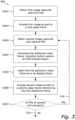
- Figure 3 schematically illustrates a flowchart 300 of various steps of such a method.
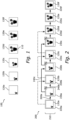
- Figure 2 schematically illustrates the encoding of various video frames performed as part of a method 200.
- the improved method 200 includes (as a step S301) obtaining a first image (e.g. the first image 120a) captured by a video camera having a first FOV.
- the method 200 further includes (as a step S302) encoding the first image 120a as part of a first video frame 220a of an encoded video stream 210. This may be performed as conventionally done, by for example encoding the first video frame 220a as an I-frame, or similar, such that the first video frame 220a contains all the necessary image data required to decode the first image 120a again at the decoder side (not shown).
- the encoding may e.g. be lossless or generate at least some loss of image quality when decoding the first video frame 210a, depending on the exact method used for such encoding of the first video frame 220a.
- the method 200 includes (as a step S303) receiving a second image (e.g. the second image 120b) captured by the video camera having a second FOV.
- a second image e.g. the second image 120b
- the first FOV is different from the second FOV, but the second FOV is such that it at least partially overlaps the first FOV.
- the envisaged improved method 200 does not progress by attempting to directly encode the second image 120b as e.g. a regular P-frame using motion vector-search in the first image 120a. Instead, in a step S304, the method 200 progresses by generating a first additional video frame 230a which references the first video frame 220a, and which includes first motion vectors which transforms (in this case, scales and translates) the image content of the first image 120a into a FOV which is closer to the second FOV than the first FOV is.
- first motion vectors are not found by computationally intensive motion vector-searching, but instead calculated/formed based on knowledge about the second FOV and the first FOV, i.e.
- Such information may e.g. be received from the camera itself, and/or from any other particular sensor(s) capable of e.g. detecting a camera orientation (such as pan/tilt/roll-angles or similar, and/or focal length of the camera and its lens).
- a camera orientation such as pan/tilt/roll-angles or similar, and/or focal length of the camera and its lens.
- the FOV of the camera has been changed by e.g. increasing the focal length of the lens with a particular amount, and by tilting the camera slightly downwards while panning the camera slightly to the left (in order to move the object 110 towards the center of the image while zooming).
- This information can then be used to directly obtain the first motion vectors required to perform a scaling/translation which transforms the FOV of the first image 120a into a FOV which is closer, or equal, to the second FOV used to capture the second image 120b.
- a "FOV of an image is transformed to some other FOV” is to be understood that as there is calculated a transformation which, if applied to the image content of the image, would render the resulting image look (more) like it was captured by a camera having this other FOV.
- How the first motion vectors may be formed/calculated based on knowledge about the various FOVs used to capture two images will be described in more detail later here, with reference to e.g. Figure 5 .
- the method 200 proceeds (in a step S305) by inserting the first additional video frame 230a into the encoded video stream 210, and includes marking the first additional video frame 230a as a no-display frame (as indicated by the crossed-out screen symbols shown in Figure 2 ).
- the first additional video frame 230a is thus not going to be shown during a subsequent decoding of the encoded video stream 210, but only serves as a container of information for the decoding/encoding of other video frames.
- the first additional video frame 230a need not to include any actual image data, but only the first motion vectors which allow to (during a subsequent decoding of the first additional video frame 230a) transform the FOV of the first image 120a into a FOV which more closely resembles the second FOV, i.e. by scaling, translating and/or rotating the image content of the first image 120a as required.
- the method then, in a step S306, continues with encoding the second image 120b as part of a second video frame 220b of the encoded video stream 210, wherein the second video frame 220b is such that it references the first additional video frame 230a.
- the second video frame 220b may e.g. be a P-frame or similar, with for example motion vectors indicating what parts of the (decoded) first additional video frame 230a that are to be used to decode what parts of the second video frame 220b.
- the FOV of the (to-be-decoded) image of the first additional video frame 230a more closely resembles (or even equals) that of the second image 120b
- finding such motion vectors for the decoding of the second video frame 220b using motion vector-searching becomes more trivial than attempting to directly find such motion vectors based on the image content of e.g. the first image 120a.
- the motion vectors for the second video frame 220b may e.g. be found by comparing the image content of the second image 120b with that of the translated image content of the first image 120a included in (or generated from, after decoding) the first additional video frame 230a.
- the envisaged method thus provides an improved way of encoding a video stream captured during a change of a FOV of the camera.
- references from one encoded video frame to another is illustrated by solid arrows.
- the solid arrow 240a illustrates how the first additional video frame 230a references the first video frame 220a; the solid arrow 240b illustrates how the second video frame 220b references the first additional video frame 230a, and the solid arrow 240c illustrates how a second additional video frame 230b (if included, as will be discussed later herein) references the first additional video frame 230a, etc.
- the arrows point in the direction information is transferred, e.g.
- the arrow 240a pointing from the first video frame 220a to the first additional video frame 230a indicates that the first additional video frame 230a is the one referencing the first video frame 220a.
- additional references are indicated in Figure 2 by dashed arrows, and may for example include the second video frame 220a referencing also the first video frame 220a for e.g. parts not requiring motion vectors, such as e.g. a constant background or similar, etc.
- Other such optional reference may e.g. include one or more frames being bidirectionally predicted frames (B-frames), including references also to one or more "future" video frames.
- the envisaged method may of course also, in some embodiments, continue in a similar fashion in order to encode also one or more additional images captured while the FOV of the camera is changing, for example as part of an ongoing zooming-operation.
- a method as envisaged herein, and as described by the flowchart 300 may thus include an optional step S307 in which it is checked if the FOV of the camera is still changing. If affirmative, the method may go back (as indicated by the dashed arrow 310) and redo steps S303-S306 again, each time obtaining a new image, generating a new, no-display additional video frame referencing the previous additional video frame, and encoding the new image as part of a new video frame referencing the new additional video frame. If it is not affirmative that the changing of the camera FOV is still ongoing, the method may instead e.g. stop, and for examples revert back to encoding frames as conventionally done, as illustrated by the dashed arrow 312.
- continuing the method 200 may include e.g. obtaining a third image (e.g. the third image 120c) captured by the camera having a third FOV, where the third FOV is different from the second FOV but is also such that it at least partially overlaps the second FOV.
- This may correspond e.g. to repeating the above step S303, but for "second and third" instead of "first and second", etc.
- the method may e.g.
- the second motion vectors are instead formed based on a difference between the third FOV and the second FOV. This may correspond to e.g. repeating the above step S304, but also with "second and third" instead of "first and second", etc.
- the method may continue by inserting the second additional video frame 230b into the encoded video stream 210, and marking the second additional video frame 230b as a no-display frame (corresponding to repeating the above step S305, also with "second and third" instead of "first and second", etc.).
- the method may continue by encoding the third image 120c as part of a third video frame 220c, which may reference e.g. the second additional video frame 230b.
- the method may, in some embodiments, continue in a similar fashion until the camera's changing of FOV ends. In the present example, this may include obtaining a fourth image, e.g.
- the method may for example, in some embodiments, stop inserting additional video frames and instead revert back to encoding frames such as done when e.g. no zooming is currently going on.
- the fifth image 104e may be encoded as part of a fifth video frame 220e referencing the fourth additional video frame 230d
- the next image 230f may be encoded as a video frame 220f referencing the video frame 230e, etc.
- the method as envisaged herein mainly applies to the encoding of video frames corresponding to times during which the camera is changing its FOV, and during which times conventional coding using motion vectors is difficult due to such motion vectors being both long and varying due to the changing FOV of the camera.
- the motion vectors required to generate the additional video frames may be obtained directly from this knowledge, without requiring any motion vector-searching by the decoder, such as the camera.
- the FOVs of the additional video frames can thus be made to better, or exactly, match the FOVs of the images captured by the camera, motion vector search can then more efficiently be performed when encoded the captured images by searching in, and referencing to, the additional video frames.
- a method 400 is still supposed to encode the video stream 100 captured during the zooming-in on the object 110 as shown in Figure 1 , but, in contrast to the method 200 described with reference to Figure 2 , the method 400 instead uses a layered type of coding, such as scalable video coding (SVC).
- SVC scalable video coding
- the encoded video stream 410 has multiple layers, including at least a base layer 412 and at least one enhancement layer 414.
- the method 400 starts by obtaining the first image 120a, and encoding this image as part of a first video frame 420a in the base layer 412 (with e.g. a lower resolution), as well as part of a first video frame 440a in the enhancement layer 414 (with details to obtain a higher resolution than that of the base layer 412), as is conventionally done in such layered coding schemes.
- a first additional video frame 430a is generated as described earlier herein, and references the first video frame 420a of the base layer 412.
- the first additional video frame 430a is also encoded in the base layer 412, and marked as a no-display frame.
- the second image 120b is however not directly encoded as part of any video frame of the base layer 412, but instead encoded only as part of a second video frame 440b of the enhancement layer 414, wherein the second video frame 440b references the first additional video frame 430a in the base layer 412.
- the method 400 may in some embodiments of course also continue to generate and encode more video frames as long as the FOV of the camera is changing.
- the third image 120c may be obtained, the third FOV used to capture the third image 120c may be compared to the second FOV used to capture the second image 120b, and second motion vectors may be calculated and used to generate a second additional video frame 430b encoded in the base layer 412.
- the third image 120c is not encoded directly in the base layer 412, but is instead encoded as a third video frame 440c in the enhancement layer 414, and made to reference the second additional video frame 430b in the base layer 412.
- the same procedure may then of course be repeated to obtain e.g.
- the fourth image 120d, the fifth image 120e, etc., and the corresponding frames maybe generated and inserted in the base layer 412 and enhancement layer 414 as described herein.
- this includes generating a third additional video frame 430c in the base layer 412 (marked as no-display, and referencing the second additional video frame 430b), encoding the fourth image 120d as part of a fourth video frame 440d in the enhancement layer 414 (wherein the fourth video frame 440d references the third additional video frame 430c in the base layer 412), etc.
- the method 400 may stop generating and inserting additional video frames, and instead revert back to encoding the fifth and sixth images 120e and 120f in both the base layer 412 and enhancement layer 414 again.
- this may include encoding the fifth image 120e both in a fifth video frame 420e in the base layer 412 (with lower resolution), and in a fifth video frame 440e in the enhancement layer 414 (with details to obtain a higher resolution than that of the base layer 412); and encoding the sixth image 120 both in a sixth video frame 420f in the base layer 412, and in a sixth video frame 440f in the enhancement layer 414.
- the additional video frames 230a, 230b and 230c thus replaces what would otherwise be the second, third and fourth normally encoded video frames in the base layer 412.
- the fifth video frame 420e in the base layer 412 may e.g. reference the third additional video frame 430c, etc., as indicated by the solid arrows provided in Figure 4 and as already described with reference to Figure 2 .
- each video frame in the enhancement layer 414 may e.g. reference also one or more previous video frames in the enhancement layer 414, and each "normal" (i.e., non-additional video frame) in the base layer 412 may reference one or more previous video frames in the base layer 412.
- each "normal" (i.e., non-additional video frame) in the base layer 412 may reference one or more previous video frames in the base layer 412.
- the method 400 has the advantage that as all additional video frames (e.g. frames 430a-c) are inserted in the base layer 412, they do not affect the FPS rate as the enhancement layer 414 still only includes only one encoded video frame per image captured by the camera. It may also be envisaged that in situations where the enhancement layer 414 is not going to be decoded, e.g. when the processing capability of the encoder is insufficient to do so, or if the enhancement layer 414 is even removed from the encoded video stream 410 before sending the encoded video stream 410 across e.g.
- Figure 5 schematically illustrates in more detail how calculation of the required (first) motion vectors can be obtained.
- a camera 510 having a first FOV (“FOV1") captures a first image 120a of an object 110.
- FOV2 the same camera 510 captures a second image 120b of the object 110 while having a different, second FOV ("FOV2").
- FOV1 first FOV
- FOV2 second FOV
- the first FOV (FOV1) is defined e.g. by the camera 510 having a first pan-angle 520a, a first tilt-angle 522a, and a first roll-angle 524a, as well as a first focal length 526a.
- the second FOV (FOV2) is defined by the camera 510 having a second pan-angle 520b, a second tilt-angle 522b, a second roll-angle 524b, as well as a second focal length 526b.
- the roll-angles 524a-b are the same, while the second pan-angle 520b is a bit smaller than the first pan-angle 520a, the second tilt-angle 522b is a bit larger than the first tilt-angle 522a, and the second focal length 526b is larger than the first focal length 526a (as the camera is more zoomed-in in the second FOV than in the first FOV, and panned/tilted slightly left/down).
- the exact definition of the various angles is not envisaged as being important, as long as the definition allows to measure/detect how the angles have changed between one FOV and the other.
- first motion vectors e.g. 530a and 530b, etc.
- first motion vectors 530a and 530b can then be calculated as illustrated in an overlay 540 of the first and second images 120a and 120b also shown in Figure 5 .
- the first motion vectors 530a and 530b may be different for different parts (e.g. 550a and 550b) of the second image 120b, as the scaling and translation required to go from the first FOV and closer to the second FOV may cause different parts of the object 110 to move in different directions and with different speeds.
- There may of course be other, additional first motion vectors than those illustrated in Figure 5 e.g. for each part of the second image 120b.
- FIG. 6 schematically illustrates a device 600 for encoding a video stream as discussed earlier herein, i.e. a device configured to perform e.g. the method 200 described with reference to Figure 2 , and/or the method 400 described with reference to Figure 4 .
- the device 600 includes at least a processor (or “processing circuitry") 610 and a memory 612.
- a "processor” or “processing circuitry” may for example be any combination of one or more of a suitable central processing unit (CPU), multiprocessor, microcontroller ( ⁇ C), digital signal processor (DSP), application-specific integrated circuit (ASIC), field-programmable gate-array (FPGA), graphics processing unit (GPU), etc., capable of executing software instructions stored in the memory 612.
- CPU central processing unit
- ⁇ C microcontroller
- DSP digital signal processor
- ASIC application-specific integrated circuit
- FPGA field-programmable gate-array
- GPU graphics processing unit
- the memory 612 may be external to the processor 610, or may be internal to the processor 610.
- a "memory" may be any combination of random-access memory (RAM) and read-only memory (ROM), or any other kind of memory capable of storing the instructions.
- the memory 612 contains (i.e. stores) instructions that, when executed by the processor 610, cause the device 600 to perform a method as described herein (i.e. the method 200, 400 or any embodiments thereof).
- the device 600 may further include one or more additional items 614 which may, in some situations, be useful for performing the method.
- the device 600 may for example be a (video) camera, such as a video monitoring camera, and the additional item(s) 614 may then include e.g.
- the additional item(s) 614 may also include e.g. various other electronics components needed for capturing the scene, e.g. to properly operate the image sensor and/or lenses as desired, and to gather information pertinent to e.g. a current orientation and/or focal length of the camera and lens(es), which can be used to calculate how to create motion vectors based on e.g. difference between two FOVs.
- Performing the method in a monitoring camera may be useful in that the processing is moved to "the edge", i.e.
- the device 600 may for example be connected to a network such that the encoded video stream resulting from performing the method may be transmitted to a user.
- the device 600 may include a network interface 616, which may be e.g. a wireless network interface (as defined in e.g. any of the IEEE 802.11 or subsequent standards, supporting e.g. Wi-Fi) or a wired network interface (as defined in e.g. any of the IEEE 802.3 or subsequent standards, supporting e.g. Ethernet).
- the network interface 616 may for example also support any other wireless standard capable of transferring encoded video, such as e.g. Bluetooth or similar.
- the various components 610, 612, 614 and 616 (if present) may be connected via one or more communication buses 620, such that these components may communicate with each other, and exchange data as required.
- the device 600 may for example be a monitoring camera mounted or mountable on a building, e.g. in form of a PTZ-camera or e.g. a fisheye-camera capable of providing a wider perspective of the scene, or any other type of monitoring/surveillance camera.
- the device 600 may for example be a body camera, action camera, dashcam, or similar, suitable for mounting on persons, animals and/or various vehicles, or similar.
- the device 600 may for example be a smartphone or tablet which a user can carry and film a scene. In any such examples of the device 600, it is envisaged that the device 600 may include all necessary components (if any) other than those already explained herein, as long as the device 600 is still able to perform the method 200, 400 or any embodiments thereof as envisaged herein.
- the device 600 and the processor 610 may for example be structured into one or more computing blocks, each responsible for performing a functionality in accordance with a particular step of e.g. the methods 200 and 400, as shown in the flowchart 300 of Figure 3 .
- one such functional block may be configured to obtain the first image 120a (i.e. to perform step S301), and another functional block may be configured to encode the first image (i.e. to perform step S302), and so on, until all steps of the method 200, 400, or other embodiments thereof, is carried out by the device 600.
- the present disclosure provides an improved way of encoding a video stream in a situation when, during capturing of the images of the video stream, a FOV of the camera changes (such as during e.g. a zooming-operation performed by the camera).
- a FOV of the camera changes (such as during e.g. a zooming-operation performed by the camera).
- the various images of the bit stream during the change of FOV may then be encoded with motion vectors referencing the various additional video frames, by performing motion vector-searching which does not result in/from e.g. long and varying motion vectors.
- the envisaged method, and corresponding device, computer program and computer program product, as described herein thus satisfies an apparent need for encoding such video streams, as encoding techniques based solely on motion vector-searching often turn out not to be computationally tractable, particularly in real- or close to real-time situations
Landscapes
- Engineering & Computer Science (AREA)
- Multimedia (AREA)
- Signal Processing (AREA)
- Compression Or Coding Systems Of Tv Signals (AREA)
- Studio Devices (AREA)
Priority Applications (6)
| Application Number | Priority Date | Filing Date | Title |
|---|---|---|---|
| EP23166331.1A EP4443874A1 (en) | 2023-04-03 | 2023-04-03 | Encoding of video stream during changing camera field-of-view |
| KR1020240033805A KR20240148259A (ko) | 2023-04-03 | 2024-03-11 | 카메라 시야가 변경하는 동안 비디오 스트림 인코딩 |
| US18/606,404 US12483714B2 (en) | 2023-04-03 | 2024-03-15 | Encoding of video stream during changing camera field-of-view |
| JP2024043846A JP7824986B2 (ja) | 2023-04-03 | 2024-03-19 | カメラ視野を変更している間のビデオストリームの符号化 |
| TW113110932A TW202446081A (zh) | 2023-04-03 | 2024-03-25 | 改變攝影機視野期間視訊串流之編碼 |
| CN202410375858.XA CN118784982A (zh) | 2023-04-03 | 2024-03-29 | 改变相机视场期间的视频流编码 |
Applications Claiming Priority (1)
| Application Number | Priority Date | Filing Date | Title |
|---|---|---|---|
| EP23166331.1A EP4443874A1 (en) | 2023-04-03 | 2023-04-03 | Encoding of video stream during changing camera field-of-view |
Publications (1)
| Publication Number | Publication Date |
|---|---|
| EP4443874A1 true EP4443874A1 (en) | 2024-10-09 |
Family
ID=85800724
Family Applications (1)
| Application Number | Title | Priority Date | Filing Date |
|---|---|---|---|
| EP23166331.1A Pending EP4443874A1 (en) | 2023-04-03 | 2023-04-03 | Encoding of video stream during changing camera field-of-view |
Country Status (6)
| Country | Link |
|---|---|
| US (1) | US12483714B2 (https=) |
| EP (1) | EP4443874A1 (https=) |
| JP (1) | JP7824986B2 (https=) |
| KR (1) | KR20240148259A (https=) |
| CN (1) | CN118784982A (https=) |
| TW (1) | TW202446081A (https=) |
Families Citing this family (1)
| Publication number | Priority date | Publication date | Assignee | Title |
|---|---|---|---|---|
| US20250111541A1 (en) * | 2023-09-28 | 2025-04-03 | Apple Inc. | Compressed Video Streaming for Multi-Camera Systems |
Citations (1)
| Publication number | Priority date | Publication date | Assignee | Title |
|---|---|---|---|---|
| EP3396952B1 (en) * | 2017-04-25 | 2019-04-17 | Axis AB | Method and image processing unit for forming a video stream |
Family Cites Families (16)
| Publication number | Priority date | Publication date | Assignee | Title |
|---|---|---|---|---|
| JP2006215657A (ja) * | 2005-02-01 | 2006-08-17 | Sharp Corp | 動きベクトル検出方法、動きベクトル検出装置、動きベクトル検出プログラム及びプログラム記録媒体 |
| JP2007019819A (ja) * | 2005-07-07 | 2007-01-25 | Matsushita Electric Ind Co Ltd | 監視システム及び監視システムの画像圧縮,伸張方法 |
| CN101242530B (zh) * | 2007-02-08 | 2011-06-01 | 华为技术有限公司 | 运动估计方法、基于运动估计的多视编解码方法及装置 |
| JP2008211508A (ja) | 2007-02-26 | 2008-09-11 | Canon Inc | 動きベクトル探索装置、動きベクトル探索方法、動きベクトル探索プログラム、及びコンピュータ読み取り可能な記録媒体 |
| WO2012008117A1 (ja) * | 2010-07-15 | 2012-01-19 | パナソニック株式会社 | 画像符号化装置及びカメラ |
| US20120075436A1 (en) * | 2010-09-24 | 2012-03-29 | Qualcomm Incorporated | Coding stereo video data |
| EP2974313B1 (en) | 2013-03-12 | 2018-07-11 | HFI Innovation Inc. | Inter-layer motion vector scaling for scalable video coding |
| JP6114990B2 (ja) | 2013-03-27 | 2017-04-19 | 株式会社メガチップス | 動画像符号化処理装置、プログラムおよび集積回路 |
| US9654794B2 (en) * | 2014-01-03 | 2017-05-16 | Qualcomm Incorporated | Methods for coding an inter-layer reference picture set (RPS) and coding end of bitstream (EOB) network access layer (NAL) units in multi-layer coding |
| US10051281B2 (en) | 2014-05-22 | 2018-08-14 | Apple Inc. | Video coding system with efficient processing of zooming transitions in video |
| WO2018164930A1 (en) | 2017-03-08 | 2018-09-13 | Vid Scale, Inc. | Improving motion vector accuracy by sharing cross-information between normal and zoom views |
| EP3474548A1 (en) | 2017-10-18 | 2019-04-24 | Axis AB | Method and encoder for encoding a video stream in a video coding format supporting auxiliary frames |
| EP3474225B1 (en) | 2017-10-18 | 2019-09-25 | Axis AB | Method and encoder for encoding a video stream in a video coding format supporting auxiliary frames |
| US20220417523A1 (en) * | 2019-11-18 | 2022-12-29 | Nippon Telegraph And Telephone Corporation | Encoding method, encoding apparatus and program |
| US12323608B2 (en) * | 2021-04-07 | 2025-06-03 | Lemon Inc | On neural network-based filtering for imaging/video coding |
| CN113965754B (zh) * | 2021-11-08 | 2025-06-27 | 翱捷科技股份有限公司 | 一种适用于相机移动场景的运动估计方法及装置 |
-
2023
- 2023-04-03 EP EP23166331.1A patent/EP4443874A1/en active Pending
-
2024
- 2024-03-11 KR KR1020240033805A patent/KR20240148259A/ko active Pending
- 2024-03-15 US US18/606,404 patent/US12483714B2/en active Active
- 2024-03-19 JP JP2024043846A patent/JP7824986B2/ja active Active
- 2024-03-25 TW TW113110932A patent/TW202446081A/zh unknown
- 2024-03-29 CN CN202410375858.XA patent/CN118784982A/zh active Pending
Patent Citations (1)
| Publication number | Priority date | Publication date | Assignee | Title |
|---|---|---|---|---|
| EP3396952B1 (en) * | 2017-04-25 | 2019-04-17 | Axis AB | Method and image processing unit for forming a video stream |
Non-Patent Citations (2)
| Title |
|---|
| H. SCHWARZ ET AL: "Overview of the Scalable Video Coding Extension of the H.264/AVC Standard", IEEE TRANSACTIONS ON CIRCUITS AND SYSTEMS FOR VIDEO TECHNOLOGY, vol. 17, no. 9, 1 September 2007 (2007-09-01), USA, pages 1103 - 1120, XP055378169, ISSN: 1051-8215, DOI: 10.1109/TCSVT.2007.905532 * |
| HANIEH NADERI ET AL: "Triple Motion Estimation and Frame Interpolation based on Adaptive Threshold for Frame Rate Up-Conversion", ARXIV.ORG, CORNELL UNIVERSITY LIBRARY, 201 OLIN LIBRARY CORNELL UNIVERSITY ITHACA, NY 14853, 5 March 2022 (2022-03-05), XP091178282 * |
Also Published As
| Publication number | Publication date |
|---|---|
| JP7824986B2 (ja) | 2026-03-05 |
| KR20240148259A (ko) | 2024-10-11 |
| TW202446081A (zh) | 2024-11-16 |
| CN118784982A (zh) | 2024-10-15 |
| US20240333948A1 (en) | 2024-10-03 |
| JP2024147510A (ja) | 2024-10-16 |
| US12483714B2 (en) | 2025-11-25 |
Similar Documents
| Publication | Publication Date | Title |
|---|---|---|
| US10616592B2 (en) | Method and encoder for encoding a video stream in a video coding format supporting auxiliary frames | |
| US10313417B2 (en) | Methods and systems for auto-zoom based adaptive video streaming | |
| US20050220353A1 (en) | Method for sub-pixel value interpolation | |
| US20070165716A1 (en) | Signal processing device, image capturing device, network camera system and video system | |
| JP2011505780A (ja) | 高解像度デジタル静止画像をビデオと連続して符号化するためのavc規格の拡張 | |
| KR20170083455A (ko) | 참조 이미지 프로세싱을 위한 방법, 애플리케이션 프로세서 및 모바일 기기 | |
| CN109688413B (zh) | 以支持辅助帧的视频编码格式编码视频流的方法和编码器 | |
| US20180262754A1 (en) | Image compression apparatus, image decoding apparatus, and image processing method | |
| JP2014239428A (ja) | デジタルビデオデータを符号化するための方法 | |
| JP6707334B2 (ja) | リアルタイム符号化のための方法及び装置 | |
| US12483714B2 (en) | Encoding of video stream during changing camera field-of-view | |
| EP3131295A1 (en) | Video encoding method and system | |
| CN118303025A (zh) | 图像解码方法及其设备 | |
| CN113556462B (zh) | 用于控制平移倾斜变焦相机的方法和系统以及存储介质 | |
| US20250133226A1 (en) | Video stream encoding both overview and region-of-interest(s) of a scene | |
| CN118216148A (zh) | 一种视频编码方法及其相关装置 | |
| US20170105006A1 (en) | Method and Apparatus for Video Coding Using Master-Slave Prediction Structure | |
| US12464141B2 (en) | Video stream overlay encoding using no-display frames and motion vectors calculated based on known position-differences between frames | |
| JP2006246277A (ja) | 再符号化装置、再符号化方法、および再符号化用プログラム | |
| JP6942504B2 (ja) | 符号化装置、撮像装置、符号化方法、及びプログラム | |
| KR100955828B1 (ko) | 참조 프레임 선택을 이용한 고성능 멀티미디어 코덱에 사용되는 움직임 추정 연산 방법 | |
| JP2006295502A (ja) | 再符号化装置、再符号化方法、および再符号化用プログラム | |
| JP2015035785A (ja) | 動画像符号化装置、撮像装置、動画像符号化方法、プログラム、及び記録媒体 |
Legal Events
| Date | Code | Title | Description |
|---|---|---|---|
| PUAI | Public reference made under article 153(3) epc to a published international application that has entered the european phase |
Free format text: ORIGINAL CODE: 0009012 |
|
| STAA | Information on the status of an ep patent application or granted ep patent |
Free format text: STATUS: REQUEST FOR EXAMINATION WAS MADE |
|
| 17P | Request for examination filed |
Effective date: 20231122 |
|
| AK | Designated contracting states |
Kind code of ref document: A1 Designated state(s): AL AT BE BG CH CY CZ DE DK EE ES FI FR GB GR HR HU IE IS IT LI LT LU LV MC ME MK MT NL NO PL PT RO RS SE SI SK SM TR |