EP4433903B1 - Anwendungsraumfilterung zur tlb-invalidierung - Google Patents
Anwendungsraumfilterung zur tlb-invalidierung Download PDFInfo
- Publication number
- EP4433903B1 EP4433903B1 EP23709523.7A EP23709523A EP4433903B1 EP 4433903 B1 EP4433903 B1 EP 4433903B1 EP 23709523 A EP23709523 A EP 23709523A EP 4433903 B1 EP4433903 B1 EP 4433903B1
- Authority
- EP
- European Patent Office
- Prior art keywords
- tlb
- computing device
- hash
- application space
- space identifier
- Prior art date
- Legal status (The legal status is an assumption and is not a legal conclusion. Google has not performed a legal analysis and makes no representation as to the accuracy of the status listed.)
- Active
Links
Images


Classifications
-
- G—PHYSICS
- G06—COMPUTING OR CALCULATING; COUNTING
- G06F—ELECTRIC DIGITAL DATA PROCESSING
- G06F12/00—Accessing, addressing or allocating within memory systems or architectures
- G06F12/02—Addressing or allocation; Relocation
- G06F12/08—Addressing or allocation; Relocation in hierarchically structured memory systems, e.g. virtual memory systems
- G06F12/10—Address translation
- G06F12/1027—Address translation using associative or pseudo-associative address translation means, e.g. translation look-aside buffer [TLB]
-
- G—PHYSICS
- G06—COMPUTING OR CALCULATING; COUNTING
- G06F—ELECTRIC DIGITAL DATA PROCESSING
- G06F2212/00—Indexing scheme relating to accessing, addressing or allocation within memory systems or architectures
- G06F2212/68—Details of translation look-aside buffer [TLB]
- G06F2212/683—Invalidation
Definitions
- TLBs are specialized cache structures at a computing device for optimizing the translation of virtual memory addresses to physical memory addresses in systems using segmented or virtual memory.
- each process addresses its memory space using virtual addresses, which are separate from the physical addresses of the actual memory locations storing the process data.
- Entries of the mapping from virtual addresses to physical addresses are stored in the TLB by caching entries from a page table.
- a TLB stores frequently used entries to avoid having to access the page table for each address translation in order to improve translation performance.
- the entry may be moved while stored in the TLB, and the TLB entry can become invalid.
- the computing device can perform a TLB invalidation procedure to remove the entry from the TLB, which may increase the efficiency of the TLB.
- US 2022/075734 A1 deals with determining whether to perform a translation lookaside buffer, TLB, invalidation procedure using sticky bits that indicate whether entries corresponding to a context are stored in the TLB.
- This specification describes how a system can determine whether to perform a translation lookaside buffer (TLB) invalidation procedure for TLB entries associated with an application based on a non-address characteristic of TLB entries.
- the non-address characteristic can be an identifier of the application itself, e.g., an application space identifier (ASID) of the application; or a virtual machine identifier (VMID) for the application.
- ASID application space identifier
- VMID virtual machine identifier
- the system can pass an ASID through multiple Bloom filters to determine whether the TLB lacks entries for that ASID. If so, the system need not scan the TLB to invalidate such entries, which reduces the overhead of TLB invalidation procedures.
- ASID application space identifier
- VMID virtual machine identifier
- the system described in this specification can allow a computing device to determine whether to perform a TLB invalidation procedure by using Bloom filters with an ASID.
- a computing device receives an instruction from another computing device to remove an application space identifier associated with multiple virtual addresses.
- the computing device can remove any entry associated with the application space identifier by walking through the cache structure of the TLB.
- virtual addresses for that ASID may not actually be included in the TLB, and the computing device may delay other functions by searching for an entry that is not present. For example, the computing device might have to walk through the entire cache structure of the TLB to search for the one or more entries associated with the application space identifier, which can require many cycles.
- the system described in this specification need not scan the entire cache structure on every invalidation request to determine whether or not the requested entry is represented in the cache.
- the systems and techniques described in this specification can allow a computing device to quickly determine whether to skip or perform the TLB invalidation procedure.
- the computing device uses multiple Bloom filters corresponding to multiple hash functions to determine whether entries of an application space identifier (ASID) are represented in the TLB. Based on whether the entry is represented according to values given by the multiple Bloom filters, the computing device can walk through the cache structure in search of the entry or can bypass the TLB invalidation procedure entirely, which can decrease the delay associated with performing the TLB invalidation procedure and conserve computational resources of the computing device.
- ASID application space identifier
- the computing device may have to scan each set in search of a virtual address to perform the invalidation procedure, while using an ASID, the computing device might not need to scan each set.
- FIG. 1 shows an example system 100.
- the system 100 is an example of a system in which the systems, components, and techniques described below are implemented.
- the system 100 is configured to determine whether to perform a TLB invalidation procedure for an application space identifier (ASID) or another non-address characteristic of a virtual address, e.g., a virtual machine identifiers (e.g., VMIDs).
- ASID application space identifier
- VMIDs virtual machine identifiers
- Each computing device 102 can process ASIDs 106, which can be encountered during normal operation of storing virtual address translation mappings, or from another computing device 102, which each computing device can interpret to as a request to invalidate TLB entries associated with that ASID.
- the TLB 104 is an example of a special purpose cache that is used in virtual address translation.
- the TLB 104 stores mappings from virtual memory addresses to physical memory addresses by caching entries.
- the computing device 102 can seek to invalidate all virtual address entries in the TLB associated with the ASID 106.
- the TLB 104 includes storage for TLB entries 108 that each store mappings of virtual addresses to physical addresses in the main memory 122.
- the TLB 104 also includes a set of hash functions 112 and a set of Bloom filters 116.
- a Bloom filter 116 is a data structure that can be used to determine whether an element is not present in a set.
- the computing device 102 can use the Bloom filters 116 to determine whether an entry is not represented in the TLB 104 based on its ASID.
- the computing device 102 can set the values of the Bloom filters 116 using hash functions 112.
- the hash functions 112 can be implemented in logic circuitry that is configured to generate a hash value from an input.
- the logic circuitry of the hash functions 112 can implement a function that produces output values that are all the same number of bits.
- the computing device 102 can input an ASID value into a hash function 112 to obtain a corresponding hash value.
- the computing device 102 can then set the hash value for a corresponding Bloom filter 116, a process that is described in further detail below with reference to FIG. 2 .
- the computing device 102 is configured to access the TLB 104 and to use Bloom filters 116 to determine whether to perform a TLB invalidation procedure for a particular ASID.
- the computing device 102 can populate the Bloom filters 116 using the set of hash functions 112 as TLB entries 108 are added during normal operation.
- the computing device 102 can for example generate a hash value of the ASID of each of the entries 108, either before or after they are cached, and can set the hash values of the entries 108 by updating the corresponding values in each of the Bloom filters 116. Therefore, the Bloom filters 116 include data that represents all of the ASIDs of the entries 108 that are cached in the TLB 104.
- the computing device 102 can consult the TLB 104 to determine if the TLB 104 stores a mapping for the particular virtual address associated with the ASID 106 indicated by the invalidation request 118.
- the computing device 102 can receive the invalidation request 118 from another computing device 102.
- the invalidation request 118 can include a request to perform a TLB invalidation procedure, e.g., using TLB invalidation logic 120 that invalidates cached TLB entries with an ASID indicated by the request 118.
- the computing device 102 generates multiple hash values from the multiple hash functions 112 that correspond respectively to each of the Bloom filters 116. In some implementations, the computing device 102 determines if the TLB 104 stores a mapping for the entries associated with the ASID 106 by checking the hash values with their corresponding Bloom filters 116. The computing device 102 uses the multiple hash functions 112 to generate respective hash values from the ASID 106. The computing device 102 can check the Bloom filters 116 using respective hash values of the multiple hash functions 112 to determine whether to bypass searching for entries having the ASID 106.
- the computing device 102 can perform the TLB invalidation procedure 120, e.g., by searching through and invalidating all TLB entries having the associated ASID. If however the computing device 102 determines that any hash value of the respective hash values is not represented in its respective Bloom filter 116, the computing device 102 can bypass performing the TLB invalidation procedure, which saves the computing device 102 from having to search for any TLB entries having the associated ASID. This process is described in further detail with reference to FIG. 2 .
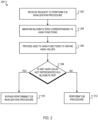
- FIG. 2 is a flow diagram of an example process for determining whether to perform the TLBI procedure.
- the process 200 will be described as being performed by a computing device, e.g., the computing device 102 of FIG. 1 , appropriately configured in accordance with this specification.
- the computing device receives a request to perform the TLB invalidation procedure (202).
- the request can include an instruction received from another computing device to remove the entries associated with an ASID.
- the hash value output of the first hash function in this example is a 3-bit value, 5, representing a location in Hash Vector 1.
- a three-bit value representing the decimal value 5 can be expressed as 3'd5.
- 5 represents the 5th most significant bit from right to left in TABLE 1.
- Hash1(ASID) 5.
- the hash functions compress the original 16-bit ASID value into a 3-bit value that represents a location in a hash vector of a Bloom filter.
- the computing device performs the first fill operation (Fill 1) on each of the Bloom filters using the hash value outputs.
- the computing device sets the corresponding bit of each Bloom filter in accordance with the hash value outputs and the bit location, as shown above in Table 1. In this example, only 8 bit locations are shown, but in practice, each of the Bloom filters can include any appropriate number of bit locations, e.g., 16, 64, 128, or 1024, to name just a few examples.
- the computing device provides the ASID included in the TLB invalidation request to the multiple hash functions to obtain the respective hash values of the ASID (206).
- the computing device may input the ASID value to multiple hash functions to determine the hash value that may be present in the Bloom filter corresponding to the respective hash function.
- the computing device can bypass performing the TLB invalidation procedure of the requested ASID (210).
- the computing device performs the TLB invalidation procedure (212).
- the computing device is configured to receive a second request with a second ASID (step 302).
- the request includes an instruction received from another computing device to remove the entries associated with the second ASID.
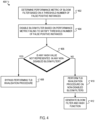
- FIG. 4 is a flow diagram of an example process for determining whether to reinitialize a Bloom filter.
- the process 400 will be described as being performed by a computing device, e.g., the computing device 102, of FIG. 1 , appropriately configured in accordance with this specification.
- the computing device can oversaturate the Bloom filters by performing fill operations, which can result in false positive instances. False positive instances are instances in which an ASID is not associated with any entries in the TLB, and the computing device determines that the hash value is represented in the Bloom filter (e.g., the computing device wrongly characterizes that the entry is represented in the TLB).
- the computing device can search through each of the Bloom filters in Table 1 to determine whether the corresponding hash values of 3'd4 and 3'd6 are present in any of the Bloom filters by determining if the bit indicated by each of the hash values is enabled in the Bloom filters.
- the computing device determines that both of the hash values are present in both of the Bloom filters, and therefore, the ASID may possible be present in the TLB structure.
- the computing device performs the TLB invalidation procedure.
- the ASID value was not set in the Bloom filters as part of the fill operations described in FIG. 2 , and therefore, this instance is a false positive instance.
- the computing device can set most of bits in the Bloom filter (e.g., utilize a majority of the Bloom filter), which can result in the computing device determining than an entry is present in the TLB, when in actuality, the entry is not present.
- the computing device can determine a performance metric of a Bloom filter based on a threshold number of false positive instances (402).
- the computing device is configured to disable a Bloom filter based on the performance metric of the Bloom filter failing to satisfy a threshold of false positive instances (404).
- the computing device can be configured with the threshold by another computing device. For example, the computing device can determine to disable the first Bloom filter associated with Hash 1 shown in Table 1 if the first Bloom filter exceeds a number of false positive instances.
- the computing device can use the other Bloom filters that are not disabled to determine if an entry is in the TLB.
- the computing device determines if any hash value is not represented in a non-disabled Bloom filter of the multiple Bloom filters (406). For example, the computing device can continue to use the second Bloom filter associated with Hash 2 shown in Table 2.
- the computing device can determine a hash value of an ASID using the second hash function, and the computing device can determine whether the hash value is present in the second Bloom filter.
- the computing device can bypass performing the TLB invalidation procedure (408). For example, if the computing device determines that the hash value is not present in the second Bloom filter, the computing device determines that the ASID is not present in the TLB, and the computing device can bypass the TLB invalidation procedure.
- the computing device can perform the TLB invalidation procedure (410). For example, if the computing device determines that the hash value is present in the second Bloom filter, the computing device determines that the ASID may be present in the TLB, and the computing device performs the TLB invalidation procedure.
- the computing device can generate at least one other Bloom filter and a corresponding hash function (412). For example, if the computing device determines to perform the TLB invalidation procedure based on the hash value being present in the second Bloom filter, the computing device can reinitialize a Bloom filter and a hash function to replace the first Bloom filter and the first hash function. In another example, the computing device can additionally reinitialize another Bloom filter and another hash function to replace the second Bloom filter and the second hash function.
- Embodiments of the subject matter and the functional operations described in this specification can be implemented in digital electronic circuitry, in tangibly-embodied computer software or firmware, in computer hardware, including the structures disclosed in this specification and their structural equivalents, or in combinations of one or more of them.
- Embodiments of the subject matter described in this specification can be implemented as one or more computer programs, i.e., one or more modules of computer program instructions encoded on a tangible non-transitory storage medium for execution by, or to control the operation of, data processing apparatus.
- the computer storage medium can be a machine-readable storage device, a machine-readable storage substrate, a random or serial access memory device, or a combination of one or more of them.
- the program instructions can be encoded on an artificially-generated propagated signal, e.g., a machine-generated electrical, optical, or electromagnetic signal, that is generated to encode information for transmission to suitable receiver apparatus for execution by a data processing apparatus.
- a computer program which may also be referred to or described as a program, software, a software application, an app, a module, a software module, a script, or code, can be written in any form of programming language, including compiled or interpreted languages, or declarative or procedural languages; and it can be deployed in any form, including as a stand-alone program or as a module, component, subroutine, or other unit suitable for use in a computing environment.
- a program may, but need not, correspond to a file in a file system.
- Computer-readable media suitable for storing computer program instructions and data include all forms of non-volatile memory, media and memory devices, including by way of example semiconductor memory devices, e.g., EPROM, EEPROM, and flash memory devices; magnetic disks, e.g., internal hard disks or removable disks; magneto-optical disks; and CD-ROM and DVD-ROM disks.
- semiconductor memory devices e.g., EPROM, EEPROM, and flash memory devices
- magnetic disks e.g., internal hard disks or removable disks
- magneto-optical disks e.g., CD-ROM and DVD-ROM disks.
- Embodiment 1 is a method comprising:
- Embodiment 3 is the method of any one of embodiments 1-2, further comprising:
- Embodiment 4 is the method of any one of embodiments 1-3, wherein the application space identifier represents an application executing on the computing device using the plurality of virtual addresses.
Landscapes
- Engineering & Computer Science (AREA)
- Theoretical Computer Science (AREA)
- Physics & Mathematics (AREA)
- General Engineering & Computer Science (AREA)
- General Physics & Mathematics (AREA)
- Memory System Of A Hierarchy Structure (AREA)
- Information Retrieval, Db Structures And Fs Structures Therefor (AREA)
Claims (11)
- Verfahren, das durch eine Rechenvorrichtung durchgeführt wird, um zu bestimmen, ob eine Adressenübersetzungspuffer-(translation lookaside buffer, TLB-)Invalidierungsprozedur durchgeführt werden soll, wobei das Verfahren Folgendes umfasst:Empfangen einer Anfrage zum Durchführen der TLB-Invalidierungsprozedur, wobei die Anfrage einen Anwendungsraumbezeichner für eine Vielzahl von virtuellen Adressen spezifiziert;Aufrechterhalten einer Vielzahl von Bloom-Filtern, wobei jeder Bloom-Filter der Vielzahl von Bloom-Filtern einer jeweiligen Hash-Funktion aus einer Vielzahl von Hash-Funktionen entspricht;Bereitstellen des Anwendungsraumbezeichners als Eingabe für jede der Vielzahl von Hash-Funktionen, um eine Vielzahl von Hash-Werten zu erlangen;Bestimmen, dass einer der Hash-Werte nicht in einem der Bloom-Filter dargestellt ist; undals Reaktion darauf, Umgehen des Durchführens der TLB-Invalidierungsprozedur.
- Verfahren nach Anspruch 1, wobei das Durchführen der TLB-Invalidierungsprozedur das Umgehen von Laufenträgen in dem TLB umfasst, um nach Einträgen zu suchen, die den Anwendungsraumbezeichner aufweisen.
- Verfahren nach einem der Ansprüche 1-2, ferner umfassend:Empfangen einer zweiten Anfrage, die einen zweiten Anwendungsraumbezeichner aufweist;Bereitstellen des zweiten Anwendungsraumbezeichners als Eingabe für jede der Vielzahl von Hash-Funktionen, um eine zweite Vielzahl von Hash-Werten zu erlangen;Bestimmen, dass alle Hash-Werte in der Vielzahl von Bloom-Filtern dargestellt sind; undals Reaktion darauf, Laufen des TLB, um zum zweiten Anwendungsraumbezeichner gehörende Einträge zu invalidieren.
- Verfahren nach einem der Ansprüche 1-3, wobei der Anwendungsraumbezeichner eine Anwendung darstellt, die auf der Rechenvorrichtung unter Verwendung der Vielzahl von virtuellen Adressen ausgeführt wird.
- Verfahren nach einem der Ansprüche 1-4, wobei das Bereitstellen des Anwendungsraumbezeichners als Eingabe für jede der Vielzahl von Hash-Funktionen, um eine Vielzahl von Hash-Werten zu erlangen, für jeden Anwendungsraumbezeichner Folgendes umfasst:Initialisieren eines Vektors, der einen Satz von Werten umfasst;Erzeugen eines Hash-Wertes des Anwendungsraumbezeichners unter Verwendung einer Hash-Funktion aus der Vielzahl von Hash-Funktionen; undEinstellen des Hash-Wertes des Anwendungsraumbezeichners durch Aktualisieren der Werte des Vektors.
- Verfahren nach einem der Ansprüche 1-5, wobei für jeden Bloom-Filter eine Vielzahl von Bloom-Filtern aufrechterhalten wird:
Bestimmen einer Leistungsmetrik des Bloom-Filters, wobei die Leistungsmetrik mindestens teilweise auf einer Schwellenwertanzahl von falsch positiven Instanzen basiert. - Verfahren nach einem der Ansprüche 6, ferner umfassend:
Deaktivieren des Bloom-Filters, basierend zumindest teilweise auf der Leistungsmetrik, die die Schwellenwertanzahl der falsch positiven Instanzen nicht erfüllt. - Verfahren nach Anspruch 6, wobei falsch positive Instanzen Instanzen sind, in denen ein Anwendungsraumbezeichner keinem Eintrag in dem TLB zugeordnet ist und die Rechenvorrichtung bestimmt, dass der Hash-Wert in dem Bloom-Filter dargestellt ist.
- Verfahren nach Anspruch 3, wobei das Laufen des TLB, um zum zweiten Anwendungsraumbezeichner gehörende Einträge zu invalidieren, ferner Folgendes umfasst:
Laufen des TLB, um Einträge, die zumindest teilweise auf dem Anwendungsraumbezeichner basieren, der in mindestens einem der nicht deaktivierten Bloom-Filter der Vielzahl von Bloom-Filtern dargestellt ist, zu invalidieren. - Verfahren nach Anspruch 7, ferner umfassend:
Erzeugen eines Bloom-Filters und einer entsprechenden Hash-Funktion zumindest teilweise basierend auf dem Deaktivieren des Bloom-Filters und dem Durchführen der TLB-Invalidierungsprozedur. - System zum Bestimmen, ob eine Adressenübersetzungspuffer-, TLB-, Invalidierungsprozedur durchgeführt werden soll, wobei das System Folgendes umfasst:einen Speicher, der dazu konfiguriert ist, Einträge des TLB zu speichern; undeinen oder mehrere Computer, die dazu konfiguriert sind, eine Vielzahl von Rechenvorrichtungen zu implementieren, wobei jede Rechenvorrichtung dazu konfiguriert ist, wiederholt Vorgänge durchzuführen, die ein Verfahren nach einem der vorhergehenden Ansprüche umfassen.
Priority Applications (1)
| Application Number | Priority Date | Filing Date | Title |
|---|---|---|---|
| EP25168979.0A EP4557110A3 (de) | 2023-02-07 | 2023-02-07 | Anwendungsraumfilterung zur tlb-invalidierung |
Applications Claiming Priority (1)
| Application Number | Priority Date | Filing Date | Title |
|---|---|---|---|
| PCT/US2023/012527 WO2024167487A1 (en) | 2023-02-07 | 2023-02-07 | Application space filtering for tlb invalidation |
Related Child Applications (1)
| Application Number | Title | Priority Date | Filing Date |
|---|---|---|---|
| EP25168979.0A Division EP4557110A3 (de) | 2023-02-07 | 2023-02-07 | Anwendungsraumfilterung zur tlb-invalidierung |
Publications (2)
| Publication Number | Publication Date |
|---|---|
| EP4433903A1 EP4433903A1 (de) | 2024-09-25 |
| EP4433903B1 true EP4433903B1 (de) | 2025-04-09 |
Family
ID=85505586
Family Applications (2)
| Application Number | Title | Priority Date | Filing Date |
|---|---|---|---|
| EP25168979.0A Pending EP4557110A3 (de) | 2023-02-07 | 2023-02-07 | Anwendungsraumfilterung zur tlb-invalidierung |
| EP23709523.7A Active EP4433903B1 (de) | 2023-02-07 | 2023-02-07 | Anwendungsraumfilterung zur tlb-invalidierung |
Family Applications Before (1)
| Application Number | Title | Priority Date | Filing Date |
|---|---|---|---|
| EP25168979.0A Pending EP4557110A3 (de) | 2023-02-07 | 2023-02-07 | Anwendungsraumfilterung zur tlb-invalidierung |
Country Status (2)
| Country | Link |
|---|---|
| EP (2) | EP4557110A3 (de) |
| WO (1) | WO2024167487A1 (de) |
Family Cites Families (2)
| Publication number | Priority date | Publication date | Assignee | Title |
|---|---|---|---|---|
| US10649907B2 (en) * | 2018-03-22 | 2020-05-12 | Arm Limited | Apparatus and method for handling page invalidate requests in an address translation cache |
| US11615033B2 (en) * | 2020-09-09 | 2023-03-28 | Apple Inc. | Reducing translation lookaside buffer searches for splintered pages |
-
2023
- 2023-02-07 EP EP25168979.0A patent/EP4557110A3/de active Pending
- 2023-02-07 WO PCT/US2023/012527 patent/WO2024167487A1/en not_active Ceased
- 2023-02-07 EP EP23709523.7A patent/EP4433903B1/de active Active
Also Published As
| Publication number | Publication date |
|---|---|
| EP4557110A2 (de) | 2025-05-21 |
| EP4557110A3 (de) | 2025-08-06 |
| EP4433903A1 (de) | 2024-09-25 |
| WO2024167487A1 (en) | 2024-08-15 |
Similar Documents
| Publication | Publication Date | Title |
|---|---|---|
| CN111949572B (zh) | 页表条目合并方法、装置及电子设备 | |
| KR102663356B1 (ko) | 어드레스 변환 캐시 | |
| US12259823B2 (en) | Virtual memory management method and apparatus supporting physical addresses larger than virtual addresses | |
| US5835963A (en) | Processor with an addressable address translation buffer operative in associative and non-associative modes | |
| US11474951B2 (en) | Memory management unit, address translation method, and processor | |
| US20150089184A1 (en) | Collapsed Address Translation With Multiple Page Sizes | |
| US20170286315A1 (en) | Managing translation invalidation | |
| US9268694B2 (en) | Maintenance of cache and tags in a translation lookaside buffer | |
| US20180107604A1 (en) | Apparatus and method for maintaining address translation data within an address translation cache | |
| US6073226A (en) | System and method for minimizing page tables in virtual memory systems | |
| JPH04232551A (ja) | 多重仮想アドレス変換方法及び装置 | |
| CN111061655B (zh) | 存储设备的地址转换方法与设备 | |
| US20180074957A1 (en) | Method and device for accessing a cache memory | |
| TWI526832B (zh) | 用於減少執行硬體表搜尋(hwtw)所需的時間和計算資源量的方法和系統 | |
| CN112416819A (zh) | 基于主机内存缓冲器的固态驱动器的实现方法及装置 | |
| CN115658564A (zh) | 地址变换高速缓存控制方法、装置、设备及介质 | |
| EP2416251A1 (de) | Verfahren zum Verwalten eines Computerspeichers, entsprechendes Computerprogrammprodukt und Datenspeichervorrichtung dafür | |
| EP1227405A2 (de) | Ein für Cache-Kollisionen weniger anfälliges Cache-Indizierungsverfahren | |
| US8688952B2 (en) | Arithmetic processing unit and control method for evicting an entry from a TLB to another TLB | |
| US20200192818A1 (en) | Translation lookaside buffer cache marker scheme for emulating single-cycle page table entry invalidation | |
| EP3029574B1 (de) | Speicherverwaltung | |
| US11256630B2 (en) | Cache address mapping method and related device | |
| CN107766259B (zh) | 页表缓存的访问方法、页表缓存、处理器芯片和存储单元 | |
| KR100895715B1 (ko) | 메모리 관리 유닛, 메모리 관리 유닛을 포함하는 시스템 및어드레스 변환 방법 | |
| EP4557110A2 (de) | Anwendungsraumfilterung zur tlb-invalidierung |
Legal Events
| Date | Code | Title | Description |
|---|---|---|---|
| STAA | Information on the status of an ep patent application or granted ep patent |
Free format text: STATUS: UNKNOWN |
|
| STAA | Information on the status of an ep patent application or granted ep patent |
Free format text: STATUS: THE INTERNATIONAL PUBLICATION HAS BEEN MADE |
|
| PUAI | Public reference made under article 153(3) epc to a published international application that has entered the european phase |
Free format text: ORIGINAL CODE: 0009012 |
|
| STAA | Information on the status of an ep patent application or granted ep patent |
Free format text: STATUS: REQUEST FOR EXAMINATION WAS MADE |
|
| GRAP | Despatch of communication of intention to grant a patent |
Free format text: ORIGINAL CODE: EPIDOSNIGR1 |
|
| STAA | Information on the status of an ep patent application or granted ep patent |
Free format text: STATUS: GRANT OF PATENT IS INTENDED |
|
| 17P | Request for examination filed |
Effective date: 20231121 |
|
| AK | Designated contracting states |
Kind code of ref document: A1 Designated state(s): AL AT BE BG CH CY CZ DE DK EE ES FI FR GB GR HR HU IE IS IT LI LT LU LV MC ME MK MT NL NO PL PT RO RS SE SI SK SM TR |
|
| DAV | Request for validation of the european patent (deleted) | ||
| DAX | Request for extension of the european patent (deleted) | ||
| INTG | Intention to grant announced |
Effective date: 20240912 |
|
| GRAS | Grant fee paid |
Free format text: ORIGINAL CODE: EPIDOSNIGR3 |
|
| GRAA | (expected) grant |
Free format text: ORIGINAL CODE: 0009210 |
|
| STAA | Information on the status of an ep patent application or granted ep patent |
Free format text: STATUS: THE PATENT HAS BEEN GRANTED |
|
| AK | Designated contracting states |
Kind code of ref document: B1 Designated state(s): AL AT BE BG CH CY CZ DE DK EE ES FI FR GB GR HR HU IE IS IT LI LT LU LV MC ME MK MT NL NO PL PT RO RS SE SI SK SM TR |
|
| REG | Reference to a national code |
Ref country code: GB Ref legal event code: FG4D |
|
| REG | Reference to a national code |
Ref country code: CH Ref legal event code: EP |
|
| REG | Reference to a national code |
Ref country code: DE Ref legal event code: R096 Ref document number: 602023002846 Country of ref document: DE |
|
| REG | Reference to a national code |
Ref country code: HK Ref legal event code: DE Ref document number: 40117081 Country of ref document: HK |
|
| P01 | Opt-out of the competence of the unified patent court (upc) registered |
Free format text: CASE NUMBER: APP_15929/2025 Effective date: 20250401 |
|
| REG | Reference to a national code |
Ref country code: IE Ref legal event code: FG4D |
|
| REG | Reference to a national code |
Ref country code: NL Ref legal event code: MP Effective date: 20250409 |
|
| PG25 | Lapsed in a contracting state [announced via postgrant information from national office to epo] |
Ref country code: NL Free format text: LAPSE BECAUSE OF FAILURE TO SUBMIT A TRANSLATION OF THE DESCRIPTION OR TO PAY THE FEE WITHIN THE PRESCRIBED TIME-LIMIT Effective date: 20250409 |
|
| REG | Reference to a national code |
Ref country code: AT Ref legal event code: MK05 Ref document number: 1784160 Country of ref document: AT Kind code of ref document: T Effective date: 20250409 |
|
| PG25 | Lapsed in a contracting state [announced via postgrant information from national office to epo] |
Ref country code: FI Free format text: LAPSE BECAUSE OF FAILURE TO SUBMIT A TRANSLATION OF THE DESCRIPTION OR TO PAY THE FEE WITHIN THE PRESCRIBED TIME-LIMIT Effective date: 20250409 Ref country code: PT Free format text: LAPSE BECAUSE OF FAILURE TO SUBMIT A TRANSLATION OF THE DESCRIPTION OR TO PAY THE FEE WITHIN THE PRESCRIBED TIME-LIMIT Effective date: 20250811 Ref country code: ES Free format text: LAPSE BECAUSE OF FAILURE TO SUBMIT A TRANSLATION OF THE DESCRIPTION OR TO PAY THE FEE WITHIN THE PRESCRIBED TIME-LIMIT Effective date: 20250409 |
|
| REG | Reference to a national code |
Ref country code: LT Ref legal event code: MG9D |
|
| PG25 | Lapsed in a contracting state [announced via postgrant information from national office to epo] |
Ref country code: GR Free format text: LAPSE BECAUSE OF FAILURE TO SUBMIT A TRANSLATION OF THE DESCRIPTION OR TO PAY THE FEE WITHIN THE PRESCRIBED TIME-LIMIT Effective date: 20250710 Ref country code: NO Free format text: LAPSE BECAUSE OF FAILURE TO SUBMIT A TRANSLATION OF THE DESCRIPTION OR TO PAY THE FEE WITHIN THE PRESCRIBED TIME-LIMIT Effective date: 20250709 |
|
| PG25 | Lapsed in a contracting state [announced via postgrant information from national office to epo] |
Ref country code: PL Free format text: LAPSE BECAUSE OF FAILURE TO SUBMIT A TRANSLATION OF THE DESCRIPTION OR TO PAY THE FEE WITHIN THE PRESCRIBED TIME-LIMIT Effective date: 20250409 |
|
| PG25 | Lapsed in a contracting state [announced via postgrant information from national office to epo] |
Ref country code: BG Free format text: LAPSE BECAUSE OF FAILURE TO SUBMIT A TRANSLATION OF THE DESCRIPTION OR TO PAY THE FEE WITHIN THE PRESCRIBED TIME-LIMIT Effective date: 20250409 |
|
| PG25 | Lapsed in a contracting state [announced via postgrant information from national office to epo] |
Ref country code: HR Free format text: LAPSE BECAUSE OF FAILURE TO SUBMIT A TRANSLATION OF THE DESCRIPTION OR TO PAY THE FEE WITHIN THE PRESCRIBED TIME-LIMIT Effective date: 20250409 |
|
| PG25 | Lapsed in a contracting state [announced via postgrant information from national office to epo] |
Ref country code: AT Free format text: LAPSE BECAUSE OF FAILURE TO SUBMIT A TRANSLATION OF THE DESCRIPTION OR TO PAY THE FEE WITHIN THE PRESCRIBED TIME-LIMIT Effective date: 20250409 |
|
| PG25 | Lapsed in a contracting state [announced via postgrant information from national office to epo] |
Ref country code: RS Free format text: LAPSE BECAUSE OF FAILURE TO SUBMIT A TRANSLATION OF THE DESCRIPTION OR TO PAY THE FEE WITHIN THE PRESCRIBED TIME-LIMIT Effective date: 20250709 |
|
| PG25 | Lapsed in a contracting state [announced via postgrant information from national office to epo] |
Ref country code: IS Free format text: LAPSE BECAUSE OF FAILURE TO SUBMIT A TRANSLATION OF THE DESCRIPTION OR TO PAY THE FEE WITHIN THE PRESCRIBED TIME-LIMIT Effective date: 20250809 |
|
| PG25 | Lapsed in a contracting state [announced via postgrant information from national office to epo] |
Ref country code: LV Free format text: LAPSE BECAUSE OF FAILURE TO SUBMIT A TRANSLATION OF THE DESCRIPTION OR TO PAY THE FEE WITHIN THE PRESCRIBED TIME-LIMIT Effective date: 20250409 |
|
| REG | Reference to a national code |
Ref country code: DE Ref legal event code: R097 Ref document number: 602023002846 Country of ref document: DE |
|
| PG25 | Lapsed in a contracting state [announced via postgrant information from national office to epo] |
Ref country code: DK Free format text: LAPSE BECAUSE OF FAILURE TO SUBMIT A TRANSLATION OF THE DESCRIPTION OR TO PAY THE FEE WITHIN THE PRESCRIBED TIME-LIMIT Effective date: 20250409 Ref country code: SM Free format text: LAPSE BECAUSE OF FAILURE TO SUBMIT A TRANSLATION OF THE DESCRIPTION OR TO PAY THE FEE WITHIN THE PRESCRIBED TIME-LIMIT Effective date: 20250409 |
|
| PG25 | Lapsed in a contracting state [announced via postgrant information from national office to epo] |
Ref country code: CZ Free format text: LAPSE BECAUSE OF FAILURE TO SUBMIT A TRANSLATION OF THE DESCRIPTION OR TO PAY THE FEE WITHIN THE PRESCRIBED TIME-LIMIT Effective date: 20250409 |
|
| PG25 | Lapsed in a contracting state [announced via postgrant information from national office to epo] |
Ref country code: EE Free format text: LAPSE BECAUSE OF FAILURE TO SUBMIT A TRANSLATION OF THE DESCRIPTION OR TO PAY THE FEE WITHIN THE PRESCRIBED TIME-LIMIT Effective date: 20250409 |
|
| PG25 | Lapsed in a contracting state [announced via postgrant information from national office to epo] |
Ref country code: SK Free format text: LAPSE BECAUSE OF FAILURE TO SUBMIT A TRANSLATION OF THE DESCRIPTION OR TO PAY THE FEE WITHIN THE PRESCRIBED TIME-LIMIT Effective date: 20250409 |
|
| PG25 | Lapsed in a contracting state [announced via postgrant information from national office to epo] |
Ref country code: IT Free format text: LAPSE BECAUSE OF FAILURE TO SUBMIT A TRANSLATION OF THE DESCRIPTION OR TO PAY THE FEE WITHIN THE PRESCRIBED TIME-LIMIT Effective date: 20250409 |
|
| PLBE | No opposition filed within time limit |
Free format text: ORIGINAL CODE: 0009261 |
|
| STAA | Information on the status of an ep patent application or granted ep patent |
Free format text: STATUS: NO OPPOSITION FILED WITHIN TIME LIMIT |
|
| REG | Reference to a national code |
Ref country code: CH Ref legal event code: L10 Free format text: ST27 STATUS EVENT CODE: U-0-0-L10-L00 (AS PROVIDED BY THE NATIONAL OFFICE) Effective date: 20260218 |
|
| 26N | No opposition filed |
Effective date: 20260112 |
|
| PGFP | Annual fee paid to national office [announced via postgrant information from national office to epo] |
Ref country code: DE Payment date: 20260227 Year of fee payment: 4 |
|
| PGFP | Annual fee paid to national office [announced via postgrant information from national office to epo] |
Ref country code: FR Payment date: 20260225 Year of fee payment: 4 |