EP4429400A2 - Kommunikationssystem, kommunikationsverfahren, kommunikationsvorrichtung und kommunikationsprogramm - Google Patents
Kommunikationssystem, kommunikationsverfahren, kommunikationsvorrichtung und kommunikationsprogramm Download PDFInfo
- Publication number
- EP4429400A2 EP4429400A2 EP24188503.7A EP24188503A EP4429400A2 EP 4429400 A2 EP4429400 A2 EP 4429400A2 EP 24188503 A EP24188503 A EP 24188503A EP 4429400 A2 EP4429400 A2 EP 4429400A2
- Authority
- EP
- European Patent Office
- Prior art keywords
- bssid
- communication device
- frame
- communication
- virtual
- Prior art date
- Legal status (The legal status is an assumption and is not a legal conclusion. Google has not performed a legal analysis and makes no representation as to the accuracy of the status listed.)
- Pending
Links
- 238000004891 communication Methods 0.000 title claims abstract description 699
- 238000000034 method Methods 0.000 title claims description 38
- 230000002093 peripheral effect Effects 0.000 claims abstract description 97
- 238000012545 processing Methods 0.000 claims abstract description 85
- 230000008569 process Effects 0.000 claims description 14
- 230000005540 biological transmission Effects 0.000 description 38
- 238000003860 storage Methods 0.000 description 17
- 230000004044 response Effects 0.000 description 10
- 230000008859 change Effects 0.000 description 6
- 230000010365 information processing Effects 0.000 description 4
- 238000010586 diagram Methods 0.000 description 2
- 230000006870 function Effects 0.000 description 2
- 238000005259 measurement Methods 0.000 description 2
- 235000008694 Humulus lupulus Nutrition 0.000 description 1
- 238000009826 distribution Methods 0.000 description 1
- 230000000694 effects Effects 0.000 description 1
- 239000012634 fragment Substances 0.000 description 1
- 238000010348 incorporation Methods 0.000 description 1
- 238000004519 manufacturing process Methods 0.000 description 1
- 238000012986 modification Methods 0.000 description 1
- 230000004048 modification Effects 0.000 description 1
- 230000003287 optical effect Effects 0.000 description 1
- 238000002360 preparation method Methods 0.000 description 1
- 239000000126 substance Substances 0.000 description 1
- 239000000725 suspension Substances 0.000 description 1
- 230000001360 synchronised effect Effects 0.000 description 1
- 238000012546 transfer Methods 0.000 description 1
- 238000010200 validation analysis Methods 0.000 description 1
Images








Classifications
-
- H—ELECTRICITY
- H04—ELECTRIC COMMUNICATION TECHNIQUE
- H04W—WIRELESS COMMUNICATION NETWORKS
- H04W8/00—Network data management
- H04W8/18—Processing of user or subscriber data, e.g. subscribed services, user preferences or user profiles; Transfer of user or subscriber data
- H04W8/186—Processing of subscriber group data
-
- H—ELECTRICITY
- H04—ELECTRIC COMMUNICATION TECHNIQUE
- H04L—TRANSMISSION OF DIGITAL INFORMATION, e.g. TELEGRAPHIC COMMUNICATION
- H04L5/00—Arrangements affording multiple use of the transmission path
- H04L5/003—Arrangements for allocating sub-channels of the transmission path
- H04L5/0048—Allocation of pilot signals, i.e. of signals known to the receiver
-
- H—ELECTRICITY
- H04—ELECTRIC COMMUNICATION TECHNIQUE
- H04W—WIRELESS COMMUNICATION NETWORKS
- H04W72/00—Local resource management
- H04W72/04—Wireless resource allocation
- H04W72/044—Wireless resource allocation based on the type of the allocated resource
- H04W72/0453—Resources in frequency domain, e.g. a carrier in FDMA
-
- H—ELECTRICITY
- H04—ELECTRIC COMMUNICATION TECHNIQUE
- H04W—WIRELESS COMMUNICATION NETWORKS
- H04W76/00—Connection management
- H04W76/10—Connection setup
-
- H—ELECTRICITY
- H04—ELECTRIC COMMUNICATION TECHNIQUE
- H04W—WIRELESS COMMUNICATION NETWORKS
- H04W48/00—Access restriction; Network selection; Access point selection
- H04W48/08—Access restriction or access information delivery, e.g. discovery data delivery
- H04W48/12—Access restriction or access information delivery, e.g. discovery data delivery using downlink control channel
-
- H—ELECTRICITY
- H04—ELECTRIC COMMUNICATION TECHNIQUE
- H04W—WIRELESS COMMUNICATION NETWORKS
- H04W8/00—Network data management
- H04W8/26—Network addressing or numbering for mobility support
-
- H—ELECTRICITY
- H04—ELECTRIC COMMUNICATION TECHNIQUE
- H04W—WIRELESS COMMUNICATION NETWORKS
- H04W84/00—Network topologies
- H04W84/02—Hierarchically pre-organised networks, e.g. paging networks, cellular networks, WLAN [Wireless Local Area Network] or WLL [Wireless Local Loop]
- H04W84/10—Small scale networks; Flat hierarchical networks
- H04W84/12—WLAN [Wireless Local Area Networks]
-
- H—ELECTRICITY
- H04—ELECTRIC COMMUNICATION TECHNIQUE
- H04W—WIRELESS COMMUNICATION NETWORKS
- H04W88/00—Devices specially adapted for wireless communication networks, e.g. terminals, base stations or access point devices
- H04W88/08—Access point devices
Definitions
- the present disclosure relates to a communication system, a communication method, a communication device, and a communication program for configuring a wireless network with the use of a basic service set identifier (BSSID).
- BSSID basic service set identifier
- a wireless network is configured among 1a plurality of communication devices.
- Japanese Patent Laying-Open No. 2017-191966 discloses a game system in which, even when specific game devices form a communication group and communicate with one another, other game devices present within a range where they can receive a frame broadcast from that communication group can obtain various types of information such as information on progress of a game application executed in the communication group.
- the present disclosure provides a configuration in which each communication device uses a plurality of wireless networks independent of one another and continues communication in each of them.
- the first communication device is configured to transmit a first frame in which the first identification value has been designated as a BSSID and to perform reception processing of a frame in which the first identification value has been designated as the BSSID, as a valid frame, in addition to a frame in which the first BSSID has been designated as the BSSID.
- the second communication device is configured to perform reception processing of the frame in which the first identification value has been designated as the BSSID, as the valid frame, in addition to a frame in which the second BSSID has been designated as the BSSID.
- the first communication device performs reception processing of the frame in which the first identification value has been designated as the BSSID, as the valid frame, in addition to the frame in which the first BSSID has been designated as the BSSID
- the second communication device performs reception processing of the frame in which the first identification value has been designated as the BSSID, as the valid frame, in addition to the frame in which the second BSSID has been designated as the BSSID.
- the first communication device may be configured to transmit a second identification value different from the first identification value by using the first frame.
- the second communication device may be configured to receive the first frame and to store the second identification value included in the first frame. According to this configuration, the second identification value valid only between the first communication device and the second communication device can be held in common.
- the second communication device may be configured to store the second identification value included in the first frame in response to an operation by a user. According to this configuration, only when an explicit operation by the user is performed, the independent wireless network different from the first wireless network and the second wireless network is configured. Therefore, consumption of an unnecessary wireless resource can be prevented.
- the first communication device and the second communication device may be configured to exchange data in a second frame in which the second identification value has been designated as the BSSID, after the second communication device stores the second identification value.
- a wireless network using the second identification value valid between the first communication device and the second communication device can be configured. Therefore, in data exchange between the first communication device and the second communication device, influence on another device present around them can be lessened.
- a broadcast address may be designated as a destination MAC address in the first frame.
- the MAC address of the first communication device or the second communication device may be designated as the destination MAC address in the second frame.
- the first communication device may transmit the first frame through a communication channel identical to a communication channel used for communication over the first wireless network, and the second communication device may search for the first frame by sequentially changing the communication channel. According to this configuration, the first frame can be transmitted while communication over the first wireless network is stable.
- the second communication device may communicate over the second wireless network through the communication channel used for transmission of the first frame. According to this configuration, both of communication over the first wireless network and communication between the first communication device and the second communication device can be stabilized.
- the first communication device and the second communication device may execute an application program.
- the first identification value may be included in the application program. According to this configuration, it can be ensured that the communication devices that execute the identical application program hold the first identification value in common.
- the second identification value may be generated by changing a value of a specific bit in the MAC address of the first communication device. According to this configuration, under predetermined rules for the MAC address, the second identification value that does not overlap or collide with another MAC address can readily be determined.
- the first identification value and the second identification value may be set to a value different from all of the MAC address of the first communication device, the MAC address of the second communication device, and a broadcast address. According to this configuration, independence from an existing wireless network can be ensured.
- An identical communication channel may be used in communication over the first wireless network, communication over the second wireless network, and communication between the first communication device and the second communication device. According to this configuration, communication over the first wireless network, communication over the second wireless network, and communication between the first communication device and the second communication device can all be stabilized.
- a communication method includes configuring, by a first communication device, a first wireless network together with another peripheral device or a plurality of other peripheral devices by using a first BSSID.
- the first BSSID is identical to a MAC address of the first communication device.
- the communication method includes configuring, by a second communication device, a second wireless network together with another peripheral device or a plurality of other peripheral devices by using a second BSSID.
- the second BSSID is identical to the MAC address of the second communication device.
- the communication method includes configuring the first communication device to perform reception processing of a frame in which a first identification value has been designated as a BSSID, as a valid frame, in addition to a frame in which the first BSSID has been designated as the BSSID, configuring the second communication device to perform reception processing of the frame in which the first identification value has been designated as the BSSID, as the valid frame, in addition to a frame in which the second BSSID has been designated as the BSSID, and transmitting, by the first communication device, a first frame in which the first identification value has been designated as the BSSID.
- a communication device including a wireless communication unit includes means for configuring a first wireless network together with another peripheral device or a plurality of other peripheral devices by using a first BSSID.
- the first BSSID is identical to a MAC address of the communication device.
- the communication device includes means for storing a first identification value in common to another communication device that configures a second wireless network together with another peripheral device or a plurality of other peripheral devices by using a second BSSID.
- the second BSSID is identical to the MAC address of another communication device.
- the communication device includes means for performing reception processing of a frame in which the first identification value has been designated as a BSSID, as a valid frame, in addition to a frame in which the first BSSID has been designated as the BSSID, and means for transmitting a first frame in which the first identification value has been designated as the BSSID.
- a communication program executed in a computer including a wireless communication unit causes the computer to perform configuring a first wireless network together with another peripheral device or a plurality of other peripheral devices by using a first BSSID.
- the first BSSID is identical to a MAC address of the computer.
- the communication program causes the computer to perform storing a first identification value in common to another communication device that configures a second wireless network together with another peripheral device or a plurality of other peripheral devices by using a second BSSID.
- the second BSSID is identical to the MAC address of another communication device.
- the communication program causes the computer to perform reception processing of a frame in which the first identification value has been designated as the BSSID, as a valid frame, in addition to a frame in which the first BSSID has been designated as the BSSID, and transmitting a first frame in which the first identification value has been designated as the BSSID.
- Communication system 1 includes a plurality of communication devices 100_1, 100_2, ... and peripheral devices 200_1, 200_2, ..., 200_6, ... that can exchange information with one another through wireless communication.
- communication devices 100_1, 100_2, ... may collectively be referred to as a "communication device 100”
- peripheral devices 200_1, 200_2, ..., 200_6, ... may collectively be referred to as a "peripheral device 200.”
- Peripheral device 200 also falls under a communication device in a broad sense.
- LAN wireless local area network
- IEEE 802.11 standards herein is a term encompassing not only IEEE 802.11 (defined in 1997) in the narrow sense but also all standards (for example, IEEE 802.11b, IEEE 802.11g, and IEEE 802.11n) derived from IEEE 802.11.
- IEEE 802.11 standards may encompass also newly derived standards that will be defined in the future.
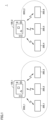
- Fig. 1 shows an exemplary communication state in an infrastructure mode defined under the IEEE 802.11 standards.
- one communication device operates as an access point (AP; which is simply also abbreviated as an "AP” below) and one communication device or a plurality of communication devices is/are connected to the AP.
- One communication device or a plurality of communication devices connected to the AP operate(s) as station(s) (STA; which is/are also simply abbreviated as an "STA(s)” below).
- STA station(s)
- An operation as the AP can also be regarded as meaning a "parent” and an operation as the STA can also be regarded as meaning a "child”.
- communication device 100 means a communication device operable at least as an AP and peripheral device 200 means a communication device operable at least as an STA.
- Communication device 100 and peripheral device 200 may be identical to each other in configuration. In this case, communication device 100 and peripheral device 200 operate as APs and/or STAs depending on a situation.
- one AP and one STA or a plurality of STAs configure a wireless network.
- the wireless network in which the AP plays a dominant role is referred to as a basic service set (BSS) and a basic service set identifier (BSSID) is used as an identifier that uniquely specifies each wireless network (BSS).
- BSSID basic service set identifier
- MAC media access control
- communication devices 100_1 and 100_2 operate as the APs.
- the BSSID of the wireless network in which communication device 100_1 plays a dominant role is assumed as "BSS_1” and the BSSID of the wireless network in which communication device 100_2 plays a dominant role is assumed as "BSS_2".
- BSS_1 The BSSID of the wireless network in which communication device 100_1 plays a dominant role
- BSS_2 the BSSID of the wireless network in which communication device 100_2 plays a dominant role
- a value of "BSS_1” is identical to the MAC address of communication device 100_1
- a value of "BSS_2" is identical to the MAC address of communication device 100_2.
- Peripheral devices 200_1 to 200_3 are connected as the STAs to BSS_1, and peripheral devices 200_4 to 200_6 are connected as the STAs to BSS_2.
- Communication device 100_1 that operates as the AP thus configures the wireless network together with one peripheral device 200 or a plurality of peripheral devices 200 by using the BSSID that is identical to the MAC address of communication device 100_1.
- communication device 100_2 that operates as the AP configures the wireless network together with one peripheral device 200 or the plurality of peripheral devices 200 by using the BSSID that is identical to the MAC address of communication device 100_2.
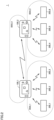
- another wireless network can virtually be configured while the wireless network as shown in Fig. 1 is maintained.
- a wireless network with another BSSID can be configured between communication device 100_1 that operates as the AP in BSS_1 and communication device 100_2 that operates as the AP in BSS_2.
- any one of communication devices 100_1 and 100_2 may operate as the AP of BSS_3 and the other may operate as the STA of BSS_3, or the AP and the STA do not have to strictly be distinguished from each other.
- a wireless network with yet another different BSSID can also be configured among communication device 100_1 that operates as the AP in BSS_1 and peripheral device 200_3 that operates as the STA in BSS_1 and peripheral device 200_4 that operates as the STA in BSS_2.
- BSS_4 yet another different BSSID
- an arbitrary communication device can configure another wireless network or can participate in another wireless network while it maintains an arbitrary wireless network.
- Any communication device may be applicable as communication device 100 included in communication system 1 according to the present embodiment.
- a game device with a wireless communication function can be provided.
- a portable (or mobile) or stationary game device may be applicable.
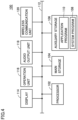
- Communication device 100 represents an exemplary computer, and includes a processor 102, a main storage 104, an auxiliary storage 106, a display 114, an operation unit 116, an audio output unit 118, and a wireless communication unit 120. These components are connected to communicate data with one another through a bus 112.
- Processor 102 is a processing entity (processing means) that performs processing provided by communication device 100.
- Processor 102 reads a system program 108 and an application program 110 stored in auxiliary storage 106, develops the program on main storage 104, and performs various types of information processing as will be described later.
- System program 108 includes an instruction code for implementing each type of processing as will be described later.
- system program 108 includes a communication program according to the present embodiment.
- Main storage 104 is an arbitrary storage device (storage medium) that can be accessed by processor 102, and implemented, for example, by a volatile storage device such as a dynamic random access memory (DRAM).
- DRAM dynamic random access memory
- Auxiliary storage 106 is implemented, for example, by a non-volatile storage medium such as a hard disk or a flash memory.
- auxiliary storage 106 may be implemented, for example, by a storage medium attachable to and removable from communication device 100 such as an optical disc and a cartridge.
- communication device 100 and an arbitrary storage medium may implement a communication device.
- Display 114 shows an image generated as a result of information processing performed by processor 102. An image received from another device may also be shown on display 114. A plurality of displays 114 may be provided. Alternatively, communication device 100 may be configured to use a single external display or a plurality of external displays.
- Operation unit 116 mainly accepts an operation from a user of communication device 100.
- Operation unit 116 is implemented, for example, by a push button, a control lever, a touch panel, a mouse, and the like.
- Operation unit 116 may be a game controller that is separate from communication device 100 and connected through a wire or wirelessly.
- Wireless communication unit 120 transmits and receives data to and from another device through a wireless signal.
- Wireless communication unit 120 supports a wireless LAN, for example, in conformity with the IEEE 802.11 standards.
- wireless communication unit 120 may support a communication scheme such as Bluetooth ® , ZigBee ® , or infrared communication.
- Fig. 4 collectively shows a block of wireless communication unit 120, a plurality of wireless communication units 120 independent of one another may be implemented. Alternatively, wireless communication unit 120 may be integrated with processor 102.
- Fig. 4 shows communication device 100 as an integrated device
- the communication device may be implemented as an assembly of a plurality of devices.
- communication device 100 may be implemented by combination of a plurality of independent devices.
- a configuration in which a main body including hardware corresponding to processor 102, main storage 104, and auxiliary storage 106 and a terminal including hardware corresponding to display 114, operation unit 116, and audio output unit 118 are separate from each other may be adopted.
- Such a configuration may be referred to as a communication system, rather than communication device 100.
- At least a part of information processing performed in communication device 100 may be performed discretely by another device or a plurality of other devices arranged as being distributed over a network (a wide area network and/or a local network).
- peripheral device 200 can be a general-purpose information processing apparatus such as a laptop personal computer, a desktop personal computer, a portable telephone, a smartphone, and a tablet.
- peripheral device 200 may be a peripheral (for example, a game controller or a speaker) connected to a game device. Since such a device itself has been known, detailed description thereof will not be given.
- communication device 100 and peripheral device 200 are distinguished from each other for the sake of convenience of description and communication device 100 and peripheral device 200 may be identical to each other in hardware configuration. Typically, all of communication devices 100 and peripheral devices 200 may be game devices.
- Processing in communication device 100 and/or peripheral device 200 may be performed by execution of a program by the processor, or a part or the entirety thereof may be implemented by hard-wired circuitry such as a system on chip (SoC), an application specific integrated circuit (ASIC), or a field programmable gate array (FPGA).
- SoC system on chip
- ASIC application specific integrated circuit
- FPGA field programmable gate array
- a part or the entirety of the hard-wired circuitry may be implemented in wireless communication unit 120.
- a BSSID and a virtual BSSID in connection with wireless communication in communication system 1 according to the present embodiment will now be described.
- a frame format 20 includes a physical layer convergence protocol (PLCP) preamble 22, a PLCP header 24, an IEEE 802.11 header 26, a data field 28, and an FCS field 30.
- PLCP physical layer convergence protocol
- PLCP preamble 22 and PLCP header 24 include information on transmission through the physical layer.
- PLCP preamble 22 is provided at the top of frame format 20 and includes a bit string indicating a synchronous signal.
- PLCP header 24 includes information on a modulation scheme and a data length.
- IEEE 802.11 header 26 includes information on transmission through the data link layer. More specifically, IEEE 802.11 header 26 includes a frame control field 261, a Duration/ID field 262, a destination MAC address field 263, a sender MAC address field 264, a BSSID field 265, and a sequence control field 266.
- Frame control field 261 includes information on a type of a frame, a destination of a frame, a frame sender medium (any of a wireless medium or a wired medium), fragment information, power management information, and whether or not to use wired equivalent privacy (WEP).
- a frame sender medium any of a wireless medium or a wired medium
- fragment information fragment information
- power management information power management information
- WEP wired equivalent privacy
- Duration/ID field 262 includes information on a period necessary for frame transmission.
- Destination MAC address field 263 includes a MAC address of a communication device designated as a destination.
- Sender MAC address field 264 includes a MAC address of a communication device designated as a sender.
- BSSID field 265 includes a value of a BSSID of a wireless network to which communication devices designated as the sender and the destination belong.
- Sequence control field 266 includes information for reconfiguring a plurality of frames.
- a data main body to be transmitted is stored in data field 28.
- FCS field 30 includes a frame check sequence (FCS) which is a check bit string for detecting an error that occurs during transmission.
- FCS frame check sequence
- frame transmission between communication devices is controlled based on information included in IEEE 802.11 header 26. More specifically, a communication device that receives and processes a frame from a sender communication device is determined by combination of a destination MAC address (a value designated in destination MAC address field 263 in Fig. 5 ) that specifies a transmission destination and a BSSID (a value designated in BSSID field 265 in Fig. 5 ). In other words, the communication device that has received a frame from any communication device determines whether or not the frame is directed to the communication device itself based on contents in IEEE 802.11 header 26 included in the received frame. When the communication device determines the frame as being directed to the communication device itself, it analyzes contents in the received frame and performs necessary processing. When the communication device determines the frame as not being directed to the communication device itself, it discards the received frame without analyzing contents therein.
- a destination MAC address a value designated in destination MAC address field 263 in Fig. 5
- BSSID a value designated in BSSID field 265
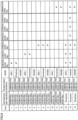
- FIG. 6 shows an example in which communication device 100_1 transmits a frame when two wireless networks shown in Fig. 1 are present.
- the check mark in Fig. 6 means analysis and processing of contents in the received frame. It is assumed that communication devices 100_1 and 100_2 and peripheral devices 200_1 to 200_6 are present at positions proximate to one another and each communication device is able to receive a frame from other communication devices.
- peripheral device 200_1 In Case 1 in Fig. 6 , the MAC address of peripheral device 200_1 is designated as the destination MAC address and BSS_1 is designated as the BSSID. In this case, only peripheral device 200_1 analyzes and processes contents in a frame from communication device 100_1.
- a broadcast address (FF:FF:FF:FF:FF:FF) that means “all” instead of a specific value can also be designated (shown as "Broadcast” in Fig. 6 ).
- peripheral device 200_1 In Case 2 in Fig. 6 , the MAC address of peripheral device 200_1 is designated as the destination MAC address and a broadcast address is designated as the BSSID. In this case as well, only peripheral device 200_1 analyzes and processes contents in a frame from communication device 100_1.
- peripheral device 200_2 the MAC address of peripheral device 200_2 is designated as the destination MAC address, and only peripheral device 200_2 analyzes and processes contents in a frame from communication device 100_1.
- peripheral device 200_3 In Case 5 and Case 6 in Fig. 6 , the MAC address of peripheral device 200_3 is designated as the destination MAC address, and only peripheral device 200_3 analyzes and processes contents in a frame from communication device 100_1.
- the MAC address of communication device 100_2 is designated as the destination MAC address, and BSS_1 is designated as the BSSID.
- BSS_1 which is the value of the designated BSSID does not match with "BSS_2” which is a value of the BSSID of the wireless network to which the communication device itself belongs. Therefore, communication device 100_2 discards the received frame.
- the MAC address of communication device 100_2 is designated as the destination MAC address and the broadcast address is designated as the BSSID.
- communication device 100_2 determines that the MAC address of the communication device itself is designated in the received frame, and the broadcast address is designated as the BSSID. Therefore, communication device 100_2 analyzes and processes contents in the frame from communication device 100_1.
- a frame can be transmitted from communication device 100_1 belonging to BSS_1 to communication device 100_2 belonging to BSS_2 which is a different wireless network. Since it is not easy to obtain a MAC address of a communication device belonging to a wireless network different in BSSID, generation of a frame as shown in Case 8 in Fig. 6 is not realistic. Such a frame is not suitable for such an application as transmitting identical data to a plurality of destinations. In other words, frames as many as destinations should be generated and transmitted, and load imposed on a transmission-side communication device 100 may become heavy.
- Case 9 in Fig. 6 the broadcast address is designated as the destination MAC address, and BSS_1 is designated as the BSSID.
- all communication devices peripheral devices 200_1 to 200_3 belonging to BSS_1 analyze and process contents in a frame from communication device 100_1.
- Case 9 in Fig. 6 is effective in transmission of a frame at once to STAs belonging to an identical wireless network.
- a frame cannot be transmitted from communication device 100_1 to communication device 100_2 and peripheral devices 200_4 to 200_6 belonging to BSS_2 which is another wireless network. Then, as a method of transmitting a frame to communication device 100 and/or peripheral device 200 belonging to another BSS, a broadcast address can be designated as both of the destination MAC address and the BSSID as shown in Case 10 in Fig. 6 . In this case, regardless of the BSS, all communication devices (communication device 100_2 and peripheral devices 200_1 to 200_6) that can receive a frame from communication device 100_1 analyze and process contents in the frame from communication device 100_1.
- a method of exchanging data through a router between communication devices 100 that operate as the APs in the Internet protocol (IP) layer higher than the wireless network is also possible.
- IP Internet protocol
- the number of transfer hops may increase and efficiency in transmission of data and a data transmission rate may lower.
- communication system 1 provides a communication method and the like allowing, even though there are a plurality of wireless networks (BSSs) configured in the infrastructure mode, efficient and flexible exchange of data across the plurality of BSSs.
- BSSs wireless networks
- a new scheme allowing designation of an arbitrary BSSID (though a MAC address of a communication device that operates as the AP is generally used, limitation thereto is not intended) separate from a BSSID used under the IEEE 802.11 standards is introduced.
- a BSSID having an arbitrary value different from a BSSID used under the IEEE 802.11 standards is also referred to as a "virtual BSSID" or a "VBSSID”.
- the virtual BSSID is an exemplary identification value for virtually configuring a BSS.
- An arbitrary value that does not overlap or collide with an arbitrary MAC address and a broadcast address can be used as the virtual BSSID.
- a value completely different from all possible MAC addresses does not have to be selected as the virtual BSSID, and overlapping or collision with a MAC address should only realistically be avoided.
- a wireless network configured by using a virtual BSSID is also referred to as a "virtual BSS.”
- “BSS_3" shown in Fig. 2 described above and “BSS_4" shown in Fig. 3 are exemplary virtual BSSs configured by using the virtual BSSID.
- Fig. 7 shows an example in which a specific communication device in communication system 1 shown in Fig. 1 has a virtual BSSID 50.
- communication device 100_1 and communication device 100_2 that operate as the APs and peripheral device 200_3 that operates as the STA are assumed as being in common in virtual BSSID 50.
- Communication device 100_1, communication device 100_2, and peripheral device 200_3 process a frame including virtual BSSID 50 in IEEE 802.11 header 26, regarding the frame as being directed to the virtual wireless network to which these devices belong.
- FIG. 8 shows an example in which communication device 100_1 transmits a frame in communication system 1 shown in Fig. 7 .
- the check mark in Fig. 8 means analysis and processing of contents in the frame from communication device 100_1 as in Fig. 6 . It is assumed that communication devices 100_1 and 100_2 and peripheral devices 200_1 to 200_6 are present at positions proximate to one another and each communication device is able to receive a frame from other communication devices.
- peripheral device 200_1 does not have virtual BSSID 50. Therefore, peripheral device 200_1 determines the frame as not being directed thereto and discards the received frame without analyzing contents therein.
- peripheral device 200_2 does not have virtual BSSID 50. Therefore, peripheral device 200_2 determines the frame as not being directed thereto and discards the received frame without analyzing contents therein.
- peripheral device 200_3 has virtual BSSID 50. Therefore, peripheral device 200_3 determines the frame as being directed thereto and analyzes and processes contents in the frame from communication device 100_1.
- communication device 100_2 has virtual BSSID 50. Therefore, communication device 100_2 determines the frame as being directed thereto and analyzes and processes contents in the frame from communication device 100_1.
- peripheral device 200_3 and communication device 100_2 having virtual BSSID 50 analyze and process contents in the frame from communication device 100_1.
- peripheral device 200_3 having virtual BSSID 50 performs reception processing of a frame in which virtual BSSID 50 has been designated as the BSSID, as a valid frame, in addition to the frame in which the BSSID (the MAC address of communication device 100_1) of the BSS to which the peripheral device belongs has been designated as the BSSID.
- communication device 100_2 having virtual BSSID 50 performs reception processing of a frame in which virtual BSSID 50 has been designated as the BSSID, as a valid frame, in addition to the frame in which the BSSID (the MAC address of communication device 100_2) of the BSS to which the communication device belongs has been designated as the BSSID.
- Performing reception processing of ... as a valid frame herein means not discarding a frame based on the designated BSSID.
- contents in the frame may be analyzed.
- each communication device can not only belong to one specific virtual BSS but also simultaneously belong to a plurality of virtual BSSs. In this case, each communication device has virtual BSSIDs as many as virtual BSSs to which it belongs.
- the virtual BSS is configured independently of the BSS, it may be configured across a plurality of BSSs or only some of communication devices belonging to a single BSS may configure a virtual BSS. Furthermore, a communication device belonging to no BSS can belong to a virtual BSS.
- the substance of a virtual BSS in communication system 1 may not be present.
- a procedure of connection between an AP and an STA as in the BSS in conformity with the IEEE 802.11 standards is not required in the virtual BSS.
- At least recognition by a communication device belonging to any virtual BSS that it belongs to that virtual BSS will suffice.
- recognition by a communication device that will belong to any virtual BSS, of that virtual BSS to which it will belong will suffice.
- each communication device should only be able to specify a virtual BSSID that specifies a virtual BSS to which the communication device belongs. Any method can be adopted as a scheme for allowing a communication device to specify a virtual BSSID.
- one virtual BSSID or a plurality of virtual BSSIDs can be included in an application program or a system program executed in a communication device or in data held in the communication device.
- the AP manages a configuration, change, or release of the BSS.
- management by the AP is not required. Consequently, in the virtual BSS, a management function as in the AP is not necessarily required, and a clear difference in role between the AP and the STA is not necessarily required either.
- distribution of advertisement information with a beacon or the like is not necessarily required either, and hence the virtual BSS can also be configured only with a communication device that operates as the STA.
- Any value that does not overlap or collide with a BSSID (that is, a MAC address of a communication device that operates as the AP) under the IEEE 802.11 standards may be employed as a virtual BSSID to be used in communication system 1 according to the present embodiment.
- the virtual BSSID may be stored in advance in communication devices that configure the virtual BSS or may be generated with an arbitrary method. For example, a method below is possible.
- a MAC address of a communication device held by a developer of an application program executed in a communication device can be used as a virtual BSSID.
- a MAC address guaranteed not to be distributed in markets may be used as the virtual BSSID.
- a virtual BSSID can be generated from a MAC address of an arbitrary communication device which will belong to a virtual BSS.
- a MAC address of a communication device that operates as the STA would not be used as the BSSID, and therefore it can be used as it is as the virtual BSSID.
- a virtual BSSID may be generated from a MAC address of a communication device that operates as the AP, by changing a value of a specific bit in the MAC address of the communication device. For example, by setting a local bit included in the MAC address to "1" (which is normally set to "0"), the MAC address can be used as the virtual BSSID.
- the local bit corresponds to a GL bit included in a top octet of the MAC address.
- a virtual BSSID can be generated by using a hash calculated from a user identifier, an application identifier, or a password.
- Fig. 9 shows a main part of wireless communication unit 120 of communication device 100. Similar implementation can be adopted also in peripheral device 200.
- wireless communication unit 120 includes a transmission circuit 1201, a reception circuit 1202, a transmission and reception control unit 1203, a transmission and reception buffer 1204, a frame filter 1205, and an analysis processing unit 1206.
- Transmission circuit 1201 generates and transmits a wireless signal involved with data transmission in response to an instruction from transmission and reception control unit 1203.
- Reception circuit 1202 receives and decodes a wireless signal involved with data transmission in response to an instruction from transmission and reception control unit 1203.
- Transmission and reception control unit 1203 controls transmission and reception of a wireless signal to and from transmission circuit 1201 and reception circuit 1202.
- Transmission and reception buffer 1204 temporarily stores data (frame) received via transmission and reception control unit 1203 and data (frame) transmitted via transmission and reception control unit 1203.
- Frame filter 1205 refers to contents in IEEE 802.11 header 26 of a received frame stored in transmission and reception buffer 1204 and provides only a frame that satisfies a condition to analysis processing unit 1206. More specifically, (1) when a value designated in destination MAC address field 263 in IEEE 802.11 header 26 matches with the MAC address of the communication device or with the broadcast address and (2) when a value designated in BSSID field 265 in IEEE 802.11 header 26 matches with any value registered in a processing target list 1210, frame filter 1205 finds that frame as a frame to be processed and provides the frame to analysis processing unit 1206.
- Analysis processing unit 1206 analyzes contents in the received frame and provides a result of analysis to an application.
- Processing target list 1210 set in frame filter 1205 is implemented as a kind of a white list.
- a MAC address for specifying a frame contents in which are to be analyzed is defined.
- a frame in which a broadcast address has been designated as the BSSID should constantly be processed. Therefore, a broadcast address 1211 is always registered in processing target list 1210.
- a BSSID 1212 for identifying the BSS is registered in processing target list 1210.
- a communication device that operates as the AP would register in processing target list 1210, as BSSID 1212, a MAC address of the communication device itself.
- a communication device that operates as the STA would register in processing target list 1210, as BSSID 1212, a MAC address of an AP to which it is connected.
- the communication device registers a virtual BSSID value 1213 in processing target list 1210. Timing of registration of virtual BSSID value 1213 in processing target list 1210 may be determined as appropriate depending on an application.
- FIG. 9 shows an example in which only a single virtual BSSID value 1213 is registered in processing target list 1210, a plurality of virtual BSSID values 1213 can also be registered in processing target list 1210. Some or all of virtual BSSID values 1213 may dynamically be added or deleted. Specific virtual BSSID value 1213 may always be registered, similarly to broadcast address 1211.
- a communication device can also be regarded as belonging to the virtual BSS specified by registered virtual BSSID value 1213.
- Each component of wireless communication unit 120 shown in Fig. 9 may be implemented by hardware and/or software included in wireless communication unit 120 or some of components may be implemented by execution of software by processor 102. For example, they may be implemented by firmware executed by wireless communication unit 120 or by a wireless driver executed by processor 102.
- Fig. 10 shows an exemplary operation in one aspect, by communication system 1 according to the present embodiment.
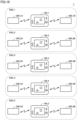
- Fig. 10 shows an example in which each communication device 100 configures a BSS together with two peripheral devices 200. More specifically, communication device 100_1 configures a BSS having the BSSID "BSS_1" together with peripheral devices 200_1A and 200_1B. This is also applicable to each of communication devices 100_2 to 100_5.
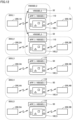
- Fig. 11 shows an exemplary virtual BSS configured among communication devices 100 included in communication system 1 shown in Fig. 10 .
- each of communication devices 100_1 to 100_5 is assumed to be able to use identical application program 110.
- Application program 110 includes virtual BSSID 50 for configuring a virtual BSS in addition to an execution code.
- virtual BSSID 50 may be included in application program 110.
- Communication devices 100 that execute identical application program 110 can thus substantially share virtual BSSID 50 included in application program 110.
- the virtual BSS can thus be configured by using virtual BSSID 50 included in application program 110.
- a value that will not collide with a MAC address of another communication device is set for virtual BSSID 50.
- a frame in which virtual BSSID 50 included in application program 110 has been designated is discarded without analysis of contents therein in a communication device other than the communication device that executes application program 110. Therefore, influence on a communication device that executes another application program and a communication device other than the former that is present nearby can be lessened.
- VBSSID_1 in addition to information (for example, a user name or an icon) for selection by a user, of a player to play a game together, a new virtual BSSID is exchanged.
- a player against which the game is played is determined by an operation by the user, use of the virtual BSS with the new virtual BSSID is started between communication devices operated by the determined users.
- Fig. 12 shows exemplary processing for exchanging a new virtual BSSID in communication system 1 shown in Fig. 11 .
- Fig. 12 shows exemplary processing in an example in which communication device 100_1 and communication device 100_2 configure a new virtual BSS.
- communication device 100_1 generates a new virtual BSSID (which is also referred to as an "individual virtual BSSID 52" below for distinction from virtual BSSID 50) and exchanges generated individual virtual BSSID 52 with communication device 100_2.
- Individual virtual BSSID 52 can thus be shared between communication device 100_1 and communication device 100_2, and consequently, a virtual BSS identified as "VBSSID_2" indicated by individual virtual BSSID 52 between communication device 100_1 and communication device 100_2 is configured.
- virtual BSSID 50 and individual virtual BSSID 52 are set to a value different from at least any of the MAC addresses of communication devices 100_1 to 100_5 and the broadcast address (FF:FF:FF:FF:FF).
- a plurality of individual virtual BSSIDs 52 may be prepared so long as they have values different from one another.
- the individual virtual BSSID may be generated each time for each user group that plays a game.
- different individual virtual BSSID 52 may be allocated for each pair of communication devices 100.
- Figs. 13A to 13D show an exemplary user interface provided in communication system 1 according to the present embodiment.
- Figs. 13A to 13D show an example in which communication device 100_1 takes the lead to invite a user who will play together. More specifically, Figs. 13A and 13C show exemplary contents of representation on display 114 of communication device 100_1 and Figs. 13B and 13D show exemplary contents of representation on display 114 of communication device 100_2.
- communication device 100_1 in response to an explicit or implicit instruction from a user, communication device 100_1 provides a message 180 "Do you invite participant in match game?" In response to selection of "YES" by a user, communication device 100_1 transmits an invitation notification in a frame in which virtual BSSID 50 included in application program 110 that provides the game has been designated. By designating virtual BSSID 50, the virtual BSS using virtual BSSID 50 as shown in Fig. 11 is configured. At this time, communication device 100_1 newly generates individual virtual BSSID 52 for a game to which a participant is invited and includes the individual virtual BSSID in the invitation notification.
- communication device 100_1 In the virtual BSS using virtual BSSID 50, necessary information is exchanged between communication device 100_1 and another communication device. By obtaining such information exchange, communication device 100_2 provides a message 182 "User A is inviting participant in match game. Do you participate?" as shown in Fig. 13B . In response to selection of "YES" by a user, a participation request indicating a user's intention of participation is transmitted from communication device 100_2 to communication device 100_1.
- communication device 100_1 provides a message 184 "User B desires participation in match game. Do you approve?" as shown in Fig. 13C .
- communication device 100_1 transmits an approval notification to the effect that it approves participation to communication device 100_2.
- communication device 100_2 provides a message 186 "User A approved your participation in match game. Match game is started.” as shown in Fig. 13D .
- communication device 100_1 and communication device 100_2 start exchange of data involved with the game in the virtual BSS using individual virtual BSSID 52.
- an unidentified number of users can be invited to participate.
- exchange of data can substantially be restricted to exchange only with the communication device of that user, and hence influence on a communication device present nearby other than the communication device can be lessened.
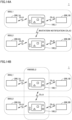
- Figs. 14A and 14B show exemplary handling of a communication channel in the communication system according to the present embodiment.
- a communication channel Ch_A used in BSS_1 configured by communication device 100_1 with peripheral devices 200_1A and 200_1B is not necessarily identical to a communication channel Ch_B used in BSS_2 configured by communication device 100_2 with peripheral devices 200_2A and 200_2B.
- communication device 100_1 may transmit an invitation notification through a communication channel (communication channel Ch_A in the example in Figs. 14A and 14B ) the same as the communication channel that it has been using for communication in the BSS.
- a communication channel communication channel Ch_A in the example in Figs. 14A and 14B
- the invitation notification can be transmitted while communication over BSS_1 is stable.
- Communication device 100_2 sequentially changes the communication channel and searches for the invitation notification. In other words, communication device 100_2 tries to receive the invitation notification by changing the communication channel as appropriate in fixed or random cycles. In the example in Figs. 14A and 14B , communication device 100_2 receives the invitation notification through communication channel Ch_A.
- communication channel Ch_A used for transmission of the invitation notification may be used as it is.
- the communication channel used for communication over existing BSS_2 is different from the communication channel used for communication over the virtual BSS (VBSSID_2)
- the communication channel used for communication over existing BSS_2 is changed to match with the communication channel used for communication over the virtual BSS.
- communication device 100_2 communicates over existing BSS_2 through the communication channel used for transmission of the invitation notification.
- communication device 100_2 changes the communication channel to be used for communication over BSS_2 from communication channel Ch_B to communication channel Ch_A (see Fig. 14B ).
- communication channel can be stable in any newly configured virtual BSS (VBSSID_2) in addition to existing BSS_1 and BSS_2.
- the identical communication channel is used in all of communication over BSS_1 by communication device 100_1, communication over BSS_2 by communication device 100_2, and communication between communication device 100_1 and communication device 100_2 (virtual BSS).
- the communication channel for transmission of an invitation notification may be selected with any method.
- an invitation notification may be transmitted through a predetermined fixed communication channel, or a degree of congestion of communication at the time point of transmission may be measured and a communication channel may be selected based on a result of measurement.
- all communication devices 100 may cyclically sequentially change the communication channel to transmit and/or receive the invitation notification.
- a virtual BSS is configured in addition to the existing BSS by using the invitation notification, as shown in Fig. 14B
- the existing BSS and the virtual BSS are once configured to use an identical communication channel as shown in Fig. 14B , and then switching to another communication channel at once may be made. For example, a degree of congestion of communication at a time point after configuration of the existing BSS and the virtual BSS may be measured, and a new communication channel may be selected based on a result of measurement. A communication channel different from the communication channel used for transmission of the invitation notification may thus be used to establish subsequent communication.
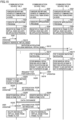
- Fig. 15 shows a sequence diagram for performing communication processing shown in Figs. 10 to 12 .
- Fig. 15 shows a processing procedure in configuring a virtual BSS arising from communication device 100_1 by way of example. Processing performed by each communication device 100 shown in Fig. 15 is typically performed by execution of system program 108 (see Fig. 4 and the like) by processor 102 of each communication device 100 and processing provided by wireless communication unit 120.
- communication device 100_1 configures a BSS together with peripheral devices 200_1A and 200_1B, by using the MAC address of communication device 100_1 as the BSSID (sequence SQ2).
- Communication device 100_1 thus uses the BSSID thereof to configure a wireless network with another peripheral device 200 or a plurality of other peripheral devices 200.
- Communication device 100_2 and communication device 100_3 also configure similar wireless networks (sequence SQ2). Specifically, each of communication device 100_2 and communication device 100_3 uses the BSSID thereof to configure a wireless network with another peripheral device 200 or a plurality of other peripheral devices 200.
- Communication device 100_1 executes application program 110 (sequence SQ4). Then, communication device 100_1 registers virtual BSSID 50 included in application program 110 in frame filter 1205 (see Fig. 9 ) of wireless communication unit 120 (sequence SQ6). Communication device 100_1 is thus configured to perform reception processing of a frame in which virtual BSSID 50 has been designated as the BSSID, as a valid frame, in addition to the frame in which the BSSID (the MAC address of communication device 100_1) of the BSS to which the communication device belongs has been designated as the BSSID.
- the reception processing is similarly configured also in communication device 100_2 and communication device 100_3 (sequences SQ4 and SQ6).
- communication device 100_2 and communication device 100_3 are each configured to perform reception processing of a frame in which virtual BSSID 50 has been designated as the BSSID, as a valid frame, in addition to the frame in which the BSSID of the BSS to which the communication device itself belongs has been designated.
- communication device 100_1 receives an operation by a user for game participation invitation (sequence SQ8) (see Fig. 13A and the like), it generates individual virtual BSSID 52 for that game (sequence SQ10).
- Individual virtual BSSID 52 may be generated, for example, by setting a local bit included in the MAC address of communication device 100_1 to "1".
- communication device 100_1 transmits an invitation notification including individual virtual BSSID 52 (sequence SQ12).
- the invitation notification is transmitted over the virtual BSS configured with virtual BSSID 50 included in application program 110.
- communication device 100_1 transmits a frame in which virtual BSSID 50 has been designated as the BSSID.
- communication device 100_1 transmits individual virtual BSSID 52 in the frame for the invitation notification.
- the broadcast address is designated as the destination MAC address
- virtual BSSID 50 is designated as the BSSID (see Case 15 in Fig. 8 ).
- a message indicating the invitation notification and individual virtual BSSID 52 are stored in data field 28 (see Fig. 5 ) in the frame.
- communication device 100_1 transmits the invitation notification through a communication channel the same as the channel used for communication over the BSS thereby.
- Transmission of the invitation notification by communication device 100_1 may be repeated in fixed or random cycles (*1). Though the communication channel is basically fixed to an initially selected communication channel, the communication channel may be changed as appropriate.
- Communication device 100_2 tries to receive the invitation notification (sequence SQ14). Reception of the invitation notification may be tried with the communication channel being changed as appropriate in fixed or random cycles. Since communication device 100_1 transmits the invitation notification through the communication channel used in the BSS configured with communication device 100_1, communication device 100_2 searches for the invitation notification by sequentially changing the communication channel. When communication device 100_2 receives the frame of the invitation notification, it stores individual virtual BSSID 52 included in the frame of the invitation notification, and presents to the user, whether or not to participate in the game to which it has been invited by communication device 100_1 (sequence SQ16).
- Processing similar to processing in communication device 100_2 is performed also in communication device 100_3.
- communication device 100_2 When communication device 100_2 receives an operation by a user who desires participation in the game (sequence SQ18) (see Fig. 13B or the like), it transmits a participation request to communication device 100_1 (sequence SQ20). The participation request is also transmitted over the virtual BSS configured using virtual BSSID 50 included in application program 110.
- Individual virtual BSSID 52 included in the frame of the invitation notification may be stored on condition that an operation by a user who desires to participate in the game is received.
- communication device 100_1 When communication device 100_1 receives the participation request from communication device 100_2, it presents whether or not to permit participation in the game to the user (sequence SQ22). When communication device 100_1 receives the operation by the user to approve participation in the game (sequence SQ24) (see Fig. 13C or the like), it transmits an approval notification to communication device 100_2 (sequence SQ26). The approval notification is also transmitted over the virtual BSS configured using virtual BSSID 50 included in application program 110.
- communication device 100_1 and communication device 100_2 each register individual virtual BSSID 52 in frame filter 1205 (see Fig. 9 ) of wireless communication unit 120 (sequence SQ28).
- communication device 100_2 may change the communication channel used in the BSS configured by communication device 100_2 to the communication channel to be used in the virtual BSS.
- communication device 100_1 and communication device 100_2 start exchange of data involved with the game by using the virtual BSS configured using individual virtual BSSID 52 (sequence SQ30).
- Communication device 100_1 and communication device 100_2 transmit and receive frames involved with exchange of data through the communication channel where the frame of the invitation notification was transmitted.
- the MAC address of communication device 100_1 (in an example of a frame directed to communication device 100_1) or the MAC address of communication device 100_2 (in an example of a frame directed to communication device 100_2) is designated as the destination MAC address, and individual virtual BSSID 52 is designated as the BSSID (see Case 9 and Case 12 in Fig. 8 ).
- Data involved with the game is stored in data field 28 (see Fig. 5 ) of the frame.
- communication device 100_2 stores individual virtual BSSID 52, and thereafter communication device 100_1 and communication device 100_2 exchange data involved with the game in a frame in which individual virtual BSSID 52 has been designated as the BSSID.
- communication device 100_1 receives an operation by the user for quitting the game (sequence SQ32), it transmits a disconnection notification to communication device 100_2 (sequence SQ34). Then, communication device 100_1 and communication device 100_2 each delete individual virtual BSSID 52 from frame filter 1205 (see Fig. 9 ) of wireless communication unit 120 (sequence SQ36). The virtual BSS configured with individual virtual BSSID 52 is thus substantially released.
- a single communication device 100 transmits an invitation notification may also transmit invitation notifications.
- the user may select in which he/she desires to participate.
- arbitrary communication device 100 when arbitrary communication device 100 receives a plurality of invitation notifications, it sequentially stores the virtual BSSID and the channel included in the received invitation notification in correspondence with each other. Communication device 100 may also store in association, attribute information (for example, a name of a user who has transmitted the invitation notification) relating to the received invitation notification.
- attribute information for example, a name of a user who has transmitted the invitation notification
- communication device 100 can provide an invitation notification list representation 188 as shown in Fig. 16B .
- invitation notification list representation 188 shows invitation notifications from other communication devices 100 that are present nearby.
- communication device 100 starts exchange of data over the virtual BSS with communication device 100 corresponding to the selected invitation notification.
- communication device 100 that transmits the invitation notification uses only a specific communication channel is shown in the processing procedure shown in Fig. 15 .
- communication device 100 may cyclically sequentially change the communication channel to transmit the invitation notification.
- communication device 100 that receives the invitation notification may search for the invitation notification by fixing the communication channel to a specific communication channel or by randomly sequentially changing the communication channel.
- an invitation notification, a participation request, and an approval notification are exchanged over the virtual BSS configured using virtual BSSID 50 included in application program 110, and data involved with a game is exchanged among communication devices 100 matched in a series of exchanges over the virtual BSS configured using individual virtual BSSID 52 different from virtual BSSID 50 included in application program 110.
- data involved with a game is exchanged among communication devices 100 matched in a series of exchanges over the virtual BSS configured using individual virtual BSSID 52 different from virtual BSSID 50 included in application program 110.
- a main functional configuration implemented in communication device 100 included in communication system 1 according to the present embodiment will now be described.
- Fig. 17 shows an exemplary functional configuration implemented in communication device 100 included in communication system 1 according to the present embodiment.
- Each functional module shown in Fig. 17 is typically implemented by execution of system program 108 (see Fig. 4 and the like) by processor 102 of each communication device 100 and processing provided by wireless communication unit 120.
- communication device 100 includes a network management module 1020, an application execution module 1025, a data reconfiguration module 1026, and a frame generation module 1027.
- Network management module 1020 is responsible for processing for configuration of a wireless network by communication device 100 with peripheral device 200 and/or another communication device 100 in response to an operation by a user and/or a request from application execution module 1025. More specifically, network management module 1020 includes a BSS configuration module 1021, a virtual BSS management module 1022, an individual virtual BSSID generation module 1023, and an individual virtual BSSID storage module 1024.
- BSS configuration module 1021 determines as which of the AP and the STA communication device 100 operates in the infrastructure mode and performs a processing sequence necessary for configuring the BSS. Typically, BSS configuration module 1021 configures the BSS which is the wireless network with another peripheral device 200 or a plurality of other peripheral devices 200 by using the MAC address of the communication device itself as the BSSID. BSS configuration module 1021 registers in frame filter 1205 of wireless communication unit 120, the BSSID for specifying the BSS configured with communication device 100.
- Virtual BSS management module 1022 manages the configuration of the virtual BSS using the virtual BSSID shared or exchanged with another communication device 100.
- virtual BSS management module 1022 has virtual BSSID 50 in common to another communication device 100 or a plurality of other communication devices 100 stored.
- Virtual BSS management module 1022 registers or deletes virtual BSSID 50 and/or individual virtual BSSID 52 in or from frame filter 1205 of wireless communication unit 120. By registering virtual BSSID 50 in frame filter 1205, reception processing of a frame in which virtual BSSID 50 has been designated as the BSSID, as a valid frame, in addition to a frame in which the BSSID of the BSS to which the communication device itself belongs has been designated as the BSSID, is performed.
- Individual virtual BSSID generation module 1023 generates individual virtual BSSID 52 as necessary.
- Individual virtual BSSID storage module 1024 stores individual virtual BSSID 52 obtained from another communication device 100.
- Application execution module 1025 is an engine that executes application program 110.
- Application execution module 1025 holds virtual BSSID 50 included in application program 110.
- Data reconfiguration module 1026 reconfigures transmitted data from one frame or a plurality of frames received from wireless communication unit 120 (analysis processing module 1206). Data reconfiguration module 1026 provides the reconfigured data to network management module 1020 and/or application execution module 1025.
- Frame generation module 1027 generates one frame or a plurality of frames including data provided from network management module 1020 and/or application execution module 1025. Typically, frame generation module 1027 generates a frame in which virtual BSSID 50 and/or individual virtual BSSID 52 have/has been designated as the BSSID. Wireless communication unit 120 transmits the frame generated by frame generation module 1027.
- a wireless network can also naturally virtually be configured among a larger number of communication devices.
- data can efficiently and flexibly be exchanged among a plurality of communication devices belonging to different wireless networks (BSSs) by configuring a virtual wireless network by using virtual BSSID 50 and/or individual virtual BSSID 52.
- BSSs wireless networks
- a virtual BSSID As the BSSID and designating a broadcast address as the destination MAC address, data can collectively be transmitted as in IP multicast to a plurality of communication devices that share the virtual BSSID.
- a transmission destination is limited to communication devices within coverage of a sender communication device, a repeater such as a router is not required, and a frame is directly transmitted from a sender communication device to a reception-side communication device. Therefore, high efficiency in transmission of data can be maintained.
- the virtual BSSID As the BSSID, even when a broadcast address is designated as the destination MAC address, that frame is subjected to reception processing only by a communication device in which the virtual BSSID has been registered in the frame filter, and a communication device other than that (including a device that does not support the scheme for the virtual BSSID according to the present embodiment) discards the frame without analyzing contents therein. Therefore, increase in processing load in an irrelevant communication device that is present nearby or occurrence of erroneous processing in the irrelevant communication device as in designation of the broadcast address as the BSSID can be prevented.
- the virtual wireless network configured with the virtual BSSID according to the present embodiment can be implemented simply by implementing the frame filter that allows selective reception of a frame in which the virtual BSSID and/or the individual virtual BSSID held in common to another communication device have/has been designated. Since such a frame filter can relatively easily be implemented and each BSSID is composed only of six bytes, consumption of a computing resource is only a little.
- implementation with the use of the frame filter allows easy increase in number of virtual wireless networks to which a device can simultaneously belong. Therefore, various types of information or games using data exchanged among a plurality of wireless networks can be provided to a user.
- a communication system comprising a first communication device 100_1 adapted to configure a first wireless network (BSS_1) together with another peripheral device or a plurality of other peripheral devices 200_1 to 200_3 by using a first basic service set identifier (BSSID); and a second communication device 100_2 adapted to configure a second wireless network (BSS_2) together with another peripheral device or a plurality of other peripheral devices 200_4 to 200_6 by using a second BSSID, wherein the first BSSID is identical to a media access control (MAC) address of the first communication device, the second BSSID is identical to the MAC address of the second communication device, the first communication device and the second communication device are common in a first identification value 50, the first communication device is configured to transmit a first frame in which the first identification value has been designated as a BSSID, and perform reception processing of a frame in which the first identification value has been designated as the BSSID, as a valid frame, in addition to a frame in which the first BSSID
- MAC
- the first communication device is configured to transmit a second identification value 52 different from the first identification value by using the first frame
- the second communication device is configured to receive the first frame and to store the second identification value included in the first frame.
- the second communication device is configured to store the second identification value included in the first frame in response to an operation by a user.
- the first communication device and the second communication device are configured to exchange data in a second frame in which the second identification value has been designated as the BSSID, after the second communication device stores the second identification value.
- a broadcast address is designated as a destination MAC address in the first frame, and the MAC address of the first communication device or the second communication device is designated as the destination MAC address in the second frame.
- the first communication device is configured to transmit the first frame through a communication channel identical to a communication channel used for communication over the first wireless network, and the second communication device is configured to search for the first frame by sequentially changing the communication channel.
- the second communication device is configured to communicate over the second wireless network through the communication channel used for transmission of the first frame.
- the first communication device and the second communication device are configured to execute an application program 110, and the first identification value is included in the application program.
- the second identification value is generated by changing a value of a specific bit in the MAC address of the first communication device.
- the first identification value and the second identification value are set to a value different from all of the MAC address of the first communication device, the MAC address of the second communication device, and a broadcast address.
- an identical communication channel is used in communication over the first wireless network, communication over the second wireless network, and communication between the first communication device and the second communication device.
- a communication device 100_1 including a wireless communication unit 120 the communication device being used in the communication system according to aforementioned aspect, the communication device comprising means for configuring a first wireless network BSS_1)together with another peripheral device or a plurality of other peripheral devices 200_1 to 200_3 by using a first basic service set identifier (BSSID), the first BSSID being identical to a media access control (MAC) address of the communication device; means 1025 for storing a first identification value 50 in common to another communication device 100_2 adapted to configure a second wireless network (BSS_2) together with another peripheral device or a plurality of other peripheral devices 200_4 to 200_6 by using a second BSSID, the second BSSID being identical to the MAC address of the another communication device; means 1205, 1206 for performing reception processing of a frame in which the first identification value has been designated as a BSSID, as a valid frame, in addition to a frame in which the first BSSID has been set as the BSSID
- BSSID basic service set
- Another aspect of the application is directed to a communication method comprising configuring, by a first communication device, a first wireless network (BSS_1) together with another peripheral device or a plurality of other peripheral devices 200_1 to 200_3 by using a first basic service set identifier (BSSID) (SQ2), the first BSSID being identical to a media access control (MAC) address of the first communication device; configuring, by a second communication device, a second wireless network (BSS_2) together with another peripheral device or a plurality of other peripheral devices 200_4 to 200_6 by using a second BSSID (SQ2), the second BSSID being identical to the MAC address of the second communication device; configuring the first communication device to perform reception processing of a frame in which a first identification value 50 has been designated as a BSSID, as a valid frame, in addition to a frame in which the first BSSID has been designated as the BSSID (SQ6); configuring the second communication device to perform reception processing of the frame in which the first identification value
- Another aspect of the application is directed to a communication program 108 executed in a computer 100_1 including a wireless communication unit 120 for implementing the communication method described above, the communication program causing the computer to perform configuring a first wireless network (BSS_1) together with another peripheral device or a plurality of other peripheral devices 200_1 to 200_3 by using a first basic service set identifier (BSSID) (SQ2), the first BSSID being identical to a media access control (MAC) address of the computer; storing a first identification value 50 in common to another communication device 100_2 adapted to configure a second wireless network (BSS_2) together with another peripheral device or a plurality of other peripheral devices 200_4 to 200_6 by using a second BSSID (SQ4), the second BSSID being identical to the MAC address of the another communication device; performing reception processing of a frame in which the first identification value has been designated as a BSSID, as a valid frame, in addition to a frame in which the first BSSID has been designated as the BSS
Landscapes
- Engineering & Computer Science (AREA)
- Signal Processing (AREA)
- Computer Networks & Wireless Communication (AREA)
- Databases & Information Systems (AREA)
- Mobile Radio Communication Systems (AREA)
Applications Claiming Priority (2)
| Application Number | Priority Date | Filing Date | Title |
|---|---|---|---|
| JP2020163140A JP7225177B2 (ja) | 2020-09-29 | 2020-09-29 | 通信システム、通信方法、通信装置、および通信プログラム |
| EP21183611.9A EP3975599B1 (de) | 2020-09-29 | 2021-07-05 | Kommunikationssystem, kommunikationsverfahren, kommunikationsvorrichtung und kommunikationsprogramm zur gruppenkommunikation |
Related Parent Applications (2)
| Application Number | Title | Priority Date | Filing Date |
|---|---|---|---|
| EP21183611.9A Division-Into EP3975599B1 (de) | 2020-09-29 | 2021-07-05 | Kommunikationssystem, kommunikationsverfahren, kommunikationsvorrichtung und kommunikationsprogramm zur gruppenkommunikation |
| EP21183611.9A Division EP3975599B1 (de) | 2020-09-29 | 2021-07-05 | Kommunikationssystem, kommunikationsverfahren, kommunikationsvorrichtung und kommunikationsprogramm zur gruppenkommunikation |
Publications (2)
| Publication Number | Publication Date |
|---|---|
| EP4429400A2 true EP4429400A2 (de) | 2024-09-11 |
| EP4429400A3 EP4429400A3 (de) | 2024-12-04 |
Family
ID=76807510
Family Applications (2)
| Application Number | Title | Priority Date | Filing Date |
|---|---|---|---|
| EP21183611.9A Active EP3975599B1 (de) | 2020-09-29 | 2021-07-05 | Kommunikationssystem, kommunikationsverfahren, kommunikationsvorrichtung und kommunikationsprogramm zur gruppenkommunikation |
| EP24188503.7A Pending EP4429400A3 (de) | 2020-09-29 | 2021-07-05 | Kommunikationssystem, kommunikationsverfahren, kommunikationsvorrichtung und kommunikationsprogramm |
Family Applications Before (1)
| Application Number | Title | Priority Date | Filing Date |
|---|---|---|---|
| EP21183611.9A Active EP3975599B1 (de) | 2020-09-29 | 2021-07-05 | Kommunikationssystem, kommunikationsverfahren, kommunikationsvorrichtung und kommunikationsprogramm zur gruppenkommunikation |
Country Status (3)
| Country | Link |
|---|---|
| US (3) | US11902195B2 (de) |
| EP (2) | EP3975599B1 (de) |
| JP (2) | JP7225177B2 (de) |
Families Citing this family (4)
| Publication number | Priority date | Publication date | Assignee | Title |
|---|---|---|---|---|
| JP7225177B2 (ja) | 2020-09-29 | 2023-02-20 | 任天堂株式会社 | 通信システム、通信方法、通信装置、および通信プログラム |
| US11570140B1 (en) * | 2022-08-03 | 2023-01-31 | Lenovo Global Technology (United States) Inc. | Detecting and correcting colliding media access control addresses |
| KR20250123135A (ko) * | 2022-12-22 | 2025-08-14 | 파나소닉 인텔렉츄얼 프로퍼티 코포레이션 오브 아메리카 | 강화된 Tunnelled Direct Link Setup(TDLS)을 위한 통신 장치 및 통신 방법 |
| US20240214802A1 (en) * | 2022-12-22 | 2024-06-27 | Arista Networks, Inc. | Wireless client group isolation within a network |
Citations (1)
| Publication number | Priority date | Publication date | Assignee | Title |
|---|---|---|---|---|
| JP2017191966A (ja) | 2016-04-11 | 2017-10-19 | 任天堂株式会社 | ゲームシステム、処理プログラム、処理方法、ゲーム装置、および、情報処理装置 |
Family Cites Families (36)
| Publication number | Priority date | Publication date | Assignee | Title |
|---|---|---|---|---|
| JP3766056B2 (ja) | 2002-09-30 | 2006-04-12 | 株式会社東芝 | 主通信装置、従属通信装置、通信制御装置、通信システム及び通信制御プログラム |
| JP4267026B2 (ja) | 2006-11-30 | 2009-05-27 | Necインフロンティア株式会社 | 無線lan端末及びそのハンドオーバ方法 |
| JP2009021941A (ja) | 2007-07-13 | 2009-01-29 | Rohm Co Ltd | 情報通信端末、無線通信装置および無線通信ネットワーク |
| JP2009206803A (ja) | 2008-02-27 | 2009-09-10 | Kyocera Corp | 無線端末 |
| WO2010134182A1 (ja) | 2009-05-21 | 2010-11-25 | キヤノン株式会社 | 通信装置、通信装置の制御方法、プログラム |
| JP5728249B2 (ja) | 2011-02-25 | 2015-06-03 | 任天堂株式会社 | 情報処理システム、情報処理装置、情報処理プログラム、および、情報処理方法 |
| US9560680B2 (en) | 2012-04-10 | 2017-01-31 | Clarion Co., Ltd. | Two terminal wireless communication system |
| JP2015002412A (ja) | 2013-06-14 | 2015-01-05 | シャープ株式会社 | 情報通信装置 |
| KR20150118029A (ko) * | 2014-04-11 | 2015-10-21 | 뉴라컴 인코포레이티드 | 프레임 송신 방법 및 프레임 수신 방법 |
| JP6520214B2 (ja) | 2015-03-02 | 2019-05-29 | 株式会社バッファロー | 無線接続装置、無線接続装置を制御する方法 |
| US10524231B2 (en) * | 2015-05-20 | 2019-12-31 | Lg Electronics Inc. | Method for managing NAV in wireless LAN system and device for same |
| ES3037335T3 (en) * | 2015-10-20 | 2025-10-01 | Wilus Inst Standards & Tech Inc | Wireless communication method and wireless communication terminal in high-density environment including overlapped basic service set |
| RU2736422C2 (ru) * | 2015-10-23 | 2020-11-17 | Интердиджитал Пейтент Холдингз, Инк. | Способы настройки согласованной линии связи и получения данных нисходящей линии связи для высокоэффективной wlan |
| US10602430B2 (en) | 2016-02-22 | 2020-03-24 | Nxp Usa, Inc. | Multiple basic service set support |
| KR102618731B1 (ko) * | 2016-03-04 | 2023-12-29 | 주식회사 윌러스표준기술연구소 | 다른 베이직 서비스 세트와 중첩된 베이직 서비스 세트에서의 무선 통신 방법 및 무선 통신 단말 |
| WO2017155271A1 (ko) * | 2016-03-07 | 2017-09-14 | 엘지전자 주식회사 | 무선 통신 시스템에서 트랜스포트를 통해 스트리밍을 제공받는 방법 및 장치 |
| GB2548155B (en) * | 2016-03-11 | 2020-06-17 | Canon Kk | Improved access to random resource units by a plurality of BSSs |
| US11083021B2 (en) * | 2016-04-14 | 2021-08-03 | Qualcomm Incorporated | Random access resource unit allocation for a multiple BSSID network |
| CN107666694B (zh) | 2016-07-29 | 2020-04-28 | 华为技术有限公司 | 在分布式ap间切换的方法及其相关设备 |
| JP6525277B2 (ja) | 2016-09-23 | 2019-06-05 | Necプラットフォームズ株式会社 | 中継機 |
| EP4436244A3 (de) * | 2016-09-26 | 2024-10-09 | Sony Group Corporation | Steuerungsvorrichtung, -verfahren und -programm |
| EP3313142B1 (de) * | 2016-10-24 | 2019-06-19 | Lg Electronics Inc. | Verfahren zum senden oder empfangen eines rahmens in einem wlan-system und vorrichtung dafür |
| WO2018160994A1 (en) | 2017-03-02 | 2018-09-07 | Intel Corporation | Access point grouping and identification |
| US10849159B2 (en) * | 2017-04-17 | 2020-11-24 | Qualcomm Incorporated | Trigger-based random access in a multiple BSSID network |
| US20190075607A1 (en) * | 2017-09-05 | 2019-03-07 | Lg Electronics Inc. | METHOD AND APPARATUS FOR PROVIDING WFD SERVICE ON BASIS OF 60GHz FREQUENCY IN WIRELESS COMMUNICATION SYSTEM |
| US20200036618A1 (en) | 2018-07-25 | 2020-01-30 | Qualcomm Incorporated | Polling in wireless systems |
| GB2576723B (en) | 2018-08-28 | 2022-03-09 | Canon Kk | Improved access to random resource units by a plurality of BSSs |
| KR102479642B1 (ko) * | 2018-11-12 | 2022-12-22 | 삼성전자 주식회사 | Ieee 802.11 표준에 정의된 tdls 세션을 이용하여 외부 전자 장치와 무선 통신 채널을 통해 연결되는 전자 장치 |
| US11039339B1 (en) * | 2018-12-07 | 2021-06-15 | Nxp Usa, Inc. | WLAN with distributed access point functionality |
| US11374699B2 (en) * | 2019-08-02 | 2022-06-28 | Qualcomm Incorporated | Hybrid automatic repeat request (HARQ) with sliding window feedback |
| US11219078B2 (en) * | 2019-09-05 | 2022-01-04 | Apple Inc. | System and method for enhanced high throughput (EHT) stations |
| CN114788397B (zh) * | 2019-10-03 | 2024-09-06 | 华为技术有限公司 | 用于灵活聚合通信信道的方法及装置 |
| CN113287363B (zh) * | 2019-12-19 | 2023-04-18 | 北京小米移动软件有限公司 | 数据处理方法及装置、通信设备及存储介质 |
| CN113383603B (zh) * | 2020-01-10 | 2025-07-25 | 北京小米移动软件有限公司 | 传输数据的指示方法、装置、通信设备及存储介质 |
| US11785485B2 (en) * | 2020-09-04 | 2023-10-10 | Qualcomm Incorporated | Range extender (RE) placement using fine timing measurement (FTM) procedure in a wireless local area network (WLAN) |
| JP7225177B2 (ja) | 2020-09-29 | 2023-02-20 | 任天堂株式会社 | 通信システム、通信方法、通信装置、および通信プログラム |
-
2020
- 2020-09-29 JP JP2020163140A patent/JP7225177B2/ja active Active
-
2021
- 2021-06-30 US US17/363,786 patent/US11902195B2/en active Active
- 2021-07-05 EP EP21183611.9A patent/EP3975599B1/de active Active
- 2021-07-05 EP EP24188503.7A patent/EP4429400A3/de active Pending
-
2023
- 2023-02-08 JP JP2023017238A patent/JP7657845B2/ja active Active
- 2023-12-28 US US18/398,780 patent/US12294539B2/en active Active
-
2025
- 2025-04-04 US US19/170,114 patent/US20250233706A1/en active Pending
Patent Citations (1)
| Publication number | Priority date | Publication date | Assignee | Title |
|---|---|---|---|---|
| JP2017191966A (ja) | 2016-04-11 | 2017-10-19 | 任天堂株式会社 | ゲームシステム、処理プログラム、処理方法、ゲーム装置、および、情報処理装置 |
Also Published As
| Publication number | Publication date |
|---|---|
| US12294539B2 (en) | 2025-05-06 |
| US20250233706A1 (en) | 2025-07-17 |
| JP2023054828A (ja) | 2023-04-14 |
| JP7657845B2 (ja) | 2025-04-07 |
| JP7225177B2 (ja) | 2023-02-20 |
| US20240129084A1 (en) | 2024-04-18 |
| EP3975599A1 (de) | 2022-03-30 |
| JP2022055618A (ja) | 2022-04-08 |
| US20220103319A1 (en) | 2022-03-31 |
| US11902195B2 (en) | 2024-02-13 |
| EP3975599B1 (de) | 2024-09-25 |
| EP4429400A3 (de) | 2024-12-04 |
Similar Documents
| Publication | Publication Date | Title |
|---|---|---|
| EP3975599B1 (de) | Kommunikationssystem, kommunikationsverfahren, kommunikationsvorrichtung und kommunikationsprogramm zur gruppenkommunikation | |
| US8848915B2 (en) | Method for automatic WLAN connection between digital devices and digital device therefor | |
| US8929348B2 (en) | Method and apparatus for connecting wireless network in a digital device | |
| US8131209B1 (en) | Repeater configuration and management | |
| US8917671B2 (en) | Multi-tier wireless home mesh network with a secure network discovery protocol | |
| US10383030B2 (en) | Method and apparatus for a wireless home mesh network with network topology visualizer | |
| KR100630355B1 (ko) | 무선 랜에서의 프레임 브리지 제공 장치 및 그 방법 | |
| US20240364612A1 (en) | Request and Response Method for Probing MLD, Station, and Access Point | |
| TWI481225B (zh) | 在無線網路中之掃描程序、支援相同程序之站台以及其訊框格式 | |
| US20150023212A1 (en) | Wireless home mesh network bridging adaptor | |
| US20130034023A1 (en) | Method for creating wi-fi p2p group | |
| CN103222287A (zh) | 用于直接链路连接的探测消息 | |
| US9370031B2 (en) | Wireless network setup and configuration distribution system | |
| WO2009088263A2 (ko) | 메쉬 네트워크를 설정하기 위한 능동 스캔 처리 방법 | |
| CN101005424A (zh) | 处理移动ad hoc网络中的无线资源 | |
| US20070002884A1 (en) | Usage of multiple SSIDs for doing fast WLAN network discovery | |
| CN115842698A (zh) | 多点协同操作的方法、装置、设备及存储介质 | |
| JP7686379B2 (ja) | 通信装置、通信方法及びプログラム | |
| CN100550797C (zh) | 可扩展的无线架构 | |
| KR100679017B1 (ko) | 액세스 포인트의 ip 주소 표시 방법 및 장치 | |
| CN118042557A (zh) | 一种网络连接方法及装置 | |
| CN121665371A (zh) | 配网方法、设备及存储介质 | |
| JP2025154554A (ja) | 通信装置、通信装置の制御方法、およびプログラム | |
| WO2024149336A1 (zh) | 一种通信方法及装置 | |
| WO2014142567A1 (ko) | 무선랜 시스템에서 링크 설정 방법 및 장치 |
Legal Events
| Date | Code | Title | Description |
|---|---|---|---|
| PUAI | Public reference made under article 153(3) epc to a published international application that has entered the european phase |
Free format text: ORIGINAL CODE: 0009012 |
|
| STAA | Information on the status of an ep patent application or granted ep patent |
Free format text: STATUS: REQUEST FOR EXAMINATION WAS MADE |
|
| 17P | Request for examination filed |
Effective date: 20240715 |
|
| AC | Divisional application: reference to earlier application |
Ref document number: 3975599 Country of ref document: EP Kind code of ref document: P |
|
| AK | Designated contracting states |
Kind code of ref document: A2 Designated state(s): AL AT BE BG CH CY CZ DE DK EE ES FI FR GB GR HR HU IE IS IT LI LT LU LV MC MK MT NL NO PL PT RO RS SE SI SK SM TR |
|
| REG | Reference to a national code |
Ref country code: DE Ref legal event code: R079 Free format text: PREVIOUS MAIN CLASS: H04W0088080000 Ipc: H04W0008180000 |
|
| PUAL | Search report despatched |
Free format text: ORIGINAL CODE: 0009013 |
|
| AK | Designated contracting states |
Kind code of ref document: A3 Designated state(s): AL AT BE BG CH CY CZ DE DK EE ES FI FR GB GR HR HU IE IS IT LI LT LU LV MC MK MT NL NO PL PT RO RS SE SI SK SM TR |
|
| RIC1 | Information provided on ipc code assigned before grant |
Ipc: H04W 88/08 20090101ALN20241025BHEP Ipc: H04W 84/12 20090101ALN20241025BHEP Ipc: H04W 48/12 20090101ALN20241025BHEP Ipc: H04W 8/26 20090101ALN20241025BHEP Ipc: H04W 8/18 20090101AFI20241025BHEP |