EP4429291A1 - Informationsverarbeitungsverfahren und -vorrichtung sowie kommunikationsvorrichtung und lesbares speichermedium - Google Patents
Informationsverarbeitungsverfahren und -vorrichtung sowie kommunikationsvorrichtung und lesbares speichermedium Download PDFInfo
- Publication number
- EP4429291A1 EP4429291A1 EP22889354.1A EP22889354A EP4429291A1 EP 4429291 A1 EP4429291 A1 EP 4429291A1 EP 22889354 A EP22889354 A EP 22889354A EP 4429291 A1 EP4429291 A1 EP 4429291A1
- Authority
- EP
- European Patent Office
- Prior art keywords
- terminal
- network
- paging
- feature
- subscriber
- Prior art date
- Legal status (The legal status is an assumption and is not a legal conclusion. Google has not performed a legal analysis and makes no representation as to the accuracy of the status listed.)
- Pending
Links
Images




Classifications
-
- H—ELECTRICITY
- H04—ELECTRIC COMMUNICATION TECHNIQUE
- H04W—WIRELESS COMMUNICATION NETWORKS
- H04W4/00—Services specially adapted for wireless communication networks; Facilities therefor
- H04W4/02—Services making use of location information
-
- H—ELECTRICITY
- H04—ELECTRIC COMMUNICATION TECHNIQUE
- H04W—WIRELESS COMMUNICATION NETWORKS
- H04W12/00—Security arrangements; Authentication; Protecting privacy or anonymity
- H04W12/08—Access security
-
- H—ELECTRICITY
- H04—ELECTRIC COMMUNICATION TECHNIQUE
- H04W—WIRELESS COMMUNICATION NETWORKS
- H04W24/00—Supervisory, monitoring or testing arrangements
- H04W24/02—Arrangements for optimising operational condition
-
- H—ELECTRICITY
- H04—ELECTRIC COMMUNICATION TECHNIQUE
- H04W—WIRELESS COMMUNICATION NETWORKS
- H04W4/00—Services specially adapted for wireless communication networks; Facilities therefor
- H04W4/90—Services for handling of emergency or hazardous situations, e.g. earthquake and tsunami warning systems [ETWS]
-
- H—ELECTRICITY
- H04—ELECTRIC COMMUNICATION TECHNIQUE
- H04W—WIRELESS COMMUNICATION NETWORKS
- H04W60/00—Affiliation to network, e.g. registration; Terminating affiliation with the network, e.g. de-registration
-
- H—ELECTRICITY
- H04—ELECTRIC COMMUNICATION TECHNIQUE
- H04W—WIRELESS COMMUNICATION NETWORKS
- H04W60/00—Affiliation to network, e.g. registration; Terminating affiliation with the network, e.g. de-registration
- H04W60/06—De-registration or detaching
-
- H—ELECTRICITY
- H04—ELECTRIC COMMUNICATION TECHNIQUE
- H04W—WIRELESS COMMUNICATION NETWORKS
- H04W68/00—User notification, e.g. alerting and paging, for incoming communication, change of service or the like
-
- H—ELECTRICITY
- H04—ELECTRIC COMMUNICATION TECHNIQUE
- H04W—WIRELESS COMMUNICATION NETWORKS
- H04W68/00—User notification, e.g. alerting and paging, for incoming communication, change of service or the like
- H04W68/005—Transmission of information for alerting of incoming communication
-
- H—ELECTRICITY
- H04—ELECTRIC COMMUNICATION TECHNIQUE
- H04W—WIRELESS COMMUNICATION NETWORKS
- H04W76/00—Connection management
- H04W76/30—Connection release
-
- H—ELECTRICITY
- H04—ELECTRIC COMMUNICATION TECHNIQUE
- H04W—WIRELESS COMMUNICATION NETWORKS
- H04W76/00—Connection management
- H04W76/50—Connection management for emergency connections
-
- H—ELECTRICITY
- H04—ELECTRIC COMMUNICATION TECHNIQUE
- H04W—WIRELESS COMMUNICATION NETWORKS
- H04W8/00—Network data management
- H04W8/18—Processing of user or subscriber data, e.g. subscribed services, user preferences or user profiles; Transfer of user or subscriber data
-
- H—ELECTRICITY
- H04—ELECTRIC COMMUNICATION TECHNIQUE
- H04W—WIRELESS COMMUNICATION NETWORKS
- H04W8/00—Network data management
- H04W8/18—Processing of user or subscriber data, e.g. subscribed services, user preferences or user profiles; Transfer of user or subscriber data
- H04W8/20—Transfer of user or subscriber data
-
- H—ELECTRICITY
- H04—ELECTRIC COMMUNICATION TECHNIQUE
- H04W—WIRELESS COMMUNICATION NETWORKS
- H04W8/00—Network data management
- H04W8/18—Processing of user or subscriber data, e.g. subscribed services, user preferences or user profiles; Transfer of user or subscriber data
- H04W8/20—Transfer of user or subscriber data
- H04W8/205—Transfer to or from user equipment or user record carrier
-
- H—ELECTRICITY
- H04—ELECTRIC COMMUNICATION TECHNIQUE
- H04W—WIRELESS COMMUNICATION NETWORKS
- H04W88/00—Devices specially adapted for wireless communication networks, e.g. terminals, base stations or access point devices
- H04W88/02—Terminal devices
- H04W88/06—Terminal devices adapted for operation in multiple networks or having at least two operational modes, e.g. multi-mode terminals
Definitions
- This application pertains to the field of communication technologies, and specifically, relates to an information processing method and apparatus, a communication device, and a readable storage medium.
- multi-subscriber terminals such as multi-universal subscriber identity module (Multi-Universal Subscriber Identity Module, MUSIM)
- MUSIM Multi-Universal Subscriber Identity Module
- the multi-subscriber terminal may have two or more pieces of subscriber data (such as subscriber identity modules (Subscriber Identity Module, SIM) or universal subscriber identity modules (Universal Subscriber Identity Module, USIM)).
- subscriber identity modules Subscriber Identity Module, SIM
- Universal Subscriber Identity Module Universal Subscriber Identity Module
- Embodiments of this application provide an information processing method and apparatus, a communication device, and a readable storage medium, so as to resolve the problems of indicating not supporting an optimization function for multi-subscriber terminals and related operations being not performed in an emergency registration scenario.
- an information processing method applied to a first communication device and including:
- an information processing method applied to a terminal and including:
- an information processing method is provided, applied to a terminal and including:
- an information processing method including:
- an information processing apparatus applied to a first communication device and including:
- an information processing apparatus applied to a terminal and including: a second execution module, configured to perform a fourth operation in a case that a second condition is satisfied;
- the fourth operation includes at least one of the following:
- an information processing apparatus applied to a terminal and including:
- an information processing apparatus applied to a terminal and including:
- a communication device including a processor, a memory, and a program or instructions stored in the memory and capable of running on the processor, and when the program or the instructions are executed by the processor, the steps of the information processing method according to the first aspect, the second aspect, the third aspect, or the fourth aspect are implemented.
- a readable storage medium where a program or instructions are stored in the readable storage medium, and when the program or the instructions are executed by a processor, the steps of the information processing method according to the first aspect, the second aspect, the third aspect, or the fourth aspect are implemented.
- a chip includes a processor and a communication interface, the communication interface is coupled to the processor, and the processor is configured to run a program or instructions to implement the steps of the information processing method according to the first aspect, the second aspect, the third aspect, or the fourth aspect.
- a computer program/program product is provided, where the computer program/program product is stored in a non-transitory storage medium, and the program/program product is executed by at least one processor to implement the steps of the information processing method according to the first aspect, the second aspect, the third aspect, or the fourth aspect.
- a communication device configured to implement the steps of the information processing method according to the first aspect, the second aspect, the third aspect, or the fourth aspect.
- the first communication device can indicate, to the terminal, the first feature being not supported or the multi-subscriber feature being not supported, so that the network side and the terminal can separately prohibit the first feature or the multi-subscriber feature in some scenarios (such as emergency service scenarios), thereby improving reliability of the communication system.
- first and second are intended to distinguish between similar objects but do not necessarily indicate a specific order or sequence. It should be understood that the terms used in this way is interchangeable in appropriate circumstances so that the embodiments of this application can be implemented in other orders than the order illustrated or described herein, and “first” and “second” are usually for distinguishing same-type objects but not limiting the number of objects, for example, there may be one or more first objects.
- first and second are usually for distinguishing same-type objects but not limiting the number of objects, for example, there may be one or more first objects.
- “and/or” in this specification and claims indicates at least one of connected objects, and the symbol “I” generally indicates that the associated objects are in an "or” relationship.
- FIG. 1 is a block diagram of a wireless communication system to which the embodiments of this application are applicable.
- the wireless communication system includes a terminal 11 and a network-side device 12.
- the terminal 11 may also be referred to as a terminal device or user equipment (User Equipment, UE), and the terminal 11 may be a terminal-side device, such as a mobile phone, a tablet computer (Tablet Personal Computer), a laptop computer (Laptop Computer) or a notebook computer, a personal digital assistant (Personal Digital Assistant, PDA), a palmtop computer, a netbook, an ultra-mobile personal computer (ultra-mobile personal computer, UMPC), a mobile Internet device (Mobile Internet Device, MID), a wearable device (Wearable Device) or vehicle user equipment (Vehicle User Equipment, VUE), or pedestrian user equipment (Pedestrian User Equipment, PUE).
- a terminal device or user equipment User Equipment
- PDA Personal Digital Assistant
- the wearable device includes: a smart watch, a wrist band, earphones, glasses, or the like. It should be noted that a specific type of the terminal 11 is not limited in the embodiments of this application.
- the network-side device 12 may be a base station or a core network.
- the base station may be referred to as a NodeB, an evolved NodeB, an access point, a base transceiver station (Base Transceiver Station, BTS), a radio base station, a radio transceiver, a basic service set (Basic Service Set, BSS), an extended service set (Extended Service Set, ESS), a NodeB, an evolved NodeB (Evolved Node B, eNB), a home NodeB, a home evolved NodeB, a wireless local area network (Wireless Local Area Network, WLAN) access point, a Wi-Fi node, a transmission and reception point (Transmitting Receiving Point, TRP), or another appropriate term in the art.
- the base station is not limited to a specific technical term. It should be noted that in the embodiments of this application, the base station in the new radio (New Radio, NR) system is merely used as an example, and a specific type of the base station is not limited.
- New Radio, NR New Radio
- being able to may mean at least one of the following: being allowed, supporting, being inclined, or being preferred to have a capability; and “being unable to” may mean at least one of the following: being not allowed, not supporting, being not inclined, or not having a capability.
- supporting may mean at least one of the following: being allowed, being able to, being inclined, or being preferred to have a capability; and “not supporting” may mean at least one of the following: being not allowed, being unable to, being not inclined, or not having a capability.
- obtaining or acquiring may be understood as acquiring from configuration, receiving, obtaining through receiving upon a request, obtaining through self-learning, obtaining through deduction based on non-received information, or obtaining through processing received information, which may be determined according to actual needs. This is not limited in the embodiments of this application. For example, when specific capability indication information sent by a device is not received, it can be deduced that the device does not support such capability.
- transmitting may include broadcasting, broadcasting through a system message, or returning a response after receiving the request.
- the communication device may include at least one of the following: a network-side device (including a communication network element) and a terminal.
- the communication network element may include at least one of the following: a core-network network element and a radio-access-network network element.
- a core network (Core Network, CN) network element may represent one of the following: a core network device, a core network communication device, a core network node, a core network function, and a core network unit.
- the core-network network element, the core network device, the core network communication device, the core network node, the core network function, and/or the core network unit may include but is not limited to at least one of the following: a mobility management entity (Mobility Management Entity, MME), an access and mobility management function (Access and Mobility Management Function, AMF), a session management function (Session Management Function, SMF), a user plane function (User Plane Function, UPF), a serving gateway (serving GW, SGW), a public data network gateway (Public Data Network Gate Way, PDN GW), a policy control function (Policy Control Function, PCF), a policy and charging rules function unit (Policy and Charging Rules Function, PCRF), a general packet radio service (General Packet Radio
- MME mobility
- a radio access network element may represent one of the following: a radio (access) network (Radio Access Network, RAN) device, a RAN communication device, a RAN node, a RAN function, and a RAN unit.
- RAN Radio Access Network
- the RAN network element, the RAN device, the RAN communication device, the RAN node, and/or the RAN function, and the radio access network element may include but is not limited to at least one of the following: third generation partnership projects (Third Generation Partnership Projects, 3GPP) radio access network, non-3GPP radio access network, centralized unit (Centralized Unit, CU), distributed unit (Distributed Unit, DU), base station, evolved Node B (evolved Node B, eNB), fifth generation mobile communication technology (5 th -Generation, 5G) base station (NR Node B, GNB), radio network controller (Radio Network Controller, RNC), base station (NodeB), non-3GPP interworking function (Non-3GPP Inter Working Function, N3IWF), access control (Access Controller, AC) node, access point (Access Point, AP) device or wireless local area network (Wireless Local Area Networks, WLAN) node, and N3IWF.
- 3GPP Third Generation Partnership Projects
- 3GPP
- the network is a mobile communication network.
- activated may alternatively be referred to as one of the following: active and enabled.
- Invalid may represent not enabled and not existing.
- an invalid deregistered status of subscriber data such as SGMM-DEREGISTERED.NO-SUPI, indicates that the terminal has no corresponding valid subscriber data (for example, USIM unavailable or subscriber data unavailable).
- available includes idle.
- an idle or available device identifier includes: a device identifier not bound to subscriber data, and a device identifier not in a registered state.
- the terminal may initiate emergency registration by using a device identifier of the terminal.
- the terminal may consider that the device identifier turns to an idle state again.
- the subscriber (Subscriber) data may be used for at least one of the following: access of the terminal to the network, network authentication and/or access of an authorized terminal, and terminal identification by the network.
- a network corresponding to the subscriber data is a network to which the terminal is subscribed.
- the terminal is subscribed to a network A, and after obtaining subscriber data corresponding to the network A, uses the subscriber data to access the network A and/or other roaming-allowed networks.
- the subscriber data includes at least one of the following: credential, subscription data, terminal subscriber identifier, and information about a network corresponding to the subscriber data.
- the credential in the subscriber data is a network credential of the subscriber.
- one piece of subscriber data includes one credential or a group of credentials.
- the subscription data in the subscriber data is subscription information of the subscribed-to network.
- the subscription data may be a collection of subscription information of the subscriber for a group of network services, for example, at least one of the following: voice, SMS, and data traffic.
- one piece of subscriber data includes one terminal subscriber identifier (such as a terminal identifier).
- the terminal subscriber identifier may be a permanent terminal subscriber identifier (such as a subscription permanent identifier (Subscription Permanent Identifier, SUPI) and an international mobile subscriber identification (International Mobile Subscriber Identification, IMSI)).
- SUPI Subscribe Permanent Identifier
- IMSI International Mobile Subscriber Identification
- one piece of subscriber data includes one network or a group of networks.
- the information of the network includes at least one of the following: a network identifier and a network type.
- the network type includes at least one of the following: public network (such as public land mobile network (Public Land Mobile Network, PLMN)) and non-public network.
- the non-public network includes stand-alone non-public network (such as stand-alone non-public network (Stand-alone Non-Public Network, SNPN)) and integrated non-public network (such as public network integrated non-public network (Public Network Integrated Non-Public Network, PNI NPN)).
- Each piece of subscriber data is correspondingly applied to one terminal identifier and/or one network, and for the terminal identifier, each set of subscriber data can be applied to one registration.
- subscriber data of a universal integrated circuit card (Universal Integrated Circuit Card, UICC) type includes subscriber data stored in the UICC.
- the subscriber data of the UICC type is, for example, subscriber data in the form of USIM.
- the subscriber data of the UICC type may be referred to as USIM.
- subscriber data of a non-UICC type includes subscriber data not stored in UICC.
- one piece of subscriber data may be embodied as one USIM, and one entry in a subscriber data list is, for example, an entry of the "list of subscriber data" with the SNPN identity of the SNPN.
- one subscriber may be understood as one UE, and one terminal with multiple subscribers may be embodied as multiple UEs. From the perspective of the network, one subscriber is one UE. When one terminal accesses the network using a plurality of pieces of subscriber data, from the perspective of the network, the terminal is multiple UEs.
- the user or subscriber is a subscriber.
- one subscriber may correspond to one credential.
- One subscriber is embodied as one UE. It is not difficult to understand that one terminal device may be embodied as multiple UEs in a case that one terminal device has multiple subscribers.
- Problem 1 Generally, for emergency registration, only an emergency call can be initiated. During the emergency call, it is best for the terminal not to leave the network. Generally, there is no paging during emergency registration, and all paging causes indicate generally not being supported.
- the optimization function for the multi-subscriber terminal is not supported in emergency registration, and the optimization function for the multi-subscriber terminal (such as MUSIM feature (MUSIM feature)) sent by the terminal to the network is not supported. Subsequently, the multi-subscriber feature is used as an abbreviation of the optimization function for the multi-subscriber terminal.
- MUSIM feature MUSIM feature
- one solution is that the network indicates, to the terminal, the multi-subscriber feature being not supported, regardless of whether the terminal sends the capability with or without the multi-subscriber feature to the network.
- Another solution is to allow the connection release function of the terminal, but indicate, to the terminal, that multi-subscriber features other than the connection release function are not supported.
- the terminal when receiving the multi-subscriber feature being not supported sent by the network, the terminal does not perform the corresponding multi-subscriber-feature related operation.
- multi-subscriber-feature related operations which are not limited by the multi-subscriber feature being not supported sent by the network, including: (1) When a paging collision occurs or a temporary identifier of the terminal needs to be updated (such as SG-globally unique temporary UE identity (SG-Globally Unique Temporary UE Identity, 5G-GUTI)), a mobility registration request is sent to the first network.
- paging restriction Paging Restriction, PR
- PR paging Restriction
- the terminal may not be able to receive the indication of the multi-subscriber feature being supported or not supported sent by the network.
- One solution is that the terminal does not perform operations (1) and (2) in case of emergency registration.
- the number of subscriber data (such as network credential and/or subscription data) on the terminal exceeds the number of device identifiers, and when the terminal uses subscriber data to access the network, some subscribers cannot pass the terminal device identifier verification by the network.
- subscriber data that the terminal can enable at the same time is limited, such as registering to two networks at the same time. Therefore, it is a great waste to configure a device identifier for each subscriber data.
- One solution is that the terminal can maintain a lot of subscriber data, but the number of subscriber data activated at the same time should not exceed the number of device identifiers of the terminal.
- the UE can support the network to verify the device identifier of the terminal; on the other hand, it can reduce the waste of device identifiers.
- the network may find that a device identifier of one subscriber has changed or the device identifier is lost, resulting in network confusion.
- One solution is: in a case that the terminal uses one piece of subscriber data to register to the network and the terminal is in a registered state, the terminal keeps a terminal device identifier corresponding to the subscriber data unchanged. In a network deregistered by the terminal, a binding relationship between the two can be released.
- the terminal identifier includes at least one of the following: a permanent terminal identifier (such as SUPI, subscription concerted identifier (Subscription Concerted Identifier, SUCI), IMSI), and a temporary terminal identifier (such as GUTI, 5G GUTI).
- a permanent terminal identifier such as SUPI, subscription concerted identifier (Subscription Concerted Identifier, SUCI), IMSI
- a temporary terminal identifier such as GUTI, 5G GUTI.
- the terminal identifier may be a terminal subscriber identifier (such as a UE identifier) or a terminal user identifier (such as a UE identifier).
- a location area is an area range configured for the terminal by the network, and a mobility registration request needs to be initiated in a case of moving out of the location area.
- the location area is also referred to as a registration area.
- the mobility registration request may also be referred to as a location update request.
- the temporary terminal identifier includes a temporary terminal identifier and a temporary UE identifier.
- the terminal identifier does not include a terminal device identifier.
- the type of the terminal device identifier includes at least one of the following: permanent device identifier (Permanent Device identifier, PEI), international mobile station equipment identity (International Mobile Station Equipment Identity, IMEI), and international mobile station equipment identity and software version number (International Mobile station Equipment Identity and Software Version number, IMEISv).
- PEI Permanent Device identifier
- IMEI international mobile station equipment identity
- IMEISv International Mobile station Equipment Identity and Software Version number
- the emergency service includes: emergency voice service, emergency callback, and emergency call.
- the subscriber or subscriber data includes subscriber data of the SIM, USIM, or non-(U)SIM (such as non-USIM and/or SIM) type.
- the subscriber data of the non-(U)SIM type may include at least one of the following: virtual card, and subscriber data stored in terminal device (such as mobile equipment (Mobile Equipment, ME)). Therefore, multiple subscribers include multiple USIMs.
- the multi-subscriber feature includes the multi-USIM feature.
- the multi-subscriber includes two or more subscribers.
- connection release includes releasing to a non-connected state, and the non-connected state includes at least one of the following: an idle state and an inactive (Inactive) state (such as radio resource control (Radio Resource Control, RRC) inactive).
- releasing a connection between the terminal and the network includes releasing the connection between the terminal and the network to a non-connected state.
- the paging message includes at least one of the following: a paging message of air interface (Uu interface); and a notification message in a non-access stratum (Non-Access Stratum, NAS) message.
- Uu interface paging message of air interface
- NAS non-access stratum
- RAN paging is paging initiated by the RAN, such as a paging message initiated by a terminal in an RRC inactive state.
- the paging cause at least supports voice.
- the paging cause being unknown means that it is uncertain whether a reason or data that triggers paging is voice or non-voice.
- the paging cause is a type of data that triggers paging.
- the type of data includes a service type of the data.
- the type of service and/or data can be embodied as a paging cause in the paging message and notification type information in the notification message.
- the type of service and/or data may be a type of service and/or data on the network side.
- the type of data includes a type of service to which data belongs and the type of data itself (such as control plane signaling).
- the data is at least one of the following: data that triggers paging of the terminal, and received or generated data about the terminal.
- the determined paging cause is included in the paging message related to the terminal.
- the paging cause indication function supported by the terminal includes at least one of the following: understanding a value of the paging cause and determining the type of data.
- the data is at least one of the following: data that triggers paging of the terminal.
- the first value includes at least one of the following: voice, SMS, IP multiple subsystem (IP Multiple Subsystem, IMS) signaling, control plane signaling, and system message change.
- voice SMS
- IP multiple subsystem IP Multiple Subsystem
- IMS IP Multiple Subsystem
- the second value includes one of the following: non-voice, another value beyond a value range of the first value, and other paging causes that trigger paging outside the value range of the first value.
- the value range of the first value includes at least one of the following: voice, SMS, IMS signaling, and control plane signaling.
- the first value is one or more in the value range of the first value.
- Example 1 The value range of the first value may include X, Y, and Z. Then, the second value may be paging causes that trigger paging other than X, Y, and Z.
- Example 2 The value range of the first value may be X. Then, the second value may be non-X.
- the type of data includes but is not limited to at least one of the following: control plane signaling (such as NAS signaling), user plane data, and a service type to which data belongs.
- control plane signaling may include, but is not limited to, at least one of the following: CN location update.
- the type of service and/or data may include, but is not limited to, at least one of the following: IMS, IMS voice service, location service (LCS), SMS, control plane signaling (such as CN location update), IMS signaling (such as IMS periodic report), paging reception, RAN notification, rejection response to paging (such as busy indication (busy indication)), IPv6 broadcasting, and the like.
- the IMS has a dedicated data channel (such as protocol data unit (Protocol Data Unit, PDU) session).
- PDU Protocol Data Unit
- the IMS includes at least one of the following: IMS voice, IMS SMS, IMS signaling, and the like.
- the network supporting the paging rejection function may include at least one of the following: information for paging rejection sent by the terminal and sent by the network; and the network performs at least one of the following based on the information for paging rejection: stopping paging the terminal, discarding or suspending data about the terminal, and releasing a connection to the terminal.
- the terminal supporting the paging rejection function may include at least one of the following: the terminal sends information for paging rejection to the network. It is not difficult to understand that the terminal supporting the paging rejection function can send information for paging rejection to the network in a case that the terminal is intended to accept received paging.
- the paging restriction function includes at least one of the following: a function of restricting paging (such as not sending the paging to the terminal), and a function of restricting data (such as caching or discarding).
- the paging restriction function supported by the terminal includes at least one of the following: initiating a request to the network, where the request is used for one of the following: requesting to restrict paging and requesting to restrict data.
- the data includes control plane data and/or user plane data.
- the network supporting the paging restriction function includes at least one of the following: restricting paging according to a request of the terminal and restricting data according to the request of the terminal.
- Connection release function which may be referred to as a terminal request release function
- connection release function includes at least one of the following: a function of releasing the connection between the terminal and the network, and a function of configuring the terminal to a non-connected state.
- the terminal supporting the paging rejection function includes: initiating a request to the network, where the request is used for one of the following: requesting to leave the network, requesting to release a connection between the terminal and the network, and requesting to configure the terminal to a non-connected state.
- the network supporting the paging rejection function includes: releasing a connection between the terminal and the network according to a request of the terminal, or configuring the terminal to a non-connected state.
- information for indicating to request to leave the network includes at least one of the following: a request for releasing a connection between the terminal and the network, and a request for configuring the terminal to a non-connected state.
- Paging collision control function including a paging collision avoidance function
- the terminal supporting paging collision control includes: initiating a request to the network, where the request is used for one of the following: requesting to avoid paging collision, requesting a user identifier offset, and requesting to update a user identifier.
- the network supporting the paging collision control function includes: configuring a terminal identifier offset or updating a user identifier according to a request of the terminal.
- the terminal identifier includes at least one of the following: IMSI, SUPI, SUCI, GUTI, and 5G-GUTI.
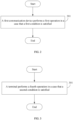
- FIG. 2 is a flowchart of an information processing method according to an embodiment of this application.
- the method is applied to a first communication device, such as a core-network network element, and the core-network network element may include but is not limited to an AMF, an MME, and the like.
- the method includes the following steps.
- Step 201 The first communication device performs a first operation in a case that a first condition is satisfied.
- the first operation includes at least one of the following: a second operation and a third operation.
- the second operation includes at least one of the following:
- the third operation includes at least one of the following:
- the first feature being not supported one of the following: the first network does not support the first feature, and the first network does not have a capability related to the first feature.
- the multi-subscriber feature being not supported one of the following: the first network does not support the multi-subscriber feature, and the first network does not have a capability related to the multi-subscriber feature.
- the first communication device sends, to the first target end, the first feature being not supported or the multi-subscriber feature being not supported. It is not difficult to understand that with such not-supporting indication, the terminal can be restricted from using the first feature or the multi-subscriber feature.
- the first feature (feature) is only applied to a multi-subscriber terminal.
- the first feature is equivalent to the multi-subscriber feature.
- the first feature can be applied to other terminals than the multi-subscriber terminal.
- the request of the terminal for the first-feature related operation can be rejected; and if there is no need to return confirmation information, the request of the terminal for the first-feature related operation can be ignored.
- the request of the terminal for the multi-subscriber-feature related operation can be rejected; and if there is no need to return confirmation information, the request of the terminal for the multi-subscriber-feature related operation can be ignored.
- the deregistration is local deregistration (for example, no deregistration signaling is sent to the terminal), and the connection between the terminal and the network may be locally releasing the connection between the terminal and the network (for example, no connection release signaling is sent to the terminal).
- the first condition includes at least one of the following: the terminal performs emergency registration with a first network, and the terminal performs an emergency service in the first network; where the first communication device is a network-side device in the first network.
- the first condition includes at least one of the following: the terminal performs emergency registration with a first network; the terminal performs an emergency service in the first network; and the context of the terminal indicates one of the following: the first feature being not supported, and the optimization function for the multi-subscriber terminal being not supported; where the first communication device is a network-side device in the first network.
- the first feature or the multi-subscriber feature includes at least one of the following: a paging cause indication function, a connection release function, a paging rejection function, a paging restriction function, and a paging collision control function.
- the first feature being not supported includes at least one of the following: a paging cause indication function being not supported, a paging restriction function being not supported, a paging rejection function being not supported, and a paging collision control function being not supported.
- the connection release function can also be supported.
- the first feature being not supported includes at least one of the following: a paging cause indication function being not supported, a paging restriction function being not supported, and a paging collision control function being not supported.
- the connection release function and the paging rejection function can also be supported.
- the multi-subscriber feature being not supported may mean that all optimization functions for the multi-subscriber terminal are not supported.
- the first-feature related operation or the multi-subscriber-feature related operation includes at least one of the following:
- the request for the first-feature related operation or the request for the multi-subscriber-feature related operation includes at least one of the following:
- the not performing a first-feature related operation for the terminal, or not performing a multi-subscriber-feature related operation for the terminal includes at least one of the following:
- the rejecting a request of the terminal for a first-feature related operation, or rejecting a request of the terminal for a multi-subscriber-feature related operation includes at least one of the following:
- the ignoring a request of the terminal for a first-feature related operation, or ignoring a request of the terminal for a multi-subscriber-feature related operation includes at least one of the following:
- the first communication device can indicate, to the terminal, the first feature being not supported or the multi-subscriber feature being not supported, so that the network side and the terminal can prohibit the first feature or the multi-subscriber feature in some scenarios (such as emergency service scenarios), thereby improving reliability of the communication system.
- FIG. 3 is a flowchart of an information processing method according to an embodiment of this application. The method is applied to a terminal. As shown in FIG. 3 , the method includes the following steps.
- Step 301 The terminal performs a fourth operation in a case that a second condition is satisfied.
- the fourth operation includes at least one of the following:
- the paging optimization includes at least one of the following: avoiding a paging collision and optimizing a paging reception probability.
- the paging collision means that a first subscriber of the terminal is registered to the first network and a second subscriber is registered to a second network, and a paging time of the first subscriber in the first network collides with a paging time of the second subscriber in the second network.
- the paging collision is not resolved in the first network (for example, a mobility registration request is not sent to the first network). In this case, optionally, the paging collision can be resolved through the second network.
- the terminal in a case that mobility registration updating is caused due to moving out of the location area, the terminal may not know in this case whether the first feature or the multi-subscriber feature is supported, and may send paging restriction information to the first network. Therefore, in a case that the second condition is satisfied and mobility registration updating is caused due to moving out of the location area, paging restriction information is not sent to the first network.
- the second condition includes that the terminal performs emergency registration in the first network.
- the second condition further includes at least one of the following: a paging time of the terminal in the first network collides with a paging time of the terminal in other networks; and a paging reception probability of the terminal in the first network decreases, or the terminal needs to improve a paging reception probability in the first network.
- the first feature or the multi-subscriber feature includes at least one of the following: a paging cause indication function, a connection release function, a paging rejection function, a paging restriction function, and a paging collision control function.
- the not performing paging optimization in the first network includes: not performing a fifth operation in the first network.
- the fifth operation includes at least one of the following: a paging-optimization-triggered requirement for updating a temporary terminal identifier, where the temporary terminal identifier is a temporary terminal identifier allocated for the terminal by the first network; paging-optimization-triggered transmission of a mobility registration request to the first network; a paging-optimization-triggered request to the first network, where the request to the first network includes one of the following: an updated terminal identifier and a terminal identifier offset; and a paging-optimization-triggered paging restriction request to the first network.
- the fifth operation does not depend on a capability of the first feature or the multi-subscriber feature. That is, in a case that not supporting the first feature or not supporting the multi-subscriber feature is received, the fifth operation can still be performed. Therefore, it is necessary to stipulate that the fifth operation should not be performed in the first network in a case that the second condition is not satisfied.
- the not initiating a first-feature related operation in the first network, or not initiating the multi-subscriber-feature related operation in the first network includes at least one of the following:
- the deregistering from the first network includes any one of the following:
- a deregistration request may not sent to the first network.
- the terminal side can prohibit the first-feature related operation or the multi-subscriber-feature related operation.
- some multi-subscriber-feature related operations are not limited by the first feature being not supported or the multi-subscriber feature being not supported sent by the network.
- it can be prohibited at the terminal side to implement communication reliability.
- FIG. 4 is a flowchart of an information processing method according to an embodiment of this application. The method is applied to a terminal. As shown in FIG. 4 , the method includes the following steps.
- Step 401 The terminal performs a sixth operation in a case that a third condition is satisfied.
- the sixth operation includes at least one of the following:
- the applying the first feature or the multi-subscriber feature to the first network includes: determining that the first feature or the multi-subscriber feature can be applied to the first network.
- the initiating the first-feature related operation in the first network includes determining that the first-feature related operation can be initiated in the first network.
- the initiating the multi-subscriber-feature related operation in the first network includes determining that the multi-subscriber-feature related operation can be initiated in the first network.
- the performing paging optimization in the first network includes determining that paging optimization can be performed in the first network.
- connection release request information can be sent to the first network in a case that the terminal needs to leave the first network.
- the paging optimization includes at least one of the following: avoiding a paging collision and optimizing a paging reception probability.
- the third condition includes that a type of registration performed by the terminal in the first network does not include emergency registration.
- the third condition further includes at least one of the following: a paging time of the terminal in the first network collides with a paging time of the terminal in other networks; and a paging reception probability of the terminal in the first network decreases, or the terminal needs to improve a paging reception probability in the first network.
- the first feature or the multi-subscriber feature includes at least one of the following: a paging cause indication function, a connection release function, a paging rejection function, a paging restriction function, and a paging collision control function.
- the being able to perform paging optimization in the first network includes: being able to perform a fifth operation in the first network; where the fifth operation includes at least one of the following:
- the terminal side can perform the first-feature related operation or the multi-subscriber-feature related operation, thus implementing communication optimization.
- FIG. 5 is a flowchart of an information processing method according to an embodiment of this application. The method is applied to a terminal. As shown in FIG. 5 , the method includes the following steps.
- Step 501 The terminal performs a seventh operation in a case that a fourth condition is satisfied.
- the fourth condition includes at least one of the following:
- the maintaining a terminal device identifier corresponding to the first subscriber data as the first terminal device identifier includes at least one of the following: maintaining the terminal device identifier corresponding to the first subscriber data as the first terminal device identifier before the terminal deregisters from the third network and/or from the perspective of the third network.
- the terminal device identifier in a case that the terminal is in a registered state or a connected state, the terminal device identifier remains bound to the subscriber data, so as to ensure successful device identifier verification by the network.
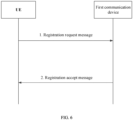
- a registration procedure triggered by UE may include:
- the execution body may be an information processing apparatus, or a control module for executing the information processing method in the information processing apparatus.
- the information processing method being performed by the information processing apparatus is used as an example to describe the information processing apparatus provided in the embodiments of this application.
- FIG. 7 is a schematic structural diagram of an information processing apparatus according to an embodiment of this application.
- the apparatus is applied to a first communication device.
- the information processing apparatus 700 includes:
- the first condition includes at least one of the following: the terminal performs emergency registration with a first network, and the terminal performs an emergency service in the first network; where the first communication device is a network-side device in the first network.
- the first condition includes at least one of the following: the terminal performs emergency registration with a first network; the terminal performs an emergency service in the first network; and the context of the terminal indicates one of the following: the first feature being not supported, and the optimization function for the multi-subscriber terminal being not supported; where the first communication device is a network-side device in the first network.
- the first feature or the multi-subscriber feature includes at least one of the following: a paging cause indication function, a connection release function, a paging rejection function, a paging restriction function, and a paging collision control function.
- the first-feature related operation or the multi-subscriber-feature related operation includes at least one of the following:
- the request for the first-feature related operation or the request for the multi-subscriber-feature related operation includes at least one of the following:
- the not performing a first-feature related operation for the terminal, or not performing a multi-subscriber-feature related operation for the terminal includes at least one of the following:
- the rejecting a request of the terminal for a first-feature related operation, or rejecting a request of the terminal for a multi-subscriber-feature related operation includes at least one of the following:
- the information processing apparatus 700 is capable of implementing the processes implemented in the method embodiment shown in FIG. 2 of this application, with the same beneficial effects achieved. To avoid repetition, details are not described herein again.
- FIG. 8 is a schematic structural diagram of an information processing apparatus according to an embodiment of this application.
- the apparatus is applied to a terminal.
- the information processing apparatus 800 includes:
- the paging optimization includes at least one of the following: avoiding a paging collision and optimizing a paging reception probability.
- the second condition includes that the terminal performs emergency registration in the first network.
- the second condition further includes at least one of the following: a paging time of the terminal in the first network collides with a paging time of the terminal in other networks; and a paging reception probability of the terminal in the first network decreases, or the terminal needs to improve a paging reception probability in the first network.
- the first feature or the multi-subscriber feature includes at least one of the following: a paging cause indication function, a connection release function, a paging rejection function, a paging restriction function, and a paging collision control function.
- the not performing paging optimization in the first network includes: not performing a fifth operation in the first network; where the fifth operation includes at least one of the following:
- the not initiating a first-feature related operation in the first network, or not initiating the multi-subscriber-feature related operation in the first network includes at least one of the following:
- the deregistering from the first network includes any one of the following:
- the information processing apparatus 800 is capable of implementing the processes implemented in the method embodiment shown in FIG. 3 of this application, with the same beneficial effects achieved. To avoid repetition, details are not described herein again.
- FIG. 9 is a schematic structural diagram of an information processing apparatus according to an embodiment of this application.
- the apparatus is applied to a terminal.
- the information processing apparatus 900 includes:
- the applying the first feature or the multi-subscriber feature to the first network includes: determining that the first feature or the multi-subscriber feature can be applied to the first network.
- the initiating the first-feature related operation in the first network includes determining that the first-feature related operation can be initiated in the first network.
- the initiating the multi-subscriber-feature related operation in the first network includes determining that the multi-subscriber-feature related operation can be initiated in the first network.
- the performing paging optimization in the first network includes determining that paging optimization can be performed in the first network.
- connection release request information can be sent to the first network in a case that the terminal needs to leave the first network.
- the paging optimization includes at least one of the following: avoiding a paging collision and optimizing a paging reception probability.
- the third condition includes that a type of registration performed by the terminal in the first network does not include emergency registration.
- the third condition further includes at least one of the following: a paging time of the terminal in the first network collides with a paging time of the terminal in other networks; and a paging reception probability of the terminal in the first network decreases, or the terminal needs to improve a paging reception probability in the first network.
- the first feature or the multi-subscriber feature includes at least one of the following: a paging cause indication function, a connection release function, a paging rejection function, a paging restriction function, and a paging collision control function.
- the information processing apparatus 900 is capable of implementing the processes implemented in the method embodiment shown in FIG. 4 of this application, with the same beneficial effects achieved. To avoid repetition, details are not described herein again.
- FIG. 10 is a schematic structural diagram of an information processing apparatus according to an embodiment of this application.
- the apparatus is applied to a terminal.
- the information processing apparatus 1000 includes:
- the maintaining a terminal device identifier corresponding to the first subscriber data as the first terminal device identifier includes at least one of the following: maintaining the terminal device identifier corresponding to the first subscriber data as the first terminal device identifier before the terminal deregisters from the third network and/or from the perspective of the third network.
- the information processing apparatus 1000 is capable of implementing the processes implemented in the method embodiment shown in FIG. 5 of this application, with the same beneficial effects achieved. To avoid repetition, details are not described herein again.
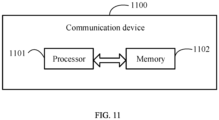
- an embodiment of this application further provides a communication device 1100, including a processor 1101, a memory 1102, and a program or instructions stored in the memory 1102 and capable of running on the processor 1101.
- a communication device 1100 including a processor 1101, a memory 1102, and a program or instructions stored in the memory 1102 and capable of running on the processor 1101.
- An embodiment of this application further provides a readable storage medium.
- the readable storage medium may be non-volatile or volatile.
- a program or instructions are stored in the readable storage medium. When the program or the instructions are executed by a processor, the processes of the foregoing embodiment of the information processing method can be implemented, with the same technical effects achieved. To avoid repetition, details are not described herein again.
- An embodiment of this application further provides a computer program/program product, where the computer program/program product is stored in a non-transitory storage medium, and when being executed by at least one processor, the computer program/program product is configured to implement the processes of the foregoing information processing method embodiments, with the same technical effects achieved. To avoid repetition, details are not repeated herein.
- the processor is a processor in the terminal described in the foregoing embodiments.
- the readable storage medium includes a computer-readable storage medium, for example, a computer read-only memory (Read-Only Memory, ROM), a random access memory (Random Access Memory, RAM), a magnetic disk, or an optical disc.
- An embodiment of this application further provides a chip, where the chip includes a processor and a communication interface.
- the communication interface is coupled to the processor, and the processor is configured to run a program or an instruction to implement the processes of the foregoing embodiment of the information processing method, with the same technical effects achieved. To avoid repetition, details are not described herein again.
- the chip mentioned in the embodiments of this application may also be referred to as a system-level chip, a system chip, a chip system, a system-on-chip, or the like.
- the software product is stored in a storage medium (such as a ROM/RAM, a magnetic disk, or an optical disc), and includes several instructions for instructing a terminal (which may be a mobile phone, a computer, a server, an air conditioner, a network-side device, or the like) to perform the methods described in the embodiments of this application.
- a storage medium such as a ROM/RAM, a magnetic disk, or an optical disc
- a terminal which may be a mobile phone, a computer, a server, an air conditioner, a network-side device, or the like
Landscapes
- Engineering & Computer Science (AREA)
- Computer Networks & Wireless Communication (AREA)
- Signal Processing (AREA)
- Databases & Information Systems (AREA)
- Computer Security & Cryptography (AREA)
- Business, Economics & Management (AREA)
- Health & Medical Sciences (AREA)
- Emergency Management (AREA)
- Environmental & Geological Engineering (AREA)
- Public Health (AREA)
- Mobile Radio Communication Systems (AREA)
Applications Claiming Priority (2)
| Application Number | Priority Date | Filing Date | Title |
|---|---|---|---|
| CN202111308807.8A CN116095709A (zh) | 2021-11-05 | 2021-11-05 | 信息处理方法、装置、通信设备及可读存储介质 |
| PCT/CN2022/129475 WO2023078332A1 (zh) | 2021-11-05 | 2022-11-03 | 信息处理方法、装置、通信设备及可读存储介质 |
Publications (2)
| Publication Number | Publication Date |
|---|---|
| EP4429291A1 true EP4429291A1 (de) | 2024-09-11 |
| EP4429291A4 EP4429291A4 (de) | 2025-03-12 |
Family
ID=86199683
Family Applications (1)
| Application Number | Title | Priority Date | Filing Date |
|---|---|---|---|
| EP22889354.1A Pending EP4429291A4 (de) | 2021-11-05 | 2022-11-03 | Informationsverarbeitungsverfahren und -vorrichtung sowie kommunikationsvorrichtung und lesbares speichermedium |
Country Status (4)
| Country | Link |
|---|---|
| US (1) | US20240284160A1 (de) |
| EP (1) | EP4429291A4 (de) |
| CN (1) | CN116095709A (de) |
| WO (1) | WO2023078332A1 (de) |
Family Cites Families (9)
| Publication number | Priority date | Publication date | Assignee | Title |
|---|---|---|---|---|
| GB0916582D0 (en) * | 2009-09-22 | 2009-10-28 | Software Cellular Network Ltd | Subscriber identification management broker for fixed/mobile networks |
| CN106488427B (zh) * | 2015-08-27 | 2019-11-22 | 深圳富泰宏精密工业有限公司 | 执行网络注册的方法、设备和系统 |
| US20180139788A1 (en) * | 2016-11-14 | 2018-05-17 | Qualcomm Incorporated | Establishing Emergency Calls on Mobile Devices |
| CN107040906B (zh) * | 2017-05-11 | 2020-05-01 | Oppo广东移动通信有限公司 | 紧急呼叫处理方法、装置、终端和存储介质 |
| CN111278107B (zh) * | 2019-01-18 | 2021-10-08 | 维沃移动通信有限公司 | 信息传送的方法及通信设备 |
| EP4586711A1 (de) * | 2019-03-11 | 2025-07-16 | Ofinno, LLC | Funkruf einer drahtlosen vorrichtung durch ein drahtloses netzwerk |
| WO2020247043A1 (en) * | 2019-06-07 | 2020-12-10 | Convida Wireless, Llc | Apparatus, system, method, and computer-readable medium for cellular system enhancements for the support of multi-sim user equipments |
| CN113796107A (zh) * | 2019-08-07 | 2021-12-14 | Oppo广东移动通信有限公司 | 多用户身份模块用户设备及其操作方法 |
| EP4489489A3 (de) * | 2019-10-11 | 2025-01-15 | Lenovo (Singapore) Pte. Ltd. | Funkruf für mehrere sims |
-
2021
- 2021-11-05 CN CN202111308807.8A patent/CN116095709A/zh active Pending
-
2022
- 2022-11-03 EP EP22889354.1A patent/EP4429291A4/de active Pending
- 2022-11-03 WO PCT/CN2022/129475 patent/WO2023078332A1/zh not_active Ceased
-
2024
- 2024-05-01 US US18/652,202 patent/US20240284160A1/en active Pending
Also Published As
| Publication number | Publication date |
|---|---|
| US20240284160A1 (en) | 2024-08-22 |
| CN116095709A (zh) | 2023-05-09 |
| EP4429291A4 (de) | 2025-03-12 |
| WO2023078332A1 (zh) | 2023-05-11 |
Similar Documents
| Publication | Publication Date | Title |
|---|---|---|
| CN111278107B (zh) | 信息传送的方法及通信设备 | |
| US11330642B2 (en) | Method for supporting and providing LADN service in wireless communication system and apparatus therefor | |
| EP3994907B1 (de) | Steuerverfahren zur handhabung mehrerer benutzeridentitäten pro benutzergerät | |
| WO2021027835A1 (zh) | 消息传输方法和通信设备 | |
| CN114342434B (zh) | 用户装置、核心网内装置以及通信控制方法 | |
| US9473877B2 (en) | Uplink/downlink transmission method for small amount of data, and corresponding terminal and mobility management unit | |
| CN112806069A (zh) | 用于更新与统一接入控制相关的参数的过程 | |
| US20170094501A1 (en) | Method of Enhanced Timer Handling for SIM/USIM Change | |
| EP4040873A1 (de) | Verbindungsverarbeitungsverfahren und kommunikationsvorrichtung | |
| US11997751B2 (en) | Method for supporting UE association and communications device | |
| CN102131212B (zh) | 网络端传呼客户端处理错误回复的方法及相关通讯装置 | |
| TWI713375B (zh) | 非完整性保護拒絕訊息之處理方法及其使用者設備 | |
| CN111328019B (zh) | 识别终端的方法、装置 | |
| US20240098700A1 (en) | Information processing method and apparatus, communication device, and readable storage medium | |
| CN117769859A (zh) | 用户设备ue | |
| US20250063471A1 (en) | Communication method and apparatus | |
| EP4192064A1 (de) | Zugangssteuerungsverfahren und -vorrichtung sowie kommunikationsvorrichtung | |
| AU2020306126B2 (en) | Terminal capability identification operating method and communication device | |
| US20240259816A1 (en) | Information processing method and apparatus, communication device, and readable storage medium | |
| EP4429291A1 (de) | Informationsverarbeitungsverfahren und -vorrichtung sowie kommunikationsvorrichtung und lesbares speichermedium | |
| US20240064702A1 (en) | Information processing method and apparatus, communication device and readable storage medium | |
| KR102714608B1 (ko) | 서비스 최적화 방법 및 통신 장치 | |
| CN117957879A (zh) | 基于接入类型的网络切片准入控制的方法 | |
| US12238636B2 (en) | Systems and methods for 5G core network access control | |
| WO2024230021A1 (en) | Wireless communication method and device thereof |
Legal Events
| Date | Code | Title | Description |
|---|---|---|---|
| STAA | Information on the status of an ep patent application or granted ep patent |
Free format text: STATUS: THE INTERNATIONAL PUBLICATION HAS BEEN MADE |
|
| PUAI | Public reference made under article 153(3) epc to a published international application that has entered the european phase |
Free format text: ORIGINAL CODE: 0009012 |
|
| STAA | Information on the status of an ep patent application or granted ep patent |
Free format text: STATUS: REQUEST FOR EXAMINATION WAS MADE |
|
| 17P | Request for examination filed |
Effective date: 20240503 |
|
| AK | Designated contracting states |
Kind code of ref document: A1 Designated state(s): AL AT BE BG CH CY CZ DE DK EE ES FI FR GB GR HR HU IE IS IT LI LT LU LV MC ME MK MT NL NO PL PT RO RS SE SI SK SM TR |
|
| DAV | Request for validation of the european patent (deleted) | ||
| DAX | Request for extension of the european patent (deleted) | ||
| A4 | Supplementary search report drawn up and despatched |
Effective date: 20250206 |
|
| RIC1 | Information provided on ipc code assigned before grant |
Ipc: H04W 76/30 20180101ALI20250131BHEP Ipc: H04W 68/00 20090101ALI20250131BHEP Ipc: H04W 60/06 20090101ALI20250131BHEP Ipc: H04W 60/00 20090101ALI20250131BHEP Ipc: H04W 24/02 20090101ALI20250131BHEP Ipc: H04W 12/08 20210101ALI20250131BHEP Ipc: H04W 8/20 20090101ALI20250131BHEP Ipc: H04W 4/02 20180101ALI20250131BHEP Ipc: H04W 4/90 20180101ALI20250131BHEP Ipc: H04W 76/50 20180101ALI20250131BHEP Ipc: H04W 8/18 20090101AFI20250131BHEP |