EP4429210A2 - Transport von lieferantenspezifischen anwendungsprotokollen - Google Patents
Transport von lieferantenspezifischen anwendungsprotokollen Download PDFInfo
- Publication number
- EP4429210A2 EP4429210A2 EP24159858.0A EP24159858A EP4429210A2 EP 4429210 A2 EP4429210 A2 EP 4429210A2 EP 24159858 A EP24159858 A EP 24159858A EP 4429210 A2 EP4429210 A2 EP 4429210A2
- Authority
- EP
- European Patent Office
- Prior art keywords
- vendor
- port number
- destination
- field
- source
- Prior art date
- Legal status (The legal status is an assumption and is not a legal conclusion. Google has not performed a legal analysis and makes no representation as to the accuracy of the status listed.)
- Pending
Links
Images


Classifications
-
- H—ELECTRICITY
- H04—ELECTRIC COMMUNICATION TECHNIQUE
- H04L—TRANSMISSION OF DIGITAL INFORMATION, e.g. TELEGRAPHIC COMMUNICATION
- H04L67/00—Network arrangements or protocols for supporting network services or applications
- H04L67/50—Network services
- H04L67/60—Scheduling or organising the servicing of application requests, e.g. requests for application data transmissions using the analysis and optimisation of the required network resources
- H04L67/63—Routing a service request depending on the request content or context
-
- H—ELECTRICITY
- H04—ELECTRIC COMMUNICATION TECHNIQUE
- H04L—TRANSMISSION OF DIGITAL INFORMATION, e.g. TELEGRAPHIC COMMUNICATION
- H04L69/00—Network arrangements, protocols or services independent of the application payload and not provided for in the other groups of this subclass
- H04L69/03—Protocol definition or specification
-
- H—ELECTRICITY
- H04—ELECTRIC COMMUNICATION TECHNIQUE
- H04L—TRANSMISSION OF DIGITAL INFORMATION, e.g. TELEGRAPHIC COMMUNICATION
- H04L45/00—Routing or path finding of packets in data switching networks
- H04L45/74—Address processing for routing
-
- H—ELECTRICITY
- H04—ELECTRIC COMMUNICATION TECHNIQUE
- H04L—TRANSMISSION OF DIGITAL INFORMATION, e.g. TELEGRAPHIC COMMUNICATION
- H04L45/00—Routing or path finding of packets in data switching networks
- H04L45/74—Address processing for routing
- H04L45/745—Address table lookup; Address filtering
- H04L45/7453—Address table lookup; Address filtering using hashing
-
- H—ELECTRICITY
- H04—ELECTRIC COMMUNICATION TECHNIQUE
- H04L—TRANSMISSION OF DIGITAL INFORMATION, e.g. TELEGRAPHIC COMMUNICATION
- H04L47/00—Traffic control in data switching networks
- H04L47/10—Flow control; Congestion control
- H04L47/12—Avoiding congestion; Recovering from congestion
- H04L47/125—Avoiding congestion; Recovering from congestion by balancing the load, e.g. traffic engineering
-
- H—ELECTRICITY
- H04—ELECTRIC COMMUNICATION TECHNIQUE
- H04L—TRANSMISSION OF DIGITAL INFORMATION, e.g. TELEGRAPHIC COMMUNICATION
- H04L69/00—Network arrangements, protocols or services independent of the application payload and not provided for in the other groups of this subclass
- H04L69/16—Implementation or adaptation of Internet protocol [IP], of transmission control protocol [TCP] or of user datagram protocol [UDP]
- H04L69/161—Implementation details of TCP/IP or UDP/IP stack architecture; Specification of modified or new header fields
-
- H—ELECTRICITY
- H04—ELECTRIC COMMUNICATION TECHNIQUE
- H04L—TRANSMISSION OF DIGITAL INFORMATION, e.g. TELEGRAPHIC COMMUNICATION
- H04L69/00—Network arrangements, protocols or services independent of the application payload and not provided for in the other groups of this subclass
- H04L69/16—Implementation or adaptation of Internet protocol [IP], of transmission control protocol [TCP] or of user datagram protocol [UDP]
- H04L69/164—Adaptation or special uses of UDP protocol
-
- H—ELECTRICITY
- H04—ELECTRIC COMMUNICATION TECHNIQUE
- H04L—TRANSMISSION OF DIGITAL INFORMATION, e.g. TELEGRAPHIC COMMUNICATION
- H04L69/00—Network arrangements, protocols or services independent of the application payload and not provided for in the other groups of this subclass
- H04L69/26—Special purpose or proprietary protocols or architectures
-
- H—ELECTRICITY
- H04—ELECTRIC COMMUNICATION TECHNIQUE
- H04L—TRANSMISSION OF DIGITAL INFORMATION, e.g. TELEGRAPHIC COMMUNICATION
- H04L69/00—Network arrangements, protocols or services independent of the application payload and not provided for in the other groups of this subclass
- H04L69/30—Definitions, standards or architectural aspects of layered protocol stacks
- H04L69/32—Architecture of open systems interconnection [OSI] 7-layer type protocol stacks, e.g. the interfaces between the data link level and the physical level
- H04L69/322—Intralayer communication protocols among peer entities or protocol data unit [PDU] definitions
- H04L69/329—Intralayer communication protocols among peer entities or protocol data unit [PDU] definitions in the application layer [OSI layer 7]
Definitions
- the present disclosure relates to inter-computer communications and, more specifically but not exclusively, to application-level protocols for transmitting data between different nodes of a distributed computer network.
- the core focus is quick rollout of a vendor-proprietary application protocol without involving standardization or public disclosure of the protocol.
- the vendor may employ its own confidential technology in the protocol, which mandates keeping the details of the application private.
- the application protocol may be transported over any state-of-the-art transport protocol such as the Transmission Control Protocol (TCP), User Datagram Protocol (UDP), Stream Control Transmission Protocol (SCTP), Quick UDP Internet Connection (QUIC), or the like.
- TCP Transmission Control Protocol
- UDP User Datagram Protocol
- SCTP Stream Control Transmission Protocol
- QUIC Quick UDP Internet Connection
- Proprietary protocols from multiple vendors cannot co-exist in a network if applications across vendors overlap on the port number used by a transport protocol to uniquely identify the application.
- there are two ways to allocate a unique port number to identify a vendor-proprietary application (1) use one of the two Experimental Use port numbers (i.e., 1021 and 1022) in the Well-Known Ports range or (2) allocate a port number from the User Ports range (i.e., 1024 to 49151) in the Internet Assigned Numbers Authority (IANA) registry.
- the first approach has only two available port numbers, so that approach limits the maximum number of vendor-proprietary application protocols to two.
- the second approach has two major limitations. First, it takes a relatively long time for IANA to allocate a unique port number.
- data packets have a transport header comprising (i) a port number field encoding a vendor private port number and (ii) a tuple field encoding a vendor unique port number comprising a Vendor Organizationally Unique Identifier (OUI) value and a vendor-specified Vendor Port value.
- a transport header comprising (i) a port number field encoding a vendor private port number and (ii) a tuple field encoding a vendor unique port number comprising a Vendor Organizationally Unique Identifier (OUI) value and a vendor-specified Vendor Port value.
- UTI Vendor Organizationally Unique Identifier
- an apparatus comprises at least one processor and at least one memory storing instructions that, upon being executed by the at least one processor, cause the apparatus at least to process a data packet having a transport header comprising (i) a port number field encoding a vendor private port number and (ii) a tuple field encoding a vendor unique port number comprising a Vendor Organizationally Unique Identifier (OUI) value and a vendor-specified Vendor Port value.
- a transport header comprising (i) a port number field encoding a vendor private port number and (ii) a tuple field encoding a vendor unique port number comprising a Vendor Organizationally Unique Identifier (OUI) value and a vendor-specified Vendor Port value.
- UAI Vendor Organizationally Unique Identifier
- the apparatus is a destination node that is configured to receive the data packet.
- the apparatus is a source node that is configured to transmit the data packet.
- the port number field encoding the vendor private port number is a destination port field
- the tuple field encodes a destination vendor unique port number comprising a destination Vendor OUI value and a destination Vendor Port value.
- the port number field encoding the vendor private port number is a source port field
- the tuple field encodes a source vendor unique port number comprising a source Vendor OUI value and a source Vendor Port value.
- a destination port field of the transport header also encodes a vendor private port number
- the tuple field further encodes a destination vendor unique port number comprising a destination Vendor OUI value and a destination Vendor Port value.
- the transport header has a source port number field corresponding to a source node for the packet and a destination port number field corresponding to a destination node for the packet;
- the apparatus is a transit node located between the source node and the destination node;
- the transit node is configured to use a source vendor unique port number in the transport header instead of the source port number to compute a hash value for load balancing, upon determining that the source port number field encodes a vendor private port number;
- the transit node is configured to use a destination vendor unique port number in the transport header instead of the destination port number to compute the hash value for load balancing, upon determining that the destination port number field encodes a vendor private port number.
- the data packet is a TCP data packet having a TCP transport header
- the tuple field is located between an Urgent Pointer field and an Options field in the TCP transport header.
- the data packet is a UDP data packet having a UDP transport header
- the tuple field is appended after a Checksum field in the UDP transport header.
- the vendor private port number is a value in a Well-Known Ports space.
- the Vendor OUI value is a three-byte value
- the Vendor Port value is a two-byte value
- a method comprises a node (a) generating an outgoing data packet having outgoing application data and a transport header comprising (i) a port number field encoding a vendor private port number and (ii) a tuple field encoding a vendor unique port number comprising a Vendor Organizationally Unique Identifier (OUI) value and a vendor-specified Vendor Port value; (b) transmitting the outgoing data packet; (c) receiving an incoming data packet having incoming application data and a transport header comprising (i) a port number field encoding the vendor private port number and (ii) a tuple field encoding the vendor unique port number; and (c) recovering the incoming application data from the incoming data packet.
- a transport header comprising (i) a port number field encoding a vendor private port number and (ii) a tuple field encoding a vendor unique port number comprising a Vendor Organizationally Unique Identifier (OUI) value and a vendor-
- the port number field encoding the vendor private port number in the transport header of the outgoing data packet is a source port number field; the tuple field in the transport header of the outgoing data packet encodes a source vendor unique port number; the port number field encoding the vendor private port number in the transport header of the incoming data packet is a destination port number field; and the tuple field in the transport header of the incoming data packet encodes a destination vendor unique port number.
- the port number field encoding the vendor private port number in the transport header of the outgoing data packet is a destination port number field; the tuple field in the transport header of the outgoing data packet encodes a destination vendor unique port number; the port number field encoding the vendor private port number in the transport header of the incoming data packet is a source port number field; and the tuple field in the transport header of the incoming data packet encodes a source vendor unique port number.
- the data packet is a TCP data packet having a TCP transport header
- the tuple field is located between an Urgent Pointer field and an Options field in the TCP transport header.
- the data packet is a UDP data packet having a UDP transport header
- the tuple field is appended after a Checksum field in the UDP transport header.
- the vendor private port number is a value in a Well-Known Ports space.
- the Vendor OUI value is a three-byte value
- the Vendor Port value is a two-byte value
- a method comprises a transit node (a) receiving a data packet comprising a transport header having a source port number field corresponding to a source node for the packet and a destination port number field corresponding to a destination node for the packet; (b) performing a hash computation to generate a hash value for load balancing using at least one of (i) a source vendor unique port number in the transport header instead of the source port number upon determining that the source port number field encodes a vendor private port number and (ii) a destination vendor unique port number in the transport header instead of the destination port number upon determining that the destination port number field encodes a vendor private port number; (c) performing load balancing using the hash value to select a path; and (d) transmitting the data packet over the selected path.
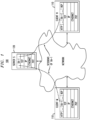
- FIG. 1 illustrates the deployment of a vendor-proprietary application protocol XA-1 over TCP in a distributed network 100.
- the network nodes 110 i.e., Clients M and N
- the network nodes 110 are running the client side of an application developed by a vendor and exchanging application data using the corresponding XA-1 protocol with a centralized node 120 (i.e., Server S) running the server side of the application.
- a centralized node 120 i.e., Server S
- Each client sets up a TCP session with the server over which application data is exchanged.
- the application may execute a vendor-specific telemetry function to gather telemetry data from each client and report the data to the centralized server.
- a TCP port number is required to identify the application.
- the TCP module in the server will listen on that port number for incoming connection requests from clients.
- Clients send TCP connection requests for the application server with a locally allocated TCP port number from the Dynamic Ports range (i.e., ports 49152-65535) as the source port in the TCP header and the port number of the application as the destination port in the TCP header.
- a client After the TCP connection is established, a client will send all packets for the application to the server by encapsulating the packets with a TCP header wherein the locally allocated TCP port number is the source port in the TCP header and the application port number is the destination port in the TCP header.
- the server will send all packets for the application to a client by encapsulating the packets with a TCP header wherein the application port number is the source port in the TCP header and the port number locally allocated by the client is the destination port in the TCP header.
- a TCP packet is in turn encapsulated by an IP header which in turn is encapsulated by a data link layer header, such as ethernet, before the packet is sent out on the wire.
- the source and destination ports are allocated and used in an analogous way if the transport protocol is UDP or SCTP instead of TCP, and QUIC uses UDP as the underlying transport protocol.
- At least one new port number is allocated from the Well-Known Ports range 1-1024 to indicate "any" vendor proprietary application as the payload of a transport protocol.
- a new port number is referred to as a "vendor private port number”.
- One possible value in the Well-Known Ports range for a vendor private port number is 1002, which is currently unassigned, although any other currently unassigned port number in the Well-Known Ports range could be selected. Since a vendor private port number is a Well-Known Ports number, it is to be allocated and standardized (via RFC) after approval by the IANA.
- a vendor private port number is used for a specific vendor proprietary application
- the application is further identified by a tuple ⁇ Vendor OUI, Vendor Port ⁇ , which is included in the header of the transport protocol, where Vendor OUI is the 24-bit Organizationally Unique Identifier assigned to the vendor by the IEEE and Vendor Port is a 16-bit port value assigned by the vendor for its specific application.
- the tuple is referred to as the "vendor unique port number" and is included in the transport protocol header if the source or destination port number in the transport protocol header (e.g., TCP, UDP, SCTP, and the like) is a vendor private port number.
- the Vendor Port space is exclusively managed by the vendor, which can allocate any port number in this space to uniquely identify a proprietary application developed by the vendor. This technique enables a vendor to roll out a proprietary application at any time since the vendor exclusively controls its Vendor Port space.
- two or more orthogonal applications across two or more different vendors can use the same vendor private port number (in the source or destination port field) and the same Vendor Port number (in the tuple) since the applications are distinguished by the vendor unique values in the Vendor OUI field.
- a single vendor can simultaneously deploy multiple applications using the same vendor private port number (in the source or destination port field) and the same Vendor OUI field (in the tuple) since the applications can be distinguished by the vendor assigning unique values for the Vendor Port number.
- the vendor private port number indicates that the payload corresponds to a vendor proprietary application.
- the receiver looks at the tuple ⁇ Vendor OUI, Vendor Port ⁇ that represents the vendor unique port number, where the Vendor OUI uniquely identifies the vendor, and the Vendor Port uniquely identifies the application within the vendor.
- FIG. 2 shows the format for the transport header for a TCP packet for a vendor proprietary application sent from a client (e.g., Client M or N of FIG. 1 ) to a server (e.g., Server S of FIG. 1 ), according to one possible implementation.
- the Destination Port field is encoded with a vendor private port number, which indicates the presence of a "destination" vendor unique port number (i.e., the tuple ⁇ Destination Vender OUI, Destination Vendor Port ⁇ ) in the TCP header.
- the destination vendor unique port number is located after the Urgent Pointer field and before the Options field of the otherwise standard TCP header format.
- the Data Offset field indicates the size of the TCP header in an integer number of 32-bit words. Since the destination vendor unique port number increases the size of the TCP header by 5 bytes, the Data Offset value is increased to accommodate the destination vendor unique port number. Note that extra bytes may need to be added in the Padding field to round up the TCP header to an integer number of 32-bit words.
- FIG. 3 shows the format for the transport header for a TCP packet for a vendor proprietary application sent from a server (e.g., Server S of FIG. 1 ) to a client (e.g., Client M or N of FIG. 1 ), according one possible implementation.
- the Source Port field is encoded with a vendor private port number, which indicates the presence of a "source" vendor unique port number (the tuple ⁇ Source Vendor OUI, Source Vendor Port ⁇ ) in the TCP header.
- the source vendor unique port number is located after the Urgent Pointer field and before the Options field of the otherwise standard TCP header format.
- the Data Offset value is increased to accommodate the source vendor unique port number.
- extra bytes may need to be added in Padding field to round up the TCP header to an integer number of 32-bit words.
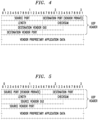
- FIG. 4 shows the format for the transport header for a UDP packet for a vendor proprietary application sent from a client to a server, according one possible implementation.
- the Destination Port field is encoded with a vendor private port number, which indicates the presence of the destination vendor unique port number in the UDP header.
- the corresponding tuple is appended after the Checksum field of the otherwise standard UDP header format.
- the Length field indicates the size of the UDP header and its payload (Application Data). Since the destination vendor unique port number increases the size of UDP header by 5 bytes, the Length value is increased by 5 bytes to accommodate the destination vendor unique port number.
- FIG. 5 shows the format for the transport header for a UDP packet for a vendor proprietary application sent from a server to a client, according one possible implementation.
- the Source Port field is encoded with a vendor private port number, which indicates the presence of the source vendor unique port number in the UDP header.
- the corresponding tuple is appended after the Checksum field of the otherwise standard UDP header format. Since the source vendor unique port number increases the size of UDP header by 5 bytes, the Length value is increased by 5 bytes to accommodate the source vendor unique port number.
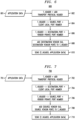
- FIG. 6 is a flow diagram 600 illustrating a method implemented by a client (e.g., Client M or N of FIG. 1 ) to transport vendor-proprietary application data 601 from the client to a server (e.g., Server S of FIG. 1 ) using a transport protocol, according to one implementation.
- the input to the method is a chunk of data corresponding to the vendor-proprietary application protocol.
- the client encapsulates the input data with the header of the transport protocol.
- the client encodes the source port of the transport header with the local port number assigned by the client.
- the client encodes the destination port of the transport header with a vendor private port number.
- the client adds the tuple ⁇ Destination Vendor OUI, Destination Vendor Port ⁇ into the transport header.
- the client sends the transport packet to the server.
- FIG. 7 is a flow diagram 700 illustrating a method implemented by a server (e.g., Server S of FIG. 1 ) to transport vendor-proprietary application data 701 from the server to a client (e.g., Client M or N of FIG. 1 ) using a transport protocol, according to one implementation.
- the input to the method is a chunk of data corresponding to the vendor-proprietary application protocol.
- the server encapsulates the input data with the header of the transport protocol.
- the server encodes the destination port of the transport header with the local port number assigned by the client.
- the server encodes the source port of the transport header with a vendor private port number.
- the server adds the tuple ⁇ Source Vendor OUI, Source Vendor Port ⁇ into the transport header.
- the server sends the transport packet to the server.
- the present disclosure has been described in the context of server-client relationships between pairs of nodes in a distributed network where the server port is a vendor private port number and the client port is selected by the client, where the server port tuple contains the Vendor OUI followed by the Vendor Port.
- the present disclosure can be implemented in other contexts, such as server-client relationships or peer-to-peer relationships, in which either or both nodes have a port number that is a vendor private port number, and the transport header includes one or two tuples, each tuple having a Vendor OUI and a Vendor Port and in some specified order.
- the transport header will have two tuples: the source tuple ⁇ Source Vendor OUI, Source Vendor Port ⁇ followed by the destination tuple ⁇ Destination Vendor OUI, Destination Vendor Port ⁇ .
- the destination tuple will be followed by the source tuple. If both nodes have vendor private port numbers, those two vendor private port numbers may be the same or they may be different.
- the transport header can have a single tuple containing three values: the common Vendor OUI number, the Source Vendor Port number, and the Destination Vendor port number in some specified order.
- Intermediate transit nodes if any, in the network compute a hash to forward the packets of the TCP connection on a specific path when there are multiple paths to the destination. This is typically termed as “L4 load balancing” or “flow-based load balancing” since the transit nodes look at the layer 4 header (transport layer header) fields to uniquely identify a transport connection and perform load balancing.
- the transit node looks up the source port and destination port fields in the transport header for its hash computation. If the source port field encodes a vendor private port number, then the transit node uses the corresponding tuple ⁇ Source Vendor OUI, Source Vendor Port ⁇ for its hash computation instead of the source port number. Furthermore, if the destination port field encodes a vendor private port number, then the transit node uses the corresponding tuple ⁇ Destination Vendor OUI, Destination Vendor Port ⁇ for its hash computation instead of the destination port number.
- FIG. 8 is a flow diagram 800 illustrating the processing by a transit node according to an implementation of the disclosure.
- the transit node receives a packet that needs to be load balanced for multiple available paths. The default is for the transit node to use the packet's source and destination port numbers in the transit node's hash computation for load balancing.
- the transit node reads the source and destination port fields in the packet's transport header.
- step 806 the transit node determines whether the source port number is a vendor private port number. If not, then processing continues to step 810. Otherwise, in step 808, the transit node reads the corresponding tuple ⁇ Source Vendor OUI, Source Vendor Port ⁇ from the transport header and selects that tuple for use in the hash computation instead of the default source port number. Processing then continues to step 810.
- step 810 the transit node determines whether the destination port number is a vendor private port number. If not, then processing continues to step 814. Otherwise, in step 812, the transit node reads the corresponding tuple ⁇ Destination Vendor OUI, Destination Vendor Port ⁇ from the transport header and selects that tuple for use in the hash computation instead of the default destination port number. Processing then continues to step 814.
- the transit node performs its hash computation using one or both default values and/or the one or both values selected in steps 808 and/or 812. If the source port is a vendor private port number, then the 7-byte tuple ⁇ Source Vendor OUI, Source Vendor Port, Destination Port ⁇ may be used for the hash computation. Typically, a hash computation is performed by computing a 32-bit or 64-bit value from a 56-bit tuple.
- hash (Source Vendor OUI ⁇ 8)
- the path can be selected based on the number of available paths as (hash % number_of_paths), where "%" represents the modulo operation. If the destination port is a vendor private port number, then the 7-byte tuple ⁇ Destination Vendor OUI, Destination Vendor Port, Source Port ⁇ may be used for the hash computation in a similar way.
- step 816 the transit node uses the resulting computed hash value to select one of the available multiple paths for the packet and, in step 818, the transit node sends the packet along that selected path.
- any vendor can use that vendor private port number to indicate the presence of the tuple ⁇ Vendor OUI, Vendor Port ⁇ that represents the vendor unique port number for the vendor's proprietary application.
- FIG. 9 is a simplified hardware block diagram of an example node 900 that can be used to implement any of the nodes (e.g., servers, clients, peers, transit nodes) of the present disclosure, including the nodes of FIG. 1 .
- the node 900 includes (i) communication hardware (e.g., wireless, wireline, and/or optical transceivers (TRX)) 902 that supports communications with other nodes, (ii) a processor (e.g., CPU microprocessor) 904 that controls the operations of the node 900, and (iii) a memory (e.g., RAM, ROM) 906 that stores code executed by the processor 904 and/or data generated and/or received by the node 900.
- communication hardware e.g., wireless, wireline, and/or optical transceivers (TRX)
- TRX optical transceivers
- a processor e.g., CPU microprocessor
- a memory e.g., RAM, ROM
- figure numbers and/or figure reference labels in the claims is intended to identify one or more possible embodiments of the claimed subject matter in order to facilitate the interpretation of the claims. Such use is not to be construed as necessarily limiting the scope of those claims to the embodiments shown in the corresponding figures.
- the terms “couple,” “coupling,” “coupled,” “connect,” “connecting,” or “connected” refer to any manner known in the art or later developed in which energy is allowed to be transferred between two or more elements, and the interposition of one or more additional elements is contemplated, although not required.
- the terms “directly coupled,” “directly connected,” etc. imply the absence of such additional elements.
- attachment and “directly attached,” as applied to a description of a physical structure.
- a relatively thin layer of adhesive or other suitable binder can be used to implement such "direct attachment” of the two corresponding components in such physical structure.
- processors may be provided through the use of dedicated hardware as well as hardware capable of executing software in association with appropriate software.
- the functions may be provided by a single dedicated processor, by a single shared processor, or by a plurality of individual processors, some of which may be shared.
- processor or “controller” should not be construed to refer exclusively to hardware capable of executing software, and may implicitly include, without limitation, digital signal processor (DSP) hardware, network processor, application specific integrated circuit (ASIC), field programmable gate array (FPGA), read only memory (ROM) for storing software, random access memory (RAM), and non-volatile storage. Other hardware, conventional and/or custom, may also be included.
- DSP digital signal processor
- ASIC application specific integrated circuit
- FPGA field programmable gate array
- ROM read only memory
- RAM random access memory
- non-volatile storage non-volatile storage.
- Other hardware conventional and/or custom, may also be included.
- any switches shown in the figures are conceptual only. Their function may be carried out through the operation of program logic, through dedicated logic, through the interaction of program control and dedicated logic, or even manually, the particular technique being selectable by the implementer as more specifically understood from the context.
- any block diagrams herein represent conceptual views of illustrative circuitry embodying the principles of the disclosure.
- any flow charts, flow diagrams, state transition diagrams, pseudo code, and the like represent various processes which may be substantially represented in computer readable medium and so executed by a computer or processor, whether or not such computer or processor is explicitly shown.
- the present disclosure may be embodied as an apparatus (including, for example, a system, a network, a machine, a device, a computer program product, and/or the like), as a method (including, for example, a business process, a computer-implemented process, and/or the like), or as any combination of the foregoing. Accordingly, embodiments of the present disclosure may take the form of an entirely software-based embodiment (including firmware, resident software, micro-code, and the like), an entirely hardware embodiment, or an embodiment combining software and hardware aspects that may generally be referred to herein as a "system” or "network”.
- Embodiments of the disclosure can be manifest in the form of methods and apparatuses for practicing those methods.
- Embodiments of the disclosure can also be manifest in the form of program code embodied in tangible media, such as magnetic recording media, optical recording media, solid state memory, floppy diskettes, CD-ROMs, hard drives, or any other non-transitory machine-readable storage medium, wherein, upon the program code being loaded into and executed by a machine, such as a computer, the machine becomes an apparatus for practicing the disclosure.
- Embodiments of the disclosure can also be manifest in the form of program code, for example, stored in a non-transitory machine-readable storage medium including being loaded into and/or executed by a machine, wherein, upon the program code being loaded into and executed by a machine, such as a computer, the machine becomes an apparatus for practicing the disclosure.
- program code segments Upon being implemented on a general-purpose processor, the program code segments combine with the processor to provide a unique device that operates analogously to specific logic circuits.
- non-transitory is a limitation of the medium itself (i.e., tangible, not a signal) as opposed to a limitation on data storage persistency (e.g., RAM vs. ROM).
- each may be used to refer to one or more specified characteristics of a plurality of previously recited elements or steps.
- the open-ended term “comprising” the recitation of the term “each” does not exclude additional, unrecited elements or steps.
- an apparatus may have additional, unrecited elements and a method may have additional, unrecited steps, where the additional, unrecited elements or steps do not have the one or more specified characteristics.
- the phrases “at least one of A and B” and “at least one of A or B” are both to be interpreted to have the same meaning, encompassing the following three possibilities: 1- only A; 2- only B; 3- both A and B.
- the term "provide" with respect to an apparatus or with respect to a system, device, or component encompasses designing or fabricating the apparatus, system, device, or component; causing the apparatus, system, device, or component to be designed or fabricated; and/or obtaining the apparatus, system, device, or component by purchase, lease, rental, or other contractual arrangement.
Landscapes
- Engineering & Computer Science (AREA)
- Computer Networks & Wireless Communication (AREA)
- Signal Processing (AREA)
- Computer Security & Cryptography (AREA)
- Computing Systems (AREA)
- Data Exchanges In Wide-Area Networks (AREA)
Applications Claiming Priority (1)
| Application Number | Priority Date | Filing Date | Title |
|---|---|---|---|
| US18/178,743 US20240305702A1 (en) | 2023-03-06 | 2023-03-06 | Transporting vendor-specific application protocol |
Publications (2)
| Publication Number | Publication Date |
|---|---|
| EP4429210A2 true EP4429210A2 (de) | 2024-09-11 |
| EP4429210A3 EP4429210A3 (de) | 2024-10-23 |
Family
ID=90097655
Family Applications (1)
| Application Number | Title | Priority Date | Filing Date |
|---|---|---|---|
| EP24159858.0A Pending EP4429210A3 (de) | 2023-03-06 | 2024-02-27 | Transport von lieferantenspezifischen anwendungsprotokollen |
Country Status (3)
| Country | Link |
|---|---|
| US (1) | US20240305702A1 (de) |
| EP (1) | EP4429210A3 (de) |
| CN (1) | CN118612302A (de) |
Families Citing this family (1)
| Publication number | Priority date | Publication date | Assignee | Title |
|---|---|---|---|---|
| EP4727093A1 (de) * | 2024-10-08 | 2026-04-15 | Nokia Solutions and Networks Oy | Übertragung eines herstellerspezifischen protokolls über das internetprotokoll |
Family Cites Families (11)
| Publication number | Priority date | Publication date | Assignee | Title |
|---|---|---|---|---|
| US8312145B2 (en) * | 2003-12-22 | 2012-11-13 | Rockstar Consortium US L.P. | Traffic engineering and bandwidth management of bundled links |
| US8238889B1 (en) * | 2007-04-10 | 2012-08-07 | Marvell International Ltd. | Server for wireless application service system |
| FR2933259A1 (fr) * | 2008-06-30 | 2010-01-01 | France Telecom | Procede de reception d'un paquet de donnees en provenance d'un domaine ipv4 dans un domaine ipv6, dispositif et equipement d'acces associes |
| US8774213B2 (en) * | 2011-03-30 | 2014-07-08 | Amazon Technologies, Inc. | Frameworks and interfaces for offload device-based packet processing |
| US8553552B2 (en) * | 2012-02-08 | 2013-10-08 | Radisys Corporation | Stateless load balancer in a multi-node system for transparent processing with packet preservation |
| US9270605B2 (en) * | 2014-05-28 | 2016-02-23 | Robin Systems, Inc. | Method and system of setting network traffic flow quality of service by modifying port numbers |
| EP3459217B1 (de) * | 2016-05-16 | 2020-07-08 | Telefonaktiebolaget LM Ericsson (PUBL) | Transport von udp-paketen über eine mptcp-verbindung |
| CN108243211A (zh) * | 2016-12-24 | 2018-07-03 | 华为技术有限公司 | 一种数据传输方法及装置 |
| CN108737183B (zh) * | 2018-05-22 | 2021-06-22 | 华为技术有限公司 | 一种转发表项的监测方法及装置 |
| DE112020002491T5 (de) * | 2019-05-23 | 2022-04-28 | Hewlett Packard Enterprise Development Lp | System und verfahren zur erleichterung der dynamischen befehlsverwaltung in einer netzwerkschnittstellensteuerung (nic) |
| US12068963B1 (en) * | 2023-02-07 | 2024-08-20 | Huawei Technologies Co., Ltd. | Method and apparatus for source flow slicing for improving the load balancing |
-
2023
- 2023-03-06 US US18/178,743 patent/US20240305702A1/en active Pending
-
2024
- 2024-02-27 EP EP24159858.0A patent/EP4429210A3/de active Pending
- 2024-03-04 CN CN202410242181.2A patent/CN118612302A/zh active Pending
Also Published As
| Publication number | Publication date |
|---|---|
| CN118612302A (zh) | 2024-09-06 |
| US20240305702A1 (en) | 2024-09-12 |
| EP4429210A3 (de) | 2024-10-23 |
Similar Documents
| Publication | Publication Date | Title |
|---|---|---|
| US10862863B2 (en) | Session identifier for a communication session | |
| CN112671628B (zh) | 业务服务提供方法及系统 | |
| US8396954B2 (en) | Routing and service performance management in an application acceleration environment | |
| US9419940B2 (en) | IPv4 data center support for IPv4 and IPv6 visitors | |
| CN108601043B (zh) | 用于控制无线接入点的方法和设备 | |
| US20160380966A1 (en) | Media Relay Server | |
| US20140226664A1 (en) | Method, apparatus, and system for implementing private network traversal | |
| CN112671938B (zh) | 业务服务提供方法及系统、远端加速网关 | |
| US12445540B2 (en) | Providing multiple TCP connections between a client and server | |
| JP2003502913A (ja) | トンネリングおよび補償を使用するネットワーク・アドレス翻訳によりセキュリティを与えるための方法および装置 | |
| WO2018059284A1 (zh) | 一种数据传输的方法及网络设备 | |
| US20160380789A1 (en) | Media Relay Server | |
| WO2007037028A1 (ja) | 情報処理システム、トンネル通信装置、トンネル通信方法、代理応答装置、及び代理応答方法 | |
| EP3709684B1 (de) | Sicherer und transparenter transport von anwendungsebenen-protokollen über nicht-ip-datenbereitstellungskommunikationskanälen | |
| JP4794312B2 (ja) | イーサネット・ベースのネットワーク内の擬似ワイヤ・ピア・アドレスの自動検出 | |
| KR102345473B1 (ko) | 사물 인터넷 서비스를 제공하기 위한 QUIC-Proxy를 이용한 데이터 전달 방법 및 장치 | |
| WO2007037025A1 (ja) | 情報処理システム、トンネル通信装置、トンネル通信方法、およびプログラム | |
| US12301533B2 (en) | Systems and methods for improving packet forwarding throughput for encapsulated tunnels | |
| EP4429210A2 (de) | Transport von lieferantenspezifischen anwendungsprotokollen | |
| JP2020536416A (ja) | サービス品質を決定するための方法および装置、ならびにプログラム | |
| JP6279970B2 (ja) | プロセッサ、通信装置、通信システム、通信方法およびコンピュータプログラム | |
| JP7509209B2 (ja) | 通信システム、通信方法、通信装置及びプログラム | |
| WO2006036463A2 (en) | A communication network, communication elements and methods of communicating data packets therefor | |
| Isaac et al. | Comparative analysis between IPv4 and IPv6 | |
| WO2017162071A1 (zh) | 网络节点及实现网络节点间通信的方法、装置及存储介质 |
Legal Events
| Date | Code | Title | Description |
|---|---|---|---|
| PUAI | Public reference made under article 153(3) epc to a published international application that has entered the european phase |
Free format text: ORIGINAL CODE: 0009012 |
|
| STAA | Information on the status of an ep patent application or granted ep patent |
Free format text: STATUS: THE APPLICATION HAS BEEN PUBLISHED |
|
| AK | Designated contracting states |
Kind code of ref document: A2 Designated state(s): AL AT BE BG CH CY CZ DE DK EE ES FI FR GB GR HR HU IE IS IT LI LT LU LV MC ME MK MT NL NO PL PT RO RS SE SI SK SM TR |
|
| PUAL | Search report despatched |
Free format text: ORIGINAL CODE: 0009013 |
|
| AK | Designated contracting states |
Kind code of ref document: A3 Designated state(s): AL AT BE BG CH CY CZ DE DK EE ES FI FR GB GR HR HU IE IS IT LI LT LU LV MC ME MK MT NL NO PL PT RO RS SE SI SK SM TR |
|
| RIC1 | Information provided on ipc code assigned before grant |
Ipc: H04L 45/74 20220101ALI20240917BHEP Ipc: H04L 67/63 20220101AFI20240917BHEP |
|
| STAA | Information on the status of an ep patent application or granted ep patent |
Free format text: STATUS: REQUEST FOR EXAMINATION WAS MADE |
|
| 17P | Request for examination filed |
Effective date: 20250423 |