EP4425466A1 - Information processing device, information processing method, and program - Google Patents
Information processing device, information processing method, and program Download PDFInfo
- Publication number
- EP4425466A1 EP4425466A1 EP24154206.7A EP24154206A EP4425466A1 EP 4425466 A1 EP4425466 A1 EP 4425466A1 EP 24154206 A EP24154206 A EP 24154206A EP 4425466 A1 EP4425466 A1 EP 4425466A1
- Authority
- EP
- European Patent Office
- Prior art keywords
- editing
- sticky note
- layer
- target data
- correction
- Prior art date
- Legal status (The legal status is an assumption and is not a legal conclusion. Google has not performed a legal analysis and makes no representation as to the accuracy of the status listed.)
- Pending
Links
Images








Classifications
-
- G—PHYSICS
- G09—EDUCATION; CRYPTOGRAPHY; DISPLAY; ADVERTISING; SEALS
- G09B—EDUCATIONAL OR DEMONSTRATION APPLIANCES; APPLIANCES FOR TEACHING, OR COMMUNICATING WITH, THE BLIND, DEAF OR MUTE; MODELS; PLANETARIA; GLOBES; MAPS; DIAGRAMS
- G09B5/00—Electrically-operated educational appliances
- G09B5/08—Electrically-operated educational appliances providing for individual presentation of information to a plurality of student stations
- G09B5/12—Electrically-operated educational appliances providing for individual presentation of information to a plurality of student stations different stations being capable of presenting different information simultaneously
-
- G—PHYSICS
- G09—EDUCATION; CRYPTOGRAPHY; DISPLAY; ADVERTISING; SEALS
- G09B—EDUCATIONAL OR DEMONSTRATION APPLIANCES; APPLIANCES FOR TEACHING, OR COMMUNICATING WITH, THE BLIND, DEAF OR MUTE; MODELS; PLANETARIA; GLOBES; MAPS; DIAGRAMS
- G09B7/00—Electrically-operated teaching apparatus or devices working with questions and answers
- G09B7/02—Electrically-operated teaching apparatus or devices working with questions and answers of the type wherein the student is expected to construct an answer to the question which is presented or wherein the machine gives an answer to the question presented by a student
- G09B7/04—Electrically-operated teaching apparatus or devices working with questions and answers of the type wherein the student is expected to construct an answer to the question which is presented or wherein the machine gives an answer to the question presented by a student characterised by modifying the teaching program in response to a wrong answer, e.g. repeating the question or supplying a further explanation
-
- G—PHYSICS
- G06—COMPUTING OR CALCULATING; COUNTING
- G06T—IMAGE DATA PROCESSING OR GENERATION, IN GENERAL
- G06T11/00—Two-dimensional [2D] image generation
- G06T11/60—Creating or editing images; Combining images with text
Definitions
- This disclosure relates to an information processing device, an information processing method, and a program.
- learning support systems have been used to share various information such as answers to issues and correction results thereof between teachers and students using computer network systems.
- the present disclosure was made in view of the above problems in the conventional techniques, and an object of the present disclosure is to avoid unintentional editing on target data.
- An information processing device is an information processing device that manages target data able to be shared and edited by a plurality of users, the device including a controller that selects an editing mode according to which of a plurality of editing stages the target data is in when the target data is edited step by step by the plurality of users and that decides editing conditions of the target data according to the selected editing mode.
- the information processing system is assumed to be used by teachers and students in a school.
- schools are not limited to regular elementary schools, junior high schools, high schools, and universities, but also include vocational schools, tutoring schools, university preparatory schools, and so on.
- FIG. 1 illustrates an example configuration of an information processing system 100 according to this embodiment.
- the information processing system 100 includes a server device 10, which is an information processing device, and a plurality of terminal devices 20.
- the server device 10 and respective terminal devices 20 are connected to each other via a network 30 in a data-communicatable manner.
- the terminal device 20 is used by each user (teacher, student).
- the terminal device 20 may be any of a personal computer, a portable terminal device such as a tablet, or a mobile communication device such as a smart phone.
- the number of terminal devices 20 is not particularly limited.
- the network 30 may be any telecommunications network such as, for example, the Internet, a wireless LAN (local area network), a wired LAN, a mobile communication network, a short-distance wireless communication network, or a combination of some or all of the above.
- a wireless LAN local area network
- wired LAN local area network
- mobile communication network a mobile communication network
- short-distance wireless communication network a combination of some or all of the above.
- the server device 10 includes a controller 11, a storage section 12, a communication section 13, and so on. These components are connected to each other via a system bus 14.
- the controller 11 includes a central processing unit (CPU), a random access memory (RAM), and so on to control each part of the server device 10. Specifically, the controller 11 reads a specified program among the system programs and application programs stored in the storage section 12, expands the specified program to the RAM, and performs various processes according to the specified program.
- CPU central processing unit
- RAM random access memory
- the controller 11 generates a control signal to cause the display section 24 of the terminal device 20 to perform the display related to the result of the application program execution according to the result of the application program execution, and sends the control signal to the terminal device 20 via the communication section 13.
- the storage section 12 is composed of, for example, a hard disk drive (HDD), a solid state drive (SSD), an electrically erasable programmable read only memory (EEPROM), and the like.
- HDD hard disk drive
- SSD solid state drive
- EEPROM electrically erasable programmable read only memory
- the storage section 12 stores data necessary for execution of the recording media, such as the system programs and application programs executed by the controller 11.
- FIG. 2 illustrates an example configuration of a database 121 provided in the storage of the storage section 12.
- the database 121 includes a user management table 122, a notebook management table 123, a sticky note management table 124, a submission location management table 125, a dictionary database 126, and so on.
- the user management table 122 manages information related to a user (for example, a teacher, a student, or the like) who uses a learning support application (hereinafter, referred to as "learning support app"), which is an information processing service provided by the information processing system 100.
- the user management table 122 stores information such as a user ID, a password, a user name, a school ID, an e-mail address, a user type, a class affiliation, an age, a gender, and a location, which are associated with each other, for each user.
- the data indicating information kept in the user management table 122 is also referred to as user management data. When a new user is registered, a new row of user management data is added to the user management table 122.
- the user ID is a unique identification information assigned to each user.
- the password is registered by a user.
- the user name is a registered user's name.
- the school ID is identification information of a school to which the user belongs.
- the e-mail address is used by the registered user.
- the user type, the class affiliation, the age, the gender, and the location are attribute information for each user.
- the user type in the above is information such as a student, a teacher, or the like.
- the class affiliation is set on the class to which the user belongs (for example, class 1 of the 1st grade or the like), which is set when the user type is a student.
- the location is the user's address, residence, or the like.
- the notebook management table 123 is used to manage information on notebooks created by a user in the learning support application.
- information such as a notebook ID, a user ID, and a lesson ID are stored in association with each other for each notebook created by the user.
- the data that indicates information kept in the notebook management table 123 is also referred to as the notebook management data.
- a new row of notebook management data is added to the notebook management table 123.
- the notebook ID is identification information assigned to each notebook.
- the user ID is identification information of the user who created the notebook.
- the lesson ID is identification information of a lesson to which the notebook belongs.
- the sticky note management table 124 manages information on electronic sticky notes (hereinafter, also simply referred to as "sticky notes") created by a user in a learning support application.
- the sticky note management table 124 stores information such as a sticky note ID, a notebook ID, a sticky note type, and a sticky note content associated with each other for each user-created sticky note.
- Data that indicates information kept in the sticky management table 124 is also referred to as sticky note management data.
- sticky note management data When a new sticky note is created, a new row of sticky note management data is added to the sticky note management table 124.
- the sticky note ID is unique identification information assigned to each sticky note.
- the notebook ID is identification information of the notebook in which each sticky note is displayed, and corresponds to the notebook ID contained in the notebook management data kept in the notebook management table 123.
- the sticky note type is information indicating the type of the sticky note, such as a text sticky note, a camera sticky note, a link sticky note, a file sticky note, a dictionary sticky note, or the like.
- the sticky note content is information indicating the content of a sticky note, such as a character string, an image, or a video.
- the sticky note content may also include information about display settings of each sticky note in the notebook, such as a display position, a display size, or a display color.
- the submission location management table 125 is used to manage information about submission locations of answers (sticky notes) to issues created by users in a learning support app.
- information such as a submission location ID, a submission destination name, a deadline, an issue creator user ID, an issue sticky note ID, a distribution destination user ID, and so on are stored in association with each other for each submission location.
- Data that indicates information kept in the submission location management table 125 is also referred to as submission location management data.
- submission location management data When a new submission location is created, a new row of submission location management data is added to the submission location management table 125.
- the submission location ID is a unique identification information assigned to each submission location management data.
- the submission destination name is the name of a submission destination (submission location).
- the deadline is the deadline for submitting an answer to an issue.
- the issue creator user ID is identification information of a user (teacher) who created a submission location and an issue (sticky note).
- the issue sticky note ID is identification information of a sticky note created as an issue.
- the distribution destination user ID is identification information of a user specified as a distribution destination of the issue (a student who is to create an answer to the issue). A plurality of distribution destination user IDs may be specified.
- the submission location management table 125 contains records of information indicating whether the user (student) has already acquired (downloaded) the issue, information indicating whether the user (student) has already submitted the answer, and the sticky note ID indicating the sticky note of the answer created by the user.
- the dictionary database 126 stores dictionary data for Japanese-language dictionaries, English-Japanese dictionaries, German-Japanese dictionaries, French-Japanese dictionaries, and so on, in which each headword (word) is associated with its explanatory text including its part of speech, meaning, etymology, and examples of use.
- the communication section 13 includes a network interface card (NIC) and so on to access the network 30 to perform telecommunications with external devices.
- NIC network interface card
- the controller 11 generates an area (notebook) in which a user inputs and display arbitrary information in response to an operation of an operation section 23 of the terminal device 20, and displays the notebook on the display section 24 of the terminal device 20.
- the controller 11 generates an electronic sticky note in response to an operation from the operation section 23 of the terminal device 20 on the notebook, and displays the electronic sticky note on the notebook.
- An electronic sticky note is a display object that contains information that a user wants to write down.
- the electronic sticky note is displayed at an arbitrary position in the display area (notebook), and is able to be created, in addition to adding a content to the content of the electronic sticky note, modifying or deleting the content, moving to another display position, or the like, according to a user's operation.
- the shape, size, color, or the like of the electronic sticky note may also be changed.
- the controller 11 manages sticky notes as target data able to be shared and edited by a plurality of users.
- the target data is data shared by the plurality of users as electronic sticky notes.
- the controller 11 selects an editing mode according to an approach method used when the sticky note is to be edited by each of the plurality of users through an operation of the terminal device 20 corresponding to the user, and then, according to the selected editing mode, the controller 11 decides the editing conditions of the sticky note for the user.
- the approach method means the procedure for moving to the screen for editing the sticky note, the contents of the operation, and the like.
- correction mode the editing mode for correcting the sticky note
- creation mode the editing mode for editing the sticky note other than correcting the sticky note
- the approach method includes a plurality of approach methods in which the procedure or the operation content used when moving to the editing screen for editing the sticky note (target data) differs according to a user attribute and an editing type.
- the controller 11 selects an editing mode that differs according to the difference in the approach method.
- the controller 11 selects an editing mode according to which of a plurality of editing stages the sticky note (target data) is in, and decides the editing conditions of the sticky note according to the selected editing mode.
- the plurality of editing stages includes at least a plurality of stages of a creation stage, a correction stage, a modification stage, and a re-correction stage.
- the creation stage is a stage in which a first user creates a sticky note (target data).
- the correction stage is a stage after the creation stage, in which the sticky note is corrected by a second user who is different from the first user.
- the modification stage is a stage after the correction stage, in which the first user modifies the sticky note.
- the re-correction stage is a stage after the modification stage, in which the second user re-corrects the sticky note.
- the sticky note is, for example, data in which a student's answer to an issue submitted by a teacher is input.
- the plurality of editing stages includes: a creation stage of a sticky note as a student's answer to an issue; an editing stage of the sticky note as teacher's correction to the student's answer; and an editing stage of the sticky note as student's modification to the correction.
- the sticky note (target data) is managed in a plurality of layers, each with different edited content.
- the controller 11 decides the editing conditions of the sticky note by deciding which of the plurality of layers is allowed to be edited according to the selected editing mode.
- the plurality of layers that constitutes the sticky note includes a first layer and a second layer.
- the first layer is a creation layer used to create or modify the sticky note.
- the second layer is a correction layer used to correct the sticky note.
- the second layer is a layer that is added when the sticky note is corrected, and is not present before the correction.
- the controller 11 decides the second layer as a layer to write on by editing the sticky note. For example, a case in which a user who is a teacher corrects a sticky note (target data) created by a user who is a student is assumed.
- the controller 11 decides the first layer as a layer to write on by editing the sticky note. For example, a case in which a user who is a student creates or modifies a sticky note (target data) is assumed.
- the controller 11 displays the first layer and the second layer overlaid each other on the display section 24 of the terminal device 20, and switches between the display and the non-display of the second layer (correction content) through a user operation from the terminal device 20.
- the plurality of layers constituting a sticky note includes an image layer and an object layer.
- the image layer is a layer in which a plurality of input data is managed as a single piece of image data and new input data in an imaged state is overlaid on the single piece of image data so that the new input data is stored in a form where the new input data cannot be individually deleted.
- the image layer is, for example, a layer where handwritten data is input.
- the object layer is a layer in which the plurality of input data is managed as individual object data and the new input data is stored in a form in which the new input data is able to be individually deleted.
- the object layer is, for example, a layer to which stamp data or text data is input.
- the controller 11 decides whether to allow editing of at least the image layer, depending on the selected editing mode.
- the controller 11 may also decide whether to allow editing for both the image layer and the object layer, depending on the selected editing mode.
- the image layer includes a first image layer and a second image layer with different editing conditions according to the selected editing mode.
- the object layer includes a first object layer and a second object layer with different editing conditions according to the selected editing mode.
- Some of the plurality of layers that constitute a sticky note are not present before an editing operation in a specific editing mode is performed, and are generated in response to the editing operation in the specific editing mode.
- the editing operation in the specific editing mode is, for example, a correction.
- the terminal device 20 includes a controller 21, a storage section 22, an operation section 23, a display section 24, a communication section 25, an audio input/output section 26, an imaging section 27, and so on. These components are connected to each other via a system bus 28.
- the controller 21 has a CPU, a RAM, and the like, and controls each section of the terminal device 20. Specifically, the controller 21 reads a specified program among the system programs and the application programs stored in the storage section 22, expands the specified program to the RAM, and performs various processes according to the specified program.
- the controller 21 executes the learning support app program to send information based on the content of the user's input operation to the operation section 23 to the server device 10 by the communication section 25 or to cause the display section 24 to display information received from the server device 10.
- the storage section 22 includes, for example, an HDD, an SSD, an EEPROM, and so on.
- the storage section 22 stores data necessary for execution of the recording media, such as the system programs and learning support app program executed by the controller 21.
- the program concerned may be downloaded to the storage section 22 from an external web server via the network 30 and the communication section 25.
- the operation section 23 has, for example, an operation input section such as a keyboard, a touch panel, a mouse, and the like.
- the operation section 23 accepts a user's operation input and outputs the operation information to the controller 21.
- the display section 24 includes a liquid crystal display (LCD), an electro luminescence (EL) display, and the like, and performs various displays according to display information specified by the controller 21.
- LCD liquid crystal display
- EL electro luminescence
- the communication section 25 includes at least one of a wired communication module such as an NIC and a wireless communication module, and accesses the network 30 to perform telecommunications with external devices.
- a wired communication module such as an NIC and a wireless communication module
- the audio input/output section 26 has an audio input section such as a microphone and an audio output section such as an amplifier, a loudspeaker, or the like.
- the audio input/output section 26 acquires audio signals such as user's voice by the audio input section, converts the audio signals to audio data, and outputs the audio data to the controller 21.
- the audio input/output section 26 also performs audio output on the basis of the audio data input from the controller 21 by the audio output section.
- the imaging section 27 is a digital camera section that has an optical system and image sensors such as a charge coupled device (CCD), a complementary metal oxide semiconductor (CMOS), and the like.
- the imaging section 27 captures a subject, generates image data of a still image or a video, and outputs the image data to the controller 21.
- CCD charge coupled device
- CMOS complementary metal oxide semiconductor
- Teachers and students are able to share various information, such as correction issues in a lesson, using the lesson support function during or outside of school hours.
- the controller 21 executes the learning support app and accepts the input of a school ID, a user ID, and a password through a user's operation from the operation section 23.
- the controller 11 of the server device 10 refers to the user management table 122 and allows user login of the terminal device 20 in the case where there is data that matches the combination of the information input from the terminal device 20.
- the controller 11 of the server device 10 displays the lesson screen 40 on the display section 24 of the terminal device 20.
- FIG. 3 illustrates an example of the lesson screen 40 displayed on the display section 24 of the terminal device 20.
- the controller 11 of the server device 10 refers to the notebook management table 123, identifies a lesson related to the user on the basis of the lesson ID contained in the notebook management data corresponding to the user ID of the logged-in user, and displays the lesson list 40a in the lesson screen 40.
- the user selects one of the lessons from the lesson list 40a in the lesson screen 40 through an operation of the operation section 23 of the terminal device 20.
- "lesson 0729a" is selected.
- the controller 11 of the server device 10 refers to the notebook management table 123 and displays the notebook icon corresponding to the notebook created for the selected lesson in the notebook display area 40b in the lesson screen 40.
- notebook icons NB1 and NB2 are displayed as notebooks created for "lesson 0729a.”
- the user selects one of the notebooks (notebook icons) in the notebook display area 40b in the lesson screen 40 through an operation of the operation section 23 of the terminal device 20.
- the notebook is selected from among the notebooks already created, a new notebook may be created.
- the controller 11 of the server device 10 adds a new row of notebook management data to the notebook management table 123.
- the controller 11 of the server device 10 displays the notebook screen 41 corresponding to the selected or newly-created notebook on the display section 24 of the terminal device 20.
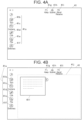
- FIG. 4A illustrates an example of the notebook screen 41 displayed on the display section 24 of the terminal device 20.
- the controller 11 of the server device 10 refers to the sticky note management table 124. In the case where the sticky note management data containing the notebook ID corresponding to the selected notebook is present, the controller 11 displays a sticky note 411 in the sticky note display area 41j within the notebook screen 41, as illustrated in FIG. 4B .
- the notebook menu 41a includes, for example, a text sticky note button 41b, a camera sticky note button 41c, a link sticky note button 41d, a file sticky note button 41e, and a dictionary sticky note button 41f.
- a text sticky note button 41b a text sticky note button 41b
- a camera sticky note button 41c a link sticky note button 41d
- a file sticky note button 41e a file sticky note button 41e
- a dictionary sticky note button 41f Each button contained in the notebook menu 41a is pressed when a user wants to paste and create an electronic sticky note into a notebook.
- the controller 11 of the server device 10 displays the sticky note editing screen 42 illustrated in FIG. 5A on the display section 24 of the terminal device 20 to accept editing.
- the controller 11 of the server device 10 activates the imaging section 27 of the terminal device 20 and causes the display section 24 of the terminal device 20 to display an arbitrary image captured by the imaging section 27 so that the image is editable.
- the controller 11 of the server device 10 activates the web browser of the terminal device 20 and causes the display section 24 of the terminal device 20 to display a sticky note with the linked uniform resource locator (URL) on the web so that the sticky note is editable.
- URL uniform resource locator
- the controller 11 of the server device 10 activates the file manipulation app of the terminal device 20 and causes the display section 24 to display an arbitrary file as a sticky note so that the file is editable.
- the controller 11 of the server device 10 activates the dictionary app on the terminal device 20, searches the dictionary database 126 for dictionary headwords and their description information, and causes the display section 24 to display the headwords and description information as sticky notes so that the dictionary is editable.
- a text sticky note created by pressing the text sticky note button 41b is used as an example.
- the text sticky note is created by handwritten input, stamp input, or text input.
- FIG. 6 illustrates an example of the layer structure of a sticky note.
- the data of the sticky note is composed of a creation handwriting layer La, a creation stamp layer Lb, and a text layer Lc.
- the creation handwriting layer La and the creation stamp layer Lb correspond to the first layer (creation layer).
- a correction handwriting layer Ld is added to the sticky note data.
- a correction stamp layer Le is added to the sticky note data.
- the correction handwriting layer Ld and the correction stamp layer Le correspond to the second layer (correction layer).
- the text layer Lc is a common layer used both for creating or modifying a sticky note and for correcting the sticky note. In other words, data corrected by text input is written in the text layer Lc.
- the creation handwriting layer La and the correction handwriting layer Ld correspond to image layers.
- the creation handwriting layer La (for example, the first image layer) and the correction handwriting layer Ld (for example, the second image layer) have different editing conditions depending on the editing mode. Specifically, the creation handwriting layer La is allowed to be edited when the editing mode is "creation mode.”
- the correction handwriting layer Ld is allowed to be edited when the editing mode is "correction mode.”
- the creation stamp layer Lb, the correction stamp layer Le, and the text layer Lc correspond to object layers.
- the creation stamp layer Lb (for example, the first object layer) and the correction stamp layer Le (for example, the second object layer) have different editing conditions depending on the editing mode. Specifically, the creation stamp layer Lb is allowed to be edited when the editing mode is "creation mode.”
- the correction stamp layer Le is allowed to be edited when the editing mode is "correction mode.”
- Locus data input by hand in the handwriting layer (the creation handwriting layer La, the correction handwriting layer Ld) is converted into an image and stored over a single piece of image data (image area) managed in the handwriting layer.
- Individual locus data imaged in the handwriting layer cannot be individually deleted, and are deleted as a part of the image data by using an eraser tool or the like.
- individual stamp data input to the stamp layer (the creation stamp layer Lb, the correction stamp layer Le) and individual text data input to the text layer (the text layer Lc) are managed as individual object data and are able to be individually deleted.
- FIG. 7 is a ladder chart illustrating the flow of example use of the lesson support function.
- the terminal device 20 used by the teacher is referred to as "teacher-side terminal device 20A" and the terminal device used by the student is referred to as "student-side terminal device 20B.”
- the controller 11 of the server device 10 displays the notebook screen 41 ( FIG. 4A ) on the display section 24 of the teacher-side terminal device 20A used by the teacher (Step S1). Specifically, after the teacher logs in, the teacher selects a target lesson from the lesson list 40a ( FIG. 3 ) on the lesson screen 40 (opens the lesson folder), by which the notebook screen 41 corresponding to the notebook created in the lesson folder opens.
- the login method and the procedure for opening the notebook screen are the same as those described above.
- the controller 11 of the server device 10 accepts the creation of the submission location (submission destination) of the issue on the teacher-side terminal device 20A (step S2). Specifically, when a Submit button 41h ( FIG. 4A ) in the notebook screen 41 is pressed through the teacher's operation from the operation section 23 in the teacher-side terminal device 20A, the controller 11 of the server device 10 displays an issue management screen 43 illustrated in FIG. 8A on the display section 24 of the teacher-side terminal device 20A.
- the controller 11 of the server device 10 displays a submission destination new creation screen (not illustrated) on the display section 24 of the teacher-side terminal device 20A.
- the teacher inputs a submission destination name, a deadline (date and time), and the like on the submission destination new creation screen through an operation of the operation section 23 of the teacher-side terminal device 20A.
- the controller 11 of the server device 10 associates the submission destination name, the deadline, and the like input by the teacher with the submission location ID and the user ID (issue creator user ID) corresponding to the teacher, and adds them to the submission location management table 125 as submission location management data (step S3).
- the controller 11 of the server device 10 accepts the creation of a sticky note for the issue on the teacher-side terminal device 20A (step S4). Specifically, when the text sticky note button 41b is pressed on the notebook screen 41 ( FIG. 4A ) through a teacher's operation of the operation section 23 of the teacher-side terminal device 20A, the controller 11 displays the sticky note editing screen 42 illustrated in FIG. 5A on the display section 24 of the teacher-side terminal device 20A. Then, the controller 11 accepts the editing of the sticky note content through a teacher's operation of the operation section 23 of the teacher-side terminal device 20A.
- the user When the text input button 42a is pressed on the sticky note editing screen 42, the user (teacher) is enabled to input the content of the sticky note as text in the input area 42d.
- the controller 11 of the server device 10 displays the stamp selection panel 42f illustrated in FIG. 9 on sticky note editing screen 42.
- Each stamp is an image such as a mark or a character string that is prepared in advance, and its position and size within the sticky note may be changed.
- the user teacher is able to select an arbitrary stamp from the stamp selection panel 42f and to place the selected stamp in the input area 42d of the sticky note editing screen 42.
- the handwriting selection panel 42g contains a pen type change button 421, an eraser button 422, a thickness change button 423, and a color change button 424.
- Pressing the pen type change button 421 enables selection of a pen type from among a normal pen, a marker pen, a straight line, and so on.
- Pressing the eraser button 422 enables erasing of a line drawn at the position of the pointer that moves according to the operation of the operation section 23 in the input area 42d.
- Pressing the thickness change button 423 enables change of the thickness of the handwritten line.
- Pressing the color change button 424 enables change of the color of a handwritten line.
- the controller 11 of the server device 10 stores the data of the sticky note for the issue in the storage section 12 and adds one new row of sticky note management data to the sticky note management table 124 (step S5). Specifically, the controller 11 stores information such as the notebook ID, the sticky note type, and the sticky note content in the sticky note management table 124, in association with the sticky note ID of the created sticky note, and updates the sticky note management table 124.
- the controller 11 of the server device 10 displays the sticky note 411 of the created issue in the sticky note display area 41j ( FIG. 4B ) in the notebook screen 41.
- the controller 11 of the server device 10 accepts to send the sticky note for the issue in the teacher-side terminal device 20A (step S6). Specifically, when the sticky note 411 is dragged and dropped onto a Send/Receive button 41i ( FIG. 4B ) on the notebook screen 41 by the teacher's operation on the operation section 23, the controller 11 displays a transmission destination specification screen (not illustrated) on the display section 24 of the teacher-side terminal device 20A.
- the teacher specifies the transmission destination on the transmission destination specification screen by the operation on the operation section 23 of the teacher-side terminal device 20A. For example, the teacher selects a student as a transmission destination from the transmission destination list or specifies all students in the class as transmission destinations.
- the controller 11 of the server device 10 When receiving a control signal, based on the teacher's operation of specifying the transmission destination, from the teacher-side terminal device 20A, the controller 11 of the server device 10 accepts to send a sticky note for the issue to the specified transmission destination (Step S7).
- the controller 11 stores the issue sticky note ID indicating the sticky note for the issue and the distribution destination user ID indicating the specified transmission destination, in association with the submission location ID corresponding to the issue, into the submission location management table 125.
- the controller 11 of the server device 10 displays the notebook screen 41 ( FIG. 4A ) on the display section 24 (Step S8). Specifically, when the student logs in and then selects a target lesson from the lesson list 40a on the lesson screen 40 (opens the lesson folder), the notebook screen 41 corresponding to the notebook created in the folder of the lesson opens.
- the login method and the procedure for opening the notebook screen are the same as described above.
- the controller 11 of the server device 10 accepts download of the sticky note for the issue on the student-side terminal device 20B (step S9).
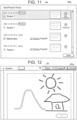
- the controller 11 of the server device 10 displays the send/receive history screen 44 illustrated in FIG. 11 on the display section 24 of the student-side terminal device 20B.
- the send/receive history screen 44 displays the sent/received date and time and information on an unacquired/acquired sticky note for each sticky note sent or received by the student (logged-in user).
- the controller 11 of the server device 10 adds the sticky note 411 for the issue to the sticky note display area 41j ( FIG. 4B ) in the notebook screen 41 and displays the sticky note 411 on the display section 24 of the student-side terminal device 20B.
- the controller 11 of the server device 10 acquires acquisition information indicating that the student has already acquired the sticky note (step S10).
- the controller 11 stores information that the issue has already been acquired, in association with the user ID (distribution destination user ID) of the student who downloaded the sticky note, into the submission location management table 125.
- step S11 the controller 11 of the server device 10 accepts the creation of the sticky note of the answer to the issue at the student-side terminal device 20B (step S11).
- the process of step S11 corresponds to a creation stage of the sticky note (the answer to the issue) by the student (the first user).
- the process of creating the sticky note of the answer is the same as the process of step S4, except that the creation is based on the operation by the student in the student-side terminal device 20B.
- FIG. 5B illustrates an example of the sticky note editing screen 42 displayed on the display section 24 of the student-side terminal device 20B.
- the student for example, writes a handwritten picture on the sticky note editing screen 42 by pressing the handwriting input button 42c, which is operated on the operation section 23.
- the edited content based on the student's operation is written into the creation handwriting layer La of the sticky note.
- the student may write his/her answer by hand in various issues, in such cases where the student is asked to write the process and result of a calculation to solve a problem for a mathematics issue, the student is asked to write an English composition for a language issue, and the like.
- the controller 11 of the server device 10 stores the data of the sticky note of the answer in the storage section 12 and adds one new row of sticky note management data to the sticky note management table 124 (step S12).
- the sticky note data of the answer is composed of a creation handwriting layer La, a creation stamp layer Lb, and a text layer Lc.
- controller 11 of the server device 10 accepts the submission of the sticky note of the answer at the student-side terminal device 20B (step S13).
- the student gives an instruction of submitting a sticky note by dragging and dropping the sticky note 411 (the sticky note of the answer) onto the Submit button 41h by the operation on the operation section 23 on the notebook screen 41 ( FIG. 4B ) displayed on the display section 24 of the student-side terminal device 20B.
- the controller 11 of the server device 10 Upon receiving a control signal based on the submission operation by the student from the student-side terminal device 20B, the controller 11 of the server device 10 accepts the submission of the sticky note of the answer to the submission location of the issue (step S14).
- the controller 11 stores information that the sticky note has already been submitted and the sticky note ID indicating the sticky note of the answer into the submission location management table 125, in association with the user ID (distribution destination user ID) of the student who submitted the sticky note of the answer.
- the controller 11 of the server device 10 displays the sticky note of the answer submitted by the student on the display section 24 of the teacher-side terminal device 20A (step S15). Specifically, as illustrated in FIG. 8B , the submitted sticky note 43b is displayed on the issue management screen 43 displayed on the display section 24 of the teacher-side terminal device 20A.
- the controller 11 of the server device 10 displays the sticky note screen 45 of the selected sticky note on the display section 24 of the teacher-side terminal device 20A, as illustrated in FIG. 12 .
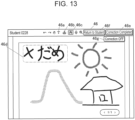
- the controller 11 of the server device 10 displays the sticky note correction screen 46 for the answer submitted by the student as illustrated in FIG. 13 on the display section 24 of the teacher-side terminal device 20A.
- step S16 the controller 11 of the server device 10 accepts the correction of the sticky note of the answer submitted by the student at the teacher-side terminal device 20A (step S16).
- step S16 corresponds to the correction stage of the sticky note (answer) by the teacher (the second user).
- the teacher is able to write corrections on the sticky note by pressing a text input button 46a, a stamp input button 46b, or a handwriting input button 46c in the sticky note correction screen 46 by the operation of the operation section 23.
- the operation methods of the text input button 46a, the stamp input button 46b, and the handwriting input button 46c are the same as those of the text input button 42a, the stamp input button 42b, and the handwriting input button 42c in the sticky note editing screen 42 ( FIG. 5A ).
- the correction information 46d which is written by the teacher by handwriting input, is added. Since this correction information 46d is written into the correction handwriting layer Ld of the sticky note, the correction operation by the teacher does not erase the contents created by the student (contents written into the creation handwriting layer La and the creation stamp layer Lb). On the other hand, the contents written by the teacher (contents written into the correction handwriting layer Ld and the correction stamp layer Le) may be corrected as appropriate.
- the controller 11 of the server device 10 saves the information added to the sticky note by the correction, into the correction layer (the correction handwriting layer Ld, the correction stamp layer Le).
- the controller 11 also saves the contents of the text input in the correction into the text layer Lc.
- the controller 11 of the server device 10 When the teacher presses a return button 46f on the sticky note correction screen 46 by the operation on the operation section 23 of the teacher-side terminal device 20A, the controller 11 of the server device 10 thereby accepts the return of the corrected sticky note to the student (step S17).
- the controller 11 of the server device 10 Upon receiving a control signal based on the return operation to the student by the teacher from the teacher-side terminal device 20A, the controller 11 of the server device 10 accepts the return of the corrected sticky note (Step S18) .
- the student downloads the corrected sticky note returned by the teacher on the student-side terminal device 20B (step S19).
- the controller 11 of the server device 10 displays a send/receive history screen (similar to the send/receive history screen 44 illustrated in FIG. 11 ) on the display section 24 of the student-side terminal device 20B.
- the controller 11 of the server device 10 adds and displays the corrected sticky note 411 to the sticky note display area 41j ( FIG. 4B ) in the notebook screen 41 on the display section 24 of the teacher-side terminal device 20B.
- the controller 11 of the server device 10 adds a new row of sticky note management data to the sticky note management table 124 (step S20).
- the controller 11 of the server device 10 accepts the modification of the corrected sticky note. This process corresponds to the modification stage of the sticky note (corrected answer) by the student (the first user).
- FIG. 14A illustrates an example of the sticky note editing screen 42 displayed on the display section 24 of the student-side terminal device 20B when the corrected sticky note is modified.
- the content of the sticky note is modified by adding modification information 42h written by the student by handwriting input. Since the modification information 42h is written into the creation handwriting layer La of the sticky note, the modification operation by the student does not erase the correction information 42i (contents written into the correction handwriting layer Ld and the correction stamp layer Le) that the teacher has written by correction. On the other hand, the contents written by the student (contents written into the creation handwriting layer La and the creation stamp layer Lb) may be corrected as appropriate.
- the sticky note editing screen 42 for the corrected sticky note has a correction OFF button 42j.
- the controller 11 of the server device 10 hides the correction information 42i ( FIG. 14A ) on the sticky note editing screen 42, as illustrated in FIG. 14B . This allows the student to confirm the state of the sticky note without the correction content.
- the sticky note editing screen 42 illustrated in FIG. 14B has a correction ON button 42k.
- the controller 11 of the server device 10 displays the correction information 42i on the sticky note editing screen 42 as illustrated in FIG. 14A .
- the controller 11 of the server device 10 overwrites the sticky note data of the answer stored in the storage section 12 over the modified contents when the student presses the save button 42e on the sticky note editing screen 42 displayed on the display section 24 of the student-side terminal device 20B.
- controller 11 of the server device 10 accepts resubmission of the sticky note of the answer at the student-side terminal device 20B.
- the student makes an instruction to resubmit the sticky note by dragging and dropping the sticky note 411 of the modified answer onto the Submit button 41h through the operation on the operation section 23.
- FIG. 15 illustrates an example of the sticky note correction screen 46 for the resubmitted answer, which is displayed on the display section 24 of the teacher-side terminal device 20A.
- the controller 11 of the server device 10 accepts the sticky note correction for the answer resubmitted by the student at the teacher-side terminal device 20A. This process corresponds to the re-correction stage of the sticky note (modified answer) by the teacher (the second user).
- the teacher writes corrections on the sticky note by pressing the text input button 46a, the stamp input button 46b, and the handwriting input button 46c in the sticky note correction screen 46 through the operation on the operation section 23 of the teacher-side terminal device 20A.
- the information is rewritten to the new correction information 46h, which was written by the teacher by handwriting input. Since this correction information 46h is written into the correction handwriting layer Ld of the sticky note, the correction operation by the teacher does not erase the contents created or modified by the student (contents written in the creation handwriting layer La and the creation stamp layer Lb). On the other hand, the contents written by the teacher (contents written in the correction handwriting layer Ld and the correction stamp layer Le) may be modified as appropriate.
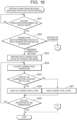
- FIGS. 16 and 17 are flowcharts illustrating the editing conditions decision process for sticky note editing executed on the server device 10. Note that the user who uses the terminal device 20 may be either a teacher or a student.
- the controller 11 of the server device 10 determines whether an editing operation is performed on the sticky note by the user's operation on the operation section 23 of the terminal device 20 (step S21).
- the editing operation on the sticky note includes creating a new sticky note, correcting a sticky note, and modifying a sticky note.
- step S21 In the case where no editing operation is performed on the sticky note (step S21; NO), the process returns to step S21.
- the controller 11 determines whether the editing operation is the pressing operation of the correction button 45a on the sticky note screen 45 ( FIG. 12 ) or the editing operation on the notebook (step S22).
- the editing operation on the notebook means the editing operation on the sticky note selected on the notebook screen 41 ( FIG. 4B ).
- the controller 11 decides to set the editing mode for the sticky note to "correction mode" and to write the edited content based on the operation on the terminal device 20 into the correction layer (the correction handwriting layer Ld, the correction stamp layer Le) of the sticky note (step S23).
- the text layer Lc is a common layer in the creation mode and the correction mode, and therefore, when inputting a text for the sticky note, a user writes the text into the text layer Lc.
- the controller 11 decides the layers that are allowed for editing for the user to be the correction handwriting layer Ld, the correction stamp layer Le, and the text layer Lc.
- the controller 11 displays the sticky note correction screen 46 (for example, FIG. 13 ) on the display section 24 of the terminal device 20, and accepts the correction operation through a user's operation on the operation section 23 of the terminal device 20 (step S24).
- the sticky note correction screen 46 for example, FIG. 13
- the controller 11 determines whether the display of the correction content is set to ON in the sticky note correction screen 46 (step S25).
- the sticky note correction screen 46 either the "correction OFF button” or the “correction ON button” is displayed, and both buttons are toggle buttons.
- the controller 11 overlays the correction layer on the creation layer of the sticky note to be edited and displays the layers on the display section 24 of the terminal device 20 (step S26). Specifically, the controller 11 overlays the creation handwriting layer La, the creation stamp layer Lb, the text layer Lc, the correction handwriting layer Ld, and the correction stamp layer Le, and then displays the layers on the display section 24 of the terminal device 20. In this case, as illustrated in FIG. 13 , a correction OFF button 46g is displayed on the sticky note correction screen 46, so that the display of the correction content is able to be changed to the OFF state.
- the controller 11 displays only the creation layer of the sticky note to be edited on the display section 24 of the terminal device 20, and hides the correction layer (step S27). Specifically, the controller 11 overlays the creation handwriting layer La, the creation stamp layer Lb, and the text layer Lc and displays the layers on the display section 24 of the terminal device 20. In this case, the correction ON button (not illustrated) is displayed on the sticky note editing screen 42, so that the display of the correction content is able to be changed to the ON state.
- step S26 or step S27 the controller 11 determines whether there is received an instruction to terminate the editing operation (correction operation) for the sticky note at the terminal device 20 by a user's operation on the operation section 23 of the terminal device 20 (step S28). Specifically, the controller 11 determines whether the correction completion button 46e on the sticky note correction screen 46 is pressed.
- step S28 In the case where there is no instruction to terminate the editing operation for the sticky note (step S28; NO), the process returns to step S24.
- step S22 in the case where the editing operation for the sticky note is an editing operation on the notebook (step S22; editing on the notebook), moving on to FIG. 17 , the controller 11 decides to set the editing mode for the sticky note to "creation mode" and to write the edited content based on the operation from the terminal device 20 into the creation layer (the creation handwriting layer La, the creation stamp layer Lb) of the sticky note (step S29).
- the text layer Lc is a layer common to both the creation mode and the correction mode, and therefore when text is input to a sticky note, the text is written into the text layer Lc.
- the controller 11 decides the layers that are allowed for editing for the user to be the creation handwriting layer La, the creation stamp layer Lb, and the text layer Lc.
- the controller 11 determines whether the sticky note to be edited has been corrected in the past (step S30). For example, the controller 11 determines that the sticky note to be edited has been corrected in the past in the case where a correction layer (the correction handwriting layer Ld, the correction stamp layer Le) is present in the sticky note to be edited. A flag indicating whether a sticky note has been corrected may also be used to manage whether the sticky note has been corrected in the past.
- a correction layer the correction handwriting layer Ld, the correction stamp layer Le
- the controller 11 displays the sticky note editing screen 42 ( FIG. 14A, FIG. 14B ) on the display section 24 of the terminal device 20, and accepts a modification operation through a user's operation on the operation unit 23 of the terminal device 20 (step S31).
- the controller 11 determines whether the display of the correction content is set to ON in the sticky note editing screen 42 (step S32).
- the controller 11 overlays the correction layer on the creation layer of the sticky note to be edited and displays the layers on the display section 24 of the terminal device 20 (step S33). Specifically, the controller 11 overlays the creation handwriting layer La, the creation stamp layer Lb, the text layer Lc, the correction handwriting layer Ld, and the correction stamp layer Le, and then displays the layers on the display section 24 of the terminal device 20. In this case, as illustrated in FIG. 14A , the correction OFF button 42j is displayed on the sticky note editing screen 42, so that the display of the correction content is able to be changed to the OFF state.
- the controller 11 displays only the creation layer of the sticky note to be edited in the display section 24 of the terminal device 20 and hides the correction layer (step S34). Specifically, the controller 11 overlays the creation handwriting layer La, the creation stamp layer Lb, and the text layer Lc and displays the layers on the display section 24 of the terminal device 20. In this case, as illustrated in FIG. 14B , the correction ON button 42k is displayed on the sticky note editing screen 42, so that the display of the correction content is able to be changed to the ON state.
- step S33 or step S34 the controller 11 determines whether there is received an instruction to terminate the editing operation for the sticky note at the terminal device 20 by a user's operation on the operation section 23 of the terminal device 20 (step S35).
- step S35 In the case where there is received no instruction to terminate the editing operation for the sticky note (step S35; NO), the process returns to step S31.
- step S30 the controller 11 displays the sticky note editing screen 42 ( FIG. 5A, FIG. 5B ) on the display section 24 of the terminal device 20, and accepts the creation operation or the modification operation for the sticky note through a user's operation on the operation section 23 of the terminal device 20 (step S36).
- the controller 11 determines whether there is received an instruction to terminate the editing operation for the sticky note at the terminal device 20 by a user's operation on the operation section 23 of the terminal device 20 (step S37).
- step S37 In the case where there is received no instruction to terminate the editing operation for the sticky note (step S37; NO), the process returns to step S36.
- the editing conditions decision process for the sticky note editing ends in the case where there is received an instruction to terminate the editing operation for the sticky note in step S28 (step S28; YES), in the case where there is received an instruction to terminate the editing operation for the sticky note in step S35 (step S35; YES), or in the case where there is received an instruction to terminate the editing operation for the sticky note in step S37 (step S37; YES).
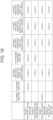
- FIG. 18 illustrates an example of layers to write on at each situation for each user's editing of a sticky note.
- step S22 of FIG. 16 corresponds to "editing on the notebook," and therefore the destinations to write the edited content based on the operation from the terminal device 20 are the creation handwriting layer La, the creation stamp layer Lb, and the text layer Lc.
- the Submit button 41h is pressed on the notebook screen 41 ( FIG. 4A, FIG. 4B ) displayed on the display section 24 of the terminal device 20, first, by which the issue management screen 43 ( FIG. 8B ) is displayed. Selecting the sticky note to be corrected on the issue management screen 43 causes the sticky note screen 45 ( FIG. 12 ) to be displayed on the display section 24 of the terminal device 20. Pressing the correction button 45a in the sticky note screen 45 causes the sticky note correction screen 46 ( FIG. 13 ) to be displayed.
- step S22 of FIG. 16 corresponds to "pressing the correction button,” and therefore the destinations to write the edited content based on the operation from the terminal device 20 are the correction handwriting layer Ld, the correction stamp layer Le, and the text layer Lc.
- Teacher 2 is other than the teacher who made the first correction.
- Student 2 is a student who got a corrected sticky note. "Getting a sticky note” means that a sticky note created by another user is made available to the user through the sticky note keeping function, sending/receiving function, share function, and so on.
- the Submit button 41h is pressed, first, on the notebook screen 41 ( FIG. 4A, FIG. 4B ) displayed on the display section 24 of the terminal device 20, by which the issue management screen 43 ( FIG. 8B ) is displayed. Selecting the corrected sticky note and then pressing an acquisition button 43c on the issue management screen 43 causes the selected sticky note to be added onto the notebook screen 41. Giving an instruction to edit the sticky note on the notebook screen 41 causes the sticky note editing screen 42 (for example, FIG. 14A ) to be displayed.
- step S22 of FIG. 16 corresponds to "editing on the notebook," and therefore the destinations to write the edited content based on the operation from the terminal device 20 are the creation handwriting layer La, the creation stamp layer Lb, and the text layer Lc.
- the operator is Teacher 1 (a person who corrects the sticky note) or Teacher 2 (a second person who corrects the sticky note).
- the process "in re-correcting the sticky note” is basically the same as the process "in correcting a sticky note.”
- step S22 of FIG. 16 corresponds to the “pressing the correction button,” and therefore the destinations to write the edited content based on the operation from the terminal device 20 are the correction handwriting layer Ld, the correction stamp layer Le, and the text layer Lc.
- the user drags and drops the sticky note 411 onto the Keep button 41g through an operation of the operation section 23 to make an instruction to keep the sticky note.
- one of the following folders may be selected: my folder, a school shared folder, and a teacher shared folder.
- My folder is a folder dedicated for the user himself/herself, and only the user himself/herself is allowed to upload to and download from the folder.
- the school shared folder is a shared folder for all teachers and all students who belong to the same school, and all teachers are allowed to upload to and download from the shared folder, while students are allowed only to download from the shared folder.
- the teacher shared folder is a shared folder for all teachers who belong to the same school, and all teachers are allowed to upload to and download from the folder, but the teacher shared folder is not displayed to students.
- the Keep button 41g is pressed, first, on the notebook screen 41 ( FIG. 4A, FIG. 4B ) displayed on the display section 24 of the terminal device 20, by which the sticky note keeping screen 47 illustrated in FIG. 19 is displayed.
- sticky notes kept in the selected folder are displayed.
- sticky notes 471 and 472 kept in my folder 47a are displayed in the sticky note display area 47d.
- the sticky note editing screen 42 (for example, FIG. 14A ) is displayed.
- step S22 of FIG. 16 corresponds to "editing on the notebook," and therefore the destinations to write the edited content based on the operation from the terminal device 20 are the creation handwriting layer La, the creation stamp layer Lb, and the text layer Lc.
- the sending/receiving function is not limited to distributing the sticky note of an issue, but also includes allowing a user to send a sticky note to an arbitrary user by specifying a destination where the sticky note is sent, so that the user on the receiving end is able to download the sticky note.
- the controller 11 of the server device 10 accepts to send the sticky note to the specified transmission destination user.
- the Send/Receive button 41i is pressed, first, on the notebook screen 41 ( FIG. 4A, FIG. 4B ) displayed on the display section 24 of the terminal device 20 of the user who received the sticky note, by which a send/receive history screen (similar to the send/receive history screen 44 illustrated in FIG. 11 ) is displayed. Pressing the download button corresponding to the corrected sticky note on the send/receive history screen adds the selected sticky note onto the notebook screen 41.
- the sticky note editing screen 42 for example, FIG. 14A ) is displayed.
- step S22 of FIG. 16 corresponds to "editing on the notebook," and therefore the destinations to write the edited content based on the operation from the terminal device 20 are the creation handwriting layer La, the creation stamp layer Lb, and the text layer Lc.
- the user who is a publisher gives an instruction to publish the notebook on the notebook screen 41 ( FIG. 4B ) displayed on the display section 24 of the terminal device 20 through the operation on the operation section 23. Then, the notebook at that time for publication is saved and a URL for publication to other users is issued.
- the user who is a publisher communicates the URL to the users to whom the notebook is to be published by some means (for example, by sending e-mails or the like).
- the display section 24 of the terminal device 20 displays the notebook screen 41 ( FIG. 4B ) containing the sticky note.
- the users at the publication destinations are enabled to acquire the corrected sticky note from "Share,” by which the users are able to share the sticky note.
- the procedure for publishing a notebook of one user to other users in the share function is not limited to the above example.
- step S22 of FIG. 16 corresponds to "editing on the notebook," and therefore the destinations to write the edited content based on the operation from the terminal device 20 are the creation handwriting layer La, the creation stamp layer Lb, and the text layer Lc.
- the controller 11 of the server device 10 selects "creation mode” as the editing mode when a user with the attribute "student” is in the editing stage (creation stage) to create a new sticky note for an answer to an issue. Then, the controller 11 allows editing of the sticky note on the creation handwriting layer La, the creation stamp layer Lb, and the text layer Lc as editing conditions according to the "creation mode.”
- the controller 11 selects "correction mode” as the editing mode when a user with the attribute "teacher” is in the editing stage (correction stage) to correct the sticky note for an answer. For example, the controller 11 may determine that the current stage is the first correction stage on the basis of the absence of the correction handwriting layer Ld and the correction stamp layer Le in the sticky note data and a fact that the user attribute is "teacher.” Then, the controller 11 allows editing on the correction handwriting layer Ld, the correction stamp layer Le, and the text layer Lc as the editing conditions according to the "correction mode.”
- the controller 11 selects "creation mode" as the editing mode when a user with the attribute "student” is in the editing stage (modification stage) to modify a corrected sticky note. For example, the controller 11 may determine that the current stage is the modification stage for the corrected sticky note on the basis of the presence of the correction handwriting layer Ld and the correction stamp layer Le in the sticky note data and a fact that the user attribute is "student.” Then, the controller 11 allows editing of a sticky note on the creation handwriting layer La, the creation stamp layer Lb, and the text layer Lc as the editing conditions according to the "creation mode.”
- the controller 11 selects "correction mode" as the editing mode when a user with the attribute "teacher” is in the editing stage (re-correction stage) to re-correct a sticky note that has already been modified. For example, the controller 11 may determine that the current stage is the re-correction stage on the basis of the presence of the correction handwriting layer Ld and the correction stamp layer Le in the sticky note data and a fact that the user attribute is "teacher.” Then, the controller 11 allows editing of the correction handwriting layer Ld, the correction stamp layer Le, and the text layer Lc as the editing conditions according to the "correction mode.”
- the controller 11 selects the editing mode (the creation mode, the correction mode) according to the approach method used when a sticky note is to be edited through an operation of the terminal device 20, and decides the editing conditions of the sticky note for the user according to the selected editing mode, thereby avoiding unintended editing of the sticky note (target data). For example, when a user is to correct a sticky note, the editing is distinguished from normal editing by limiting the range of allowed editing, thereby avoiding unintended parts from being erased.
- the editing mode the creation mode, the correction mode
- the user-machine interaction process is able to reliably support the user in performing technical tasks (performing edits without erasing unintended parts).
- the editing screen to which the screen is able to be moved through an operation may be varied, or the type of allowed editing and the selection candidates for the procedure or operation content may be varied, depending on whether the user is a teacher or a student.
- the controller 11 of the server device 10 selects the editing mode according to which editing stage the editing operation of the sticky note from the terminal device 20 is in among the plurality of editing stages and decides the editing conditions of the sticky note according to the selected editing mode, thereby avoiding unintentional editing of a sticky note (target data).
- the editing mode is able to be selected according to which of the following editing stages the editing operation on the sticky note is in: the creation stage by a student, the correction stage by a teacher, the modification stage by a student, and the re-correction stage by a teacher.
- the sticky note (target data) is managed in a plurality of layers with different edited contents.
- the controller 11 of the server device 10 decides the editing conditions of the sticky note by deciding the layers that are allowed to be edited among the plurality of layers according to the selected editing mode.
- the sticky note (target data) is managed by dividing the layers into the first layer (creation layer) used for creation or modification and the second layer (correction layer) used for correction of the sticky note, thereby avoiding editing on other layers by dividing the writing destinations.
- the sticky note is able to be repeatedly corrected or modified without changing the contents of other layers.
- the controller 11 of the server device 10 automatically decides the layers to write on through an operation of the terminal device 20 according to the approach method (how to enter the screen to edit the sticky note) when the sticky note is to be edited. Therefore, the user does not need to consciously specify the layer on which the edited content is written.
- the layers are simply divided according to usage, and therefore the number of required layers does not increase even in the case of an increase in the number of users who edit the sticky note.
- the controller 11 of the server device 10 decides the second layer as the destination of writing by editing a sticky note when an instruction is made to correct the sticky note through an operation of the terminal device 20, thereby enabling prohibition of editing on the first layer when the user is trying to correct the sticky note. This prevents, for example, the teacher from accidentally erasing the original data (content created by the student) that is the subject of correction when correcting.
- the controller 11 of the server device 10 decides the first layer as the writing destination by editing on the sticky note when an instruction is given to perform editing other than correction (normal editing) on the sticky note through an operation of the terminal device 20, thus prohibiting editing on the second layer when the user is to perform editing other than correction. This prevents, for example, the student from accidentally erasing the correction content added by the teacher to the sticky note when the student modifies the sticky note.
- the controller 11 of the server device 10 is able to switch between a state in which the first and second layers overlap each other and a state in which only the first layer is displayed, as desired, by switching the display or non-display of the second layer (correction content) on the display unit 24 through an operation of the terminal device 20. This also allows the user to confirm the state in which the correction content is not displayed.
- target data a student who creates a sticky note (target data) and a teacher who corrects the sticky note (target data) use the lesson support function provided by the server device 10, thereby avoiding unintended editing when an answer to an issue or the like is used as target data.
- the layer structure in the sticky note data is maintained even through the keeping function, the sending/receiving function, and so on. Therefore, when a user other than the student who created the sticky note and the teacher who first corrected the sticky note handles the sticky note, the first layer (creation layer) is used to modify the sticky note, and the second layer (correction layer) is used to correct the sticky note.
- controller 11 of the server device 10 is able to avoid unintentional editing by deciding whether to allow editing of image layers that are managed as a single piece of image data that has been imaged, according to the selected editing mode.
- the editing conditions may be changed for the first image layer (for example, the creation handwriting layer La) and the second image layer (for example, the correction handwriting layer Ld), according to the user attribute (teacher, student, or the like) and the editing stage (the creation stage, the correction stage, the modification stage, or the like).
- the controller 11 of the server device 10 is also able to avoid unintentional editing of object layers by deciding whether to allow editing according to the selected editing mode.
- the editing conditions may be changed for the first object layer (for example, the creation stamp layer Lb) and the second object layer (for example, the correction stamp layer Le), according to the user attribute (teacher, student, or the like) and the editing stage (the creation stage, the correction stage, the modification stage, or the like).
- the first object layer for example, the creation stamp layer Lb
- the second object layer for example, the correction stamp layer Le
- the editing stage the creation stage, the correction stage, the modification stage, or the like.
- the controller 11 of the server device 10 is able to generate layers (the correction handwriting layer Ld, the correction stamp layer Le) corresponding to a specific editing mode, as needed. Moreover, the controller 11 is able to determine whether an editing operation is performed in the specific editing mode by the presence or absence of the layer corresponding to the specific editing mode.
- the text layer Lc is described as a common layer used for both creating or modifying a sticky note and correcting the sticky note.
- a creation text layer used for creating or modifying a sticky note may be provided separately from a correction text layer used for correcting the sticky note.
Landscapes
- Engineering & Computer Science (AREA)
- Theoretical Computer Science (AREA)
- Physics & Mathematics (AREA)
- General Physics & Mathematics (AREA)
- Business, Economics & Management (AREA)
- Educational Administration (AREA)
- Educational Technology (AREA)
- Management, Administration, Business Operations System, And Electronic Commerce (AREA)
- Electrically Operated Instructional Devices (AREA)
Abstract
An information processing device that manages target data able to be shared and edited by a plurality of users, includes a controller that selects an editing mode according to which of a plurality of editing stages the target data is in, when the target data is edited step by step by the plurality of users, and that decides editing conditions of the target data according to the selected editing mode.
Description
- This disclosure relates to an information processing device, an information processing method, and a program.
- Conventionally, learning support systems have been used to share various information such as answers to issues and correction results thereof between teachers and students using computer network systems.
- For example, there has been proposed a system in which a participant generates a handwriting image showing the participant's handwriting written with an electronic pen in a participant unit, and in which an instructor inputs correction information while the handwriting image is displayed in an instructor unit. In this system, the correction information input by the instructor is displayed in a different area from the handwriting image generated by the participant's handwriting (For example,
Japanese Unexamined Patent Application Publication No. 2012-198363 - Since it is difficult to recognize the correction target position in the above display method, there may be considered a method in which a teacher (instructor) writes the correction contents in the same area as the student's (learner's) answers. This enables the teacher to specify correction target positions on the answers and to add comments and marks.
- If, however, the teacher is allowed to perform all kinds of edits, including modification and deletion, on data of the answer created by the student, there has been a risk that the teacher might accidentally erase the content that the student had written. In particular, it was difficult to restore the content written by the student using a hand-writing tool (freehand) once the content had been erased. Therefore, when a plurality of users edits a single target data, it is desirable to have a function of preventing users' unintentional editing.
- The present disclosure was made in view of the above problems in the conventional techniques, and an object of the present disclosure is to avoid unintentional editing on target data.
- An information processing device according to this disclosure is an information processing device that manages target data able to be shared and edited by a plurality of users, the device including a controller that selects an editing mode according to which of a plurality of editing stages the target data is in when the target data is edited step by step by the plurality of users and that decides editing conditions of the target data according to the selected editing mode.
-
-
FIG. 1 is a diagram illustrating an example configuration of an information processing system according to an embodiment of the present disclosure. -
FIG. 2 is an example configuration of a database provided in a storage of a storage section of a server device. -
FIG. 3 is an example of a lesson screen. -
FIG. 4A is an example of a notebook screen. -
FIG. 4B is an example of a notebook screen with sticky notes displayed in a sticky note display area. -
FIG. 5A is an example of a sticky note editing screen. -
FIG. 5B is an example of the sticky note editing screen under creation. -
FIG. 6 is a diagram illustrating an example of a layer structure of a sticky note. -
FIG. 7 is a ladder chart illustrating the flow of example use of a lesson support function. -
FIG. 8A is an example of an issue management screen. -
FIG. 8B is an example of an issue management screen on which a sticky note that has already been submitted is displayed. -
FIG. 9 is an example of a stamp selection panel. -
FIG. 10 is an example of a handwriting selection panel. -
FIG. 11 is an example of a send/receive history screen. -
FIG. 12 is an example of a sticky note screen. -
FIG. 13 is an example of a sticky note correction screen. -
FIG. 14A is an example of a sticky note editing screen for modifying a corrected sticky note. -
FIG. 14B is an example of a sticky note editing screen with a hidden correction content. -
FIG. 15 is an example of a sticky note correction screen for re-correcting a resubmitted answer. -
FIG. 16 is a flowchart illustrating an editing conditions decision process for sticky note editing. -
FIG. 17 is a flowchart illustrating an editing conditions decision process for sticky note editing. -
FIG. 18 is a diagram illustrating an example of layers to write on at each situation for each user's editing of a sticky note. -
FIG. 19 is an example of a sticky note keeping screen. - Hereinafter, embodiments of an information processing system according to this disclosure are described in detail with reference to the drawings. The embodiments described below are subject to various technically preferable limitations to implement the present disclosure, but the technical scope of the present disclosure is not limited to the following embodiments and illustrated examples.
- In this embodiment, the information processing system is assumed to be used by teachers and students in a school. Note that schools are not limited to regular elementary schools, junior high schools, high schools, and universities, but also include vocational schools, tutoring schools, university preparatory schools, and so on.
-
FIG. 1 illustrates an example configuration of aninformation processing system 100 according to this embodiment. - The
information processing system 100 includes aserver device 10, which is an information processing device, and a plurality ofterminal devices 20. Theserver device 10 and respectiveterminal devices 20 are connected to each other via anetwork 30 in a data-communicatable manner. - The
terminal device 20 is used by each user (teacher, student). Theterminal device 20 may be any of a personal computer, a portable terminal device such as a tablet, or a mobile communication device such as a smart phone. The number ofterminal devices 20 is not particularly limited. - The
network 30 may be any telecommunications network such as, for example, the Internet, a wireless LAN (local area network), a wired LAN, a mobile communication network, a short-distance wireless communication network, or a combination of some or all of the above. - The
server device 10 includes acontroller 11, astorage section 12, acommunication section 13, and so on. These components are connected to each other via asystem bus 14. - The
controller 11 includes a central processing unit (CPU), a random access memory (RAM), and so on to control each part of theserver device 10. Specifically, thecontroller 11 reads a specified program among the system programs and application programs stored in thestorage section 12, expands the specified program to the RAM, and performs various processes according to the specified program. - For example, the
controller 11 generates a control signal to cause thedisplay section 24 of theterminal device 20 to perform the display related to the result of the application program execution according to the result of the application program execution, and sends the control signal to theterminal device 20 via thecommunication section 13. - The
storage section 12 is composed of, for example, a hard disk drive (HDD), a solid state drive (SSD), an electrically erasable programmable read only memory (EEPROM), and the like. - The
storage section 12 stores data necessary for execution of the recording media, such as the system programs and application programs executed by thecontroller 11. -
FIG. 2 illustrates an example configuration of adatabase 121 provided in the storage of thestorage section 12. - The
database 121 includes a user management table 122, a notebook management table 123, a sticky note management table 124, a submission location management table 125, adictionary database 126, and so on. - The user management table 122 manages information related to a user (for example, a teacher, a student, or the like) who uses a learning support application (hereinafter, referred to as "learning support app"), which is an information processing service provided by the
information processing system 100. The user management table 122 stores information such as a user ID, a password, a user name, a school ID, an e-mail address, a user type, a class affiliation, an age, a gender, and a location, which are associated with each other, for each user. The data indicating information kept in the user management table 122 is also referred to as user management data. When a new user is registered, a new row of user management data is added to the user management table 122. - The user ID is a unique identification information assigned to each user. The password is registered by a user. The user name is a registered user's name. The school ID is identification information of a school to which the user belongs. The e-mail address is used by the registered user. The user type, the class affiliation, the age, the gender, and the location are attribute information for each user. The user type in the above is information such as a student, a teacher, or the like. The class affiliation is set on the class to which the user belongs (for example,
class 1 of the 1st grade or the like), which is set when the user type is a student. The location is the user's address, residence, or the like. - The notebook management table 123 is used to manage information on notebooks created by a user in the learning support application. In the notebook management table 123, information such as a notebook ID, a user ID, and a lesson ID are stored in association with each other for each notebook created by the user. The data that indicates information kept in the notebook management table 123 is also referred to as the notebook management data. When a new notebook is created, a new row of notebook management data is added to the notebook management table 123.
- The notebook ID is identification information assigned to each notebook. The user ID is identification information of the user who created the notebook. The lesson ID is identification information of a lesson to which the notebook belongs.
- The sticky note management table 124 manages information on electronic sticky notes (hereinafter, also simply referred to as "sticky notes") created by a user in a learning support application. The sticky note management table 124 stores information such as a sticky note ID, a notebook ID, a sticky note type, and a sticky note content associated with each other for each user-created sticky note. Data that indicates information kept in the sticky management table 124 is also referred to as sticky note management data. When a new sticky note is created, a new row of sticky note management data is added to the sticky note management table 124.
- The sticky note ID is unique identification information assigned to each sticky note. The notebook ID is identification information of the notebook in which each sticky note is displayed, and corresponds to the notebook ID contained in the notebook management data kept in the notebook management table 123. The sticky note type is information indicating the type of the sticky note, such as a text sticky note, a camera sticky note, a link sticky note, a file sticky note, a dictionary sticky note, or the like. The sticky note content is information indicating the content of a sticky note, such as a character string, an image, or a video. The sticky note content may also include information about display settings of each sticky note in the notebook, such as a display position, a display size, or a display color.
- The submission location management table 125 is used to manage information about submission locations of answers (sticky notes) to issues created by users in a learning support app. In the submission location management table 125, information such as a submission location ID, a submission destination name, a deadline, an issue creator user ID, an issue sticky note ID, a distribution destination user ID, and so on are stored in association with each other for each submission location. Data that indicates information kept in the submission location management table 125 is also referred to as submission location management data. When a new submission location is created, a new row of submission location management data is added to the submission location management table 125.
- The submission location ID is a unique identification information assigned to each submission location management data. The submission destination name is the name of a submission destination (submission location). The deadline is the deadline for submitting an answer to an issue. The issue creator user ID is identification information of a user (teacher) who created a submission location and an issue (sticky note). The issue sticky note ID is identification information of a sticky note created as an issue. The distribution destination user ID is identification information of a user specified as a distribution destination of the issue (a student who is to create an answer to the issue). A plurality of distribution destination user IDs may be specified.
- Moreover, the submission location management table 125 contains records of information indicating whether the user (student) has already acquired (downloaded) the issue, information indicating whether the user (student) has already submitted the answer, and the sticky note ID indicating the sticky note of the answer created by the user.
- The
dictionary database 126 stores dictionary data for Japanese-language dictionaries, English-Japanese dictionaries, German-Japanese dictionaries, French-Japanese dictionaries, and so on, in which each headword (word) is associated with its explanatory text including its part of speech, meaning, etymology, and examples of use. - The
communication section 13 includes a network interface card (NIC) and so on to access thenetwork 30 to perform telecommunications with external devices. - The
controller 11 generates an area (notebook) in which a user inputs and display arbitrary information in response to an operation of anoperation section 23 of theterminal device 20, and displays the notebook on thedisplay section 24 of theterminal device 20. - The
controller 11 generates an electronic sticky note in response to an operation from theoperation section 23 of theterminal device 20 on the notebook, and displays the electronic sticky note on the notebook. - An electronic sticky note is a display object that contains information that a user wants to write down. The electronic sticky note is displayed at an arbitrary position in the display area (notebook), and is able to be created, in addition to adding a content to the content of the electronic sticky note, modifying or deleting the content, moving to another display position, or the like, according to a user's operation. The shape, size, color, or the like of the electronic sticky note may also be changed.
- The
controller 11 manages sticky notes as target data able to be shared and edited by a plurality of users. In this embodiment, the target data is data shared by the plurality of users as electronic sticky notes. - The
controller 11 selects an editing mode according to an approach method used when the sticky note is to be edited by each of the plurality of users through an operation of theterminal device 20 corresponding to the user, and then, according to the selected editing mode, thecontroller 11 decides the editing conditions of the sticky note for the user. The approach method means the procedure for moving to the screen for editing the sticky note, the contents of the operation, and the like. - In this embodiment, the editing mode for correcting the sticky note is referred to as "correction mode," and the editing mode for editing the sticky note other than correcting the sticky note is referred to as "creation mode."
- The approach method includes a plurality of approach methods in which the procedure or the operation content used when moving to the editing screen for editing the sticky note (target data) differs according to a user attribute and an editing type.
- The
controller 11 selects an editing mode that differs according to the difference in the approach method. - When the plurality of users edits a sticky note (target data) step by step, the
controller 11 selects an editing mode according to which of a plurality of editing stages the sticky note (target data) is in, and decides the editing conditions of the sticky note according to the selected editing mode. - The plurality of editing stages includes at least a plurality of stages of a creation stage, a correction stage, a modification stage, and a re-correction stage.
- The creation stage is a stage in which a first user creates a sticky note (target data).
- The correction stage is a stage after the creation stage, in which the sticky note is corrected by a second user who is different from the first user.
- The modification stage is a stage after the correction stage, in which the first user modifies the sticky note.
- The re-correction stage is a stage after the modification stage, in which the second user re-corrects the sticky note.
- The sticky note (target data) is, for example, data in which a student's answer to an issue submitted by a teacher is input.
- In this case, the plurality of editing stages includes: a creation stage of a sticky note as a student's answer to an issue; an editing stage of the sticky note as teacher's correction to the student's answer; and an editing stage of the sticky note as student's modification to the correction.
- In this specification, the sticky note (target data) is managed in a plurality of layers, each with different edited content.
- For each of the plurality of users, the
controller 11 decides the editing conditions of the sticky note by deciding which of the plurality of layers is allowed to be edited according to the selected editing mode. - For example, the plurality of layers that constitutes the sticky note includes a first layer and a second layer.
- The first layer is a creation layer used to create or modify the sticky note.
- The second layer is a correction layer used to correct the sticky note. The second layer is a layer that is added when the sticky note is corrected, and is not present before the correction.
- When an instruction is made to correct a sticky note by an operation from the
terminal device 20, thecontroller 11 decides the second layer as a layer to write on by editing the sticky note. For example, a case in which a user who is a teacher corrects a sticky note (target data) created by a user who is a student is assumed. - When an instruction is made to edit (normally edit) a sticky note other than to correct the sticky note through an operation of the
terminal device 20, thecontroller 11 decides the first layer as a layer to write on by editing the sticky note. For example, a case in which a user who is a student creates or modifies a sticky note (target data) is assumed. - The
controller 11 displays the first layer and the second layer overlaid each other on thedisplay section 24 of theterminal device 20, and switches between the display and the non-display of the second layer (correction content) through a user operation from theterminal device 20. - The plurality of layers constituting a sticky note includes an image layer and an object layer.
- The image layer is a layer in which a plurality of input data is managed as a single piece of image data and new input data in an imaged state is overlaid on the single piece of image data so that the new input data is stored in a form where the new input data cannot be individually deleted. The image layer is, for example, a layer where handwritten data is input.
- The object layer is a layer in which the plurality of input data is managed as individual object data and the new input data is stored in a form in which the new input data is able to be individually deleted. The object layer is, for example, a layer to which stamp data or text data is input.
- The
controller 11 decides whether to allow editing of at least the image layer, depending on the selected editing mode. - The
controller 11 may also decide whether to allow editing for both the image layer and the object layer, depending on the selected editing mode. - The image layer includes a first image layer and a second image layer with different editing conditions according to the selected editing mode.
- The object layer includes a first object layer and a second object layer with different editing conditions according to the selected editing mode.
- Some of the plurality of layers that constitute a sticky note are not present before an editing operation in a specific editing mode is performed, and are generated in response to the editing operation in the specific editing mode. The editing operation in the specific editing mode is, for example, a correction.
- The
terminal device 20 includes acontroller 21, astorage section 22, anoperation section 23, adisplay section 24, acommunication section 25, an audio input/output section 26, animaging section 27, and so on. These components are connected to each other via asystem bus 28. - The
controller 21 has a CPU, a RAM, and the like, and controls each section of theterminal device 20. Specifically, thecontroller 21 reads a specified program among the system programs and the application programs stored in thestorage section 22, expands the specified program to the RAM, and performs various processes according to the specified program. - For example, the
controller 21 executes the learning support app program to send information based on the content of the user's input operation to theoperation section 23 to theserver device 10 by thecommunication section 25 or to cause thedisplay section 24 to display information received from theserver device 10. - The
storage section 22 includes, for example, an HDD, an SSD, an EEPROM, and so on. - The
storage section 22 stores data necessary for execution of the recording media, such as the system programs and learning support app program executed by thecontroller 21. The program concerned may be downloaded to thestorage section 22 from an external web server via thenetwork 30 and thecommunication section 25. - The
operation section 23 has, for example, an operation input section such as a keyboard, a touch panel, a mouse, and the like. Theoperation section 23 accepts a user's operation input and outputs the operation information to thecontroller 21. - The
display section 24 includes a liquid crystal display (LCD), an electro luminescence (EL) display, and the like, and performs various displays according to display information specified by thecontroller 21. - The
communication section 25 includes at least one of a wired communication module such as an NIC and a wireless communication module, and accesses thenetwork 30 to perform telecommunications with external devices. - The audio input/
output section 26 has an audio input section such as a microphone and an audio output section such as an amplifier, a loudspeaker, or the like. The audio input/output section 26 acquires audio signals such as user's voice by the audio input section, converts the audio signals to audio data, and outputs the audio data to thecontroller 21. The audio input/output section 26 also performs audio output on the basis of the audio data input from thecontroller 21 by the audio output section. - The
imaging section 27 is a digital camera section that has an optical system and image sensors such as a charge coupled device (CCD), a complementary metal oxide semiconductor (CMOS), and the like. Theimaging section 27 captures a subject, generates image data of a still image or a video, and outputs the image data to thecontroller 21. - Subsequently, the operation of the
information processing system 100 is described. - Teachers and students are able to share various information, such as correction issues in a lesson, using the lesson support function during or outside of school hours.
- First, a description is given below about the procedure until each user moves to the notebook screen when using the lesson support function.
- On the
terminal device 20 used by the user, thecontroller 21 executes the learning support app and accepts the input of a school ID, a user ID, and a password through a user's operation from theoperation section 23. - The
controller 11 of theserver device 10 refers to the user management table 122 and allows user login of theterminal device 20 in the case where there is data that matches the combination of the information input from theterminal device 20. - The
controller 11 of theserver device 10 displays thelesson screen 40 on thedisplay section 24 of theterminal device 20. -
FIG. 3 illustrates an example of thelesson screen 40 displayed on thedisplay section 24 of theterminal device 20. - The
controller 11 of theserver device 10 refers to the notebook management table 123, identifies a lesson related to the user on the basis of the lesson ID contained in the notebook management data corresponding to the user ID of the logged-in user, and displays thelesson list 40a in thelesson screen 40. - The user selects one of the lessons from the
lesson list 40a in thelesson screen 40 through an operation of theoperation section 23 of theterminal device 20. In the example illustrated inFIG. 3 , "lesson 0729a" is selected. - The
controller 11 of theserver device 10 refers to the notebook management table 123 and displays the notebook icon corresponding to the notebook created for the selected lesson in thenotebook display area 40b in thelesson screen 40. In the example illustrated inFIG. 3 , notebook icons NB1 and NB2 are displayed as notebooks created for "lesson 0729a." - The user selects one of the notebooks (notebook icons) in the
notebook display area 40b in thelesson screen 40 through an operation of theoperation section 23 of theterminal device 20. - Although the notebook is selected from among the notebooks already created, a new notebook may be created. When a new notebook is created through an operation of the
terminal device 20, thecontroller 11 of theserver device 10 adds a new row of notebook management data to the notebook management table 123. - The
controller 11 of theserver device 10 displays thenotebook screen 41 corresponding to the selected or newly-created notebook on thedisplay section 24 of theterminal device 20. -
FIG. 4A illustrates an example of thenotebook screen 41 displayed on thedisplay section 24 of theterminal device 20. - The
controller 11 of theserver device 10 refers to the sticky note management table 124. In the case where the sticky note management data containing the notebook ID corresponding to the selected notebook is present, thecontroller 11 displays asticky note 411 in the stickynote display area 41j within thenotebook screen 41, as illustrated inFIG. 4B . - In the
notebook screen 41, there is provided anotebook menu 41a. Thenotebook menu 41a includes, for example, a textsticky note button 41b, a camerasticky note button 41c, a linksticky note button 41d, a filesticky note button 41e, and a dictionarysticky note button 41f. Each button contained in thenotebook menu 41a is pressed when a user wants to paste and create an electronic sticky note into a notebook. - When the text
sticky note button 41b is pressed by the user who operates theoperation section 23 of theterminal device 20 in thenotebook screen 41, thecontroller 11 of theserver device 10 displays the stickynote editing screen 42 illustrated inFIG. 5A on thedisplay section 24 of theterminal device 20 to accept editing. - When the camera
sticky note button 41c is pressed on thenotebook screen 41, thecontroller 11 of theserver device 10 activates theimaging section 27 of theterminal device 20 and causes thedisplay section 24 of theterminal device 20 to display an arbitrary image captured by theimaging section 27 so that the image is editable. - When the link
sticky note button 41d is pressed on thenotebook screen 41, thecontroller 11 of theserver device 10 activates the web browser of theterminal device 20 and causes thedisplay section 24 of theterminal device 20 to display a sticky note with the linked uniform resource locator (URL) on the web so that the sticky note is editable. - When the file
sticky note button 41e is pressed on thenotebook screen 41, thecontroller 11 of theserver device 10 activates the file manipulation app of theterminal device 20 and causes thedisplay section 24 to display an arbitrary file as a sticky note so that the file is editable. - When the dictionary
sticky note button 41f is pressed on thenotebook screen 41, thecontroller 11 of theserver device 10 activates the dictionary app on theterminal device 20, searches thedictionary database 126 for dictionary headwords and their description information, and causes thedisplay section 24 to display the headwords and description information as sticky notes so that the dictionary is editable. - In the following description, a text sticky note created by pressing the text
sticky note button 41b is used as an example. The text sticky note is created by handwritten input, stamp input, or text input. -
FIG. 6 illustrates an example of the layer structure of a sticky note. - Before a sticky note is corrected, the data of the sticky note is composed of a creation handwriting layer La, a creation stamp layer Lb, and a text layer Lc. The creation handwriting layer La and the creation stamp layer Lb correspond to the first layer (creation layer).
- When handwritten information is added in the correction, a correction handwriting layer Ld is added to the sticky note data. When a stamp is added in the correction, a correction stamp layer Le is added to the sticky note data. The correction handwriting layer Ld and the correction stamp layer Le correspond to the second layer (correction layer).
- In this embodiment, the text layer Lc is a common layer used both for creating or modifying a sticky note and for correcting the sticky note. In other words, data corrected by text input is written in the text layer Lc.
- The creation handwriting layer La and the correction handwriting layer Ld correspond to image layers. The creation handwriting layer La (for example, the first image layer) and the correction handwriting layer Ld (for example, the second image layer) have different editing conditions depending on the editing mode. Specifically, the creation handwriting layer La is allowed to be edited when the editing mode is "creation mode." The correction handwriting layer Ld is allowed to be edited when the editing mode is "correction mode."
- The creation stamp layer Lb, the correction stamp layer Le, and the text layer Lc correspond to object layers. The creation stamp layer Lb (for example, the first object layer) and the correction stamp layer Le (for example, the second object layer) have different editing conditions depending on the editing mode. Specifically, the creation stamp layer Lb is allowed to be edited when the editing mode is "creation mode." The correction stamp layer Le is allowed to be edited when the editing mode is "correction mode."
- Locus data input by hand in the handwriting layer (the creation handwriting layer La, the correction handwriting layer Ld) is converted into an image and stored over a single piece of image data (image area) managed in the handwriting layer. Individual locus data imaged in the handwriting layer cannot be individually deleted, and are deleted as a part of the image data by using an eraser tool or the like. On the other hand, individual stamp data input to the stamp layer (the creation stamp layer Lb, the correction stamp layer Le) and individual text data input to the text layer (the text layer Lc) are managed as individual object data and are able to be individually deleted.
-
FIG. 7 is a ladder chart illustrating the flow of example use of the lesson support function. - In this specification, a description is given for a flow in which a teacher submits an issue, a student submits an answer to the issue, and the teacher corrects the student's answer. Hereinafter, in the description according to
FIG. 7 , theterminal device 20 used by the teacher is referred to as "teacher-side terminal device 20A" and the terminal device used by the student is referred to as "student-side terminal device 20B." - The
controller 11 of theserver device 10 displays the notebook screen 41 (FIG. 4A ) on thedisplay section 24 of the teacher-side terminal device 20A used by the teacher (Step S1). Specifically, after the teacher logs in, the teacher selects a target lesson from thelesson list 40a (FIG. 3 ) on the lesson screen 40 (opens the lesson folder), by which thenotebook screen 41 corresponding to the notebook created in the lesson folder opens. The login method and the procedure for opening the notebook screen are the same as those described above. - Subsequently, the
controller 11 of theserver device 10 accepts the creation of the submission location (submission destination) of the issue on the teacher-side terminal device 20A (step S2). Specifically, when a Submitbutton 41h (FIG. 4A ) in thenotebook screen 41 is pressed through the teacher's operation from theoperation section 23 in the teacher-side terminal device 20A, thecontroller 11 of theserver device 10 displays anissue management screen 43 illustrated inFIG. 8A on thedisplay section 24 of the teacher-side terminal device 20A. - When a submission
destination creation button 43a in theissue management screen 43 is pressed through a teacher's operation from theoperation section 23 in the teacher-side terminal device 20A, thecontroller 11 of theserver device 10 displays a submission destination new creation screen (not illustrated) on thedisplay section 24 of the teacher-side terminal device 20A. - The teacher inputs a submission destination name, a deadline (date and time), and the like on the submission destination new creation screen through an operation of the
operation section 23 of the teacher-side terminal device 20A. - The
controller 11 of theserver device 10 associates the submission destination name, the deadline, and the like input by the teacher with the submission location ID and the user ID (issue creator user ID) corresponding to the teacher, and adds them to the submission location management table 125 as submission location management data (step S3). - Subsequently, the
controller 11 of theserver device 10 accepts the creation of a sticky note for the issue on the teacher-side terminal device 20A (step S4). Specifically, when the textsticky note button 41b is pressed on the notebook screen 41 (FIG. 4A ) through a teacher's operation of theoperation section 23 of the teacher-side terminal device 20A, thecontroller 11 displays the stickynote editing screen 42 illustrated inFIG. 5A on thedisplay section 24 of the teacher-side terminal device 20A. Then, thecontroller 11 accepts the editing of the sticky note content through a teacher's operation of theoperation section 23 of the teacher-side terminal device 20A. - When the
text input button 42a is pressed on the stickynote editing screen 42, the user (teacher) is enabled to input the content of the sticky note as text in theinput area 42d. - When the
stamp input button 42b is pressed on the stickynote editing screen 42, thecontroller 11 of theserver device 10 displays thestamp selection panel 42f illustrated inFIG. 9 on stickynote editing screen 42. Each stamp is an image such as a mark or a character string that is prepared in advance, and its position and size within the sticky note may be changed. The user (teacher) is able to select an arbitrary stamp from thestamp selection panel 42f and to place the selected stamp in theinput area 42d of the stickynote editing screen 42. - When the
handwriting input button 42c is pressed on the stickynote editing screen 42, thecontroller 11 of theserver device 10 displays thehandwriting selection panel 42g illustrated inFIG. 10 on the stickynote editing screen 42. This enables the user (teacher) to perform handwriting input in theinput area 42d. Thehandwriting selection panel 42g contains a pentype change button 421, aneraser button 422, athickness change button 423, and acolor change button 424. Pressing the pentype change button 421 enables selection of a pen type from among a normal pen, a marker pen, a straight line, and so on. Pressing theeraser button 422 enables erasing of a line drawn at the position of the pointer that moves according to the operation of theoperation section 23 in theinput area 42d. Pressing thethickness change button 423 enables change of the thickness of the handwritten line. Pressing thecolor change button 424 enables change of the color of a handwritten line. - When the teacher presses the
save button 42e on the sticky note editing screen 42 (FIG. 5A ) displayed on thedisplay section 24 of the teacher-side terminal device 20A, thecontroller 11 of theserver device 10 stores the data of the sticky note for the issue in thestorage section 12 and adds one new row of sticky note management data to the sticky note management table 124 (step S5). Specifically, thecontroller 11 stores information such as the notebook ID, the sticky note type, and the sticky note content in the sticky note management table 124, in association with the sticky note ID of the created sticky note, and updates the sticky note management table 124. - The
controller 11 of theserver device 10 displays thesticky note 411 of the created issue in the stickynote display area 41j (FIG. 4B ) in thenotebook screen 41. - Subsequently, the
controller 11 of theserver device 10 accepts to send the sticky note for the issue in the teacher-side terminal device 20A (step S6). Specifically, when thesticky note 411 is dragged and dropped onto a Send/Receivebutton 41i (FIG. 4B ) on thenotebook screen 41 by the teacher's operation on theoperation section 23, thecontroller 11 displays a transmission destination specification screen (not illustrated) on thedisplay section 24 of the teacher-side terminal device 20A. - The teacher specifies the transmission destination on the transmission destination specification screen by the operation on the
operation section 23 of the teacher-side terminal device 20A. For example, the teacher selects a student as a transmission destination from the transmission destination list or specifies all students in the class as transmission destinations. - When receiving a control signal, based on the teacher's operation of specifying the transmission destination, from the teacher-
side terminal device 20A, thecontroller 11 of theserver device 10 accepts to send a sticky note for the issue to the specified transmission destination (Step S7). Thecontroller 11 stores the issue sticky note ID indicating the sticky note for the issue and the distribution destination user ID indicating the specified transmission destination, in association with the submission location ID corresponding to the issue, into the submission location management table 125. - Also for the student-
side terminal device 20B used by a student, thecontroller 11 of theserver device 10 displays the notebook screen 41 (FIG. 4A ) on the display section 24 (Step S8). Specifically, when the student logs in and then selects a target lesson from thelesson list 40a on the lesson screen 40 (opens the lesson folder), thenotebook screen 41 corresponding to the notebook created in the folder of the lesson opens. The login method and the procedure for opening the notebook screen are the same as described above. - Subsequently, the
controller 11 of theserver device 10 accepts download of the sticky note for the issue on the student-side terminal device 20B (step S9). Specifically, when the Send/Receivebutton 41i (FIG. 4A ) in thenotebook screen 41 is pressed by the student's operation on theoperation section 23 in the student-side terminal device 20B, thecontroller 11 of theserver device 10 displays the send/receive history screen 44 illustrated inFIG. 11 on thedisplay section 24 of the student-side terminal device 20B. The send/receive history screen 44 displays the sent/received date and time and information on an unacquired/acquired sticky note for each sticky note sent or received by the student (logged-in user). - When a
download button 44a corresponding to the sticky note for the issue in the send/receive history screen 44 is pressed by the operation on theoperation section 23 in the student-side terminal device 20B, thecontroller 11 of theserver device 10 adds thesticky note 411 for the issue to the stickynote display area 41j (FIG. 4B ) in thenotebook screen 41 and displays thesticky note 411 on thedisplay section 24 of the student-side terminal device 20B. - When the sticky note is downloaded by the student, the
controller 11 of theserver device 10 acquires acquisition information indicating that the student has already acquired the sticky note (step S10). Thecontroller 11 stores information that the issue has already been acquired, in association with the user ID (distribution destination user ID) of the student who downloaded the sticky note, into the submission location management table 125. - Subsequently, the
controller 11 of theserver device 10 accepts the creation of the sticky note of the answer to the issue at the student-side terminal device 20B (step S11). The process of step S11 corresponds to a creation stage of the sticky note (the answer to the issue) by the student (the first user). The process of creating the sticky note of the answer is the same as the process of step S4, except that the creation is based on the operation by the student in the student-side terminal device 20B. -
FIG. 5B illustrates an example of the stickynote editing screen 42 displayed on thedisplay section 24 of the student-side terminal device 20B. The student, for example, writes a handwritten picture on the stickynote editing screen 42 by pressing thehandwriting input button 42c, which is operated on theoperation section 23. In this specification, the edited content based on the student's operation is written into the creation handwriting layer La of the sticky note. - Although an example of an issue in which the student draws a picture (art), the student may write his/her answer by hand in various issues, in such cases where the student is asked to write the process and result of a calculation to solve a problem for a mathematics issue, the student is asked to write an English composition for a language issue, and the like.
- When the
save button 42e is pressed by the student on the stickynote editing screen 42 displayed on thedisplay section 24 of the student-side terminal device 20B, thecontroller 11 of theserver device 10 stores the data of the sticky note of the answer in thestorage section 12 and adds one new row of sticky note management data to the sticky note management table 124 (step S12). The sticky note data of the answer is composed of a creation handwriting layer La, a creation stamp layer Lb, and a text layer Lc. - Subsequently, the
controller 11 of theserver device 10 accepts the submission of the sticky note of the answer at the student-side terminal device 20B (step S13). - The student gives an instruction of submitting a sticky note by dragging and dropping the sticky note 411 (the sticky note of the answer) onto the Submit
button 41h by the operation on theoperation section 23 on the notebook screen 41 (FIG. 4B ) displayed on thedisplay section 24 of the student-side terminal device 20B. - Upon receiving a control signal based on the submission operation by the student from the student-
side terminal device 20B, thecontroller 11 of theserver device 10 accepts the submission of the sticky note of the answer to the submission location of the issue (step S14). Thecontroller 11 stores information that the sticky note has already been submitted and the sticky note ID indicating the sticky note of the answer into the submission location management table 125, in association with the user ID (distribution destination user ID) of the student who submitted the sticky note of the answer. - The
controller 11 of theserver device 10 displays the sticky note of the answer submitted by the student on thedisplay section 24 of the teacher-side terminal device 20A (step S15). Specifically, as illustrated inFIG. 8B , the submittedsticky note 43b is displayed on theissue management screen 43 displayed on thedisplay section 24 of the teacher-side terminal device 20A. - When a teacher selects a sticky note to be corrected from among the submitted sticky notes on the
issue management screen 43 by the operation on theoperation section 23 of the teacher-side terminal device 20A, thecontroller 11 of theserver device 10 displays thesticky note screen 45 of the selected sticky note on thedisplay section 24 of the teacher-side terminal device 20A, as illustrated inFIG. 12 . - When the teacher presses the
correction button 45a in thesticky note screen 45 by the operation on theoperation section 23, thecontroller 11 of theserver device 10 displays the stickynote correction screen 46 for the answer submitted by the student as illustrated inFIG. 13 on thedisplay section 24 of the teacher-side terminal device 20A. - Subsequently, the
controller 11 of theserver device 10 accepts the correction of the sticky note of the answer submitted by the student at the teacher-side terminal device 20A (step S16). The process of step S16 corresponds to the correction stage of the sticky note (answer) by the teacher (the second user). - The teacher is able to write corrections on the sticky note by pressing a
text input button 46a, astamp input button 46b, or ahandwriting input button 46c in the stickynote correction screen 46 by the operation of theoperation section 23. The operation methods of thetext input button 46a, thestamp input button 46b, and thehandwriting input button 46c are the same as those of thetext input button 42a, thestamp input button 42b, and thehandwriting input button 42c in the sticky note editing screen 42 (FIG. 5A ). - In
FIG. 13 , thecorrection information 46d, which is written by the teacher by handwriting input, is added. Since thiscorrection information 46d is written into the correction handwriting layer Ld of the sticky note, the correction operation by the teacher does not erase the contents created by the student (contents written into the creation handwriting layer La and the creation stamp layer Lb). On the other hand, the contents written by the teacher (contents written into the correction handwriting layer Ld and the correction stamp layer Le) may be corrected as appropriate. - When the teacher presses the
correction completion button 46e on the stickynote correction screen 46 by the operation on theoperation section 23 of the teacher-side terminal device 20A, thecontroller 11 of theserver device 10 saves the information added to the sticky note by the correction, into the correction layer (the correction handwriting layer Ld, the correction stamp layer Le). Thecontroller 11 also saves the contents of the text input in the correction into the text layer Lc. - When the teacher presses a
return button 46f on the stickynote correction screen 46 by the operation on theoperation section 23 of the teacher-side terminal device 20A, thecontroller 11 of theserver device 10 thereby accepts the return of the corrected sticky note to the student (step S17). - Upon receiving a control signal based on the return operation to the student by the teacher from the teacher-
side terminal device 20A, thecontroller 11 of theserver device 10 accepts the return of the corrected sticky note (Step S18) . - Then, the student downloads the corrected sticky note returned by the teacher on the student-
side terminal device 20B (step S19). Specifically, when the Send/Receivebutton 41i (FIG. 4A ) in thenotebook screen 41 is pressed by the student through the operation on theoperation section 23 of the student-side terminal device 20B, thecontroller 11 of theserver device 10 displays a send/receive history screen (similar to the send/receive history screen 44 illustrated inFIG. 11 ) on thedisplay section 24 of the student-side terminal device 20B. - When the download button corresponding to the corrected sticky note in the send/receive history screen is pressed in the student-
side terminal device 20B, thecontroller 11 of theserver device 10 adds and displays the correctedsticky note 411 to the stickynote display area 41j (FIG. 4B ) in thenotebook screen 41 on thedisplay section 24 of the teacher-side terminal device 20B. - When the sticky note is downloaded by the student, the
controller 11 of theserver device 10 adds a new row of sticky note management data to the sticky note management table 124 (step S20). - When the student selects editing of the corrected sticky note downloaded in the student-
side terminal device 20B through the operation on theoperation section 23, thecontroller 11 of theserver device 10 accepts the modification of the corrected sticky note. This process corresponds to the modification stage of the sticky note (corrected answer) by the student (the first user). -
FIG. 14A illustrates an example of the stickynote editing screen 42 displayed on thedisplay section 24 of the student-side terminal device 20B when the corrected sticky note is modified. InFIG. 14A , compared withFIG. 5B , the content of the sticky note is modified by adding modification information 42h written by the student by handwriting input. Since the modification information 42h is written into the creation handwriting layer La of the sticky note, the modification operation by the student does not erase thecorrection information 42i (contents written into the correction handwriting layer Ld and the correction stamp layer Le) that the teacher has written by correction. On the other hand, the contents written by the student (contents written into the creation handwriting layer La and the creation stamp layer Lb) may be corrected as appropriate. - As illustrated in
FIG. 14A , the stickynote editing screen 42 for the corrected sticky note has acorrection OFF button 42j. When the student presses thecorrection OFF button 42j, thecontroller 11 of theserver device 10 hides thecorrection information 42i (FIG. 14A ) on the stickynote editing screen 42, as illustrated inFIG. 14B . This allows the student to confirm the state of the sticky note without the correction content. - The sticky
note editing screen 42 illustrated inFIG. 14B has a correction ONbutton 42k. When the student presses the correction ONbutton 42k, thecontroller 11 of theserver device 10 displays thecorrection information 42i on the stickynote editing screen 42 as illustrated inFIG. 14A . - The
controller 11 of theserver device 10 overwrites the sticky note data of the answer stored in thestorage section 12 over the modified contents when the student presses thesave button 42e on the stickynote editing screen 42 displayed on thedisplay section 24 of the student-side terminal device 20B. - Thereafter, the
controller 11 of theserver device 10 accepts resubmission of the sticky note of the answer at the student-side terminal device 20B. - On the notebook screen 41 (
FIG. 4B ) displayed on thedisplay section 24 of the student-side terminal device 20B, the student makes an instruction to resubmit the sticky note by dragging and dropping thesticky note 411 of the modified answer onto the Submitbutton 41h through the operation on theoperation section 23. - The details of the process for resubmitting the sticky note of the answer are the same as for the first submission.
-
FIG. 15 illustrates an example of the stickynote correction screen 46 for the resubmitted answer, which is displayed on thedisplay section 24 of the teacher-side terminal device 20A. - The
controller 11 of theserver device 10 accepts the sticky note correction for the answer resubmitted by the student at the teacher-side terminal device 20A. This process corresponds to the re-correction stage of the sticky note (modified answer) by the teacher (the second user). - The teacher writes corrections on the sticky note by pressing the
text input button 46a, thestamp input button 46b, and thehandwriting input button 46c in the stickynote correction screen 46 through the operation on theoperation section 23 of the teacher-side terminal device 20A. - In
FIG. 15 , in the re-correction, the information is rewritten to thenew correction information 46h, which was written by the teacher by handwriting input. Since thiscorrection information 46h is written into the correction handwriting layer Ld of the sticky note, the correction operation by the teacher does not erase the contents created or modified by the student (contents written in the creation handwriting layer La and the creation stamp layer Lb). On the other hand, the contents written by the teacher (contents written in the correction handwriting layer Ld and the correction stamp layer Le) may be modified as appropriate. - The details of the process of the teacher's re-correction of the resubmitted sticky note and the process of returning the sticky note to the student are the same as those of the first correction.
- Hereinafter, the same process is repeated in the cases where the student modifies the sticky note and the teacher corrects the sticky note again.
-
FIGS. 16 and17 are flowcharts illustrating the editing conditions decision process for sticky note editing executed on theserver device 10. Note that the user who uses theterminal device 20 may be either a teacher or a student. - The
controller 11 of theserver device 10 determines whether an editing operation is performed on the sticky note by the user's operation on theoperation section 23 of the terminal device 20 (step S21). The editing operation on the sticky note includes creating a new sticky note, correcting a sticky note, and modifying a sticky note. - In the case where no editing operation is performed on the sticky note (step S21; NO), the process returns to step S21.
- In the case where an editing operation is performed on the sticky note (step S21; YES), the
controller 11 determines whether the editing operation is the pressing operation of thecorrection button 45a on the sticky note screen 45 (FIG. 12 ) or the editing operation on the notebook (step S22). The editing operation on the notebook means the editing operation on the sticky note selected on the notebook screen 41 (FIG. 4B ). - In the case where the editing operation on the sticky note is the pressing operation of the
correction button 45a on the sticky note screen 45 (step S22; the correction button is pressed), thecontroller 11 decides to set the editing mode for the sticky note to "correction mode" and to write the edited content based on the operation on theterminal device 20 into the correction layer (the correction handwriting layer Ld, the correction stamp layer Le) of the sticky note (step S23). The text layer Lc is a common layer in the creation mode and the correction mode, and therefore, when inputting a text for the sticky note, a user writes the text into the text layer Lc. In other words, thecontroller 11 decides the layers that are allowed for editing for the user to be the correction handwriting layer Ld, the correction stamp layer Le, and the text layer Lc. - Then, the
controller 11 displays the sticky note correction screen 46 (for example,FIG. 13 ) on thedisplay section 24 of theterminal device 20, and accepts the correction operation through a user's operation on theoperation section 23 of the terminal device 20 (step S24). - Next, the
controller 11 determines whether the display of the correction content is set to ON in the sticky note correction screen 46 (step S25). On the stickynote correction screen 46, either the "correction OFF button" or the "correction ON button" is displayed, and both buttons are toggle buttons. - In the case where the display of the correction content is set to ON in the sticky note correction screen 46 (step S25; YES), the
controller 11 overlays the correction layer on the creation layer of the sticky note to be edited and displays the layers on thedisplay section 24 of the terminal device 20 (step S26). Specifically, thecontroller 11 overlays the creation handwriting layer La, the creation stamp layer Lb, the text layer Lc, the correction handwriting layer Ld, and the correction stamp layer Le, and then displays the layers on thedisplay section 24 of theterminal device 20. In this case, as illustrated inFIG. 13 , acorrection OFF button 46g is displayed on the stickynote correction screen 46, so that the display of the correction content is able to be changed to the OFF state. - On the other hand, in the case where the display of the correction content is not set to ON in the sticky note correction screen 46 (step S25; NO), the
controller 11 displays only the creation layer of the sticky note to be edited on thedisplay section 24 of theterminal device 20, and hides the correction layer (step S27). Specifically, thecontroller 11 overlays the creation handwriting layer La, the creation stamp layer Lb, and the text layer Lc and displays the layers on thedisplay section 24 of theterminal device 20. In this case, the correction ON button (not illustrated) is displayed on the stickynote editing screen 42, so that the display of the correction content is able to be changed to the ON state. - After step S26 or step S27, the
controller 11 determines whether there is received an instruction to terminate the editing operation (correction operation) for the sticky note at theterminal device 20 by a user's operation on theoperation section 23 of the terminal device 20 (step S28). Specifically, thecontroller 11 determines whether thecorrection completion button 46e on the stickynote correction screen 46 is pressed. - In the case where there is no instruction to terminate the editing operation for the sticky note (step S28; NO), the process returns to step S24.
- In step S22, in the case where the editing operation for the sticky note is an editing operation on the notebook (step S22; editing on the notebook), moving on to
FIG. 17 , thecontroller 11 decides to set the editing mode for the sticky note to "creation mode" and to write the edited content based on the operation from theterminal device 20 into the creation layer (the creation handwriting layer La, the creation stamp layer Lb) of the sticky note (step S29). Note that the text layer Lc is a layer common to both the creation mode and the correction mode, and therefore when text is input to a sticky note, the text is written into the text layer Lc. In other words, thecontroller 11 decides the layers that are allowed for editing for the user to be the creation handwriting layer La, the creation stamp layer Lb, and the text layer Lc. - Next, the
controller 11 determines whether the sticky note to be edited has been corrected in the past (step S30). For example, thecontroller 11 determines that the sticky note to be edited has been corrected in the past in the case where a correction layer (the correction handwriting layer Ld, the correction stamp layer Le) is present in the sticky note to be edited. A flag indicating whether a sticky note has been corrected may also be used to manage whether the sticky note has been corrected in the past. - In the case where the sticky note to be edited has been corrected in the past (step S30; YES), the
controller 11 displays the sticky note editing screen 42 (FIG. 14A, FIG. 14B ) on thedisplay section 24 of theterminal device 20, and accepts a modification operation through a user's operation on theoperation unit 23 of the terminal device 20 (step S31). - Subsequently, the
controller 11 determines whether the display of the correction content is set to ON in the sticky note editing screen 42 (step S32). - In the case where the display of the correction content is set to ON in the sticky note editing screen 42 (step S32; YES), the
controller 11 overlays the correction layer on the creation layer of the sticky note to be edited and displays the layers on thedisplay section 24 of the terminal device 20 (step S33). Specifically, thecontroller 11 overlays the creation handwriting layer La, the creation stamp layer Lb, the text layer Lc, the correction handwriting layer Ld, and the correction stamp layer Le, and then displays the layers on thedisplay section 24 of theterminal device 20. In this case, as illustrated inFIG. 14A , thecorrection OFF button 42j is displayed on the stickynote editing screen 42, so that the display of the correction content is able to be changed to the OFF state. - On the other hand, in the case where the display of the correction content is not set to ON in the sticky note editing screen 42 (step S32; NO), the
controller 11 displays only the creation layer of the sticky note to be edited in thedisplay section 24 of theterminal device 20 and hides the correction layer (step S34). Specifically, thecontroller 11 overlays the creation handwriting layer La, the creation stamp layer Lb, and the text layer Lc and displays the layers on thedisplay section 24 of theterminal device 20. In this case, as illustrated inFIG. 14B , the correction ONbutton 42k is displayed on the stickynote editing screen 42, so that the display of the correction content is able to be changed to the ON state. - After step S33 or step S34, the
controller 11 determines whether there is received an instruction to terminate the editing operation for the sticky note at theterminal device 20 by a user's operation on theoperation section 23 of the terminal device 20 (step S35). - In the case where there is received no instruction to terminate the editing operation for the sticky note (step S35; NO), the process returns to step S31.
- In the case where the sticky note to be edited has not been corrected in the past in step S30 (step S30; NO), the
controller 11 displays the sticky note editing screen 42 (FIG. 5A, FIG. 5B ) on thedisplay section 24 of theterminal device 20, and accepts the creation operation or the modification operation for the sticky note through a user's operation on theoperation section 23 of the terminal device 20 (step S36). - The
controller 11 determines whether there is received an instruction to terminate the editing operation for the sticky note at theterminal device 20 by a user's operation on theoperation section 23 of the terminal device 20 (step S37). - In the case where there is received no instruction to terminate the editing operation for the sticky note (step S37; NO), the process returns to step S36.
- The editing conditions decision process for the sticky note editing ends in the case where there is received an instruction to terminate the editing operation for the sticky note in step S28 (step S28; YES), in the case where there is received an instruction to terminate the editing operation for the sticky note in step S35 (step S35; YES), or in the case where there is received an instruction to terminate the editing operation for the sticky note in step S37 (step S37; YES).
-
FIG. 18 illustrates an example of layers to write on at each situation for each user's editing of a sticky note. - In the situation of creating a sticky note for an answer to an issue, the operator is Student 1 (a person who created the sticky note). Creating the sticky note for the answer corresponds to the process of step S11 in
FIG. 7 . - When a sticky note is to be edited "in creating a sticky note," first, press the text
sticky note button 41b on the notebook screen 41 (FIG. 4A ) displayed on thedisplay section 24 of theterminal device 20. Then, the sticky note editing screen 42 (FIG. 5A ) is displayed on thedisplay section 24 of theterminal device 20. - In this case, the determination in step S22 of
FIG. 16 corresponds to "editing on the notebook," and therefore the destinations to write the edited content based on the operation from theterminal device 20 are the creation handwriting layer La, the creation stamp layer Lb, and the text layer Lc. - In the situation of correcting the sticky note for the answer, the operator is Teacher 1 (a person who corrects the sticky note). Correction of the sticky note corresponds to the process of step S16 in
FIG. 7 . - When a sticky note is to be edited "in correcting a sticky note," the Submit
button 41h is pressed on the notebook screen 41 (FIG. 4A, FIG. 4B ) displayed on thedisplay section 24 of theterminal device 20, first, by which the issue management screen 43 (FIG. 8B ) is displayed. Selecting the sticky note to be corrected on theissue management screen 43 causes the sticky note screen 45 (FIG. 12 ) to be displayed on thedisplay section 24 of theterminal device 20. Pressing thecorrection button 45a in thesticky note screen 45 causes the sticky note correction screen 46 (FIG. 13 ) to be displayed. - In this case, the determination in step S22 of
FIG. 16 corresponds to "pressing the correction button," and therefore the destinations to write the edited content based on the operation from theterminal device 20 are the correction handwriting layer Ld, the correction stamp layer Le, and the text layer Lc. - In a situation where a corrected sticky note is acquired from "Submit" and edited on the notebook, Teacher 2 (a second person who corrects the sticky note) and Student 2 (a person who got the sticky note) may be operators, in addition to Teacher 1 (a person who corrects the sticky note) and Student 1 (a person who created the sticky note).
-
Teacher 2 is other than the teacher who made the first correction. -
Student 2 is a student who got a corrected sticky note. "Getting a sticky note" means that a sticky note created by another user is made available to the user through the sticky note keeping function, sending/receiving function, share function, and so on. - When editing a corrected sticky note on the notebook after acquiring the sticky note from "Submit," the Submit
button 41h is pressed, first, on the notebook screen 41 (FIG. 4A, FIG. 4B ) displayed on thedisplay section 24 of theterminal device 20, by which the issue management screen 43 (FIG. 8B ) is displayed. Selecting the corrected sticky note and then pressing anacquisition button 43c on theissue management screen 43 causes the selected sticky note to be added onto thenotebook screen 41. Giving an instruction to edit the sticky note on thenotebook screen 41 causes the sticky note editing screen 42 (for example,FIG. 14A ) to be displayed. - In this case, the determination made in step S22 of
FIG. 16 corresponds to "editing on the notebook," and therefore the destinations to write the edited content based on the operation from theterminal device 20 are the creation handwriting layer La, the creation stamp layer Lb, and the text layer Lc. - In a situation where a sticky note that has been resubmitted is re-corrected, the operator is Teacher 1 (a person who corrects the sticky note) or Teacher 2 (a second person who corrects the sticky note).
- The process "in re-correcting the sticky note" is basically the same as the process "in correcting a sticky note."
- In the case of "in re-correcting the sticky note," the determination in step S22 of
FIG. 16 corresponds to the "pressing the correction button," and therefore the destinations to write the edited content based on the operation from theterminal device 20 are the correction handwriting layer Ld, the correction stamp layer Le, and the text layer Lc. - In a situation where a corrected sticky note is acquired from "Keep" and edited in a notebook, Teacher 1 (a person who corrects the sticky note), Teacher 2 (a second person who corrects the sticky note), Student 1 (a person who created the sticky note), and Student 2 (a person who got the sticky note) may be operators.
- First, the keeping function of the sticky note is described below.
- In the notebook screen 41 (
FIG. 4B ) displayed on thedisplay section 24 of theterminal device 20, the user drags and drops thesticky note 411 onto theKeep button 41g through an operation of theoperation section 23 to make an instruction to keep the sticky note. As a destination for keeping the sticky note, one of the following folders may be selected: my folder, a school shared folder, and a teacher shared folder. - My folder is a folder dedicated for the user himself/herself, and only the user himself/herself is allowed to upload to and download from the folder.
- The school shared folder is a shared folder for all teachers and all students who belong to the same school, and all teachers are allowed to upload to and download from the shared folder, while students are allowed only to download from the shared folder.
- The teacher shared folder is a shared folder for all teachers who belong to the same school, and all teachers are allowed to upload to and download from the folder, but the teacher shared folder is not displayed to students.
- When acquiring a corrected sticky note from "Keep" and editing the corrected sticky note in the notebook, the
Keep button 41g is pressed, first, on the notebook screen 41 (FIG. 4A, FIG. 4B ) displayed on thedisplay section 24 of theterminal device 20, by which the stickynote keeping screen 47 illustrated inFIG. 19 is displayed. - On the sticky
note keeping screen 47, myfolder 47a and the school sharedfolder 47b are displayed. The teacher sharedfolder 47c is displayed only when the user is a teacher. - Moreover, in the sticky
note display area 47d of the stickynote keeping screen 47d, sticky notes kept in the selected folder are displayed. InFIG. 19 ,sticky notes folder 47a are displayed in the stickynote display area 47d. - Upon selecting a corrected sticky note in the sticky
note display area 47d of the stickynote keeping screen 47, the selected sticky note is added onto thenotebook screen 41. When an instruction is given to edit the sticky note on thenotebook screen 41, the sticky note editing screen 42 (for example,FIG. 14A ) is displayed. - In this case, the determination in step S22 of
FIG. 16 corresponds to "editing on the notebook," and therefore the destinations to write the edited content based on the operation from theterminal device 20 are the creation handwriting layer La, the creation stamp layer Lb, and the text layer Lc. - In a situation where a corrected sticky note is acquired from "Send/Receive" and edited on the notebook, Teacher 1 (a person who corrects the sticky note), Teacher 2 (a second person who corrects the sticky note), Student 1 (a person who created the sticky note), and Student 2 (a person who got the sticky note) may be operators.
- First, description of the sending/receiving function of a sticky note is added.
- The sending/receiving function is not limited to distributing the sticky note of an issue, but also includes allowing a user to send a sticky note to an arbitrary user by specifying a destination where the sticky note is sent, so that the user on the receiving end is able to download the sticky note.
- When the source user drags and drops the
sticky note 411 onto the Send/Receivebutton 41i on the notebook screen 41 (FIG. 4B ) displayed on thedisplay section 24 of theterminal device 20, through an operation of theoperation section 23, then a transmission destination specification screen (not illustrated) is displayed on thedisplay section 24 of theterminal device 20. - When the source user specifies the transmission destination user on the transmission destination specification screen through an operation of the
operation section 23 of theterminal device 20 and gives an instruction to send the sticky note, thecontroller 11 of theserver device 10 accepts to send the sticky note to the specified transmission destination user. - When acquiring a corrected sticky note from "Send/Receive" and editing the sticky note on the notebook, the Send/Receive
button 41i is pressed, first, on the notebook screen 41 (FIG. 4A, FIG. 4B ) displayed on thedisplay section 24 of theterminal device 20 of the user who received the sticky note, by which a send/receive history screen (similar to the send/receive history screen 44 illustrated inFIG. 11 ) is displayed. Pressing the download button corresponding to the corrected sticky note on the send/receive history screen adds the selected sticky note onto thenotebook screen 41. When an instruction is given to edit the sticky note on thenotebook screen 41, the sticky note editing screen 42 (for example,FIG. 14A ) is displayed. - In this case, the determination made in step S22 of
FIG. 16 corresponds to "editing on the notebook," and therefore the destinations to write the edited content based on the operation from theterminal device 20 are the creation handwriting layer La, the creation stamp layer Lb, and the text layer Lc. - In the situation where the corrected sticky note is acquired from "Share" and edited on the notebook, Teacher 1 (a person who corrects the sticky note), Teacher 2 (a second person who corrects the sticky note), Student 1 (a person who created the sticky note), and Student 2 (a person who got the sticky note) may be operators.
- First, the share function of a sticky note is described.
- The user who is a publisher gives an instruction to publish the notebook on the notebook screen 41 (
FIG. 4B ) displayed on thedisplay section 24 of theterminal device 20 through the operation on theoperation section 23. Then, the notebook at that time for publication is saved and a URL for publication to other users is issued. The user who is a publisher communicates the URL to the users to whom the notebook is to be published by some means (for example, by sending e-mails or the like). - When the user at the publication destination (the recipient) specifies the URL corresponding to the published notebook through an operation on the
operation section 23 in theterminal device 20, thedisplay section 24 of theterminal device 20 displays the notebook screen 41 (FIG. 4B ) containing the sticky note. In this way, the users at the publication destinations are enabled to acquire the corrected sticky note from "Share," by which the users are able to share the sticky note. - In the share function, the procedure for publishing a notebook of one user to other users in the share function is not limited to the above example.
- When editing a corrected sticky note acquired from "Share" on the notebook, an instruction is made to edit the sticky note (corrected sticky note) on the
notebook screen 41 displayed on thedisplay section 24 of theterminal device 20, by which a sticky note editing screen 42 (for example,FIG. 14A ) is displayed. - In this case, the determination in step S22 of
FIG. 16 corresponds to "editing on the notebook," and therefore the destinations to write the edited content based on the operation from theterminal device 20 are the creation handwriting layer La, the creation stamp layer Lb, and the text layer Lc. - Although description has been made mainly on the case where the editing mode is selected according to the approach method used when a sticky note is to be edited in the editing conditions decision process for sticky note editing (see
FIG. 16 andFIG. 17 ), various methods may be used to select an editing mode according to which of the plurality of editing stages the sticky note is in when editing the sticky note step by step. - For example, the
controller 11 of theserver device 10 selects "creation mode" as the editing mode when a user with the attribute "student" is in the editing stage (creation stage) to create a new sticky note for an answer to an issue. Then, thecontroller 11 allows editing of the sticky note on the creation handwriting layer La, the creation stamp layer Lb, and the text layer Lc as editing conditions according to the "creation mode." - The
controller 11 selects "correction mode" as the editing mode when a user with the attribute "teacher" is in the editing stage (correction stage) to correct the sticky note for an answer. For example, thecontroller 11 may determine that the current stage is the first correction stage on the basis of the absence of the correction handwriting layer Ld and the correction stamp layer Le in the sticky note data and a fact that the user attribute is "teacher." Then, thecontroller 11 allows editing on the correction handwriting layer Ld, the correction stamp layer Le, and the text layer Lc as the editing conditions according to the "correction mode." - The
controller 11 selects "creation mode" as the editing mode when a user with the attribute "student" is in the editing stage (modification stage) to modify a corrected sticky note. For example, thecontroller 11 may determine that the current stage is the modification stage for the corrected sticky note on the basis of the presence of the correction handwriting layer Ld and the correction stamp layer Le in the sticky note data and a fact that the user attribute is "student." Then, thecontroller 11 allows editing of a sticky note on the creation handwriting layer La, the creation stamp layer Lb, and the text layer Lc as the editing conditions according to the "creation mode." - The
controller 11 selects "correction mode" as the editing mode when a user with the attribute "teacher" is in the editing stage (re-correction stage) to re-correct a sticky note that has already been modified. For example, thecontroller 11 may determine that the current stage is the re-correction stage on the basis of the presence of the correction handwriting layer Ld and the correction stamp layer Le in the sticky note data and a fact that the user attribute is "teacher." Then, thecontroller 11 allows editing of the correction handwriting layer Ld, the correction stamp layer Le, and the text layer Lc as the editing conditions according to the "correction mode." - As described above, according to the server device 10 (information processing device) in this embodiment, the
controller 11 selects the editing mode (the creation mode, the correction mode) according to the approach method used when a sticky note is to be edited through an operation of theterminal device 20, and decides the editing conditions of the sticky note for the user according to the selected editing mode, thereby avoiding unintended editing of the sticky note (target data). For example, when a user is to correct a sticky note, the editing is distinguished from normal editing by limiting the range of allowed editing, thereby avoiding unintended parts from being erased. - In other words, according to the
server device 10, the user-machine interaction process is able to reliably support the user in performing technical tasks (performing edits without erasing unintended parts). - In addition, depending on the attribute of the user and the type of editing, there may be a plurality of approach methods that differ in the procedure or operation content when moving to the editing screen to edit a sticky note. For example, the editing screen to which the screen is able to be moved through an operation may be varied, or the type of allowed editing and the selection candidates for the procedure or operation content may be varied, depending on whether the user is a teacher or a student.
- Moreover, the
controller 11 of theserver device 10 selects the editing mode according to which editing stage the editing operation of the sticky note from theterminal device 20 is in among the plurality of editing stages and decides the editing conditions of the sticky note according to the selected editing mode, thereby avoiding unintentional editing of a sticky note (target data). - For example, the editing mode is able to be selected according to which of the following editing stages the editing operation on the sticky note is in: the creation stage by a student, the correction stage by a teacher, the modification stage by a student, and the re-correction stage by a teacher.
- In addition, the sticky note (target data) is managed in a plurality of layers with different edited contents. The
controller 11 of theserver device 10 decides the editing conditions of the sticky note by deciding the layers that are allowed to be edited among the plurality of layers according to the selected editing mode. - This makes it possible to prohibit editing on other layers by separating the writing destinations for the sticky note managed in the plurality of layers. For example, when a user is to correct a sticky note, the editing is distinguished from normal editing to cause writing onto the correction layer, thereby avoiding unintentional editing.
- Moreover, the sticky note (target data) is managed by dividing the layers into the first layer (creation layer) used for creation or modification and the second layer (correction layer) used for correction of the sticky note, thereby avoiding editing on other layers by dividing the writing destinations. By using the first layer for creating or modifying a sticky note and the second layer for correcting the sticky note, the sticky note is able to be repeatedly corrected or modified without changing the contents of other layers. For example, the
controller 11 of theserver device 10 automatically decides the layers to write on through an operation of theterminal device 20 according to the approach method (how to enter the screen to edit the sticky note) when the sticky note is to be edited. Therefore, the user does not need to consciously specify the layer on which the edited content is written. - Note that the data of a sticky note is not doubly retained for creation and correction, and therefore the amount of data is not doubled compared to the conventional system.
- In addition, the layers are simply divided according to usage, and therefore the number of required layers does not increase even in the case of an increase in the number of users who edit the sticky note.
- Moreover, the
controller 11 of theserver device 10 decides the second layer as the destination of writing by editing a sticky note when an instruction is made to correct the sticky note through an operation of theterminal device 20, thereby enabling prohibition of editing on the first layer when the user is trying to correct the sticky note. This prevents, for example, the teacher from accidentally erasing the original data (content created by the student) that is the subject of correction when correcting. - Moreover, the
controller 11 of theserver device 10 decides the first layer as the writing destination by editing on the sticky note when an instruction is given to perform editing other than correction (normal editing) on the sticky note through an operation of theterminal device 20, thus prohibiting editing on the second layer when the user is to perform editing other than correction. This prevents, for example, the student from accidentally erasing the correction content added by the teacher to the sticky note when the student modifies the sticky note. - The
controller 11 of theserver device 10 is able to switch between a state in which the first and second layers overlap each other and a state in which only the first layer is displayed, as desired, by switching the display or non-display of the second layer (correction content) on thedisplay unit 24 through an operation of theterminal device 20. This also allows the user to confirm the state in which the correction content is not displayed. - In addition, a student who creates a sticky note (target data) and a teacher who corrects the sticky note (target data) use the lesson support function provided by the
server device 10, thereby avoiding unintended editing when an answer to an issue or the like is used as target data. - Moreover, the layer structure in the sticky note data is maintained even through the keeping function, the sending/receiving function, and so on. Therefore, when a user other than the student who created the sticky note and the teacher who first corrected the sticky note handles the sticky note, the first layer (creation layer) is used to modify the sticky note, and the second layer (correction layer) is used to correct the sticky note.
- Furthermore, the
controller 11 of theserver device 10 is able to avoid unintentional editing by deciding whether to allow editing of image layers that are managed as a single piece of image data that has been imaged, according to the selected editing mode. - For example, the editing conditions may be changed for the first image layer (for example, the creation handwriting layer La) and the second image layer (for example, the correction handwriting layer Ld), according to the user attribute (teacher, student, or the like) and the editing stage (the creation stage, the correction stage, the modification stage, or the like).
- The
controller 11 of theserver device 10 is also able to avoid unintentional editing of object layers by deciding whether to allow editing according to the selected editing mode. - For example, the editing conditions may be changed for the first object layer (for example, the creation stamp layer Lb) and the second object layer (for example, the correction stamp layer Le), according to the user attribute (teacher, student, or the like) and the editing stage (the creation stage, the correction stage, the modification stage, or the like).
- In addition, the
controller 11 of theserver device 10 is able to generate layers (the correction handwriting layer Ld, the correction stamp layer Le) corresponding to a specific editing mode, as needed. Moreover, thecontroller 11 is able to determine whether an editing operation is performed in the specific editing mode by the presence or absence of the layer corresponding to the specific editing mode. - The descriptions of the above embodiments are examples of the information processing device, the information processing system, the information processing method, and the program related to the present disclosure, and are not limited thereto. The detailed configuration and operation of respective parts constituting the device may be changed as appropriate to the extent not to depart from the purpose of the present disclosure.
- For example, the various methods described above may be combined as appropriate for selecting the editing mode for a sticky note (target data).
- Also the types of editing mode and the way of dividing editing stages are not limited to the above examples.
- In the above embodiments, in the layer structure of the sticky note illustrated in
FIG. 6 , the text layer Lc is described as a common layer used for both creating or modifying a sticky note and correcting the sticky note. A creation text layer, however, used for creating or modifying a sticky note may be provided separately from a correction text layer used for correcting the sticky note.
Claims (19)
- An information processing device that manages target data able to be shared and edited by a plurality of users, comprising a controller that selects an editing mode according to which of a plurality of editing stages the target data is in a case where the target data is edited step by step by the plurality of users and that decides editing conditions of the target data according to the selected editing mode.
- The information processing device according to claim 1, wherein the plurality of editing stages includes at least a plurality of stages among a creation stage of the target data by a first user, a correction stage of the target data by a second user different from the first user performed after the creation stage, a modification stage of the target data by the first user performed after the correction stage, and a re-correction stage of the target data by the second user performed after the modification stage.
- The information processing device according to claim 1, wherein:the plurality of users includes a teacher and a student;the target data is data in which a student's answer to an issue given by the teacher is input; andthe plurality of editing stages includes the creation stage of the target data as the student's answer to the issue, the editing stage of the target data as a teacher's correction to the student's answer, and the editing stage of the target data as a student's modification to the correction.
- The information processing device according to any one of claims 1 to 3, wherein:the target data is managed by a plurality of layers different in the edited content; andthe controller decides the editing conditions of the target data by deciding which of the plurality of layers is allowed to be edited according to the selected editing mode.
- The information processing device according to claim 4,wherein the plurality of layers includes:an image layer in which a plurality of input data is managed as a single piece of image data and new input data in an imaged state is overlaid on the single piece of image data so that the new input data is stored in a form where the new input data is not able to be individually deleted; andan object layer in which the plurality of input data is managed as individual object data and the new input data is stored in a form where the new input data is able to be individually deleted, andwherein the controller decides whether to allow editing according to the selected editing mode for at least the image layer.
- The information processing device according to claim 5, wherein the controller decides whether to allow editing for both the image layer and the object layer, depending on the selected editing mode.
- The information processing device according to claim 5, wherein the image layer includes a first image layer and a second image layer with different editing conditions according to the selected editing mode.
- The information processing device according to claim 5, wherein the object layer includes a first object layer and a second object layer with different editing conditions according to the selected editing mode.
- The information processing device according to claim 5, wherein:the image layer is a layer where handwritten data is input; andthe object layer is a layer where stamp data or text data is input.
- The information processing device according to claim 4, wherein some of the plurality of layers are not present before an editing operation in a specific editing mode is performed and are created in response to the editing operation in the specific editing mode.
- The information processing device according to claim 4, wherein the plurality of layers includes a first layer used to create or modify the target data and a second layer used to correct the target data.
- The information processing device according to claim 11, wherein the controller decides the second layer as a writing destination by editing for the target data when an instruction is given to correct the target data.
- The information processing device according to claim 11, wherein the controller decides the first layer as the writing destination by editing for the target data when an instruction is given to perform editing other than the correction for the target data.
- The information processing device according to claim 11, wherein the controller displays the first layer and the second layer overlaid each other on the display section, and switches between display and non-display of the second layer through a user operation.
- The information processing device according to any one of claims 1 to 3, wherein the controller selects an editing mode according to an approach method used when the target data is to be edited by each of the plurality of users through an operation of the terminal device corresponding to the user, and decides the editing conditions of the target data for the user according to the selected editing mode.
- The information processing device according to claim 15, wherein:the approach method includes a plurality of approach methods in which the procedure or the operation content used when moving to the editing screen for editing the target data differs according to a user attribute and an editing type; andthe controller selects the editing mode that differs according to the difference in the approach method.
- The information processing device according to any one of claims 1 to 3, wherein the target data is data shared by the plurality of users as an electronic sticky note.
- An information processing method of managing target data able to be shared and edited by a plurality of users, comprising the steps of:selecting an editing mode according to which of a plurality of editing stages the target data is in a case where the target data is edited step by step by the plurality of users; anddeciding editing conditions of the target data according to the selected editing mode.
- A program causing a computer of an information processing device that manages target data able to be shared and edited by a plurality of users to function as a controller that selects an editing mode according to which of a plurality of editing stages the target data is in a case where the target data is edited step by step by the plurality of users, and that decides editing conditions of the target data according to the selected editing mode.
Applications Claiming Priority (1)
| Application Number | Priority Date | Filing Date | Title |
|---|---|---|---|
| JP2023029904A JP2024122388A (en) | 2023-02-28 | 2023-02-28 | Information processing device, information processing system, information processing method, and program |
Publications (1)
| Publication Number | Publication Date |
|---|---|
| EP4425466A1 true EP4425466A1 (en) | 2024-09-04 |
Family
ID=89767360
Family Applications (1)
| Application Number | Title | Priority Date | Filing Date |
|---|---|---|---|
| EP24154206.7A Pending EP4425466A1 (en) | 2023-02-28 | 2024-01-26 | Information processing device, information processing method, and program |
Country Status (3)
| Country | Link |
|---|---|
| US (1) | US20240290214A1 (en) |
| EP (1) | EP4425466A1 (en) |
| JP (1) | JP2024122388A (en) |
Citations (2)
| Publication number | Priority date | Publication date | Assignee | Title |
|---|---|---|---|---|
| US20120231441A1 (en) * | 2009-09-03 | 2012-09-13 | Coaxis Services Inc. | System and method for virtual content collaboration |
| JP2012198363A (en) | 2011-03-22 | 2012-10-18 | Dainippon Printing Co Ltd | Foreign language teaching material creation system |
Family Cites Families (16)
| Publication number | Priority date | Publication date | Assignee | Title |
|---|---|---|---|---|
| JPH03185560A (en) * | 1989-12-14 | 1991-08-13 | Mitsubishi Electric Corp | Document preparing device |
| JP4120724B2 (en) * | 1998-08-18 | 2008-07-16 | セイコーエプソン株式会社 | Image data management apparatus, image data management method, and medium on which image data management program is recorded |
| US20040229194A1 (en) * | 2003-05-13 | 2004-11-18 | Yang George L. | Study aid system |
| US20070200873A1 (en) * | 2006-02-27 | 2007-08-30 | Microsoft Corporation | Pixel and vector layer interaction |
| US8608477B2 (en) * | 2006-04-06 | 2013-12-17 | Vantage Technologies Knowledge Assessment, L.L.C. | Selective writing assessment with tutoring |
| EP1873721A1 (en) * | 2006-06-26 | 2008-01-02 | Fo2PIX Limited | System and method for generating an image document with display of an edit sequence tree |
| US11611595B2 (en) * | 2011-05-06 | 2023-03-21 | David H. Sitrick | Systems and methodologies providing collaboration among a plurality of computing appliances, utilizing a plurality of areas of memory to store user input as associated with an associated computing appliance providing the input |
| JP2013145265A (en) * | 2012-01-13 | 2013-07-25 | Sony Corp | Server, terminal device for learning, and learning content management method |
| JP6109625B2 (en) * | 2013-04-04 | 2017-04-05 | 株式会社東芝 | Electronic device and data processing method |
| US10176611B2 (en) * | 2013-10-21 | 2019-01-08 | Cellco Partnership | Layer-based image updates |
| US10096261B1 (en) * | 2015-08-05 | 2018-10-09 | The Mathworks, Inc. | Multi-module file encapsulation for computer-based coursework |
| US20200273364A1 (en) * | 2017-12-07 | 2020-08-27 | Essay Assay, Inc. dba Ecree | System and Method for Draft-Contemporaneous Essay Evaluating and Interactive Editing |
| US20200074878A1 (en) * | 2018-03-26 | 2020-03-05 | Peter Hertsgaard | Interactive participant choice by acclamation of final plot developments for arranged grouped events |
| US20200210693A1 (en) * | 2018-12-27 | 2020-07-02 | Georg Thieme Verlag Kg | Internet-based crowd peer review methods and systems |
| US20210027248A1 (en) * | 2019-07-26 | 2021-01-28 | University Of San Diego | Non-linear and collaborative systems and methods for social good innovation |
| US11720604B2 (en) * | 2021-10-31 | 2023-08-08 | Zoom Video Communications, Inc. | Automated rearrangement of digital whiteboard content |
-
2023
- 2023-02-28 JP JP2023029904A patent/JP2024122388A/en active Pending
-
2024
- 2024-01-26 EP EP24154206.7A patent/EP4425466A1/en active Pending
- 2024-02-27 US US18/588,714 patent/US20240290214A1/en active Pending
Patent Citations (2)
| Publication number | Priority date | Publication date | Assignee | Title |
|---|---|---|---|---|
| US20120231441A1 (en) * | 2009-09-03 | 2012-09-13 | Coaxis Services Inc. | System and method for virtual content collaboration |
| JP2012198363A (en) | 2011-03-22 | 2012-10-18 | Dainippon Printing Co Ltd | Foreign language teaching material creation system |
Also Published As
| Publication number | Publication date |
|---|---|
| US20240290214A1 (en) | 2024-08-29 |
| JP2024122388A (en) | 2024-09-09 |
Similar Documents
| Publication | Publication Date | Title |
|---|---|---|
| US20130183651A1 (en) | Server, learning terminal apparatus, and learning content managing method | |
| JP2017215996A (en) | Change request form annotation | |
| US20160148522A1 (en) | Electronic education system for enabling an interactive learning session | |
| US20120171653A1 (en) | Method and device for generating additional information of e-book contents in reader | |
| US11416673B1 (en) | System and method for implementing sentence level document versioning through a document data structure designed to store multiple sentence variants | |
| US11599250B1 (en) | Text editor and integrated outline tool linked through a shared document data structure | |
| US12093641B2 (en) | Method and system for content management for resume generation | |
| CN113807308A (en) | Job correction method, device, equipment, storage medium and computer program product | |
| US11868589B2 (en) | Document data structure for linking a text editor with integrated editing tools | |
| CN110610443A (en) | Method for automatically correcting student homework | |
| US20240290214A1 (en) | Information processing device, information processing method, and recording medium | |
| US20240295952A1 (en) | Information generation apparatus, information generation method, and storage medium | |
| JP2004126401A (en) | History information utilization type education method and history information utilization type education system | |
| CN112331002B (en) | Whole-course digital teaching method, system and device | |
| KR101713982B1 (en) | System for operating postit | |
| US20240288999A1 (en) | Information processing device, information processing method, and recording medium | |
| Bossé | Microsoft PowerPoint Best Practices, Tips, and Techniques: An indispensable guide to mastering PowerPoint's advanced tools to create engaging presentations | |
| EP4685658A1 (en) | Server, file sharing method, and program | |
| JP7504513B1 (en) | PROGRAM AND INFORMATION PROCESSING APPARATUS | |
| US20250006073A1 (en) | Display control apparatus, display control method, and storage medium | |
| JP6492409B2 (en) | Display control program, apparatus, method, and answer display method | |
| KR20170135771A (en) | Method of providing smart learning service using smart pen and mobile device capable of processing thereof | |
| JP6721011B2 (en) | Display control program, device, and method | |
| TW475323B (en) | System and method capable of updating faxed document contents | |
| CN119886159A (en) | System and method for cloud-based auxiliary communication |
Legal Events
| Date | Code | Title | Description |
|---|---|---|---|
| PUAI | Public reference made under article 153(3) epc to a published international application that has entered the european phase |
Free format text: ORIGINAL CODE: 0009012 |
|
| STAA | Information on the status of an ep patent application or granted ep patent |
Free format text: STATUS: REQUEST FOR EXAMINATION WAS MADE |
|
| 17P | Request for examination filed |
Effective date: 20240126 |
|
| AK | Designated contracting states |
Kind code of ref document: A1 Designated state(s): AL AT BE BG CH CY CZ DE DK EE ES FI FR GB GR HR HU IE IS IT LI LT LU LV MC ME MK MT NL NO PL PT RO RS SE SI SK SM TR |