EP4423111B1 - Peptide und zusammensetzungen zur verwendung in kosmetika - Google Patents
Peptide und zusammensetzungen zur verwendung in kosmetika Download PDFInfo
- Publication number
- EP4423111B1 EP4423111B1 EP23704184.3A EP23704184A EP4423111B1 EP 4423111 B1 EP4423111 B1 EP 4423111B1 EP 23704184 A EP23704184 A EP 23704184A EP 4423111 B1 EP4423111 B1 EP 4423111B1
- Authority
- EP
- European Patent Office
- Prior art keywords
- peptide
- substituted
- unsubstituted
- present
- seq
- Prior art date
- Legal status (The legal status is an assumption and is not a legal conclusion. Google has not performed a legal analysis and makes no representation as to the accuracy of the status listed.)
- Active
Links
Images


Classifications
-
- A—HUMAN NECESSITIES
- A61—MEDICAL OR VETERINARY SCIENCE; HYGIENE
- A61K—PREPARATIONS FOR MEDICAL, DENTAL OR TOILETRY PURPOSES
- A61K8/00—Cosmetics or similar toiletry preparations
- A61K8/18—Cosmetics or similar toiletry preparations characterised by the composition
- A61K8/30—Cosmetics or similar toiletry preparations characterised by the composition containing organic compounds
- A61K8/64—Proteins; Peptides; Derivatives or degradation products thereof
-
- A—HUMAN NECESSITIES
- A61—MEDICAL OR VETERINARY SCIENCE; HYGIENE
- A61Q—SPECIFIC USE OF COSMETICS OR SIMILAR TOILETRY PREPARATIONS
- A61Q19/00—Preparations for care of the skin
- A61Q19/08—Anti-ageing preparations
-
- C—CHEMISTRY; METALLURGY
- C07—ORGANIC CHEMISTRY
- C07K—PEPTIDES
- C07K14/00—Peptides having more than 20 amino acids; Gastrins; Somatostatins; Melanotropins; Derivatives thereof
- C07K14/435—Peptides having more than 20 amino acids; Gastrins; Somatostatins; Melanotropins; Derivatives thereof from animals; from humans
- C07K14/46—Peptides having more than 20 amino acids; Gastrins; Somatostatins; Melanotropins; Derivatives thereof from animals; from humans from vertebrates
- C07K14/461—Peptides having more than 20 amino acids; Gastrins; Somatostatins; Melanotropins; Derivatives thereof from animals; from humans from vertebrates from fish
-
- C—CHEMISTRY; METALLURGY
- C07—ORGANIC CHEMISTRY
- C07K—PEPTIDES
- C07K7/00—Peptides having 5 to 20 amino acids in a fully defined sequence; Derivatives thereof
- C07K7/04—Linear peptides containing only normal peptide links
- C07K7/06—Linear peptides containing only normal peptide links having 5 to 11 amino acids
Definitions
- the present invention relates to the field of molecular biology, more precisely to molecular biology applied to cosmetics, even more precisely to peptides and compositions comprising said peptides, able to modulate sodium channels providing for a decreased signal and/or expression thereof and, hence, provide for muscle relaxation or less muscle contraction.
- the peptides and compositions comprising said peptides are also able to maintain and/or synthesize or increase extracellular matrix (ECM) components.
- ECM extracellular matrix
- said peptides and compositions are effective in the treatment of conditions related with the modulation of the above-mentioned aspects (for example, muscle relaxation or maintenance or synthesis of ECM) and are useful in cosmetics (anti-wrinkling activity, activity against sagging or looser skin, improvement of skin firmness and/or elasticity).
- Wrinkle for example, expression wrinkles
- This muscular tension is the result of an hyperactivity of the nerves enervating the corresponding muscles.
- Said nervous hyperactivity is, in turn, characterized by an uncontrolled and excessive release of neurotransmitters exciting muscular fibers.
- Voltage-gated sodium channels control nerve signaling through management of action-potential propagation. Inhibition of sodium channels reduces the flow of action potentials along the nerves and thus the effect of the signal.
- NaV1.3 and closely related NaV1.4 are found in the epidermis, subcutaneous adipose tissue, skeletal muscle and nerves. These systems act together in managing skin muscle tone and thus the depth of wrinkles and creases in the skin.
- Takifugu rubripes Japanese puffer, Tiger puffer
- TTX tetrodotoxin
- AP action potential
- said pufferfish are well known for their resilient skin, able to inflate their bodies to deter predators and recovering their original morphology in a short time once danger is overcome. Therefore, several key complementary activities can be potentially identified in said peptides for human skin which in turn have the potential to have a positive impact against wrinkles, including both, muscle-related or expression wrinkles and chronological wrinkles.
- peptides derived from Takifugu rubripes Japanese puffer, Tiger puffer
- Said peptides are capable of providing the required muscle relaxing activity by means of the modulation of voltage-gated sodium channels (decreasing the signal or activity provided by said channels).
- the peptides of the present invention have also shown to be able to modulate expression of voltage-gated sodium channels (downregulate or decrease the expression of said channels) and to modulate the release of noradrenaline (decrease the levels and, hence, the release of said neurotransmitter).
- the peptides of the present invention are also able to upregulate the expression of key extracellular matrix (hereinafter, ECM) components, at the gene and protein expression levels, such as collagen I, elastin and hyaluronic acid.
- ECM extracellular matrix
- Blocking voltage-gated sodium channels (decreasing signaling and/or activity thereof) for muscle relaxation is an interesting mechanism of action which has not yet been widely explored and which is clearly different from the mechanism of action of the products which are currently being widely used in the market.
- the peptides of the present invention reduce neurotransmission before it arrives at the neuromuscular junction.
- the present invention refers to a peptide of between 5 and 8 amino acids capable of decreasing the signal and/or activity of at least one type of sodium channel and, hence, with anti-wrinkling acitivity, as recited in appended claim 1.
- the present invention refers to a composition comprising a peptide of the present invention.
- the present invention refers to the use as a cosmetic of a peptide of the present invention or of a composition of the present invention, in a subject in need of the treatment.
- the present invention refers to cosmetic use of a peptide of the present invention or a composition of the present invention in a subject in need of the treatment.
- non-cyclic aliphatic group and its plural, as used herein, have the common meaning given in the state of the art to said terms. Therefore, these terms refer to, for example and not restricted to, linear or branched alkyl, alkenyl and alkynyl groups.
- alkyl group and its plural, as used herein, refer to a saturated, linear or branched group, which has between 1 and 24, preferably between 1 and 16, more preferably between 1 and 14, even more preferably between 1 and 12, and even more preferably still between 1, 2, 3, 4, 5 or 6 carbon atoms and which is bound to the rest of the molecule by a simple bond, including, for example and not restricted to, methyl, ethyl, isopropyl, n-propyl, i-propyl, isobutyl, tert-butyl, n-butyl, sec-butyl, n-pentyl, n-hexyl, heptyl, octyl, decyl, dodecyl, lauryl, hexadecyl, octadecyl, amyl, 2-ethylhexyl, 2-methylbutyl, 5-methylhexyl and similar.
- the alkyl groups can be optionally substituted by one or more substituents, such as, halo, hydroxy, alkoxy, carboxy, carbonyl, cyano, acyl, alkoxy-carbonyl, amino, nitro, mercapto and alkoxythio.
- substituents such as, halo, hydroxy, alkoxy, carboxy, carbonyl, cyano, acyl, alkoxy-carbonyl, amino, nitro, mercapto and alkoxythio.
- alkenyl group and its plural, as used herein, refer to a linear or branched group which has between 2 and 24, preferably between 2 and 16, more preferably between 2 and 14, even more preferably between 2 and 12, even more preferably still 2, 3, 4, 5 or 6 carbon atoms, with one or more carbon-carbon double bonds, preferably with 1, 2 or 3 carbon-carbon double bonds, conjugated or unconjugated, which is bound to the rest of the molecule through a single bond, including, for example and not restricted to, the vinyl, oleyl, linoleyl and similar groups.
- the alkenyl groups can be optionally substituted by one or more substituents, such as, halo, hydroxy, alkoxy, carboxy, carbonyl, cyano, acyl, alkoxy-carbonyl, amino, nitro, mercapto and alkoxythio.
- substituents such as, halo, hydroxy, alkoxy, carboxy, carbonyl, cyano, acyl, alkoxy-carbonyl, amino, nitro, mercapto and alkoxythio.
- alkynyl group and its plural, as used herein, refer to a linear or branched group which has between 2 and 24, preferably between 2 and 16, more preferably between 2 and 14, even more preferably between 2 and 12, even more preferably still 2, 3, 4, 5 or 6 carbon atoms, with one or more carbon-carbon triple bonds, preferably with 1, 2 or 3 carbon-carbon triple bonds, conjugated or unconjugated, which is bound to the rest of the molecule through a single bond, including, for example and not restricted to, the ethinyl group, 1-propinyl, 2-propinyl, 1-butinyl, 2-butinyl, 3-butinyl, pentinyl, such as 1-pentinyl and similar groups.
- the alkynyl groups can be optionally substituted by one or more substituents, such as, halo, hydroxy, alkoxy, carboxy, carbonyl, cyano, acyl, alkoxy-carbonyl, amino, nitro, mercapto and alkoxythio.
- substituents such as, halo, hydroxy, alkoxy, carboxy, carbonyl, cyano, acyl, alkoxy-carbonyl, amino, nitro, mercapto and alkoxythio.
- alicyclic group and its plural, as used herein, have the common meaning given in the state of the art to said terms. Hence, these terms are used to refer to, for example and not restricted to, cycloalkyl or cycloalkenyl or cycloalkynyl groups.
- cycloalkyl and its plural, as used herein, refer to a saturated mono- or polycyclic aliphatic group which has between 3 and 24, preferably between 3 and 16, more preferably between 3 and 14, even more preferably between 3 and 12, even more preferably still 3, 4, 5 or 6 carbon atoms and which is bound to the rest of the molecule through a single bond, including, for example and not limited to, cyclopropyl, cyclobutyl, cyclopentyl, cyclohexyl, cycloheptyl, methyl cyclohexyl, dimethyl cyclohexyl, octahydroindene, decahydronaphthalene, dodecahydro-phenalene, adamantyl and similar, and that can optionally be substituted by one or more groups, such as, alkyl, halo, hydroxy, alkoxy, carboxy, carbonyl, cyano, acyl, alkoxy-carbonyl, amino,
- cycloalkenyl and its plural, as used herein, refer to a non-aromatic mono- or polycyclic aliphatic group which has between 5 and 24, preferably between 5 and 16, more preferably between 5 and 14, even more preferably between 5 and 12, even more preferably still 5 or 6 carbon atoms, with one or more carbon-carbon double bonds, preferably with 1, 2 or 3 carbon-carbon double bonds, conjugated or unconjugated, which is bound to the rest of the molecule through a single bond, including, for example and not restricted to, the cyclopent-1-en-1-yl group and similar groups, and that can optionally be substituted by one or more groups, such as, alkyl, halo, hydroxy, alkoxy, carboxy, carbonyl, cyano, acyl, alkoxy-carbonyl, amino, nitro, mercapto and alkoxythio.
- cycloalkynyl and its plural, as used herein, refer to a non-aromatic mono- or polycyclic aliphatic group which has between 8 and 24, preferably between 8 and 16, more preferably between 8 and 14, even more preferably between 8 and 12, even more preferably still 8 or 9 carbon atoms, with one or more carbon-carbon triple bonds, preferably with 1, 2 or 3 carbon-carbon triple bonds, conjugated or unconjugated, which is bound to the rest of the molecule through a single bond, including, for example and not restricted to, the cyclooct-2-yn-1-yl group and similar, and that can optionally be substituted by one or more groups, such as, alkyl, halo, hydroxy, alkoxy, carboxy, carbonyl, cyano, acyl, alkoxy-carbonyl, amino, nitro, mercapto and alkoxythio.
- aryl group and its plural, as used herein, refer to an aromatic group which has between 6 and 30, preferably between 6 and 18, more preferably between 6 and 10, even more preferably 6 or 10 carbon atoms, which comprises 1, 2, 3 or 4 aromatic rings, bound by a carbon-carbon bond or fused, and which is bound to the rest of the molecule through a single bond, including, for example and not restricted to, phenyl, naphthyl, diphenyl, indenyl, phenanthryl or anthranyl among others.
- the aryl group can be optionally substituted by one or more substituents, such as, halo, hydroxy, alkoxy, carboxy, carbonyl, cyano, acyl, alkoxy-carbonyl, amino, nitro, mercapto and alkoxythio.
- aralkyl group and its plural, as used herein, refer to an alkyl group substituted by an aromatic group, with between 7 and 24 carbon atoms and including, for example and not restricted to, -(CH 2 )1-6-phenyl, -(CH 2 )1-6-(1-naphtyl), -(CH 2 )1-6-(2-naphtyl), -(CH 2 )1-6-CH(phenyl) 2 and similar.
- the aralkyl groups can be optionally substituted by one or more substituents, such as, halo, hydroxy, alkoxy, carboxy, carbonyl, cyano, acyl, alkoxy-carbonyl, amino, nitro, mercapto and alkoxythio.
- heterocyclic group refers to a 3-10-member heterocyclyl or hydrocarbon ring, in which one or more of the ring atoms, preferably 1, 2 or 3 of the ring atoms, is a different element to carbon, such as nitrogen, oxygen or sulfur and may be saturated or unsaturated.
- the heterocyclyl can be a cyclic, monocyclic, bicyclic or tricyclic system which may include fused ring systems; and the nitrogen, carbon or sulfur atoms can be optionally oxidized in the heterocyclyl radical; the nitrogen atom can optionally be quaternized; and the heterocyclyl radical may be partially or completely saturated or may be aromatic.
- heterocyclic relates to a 5 or 6-member ring.
- the heterocyclic groups can be optionally substituted by one or more substituents, such as, halo, hydroxy, alkoxy, carboxy, carbonyl, cyano, acyl, alkoxy-carbonyl, amino, nitro, mercapto and alkoxythio.
- heteroarylalkyl group refers to an alkyl group substituted with a substituted or unsubstituted aromatic heterocyclyl group, the alkyl group having from 1 to 6 carbon atoms and the aromatic heterocyclyl group between 2 and 24 carbon atoms and from 1 to 3 atoms other than carbon and including, for example and not restricted to, -(CH 2 )1-6-imidazolyl, -(CH 2 )1-6-triazolyl, -(CH 2 )1-6-thienyl, -(CH 2 )1-6-furyl,-(CH 2 )1-6-pyrrolidinyl and similar.
- heteroarylalkyl groups can be optionally substituted by one or more substituents, such as, halo, hydroxy, alkoxy, carboxy, carbonyl, cyano, acyl, alkoxy-carbonyl, amino, nitro, mercapto and alkoxythio.
- halo or halogen, as used in the present document, refer to fluorine, chlorine, bromine or iodine, and its anions are referred to as halides.
- the term "derivative" and its plural, refer to cosmetically acceptable compounds, this is, derived from the compound of interest that can be used in the preparation of a cosmetic, and to cosmetically unacceptable derivatives since these may be useful in the preparation of cosmetically acceptable derivatives.
- salt and its plurals refer to any type of salt from among those known in the state of the art, for example, halide salts, hydroxy acid salts (such as oxyacid salts, acid salts, basic salts and double salts), hydroxy salts, mixed salts, oxy salts or other hydrated salts.
- This term comprises cosmetically acceptable salts; and cosmetically unacceptable salts, since the latter may be useful in the preparation of cosmetically acceptable salts.
- the term "isomer” and its plural refer to optical isomers, enantiomers, stereoisomers or diastereoisomers.
- the individual enantiomers or diastereoisomers, as well as their mixtures, may be separated by conventional techniques known in the state of the art.
- solvate and its plural refer to any solvate known in the state of the art, such as polar, apolar or amphiphilic solvates, and include any cosmetically acceptable solvate which, when administered or applied to the interested subject (directly or indirectly) provides the compound of interest (the peptide or peptides of the present invention).
- the solvate is a hydrate, a solvate with an alcohol such as methanol, ethanol, propanol or isopropanol, a solvate with an ester such as ethyl acetate, a solvate with an ether such as methyl ether, ethyl ether or THF (tetrahydrofuran) or a solvate with DMF (dimethylformamide), and more preferably a hydrate or a solvate with an alcohol such as ethanol.
- an alcohol such as methanol, ethanol, propanol or isopropanol
- a solvate with an ester such as ethyl acetate
- a solvate with an ether such as methyl ether, ethyl ether or THF (tetrahydrofuran) or a solvate with DMF (dimethylformamide)
- a hydrate or a solvate with an alcohol such as ethanol.
- amino acid and its plural include the amino acids codified by the genetic code as well as uncodified amino acids, whether they are natural or not and whether they are D- and L-amino acids.
- uncodified amino acids are, without restriction, citrulline, ornithine, sarcosine, desmosine, norvaline, 4-aminobutyric acid, 2-aminobutyric acid, 2-aminoisobutyric acid, 6-aminohexanoic acid, 1-naphthylalanine, 2-naphthylalanine, 2-aminobenzoic acid, 4 aminobenzoic acid, 4-chlorophenylalanine, 2,3-diaminopropionic acid, 2,4 diaminobutyric acid, cycloserine, carnitine, cysteine, penicillamine, pyroglutamic acid, thienylalanine, hydroxyproline, allo-isole
- the "percentage of identity” regarding peptides, polypeptides and proteins, as used herein, has the meaning commonly attributed in the state of the art and, hence, relates to the percentage of amino acids which are identical between two amino acid sequences which are compared after an optimal alignment of these sequences, where said percentage is merely statistical and the differences between the two amino acid sequences are randomly distributed throughout the sequence.
- "Optimal alignment” is understood as that alignment of amino acid sequences giving rise to a greater percentage of identity.
- the percentage of identity is calculated by determining the number of identical positions in which an amino acid is identical in the two compared sequences, dividing the number of identical positions by the number of compared positions and multiplying the result obtained by 100 to obtain the percentage of identity between the two sequences.
- the sequence comparisons between two amino acid sequences can be carried out manually or by means of computer programs known in the state of the art, such as the BLAST (Basic Local Alignment Search Tool) algorithm.
- the peptide of the present invention is also capable of maintaining and/or synthesizing ECM, more precisely of promoting maintenance of the ECM and/or promoting and/or increasing synthesis of ECM components.
- the peptides of the present invention perform said activities by upregulating the expression of relevant genes and proteins from the ECM; more preferably, the peptide of the present invention is also capable of upregulating at least one gene and/or protein in charge of the synthesis and/or of the maintenance of the ECM; more preferably, the peptide of the present invention is also capable of upregulating at least one gene and/or protein in charge of the synthesis and/or of the maintenance of the ECM selected from collagen I, elastin, hyaluronic acid or combinations thereof; even more preferably, the peptide of the present invention is also capable of upregulating collagen I, elastin and hyaluronic acid, all at a genetic and/or protein level.
- the peptide of the present invention is capable of increasing the synthesis (and, hence, the levels thereof) of elastin, procollagen I alpha 1 and hyaluronic acid, at a protein level.
- the peptide of the present invention is capable of downregulating the expression of genes which provide for the degradation of the ECM and/or upregulate genes which provide for the maintenance or synthesis of the ECM. More preferably, the downregulated genes are selected from MMP1, HYAL1 or combinations thereof; and the upregulated genes are selected from TIMP2, HAS1, FBLN5, LOXL1, COL4A1, COL3A1, COL7A1 or combinations thereof. Even more preferably, the downregulated genes are MMP1 and HYAL1 and the upregulated genes are TIMP2, HAS1, FBLN5, LOXL1, COL4A1, COL3A1 and COL7A1.
- the peptide of the present decreases the level or quantity of at least one neurotransmitter, more preferably noradrenaline.
- Said decrease of the levels of the at least one neurotransmitter is preferably performed at a presynaptic level, preferably in a neuron.
- the decrease of the levels or quantity of the at least one neurotransmitter will lead to a decrease or an inhibition in the secretion of said neurotransmitter.
- the above activities have been demonstrated in the examples included below and provide for the ability of the peptides of the present invention to induce or produce muscle relaxation (or avoid muscle contraction or excessive muscle contraction) which in turn provides for an anti-wrinkling effect (preferably, for expression wrinkles).
- the above activities also validate the usefulness of the peptides of the present invention for prevention and/or reduction of chronological wrinkles (preferably, their depth, length and/or roughness); treatment, prevention and/or reduction of sagging or looser skin; as well as an improvement of skin firmness and elasticity.
- the peptide of the present invention is a peptide of 5 or 6 amino acids (this is, a peptide that comprises 5 or 6 amino acids, more preferably a peptide that has 5 or 6 amino acids, more preferably a peptide consisting essentially of 5 or 6 amino acids, more preferably, a peptide consisting of 5 or 6 amino acids).
- the peptide of the present invention in any of the embodiments explained above, comprises at least one charged amino acid (positively or negatively). Even more preferably, the amino acid of the first position and/or of the second position is a charged amino acid (positively or negatively). Still more preferably, in the peptide of the present invention, the first three amino acids are charged amino acids (positively or negatively).
- the amino acids in the first and in the third position are positively charged amino acids and the amino acid in the second position is a positively or negatively charged amino acid.
- the rest of the amino acids are polar without charge, apolar and/or aromatic.
- the amino acid in the fifth position is aromatic, preferably selected from Tyr or Trp.
- the amino acid in the sixth position is polar without charge or apolar.
- the peptide of the present invention has the sequence of formula (I):
- the peptide of the present invention is selected from:
- the peptide of the present invention is:
- R 1 is H or acetyl, more preferably R 1 is H.
- R 2 is NH 2 or OH, more preferably R 2 is NH 2 .
- the peptide of the present invention is selected from:
- peptides SEQ ID NO:1 to SEQ ID NO: 3 are directly derived from proteins and/or the genome of the puffer fish Takifugu rubripes (Japanese puffer, Tiger puffer). More precisely:
- Peptides of SEQ ID NO: 4 to 6 are derived from peptides of SEQ ID NO: 1 to 3 by means of conservative substitutions.
- the peptide of the present invention is a linear peptide or a cyclic peptide.
- the peptide is cyclic.
- the first and the last amino acid of the peptide of the present invention are bound. Therefore, appropriate modification to any of the above embodiments has to be done (for example, R 1 and R 2 may be absent as the amino acids to which said moieties are bound, are now bound to each other).
- the peptide is linear.
- the peptides of the present invention may be synthesized and produced by any means known in the state of the art. For example, they may be synthesized and produced by chemical synthesis (preferably, by means of solid phase peptide synthesis), expressing said peptides in cell cultures or by means of transgenic production of the peptide in plants or animals. In addition, the peptides of the present invention may be purified by any means known in the state of the art.
- the peptide of the present invention is suited or adapted to be applied by means of iontophoresis, more preferably, in the face of a subject (preferably, a human).
- the peptide of the present invention is suited or adapted to be applied subcutaneously, more preferably, in the face of a subject (preferably, a human).
- the peptide of the present invention is suited or adapted to be applied topically (preferably, in the form of a cream), more preferably, in the face of a subject (preferably, a human).
- the peptides of the present invention have the required activities to provide for the prevention, treatment and/or reduction of wrinkles at least by means of muscle relaxation as well as by means of ECM maintenance and synthesis.
- the peptides of the present invention also have the required activities to provide for the prevention, treatment and/or reduction of looser or sagging skin and skin roughness (preferably, wrinkle roughness); as well as for the improvement of skin firmness and elasticity. Therefore, the peptides of the present invention solve the technical problem mentioned above and are useful in cosmetics.
- the present invention refers to a composition comprising a peptide of the present invention.
- the peptide of the present invention is as disclosed above in the first aspect of the present invention.
- the composition of the present invention is preferably a cosmetic composition.
- the cosmetic composition of the present invention comprises a cosmetically effective amount of the at least one peptide of the present invention, more preferably the cosmetic composition of the present invention comprises from 0.0001% (weight/volume in g/100mL, hereinafter, w/v) to 0.05% (w/v) of a peptide of the present invention.
- the cosmetic composition of the present invention comprises from 0.0001% (w/v) to 0.005% (w/v) of a peptide of the present invention, more preferably, from 0.0005% (w/v) y 0.0015% (w/v).
- the cosmetic composition of the present invention also comprises at least one additional cosmetic ingredient.
- Said additional cosmetic ingredient can be at least one excipient and/or at least one additional cosmetic active ingredient.
- Said additional cosmetic ingredient can be any cosmetic ingredient known in the state of the art as long as it does not affect, or it does not affect in an unacceptable manner the activity of the peptides of the present invention.
- composition of the present invention consists essentially of peptides of the present invention.
- composition of the present invention consists of peptides of the present invention.
- the present invention refers to the use as a cosmetic of a peptide of the present invention or of a composition of the present invention, in a subject in need of the treatment.
- the peptide of the present invention is as disclosed above in the first aspect of the present invention.
- composition of the present invention is as disclosed above in the second aspect of the present invention.
- the peptide or the composition of the present invention are used in a cosmetically effective amount or quantity.
- the use as a cosmetic is to reduce, prevent and/or eliminate signs of skin aging.
- the signs of skin aging are wrinkles, skin roughness (preferably, wrinkle roughness), looser skin or sagging skin, more preferably, wrinkles, skin roughness, non-inflammatory looser skin or non-inflammatory sagging skin, more preferably, wrinkles, even more preferably facial wrinkles.
- Said wrinkles can be chronological wrinkles or expression (muscle-derived) wrinkles.
- Non-inflammatory looser skin is equivalent to cosmetic looser skin, this is, non-pathological (non-medical condition).
- Non-inflammatory sagging skin is equivalent to cosmetic sagging skin, this is, non-pathological (non-medical condition).
- signs of skin aging preferably, wrinkles, both chronological and expression wrinkles
- signs of skin aging are prevented, reduced and/or eliminated (by the peptide of the present invention or by the composition of the present invention) by means of the blockage of the neuromuscular contraction as already explained above, and/or by means of maintaining or synthesising ECM.
- the at least one sodium channel and the at least one neurotransmitter are as explained above in the first aspect of the present invention.
- the subject in need of the treatment is preferably a mammal, more preferably, a human.
- peptide SEQ ID NO: 4-NH 2 was prepared in accordance with example 1.
- the objective of this experiment was to evaluate in vitro the capability of the peptides of the present invention to increase Hyaluronic Acid (HA) synthesis or production in human skin fibroblasts. This evaluation was carried out by determination of HA amount after cell treatment with the peptide (at the different concentrations noted below), for 48 hours.
- HA Hyaluronic Acid
- Treatment was performed for 48 hours. Treatments were performed in triplicate and in two different experimental sessions.
- the experimental model used in this study were Human Fibroblast (SF-TY JCRB) cultivated in MEM with fetal bovine serum 10% and 1% antibiotics at 37°C, 5% CO 2 .
- Cells were seeded in 96-well plate at 1 ⁇ 10 4 cells/well and maintained for 24h at standard culture conditions (37°C, 95% Relative Humidity, 5% CO 2 ) before the treatment was applied.
- Hyaluronic synthesis was carried out by means of ELISA method.
- Commercial kits were used for this purpose.
- the test kit employed a two-site sandwich ELISA to quantitate HA in samples. Briefly, an antibody specific for HA was pre-coated onto a microplate; Standards and samples were pipetted into the wells and any HA present got bound by the immobilized antibody; after removing any unbound substances, a biotin-conjugated antibody specific for HA was added to the wells; after washing, Streptavidin conjugated Horseradish Peroxidase (HRP) was added to the wells; following a wash to remove any unbound avidin-enzyme reagent, a substrate solution was added to the wells and color developed in proportion to the amount of HA bound in the initial step. The color development was stopped, and the intensity of the color was measured. A calibration curve of known concentrations of standard hyaluronic acid was used to perform the determination of the tested samples.
- HRP Streptavidin conjugated Horseradish
- results appear summarized in Table 1.
- the results are expressed as % of HA content in cell culture medium and cell lysate, which is calculated by stablishing the content of HA in the negative control as 100% and making the appropriate comparison with the rest of the samples.
- the % variation in HA content between negative controls and samples shows the efficacy of the tested peptide of the present invention to increase Hyaluronic Acid synthesis or production.
- Table 1 Results obtained for HA content in the first experimental session at 48 hours. ** is statistically significant (p ⁇ 0.01); *** is statistically significant (p ⁇ 0.001).
- Negative control 100 - Cells treated with SEQ ID NO: 4-NH 2 at 0.005 mg/mL 107.57** 7.57** Cells treated with SEQ ID NO: 4-NH 2 at, 0.01 mg/mL 121.75*** 21.75*** Cells treated with SEQ ID NO: 4-NH 2 at 0.05 mg/mL 139.21*** 39.21***
- the peptides of the present invention provide an increase in the synthesis or production of HA.
- a stock solution of the peptide was prepared in milli-Q water at 25 mg/mL. This stock was further diluted in the corresponding supplemented medium to obtain the final working concentrations of 0.05, 0.01 and 0.005 mg/mL. Untreated cells were used as negative control samples.
- the relevant genes for which the expression was measured were: MMP1 (matrix metallopeptidase 1), HYAL1 (hyaluronidase 1), TIMP2 (TIMP metallopeptidase inhibitor 2), HAS1 (hyaluronan synthase 1), FBLN5 (fibulin 5), LOXL1 (lysyl oxidase like 1), COL4A1 (collagen type IV alpha 1 chain), COL3A1 (collagen type III alpha 1 chain) and COL7A1 (collagen type VII alpha 1 chain).
- the primers used for each of the genes were commercially available TaqMan Gene Expression Assay probes.
- HDFa cells were seeded in 12-well plates at a density of 1.5 ⁇ 10 5 cells/well and maintained at standard culture conditions (106 Medium supplemented with 1% LSGS; 37°C, 95% Relative Humidity, 5% CO 2 ) for 24 hours. Then, cells were treated with the above-mentioned peptide at 0.005, 0.01 or 0.05 mg/mL for additional 6 or 24 hours.
- RNA extraction was performed using Qiagen RNeasy Mini kit following manufacturer's instructions. Purified RNAs were used to generate the corresponding cDNAs by reverse transcription which served as templates for amplification.
- RT-qPCR was performed with the panel of TaqMan assay probes specified above and 2x gene expression Master Mix using StepOne plus Real-Time PCR instrument. Amplification included 40 cycles of: 15 seconds at 95°C (denaturation) and 1 minute at 60°C (Annealing and extension).
- the obtained data were analyzed using the ⁇ Ct method, which provides the target gene expression values as fold changes in the treated sample compared with an untreated basal sample. Both samples were normalized with the relative expression of a housekeeping gene GAPDH (Glyceraldehyde 3-phosphate dehydrogenase).
- GAPDH Glyceraldehyde 3-phosphate dehydrogenase
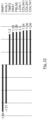
- FIG. 10 shows that the peptide SEQ ID NO: 4-NH 2 (as an example of the peptides of the present invention) was able to modulate the expression in fibroblasts of the relevant genes of the ECM tested inducing: at 24 h with 0.01 mg/m of the peptide, a downregulation of MMP1 and an upregulation of COL3A1 and COL4A1; at 24 h with 0.05 mg/mL of the peptide, an upregulation of TIMP2, FBLN5, LOXL1 and COL7A1; at 6 h with 0.005 mg/mL of the peptide, a downregulation of HYAL1; and at 6 h with 0.05 mg/mL of the peptide, an upregulation of HAS1.
- MMP1 and HYAL1 are genes related with the degradation of the ECM and HA, respectively.
- TIMP2, HAS1, FBLN5, LOXL1, COL4A1, COL3A1 and COL7A1 are genes related with the synthesis and effective maintenance of the ECM. Therefore, the expression profile obtained with the peptides of the present invention (as exemplified by SEQ ID NO: 4-NH 2 ) demonstrates their usefulness in the maintenance and synthesis or increase of the ECM.
- the peptides of the present invention are able to prevent, treat or reduce wrinkles (both chronological and expression wrinkles), roughness, looser or sagging skin; as well as improve skin firmness and/or elasticity, solving the above-mentioned technical problem present in the state of the art.
Landscapes
- Health & Medical Sciences (AREA)
- Life Sciences & Earth Sciences (AREA)
- Chemical & Material Sciences (AREA)
- General Health & Medical Sciences (AREA)
- Organic Chemistry (AREA)
- Animal Behavior & Ethology (AREA)
- Public Health (AREA)
- Veterinary Medicine (AREA)
- Genetics & Genomics (AREA)
- Proteomics, Peptides & Aminoacids (AREA)
- Molecular Biology (AREA)
- Medicinal Chemistry (AREA)
- Biophysics (AREA)
- Biochemistry (AREA)
- Dermatology (AREA)
- Gerontology & Geriatric Medicine (AREA)
- Birds (AREA)
- Epidemiology (AREA)
- Zoology (AREA)
- Toxicology (AREA)
- Gastroenterology & Hepatology (AREA)
- Peptides Or Proteins (AREA)
- Cosmetics (AREA)
- Medicines That Contain Protein Lipid Enzymes And Other Medicines (AREA)
Claims (11)
- Peptid aus 5 bis 8 Aminosäuren mit der Fähigkeit, die Aktivität und/oder das Signal mindestens eines Natriumkanaltyps zu verringern; seinen verträglichen Isomeren, Salzen, Solvaten und/oder Mischungen davon, wobei das Peptid folgende Sequenz der Formel (I) umfasst:
R1-AA1 -AA2-AA3-AA4-AA5-AA6-R2
(R1-SEQ ID NO: 7-R2)wobei das Peptid ausgewählt ist aus:- R1-Arg-Trp-Gln-Lys-Asn-Gln-R2;- R1-Lys-Arg-Arg-Tyr-Tyr-Cys-R2; oder- R1-Lys-His-Arg-Ser-Tyr-R2- R1-Lys-Asp-Arg-Val-Tyr-R2;- R1-Ile-Glu-Pro-Tyr-Tyr-Val-R2-, oder- R1-Lys-Lys-His-Phe-Trp-Ala-R2wobei R1 ausgewählt ist aus H, substituiertem oder nicht substituiertem acyclischem Aliphat, substituiertem oder nicht substituiertem Alicyclyl, substituiertem oder nicht substituiertem Heterocyclyl, substituiertem oder nicht substituiertem Heteroarylalkyl, substituiertem oder nicht substituiertem Aryl, substituiertem oder nicht substituiertem Aralkyl und R5-CO-, wobei R5 ausgewählt ist aus der Gruppe bestehend aus einem substituierten oder nicht substituierten C1-C24 -Alkylrest, substituiertem oder nicht substituiertem C2-C24 -Alkenyl, substituiertem oder nicht substituiertem C2-C24 -Alkynyl, substituiertem oder nicht substituiertem C3-C24 -Cycloalkyl, substituiertem oder nicht substituiertem C5-C24 -Cycloalkenyl, substituiertem oder nicht substituiertem C8-C24 -Cycloalkynyl, substituiertem oder nicht substituiertem C8-C30 -Aryl, substituiertem oder nicht substituiertem C7-C24 -Aralkyl, einem substituierten oder nicht substituierten 3-bis 10-gliedrigen Heterocyclylring und substituiertem oder nicht substituiertem Heteroarylalkyl mit 2 bis 24 Kohlenstoffatomen und 1 bis 3 Nichtkohlenstoffatomen und einer Alkylkette mit 1 bis 6 Kohlenstoffatomen; undwobei R2 ausgewählt ist aus H, -NR3R4-, -OR3 und -SR3, wobei R3 und R4 unabhängig voneinander ausgewählt sind aus H, einer substituierten oder nichtsubstituierten acyclischem aliphatischen Gruppe, substituiertem oder nicht substituiertem Alicyclyl, substituiertem oder nicht substituiertem Heterocyclyl, substituiertem oder nicht substituiertem Heteroarylalkyl, substituiertem oder nicht substituiertem Aryl und substituiertem oder nicht substituiertem Aralkyl;wobei alternativ R1 und R2 entfallen und AA1 direkt an die letzte Aminosäure des Peptids gebunden ist. - Peptid nach Anspruch 1, dadurch gekennzeichnet, dass das Peptid in der Lage ist, die Expression mindestens eines Natriumkanaltyps herunterzuregulieren und/oder den Spiegel mindestens eines Neurotransmitters zu verringern und/oder EZM zu erhalten und/oder zu synthetisieren.
- Peptid nach Anspruch 2, wobei der Natriumkanal ein spannungsabhängiger Natriumkanal ist.
- Peptid nach Anspruch 3, wobei der spannungsabhängige Natriumkanal NaV1.3 und/oder NaV1.4 ist.
- Peptid nach Anspruch 2, wobei der Neurotransmitter Noradrenalin ist.
- Peptid nach Anspruch 2, wobei die EZM aus Kollagen I, Elastin, Hyaluronsäure oder Kombinationen daraus ausgewählt ist.
- Peptid nach einem der Ansprüche 1 bis 6, dadurch gekennzeichnet, dass R1 H ist und/oder R2 NH2 ist.
- Zusammensetzung, umfassend ein Peptid nach einem der Ansprüche 1 bis 7.
- Verwendung eines Peptids nach einem der Ansprüche 1 bis 7 oder einer Zusammensetzung nach Anspruch 8 als Kosmetikum bei einer Person, die dies benötigt.
- Verwendung als Kosmetikum nach Anspruch 9, dadurch gekennzeichnet, dass die Verwendung als Kosmetikum dazu dient, Zeichen von Hautalterung zu reduzieren, zu verhindern und/oder zu beseitigen.
- Verwendung als Kosmetikum nach Anspruch 10, dadurch gekennzeichnet, dass die Zeichen der Hautalterung Falten sind.
Applications Claiming Priority (2)
| Application Number | Priority Date | Filing Date | Title |
|---|---|---|---|
| EP22382122.4A EP4230638A1 (de) | 2022-02-16 | 2022-02-16 | Peptide und zusammensetzungen zur verwendung in kosmetika |
| PCT/EP2023/053685 WO2023156413A1 (en) | 2022-02-16 | 2023-02-15 | Peptides and compositions for use in cosmetics |
Publications (3)
| Publication Number | Publication Date |
|---|---|
| EP4423111A1 EP4423111A1 (de) | 2024-09-04 |
| EP4423111B1 true EP4423111B1 (de) | 2024-12-04 |
| EP4423111C0 EP4423111C0 (de) | 2024-12-04 |
Family
ID=80682930
Family Applications (2)
| Application Number | Title | Priority Date | Filing Date |
|---|---|---|---|
| EP22382122.4A Withdrawn EP4230638A1 (de) | 2022-02-16 | 2022-02-16 | Peptide und zusammensetzungen zur verwendung in kosmetika |
| EP23704184.3A Active EP4423111B1 (de) | 2022-02-16 | 2023-02-15 | Peptide und zusammensetzungen zur verwendung in kosmetika |
Family Applications Before (1)
| Application Number | Title | Priority Date | Filing Date |
|---|---|---|---|
| EP22382122.4A Withdrawn EP4230638A1 (de) | 2022-02-16 | 2022-02-16 | Peptide und zusammensetzungen zur verwendung in kosmetika |
Country Status (10)
| Country | Link |
|---|---|
| US (1) | US20240415756A1 (de) |
| EP (2) | EP4230638A1 (de) |
| JP (1) | JP7751339B2 (de) |
| KR (1) | KR102754009B1 (de) |
| CN (1) | CN118574838B (de) |
| AU (1) | AU2023222118B9 (de) |
| CA (1) | CA3238300C (de) |
| ES (1) | ES3015575T3 (de) |
| PL (1) | PL4423111T3 (de) |
| WO (1) | WO2023156413A1 (de) |
Families Citing this family (2)
| Publication number | Priority date | Publication date | Assignee | Title |
|---|---|---|---|---|
| CN118530299B (zh) * | 2023-08-25 | 2025-02-07 | 广州益养生物科技有限公司 | 一种三肽、三肽盐或衍生物及其应用 |
| KR102912814B1 (ko) | 2024-11-20 | 2026-01-16 | 주식회사 스킨메드 | 다기능성 펩타이드 및 이를 포함하는 피부 상태 개선용 조성물 |
Family Cites Families (19)
| Publication number | Priority date | Publication date | Assignee | Title |
|---|---|---|---|---|
| US6169074B1 (en) | 1996-03-18 | 2001-01-02 | The Regents Of The University Of California | Peptide inhibitors of neurotransmitter secretion by neuronal cells |
| US5985836A (en) * | 1998-07-31 | 1999-11-16 | Bayer Corporation | Alpha-1 proteinase inhibitor binding peptides |
| ES2160485B1 (es) | 1999-04-23 | 2002-05-16 | Lipotec Sa | Peptidos inhibidores de la exocitosis neuronal, composiciones cosmeticas y farmaceuticas que los contienen. |
| CN1254234C (zh) * | 2000-06-09 | 2006-05-03 | 莱古伦公司 | 质粒dna(lipogenestm)和含细胞核定位信号/促融合肽缀合物的治疗剂包封到定向脂质体复合体中 |
| US20030219837A1 (en) * | 2002-03-18 | 2003-11-27 | Cress Anne E. | Integrin ligand |
| US7074891B2 (en) | 2003-02-07 | 2006-07-11 | Posco | Leukocyte stimulating peptides |
| US7858323B2 (en) * | 2004-06-09 | 2010-12-28 | The Regents Of The University Of Michigan | Phage microarray profiling of the humoral response to disease |
| ES2259928B1 (es) * | 2005-04-08 | 2007-11-01 | Lipotec, S.A. | Composicion cosmetica o dermofarmaceutica que comprende peptidos derivados de encefalinas para reducir y/o eliminar arrugas faciales. |
| JP5089888B2 (ja) * | 2006-02-10 | 2012-12-05 | 片倉チッカリン株式会社 | フグ由来コラーゲン、その誘導体及びその製造方法、並びに該コラーゲン及びその誘導体を配合する化粧料 |
| JP5030078B2 (ja) | 2006-02-15 | 2012-09-19 | 独立行政法人産業技術総合研究所 | ボンベシン様ペプチド受容体を活性化するペプチド、およびその利用 |
| ES2322882B1 (es) | 2006-10-25 | 2010-04-22 | Lipotec Sa | Peptidos inhibidores de la exocitosis neuronal. |
| US20090142839A1 (en) * | 2007-05-04 | 2009-06-04 | Shiloh Laboratories, Inc. | Inducing Premature Senescence to Stabilize Stem Cell Feeder Layer Cells |
| WO2010059829A2 (en) * | 2008-11-19 | 2010-05-27 | Mdrna, Inc. | Compositions and methods for triggered release rna therapeutics |
| CN102532272A (zh) * | 2011-12-29 | 2012-07-04 | 陕西师范大学 | HepG2细胞表面特异性结合的多肽 |
| WO2013153236A2 (en) * | 2012-04-13 | 2013-10-17 | Activen | Cosmetic composition comprising a muconopeptide |
| EP3027227A4 (de) * | 2013-07-31 | 2018-05-23 | Memorial Sloan Kettering Cancer Center | Stachelkristalle und modulatoren |
| KR101941845B1 (ko) * | 2017-03-13 | 2019-01-25 | 동국대학교 산학협력단 | 생리활성 물질 전달을 위한 나노 구조체, 이의 이용방법, 및 이의 제조방법 |
| CA3171988A1 (en) * | 2020-02-22 | 2021-08-26 | Jcr Pharmaceuticals Co., Ltd. | Human transferrin receptor binding peptide |
| US20230168247A1 (en) * | 2020-04-24 | 2023-06-01 | University Of Virginia Patent Foundation | Specificity enhancing reagents for covid-19 antibody testing |
-
2022
- 2022-02-16 EP EP22382122.4A patent/EP4230638A1/de not_active Withdrawn
-
2023
- 2023-02-15 US US18/717,568 patent/US20240415756A1/en active Pending
- 2023-02-15 WO PCT/EP2023/053685 patent/WO2023156413A1/en not_active Ceased
- 2023-02-15 KR KR1020247021406A patent/KR102754009B1/ko active Active
- 2023-02-15 JP JP2024543517A patent/JP7751339B2/ja active Active
- 2023-02-15 CA CA3238300A patent/CA3238300C/en active Active
- 2023-02-15 CN CN202380017749.4A patent/CN118574838B/zh active Active
- 2023-02-15 AU AU2023222118A patent/AU2023222118B9/en active Active
- 2023-02-15 EP EP23704184.3A patent/EP4423111B1/de active Active
- 2023-02-15 ES ES23704184T patent/ES3015575T3/es active Active
- 2023-02-15 PL PL23704184.3T patent/PL4423111T3/pl unknown
Also Published As
| Publication number | Publication date |
|---|---|
| EP4230638A1 (de) | 2023-08-23 |
| PL4423111T3 (pl) | 2025-03-24 |
| WO2023156413A1 (en) | 2023-08-24 |
| ES3015575T3 (en) | 2025-05-06 |
| EP4423111A1 (de) | 2024-09-04 |
| CA3238300A1 (en) | 2023-08-24 |
| JP2025503119A (ja) | 2025-01-30 |
| AU2023222118A1 (en) | 2024-06-27 |
| EP4423111C0 (de) | 2024-12-04 |
| CN118574838B (zh) | 2026-02-03 |
| AU2023222118A9 (en) | 2024-11-21 |
| AU2023222118B9 (en) | 2024-11-21 |
| KR102754009B1 (ko) | 2025-01-16 |
| CA3238300C (en) | 2025-02-11 |
| CN118574838A (zh) | 2024-08-30 |
| KR20240110655A (ko) | 2024-07-15 |
| JP7751339B2 (ja) | 2025-10-08 |
| US20240415756A1 (en) | 2024-12-19 |
Similar Documents
| Publication | Publication Date | Title |
|---|---|---|
| JP7296642B2 (ja) | 化粧料および医薬に使用するためのペプチドおよび組成物 | |
| EP4423111B1 (de) | Peptide und zusammensetzungen zur verwendung in kosmetika | |
| US12011499B2 (en) | Peptides and compositions for use in cosmetics | |
| WO2024170606A1 (en) | Cyclic peptides with anti-aging efficacy | |
| HK40108933A (zh) | 美容品用肽和组合物 | |
| HK40108933B (zh) | 美容品用肽和组合物 | |
| HK40032639B (en) | Peptides and compositions for use in cosmetics and medicine | |
| HK40032639A (en) | Peptides and compositions for use in cosmetics and medicine | |
| HK40048117B (zh) | 用於化妆品的肽和组合物 | |
| HK40048117A (en) | Peptides and compositions for use in cosmetics |
Legal Events
| Date | Code | Title | Description |
|---|---|---|---|
| STAA | Information on the status of an ep patent application or granted ep patent |
Free format text: STATUS: UNKNOWN |
|
| STAA | Information on the status of an ep patent application or granted ep patent |
Free format text: STATUS: THE INTERNATIONAL PUBLICATION HAS BEEN MADE |
|
| PUAI | Public reference made under article 153(3) epc to a published international application that has entered the european phase |
Free format text: ORIGINAL CODE: 0009012 |
|
| STAA | Information on the status of an ep patent application or granted ep patent |
Free format text: STATUS: REQUEST FOR EXAMINATION WAS MADE |
|
| 17P | Request for examination filed |
Effective date: 20240528 |
|
| AK | Designated contracting states |
Kind code of ref document: A1 Designated state(s): AL AT BE BG CH CY CZ DE DK EE ES FI FR GB GR HR HU IE IS IT LI LT LU LV MC ME MK MT NL NO PL PT RO RS SE SI SK SM TR |
|
| GRAP | Despatch of communication of intention to grant a patent |
Free format text: ORIGINAL CODE: EPIDOSNIGR1 |
|
| STAA | Information on the status of an ep patent application or granted ep patent |
Free format text: STATUS: GRANT OF PATENT IS INTENDED |
|
| GRAS | Grant fee paid |
Free format text: ORIGINAL CODE: EPIDOSNIGR3 |
|
| GRAA | (expected) grant |
Free format text: ORIGINAL CODE: 0009210 |
|
| STAA | Information on the status of an ep patent application or granted ep patent |
Free format text: STATUS: THE PATENT HAS BEEN GRANTED |
|
| DAV | Request for validation of the european patent (deleted) | ||
| DAX | Request for extension of the european patent (deleted) | ||
| INTG | Intention to grant announced |
Effective date: 20241010 |
|
| AK | Designated contracting states |
Kind code of ref document: B1 Designated state(s): AL AT BE BG CH CY CZ DE DK EE ES FI FR GB GR HR HU IE IS IT LI LT LU LV MC ME MK MT NL NO PL PT RO RS SE SI SK SM TR |
|
| REG | Reference to a national code |
Ref country code: CH Ref legal event code: EP |
|
| REG | Reference to a national code |
Ref country code: DE Ref legal event code: R096 Ref document number: 602023001266 Country of ref document: DE |
|
| REG | Reference to a national code |
Ref country code: IE Ref legal event code: FG4D |
|
| U01 | Request for unitary effect filed |
Effective date: 20241213 |
|
| U07 | Unitary effect registered |
Designated state(s): AT BE BG DE DK EE FI FR IT LT LU LV MT NL PT RO SE SI Effective date: 20250103 |
|
| REG | Reference to a national code |
Ref country code: GR Ref legal event code: EP Ref document number: 20240403033 Country of ref document: GR Effective date: 20250211 |
|
| U20 | Renewal fee for the european patent with unitary effect paid |
Year of fee payment: 3 Effective date: 20250211 |
|
| PG25 | Lapsed in a contracting state [announced via postgrant information from national office to epo] |
Ref country code: HR Free format text: LAPSE BECAUSE OF FAILURE TO SUBMIT A TRANSLATION OF THE DESCRIPTION OR TO PAY THE FEE WITHIN THE PRESCRIBED TIME-LIMIT Effective date: 20241204 |
|
| PG25 | Lapsed in a contracting state [announced via postgrant information from national office to epo] |
Ref country code: NO Free format text: LAPSE BECAUSE OF FAILURE TO SUBMIT A TRANSLATION OF THE DESCRIPTION OR TO PAY THE FEE WITHIN THE PRESCRIBED TIME-LIMIT Effective date: 20250304 |
|
| PGFP | Annual fee paid to national office [announced via postgrant information from national office to epo] |
Ref country code: GR Payment date: 20250110 Year of fee payment: 3 |
|
| PGFP | Annual fee paid to national office [announced via postgrant information from national office to epo] |
Ref country code: PL Payment date: 20241127 Year of fee payment: 3 |
|
| PG25 | Lapsed in a contracting state [announced via postgrant information from national office to epo] |
Ref country code: RS Free format text: LAPSE BECAUSE OF FAILURE TO SUBMIT A TRANSLATION OF THE DESCRIPTION OR TO PAY THE FEE WITHIN THE PRESCRIBED TIME-LIMIT Effective date: 20250304 |
|
| REG | Reference to a national code |
Ref country code: ES Ref legal event code: FG2A Ref document number: 3015575 Country of ref document: ES Kind code of ref document: T3 Effective date: 20250506 |
|
| PG25 | Lapsed in a contracting state [announced via postgrant information from national office to epo] |
Ref country code: SM Free format text: LAPSE BECAUSE OF FAILURE TO SUBMIT A TRANSLATION OF THE DESCRIPTION OR TO PAY THE FEE WITHIN THE PRESCRIBED TIME-LIMIT Effective date: 20241204 |
|
| PG25 | Lapsed in a contracting state [announced via postgrant information from national office to epo] |
Ref country code: IS Free format text: LAPSE BECAUSE OF FAILURE TO SUBMIT A TRANSLATION OF THE DESCRIPTION OR TO PAY THE FEE WITHIN THE PRESCRIBED TIME-LIMIT Effective date: 20250404 |
|
| PG25 | Lapsed in a contracting state [announced via postgrant information from national office to epo] |
Ref country code: SK Free format text: LAPSE BECAUSE OF FAILURE TO SUBMIT A TRANSLATION OF THE DESCRIPTION OR TO PAY THE FEE WITHIN THE PRESCRIBED TIME-LIMIT Effective date: 20241204 |
|
| PG25 | Lapsed in a contracting state [announced via postgrant information from national office to epo] |
Ref country code: CZ Free format text: LAPSE BECAUSE OF FAILURE TO SUBMIT A TRANSLATION OF THE DESCRIPTION OR TO PAY THE FEE WITHIN THE PRESCRIBED TIME-LIMIT Effective date: 20241204 |
|
| PG25 | Lapsed in a contracting state [announced via postgrant information from national office to epo] |
Ref country code: MC Free format text: LAPSE BECAUSE OF FAILURE TO SUBMIT A TRANSLATION OF THE DESCRIPTION OR TO PAY THE FEE WITHIN THE PRESCRIBED TIME-LIMIT Effective date: 20241204 |
|
| PLBE | No opposition filed within time limit |
Free format text: ORIGINAL CODE: 0009261 |
|
| STAA | Information on the status of an ep patent application or granted ep patent |
Free format text: STATUS: NO OPPOSITION FILED WITHIN TIME LIMIT |
|
| REG | Reference to a national code |
Ref country code: CH Ref legal event code: L10 Free format text: ST27 STATUS EVENT CODE: U-0-0-L10-L00 (AS PROVIDED BY THE NATIONAL OFFICE) Effective date: 20251015 |
|
| 26N | No opposition filed |
Effective date: 20250905 |
|
| PG25 | Lapsed in a contracting state [announced via postgrant information from national office to epo] |
Ref country code: IE Free format text: LAPSE BECAUSE OF NON-PAYMENT OF DUE FEES Effective date: 20250215 |
|
| U20 | Renewal fee for the european patent with unitary effect paid |
Year of fee payment: 4 Effective date: 20260120 |
|
| REG | Reference to a national code |
Ref country code: CH Ref legal event code: U11 Free format text: ST27 STATUS EVENT CODE: U-0-0-U10-U11 (AS PROVIDED BY THE NATIONAL OFFICE) Effective date: 20260301 |
|
| PGFP | Annual fee paid to national office [announced via postgrant information from national office to epo] |
Ref country code: ES Payment date: 20260304 Year of fee payment: 4 |