EP4418813A2 - Verfahren und system zur konfiguration von sidelink-übertragungsressourcen sowie vorrichtung und speichermedium - Google Patents
Verfahren und system zur konfiguration von sidelink-übertragungsressourcen sowie vorrichtung und speichermedium Download PDFInfo
- Publication number
- EP4418813A2 EP4418813A2 EP24187034.4A EP24187034A EP4418813A2 EP 4418813 A2 EP4418813 A2 EP 4418813A2 EP 24187034 A EP24187034 A EP 24187034A EP 4418813 A2 EP4418813 A2 EP 4418813A2
- Authority
- EP
- European Patent Office
- Prior art keywords
- terminal
- timepoint
- slot
- scheduling information
- network device
- Prior art date
- Legal status (The legal status is an assumption and is not a legal conclusion. Google has not performed a legal analysis and makes no representation as to the accuracy of the status listed.)
- Pending
Links
Images



Classifications
-
- H—ELECTRICITY
- H04—ELECTRIC COMMUNICATION TECHNIQUE
- H04W—WIRELESS COMMUNICATION NETWORKS
- H04W4/00—Services specially adapted for wireless communication networks; Facilities therefor
- H04W4/30—Services specially adapted for particular environments, situations or purposes
- H04W4/40—Services specially adapted for particular environments, situations or purposes for vehicles, e.g. vehicle-to-pedestrians [V2P]
-
- H—ELECTRICITY
- H04—ELECTRIC COMMUNICATION TECHNIQUE
- H04L—TRANSMISSION OF DIGITAL INFORMATION, e.g. TELEGRAPHIC COMMUNICATION
- H04L1/00—Arrangements for detecting or preventing errors in the information received
- H04L1/12—Arrangements for detecting or preventing errors in the information received by using return channel
- H04L1/16—Arrangements for detecting or preventing errors in the information received by using return channel in which the return channel carries supervisory signals, e.g. repetition request signals
- H04L1/18—Automatic repetition systems, e.g. Van Duuren systems
- H04L1/1829—Arrangements specially adapted for the receiver end
- H04L1/1854—Scheduling and prioritising arrangements
-
- H—ELECTRICITY
- H04—ELECTRIC COMMUNICATION TECHNIQUE
- H04W—WIRELESS COMMUNICATION NETWORKS
- H04W4/00—Services specially adapted for wireless communication networks; Facilities therefor
- H04W4/70—Services for machine-to-machine communication [M2M] or machine type communication [MTC]
-
- H—ELECTRICITY
- H04—ELECTRIC COMMUNICATION TECHNIQUE
- H04W—WIRELESS COMMUNICATION NETWORKS
- H04W72/00—Local resource management
- H04W72/02—Selection of wireless resources by user or terminal
-
- H—ELECTRICITY
- H04—ELECTRIC COMMUNICATION TECHNIQUE
- H04W—WIRELESS COMMUNICATION NETWORKS
- H04W72/00—Local resource management
- H04W72/04—Wireless resource allocation
-
- H—ELECTRICITY
- H04—ELECTRIC COMMUNICATION TECHNIQUE
- H04W—WIRELESS COMMUNICATION NETWORKS
- H04W72/00—Local resource management
- H04W72/04—Wireless resource allocation
- H04W72/044—Wireless resource allocation based on the type of the allocated resource
- H04W72/0446—Resources in time domain, e.g. slots or frames
-
- H—ELECTRICITY
- H04—ELECTRIC COMMUNICATION TECHNIQUE
- H04W—WIRELESS COMMUNICATION NETWORKS
- H04W72/00—Local resource management
- H04W72/12—Wireless traffic scheduling
-
- H—ELECTRICITY
- H04—ELECTRIC COMMUNICATION TECHNIQUE
- H04W—WIRELESS COMMUNICATION NETWORKS
- H04W72/00—Local resource management
- H04W72/20—Control channels or signalling for resource management
-
- H—ELECTRICITY
- H04—ELECTRIC COMMUNICATION TECHNIQUE
- H04W—WIRELESS COMMUNICATION NETWORKS
- H04W72/00—Local resource management
- H04W72/20—Control channels or signalling for resource management
- H04W72/23—Control channels or signalling for resource management in the downlink direction of a wireless link, i.e. towards a terminal
-
- H—ELECTRICITY
- H04—ELECTRIC COMMUNICATION TECHNIQUE
- H04L—TRANSMISSION OF DIGITAL INFORMATION, e.g. TELEGRAPHIC COMMUNICATION
- H04L1/00—Arrangements for detecting or preventing errors in the information received
- H04L2001/0092—Error control systems characterised by the topology of the transmission link
-
- H—ELECTRICITY
- H04—ELECTRIC COMMUNICATION TECHNIQUE
- H04W—WIRELESS COMMUNICATION NETWORKS
- H04W92/00—Interfaces specially adapted for wireless communication networks
- H04W92/16—Interfaces between hierarchically similar devices
- H04W92/18—Interfaces between hierarchically similar devices between terminal devices
Definitions
- Embodiments of this application relate to communication technologies, and in particular, to a method and a system for configuring sidelink transmission resource, as well as a device and a storage medium.
- the Internet of vehicles (IoV) system can be realized through sidelink (SL) transmission technology.
- SL transmission adopts end-to-end direct communication, which has lower transmission delay and higher spectrum efficiency.
- the SL transmission technology supports the resource allocation manners of mode A and mode B specified in the 3rd generation partnership project (3GPP) protocol.
- the terminal may autonomously select transmission resources in the resource pool for SL transmission (mode B); or, the terminal may also perform SL resource transmission on the resources allocated by the base station (mode A).
- the base station may allocate SL transmission resources to the terminal in a dynamic scheduling manner.
- the base station may also allocate SL configured grant (CG) transmission resources to the terminal.
- Resource allocation manners of the SL CG includes type-1 CG and type-2 CG. In the related art, it is agreed that, for the network scheduling of dynamic scheduling and type-2 SL CG, the SL transmission timepoint is determined by the terminal.
- the embodiments of this application provide a method, a system, a device, and a storage medium for configuring SL transmission resources to determine the SL transmission timepoint of a terminal, thereby overcoming the deficiency of determining the SL transmission timepoint in the related art, as well as improving stability and flexibility of the transmission procedure.
- the embodiments of this application provide a method for configuring SL transmission resource, which is applied to a terminal, and includes:
- the embodiments of this application provide a method for configuring SL transmission resource, which is applied to a network device, and includes:
- the embodiments of this application provide a terminal device, including:
- the embodiments of this application provide a network device, including:
- the embodiments of this application provide a terminal device, including:
- the embodiments of this application provide a network device, including:
- the embodiments of this application provide a communication system, including:
- the embodiments of this application provide a computer-readable storage medium having computer-executable instructions stored therein, and the computer-executable instructions are used for, when being executed by a processor, implementing the method according to the first aspect or the second aspect.
- the embodiments of this application provide a chip, including: a processor, configured to call and run a computer program from a memory, thereby causing a device installed with the chip to execute the method according to the first aspect or the second aspect.
- the embodiments of this application provide a computer program product, including computer program instructions, which cause a computer to execute the method according to the first aspect or the second aspect.
- the embodiments of this application provide a computer program that enables a computer to execute the method according to the first aspect or the second aspect.
- the terminal device receives scheduling information from the network device, and the scheduling information is used for scheduling the SL transmission resource of the terminal device.
- the scheduling information is sent by the network device in the type-1 mode, or sent by the network device based on the cross-RAT.
- the terminal device may obtain a target timepoint associated with a time-related parameter according to the scheduling information or the time-related parameter of the terminal as pre-configured, so as to select the first one available resource not earlier than the target timepoint in the resource pool as the SL transmission timepoint (that is, the start timepoint of SL transmission).
- the SL transmission timepoint can be determined for the scheduling information sent by the network according to type-1 mode or cross-RAT, thereby overcoming the deficiency of determining the SL transmission timepoint in the related art, as well as improving stability and flexibility of the transmission procedure.
- D2D device to device
- V2V vehicle to vehicle
- V2X vehicle to everything
- M2M machine to machine
- MTC machine type communication
- the communication system 100 includes a network device 110, and the network device 110 may be a device that communicates with a terminal device 120 (or referred to as a communication terminal or terminal).
- the network device 110 may provide communication coverage for a specific geographic area, and may communicate with terminal devices located within the coverage area.
- the network device 110 may be a base transceiver station (BTS) in a GSM system or a CDMA system, a NodeB (NB) in a WCDMA system, an evolutional Node B (eNB or eNodeB) in an LTE system, or a wireless controller in a cloud radio access network (CRAN).
- BTS base transceiver station
- NB NodeB
- eNB or eNodeB evolutional Node B
- LTE long term evolutional Node B
- CRAN cloud radio access network
- the network device may be a mobile switching center, a relay station, an access point, a vehicle-mounted device, a wearable device, a hub, a switch, a bridge, a router, a network side device in 5G networks, a network device in the future evolution of public land mobile network (PLMN), and the like.
- PLMN public land mobile network
- the communication system 100 also includes at least one terminal device 120 located within the coverage area of the network device 110.
- the "terminal device” used here includes but is not limited to a device implemented based on a connection via wired lines, such as via public switched telephone networks (PSTN), digital subscriber line (DSL), digital cable, and direct cable connection; and/or via another data connection/network; and/or via a wireless interface, such as cellular networks, WLAN, digital TV networks (e.g., DVB-H networks), satellite networks, AM-FM broadcast transmitters; and/or via another terminal device that is configured to receive/send communication signals; and/or via Internet of things (IoT) devices.
- PSTN public switched telephone networks
- DSL digital subscriber line
- wireless interface such as cellular networks, WLAN, digital TV networks (e.g., DVB-H networks), satellite networks, AM-FM broadcast transmitters; and/or via another terminal device that is configured to receive/send communication signals; and/or via Internet of things (IoT) devices.
- the terminal device configured to communicate through a wireless interface may be referred to as a "wireless communication terminal", a “wireless terminal” or a “mobile terminal”.
- mobile terminals include, but are not limited to, a satellite or cellular phone; a personal communications system (PCS) terminal that combines cellular radio phone function with data processing, fax, and data communication capabilities; a personal digital assistant (PDA) device integrated with functions of radio phone, pager, Internet/intranet access, web browser, notebook, calendar, and/or global positioning system (GPS) receiver; and regular laptop and/or palmtop receiver or other electronic device including a radio telephone transceiver.
- PCS personal communications system
- PDA personal digital assistant
- the terminal device may also be referred to as access terminal, user equipment (UE), user unit, user station, mobile station, mobile site, remote station, remote terminal, mobile equipment, user terminal, terminal, wireless communication equipment, user agent, or user device.
- the access terminal may be a cellular phone, a cordless phone, a session initiation protocol (SIP) phone, a wireless local loop (WLL) station, a PDA device, a handheld device with wireless communication function, a computing device or other processing device connected to a wireless modem, an in-vehicle device, a wearable device, a terminal device in the 5G network, a terminal device in a future evolution of the PLMN, or the like.
- SIP session initiation protocol
- WLL wireless local loop
- the terminal devices in the communication system may perform SL transmission therebetween.
- SL transmission is a direct terminal-to-terminal communication method, which has higher spectrum efficiency and lower transmission delay.
- Mode A Two SL transmission modes, Mode A and Mode B, are defined in the 3GPP protocol.
- FIG. 2A shows a schematic diagram of implementing SL transmission in mode A in a D2D system.
- the network device 110 allocates SL transmission resources to the terminal device 120 on the downlink (DL), so that data transmission between the terminal devices 120 may be performed on the SL. Further, the network device may allocate a single transmission resource to the terminal device, or may allocate a semi-static transmission resource to the terminal. How the network device allocates resources for the terminal will be described in detail later.
- FIG. 2B shows a schematic diagram of implementing SL transmission in mode B in a D2D system.
- the terminal device 120 selects a resource from the resource pool to transmit SL data.
- the selection manner of the terminal device is not detailed here.
- the V2X system may use an end-to-end communication system for communication, which makes the V2X system have higher throughput, lower delay, higher reliability, larger coverage, more flexible resource allocation, and so on.
- the aforementioned communication system may be a V2X system
- the terminal may be a vehicle-mounted terminal.
- the aforementioned communication system applied in this application may be an NR-V2X system based on a new radio (NR) network; or, may also be an LTE-V2X system based on LTE network.
- NR new radio
- the network device implements the SL transmission resource allocation by dynamically scheduling the SL resources, or allocate SL configured grant (SL CG) transmission resources to the terminal.
- SL CG SL configured grant
- the network device may allocate SL transmission resources to the terminal in a dynamic scheduling manner. In other words, the network device allocates resources for a single transmission to the terminal. When the terminal device needs to perform multiple SL transmissions, the network device may allocate resources for each SL transmission separately through the dynamic scheduling manner.
- the network device may allocate a SL CG transmission resource for the terminal.
- a SL CG transmission resource for the terminal.
- it mainly includes but is not limited to two configured grant modes: type-1 configured grant (the first type of configured grant, hereinafter referred to as type-1) and type-2 configured grant (the second type of configured grant, hereinafter referred to as type-2).
- type-1 configured grant the first type of configured grant
- type-2 configured grant the second type of configured grant, hereinafter referred to as type-2
- the SL transmission scheme implemented based on type-1 configured grant is referred to as type-1 scheduling scheme
- type-2 scheduling scheme for ease of description, the SL transmission scheme implemented based on type-2 configured grant is referred to as type-2 scheduling scheme.
- the network device configures SL transmission resources for the terminal through radio resource control (RRC) signaling.
- RRC signaling is used for configuring the SL transmission resources of the terminal.
- the transmission parameters (also referred to as resource configuration parameters, SL configuration parameters, or the like) carried in RRC signaling may include, but are not limited to, all transmission resources and transmission parameters including time domain resources, frequency domain resources, demodulation reference signal (DMRS), modulation and coding scheme (MCS), and the like.
- the network device when performing SL transmission, sends RRC signaling to the terminal. After receiving the RRC signaling, the terminal uses the configuration parameters carried in the RRC signaling to determine the time-frequency resources (time domain resources and frequency domain resources), and then performs SL transmission on the time-frequency resources.
- the network device adopts two configuration steps to implement SL resource configuration.
- the network device implements SL resource configuration based on RRC signaling and downlink control information (DCI).
- RRC signaling is used for configuring part of SL transmission resource information
- DCI is used for configuring another part of SL transmission resource information, and is used for activating the SL transmission.
- RRC signaling may be used for configuring transmission resources and transmission parameters including: time-frequency resource cycle, redundancy version, number of retransmissions, HARQ processes, and the like; while the DCI may be used for configuring other transmission resources and transmission parameters including: time-domain resources, frequency domain resources, MCS, and the like, and the DCI is further used for activating the transmission of the second type of configured grant.
- the terminal upon receiving RRC signaling, cannot immediately use the SL configuration resources and parameters for SL transmission, but needs to wait for the corresponding DCI to configure other resources and transmissions, and can only perform the SL transmission after the activation.
- DCI may also be used to deactivate SL transmission.
- the network device sends DCI to the terminal, and the DCI is used for deactivating the SL transmission. After receiving the DCI used for deactivating the SL transmission, the terminal can no longer use the SL transmission resources indicated by the DCI for SL transmission.
- the network device may allocate the SL transmission resources to the terminal in any of the foregoing methods. Therefore, when the terminal transmits SL data, it can directly use the allocated SL transmission resources (not deactivated) for SL data transmission. In this process, the terminal does not need to send an SR or BSR request to the network device, thereby avoiding the corresponding delay, and reducing the delay of the SL transmission process.
- NR-V2X also supports a resource scheduling scheme based on the cross radio access technology (cross-RAT), which is hereinafter referred to as the cross-RAT scheduling scheme.
- cross-RAT cross radio access technology
- RAT may be implemented between the network device and the terminal through the NR technology, while the SL transmission may be implemented based on the LTE technology.
- FIG. 3 shows a schematic diagram of a communication system in such scenario.
- the network device is an NR network device.
- the network device may be a gNB base station.
- the terminal may include an NR module and an LTE module.
- the terminal may communicate with the network device through the NR module (specifically, for example, the NR Uu interface in the NR module), and implement SL transmission through the LTE module.
- the terminal 1 communicates with the network device through the NR module 1, and the terminal 1 performs SL data transmission with the LTE module 2 of the terminal 2 through the LTE module 1.
- the network device controls (or schedules) the SL of LTE through the NR Uu interface.
- the SL transmission resource scheduled by the network device is LTE SL transmission resource.
- the LTE SL transmission resources may include: LTE physical sidelink control channel (PSCCH) or physical sidelink shared channel (PSSCH).
- the network device may configure and schedule the SL transmission resources of the terminal through the mode of "RRC signaling + DCI".
- the network device configures semi-static transmission resources for the terminal through RRC signaling, and activates the semi-static transmission resources through DCI.
- the network device may allocate periodic transmission resources to the terminal. Moreover, in each cycle, multiple transmission resources may be configured.
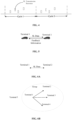
- FIG. 4 shows a schematic diagram of a SL transmission resource allocated by a network device to a terminal.
- FIG. 4 shows the resource allocation in 2 cycles; each cycle includes 4 SL transmission resources, and the positions of the 4 SL transmission resources in the respective cycles are the same.
- the network device allocates periodically repeated SL transmission resources to the terminal.
- FIG. 5 shows a schematic diagram of a SL transmission link and a feedback channel between terminals.
- terminal 1 sending end terminal
- terminal 2 receiving end terminal
- terminal 2 sends SL feedback information (also referred to as feedback information) to terminal 1 through the feedback channel.
- the feedback information may include: ACK (also referred to as SL HARQ ACK, HARQ ACK), which is used for indicating that SL data has been successfully received; or, NACK (also referred to as SL HARQ NACK, HARQ NACK), which is used for indicating that SL data has not been received.
- ACK also referred to as SL HARQ ACK, HARQ ACK
- NACK also referred to as SL HARQ NACK, HARQ NACK
- the terminal 1 may also receive feedback information from the terminal 2. Therefore, the terminal 1 may also determine whether the SL data needs to be retransmitted based on the feedback information. Exemplarily, if the terminal 1 receives a NACK, it resends the SL data (retransmission) to the terminal 2; on the contrary, if the terminal 1 receives an ACK, there is no need for retransmission.
- the sending end terminal may also report the feedback information of the SL to the network device.
- the network device may determine, based on the feedback information, whether it is necessary to re-allocate SL transmission resources for the terminal. Exemplarily, if the feedback information indicates that SL data has not been received, the network device re-allocates SL transmission resources to the terminal; conversely, if the feedback information indicates that SL data has been received, the network device does not need to re-allocate SL data to the terminal, and discards the feedback information.
- an end-to-end communication system such as the LTE-V2X system
- end-to-end SL transmission when end-to-end SL transmission is performed between terminals, it is possible but not limited to adopt any one of unicast, multicast, and broadcast to implement SL transmission.
- FIG. 6A to FIG. 6C are schematic diagrams of three SL transmission manners: unicast, multicast, and broadcast, respectively.
- the SL data transmission may be performed between the terminal 1 and the terminal 2 in the unicast manner.
- the sending end terminal can send SL data to multiple receiving end terminals at the same time.
- the receiving end terminal may include all terminals in a communication group, or may also include all terminals within a certain transmission distance.
- the terminals 1 to 4 are in the same group, and the terminal 5 does not belong to the group.
- the terminal 1 may send SL data to the terminals 2 to 4 in the multicast manner.
- the sending end terminal may broadcast SL data and, accordingly, the receiving end terminal may be any terminal.
- the receiving end terminal may listen to the broadcast or not.
- the communication system includes terminal 1 to terminal 7 (there is no restriction on the network device here). Accordingly, terminal 1 may broadcast SL data, and terminal 2 to terminal 7 may serve as the receiving end terminal of the SL data.
- the implementation manner for the foregoing feedback channel may also be different.
- a feedback channel may be provided, and the receiving end terminal sends feedback information through the feedback channel, thereby improving the reliability of the communication system.
- the SL data sent by the sending end terminal to the receiving end terminal may also carry SL control information (SCI).
- SCI is used for indicating the transmission resources and parameters of the SL data channel PSSCH, and the SCI may include indication information, which is used for indicating whether the receiving end needs to perform SL feedback.
- the terminal When implementing SL transmission in mode A, based on the SL transmission resources configured by the network device, the terminal also needs to determine the SL transmission timepoint when performing SL transmission, that is, the start timepoint for starting SL data transmission.
- SL transmission is supported based on the SL transmission resources allocated by the network device, which includes the SL transmission resources that are dynamically scheduled or semi-statically scheduled by the network device.
- the network device may dynamically schedule SL transmission through DCI. Accordingly, the SL transmission time obtained by the terminal is the first one SL transmission resource that is not earlier than a first timepoint.
- T 1 is the first timepoint
- T DL is a start timepoint of the downlink slot
- N TA is the number of time units obtained according to the timing advance (TA)
- T S is the time unit
- m is the slot offset.
- T DL is the start timepoint of the downlink slot where the DCI is located.
- the network device may configure the semi-static SL transmission parameters of the terminal through RRC signaling, and configure other parameters as well as activate the semi-static transmission through DCI.
- the SL transmission timepoint obtained by the terminal is the first one SL transmission resource not earlier than a second timepoint.
- T 2 is the second timepoint
- T DL is a start timepoint of the downlink slot
- N TA is the number of time units obtained according to the timing advance (TA)
- T S is the time unit
- m is the slot offset.
- T DL is the start timepoint of the downlink slot where the DCI is located.
- the NR-V2X system also supports SL transmission based on the SL transmission resources allocated by the network device, which includes: SL transmission resources dynamically scheduled or configured grant scheduled by the network device.
- SL transmission resources dynamically scheduled or configured grant scheduled by the network device.
- the existing protocol defines that, when the NR-V2X system implements SL configured grant in the type-2 mode, the SL transmission timepoint obtained by the terminal is the first one SL transmission resource not earlier than a third timepoint.
- T 3 is the third timepoint
- T DL is a start timepoint of the downlink slot
- T TA is a duration obtained according to the timing advance TA
- T C is a preset parameter
- m is the slot offset
- T slot is the unit slot duration of SL transmission.
- T 3 is the third timepoint
- T DL is a start timepoint of the downlink slot
- T TA is a duration obtained according to the timing advance TA
- m is the slot offset
- T slot is the unit slot duration of SL transmission.
- T DL is the start timepoint of the downlink slot where the DCI is located.
- some examples provide a method for configuring SL transmission resources.
- the method for configuring SL transmission resources is described below with reference to some specific examples.
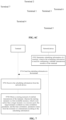
- FIG. 7 shows a schematic interaction flow chart of a method for configuring SL transmission resources according to some examples of this application. As shown in FIG.7 , the method includes the following steps.
- the network device determines scheduling information of the terminal, and the scheduling information is used for configuring the SL transmission resources of the terminal.
- the scheduling information may include, but is not limited to, RRC signaling; or DCI; or RRC signaling and DCI.
- RRC signaling is used for configuring the first type (that is, type-1) SL configured grant.
- the scheduling information may be RRC signaling.
- RRC signaling is used for configuring part of SL transmission resource information
- DCI is used for configuring SL transmission resources, as well as activating the SL transmission resources.
- the scheduling information may be DCI.
- the network device sends the scheduling information to the terminal.
- communication between the network device and terminal can be implemented based on NR technology. Specifically, communication can be implemented based on the NR module or NR Uu interface in the terminal.
- communication between the network device and terminal can be implemented based on LTE technology. Specifically, the communication can be implemented based on the LTE module or LTE Uu interface in the terminal.
- the terminal receives the scheduling information from the network device.
- the terminal obtains the start timepoint of SL transmission of the terminal.
- the start timepoint is the first one available resource in the resource pool not earlier than a target timepoint; where the target timepoint is associated with a time-related parameter, and the time-related parameter is derived from the terminal or is determined according to the scheduling information.
- the "available resource” described in some examples of this application refer to a SL transmission resource allocated (or configured grant) by the network device from the resource pool for the terminal. This will be further explained in conjunction with specific scenarios here below.
- the time-related parameter carried in the scheduling information may also be different; and the time-related parameter stored in the terminal may also be different.
- the scheduling information is RRC signaling.
- the time-related parameter includes a delay parameter, and the delay parameter is used for indicating a first duration.
- the delay parameter is denoted as Y The delay parameter Y will be described in detail later.
- the target timepoint is associated with the delay parameter Y, the first timepoint, and the timing advance TA, where the first timepoint can be determined according to the RRC signaling (scheduling information).
- the first timepoint can be determined in at least the following manners.
- the first timepoint is determined according to the slot in which the RRC signaling is located.
- the first timepoint may be specifically the start timepoint of the downlink transmission slot where the RRC signaling is located.
- the downlink slot where the RRC signaling is located may be the downlink slot where the RRC signaling is transmitted for the first time; or, it may be the downlink slot where the RRC signaling is transmitted for the last time; or, it may be a slot in which the terminal device confirms that the RRC signaling is correctly received; or, it may be a slot in which the RRC signaling is correctly received.
- the RRC signaling is the configuration signaling of the SL configured grant sent by the network device to the terminal
- the RRC signaling is carried in the downlink physical shared channel (PDSCH)
- the terminal sends a receipt feedback (ACK or NACK) to the network according to a detection result of the PDSCH, where the receipt feedback is used for indicating whether the terminal correctly receives the RRC signaling.
- the terminal device successfully receives the scheduling information from the network device, the terminal device sends an ACK to the network device to notify the network device that the scheduling information has been successfully received.
- the terminal device Conversely, if the terminal does not successfully receive the scheduling information, the terminal device sends a NACK to the network device to notify the network device that it has not received the scheduling information correctly; then, the network device may resend the PDSCH (retransmission of scheduling information) to the terminal device until the terminal receives the PDSCH correctly.
- the slot where the RRC signaling is transmitted for the last time is the slot where the terminal correctly receives the PDSCH carrying the RRC signaling.
- the first timepoint may also be determined as a downlink transmission slot in which the RRC signaling is located when the RRC signaling is transmitted in any one of multiple retransmissions.
- it may be the downlink transmission slot when the RRC signaling is retransmitted for the last second time.
- the slot in which the RRC signaling is correctly received there is a difference between the slot in which the RRC signaling is correctly received, the slot in which the terminal device confirms that the RRC signaling is correctly received, and the slot in which the terminal device sends an ACK.
- the timepoint when the RRC signaling is correctly received is the earliest
- the timepoint when the terminal device confirms that the RRC signaling is correctly received is the second
- the slot in which the terminal device sends the ACK is the latest.
- the terminal device upon receiving the RRC signaling (which may have been received correctly at this time)
- the terminal device confirms whether the RRC signaling is correctly received (as mentioned above, based on a detection result of the PDSCH channel).
- the terminal device sends the ACK to the network device.
- the terminal device sends a NACK to the network device.
- the first timepoint is determined according to the slot in which the RRC signaling was transmitted for the last time (the latest transmission of the RRC signaling).
- the first timepoint is directly determined as the start timepoint of the downlink transmission slot in which the RRC signaling is located during its latest transmission. For example, if the RRC signaling is retransmitted 5 times, the first timepoint is the downlink transmission slot in which the RRC signaling is located when the RRC signaling is transmitted for the fifth time.
- the first timepoint is determined according to the slot in which a first uplink transmission resource is located, where the first uplink transmission resource is used for transmitting ACK, and the ACK is used for indicating that the RRC signaling is correctly received.
- the terminal device when the network device sends scheduling information (specifically, RRC signaling in some examples) to the terminal, the terminal device performs a receipt feedback to the network device based on whether the scheduling information is successfully received. Specifically, if the terminal device successfully receives the scheduling information from the network device, the terminal device sends an ACK to the network device to notify the network device that the scheduling information has been successfully received. Conversely, if the terminal does not successfully receive the scheduling information, the terminal device sends a NACK to the network device to notify the network device that the scheduling information is not correctly received. Accordingly, the network device may resend the scheduling information (retransmission) to the terminal device.
- scheduling information specifically, RRC signaling in some examples
- the uplink transmission slot in which the terminal sends the ACK to the network device is determined as the first timepoint.
- the target timepoint is associated with the delay parameter Y, the start timepoint (that is, the first timepoint) of the downlink slot in which the RRC signaling is located, and the timing advance TA.
- T is the target timepoint
- T DL is the start timepoint of the downlink slot
- T TA is a second duration obtained according to the timing advance
- T1 is a first duration obtained according to the delay parameter Y
- T DL is used for indicating the start timepoint of the downlink slot.
- T DL may be used for indicating the start timepoint of the downlink slot in which the RRC signaling is located; or, it may be used for indicating the start timepoint of the downlink slot in which the DCI is located.
- T DL may be used for indicating the start timepoint of the downlink slot in which the RRC signaling is located.
- the timing advance TA may be derived from the network device.
- the scheduling information received by the terminal may carry TA.
- the RRC signaling includes but is not limited to TA.
- the terminal may receive a notification message from the network device, the notification message and the scheduling information are independent of each other, and the notification message carries TA.
- the notification message may be another RRC signaling.
- the notification message may be sent by the network device to the terminal before, after, or at the same time as the RRC signaling. After receiving the notification message, the terminal stores the TA, until it reaches a validity term of the TA before requesting a new TA from the network device, or until receiving a new TA from the network device.
- the TA is used for compensating for the transmission duration. Therefore, in some exemplary application scenarios, the duration to be compensated is also obtained according to the TA. According to some examples of this application, the compensation duration obtained according to the TA is recorded as the second duration.
- This application has no particular limitation on how to calculate the second duration based on TA. For example, a correspondence between TA and the second duration may be maintained, and the second duration may be determined based on the TA and the correspondence. For another example, TA may also be directly used as the second duration. For still another example, it is also possible to perform a mathematical operation on the TA to obtain the second duration, and the operation mode may be customized.
- the delay parameter Y may be derived from the network device or the terminal.
- the delay parameter Y may be derived from the terminal.
- the delay parameter is a pre-configured parameter of the terminal. Accordingly, the network device allocates SL transmission resources to the terminal through RRC signaling. After receiving the RRC signaling, the terminal obtains the target timepoint based on the start timepoint T DL of the downlink slot in which the RRC signaling is located, TA, and the delay parameter Y, and then use the first one available slot not earlier than the target timepoint as the start timepoint of SL transmission.
- the delay parameter Y may also be derived from the network device.
- the delay parameter is configured by the network device and carried in the scheduling information. That is, when the network device configures the scheduling information of the terminal, the delay parameter may be configured for the terminal. Accordingly, the scheduling information of the terminal is determined, and the delay parameter Y is carried in the scheduling information (RRC signaling).
- the delay parameter Y may also be configured by the network device and sent to the terminal by the network device in a manner independent of the scheduling information.
- the delay parameter Y is associated with a duration for processing the RRC signaling by the terminal.
- the terminal After the terminal receives the RRC signaling, it needs to process the RRC signaling, such as decoding and parsing. After the processing is completed, the terminal obtains the specific information carried in the RRC signaling. Different terminals process RRC signaling in at least one of different processing modes and different processing capabilities. Therefore, different terminals have different delays for processing the RRC signaling.
- the network device sends RRC signaling to terminal 1 and terminal 2 respectively, the processing delay of terminal 1 for processing the RRC signaling is 0.5 ms, and the processing delay of terminal 2 for processing the RRC signaling is 0.35 ms.
- the first duration is determined according to the delay parameter Y, and the first duration may be greater than or equal to the processing delay of the terminal for the RRC signaling.
- the delay parameter Y may be the same or different.
- the first duration indicated by the delay parameter Y of the terminal 1 may be 0.5 ms
- the first duration indicated by the delay parameter Y of the terminal 2 may also be 0.5 ms, both are the same.
- the first duration when the first duration is determined according to the delay parameter, it may include, but is not limited to, the following implementation manners.
- the first duration is the delay parameter Y, that is, the value of the delay parameter Y is used for indicating the time length of the first duration.
- the delay parameter Y is the number of slots.
- the first duration T1 is the product of the delay parameter Y and the duration T slot of the unit slot.
- the unit slot duration T slot may be based on the subcarrier spacing of the SL.
- the delay parameter Y is a time length corresponding to one slot, which is a slot determined based on the subcarrier spacing of the SL, or a slot determined based on the subcarrier spacing of the uplink.
- the delay parameter is first index information.
- the first duration T1 may be obtained through the first index information and a preset first correspondence, and the first correspondence indicates a mapping relationship between the first index information and duration(s).
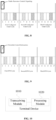
- FIG. 8 illustrates a schematic diagram of a SL transmission mode based on the type-1 scheduling scheme.
- FIG. 8 illustrates the type-1 SL configured grant transmission resources configured by the network device for the terminal through RRC signaling, where each configured grant period includes 6 slots (or subframes).
- the SL resource pool includes 6 slots in total, namely, slot 1, slot 4, slot 7, slot 10, slot 13, and slot 16.
- the configured grant resources allocated by the network device to the terminal include only three slots in the resource pool, namely, slot 1, slot 7 and slot 13. Accordingly, slot 1, slot 7 and slot 13 are available resources in the resource pool.
- the terminal receives RRC signaling from the network device in slot 0, and the RRC signaling carries the delay parameter Y, and a value of Y is 4.
- TA is 0, so it is determined that the target timepoint corresponds to slot 4.
- slot 4 is not an available resource in the resource pool, and the first available resource that is not earlier than slot 4 is slot 7. Then, the terminal determines that the start timepoint of SL transmission is slot 7.
- the terminal receives RRC signaling from the network device in slot 0, TA is 0, the processing delay for the terminal to process RRC signaling is 0.5 ms, and the SL subcarrier spacing is 15 kHz, so the unit slot duration is determined as 1 ms. Then, the target timepoint is determined as 0.5 ms, which corresponds to slot 1. Slot 1 is an available resource in the resource pool. Therefore, slot 1 is determined as the start timepoint of SL transmission.
- the terminal receives RRC signaling from the network device in slot 0, TA is 0, the processing delay for the terminal to process RRC signaling is 2 ms, and the SL subcarrier spacing is 15 kHz, so the unit slot duration is determined as 1 ms. Then, the target timepoint is determined as 2 ms, which corresponds to slot 2. Then, in the resource pool, the first one available resource not earlier than slot 2 is slot 7, and slot 7 is determined as the start timepoint of SL transmission.
- the delay parameter Y may also be zero. Accordingly, the target timepoint is associated with the time-related parameter and the timing advance TA. In some examples, the time-related parameter is the second timepoint determined according to RRC signaling.
- the second timepoint is determined based on the RRC signaling, and the determination manner is similar to the foregoing determination manner of the first timepoint. Accordingly, the second timepoint may include but is not limited to the following situations.
- the second timepoint is determined according to the slot in which the RRC signaling is located.
- the second timepoint is the downlink slot in which the RRC signaling is transmitted for the first time; or, it is the downlink slot in which the RRC signaling is transmitted for the last time.
- the second timepoint is determined according to the timepoint when the RRC signaling is correctly received.
- the second timepoint is determined according to the timepoint when the terminal confirms that the RRC signaling is correctly received.
- the second timepoint is determined according to the slot in which the RRC signaling is transmitted for the last time.
- the second timepoint is determined according to the second uplink transmission resource, where the second uplink transmission resource is used for transmitting an ACK, and the ACK is used for indicating that the RRC signaling is correctly received.
- a structure of the communication system may refer to FIG. 4 , the network device is an NR network device, and the SL transmission resources are LTE SL transmission resources. Details will be not repeated here.
- the scheduling information is DCI.
- the time-related parameters involved according to some examples of this application may include, but are not limited to, a time offset parameter and a slot offset parameter.
- the slot offset parameter is used for determining the slot offset m in the time division duplex (TDD) system.
- TDD time division duplex
- FDD frequency division duplex
- the time offset parameter or referred to as TimeOffsetLTESL
- TimeOffsetLTESL is used for determining the third duration (for ease of description, it is referred to as X).
- the third duration X is associated with the interaction duration of the scheduling information between different modules in the terminal device.
- the terminal side receives the DCI from the network device through an NR module, and the SL to be scheduled is implemented through an LTE module. Accordingly, there will be a certain delay caused by interaction of the signaling between the NR module and the LTE module. Therefore, when determining the SL transmission timepoint, the interaction duration of signaling between different modules is to be considered.
- the third duration is used for compensating for the interaction duration. In some implementation examples, the third duration X is greater than or equal to the interaction duration.
- the interaction delays between modules in different terminals may be different.
- the third durations corresponding to different terminals may also be different.
- the third duration is also associated with the processing capability of the terminal.
- the terminal reports information associated with its own processing capability to the network device, so that the network device considers the processing capability of the terminal when performing cross-RAT scheduling.
- the target timepoint is associated with the time offset parameter TimeOffsetLTESL, the slot offset parameter SL index, the start timepoint T DL of the downlink slot in which the DCI is located, and the timing advance TA.
- T is the target timepoint
- T DL is the start timepoint of the downlink slot
- N TA is the number of time units obtained according to the timing advance
- Ts is the time unit
- m is the slot offset obtained according to the slot offset parameter
- X is the third duration obtained according to the time offset parameter.
- T DL is specifically used for indicating the start timepoint of the downlink slot in which the DCI is located.
- the time offset parameter may be configured by the network device and sent by the network device to the terminal.
- the time offset parameter is configured by the network device and carried in the scheduling information.
- the network device determines the scheduling information
- the time offset parameter is configured for the terminal, thereby determining the scheduling information of the terminal, and the scheduling information (DCI) carries the time offset parameter ( TimeOffsetLTESL ) .
- the time offset parameter may be sent through another message different from the scheduling information.
- the time offset parameter is the third duration configured by the network device.
- the third duration may be configured by the network device based on the processing capability of the terminal, or may be a pre-configured parameter of the network device.
- the time offset parameter may also be an index value.
- the time offset parameter is second index information
- the third duration is obtained through the second index information and a preset second correspondence
- the second correspondence indicates a mapping relationship between the second index information and duration(s) configured by the network device.
- FIG. 9 illustrates a schematic diagram of a SL transmission mode based on the cross-RAT scheduling.
- the transmission resources shown in FIG. 9 there are a total of 3 semi-persistent scheduling (SPS) cycles, and each cycle includes 6 slots (or subframes).
- the SL resource pool includes 6 slots in total, namely, slot 1, slot 4, slot 7, slot 10, slot 13, and slot 16.
- the configured grant resources allocated by the network device to the terminal include only three slots in the resource pool, namely, slot 1, slot 7 and slot 13. Accordingly, slot 1, slot 7 and slot 13 are available resources in the resource pool.
- the terminal device receives scheduling information from the network device, and the scheduling information is used for scheduling the SL transmission resource of the terminal device.
- the scheduling information is sent by the network device in the type-1 mode, or sent by the network device based on the cross-RAT.
- the terminal device can determine the target timepoint associated with a time-related parameter according to the scheduling information or the time-related parameter of the terminal as pre-configured, so as to select the first one available resource not earlier than the target timepoint in the resource pool as the SL transmission timepoint (that is, the start timepoint of SL transmission).
- the SL transmission timepoint can be determined for the scheduling information sent by the network according to type-1 mode or cross-RAT, thereby overcoming the deficiency of determining the SL transmission timepoint in the related art, as well as improving stability and flexibility of the transmission procedure.
- FIG. 10 is a block diagram of the terminal device according to this application.
- the terminal device includes a transceiving module 1010 and a processing module 1020, where the transceiver module 1010 is configured to receive scheduling information from a network device, the scheduling information is used for configuring a SL transmission resource of the terminal device; and the processing module 1020 is configured to obtain a start timepoint of a SL transmission of the terminal device, where the start timepoint is a first one available resource in a resource pool not earlier than a target timepoint.
- the target timepoint is associated with a time-related parameter, and the time-related parameter is derived from the terminal device or is determined according to the scheduling information.
- the terminal provided in some examples is configured to implement the technical solution at the terminal side according to any of the foregoing method examples, and its implementation principles and technical effects are similar, and will not be repeated here.
- the scheduling information is an RRC signaling, and the RRC signaling is used for configuring a first type of SL configured grant; the time-related parameter includes a delay parameter, and the delay parameter is used for indicating a first duration.
- the target timepoint is associated with the delay parameter, a first timepoint, and a timing advance, where the first timepoint is determined according to the RRC signaling.
- the first timepoint is determined according to a slot in which the RRC signaling is located.
- the first timepoint is determined according to a slot in which a latest transmission of the RRC signaling is located.
- the first timepoint is determined according to a slot in which a first uplink transmission resource is located, the first uplink transmission resource is used for transmitting an ACK, and the ACK is used for indicating the RRC signaling is correctly received.
- the target timepoint is associated with the delay parameter, a start timepoint of a downlink slot in which the RRC signaling is located, and a timing advance.
- T is the target timepoint
- T DL is the start timepoint of the downlink slot
- T TA is a second duration obtained according to the timing advance
- T1 is the first duration obtained according to the delay parameter.
- the delay parameter is a pre-configured parameter of the terminal device.
- the delay parameter is configured by the network device and carried in the scheduling information.
- the delay parameter is associated with a processing duration of the terminal device for the RRC signaling.
- the first duration is the delay parameter; or, the delay parameter is a number of slots, and the first duration is a product of the number of slots and a duration of one slot; or, the delay parameter is first index information, the first duration is obtained through the first index information and a preset first correspondence, and the first correspondence is a correspondence between the first index information and the duration.
- the scheduling information is an RRC signaling
- the RRC signaling is used for configuring a first type of SL configured grant
- the time-related parameter is a second timepoint determined according to the RRC signaling.
- the second timepoint is determined according to a slot in which the RRC signaling is located.
- the second timepoint is determined according to a slot in which a latest transmission of the RRC signaling is located.
- the second timepoint is determined according to a second uplink transmission resource, the second uplink transmission resource is used for transmitting an ACK, and the ACK is used for indicating the RRC signaling is correctly received.
- the target timepoint is associated with the second timepoint and a timing advance.
- the scheduling information is a DCI
- the DCI is used for activating the SL transmission resource
- the network device is an NR network device
- the SL transmission resource is an LTE SL transmission resource.
- the time-related parameter includes: a time offset parameter, used for determining a third duration, where the third duration is associated with an interaction duration of the scheduling information between different modules in the terminal device; and a slot offset parameter, used for determining a slot offset in a TDD system.
- the target timepoint is associated with the time offset parameter, the slot offset parameter, a start timepoint of a downlink slot in which the DCI is located, and a timing advance.
- T is the target timepoint
- T DL is the start timepoint of the downlink slot
- N TA is a number of time units obtained according to the timing advance
- Ts is the time unit
- m is the slot offset obtained according to the slot offset parameter
- X is the third duration obtained according to the time offset parameter.
- the time offset parameter is second index information
- the third duration is obtained through the second index information and a preset second correspondence
- the second correspondence is a correspondence between the second index information and the duration configured by the network device.
- the time offset parameter is configured by the network device and carried in the scheduling information.
- FIG. 11 is a block diagram of the network device according to this application.
- the network device includes a processing module 1110 and a transceiving module 1120; where the processing module 1110 is configured to determine scheduling information of a terminal, the scheduling information is configured to send the scheduling information to the terminal, causing the terminal to obtain a start timepoint of a SL transmission of the terminal, where the start timepoint is a first one available resource in a resource pool not earlier than a target timepoint.
- the target timepoint is associated with a time-related parameter, and the time-related parameter is derived from the terminal or is determined according to the scheduling information.
- the network device provided in some examples is configured to implement the technical solution at the network device side according to any of the foregoing method examples, and its implementation principles and technical effects are similar, and will not be repeated here.
- the scheduling information is an RRC signaling, and the RRC signaling is used for configuring a first type of SL configured grant; the time-related parameter includes a delay parameter, and the delay parameter is used for indicating a first duration.
- the target timepoint is associated with the delay parameter, a first timepoint, and a timing advance, where the first timepoint is determined according to the RRC signaling.
- the first timepoint is determined according to a slot in which the RRC signaling is located.
- the first timepoint is the downlink slot in which the RRC signaling is transmitted for the first time; or, it is the downlink slot in which the RRC signaling is transmitted for the last time.
- the first timepoint is determined according to the timepoint when the RRC signaling is correctly received.
- the first timepoint is determined according to the timepoint when the terminal confirms that the RRC signaling is correctly received.
- the first timepoint is determined according to a slot in which a latest transmission of the RRC signaling is located.
- the first timepoint is determined according to a slot in which a first uplink transmission resource is located, the first uplink transmission resource is used for transmitting an ACK, and the ACK is used for indicating the RRC signaling is correctly received.
- the target timepoint is associated with the delay parameter, a start timepoint of a downlink slot in which the RRC signaling is located, and a timing advance.
- T is the target timepoint
- T DL is the start timepoint of the downlink slot
- T TA is a second duration obtained according to the timing advance
- T1 is the first duration obtained according to the delay parameter.
- the delay parameter is a pre-configured parameter of the terminal.
- the processing module 1110 is specifically configured to: configure the delay parameter for the terminal; and determine the scheduling information of the terminal, where the scheduling information carries the delay parameter.
- the delay parameter is associated with a processing duration of the terminal for the RRC signaling.
- the first duration is the delay parameter; or, the delay parameter is a number of slots, and the first duration is a product of the number of slots and a duration of one slot; or, the delay parameter is first index information, the first duration is obtained through the first index information and a preset first correspondence, and the first correspondence is a correspondence between the first index information and the duration.
- the scheduling information is an RRC signaling
- the RRC signaling is used for configuring a first type of SL configured grant
- the time-related parameter is a second timepoint determined according to the RRC signaling.
- the second timepoint is determined according to a slot in which the RRC signaling is located.
- the second timepoint is the downlink slot where the RRC signaling is transmitted for the first time; or, it is the downlink slot where the RRC signaling is transmitted for the last time.
- the second timepoint is determined according to the timepoint when the RRC signaling is correctly received.
- the second timepoint is determined according to the timepoint when the terminal confirms that the RRC signaling is correctly received.
- the second timepoint is determined according to a slot in which a latest transmission of the RRC signaling is located.
- the second timepoint is determined according to a second uplink transmission resource, the second uplink transmission resource is used for transmitting an ACK, and the ACK is used for indicating the RRC signaling is correctly received.
- the target timepoint is associated with the second timepoint and the timing advance.
- the scheduling information is a DCI
- the DCI is used for activating the SL transmission resource
- the network device is an NR network device
- the SL transmission resource is an LTE SL transmission resource.
- the time-related parameters include: a time offset parameter, used for determining a third duration, where the third duration is associated with an interaction duration of the scheduling information between different modules in the terminal; and a slot offset parameter, used for determining a slot offset in a TDD system.
- the target timepoint is associated with the time offset parameter, the slot offset parameter, a start timepoint of a downlink slot in which the DCI is located, and a timing advance.
- T is the target timepoint
- T DL is the start timepoint of the downlink slot
- N TA is a number of time units obtained according to the timing advance
- Ts is the time unit
- m is the slot offset obtained according to the slot offset parameter
- X is the third duration obtained according to the time offset parameter.
- the time offset parameter is second index information
- the third duration is obtained through the second index information and a preset second correspondence
- the second correspondence is a correspondence between the second index information and the duration configured by the network device.
- the processing module 1110 is specifically configured to configure the time offset parameter for the terminal; and determine the scheduling information of the terminal, where the scheduling information carries the time offset parameter.
- SL sidelink
- the scheduling information is a radio resource control (RRC) signaling
- the RRC signaling is used for configuring a first type of SL configured grant
- the time-related parameter includes a delay parameter
- the delay parameter is used for indicating a first duration
- example 3 the method of example 2, wherein the target timepoint is associated with the delay parameter, a first timepoint, and a timing advance, wherein the first timepoint is determined according to the RRC signaling.
- example 4 the method of example 3, wherein the first timepoint is determined according to a slot in which the RRC signaling is located.
- example 5 the method of example 3, wherein the first timepoint is determined according to a slot in which a latest transmission of the RRC signaling is located.
- example 6 the method of example 3, wherein the first timepoint is determined according to a slot in which a first uplink transmission resource is located, the first uplink transmission resource is used for transmitting an acknowledgement (ACK), and the ACK is used for indicating the RRC signaling is correctly received.
- ACK acknowledgement
- example 7 the method of example 2, wherein the target timepoint is associated with the delay parameter, a start timepoint of a downlink slot in which the RRC signaling is located, and a timing advance.
- T T DL ⁇ T TA 2 + T 1
- T the target timepoint
- T DL the start timepoint of the downlink slot
- T TA is a second duration obtained according to the timing advance
- T1 the first duration obtained according to the delay parameter.
- example 11 the method of any one of examples 2-8, wherein the delay parameter is associated with a processing duration of the terminal for the RRC signaling.
- the method of example 1, wherein the scheduling information is an RRC signaling, and the RRC signaling is used for configuring a first type of SL configured grant; the time-related parameter is a second timepoint determined according to the RRC signaling.
- example 14 the method of example 13, wherein the second timepoint is determined according to a slot in which the RRC signaling is located.
- example 15 the method of example 13, wherein the second timepoint is determined according to a slot in which a latest transmission of the RRC signaling is located.
- example 17 the method of any one of examples 13-16, wherein the target timepoint is associated with the second timepoint and a timing advance.
- the scheduling information is a downlink control information (DCI), and the DCI is used for activating the SL transmission resource;
- the network device is an NR network device, and the SL transmission resource is a long term evolution (LTE) SL transmission resource.
- LTE long term evolution
- example 20 the method of example 19, wherein the target timepoint is associated with the time offset parameter, the slot offset parameter, a start timepoint of a downlink slot in which the DCI is located, and a timing advance.
- T the target timepoint
- T DL the start timepoint of the downlink slot
- N TA is a number of time units obtained according to the timing advance
- Ts is the time unit
- m the slot offset obtained according to the slot offset parameter
- X is the third duration obtained according to the time offset parameter.
- the time offset parameter is second index information
- the third duration is obtained through the second index information and a preset second correspondence
- the second correspondence is a correspondence between the second index information and the duration configured by the network device.
- time offset parameter is configured by the network device and carried in the scheduling information.
- a method for configuring SL transmission resource including:
- the scheduling information is an RRC signaling
- the RRC signaling is used for configuring a first type of SL configured grant
- the time-related parameter includes a delay parameter
- the delay parameter is used for indicating a first duration.
- example 26 the method of example 25, wherein the target timepoint is associated with the delay parameter, a first timepoint, and a timing advance, wherein the first timepoint is determined according to the RRC signaling.
- example 27 the method of example 26, wherein the first timepoint is determined according to a slot in which the RRC signaling is located.
- example 28 the method of example 26, wherein the first timepoint is determined according to a slot in which a latest transmission of the RRC signaling is located.
- example 29 the method of example 26, wherein the first timepoint is determined according to a slot in which a first uplink transmission resource is located, the first uplink transmission resource is used for transmitting an ACK, and the ACK is used for indicating the RRC signaling is correctly received.
- example 30 the method of example 25, wherein the target timepoint is associated with the delay parameter, a start timepoint of a downlink slot in which the RRC signaling is located, and a timing advance.
- T T DL ⁇ T TA 2 + T 1
- T the target timepoint
- T DL the start timepoint of the downlink slot
- T TA is a second duration obtained according to the timing advance
- T1 the first duration obtained according to the delay parameter.
- example 32 the method of any one of examples 25-31, wherein the delay parameter is a pre-configured parameter of the terminal.
- determining the scheduling information of the terminal includes:
- example 34 the method of any one of examples 25-31, wherein the delay parameter is associated with a processing duration of the terminal for the RRC signaling.
- the scheduling information is an RRC signaling
- the RRC signaling is used for configuring a first type of SL configured grant
- the time-related parameter is a second timepoint determined according to the RRC signaling.
- example 37 the method of example 36, wherein the second timepoint is determined according to a slot in which the RRC signaling is located.
- example 38 the method of example 36, wherein the second timepoint is determined according to a slot in which a latest transmission of the RRC signaling is located.
- example 39 the method of example 36, wherein the second timepoint is determined according to a second uplink transmission resource, the second uplink transmission resource is used for transmitting an ACK, and the ACK is used for indicating the RRC signaling is correctly received.
- example 40 the method of any one of examples 36-39, wherein the target timepoint is associated with the second timepoint and a timing advance.
- the scheduling information is a DCI
- the DCI is used for activating the SL transmission resource
- the network device is an NR network device
- the SL transmission resource is an LTE SL transmission resource.
- example 43 the method of example 42, wherein the target timepoint is associated with the time offset parameter, the slot offset parameter, a start timepoint of a downlink slot in which the DCI is located, and a timing advance.
- T the target timepoint
- T DL the start timepoint of the downlink slot
- N TA is a number of time units obtained according to the timing advance
- Ts is the time unit
- m the slot offset obtained according to the slot offset parameter
- X is the third duration obtained according to the time offset parameter.
- example 45 the method of any one of examples 42-44, wherein the time offset parameter is second index information, the third duration is obtained through the second index information and a preset second correspondence, and the second correspondence is a correspondence between the second index information and the duration configured by the network device.
- determining the scheduling information of the terminal includes:
- a terminal device including:
- the terminal device of example 47 wherein the scheduling information is an RRC signaling, and the RRC signaling is used for configuring a first type of SL configured grant; the time-related parameter includes a delay parameter, and the delay parameter is used for indicating a first duration.
- the terminal device of example 48 wherein the target timepoint is associated with the delay parameter, a first timepoint, and a timing advance, wherein the first timepoint is determined according to the RRC signaling.
- example 50 the terminal device of example 49, wherein the first timepoint is determined according to a slot in which the RRC signaling is located.
- the terminal device of example 49 wherein the first timepoint is determined according to a slot in which a latest transmission of the RRC signaling is located.
- the terminal device of example 49 wherein the first timepoint is determined according to a slot in which a first uplink transmission resource is located, the first uplink transmission resource is used for transmitting an ACK, and the ACK is used for indicating the RRC signaling is correctly received.
- the terminal device of example 48 wherein the target timepoint is associated with the delay parameter, a start timepoint of a downlink slot in which the RRC signaling is located, and a timing advance.
- example 55 the terminal device of any one of examples 48-54, wherein the delay parameter is a pre-configured parameter of the terminal device.
- the terminal device of example 47 wherein the scheduling information is an RRC signaling, and the RRC signaling is used for configuring a first type of SL configured grant; the time-related parameter is a second timepoint determined according to the RRC signaling.
- example 60 the terminal device of example 59, wherein the second timepoint is determined according to a slot in which the RRC signaling is located.
- the terminal device of example 59 wherein the second timepoint is determined according to a slot in which a latest transmission of the RRC signaling is located.
- the terminal device of example 59 wherein the second timepoint is determined according to a second uplink transmission resource, the second uplink transmission resource is used for transmitting an ACK, and the ACK is used for indicating the RRC signaling is correctly received.
- example 63 the terminal device of any one of examples 59-62, wherein the target timepoint is associated with the second timepoint and a timing advance.
- the terminal device of example 47 wherein when the terminal device is in communication with the network device through Cross-RAT, the scheduling information is a DCI, and the DCI is used for activating the SL transmission resource; wherein, the network device is an NR network device, and the SL transmission resource is an LTE SL transmission resource.
- the terminal device of example 64, wherein the time-related parameter includes:
- T the target timepoint
- T DL the start timepoint of the downlink slot
- N TA is a number of time units obtained according to the timing advance
- Ts is the time unit
- m the slot offset obtained according to the slot offset parameter
- X is the third duration obtained according to the time offset parameter.
- the terminal device of any one of examples 65-67 wherein the time offset parameter is second index information, the third duration is obtained through the second index information and a preset second correspondence, and the second correspondence is a correspondence between the second index information and the duration configured by the network device.
- a network device including:
- the network device of example 70 wherein the scheduling information is an RRC signaling, and the RRC signaling is used for configuring a first type of SL configured grant; the time-related parameter includes a delay parameter, and the delay parameter is used for indicating a first duration.
- example 72 the network device of example 71, wherein the target timepoint is associated with the delay parameter, a first timepoint, and a timing advance, wherein the first timepoint is determined according to the RRC signaling.
- example 73 the network device of example 72, wherein the first timepoint is determined according to a slot in which the RRC signaling is located.
- example 74 the network device of example 72, wherein the first timepoint is determined according to a slot in which a latest transmission of the RRC signaling is located.
- the network device of example 72 wherein the first timepoint is determined according to a slot in which a first uplink transmission resource is located, the first uplink transmission resource is used for transmitting an ACK, and the ACK is used for indicating the RRC signaling is correctly received.
- example 76 the network device of example 71, wherein the target timepoint is associated with the delay parameter, a start timepoint of a downlink slot in which the RRC signaling is located, and a timing advance.
- T T DL ⁇ T TA 2 + T 1
- T the target timepoint
- T DL the start timepoint of the downlink slot
- T TA is a second duration obtained according to the timing advance
- T1 the first duration obtained according to the delay parameter.
- example 78 the network device of any one of examples 71-77, wherein the delay parameter is a pre-configured parameter of the terminal.
- example 80 the network device of any one of examples 71-77, wherein the delay parameter is associated with a processing duration of the terminal for the RRC signaling.
- example 81 the network device of any one of examples 71-77, wherein the first duration is the delay parameter; or,
- the network device of example 70 wherein the scheduling information is an RRC signaling, and the RRC signaling is used for configuring a first type of SL configured grant; the time-related parameter is a second timepoint determined according to the RRC signaling.
- example 83 the network device of example 82, wherein the second timepoint is determined according to a slot in which the RRC signaling is located.
- example 84 the network device of example 82, wherein the second timepoint is determined according to a slot in which a latest transmission of the RRC signaling is located.
- the network device of example 82 wherein the second timepoint is determined according to a second uplink transmission resource, the second uplink transmission resource is used for transmitting an ACK, and the ACK is used for indicating the RRC signaling is correctly received.
- example 86 the network device of any one of examples 82-85, wherein the target timepoint is associated with the second timepoint and a timing advance.
- the network device of example 70 wherein when the network device is in communication with the terminal through Cross-RAT, the scheduling information is a DCI, and the DCI is used for activating the SL transmission resource; wherein, the network device is an NR network device, and the SL transmission resource is an LTE SL transmission resource.
- the network device of example 87, wherein the time-related parameter includes:
- the network device of example 88 wherein the target timepoint is associated with the time offset parameter, the slot offset parameter, a start timepoint of a downlink slot in which the DCI is located, and a timing advance.
- T the target timepoint
- T DL the start timepoint of the downlink slot
- N TA is a number of time units obtained according to the timing advance
- Ts is the time unit
- m the slot offset obtained according to the slot offset parameter
- X is the third duration obtained according to the time offset parameter.
- the network device of any one of examples 88-90 wherein the time offset parameter is second index information, the third duration is obtained through the second index information and a preset second correspondence, and the second correspondence is a correspondence between the second index information and the duration configured by the network device.
- example 92 the network device of any one of examples 88-90, wherein the processing module is specifically configured to:
- a terminal device including:
- a network device including:
- a communication system including:
- example 96 there is provided a computer-readable storage medium, and computer-executable instructions are stored in the computer-readable storage medium, and the computer-executable instruction are used for, when being executed by a processor, implementing the method of any one of examples 1-46.
- a chip including: a processor, configured to call and run a computer program from a memory, thereby causing a device installed with the chip to implement the method of any one of examples 1-46.
- example 98 there is provided a computer program product, including computer program instructions, used for causing a computer to implement the method of any one of examples 1-46.
- FIG. 12 is a block diagram of another terminal device according to this application. As shown in FIG. 12 , the terminal device includes: a processor 121, a memory 122, and a communication interface 123.
- the memory 122 stores computer-executable instructions.
- the processor 121 executes the computer-executable instructions stored in the memory 122, so that the processor 121 implements the technical solution at the terminal side according to any of the foregoing method examples.
- FIG. 12 illustrates a simple design of the terminal device.
- the example of this application does not limit the number of processors and memories in the terminal device.
- FIG. 12 only takes the number of one as an example for illustration.
- FIG. 13 is a block diagram of another network device according to this application.
- the network device includes: a processor 131, a memory 132, and a communication interface 133.
- the memory 132 stores computer-executable instructions.
- the processor 131 executes the computer-executable instructions stored in the memory 132, so that the processor 131 implements the technical solution at the network device side according to any of the foregoing method examples.
- FIG. 13 illustrates a simple design of the network device.
- the example of this application does not limit the number of processors and memories in the network device.
- FIG. 13 only takes the number of one as an example for illustration.
- the memory, the processor, and the communication interface may be connected via a bus.
- the memory may be integrated within the processor.
- the communication system 100 includes a terminal and a network device, where the terminal device 120 is configured to implement the technical solution at the terminal side according to any of the foregoing method examples, and the network device 110 is configured to execute the technical solution at the network device side according to any of the foregoing method examples.
- Examples of this application also provide a computer-readable storage medium.
- the computer-readable storage medium stores computer-executable instructions. When the computer-executable instructions are executed by a processor, they are used for implementing the method for configuring SL transmission resources according to any of the foregoing method examples.
- Examples of this application also provide a chip, including a processor configured to call and run a computer program from a memory, thereby causing a device installed with the chip to implement the method for configuring SL transmission resources according to any of the foregoing method examples.
- Examples of this application also provide a computer program product including computer program instructions, which cause a computer to implement the method for configuring SL transmission resources according to any of the foregoing method examples.
- Examples of this application also provide a computer program that enables a computer to implement the method for configuring SL transmission resources according to any of the foregoing method examples.
- the disclosed device and method may be implemented in other ways.
- the device examples described above are only illustrative.
- the division of the modules is only a logical function division, and there may be other divisions in actual implementation, for example, multiple modules may be combined or integrated with another system, or some features may be ignored or not implemented.
- the displayed or discussed mutual coupling or direct coupling or communication connection may be through some interfaces.
- the indirect coupling or communication connection of the modules may be in electrical, mechanical or other forms.
- the processor may be a central processing unit (CPU), or another general-purpose processor, digital signal processor (DSP), application specific integrated circuit (ASIC), and the like.
- the general-purpose processor may be a microprocessor or the processor may also be any conventional processor or the like.
- the steps in the method disclosed in this application may be directly embodied as being executed and completed by a hardware processor, or executed and completed by a combination of hardware and software modules in the processor.
- All or part of the steps in the foregoing method examples may be implemented by a program instructing relevant hardware.
- the aforementioned program may be stored in a readable memory. When the program is executed, it is used for implementing the steps of the above-mentioned method examples; and the aforementioned memory (storage medium) includes: read-only memory (ROM), RAM, flash memory, hard disk, solid state hard disk, magnetic tape, floppy disk, optical disc and any combination thereof.
Landscapes
- Engineering & Computer Science (AREA)
- Computer Networks & Wireless Communication (AREA)
- Signal Processing (AREA)
- Mobile Radio Communication Systems (AREA)
- Radio Transmission System (AREA)
- Computer And Data Communications (AREA)
- Data Exchanges In Wide-Area Networks (AREA)
Applications Claiming Priority (3)
| Application Number | Priority Date | Filing Date | Title |
|---|---|---|---|
| PCT/CN2020/074293 WO2021155497A1 (zh) | 2020-02-04 | 2020-02-04 | 侧行传输资源配置方法与系统、设备及存储介质 |
| PCT/CN2020/079025 WO2021155622A1 (zh) | 2020-02-04 | 2020-03-12 | 侧行传输资源配置方法与系统、设备及存储介质 |
| EP20918115.5A EP4090055B1 (de) | 2020-02-04 | 2020-03-12 | Sidelink-übertragungsressourcen-konfigurationsverfahren und -system, und vorrichtung und speichermedium |
Related Parent Applications (2)
| Application Number | Title | Priority Date | Filing Date |
|---|---|---|---|
| EP20918115.5A Division EP4090055B1 (de) | 2020-02-04 | 2020-03-12 | Sidelink-übertragungsressourcen-konfigurationsverfahren und -system, und vorrichtung und speichermedium |
| EP20918115.5A Division-Into EP4090055B1 (de) | 2020-02-04 | 2020-03-12 | Sidelink-übertragungsressourcen-konfigurationsverfahren und -system, und vorrichtung und speichermedium |
Publications (2)
| Publication Number | Publication Date |
|---|---|
| EP4418813A2 true EP4418813A2 (de) | 2024-08-21 |
| EP4418813A3 EP4418813A3 (de) | 2024-11-13 |
Family
ID=77199162
Family Applications (2)
| Application Number | Title | Priority Date | Filing Date |
|---|---|---|---|
| EP20918115.5A Active EP4090055B1 (de) | 2020-02-04 | 2020-03-12 | Sidelink-übertragungsressourcen-konfigurationsverfahren und -system, und vorrichtung und speichermedium |
| EP24187034.4A Pending EP4418813A3 (de) | 2020-02-04 | 2020-03-12 | Verfahren und system zur konfiguration von sidelink-übertragungsressourcen sowie vorrichtung und speichermedium |
Family Applications Before (1)
| Application Number | Title | Priority Date | Filing Date |
|---|---|---|---|
| EP20918115.5A Active EP4090055B1 (de) | 2020-02-04 | 2020-03-12 | Sidelink-übertragungsressourcen-konfigurationsverfahren und -system, und vorrichtung und speichermedium |
Country Status (9)
| Country | Link |
|---|---|
| US (2) | US12302324B2 (de) |
| EP (2) | EP4090055B1 (de) |
| JP (2) | JP7608468B2 (de) |
| KR (1) | KR20220137656A (de) |
| CN (2) | CN115499926B (de) |
| AU (1) | AU2020426953B2 (de) |
| BR (1) | BR112022015352A2 (de) |
| ES (1) | ES2991445T3 (de) |
| WO (2) | WO2021155497A1 (de) |
Families Citing this family (7)
| Publication number | Priority date | Publication date | Assignee | Title |
|---|---|---|---|---|
| WO2021155497A1 (zh) | 2020-02-04 | 2021-08-12 | Oppo广东移动通信有限公司 | 侧行传输资源配置方法与系统、设备及存储介质 |
| CN115884347B (zh) * | 2021-09-26 | 2025-08-22 | 中国移动通信有限公司研究院 | 传输定时确定方法、装置、相关设备及存储介质 |
| CN116266779B (zh) * | 2021-12-14 | 2025-12-09 | 展讯通信(上海)有限公司 | 通信方法、装置及设备 |
| US12598603B2 (en) * | 2022-05-10 | 2026-04-07 | Qualcomm Incorporated | User equipment preemption of sidelink communications |
| CA3209246A1 (en) * | 2022-08-12 | 2024-02-12 | Comcast Cable Communications, Llc | Sidelink communications in cell with multiple timing advances |
| CN118786741A (zh) * | 2023-02-01 | 2024-10-15 | 北京小米移动软件有限公司 | 资源确定方法、装置和存储介质 |
| CN119676849B (zh) * | 2023-09-13 | 2026-04-03 | 展讯通信(上海)有限公司 | 通信方法、计算机可读存储介质及通信装置 |
Family Cites Families (19)
| Publication number | Priority date | Publication date | Assignee | Title |
|---|---|---|---|---|
| EP3063999B1 (de) * | 2013-10-30 | 2019-02-27 | Telefonaktiebolaget LM Ericsson (publ) | Verfahren und drahtlose vorrichtungen zur aktivierung der synchronisation in der d2d-kommunikation |
| WO2015115791A1 (ko) * | 2014-01-28 | 2015-08-06 | 엘지전자 주식회사 | 무선 통신 시스템에서 장치 대 장치 단말의 신호 송수신 방법 및 장치 |
| CN105451211B (zh) * | 2014-09-25 | 2019-12-27 | 中兴通讯股份有限公司 | 用于设备到设备通信的方法及装置 |
| JP2018148248A (ja) * | 2015-07-28 | 2018-09-20 | シャープ株式会社 | 端末装置、基地局装置および方法 |
| CN110839226B (zh) * | 2015-10-27 | 2022-01-11 | 华为技术有限公司 | 一种设备到设备d2d通信方法、装置及系统 |
| CA3012395C (en) * | 2016-01-27 | 2020-10-27 | Huawei Technologies Co., Ltd. | Communication method and communications apparatus |
| EP3481125A4 (de) * | 2016-07-01 | 2020-02-26 | LG Electronics Inc. -1- | Verfahren zum senden und empfangen von daten in einem drahtloskommunikationssystem und vorrichtung dafür |
| CN109890080B (zh) * | 2016-11-03 | 2020-03-20 | 华为技术有限公司 | 一种信息传输方法及设备 |
| CN108260105A (zh) * | 2016-12-29 | 2018-07-06 | 华为技术有限公司 | 一种d2d通信方法及设备 |
| CN115102671B (zh) * | 2017-01-03 | 2024-06-21 | 北京三星通信技术研究有限公司 | 数据传输的方法及设备 |
| CN108811147B (zh) * | 2017-05-05 | 2023-04-07 | 中兴通讯股份有限公司 | 信息传输方法及装置 |
| CN109587790B (zh) | 2017-09-29 | 2025-01-07 | 华为技术有限公司 | 资源配置方法及装置 |
| CN109600852B (zh) * | 2017-09-30 | 2021-11-19 | 华为技术有限公司 | 一种资源指示方法、通信装置及网络设备 |
| WO2019091143A1 (zh) * | 2017-11-08 | 2019-05-16 | Oppo广东移动通信有限公司 | D2d通信中资源配置的方法、终端设备和网络设备 |
| WO2019157721A1 (zh) * | 2018-02-14 | 2019-08-22 | Oppo广东移动通信有限公司 | 一种配置传输参数的方法、设备及系统 |
| CN113972977B (zh) * | 2018-12-29 | 2024-06-14 | 北京小米移动软件有限公司 | 直连通信的数据传输方法、装置、设备及系统 |
| JP6695072B2 (ja) * | 2019-04-09 | 2020-05-20 | サン パテント トラスト | 装置間(d2d)通信における改良されたリソース割当て |
| RU2712434C1 (ru) | 2019-08-08 | 2020-01-28 | Сан Пэтент Траст | Управление множественными передачами прямого соединения в течение периода управления прямого соединения |
| WO2021155497A1 (zh) | 2020-02-04 | 2021-08-12 | Oppo广东移动通信有限公司 | 侧行传输资源配置方法与系统、设备及存储介质 |
-
2020
- 2020-02-04 WO PCT/CN2020/074293 patent/WO2021155497A1/zh not_active Ceased
- 2020-03-12 JP JP2022547320A patent/JP7608468B2/ja active Active
- 2020-03-12 WO PCT/CN2020/079025 patent/WO2021155622A1/zh not_active Ceased
- 2020-03-12 CN CN202211116810.4A patent/CN115499926B/zh active Active
- 2020-03-12 EP EP20918115.5A patent/EP4090055B1/de active Active
- 2020-03-12 EP EP24187034.4A patent/EP4418813A3/de active Pending
- 2020-03-12 BR BR112022015352A patent/BR112022015352A2/pt unknown
- 2020-03-12 CN CN202080091529.2A patent/CN114902707A/zh active Pending
- 2020-03-12 AU AU2020426953A patent/AU2020426953B2/en active Active
- 2020-03-12 ES ES20918115T patent/ES2991445T3/es active Active
- 2020-03-12 KR KR1020227027404A patent/KR20220137656A/ko active Pending
-
2022
- 2022-08-02 US US17/879,443 patent/US12302324B2/en active Active
-
2024
- 2024-11-22 JP JP2024203747A patent/JP2025024203A/ja active Pending
-
2025
- 2025-04-23 US US19/187,218 patent/US20250254689A1/en active Pending
Also Published As
| Publication number | Publication date |
|---|---|
| EP4418813A3 (de) | 2024-11-13 |
| ES2991445T3 (es) | 2024-12-03 |
| EP4090055A1 (de) | 2022-11-16 |
| BR112022015352A2 (pt) | 2022-09-20 |
| JP2023523499A (ja) | 2023-06-06 |
| US12302324B2 (en) | 2025-05-13 |
| US20250254689A1 (en) | 2025-08-07 |
| AU2020426953A1 (en) | 2022-09-08 |
| KR20220137656A (ko) | 2022-10-12 |
| WO2021155497A1 (zh) | 2021-08-12 |
| JP7608468B2 (ja) | 2025-01-06 |
| WO2021155622A1 (zh) | 2021-08-12 |
| CN114902707A (zh) | 2022-08-12 |
| EP4090055B1 (de) | 2024-09-04 |
| US20220386346A1 (en) | 2022-12-01 |
| JP2025024203A (ja) | 2025-02-19 |
| AU2020426953B2 (en) | 2025-10-09 |
| CN115499926A (zh) | 2022-12-20 |
| EP4090055A4 (de) | 2023-06-28 |
| CN115499926B (zh) | 2023-12-05 |
Similar Documents
| Publication | Publication Date | Title |
|---|---|---|
| US12302324B2 (en) | Sidelink transmission resource configuration method and system, and device and storage medium | |
| US12335049B2 (en) | Method and apparatus for using HARQ in wireless communications | |
| JP7525526B2 (ja) | サイドリンクデータの伝送方法、端末デバイス及びネットワークデバイス | |
| US20220271870A1 (en) | Communication method, device and storage medium | |
| WO2013020508A1 (zh) | Tdd无线帧中传输数据的方法、系统和设备 | |
| CN112789818A (zh) | 用于在nr v2x系统中执行harq的方法和装置 | |
| CN116056212B (zh) | 通信方法、设备及存储介质 | |
| CN113316907A (zh) | 重传资源配置方法、设备、芯片及计算机程序 | |
| US20260074836A1 (en) | Information processing method and apparatus, storage medium, processor and electronic device | |
| JPWO2021008056A5 (de) | ||
| KR102566227B1 (ko) | 정보 전송 방법, 단말 장치 및 네트워크 장치 | |
| CN112602360A (zh) | 一种通信方法、终端设备和网络设备 | |
| CN113766654A (zh) | 用于传输侧行数据的方法和终端设备 | |
| RU2807529C1 (ru) | Способ и система конфигурирования ресурсов передачи обходной линии связи и устройство и носитель данных | |
| WO2021159533A1 (zh) | 信息处理方法、装置、存储介质、处理器及电子装置 |
Legal Events
| Date | Code | Title | Description |
|---|---|---|---|
| PUAI | Public reference made under article 153(3) epc to a published international application that has entered the european phase |
Free format text: ORIGINAL CODE: 0009012 |
|
| STAA | Information on the status of an ep patent application or granted ep patent |
Free format text: STATUS: THE APPLICATION HAS BEEN PUBLISHED |
|
| AC | Divisional application: reference to earlier application |
Ref document number: 4090055 Country of ref document: EP Kind code of ref document: P |
|
| AK | Designated contracting states |
Kind code of ref document: A2 Designated state(s): AL AT BE BG CH CY CZ DE DK EE ES FI FR GB GR HR HU IE IS IT LI LT LU LV MC MK MT NL NO PL PT RO RS SE SI SK SM TR |
|
| REG | Reference to a national code |
Ref country code: DE Ref legal event code: R079 Free format text: PREVIOUS MAIN CLASS: H04W0092180000 Ipc: H04W0004700000 |
|
| PUAL | Search report despatched |
Free format text: ORIGINAL CODE: 0009013 |
|
| AK | Designated contracting states |
Kind code of ref document: A3 Designated state(s): AL AT BE BG CH CY CZ DE DK EE ES FI FR GB GR HR HU IE IS IT LI LT LU LV MC MK MT NL NO PL PT RO RS SE SI SK SM TR |
|
| RIC1 | Information provided on ipc code assigned before grant |
Ipc: H04W 92/18 20090101ALI20241004BHEP Ipc: H04L 1/00 20060101ALI20241004BHEP Ipc: H04L 1/1829 20230101ALI20241004BHEP Ipc: H04W 72/02 20090101ALI20241004BHEP Ipc: H04W 4/70 20180101AFI20241004BHEP |
|
| STAA | Information on the status of an ep patent application or granted ep patent |
Free format text: STATUS: REQUEST FOR EXAMINATION WAS MADE |
|
| 17P | Request for examination filed |
Effective date: 20250505 |
|
| GRAP | Despatch of communication of intention to grant a patent |
Free format text: ORIGINAL CODE: EPIDOSNIGR1 |
|
| STAA | Information on the status of an ep patent application or granted ep patent |
Free format text: STATUS: GRANT OF PATENT IS INTENDED |