EP4418193A1 - Battery manufacturing method and battery manufacturing system - Google Patents
Battery manufacturing method and battery manufacturing system Download PDFInfo
- Publication number
- EP4418193A1 EP4418193A1 EP23882883.4A EP23882883A EP4418193A1 EP 4418193 A1 EP4418193 A1 EP 4418193A1 EP 23882883 A EP23882883 A EP 23882883A EP 4418193 A1 EP4418193 A1 EP 4418193A1
- Authority
- EP
- European Patent Office
- Prior art keywords
- virtual
- cell
- battery
- battery cell
- process data
- Prior art date
- Legal status (The legal status is an assumption and is not a legal conclusion. Google has not performed a legal analysis and makes no representation as to the accuracy of the status listed.)
- Pending
Links
Images


Classifications
-
- H—ELECTRICITY
- H01—ELECTRIC ELEMENTS
- H01M—PROCESSES OR MEANS, e.g. BATTERIES, FOR THE DIRECT CONVERSION OF CHEMICAL ENERGY INTO ELECTRICAL ENERGY
- H01M10/00—Secondary cells; Manufacture thereof
- H01M10/04—Construction or manufacture in general
-
- G—PHYSICS
- G05—CONTROLLING; REGULATING
- G05B—CONTROL OR REGULATING SYSTEMS IN GENERAL; FUNCTIONAL ELEMENTS OF SUCH SYSTEMS; MONITORING OR TESTING ARRANGEMENTS FOR SUCH SYSTEMS OR ELEMENTS
- G05B19/00—Program-control systems
- G05B19/02—Program-control systems electric
- G05B19/04—Program control other than numerical control, i.e. in sequence controllers or logic controllers
- G05B19/042—Program control other than numerical control, i.e. in sequence controllers or logic controllers using digital processors
- G05B19/0426—Programming the control sequence
-
- G—PHYSICS
- G06—COMPUTING OR CALCULATING; COUNTING
- G06Q—INFORMATION AND COMMUNICATION TECHNOLOGY [ICT] SPECIALLY ADAPTED FOR ADMINISTRATIVE, COMMERCIAL, FINANCIAL, MANAGERIAL OR SUPERVISORY PURPOSES; SYSTEMS OR METHODS SPECIALLY ADAPTED FOR ADMINISTRATIVE, COMMERCIAL, FINANCIAL, MANAGERIAL OR SUPERVISORY PURPOSES, NOT OTHERWISE PROVIDED FOR
- G06Q10/00—Administration; Management
- G06Q10/06—Resources, workflows, human or project management; Enterprise or organisation planning; Enterprise or organisation modelling
- G06Q10/063—Operations research, analysis or management
- G06Q10/0639—Performance analysis of employees; Performance analysis of enterprise or organisation operations
- G06Q10/06395—Quality analysis or management
-
- G—PHYSICS
- G06—COMPUTING OR CALCULATING; COUNTING
- G06Q—INFORMATION AND COMMUNICATION TECHNOLOGY [ICT] SPECIALLY ADAPTED FOR ADMINISTRATIVE, COMMERCIAL, FINANCIAL, MANAGERIAL OR SUPERVISORY PURPOSES; SYSTEMS OR METHODS SPECIALLY ADAPTED FOR ADMINISTRATIVE, COMMERCIAL, FINANCIAL, MANAGERIAL OR SUPERVISORY PURPOSES, NOT OTHERWISE PROVIDED FOR
- G06Q50/00—Information and communication technology [ICT] specially adapted for implementation of business processes of specific business sectors, e.g. utilities or tourism
- G06Q50/04—Manufacturing
-
- G—PHYSICS
- G06—COMPUTING OR CALCULATING; COUNTING
- G06Q—INFORMATION AND COMMUNICATION TECHNOLOGY [ICT] SPECIALLY ADAPTED FOR ADMINISTRATIVE, COMMERCIAL, FINANCIAL, MANAGERIAL OR SUPERVISORY PURPOSES; SYSTEMS OR METHODS SPECIALLY ADAPTED FOR ADMINISTRATIVE, COMMERCIAL, FINANCIAL, MANAGERIAL OR SUPERVISORY PURPOSES, NOT OTHERWISE PROVIDED FOR
- G06Q50/00—Information and communication technology [ICT] specially adapted for implementation of business processes of specific business sectors, e.g. utilities or tourism
- G06Q50/06—Energy or water supply
-
- H—ELECTRICITY
- H01—ELECTRIC ELEMENTS
- H01M—PROCESSES OR MEANS, e.g. BATTERIES, FOR THE DIRECT CONVERSION OF CHEMICAL ENERGY INTO ELECTRICAL ENERGY
- H01M10/00—Secondary cells; Manufacture thereof
- H01M10/42—Methods or arrangements for servicing or maintenance of secondary cells or secondary half-cells
-
- G—PHYSICS
- G05—CONTROLLING; REGULATING
- G05B—CONTROL OR REGULATING SYSTEMS IN GENERAL; FUNCTIONAL ELEMENTS OF SUCH SYSTEMS; MONITORING OR TESTING ARRANGEMENTS FOR SUCH SYSTEMS OR ELEMENTS
- G05B2219/00—Program-control systems
- G05B2219/20—Pc systems
- G05B2219/25—Pc structure of the system
- G05B2219/25129—Programming a multitasking, virtual sensor network shared by various users
-
- H—ELECTRICITY
- H01—ELECTRIC ELEMENTS
- H01M—PROCESSES OR MEANS, e.g. BATTERIES, FOR THE DIRECT CONVERSION OF CHEMICAL ENERGY INTO ELECTRICAL ENERGY
- H01M10/00—Secondary cells; Manufacture thereof
- H01M10/04—Construction or manufacture in general
- H01M10/0404—Machines for assembling batteries
-
- Y—GENERAL TAGGING OF NEW TECHNOLOGICAL DEVELOPMENTS; GENERAL TAGGING OF CROSS-SECTIONAL TECHNOLOGIES SPANNING OVER SEVERAL SECTIONS OF THE IPC; TECHNICAL SUBJECTS COVERED BY FORMER USPC CROSS-REFERENCE ART COLLECTIONS [XRACs] AND DIGESTS
- Y02—TECHNOLOGIES OR APPLICATIONS FOR MITIGATION OR ADAPTATION AGAINST CLIMATE CHANGE
- Y02E—REDUCTION OF GREENHOUSE GAS [GHG] EMISSIONS, RELATED TO ENERGY GENERATION, TRANSMISSION OR DISTRIBUTION
- Y02E60/00—Enabling technologies; Technologies with a potential or indirect contribution to GHG emissions mitigation
- Y02E60/10—Energy storage using batteries
-
- Y—GENERAL TAGGING OF NEW TECHNOLOGICAL DEVELOPMENTS; GENERAL TAGGING OF CROSS-SECTIONAL TECHNOLOGIES SPANNING OVER SEVERAL SECTIONS OF THE IPC; TECHNICAL SUBJECTS COVERED BY FORMER USPC CROSS-REFERENCE ART COLLECTIONS [XRACs] AND DIGESTS
- Y02—TECHNOLOGIES OR APPLICATIONS FOR MITIGATION OR ADAPTATION AGAINST CLIMATE CHANGE
- Y02P—CLIMATE CHANGE MITIGATION TECHNOLOGIES IN THE PRODUCTION OR PROCESSING OF GOODS
- Y02P70/00—Climate change mitigation technologies in the production process for final industrial or consumer products
- Y02P70/50—Manufacturing or production processes characterised by the final manufactured product
Definitions
- Embodiments set forth herein relate to a battery manufacturing method of producing a battery for storing power and a battery manufacturing system therefor.
- Secondary batteries are rechargeable/dischargeable batteries and may include conventional Ni/Cd batteries, Ni/MH batteries, etc., and lithium-ion batteries that have recently been used.
- Lithium-ion batteries have much higher energy density than conventional Ni/Cd batteries, Ni/MH batteries, and the like.
- lithium-ion batteries may be manufactured in lightweight and small sizes and thus are used as power sources for mobile devices.
- lithium-ion batteries have drawn attention as next-generation energy storage media as a range of use thereof has extended to power sources of electric vehicles.
- Manufacturing processes of a battery are performed in a time-series manner according to a predetermined process order, and process data collected corresponding to the battery in each of the processes may be reported in a time-series manner to an upper controller.
- the upper controller may analyze the reported process data to predict the quality of the battery or analyze a cause of quality degradation. For the accuracy of the analysis, matching between the battery and the process data should be guaranteed.
- Embodiments set forth herein are directed to providing a battery manufacturing method and a battery manufacturing system for ensuring matching between process data reported to an upper controller and a battery.
- a battery manufacturing method includes generating a virtual identifier (ID) corresponding to a battery cell, shifting the virtual ID according to a process of a process for the battery cell, storing the shifted virtual ID and process data generated for the battery cell to be matched with each other, extracting a cell ID for the battery cell, and matching the process data matching the virtual ID corresponding to the cell ID with the cell ID, and transmitting the process data to an upper control system.
- ID virtual identifier
- the battery manufacturing method may further include matching process step information indicating a process currently being performed for the battery cell with the virtual ID after the generating of the virtual ID.
- the shifting of the virtual ID may include changing the process step information matching the virtual ID when the process currently being performed for the battery cell is changed.
- the process data may include a work result and/or a test result of the process for the battery cell.
- the extracting of the cell ID for the battery cell may include reading a cell ID that is in the form of barcode attached to the battery cell.
- the process data matching the cell ID may include process data collected in a time-series manner in each process performed for the battery cell.
- the process for the battery cell may include a notching and dryer (NDD) process and/or a lamination process.
- NDD notching and dryer
- a battery manufacturing system includes a virtual ID generator configured to generate a virtual ID corresponding to a battery cell, a virtual ID manager configured to shift the virtual ID according to a process of a process for the battery cell, a process data collector configured to store the shifted virtual ID and process data generated for the battery cell to be matched with each other, and a main control part configured to generate process information by matching the process data matching the virtual ID corresponding to a cell ID extracted from the battery cell with the cell ID.
- the reliability of a battery quality analysis can be increased through accurate matching between process data and a battery.
- a battery manufacturing method includes generating a virtual identifier (ID) corresponding to a battery cell, shifting the virtual ID according to a process of a process for the battery cell, storing the shifted virtual ID and process data generated for the battery cell to be matched with each other, extracting a cell ID for the battery cell, and matching the process data matching the virtual ID corresponding to the cell ID with the cell ID, and transmitting the process data to an upper control system.
- ID virtual identifier
- a battery manufacturing system includes a virtual ID generator configured to generate a virtual ID corresponding to a battery cell, a virtual ID manager configured to shift the virtual ID according to a process of a process for the battery cell, a process data collector configured to store the shifted virtual ID and process data generated for the battery cell to be matched with each other, and a main control part configured to generate process information by matching the process data matching the virtual ID corresponding to a cell ID extracted from the battery cell with the cell ID.
- FIG. 1 is a block diagram of a battery manufacturing system and an upper control system according to an embodiment disclosed in the present disclosure.
- FIG. 1 illustrates a battery manufacturing system 100 and an upper control system 50.
- the battery manufacturing system 100 may be a process system for manufacturing a battery capable of storing power.
- a battery may be manufactured in the form of a battery pack, and the battery pack may be manufactured through an electrode process of forming a positive electrode and a negative electrode of a battery, an assembly process of stacking electrode plates according to a battery shape (e.g., a cylindrical shape, a prismatic shape, or a pouch shape), injecting an electrolyte, and a sealing a resultant structure, an activation process of activating an assembled battery using electrical energy, and a pack process of modularizing battery cells in units of packs.
- a battery shape e.g., a cylindrical shape, a prismatic shape, or a pouch shape
- NBD Notching AND Drier
- the upper control system 50 may receive process data, for monitoring a battery manufacturing process performed by the battery manufacturing system 100, reported from the battery manufacturing system 100, and analyze a cause of deterioration of battery quality on the basis of the process data. To this end, the upper control system 50 may communicate with the battery manufacturing system 100 to transmit and receive data.
- the process data may include a work result and/or a test result related to a battery in each of processes performed by the battery manufacturing system 100.
- the upper control system 50 may include an edge computer system (ECS) system and/or an equipment data collection (EDC) system.
- FIG. 2 is a schematic diagram illustrating an order of processes performed by the battery manufacturing system of FIG. 1 .
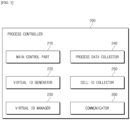
- FIG. 3 is a block diagram illustrating a configuration of a process controller for controlling the battery manufacturing system of FIG. 1 .
- FIG. 4 is a diagram for describing a method of processing process data collected in the battery manufacturing system of FIG. 1 .
- FIG. 2 schematically illustrates an order of processes performed by the battery manufacturing system 100
- FIG. 3 illustrates a configuration of a process controller 200 for controlling processes performed by the battery manufacturing system 100.
- the process controller 200 may be included in the battery manufacturing system 100, but the scope of the present invention is not limited thereto and at least a part of the process controller 200 may be located outside the battery manufacturing system 100.
- the process controller 200 may include a main control part 210, a virtual identifier (ID) generator 220, a virtual ID manager 230, a process data collector 240, a cell ID collector 250, and a communicator 260.
- the process controller 200 may be a programmable logical controller (PLC).
- the main control part 210 may control overall operations of the process controller 200, and in particular, may control an overall process flow, such as an order of processes and a current state, of each battery cell CL. Unless otherwise mentioned in the following description, an operation of the process controller 200 may be an operation performed by the main control part 210. Operations of the remaining components of the process controller 200 will be described with reference to FIG. 2 below.
- the battery manufacturing system 100 may include a process line PL, and processes may be sequentially performed on the process line PL. That is, when a battery cell CL is put into the process line PL, first to n th processes PR1 to PRn (n is an integer greater than or equal to 2) may be sequentially performed starting from a start process PR0, and a barcode process PRb may be performed as a finish process.
- the battery cell CL may be in a form in which electrodes, a separator, and an electrolyte are completely assembled together in a specific shape (a cylindrical shape, a prismatic shape, a pouch shape or the like) or be in a state in which only some components (e.g., the electrodes and the separator) are included before the components are completely assembled together, but in the present disclosure, the battery cell CL will be described as including a state before the components are completely assembled together.
- a process for preparing the first to n th processes PR1 to PRn may be performed on the battery cell CL, and the virtual ID generator 220 may generate a virtual ID VID corresponding to the battery cell CL.
- the virtual ID VID is information for identifying the battery cell CL and may be generated using, for example, time when the battery cell CL has been put into the process line PL but the scope of the present invention is not limited thereto.
- the virtual ID generator 220 may provide the virtual ID manager 230 with the virtual ID VID generated corresponding to the battery cell CL.
- the virtual ID manager 230 may store a first received virtual ID VID to be matched with process step information indicating the start process PR0.
- the process step information may be information indicating a process currently being performed on the battery cell CL corresponding to the virtual ID VID among all processes.
- the battery cell CL may be moved for the first process PR1, and the virtual ID manager 230 may shift the virtual ID VID of the battery cell CL to the first process PR1 in synchronization with the movement of the battery cell CL.
- shifting may be understood as replacing the process step information of the start process PR0 matching the virtual ID VID with process step information of the first process PR1 and storing the replaced process step information. That is, the purpose of shifting is to match the process step information corresponding to the virtual ID VID of the battery cell CL with a process being performed on the battery cell CL.
- Process equipment (not shown) performing the first process PR1 may generate process data PD1 including a work result and/or a test result for the battery cell CL while the first process PR1 is performed, and the process data collector 240 may store the process data PD1 received from the process equipment performing the first process PR1 to be matched with the virtual ID VID on the basis of information stored in the virtual ID manager 230. That is, upon receiving the process data PD1 from the process equipment performing the first process PR1, the process data collector 240 may receive the virtual ID VID matching the process step information of the first process PR1 from the virtual ID manager 230 and store the virtual ID VID and the process data PD1 to match each other.
- the battery cell CL may be moved for the second process PR2, and the virtual ID manager 230 may shift the virtual ID VID of the battery cell CL to the second process PR2 in synchronization with the movement of the battery cell CL.
- process equipment (not shown) performing the second process PR2 may generate process data PD2 including a work result and/or a test result for the battery cell CL while the second process PR2 is performed, and the process data collector 240 may store the process data PD2 received from the process equipment performing the second process PR2 to be matched with the virtual ID VID on the basis of the information stored in the virtual ID manager 230. That is, upon receiving the process data PD2 from the process equipment performing the second process PR2, the process data collector 240 may receive the virtual ID VID matching the process step information of the second process PR2 from the virtual ID manager 230 and store the virtual ID VID and the process data PD2 to match each other.
- a shift operation of the virtual ID manager 230 and a process data storing operation of the process data collector 240 may be sequentially performed for each of the first to n th processes PR1 to PRn until the n th process PRn is completed.
- the process data PD1 to PDn for the battery cell CL may be stored in the process data collector 240 to be matched with the virtual ID VID.
- the battery cell CL may be moved for the barcode process PRb, and the virtual ID manager 230 may shift the virtual ID VID of the battery cell CL to the barcode process PRb in synchronization with the movement of the battery cell CL.
- a process for finishing the battery cell CL may be performed, and a barcode reader (not shown) may read a cell ID CID that is in the form of a barcode attached to the battery cell CL.
- the cell ID CID is described as being attached in the form of a barcode to the battery cell CL, but the scope of the present invention is not limited thereto and may be attached to the battery cell CL in another form (e.g., a quick response (QR) code, ID number or the like), and in this case, the barcode reader may be replaced with a device capable of reading the cell ID (CID) that is in the other form.
- QR quick response
- the cell ID CID that is in the form of barcode may be attached to the battery cell CL when one of the first to n th processes PR1 to PRn is performed.
- the cell ID CID that is in the form of barcode may be attached directly to the battery cell CL or to a device carrying the battery cell CL in another embodiment.
- a barcode reader (not shown) may read the cell ID CID that is in the form of barcode attached to the battery cell CL to extract the cell ID CID, and transmit the extracted cell ID CID to the cell ID collector 250.
- the cell ID collector 250 may extract the virtual ID VID matching the process step information of the barcode process PRb on the basis of the information stored in the virtual ID manager 230, and transmit the extracted virtual ID and cell ID CID to the main control part 210.
- the main control part 210 may receive the process data PD1 to PDn for the battery cell CL matching the virtual ID VID from the process data collector 240 and generate process information PI for the battery cell CL by matching the process data PD1 to PDn for the battery cell CL and the cell ID CID.
- the process data collector 240 may store the process data PD1 to PDn for the battery cell CL to be matched with the virtual ID VID, and the main control part 210 may receive the process data PD1 to PDn collected in a time series manner in the processes performed on the battery cell CL matching the virtual ID VID received together with the cell ID CID from the process data collector 240, and generate the process information PI for the battery cell CL by matching the process data PD1 to PDn for the battery cell CL and the cell ID CID as shown in (b) of FIG. 4 .
- the communicator 260 may establish a wired communication channel and/or a wireless communication channel between the process controller 200 and the upper control system 50 and transmit and receive data to and from the upper control system 50 through the established communication channel. For example, the communicator 260 may transmit and receive data to and from other devices on the basis of at least one radio access technology (RAT).
- the communication unit 260 may transmit (or report) the process information PI including the process data PD1 to PDn for the battery cell CL and the cell ID CID to the upper control system 50.
- RAT radio access technology
- the process controller 200 may assign and manage the virtual ID VID to the battery cell CL, temporarily store the process data PD1 to PDn to be matched with the virtual ID VID whenever each process is completed, and generate the process information PI by extracting the process data PD1 to PDn corresponding to the battery cell CL according to the virtual ID VID matching the cell ID CID of the battery cell CL, thereby securing matching between the process data PD1 to PDn and the battery cell CL.
- the process information PI for which matching is secured may be transmitted to the upper control system 50, and the upper control system 50 may search for the process data PD1 to PDn that accurately matches the battery cell CL by referring to the cell ID CID, thereby increasing the accuracy of quality-related analysis for the battery cell CL.
- a lot of time and resources may be required to preprocess the process data PD1 to PDn and matching between the data may decrease, when the upper control system 50 estimates the process data PD1 to PDn corresponding to the battery cell CL from time when each process has been completed after the process data PD1 to PDn is reported to the upper control system 50 in a time series manner without using the virtual ID VID.
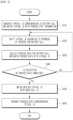
- FIG. 5 is a flowchart of a battery manufacturing method according to an embodiment of the present invention.
- the virtual ID generator 220 may generate a virtual ID VID corresponding to a battery cell CL.
- the virtual ID generator 220 may provide the virtual ID manager 230 with the virtual ID VID generated corresponding to the battery cell CL, and the virtual ID manager 230 may store a first received virtual ID VID to be matched with process step information of the start process PR0 (S10).
- the battery cell CL may be moved for a first process PR1, and the virtual ID manager 230 may shift the virtual ID VID of the battery cell CL to the first process PR1 in synchronization with the movement of the battery cell CL (S20). That is, the virtual ID manager 230 may set process step information such that the process step information matching the virtual ID VID of the battery cell CL may indicate a process being performed on the battery cell CL.
- Process equipment (not shown) performing the first process PR1 may generate the process data PD1 for the battery cell CL while the first process PR1 is performed, and the process data collector 240 may store the process data PD1 received from the process equipment performing the first process PR1 to be matched with the virtual ID VID corresponding to process step information of the first process PR1 on the basis of information stored in the virtual ID manager 230 (S30).
- Operations S20 and S30 may be repeatedly performed until an n th process PRn of completing the collection of process data is completed (No in S40).
- the battery cell CL may be moved for a barcode process PRb, and the virtual ID manager 230 may also shift the virtual ID VID of the battery cell CL to the barcode process PRb in synchronization with the movement of the battery cell CL.
- a barcode reader (not shown) may read a cell ID CID that is in the form of barcode attached to the battery cell CL to extract the cell ID CID, and transmit the extracted cell ID CID to the cell ID collector 250.
- the cell ID collector 250 may extract the virtual ID VID matching process step information of the barcode process PRb on the basis of the information stored in the virtual ID manager 230, and transmit the extracted virtual ID and cell ID CID to the main control part 210 (S50).
- the main control part 210 may receive the process data PD1 to PDn for the battery cell CL matching the virtual ID VID from the process data collector 240, generate process information PI for the battery cell CL by matching the process data PD1 to PDn for the battery cell CL and the cell ID CID, and transmit the generated process information PI to the upper control system 50 (S60).
- the battery manufacturing system 100 is capable of simultaneously performing processes for a plurality of battery cells, and the battery manufacturing method described herein is applicable to each of the plurality of battery cells.
- the plurality of battery cells may be assigned different virtual IDs VID and different cell IDs CID.
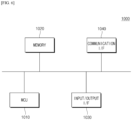
- FIG. 6 is a block diagram illustrating a hardware configuration of a computing system for performing a method of operating a battery manufacturing system according to an embodiment disclosed in the present disclosure.
- a computing system 1000 may include a micro-controller unit (MCU) 1010, a memory 1020, an input/output interface (I/F) 1030, and a communication I/F 1040.
- MCU micro-controller unit
- I/F input/output interface
- the computing system 1000 may be the battery manufacturing system 100 described above or a system for performing an operation of the process controller 200 (hereinafter referred to as a "corresponding device").
- the MCU 1010 may be a processor that executes various types of programs stored in the memory 1020.
- the MCU 1010 may be a processor that processes various types of data and/or signals required to perform the operation of the process controller 200.
- the memory 1020 may store various types of programs and/or data required to manage and control the corresponding device.
- a plurality of memories 1020 may be provided as necessary.
- the memory 1020 may be a volatile memory or a nonvolatile memory.
- a random access memory (RAM), a dynamic RAM (DRAM), a static RAM (SRAM), or the like may be used as the memory 1020 when the memory 1020 is the volatile memory.
- a read-only memory (ROM), a programmable ROM (PROM), an electrically alterable ROM (EAROM), an erasable programmable ROM (EPROM), an electrically erasable and programmable ROM (EEPROM), a flash memory, or the like may be used as the memory 1020 when the memory 1020 is the nonvolatile memory.
- the above examples of the memory 1020 are only examples and embodiments are not limited thereto.
- the input/output I/F 1030 may provide an interface for connecting an input device (not shown), such as a keyboard, a mouse or a touch panel, an output device, such as a display (not shown), and the MCU 1010 to transmit and receive data therebetween.
- an input device such as a keyboard, a mouse or a touch panel
- an output device such as a display (not shown)
- the MCU 1010 may transmit and receive data therebetween.
- the communication I/F 1040 is configured to transmit and receive various types of data with external components, including a server, and may include various types of devices capable of supporting wired or wireless communication.
- a computer program according to an embodiment disclosed in the present disclosure may be recorded in the memory 100 and performed and processed by the MCU 1010 and thus may be implemented as a module for performing the operations described above with reference to FIGS. 1 to 5 .
Landscapes
- Business, Economics & Management (AREA)
- Engineering & Computer Science (AREA)
- Human Resources & Organizations (AREA)
- Economics (AREA)
- Physics & Mathematics (AREA)
- General Physics & Mathematics (AREA)
- Strategic Management (AREA)
- Health & Medical Sciences (AREA)
- Tourism & Hospitality (AREA)
- Theoretical Computer Science (AREA)
- Manufacturing & Machinery (AREA)
- Marketing (AREA)
- General Business, Economics & Management (AREA)
- General Chemical & Material Sciences (AREA)
- Primary Health Care (AREA)
- General Health & Medical Sciences (AREA)
- Development Economics (AREA)
- Educational Administration (AREA)
- Entrepreneurship & Innovation (AREA)
- Electrochemistry (AREA)
- Chemical Kinetics & Catalysis (AREA)
- Chemical & Material Sciences (AREA)
- Automation & Control Theory (AREA)
- Public Health (AREA)
- Quality & Reliability (AREA)
- Operations Research (AREA)
- Game Theory and Decision Science (AREA)
- Water Supply & Treatment (AREA)
- Secondary Cells (AREA)
- Charge And Discharge Circuits For Batteries Or The Like (AREA)
Abstract
Description
- Embodiments set forth herein relate to a battery manufacturing method of producing a battery for storing power and a battery manufacturing system therefor.
- This application claims the benefit of priority based on
Korean Patent Application No. 1 0-2022-0139553, filed on October 26, 2022 Korean Patent Application No. 10-2023-0112586, filed on August 28, 2023 - Recently, research and development on secondary batteries have been actively performed. Secondary batteries are rechargeable/dischargeable batteries and may include conventional Ni/Cd batteries, Ni/MH batteries, etc., and lithium-ion batteries that have recently been used. Lithium-ion batteries have much higher energy density than conventional Ni/Cd batteries, Ni/MH batteries, and the like. In addition, lithium-ion batteries may be manufactured in lightweight and small sizes and thus are used as power sources for mobile devices. Recently, lithium-ion batteries have drawn attention as next-generation energy storage media as a range of use thereof has extended to power sources of electric vehicles.
- Manufacturing processes of a battery are performed in a time-series manner according to a predetermined process order, and process data collected corresponding to the battery in each of the processes may be reported in a time-series manner to an upper controller. The upper controller may analyze the reported process data to predict the quality of the battery or analyze a cause of quality degradation. For the accuracy of the analysis, matching between the battery and the process data should be guaranteed.
- Embodiments set forth herein are directed to providing a battery manufacturing method and a battery manufacturing system for ensuring matching between process data reported to an upper controller and a battery.
- Technical aspects of the embodiments set forth herein are not limited thereto, and other technical aspects that are not described herein will be clearly understood by those of ordinary skill in the art from the following description.
- A battery manufacturing method according to an embodiment of the present invention includes generating a virtual identifier (ID) corresponding to a battery cell, shifting the virtual ID according to a process of a process for the battery cell, storing the shifted virtual ID and process data generated for the battery cell to be matched with each other, extracting a cell ID for the battery cell, and matching the process data matching the virtual ID corresponding to the cell ID with the cell ID, and transmitting the process data to an upper control system.
- In an embodiment, the battery manufacturing method may further include matching process step information indicating a process currently being performed for the battery cell with the virtual ID after the generating of the virtual ID.
- In an embodiment, the shifting of the virtual ID may include changing the process step information matching the virtual ID when the process currently being performed for the battery cell is changed.
- In an embodiment, the process data may include a work result and/or a test result of the process for the battery cell.
- In an embodiment, the extracting of the cell ID for the battery cell may include reading a cell ID that is in the form of barcode attached to the battery cell.
- In an embodiment, the process data matching the cell ID may include process data collected in a time-series manner in each process performed for the battery cell.
- In an embodiment, the process for the battery cell may include a notching and dryer (NDD) process and/or a lamination process.
- A battery manufacturing system according to an embodiment of the present invention includes a virtual ID generator configured to generate a virtual ID corresponding to a battery cell, a virtual ID manager configured to shift the virtual ID according to a process of a process for the battery cell, a process data collector configured to store the shifted virtual ID and process data generated for the battery cell to be matched with each other, and a main control part configured to generate process information by matching the process data matching the virtual ID corresponding to a cell ID extracted from the battery cell with the cell ID.
- According to a battery manufacturing method and a battery manufacturing system according to an embodiment set forth herein, the reliability of a battery quality analysis can be increased through accurate matching between process data and a battery.
- In addition, various effects directly or indirectly identified through the present disclosure can be achieved.
-
-
FIG. 1 is a block diagram of a battery manufacturing system and an upper control system according to an embodiment disclosed in the present disclosure. -
FIG. 2 is a schematic diagram illustrating an order of processes performed by the battery manufacturing system ofFIG. 1 . -
FIG. 3 is a block diagram illustrating a configuration of a process controller for controlling the battery manufacturing system ofFIG. 1 . -
FIG. 4 is a diagram for describing a method of processing process data collected in the battery manufacturing system ofFIG. 1 . -
FIG. 5 is a flowchart of a battery manufacturing method according to an embodiment of the present invention. -
FIG. 6 is a block diagram illustrating a hardware configuration of a computing system for performing a method of operating a battery manufacturing system according to an embodiment disclosed in the present disclosure. - A battery manufacturing method according to an embodiment of the present invention includes generating a virtual identifier (ID) corresponding to a battery cell, shifting the virtual ID according to a process of a process for the battery cell, storing the shifted virtual ID and process data generated for the battery cell to be matched with each other, extracting a cell ID for the battery cell, and matching the process data matching the virtual ID corresponding to the cell ID with the cell ID, and transmitting the process data to an upper control system.
- A battery manufacturing system according to an embodiment of the present invention includes a virtual ID generator configured to generate a virtual ID corresponding to a battery cell, a virtual ID manager configured to shift the virtual ID according to a process of a process for the battery cell, a process data collector configured to store the shifted virtual ID and process data generated for the battery cell to be matched with each other, and a main control part configured to generate process information by matching the process data matching the virtual ID corresponding to a cell ID extracted from the battery cell with the cell ID.
- Hereinafter, embodiments set forth herein will be described in detail with reference to exemplary drawings. It should be noted that the same reference numerals are assigned to the same components even in different drawings when reference numerals are assigned to components in each drawing. A description of well-known constructions or functions will not be described in detail when it is determined that the description would obscure the understanding of the embodiments of the present invention set forth herein in describing the embodiments.
- Terms such as first, second, A, B, (a), and (b) may be used to describe components of the embodiments of the present invention. Such a term is only for distinguishing one component from another, and the essence of the component, an order or a sequence is not limited by the term. Unless otherwise defined, all terms used here, including technical or scientific terms, have the same meaning as those generally understood by those with ordinary knowledge in the technical field to which the embodiments disclosed herein belong. Terms such as those defined in commonly used dictionaries should be interpreted as having a meaning consistent with the contextual meaning of the relevant technology and are not interpreted as ideal or excessively formal unless explicitly defined in this application.
-
FIG. 1 is a block diagram of a battery manufacturing system and an upper control system according to an embodiment disclosed in the present disclosure. -
FIG. 1 illustrates abattery manufacturing system 100 and anupper control system 50. - The
battery manufacturing system 100 may be a process system for manufacturing a battery capable of storing power. For example, a battery may be manufactured in the form of a battery pack, and the battery pack may be manufactured through an electrode process of forming a positive electrode and a negative electrode of a battery, an assembly process of stacking electrode plates according to a battery shape (e.g., a cylindrical shape, a prismatic shape, or a pouch shape), injecting an electrolyte, and a sealing a resultant structure, an activation process of activating an assembled battery using electrical energy, and a pack process of modularizing battery cells in units of packs. In the present disclosure, it is assumed that thebattery manufacturing system 100 is a process system that performs a Notching AND Drier (NND) process and/or a lamination process during the assembly process but the scope of the present invention is not limited thereto. - The
upper control system 50 may receive process data, for monitoring a battery manufacturing process performed by thebattery manufacturing system 100, reported from thebattery manufacturing system 100, and analyze a cause of deterioration of battery quality on the basis of the process data. To this end, theupper control system 50 may communicate with thebattery manufacturing system 100 to transmit and receive data. Here, the process data may include a work result and/or a test result related to a battery in each of processes performed by thebattery manufacturing system 100. According to an embodiment, theupper control system 50 may include an edge computer system (ECS) system and/or an equipment data collection (EDC) system. -
FIG. 2 is a schematic diagram illustrating an order of processes performed by the battery manufacturing system ofFIG. 1 .FIG. 3 is a block diagram illustrating a configuration of a process controller for controlling the battery manufacturing system ofFIG. 1 .FIG. 4 is a diagram for describing a method of processing process data collected in the battery manufacturing system ofFIG. 1 . - Referring to
FIGS. 2 to 4 ,FIG. 2 schematically illustrates an order of processes performed by thebattery manufacturing system 100, andFIG. 3 illustrates a configuration of aprocess controller 200 for controlling processes performed by thebattery manufacturing system 100. Theprocess controller 200 may be included in thebattery manufacturing system 100, but the scope of the present invention is not limited thereto and at least a part of theprocess controller 200 may be located outside thebattery manufacturing system 100. - The
process controller 200 may include amain control part 210, a virtual identifier (ID)generator 220, avirtual ID manager 230, aprocess data collector 240, acell ID collector 250, and acommunicator 260. According to an embodiment, theprocess controller 200 may be a programmable logical controller (PLC). - The
main control part 210 may control overall operations of theprocess controller 200, and in particular, may control an overall process flow, such as an order of processes and a current state, of each battery cell CL. Unless otherwise mentioned in the following description, an operation of theprocess controller 200 may be an operation performed by themain control part 210. Operations of the remaining components of theprocess controller 200 will be described with reference toFIG. 2 below. - As illustrated in
FIG. 2 , thebattery manufacturing system 100 may include a process line PL, and processes may be sequentially performed on the process line PL. That is, when a battery cell CL is put into the process line PL, first to nth processes PR1 to PRn (n is an integer greater than or equal to 2) may be sequentially performed starting from a start process PR0, and a barcode process PRb may be performed as a finish process. The battery cell CL may be in a form in which electrodes, a separator, and an electrolyte are completely assembled together in a specific shape (a cylindrical shape, a prismatic shape, a pouch shape or the like) or be in a state in which only some components (e.g., the electrodes and the separator) are included before the components are completely assembled together, but in the present disclosure, the battery cell CL will be described as including a state before the components are completely assembled together. - In the start process PR0, a process (e.g., cleaning) for preparing the first to nth processes PR1 to PRn may be performed on the battery cell CL, and the
virtual ID generator 220 may generate a virtual ID VID corresponding to the battery cell CL. The virtual ID VID is information for identifying the battery cell CL and may be generated using, for example, time when the battery cell CL has been put into the process line PL but the scope of the present invention is not limited thereto. Thevirtual ID generator 220 may provide thevirtual ID manager 230 with the virtual ID VID generated corresponding to the battery cell CL. Thevirtual ID manager 230 may store a first received virtual ID VID to be matched with process step information indicating the start process PR0. The process step information may be information indicating a process currently being performed on the battery cell CL corresponding to the virtual ID VID among all processes. - When the start process PR0 is completed, the battery cell CL may be moved for the first process PR1, and the
virtual ID manager 230 may shift the virtual ID VID of the battery cell CL to the first process PR1 in synchronization with the movement of the battery cell CL. Here, shifting may be understood as replacing the process step information of the start process PR0 matching the virtual ID VID with process step information of the first process PR1 and storing the replaced process step information. That is, the purpose of shifting is to match the process step information corresponding to the virtual ID VID of the battery cell CL with a process being performed on the battery cell CL. - Process equipment (not shown) performing the first process PR1 may generate process data PD1 including a work result and/or a test result for the battery cell CL while the first process PR1 is performed, and the
process data collector 240 may store the process data PD1 received from the process equipment performing the first process PR1 to be matched with the virtual ID VID on the basis of information stored in thevirtual ID manager 230. That is, upon receiving the process data PD1 from the process equipment performing the first process PR1, theprocess data collector 240 may receive the virtual ID VID matching the process step information of the first process PR1 from thevirtual ID manager 230 and store the virtual ID VID and the process data PD1 to match each other. - When the first process PR1 is completed, the battery cell CL may be moved for the second process PR2, and the
virtual ID manager 230 may shift the virtual ID VID of the battery cell CL to the second process PR2 in synchronization with the movement of the battery cell CL. - Thereafter, process equipment (not shown) performing the second process PR2 may generate process data PD2 including a work result and/or a test result for the battery cell CL while the second process PR2 is performed, and the
process data collector 240 may store the process data PD2 received from the process equipment performing the second process PR2 to be matched with the virtual ID VID on the basis of the information stored in thevirtual ID manager 230. That is, upon receiving the process data PD2 from the process equipment performing the second process PR2, theprocess data collector 240 may receive the virtual ID VID matching the process step information of the second process PR2 from thevirtual ID manager 230 and store the virtual ID VID and the process data PD2 to match each other. - That is, a shift operation of the
virtual ID manager 230 and a process data storing operation of theprocess data collector 240 may be sequentially performed for each of the first to nth processes PR1 to PRn until the nth process PRn is completed. - As shown in (a) of
FIG. 4 , when the nth process PRn is completed, the process data PD1 to PDn for the battery cell CL may be stored in theprocess data collector 240 to be matched with the virtual ID VID. - When the nth process PRn is completed, the battery cell CL may be moved for the barcode process PRb, and the
virtual ID manager 230 may shift the virtual ID VID of the battery cell CL to the barcode process PRb in synchronization with the movement of the battery cell CL. - In the barcode process PRb, a process (e.g., cleaning) for finishing the battery cell CL may be performed, and a barcode reader (not shown) may read a cell ID CID that is in the form of a barcode attached to the battery cell CL. In the present disclosure, the cell ID CID is described as being attached in the form of a barcode to the battery cell CL, but the scope of the present invention is not limited thereto and may be attached to the battery cell CL in another form (e.g., a quick response (QR) code, ID number or the like), and in this case, the barcode reader may be replaced with a device capable of reading the cell ID (CID) that is in the other form.
- Meanwhile, the cell ID CID that is in the form of barcode may be attached to the battery cell CL when one of the first to nth processes PR1 to PRn is performed. Here, the cell ID CID that is in the form of barcode may be attached directly to the battery cell CL or to a device carrying the battery cell CL in another embodiment.
- A barcode reader (not shown) may read the cell ID CID that is in the form of barcode attached to the battery cell CL to extract the cell ID CID, and transmit the extracted cell ID CID to the
cell ID collector 250. - Upon receiving the cell ID CID, the
cell ID collector 250 may extract the virtual ID VID matching the process step information of the barcode process PRb on the basis of the information stored in thevirtual ID manager 230, and transmit the extracted virtual ID and cell ID CID to themain control part 210. - Upon receiving the virtual ID VID and the cell ID CID from the
cell ID collector 250, themain control part 210 may receive the process data PD1 to PDn for the battery cell CL matching the virtual ID VID from theprocess data collector 240 and generate process information PI for the battery cell CL by matching the process data PD1 to PDn for the battery cell CL and the cell ID CID. - That is, in (a) of
FIG. 4 , theprocess data collector 240 may store the process data PD1 to PDn for the battery cell CL to be matched with the virtual ID VID, and themain control part 210 may receive the process data PD1 to PDn collected in a time series manner in the processes performed on the battery cell CL matching the virtual ID VID received together with the cell ID CID from theprocess data collector 240, and generate the process information PI for the battery cell CL by matching the process data PD1 to PDn for the battery cell CL and the cell ID CID as shown in (b) ofFIG. 4 . - The
communicator 260 may establish a wired communication channel and/or a wireless communication channel between theprocess controller 200 and theupper control system 50 and transmit and receive data to and from theupper control system 50 through the established communication channel. For example, thecommunicator 260 may transmit and receive data to and from other devices on the basis of at least one radio access technology (RAT). Thecommunication unit 260 may transmit (or report) the process information PI including the process data PD1 to PDn for the battery cell CL and the cell ID CID to theupper control system 50. - According to the present disclosure, the
process controller 200 may assign and manage the virtual ID VID to the battery cell CL, temporarily store the process data PD1 to PDn to be matched with the virtual ID VID whenever each process is completed, and generate the process information PI by extracting the process data PD1 to PDn corresponding to the battery cell CL according to the virtual ID VID matching the cell ID CID of the battery cell CL, thereby securing matching between the process data PD1 to PDn and the battery cell CL. The process information PI for which matching is secured may be transmitted to theupper control system 50, and theupper control system 50 may search for the process data PD1 to PDn that accurately matches the battery cell CL by referring to the cell ID CID, thereby increasing the accuracy of quality-related analysis for the battery cell CL. - A lot of time and resources may be required to preprocess the process data PD1 to PDn and matching between the data may decrease, when the
upper control system 50 estimates the process data PD1 to PDn corresponding to the battery cell CL from time when each process has been completed after the process data PD1 to PDn is reported to theupper control system 50 in a time series manner without using the virtual ID VID. -
FIG. 5 is a flowchart of a battery manufacturing method according to an embodiment of the present invention. - Referring to
FIG. 5 , in a start process PR0, thevirtual ID generator 220 may generate a virtual ID VID corresponding to a battery cell CL. Thevirtual ID generator 220 may provide thevirtual ID manager 230 with the virtual ID VID generated corresponding to the battery cell CL, and thevirtual ID manager 230 may store a first received virtual ID VID to be matched with process step information of the start process PR0 (S10). - When the start process PR0 is completed, the battery cell CL may be moved for a first process PR1, and the
virtual ID manager 230 may shift the virtual ID VID of the battery cell CL to the first process PR1 in synchronization with the movement of the battery cell CL (S20). That is, thevirtual ID manager 230 may set process step information such that the process step information matching the virtual ID VID of the battery cell CL may indicate a process being performed on the battery cell CL. - Process equipment (not shown) performing the first process PR1 may generate the process data PD1 for the battery cell CL while the first process PR1 is performed, and the
process data collector 240 may store the process data PD1 received from the process equipment performing the first process PR1 to be matched with the virtual ID VID corresponding to process step information of the first process PR1 on the basis of information stored in the virtual ID manager 230 (S30). - Operations S20 and S30 may be repeatedly performed until an nth process PRn of completing the collection of process data is completed (No in S40).
- When the nth process PRn of completing the collection of process data is completed (Yes in S40), the battery cell CL may be moved for a barcode process PRb, and the
virtual ID manager 230 may also shift the virtual ID VID of the battery cell CL to the barcode process PRb in synchronization with the movement of the battery cell CL. - In the barcode process PRb, a barcode reader (not shown) may read a cell ID CID that is in the form of barcode attached to the battery cell CL to extract the cell ID CID, and transmit the extracted cell ID CID to the
cell ID collector 250. - Upon receiving the cell ID CID, the
cell ID collector 250 may extract the virtual ID VID matching process step information of the barcode process PRb on the basis of the information stored in thevirtual ID manager 230, and transmit the extracted virtual ID and cell ID CID to the main control part 210 (S50). - Upon receiving the virtual ID VID and the cell ID CID from the
cell ID collector 250, themain control part 210 may receive the process data PD1 to PDn for the battery cell CL matching the virtual ID VID from theprocess data collector 240, generate process information PI for the battery cell CL by matching the process data PD1 to PDn for the battery cell CL and the cell ID CID, and transmit the generated process information PI to the upper control system 50 (S60). - Although in the present disclosure, a battery manufacturing method has been described above with respect to one battery cell CL, the
battery manufacturing system 100 is capable of simultaneously performing processes for a plurality of battery cells, and the battery manufacturing method described herein is applicable to each of the plurality of battery cells. In this case, the plurality of battery cells may be assigned different virtual IDs VID and different cell IDs CID. -
FIG. 6 is a block diagram illustrating a hardware configuration of a computing system for performing a method of operating a battery manufacturing system according to an embodiment disclosed in the present disclosure. - Referring to
FIG. 6 , acomputing system 1000 according to an embodiment disclosed in the present disclosure may include a micro-controller unit (MCU) 1010, amemory 1020, an input/output interface (I/F) 1030, and a communication I/F 1040. - According to an embodiment, the
computing system 1000 may be thebattery manufacturing system 100 described above or a system for performing an operation of the process controller 200 (hereinafter referred to as a "corresponding device"). - The
MCU 1010 may be a processor that executes various types of programs stored in thememory 1020. - For example, the
MCU 1010 may be a processor that processes various types of data and/or signals required to perform the operation of theprocess controller 200. - The
memory 1020 may store various types of programs and/or data required to manage and control the corresponding device. A plurality ofmemories 1020 may be provided as necessary. - The
memory 1020 may be a volatile memory or a nonvolatile memory. A random access memory (RAM), a dynamic RAM (DRAM), a static RAM (SRAM), or the like may be used as thememory 1020 when thememory 1020 is the volatile memory. A read-only memory (ROM), a programmable ROM (PROM), an electrically alterable ROM (EAROM), an erasable programmable ROM (EPROM), an electrically erasable and programmable ROM (EEPROM), a flash memory, or the like may be used as thememory 1020 when thememory 1020 is the nonvolatile memory. The above examples of thememory 1020 are only examples and embodiments are not limited thereto. - The input/output I/
F 1030 may provide an interface for connecting an input device (not shown), such as a keyboard, a mouse or a touch panel, an output device, such as a display (not shown), and theMCU 1010 to transmit and receive data therebetween. - The communication I/
F 1040 is configured to transmit and receive various types of data with external components, including a server, and may include various types of devices capable of supporting wired or wireless communication. - As described above, a computer program according to an embodiment disclosed in the present disclosure may be recorded in the
memory 100 and performed and processed by theMCU 1010 and thus may be implemented as a module for performing the operations described above with reference toFIGS. 1 to 5 . - The above description provides only examples of the technical idea of the embodiments set forth herein, and various changes and modification may be made by those of ordinary skill in the art to which these embodiments pertain without departing from essential characteristics of the embodiments.
- Therefore, the embodiments set forth herein are not intended to limit the technical idea described herein but are provided to describe the technical idea, and thus the scope of the technical idea is not limited by the embodiments. The scope of the technical idea described herein should be interpreted based on the following claims, and it should be understood that all technical ideas equivalent thereto fall within the scope of the present disclosure.
Claims (15)
- A battery manufacturing method comprising:generating a virtual identifier (ID) corresponding to a battery cell;shifting the virtual ID according to a process of a process for the battery cell;storing the shifted virtual ID and process data generated for the battery cell to be matched with each other;extracting a cell ID for the battery cell; andmatching the process data matching the virtual ID corresponding to the cell ID with the cell ID, and transmitting the process data to an upper control system.
- The battery manufacturing method of claim 1, further comprising, after the generating of the virtual ID, matching process step information indicating a process currently being performed for the battery cell with the virtual ID.
- The battery manufacturing method of claim 2, wherein the shifting of the virtual ID comprises changing the process step information matching the virtual ID when the process currently being performed for the battery cell is changed.
- The battery manufacturing method of claim 1, wherein the process data comprises a work result and/or a test result of the process for the battery cell.
- The battery manufacturing method of claim 1, wherein the extracting of the cell ID for the battery cell comprises reading a cell ID that is in the form of barcode attached to the battery cell.
- The battery manufacturing method of claim 1, wherein the process data matching the cell ID comprises process data collected in a time-series manner in each process performed for the battery cell.
- The battery manufacturing method of claim 1, wherein the process for the battery cell comprises a notching and dryer (NDD) process and/or a lamination process.
- A battery manufacturing system comprising:a virtual identifier (ID) generator configured to generate a virtual ID corresponding to a battery cell;a virtual ID manager configured to shift the virtual ID according to a process of a process for the battery cell;a process data collector configured to store the shifted virtual ID and process data generated for the battery cell to be matched with each other; anda main control part configured to generate process information by matching the process data matching the virtual ID corresponding to a cell ID extracted from the battery cell with the cell ID.
- The battery manufacturing system of claim 8, wherein, after the virtual ID is generated, the virtual ID manager matches process step information indicating a process currently being performed for the battery cell with the virtual ID.
- The battery manufacturing system of claim 9, wherein the virtual ID manager changes the process step information matching the virtual ID when the process currently being performed for the battery cell is changed.
- The battery manufacturing system of claim 8, wherein the process data comprises a work result and/or a test result of the process for the battery cell.
- The battery manufacturing system of claim 8, wherein the process data matching the cell ID comprises process data collected in a time-series manner in each process performed for the battery cell.
- The battery manufacturing system of claim 8, wherein the process for the battery cell comprises a notching and dryer (NDD) process and/or a lamination process.
- The battery manufacturing system of claim 8, further comprising a communicator configured to transmit the process information to an upper control system.
- A battery cell manufactured by the battery manufacturing method of claim 1 or the battery manufacturing system of claim 8, wherein the battery cell comprises the virtual identifier (ID) and the cell ID corresponding to the virtual ID.
Applications Claiming Priority (3)
| Application Number | Priority Date | Filing Date | Title |
|---|---|---|---|
| KR20220139553 | 2022-10-26 | ||
| KR1020230112586A KR102803259B1 (en) | 2022-10-26 | 2023-08-28 | Data processing method for manufacturing processes of battery and data processing system for manufacturing processes of battery |
| PCT/KR2023/013366 WO2024090776A1 (en) | 2022-10-26 | 2023-09-06 | Battery manufacturing method and battery manufacturing system |
Publications (2)
| Publication Number | Publication Date |
|---|---|
| EP4418193A1 true EP4418193A1 (en) | 2024-08-21 |
| EP4418193A4 EP4418193A4 (en) | 2025-04-16 |
Family
ID=90831291
Family Applications (1)
| Application Number | Title | Priority Date | Filing Date |
|---|---|---|---|
| EP23882883.4A Pending EP4418193A4 (en) | 2022-10-26 | 2023-09-06 | BATTERY MANUFACTURING METHOD AND BATTERY MANUFACTURING SYSTEM |
Country Status (5)
| Country | Link |
|---|---|
| US (2) | US12517485B2 (en) |
| EP (1) | EP4418193A4 (en) |
| JP (1) | JP7707440B2 (en) |
| CA (1) | CA3238873A1 (en) |
| WO (1) | WO2024090776A1 (en) |
Families Citing this family (1)
| Publication number | Priority date | Publication date | Assignee | Title |
|---|---|---|---|---|
| EP4418193A4 (en) * | 2022-10-26 | 2025-04-16 | LG Energy Solution, Ltd. | BATTERY MANUFACTURING METHOD AND BATTERY MANUFACTURING SYSTEM |
Family Cites Families (35)
| Publication number | Priority date | Publication date | Assignee | Title |
|---|---|---|---|---|
| KR100601562B1 (en) | 2004-07-29 | 2006-07-19 | 삼성에스디아이 주식회사 | Electrode Assembly and Lithium Secondary Battery Using the Same |
| US7497370B2 (en) * | 2005-01-27 | 2009-03-03 | Microsoft Corporation | Supply chain visibility solution architecture |
| JP2006331976A (en) | 2005-05-30 | 2006-12-07 | Matsushita Electric Ind Co Ltd | Manufacturing and management methods for secondary batteries |
| JP5106507B2 (en) * | 2009-10-09 | 2012-12-26 | パナソニック株式会社 | Battery blister pack and method for producing the same |
| CN102782599A (en) | 2010-06-01 | 2012-11-14 | 郡是株式会社 | Article management system |
| JP2013030376A (en) | 2011-07-29 | 2013-02-07 | Hitachi Ltd | Electrode sheet lamination type lithium ion battery or method for manufacturing the same |
| CN104798241A (en) * | 2012-11-22 | 2015-07-22 | 巴斯夫欧洲公司 | Apparatus and method for producing electrochemical cells |
| JP6075180B2 (en) * | 2013-04-18 | 2017-02-08 | オムロン株式会社 | Work management system and work management method |
| KR101731983B1 (en) * | 2014-11-24 | 2017-05-02 | 주식회사 엘지화학 | Marking devices for display history of secondary batteries, method of fabricating the secondary batteries and monitoring system for the process |
| KR101878676B1 (en) | 2016-05-20 | 2018-07-18 | 엘지전자 주식회사 | Robot cleaner |
| KR101969763B1 (en) | 2016-11-03 | 2019-04-17 | 에스케이이노베이션 주식회사 | Battery management system and method for assigning communication id |
| US10997551B2 (en) * | 2017-08-03 | 2021-05-04 | Liquineq AG | System and method for automotive inventory management and recordkeeping using multi-tiered distributed network transactional database |
| CN107611486B (en) | 2017-08-31 | 2019-05-14 | 东莞市莱克软件科技有限公司 | Manufacturing tracing method from naked battery cell to finished product battery cell and equipment for implementing method |
| US10895859B2 (en) * | 2017-11-14 | 2021-01-19 | Sensia Llc | Data discovery and integration between disparate control and information systems |
| KR102156404B1 (en) * | 2018-01-09 | 2020-09-15 | 주식회사 엘지화학 | Apparatus and method for testing performance of battery cell |
| EP3767415B1 (en) * | 2018-04-19 | 2023-11-15 | Mitsubishi Electric Corporation | Device, method, and computer program that identify abnormal facilities |
| KR102029776B1 (en) | 2018-04-27 | 2019-10-08 | 주식회사 민테크 | Battery diagnosis method |
| US11014123B2 (en) * | 2018-05-29 | 2021-05-25 | Hand Held Products, Inc. | Methods, systems, and apparatuses for monitoring and improving productivity of a material handling environment |
| KR20200028618A (en) | 2018-09-07 | 2020-03-17 | 주식회사 주왕산업 | System for Allocating and verification Communication ID of Battery Management Module |
| KR102497448B1 (en) | 2019-02-14 | 2023-02-08 | 주식회사 엘지에너지솔루션 | Apparatus and method for determining error of a battery cell |
| KR102869522B1 (en) | 2019-11-13 | 2025-10-10 | 삼성에스디아이 주식회사 | Battery system and method of allocating CAN ID |
| JP6741923B1 (en) | 2019-11-25 | 2020-08-19 | 株式会社安川電機 | Information collecting system for industrial equipment, control device for industrial equipment, and information collecting method for industrial equipment |
| CN114787732B (en) * | 2020-01-08 | 2025-07-29 | 松下知识产权经营株式会社 | Classification system, classification method, and program |
| EP4115588A4 (en) * | 2020-03-04 | 2024-03-20 | Ebatte Holdings Limited | METHOD FOR TRACKING AND MANAGING A POWER SUPPLY DEVICE VIA A BLOCKCHAIN-BASED SYSTEM |
| KR102146945B1 (en) * | 2020-03-27 | 2020-08-21 | 주식회사 와이에이치티 | Inspection system for inspecting secondary battery cell |
| KR102627519B1 (en) * | 2020-09-22 | 2024-01-23 | 엘지전자 주식회사 | Battery-cell tracking system and battery |
| CN113656352A (en) * | 2021-01-12 | 2021-11-16 | 宣城睿晖宣晟企业管理中心合伙企业(有限合伙) | Production information recording method and device based on automatic production line and computing equipment |
| EP4071886A1 (en) * | 2021-04-08 | 2022-10-12 | Dukosi Limited | Battery cell position determination |
| KR102470872B1 (en) | 2021-04-08 | 2022-11-25 | 금오공과대학교 산학협력단 | Modified carbon fiber/ABS composites and manufacturing method of the same |
| CN113762985B (en) * | 2021-09-02 | 2024-11-26 | 唐山贺祥智能科技股份有限公司 | A method for generating a ceramic product traceability system |
| WO2023035268A1 (en) * | 2021-09-13 | 2023-03-16 | 宁德新能源科技有限公司 | Battery information generation method and generation system |
| KR20230086301A (en) * | 2021-12-08 | 2023-06-15 | 주식회사 엘지에너지솔루션 | Mold notching machine simulation method and device for secondary battery production |
| US12040461B2 (en) * | 2021-12-20 | 2024-07-16 | GM Global Technology Operations LLC | Capacitance-based quality monitoring and control in battery manufacturing |
| US20240097218A1 (en) * | 2022-09-15 | 2024-03-21 | Lg Energy Solution, Ltd. | Systems and methods for generating roll map and manufacturing battery using roll map |
| EP4418193A4 (en) * | 2022-10-26 | 2025-04-16 | LG Energy Solution, Ltd. | BATTERY MANUFACTURING METHOD AND BATTERY MANUFACTURING SYSTEM |
-
2023
- 2023-09-06 EP EP23882883.4A patent/EP4418193A4/en active Pending
- 2023-09-06 CA CA3238873A patent/CA3238873A1/en active Pending
- 2023-09-06 WO PCT/KR2023/013366 patent/WO2024090776A1/en not_active Ceased
- 2023-09-06 US US18/711,800 patent/US12517485B2/en active Active
- 2023-09-06 JP JP2024527653A patent/JP7707440B2/en active Active
-
2025
- 2025-12-02 US US19/406,832 patent/US20260086523A1/en active Pending
Also Published As
| Publication number | Publication date |
|---|---|
| CA3238873A1 (en) | 2024-05-02 |
| WO2024090776A1 (en) | 2024-05-02 |
| JP2024543064A (en) | 2024-11-19 |
| US12517485B2 (en) | 2026-01-06 |
| US20260086523A1 (en) | 2026-03-26 |
| JP7707440B2 (en) | 2025-07-14 |
| US20240419142A1 (en) | 2024-12-19 |
| EP4418193A4 (en) | 2025-04-16 |
Similar Documents
| Publication | Publication Date | Title |
|---|---|---|
| US20260086523A1 (en) | Battery manufacturing method and battery manufacturing system | |
| EP4394407B1 (en) | Battery management device and operation method thereof | |
| US20220381841A1 (en) | Apparatus for estimating a battery free capacity | |
| EP4446760B1 (en) | Battery depth-of-charge calculation apparatus and operating method thereof | |
| EP4425198B1 (en) | Battery capacity prediction apparatus and operating method thereof | |
| EP4446764A1 (en) | Battery state management device and operation method thereof | |
| KR102918516B1 (en) | Battery cell diagnosing apparatus and operating method of the same | |
| KR102889128B1 (en) | Charging protocol inspection apparatus and operating method of the same | |
| EP4231026A1 (en) | Battery management device and method | |
| KR102803259B1 (en) | Data processing method for manufacturing processes of battery and data processing system for manufacturing processes of battery | |
| CN118302782A (en) | Battery manufacturing method and battery manufacturing system | |
| EP4464545A1 (en) | Battery management apparatus and server | |
| EP4306977A1 (en) | Apparatus for predicting battery life, and operation method therefor | |
| EP4600678A1 (en) | Battery management device and operation method therefor | |
| EP4293792B1 (en) | Battery management apparatus and operating method thereof | |
| EP4462633A1 (en) | Battery system for sequential charging of batteries and control method thereof | |
| CN119051213A (en) | Energy storage system, control method and device for energy storage system | |
| CN119828031A (en) | Method, apparatus, computer device, medium and program product for detecting lithium precipitation of battery | |
| KR20230060380A (en) | Monitoring system and operating method of the same |
Legal Events
| Date | Code | Title | Description |
|---|---|---|---|
| STAA | Information on the status of an ep patent application or granted ep patent |
Free format text: STATUS: THE INTERNATIONAL PUBLICATION HAS BEEN MADE |
|
| PUAI | Public reference made under article 153(3) epc to a published international application that has entered the european phase |
Free format text: ORIGINAL CODE: 0009012 |
|
| STAA | Information on the status of an ep patent application or granted ep patent |
Free format text: STATUS: REQUEST FOR EXAMINATION WAS MADE |
|
| 17P | Request for examination filed |
Effective date: 20240514 |
|
| AK | Designated contracting states |
Kind code of ref document: A1 Designated state(s): AL AT BE BG CH CY CZ DE DK EE ES FI FR GB GR HR HU IE IS IT LI LT LU LV MC ME MK MT NL NO PL PT RO RS SE SI SK SM TR |
|
| REG | Reference to a national code |
Ref country code: DE Ref legal event code: R079 Free format text: PREVIOUS MAIN CLASS: G06Q0050040000 Ipc: H01M0010040000 |
|
| A4 | Supplementary search report drawn up and despatched |
Effective date: 20250318 |
|
| RIC1 | Information provided on ipc code assigned before grant |
Ipc: G06Q 50/06 20240101ALI20250312BHEP Ipc: G06Q 50/04 20120101ALI20250312BHEP Ipc: H01M 10/42 20060101ALI20250312BHEP Ipc: H01M 10/04 20060101AFI20250312BHEP |
|
| STAA | Information on the status of an ep patent application or granted ep patent |
Free format text: STATUS: EXAMINATION IS IN PROGRESS |
|
| 17Q | First examination report despatched |
Effective date: 20251006 |
|
| DAV | Request for validation of the european patent (deleted) | ||
| DAX | Request for extension of the european patent (deleted) |