EP4412291A1 - Verfahren und vorrichtungen zum melden und empfangen positionsbezogener informationen - Google Patents
Verfahren und vorrichtungen zum melden und empfangen positionsbezogener informationen Download PDFInfo
- Publication number
- EP4412291A1 EP4412291A1 EP21958812.6A EP21958812A EP4412291A1 EP 4412291 A1 EP4412291 A1 EP 4412291A1 EP 21958812 A EP21958812 A EP 21958812A EP 4412291 A1 EP4412291 A1 EP 4412291A1
- Authority
- EP
- European Patent Office
- Prior art keywords
- location
- related information
- precision
- reporting
- terminal
- Prior art date
- Legal status (The legal status is an assumption and is not a legal conclusion. Google has not performed a legal analysis and makes no representation as to the accuracy of the status listed.)
- Pending
Links
Images


Classifications
-
- H—ELECTRICITY
- H04—ELECTRIC COMMUNICATION TECHNIQUE
- H04W—WIRELESS COMMUNICATION NETWORKS
- H04W4/00—Services specially adapted for wireless communication networks; Facilities therefor
- H04W4/02—Services making use of location information
- H04W4/025—Services making use of location information using location based information parameters
-
- H—ELECTRICITY
- H04—ELECTRIC COMMUNICATION TECHNIQUE
- H04W—WIRELESS COMMUNICATION NETWORKS
- H04W12/00—Security arrangements; Authentication; Protecting privacy or anonymity
- H04W12/02—Protecting privacy or anonymity, e.g. protecting personally identifiable information [PII]
-
- H—ELECTRICITY
- H04—ELECTRIC COMMUNICATION TECHNIQUE
- H04W—WIRELESS COMMUNICATION NETWORKS
- H04W24/00—Supervisory, monitoring or testing arrangements
- H04W24/10—Scheduling measurement reports ; Arrangements for measurement reports
-
- H—ELECTRICITY
- H04—ELECTRIC COMMUNICATION TECHNIQUE
- H04W—WIRELESS COMMUNICATION NETWORKS
- H04W4/00—Services specially adapted for wireless communication networks; Facilities therefor
- H04W4/02—Services making use of location information
- H04W4/029—Location-based management or tracking services
-
- H—ELECTRICITY
- H04—ELECTRIC COMMUNICATION TECHNIQUE
- H04W—WIRELESS COMMUNICATION NETWORKS
- H04W64/00—Locating users or terminals or network equipment for network management purposes, e.g. mobility management
-
- Y—GENERAL TAGGING OF NEW TECHNOLOGICAL DEVELOPMENTS; GENERAL TAGGING OF CROSS-SECTIONAL TECHNOLOGIES SPANNING OVER SEVERAL SECTIONS OF THE IPC; TECHNICAL SUBJECTS COVERED BY FORMER USPC CROSS-REFERENCE ART COLLECTIONS [XRACs] AND DIGESTS
- Y02—TECHNOLOGIES OR APPLICATIONS FOR MITIGATION OR ADAPTATION AGAINST CLIMATE CHANGE
- Y02D—CLIMATE CHANGE MITIGATION TECHNOLOGIES IN INFORMATION AND COMMUNICATION TECHNOLOGIES [ICT], I.E. INFORMATION AND COMMUNICATION TECHNOLOGIES AIMING AT THE REDUCTION OF THEIR OWN ENERGY USE
- Y02D30/00—Reducing energy consumption in communication networks
- Y02D30/70—Reducing energy consumption in communication networks in wireless communication networks
Definitions
- the disclosure relates to the field of communication technologies, in particular to a method for reporting location-related information, a method for receiving location-related information, an apparatus for reporting location-related information, an apparatus for receiving location-related information, a communication apparatus and a computer-readable storage medium.
- a cellular network can provide more and more services for a terminal. Some of these services require obtaining a location of the terminal. With the ongoing development of positioning technologies, the location of the terminal can be determined more precisely.
- the required precision may not be high. If, however, a highly precision reported location of the terminal is provided, the specific location of the terminal is more vulnerable to being leaked, which may affect the privacy of a user of the terminal.
- embodiments of the disclosure provide a method for reporting location-related information, a method for receiving location-related information, an apparatus for reporting location-related information, an apparatus for receiving location-related information, a communication apparatus and a computer-readable storage medium, to solve technical problems in the related art.
- a method for reporting location-related information, performed by a terminal includes: reducing a precision of the location-related information of the terminal; and reporting the location-related information having the precision reduced to a base station.
- a method for receiving location-related information, performed by a base station includes: receiving the location-related information having a precision reduced sent by a terminal.
- an apparatus for reporting location-related information includes one or more processors.
- the one or more processors are configured to: reduce a precision of the location-related information of the terminal; and report the location-related information having the precision reduced to a base station.
- an apparatus for receiving location-related information includes one or more processors.
- the one or more processors are configured to: receive the location-related information having a precision reduced sent by a terminal.
- a communication device includes: a processor and a memory for storing instructions executable by the processor.
- the processor is configured to perform the method for reporting location-related information described above.
- a communication device includes: a processor and a memory for storing instructions executable by the processor.
- the processor is configured to perform the method for receiving location-related information described above.
- a computer readable storage medium for storing a computer program.
- the steps in the method for reporting location-related information are implemented.
- a computer readable storage medium for storing a computer program.
- the steps in the method for receiving location-related information are implemented.
- the terminal can determine its own location-related information and reduce the precision of the location-related information, and then report the location-related information having the precision reduced to the base station, to avoid privacy leakage of the user of the terminal due to the acquisition of over-precise location-related information by the network side device such as the base station.
- first, second, and third may be used in the embodiments of the disclosure to describe various information, the information should not be limited to these terms. These terms are only used to distinguish the same type of information from each other.
- first information may also be referred to as the second information, and similarly, the second information may also be referred to as the first information.
- second information may also be referred to as the first information.
- the term “if' as used herein can be interpreted as "when", “while” or "in response to determining”.
- the terms “greater than” or “less than”, “higher than” or “lower than” are used herein to represent size relations. Those skilled in the art understand that the term “greater than” also covers the meaning of “greater than or equal to”, and “less than” also covers the meaning of “less than or equal to”. The term “higher than” covers the meaning of “higher than or equal to”, and the term “lower than” covers the meaning of "lower than or equal to”.
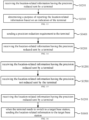
- FIG. 1 is a flowchart of a method for reporting location-related information according to an embodiment of the disclosure.
- the method for reporting location-related information shown in the embodiment is performed by a terminal.
- the terminal includes but is not limited to a communication apparatus, such as a cell phone, a tablet, a wearable device, a sensor, and an Internet of Things (IoT) device.
- the terminal may communicate with a base station.
- the base station includes but is not limited to a base station in a communication system, such as a 4G base station, a 5G base station, and a 6G base station.
- the method for reporting location-related information includes, but is not limited to, the following steps.
- step S101 a precision of the location-related information of the terminal is reduced.
- the location-related information having the precision reduced is reported to a base station.
- the terminal and the base station may communicate over a terrestrial network or may communicate over a Non-Terrestrial Network (NTN).
- NTN Non-Terrestrial Network
- the technical solution of the disclosure may be applicable to a scenario in which the terminal communicates with the base station over the terrestrial network, or may be applicable to a scenario in which the terminal communicates with the base station over the NTN.
- the following is an exemplary description of the technical solution of the disclosure mainly for a scenario in which the terminal communicates with the base station over the NTN.
- the terminal can communicate with the base station through a satellite.
- the base station transmits a signal to the satellite, and the satellite transmits the signal to the terminal.
- the satellite moves at a high altitude, its coverage is large and may even span several countries.
- the core networks of different countries may vary.
- the Access and Mobility Management Functions (AMFs) in the core networks are different, for terminals within the coverage of the satellite, it is necessary to select an appropriate core network for the terminal to access according to a location of the terminal. For this situation, a precision requirement of the location of the terminal is generally not high, e.g., 2 kilometers is enough.
- the disclosure is also applicable to other cases that do not require a high location precision, and even some embodiments that do not take in consideration a location precision requirement of the network side.
- the terminal can determine its own location-related information and reduce the precision of the location-related information, and then report the location-related information having the precision reduced to the base station, to avoid privacy leakage of the user of the terminal due to the acquisition of over-precise location-related information by the network side device such as the base station.
- the location-related information includes at least one of: location coordinate information, and Timing Advance (TA).
- TA Timing Advance
- the TA may be an uplink TA pre-compensated by the terminal.
- the network side it is difficult for the network side to determine the uplink TA of the terminal, and the uplink TA cannot be compensated by the network, but the terminal can pre-compensate the uplink TA by itself.
- a trigger event that triggers the terminal to report the location-related information includes at least one of:
- TA report Minimization of Drive-Test (MDT), Self Organization Network (SON), and an indication from the base station that instructs the terminal to report the location-related information.
- MDT Minimization of Drive-Test
- SON Self Organization Network
- the terminal can carry the location-related information in a measurement report and send it to the base station in a connected state in the case that the terminal performs the MDT.
- the terminal can also carry the location-related information in the measurement report and send it to the base station in the connected state through in the case that the terminal performs the SON.
- the terminal can send the location-related information to the base station in the case that the TA is pre-compensated.
- the terminal can also send the location-related information to the base station when it receives the indication from the base station and determines that the location-related information needs to be reported.
- the base station can carry a measurement configuration in a connection reconfiguration message, carry an event trigger configuration and/or a periodic reporting configuration in a reporting configuration Information Element (IE) of the measurement configuration, and carry an indication in the event trigger configuration and/or the periodic reporting configuration, to instruct the terminal to report the location-related information.
- the terminal reports the location-related information based on an event configured in the event trigger configuration or based on a cycle configured in the periodic reporting configuration.
- the indication in the trigger configuration and/or the periodic reporting configuration may be carried in at least one of the following IEs:
- the method further includes: in responding to determining, based on an indication of the base station, that the location-related information having the precision not reduced needs to be reported, reporting the location-related information having the precision not reduced to the base station.
- the terminal in addition to reporting the location-related information after the precision is reduced to the base station, may also report the location-related information before the precision is reduced to the base station, or may report both the location-related information after the precision is reduced and the location-related information before the precision is reduced, which may be determined according to the indication of the base station. For example, if the base station indicates that the location-related information having the precision not reduced needs to be reported, the terminal reports the location-related information having the precision not reduced to the base station.
- the indication may be carried in the event trigger configuration or the periodic reporting configuration, to indicate that the location-related information having the precision not reduced needs to be reported.
- the terminal may report both the location-related information before the precision is reduced and the location-related information after the precision is reduced to the base station.
- the terminal can also indicate whether the precision of the reported location-related information has been reduced.
- the base station can determine, according to the terminal's contract information, whether reporting of the location-related information having the precision not reduced has user consent of the terminal. If the terminal agrees to report the location-related information having the precision not reduced, the base station may instruct the terminal to report the location-related information having the precision not reduced as needed. If the terminal does not agree to report the location-related information having the precision not reduced, the base station does not instruct the terminal to report the location-related information having the precision not reduced.
- the method for reducing the precision of the location-related information of the terminal includes at least one of:
- the preset bit includes one or more bits of the location-related information, which may be consecutive or non-consecutive.
- the following is an exemplary description of the disclosure mainly in the case where the preset bit includes several lowest bits of the location-related information.
- the preset bit includes two lowest bits of the location-related information.
- the value of the preset bit in the location-related information may be set to a specified value, e.g., 0, to realize precision reduction.
- the location-related information is location coordinate information, which is represented by latitude and longitude, and the values of the longitude and the longitude are accurate to two digits after the decimal point, the precision of the location-related information can be reduced by setting the two digits after the decimal point to 0.
- the location-related information is TA, which is represented in the time unit of milliseconds, and the time is accurate to two digits after the decimal point
- the precision of the location-related information can be reduced by setting the two digits after the decimal point to 0.
- the value of the preset bit in the location-related information may be set to a random value, to realize precision reduction.
- the location-related information is location coordinate information, which is represented by latitude and longitude, and the values of the longitude and the longitude are accurate to two digits after the decimal point, the precision of the location-related information can be reduced by setting the two digits after the decimal point to the random value.
- the location-related information is TA, which is represented in the time unit of milliseconds, and the time is accurate to two digits after the decimal point
- the precision of the location-related information can be reduced by setting the two digits after the decimal point to the random value.
- precision reduction can be realized by adding a random value to a value of a preset bit in the location-related information, or subtracting a random value from a value of a preset bit in the location-related information, or multiplying a value of a preset bit in the location-related information by a random value, or dividing a value of a preset bit in the location-related information by a random value.
- the location-related information is location coordinate information, which is represented by latitude and longitude, and the values of the longitude and the longitude are accurate to two digits after the decimal point, the precision of the location-related information can be reduced by adding the random value to the two digits after the decimal point.
- the location-related information is TA, which is represented in the time unit of milliseconds, and the time is accurate to two digits after the decimal point
- the precision of the location-related information can be reduced by subtracting the random value from the two digits after the decimal point.
- precision reduction can be realized by ignoring the value of the preset bit in the location-related information.
- the location-related information is location coordinate information, which is represented by latitude and longitude, and the values of the longitude and the longitude are accurate to two digits after the decimal point, the precision of the location-related information can be reduced by ignoring the values of the two digits after the decimal point (i.e., retaining only integer values).
- the location-related information is TA, which is represented in the time unit of milliseconds, and the time is accurate to two digits after the decimal point
- the precision of the location-related information can be reduced by ignoring the values of the two digits after the decimal point (i.e., retaining only integer values).
- the location-related information is TA
- the order of magnitude of TA is generally very small, for example, at the millisecond level
- the adjustment magnitude of the precision is large, the precision of TA may be seriously affected. Therefore, for TA, the method for reducing the precision at a small magnitude is mainly used, for example, by adding the random value to the value of the preset bit in the location-related information or subtracting the random value from the value of the preset bit in the location-related information.
- the location-related information having the precision reduced is carried in an IE and sent to the base station, and the IE includes at least one of:
- FIG. 2 is a flowchart of another method for reporting location-related information according to an embodiment of the disclosure.
- the IE is locationCoordinate IE, reducing the precision of the location-related information of the terminal includes the following steps.
- the precision of the location-related information is reduced by adjusting an uncertainty field in the locationCoordinate IE.
- the uncertainty field may represent an elliptical range in which the location-related information is located, which is not specifically determined. The smaller the range, the higher the precision of the location-related information. The larger the range, the lower the precision of the location-related information.
- the above range can be changed by adjusting the uncertainty field, to further realize the adjustment of the precision of the location-related information.
- the base station can determine that the precision of the location-related information has been adjusted according to the fact that the uncertainty field includes the special value.
- FIG. 3 is a flowchart of another method for reporting location-related information according to an embodiment of the disclosure.
- the IE includes the LogMeasResultListBT IE and/or the LogMeasResultWLAN IE, reducing the precision of the location-related information of the terminal includes the following steps.
- the precision of the location-related information is reduced by adjusting a received signal strength indication (RSSI) field in the LogMeasResultListBT IE and/or the LogMeasResultWLAN IE.
- RSSI received signal strength indication
- the location-related information can be determined according to the RSSI field, and the precision of the location-related information can be reduced by adjusting the RSSI field.
- the unit of the RSSI field can be decibels (dB).
- dB decibels
- FIG. 4 is a flowchart of another method for reporting location-related information according to an embodiment of the disclosure. As illustrated in FIG. 4 , when the IE includes the Sensor-LocationInfo IE, reducing the precision of the location-related information of the terminal includes the following steps.
- the precision of the location-related information is reduced by adjusting an atmospheric pressure field in the Sensor-LocationInfo IE.
- the location-related information can be determined according to the atmospheric pressure field, which can be used, for example, to determine the location-related information in the direction perpendicular to the horizontal plane in the location-related information, so that the precision of the location-related information can be reduced by adjusting the atmospheric pressure field.
- FIG. 5 is a flowchart of another method for reporting location-related information according to an embodiment of the disclosure. As illustrated in FIG. 5 , the method further includes the following steps.
- a purpose of reporting the location-related information is indicated, in which the purpose includes at least one of: TA report, MDT, and SON.
- the terminal may also indicate the purpose for reporting the location-related information, so that the base station can determine the purpose for reporting the location-related information of the terminal, and operate appropriately according to the location-related information having the precision reduced reported by the terminal.
- FIG. 6 is a flowchart of another method for reporting location-related information according to an embodiment of the disclosure. As illustrated in FIG. 6 , reducing the precision of the location-related information of the terminal includes the following steps.
- the precision of the location-related information is reduced based on a precision reduction requirement indicated by the base station.
- the base station can indicate the precision reduction requirement to the terminal, to indicate to what extent the precision needs to be reduced, for example, the precision can be reduced to 2 km.
- the terminal can reduce the precision of the location-related information according to the precision reduction requirement, to ensure that the reported location-related information having the precision reduced can meet the requirement of the base station.
- reporting the location-related information having the precision reduced to the base station includes: in response to a trigger condition being satisfied, reporting the location-related information having the precision reduced.
- the trigger condition can be agreed by the protocol, or agreed by the base station and the terminal, or configured by the base station for the terminal.
- the terminal can determine whether the trigger condition is satisfied and report the location-related information only when the trigger condition is satisfied.
- the base station can carry the trigger condition in the trigger event configuration (EventTriggerConfig) of a New Radio (NR) report configuration (ReportConfigNR IE).
- EventTriggerConfig a New Radio (NR) report configuration
- ReportConfigNR IE ReportConfigNR IE
- the trigger condition when the location-related information includes location coordinate information, the trigger condition includes a location offset threshold; and in response to a distance between a current location and a location at which the location-related information was reported previously being greater than the location offset threshold, it is determined that the trigger condition is satisfied.
- the location of the terminal when reporting the location-related information previously which can be referred as P0
- the current location of the terminal which can be referred as P1
- P0 the location of the terminal when reporting the location-related information previously
- P1 the current location of the terminal
- the location-related information reported previously can be the previously reported location-related information having the precision not reduced. Certainly, it can be set as desired, for example, the location-related information reported previously can be set as the previously reported location-related information having the precision reduced or the previously reported location-related information having the precision not reduced.
- the trigger condition when the location-related information includes location coordinate information, the trigger condition includes a location offset threshold (i.e., offset) and a hysteresis threshold (i.e., Hysteresis); and
- the location of the terminal when reporting the location-related information previously which can be referred as P0
- the current location of the terminal which can be referred as P1
- P0 the location of the terminal when reporting the location-related information previously
- P1 the current location of the terminal
- the terminal is triggered to report the location-related information having the precision reduced if it is determined that the trigger condition is satisfied. If it is determined that the trigger condition is unsatisfied, the terminal needs not to report the location-related information having the precision reduced, and if the location-related information having the precision reduced is currently being reported (e.g., periodically), the reporting of the location-related information having the precision reduced can be stopped.
- an effective time is set.
- the terminal determines that the trigger condition is satisfied and the current time is within the effective time, the terminal is triggered to report the location-related information having the precision reduced, and if the current time is not within the effective time, the terminal is not triggered to report the location-related information having the precision reduced.
- the location-related information is TA
- One way is TA reporting (the report content can be TA or location coordinate information), in which the TA is carried by a medium such as a Media Access Control Control Element (MAC CE) and reported.
- the other way is user equipment (UE) location reporting (the report content can be TA or location coordinate information), in which the TA is carried in a radio resource control (RRC) signaling and reported.
- RRC radio resource control
- FIG. 7 is a flowchart of another method for reporting location-related information according to an embodiment of the disclosure. As illustrated in FIG. 7 , when the location-related information includes a TA, the method further includes the following steps.
- step S701 when it is determined, based on an indication of the base station, to report the TA by means of TA reporting, it is determined whether the trigger condition is satisfied based on a variation between a current TA and a TA when the location-related information was reported previously.
- the base station may indicate the way of reporting the TA for the terminal, for example, by means of TA reporting.
- the terminal may determine the TA when the location-related information was reported previously, which is referred to as TA0, and a current TA, which is referred to as TA1, then calculate a variation TA01 between TAG and TA1, and determine whether the trigger condition is satisfied according to TA01.
- TA01 is greater than a TA threshold, it is determined that the trigger condition is satisfied and then the reporting of the location-related information having the precision reduced is triggered. For example, if TA01 is less than the TA threshold, it is determined that the trigger condition is unsatisfied and then the reporting of the location-related information having the precision reduced is not triggered.
- the location-related information reported previously can be the TA or the location coordinate information.
- determining whether the trigger condition is satisfied based on the variation between the current TA and the TA when the location-related information was reported previously includes: determining whether the trigger condition is satisfied based on the variation between the current TA and the TA when the location-related information was reported previously and a report content is the TA.
- the terminal can be set to determine the TA when the location-related information was reported previously, specifically, the TA when the location-related information was reported previously and the report content is TA.
- FIG. 8 is a flowchart of another method for reporting location-related information according to an embodiment of the disclosure. As illustrated in FIG. 8 , reporting the location-related information having the precision reduced includes the following steps.
- step S801 in a case where it is determined, based on an indication of the base station, that the location-related information is reported by other means, when reporting the TA by means of TA reporting has been triggered, reporting the TA by means of the TA reporting is stopped.
- the base station may also instruct the terminal to report the location-related information by other means.
- the other means refers to reporting the location-related information during the MDT or SON process.
- the terminal needs to report the TA by means of TA reporting and report the location-related information by other means.
- the functions of TA and location-related information are similar for the network side, generally, there is no need to report the TA by means of TA reporting and report the location-related information by other means.
- reporting the TA by means of TA reporting when reporting the TA by means of TA reporting has been triggered, reporting the TA by means of TA reporting can be stopped.
- the reporting when the MAC CE carrying the TA has not yet been delivered to the lower layer, or has not yet been put in a MAC Protocol Data Unit (PDU), the reporting can be stopped. Accordingly, repeated reporting of information with similar functions can be avoided, which is conducive to saving communication resources.
- PDU MAC Protocol Data Unit
- FIG. 9 is a flowchart of another method for reporting location-related information according to an embodiment of the disclosure. As illustrated in FIG. 9 , when the location-related information includes a TA, the method further includes the following steps.
- step S901 when it is determined, based on an indication of the base station, that the TA is reported by means of UE location reporting, it is determined whether the trigger condition is satisfied based on a variance between a current location and a location of the terminal when the location-related information was reported previously.
- the base station may indicate the way to report the TA for the terminal, for example, by means of TA reporting.
- the terminal may determine the location of the terminal when the location-related information was reported previously, which is referred to as L0, and the current location, which is referred to as L1, then calculate a variance L01 between L0 and L1, and determine whether the trigger condition is satisfied according to L01.
- L01 is greater than a TA threshold, it is determined that the trigger condition is satisfied and then the reporting of the location-related information having the precision reduced is triggered. For example, if L01 is less than the TA threshold, it is determined that the trigger condition is unsatisfied, and the reporting of the location-related information having the precision reduced is not triggered.
- the location-related information reported previously can be the TA or the location coordinate information.
- determining whether the trigger condition is satisfied based on the variance between the current location and the location of the terminal when the location-related information was reported previously includes: determining whether the trigger condition is satisfied based on the variance between the current location and the location of the terminal when the location-related information was reported previously and a report content is the location coordinate information.
- the terminal can be set to determine the location of the terminal when the location-related information was reported previously, specifically, the location of the terminal when the location-related information was reported previously and the report content is the location coordinate information.
- FIG. 10 is a flowchart of another method for reporting location-related information according to an embodiment of the disclosure. As illustrated in FIG. 10 , reporting the location-related information having the precision reduced includes the following steps.
- step S1001 in a case where it is determined, based on an indication of the base station, that the location-related information is reported by other means, when reporting the TA by means of UE location reporting has been triggered, reporting the TA by means of UE location reporting is stopped, or the TA is reported by means of UE location reporting and the location-related information is reported by other means.
- the base station may also instruct the terminal to report the location-related information by other means.
- the other means refers to reporting the location-related information during the MDT or SON process.
- the terminal needs to report the TA by means of UE location reporting and report the location-related information by other means.
- the functions of the TA and the location-related information are similar for the network side, generally, there is no need to report the TA by means of UE location reporting and report the location-related information by other means.
- reporting the TA by means of UE location reporting is reporting the TA by carrying the TA in the RRC signaling, which may not be stopped successfully
- the location-related information can be reported by other means and the TA is also reported by means of UE location reporting.
- the location-related information reported by other means may also be the TA, so that the base station may receive two TAs, the functions of which cannot be distinguished. Therefore, in this case, the terminal may indicate the purpose of reporting the TA by means of UE location reporting and the purpose of reporting the location-related information by other means, e.g., TA report, UE location, MDT, SON, etc., so that the base station can process the two pieces of received information appropriately. Moreover, the terminal can also indicate which reported information has the precision reduced and which information has the precision not reduced.
- FIG. 11 is a flowchart of another method for reporting location-related information according to an embodiment of the disclosure. As illustrated in FIG. 11 , the method further includes the following steps.
- step S1101 when there is a need to switch to a target base station, the location-related information is sent to the target base station.
- the target base station to be switched may be determined and the location-related information is reported to the target base station, so that the target base station may determine the location-related information of the terminal in a timely manner.
- sending the location-related information to the target base station includes: sending the location-related information to the target base station during the process of switching to the target base station.
- the terminal may send the location-related information to the target base station during the process of switching to the target base station, e.g., sending the location-related information to the target base station by carrying the location-related information in a connection reconfiguration complete message, so that the target base station can determine the location-related information of the terminal as early as possible.
- sending the location-related information to the target base station includes: in a case where it is determined, based on a reconfiguration message sent by the target base station, that the location-related information needs to be reported, during the process of switching to the target base station and/or after the process of switching to the target base station, sending the location-related information to the target base station.
- the terminal can first determine whether there is a need to report the location-related information according to the reconfiguration message sent by the target base station. If it is determined that the location-related information needs to be reported, the terminal can send the location-related information to the target base station during the process of switching to the target base station, for example, carrying the location-related information in the connection reconfiguration complete message and sending it to the target base station, or can send the location-related information to the target base station after the process of switching to the target base station, for example, triggering a measurement report, carrying the location-related information in the measurement report and sending it to the target base station.
- the location-related information may not be sent to the target base station. Therefore, unnecessary location-related information is not reported, to avoid waste of communication resources.
- the location-related information reported to the target base station can be either location-related information having the precision reduced or location-related information having the precision not reduced, which can be set as needed.
- whether to obtain the location-related information and report the location-related information having the precision reduced in a case where available location-related information is not stored is determined based on at least one of:
- the terminal when the terminal needs to report the location-related information having the precision reduced, the terminal needs to store available location-related information. For example, the terminal stores the location-related information and the location-related information is effective. For example, if a time difference between an acquisition time of the stored location-related information and a current time is less than a preset duration, it is determined that the terminal stores the available location-related information.
- the terminal may choose not to report the location-related information having the precision reduced, or may choose to obtain the location-related information and then report the location-related information after reducing the precision.
- it can be determined which operation of the two operations is executed according to the indication of the base station, the trigger event that triggers reporting of the location-related information, the purpose of reporting the location-related information, the state of the terminal, or the precision of the location-related information.
- the operation to be executed is determined according to the indication of the base station.
- the base station instructs the terminal to report the location-related information
- the base station explicitly instructs the terminal to report the available location-related information
- the terminal is triggered to report the location-related information, if there is no available location-related information stored, there is no need to obtain the location-related information; if there is available location-related information stored, the available location-related information is reported.
- the base station only instructs the terminal to report the location-related information
- the terminal when the terminal is triggered to report the location-related information, if there is no available location-related information stored, the location-related information is obtained and the location-related information is reported after the precision is reduced; if there is available location-related information stored, the stored available location-related information is reported after the precision is reduced.
- the base station does not instruct the terminal to report the available location-related information or the location-related information
- the terminal when the terminal is triggered to report the location-related information, if there is no available location-related information stored, there is no need to obtain the location-related information; if there is available location-related information stored, the available location-related information is reported.
- the operation to be executed is determined according to the trigger event that triggers reporting of the location-related information.
- the base station can configure the trigger event that triggers reporting of the location-related information for the terminal.
- the terminal can first determine whether the trigger event is satisfied, and report the location-related information only if the trigger event is satisfied. That is, if the trigger event is unsatisfied, the terminal does not report the location-related information.
- the terminal can determine whether to obtain the location-related information according to the trigger event. For example, if the base station configures that trigger even A requires the terminal to report the available location-related information and trigger event B requires the terminal to report the location-related information, when the trigger even A is satisfied, the terminal does not need to obtain the location-related information if no available location-related information is stored, and reports the available location-related information if there is available location-related information stored.
- the terminal When the trigger even B is satisfied, if no available location-related information is stored, the terminal obtains the location-related information and reports the obtained location-related information after the precision is reduced; if there is available location-related information stored, the terminal reports the stored available location-related information after the precision is reduced.
- the operation to be executed is determined according to the purpose of reporting the location-related information.
- the base station can configure the purpose of reporting the location-related information for the terminal, such as TA report, SON, MDT, and LoCation Service (LCS).
- the terminal When the terminal is triggered to report the location-related information, if the terminal does not store the available location-related information, the terminal determines whether or not to obtain the location-related information according to the purpose.
- the base station configures that the purpose of TA report requires the terminal to report the available location-related information, and the purpose of MDT requires the terminal to report the location-related information.
- the terminal determines that the purpose is TA report
- the terminal does not need to obtain the location-related information if it does not store the available location-related information, and the terminal reports the available location-related information if it stores the available location-related information.
- the terminal determines that the purpose is MDT, if the terminal does not store the available location-related information stored, the terminal can obtain the location-related information and report the location-related information after reducing the precision; if the terminal stores the available location-related information, the terminal reports the stored available location-related information after reducing the precision.
- the operation to be executed is determined according to the state of the terminal.
- the terminal When the terminal is triggered to report the location-related information, if the terminal does not store the available location-related information, the terminal can determine whether to obtain the location-related information according to its own state.
- the terminal when the terminal is in an initial random access state or in a state of switching the base station, if the terminal does not store the available location-related information, the terminal can obtain the location-related information, and then report the obtained location-related information after reducing the precision; if the terminal stores the available location-related information, the terminal reports the stored available location-related information after reducing the precision.
- the terminal when the terminal is in a connected state, if the trigger event that triggers reporting of the location-related information is a large difference between the current location-related information and the location-related information reported previously, for example, the difference is greater than a preset value, if the terminal does not store the available location-related information, the terminal can obtain the location-related information and then report the location-related information after reducing the precision; if the terminal stores the available location-related information, the terminal can report the stored available location-related information after reducing the precision.
- the terminal may not obtain the location-related information if it does not store the available location-related information, and the terminal reports the available location-related information if it stores the available location-related information.
- the operation to be executed is determined according to the precision of the location-related information.
- the base station can indicate the precision to which the location-related information needs to be reduced to the terminal, or the terminal can determine the precision to which the location-related information needs to be reduced independently.
- the terminal can determine whether to obtain the location-related information according to the precision to which the location-related information needs to be reduced. In this case, the base station may not need to indicate information on whether to report the available location-related information or not to the terminal.
- the terminal determines that information with coarse precision needs to be reported (e.g., the precision is lower than the preset precision)
- the terminal can obtain the location-related information, and report the obtained location-related information after reducing the precision; if the terminal stores the available location-related information, the terminal reports the stored available location-related information after reducing the precision.
- the terminal determines that information with high precision needs to be reported (e.g., the precision is greater than the preset precision)
- the terminal determines that information with high precision needs to be reported (e.g., the precision is greater than the preset precision)
- the terminal does not store the available location-related information
- the terminal does not need to obtain the location-related information; if the terminal stores the available location-related information, the terminal reports the available location-related information.
- FIG. 12 is a flowchart of another method for receiving location-related information according to an embodiment of the disclosure.
- the method for receiving location-related information shown in the embodiment is performed by a base station.
- the base station may communicate with a terminal.
- the terminal includes but is not limited to a communication device, such as a cell phone, a tablet, a wearable device, a sensor, and an IoT device.
- the base station includes but is not limited to a base station in a communication system, such as a 4G base station, a 5G base station, and a 6G base station.
- the method for receiving location-related information includes the following steps.
- step S1201 location-related information having a precision reduced sent by a terminal is received.
- the terminal and the base station may communicate over a terrestrial network or may communicate over an NTN.
- the technical solution of the disclosure may be applicable to a scenario in which the terminal communicates with the base station over the terrestrial network, or may be applicable to a scenario in which the terminal communicates with the base station over the NTN.
- the following is an exemplary description of the technical solution of the disclosure mainly for a scenario in which the terminal communicates with the base station over the NTN.
- the terminal can communicate with the base station through a satellite.
- the base station transmits a signal to the satellite, and the satellite transmits the signal to the terminal.
- the satellite moves at a high altitude, its coverage is large and may even span several countries.
- the core networks of different countries may vary.
- the AMFs in the core networks are different, for terminals within the coverage of the satellite, it is necessary to select an appropriate core network for the terminal to access according to a location of the terminal.
- a precision requirement of the location of the terminal is generally not high, e.g., 2 kilometers is enough.
- the disclosure is also applicable to other cases that do not require a high location precision, and even some embodiments that do not take in consideration a location precision requirement of the network side.
- the terminal can determine its own location-related information and reduce the precision of the location-related information, and then report the location-related information having the precision reduced to the base station, to avoid privacy leakage of the user of the terminal due to the acquisition of over-precise location-related information by the network side device such as the base station.
- the location-related information includes at least one of: location coordinate information, and TA.
- the TA may be an uplink TA pre-compensated by the terminal.
- the network side it is difficult for the network side to determine the uplink TA of the terminal, and the uplink TA cannot be compensated by the network, but the terminal can pre-compensate the uplink TA by itself.
- the location-related information having the precision reduced is obtained from an IE, and the IE includes at least one of:
- FIG. 13 is a flowchart of another method for receiving location-related information according to an embodiment of the disclosure. As illustrated in FIG. 13 , the method further includes the following steps.
- a purpose of reporting the location-related information by a terminal is determined based on an indication of the terminal, in which the purpose includes at least one of: TA report, MDT, and SON.
- the terminal may also indicate the purpose of reporting the location-related information, so that the base station determines the purpose of reporting the location-related information by the terminal, and operate appropriately according to the location-related information having the precision reported by the terminal.
- FIG. 14 is a flowchart of another method for receiving location-related information according to an embodiment of the disclosure. As illustrated in FIG. 14 , the method further includes the following steps.
- step S140 a precision reduction requirement is sent to the terminal.
- the base station may indicate the precision reduction requirement to the terminal, to indicate to what extent the precision needs to be reduced, for example, the precision can be reduced to 2 km.
- the terminal may reduce the precision of the location-related information according to the precision reduction requirement, to ensure that the reported location-related information having the precision reduced can satisfy the needs of the terminal.
- FIG. 15 is a flowchart of another method for receiving location-related information according to an embodiment of the disclosure. As illustrated in FIG. 15 , the method further includes the following steps.
- step S1501 location-related information having the precision not reduced sent by the terminal is received.
- the terminal may report the location-related information after the precision is reduced to the base station, or report the location-related information before the precision is reduced to the base station, or report both the location-related information after the precision is reduced and the location-related information before the precision is reduced, which can be determined according to the indication of the base station.
- the terminal when the base station instructs the terminal to report the location-related information having the precision not reduced, the terminal reports the location-related information having the precision not reduced to the base station.
- the indication can be carried in an event trigger configuration or a periodic reporting configuration, to instruct the terminal to report the location-related information having the precision not reduced.
- the terminal can report both the location-related information before the precision is reduced and the location-related information after the precision is reduced to the base station. After reporting the location-related information, the terminal can also indicate whether the precision of the reported location-related information has been reduced, so that the base station can determine whether the precision of the reported location-related information has been reduced.
- the base station can determine, according to the terminal's contract information, whether reporting of the location-related information having the precision not reduced has user consent of the terminal. If the terminal agrees to report the location-related information having the precision not reduced, the base station may instruct the terminal to report the location-related information having the precision not reduced as needed. If the terminal does not agree to report the location-related information having the precision not reduced, the base station does not instruct the terminal to report the location-related information having the precision not reduced.
- FIG. 16 is a flowchart of another method for receiving location-related information according to an embodiment of the disclosure. As illustrated in FIG. 16 , the method further includes the following steps.
- step S1601 when a terminal needs to switch to a target base station, location-related information is sent to a target base station.
- the terminal when the terminal determines that the base station needs to be switched, the terminal may determine the target base station to be switched, and then send the location-related information to the target base station, e.g., through an interface between the base stations or a core network, so that the target base station can determine the location-related information of the terminal in a timely manner.
- the target base station may indicate whether the precision of the location-related information sent to the target base station has been reduced or not.
- the embodiments of the disclosure also provide an apparatus for reporting location-related information and an apparatus for receiving location-related information.
- the embodiments of the disclosure also provide an apparatus for reporting location-related information.
- the apparatus can be applied to a terminal.
- the terminal includes but is not limited to a communication device, such as a cell phone, a tablet, a wearable device, a sensor, and an IoT device.
- the terminal may communicate with a base station.
- the base station includes but is not limited to a base station in a communication system, such as a 4G base station, a 5G base station, and a 6G base station.
- the apparatus for reporting location-related information includes one or more processors.
- the processor is configured to: reduce a precision of the location-related information of a terminal; and report the location-related information having the precision reduced to a base station.
- reducing the precision of the location-related information of the terminal includes at least one of:
- the location-related information having the precision reduced is carried in an IE and sent to the base station, and the IE includes at least one of:
- the processor when the IE includes the locationCoordinate IE, the processor is configured to: reduce the precision of the location-related information by adjusting an uncertainty field in the locationCoordinate IE.
- the IE includes the LogMeasResultListBT IE and/or the LogMeasResultWLAN IE
- the processor is configured to: reduce the precision of the location-related information by adjusting an RSSI field in the LogMeasResultListBT IE and/or the LogMeasResultWLAN IE.
- the processor when the IE includes the Sensor-LocationInfo IE, the processor is configured to: reduce the precision of the location-related information by adjusting an atmospheric pressure field in the Sensor-LocationInfo IE.
- the processor is configured to: indicate a purpose of reporting the location-related information, in which the purpose includes at least one of: TA report, MDT, and SON.
- the processor is configured to: reduce the precision of the location-related information based on a precision reduction requirement indicated by the base station.
- the processor is further configured to: in response to determining, based on an indication of the base station, that the location-related information having the precision not reduced needs to be reported, report the location-related information having the precision not reduced to the base station.
- the processor is configured to: in response to a trigger condition being satisfied, reporting the location-related information having the precision reduced.
- the trigger condition when the location-related information includes location coordinate information, the trigger condition includes a location offset threshold; and in response to a distance between a current location and a location at which the location-related information was reported previously being greater than the location offset threshold, it is determined that the trigger condition is satisfied.
- the trigger condition when the location-related information includes location coordinate information, the trigger condition includes a location offset threshold and a hysteresis threshold; and in response to a difference between a distance between a current location and a location at which the location-related information was reported previously and the hysteresis threshold being greater than the location offset threshold, it is determined that the trigger condition is satisfied; and in response to a sum of the distance between the current location and the location at which the location-related information was reported previously and the hysteresis threshold being less than the location offset threshold, it is determined that the trigger condition is unsatisfied; or
- the trigger condition in response to a sum of a distance between a current location and a location at which the location-related information was reported previously and the hysteresis threshold being less than the location offset threshold, it is determined that the trigger condition is satisfied; and in response to the difference between the distance between the current location and the location at which the location-related information was reported previously and the hysteresis threshold being greater than the location offset threshold, it is determined that the trigger condition is unsatisfied.
- the processor when the location-related information includes a TA, is configured to: in response to determining, based on an indication of the base station, to report the TA by means of TA reporting, determine whether the trigger condition is satisfied based on a variation between a current TA and a TA when the location-related information was reported previously y.
- the processor is configured to: determine whether the trigger condition is satisfied based on the variation between the current TA and the TA when the location-related information was reported previously and a report content is the TA.
- the processor is configured to: in a case where it is determined, based on the indication of the base station, that the location-related information is reported by other means, in response to reporting the TA by means of TA reporting being triggered, stop reporting the TA by means of TA reporting.
- the processor when the location-related information includes a TA, is configured to: in response to determining, based on an indication of the base station, that the TA is reported by means of user equipment (UE) location reporting, determine whether the trigger condition is satisfied based on a variance between a current location and a location of the terminal when location coordinate information was reported previously.
- UE user equipment
- the processor is configured to: determine whether the trigger condition is satisfied based on the variance between the current location and the location of the terminal when the location-related information was reported previously and a report content is location coordinate information.
- the processor is configured to: in a case where it is determined, based on the indication of the base station, that the location-related information is reported by other means, in response to reporting the TA by means of UE location reporting being triggered, stop reporting the TA by means of UE location reporting, or report the TA by means of UE location reporting and report the location-related information by other means.
- the processor is configured to: in response to there being a need to switch to a target base station, send the location-related information to the target base station.
- the processor is configured to: send the location-related information to the target base station during a process of switching to the target base station.
- the processor is configured to: in a case where it is determined, based on a reconfiguration message sent by the target base station, that the location-related information needs to be reported, during and/or after the process of switching to the target base station, send the location-related information to the target base station.
- whether to obtain the location-related information and report the location-related information having the precision reduced in a case where available location-related information is not stored is determined based on at least one of:
- the embodiments of the disclosure also provide an apparatus for receiving location-related information.
- the apparatus can be applied to a base station.
- the base station may communicate with a terminal.
- the terminal includes but is not limited to a communication device, such as a cell phone, a tablet, a wearable device, a sensor, and an IoT device.
- the base station includes but is not limited to a base station in a communication system, such as a 4G base station, a 5G base station, and a 6G base station.
- the apparatus for receiving location-related information includes one or more processors.
- the processor is configured to: receive the location-related information having a precision reduced sent by a terminal.
- the location-related information having the precision reduced is obtained from an IE, and the IE includes at least one of:
- the processor is configured to: determining, based on an indication of the terminal, a purpose of reporting the location-related information, in which the purpose includes at least one of: TA report, MDT, and SON.
- the processor is further configured to: send a precision reduction requirement to the terminal.
- the processor is further configured to: receive the location-related information having a precision not reduced sent by the terminal.
- the apparatus further includes: when the terminal needs to switch to a target base station, send the location-related information to the target base station.
- the apparatus embodiments basically correspond to the method embodiments, relevant contents can refer to partial description of the method embodiments.
- the apparatus embodiments described above are merely schematic, in which the modules described as separate components may or may not be physically separated, and the components shown as modules may or may not be physical modules, i.e., they may be located in a single place or may be distributed to a plurality of network modules. Some or all of these modules may be selected according to actual needs to fulfill the purpose of the solution of the embodiments, which can be understood and implemented by those skilled in the art without inventive work.
- the embodiments of the disclosure also provide a communication apparatus, including a processor and a memory for storing a computer program.
- a communication apparatus including a processor and a memory for storing a computer program.
- the embodiments of the disclosure also provide a communication apparatus, including a processor and a memory for storing a computer program.
- a communication apparatus including a processor and a memory for storing a computer program.
- the embodiments of the disclosure also provide a computer-readable storage medium for storing a computer program.
- the computer program When executed by a processor, the steps in the method for reporting location-related information described in any of the above embodiments are implemented.
- the embodiments of the disclosure also provide a computer-readable storage medium for storing a computer program.
- the computer program is executed by a processor, the steps in the method for receiving location-related information described in any of the above embodiments are implemented.
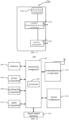
- FIG. 17 is a schematic block diagram of an apparatus 1700 for receiving location-related information according to an embodiment of the disclosure.
- the apparatus 1700 may be provided as a base station.
- the apparatus 1700 includes a processing component 1722, a wireless transmitting/receiving component 1724, an antenna component 1726, and a signal processing portion specific to a radio interface.
- the processing component 1722 may further include one or more processors. One of the processors in the processing component 1722 may be configured to implement the steps in the method for receiving location-related information described in any of the above embodiments.
- FIG. 18 is a schematic block diagram of an apparatus 1800 for reporting location-related information according to an embodiment of the disclosure.
- the apparatus 1800 may be a mobile phone, a computer, a digital broadcasting terminal, a message transceiver device, a game console, a tablet device, a medical device, a fitness device and a personal digital assistant, etc.
- the apparatus 1800 may include one or more of the following components: a processing component 1802, a memory 1804, a power component 1806, a multimedia component 1808, an audio component 1810, an input/output (I/O) interface 1812, a sensor component 1814, and a communication component 1816.
- a processing component 1802 a memory 1804, a power component 1806, a multimedia component 1808, an audio component 1810, an input/output (I/O) interface 1812, a sensor component 1814, and a communication component 1816.
- the processing component 1802 typically controls overall operations of the apparatus 1800, such as the operations associated with display, telephone calls, data communications, camera operations, and recording operations.
- the processing component 1802 may include one or more processors 1820 to execute instructions to implement all or part of the steps in the above described method for reporting location-related information.
- the processing component 1802 may include one or more modules which facilitate the interaction between the processing component 1802 and other components.
- the processing component 1802 may include a multimedia module to facilitate the interaction between the multimedia component 1808 and the processing component 1802.
- the memory 1804 is configured to store various types of data to support the operation of the apparatus 1800. Examples of such data include instructions for any applications or methods operated on the apparatus 1800, contact data, phonebook data, messages, pictures, videos, etc.
- the memory 1804 may be implemented using any type of volatile or non-volatile memory devices, or a combination thereof, such as a Static Random-Access Memory (SRAM), an Electrically-Erasable Programmable Read Only Memory (EEPROM), an Erasable Programmable Read Only Memory (EPROM), a Programmable Read Only Memory (PROM), a Read Only Memory (ROM), a magnetic memory, a flash memory, a magnetic or optical disk.
- SRAM Static Random-Access Memory
- EEPROM Electrically-Erasable Programmable Read Only Memory
- EPROM Erasable Programmable Read Only Memory
- PROM Programmable Read Only Memory
- ROM Read Only Memory
- the power component 1806 provides power to various components of the apparatus 1800.
- the power component 1806 may include a power management system, one or more power sources, and any other components associated with the generation, management, and distribution of power in the apparatus 1800.
- the multimedia component 1808 includes a screen providing an output interface between the apparatus 1800 and the user.
- the screen may include a Liquid Crystal Display (LCD) and a Touch Panel (TP). If the screen includes the touch panel, the screen may be implemented as a touch screen to receive input signals from the user.
- the touch panel includes one or more touch sensors to sense touches, swipes, and gestures on the touch panel. The touch sensor may not only sense a boundary of a touch or swipe action, but also sense a period of time and a pressure associated with the touch or swipe action.
- the multimedia component 1808 includes a front-facing camera and/or a rear-facing camera.
- the front-facing camera and/or the rear-facing camera can receive external multimedia data.
- Each front-facing camera and rear-facing camera may be a fixed optical lens system or has a focal length and optical zoom capability.
- the audio component 1810 is configured to output and/or input audio signals.
- the audio component 1810 includes a microphone (MIC) configured to receive an external audio signal when the apparatus 1800 is in an operation mode, such as a call mode, a recording mode, and a voice recognition mode.
- the received audio signal may be further stored in the memory 1804 or transmitted via the communication component 1816.
- the audio component 1810 further includes a speaker to output audio signals.
- the I/O interface 1812 provides an interface between the processing component 1802 and peripheral interface modules, such as a keyboard, a click wheel, buttons, and the like.
- the buttons may include, but are not limited to, a home button, a volume button, a starting button, and a locking button.
- the sensor component 1814 includes one or more sensors to provide status assessments of various aspects of the apparatus 1800. For instance, the sensor component 1814 may detect an open/closed status of the apparatus 1800, relative positioning of components, e.g., the display and the keypad, of the apparatus 1800, a change in position of the apparatus 1800 or a component of the apparatus 1800, a presence or absence of user contact with the apparatus 1800, an orientation or an acceleration/deceleration of the apparatus 1800, and a change in temperature of the apparatus 1800.
- the sensor component 1814 may include a proximity sensor configured to detect the presence of nearby objects without any physical contact.
- the sensor component 1814 may also include a light sensor, such as a Complementary Metal Oxide Semiconductor (CMOS) or Charge-Coupled Device (CCD) image sensor, for use in imaging applications.
- CMOS Complementary Metal Oxide Semiconductor
- CCD Charge-Coupled Device
- the sensor component 1814 may also include an accelerometer sensor, a gyroscope sensor, a magnetic sensor, a pressure sensor, or a temperature sensor.
- the communication component 1816 is configured to facilitate communication, wired or wirelessly, between the apparatus 1800 and other devices.
- the apparatus 1800 can access a wireless network based on a communication standard, such as Wi-Fi, 2G or 3G, 4G LTE, 5G NR or a combination thereof.
- the communication component 1816 receives a broadcast signal from an external broadcast management system or broadcast associated information via a broadcast channel.
- the communication component 1816 further includes a Near Field Communication (NFC) module to facilitate short-range communication.
- NFC Near Field Communication
- the NFC module may be implemented based on a RF Identification (RFID) technology, an Infrared Data Association (IrDA) technology, an Ultra-Wide Band (UWB) technology, a Blue Tooth (BT) technology, and other technologies.
- RFID RF Identification
- IrDA Infrared Data Association
- UWB Ultra-Wide Band
- BT Blue Tooth
- the apparatus 1800 may be implemented with one or more Application Specific Integrated Circuits (ASICs), Digital Signal Processors (DSPs), Digital Signal Processing Devices (DSPDs), Programmable Logic Devices (PLDs), Field Programmable Gate Arrays (FPGAs), controllers, microcontrollers, microprocessors or other electronic components, for performing the above method for reporting location-related information.
- ASICs Application Specific Integrated Circuits
- DSPs Digital Signal Processors
- DSPDs Digital Signal Processing Devices
- PLDs Programmable Logic Devices
- FPGAs Field Programmable Gate Arrays
- controllers microcontrollers, microprocessors or other electronic components, for performing the above method for reporting location-related information.
- non-transitory computer readable storage medium including instructions, such as the memory 1804.
- the above instructions may be executed by the processor 1820 in the apparatus 1800, for performing the above method for reporting location-related information.
- the non-transitory computer-readable storage medium may be a ROM, a Random Access Memory (RAM), a CD-ROM, a magnetic tape, a floppy disc, and an optical data storage device.
Landscapes
- Engineering & Computer Science (AREA)
- Computer Networks & Wireless Communication (AREA)
- Signal Processing (AREA)
- Computer Security & Cryptography (AREA)
- Mobile Radio Communication Systems (AREA)
Applications Claiming Priority (1)
| Application Number | Priority Date | Filing Date | Title |
|---|---|---|---|
| PCT/CN2021/121945 WO2023050225A1 (zh) | 2021-09-29 | 2021-09-29 | 位置相关信息上报、接收方法和装置 |
Publications (2)
| Publication Number | Publication Date |
|---|---|
| EP4412291A1 true EP4412291A1 (de) | 2024-08-07 |
| EP4412291A4 EP4412291A4 (de) | 2025-07-09 |
Family
ID=80213673
Family Applications (1)
| Application Number | Title | Priority Date | Filing Date |
|---|---|---|---|
| EP21958812.6A Pending EP4412291A4 (de) | 2021-09-29 | 2021-09-29 | Verfahren und vorrichtungen zum melden und empfangen positionsbezogener informationen |
Country Status (4)
| Country | Link |
|---|---|
| US (1) | US20240397283A1 (de) |
| EP (1) | EP4412291A4 (de) |
| CN (2) | CN119893426A (de) |
| WO (1) | WO2023050225A1 (de) |
Cited By (1)
| Publication number | Priority date | Publication date | Assignee | Title |
|---|---|---|---|---|
| EP4535832A4 (de) * | 2022-05-24 | 2026-04-01 | Beijing Xiaomi Mobile Software Co Ltd | Verfahren und vorrichtung zur erfassung von positionsinformationen |
Families Citing this family (3)
| Publication number | Priority date | Publication date | Assignee | Title |
|---|---|---|---|---|
| WO2024000208A1 (zh) * | 2022-06-28 | 2024-01-04 | 北京小米移动软件有限公司 | 一种定时提前报告tar的触发方法、装置、设备及存储介质 |
| US20260052391A1 (en) * | 2022-08-12 | 2026-02-19 | Beijing Xiaomi Mobile Software Co., Ltd. | Notification subscription method and apparatus, subscription determination method and apparatus, and information receiving method and apparatus |
| WO2025102380A1 (en) * | 2023-11-17 | 2025-05-22 | Nec Corporation | Device and method of communication |
Family Cites Families (23)
| Publication number | Priority date | Publication date | Assignee | Title |
|---|---|---|---|---|
| US6611688B1 (en) * | 2000-02-22 | 2003-08-26 | Ericsson Inc. | Position reporting method for a mobile terminal in a mobile communication network |
| JP4552366B2 (ja) * | 2001-07-09 | 2010-09-29 | 日本電気株式会社 | 移動携帯端末、位置検索システム及びその位置検索方法並びにそのプログラム |
| US7738884B2 (en) * | 2005-06-28 | 2010-06-15 | Microsoft Corporation | Positioning service utilizing existing radio base stations |
| CN101296023B (zh) * | 2007-04-28 | 2013-02-27 | 中兴通讯股份有限公司 | 移动通讯系统中固定终端的上行同步方法 |
| CN101309470B (zh) * | 2007-05-18 | 2011-07-06 | 展讯通信(上海)有限公司 | 一种保护手机位置隐私的方法和装置 |
| EP2523497B1 (de) * | 2010-01-07 | 2019-03-20 | Nec Corporation | Drahtloses kommunikationssystem, funkendgerät, funknetzwerk, drahtloses kommunikationsverfahren und programm dafür |
| CN101909070B (zh) * | 2010-01-29 | 2013-03-13 | 国家卫星定位系统工程技术研究中心 | 卫星实时精密定位产品的播发方法 |
| JP2011172080A (ja) * | 2010-02-19 | 2011-09-01 | Japan Radio Co Ltd | 情報管理装置 |
| JP2011197801A (ja) * | 2010-03-17 | 2011-10-06 | Sony Corp | 情報処理装置、情報処理方法、プログラム、サーバ装置、及び情報処理システム |
| KR101833827B1 (ko) * | 2011-12-15 | 2018-03-02 | 엘지전자 주식회사 | 단말이 위치정보를 획득하는 방법 및 네트워크 노드가 위치정보를 단말에 제공해주는 방법 |
| US9223003B2 (en) * | 2012-12-18 | 2015-12-29 | Intel Corporation | Differentiated station location |
| US20140199970A1 (en) * | 2013-01-15 | 2014-07-17 | Christopher Klotz | Methods and systems relating to privacy in location based mobile applications |
| US20150067880A1 (en) * | 2013-08-31 | 2015-03-05 | Location Sentry Corp. | Location spoofing for privacy and security |
| CN105025465B (zh) * | 2014-04-25 | 2019-09-24 | 中兴通讯股份有限公司 | 用户终端位置上报方法、基站、移动管理实体及系统 |
| CN104010272A (zh) * | 2014-05-12 | 2014-08-27 | 宇龙计算机通信科技(深圳)有限公司 | 一种保护隐私的方法及装置 |
| CN105744559B (zh) * | 2014-12-10 | 2019-01-04 | 展讯通信(上海)有限公司 | 用户终端及其最小化路测mdt测量数据上报方法及装置 |
| JP6527231B2 (ja) * | 2015-02-06 | 2019-06-05 | アップル インコーポレイテッドApple Inc. | Wlan/wpan/センサのサポートを使用する位置決定のための方法及び装置 |
| CN104713547A (zh) * | 2015-03-16 | 2015-06-17 | 酷派软件技术(深圳)有限公司 | 一种生成位置信息的方法和终端 |
| CN107820204B (zh) * | 2017-10-23 | 2020-09-18 | 千寻位置网络有限公司 | 保护用户位置隐私的高精度定位方法及系统 |
| CN108566373B (zh) * | 2018-03-06 | 2020-06-12 | 清华大学 | 保护用户隐私的位置信息发布系统 |
| EP3771232B1 (de) * | 2018-03-28 | 2023-08-16 | Beijing Xiaomi Mobile Software Co., Ltd. | Informationsmeldungs- und konfigurationsverfahren und vorrichtung, benutzergerät und basisstation |
| CN109688539B (zh) * | 2018-12-26 | 2023-05-16 | 河北能瑞科技有限公司 | 终端定位方法、装置、移动终端及可读存储介质 |
| EP3909327A1 (de) * | 2019-01-11 | 2021-11-17 | Telefonaktiebolaget LM Ericsson (publ) | Vorrichtung und verfahren zur erleichterung der indexbasierten positionierung in einem nicht-terrestrischen netzwerk |
-
2021
- 2021-09-29 US US18/696,143 patent/US20240397283A1/en active Pending
- 2021-09-29 CN CN202510010072.2A patent/CN119893426A/zh active Pending
- 2021-09-29 EP EP21958812.6A patent/EP4412291A4/de active Pending
- 2021-09-29 WO PCT/CN2021/121945 patent/WO2023050225A1/zh not_active Ceased
- 2021-09-29 CN CN202180003202.XA patent/CN114051739B/zh active Active
Cited By (1)
| Publication number | Priority date | Publication date | Assignee | Title |
|---|---|---|---|---|
| EP4535832A4 (de) * | 2022-05-24 | 2026-04-01 | Beijing Xiaomi Mobile Software Co Ltd | Verfahren und vorrichtung zur erfassung von positionsinformationen |
Also Published As
| Publication number | Publication date |
|---|---|
| CN119893426A (zh) | 2025-04-25 |
| CN114051739A (zh) | 2022-02-15 |
| US20240397283A1 (en) | 2024-11-28 |
| EP4412291A4 (de) | 2025-07-09 |
| WO2023050225A1 (zh) | 2023-04-06 |
| CN114051739B (zh) | 2025-01-14 |
Similar Documents
| Publication | Publication Date | Title |
|---|---|---|
| US12604223B2 (en) | Time period configuration method and apparatus, communication device,and storage medium | |
| EP4412291A1 (de) | Verfahren und vorrichtungen zum melden und empfangen positionsbezogener informationen | |
| US12004024B2 (en) | Cell measurement method, apparatus, device, and storage medium | |
| US12601809B2 (en) | Positioning method and apparatus | |
| EP4096305A1 (de) | Zellenneuauswahl und informationsübertragungsverfahren und geräte, kommunikationsvorrichtung und speichermedium | |
| US12432764B2 (en) | Method for in-device coexistence interference indication and method and apparatus for in-device coexistence interference receiving | |
| US11910212B2 (en) | Methods and apparatuses for MDT measurement | |
| US20240292252A1 (en) | Communication method and apparatus based on measurement relaxation mechanism, and storage medium | |
| CN113825154A (zh) | 通信方法、装置及可读存储介质 | |
| EP3605918A1 (de) | Messsignalempfangs- und meldeverfahren und vorrichtungen, basisstation und benutzergerät | |
| EP3835911B1 (de) | Verfahren und vorrichtung zur übertragung von fluginformationen | |
| EP4027682B1 (de) | Idc-detektionsverfahren und -vorrichtung und idc-detektionsanzeigeverfahren und -vorrichtung | |
| US12587294B2 (en) | Modulation and coding scheme (MCS) configuration method and apparatus, and communication device | |
| US12549960B2 (en) | Request sending method and device and request receiving method and device | |
| US20240406771A1 (en) | Method and apparatus for receiving or sending measurement configuration information, device, and storage medium | |
| CN114616886B (zh) | 数据传输方法、装置、通信设备及存储介质 | |
| US20240251276A1 (en) | Method and apparatus for transmitting assistance information, and readable storage medium | |
| EP4061071A1 (de) | Funkrufsignalsendeverfahren, funkrufverfahren und informationssendeverfahren und -vorrichtung | |
| US20250048482A1 (en) | Information processing method and apparatus, communication device and storage medium | |
| US20240129718A1 (en) | Capability exchange method and apparatus, and exchange triggering method and apparatus | |
| EP4440209A1 (de) | Verfahren und vorrichtung zur synchronisierung von endgerät und netzwerk sowie kommunikationsvorrichtung und speichermedium | |
| EP4319476A1 (de) | Verfahren und vorrichtung zur erfassung von kapazitätsinformationen sowie verfahren und vorrichtung zum konfigurationssenden | |
| US20240073961A1 (en) | Access resource determination method, access resource determination apparatus and storage medium | |
| CN117678259A (zh) | 一种传输测量配置信息的方法、装置以及可读存储介质 |
Legal Events
| Date | Code | Title | Description |
|---|---|---|---|
| STAA | Information on the status of an ep patent application or granted ep patent |
Free format text: STATUS: THE INTERNATIONAL PUBLICATION HAS BEEN MADE |
|
| PUAI | Public reference made under article 153(3) epc to a published international application that has entered the european phase |
Free format text: ORIGINAL CODE: 0009012 |
|
| STAA | Information on the status of an ep patent application or granted ep patent |
Free format text: STATUS: REQUEST FOR EXAMINATION WAS MADE |
|
| 17P | Request for examination filed |
Effective date: 20240425 |
|
| AK | Designated contracting states |
Kind code of ref document: A1 Designated state(s): AL AT BE BG CH CY CZ DE DK EE ES FI FR GB GR HR HU IE IS IT LI LT LU LV MC MK MT NL NO PL PT RO RS SE SI SK SM TR |
|
| DAV | Request for validation of the european patent (deleted) | ||
| DAX | Request for extension of the european patent (deleted) | ||
| A4 | Supplementary search report drawn up and despatched |
Effective date: 20250611 |
|
| RIC1 | Information provided on ipc code assigned before grant |
Ipc: H04W 64/00 20090101ALI20250604BHEP Ipc: H04W 12/02 20090101ALI20250604BHEP Ipc: H04W 4/02 20180101ALI20250604BHEP Ipc: H04W 24/10 20090101AFI20250604BHEP |