EP4411158A1 - Tapered roller bearing - Google Patents
Tapered roller bearing Download PDFInfo
- Publication number
- EP4411158A1 EP4411158A1 EP22872887.9A EP22872887A EP4411158A1 EP 4411158 A1 EP4411158 A1 EP 4411158A1 EP 22872887 A EP22872887 A EP 22872887A EP 4411158 A1 EP4411158 A1 EP 4411158A1
- Authority
- EP
- European Patent Office
- Prior art keywords
- tapered roller
- outer ring
- inner ring
- raceway surface
- larger
- Prior art date
- Legal status (The legal status is an assumption and is not a legal conclusion. Google has not performed a legal analysis and makes no representation as to the accuracy of the status listed.)
- Granted
Links
Images

Classifications
-
- F—MECHANICAL ENGINEERING; LIGHTING; HEATING; WEAPONS; BLASTING
- F16—ENGINEERING ELEMENTS AND UNITS; GENERAL MEASURES FOR PRODUCING AND MAINTAINING EFFECTIVE FUNCTIONING OF MACHINES OR INSTALLATIONS; THERMAL INSULATION IN GENERAL
- F16C—SHAFTS; FLEXIBLE SHAFTS; ELEMENTS OR CRANKSHAFT MECHANISMS; ROTARY BODIES OTHER THAN GEARING ELEMENTS; BEARINGS
- F16C19/00—Bearings with rolling contact, for exclusively rotary movement
- F16C19/22—Bearings with rolling contact, for exclusively rotary movement with bearing rollers essentially of the same size in one or more circular rows, e.g. needle bearings
- F16C19/225—Details of the ribs supporting the end of the rollers
-
- F—MECHANICAL ENGINEERING; LIGHTING; HEATING; WEAPONS; BLASTING
- F16—ENGINEERING ELEMENTS AND UNITS; GENERAL MEASURES FOR PRODUCING AND MAINTAINING EFFECTIVE FUNCTIONING OF MACHINES OR INSTALLATIONS; THERMAL INSULATION IN GENERAL
- F16C—SHAFTS; FLEXIBLE SHAFTS; ELEMENTS OR CRANKSHAFT MECHANISMS; ROTARY BODIES OTHER THAN GEARING ELEMENTS; BEARINGS
- F16C19/00—Bearings with rolling contact, for exclusively rotary movement
- F16C19/22—Bearings with rolling contact, for exclusively rotary movement with bearing rollers essentially of the same size in one or more circular rows, e.g. needle bearings
- F16C19/34—Bearings with rolling contact, for exclusively rotary movement with bearing rollers essentially of the same size in one or more circular rows, e.g. needle bearings for both radial and axial load
- F16C19/36—Bearings with rolling contact, for exclusively rotary movement with bearing rollers essentially of the same size in one or more circular rows, e.g. needle bearings for both radial and axial load with a single row of rollers
- F16C19/364—Bearings with rolling contact, for exclusively rotary movement with bearing rollers essentially of the same size in one or more circular rows, e.g. needle bearings for both radial and axial load with a single row of rollers with tapered rollers, i.e. rollers having essentially the shape of a truncated cone
-
- F—MECHANICAL ENGINEERING; LIGHTING; HEATING; WEAPONS; BLASTING
- F16—ENGINEERING ELEMENTS AND UNITS; GENERAL MEASURES FOR PRODUCING AND MAINTAINING EFFECTIVE FUNCTIONING OF MACHINES OR INSTALLATIONS; THERMAL INSULATION IN GENERAL
- F16C—SHAFTS; FLEXIBLE SHAFTS; ELEMENTS OR CRANKSHAFT MECHANISMS; ROTARY BODIES OTHER THAN GEARING ELEMENTS; BEARINGS
- F16C19/00—Bearings with rolling contact, for exclusively rotary movement
- F16C19/22—Bearings with rolling contact, for exclusively rotary movement with bearing rollers essentially of the same size in one or more circular rows, e.g. needle bearings
- F16C19/34—Bearings with rolling contact, for exclusively rotary movement with bearing rollers essentially of the same size in one or more circular rows, e.g. needle bearings for both radial and axial load
- F16C19/38—Bearings with rolling contact, for exclusively rotary movement with bearing rollers essentially of the same size in one or more circular rows, e.g. needle bearings for both radial and axial load with two or more rows of rollers
- F16C19/383—Bearings with rolling contact, for exclusively rotary movement with bearing rollers essentially of the same size in one or more circular rows, e.g. needle bearings for both radial and axial load with two or more rows of rollers with tapered rollers, i.e. rollers having essentially the shape of a truncated cone
-
- F—MECHANICAL ENGINEERING; LIGHTING; HEATING; WEAPONS; BLASTING
- F16—ENGINEERING ELEMENTS AND UNITS; GENERAL MEASURES FOR PRODUCING AND MAINTAINING EFFECTIVE FUNCTIONING OF MACHINES OR INSTALLATIONS; THERMAL INSULATION IN GENERAL
- F16C—SHAFTS; FLEXIBLE SHAFTS; ELEMENTS OR CRANKSHAFT MECHANISMS; ROTARY BODIES OTHER THAN GEARING ELEMENTS; BEARINGS
- F16C23/00—Bearings for exclusively rotary movement adjustable for aligning or positioning
- F16C23/06—Ball or roller bearings
- F16C23/08—Ball or roller bearings self-adjusting
- F16C23/088—Ball or roller bearings self-adjusting by means of crowning
-
- F—MECHANICAL ENGINEERING; LIGHTING; HEATING; WEAPONS; BLASTING
- F16—ENGINEERING ELEMENTS AND UNITS; GENERAL MEASURES FOR PRODUCING AND MAINTAINING EFFECTIVE FUNCTIONING OF MACHINES OR INSTALLATIONS; THERMAL INSULATION IN GENERAL
- F16C—SHAFTS; FLEXIBLE SHAFTS; ELEMENTS OR CRANKSHAFT MECHANISMS; ROTARY BODIES OTHER THAN GEARING ELEMENTS; BEARINGS
- F16C33/00—Parts of bearings; Special methods for making bearings or parts thereof
- F16C33/30—Parts of ball or roller bearings
- F16C33/34—Rollers; Needles
- F16C33/36—Rollers; Needles with bearing-surfaces other than cylindrical, e.g. tapered; with grooves in the bearing surfaces
- F16C33/366—Tapered rollers, i.e. rollers generally shaped as truncated cones
-
- F—MECHANICAL ENGINEERING; LIGHTING; HEATING; WEAPONS; BLASTING
- F16—ENGINEERING ELEMENTS AND UNITS; GENERAL MEASURES FOR PRODUCING AND MAINTAINING EFFECTIVE FUNCTIONING OF MACHINES OR INSTALLATIONS; THERMAL INSULATION IN GENERAL
- F16C—SHAFTS; FLEXIBLE SHAFTS; ELEMENTS OR CRANKSHAFT MECHANISMS; ROTARY BODIES OTHER THAN GEARING ELEMENTS; BEARINGS
- F16C33/00—Parts of bearings; Special methods for making bearings or parts thereof
- F16C33/30—Parts of ball or roller bearings
- F16C33/58—Raceways; Race rings
- F16C33/583—Details of specific parts of races
- F16C33/585—Details of specific parts of races of raceways, e.g. ribs to guide the rollers
-
- F—MECHANICAL ENGINEERING; LIGHTING; HEATING; WEAPONS; BLASTING
- F16—ENGINEERING ELEMENTS AND UNITS; GENERAL MEASURES FOR PRODUCING AND MAINTAINING EFFECTIVE FUNCTIONING OF MACHINES OR INSTALLATIONS; THERMAL INSULATION IN GENERAL
- F16C—SHAFTS; FLEXIBLE SHAFTS; ELEMENTS OR CRANKSHAFT MECHANISMS; ROTARY BODIES OTHER THAN GEARING ELEMENTS; BEARINGS
- F16C2240/00—Specified values or numerical ranges of parameters; Relations between them
- F16C2240/30—Angles, e.g. inclinations
-
- F—MECHANICAL ENGINEERING; LIGHTING; HEATING; WEAPONS; BLASTING
- F16—ENGINEERING ELEMENTS AND UNITS; GENERAL MEASURES FOR PRODUCING AND MAINTAINING EFFECTIVE FUNCTIONING OF MACHINES OR INSTALLATIONS; THERMAL INSULATION IN GENERAL
- F16C—SHAFTS; FLEXIBLE SHAFTS; ELEMENTS OR CRANKSHAFT MECHANISMS; ROTARY BODIES OTHER THAN GEARING ELEMENTS; BEARINGS
- F16C2240/00—Specified values or numerical ranges of parameters; Relations between them
- F16C2240/40—Linear dimensions, e.g. length, radius, thickness, gap
-
- F—MECHANICAL ENGINEERING; LIGHTING; HEATING; WEAPONS; BLASTING
- F16—ENGINEERING ELEMENTS AND UNITS; GENERAL MEASURES FOR PRODUCING AND MAINTAINING EFFECTIVE FUNCTIONING OF MACHINES OR INSTALLATIONS; THERMAL INSULATION IN GENERAL
- F16C—SHAFTS; FLEXIBLE SHAFTS; ELEMENTS OR CRANKSHAFT MECHANISMS; ROTARY BODIES OTHER THAN GEARING ELEMENTS; BEARINGS
- F16C2240/00—Specified values or numerical ranges of parameters; Relations between them
- F16C2240/40—Linear dimensions, e.g. length, radius, thickness, gap
- F16C2240/50—Crowning, e.g. crowning height or crowning radius
-
- F—MECHANICAL ENGINEERING; LIGHTING; HEATING; WEAPONS; BLASTING
- F16—ENGINEERING ELEMENTS AND UNITS; GENERAL MEASURES FOR PRODUCING AND MAINTAINING EFFECTIVE FUNCTIONING OF MACHINES OR INSTALLATIONS; THERMAL INSULATION IN GENERAL
- F16C—SHAFTS; FLEXIBLE SHAFTS; ELEMENTS OR CRANKSHAFT MECHANISMS; ROTARY BODIES OTHER THAN GEARING ELEMENTS; BEARINGS
- F16C2240/00—Specified values or numerical ranges of parameters; Relations between them
- F16C2240/40—Linear dimensions, e.g. length, radius, thickness, gap
- F16C2240/54—Surface roughness
Definitions
- the present invention relates to a tapered roller bearing used, for example, in hydraulic pumps, hydraulic motors, etc., of construction machines and the like.
- Patent Document 1 JP Laid-open Patent Publication No. 2001-107952
- the large collar surface of the inner ring When the roughness of a large collar surface of the inner ring is good, that is, when the roughness of the large collar surface of the inner ring is small, the large collar surface of the inner ring has low oil retainability, and it becomes difficult for oil to remain on the large collar surface of the inner ring and the large end surface of the tapered roller. In this state, if the tapered roller bearing is repeatedly rotated and stopped suddenly, a sufficient oil film is not formed on the large collar surface of the inner ring and the large end surface of the tapered roller, and these surfaces come into metallic contact with each other, thereby increasing the coefficient of friction between these surfaces.
- An object of the present invention is to provide a tapered roller bearing that can reduce changes in the posture of each tapered roller and stabilize torque at the time of start.
- a tapered roller bearing of the present invention includes: an inner ring having a conical raceway surface and provided with a large collar surface on a large-diameter side of the raceway surface; an outer ring having a conical raceway surface; and tapered rollers provided between the raceway surface of the inner ring and the raceway surface of the outer ring, wherein an outer ring angle which is a cone angle of the raceway surface of the outer ring is 45° (degrees) or larger and 68° or smaller, the large collar surface of the inner ring is a ground surface, and has an arithmetic mean roughness Ra of larger than 0.1 ⁇ m and smaller than 0.4 ⁇ m and a maximum height (of irregularities) Rz of larger than 1 ⁇ m and smaller than 3 ⁇ m, and the tapered rollers each have a large end surface having an arithmetic mean roughness Ra of larger than 0.04 ⁇ m and smaller than 0.2 ⁇ m.
- tapered roller bearing of the present invention is hereinafter sometimes referred to simply as "bearing".
- the large collar surface of the inner ring is a ground surface, the large collar surface contributes to improving oil retainability for a lubricant.
- the arithmetic mean roughness (roller large end surface roughness) Ra of the large end surface of each tapered roller is set to be larger than 0.04 ⁇ m and smaller than 0.2 ⁇ m. If the roller large end surface roughness is 0.04 ⁇ m or smaller, posture change after the bearing is stopped suddenly is promoted, so that the starting torque is increased. If the roller large end surface roughness is 0.2 ⁇ m or larger, there is a concern that the torque during bearing operation increases and the friction and the wear of the bearing increase, resulting in an excessive temperature rise.
- the large collar surface of the inner ring may have a skewness Rsk of -2 ⁇ m or larger and 0 ⁇ m or smaller.
- the skewness Rsk is the skewness Rsk of a roughness curve specified in 4.2.3 of the Japanese Industrial Standard (JIS) B0601: 2013.
- the raceway surface of the outer ring may have a single arc crowning shape or a composite crowning shape, and an outer ring crowning parameter CD/LS which is obtained by dividing a crowning amount CD by a raceway length LS of the raceway surface of the outer ring may be 0.02 or higher and 0.3 or lower.
- an outer ring crowning parameter CD/LS which is obtained by dividing a crowning amount CD by a raceway length LS of the raceway surface of the outer ring may be 0.02 or higher and 0.3 or lower.
- the outer ring crowning parameter CD/LS is set to 0.3 or lower.
- the reason for setting the value of the outer ring crowning parameter CD/LS to 0.02 or higher and having a crowning is to reduce the torque loss, etc., during bearing operation.
- the raceway surface of the inner ring and rolling surfaces of the tapered rollers may each have a crowning, and the crowning may have a single arc crowning shape or a composite crowning shape. In this case, the torque loss, etc., during bearing operation can be further reduced.
- the tapered roller bearing of the present invention may be used in hydraulic equipment.
- the torque at the time of bearing start can be stabilized, thereby making it possible to increase the versatility of the hydraulic equipment.
- a tapered roller bearing according to a first embodiment of the present invention will be described with reference to FIG. 1 and FIG. 2 .
- this tapered roller bearing 1 includes an inner ring 2 having a conical raceway surface 2a, an outer ring 3 having a conical raceway surface 3a, a plurality of tapered rollers 4 provided between the raceway surface 2a of the inner ring 2 and the raceway surface 3a of the outer ring 3, and a retainer 5 retaining these tapered rollers 4.
- the inner ring 2 has a small-diameter collar portion 6 formed at a small-diameter end thereof and a large-diameter collar portion 7 formed at a large-diameter end thereof.
- the large-diameter collar portion 7 has a large collar surface 7a in a surface facing large end surfaces 4a of the tapered rollers 4.
- Each tapered roller 4 has a conical rolling surface 4b which has a radially outer surface along the raceway surface 3a of the outer ring 3 and the raceway surface 2a of the inner ring 2.
- An outer ring angle ⁇ which is the cone angle of the raceway surface 3a of the outer ring 3 is 45° or larger and 68° or smaller.
- the outer ring angle ⁇ of the tapered roller bearing 1 is set as appropriate according to the use conditions of equipment in which the tapered roller bearing 1 is used.
- the outer ring angle ⁇ is specified as follows.
- the outer ring angle ⁇ is defined as an angle between a straight line L1 connecting one side edge P1 and another side edge P2 in the raceway surface 3a on one side and a straight line L2 connecting one side edge P3 and another side edge P4 in the raceway surface 3a on the other side, which are different in phase by 180 degrees.
- the large collar surface 7a of the inner ring 2 is, for example, a ground surface composed of a grinding mark as sort of diagonal line.
- the large collar surface 7a of the inner ring 2 has a skewness Rsk of -2 ⁇ m or larger and 0 ⁇ m or smaller.
- the skewness Rsk is the skewness Rsk of a roughness curve specified in 4.2.3 of the Japanese Industrial Standard (JIS) B0601: 2013. Since the large collar surface 7a of the inner ring 2 is a ground surface, the large collar surface 7a contributes to improving oil retainability for a lubricant.
- the ground surface has the grinding mark as sort of diagonal line, the lubricant can be spread more widely in the circumferential and radial directions.
- the skewness Rsk of the large collar surface 7a is -2 ⁇ m or larger and 0 ⁇ m or smaller, a sufficient oil film is formed on the large collar surface 7a of the inner ring 2 and each roller large end surface 4a, and the torque during bearing operation can be reduced. If the skewness Rsk of the large collar surface 7a is smaller than -2 ⁇ m, the oil retainability of the large collar surface 7a of the inner ring 2 is low, and it is difficult for oil to remain on the large collar surface 7a of the inner ring 2 and each roller large end surface 4a. If the skewness Rsk of the large collar surface 7a is larger than 0, the torque during bearing operation increases.
- the large collar surface 7a of the inner ring 2 has an arithmetic mean roughness Ra of larger than 0.1 ⁇ m and smaller than 0.4 ⁇ m and has a maximum height Rz of larger than 1 ⁇ m and smaller than 3 ⁇ m.
- the tapered roller bearing having an outer ring angle ⁇ of 45° or larger and 68° or smaller, since the large collar surface 7a of the inner ring 2 is a ground surface, 0.1 ⁇ m ⁇ arithmetic mean roughness Ra of large collar surface 7a ⁇ 0.4 ⁇ m, and 1 ⁇ m ⁇ maximum height Rz of large collar surface 7a ⁇ 3 ⁇ m, changes in the posture of each tapered roller 4 can be reduced, so that the torque at the time of bearing start can be stabilized.
- the arithmetic mean roughness Ra of the large collar surface 7a is 0.1 ⁇ m or smaller, the posture of the tapered roller 4 is changed when the bearing is stopped suddenly, so that the restarting torque after the bearing is stopped is increased. If the arithmetic mean roughness Ra of the large collar surface 7a is 0.4 ⁇ m or larger, there is a concern that the torque during bearing operation increases and the friction and the wear of the bearing increase, resulting in an excessive temperature rise.
- the arithmetic mean roughness (roller large end surface roughness) Ra of the large end surface of each tapered roller is set to be larger than 0.04 ⁇ m and smaller than 0.2 ⁇ m. If the roller large end surface roughness is 0.04 ⁇ m or smaller, posture change after the bearing is stopped suddenly is promoted, so that the starting torque is increased. If the roller large end surface roughness is 0.2 ⁇ m or larger, there is a concern that the torque during bearing operation increases and the friction and the wear of the bearing increase, resulting in an excessive temperature rise.
- a torque test simulating sudden stop and restart by repeating start and stop was conducted using a test machine, and the presence or absence of torque change was determined.
- the test conditions are as follows.
- the starting torque at the time of restart after repeating sudden stop and restart a predetermined number of times was measured by a torque measuring device not shown.
- the torque value of Example 1 was used as a reference value which is 1, and the torque values of Examples 2 to 5 and a comparative example were converted into relative values with respect to the reference value, that is, multiples of the reference value.
- Table 1 when the torque value was substantially equal to the reference value, it was determined that there was no torque change ( ⁇ ), and when the torque value was 1.7 or more times the reference value, it was determined that there was torque change ( ⁇ ). [Table 1] Ex. 1 Ex. 2 Ex. 3 Ex. 4 Comp. Ex. Ex.
- the entire raceway surface (not including a chamfered portion described later) 3a of the outer ring 3 may have a single arc crowning shape or a composite crowning shape, and an outer ring crowning parameter CD/LS which is obtained by dividing a crowning amount CD by a raceway length LS of the raceway surface 3a of the outer ring 3 may be 0.02 or higher and 0.3 or lower.
- the raceway length LS does not include a chamfered portion.
- the other configuration is the same as in the above-described embodiment.
- the posture of each tapered roller is less likely to change when the bearing is stopped suddenly, whereby the starting torque can be reduced, and the torque loss, etc., during bearing operation can be reduced.
- the crowning amount CD of the raceway surface 3a of the outer ring 3 is increased, the starting torque gradually increases. If the crowning amount CD is excessively increased, the posture of each tapered roller is likely to be skewed (changed) at the time of sudden stop, so that the starting torque is increased. Therefore, the outer ring crowning parameter CD/LS is set to 0.3 or lower. The reason for setting the value of the outer ring crowning parameter CD/LS to 0.02 or higher and having a crowning is to reduce the torque loss, etc., during bearing operation.
- the raceway surface 2a of the inner ring 2 and the rolling surface 4b of each tapered roller 4 may each have a crowning at least at an end portion in the raceway length direction of the inner ring 2, and the crowning may have a single arc crowning shape or a composite crowning shape. In this case, the torque loss, etc., during bearing operation can be further reduced.
- the tapered roller bearing 1 according to any of the embodiments may be applied to hydraulic equipment.
- the hydraulic equipment to which the tapered roller bearing 1 is applied include, but are not limited to, axial piston pumps used in construction machines and the like.
- the tapered roller bearing 1 according to the embodiment is used as a bearing to which an axial load is dominantly applied.
- tapered roller bearing 1 When the tapered roller bearing 1 according to any of the embodiments is applied to hydraulic equipment, the torque at the time of bearing start can be stabilized, thereby increasing the versatility of the hydraulic equipment.
- the tapered roller bearings according to the embodiments can also be applied to industrial machines, robots, wind power generation apparatuses, hydraulic power generation apparatuses, machine tools, etc.
Landscapes
- Engineering & Computer Science (AREA)
- General Engineering & Computer Science (AREA)
- Mechanical Engineering (AREA)
- Rolling Contact Bearings (AREA)
Abstract
Description
- This application is based on and claims Convention priority to
Japanese patent application No. 2021-157035, filed September 27, 2021 - The present invention relates to a tapered roller bearing used, for example, in hydraulic pumps, hydraulic motors, etc., of construction machines and the like.
- There is a tapered roller bearing in which the ten-point average roughness of the large end surface of each tapered roller is set to 0.3 to 1.2 µm, thereby setting the composite roughness (root mean square height) of the roughness of the large end surface of the tapered roller and the roughness of a collar portion of an inner ring to 0.34 to 1.44 µm (Patent Document 1).
- Accordingly, a phenomenon that a preload for each product when obtaining the required rotational torque is excessive or insufficient can be avoided during assembly of a tapered roller bearing to a use target.
- [Patent Document 1]
JP Laid-open Patent Publication No. 2001-107952 - When the roughness of a large collar surface of the inner ring is good, that is, when the roughness of the large collar surface of the inner ring is small, the large collar surface of the inner ring has low oil retainability, and it becomes difficult for oil to remain on the large collar surface of the inner ring and the large end surface of the tapered roller. In this state, if the tapered roller bearing is repeatedly rotated and stopped suddenly, a sufficient oil film is not formed on the large collar surface of the inner ring and the large end surface of the tapered roller, and these surfaces come into metallic contact with each other, thereby increasing the coefficient of friction between these surfaces.
- At this time, due to the sudden stop, the large end surface of the tapered roller is stopped while being dragged on the large collar surface of the inner ring, whereby the tapered roller cannot be maintained in the normal posture and is undesirably inclined (skewed). This phenomenon is particularly likely to occur in a tapered roller bearing having a large outer ring angle, which is the inclination angle of the raceway surface of an outer ring, that is, having a steep slope.
- If the tapered roller bearing is restarted with the tapered roller being in an inclined posture, a force to return the inclined tapered roller to the normal posture is required, thereby increasing the starting torque of the tapered roller bearing. Therefore, there is a need for a tapered roller bearing product whose starting torque is less likely to be affected by the roller posture.
- An object of the present invention is to provide a tapered roller bearing that can reduce changes in the posture of each tapered roller and stabilize torque at the time of start.
- A tapered roller bearing of the present invention includes: an inner ring having a conical raceway surface and provided with a large collar surface on a large-diameter side of the raceway surface; an outer ring having a conical raceway surface; and tapered rollers provided between the raceway surface of the inner ring and the raceway surface of the outer ring, wherein
an outer ring angle which is a cone angle of the raceway surface of the outer ring is 45° (degrees) or larger and 68° or smaller, the large collar surface of the inner ring is a ground surface, and has an arithmetic mean roughness Ra of larger than 0.1 µm and smaller than 0.4 µm and a maximum height (of irregularities) Rz of larger than 1 µm and smaller than 3 µm, and the tapered rollers each have a large end surface having an arithmetic mean roughness Ra of larger than 0.04 µm and smaller than 0.2 µm. - The tapered roller bearing of the present invention is hereinafter sometimes referred to simply as "bearing".
- With this configuration, in the tapered roller bearing having an outer ring angle of 45° or larger and 68° or smaller, since the large collar surface of the inner ring is a ground surface, 0.1 µm < arithmetic mean roughness Ra of large collar surface < 0.4 µm, and 1 µm < maximum height Rz of large collar surface < 3 µm, changes in the posture of each tapered roller can be reduced, so that the torque at the time of bearing start can be stabilized. If the arithmetic mean roughness Ra of the large collar surface is 0.1 µm or smaller, the posture of the tapered roller is changed when the bearing is stopped suddenly, so that the restarting torque after the bearing is stopped is increased. If the arithmetic mean roughness Ra of the large collar surface is 0.4 µm or larger, there is a concern that the torque during bearing operation increases and the friction and the wear of the bearing increase, resulting in an excessive temperature rise. In addition, since the large collar surface of the inner ring is a ground surface, the large collar surface contributes to improving oil retainability for a lubricant.
- Since the roughness of the large end surface of the tapered roller as well as the large collar surface of the inner ring affects the torque at restart, the friction, the wear, and the temperature rise, the arithmetic mean roughness (roller large end surface roughness) Ra of the large end surface of each tapered roller is set to be larger than 0.04 µm and smaller than 0.2 µm. If the roller large end surface roughness is 0.04 µm or smaller, posture change after the bearing is stopped suddenly is promoted, so that the starting torque is increased. If the roller large end surface roughness is 0.2 µm or larger, there is a concern that the torque during bearing operation increases and the friction and the wear of the bearing increase, resulting in an excessive temperature rise.
- The large collar surface of the inner ring may have a skewness Rsk of -2 µm or larger and 0 µm or smaller.
- The skewness Rsk is the skewness Rsk of a roughness curve specified in 4.2.3 of the Japanese Industrial Standard (JIS) B0601: 2013.
- In this case, a sufficient oil film is formed on the large collar surface of the inner ring and each roller large end surface, and the torque during bearing operation can be reduced. If the skewness Rsk of the large collar surface is smaller than -2 µm, the oil retainability of the large collar surface of the inner ring is low, and it is difficult for oil to remain on the large collar surface of the inner ring and each roller large end surface. If the skewness Rsk of the large collar surface is larger than 0, the torque during bearing operation increases.
- The raceway surface of the outer ring may have a single arc crowning shape or a composite crowning shape, and an outer ring crowning parameter CD/LS which is obtained by dividing a crowning amount CD by a raceway length LS of the raceway surface of the outer ring may be 0.02 or higher and 0.3 or lower. In this case, the posture of each tapered roller is less likely to change when the bearing is stopped suddenly, whereby the starting torque can be reduced, and the torque loss, etc., during bearing operation can be reduced. As the crowning amount of the raceway surface of the outer ring is increased, the starting torque gradually increases. If the crowning amount is excessively increased, the posture of each tapered roller is likely to be skewed (changed) at the time of sudden stop, so that the starting torque is increased. Therefore, the outer ring crowning parameter CD/LS is set to 0.3 or lower. The reason for setting the value of the outer ring crowning parameter CD/LS to 0.02 or higher and having a crowning is to reduce the torque loss, etc., during bearing operation.
- The raceway surface of the inner ring and rolling surfaces of the tapered rollers may each have a crowning, and the crowning may have a single arc crowning shape or a composite crowning shape. In this case, the torque loss, etc., during bearing operation can be further reduced.
- The tapered roller bearing of the present invention may be used in hydraulic equipment. In this case, the torque at the time of bearing start can be stabilized, thereby making it possible to increase the versatility of the hydraulic equipment.
- Any combination of at least two constructions, disclosed in the appended claims and/or the specification and/or the accompanying drawings should be construed as included within the scope of the present invention. In particular, any combination of two or more of the appended claims should be equally construed as included within the scope of the present invention.
- In any event, the present invention will become more clearly understood from the following description of preferred embodiments thereof, when taken in conjunction with the accompanying drawings. However, the embodiments and the drawings are given only for the purpose of illustration and explanation, and are not to be taken as limiting the scope of the present invention in any way whatsoever, which scope is to be determined by the appended claims. In the accompanying drawings, like reference numerals are used to denote like parts throughout the several views, and:
-
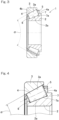
FIG. 1 is a longitudinal cross-sectional view of a tapered roller bearing according to a first embodiment of the present invention; -
FIG. 2 is a partially enlarged longitudinal cross-sectional view of the tapered roller bearing; -
FIG. 3 is a longitudinal cross-sectional view of an outer ring of a tapered roller bearing according to a second embodiment of the present invention; and -
FIG. 4 is a longitudinal cross-sectional view of a tapered roller bearing according to a third embodiment of the present invention. - A tapered roller bearing according to a first embodiment of the present invention will be described with reference to
FIG. 1 and FIG. 2 . - As shown in
FIG. 1 , this tapered roller bearing 1 includes aninner ring 2 having aconical raceway surface 2a, anouter ring 3 having aconical raceway surface 3a, a plurality oftapered rollers 4 provided between theraceway surface 2a of theinner ring 2 and theraceway surface 3a of theouter ring 3, and aretainer 5 retaining thesetapered rollers 4. Theinner ring 2 has a small-diameter collar portion 6 formed at a small-diameter end thereof and a large-diameter collar portion 7 formed at a large-diameter end thereof. The large-diameter collar portion 7 has alarge collar surface 7a in a surface facinglarge end surfaces 4a of thetapered rollers 4. Eachtapered roller 4 has a conical rollingsurface 4b which has a radially outer surface along theraceway surface 3a of theouter ring 3 and theraceway surface 2a of theinner ring 2. - An outer ring angle α which is the cone angle of the
raceway surface 3a of theouter ring 3 is 45° or larger and 68° or smaller. The larger the outer ring angle α is, the higher the capacity of the tapered roller bearing 1 to carry axial loads is. In other words, the outer ring angle α of the tapered roller bearing 1 is set as appropriate according to the use conditions of equipment in which the tapered roller bearing 1 is used. Here, as shown inFIG. 3 , when theraceway surface 3a of theouter ring 3 has a single arc crowning shape or a composite crowning shape, the outer ring angle α is specified as follows. In a longitudinal cross-section of theouter ring 3, the outer ring angle α is defined as an angle between a straight line L1 connecting one side edge P1 and another side edge P2 in theraceway surface 3a on one side and a straight line L2 connecting one side edge P3 and another side edge P4 in theraceway surface 3a on the other side, which are different in phase by 180 degrees. - As shown in
FIG. 2 , thelarge collar surface 7a of theinner ring 2 is, for example, a ground surface composed of a grinding mark as sort of diagonal line. Specifically, thelarge collar surface 7a of theinner ring 2 has a skewness Rsk of -2 µm or larger and 0 µm or smaller. The skewness Rsk is the skewness Rsk of a roughness curve specified in 4.2.3 of the Japanese Industrial Standard (JIS) B0601: 2013. Since thelarge collar surface 7a of theinner ring 2 is a ground surface, thelarge collar surface 7a contributes to improving oil retainability for a lubricant. In addition, since the ground surface has the grinding mark as sort of diagonal line, the lubricant can be spread more widely in the circumferential and radial directions. - Since the skewness Rsk of the
large collar surface 7a is -2 µm or larger and 0 µm or smaller, a sufficient oil film is formed on thelarge collar surface 7a of theinner ring 2 and each rollerlarge end surface 4a, and the torque during bearing operation can be reduced. If the skewness Rsk of thelarge collar surface 7a is smaller than -2 µm, the oil retainability of thelarge collar surface 7a of theinner ring 2 is low, and it is difficult for oil to remain on thelarge collar surface 7a of theinner ring 2 and each rollerlarge end surface 4a. If the skewness Rsk of thelarge collar surface 7a is larger than 0, the torque during bearing operation increases. - Also, the
large collar surface 7a of theinner ring 2 has an arithmetic mean roughness Ra of larger than 0.1 µm and smaller than 0.4 µm and has a maximum height Rz of larger than 1 µm and smaller than 3 µm. In the tapered roller bearing having an outer ring angle α of 45° or larger and 68° or smaller, since thelarge collar surface 7a of theinner ring 2 is a ground surface, 0.1 µm < arithmetic mean roughness Ra oflarge collar surface 7a < 0.4 µm, and 1 µm < maximum height Rz oflarge collar surface 7a < 3 µm, changes in the posture of eachtapered roller 4 can be reduced, so that the torque at the time of bearing start can be stabilized. If the arithmetic mean roughness Ra of thelarge collar surface 7a is 0.1 µm or smaller, the posture of the taperedroller 4 is changed when the bearing is stopped suddenly, so that the restarting torque after the bearing is stopped is increased. If the arithmetic mean roughness Ra of thelarge collar surface 7a is 0.4 µm or larger, there is a concern that the torque during bearing operation increases and the friction and the wear of the bearing increase, resulting in an excessive temperature rise. - Since the roughness of the large end surface of the tapered
roller 4 as well as thelarge collar surface 7a of theinner ring 2 affects the torque at restart, the friction, the wear, and the temperature rise, the arithmetic mean roughness (roller large end surface roughness) Ra of the large end surface of each tapered roller is set to be larger than 0.04 µm and smaller than 0.2 µm. If the roller large end surface roughness is 0.04 µm or smaller, posture change after the bearing is stopped suddenly is promoted, so that the starting torque is increased. If the roller large end surface roughness is 0.2 µm or larger, there is a concern that the torque during bearing operation increases and the friction and the wear of the bearing increase, resulting in an excessive temperature rise. - For tapered roller bearings of examples according to the first embodiment of the present invention, etc., a torque test simulating sudden stop and restart by repeating start and stop was conducted using a test machine, and the presence or absence of torque change was determined. The test conditions are as follows.
- Axial load: 2950 N
- Lubrication method: oil bath ISO VG10
- Inner ring rotation speed: 30/min
- Tested bearing: tapered roller bearing (inner diameter: 60 mm, outer diameter: 125 mm, width: 37 mm, outer ring angle 57°18' (57 degrees 18 minutes))
- The starting torque at the time of restart after repeating sudden stop and restart a predetermined number of times was measured by a torque measuring device not shown. The torque value of Example 1 was used as a reference value which is 1, and the torque values of Examples 2 to 5 and a comparative example were converted into relative values with respect to the reference value, that is, multiples of the reference value. In Table 1, when the torque value was substantially equal to the reference value, it was determined that there was no torque change (∘), and when the torque value was 1.7 or more times the reference value, it was determined that there was torque change (×).
[Table 1] Ex. 1 Ex. 2 Ex. 3 Ex. 4 Comp. Ex. Ex. 5 Inner ring large collar surface roughness Ra (µm) 0.27 0.19 0.16 0.1< 0.01 0.32 Roller large end surface roughness Ra (µm) 0.04< 0.04< 0.04< 0.04< 0.04 0.08 Starting torque 1 1 1 1 1.7-3.0 1 Determination ○ ○ ○ ○ × ○ - According to the test results, in Examples 1 to 5 which satisfy that 0.1 µm < arithmetic mean roughness Ra of large collar surface < 0.4 µm and the roller large end surface roughness Ra is larger than 0.04 µm and smaller than 0.2 µm, restart from a stopped state was repeated a predetermined number of times, but there were no large torque changes in the starting torque at the time of restart and thus there were no problems. In the comparative example in which the inner ring large collar surface roughness is as low as 0.01 µm, when restart from a stopped state was repeated a predetermined number of times, a large torque was required as the starting torque at the time of restart, and the starting torque at the time of restart was not stable but fluctuated between approximately values of 1.7 to 3.0 times, which was a problem. As described above, a correlation was obtained between the inner ring large collar surface roughness, the roller large end surface roughness, and the starting torque.
- In the following description, parts corresponding to the matters described in the preceding embodiment are designated by the same reference numerals, and the redundant description thereof is omitted. When only a part of a configuration is described, the remaining part of the configuration is the same as that described in the preceding embodiment, unless otherwise specified. The same advantageous effects are achieved by the same configuration. A combination of parts that are specifically described in respective embodiments can be implemented, and, further, embodiments may be partially combined unless such combination causes any problem.
- As shown in
Fig. 3 , the entire raceway surface (not including a chamfered portion described later) 3a of theouter ring 3 may have a single arc crowning shape or a composite crowning shape, and an outer ring crowning parameter CD/LS which is obtained by dividing a crowning amount CD by a raceway length LS of theraceway surface 3a of theouter ring 3 may be 0.02 or higher and 0.3 or lower. The raceway length LS does not include a chamfered portion. The other configuration is the same as in the above-described embodiment. - With this configuration, the posture of each tapered roller is less likely to change when the bearing is stopped suddenly, whereby the starting torque can be reduced, and the torque loss, etc., during bearing operation can be reduced. As the crowning amount CD of the
raceway surface 3a of theouter ring 3 is increased, the starting torque gradually increases. If the crowning amount CD is excessively increased, the posture of each tapered roller is likely to be skewed (changed) at the time of sudden stop, so that the starting torque is increased. Therefore, the outer ring crowning parameter CD/LS is set to 0.3 or lower. The reason for setting the value of the outer ring crowning parameter CD/LS to 0.02 or higher and having a crowning is to reduce the torque loss, etc., during bearing operation. - As shown in
Fig. 4 , theraceway surface 2a of theinner ring 2 and the rollingsurface 4b of eachtapered roller 4 may each have a crowning at least at an end portion in the raceway length direction of theinner ring 2, and the crowning may have a single arc crowning shape or a composite crowning shape. In this case, the torque loss, etc., during bearing operation can be further reduced. - The tapered
roller bearing 1 according to any of the embodiments may be applied to hydraulic equipment. Examples of the hydraulic equipment to which the taperedroller bearing 1 is applied include, but are not limited to, axial piston pumps used in construction machines and the like. In this hydraulic equipment, the taperedroller bearing 1 according to the embodiment is used as a bearing to which an axial load is dominantly applied. - When the tapered
roller bearing 1 according to any of the embodiments is applied to hydraulic equipment, the torque at the time of bearing start can be stabilized, thereby increasing the versatility of the hydraulic equipment. The tapered roller bearings according to the embodiments can also be applied to industrial machines, robots, wind power generation apparatuses, hydraulic power generation apparatuses, machine tools, etc. - Although the present invention has been fully described in connection with the preferred embodiments thereof with reference to the accompanying drawings which are used only for the purpose of illustration, those skilled in the art will readily conceive numerous changes and modifications within the framework of obviousness upon the reading of the specification herein presented of the present invention. Accordingly, such changes and modifications are, unless they depart from the scope of the present invention as delivered from the claims annexed hereto, to be construed as included therein.
-
- 1
- tapered roller bearing
- 2
- inner ring
- 2a
- raceway surface of inner ring
- 3
- outer ring
- 3a
- raceway surface of outer ring
- 4
- tapered roller
- 4a
- large end surface
- 7a
- large collar surface of inner ring
- α
- outer ring angle
Claims (5)
- A tapered roller bearing comprising:an inner ring having a conical raceway surface and provided with a large collar surface on a large-diameter side of the raceway surface;an outer ring having a conical raceway surface; andtapered rollers provided between the raceway surface of the inner ring and the raceway surface of the outer ring, whereinan outer ring angle which is a cone angle of the raceway surface of the outer ring is 45° or larger and 68° or smaller,the large collar surface of the inner ring is a ground surface, and has an arithmetic mean roughness Ra of larger than 0.1 µm and smaller than 0.4 µm and a maximum height Rz of larger than 1 µm and smaller than 3 µm, andthe tapered rollers each have a large end surface having an arithmetic mean roughness Ra of larger than 0.04 µm and smaller than 0.2 µm.
- The tapered roller bearing as claimed in claim 1, wherein the large collar surface of the inner ring has a skewness Rsk of -2 µm or larger and 0 µm or smaller.
- The tapered roller bearing as claimed in claim 1 or 2, whereinthe raceway surface of the outer ring has a single arc crowning shape or a composite crowning shape, andan outer ring crowning parameter CD/LS which is obtained by dividing a crowning amount CD by a raceway length LS of the raceway surface of the outer ring is 0.02 or higher and 0.3 or lower.
- The tapered roller bearing as claimed in any one of claims 1 to 3, wherein the raceway surface of the inner ring and rolling surfaces of the tapered rollers each have a crowning, and the crowning has a single arc crowning shape or a composite crowning shape.
- The tapered roller bearing as claimed in any one of claims 1 to 4, being used in hydraulic equipment.
Applications Claiming Priority (2)
| Application Number | Priority Date | Filing Date | Title |
|---|---|---|---|
| JP2021157035A JP7679270B2 (en) | 2021-09-27 | 2021-09-27 | Tapered roller bearings |
| PCT/JP2022/034965 WO2023048135A1 (en) | 2021-09-27 | 2022-09-20 | Tapered roller bearing |
Publications (3)
| Publication Number | Publication Date |
|---|---|
| EP4411158A1 true EP4411158A1 (en) | 2024-08-07 |
| EP4411158A4 EP4411158A4 (en) | 2025-01-08 |
| EP4411158B1 EP4411158B1 (en) | 2026-01-14 |
Family
ID=85719481
Family Applications (1)
| Application Number | Title | Priority Date | Filing Date |
|---|---|---|---|
| EP22872887.9A Active EP4411158B1 (en) | 2021-09-27 | 2022-09-20 | Tapered roller bearing |
Country Status (3)
| Country | Link |
|---|---|
| EP (1) | EP4411158B1 (en) |
| JP (1) | JP7679270B2 (en) |
| WO (1) | WO2023048135A1 (en) |
Family Cites Families (10)
| Publication number | Priority date | Publication date | Assignee | Title |
|---|---|---|---|---|
| JPS6131715A (en) * | 1984-07-23 | 1986-02-14 | Toyota Motor Corp | Conical roller bearing |
| JP3359501B2 (en) * | 1995-07-24 | 2002-12-24 | 日本精工株式会社 | Tapered roller bearing for pinion shaft support of differential gear |
| JP4158845B2 (en) | 1999-10-13 | 2008-10-01 | 株式会社ジェイテクト | Tapered roller bearings |
| JP2002139055A (en) * | 2000-08-25 | 2002-05-17 | Ntn Corp | Tapered roller bearing and its preload setting method |
| JP2003269468A (en) * | 2002-03-13 | 2003-09-25 | Koyo Seiko Co Ltd | Roller bearing |
| JP2004324670A (en) * | 2003-04-21 | 2004-11-18 | Fuji Heavy Ind Ltd | Roller bearing |
| JP6472671B2 (en) * | 2015-01-28 | 2019-02-20 | Ntn株式会社 | Tapered roller bearing |
| JP7024189B2 (en) * | 2017-02-24 | 2022-02-24 | 日本精工株式会社 | Conical roller bearing |
| US11221040B2 (en) * | 2017-09-28 | 2022-01-11 | Ntn Corporation | Tapered roller bearing |
| WO2019065750A1 (en) * | 2017-09-28 | 2019-04-04 | Ntn株式会社 | Tapered roller bearing |
-
2021
- 2021-09-27 JP JP2021157035A patent/JP7679270B2/en active Active
-
2022
- 2022-09-20 EP EP22872887.9A patent/EP4411158B1/en active Active
- 2022-09-20 WO PCT/JP2022/034965 patent/WO2023048135A1/en not_active Ceased
Also Published As
| Publication number | Publication date |
|---|---|
| EP4411158A4 (en) | 2025-01-08 |
| EP4411158B1 (en) | 2026-01-14 |
| JP2023047872A (en) | 2023-04-06 |
| JP7679270B2 (en) | 2025-05-19 |
| WO2023048135A1 (en) | 2023-03-30 |
Similar Documents
| Publication | Publication Date | Title |
|---|---|---|
| US20070269158A1 (en) | Tapered roller bearing for automobile transmission | |
| US7048445B2 (en) | Cylindrical roller bearing | |
| US10883544B2 (en) | Double-row self-aligning roller bearing and protrusion prevention jig | |
| EP3073138A1 (en) | Cylindrical roller bearing and bearing device for transmission | |
| EP3951196B1 (en) | Tapered roller bearing | |
| US20060291759A1 (en) | Cylindrical roller bearing | |
| US9011018B2 (en) | Roller bearing | |
| EP2988010B1 (en) | Angular ball bearing cage | |
| US20070177838A1 (en) | Tapered roller bearing and tapered roller processing method | |
| EP4411158B1 (en) | Tapered roller bearing | |
| JP2007327596A (en) | Roller and thrust roller bearing | |
| EP3269476A1 (en) | Main shaft device | |
| EP3943767B1 (en) | Angular contact ball bearing and retainer for angular contact ball bearing | |
| WO2003095854A1 (en) | Cylindrical roller bearing with preload capability | |
| CN112384720B (en) | Deformation-optimized planetary pins | |
| US20050047699A1 (en) | Tapered roller bearing for automobile transmission | |
| JP2004324733A (en) | Cross roller bearing | |
| EP1312820B1 (en) | Bearing device and method of manufacturing the bearing device | |
| US20220186777A1 (en) | Tapered roller bearing | |
| JP2009092155A (en) | Shaft support device | |
| US10197094B2 (en) | Double-row spherical roller bearing | |
| EP3660343B1 (en) | Double-row self-aligning roller bearing | |
| JP4190781B2 (en) | Cylindrical roller bearing | |
| US12117042B2 (en) | Roller bearing, roller bearing unit, motor, method for manufacturing roller bearing, and method for silencing roller bearing | |
| CN115614377A (en) | Ball bearing and manufacturing method |
Legal Events
| Date | Code | Title | Description |
|---|---|---|---|
| STAA | Information on the status of an ep patent application or granted ep patent |
Free format text: STATUS: THE INTERNATIONAL PUBLICATION HAS BEEN MADE |
|
| PUAI | Public reference made under article 153(3) epc to a published international application that has entered the european phase |
Free format text: ORIGINAL CODE: 0009012 |
|
| STAA | Information on the status of an ep patent application or granted ep patent |
Free format text: STATUS: REQUEST FOR EXAMINATION WAS MADE |
|
| 17P | Request for examination filed |
Effective date: 20240321 |
|
| AK | Designated contracting states |
Kind code of ref document: A1 Designated state(s): AL AT BE BG CH CY CZ DE DK EE ES FI FR GB GR HR HU IE IS IT LI LT LU LV MC MK MT NL NO PL PT RO RS SE SI SK SM TR |
|
| DAV | Request for validation of the european patent (deleted) | ||
| DAX | Request for extension of the european patent (deleted) | ||
| A4 | Supplementary search report drawn up and despatched |
Effective date: 20241205 |
|
| RIC1 | Information provided on ipc code assigned before grant |
Ipc: F16C 23/08 20060101ALI20241202BHEP Ipc: F16C 19/38 20060101ALI20241202BHEP Ipc: F16C 33/58 20060101ALI20241202BHEP Ipc: F16C 33/36 20060101ALI20241202BHEP Ipc: F16C 19/36 20060101AFI20241202BHEP |
|
| GRAP | Despatch of communication of intention to grant a patent |
Free format text: ORIGINAL CODE: EPIDOSNIGR1 |
|
| STAA | Information on the status of an ep patent application or granted ep patent |
Free format text: STATUS: GRANT OF PATENT IS INTENDED |
|
| INTG | Intention to grant announced |
Effective date: 20250801 |
|
| GRAS | Grant fee paid |
Free format text: ORIGINAL CODE: EPIDOSNIGR3 |
|
| GRAA | (expected) grant |
Free format text: ORIGINAL CODE: 0009210 |
|
| STAA | Information on the status of an ep patent application or granted ep patent |
Free format text: STATUS: THE PATENT HAS BEEN GRANTED |
|
| AK | Designated contracting states |
Kind code of ref document: B1 Designated state(s): AL AT BE BG CH CY CZ DE DK EE ES FI FR GB GR HR HU IE IS IT LI LT LU LV MC MK MT NL NO PL PT RO RS SE SI SK SM TR |
|
| REG | Reference to a national code |
Ref country code: CH Ref legal event code: F10 Free format text: ST27 STATUS EVENT CODE: U-0-0-F10-F00 (AS PROVIDED BY THE NATIONAL OFFICE) Effective date: 20260114 Ref country code: GB Ref legal event code: FG4D |
|
| REG | Reference to a national code |
Ref country code: DE Ref legal event code: R096 Ref document number: 602022028627 Country of ref document: DE |
|
| REG | Reference to a national code |
Ref country code: IE Ref legal event code: FG4D |
|
| REG | Reference to a national code |
Ref country code: NL Ref legal event code: MP Effective date: 20260114 |
|
| PG25 | Lapsed in a contracting state [announced via postgrant information from national office to epo] |
Ref country code: NL Free format text: LAPSE BECAUSE OF FAILURE TO SUBMIT A TRANSLATION OF THE DESCRIPTION OR TO PAY THE FEE WITHIN THE PRESCRIBED TIME-LIMIT Effective date: 20260114 |
|
| REG | Reference to a national code |
Ref country code: AT Ref legal event code: MK05 Ref document number: 1877295 Country of ref document: AT Kind code of ref document: T Effective date: 20260114 |
|
| PG25 | Lapsed in a contracting state [announced via postgrant information from national office to epo] |
Ref country code: RS Free format text: LAPSE BECAUSE OF FAILURE TO SUBMIT A TRANSLATION OF THE DESCRIPTION OR TO PAY THE FEE WITHIN THE PRESCRIBED TIME-LIMIT Effective date: 20260414 |
|
| PG25 | Lapsed in a contracting state [announced via postgrant information from national office to epo] |
Ref country code: ES Free format text: LAPSE BECAUSE OF FAILURE TO SUBMIT A TRANSLATION OF THE DESCRIPTION OR TO PAY THE FEE WITHIN THE PRESCRIBED TIME-LIMIT Effective date: 20260114 |
|
| PG25 | Lapsed in a contracting state [announced via postgrant information from national office to epo] |
Ref country code: PL Free format text: LAPSE BECAUSE OF FAILURE TO SUBMIT A TRANSLATION OF THE DESCRIPTION OR TO PAY THE FEE WITHIN THE PRESCRIBED TIME-LIMIT Effective date: 20260114 |
|
| PG25 | Lapsed in a contracting state [announced via postgrant information from national office to epo] |
Ref country code: GR Free format text: LAPSE BECAUSE OF FAILURE TO SUBMIT A TRANSLATION OF THE DESCRIPTION OR TO PAY THE FEE WITHIN THE PRESCRIBED TIME-LIMIT Effective date: 20260415 |
|
| REG | Reference to a national code |
Ref country code: LT Ref legal event code: MG9D |
|
| PG25 | Lapsed in a contracting state [announced via postgrant information from national office to epo] |
Ref country code: LT Free format text: LAPSE BECAUSE OF FAILURE TO SUBMIT A TRANSLATION OF THE DESCRIPTION OR TO PAY THE FEE WITHIN THE PRESCRIBED TIME-LIMIT Effective date: 20260114 |
|
| PG25 | Lapsed in a contracting state [announced via postgrant information from national office to epo] |
Ref country code: NO Free format text: LAPSE BECAUSE OF FAILURE TO SUBMIT A TRANSLATION OF THE DESCRIPTION OR TO PAY THE FEE WITHIN THE PRESCRIBED TIME-LIMIT Effective date: 20260414 |
|
| PG25 | Lapsed in a contracting state [announced via postgrant information from national office to epo] |
Ref country code: AT Free format text: LAPSE BECAUSE OF FAILURE TO SUBMIT A TRANSLATION OF THE DESCRIPTION OR TO PAY THE FEE WITHIN THE PRESCRIBED TIME-LIMIT Effective date: 20260114 Ref country code: SE Free format text: LAPSE BECAUSE OF FAILURE TO SUBMIT A TRANSLATION OF THE DESCRIPTION OR TO PAY THE FEE WITHIN THE PRESCRIBED TIME-LIMIT Effective date: 20260114 Ref country code: FI Free format text: LAPSE BECAUSE OF FAILURE TO SUBMIT A TRANSLATION OF THE DESCRIPTION OR TO PAY THE FEE WITHIN THE PRESCRIBED TIME-LIMIT Effective date: 20260114 |
|
| PG25 | Lapsed in a contracting state [announced via postgrant information from national office to epo] |
Ref country code: HR Free format text: LAPSE BECAUSE OF FAILURE TO SUBMIT A TRANSLATION OF THE DESCRIPTION OR TO PAY THE FEE WITHIN THE PRESCRIBED TIME-LIMIT Effective date: 20260114 |
|
| PG25 | Lapsed in a contracting state [announced via postgrant information from national office to epo] |
Ref country code: IS Free format text: LAPSE BECAUSE OF FAILURE TO SUBMIT A TRANSLATION OF THE DESCRIPTION OR TO PAY THE FEE WITHIN THE PRESCRIBED TIME-LIMIT Effective date: 20260514 Ref country code: PT Free format text: LAPSE BECAUSE OF FAILURE TO SUBMIT A TRANSLATION OF THE DESCRIPTION OR TO PAY THE FEE WITHIN THE PRESCRIBED TIME-LIMIT Effective date: 20260514 |
|
| PG25 | Lapsed in a contracting state [announced via postgrant information from national office to epo] |
Ref country code: LV Free format text: LAPSE BECAUSE OF FAILURE TO SUBMIT A TRANSLATION OF THE DESCRIPTION OR TO PAY THE FEE WITHIN THE PRESCRIBED TIME-LIMIT Effective date: 20260114 |
|
| PG25 | Lapsed in a contracting state [announced via postgrant information from national office to epo] |
Ref country code: BG Free format text: LAPSE BECAUSE OF FAILURE TO SUBMIT A TRANSLATION OF THE DESCRIPTION OR TO PAY THE FEE WITHIN THE PRESCRIBED TIME-LIMIT Effective date: 20260114 |