EP4411005A1 - Selektive wärmebehandlung von metallen mit mehreren induktionsheizspulen - Google Patents
Selektive wärmebehandlung von metallen mit mehreren induktionsheizspulen Download PDFInfo
- Publication number
- EP4411005A1 EP4411005A1 EP24155141.5A EP24155141A EP4411005A1 EP 4411005 A1 EP4411005 A1 EP 4411005A1 EP 24155141 A EP24155141 A EP 24155141A EP 4411005 A1 EP4411005 A1 EP 4411005A1
- Authority
- EP
- European Patent Office
- Prior art keywords
- induction heating
- metal component
- heat treatment
- step process
- heating coil
- Prior art date
- Legal status (The legal status is an assumption and is not a legal conclusion. Google has not performed a legal analysis and makes no representation as to the accuracy of the status listed.)
- Pending
Links
- 238000010438 heat treatment Methods 0.000 title claims abstract description 152
- 230000006698 induction Effects 0.000 title claims abstract description 90
- 229910052751 metal Inorganic materials 0.000 title claims abstract description 68
- 239000002184 metal Substances 0.000 title claims abstract description 68
- 150000002739 metals Chemical class 0.000 title abstract description 15
- 238000000034 method Methods 0.000 claims abstract description 104
- 230000008569 process Effects 0.000 claims abstract description 68
- 238000013459 approach Methods 0.000 claims abstract description 10
- 238000012360 testing method Methods 0.000 claims abstract description 7
- 229910000623 nickel–chromium alloy Inorganic materials 0.000 claims description 25
- 238000004891 communication Methods 0.000 claims description 8
- 230000000712 assembly Effects 0.000 abstract description 19
- 238000000429 assembly Methods 0.000 abstract description 19
- 238000012938 design process Methods 0.000 abstract description 5
- 230000009977 dual effect Effects 0.000 description 11
- 230000007704 transition Effects 0.000 description 5
- 238000013461 design Methods 0.000 description 4
- 238000012986 modification Methods 0.000 description 4
- 230000004048 modification Effects 0.000 description 4
- 238000005516 engineering process Methods 0.000 description 3
- 238000001556 precipitation Methods 0.000 description 3
- 238000001816 cooling Methods 0.000 description 2
- 238000001887 electron backscatter diffraction Methods 0.000 description 2
- 239000000203 mixture Substances 0.000 description 2
- 238000012545 processing Methods 0.000 description 2
- 229910045601 alloy Inorganic materials 0.000 description 1
- 239000000956 alloy Substances 0.000 description 1
- 239000007795 chemical reaction product Substances 0.000 description 1
- 238000010276 construction Methods 0.000 description 1
- 238000007796 conventional method Methods 0.000 description 1
- 230000002708 enhancing effect Effects 0.000 description 1
- 238000004519 manufacturing process Methods 0.000 description 1
- 239000000463 material Substances 0.000 description 1
- 238000013021 overheating Methods 0.000 description 1
- 239000002244 precipitate Substances 0.000 description 1
- 239000000047 product Substances 0.000 description 1
- 230000009467 reduction Effects 0.000 description 1
- 238000006467 substitution reaction Methods 0.000 description 1
- 230000035899 viability Effects 0.000 description 1
Images

Classifications
-
- C—CHEMISTRY; METALLURGY
- C21—METALLURGY OF IRON
- C21D—MODIFYING THE PHYSICAL STRUCTURE OF FERROUS METALS; GENERAL DEVICES FOR HEAT TREATMENT OF FERROUS OR NON-FERROUS METALS OR ALLOYS; MAKING METAL MALLEABLE, e.g. BY DECARBURISATION OR TEMPERING
- C21D1/00—General methods or devices for heat treatment, e.g. annealing, hardening, quenching or tempering
- C21D1/04—General methods or devices for heat treatment, e.g. annealing, hardening, quenching or tempering with simultaneous application of supersonic waves, magnetic or electric fields
-
- C—CHEMISTRY; METALLURGY
- C21—METALLURGY OF IRON
- C21D—MODIFYING THE PHYSICAL STRUCTURE OF FERROUS METALS; GENERAL DEVICES FOR HEAT TREATMENT OF FERROUS OR NON-FERROUS METALS OR ALLOYS; MAKING METAL MALLEABLE, e.g. BY DECARBURISATION OR TEMPERING
- C21D1/00—General methods or devices for heat treatment, e.g. annealing, hardening, quenching or tempering
- C21D1/26—Methods of annealing
-
- C—CHEMISTRY; METALLURGY
- C21—METALLURGY OF IRON
- C21D—MODIFYING THE PHYSICAL STRUCTURE OF FERROUS METALS; GENERAL DEVICES FOR HEAT TREATMENT OF FERROUS OR NON-FERROUS METALS OR ALLOYS; MAKING METAL MALLEABLE, e.g. BY DECARBURISATION OR TEMPERING
- C21D1/00—General methods or devices for heat treatment, e.g. annealing, hardening, quenching or tempering
- C21D1/34—Methods of heating
- C21D1/42—Induction heating
-
- C—CHEMISTRY; METALLURGY
- C21—METALLURGY OF IRON
- C21D—MODIFYING THE PHYSICAL STRUCTURE OF FERROUS METALS; GENERAL DEVICES FOR HEAT TREATMENT OF FERROUS OR NON-FERROUS METALS OR ALLOYS; MAKING METAL MALLEABLE, e.g. BY DECARBURISATION OR TEMPERING
- C21D11/00—Process control or regulation for heat treatments
-
- C—CHEMISTRY; METALLURGY
- C21—METALLURGY OF IRON
- C21D—MODIFYING THE PHYSICAL STRUCTURE OF FERROUS METALS; GENERAL DEVICES FOR HEAT TREATMENT OF FERROUS OR NON-FERROUS METALS OR ALLOYS; MAKING METAL MALLEABLE, e.g. BY DECARBURISATION OR TEMPERING
- C21D9/00—Heat treatment, e.g. annealing, hardening, quenching or tempering, adapted for particular articles; Furnaces therefor
- C21D9/0006—Details, accessories not peculiar to any of the following furnaces
-
- C—CHEMISTRY; METALLURGY
- C21—METALLURGY OF IRON
- C21D—MODIFYING THE PHYSICAL STRUCTURE OF FERROUS METALS; GENERAL DEVICES FOR HEAT TREATMENT OF FERROUS OR NON-FERROUS METALS OR ALLOYS; MAKING METAL MALLEABLE, e.g. BY DECARBURISATION OR TEMPERING
- C21D9/00—Heat treatment, e.g. annealing, hardening, quenching or tempering, adapted for particular articles; Furnaces therefor
- C21D9/0068—Heat treatment, e.g. annealing, hardening, quenching or tempering, adapted for particular articles; Furnaces therefor for particular articles not mentioned below
-
- C—CHEMISTRY; METALLURGY
- C22—METALLURGY; FERROUS OR NON-FERROUS ALLOYS; TREATMENT OF ALLOYS OR NON-FERROUS METALS
- C22C—ALLOYS
- C22C19/00—Alloys based on nickel or cobalt
- C22C19/03—Alloys based on nickel or cobalt based on nickel
- C22C19/05—Alloys based on nickel or cobalt based on nickel with chromium
-
- F—MECHANICAL ENGINEERING; LIGHTING; HEATING; WEAPONS; BLASTING
- F27—FURNACES; KILNS; OVENS; RETORTS
- F27B—FURNACES, KILNS, OVENS OR RETORTS IN GENERAL; OPEN SINTERING OR LIKE APPARATUS
- F27B17/00—Furnaces of a kind not covered by any of groups F27B1/00 - F27B15/00
- F27B17/0016—Chamber type furnaces
-
- F—MECHANICAL ENGINEERING; LIGHTING; HEATING; WEAPONS; BLASTING
- F27—FURNACES; KILNS; OVENS; RETORTS
- F27D—DETAILS OR ACCESSORIES OF FURNACES, KILNS, OVENS OR RETORTS, IN SO FAR AS THEY ARE OF KINDS OCCURRING IN MORE THAN ONE KIND OF FURNACE
- F27D99/00—Subject matter not provided for in other groups of this subclass
- F27D99/0001—Heating elements or systems
- F27D99/0006—Electric heating elements or system
-
- H—ELECTRICITY
- H05—ELECTRIC TECHNIQUES NOT OTHERWISE PROVIDED FOR
- H05B—ELECTRIC HEATING; ELECTRIC LIGHT SOURCES NOT OTHERWISE PROVIDED FOR; CIRCUIT ARRANGEMENTS FOR ELECTRIC LIGHT SOURCES, IN GENERAL
- H05B6/00—Heating by electric, magnetic or electromagnetic fields
- H05B6/02—Induction heating
- H05B6/06—Control, e.g. of temperature, of power
-
- H—ELECTRICITY
- H05—ELECTRIC TECHNIQUES NOT OTHERWISE PROVIDED FOR
- H05B—ELECTRIC HEATING; ELECTRIC LIGHT SOURCES NOT OTHERWISE PROVIDED FOR; CIRCUIT ARRANGEMENTS FOR ELECTRIC LIGHT SOURCES, IN GENERAL
- H05B6/00—Heating by electric, magnetic or electromagnetic fields
- H05B6/02—Induction heating
- H05B6/10—Induction heating apparatus, other than furnaces, for specific applications
- H05B6/101—Induction heating apparatus, other than furnaces, for specific applications for local heating of metal pieces
-
- H—ELECTRICITY
- H05—ELECTRIC TECHNIQUES NOT OTHERWISE PROVIDED FOR
- H05B—ELECTRIC HEATING; ELECTRIC LIGHT SOURCES NOT OTHERWISE PROVIDED FOR; CIRCUIT ARRANGEMENTS FOR ELECTRIC LIGHT SOURCES, IN GENERAL
- H05B6/00—Heating by electric, magnetic or electromagnetic fields
- H05B6/02—Induction heating
- H05B6/10—Induction heating apparatus, other than furnaces, for specific applications
- H05B6/101—Induction heating apparatus, other than furnaces, for specific applications for local heating of metal pieces
- H05B6/103—Induction heating apparatus, other than furnaces, for specific applications for local heating of metal pieces multiple metal pieces successively being moved close to the inductor
-
- H—ELECTRICITY
- H05—ELECTRIC TECHNIQUES NOT OTHERWISE PROVIDED FOR
- H05B—ELECTRIC HEATING; ELECTRIC LIGHT SOURCES NOT OTHERWISE PROVIDED FOR; CIRCUIT ARRANGEMENTS FOR ELECTRIC LIGHT SOURCES, IN GENERAL
- H05B6/00—Heating by electric, magnetic or electromagnetic fields
- H05B6/02—Induction heating
- H05B6/36—Coil arrangements
- H05B6/44—Coil arrangements having more than one coil or coil segment
-
- C—CHEMISTRY; METALLURGY
- C21—METALLURGY OF IRON
- C21D—MODIFYING THE PHYSICAL STRUCTURE OF FERROUS METALS; GENERAL DEVICES FOR HEAT TREATMENT OF FERROUS OR NON-FERROUS METALS OR ALLOYS; MAKING METAL MALLEABLE, e.g. BY DECARBURISATION OR TEMPERING
- C21D2221/00—Treating localised areas of an article
-
- C—CHEMISTRY; METALLURGY
- C21—METALLURGY OF IRON
- C21D—MODIFYING THE PHYSICAL STRUCTURE OF FERROUS METALS; GENERAL DEVICES FOR HEAT TREATMENT OF FERROUS OR NON-FERROUS METALS OR ALLOYS; MAKING METAL MALLEABLE, e.g. BY DECARBURISATION OR TEMPERING
- C21D2221/00—Treating localised areas of an article
- C21D2221/10—Differential treatment of inner with respect to outer regions, e.g. core and periphery, respectively
-
- F—MECHANICAL ENGINEERING; LIGHTING; HEATING; WEAPONS; BLASTING
- F27—FURNACES; KILNS; OVENS; RETORTS
- F27D—DETAILS OR ACCESSORIES OF FURNACES, KILNS, OVENS OR RETORTS, IN SO FAR AS THEY ARE OF KINDS OCCURRING IN MORE THAN ONE KIND OF FURNACE
- F27D99/00—Subject matter not provided for in other groups of this subclass
- F27D99/0001—Heating elements or systems
- F27D2099/0058—Means for heating the charge locally
-
- Y—GENERAL TAGGING OF NEW TECHNOLOGICAL DEVELOPMENTS; GENERAL TAGGING OF CROSS-SECTIONAL TECHNOLOGIES SPANNING OVER SEVERAL SECTIONS OF THE IPC; TECHNICAL SUBJECTS COVERED BY FORMER USPC CROSS-REFERENCE ART COLLECTIONS [XRACs] AND DIGESTS
- Y02—TECHNOLOGIES OR APPLICATIONS FOR MITIGATION OR ADAPTATION AGAINST CLIMATE CHANGE
- Y02P—CLIMATE CHANGE MITIGATION TECHNOLOGIES IN THE PRODUCTION OR PROCESSING OF GOODS
- Y02P10/00—Technologies related to metal processing
- Y02P10/25—Process efficiency
Definitions
- the present disclosure relates to assemblies, systems and methods for a single-step process for selective heat treatment of metals and, more particularly, to assemblies, systems and methods for a single-step process for selective heat treatment of metals using multiple induction heating coils.
- the present disclosure provides assemblies, systems and methods for a single-step process for selective heat treatment of metals. More particularly, the present disclosure provides assemblies, systems and methods for a single-step process for selective heat treatment of metals using multiple induction heating coils. It is noted that there is currently no conventional technology that utilizes multiple heating sources in a single step for the selective heat treatment of metals.
- the present disclosure provides for a heat treatment assembly including a first induction heating coil and a second induction heating coil, the first induction heating coil configured to be positioned relative to a first portion of a metal component, and the second induction heating coil configured to be positioned relative to a second portion of the metal component; and wherein the first and second induction heating coils are configured and dimensioned to provide selective heat treatment to the first and second portions of the metal component in a single-step process.
- first and second induction heating coils are independent of one another; and wherein the first induction heating coil is in communication with a first power supply, and the second induction heating coil is in communication with a second power supply.
- first and second induction heating coils are configured and dimensioned to provide selective heat treatment to the first and second portions of the metal component in a single-step process to achieve location specific microstructure and mechanical properties of the first and second portions of the metal component.
- the first induction heating coil is configured to heat the first portion of the metal component to a first temperature in the single-step process; and wherein the second induction heating coil is configured to heat the second portion of the metal component to a second temperature in the single-step process.
- the first temperature is different than the second temperature.
- the metal component comprises a nickel-chromium alloy
- the first induction heating coil is configured to heat the first portion of the nickel-chromium alloy to a super-solvus temperature in the single-step process
- the second induction heating coil is configured to heat the second portion of the nickel-chromium alloy to a sub-solvus temperature in the single-step process.
- the metal component comprises a nickel-chromium alloy
- the first induction heating coil is configured to heat the first portion of the nickel-chromium alloy to a sub-solvus temperature in the single-step process
- the second induction heating coil is configured to heat the second portion of the nickel-chromium alloy to a super-solvus temperature in the single-step process.
- first and second induction heating coils are configured and dimensioned to provide selective heat treatment to the first and second portions of the metal component in a simultaneous single-step process.
- the present disclosure also provides for a method for selective heat treatment including positioning a first induction heating coil relative to a first portion of a metal component; positioning a second induction heating coil relative to a second portion of the metal component; and providing selective heat treatment to the first and second portions of the metal component, via the first and second induction heating coils, in a single-step process.
- first and second induction heating coils are independent of one another; and wherein the first induction heating coil is in communication with a first power supply, and the second induction heating coil is in communication with a second power supply.
- the first induction heating coil heats the first portion of the metal component to a first temperature in the single-step process; and wherein the second induction heating coil heats the second portion of the metal component to a second temperature in the single-step process.
- the first temperature is different than the second temperature.
- the metal component comprises a nickel-chromium alloy
- the first induction heating coil heats the first portion of the nickel-chromium alloy to a super-solvus temperature in the single-step process
- the second induction heating coil heats the second portion of the nickel-chromium alloy to a sub-solvus temperature in the single-step process.
- the metal component comprises a nickel-chromium alloy
- the first induction heating coil heats the first portion of the nickel-chromium alloy to a sub-solvus temperature in the single-step process
- the second induction heating coil heats the second portion of the nickel-chromium alloy to a super-solvus temperature in the single-step process
- the first and second induction heating coils provide selective heat treatment to the first and second portions of the metal component in a simultaneous single-step process.
- the example embodiments disclosed herein are illustrative of assemblies for a single-step process for selective heat treatment of metals, and systems of the present disclosure and methods/techniques thereof. It should be understood, however, that the disclosed embodiments are merely examples of the present disclosure, which may be embodied in various forms. Therefore, details disclosed herein with reference to example assemblies for a single-step process for selective heat treatment of metals and associated processes/techniques of fabrication/assembly and use are not to be interpreted as limiting, but merely as the basis for teaching one skilled in the art how to make and use the assemblies/systems and/or alternative assemblies/systems of the present disclosure.
- the present disclosure provides assemblies, systems and methods for a single-step process for selective heat treatment of metals.
- the present disclosure provides assemblies, systems and methods for a single-step process for selective heat treatment of metals using multiple induction heating coils.
- the present disclosure provides assemblies, systems and methods for using multiple induction heating coils in a single step for selective heat treatment of metals in order to achieve location specific microstructure and mechanical properties.
- low frequency induction coils can be utilized to produce deep heat profiles without overheating the surface features in the parts with complex geometries.
- the induction coils of the present disclosure provide quick thermal processing which results in reduced cycle time.
- the assemblies, systems and methods of the present disclosure have a broad applicability to various products where location specific properties are desired. It is noted that a hybrid modeling-test approach can be used in the design process to improve or optimize the process parameters to achieve location specific and improved/optimal microstructure and residual stress to enhance the part performance. It is also noted that performing the selective heat treatment in a single step can reduce the cycle time significantly. Moreover, large thermal gradients can be avoided in the part as different volumes of the part are heated to their desired temperature simultaneously.
- a thermal gradient can be created in the part by using active cooling on the bore of the disk when it is placed into a conventional furnace or within an induction coil. See, for example, U.S. Patent Nos. 5,312,497 and 5,527,020 , the entire contents of each incorporated herein by reference in their entireties.
- An example is a dual heat treatment process to produce dual property turbine disks.
- the entire part is heat treated sub-solvus first in a conventional furnace.
- the rim is re-solutioned super-solvus using a local induction heating coil.
- the part is then aged after the dual-property heat treatment.
- This process does produce a fine grain structure in the bore and a coarse grain in the rim.
- the induction heating process creates a large thermal gradient from rim to the bore that produces a transition zone that is overaged/under-solutioned.
- Precipitate size and residual stress are two other important characteristics which can significantly impact the part performance and are not necessarily optimized in the conventional process.
- the conventional method also results in increased cycle time as the heat treatment process is done in two steps. As such and as noted, there is currently no conventional technology that utilizes multiple heating sources in a single step for the selective heat treatment of metals.
- the present disclosure provides for using multiple induction heating coils in a single step to perform a selective heat treatment with the goal of achieving location specific microstructure and mechanical properties. This technique works by heating different volumes of the part to their desired temperature simultaneously. In this method, the amperage, geometry and location for each induction heater can be optimized independently to achieve the required multi-temperature in the part.
- the assemblies, systems and methods of the present disclosure can be integrated with modeling to provide an engineered design system to optimize the process based on requirements of grain size, precipitation size and/or residual stress.
- FIG. 1 is a schematic of an example heat treatment assembly 10, according to the present disclosure.
- heat treatment assembly 10 includes a first heating source 12 and a second heating source 14.
- first and second heating sources 12, 14 are configured and dimensioned to provide selective heat treatment to a metal component 16 in a single-step process.
- example first heating source 12 can take the form of an induction heater (e.g., induction heating coil), and the second heating source 14 can take the form of an induction heater (e.g., induction heating coil).
- induction heater e.g., induction heating coil
- induction heating coil e.g., induction heating coil
- Example first induction heating coil 12 can be in communication with a first power supply 18 (e.g., AC power supply), and second induction heating coil 14 can be in communication with a second power supply 20 (e.g., AC power supply).
- first and second induction heating coils 12, 14 are independent of one another.
- example first induction heating coil 12 can be positioned relative to a first portion/volume 22 of the metal component 16, and the example second induction heating coil 14 can be positioned relative to a second portion/volume 24 of the metal component 16.
- the first and second induction heating coils 12, 14 of heat treatment assembly 10 can be utilized in a single-step process to provide selective heat treatment to metal component 16 (e.g., to achieve location specific microstructure and mechanical properties of metal component 16).
- This technique via heat treatment assembly 10 can operate by heating the different volumes 22, 24 of the component/part 16 to their respective (different, or similar) desired temperatures simultaneously (and in a single-step process).
- a hybrid modeling-test approach can be used in the design process of assembly 10 to optimize the heating and cooling processes to achieve location specific and optimal microstructure and residual stress of metal component 16.
- FIG. 1 demonstrates a schematic of an example heat treatment assembly 10 with two independent induction heaters 12, 14.
- process parameters and/or coil geometry and location for each induction heater 12, 14 can be utilized/optimized independently to achieve the required dual temperature in the portions 22, 24 of the component/part 16.
- amperage, geometry and/or location for each induction heater 12, 14 can be optimized independently to achieve the required multi-temperature in the component/part 16.
- the assemblies 10, systems and methods of the present disclosure can be integrated with modeling to provide an engineered design system to optimize the process based on requirements of grain size, precipitation size and/or residual stress.
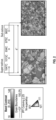
- a nickel-chromium alloy specimen/component 16 was heat treated sub-solvus in one end (second portion 24) and super-solvus in the other end (first portion 22).
- FIG. 2 shows the steady state temperature achieved in the specimen 16 at the end of the heating cycle along with the electron backscatter diffraction (EBSD) maps of the microstructure at the two ends 22, 24 of the component/specimen 16.
- EBSD electron backscatter diffraction
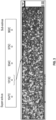
- FIG. 3 depicts the maximum Feret diameter map in the transition zone, which shows a gradual grain size increase from right to left (about 1 ASTM grain size number).
- the proper grain structure profile can be specified by the material properties required in the part 16 and can be different from one part 16 to another.
- the multi-coil 12, 14 heat treatment process of assembly 10 can be optimized to achieve the desired microstructure profile based on property requirements in the component/part 16.
- ranges disclosed herein are inclusive of the endpoints, and the endpoints are independently combinable with each other (e.g., ranges of "up to 25 wt.%, or, more specifically, 5 wt.% to 20 wt.%", is inclusive of the endpoints and all intermediate values of the ranges of "5 wt.% to 25 wt.%,” etc.).
- “Combinations” is inclusive of blends, mixtures, alloys, reaction products, and the like.
- the terms “first,” “second,” and the like, do not denote any order, quantity, or importance, but rather are used to distinguish one element from another.
Landscapes
- Chemical & Material Sciences (AREA)
- Engineering & Computer Science (AREA)
- Physics & Mathematics (AREA)
- Mechanical Engineering (AREA)
- Metallurgy (AREA)
- Organic Chemistry (AREA)
- Materials Engineering (AREA)
- Thermal Sciences (AREA)
- Crystallography & Structural Chemistry (AREA)
- Electromagnetism (AREA)
- General Engineering & Computer Science (AREA)
- Power Engineering (AREA)
- Heat Treatment Of Articles (AREA)
- General Induction Heating (AREA)
Applications Claiming Priority (1)
| Application Number | Priority Date | Filing Date | Title |
|---|---|---|---|
| US18/162,860 US20240254578A1 (en) | 2023-02-01 | 2023-02-01 | Selective heat treatment of metals using multiple induction heating coils |
Publications (1)
| Publication Number | Publication Date |
|---|---|
| EP4411005A1 true EP4411005A1 (de) | 2024-08-07 |
Family
ID=89771772
Family Applications (1)
| Application Number | Title | Priority Date | Filing Date |
|---|---|---|---|
| EP24155141.5A Pending EP4411005A1 (de) | 2023-02-01 | 2024-01-31 | Selektive wärmebehandlung von metallen mit mehreren induktionsheizspulen |
Country Status (2)
| Country | Link |
|---|---|
| US (1) | US20240254578A1 (de) |
| EP (1) | EP4411005A1 (de) |
Citations (6)
| Publication number | Priority date | Publication date | Assignee | Title |
|---|---|---|---|---|
| US5312497A (en) | 1991-12-31 | 1994-05-17 | United Technologies Corporation | Method of making superalloy turbine disks having graded coarse and fine grains |
| US5527020A (en) | 1992-03-13 | 1996-06-18 | General Electric Company | Differentially heat treated article, and apparatus and process for the manufacture thereof |
| US6660110B1 (en) * | 2002-04-08 | 2003-12-09 | The United States Of America As Represented By The Administrator Of The National Aeronautics And Space Administration | Heat treatment devices and method of operation thereof to produce dual microstructure superalloy disks |
| US7892370B2 (en) * | 2004-04-30 | 2011-02-22 | Siemens Aktiengesellschaft | Heat treatment method for monocrystalline or directionally solidified structural components |
| US20180371563A1 (en) * | 2015-11-06 | 2018-12-27 | Safran | A device for generating a microstructure with a structural gradient in an axisymmetric part |
| US11136634B2 (en) * | 2015-12-22 | 2021-10-05 | École De Technologie Supérieure | Method for heat treating by induction an alloy component for generating microstructure gradients and an alloy component heat treated according to the method |
Family Cites Families (2)
| Publication number | Priority date | Publication date | Assignee | Title |
|---|---|---|---|---|
| JPS57123917A (en) * | 1981-01-22 | 1982-08-02 | Dai Ichi High Frequency Co Ltd | Induction heating method for metallic bar material having different wall thickness |
| US11242588B2 (en) * | 2019-12-12 | 2022-02-08 | General Electric Company | System and method to apply multiple thermal treatments to workpiece and related turbomachine components |
-
2023
- 2023-02-01 US US18/162,860 patent/US20240254578A1/en active Pending
-
2024
- 2024-01-31 EP EP24155141.5A patent/EP4411005A1/de active Pending
Patent Citations (6)
| Publication number | Priority date | Publication date | Assignee | Title |
|---|---|---|---|---|
| US5312497A (en) | 1991-12-31 | 1994-05-17 | United Technologies Corporation | Method of making superalloy turbine disks having graded coarse and fine grains |
| US5527020A (en) | 1992-03-13 | 1996-06-18 | General Electric Company | Differentially heat treated article, and apparatus and process for the manufacture thereof |
| US6660110B1 (en) * | 2002-04-08 | 2003-12-09 | The United States Of America As Represented By The Administrator Of The National Aeronautics And Space Administration | Heat treatment devices and method of operation thereof to produce dual microstructure superalloy disks |
| US7892370B2 (en) * | 2004-04-30 | 2011-02-22 | Siemens Aktiengesellschaft | Heat treatment method for monocrystalline or directionally solidified structural components |
| US20180371563A1 (en) * | 2015-11-06 | 2018-12-27 | Safran | A device for generating a microstructure with a structural gradient in an axisymmetric part |
| US11136634B2 (en) * | 2015-12-22 | 2021-10-05 | École De Technologie Supérieure | Method for heat treating by induction an alloy component for generating microstructure gradients and an alloy component heat treated according to the method |
Also Published As
| Publication number | Publication date |
|---|---|
| US20240254578A1 (en) | 2024-08-01 |
Similar Documents
| Publication | Publication Date | Title |
|---|---|---|
| US11047016B2 (en) | Techniques for controlling precipitate phase domain size in an alloy | |
| EP2176436B1 (de) | Verfahren zur wärmebehandlung eines superlegierungsbestandteils und legierungsbestandteil | |
| CN104532154B (zh) | 高硬度高抛光预硬化塑胶模具钢及其制备工艺 | |
| EP2236005B1 (de) | Geregelte elektrische induktionserwärmung eines elektrisch leitenden werkstückes in einer solenoidspule mit flusskompensatoren | |
| EP2441849A2 (de) | Selektive thermomagnetische Härtetiefenverarbeitung und Vorrichtung | |
| CN105821359B (zh) | 一种高塑性镍基合金的热处理工艺 | |
| CN108431239B (zh) | 用于在轴对称部件中产生具有结构梯度的微结构的设备 | |
| SG189002A1 (en) | Elevated temperature forming methods for metallic materials | |
| CN109500330A (zh) | 一种镍基合金大规格铸锭的开坯方法 | |
| EP4411003A1 (de) | Einstufiges verfahren zur selektiven wärmebehandlung von metallen unter verwendung mehrerer wärmequellen | |
| US10966292B2 (en) | Method and apparatus for forming multi-layered metallic armor | |
| EP4411005A1 (de) | Selektive wärmebehandlung von metallen mit mehreren induktionsheizspulen | |
| EP4411004A1 (de) | Selektive wärmebehandlung von metallen unter verwendung eines coil-in-ofen-systems | |
| US5447580A (en) | Rapid heat treatment of nonferrous metals and alloys to obtain graded microstructures | |
| US20200048754A1 (en) | Low pressure induction carburization | |
| CN101755060A (zh) | 功能上分段的粉末金属构件 | |
| JP2011021242A (ja) | 高周波誘導加熱方法及び高周波誘導加熱装置 | |
| CN102199702A (zh) | 一种内燃机曲轴复合强化热处理技术 | |
| US20130287580A1 (en) | Stress corrosion cracking resistance in superalloys | |
| Rudnev | Induction heating of selective regions | |
| EP2520675A2 (de) | Behandlung zur Vorbeugung von Spannungsrisskorrosion | |
| Rudnev | Evolution of Induction Heating and Heat Treating as a Subject of Mathematical Modeling, Optimization and Design | |
| EP2888384B1 (de) | Wärmebehandlungssystem und verfahren mit gamma-titan-doppeleigenschaft | |
| US9313832B2 (en) | Method and system for localized heat treating using susceptor | |
| JP5153484B2 (ja) | 加熱部位選択的誘導加熱方法 |
Legal Events
| Date | Code | Title | Description |
|---|---|---|---|
| PUAI | Public reference made under article 153(3) epc to a published international application that has entered the european phase |
Free format text: ORIGINAL CODE: 0009012 |
|
| STAA | Information on the status of an ep patent application or granted ep patent |
Free format text: STATUS: THE APPLICATION HAS BEEN PUBLISHED |
|
| AK | Designated contracting states |
Kind code of ref document: A1 Designated state(s): AL AT BE BG CH CY CZ DE DK EE ES FI FR GB GR HR HU IE IS IT LI LT LU LV MC ME MK MT NL NO PL PT RO RS SE SI SK SM TR |
|
| STAA | Information on the status of an ep patent application or granted ep patent |
Free format text: STATUS: REQUEST FOR EXAMINATION WAS MADE |
|
| 17P | Request for examination filed |
Effective date: 20250206 |