EP4408025B1 - Verfahren zur selbstanpassung eines binauralen hörsystems - Google Patents
Verfahren zur selbstanpassung eines binauralen hörsystems Download PDFInfo
- Publication number
- EP4408025B1 EP4408025B1 EP23153965.1A EP23153965A EP4408025B1 EP 4408025 B1 EP4408025 B1 EP 4408025B1 EP 23153965 A EP23153965 A EP 23153965A EP 4408025 B1 EP4408025 B1 EP 4408025B1
- Authority
- EP
- European Patent Office
- Prior art keywords
- user
- binaural
- hearing system
- hearing
- fitting
- Prior art date
- Legal status (The legal status is an assumption and is not a legal conclusion. Google has not performed a legal analysis and makes no representation as to the accuracy of the status listed.)
- Active
Links
Images

Classifications
-
- H—ELECTRICITY
- H04—ELECTRIC COMMUNICATION TECHNIQUE
- H04R—LOUDSPEAKERS, MICROPHONES, GRAMOPHONE PICK-UPS OR LIKE ACOUSTIC ELECTROMECHANICAL TRANSDUCERS; DEAF-AID SETS; PUBLIC ADDRESS SYSTEMS
- H04R25/00—Deaf-aid sets, i.e. electro-acoustic or electro-mechanical hearing aids; Electric tinnitus maskers providing an auditory perception
- H04R25/70—Adaptation of deaf aid to hearing loss, e.g. initial electronic fitting
-
- A—HUMAN NECESSITIES
- A61—MEDICAL OR VETERINARY SCIENCE; HYGIENE
- A61B—DIAGNOSIS; SURGERY; IDENTIFICATION
- A61B5/00—Measuring for diagnostic purposes; Identification of persons
- A61B5/12—Audiometering
- A61B5/121—Audiometering evaluating hearing capacity
- A61B5/125—Audiometering evaluating hearing capacity objective methods
-
- H—ELECTRICITY
- H04—ELECTRIC COMMUNICATION TECHNIQUE
- H04R—LOUDSPEAKERS, MICROPHONES, GRAMOPHONE PICK-UPS OR LIKE ACOUSTIC ELECTROMECHANICAL TRANSDUCERS; DEAF-AID SETS; PUBLIC ADDRESS SYSTEMS
- H04R25/00—Deaf-aid sets, i.e. electro-acoustic or electro-mechanical hearing aids; Electric tinnitus maskers providing an auditory perception
- H04R25/30—Monitoring or testing of hearing aids, e.g. functioning, settings, battery power
- H04R25/305—Self-monitoring or self-testing
-
- H—ELECTRICITY
- H04—ELECTRIC COMMUNICATION TECHNIQUE
- H04R—LOUDSPEAKERS, MICROPHONES, GRAMOPHONE PICK-UPS OR LIKE ACOUSTIC ELECTROMECHANICAL TRANSDUCERS; DEAF-AID SETS; PUBLIC ADDRESS SYSTEMS
- H04R25/00—Deaf-aid sets, i.e. electro-acoustic or electro-mechanical hearing aids; Electric tinnitus maskers providing an auditory perception
- H04R25/40—Arrangements for obtaining a desired directivity characteristic
- H04R25/405—Arrangements for obtaining a desired directivity characteristic by combining a plurality of transducers
-
- H—ELECTRICITY
- H04—ELECTRIC COMMUNICATION TECHNIQUE
- H04R—LOUDSPEAKERS, MICROPHONES, GRAMOPHONE PICK-UPS OR LIKE ACOUSTIC ELECTROMECHANICAL TRANSDUCERS; DEAF-AID SETS; PUBLIC ADDRESS SYSTEMS
- H04R25/00—Deaf-aid sets, i.e. electro-acoustic or electro-mechanical hearing aids; Electric tinnitus maskers providing an auditory perception
- H04R25/40—Arrangements for obtaining a desired directivity characteristic
- H04R25/407—Circuits for combining signals of a plurality of transducers
-
- A—HUMAN NECESSITIES
- A61—MEDICAL OR VETERINARY SCIENCE; HYGIENE
- A61B—DIAGNOSIS; SURGERY; IDENTIFICATION
- A61B2562/00—Details of sensors; Constructional details of sensor housings or probes; Accessories for sensors
- A61B2562/02—Details of sensors specially adapted for in-vivo measurements
- A61B2562/0219—Inertial sensors, e.g. accelerometers, gyroscopes, tilt switches
-
- H—ELECTRICITY
- H04—ELECTRIC COMMUNICATION TECHNIQUE
- H04R—LOUDSPEAKERS, MICROPHONES, GRAMOPHONE PICK-UPS OR LIKE ACOUSTIC ELECTROMECHANICAL TRANSDUCERS; DEAF-AID SETS; PUBLIC ADDRESS SYSTEMS
- H04R2225/00—Details of deaf aids covered by H04R25/00, not provided for in any of its subgroups
- H04R2225/39—Aspects relating to automatic logging of sound environment parameters and the performance of the hearing aid during use, e.g. histogram logging, or of user selected programs or settings in the hearing aid, e.g. usage logging
-
- H—ELECTRICITY
- H04—ELECTRIC COMMUNICATION TECHNIQUE
- H04R—LOUDSPEAKERS, MICROPHONES, GRAMOPHONE PICK-UPS OR LIKE ACOUSTIC ELECTROMECHANICAL TRANSDUCERS; DEAF-AID SETS; PUBLIC ADDRESS SYSTEMS
- H04R2225/00—Details of deaf aids covered by H04R25/00, not provided for in any of its subgroups
- H04R2225/43—Signal processing in hearing aids to enhance the speech intelligibility
-
- H—ELECTRICITY
- H04—ELECTRIC COMMUNICATION TECHNIQUE
- H04R—LOUDSPEAKERS, MICROPHONES, GRAMOPHONE PICK-UPS OR LIKE ACOUSTIC ELECTROMECHANICAL TRANSDUCERS; DEAF-AID SETS; PUBLIC ADDRESS SYSTEMS
- H04R2460/00—Details of hearing devices, i.e. of ear- or headphones covered by H04R1/10 or H04R5/033 but not provided for in any of their subgroups, or of hearing aids covered by H04R25/00 but not provided for in any of its subgroups
- H04R2460/01—Hearing devices using active noise cancellation
Definitions
- the invention relates to a method of self-fitting of a binaural hearing system.
- A1 audio signals from a fitting soundscape are presented to the user of a hearing aid at loud and soft levels and fitting is performed in-situ based on the user's perceptual assessment of the output of the hearing aid.
- WO 2005/018275 A2 relates to fitting of hearing devices, wherein speech audio samples including semantics are presented to the user for being recognized by the user who then speaks back the recognized sentences/words/syllables; the system may test user's own speech production.
- a similar fitting method is described in WO 2010/117712 A2 , wherein stimuli which may e.g. include VCV nonsense words are sent to a user and the user's response is measured.
- EP 3 930 350 A1 describes acoustic representation of a virtual environment which may comprise a plurality of sources, such as multiple people speaking, which all may be represented such that their location can be perceived realistically.
- US 2021/409876 A1 relates to a method for adjusting at least one hearing device by a user comprising the steps of: recording a current real-world environment thereby obtaining a real-world recording; augmenting the real-world recording by adding an augmentation thereby obtaining an augmented recording; presenting the augmented recording to the user; and adjusting at least one sound processing parameter of the at least one hearing device by the user using at least one user control.
- US 5825894 A relates to a method for selecting and presenting binaural acoustic stimuli in spatialized mode for hearing diagnostics and rehabilitation, comprising the steps of: synthesizing audio signals, including primary audio signals comprising pure tones and speech, and secondary audio signals comprising background noise and other competing sources, wherein said synthesized audio signals are presented according to individualized transfer functions that include a hearing aid faceplate, and any of an individual's effects of body, head, and ear on incoming signals; controlling spatialization parameters of said audio signals, including any of the position of each source in space in terms of any of distance, azimuth, and altitude; and acoustic boundary parameters including room size, reflection properties, reverberation, atmospheric absorption, and spreading loss roll-off; presenting such spatialized stimuli to an individual; and performing any of hearing diagnostics, hearing aid prescription, hearing aid simulation, and hearing aid fitting with an audiometric module.
- the virtual auditory scene may include a second audio source arranged at a second angular position relative to the user, wherein the user is instructed to turn the head towards the second audio source, wherein the respective head movement of the user is measured via the at least one motion sensor, and wherein the user's ability of spatial sound identification with the present fitting configuration of the hearing system is estimated from the measured head movement.
- the first audio source may be a target talker and the second audio source may be a competing talker.
- the virtual auditory scene may include diffuse noise.
- the user may be instructed via instruction audio signals reproduced by the binaural hearing system.
- the user may provide voice feedback to the instruction audio signals which is recognized via automatic speech recognition.
- the automatic speech recognition may recognize words from a database limited to not more than 200 words.
- each of the hearing devices may comprise a microphone arrangement for capturing the user's voice feedback.
- the capturing of the user's voice feedback may utilize acoustic beamforming and/or extraction of speech features based on previous recordings of the user's voice.
- the binaural hearing system may transmit audio signals representative of the user's voice feedback to an accessory device which performs the automatic speech recognition.
- the instruction audio signals may include key words presented by the first audio source, wherein the user may be instructed to repeat the key words, and wherein the voice feedback may include the repetition of the key words by the user.
- the at least one motion sensor may comprise a first inertial sensor in the first hearing device and a second inertial sensor in the second hearing device.
- the first and second inertial sensors may comprise accelerometers and/or gyroscopes.
- each hearing device may include a magnetometer for assisting the inertial sensors.
- the spatialized binaural audio signal may be generated by using a default set of head related transfer functions (HRTFs).
- HRTFs head related transfer functions
- the spatialized binaural audio signal may be generated by using a set of generic HRTFs selected from a plurality of pre-sets such that it matches best with the user's perception.
- the spatialized binaural audio signal may be generated by using a set of HRTFs measured using the binaural hearing system worn by the user and an accessory device.
- a “hearing device” as used hereinafter is any ear level element suitable for reproducing sound by stimulating a user's hearing, such as an electroacoustic hearing aid, a bone conduction hearing aid, an active hearing protection device, a hearing prostheses element such as a cochlear implant, a wireless headset, an earbud, an earplug, an earphone, etc.
- a certain "fitting configuration" of the binaural hearing system as used hereinafter is a certain setting of values of fitting parameters, i.e., audio signal processing parameters, such as compression kneepoints, the amount of noise reduction and/or beamformer pattern.
- OTC hearing aids As well as consumer earbuds with speech enhancement features, are those with a self-declared hearing disorder; these self-reported hearing difficulties are mostly coming from individuals with hidden hearing loss and to a lesser extent to mild/moderate losses (cf., for example, Edwards B., "Emerging Technologies, Market Segments, and MarkeTrak 10 Insights in Hearing Health Technology", Semin Hear 2020; 41(1): 37-54 ).
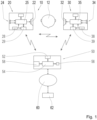
- Fig. 1 is a schematic representation of an example of a self-fitting arrangement comprising a binaural hearing system 10 and an accessory device 50 which are communicatively coupled via wireless links 60.
- a head tracking algorithm usually will require the user 12 to first go through a calibration process to provide the system with an absolute reference (e.g. pointing to the front to define the 0° orientation).
- the virtual auditory scene may be also used to assess the user's ability of spatial sound segregation with the respective fitting configuration.
- the angle between the sound sources/talkers 14 and 16 may be varied so as to find minimum angle between them which still allows the user to perceive the sound sources 14, 16 as spatially separate sound sources. This minimum angle is indicative of the user's ability of spatial sound segregation: the smaller this angle is, the better is the user's ability of spatial sound segregation.
- ASR may be used for conducting speech understanding tests with the user 12 when listening to the virtual auditory scene, wherein the virtual target talker 14 presents key words with or without the presence of an interfering talker 16 and/or diffuse noise, wherein the user 12 is instructed to repeat the key words and wherein the user's voice feedback including the repetition of the key words undergoes ASR so as to recognize whether the user correctly understands the key words.
- the key words can comprise syllables or words that are generally easily misrecognized acoustically as e.g. "immigrate/emigrate”.
- the key words can form key phrases including semantics wherein the user is required to speak back the whole key phrases.
- ASR allows the user to provide feedback without having to interact, for example, with a display of the accessory device 50, thereby avoiding undesired head movements.
- the user's voice feedback may be captured by the microphone arrangements 24, 34 of the hearing devices 20, 30; the capturing of the user's voice feedback may utilize acoustic beamforming (which may be implemented in the audio signal processing unit 25, 35), so as to increase the SNR of the captured audio signals.
- the captured user's voice feedback i.e. the processed audio signals as provided by audio signal processing unit 25, 35, may be transmitted via the wireless link 60 the to the accessory device 50 which then performs the ASR. Extraction of speech features based on previous recordings of the user's voice may be utilized to improve ASR.
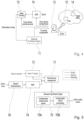
- the binaural synthesis engine 70 generates the virtual auditory scene and the instructions presented to user 12 via the output transducers 22, 32 of the hearing devices 20, 30.
- the user 12 responds to such audio stimuli by head movement detected by the inertial sensors 28, 38 of the hearing devices 20, 30 and/or by voice feedback captured by the microphone arrangements 24, 34 of the hearing devices 20, 30.
- the output of the inertial sensors 28, 38 is supplied to a head tracking unit 72 which determines head movements, and the audio signals representative of the user's voice feedback provided by the hearing devices 20, 30 are supplied to an ASR unit 74 for recognizing the words/speech contained in the audio signals.
- the user's voice is captured by the hearing device microphones 24, 34, possibly using a beamformer.
- the associated audio signals may be processed to extract speech features only (for example, previous recordings of the user's voice can drive this enhancement), as indicated by a speech enhancement unit 76.
- the processed audio signals then are supplied to the ASR unit 74, which identifies keywords of a closed set or the indication from the user that the direction identification task has been performed.
- the signals of the motion/inertial sensors 28, 38 are processed in the head tracking unit 72 to determine the user's head yaw and track the rotation of the user's head in real-time.
- the self-fitting method may be implemented by installing a corresponding app on the accessory device 50.
- the app may generate a virtual auditory scene by providing the respective binaural audio signals.
- the app transmits the virtual auditory scene (i.e., the binaural audio signals) to the hearing devices and provide them with a set of parameters to be tested.
- Left and right hearing devices 20, 30 process the wirelessly transmitted audio signals with the provided set of parameters.
- Left and right hearing devices reproduce the sound in the ear of the user based on the processed audio signals.
- the head motion and voice of the users are sensed by the motion sensors of the hearing devices, and the associated signals are transmitted wirelessly to the app.
- the app determines if the feedback from the users is as expected or not. Then it goes back the starting point with a new virtual auditory scene and/or a new hearing device parameter set.
Landscapes
- Health & Medical Sciences (AREA)
- General Health & Medical Sciences (AREA)
- Otolaryngology (AREA)
- Physics & Mathematics (AREA)
- Engineering & Computer Science (AREA)
- Acoustics & Sound (AREA)
- Neurosurgery (AREA)
- Signal Processing (AREA)
- Life Sciences & Earth Sciences (AREA)
- Audiology, Speech & Language Pathology (AREA)
- Medical Informatics (AREA)
- Biophysics (AREA)
- Pathology (AREA)
- Biomedical Technology (AREA)
- Heart & Thoracic Surgery (AREA)
- Multimedia (AREA)
- Molecular Biology (AREA)
- Surgery (AREA)
- Animal Behavior & Ethology (AREA)
- Public Health (AREA)
- Veterinary Medicine (AREA)
- Stereophonic System (AREA)
Claims (15)
- Verfahren zur Selbstanpassung eines binauralen Hörsystems (10), welches von einem Nutzer (12) getragen wird und eine erste Hörvorrichtung (20) mit einem ersten Ausgangswandler (22) zum Stimulieren eines ersten Ohrs des Nutzers und eine zweite Hörvorrichtung (30) mit einem zweiten Ausgangswandler (32) zum Stimulieren eines zweiten Ohrs des Nutzers sowie mindestens einen Bewegungssensor (28, 38) aufweist, wobei im Zuge des Verfahrens:eine momentane Anpasskonfiguration in dem binauralen Hörsystem implementiert wird;ein räumliches binaurales Audiosignal erzeugt wird, welches repräsentativ für eine virtuelle Hörszenerie mit mindestens einer ersten Audioquelle (14) an einer vorgegebenen Winkelposition relativ zu dem Nutzer ist;das räumliche binaurale Audiosignal über das binaurale Hörsystem für den Nutzer reproduziert wird; wobei das Verfahren dadurch gekennzeichnet ist, dass:der Nutzer angewiesen wird, den Kopf zu der ersten Audioquelle hin zu drehen;die entsprechende Kopfbewegung des Nutzers über den mindestens einen Bewegungssensor gemessen wird;aus der gemessenen Kopfbewegung die Fähigkeit des Nutzers zur räumlichen Schallidentifizierung mit der momentanen Anpasskonfiguration des binauralen Hörsystems abgeschätzt wird; unddie momentane Anpasskonfiguration basierend auf der abgeschätzten Fähigkeit des Nutzers zur räumlichen Schallidentifizierung aufrechtgehalten oder modifiziert wird.
- Verfahren gemäß Anspruch 1, wobei das Verfahren für unterschiedliche Anpasskonfigurationen iteriert wird, um die Anpasskonfiguration hinsichtlich der Fähigkeit des Nutzers zur räumlichen Schallidentifizierung zu optimieren, indem die Abweichung zwischen einer erwarteten Kopfbewegung und der gemessenen Kopfbewegung minimiert wird.
- Verfahren gemäß Anspruch 1 oder 2, wobei die virtuelle Hörszenerie eine zweite Audioquelle (16) beinhaltet, die an einer zweiten Winkelposition relativ zu dem Nutzer (12) angeordnet ist, wobei der Nutzer angewiesen wird, den Kopf zu der zweiten Audioquelle hin zu drehen, wobei die entsprechende Kopfbewegung des Nutzers über den mindestens einen Bewegungssensor (28, 38) gemessen wird, und wobei die Fähigkeit des Nutzers zur räumlichen Schallidentifizierung mit der momentanen Anpasskonfiguration des Hörsystems aus der gemessenen Kopfbewegung abgeschätzt wird.
- Verfahren gemäß Anspruch 3, wobei es sich bei der ersten Audioquelle (14) um einen Zielsprecher und bei der zweiten Audioquelle (16) um einen konkurrierenden Sprecher handelt.
- Verfahren gemäß einem der vorhergehenden Ansprüche, wobei die virtuelle Hörszenerie diffuses Rauschen beinhaltet.
- Verfahren gemäß einem der vorhergehenden Ansprüche, wobei Parameter der virtuellen Hörszenerie, insbesondere Pegel, Abstände und/oder Scherwinkel der ersten Audioquelle (14) und/oder der zweiten Audioquelle (16) und/oder der Pegel des diffusen Rauschens variiert werden, um unterschiedliche Kopfbewegungsmessungen durchzuführen.
- Verfahren gemäß einem der vorhergehenden Ansprüche, wobei der Nutzer (12) über Anweisungs-Audiosignale angewiesen wird, welche von dem binauralen Hörsystem reproduziert werden.
- Verfahren gemäß Anspruch 7, wobei der Nutzer (12) per Stimme Rückmeldung auf die Anweisungs-Audiosignale liefert, welche über automatische Spracherkennung erkannt wird.
- Verfahren gemäß Anspruch 8, wobei jede der Vorrichtungen (20, 30) eine Mikrofonanordnung (24, 34) zum Auffangen der Stimmenrückmeldung des Nutzers aufweist, und wobei das binaurale Hörsystem (10) Audiosignale, die repräsentativ für die Stimmenrückmeldung des Nutzers sind, an eine Zubehörvorrichtung (50) sendet, welche die automatische Spracherkennung ausführt.
- Verfahren gemäß einem der Ansprüche 8 oder 9, wobei die Anweisungs-Audiosignale Schlüsselwörter beinhalten, welche von der ersten Audioquelle dargeboten werden, wobei der Nutzer angewiesen wird, die Schlüsselwörter zu wiederholen, und wobei die Stimmrückmeldung die Wiederholung der Schlüsselwörter durch den Nutzer beinhaltet.
- Verfahren gemäß einem der vorhergehenden Ansprüche, wobei der mindestens eine Bewegungssensor einen ersten Trägheitssensor (28) in der ersten Hörvorrichtung (20) und einen zweiten Trägheitssensor in der zweiten Hörvorrichtung (30) aufweist, und wobei der erste und der zweite Trägheitssensor Beschleunigungsmesser und/oder Gyroskope aufweisen.
- Verfahren gemäß einem der vorhergehenden Ansprüche, wobei das räumliche binaurale Audiosignal erzeugt wird (1) unter Verwendung eines Standardsatzes von HRTFs, oder (2) unter Verwendung eines Satzes von generischen HRTFs, der aus einer Mehrzahl von vorgegebenen Sätzen so ausgewählt wird, dass er am besten zu der Wahrnehmung des Nutzers passt, oder (3) unter Verwendung eines Satzes von HRTFs, der unter Verwendung der binauralen Hörvorrichtung, die von dem Nutzer getragen wird, und einer Zubehörvorrichtung gemessen wird.
- Verfahren gemäß einem der vorhergehenden Ansprüche, wobei die Anpassparameter der Anpasskonfiguration einen Betrag von Weitdynamikreichkompression, der vom Kompressionskniepunkt bestimmt wird, Beamformer-Muster, einen Betrag von Rauschreduktion und/oder einen Betrag von Hallreduktion beinhalten.
- Verfahren gemäß einem der vorhergehenden Ansprüche, wobei das Erzeugen des für die virtuelle Hörszenerie repräsentativen räumlichen binauralen Audiosignals, das Abschätzen der Nutzerfähigkeit zur räumlichen Schallidentifizierung mit der momentanen Anpasskonfiguration des Hörsystems aus der gemessenen Kopfbewegung, und/oder das Bewerten der momentanen Anpasskonfiguration basierend auf der abgeschätzten Nutzerfähigkeit zur räumlichen Schallidentifizierung mit der momentanen Anpasskonfiguration auf einem Zubehörgerät (50) ausgeführt werden, welches kommunikativ mit dem binauralen Hörsystem gekoppelt ist.
- Selbstanpassungsanordnung mit:einem binauralen Hörsystem (10) mit einer ersten Hörvorrichtung (20) mit einem ersten Ausgangswandler (22) zum Stimulieren eines ersten Ohrs eines Nutzers (12) und einer zweiten Hörvorrichtung (30) mit einem zweiten Ausgangswandler (32) zum Stimulieren eines zweiten Ohrs des Nutzers, sowie mit mindestens einem Bewegungssensor (28, 38);einer Zubehörvorrichtung (50), welche kommunikativ mit dem binauralen Hörsystem gekoppelt ist;wobei die Zubehörvorrichtung ausgebildet ist, umeine momentane Anpasskonfiguration in dem binauralen Hörsystem zu implementieren, indem die entsprechenden Parameter in dem Hörsystem gesetzt werden, undein räumliches binaurales Audiosignal, welches repräsentativ für eine virtuelle Hörszenerie mit mindestens einer Audioquelle (14), die an einer vorgegebenen Winkelposition relativ zu dem Nutzer angeordnet ist, sowie ein Anweisungs-Audiosignal zu erzeugen, welches den Nutzer anweist, den Kopf zu der ersten Audioquelle hin zu drehen;wobei das binaurale Hörsystem ausgebildet ist, um das räumliche binaurale Audiosignal und das Anweisungs-Audiosignal für den Nutzer zu reproduzieren, undwobei die Zubehörvorrichtung ferner ausgebildet ist, umdie entsprechende Kopfbewegung des Nutzers über den mindestens einen Bewegungssensor zu messen,aus der gemessenen Kopfbewegung die Fähigkeit des Nutzers zur räumlichen Schallidentifizierung mit der momentanen Anpasskonfiguration des Hörsystems abzuschätzen; unddie momentane Anpasskonfiguration basierend auf der abgeschätzten Fähigkeit des Nutzers zur räumlichen Schallidentifizierung aufrechtzuerhalten oder zu modifizieren.
Priority Applications (3)
| Application Number | Priority Date | Filing Date | Title |
|---|---|---|---|
| EP23153965.1A EP4408025B1 (de) | 2023-01-30 | 2023-01-30 | Verfahren zur selbstanpassung eines binauralen hörsystems |
| US18/521,713 US20240259742A1 (en) | 2023-01-30 | 2023-11-28 | Method of self-fitting of a binaural hearing system |
| CN202410117493.0A CN118413794A (zh) | 2023-01-30 | 2024-01-29 | 双耳听力系统的自适配方法 |
Applications Claiming Priority (1)
| Application Number | Priority Date | Filing Date | Title |
|---|---|---|---|
| EP23153965.1A EP4408025B1 (de) | 2023-01-30 | 2023-01-30 | Verfahren zur selbstanpassung eines binauralen hörsystems |
Publications (3)
| Publication Number | Publication Date |
|---|---|
| EP4408025A1 EP4408025A1 (de) | 2024-07-31 |
| EP4408025C0 EP4408025C0 (de) | 2025-07-02 |
| EP4408025B1 true EP4408025B1 (de) | 2025-07-02 |
Family
ID=85150165
Family Applications (1)
| Application Number | Title | Priority Date | Filing Date |
|---|---|---|---|
| EP23153965.1A Active EP4408025B1 (de) | 2023-01-30 | 2023-01-30 | Verfahren zur selbstanpassung eines binauralen hörsystems |
Country Status (3)
| Country | Link |
|---|---|
| US (1) | US20240259742A1 (de) |
| EP (1) | EP4408025B1 (de) |
| CN (1) | CN118413794A (de) |
Families Citing this family (2)
| Publication number | Priority date | Publication date | Assignee | Title |
|---|---|---|---|---|
| CN119279572B (zh) * | 2024-12-09 | 2025-03-28 | 深圳市智听科技有限公司 | 听力测试方法、装置及存储介质 |
| CN120267402B (zh) * | 2025-06-10 | 2025-08-08 | 深圳波洛斯科技有限公司 | 一种基于音频处理技术的手术机器人对话方法及系统 |
Family Cites Families (15)
| Publication number | Priority date | Publication date | Assignee | Title |
|---|---|---|---|---|
| US5825894A (en) * | 1994-08-17 | 1998-10-20 | Decibel Instruments, Inc. | Spatialization for hearing evaluation |
| AU2004300976B2 (en) | 2003-08-01 | 2009-02-19 | Audigence, Inc. | Speech-based optimization of digital hearing devices |
| DK2215858T4 (da) | 2007-11-14 | 2020-09-28 | Sonova Ag | Metode og anordning til justering af et høresystem |
| US8433568B2 (en) | 2009-03-29 | 2013-04-30 | Cochlear Limited | Systems and methods for measuring speech intelligibility |
| US8879745B2 (en) * | 2009-07-23 | 2014-11-04 | Dean Robert Gary Anderson As Trustee Of The D/L Anderson Family Trust | Method of deriving individualized gain compensation curves for hearing aid fitting |
| US10129671B2 (en) | 2013-02-22 | 2018-11-13 | Securboration, Inc. | Hearing device adjustment based on categorical perception |
| US9031247B2 (en) * | 2013-07-16 | 2015-05-12 | iHear Medical, Inc. | Hearing aid fitting systems and methods using sound segments representing relevant soundscape |
| US9591427B1 (en) | 2016-02-20 | 2017-03-07 | Philip Scott Lyren | Capturing audio impulse responses of a person with a smartphone |
| US9955279B2 (en) * | 2016-05-11 | 2018-04-24 | Ossic Corporation | Systems and methods of calibrating earphones |
| US9848273B1 (en) * | 2016-10-21 | 2017-12-19 | Starkey Laboratories, Inc. | Head related transfer function individualization for hearing device |
| DK3493555T3 (da) | 2017-11-29 | 2023-02-20 | Gn Hearing As | Høreindretning og fremgangsmåde til tuning af høreindretningsparametre |
| US12273683B2 (en) | 2019-04-18 | 2025-04-08 | Starkey Laboratories, Inc. | Self-fit hearing instruments with self-reported measures of hearing loss and listening |
| US11368799B2 (en) | 2020-02-04 | 2022-06-21 | Securboration, Inc. | Hearing device customization systems and methods |
| EP3930350A1 (de) * | 2020-06-25 | 2021-12-29 | Sonova AG | Verfahren zur anpassung eines hörgeräts und system zur durchführung des verfahrens |
| EP4017029A1 (de) | 2020-12-16 | 2022-06-22 | Sivantos Pte. Ltd. | System, verfahren und computerprogramm zur interaktiven unterstützung eines benutzers bei der bewertung eines hörverlusts |
-
2023
- 2023-01-30 EP EP23153965.1A patent/EP4408025B1/de active Active
- 2023-11-28 US US18/521,713 patent/US20240259742A1/en active Pending
-
2024
- 2024-01-29 CN CN202410117493.0A patent/CN118413794A/zh active Pending
Also Published As
| Publication number | Publication date |
|---|---|
| EP4408025C0 (de) | 2025-07-02 |
| CN118413794A (zh) | 2024-07-30 |
| US20240259742A1 (en) | 2024-08-01 |
| EP4408025A1 (de) | 2024-07-31 |
Similar Documents
| Publication | Publication Date | Title |
|---|---|---|
| US20230269549A1 (en) | Hearing aid device for hands free communication | |
| US10431239B2 (en) | Hearing system | |
| US9264824B2 (en) | Integration of hearing aids with smart glasses to improve intelligibility in noise | |
| CN104980865B (zh) | 包括双耳降噪的双耳助听系统 | |
| EP2877991B1 (de) | Direktionale geräuschmaskierung | |
| JP6905319B2 (ja) | 雑音を受ける発話信号の客観的知覚量を決定する方法 | |
| US11184723B2 (en) | Methods and apparatus for auditory attention tracking through source modification | |
| US9398386B2 (en) | Method for remote fitting of a hearing device | |
| JP2022534833A (ja) | 個人化されたオーディオ拡張のためのオーディオプロファイル | |
| US20240259742A1 (en) | Method of self-fitting of a binaural hearing system | |
| US20240221757A1 (en) | Audio signal processing for automatic transcription using ear-wearable device | |
| CN109218948B (zh) | 助听系统、系统信号处理单元及用于产生增强的电音频信号的方法 | |
| CN116095557A (zh) | 包括噪声控制系统的听力装置或系统 | |
| AU2010347009B2 (en) | Method for training speech recognition, and training device | |
| CN113038322A (zh) | 一种以听觉增强环境感知的方法与装置 | |
| CN110620982A (zh) | 用于助听器中的音频播放的方法 | |
| WO2018088210A1 (ja) | 情報処理装置および方法、並びにプログラム | |
| CN120708618A (zh) | 用于支持听力设备用户的听力理解的方法 |
Legal Events
| Date | Code | Title | Description |
|---|---|---|---|
| PUAI | Public reference made under article 153(3) epc to a published international application that has entered the european phase |
Free format text: ORIGINAL CODE: 0009012 |
|
| STAA | Information on the status of an ep patent application or granted ep patent |
Free format text: STATUS: THE APPLICATION HAS BEEN PUBLISHED |
|
| AK | Designated contracting states |
Kind code of ref document: A1 Designated state(s): AL AT BE BG CH CY CZ DE DK EE ES FI FR GB GR HR HU IE IS IT LI LT LU LV MC ME MK MT NL NO PL PT RO RS SE SI SK SM TR |
|
| STAA | Information on the status of an ep patent application or granted ep patent |
Free format text: STATUS: REQUEST FOR EXAMINATION WAS MADE |
|
| 17P | Request for examination filed |
Effective date: 20240911 |
|
| RBV | Designated contracting states (corrected) |
Designated state(s): AL AT BE BG CH CY CZ DE DK EE ES FI FR GB GR HR HU IE IS IT LI LT LU LV MC ME MK MT NL NO PL PT RO RS SE SI SK SM TR |
|
| GRAP | Despatch of communication of intention to grant a patent |
Free format text: ORIGINAL CODE: EPIDOSNIGR1 |
|
| STAA | Information on the status of an ep patent application or granted ep patent |
Free format text: STATUS: GRANT OF PATENT IS INTENDED |
|
| INTG | Intention to grant announced |
Effective date: 20250207 |
|
| GRAS | Grant fee paid |
Free format text: ORIGINAL CODE: EPIDOSNIGR3 |
|
| GRAA | (expected) grant |
Free format text: ORIGINAL CODE: 0009210 |
|
| STAA | Information on the status of an ep patent application or granted ep patent |
Free format text: STATUS: THE PATENT HAS BEEN GRANTED |
|
| AK | Designated contracting states |
Kind code of ref document: B1 Designated state(s): AL AT BE BG CH CY CZ DE DK EE ES FI FR GB GR HR HU IE IS IT LI LT LU LV MC ME MK MT NL NO PL PT RO RS SE SI SK SM TR |
|
| REG | Reference to a national code |
Ref country code: GB Ref legal event code: FG4D |
|
| REG | Reference to a national code |
Ref country code: CH Ref legal event code: EP |
|
| REG | Reference to a national code |
Ref country code: DE Ref legal event code: R096 Ref document number: 602023004370 Country of ref document: DE |
|
| REG | Reference to a national code |
Ref country code: IE Ref legal event code: FG4D |
|
| U01 | Request for unitary effect filed |
Effective date: 20250708 |
|
| U07 | Unitary effect registered |
Designated state(s): AT BE BG DE DK EE FI FR IT LT LU LV MT NL PT RO SE SI Effective date: 20250711 |