EP4407970A1 - Anrufverarbeitungsverfahren und anrufverarbeitungsvorrichtung - Google Patents
Anrufverarbeitungsverfahren und anrufverarbeitungsvorrichtung Download PDFInfo
- Publication number
- EP4407970A1 EP4407970A1 EP22871894.6A EP22871894A EP4407970A1 EP 4407970 A1 EP4407970 A1 EP 4407970A1 EP 22871894 A EP22871894 A EP 22871894A EP 4407970 A1 EP4407970 A1 EP 4407970A1
- Authority
- EP
- European Patent Office
- Prior art keywords
- data packet
- call
- voice data
- domain
- media server
- Prior art date
- Legal status (The legal status is an assumption and is not a legal conclusion. Google has not performed a legal analysis and makes no representation as to the accuracy of the status listed.)
- Pending
Links
Images


Classifications
-
- H—ELECTRICITY
- H04—ELECTRIC COMMUNICATION TECHNIQUE
- H04L—TRANSMISSION OF DIGITAL INFORMATION, e.g. TELEGRAPHIC COMMUNICATION
- H04L65/00—Network arrangements, protocols or services for supporting real-time applications in data packet communication
- H04L65/10—Architectures or entities
- H04L65/1016—IP multimedia subsystem [IMS]
-
- H—ELECTRICITY
- H04—ELECTRIC COMMUNICATION TECHNIQUE
- H04L—TRANSMISSION OF DIGITAL INFORMATION, e.g. TELEGRAPHIC COMMUNICATION
- H04L65/00—Network arrangements, protocols or services for supporting real-time applications in data packet communication
- H04L65/10—Architectures or entities
- H04L65/1046—Call controllers; Call servers
-
- H—ELECTRICITY
- H04—ELECTRIC COMMUNICATION TECHNIQUE
- H04L—TRANSMISSION OF DIGITAL INFORMATION, e.g. TELEGRAPHIC COMMUNICATION
- H04L65/00—Network arrangements, protocols or services for supporting real-time applications in data packet communication
- H04L65/1066—Session management
- H04L65/1069—Session establishment or de-establishment
-
- H—ELECTRICITY
- H04—ELECTRIC COMMUNICATION TECHNIQUE
- H04L—TRANSMISSION OF DIGITAL INFORMATION, e.g. TELEGRAPHIC COMMUNICATION
- H04L65/00—Network arrangements, protocols or services for supporting real-time applications in data packet communication
- H04L65/1066—Session management
- H04L65/1083—In-session procedures
- H04L65/1095—Inter-network session transfer or sharing
-
- H—ELECTRICITY
- H04—ELECTRIC COMMUNICATION TECHNIQUE
- H04L—TRANSMISSION OF DIGITAL INFORMATION, e.g. TELEGRAPHIC COMMUNICATION
- H04L65/00—Network arrangements, protocols or services for supporting real-time applications in data packet communication
- H04L65/1066—Session management
- H04L65/1101—Session protocols
- H04L65/1104—Session initiation protocol [SIP]
-
- H—ELECTRICITY
- H04—ELECTRIC COMMUNICATION TECHNIQUE
- H04L—TRANSMISSION OF DIGITAL INFORMATION, e.g. TELEGRAPHIC COMMUNICATION
- H04L65/00—Network arrangements, protocols or services for supporting real-time applications in data packet communication
- H04L65/80—Responding to QoS
-
- H—ELECTRICITY
- H04—ELECTRIC COMMUNICATION TECHNIQUE
- H04M—TELEPHONIC COMMUNICATION
- H04M3/00—Automatic or semi-automatic exchanges
- H04M3/42—Systems providing special services or facilities to subscribers
- H04M3/487—Arrangements for providing information services, e.g. recorded voice services or time announcements
-
- H—ELECTRICITY
- H04—ELECTRIC COMMUNICATION TECHNIQUE
- H04W—WIRELESS COMMUNICATION NETWORKS
- H04W36/00—Hand-off or reselection arrangements
- H04W36/0005—Control or signalling for completing the hand-off
- H04W36/0011—Control or signalling for completing the hand-off for data sessions of end-to-end connection
- H04W36/0022—Control or signalling for completing the hand-off for data sessions of end-to-end connection for transferring data sessions between adjacent core network technologies
- H04W36/00224—Control or signalling for completing the hand-off for data sessions of end-to-end connection for transferring data sessions between adjacent core network technologies between packet switched [PS] and circuit switched [CS] network technologies, e.g. circuit switched fallback [CSFB]
-
- H—ELECTRICITY
- H04—ELECTRIC COMMUNICATION TECHNIQUE
- H04W—WIRELESS COMMUNICATION NETWORKS
- H04W36/00—Hand-off or reselection arrangements
- H04W36/12—Reselecting a serving backbone network switching or routing node
-
- H—ELECTRICITY
- H04—ELECTRIC COMMUNICATION TECHNIQUE
- H04M—TELEPHONIC COMMUNICATION
- H04M3/00—Automatic or semi-automatic exchanges
- H04M3/22—Arrangements for supervision, monitoring or testing
- H04M3/2236—Quality of speech transmission monitoring
-
- H—ELECTRICITY
- H04—ELECTRIC COMMUNICATION TECHNIQUE
- H04W—WIRELESS COMMUNICATION NETWORKS
- H04W36/00—Hand-off or reselection arrangements
- H04W36/0005—Control or signalling for completing the hand-off
- H04W36/0011—Control or signalling for completing the hand-off for data sessions of end-to-end connection
- H04W36/0022—Control or signalling for completing the hand-off for data sessions of end-to-end connection for transferring data sessions between adjacent core network technologies
- H04W36/00224—Control or signalling for completing the hand-off for data sessions of end-to-end connection for transferring data sessions between adjacent core network technologies between packet switched [PS] and circuit switched [CS] network technologies, e.g. circuit switched fallback [CSFB]
- H04W36/00226—Control or signalling for completing the hand-off for data sessions of end-to-end connection for transferring data sessions between adjacent core network technologies between packet switched [PS] and circuit switched [CS] network technologies, e.g. circuit switched fallback [CSFB] wherein the core network technologies comprise IP multimedia system [IMS], e.g. single radio voice call continuity [SRVCC]
-
- H—ELECTRICITY
- H04—ELECTRIC COMMUNICATION TECHNIQUE
- H04W—WIRELESS COMMUNICATION NETWORKS
- H04W36/00—Hand-off or reselection arrangements
- H04W36/24—Reselection being triggered by specific parameters
- H04W36/30—Reselection being triggered by specific parameters by measured or perceived connection quality data
Definitions
- This application pertains to the field of data call technologies, and specifically relates to a call processing method and a call processing apparatus.
- Embodiments of this application aim to provide a call processing method and a call processing apparatus, to reduce the problem of a silent call in IMS calls.
- an embodiment of this application provides a call processing method, applied to a terminal, where the method includes:
- an embodiment of this application provides a call processing method, applied to a network server, where the method includes:
- an embodiment of this application provides a call processing apparatus, including:
- an embodiment of this application provides a call processing apparatus, including:
- an embodiment of this application provides a first electronic device, including a processor, a memory, and a program or an instruction that is stored in the memory and that can be run on the processor, where when the program or the instruction is executed by the processor, the steps of the method according to the first aspect are implemented.
- an embodiment of this application provides a second electronic device, including a processor, a memory, and a program or an instruction that is stored in the memory and that can be run on the processor, where when the program or the instruction is executed by the processor, the steps of the method according to the second aspect are implemented.
- an embodiment of this application provides a readable storage medium, where the readable storage medium stores a program or an instruction, and when the program or the instruction is executed by a processor, the steps of the methods according to the first aspect and the second aspect are implemented.
- an embodiment of this application provides a chip, where the chip includes a processor and a communication interface, the communication interface is coupled to the processor, and the processor is configured to run a program or an instruction to implement the steps of the methods according to the first aspect and the second aspect.
- the terminal may be a calling terminal or a called terminal for an IMS call
- the terminal making the IMS call collects call voice of a user by using a microphone, forms the call voice into the call data packet, and sends the call data packet to the network server, and at the same time, receives the voice data packet that includes call voice of a peer terminal of the call and that is sent by the network server.
- the terminal After receiving the voice data packet, the terminal parses the voice data packet, and detects, by using a sound module, whether call voice parsed out is abnormal, for example, the call voice is silent or noisy. If the call voice is silent, noisy, or the like, it is determined that the voice data packet is abnormal. In this case, the first signaling is generated and sent to the network server. The first signaling is used to notify the network server that the voice data packet is abnormal.
- the network server switches a generation manner of the voice data packet and/or a transmission manner of the voice data packet, for example, switches the media server that generates the voice data packet, so as to generate the voice data packet by using a new media server, and avoid a call abnormality caused by an abnormality of an audio encryption/decryption algorithm of the media server, or switches the domain for transmitting the voice data packet, for example, switches from the PS domain to the CS domain, to avoid a call abnormality caused by an abnormality of a domain-specific network, thereby effectively reducing occurrence of problems such as a silent call, and improving call efficiency and call experience.
- first”, “second”, and the like in this specification and claims of this application are used to distinguish between similar objects instead of describing a specific order or sequence. It should be understood that data used in such a way are interchangeable in proper circumstances, so that the embodiments of this application can be implemented in an order other than the order illustrated or described herein.
- Objects classified by "first”, “second”, and the like are usually of a same type, and the number of objects is not limited. For example, there may be one or more first objects.
- "and/or" represents at least one of connected objects, and a character “/" generally represents an "or” relationship between associated objects.
- FIG. 1 is a first flowchart of a call processing method according to an embodiment of this application. As shown in FIG. 1 , the method includes:
- the first signaling is used to enable the network server to switch at least one of: a media server that generates the voice data packet and a domain for transmitting the voice data packet.
- a terminal may be a calling terminal or a called terminal for an IMS call
- the terminal making the IMS call collects call voice of a user by using a microphone, forms the call voice into a call data packet, and sends the call data packet to the network server, and at the same time, receives the voice data packet that includes call voice of a peer terminal of the call and that is sent by the network server.
- the terminal After receiving the voice data packet, the terminal parses the voice data packet, and detects, by using a sound module, whether call voice parsed out is abnormal, for example, the call voice is silent or noisy. If the call voice is silent, noisy, or the like, it is determined that the voice data packet is abnormal. In this case, the first signaling is generated and sent to the network server. The first signaling is used to notify the network server that the voice data packet is abnormal.
- the first signaling is a SIP signaling, where the SIP signaling is session initialization protocol (Session Initiation Protocol, SIP) signaling.
- SIP Session Initiation Protocol
- the network server switches a generation manner of the voice data packet and/or a transmission manner of the voice data packet, for example, switches the media server that generates the voice data packet, so as to generate the voice data packet by using a new media server, and avoid a call abnormality caused by an abnormality of an audio encryption/decryption algorithm of the media server, or switches the domain for transmitting the voice data packet, for example, switches from a PS domain to a CS domain, to avoid a call abnormality caused by an abnormality of a domain-specific network, thereby effectively reducing occurrence of problems such as a silent call, and improving call efficiency and call experience.
- the media server that generates the voice data packet includes: a first media server that generates the voice data packet; or a second media server that generates the voice data packet.
- the network server receives the call data packet from the terminal and sends the call data packet to a corresponding media server.
- the media server parses and encapsulates the call data packet, to obtain the corresponding voice data packet.
- Different media servers may have different audio encryption/decryption algorithms. Therefore, if the voice data packet received by the terminal is abnormal, a first media server currently responsible for processing the voice call of the terminal may be abnormal. In this case, the network server may switch from generating the voice data packet by using the first media server to generating the voice data packet by using a second media server, so as to rule out the possibility that the abnormality of the algorithm of the first media server causes the call abnormality.
- the first media server includes a media server currently responsible for processing a voice call service of the terminal, or a preset first choice media server.
- the second media server includes a candidate media server other than the first media server, or a preset second choice media server.
- the media server that processes and generates the voice data packet is switched to effectively rule out the call abnormality caused by the abnormality of the encryption/decryption algorithm of the media server, thereby improving call efficiency.
- the domain for transmitting the voice data packet includes: a PS domain for transmitting the voice data packet; or a CS domain for transmitting the voice data packet.
- IMS calls are based on the SIP protocol, and a call service is generally carried out by default through the PS domain connected based on the transmission control protocol/internet protocol (Transmission Control Protocol/Internet Protocol, TCP/IP), that is, related data packet transmission is performed through the PS domain.
- TCP/IP Transmission Control Protocol/Internet Protocol
- a network environment of an environment in which the terminal is located changes, cases such as a poor network environment and a packet loss on the PS domain may occur, resulting in an abnormality of the voice data packet received by the terminal.
- the transmission manner of the voice data packet and the call data packet between the terminal and the network server may be switched from transmission through the PS domain to transmission through the CS domain, so as to rule out the call abnormality caused by the abnormality of a domain-specific network, thereby improving call efficiency.
- the method further includes:
- the network server after the terminal sends the first signaling to the network server to notify the network server that the received voice data packet is abnormal, the network server performs a corresponding operation, to switch a media server that processes the voice data packet or switch a transmission manner of the voice data packet. After performing the operation, the network server replies the second signaling to the terminal, where the second signaling is used to notify the terminal that the media server has been switched, or notify the terminal that the transmission manner has been switched.
- the terminal switches, according to an indication of the second signaling, a transmission manner of the call data packet by the terminal, and also changes the manner to receiving and sending the data packet through the CS domain, to adapt to switching of the data packet transmission mode.
- the call data packet is a data packet obtained through processing by the current terminal based on received user voice.
- the data packet is processed by the media server to generate the corresponding voice data packet, and the voice data packet is transmitted to the peer terminal of the voice call, and is decapsulated and decoded by the peer terminal for play.
- terminals of two or more parties exist for the voice call, including at least one calling party terminal, and at least one called party terminal.
- the network server may simultaneously send the second signaling to all terminals participating in the voice call.
- FIG. 2 is a second flowchart of a call processing method according to an embodiment of this application. As shown in FIG. 2 , the method includes:
- the network server receives, in real time, the call data packet generated by the terminal according to call voice collected by a microphone of the terminal, and processes the call data packet based on the encryption/decryption algorithm of the media server, generates the corresponding voice data packet, and sends the voice data packet to the peer terminal that makes the voice call.
- the network server if the network server receives the first signaling of the terminal, it indicates that the voice data packet received by the terminal is abnormal, resulting in a silent call or noise of the call. In this case, the network server rules out the reason for the abnormality of the voice data packet by switching the generation manner of the voice data packet and/or switching the transmission manner of the voice data packet.
- the network server parses and encapsulates the call data packet by using the media server, to obtain the corresponding voice data packet.
- Different media servers may have different audio encryption/decryption algorithms. Therefore, if an algorithm of the media server currently responsible for processing the voice call of the terminal is abnormal, the voice data packet is abnormal.
- the media server that generates the voice data packet is switched to rule out the call abnormality caused by the abnormality of the algorithm of the first media server.
- the voice call is made through the PS domain by default.
- the voice data packet received by the terminal is abnormal.
- the transmission manner of the voice data packet and the call data packet between the terminal and the network server is switched from transmission through the PS domain to transmission through the CS domain, to rule out the call abnormality caused by the abnormality of a domain-specific network, thereby improving call efficiency.
- the receiving a call data packet sent by a terminal includes:
- the network server receives, through the PS domain by default, the call data packet sent by the terminal, and sends the voice data packet to the terminal through the PS domain.
- the network server may select to switch the transmission manner of the data packet between the network server and the terminal, and specifically, switch receiving and sending the data packet through the PS domain to receiving and sending the data packet through the CS domain.
- the network server After switching, the network server receives, through the CS domain, the call data packet sent by the terminal, and sends the voice data packet to the terminal through the CS domain.
- the transmission manner of receiving and sending the data packet is switched to effectively rule out the call abnormality caused by the abnormality of a domain-specific network, thereby improving call efficiency.
- the receiving, through a CS domain, the call data packet sent by the terminal, and sending the voice data packet to the terminal through the CS domain includes:
- the network element when a transmission path of receiving and sending the data packet is switched from the PS domain to the CS domain, first, the network element sends the first release instruction to a related network element of the PS domain, that is, the first network element, to notify the first network element that the current call service is to be switched to the CS domain, and at the same time, the related network element of the PS domain releases the network resource.
- the first network element related to the PS domain releases the network resource according to the first release instruction
- the first network element sends the first reply information corresponding to the first release instruction to the network server, to notify the network server that the first network element has released the resource, and that the first network element can switch the call service to the CS domain.
- the network server completes switching the call service from the PS domain to the CS domain by sending the preset information, and the subsequent call service is carried out through the CS domain, so as to rule out the call abnormality caused by a network abnormality and a packet loss of the PS domain, thereby improving call efficiency.
- the preset information includes second signaling
- the sending preset information includes: sending the second signaling to the terminal, where the second signaling is used to indicate a switched transmission manner of the voice data packet.
- the preset information specifically includes the second signaling, where the second signaling is used to indicate the terminal to switch a transmission path of the data packet, that is, switch the domain for carrying out the call service.
- the second signaling is further used to notify the terminal to switch the media server.
- the terminal After receiving the second signaling, the terminal switches, according to the second signaling, the path of receiving and sending the data packet by the terminal, and specifically, switches from the PS domain to the CS domain, so as to rule out the call abnormality caused by a network abnormality and a packet loss of the PS domain, thereby improving call efficiency.
- the preset information includes a CS call instruction
- the sending preset information includes: sending the CS call instruction to a second network element corresponding to the CS domain, where the CS call instruction is used to enable the second network element to send CS call signaling to the terminal, and the CS call signaling is used to switch the transmission manner of the call data packet of the terminal to the CS domain for transmission.
- the preset information specifically includes the CS call instruction.
- the network server After receiving the first reply information sent by the first network element related to the PS domain, the network server sends the CS call instruction to the second network element related to the CS domain, to notify the second network element of the CS domain that the call service is to be switched to the CS domain, and then the second network element of the CS domain forwards corresponding signaling to both terminals of the voice call service, so that the terminal switches to the CS domain to receive and send the data packet.
- the terminal After receiving the signaling, the terminal switches the transmission manner of the data packet from the PS domain to the CS domain, so as to rule out the call abnormality caused by a network abnormality and a packet loss of the PS domain, thereby improving call efficiency.
- the generating a corresponding voice data packet according to the call data packet includes: sending the call data packet to a first media server, and receiving the voice data packet sent by the first media server; and the switching at least one of: a media server that generates the voice data packet and a domain for transmitting the voice data packet includes: sending the call data packet to a second media server, and receiving the voice data packet sent by the second media server.
- the network server receives the call data packet from the terminal and sends the call data packet to a corresponding media server.
- the media server parses and encapsulates the call data packet, to obtain the corresponding voice data packet.
- Different media servers may have different audio encryption/decryption algorithms. Therefore, if the first signaling sent by the terminal is received, an algorithm of a first media server currently responsible for processing the voice call of the terminal may be abnormal, resulting in an abnormality of the voice data packet received by the terminal.
- the network server switches the generation manner of the voice data packet from generating the voice data packet by using the first media server to generating the voice data packet by using a second media server, so as to rule out the possibility that the abnormality of the algorithm of the first media server causes the call abnormality.
- the first media server includes a media server currently responsible for processing a voice call service of the terminal, or a preset first choice media server.
- the second media server includes a candidate media server other than the first media server, or a preset second choice media server.
- the media server that processes and generates the voice data packet is switched to effectively rule out the call abnormality caused by the abnormality of the encryption/decryption algorithm of the media server, thereby improving call efficiency.
- the sending the call data packet to a second media server includes:
- the generation manner of the voice data packet is specifically switched in the following manner: generating the voice data packet by using the first media server is switched to generating the voice data packet by using the second media server.
- the network server sends the second release instruction to the first media server, to notify the first media server that the first media server is to be switched to another media server to carry out the call service.
- the first media server ends the corresponding call service, and releases the corresponding network resource.
- the first media server replies the corresponding second reply information to the network server, to notify the network server that the network resource has been released, and that the network server can switch the call service to the new media server.
- the network server sends the third signaling to the second media server, and at the same time, the second media server prepares to receive and process the call data packet of the call service.
- the second media server After receiving the third signaling, the second media server starts to prepare to receive the data packet, and establishes a corresponding call service. After getting ready, the second media server feeds back the third reply information corresponding to the third signaling to the network server. In this case, switching of the media server is completed, and the call data packet subsequently received by the network server is sent to the second media server, and the second media server processes the call data packet, and generates the voice data packet.
- the media server that generates the voice data packet is switched to rule out the call abnormality caused by the abnormality of the algorithm of the first media server.
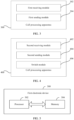
- FIG. 3 is a first schematic structural diagram of a call processing apparatus according to an embodiment of this application. As shown in FIG. 3 , the call processing apparatus 300 includes:
- a terminal may be a calling terminal or a called terminal for an IMS call
- the terminal making the IMS call collects call voice of a user by using a microphone, forms the call voice into a call data packet, and sends the call data packet to the network server, and at the same time, receives the voice data packet that includes call voice of a peer terminal of the call and that is sent by the network server.
- the terminal After receiving the voice data packet, the terminal parses the voice data packet, and detects, by using a sound module, whether call voice parsed out is abnormal, for example, the call voice is silent or noisy. If the call voice is silent, noisy, or the like, it is determined that the voice data packet is abnormal. In this case, the first signaling is generated and sent to the network server. The first signaling is used to notify the network server that the voice data packet is abnormal.
- the first signaling is a SIP signaling, where the SIP signaling is session initialization protocol (Session Initiation Protocol, SIP) signaling.
- SIP Session Initiation Protocol
- the network server switches a generation manner of the voice data packet and/or a transmission manner of the voice data packet, for example, switches the media server that generates the voice data packet, so as to generate the voice data packet by using a new media server, and avoid a call abnormality caused by an abnormality of an audio encryption/decryption algorithm of the media server, or switches the domain for transmitting the voice data packet, for example, switches from a PS domain to a CS domain, to avoid a call abnormality caused by an abnormality of a domain-specific network, thereby effectively reducing occurrence of problems such as a silent call, and improving call efficiency and call experience.
- the media server that generates the voice data packet includes: a first media server that generates the voice data packet; or a second media server that generates the voice data packet.
- the media server that processes and generates the voice data packet is switched to effectively rule out the call abnormality caused by the abnormality of the encryption/decryption algorithm of the media server, thereby improving call efficiency.
- the domain for transmitting the voice data packet includes: a PS domain for transmitting the voice data packet; or a CS domain for transmitting the voice data packet.
- the transmission manner of the voice data packet and the call data packet between the terminal and the network server may be switched from transmission through the PS domain to transmission through the CS domain, to rule out the call abnormality caused by the abnormality of a domain-specific network, thereby improving call efficiency.
- the first receiving module is further configured to: receive second signaling sent by the network server, where the second signaling includes at least one of: a switched media server that generates the voice data packet and a switched domain for transmitting the voice data packet; and in a case that the second signaling includes the switched domain for transmitting the voice data packet, receive the voice data packet and send the call data packet according to a transmission manner indicated by the second signaling, where the voice data packet is generated according to the call data packet.
- the network server after the terminal sends the first signaling to the network server to notify the network server that the received voice data packet is abnormal, the network server performs a corresponding operation, to switch a media server that processes the voice data packet or switch a transmission manner of the voice data packet. After performing the operation, the network server replies the second signaling to the terminal, where the second signaling is used to notify the terminal that the media server has been switched, or notify the terminal that the transmission manner has been switched.
- FIG. 4 is a second schematic structural diagram of a call processing apparatus according to an embodiment of this application. As shown in FIG. 4 , the call processing apparatus 400 includes:
- the network server receives, in real time, the call data packet generated by the terminal according to the call voice collected by the microphone of the terminal, and processes the call data packet by using the encryption/decryption algorithm of the media server, to generate the corresponding voice data packet, and sends the voice data packet to the peer terminal of the voice call.
- the network server if the network server receives the first signaling of the terminal, it indicates that the voice data packet received by the terminal is abnormal, resulting in a silent call or noise of the call. In this case, the network server rules out the reason for the abnormality of the voice data packet by switching the generation manner of the voice data packet and/or switching the transmission manner of the voice data packet.
- the network server parses and encapsulates the call data packet by using the media server, to obtain the corresponding voice data packet.
- Different media servers may have different audio encryption/decryption algorithms. Therefore, if an algorithm of the media server currently responsible for processing the voice call of the terminal is abnormal, the voice data packet is abnormal.
- the media server that generates the voice data packet is switched to rule out the call abnormality caused by the abnormality of the algorithm of the first media server.
- the voice call is made through the PS domain by default.
- the voice data packet received by the terminal is abnormal.
- the transmission manner of the voice data packet and the call data packet between the terminal and the network server is switched from transmission through the PS domain to transmission through the CS domain, to rule out the call abnormality caused by the abnormality of a domain-specific network, thereby improving call efficiency.
- the second receiving module is further configured to receive, through a PS domain, the call data packet sent by the terminal;
- the network server receives, through the PS domain by default, the call data packet sent by the terminal, and sends the voice data packet to the terminal through the PS domain.
- the transmission manner of the data packet between the network server and the terminal is switched, the voice data packet sent by the terminal is received through the CS domain, and the voice data packet is sent to the terminal through the CS domain.
- the transmission manner of receiving and sending the data packet is switched to effectively rule out the call abnormality caused by the abnormality of a domain-specific network, thereby improving call efficiency.
- the second sending module is further configured to send a first release instruction to a first network element corresponding to the PS domain, where the first release instruction is used to enable the first network element to release a network resource;
- the network element when a transmission path of receiving and sending the data packet is switched from the PS domain to the CS domain, first, the network element sends the first release instruction to a related network element of the PS domain, that is, the first network element, to notify the first network element that the current call service is to be switched to the CS domain, and at the same time, the related network element of the PS domain releases the network resource.
- the first network element related to the PS domain releases the network resource according to the first release instruction
- the first network element sends the first reply information corresponding to the first release instruction to the network server, to notify the network server that the first network element has released the resource, and that the first network element can switch the call service to the CS domain.
- the network server completes switching the call service from the PS domain to the CS domain by sending the preset information, and the subsequent call service is carried out through the CS domain, so as to rule out the call abnormality caused by a network abnormality and a packet loss of the PS domain, thereby improving call efficiency.
- the preset information includes second signaling
- the second sending module is further configured to send the second signaling to the terminal, where the second signaling is used to indicate a switched transmission manner of the voice data packet.
- the preset information specifically includes the second signaling, where the second signaling is used to indicate the terminal to switch a transmission path of the data packet, that is, switch the domain for carrying out the call service.
- the second signaling is further used to notify the terminal to switch the media server.
- the terminal After receiving the second signaling, the terminal switches, according to the second signaling, the path of receiving and sending the data packet by the terminal, and specifically, switches from the PS domain to the CS domain, so as to rule out the call abnormality caused by a network abnormality and a packet loss of the PS domain, thereby improving call efficiency.
- the preset information includes a CS call instruction
- the second sending module is further configured to send the CS call instruction to a second network element corresponding to the CS domain, where the CS call instruction is used to enable the second network element to send CS call signaling to the terminal, and the CS call signaling is used to switch the transmission manner of the call data packet of the terminal to the CS domain for transmission.
- the preset information specifically includes the CS call instruction.
- the network server After receiving the first reply information sent by the first network element related to the PS domain, the network server sends the CS call instruction to the second network element related to the CS domain, to notify the second network element of the CS domain that the call service is to be switched to the CS domain, and then the second network element of the CS domain forwards corresponding signaling to both terminals of the voice call service, so that the terminal switches to the CS domain to receive and send the data packet.
- the terminal After receiving the signaling, the terminal switches the transmission manner of the data packet from the PS domain to the CS domain, so as to rule out the call abnormality caused by a network abnormality and a packet loss of the PS domain, thereby improving call efficiency.
- the second sending module is further configured to: send the call data packet to a first media server, and receive the voice data packet sent by the first media server; and send the call data packet to a second media server, and receive the voice data packet sent by the second media server.
- the media server that processes and generates the voice data packet is switched to effectively rule out the call abnormality caused by the abnormality of the encryption/decryption algorithm of the media server, thereby improving call efficiency.
- the second sending unit is further configured to send a second release instruction to the first media server, where the second release instruction is used to enable the first media server to release a network resource;
- the media server that generates the voice data packet is switched to rule out the call abnormality caused by the abnormality of the algorithm of the first media server.
- the call processing apparatus in this embodiment of this application may be an apparatus, or may be a component, an integrated circuit, or a chip in a terminal.
- the apparatus may be a mobile electronic device, or may be a non-mobile electronic device.
- the mobile electronic device may be a mobile phone, a tablet computer, a notebook computer, a palmtop computer, an in-vehicle electronic device, a wearable device, an ultra-mobile personal computer (ultra-mobile personal computer, UMPC), a netbook, a personal digital assistant (personal digital assistant, PDA), or the like.
- the non-mobile electronic device may be a server, a network attached storage (Network Attached Storage, NAS), a personal computer (personal computer, PC), a television (television, TV), a teller machine, a self-service machine, or the like. This is not specifically limited in the embodiments of this application.
- the call processing apparatus in this embodiment of this application may be an apparatus with an operating system.
- the operating system may be an Android (Android) operating system, an iOS operating system, or another possible operating system. This is not specifically limited in this embodiment of this application.
- the call processing apparatus provided in this embodiment of this application can implement each process implemented in the foregoing method embodiment. To avoid repetition, details are not described herein again.
- FIG. 5 is a structural block diagram of a first electronic device according to an embodiment of this application.
- the first electronic device includes: a processor 502, a memory 504, and a program or an instruction that is stored in the memory 504 and that can be run on the processor 502.
- the program or the instruction is executed by the processor 502
- each process of the call processing method used for the terminal in the foregoing method embodiment is implemented, and same technical effect can be achieved. To avoid repetition, details are not described herein again.
- FIG. 6 is a structural block diagram of a second electronic device according to an embodiment of this application.
- the second electronic device includes: a processor 602, a memory 604, and a program or an instruction that is stored in the memory 604 and that can be run on the processor 602.
- the program or the instruction is executed by the processor 602
- each process of the call processing method used for the server in the foregoing method embodiment is implemented, and same technical effect can be achieved. To avoid repetition, details are not described herein again.
- the electronic device in this embodiment of this application includes the foregoing mobile electronic device and the foregoing non-mobile electronic device.
- FIG. 7 is a schematic diagram of a hardware structure of an electronic device according to an embodiment of this application.
- the electronic device 700 includes but is not limited to components such as a radio frequency unit 701, a network module 702, an audio output unit 703, an input unit 704, a sensor 705, a display unit 706, a user input unit 707, an interface unit 708, a memory 709, and a processor 710.
- the electronic device 700 may further include a power supply (such as a battery) that supplies power to each component.
- the power supply may be logically connected to the processor 710 by using a power management system, to implement functions such as charging and discharging management, and power consumption management by using the power management system.
- a structure of the electronic device shown in FIG. 5 does not constitute a limitation on the electronic device, and the electronic device may include more or fewer parts than those shown in the figure, or combine some components, or have different component arrangements. Details are not described herein again.
- the processor 710 is configured to: receive a voice data packet sent by a network server; and send first signaling to the network server in a case that the voice data packet is abnormal, where the first signaling is used to enable the network server to switch at least one of: a media server that generates the voice data packet and a domain for transmitting the voice data packet.
- a generation manner of the voice data packet includes: generating the voice data packet by using a first media server; or generating the voice data packet by using a second media server.
- a transmission manner of the voice data packet includes: transmitting the voice data packet through a PS domain; or transmitting the voice data packet through a CS domain.
- the processor 710 is further configured to receive second signaling sent by the network server, where the second signaling includes at least one of: a switched generation manner of the voice data packet and a switched transmission manner of the voice data packet; and in a case that the second signaling includes the switched transmission manner of the voice data packet, receive the voice data packet and send the call data packet according to a transmission manner indicated by the second signaling, where the voice data packet is generated according to the call data packet.
- the processor 710 is configured to: receive a call data packet sent by a terminal; generate a corresponding voice data packet according to the call data packet, and send the voice data packet to the terminal; and in a case that first signaling sent by the terminal is received, switch at least one of: a generation manner of the voice data packet and a transmission manner of the voice data packet.
- the processor 710 is further configured to: receive, through a PS domain, the call data packet sent by the terminal; send, through the PS domain, the voice data packet to the terminal; and receive, through a CS domain, the call data packet sent by the terminal, and send the voice data packet to the terminal through the CS domain.
- the processor 710 is further configured to send a first release instruction to a first network element corresponding to the PS domain, where the first release instruction is used to enable the first network element to release a network resource; receive first reply information sent by the first network element, where the first reply information corresponds to the first release instruction; and send preset information in a case that the first reply information is received, to switch a transmission manner of the call data packet of the terminal to the CS domain for transmission.
- the preset information includes second signaling
- the processor 710 is further configured to send the second signaling to the terminal, where the second signaling is used to indicate a switched media server that generates the voice data packet and a switched domain for transmitting the voice data packet.
- the preset information includes a CS call instruction
- the processor 710 is further configured to send the CS call instruction to a second network element corresponding to the CS domain, where the CS call instruction is used to enable the second network element to send CS call signaling to the terminal, and the CS call signaling is used to switch the transmission manner of the call data packet of the terminal to the CS domain for transmission.
- the processor 710 is further configured to: send the call data packet to a first media server, and receive the voice data packet sent by the first media server; and send the call data packet to a second media server, and receive the voice data packet sent by the second media server.
- the processor 710 is further configured to: send a second release instruction to the first media server, where the second release instruction is used to enable the first media server to release a network resource; receive second reply information sent by the first media server, where the second reply information corresponds to the second release instruction; send third signaling to the second media server in a case that the second reply information is received, where the third signaling is used to enable the second media server to get ready for receiving the call data packet; receive third reply information sent by the second media server, where the third reply information corresponds to the third signaling; and send the call data packet to the second media server in a case that the third reply information is received.
- the input unit 704 may include a graphics processing unit (Graphics Processing Unit, GPU) 7041 and a microphone 7042, and the graphics processing unit 7041 processes image data of a still picture or a video obtained by an image capture apparatus (such as a camera) in a video capture mode or an image capture mode.
- a graphics processing unit Graphics Processing Unit, GPU
- the graphics processing unit 7041 processes image data of a still picture or a video obtained by an image capture apparatus (such as a camera) in a video capture mode or an image capture mode.
- the display unit 706 may include a display panel 7061.
- the display panel 7061 may be configured in a form such as a liquid crystal display or an organic light-emitting diode.
- the user input unit 707 includes a touch panel 7071 and another input device 7072.
- the touch panel 7071 is also referred to as a touchscreen.
- the touch panel 7071 may include two parts: a touch detection apparatus and a touch controller.
- the another input device 7072 may include but is not limited to a physical keyboard, a functional button (such as a volume control button or a power on/off button), a trackball, a mouse, and a joystick. Details are not described herein.
- the memory 709 may be configured to store a software program and various data, including but not limited to an application and an operating system.
- An application processor and a modem processor may be integrated into the processor 710, the application processor mainly processes an operating system, a user interface, an application, and the like, and the modem processor mainly processes wireless communication. It may be understood that, alternatively, the modem processor may not be integrated into the processor 710.
- An embodiment of this application further provides a readable storage medium.
- the readable storage medium stores a program or an instruction.
- the program or the instruction is executed by a processor, each process of the foregoing method embodiment is implemented, and same technical effect can be achieved. To avoid repetition, details are not described herein again.
- the processor is the processor in the electronic device in the foregoing embodiment.
- the readable storage medium includes a computer-readable storage medium such as a read-only memory (Read-Only Memory, ROM), a random access memory (Random Access Memory, RAM), a magnetic disk, a compact disc, or the like.
- An embodiment of this application further provides a chip.
- the chip includes a processor and a communication interface, the communication interface is coupled to the processor, and the processor is configured to run a program or an instruction to implement each process of the foregoing method embodiment, and same technical effect can be achieved. To avoid repetition, details are not described herein again.
- the chip mentioned in this embodiment of this application may also be referred to as a system-level chip, a system chip, a chip system, or a system on chip.
- the term "include”, “comprise”, or any other variant thereof is intended to cover a non-exclusive inclusion, so that a process, a method, an article, or an apparatus that includes a list of elements not only includes those elements but also includes other elements that are not expressly listed, or further includes elements inherent to this process, method, article, or apparatus.
- an element preceded by "includes a" does not preclude the existence of other identical elements in the process, method, article, or apparatus that includes the element.
- the method in the foregoing embodiment may be implemented by software in addition to a necessary universal hardware platform or by hardware only. In most circumstances, the former is a preferred implementation. Based on such an understanding, the technical solutions of this application essentially or the part contributing to the prior art may be implemented in a form of a computer software product.
- the computer software product is stored in a storage medium (such as a ROM/RAM, a hard disk, or a compact disc), and includes several instructions for instructing a terminal (which may be a mobile phone, a computer, a server, a network device, or the like) to perform the methods described in the embodiments of this application.
Landscapes
- Engineering & Computer Science (AREA)
- Signal Processing (AREA)
- Multimedia (AREA)
- Computer Networks & Wireless Communication (AREA)
- Business, Economics & Management (AREA)
- General Business, Economics & Management (AREA)
- Data Exchanges In Wide-Area Networks (AREA)
- Telephonic Communication Services (AREA)
Applications Claiming Priority (2)
| Application Number | Priority Date | Filing Date | Title |
|---|---|---|---|
| CN202111108025.XA CN113612890B (zh) | 2021-09-22 | 2021-09-22 | 通话处理方法和通话处理装置 |
| PCT/CN2022/119367 WO2023045848A1 (zh) | 2021-09-22 | 2022-09-16 | 通话处理方法和通话处理装置 |
Publications (2)
| Publication Number | Publication Date |
|---|---|
| EP4407970A1 true EP4407970A1 (de) | 2024-07-31 |
| EP4407970A4 EP4407970A4 (de) | 2025-01-01 |
Family
ID=78310676
Family Applications (1)
| Application Number | Title | Priority Date | Filing Date |
|---|---|---|---|
| EP22871894.6A Pending EP4407970A4 (de) | 2021-09-22 | 2022-09-16 | Anrufverarbeitungsverfahren und anrufverarbeitungsvorrichtung |
Country Status (4)
| Country | Link |
|---|---|
| US (1) | US12598221B2 (de) |
| EP (1) | EP4407970A4 (de) |
| CN (1) | CN113612890B (de) |
| WO (1) | WO2023045848A1 (de) |
Families Citing this family (1)
| Publication number | Priority date | Publication date | Assignee | Title |
|---|---|---|---|---|
| CN114244813B (zh) | 2021-11-08 | 2024-07-23 | 维沃移动通信有限公司 | 通话异常处理方法、装置及电子设备 |
Family Cites Families (13)
| Publication number | Priority date | Publication date | Assignee | Title |
|---|---|---|---|---|
| US7848507B2 (en) * | 2005-07-25 | 2010-12-07 | At&T Intellectual Property Ii, L.P. | Method and apparatus for compositional control of end-to-end media in IP networks |
| CN101068155B (zh) * | 2006-09-20 | 2010-06-09 | 腾讯科技(深圳)有限公司 | 一种对等连接流媒体直播系统及其采集服务器 |
| CN101547143B (zh) * | 2008-03-28 | 2012-10-03 | 华为技术有限公司 | 一种流媒体业务的切换方法和装置 |
| KR20120047979A (ko) | 2009-07-31 | 2012-05-14 | 알까뗄 루슨트 | 불안정 보이스 오버 ip(voip)호에서의 단말 핸드오버 방법, 네트워크 요소, 디바이스 및 시스템 |
| CN101742592B (zh) * | 2009-11-20 | 2012-09-12 | 深圳市戴文科技有限公司 | 一种通信会话模式的切换方法、系统及移动终端 |
| US9699718B2 (en) * | 2010-04-12 | 2017-07-04 | Qualcomm Incorporated | System, apparatus, and method to enable domain selection in a multimode device |
| EP2839696B1 (de) * | 2012-04-17 | 2018-08-08 | Telefonaktiebolaget LM Ericsson (publ) | Srvcc-übergabe von anrufen zwischen zugangsnetzwerken mit effizienter mediagateway-auswahl |
| CN107231333A (zh) * | 2016-03-24 | 2017-10-03 | 中兴通讯股份有限公司 | 媒体服务器备份的方法、装置及系统 |
| CN105897462A (zh) * | 2016-03-25 | 2016-08-24 | 宇龙计算机通信科技(深圳)有限公司 | 一种数据传输处理的方法、装置以及终端 |
| CN106341409A (zh) * | 2016-09-21 | 2017-01-18 | 深圳市潮流网络技术有限公司 | 一种电话会议无缝切换方法 |
| CN110972088B (zh) * | 2019-11-27 | 2022-02-18 | 宇龙计算机通信科技(深圳)有限公司 | 语音通话网络切换方法、装置、存储介质及电子设备 |
| CN112954753A (zh) * | 2021-03-16 | 2021-06-11 | 维沃移动通信有限公司 | 语音业务切换方法、装置和用户设备 |
| CN113271639B (zh) * | 2021-05-19 | 2023-09-26 | 维沃移动通信有限公司 | 网络业务处理方法和装置 |
-
2021
- 2021-09-22 CN CN202111108025.XA patent/CN113612890B/zh active Active
-
2022
- 2022-09-16 EP EP22871894.6A patent/EP4407970A4/de active Pending
- 2022-09-16 WO PCT/CN2022/119367 patent/WO2023045848A1/zh not_active Ceased
-
2024
- 2024-03-22 US US18/613,523 patent/US12598221B2/en active Active
Also Published As
| Publication number | Publication date |
|---|---|
| US20250016205A1 (en) | 2025-01-09 |
| WO2023045848A1 (zh) | 2023-03-30 |
| CN113612890B (zh) | 2025-02-18 |
| CN113612890A (zh) | 2021-11-05 |
| US12598221B2 (en) | 2026-04-07 |
| EP4407970A4 (de) | 2025-01-01 |
Similar Documents
| Publication | Publication Date | Title |
|---|---|---|
| EP2852106B1 (de) | Echtzeitkommunikationsverfahren, endgerät, echtzeitkommunikationsserver und system | |
| EP2175647A1 (de) | Vorrichtung und Verfahren zur Bereitstellung eines Gefühlsausdrucksdienstes in einem mobilen Kommunikationsendgerät | |
| CN106973330B (zh) | 一种屏幕直播方法、装置和系统 | |
| US20240292492A1 (en) | Emergency call method and apparatus, mobile terminal, and network side device | |
| US12133022B2 (en) | Methods, systems, and devices for presenting an audio difficulties user actuation target in an audio or video conference | |
| US12598221B2 (en) | Call processing method and call processing apparatus | |
| CN103941976B (zh) | 一种信息处理方法及电子设备 | |
| CN112422747A (zh) | 通话方法及装置 | |
| CN114630313B (zh) | 通信方法和装置 | |
| EP2949083A1 (de) | Empfangen eines kommunikationsereignisses | |
| CN104348699A (zh) | 一种信息交互方法及设备 | |
| CN114051009B (zh) | 消息发送方法和电子设备 | |
| CN119182854B (zh) | 彩铃播放控制方法、终端和网络侧设备 | |
| EP4287757B1 (de) | Verfahren und vorrichtung zur herstellung eines anrufs sowie elektronische vorrichtung und lesbares speichermedium | |
| CN115379283B (zh) | 视频通话方法和装置 | |
| CN113766630B (zh) | Ims网络注册方法、装置及电子设备 | |
| WO2023005898A1 (zh) | 多终端联合会话管理方法、网络侧设备及终端 | |
| CN113271556A (zh) | 会话消息发送方法、装置及电子设备 | |
| CN112910892A (zh) | 播放呼叫保持音视频信号的方法及终端 | |
| CN108112029A (zh) | 一种寻呼处理方法及移动终端 | |
| WO2025209360A1 (zh) | 数字人通信方法、装置、ue、网络侧设备、介质及计算机程序产品 | |
| CN109413357A (zh) | 音视频通话方法及其装置、设备、存储介质 | |
| CN118055186A (zh) | 通话方法、装置、电子设备及存储介质 | |
| WO2024037409A1 (zh) | 定位消息传输方法、终端及网络侧设备 | |
| CN120692686A (zh) | 通信方法、装置、设备及存储介质 |
Legal Events
| Date | Code | Title | Description |
|---|---|---|---|
| STAA | Information on the status of an ep patent application or granted ep patent |
Free format text: STATUS: THE INTERNATIONAL PUBLICATION HAS BEEN MADE |
|
| PUAI | Public reference made under article 153(3) epc to a published international application that has entered the european phase |
Free format text: ORIGINAL CODE: 0009012 |
|
| STAA | Information on the status of an ep patent application or granted ep patent |
Free format text: STATUS: REQUEST FOR EXAMINATION WAS MADE |
|
| 17P | Request for examination filed |
Effective date: 20240418 |
|
| AK | Designated contracting states |
Kind code of ref document: A1 Designated state(s): AL AT BE BG CH CY CZ DE DK EE ES FI FR GB GR HR HU IE IS IT LI LT LU LV MC MK MT NL NO PL PT RO RS SE SI SK SM TR |
|
| A4 | Supplementary search report drawn up and despatched |
Effective date: 20241202 |
|
| DAV | Request for validation of the european patent (deleted) | ||
| DAX | Request for extension of the european patent (deleted) | ||
| RIC1 | Information provided on ipc code assigned before grant |
Ipc: H04W 36/38 20090101ALI20241126BHEP Ipc: H04W 36/30 20090101ALI20241126BHEP Ipc: H04W 36/00 20090101ALI20241126BHEP Ipc: H04M 3/487 20060101AFI20241126BHEP |
|
| STAA | Information on the status of an ep patent application or granted ep patent |
Free format text: STATUS: EXAMINATION IS IN PROGRESS |
|
| 17Q | First examination report despatched |
Effective date: 20251211 |