EP4407960A1 - Datenübertragungsverfahren, -vorrichtung und -vorrichtung sowie computerlesbares speichermedium - Google Patents
Datenübertragungsverfahren, -vorrichtung und -vorrichtung sowie computerlesbares speichermedium Download PDFInfo
- Publication number
- EP4407960A1 EP4407960A1 EP22871924.1A EP22871924A EP4407960A1 EP 4407960 A1 EP4407960 A1 EP 4407960A1 EP 22871924 A EP22871924 A EP 22871924A EP 4407960 A1 EP4407960 A1 EP 4407960A1
- Authority
- EP
- European Patent Office
- Prior art keywords
- target
- data
- resource location
- data transmission
- service node
- Prior art date
- Legal status (The legal status is an assumption and is not a legal conclusion. Google has not performed a legal analysis and makes no representation as to the accuracy of the status listed.)
- Withdrawn
Links
Images



Classifications
-
- H—ELECTRICITY
- H04—ELECTRIC COMMUNICATION TECHNIQUE
- H04L—TRANSMISSION OF DIGITAL INFORMATION, e.g. TELEGRAPHIC COMMUNICATION
- H04L69/00—Network arrangements, protocols or services independent of the application payload and not provided for in the other groups of this subclass
- H04L69/08—Protocols for interworking; Protocol conversion
-
- H—ELECTRICITY
- H04—ELECTRIC COMMUNICATION TECHNIQUE
- H04L—TRANSMISSION OF DIGITAL INFORMATION, e.g. TELEGRAPHIC COMMUNICATION
- H04L67/00—Network arrangements or protocols for supporting network services or applications
- H04L67/01—Protocols
- H04L67/12—Protocols specially adapted for proprietary or special-purpose networking environments, e.g. medical networks, sensor networks, networks in vehicles or remote metering networks
-
- H—ELECTRICITY
- H04—ELECTRIC COMMUNICATION TECHNIQUE
- H04L—TRANSMISSION OF DIGITAL INFORMATION, e.g. TELEGRAPHIC COMMUNICATION
- H04L63/00—Network architectures or network communication protocols for network security
- H04L63/04—Network architectures or network communication protocols for network security for providing a confidential data exchange among entities communicating through data packet networks
- H04L63/0428—Network architectures or network communication protocols for network security for providing a confidential data exchange among entities communicating through data packet networks wherein the data content is protected, e.g. by encrypting or encapsulating the payload
-
- H—ELECTRICITY
- H04—ELECTRIC COMMUNICATION TECHNIQUE
- H04L—TRANSMISSION OF DIGITAL INFORMATION, e.g. TELEGRAPHIC COMMUNICATION
- H04L69/00—Network arrangements, protocols or services independent of the application payload and not provided for in the other groups of this subclass
- H04L69/18—Multiprotocol handlers, e.g. single devices capable of handling multiple protocols
Definitions
- the disclosure relates to a field of data transmission technologies, in particular to a method, an apparatus, a device, a computer-readable storage medium, a computer program product and a computer program for transmitting data.
- Automotive applications often require the cooperation of multiple application service nodes to accomplish corresponding operations, such as data acquisition, data analysis and processing, and peripheral actuator control. This makes the transmission of instructions and data between application service nodes increasingly important.
- Embodiments of the disclosure provide a method, an apparatus, a device, a computer-readable storage medium, a computer program product and a computer program for transmitting data.
- embodiments of the disclosure provide a method for transmitting data.
- the method includes:
- inventions of the disclosure provide an apparatus for transmitting data.
- the apparatus includes:
- inventions of the disclosure provide a device for transmitting data.
- the device includes:
- embodiments of the disclosure provide a computer-readable storage medium having a computer program stored thereon.
- the processor is caused to perform the method for transmitting data according to the first aspect.
- embodiments of the disclosure provide a computer program product including a computer program.
- the computer program When the computer program is executed by a processor, the method for transmitting data according to the first aspect is performed.
- embodiments of the disclosure provide a computer program including computer program codes.
- the computer program codes When the computer program codes are executed by a computer, the computer is caused to perform the method for transmitting data according to the first aspect.
- the target interface descriptor carried by the data transmission request is a common descriptor used by a vehicle network to which the target service node belongs
- the target resource location and the target communication protocol type in the target interface descriptor may be read under any communication protocol type.
- data is forwarded between the target service node and the target resource location using the target communication protocol corresponding to the target communication protocol type in the plurality of communication protocols.
- data transmission between the target service node and the target resource location may be realized under any communication protocol type, which improves the universality of the interface descriptor for different communication protocol types and improves the universality of the communication interface for different communication protocol types, thereby reducing the error rate during use.
- the term “include” and its variations are inclusive, i.e., “including but not limited to”.
- the term “based on” means “based at least in part on”.
- the term “an embodiment” means “at least one embodiment”.
- the term “another embodiment” means “at least one additional embodiment”.
- the term “some embodiments” means “at least some embodiments”. Relevant definitions of other terms will be given in the description below.
- Automotive Service-Oriented Architecture and software-defined vehicles are gradually becoming a trend of future automotive application development.
- SOA Advanced Service-Oriented Architecture
- the application service nodes corresponding to application services are loosely coupled, so as to enhance the flexibility and extensibility of platform and electronic/electrical (E/E) architecture.
- E/E electronic/electrical
- middleware i.e., communication interface
- Vehicle Ethernet i.e., vehicle network
- the bandwidth advantage of Ethernet enables it to carry more business scenarios than those of traditional data buses such as Controller Area Network (CAN), Local Interconnect Networks (LIN), etc.
- CAN Controller Area Network
- LIN Local Interconnect Networks
- the communication protocol of Ethernet is relatively complex, and requires a lot of data reliability and security considerations for the application layer protocol. Even with a mature three-party communication middleware, interface configuration parameters, connection parameters, interface version compatibility and other issues may lead to errors in the docking of various business parties.
- the requirements of intra-domain and inter-domain communication scenarios are completely different. Inter-domain communication faces a relatively complex network environment and has to consider data priority and reliability, whereas intra-domain communication places more emphasis on resource consumption, and the number of copy times, so that the requirements for communication protocols are also different.
- Automotive applications often require the cooperation of multiple application service nodes to accomplish corresponding operations, such as data acquisition, data analysis and processing, and peripheral actuator control. This makes the transmission of instructions and data between application service nodes increasingly important.
- Embodiments of the disclosure provide method, an apparatus, a device, a computer-readable storage medium, a computer program product and a computer program for transmitting data, which may be used for communication between application service nodes of different communication protocol types.
- FIG. 1 is a schematic diagram illustrating a data transmission scenario according to an embodiment of the disclosure.
- FIG. 1 illustrates a data transmission scenario between a first service node 110 and a second service node 130 in a vehicle network 100.
- the first service node 110 and the second service node 130 may be application service nodes that support the automotive application.
- each application service node may be a controller or may be a process in a controller.
- Data transmission between the first service node 110 and the second service node 130 may be realized through a resource location 120.
- the first service node 110 may perform data transmission with the resource location 120
- the second service node 130 may also perform data transmission with the resource location 120, and thus the data transmission between the first service node 110 and the second service node 130 may be realized.
- the first service node 110 when the first service node 110 wants to send data to the second service node 130, the first service node 110 may send the data to the resource location 120, and the second service node 130 may obtain the data sent by the first service node 110 from the resource location 120, so that the data transmission between the first service node 110 and the second service node 130 may be realized.
- the first service node 110 conducts data transmission with the resource location 120 in the same manner as the second service node 130 conducts data transmission with the resource location 120.
- the following description takes the data transmission between the first service node 110 and the resource location 120 as an example.
- a communication interface may be installed within the first service node 110.
- the communication interface may be a software interface.
- the first service node 110 may send a data transmission request to a communication interface installed in the first service node 110.
- the communication interface may receive the data transmission request sent by the first service node 110.
- the data transmission request may carry an interface descriptor, which may include a resource location address of the resource location 120 and a communication protocol type for data transmission between the first service node 110 and the resource location 120.
- the interface descriptor may be a common descriptor used by the vehicle network 100.
- the communication interface in response to the data transmission request, may use a communication protocol corresponding to the communication protocol type in a plurality of preset communication protocols pre-stored in the communication interface to forward data between the first service node 110 and the resource location 120.
- the resource location and the target communication protocol type in the interface descriptor may be read under any communication protocol type.
- data may be forwarded between the service node and the resource location using the communication protocol corresponding to the communication protocol type in the plurality of preset communication protocols pre-stored in the communication interface. Therefore, the data transmission between the service node and the resource location may be realized under any communication protocol type, which improves the universality of the interface descriptor for different communication protocol types and improves the universality of the communication interface for different communication protocol types.
- the method for transmitting data may be performed by a communication interface installed on an application service node in a vehicle network.
- the vehicle network may be a transport network formed by a plurality of application service nodes applied to support automotive applications.
- An application service node may be a controller or a process in a controller.
- the communication interface may be a software interface.
- FIG. 2 is a flowchart illustrating a method for transmitting data according to an embodiment of the disclosure.
- the method for transmitting data includes the following.
- a data transmission request is received from a target service node, in which the data transmission request carries a target interface descriptor, the target interface descriptor includes a target resource location address and a target communication protocol type, and the target interface descriptor is a common descriptor used by a vehicle network to which the target service node belongs.
- the target service node may be any of the application service nodes in the vehicle network.
- the target service node may perform data transmission through the target resource location corresponding to the target resource location address, so that the target service node may transmit data with any of other application service nodes associated with the target resource location.
- the application service nodes associated with the target resource location may be other application service nodes that perform the data transmission with the target resource location. Therefore, the data transmission between the target service node and any of the above-described other application service nodes may be realized.
- the target service node may send the data transmission request to the target communication interface installed in the target service node, and the target communication interface receives the data transmission request.
- the data transmission request may be a request sent by the target service node to the target communication interface installed therein for triggering the target communication interface to perform the data transmission.
- the data transmission request may be a data sending request.
- the data sending request may be used for publishing a subscription message or for sending a request message, which is not limited herein.
- the data transmission request may be a data receiving request.
- the data receiving request may be used for obtaining a subscription message or may be used for receiving a request message, which is not limited herein.
- the target interface descriptor is a string carried by the data transmission request, containing the target resource location address and the target communication protocol type.
- the target interface descriptor is a common descriptor used by the vehicle network to which the target service node belongs. That is, the same interface descriptor may be used for any of communication protocol types corresponding to the target service node in the vehicle network.
- the target resource location address may be an address of the target resource location at which the target service node requires to perform the data transmission. That is, the target resource location address may enable the target communication interface to determine the target resource location at which the data transmission is required to be performed.
- the target communication protocol type may be information about the type of a communication protocol used for the data transmission between the target service node and the target resource location. That is, the target resource location address enables the target communication interface to determine the communication protocol used for performing the data transmission with the target resource location.
- the target communication interface uses the target communication protocol type in the target interface descriptor to determine the communication protocol agreed upon between the target service node and the target resource location, and uses the target resource location address in the target interface descriptor to determine the address of the target resource location, which reduces bias due to inconsistent reception constraints.
- data is forwarded between the target service node and a target resource location corresponding to the target resource location address using a target communication protocol corresponding to the target communication protocol type in a plurality of preset communication protocols.
- the preset communication protocols may be communication protocols pre-stored in the target communication interface.
- Each preset communication protocol may correspond to a respective communication protocol type.
- the target communication interface may extract the target resource location address and the target communication protocol type in the data transmission request.
- the target communication protocol corresponding to the target communication protocol type in the plurality of preset communication protocols is used for forwarding data between the target service node and the target resource location corresponding to the target resource location address, thereby realizing the data transmission corresponding to the data transmission request.
- the target resource location and the target communication protocol type in the target interface descriptor may be read out under any communication protocol type.
- the data may be forwarded between the target service node and the target resource location using the target communication protocol corresponding to the target communication protocol type in the plurality of communication protocols.
- the data transmission between the target service node and the target resource location may be realized under any communication protocol type, which improves the universality of the interface descriptor for different communication protocol types and improves the universality of the communication interface for different communication protocol types, thereby reducing the error rate during use.
- the target interface descriptor may further include communication parameters.
- the communication parameters may be various configuration parameters used in realizing the data transmission between the target service node and the target resource location.
- the communication parameters may include a baud rate, data bits, a stop bit, or other parameters.
- performing the data transmission between the target service node and the target resource location corresponding to the target resource location address may include: forwarding the data between the target service node and the target resource location based on the communication parameters.
- the target communication interface when the target communication interface forwards data between the target service node and the target resource location, the target communication interface needs to configure parameters for this data transmission based on the communication parameters, and thus the data is forwarded between the target service node and the target resource location corresponding to the target resource location address.
- the target communication interface may extract the target resource location address, the target communication protocol type, and the communication parameters from the data transmission request. Based on the communication parameters, the parameters of the data transmission are configured.
- the target communication protocol is used to achieve data forwarding between the target service node and the target resource location, so as to achieve data transmission corresponding to the data transmission request.
- the target interface descriptor containing the target resource location address, the target communication protocol type and the communication parameters will be described below.
- the target service node is a publish node, other application service nodes with which the target service node transmits data are subscriber nodes, and the target service node is a creator of data transmission.
- the target service node communicates with the other application service nodes using a communication protocol 1 which may be represented by "proto1”
- the target service node and the other application service nodes may use the communication protocol 1 to perform the data transmission through the target resource location (the target resource location may be represented by "local host: 1122").
- the service provided by the target service node may be represented by "helloworld", requiring two parameters, i.e., param1 and param2.
- the value of param1 is 1 and the value of param2 is 2.
- the target service node may use the target interface descriptor for message releasing, and other application service nodes may use the target interface descriptor for message subscription.
- the target service node is a request node, other application service nodes with which the target service node transmits data are response nodes, and the other application service nodes are creators of data transmission.
- the target service node communicates with the other application service nodes using a communication protocol 2 which may be represented by "proto2”
- the target service node and the other application service nodes may use the communication protocol 2 to realize data transmission through the target resource location.
- the target resource location may be represented by "localhost:2233” and the service provided by the target service node may be represented by "helloworld”.
- the service requires two parameters, i.e., param1 and param2.
- the value of param1 is 1 and the value of param2 is 2.
- the other application service nodes may use the target interface descriptor for service monitoring, and the target service node may use the target interface descriptor for invoking services provided by the other application service nodes and receiving response messages returned by the other application service nodes.
- the target interface descriptor may combine the target resource location address, the target communication protocol type, and the communication parameters required to establish the data transmission, to ensure that no additional constraints are required in establishing a successful connection between the two parties of the data transmission.
- the method for transmitting data may further include: receiving an interface initialization instruction from the target service node, in which the interface initialization instruction carries the target communication protocol type; and in response to the interface initialization instruction, performing an interface initialization operation to activate the target communication protocol corresponding to the target communication protocol type.
- the target service node may send the interface initialization instruction to the target communication interface, and the target communication interface receives the interface initialization instruction from the target service node.
- the target communication interface After receiving the interface initialization instruction, in response to the interface initialization instruction, the target communication interface performs the interface initialization operation to realize the initial settings of the target communication interface.
- the target communication protocol corresponding to the target communication protocol type is activated. That is, the target communication protocol within the target communication interface is in an active state, and other communication protocols are in an inactive state.
- the interface initialization instruction may include the target communication protocol type, so that the target communication interface may activate the target communication protocol corresponding to the target communication protocol type in the course of performing the interface initialization operation.
- the target communication interface when the target communication interface receives the data transmission request from the target service node and extracts the target resource location address and the target communication protocol type from the target interface descriptor, the target communication interface, in response to the data transmission request, may directly use the target communication protocol that is in an active state among the plurality of preset communication protocols to forward data between the target service node and the target resource location corresponding to the target resource location address.
- the method for transmitting data before performing the data transmission between the target service node and the target resource location corresponding to the target resource location address by using the target communication protocol corresponding to the target communication protocol type among the plurality of preset communication protocols, the method for transmitting data further includes: searching for the target communication protocol corresponding to the target communication protocol type from the plurality of pre-stored preset communication protocols.
- the target communication interface may search the plurality of pre-stored preset communication protocols for the target communication protocol corresponding to the target communication protocol type, and uses the found target communication protocol to complete the data forwarding between the target service node and the target resource location.
- forwarding the data between the target service node and the target resource location corresponding to the target resource location address may include: encrypting through an encryption component and transmitting data between the target service node and the target resource location.
- the target communication interface before the target communication interface forwards the data between the target service node and the target resource location, the target communication interface first sends the acquired data to be transmitted to the encryption component, so that the encryption component may encrypt or decrypt the data to be transmitted, and then the encrypted or decrypted data to be transmitted is sent to a transmission destination.
- the encryption component may use an encryption and decryption method corresponding to the target communication protocol type to encrypt and decrypt the data to be transmitted.
- the encryption component may be a hardware component mounted within an in-vehicle system that is communicatively coupled with the target communication interface, thereby enhancing the computational speed and security level of encryption and decryption.
- the data to be transmitted between the target service node and the target resource location may be encrypted and decrypted through the encryption component.
- the computing speed of encryption and decryption may be improved due to the high data processing speed of the hardware component. Since the hardware component and the target communication interface are independent relative to each other, the security level of encryption and decryption may be improved.
- the data transmission request in the case where the data transmission request is a data sending request, the data transmission request may also carry the data to be transmitted.
- the data to be transmitted may be data sent by the target service node during the data transmission between the target service node and the target resource location.
- Encrypting through the encryption component and transmitting data between the target service node and the target resource location may include: sending the data to be transmitted to the encryption component, in which the data to be transmitted is encrypted by the encryption component based on an encryption mode corresponding to the target communication protocol type; receiving encrypted data to be transmitted fed back by the encryption component; and sending the encrypted data to be transmitted to the target resource location.
- FIG. 3 is a schematic diagram illustrating a data encryption and decryption process according to an embodiment of the disclosure.
- a target communication interface 320 may use the target communication protocol to send the data to be transmitted sent by the target service node 310 to an encryption component 340 via an encryption interface of the encryption component 340.
- the encryption component 340 may encrypt the data to be transmitted based on an encryption mode corresponding to the target communication protocol type, and feed the encrypted data to be transmitted back to the target communication interface 320 using the target communication protocol.
- the target communication interface 320 may send the encrypted data to be transmitted to the target resource location 330 using the target communication protocol, thereby realizing encryption and transmission of the data between the target service node 310 and the target resource location 330.
- the data to be transmitted may be data acquired by the target resource location during the data transmission between the target service node and the target resource location.
- Encrypting through the encryption component and transmitting data between the target service node and the target resource location may include: obtaining encrypted data to be transmitted from the target resource location; sending the encrypted data to be transmitted to the encryption component, in which the encrypted data to be transmitted is decrypted by the encryption component based on a decryption mode corresponding to the target communication protocol type; and sending the data to be transmitted to the target service node.
- the target communication interface 320 may obtain the encrypted data to be transmitted from the target resource location 330 using the target communication protocol, and send the encrypted data to be transmitted to the encryption component 340 by utilizing the target communication protocol via a decryption interface of the encryption component 340.
- the encryption component 340 may decrypt the encrypted data to be transmitted based on the decrypting mode corresponding to the target communication protocol type and feed back the data to be transmitted to the target communication interface 320 by using the target communication protocol.
- the target communication interface 320 may send the data to be transmitted to the target service node 310, thereby realizing the encryption and transmission of the data between the target service node 310 and the target resource location 330.
- efficient encryption and transmission of the data between the target service node and the target resource location may be performed at a high-security level by means of a hardware-based encryption component, which makes data transmission between application services nodes more secure.
- the data transmission request when the data transmission request is a data sending request, the data transmission request may carry the data to be transmitted.
- the data to be transmitted may be data sent by the target service node during the data transmission between the target service node and the target resource location.
- forwarding data between the target service node and the target resource location corresponding to the target resource location address may include: sending the data to be transmitted to the target resource location.
- the target communication interface may, in response to the data transmission request, extract the target resource location address, the target communication protocol type and the data to be transmitted from the data transmission request, and then use the target communication protocol corresponding to the target communication protocol type to send the data to be transmitted to the target resource location.
- the method for transmitting data may further include: sending the data to be transmitted to a message subscriber node by using the target communication protocol, so that the message subscriber node may send the data to be transmitted to the external device in a network communication mode.
- the message subscriber node may be a diversion node that is communicatively connected to the target communication interface by means of message subscription.
- the target interface descriptor is a common descriptor used by the vehicle network, which may ensure that the data at the upper layer application protocol level is interchangeable among the communication protocols, and thus the diversion node may be used to perform packet capture of the data to be transmitted.
- FIG. 4 is a schematic diagram illustrating a data capture architecture according to an embodiment of the disclosure.
- the target communication interface 410 may also send the data to be transmitted to a message subscriber node 430 by means of the packet capture of the message subscriber node by using the target communication protocol.
- the message subscriber node 430 may send the data to be transmitted to an external device 440 through a network communication mode.
- the external device 440 may analyze and test the received data to be transmitted to determine whether the data to be transmitted sent by the target service node is correct.
- the external device when the target communication protocol belongs to the network communication mode, the external device may be used to directly perform the packet capture of the data to be transmitted sent by the target communication interface, which is not limited herein.
- the preset communication protocols may be network communication protocols or non-network communication protocols.
- the network communication protocol may be a communication protocol corresponding to the network communication mode, and the network communication mode may realize the data transmission between different devices.
- the network communication mode may be a data transmission method using a communication network, such as CAN, LIN, and the like.
- the non-network communication protocol may be a communication protocol corresponding to the non-network communication mode, and the non-network communication mode may enable data transmission between different processes in the same device.
- the non-network communication mode may be a mode for transmitting data within the same device.
- the non-network communication protocol may include a hardware acceleration communication protocol.
- the hardware acceleration communication protocol may be a communication protocol based on a direct memory access technique, such as Remote Direct Memory Access (RDMA).
- RDMA Remote Direct Memory Access
- the communication performance may be improved during the data transmission.
- FIG. 5 is a schematic diagram illustrating a data transmission architecture according to an embodiment of the disclosure.
- the hardware acceleration communication protocol may be used to realize the data transmission between the target communication interface 510 and the target resource location in a hardware acceleration communication card 530, so that it is possible to greatly shorten the delay without going through layer by layer software processing.
- the non-network communication protocol may also include a traditional non-network communication protocol, such as the TCP/IP communication protocol, which is not limited herein.
- the traditional non-network communication protocols may be used to realize data transmission between the target communication interface 510 and the target resource location in a hardware Network Interface Card 520.
- a protocol stack corresponding to the TCP/IP communication protocol on the Linux system an Network Interface Card driver is called to realize the data transmission between the target communication interface 510 and the target resource location in the hardware Network Interface Card 520.
- the target resource location in the hardware Network Interface Card 520 often has to go through layer by layer processing of the operating system, for example, Network Interface Card hardware terminal -> data packet acquisition and distribution to a kernel thread -> software interruption -> kernel thread processing the packet in the protocol stack -> notifying a user layer of the completion of the processing -> the receipt of the packet on the user layer -> network layer -> middleware protocol processing -> layer by layer processing of upper level business.
- Layer processing of the operating system for example, Network Interface Card hardware terminal -> data packet acquisition and distribution to a kernel thread -> software interruption -> kernel thread processing the packet in the protocol stack -> notifying a user layer of the completion of the processing -> the receipt of the packet on the user layer -> network layer -> middleware protocol processing -> layer by layer processing of upper level business.
- various types of communication protocols may be stored in advance within the target communication interface to meet different needs for data transmission, which further improves the universality of the communication interface with respect to different types of communication protocols.
- the method for transmitting data further includes: converting the data transmission request into a preset encoding type; and obtaining the target interface descriptor by parsing the data transmission request.
- the preset encoding type may be a pre-set encoding type of a code that may be identified by the target communication interface, which is not limited herein.
- FIG. 6 is a schematic diagram illustrating a process of converting into a preset encoding type according to an embodiment of the disclosure.
- the target communication interface may input a request code of the data transmission request into a preset encoding tool.
- the preset encoding tool may convert the request code of the data transmission request to obtain a request code of the preset encoding type.
- the target communication interface may parse the request code of the preset encoding type obtained from the preset encoding tool to realize the parsing of the data transmission request, and obtain the target interface descriptor carried by the data transmission request.
- the target communication interface is able to provide the preset encoding tool for performing unified code type conversion for the data transmission request, to obtain the request code of the preset encoding type.
- a corresponding data parsing and sending interface to realize the reading and writing of the data fields in the request code of the preset encoding type, which has a better abstraction and flexibility.
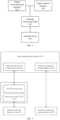
- the target communication interface may include an interface abstraction layer and a communication protocol implementation layer, to hide the complexity of a certain communication protocol and expose only a very simple interface to the upper layers.
- FIG. 7 is a schematic diagram illustrating a communication interface architecture according to an embodiment of the disclosure.
- the communication interface may have an interface abstraction layer and a communication protocol implementation layer.
- the interface abstraction layer may be used for receiving the data transmission request, obtaining an interface descriptor by parsing the data transmission request, and extracting the resource location address, the communication protocol type, and the communication parameters from the interface descriptor.
- the communication protocol implementation layer may be used for transmitting data through the communication protocol corresponding to the communication protocol type and the resource location corresponding to the resource location address.
- the communication protocol implementation layer is also provided with an encryption interface, which is used for transmitting data with the encryption component by using the communication protocol corresponding to the communication protocol type.
- receiving the data transmission request from the target service node may include: receiving the data transmission request based on an interface abstraction layer.
- the target service node when the target service node needs to transmit data with the target resource location corresponding to the target resource location address, the target service node may send a data transmission request to a target communication interface installed therein, and the target communication interface may receive the data transmission request based on the interface abstraction layer. After the target communication interface receives the data transmission request based on the interface abstraction layer, the target communication interface may, in response to the data transmission request, extract the target resource location address, the target communication protocol type and the communication parameters from the data transmission request based on the interface abstraction layer.
- performing the data transmission between the target service node and the target resource location corresponding to the target resource location address using the target communication protocol corresponding to the target communication protocol type in the plurality of preset communication protocols includes: forwarding data between the target service node and the target resource location using the target communication protocol based on a communications protocol implementation layer.
- the target communication interface may send the target resource location address, the target communication protocol type and the communication parameters to the communication protocol implementation layer in the target communication interface, so that the communication protocol implementation layer, based on the communication parameters, uses the target communication protocol corresponding to the target communication protocol type to encrypt, by means of the encryption component, and transmit data between the target service node and the target resource location corresponding to the target resource location address.
- the target communication interface can use the interface abstraction layer to hide details such as different communication protocols, which allows upper-layer applications to communicate through an upper-layer interface of the interface abstraction layer, such that the target communication interface is concise, the integration workload of upper-layer application codes is small, the communication performance is comparatively high, the corresponding occupied resources is small, and the efficiency of protocol docking is greatly improved. Furthermore, the use of common descriptor makes it easier to exchange and convert between different communication protocols.
- the communication protocol implementation layer of the target communication interface may store the preset communication protocols in advance, the flexibility of the target communication interface is improved, and it is possible to change the communication protocol type based on the need of the target service node and to re-initialize the target communication interface based on the desired communication protocol type, so that the communication protocol can be switched without modifying any code.
- the communication protocols stored within the target communication interface may be directly increased or decreased without having to modify any code. Therefore, the reuse rate of the codes is relatively high and existing services may be directly and smoothly reused on future new communication protocols and platforms.
- FIG. 8 is a schematic diagram illustrating an apparatus 800 for transmitting data according to an embodiment of the disclosure.
- the apparatus illustrated in FIG. 8 may be applied to a communication interface installed on an application service node in a vehicle network.
- the vehicle network may be a transport network formed by a plurality of application service nodes applied to support automotive applications.
- One application service node may be a controller or a process in a controller.
- the communication interface may be a software interface.
- the apparatus 800 for transmitting data may include a request receiving module 810 and a data transmission module 820.
- the request receiving module 810 is configured to: receive a data transmission request from a target service node, in which the data transmission request carries a target interface descriptor, the target interface descriptor includes a target resource location address and a target communication protocol type, and the target interface descriptor is a common descriptor used by a vehicle network to which the target service node belongs.
- the data transmission module 820 is configured to, in response to the data transmission request, forward data between the target service node and a target resource location corresponding to the target resource location address using a target communication protocol corresponding to the target communication protocol type in a plurality of preset communication protocols.
- the target resource location and the target communication protocol type in the target interface descriptor may be read out under any communication protocol type since the target interface descriptor carried by the data transmission request is a common descriptor used by the vehicle network to which the target service node belongs.
- data may be forwarded between the target service node and the target resource location using the target communication protocol corresponding to the target communication protocol type in the plurality of communication protocols.
- the data transmission between the target service node and the target resource location may be realized under any communication protocol type, which improves the universality of the interface descriptor for different communication protocol types and improves the universality of the communication interface for different communication protocol types, thereby reducing the error rate during use.
- the data transmission module 820 is further configured to encrypt, through an encryption component, and transmit data between the target service node and the target resource location.
- the data transmission request can be a data sending request, and the data transmission request may carry data to be transmitted.
- the data transmission module 820 further includes: a first transmitting unit, a second transmitting unit and a third transmitting unit.
- the first transmitting unit is configured to: send the data to be transmitted to the encryption component, in which the data to be transmitted is encrypted by the encryption component based on an encryption mode corresponding to the target communication protocol type.
- the second transmitting unit is configured to: receive encrypted data to be fed back by the encryption component.
- the third transmitting unit is configured to: send the encrypted data to be transmitted to the target resource location.
- the data transmission request may be a data obtaining request.
- the data transmission module 820 may include a fourth transmitting unit, a fifth transmitting unit, and a sixth transmitting unit.
- the fourth transmitting unit is configured to: obtain encrypted data to be transmitted from the target resource location.
- the fifth transmitting unit is configured to: send the encrypted data to be transmitted to the encryption component, in which the encrypted data to be transmitted is decrypted by the encryption component based on a decryption mode corresponding to the target communication protocol type.
- the sixth transmitting unit is configured to: send the data to be transmitted to the target service node.
- the apparatus 800 for transmitting data may further include: an instruction receiving module and an operation executing module.
- the instruction receiving module is configured to: before receiving the data transmission request from the target service node, receive an interface initialization instruction from the target service node, in which the interface initialization instruction carries the target communication protocol type.
- the operation executing module is configured to: in response to the interface initialization instruction, perform an interface initialization operation to activate the target communication protocol corresponding to the target communication protocol type.
- the data transmission request may be a data sending request, and the data transmission request carries data to be transmitted.
- the data transmission module 820 may be configured to: send the data to be transmitted to the target resource location.
- the data transmission apparatus 800 may further include: a data sending module.
- the data sending module is configured to: after sending the data to be transmitted to the target resource location, send the data to be transmitted to a message subscription node using the target communication protocol, so that the message subscription node may send the data to be transmitted to an external device through a network communication mode.
- the preset communication protocol may be a network communication protocol or a non-network communication protocol.
- the apparatus 800 for transmitting data includes: a request converting module and a request parsing module.
- the request converting module is configured to: after receiving the data transmission request from the target service node, convert the data transmission request into a preset encoding type.
- the request parsing module is configured to: obtain the target interface descriptor by parsing the data transmission request.
- the request receiving module 810 is configured to: receive the data transmission request based on an interface abstraction layer.
- the data transmission module 820 may be further configured to: forward the data between the target service node and the target resource location using the target communication protocol based on a communications protocol implementation layer.
- apparatus 800 for transmitting data illustrated in FIG. 8 may perform various blocks in method embodiments illustrated in FIG. 1 and realize various processes and effects in method embodiments illustrated in FIG. 1 , which will not be described herein.
- FIG. 9 is a schematic diagram illustrating a device for transmitting data according to an embodiment of the disclosure.
- the device for transmitting data illustrated in FIG. 9 may be a device belonging to an application service node installed with a communication interface in a vehicle network.
- the vehicle network may be a transport network formed by a plurality of application service nodes applied to support automotive applications.
- One application service node may be a controller or a process in a controller.
- the communication interface may be a software interface.
- the device for transmitting data may include a processor 901 and a memory 902 for storing computer program instructions.
- the processor 901 may include a central processing unit (CPU) or an Application Specific Integrated Circuit (ASIC), or may be implemented as one or more integrated circuits to implement the embodiments of the disclosure.
- CPU central processing unit
- ASIC Application Specific Integrated Circuit
- the memory 902 may include a large-capacity storage for storing information or instructions.
- the memory 902 may include a hard disk drive (HDD), a floppy disk drive, a flash memory, an optical disk, a magnetic disk, a magnetic tape, or a Universal Serial Bus (USB) drive or a combination of two and more of these.
- the memory 902 may include removable or non-removable (or fixed) medium, and the memory 902 may be internal or external to the integrated gateway device.
- the memory 902 is a non-volatile solid state memory.
- the memory 902 includes a Read-Only Memory (ROM).
- the ROM may be a mask-programmed ROM, a programmable ROM (PROM), an Erasable PROM (EPROM), an Electrically Erasable PROM (EEPROM), an electrically alterable ROM (EAROM), a flash memory, or a combination of two or more of these.
- PROM programmable ROM
- EPROM Erasable PROM
- EEPROM Electrically Erasable PROM
- EAROM electrically alterable ROM
- flash memory or a combination of two or more of these.
- the processor 901 reads and executes the computer program instructions stored in the memory 902, to implement blocks of the method for transmitting data according to embodiments of the disclosure.
- the device for transmitting data may also include: a transceiver 903 and a bus 904. As illustrated in FIG. 9 , the processor 901, the memory 902 and the transceiver 903 are connected to and can communication with each other via the bus 904.
- the bus 904 includes hardware, software or both.
- the bus may include an Accelerated Graphics Port (AGP) or other graphics bus, an Extended Industry Standard Architecture (EISA) bus, a Front Side BUS (FSB), a Hyper Transport (HT) interconnect, an Industrial Standard Architecture (ISA) bus, an unlimited bandwidth interconnect, a Low Pin Count (LPC) bus, a memory bus, a Micro Channel Architecture (MCA) bus, a Peripheral Component Interconnect (PCI) bus, a PCI-Express (PCI-X) bus, a Serial Advanced Technology Attachment (SATA) bus, a Video Electronics Standards Association Local Bus (VLB) or other suitable bus or a combination of two or more of these.
- the bus 904 may include one or more buses. Although specific buses are described and illustrated in the embodiments of the disclosure, the disclosure contemplates any suitable bus or interconnect.
- Embodiments of the disclosure also provide a computer-readable storage medium having a computer program stored thereon.
- the processor is caused to perform the methods for transmitting data according to embodiments of the disclosure.
- the storage medium described above may, for example, include a memory 902 for storing computer program instructions.
- the instructions described above may be executed by the processor 901 to perform the methods for transmitting data according to embodiments of the disclosure.
- the storage medium may be a non-transitory computer-readable storage medium.
- the non-transitory computer-readable storage medium may be, for example, a ROM, a Random Access Memory (RAM), a Compact Disc ROM (CD-ROM), a magnetic tape, a floppy disk and an optical data storage device.
- Embodiments of the disclosure also provide a computer program product including a computer program.
- the computer program When the computer program is executed by a processor, the methods for transmitting data according to embodiments of the disclosure are performed.
- Embodiments of the disclosure also provide a computer program including computer program codes.
- the computer program codes are executed by a computer, the methods for transmitting data according to embodiments of the disclosure are performed.
Landscapes
- Engineering & Computer Science (AREA)
- Computer Networks & Wireless Communication (AREA)
- Signal Processing (AREA)
- Computer Security & Cryptography (AREA)
- Computing Systems (AREA)
- Health & Medical Sciences (AREA)
- General Health & Medical Sciences (AREA)
- Medical Informatics (AREA)
- Computer Hardware Design (AREA)
- General Engineering & Computer Science (AREA)
- Computer And Data Communications (AREA)
Applications Claiming Priority (2)
| Application Number | Priority Date | Filing Date | Title |
|---|---|---|---|
| CN202111117241.0A CN113938531B (zh) | 2021-09-23 | 2021-09-23 | 数据传输方法、装置、设备及介质 |
| PCT/CN2022/119675 WO2023045878A1 (zh) | 2021-09-23 | 2022-09-19 | 数据传输方法、装置、设备及计算机可读存储介质 |
Publications (2)
| Publication Number | Publication Date |
|---|---|
| EP4407960A1 true EP4407960A1 (de) | 2024-07-31 |
| EP4407960A4 EP4407960A4 (de) | 2024-12-25 |
Family
ID=79276585
Family Applications (1)
| Application Number | Title | Priority Date | Filing Date |
|---|---|---|---|
| EP22871924.1A Withdrawn EP4407960A4 (de) | 2021-09-23 | 2022-09-19 | Datenübertragungsverfahren, -vorrichtung und -vorrichtung sowie computerlesbares speichermedium |
Country Status (4)
| Country | Link |
|---|---|
| US (1) | US12375566B2 (de) |
| EP (1) | EP4407960A4 (de) |
| CN (1) | CN113938531B (de) |
| WO (1) | WO2023045878A1 (de) |
Families Citing this family (12)
| Publication number | Priority date | Publication date | Assignee | Title |
|---|---|---|---|---|
| CN113938531B (zh) * | 2021-09-23 | 2023-10-31 | 北京车和家信息技术有限公司 | 数据传输方法、装置、设备及介质 |
| CN114095585B (zh) * | 2022-01-21 | 2022-05-20 | 武汉中科通达高新技术股份有限公司 | 数据传输方法、装置、存储介质及电子设备 |
| CN114500678B (zh) * | 2022-01-26 | 2024-08-30 | 阿里巴巴(中国)有限公司 | 一种网关与通信节点的建连方法及设备 |
| CN114564209B (zh) * | 2022-02-08 | 2025-09-16 | 福思(杭州)智能科技有限公司 | 智能汽车数据的处理方法、装置、设备及存储介质 |
| CN115134427B (zh) * | 2022-06-10 | 2024-02-02 | 芯来智融半导体科技(上海)有限公司 | 通信协议协调方法、装置、计算机设备和存储介质 |
| CN115103032B (zh) * | 2022-06-10 | 2024-02-02 | 芯来智融半导体科技(上海)有限公司 | 通信协议控制电路和芯片 |
| CN115640347A (zh) * | 2022-10-18 | 2023-01-24 | 广东万丈金数信息技术股份有限公司 | 一种格式化传输数据内容的方法、系统、装置及存储介质 |
| CN115987777B (zh) * | 2022-11-30 | 2024-11-26 | 中汽创智科技有限公司 | 一种车辆网络配置方法、装置、电子设备及存储介质 |
| CN116709061A (zh) * | 2023-07-10 | 2023-09-05 | 中能合纵物联科技有限公司 | 一种电力数据采集方法及系统 |
| CN116841929B (zh) * | 2023-08-29 | 2024-01-02 | 北京紫光芯能科技有限公司 | 用于传输数据的方法及装置、电子设备、存储介质 |
| CN118400442B (zh) * | 2024-06-24 | 2024-09-27 | 深圳市前海铼停科技有限公司 | 基于车牌识别的车位锁通信管理方法、装置、计算机设备 |
| CN119232818A (zh) * | 2024-12-02 | 2024-12-31 | 上海融和元储能源有限公司 | 数据处理方法以及装置 |
Family Cites Families (37)
| Publication number | Priority date | Publication date | Assignee | Title |
|---|---|---|---|---|
| US7237260B2 (en) * | 2003-07-08 | 2007-06-26 | Matsushita Electric Industrial Co., Ltd. | Method for dynamic selection for secure and firewall friendly communication protocols between multiple distributed modules |
| CN102056138B (zh) * | 2009-11-05 | 2016-08-03 | 中兴通讯股份有限公司 | 本地ip访问连接的管理方法及装置 |
| US10917263B1 (en) * | 2014-05-29 | 2021-02-09 | Modius Inc. | Universal configurable device gateway |
| US10469542B2 (en) * | 2016-02-29 | 2019-11-05 | Ribbon Communications Operating Company, Inc. | Communications methods, apparatus and systems to provide optimal media routing |
| WO2017147772A1 (zh) * | 2016-03-01 | 2017-09-08 | 华为技术有限公司 | 一种消息传输方法及核心网接口设备 |
| US10440122B2 (en) * | 2016-07-01 | 2019-10-08 | Intel Corporation | Efficient provisioning of devices |
| CN106713320B (zh) * | 2016-12-23 | 2020-07-03 | 腾讯科技(深圳)有限公司 | 终端数据传输的方法和装置 |
| CN108811016B (zh) * | 2017-05-05 | 2022-02-25 | 北京三星通信技术研究有限公司 | 一种支持切换的方法 |
| US10491465B2 (en) * | 2017-05-12 | 2019-11-26 | Dell Products L.P. | System and method for dynamic and extensible management of device nodes |
| US11343317B2 (en) * | 2017-05-25 | 2022-05-24 | Siemens Aktiengesellschaft | Data transmission method and device |
| CN108289063B (zh) * | 2017-09-11 | 2021-07-27 | 上海金融期货信息技术有限公司 | 一种低延迟通讯系统 |
| WO2019136695A1 (zh) * | 2018-01-12 | 2019-07-18 | Oppo广东移动通信有限公司 | 一种数据传输方法及装置、计算机存储介质 |
| CN109450952A (zh) * | 2018-12-28 | 2019-03-08 | 北京云中融信网络科技有限公司 | 加密数据通讯方法、装置以及电子设备 |
| US10834434B2 (en) * | 2018-12-28 | 2020-11-10 | Intel Corporation | Methods and apparatus to reduce audio streaming latency between audio and Gigabit Ethernet subsystems |
| CN113273110B (zh) * | 2019-01-11 | 2025-01-07 | 苹果公司 | 用于传输和接收非独立和独立物理侧链路共享信道的侧链路过程和结构 |
| US12376059B2 (en) * | 2019-01-25 | 2025-07-29 | Apple Inc. | Methods and systems for data transfer over non-access stratum (NAS) control plane for cellular internet of things (CIOT) in a 5G system (5GS) |
| US20220201638A1 (en) * | 2019-02-14 | 2022-06-23 | Apple Inc. | Registration management in information centric networking for next generation cellular networks |
| US12341726B2 (en) * | 2019-02-14 | 2025-06-24 | Apple Inc. | System and method for UE triggered CSI-RS |
| EP3906622A1 (de) * | 2019-02-22 | 2021-11-10 | Apple Inc. | Prüfung der funkressourcenverwaltung (rrm) mittels eintrittswinkel (aoa ) |
| CN113491095B (zh) * | 2019-02-28 | 2024-11-05 | 苹果公司 | 用于在分组数据汇聚协议(pdcp)处压缩和解压缩信息中心网络名称的方法和系统 |
| US12137462B2 (en) * | 2019-05-01 | 2024-11-05 | Apple Inc. | Configured grant improvement for new radio (NR) unlicensed |
| US11558423B2 (en) * | 2019-09-27 | 2023-01-17 | Stealthpath, Inc. | Methods for zero trust security with high quality of service |
| CN111193716B (zh) * | 2019-12-11 | 2023-04-07 | 未鲲(上海)科技服务有限公司 | 业务数据调用方法、装置、计算机设备和存储介质 |
| CN111049854B (zh) * | 2019-12-25 | 2021-12-14 | 微民保险代理有限公司 | 一种服务请求的传输方法和装置 |
| CN115244897A (zh) * | 2020-02-14 | 2022-10-25 | Idac控股公司 | 用于使用quic实现多主机多路径安全传输的方法和装置 |
| CN111614694B (zh) * | 2020-05-29 | 2022-06-24 | 腾讯音乐娱乐科技(深圳)有限公司 | 通信方法、装置及电子设备和计算机可读存储介质 |
| CN111818136B (zh) * | 2020-06-24 | 2023-08-22 | 深圳中集智能科技有限公司 | 数据处理方法、装置、电子设备及计算机可读介质 |
| CN112218386B (zh) * | 2020-10-16 | 2022-11-29 | 展讯通信(天津)有限公司 | 用于多卡终端的应用程序业务通路建立方法及装置、存储介质、终端 |
| CN112671638B (zh) * | 2021-01-13 | 2022-10-04 | 北京方正数码有限公司 | 一种用于多协议转换的网关结构 |
| CN113347017B (zh) * | 2021-04-09 | 2023-07-21 | 中科创达软件股份有限公司 | 一种网络通信的方法、装置、网络节点设备及混合网络 |
| CN113163263B (zh) * | 2021-04-30 | 2023-07-28 | 广州酷狗计算机科技有限公司 | 车载设备控制媒体资源的方法、装置和存储介质 |
| US11540196B2 (en) * | 2021-05-11 | 2022-12-27 | Verizon Patent And Licensing Inc. | System and method for processing enhanced route selection descriptors |
| CN113179330B (zh) * | 2021-05-25 | 2022-08-09 | 浙江浙大西投脑机智能科技有限公司 | 一种兼容多种硬件接口规范及硬件通信协议的外部设备连接管理系统 |
| CN113242534B (zh) * | 2021-06-11 | 2022-05-10 | 合肥工业大学 | 一种基于wi-fi的通用型多协议数字仪表物联模块 |
| CN113391589B (zh) * | 2021-06-29 | 2022-12-27 | 西北工业大学 | 一种无人机异构设备统一接入与协议转换板卡 |
| CN113938531B (zh) * | 2021-09-23 | 2023-10-31 | 北京车和家信息技术有限公司 | 数据传输方法、装置、设备及介质 |
| CN114244915A (zh) * | 2022-02-23 | 2022-03-25 | 四川鸿创电子科技有限公司 | 一种支持多种协议的数据传输方法、装置及存储介质 |
-
2021
- 2021-09-23 CN CN202111117241.0A patent/CN113938531B/zh active Active
-
2022
- 2022-09-19 WO PCT/CN2022/119675 patent/WO2023045878A1/zh not_active Ceased
- 2022-09-19 EP EP22871924.1A patent/EP4407960A4/de not_active Withdrawn
- 2022-09-19 US US18/694,915 patent/US12375566B2/en active Active
Also Published As
| Publication number | Publication date |
|---|---|
| CN113938531A (zh) | 2022-01-14 |
| EP4407960A4 (de) | 2024-12-25 |
| US12375566B2 (en) | 2025-07-29 |
| US20240340345A1 (en) | 2024-10-10 |
| WO2023045878A1 (zh) | 2023-03-30 |
| CN113938531B (zh) | 2023-10-31 |
Similar Documents
| Publication | Publication Date | Title |
|---|---|---|
| EP4407960A1 (de) | Datenübertragungsverfahren, -vorrichtung und -vorrichtung sowie computerlesbares speichermedium | |
| CN110535742B (zh) | 报文转发方法、装置、电子设备及机器可读存储介质 | |
| CN107800663B (zh) | 流量离线文件的检测方法及装置 | |
| EP2429150A1 (de) | Vorrichtung, web-dienstkomponente und verfahren auf der basis eines web-dienstes | |
| CN109831775B (zh) | 一种处理器、基带芯片以及sim卡信息传输方法 | |
| US20190026478A1 (en) | Vehicle secure communication method and apparatus, vehicle multimedia system, and vehicle | |
| CN113114706A (zh) | 基于电力芯片的多通道以太网报文处理方法 | |
| CN114979058A (zh) | 一种can多邮箱复用处理方法及系统 | |
| CN111212397B (zh) | 车对外界信息交互(v2x)通信装置以及用于接收车对外界信息交互(v2x)消息的方法 | |
| CN112953802B (zh) | 一种数据通信方法及装置 | |
| CN117255061B (zh) | 基于dpu的加密报文限速方法及装置 | |
| CN112422485B (zh) | 一种传输控制协议的通信方法及装置 | |
| CN109040147B (zh) | 一种基于tee+se的加解密的方法和系统 | |
| CN103078720B (zh) | 报文处理方法及装置 | |
| CN113377393B (zh) | 一种车载系统主节点的诊断刷新系统及方法 | |
| EP3466015B1 (de) | Verfahren und netzwerkknoten zur handhabung von sctp-paketen | |
| CN110572476B (zh) | 一种远程控制方法、装置及设备 | |
| CN119299079A (zh) | 数据传输的方法、装置、设备及存储介质 | |
| CN114780353B (zh) | 一种文件日志监控方法、系统及计算设备 | |
| CN111859351A (zh) | 向芯片写入信息的方法、系统、服务器及存储介质 | |
| CN118827516B (zh) | 数据通信方法、装置、设备及存储介质 | |
| CN117896205B (zh) | 一种内部通信方法、装置、电子设备及可读存储介质 | |
| CN116155608B (zh) | 车载信息管理系统及方法 | |
| CN115167832A (zh) | 测试方法、装置、电子设备及存储介质 | |
| CN110460475B (zh) | 一种报文安全处理系统和方法 |
Legal Events
| Date | Code | Title | Description |
|---|---|---|---|
| STAA | Information on the status of an ep patent application or granted ep patent |
Free format text: STATUS: THE INTERNATIONAL PUBLICATION HAS BEEN MADE |
|
| PUAI | Public reference made under article 153(3) epc to a published international application that has entered the european phase |
Free format text: ORIGINAL CODE: 0009012 |
|
| STAA | Information on the status of an ep patent application or granted ep patent |
Free format text: STATUS: REQUEST FOR EXAMINATION WAS MADE |
|
| 17P | Request for examination filed |
Effective date: 20240408 |
|
| AK | Designated contracting states |
Kind code of ref document: A1 Designated state(s): AL AT BE BG CH CY CZ DE DK EE ES FI FR GB GR HR HU IE IS IT LI LT LU LV MC MK MT NL NO PL PT RO RS SE SI SK SM TR |
|
| A4 | Supplementary search report drawn up and despatched |
Effective date: 20241127 |
|
| RIC1 | Information provided on ipc code assigned before grant |
Ipc: H04L 9/40 20220101ALI20241121BHEP Ipc: H04L 69/18 20220101ALI20241121BHEP Ipc: H04L 69/08 20220101AFI20241121BHEP |
|
| DAV | Request for validation of the european patent (deleted) | ||
| DAX | Request for extension of the european patent (deleted) | ||
| STAA | Information on the status of an ep patent application or granted ep patent |
Free format text: STATUS: THE APPLICATION HAS BEEN WITHDRAWN |
|
| 18W | Application withdrawn |
Effective date: 20250613 |