EP4407898A1 - Verfahren und vorrichtung für informationsberichterstattung auf basis von trägeraggregation sowie medium und elektronische vorrichtung - Google Patents
Verfahren und vorrichtung für informationsberichterstattung auf basis von trägeraggregation sowie medium und elektronische vorrichtung Download PDFInfo
- Publication number
- EP4407898A1 EP4407898A1 EP22871559.5A EP22871559A EP4407898A1 EP 4407898 A1 EP4407898 A1 EP 4407898A1 EP 22871559 A EP22871559 A EP 22871559A EP 4407898 A1 EP4407898 A1 EP 4407898A1
- Authority
- EP
- European Patent Office
- Prior art keywords
- carrier
- maximum output
- output power
- base station
- carrier aggregation
- Prior art date
- Legal status (The legal status is an assumption and is not a legal conclusion. Google has not performed a legal analysis and makes no representation as to the accuracy of the status listed.)
- Granted
Links
Images


Classifications
-
- H—ELECTRICITY
- H04—ELECTRIC COMMUNICATION TECHNIQUE
- H04W—WIRELESS COMMUNICATION NETWORKS
- H04W52/00—Power management, e.g. Transmission Power Control [TPC] or power classes
- H04W52/04—Transmission power control [TPC]
- H04W52/30—Transmission power control [TPC] using constraints in the total amount of available transmission power
- H04W52/36—Transmission power control [TPC] using constraints in the total amount of available transmission power with a discrete range or set of values, e.g. step size, ramping or offsets
- H04W52/367—Power values between minimum and maximum limits, e.g. dynamic range
-
- H—ELECTRICITY
- H04—ELECTRIC COMMUNICATION TECHNIQUE
- H04L—TRANSMISSION OF DIGITAL INFORMATION, e.g. TELEGRAPHIC COMMUNICATION
- H04L5/00—Arrangements affording multiple use of the transmission path
- H04L5/0001—Arrangements for dividing the transmission path
- H04L5/0003—Two-dimensional division
- H04L5/0005—Time-frequency
-
- H—ELECTRICITY
- H04—ELECTRIC COMMUNICATION TECHNIQUE
- H04L—TRANSMISSION OF DIGITAL INFORMATION, e.g. TELEGRAPHIC COMMUNICATION
- H04L5/00—Arrangements affording multiple use of the transmission path
- H04L5/0001—Arrangements for dividing the transmission path
- H04L5/0003—Two-dimensional division
- H04L5/0005—Time-frequency
- H04L5/0007—Time-frequency the frequencies being orthogonal, e.g. OFDM(A) or DMT
- H04L5/001—Time-frequency the frequencies being orthogonal, e.g. OFDM(A) or DMT the frequencies being arranged in component carriers
-
- H—ELECTRICITY
- H04—ELECTRIC COMMUNICATION TECHNIQUE
- H04L—TRANSMISSION OF DIGITAL INFORMATION, e.g. TELEGRAPHIC COMMUNICATION
- H04L5/00—Arrangements affording multiple use of the transmission path
- H04L5/0091—Signalling for the administration of the divided path, e.g. signalling of configuration information
- H04L5/0094—Indication of how sub-channels of the path are allocated
-
- H—ELECTRICITY
- H04—ELECTRIC COMMUNICATION TECHNIQUE
- H04W—WIRELESS COMMUNICATION NETWORKS
- H04W52/00—Power management, e.g. Transmission Power Control [TPC] or power classes
- H04W52/04—Transmission power control [TPC]
- H04W52/06—TPC algorithms
- H04W52/14—Separate analysis of uplink or downlink
- H04W52/146—Uplink power control
-
- H—ELECTRICITY
- H04—ELECTRIC COMMUNICATION TECHNIQUE
- H04W—WIRELESS COMMUNICATION NETWORKS
- H04W52/00—Power management, e.g. Transmission Power Control [TPC] or power classes
- H04W52/04—Transmission power control [TPC]
- H04W52/18—TPC being performed according to specific parameters
- H04W52/26—TPC being performed according to specific parameters using transmission rate or quality of service QoS [Quality of Service]
- H04W52/265—TPC being performed according to specific parameters using transmission rate or quality of service QoS [Quality of Service] taking into account the quality of service QoS
-
- H—ELECTRICITY
- H04—ELECTRIC COMMUNICATION TECHNIQUE
- H04W—WIRELESS COMMUNICATION NETWORKS
- H04W52/00—Power management, e.g. Transmission Power Control [TPC] or power classes
- H04W52/04—Transmission power control [TPC]
- H04W52/30—Transmission power control [TPC] using constraints in the total amount of available transmission power
- H04W52/32—TPC of broadcast or control channels
-
- H—ELECTRICITY
- H04—ELECTRIC COMMUNICATION TECHNIQUE
- H04W—WIRELESS COMMUNICATION NETWORKS
- H04W52/00—Power management, e.g. Transmission Power Control [TPC] or power classes
- H04W52/04—Transmission power control [TPC]
- H04W52/30—Transmission power control [TPC] using constraints in the total amount of available transmission power
- H04W52/34—TPC management, i.e. sharing limited amount of power among users or channels or data types, e.g. cell loading
-
- H—ELECTRICITY
- H04—ELECTRIC COMMUNICATION TECHNIQUE
- H04W—WIRELESS COMMUNICATION NETWORKS
- H04W52/00—Power management, e.g. Transmission Power Control [TPC] or power classes
- H04W52/04—Transmission power control [TPC]
- H04W52/30—Transmission power control [TPC] using constraints in the total amount of available transmission power
- H04W52/34—TPC management, i.e. sharing limited amount of power among users or channels or data types, e.g. cell loading
- H04W52/346—TPC management, i.e. sharing limited amount of power among users or channels or data types, e.g. cell loading distributing total power among users or channels
-
- H—ELECTRICITY
- H04—ELECTRIC COMMUNICATION TECHNIQUE
- H04W—WIRELESS COMMUNICATION NETWORKS
- H04W52/00—Power management, e.g. Transmission Power Control [TPC] or power classes
- H04W52/04—Transmission power control [TPC]
- H04W52/30—Transmission power control [TPC] using constraints in the total amount of available transmission power
- H04W52/36—Transmission power control [TPC] using constraints in the total amount of available transmission power with a discrete range or set of values, e.g. step size, ramping or offsets
- H04W52/365—Power headroom reporting
-
- H—ELECTRICITY
- H04—ELECTRIC COMMUNICATION TECHNIQUE
- H04L—TRANSMISSION OF DIGITAL INFORMATION, e.g. TELEGRAPHIC COMMUNICATION
- H04L5/00—Arrangements affording multiple use of the transmission path
- H04L5/14—Two-way operation using the same type of signal, i.e. duplex
- H04L5/1469—Two-way operation using the same type of signal, i.e. duplex using time-sharing
-
- Y—GENERAL TAGGING OF NEW TECHNOLOGICAL DEVELOPMENTS; GENERAL TAGGING OF CROSS-SECTIONAL TECHNOLOGIES SPANNING OVER SEVERAL SECTIONS OF THE IPC; TECHNICAL SUBJECTS COVERED BY FORMER USPC CROSS-REFERENCE ART COLLECTIONS [XRACs] AND DIGESTS
- Y02—TECHNOLOGIES OR APPLICATIONS FOR MITIGATION OR ADAPTATION AGAINST CLIMATE CHANGE
- Y02D—CLIMATE CHANGE MITIGATION TECHNOLOGIES IN INFORMATION AND COMMUNICATION TECHNOLOGIES [ICT], I.E. INFORMATION AND COMMUNICATION TECHNOLOGIES AIMING AT THE REDUCTION OF THEIR OWN ENERGY USE
- Y02D30/00—Reducing energy consumption in communication networks
- Y02D30/70—Reducing energy consumption in communication networks in wireless communication networks
Definitions
- the present disclosure relates to the field of communication technology, and in particular, to a method for reporting information based on carrier aggregation, a device for reporting information based on carrier aggregation, a computer-readable storage medium and an electronic device.
- the terminal device With the continuous development of communication technology, there are more and more classifications for the power class of a high-power terminal device. However, the terminal device generally only reports the total power class in the carrier aggregation scenario.
- An aspect of the present disclosure provides a method for reporting information based on carrier aggregation, including:
- reporting the power class corresponding to the second maximum output power of the target carrier to the base station includes:
- the method further includes, after transmitting the first indication information to the base station: updating, by the base station, a power class corresponding to the first maximum output power of the target carrier, to the power class corresponding to the second maximum output power of the target carrier.
- the method further includes:
- the method further includes:
- the method further includes: uploading, in response to determining that there is uplink data, the uplink data to the base station at an output power less than or equal to the second maximum output power of the target carrier.
- the carriers are intra-band contiguous, intra-band non-contiguous or inter-band non-contiguous.
- reporting the power class corresponding to the second maximum output power of the target carrier to the base station includes:
- the method further includes: transmitting, in response to detecting that there is no target carrier with the first maximum output power larger than the second maximum output power in the carrier aggregation scenario, third indication information to the base station, wherein the third indication information does not include a carrier identification field or a power class field.
- the method further includes: determining, by the base station, not to update the power classes corresponding to the carriers according to the third indication information.
- each of the carriers corresponds to one transmitting channel
- each of the carriers corresponds to one or more transmitting channels.
- the base station is at least one of a 3G base station, a 4G base station, a 5G base station, and a 6G base station.
- a terminal device transmitting the carriers applies a time division duplex TDD mode.
- the carrier aggregation scenario includes a carrier aggregation scenario in 4G and 5G dual connectivity.
- An aspect of the present disclosure provides a device for reporting information based on carrier aggregation, including:
- the information reporting unit is configured to:
- the information reporting unit is configured to, after transmitting the first indication information to the base station, update, by the base station, a power class corresponding to the first maximum output power of the target carrier, to the power class corresponding to the second maximum output power of the target carrier.
- the information reporting unit is further configured to:
- the device further includes: a channel assigning unit, configured to reassign, in response to receiving a carrier assignment instruction, transmitting channels corresponding to the carriers, so that the transmitting channels correspond to the carriers in a one-to-one correspondence; and perform carrier aggregation on the carriers and determine that the carriers are in the carrier aggregation scenario.
- a channel assigning unit configured to reassign, in response to receiving a carrier assignment instruction, transmitting channels corresponding to the carriers, so that the transmitting channels correspond to the carriers in a one-to-one correspondence; and perform carrier aggregation on the carriers and determine that the carriers are in the carrier aggregation scenario.
- the method further includes: a data uploading unit, configured to upload, in response to determining that there is uplink data, the uplink data to the base station at an output power less than or equal to the second maximum output power of the target carrier.
- the carriers are intra-band contiguous, intra-band non-contiguous or inter-band non-contiguous.
- the information reporting unit is configured to:
- An aspect of the present disclosure provides an electronic device including a processor and a memory storing executable instructions of the processor, and the processor is configured to implement any one of the methods described above by executing the executable instructions.
- An aspect of the present disclosure provides a computer-readable storage medium having computer programs stored thereon that, when being executed by a processor, implement any one of the methods described above.
- An aspect of the present disclosure provides a computer program product or a computer program including computer instructions, and the computer instructions are stored in a computer-readable storage medium.
- a processor of a computer device reads the computer instructions from the computer-readable storage medium, and the processor executes the computer instructions, so that the computer device implements the method provided in the above various optional embodiments.
- the terminal only reports the total power class in the carrier aggregation scenario, which is not representative of the maximum output power of each carrier in the carrier aggregation, which may easily lead to an error in the maximum output power class of each carrier in the carrier aggregation recorded by the base station.
- FIG. 1 illustrates a schematic diagram of a system architecture of an exemplary application environment to which a method for reporting information based on carrier aggregation and a device for reporting information based on carrier aggregation according to an embodiment of the present disclosure may be applied.
- a system architecture 100 may include one or more of terminal devices 101, 102, 103, a network 104, and a server 105.
- the network 104 is used to provide a medium for a communication link between the terminal devices 101, 102, 103, and the server 105.
- the network 104 may include various connection types, such as wired, wireless communication links or fiber-optic cables.
- the terminal devices 101, 102, 103 may be a variety of electronic devices having a display, including, but not limited to, desktop computers, portable computers, smartphones, tablets or the like. It should be understood that the number of terminal devices, networks, and servers in FIG. 1 is merely schematic. There may be any number of terminal devices, networks, and servers as needed for implementation.
- the server 105 may be a server cluster including a plurality of servers, and the like.
- the method for reporting information based on carrier aggregation according to an embodiment of the present disclosure is generally performed by the server 105, and accordingly, the device for reporting information based on carrier aggregation is generally provided in the server 105.
- the method for reporting information based on carrier aggregation according to an embodiment of the present disclosure may also be performed by the terminal device 101, 102, or 103, and accordingly, the device for reporting information based on carrier aggregation may also be provided in the terminal device 101, 102, or 103, which is not specifically limited in the embodiment of the present disclosure.
- the server 105 may determine a first maximum output power of each of carriers in a carrier aggregation scenario when being used as a single carrier; determine a second maximum output power, in the carrier aggregation scenario, of each of the carriers; and report, if detects that there is a target carrier with the first maximum output power larger than the second maximum output power in the carrier aggregation scenario, a power class corresponding to the second maximum output power of the target carrier to a base station.
- FIG. 2 illustrates a schematic diagram of a structure of a computer system suitable for implementing an electronic device according to an embodiment of the present disclosure.
- the computer system 200 includes a central processing unit (CPU) 201 which may perform various appropriate actions and processes according to a program stored in a read-only memory (ROM) 202 or loaded from a storage portion 208 into a random access memory (RAM) 203.
- ROM read-only memory
- RAM random access memory
- Various programs and data required for system operation are also stored in the RAM 203.
- the CPU 201, ROM 202, and RAM 203 are connected to each other via a bus 204.
- An input/output (I/O) interface 205 is also connected to the bus 204.
- the following components are connected to the I/O interface 205: an input portion 206 including a keyboard, a mouse, etc.; an output portion 207 including a cathode ray tube (CRT), a liquid crystal display (LCD), a speaker, etc.; a storage portion 208 including a hard disk, etc.; and a communication portion 209 including a network interface card such as a LAN card, a modem, etc..
- the communication portion 209 performs communication processing via a network such as the Internet.
- a driver 210 is also connected to the I/O interface 205 as needed.
- a removable media 211 such as a magnetic disk, a compact disc, a photomagnetic disk, and a semiconductor memory, is mounted on the driver 210 as needed, so that computer programs read therefrom are mounted into the storage portion 208 as needed.
- an embodiment of the present disclosure includes a computer program product including a computer program carried on a computer readable medium, and the computer program includes program codes for performing the method shown in the flowchart.
- the computer program may be downloaded and installed from a network via the communication portion 209, and/or installed from the removable medium 211.
- the central processing unit (CPU) 201 Upon execution of the computer program by the central processing unit (CPU) 201, various functions defined in the methods and devices of the present disclosure are performed.
- An example embodiment provides a method for reporting information based on carrier aggregation.
- the method for reporting information based on carrier aggregation may be applied to the above-described server 105, or to one or more of the above-described terminal devices 101, 102, 103, which is not specifically limited in the example embodiment.
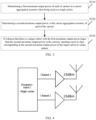
- the method for reporting information based on carrier aggregation may include:
- the actual maximum output power class of this carrier in the carrier aggregation scenario may be reported to the base station in a timely manner, so as to ensure that there is consistency between the maximum output power class of each carrier stored in the base station and the actual maximum output power class of each carrier in the terminal, which can facilitate more effective information transmission.
- a first maximum output power of each of carriers in a carrier aggregation scenario when being used as a single carrier is determined.
- the carrier aggregation (CA) is to aggregate a plurality of carriers with different/identical frequencies into a wider spectrum, and it may also aggregate discontinuous spectrum fragmentations to achieve an increase in bandwidth.
- the carrier mentioned above may also be denoted as a frequency band.
- the carriers are intra-band contiguous, intra-band non-contiguous or inter-band non-contiguous.
- the first maximum output power may characterize a maximum output power that can be used when data is transmitted or received over a single carrier, and if a terminal device corresponds to a plurality of single carriers, each of the single carriers may correspond to one first maximum output power.
- a second maximum output power, in the carrier aggregation scenario, of each of the carriers is determined.
- the second maximum output power may characterize a maximum output power that can be used when data is transmitted or received over each of the carriers in the carrier aggregation.
- the above method further includes: reassigning transmitting channels corresponding to the carriers when receiving a carrier assignment instruction, so that the transmitting channels correspond to the carriers in a one-to-one correspondence; and performing carrier aggregation on the carriers and determining that the carriers are in the carrier aggregation scenario.
- the carrier assignment instruction may be used to instruct the terminal device to reassign the transmitting channels that can be used by the carriers, and the corresponding transmitting channel of the terminal device may be one or more, which is not limited in the embodiment of the present disclosure.
- the terminal device corresponds to a plurality of transmitting channels
- one carrier corresponds to one transmitting channel
- in a single carrier scenario one carrier may correspond to one or more transmitting channels.
- the terminal device may correspond to one or more carriers.
- a plurality of carriers can be aggregated to achieve the effect of increasing the bandwidth.
- FIG. 4 schematically illustrates a schematic diagram of a single carrier scenario according to some embodiments of the present disclosure.
- the terminal device includes a frequency band x as a single carrier, the frequency band x may use both channel 1 and channel 2 in the terminal device to send and receive signals, each of the maximum output powers corresponding to channel 1 and channel 2 respectively is 23 dBm, and the first maximum output power of the frequency band x when being used as a single carrier may be 26dBm by superimposing the maximum output powers of the channel 1 and the channel 2.
- FIG. 5 schematically illustrates a schematic diagram of a carrier aggregation scenario according to some embodiments of the present disclosure.
- the terminal device in the carrier aggregation scenario, includes a frequency band x and a frequency band y of the carrier aggregation, and based on the reassignment of channels by the terminal device, the frequency band x and the frequency band y correspond to the channel 1 and the channel 2, respectively, and then the frequency band x and the frequency band y correspond to the second maximum output power of 23 dBm, respectively.
- the terminal device corresponds to the carrier x and the carrier y.
- the maximum output power of each of the carrier x and the carrier y when being used as a single carrier may be 23 dBm or 26 dBm. Although the maximum output power after the carrier aggregation may reach 26 dBm, each of the output powers of the carrier x and the carrier y in the carrier aggregation may not necessarily reach 26 dBm when transmitting information through the respective corresponding channels thereto.
- the maximum output powers corresponding to the carrier x and carrier y may be [23dBm, 23dBm], [23dBm, 26dBm], [26dBm, 23dBm], [26dBm, 26dBm].
- the above example may also be represented by the following table: Case Maximum output power after carrier aggregation Maximum output power of carrier X Maximum output power of carrier Y 1 26dBm 23dBm 23dBm 2 26dBm 23dBm 26dBm 3 26dBm 26dBm 23dBm 4 26dBm 26dBm 26dBm
- step S330 if it detects that there is a target carrier with the first maximum output power larger than the second maximum output power in the carrier aggregation scenario, a power class corresponding to the second maximum output power of the target carrier is reported to a base station.
- the base station may be at least one of a 3G base station, a 4G base station, a 5G base station, and a 6G base station, which is not limited in the embodiments of the present disclosure. Furthermore, there may be one or more target carriers.
- the power class may be used to characterize information transmitting and receiving capability of the terminal device (e.g., a user equipment (UE)), and the power class is included in the capability information of the terminal device.
- the capability information of the terminal device may include information indicative of a radio access technology supported by the terminal device, for example, a power class, a frequency band, a carrier aggregation (CA) band combination, a duplex mode, a service profile, a radio bearer, and the like, supported by the terminal device.
- CA carrier aggregation
- the duplex mode includes time division duplexing (TDD) and frequency division duplexing (FDD).
- TDD time division duplexing
- FDD frequency division duplexing
- a common RF frequency point is used in transmitting information and receiving information, and the uplink and downlink use different time slots for communication.
- FDD different RF frequency points are used in transmitting information and receiving information respectively.
- the terminal device in the present disclosure may use the above TDD mode described above.
- reporting the power class corresponding to the second maximum output power of the target carrier to the base station includes: generating first indication information including a carrier identification field and a power class field, wherein the carrier identification field is configured to indicate at least an identification corresponding to the target carrier, and the power class field is configured to indicate at least the power class corresponding to the second maximum output power of the target carrier; and transmitting the first indication information to the base station.
- the carrier identification field may be denoted as CA-BandNR, and the power class field may be denoted as PowerClass.
- the power class field may indicate whether the power class corresponding to each carrier in the carrier aggregation scenario when being used as a single carrier is applicable to the carrier aggregation scenario.
- the first indication information may be generated by the UE capability information element in the terminal device.
- the first indication information may be expressed as follows:
- the base station may be provided with accurate indication information, so that the base station can accurately adjust the carrier power class according to the indication information.
- the base station after transmitting the first indication information to the base station, the base station updates the power class corresponding to the first maximum output power of the target carrier to the power class corresponding to the second maximum output power of the target carrier.
- the base station may be used to store the first maximum output power class of each carrier in each terminal device accessed.
- the power class corresponding to the first maximum output power may be expressed as (Power Class 2, +26dBm), i.e., the power class is 2; and the power class corresponding to the second maximum output power may be expressed as (Power Class 3, +23dBm) i.e., the power class is 3.
- the power class can be adjusted accurately.
- second indication information including the carrier identification field is reported.
- the second indication information is transmitted to the base station, so that the base station determines, when detecting that there is a default field in the second indication information, that there is no power class update indication.
- the default field may be understood to mean that the second indication information does not include the carrier identification field or the power class field.
- the second indication information is transmitted in the same manner as that in which the first indication information is transmitted.
- accurate indication information can be sent to the base station without power class adjustment.
- reporting the power class corresponding to the second maximum output power of the target carrier to the base station includes: determining at least one cell to which a terminal device belongs, and determining a base station corresponding to each of the at least one cell; and reporting the power class corresponding to the second maximum output power of the target carrier to the base station corresponding to each of the at least one cell.
- the coverage capacities of the plurality of cells may be the same or different, and coverage areas of the plurality of cells may be overlapped.
- the cell to which the terminal device belongs may characterize the coverage area of the base station.
- the timeliness of reporting the power class reporting to the cell to which the terminal device belongs can be ensured.
- the uplink data is uploaded to the base station via the target carrier at an output power less than or equal to the second maximum output power of the target carrier.
- the uplink data may be data that the terminal device needs to send to the base station.
- the accuracy of the power adjustment of the terminal device by the base station can be improved.
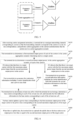
- the steps shown in FIG. 3 and embodiments thereof are integrated, which is shown as the method for reporting information based on carrier aggregation in FIG. 6 , and the method specifically includes step S610 to S680.
- a terminal device After receiving a carrier assignment instruction, a terminal device reassigns transmitting channels corresponding to carriers so that the transmitting channels correspond to the carriers in a one-to-one correspondence, and performs carrier aggregation on the carriers and determines that the carriers are in a carrier aggregation scenario.
- step S620 the terminal device determines a first maximum output power of each of the carriers in the carrier aggregation scenario when being used as a single carrier.
- step S630 the terminal device determines a second maximum output power, in the carrier aggregation scenario, of each of the carriers. If it detects that that there is a target carrier with the first maximum output power larger than the second maximum output power in the carrier aggregation scenario, step S640 is performed. If it detects that that there is no target carrier with the first maximum output power larger than the second maximum output power in the carrier aggregation scenario, step S650 is performed.
- step S640 the terminal device generates first indication information including a carrier identification field and a power class field, wherein the carrier identification field is configured to indicate at least an identification corresponding to the target carrier, and the power class field is configured to indicate at least the power class corresponding to the second maximum output power of the target carrier.
- step S650 the terminal device generates second indication information including the carrier identification field and transmits the second indication information to the base station, so that the base station determines that there is no power class update indication when detecting that there is a default field in the second indication information. Further, the process is ended.
- step S660 the terminal device determines at least one cell to which the terminal device belongs, determines a base station corresponding to each of the at least one cell, and transmits the first indication information to the base station corresponding to each of the at least one cell.
- step S670 the base station updates a power class corresponding to the first maximum output power of the target carrier to the power class corresponding to the second maximum output power of the target carrier.
- step S680 when there is uplink data, the terminal device uploads the uplink data to the base station at an output power less than or equal to the second maximum output power of the target carrier.
- steps S610 to S680 correspond to the steps shown in FIG. 3 and the embodiments thereof.
- steps S610 to S680 please refer to the steps shown in FIG. 3 and the embodiments thereof, which will not be repeated herein.
- the actual maximum output power class of the carrier in the carrier aggregation may be reported to the base station in a timely manner, so as to ensure that there is consistency between the maximum output power class of the carrier stored in the base station and the actual maximum output power class of the carrier in the terminal, which can facilitate more effective information transmission.
- an example embodiment further provides an information inquiry device.
- the device for reporting information based on carrier aggregation 700 corresponds to the steps shown in FIG. 3
- the device for reporting information based on carrier aggregation 700 may include:
- the carriers are intra-band contiguous, intra-band non-contiguous or inter-band non-contiguous.
- the actual maximum output power class of the carrier in the carrier aggregation may be reported to the base station in a timely manner, so as to ensure that there is consistency between the maximum output power class of the carrier stored in the base station and the actual maximum output power class of the carrier in the terminal, which can facilitate more effective information transmission.
- the information reporting unit 702 is configured to: generate first indication information including a carrier identification field and a power class field, wherein the carrier identification field is configured to indicate at least an identification corresponding to the target carrier, and the power class field is configured to indicate at least the power class corresponding to the second maximum output power of the target carrier; and transmit the first indication information to the base station.
- the base station may be provided with accurate indication information, so that the base station can accurately adjust the carrier power class based on the indication information.
- the base station updates a power class corresponding to the first maximum output power of the target carrier to the power class corresponding to the second maximum output power of the target carrier.
- the power class can be accurately adjusted.
- the information reporting unit 702 is further configured to: report second indication information including the carrier identification field when detecting that there is no target carrier with the first maximum output power larger than the second maximum output power in the carrier aggregation; and transmit the second indication information to the base station, so that the base station determines that there is no power class update indication when detecting that there is a default field in the second indication information,.
- accurate indication information can be sent to the base station without the power class adjustment.
- the above-described device further includes: a channel assigning unit (not shown), configured to reassign transmitting channels corresponding to the carriers when receiving a carrier assignment instruction, so that the transmitting channels correspond to the carriers in a one-to-one correspondence; and perform carrier aggregation on the carriers and determine that the carriers are in the carrier aggregation scenario.
- a channel assigning unit (not shown), configured to reassign transmitting channels corresponding to the carriers when receiving a carrier assignment instruction, so that the transmitting channels correspond to the carriers in a one-to-one correspondence; and perform carrier aggregation on the carriers and determine that the carriers are in the carrier aggregation scenario.
- a plurality of carriers can be aggregated to achieve the effect of increasing the bandwidth.
- the above-described device further includes: a data uploading unit (not shown), configured to upload the uplink data to the base station at an output power less than or equal to the second maximum output power of the target carrier when there is uplink data.
- a data uploading unit (not shown), configured to upload the uplink data to the base station at an output power less than or equal to the second maximum output power of the target carrier when there is uplink data.
- the accuracy of the power adjustment of the terminal device by the base station can be improved.
- the information reporting unit 702 is configured to:
- the timeliness of reporting the power class to the cell to which it belongs can be ensured.
- modules or units of the device for action execution are mentioned in the detailed description above, such division is not mandatory. Indeed, according to an embodiment of the present disclosure, the features and functions of two or more modules or units described above may be specified in a single module or unit. Conversely, the feature and function of one module or unit described above may be further divided to be specified by more than one module or unit.
- the present disclosure also provides a computer-readable medium, which may be included in the electronic device described in the above embodiment, or may be present separately without being assembled into the electronic device.
- the computer-readable medium described above carries one or more programs that, when being executed by one such electronic device, cause the electronic device to implement the method described in the above embodiments.
- the exemplary embodiments of the present disclosure may have some or all of the following beneficial effects.
- it may determine a first maximum output power of each carrier in a carrier aggregation scenario when being used as a single carrier; determine a second maximum output power, in the carrier aggregation scenario, of each carrier; and report, in response to detecting that there is a target carrier with the first maximum output power larger than the second maximum output power in the carrier aggregation scenario, a power class corresponding to the second maximum output power of the target carrier to a base station.
- the actual maximum output power class of the carrier in the carrier aggregation may be reported to the base station in a timely manner, so as to ensure that there is consistency between the maximum output power class of the carrier stored in the base station and the actual maximum output power class of the carrier in the terminal, which can facilitate more effective information transmission.
- the computer-readable medium shown in the present disclosure may be a computer-readable signal medium or a computer-readable storage medium or any combination thereof.
- the computer-readable storage medium may be, but is not limited to, for example a system, device, or apparatus of electricity, magnetism, light, electromagnetism, infrared ray, or semiconductors, or any combination thereof.
- the specific example of computer-readable storage media may include, but is not limited to, an electrical connection having one or more wires, a portable computer disk, a hard disk, a random access memory (RAM), a read-only memory (ROM), an erasable programmable read-only memory (EPROM or flash memory), an optical fiber, a portable compact disk read-only memory (CD-ROM), an optical storage device, a magnetic memory device, or any suitable combination thereof.
- the computer-readable storage medium may be any tangible medium including or storing programs that may be used by or in combination with an instruction execution system, apparatus or device.
- the computer-readable signal medium may include a data signal propagated in baseband or as part of a carrier carrying computer-readable program codes. Such propagated data signal may take a variety of forms, including, but not limited to, electromagnetic signal, optical signal, or any suitable combination thereof.
- the computer-readable signal medium may also be any computer-readable medium other than the computer-readable storage medium that sends, propagates or transmits programs for use by, or in combination with, an instruction-executing system, apparatus or device.
- the program code included on the computer-readable medium may be transmitted using any suitable medium including, but not limited to, wireless, wire, optical cable, RF, etc., or any suitable combination thereof.
- each block in the flowcharts or block diagrams may represent a module, program segment, or portion of code which includes one or more executable instructions for implementing the specified logical functions.
- the functions indicated in the blocks may also occur in a different order than that indicated in the accompanying drawings. For example, two blocks consecutively represented can actually be executed substantially in parallel, and they can sometimes be executed in reverse order, which depends on the function involved.
- each block and block combination in the block diagram or flowchart may be implemented with a dedicated hardware-based system that performs the specified function or operation, or may be implemented with a combination of dedicated hardware and computer instructions.
- the unit described and involved in the embodiment of the present disclosure may be implemented by means of software or hardware or provided in a processor.
- the names of the units do not constitute a limitation on the unit itself in some cases.
Landscapes
- Engineering & Computer Science (AREA)
- Signal Processing (AREA)
- Computer Networks & Wireless Communication (AREA)
- Quality & Reliability (AREA)
- Mobile Radio Communication Systems (AREA)
Applications Claiming Priority (2)
| Application Number | Priority Date | Filing Date | Title |
|---|---|---|---|
| CN202111136875.0A CN115865239B (zh) | 2021-09-27 | 2021-09-27 | 基于载波聚合的信息上报方法、装置、介质及电子设备 |
| PCT/CN2022/104847 WO2023045500A1 (zh) | 2021-09-27 | 2022-07-11 | 基于载波聚合的信息上报方法、装置、介质及电子设备 |
Publications (3)
| Publication Number | Publication Date |
|---|---|
| EP4407898A1 true EP4407898A1 (de) | 2024-07-31 |
| EP4407898A4 EP4407898A4 (de) | 2025-01-15 |
| EP4407898B1 EP4407898B1 (de) | 2026-02-11 |
Family
ID=85653234
Family Applications (1)
| Application Number | Title | Priority Date | Filing Date |
|---|---|---|---|
| EP22871559.5A Active EP4407898B1 (de) | 2021-09-27 | 2022-07-11 | Verfahren und vorrichtung für informationsberichterstattung auf basis von trägeraggregation sowie medium und elektronische vorrichtung |
Country Status (5)
| Country | Link |
|---|---|
| US (1) | US12342295B2 (de) |
| EP (1) | EP4407898B1 (de) |
| JP (1) | JP7592201B2 (de) |
| CN (1) | CN115865239B (de) |
| WO (1) | WO2023045500A1 (de) |
Families Citing this family (1)
| Publication number | Priority date | Publication date | Assignee | Title |
|---|---|---|---|---|
| US20260095873A1 (en) * | 2024-09-30 | 2026-04-02 | Samsung Electronics Co., Ltd. | Ue power class fallback in wireless communication systems |
Family Cites Families (20)
| Publication number | Priority date | Publication date | Assignee | Title |
|---|---|---|---|---|
| KR101722810B1 (ko) * | 2008-12-03 | 2017-04-05 | 인터디지탈 패튼 홀딩스, 인크 | 캐리어 집적에 대한 업링크 파워 헤드룸 보고 |
| US8659918B2 (en) * | 2009-04-16 | 2014-02-25 | Meidensha Corporation | Method of controlling power conversion device |
| CN102088760A (zh) * | 2009-12-08 | 2011-06-08 | 中兴通讯股份有限公司 | 载波聚合系统中上行链路的功率控制方法及装置 |
| CN103220770B (zh) | 2009-12-30 | 2016-12-07 | 华为技术有限公司 | 一种功率控制方法和装置 |
| JP5404926B2 (ja) * | 2010-06-17 | 2014-02-05 | 日本電信電話株式会社 | 周波数オフセット推定装置、受信装置、周波数オフセット推定方法、および受信方法 |
| KR20110139078A (ko) * | 2010-06-22 | 2011-12-28 | 삼성전자주식회사 | 이동통신 시스템에서 역방향 전송 출력을 결정하는 방법 및 장치 |
| US8687727B2 (en) * | 2010-11-05 | 2014-04-01 | Intel Corporation | Coordinated multi-point transmission using interference feedback |
| CN102083131B (zh) * | 2010-11-05 | 2013-11-06 | 大唐移动通信设备有限公司 | 可配置的终端载波最大传输功率的上报方法和设备 |
| CN114245444B (zh) * | 2011-11-04 | 2024-08-30 | 交互数字专利控股公司 | 用于在与多个定时提前关联的多个分量载波上无线传输的功率控制的方法和装置 |
| JP6229230B2 (ja) | 2013-09-20 | 2017-11-15 | シャープ株式会社 | 通信システム及び移動局装置 |
| ITMI20141970A1 (it) | 2014-11-14 | 2016-05-14 | Telecom Italia Spa | Metodo e sistema per l'allocazione di risorse radio in uplink |
| US10499341B2 (en) * | 2015-09-18 | 2019-12-03 | Lg Electronics Inc. | Method and user equipment for transmitting uplink signal and prose signal |
| CN108306718B (zh) | 2016-08-31 | 2020-11-24 | 中国电信股份有限公司 | 载波聚合的方法、系统以及基站 |
| WO2018064799A1 (en) * | 2016-10-07 | 2018-04-12 | Qualcomm Incorporated | Power allocation for uplink transmissions |
| JP6254240B2 (ja) | 2016-10-18 | 2017-12-27 | 株式会社Nttドコモ | ユーザ端末、無線基地局及び無線通信方法 |
| WO2018083234A1 (en) * | 2016-11-04 | 2018-05-11 | Telefonaktiebolaget Lm Ericsson (Publ) | Systems and methods to derive configured output power with different tti |
| CN109151978B (zh) * | 2017-06-16 | 2023-06-06 | 华为技术有限公司 | 通信方法、网络设备和终端 |
| EP3668199B1 (de) | 2017-08-11 | 2026-01-14 | LG Electronics Inc. | Einstellung der sendeleistung für mehrere ccs während der trägeraggregation in einem drahtlosen kommunikationssystem |
| CN110167123B (zh) * | 2018-02-14 | 2021-06-15 | 华为技术有限公司 | 一种功率控制方法及装置 |
| CN110381576A (zh) * | 2019-06-10 | 2019-10-25 | 华为技术有限公司 | 功率配置方法及装置 |
-
2021
- 2021-09-27 CN CN202111136875.0A patent/CN115865239B/zh active Active
-
2022
- 2022-07-11 US US18/578,043 patent/US12342295B2/en active Active
- 2022-07-11 WO PCT/CN2022/104847 patent/WO2023045500A1/zh not_active Ceased
- 2022-07-11 JP JP2023580394A patent/JP7592201B2/ja active Active
- 2022-07-11 EP EP22871559.5A patent/EP4407898B1/de active Active
Also Published As
| Publication number | Publication date |
|---|---|
| WO2023045500A1 (zh) | 2023-03-30 |
| US20240323866A1 (en) | 2024-09-26 |
| US12342295B2 (en) | 2025-06-24 |
| JP2024523612A (ja) | 2024-06-28 |
| EP4407898A4 (de) | 2025-01-15 |
| CN115865239B (zh) | 2023-08-08 |
| EP4407898B1 (de) | 2026-02-11 |
| CN115865239A (zh) | 2023-03-28 |
| JP7592201B2 (ja) | 2024-11-29 |
Similar Documents
| Publication | Publication Date | Title |
|---|---|---|
| CN111585727B (zh) | 一种harq-ack信息的传输方法、装置、终端及网络设备 | |
| CN109005580B (zh) | 传输具有较低a-mpr的pucch的方法和装置 | |
| EP4181599A1 (de) | Kommunikationsverfahren und -vorrichtung | |
| US8295235B2 (en) | Load balancing multiple among multiple carriers in a sector | |
| US20230344549A1 (en) | Method and apparatus for transmitting modulation and coding scheme mcs indication information and communication device | |
| CN111031593B (zh) | 一种控制功耗的方法、bbu、ru、系统及存储介质 | |
| US12507254B2 (en) | Information determining method, information sending method, terminal, and network side device | |
| EP3965482B1 (de) | Sendeleistungsbestimmungsverfahren und kommunikationsvorrichtung | |
| EP4277392B1 (de) | Gleichstrompositionsverarbeitungsverfahren, endgerät, netzwerkvorrichtung | |
| EP4407898B1 (de) | Verfahren und vorrichtung für informationsberichterstattung auf basis von trägeraggregation sowie medium und elektronische vorrichtung | |
| WO2022028524A1 (zh) | 物理下行控制信道的监听方法、装置和设备 | |
| CN108964854A (zh) | 一种基于载波聚合的处理方法及基站 | |
| US20230209570A1 (en) | Method for monitoring tci field of dci format | |
| EP3739981A1 (de) | Verfahren und vorrichtung zur übertragung von funkrufnachrichten | |
| US12082124B2 (en) | Method and apparatus for dynamic power sharing and managing the maximum power for a secondary carrier | |
| US20240015668A1 (en) | Coordinating puncturing in wireless access points | |
| EP4503805A1 (de) | Ressourcenplanungsverfahren und -system, netzwerkvorrichtung und endgerät | |
| EP4615156A1 (de) | Zuordnungsverfahren für assoziationsidentifikator, empfangsverfahren, elektronische vorrichtung und speichermedium | |
| US12603743B2 (en) | Clock synchronization method and related apparatus | |
| RU2761970C2 (ru) | Способ определения длины информации отклика обратной связи и соответствующий продукт | |
| CN115396968A (zh) | 一种小区切换方法、装置、服务器及存储介质 | |
| US10326571B2 (en) | Resource allocation instruction method and device | |
| CN116471688A (zh) | 一种时域资源确定方法、终端设备及存储介质 | |
| WO2020177735A1 (zh) | 传输块大小的确定方法及通信装置 |
Legal Events
| Date | Code | Title | Description |
|---|---|---|---|
| STAA | Information on the status of an ep patent application or granted ep patent |
Free format text: STATUS: THE INTERNATIONAL PUBLICATION HAS BEEN MADE |
|
| PUAI | Public reference made under article 153(3) epc to a published international application that has entered the european phase |
Free format text: ORIGINAL CODE: 0009012 |
|
| STAA | Information on the status of an ep patent application or granted ep patent |
Free format text: STATUS: REQUEST FOR EXAMINATION WAS MADE |
|
| 17P | Request for examination filed |
Effective date: 20240424 |
|
| AK | Designated contracting states |
Kind code of ref document: A1 Designated state(s): AL AT BE BG CH CY CZ DE DK EE ES FI FR GB GR HR HU IE IS IT LI LT LU LV MC MK MT NL NO PL PT RO RS SE SI SK SM TR |
|
| DAV | Request for validation of the european patent (deleted) | ||
| DAX | Request for extension of the european patent (deleted) | ||
| A4 | Supplementary search report drawn up and despatched |
Effective date: 20241216 |
|
| RIC1 | Information provided on ipc code assigned before grant |
Ipc: H04W 52/36 20090101ALI20241210BHEP Ipc: H04W 52/34 20090101ALI20241210BHEP Ipc: H04W 52/14 20090101ALI20241210BHEP Ipc: H04W 52/26 20090101ALI20241210BHEP Ipc: H04L 5/00 20060101ALI20241210BHEP Ipc: H04B 17/382 20150101AFI20241210BHEP |
|
| GRAP | Despatch of communication of intention to grant a patent |
Free format text: ORIGINAL CODE: EPIDOSNIGR1 |
|
| STAA | Information on the status of an ep patent application or granted ep patent |
Free format text: STATUS: GRANT OF PATENT IS INTENDED |
|
| INTG | Intention to grant announced |
Effective date: 20250915 |
|
| GRAS | Grant fee paid |
Free format text: ORIGINAL CODE: EPIDOSNIGR3 |
|
| GRAA | (expected) grant |
Free format text: ORIGINAL CODE: 0009210 |
|
| STAA | Information on the status of an ep patent application or granted ep patent |
Free format text: STATUS: THE PATENT HAS BEEN GRANTED |
|
| AK | Designated contracting states |
Kind code of ref document: B1 Designated state(s): AL AT BE BG CH CY CZ DE DK EE ES FI FR GB GR HR HU IE IS IT LI LT LU LV MC MK MT NL NO PL PT RO RS SE SI SK SM TR |
|
| REG | Reference to a national code |
Ref country code: CH Ref legal event code: F10 Free format text: ST27 STATUS EVENT CODE: U-0-0-F10-F00 (AS PROVIDED BY THE NATIONAL OFFICE) Effective date: 20260211 Ref country code: GB Ref legal event code: FG4D |
|
| REG | Reference to a national code |
Ref country code: DE Ref legal event code: R096 Ref document number: 602022030338 Country of ref document: DE |
|
| REG | Reference to a national code |
Ref country code: IE Ref legal event code: FG4D |