EP4407798A1 - Antenne und basisstation - Google Patents
Antenne und basisstation Download PDFInfo
- Publication number
- EP4407798A1 EP4407798A1 EP22894659.6A EP22894659A EP4407798A1 EP 4407798 A1 EP4407798 A1 EP 4407798A1 EP 22894659 A EP22894659 A EP 22894659A EP 4407798 A1 EP4407798 A1 EP 4407798A1
- Authority
- EP
- European Patent Office
- Prior art keywords
- plate
- insulation support
- dielectric plate
- sliding dielectric
- phase
- Prior art date
- Legal status (The legal status is an assumption and is not a legal conclusion. Google has not performed a legal analysis and makes no representation as to the accuracy of the status listed.)
- Pending
Links
- 238000009413 insulation Methods 0.000 claims abstract description 394
- 238000012545 processing Methods 0.000 claims description 29
- 230000004308 accommodation Effects 0.000 claims description 9
- 238000010586 diagram Methods 0.000 description 50
- 239000002184 metal Substances 0.000 description 18
- 230000005540 biological transmission Effects 0.000 description 10
- 230000008054 signal transmission Effects 0.000 description 9
- 230000010354 integration Effects 0.000 description 7
- 238000005516 engineering process Methods 0.000 description 5
- 239000000463 material Substances 0.000 description 5
- 230000005855 radiation Effects 0.000 description 5
- 238000003466 welding Methods 0.000 description 5
- 238000004891 communication Methods 0.000 description 4
- 239000004020 conductor Substances 0.000 description 4
- 239000007769 metal material Substances 0.000 description 4
- 230000010365 information processing Effects 0.000 description 3
- 239000011810 insulating material Substances 0.000 description 3
- 238000000034 method Methods 0.000 description 3
- 238000010295 mobile communication Methods 0.000 description 3
- 230000003321 amplification Effects 0.000 description 2
- 238000006243 chemical reaction Methods 0.000 description 2
- 238000009713 electroplating Methods 0.000 description 2
- 238000005530 etching Methods 0.000 description 2
- 238000001746 injection moulding Methods 0.000 description 2
- 230000007774 longterm Effects 0.000 description 2
- 239000000203 mixture Substances 0.000 description 2
- 238000003199 nucleic acid amplification method Methods 0.000 description 2
- 239000000243 solution Substances 0.000 description 2
- 238000005352 clarification Methods 0.000 description 1
- 238000011161 development Methods 0.000 description 1
- -1 for example Substances 0.000 description 1
- 238000004519 manufacturing process Methods 0.000 description 1
- 238000012986 modification Methods 0.000 description 1
- 230000004048 modification Effects 0.000 description 1
- 230000035515 penetration Effects 0.000 description 1
- 239000007787 solid Substances 0.000 description 1
Images












Classifications
-
- H—ELECTRICITY
- H01—ELECTRIC ELEMENTS
- H01Q—ANTENNAS, i.e. RADIO AERIALS
- H01Q1/00—Details of, or arrangements associated with, antennas
- H01Q1/50—Structural association of antennas with earthing switches, lead-in devices or lightning protectors
-
- H—ELECTRICITY
- H01—ELECTRIC ELEMENTS
- H01Q—ANTENNAS, i.e. RADIO AERIALS
- H01Q15/00—Devices for reflection, refraction, diffraction or polarisation of waves radiated from an antenna, e.g. quasi-optical devices
- H01Q15/14—Reflecting surfaces; Equivalent structures
- H01Q15/148—Reflecting surfaces; Equivalent structures with means for varying the reflecting properties
-
- H—ELECTRICITY
- H01—ELECTRIC ELEMENTS
- H01P—WAVEGUIDES; RESONATORS, LINES, OR OTHER DEVICES OF THE WAVEGUIDE TYPE
- H01P1/00—Auxiliary devices
- H01P1/18—Phase-shifters
- H01P1/184—Strip line phase-shifters
-
- H—ELECTRICITY
- H01—ELECTRIC ELEMENTS
- H01Q—ANTENNAS, i.e. RADIO AERIALS
- H01Q1/00—Details of, or arrangements associated with, antennas
- H01Q1/12—Supports; Mounting means
-
- H—ELECTRICITY
- H01—ELECTRIC ELEMENTS
- H01Q—ANTENNAS, i.e. RADIO AERIALS
- H01Q1/00—Details of, or arrangements associated with, antennas
- H01Q1/12—Supports; Mounting means
- H01Q1/22—Supports; Mounting means by structural association with other equipment or articles
- H01Q1/24—Supports; Mounting means by structural association with other equipment or articles with receiving set
- H01Q1/241—Supports; Mounting means by structural association with other equipment or articles with receiving set used in mobile communications, e.g. GSM
- H01Q1/246—Supports; Mounting means by structural association with other equipment or articles with receiving set used in mobile communications, e.g. GSM specially adapted for base stations
-
- H—ELECTRICITY
- H01—ELECTRIC ELEMENTS
- H01Q—ANTENNAS, i.e. RADIO AERIALS
- H01Q1/00—Details of, or arrangements associated with, antennas
- H01Q1/36—Structural form of radiating elements, e.g. cone, spiral, umbrella; Particular materials used therewith
-
- H—ELECTRICITY
- H01—ELECTRIC ELEMENTS
- H01Q—ANTENNAS, i.e. RADIO AERIALS
- H01Q15/00—Devices for reflection, refraction, diffraction or polarisation of waves radiated from an antenna, e.g. quasi-optical devices
- H01Q15/14—Reflecting surfaces; Equivalent structures
-
- H—ELECTRICITY
- H01—ELECTRIC ELEMENTS
- H01Q—ANTENNAS, i.e. RADIO AERIALS
- H01Q19/00—Combinations of primary active antenna elements and units with secondary devices, e.g. with quasi-optical devices, for giving the antenna a desired directional characteristic
- H01Q19/10—Combinations of primary active antenna elements and units with secondary devices, e.g. with quasi-optical devices, for giving the antenna a desired directional characteristic using reflecting surfaces
- H01Q19/108—Combination of a dipole with a plane reflecting surface
-
- H—ELECTRICITY
- H01—ELECTRIC ELEMENTS
- H01Q—ANTENNAS, i.e. RADIO AERIALS
- H01Q21/00—Antenna arrays or systems
- H01Q21/06—Arrays of individually energised antenna units similarly polarised and spaced apart
- H01Q21/061—Two dimensional planar arrays
- H01Q21/062—Two dimensional planar arrays using dipole aerials
-
- H—ELECTRICITY
- H01—ELECTRIC ELEMENTS
- H01Q—ANTENNAS, i.e. RADIO AERIALS
- H01Q21/00—Antenna arrays or systems
- H01Q21/06—Arrays of individually energised antenna units similarly polarised and spaced apart
- H01Q21/08—Arrays of individually energised antenna units similarly polarised and spaced apart the units being spaced along or adjacent to a rectilinear path
-
- H—ELECTRICITY
- H01—ELECTRIC ELEMENTS
- H01Q—ANTENNAS, i.e. RADIO AERIALS
- H01Q21/00—Antenna arrays or systems
- H01Q21/24—Combinations of antenna units polarised in different directions for transmitting or receiving circularly and elliptically polarised waves or waves linearly polarised in any direction
- H01Q21/26—Turnstile or like antennas comprising arrangements of three or more elongated elements disposed radially and symmetrically in a horizontal plane about a common centre
-
- H—ELECTRICITY
- H01—ELECTRIC ELEMENTS
- H01Q—ANTENNAS, i.e. RADIO AERIALS
- H01Q3/00—Arrangements for changing or varying the orientation or the shape of the directional pattern of the waves radiated from an antenna or antenna system
- H01Q3/26—Arrangements for changing or varying the orientation or the shape of the directional pattern of the waves radiated from an antenna or antenna system varying the relative phase or relative amplitude of energisation between two or more active radiating elements; varying the distribution of energy across a radiating aperture
- H01Q3/30—Arrangements for changing or varying the orientation or the shape of the directional pattern of the waves radiated from an antenna or antenna system varying the relative phase or relative amplitude of energisation between two or more active radiating elements; varying the distribution of energy across a radiating aperture varying the relative phase between the radiating elements of an array
- H01Q3/32—Arrangements for changing or varying the orientation or the shape of the directional pattern of the waves radiated from an antenna or antenna system varying the relative phase or relative amplitude of energisation between two or more active radiating elements; varying the distribution of energy across a radiating aperture varying the relative phase between the radiating elements of an array by mechanical means
Definitions
- This application relates to the field of antenna technologies, and in particular, to an antenna and a base station.
- the base station antenna not only needs to implement efficient, fast, and large-capacity communication, but also needs to be highly integrated, miniaturized, and lightweight.
- the base station antenna may adjust an antenna directivity pattern by disposing a phase shifter to change a phase of a signal in an antenna element, to remotely control and adjust a network coverage area.
- a phase shifter, a power divider, and a radiating element are connected through a cable or by using an adapter pin.
- the phase shifter requires an independent metal cavity as a radio frequency ground.
- the antenna has low overall integration, a large quantity of components, and a complex structure. This is not conducive to miniaturization and lightweight of the antenna, and there are many production processes.
- This application provides an antenna that can be miniaturized and lightweight and a base station including the antenna.
- this application provides an antenna, including a reflector, an insulation support bracket, and a feed network.
- the insulation support bracket is located on a side of the reflector and includes a first insulation support plate.
- the feed network and the insulation support bracket are located on the same side of the reflector, the feed network is connected to the insulation support bracket, and the feed network includes a phase-shifting strip line and a first sliding dielectric plate.
- the first insulation support plate, the phase-shifting strip line, the first sliding dielectric plate, and the reflector are sequentially disposed in a first direction.
- a reference ground of the phase-shifting strip line is the reflector.
- the first insulation support plate, the phase-shifting strip line, the first sliding dielectric plate, and the reflector are sequentially adjacent in the first direction. There is no other component between the first insulation support plate and the phase-shifting strip line, between the phase-shifting strip line and the first sliding dielectric plate, or between the first sliding dielectric plate and the reflector. There is no ground plane, reflector, metal plate, or other metal material between the first insulation support plate and the phase-shifting strip line.
- a main function of the insulation support bracket is to fasten the feed network.
- a part (the first insulation support plate) in the insulation support bracket and the reflector are reused to clamp on two sides of the first sliding dielectric plate, and no additional component is required to limit a position of the first sliding dielectric plate.
- the reflector is reused as a reference ground of a phase shifter, and the part (the first insulation support plate) in the insulation support bracket is reused to limit the position of the first sliding dielectric plate.
- the first direction is a direction perpendicular to an overall plate surface of the reflector, and the feed network and the insulation support bracket are located on the same side of the reflector in the first direction.
- the feed network and the insulation support bracket may be stacked on the same side of the reflector in the first direction.
- the phase-shifting strip line and the first sliding dielectric plate extend in a second direction
- the first sliding dielectric plate can slide in the second direction relative to the phase-shifting strip line
- the second direction may vertically intersect with the first direction.
- the first direction is a thickness direction of the antenna
- the second direction is a length direction or a width direction of the antenna.
- the first insulation support plate, the phase-shifting strip line, the first sliding dielectric plate, and the reflector are sequentially adjacent and are stacked in the first direction.
- a manner in which the components are sequentially adjacent and are stacked can improve structural strength of a phase shifter, and avoid a case in which a phase-shifting function cannot be implemented because components in the phase shifter are separated when being impacted.
- the phase-shifting strip line is located at an edge of the feed network.
- the insulation support bracket further includes an insulation support bracket body disposed side by side with the first insulation support plate. A part, other than the phase-shifting strip line, in the feed network is located between the insulation support bracket body and the reflector.
- the insulation support bracket further includes a first insulation side plate, the first insulation side plate is located on a side that is of the first insulation support plate and that faces the reflector, the first insulation side plate and the phase-shifting strip line are disposed side by side, both the first insulation side plate and the phase-shifting strip line extend in a second direction, and the second direction intersects with the first direction.
- the first insulation side plate is located on a side that is of the first sliding dielectric plate and that is away from the insulation support bracket body.
- the first insulation side plate is configured to provide guidance for the first sliding dielectric plate, so that the first sliding dielectric plate can slide only in the second direction.
- the phase-shifting strip line and the first sliding dielectric plate are disposed side by side with the first insulation side plate, and the first sliding dielectric plate, the first insulation side plate, and the phase-shifting strip line extend in the second direction.
- the phase-shifting strip line and the first sliding dielectric plate are located on a same side of the first insulation side plate in a third direction, and any two of the third direction, the second direction, and the first direction intersect.
- any two of the third direction, the second direction, and the first direction vertically intersect.
- the first direction is a thickness direction of the antenna.
- the third direction is a length direction of the antenna; or when the second direction is a length direction of the antenna, the third direction is a width direction of the antenna.
- a surface that is of the first sliding dielectric plate and that faces the phase-shifting strip line is further provided with an accommodation groove, and the phase-shifting strip line is at least partially located in the accommodation groove.
- the first sliding dielectric plate is provided with a first hole that penetrates the first sliding dielectric plate, the first hole extends in the second direction, a plurality of first pins arranged in the second direction are disposed on a surface that is of the first insulation support plate and that faces the reflector, the first pin passes through the first hole and can slide relative to the first hole, and the second direction intersects with the first direction and is the same as an extension direction of the first sliding dielectric plate.
- the plurality of first pins arranged in the second direction pass through the first hole.
- the first sliding dielectric plate can slide only in the second direction.
- the first hole cooperates with the first pin, to guide the first sliding dielectric plate to slide in the second direction. This avoids deviation of the first sliding dielectric plate in a direction other than the second direction, ensures sliding control precision of the first sliding dielectric plate, and further improves phase-shifting precision of a phase shifter.
- the first hole is a long hole extending in the second direction, and the plurality of first pins arranged in the second direction may pass through the same first hole.
- the plurality of first holes are arranged in the second direction.
- One or more first pins may be disposed in each of the plurality of first holes.
- the first pin is disposed on the first sliding dielectric plate, and the first hole is provided on the first insulation support plate. The first hole cooperates with the first pin, to guide the first sliding dielectric plate to slide in the second direction.
- the first sliding dielectric plate is provided with a second hole that penetrates the first sliding dielectric plate, the second hole extends in the second direction, a plurality of second pins arranged in the second direction are disposed on a surface that is of the reflector and that faces the first sliding dielectric plate, the second pin passes through the second hole and can slide relative to the second hole, and the second direction intersects with the first direction and is the same as the extension direction of the first sliding dielectric plate.
- the second hole cooperates with the second pin, to guide the first sliding dielectric plate to slide in the second direction.
- the second pin is disposed on the first sliding dielectric plate, and the reflector is provided with the second hole.
- the second hole cooperates with the second pin, to guide the first sliding dielectric plate to slide in the second direction.
- the first sliding dielectric plate is provided with the first hole and the second hole.
- the first hole and the second hole respectively cooperate with the first pin on the first insulation support plate and the second pin on the reflector, to guide the first sliding dielectric plate to slide in the second direction.
- a surface that is of the first sliding dielectric plate and that faces the reflector is provided with a first groove
- a first protrusion portion is disposed on the surface that is of the reflector and that faces the first sliding dielectric plate, the first groove and the first sliding dielectric plate extend in the same direction, and the first protrusion portion is located in the first groove and can slide relative to the first groove.
- a second protrusion portion is disposed on a surface that is of the first sliding dielectric plate and that faces the reflector, the surface that is of the reflector and that faces the first sliding dielectric plate is provided with a second groove, the second groove and the first sliding dielectric plate extend in the same direction, and the second protrusion portion is located in the second groove.
- the second protrusion portion cooperates with the second groove, to guide the first sliding dielectric plate to slide in the second direction relative to the phase-shifting strip line.
- An extension direction of the second protrusion portion is the same as that of the second groove and the first sliding dielectric plate, and is the second direction.
- a plurality of second protrusion portions may be disposed, and the plurality of second protrusion portions are arranged in the second direction.
- a protrusion portion may be further disposed on a surface that is of the first insulation support plate and that faces the first sliding dielectric plate, and a surface that is of the first sliding dielectric plate and that faces the first insulation support plate may be further provided with a groove. The groove cooperates with the protrusion portion, to guide the first sliding dielectric plate to slide in the second direction relative to the phase-shifting strip line.
- a surface that is of the first insulation support plate and that faces the first sliding dielectric plate may be further provided with a groove, and a protrusion portion may be further disposed on a surface that is of the first sliding dielectric plate and that faces the first insulation support plate.
- the groove cooperates with the protrusion portion, to guide the first sliding dielectric plate to slide in the second direction relative to the phase-shifting strip line.
- a groove may be further provided and a first pin may be further disposed on the first insulation support plate, and a protrusion portion may be further disposed and a first hole may be further provided on the first sliding dielectric plate.
- the groove and the first pin respectively cooperate with the protrusion portion and the first hole, to guide the first sliding dielectric plate to slide.
- the antenna further includes a second sliding dielectric plate, and the second sliding dielectric plate is located between the first insulation support plate and the phase-shifting strip line. That the first insulation support plate, the phase-shifting strip line, the first sliding dielectric plate, and the reflector are sequentially disposed in a first direction is specifically: The first insulation support plate, the second sliding dielectric plate, the phase-shifting strip line, the first sliding dielectric plate, and the reflector are sequentially disposed in the first direction.
- the second sliding dielectric plate is connected to the first sliding dielectric plate, and a phase shifter of the feed network includes the first insulation support plate, the second sliding dielectric plate, the phase-shifting strip line, the first sliding dielectric plate, and the reflector.
- the second sliding dielectric plate and the first sliding dielectric plate simultaneously slide relative to the phase-shifting strip line, and jointly affect a phase of a signal in the phase-shifting strip line.
- a surface that is of the second sliding dielectric plate and that is away from the phase-shifting strip line is provided with a third groove, and a surface that is of the first insulation support plate and that faces the second sliding dielectric plate is a plane.
- the third groove is configured to reduce a contact area between the first insulation support plate and the second sliding dielectric plate, to reduce friction, so that the second sliding dielectric plate slides more easily.
- the insulation support bracket further includes a first insulation side plate, the first insulation side plate is located on a side that is of the first insulation support plate and that faces the reflector, the first insulation side plate and the phase-shifting strip line are disposed side by side, both the first insulation side plate and the phase-shifting strip line extend in a second direction, and the second direction intersects with the first direction.
- the phase-shifting strip line and the second sliding dielectric plate are disposed side by side with the first insulation side plate in a third direction. In other words, the phase-shifting strip line and the second sliding dielectric plate are located on a same side of the first insulation side plate in the third direction.
- the insulation support bracket further includes an insulation support bracket body, the first insulation support plate and the insulation support bracket body are disposed side by side in a third direction, the first insulation side plate is located at an end that is of the first insulation support plate and that is close to the insulation support bracket body, and the second sliding dielectric plate is located on a side that is of the first insulation side plate and that is away from the insulation support bracket body.
- the first insulation side plate may provide guidance for the second sliding dielectric plate to slide, so that the second sliding dielectric plate can slide only in the second direction. This avoids deviation of the second sliding dielectric plate in a direction other than the second direction, ensures sliding control precision of the second sliding dielectric plate, and further improves phase-shifting precision of a phase shifter.
- the insulation support bracket includes two first insulation side plates, the two first insulation side plates are oppositely disposed at two ends of the first insulation support plate in the third direction, and both the two first insulation side plates extend in the second direction.
- the two first insulation side plates provide guidance for the second sliding dielectric plate to slide, so that the second sliding dielectric plate can slide only in the second direction. This avoids deviation of the second sliding dielectric plate in a direction other than the second direction, ensures sliding control precision of the second sliding dielectric plate, and further improves phase-shifting precision of a phase shifter.
- a surface that is of the second sliding dielectric plate and that faces the first insulation support plate is provided with a third groove
- a third protrusion portion is disposed on a surface that is of the first insulation support plate and that faces the second sliding dielectric plate
- the third groove and the second sliding dielectric plate extend in a same direction
- the third protrusion portion is located in the third groove and can slide relative to the third groove.
- the extension direction of the third groove and the second sliding dielectric plate is the second direction.
- the third groove cooperates with the third protrusion portion, so that the second sliding dielectric plate can slide only in the second direction. This avoids deviation of the second sliding dielectric plate in a direction other than the second direction, ensures sliding control precision of the second sliding dielectric plate, and further improves phase-shifting precision of a phase shifter.
- a fourth protrusion portion is disposed on a surface that is of the second sliding dielectric plate and that is away from the phase-shifting strip line, a surface that is of the first insulation support plate and that faces the second sliding dielectric plate is provided with a fourth groove, the fourth groove and the second sliding dielectric plate extend in a same direction, and the fourth protrusion portion is located in the fourth groove and can slide relative to the fourth groove.
- the extension direction of the fourth groove and the second sliding dielectric plate is the second direction.
- the fourth protrusion portion cooperates with the fourth groove, so that the second sliding dielectric plate can slide only in the second direction. This avoids deviation of the second sliding dielectric plate in a direction other than the second direction, ensures sliding control precision of the second sliding dielectric plate, and further improves phase-shifting precision of a phase shifter.
- the second sliding dielectric plate is provided with a long hole
- a pin is disposed on a surface that is of the first insulation support plate and that faces the second sliding dielectric plate.
- a pin is disposed on a surface that is of the second sliding dielectric plate and that faces the first insulation support plate, and the first insulation support plate is provided with a long hole. The pin cooperates with the long hole, to guide the second sliding dielectric plate to slide.
- a pin and a long hole on the second sliding dielectric plate and the first insulation support plate cooperate with each other, and a long hole and a pin on the first sliding dielectric plate and the reflector cooperate with each other, to jointly guide the first sliding dielectric plate and the second sliding dielectric plate to slide.
- a protrusion portion and a groove on the second sliding dielectric plate and the first insulation support plate cooperate with each other, and a protrusion portion and a groove on the first sliding dielectric plate and the reflector cooperate with each other, to jointly guide the first sliding dielectric plate and the second sliding dielectric plate to slide.
- the reflector includes a reflector body and a reflective side plate, and the reflective side plate is located at an edge of the reflector body, and is connected to and intersects with the reflector body.
- the insulation support bracket further includes a second insulation side plate.
- the second insulation side plate is located at an end that is of the first insulation support plate and that is away from the insulation support bracket body.
- One end of the second insulation side plate is connected to and intersects with the first insulation support plate, and the other end of the second insulation side plate is disposed away from the reflector.
- Cross-sections of the second insulation side plate and the first insulation support plate are in an "L" shape.
- the feed network further includes the first side phase-shifting strip line and the third sliding dielectric plate.
- the first side phase-shifting strip line is connected to the phase-shifting strip line
- the third sliding dielectric plate is connected to the first sliding dielectric plate.
- Cross-sections of the third sliding dielectric plate and the first sliding dielectric plate are in an "L" shape.
- the reflective side plate, the third sliding dielectric plate, the first side phase-shifting strip line, and the second insulation side plate are sequentially adjacent in the third direction.
- the third sliding dielectric plate may slide in the second direction relative to the first side phase-shifting strip line.
- the third sliding dielectric plate slides relative to the first side phase-shifting strip line, to change a phase of a signal in the first side phase-shifting strip line.
- the reflective side plate, the third sliding dielectric plate, the first side phase-shifting strip line, and the second insulation side plate form a phase shifter.
- a reference ground of the phase shifter is only the reflective side plate, in other words, the reflective side plate is a single-side reference ground of the phase shifter.
- the antenna further includes a radiating element, the radiating element is fastened on a side that is of the insulation support bracket and that is away from the reflector, and the reflector, the feed network, the insulation support bracket, and the radiating element are sequentially disposed in the first direction.
- the phase-shifting strip line and the insulation support bracket are of an integrated structure. A size of the phase shifter is reduced, and a structure is simpler.
- the phase-shifting strip line is located on the surface that is of the first insulation support plate and that faces the reflector, and a phase shifter of the feed network includes the first insulation support plate, the phase-shifting strip line, the first sliding dielectric plate, and the reflector.
- a reference ground of the phase shifter is also a single-side reference ground.
- the insulation support bracket and a circuit part, other than the first sliding dielectric plate, in the feed network are of an integrated structure. A size of the antenna may be greatly reduced, and a structure is simpler.
- the insulation support bracket and the circuit part, other than the first sliding dielectric plate, in the feed network may be formed through integrated injection molding, or the feed network is formed by electroplating a metal on the insulation support bracket with reference to an etching pattern process.
- the insulation support bracket further includes a second insulation support plate, the second insulation support plate is connected to and intersects with the first insulation support plate, the second insulation support plate is located on a side that is of the first insulation support plate and that is away from the reflector, and a part, other than the phase-shifting strip line, in the feed network is located on the second insulation support plate.
- the antenna is a dual-polarized antenna
- the dual-polarized antenna includes a first antenna structure and a second antenna structure that are adjacent.
- a feed network in the first antenna structure is a positive-polarized feed network
- a feed network in the second antenna structure is a negative-polarized feed network.
- Insulation support brackets in the first antenna structure and the second antenna structure are respectively a first insulation support bracket and a second insulation support bracket.
- a ground plate is disposed between the first insulation support bracket and the second insulation support bracket.
- the first antenna structure and the second antenna structure further respectively include a positive-polarized radiating sub-element and a negative-polarized radiating sub-element.
- the positive-polarized radiating sub-element is connected to the positive-polarized feed network
- the negative-polarized radiating sub-element is connected to the negative-polarized feed network
- the positive-polarized radiating sub-element and the negative-polarized radiating sub-element are respectively fastened to an end of the first insulation support bracket and an end of the second insulation support bracket that are away from the reflector.
- An end that is of the ground plate and that is away from the reflector extends between the positive-polarized radiating sub-element and the negative-polarized radiating sub-element, so that the ground plate is used as a reference ground of the positive-polarized radiating sub-element and the negative-polarized radiating sub-element.
- first sliding dielectric plates in the first antenna structure and the second antenna structure that are adjacent are fastened.
- the two first sliding dielectric plates may be fastened by using a fastener, so that the two first sliding dielectric plates can be simultaneously driven by a transmission mechanism.
- the fastener may be of a flower structure, or may be in another shape. This may be set based on an actual requirement.
- a manner of fastening and connecting the two adjacent first sliding dielectric plates further includes welding, clamping, using a rivet, using a screw, hot riveting, or the like.
- the antenna includes a dual-polarized antenna array, each dual-polarized antenna includes the first antenna structure and the second antenna structure, and a plurality of dual-polarized antennas are arranged in the third direction.
- the antenna further includes a fourth sliding dielectric plate
- the feed network further includes a second side phase-shifting strip line
- the second side phase-shifting strip line is located on a side that is of the second insulation support plate and that faces the ground plate
- the fourth sliding dielectric plate is located between the second side phase-shifting strip line and the ground plate.
- the fourth sliding dielectric plate and the first sliding dielectric plate jointly affect a phase of a signal.
- Another phase shifter in the antenna includes the second insulation support plate, the second side phase-shifting strip line, the fourth sliding dielectric plate, and the ground plate.
- a second sliding dielectric plate may be further disposed between the phase-shifting strip line and the reflector, and the first sliding dielectric plate and the second sliding dielectric plate jointly affect a phase of a signal in the phase-shifting strip line.
- the reflector includes a reflector body and a reflective side plate.
- the reflective side plate is located at an edge of the reflector body, and is connected to and intersects with the reflector body.
- the insulation support bracket, the feed network, and the radiating element are located on a side of the reflector body in a fourth direction.
- the first insulation support plate, the phase-shifting strip line, the first sliding dielectric plate, and the reflective side plate are sequentially disposed in the first direction.
- the first direction is parallel to the reflector body, and the first direction vertically intersects with the fourth direction.
- the phase shifter of the feed network includes the first insulation support plate, the phase-shifting strip line, the first sliding dielectric plate, and the reflective side plate.
- a reference ground of the phase shifter is a single-side reference ground.
- a protrusion portion may be disposed and a groove may be provided on, or a long hole may be provided and a pin may be disposed on the reflective side plate and the first sliding dielectric plate.
- the protrusion portion cooperates with the groove, or the long hole cooperates with the pin, to guide the first sliding dielectric plate to slide. Details are not described herein again. Refer to the foregoing descriptions to understand a cooperation function of the protrusion portion and the groove, and a cooperation function of the long hole and the pin.
- this application provides a base station.
- the base station includes a radio frequency processing unit and the antenna according to any one of the foregoing implementations, and the radio frequency processing unit is electrically connected to the antenna.
- An antenna that is more miniaturized and lightweight can reduce a size of the base station, so that the base station is more miniaturized.
- a reflector is used as a reference ground of a phase shifter, and no additional metal plate or metal cavity is required as the reference ground of the phase shifter, so that a structure of the antenna can be simplified and costs can be reduced.
- the reference ground of the phase shifter in this application is a single-side reference ground, and a first insulation support plate is on another side of a phase-shifting strip line. Compared with a phase shifter that is in a metal cavity shape and whose reference ground is a double-side reference ground, a material of the first insulation support plate is lighter, and can make the antenna be more lightweight.
- the first insulation support plate in an insulation support bracket configured to fasten a feed network may be configured to limit a position of a first sliding dielectric plate, to ensure stability of the phase shifter, further improve integration of the antenna, and implement miniaturization of the antenna.
- a protrusion portion may be disposed and a groove may be provided on, or a long hole may be provided and a pin may be disposed on the first sliding dielectric plate, the first insulation support plate, and the reflector, to implement a guiding function.
- a protrusion portion may be disposed and a groove may be provided on, or a long hole may be provided and a pin may be disposed on a second sliding dielectric plate and the first insulation support plate, to implement a guiding function.
- the phase-shifting strip line and the insulation support bracket are integrally formed, to further simplify the structure of the antenna, and make the antenna be more miniaturized and lightweight.
- orientation terms such as “upper” and “lower” are defined relative to orientations of schematically disposed structures in the accompanying drawings. It should be understood that these directional terms are relative concepts and are used for relative description and clarification, and may vary accordingly with changes of the orientations of the structures.
- a solid circle in a direction coordinate graph in the accompanying drawings of the specification represents a direction Y perpendicular to an X-Z plane.
- FIG. 1 shows an example.
- the application scenario may include a base station and a terminal.
- Wireless communication may be implemented between the base station and the terminal.
- the base station may be located in a base station subsystem (base station subsystem, BSS), a terrestrial radio access network (UMTS terrestrial radio access network, UTRAN), or an evolved universal terrestrial radio access network (evolved universal terrestrial radio access network, E-UTRAN), and is configured to perform cell coverage of a radio signal, to implement communication between the terminal device and a wireless network.
- BSS base station subsystem
- UMTS terrestrial radio access network UTRAN
- E-UTRAN evolved universal terrestrial radio access network
- the base station may be a base transceiver station (base transceiver station, BTS) in a global system for mobile communications (global system for mobile communications, GSM) or a code division multiple access (code division multiple access, CDMA) system, may be a NodeB (NodeB, NB) in a wideband code division multiple access (wideband code division multiple access, WCDMA) system, may be an evolved NodeB (evolved NodeB, eNB or eNodeB) in a long term evolution (long term evolution, LTE) system, or may be a radio controller in a cloud radio access network (cloud radio access network, CRAN) scenario.
- BTS base transceiver station
- GSM global system for mobile communications
- CDMA code division multiple access
- NodeB NodeB
- WCDMA wideband code division multiple access
- eNodeB evolved NodeB
- LTE long term evolution
- CRAN cloud radio access network
- the base station may be a relay station, an access point, a vehicle-mounted device, a wearable device, a g node (gNodeB or gNB) in a new radio (new radio, NR) system, a base station in a future evolved network, or the like. This is not limited in embodiments of this application.
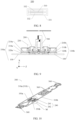
- FIG. 2 is a diagram of a possible structure of a base station.
- the base station may generally include structures such as an antenna 1, a pole 2, and an antenna adjustment support bracket 3.
- the antenna 1 of the base station includes a radome 11.
- the radome 11 has a good electromagnetic wave penetration characteristic in terms of electrical performance, and can withstand impact of an external harsh environment in terms of mechanical performance, so that the radome 11 can protect an antenna system from being affected by an external environment.
- the antenna 1 may be installed on the pole 2 or a tower by using the antenna adjustment support bracket 3, to facilitate signal receiving or transmitting of the antenna 1.
- the base station may further include a radio frequency processing unit 5 and a baseband processing unit 6.
- the radio frequency processing unit 5 may be configured to: perform frequency selection, amplification, and down-conversion processing on a signal received by the antenna 1, convert the signal into an intermediate frequency signal or a baseband signal, and send the intermediate frequency signal or the baseband signal to the baseband processing unit 6.
- the radio frequency processing unit 5 is configured to: perform up-conversion and amplification processing on a baseband signal or an intermediate frequency signal, convert the baseband processing unit or the intermediate frequency signal into an electromagnetic wave by using the antenna 1, and send the electromagnetic wave by using the antenna 1.
- the baseband processing unit 6 may be connected to a feed network of the antenna 1 by using the radio frequency processing unit 5.
- the radio frequency processing unit 5 may also be referred to as a remote radio unit (remote radio unit, RRU), and the baseband processing unit 6 may also be referred to as a baseband unit (baseband unit, BBU).
- RRU remote radio unit
- BBU baseband unit
- the radio frequency processing unit 5 and the antenna 1 may be integrally disposed, and the baseband processing unit 6 is located at a remote end of the antenna 1.
- both the radio frequency processing unit 5 and the baseband processing unit 6 may be located at a remote end of the antenna 1.
- the radio frequency processing unit 5 and the baseband processing unit 6 may be connected through a cable 7.
- FIG. 3 is a composition schematic of an antenna according to a possible embodiment of this application.
- the antenna 1 of a base station may include a radiating element 500 and a reflector 100.
- the radiating element herein generally means all radiating elements, for example, may include a positive-polarized radiating sub-element 510 and a negative-polarized radiating sub-element 520 in the following embodiments.
- the radiating element 500 may also be referred to as an antenna element, an element, or the like.
- the radiating element 500 is an element that forms a basic structure of an antenna array, and can effectively send or receive an antenna signal. In the antenna 1, frequencies of different radiating elements 500 may be the same or different.
- the reflector 100 may also be referred to as a bottom plate, an antenna panel, a reflective surface, or the like, and may be specifically made of a metal material.
- the reflector 100 may reflect and aggregate the antenna signal on a reception point, to implement directional reception.
- the antenna transmits a signal the reflector 100 implements directional transmission of the antenna signal.
- the radiating element 500 is usually placed on a surface of a side of the reflector 100.
- the radiating element 500 is connected to a feed network 300.
- the feed network 300 is generally formed by a controlled impedance transmission line.
- the feed network 300 may feed a signal to the radiating element 500 based on a specific amplitude and phase, or send a received signal to a baseband processing unit 6 of the base station based on a specific amplitude and phase.
- the feed network 300 may implement beam radiation in different directions by using a transmission mechanism 400, or may be connected to the transmission mechanism 400 to obtain a calibration signal required by a system.
- the feed network 300 may include a phase shifter 330, configured to change a direction with maximum radiant intensity of the antenna signal.
- Some modules for performance extension may be further disposed in the feed network 300, for example, a power divider 301.
- the power divider 301 may be configured to: combine a plurality of channels of signals into one channel of signal and transmit the signal through the antenna 1.
- the power divider 301 divides one channel of signal into a plurality of channels of signals, for example, divides, based on different frequencies, a signal received by the antenna 1 into a plurality of channels of signals, and transmits the signals to the baseband processing unit 6 for processing.
- a filter 302 may be further disposed in the feed network 300 to filter out an interference signal.
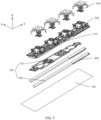
- FIG. 4 is a diagram of a structure of an antenna 1 according to an embodiment of this application.
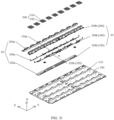
- FIG. 5 is a three-dimensional exploded view of the antenna 1 in FIG. 4 .
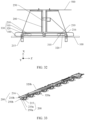
- FIG. 6 is a side view of the antenna 1 in FIG. 4 .
- FIG. 7 is a side view of the antenna 1 without an insulation support bracket 200 based on FIG. 6 .
- This embodiment of this application provides the antenna 1, including a reflector 100, the insulation support bracket 200, and a feed network 300.
- the insulation support bracket 200 is located on a side of the reflector 100.
- the insulation support bracket 200 includes a first insulation support plate 210.
- the feed network 300 and the insulation support bracket 200 are located on the same side of the reflector 100, the feed network 300 is connected to the insulation support bracket 200, and the feed network 300 includes a phase-shifting strip line 310 and a first sliding dielectric plate 320.
- the first insulation support plate 210, the phase-shifting strip line 310, the first sliding dielectric plate 320, and the reflector 100 are sequentially disposed in a first direction X.
- the first direction X is a direction perpendicular to an overall plate surface of the reflector 100, and the feed network 300 and the insulation support bracket 200 are located on the same side of the reflector 100 in the first direction X.
- the insulation support bracket 200 is made of an insulating material, for example, plastic, and has little interference on a signal or electrical performance of the feed network 300. In some cases, it may be considered that the insulation support bracket 200 compared with a support bracket made of a metal material does not affect electrical performance of the feed network 300.
- a shape of the insulation support bracket 200 may be set based on a shape of the feed network 300, so that the feed network 300 can be stably fastened to the insulation support bracket 200.
- a fastening manner includes but is not limited to welding, clamping, using a rivet, using a screw, or hot riveting.
- the feed network 300 and the insulation support bracket 200 may be stacked on the same side of the reflector 100 in the first direction X. In this way, a size of the antenna 1 can be reduced.
- the insulation support bracket 200 may be fastened on the reflector 100, to fasten the feed network 300 between the insulation support bracket 200 and the reflector 100.
- a manner of fastening the insulation support bracket 200 and the reflector 100 includes but is not limited to welding, clamping, using a rivet, using a screw, or hot riveting.
- a power divider, a filter, a multiplexer, or another functional module may be disposed in a circuit in the feed network 300 based on an actual requirement.
- the feed network 300 may be implemented in a form of a PCB board (Printed Circuit Board, printed circuit board), a metal strip line, or the like.
- the first sliding dielectric plate 320 has a specific dielectric constant, and the dielectric constant may be specifically selected based on an actual requirement.
- the first insulation support plate 210, the phase-shifting strip line 310, the first sliding dielectric plate 320, and the reflector 100 are sequentially adjacent in the first direction X. There is no other component between the first insulation support plate 210 and the phase-shifting strip line 310, between the phase-shifting strip line 310 and the first sliding dielectric plate 320, or between the first sliding dielectric plate 320 and the reflector 100. There is no ground plane, reflector, metal plate, or other metal material between the first insulation support plate 210 and the phase-shifting strip line 310.
- a structure of a phase shifter 330 may be simplified, and correspondingly a structure of the antenna 1 is also simplified.
- the phase-shifting strip line 310 may be used as an inner conductor of the phase shifter 330
- the reflector 100 may be used as an outer conductor of the phase shifter 330, that is, a reference ground of a signal in the phase-shifting strip line 310.
- the first sliding dielectric plate 320 is located between the phase-shifting strip line 310 (the inner conductor of the phase shifter 330) and the reflector 100 (the outer conductor of the phase shifter 330).
- the first sliding dielectric plate 320 moves, to change a relative position between the first sliding dielectric plate 320 and the phase-shifting strip line 310, and further change a dielectric constant between the phase-shifting strip line 310 and the reflector 100.
- the feed network 300 may drive, by using a transmission mechanism 400 (as shown in FIG. 5 ), the first sliding dielectric plate 320 to move, to implement beam radiation in different directions.
- a reference ground of the phase shifter 330 is only the reflector 100 located on one side of the phase-shifting strip line 310.
- the first insulation support plate 210 on the other side of the phase-shifting strip line 310 is not used as the reference ground because the first insulation support plate 210 is made of an insulating material. That is, the reference ground of the phase shifter 330 is a single-side reference ground. Refer to FIG. 8 .
- a phase shifter 330 uses a metal cavity 331 as a reference ground of a phase-shifting strip line 310.
- both the upper and lower sides of the phase-shifting strip line 310 are metal plates, and sliding media 332 exist on the two sides of the phase-shifting strip line 310.
- the phase-shifting strip line 310 and the sliding media 332 are accommodated in the metal cavity 331.
- the reference ground of the phase-shifting strip line 310 is a double-side reference ground.
- the double-side reference ground is the metal plates located on the upper and lower sides of the phase-shifting strip line 310.
- the phase shifter 330 of the feed network 300 includes the first insulation support plate 210, the phase-shifting strip line 310, the first sliding dielectric plate 320, and the reflector 100.
- the first insulation support plate 210 is on one side of the phase-shifting strip line 310, and the reflector 100 is on the other side.
- the phase shifter 330 is an open phase shifter without a cavity.
- a function of the reflector 100 in the antenna 1 is to reflect and aggregate an antenna signal on a reception point, to implement directional reception.
- the reflector 100 is reused as the reference ground, and no additional component is required as the reference ground. Because the reference ground is a single-side reference ground, compared with the phase shifter shown in FIG. 8 , the phase shifter 330 in this application is lighter. Further, when the phase shifter shown in FIG.
- an additional fastening support bracket is further required in the antenna to fasten a feed network. This not only reduces integration of the antenna, but also makes a structure of the antenna be complex.
- a main function of the insulation support bracket 200 is to fasten the feed network 300.
- a part (the first insulation support plate 210) in the insulation support bracket 200 and the reflector 100 are reused to clamp on two sides of the first sliding dielectric plate 320, and no additional component is required to limit a position of the first sliding dielectric plate 320.
- the reflector 100 is reused as the reference ground of the phase shifter 330, and the part (the first insulation support plate 210) in the insulation support bracket 200 is reused to limit the position of the first sliding dielectric plate 320.
- This improves integration of the antenna 1, simplifies the structure, and implements lightweight and miniaturization of the antenna 1.
- the phase-shifting strip line 310 and the first sliding dielectric plate 320 extend in a second direction Y
- the first sliding dielectric plate 320 can slide in the second direction Y relative to the phase-shifting strip line 310.
- the second direction Y may vertically intersect with the first direction X.
- the first direction X is a thickness direction of the antenna 1
- the second direction Y is a length direction or a width direction of the antenna 1.
- the first insulation support plate 210, the phase-shifting strip line 310, the first sliding dielectric plate 320, and the reflector 100 are sequentially adjacent and are stacked in the first direction X.
- a manner in which the components are sequentially adjacent and are stacked can improve structural strength of the phase shifter 330, and avoid a case in which a phase-shifting function cannot be implemented because components in the phase shifter 330 are separated when being impacted.
- the phase-shifting strip line 310 may be any segment of signal cable whose signal phase needs to be changed in the feed network 300.
- the phase-shifting strip line 310 may be a segment of signal cable in the power divider.
- the power divider is a functional module that divides one channel of signal into a plurality of channels of signals or combines a plurality of channels of signals into one channel of signal.
- the phase-shifting strip line 310 is a segment of signal cable in the power divider
- the power divider may implement both a power dividing function and a phase-shifting function.
- the power divider and the phase shifter may be collectively referred to as a phase-shifting power divider.
- the phase-shifting strip line 310 may alternatively be a segment of signal cable close to a radiating element in the feed network.
- the phase-shifting strip line 310 may be a metal wire, may be of a strip line structure, or may be of a microstrip structure.
- the phase-shifting strip line 310 is located at an edge of the feed network 300.
- the phase-shifting strip line 310 may alternatively be located in a middle position of the feed network 300.
- the antenna 1 further includes a radiating element 500.
- the radiating element 500 is fastened on a side that is of the insulation support bracket 200 and that is away from the reflector 100.
- the reflector 100, the feed network 300, the insulation support bracket 200, and the radiating element 500 are sequentially disposed in the first direction X.
- the radiating element 500 includes a balun 501, a dipole arm 502, and a director 503.
- the director 503 is configured to change a radiation direction of a signal, and the director 503 may be fastened above the dipole arm 502 by using a support member.
- the director 503 may not be disposed. That the reflector 100, the feed network 300, the insulation support bracket 200, and the radiating element 500 are sequentially disposed is that the feed network 300 is located between the reflector 100 and the insulation support bracket 200, and the insulation support bracket 200 is located between the feed network 300 and the radiating element 500.
- the radiating element 500 herein means an upper end of the radiating element 500, for example, a part 504 in a dashed box in FIG. 6 . A lower end of the radiating element 500 needs to be connected to the feed network 200 by passing through the insulation support bracket 200.
- the entire radiating element 500 may be placed on the side that is of the insulation support bracket 200 and that is away from the reflector 100.
- a feed network 300 includes two phase shifters 330.
- the two phase shifters 330 are disposed opposite to each other in a third direction Z, and are respectively denoted as a phase shifter 330a and a phase shifter 330b.
- the feed network 300 is symmetrically disposed (as shown in FIG. 10 ), and includes two phase-shifting strip lines 310a and 310b (as shown in FIG. 10 ), two signal transmission ports 350a and 350b (as shown in FIG. 10 ), a plurality of feed structures 360 (as shown in FIG. 10 ), and two first sliding dielectric plates 320a and 320b (as shown in FIG. 9 ).
- the signal transmission ports 350a and 350b are configured to connect to an external information processing apparatus outside an antenna 1, and are configured to implement signal transmission between the antenna 1 and the external information processing apparatus.
- the external information processing apparatus may be a radio frequency processing unit 5.
- the feed structure 360 is configured to: connect to a radiating element 500, and transmit a signal with the radiating element 500.
- An insulation support bracket 200 includes an insulation support bracket body 230 and two first insulation support plates 210a and 210b. The two first insulation support plates 210a and 210b are respectively located on two sides of the insulation support bracket body 230 in the third direction Z.
- the phase shifter 330a includes a reflector 100, the first sliding dielectric plate 320a, the phase-shifting strip line 310a, and the first insulation support plate 210a that are sequentially adjacent.
- the phase shifter 330b includes the reflector 100, the first sliding dielectric plate 320b, the phase-shifting strip line 310b, and the first insulation support plate 210b that are sequentially adjacent.
- the radio frequency processing unit 5 transmits the signal to the signal transmission port 350a and the signal transmission port 350b, transmits the signal to the phase-shifting strip line 310a and the phase-shifting strip line 310b through the signal transmission port 350a and the signal transmission port 350b respectively, and then transmits the signal to the feed structure 360 by using a power divider, a filter, or a multiplexer (not shown in the figure).
- the feed structure 360 radiates the received signal to external space by using the radiating element 500.
- the feed network 300 may further include the power divider, the filter, or the multiplexer (not shown in the figure). This may be specifically disposed based on an actual requirement.
- Quantities and structures of the radiating elements 500 and the feed structures 360 may also be set based on an actual requirement. This is not limited in this application. Changed phases of signals in the phase shifter 330a and the phase shifter 330b may be the same or different, and may be specifically set based on an actual requirement.
- a part, other than the phase-shifting strip line 310a and the phase-shifting strip line 310b, in the feed network 300 is located between the insulation support bracket body 230 and the reflector 100.
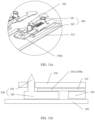
- FIG. 11a, and FIG. 11b FIG. 11a is a locally enlarged diagram of a part M in FIG. 10
- FIG. 11b is a sectional view of the part M in FIG. 10 .
- the feed network 300 is fastened on the insulation support bracket body 230 by using a fastener 240.
- the fastener 240 includes a fastening pad 242 and a fastening plug-in 241 that are connected to each other.
- the fastening pad 242 is located below a middle part of the feed network 300, for example, located below the signal transmission port 350b, and is configured to support the feed network 300.
- the first sliding dielectric plate 320 is disposed between the phase-shifting strip line 310 and the reflector 100. Therefore, a lower part of the middle part of the feed network 300 is aerial, and the fastening pad 242 is disposed below the middle part of the feed network 300, to implement a support function and improve structural strength of the feed network 300.
- a fastening hole matching the fastening plug-in 241 may be provided in the insulation support bracket body 230, and the fastening plug-in 241 is inserted into the fastening hole to fasten the feed network 300 on the insulation support bracket body 230.
- FIG. 12 is a diagram of a structure of an antenna according to another possible embodiment of this application based on FIG. 4 to FIG. 7 .
- FIG. 13 is a locally enlarged diagram of a part N in FIG. 12 .
- an insulation support bracket 200 further includes a first insulation side plate 220, the first insulation side plate 220 is located on a side that is of a first insulation support plate 210 and that faces a reflector 100, the first insulation side plate 220 and a phase-shifting strip line 310 are disposed side by side, both the first insulation side plate 220 and the phase-shifting strip line 310 extend in a second direction Y, and the second direction Y intersects with a first direction X.
- the first insulation side plate 220 may be located on a side that is of a first sliding dielectric plate 320 and that is away from an insulation support bracket body 230.
- the first insulation side plate 220 is configured to provide guidance for the first sliding dielectric plate 320, so that the first sliding dielectric plate 320 can slide only in the second direction Y.
- the phase-shifting strip line 310 and the first sliding dielectric plate 320 are disposed side by side with the first insulation side plate 220, and the first sliding dielectric plate 320, the first insulation side plate 220, and the phase-shifting strip line 310 extend in the second direction Y.
- the phase-shifting strip line 310 and the first sliding dielectric plate 320 are located on a same side of the first insulation side plate 220 in a third direction Z, and any two of the third direction Z, the second direction Y, and the first direction X intersect.
- any two of the third direction Z, the second direction Y, and the first direction X vertically intersect.
- the first direction X is a thickness direction of the antenna 1.
- the second direction Y is a width direction of the antenna 1
- the third direction Z is a length direction of the antenna 1; or when the second direction Y is a length direction of the antenna 1, the third direction Z is a width direction of the antenna 1.
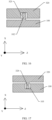
- FIG. 14a and FIG. 14b each are a diagram of a structure of an antenna according to another possible embodiment of this application based on FIG. 4 to FIG. 7 .
- An upper part and a lower part of FIG. 14a are respectively a diagram of a structure of a surface that is of a first insulation support plate 210 and that faces a first sliding dielectric plate 320 and a diagram of a structure of a surface that is of the first sliding dielectric plate 320 and that faces the first insulation support plate 210.
- FIG. 14b is a sectional view after the first insulation support plate 210 and the first sliding dielectric plate 320 in FIG. 14a are assembled.
- the first sliding dielectric plate 320 is provided with a first hole 321 that penetrates the first sliding dielectric plate 320, the first hole 321 extends in a second direction Y, a plurality of first pins 211 arranged in the second direction Y are disposed on a surface that is of the first insulation support plate 210 and that faces a reflector 100, the first pin 211 passes through the first hole 321 and can slide relative to the first hole 321, and the second direction Y intersects with a first direction X and is the same as an extension direction of the first sliding dielectric plate 320.
- the plurality of first pins 211 arranged in the second direction Y pass through the first hole 321.
- the first sliding dielectric plate 320 can slide only in the second direction Y.
- the first hole 321 cooperates with the first pin 211, to guide the first sliding dielectric plate 320 to slide in the second direction Y. This avoids deviation of the first sliding dielectric plate 320 in a direction other than the second direction Y, ensures sliding control precision of the first sliding dielectric plate 320, and further improves phase-shifting precision of a phase shifter 330.
- the first hole 321 is a long hole extending in the second direction Y, and the plurality of first pins 211 arranged in the second direction Y may pass through the same first hole 321.
- the plurality of first holes 321 are arranged in the second direction Y.
- One or more first pins 211 may be disposed in each of the plurality of first holes 321.
- the first pin 211 is disposed on the first sliding dielectric plate 320, and the first hole 321 is provided on the first insulation support plate 210.
- the first hole 321 cooperates with the first pin 211, to guide the first sliding dielectric plate 320 to slide in the second direction Y.
- FIG. 15a and FIG. 15b each are a diagram of a structure of an antenna according to another possible embodiment of this application based on FIG. 4 to FIG. 7 .
- An upper part and a lower part of FIG. 15a are respectively a diagram of a structure of a surface that is of a first sliding dielectric plate 320 and that faces a reflector 100 and a diagram of a surface that is of the reflector 100 and that faces the first sliding dielectric plate 320.
- FIG. 15b is a sectional view after the reflector 100 and the first sliding dielectric plate 320 in FIG. 15a are assembled.
- the first sliding dielectric plate 320 is provided with a second hole 322 that penetrates the first sliding dielectric plate 320, the second hole 322 extends in a second direction Y, a plurality of second pins 101 arranged in the second direction Y are disposed on the surface that is of the reflector 100 and that faces the first sliding dielectric plate 320, the second pin 101 passes through the second hole 322 and can slide relative to the second hole 322, and the second direction Y intersects with a first direction X and is the same as an extension direction of the first sliding dielectric plate 320.
- the second pin 101 on the reflector 100 cooperates with the second hole 322, to guide the first sliding dielectric plate 320 to slide in the second direction Y. This avoids deviation of the first sliding dielectric plate 320 in a direction other than the second direction Y, ensures sliding control precision of the first sliding dielectric plate 320, and further improves phase-shifting precision of a phase shifter 330.
- the second pin 101 is disposed on the first sliding dielectric plate 320, and the reflector 100 is provided with the second hole 322.
- the second hole 322 cooperates with the second pin 101, to guide the first sliding dielectric plate 320 to slide in the second direction Y.
- the first sliding dielectric plate 320 may be provided with a first hole 321 and the second hole 322.
- the first hole 321 and the second hole 322 respectively cooperate with a first pin 211 on a first insulation support plate 210 and the second pin 101 on the reflector 100, to guide the first sliding dielectric plate 320 to slide in the second direction Y
- FIG. 16 is a diagram of a structure of an antenna according to another possible embodiment of this application based on FIG. 4 to FIG. 7 .
- a surface that is of a first sliding dielectric plate 320 and that faces a reflector 100 is provided with a first groove 323, a first protrusion portion 102 is disposed on a surface that is of the reflector 100 and that faces the first sliding dielectric plate 320, the first groove 323 and the first sliding dielectric plate 320 extend in a same direction, and the first protrusion portion 102 is located in the first groove 323 and can slide relative to the first groove 323.
- the first protrusion portion 102 cooperates with the first groove 323, to guide the first sliding dielectric plate 320 to slide in a second direction Y relative to a phase-shifting strip line 310.
- An extension direction of the first protrusion portion 102 is the same as that of the first groove 323 and the first sliding dielectric plate 320, and is the second direction Y.
- a plurality of first protrusion portions 102 may be disposed, and the plurality of first protrusion portions 102 are arranged in the second direction Y.
- FIG. 17 is a diagram of a structure of an antenna according to another possible embodiment of this application based on FIG. 4 to FIG. 7 .
- a second protrusion portion 324 is disposed on a surface that is of a first sliding dielectric plate 320 and that faces a reflector 100, a surface that is of the reflector 100 and that faces the first sliding dielectric plate 320 is provided with a second groove 103, the second groove 103 and the first sliding dielectric plate 320 extend in a same direction, and the second protrusion portion 324 is located in the second groove 103.
- the second protrusion portion 324 cooperates with the second groove 103, to guide the first sliding dielectric plate 320 to slide in a second direction Y relative to a phase-shifting strip line 310.
- An extension direction of the second protrusion portion 324 is the same as that of the second groove 103 and the first sliding dielectric plate 320, and is the second direction Y.
- a plurality of second protrusion portions 324 may be disposed, and the plurality of second protrusion portions 324 are arranged in the second direction Y
- a protrusion portion may be further disposed on a surface that is of a first insulation support plate 210 and that faces the first sliding dielectric plate 320, and a surface that is of the first sliding dielectric plate 320 and that faces the first insulation support plate 210 may be further provided with a groove. The groove cooperates with the protrusion portion, to guide the first sliding dielectric plate 320 to slide in the second direction Y relative to the phase-shifting strip line 310.
- a surface that is of a first insulation support plate 210 and that faces the first sliding dielectric plate 320 may be further provided with a groove, and a protrusion portion may be further disposed on a surface that is of the first sliding dielectric plate 320 and that faces the first insulation support plate 210.
- the groove cooperates with the protrusion portion, to guide the first sliding dielectric plate 320 to slide in the second direction Y relative to the phase-shifting strip line 310.
- a groove may be further provided and a first pin 211 may be further disposed on a first insulation support plate 210, and a protrusion portion may be further disposed and a first hole 321 may be further provided on the first sliding dielectric plate 320.
- the groove and the first pin 211 respectively cooperate with the protrusion portion and the first hole 321, to guide the first sliding dielectric plate 320 to slide.
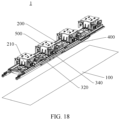
- FIG. 18 is a diagram of a structure of an antenna according to another possible embodiment of this application based on FIG. 4 to FIG. 7 .
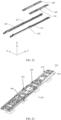
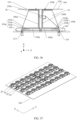
- FIG. 19 is a three-dimensional exploded view of the antenna 1 in FIG. 18 .
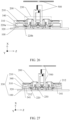
- FIG. 20 is a side view of the antenna 1 in FIG. 18 .
- FIG. 21 is a side view of the antenna 1 without an insulation support bracket 200 based on FIG. 20 .
- the antenna 1 further includes a second sliding dielectric plate 340, and the second sliding dielectric plate 340 is located between a first insulation support plate 210 and a phase-shifting strip line 310. As shown in FIG.
- the first insulation support plate 210, the second sliding dielectric plate 340, the phase-shifting strip line 310, a first sliding dielectric plate 320, and a reflector 100 are sequentially disposed in a first direction X.
- the second sliding dielectric plate 340 may be connected to the first sliding dielectric plate 320.
- a phase shifter 330 of a feed network 300 includes the first insulation support plate 210, the second sliding dielectric plate 340, the phase-shifting strip line 310, the first sliding dielectric plate 320, and the reflector 100.
- a material of the second sliding dielectric plate 340 and a material of the first sliding dielectric plate 320 may be the same.
- the material is an insulation medium.
- the second sliding dielectric plate 340 and the first sliding dielectric plate 320 are fastened, so that the second sliding dielectric plate 340 and the first sliding dielectric plate 320 can slide simultaneously.
- a transmission mechanism 400 may be fastened to the first sliding dielectric plate 320 or the second sliding dielectric plate 340.
- the transmission mechanism 400 drives the first sliding dielectric plate 320 to slide, and the first sliding dielectric plate 320 drives the second sliding dielectric plate 340 to slide.
- the second sliding dielectric plate 340 and the first sliding dielectric plate 320 simultaneously slide relative to the phase-shifting strip line 310, and jointly affect a phase of a signal in the phase-shifting strip line 310.
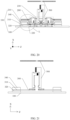
- FIG. 22 is a diagram of structures of the first sliding dielectric plate 320 and the second sliding dielectric plate 340 in the antenna 1 shown in FIG. 19 .
- FIG. 23 is a diagram of a structure of the antenna 1 shown in FIG. 19 from a side of the reflector 100.
- a surface that is of the second sliding dielectric plate 340 and that is away from the phase-shifting strip line 310 is provided with a third groove 341, and a surface that is of the first insulation support plate 210 and that faces the second sliding dielectric plate 340 is a plane.
- the third groove 341 is configured to reduce a contact area between the first insulation support plate 210 and the second sliding dielectric plate 340, to reduce friction, so that the second sliding dielectric plate 340 slides more easily.
- a surface that is of the first sliding dielectric plate 320 and that faces the phase-shifting strip line 310 is further provided with an accommodation groove 321, and the phase-shifting strip line 310 is at least partially located in the accommodation groove 321.
- lengths of the second sliding dielectric plate 340 and the first sliding dielectric plate 320 in a second direction Y are different.
- the lengths of the second sliding dielectric plate 340 and the first sliding dielectric plate 320 may be the same.
- FIG. 24 is a locally enlarged diagram of a part L in FIG. 20 .
- the insulation support bracket 200 further includes a first insulation side plate 220, the first insulation side plate 220 is located on a side that is of the first insulation support plate 210 and that faces the reflector 100, the first insulation side plate 220 and the phase-shifting strip line 310 are disposed side by side, both the first insulation side plate 220 and the phase-shifting strip line 310 extend in the second direction Y, and the second direction Y intersects with the first direction X.
- the phase-shifting strip line 310 and the second sliding dielectric plate 340 are disposed side by side with the first insulation side plate 220 in a third direction Z. In other words, the phase-shifting strip line 310 and the second sliding dielectric plate 340 are located on a same side of the first insulation side plate 220 in the third direction Z.
- the insulation support bracket 200 further includes an insulation support bracket body 230, the first insulation support plate 210 and the insulation support bracket body 230 are disposed side by side in the third direction Z, the first insulation side plate 220 is located at an end that is of the first insulation support plate 210 that is close to the insulation support bracket body 230, and the second sliding dielectric plate 340 is located on a side that is of the first insulation side plate 220 and that is away from the insulation support bracket body 230.
- the first insulation side plate 220 may provide guidance for the second sliding dielectric plate 340 to slide, so that the second sliding dielectric plate 340 can slide only in the second direction Y. This avoids deviation of the second sliding dielectric plate 340 in a direction other than the second direction Y, ensures sliding control precision of the second sliding dielectric plate 340, and further improves phase-shifting precision of the phase shifter 330.
- FIG. 25 is a diagram of a structure of an antenna according to another possible embodiment of this application based on FIG. 18 to FIG. 21 .
- the antenna 1 includes a plurality of antenna structures 10.
- the plurality of antenna structures 10 are disposed on a same side of a reflector 100.
- Each of the plurality of antenna structures 10 includes an insulation support bracket 200 and a feed network 300.
- Insulation support brackets 200 in two adjacent antenna structures 10 are respectively denoted as a first insulation support bracket 200c and a second insulation support bracket 200d.
- a first insulation side plate 220 in the first insulation support bracket 200c is denoted as a first insulation side plate 220c
- a first insulation side plate 220 in the second insulation support bracket 200d is denoted as a first insulation side plate 220d.
- the first insulation side plate 220c and the first insulation side plate 220d are disposed opposite to each other.
- the first insulation side plate 220c, the first insulation side plate 220d, a first insulation support plate 210c and a first insulation support plate 210d that are between the first insulation side plate 220c and the first insulation side plate 220d, and the reflector 100 are enclosed to form accommodation space 201 enclosed by a dashed line in FIG. 25 .
- a first sliding dielectric plate 320c, a first sliding dielectric plate 320d, a second sliding dielectric plate 340c, and a second sliding dielectric plate 340d in two adjacent antenna structures 10 are located in the accommodation space 201.
- Parts forming the accommodation space 201 may be configured to guide the first sliding dielectric plate 320c, the first sliding dielectric plate 320d, the second sliding dielectric plate 340c, and the second sliding dielectric plate 340d to slide.
- FIG. 26 is a diagram of a structure of an antenna according to another possible embodiment of this application based on FIG. 18 to FIG. 21 .
- an insulation support bracket 200 includes two first insulation side plates 220a and 220b, and the first insulation side plate 220a and the first insulation side plate 220b are oppositely disposed at two ends of a first insulation support plate 210 in a third direction Z.
- Both the two first insulation side plates 220a and 220b extend in a second direction Y, to provide guidance for a second sliding dielectric plate 340 to slide, so that the second sliding dielectric plate 340 can slide only in the second direction Y. This avoids deviation of the second sliding dielectric plate 340 in a direction other than the second direction Y, ensures sliding control precision of the second sliding dielectric plate 340, and further improves phase-shifting precision of a phase shifter 330.
- the first insulation side plate 220a is disposed away from an insulation support bracket body 230.
- a length of the first insulation side plate 220a in a first direction X is greater than a length of the first insulation side plate 220 in the first direction X, and the first insulation side plate 220a extends to an outer side of a first sliding dielectric plate 320 in the first direction X, to block sliding of the first sliding dielectric plate 320 to the outer side.
- the outer side of the first sliding dielectric plate 320 is a side that is of the first sliding dielectric plate 320 and that is away from the insulation support bracket body 230.
- FIG. 27 is a diagram of a structure of an antenna according to another possible embodiment of this application based on FIG. 18 to FIG. 21 .
- a surface that is of a second sliding dielectric plate 340 and that is away from a phase-shifting strip line 310 is provided with a third groove 341
- a third protrusion portion 212 is disposed on a surface that is of a first insulation support plate 210 and that faces the second sliding dielectric plate 340, the third groove 341 and the second sliding dielectric plate 340 extend in a same direction
- the third protrusion portion 212 is located in the third groove 341 and can slide relative to the third groove 341.
- the extension direction of the third groove 341 and the second sliding dielectric plate 340 is a second direction Y
- the third groove 341 cooperates with the third protrusion portion 212, so that the second sliding dielectric plate 340 can slide only in the second direction Y. This avoids deviation of the second sliding dielectric plate 340 in a direction other than the second direction Y, ensures sliding control precision of the second sliding dielectric plate 340, and further improves phase-shifting precision of a phase shifter 330.
- FIG. 28 is a diagram of a structure of an antenna according to another possible embodiment of this application based on FIG. 18 to FIG. 21 .
- a fourth protrusion portion 342 is disposed on a surface that is of a second sliding dielectric plate 340 and that is away from a phase-shifting strip line 310, a surface that is of a first insulation support plate 210 and that faces the second sliding dielectric plate 340 is provided with a fourth groove 213, the fourth groove 213 and the second sliding dielectric plate 340 extend in a same direction, and the fourth protrusion portion 342 is located in the fourth groove 213 and can slide relative to the fourth groove 213.
- the extension direction of the fourth groove 213 and the second sliding dielectric plate 340 is a second direction Y.
- the fourth protrusion portion 342 cooperates with the fourth groove 213, so that the second sliding dielectric plate 340 can slide only in the second direction Y. This avoids deviation of the second sliding dielectric plate 340 in a direction other than the second direction Y, ensures sliding control precision of the second sliding dielectric plate 340, and further improves phase-shifting precision of a phase shifter 330.
- the second sliding dielectric plate 340 may be further provided with a long hole, and a pin may be further disposed on the surface that is of the first insulation support plate 210 and that faces the second sliding dielectric plate 340.
- a pin is disposed on the surface that is of the second sliding dielectric plate 340 and that faces the first insulation support plate 210, and the first insulation support plate 210 is provided with a long hole. The pin cooperates with the long hole, to guide the second sliding dielectric plate 340 to slide.
- a pin and a long hole on the second sliding dielectric plate 340 and the first insulation support plate 210 cooperate with each other, and a long hole and a pin on the first sliding dielectric plate 320 and the reflector 100 cooperate with each other (as shown in FIG. 15b ), to jointly guide the first sliding dielectric plate 320 and the second sliding dielectric plate 340 to slide.
- a protrusion portion and a groove on the second sliding dielectric plate 340 and the first insulation support plate 210 cooperate with each other (as shown in FIG. 27 ), and a protrusion portion and a groove on the first sliding dielectric plate 320 and the reflector 100 cooperate with each other (as shown in FIG. 17 ), to jointly guide the first sliding dielectric plate 320 and the second sliding dielectric plate 340 to slide.
- FIG. 29 is a diagram of a structure of an antenna according to another possible embodiment of this application based on FIG. 4 to FIG. 7 .
- the antenna in this implementation further includes a third sliding dielectric plate 370 and a first side phase-shifting strip line 311.
- a reflector 100 includes a reflector body 120 and a reflective side plate 130, and the reflective side plate 130 is located at an edge of the reflector body 120, and is connected to and intersects with the reflector body 120.
- An insulation support bracket 200 further includes a second insulation side plate 214. The second insulation side plate 214 is located at an end that is of a first insulation support plate 210 and that is away from an insulation support bracket body 230.
- One end of the second insulation side plate 214 is connected to and intersects with the first insulation support plate 210, and the other end of the second insulation side plate 214 is disposed away from the reflector 100.
- Cross-sections of the second insulation side plate 214 and the first insulation support plate 210 are in an "L" shape.
- a feed network 300 further includes the first side phase-shifting strip line 311 and the third sliding dielectric plate 370.
- the first side phase-shifting strip line 311 is connected to a phase-shifting strip line 310
- the third sliding dielectric plate 370 is connected to a first sliding dielectric plate 320.
- Cross-sections of the third sliding dielectric plate 370 and the first sliding dielectric plate 320 are in an "L" shape.
- the reflective side plate 130, the third sliding dielectric plate 370, the first side phase-shifting strip line 311, and the second insulation side plate 214 are sequentially adjacent in a third direction Z.
- the third sliding dielectric plate 370 may slide in a second direction Y relative to the first side phase-shifting strip line 311.
- the third sliding dielectric plate 370 slides relative to the first side phase-shifting strip line 311, to change a phase of a signal in the first side phase-shifting strip line 311.
- the reflective side plate 130, the third sliding dielectric plate 370, the first side phase-shifting strip line 311, and the second insulation side plate 214 form a phase shifter 330c.
- a reference ground of the phase shifter 330c is only the reflective side plate 130, in other words, the reflective side plate 130 is a single-side reference ground of the phase shifter 330c.
- a phase shifter 330 and the phase shifter 330c may simultaneously adjust a phase of a signal, to adjust a radiation direction of a signal in a radiating element 500.
- FIG. 30 is a diagram of a structure of an antenna according to another possible embodiment of this application based on FIG. 4 to FIG. 7 .
- FIG. 30 is a diagram of a three-dimensional structure of a reflector and another part in an antenna.
- FIG. 31 is an exploded view of the antenna without the reflector 100 in FIG. 30 .
- FIG. 32 is a side view of the antenna 1 in FIG. 30 .
- FIG. 33 is a diagram of a structure of the antenna 1 without the reflector 100 in FIG. 30 .
- FIG. 34 is a split diagram based on FIG. 33 .
- FIG. 35 is a locally enlarged diagram of a part Q in FIG. 34 . Different from the embodiment shown in FIG. 4 to FIG.
- a phase-shifting strip line 310 and an insulation support bracket 200 are of an integrated structure (as shown in FIG. 34 and FIG. 35 ).
- the insulation support bracket 200 and a circuit part, other than a first sliding dielectric plate 320, in a feed network 300 are of an integrated structure, so that a size of the antenna 1 can be greatly reduced, and a structure is simpler.
- the insulation support bracket 200 and the circuit part, other than the first sliding dielectric plate 320, in the feed network 300 may be formed through integrated injection molding, or the feed network 300 is formed by electroplating a metal on the insulation support bracket 200 with reference to an etching pattern process.
- phase-shifting strip line 310 is located on a surface that is of a first insulation support plate 210 and that faces the reflector 100.
- a phase shifter 330 of the feed network 300 includes the first insulation support plate 210, the phase-shifting strip line 310, the first sliding dielectric plate 320, and the reflector 100 (as shown in FIG. 32 ).
- a reference ground of the phase shifter 330 is also a single-side reference ground.
- the insulation support bracket 200 further includes a second insulation support plate 250, the second insulation support plate 250 is connected to and intersects with the first insulation support plate 210, the second insulation support plate 250 is located on a side that is of the first insulation support plate 210 and that is away from the reflector 100, and a part, other than the phase-shifting strip line 310, in the feed network 300 is located on the second insulation support plate 250.
- a cross-section of the insulation support bracket 200 is in an "L" shape.
- the cross-section of the insulation support bracket 200 is in a straight-line shape, in other words, the insulation support bracket 200 is approximately in a flat shape (not shown in the figure).
- the feed network 300 is disposed on a surface that is of the insulation support bracket 200 and that faces the reflector 100.
- the insulation support bracket 200 may alternatively be in another shape. This may be set based on an actual requirement.
- the antenna 1 is a dual-polarized antenna
- the dual-polarized antenna includes a first antenna structure 20 and a second antenna structure 30 that are adjacent.
- a feed network 300 in the first antenna structure 20 is a positive-polarized feed network 300a
- a feed network 300 in the second antenna structure 30 is a negative-polarized feed network 300b.
- Phase-shifting strip lines in the positive-polarized feed network 300a and the negative-polarized feed network 300b are respectively a phase-shifting strip line 310a and a phase-shifting strip line 310b.
- Insulation support brackets 200 in the first antenna structure 20 and the second antenna structure 30 are respectively a first insulation support bracket 200a and a second insulation support bracket 200b.
- the first insulation support bracket 200a includes a second insulation support plate 250a and a first insulation support plate 210a that are connected and intersect (as shown in FIG. 34 ).
- the second insulation support bracket 200b includes a second insulation support plate 250b and a first insulation support plate 210b that are connected and intersect (as shown in FIG. 34 ).
- a ground plate 110 is disposed between the second insulation support plate 250a and the second insulation support plate 250b. With reference to FIG. 34 and FIG. 35 , in FIG. 34 , the ground plate 110 is omitted between the first antenna structure 20 and the second antenna structure 30.
- a first circuit part 380a, other than the phase-shifting strip line 310a, in the positive-polarized feed network 300a is located on a surface that is of the second insulation support plate 250a and that faces the ground plate 110.
- a second circuit part 380b, other than the phase-shifting strip line 310b, in the negative-polarized feed network 300b is located on a surface that is of the second insulation support plate 250b and that faces the ground plate 110.
- the ground plate 110 is located between the second insulation support plate 250a and the second insulation support plate 250b.
- the ground plate 110 is used as a reference ground of the first circuit part 380a and the second circuit part 380b.
- a case in which the first circuit part 380a and the second circuit part 380b are excessively close to each other and affect signal transmission can be avoided.
- the ground plate 110 may alternatively be located on outer sides of the second insulation support plate 250a and the second insulation support plate 250b, provided that the ground plate 110 can be used as the reference ground of the first circuit part 380a and the second circuit part 380b.
- FIG. 36 is a side view of the antenna in FIG. 31 .
- the first antenna structure 20 and the second antenna structure 30 further respectively include a positive-polarized radiating sub-element 510 and a negative-polarized radiating sub-element 520.
- a radiating element 500 of the dual-polarized antenna includes the positive-polarized radiating sub-element 510 and the negative-polarized radiating sub-element 520.
- the positive-polarized radiating sub-element 510 is connected to the positive-polarized feed network 300a
- the negative-polarized radiating sub-element 520 is connected to the negative-polarized feed network 300b
- the positive-polarized radiating sub-element 510 and the negative-polarized radiating sub-element 520 are respectively fastened to an end of the second insulation support plate 250a and an end of the second insulation support plate 250b that are away from the reflector 100.
- An end that is of the ground plate 110 and that is away from the reflector 100 extends between the positive-polarized radiating sub-element 510 and the negative-polarized radiating sub-element 520, so that the ground plate 110 is used as a reference ground of the positive-polarized radiating sub-element 510 and the negative-polarized radiating sub-element 520.
- a manner of fastening the positive-polarized radiating sub-element 510 and the negative-polarized radiating sub-element 520 to the second insulation support plate 250a and the second insulation support plate 250b includes welding, clamping, using a rivet, using a screw, hot riveting, or the like.
- the radiating element 500 and the feed network 300 may be integrally electroplated on the insulation support bracket 200.
- both the first antenna structure 20 and the second antenna structure 30 include first sliding dielectric plates, which are respectively denoted as a first sliding dielectric plate 320a and a first sliding dielectric plate 320b.
- a third insulation side plate 215 is disposed on a surface that is of the first insulation support plate 210a and that faces the first sliding dielectric plate 320a, the third insulation side plate 215 and the first sliding dielectric plate 320a extend in a same direction, and the third insulation side plate 215 is located on a side that is of the first insulation support plate 210a and that is away from the ground plate 110.
- a fourth insulation side plate 216 is disposed on a surface that is of the first insulation support plate 210b and that faces the first sliding dielectric plate 320b, the fourth insulation side plate 216 and the first sliding dielectric plate 320b extend in a same direction, and the fourth insulation side plate 216 is located on a side that is of the first insulation support plate 210b and that is away from the ground plate 110.
- the third insulation side plate 215 is configured to guide the first sliding dielectric plate 320a to slide in a second direction Y
- the fourth insulation side plate 216 is configured to guide the first sliding dielectric plate 320b to slide in the second direction Y.
- a phase shifter 330a of the first antenna structure 20 includes the first insulation support plate 210a, the phase-shifting strip line 310a, the first sliding dielectric plate 320a, and the reflector 100.
- a phase shifter 330b of the second antenna structure 30 includes the first insulation support plate 210b, the phase-shifting strip line 310b, the first sliding dielectric plate 320b, and the reflector 100.
- the third insulation side plate 215, the fourth insulation side plate 216, the first insulation support plate 210a, and the first insulation support plate 210b are all made of an insulating material.
- a reference ground of the phase shifter 330a and the phase shifter 330b is the reflector 100, and is a single-side reference ground.
- the first sliding dielectric plates 320a and 320b in the first antenna structure 20 and the second antenna structure 30 that are adjacent are fastened.
- the two first sliding dielectric plates 320a and 320b may be fastened by using a fastener 325, so that the two first sliding dielectric plates 320a and 320b can be simultaneously driven by a transmission mechanism 400.
- the fastener 325 may be of a flower structure, or may be in another shape. This may be set based on an actual requirement.
- a manner of fastening and connecting the two adjacent first sliding dielectric plates 320a and 320b further includes welding, clamping, using a rivet, using a screw, hot riveting, or the like.
- FIG. 37 is a diagram of a structure of an antenna according to another possible embodiment of this application based on FIG. 30 to FIG. 36 .
- the antenna 1 includes a dual-polarized antenna array, each dual-polarized antenna includes a first antenna structure 20 and a second antenna structure 30, and a plurality of dual-polarized antennas are arranged in a third direction Z.
- FIG. 38 is a diagram of a structure of an antenna according to another possible embodiment of this application based on FIG. 30 to FIG. 36 .
- FIG. 39 is a locally enlarged diagram of a part P in FIG. 38 .
- the antenna 1 further includes a fourth sliding dielectric plate 390
- a feed network 300 further includes a second side phase-shifting strip line 312, the second side phase-shifting strip line 312 is located on a side that is of a second insulation support plate 250 and that faces a ground plate 110, and the fourth sliding dielectric plate 390 is located between the second side phase-shifting strip line 312 and the ground plate 110.
- a first sliding dielectric plate 320 and the fourth sliding dielectric plate 390 are of an integrated structure, and cross-sections are in an "L" shape.
- the first sliding dielectric plate 320 and the fourth sliding dielectric plate 390 jointly affect a signal of the antenna 1.
- a first insulation support plate 210, a phase-shifting strip line 310, the first sliding dielectric plate 320, and a reflector 100 form a phase shifter 330.
- the second insulation support plate 250, the second side phase-shifting strip line 312, the fourth sliding dielectric plate 390, and the ground plate 110 form a phase shifter 330d.
- a reference ground of the phase shifter 330d is also a single-side reference ground, in other words, the ground plate 110 is the single-side reference ground of the phase shifter 330d.
- the phase shifter 330 and the phase shifter 330d separately adjust a phase of a signal, to adjust a radiation direction of a signal in a radiating element 500.
- a protrusion portion may be further disposed and a groove may be further provided on, or a long hole may be further provided and a pin may be further disposed on the reflector 100 and the first sliding dielectric plate 320 in the antenna in each embodiment.
- the protrusion portion cooperates with the groove, or the long hole cooperates with the pin, to guide the first sliding dielectric plate 320 to slide. Details are not described herein again. Refer to the foregoing descriptions to understand a cooperation function of the protrusion portion and the groove, and a cooperation function of the long hole and the pin.
- a second sliding dielectric plate 340 may be further disposed between the phase-shifting strip line 310 and the reflector 100, and the first sliding dielectric plate 320 and the second sliding dielectric plate 340 jointly affect a phase of a signal in the phase-shifting strip line 310.
- FIG. 40 is a diagram of a structure of an antenna according to another possible embodiment of this application.
- a reflector 100 includes a reflector body 120 and a reflective side plate 130.
- the reflective side plate 130 is located at an edge of the reflector body 120, and is connected to and intersects with the reflector body 120.
- An insulation support bracket 200, a feed network 300, and a radiating element 500 are located on a side of the reflector body 120 in a fourth direction W.
- a first insulation support plate 210, a phase-shifting strip line 310, a first sliding dielectric plate 320, and the reflective side plate 130 are sequentially disposed in a first direction X.
- a phase shifter 330 of the feed network 300 includes the first insulation support plate 210, the phase-shifting strip line 310, the first sliding dielectric plate 320, and the reflective side plate 130.
- a reference ground of the phase shifter 330 is a single-side reference ground.
- a protrusion portion may be disposed and a groove may be provided on, or a long hole may be provided and a pin may be disposed on the reflective side plate 130 and the first sliding dielectric plate 320.
- the protrusion portion cooperates with the groove, or the long hole cooperates with the pin, to guide the first sliding dielectric plate 320 to slide. Details are not described herein again. Refer to the foregoing descriptions to understand a cooperation function of the protrusion portion and the groove, and a cooperation function of the protrusion portion and the groove.
- the reflector 100 is used as a reference ground of the phase shifter 330, and no additional metal plate or metal cavity is required as the reference ground of the phase shifter 330, so that a structure of the antenna 1 can be simplified and costs can be reduced.
- the reference ground of the phase shifter 330 in this application is a single-side reference ground
- the first insulation support plate 210 is on another side of the phase-shifting strip line 310. Compared with a phase shifter that is in a metal cavity shape and is a double-side reference ground, a material of the first insulation support plate 210 is lighter, and can make the antenna 1 be more lightweight.
- the first insulation support plate 210 in the insulation support bracket 200 configured to fasten the feed network 300 may be configured to limit a position of the first sliding dielectric plate 320, to ensure stability of the phase shifter 330, further improve integration of the antenna 1, and implement miniaturization of the antenna.
- a protrusion portion may be disposed and a groove may be provided on, or a long hole may be provided and a pin may be disposed on the first sliding dielectric plate 320, the first insulation support plate 210, and the reflector 100, to implement a guiding function.
- a protrusion portion may be disposed and a groove may be provided on, or a long hole may be provided and a pin may be disposed on a second sliding dielectric plate 340 and the first insulation support plate 210, to implement a guiding function.
- the phase-shifting strip line 310 and the insulation support bracket 200 are integrally formed, to further simplify the structure of the antenna 1, and make the antenna 1 be more miniaturized and lightweight.
Landscapes
- Physics & Mathematics (AREA)
- Electromagnetism (AREA)
- Engineering & Computer Science (AREA)
- Computer Networks & Wireless Communication (AREA)
- Aerials With Secondary Devices (AREA)
Applications Claiming Priority (2)
| Application Number | Priority Date | Filing Date | Title |
|---|---|---|---|
| CN202111370464.8A CN116137386A (zh) | 2021-11-18 | 2021-11-18 | 天线及基站 |
| PCT/CN2022/130347 WO2023088122A1 (zh) | 2021-11-18 | 2022-11-07 | 天线及基站 |
Publications (2)
| Publication Number | Publication Date |
|---|---|
| EP4407798A1 true EP4407798A1 (de) | 2024-07-31 |
| EP4407798A4 EP4407798A4 (de) | 2025-01-22 |
Family
ID=86333170
Family Applications (1)
| Application Number | Title | Priority Date | Filing Date |
|---|---|---|---|
| EP22894659.6A Pending EP4407798A4 (de) | 2021-11-18 | 2022-11-07 | Antenne und basisstation |
Country Status (4)
| Country | Link |
|---|---|
| US (1) | US20240275067A1 (de) |
| EP (1) | EP4407798A4 (de) |
| CN (1) | CN116137386A (de) |
| WO (1) | WO2023088122A1 (de) |
Families Citing this family (2)
| Publication number | Priority date | Publication date | Assignee | Title |
|---|---|---|---|---|
| CN119009479A (zh) * | 2024-08-06 | 2024-11-22 | 江苏亨鑫科技有限公司 | 一种天线单元及天线 |
| CN119560780B (zh) * | 2025-01-22 | 2025-05-27 | 京信通信技术(广州)有限公司 | 基站天线 |
Family Cites Families (14)
| Publication number | Priority date | Publication date | Assignee | Title |
|---|---|---|---|---|
| US7292124B2 (en) * | 2004-02-03 | 2007-11-06 | Ntt Docomo, Inc. | Variable resonator and variable phase shifter |
| CN101707271B (zh) * | 2008-12-24 | 2012-01-25 | 广东通宇通讯股份有限公司 | 等相差分多路复合移相器 |
| CN104051821B (zh) * | 2014-05-23 | 2019-03-01 | 京信通信技术(广州)有限公司 | 介质移相器 |
| CN104466405A (zh) * | 2014-11-11 | 2015-03-25 | 李梓萌 | 一种阵列天线可调移相装置 |
| CN106654470B (zh) * | 2016-11-24 | 2019-07-19 | 西安华为技术有限公司 | 移相器 |
| CN110692167B (zh) * | 2017-06-01 | 2021-12-21 | 华为技术有限公司 | 双极化辐射单元、天线、基站及通信系统 |
| CN109638457B (zh) * | 2019-01-30 | 2023-09-29 | 京信通信技术(广州)有限公司 | 天线及移相馈电装置 |
| WO2021000192A1 (zh) * | 2019-06-30 | 2021-01-07 | 瑞声声学科技(深圳)有限公司 | 一种轻量化天线振子单元、轻量化阵列天线以及天线单元装配方法 |
| CN110600891B (zh) * | 2019-09-03 | 2025-01-10 | 广东博纬通信科技有限公司 | 一种5g阵列天线 |
| CN111063996A (zh) * | 2019-12-31 | 2020-04-24 | 华南理工大学 | 天线模块及5g天线 |
| CN111355016B (zh) * | 2020-04-07 | 2024-12-24 | 京信通信技术(广州)有限公司 | 一种基站天线 |
| CN212485526U (zh) * | 2020-05-09 | 2021-02-05 | 京信通信技术(广州)有限公司 | 天线 |
| CN112271420B (zh) * | 2020-11-03 | 2025-09-23 | 中天宽带技术有限公司 | 微带移相器 |
| CN113571852A (zh) * | 2021-07-08 | 2021-10-29 | 京信通信技术(广州)有限公司 | 用于移相器的屏蔽结构及移相器 |
-
2021
- 2021-11-18 CN CN202111370464.8A patent/CN116137386A/zh active Pending
-
2022
- 2022-11-07 EP EP22894659.6A patent/EP4407798A4/de active Pending
- 2022-11-07 WO PCT/CN2022/130347 patent/WO2023088122A1/zh not_active Ceased
-
2024
- 2024-04-23 US US18/642,843 patent/US20240275067A1/en active Pending
Also Published As
| Publication number | Publication date |
|---|---|
| EP4407798A4 (de) | 2025-01-22 |
| WO2023088122A1 (zh) | 2023-05-25 |
| US20240275067A1 (en) | 2024-08-15 |
| CN116137386A (zh) | 2023-05-19 |
Similar Documents
| Publication | Publication Date | Title |
|---|---|---|
| EP3289635B1 (de) | Antennen mit einer anordnung aus zwei strahlungselementen und leistungsteilern für drahtlose elektronische vorrichtungen | |
| US20240275067A1 (en) | Antenna and base station | |
| US10135149B2 (en) | Phased array for millimeter-wave mobile handsets and other devices | |
| US8866689B2 (en) | Multi-band antenna and methods for long term evolution wireless system | |
| US20160087349A1 (en) | Method and apparatus for forming beam in antenna array | |
| EP4386983A1 (de) | Antennensystem und basisstationsantennenspeisungssystem | |
| EP3336965B1 (de) | Raumgespeiste, phasengesteuerte, aktive gruppenantenne | |
| EP4451461A1 (de) | Antennensystem und basisstationsantennenzuführsystem | |
| US6967625B1 (en) | E-plane omni-directional antenna | |
| EP4507121A1 (de) | Elektronische vorrichtung | |
| CN102832451A (zh) | 一种宽频带小型化增益可控定向天线及其制造方法 | |
| CN113937473A (zh) | 一种小型圆极化Vivaldi天线、控制方法、移动通信系统 | |
| US20250379363A1 (en) | Antenna element, antenna system, and communication device | |
| CN114267940B (zh) | 一种基于基片集成波导的毫米波端射宽带圆极化双环阵列 | |
| Khripkov et al. | 5G millimeter wave broadside-endfire antenna array | |
| CN109244650A (zh) | 宽波束圆极化微带天线及阵列 | |
| EP4401236A1 (de) | Antenne und basisstationsantennenspeisungssystem | |
| EP3735717A1 (de) | Vorrichtungen, systeme und verfahren für eckantennengruppen | |
| CN202905942U (zh) | 一种宽频带小型化增益可控定向天线 | |
| CN110534888B (zh) | 一种毫米波天线及无线设备 | |
| EP4513680A1 (de) | Antenne, kommunikationsvorrichtung und kommunikationssystem | |
| US20210367345A1 (en) | Vertical polarized antenna and terminal device | |
| EP4510382A1 (de) | Basisstationsantenne und basisstation | |
| CN119447798B (zh) | 一种天线振子、天线及通信设备 | |
| US20250372852A1 (en) | Phase shifter assembly and base station antenna |
Legal Events
| Date | Code | Title | Description |
|---|---|---|---|
| STAA | Information on the status of an ep patent application or granted ep patent |
Free format text: STATUS: THE INTERNATIONAL PUBLICATION HAS BEEN MADE |
|
| PUAI | Public reference made under article 153(3) epc to a published international application that has entered the european phase |
Free format text: ORIGINAL CODE: 0009012 |
|
| STAA | Information on the status of an ep patent application or granted ep patent |
Free format text: STATUS: REQUEST FOR EXAMINATION WAS MADE |
|
| 17P | Request for examination filed |
Effective date: 20240422 |
|
| AK | Designated contracting states |
Kind code of ref document: A1 Designated state(s): AL AT BE BG CH CY CZ DE DK EE ES FI FR GB GR HR HU IE IS IT LI LT LU LV MC ME MK MT NL NO PL PT RO RS SE SI SK SM TR |
|
| REG | Reference to a national code |
Ref country code: DE Ref legal event code: R079 Free format text: PREVIOUS MAIN CLASS: H01Q0003300000 Ipc: H01Q0003320000 |
|
| A4 | Supplementary search report drawn up and despatched |
Effective date: 20250102 |
|
| RIC1 | Information provided on ipc code assigned before grant |
Ipc: H01Q 1/24 20060101ALI20241218BHEP Ipc: H01Q 21/26 20060101ALI20241218BHEP Ipc: H01Q 19/10 20060101ALI20241218BHEP Ipc: H01P 1/18 20060101ALI20241218BHEP Ipc: H01Q 3/32 20060101AFI20241218BHEP |
|
| DAV | Request for validation of the european patent (deleted) | ||
| DAX | Request for extension of the european patent (deleted) |