EP4406814A1 - Method for compiling multi-depot coordinated urban rail transit departing/garaging operation lines - Google Patents
Method for compiling multi-depot coordinated urban rail transit departing/garaging operation lines Download PDFInfo
- Publication number
- EP4406814A1 EP4406814A1 EP22903121.6A EP22903121A EP4406814A1 EP 4406814 A1 EP4406814 A1 EP 4406814A1 EP 22903121 A EP22903121 A EP 22903121A EP 4406814 A1 EP4406814 A1 EP 4406814A1
- Authority
- EP
- European Patent Office
- Prior art keywords
- outbound
- inbound
- path
- mainline
- station
- Prior art date
- Legal status (The legal status is an assumption and is not a legal conclusion. Google has not performed a legal analysis and makes no representation as to the accuracy of the status listed.)
- Granted
Links
Images


Classifications
-
- B—PERFORMING OPERATIONS; TRANSPORTING
- B61—RAILWAYS
- B61L—GUIDING RAILWAY TRAFFIC; ENSURING THE SAFETY OF RAILWAY TRAFFIC
- B61L27/00—Central railway traffic control systems; Trackside control; Communication systems specially adapted therefor
- B61L27/10—Operations, e.g. scheduling or time tables
- B61L27/12—Preparing schedules
-
- B—PERFORMING OPERATIONS; TRANSPORTING
- B61—RAILWAYS
- B61L—GUIDING RAILWAY TRAFFIC; ENSURING THE SAFETY OF RAILWAY TRAFFIC
- B61L27/00—Central railway traffic control systems; Trackside control; Communication systems specially adapted therefor
- B61L27/10—Operations, e.g. scheduling or time tables
-
- B—PERFORMING OPERATIONS; TRANSPORTING
- B61—RAILWAYS
- B61L—GUIDING RAILWAY TRAFFIC; ENSURING THE SAFETY OF RAILWAY TRAFFIC
- B61L2201/00—Control methods
Definitions
- the present invention relates to the field of rail transit operation scheduling, in particular to a method for compilation of urban rail transit outbound and inbound operation lines with coordination of multiple depots.
- Transition districts are provided between urban rail transit mainlines and train depots or stabling yards (short for depot), named switch tracks.
- a train operation diagram is composed of a plurality of operation lines specifying train operation paths and operation timetables.
- a complete train operation diagram shows operation times of a train between line sections (including switch tracks) and a time sequence of the train arriving at, departing from or passing through stations.
- An operation line that connects turnaround tracks at an originating station and a terminating station in a mainline is named a mainline operation line.
- An operation line that connects a switch track and a mainline station is named an outbound or an inbound operation line, which is compiled generally after completing the compilation of the mainline operation line.
- the outbound and inbound operation lines are compiled by not only reasonably connecting the mainline operation lines but also satisfying constraints on parking capacities in the depots, continuous departure intervals, continuous return intervals, earliest departure times, latest return times, etc.
- the present invention aims to provide a method for compilation of urban rail transit outbound and inbound operation lines with coordination of multiple depots, by which outbound and inbound operation paths of all rolling stock and operation times can be synchronously generated while compiling a mainline operation diagram. It also satisfies the constraints of actual parking capacities in multiple depots and the demand for resolving parking conflicts.
- the present invention provides a method for compilation of urban rail transit outbound and inbound operation lines with coordination of multiple depots. Based on arrival and departure events of the mainline path and mainline operation line, this method supports the compilation of outbound and inbound operation lines for the multiple depots, each of which contains multiple switch tracks.
- the method comprises the following steps:
- Step S 1 screening out a feasible outbound and inbound path set corresponding to switch tracks in each depot that can be connected to the mainline path comprises: screening out a direct outbound path set and a direct inbound path set;
- identifying outbound and inbound districts to be compiled in a feasible outbound and inbound path further comprises:
- identifying outbound and inbound districts to be compiled in a feasible outbound and inbound path further comprises:
- the time scales comprise train section operation time scales, station dwell time scales and turnaround time scales.
- the present invention has the beneficial effects as follows:
- the present invention provides a method for compilation of urban rail transit outbound and inbound operation lines with coordination of multiple depots, by which outbound and inbound operation lines during various time periods throughout the day are uniformly compiled, based on a determined mainline operation diagram, by collaborating parking capacities of multiple depots and resolving conflicts in operation paths and timings of multiple trains.
- the method of the present invention supports the compilation of outbound and inbound operation lines of multiple depots, each of which includes multiple switch tracks, on the basis of the mainline path and arrival and departure events on the mainline operation line.
- the compilation method includes the steps:
- the direct outbound path set includes all the direct outbound paths starting from a switch track, passing through an originating station of the mainline path and ending at an originating turnaround track of the mainline path or at a terminating turnaround track of the mainline path.
- a direct outbound path includes a forward direct outbound path and a reverse direct outbound path.
- a travel direction of a train outgoing to the originating station of the mainline path is the same as that of the train departing from the originating station of the mainline path later. That is, the originating station of the mainline path does not have front and back paths in opposite directions.
- the station has the front and back paths in opposite directions.
- a travel direction of a train outgoing to the originating station of the mainline path is opposite to that of the train departing from the originating station of the mainline path later. That is, the originating station of the mainline path has front and back paths in opposite directions.
- switch track I, switch track II and switch track III are all connected to the mainline operation line, providing parking service for the trains on the mainline operation line through corresponding depot I, depot II and depot III.
- the direct inbound path set includes all the direct inbound paths starting from an originating turnaround track of the mainline path or a terminating turnaround track of the mainline path, passing through the terminating station of the mainline path and ending at a switch track.
- a direct inbound path includes a forward direct inbound path and a reverse direct outbound path.
- a travel direction of a train arriving at the terminating station of the mainline path is the same as a travel direction of the train departing from the terminating station of the mainline path for inbound.
- a travel direction of a train arriving at the terminating station of the mainline path is opposite to a travel direction of the train departing from the terminating station of the mainline path for inbound.
- a transfer station is provided between the switch track II and the mainline destination station.
- the transfer station is any station on the mainline operation line that has front and back paths in opposite directions and connects the switch track with the originating station of the mainline path, or with the destination station of the mainline path.
- Paths starting from switch tracks and ending at turnaround tracks of the transfer stations are taken as first outbound paths; paths starting from the turnaround tracks of the transfer stations and ending at originating turnaround tracks of the mainline path are taken as second outbound paths; and combinations of the first outbound paths and the second outbound paths form an indirect outbound path set.
- FIG. 2B shows an indirect outbound path and an indirect inbound path respectively.
- a district between a switch track and an originating station of the mainline path is an outbound district to be compiled, namely a district on the forward direct outbound path (solid line) that does not coincide with the mainline operation line (dotted line) in FIG. 2A .
- a district between a destination station of the mainline path and a switch track is an inbound district to be compiled, namely a district on the forward direct inbound path (solid line) that does not coincide with the mainline operation line (dotted line) in FIG. 2A .
- a district between a switch track and an originating station of the mainline path is an outbound district to be compiled, namely a solid-line district on the reverse direct outbound path in FIG. 2A .
- a district between a destination station of the mainline path and a switch track is an inbound district to be compiled, namely a solid-line district on the reverse direct inbound path in FIG. 2A .
- a district between a switch track and a transfer station and a district between the transfer station and an originating station of the mainline path are outbound districts to be compiled, namely solid-line districts on the indirect outbound path in FIG. 2B .
- a district between a destination station of the mainline path and a transfer station and a district between the transfer station and a switch track are the inbound districts to be compiled.
- Step S4 includes:
- FIG. 4 and FIG. 5 taking an urban rail transit line as an example, all-day outbound and inbound operation lines with coordination of multiple depots, namely lines starting from or ending at a switch track at a parking yard or a train depot, are automatically compiled based on a mainline operation diagram generated by existing diagram compilation software according to the aforementioned steps. Wherein the feasible outbound and inbound path sets are sorted in ascending order of no-load distances.
- FIG. 4 is a schematic diagram of operation lines, including mainline operation lines, outbound operation lines at the start of the operation and between adjacent time periods
- FIG. 5 is a schematic diagram of operation lines, including mainline operation lines, inbound operation lines after the end of the operation and between adj acent time periods.
- the method for compilation of urban rail transit outbound and inbound operation lines with coordination of multiple depots in the present invention can automatically identify feasible outbound and inbound paths corresponding to the mainline path. Based on the connectivity between outbound and inbound paths and the mainline path, it automatically determines the actual outbound and inbound districts to be compiled, eliminating the need for manual searching and calculation one by one.
- the present invention can screen out depots and outbound and inbound operation lines for use and allows outbound and inbound management in multiple depots, multiple paths and multiple directions.
- the present invention can integrate and compile all the outbound and inbound operation lines on the mainline operation line before the start of the operation, after the end of the operation and between the adjacent time periods.
- serial numbers of the above-mentioned steps do not mean the execution sequence, and the execution sequence of the steps should be determined by their functions and internal logics, and not constitute any limitation to the implementation process of the embodiments of the present invention.
Landscapes
- Engineering & Computer Science (AREA)
- Mechanical Engineering (AREA)
- Train Traffic Observation, Control, And Security (AREA)
Abstract
Description
- The present invention relates to the field of rail transit operation scheduling, in particular to a method for compilation of urban rail transit outbound and inbound operation lines with coordination of multiple depots.
- Transition districts are provided between urban rail transit mainlines and train depots or stabling yards (short for depot), named switch tracks. A train operation diagram is composed of a plurality of operation lines specifying train operation paths and operation timetables. A complete train operation diagram shows operation times of a train between line sections (including switch tracks) and a time sequence of the train arriving at, departing from or passing through stations. An operation line that connects turnaround tracks at an originating station and a terminating station in a mainline is named a mainline operation line. An operation line that connects a switch track and a mainline station is named an outbound or an inbound operation line, which is compiled generally after completing the compilation of the mainline operation line. The outbound and inbound operation lines are compiled by not only reasonably connecting the mainline operation lines but also satisfying constraints on parking capacities in the depots, continuous departure intervals, continuous return intervals, earliest departure times, latest return times, etc.
- In order to meet passenger flow demands, domestic urban rail transit operation intervals get smaller, the number of on-line trains gets larger, and service routes get more varied. As a result, outbound and inbound operation lines that need to be scheduled get more complicated, including outbound and inbound statuses of rolling stock in all service routes before the start of the operation, after the end of the operation and between adjacent time periods. Additionally, there are two or more depots corresponding to multiple groups of switch tracks on most of the lines. The problems such as comprehensive utilization of the plurality of switch tracks, and optimal matching between rolling stocks, mainlines and the switch tracks, as well as coordination of outbound and inbound trains on the switch tracks of the same depot in different directions get more complicated.
- Currently, the research field has focused on models for optimization of outbound paths without load on the rolling stock before the start of the operation, but not considered the inbound issue after the end of the operation and the outbound and inbound issues between adjacent time periods. At the same time, since commonly-used diagramming tools for operation management practices are designed without considering constraints on depots and capacities thereof, a diagram maker compiles outbound and inbound operation lines, constraints of multiple depots, multi-path outbound and inbound management, irregular connections and conflict resolution mainly through manual calculations, consuming a lot of working time, which is a major factor that influences diagram compiling efficiency.
- The present invention aims to provide a method for compilation of urban rail transit outbound and inbound operation lines with coordination of multiple depots, by which outbound and inbound operation paths of all rolling stock and operation times can be synchronously generated while compiling a mainline operation diagram. It also satisfies the constraints of actual parking capacities in multiple depots and the demand for resolving parking conflicts.
- To achieve the above goal, the present invention provides a method for compilation of urban rail transit outbound and inbound operation lines with coordination of multiple depots. Based on arrival and departure events of the mainline path and mainline operation line, this method supports the compilation of outbound and inbound operation lines for the multiple depots, each of which contains multiple switch tracks. The method comprises the following steps:
- S1, screening out, based on the mainline path, a feasible outbound and inbound path set corresponding to switch tracks in each depot that can be connected to the mainline path;
- S2, identifying, based on a connection mode of an outbound and inbound path and the mainline path, outbound and inbound districts to be compiled in a feasible outbound and inbound path and assigning a time scale to the outbound and inbound districts as a feasible outbound and inbound operation line set;
- S3, matching a feasible outbound and inbound operation line of a corresponding time period, service route and direction for each originating event and terminating event of the mainline to be connected to the outbound and inbound operation line;
- S4, according to a constraint on depot parking capacities, generating arrival and departure events of a corresponding feasible outbound and inbound operation line at each station in a district, and checking and resolving any time conflicts between the arrival and departure events in the feasible outbound and inbound operation line and those in mainline operation line; and determining the ultimately adopted train outbound and inbound depots, outbound and inbound paths and arrival and departure events in the outbound and inbound operation line matched with the originating event and terminating event of the mainline based on outbound and inbound interval constraint of the depot.
- Optionally, in Step S 1, screening out a feasible outbound and inbound path set corresponding to switch tracks in each depot that can be connected to the mainline path comprises: screening out a direct outbound path set and a direct inbound path set;
- The direct outbound path set comprises all the paths starting from a switch track, passing through an originating station of the mainline path, and ending at either an originating turnaround track or a terminating turnaround track in the mainline path;
- The direct inbound path set comprises all the paths starting from either an originating turnaround track or a terminating turnaround track in the mainline path, passing through the terminating station of the mainline path, and ending at a switch track;
- Optionally, a direct outbound path comprises a forward direct outbound path and a reverse direct outbound path; and a direct inbound path comprises a forward direct inbound path and a reverse direct inbound path;
- In the forward direct outbound path, a travel direction of a train outgoing to the originating station of the mainline path is the same as that of the train departing from the originating station of the mainline path later;
- In the reverse direct outbound path, a travel direction of a train outgoing to the originating station of the mainline path is opposite to that of the train departing from the originating station of the mainline path later;
- In the forward direct inbound path, a travel direction of a train arriving at the terminating station of the mainline path is the same as that of the train departing from the terminating station of the mainline path for inbound;
- In the reverse direct inbound path, a travel direction of a train arriving at the terminating station of the mainline path is opposite to that of the train departing from the terminating station of the mainline path for inbound;
- Optionally, in Step S1, screening out a feasible outbound and inbound path set corresponding to switch tracks in each depot that can be connected to the mainline path comprises: screening out an indirect outbound path set and an indirect inbound path set;
- Paths starting from switch tracks and ending at turnaround tracks of transfer stations are taken as first outbound paths; paths starting from turnaround tracks of transfer stations and ending at originating turnaround tracks of the mainline path are taken as second outbound paths; and combinations of the first outbound paths and the second outbound paths form an indirect outbound path set;
- Paths starting from terminating turnaround tracks of the mainline path and ending at turnaround tracks of transfer stations are taken as first inbound paths; paths starting from turnaround tracks of the transfer stations and ending at the switch tracks are second inbound paths; and combinations of the first inbound paths and the second inbound paths form an indirect inbound path set;
- Wherein, the transfer station is any station on the mainline operation line that has front and back paths in opposite directions and connects the switch track with the originating station of the mainline path, or with the destination station of the mainline path;
- Optionally, identifying outbound and inbound districts to be compiled in a feasible outbound and inbound path comprises:
- For the forward direct outbound path, a district between a switch track and an originating station of the mainline path is an outbound district to be compiled;
- For the forward direct inbound path, a district between a destination station of the mainline path and a switch track is an inbound district to be compiled.
- Optionally, identifying outbound and inbound districts to be compiled in a feasible outbound and inbound path further comprises:
- For the reverse direct outbound path, a district between a switch track and an originating station of the mainline path is an outbound district to be compiled;
- For the reverse direct inbound path, a district between a destination station of the mainline path and the switch track is an inbound district to be compiled.
- Optionally, identifying outbound and inbound districts to be compiled in a feasible outbound and inbound path further comprises:
- For the indirect outbound path, a district between a switch track and a transfer station and a district between the transfer station and an originating station of the mainline path are outbound districts to be compiled;
- For the indirect inbound path, a district between a destination station of the mainline path and a transfer station and a district between the transfer station and a switch track are inbound districts to be compiled.
- Optionally, the time scales comprise train section operation time scales, station dwell time scales and turnaround time scales.
- Optionally, a forward direct outbound operation line is connected to the mainline operation line through station dwell time at the mainline originating station;
- A forward direct inbound operation line is connected to the mainline operation line through station dwell time at the mainline destination station;
- A reverse direct outbound operation line and an indirect outbound operation line are connected to the mainline operation line through turnaround time at the mainline originating station;
- A reverse direct inbound operation line and an indirect inbound operation line are connected to the mainline operation line through turnaround time at the mainline destination station;
- Optionally, Step S4 comprises:
- S41, selecting an outbound and inbound path from the outbound and inbound path set; generating departure events and arrival events on outbound and inbound operation lines corresponding to depots at each station within the district based on the sequence with which the depots are used; where the departure events and the arrival events of corresponding switch track satisfy a constraint on the total number of the trains parked at the depot, a constraint on the total number of the outbound trains at the depot, and a constraint on the number of the trains parked on the switch track;
- S42, checking whether the departure and arrival events of the outbound and inbound operation line and the departure and arrival events on the mainline operation line satisfy a minimum operation interval; if yes, going to Step S43; otherwise, translating the corresponding outbound and inbound operation line along a time axis within a set turnaround time range; and if the minimum operation interval is still not satisfied, going back to Step S41, and otherwise, going to Step S43;
- S43, determining whether the departure events and arrival events on switch tracks corresponding to depots satisfy continuous departure and return intervals in the depots; if yes, determining final train outbound and inbound depots, outbound and inbound paths and arrival and departure events of outbound and inbound operation lines matched with the originating and terminating events on the mainline, and otherwise, going back to Step S41.
- Compared with the prior art, the present invention has the beneficial effects as follows:
- 1) The method for compilation of urban rail transit outbound and inbound operation lines with coordination of multiple depots in the present invention can automatically identify feasible outbound and inbound paths corresponding to the mainline path. Based on the connectivity between outbound and inbound paths and the mainline path, it automatically determines the actual outbound and inbound districts to be compiled, eliminating the need for manual searching and calculation one by one;
- 2) It allows for selecting depots and outbound and inbound operation lines, enabling coordinated outbound and inbound management in multiple depots, multiple paths, and multiple directions;
- 3) Based on the sequence of the paths and the constraints on the capacities of the depots, it adaptively determines optimal outbound and inbound paths and timings, ensuring that the number of departing trains is equal to the number of return trains in each depot throughout the day and satisfying the continuous departure interval, the continuous return interval and the minimum operation interval;
- 4) It can integrate and compile all the outbound and inbound operation lines on the mainline operation line before the start of the operation, after the end of the operation and between the adjacent time periods.
-
-
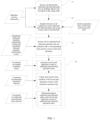
FIG. 1 is a flow diagram of a method for compilation of urban rail transit outbound and inbound operation lines with coordination of multiple depots according to the present invention; -
FIG. 2A is a schematic diagram of direct outbound paths, direct inbound paths and corresponding outbound and inbound districts to be compiled according to the embodiment of the present invention; -
FIG. 2B is a schematic diagram of indirect outbound paths, indirect inbound paths and corresponding outbound and inbound districts to be compiled according to the embodiment of the present invention; -
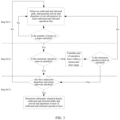
FIG. 3 is a flow diagram of the compilation of outbound and inbound operation lines determined to be ultimately adopted according to the embodiment of the present invention; -
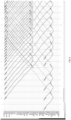
FIG. 4 is a schematic diagram of operation lines, including mainline operation lines, outbound operation lines at the start of the operation and outbound operation lines between adj acent time periods, generated according to the embodiment of the present invention; -
FIG. 5 is a schematic diagram of operation lines, including mainline operation lines, inbound operation lines after the end of the operation and inbound operation lines between adj acent time periods, generated according to the embodiment of the present invention. - Further description of the present invention in detail will be made below in combination with drawings and specific embodiments. The advantages and features of the present invention are clearer according to descriptions and claims below. It is to be noted that the drawings in a quite simplified form and an inaccurate ratio are merely used for describing objectives of the embodiments of the present invention conveniently and clearly in an assistant manner.
- The present invention provides a method for compilation of urban rail transit outbound and inbound operation lines with coordination of multiple depots, by which outbound and inbound operation lines during various time periods throughout the day are uniformly compiled, based on a determined mainline operation diagram, by collaborating parking capacities of multiple depots and resolving conflicts in operation paths and timings of multiple trains.
- The method of the present invention supports the compilation of outbound and inbound operation lines of multiple depots, each of which includes multiple switch tracks, on the basis of the mainline path and arrival and departure events on the mainline operation line. As shown in
FIG. 1 , the compilation method includes the steps: - S 1, screening out, based on the mainline path, a feasible outbound and inbound path set corresponding to switch tracks in each depot that can be connected to the mainline path;
- in Step S1, screening out a feasible outbound and inbound path set corresponding to switch tracks in each depot that can be connected to the mainline path includes: screening out a direct outbound path set, a direct inbound path set, an indirect outbound path set and an indirect inbound path set.
- The direct outbound path set includes all the direct outbound paths starting from a switch track, passing through an originating station of the mainline path and ending at an originating turnaround track of the mainline path or at a terminating turnaround track of the mainline path.
- As shown in
FIG. 2A , a direct outbound path includes a forward direct outbound path and a reverse direct outbound path. - In the forward direct outbound path, a travel direction of a train outgoing to the originating station of the mainline path is the same as that of the train departing from the originating station of the mainline path later. That is, the originating station of the mainline path does not have front and back paths in opposite directions. When a path in which the train arrives at a station is opposite to a path in which the train departs from the station, the station has the front and back paths in opposite directions.
- In the reverse direct outbound path, a travel direction of a train outgoing to the originating station of the mainline path is opposite to that of the train departing from the originating station of the mainline path later. That is, the originating station of the mainline path has front and back paths in opposite directions.
- In
FIG. 2A , switch track I, switch track II and switch track III are all connected to the mainline operation line, providing parking service for the trains on the mainline operation line through corresponding depot I, depot II and depot III. - As shown in
FIG. 2A , the direct inbound path set includes all the direct inbound paths starting from an originating turnaround track of the mainline path or a terminating turnaround track of the mainline path, passing through the terminating station of the mainline path and ending at a switch track. A direct inbound path includes a forward direct inbound path and a reverse direct outbound path. - In the forward direct inbound path, a travel direction of a train arriving at the terminating station of the mainline path is the same as a travel direction of the train departing from the terminating station of the mainline path for inbound.
- In the reverse direct inbound path, a travel direction of a train arriving at the terminating station of the mainline path is opposite to a travel direction of the train departing from the terminating station of the mainline path for inbound.
- In
FIG. 2B , a transfer station is provided between the switch track II and the mainline destination station. The transfer station is any station on the mainline operation line that has front and back paths in opposite directions and connects the switch track with the originating station of the mainline path, or with the destination station of the mainline path. - Paths starting from switch tracks and ending at turnaround tracks of the transfer stations are taken as first outbound paths; paths starting from the turnaround tracks of the transfer stations and ending at originating turnaround tracks of the mainline path are taken as second outbound paths; and combinations of the first outbound paths and the second outbound paths form an indirect outbound path set.
- Paths starting from terminating turnaround tracks of the mainline path and ending at turnaround tracks of the transfer stations are taken as first inbound path; paths starting from turnaround tracks of the transfer stations and ending at switch tracks are taken as second inbound paths; and combinations of the first inbound paths and the second inbound paths form an indirect inbound path set.
FIG. 2B shows an indirect outbound path and an indirect inbound path respectively. - S2, identifying, based on a connection mode of an outbound and inbound path and the mainline path, outbound and inbound districts to be compiled in a feasible outbound and inbound paths; and assigning a time scale to the outbound and inbound districts as a feasible outbound and inbound operation line set.
- For the forward direct outbound path, a district between a switch track and an originating station of the mainline path is an outbound district to be compiled, namely a district on the forward direct outbound path (solid line) that does not coincide with the mainline operation line (dotted line) in
FIG. 2A . - For the forward direct inbound path, a district between a destination station of the mainline path and a switch track is an inbound district to be compiled, namely a district on the forward direct inbound path (solid line) that does not coincide with the mainline operation line (dotted line) in
FIG. 2A . - For the reverse direct outbound path, a district between a switch track and an originating station of the mainline path is an outbound district to be compiled, namely a solid-line district on the reverse direct outbound path in
FIG. 2A . - For the reverse direct inbound path, a district between a destination station of the mainline path and a switch track is an inbound district to be compiled, namely a solid-line district on the reverse direct inbound path in
FIG. 2A . - For the indirect outbound path, a district between a switch track and a transfer station and a district between the transfer station and an originating station of the mainline path are outbound districts to be compiled, namely solid-line districts on the indirect outbound path in
FIG. 2B . - For the indirect inbound path, a district between a destination station of the mainline path and a transfer station and a district between the transfer station and a switch track are the inbound districts to be compiled.
- S3, matching a feasible outbound and inbound operation line of a corresponding time period, service route and direction for each scheduled originating event and terminating event of the mainline to be connected to the outbound and inbound operation line;
- the originating event of the mainline refers to a departure event at the originating station in the first task for each rolling stock scheduling in a mainline operation diagram, and the terminating event of the mainline refers to an arrival event at the terminating station in the last task for each rolling stock scheduling in the mainline operation diagram.
- A forward direct outbound operation line is connected to the mainline operation line through station dwell time at the mainline originating station;
- A forward direct inbound operation line is connected to the mainline operation line through station dwell time at the mainline destination station;
- A reverse direct outbound operation line and an indirect outbound operation line are connected to the mainline operation line through turnaround time at the mainline originating station;
- A reverse direct inbound operation line and an indirect inbound operation line are connected to the mainline operation line through turnaround time at the mainline destination station;
- S4, according to a constraint on depot parking capacities, generating arrival and departure events of a corresponding feasible outbound and inbound operation line at each station in a district, and checking and resolving any time conflicts between the arrival and departure events in the feasible outbound and inbound operation line and those in mainline operation line; and determining the ultimately adopted train outbound and inbound depots, outbound and inbound paths and arrival and departure events in the outbound and inbound operation line matched with the originating event and terminating event of the mainline based on outbound and inbound interval constraint of the depot.
- As shown in
FIG. 3 , Step S4 includes: - S41, selecting an outbound and inbound path from the outbound and inbound path set; generating departure events and arrival events on outbound and inbound operation lines corresponding to depots at each station within the district based on the sequence with which the depots are used; where the departure events and the arrival events of corresponding switch track satisfy a constraint on the total number of the trains parked at the depot, a constraint on the total number of the outbound trains at the depot and a constraint on the number of the trains parked on the switch track;
- S42, checking whether the departure and arrival events of the outbound and inbound operation line and the departure and arrival events on the mainline operation line satisfy a minimum operation interval; if yes, going to Step S43; otherwise, translating the corresponding outbound and inbound operation line along a time axis within a set turnaround time range; and if the minimum operation interval is still not satisfied, going back to Step S41, and otherwise, going to Step S43;
- S43, determining whether the departure events and arrival events on switch tracks corresponding to depots satisfy continuous departure and return intervals in the depots; if yes, determining final train outbound and inbound depots, outbound and inbound paths and arrival and departure events of outbound and inbound operation lines matched with the originating and terminating events on the mainline, and otherwise, going back to Step S41.
- As shown in
FIG. 4 andFIG. 5 , taking an urban rail transit line as an example, all-day outbound and inbound operation lines with coordination of multiple depots, namely lines starting from or ending at a switch track at a parking yard or a train depot, are automatically compiled based on a mainline operation diagram generated by existing diagram compilation software according to the aforementioned steps. Wherein the feasible outbound and inbound path sets are sorted in ascending order of no-load distances.FIG. 4 is a schematic diagram of operation lines, including mainline operation lines, outbound operation lines at the start of the operation and between adjacent time periods, andFIG. 5 is a schematic diagram of operation lines, including mainline operation lines, inbound operation lines after the end of the operation and between adj acent time periods. - The method for compilation of urban rail transit outbound and inbound operation lines with coordination of multiple depots in the present invention can automatically identify feasible outbound and inbound paths corresponding to the mainline path. Based on the connectivity between outbound and inbound paths and the mainline path, it automatically determines the actual outbound and inbound districts to be compiled, eliminating the need for manual searching and calculation one by one. The present invention can screen out depots and outbound and inbound operation lines for use and allows outbound and inbound management in multiple depots, multiple paths and multiple directions. Based on the sequence of the paths and the constraints on the capacities of the depots, it adaptively determines optimal outbound and inbound paths and timings, ensuring that the number of departing trains is equal to the number of return trains in each depot throughout the day and satisfying the continuous departure interval, the continuous return interval and the minimum operation interval. The present invention can integrate and compile all the outbound and inbound operation lines on the mainline operation line before the start of the operation, after the end of the operation and between the adjacent time periods.
- It should be understood that in the above embodiments, the serial numbers of the above-mentioned steps do not mean the execution sequence, and the execution sequence of the steps should be determined by their functions and internal logics, and not constitute any limitation to the implementation process of the embodiments of the present invention.
- While the contents of the present invention have been described in detail by the foregoing preferred embodiments, it should be understood that the aforementioned descriptions should not be considered as limitations to the present invention. Various modifications and alternatives to the present invention will become apparent to those skilled in the art upon reading the foregoing disclosure. Accordingly, the protection scope of the present invention should be defined by the appended claims.
Claims (10)
- A method for compilation of urban rail transit outbound and inbound operation lines with coordination of multiple depots, supporting the compilation of outbound and inbound operation lines of multiple depots, each of which comprises multiple switch tracks, on the basis of a mainline path and arrival and departure events of a mainline operation line. The method comprises the steps of:S1, screening out, based on the mainline path, a feasible outbound and inbound path set corresponding to switch tracks in each depot that can be connected to the mainline path;S2, identifying, based on a connection mode of an outbound and inbound path and the mainline path, outbound and inbound districts to be compiled in a feasible outbound and inbound path and assigning a time scale to the outbound and inbound districts as a feasible outbound and inbound operation line set;S3, matching a feasible outbound and inbound operation line of a corresponding time period, service route and direction for each originating event and terminating event of the mainline to be connected to the outbound and inbound operation line; andS4, according to a constraint on depot parking capacities, generating arrival and departure events of a corresponding feasible outbound and inbound operation line at each station in a district, and checking and resolving any time conflicts between the arrival and departure events in the feasible outbound and inbound operation line and those in mainline operation line; and determining the ultimately adopted train outbound and inbound depots, outbound and inbound paths and arrival and departure events of the outbound and inbound operation line matched with the originating event and terminating event of the mainline based on outbound and inbound interval constraint of the depot.
- The method for compilation of urban rail transit outbound and inbound operation lines with coordination of multiple depots according to claim 1, wherein in Step S1, screening out a feasible outbound and inbound path set corresponding to switch tracks in each depot that can be connected to the mainline path comprises: screening out a direct outbound path set and a direct inbound path set;the direct outbound path set comprises all the paths starting from a switch track, passing through an originating station of the mainline path and ending at either an originating turnaround track or a terminating turnaround track in the mainline path;the direct inbound path set comprises all the paths starting from either an originating turnaround track or a terminating turnaround track in the mainline path, passing through the terminating station of the mainline path, and ending at a switch track.
- The method for compilation of urban rail transit outbound and inbound operation lines with coordination of multiple depots according to claim 2, wherein a direct outbound path comprises a forward direct outbound path and a reverse direct outbound path; and a direct inbound path comprises a forward direct inbound path and a reverse direct inbound path;in the forward direct outbound path, a travel direction of a train outgoing to the originating station of the mainline path is the same as that of the train departing from the originating station of the mainline path later;in the reverse direct outbound path, a travel direction of a train outgoing to the originating station of the mainline path is opposite to that of the train departing from the originating station of the mainline path later;In the forward direct inbound path, a travel direction of a train arriving at the terminating station of the mainline path is the same as that of the train departing from the terminating station of the mainline path for inbound;in the reverse direct inbound path, a travel direction of a train arriving at the terminating station of the mainline path is opposite to that of the train departing from the terminating station of the mainline path for inbound.
- The method for compilation of urban rail transit outbound and inbound operation lines with coordination of multiple depots according to claim 1, wherein in Step S1, screening out a feasible outbound and inbound path set corresponding to switch tracks in each depot that can be connected to the mainline path comprises: screening out an indirect outbound path set and an indirect inbound path set;path starting from switch tracks and ending at turnaround tracks of transfer stations are taken as first outbound paths; paths starting from turnaround tracks of transfer stations and ending at originating turnaround tracks of the mainline path are taken as second outbound paths; and combinations of the first outbound paths and the second outbound paths form an indirect outbound path set;paths starting from terminating turnaround tracks of the mainline path and ending at turnaround tracks of transfer stations are taken as first inbound paths; paths starting from turnaround tracks of the transfer stations and ending at the switch tracks are second inbound paths; and combinations of the first inbound paths and the second inbound paths form an indirect inbound path set;wherein the transfer station is any station on the mainline operation line that has front and back paths in opposite directions and connects the switch track with the originating station of the mainline path, or with the destination station of the mainline path.
- The method for compilation of urban rail transit outbound and inbound operation lines with coordination of multiple depots according to claim 3, wherein identifying outbound and inbound districts to be compiled in a feasible outbound and inbound path comprises:for the forward direct departing path, a district between a switch track and an originating station of the mainline path is an outbound district to be compiled;for the forward direct inbound path, a district between a destination station of the mainline path and a switch track is an inbound district to be compiled.
- The method for compilation of urban rail transit outbound and inbound operation lines with coordination of multiple depots according to claim 3, wherein identifying outbound and inbound districts to be compiled in a feasible outbound and inbound path further comprises:for the reverse direct outbound path, a district between a switch track and an originating station of the mainline path is an outbound district to be compiled;for the reverse direct inbound path, a district between a destination station of the mainline path and the switch track is an inbound district to be compiled.
- The method for compilation of urban rail transit outbound and inbound operation lines with coordination of multiple depots according to claim 4, wherein identifying outbound and inbound districts to be compiled in a feasible outbound and inbound path further comprises:for the indirect outbound path, a district between a switch track and a transfer station and a district between the transfer station and an originating station of the mainline path are outbound districts to be compiled;for the indirect inbound path, a district between a destination station of the mainline path and a transfer station and a district between the transfer station and a switch track are inbound districts to be compiled.
- The method for compilation of urban rail transit outbound and inbound operation lines with coordination of multiple depots according to claim 1, wherein the time scales comprise train section operation time scales, station dwell time scales and turnaround time scales.
- The method for compilation of urban rail transit outbound and inbound operation lines with coordination of multiple depots according to claim 1, whereina forward direct outbound operation line is connected to the mainline operation line through station dwell time at the mainline originating station;a forward direct inbound operation line is connected to the mainline operation line through station dwell time at the mainline destination station;a reverse direct outbound operation line and an indirect outbound operation line are connected to the mainline operation line through turnaround time at the mainline originating station; anda reverse direct inbound operation line and an indirect inbound operation line are connected to the mainline operation line through turnaround time at the mainline destination station.
- The method for compilation of urban rail transit outbound and inbound operation lines with coordination of multiple depots according to claim 1, wherein Step S4 comprises:S41, selecting an outbound and inbound path from the outbound and inbound path set; generating departure events and arrival events on outbound and inbound operation lines corresponding to depots at each station within the district based on the sequence with which the depots are used; where the departure events and the arrival events of corresponding switch track satisfy a constraint on the total number of the trains parked at the depot, a constraint on the total number of the outbound trains at the depot, and a constraint on the number of the trains parked on the switch track;S42, checking whether the departure and arrival events on the outbound and inbound operation line and the departure and arrival events of the mainline operation line satisfy a minimum operation interval; if yes, going to Step S43; otherwise, translating the corresponding outbound and inbound operation line along a time axis within a set turnaround time range; and if the minimum operation interval is still not satisfied, going back to Step S41, and otherwise, going to Step S43; andS43, determining whether the departure events and arrival events on switch tracks corresponding to depots satisfy continuous departure and return intervals in the depots; if yes, determining final train outbound and inbound depots, outbound and inbound paths and arrival and departure events of outbound and inbound operation lines matched with the originating and terminating events on the mainline, and otherwise, going back to Step S41.
Applications Claiming Priority (2)
| Application Number | Priority Date | Filing Date | Title |
|---|---|---|---|
| CN202111490452.9A CN113968264B (en) | 2021-12-08 | 2021-12-08 | Compilation method of urban rail transit inbound and outbound operation lines coordinated with multiple field sections |
| PCT/CN2022/130874 WO2023103698A1 (en) | 2021-12-08 | 2022-11-09 | Method for compiling multi-depot coordinated urban rail transit departing/garaging operation lines |
Publications (3)
| Publication Number | Publication Date |
|---|---|
| EP4406814A1 true EP4406814A1 (en) | 2024-07-31 |
| EP4406814A4 EP4406814A4 (en) | 2025-01-22 |
| EP4406814B1 EP4406814B1 (en) | 2025-12-31 |
Family
ID=79590822
Family Applications (1)
| Application Number | Title | Priority Date | Filing Date |
|---|---|---|---|
| EP22903121.6A Active EP4406814B1 (en) | 2021-12-08 | 2022-11-09 | METHOD FOR THE CONSTRUCTION OF COORDINATED DEPARTURE/ENTRY ROADS FOR MULTI-DEPOT URBAN RAIL TRANSPORT |
Country Status (6)
| Country | Link |
|---|---|
| US (1) | US20250002062A1 (en) |
| EP (1) | EP4406814B1 (en) |
| CN (1) | CN113968264B (en) |
| AU (1) | AU2022405241B2 (en) |
| ES (1) | ES3061575T3 (en) |
| WO (1) | WO2023103698A1 (en) |
Families Citing this family (8)
| Publication number | Priority date | Publication date | Assignee | Title |
|---|---|---|---|---|
| CN113968264B (en) * | 2021-12-08 | 2023-10-31 | 卡斯柯信号有限公司 | Compilation method of urban rail transit inbound and outbound operation lines coordinated with multiple field sections |
| CN114179873B (en) * | 2022-02-15 | 2022-04-22 | 四川华睿兴科技有限公司 | Multi-road multi-time-interval all-day train operation diagram automatic compilation method and system |
| CN115848459B (en) * | 2022-11-23 | 2025-11-28 | 通号城市轨道交通技术有限公司 | Train operation route crossing data generation method and system |
| US20250145193A1 (en) * | 2023-11-03 | 2025-05-08 | Bnsf Railway Company | System and method for intelligently diffusing unit storage across parking lot resources to maximize unit throughput in a hub based on a dual-stream resource optimization |
| US12662178B2 (en) | 2023-11-03 | 2026-06-23 | Bnsf Railway Company | System and method for optimizing utilization of hostler resources of a hub based on a dual-stream resource optimization |
| US12703411B2 (en) | 2023-11-03 | 2026-08-11 | Bnsf Railway Company | System and method for managing hostler-aided multi-hop operations to repair deviations in execution of optimized operating schedules associated with a hub |
| US20250145190A1 (en) * | 2023-11-03 | 2025-05-08 | Bnsf Railway Company | System and method for dynamic and logical intermodal parking lot classification |
| CN117273393B (en) * | 2023-11-16 | 2024-04-26 | 北京城建智控科技股份有限公司 | Dynamic adjustment method and device for vehicle running chart and electronic equipment |
Family Cites Families (24)
| Publication number | Priority date | Publication date | Assignee | Title |
|---|---|---|---|---|
| US5177684A (en) * | 1990-12-18 | 1993-01-05 | The Trustees Of The University Of Pennsylvania | Method for analyzing and generating optimal transportation schedules for vehicles such as trains and controlling the movement of vehicles in response thereto |
| JPH06144230A (en) * | 1992-11-12 | 1994-05-24 | Toshiba Corp | Train schedule automatic creation device |
| JP2001278052A (en) * | 2000-03-31 | 2001-10-10 | Kawasaki Heavy Ind Ltd | Method and system for supporting train schedule creation |
| US7813846B2 (en) * | 2005-03-14 | 2010-10-12 | General Electric Company | System and method for railyard planning |
| US8585347B2 (en) * | 2007-06-26 | 2013-11-19 | Mi-Jack Products, Inc. | Hub and distribution system |
| CN101388050A (en) * | 2008-09-25 | 2009-03-18 | 卡斯柯信号有限公司 | A method for automatically compiling urban rail train operation diagrams |
| KR101171049B1 (en) * | 2010-11-23 | 2012-08-07 | 서울특별시도시철도공사 | Demand sensitivity train operation plan setting system and method |
| CN103218671B (en) * | 2013-03-22 | 2016-04-06 | 北京交通大学 | Under a kind of one-tenth net condition, urban rail transit new line accesses amount Forecasting Methodology out of the station |
| CN106503315B (en) * | 2016-10-10 | 2019-07-23 | 北京市交通信息中心 | A method for determining the proportion of inbound passengers' travel characteristics under rail transit emergencies |
| US10259648B2 (en) * | 2017-04-06 | 2019-04-16 | Lineage Logistics, LLC | Automated warehouse improvements |
| JP7066365B2 (en) * | 2017-10-16 | 2022-05-13 | 株式会社日立製作所 | Timetable creation device and automatic train control system |
| CN108388542B (en) * | 2018-01-18 | 2021-04-13 | 中国科学院空天信息创新研究院 | A method and system for calculating the congestion degree of rail traffic |
| CN108537392B (en) * | 2018-04-26 | 2021-08-17 | 重庆大学 | A method for predicting outbound passenger flow of rail transit stations based on spatiotemporal features |
| CN111216766B (en) * | 2018-11-23 | 2021-07-09 | 比亚迪股份有限公司 | A warehouse-out method, device, system and train control center for a fully automatic driving train |
| CN112373521A (en) * | 2019-09-27 | 2021-02-19 | 北京城建设计发展集团股份有限公司 | Automatic compiling, detecting and adjusting system and method for multi-line and multi-intersection train timetable |
| CN110733540B (en) * | 2019-10-17 | 2021-12-21 | 卡斯柯信号有限公司 | Full-automatic unmanned train vehicle section delivery method |
| US11488076B2 (en) * | 2019-11-14 | 2022-11-01 | Lineage Logistics, LLC | Assigning warehouse resources to an inbound truck to maximize warehouse throughput |
| CN111353705B (en) * | 2020-02-28 | 2021-04-06 | 交控科技股份有限公司 | Urban rail transit multi-field route management system and comprehensive management and control system |
| CN111391896B (en) * | 2020-03-30 | 2021-06-08 | 卡斯柯信号有限公司 | All-day train operation diagram generation method based on time-sharing scheme and activity event relation |
| CN112734095B (en) * | 2020-12-30 | 2022-08-26 | 中车青岛四方车辆研究所有限公司 | Timetable and vehicle bottom operation plan compiling method considering large and small road crossing |
| CN113968264B (en) * | 2021-12-08 | 2023-10-31 | 卡斯柯信号有限公司 | Compilation method of urban rail transit inbound and outbound operation lines coordinated with multiple field sections |
| US20240375151A1 (en) * | 2023-05-09 | 2024-11-14 | Target Brands, Inc. | Sortation facility for outbound loading and delivery of middle-mile and last-mile items |
| CN119227901A (en) * | 2024-10-22 | 2024-12-31 | 浙江中控信息产业股份有限公司 | A method for generating peak passenger flow operations at rail transit stations |
| CN122211444A (en) * | 2026-03-23 | 2026-06-16 | 通号城市轨道交通技术有限公司 | Train dispatching methods, devices, electronic equipment and storage media |
-
2021
- 2021-12-08 CN CN202111490452.9A patent/CN113968264B/en active Active
-
2022
- 2022-11-09 EP EP22903121.6A patent/EP4406814B1/en active Active
- 2022-11-09 WO PCT/CN2022/130874 patent/WO2023103698A1/en not_active Ceased
- 2022-11-09 US US18/708,814 patent/US20250002062A1/en active Pending
- 2022-11-09 ES ES22903121T patent/ES3061575T3/en active Active
- 2022-11-09 AU AU2022405241A patent/AU2022405241B2/en active Active
Also Published As
| Publication number | Publication date |
|---|---|
| EP4406814B1 (en) | 2025-12-31 |
| CN113968264B (en) | 2023-10-31 |
| EP4406814A4 (en) | 2025-01-22 |
| ES3061575T3 (en) | 2026-04-06 |
| AU2022405241B2 (en) | 2025-11-06 |
| WO2023103698A1 (en) | 2023-06-15 |
| CN113968264A (en) | 2022-01-25 |
| AU2022405241A1 (en) | 2024-05-16 |
| US20250002062A1 (en) | 2025-01-02 |
Similar Documents
| Publication | Publication Date | Title |
|---|---|---|
| US20250002062A1 (en) | Method for compilation of urban rail transit outbound and inbound operation lines with coordination of multiple depots | |
| CN110135755A (en) | A method for comprehensively optimizing urban and rural bus timetable compilation and vehicle dispatching in an area | |
| CN111815189A (en) | Modular Bus Dispatching System | |
| Huisman et al. | Operations research in passenger railway transportation | |
| CN113919650A (en) | Train operation scheme optimization compilation method and system | |
| CN108082224A (en) | Train preparation method based on AFC time-varying passenger flows | |
| CN112644519B (en) | Forward vehicle aggregation combination system and method for railway marshalling station | |
| CN105253170A (en) | City railway transport vehicle scheduling management and running chart display method | |
| CN102169512A (en) | Urban mass transit network dynamic accessibility computing method based on time window constraints | |
| CN101513889A (en) | CTC station autonomous controlling machine with self-learning system | |
| CN106845734A (en) | Towards the multi-mode public transport timetable optimization method of last park-and-ride demand | |
| Dedík et al. | Rationalization of the passenger transport system as an important transport system | |
| He et al. | A microscopic agent-based simulation for real-time dispatching problem of a busy railway passenger station | |
| Middelkoop et al. | Simulation of traffic management with FRISO | |
| RU2541551C1 (en) | Control over scheduled freight train traffic in railway communication | |
| HK40058117B (en) | Compilation method for multi-depot coordinated inbound and outbound operation lines in urban rail transit | |
| CN115214751A (en) | Representation method and adjustment method of tram running diagram considering factors of level crossing | |
| Reimann et al. | Single line train scheduling with ACO | |
| Warg et al. | Assessment of commuter train timetables including transfers | |
| HK40058117A (en) | Compilation method for multi-depot coordinated inbound and outbound operation lines in urban rail transit | |
| Hellström | Problems in the integration of timetabling and train traffic control | |
| Meiquan et al. | Modeling circulation of train-set with multiple routing | |
| Lei et al. | Reasonable scheduling for arrival–departure track operations in railway stations | |
| CN116011206B (en) | A method for compiling train operation plans for Y-type metro lines under flexible formation mode | |
| Jafarian-Moghaddam et al. | An effective improvement to main non-periodic train scheduling models by a new headway definition |
Legal Events
| Date | Code | Title | Description |
|---|---|---|---|
| STAA | Information on the status of an ep patent application or granted ep patent |
Free format text: STATUS: THE INTERNATIONAL PUBLICATION HAS BEEN MADE |
|
| PUAI | Public reference made under article 153(3) epc to a published international application that has entered the european phase |
Free format text: ORIGINAL CODE: 0009012 |
|
| STAA | Information on the status of an ep patent application or granted ep patent |
Free format text: STATUS: REQUEST FOR EXAMINATION WAS MADE |
|
| 17P | Request for examination filed |
Effective date: 20240423 |
|
| AK | Designated contracting states |
Kind code of ref document: A1 Designated state(s): AL AT BE BG CH CY CZ DE DK EE ES FI FR GB GR HR HU IE IS IT LI LT LU LV MC ME MK MT NL NO PL PT RO RS SE SI SK SM TR |
|
| A4 | Supplementary search report drawn up and despatched |
Effective date: 20241220 |
|
| RIC1 | Information provided on ipc code assigned before grant |
Ipc: B61L 27/10 20220101AFI20241216BHEP |
|
| DAV | Request for validation of the european patent (deleted) | ||
| DAX | Request for extension of the european patent (deleted) | ||
| REG | Reference to a national code |
Ref country code: DE Ref legal event code: R079 Free format text: PREVIOUS MAIN CLASS: B61L0027100000 Ipc: B61L0027120000 Ref document number: 602022028179 Country of ref document: DE |
|
| GRAP | Despatch of communication of intention to grant a patent |
Free format text: ORIGINAL CODE: EPIDOSNIGR1 |
|
| STAA | Information on the status of an ep patent application or granted ep patent |
Free format text: STATUS: GRANT OF PATENT IS INTENDED |
|
| RIC1 | Information provided on ipc code assigned before grant |
Ipc: B61L 27/12 20220101AFI20250912BHEP |
|
| INTG | Intention to grant announced |
Effective date: 20250930 |
|
| GRAS | Grant fee paid |
Free format text: ORIGINAL CODE: EPIDOSNIGR3 |
|
| GRAA | (expected) grant |
Free format text: ORIGINAL CODE: 0009210 |
|
| STAA | Information on the status of an ep patent application or granted ep patent |
Free format text: STATUS: THE PATENT HAS BEEN GRANTED |
|
| AK | Designated contracting states |
Kind code of ref document: B1 Designated state(s): AL AT BE BG CH CY CZ DE DK EE ES FI FR GB GR HR HU IE IS IT LI LT LU LV MC ME MK MT NL NO PL PT RO RS SE SI SK SM TR |
|
| REG | Reference to a national code |
Ref country code: CH Ref legal event code: F10 Free format text: ST27 STATUS EVENT CODE: U-0-0-F10-F00 (AS PROVIDED BY THE NATIONAL OFFICE) Effective date: 20251231 Ref country code: GB Ref legal event code: FG4D |
|
| REG | Reference to a national code |
Ref country code: DE Ref legal event code: R096 Ref document number: 602022028179 Country of ref document: DE |
|
| REG | Reference to a national code |
Ref country code: IE Ref legal event code: FG4D |
|
| REG | Reference to a national code |
Ref country code: ES Ref legal event code: FG2A Ref document number: 3061575 Country of ref document: ES Kind code of ref document: T3 Effective date: 20260406 |
|
| REG | Reference to a national code |
Ref country code: LT Ref legal event code: MG9D |
|
| PG25 | Lapsed in a contracting state [announced via postgrant information from national office to epo] |
Ref country code: NO Free format text: LAPSE BECAUSE OF FAILURE TO SUBMIT A TRANSLATION OF THE DESCRIPTION OR TO PAY THE FEE WITHIN THE PRESCRIBED TIME-LIMIT Effective date: 20260331 |
|
| PG25 | Lapsed in a contracting state [announced via postgrant information from national office to epo] |
Ref country code: FI Free format text: LAPSE BECAUSE OF FAILURE TO SUBMIT A TRANSLATION OF THE DESCRIPTION OR TO PAY THE FEE WITHIN THE PRESCRIBED TIME-LIMIT Effective date: 20251231 Ref country code: HR Free format text: LAPSE BECAUSE OF FAILURE TO SUBMIT A TRANSLATION OF THE DESCRIPTION OR TO PAY THE FEE WITHIN THE PRESCRIBED TIME-LIMIT Effective date: 20251231 |
|
| PG25 | Lapsed in a contracting state [announced via postgrant information from national office to epo] |
Ref country code: RS Free format text: LAPSE BECAUSE OF FAILURE TO SUBMIT A TRANSLATION OF THE DESCRIPTION OR TO PAY THE FEE WITHIN THE PRESCRIBED TIME-LIMIT Effective date: 20260331 |
|
| PG25 | Lapsed in a contracting state [announced via postgrant information from national office to epo] |
Ref country code: LV Free format text: LAPSE BECAUSE OF FAILURE TO SUBMIT A TRANSLATION OF THE DESCRIPTION OR TO PAY THE FEE WITHIN THE PRESCRIBED TIME-LIMIT Effective date: 20251231 |
|
| PG25 | Lapsed in a contracting state [announced via postgrant information from national office to epo] |
Ref country code: BG Free format text: LAPSE BECAUSE OF FAILURE TO SUBMIT A TRANSLATION OF THE DESCRIPTION OR TO PAY THE FEE WITHIN THE PRESCRIBED TIME-LIMIT Effective date: 20251231 |
|
| REG | Reference to a national code |
Ref country code: NL Ref legal event code: MP Effective date: 20251231 |
|
| REG | Reference to a national code |
Ref country code: AT Ref legal event code: MK05 Ref document number: 1872950 Country of ref document: AT Kind code of ref document: T Effective date: 20251231 |
|
| PG25 | Lapsed in a contracting state [announced via postgrant information from national office to epo] |
Ref country code: NL Free format text: LAPSE BECAUSE OF FAILURE TO SUBMIT A TRANSLATION OF THE DESCRIPTION OR TO PAY THE FEE WITHIN THE PRESCRIBED TIME-LIMIT Effective date: 20251231 |
|
| PG25 | Lapsed in a contracting state [announced via postgrant information from national office to epo] |
Ref country code: LT Free format text: LAPSE BECAUSE OF FAILURE TO SUBMIT A TRANSLATION OF THE DESCRIPTION OR TO PAY THE FEE WITHIN THE PRESCRIBED TIME-LIMIT Effective date: 20251231 |
|
| PG25 | Lapsed in a contracting state [announced via postgrant information from national office to epo] |
Ref country code: SM Free format text: LAPSE BECAUSE OF FAILURE TO SUBMIT A TRANSLATION OF THE DESCRIPTION OR TO PAY THE FEE WITHIN THE PRESCRIBED TIME-LIMIT Effective date: 20251231 |
|
| PG25 | Lapsed in a contracting state [announced via postgrant information from national office to epo] |
Ref country code: PL Free format text: LAPSE BECAUSE OF FAILURE TO SUBMIT A TRANSLATION OF THE DESCRIPTION OR TO PAY THE FEE WITHIN THE PRESCRIBED TIME-LIMIT Effective date: 20251231 |
|
| PG25 | Lapsed in a contracting state [announced via postgrant information from national office to epo] |
Ref country code: IT Free format text: LAPSE BECAUSE OF FAILURE TO SUBMIT A TRANSLATION OF THE DESCRIPTION OR TO PAY THE FEE WITHIN THE PRESCRIBED TIME-LIMIT Effective date: 20251231 |
|
| PG25 | Lapsed in a contracting state [announced via postgrant information from national office to epo] |
Ref country code: AT Free format text: LAPSE BECAUSE OF FAILURE TO SUBMIT A TRANSLATION OF THE DESCRIPTION OR TO PAY THE FEE WITHIN THE PRESCRIBED TIME-LIMIT Effective date: 20251231 |
|
| PG25 | Lapsed in a contracting state [announced via postgrant information from national office to epo] |
Ref country code: EE Free format text: LAPSE BECAUSE OF FAILURE TO SUBMIT A TRANSLATION OF THE DESCRIPTION OR TO PAY THE FEE WITHIN THE PRESCRIBED TIME-LIMIT Effective date: 20251231 |
|
| PG25 | Lapsed in a contracting state [announced via postgrant information from national office to epo] |
Ref country code: PT Free format text: LAPSE BECAUSE OF FAILURE TO SUBMIT A TRANSLATION OF THE DESCRIPTION OR TO PAY THE FEE WITHIN THE PRESCRIBED TIME-LIMIT Effective date: 20260430 Ref country code: IS Free format text: LAPSE BECAUSE OF FAILURE TO SUBMIT A TRANSLATION OF THE DESCRIPTION OR TO PAY THE FEE WITHIN THE PRESCRIBED TIME-LIMIT Effective date: 20260430 |
|
| PG25 | Lapsed in a contracting state [announced via postgrant information from national office to epo] |
Ref country code: CZ Free format text: LAPSE BECAUSE OF FAILURE TO SUBMIT A TRANSLATION OF THE DESCRIPTION OR TO PAY THE FEE WITHIN THE PRESCRIBED TIME-LIMIT Effective date: 20251231 |
|
| PG25 | Lapsed in a contracting state [announced via postgrant information from national office to epo] |
Ref country code: SK Free format text: LAPSE BECAUSE OF FAILURE TO SUBMIT A TRANSLATION OF THE DESCRIPTION OR TO PAY THE FEE WITHIN THE PRESCRIBED TIME-LIMIT Effective date: 20251231 |
|
| PG25 | Lapsed in a contracting state [announced via postgrant information from national office to epo] |
Ref country code: SE Free format text: LAPSE BECAUSE OF FAILURE TO SUBMIT A TRANSLATION OF THE DESCRIPTION OR TO PAY THE FEE WITHIN THE PRESCRIBED TIME-LIMIT Effective date: 20251231 |