EP4404640A1 - Energieeinsparung in einem drahtlosen kommunikationsnetzwerk - Google Patents
Energieeinsparung in einem drahtlosen kommunikationsnetzwerk Download PDFInfo
- Publication number
- EP4404640A1 EP4404640A1 EP24150961.1A EP24150961A EP4404640A1 EP 4404640 A1 EP4404640 A1 EP 4404640A1 EP 24150961 A EP24150961 A EP 24150961A EP 4404640 A1 EP4404640 A1 EP 4404640A1
- Authority
- EP
- European Patent Office
- Prior art keywords
- group
- cells
- threshold
- load
- power saving
- Prior art date
- Legal status (The legal status is an assumption and is not a legal conclusion. Google has not performed a legal analysis and makes no representation as to the accuracy of the status listed.)
- Pending
Links
Images



Classifications
-
- H—ELECTRICITY
- H04—ELECTRIC COMMUNICATION TECHNIQUE
- H04W—WIRELESS COMMUNICATION NETWORKS
- H04W52/00—Power management, e.g. Transmission Power Control [TPC] or power classes
- H04W52/02—Power saving arrangements
- H04W52/0203—Power saving arrangements in the radio access network or backbone network of wireless communication networks
-
- H—ELECTRICITY
- H04—ELECTRIC COMMUNICATION TECHNIQUE
- H04W—WIRELESS COMMUNICATION NETWORKS
- H04W52/00—Power management, e.g. Transmission Power Control [TPC] or power classes
- H04W52/02—Power saving arrangements
- H04W52/0203—Power saving arrangements in the radio access network or backbone network of wireless communication networks
- H04W52/0206—Power saving arrangements in the radio access network or backbone network of wireless communication networks in access points, e.g. base stations
-
- H—ELECTRICITY
- H04—ELECTRIC COMMUNICATION TECHNIQUE
- H04B—TRANSMISSION
- H04B17/00—Monitoring; Testing
- H04B17/20—Monitoring; Testing of receivers
- H04B17/26—Monitoring; Testing of receivers using historical data, averaging values or statistics
-
- H—ELECTRICITY
- H04—ELECTRIC COMMUNICATION TECHNIQUE
- H04B—TRANSMISSION
- H04B17/00—Monitoring; Testing
- H04B17/30—Monitoring; Testing of propagation channels
- H04B17/391—Modelling the propagation channel
- H04B17/3913—Predictive models, e.g. based on neural network models
-
- H—ELECTRICITY
- H04—ELECTRIC COMMUNICATION TECHNIQUE
- H04W—WIRELESS COMMUNICATION NETWORKS
- H04W24/00—Supervisory, monitoring or testing arrangements
- H04W24/02—Arrangements for optimising operational condition
-
- H—ELECTRICITY
- H04—ELECTRIC COMMUNICATION TECHNIQUE
- H04W—WIRELESS COMMUNICATION NETWORKS
- H04W52/00—Power management, e.g. Transmission Power Control [TPC] or power classes
- H04W52/04—Transmission power control [TPC]
- H04W52/30—Transmission power control [TPC] using constraints in the total amount of available transmission power
- H04W52/34—TPC management, i.e. sharing limited amount of power among users or channels or data types, e.g. cell loading
- H04W52/343—TPC management, i.e. sharing limited amount of power among users or channels or data types, e.g. cell loading taking into account loading or congestion level
-
- H—ELECTRICITY
- H04—ELECTRIC COMMUNICATION TECHNIQUE
- H04W—WIRELESS COMMUNICATION NETWORKS
- H04W88/00—Devices specially adapted for wireless communication networks, e.g. terminals, base stations or access point devices
-
- Y—GENERAL TAGGING OF NEW TECHNOLOGICAL DEVELOPMENTS; GENERAL TAGGING OF CROSS-SECTIONAL TECHNOLOGIES SPANNING OVER SEVERAL SECTIONS OF THE IPC; TECHNICAL SUBJECTS COVERED BY FORMER USPC CROSS-REFERENCE ART COLLECTIONS [XRACs] AND DIGESTS
- Y02—TECHNOLOGIES OR APPLICATIONS FOR MITIGATION OR ADAPTATION AGAINST CLIMATE CHANGE
- Y02D—CLIMATE CHANGE MITIGATION TECHNOLOGIES IN INFORMATION AND COMMUNICATION TECHNOLOGIES [ICT], I.E. INFORMATION AND COMMUNICATION TECHNOLOGIES AIMING AT THE REDUCTION OF THEIR OWN ENERGY USE
- Y02D30/00—Reducing energy consumption in communication networks
- Y02D30/70—Reducing energy consumption in communication networks in wireless communication networks
Definitions
- Various example embodiments relate to power saving in a wireless communication network and, in particular, an apparatus and a method to determine a threshold to decide whether a cell should enter or exit a power saving mode.
- Provision of a wireless communication network requires use of energy.
- RAN Radio Access Network
- TRPs transmission and reception points
- EC Energy Consumption
- OF-RU Open Radio Access Network Radio Units
- an apparatus comprising: at least one processor; and at least one memory storing instructions that when executed by the at least one processor cause the apparatus at least to: predict a future load in a group of cells supporting network coverage in an area of a wireless communication network based on historical load data for the group of cells; and determine, based at least on the predicted future load, at least one threshold load value for establishing whether a cell of the group of cells should enter or exit a power saving mode.
- entering the power saving mode comprises: deactivation or powering off a cell or a carrier of a cell of the group of cells. According to some embodiments, entering the power saving mode comprises: deactivation or powering off at least one cell or a carrier of a cell of the group of cells. According to some embodiments, exiting the power saving mode comprises: activation or powering on a cell or a carrier of a cell of the group of cells. According to some embodiments, exiting the power saving mode comprises: activation or powering on at least one cell or a carrier of a cell of the group of cells.
- the group of cells comprises a "power saving group" of cells.
- the group of cells comprises a logic entity called a power saving group or power group.
- Radio cells can be assigned to the same Power Saving Group according to some embodiments provided they: cover the same geographical area and belong to the same base station, for example, the same eNB.
- each cell of a network can be assigned to only one Power Saving Group.
- a Power Saving Group may contain one or more cells.
- cells are assigned to a Power Saving Group either manually or automatically through application of an appropriate algorithm to available network cells.
- the historical load data comprises at least one of the following: radio link condition, traffic, cell throughput, downlink physical resource block utilisation, or a number of active user equipment within the group of cells.
- the future load comprises at least one of the following: a predicted downlink physical resource block utilisation, a predicted cell throughput or a predicted number of active user equipment within the group of cells.
- determining the at least one threshold load value comprises: determining a threshold load value for whether a cell of the group of cells should enter the power saving mode and determining a threshold load value for whether a cell of the group of cells should exit the power saving mode. In other words, there is a separate threshold for activation and deactivation of the power saving mode.
- the threshold load for activation of energy saving is different to the threshold load for deactivation of energy saving.
- predicting the future load in the group of cells comprises: predicting a load which may occur in the group of cells during at least two time windows; and determining the at least one threshold load value comprises: determining the at least one threshold load value for each time window based on the predicted load which may occur in the group of cells during that time window.
- predicting the future load in the group of cells comprises: predicting a load which may occur in the group of cells during a future time period; and determining the at least one threshold load value comprises: determining the at least one threshold load value for each future time period based on the predicted load which may occur in the group of cells during that future time period.
- the time window or future time period may comprise: a time period comprising one or more days, a time period of a day, a time period of a portion of day, an hour or several hours, a portion of an hour, a number of minutes.
- the time window may comprise, for example, a fifteen minute interval.
- determining at least one threshold may comprise: determining the at least one threshold to apply in each of a series of consecutive time windows or future time periods.
- determining the at least one threshold load value is based at least partly upon assessed network performance in the area of the wireless communication network supported by the group of cells.
- assessing network performance is based at least partly on a downlink characteristic experienced by user equipment in the area of the wireless communication network supported by the group of cells.
- the downlink characteristic comprises: downlink throughput experienced by user equipment in the area of the wireless communication network supported by the group of cells.
- determining the at least one threshold load value comprises: selecting a threshold load value which provides an energy saving whilst maintaining network performance in the area of the wireless communication network supported by the group of cells.
- determining said at least one threshold load value comprises: selecting, calculating or evaluating the at least one threshold load value which, when implemented in the group of cells, based on the predicted load of the group of cells, provides an energy saving. According to some embodiments, determining said at least one threshold load value comprises: selecting said at least one threshold load value which provides greatest energy saving. According to some embodiments, determining said at least one threshold load value comprises: selecting a threshold load value which provides maximum energy saving.
- determining the at least one threshold load value comprises: determining the at least one threshold value at which a cell of the group of cells can enter a power saving mode without degrading network performance experienced by user equipment in the area of the wireless communication network supported by the group of cells.
- the apparatus is further configured to: adjust the determined at least one threshold load value based upon a determination of whether at least one monitorable key performance indicator of the network is adversely impacted by implementation of the determined at least one threshold load value.
- the apparatus is configured to: adjust the determined at least one threshold load value by: determining whether said at least one monitorable key performance indicator is degrading and, if so, adjusting the at least one threshold load value. According to some embodiments, the apparatus is configured to: adjust the determined at least one threshold load value by: determining whether said at least one monitorable key performance indicator is degrading and, if not, maintaining the determined at least one threshold load value.
- the at least one monitorable key performance indicator of the network comprises a monitorable indicator of at least one of the following: accessibility, retainability, or downlink cell throughput.
- Accessibility of a network may, for example, comprise a measure of how many UE connections to a network are successfully completed compared to a number of requested UE connections to a network.
- Retainability of a network may, for example, comprise a measure of how many radio bearers are dropped abnormally compared to a number of expected radio bearer releases.
- the apparatus comprises: a load forecasting machine learning module configured to perform the prediction of a future load in the group of cells supporting network coverage in the area of a wireless communication network based on historical load data for the group of cells.
- the load forecasting machine learning module comprises a load forecasting machine learning model.
- the forecasting machine learning model is configured to use historical load data associated with the group of cells supporting network coverage in the area of a wireless communication network to predict a future load on the group of cells supporting network coverage in the area of a wireless communication network.
- the historical load data is used to forecast n minutes in the future where n is the inference frequency of a threshold prediction model applied by the load forecasting machine learning module.
- the load forecasting machine learning model comprises a univariate nested MLP [multi-layer perceptron].
- the load forecasting machine learning model is configured to predict: a number of active user equipment in the group of cells.
- the load forecasting machine learning model is configured to predict: downlink physical resource block utilisation level in the group of cells.
- the apparatus comprises: a threshold evaluation machine learning module configured to determine, based at least on the predicted future load, the at least one threshold load value for establishing whether a cell of the group of cells should enter or exit a power saving mode.
- the threshold evaluation machine learning module is configured to determine the at least one threshold load value for a selected group of cells.
- the threshold evaluation machine learning module is configured to determine, based on one or more input factors, one or more threshold load value at which power saving steps can be activated or deactivated within the group of cells.
- the threshold evaluation machine learning module determines the one or more threshold load value based upon: a load prediction output from the load forecasting machine learning module.
- the threshold evaluation machine learning module determines the one or more threshold load value based upon: one or more parameter indicative of user experience within the group of cells.
- one or more parameter indicative of user experience comprises an indicator of current radio condition or customer experience.
- the threshold evaluation machine learning module applies a custom reward function configured to increase energy saving within the group of cells whilst maintaining user experience within the group of cells.
- the threshold evaluation machine learning module is configured to assess user experience within the group of cells based upon an indication of user equipment downlink throughput.
- the threshold evaluation machine learning module comprises a double deep Q network reinforcement learning model.
- the double deep Q network reinforcement learning model is configured to determine the one or more threshold load value.
- the threshold evaluation machine learning module is configured to implement a reinforcement learning process.
- the reinforcement learning process comprises: selecting a base at least one threshold value in dependence upon the prediction of energy saving based upon a future load in the group of cells supporting network coverage in the area of a wireless communication network based on historical load data for the group of cells.
- the reinforcement learning process comprises: applying a custom reward function to the base value, the custom reward function operating to increase energy saving achieved across the group of cells whilst maintaining user experience operating within the area of network coverage within the wireless communication network supported by the group of cells.
- the custom reward function comprises: a score associated with a calculated characteristic of user experience operating within the area of network coverage within the wireless communication network supported by the group of cells.
- the custom reward function comprises a score associated with a calculated key performance characteristic within the area of network coverage within the wireless communication network supported by the group of cells.
- the apparatus comprises: a key performance indicator feedback machine learning module configured to determine whether at least one monitorable key performance indicator of the network is adversely impacted by implementation of the determined at least one threshold load value based upon a monitored indication of the monitorable key performance indicator.
- the key performance indicator feedback machine learning module is configured to provide feedback to threshold evaluation machine learning module based upon a comparison of one or more experienced monitorable indication within the group of cells compared to one or more predicted monitorable indication within the group of cells.
- the key performance indicator feedback machine learning module is configured to assess performance of the group of cells, based on a comparison of one or more measurable characteristic of operation of the group of cells with a prediction of the one or more measurable characteristic of operation of the group of cells.
- the key performance indicator feedback machine learning module is configured to apply a statistical model to compare current performance of a group of cells, with one or more past historic pattern of performance of the group of cells using a hypothesis test.
- the hypothesis test may comprise one or more of: Mann Whitney test; T - test and/or a Kruskal Wallis test.
- the apparatus comprises a network control node. According to some embodiments, the apparatus is further configured to provide the determined at least one threshold value to a network control node for implementation of the energy saving mode.
- the apparatus is further configured to provide the determined at least one threshold value to a near Real Time Radio Access Network Intelligent Controller for implementation of the energy saving mode in a cell or cells of the group of cells.
- a computer implemented method comprising: predicting a future load in a group of cells supporting network coverage in an area of a wireless communication network based on historical load data for the group of cells; anddetermining , based at least on the predicted future load, at least one threshold load value for establishing whether a cell of the group of cells should enter or exit a power saving mode.
- entering the power saving mode comprises: deactivation or powering off a cell or a carrier of a cell of the group of cells. According to some embodiments, entering the power saving mode comprises: deactivation or powering off at least one cell or a carrier of a cell of the group of cells. According to some embodiments, exiting the power saving mode comprises: activation or powering on a cell or a carrier of a cell of the group of cells. According to some embodiments, exiting the power saving mode comprises: activation or powering on at least one cell or a carrier of a cell of the group of cells.
- the group of cells comprises a "power saving group" of cells.
- the group of cells comprises a logic entity called a power saving group or power group.
- Radio cells can be assigned to the same Power Saving Group according to come embodiments provided they: cover the same geographical area and belong to the same base station, for example, the same eNB.
- each cell of a network can be assigned to only one Power Saving Group.
- a Power Saving Group may contain one or more cells.
- cells are assigned to a Power Saving Group either manually or automatically through application of an appropriate algorithm to available network cells.
- the historical load data comprises at least one of the following: radio link condition, traffic, cell throughput, downlink physical resource block utilisation, or a number of active user equipment within the group of cells.
- the future load comprises at least one of the following: a predicted downlink physical resource block utilisation, a predicted cell throughput or a predicted number of active user equipment within the group of cells.
- predicting the future load in the group of cells comprises: predicting a load which may occur in the group of cells during at least two time windows; and determining the at least one threshold load value comprises: determining the at least one threshold load value for each time window based on the predicted load which may occur in the group of cells during that time window.
- predicting the future load in the group of cells comprises: predicting a load which may occur in the group of cells during a future time period and determining the at least one threshold load value comprises: determining the at least one threshold load value for each future time period based on the predicted load which may occur in the group of cells during that future time period.
- the time window or future time period may comprise a time period comprising one or more days, a time period of a day, a time period of a portion of a day, an hour or several hours, a portion of an hour, a number of minutes.
- the time window may comprise, for example, a fifteen minute interval.
- determining the at least one threshold may comprise: determining the at least one threshold to apply in each of a series of consecutive time windows or future time periods.
- determining the at least one threshold load value is based at least partly upon assessed network performance in the area of the wireless communication network supported by the group of cells.
- assessing network performance is based at least partly on a downlink characteristic experienced by user equipment in the area of the wireless communication network supported by the group of cells.
- the downlink characteristic comprises: downlink throughput experienced by user equipment in the area of the wireless communication network supported by the group of cells.
- determining the at least one threshold load value comprises: selecting, calculating or evaluating the at least one threshold load value which, when implemented in the group of cells, based on the predicted load of the group of cells, provides an energy saving. According to some embodiments, determining said at least one threshold load value comprises: selecting said at least one threshold load value which provides greatest energy saving. According to some embodiments, determining said at least one threshold load value comprises: selecting a threshold load value which provides maximum energy saving.
- determining the at least one threshold load value comprises: determining the at least one threshold value at which a cell of the group of cells can enter a power saving mode without degrading network performance experienced by user equipment in the area of the wireless communication network supported by the group of cells.
- the method comprises: adjusting the determined at least one threshold load value based upon a determination of whether at least one monitorable key performance indicator of the network is adversely impacted by implementation of the determined at least one threshold load value.
- the at least one monitorable key performance indicator of the network comprises a monitorable indicator of at least one of the following: accessibility, retainability, or downlink cell throughput.
- Accessibility of a network may, for example, comprise a measure of how many UE connections to a network are successfully completed compared to a number of requested UE connections to a network.
- Retainability of a network may, for example, comprise a measure of how many radio bearers are dropped abnormally compared to a number of expected radio bearer releases.
- the method comprises: providing a load forecasting machine learning module configured to perform the prediction of a future load in the group of cells supporting network coverage in the area of a wireless communication network based on historical load data for the group of cells.
- the load forecasting machine learning module comprises a load forecasting machine learning model.
- the forecasting machine learning model is configured to use historical load data associated with the group of cells supporting network coverage in the area of a wireless communication network to predict a future load on the group of cells supporting network coverage in the area of a wireless communication network.
- the historical load data is used to forecast n minutes in the future where n is the inference frequency of a threshold prediction model applied by the a load forecasting machine learning module.
- the load forecasting machine learning model comprises a univariate nested MLP [multi-layer perceptron].
- the load forecasting machine learning model is configured to predict: a number of active user equipment in the group of cells.
- the load forecasting machine learning model is configured to predict: downlink physical resource block utilisation level in the group of cells.
- the method comprises: providing a threshold evaluation machine learning module configured to determine, based at least on the predicted future load, the at least one threshold load value for establishing whether a cell of the group of cells should enter or exit a power saving mode.
- the threshold evaluation machine learning module is configured to determine the at least one threshold load value for a selected group of cells.
- the threshold evaluation machine learning module is configured to determine, based on one or more input factors, one or more threshold load value at which power saving steps can be activated or deactivated within the group of cells.
- the threshold evaluation machine learning module determines the one or more threshold load value based upon: a load prediction output from the load forecasting machine learning module.
- the threshold evaluation machine learning module determines the one or more threshold load value based upon: one or more parameter indicative of user experience within the group of cells.
- one or more parameter indicative of user experience comprises an indicator of current radio condition or customer experience.
- the threshold evaluation machine learning module applies a custom reward function configured to increase energy saving within the group of cells whilst maintaining user experience within the group of cells.
- the threshold evaluation machine learning module is configured to assess user experience within the group of cells based upon an indication of user equipment downlink throughput.
- the threshold evaluation machine learning module comprises a double deep Q network reinforcement learning model.
- the double deep Q network reinforcement learning model is configured to determine the one or more threshold load value.
- the threshold evaluation machine learning module is configured to implement a reinforcement learning process.
- the reinforcement learning process comprises: selecting a base at least one threshold value in dependence upon the prediction of energy saving based upon a future load in the group of cells supporting network coverage in the area of a wireless communication network based on historical load data for the group of cells.
- the reinforcement learning process comprises: applying a custom reward function to the base value, the custom reward function operating to increase energy saving achieved across the group of cells whilst maintaining user experience operating within the area of network coverage within the wireless communication network supported by the group of cells.
- the custom reward function comprises: a score associated with a calculated characteristic of user experience operating within the area of network coverage within the wireless communication network supported by the group of cells.
- the custom reward function comprises a score associated with a calculated key performance characteristic within the area of network coverage within the wireless communication network supported by the group of cells.
- the method comprises: providing a key performance indicator feedback machine learning module configured to determine whether at least one monitorable key performance indicator of the network is adversely impacted by implementation of the determined at least one threshold load value based upon a monitored indication of the monitorable key performance indicator.
- the key performance indicator feedback machine learning module is configured to provide feedback to threshold evaluation machine learning module based upon a comparison of one or more measured monitorable indication within the group of cells compared to one or more predicted monitorable indication within the group of cells.
- the key performance indicator feedback machine learning module is configured to assess performance of the group of cells, based on a comparison of one or more measured measurable characteristic of operation of the group of cells with a prediction of the one or more measurable characteristic of operation of the group of cells.
- the key performance indicator feedback machine learning module is configured to apply a statistical model to compare current performance of a group of cells, with one or more past historic pattern of performance of the group of cells using a hypothesis test.
- the hypothesis test may comprise one or more of: Mann Whitney test; T - test and/or a Kruskal Wallis test.
- the method is performed by a network control node.
- the method comprises providing the determined at least one threshold value to a network control node for implementation of the energy saving mode.
- the method comprises providing the determined at least one threshold value to a near Real Time Radio Access Network Intelligent Controller for implementation of the energy saving mode in a cell or cells of the group of cells.
- a computer program product operable, when executed on a computer, to perform the steps of: predicting a future load in a group of cells supporting network coverage in an area of a wireless communication network based on historical load data for the group of cells; and determining, based at least on the predicted future load, at least one threshold load value for establishing whether a cell of the group of cells should enter or exit a power saving mode.
- a non-transitory computer readable medium comprising program instructions stored thereon for performing at least the following: predicting a future load in a group of cells supporting network coverage in an area of a wireless communication network based on historical load data for the group of cells; and determining , based at least on the predicted future load, at least one threshold load value for establishing whether a cell of the group of cells should enter or exit a power saving mode.
- an apparatus comprising: prediction means configured to predict a future load in a group of cells supporting network coverage in an area of a wireless communication network based on historical load data for the group of cells; and determination means configured to determine, based at least on the predicted future load, at least one threshold load value for establishing whether a cell of the group of cells should enter or exit a power saving mode.
- an apparatus comprising: prediction circuitry configured to predict a future load in a group of cells supporting network coverage in an area of a wireless communication network based on historical load data for the group of cells; and determination circuitry configured to determine, based at least on the predicted future load, at least one threshold load value for establishing whether a cell of the group of cells should enter or exit a power saving mode.
- the energy consumption of a 4G Radio Access Network accounts for 20-25% of the network Total Cost of Ownership (TCO) (see (GSMA Future Network Programme, 2019)), and operators globally spend nearly 17 billion dollars per year on energy alone (see (GSMA climate Action Programme, 2019)).
- TCO Total Cost of Ownership
- Radio Network base stations consume most of the energy used by the RAN. Much of the base station energy usage is attributable to provision of Power Amplifiers (PAs) at the base stations, although baseband processing and switching also contribute. Accordingly, many energy saving features use base station operation as an optimization target.
- PAs Power Amplifiers
- energy consumption of a network can be reduced by improving the energy efficiency of the network, and/or by introducing energy saving operation, for example, switching off a carrier in the network. Whilst energy saving is important, network providers typically also consider quality of service and functionality provided by a wireless communication network to users of that network. Therefore, energy saving methods may be influenced by network load and a requirement for a network to support operation of user equipment within that network.
- the network may be further configured to operate such that it switches cell(s) of the PSG back on if or when the determined PRB utilization of the PSG passes another pre-configured fixed threshold.
- the fixed threshold for cell shut down within a PSG may, of course, differ from the fixed threshold for cell switch on within a PSG.
- the fixed thresholds may be set centrally and may apply across some or all PSGs in a network.
- load-based power saving may operate such that cells are switched off during the night, which is when load on the network is generally lighter and fewer active user equipment (UE) could be affected by cell shutdown.
- UE active user equipment
- Radio cells in a wireless communication network can be assigned to the same Power Saving Group if they: cover the same geographical area and belong to the same base station, for example, the same eNB. Each cell can be assigned to only one Power Saving Group.
- a Power Saving Group may contain one or more cells. Cells can be assigned to Power Saving Groups either manually or automatically through application of an appropriate algorithm to available cells.
- Analysing a historical load data pattern may allow for an expected load for each cell to be predicted. Using a predicted or expected future load in evaluation of a dynamic threshold may allow for implementation of more effective threshold load values to determine whether a cell should be switched off or on. Evaluation of a more dynamic threshold load value may lead to an increase in power saving periods (time during which a cell is switched off). Thus, energy saving within a network may be increased or improved. By selecting a threshold based upon likely, or predicted, load to be experienced within a cell, it is likely that implemented power saving periods may be such that they have a reduced effect on end user experience.
- a threshold applied to cells of a power saving group can be calculated on a power saving group by power saving group basis within a network.
- the threshold value(s) may be calculated for a future interval based on a predicted future load experienced by cell(s) of the power saving group over that future interval.
- arrangements may support evaluation of load threshold(s)to be applied within a power saving group based across one or more future time windows.
- the threshold to be applied in each time window may be based on a predicted future load during each of those time windows.
- the threshold load values applied over time within a power saving group may vary.
- the threshold load values applied within each power saving group can be customised for the power saving group and for each time window. Such an approach can allow greater energy savings to be achieved, since variable threshold values can be implemented to more accurately identify when a cell of a power saving group is a candidate to achieve power saving.
- UE perception user perspective
- Degradation of UE experience may, for example, comprise incurring UE out of coverage issues or a degradation in communication performance or, for example, poor throughput.
- variable threshold approaches may require knowledge of historic and/or current cell usage parameters. Such cell usage parameters may be required on a cell by cell, or Power Saving Group by Power Saving Group basis.
- ML Machine Learning
- Al Artificial Intelligence
- threshold load values may be evaluated for each cell in a power group separately. In this way, customised threshold load values for each cell can be generated.
- threshold load values may be evaluated for each power saving group separately thus generating customised threshold load values to be applied within each power saving group. Since each power saving group may experience different traffic loads, having improved control over individual power saving groups can result in an improvement in power saving across a communication network.
- Ibpsminload is a threshold load value for determining whether a cell should be switched off and Ibpsmaxload is a threshold load value for determining whether a cell should be switched on.
- cell switch off can be applied to a capacity layer while ensuring that a coverage layer will be maintained and always radiating.
- Methodologies allow for a sequence to be defined according to which cells get switched off to maintain such functionality.
- determining appropriate thresholds may require consideration of when to switch off a cell without impacting the UE performance, and such threshold(s) can depend upon multiple factors.
- Factors of relevance can be different for different PSGs.
- the relevant factors for a Power Saving Group may comprise consideration of: PSG cell coverage (i.e., the radio conditions that the UE in the cell may experience); traffic load (for example, Physical Resource Block (PRB) utilization, number of active UE); and Key Performance Indicators (KPIs).
- PSG cell coverage i.e., the radio conditions that the UE in the cell may experience
- traffic load for example, Physical Resource Block (PRB) utilization, number of active UE
- KPIs Key Performance Indicators
- Within a single cell there can be different seasonality to take into account, for example, typical hourly, daily, weekly or similar factors. Accordingly, some factors may include an indication of time, for example, via time stamps.
- Methodologies in accordance with arrangements may recognise that "lbpsminload” and “Ibpsmaxload” thresholds can be different for different Power Groups, and predictions of “lbpsminload” and “Ibpsmaxload” may be made on a Power Saving Group by Power Saving Group basis.
- methodologies in accordance with arrangements may recognize that the allocation of cells in a network to power saving groups and then setting appropriate thresholds may also be an optimizable factor when applying described approaches.
- Methodologies in accordance with arrangements recognise that, even for a given power saving group, thresholds to be implemented may change, since the conditions and factors of relevance within the cells of that PSG may change, for example, as a day/month/year progresses, and adjustment to the threshold(s) may be appropriate.
- Factors which may be accounted for can include:
- Methodologies described provide an apparatus comprising: prediction circuitry configured to predict a future load in a group of cells supporting network coverage in an area of a wireless communication network based on historical load data for the group of cells; and determination circuitry configured to determine , based at least on the predicted future load, at least one threshold load value for establishing or deciding whether a cell of the group of cells should enter or exit a power saving mode.
- FIG. 1 illustrates schematically a wireless communication network comprising a power saving group.
- FIG. 1 shows a base station 10 which is part of a wireless communication network supporting three PSGs 12 (PSG-1, PSG-2, PSG-3).
- PSGs 12 PSG-1, PSG-2, PSG-3.
- Each PSG 12 is formed of two cells 14 utilising two different frequencies (frequency 1 and frequency 2). It will be appreciated that each PSG 12 may comprise a different number of cells 14, for example, one or more cells. It will also be appreciated that the base station 10 may support a different number of PSGs 12, for example, one or more PSGs.
- Arrangements described may provide an apparatus and a method for determining whether at least one cell within at least one PSG should enter or exit a power saving mode in order to achieve power savings without compromising user equipment experience within a wireless communication network.
- Entering and exiting a power saving mode may comprise switching a cell, or one or more carrier of a cell, off or on respectively.
- FIG. 2 illustrates graphically one example of load-based threshold values for implementation of a power saving mode within a cell of a power saving group.
- FIG. 2 shows power saving group load (y-axis) as a function of time (x-axis).
- the power saving mode implemented by the power saving group comprises cell switch off (and switch on, as appropriate).
- steps are taken such that a cell of the power saving group is switched off to save power.
- Arrangements operate to provide mechanisms to select and implement one of more of the thresholds IbpsMinLoad and IbpsMaxLoad.
- Those thresholds may be assessed for implementation in one or more cells forming a power saving group.
- the thresholds may change over a period of known time intervals.
- a power saving group may, for example, operate such that the applied threshold(s) change in accordance with expected system load within the power saving group.
- the expected system load may be determined based upon historic experienced system load within a given power saving group.
- Arrangements described may provide for one threshold for each of "lbpsmin” and “lbpsmax” which can be applied for across cells of a power saving group.
- the combined load of the entire power saving group, across multiple cells, can be compared with the threshold(s) and then one or more cells in accordance with a configured sequence can be switched On or Off if the appropriate threshold is passed.
- the threshold for each of "lbpsmin” and “lbpsmax” which can be applied for across cells of a power saving group for a particular time period and may vary across a time period, for example, the thresholds may vary across hours of a day, days of a week, across months if seasonal factors are of relevance to a power saving group.
- methodologies described may use computational methods to analyze factors as they occur, and assess one or more threshold to be applied by a network in relation to a PSG, it will be appreciated that methodologies described may also provide a mechanism to predict likely changes in some factors experienced within a power saving group and therefore make an advance assessment of one or more thresholds to be applied by a network in relation to a PSG over known time period.
- Some implementations in particular the ones described in more detail below, implement machine learning and artificial intelligence engines in support of the methodologies described.
- arrangements described may provide machine learning and artificial intelligence engines to apply algorithms which are configured to define threshold(s) to be applied by PSGs.
- Such an approach supports power saving strategies for cells in different regions with different traffic patterns and radio behavior and may support automated cell or carrier switch off (and/or automatic cell or carrier switch on) in order to provide energy saving efficiency and control the impact of such switch off/on to the performance of the network in a region (as perceived by a user of that network, for example, based on UE downlink throughput).
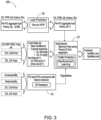
- FIG. 3 illustrates schematically some main functional components of an example arrangement.
- the system 200 of FIG. 3 comprises: a load forecasting machine learning engine 20, a threshold prediction machine learning engine 22, and a key performance indicator checking engine 24. The operation of those components is described in more detail below.
- a near real time RAN Intelligent Controller may be configured to use an operations and maintenance (O&M) interface to apply parameter(s) determined by system 200.
- O&M operations and maintenance
- the system 200 is configured to use artificial intelligence (Al) and machine learning (ML) algorithms to define power saving strategies for cells forming power saving groups. Those power saving groups may be located in different regions with exhibit different traffic patterns and/or different radio behaviours.
- the system 200 may be used to support automatic cell or carrier switch off in order to maximize energy saving efficiency and minimize impact to the cell performance in a radio access network.
- the system 200 is configured such that it can take into account different threshold predictions to be applied in different Power Saving Groups, such thresholds being based on different patterns experienced in those power saving groups.
- the patterns may relate to parameters including, for example, radio condition, traffic patterns and throughput experience.
- the system 200 may also operate such that different threshold(s) are predicted for the same power saving group across, for example, a 24hr period.
- the evaluation of different threshold(s) may be based on pattern changes within the power saving group across the 24 hour period.
- the patterns may relate to parameters including, for example, radio condition, traffic patterns and throughput experience.
- the system 200 may offer a route to prediction of load threshold(s) for implementation to achieve energy saving within a network.
- the threshold(s) evaluated by system 200 may be utilised by a near real-time radio access network intelligent controller.
- a near real-time radio access network intelligent controller may be configured to utilise a local machine learning model.
- the variable threshold(s) which may be evaluated by system 200 and implemented in a network can allow for an increase in overall power saving time in a power saving group and/or may support decreased energy consumption by a power saving group of a network.
- main components of system 200 comprise: load forecasting machine learning engine 20, threshold prediction machine learning engine 22, and optionally key performance indicator checking engine 24.
- Load forecasting machine learning engine 20 is configured to predict future load conditions at power group level.
- load forecasting engine is configured to use artificial intelligence or machine learning techniques to predict future load condition at power group level, based upon, for example, historic load data.
- the machine learning engine 20 may, for example, be configured to project a likely load condition of a power saving group over a future interval.
- the projection may be based upon historic load condition experienced in a power saving group over an equivalent interval.
- the projection may be based upon historic load condition experienced in a power saving group over an equivalent interval and a contemporaneous, or current load condition being experienced by the power saving group.
- the threshold prediction machine learning engine 22 may comprise a Double Deep Q Network (DDQN) reinforcement machine learning model created at a power group level.
- the output of the threshold prediction engine 22 is an evaluated threshold comprising: lbpsminload and/or lbpsmaxload, or in other words: load values which are a trigger for initiation, within a power saving group, of an energy saving mechanism, for example, cell or carrier switch on or off.
- the threshold prediction engine 22 is configured to apply a custom reward function which seeks to increase energy saving achieved at a power saving group level, whilst in parallel seeking to maintain, or at least not degrade, user experience within a network. User experience within a network may be assessed, for example, based upon experienced user equipment downlink throughput.
- the machine learning engine may, in predicting a threshold, take into account one or more of: a load prediction output from the machine learning engine 20 for example, downlink physical resource block utilisation (PRB utilization) over an expected upcoming time interval (t+15); and/or number of active user equipment within the power saving group or cell(s) of the power saving group over an expected upcoming time interval.
- a load prediction output from the machine learning engine 20 for example, downlink physical resource block utilisation (PRB utilization) over an expected upcoming time interval (t+15); and/or number of active user equipment within the power saving group or cell(s) of the power saving group over an expected upcoming time interval.
- PRB utilization downlink physical resource block utilisation
- the machine learning engine 20 may, in predicting a threshold, take into account one or more parameter relating to UE experience within the power saving group, for example, RSRP (t) -current experience; RSRQ (t) -current experience; CQI (t) -current experience; Cell D/L thrpt (t) -current experience; and/or UE D/L thrpt (t) -current experience.
- a key performance indicator checking engine 24 is provided. According to such arrangements, feedback can be provided to the threshold prediction machine learning engine 22 based upon a comparison of currently experienced parameter(s) within a power saving group compared to those predicted or expected. In other words, the performance of the threshold prediction engine may be adapted based upon an assessment of one or more aspect of performance of the power saving group.
- Key performance indicator (KPI) feedback checking engine 24 may operate to form a closed loop feedback with the threshold prediction machine learning engine 22, through hypothesis testing.
- the checking engine 24 may be configured to apply a statistical model to compare current performance assessed at a power group level, with one or more past historic pattern using a hypothesis test.
- the checking engine 24 may be configured to provide feedback to the threshold prediction engine 22. That feedback may result in the threshold prediction engine 22 operating defensively if the checking engine 24 determines there is user experience degradation.
- the operation of the threshold prediction engine 22 may remain same in the case that the KPI feedback checking engine 24 determines that there is no change or an improvement in the considered user equipment or power saving group KPls.
- KPls which are not part of reinforcement learning model reward function but are key for UE perception can be monitored, and action taken to adjust the threshold(s) based upon such monitoring.
- KPIs may include, for example, retainability, accessibility, and/or cell downlink throughput.
- Arrangements may operate to achieve energy saving by allowing one or multiple carriers or cells in a power saving group to switch off. According to some implementations, multiple carriers can be switched off in a predefined sequence one by one or together. All models described in relation to the arrangement below are created at Power Group level. It will be appreciated that models may be created such that they span across two or more power saving groups, or may be created at a cell level.
- Energy Saving is achieved via cell or carrier switch off, and such switch off decisions can be taken by considering likely load to be experienced in a power group in the future. Account can be taken of whether remaining cells of the same power group (ie those which are not switched off) will be able to provide services to user equipment without degrading the performance.
- the forecasting ML model 20 is configured to use historical load data such as downlink PRB utilization and/or number of active UEs within a power saving group to predict a future load on the power saving group.
- a univariate nested MLP [multi-layer perceptron] is created to predict a) Active UEs and b) D/L PRB utilization.
- historical data for example, the past 14 days of data
- n is the inference frequency of the "Threshold Prediction model" applied by engine 22.
- Input data is the nested structure of data with 3 arrays here one day seasonality, i.e., 96 previous time stamps will be considered and 14 days data will be restructured as shown in the below example.
- MLP Model architecture - Model "model" Layer (type) Output Shape Param # Connected to cell_info (InputLayer) [(None, 1)] 0 [] input_data (InputLayer) [(None, 3, 96)] 0 [] embedding (Embedding) (None, 1, 20) 80 ['cell_info[0][0]'] flatten (Flatten) (None, 288) 0 ['input_data[0][0]'] flatten _1 (Flatten) (None, 20) 0 ['embedding[0][0]'] concatenate (Concatenate) (None, 308) 0 ['flatten[0][0]','flatten_1 [0][0][0][0]
- the threshold evaluation machine learning module 22 of a system 200 in accordance with an arrangement is configured to evaluate, based on one or more input factors, one or more threshold load value to at which power saving steps can be activated or deactivated within a power saving group.
- the threshold(s) evaluated by the threshold evaluation module may increase power saving achievable within a network.
- the threshold prediction engine may be 22 configured to apply a custom reward function which seeks to increase energy saving achieved at a power saving group level, whilst in parallel seeking to maintain, or at least not degrade, user experience within a network.
- User experience within a network may be assessed, for example, based upon experienced user equipment downlink throughput.
- the machine learning engine 22 may, in predicting a threshold, take into account one or more of: a load prediction output from the machine learning engine 20 for example, downlink physical resource block utilisation (PRB utilization) over an expected upcoming time interval (t+15); and/or number of active user equipment within the power saving group or cell(s) of the power saving group over an expected upcoming time interval.
- PRB utilization downlink physical resource block utilisation
- the machine learning engine 22 may, in predicting a threshold, take into account one or more parameter relating to UE experience within the power saving group, for example, the current radio conditions (CQI, RSRP, RSRQ and timing advance) and customer experience (current downlink cell throughput and current downlink UE throughput).
- CQI current radio conditions
- RSRP RSRP
- RSRQ current downlink cell throughput
- current downlink UE throughput current downlink cell throughput and current downlink UE throughput
- the threshold prediction module 22 recognises that for every power saving group the radio pattern, load threshold, and KPI performance will be different so thresholds "lbpsminload and lbpsmaxload" evaluated by the threshold prediction module 22 will differ across power saving groups. Furthermore, the threshold prediction module is configured such that, within a given power saving group, the functional pattern changes based on seasonality within a day and the load thresholds "lbpsminload and lbpsmaxload" will be likely vary across a 24 hour period.
- a Double Deep Q Network (DDQN) reinforcement learning model is configured to evaluate two thresholds: "lbpsminload and Ibpsmaxload"
- a simulator or real world live eNBs can be considered with active UEs.
- a table is created with specific combinations of "lbpsminload and Ibpsmaxload", each pairing being referred as a particular load based energy saving profile minLoad maxLoad Profile 1 5 P01 5 15 P02 8 20 P03 10 25 P04 15 35 P05 20 40 P06 25 45 P07 30 50 P08 35 55 P09 40 60 P10 *The values mentioned in the table can be customized to suit a particular implementation envisaged by a network operator
- random profiles are applied across Day 1 to Day 10 in relation to selected Power Groups and Real Time Protocol Messaging (RTPM) data is captured and tagged with the profiles applied.
- Time Cell Id feature 1 feature 2 feature n Profile applied dd/mm/yy hh:mm XXYY Ibsmin -10 /Ibsmax-20
- the aggregated load of a power saving group is compared with random profile ["lbpsminload and lbpsmaxload"] applied which results in associated power saving switching ON & OFF given the condition is satisfied, and that label is added.
- the 10 day data is converted to data in 2 hr bin [as a moving sliding window of 15 min] and from day 3 onwards, a comparison can be made with past 3 days median of same time window and a comparison can be made [weekday vs weekday and weekend vs weekend] such comparisons can be tagged as: Improvement, Degradation or No change. [Note :- Only samples where the power saving group is in and energy saving mode are used [i.e.
- Threshold evaluation engine 22 may, for example, be configured to learn that OFF is a desired O/P along with "No degradation” or "improvement” in assessed KPIs.
- the threshold prediction engine 22 is configured to apply a base reward according to :
- level of reward and nature of the reward associated with various factors can be customised and adapted to suit an outcome desired by a RAN provider.
- the threshold prediction engine 22 may be configured to apply an additional reward based on KPI feedback, for example according to:
- the threshold prediction engine may be configured to apply an additional reward based on Power Saving Duration, for example: Power Saving Duration No. of Carriers in OFF state / Total no. of carriers ( 0 / 0.33 / 0.66 / 1)
- the threshold prediction engine is configured to create the threshold prediction model as an offline DDQN.
- a network may be configured to receive threshold parameters from the system 200 and a near-RT RIC may utilize the threshold(s) via an operations and maintenance (O&M) interface to apply these parameters to network operation.
- O&M operations and maintenance
- a key performance indicator checking engine 24 is provided. According to such arrangements, feedback can be provided to the threshold prediction machine learning engine 22 based upon a comparison of currently experienced parameter(s) within a power saving group compared to those predicted or expected. In other words, the performance of the threshold prediction engine may be adapted based upon an assessment of one or more aspect of performance of the power saving group.
- Key performance indicator (KPI) feedback checking engine 24 may operate to form a closed loop feedback with the threshold prediction machine learning engine 22, through hypothesis testing.
- the checking engine 24 may be configured to apply a statistical model to compare current performance assessed at a power group level, with one or more past historic pattern using a hypothesis test.
- the checking engine 24 may be configured to provide feedback to the threshold prediction engine 22. That feedback may result in the threshold prediction engine 22 operating defensively if the checking engine 24 determines there is user experience degradation.
- the operation of the threshold prediction engine 22 may remain same in the case that the KPI feedback checking engine 24 determines that there is no change or an improvement in the considered user equipment or power saving group KPls.
- KPls which are not part of reinforcement learning model reward function but are key for UE perception can be monitored, and action taken to adjust the threshold(s) based upon such monitoring.
- KPIs may include, for example, retainability, accessibility, and/or cell downlink throughput.
- a statistical model is configured to compare current performance of a cells forming a power saving group within a network with past historic patterns. The comparison may be implemented using a hypothesis test.
- the feedback checking engine 24 may, according to some implementations, be configured to provide feedback to the threshold prediction engine.
- the KPI performance feedback checking engine may be configured to provide feedback to a DDQN reinforcement machine learning model forming threshold prediction engine 22.
- the feedback provided may be such that the threshold prediction engine "goes defensive” if there is any degradation and remain unchanged in a case where KPI feedback indicates that there is "No change” or "improvement” in the considered KPls.
- the KPI performance feedback engine may operate such that KPIs which are not part of the standard reinforcement learning model reward function applied by threshold prediction engine 22, but are key for UE perception, are monitored.
- KPIs may include, for example: Retainability; Accessibility and/or Cell D/L throughput.
- closed loop KPI feedback is provided to the threshold prediction engine 22 through Hypothesis tests performed by KPI feedback engine 24.
- KPls which are not part of a "Threshold Prediction" model but are relevant to UE perception towards a network can be continuously monitored. If the feedback indicates that there is degradation of such KPIs as a result of application of threshold(s) evaluated by the threshold prediction engine 22, the KPI feedback engine may provide a mechanism by which the prediction made by the threshold evaluation engine can be adapted.
- one or more hypothesis tests can be used to compare a current pattern with historic patterns.
- Possible hypothesis tests to be used may comprise one or more of: Mann Whitney test; T - test and Kruskal Wallis test.
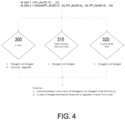
- FIG. 4 illustrates schematically a voting scheme applicable by a KPI performance engine according to one arrangement.
- three distinct hypothesis tests are applied 300, 310, 320.
- the KPI performance engine 24 may vote based upon a summarised outcome across the three tests.
- a hypothesis test may operate as follows: to compare with a sliding window of 15 mins, take past 4 hrs of data, and compare Day1(d1) for same time bins with the median or Geo mean of the same time stamps of the past 3 days data.
- Three separate hypothesis tests, 300, 310, 320 can be applied independently by KPI performance engine 24 and a result will be concluded if a minimum of 2 votes out of 3 is achieved.
- a t-test is a statistical test that is used to compare the means of two groups. It is often used in hypothesis testing to determine whether a process or treatment actually has an effect on the population of interest, or whether two groups are different from one another.
- Mann and Whitney's U-test or Wilcoxon rank-sum test is a non-parametric statistic hypothesis test that is used to analyze the difference between two independent samples of ordinal data.
- the Kruskal Wallis test is a non-parametric alternative to the One Way ANOVA. Non-parametric means that the test doesn't assume that data comes from a particular distribution. The test determines whether the medians of two or more groups are different.
- the KPI performance feedback indicator engine 24 may be configured to apply, for example the three separate hypothesis tests mentioned above independently across all selected KPIs of interest.
- KPIs include: Accessibility; Retainability; D/L Cell throughput and D/L UE throughput.
- the KPI feedback engine may be configured, in some implementations, to compute a score.
- the computed score may be used to trigger an appropriate feedback loop to threshold prediction engine 22.
- the feedback score may operate to ensure that selection of final predictions of "threshold(s)" to apply in relation to power saving steps are defensive.
- the KPI performance feedback engine may operate to implement scores according to:
- Weightings may be applied in relation to the monitored KPIs of interest.
- Final score [w1.KPI1basescore + w2.KPI2basescore + w3.KPI3basescore + w4.KPI4basescore]
- Final Score .25 * ⁇ 2 + .25 * ⁇ 2 + .25 * 2 + .25 * 2 + .25 * 0
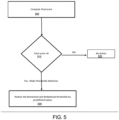
- FIG. 5 is a flowchart illustrating schematically how a threshold prediction engine may be adapted to take into account feedback resulting from one or more Key Performance Indicator.
- a KPI performance feedback engine 24 may be configured 500 to calculate a feedback score based on application of hypothesis test(s) to current versus historic data.
- FIG. 5 illustrates as a flowchart an implementation according to which KPI feedback is used to have an impact on a Final Prediction of threshold prediction engine 22.
- the flowchart shows how, at step 510
- the threshold(s) actually applied within a network may comprise (P04 -x) (530), so the actual implemented output is a step "x" lower than purely predicted or evaluated by the threshold prediction engine, based on historic data and predicted UE performance, where default value of x is 1 but configurable.
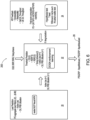
- FIG. 6 is an alternative schematic representation of the system shown in FIG. 3 .
- FIG. 6 shows key main components of a system 200 for evaluating thresholds 26 to apply to implement power saving approaches in a wireless communication network.
- FIG. 7 shows apparatus according to an example arrangement
- FIG. 8 shows a flow diagram illustrating steps in methods according to an example arrangement.
- FIG. 7 illustrates an apparatus 7000 comprising at least one processor 7100; and at least one memory 7200 storing instructions that when executed by the at least one processor 7100 cause the apparatus at least to: predict a future load in a group of cells supporting network coverage in an area of a wireless communication network based on historical load data for the group of cells; and determine , based at least on the predicted future load, at least one threshold load value for establishing or deciding whether a cell of the group of cells should enter or exit a power saving mode.
- the step of predicting may be performed by appropriate prediction circuitry 7300 and the step of determining may be performed by appropriate determination circuitry 7400. That circuitry may form part of the processor 7100.
- FIG. 8 shows a flow diagram illustrating steps in methods performed by apparatus such as that shown in FIG. 7 .
- apparatus 7000 may be configured to:
- program storage devices e.g., digital data storage media, which are machine or computer readable and encode machine-executable or computer-executable programs of instructions, wherein said instructions perform some or all of the steps of said above-described methods.
- the program storage devices may be, e.g., digital memories, magnetic storage media such as a magnetic disks and magnetic tapes, hard drives, or optically readable digital data storage media.
- the embodiments are also intended to cover computers programmed to perform said steps of the above-described methods.
- the tern non-transitory as used herein, is a limitation of the medium itself (i.e., tangible, not a signal) as opposed to a limitation on data storage persistency (e.g. RAM vs ROM).
- circuitry may refer to one or more or all of the following:
- circuitry also covers an implementation of merely a hardware circuit or processor (or multiple processors) or portion of a hardware circuit or processor and its (or their) accompanying software and/or firmware.
- circuitry also covers, for example and if applicable to the particular claim element, a baseband integrated circuit or processor integrated circuit for a mobile device or a similar integrated circuit in server, a cellular network device, or other computing or network device.
Landscapes
- Engineering & Computer Science (AREA)
- Computer Networks & Wireless Communication (AREA)
- Signal Processing (AREA)
- Physics & Mathematics (AREA)
- Electromagnetism (AREA)
- Artificial Intelligence (AREA)
- Evolutionary Computation (AREA)
- Probability & Statistics with Applications (AREA)
- Mobile Radio Communication Systems (AREA)
Applications Claiming Priority (1)
| Application Number | Priority Date | Filing Date | Title |
|---|---|---|---|
| FI20235057 | 2023-01-19 |
Publications (1)
| Publication Number | Publication Date |
|---|---|
| EP4404640A1 true EP4404640A1 (de) | 2024-07-24 |
Family
ID=89541869
Family Applications (1)
| Application Number | Title | Priority Date | Filing Date |
|---|---|---|---|
| EP24150961.1A Pending EP4404640A1 (de) | 2023-01-19 | 2024-01-09 | Energieeinsparung in einem drahtlosen kommunikationsnetzwerk |
Country Status (3)
| Country | Link |
|---|---|
| US (1) | US12127116B2 (de) |
| EP (1) | EP4404640A1 (de) |
| CN (1) | CN118368703B (de) |
Families Citing this family (3)
| Publication number | Priority date | Publication date | Assignee | Title |
|---|---|---|---|---|
| US20250267080A1 (en) * | 2024-02-15 | 2025-08-21 | Lenovo (Singapore) Pte. Ltd. | Adaptive monitoring of radio intelligent controller key performance indicators |
| US20250338208A1 (en) * | 2024-04-26 | 2025-10-30 | Qualcomm Incorporated | Alternative quality of service for energy efficiency mode operations |
| US20260059348A1 (en) * | 2024-08-22 | 2026-02-26 | Qualcomm Incorporated | Energy saving using predicted performance indicators |
Citations (2)
| Publication number | Priority date | Publication date | Assignee | Title |
|---|---|---|---|---|
| CN104080091B (zh) * | 2014-07-22 | 2017-10-24 | 重庆邮电大学 | 分层异构网络中基于负载预测分组的家庭基站频谱分配方法 |
| WO2021209024A1 (zh) * | 2020-04-17 | 2021-10-21 | 中兴通讯股份有限公司 | 节能方法、基站、控制单元及存储介质 |
Family Cites Families (7)
| Publication number | Priority date | Publication date | Assignee | Title |
|---|---|---|---|---|
| EP2665312B1 (de) * | 2012-05-15 | 2014-06-04 | Fujitsu Limited | Zellenaktivierung und -deaktivierung in heterogenen Netzwerken |
| US9900790B1 (en) * | 2016-12-08 | 2018-02-20 | Futurewei Technologies, Inc. | Prediction of performance indicators in cellular networks |
| EP4000228A4 (de) * | 2019-07-18 | 2023-06-21 | The Board of Regents of the University of Oklahoma | Proaktive mobile netzwerkoptimierung |
| CN112689329B (zh) * | 2019-10-17 | 2025-04-01 | 北京三星通信技术研究有限公司 | 波束配置方法及装置、电子设备及计算机存储介质 |
| CN115278832A (zh) | 2021-04-30 | 2022-11-01 | 华为技术有限公司 | 一种节能方法及装置 |
| CN115515208A (zh) * | 2021-06-07 | 2022-12-23 | 中兴通讯股份有限公司 | 基站节能方法、基站节能系统、基站及存储介质 |
| CN114885381B (zh) * | 2022-05-17 | 2024-02-27 | 中国电信股份有限公司 | 网络负载均衡方法、装置、存储介质及电子设备 |
-
2024
- 2024-01-09 EP EP24150961.1A patent/EP4404640A1/de active Pending
- 2024-01-17 US US18/414,654 patent/US12127116B2/en active Active
- 2024-01-18 CN CN202410076809.6A patent/CN118368703B/zh active Active
Patent Citations (3)
| Publication number | Priority date | Publication date | Assignee | Title |
|---|---|---|---|---|
| CN104080091B (zh) * | 2014-07-22 | 2017-10-24 | 重庆邮电大学 | 分层异构网络中基于负载预测分组的家庭基站频谱分配方法 |
| WO2021209024A1 (zh) * | 2020-04-17 | 2021-10-21 | 中兴通讯股份有限公司 | 节能方法、基站、控制单元及存储介质 |
| US20230239784A1 (en) * | 2020-04-17 | 2023-07-27 | Zte Corporation | Energy-saving method, base station, control unit, and storage medium |
Non-Patent Citations (1)
| Title |
|---|
| HUAWEI: "(TP to TR 37.817) Remaining issues for AI based Energy Saving", vol. RAN WG3, no. E-meeting; 20211101 - 20211111, 22 October 2021 (2021-10-22), XP052068644, Retrieved from the Internet <URL:https://ftp.3gpp.org/tsg_ran/WG3_Iu/TSGR3_114-e/Docs/R3-215665.zip R3-215665 (TP to TR 37.817) Remaining issues for AI based Energy Saving.docx> [retrieved on 20211022] * |
Also Published As
| Publication number | Publication date |
|---|---|
| CN118368703B (zh) | 2025-08-01 |
| US12127116B2 (en) | 2024-10-22 |
| US20240251345A1 (en) | 2024-07-25 |
| CN118368703A (zh) | 2024-07-19 |
Similar Documents
| Publication | Publication Date | Title |
|---|---|---|
| EP4404640A1 (de) | Energieeinsparung in einem drahtlosen kommunikationsnetzwerk | |
| EP2665312B1 (de) | Zellenaktivierung und -deaktivierung in heterogenen Netzwerken | |
| US20130294272A1 (en) | Deactivation of micro cells in cellular wireless networks | |
| US9503919B2 (en) | Wireless communication network using multiple key performance indicators and deviations therefrom | |
| CN113891377B (zh) | 一种5g小基站设备自动维护及调优方法 | |
| EP2538713B1 (de) | Durchführung von Messungen in einem digitalen, zellularen, drahtlosen Telekommunikationsnetzwerk | |
| Hossain et al. | Distributed inter-BS cooperation aided energy efficient load balancing for cellular networks | |
| EP2919531A1 (de) | Verfahren und System zur Bestimmung, wo und wann in einem zellularen Mobilfunknetz Leistungsverbrauchseinsparungen ohne Beeinträchtigung der Dienstqualität erzielbar sind | |
| US9693298B2 (en) | Method and system of analyzing a plurality of cells of a cellular telecommunication network | |
| EP2567561A1 (de) | Verfahren und telekommunikationsnetz zur deaktivierung oder aktivierung einer zelle in einem derartigen netz | |
| EP3269164B1 (de) | Selbstorganisierende netzwerkmaschine für optimierung pro benutzer in einem telekommunikationsnetz | |
| US12526684B2 (en) | Load management of overlapping cells based on user throughput | |
| US20120164955A1 (en) | Method and Apparatus for Cell Control | |
| CN113891415A (zh) | 可节能小区快速筛选方法 | |
| US9844002B2 (en) | Method for power consumption optimization in mobile cellular networks | |
| US11503494B2 (en) | Optimizing cell outage mitigation in a communications network | |
| US10009807B2 (en) | Radio access technology threshold adjustment | |
| JP5837120B2 (ja) | ユーザプレーン基地局の動作状態を制御する方法及び装置、並びにユーザプレーン基地局、制御プレーン基地局及び無線通信システム | |
| EP2506639B1 (de) | Pilotleistungssteuerung | |
| EP4651580A1 (de) | Netzwerkplanungsverfahren, netzwerkvorrichtung und computerlesbares speichermedium | |
| AU2024358341A1 (en) | Method for estimating throughput of cellular network for site | |
| Baiocchi et al. | Balancing infrastructure fatigue, energy consumption and user profits in cellular networks |
Legal Events
| Date | Code | Title | Description |
|---|---|---|---|
| PUAI | Public reference made under article 153(3) epc to a published international application that has entered the european phase |
Free format text: ORIGINAL CODE: 0009012 |
|
| STAA | Information on the status of an ep patent application or granted ep patent |
Free format text: STATUS: THE APPLICATION HAS BEEN PUBLISHED |
|
| AK | Designated contracting states |
Kind code of ref document: A1 Designated state(s): AL AT BE BG CH CY CZ DE DK EE ES FI FR GB GR HR HU IE IS IT LI LT LU LV MC ME MK MT NL NO PL PT RO RS SE SI SK SM TR |
|
| STAA | Information on the status of an ep patent application or granted ep patent |
Free format text: STATUS: REQUEST FOR EXAMINATION WAS MADE |
|
| 17P | Request for examination filed |
Effective date: 20250124 |
|
| STAA | Information on the status of an ep patent application or granted ep patent |
Free format text: STATUS: EXAMINATION IS IN PROGRESS |
|
| 17Q | First examination report despatched |
Effective date: 20260323 |