EP4404604A1 - Verfahren und vorrichtung zur verarbeitung eines auf benutzergerät(ue)-fähigkeit basierenden modells, benutzergerät, basisstation und speichermedium - Google Patents
Verfahren und vorrichtung zur verarbeitung eines auf benutzergerät(ue)-fähigkeit basierenden modells, benutzergerät, basisstation und speichermedium Download PDFInfo
- Publication number
- EP4404604A1 EP4404604A1 EP21957019.9A EP21957019A EP4404604A1 EP 4404604 A1 EP4404604 A1 EP 4404604A1 EP 21957019 A EP21957019 A EP 21957019A EP 4404604 A1 EP4404604 A1 EP 4404604A1
- Authority
- EP
- European Patent Office
- Prior art keywords
- model
- information
- real
- time
- base station
- Prior art date
- Legal status (The legal status is an assumption and is not a legal conclusion. Google has not performed a legal analysis and makes no representation as to the accuracy of the status listed.)
- Pending
Links
Images





Classifications
-
- H—ELECTRICITY
- H04—ELECTRIC COMMUNICATION TECHNIQUE
- H04W—WIRELESS COMMUNICATION NETWORKS
- H04W8/00—Network data management
- H04W8/22—Processing or transfer of terminal data, e.g. status or physical capabilities
- H04W8/24—Transfer of terminal data
-
- H—ELECTRICITY
- H04—ELECTRIC COMMUNICATION TECHNIQUE
- H04W—WIRELESS COMMUNICATION NETWORKS
- H04W28/00—Network traffic management; Network resource management
- H04W28/02—Traffic management, e.g. flow control or congestion control
- H04W28/0215—Traffic management, e.g. flow control or congestion control based on user or device properties, e.g. MTC-capable devices
- H04W28/0221—Traffic management, e.g. flow control or congestion control based on user or device properties, e.g. MTC-capable devices power availability or consumption
-
- H—ELECTRICITY
- H04—ELECTRIC COMMUNICATION TECHNIQUE
- H04B—TRANSMISSION
- H04B17/00—Monitoring; Testing
- H04B17/30—Monitoring; Testing of propagation channels
- H04B17/391—Modelling the propagation channel
-
- H—ELECTRICITY
- H04—ELECTRIC COMMUNICATION TECHNIQUE
- H04W—WIRELESS COMMUNICATION NETWORKS
- H04W8/00—Network data management
- H04W8/22—Processing or transfer of terminal data, e.g. status or physical capabilities
Definitions
- the model training/model inference tasks are usually deployed locally on user equipment (UE), and the model training/model inference is performed by the UE.
- UE user equipment
- the base station usually determines, based on a UE hardware capability, whether the UE has a capability of model training/model inference. When the UE has this capability, the base station will instruct the UE to complete the task of model training/model inference; otherwise, the base station will complete the task of the model training/model inference.
- the disclosure provides model processing methods, apparatuses, user equipment (UE), network side device and storage medium based on a UE capability to solve the technical problem that existing measurement methods tend to cause power consumption and increase power consumption.
- UE user equipment
- the model processing method based on a UE capability, performed by a base station includes:
- the model processing method based on a UE capability, performed by the UE includes:
- a model processing apparatus based on a UE capability includes:
- a model processing apparatus based on a UE capability includes:
- a communication device includes a processor and a memory.
- the memory has a computer program stored thereon, and the processor is configured, when executing the computer program stored on the memory, to perform the method according to the embodiment of the one aspect.
- a communication device includes a processor and a memory.
- the memory has a computer program stored thereon, and the processor is configured, when executing the computer program stored on the memory, to perform the method according to the embodiment of another aspect.
- a communication device includes: a processor and an interface circuit.
- the interface circuit is configured to receive code instructions and transmit the code instructions to the processor.
- the processor is configured to run the code instructions to perform the method according to the embodiment of the one aspect.
- a communication device includes: a processor and an interface circuit.
- the interface circuit is configured to receive code instructions and transmit the code instructions to the processor.
- the processor is configured to run the code instructions to perform the method according to the embodiment of another aspect.
- a computer-readable storage medium has instructions stored thereon. When the instructions are executed, the method according to embodiment of the one aspect is performed.
- a computer-readable storage medium has instructions stored thereon. When the instructions are executed, the method according to embodiment of another aspect is performed.
- the base station may send the request message to the UE to request at least one of the UE hardware capability information, the real-time UE capability information or the real-time UE requirement information for the model, the base station may obtain the feedback information sent by the UE, in which the feedback information includes the information requested by the request message, and the base station may determine the model training scheme and/or model inference scheme based on the feedback information, to train the model based on the model training scheme and/or perform the inference on the model based on the model inference scheme.
- the base station in determining the model training scheme and/or model inference scheme, may comprehensively determine the current model training capability and the current model inference capability of the UE based on the UE hardware capability information, the real-time UE capability information and the real-time UE requirement information for the model, such that the finally determined model training scheme may match the model training capability of the UE and the finally determined model inference scheme may match the model inference capability of the UE, thereby avoiding the occurrence of the situation that "the configuration of model training/model inference does not match the UE capability or the requirement of the UE for model training/model inference. Therefore, the efficiency of model training and/or model inference is ensured without affecting the normal operation of other services of the UE.
- first, second, third, etc. may use the terms “first”, “second”, “third”, etc. to describe various information, the information should not be limited to these terms. These terms are only used to distinguish information of the same type from one another. For example, without departing from the scope of embodiments of the disclosure, first information may also be called second information, and similarly, second information may also be called first information. Depending on the context, the words “if' as used herein may be interpreted as “at” or “when” or “in response to determining.”
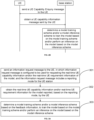
- FIG. 1 is a schematic flowchart illustrating a model processing method based on a UE capability according to an embodiment of the disclosure. The method is performed by a base station. As illustrated in FIG. 1 , the model processing method may include the following.
- UE may be a device that provides voice and/or data connectivity to a user.
- UE can communicate with one or more core networks via Radio Access Network (RAN).
- RAN Radio Access Network
- UE may be an Internet of Things (IoT) terminal, such as a sensor device or a mobile phone (or called a "cellular" phone) or a computer having an loT terminal, such as a fixed, portable, pocket, hand-held, computer-built-in or vehicle-mounted device.
- IoT Internet of Things
- STA Station
- subscriber unit subscriber station, mobile station, mobile, remote station, access point, remote terminal, access terminal, user terminal, or user agent.
- the UE may be a device of an unmanned aerial vehicle.
- the UE hardware capability information may be configured to represent information on whether the UE has a hard condition to complete the model training and/or the model inference.
- the UE hardware capability information may include at least one of the following:
- the real-time UE capability information may be used for reflecting whether the UE has sufficient computing power and quantity of electricity to complete the model training task and/or model inference task and reflecting whether the normal operation of other services of the UE will be affected by performing the model training task and/or the model inference task.
- the UE real-time capability information may include at least one of the following:
- the real-time computing power information of the UE may include at least one of a real-time memory occupancy rate of the UE, a real-time CPU occupancy rate of the UE, a real-time GPU occupancy rate of the UE, or a real-time computing speed of the UE.
- the real-time energy consumption information of the UE may include at least one of a remaining quantity of electricity of the UE or an activation status of a power saving mode of the UE.
- the real-time UE requirement information for a model may be used for reflecting the requirement of the UE for a training result and/or an inference result and a privacy requirement.
- the real-time UE requirement information for the model may include at least one of the following:
- the requirement for the privacy of the model data may include information on whether the UE is allowed to report the model data of a UE side.
- model data may include at least one of model training data, model inference data, or model inference intermediate information.
- model inference intermediate information may be intermediate information generated during a process of the model inference
- the model used for inferring includes at least one layer of sub-models connected sequentially, and the model inference intermediate information may be information outputted by a sub-model of an intermediate layer (such as a sub-model of a layer from a second layer to a penultimate layer).
- requesting manners that is, manners in which the base station sends a request message to the UE
- the way the base station requests the UE hardware capability information is different from the way the base station requests the real-time UE capability information and/or the real-time UE requirement information for a model.
- the ways the base station requests the UE hardware capability information, the real-time UE capability information, and the real-time UE requirement information for a model will be described in detail in subsequent embodiments.
- feedback information sent, based on the request message, by the UE is obtained, in which the feedback information includes information requested by the request message.
- ways for the base station to obtain the feedback information sent by the UE in this block 102 will also be different.
- the way in which the base station obtains the feedback information sent by the UE will be described in subsequent embodiments.
- a model training scheme and/or a model inference scheme is determined based on the feedback information, to train the model based on the model training scheme and/or perform an inference on the model based on the model inference scheme.
- the base station may determine the model training capability of the UE and/or the model inference capability of the UE base on the specific content included in the feedback information (such as the UE hardware capability information, the real-time UE computing power information, or the real-time UE power consumption information), determine the model training scheme based on the model training capability of the UE, and determine the model inference scheme based on the model inference capability of the UE, such that subsequently, the model may be trained based on the model training scheme and/or the inference may be performed on the model based on the model inference scheme.
- the specific content included in the feedback information such as the UE hardware capability information, the real-time UE computing power information, or the real-time UE power consumption information
- model training scheme and/or the model inference scheme may be applied in an Artificial Intelligence (Al) field.
- model training scheme and/or the model inference scheme may be applied in a Machine Learning (ML) field.
- the base station may send the request message to the UE to request at least one of the UE hardware capability information, the real-time UE capability information, or the real-time UE requirement information for the model. Then, the base station may obtain the feedback information sent by the UE.
- the feedback information includes the information requested by the request message.
- the base station may determine the model training scheme and/or model inference scheme based on the feedback information, to train the model based on the model training scheme and/or perform the inference on the model based on the model inference scheme.
- the base station in determining the model training scheme and/or the model inference scheme, may comprehensively determine the current model training capability and model inference capability of the UE based on the UE hardware capability information, the real-time UE capability information and the real-time UE requirement information for the model, such that the finally determined model training scheme may match the model training capability of the UE and the finally determined model inference scheme may match the model inference capability of the UE, thereby avoiding the occurrence of the situation that "the configuration of model training/model inference does not match the UE capability or the requirement of the UE for model training/model inference". Therefore, the efficiency of model training and/or model inference is ensured without affecting the normal operation of other services of the UE.
- FIG. 2A is a schematic flowchart illustrating a model processing method based on a UE capability according to embodiments of the disclosure. The method is performed by a base station. As illustrated in FIG. 2A , the model processing method may include the following.
- a UE Capability Enquiry message is sent to the UE.
- Embodiments related to FIG. 2A mainly introduce ways in which the base station requests the UE hardware capability information from the UE.
- the way in which the base station requests the UE hardware capability information from the UE may be: sending the UE Capability Enquiry message to the UE to request the UE hardware capability information.
- UE Capability Information sent, based on the UE Capability Enquiry message, by the UE is obtained, in which the UE Capability Information includes UE hardware capability information.
- a model training scheme and/or a model inference scheme is determined based on the feedback information, to train the model based on the model training scheme, and/or perform an inference on the model based on the model inference scheme.
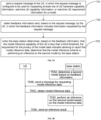
- FIG. 2B is a flowchart illustrating an interaction between the base station and the UE when the base station requests the UE hardware capability information according to an embodiment of the disclosure.
- the base station may first send a UE Capability Enquiry message to the UE to request the UE hardware capability information, and then the UE sends a UE capability information message to the base station based on the UE Capability Enquiry message.
- the UE capability information message includes the UE hardware capability information.
- the base station may subsequently assess the capability of the UE based on the UE hardware capability information in the UE capability information message, to determine the model training scheme and/or the model inference scheme.
- the base station may send the request message to the UE to request at least one of the UE hardware capability information, the real-time UE capability information, or the real-time UE requirement information for the model.
- the base station may obtain the feedback information sent by the UE, the feedback information includes the information requested by the request message.
- the base station may determine the model training scheme and/or model inference scheme based on the feedback information, to train the model based on the model training scheme and/or perform the inference on the model based on the model inference scheme.
- FIG. 3A is a schematic flowchart illustrating a model processing method based on a UE capability according to an embodiment of the disclosure. The method is performed by a base station. As illustrated in FIG. 3A , the model processing method based on the UE capability may include the following.
- an information request message is sent to the UE.
- Embodiments related to FIG. 3A mainly introduce the way in which the base station requests, from the UE, the real-time capability information and/or the real-time UE requirement information for the model.
- the way in which the base station requests the real-time UE capability information and/or the real-time UE requirement information for the model from the UE may be: sending an information request message to the UE for requesting the real-time UE capability information and/or the real-time UE requirement information of the model, such that subsequently, the UE may send, based on the information request message, the real-time UE capability information and/or the real-time UE requirement information for the model to the base station.
- the information request message may be configured to be used for requesting only the real-time UE capability information. In another embodiment of the disclosure, the information request message may be configured to be used for requesting only the real-time UE requirement information for the model. In another embodiment of the disclosure, the information request message may be configured to be used for requesting both the real-time UE capability information and the real-time UE requirement information for the model.
- the information request message may also include a reporting mode for the UE.
- the reporting mode is a way in which the UE reports the real-time UE capability information and/or the real-time UE requirement information for the model to the base station.
- the reporting mode may include at least one of:
- the periodic reporting may include: reporting the real-time UE capability information and/or the real-time UE requirement information for the model to the base station in each reporting period.
- the reporting period may be configured by the base station to the UE through Radio Resource Control (RRC) signaling.
- RRC Radio Resource Control
- the UE may report, to the base station, the real-time UE capability information and/or the real-time UE requirement information for the model that are requested by the base station every 10 ms.
- the aforementioned "semi-persistent reporting" may include that: when the UE meets a reporting condition corresponding to the semi-persistent reporting, the UE reports the real-time UE capability information and/or the real-time UE requirement information for the model to the base station.
- the reporting condition may be that, when an amount of a change between data of certain information at a current time and data of the certain information at a last reporting time exceeds a first variable threshold, the data corresponding to the certain information is reported to the base station. It is noteworthy that, each information corresponds to a respective first variable threshold and the respective first variable thresholds corresponding to the information may be the same or different.
- a detection cycle may be configured for the UE in advance. In each detection cycle, it may be detected whether the UE meets the above reporting condition. When the reporting condition is met, the information is reported. When the reporting condition is not met, the information is not reported.
- the detection cycle and the respective first variable threshold corresponding to each information may be configured by the base station for the UE through the RRC signaling.
- the UE may detect the remaining quantity of electricity of the UE every 10 minutes and report the remaining quantity of electricity of the UE to the base station when detecting that the remaining quantity of electricity of the UE is less than or equal to 70%.
- the aforementioned "trigger-based reporting" may include that: when the UE satisfies a trigger condition corresponding to the trigger-based reporting, the UE reports the real-time UE capability information and/or the real-time UE requirement information for the model.
- the trigger-based condition may include at least one of:
- each information may correspond to a respective trigger condition and respective trigger conditions corresponding to different information may be the same or different.
- each information may correspond to a respective second variable threshold and/or a respective first data threshold, respective second variable thresholds corresponding to different information may be the same or different, and respective first data thresholds corresponding to different information may be the same or different.
- the respective trigger condition corresponding to each information may be configured by the base station for the UE through the RRC signaling.
- the respective second variable threshold and/or the respective first data threshold corresponding to each information may be configured by the base station for the UE through the RRC signaling.
- the trigger condition corresponding to the remaining quantity of electricity of the UE in the real-time UE capability information is that: when the remaining quantity of electricity of the UE is lower than 30%, the remaining quantity of electricity of the UE is reported to the base station. Therefore, the UE may detect its remaining quantity of electricity in real time, and may trigger to report the remaining quantity of electricity of the UE when detecting that the remaining quantity of electricity of the UE is lower than 30%.
- first variable threshold and the “second variable threshold” may be the same. In another embodiment of the disclosure, the above-mentioned “first variable threshold” and the “second variable threshold” may be different.
- the base station when the reporting mode included in the above information request information is the semi-persistent reporting, the base station also needs to send the reporting condition corresponding to the semi-persistent reporting to the UE (for example, the reporting condition may be sent through the RRC signaling).
- the base station when the reporting mode included in the above information request information is the trigger-based reporting, the base station also needs to send the trigger condition corresponding to the trigger-based reporting to the UE (for example, the trigger condition may be sent through the RRC signaling).
- the real-time UE capability information and/or real-time UE requirement information for the model reported, based on the reporting mode, by the UE are obtained.
- the UE may report both the real-time UE capability information and the real-time UE requirement information for the model to the base station in the block 302.
- the base station when the UE reports the real-time UE capability information and/or the real-time UE requirement information for the model to the base station, the real-time UE capability information and/or the real-time UE requirement information for the model are reported based on the reporting mode in the information request message in the block 301 above.
- the reporting mode in the information request message in the block 301 is the periodic reporting
- the base station may obtain the real-time UE capability information and /or the real-time UE requirement information for the model periodically reported by the UE.
- the real-time UE capability information and/or the real-time UE requirement information for the model may be reported by adopting an incremental reporting manner.
- the incremental reporting manner is specifically: each reporting reports only information that has changed from the previous reporting, which may save signaling overhead.
- the base station requests the UE to report the real-time UE capability information
- the UE may report only the real-time memory occupancy rate of the UE and the remaining quantity of electricity of the UE to the base station at the current time.
- the UE reports only the real-time memory occupancy rate of the UE, the real-time CPU occupancy rate of the UE, the real-time GPU occupancy rate of the UE, the real-time computing speed of the UE, and the remaining quantity of electricity of the UE to the base station.
- the UE in reporting the real-time UE capability information and/or the real-time UE requirement information for the model, the UE will report only the information that meets the privacy level, so that the process of reporting information is more accurate and secure.
- the method for the base station to obtain the real-time UE capability information and/or the real-time UE requirement information for the model reported, based on the reporting mode, by the UE may include at least one of:
- the semi-static resource allocation manner may include that: the base station configures, through the RRC signaling for the UE, a PUCCH resource for reporting the real-time UE capability information and/or the real-time UE requirement information for the model At the same time, the base station configures the period and the period offset of the PUCCH resource for the UE, such that the UE uses the PUCCH based on the configured period and the configured period offset, to send the real-time UE capability information and/or the real-time UE requirement information for the model to the base station.
- the dynamic resource allocation manner may include that: the base station configures, through the RRC signaling for the UE, a PUCCH resource set including at least one PUCCH resource; and every time when the base station requests the real-time UE capability information and/or the real-time UE requirement information for the model, the base station may indicate in advance, through Downlink Control Information (DCI) signaling, which PUCCH resource in the PUCCH resource set is specifically used for reporting the real-time UE capability information and/or the real-time UE requirement information of the model. Therefore, the UE may use the corresponding PUCCH resource to report the real-time UE capability information and/or the real-time UE requirement information for the model based on the indication of the DCI from the base station.
- DCI Downlink Control Information
- FIG. 3B is a flowchart illustrating an interaction between the base station and the UE when the base station requests the real-time UE capability information and/or the real-time UE requirement information for the model according to an embodiment of the disclosure.
- the base station may send an information request message to the UE to request the real-time UE capability information and/or the real-time UE requirement information for the model, and then the UE may collect the information requested by the base station based on the information request message sent by the base station and send the information requested by the base station to the base station.
- FIG. 3C is a flowchart illustrating an interaction between the base station and the UE based on RRC signaling when the base station requests the real-time EU capability information and/or the real-time UE requirement information for the model according to an embodiment of the disclosure.
- the base station sends an information request message to the UE to request the real-time UE capability information and/or the real-time UE requirement information for the model, and then the UE may collect the information requested by the base station based on the information request message sent by the base station and send the information requested by the base station to the base station through the RRC signaling.
- FIG. 3D is a flowchart illustrating an interaction between the base station and the UE based on the PUCCH when the base station requests the real-time UE capability information and/or the real-time UE requirement information for the model according to an embodiment of the disclosure.
- the base station may send an information request message to the UE to request the real-time UE capability information and/or the real-time UE requirement information for the model, and then the UE may send a report information list to the base station.
- the base station may configure the PUCCH for the UE and the UE may send the information requested by the base station to the base station through the configured PUCCH.
- FIG. 3E is a flowchart illustrating an interaction between the base station and the UE based on MAC CE signaling when the base station requests the real-time UE capability information and/or the real-time UE requirement information for the model according to an embodiment of the disclosure.
- the base station may send an information request message to the UE to request the real-time UE capability information and/or the real-time UE requirement information for the model, and then the UE may collect the information requested by the base station based on the information request message sent by the base station and send the information requested by the base station to the base station through the MAC CE signaling.
- a model training scheme and/or a model inference scheme is determined based on the feedback information, to train the model based on the model training scheme and/or perform an inference on the model based on the model inference scheme.
- the base station may send the request message to the UE to request at least one of the UE hardware capability information, the real-time UE capability information or the real-time UE requirement information for the model, the base station may obtain the feedback information sent by the UE, in which the feedback information includes the information requested by the request message, and the base station may determine the model training scheme and/or model inference scheme based on the feedback information, to train the model based on the model training scheme and/or perform the inference on the model based on the model inference scheme.
- the base station in determining the model training scheme and/or model inference scheme, may comprehensively determine the current model training capability and the current model inference capability of the UE based on the UE hardware capability information, the real-time UE capability information and the real-time UE requirement information for the model, such that the finally determined model training scheme may match the model training capability of the UE and the finally determined model inference scheme may match the model inference capability of the UE, thereby avoiding the occurrence of the situation that "the configuration of model training/model inference does not match the UE capability or the requirement of the UE for model training/model inference. Therefore, the efficiency of model training and/or model inference is ensured without affecting the normal operation of other services of the UE.
- FIG. 4A is a schematic flowchart illustrating a model processing method based on a UE capability according to an embodiment of the disclosure. The method is performed by a base station. As illustrated in FIG. 4A , the model processing method based on the UE capability may include the following.
- a request message is sent to the UE.
- the request message is configured to be used for requesting at least one of UE hardware capability information, real-time UE capability information, or real-time UE requirement information for a model.
- the feedback information includes information requested by the request message.
- the first threshold may be preset, and when the base station determines that the model training capability of the UE is less than the first threshold, it may be considered that the current model training capability of the UE is too low to complete the model training. Therefore, in order to ensure that the model training is performed efficiently, the first model is trained by the base station.
- FIG. 4B is a flowchart illustrating an interaction between the UE and the base station when the base station trains the first model according to an embodiment of the disclosure.
- the method for the base station to train the first model may include the following.
- a message for requesting model training data is sent to the UE.
- the prerequisite for the base station to train the first model is: allowing the UE to report the model training data to the base station, such that the base station may obtain the model training data of the UE side, to complete the subsequent steps of the model training.
- the model training data sent by the UE is obtained.
- the first model is trained based on the model training data.
- the base station may send the request message to the UE to request at least one of the UE hardware capability information, the real-time UE capability information or the real-time UE requirement information for the model, the base station may obtain the feedback information sent by the UE, in which the feedback information includes the information requested by the request message, and the base station may determine the model training scheme and/or model inference scheme based on the feedback information, to train the model based on the model training scheme and/or perform the inference on the model based on the model inference scheme.
- the base station in determining the model training scheme and/or model inference scheme, may comprehensively determine the current model training capability and the current model inference capability of the UE based on the UE hardware capability information, the real-time UE capability information and the real-time UE requirement information for the model, such that the finally determined model training scheme may match the model training capability of the UE and the finally determined model inference scheme may match the model inference capability of the UE, thereby avoiding the occurrence of the situation that "the configuration of model training/model inference does not match the UE capability or the requirement of the UE for model training/model inference. Therefore, the efficiency of model training and/or model inference is ensured without affecting the normal operation of other services of the UE.
- FIG. 5 is a schematic flowchart illustrating a model processing method based on a UE capability according to an embodiment of the disclosure. The method is performed by a base station. As illustrated in FIG. 5 , the model processing method based on the UE capability may include the following.
- a request message is sent to the UE.
- the the request message is configured to be used for requesting at least one of UE hardware capability information, real-time UE capability information, or real-time UE requirement information for a model.
- the feedback information includes information requested by the request message.
- the base station determines, based on the feedback information, that the model training capability of the UE is greater than or equal to a first threshold and less than a second threshold, it is determined that the model training scheme is: training the first model respectively by the base station and the UE.
- the second threshold may be preset, and when the base station determines that the model training capability of the UE is greater than or equal to the first threshold and less than the second threshold, it may be considered that the current model training capability of the UE is average, and the UE has the model training ability. At this time, the base station and the UE may train the first model respectively to avoid the situation that "only the base station trains the model or only the UE trains the model", thereby improving the flexibility of the training method.
- FIG. 5B is a flowchart illustrating an interaction between the UE and the base station when the base station and the UE train the first model respectively according to an embodiment of the disclosure.
- training the first model respectively by the base station and the UE may include the following.
- the first model is pre-trained based on local training data of the base station to obtain a pre-trained model.
- the pre-trained model is sent to the UE, such that the UE retrains the pre-trained model.
- the UE may test the trained model to obtain a test result and calculate the precision of the trained model.
- the retrained model and model performance information sent by the UE are obtained.
- the model performance information may include a test result obtained testing the trained model via the UE and the precision of the trained model.
- the base station may send the request message to the UE to request at least one of the UE hardware capability information, the real-time UE capability information or the real-time UE requirement information for the model, the base station may obtain the feedback information sent by the UE, in which the feedback information includes the information requested by the request message, and the base station may determine the model training scheme and/or model inference scheme based on the feedback information, to train the model based on the model training scheme and/or perform the inference on the model based on the model inference scheme.
- the base station in determining the model training scheme and/or model inference scheme, may comprehensively determine the current model training capability and the current model inference capability of the UE based on the UE hardware capability information, the real-time UE capability information and the real-time UE requirement information for the model, such that the finally determined model training scheme may match the model training capability of the UE and the finally determined model inference scheme may match the model inference capability of the UE, thereby avoiding the occurrence of the situation that "the configuration of model training/model inference does not match the UE capability or the requirement of the UE for model training/model inference. Therefore, the efficiency of model training and/or model inference is ensured without affecting the normal operation of other services of the UE.
- FIG. 6 is a schematic flowchart illustrating a model processing method based on a UE capability according to an embodiment of the disclosure. The method is performed by a base station. As illustrated in FIG. 6 , the model processing method based on the UE capability may include the following.
- a request message is sent to the UE.
- the request message is configured to be used for requesting at least one of UE hardware capability information, real-time UE capability information, or real-time UE requirement information for a model.
- the feedback information includes information requested by the request message.
- the base station determines, based on the feedback information, that the model training capability of the UE is greater than or equal to the second threshold, it is determined that the model training scheme is training the first model by the UE.
- the base station when the base station determines that the model training capability of the UE is greater than or equal to the second threshold, it considers that the current model training capability of the UE is relatively strong, and at this time, the model training may be completed locally by the UE.
- FIG. 6B is a flowchart illustrating an interaction between the UE and the base station when the UE trains the first model according to an embodiment of the disclosure.
- the method for training the first model by the UE may include the following.
- the first model is configured for the UE, such that the UE trains the first model.
- the method for configuring the first model by the base station for the UE may include that: the base station may configure the initial model and training parameters for the UE, so that the UE may train the initial model based on the training parameters, to obtain the trained model.
- the trained model and model performance information sent by the UE are obtained.
- the base station may send the request message to the UE to request at least one of the UE hardware capability information, the real-time UE capability information or the real-time UE requirement information for the model, the base station may obtain the feedback information sent by the UE, in which the feedback information includes the information requested by the request message, and the base station may determine the model training scheme and/or model inference scheme based on the feedback information, to train the model based on the model training scheme and/or perform the inference on the model based on the model inference scheme.
- the base station in determining the model training scheme and/or model inference scheme, may comprehensively determine the current model training capability and the current model inference capability of the UE based on the UE hardware capability information, the real-time UE capability information and the real-time UE requirement information for the model, such that the finally determined model training scheme may match the model training capability of the UE and the finally determined model inference scheme may match the model inference capability of the UE, thereby avoiding the occurrence of the situation that "the configuration of model training/model inference does not match the UE capability or the requirement of the UE for model training/model inference. Therefore, the efficiency of model training and/or model inference is ensured without affecting the normal operation of other services of the UE.
- FIG. 7 is a schematic flowchart illustrating model processing method based on a UE capability according to an embodiment of the disclosure. The method is performed by a base station. As illustrated in FIG. 7 , the model processing method based on the UE capability may include the following.
- a request message is sent to the UE.
- the request message is configured to be used for requesting at least one of UE hardware capability information, real-time UE capability information, or real-time UE requirement information for a model.
- the feedback information includes information requested by the request message.
- the base station determines, based on the feedback information, that the model inference capability of the UE is less than a third threshold, the requirement for the privacy of the model data indicates allowing to report the model inference data, and the UE has a low requirement for inference latency, it is determined that the model inference scheme is performing an inference on the second model by the base station.
- the third threshold may be preset.
- the base station determines that the model inference capability of the UE is less than the third threshold, it may be considered that the current model inference capability of the UE is too low to complete the model inference. Therefore, in order to ensure that the model inference is performed efficiently, the inference is performed on the second model by the base station.
- FIG. 7B is a flowchart illustrating an interaction between the UE and the base station when the base station performs an inference on the second model according to an embodiment of the disclosure.
- the method for performing the inference on the second model by the base station may include the following.
- a second model is determined based on the feedback information.
- the base station may determine, based on the feedback information (such as the real-time UE requirement information for the model), the requirement of the UE for the model used for the inference, and further determine an appropriate second model based on the requirement of the UE for the model used for the inference.
- the feedback information such as the real-time UE requirement information for the model
- the second model may be a model trained by a model training method (i.e., a model obtained after the training of the above-mentioned first model is completed).
- the second model may be different from the model trained by the model training method.
- a message for requesting model inference data is sent to the UE.
- a premise for the base station to perform an inference on the second model is: allowing the UE to report the model inference data to the base station, such that the base station may obtain the model inference data of the UE side, to complete subsequent steps of the model inference.
- model inference data sent by the UE is obtained.
- an inference is performed on the second model based on the model inference data.
- an inference result is sent to the UE.
- the base station may send the request message to the UE to request at least one of the UE hardware capability information, the real-time UE capability information or the real-time UE requirement information for the model, the base station may obtain the feedback information sent by the UE, in which the feedback information includes the information requested by the request message, and the base station may determine the model training scheme and/or model inference scheme based on the feedback information, to train the model based on the model training scheme and/or perform the inference on the model based on the model inference scheme.
- the base station in determining the model training scheme and/or model inference scheme, may comprehensively determine the current model training capability and the current model inference capability of the UE based on the UE hardware capability information, the real-time UE capability information and the real-time UE requirement information for the model, such that the finally determined model training scheme may match the model training capability of the UE and the finally determined model inference scheme may match the model inference capability of the UE, thereby avoiding the occurrence of the situation that "the configuration of model training/model inference does not match the UE capability or the requirement of the UE for model training/model inference. Therefore, the efficiency of model training and/or model inference is ensured without affecting the normal operation of other services of the UE.
- FIG. 8 is a schematic flowchart illustrating a model processing method based on a UE capability according to an embodiment of the disclosure. The method is performed by a base station. As illustrated in FIG. 8 , the model processing method based on the UE capability may include the following.
- a request message is sent to the UE.
- the request message is configured to be used for requesting at least one of UE hardware capability information, real-time UE capability information, or real-time UE requirement information for a model.
- the feedback information includes information requested by the request message.
- the model inference scheme is: jointly performing the model inference by the base station and the UE.
- the fourth threshold may be preset, and when the base station determines that the model inference capability of the UE is greater than or equal to the third threshold and less than the fourth threshold, it may be considered that the current model inference capability of the UE is average, and the UE has the model inference ability.
- the base station and the UE may jointly train the second model to avoid the situation that "only the base station performs the inference on the model or only the UE performs the inference on the model", thereby improving the flexibility of the inference method, such that the computing power of UE and base station may be flexibly scheduled.
- FIG. 8B is a flowchart illustrating an interaction between the UE and the base station when the base station and the UE jointly perform the inference on the second model according to an embodiment of the disclosure.
- the method for jointly performing the model inference by the base station and the UE may include the following.
- the second model is determined based on the feedback information, a model split point of the second model is determined, and the second model is divided based on the model split point into two sub-model portions.
- the method for the base station to determine the second model may refer to the descriptions of foregoing embodiments, which are not repeated in embodiments of the disclosure.
- dividing the second model is mainly to send the former portion of the model to the UE side, such that the UE may perform the inference on the former portion of the model.
- the method for determining the model split point of the second model may be determined based on model inference capability of the UE. Therefore, in an embodiment of the disclosure, the method for the base station to determine the model split point of the second model may be: determining the model split point based on the real-time UE capability information.
- the second model includes at least one layer of sub-models connected sequentially.
- the model split point is closer to the first-layer sub-model of the second model, the less the number of sub-model layers included in the obtained former sub-model portion, the weaker the inference capability required to perform the inference on the former sub-model portion (for example, the smaller the computing power required), the larger the data amount of inference intermediate information, and the greater the overhead required to transmit the inference intermediate information.
- the model split point is closer to the last-layer sub-model of the second model, the more the number of sub-model layers included in the obtained former sub-model portion, the stronger the inference capability required to perform the inference on the former sub-model portion (for example, the larger the computing power required), the smaller the data amount of inference intermediate information, and the less the overhead required for transmitting the inference intermediate information.
- the base station needs to determine the current model inference capability of the UE based on the real-time UE capability information, and then determine the model split point of the second model based on the current model inference capability of the UE, such that the model inference capability required by the finally obtained former half of the model may match the current model inference capability of the UE, to ensure that the model inference may be successfully performed by the UE subsequently.
- the former sub-model portion of the second model is sent to the UE, and/or the model information and model split point of the second model are sent to the UE, such that the UE performs the inference on the first sub-model portion to obtain the model inference intermediate information.
- the block 803B only the former sub-model portion of the second model is sent to the UE. In another embodiment of the disclosure, in the block 803B, only the model information and the model split point of the second model are sent to the UE. In yet another embodiment of the disclosure, in the block 803B, the former sub-model portion of the second model, the model information and the model split point of the second model are sent to the UE.
- the method for determining when to send only the former sub-model portion of the second model to the UE or when to send only the model information and the model split point of the second model to the UE is mainly based on information on whether the second model is deployed on the UE side.
- some models are generally deployed on the UE side.
- the base station when the second model is deployed on the UE side, the base station does not need to send the former sub-model portion to the UE in the block 803B, but only needs to send the model information and the model split point of the second model.
- the UE may determine the second model deployed on the UE side based on the model information of the second model, then divide the second model based on the model split point into two sub-model portions, and perform the inference on the first sub-model portion based on the model inference data to obtain the model inference intermediate information.
- the base station may directly send the first sub-model portion in the block 803A to the UE, such that the UE performs the inference on the first sub-model portion based on model inference data to obtain the model inference intermediate information.
- the model reasoning intermediate information sent by the UE is obtained.
- the model inference is performed based on the model inference intermediate information and the latter sub-model portion of the second model.
- the method of performing the model inference based on the model inference intermediate information and the latter sub-model portion of the second model may mainly be: using the model inference intermediate information as the input information of the latter sub-model portion to perform the model inference on the latter sub-model portion.
- an inference result is sent to the UE.
- the above blocks 803A-803E are only introduced for an example in which the UE performs the inference on the first sub-model portion and the base station performs the inference on the latter sub-model portion.
- the base station and the UE jointly perform the model inference, it is also possible that the base station perform the inference on the former sub-model portion and the UE performs the inference on the latter sub-model portion.
- the execution method of the case that the base station performs the inference on the former sub-model portion and the UE performs the inference on the latter sub-model portion is similar to the above blocks 803A-803E, which is not described in embodiments of the disclosure.
- the base station may send the request message to the UE to request at least one of the UE hardware capability information, the real-time UE capability information or the real-time UE requirement information for the model, the base station may obtain the feedback information sent by the UE, in which the feedback information includes the information requested by the request message, and the base station may determine the model training scheme and/or model inference scheme based on the feedback information, to train the model based on the model training scheme and/or perform the inference on the model based on the model inference scheme.
- the base station in determining the model training scheme and/or model inference scheme, may comprehensively determine the current model training capability and the current model inference capability of the UE based on the UE hardware capability information, the real-time UE capability information and the real-time UE requirement information for the model, such that the finally determined model training scheme may match the model training capability of the UE and the finally determined model inference scheme may match the model inference capability of the UE, thereby avoiding the occurrence of the situation that "the configuration of model training/model inference does not match the UE capability or the requirement of the UE for model training/model inference. Therefore, the efficiency of model training and/or model inference is ensured without affecting the normal operation of other services of the UE.
- FIG. 9 is a schematic flowchart illustrating a model processing method based on a UE capability according to an embodiment of the disclosure. The method is performed by a base station. As illustrated in FIG. 9 , the model processing method based on the UE capability may include the following.
- a request message is sent to the UE.
- the request message is configured to be used for requesting at least one of UE hardware capability information, real-time UE capability information, or real-time UE requirement information for a model.
- the feedback information includes information requested by the request message.
- the base station determines, based on the feedback information, that the model inference capability of the UE is greater than or equal to the fourth threshold, it is determined that the model inference scheme is performing the inference on the second model by the UE.
- the base station when the base station determines that the model inference capability of the UE is greater than or equal to the fourth threshold, it considers that the current model inference capability of the UE is strong, and at this time, the model inference may be completed locally by the UE.
- FIG. 9B is a flowchart illustrating an interaction between the UE and the base station when the UE performs the inference on the second model according to an embodiment of the disclosure.
- the method for performing the inference on the second model by the UE may include the following.
- a second model is determined based on the feedback information.
- the second model is sent to the UE and/or the model information of the second model is sent to the UE, such that the UE performs the inference on the second model.
- the block 903B only the second model is sent to the UE. In another embodiment of the disclosure, in the block 903B, only send the model information of the second model is sent to the UE. In yet another embodiment of the disclosure, in the block 903B, both the second model and the model information of the second model are sent to the UE.
- the method for determining when only the second model is sent to the UE or when only the model information of the second model is sent to the UE is mainly determined based on information on whether the second model is deployed on the UE side.
- some models may be deployed on the UE side.
- the base station when the second model is deployed on the UE side, the base station does not need to send the second model to the UE in the block 903B, but only needs to send the model information of the second model to the UE.
- the second model deployed on the UE side may be determined based on the model information of the second model, so as to perform the inference on the second model based on the model inference data of the UE side.
- the base station may directly send the second model in the block 903A to the UE, such that the UE performs the inference on the second model based on model inference data.
- the base station may send the request message to the UE to request at least one of the UE hardware capability information, the real-time UE capability information or the real-time UE requirement information for the model, the base station may obtain the feedback information sent by the UE, in which the feedback information includes the information requested by the request message, and the base station may determine the model training scheme and/or model inference scheme based on the feedback information, to train the model based on the model training scheme and/or perform the inference on the model based on the model inference scheme.
- the base station in determining the model training scheme and/or model inference scheme, may comprehensively determine the current model training capability and the current model inference capability of the UE based on the UE hardware capability information, the real-time UE capability information and the real-time UE requirement information for the model, such that the finally determined model training scheme may match the model training capability of the UE and the finally determined model inference scheme may match the model inference capability of the UE, thereby avoiding the occurrence of the situation that "the configuration of model training/model inference does not match the UE capability or the requirement of the UE for model training/model inference. Therefore, the efficiency of model training and/or model inference is ensured without affecting the normal operation of other services of the UE.
- the UE may also assess the UE capability based on at least one of the UE hardware capability information, the real-time UE capability information or the real-time UE requirement information for the model to determine the current model training capability and/or the model inference capability of the UE, determine the model training scheme and/or the model inference scheme currently supported by the UE, and send the model training scheme and/or the model inference scheme currently supported by the UE to the base station, such that the base station may perform, based on the assessment result from the UE, the related configuration for the model training and/or the model inference.
- FIG. 10 is a schematic flowchart illustrating a model processing method based on a UE capability according to an embodiment of the disclosure. The method is performed by the UE. As illustrated in FIG. 10 , the model processing method based on the UE capability may include the following.
- a request message sent by the base station is obtained.
- the request message is configured to be used for requesting at least one of UE hardware capability information, real-time UE capability information, or real-time UE requirement information for a model.
- the real-time UE capability information includes at least one of:
- the real-time UE requirement information for the model includes at least one of:
- feedback information is sent to the base station based on the request message, in which the feedback information is the information requested by the request message.
- the base station may send the request message to the UE to request at least one of the UE hardware capability information, the real-time UE capability information or the real-time UE requirement information for the model, the base station may obtain the feedback information sent by the UE, in which the feedback information includes the information requested by the request message, and the base station may determine the model training scheme and/or model inference scheme based on the feedback information, to train the model based on the model training scheme and/or perform the inference on the model based on the model inference scheme.
- the base station in determining the model training scheme and/or model inference scheme, may comprehensively determine the current model training capability and the current model inference capability of the UE based on the UE hardware capability information, the real-time UE capability information and the real-time UE requirement information for the model, such that the finally determined model training scheme may match the model training capability of the UE and the finally determined model inference scheme may match the model inference capability of the UE, thereby avoiding the occurrence of the situation that "the configuration of model training/model inference does not match the UE capability or the requirement of the UE for model training/model inference. Therefore, the efficiency of model training and/or model inference is ensured without affecting the normal operation of other services of the UE.
- FIG. 11 is a schematic flowchart illustrating a model processing method based on a UE capability according to an embodiment of the disclosure. The method is performed by the UE. As illustrated in FIG. 11 , the model processing method based on the UE capability may include the following.
- a UE Capability Enquiry message sent by a base station is obtained, in which the UE Capability Enquiry message is configured to be used for requesting the UE hardware capability information.
- UE Capability Information is sent to the base station, in which the UE Capability Information includes the UE hardware capability information.
- the base station in determining the model training scheme and/or model inference scheme, may comprehensively determine the current model training capability and the current model inference capability of the UE based on the UE hardware capability information, the real-time UE capability information and the real-time UE requirement information for the model, such that the finally determined model training scheme may match the model training capability of the UE and the finally determined model inference scheme may match the model inference capability of the UE, thereby avoiding the occurrence of the situation that "the configuration of model training/model inference does not match the UE capability or the requirement of the UE for model training/model inference. Therefore, the efficiency of model training and/or model inference is ensured without affecting the normal operation of other services of the UE.
- FIG. 12 is a schematic flowchart illustrating a model processing method based on a UE capability according to an embodiment of the disclosure. The method is performed by the UE. As illustrated in FIG. 12 , the model processing method based on the UE capability may include the following.
- an information request message sent by the base station is obtained.
- the information request message is configured to be used for requesting the UE to report the real-time UE capability information and/or the real-time UE requirement information for the model, and the information request message includes the reporting mode for the UE.
- the real-time UE capability information and/or the real-time UE requirement information for the model are reported based on the reporting mode to the base station.
- the reporting mode includes at least one of:
- the UE in reporting the real-time UE capability information and/or the real-time UE requirement information for the model, may report the real-time UE capability information and/or the real-time UE requirement information for the model based on the reporting mode in an incremental reporting manner.
- different information included in the UE hardware capability information corresponds to different privacy levels
- different information included in the real-time UE capability information corresponds to different privacy levels
- different information included in the real-time UE requirement information for the model corresponds to different privacy levels
- the method for the base station to obtain the real-time UE capability information and/or the real-time UE requirement information for the model reported, based on the reporting mode, by the UE may include: obtaining information whose privacy level is equal to or less than a predetermined privacy level among the real-time UE capability information reported, based on the reporting mode, by the UE, and/or obtaining information whose privacy level is equal to or lower than the predetermined privacy level among the real-time UE requirement information for the model reported, based on the reporting mode, by the UE.
- the predetermined privacy level may be determined by the UE. In another embodiment of the disclosure, the predetermined privacy level may be set by a user in the UE.
- the method of reporting the real-time UE capability information and/or the real-time UE requirement information for the model to the base station based on the reporting mode includes at least one of:
- reporting the real-time UE capability information and/or the real-time UE requirement information for the model to the base station through the PUCCH includes the following.
- a report information list is sent to the base station.
- the report information list is configured to indicate: all information that the UE can report to the base station among the real-time UE capability information and/or the real-time UE requirement information for the model requested by the base station.
- the PUCCH configured by the base station is obtained.
- the real-time UE capability information and/or the real-time UE requirement information for the model are sent to the base station through the configured PUCCH.
- the method for obtaining the PUCCH configured by the base station in the block 2 includes at least one of:
- the base station may send the request message to the UE to request at least one of the UE hardware capability information, the real-time UE capability information, or the real-time UE requirement information for the model.
- the base station may obtain the feedback information sent by the UE, the feedback information includes the information requested by the request message.
- the base station may determine the model training scheme and/or model inference scheme based on the feedback information, to train the model based on the model training scheme and/or perform the inference on the model based on the model inference scheme.
- the base station in determining the model training scheme and/or model inference scheme, may comprehensively determine the current model training capability and model inference capability of the UE based on the UE hardware capability information, the real-time UE capability information and the real-time UE requirement information for the model, such that the finally determined model training scheme match the model training capability of the UE and the finally determined model inference scheme match the model inference capability of the UE, thereby avoiding the occurrence of the situation that "the configuration of model training/model inference does not match the UE capability or the requirement of the UE for model training/model inference". Therefore, the efficiency of model training and/or model inference may be ensured without affecting the normal operation of other services of the UE.
- FIG. 13 is a schematic flowchart illustrating a model processing method based on a UE capability according to an embodiment of the disclosure. The method is performed by the UE. As illustrated in FIG. 13 , the model processing method based on the UE capability may include the following.
- a request message sent by the base station is obtained.
- the request message is configured to be used for requesting at least one of UE hardware capability information, real-time UE capability information, or real-time UE requirement information for a model.
- feedback information is sent to the base station based on the request message.
- the feedback information is the information requested by the request message.
- a message for requesting model training data sent by the base station is received.
- the model training data is sent to the base station.
- Embodiments of FIG. 13 relate to a scheme in which only the base station trains the first model, and detailed introductions about the blocks 1301-1304 may make reference to the descriptions of foregoing embodiments, which are not repeated in embodiments of the disclosure.
- the base station may send the request message to the UE to request at least one of the UE hardware capability information, the real-time UE capability information, or the real-time UE requirement information for the model.
- the base station may obtain the feedback information sent by the UE, the feedback information includes the information requested by the request message.
- the base station may determine the model training scheme and/or model inference scheme based on the feedback information, to train the model based on the model training scheme and/or perform the inference on the model based on the model inference scheme.
- the base station in determining the model training scheme and/or model inference scheme, may comprehensively determine the current model training capability and model inference capability of the UE based on the UE hardware capability information, the real-time UE capability information and the real-time UE requirement information for the model, such that the finally determined model training scheme match the model training capability of the UE and the finally determined model inference scheme match the model inference capability of the UE, thereby avoiding the occurrence of the situation that "the configuration of model training/model inference does not match the UE capability or the requirement of the UE for model training/model inference". Therefore, the efficiency of model training and/or model inference may be ensured without affecting the normal operation of other services of the UE.
- FIG. 14 is a schematic flowchart illustrating a model processing method based on a UE capability according to an embodiment of the disclosure. The method is performed by the UE. As illustrated in FIG. 14 , the model processing method based on the UE capability may include the following.
- a request message sent by the base station is obtained.
- the request message is configured to be used for requesting at least one of UE hardware capability information, real-time EU capability information, or real-time UE requirement information for a model.
- feedback information is sent to the base station based on the request message.
- the feedback information is the information requested by the request message.
- a pre-trained model sent by the base station is received.
- the pre-trained model is retrained.
- the UE may test the trained model to obtain a test result and calculate the precision of the trained model.
- the retrained model and model performance information are sent to the base station.
- the model performance information may include: a test result obtained by testing the trained model via the UE and the precision of the trained model.
- Embodiments of FIG. 14 relate to a scheme in which the base station and the UE train the first model respectively, and the detailed introductions of the blocks 1401-1405 may make reference to the descriptions of foregoing embodiments, which are not repeated in embodiments of the disclosure.
- the base station may send the request message to the UE to request at least one of the UE hardware capability information, the real-time UE capability information, or the real-time UE requirement information for the model.
- the base station may obtain the feedback information sent by the UE, the feedback information includes the information requested by the request message.
- the base station may determine the model training scheme and/or model inference scheme based on the feedback information, to train the model based on the model training scheme and/or perform the inference on the model based on the model inference scheme.
- the base station in determining the model training scheme and/or model inference scheme, may comprehensively determine the current model training capability and model inference capability of the UE based on the UE hardware capability information, the real-time UE capability information and the real-time UE requirement information for the model, such that the finally determined model training scheme match the model training capability of the UE and the finally determined model inference scheme match the model inference capability of the UE, thereby avoiding the occurrence of the situation that "the configuration of model training/model inference does not match the UE capability or the requirement of the UE for model training/model inference". Therefore, the efficiency of model training and/or model inference may be ensured without affecting the normal operation of other services of the UE.
- a request message sent by the base station is obtained.
- the request message is configured to be used for requesting at least one of UE hardware capability information, real-time UE capability information, or real-time UE requirement information for a model.
- feedback information is sent to the base station based on the request message.
- the feedback information is the information requested by the request message.
- a first model configured by the base station is obtained.
- the first model is trained.
- Embodiments of FIG. 15 relate to a solution in which only the UE trains the first model, and detailed introductions of the blocks 1501-1505 may make reference to the descriptions of foregoing embodiments, which are not repeated in embodiments of the disclosure.
- the base station may send the request message to the UE to request at least one of the UE hardware capability information, the real-time UE capability information, or the real-time UE requirement information for the model.
- the base station may obtain the feedback information sent by the UE, the feedback information includes the information requested by the request message.
- the base station may determine the model training scheme and/or model inference scheme based on the feedback information, to train the model based on the model training scheme and/or perform the inference on the model based on the model inference scheme.
- the base station in determining the model training scheme and/or model inference scheme, may comprehensively determine the current model training capability and model inference capability of the UE based on the UE hardware capability information, the real-time UE capability information and the real-time UE requirement information for the model, such that the finally determined model training scheme match the model training capability of the UE and the finally determined model inference scheme match the model inference capability of the UE, thereby avoiding the occurrence of the situation that "the configuration of model training/model inference does not match the UE capability or the requirement of the UE for model training/model inference". Therefore, the efficiency of model training and/or model inference may be ensured without affecting the normal operation of other services of the UE.
- FIG. 16 is a schematic flowchart illustrating a model processing method based on a UE capability according to an embodiment of the disclosure. The method is performed by the UE. As illustrated in FIG. 16 , the model processing method based on the UE capability may include the following.
- a request message sent by the base station is obtained.
- the request message is configured to be used for requesting at least one of UE hardware capability information, real-time UE capability information, or real-time UE requirement information for a model.
- feedback information is sent to the base station based on the request message.
- the feedback information is the information requested by the request message.
- a message for requesting model inference data sent by the base station is obtained.
- model inference data is sent to the base station;
- an inference result sent by the base station is obtained.
- Embodiments of FIG. 16 relate to a solution in which only the base station performs inference on the second model, and detailed introductions of the blocks 1601-1605 may make reference to descriptions of foregoing embodiments, which are not repeated in embodiments of the disclosure.
- the base station may send the request message to the UE to request at least one of the UE hardware capability information, the real-time UE capability information, or the real-time UE requirement information for the model.
- the base station may obtain the feedback information sent by the UE, the feedback information includes the information requested by the request message.
- the base station may determine the model training scheme and/or model inference scheme based on the feedback information, to train the model based on the model training scheme and/or perform the inference on the model based on the model inference scheme.
- the base station in determining the model training scheme and/or model inference scheme, may comprehensively determine the current model training capability and model inference capability of the UE based on the UE hardware capability information, the real-time UE capability information and the real-time UE requirement information for the model, such that the finally determined model training scheme match the model training capability of the UE and the finally determined model inference scheme match the model inference capability of the UE, thereby avoiding the occurrence of the situation that "the configuration of model training/model inference does not match the UE capability or the requirement of the UE for model training/model inference". Therefore, the efficiency of model training and/or model inference may be ensured without affecting the normal operation of other services of the UE.
- FIG. 17 is a schematic flowchart illustrating a model processing method based on a UE capability according to an embodiment of the disclosure. The method is performed by the UE. As illustrated in FIG. 17 , the model processing method based on the UE capability may include the following.
- a request message sent by the base station is obtained.
- the request message is configured to be used for requesting at least one of UE hardware capability information, real-time UE capability information, or real-time UE requirement information for a model.
- feedback information is sent to the base station based on the request message.
- the feedback information is the information requested by the request message.
- a former sub-model portion of the second model sent by the base station is obtained and/or model information of the second model and the model split point of the second model sent by the base station are obtained and the second model is divided into two sub-model portions.
- an inference is performed on the former sub-model portion to obtain model inference intermediate information.
- the method for the UE to perform the inference on the former sub-model portion may be: using the model inference data as input information of the former sub-model portion of the second model to perform the inference on the former sub-model portion.
- the model inference intermediate information is sent to the base station.
- Embodiments of FIG. 17 relate to a scheme in which the base station and the UE jointly perform the model inference, and the detailed introductions of the blocks 1701-1706 may make reference to the descriptions of foregoing embodiments, which are not repeated in embodiments of the disclosure.
- the base station may send the request message to the UE to request at least one of the UE hardware capability information, the real-time UE capability information, or the real-time UE requirement information for the model.
- the base station may obtain the feedback information sent by the UE, the feedback information includes the information requested by the request message.
- the base station may determine the model training scheme and/or model inference scheme based on the feedback information, to train the model based on the model training scheme and/or perform the inference on the model based on the model inference scheme.
- the base station in determining the model training scheme and/or model inference scheme, may comprehensively determine the current model training capability and model inference capability of the UE based on the UE hardware capability information, the real-time UE capability information and the real-time UE requirement information for the model, such that the finally determined model training scheme match the model training capability of the UE and the finally determined model inference scheme match the model inference capability of the UE, thereby avoiding the occurrence of the situation that "the configuration of model training/model inference does not match the UE capability or the requirement of the UE for model training/model inference". Therefore, the efficiency of model training and/or model inference may be ensured without affecting the normal operation of other services of the UE.
- FIG. 18 is a schematic flowchart illustrating a model processing method based on a UE capability according to an embodiment of the disclosure. The method is performed by the UE. As illustrated in FIG. 18 , the model processing method based on the UE capability may include the following.
- a request message sent by the base station is obtained.
- the request message is configured to be used for requesting at least one of UE hardware capability information, real-time UE capability information, or real-time UE requirement information for a model.
- feedback information is sent to the base station based on the request message.
- the feedback information is the information requested by the request message.
- the second model sent by the base station is obtained.
- Embodiments of FIG. 18 relate to a solution in which the UE performs the inference on the second model, and detailed introductions of the blocks 1801-1804 may make reference to descriptions of foregoing embodiments, which are not repeated in embodiments of the disclosure.
- the base station may send the request message to the UE to request at least one of the UE hardware capability information, the real-time UE capability information, or the real-time UE requirement information for the model.
- the base station may obtain the feedback information sent by the UE, the feedback information includes the information requested by the request message.
- the base station may determine the model training scheme and/or model inference scheme based on the feedback information, to train the model based on the model training scheme and/or perform the inference on the model based on the model inference scheme.
- the base station in determining the model training scheme and/or model inference scheme, may comprehensively determine the current model training capability and model inference capability of the UE based on the UE hardware capability information, the real-time UE capability information and the real-time UE requirement information for the model, such that the finally determined model training scheme match the model training capability of the UE and the finally determined model inference scheme match the model inference capability of the UE, thereby avoiding the occurrence of the situation that "the configuration of model training/model inference does not match the UE capability or the requirement of the UE for model training/model inference". Therefore, the efficiency of model training and/or model inference may be ensured without affecting the normal operation of other services of the UE.
- FIG. 19 is a schematic diagram illustrating a model processing apparatus based on a UE capability according to an embodiment of the disclosure.
- the apparatus 1900 may include a sending module, an obtaining module and a processing module.
- the sending module is configured to send a request message to the UE.
- the request message is configured to be used for requesting at least one of UE hardware capability information, real-time UE capability information, or real-time UE requirement information for a model.
- the obtaining module is configured to obtain feedback information sent, based on the request message, by the UE.
- the feedback information includes information requested by the request message.
- the processing module is configured to determine a model training scheme and/or a model inference scheme based on the feedback information, to train the model based on the model training scheme and/or to perform an inference on the model based on the model inference scheme.
- the base station may send the request message to the UE to request at least one of the UE hardware capability information, the real-time UE capability information, or the real-time UE requirement information for the model. Then, the base station may obtain the feedback information sent by the UE.
- the feedback information includes the information requested by the request message.
- the base station may determine the model training scheme and/or model inference scheme based on the feedback information, to train the model based on the model training scheme and/or perform the inference on the model based on the model inference scheme.
- the base station in determining the model training scheme and/or the model inference scheme, may comprehensively determine the current model training capability and model inference capability of the UE based on the UE hardware capability information, the real-time UE capability information and the real-time UE requirement information for the model, such that the finally determined model training scheme may match the model training capability of the UE and the finally determined model inference scheme may match the model inference capability of the UE, thereby avoiding the occurrence of the situation that "the configuration of model training/model inference does not match the UE capability or the requirement of the UE for model training/model inference". Therefore, the efficiency of model training and/or model inference is ensured without affecting the normal operation of other services of the UE.
- the UE hardware capability information includes at least one of:
- the real-time UE capability information includes at least one of:
- the real-time UE requirement information for the model includes at least one of:
- the request message is configured to be used for requesting UE hardware capability information.
- the obtaining module is also configured to: obtain UE Capability Information sent, based on the UE Capability Enquiry message, by the UE, in which the UE Capability Information includes the UE hardware capability information.
- the sending module is also configured to: send an information request message to the UE, in which the information request message is configured to be used for requesting the UE to report real-time UE capability information and/or real-time UE requirement information for the model, and the information request message includes a reporting mode for the UE.
- the obtaining module is further configured to: obtain the real-time UE capability information and/or the real-time UE requirement information for the model reported, based on the reporting mode, by the UE.
- the reporting mode includes at least one of:
- the device is further configured to:
- the obtaining module is further configured to: obtain the real-time UE capability information and/or the real-time UE requirement information for the model incrementally reported, based on the reporting mode, by the UE.
- different information included in the UE hardware capability information corresponds to different privacy levels
- different information included in the real-time UE capability information corresponds to different privacy levels
- different information included in the real-time UE requirement information for the model corresponds to different privacy levels
- the obtaining module is further configured to: obtain information whose privacy level is equal to or lower than a predetermined privacy level among the real-time UE capability information reported, based on the reporting mode, by the UE, and/or information whose privacy level is equal to or lower than the predetermined privacy level among the real-time UE requirement information for the model reported, based on the reporting mode, by the UE; in which the predetermined privacy level is determined by the UE.
- the obtaining module is further configured to:
- the obtaining module is further configured to:
- the obtaining module is further configured to:
- the processing module is further configured to; when the base station determines, based on the feedback information, that the model training capability of the UE is less than a first threshold, and the requirement for the privacy of the model data indicates allowing to report the model training data, determine that the model training scheme is training a first model by the base station.
- Training the first model by the base station includes:
- the processing module is further configured to: when the base station determines, based on the feedback information, that the model training capability of the UE is greater than or equal to a first threshold and less than a second threshold, determine that the model training scheme is: training the first model by the base station and the UE respectively.
- Training the first model by the base station and the UE respectively includes:
- the processing module is further configured to: when the base station determines, based on the feedback information, that the model training capability of the UE is greater than or equal to the second threshold, determine that the model training scheme is training the first model by the UE.
- Training the first model by the UE includes:
- the processing module is further configured to: when the base station determines, based on the feedback information, that the model inference capability of the UE is less than a third threshold, and the requirement for the privacy of the model data indicates allowing to report the model inference data, determine that the model inference solution is performing an inference on a second model by the base station .
- Performing the inference on the second model by the base station includes:
- the processing module is further configured to: when the base station determines, based on the feedback information, that the model inference capability of the UE is greater than or equal to a third threshold and less than a fourth threshold, and the requirement for the privacy of the model data indicates allowing to report the model inference intermediate information, determine that the model inference scheme is jointly performing a model inference by the base station and the UE.
- Jointly performing the model inference by the base station and the UE includes:
- the processing module is further configured to: when the base station determines, based on the feedback information, that the model inference capability of the UE is greater than or equal to a fourth threshold, determine that the model inference scheme is performing the inference on the second model by the UE.
- Performing the inference on the second model by the UE includes:
- FIG. 20 is a schematic diagram illustrating a model processing apparatus based on a UE capability according to an embodiment of the disclosure. As illustrated in FIG. 20 , the apparatus 2000 may include:
- the base station may send the request message to the UE to request at least one of the UE hardware capability information, the real-time UE capability information, or the real-time UE requirement information for the model. Then, the base station may obtain the feedback information sent by the UE.
- the feedback information includes the information requested by the request message.
- the base station may determine the model training scheme and/or model inference scheme based on the feedback information, to train the model based on the model training scheme and/or perform the inference on the model based on the model inference scheme.
- the base station in determining the model training scheme and/or the model inference scheme, may comprehensively determine the current model training capability and model inference capability of the UE based on the UE hardware capability information, the real-time UE capability information and the real-time UE requirement information for the model, such that the finally determined model training scheme may match the model training capability of the UE and the finally determined model inference scheme may match the model inference capability of the UE, thereby avoiding the occurrence of the situation that "the configuration of model training/model inference does not match the UE capability or the requirement of the UE for model training/model inference". Therefore, the efficiency of model training and/or model inference is ensured without affecting the normal operation of other services of the UE.
- the UE hardware capability information includes at least one of:
- the real-time UE capability information includes at least one of:
- the real-time UE requirement information for the model includes at least one of:
- the request message is configured to be used for requesting UE hardware capability information.
- the obtaining module is further configured to: obtain a UE Capability Enquiry message sent by the base station.
- the sending module is further configured to: send UE Capability Information to the base station, in which the UE Capability Information includes the UE hardware capability information.
- the obtaining module is configured to:
- the sending module is further configured to: report the real-time UE capability information and/or the real-time UE requirement information for the model to the base station based on the reporting mode.
- the reporting mode includes at least one of:
- the device is further configured to:
- the sending module is further configured to: incrementally report the real-time UE capability information and/or the real-time UE requirement information for the model to the base station based on the reporting mode.
- different information included in the UE hardware capability information corresponds to different privacy levels
- different information included in the real-time UE capability information corresponds to different privacy levels
- different information included in the real-time UE requirement information for the model corresponds to different privacy levels
- the sending module is further configured to:
- the sending module is further configured to:
- the sending module is further configured to:
- the sending module is further configured to:
- the device is further configured to:
- the device is further configured to:
- the device is further configured to:
- the device is further configured to:
- the device is further configured to:
- the device is further configured to:
- FIG. 21 is a block diagram illustrating a UE 2100 according to an embodiment of the disclosure.
- the UE 2100 may be a mobile phone, a computer, a digital broadcasting terminal device, a messaging device, a game console, a tablet device, a medical device, a fitness device, a personal digital assistant, and the like.
- the UE 2100 may include at least one of: a processing component 2102, a memory 2104, a power supply component 2106, a multimedia component 2108, an audio component 2110, an input/output (I/O) interface 2112, a sensor component 2114, and a communication component 2116.
- the processing component 2102 generally controls the overall operations of the UE 2100, such as those associated with display, phone calls, data communications, camera operations, and recording operations.
- the processing component 2102 may include at least one processor 2120 to execute instructions to complete all or part of the steps of the above-mentioned method.
- the processing component 2102 may include at least one module to facilitate interaction between the processing component 2102 and other components.
- the processing component 2102 may include a multimedia module to facilitate interaction between the multimedia component 2108 and the processing component 2102.
- the memory 2104 is configured to store various types of data to support operations at the UE 2100. Examples of such data include instructions for any application or method operating on the UE 2100, contact data, phonebook data, messages, pictures, videos, etc.
- the memory 2104 may be implemented by any type of volatile or nonvolatile storage device or their combination, such as static random access memory (SRAM), electrically erasable programmable read-only memory (EEPROM), erasable programmable read-only memory (EPROM), programmable read-only memory (PROM), read-only memory (ROM), magnetic memory, flash memory, magnetic or optical disk.
- SRAM static random access memory
- EEPROM electrically erasable programmable read-only memory
- EPROM erasable programmable read-only memory
- PROM programmable read-only memory
- ROM read-only memory
- magnetic memory flash memory
- flash memory magnetic or optical disk.
- the power supply component 2106 provides power to various components of the UE 2100.
- the power component 2106 may include a power management system, at least one power supply, and other components associated with generating, managing, and distributing power for UE 2100.
- the I/O interface 2112 provides an interface between the processing component 2102 and a peripheral interface module, which may be a keyboard, a click wheel, a button, and the like. These buttons may include, but are not limited to, a home button, volume buttons, start button, and lock button.
- the sensor component 2113 includes at least one sensor, which is used to provide various aspects of state assessment for the UE 2100.
- the sensor component 2113 may detect the open/close state of the UE 2100, the relative positioning of components, such as the display and the keypad of the UE2100.
- the sensor component 2113 may also detect the position change of the UE 2100 or a component of the UE 2100, the presence or absence of the contact between the UE 2100 and the user, the orientation of the UE 2100 or the acceleration/deceleration and temperature change of the UE 2100.
- the sensor component 2113 may include a proximity sensor configured to detect the presence of nearby objects in the absence of any physical contact.
- the communication component 2116 is configured to facilitate wired or wireless communications between the UE 2100 and other devices.
- the UE 2100 may access wireless networks based on communication standards, such as WiFi TM , 2G or 3G, or their combination.
- the communication component 2116 receives a broadcast signal or broadcast related information from an external broadcast management system via a broadcast channel.
- the communication component 2116 also includes a near field communication (NFC) module to facilitate short-range communication.
- the NFC module may be implemented based on Radio Frequency Identification (RFID) technology, Infrared Data Association (IrDA) technology, Ultra Wide Band (UWB) technology, Bluetooth TM (BT) technology and other technologies.
- RFID Radio Frequency Identification
- IrDA Infrared Data Association
- UWB Ultra Wide Band
- Bluetooth TM Bluetooth TM
- FIG. 22 is a block diagram illustrating a network side device 2200 according to an embodiment of the disclosure.
- the network side device 2200 may be provided as a network side device.
- the network side device 2200 includes a processing component 2211, which further includes at least one processor, and a memory resource represented by a memory 2232 for storing instructions executable by the processing component 2222, such as an application program.
- the application programs stored in the memory 2232 may include one or more modules each corresponding to a set of instructions.
- the processing component 2210 is configured to execute instructions, so as to execute any foregoing method applied to the network side device, for example, the method illustrated in FIG. 1 .
- the network side device 2200 may also include a power supply component 2226 configured to perform power management of the network side device 2200, a wired or wireless network interface 2250 configured to connect the network side device 2200 to the network, and an input and output (I/O ) interface 2258.
- the network side device 2200 may operate based on the operating system stored in the memory 2232, such as Windows Server TM , Mac OS X TM , Unix TM , Linux TM Free BSD TM or similar.
- the methods according to embodiments of the disclosure are introduced from the perspectives of the network side device and the UE respectively.
- the network side device and the UE may include a hardware structure and a software module and the above functions are implemented in the form of a hardware structure, a software module, or a hardware structure and a software module.
- a certain function among the above-mentioned functions may be implemented in the form of a hardware structure, a software module, or a hardware structure and a software module.
- the communication device may include a transceiver module and a processing module.
- the transceiver module may include a sending module and/or a receiving module.
- the sending module is configured to realize the sending function
- the receiving module is configured to realize the receiving function
- the transceiver module may realize the sending function and/or the receiving function.
- the communication device may be a network device, a terminal device (such as the terminal device in aforementioned method embodiments), or a chip, a chip system, or a processor that supports the network device to implement above methods.
- the communication device may be a chip, a chip system, or a processor that support a terminal device to realize the above methods.
- the device can be used to implement the methods described in above method embodiments, which may make reference to the descriptions of above method embodiments for details.
- a communications device may include one or more processors.
- the processor may be a general purpose processor or a special purpose processor or the like.
- the processor may be a baseband processor or a central processing unit.
- the baseband processor may be configured to process communication protocols and communication data
- the central processor may be configured to control communication devices (such as network side device, baseband chips, terminal device, chips of the terminal device, DU or CU, etc.) to perform the computer program and process data of the computer program.
- the communication device may further include one or more interface circuits.
- the interface circuit is configured to receive code instructions and transmit code instructions to the processor.
- the processor executes the code instructions to enable the communication device to execute the methods described in foregoing method embodiments.
- the communication device is a network device and the transceiver is configured to execute the methods shown in any one of FIGS. 5 to 7 .
- the processor may include a transceiver for implementing receiving and transmitting functions.
- the transceiver may be a transceiver circuit, or an interface, or an interface circuit.
- the transceiver circuits, interfaces or interface circuits for realizing the functions of receiving and sending may be separated or integrated together.
- the above-mentioned transceiver circuit, interface or interface circuit may be used for reading and writing code/data, or the above-mentioned transceiver circuit, interface or interface circuit may be used for signal transmission or transporting.
- the processor may store a computer program, and the computer program runs on the processor to enable the communication device to execute the methods described in foregoing method embodiments.
- the computer program may be embedded in a processor, in which case the processor may be implemented by hardware.
- the communication device may include a circuit, and the circuit may implement the function of sending or receiving or communicating in foregoing method embodiments.
- the processor and the transceiver described in the disclosure may be implemented on integrated circuit (IC), analog IC, radio frequency integrated circuit (RFIC), mixed-signal IC, application specific integrated circuit (ASIC), printed circuit board (PCB), electronic equipment, etc.
- the processor and transceiver may also be fabricated using various IC process technologies such as complementary metal oxide semiconductor (CMOS), nMetal-oxide-semiconductor (NMOS), positive channel metal oxide semiconductor (PMOS), bipolar junction transistor (BJT), bipolar CMOS (BiCMOS), silicon germanium (SiGe), gallium arsenide (GaAs), etc.
- CMOS complementary metal oxide semiconductor
- NMOS nMetal-oxide-semiconductor
- PMOS positive channel metal oxide semiconductor
- BJT bipolar junction transistor
- BiCMOS bipolar CMOS
- SiGe silicon
- the communication device described in above embodiments may be a network device or a terminal device (such as the terminal device in foregoing method embodiments), but the scope of the communication device described in the disclosure is not limited thereto, and the structure of the communication device may not be limited.
- the communication device may be a stand-alone device or may be part of a larger device.
- the communication device may be the following.
- the communications device may be a chip or system-on-a-chip
- the chip includes a processor and an interface.
- the number of processors may be one or more, and the number of interfaces may be more than one.
- the chip also includes a memory, which is used to store necessary computer programs and data.
- An embodiment of the disclosure also provides a system for determining a duration of a sidelink.
- the system includes a communication device as a terminal device (such as the first terminal device in the method embodiment above) in the foregoing embodiments and a communication device as a network device.
- the system includes the communication device as the terminal device in the foregoing embodiments (such as the first terminal device in the foregoing method embodiment) and the communication device as a network device.
- the disclosure also provides a readable storage medium on which instructions are stored, and when the instructions are executed by a computer, the functions of any one of above method embodiments are realized.
- the disclosure also provides a computer program product, which implements the functions of any one of above method embodiments when the computer program product is executed by a computer
- all or part of them may be implemented by software, hardware, firmware or any combination thereof.
- software When implemented using software, it may be implemented in whole or in part in the form of a computer program product.
- the computer program product comprises one or more computer programs. When the computer program is loaded and executed on the computer, all or part of the processes or functions according to embodiments of the disclosure will be generated.
- the computer may be a general purpose computer, a special purpose computer, a computer network, or other programmable devices.
- the computer program may be stored in or transmitted from one computer-readable storage medium to another computer-readable storage medium.
- the computer program may be transmitted from a website site, computer, server or data center to another website site, computer, server or data center in a wired manner (such as coaxial cable, optical fiber, digital subscriber line (DSL)) or a wireless (such as infrared, wireless, microwave, etc.) manner.
- the computer-readable storage medium may be any available medium that may be accessed by a computer, or a data storage device such as a server or a data center integrated with one or more available media.
- the available medium may be a magnetic medium (for example, a floppy disk, a hard disk, a magnetic tape), an optical medium (for example, a high-density digital video disc (DVD)), or a semiconductor medium (for example, a solid state disk (SSD)) etc.
- a magnetic medium for example, a floppy disk, a hard disk, a magnetic tape
- an optical medium for example, a high-density digital video disc (DVD)
- DVD high-density digital video disc
- SSD solid state disk
- the term “at least one” in the disclosure may also be described as “one or more”, and the term “a plurality of” may be two, three, four or more, which is not limited in the disclosure.
- these technical features may be distinguished from each other by “first”, “second”, “third”, “A”, “B”, “C” and “D”, etc.
- the technical features defined using the “first”, “second”, “third”, “A”, “B”, “C” and “D” have no sequence or order of magnitude among the technical features described.
Landscapes
- Engineering & Computer Science (AREA)
- Computer Networks & Wireless Communication (AREA)
- Signal Processing (AREA)
- Databases & Information Systems (AREA)
- Physics & Mathematics (AREA)
- Electromagnetism (AREA)
- Mobile Radio Communication Systems (AREA)
Applications Claiming Priority (1)
| Application Number | Priority Date | Filing Date | Title |
|---|---|---|---|
| PCT/CN2021/118334 WO2023039728A1 (zh) | 2021-09-14 | 2021-09-14 | 一种基于用户设备ue能力的模型处理方法、装置、用户设备、基站及存储介质 |
Publications (2)
| Publication Number | Publication Date |
|---|---|
| EP4404604A1 true EP4404604A1 (de) | 2024-07-24 |
| EP4404604A4 EP4404604A4 (de) | 2024-11-13 |
Family
ID=85602240
Family Applications (1)
| Application Number | Title | Priority Date | Filing Date |
|---|---|---|---|
| EP21957019.9A Pending EP4404604A4 (de) | 2021-09-14 | 2021-09-14 | Verfahren und vorrichtung zur verarbeitung eines auf benutzergerät(ue)-fähigkeit basierenden modells, benutzergerät, basisstation und speichermedium |
Country Status (4)
| Country | Link |
|---|---|
| US (1) | US20250168688A1 (de) |
| EP (1) | EP4404604A4 (de) |
| CN (1) | CN116134852A (de) |
| WO (1) | WO2023039728A1 (de) |
Families Citing this family (4)
| Publication number | Priority date | Publication date | Assignee | Title |
|---|---|---|---|---|
| WO2024237615A1 (en) * | 2023-05-12 | 2024-11-21 | Samsung Electronics Co., Ltd. | Method and device for providing artificial intelligence/machine learning media service using user equipment capability negotiation in wireless communication system |
| WO2024264078A2 (en) * | 2023-11-03 | 2024-12-26 | Futurewei Technologies, Co., Ltd. | System and method for ue capability/capacity reporting for ai/ml-enabled functionalities in wireless systems |
| US20250203345A1 (en) * | 2023-12-18 | 2025-06-19 | Qualcomm Incorporated | Optimal splitter precoding |
| CN120658620A (zh) * | 2024-03-13 | 2025-09-16 | 中兴通讯股份有限公司 | 一种通信方法、通信节点、存储介质及程序产品 |
Family Cites Families (8)
| Publication number | Priority date | Publication date | Assignee | Title |
|---|---|---|---|---|
| CN106714315B (zh) * | 2017-01-13 | 2019-02-15 | 北京小米移动软件有限公司 | 信息反馈方法、装置、基站和用户设备 |
| CN114402341B (zh) * | 2019-09-30 | 2026-01-20 | 华为技术有限公司 | 一种确定设备信息的方法、装置以及系统 |
| CN110956269B (zh) * | 2019-10-12 | 2024-05-10 | 平安科技(深圳)有限公司 | 数据模型的生成方法、装置、设备以及计算机存储介质 |
| CN111010735A (zh) * | 2019-11-20 | 2020-04-14 | 京信通信系统(中国)有限公司 | 资源配置方法、装置、基站和存储介质 |
| WO2021142609A1 (zh) * | 2020-01-14 | 2021-07-22 | Oppo广东移动通信有限公司 | 信息上报方法、装置、设备和存储介质 |
| WO2021243619A1 (zh) * | 2020-06-03 | 2021-12-09 | 北京小米移动软件有限公司 | 信息传输方法、装置、通信设备及存储介质 |
| US20230262706A1 (en) * | 2020-06-29 | 2023-08-17 | Beijing Xiaomi Mobile Software Co., Ltd. | Reporting method for user equipment assistance information, user equipment, and storage medium |
| CN112070207B (zh) * | 2020-07-31 | 2024-11-19 | 华为技术有限公司 | 一种模型训练方法及装置 |
-
2021
- 2021-09-14 WO PCT/CN2021/118334 patent/WO2023039728A1/zh not_active Ceased
- 2021-09-14 CN CN202180002949.3A patent/CN116134852A/zh active Pending
- 2021-09-14 EP EP21957019.9A patent/EP4404604A4/de active Pending
- 2021-09-14 US US18/690,608 patent/US20250168688A1/en active Pending
Also Published As
| Publication number | Publication date |
|---|---|
| EP4404604A4 (de) | 2024-11-13 |
| WO2023039728A1 (zh) | 2023-03-23 |
| US20250168688A1 (en) | 2025-05-22 |
| CN116134852A (zh) | 2023-05-16 |
Similar Documents
| Publication | Publication Date | Title |
|---|---|---|
| US12218873B2 (en) | Beam indication method and apparatus, device, and medium | |
| EP4404604A1 (de) | Verfahren und vorrichtung zur verarbeitung eines auf benutzergerät(ue)-fähigkeit basierenden modells, benutzergerät, basisstation und speichermedium | |
| CN113316258B (zh) | 一种用于监听pdcch的方法、终端及网络设备 | |
| US20230276430A1 (en) | Resource scheduling method and apparatus, communication device and storage medium | |
| US12231212B2 (en) | Information transmission method and device | |
| US20240040589A1 (en) | Method, device and terminal for monitoring pdcch | |
| CN112805957A (zh) | 资源集合配置方法、装置及存储介质 | |
| CN117856994A (zh) | 灵活双工sbfd信息指示方法、终端及网络侧设备 | |
| CN115088297A (zh) | 上报方法、装置 | |
| WO2018227569A1 (zh) | 传输信息的方法及装置 | |
| US20250266961A1 (en) | Indication method and device/storage medium/apparatus for physical channel repeat transmission | |
| US20250193698A1 (en) | Model training and deploying method and related communication apparatus | |
| CN113994624A (zh) | 一种临时参考信号传输方法、装置及存储介质 | |
| CN114503688B (zh) | 一种测量放松方法、设备、存储介质及装置 | |
| CN115915433B (zh) | Pusch发送方法及设备 | |
| WO2023184260A1 (zh) | 一种信号传输方法/装置/设备及存储介质 | |
| CN116456385A (zh) | 干扰辅助信息的上报方法、终端及网络侧设备 | |
| US20260020101A1 (en) | Drx cycle determination method and apparatus | |
| WO2022246847A1 (zh) | 干扰测量方法、干扰处理方法及其装置 | |
| EP4496243A1 (de) | Kanalschätzungsverfahren, -vorrichtung und -vorrichtung sowie speichermedium | |
| RU2806449C1 (ru) | Способ и устройство для передачи канала и носитель данных | |
| US20250193049A1 (en) | Channel estimation method, apparatus, device, and storage medium | |
| EP4510478A1 (de) | Csi-messungs- und -meldeverfahren, vorrichtung, vorrichtung und system sowie speichermedium | |
| EP4492891A1 (de) | Verfahren und vorrichtung zur strahlbestimmung | |
| EP4373152A1 (de) | Kommunikationsverfahren und vorrichtung dafür |
Legal Events
| Date | Code | Title | Description |
|---|---|---|---|
| STAA | Information on the status of an ep patent application or granted ep patent |
Free format text: STATUS: THE INTERNATIONAL PUBLICATION HAS BEEN MADE |
|
| PUAI | Public reference made under article 153(3) epc to a published international application that has entered the european phase |
Free format text: ORIGINAL CODE: 0009012 |
|
| STAA | Information on the status of an ep patent application or granted ep patent |
Free format text: STATUS: REQUEST FOR EXAMINATION WAS MADE |
|
| 17P | Request for examination filed |
Effective date: 20240403 |
|
| AK | Designated contracting states |
Kind code of ref document: A1 Designated state(s): AL AT BE BG CH CY CZ DE DK EE ES FI FR GB GR HR HU IE IS IT LI LT LU LV MC MK MT NL NO PL PT RO RS SE SI SK SM TR |
|
| A4 | Supplementary search report drawn up and despatched |
Effective date: 20241014 |
|
| RIC1 | Information provided on ipc code assigned before grant |
Ipc: H04W 8/24 20090101AFI20241008BHEP |
|
| DAV | Request for validation of the european patent (deleted) | ||
| DAX | Request for extension of the european patent (deleted) |