EP4404022A1 - Verfahren und vorrichtung zur automatischen fahrbearbeitung für eine baumaschine, elektronische vorrichtung und system - Google Patents
Verfahren und vorrichtung zur automatischen fahrbearbeitung für eine baumaschine, elektronische vorrichtung und system Download PDFInfo
- Publication number
- EP4404022A1 EP4404022A1 EP23782724.1A EP23782724A EP4404022A1 EP 4404022 A1 EP4404022 A1 EP 4404022A1 EP 23782724 A EP23782724 A EP 23782724A EP 4404022 A1 EP4404022 A1 EP 4404022A1
- Authority
- EP
- European Patent Office
- Prior art keywords
- scenario
- target
- service
- construction machinery
- service scenario
- Prior art date
- Legal status (The legal status is an assumption and is not a legal conclusion. Google has not performed a legal analysis and makes no representation as to the accuracy of the status listed.)
- Granted
Links
Images





Classifications
-
- G—PHYSICS
- G05—CONTROLLING; REGULATING
- G05D—SYSTEMS FOR CONTROLLING OR REGULATING NON-ELECTRIC VARIABLES
- G05D1/00—Control of position, course, altitude or attitude of land, water, air or space vehicles, e.g. using automatic pilots
- G05D1/02—Control of position or course in two dimensions
- G05D1/021—Control of position or course in two dimensions specially adapted to land vehicles
- G05D1/0231—Control of position or course in two dimensions specially adapted to land vehicles using optical position detecting means
- G05D1/0246—Control of position or course in two dimensions specially adapted to land vehicles using optical position detecting means using a video camera in combination with image processing means
-
- B—PERFORMING OPERATIONS; TRANSPORTING
- B66—HOISTING; LIFTING; HAULING
- B66F—HOISTING, LIFTING, HAULING OR PUSHING, NOT OTHERWISE PROVIDED FOR, e.g. DEVICES WHICH APPLY A LIFTING OR PUSHING FORCE DIRECTLY TO THE SURFACE OF A LOAD
- B66F9/00—Devices for lifting or lowering bulky or heavy goods for loading or unloading purposes
- B66F9/06—Devices for lifting or lowering bulky or heavy goods for loading or unloading purposes movable, with their loads, on wheels or the like, e.g. fork-lift trucks
- B66F9/063—Automatically guided
-
- H—ELECTRICITY
- H04—ELECTRIC COMMUNICATION TECHNIQUE
- H04L—TRANSMISSION OF DIGITAL INFORMATION, e.g. TELEGRAPHIC COMMUNICATION
- H04L67/00—Network arrangements or protocols for supporting network services or applications
- H04L67/01—Protocols
- H04L67/10—Protocols in which an application is distributed across nodes in the network
-
- H—ELECTRICITY
- H04—ELECTRIC COMMUNICATION TECHNIQUE
- H04L—TRANSMISSION OF DIGITAL INFORMATION, e.g. TELEGRAPHIC COMMUNICATION
- H04L67/00—Network arrangements or protocols for supporting network services or applications
- H04L67/01—Protocols
- H04L67/12—Protocols specially adapted for proprietary or special-purpose networking environments, e.g. medical networks, sensor networks, networks in vehicles or remote metering networks
- H04L67/125—Protocols specially adapted for proprietary or special-purpose networking environments, e.g. medical networks, sensor networks, networks in vehicles or remote metering networks involving control of end-device applications over a network
-
- Y—GENERAL TAGGING OF NEW TECHNOLOGICAL DEVELOPMENTS; GENERAL TAGGING OF CROSS-SECTIONAL TECHNOLOGIES SPANNING OVER SEVERAL SECTIONS OF THE IPC; TECHNICAL SUBJECTS COVERED BY FORMER USPC CROSS-REFERENCE ART COLLECTIONS [XRACs] AND DIGESTS
- Y02—TECHNOLOGIES OR APPLICATIONS FOR MITIGATION OR ADAPTATION AGAINST CLIMATE CHANGE
- Y02P—CLIMATE CHANGE MITIGATION TECHNOLOGIES IN THE PRODUCTION OR PROCESSING OF GOODS
- Y02P90/00—Enabling technologies with a potential contribution to greenhouse gas [GHG] emissions mitigation
- Y02P90/02—Total factory control, e.g. smart factories, flexible manufacturing systems [FMS] or integrated manufacturing systems [IMS]
Definitions
- the present application relates to the technical field of construction machinery, in particular to an automatic driving operating method and apparatus for construction machinery, an electronic device and a system.
- Construction machinery is replicating successful practice of intelligent networking development in passenger cars.
- a goal of intelligent networking is to achieve automatic driving operating in a closed/semi-closed scenario.
- the automatic driving operating of the construction machinery has characteristics such as individual differences in different machinery, cost sensitivity, and unique usage and running scenarios.
- an on-device computing platform as a decision-making and control center of the automatic driving operating of the construction machinery, is customized, that is, personalized solutions are provided for specific types of construction machinery equipment, special use scenarios, clearly specified functions, etc.
- computing platforms with special functions are developed for excavator excavation operating in mines, horizontal transportation of flatbed trolleys in ports, goods loading and unloading by a forklift in logistics parks, etc.
- embodiments of the present application provide an automatic driving operating method and apparatus for construction machinery, an electronic device and a system, so as to solve at least one of the problems of cumbersome and complex system design, inflexible on-site deployment, high manufacturing and maintenance costs, and difficulty in lightweight of a universal on-device computing platform.
- an embodiment of the present application provides an automatic driving operating method for construction machinery, applied to an on-device computing platform, and including:
- an automatic driving operating apparatus for construction machinery including:
- an embodiment of the present application provides an electronic device, including: a memory and a processor, which are in communication connection with each other, wherein the memory stores computer instructions, and the processor executes the automatic driving operating method for the construction machinery described in the first aspect or any implementation in the first aspect by executing the computer instructions.
- an embodiment of the present application provides a computer readable storage medium, the computer readable storage medium stores computer instructions, and the computer instructions are used to cause a computer to execute the automatic driving operating method for the construction machinery described in the first aspect or any implementation in the first aspect.
- an intelligent networked collaborative driving operating system for construction machinery including:
- the automatic driving operating method for the construction machinery in a process that the construction machinery executes an operating task, when service scenario switching is detected, the corresponding target service scenario is determined, so that the construction machinery can be controlled by utilizing the service operational logic under the target service scenario, through scenario dynamic management, different service states throughout the entire process can be automatically analyzed, and the service operational logics corresponding to the demands of the service scenarios are dynamically switched.
- scenario switching to redeploy and select the application programs. Only one time of deployment before the official start of work can meet demands of real-time changes of various scenarios subsequently, thereby improving processing efficiency of the on-device computing platform, and thus improving the efficiency of the automatic driving operating of the construction machinery.
- the computing platform can adapt to different service scenarios without the need for customized development, thereby improving generalization ability of the computing platform.
- the target application programs under various service scenarios are generated only when running in the various service scenarios, rather than having the plurality of target application programs generated for backup before startup, thereby reducing pressure on computing platform storage resources and achieving the lightweight on-device computing platform.
- An automatic driving operating method for construction machinery provided by an embodiment of the present application is used to perform automatic driving operating control on the construction machinery, for example, an unmanned forklift in an operating area of a logistics park is controlled, a flatbed trolley in an operating area of a smart wharf is controlled, or cluster scheduling control is performed on various types of construction machinery in a joint operating area of a smart mine, etc.
- Types of the controlled construction machinery are not limited here, and are specifically set according to actual needs.
- the automatic driving operating method for the construction machinery is a lightweight unmanned driving operating method for the construction machinery.
- a computing platform used to undertake a command and control hub function of the unmanned driving operating is installed on the construction machinery.
- the computing platform Before running, the computing platform may be considered as a "semi-finished product", on which a basic framework of upper-level service application software and underlying system software are deployed.
- This "semi-finished product” is basic and universal and may be applied to different scenarios of different construction machinery equipment types, and software and hardware may further be expanded according to the increase of scenario functions.
- the upper-level service application software running on the computing platform needs to be globally configured according to the application scenario.
- an entire global scenario of an entire process is referred to as an application scenario, and small specific subdivision scenarios are referred to as service scenarios.
- a forklift executes an automatic driving operating task in a logistics park
- the entire process of forking goods-traveling-unloading goods-charging is referred to as the global scenario
- the overall task is referred to as an application task.
- the service scenario the process of identifying a pallet, aligning a fork with a socket, and lifting the fork
- this subdivision and relatively independent task is referred to as a scenario task.
- the main purpose of global configuration is to set an operational logic of the upper-level service software program on the computing platform in advance during official work, including the number of subroutines to run, an order of subroutine startup, a data transmission relationship between the subroutines, which algorithm plugin to choose by the subroutines, and which Al inference model to embed in the algorithm plugin.
- a configuration process of the application software may be implemented in a target server. After completing the global configuration of the construction machinery application scenario, the target server issues a global configuration file including global configuration information of the upper-level application service software to an on-device computing platform of a construction machinery.
- the on-device computing platform of the construction machinery performs the corresponding automatic driving operating control based on the configuration file, thereby realizing an automatic driving operating function and completing the application task; or, global configuration may be directly performed on the on-device computing platform of the construction machinery to realize the automatic driving operating control function and complete the application task.
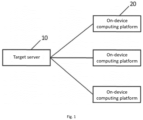
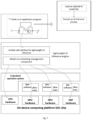
- An embodiment of the present application provides an intelligent networked collaborative driving operating system for construction machinery, as shown in Fig. 1 , the system includes a target server 10 and at least one on-device computing platform of a construction machinery 20, and the target server 10 is in communication connection with the at least one on-device computing platform of the construction machinery.
- the functional realization of the intelligent networked collaborative driving operating system mainly relies on the on-device computing platform of construction machinery, including its hardware and software, and also uses a remote/cloud high-capacity and high-computing-capacity target server as an auxiliary device.
- the on-device computing platform of the construction machinery is used to execute the automatic driving operating method for the construction machinery described in the embodiment of the present application
- the remote/cloud target server is used to store various algorithm plugins, interface files, Al models, etc. required for generating a construction machinery automatic driving operating application program
- the remote/cloud target server is further used to provide global information such as the application scenario and a global map required for the automatic driving operating of the construction machinery, and is further used to update a target intelligent inference model based on environmental information collected by various construction machinery and driving operating control result data, and issue the updated target intelligent inference model to the construction machinery corresponding to the target intelligent inference model, for example, be responsible for pruning, distilling, quantifying the lightweight intelligent inference model, and retraining and pushing the intelligent inference model based on data returned back by the construction machinery.
- the target server may further be used to assist the on-device computing platform in computing and processing complex data when running the automatic driving operating program.
- the target server 10 may be deployed on an edge cloud or a public cloud, and may be set according to actual needs.
- the edge cloud i.e., an edge cloud server
- the public cloud i.e., a central cloud server
- scenarios such as a port, a wharf, and an urban park that can be effectively covered by the 5G signal.
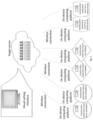
- Fig. 2 shows an optional implementation of the intelligent networked collaborative driving operating system for the construction machinery in the embodiment of the present application.
- a display device is arranged on the target server, a visual setting interface is displayed on the display device for global configuration of each construction machinery, and a global configuration file that records a global configuration result is issued onto the on-device computing platform of the construction machinery in a mode such as wireless connection.
- the on-device computing platform serves as a domain controller for the automatic driving operating function of the construction machinery, and performs the corresponding automatic driving operating control on the construction machinery based on the configuration result issued by the target server.
- the intelligent networked collaborative driving operating system for the construction machinery implements automatic driving operating control on the construction machinery through collaborative cooperation between the target server and the construction machinery.
- the target server it is responsible for performing processing, such as updating the target intelligent inference model based on the environmental information collected by each construction machinery, including state information of the construction machinery itself and driving operating control result data; and for the construction machinery, it is responsible for performing intelligent inference on the collected data and performing automatic driving operating control on the construction machinery based on an inference result. Both of them perform their respective duties and cooperate with each other to implement the automatic driving operating of the construction machinery.
- Works such as training, optimization, and updating of the intelligent inference model are undertaken by the server, which greatly reduces the occupation of software and hardware resources on the on-device computing platform of the construction machinery, and provides a condition for the lightweight development and design of a general computing platform.
- an embodiment of an automatic driving operating method for construction machinery is provided. It should be noted that steps shown in a flow chart in the drawings may be executed in a computer system such as a set of computer executable instructions, and although a logical sequence is shown in the flow chart, in some cases, the steps shown or described may be executed in an order different from the order described here.
- an automatic driving operating method for construction machinery is provided, and may be used for the above on-device computing platform of the construction machinery.
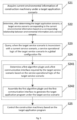
- Fig. 3 is a flow chart of the automatic driving operating method for the construction machinery according to the embodiment of the present application, as shown in Fig. 3 , the flow includes the following steps: S11, current environmental information of construction machinery under a target application scenario is acquired.
- the construction machinery collects the current environmental information under the target application scenario in real time for automatic driving operating, that is, based on a service operational logic corresponding to a current service scenario, the computing platform determines an upper-level service application software operational logic to perform the automatic driving operating control on the construction machinery.
- the current service scenario is automatic charging within a charging area.
- the service operational logic that needs to be run includes environmental perception fusion, path planning for a forklift to reach a charging predetermined area, automatic driving control of the forklift, control of a plug automatically connected with a socket, etc.
- the computing platform determines that an upper-level service applies an environmental perception sensor arranged on the construction machinery to collect environmental perception data according to the above service operational logic, and the collected environmental perception data is processed by an environmental perception fusion program and then transmitted to a path planning program.
- the path planning program obtains decision planning data and then transmits it to a driving control program, and the environmental perception fusion data will further be transmitted by the environmental perception fusion program to a socket connection control program to realize automatic charging.
- an environmental sensor collects the current environmental information in real time.
- the current environmental information includes, but is not limited to, position information, radar feature information, and image feature information.
- a positioning device is arranged on the construction machinery, and current position information is collected in real time through the positioning device; or, an image collecting device is arranged on the construction machinery, and current image information is collected in real time through the image collecting device.
- a target service scenario corresponding to the current environmental information is determined based on a corresponding relationship between environmental information and a service scenario.
- the corresponding relationship between the environmental information and the service scenario may be that: the service scenario corresponds to an operating area, a position of the operating area is fixed, and therefore, a corresponding relationship between the position of the operating area and the service scenario may be established.
- one operating task includes three service scenarios, namely a service scenario A, a service scenario B, and a service scenario C, and it is defined that an area 1 corresponds to the service scenario A, an area 2 corresponds to the service scenario B, and an area 3 corresponds to the service scenario C.
- the positions of the area 1 to the area 3 can be determined based on the environmental position information, such as coordinates in a global coordinate system.
- the target service scenario corresponding to the current position information can be determined by querying the corresponding relationship recorded in the global configuration file. Clarifying the currently-located global scenario may be realized by requiring the target server to refresh and issue cluster scheduling task instructions, and comparing the current application task with a newly-issued application task.
- the corresponding relationship between the environmental information and the service scenario may be that: for a starting point and an end point, corresponding image feature information is set; and for a walking path, corresponding position information is set.
- one operating task is goods carrying, which needs to carry goods from a starting point A to an end point B.
- the image collecting device collects current image feature information and compares the current image feature information with image feature information of the starting point or end point stored in the global configuration file, so as to determine whether the current service scenario is the starting point or the end point.
- the current position information may also be collected simultaneously, and combined with the current image feature information and the current position information, the target service scenario to which the construction machinery currently belongs may be determined.
- the target environmental information includes the target position information and/or the target image feature information.
- S12 above includes: determining the target service scenario corresponding to the current environmental information based on a corresponding relationship between the image feature information and the service scenario; and/or, determining a current service scenario corresponding to the current image feature information based on the corresponding relationship between the image feature information and the service scenario.
- Determining the target service scenario through the position and/or image feature information can ensure reliability of the determined target service scenario.
- Global configuration result information in the global configuration file includes at least one service scenario under the target application scenario, a service operational logic of each service scenario, and a logical relationship between the service scenarios.
- the target service scenario refers to a service scenario in which it should be currently located.
- the construction machinery walks in the area 1 at a time t1
- the target service scenario is the service scenario A at this time
- automatic driving operating control is performed on the construction machinery based on a service operational logic of the service scenario A
- the construction machinery walks in the area 2 at a time t2
- the target service scenario is the service scenario B at this time.
- the target service scenario and the currently-located service scenario belong to the same global scenario, that is, the switching of the service operational logics caused by the switching of the service scenarios when the application tasks to be executed by the construction machinery do not change.
- the switching of the service operational logics is caused by global scenario switching.
- the construction machinery executes an application task A in a global scenario A
- the target service scenario is the service scenario A under the global scenario A
- automatic driving operating control is performed on the construction machinery based on the service operational logic of the service scenario A
- the construction machinery has already executed an application task B in the global scenario
- the target service scenario is the service scenario B under a global scenario B.
- the service operational switching process is to first find the global configuration file of the application task A, read the service operational logic of the service scenario B from the global configuration file of the application task A, and switch the service operational logic of the construction machinery automatic driving operating from the service operational logic corresponding to the service scenario A to the service operational logic corresponding to the service scenario B.
- the global configuration file is generated by performing global configuration on the construction machinery before it is officially put into use.
- the entire configuration process includes setting at least one application scenario, the corresponding service scenarios for each application scenario, and the service operational logic of each service scenario.
- a specific global configuration record under each application scenario is stored in the corresponding global configuration file. Based on this, because the service scenarios corresponding to different operating scenarios and the service operational logic of each service scenario are set in the global configuration file, after determining the application scenario, using the target application scenario for querying can determine the at least one service scenario under the target application scenario and the service operational logic of each service scenario.
- a target application program under the target service scenario is generated based on the service operational logic of the target service scenario.
- the on-device computing platform needs to query description information of the service operational logic of the target service scenario from the global configuration file.
- the service scenario A is forklift loading, then its service operational logic is to identify a pallet, control a fork arm to descend, and then control the fork arm to ascend after determining that the pallet is forked, and an organizational structure form of the application program corresponding to the service scenario A, namely, a data flow of software nodes in the application program is shown in the figure.
- the service scenario B is forklift automatic charging, its service operational logic is to identify surrounding obstacles and a socket in a charging area, plan a path of a forklift from the starting point to the charging predetermined area, control automatic driving of the forklift and control automatic connection of a plug to the socket.
- the application program is formed by several software nodes organized together in a predetermined logical order.
- the software nodes are composed of an algorithm plugin and a base, and the algorithm plugin includes its embedded intelligent inference model. So, generating the target application program is to reassemble the software nodes according to the service operational logic. Switching from the current application program to the target application program includes generating new software nodes, changing a connection relationship between the software nodes, and so on. S15, the construction machinery is controlled based on the target application program.
- the computing platform controls the automatic driving operating of the construction machinery by running the application program, and executes the application task specified in the global configuration.
- the automatic driving operating method for the construction machinery in a process that the construction machinery executes the operating task, when service scenario switching is detected, the corresponding target service scenario is determined, so that the service operational logic under the target service scenario can be used to generate the target application program for performing automatic driving operating control on the construction machinery.
- scenario dynamic management different service states throughout the entire process under the global scenario may be automatically analyzed, the service operational logic required by the corresponding service scenario is dynamically switched, and the required application program is switched. There is no need to stop running of the construction machinery during scenario switching to redeploy and select the application program.
- the computing platform can adapt to different service scenarios without the need for customized development, thereby improving generalization ability of the computing platform.
- the target application programs under various service scenarios are generated only when running in the various service scenarios, rather than having the plurality of target application programs generated for backup before startup, thereby reducing pressure on computing platform storage resources and achieving the lightweight on-device computing platform.
- an automatic driving operating method for construction machinery is provided, and may be used for the above on-device computing platform of the construction machinery.
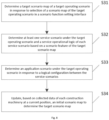
- Fig. 5 is a flow chart of the automatic driving operating method for the construction machinery according to the embodiment of the present application, and as shown in Fig. 5 , the flow includes the following steps: S21, current environmental information of construction machinery under a target application scenario is acquired.
- a target service scenario corresponding to the current environmental information is determined based on a corresponding relationship between environmental information and a service scenario.
- the global configuration file includes at least one service scenario under the target application scenario, a service operational logic of each service scenario, and a logical relationship between the service scenarios.
- a target application program under the target service scenario is generated based on the service operational logic of the target service scenario.
- S24 above includes:
- a first algorithm plugin and a first communication interface required by the target service scenario are determined based on the service operational logic of the target service scenario.
- description information of the service operational logic is recorded in the global configuration file, and the first algorithm plugin and the first communication interface required by the target service scenario may be determined by using the description information.
- the first algorithm plugin is used to implement corresponding functions, such as image identification, forklift arm ascending or descending, etc.
- the first communication interface is used to realize a communication connection between the first algorithm plugins.
- the first algorithm plugin and the first communication interface are assembled to generate the target application program under the target service scenario.
- the assembly of the first algorithm plugin and the first communication interface relies on the service operational logic of the target service scenario, and nodes are obtained by fusing the first algorithm plugin with the corresponding first communication interface. Communication links are established between the nodes in an order described by the service operational logic, and are organized together, so as to obtain the target application program under the target service scenario.
- the computing platform requests a cloud server to issue a model file of the intelligent inference model and load it in a cache area of an AI inference engine for calling by the application program.
- S242 above includes:
- the target application program When generating the target application program, it is obtained by creating, deleting, or updating on the basis of the current application program. Specifically, the current application program under the current service scenario is acquired, that is, the second algorithm plugin, the second communication interface, and a communication connection relationship between them are learned. Then the current operational logic under the current service scenario is compared with the service operational logic of the target service scenario to identify the difference, that is, determine which algorithm plugins need to be adjusted, and then the current application program is adjusted by using the first algorithm plugin and the first communication interface, so as to determine the target application program.
- the first algorithm plugin When the first algorithm plugin is implemented by relying on the intelligent inference model, it is also necessary to acquire which intelligent inference model the first algorithm plugin relies on, and then the acquired information is used to perform adjustment of the intelligent inference model on the first algorithm plugin.
- the algorithm plugin required by generating the target application program and the AI model file corresponding to the plugin may be issued by the target server to the on-device computing platform at a global configuration phase, and may also be issued on demand by the target server requested by the on-device computing platform in real time after determining the target service scenario. On-demand issue can achieve the lightweight on-device computing platform.
- the construction machinery is controlled based on the target application program.
- the automatic driving operating method for the construction machinery is to assemble the target application program in real time according to the demands of the target service scenario in a motion process of the construction machinery, rather than implementing assembly before startup. That is, assembly is performed on demand, and the algorithm plugin, interface file, and intelligent inference model required by assembling are not always stored on the on-device computing platform in the preferred embodiment, but are acquired on demand from the target server when the application program needs to switch and reassemble, which can ensure the lightweight storage of the on-device computing platform.
- the intelligent inference model file is loaded into the cache area on demand at an application program assembly phase through the Al inference engine, the application program may directly call a corresponding intelligent inference result at any time, instead of acquiring the model file and loading it when needed, which increases a running speed of this computing platform and also reflects the lightweight of the computing platform.
- the above method further includes:
- the initial environmental information is acquired through a collecting device, and then the actual initial service scenario corresponding to the initial environmental information is determined by using the corresponding relationship.
- the actual initial service scenario here refers to an initial service scenario of the construction machinery during actual running. In order to distinguish it from the initial service scenario in the application scenario, the actual initial service scenario is used for description.
- the actual initial service scenario is verified by using the initial service scenario in the application scenario, so as to determine whether the actual initial service scenario is consistent with the initial service scenario. If not, it indicates that the verifying fails to pass, and the alarm reminder is issued at this time to remind a user that manual intervention is needed to handle the problem at this time.
- the initial service scenario and the actual initial service scenario are used for verifying to ensure the reliability of the actual initial service scenario of the construction machinery, that is, to determine whether the starting point of the construction machinery is accurate, thereby providing an accurate starting condition for subsequent automatic control based on the application scenario.
- the verifying passes, it indicates that the starting point at which the construction machinery starts is correct. Based on this, the initial service scenario is determined by using the initial environmental information to achieve automatic driving operating control on the construction machinery.
- S25 above includes:
- the intelligent inference model of the first algorithm plugin may need to be realized through the intelligent inference model.
- the intelligent inference model of the first algorithm plugin will be referred to as the target intelligent inference model hereinafter.
- the on-device computing platform of the construction machinery is implemented through the intelligent inference engine, and the intelligent inference engine cooperates with the target intelligent inference model to achieve intelligent inference on the construction machinery side and determine the inference result.
- the target intelligent inference model it is necessary to first acquire the input data of the target intelligent inference model, and use the intelligent inference engine to call the model file of the target intelligent inference model, so as to process the input data.
- the input data may be collected by a sensor on the construction machinery, and may also be output of other intelligent inference models, or output of other functional algorithm modules, etc.
- There is no restriction on its source which specifically depends on a position of the target intelligent inference model in the service operational logic of the application scenario, that is, a module to which input of the target intelligent inference model is connected.
- the AI inference engine is responsible for executing the Al inference process.
- the application program itself does not execute the inference process, but directly calls the inference result obtained by the AI inference engine and performs automatic driving operating control on the construction machinery based on the inference result.
- the AI inference engine calls underlying software and hardware resources according to a preset rule to load and run the model file at the minimum cost to execute the inference process, and returns the inference result to the application program through a unified interface. If the plurality of AI models need to be loaded and run at the same time so as to execute the inference process, the AI inference engine will further perform centralized scheduling management on the execution of the inference process.
- the AI inference engine will schedule different computing units to execute the AI inference process based on features of different AI models during running according to the rule set in advance.
- the application program is insensitive to underlying scheduling management of the AI inference engine, and it only calls the required inference result from the unified interface provided by the AI inference engine for its own use.
- the input data is processed based on the intelligent inference engine and the target intelligent inference model.
- the target intelligent inference model is issued by the target server to the construction machinery on demand, only this target intelligent inference model needs to be called for processing on the construction machinery side.
- the corresponding functions can be achieved without the need for complex preprocessing operations such as model pruning and distillation, model quantification, model training, and model file conversion, thereby reducing requirements for software and hardware capabilities of the on-device computing platform, and improving the work efficiency of the construction machinery.
- the AI inference engine is responsible for executing the inference process, and the application program itself does not run the inference model but only calls the inference result, which greatly reduces complexity of the application program in terms of time and space during running.
- the AI inference engine helps the application program shield the impact of differences in underlying software and hardware architectures, in this way, the application program may only focus on the upper-level service applications themselves, thereby laying the foundation for lightweight development and design of the application program.
- above step (2) includes: loading, when the updated target intelligent inference model issued by the target server is acquired, a model file of the updated target intelligent inference model based on the intelligent inference engine so as to infer the input data and determine the inference result.
- the updated target intelligent inference model is determined by the target server after training the target intelligent inference model based on environmental information collected by each construction machinery and driving operating control result data.
- the target intelligent inference model set in the target server is obtained by training empirical data and accumulated data in the past, which can meet the needs of the construction machinery under a new operating scenario. However, at the beginning, both operating performance and operating efficiency will not be the highest.
- the on-device computing platform of the construction machinery the lightweight AI inference engine
- the target server then re-optimizes and trains it to obtain the updated target intelligent inference model, and pushes the updated target intelligent inference model to the on-device computing platform of the construction machinery (the lightweight AI inference engine), and ultimately, the operating performance and operating efficiency of the construction machinery under this scenario are continuously improved.
- the environmental information collected by each construction machinery and the driving operating control result data are used as new sample data to retrain the target intelligent inference model, which can further improve precision of the target intelligent inference model and its compatibility with the current service scenario.
- the training and updating of the intelligent inference model are all completed on the target server side. Based on this, in the operating process of the construction machinery, if the updated target intelligent inference model issued by the target server is received, the updated target intelligent inference model is used to replace the target intelligent inference model, and motion control is performed based on the updated target intelligent inference model.
- the update of the target intelligent inference model is completed on the target server side.
- lightweight AI inference on the construction machinery side is achieved, which improves the operating efficiency of the construction machinery while ensuring the low cost and lightweight of the computing platform.
- determining the global configuration file is based on a scenario feature of a target scenario map of the target application scenario.
- the target scenario map has its own inherent features, and these features may be identification of the name of the target scenario map, image identification of the target scenario map, and so on.
- the functions that need to be executed are not all the same. Due to the relatively single operating scenario of the construction machinery, the functions it needs to execute can be obtained through an exhaustive mode. Based on this, by determining the target scenario map of the target application scenario, the corresponding service scenario can be determined in the future.
- the service operational logic of each service scenario is used to represent an operating action required to be executed for implementing the service scenario.
- the scenario features are matched to determine the global configuration file under the target application scenario.
- the global configuration file may be obtained from a response configuration operation of the on-device computing platform or from a response configuration operation of the target server, which is not limited here and may be specifically set according to actual needs.
- cluster scheduling control of the plurality of construction machinery can be achieved.
- a mode for determining the global configuration file includes: S31, the target scenario map of the target application scenario is determined in response to selection of a scenario map of the target application scenario in a scenario function setting interface.
- the scenario function setting interface is used for global configuration of the construction machinery, an identifier of each construction machinery is displayed on the interface, and the scenario function setting interface corresponding to the corresponding construction machinery may be entered by selecting the identifier.
- a user interacts with the scenario function setting interface to select the scenario map of the target application scenario. For example, by clicking on a selection tag of the scenario map, alternative scenario maps are displayed in a pull-down menu, including, but not limited to indoor space, a port, a mine, a logistics park, an open area, and so on.
- scenario map data obtained by the user interacting with the scenario function setting interface is an initial state of the corresponding scenario, and with the help of this scenario map data, the corresponding construction machinery can start intelligent operating. Then the state of the corresponding scenario will continue to change in the work process of the construction machinery. At this time, the scenario map data is modified and improved by relying on the collected data returned back by the construction machinery, and is pushed to the corresponding construction machinery to obtain the target scenario map.
- the scenario map can be shared by various construction machinery passing through the same operating area, and the scenario feature of the scenario map can also represent the operating scenario. Therefore, the scenario map is uniformly managed and updated by the target server, and the updated scenario map is issued to each construction machinery to realize the universality of the scenario map, reduce data processing capacity of the construction machinery, and further realize determination of the target application scenario.
- the at least one service scenario under the target application scenario and the service operational logic of each service scenario are determined based on the scenario feature of the target scenario map.
- the target application scenario is identified through the scenario features of the target scenario map, and the at least one service scenario under the target application scenario and the service operational logic of each service scenario may be determined by querying through the target application scenario.
- the service operational logic of the service scenario may be implemented through the intelligent inference model.
- the intelligent inference model corresponding to each construction machinery is trained in advance. If the service operational logic of the service scenario is implemented through the intelligent inference model, the model file of the intelligent inference model is extracted from the target server and issued to the construction machinery.
- the global configuration file under the target application scenario is determined in response to a logical configuration between the service scenarios.
- Each service scenario under the target application scenario is obtained in S32 above, and how these service scenarios are connected requires user interaction settings.
- the user establishes a connection relationship between these service scenarios through interactive processing, so as to implement the logical configuration between the service scenarios.
- the connection relationship between these service scenarios may be represented in a mode of one-way graph data, or in a mode of a data linked list, or in other modes, which is not limited here.
- the service operational logic of the service scenario is associated with the corresponding service scenario to form the application scenario under the target application scenario.
- This application scenario is a complete operating flow of the construction machinery under the target application scenario and the specific implementation mode of each operating flow node.
- the different scenario maps may be selected for configuring the service operational logic of the service scenario, or the service operational logic of the different service scenarios may be configured under the same scenario map, so as to obtain the different global configuration files under the different application scenarios.
- the initial scenario map is updated to determine the target scenario map.
- the target server receives collected data from each construction machinery within the operating area at the current position to update the initial scenario map.
- the collected data received by the target server is not limited to position information, but may also include image data collected by each construction machinery, which is not limited here.
- the scenario map data within the operating area is also dynamic correspondingly.
- the target server receives the data uploaded by each construction machinery and continuously updates the scenario map to ensure the accuracy of the obtained target scenario map.
- the target scenario map not only includes a static target within the scenario, but also includes a dynamic target.
- the target scenario map and the application scenario under the target application scenario are obtained in the target server.
- the target scenario map is provided for path planning of the construction machinery, and the application scenario is used to be provided for operating control of the construction machinery.
- the target server issues the obtained target scenario map and the application scenario to the target construction machinery together, so that the target construction machinery performs motion control based on both.
- a specific control mode for the target construction machinery will be described in detail below.
- the corresponding service scenario is obtained by identifying the scenario feature, and correspondingly, the application scenario under the target application scenario may be formed and issued to the construction machinery for motion control.
- determination of the application scenario may be achieved through simple interaction, thereby improving operating efficiency.
- a mode for determining the global configuration file includes the following steps: S41, the target scenario map of the target application scenario is determined in response to selection of a scenario map of the target application scenario in a scenario function setting interface.
- S41 above includes: S411, the operating scenario setting interface is displayed in response to an operating setting operation on the target application scenario.
- the operating scenario setting interface includes an operating area of the target application scenario and a position of each construction machinery within the operating area.
- the user triggers the target server to display the operating scenario setting interface by interacting with a setting tag/button in the target server.
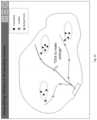
- the operating scenario setting interface contains a top view outline of the operating area, a top view outline of internal operating points in the area, a top view of a transportation route, and abstract points of the construction machinery.
- the entire top view rendering will be dynamically updated based on measurement data information returned back by each piece of construction machinery equipment, while position information of the construction machinery is updated in real time.
- Fig. 10 shows three types of construction machinery, namely an excavator, a loader and a dump truck.
- the map data of the operating area displayed here is initial map data, which aims at enabling the construction machinery to start and run, in the operating process of the construction machinery, the construction machinery will return the collected data back to the target server, and the target server updates the map data within the operating area based on the data returned back by each construction machinery.
- a scenario function setting interface of the target construction machinery is displayed in response to a selecting operation of the target construction machinery in the operating scenario setting interface.
- each on-device computing platform is in communication connection with the target server in a wireless connection mode.
- the wireless connection mode is not limited to 4G/5G communication, for example, in certain operating scenarios, the on-device computing platform may be wirelessly connected with an edge cloud server through wifi.
- monitoring information of dynamic scenarios is presented, and on the other hand, the intelligent functions running on the on-device computing platform of the construction machinery, and the upper-level application software service operational logic are remotely set, and new AI model file data is pushed.
- each construction machinery in the operating area is represented by its corresponding abstract point in the operating scenario setting interface
- the user only needs to move a cursor over the abstract point, and model information of the corresponding construction machinery and device information of the intelligent inference engine installed on the end side may be limited in this interface.
- the abstract point in the operating scenario setting interface is clicked to enter the scenario function setting interface as shown in Fig. 11 .
- the construction machinery to be set is referred to as the target construction machinery.
- the on-device computing platform After selecting the target construction machinery, the on-device computing platform has a basic adaptation with the selected construction machinery, mainly referring to adaptation of a communication protocol.
- an initial scenario map is determined in response to a selecting operation of a scenario map in the scenario function setting interface.
- scenario map selection area in the scenario function setting interface, and the initial scenario map is obtained by selecting the scenario map in the area.
- the initial scenario map here corresponds to an initial state of the scenario, and with the help of the initial scenario map data, the corresponding construction machinery can start intelligent operating.
- the target scenario map is determined by updating the initial scenario map based on the position of each construction machinery.
- the target server receives the position information uploaded by each construction machinery within the operating area, and updates the initial scenario map based on these pieces of position information.
- the information received by the target server is not limited to the above position information, but may also include the image data collected by each construction machinery, which is not limited here.
- the scenario map data within the operating area is also dynamic correspondingly.
- the target server receives the data uploaded by each construction machinery and continuously updates the scenario map to ensure the accuracy of the obtained target scenario map.
- the target scenario map not only includes the static target within the scenario, but also includes the dynamic target.
- the at least one service scenario under the target application scenario and the service operational logic of each service scenario are determined based on the scenario feature of the target scenario map.
- the scenario function setting interface includes a service scenario display area and a service operational logic display area.
- S42 above includes: S421, optional service scenarios corresponding to the target scenario map are displayed in the service scenario display area by querying a service scenario library based on the feature of the target scenario map.
- the top left of the scenario function setting interface is a scenario map selection area
- the top right is the service scenario display area
- the bottom is the service operational logic of the service scenario.
- the optional service scenarios displayed in the service scenario display area include tracking automatic driving, intelligent obstacle-avoidance traveling, automatic passing of a weighbridge, automatic material shaking and clearing, etc.
- the at least one service scenario under the target application scenario is determined in response to a selecting operation on the optional service scenarios, and the service operational logic corresponding to each service scenario is displayed in the service operational logic display area.
- the optional service scenarios refer to all possible service scenarios supported under the scenario map, but not all the optional service scenarios are necessary under the current target application scenario. Therefore, the user may determine the at least one service scenario under the target application scenario by selecting the optional service scenarios through interactive processing.
- the service operational logic corresponding to the service scenario is displayed in the service operational logic display area, namely, a connection relationship of each functional algorithm software node and the corresponding functional algorithm software node.
- the functional algorithm software node is composed of a functional algorithm plugin and a communication interface file to form a relatively independent algorithm service unit.
- the target server stores the service operational logic corresponding to each service scenario, and the service scenario corresponding to each application scenario. After determining the target application scenario and selecting the service scenarios, the at least one service scenario and the service operational logic of each service scenario may be automatically determined.
- Displaying the service operational logic corresponding to each service scenario in the service operational logic display area is to enable the user to intuitively perceive the service operational logic under each service scenario, and the service operational logic may also be adjusted according to actual needs.
- the service operational logic corresponding to a certain complex service scenario is: a functional algorithm software node using four perception algorithms, a functional algorithm software node using two fusion algorithms, a functional algorithm software node using one positioning algorithm, a functional algorithm software node using one global planning algorithm, a functional algorithm software node using one decision-making algorithm, a functional algorithm software node using one local planning algorithm, and a functional algorithm software node using one control algorithm.
- Output of the functional algorithm software node using the three perception algorithms is first given to the functional algorithm software node using one fusion algorithm for fusion calculation, and output of the functional algorithm software node of the fusion algorithm and the functional algorithm software node using the fourth perception algorithm are then given together to the functional algorithm software node using the second fusion algorithm for new fusion calculation, and so on.
- These functional algorithm software nodes run in an orderly manner according to the above data flow relationship, which is a complete application program.
- the service operational logic includes the plurality of functional algorithm software nodes and the connection relationship between the functional algorithm software nodes. S42 above further includes:
- Each functional algorithm plugin may select the optional intelligent inference model used, as shown in Fig. 11 , there is an "inverted triangle" icon on the block diagrams of all the functional algorithm modules, the icon represents a pull-down menu, and the intelligent inference model used in the functional algorithm module may be selected by clicking the icon.
- the target functional algorithm plugins as an example, by clicking the "inverted triangle” icon, the optional intelligent inference models of the target functional algorithm modules are displayed in the pull-down menu. Through interaction, the selection of the optional intelligent inference models is performed so as to determine the target intelligent inference models of the target functional algorithm modules.
- the target functional algorithm plugins are implemented based on the optional intelligent inference models, and the target intelligent inference models to implement the target function are finally determined.
- the target intelligent inference models have been trained on a target server end and may be directly used in the configuration process, correspondingly, not all the optional intelligent inference models are issued to the construction machinery, but are issued on demand, so as to ensure the lightweight running of the computing platform on the construction machinery end.
- the scenario map data selected in the upper left determines the number of the optional service scenarios presented in the upper right; while the selection of the optional service scenarios in the upper right determines the service operational logic block diagram below. So the result of S22 above is to push the scenario map data of the initial state of the construction machinery operating scenario, the upper-level service operational logic corresponding to the scenario function, the AI inference model data, etc. to the computing platform on the construction machinery end side, namely, the on-device lightweight intelligent inference engine.
- the global configuration file under the target application scenario is determined in response to a logical configuration between the service scenarios.
- the initial scenario map is updated to determine the target scenario map.
- the target scenario map needs to be dynamically updated, for the reason of the collaborative operating of various construction machinery in the target application scenario, and dynamic change in topography and terrain, and a traveling area, the target scenario map needs to be updated in the target server in combination with the environmental information collected by each construction machinery.
- the updated target scenario map is issued to each construction machinery, so that the construction machinery performs motion control based on the updated target scenario map, thereby ensuring the safety of the construction machinery.
- the target scenario map can be dynamically updated in a timely manner, and the updated target scenario map is issued to the construction machinery, so that the construction machinery performs obstacle avoidance processing based on the dynamic target scenario map, thereby avoiding walking accidents and improving the safety of the construction machinery.
- An update operation of the map is processed on the target server end, so that the data processing capacity on the construction machinery side can be reduced, and work efficiency is improved.
- the target scenario map obtained by the target server end is generated through a collection of the environmental information collected by all construction machinery, and belongs to global map information. The target scenario map is then issued to each construction machinery, so that all the construction machinery can share the target scenario map and avoid repetitive map construction.
- the target scenario map is also issued to the construction machinery.
- the target server can perform integrated scheduling on the plurality of construction machinery in the target application scenario, and the integrated scheduling is implemented through an interactive interface, which is not only convenient for the user to operate, but also can display the operating status of each construction machinery on the interface in real-time and intuitively.
- the initial scenario map is updated by using the position of each construction machinery to ensure the accuracy of the target scenario map issued to the construction machinery.
- the optional service scenarios related to the features of the target scenario map are queried in the service scenario library. These optional service scenarios are displayed in the service scenario display area for the user to screen based on actual needs and ultimately determine the at least one service scenario under the target application scenario, thereby improving the efficiency of determining the service scenarios and thus improving the operating efficiency of the construction machinery.
- Construction machinery vehicles are undergoing a comprehensive transformation towards electrification, and electrification effectively promotes intelligent and networked implementation of the construction machinery vehicles. Faced with the increasing complexity of automatic driving software and hardware volume, there are also more and more types of SOC chips that need to be carried. Based on this, a method that can achieve plug and play, convenient and fast expansion of computility is further provided in the present embodiment.
- the method is implemented based on a software system deployed on the on-device computing platform of the construction machinery, and computility of the software system is provided by a first computility board. Based on this, the above method further includes:
- the first computility board is used to deploy a master engine.
- a process of deploying the software system on the first computility board includes: compiling the software system by using a cross compilation tool chain provided by the master engine, packaging an executable file generated by compiling and the corresponding lib in a one-click mode, and deploying them into the master engine through a one-click deployment tool.
- the cross compiling tool chain consists of a compiler, a connector and an interpreter, and is a program code for compiling, linking, processing and debugging a cross-platform architecture.
- resource monitoring of the master engine automatically acquires the corresponding running performance, including, but not limited to, resources or power consumption.
- the information of needing to newly add the computility board is provided when the running performance does not meet the demands.
- the corresponding prompt information is automatically sent out to facilitate timely addition of computility and improve the work efficiency of the construction machinery.
- the method further includes:
- the cross compiling tool chain of the second computility board is acquired, parameter feature analysis is performed on the compiler of the cross compiling tool chain, a compiling tool required by the compiler is determined, and determined as a target compilng tool of the slave engine, and then the corresponding target compiling tool is called in a preset compiling tool library, so that the compiler can generate a compiled file of a construction machinery vehicle software platform based on the target compiling tool.
- the compiling tool is a code script, and the compiled file includes an executable file and lib corresponding to the software platform.
- the compiled file After obtaining the compiled file of the software system, the compiled file is deployed onto the second computility board, so that the second computility board is used to provide computility for the software system.
- the target compiling tool of the second computility board is automatically called to compile the software system, so that the obtained compiled file is deployed onto the second computility board, thus the second computility board can be used to provide computility support for the software system, and the computility of the construction machinery can be improved by using a simple processing process.
- the software platform running information of the slave engine is monitored, and the software platform running information is synchronized to the master engine of the construction machinery vehicle, wherein, the master engine is a core chip engine of the construction machinery vehicle, and the software platform running information mainly includes a computing task execution result of the software platform on the slave engine.
- it further includes monitoring resource consumption status of the master engine and the slave engine, and allocating computing tasks to the master engine and the slave engine according to the resource consumption status of the master engine and the slave engine.
- the computing tasks may be tasks such as a vehicle automatic traveling strategy determining task, an obstacle avoidance path determining task, and a posture adjusting task in the operating process.
- the computing tasks can be allocated more to an engine with relatively less current resource consumption according to the resource consumption status of the master engine and the slave engine, that is, the computing tasks are allocated as much as possible to an engine with sufficient resources and low power consumption to achieve balanced task allocation.
- the computing tasks can be allocated in a targeted mode according to hardware computing advantages corresponding to the different engines, so as to fully exert the hardware computing advantages of the construction machinery vehicles, thereby realizing optimal performance and minimal power consumption.
- the current computing task is migrated to the slave engine.
- the computing tasks may be executed based on the master engine in priority.
- the resource consumption status of the master engine represents that its computing resources are scarce, that is, the current computing task cannot be completed
- the remaining unexecuted current computing tasks are migrated to the slave engine, where the slave engine is responsible for executing the remaining computing tasks.
- an execution result namely, the software platform running information is synchronized to the master engine.
- Intelligent elastic expansion of Al computility is supported on the end side of the construction machinery, the master-slave engines can automatically identify and configure without the need for excessive operations, the process is simple, maintenance is convenient, a lot of development and testing time is saved, and an expansion speed of the AI computility is increased. Stability, reliability, performance, and computing resources of the software system deployed on the entire construction machinery computing platform have been greatly improved, and the difficulty of maintaining the software system in the later stage has also been greatly reduced.
- the computility board When different chips need to be expanded, the computility board is inserted, a one-click compiling tool compiles the platform software by using the cross compiling tool chain of a newly-added computility expansion board, meanwhile deploys the compiled platform software deployment to the slave engine, and starts a component configuration management application.
- a component configuration management tool informs the slave engine of the required computility resources, starts required application service nodes in the slave engine, and transmits real-time monitoring and other data to the main engine to complete the expansion of the AI computility, which can achieve simple adaptation to SOC chips from different manufacturers while creating a highly-open development ecosystem, can also bring development enthusiasm to many third parties who focus on algorithm research and provide corresponding service engines with high-performance AI computility, achieve plug and play and realize free expanding of Al computility.
- an automatic driving operating apparatus for construction machinery is further provided, and the apparatus is used to implement the above embodiments and preferred implementations.
- the parts that have been explained will not be repeated.
- a term "module" may implement a combination of software and/or hardware with predetermined functions.
- the apparatus described in the following embodiments is preferably implemented in software, the implementation of hardware, or a combination of software and hardware, is also possible and envisioned.
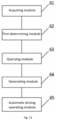
- the present embodiment provides an automatic driving operating apparatus for construction machinery, as shown in Fig. 12 , including:
- the generating module 64 includes:
- the assembling unit includes:
- the first determining module 62 includes:
- the apparatus further includes:
- determining the global configuration file is based on a scenario feature of a target scenario map of the target application scenario.
- a determining module of the global configuration file includes:
- the first response unit includes:
- control module 65 includes:
- the loading unit includes: a second determining subunit, configured to infer, when an updated target intelligent inference model issued by a target server is acquired, the input data based on the intelligent inference engine and the updated target intelligent inference model, and determine the inference result, wherein the updated target intelligent inference model is determined by the target server after updating the target intelligent inference model based on environmental information collected by each construction machinery and driving operating control result data.
- a second determining subunit configured to infer, when an updated target intelligent inference model issued by a target server is acquired, the input data based on the intelligent inference engine and the updated target intelligent inference model, and determine the inference result, wherein the updated target intelligent inference model is determined by the target server after updating the target intelligent inference model based on environmental information collected by each construction machinery and driving operating control result data.
- the method is implemented based on a software system deployed on the on-device computing platform of the construction machinery, computility of the software system is provided by a first computility board, and the apparatus further includes:
- the automatic driving operating apparatus for the construction machinery in the present embodiment is presented in a form of a functional unit, the unit here refers to an ASIC, a processor and memory that execute one or more pieces of software or a fixed program, and/or other devices that may provide the above functions.
- An embodiment of the present application further provides an electronic device, having the automatic driving operating apparatus for the construction machinery as shown in Fig. 12 above.
- Fig. 13 is a schematic structural diagram of an electronic device provided by an optional embodiment of the present application, and as shown in Fig. 13 , the electronic device may include: at least one processor 71, such as a central processing unit (CPU), at least one communication interface 73, a memory 74, and at least one communication bus 72.
- the communications bus 72 is used to implement connection and communication between these components.
- the communication interface 73 may include a display and a keyboard.
- the communication interface 73 may further include a standard wired interface and wireless interface.
- the memory 74 may be a high-speed random access memory (RAM, a volatile random access memory) or a non-volatile memory, such as at least one disk memory.
- the memory 74 may further be at least one storage apparatus that is located far away from the foregoing processor 71.
- the processor 71 may combine with the apparatus described in Fig. 9 , an application program is stored in the memory 74, and the processor 71 calls a program code stored in the memory 74 for executing any of the above method steps.
- the communication bus 72 may be a peripheral component interconnect (PCI for short) bus or an extended industry standard architecture (EISA for short) bus, and the like.
- the communication bus 72 may be divided into an address bus, a data bus, a control bus, and the like. For facilitating representation, the bus is only represented with a thick line in Fig. 13 , but it does not represent that there is only one bus or any type of buses.
- the memory 74 may include a volatile memory, such as a random-access memory (RAM for short); the memory may also include a non-volatile memory, such as a flash memory, a hard disk drive (HCD for short) or a solid-state drive (SSD for short); and the memory 74 may further include a combination of the aforementioned types of memory.
- the processor 71 may be a central processing unit (GPU for short), a network processor (NP for short), or a combination of CPU and NP.
- CPU central processing unit
- NP network processor
- the processor 71 may further include a hardware chip.
- the above hardware chip may be an application-specific integrated circuit (ASIC for short), a programmable logic device (PLD for short) or a combination thereof.
- the above PLD may be a complex programmable logic device (CPLD for short), a field-programmable gate array (FPGA for short), a generic array logic (GAL for short) or any combination thereof.
- the memory 74 is further used to store program instructions.
- the processor 71 may call the program instructions to implement the automatic driving operating method for the construction machinery as shown in any embodiment of the present application.
- An embodiment of the present application further provides a non-transient computer storage medium, the computer storage medium stores computer executable instructions, and the computer executable instructions can execute the automatic driving operating method for the construction machinery in any of the above method embodiments.
- the storage medium may be a magnetic disc, an optical disc, a read-only memory (ROM), a random access memory (RAM), a flash memory, a hard disk drive (HDD for short) or a solid-state drive (SSD).
- the storage medium may further include a combination of the aforementioned types of memories.
Landscapes
- Engineering & Computer Science (AREA)
- Transportation (AREA)
- Physics & Mathematics (AREA)
- Structural Engineering (AREA)
- Signal Processing (AREA)
- Computer Networks & Wireless Communication (AREA)
- Mechanical Engineering (AREA)
- Civil Engineering (AREA)
- Computing Systems (AREA)
- General Health & Medical Sciences (AREA)
- Medical Informatics (AREA)
- Geology (AREA)
- Life Sciences & Earth Sciences (AREA)
- Computer Vision & Pattern Recognition (AREA)
- Multimedia (AREA)
- Health & Medical Sciences (AREA)
- Electromagnetism (AREA)
- Aviation & Aerospace Engineering (AREA)
- Radar, Positioning & Navigation (AREA)
- Remote Sensing (AREA)
- General Physics & Mathematics (AREA)
- Automation & Control Theory (AREA)
- Stored Programmes (AREA)
- Management, Administration, Business Operations System, And Electronic Commerce (AREA)
Applications Claiming Priority (2)
| Application Number | Priority Date | Filing Date | Title |
|---|---|---|---|
| CN202211561028.3A CN115576331B (zh) | 2022-12-07 | 2022-12-07 | 工程机械的自动驾驶作业方法、装置、电子设备及系统 |
| PCT/CN2023/085624 WO2024119678A1 (zh) | 2022-12-07 | 2023-03-31 | 工程机械的自动驾驶作业方法、装置、电子设备及系统 |
Publications (3)
| Publication Number | Publication Date |
|---|---|
| EP4404022A1 true EP4404022A1 (de) | 2024-07-24 |
| EP4404022A4 EP4404022A4 (de) | 2024-08-28 |
| EP4404022B1 EP4404022B1 (de) | 2026-02-25 |
Family
ID=84590096
Family Applications (1)
| Application Number | Title | Priority Date | Filing Date |
|---|---|---|---|
| EP23782724.1A Active EP4404022B1 (de) | 2022-12-07 | 2023-03-31 | Verfahren und vorrichtung zur automatischen fahrbearbeitung für eine baumaschine, elektronische vorrichtung und system |
Country Status (3)
| Country | Link |
|---|---|
| EP (1) | EP4404022B1 (de) |
| CN (1) | CN115576331B (de) |
| WO (1) | WO2024119678A1 (de) |
Families Citing this family (6)
| Publication number | Priority date | Publication date | Assignee | Title |
|---|---|---|---|---|
| CN115576331B (zh) * | 2022-12-07 | 2023-03-10 | 深圳海星智驾科技有限公司 | 工程机械的自动驾驶作业方法、装置、电子设备及系统 |
| CN116184897A (zh) * | 2023-02-10 | 2023-05-30 | 深圳海星智驾科技有限公司 | 一种工程机械车辆智能控制系统及方法 |
| CN118732615A (zh) * | 2023-03-30 | 2024-10-01 | 华为技术有限公司 | 控制方法和装置 |
| CN116540744B (zh) * | 2023-07-04 | 2023-09-08 | 深圳海星智驾科技有限公司 | 一种无人叉车系统 |
| CN117724693B (zh) * | 2024-02-07 | 2024-05-24 | 深圳海星智驾科技有限公司 | 自动驾驶软件的开发方法、系统、计算机设备及存储介质 |
| CN117785231B (zh) * | 2024-02-26 | 2024-06-04 | 深圳海星智驾科技有限公司 | 车载操作系统及车辆 |
Family Cites Families (13)
| Publication number | Priority date | Publication date | Assignee | Title |
|---|---|---|---|---|
| JP2001344118A (ja) * | 2000-06-01 | 2001-12-14 | Nec Corp | 自動運転制御方法及び自動運転制御システム |
| US6868413B1 (en) * | 2001-05-10 | 2005-03-15 | Networks Associates Technology, Inc. | System and method for customizing and processing business logic rules in a business process system |
| EP3528109A1 (de) * | 2018-02-16 | 2019-08-21 | Wipro Limited | Methode und system zur integration von szenen-datenbanken und hmi-anwendungen |
| CN110262520A (zh) * | 2019-07-23 | 2019-09-20 | 佛山市鼎辰盛科技有限公司 | 载人自动驾驶设备控制系统 |
| CN110781165B (zh) * | 2019-10-10 | 2022-02-25 | 支付宝(杭州)信息技术有限公司 | 一种业务数据的处理方法、装置和设备 |
| CN111752269B (zh) * | 2020-06-30 | 2021-11-12 | 东风商用车有限公司 | 自动驾驶控制器和整车控制器的交互系统及方法 |
| CN112382086A (zh) * | 2020-10-30 | 2021-02-19 | 上海炬宏信息技术有限公司 | 自动驾驶汽车开放道路测试评价系统的使用方法 |
| CN115220787A (zh) * | 2021-04-17 | 2022-10-21 | 华为技术有限公司 | 驾驶控制指令生成方法、异构计算方法、相关装置及系统 |
| CN113570727B (zh) * | 2021-06-16 | 2024-04-16 | 阿波罗智联(北京)科技有限公司 | 场景文件的生成方法、装置、电子设备及存储介质 |
| CN113986380B (zh) * | 2021-10-27 | 2024-02-06 | 北京百度网讯科技有限公司 | 数据处理方法、装置和系统、电子设备及存储介质 |
| CN114415542B (zh) * | 2022-01-06 | 2024-12-27 | 中国第一汽车股份有限公司 | 自动驾驶仿真系统、方法、服务器及介质 |
| CN114546383A (zh) * | 2022-02-22 | 2022-05-27 | 江苏泽景汽车电子股份有限公司 | 一种驾驶场景展示方法、装置、电子设备及存储介质 |
| CN115576331B (zh) * | 2022-12-07 | 2023-03-10 | 深圳海星智驾科技有限公司 | 工程机械的自动驾驶作业方法、装置、电子设备及系统 |
-
2022
- 2022-12-07 CN CN202211561028.3A patent/CN115576331B/zh active Active
-
2023
- 2023-03-31 WO PCT/CN2023/085624 patent/WO2024119678A1/zh not_active Ceased
- 2023-03-31 EP EP23782724.1A patent/EP4404022B1/de active Active
Also Published As
| Publication number | Publication date |
|---|---|
| WO2024119678A1 (zh) | 2024-06-13 |
| CN115576331A (zh) | 2023-01-06 |
| EP4404022A4 (de) | 2024-08-28 |
| CN115576331B (zh) | 2023-03-10 |
| EP4404022B1 (de) | 2026-02-25 |
Similar Documents
| Publication | Publication Date | Title |
|---|---|---|
| EP4404022A1 (de) | Verfahren und vorrichtung zur automatischen fahrbearbeitung für eine baumaschine, elektronische vorrichtung und system | |
| EP3955189A1 (de) | Dynamische erzeugung von lösungen für aktualisierungspläne und aufgabenzuteilungsstrategien | |
| CN109814556A (zh) | 一种多机器人协作探索未知环境与地图构建的装置与方法 | |
| CN102375734B (zh) | 应用产品开发系统、方法、装置和运行系统、方法、装置 | |
| JP7290293B2 (ja) | 動作環境で作業するロボットに関するターゲット情報を生成及び表示するためのシステム及び方法 | |
| CN112068455B (zh) | 任务仿真方法、系统、装置、电子设备及可读存储介质 | |
| US20200279204A1 (en) | Method for processing item sorting scheduling request, and related device | |
| CN114608552A (zh) | 一种机器人建图方法、系统、装置、设备及存储介质 | |
| US20240005418A1 (en) | Charging service providing server and method for vehicle charging | |
| US11842640B2 (en) | Computing system and method for operating a computing system | |
| CN116110241A (zh) | 一种基于车路云一体化的网联自动驾驶方法及云控平台 | |
| CN120315427A (zh) | 一种基于车载终端的远程诊断管理方法及系统 | |
| CN118999576A (zh) | 机器人作业路径规划方法、装置、机器人和存储介质 | |
| CN118710175A (zh) | 基于数字孪生的仓储物流仿真优化平台及仿真优化方法 | |
| CN118585318A (zh) | 车端计算资源的分配方法及车辆 | |
| CN113327423B (zh) | 基于行为树的车道检测方法、装置和服务器 | |
| CN119718306A (zh) | 一种接口自动化对接方法、系统、介质及低代码开发平台 | |
| CN115981299A (zh) | 动态生成用于更新计划和任务分配策略的解决方案 | |
| CN116448093A (zh) | 作业地图处理方法、自移动设备及存储介质 | |
| CN111366163B (zh) | 一种拓扑地图的处理方法、装置及存储介质 | |
| CN117724693B (zh) | 自动驾驶软件的开发方法、系统、计算机设备及存储介质 | |
| CN115805834B (zh) | 一种确定充电位置、充电的方法及装置 | |
| CN116184897A (zh) | 一种工程机械车辆智能控制系统及方法 | |
| Morgenstern et al. | AMR: influencing factors and potentials of cloud-robotics | |
| CN119225715A (zh) | 一种自动驾驶应用可视化算法编辑方法、装置及设备 |
Legal Events
| Date | Code | Title | Description |
|---|---|---|---|
| STAA | Information on the status of an ep patent application or granted ep patent |
Free format text: STATUS: UNKNOWN |
|
| STAA | Information on the status of an ep patent application or granted ep patent |
Free format text: STATUS: THE INTERNATIONAL PUBLICATION HAS BEEN MADE |
|
| PUAI | Public reference made under article 153(3) epc to a published international application that has entered the european phase |
Free format text: ORIGINAL CODE: 0009012 |
|
| STAA | Information on the status of an ep patent application or granted ep patent |
Free format text: STATUS: REQUEST FOR EXAMINATION WAS MADE |
|
| REG | Reference to a national code |
Ref legal event code: R079 Ipc: B25J0009160000 Ref country code: DE Ref legal event code: R079 Ref document number: 602023012721 Country of ref document: DE Free format text: PREVIOUS MAIN CLASS: G05D0001020000 Ipc: B25J0009160000 |
|
| 17P | Request for examination filed |
Effective date: 20231011 |
|
| AK | Designated contracting states |
Kind code of ref document: A1 Designated state(s): AL AT BE BG CH CY CZ DE DK EE ES FI FR GB GR HR HU IE IS IT LI LT LU LV MC ME MK MT NL NO PL PT RO RS SE SI SK SM TR |
|
| A4 | Supplementary search report drawn up and despatched |
Effective date: 20240726 |
|
| RIC1 | Information provided on ipc code assigned before grant |
Ipc: G05B 19/418 20060101ALI20240722BHEP Ipc: B66F 9/06 20060101ALI20240722BHEP Ipc: B25J 9/16 20060101AFI20240722BHEP |
|
| GRAP | Despatch of communication of intention to grant a patent |
Free format text: ORIGINAL CODE: EPIDOSNIGR1 |
|
| STAA | Information on the status of an ep patent application or granted ep patent |
Free format text: STATUS: GRANT OF PATENT IS INTENDED |
|
| DAV | Request for validation of the european patent (deleted) | ||
| DAX | Request for extension of the european patent (deleted) | ||
| INTG | Intention to grant announced |
Effective date: 20251015 |
|
| GRAS | Grant fee paid |
Free format text: ORIGINAL CODE: EPIDOSNIGR3 |
|
| GRAA | (expected) grant |
Free format text: ORIGINAL CODE: 0009210 |
|
| STAA | Information on the status of an ep patent application or granted ep patent |
Free format text: STATUS: THE PATENT HAS BEEN GRANTED |
|
| AK | Designated contracting states |
Kind code of ref document: B1 Designated state(s): AL AT BE BG CH CY CZ DE DK EE ES FI FR GB GR HR HU IE IS IT LI LT LU LV MC ME MK MT NL NO PL PT RO RS SE SI SK SM TR |
|
| REG | Reference to a national code |
Ref country code: CH Ref legal event code: F10 Free format text: ST27 STATUS EVENT CODE: U-0-0-F10-F00 (AS PROVIDED BY THE NATIONAL OFFICE) Effective date: 20260225 Ref country code: GB Ref legal event code: FG4D |
|
| REG | Reference to a national code |
Ref country code: DE Ref legal event code: R096 Ref document number: 602023012721 Country of ref document: DE |
|
| REG | Reference to a national code |
Ref country code: IE Ref legal event code: FG4D |
|
| PGFP | Annual fee paid to national office [announced via postgrant information from national office to epo] |
Ref country code: DE Payment date: 20260313 Year of fee payment: 4 |
|
| PGFP | Annual fee paid to national office [announced via postgrant information from national office to epo] |
Ref country code: FR Payment date: 20260330 Year of fee payment: 4 |