EP4403762A1 - Method to adjust an internal combustion engine and internal combustion engine - Google Patents
Method to adjust an internal combustion engine and internal combustion engine Download PDFInfo
- Publication number
- EP4403762A1 EP4403762A1 EP24151792.9A EP24151792A EP4403762A1 EP 4403762 A1 EP4403762 A1 EP 4403762A1 EP 24151792 A EP24151792 A EP 24151792A EP 4403762 A1 EP4403762 A1 EP 4403762A1
- Authority
- EP
- European Patent Office
- Prior art keywords
- air
- value
- advance angle
- torque
- piston
- Prior art date
- Legal status (The legal status is an assumption and is not a legal conclusion. Google has not performed a legal analysis and makes no representation as to the accuracy of the status listed.)
- Pending
Links
Images

Classifications
-
- F—MECHANICAL ENGINEERING; LIGHTING; HEATING; WEAPONS; BLASTING
- F02—COMBUSTION ENGINES; HOT-GAS OR COMBUSTION-PRODUCT ENGINE PLANTS
- F02D—CONTROLLING COMBUSTION ENGINES
- F02D37/00—Non-electrical conjoint control of two or more functions of engines, not otherwise provided for
- F02D37/02—Non-electrical conjoint control of two or more functions of engines, not otherwise provided for one of the functions being ignition
-
- F—MECHANICAL ENGINEERING; LIGHTING; HEATING; WEAPONS; BLASTING
- F02—COMBUSTION ENGINES; HOT-GAS OR COMBUSTION-PRODUCT ENGINE PLANTS
- F02D—CONTROLLING COMBUSTION ENGINES
- F02D43/00—Conjoint electrical control of two or more functions, e.g. ignition, fuel-air mixture, recirculation, supercharging or exhaust-gas treatment
- F02D43/04—Conjoint electrical control of two or more functions, e.g. ignition, fuel-air mixture, recirculation, supercharging or exhaust-gas treatment using only digital means
-
- F—MECHANICAL ENGINEERING; LIGHTING; HEATING; WEAPONS; BLASTING
- F01—MACHINES OR ENGINES IN GENERAL; ENGINE PLANTS IN GENERAL; STEAM ENGINES
- F01L—CYCLICALLY OPERATING VALVES FOR MACHINES OR ENGINES
- F01L1/00—Valve-gear or valve arrangements, e.g. lift-valve gear
- F01L1/34—Valve-gear or valve arrangements, e.g. lift-valve gear characterised by the provision of means for changing the timing of the valves without changing the duration of opening and without affecting the magnitude of the valve lift
-
- F—MECHANICAL ENGINEERING; LIGHTING; HEATING; WEAPONS; BLASTING
- F02—COMBUSTION ENGINES; HOT-GAS OR COMBUSTION-PRODUCT ENGINE PLANTS
- F02D—CONTROLLING COMBUSTION ENGINES
- F02D41/00—Electrical control of supply of combustible mixture or its constituents
- F02D41/0002—Controlling intake air
-
- F—MECHANICAL ENGINEERING; LIGHTING; HEATING; WEAPONS; BLASTING
- F02—COMBUSTION ENGINES; HOT-GAS OR COMBUSTION-PRODUCT ENGINE PLANTS
- F02D—CONTROLLING COMBUSTION ENGINES
- F02D41/00—Electrical control of supply of combustible mixture or its constituents
- F02D41/008—Controlling each cylinder individually
- F02D41/0085—Balancing of cylinder outputs, e.g. speed, torque or air-fuel ratio
-
- F—MECHANICAL ENGINEERING; LIGHTING; HEATING; WEAPONS; BLASTING
- F02—COMBUSTION ENGINES; HOT-GAS OR COMBUSTION-PRODUCT ENGINE PLANTS
- F02D—CONTROLLING COMBUSTION ENGINES
- F02D41/00—Electrical control of supply of combustible mixture or its constituents
- F02D41/24—Electrical control of supply of combustible mixture or its constituents characterised by the use of digital means
- F02D41/26—Electrical control of supply of combustible mixture or its constituents characterised by the use of digital means using computer, e.g. microprocessor
- F02D41/28—Interface circuits
-
- F—MECHANICAL ENGINEERING; LIGHTING; HEATING; WEAPONS; BLASTING
- F02—COMBUSTION ENGINES; HOT-GAS OR COMBUSTION-PRODUCT ENGINE PLANTS
- F02P—IGNITION, OTHER THAN COMPRESSION IGNITION, FOR INTERNAL-COMBUSTION ENGINES; TESTING OF IGNITION TIMING IN COMPRESSION-IGNITION ENGINES
- F02P5/00—Advancing or retarding ignition; Control therefor
- F02P5/04—Advancing or retarding ignition; Control therefor automatically, as a function of the working conditions of the engine or vehicle or of the atmospheric conditions
- F02P5/145—Advancing or retarding ignition; Control therefor automatically, as a function of the working conditions of the engine or vehicle or of the atmospheric conditions using electrical means
- F02P5/15—Digital data processing
-
- F—MECHANICAL ENGINEERING; LIGHTING; HEATING; WEAPONS; BLASTING
- F02—COMBUSTION ENGINES; HOT-GAS OR COMBUSTION-PRODUCT ENGINE PLANTS
- F02D—CONTROLLING COMBUSTION ENGINES
- F02D41/00—Electrical control of supply of combustible mixture or its constituents
- F02D41/24—Electrical control of supply of combustible mixture or its constituents characterised by the use of digital means
- F02D41/26—Electrical control of supply of combustible mixture or its constituents characterised by the use of digital means using computer, e.g. microprocessor
- F02D41/28—Interface circuits
- F02D2041/286—Interface circuits comprising means for signal processing
-
- F—MECHANICAL ENGINEERING; LIGHTING; HEATING; WEAPONS; BLASTING
- F02—COMBUSTION ENGINES; HOT-GAS OR COMBUSTION-PRODUCT ENGINE PLANTS
- F02D—CONTROLLING COMBUSTION ENGINES
- F02D41/00—Electrical control of supply of combustible mixture or its constituents
- F02D41/24—Electrical control of supply of combustible mixture or its constituents characterised by the use of digital means
- F02D41/26—Electrical control of supply of combustible mixture or its constituents characterised by the use of digital means using computer, e.g. microprocessor
- F02D41/28—Interface circuits
- F02D2041/286—Interface circuits comprising means for signal processing
- F02D2041/288—Interface circuits comprising means for signal processing for performing a transformation into the frequency domain, e.g. Fourier transformation
-
- F—MECHANICAL ENGINEERING; LIGHTING; HEATING; WEAPONS; BLASTING
- F02—COMBUSTION ENGINES; HOT-GAS OR COMBUSTION-PRODUCT ENGINE PLANTS
- F02D—CONTROLLING COMBUSTION ENGINES
- F02D2200/00—Input parameters for engine control
- F02D2200/02—Input parameters for engine control the parameters being related to the engine
- F02D2200/10—Parameters related to the engine output, e.g. engine torque or engine speed
- F02D2200/101—Engine speed
Definitions
- This invention relates to a method to adjust an internal combustion engine.
- This invention also relates to an internal combustion engine.
- Each cylinder also comprises, in a known way, a corresponding head defining, with the corresponding piston, a corresponding volume chamber than can be varied as a result of the piston's sliding.
- each piston can slide inside the corresponding cylinder between a relative bottom dead centre and a relative top dead centre.
- the volume of the chamber assumes the maximum value.
- the volume of the chamber assumes the minimum value.
- the internal combustion engine also comprises, for each cylinder and corresponding piston:
- the pressure acting on each piston has a value that can vary as the rotation angle of the drive shaft, i.e. the angle between a direction integral with the drive shaft and a fixed direction, varies.
- the torque delivered to the drive shaft from a single cylinder and from the corresponding piston also has a value that can vary as the angle of the drive shaft varies.
- the resulting torque on the drive shaft corresponds to the sum of the torque applied by the individual cylinders and corresponding pistons, and also has a trend that can vary as the rotation angle of the drive shaft varies.
- thermodynamic cycles of the individual cylinders By suitably staggering the thermodynamic cycles of the individual cylinders, a resulting torque trend can be obtained that is more regular as the rotation angle of the drive shaft varies.
- variable trend of the resulting torque corresponds to the presence of a basic oscillation frequency corresponding to the frequency of the thermodynamic cycles performed in the cylinders and the secondary frequencies corresponding to whole multiples of the basic oscillation frequency.
- the order of the oscillation frequency corresponds to half of the number of events for every two complete rotations of the drive shaft corresponding to the execution of a complete thermodynamic cycle.
- an oscillation frequency equal to double the rotation frequency of the drive shaft is identified as a frequency of the second order.
- the one with a total of 12 cylinders, with an angle of 60 degrees between the banks, each comprising six cylinders, is especially widely used in sports or race cars.
- the torque has particularly significant amplitudes at the half order, third order, and sixth order.
- the need to reduce the amplitude of the third order is felt in the sector, in order to limit the irregular nature of the torque, reduce the overall vibrations associated with the operation of the internal combustion engine, and make the noise generated by this operation more regular, especially at an idle speed.
- the purpose of this invention is to produce a method to adjust an internal combustion engine, which makes it possible to meet the need mentioned above.
- This invention also relates to an internal combustion engine according to what is defined by claim 13.
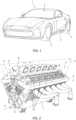
- reference number 1 indicates a motor vehicle comprising a body 2 defining a passenger compartment 3 and multiple wheels 4, 5.
- the motor vehicle 1 comprises an internal combustion engine 6 illustrated in Figure 2 and designed to provide the torque to the wheels 4, 5.
- the internal combustion engine 6 comprises:
- Each bank 8, 9 defines, in the case illustrated, six respective cylinders 10, 11.
- the banks 8, 9 have respective extension directions parallel to the axis A and respective midplanes P, Q that are orthogonal to the axis A and contain the above-mentioned extension directions.
- the planes P, Q are parallel to respective axes B, D of corresponding cylinders 10, 11.
- each cylinder 10, 11 also houses a respective piston 15, 16 so that it can slide along a respective axis B, C.
- the banks 8, 9 are symmetrically arranged in relation to the axis A and form a V converging towards the axis A.
- the axes B, C lie on corresponding planes symmetrically arranged in relation to the axis A and form the V converging towards the axis A.
- the internal combustion engine 6 thus produces a V12 configuration.
- an angle ⁇ between the axes D and the corresponding axes C is 65 degrees.
- each cylinder 10, 11 also comprises a corresponding head 13.
- Each piston 15, 16 and the head 13 of the corresponding cylinder 10, 11 define a corresponding, variable-volume chamber 17, 18.
- each piston 15, 16 can slide inside the corresponding cylinder 10, 11 between a respective bottom dead centre PMI and a respective top dead centre PMS.
- the volume of the chamber 17, 18 assumes the maximum value.
- the volume of the chamber 17, 18 assumes the minimum value.
- Each cylinder 10, 11 also comprises ( Figure 11 ):
- the internal combustion engine 6 is a four-stroke engine.
- the angular position of the drive shaft 12 around the axis A is identified by an angle ⁇ defined between a direction integral with the drive shaft 12 and a direction fixed in relation to the base 7.
- the internal combustion engine 6 also comprises a clutch 50 and an accelerator 51 (only schematically illustrated in Figure 10 ) that can be operated by a driver.
- the clutch 50 can be operated by the driver, in a known way, to mechanically uncouple the drive shaft 12 and the wheels 4, 5.
- the accelerator 51 can be operated by the driver to adjust the quantities of air Q1, Q2.
- the internal combustion engine 6 also comprises a transducer 40 designed to generate a signal associated with the angular speed n of the drive shaft 12.
- the transducer 40 is a phonic wheel and comprises:
- the sensor 45 can be optical, capacitive, or inductive.
- the sensor 45 also interacts progressively with each groove or projection 42, as a result of the rotation of the drive shaft 12 and the transducer 40 a number i of times for each complete rotation of the drive shaft 12 around the axis A with an angular speed n.
- the internal combustion engine 6 also comprises a control unit 30 (only schematically illustrated in Figure 10 ) programmed to control the intake valves 20, 21, the injection members 26, 27, the ignition members 22, 23, and the discharge valves 24, 25 according to a predetermined sequence, depending on the angular position of the drive shaft 12.
- a control unit 30 (only schematically illustrated in Figure 10 ) programmed to control the intake valves 20, 21, the injection members 26, 27, the ignition members 22, 23, and the discharge valves 24, 25 according to a predetermined sequence, depending on the angular position of the drive shaft 12.
- the control unit 30 is also operationally connected with the clutch 50 and the accelerator 51.
- thermodynamic cycle is produced that converts part of the thermal energy released by the combustion of the mixture into mechanical energy so as to cause the sliding of the pistons 15, 16 and the application of a corresponding torque C1, C2, C3, C4, C5, C6; C7, C8, C9, C10, C11, C12 on the drive shaft 12.
- the advance angles ⁇ 1*, ⁇ 2* correspond to respective optimal values for which the torque C1, C2, C3, C4, C5, C6, C7, C8, C9, C10, C11, C12 reaches the respective maximum value C1max, C2max, C3max, C4max, C5max, C6max; C7max, C8max, C9max, C10max, C11max, C12max, with an equal angular speed n of the drive shaft 12 and quantity of air Q1, Q2.
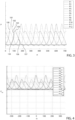
- each cylinder 10, 11 with a graph representing the pressure trend P1, P2, P3, P4, P5, P6; P7, P8, P9, P10, P11, P12 acting on the corresponding piston 15, 16 as a function of the rotation angle ⁇ of the drive shaft 12.
- the trends P1, P2, P3, P4, P5, P6 associated with the cylinders 10 of the bank 8 and P7, P8, P9, P10, P11, P12 associated with the cylinders 11 are the same, due to the fact that the implementations are identical.
- the trends P1, P7, P2, P8, P3, P9, P4, P10, P5, P11, P6, P12 are consecutive to each other with reference to increasing values of the rotation angle ⁇ of the drive shaft 12.
- Each trend P7 (P8, P9, P10, P11, P12) is staggered in relation to the immediately preceding respective trend P1 (P2, P3, P4, P5, P6) by a rotation angle ⁇ of the drive shaft 12 equal to 65 degrees of rotation of the drive shaft 12.
- Each trend P2 (P3, P4, P5, P6) is staggered in relation to the immediately preceding respective trend P7 (P8, P9, P10, P11, P12) by a rotation angle ⁇ of the drive shaft 12 equal to 55 degrees of rotation of the drive shaft 12.
- each trend P1, P2, P3, P4, P5, P6, P7, P8, P9, P10, P11, P12 essentially consists of:
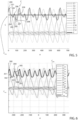
- each cylinder 10, 11 with a graph representing the trend of torque C1, C2, C3, C4, C5, C6; C7, C8, C9, C10, C11, C12 transmitted by the corresponding piston 15, 16 to the drive shaft 12 as a function of the rotation angle ⁇ of the drive shaft 12.
- the torque trends C1, C7, C2, C8, C3, C9, C4, C10, C5, C11, C6, C12 are consecutive and have configurations and offsets that correspond to respective trends P1, P7, P2, P8, P3, P9, P4, P10, P5, P11, P6, P12, as the rotation angle ⁇ of the drive shaft 12 changes.
- the overall torque C on the drive shaft 12 is equal to the sum of the graph torques C1, C2, C3, C4, C5, C6; C7, C8, C9, C10, C11, C12 generated by the cylinders 10, 11.
- This overall torque C has a variable trend as the rotation angle ⁇ of the drive shaft 12 changes, due to the variation in the pressure inside the chambers 17, 18 and the offset between the graphs C1, C2, C3, C4, C5, C6, C7, C8, C9, C10, C11, C12.
- the trend of the resulting torque C basically comprises a regular repetition of:
- the overall torque C has an average value Cavg within a range of 360 degrees of the angle ⁇ of the drive shaft 12.
- the temporal trend of the torque C illustrated in Figure 7 can be represented as a sum of multiple sinusoidal signals each having a corresponding frequency f1, f2, .., fn and a corresponding amplitude A1, A2, .. , An.
- each frequency fk and the relative amplitude Ak are identified as corresponding to the k-nth order, i.e. to a frequency equal to k times the rotation frequency n/2 ⁇ corresponding to the rotation speed n of the drive shaft 12.
- the amplitude A3 of the third order corresponding to the frequency f3 is equal to three times the rotation frequency n/2 ⁇ corresponding to the rotation speed n of the drive shaft 12.
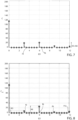
- Figure 7 refers to a condition in which the advance angles ⁇ 1, ⁇ 2 are the same and the quantities of air Q1, Q2 are the same and the clutch 50 and/or accelerator 51 is not operated.
- the representation of the resulting torque C has three components having an amplitude A0, A3 and A6 and corresponding frequencies f0, f3 and f6.
- the amplitude A0 corresponds to the average value of the torque C and the non-variable component with the angle ⁇ of the resulting torque C.
- control unit 30 is programmed to:
- the average value Cavg of the resulting torque C and of the corrected resulting torque Cadj remains constant.
- the trends of the torques C1, C2, C3, C4, C5, C6; C7, C8, C9, C10, C11, C12 in Figure 5 are corrected in respective trends C1adj, C2adj, C3adj, C4adj, C5adj, C6adj; C7adj, C8adj, C9adj, C10adj, C11adj, C12adj illustrated in Figure 6 .
- control unit 30 is programmed to:
- control unit 30 is programmed to keep the average values (C1+C2+C3+C4+C5+C6)avg and (C7+C8+C9+C10+C11+C12)avg, associated with respective banks 8, 9 balanced.
- control unit 30 is programmed to:
- the increase of the advance angles ⁇ 2 would lead to an increase in the average value (C7+C8+C9+C10+C11+C12)avg of the sum of the torques C7, C8, C9, C10, C11, C12 delivered by the cylinders 10 and relative pistons 11 of the bank 9.
- this increase is compensated for by the reduction, by basically the same amount, of the torques C7, C8, C9, C10, C11, C12 determined by the increase in the quantity of air Q2.
- control unit 30 is programmed to correct both the advance angle ⁇ 1 and the quantity of air Q1 and the advance angle ⁇ 2 and the quantity of air Q2, so that the average value (C1+C2+C3+C4+C5+C6)avg is different to the average value (C7+C8+C9+C10+C11+C12)avg.
- control unit 30 is programmed to unbalance the average values (C1+C2+C3+C4+C5+C6)avg and (C7+C8+C9+C10+C11+C12)avg, associated with respective banks 8, 9.
- control unit 30 is programmed to only correct the advance angle ⁇ 1 and the quantity of air Q1, leaving both the advance angle ⁇ 2 and the quantity of air Q2 unchanged.
- control unit 30 is programmed to correct the advance angles ⁇ 1 and the quantities of air Q1 of all the cylinders 10, and the advance angles ⁇ 2 and the quantities of air Q2 of all the cylinders 11.
- control unit 30 is also programmed to correct the advance angles ⁇ 1 and the quantities of air Q1 of all the cylinders 10 - and, possibly, also the advance angles ⁇ 2 and the quantities of air Q2 of all the cylinders 11.
- the above-mentioned correction preferably occurs in a condition in which the clutch 50 and/or the accelerator 51 is not operated.
- the above-mentioned correction occurs when the control unit 30 checks that the predetermined operating parameters of the internal combustion engine 6 assume respective desired values.
- the control unit 30 is also programmed not to change the advance angles ⁇ 1, ⁇ 2 and the quantities of air Q1, Q2, when the amplitude A3 is below the value A3 th .
- the control unit 30 is programmed to:
- control unit 30 is programmed to repeat the detection of the amplitude A3 a maximum number l max of times, if at every detection the amplitude A3 is always greater than the value A th .
- control unit 30 is programmed to:
- the control unit 30 is, also, programmed, if the number of times 1 is less than the maximum l max , to:
- the control unit 30 is, finally, programmed to estimate the amplitude A3 based on the value of angular speed n of the drive shaft 12 estimated thanks to a measurement made by the phonic wheel transducer 40.
- the temporal trend of the angular speed n of the drive shaft 12 can be represented as a sum of multiple sinusoidal signals each having a corresponding frequency f1, f2, .., fk, .. fn and a corresponding amplitude B1, B2,.., Bk, .. , Bn corresponding to the k-nth order, entirely similarly to what is described above with reference to the temporal trend of the resulting torque C.
- the control unit 30 is programmed to:
- control unit 30 is programmed to:
- the control unit 40 is, in particular, programmed to:
- control unit 30 is programmed to control the intake valves 20, 21, the injection members 26, 27, the ignition members 22, 23, and the discharge valves 24, 25 of the respective cylinders 10, 11 according to a predetermined cycle depending on the angular position of the drive shaft 12. During this cycle, the thermal energy released by the combustion of the mixture is converted into mechanical energy transmitted by the pistons 15, 16 and by the latter into the respective torques C1, C2, C3, C4, C5, C6; C7, C8, C9, C10, C11, C12 transmitted to the drive shaft 12.
- control unit 30 processes the values of the advance angles ⁇ 1, ⁇ 2 with a period T depending on the number of cylinders 10, 11.
- the graphs C1, C2, C3, C4, C5, C6, C7, C8, C9, C10, C11, C12 of the torque transmitted by the pistons 15, 16 to the drive shaft 12 are of the type illustrated in Figure 3 and the graphs P1, P2, P3, P4, P5, P6, P7, P8, P9, P10, P11, P12 of the pressures acting on the pistons 15, 16 are of the type illustrated in Figure 5 .
- control unit 30 estimates a value of angular speed n of the shaft 12 via the phonic wheel transducer 40, and estimates the amplitude B3 based on the estimated value of angular speed n.
- control unit 30 measures, at each rotation of the drive shaft 12, multiple measurements n1, n2, .. ni of the rotation speeds n, as the respective grooves or projections 42 pass in front of the sensor 45; and selects a number j greater than 2*k and less than/equal to i of measurements n1, ,, nj among the measurements n1, n2 .. ni, where k is the order of frequency of the amplitudes A3 and B3 equal to three in the example illustrated.
- control unit 30 estimates the value of the rotation speed n of the drive shaft 12 as the average of the measurements n1, n2, .. nj.
- the control unit 30 compares the value of the amplitude B3 with the threshold value B3 th and, if the amplitude B3 is greater than the threshold value B3 th , detects the condition that the amplitude A3 is greater than the relative threshold value A3 th .
- the control unit 30 checks that the values of the advance angles ⁇ 1, ⁇ 2 are located in the segment 151 i.e. they are greater than the respective, optimal advance angles ⁇ 1*, ⁇ 2*, before detecting that the amplitude A3 of the frequency signal f3 is greater than a threshold value A3 th .
- control unit 30 corrects the advance angles ⁇ 1, ⁇ 2 and the quantities of air Q1, Q2 of the respective cylinders 10, 11.
- control unit 30 reduces the advance angles ⁇ 1, ⁇ 2 of the respective cylinders 10, 11 and increases said quantity of air Q1, Q2, so as to keep the value of the resulting torque Cavg constant.
- control unit 30 corrects the advance angles ⁇ 1 ( ⁇ 2) and the quantities of air Q1 (Q2) of all the cylinders 10 (11).
- the trends of the torques C1, C2, C3, C4, C5, C6; C7, C8, C9, C10, C11, C12 in Figure 5 are corrected in the trends C1adj, C2adj, C3adj, C4adj, C5adj, C6adj; C7adj, C8adj, C9adj, C10adj, C11adj, C12adj illustrated in Figure 6 .
- the trend of the corrected resulting torque C adj is periodic with a period of 120 degrees of the rotation angle ⁇ and basically comprises ( Figure 6 ), a periodic repetition of:
- the difference between the values of corrected resulting torque C adj between the maximums 300, 304 is less than the difference between the maximums 202, 206 uncorrected resulting torque C.
- the difference between the values of corrected resulting torque C adj between the minimums 302, 306 is less than the difference between the maximums 204, 208 of the uncorrected resulting torque C.
- the control unit 30 preferably corrects the advance angle ⁇ 1 and the quantity of air Q1, so as to keep the average value (C1+C2+C3+C4+C5+C6)avg of the sum of the torques C1, C2, C3, C4, C5, C6 constant; and corrects the advance angle ⁇ 2 and quantity of air Q2, so as to keep the average value (C7+C6+C9+C10+C11+C12)avg of the sum of the torques C7, C8, C9, C10, C11, C12 constant and equal to the average value (C7+C6+C9+C10+C11+C12)avg of the sum of the torques C7, C8, C9, C10, C11, C12.
- the control unit 30 thus keeps the average values (C1+C2+C3+C4+C5+C6)avg and (C7+C8+C9+C10+C11+C12)avg, associated with respective banks 8, 9, balanced.
- the torque reserve of the cylinders 10 and pistons 15 of the bank 8 is increased.
- the torque reserve of the cylinders 11 and pistons 16 of the bank 9 is reduced.
- control unit 30 corrects both the advance angle ⁇ 1 and the quantity of air Q1 and the advance angle ⁇ 2 and the quantity of air Q2, so that the average value (C1+C2+C3+C4+C5+C6)avg is different to the average value (C7+C8+C9+C10+C11+C12)avg.
- the control unit 30 thus keeps the average values (C1+C2+C3+C4+C5+C6)avg and (C7+C8+C9+C10+C11+C12)avg, associated with respective banks 8, 9, unbalanced.
- control unit 30 only corrects the advance angle ⁇ 1 and the quantity of air Q1, leaving both the advance angle ⁇ 2 and the quantity of air Q2 unchanged.
- the representation using sine waves of the corrected resulting torque Cadj has an amplitude component A3 equal to half of the amplitude A3 of the resulting torque C.
- the control unit 30 repeats the detection of the amplitude A3 a number 1 of times, if the current value of the amplitude A3 is greater than the value A th , and, as a result, corrects the advance angles ⁇ 1, ⁇ 2 and the quantities of air Q1, Q2 of the cylinders 10, 11, until the amplitude A3 is less than the value A th .
- control unit 30 repeats the detection of the amplitude A3 a maximum number l max of times, if at every detection the amplitude A3 is always greater than the threshold value A3 th .
- the control unit 30 also processes the minimum value A3 min between the amplitude values A3 detected greater than the threshold value A3 th , and the minimum values ⁇ 1 min , ⁇ 2 min , Q1 min , Q2 min among the corrected values of advance angles ⁇ 1, ⁇ 2 and minimum quantity of air Q1, Q2 corresponding to the minimum value A3 min .
- control unit 30 operates the intake valves 20, 21 and the ignition members 22, 23, so as to produce the advance angles ⁇ 1 min , ⁇ 2 min and minimum quantity of air Q1 min Q2 min .
- the control unit 30 also detects, if the number of times 1 is less than the maximum l max , whether two consecutive values of A3 are increasing or decreasing.
- control unit 30 continues to operate the intake valves 20, 21 and the ignition members 22, 23, so as to decrease the advance angle ⁇ 1, increase the quantity of air Q1, increase the advance angle ⁇ 2 and decrease the quantity of air Q2.
- control unit 30 continues to operate the intake valves 20, 21 and the ignition members 22, 23 so as to increase the advance angle ⁇ 1, decrease the quantities of air Q1, decrease the advance angle ⁇ 2 and increase the quantities of air Q2.
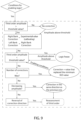
- the adjustment method according to this invention comprises the steps of:
- This correction exploits the torque reserve of the cylinders 10, 11, i.e. the fact that the torque C1, C2, C3, C4, C5, C6; C7, C8, C9, C10, C11, C12 is less than the relative maximum torque C1 max , C2 max , C3 max , C4 max , C5 max , C6 max , C7 max , C8 max , C9 max , C10 max , C11 max , C12 max before the correction of the advance angles ⁇ 1 ( ⁇ 2) and the first quantity of air Q1 (Q2).
- the corrections of the advance angles ⁇ 1 ( ⁇ 2) and quantity of air Q1 (Q2) of the cylinders 10 (11) do not influence, in any way, the safety and driving perception of the motor vehicle 1.
- control unit 30 increases the advance angles ⁇ 1, reduces the quantities of air Q1, reduces the advance angles ⁇ 1 and increases the quantities of air Q2.
- the control unit 30 estimates the amplitude A3 of the third order of the resulting torque C, based on the amplitude B3 of the third order of the angular speed n.
- the control unit 30 estimates, in addition, the amplitude B3 based on the values n1, n2, .. nj of the angular speed n of the drive shaft 12 measured using the phonic wheel transducer 40.
- the values n1, n2, .., nj are detected as a result of the passage of a number j of grooves or projections 42 of the transducer 40 in front of the sensor 45. Since the number j is greater than double the order k associated with the amplitudes Ak, Bk. In this way, it is possible to correctly sample the signal of angular speed n of frequency k and obtain corresponding information on the amount of the amplitude Ak of the resulting torque C, using the transducer 40 commonly present on the drive shaft 12 and without needing to use special transducers.
- control unit 30 can correct the total torque C also by only acting on the advance angles ⁇ 1 ( ⁇ 2) and quantity of air Q1 of the bank 8 (9) or unbalancing the average values (C1+C2+C3+C4+C5+C6)avg and (C7+C8+C9+C10+C11+C12)avg associated with respective banks 8, 9, it is possible to obtain great flexibility relative to the methods for obtaining corrected resulting torque Cadj depending on the functional and construction peculiarities of the internal combustion engine 6.
- control unit 30 could be programmed to:
- the internal combustion engine 6 could have a number of cylinders 10, 11 other than twelve.
- the internal combustion engine 6 could have a V configuration with an angle between the banks 8, 9 other than 65 degrees.
- the internal combustion engine 6 could even not have a V configuration.
- the method according to the invention would make it possible to detect and correct particularly high amplitudes Ak owing not to a construction peculiarity of the internal combustion engine 6, but to functional anomalies of an internal combustion engine with a different configuration.
- the amplitudes Ak, Bk and the relative frequency fk could be different to the third order.
Landscapes
- Engineering & Computer Science (AREA)
- Mechanical Engineering (AREA)
- General Engineering & Computer Science (AREA)
- Chemical & Material Sciences (AREA)
- Combustion & Propulsion (AREA)
- Signal Processing (AREA)
- Computer Hardware Design (AREA)
- Microelectronics & Electronic Packaging (AREA)
- Electrical Control Of Ignition Timing (AREA)
- Combined Controls Of Internal Combustion Engines (AREA)
Abstract
Description
- This patent application claims priority from
Italian patent application no. 102023000000576 filed on 17 January 2023 - This invention relates to a method to adjust an internal combustion engine.
- This invention also relates to an internal combustion engine.
- Internal combustion engines are known of the type comprising:
- multiple cylinders inside of which corresponding pistons can slide, as a result of the execution of a thermodynamic cycle; and
- a drive shaft coupled to the pistons via multiple respective connecting rod-crank mechanisms.
- Each cylinder also comprises, in a known way, a corresponding head defining, with the corresponding piston, a corresponding volume chamber than can be varied as a result of the piston's sliding.
- In particular, each piston can slide inside the corresponding cylinder between a relative bottom dead centre and a relative top dead centre.
- At the relative bottom dead centre, the volume of the chamber assumes the maximum value. At the relative top dead centre, the volume of the chamber assumes the minimum value.
- The internal combustion engine also comprises, for each cylinder and corresponding piston:
- a corresponding intake valve that can be operated to introduce a quantity of fresh air inside the corresponding chamber;
- a corresponding injection member that can be operated to inject fuel inside the corresponding chamber;
- a corresponding ignition member, for example, a spark plug that can be operated to ignite a mixture of fuel and fresh air inside the chamber; and
- a corresponding discharge valve that can be operated to discharge the exhaust gases that are formed from the combustion of the above-mentioned mixture outside the corresponding chamber.
- Very briefly, inside each cylinder, fuel and fresh air are cyclically injected and the ignition of the mixture of fuel and fresh air is ignited. This ignition raises the pressure inside the chamber, causing the movement of the piston towards the bottom dead centre and the rotation of the drive shaft. As a result, the mixture of air and fuel is expelled from the chamber.
- In a known way, during a complete rotation of the drive shaft, the pressure acting on each piston has a value that can vary as the rotation angle of the drive shaft, i.e. the angle between a direction integral with the drive shaft and a fixed direction, varies.
- Due to this variation in pressure, the torque delivered to the drive shaft from a single cylinder and from the corresponding piston also has a value that can vary as the angle of the drive shaft varies.
- The resulting torque on the drive shaft corresponds to the sum of the torque applied by the individual cylinders and corresponding pistons, and also has a trend that can vary as the rotation angle of the drive shaft varies.
- By suitably staggering the thermodynamic cycles of the individual cylinders, a resulting torque trend can be obtained that is more regular as the rotation angle of the drive shaft varies.
- Still more precisely, the variable trend of the resulting torque corresponds to the presence of a basic oscillation frequency corresponding to the frequency of the thermodynamic cycles performed in the cylinders and the secondary frequencies corresponding to whole multiples of the basic oscillation frequency.
- It is possible to identify the oscillation frequency with reference to the rotation frequency of the drive shaft. In particular, the order of the oscillation frequency corresponds to half of the number of events for every two complete rotations of the drive shaft corresponding to the execution of a complete thermodynamic cycle.
- For example, an oscillation frequency equal to double the rotation frequency of the drive shaft is identified as a frequency of the second order.
- It is also known to arrange the cylinders of multicylinder internal combustion engines into two banks defining a given angle in relation to a rotation axis of the drive shaft. In this way, the so-called V configurations of the internal combustion engine are implemented.
- Among these configurations, the one with a total of 12 cylinders, with an angle of 60 degrees between the banks, each comprising six cylinders, is especially widely used in sports or race cars.
- In an internal combustion engine having this configuration, the torque has particularly significant amplitudes at the half order, third order, and sixth order.
- To reduce the overall dimensions of the internal combustion engine, a configuration with two banks each having six cylinders, and with an angle of 65 degrees between the banks, was proposed.
- The Applicant observed that this configuration causes a less regular trend in the torque as the drive angle varies in relation to the configuration with an angle of 60 degrees between the banks, and the resulting appearance of a significant amplitude of the third order.
- The need to reduce the amplitude of the third order is felt in the sector, in order to limit the irregular nature of the torque, reduce the overall vibrations associated with the operation of the internal combustion engine, and make the noise generated by this operation more regular, especially at an idle speed.
- More precisely, this need is felt both if the above-mentioned oscillation depends on the construction configuration of the internal combustion engine, as in the V12 configuration with 65 degrees between the banks, and if it depends on additional parameters or operational anomalies with reference to different configurations of the internal combustion engine.
- The purpose of this invention is to produce a method to adjust an internal combustion engine, which makes it possible to meet the need mentioned above.
- Said aim is achieved by this invention, which relates to a method to adjust an internal combustion engine, according to what is set forth in
claim 1. - This invention also relates to an internal combustion engine according to what is defined by
claim 13. - In order to better understand this invention, a nonlimiting preferred embodiment thereof will now be described by way of example with reference to the accompanying drawings, in which:
-
Figure 1 is a perspective view of a motor vehicle with an internal combustion engine produced according to the precepts of this invention; -
Figure 2 is a perspective view on an enlarged scale of an internal combustion engine incorporated in the motor vehicle inFigure 1 and produced according to the precepts of this invention; -
Figure 3 illustrates the pressure trend within the cylinders of the internal combustion engine inFigure 2 as the rotation angle of a drive shaft changes, in a first operating step of the internal combustion engine inFigure 2 ; -
Figure 4 illustrates the corrected pressure trend within the cylinders of the internal combustion engine inFigure 2 as the rotation angle of a drive shaft changes, in a second operating step of the internal combustion engine inFigure 2 ; -
Figure 5 illustrates the torque trend within the cylinders of the combustion engine inFigure 2 and of the resulting torque, as the rotation angle of a drive shaft changes, in the first operating step of the internal combustion engine inFigure 2 ; -
Figure 6 illustrates the corrected torque trend within the cylinders of the internal combustion engine inFigure 2 and the resulting torque, as the rotation angle of a drive shaft changes, in the second operating step of the internal combustion engine inFigure 2 ; -
Figure 7 illustrates the oscillation amplitude of the torque at respective multiple frequencies of a rotation frequency of the drive shaft, in the first operating step of the internal combustion engine inFigure 2 ; -
Figure 8 illustrates the corrected oscillation amplitude of the torque at respective multiple frequencies of a rotation frequency of the drive shaft, in the second operating step of the internal combustion engine inFigure 2 ; -
Figure 9 is a flow chart schematically illustrating the adjustment method steps according to this invention; -
Figure 10 schematically illustrates the first components of the internal combustion engine produced according to this invention; -
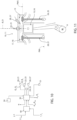
Figure 11 schematically illustrates the second components of the internal combustion engine produced according to this invention; -
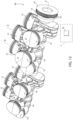
Figure 12 illustrates, in a perspective view that is further enlarged, additional components of the internal combustion engine produced according to this invention; and -
Figure 13 illustrates the trend of torque delivered by a cylinder of the internal combustion engine produced according to this invention as an ignition advance angle change, for a constant value of quantity of air and rotation speed of the drive shaft. - With reference to
Figure 1 ,reference number 1 indicates a motor vehicle comprising abody 2 defining apassenger compartment 3 andmultiple wheels - In a known way, the
motor vehicle 1 comprises aninternal combustion engine 6 illustrated inFigure 2 and designed to provide the torque to thewheels - In more detail, the
internal combustion engine 6 comprises: - a
base 7 defining a pair ofbanks 8, 9; -
multiple cylinders 10 defined by thebank 8 and having respective axes D; -
multiple cylinders 11 defined by the bank 9 and having respective axes C; and - a crank drive shaft 12 (only partially illustrated in
Figure 1 ) that can rotate around an axis A. - Each
bank 8, 9 defines, in the case illustrated, sixrespective cylinders - The
banks 8, 9 have respective extension directions parallel to the axis A and respective midplanes P, Q that are orthogonal to the axis A and contain the above-mentioned extension directions. - In particular, the planes P, Q are parallel to respective axes B, D of corresponding
cylinders - In a known way, each
cylinder respective piston - The
banks 8, 9 are symmetrically arranged in relation to the axis A and form a V converging towards the axis A. - More precisely, the axes B, C lie on corresponding planes symmetrically arranged in relation to the axis A and form the V converging towards the axis A.
- The
internal combustion engine 6 thus produces a V12 configuration. - In the case illustrated, an angle β between the axes D and the corresponding axes C is 65 degrees.
- With reference to
Figure 10 , eachcylinder head 13. - Each
piston head 13 of thecorresponding cylinder - In particular, each
piston cylinder - At the respective bottom dead centre PMI, the volume of the chamber 17, 18 assumes the maximum value. At the relative top dead centre PMS, the volume of the chamber 17, 18 assumes the minimum value.
- Each
cylinder Figure 11 ): - an
intake valve - an
injection member - an
ignition member - a
discharge valve - In the example illustrated, the
internal combustion engine 6 is a four-stroke engine. - The angular position of the
drive shaft 12 around the axis A is identified by an angle α defined between a direction integral with thedrive shaft 12 and a direction fixed in relation to thebase 7. - The
internal combustion engine 6 also comprises a clutch 50 and an accelerator 51 (only schematically illustrated inFigure 10 ) that can be operated by a driver. - The clutch 50 can be operated by the driver, in a known way, to mechanically uncouple the
drive shaft 12 and thewheels accelerator 51 can be operated by the driver to adjust the quantities of air Q1, Q2. - With reference to
Figure 12 , theinternal combustion engine 6 also comprises atransducer 40 designed to generate a signal associated with the angular speed n of thedrive shaft 12. - In the example illustrated, the
transducer 40 is a phonic wheel and comprises: - a
disc 41 comprising multiple grooves orprojections 42 and mounted on thedrive shaft 12 so as to rotate integrally with thedrive shaft 12; and - a proximity sensor 45 (only schematically illustrated in
Figure 12 ) carried by thebase 7 and designed to detect the presence of the grooves orprojections 42 without physical contact, rotationally fixed to the axis A and facing thedisc 41. - The
sensor 45 can be optical, capacitive, or inductive. - The
sensor 45 also interacts progressively with each groove orprojection 42, as a result of the rotation of thedrive shaft 12 and the transducer 40 a number i of times for each complete rotation of thedrive shaft 12 around the axis A with an angular speed n. - The
internal combustion engine 6 also comprises a control unit 30 (only schematically illustrated inFigure 10 ) programmed to control theintake valves injection members ignition members discharge valves drive shaft 12. - The
control unit 30 is also operationally connected with the clutch 50 and theaccelerator 51. - In this way, inside each
cylinder 10, 11 a thermodynamic cycle is produced that converts part of the thermal energy released by the combustion of the mixture into mechanical energy so as to cause the sliding of thepistons drive shaft 12. - The sum of the torques C1, C2, C3, C4, C5, C6; C7, C8, C9, C10, C11, C12 is equal to a resulting torque C acting on the
drive shaft 12. - As far as regards the purpose of this invention, it is possible to define, for each
cylinder corresponding piston corresponding ignition member corresponding piston drive shaft 12. - With reference to
Figure 13 , with an equal angular speed n of thedrive shaft 12, the trend of the torque C1, C2, C3, C4, C5, C6; C7, C8, C9, C10, C11, C12 generated by thecylinders pistons drive shaft 12 as the advance angle Θ1, Θ2 changes comprises: - an increasing
segment 150 for values of the advance angles Θ1, Θ2 less than respective values Θ1*, Θ2*; and - a decreasing
segment 151 for advance angles Θ1, Θ2 greater than respective values Θ1*, Θ2*. - It is, in addition, possible to associate, with each
cylinder corresponding piston drive shaft 12 and quantity of air Q1, Q2. - In other words, the advance angles Θ1*, Θ2* correspond to respective optimal values for which the torque C1, C2, C3, C4, C5, C6, C7, C8, C9, C10, C11, C12 reaches the respective maximum value C1max, C2max, C3max, C4max, C5max, C6max; C7max, C8max, C9max, C10max, C11max, C12max, with an equal angular speed n of the
drive shaft 12 and quantity of air Q1, Q2. With an equal angular speed n of thedrive shaft 12 and respective advance angle θ1, Θ2, in addition, the torque C1, C2, C3, C4, C5, C6; C7, C8, C9, C10, C11, C12 generated by thecylinder piston drive shaft 12 increases as the quantity of air Q1, Q2 fed via the correspondingintake valves - With reference to
Figure 3 and to a condition in which the advance angles Θ1, Θ2 are the same and the quantities of air Q1, Q2 are the same, it is, in addition, possible to associate eachcylinder corresponding piston drive shaft 12. - In the example illustrated, the trends P1, P2, P3, P4, P5, P6 associated with the
cylinders 10 of thebank 8 and P7, P8, P9, P10, P11, P12 associated with thecylinders 11 are the same, due to the fact that the implementations are identical. - In particular, the trends P1, P7, P2, P8, P3, P9, P4, P10, P5, P11, P6, P12 are consecutive to each other with reference to increasing values of the rotation angle α of the
drive shaft 12. - Each trend P7 (P8, P9, P10, P11, P12) is staggered in relation to the immediately preceding respective trend P1 (P2, P3, P4, P5, P6) by a rotation angle α of the
drive shaft 12 equal to 65 degrees of rotation of thedrive shaft 12. - Each trend P2 (P3, P4, P5, P6) is staggered in relation to the immediately preceding respective trend P7 (P8, P9, P10, P11, P12) by a rotation angle α of the
drive shaft 12 equal to 55 degrees of rotation of thedrive shaft 12. - With reference to
Figure 3 , each trend P1, P2, P3, P4, P5, P6, P7, P8, P9, P10, P11, P12 essentially consists of: - an increasing
segment 100; - a maximum 101;
- a decreasing
segment 102; - a
local minimum 103; - an increasing
segment 104; - a
local maximum 105 to which pressure values P1, P2, P3, P4, P5, P6; P7, P8, P9, P10, P11, P12 correspond that are less than the maximum 101 ones; - a decreasing
segment 106; and - a minimum 107 to which pressure values P1, P2, P3, P4, P5, P6; P7, P8, P9, P10, P11, P12 correspond that are less than the minimum 105 ones and from which the
subsequent segment 100 starts. - With reference to
Figure 5 and to a condition in which the advance angles Θ1, Θ2 are the same and the quantities of air Q1, Q2 are the same, it is possible to associate eachcylinder piston drive shaft 12 as a function of the rotation angle α of thedrive shaft 12. - The torque trends C1, C7, C2, C8, C3, C9, C4, C10, C5, C11, C6, C12 are consecutive and have configurations and offsets that correspond to respective trends P1, P7, P2, P8, P3, P9, P4, P10, P5, P11, P6, P12, as the rotation angle α of the
drive shaft 12 changes. - The overall torque C on the
drive shaft 12 is equal to the sum of the graph torques C1, C2, C3, C4, C5, C6; C7, C8, C9, C10, C11, C12 generated by thecylinders - This overall torque C has a variable trend as the rotation angle α of the
drive shaft 12 changes, due to the variation in the pressure inside the chambers 17, 18 and the offset between the graphs C1, C2, C3, C4, C5, C6, C7, C8, C9, C10, C11, C12. - With particular reference to
Figure 5 , the trend of the resulting torque C basically comprises a regular repetition of: - a maximum 200;
- a decreasing
segment 201 with a concavity facing upwards; - a bend 202;
- a decreasing
segment 203 with a concavity facing downwards; - a
local minimum 204; - an increasing
segment 205; - a
local maximum 206 to which a resulting torque C value corresponds that is less than the maximum 200 one; - a decreasing
segment 207; - a minimum 208 to which a resulting torque C value corresponds that is less than the maximum 204 one; and
- an increasing
segment 209 ending in thesubsequent maximum 200. - The overall torque C has an average value Cavg within a range of 360 degrees of the angle α of the
drive shaft 12. - In a known way, the temporal trend of the torque C illustrated in
Figure 7 can be represented as a sum of multiple sinusoidal signals each having a corresponding frequency f1, f2, .., fn and a corresponding amplitude A1, A2, .. , An. - In particular, each frequency fk and the relative amplitude Ak are identified as corresponding to the k-nth order, i.e. to a frequency equal to k times the rotation frequency n/2π corresponding to the rotation speed n of the
drive shaft 12. - For example, the amplitude A3 of the third order corresponding to the frequency f3 is equal to three times the rotation frequency n/2π corresponding to the rotation speed n of the
drive shaft 12. -
Figure 7 refers to a condition in which the advance angles Θ1, Θ2 are the same and the quantities of air Q1, Q2 are the same and the clutch 50 and/oraccelerator 51 is not operated. - In this condition, the representation of the resulting torque C has three components having an amplitude A0, A3 and A6 and corresponding frequencies f0, f3 and f6. The amplitude A0 corresponds to the average value of the torque C and the non-variable component with the angle α of the resulting torque C.
- Advantageously, the
control unit 30 is programmed to: - process the value of an amplitude Ak, the amplitude A3 in the example illustrated, associated with a desired frequency fk, f3 in the example illustrated;
- detect that the amplitude A3 of the signal at the frequency f3 is greater than a threshold value A3th; and
- correct the advance angle Θ1 and the quantity of air Q1 and/or the advance angle Θ2 and the quantity of air Q2, so as to keep the average value Cavg of the resulting torque C constant at two complete rotations of the
drive shaft 12 around the axis A. - As a result of this change in the advance angles θ1 and/or Θ2 and the quantities of air Q1 and/or Q2, the trends of the torque C1, C2, C3, C4, C5, C6 are translated towards rotation angles α that are less than the
drive shaft 12 and/or the trends of the torque C7, C8, C9, C10, C11, C12 are translated towards rotation angles α greater than thedrive shaft 12. - As a result, the correction of the advance angles Θ1, Θ2 and of the quantities of air Q1, Q2 determines a graph of the corrected resulting torque Cadj (
Figure 6 ) other than that of the resulting torque C when Θ1=Θ2 and Q1=Q2. - The average value Cavg of the resulting torque C and of the corrected resulting torque Cadj remains constant.
- More specifically, the trends of the torques C1, C2, C3, C4, C5, C6; C7, C8, C9, C10, C11, C12 in
Figure 5 are corrected in respective trends C1adj, C2adj, C3adj, C4adj, C5adj, C6adj; C7adj, C8adj, C9adj, C10adj, C11adj, C12adj illustrated inFigure 6 . - Similarly, the trends of pressures P1, P2, P3, P4, P5, P6; P7, P8, P9, P10, P11, P12 in
Figure 3 are corrected in the trends P1adj, P2adj, P3adj, P4adj, P5adj, P6adj; P7adj, P8adj, P9adj, P10adj, P11adj, P12adj illustrated inFigure 4 . - Preferably, the
control unit 30 is programmed to: - correct the advance angle Θ1 and quantity of air Q1, so as to keep the average value (C1+C2+C3+C4+C5+C6)avg of the sum of the torques C1, C2, C3, C4, C5, C6 constant; and
- correct the advance angle Θ2 and quantity of air Q2, so as to keep the average value (C7+C6+C9+C10+C11+C12)avg of the sum of the torques C7, C8, C9, C10, C11, C12 constant and equal to the average value (C7+C6+C9+C10+C11+C12)avg of the sum of the torques C7, C8, C9, C10, C11, C12.
- In this embodiment, the
control unit 30 is programmed to keep the average values (C1+C2+C3+C4+C5+C6)avg and (C7+C8+C9+C10+C11+C12)avg, associated withrespective banks 8, 9 balanced. - More precisely, the
control unit 30 is programmed to: - reduce the advance angle Θ1 remaining on the
segment 151 and increase the quantity of air Q1; and - increase the advance angle Θ2 remaining on the
segment 151 and reduce the quantity of air Q2. - The reduction of the advance angles Θ1 would lead to a reduction in the average value (C1+C2+C3+C4+C5+C6)avg of the sum of the torques C1, C2, C3, C4, C5, C6 delivered by the
cylinders 10 andrelative pistons 11 of thebank 8. In the example illustrated, this reduction is compensated for by the increase, by basically the same amount, of the torques C1, C2, C3, C4, C5, C6 determined by the increase in the quantity of air Q1. - Similarly, the increase of the advance angles Θ2 would lead to an increase in the average value (C7+C8+C9+C10+C11+C12)avg of the sum of the torques C7, C8, C9, C10, C11, C12 delivered by the
cylinders 10 andrelative pistons 11 of the bank 9. In the example illustrated, this increase is compensated for by the reduction, by basically the same amount, of the torques C7, C8, C9, C10, C11, C12 determined by the increase in the quantity of air Q2. - Alternatively, the
control unit 30 is programmed to correct both the advance angle Θ1 and the quantity of air Q1 and the advance angle Θ2 and the quantity of air Q2, so that the average value (C1+C2+C3+C4+C5+C6)avg is different to the average value (C7+C8+C9+C10+C11+C12)avg. - In this embodiment, the
control unit 30 is programmed to unbalance the average values (C1+C2+C3+C4+C5+C6)avg and (C7+C8+C9+C10+C11+C12)avg, associated withrespective banks 8, 9. - In an additional embodiment, the
control unit 30 is programmed to only correct the advance angle θ1 and the quantity of air Q1, leaving both the advance angle Θ2 and the quantity of air Q2 unchanged. - In particular, the
control unit 30 is programmed to reduce the advance angles Θ1 of thecylinders 10 by a value Δθ1 and increase the advance angles Θ1 of thecylinders 11 by respective corrections Δθ1=Δθ2, and starting from an initial condition in which the advance angles Θ1, Θ2 are greater than the respective optimal and equal advance angles Θ1*, Θ2* . - The
control unit 30 is programmed to increase the quantities of air Q1 flowing into thecylinders 10 by a value ΔQ1 and to reduce the quantity of air Q2 flowing into thecylinders 11 by respective corrections ΔQ1=ΔQ2, and to start from an initial condition in which Q1=Q2 wherein the quantities of air Q1, Q2 are the same. - It is important to highlight that in the initial condition, the above-mentioned quantity of air Q1=Q2 values are greater than those necessary to obtain the resulting torque C with an advance angle Θ1*, Θ2*, optimal and different to the advance angles Θ1=Θ2 of the initial condition. In this way, the
cylinders 10 and therelative pistons 11 have a so-called torque reserve equal to the value of residual torque that they could deliver with the same quantities of air Q1, Q2 and the optimal advance angles Θ1*, Θ2* . - The increase in the quantity of air Q1 by a value ΔQ1 and the resulting reduction of the advance angle Θ1 by a value Δθ1 causes an increase in the torque reserve of the
cylinders 10 andpistons 11 of thebank 8. - In contrast, the reduction of the quantity of air Q2 by a value ΔQ2 and the resulting increase of the advance angle Θ2 by a value Δθ2 causes a reduction in the torque reserve of the
cylinders 15 andpistons 16 of the bank 9. In the example illustrated, thecontrol unit 30 is programmed to correct the advance angles Θ1 and the quantities of air Q1 of all thecylinders 10, and the advance angles Θ2 and the quantities of air Q2 of all thecylinders 11. - In the example illustrated, the
control unit 30 is also programmed to correct the advance angles Θ1 and the quantities of air Q1 of all the cylinders 10 - and, possibly, also the advance angles Θ2 and the quantities of air Q2 of all thecylinders 11. - The above-mentioned correction preferably occurs in a condition in which the clutch 50 and/or the
accelerator 51 is not operated. - Alternatively, the above-mentioned correction occurs when the
control unit 30 checks that the predetermined operating parameters of theinternal combustion engine 6 assume respective desired values. - The
control unit 30 is also programmed not to change the advance angles Θ1, Θ2 and the quantities of air Q1, Q2, when the amplitude A3 is below the value A3th. - The
control unit 30 is programmed to: - repeat the detection of the amplitude A3 once, if the current value of the amplitude A3 is greater than the value Ath; and
- change the advance angles Θ1, Θ2 and the quantities of air Q1, Q2 of the
cylinders - More precisely, the
control unit 30 is programmed to repeat the detection of the amplitude A3 a maximum number lmax of times, if at every detection the amplitude A3 is always greater than the value Ath. - In particular, the
control unit 30 is programmed to: - process the minimum value A3min between the amplitude values A3 detected greater than the threshold value A3th, and the value of the advance angles θ1min, θ2min, and minimum quantity of air Q1min Q2min adjusted corresponding to the minimum value A3min; and
- if the number of
repetitions 1 exceeds the maximum number lmax, operate theintake valves ignition members - The
control unit 30 is, also, programmed, if the number oftimes 1 is less than the maximum lmax, to: - detect whether two consecutive values of A3 are increasing or decreasing;
- if the above-mentioned two consecutive values of A3 are increasing, continue to operate the
intake valves ignition members - if the above-mentioned two consecutive values of A3 are decreasing, continue to operate the
intake valves ignition members - The
control unit 30 is, finally, programmed to estimate the amplitude A3 based on the value of angular speed n of thedrive shaft 12 estimated thanks to a measurement made by thephonic wheel transducer 40. - More specifically, the temporal trend of the angular speed n of the
drive shaft 12 can be represented as a sum of multiple sinusoidal signals each having a corresponding frequency f1, f2, .., fk, .. fn and a corresponding amplitude B1, B2,.., Bk, .. , Bn corresponding to the k-nth order, entirely similarly to what is described above with reference to the temporal trend of the resulting torque C. Thecontrol unit 30 is programmed to: - process the value of the amplitude Bk, B3 in the example illustrated; and
- if the value of the amplitude Bk is greater than an additional threshold value B3th stored in the
control unit 30, detect whether the amplitude B3th is greater than said first threshold value A3th. - More precisely, the
control unit 30 is programmed to: - detect, at each complete rotation of the
drive shaft 12 around the axis A, multiple measurements n1, n2, .. ni of the rotation speeds n, as the respective grooves orprojections 42 pass in front of thesensor 45; - select a number j greater than 2*k and less than/or equal to i of measurements n1, ,, nj among the measurements n1, n2 .. ni where k is the order of the frequency fk; and
- estimate the value n as the average of the measurements n1, n2, .. nj.
- The
control unit 40 is, in particular, programmed to: - process the values of the ignition values Θ1, Θ2 with a period T depending on the number of
cylinders - process the value of the amplitude B3 as

- xn is the difference between each measured value nj of the rotation speed n of the
drive shaft 12 and the average of the measurements n1, n2, .. nj; - Ts is the ratio between the period T and the number j of measurements; and
- Linspace (0, 2*π, j) is a vector with j elements equally spaced apart between o and 2*π.Preferably, the
control unit 30 is programmed for control theintake valves injection members ignition members discharge valves respective cylinders engine 6 like intake air pressure/MAP or incylinder pressure or combustion pressure.
- xn is the difference between each measured value nj of the rotation speed n of the
- In use, the
control unit 30 is programmed to control theintake valves injection members ignition members discharge valves respective cylinders drive shaft 12. During this cycle, the thermal energy released by the combustion of the mixture is converted into mechanical energy transmitted by thepistons drive shaft 12. - In particular, the
control unit 30 processes the values of the advance angles Θ1, Θ2 with a period T depending on the number ofcylinders - The operation of the
internal combustion engine 6 is described in detail starting from a condition in which the advance angles θ1, θ2 are the same and greater than the respective, optimal advance angles θ1*, θ2* and the quantities of air Q1, Q2 are the same. - In this condition, the
accelerator 51 and (or) the clutch 50 are (is) not operated and thecontrol unit 30 has checked that the above-mentioned parameters assume the respective values. - In this condition, the graphs C1, C2, C3, C4, C5, C6, C7, C8, C9, C10, C11, C12 of the torque transmitted by the
pistons drive shaft 12 are of the type illustrated inFigure 3 and the graphs P1, P2, P3, P4, P5, P6, P7, P8, P9, P10, P11, P12 of the pressures acting on thepistons Figure 5 . - In this condition, too, the torque reserve of the
cylinders 10 andpistons 15 of the bank is the same as the torque reserve of thecylinders 11 andpistons 16 of the bank 9. - Specifically, the
control unit 30 estimates a value of angular speed n of theshaft 12 via thephonic wheel transducer 40, and estimates the amplitude B3 based on the estimated value of angular speed n. - More precisely, the
control unit 30 measures, at each rotation of thedrive shaft 12, multiple measurements n1, n2, .. ni of the rotation speeds n, as the respective grooves orprojections 42 pass in front of thesensor 45; and selects a number j greater than 2*k and less than/equal to i of measurements n1, ,, nj among the measurements n1, n2 .. ni, where k is the order of frequency of the amplitudes A3 and B3 equal to three in the example illustrated. - Finally, the
control unit 30 estimates the value of the rotation speed n of thedrive shaft 12 as the average of the measurements n1, n2, .. nj. - The
control unit 40 processes, in addition, the value of the amplitude B3 as
- xn is the difference between each measured value nj of the rotation speed of the
drive shaft 12 and the average of the measurements n1, n2, .. nj; - Ts is the ratio between the period T and the number j of measurements; and
- Linspace is a vector with j elements equally spaced apart between o and 2*π.
- The
control unit 30 compares the value of the amplitude B3 with the threshold value B3th and, if the amplitude B3 is greater than the threshold value B3th, detects the condition that the amplitude A3 is greater than the relative threshold value A3th. - The
control unit 30 checks that the values of the advance angles Θ1, Θ2 are located in thesegment 151 i.e. they are greater than the respective, optimal advance angles Θ1*, Θ2*, before detecting that the amplitude A3 of the frequency signal f3 is greater than a threshold value A3th. - If the amplitude A3 detected is greater than the threshold value A3th, the
control unit 30 corrects the advance angles Θ1, Θ2 and the quantities of air Q1, Q2 of therespective cylinders - More precisely, the
control unit 30 reduces the advance angles Θ1, Θ2 of therespective cylinders - In particular, the
control unit 30 corrects the advance angles Θ1 (Θ2) and the quantities of air Q1 (Q2) of all the cylinders 10 (11). - As illustrated in
Figure 6 , as a result of this change in the advance angles Θ1, Θ2 and the quantities of air Q1, Q2, the trends of the torques C1, C2, C3, C4, C5, C6 are translated towards rotation angles α that are less than thedrive shaft 12 and the trends of the torques C7, C8, C9, C10, C11, C12 are translated towards rotation angles α greater than thedrive shaft 12. - More specifically, the trends of the torques C1, C2, C3, C4, C5, C6; C7, C8, C9, C10, C11, C12 in
Figure 5 are corrected in the trends C1adj, C2adj, C3adj, C4adj, C5adj, C6adj; C7adj, C8adj, C9adj, C10adj, C11adj, C12adj illustrated inFigure 6 . - Similarly, the trends of pressures P1, P2, P3, P4, P5, P6; P7, P8, P9, P10, P11, P12 in
Figure 3 are corrected in the trends P1adj, P2adj, P3adj, P4adj, P5adj, P6adj; P7adj, P8adj, P9adj, P10adj, P11adj, P12adj illustrated inFigure 4 . - As a result, the correction of the advance angles Θ1, Θ2 and of the quantities of air Q1, Q2 determines a graph of the corrected resulting torque Cadj other than that of the resulting torque C when Θ1=Θ2 and Q1=Q2.
- More precisely, as a result of this change of the advance angles Θ1, Θ2 and of the quantities of air Q1, Q2, the trend of the corrected resulting torque Cadj is periodic with a period of 120 degrees of the rotation angle α and basically comprises (
Figure 6 ), a periodic repetition of: - a maximum 300;
- a decreasing
segment 301 with a concavity facing upwards; - a minimum 302;
- an increasing
segment 303; - a maximum 304 to which a resulting torque value C corresponds that is greater than the maximum 300 one;
- a decreasing
segment 305; - a minimum 306 to which a resulting torque value C corresponds that is greater than the minimum 302 one; and
- an increasing
segment 307 ending with thesubsequent maximum 301. - In particular, the difference between the values of corrected resulting torque Cadj between the
maximums maximums 202, 206 uncorrected resulting torque C. - The difference between the values of corrected resulting torque Cadj between the
minimums maximums - The
control unit 30 preferably corrects the advance angle θ1 and the quantity of air Q1, so as to keep the average value (C1+C2+C3+C4+C5+C6)avg of the sum of the torques C1, C2, C3, C4, C5, C6 constant; and corrects the advance angle Θ2 and quantity of air Q2, so as to keep the average value (C7+C6+C9+C10+C11+C12)avg of the sum of the torques C7, C8, C9, C10, C11, C12 constant and equal to the average value (C7+C6+C9+C10+C11+C12)avg of the sum of the torques C7, C8, C9, C10, C11, C12. - The
control unit 30 thus keeps the average values (C1+C2+C3+C4+C5+C6)avg and (C7+C8+C9+C10+C11+C12)avg, associated withrespective banks 8, 9, balanced. - Once the correction has been performed, the torque reserve of the
cylinders 10 andpistons 15 of thebank 8 is increased. The torque reserve of thecylinders 11 andpistons 16 of the bank 9 is reduced. - Alternatively, the
control unit 30 corrects both the advance angle Θ1 and the quantity of air Q1 and the advance angle Θ2 and the quantity of air Q2, so that the average value (C1+C2+C3+C4+C5+C6)avg is different to the average value (C7+C8+C9+C10+C11+C12)avg. - The
control unit 30 thus keeps the average values (C1+C2+C3+C4+C5+C6)avg and (C7+C8+C9+C10+C11+C12)avg, associated withrespective banks 8, 9, unbalanced. - In an additional embodiment, the
control unit 30 only corrects the advance angle Θ1 and the quantity of air Q1, leaving both the advance angle Θ2 and the quantity of air Q2 unchanged. - With reference to
Figure 8 , the representation using sine waves of the corrected resulting torque Cadj has an amplitude component A3 equal to half of the amplitude A3 of the resulting torque C. - The
control unit 30 repeats the detection of the amplitude A3 anumber 1 of times, if the current value of the amplitude A3 is greater than the value Ath, and, as a result, corrects the advance angles Θ1, Θ2 and the quantities of air Q1, Q2 of thecylinders - More precisely, the
control unit 30 repeats the detection of the amplitude A3 a maximum number lmax of times, if at every detection the amplitude A3 is always greater than the threshold value A3th. - The
control unit 30 also processes the minimum value A3min between the amplitude values A3 detected greater than the threshold value A3th, and the minimum values θ1min, θ2min, Q1min, Q2min among the corrected values of advance angles θ1, Θ2 and minimum quantity of air Q1, Q2 corresponding to the minimum value A3min. - If the number of
repetitions 1 exceeds the maximum number lmax, thecontrol unit 30 operates theintake valves ignition members - The
control unit 30 also detects, if the number oftimes 1 is less than the maximum lmax, whether two consecutive values of A3 are increasing or decreasing. - If the above-mentioned two consecutive values of A3 are increasing, the
control unit 30 continues to operate theintake valves ignition members - In contrast, if the above-mentioned two consecutive values of A3 are decreasing, the
control unit 30 continues to operate theintake valves ignition members - The advantages enabled by the adjustment method and
internal combustion engine 6 manufactured according to this invention will be apparent from an examination of them. - In particular, the adjustment method according to this invention comprises the steps of:
- processing the amplitude value A3 associated with the frequency f3 of the third order;
- detecting that the amplitude A3 is greater than the threshold value A3th; and
- correcting the advance angles Θ1 (Θ2) and the first quantity of air Q1 (Q2), so as to keep the overall average torque Cavg constant.
- In this way, it is possible to make the trend of overall torque C constant as the rotation angle α of the
drive shaft 12 changes, thus reducing the overall vibrations associated with the operation of theinternal combustion engine 6 and making the related noise more regular, especially at an idle speed. - This correction exploits the torque reserve of the
cylinders - Thanks to the fact that the advance angles Θ1, Θ2 and the quantity of air Q1, Q2 are corrected so as not to alter the value of the resulting average torque Cavg, it is possible to make the trend of the resulting torque C more constant, without changing the value of the resulting average torque C.
- Thanks to the fact that the advance angles Θ1, Θ2 and the quantities of air Q1, Q2 of the
cylinders banks 8, 9 are corrected, a level of uniformity is achieved in the trend of the resulting torque C that is greater than what would be obtained acting on just the advance angles Θ1 (Θ2) and quantities of air Q1 (Q2) of the cylinders 10 (11) of just one bank 8 (9). - Thanks to the fact that they are performed only when the
accelerator 51 and/or the clutch 50 is not activated and/or when thecontrol unit 30 detects that the predetermined operating parameters of theinternal combustion engine 6 assume the predetermined values, the corrections of the advance angles Θ1 (Θ2) and quantity of air Q1 (Q2) of the cylinders 10 (11) do not influence, in any way, the safety and driving perception of themotor vehicle 1. - If two or more consecutive values of the amplitudes Ak were increasing, the
control unit 30 increases the advance angles Θ1, reduces the quantities of air Q1, reduces the advance angles Θ1 and increases the quantities of air Q2. - In this way, if the excessive value of the amplitude Ak were owing to an operation anomaly instead of the design configuration of the
internal combustion engine 6, it is possible to change thebank 8, 9 on which the correction acts as a priority. - This is particularly advantageous when the design pressure trends P1, P2, P3, P4, P5, P6, P7, P8, P9, P10, P11, P12 are identical to each other and with the same extension compared to the rotation angle α of the
drive shaft 12, like, for example, in the V12 engine with an angle of 60 degrees between the banks each consisting of six cylinders. In fact, in this case, it is not possible to establish, a priori from the cylinders, of which bank the excessive amplitude Ak is determined. - The
control unit 30 estimates the amplitude A3 of the third order of the resulting torque C, based on the amplitude B3 of the third order of the angular speed n. Thecontrol unit 30 estimates, in addition, the amplitude B3 based on the values n1, n2, .. nj of the angular speed n of thedrive shaft 12 measured using thephonic wheel transducer 40. - More specifically, the values n1, n2, .., nj are detected as a result of the passage of a number j of grooves or
projections 42 of thetransducer 40 in front of thesensor 45. Since the number j is greater than double the order k associated with the amplitudes Ak, Bk. In this way, it is possible to correctly sample the signal of angular speed n of frequency k and obtain corresponding information on the amount of the amplitude Ak of the resulting torque C, using thetransducer 40 commonly present on thedrive shaft 12 and without needing to use special transducers. - Thanks to the fact that the
control unit 30 can correct the total torque C also by only acting on the advance angles Θ1 (Θ2) and quantity of air Q1 of the bank 8 (9) or unbalancing the average values (C1+C2+C3+C4+C5+C6)avg and (C7+C8+C9+C10+C11+C12)avg associated withrespective banks 8, 9, it is possible to obtain great flexibility relative to the methods for obtaining corrected resulting torque Cadj depending on the functional and construction peculiarities of theinternal combustion engine 6. - Finally, it is clear that changes may be made to the adjustment method and
internal combustion engine 6, and variations produced thereto, according to this invention that, in any case, do not depart from the scope of protection defined by the claims. - In particular, the
control unit 30 could be programmed to: - increase the advance angles Θ1, and reduce the quantity of air Q1 flowing into the
cylinders 10 and/or reduce the advance angles Θ2 and increase the quantity of air Q2 flowing into thecylinders 11, so as to keep the value of the average resulting torque Cavg delivered by theinternal combustion engine 6 constant. - In addition, the
internal combustion engine 6 could have a number ofcylinders - The
internal combustion engine 6 could have a V configuration with an angle between thebanks 8, 9 other than 65 degrees. - The
internal combustion engine 6 could even not have a V configuration. - In this case, the method according to the invention would make it possible to detect and correct particularly high amplitudes Ak owing not to a construction peculiarity of the
internal combustion engine 6, but to functional anomalies of an internal combustion engine with a different configuration. - The amplitudes Ak, Bk and the relative frequency fk could be different to the third order.
Claims (19)
- A method to adjust an internal combustion engine (6) for a motor vehicle (1);said internal combustion engine (6) comprising:- a first bank (8) comprising, in turn, at least one first cylinder (10), inside which a first piston (15) can slide; said first piston (15) being capable of sliding relative to said first cylinder (10) between a first bottom dead centre (PMI), where it defines, with said first cylinder (10), a first maximum volume chamber (17), and a first top dead centre (PMS), where the volume of said first chamber (17) is minimum;a first adjustment member (20), which can be controlled so as to adjust a first quantity of air (Q1) flowing into said first chamber (18);a first ignition member (22), which can be controlled so as to determine the ignition of an air and fuel mixture inside said first chamber (17);a second bank (9) comprising, in turn, at least one second cylinder (11), inside which a second piston (16) can slide; said second piston (16) being capable of sliding between a second bottom dead centre (PMI), where it defines, with said second cylinder (11), a second maximum volume chamber (18), and a second top dead centre (PMS), where the volume of said second chamber (18) is minimum;a second adjustment member (21), which can be controlled so as to adjust a second quantity of air (Q2) flowing into said second chamber (18) of said second cylinder (11);said internal combustion engine (6) further comprising:a second ignition member (23), which can be controlled so as to determine the ignition of an air and fuel mixture inside said second chamber (18);a driving member (12), which is operatively connected to said first and second piston (15, 16), can rotate around an axis (A) and delivers, in use, a resulting torque (C, Cadj) equal to the sum of a first torque (C1, C2, C3, C4, C5, C6) transmitted by said first piston (15) to said driving member (12) and of a second torque (C7, C8, C9, C10, C11, C12) transmitted by said second piston (16) to said driving member (12);said torque (C, Cadj) delivered by said internal combustion engine (6) being capable of being represented as the sum of a plurality of first sinusoidal signals, each having a respective first frequency (f1, .. fk, .. fn) and a respective first amplitude (A1, .. Ak, .. An);said internal combustion engine (6) further comprising:a control unit (30) operatively connected to said first and second adjustment member (20, 21) and to said first and second ignition members (22, 23);said method comprising the steps of:i) controlling said first and second adjustment member (20, 21) so as to adjust said first and second quantity of air (Q1, Q2); andii) operating said first and second ignition member (22, 23) with a first and second advance angle (Θ1, θ2), respectively, relative to said first and second top dead centre (PMI, PMS) of the respective first and second piston (15, 16);said first quantity of air (Q1) and said first advance angle (Θ1) being associated with a value of first torque (C1, C2, C3, C4, C5, C6) transmitted by said first piston (15) to said driving member (12);said second quantity of air (Q2) and said first advance angle (Θ2) being associated with a value of second torque (C7, C8, C9, C10, C11, C12) transmitted by said second piston (16) to said driving member (12);characterized by the steps performed by said control unit (30) of:iii) processing a value of a first one (Ak) of said first amplitudes (A1, .. Ak, .. An) associated with a respective frequency (fk);iv) detecting that said first amplitude (Ak) of at least one signal at a corresponding desired frequency (fk) exceeds a first threshold value (Akth); andv) correcting said first advance angle (Θ1) and said first quantity of air (Q1) or said second advance angle (Θ2) and said second quantity of air (Q2) so as to maintain a first average value (Cavg) of said resulting torque (C, Cadj) constant at two complete rotations of said driving member (12);wherein the development of said first torque (C1, C2, C3, C4, C5, C6) upon variation of said first advance angle (Θ1) for a constant value of said first quantity of air (Q1) comprises a first increasing segment (105) and a second decreasing segment;the development of said second torque (C7, C8, C9, C10, C11, C12) upon variation of said second advance angle (Θ2) for a constant value of said first quantity of air (Q1) comprising a third increasing segment (150) and a fourth decreasing segment (151);said step v) comprising the steps of:viii) reducing said first advance angle (Θ1) remaining on said second segment (150) and increasing said first quantity of air (Q1); andix) increasing said second advance angle (Θ2) remaining on said fourth segment (151); andx) reducing said second quantity of air (Q2).
- The method according to claim 1, characterized by the step vi) of correcting said first advance angle (Θ1) and said first quantity of air (Q1) so as to maintain a second average value (C1+C2+C3+C4+C5+C6)avg of said first torque (C1, C2, C3, C4, C5, C6) constant.
- The method according to claim 1 or 2, characterized by said step v) comprising the step vii) of correcting both said first advance angle (Θ1) and said first quantity of air (Q1) and said second advance angle (Θ2) and said second quantity of air (Q2).
- The method according to any one of the foregoing claims, characterized in that said steps v) and vii) are carried out starting from a condition in which said first advance angle and second advance angle (Θ1, Θ2) are the same and said first and second quantity of air (Q1, Q2) are the same.
- The method according to any one of the preceding claims, characterized by said step v) being carried out in a condition in which an accelerator (51) of said internal combustion engine (6) designed to regulate said adjustment members (22, 23) is not active and/or a clutch (50) of said internal combustion engine (6) is not engaged.
- The method according to any one of the preceding claims, characterized by the step xi) of repeating said step iv), in case said first amplitude (Ak) exceeds said first threshold value (Akth) at said corresponding frequency (fk) .
- The method according to claim 6, characterized by the steps of:xii) detecting the number of consecutive times (1) that the corresponding first amplitudes (Ak) exceed said first threshold value (Akth);xiii) acquiring the minimum value (Akmin) of said amplitudes (Ak) exceeding said first threshold value (Akth) and the values of said first advance angle (θ1min) and of said first quantity of air (Q1min) corresponding to said minimum value (Akmin); andxiv) in case said number of consecutive times (1) exceeds a second threshold value (lmax), operating said first ignition member (22) and a first adjustment member (20) with the values of said first advance angle (θ1min) and first quantity of air (Q1min) corresponding to said minimum value of said amplitudes (Akmin) exceeding said first threshold value (Akth) .
- The method according to claim 6 or 7, when they depend on claim 3, characterized by the steps of:xv) in case two consecutive values of said first amplitudes (Ak) decrease, continuing to reduce said first advance angle (θ1), increase said first quantity of air (Q1), increase said second advance angle (Θ2) and reduce said second quantity of air (Q2); andxvi) in case two consecutive values of said first amplitudes (Ak) increase, increasing said first advance angle (θ1), reducing said first quantity of air (Q1), reducing said second advance angle (Θ2) and increasing said second quantity of air (Q2).
- The method according to any one of the preceding claims, wherein said rotation speed (n) of said driving member (12) can be represented as the sum of a plurality of second sinusoidal signals, each having a respective frequency (f1, .., fk, fn) and a respective second amplitude (B1, .., Bk, ,, , Bn);
characterized by said step iii) comprising the steps of:xvii) processing a value of a second one (Bk) of said second amplitudes (B1, .., Bk, ,, , Bn) associated with a respective first frequency (fk); andxviii) in case the value of said second amplitude (Bk) exceeds a second threshold value (Bkth), detecting that said first amplitude (Ak) exceeds said first threshold value (Akth) . - The method according to claim 9, characterized by the steps of:xix) detecting a first number (i) of first values (n1, n2', .., ni') of the angular speed (n) of said driving member (12); andxx) estimating an average value of said angular speed (n) of said driving member (12) based on a second number (j) of second values (n1, n2, .. nj) of said plurality of values (n1, n2, .., ni); said second values (nj) being a subset of said first values (ni); said second values (nj) being a number greater than twice the order (k) of said first amplitude (Ak).
- The method according to claim 10, characterized by the steps of:xxi) processing the value of said first and second advance angle (Θ1, Θ2) of said first and second cylinder (10, 11) with a given period (T);xxii) processing said value of said second amplitude (Bk) based on the following formula:
 xn is the difference between each second value (nj) and the average of said second values (nj);Ts is the ratio between said period (T) and said number (j) of said second values (nj); andLinspace (0, 2*π, j) is a vector with j elements equally spaced apart between o and 2*π.
 - The method according to any one of the preceding claims, wherein:- said internal combustion engine (6) is a multicylinder engine; and/or- said first piston and second piston (15, 16) can slide along respective second axes (D, C) incident to one another, converging towards said first axis (A) and defining a V; and/or- said frequency (fk) is three times the rotation frequency (f1) of said driving member (12).
- An internal combustion engine (6), comprising:- a first bank (8) comprising, in turn, at least one first cylinder (10), inside which a first piston (15) can slide; said first piston (15) being capable of sliding relative to said first cylinder (10) between a first bottom dead centre (PMI), where it defines, with said first cylinder (10), a first maximum volume chamber (17), and a first top dead centre (PMS), where the volume of said first chamber (17) is minimum;a first adjustment member (20), which can be controlled so as to adjust a first quantity of air (Q1) flowing into said first chamber (17);a first ignition member (22), which can be controlled so as to determine the ignition of an air and fuel mixture inside said first chamber (17);a second bank (9) comprising, in turn, at least one second cylinder (11), inside which a second piston (16) can slide; said second piston (16) being capable of sliding between a second bottom dead centre (PMI), where it defines, with said second cylinder (11), a second maximum volume chamber (18), and a second top dead centre (PMS), where the volume of said second chamber (19) is minimum;a second adjustment member (21), which can be controlled so as to adjust a second quantity of air (Q2) flowing into said second chamber (18) of said second cylinder (11);a second ignition member (23), which can be controlled so as to determine the ignition of an air and fuel mixture inside said second chamber (18); anda driving member (12), which is operatively connected to said first and second piston (15, 16), can rotate around an axis (A) and delivers, in use, a resulting torque (C, Cadj) equal to the sum of a first torque (C1, C2, C3, C4, C5, C6) transmitted by said first piston (15) to said driving member (12) and of a second torque (C7, C8, C9, C10, C11, C12) transmitted by said second piston (16) to said driving member (12);said resulting torque (C, Cadj) being capable of being represented as the sum of a plurality of first sinusoidal signals, each having a respective first frequency (f1, .. fk, .. fn) and a respective first amplitude (A1, .. Ak, .. An) ;said internal combustion engine (6) further comprising:- a control unit (30) operatively connected to said first and second adjustment members (20, 21) in order to adjust said first and second quantity of air (Q1, Q2) and to said second and first ignition member (22, 23) in order to operate said first and second ignition member (22, 23) with a first and a second advance angle (Θ1, θ2), respectively, relative to said first and second top dead centre (PMI, PMS) of the respective first and second piston (15, 16);the value of said first torque (C1, C2, C3, C4, C5, C6) transmitted by said first piston (15) to said driving member (12) being associated with said first quantity of air (Q1) and with said first advance angle (θ1);the value of said second torque (C7, C8, C9, C10, C11, C12) transmitted by said first second to said driving member (12) being associated with said second quantity of air (Q2) and with said second advance angle (θ2);characterized by said control unit (30) being programmed to:- process a value of a first one (Ak) of said first amplitudes (A1, .. Ak, .. An) associated with a respective frequency (fk);- detect that said first amplitude (Ak) of at least one signal at a corresponding desired frequency (fk) exceeds a first threshold value (Akth);- correct said first advance angle (Θ1) and said first quantity of air (Q1) or said second advance angle (Θ2) and said second quantity of air (Q2) so as to maintain a first average value (Cavg) of said resulting torque (C, Cadj) constant at two complete rotations of said driving member (12) ;wherein the development of said first torque (C1, C2, C3, C4, C5, C6) upon variation of said first advance angle (Θ1) for a constant value of said first quantity of air (Q1) comprises a first increasing segment (150) and a second decreasing segment (151);the development of said second torque (C7, C8, C9, C10, C11, C12) upon variation of said second advance angle (Θ2) for a constant value of said first quantity of air (Q1) comprising a third increasing segment (150) and a fourth decreasing segment (151);characterized by said control unit (30) being programmed to:- reduce said first advance angle (Θ1) remaining on said second segment (151) and increase said first quantity of air (Q1); and- increase said second advance angle (Θ2) remaining on said fourth segment (106) and reduce the second quantity of air (Q2).
- The engine according to claim 13, characterized by said control unit (30) being programmed to correct said first advance angle (Θ1) and said first quantity of air (Q1) so as to maintain a second average value (C1+C2+C3+C4+C5+C6)avg of said first torque (C1, C2, C3, C4, C5, C6) constant.
- The engine according to claim 13 or 14, characterized by said control unit (30) being programmed to correct both said first advance angle (Θ1) and said first quantity of air (Q1) and said second advance angle (Θ2) and said second quantity of air (Q2).
- The engine according to any one of the claims from 13 to 15, characterized by a phonic wheel (40) designed to detect the angular speed (n) of said driving member (12) around said axis (A);said phonic wheel (40) being fixed to said driving member (12) so that they rotate together, in an integral manner, around said axis (A);said phonic wheel (40) comprising:- a plurality of grooves or projections (42) having a radial extension relative to said axis (A) and circumferentially spaced apart around said axis (A); and- a sensor (45) designed to sequentially interact with said grooves or projections (42) following the rotation of said driving member (12);said grooves or projections (42) being available in a first number (i) greater than twice the order (k) of said first amplitude (Ak) and progressively interacting, in use, with said sensor (45);said control unit (30) being programmed to:- detect said first number (i) of first values (n1, n2, .., ni) of the angular speed (n) of said driving member (12) with a further frequency greater than twice said frequency (fk) associated with said amplitude (Ak) to be detected, by means of respective grooves or projections (42) of said phonic wheel (40);- estimate an average value of said angular speed (n) of said driving member (12) based on a second number (j) of second values (n1, n2, .. nj) of said plurality of values (n1, n2, .., ni); said second values (j) being a subset of said first values (ni); said second number (nj) being greater than twice an order (k) of said frequency (fk); and- process the value of said first and second advance angle (θ1, θ2) of said first and second cylinder (10, 11) with a given period (T);said rotation speed (n) of said driving member (12) being capable of being represented as the sum of a plurality of second sinusoidal signals, each having a respective frequency (f1, .., fk, fn) and a respective second amplitude (B1, .., Bk, ,, , Bn);said control unit (30) being further programmed to:- process said value of said second amplitude (Bk) based on the following formula:
 xn is the difference between each second value (nj) and the average of said second values (nj);Ts is the ratio between said period (T) and said second number (j) of said second values (nj); andLinspace (0, 2*π, j) is a vector with said second number (j) of elements equally spaced apart between 0 and 2*n; and- process a value of a second one (Bk) of said second amplitudes (B1, .., Bk, ,, , Bn) associated with a respective first frequency (fk); and- in case the value of said second amplitude (Bk) exceeds a second threshold value (Bkth), detect that said first amplitude (Ak) exceeds said first threshold value (Akth).
 - The engine according to any one of the claims from 13 to 16, characterized by:- said internal combustion engine (6) being a multicylinder engine; and- said first piston and second piston (15, 16) being able to slide along respective second axes (B, C) incident to one another, converging towards said first axis (A) and defining a V;and/or characterized by:- said second axes (B, C) defining a 65-degree angle between them; and- said frequency (fk) being three times the rotation frequency of said driving member (12).
- The engine according to any one of the claims from 13 to 17, characterized by said first bank (8) comprising a plurality of first cylinders (10), inside which respective first pistons (15) can slide and which are associated with respective first pressure trends (P1, P2, P3, P4, P5, P6);said second bank (9) comprising a plurality of second cylinders (11), inside which respective second pistons (16) can slide and which are associated with respective second pressure trends (P7, P8, P9, P10, P11, P12);said first pressure trends (P1, P2, P3, P4, P5, P6) being alternated with said second pressure trends (P7, P8, P9, P10, P11, P12) as a rotation angle (α) of said driving member (12) changes;each second pressure trend (P7, P8, P9, P10, P11, P12) being staggered relative to the respective first pressure trend (P1, P2, P3, P4, P5, P6) immediately prior to a first value of said rotation angle (α) of said driving member (12) ;each first pressure trend (P1, P2, P3, P4, P5, P6) being staggered relative to the respective second pressure trend (P7, P8, P9, P10, P11, P12) immediately prior to a second value of said rotation angle (α) of said driving member (12), which is different from said first value.
- A computer product loadable into a control unit (30) and designed, when it is executed, to implement the steps of a method according to any one of the claims from 1 to 12.
Applications Claiming Priority (1)
| Application Number | Priority Date | Filing Date | Title |
|---|---|---|---|
| IT102023000000576A IT202300000576A1 (en) | 2023-01-17 | 2023-01-17 | METHOD OF REGULATION OF AN INTERNAL COMBUSTION ENGINE AND INTERNAL COMBUSTION ENGINE |
Publications (1)
| Publication Number | Publication Date |
|---|---|
| EP4403762A1 true EP4403762A1 (en) | 2024-07-24 |
Family
ID=85791914
Family Applications (1)
| Application Number | Title | Priority Date | Filing Date |
|---|---|---|---|
| EP24151792.9A Pending EP4403762A1 (en) | 2023-01-17 | 2024-01-15 | Method to adjust an internal combustion engine and internal combustion engine |
Country Status (3)
| Country | Link |
|---|---|
| US (1) | US12442346B2 (en) |
| EP (1) | EP4403762A1 (en) |
| IT (1) | IT202300000576A1 (en) |
Citations (5)
| Publication number | Priority date | Publication date | Assignee | Title |
|---|---|---|---|---|
| DE102005047829B3 (en) * | 2005-10-05 | 2007-05-03 | Universität Kassel | Method for controlling of smooth running of reciprocating engines, involves selection of order so that odd multiple of half camshaft frequency with in row representation is taken into consideration, for generation of control divergence |
| DE102009000088A1 (en) * | 2009-01-08 | 2010-07-29 | Ford Global Technologies, LLC, Dearborn | Arrangement for reducing vibrations of internal combustion engine, has active vibration damper, which is controlled by control signals, such that vibrations of internal combustion engine are reduced or canceled |
| DE112009001425B4 (en) * | 2008-06-16 | 2016-07-07 | GM Global Technology Operations LLC (n. d. Ges. d. Staates Delaware) | A fuel system diagnostic method and apparatus by analyzing the engine crankshaft speed signal |
| DE102016219582B3 (en) * | 2016-10-10 | 2017-06-08 | Continental Automotive Gmbh | A method of combined identification of intake valve lift phase difference and exhaust valve lift phase difference of an internal combustion engine by means of equal amplitude lines |
| DE102016204269B3 (en) * | 2016-03-15 | 2017-06-22 | Continental Automotive Gmbh | Method for equalizing torque outputs of at least two cylinders of an internal combustion engine |
Family Cites Families (7)
| Publication number | Priority date | Publication date | Assignee | Title |
|---|---|---|---|---|
| US8473183B2 (en) * | 2010-04-27 | 2013-06-25 | Toyota Jidosha Kabushiki Kaisha | Control device for internal combustion engine |
| JP6077656B2 (en) * | 2013-11-13 | 2017-02-08 | 本田技研工業株式会社 | Drive control apparatus and method for prime mover |
| JP6369630B2 (en) * | 2015-04-20 | 2018-08-08 | 日産自動車株式会社 | ENGINE CONTROL DEVICE AND ENGINE CONTROL METHOD |
| JP6973111B2 (en) * | 2018-01-23 | 2021-11-24 | マツダ株式会社 | Engine control method and engine system |
| JP7123302B2 (en) * | 2018-05-30 | 2022-08-23 | マツダ株式会社 | vehicle controller |
| US10927777B2 (en) * | 2018-06-29 | 2021-02-23 | Transportation Ip Holdings, Llc | Methods and systems for a multi-fuel engine |
| JP7291656B2 (en) * | 2020-03-30 | 2023-06-15 | 日立Astemo株式会社 | Control device for internal combustion engine |
-
2023
- 2023-01-17 IT IT102023000000576A patent/IT202300000576A1/en unknown
-
2024
- 2024-01-15 EP EP24151792.9A patent/EP4403762A1/en active Pending
- 2024-01-15 US US18/412,850 patent/US12442346B2/en active Active
Patent Citations (5)
| Publication number | Priority date | Publication date | Assignee | Title |
|---|---|---|---|---|
| DE102005047829B3 (en) * | 2005-10-05 | 2007-05-03 | Universität Kassel | Method for controlling of smooth running of reciprocating engines, involves selection of order so that odd multiple of half camshaft frequency with in row representation is taken into consideration, for generation of control divergence |
| DE112009001425B4 (en) * | 2008-06-16 | 2016-07-07 | GM Global Technology Operations LLC (n. d. Ges. d. Staates Delaware) | A fuel system diagnostic method and apparatus by analyzing the engine crankshaft speed signal |
| DE102009000088A1 (en) * | 2009-01-08 | 2010-07-29 | Ford Global Technologies, LLC, Dearborn | Arrangement for reducing vibrations of internal combustion engine, has active vibration damper, which is controlled by control signals, such that vibrations of internal combustion engine are reduced or canceled |
| DE102016204269B3 (en) * | 2016-03-15 | 2017-06-22 | Continental Automotive Gmbh | Method for equalizing torque outputs of at least two cylinders of an internal combustion engine |
| DE102016219582B3 (en) * | 2016-10-10 | 2017-06-08 | Continental Automotive Gmbh | A method of combined identification of intake valve lift phase difference and exhaust valve lift phase difference of an internal combustion engine by means of equal amplitude lines |
Also Published As
| Publication number | Publication date |
|---|---|
| US12442346B2 (en) | 2025-10-14 |
| IT202300000576A1 (en) | 2024-07-17 |
| US20240240598A1 (en) | 2024-07-18 |
Similar Documents
| Publication | Publication Date | Title |
|---|---|---|
| US9938921B2 (en) | Controller and control method for internal combustion engine | |
| US9903290B2 (en) | Controller and control method for internal combustion engine | |
| US7165517B2 (en) | Control apparatus and method for internal combustion engine with variable compression ratio mechanism | |
| US5462022A (en) | Valve timing control apparatus having cylinder discriminating function | |
| JP5328757B2 (en) | Engine control device | |
| US20200300730A1 (en) | Diagnosis apparatus for internal combustion engine | |
| JP2005291182A (en) | Misfire detection device | |
| JP2018178736A (en) | Suppression device for vehicle vibration | |
| JP5197528B2 (en) | Engine load detection device and engine load detection method | |
| EP4403762A1 (en) | Method to adjust an internal combustion engine and internal combustion engine | |
| US7881855B2 (en) | Method for metering fuel into combustion chambers of an internal combustion engine | |
| US7770555B2 (en) | Engine combustion controlling method, device and motorcycle | |
| JP2020007942A (en) | Valve opening and closing timing control device | |
| JP6102679B2 (en) | Engine control device | |
| JP2007170203A (en) | Combustion fluctuation detection device for internal combustion engine | |
| JP2018123735A (en) | Crank angle detection device | |
| JP4317842B2 (en) | Abnormality judgment device for pressure state detection device | |
| JP5053780B2 (en) | Internal combustion engine provided with stroke discrimination means | |
| JP7726061B2 (en) | Valve timing control device | |
| JP7375950B2 (en) | Valve opening/closing timing control device | |
| CN114753936B (en) | Vehicle control device and vehicle control method | |
| JP6815534B2 (en) | Internal combustion engine control device | |
| JP7543199B2 (en) | Vehicle control device | |
| JPH07253042A (en) | Control device for multi-cylinder internal combustion engine | |
| JP2009030507A (en) | Cylinder discrimination device for internal combustion engine |
Legal Events
| Date | Code | Title | Description |
|---|---|---|---|
| PUAI | Public reference made under article 153(3) epc to a published international application that has entered the european phase |
Free format text: ORIGINAL CODE: 0009012 |
|
| STAA | Information on the status of an ep patent application or granted ep patent |
Free format text: STATUS: THE APPLICATION HAS BEEN PUBLISHED |
|
| AK | Designated contracting states |
Kind code of ref document: A1 Designated state(s): AL AT BE BG CH CY CZ DE DK EE ES FI FR GB GR HR HU IE IS IT LI LT LU LV MC ME MK MT NL NO PL PT RO RS SE SI SK SM TR |
|
| STAA | Information on the status of an ep patent application or granted ep patent |
Free format text: STATUS: REQUEST FOR EXAMINATION WAS MADE |
|
| 17P | Request for examination filed |
Effective date: 20250122 |
|
| STAA | Information on the status of an ep patent application or granted ep patent |
Free format text: STATUS: EXAMINATION IS IN PROGRESS |
|
| 17Q | First examination report despatched |
Effective date: 20250401 |