EP4403639A1 - Verfahren und vorrichtung zur herstellung von polyhydroxyalkanoaten und wurzelbiostimulantien aus organischen abfällen - Google Patents
Verfahren und vorrichtung zur herstellung von polyhydroxyalkanoaten und wurzelbiostimulantien aus organischen abfällen Download PDFInfo
- Publication number
- EP4403639A1 EP4403639A1 EP22786378.4A EP22786378A EP4403639A1 EP 4403639 A1 EP4403639 A1 EP 4403639A1 EP 22786378 A EP22786378 A EP 22786378A EP 4403639 A1 EP4403639 A1 EP 4403639A1
- Authority
- EP
- European Patent Office
- Prior art keywords
- pha
- fraction
- organic matter
- vfa
- production
- Prior art date
- Legal status (The legal status is an assumption and is not a legal conclusion. Google has not performed a legal analysis and makes no representation as to the accuracy of the status listed.)
- Granted
Links
Images


Classifications
-
- C—CHEMISTRY; METALLURGY
- C12—BIOCHEMISTRY; BEER; SPIRITS; WINE; VINEGAR; MICROBIOLOGY; ENZYMOLOGY; MUTATION OR GENETIC ENGINEERING
- C12P—FERMENTATION OR ENZYME-USING PROCESSES TO SYNTHESISE A DESIRED CHEMICAL COMPOUND OR COMPOSITION OR TO SEPARATE OPTICAL ISOMERS FROM A RACEMIC MIXTURE
- C12P7/00—Preparation of oxygen-containing organic compounds
- C12P7/62—Carboxylic acid esters
- C12P7/625—Polyesters of hydroxy carboxylic acids
-
- C—CHEMISTRY; METALLURGY
- C12—BIOCHEMISTRY; BEER; SPIRITS; WINE; VINEGAR; MICROBIOLOGY; ENZYMOLOGY; MUTATION OR GENETIC ENGINEERING
- C12P—FERMENTATION OR ENZYME-USING PROCESSES TO SYNTHESISE A DESIRED CHEMICAL COMPOUND OR COMPOSITION OR TO SEPARATE OPTICAL ISOMERS FROM A RACEMIC MIXTURE
- C12P7/00—Preparation of oxygen-containing organic compounds
- C12P7/62—Carboxylic acid esters
-
- C—CHEMISTRY; METALLURGY
- C02—TREATMENT OF WATER, WASTE WATER, SEWAGE, OR SLUDGE
- C02F—TREATMENT OF WATER, WASTE WATER, SEWAGE, OR SLUDGE
- C02F11/00—Treatment of sludge; Devices therefor
- C02F11/02—Biological treatment
-
- C—CHEMISTRY; METALLURGY
- C02—TREATMENT OF WATER, WASTE WATER, SEWAGE, OR SLUDGE
- C02F—TREATMENT OF WATER, WASTE WATER, SEWAGE, OR SLUDGE
- C02F11/00—Treatment of sludge; Devices therefor
- C02F11/12—Treatment of sludge; Devices therefor by de-watering, drying or thickening
- C02F11/13—Treatment of sludge; Devices therefor by de-watering, drying or thickening by heating
-
- C—CHEMISTRY; METALLURGY
- C05—FERTILISERS; MANUFACTURE THEREOF
- C05F—ORGANIC FERTILISERS NOT COVERED BY SUBCLASSES C05B, C05C, e.g. FERTILISERS FROM WASTE OR REFUSE
- C05F1/00—Fertilisers made from animal corpses, or parts thereof
-
- C—CHEMISTRY; METALLURGY
- C05—FERTILISERS; MANUFACTURE THEREOF
- C05F—ORGANIC FERTILISERS NOT COVERED BY SUBCLASSES C05B, C05C, e.g. FERTILISERS FROM WASTE OR REFUSE
- C05F3/00—Fertilisers from human or animal excrements, e.g. manure
-
- C—CHEMISTRY; METALLURGY
- C05—FERTILISERS; MANUFACTURE THEREOF
- C05F—ORGANIC FERTILISERS NOT COVERED BY SUBCLASSES C05B, C05C, e.g. FERTILISERS FROM WASTE OR REFUSE
- C05F5/00—Fertilisers from distillery wastes, molasses, vinasses, sugar plant or similar wastes or residues, e.g. from waste originating from industrial processing of raw material of agricultural origin or derived products thereof
-
- C—CHEMISTRY; METALLURGY
- C05—FERTILISERS; MANUFACTURE THEREOF
- C05F—ORGANIC FERTILISERS NOT COVERED BY SUBCLASSES C05B, C05C, e.g. FERTILISERS FROM WASTE OR REFUSE
- C05F9/00—Fertilisers from household or town refuse
-
- C—CHEMISTRY; METALLURGY
- C08—ORGANIC MACROMOLECULAR COMPOUNDS; THEIR PREPARATION OR CHEMICAL WORKING-UP; COMPOSITIONS BASED THEREON
- C08G—MACROMOLECULAR COMPOUNDS OBTAINED OTHERWISE THAN BY REACTIONS ONLY INVOLVING UNSATURATED CARBON-TO-CARBON BONDS
- C08G63/00—Macromolecular compounds obtained by reactions forming a carboxylic ester link in the main chain of the macromolecule
- C08G63/02—Polyesters derived from hydroxycarboxylic acids or from polycarboxylic acids and polyhydroxy compounds
-
- C—CHEMISTRY; METALLURGY
- C12—BIOCHEMISTRY; BEER; SPIRITS; WINE; VINEGAR; MICROBIOLOGY; ENZYMOLOGY; MUTATION OR GENETIC ENGINEERING
- C12M—APPARATUS FOR ENZYMOLOGY OR MICROBIOLOGY; APPARATUS FOR CULTURING MICROORGANISMS FOR PRODUCING BIOMASS, FOR GROWING CELLS OR FOR OBTAINING FERMENTATION OR METABOLIC PRODUCTS, i.e. BIOREACTORS OR FERMENTERS
- C12M1/00—Apparatus for enzymology or microbiology
- C12M1/02—Apparatus for enzymology or microbiology with agitation means; with heat exchange means
-
- C—CHEMISTRY; METALLURGY
- C12—BIOCHEMISTRY; BEER; SPIRITS; WINE; VINEGAR; MICROBIOLOGY; ENZYMOLOGY; MUTATION OR GENETIC ENGINEERING
- C12P—FERMENTATION OR ENZYME-USING PROCESSES TO SYNTHESISE A DESIRED CHEMICAL COMPOUND OR COMPOSITION OR TO SEPARATE OPTICAL ISOMERS FROM A RACEMIC MIXTURE
- C12P3/00—Preparation of elements or inorganic compounds except carbon dioxide
-
- C—CHEMISTRY; METALLURGY
- C12—BIOCHEMISTRY; BEER; SPIRITS; WINE; VINEGAR; MICROBIOLOGY; ENZYMOLOGY; MUTATION OR GENETIC ENGINEERING
- C12P—FERMENTATION OR ENZYME-USING PROCESSES TO SYNTHESISE A DESIRED CHEMICAL COMPOUND OR COMPOSITION OR TO SEPARATE OPTICAL ISOMERS FROM A RACEMIC MIXTURE
- C12P7/00—Preparation of oxygen-containing organic compounds
- C12P7/40—Preparation of oxygen-containing organic compounds containing a carboxyl group including Peroxycarboxylic acids
- C12P7/52—Propionic acid; Butyric acids
-
- C—CHEMISTRY; METALLURGY
- C12—BIOCHEMISTRY; BEER; SPIRITS; WINE; VINEGAR; MICROBIOLOGY; ENZYMOLOGY; MUTATION OR GENETIC ENGINEERING
- C12P—FERMENTATION OR ENZYME-USING PROCESSES TO SYNTHESISE A DESIRED CHEMICAL COMPOUND OR COMPOSITION OR TO SEPARATE OPTICAL ISOMERS FROM A RACEMIC MIXTURE
- C12P7/00—Preparation of oxygen-containing organic compounds
- C12P7/40—Preparation of oxygen-containing organic compounds containing a carboxyl group including Peroxycarboxylic acids
- C12P7/54—Acetic acid
-
- C—CHEMISTRY; METALLURGY
- C12—BIOCHEMISTRY; BEER; SPIRITS; WINE; VINEGAR; MICROBIOLOGY; ENZYMOLOGY; MUTATION OR GENETIC ENGINEERING
- C12M—APPARATUS FOR ENZYMOLOGY OR MICROBIOLOGY; APPARATUS FOR CULTURING MICROORGANISMS FOR PRODUCING BIOMASS, FOR GROWING CELLS OR FOR OBTAINING FERMENTATION OR METABOLIC PRODUCTS, i.e. BIOREACTORS OR FERMENTERS
- C12M43/00—Combinations of bioreactors or fermenters with other apparatus
- C12M43/02—Bioreactors or fermenters combined with devices for liquid fuel extraction; Biorefineries
-
- Y—GENERAL TAGGING OF NEW TECHNOLOGICAL DEVELOPMENTS; GENERAL TAGGING OF CROSS-SECTIONAL TECHNOLOGIES SPANNING OVER SEVERAL SECTIONS OF THE IPC; TECHNICAL SUBJECTS COVERED BY FORMER USPC CROSS-REFERENCE ART COLLECTIONS [XRACs] AND DIGESTS
- Y02—TECHNOLOGIES OR APPLICATIONS FOR MITIGATION OR ADAPTATION AGAINST CLIMATE CHANGE
- Y02E—REDUCTION OF GREENHOUSE GAS [GHG] EMISSIONS, RELATED TO ENERGY GENERATION, TRANSMISSION OR DISTRIBUTION
- Y02E50/00—Technologies for the production of fuel of non-fossil origin
- Y02E50/30—Fuel from waste, e.g. synthetic alcohol or diesel
Definitions
- the present invention relates to a process and the equipment required for the transformation of residual organic matter into PHA (polyhydroxyalkanoates) and compostable material for agriculture.
- the residual organic matter generated by human activity will be used as raw material for the process described herein to generate, biodegradable plastic in the form of PHA and compostable material for agriculture, rich in organic matter and nitrogen, potassium and phosphorus.
- Patent 2397730 describes the methodology for manufacturing PHA from citrus waste and patent 2061405 specifies which type of bacteria is the most prolific in the production of PHA.
- the object of present invention is to provide a process and the reagents required for transforming organic waste generated by human activity (solid and liquid organic waste from supermarkets, hotels and bars, solid fraction from brown containers, organic livestock waste, organic waste from agricultural activity (fruit and pruning) and from the agricultural transformation industry (orange peel, avocado skin, etc.), purines, sewage sludge, whey, etc.) into PHA and compostable material for agriculture.
- human activity solid and liquid organic waste from supermarkets, hotels and bars, solid fraction from brown containers, organic livestock waste, organic waste from agricultural activity (fruit and pruning) and from the agricultural transformation industry (orange peel, avocado skin, etc.), purines, sewage sludge, whey, etc.) into PHA and compostable material for agriculture.
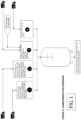
- the first step in this process is the reception of the raw materials (previously called waste) for their subsequent transformation into PHA and compostable material.
- the first step consists of separating the raw materials according to their origin, such that solid raw materials will be received and stored separately from liquid raw materials.
- a recipe will be prepared, in which the mixture of each of the fractions (1 to 4) received will be indicated. Having established the recipe which indicates the mixture to be made from each of fractions 1 to 4, all solid and liquid raw materials will be mixed and homogenized in a reactor, in which the raw materials of the recipe will be homogenized-ground, obtaining an intimate mixture.
- the grinding of the mixture will generate a mush which, depending on the contribution of each fraction to the recipe, will have a variable concentration of solids having a size of less than 100 ⁇ m.
- the preparation of the recipe and its subsequent homogenization-grinding corresponds to PHASE A.
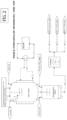
- the mixture obtained in phase A will feed a heated reactor with an outer jacket, or an inner jacket, or both, and an inner stirrer, having a reflux mechanism and an ultrasound system, in which and by means of stirring, the addition of chemical reagents and the supply of heat by means of the heated (inner and/or outer) jacket and ultrasound, as well as the recirculation of the steam generated and condensed during reflux, transformation will take place;
- Proteins, sugars and fats from the mixture obtained in phase A will be hydrolyzed into their monomers, by the action of heat + ultrasound + stirring + chemical reagents + reflux, inside the hydro-distiller (heated reactor), in addition to the sterilization-sanitization of the organic matter obtained in phase A.
- the alkaline earth phosphates, carbonates and sulfates will be solubilized by the addition of inorganic and/or organic acids, or mixtures thereof, together with adjuvants.
- phase A The residence time of each mixture originating from phase A inside the hydro-distiller, as well as the addition of chemical reagents (mixtures of organic and inorganic acids + adjuvants), will depend on the mixture of phase A itself.
- Chemical reagents are added to facilitate protein, fat and sugar hydrolysis, as well as to dissolve the inorganic salts present in the mixture itself; to solubilized hydroxyapatite and calcium and magnesium carbonates originating from animal bone waste and mollusk shells, among others.
- the chemical reagents used in the mixtures range from inorganic acids such as H 2 SO 4 , HCl, HNOs, H 3 PO 4 , or mixtures thereof, together with organic acids such as lactic acids, glycolic acid, sulfamic acid, or mixtures thereof, including acid phosphonates or salts thereof, such as HEDP, ATMP, EDTMP, DTPMP, HDTMP, HEMPA or PBCT, acrylic acid homopolymers, acrylic and maleic acid polymers, terpolymers, etc.
- inorganic acids such as H 2 SO 4 , HCl, HNOs, H 3 PO 4 , or mixtures thereof
- organic acids such as lactic acids, glycolic acid, sulfamic acid, or mixtures thereof, including acid phosphonates or salts thereof, such as HEDP, ATMP, EDTMP, DTPMP, HDTMP, HEMPA or PBCT, acrylic acid homopolymers, acrylic and maleic acid polymers, terpoly
- the final composition of the mixture of acids and adjuvants will depend on the composition of the mixture of phase A and will be intended for inhibiting the precipitation of insoluble calcium and magnesium salts, as well as for hydrolyzing proteins, fats and carbohydrates into their basic components.
- the hydro-distiller works discontinuously in batches.
- the phase A recipe is introduced together with the acid mixture into same, starting the hydrolysis-sterilization process. This process starts with the stirring of the mixture until the pH value on the inside is regulated to a value of 1 ⁇ pH ⁇ 6, depending on the recipe, together with the start of the recirculation of thermal oil through the inner/outer jacket of the hydro-distiller. Once the mixture inside the hydro-distiller has reached the pH value, the recirculation of the thermal oil through the outer/inner jacket of the reactor is maintained until reaching the working temperature and pressure therein. Once the setpoint T (temperature) and Pr.
- the working pH value inside the hydro-distiller ranges from 1 ⁇ pH ⁇ 6.
- the time at which the recipe is usually kept under stirring-heating, after reaching the desired pH value, ranges from 30 min to 120 min.
- the working pressures inside the hydro-distiller range from 2 bar to 5 bar and the working temperature ranges from 70°C to 110°C.
- the hydro-distiller has, in addition to an stirrer, a US system that allows cell lysis and disintegration of organic matter.
- stirring, heat input, the steam reflux system and the US allow obtaining monomers of sugars, fatty acids together with Aa + polypeptide chains in the aqueous acid solution inside the reactor.
- the steam outlet valve (reflux) is closed, heat input is maintained for 1 min to 15 min, whereby the pressure inside the reactor rises to the desired value, at which time the hydro-distiller is depressurized by opening the steam outlet valve, collecting the fraction of the output steam on a steam trap with osmosis water.
- the contents of the reactor are emptied into a reception tank, homogenization reactor (HR), to which the osmosis water + condensates from the steam trap are added.
- HR homogenization reactor
- the mixture of phase A recipe, output of the hydro-distiller + osmosis water in a ratio of 1:1 to 1:10, is homogenized inside the homogenization reactor by means of stirring.
- the pH is corrected if necessary and after 5-10 minutes of stirring-homogenization, the mixture from the homogenization reactor is fed to a centrifuge (Tricanter) which separates three fractions:
- the RHA fraction is selected and filtered with the help of UF membranes with a molecular weight cut-off of 100,000 Daltons, UF RHA .
- the UF RHA process generates two streams:
- the permeate fraction will feed a ion exchange resin system, formed by weak anionic resin + strong anionic resin - weak cationic resin + strong cationic resin.
- a ion exchange resin system formed by weak anionic resin + strong anionic resin - weak cationic resin + strong cationic resin.
- the filtered effluent will then be a sterile liquid solution which is rich in sugars (glucose, fructose, lactose, etc.) and has a very low conductivity.
- the ion exchange columns as a physical separation system, must be regenerated every time they become saturated. To that end, an acid and a base will be used for the regeneration thereof.
- a solution of inorganic acids, such as HCl, H 2 SO 4 HNOs, H 3 PO 4 or mixtures thereof, will be used as acid, whereas KOH, NaOH, NH 3 or mixtures thereof will be used as bases.
- the regeneration solution will be an aqueous liquid solution rich in Aa + inorganic potassium salts and sulfates, which will be sent to an aerosol emission crystallizer to generate a solid biostimulant, rich in nitrogen (provided by the amino acids themselves), potassium and phosphorus.
- These last two cations come from KOH used as a regenerator in the case of anionic resins and from K + naturally occurring in fruits and vegetables, whereas phosphorus is supplied to the hydro-distiller by the hydroxyapatite of the animal and fish fraction.
- the regeneration of the ion exchange resins successfully separates the nitrogen, phosphorus and potassium together with Aa, making up the root biostimulant which will be obtained in the form of dry powder at the outlet of the aerosol emission crystallizer.
- the fraction filtered through the ion exchange columns i.e., the eluate, is a fraction that is rich in sugars and has a low conductivity.
- This liquid fraction will be the fraction that will feed the aerated PHA-manufacturing reactor, together with the RHL fraction obtained in the tricanter.
- PHA production by PHA-overproducing bacterial strains is much higher if they are fed directly with glucose than with starch or other sugar-rich raw materials. ATP manufacturing.
- the RHS fraction obtained through the tricanter at the outlet and discharge of the hydro-distiller will feed a reactor, i.e., an acidogenic thermophilic fermenter, in which, and under anaerobic conditions, VFA (volatile fatty acids) will be obtained from the RHS fraction.
- a reactor i.e., an acidogenic thermophilic fermenter, in which, and under anaerobic conditions, VFA (volatile fatty acids) will be obtained from the RHS fraction.
- the anaerobic reactor will be inoculated with activated sludge from WWTP (wastewater treatment plant), such that, and with the organic matter input from the RHS fraction, there will be generated, by means of anaerobic acidogenic fermentation, VFA (volatile fatty acids), made up mainly of acetic acid, propionic acid, butyric acid, isobutyric acid and isovaleric acid.
- WWTP wastewater treatment plant
- the acidogenic thermophilic fermenter will work in conditions of 5.5 ⁇ pH ⁇ 6.5 and at 35 ⁇ T° ⁇ 50, with a hydraulic retention time of 2 days.
- VFA will be generated inside the acidogenic thermophilic fermenter from the continuously supplied organic matter (RHS fraction).
- RHS fraction continuously supplied organic matter
- the extraction of the VFA generated by the bacterial strains will be done by means of a multitubular UF VFA plant that allows working up to 25% v/v of solids.
- the continuous UF VFA plant will filter the contents of the reactor, generating two streams, a permeate stream which is rich in VFA and free of bacteria and a second fraction of solids at a maximum concentration of 25% v/v, which corresponds to the reject.
- This reject will be sent back to the thermophilic acidogenic fermenter again, while at the same time that the volume of permeate is replenished with more RHS fraction and osmosis water, until the TSS (total solid) concentration inside the reactor exceeds 25 g/l.
- the reject fraction is sent for thermal drying in order to obtain part of the organic fraction of the root biostimulant. This process is maintained until the value of the solids inside the reactor drops below 12 g/l, at which time what is purged from the UF VFA is sent back to the acidogenic thermophilic fermenter again.
- the permeate obtained by the UF VFA membranes will be pH corrected to values of 7 ⁇ pH ⁇ 12 and will be treated in an RO RHA plant. Two streams will be obtained from this plant:
- the sugar fraction from the output of the ion exchange columns bound with the VFA-rich permeate of the UF VFA from the thermophilic acidogenic fermenter, both concentrated in the RO RHA plant, together with the fatty acid-rich RHL fraction, will feed an aerobic PHA-manufacturing reactor (RAPHA), in which a PHA-overproducing bacterium has been inoculated.
- RHA aerobic PHA-manufacturing reactor
- the PHA-overproducing bacterial strain will grow, storing PHA within same. Tracking the COD of the culture broth and the concentration of DO (dissolved oxygen) inside the aerobic reactor, together with the cell concentration in g/l, will be the main factors in controlling bacterial growth and accumulation of PHA therewithin. An increase in the concentration of DO coincides with a decrease in the value of the COD inside the RAPHA, therefore, the control of the metering of the three fractions which are fed to the RAPHA will be conditioned by the DO input, at which time the bacteria will generate PHA.
- DO dissolved oxygen
- TN (total nitrogen) and TP (total phosphorus) control will allow visualizing nitrogen and phosphorus sources, respectively, as limiting essential nutrient sources, particularly nitrogen in this case, taking into account the separation thereof in the form of Aa in the ion exchange columns.
- the limitation of an essential nutrient such as N or P, the excess input of a carbon source (COD) and the supply of oxygen allow the PHA-overproducing bacteria to accumulate PHA granules within them. PHA growth and purge will be monitored by tracking the TSS value.
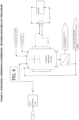
- phase E features, together with the aerobic PHA-manufacturing reactor (RAPHA), an ultrafiltration plant in a multitubular configuration, i.e., the UF RAPHA , that allows separating the cell fraction inside the reactor.
- RAPHA aerobic PHA-manufacturing reactor
- the UF RAPHA plant of the aerobic reactor will filter the contents of the aerobic reactor every time the contents of suspended solids, TSS, exceed the setpoint values. Exceeding the setpoint values indicates the presence of a sufficiently large bacterial population with sufficient PHA accumulation within same so as to carry out a PHA purge/extraction.
- the reading of COD, VFA and DO values allows the carbon source metered into the RAPHA to be regulated, while the reading of TSS allows the concentration of bacteria existing inside the reactor to be determined.
- TSS reading values inside the reactor exceed 25 g/l, the UF RAPHA plant will be put in operation.
- the UF RAPHA plant generates two streams, a permeate stream which is rich in sugars/VFA and free of bacteria and a second solid fraction, at a maximum concentration of 25% v/v, which corresponds to the reject.
- the permeate will again be sent back to the aerobic PHA-manufacturing reactor, i.e., the RAPHA, whereas the reject, at a final concentration of 25% v/v, will feed a hydro-distiller identical to that of PHASE B in which, and working at 110°C and 5 bar, in batches, cell lysis, the release of PHA granules, and the redissolution of bacterial sugars and proteins will occur, along with the release of fatty acids that were part of the cell membranes of the bacteria.
- a mixture of sodium hydroxide/potassium hydroxide will be metered to the UF reject stream introduced into the hydro-distiller.
- the hydro-distiller discharge after the cell lysis process at 110°C and 5 bar, will feed a NUCHA filter in which all the solids, together with the PHA in the form of granules, will be retained in the lower part thereof, with the aqueous stream being filtered.
- the aqueous stream will combine with the load of the hydro-distiller of phase B which feeds the tricanter, generating RHA, RHS and RHL.
- the solid retained in the NUCHA filter will be washed with an aqueous NaOH/KOH solution, recirculating it over the NUCHA filter itself, in order to separate the organic matter adhered to the PHA granules.
- the filtered washing stream will combine with the load of the hydro-distiller of phase B.
Landscapes
- Chemical & Material Sciences (AREA)
- Organic Chemistry (AREA)
- Engineering & Computer Science (AREA)
- Life Sciences & Earth Sciences (AREA)
- Wood Science & Technology (AREA)
- Zoology (AREA)
- Health & Medical Sciences (AREA)
- Bioinformatics & Cheminformatics (AREA)
- Biotechnology (AREA)
- Chemical Kinetics & Catalysis (AREA)
- Genetics & Genomics (AREA)
- Microbiology (AREA)
- Biochemistry (AREA)
- General Engineering & Computer Science (AREA)
- General Health & Medical Sciences (AREA)
- General Chemical & Material Sciences (AREA)
- Environmental & Geological Engineering (AREA)
- Medicinal Chemistry (AREA)
- Hydrology & Water Resources (AREA)
- Water Supply & Treatment (AREA)
- Botany (AREA)
- Biomedical Technology (AREA)
- Sustainable Development (AREA)
- Polymers & Plastics (AREA)
- Mechanical Engineering (AREA)
- Molecular Biology (AREA)
- Fertilizers (AREA)
- Biological Depolymerization Polymers (AREA)
- Polyesters Or Polycarbonates (AREA)
Applications Claiming Priority (2)
| Application Number | Priority Date | Filing Date | Title |
|---|---|---|---|
| ES202130854A ES2936907B2 (es) | 2021-09-14 | 2021-09-14 | Metodo y equipos para la produccion de polihidroxialcanoatos y bioestimulante radicular a partir de residuos organicos |
| PCT/ES2022/070554 WO2023041822A1 (es) | 2021-09-14 | 2022-09-01 | Método y equipos para la producción de polihidroxialcanoatos y bioestimulantes radiculares a partir de residuos orgánicos |
Publications (3)
| Publication Number | Publication Date |
|---|---|
| EP4403639A1 true EP4403639A1 (de) | 2024-07-24 |
| EP4403639C0 EP4403639C0 (de) | 2026-03-04 |
| EP4403639B1 EP4403639B1 (de) | 2026-03-04 |
Family
ID=83689002
Family Applications (1)
| Application Number | Title | Priority Date | Filing Date |
|---|---|---|---|
| EP22786378.4A Active EP4403639B1 (de) | 2021-09-14 | 2022-09-01 | Verfahren zur herstellung von polyhydroxyalkanoaten und wurzelbiostimulanzien aus organischen abfällen |
Country Status (3)
| Country | Link |
|---|---|
| EP (1) | EP4403639B1 (de) |
| ES (1) | ES2936907B2 (de) |
| WO (1) | WO2023041822A1 (de) |
Families Citing this family (1)
| Publication number | Priority date | Publication date | Assignee | Title |
|---|---|---|---|---|
| ES3014636B2 (es) * | 2023-10-18 | 2025-10-06 | Quim Tecnica Ecologica S L U | Metodo y equipos para la produccion de fertilizantes de uso agricola y bioplastico microbiano a partir de residuos organicos |
Family Cites Families (8)
| Publication number | Priority date | Publication date | Assignee | Title |
|---|---|---|---|---|
| AU2004293501B2 (en) * | 2003-11-28 | 2009-10-29 | Phb Industrial S.A. | Process for recovering polyhydroxialkanoates ("PHAs") from cellular biomass |
| BRPI0801845B1 (pt) * | 2008-06-09 | 2016-05-24 | Citrosuco S A Agroindústria | processo de obtenção de pha a partir de resíduo cítrico, pha obtido a partir de resíduo cítrico, composição polimérica contendo pha, artefato sólido contendo pha, artefato sólido contendo composição polimérica compreendendo pha, uso de resíduo cítrico para a obtenção de pha |
| DE102011120888B3 (de) * | 2011-12-09 | 2013-05-08 | REBIO Water GmbH | Verfahren und Vorrichtung zum Abbau von biogenem Material |
| FR3033168B1 (fr) * | 2015-02-27 | 2017-03-10 | Afyren | Procede de production de polyhydroxyalcanoates a partir de precurseurs obtenus par fermentation anaerobie a partir de biomasse fermentescible |
| JP6427714B2 (ja) | 2016-03-25 | 2018-11-21 | 日本碍子株式会社 | 接合体および弾性波素子 |
| WO2019119157A1 (en) * | 2017-12-21 | 2019-06-27 | Genecis Bioindustries Inc. | Method for producing polyhydroxyalkanoates (pha) from organic waste |
| US20190360008A1 (en) * | 2017-12-21 | 2019-11-28 | Genecis Bioindustries Inc. | Method for producing polyhydroxyalkanoates (pha) from organic waste |
| WO2020252582A1 (en) * | 2019-06-21 | 2020-12-24 | Genecis Bioindustries Inc. | Method for producing polyhydroxyalkanoates (pha) from organic waste |
-
2021
- 2021-09-14 ES ES202130854A patent/ES2936907B2/es active Active
-
2022
- 2022-09-01 WO PCT/ES2022/070554 patent/WO2023041822A1/es not_active Ceased
- 2022-09-01 EP EP22786378.4A patent/EP4403639B1/de active Active
Non-Patent Citations (5)
| Title |
|---|
| A. T. WILLIAMS ET AL: "Ion exchange-precipitation for nutrient recovery from dilute wastewater", ENVIRON. SCI.: WATER RES. TECHNOL., vol. 1, no. 6, 1 January 2015 (2015-01-01), pages 832 - 838, XP055388626, ISSN: 2053-1400, DOI: 10.1039/C5EW00142K * |
| AZIZ ZARITH ASYIKIN ET AL: "Essential Oils: Extraction Techniques, Pharmaceutical And Therapeutic Potential - A Review", CURRENT DRUG METABOLISM, vol. 19, no. 13, 23 November 2018 (2018-11-23), US, pages 1100 - 1110, XP093336097, ISSN: 1389-2002, DOI: 10.2174/1389200219666180723144850 * |
| MALHOTRA MILAN ET AL: "Biorefinery of anaerobic digestate in a circular bioeconomy: Opportunities, challenges and perspectives", RENEWABLE AND SUSTAINABLE ENERGY REVIEWS, vol. 166, 1 September 2022 (2022-09-01), US, pages 112642, XP093002201, ISSN: 1364-0321, DOI: 10.1016/j.rser.2022.112642 * |
| See also references of WO2023041822A1 * |
| SINGH RISHAN: "A Critical Review and Opinion on Hydrodistillation", BIO-SCIENCE RESEARCH BULLETIN, vol. 33, no. 1, 1 January 2017 (2017-01-01), pages 1, XP093336094, ISSN: 0970-0889, DOI: 10.5958/2320-3161.2017.00001.3 * |
Also Published As
| Publication number | Publication date |
|---|---|
| EP4403639C0 (de) | 2026-03-04 |
| EP4403639B1 (de) | 2026-03-04 |
| ES2936907B2 (es) | 2023-08-11 |
| WO2023041822A1 (es) | 2023-03-23 |
| ES2936907A1 (es) | 2023-03-22 |
Similar Documents
| Publication | Publication Date | Title |
|---|---|---|
| US6036854A (en) | System for waste water treatment | |
| JP5519893B2 (ja) | スラリー分離及びバイオガス生成についてのコンセプト | |
| JP2004506487A5 (de) | ||
| EP2749650B1 (de) | Verfahren zur Herstellung von Polyhydroxyalkanoaten durch Mikroorganismen | |
| US20160176768A1 (en) | Method and plant for treatment of organic waste | |
| CN1430676A (zh) | 聚乳酸的生产方法及所用设备 | |
| CN110272341B (zh) | 一种长链二元酸的提纯方法 | |
| CN107001091A (zh) | 生产生物聚合物基质复合材料的方法 | |
| Börgardts et al. | Integrated bioprocess for the simultaneous production of lactic acid and dairy sewage treatment | |
| EP4403639B1 (de) | Verfahren zur herstellung von polyhydroxyalkanoaten und wurzelbiostimulanzien aus organischen abfällen | |
| WO2011095805A1 (en) | Methods and process plant for the treatment of aqueous organic waste streams | |
| WO2004057008A1 (en) | Polylactic acid production from sugar molasses | |
| RU2283289C2 (ru) | Способ разделения иловых осадков и получения биогаза | |
| AU2022247353B2 (en) | Methods and systems for growing microbial mass | |
| Cséfalvay et al. | Chemical-free processing of sweet sorghum juice of cultivar sucrosorgho 506 | |
| US3751338A (en) | Process for producing yeast | |
| WO1997010350A1 (en) | Process, apparatus and microorganism strain for the manufacture of citric acid | |
| JPS5992098A (ja) | 有機物を含む廃液の処理法 | |
| KR20220010930A (ko) | 유기 폐기물 처리를 위한 플랜트 및 방법 | |
| HU176864B (en) | Process and equipment for the utilization of sludges forming as by-products of the purification of waste waters containing organic contamination,mainly of communal wastes | |
| 汪群慧 et al. | Influence of temperature on production of lactic acid from kitchen garbage | |
| Gowthaman et al. | Principles of food technology and types of food waste processing technologies | |
| ITMI980389A1 (it) | Produzione di bioproteine per uso zootecnico da siero di latte e scarti di industrie lattiero-casearie | |
| ES3014636B2 (es) | Metodo y equipos para la produccion de fertilizantes de uso agricola y bioplastico microbiano a partir de residuos organicos | |
| Agrawal et al. | Forward Osmosis: An Energy-Efficient Approach for the Treatment and Recovery of Resources from the Dairy Industry Effluent: Forward Osmosis Treatment of Dairy Industry Waste Stream Whey |
Legal Events
| Date | Code | Title | Description |
|---|---|---|---|
| STAA | Information on the status of an ep patent application or granted ep patent |
Free format text: STATUS: UNKNOWN |
|
| STAA | Information on the status of an ep patent application or granted ep patent |
Free format text: STATUS: THE INTERNATIONAL PUBLICATION HAS BEEN MADE |
|
| PUAI | Public reference made under article 153(3) epc to a published international application that has entered the european phase |
Free format text: ORIGINAL CODE: 0009012 |
|
| STAA | Information on the status of an ep patent application or granted ep patent |
Free format text: STATUS: REQUEST FOR EXAMINATION WAS MADE |
|
| 17P | Request for examination filed |
Effective date: 20240405 |
|
| AK | Designated contracting states |
Kind code of ref document: A1 Designated state(s): AL AT BE BG CH CY CZ DE DK EE ES FI FR GB GR HR HU IE IS IT LI LT LU LV MC MK MT NL NO PL PT RO RS SE SI SK SM TR |
|
| DAV | Request for validation of the european patent (deleted) | ||
| DAX | Request for extension of the european patent (deleted) | ||
| REG | Reference to a national code |
Ref country code: DE Ref legal event code: R079 Free format text: PREVIOUS MAIN CLASS: C12P0007625000 Ipc: C05F0017000000 Ref country code: DE Ref legal event code: R079 Ref document number: 602022031762 Country of ref document: DE Free format text: PREVIOUS MAIN CLASS: C12P0007625000 Ipc: C05F0017000000 |
|
| GRAP | Despatch of communication of intention to grant a patent |
Free format text: ORIGINAL CODE: EPIDOSNIGR1 |
|
| STAA | Information on the status of an ep patent application or granted ep patent |
Free format text: STATUS: GRANT OF PATENT IS INTENDED |
|
| RIC1 | Information provided on ipc code assigned before grant |
Ipc: C05F 17/00 20200101AFI20251119BHEP |
|
| INTG | Intention to grant announced |
Effective date: 20251210 |
|
| GRAS | Grant fee paid |
Free format text: ORIGINAL CODE: EPIDOSNIGR3 |
|
| GRAA | (expected) grant |
Free format text: ORIGINAL CODE: 0009210 |
|
| STAA | Information on the status of an ep patent application or granted ep patent |
Free format text: STATUS: THE PATENT HAS BEEN GRANTED |
|
| AK | Designated contracting states |
Kind code of ref document: B1 Designated state(s): AL AT BE BG CH CY CZ DE DK EE ES FI FR GB GR HR HU IE IS IT LI LT LU LV MC MK MT NL NO PL PT RO RS SE SI SK SM TR |
|
| REG | Reference to a national code |
Ref country code: CH Ref legal event code: F10 Free format text: ST27 STATUS EVENT CODE: U-0-0-F10-F00 (AS PROVIDED BY THE NATIONAL OFFICE) Effective date: 20260304 Ref country code: GB Ref legal event code: FG4D |
|
| REG | Reference to a national code |
Ref country code: IE Ref legal event code: FG4D |
|
| REG | Reference to a national code |
Ref country code: DE Ref legal event code: R096 Ref document number: 602022031762 Country of ref document: DE |
|
| U01 | Request for unitary effect filed |
Effective date: 20260313 |
|
| U07 | Unitary effect registered |
Designated state(s): AT BE BG DE DK EE FI FR IT LT LU LV MT NL PT RO SE SI Effective date: 20260319 |