EP4402471B1 - Chemoselektive elektrokatalytische biokonjugationsreaktion und verwendungen davon - Google Patents
Chemoselektive elektrokatalytische biokonjugationsreaktion und verwendungen davon Download PDFInfo
- Publication number
- EP4402471B1 EP4402471B1 EP22801292.8A EP22801292A EP4402471B1 EP 4402471 B1 EP4402471 B1 EP 4402471B1 EP 22801292 A EP22801292 A EP 22801292A EP 4402471 B1 EP4402471 B1 EP 4402471B1
- Authority
- EP
- European Patent Office
- Prior art keywords
- protein
- ncaa
- residues
- coupling
- htp
- Prior art date
- Legal status (The legal status is an assumption and is not a legal conclusion. Google has not performed a legal analysis and makes no representation as to the accuracy of the status listed.)
- Active
Links
Images

















Classifications
-
- C—CHEMISTRY; METALLURGY
- C07—ORGANIC CHEMISTRY
- C07K—PEPTIDES
- C07K1/00—General methods for the preparation of peptides, i.e. processes for the organic chemical preparation of peptides or proteins of any length
- C07K1/13—Labelling of peptides
-
- C—CHEMISTRY; METALLURGY
- C07—ORGANIC CHEMISTRY
- C07K—PEPTIDES
- C07K1/00—General methods for the preparation of peptides, i.e. processes for the organic chemical preparation of peptides or proteins of any length
- C07K1/107—General methods for the preparation of peptides, i.e. processes for the organic chemical preparation of peptides or proteins of any length by chemical modification of precursor peptides
- C07K1/1072—General methods for the preparation of peptides, i.e. processes for the organic chemical preparation of peptides or proteins of any length by chemical modification of precursor peptides by covalent attachment of residues or functional groups
- C07K1/1077—General methods for the preparation of peptides, i.e. processes for the organic chemical preparation of peptides or proteins of any length by chemical modification of precursor peptides by covalent attachment of residues or functional groups by covalent attachment of residues other than amino acids or peptide residues, e.g. sugars, polyols, fatty acids
-
- C—CHEMISTRY; METALLURGY
- C07—ORGANIC CHEMISTRY
- C07K—PEPTIDES
- C07K16/00—Immunoglobulins [IG], e.g. monoclonal or polyclonal antibodies
-
- G—PHYSICS
- G01—MEASURING; TESTING
- G01N—INVESTIGATING OR ANALYSING MATERIALS BY DETERMINING THEIR CHEMICAL OR PHYSICAL PROPERTIES
- G01N33/00—Investigating or analysing materials by specific methods not covered by groups G01N1/00 - G01N31/00
- G01N33/48—Biological material, e.g. blood, urine; Haemocytometers
- G01N33/50—Chemical analysis of biological material, e.g. blood, urine; Testing involving biospecific ligand binding methods; Immunological testing
- G01N33/53—Immunoassay; Biospecific binding assay; Materials therefor
- G01N33/531—Production of immunochemical test materials
- G01N33/532—Production of labelled immunochemicals
Definitions
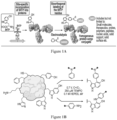
- the present invention is directed to a novel bioconjugation strategy using an electrochemical chemoselective bioconjugation reaction.
- Electrochemistry has long played an important role in preparative chemical processes, with some early applications dating back to the 19 th century. 1-2 It offers many unique advantages, includingaki control over the fundamental parameters driving reaction outcome through facile manipulation of electrode potential, mild reaction conditions, innate scalability, and the ability to generate reactive intermediates in situ . 3-6
- ncAAs non-canonical amitio acids
- aaRS engineered nonsense-suppressing aminoacyl-tRNA synthetase
- tRNA pairs that selectively charge these into proteins expressed in living cells, in response to a repurposed nonsense codon.
- the incorporated ncAA handle can be subsequently used to precisely attach a variety of entities, from biophysical probes to therapeutic agents through the bioorthogonal conjugation reaction.
- electrochemistry makes it an attractive strategy for developing such chemoselective protein labeling methods.
- 21 Recent reports have used electrochemistry to activate small-molecule labeling reagents - such as a phenothiazine radical, 22 triazolinedioiones, 23 or luminols, 24-25 generated through anodic oxidation - which label tyrosine residues on target proteins.
- small-molecule labeling reagents such as a phenothiazine radical, 22 triazolinedioiones, 23 or luminols, 24-25 generated through anodic oxidation - which label tyrosine residues on target proteins.
- in situ generated oxoammonium reagents have also been used to label tryptophan residues.
- 26-27 Electrochemical strategies have also been employed to drive nitration 28 or iodination 29 of tyrosine residues on proteins.
- 5-hydroxytryptophan which has a significantly lower oxidation potential relative to canonical aromatic amino acids, is introduced into a chosen site of the target protein through nonsense suppression using an engineered tryptophanyl-tRNA synthetase (EcTrpRS)/tRNA pair that we recently developed.
- EcTrpRS engineered tryptophanyl-tRNA synthetase
- the electron-rich 5HTP residue is selectively oxidized at the anode to generate an electrophilic intermediate, which can be efficiently trapped using various aromatic amines to generate stable conjugates.
- the eCLIC reaction is compatible with a broad range of nucleophilic groups, and in particular such as aromatic amine substrates, and these reagents, as well as 5HTP, are readily accessible and inexpensive. These advantages establish eCLIC as an attractive method for site-specific protein bioconjugation.
- Such conjugation reactions can be used to generate 1) antibody-drug conjugates, 2) antibody-fluorophore conjugates, 3) antibody-enzyme conjugates, 4) therapeutic protein-PEG conjugate, 5) protein-nucleic acid conjugates, 6) immobilize proteins on surfaces site-specifically, 6) generate kits for site-specific modification of proteins, etc.
- Synthesis of other biomolecules e.g., DNA, RNA
- DNA, RNA DNA
- compositions of chemoselective, homogeneous protein-cargo conjugates and specifically encompasses bioconjugates with biorthogonal labeling of 5-HTP residues genetically-engineered into the protein.
- bioconjugates comprising a biomolecule comprising one, or more unnatural amino acid residues incorporated in a site-specific manner into the biomolecule, wherein the one, or more, unnatural amino acid residues further comprise a biochemical or chemical cargo entity conjugated to the unnatural amino acid via a covalent electrochemical linkage.
- the bioconjugates comprise any suitable biomolecule, but specifically encompasses biomolecules selected from the group consisting of proteins, polypeptides, peptides or nucleic acids, including DNA or RNA nucleic acids.
- a bioconjugate comprising a biomolecule comprising one, or more unnatural amino acid residues incorporated in a site-specific manner into the biomolecule, wherein the one, or more, unnatural amino acid residues further comprise a biochemical or chemical cargo entity conjugated to the unnatural amino acid via a covalent electrochemical linkage.
- the protein is an antibody or an antibody fragment such as an Fab fragment.
- the method uses an electrochemical reaction that results in a covalent linkage/bond between the targeted unnatural amino acid reside of the biomolecule and the cargo entity. More specifically, the electrochemical reaction is an electrocatalysis reaction.
- the electrocatalysis reaction comprises one, or more reaction partners (i.e., a nucleophilic group or a moiety comprising a nucleophilic group) selected from the group consisting of: aromatic amines, anilines, indoles, and thiazoles that link the cargo entity to the unnatural amino acid of the biomolecule.
- the electron-rich 5-HTP has a significantly lower oxidation potential that canonical/naturally-occurring amino acids wherein oxidation voltage is between about 0.4 volts and about 1.0 volts.
- the oxidation voltage is between about 0.4 volts and about 0.8 volts; and in one embodiment the oxidation voltage is between about 0.7 and 0.8 volts.
- suitable oxidation conditions e.g., mild oxidation conditions
- only the 5-HTP is oxidized, and in turn, only the 5-HTP residues of the protein react with aromatic amines to conjugate the cargo of interest-none of the other amino acid residues are reactive.
- the oxidation step comprises the addition of an electron transfer mediator, such as 2,2,6,6-tetramethylpiperidine-1-oxyl (TEMPO).
- an electron transfer mediator such as 2,2,6,6-tetramethylpiperidine-1-oxyl (TEMPO).
- TEMPO 2,2,6,6-tetramethylpiperidine-1-oxyl
- HEPES a suitable buffer for the oxidation reaction
- the methods described herein couple an aromatic amine group to the 5-HTP residue.
- the aromatic amines can be any of the following: anilines, indoles, and thiazoles, and particularly suitable aromatic amines are shown in shown in FIG. 3A and FIG. 7 .
- the aromatic amine group can further comprise a biochemical of chemical cargo entity.
- the cargo entity is selected from the group consisting of one, or more of the following: small molecule, therapeutic drug, detectable label, detectable probe, polymer such as PEG, peptide, or nucleic acid.
- the cargo entity comprises means to immobilize the bioconjugate to a solid support.
- the 5-HTP further comprises a bulky protecting group, such as a tert-Butoxycarbonyl (Boc) protecting group.
- a bulky protecting group such as a tert-Butoxycarbonyl (Boc) protecting group.
- the one, or more, non-canonical amino acid residues is an azide ncAA such as a cyclopropane-lysine amino acid (CpK) or an azido-lysine amino acid (CpK) or an azido-lysine amino acid (AzK) and the method further comprises coupling the azide ncAA residue with a coupling partner under conditions suitable for the coupling of the coupling partner to the azide ncAA, thereby producing a chemoselectively modified protein bioconjugate modified at two specific sites of the protein.
- the coupling partner further comprises a biochemical or chemical cargo entity as described herein.
- the 5HTP-incorporating aminoacyl-tRNA synthetase/tRNA can also be used to substitute all tryptophan residues with 5HTP (partially) within the proteome of any cell. Subsequent chemoselective labeling of these 5HTP-residues using suitable reagents, such as aromatic amines, will enable their facile identification (e.g., through fluorophore labeling)/isolation (e.g., through biotin labeling). This would provide a unique way to identify newly synthesized proteins in a cell.
- the term "and/or” includes any and all combinations of one or more of the associated listed items. Also, all conjunctions used are to be understood in the inost inclusive sense possible. Thus, the word “or” should be understood as having the definition of a logical “or” rather than that of a logical “exclusive or” unless the context clearly necessitates otherwise. Further, the singular forms and the articles “a”, “an” and “the” are intended to include the plural forms as well, unless expressly stated otherwise.
- the present invention establishes a general strategy to label recombinant proteins using 5HTP-directed electrochemical conjugation reaction.
- GCE genetic code expansion
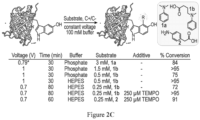
- the eCLIC reaction conditions were optimized in an attempt to reduce the concentration of the aniline substrate needed for efficient conjugation. These optimizations were performed using a synthetic dialkylaniline 1b ( FIG. 2C ; see also FIG. 8A-G ), which has a carboxylic acid group that improves solubility in aqueous buffers and serves as an attachment handle for other cargo. Near-complete labeling of sfGFP-151-SHTP using only 1.5 mM of 1b was achieved, but an elevated electrode potential of 1V was necessary. Further reducing the concentration of 1b under these conditions resulted in incomplete conversions, as well as protein overoxidation ( FIG. 2C ; FIG. 8 ).
- HEPES N-2-hydroxyethylpiperazine-N'-2-ethanesulfonicacid
- TEMPO a known electron-transfer mediator, further improved the efficiency of the reaction, enabling near-complete labeling of sfGFP-151-5HTP using only 0.25 mM dialkylaniline 1b, at 0.7 V.
- sfGFP-151-5HTP was functionalized with several other aromatic amines with diverse structures ( FIG. 3A ; see also FIG. 9A-P ). Wild-type sfGFP was not labeled by these reagents under the same eCLIC condition ( FIG. 10A-E ).
- Anilines functionalized with additional cargo were also synthesized, such as a terminal alkyne, a biotin, and a fluorophore, attached through a short PEG linker, and demonstrated their successful conjugation to sfGFP-151-TAG using eCLIC ( FIG. 3A ; FIG. 9 ). Most of the structurally diverse anilines tested demonstrated efficient protein labeling without further optimization of reaction conditions tailored to individual substrates.
- the eCLIC labeling strategy is mutually compatible with the two other widely used bioorthogonal reactions: the strain-promoted azide-alkyne cycloaddition (SPAAC), 34 . and the inverse-electron demand Diels-Alder (IEDDA) reaction between tetrazines and strained alkenes. 16,35
- SPAAC strain-promoted azide-alkyne cycloaddition
- IEDDA inverse-electron demand Diels-Alder
- each sfGFP mutant was separately subjected to three different labeling reactions ( FIG. 5A ): SPAAC (with BCN), IEDDA (with tetrazine), and eCLIC (with 1b). Modification of each ncAA residue was observed only upon treatment with its cognate reaction partner, confirming the mutual orthogonality of the three labeling reactions ( FIG. 5A ).
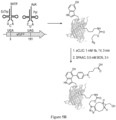
- eCLIC and SPAAC can be used together to selectively label a protein at two different sites.
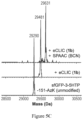
- the resulting protein was purified by immobilized metal-ion chromatography using a C-terminal polyhistidine tag, and was characterized by mass-spectrometry ( FIG. 5C ).
- This sfGFP double mutant was first labeled at the 5HTP residue through eCLIC using 1b, followed by SPAAC modification of the AzK side chain with a cyclooctyne. MS analysis of these reactions confirmed efficient sequential labeling at intended sites to yield the dual-labeled product ( FIG. 5C ).
- Trastuzumab-HC-121-5HTP was homogenously labeled with aniline probes 2 or 1b using eCLIC selectively on the heavy chain ( FIG. 6B .).
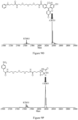
- a primary aniline warhead coupled to a fluorescein (14; FIG. 6B ) and conjugated it to Trastuzumab-HC-121-5HTP using the optimized eCLIC condition. Fluorescence imaging following SDS-PAGE ( FIG. 6C ) and mass-spectrometry analyses ( FIG.
- electrochemistry can be used to efficiently modify proteins at predefined sites using the unique reactivity of the 5HTP residue that can be introduced into proteins through the GCE technology.
- Previously reported electrochemical protein bioconjugation strategies rely on activating exogenous electrophilic reagents that functionalize a canonical amino acid residue, which intrinsically lack precise control over the site and stoichiometry of protein labeling.
- eCLIC proceeds through chernoselective anodic oxidation of the protein-associated 5HTP residue, followed by its efficient capture by a wide array of aromatic amines.
- the reagents used in eCLIC are inexpensive and readily accessible.
- biomolecules protein, DNA, RNA, etc.
- present invention has developed a new highly efficient "biorthogonal" chemical reaction between an ncAA and different coupling partners, such as aromatic amines, both of which are non-natural chemical groups not found in biomacromolecules.
- the CV experiments were conducted with 5 mL of electrolyte solution containing a pH 7 PBS supporting electrolyte (20 mM phosphate; 150 mM sodium chloride) and 1 mM of the analyte.
- the nominal turning potentials for the CV were -0.3 V and +1.7 V vs SHE with a scan rate of 100 mV/s.
- the CV experiments with TEMPO and N-Boc-Orvle-5HTP were carried out in 5 mL of electrolyte solution containing a 1:1 mixture of pH 7 PBS supporting electrolyte (20 mM phosphate; 150 mM sodium chloride) and acetonitrile. Mixed into the electrolyte was 250 ⁇ M of the analyte of interest.
- the nominal turning potentials for the CVs were +0.2 V and +1.0 V vs SHE with a scan rate of 10 mV/s.
- Oxygen-free deionized water was prepared by sparging with nitrogen for 1 hour.
- the sparged water, solid HEPES powder, concentrated 151-5HTP-sfGFP stock (1.1 mM), 100 mM TEMPO in DMSO, and 100 mM dialkylaniline carboxylate (1b) were transferred to a N 2 glovebox after 3 purge/refill cycles and left for 24 hours.
- the water was used to prepare fresh 1 M HEPES buffer, pH 7. All components were mixed as in standard reaction conditions (20 ⁇ M 151-5HTP-sfGFP, 100 mM HEPES, 1 mM 1b) in the presence or absence of 250 ⁇ M TEMPO and sealed in an Electrasyn 2.0 microvial. Reactions were carried out at 700 mV for 80 minutes and processed as described above for mass spectrometry analysis outside of the glove box.
- stGFP-151-5HTP, sfGFP-151-AzK, and sfGFP-151-CpK were each diluted to 20 ⁇ M in 100 mM HEPES, pH 7 for all reactions.
- eCLIC was conducted on each protein with 250 ⁇ M dialkylaniline carboxylate 1b and 250 ⁇ M TEMPO for 1 hour.
- Tetrazine cycloadditions were carried out with a final concentration of 200 ⁇ M tetrazineaminc, 61-62 and allowed to react for 3 h.
- a stock of sfGFP-3-5HTP-151-AzK was diluted to a 20 ⁇ M in 100 mM HEPES, pH 7, and reacted with 1 mM 1b for 30 minutes at 1 V.
- the sample was buffer exchanged into PBS using a PD-10 spin column, then reacted with BCN-OH was added to a final concentration of 1 mM and was allowed to incubate for 1 hour at room temperature.
- the protein was analyzed after both steps by ESI-MS.
- a single transformant was used to start a 5 mL overnight culture containing the appropriate antibiotics (100 ⁇ g/mL ampicillin, 20 ⁇ g/mL chloramphenicol, 95 ⁇ g/mL spectinomycin, 15 ⁇ g/mL zeocin, and 10 ⁇ g/mL gentamycin), 0.5 mL of which was used to inoculate a 50 mL LB culture (in a 250 mL sterile Erlenmeyer flask) supplemented with antibiotics. Cultures were grown to an OD 600 of 0.5-0.6, followed by induction with a final concentration of 1 mM IPTG and 1 mM 5HTP.
- antibiotics 100 ⁇ g/mL ampicillin, 20 ⁇ g/mL chloramphenicol, 95 ⁇ g/mL spectinomycin, 15 ⁇ g/mL zeocin, and 10 ⁇ g/mL gentamycin
- the cultures were expressed at 30 °C with shaking at 250 rpm for 16 h. The cultures were spun down at 5,000 x g for 10 minutes at 4 °C, and the supernatant was removed. Cell pellets were resuspended in a ratio of 1 mL lysis buffer to 10 mL expression culture volume. Lysis buffer: B-PER Bacterial Protein Extraction Reagent (Thermo Scientific), 1X Halt Protease Inhibitor Cocktail (Thermo Scientific), 0.01% Pierce Universal Nuclease (Thermo Scientific). Cells were nutated for 30 minutes at room temperature, then clarified by centrifugation at 18,000 x g for 10 minutes at 4 °C.
- the sfGFP reporter proteins contain a C-terminal polyhistidine tag and were purified using a HisPur Ni-NTA resin (Thermo Scientific) following the manufacturer's protocol. Protein purity was confirmed by SDS-PAGE analysis and protein molecular mass was characterized using HPLC-coupled ESI-MS of intact proteins (Agilent Technologies, 1260 Infinity ESI-TOF).
- sfGFP-3TGA-151TAG reporter To express the sfGFP-3TGA-151TAG reporter, ATMW-BL21 cells were co-transformed with a pGTEV-3TGA-151TAG reporter plasmid 64 and pEvoltac EcW.h14-MbPylRS TAG suppressor plasmid encoding both EcTrp and the pyrrolysyl pairs. 64
- the sfGFP reporter was expressed and analyzed as described above, except supplemented with 1 mM 5HTP and 1 mM AzK upon 1 mM IPTG induction, and a larger culture volume of 500 mL (grown and expressed in a 2 L sterile Erlenmeyer flask) was used.
- Expi293 cells were grown and cultivated under standard conditions as recommended by the supplier (ThermoFisher). Cells were grown in Expi293 medium supplemented with 0.5x antibiotic-antimyotic (Thermo Fisher, 15240062) at 37 °C, 8% CO 2 , in sterile plastic Erlenmeyer flasks with ventilated caps, and shaken using a CO 2 -resistant orbital shaker at 125 rpm. Cultures were maintained by seeding at a 0.3 million viable cells/mL, then expanding cultures every 4 th day when they reached a density of 3-5 million viable cells/mL. Cell density and viability were measured using the trypan blue exclusion method with a Bio-Rad TC20 TM automated cell counter.
- Expi293 supernatant was harvested by pelleting cells at 800 xg for 8 minutes, then passing the decanted media through a sterile filter (0.22 ⁇ m). The media was adjusted to pH 5.4, 50 mM NaOAc using a 500 mM stock. After equilibrating 1 mL Pierce TM Protein G resin (Thermo Scientific, 20398) with 15 column volumes of wash buffer (pH 5.4, 50 mM NaOAc), the filtered media was passed through by gravity flow (300-600 mL). Protein G resin was washed with a volume of 50 mM NaOAc, pH 5.4 equal to approximately half the volume of added media (150-300 mL).
- Purified antibody was eluted by 16-20 stepwise additions of 1 mL pH 2.7, 100 mM glycine, collecting each elution in tubes containing 120 ⁇ L pH 7.4 1 M sodium phosphate for immediate neutralization. Eltited fractions were qualitatively tested for the presence of protein by adding 10 ⁇ L elution fraction to 10 ⁇ L Bradford reagent (Thermo Scientific 1856209). Fractions containing protein were pooled and was concentrated to ⁇ 1-2 mg/mL final protein concentration using Amicon ® Ultra 15 (Millipore Sigma UFC901024) centrifugal filters.
- Concentrated antibody was buffer-exchanged using a PD midiTrap G-25 column (GE Healthcare 28918008) pre-equilibrated with 20 column volumes of PBS. Protein concentration was determined by absorption measurement using a NanoDrop 2000 spectrophotometer (Fisher Scientific ND2000).
- Protein purity and protein conjugation state was determined by HPLC-coupled ESI-MS of fully reduced antibodies (Agilent Technologies, 1260 Infinity ESI-TOF). First, 20 ⁇ g antibody sample was adjusted to 50 mM phosphate pH 7.0, 10 mM fresh TCEP, then heated to 55 °C for 10 minutes. After cooling to 37 °C, antibody was incubated 1 ⁇ L Remove-iT ® PNGase (New England Biolabs, P0706S) for 60 minutes.
- digested antibody was incubated with 25 ⁇ L of settled chitin resin (New England Biolabs, S6651L) on an orbital shaker for 15 minutes, then carefully removed as supernatant after centrifuging at 15,000 xg for 1 minute. 250 - 500 ng of protein was used for HPLC-coupled MS analysis as described above.
- Reverse phase HPLC (RP-HPLC) purifications were performed in a Waters HPLC system (fitted with a Waters 1525 binary pump and Waters 2489 UV-VIS detector) using a reverse phase semi-preparative column (Phenomenex, Jupiter ® 10 ⁇ m, C-18, 300 ⁇ , 250 x 10 mm); mobile phase for the RP-HPLC purification comprised of solvent-A (water-MeCN-0.1% trifluoroacetic acid in 95:5:0.1 ratio) and solvent B (MeCN-water-0.1% trifluoroacetic acid in 95:5:0.1 ratio); flow rate 6 mL/min.
- solvent-A water-MeCN-0.1% trifluoroacetic acid in 95:5:0.1 ratio
- solvent B MeCN-water-0.1% trifluoroacetic acid in 95:5:0.1 ratio
- N -BOc methyl ester of 5-hydroxytryptophan 16 was prepared from commercially available 5-hydroxy-L-tryptophan (5HTP; Chem Impex International) following a reported procedure.
- 5HTP 5-hydroxy-L-tryptophan
- PBS buffer has the following composition: 10 mM Na 2 HPO 4 , 1.8 mM 2.7 mM KH 2 PO 4 , 137 mM NaCl and 1.8 mM KCl; pH 7.4.
- Borate buffer has the following composition: 100 mM boric acid, 25 mM sodium tetraborate and 75 mM NaCl; pH 8.
- N -Boc methyl ester of 5-hydroxytryptophan 16 25 mg, 0.074 mmol
- p- toludine 4 80 mg, 0.74 mmol
- the ElectraSyn vial cap having a graphite anode and a graphite cathode were inserted into one part ( ⁇ 6 mL) of the mixture and subjected to electrolysis under a constant voltage (1 V) under ambient conditions while stirring vigorously (1000 rpm).
- N -Boc-protected phenethylamine ( 21 ) was prepared following a reported protocol from 4-aminophenethylamine (Combi-Blocks). 67
- N -succinimidyl ester of 5(6)-carboxyfluorescein 20 120 mg, 0.25 mmol
- THF 5 mL
- N -Boc-protected phenethylamine 21 70 ing, 0.3 mmol
- the solvent was evaporated off under reduced pressure and the residue was partitioned between a biphasic mixture of water (25 mL) and organic solvents (EtOAc/THF 9:1, 40 mL). Organic layer was separated and aqueous layer was extracted with the EtOAc/THF mixture (3x15 mL).
- N -hydroxysuccinimide (1.07 g, 9.3 mmol) was added to a solution of 4-(methyl(phenyl)amino)butanoic acid 1b (1.2 g, 6.2 mmol) in THF (30 mL), followed by the addition of EDC.HCl (1.78 g, 9.3 mmol). The resulting mixture was stirred at the room temperature for 16 h and then concentrated under reduced pressure. The residue was partitioned between a biphasic mixture of EtOAc (100 mL) and water (50 mL). Organic layer was separated washed sequentially with water (3x30 mL) and brine (30 mL).
- the intermediate 31 was dissolved in 5 mL CH 2 Cl 2 , and anhydrous trifluoroacetic acid (5 mL) was added dropwise at 4 °C, and the resulting mixture was stirred at 4 °C for 5 h to have complete removal of Boc protection (judged by LC-MS).
- the mixture was concentrated under reduced pressure; to fully remove TFA, additional CH 2 Cl 2 ( ⁇ 10 mL) was added and the solution was evaporated four consecutive times.
- the expected product 12 was obtained as a yellow oil (545 mg, 1.7 mmol, quantitative yield).
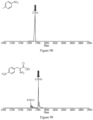
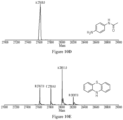
- FIG. 12 shows HPLC-MS analysis of the eCLIC reaction between N-Boc methyl ester of 5-hydroxytryptophan 17 (exact mass: 334.15) and N,N-dimethylaniline (exact mass: 121.09);
- a 280 represents absorbance at 280 nm in an arbitrary unit; N,N-dimethylaniline has little absorbance at 280 nm (elutes around 4.5 min); there was a single peak having the expected product mass (at 9.3 min, see below for the mass spec) in the crude reaction mixture, other peaks correspond to unreacted starting material (5HTP derivative), higher order homo- and hetero-coupling reactions between the starting materials having following m/z (protonated forms): peak (i) 786.35 (2A+B-4+H + ), peak (ii) 1118.48 (3A+B-6+H + ), peak (iii) 667.28 (2A-2+H + ) etc.
- a and B refers to 17 and 1a, respectively]; expected product (A+B-2) having m/z 454.21 was structurally characterized by mass spectrometry, NMR and XRD analysis; dissolved crystal refers to a solution of the crystal of the product, the crystal having been retrieved from the same sample pool from which diffraction quality single crystal was picked for XRD structure analysis.
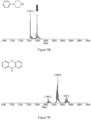
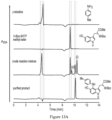
- FIG. 13A-B shows HPLC-MS analysis of the eCLIC reaction modelling between N -Boc methyl ester of 5-hydroxytryptophan 17 (exact mass: 334.15) and p- toludine 4 (exact mass: 107.15);
- a 254 represents absorbance at 254 nm in an arbitrary unit; expected product (A+C-2) having m/z 440.21 (protonated form) was structurally characterized by mass spectrometry and co-relation NMR analysis; peak (i) had m/z (protonated form) of 438.21 (A+C-4+H + ) is likely generated by over-oxidation of the expected product (A+C-2); peak (ii) had m/z (protonated forms) of 454.20 (A+C-4+16+H + ) is suggestive of a further oxidized product, [A and C refers to the 17 and 4, respectively] (B) chemical shifts of 1 H and 13 C assigned through 1-D
- Fig. 14 shows a proposed mechanism of eCLIC.
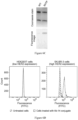
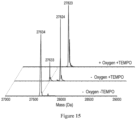
- FIG. 15 shows the results of experiments demonstrating the interchangeable roles of TEMPO and oxygen in the eCLIC reaction.
- sfGFP-151-5HTP was reacted with 1b in 100 mM HEPES, pH 7.0 at 700 mV for 1 hour under oxygen-depleted conditions in the absence of TEMPO, oxygen-depleted conditions in the absence of TEMPO (250 ⁇ M), and optimized eCLIC conditions (aerobic + TEMPO).
- Expected molecular weight for sfGFP-151-TAG is 27636 Da, and its conjugation product with 1b is 27827 Da.
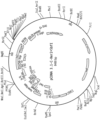
- FIG. 16 shows the plasmid map of pCBNA3.1-C-Her2+SbfI (containing Trastuzumab light chain and heavy chain fragments)
- FIG. 17 shows the plasmid map of pAcBac1_EcWRS1-5HTP-H14_RevU6EcW_TGA.
- FIG. 18 shows the plasmid map of pET22b-T5-5F7.
- FIG. 19 shows the plasmid map of pET22b-Myoglobin-K99>TAG.
- the present disclosure establishes a unique electrochemical chemoselective conjugation reaction to site-specifically modify proteins expressed in both bacteria and eukaryotes.
- the electrocatalysis reactions are highly scalable, rapid (taking less than about 30 minutes to about 2 hours, and highly selective for the targeted unnatural amino acid.
Landscapes
- Chemical & Material Sciences (AREA)
- Health & Medical Sciences (AREA)
- Life Sciences & Earth Sciences (AREA)
- Immunology (AREA)
- Organic Chemistry (AREA)
- Molecular Biology (AREA)
- Biochemistry (AREA)
- Medicinal Chemistry (AREA)
- General Health & Medical Sciences (AREA)
- Engineering & Computer Science (AREA)
- Analytical Chemistry (AREA)
- Genetics & Genomics (AREA)
- Proteomics, Peptides & Aminoacids (AREA)
- Biophysics (AREA)
- Hematology (AREA)
- Urology & Nephrology (AREA)
- Biomedical Technology (AREA)
- Chemical Kinetics & Catalysis (AREA)
- Cell Biology (AREA)
- Biotechnology (AREA)
- Microbiology (AREA)
- General Chemical & Material Sciences (AREA)
- Food Science & Technology (AREA)
- Physics & Mathematics (AREA)
- General Physics & Mathematics (AREA)
- Pathology (AREA)
- Peptides Or Proteins (AREA)
Claims (15)
- Verfahren zum Herstellen eines chemoselektiv modifizierten Protein-Biokonjugats, umfassend die folgenden Schritte:a.) Bereitstellen eines rekombinant exprimierten Proteins, umfassend einen oder mehrere Reste nicht-kanonischer Aminosäuren (ncAA) an spezifischen Stellen des Proteins, wobei einer oder mehrere der ncAA-Reste ein 5-Hydroxytryptophan (5-HTP) ist;b.) selektives Oxidieren des einen oder der mehreren 5-HTP-Aminosäurereste des Proteins unter geeigneten Bedingungen und bei niedriger Spannung, wobei die Spannung ausreichend ist, um ein elektrophiles 5-HTP-Zwischenprodukts zu erzeugen; undc.) Umsetzen des 5-HTP-Zwischenprodukts mit einem Kopplungspartner, der eine nucleophile Gruppe umfasst, unter für das Koppeln der nucleophilen Gruppe an den einen oder die mehreren 5-HTP-Reste in dem Protein geeigneten Bedingungen,wodurch ein chemoselektiv modifiziertes Protein-Biokonjugat hergestellt wird.
- Verfahren nach Anspruch 1, wobei das Protein selektiv an zwei Stellen modifiziert ist und wobei der eine andere oder die mehreren anderen nicht-kanonischen Aminosäurereste ein Azid-ncAA-Rest sind, wobei vorzugsweise das Verfahren ferner das Koppeln des Azid-ncAA-Rests mit einem Kopplungspartner unter für das Koppeln des Kopplungspartners an das Azid-ncAA geeigneten Bedingungen umfasst, wodurch ein chemoselektiv modifiziertes Protein-Biokonjugat hergestellt wird, das an zwei spezifischen Stellen des Proteins modifiziert ist, wobei noch bevorzugter der Kupplungspartner ferner eine biochemische oder chemische Ladungseinheit umfasst.
- Verfahren zum Herstellen eines chemoselektiv modifizierten Protein-Biokonjugats, wobei das Protein selektiv an zwei oder mehr Stellen modifiziert ist, wobei das Verfahren die folgenden Schritte umfasst:a.) Bereitstellen eines rekombinant exprimierten Proteins, umfassend einen oder mehrere Reste nicht-kanonischer Aminosäuren (ncAA) an spezifischen Stellen des Proteins, wobei einer der ncAA-Reste ein 5-Hydroxytryptophan (5-HTP) ist und wobei einer oder mehrere der ncAA-Reste ein Azid-ncAA-Rest sind;b.) selektives Oxidieren des 5-HTP-Aminosäurerestes des Proteins unter geeigneten Bedingungen und bei niedriger Spannung, wobei die Spannung ausreichend ist, um ein elektrophiles 5-HTP-Zwischenprodukts zu erzeugen;c.) Umsetzen des 5-HTP-Zwischenprodukts mit einem Kopplungspartner, der eine nukleophile Gruppe umfasst, unter für das Koppeln des aromatischen Amins an die 5-HTP-Reste in dem Protein geeigneten Bedingungen; undd.) selektives Koppeln des Azid-ncAA-Restes mit einem Kopplungspartner unter für das Koppeln des Kopplungspartners an den Azid-ncAA-Rest geeigneten Bedingungen,wodurch ein chemoselektiv modifiziertes Protein-Biokonjugat hergestellt wird, wobei das Protein selektiv an zwei Stellen modifiziert ist.
- Verfahren nach einem der Ansprüche 1 bis 3, wobei der eine oder die mehreren ncAA-Reste auf der Oberfläche des Proteins freiliegen.
- Verfahren nach einem der Ansprüche 1 bis 3, wobei das Protein ein Antikörper oder ein Antikörperfragment ist.
- Verfahren nach einem der Ansprüche 1 bis 3, wobei die Oxidationsspannung zwischen etwa 0,4 Volt und etwa 1,0 Volt liegt, vorzugsweise wobei die Oxidationsspannung zwischen etwa 0,4 Volt und etwa 0,8 Volt liegt, noch bevorzugter, wobei die Oxidationsspannung zwischen etwa 0,7 und 0,8 Volt liegt.
- Verfahren nach einem der Ansprüche 1 bis 3, wobei der Oxidationsschritt b) durch die Zugabe eines Elektronentransfervermittlers erleichtert wird, wobei der Elektronentransfervermittler vorzugsweise 2,2,6,6-Tetramethylpiperidin-1-oxyl (TEMPO) ist.
- Verfahren nach einem der Ansprüche 1 bis 3, wobei die nukleophile Gruppe von Schritt c) ausgewählt ist aus der Gruppe bestehend aus: aromatischen Aminen, Anilinen, Indolen und Thiazolen.
- Verfahren nach einem der Ansprüche 1 bis 3, wobei die nukleophile Gruppe von Schritt c) ferner ein biochemisches Element einer chemischen Ladungseinheit umfasst, vorzugsweise wobei die Ladungseinheit ausgewählt ist aus der Gruppe bestehend aus einem oder mehreren der folgenden: kleines Molekül, therapeutischer Wirkstoff, detektierbarer Marker, detektierbare Sonde, Polymer wie PEG, Peptid oder Nukleinsäure, noch bevorzugter, wobei die Ladungseinheit Mittel zum Immobilisieren des Biokonjugats an einem festen Träger umfasst.
- Verfahren zum elektrochemischen Markieren eines Proteins, umfassend die folgenden Schritte:a.) Bereitstellen eines rekombinant exprimierten Proteins, umfassend einen oder mehrere Reste nicht-kanonischer Aminosäuren (ncAA) an spezifischen Stellen des Proteins, wobei einer oder mehrere der ncAA-Reste ein 5-Hydroxytryptophan (5-HTP) sind;b.) selektives Oxidieren des einen oder der mehreren 5-HTP-Aminosäurereste des Proteins unter geeigneten Bedingungen und bei niedriger Spannung, wobei die Spannung ausreichend ist, um ein elektrophiles 5-HTP-Zwischenprodukt zu erzeugen; undc.) Umsetzen des 5-HTP-Zwischenprodukts mit einem Kopplungspartner, der eine nukleophile Gruppe mit einer nachweisbar markierten Ladungseinheit umfasst, unter für das Koppeln des aromatischen Amins an den einen oder die mehreren 5-HTP-Reste in dem Protein geeigneten Bedingungen,wodurch ein markiertes Protein hergestellt wird.
- Verfahren nach Anspruch 10, wobei der eine oder die mehreren ncAA-Reste auf der Oberfläche des Proteins freiliegen, wobei das Protein vorzugsweise ein Antikörper oder Antikörperfragment ist.
- Verfahren nach Anspruch 11, wobei die Oxidationsspannung zwischen etwa 0,4 Volt und etwa 1,0 Volt liegt, vorzugsweise wobei die Oxidationsspannung zwischen etwa 0,4 Volt und etwa 0,8 Volt liegt, noch bevorzugter, wobei die Oxidationsspannung zwischen etwa 0,7 und 0,8 Volt liegt.
- Verfahren nach Anspruch 12, wobei der Oxidationsschritt die Zugabe eines Elektronentransfervermittlers umfasst, wobei der Elektronentransfervermittler vorzugsweise 2,2,6,6-Tetramethylpiperidin-1-oxyl (TEMPO) ist.
- Verfahren nach Anspruch 13, wobei die nucleophile Gruppe ausgewählt ist aus der Gruppe bestehend aus: aromatischen Aminen, Anilinen, Indolen und Thiazolen.
- Verfahren nach einem der Ansprüche 10 bis 14, wobei das Protein selektiv an zwei Stellen modifiziert ist und der eine andere oder die mehreren anderen nicht-kanonischen Aminosäurereste ein Azid ncAA-Rest sind, wobei vorzugsweise das Verfahren ferner das Koppeln des Azid-ncAA-Rests mit einem Kopplungspartner unter für das Koppeln des Kopplungspartners an das Azid-ncAA geeigneten Bedingungen umfasst, wodurch ein chemoselektiv modifiziertes Protein-Biokonjugat hergestellt wird, das an zwei spezifischen Stellen des Proteins modifiziert ist, wobei noch bevorzugter der Kupplungspartner ferner eine biochemische oder chemische Ladungseinheit umfasst.
Applications Claiming Priority (2)
| Application Number | Priority Date | Filing Date | Title |
|---|---|---|---|
| US202163245369P | 2021-09-17 | 2021-09-17 | |
| PCT/US2022/076536 WO2023044413A1 (en) | 2021-09-17 | 2022-09-16 | A chemoselective electrocatalytic bioconjugation reaction and uses thereof |
Publications (2)
| Publication Number | Publication Date |
|---|---|
| EP4402471A1 EP4402471A1 (de) | 2024-07-24 |
| EP4402471B1 true EP4402471B1 (de) | 2025-06-25 |
Family
ID=84329281
Family Applications (1)
| Application Number | Title | Priority Date | Filing Date |
|---|---|---|---|
| EP22801292.8A Active EP4402471B1 (de) | 2021-09-17 | 2022-09-16 | Chemoselektive elektrokatalytische biokonjugationsreaktion und verwendungen davon |
Country Status (9)
| Country | Link |
|---|---|
| US (1) | US20250243239A1 (de) |
| EP (1) | EP4402471B1 (de) |
| JP (1) | JP2024534377A (de) |
| KR (1) | KR20240055161A (de) |
| CN (1) | CN118019977A (de) |
| AU (1) | AU2022346032A1 (de) |
| CA (1) | CA3232051A1 (de) |
| IL (1) | IL311271A (de) |
| WO (1) | WO2023044413A1 (de) |
Family Cites Families (3)
| Publication number | Priority date | Publication date | Assignee | Title |
|---|---|---|---|---|
| US10717975B2 (en) * | 2016-06-03 | 2020-07-21 | Trustees Of Boston College | Universal platform for genetic code expansion |
| US11890351B2 (en) * | 2017-06-20 | 2024-02-06 | Trustees Of Boston College | Chemoselective rapid azo-coupling reaction for bioconjugation |
| JP7640538B2 (ja) * | 2019-10-08 | 2025-03-05 | トラスティーズ オブ ボストン カレッジ | 複数の異なる非天然アミノ酸を含有するタンパク質、並びにそのようなタンパク質の製造方法及び使用方法 |
-
2022
- 2022-09-16 AU AU2022346032A patent/AU2022346032A1/en active Pending
- 2022-09-16 KR KR1020247012616A patent/KR20240055161A/ko active Pending
- 2022-09-16 EP EP22801292.8A patent/EP4402471B1/de active Active
- 2022-09-16 US US18/692,528 patent/US20250243239A1/en active Pending
- 2022-09-16 WO PCT/US2022/076536 patent/WO2023044413A1/en not_active Ceased
- 2022-09-16 CA CA3232051A patent/CA3232051A1/en active Pending
- 2022-09-16 IL IL311271A patent/IL311271A/en unknown
- 2022-09-16 CN CN202280063052.6A patent/CN118019977A/zh active Pending
- 2022-09-16 JP JP2024516392A patent/JP2024534377A/ja active Pending
Also Published As
| Publication number | Publication date |
|---|---|
| JP2024534377A (ja) | 2024-09-20 |
| US20250243239A1 (en) | 2025-07-31 |
| AU2022346032A1 (en) | 2024-03-21 |
| KR20240055161A (ko) | 2024-04-26 |
| IL311271A (en) | 2024-05-01 |
| CA3232051A1 (en) | 2023-03-23 |
| WO2023044413A1 (en) | 2023-03-23 |
| EP4402471A1 (de) | 2024-07-24 |
| CN118019977A (zh) | 2024-05-10 |
Similar Documents
| Publication | Publication Date | Title |
|---|---|---|
| CN108410827B (zh) | 整合包含bcn基团的氨基酸到多肽中的方法 | |
| MacDonald et al. | One-step site-specific modification of native proteins with 2-pyridinecarboxyaldehydes | |
| US9557336B2 (en) | Methods and compositions for site-specific labeling of peptides and proteins | |
| CN110577564B (zh) | 多肽和方法 | |
| Liu et al. | Genetically encoded quinone methides enabling rapid, site-specific, and photocontrolled protein modification with amine reagents | |
| Frost et al. | Macrocyclization of Organo‐Peptide Hybrids through a Dual Bio‐orthogonal Ligation: Insights from Structure–Reactivity Studies | |
| Loynd et al. | Electrochemical labelling of hydroxyindoles with chemoselectivity for site-specific protein bioconjugation | |
| Rijkers et al. | ‘Sulfo‐click’for ligation as well as for site‐specific conjugation with peptides, fluorophores, and metal chelators | |
| WO2010106347A2 (en) | Biomolecular labelling using multifunctional biotin analogues | |
| EP3971169A1 (de) | Verfahren zur herstellung, in einer zelle, ein protein oder ein polypeptid umfassend eine tetrazinaminosäure | |
| US20240216524A1 (en) | Chemoselective Rapid Azo-Coupling Reaction for Bioconjugation | |
| Deng et al. | Photo-induced defluorination acyl fluoride exchange as a fluorogenic photo-click reaction for photo-affinity labeling | |
| CN106164263B (zh) | 环丙烯氨基酸以及方法 | |
| JPWO2011024887A1 (ja) | 環状ペプチドを含む結合体およびその作製方法 | |
| WO2015107071A1 (en) | Genetically encoded spin label | |
| US20250243239A1 (en) | A Chemoselective Electrocatalytic Bioconjugation Reaction and Uses Thereof | |
| CN109312324B (zh) | 核糖体展示复合体及其制造方法 | |
| Ma et al. | Proximity-enhanced protein crosslinking through an alkene-tetrazine reaction | |
| EP4725952A1 (de) | Verbindungen mit nichtkanonischen aminosäuren und verwendungen davon | |
| US20250243238A1 (en) | Tetrazine amino acids and methods for their production and use | |
| Santos et al. | Recent Advances in Bioconjugation of Aromatic Amino Acid Residues by a Reactivity‐Guided Approach | |
| Jeoung | The Second-Generation Electrochemical Labeling of Hydroxyindoles With Chemoselectivity (eCLIC) for Site-Specific Protein Bioconjugation | |
| CN114940979A (zh) | 一种利用遗传密码扩展提高阳离子-π相互作用的方法及应用 | |
| Wu | Techniques for labelling biological macromolecules for spectroscopic studies | |
| Song | A tetrazole-based bioorthogonal reaction for protein functionalization and imaging in live cells |
Legal Events
| Date | Code | Title | Description |
|---|---|---|---|
| STAA | Information on the status of an ep patent application or granted ep patent |
Free format text: STATUS: UNKNOWN |
|
| STAA | Information on the status of an ep patent application or granted ep patent |
Free format text: STATUS: THE INTERNATIONAL PUBLICATION HAS BEEN MADE |
|
| PUAI | Public reference made under article 153(3) epc to a published international application that has entered the european phase |
Free format text: ORIGINAL CODE: 0009012 |
|
| STAA | Information on the status of an ep patent application or granted ep patent |
Free format text: STATUS: REQUEST FOR EXAMINATION WAS MADE |
|
| 17P | Request for examination filed |
Effective date: 20240328 |
|
| AK | Designated contracting states |
Kind code of ref document: A1 Designated state(s): AL AT BE BG CH CY CZ DE DK EE ES FI FR GB GR HR HU IE IS IT LI LT LU LV MC MK MT NL NO PL PT RO RS SE SI SK SM TR |
|
| REG | Reference to a national code |
Ref legal event code: R079 Ipc: C07K0001107000 Ref country code: DE Ref legal event code: R079 Ref document number: 602022016590 Country of ref document: DE Free format text: PREVIOUS MAIN CLASS: G01N0033532000 Ipc: C07K0001107000 |
|
| DAV | Request for validation of the european patent (deleted) | ||
| DAX | Request for extension of the european patent (deleted) | ||
| GRAP | Despatch of communication of intention to grant a patent |
Free format text: ORIGINAL CODE: EPIDOSNIGR1 |
|
| STAA | Information on the status of an ep patent application or granted ep patent |
Free format text: STATUS: GRANT OF PATENT IS INTENDED |
|
| RIC1 | Information provided on ipc code assigned before grant |
Ipc: G01N 33/532 20060101ALI20241218BHEP Ipc: C07K 1/107 20060101AFI20241218BHEP |
|
| INTG | Intention to grant announced |
Effective date: 20250117 |
|
| GRAS | Grant fee paid |
Free format text: ORIGINAL CODE: EPIDOSNIGR3 |
|
| GRAA | (expected) grant |
Free format text: ORIGINAL CODE: 0009210 |
|
| STAA | Information on the status of an ep patent application or granted ep patent |
Free format text: STATUS: THE PATENT HAS BEEN GRANTED |
|
| AK | Designated contracting states |
Kind code of ref document: B1 Designated state(s): AL AT BE BG CH CY CZ DE DK EE ES FI FR GB GR HR HU IE IS IT LI LT LU LV MC MK MT NL NO PL PT RO RS SE SI SK SM TR |
|
| REG | Reference to a national code |
Ref country code: GB Ref legal event code: FG4D |
|
| REG | Reference to a national code |
Ref country code: CH Ref legal event code: EP |
|
| REG | Reference to a national code |
Ref country code: CH Ref legal event code: EP |
|
| REG | Reference to a national code |
Ref country code: IE Ref legal event code: FG4D |
|
| REG | Reference to a national code |
Ref country code: DE Ref legal event code: R096 Ref document number: 602022016590 Country of ref document: DE |
|
| PG25 | Lapsed in a contracting state [announced via postgrant information from national office to epo] |
Ref country code: FI Free format text: LAPSE BECAUSE OF FAILURE TO SUBMIT A TRANSLATION OF THE DESCRIPTION OR TO PAY THE FEE WITHIN THE PRESCRIBED TIME-LIMIT Effective date: 20250625 |
|
| PGFP | Annual fee paid to national office [announced via postgrant information from national office to epo] |
Ref country code: DE Payment date: 20250929 Year of fee payment: 4 |
|
| REG | Reference to a national code |
Ref country code: LT Ref legal event code: MG9D |
|
| PG25 | Lapsed in a contracting state [announced via postgrant information from national office to epo] |
Ref country code: GR Free format text: LAPSE BECAUSE OF FAILURE TO SUBMIT A TRANSLATION OF THE DESCRIPTION OR TO PAY THE FEE WITHIN THE PRESCRIBED TIME-LIMIT Effective date: 20250926 Ref country code: NO Free format text: LAPSE BECAUSE OF FAILURE TO SUBMIT A TRANSLATION OF THE DESCRIPTION OR TO PAY THE FEE WITHIN THE PRESCRIBED TIME-LIMIT Effective date: 20250925 |
|
| PG25 | Lapsed in a contracting state [announced via postgrant information from national office to epo] |
Ref country code: BG Free format text: LAPSE BECAUSE OF FAILURE TO SUBMIT A TRANSLATION OF THE DESCRIPTION OR TO PAY THE FEE WITHIN THE PRESCRIBED TIME-LIMIT Effective date: 20250625 |
|
| PG25 | Lapsed in a contracting state [announced via postgrant information from national office to epo] |
Ref country code: HR Free format text: LAPSE BECAUSE OF FAILURE TO SUBMIT A TRANSLATION OF THE DESCRIPTION OR TO PAY THE FEE WITHIN THE PRESCRIBED TIME-LIMIT Effective date: 20250625 |
|
| PGFP | Annual fee paid to national office [announced via postgrant information from national office to epo] |
Ref country code: AT Payment date: 20251020 Year of fee payment: 4 Ref country code: FR Payment date: 20250925 Year of fee payment: 4 |
|
| PG25 | Lapsed in a contracting state [announced via postgrant information from national office to epo] |
Ref country code: RS Free format text: LAPSE BECAUSE OF FAILURE TO SUBMIT A TRANSLATION OF THE DESCRIPTION OR TO PAY THE FEE WITHIN THE PRESCRIBED TIME-LIMIT Effective date: 20250925 |
|
| PG25 | Lapsed in a contracting state [announced via postgrant information from national office to epo] |
Ref country code: LV Free format text: LAPSE BECAUSE OF FAILURE TO SUBMIT A TRANSLATION OF THE DESCRIPTION OR TO PAY THE FEE WITHIN THE PRESCRIBED TIME-LIMIT Effective date: 20250625 |
|
| REG | Reference to a national code |
Ref country code: NL Ref legal event code: MP Effective date: 20250625 |
|
| PG25 | Lapsed in a contracting state [announced via postgrant information from national office to epo] |
Ref country code: NL Free format text: LAPSE BECAUSE OF FAILURE TO SUBMIT A TRANSLATION OF THE DESCRIPTION OR TO PAY THE FEE WITHIN THE PRESCRIBED TIME-LIMIT Effective date: 20250625 |
|
| PG25 | Lapsed in a contracting state [announced via postgrant information from national office to epo] |
Ref country code: PT Free format text: LAPSE BECAUSE OF FAILURE TO SUBMIT A TRANSLATION OF THE DESCRIPTION OR TO PAY THE FEE WITHIN THE PRESCRIBED TIME-LIMIT Effective date: 20251027 |
|
| REG | Reference to a national code |
Ref country code: AT Ref legal event code: MK05 Ref document number: 1806366 Country of ref document: AT Kind code of ref document: T Effective date: 20250625 |
|
| PG25 | Lapsed in a contracting state [announced via postgrant information from national office to epo] |
Ref country code: IS Free format text: LAPSE BECAUSE OF FAILURE TO SUBMIT A TRANSLATION OF THE DESCRIPTION OR TO PAY THE FEE WITHIN THE PRESCRIBED TIME-LIMIT Effective date: 20251025 |
|
| PG25 | Lapsed in a contracting state [announced via postgrant information from national office to epo] |
Ref country code: AT Free format text: LAPSE BECAUSE OF FAILURE TO SUBMIT A TRANSLATION OF THE DESCRIPTION OR TO PAY THE FEE WITHIN THE PRESCRIBED TIME-LIMIT Effective date: 20250625 Ref country code: SM Free format text: LAPSE BECAUSE OF FAILURE TO SUBMIT A TRANSLATION OF THE DESCRIPTION OR TO PAY THE FEE WITHIN THE PRESCRIBED TIME-LIMIT Effective date: 20250625 |
|
| PG25 | Lapsed in a contracting state [announced via postgrant information from national office to epo] |
Ref country code: CZ Free format text: LAPSE BECAUSE OF FAILURE TO SUBMIT A TRANSLATION OF THE DESCRIPTION OR TO PAY THE FEE WITHIN THE PRESCRIBED TIME-LIMIT Effective date: 20250625 |
|
| PG25 | Lapsed in a contracting state [announced via postgrant information from national office to epo] |
Ref country code: PL Free format text: LAPSE BECAUSE OF FAILURE TO SUBMIT A TRANSLATION OF THE DESCRIPTION OR TO PAY THE FEE WITHIN THE PRESCRIBED TIME-LIMIT Effective date: 20250625 |
|
| PG25 | Lapsed in a contracting state [announced via postgrant information from national office to epo] |
Ref country code: EE Free format text: LAPSE BECAUSE OF FAILURE TO SUBMIT A TRANSLATION OF THE DESCRIPTION OR TO PAY THE FEE WITHIN THE PRESCRIBED TIME-LIMIT Effective date: 20250625 |
|
| PG25 | Lapsed in a contracting state [announced via postgrant information from national office to epo] |
Ref country code: SK Free format text: LAPSE BECAUSE OF FAILURE TO SUBMIT A TRANSLATION OF THE DESCRIPTION OR TO PAY THE FEE WITHIN THE PRESCRIBED TIME-LIMIT Effective date: 20250625 |
|
| PG25 | Lapsed in a contracting state [announced via postgrant information from national office to epo] |
Ref country code: ES Free format text: LAPSE BECAUSE OF FAILURE TO SUBMIT A TRANSLATION OF THE DESCRIPTION OR TO PAY THE FEE WITHIN THE PRESCRIBED TIME-LIMIT Effective date: 20250625 |
|
| PG25 | Lapsed in a contracting state [announced via postgrant information from national office to epo] |
Ref country code: RO Free format text: LAPSE BECAUSE OF FAILURE TO SUBMIT A TRANSLATION OF THE DESCRIPTION OR TO PAY THE FEE WITHIN THE PRESCRIBED TIME-LIMIT Effective date: 20250625 |
|
| PG25 | Lapsed in a contracting state [announced via postgrant information from national office to epo] |
Ref country code: DK Free format text: LAPSE BECAUSE OF FAILURE TO SUBMIT A TRANSLATION OF THE DESCRIPTION OR TO PAY THE FEE WITHIN THE PRESCRIBED TIME-LIMIT Effective date: 20250625 |
|
| PG25 | Lapsed in a contracting state [announced via postgrant information from national office to epo] |
Ref country code: IT Free format text: LAPSE BECAUSE OF FAILURE TO SUBMIT A TRANSLATION OF THE DESCRIPTION OR TO PAY THE FEE WITHIN THE PRESCRIBED TIME-LIMIT Effective date: 20250625 |
|
| PLBE | No opposition filed within time limit |
Free format text: ORIGINAL CODE: 0009261 |
|
| STAA | Information on the status of an ep patent application or granted ep patent |
Free format text: STATUS: NO OPPOSITION FILED WITHIN TIME LIMIT |
|
| REG | Reference to a national code |
Ref country code: CH Ref legal event code: H13 Free format text: ST27 STATUS EVENT CODE: U-0-0-H10-H13 (AS PROVIDED BY THE NATIONAL OFFICE) Effective date: 20260504 |
|
| REG | Reference to a national code |
Ref country code: CH Ref legal event code: L10 Free format text: ST27 STATUS EVENT CODE: U-0-0-L10-L00 (AS PROVIDED BY THE NATIONAL OFFICE) Effective date: 20260507 |